THE MONTHLY DIGEST OF ACCUMULATED NEW MUSIC; THE SOCIAL INTER-GENERATIONAL/ECLECTIC AND ANNIVERSARY ALBUMS CELEBRATING PLAYLIST; AND ANNIVERSARY PIECES FROM THE ARCHIVES.

THE NEW\___
boycalledcrow ‘Kullau
(Mortality Tables)
A musical atmospheric hallucination and psychedelic dream-realism of a roadmap, the latest transduced-style album from Carl M Knott (aka a boycalledcrow) takes his recollections, memory card filled photo albums, samples and experiences of travelling through Northern India between 2005 and 2006 and turns them into near avant-garde transported passages of outsider art music.
Escaping himself and the stresses and anxieties that had been plaguing him since adolescence, Knott chose to pick up the road less travail(ed) after graduating; making new friends along the way, including the artist (known as James) who provided the album’s image.
If you are aware of the Chester-based composer’s work under numerous labels, and his experiments with weird folk music and signature revolving, splayed, dulcimer and zither-like guitar transformations then Kullu will – albeit more psychedelic and mirage-like – fit in nicely with expectations.
Place names (that album title refers to the village, an ancient kingdom, of ‘Kullu’, which sits in the ‘snow-laden mountain’ province of Himachel Pradesh in the Western Himalayas), Buddhist self-transformation methods (the extremely tough self-observation process of “non-reaction” for the body and mind known as “Vipassana”), Hindu and Jainism yogis (the “Sadhu”, a religious ascetic, mendicant or any kind of holy person who has renounced the worldly life, choosing instead to dedicate themselves to achieving “moksha” – liberation – through meditation and the contemplation of God) and language (the localized distinctive Kullu dialect and syntax of “Kanashi”, currently under threat) are all used as vague reference points, markers in this hallucinatory grand tour.
These captured moments and memories are often masked. It’s the sound of Laaraji stepping across such dizzying spiritually beautiful high altitudes and descending into the valley below; the brief sound of tablas and an essence of reverberating Indian stringed instruments suddenly taking on abstracted forms or reversed and melted into a hazy dream cycle. Nothing is quite what it seems; the imagination reminiscing freely and taking source recordings off on curious tangent. And yet it all makes sense, and somehow quantifies, soundtracks a landscape and period we can identify and experience. You can even work out that much of that plucked, cylindrical, pitch and speed-shifted string sound is coming from the £27 guitar that Knott bought whilst on those same travels (picked up in Dehradun to be specific).
But as with all of Knott’s peregrinations, queries, unrestricted gazes, the sound is very much his own. If you would like some idea of what we are dealing with, maybe Walter Smetak, Land Observation in colour, Fabbrica Vuota, Gunn-Truscinski Nace, and with the playfully strange psychedelic ‘Tuktuk’ ride, a merger of Tortoise, Yanton Gat and Animal Collective. Mind you, the vague echoes of piped church music on ‘Bear River’ (which “bisects” the valley region in which Kullu sits) are closer to the spiritual new age and kosmische – perhaps a hint of David Gasper. If Knott’s soundboard is anything to go by he did indeed find that much needed replenishment of the senses and escape from the mental and health pressures of stress that handicapped his progress. He’s created dreamy encapsulation of a time without burden and restriction; an experience totally free of worry and the strains of the material world out near the roof of the Earth. The results of which can be heard to have clearly been beneficial artistically. Kullu is another magical, strange and explorative soundscape/soundtrack from an independent artist quietly getting on with harnessing a unique sound and way of capturing the impossible.
Amy Aileen Wood ‘The Heartening’
(Colorfield Records)
Not in the literal sense, but the award-winning drummer, multi-instrumentalist, composer and engineer Amy Aileen Wood takes centre stage on her new album for the Colorfield Records label.
The supporting foil on a range of albums and performances with such notable names as Fiona Apple (more from her later), St. Vincent, Tired Pony and Shirley Manson, Wood was initially approached by Colorfield instigator Pete Min (the imprint that’s run out of Min’s Lucy’s Meat Market studios in L.A.) to lead her own solo outing. And although Wood’s stand-out tactile feels and descriptive drumming skills maybe on show and at the forefront, the L.A. based polymath, whilst also playing a wide worldly range of instruments, invites a number of in-demand session players and artists to collaborate, including Apple. An unsurprising choice seeing as Wood’s was not only a member of the recording band on Apple’s Fetch The Bolt Cutters album but also its co-producer. From that same circle, the “veteran” bassist Sebastian Steinberg provides pliable and subtly effective upright bass parts to a majority of the tracks on The Heartening. Apple, for her part, offers cooing “dadodahs” and assonant light dreaminess on the album’s opener, the womb-breached submersed turn Can Unlimited Klezmer ‘Rolling Stops’, and both sighs and giggles of ‘self-love’ on the gamelan cascaded self-help indie-wonk ‘Time For Everything’. Another one of the various guests’ spots goes to Kelsey Wood (relation?), who coos and ahs on the kinetic Alfa Mist-esque ‘Slow Light’.
The Heartening is essentially, if removed and discombobulated or enhanced by a palette of different styles and influences, a jazz album; especially with the addition of the L.A. based saxophonist (amongst other talents) Nicole McCabe, who pushes those personalized thematic exploratory performances and freeform expressions towards flashes of Ivor Pearlman, Alex Roth, Donny McCaslin (I’m thinking especially of his cosmic dissipations), Dave Harrington (funny enough, referenced in the PR notes) and Savoy label era Yusef Lateef.
But the musicality is far reaching, hopping around and landing at one point in Java, the next, in Eastern Europe (those stirring closed-eyes arches, sighs and solace style strings of the renowned Daphne Chen reminding me of Fran & Flora and Alex Stolze’s Galicia classical sympathies). You could also throw in breakbeats, the downtempo, the no wave and various fun fusions into the mix; everything from J Dilla to NAH, TV On The Radio, Arto Lindsay, John Zorn and Lucrecia Dalt.
Wood’s own style of drumming (though as I mentioned, the multi-instrumentalist, true to that title, plays everything from nostalgic iconic midi synths and drum pads to the West African balafon and twines flicked kalimba) is halfway busy and halfway intuitive: a mix of Valentina Mageletti and Emre Ramazanoglo.
Wood is certainly a talented player and full of ideas, as the action moves constantly between the natural and improvised. With a mix of trepidation and “intrigue” Wood’s proves an able leader and catalyst. I’d say this solo venture was the successful start to a new pathway and adventures.
Virgin Vacations ‘Dapple Patterns’
From a multitude of sources, across a number of mediums, the concentrated sonic force that is Virgin Vacations ramp up the queasy quasars and the heavy-set slab wall of no wave-punk-jazz-maths-krautrock sounds on their debut long player. With room to expand horizons the Hong Kong (tough gig in recent years, what with China’s crackdowns on the free press and student activists; installing authoritarian control over the Island) ensemble lay out a both hustled, bustled and more cosmic psychedelic journey, from the prowling to the near filmic and quasi-operatic -from darkened forebode to Shinto temple bell-ringing comedowns that fade out into affinity.
Operating in a liminal realm between the ominous and more mysteriously idyllic; changing mood, sense of place and the sound on every other track; the ensemble channel everything from the Hifiklub, Angels Die Hard and The Pop Group in a wail of bugle horns post-punk jazz (ala Blurt and a vocal-less Biting Tongues) to ‘Gomorrha’ CAN, the Dead Kennedys, film-score Sakamoto, Hawkwind and the Holy Family. That’s of course when they’re not orbiting the celestial jazz of Sun Ra merged with Herbie Hancock on the heavenly spheres and alien evoked ‘Jupiter’: even this track grows into a manic nightmare of broken distorted radio sets.
The trip is a cosmic range of ideas, some driven others far more dreamy, psychedelic and even erring towards the orchestral – there’s plenty of bulb-like note-twinkled glockenspiel to go around too. It begins with a krautrock expulsion of dark materials and ends on a Tomat-like – in union with the Acid Mothers – dissipation of enveloped interplanetary temple vibrations. This only touches the surface however, and Virgin Vacations take flights of fantasy regularly whilst maintaining a heavy-pulsation of uncertainty. Energy is channeled in the right direction, with a force that manages to tap into the anxious and radical whilst finding air to breathe and dappled patterns spread of the title.
he didnt ‘nothingness manifested’
(Drone Alone Records) 24th May 2024
Granular gradients, frazzled fissures and currents appear in the thick set wall of drones emitted by the Oxfordshire-based electronic musician, guitarist and producer’s new numerically demarcated album.
Reading into the monolithic slab sided scale and ambitions of he didnt’s manifestations, these, mostly, long walls of whined, bended, looped, abrasive and sustained guitar and electronic waveforms elicit the feelings of landscape: one that can feel simultaneously overbearing, grand but in motion. Metallic filaments or the pitter-patter of acrid rain, ‘nothingness manifestations III-V’ builds a sonic picture over its duration of some almost alien atmospheric enveloped weather front – reminding me of Hans Zimmer’s bits on Blade Runner 2049, His Name Is Alive, Fiocz and a venerated Tangerine Dream. ‘nothingness manifestations II’ is similar with its alien evocations yet near bestial and slithery too – I’m hearing vague signs of Faust, Sunn O))) and even Spaceman 3 for some reason. Perhaps picking up inspiration from one previous support slot, he didnt channels The Telescopes, minus Stephen Lawrie’s drudgery vocals, and a touch of the J&MC on that heavy meta hewed opener.
But there’s holes too in what is more like a mesh block of wielding drones, with a glimmer, a movement of light audible in the grainy textured fabric around the self-described “void”. In short, something from nothing, materialisations from patterns in the sonic concrete that may just evoke something much bigger.
Ziad Rahbani ‘Amrak Seedna & Abtal Wa Harameyah’
(WEWANTSOUNDS)
Vinyl reprisal specialists WEWANTSOUNDS, in-between reviving and offering remastered runs of cult music from Japan, Egypt and elsewhere, have been picking their way through the back catalogue of the Lebanese polymath Ziad Rahbani (musician, composer, producer, playwright, satirist and activist).
Following on from the crate diggers’ choice 80s Middle Eastern disco-funk-balladry-soul-jazz-Franco-Arabian classic Houdou Nisbi (released by the label in 2022), the Amrak Seedna & Abtal Wa Harameyah combined moiety of congruous theatre play soundtracks offers a generous helping of performance choruses, instrumental theme tunes, ad spots and variations of the main signatures.
Whilst the ongoing sectarian driven civil war (between 1975 and 1990) raged, there was a surreal duel existence of stoicism, the Lebanese people carrying on with life in the face of religious rivalry, unprecedented violence, and infamous acts of massacre (a 150,000 fatalities, maybe more). Importantly Lebanese artists, musicians continued to create – some from abroad as part of a mass exodus (estimates are that a million citizens left the country to escape the horror during that period). Disarming as the musical motifs, dancing rhythms and messages was, cultural idols like Ziad (famously the scion of the feted musician and national star Assi Rahbani and the legendary celebrated siren Fairuz) were fervently political. And among his many talents, Ziad would collaborate with the most vocal of them, including the pioneer singer-songwriter of Arabian political song, Sami Hawat, who appears alongside a whole cast of other notable vocalists on this double helping of stage performances.
Written by fellow Lebanese playwright and actor Antoine Kerbaji, the main acts and catalysts for Ziad’s inspired fusion of the Occidental and Middle East, speak of the times in which they were created. Originally released on the Beirut-based cult label Relaxin in 1987, the emotions run high as the streets outside were paved in bloody retribution along the lines of not only religion (the Christian minority’s rule of decades, and elitist nepotism finally coming to a crashing head as the country’s demographic shifted to a Muslim majority, inflated by two migrations and expulsions from Israel of sizable Palestinians populations in the late 1940s and 60s) but also Cold War divisions. The passion is evident in the various cast or male/female led choruses of yearning expression and more swooning allurement – sometimes almost reminding me of Bollywood, and the dance or romance, courtship between a male and female lead.
Musically however, this is a mixed assortment of near classical piano motifs, Arabian stringed instrumental segments, the new wave, disco and funk fusion and movie soundtrack influences. Glaringly an obvious steal, there’s the recurring use of John Barry’s 007 signature score across a large slice of these tracks. Adopting that most famous iconic mnemonic and its variations, Ziad seems to pinch it back from its own Western takes on the music from his country and the wider region. Marvin Hamlisch dabbled in this area for The Spy Who Loved Me – although his take was on Egyptian disco -, as to did Bill Conti – a mix of Med sounds for For Your Eyes Only. So much of this reminds me of both those top rate composers, especially the near thriller style production and clavichord MOR funky fusion sounds of ‘Al Muqademah 1 (Introduction 1)’. Later on it sounds like Ziad riffs on Hamlisch’s score for The Sting on the relaxed jazzy vaudeville saloon barrel organ reminisce ‘Kabbaret Dancing’.
Away from the 007 themes there’s hints of John Addison and Michael Legrand on the Franco-Arabian boogie musical number ‘Al Piano’, and Richard Clayderman on the beautiful romantic-esque flourish of piano scales, runs and lucidity ‘Slow’. The music slips into the Tango at will, or transports the listener back to the noir 1930s. Although, ‘Mashhad Al Serk’ is a strange one, resembling funky calypso transmogrified with reggae and the new wave. I’m at a loss on occasion to describe what it is I’m hearing, as the palette is so wide and diverse. But in summary, both albums offer a cabaret and theater conjecture of fluidity that takes in the Middle East and fuses it with Western classicism, movie and TV themes, funk and 80s production signatures. Previously only ever released in the Lebanon, WWS have done the decent thing and revived these stage play soundtracks, offering us all a chance to own these expressive and enlightening recordings.
THE SOCIAL PLAYLIST VOLUME 86\____
The Social Playlist is an accumulation of music I love and want to share, tracks from my various DJ sets and residencies over the years, and both selected cuts from those artists, luminaries we’ve lost and those albums celebrating anniversaries each month.
Running for over a decade or more, Volume 86 is as eclectic and generational-spanning as ever. Look upon it as the perfect radio show, devoid of chatter, interruptions and inane self-promotion.
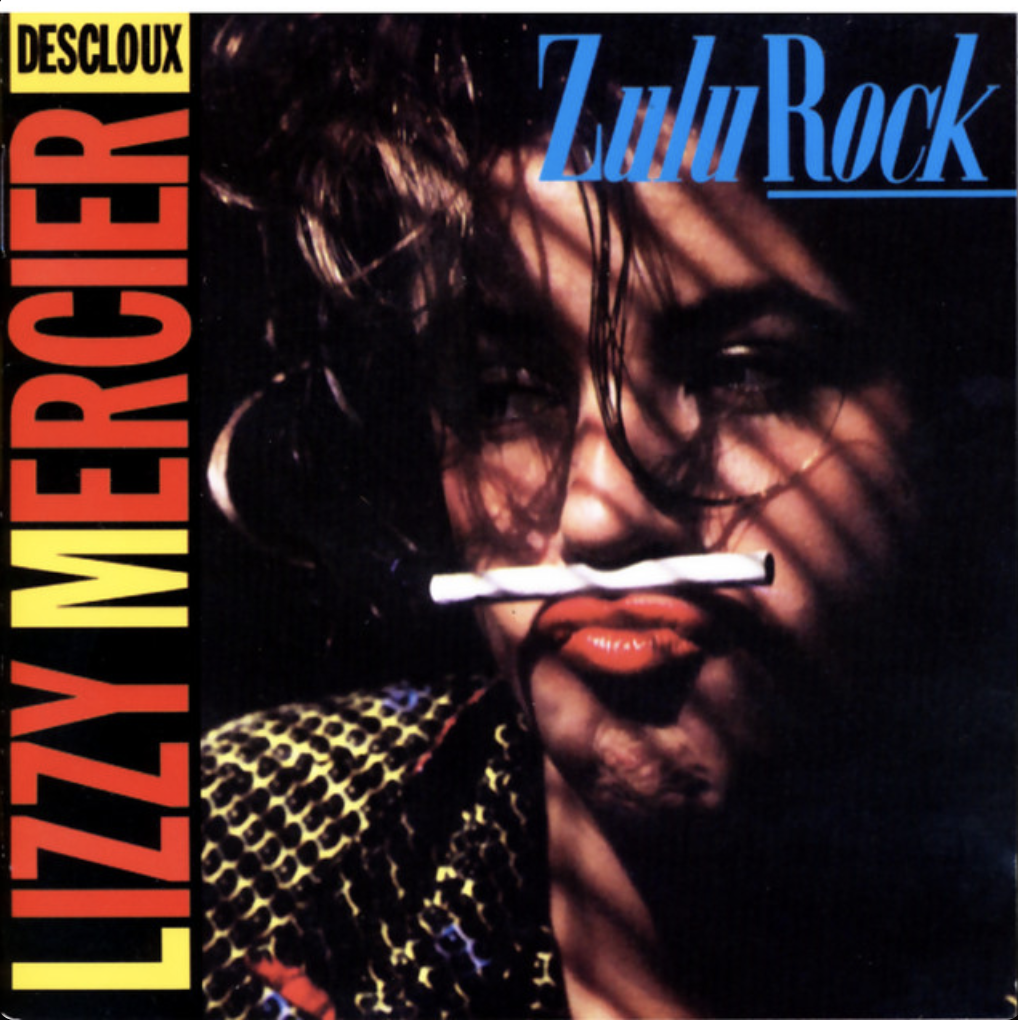
In this edition I’ve chosen to mark the 50th anniversaries of Sparks Kimono In My House, Bowie’s Diamond Dogs, Slapp Happy’s Self-Titled – but referred to as Casablanca Moon, after the opening track -, and Popol Vuh’s Einsjager & Siebenjager albums. A decade closer, and into the 80s, I’ve included tracks from my favourite French new wave spark and cool chanteuse Lizzy Mercier Descloux and her Zulu Rock LP of ’84, plus a slightly different performance of Echo & The Bunnymen’s ‘The Killing Moon’ (the original single also included on the Liverpool’s band’s Ocean Rain of course). Another leap closer, and its 30th anniversary nods to the Beastie Boys ambitious double-album spread Ill Communication, Jeru The Damaja’s The Sun Rises In The East, and The Fall’s Middle Class Revolt. The final anniversary spot this month goes to our very own Brian ‘Bordello’ Shea, or rather the whole Shea brood and their might lo fi cult vehicle The Bordellos. The group’s summary of the world and music industry, Will.I.Am, You’re Really Nothing, is ten years old this month.
We lost even more iconic mavericks and leaders of the form this last month or so. Grabbing, quite rightly, the most attention is the loss of Steve Albini. The legacy is ridiculous, and to be honest, far too many people have already dedicated the space for me to now chip in – I will be frank, where do you start? And so I have chosen to give him a mention but not to pay the homage due. We also lost the last remaining member of the motor city five, Dennis “Machine Gun” Thompson, who pummeled and, quite literally, kicked out the fucking jams. I’ve already made note and selected tracks from their catalogue when poor old Wayne Kramer passed just a few months back, and also their manager – for a time between drug busts – John Sinclair. The Detroit misfits are no more. What a sad state of affairs.
I have however chosen to mark the passing of UK rap icon MC Duke and king of twang, and one of the most important, influential guitarists of all time, Duane Eddy.
There’s a couple of “newish” selections – tracks that I either missed or didn’t get room to include in the Monolith Cocktail team’s Monthly Playlists (next edition due in a week’s time) – from Masei Bey and Martina Berther which I hope will prove intriguing. The rest of the playlist is made up of a smattering of tracks from Tucky Buzzard, Prime Minister Pete Nice, The Bernhardts, Nino Rota, It It, Clive’s Original Band, The Four King Cousins and more.
TRACK LIST________
Sparks ‘Barbecutie’
Tucky Buzzard ‘Time Will Be Your Doctor’
Haystacks Balboa ‘Bruce’s Twist’
David Bowie ‘1984’
Masei Bey ‘Beat Root’
Beastie Boys Ft. Q-Tip ‘Get It Together’
Jeru The Damaja ‘You Can’t Stop The Prophet’
Prime Minister Pete Nice Ft. Daddy Rich ‘Rat Bastard’
MC Duke ‘I’m Riffin 1990 Remix’
Helene Smith ‘Willing And Able’
The Bernhardts ‘Send Your Heart To Me’
Tala Andre Marie ‘Wamse’
Lizzy Mercier Descloux ‘Dolby Sisters Saliva Brothers’
Orchestre regional de Segou ‘Sabu Man Dogo’
Slapp Happy ‘Casablanca Moon’
Nino Rota ‘L’Uccello Magico’
Duane Eddy ‘Stalkin”
Dreams So Real ‘History’
Echo & The Bunnymen ‘The Killing Moon – Life at Brian’s Version’
The Bordellos ‘The Gospel According To Julian Cope’
The Fall ‘Middle Class Revolt’
It It ‘Dream Joel Dream’
David Bowie ‘Rock ‘n’ Roll With Me’
The Bordellos ‘Straight Outta Southport’
Clive’s Original Band ‘Oh Bright Eyed One’
Jodie Lowther ‘Cold Spell’
Martina Berther ‘Arrow’
Fursaxa ‘Poppy Opera’
Popol Vuh ‘Wo Bist Du?’
The Four King Cousins ‘God Only Knows’
ARCHIVES\_____

When gracing the Monolith Cocktail with his very own column of reviews was still years away, Brian “Bordello” Shea was featured for his own music as part of the mighty lo-fi malcontents The Bordellos – Brian one of the co-founding Shea sibling forces behind that celebrated cult outfit. Still for my money one of their finest moments on record, the group’s Will.I.Am, You’re Really Nothing (released at a time when that annoying, talentless opportunist was all over the telly and in the charts in the UK) diatribe is ten years old this month. To celebrate, reprise that essential songbook, I’m once more sharing my original review from 2014. Every word of it still, unfortunately, still holds today.
The Bordellos ‘Will.I.Am, You’re Really Nothing’
(Small Bear Records) Released 31st May 2014
It was Blur, in one of their only true flashes of inspiration, who came closest to summing up the times with their dejected conclusion that, “modern life is rubbish”. That was the early 90s, but depending on how long in the tooth, worn-down and jaded you are, every age can be viewed with the same disappointing sigh of resignation.
Yet, surely the present times take some beating, at least to us, the self-appointed custodians of the past, who remember an age when the culture seemed…. well, at least exciting, linear and comprehendible, instead of appropriated without thought or context, screwed-over and manipulated for largely commercial results, and slotted in to a handy off-the-peg lifestyle choice. Pop has eaten itself, with the lifecycles of trends and music becoming ever shorter.
It is with all this in mind that The Bordellos set out their manifesto. Leveling their criticism at commercial radio and TV especially, they aim their guided missile attacks at the harbingers of the Ed Sheeran topped Urban/Black music power lists, and what seems more and more like the UK publicity wing of conservatism, the BBC. The St. Helens, via a disjointed Merseybeat imbued lineage, family affair replace the “happy-go-lucky” lightweight and deciding suspect womens rights champion, totem of Pharrell Williams, Will.I.Am and all his partners in floppy platitude pop, rock and folk with the arch druid of counter-cultural esotericism and miscreant obscure musical sub-genres (Kraut to Jap via Detroit rebellious and experimental rock) Julian Cope. Grinding out a dedicated epistle to Cope, the trio’s sermon ‘The Gospel According To Julian Cope’ prompts a road to Damascus conversion to the spirit of rock’n’roll, in all its most dangerous guises.
De facto idol, Mr.Cope, pops up again on ‘My Dream Festival’, which as the title suggests is a list of the ideal, once in a lifetime, free festival lineups of lineups; read out in a quasi-Daft Punk ‘teachers’ style bastardized litany to an accompanying Casio pre-set drum track and watery effects. The Casio rhythm pre-sets and occasional sound bites come in handy again on the jaunty, deadpan disco jolly, ‘Elastic Band Man’ – a transmogrified Human League meets John Foxx – and on the broken-up, Robert Wyatt emotional drudge, ‘Between Forget And Neglect’.
Despite going at it hammer and tongs on their anvil-beating Cope Gospel, The Bordellos latest long-player protestation is a forlorn and intimate downbeat record. They can still be relied upon to rattle off a list of grievances and opprobrious pun harangued song titles: from the LP’s play-on-words adopted The Smiths song, reworked to accommodate a big fuck-you to that irritable twat, Will.I.Am, to name-checking another hyperbole anomaly of our Youtube, Google, Facebook, Twitter masters’ bidding, the no less frustratingly lame ‘Gangnam style’ viral – joining the call from last year’s Bring Me The Head Of Justin Bieber EP, for another public execution.
But it’s with a certain lamentable introspection that they also tone the vitriol down to attend to matters of the heart: The kiss-me-quick, misty-eyed ballad to love on a northern coast seaside town, ‘Straight Outta Southport’, and the Hawaiian slide guitar country rock ode, ‘The Sweetest Hangover’, both, despite their tongue-in-cheek titles, bellow a fondness for lovelorn adventures and plaintive break-up regret; proving that despite the bellicose calls for the corporal punishment of the foppish elite and its commercial pop music stars, there is a tender side to the group.
Sounding like it was recorded on an unhealthy dose of Mogadon, Will.I.Am, You’re Really Nothing is a composed grumble from the fringes of a battered musical wilderness. A last cry if you will from the pit-face of rock’n’roll.
Also this month, Bowie’s repurposed Orwellian theatre production Diamond Dogs reaches its 50th anniversary.

David Bowie ‘Diamond Dogs’
(RCA) 1974
“As they pulled you out of the oxygen tent, you asked for the latest party…” And with that the future dystopian, biota canine, leapt from its slumber “onto the streets below”: howling for more.
Bowie never really wanted to be a musician as such: or at least not wholly a musical act. His destiny lied with the grease paint of theatre and allure of cinema. Diamond Dogs of course allowed him to create a spectacle, melding the two disciplines together.
Fate would force the original concept to morph into the achingly morbid and glam-pop genius we’ve now come to love: a planned avant-garde, ‘moonage’, treatment of Orwell’s revered novel 1984 was rebuked by the author’s estate.
Still those augural references to state control and totalitarianism are adhered to throughout – both lyrically and in the song titles –, but attached to visions of a new poetic hell!
The loose, all-encompassing, metaphysical language may promise melancholy and despair, yet it also knows when to anthemically sound the rock’n’roll clarion call too.
Decreed as the leading highlight’s of the album by the majority –
Diamond Dogs (single), Rebel Rebel (single), 1984
Pay attention to these often overlooked beauties –
Rock’n’Roll With Me (single), Sweet Thing
Hi, my name is Dominic Valvona and I’m the Founder of the music/culture blog monolithcocktail.com For the last ten years I’ve featured and supported music, musicians and labels we love across genres from around the world that we think you’ll want to know about. No content on the site is paid for or sponsored and we only feature artists we have genuine respect for /love. If you enjoy our reviews (and we often write long, thoughtful ones), found a new artist you admire or if we have featured you or artists you represent and would like to buy us a coffee at https://ko-fi.com/monolithcocktail to say cheers for spreading the word, then that would be much appreciated.
Tickling Our Fancy 077: BaBa ZuLa, Junkboy, Jodie Lowther, House Of Tapes, Society Of The Silver Cross, Taichmania, Trupa Trupa….
August 8, 2019
REVIEWS
Words: Dominic Valvona
Photo: (of BaBa ZuLa) Emir Sıvacı
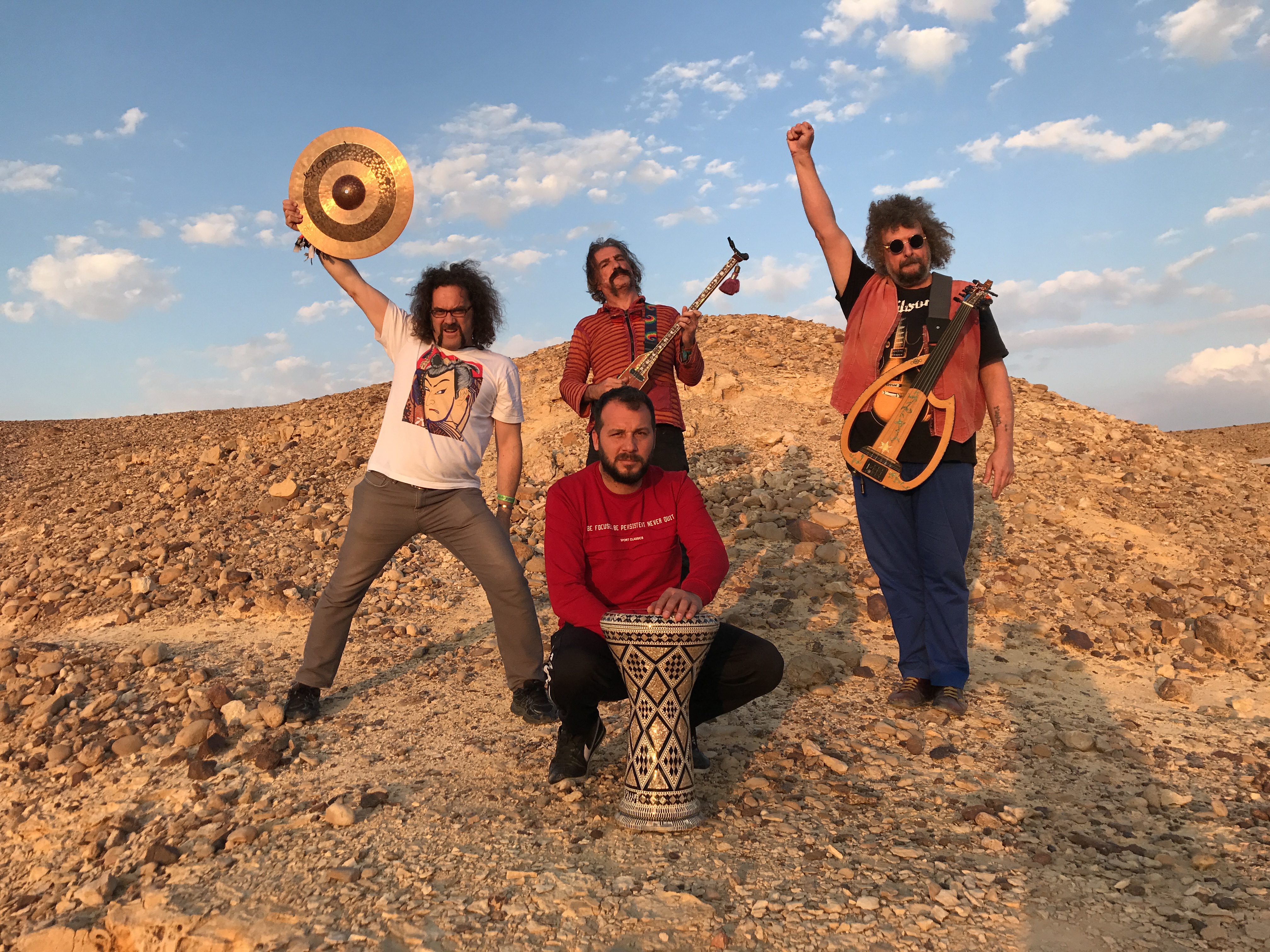
Freely traversing borders once more, Dominic Valvona’s regular roundup of discoveries and interesting finds this month circumnavigates Japan, Israel, Turkey, Poland before returning to the more chilled pastoral Estuary greenery of the Sussex and Essex landscapes. There’s a double-helping of upcoming releases from Glitterbeat Records stable with the return of the Turkish dub cosmology legends Baba ZuLa – their first studio LP in five years, Derin Derin – and a new album of post-punk limbering from the Gdansk band, Trupa Trupa. In a similar vane to the ZuLa, Israeli troupe Taichmania also fuse a cosmology of sounds, and use both the an electrified dynamism of the “oud” and “saz” to fuzz and amp up a merger of Middle Eastern traditions with jazz and prog. Their debut LP, Seventh Heaven is given the once-over. The trio of radio show host ethnomusicologist Matthew Nelson, Hopi musician Clark Tenakhongva and world-renowned flutist Gary Stroutsos come together on sacred ground to invoke a magical homage to the music of the Hopi people on the beautifully evocative LP Öngtupqa. Inspired by more Eastern mysticism the Seattle coupling of Society Of The Silver Cross release their debut long-suite, 1 Verse, and an amazing freefall-in-motion jazz exploration from Philip Gropper’s Philm, entitled Consequences.
There’s horror of a diaphanous apparitional kind with the latest solo album of invocations and ether siren sighed sonnets from Jodie Lowther, and the first album in five years from Junkboy, the marvelous scenic Trains, Trees, Topophilia, and, finally, the inaugural release from Ippu Mitsui’s brand new electronic music label, Pure Spark Records, the House Of Tapes two-track Embers Dreams.
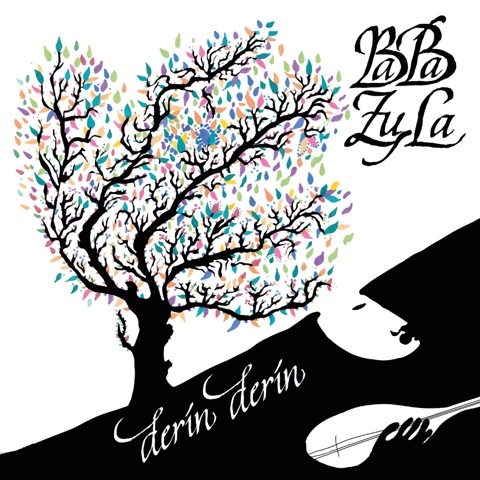
BaBa ZuLa ‘Derin Derin’
(Glitterbeat Records) 27th September 2019
Stalwarts of Turkish cosmology dub, the Istanbul Ege Bamyasi acolytes BaBa ZuLa return to the fray with their first studio LP in five years. And what a time to make that return, as Turkey, or rather its increasingly apoplectic quasi-Sultan-in-waiting Recep Tayyip Erdoğan, continues a policy of conformism that endangers any form of oppositional descent, and threatens artists and critics alike with severe censorship. The once famous secular moderate bridge between Europe and Asia is growing hostile to the West as the administration errs towards a hardline form of Islam, and moves closer towards Putin’s Russia.
Maintaining a constant rebellious streak throughout their twenty-three year career, whatever the ruling regime, the recent turmoil propels the ZuLa to reconvene; raising their heads above the barricades in a creative act of defiance: Music for dangerous times.
Still led, in part, by the switched-on electric ‘saz’ maestro Osman Murat Ertel, the group weaves together another expansive soundtrack of vivid souk dub and sashaying rambunctious post-punk on Derin Derin. Inspired by a number of things, not just the current political climate, the album is imbued by BaBa ZuLa’s long-running collaborations with the late Jaki Liebezeit: who was himself in turn influenced by a myriad of Anatolian rhythms – which you can hear permeating throughout both the Can legacy and his own many collaborative projects over the decades. The Can metronome and drumming doyen sat in with the group on a number of occasions, and the resonance, at least, of those sessions can in part be felt on this newest album. Especially on the Krautrock pulse of the solo fuzzed saz-snarling ‘Kizil Gözlüm’, which runs through a gamut of Germanic sounds, from Can to Blixa Bargeld and 80s Berlin post-punk. There’s even an air of Michael Karoli’s signature cosmic flares and reverberating wanes, as played on an amped-up oud (or saz), on the Sublime Porte reimagined vision of King Tubby, ‘Port Pass’. In retrospect, the band considers Jaki as an unassuming mentor.
Another thread to this album is the group’s ancestral connection, with musical ties that stretch back generations: Ertel paying a special homage to his artistic forbearers, enthused by traditions but also the country’s psychedelic furors in the 60s and 70s. From the 150 year-old photographic plate process used to produce the album cover, to the inclusion of a song penned by Ertel, his wife and young son, ‘U Are The Swing’, there’s a deep sense of family and inheritance; BaBa ZuLa as custodians of the faith.
A third strand, the instrumental portions of this Oriental cosmic album grew out of a soundtrack commission; the group asked to record music for a documentary about falcons, created a suitably exotic echo of serene flight and soaring majesty, as they accentuated the bird-of-prey plunging and floating over evocative commendable heights. These do act as mini-branches, vignettes and interludes between the longer songs.
The rest of the album oscillates and saunters between camel ride momentum Arabian Desert blues (thanks in part to the inclusion of an electrified oud), futurist Bosphorus reggae (via On-U-Sound and the Warp label) and even alternative rock. In the process they find an echo-y balance between the haunting and abrasive, and the elasticated and intense. A mystical union of the entrancing, sweeping and often chaotic, BaBa ZuLa ‘s hybrid of Turkish and Middle Eastern exotica straddles time and geography to once more create a fearless rump of defiance, yet also inspiring some hope.
Trupa Trupa ‘Of The Sun’
(Glitterbeat Records) 13th September 2019

The second Glitterbeat release to feature in my roundup up this month, the counterbalanced Polish band Trupa Trupa couldn’t be further apart, sound wise, from the more languid looseness dub of their label mates Baba ZuLa.
Freshly signing over to the German-based label, the multi-limbed quartet play off gnarling propulsive post-punk menace and tumult with echo-y falsetto despondent vocals and hymnal rock on their fifth album, Of The Sun. Feeding into the history of their regularly fought-over home city, Gdansk, Trupa Trupa create a monster of an album steeped in psychodrama, dream revelation and hypnotic industrialism.
In a perpetual tug-of-war for dominion with its Prussian, then German neighbors Gdansk strategic and commercial position as Poland’s most important post has seen the famous city become a sort of geopolitical bargaining chip over the centuries because of its gateway to the Baltic. After one such episode in a “convoluted” legacy, the city and much of its surrounding atelier of villages were turned into the Free City state of Danzig after WWI; a part compromise result of the Versailles Treaty in 1919. Famous son-of-Gdansk, philosopher Arthur Schopenhauer is credited as a major influence on the group and this album, and though not strictly born within the city limits, the infamous madman of cinema, Klaus Kinski – in one of his most wild-eyed legendary roles as the obsessive loon opera impresario, Brian Sweeney “Fitzcarraldo” Fitzgerald – is also mentioned in the PR spill: the “great effort of pathetic failure” and “strain sublimating into nothing” of that barely veiled characterization proving fruitful suffrage and inner turmoil for the group.
A sinewy, pendulous embodiment of that environment and metaphysical philosophy, Trupa Trupa write “songs about extremes”, but use an often ambiguous lyrical message when doing it: usually a repeated like poetic mantra rather than charged protest. On one of those framed “extremes”, the wrangling guitar-heavy post-punk-meets-80s-Aussie-new-wave ‘Remainder’ sounds like Swans covering The Church, as the group repeat the refrain, “Well, it did not take place.”
Though taut, industrial with ominous machinations, there’s a surprising melodious quality to the turmoil and free fall of Trupa Trupa’s proto-Gothic rumblings. In amongst the slogging, chain dragging of the Killing Joke, PiL, Bauhaus and Gang Of Four are echoes of a wandering angelic House Of Love, Echo And The Bunnymen, early Stone Roses, Pavement and flange-fanned Siouxsie And The Banshees. Strangely, however, the dreamy haunted title-track evokes Thom Yorke in a dystopian Bertolt Brecht theatre, and the stripped-to-bare-bones acoustic ‘Angle’ even sounds like a odd, if charming, folksy harmonics pinged missive from Can’s Unlimited archives: Incidentally, Can’s walrus mustache maverick, Holger Czukay, was born in Gdansk, or rather Danzig as it was known at the time.
The PR spill that accompanies this nihilistic-with-a-heart LP is right to state, “Of The Sun is an unbroken string of hits.” There are no fillers, no let-up in the quality and restless friction, each track could exist as a separate showcase for the group’s dynamism: a single. East European, Baltic facing, lean post-punk mixes it up in the Gdansk backstreets and harbor with spasmodic-jazz, baggy, math-rock, psych, doom and choir practice as this coiled quartet deliver an angst-ridden damnation of humanity in 2019.
Taichmania ‘Seventh Heaven’
21st June 2019

The second group in this roundup to fuse the “saz” and “oud” within a cross-border traverse of Arabia and Turkey, Israeli troupe Taichmania take a similar line to BaBa ZuLa in freely merging musical cultures.
Well-traveled founding member, and the man whose name appears so prominently in the band moniker, Yaniv Taichman has a rich and varied pedigree having studied jazz at the Rimon College Of Music, Turkish music with Professor Mutlu Torun in Istanbul, and Indian music with Pt. Shivanath Mishra in Varanasi. His band mates, Sharon Petrover on drums, Yoni Meltzer on keys and electronics, and Lois Ozeri on bass, are no less musically worldly in that respect.
Stalwarts on the Israel scene in various forms, together under the Taichmania umbrella the quartet limber across a panoramic landscape of Sufi funk, souk-rock, prog and jazz on their debut suite, Seventh Heaven. A veritable elasticated fantasy of both intense hypnotic rhythms and desert peregrinations, this heavenly bound odyssey entwines the traditional sounds and scents of the Arabian Orient with zappy cosmic electronic undulations of synth atmospherics.
Broadcast samples from Middle East radio linger through a kind of spicy exotic brooding mix of Natasha Atlas and the Transglobal Underground on the opening ‘Arabesk’, whilst other such exotic intensity as the contorting spiraling title-track, and post-punk bendy ‘Saba’ are whole journeys, sagas, in their own right; moving between progressive-jazz fusion and futuristic Arabian vapours.
Taking classic leanings to the heavens and beyond, Taichmania knottily skip, scuffle, spindle, echo, quiver and solo through their magical influences to produce a live-feel Oriental soundtrack: heavy on the Prog!
Junkboy ‘Trains, Trees, Topophilia’
(Fretsore Records) 2nd August 2019

Regular readers will (hopefully) be aware that we premiered the Hanscomb brothers’ vibrato-mirage-y ‘Waiting Room’ single last month. This Baroque-pop fashioned nugget, bathed in a halcyon shimmer, proved an idyllic introduction to a pastoral album of geographical traversing instrumentals.
As its album title suggests, public transport(ive) and a strong sense of place have inspired the brothers first album since the much acclaimed 2014 album, Sovereign Sky: Both relocating years ago from Southend-On-Sea to the south coast ideals of Brighton, Junkboy siblings Mik and Rich compose a twelve-track suite to the back-and-forth journeys they made between the two counties of Essex and East Sussex. The “Topophilia” of that title, a term wrongly as it transpires attributed to John Betjeman, can be roughly translated as a love for certain aspects of a place that often gets mixed with a sense of cultural identity.
Passing through a myriad of versions of this landscape, influences include the troubled World War artists of England who depicted the torn-up apocalyptic aftermaths of Europe and the results of bomb raids across the English topography (becoming the doyens of the English modernist movement in the process), to the passing glimpses of the versant downs, beaches and “splendor towns” from a train window, and (friend and Junkboy photographer) Christopher Harrup’s Thames Estuary photo album. The first of these inspirations offers both a colour palette and a semi-abstract empirical vision of that countryside; messrs Paul Nash, Graham Sutherland and John Piper, a triumvirate of influential painters, providing a suitable rich canvas: Just one of the guests on this charming LP (and no stranger to this blog) Oliver Cherer even helps pen a Nash homage, ‘A Chance Encounter’ plays with the light musically on a magical pop melody of slow jazzy brass, relaxed drums and flute-y forlorn.
Disarmingly chilled yet full of wistful rumination, Junkboy’s Brighton-Seaford-Southend traverse wonders what it would sound like if Brian Wilson was born and bred on the English Rivera instead of Hawthorne, California; the beachcomber vibes of Pet Sounds permeating throughout this quint lush English affair. You can safely add vague notions of Britpop era Octopus, a touch of the Super Furry Animals more folksy psych instrumentals, some early Beta Band, echoes of 90s Chicago post-rock, and on the dreamboat bluegrass lilted-and-silted ‘Sweetheart Of The Estuary’ more than a nod to Roger McGuinn and pals.
Trains, Trees, Topophilia is a peaceable musical landscape littered with the ghostly reverb of railways station interchanges, mew-dewed laced green hillsides, tidal ebbs and flows and Cluniac Abbeys – the millennia-old, Benedictine scion religious brethren, brought over in droves after William The Conqueror’s invasion of England, make a historical connection between both the album’s Essex and East Sussex locations; the orders’ priory in the Prittlewell of the same song title, originally set up by Cluniac monks from Lewes, just outside Brighton.
Pastoral musical care for the soul, Junkboy’s instrumental album is a beautifully conveyed canvas of the imagined and idyllic; a subtle ode to the Southeast cartography and painters, poets, writers that captured it so perfectly. This is an album that will grow on you over time, revealing its sophistication and nuanced layers slowly but surely: a lovely hour to wile away your time.
Jodie Lowther ‘The Cat Collects’
26th July 2019
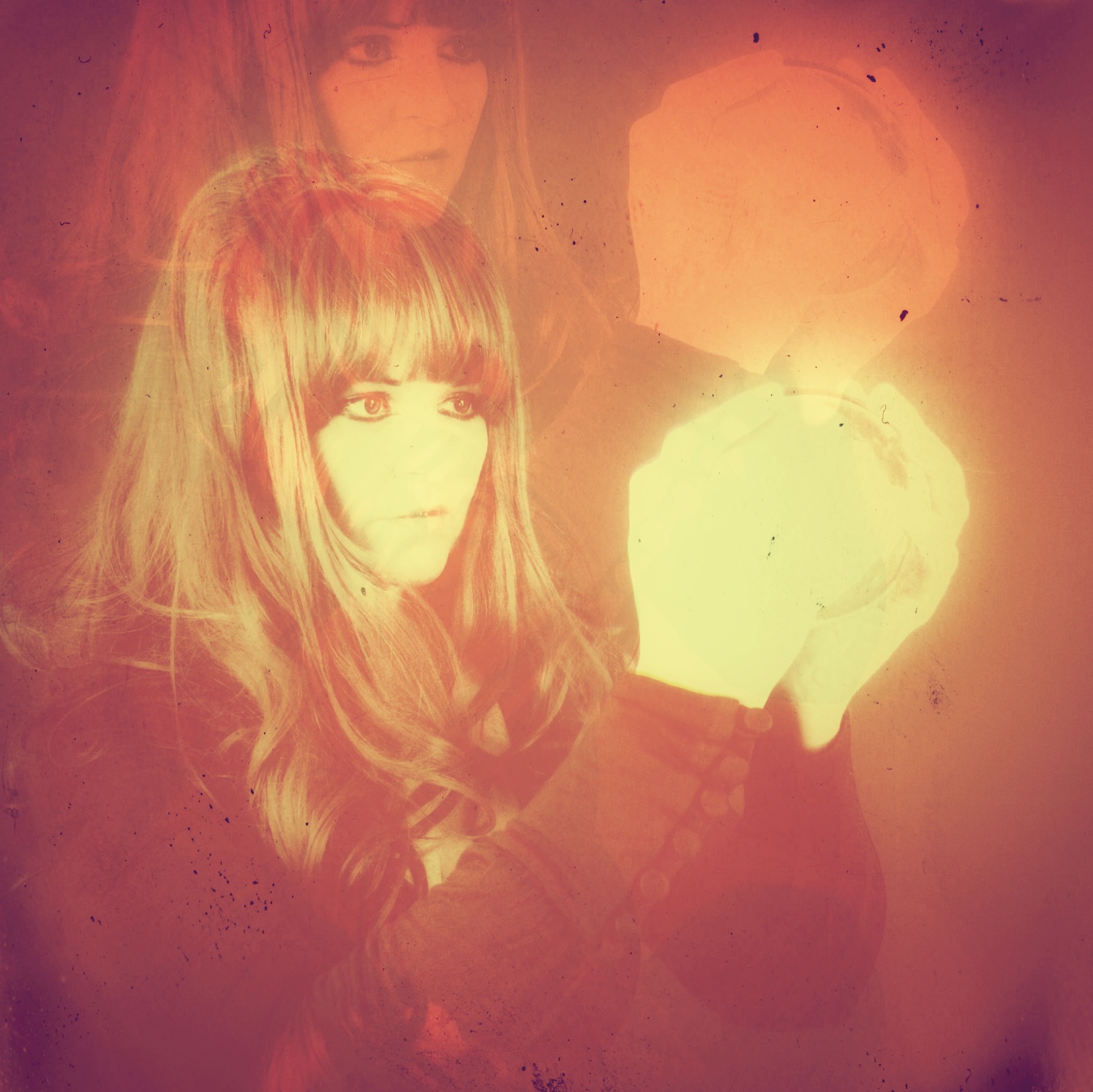
One apparitional half of the surrealist Quimper duo, vaporous siren Jodie Lowther has been known to, on occasion, float solo. Her latest haunted diaphanous malady, The Cat Collects, is (as ever) a magical suite of dream realism and supernatural theater.
Between the characters of ethereal seraph and alluring cat lover, Jodie warbles, coos and entrances with a voice so fragile and gauze-y as to be almost an evanescent whisper: Jodie transmitting her vocals from the spirit side of the ether like a aria woozy Mina Crandon.
Drifting in a seeping cantabile sigh throughout this witchery spell of spooky misty songs and graveyard crypt sonnets is a subtle backing of feint melodies and stripped electronica – think Ultravox marooned on the Forbidden Planet or, an early Mute Records vision of 70s British horror soundtracks (Amicus, Hammer, British Lion). From invocations of Vampire lovers to black magic nuptials, The Cat Collects stirs up the right balance of scares and esoteric enchantment on an album of mysterious, creeping beauty and hazy Gothic soundtracks.
Society Of The Silver Cross ‘1 Verse’
28th June 2019
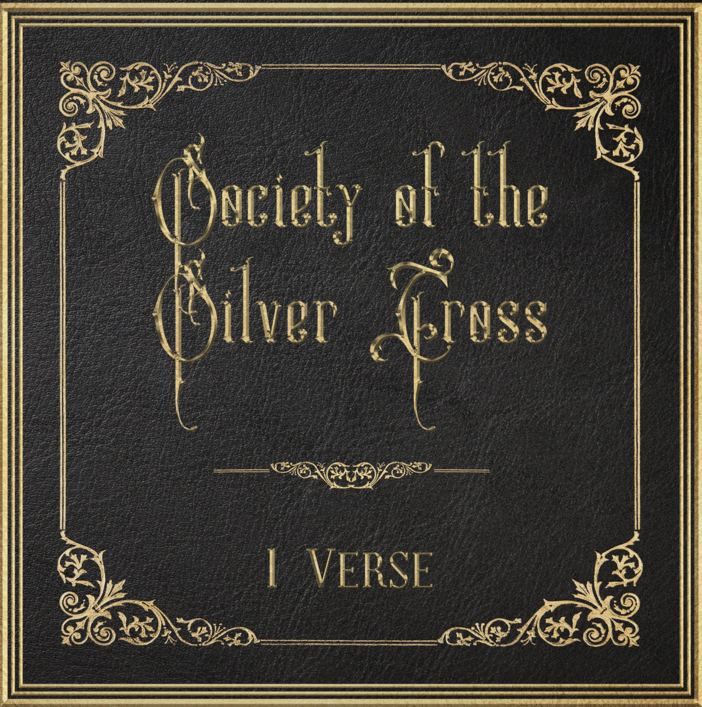
Over the last few months, and featured in previous editions of my roundups, the Seattle coupling of Joe Reinke and Karyn Gold-Reinke, under the auspicious appellation of the Society Of The Silver Cross, have presented us with a trio of evocative-enough Eastern death cult imbued video-singles. Making good on those mystical visions, the duo have released an album that both continues the Velvet Underground say “Om” Indian Gothic drone psychedelia of those tracks but also widens the musical palette to take in shoegaze, new wave and 90s alt-rock.
Still inspired by their spiritual travels to India, and adopting the invocation drone of the “shahi baaja” (Indian autoharp) and induced bowing of the “dilruba”, the Silver Cross explore the “transformative and renewing powers of death” as they flick through a bewitching songbook of Orientalism, Byzantium incense-scented opulence and bellowing sea shanty Edgar Poe scribed Gothic coastlines.
Leaving aside that run of singles (‘When You’re Gone’, ‘Kali Om’ and ‘The Mighty Factory Of Death’) the book of spells adorned 1 Verse piles on the melodrama of opiate arcane rites and woozy harmonium pumped esoteric atmospherics; opening with the repeated echo-y chanting ritual ‘Diamond Eyes’. In a similar mystical vain, distant tolled bells and the reverberations of a choral Popol Vuh creep into the holy processional lamented ‘Funeral Of Sorrows’. Yet, amongst the death marches and promises of spiritual release, rejuvenation and the inevitable there’s more radiant escapism in the form of spindled Baroque-psych (‘Dissolve And Merge’), alt-pop (‘Because’ imagines The Cars and Why? in holy communion) and even a bastardized Travelling Wilburys (‘Can’t Bury Me Again’).
Kneeling at the altar of a many-faced god/goddess the Silver Cross play freely with all those many influences; indulging in the Eastern arts but expanding horizons and even absorbing past Seattle imbued projects.
If you’ve only thus far heard the singles then much of the second half of this album will be a surprise. Dreamy mantra and morbid curiosity coalesce to produce a mesmerizing, hypnotic ritual; opening the door to further experimentation and proving a worthy new incarnation for Joe and Karyn to channel.
Tenakhongva, Stroutsos And Nelson ‘Öngtupqa: Sacred Music Of The Hopi Tribe’
(ARC Music) 26th July 2019
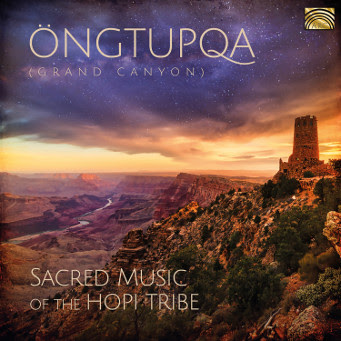
Breathing (literally) life back into the ancestral evocative paeans and spiritual communions of the Hopi people, the trio of radio show host ethnomusicologist Matthew Nelson, Hopi musician Clark Tenakhongva and world-renowned flutist Gary Stroutsos come together on sacred ground to invoke a magical homage.
First a little background. The Hopi, unlike many of their fellow communities of Native Indian tribes in the Americas, lived in more permanent villages, across swathes of South East Utah, North East Arizona, North West Mexico and South West Colorado. These dwellings, some very complex in their construction, gave birth to the Colonist appellation, the Pueblo People, but also because they were considered a more civilized, polite community; their concept of life based on a reverence for all things.
At the heart of this stirring earthy but often-transcendent project is the atavistic instrument that set it all in motion: the 1500-year-old Hopi long clay flute. Unearthed in the last century by the archeologist Earl Halstead Morris, who was leading a Carnegie Institute Expedition to the Prayer Rock district in North East Arizona in the 1930s, these hollow, reedless flutes were part of a thousand artifact haul of discoveries. Relatively remaining a mystery for decades to come, it wasn’t until further research in the 1960s that these flutes from the now renamed “Broken Flute Cave” could be confidently dated to around 620- 670 AD. What remains remarkable is that this sacred instrument was thought lost by the Hopi descendants themselves; disappearing hundred of years ago, until flute specialist Stroutsos with project instigator Nelson played a replica version in front of Hopi custodian Tenakhongva, who promptly invited him to play it in front of his entire family and then, at a later date, at a venerated spot near where the original clay flutes were found.
Part of the wider Canyon Music Festival in 2017, at the Mary Colter built Desert View Watchtower, the trio’s performance, with Nelson keeping rhythm on clay pot drums (keeping it all historically accurate, stretched-skin drums being out of time and step with the 7th century flutes), Strouthos improvising on flute and Tenakhongva singing whilst handling the percussive rasps, rattles and gourd, was filmed and recorded. An “approximation” of how the Hopi’s holy music would have sounded almost 1500 years ago, the Öngtupqa (the name given by the Hopi people to the canyon in which our trio played) nine-track suite remains untouched, unmodified or edited two years on.
Setting the atmosphere of both earthy soul connectedness and flighty astral mystery, the obviously talented and well-honed players perfectly capture the dream-like ritual and awe-inspiring panorama that surrounds them. If you were expecting the synonymous rain dance and powwow holler chants of much Native Indian music, think on. Öngtupqa is more entrancing, ambient in places, with the vocals, or chanting, graceful and often melodious but deep. Lifting out of the canyon to dizzying cloud-ruminating heights, you’ll still constantly reminded of the vast American outdoors and desert landscape: A rattlesnake shakes his distracting tail here, a panpipe flight of a condor or thunderbird over there on the mountainside.
An intimate tribute to the Hopi cycle of life (as Tenakhongva explains it, “…we were born within the Grand Canyon and when we are done, we return back to this place to rejuvenate life of a new beginning…”), the stories and music of that scared site are offered and opened-up to a global audience; a message of the communal, of preservation, being at the very heart of this vivid undertaking. The ancestors will be proud, as the two millennia old blessings and spiritualism of the Hopi is brought back to life.
House Of Tapes ‘Embers Dreams’
(Pure Spark Records) 7th August 2019
The Japanese electronic music wiz kid Ippu Mitsui has graced these roundups on a number of occasions over the years, and featured on numerous Monolith Cocktail playlists. Releasing a varied kaleidoscope of futuristic Tokyo electro-glides-in-blue and kinetic techno on a spread of labels, Mitsui originally came to my attention through his releases for the Edinburgh-based Bearsuit Records. Still recording ad hoc, Mitsui has now just launched his very own imprint, Pure Spark Records. Another one of Bearsuit’s extensive roster of mavericks, the inaugural release on that venture is from the experimental composer Yuuya Kuno, who under a variety of alter egos has prolifically knocked out a mix of the weird and sublime electronica.
Back recording under the House Of Tapes moniker in this instance (known as Swamp Sounds when passing sonic oddities through Bearsuit), Kuno’s two-track showcase, Embers Dreams, is a lucid, air-y and sophisticated affair. The “Embers” of that title is an inviting exotic amble through a moist-vegetated oasis of itchy, scratchy, woody and echo-y deep electro percussion, whilst the accompanying ‘Melted Ice’ offers a glass-y trance-y, robotics-in-motion slice of downtempo chiming soundtrack. A great subtle and deep piece of electronic manna and flow with which to launch Mitsui’s brand new label, House Of Tapes kickstarter is a serious piece of classy techno: an augur, a good omen I hope of what’s to come.
Philipp Gropper’s Philm ‘Consequences’
(Why Play Jazz)
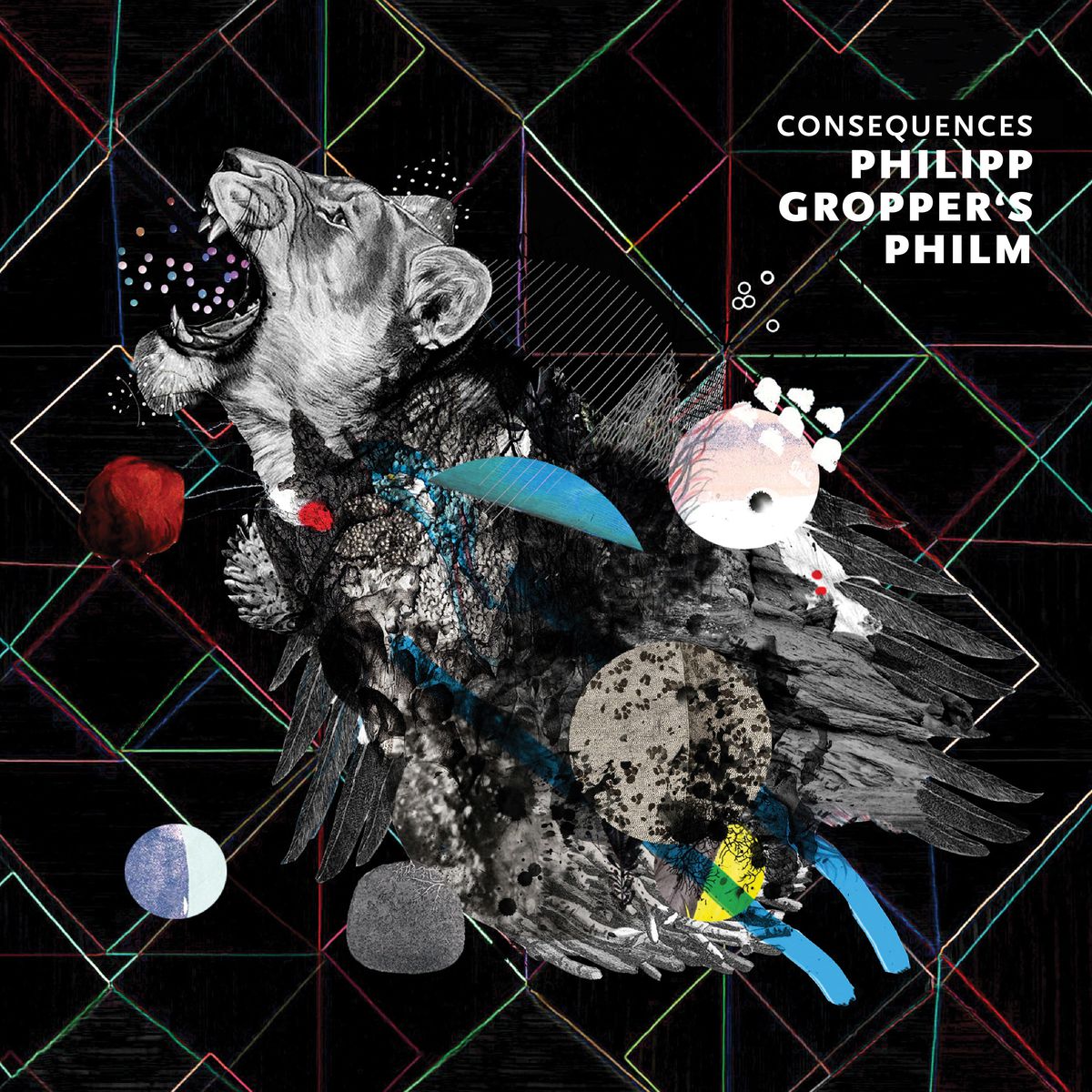
A balletic jazz freefall in motion, the latest tumultuous suite from the acclaimed “David Bowie of jazz”, tenor saxophonist/composer/bandleader Philipp Gropper (and his Philm troupe), is a highly experimental reification of contortions and sporadic, spasmodic chaos: albeit a controlled, kept-in-check, vision of an avant-garde one.
The multifaceted title of this orderly breakdown in heightened tensions and liberating angst can be read in many ways: The “consequences”, for example, of our political divisive times can be heard and read loudly crashing throughout this six track album of disjointed intensity; the fallout from all sides of the societal divide causing enough anxiety, suffering and despondency to fuel Gropper for the next decade or more. In fact the whole course of “neo-liberalism” itself is on trail (or at least its knock-on effects of intervention), however abstract that might be.
Space expletory wondrous track titles aside, the filthy lucre spiral of dependency and spluttering wild ’32 Cents’, and funneling discordant interchange ‘Thinking From The Future (Are You Privilaged?)’ are both the most obvious proponents of that socially “woke” commentary – though whose privilege needs to be checked exactly in this exchange is open to debate.
The concerns of “interpersonal” and “interrelationships” within this charged political landscape are also a major focus for the Berlin-based jazz man; adding to a uncertain free flow of both centrifugal spinning discourse and more haunted, sometimes diaphanous, twinkling.
Escaping the atmosphere, orbiting the cosmology of deep space, Gropper’s most serene dance of glistened, starry majesty and mystery is the astral soundtrack to ‘Saturn’. Both the enormity and expansive uncertainty of this planetary titan is expressed evocatively enough by Gropper’s otherworldly Theremin aria like reedy breaths on the tenor sax, as his companions bounce and skip around the planet’s rings. Saturn holds a strong fascination for all of us, but it can’t have escaped Gropper’s notice that jazz music’s most celestial star, and progenitor of Afrofuturism, Sun Ra, claimed to have ascended to Earth from his Saturn home.
The musicianship is, as you expect, first rate, with Gropper’s sax totally untethered, squawking, fluting, brilling and even trembling, whilst his band of Elias Stemeseder (on piano and synth), Robert Landfermann (on double-bass) and Oliver Steidle (on drums) react decisively with limbering, elasticated reflexes. Together hey create an iridescent breakdown and reconstruction of digital calculus, science-fiction and the cerebral; merging contemporary European jazz with elements of Coltrane, Coleman, Billy Cobham, Stockhausen, The Soft Machine and the electronic and hip-hop genres. Futurism and avant-garde classicism collide in an oscillating and tumbling fusion of complex ideas: Consequences is a musical language on the verge of collapse. How it all stays together is anyone’s guess. This is a most impressive adventure in jazz.
 Monolith Cocktail Blog