The Perusal #65: The Young Mothers, Inturist, Nickolas Mohanna, A Journey Of Giraffes…
March 5, 2025
A World of Sonic/Musical Discoveries Reviewed by Dominic Valvona

Photo Credit: The Young Mothers shot by Malwina Witkowska
The Young Mothers ‘Better If You Let It’
(Sonic Transmissions) 21st February 2025
Those (Young) Mothers of reinvention transform crate digging reminisces and nostalgic hummed melodies from the age of the Great American Songbook on their new album, Better If You Let It.
Whilst maintaining the freeform principles and eclectic range that has come to define them; cut loose from obligation, any burden, and so free to roam and extend their scope of influences as they please, The Young Mothers return after an interregnum of setbacks, relocation and both forced and unforced breaks: some of that time can be blamed on the global inconvenience of Covid and the resulting lockdowns.
Corralling such a loose configuration of able and notable musicians and artists together is no mean feat; especially with the diversity of schedules, with every willing collaborator and band member in such high demand or leading their own projects. But all six players managed to commune in 2022; coming together to record the group’s third album in Oslo, the capital of TYM’s founding instigator and electric/acoustic bassist Ingebrigt Håker Flaten. The group was actually first conceived when Flaten moved in the opposite direction from Norway – after sojourns with such noted groups as the Norwegian Ornette Coleman imbued trio Neon – to Austin, Texas, back in 2009. Not wasting much time, Flaten’s rich Nordic legacy of contemporary jazz met head-on with the arid Southern state’s burgeoning scene of experimental and leftfield polygenesis collaboration. But after a decade or more of improvising both live and in the studio, Flaten decided to move back home: hence the location of this new album.
But there is a secondary connection to the Nordic scene and homeland through the sextet’s vibraphonist, drummer, percussionist and voice Stefan González, who’s late father, the revered Texan jazz trumpeter Dennis González, recorded an album in Oslo together with some of Norway’s most notable musicians in the early 90s: By the way, that González musical legacy also includes bassist brother Aaron; both siblings play together in various setups, most notably as Akkolyte. Stefan and the group pay tribute to Dennis’s memory, that time and location, on the sombre and mysteriously whispery track, ‘Song For A Poet’. Taking a near esoteric, near Sufi mystical and wild turn with the use of collaborating voices from Klara Weiss and Malwina Witkowska, the mood is at first chthonian, shadowy and near foreboding until the tints and bulb-like vibraphone notes of Milt Jackson and the Modern Jazz Quartet tinkle and hover, and digeridoo-like blows merge with bristled reed breaths in an amorphous dimension of feeling-it-out-jazz and exploration of abstract commemoration and recall.
I must at this point mention the rest of TYM’s lineup, which includes a name Monolith Cocktail regulars will hopefully be familiar with, Frank Rosaly. The attuned, experimental drummer extraordinaire appeared alongside his foil the multimedia performer and singer Ibelisse Guardia Ferragutti on last year’s enriching MESTIZX album – one of my favourite and choice albums of 2024. Sharing the drums with González, but also switching to electronic programming,he’s joined by the Shape of Broad Minds polymath Jawwaad Taylor on trumpet, rhymes and electronic programming, accomplished player Jason Jackson on both tenor and baritone saxophone, and Plutonium Farmer and Flaten regular sparring partner Jonathan F. Horne on guitar.
Between them, they cover everything from post-rock to freeform jazz, hardcore, hip-hop and death metal – I presume its González’s daemonic black metal-esque growling on the album finale ‘Scarlet Woman Lodge’, as he is credited in the liner notes with “voice” duties alongside drumming, percussion and vibraphone.
I think I’m right in saying that this is the first album in which all the participants share writing duties. The inspiration and source, a “whimsical” ballad, behind the opening title-track for instance, was first brought to the band by Jackson as a sort of tribute to the Great American Songbook. In turn inspired by rifling through old records from another age, this original idea, the melody, was transformed, deconstructed, reinvented and fused with the rap style rhyming of the Freestyle Fellowship, The Roots, Death Grips and Talib Kweli, the fuzz scuzz guitar of Monster Movie period Michael Karoli, the soulfulness and vibraphonic twinkle of Isiah Collier and the already referenced Modern Jazz Quartet, and the feels of old time Art Pepper, but all performed by Madlib remixing in real time Isotope 217 and Zu.
There’s a whiff still of nostalgia on the next track, ‘Hymn’, which recalls the Savoy label, the sound of Gillespie, but reconfigured by the Pan Afrikan Peoples Arkestra. As that title suggests, this is a spiritual of a kind that twangs and stirs until reaching a climatic passage of buzzing, croaking, straining saxophone pleads. ‘Lijm’ glues together elements of Q-Tip, clipping., Rahsaan Roland Kirk, Trenchmouth and Sault, with the pulse and current this time being more tuned towards the electronic: flips, mechanical devices and data sit with and underneath the action and the activist coaching.
Engaging and embracing past influences and inspirations, the eclectic ensemble pushes further in stretching the boundaries. And despite the range and scope, the many musical threads, it all comes together quite congruously to produce the perfect rounded album of nostalgic and free jazz, hip-hop, no wave, hardcore and acid rock, and electronica. A definite choice album for March and 2025.
Inturist ‘Tourism’
(Incompetence Records) 14th March 2025
Engaging at the best of times with a wealth of regional cultural/musical/sonic influences and passions, the producer, musician, former Glintshaker instigator and multidisciplinary artist Evgeny Gorbunov continues to transform his various exiled travails and more pleasing creative pilgrimages into magical, playful and odd adventures under the Soviet era borrowed Inturist guise: itself a reference to the sole Soviet era tour operator and travel agency for foreign visitors to the country before the fall of the Berlin Wall.
Sparked by an interest for Southwest Asia and North Africa, Gorbunov’s latest travelogue is a curiosity of mirages, bendy sun-bleached guitar, elastic and rubbery pliable plastic and tubular rhythms, morphed Salyut space programme soundboards, library music oddities and psychedelic primitivism. More attuned to the abstract and both vapoured and hallucinatory transformations of his travels beyond the Russian homeland to the Balkans and Israel than the geopolitical crisis of our times, the worldly sonic traveller finds a balance between the strange and bejewelled. An entire voyage of aural discovery awaits like an escape from the destructive carnage unfolding in real time, with Gorbunov caught between both the Russian invasion of Ukraine and Israel’s fight with Hamas.
Originally in forced exile, having left Russia as it menaced and then set in motion one of the most cruelling and horrifying conflicts of the age, Gorbunov moved to Belgrade, the capital of Serbia – a country fraught with its own history of war and the cracking down in recent times of civil liberties and a free media. However, there would be journeys made further afield, including the city of Tel Aviv (Trump take note, there is already a Middle Eastern Rivera of a kind, and this is it), where he recorded and produced some of the tracks on this fifteen-track travel guide. Luckily not on the frontline of the murderous Hamas insurgency that led to an ever-widening revenge of score-settling by Israel (they’ve been very busy, clearing up a lot of the mess for the West in the process; fighting on at least four different fronts; weakening Iran’s grip and influence; and eradicating much of that empire’s proxies in the bargain), the very last Tel Aviv studio session in 2023 took place on the fatalistic date of October 7th . But this is an album of intriguing, idiosyncratic peculiarities; of sound invention and engagement with a landscape both imagined and real.
Moving seamlessly across that map, influences from the avant-garde, kosmische, psychedelic, ethnic, new age, trance, otherworldly, tropical and no wave cross paths to form a novel retro-futuristic and transmogrified vision of exotic and folkloric ethnography and etymology. As part of that cosmopolitan project, there’s references to the Russian dance and driving-horses harness of “Troika” to the French dialect phrase for “winter landscape” “Paysage d’Hiver”. The former, and opener, is said to include a dance that mimics the prancing of horses puled by a sled or carriage. Musically there’s little to reference this, as the bandy ripping effects of lightly torn felt, the lunar effects of a Soviet era sci-fi movie and padded rhythms amorphous conjure up a movement and direction of a kind. The latter sure has some vague dull sun sparkle of light sharply hitting the wintery scape as a loose spring and twangy Charlie Megira guitar flicks over another cosmonaut lunar spell of retro-space sounds.
The Soviet underground meets Überfällig era Gunther Schickert and Finis Africae on the huffed and mewing voiced, valve opening effects twiddling ‘Special Offer’; and there’s something Malaysian, albeit very removed, sounding on the fluted, piped and tubular blown ‘Reminder’. But if you were looking to get a hold on the overall sound, which changes constantly as it vaguely picks up percussive and rhythmic, folksy and traditional hints of Afro-Brazil, the Balkans and Asia, then imagine Populäre Mechanik booking a surreal tour of those regions with Ramuntcho Matta, Gene Sikora, Sun City Girls, Ganesh Anandan, Moebius & Plank and Aksak Maboul in tow.
A great approach to sound collage and the transference of special held scenes, memories – especially those that offer nostalgia for the cold war period optimism of Soviet technology and the space programme – and trippy dreams, the Tourism album envisions oscillated, melting, animated and cult flights of fantasy that repurpose the terrain and topography. In short: one of my favourite albums of 2025.
Gregory Uhlmann, Josh Johnson, Sam Wilkes ‘Uhlmann Johnson Wilkes’
(International Anthem) 14th March 2025
Hot-housed in various creative incubators both in Chicago and L.A., the triumvirate gathering of guitarist, composer and producer Gregory Uhlmann, saxophonist, composer, multi-instrumentalist and award-winning producer Josh Johnson and bassist, arranger, composer and producer Sam Wilkes can all draw upon a wealth of experience and influences from the jazz world and beyond.
Crossing paths on numerous occasions – only last October both Uhlmann and Johnson appeared on fellow International Anthem artist Anna Butterss’ Mighty Vertebrate album –, all three exceptional musicians and artists congruously join together for an extraordinary attuned, sensitive and improvisational project that fuses the electroacoustic with a removed vision of chamber jazz, Americana and the experimental.
As a most tantalising prospect, this trio was conceived and set in motion by a couple of live shows – you’ll hear the polite but encouraging audience on the first two tracks – and a session at Uhlmann’s pad in L.A. And from that, a near organic growth of both attentive and stirring moods and ideas prompted an evocative language of harmonics, carefully placed twitches and plucks, sustained serenity, moving melodious hallucinations, strained misty breathes, subtle ambient and trance-y beds and wisps, vapours of synthesized effects, and plastique and pad pattered tubular rhythms.
With references to a brand of especially creamy and luxuriously textural toothpaste, the Armenian name for “sunshine” and a Mexican turnip, an international and abstract world of motivations is transduced into a mood music of the dreamy, introspective, soulful, ebbing and amorphous. From landscape gazing with Daniel Vickers, Myles Cochran and 90s David Sylvian (‘Unsure’) to floating in a warbling dreamy alien mirage (‘Shwa’), the performances, interactions effortlessly convey images, emotions as they both daintily and like a vapour of steam seem to drift or chirp along in an almost shapeless form.
In keeping with a theme of introspection, of the loner seeking a moment away from the onslaught of noise and distraction, the trio have chosen to loosely cover McCartney’s wistful break away from the idiosyncratic surreal, music hall and madcap rambunctiousness of the Magical Mystery Tour coach trip, ‘The Fool On The Hill’. It’s a lovely gesture; an indulgent mizzle and long exhaled alto sax breath of hazy and watery trickling finery that blends echoes of healing balm Alice Coltrane and Kamasi Washington with an ambient tremulous and beautiful haze. They’ve pretty much kept the signature melody but stretched it out and dispensed with the whistled flute and felt capped folksy magic for something more in the spiritual mode. A lovely finish to a sympathetically attentive and masterfully felt album that balances the unhurried with the prompted, playful and abstract.
A Journey Of Giraffes ‘Emperor Deco’
(Somewherecold Records) 7th March 2025
I’m taking it personal now. For after years and years of trying to sell the adroit, visionary ambient, neoclassical, electronic works of John Lane, and showcasing the American’s prolific catalogue of explorative opuses, he remains largely ignored: cast out on the fringes. Not that I give a shit about validation, but it would be nice if bandcamp at least wrote a feature, or that his work was played across the airwaves internationally and more regularly.
I’ve championed the unassuming composer since the very start, going back to the very inception of this blog fifteen years ago. From the early days of experimentation and the beachcomber bedroom transformations of Pet Sounds under the Expo guise to his various projects under the A Journey Of Giraffes moniker, I’ve pretty much covered everything John has ever transmitted. And after all this time, I find it bewildering that his music hasn’t managed to cut through.
Arguably John’s most enduring partnership in recent years has been with the North American label Somewherecold Records, who’ve released around eight of his albums, including this concomitant partner to 2023’s Empress Nouveau. There’s been other releases in between, but planned at the time, and now seeing fruition, is his masculine answer to that feminine album’s subtle and decorative qualities, Emperor Deco.
A change musically as he balances the tactile and the refined crafted filigree of that previous conceptual work, the curves and softer lines of Art Nouveau are now replaced by the geometric crystals, the harder light catching shapes and lines of Art Deco – there’s even a reference, title-wise, to famous the Bohemia makers/manufacturers of crystal Art Deco-styled glassware “Karl Palda”. Playing with those era defining art movements, in a literal and metaphorical sense but symbolically too, John now emphasis the noirish and bluesy, the brooding and remunerative.
For Nouveau, arriving during the Belle Epoque of a golden age that soon crumbled during the onset of World War I, its applied softened ideals and art is identified by John as feminine. Whilst Deco is synonymous with the roaring 20s: the feelgood period that despite everything was soon caught up in the Great Depression and then the rise of European Fascism. And this art form, from the design of products to architecture, is defined as masculine by John. Both now converge to form a whole.
Still very much in the ambient field of exploration. And still showing signs of the subtle craft and influence of John’s musical guru Susumu Yokoto. The mood music now embraces a soft layer of smoky, wafted, cuddled, strained, blown, accentuated saxophone and carefully placed synthesized drumbeats and rhythms: of a kind. For John has essentially created a removed version of a jazz album; something more akin to Alfa Mist or Jacek Doroszenko transforming the essence of Pharoah Sanders, Sam Gendel (both are referenced in the accompanying notes), Petter Eldh and Archie Shepp.
You could suggest there was also a “spiritual jazz” vogue to the sound, especially with the shake of trinkets, the amorphous echoes of bells and percussion that could be from the Far East, Tibet and North Africa, and of course the spindled sounds that could have been caressed and woven by Alice Coltrane or Laraaji. And that’s without mentioning the jazzy bulb-like electric piano notes and, what could be, the vibraphone, which has more than an echo of the Modern Jazz Quartet about it.
Add to this noirish, spiritual jazzy feel another subtle layer of Jon Hassell fourth world musics and a resonance of Nyman, Glass, Finis Africae and Sylvain and the perimeters are further expanded, his range growing ever more expansive. We can also hear the odd memory recall from those seashells collecting Brian Wilson-like Expo experiments of old, which when mixed with the jazz elements makes for a winning combination.
John inhabits this space at times like a mizzle, a gauze, effortlessly absorbing references, sounds and moods as he languidly and beautifully captures his concerns, moods and offerings of escapism from the full-on assault of the daily grind. There’s depth, a touch of sadness, but for the most part this is like a mirage or dream that repurposes the sound of jazz.
After last year’s long form Retro Porter (one of my choice albums of 2024) John’s deco-imbued, romantic and smoky album returns to the shorter track format with a generous offering of twenty-two musical pieces, experiences and evocations that never drag, seem indulgent or test the patience: You could say John has found the perfect length of time in which to express himself on an album in which each track is perfectly realised and executed; existing both as a singular moment, passage of time, and yet also forming part of a one whole experience of repeating signatures. This could (should) be the album that finally cements John’s reputation as one of the most imaginative and prolific artists working in this, or these, fields of compositional experimentation.
Nour Symon ‘I am calm and angry • e’
(Magnetic Ambiances) 7th March 2025
Nour Symon’s orchestrated and instigated reification of angst, rage and activism speaks just as much about the present decade’s movement against authoritarianism, the State commodification of education and health, and the erosion of civil rights as it does about this work’s main inspiration, the “Printemps érable” protests of 2012.
You could say that the expressions, the sonic and orchestral devices, the use of voices and poetry, of manifesto and barricade rattling are all just as prescient in the aftermath of the pandemic as they were thirteen years ago when a groundswell of support grew up around demonstrations against the proposed doubling of tuition fees in the province: increasingly expanding the remit, widening the disgruntlement, everyone from labour unions to environmentalists, leftists and marginalised groups ended up supporting a growing resentment, the ranks of which numbered around 250,000 at its peak.
Despite various setbacks – the lockdowns had a knock-on effect for this project, forcing an abandonment of the original plan to work with the Montérégie Youth Symphony Orchestra – the Egyptian-Quebec composer transforms the energy and directs an abstract despair into an avant-garde electroacoustic and experimental voiced theatre of the absurd, dramatic, expressionist and pained. In many ways a cross-generational grief and pull of despair, political activism and action, this album’s notable contemporary poet collaborator Roxanne Desjardin draws upon the 1980s and 1990s countercultural writings of the iconic Quebec poets Denis Vanier and Josée Yvon.
Ambitious and covering a multitude of disciplines from visual and text art (a graphic score was conceived to communicate the concept) to performance, orchestral transmogrification, opera and video, I am calm and angry • e uses a host of renowned, prize nominated poets, soloist musicians and ensembles; far too many to mention in detail here, but all integral to conveying the very real emotional maelstrom and rage of protest. Across six tracks, divided liberally into the Supermusique Ensemble and Collective Ad Lib groupings, mewling, contorting, accented, untethered, enunciated and experimental theatre-like voices circle and ride the contours, rises and quirks of a fusion between the classical avant-garde, experimental arts, Musique concrète, and, of all things, a removed version of freeform jazz.
Recognisable instruments from the wind, strings and brass sections join together with artistic impressionistic symbolism, percussion and electronic elements to evoke forebode, the unearthly, dramatic, mooning, unbalanced and abstract. Reference points within that overlapping sphere of influences and musical threads/connections includes (to these ears anyway) Charlie Morrow, Stockhausen, Cage, György Ligeti, Xenakis, the Art Ensemble of Chicago, Don Cherry and on the heralded, whip-cracked and concertinaed collective agonised ‘I will die in a closed room’, a strange fusion of Alex North and The Drift era Scott Walker.
Unbalanced with the ground constantly shifting below, the tumultuous and agitated are invoked and revoked in a musical experiment of plummets, falls and rises. A mix of French, amorphous and descriptive languages is adopted in a successful attempt to merge the poetic arts with protest, manifesto and performance, whilst physically stimulating the emotions and trauma of such protest.
Nickolas Mohanna ‘Speakers Rotations’
(AKP Recordings) 7th March 2025
A study in time, of impermanence, this uninterrupted continuous work from the New York based artist/composer emits miraged rippling vibrations across amorphous futurist Americana panoramas; stirs up the presence of alien craft overhead; and cloaks mysterious voices and sounds in an ever-changing sonic reverberation and feedback of instrument transmogrification and effected loops and field recordings.
As each track merges into the next, this adroit and evocative survey of a concept both atonally and rhythmically conjures new worlds of fourth world music, the kosmische and shadowy. Mohanna breaths futuristic sci-fi propeller-like zip-lines and long drawn air into the trombone, evokes the guitar drones and hanging astral mind-scaping and astral mysticism of Ash Ra Tempel, and plucks and pulls subtly in a resonating echo the tines of some hidden stringy apparatus. Grand gestures of a kind are made as the visionary scope of fogged and gauzy inner and outer space manifestations sits on a liminal border between the Cosmic Jokers, Daniel Lanois, Faust, Chuck Johnson, the Droneroom and Bill Orcutt.
I’ve now sat through this album over three times, and fully appreciate its skills in evoking not just the hypnotic but the near ominous, and for the way it seems to seamlessly keep changing the mood and the stay intriguing.
Ships of many kinds prowl the metallic fissures and beds of guitar sustain, and the doomish rumbles of the leviathan elements resemble the Lynchian and Bernard Szajner’s alternative score for Dune. And as one sound, one wave dissipates into the ether, or is left behind a weather front, something even more curious, sometimes beautiful, emerges: the brassy saloon bar-like chiming, trembling and spindled piano that starts to take hold in the last part of ‘Hollow In The Rock’ and continues into the finale, ‘Past Light Cone’, reminded me of the heavenly Laraaji.
This is AKP Recordings inaugural release of 2025, and it is of the highest quality. An improvisational soundtrack that vaguely shapes imaginative terrains and textures via the art of speaker rotation, manipulation and the use of the electronic and tactile, this album merges the interplanetary looming hovers of UFOs and sound generators with the cerebral and mystical: the voices, if that is indeed what they are, equally evoking throat-singers and something more hermitic and paranormal. I’d happily recommend this album to anyone wishing to immerse themselves for three quarters of an hour and will be highlighting it as one of my choice picks from the month.
he didnt ‘Distraction Threshold’
(drone alone productions) 14th March 2025
After a sideways venture under the newly conceived guise of i4M2 last year, the mysteriously kept secret Oxfordshire-based electronic musician, guitarist and producer returns under his main he didnt moniker; a project he’s honed over the last few years and across several albums of granular gradients, frazzled fissures, currents and thick set walls of drones.
Creating a certain gravitas that demands more from the listener, his latest album of concreted contours, ripples, movements and metallurgical sonics opens with a fifteen-minute statement of noisy concentrated filaments and machine-made purrs and propellers. Not so much industrial as a longform immersion of drones and cryptic soundscaping, there’s elements of hallowed organ from the church of the Tangerine Dream and early Kluster meeting with the sustained guitar waves of The Spacemen 3 and The Telescopes.
An ominous rippling effect of sci-fi conjures up a frozen tundra ghost world on the album’s title-track. Carrying over that troubling set of propellers from an overhead alien presence or supernatural dimension, the mood is chilling. ‘I Realise Now How It Is Connected To My Youth’ is even darker and menacing; like Jóhann Jóhannsson’s soundtrack for Mandy sharing room on the ghost ship’s bow with Coil and Svartsin. Harrowing images of supernatural psychogeography are dredged up from the recall of the artist’s past on a troubled doom mission.
A little different sonic wise, ‘Luminescent Medium’ brings in a slow deadened drum and a semblance of repurposed dreamy synth-pop. A singular reverberated and echoed hit is all that is needed to change the mood here, as the Cocteau Twins meet the BoC, Cities Aviv and the Aphex Twin in a fizzled arena of helicopter-like rotor blades, Matthewdavid-like real and unreal transmogrified field recordings and broadcasts, and a most out-of-place gallop of horses. It is as hallucinogenic as it is churningly moody and serious.
Distraction Threshold is very much slow music for the masses hooked up to their devices, unable to concentrate for more than a nanosecond let alone make any sort of deep connection or form a relationship with the sounds emanating from their tinny speakers. The aural equivalent of finding profound prophecy and divination from entrails or seaweed, this heavy meta gloomed and movable pull of uncertainty, trauma and metal machine chills focuses the mind with answers and questions to our present and past disturbed natures, as it builds or prompts deeply felt and evoked images and moods. he didnt continues to mine for drone-inspired gold on yet another successful atmospheric work of both the abstract and vivid.
Sporaterra ‘Seven Dances To Embrace The Hollow’
(Präsens Editionen / La Becque Editions) 14th March 2025
Multimedia spheres of sound and performance art, of theatre, of sonics and various forms of music merge on this latest fully realised album from the Italian-Polish duo Sporaterra. Convening under this guise since 2019, artists Magda Drozd and Nicola Genovese roam the catacombs, the psychogeography, the halls and lands of a reimagined Europe and beyond to conceptualise a dream realism of mystery, invocation and intelligent aural archaeology. They uncover and then transform their curiosities and inquiry into something both hermetic and disturbing; old ghosts retrieved from across time, going back as far as the primal, through to ancient Rome, the Renaissance and Baroque époques.
The time-travelling Seven Dances To Embrace The Hollow album unveils itself over seven suites of Mummers parades, Dante imbued evocations, hauntings, mystical disturbing bestial gargles and snarls, and fairytale. Under that Sporaterra entitled partnership – a name that translates as “above the ground” –, the two artists inhabit some strange timelines as they dance to both the heralded and otherworldly manifestations of frame drummed and foggy sonorous cornu accompanied procession and arcane ritual (think Dub Chieftain and Sharron Kraus), the crystal cut dulcimer and glassy bulbs twinkled evocations of Southeast Asia (Park Jiha), the suffused and swaddled atmospheric sax tones of Colin Stetson and Donny McCaslin, and the stirrings of These New Puritans, Italian prog and Sproatly Smith.
Whether it’s the fate of the scaffold, reverberations from the coliseum, Medieval merriment, monastic choral drama, and vocal mewling and mooning, there’s signs of some esoteric presence to be felt throughout. Old lives and movements, actions conjured from beneath are brought to the surface, with the recognisable made anew and slightly estranged. In short: an electroacoustic sonic archaeological dig into the phantom layers of the conceptual, intuitive and imaginative.
Hi, my name is Dominic Valvona and I’m the Founder of the music/culture blog monolithcocktail.com For the last ten years I’ve featured and supported music, musicians and labels we love across genres from around the world that we think you’ll want to know about. No content on the site is paid for or sponsored and we only feature artists we have genuine respect for /love. If you enjoy our reviews (and we often write long, thoughtful ones), found a new artist you admire or if we have featured you or artists you represent and would like to buy us a coffee at https://ko-fi.com/monolithcocktail to say cheers for spreading the word, then that would be much appreciated.
Our Daily Bread 565: A Journey Of Giraffes ‘Empress Nouveau’
March 23, 2023
SUBLIME AMBIENT MUSIC REVIEWED BY DOMINIC VALVONA

A Journey Of Giraffes ‘Empress Nouveau’
(Somewherecold Records) 31st March 2023
Six albums into his partnership with the North American home of ambient and electronic music, Somewherecold Records, the unassuming composer John Lane once more peaceably reveals another finely-crafted, tactile album of subtle vision and beauty. His most successful conversion since swapping the beachcomber Pet Sounds imbued musical language of Expo (hinted at later on) to pick up the mantle of ambient and neoclassical composition under the A Journey Of Giraffes moniker, John has traversed various themes, from the love letter Kona album to Susumu Yokota to the Caucasus atmospheres of Armenia.
With various sonic, musical leitmotifs, a mystically suggestive title and references to the atavistic, to Iberian memories and delicate decorative tracery, the veiled, perfumed Empress Nouveau glides and sails, emerges and, just as subtly, disappears across dreamy spells of wistfulness, promise and the intriguing; a voyage, but not necessarily a linear journey.
Imbued by a suffusion of influences, most notably Harold Budd and Susumu Yokota (once more) but also Kazumichi Komatsu, Sakamoto & Sylvain, Andrew Heath and Eno, Lane spins, weaves and spindles the essence of place and time; stirring up dulcimer-like tones of the Orient, a hand-ringing school (could also be a call to prayer, or assembly point prompt, perhaps the intermission signal at the opera or theatre) bell, or softly evoking a South American wilderness.
Classical tones comfortably sit with the synthesized and crystalized as lightly patterned motifs, bulb-like notes and pizzicato strings resonate, and melodious flakes fall. Amongst that soft, occasionally chiming and sparkling, musicality you can detect the odd passage of saxophone, a diaphanous music box, burbled and wobbly bubbles, tine-like plucks of what could be a mbira, Mosquito Coast pan-piped mysteries, the Baroque and a chirping, chattering, knee-rubbing chorus of insects. With a surprising evocation of John’s seashells gathering Brian Wilson inspired Expo incarnation from a near decade ago, ‘Little Flowers On A Stone’ has a real touch of The Wonderments and Van Dyke Parks about it, albeit stripped of those lush vocal harmonies.
On an even keel throughout, whether that’s giving a soundtrack to the memories of traveling to the quaint Alicante city/municipality of Elda for instance, or, referencing the female chemist and Mesopotamian court overseer Tapputi, whose name can be found etched on a 1200 B.C. cuneiform tablet, Empress Nouveau remains an ocean-liner serenely floating across a milk sea and vaporous waves. But then there are also a number of allusions to the artisan craft of pottery and ornamentation (‘Bamboo Majolica’ and ‘Baroque Filigree’) to be found in the melodic ether and peaceful motions of this gentle traverse. This could itself be a metaphor for John’s own applied craftsmanship in carefully and artfully composing such effective quality ambient and neoclassical stirrings.
This is yet another essential album from one of the best artists working in this field of subtle, sometimes breathtaking and sublime, exploration – although this is experimenting without sounding like you’re experimenting, if that makes sense. It’s a joy to experience.
The John Lanes Files – Links To Previous Albums Featured On The Monolith Cocktail
A Journey Of Giraffes ‘Spool’
AJOG ‘Kona’
AJOG ‘F²’
AJOG ‘Armenia’
Expo ‘She Sells Seashells’
Hi, my name is Dominic Valvona and I’m the Founder of the music/culture blog monolithcocktail.com For the last ten years I’ve featured and supported music, musicians and labels we love across genres from around the world that we think you’ll want to know about. No content on the site is paid for or sponsored and we only feature artists we have genuine respect for /love. If you enjoy our reviews (and we often write long, thoughtful ones), found a new artist you admire or if we have featured you or artists you represent and would like to buy us a coffee at https://ko-fi.com/monolithcocktail to say cheers for spreading the word, then that would be much appreciated.
Our Daily Bread 456: A Journey Of Giraffes ‘Spool’
July 9, 2021
ALBUM REVIEWS/Dominic Valvona
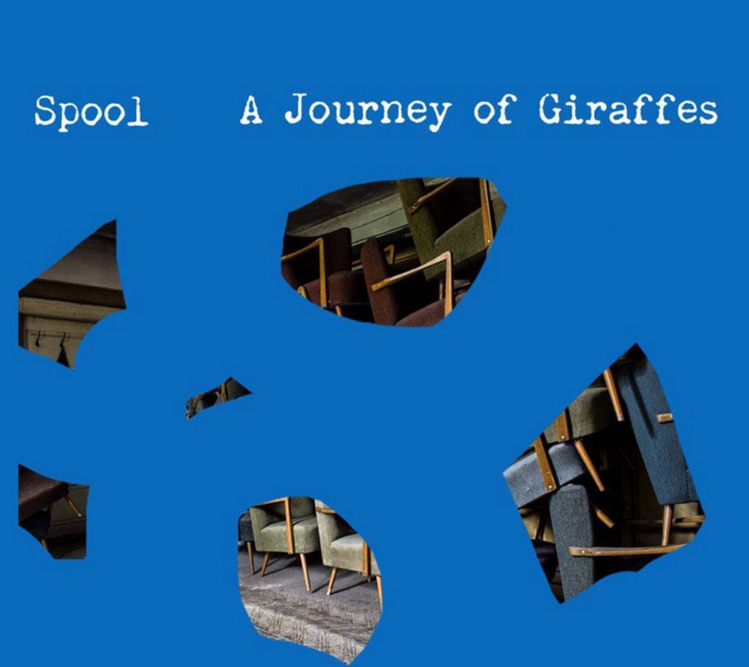
A Journey Of Giraffes ‘Spool’
(Somewherecold Records) 9th July 2021
The criminally unknown John Lane – in obscurity parading under the delightfully envisioned A Journey Of Giraffes appellation – transduces abstract and complex concepts into ambient soundtracks of the mysterious, diaphanous and often strange.
Five albums in with the ridiculously prolific North American label, Somewherecold Records, Lane once more explores and expands his sound; changing and modifying his deep understanding of the ambient genre on every release. And as with each project, the unassuming artist is inspired by a chosen theme: perhaps a work of art, a location or a book (see both the Armenia and Kona albums for example).
The latest album, Spool, is no different in that respect, being subtly, almost amorphously imbued by the late WG Sebald’s acclaimed trilogy of cerebral travelogues: The Rings Of Saturn, The Emigrant and Vertigo. Lane taps into the author’s preoccupied themes of the ‘loss of memory’ and ‘decay of civilizations, traditions and physical objects’.
Spool is bookended in this respect by two fairly low key New Jersey boroughs only ever observed by Lane from a car window; fleetingly glanced at as turnings on signposts whilst driving up and down the ‘turnpike’. Yet both locations have led Lane’s imagination cogs to start turning, as he daydreams about the lives of those who’ve made those small towns their home. ‘Swedesboro’, as the name makes pretty clear, was founded by Swedish immigrants over three hundred years ago, and is known for its fine balance of ‘urban forestry’ (thank you Wikipedia). Here, that inconspicuous enclave is soundtracked by suffused fuzz, ascending elevators, lingering electric piano notes and indistinct workshop sounds: like a Twin Peaks sawmill. ‘Glassboro’ meanwhile, built on an early history of glass making, gets an almost ghostly, etched and translucent score – there’s also a constant communicative knock like sound that could be someone stuck in a tank.
The album’s other geographical reference points are the beautiful Japanese woodblock printed artwork scene ‘Slope At Senko’ and ‘Campfire On Gibraltar’. Kawase Hasus’ original enervated snow blizzard picture is rendered a suitable evocative flutter that sounds like someone changing channels on a static fuzzy snowy TV set on the first of those tracks, whilst the second is a near hymnal cooed embrace of the elements, set around that title’s crackling flame licked campfire side.
Elsewhere the album embodies the idea of the traveller, who can never settle, yet soaks up the psychogeography, depth and atmosphere of each place they visit. Lane does this with compositions that stir the merest traces of the Japanese school of ambient electronica and electric piano notes that wouldn’t sound out of place on both Roedelius and Thomas Dinger’s solo works.
Lane’s Spool is yet another layer, another explorative page on a log journey that I hope leads to greater recognition. Composing in relative isolation, releasing unheralded works of brilliance, he damn well deserves it.
Hi, my name is Dominic Valvona and I’m the Founder of the music/culture blog monolithcocktail.com For the last ten years I’ve featured and supported music, musicians and labels we love across genres from around the world that we think you’ll want to know about. No content on the site is paid for or sponsored and we only feature artists we have genuine respect for /love. If you enjoy our reviews (and we often write long, thoughtful ones), found a new artist you admire or if we have featured you or artists you represent and would like to buy us a coffee at https://ko-fi.com/monolithcocktail to say cheers for spreading the word, then that would be much appreciated.
Choice albums of 2019 Part One: A Journey Of Giraffes to Adam Green
December 3, 2019

Choice Albums of 2019 Part One: A Journey Of Giraffes to Adam Green
Because we’ve never seen the point in arguing the toss over numerical orders, or even compiling a list of the best of albums of the year, the Monolith Cocktail’s lighter, less competitive and hierarchical ‘choice albums’ features have always listed all entrants in alphabetical order. We also hate separating genres and so everybody in these features, regardless of genre, location, shares the same space.
Void of points systems and voting, the Monolith Cocktail team selection is pretty transparent: just favourites and albums we all feel you, our audience, should check out. Dominic Valvona, Matt Oliver, Brian ‘Bordello’ Shea, Gianluigi Marsibilio and Andrew C. Kidd made all of 2019’s selections.
Spread over three parts, the inaugural selection here runs from A to G, from A Journey Of Giraffes to the Adam Green. Part Two will run from H to P and Part Three from Q to Z.
A.
A Journey Of Giraffes ‘Hour Club’ & ‘Kona’
Two atmospherically evocative peaceable ambient suites from the brilliant lo fi maverick A Journey Of Giraffes (nom de plume for many years of the Baltimore composer John Lane) make this year’s ‘choice’ list. Released earlier in 2019, the Hour Club pushes Lane further than ever away from his previous Beach Boys homage experiments into both deeper, darker recesses and sweeping traverses. From Terry Riley to Sky Records, Hour Club is an often-magical soundtrack, with every track sharing a 7 minutes and 1 second rule.
The second album, Kona, an unassuming love letter to the iconic late Japanese composer Susumu Yokota, was premiered back on the Monolith Cocktail in August. Magically ruminating, offering both the beatific and uncertain, this pagoda dreamt fantasy is an exotic, sometimes ceremonial, Zen like album that evokes the Fourth World Possible Musics of Jon Hassell, Popol Vuh and the higher plain communal glistened zither transcendence of Laraaji. Quite possibly, Lane’s most realized, complete album yet. (Dominic Valvona)
Full review feature…
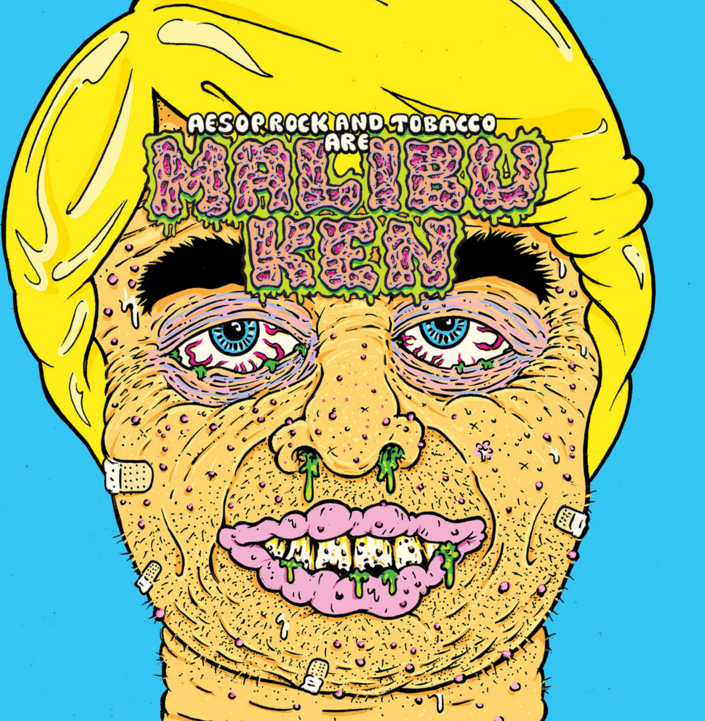
Aesop Rock & TOBACCO ‘Malibu Ken’
(Rhymesayers)
“Both happen upon a sharp splinter of hip-hop pitching to the left, but not way out left” – RnV Jan 19
Straight off the bat the gaudily sleeved Malibu Ken foresees a tough slog in store, given the respective running through brick walls of these decidedly non-plastic conspirators. Aesop Rock rhymes like a rebooted Max Headroom, TOBACCO activates at the moment where Rock starts glitching as synths home in on your VHS tracking button. Obviously it’s a jerky leftfield match made in heaven, primitive videogame set pieces overridden by one of the underground’s most enduring, levelling out bad trips but still very much needing these cracked, skeletal neon runways to assure his own navigation and empowerment. Take it as post-modern, post-Armageddon, welcome respite from the mainstream etc etc, or the faultless engineering of the technical and the broken, backwater flights of fancy and stranger than fiction truths jamming in a keyboard repair shop. (Matt Oliver)
Armstrong ‘Under Blue Skies’
(Country Mile Records)
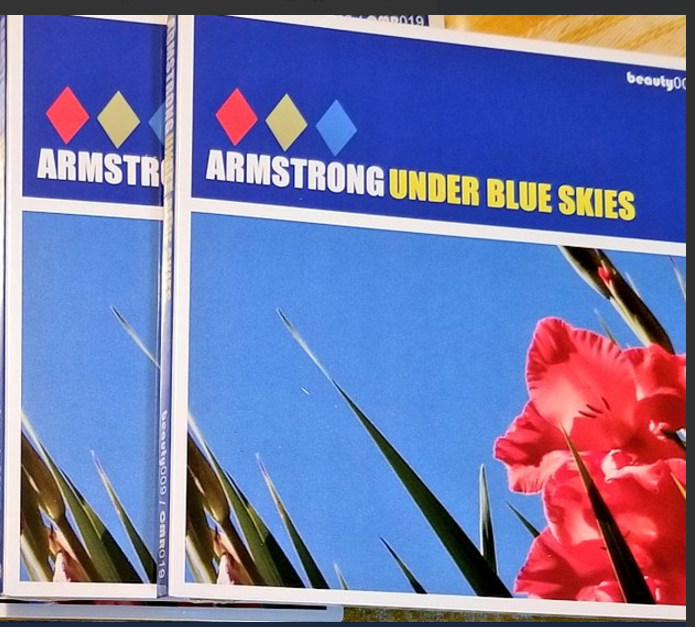
Julian Pitt, aka Armstrong, is one of the finest songwriters to emerge from Wales in recent years: a man who has been blessed with the gift of melody that can be comparable to McCartney, Wilson and Jimmy Webb – Yes, he really is that good.
This is an expanded reissue of his first LP, which was originally released as a limited edition cdr, one that I played constantly. Thankfully it’s getting a much-deserved official re-release from The Beautiful Music label. I am so happy this great lost LP has finally got the release it deserves; it is no longer lost just simply Great, one of the finest pastoral pop LPs you will ever hear. (Brian ‘Bordello’ Shea)
Full review…
B..
Babybird ‘Photosynthesis’

What I love about Stephen Jones, aka Babybird, apart from his wonderful songwriting talent and his dark humor and his obvious love of music and its many genres, is that he has so much soul. He has so much love for music in fact that he makes music not just because he may make a decent living from it but because he has no choice, he has to make it like he has to breath to stay alive. He has to create music, create art, he has to experiment with the magic of melody and write such beautiful songs, and Photosynthesis is an LP full of dark beauty and such bloody good songs. A small dark masterpiece, a master class in songwriting. (BBS)
Full review…
Baileys Brown ‘Still Fresh’
(Potent Funk)

“Skimming the scummy but with buckets of fizz and a little soul stardust answering the title’s call, BB keeps the hottest point of the club within striking distance of a couch and headphones combo” – RnV Aug 19
Investing in a gang of absolute mic-snatching hoodlums, bringing the sort of posse cuts where you dial the first two nines in anticipation, just to be on the safe side, Baileys Brown swings the wrecking ball club-wards before looming as a quiet storm presence fuelling dark alley unease. His best work where you can’t see in front of your face – add damp air or a biting breeze for maximum effect – the raw basics of Still Fresh are more than enough for emcees to chow down on (Axel Holy, Datkid, Dabbla), while a certain juju drifts in and out as if it’s not just testosterone at work. Animal instinct floods from a group who have the trousers to go with the mouth (“yeah I’m talking shit, but you’re doing it without flow”); however, a soulful section towards the back end shows Brown can rise above the rough stuff, reaching out towards a bigger stage for something that shouldn’t be skipped on account of what’s gone before. (MO)
Bantou Mentale ‘ST’
(Glitterbeat Records)
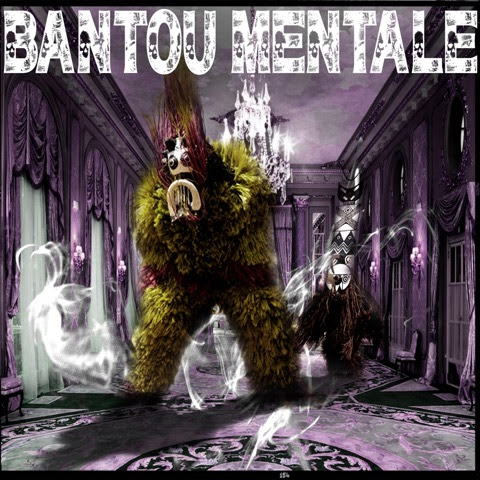
A sizzle. A static shock, a charge that most importantly signals something is changing in the musical fabric; a signal of something dynamic but also something dangerous, a mirror image of the real world, the real refugee and migrant experience and chaos. Vivid and fresh being the optimum words as the Bantou Mentale vehicle shakes up the melting pot convergence of Paris’ infamous Chateau Rouge; addressing assumptions/presumptions about their native Democratic Republic of Congo home in the process. Not so much explosive, the electric quartet seem relaxed, even drifting as they channel the soul and spirit of cooperation; opening up aspects of the DRC culture and humility often lost or obscured in the noise of negativity – and the Congo has had more than its fair share of violence and tumult both pre and post Colonialism.
Kinshasa reloaded; Bantou Mentale is a thoroughly modern sonic vision of peaceful cross-border fraternization. Lingering traces of Jon Hassell & Eno, Radio Tarifa, UNCLE, TV On The Radio and even label mates Dirtmusic are absorbed into an electrified subterranean of frizzles, pylon-scratches and hustle-bustle. Above all, despite the subject matter, despite the polygenesis sonic hubbub this is a soulful soundtrack: cooperation ahead of fractious division and hostility. A more positive collaboration for a 21st century chaos. (DV)
Full review…
Bathtub Gin Band ‘From The Old Navy Club’
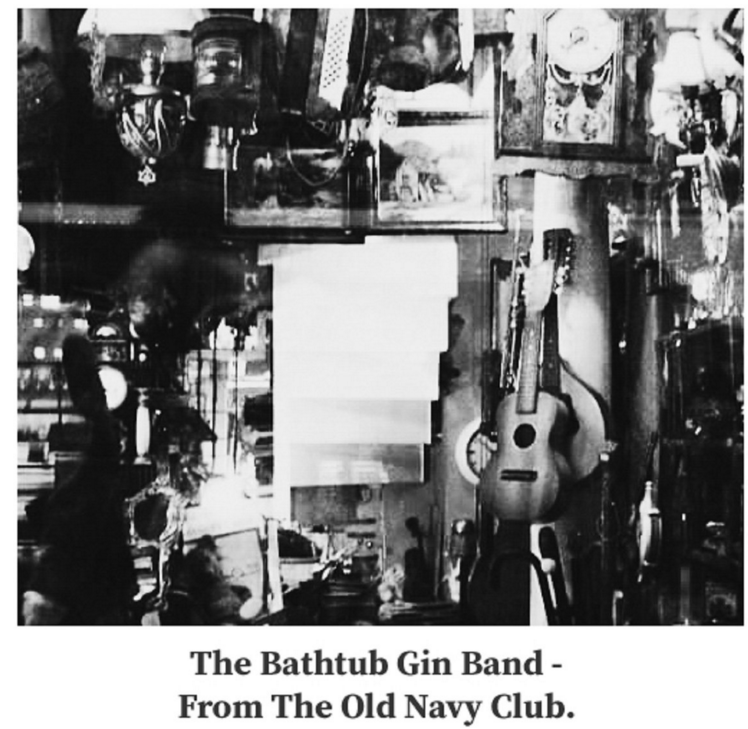
The Bathtub Gin Band are a duo from my hometown of St Helens, and this there debut LP. A mini LP in fact, recorded live in a local studio, just acoustic guitar and drums and fine songwriting; the sound of two talented musicians enjoying themselves; an LP that recalls the sound of the Liverpool bandwagon club of the early noughties; quickly strummed guitar ragtime blues telling tales of drunken nights out and failed romantic adventures, an album to listen to as you are getting ready for a wild night out or after you have staggered in after one.
Beautifully written and crafted with well-arranged songs performed with verve and vigor, From The Old Navy Club is another little gem for 2019… (BBS)
Full review…
Blu & Oh No ‘A Long Red Hot Los Angeles Summer Night’
(Nature Sounds)

“A mosey across the West Coast to capture the hustles and bustle as a frontline tour guide mapping out all the no-go areas and places to tap into local electricity” – RnV Mar 19
Drawing on both the energy of the locale and when that red mist begins its descent (‘Pop Shots’ feeling the heat to the point of delusion), there’s Blu, unafraid of foregoing any sort of word association for the sake of putting a brick on the accelerator out of Thunderdome – sometimes straight talking will only do when the stakes are high. Then there’s Oh No, performing funky wheelspins between cruising and hot pursuit, capturing all the glamour, glitz, hustle and insanity the City of Angels calls everyday. The pair switch career mode from local big timers to chancers seeing how far their luck will stretch, and A Long Red Hot… is one of the year’s coolest releases; find somewhere where it’s 96 degrees in the shade before throwing on loud, sequenced to directorial perfection so the highs, lows and inbetweens form a logical thread, and where the action-packed comes with composure remaining everything. (MO)
Blue House ‘Gobstopper’
(Faith And Industry)

The fruits of two-years labour, James Howard’s (aka Thomas Nation) latest appearance as principle writer is with the Blue House collaboration; a group that boosts the talents of Ursula Russell (drumming for the brilliant Snapped Ankle, and soon to release music under the Ursa Major Moving Group), Dimitrios Ntontis (film composer and member of a host of bands including Pre Goblin) and Capitol K (the nom de plume of the ever-in-demand star producer Kristian Craig Robinson). Following up on the group’s 2016 acclaimed Suppose LP with another rich mellow empirical state-of-the-nation address, the Blue House’s Gobstopper is suffused with a languid disdain, as they drift through the archetypal bleak waiting rooms of nostalgia and the limbo of benefit Britain.
Gently stunning throughout with hues of a gauze-y Kinks, a less nasal Lennon, a more wistful Bowie and woozy Stereolab, Howard and friends perform a disarming mini opus that soaks up the forlorn stench of an out-of-season postcard seaside pub, air-conditioned gyms and quaint English motorways – ‘Accelerate’ in name only, the speed and candour of a hitched-up caravan that’s more ambling (with the radio dial set to Fleetwood Mac bounce) than autobahn motorik futurism. (DV)
Full review…
Boa Morte ‘Before There Was Air’
(Gare du Nord)

The understated majestic swells of the Irish band Boa Morte don’t come easy, or arrive regularly. Only the band’s third album proper in twenty years, the misty expansive mini-opuses found on the long awaited Before There Was Air are like gentle but deeply resonating ripples from a distant shore. Slow, methodical, every second of these air-y hushed suites moves at a stately pace: in no hurry to arrive, with many of the beautifully purposeful songs disappearing into the ether, out of earshot but forever lingering.
A finely crafted sweeping album Before There Was Air exudes a timeless quality; one that by all accounts has been well worth the wait. (DV)
Full review…
Simon Bonney ‘Past, Present, Future’
(Mute)

Arguably one of the great voices of Australian music over the last four decades, Simon Bonney is nothing if not proficient in taking hiatuses. Emerging from just the most recent one, five years after the release of the last Crime And The City Solution opus American Twilight – itself, the first album by the iconic alienated nihilists turn beatific augurs of country-doom in twenty years -, and twenty-odd years since the shelving of his third solo LP Eyes Of Blue, Bonney has made a welcome return to the musical fold.
Prompted by the decision of Mute Records to facilitate the release of that fabled last solo songbook, the Past, Present, Future collection is both a reminder, featuring as it does tracks from both the 1992 Forever and 1994 Everyman albums, and showcase for six previously unreleased tracks from Eyes Of Blue.
Not new material but a catalyst for projects going forward, this solo collection proves as prescient today as it did back then. Especially the beguiling cover turns homage (in light of Scott Walker’s passing) of the brooding maestro’s stately majestic lament to fading beauty and decadence, ‘Duchess’. Much of the Bonney songbook, delivered with earnest, deep timeless country-imbued veneration, aches, even worships, for a string of muses; an undying, unwavering love to both the unattainable and lost. One such elegiac object of such pathos-inspired yearning is Edgar Allan Poe’s famous ‘Annabelle Lee’ –the metaphorical lamentable figure of the Gothic polymath’s last poem -, who appears on both the eponymous and title tracks from Eyes OF Blue. Lovingly conveyed, even if it marks the death of that lady, it proves symmetry to the album’s profound poetic loss of influence, desire and alluring surface beauty of ‘Duchess’. Eyes Of Blue, which makes up half of this collection, follows on from the previous solo works perfectly. A touch deeper, even reverent perhaps, but every bit as bathed in country suffrage. Salvaged at long last, that lost album offers a closure of a kind. Proving however, to chime with the present, far from dated, this collection is a perfect finish to a great run of epic, though highly intimate, solo opuses; the songwriting as encapsulating and grandiose, earthy as you would expect. (DV)
Full review…
Aziza Brahim ‘Sahari’
(Glitterbeat Records)
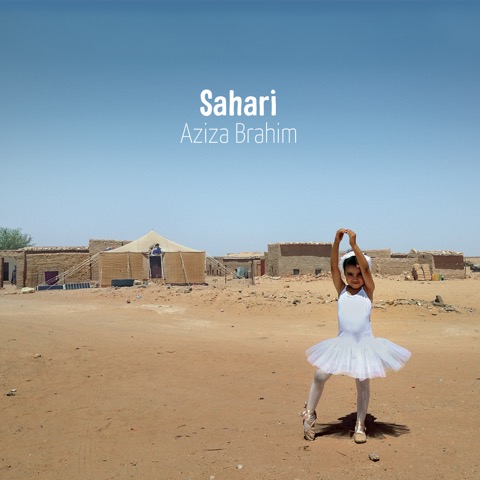
Bringing the message of the displaced Saharawi people to the world stage, Western Saharan musician/activist Aziza Brahim follows up both her critically rewarded 2014 album Soutak, and the no less brilliant 2016 serene protest of poetic defiance Abbar el Hamada album with her third for Glitterbeat Records, Sahari.
Imbued as ever with the desert soul of that disputed region, the latest record, with its visual metaphor of optimism in even the most desperate of backdrops and times – dreams of growing up to be a ballerina proving universal – attempts to marry the beautifully longing and heartache yearns of Brahim’s voice to a number of different styles and rhythms: A subtle change towards the experimental. Imbued as ever with the desert soul of that disputed region, the latest record, with its visual metaphor of optimism in even the most desperate of backdrops and times – dreams of growing up to be a ballerina proving universal – attempts to marry the beautifully longing and heartache yearns of Brahim’s voice to a number of different styles and rhythms: A subtle change towards the experimental. Previous encounters have channeled the poetic roots of that heritage and merged it with both Arabian Spain and the lilted buoyancy of the Balearics. Working with the Spanish artist Amparo Sánchez of the band Amparanoia, Brahim has chosen to add a congruous subtle bed of synthesized effects to the recording process: before performing live in the studio, but now recording in various places, the results collected together and pieced together in post-production. This methodology and sound furnishes Brahim’s longing traditional voice with certain freshness and, sometimes, shuffled energy.
A most fantastic, poetic songbook that will further cement Brahim’s deserved reputation as one of the deserts most serene artists. (DV)
Full review…
Bronx Slang ‘Bronx Slang’
(Fabyl)

“Jerry Beeks and Miggs are more sages than saviours, proving you don’t have to settle for what’s supposedly trending. Proper hip-hop citizenship” – RnV Feb 19
Golden era restoration, true school appreciation…so many attempt to recreate/pay respects to hip-hop’s glory days but often overcook it to the point of self-neutering. Nothing of the sort applies here: Bronx Slang press home the pervading advantage (if you can call it that) of volatile politics, loud and clear messaging deriding the powers that be without resorting to playground tactics. Miggs and Jerry Beeks also know they’re in the entertainment business (‘Well Well Well’ > 50 Cent’s ‘21 Questions’/How to Rob’, Jadakiss’ ‘Why?’), and the baritone-midrange contrast frames the all-important dynamic duo telepathy, catching last breaths should anyone step to them. A box fresh success…and this is before the dirty little secret of the downtown funk hustles being hatched by two UK ringers: one-time big beat ne’er-do-well Jadell, assisted by fellow frat partier and bass house dabbler Fake Blood. Proof therefore of 90s boom bap as international language slash Holy Grail. (MO)
Danny Brown ‘uknowwhatimsayin”
(Warp)
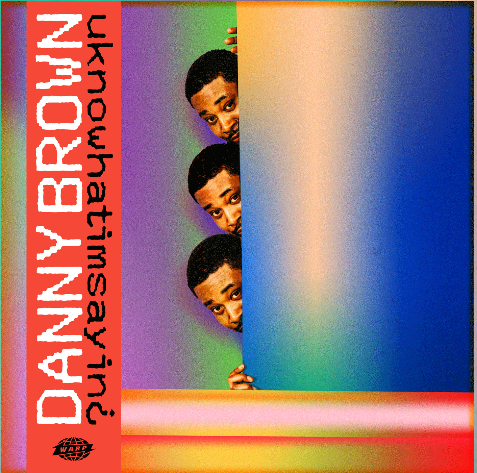
“Still coming through loud, clear and uncouth” – RnV Oct 19
A slight tweak to the Danny Brown experience doesn’t make him any less of a livewire. Q-Tip as executive producer is not an invitation to keep his new, freshly coiffured muse in check, and despite a slightly exploratory start sonically, it’s the same old Danny boy keeping the spirit of ODB alive, quickly into his shit-chatting rhythm and proving that emperor’s new clothes do not make the man. Whether he’d enjoy being tagged as more well-rounded (rather than versatile – Brown’s mind remains pretty much one track in its own strain of ADHD that never misses a beat), the likes of ‘Belly of the Beast’ and the title track pull him in different directions but have that up-to-no-good personality keeping the peace, though he’s a smoother operator than you’d probably give credit for. Short but sweet, like a high sugar soda hit, and still highly strung, but hey – that’s entertainment. (MO)
C…
Nick Cave & The Bad Seeds ‘Ghosteen’
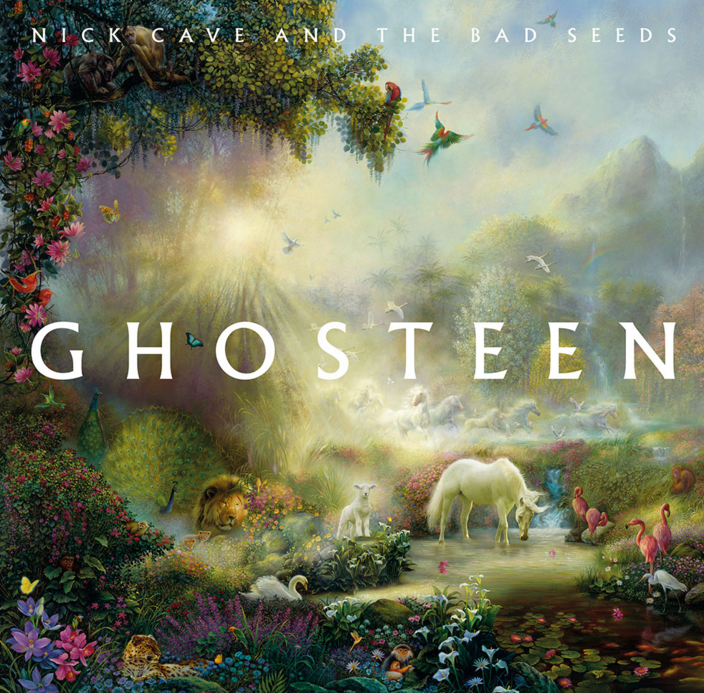
We knew it would come but not when; Nick Cave’s moving concept elegy Ghosteen articulates both the grief and coming-to-terms of the loss of his son Arthur in 2015. And so this often striking, if lamenting, and beautifully poised opus arrives four years later with grandiose expectations.
Often conflicted, Cave articulates despair to a bared atmospheric led Bad Seeds soundtrack of vivid and poetic images and feelings. With a tonal backing of choirs, the afflatus Kosmische of Roedelius and touches of The Boatman’s Call, Ghosteen is a mournful work of pulchritude and grief. It’s also perhaps one of Cave’s best albums in decades. (DV)
Choosey & Exile ‘Black Beans’
(Dirty Science)
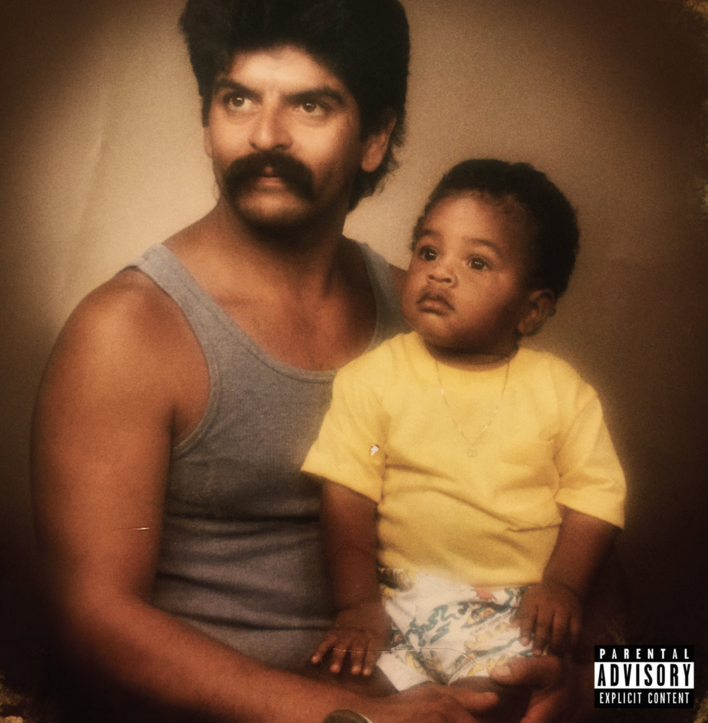
“The comforts of soulful Cali ear butter, and rhymes of a valued familiarity, eye a top 10 spot come the end of the year” – RnV Mar 19
“Come and get your soul food”, a wise band once said. Treating Black Beans as an album that brings the family together around the record player, though it’s just as strong as an edutainment pursuit with headphones and your own private enclave, Choosey and Exile are the master cross-section of warm, good-old-days idealism and a voice providing revisions to nostalgia, telling the fuzzy feelings to sit up straight and tucking you in without forgetting that in love and life there’s always a moral to the story. Aloe Blacc’s deployment to send spines shivering on the all-seasons champ ‘Low Low’ is a masterstroke, the blues and soul source material carefully sifted and restored so that heads are set to thinking that maybe, everything is gonna be alright, pausing today’s mile-a-minute trends and attitudes. Grooves and truths set to soothe and move you. (MO)
Clipping ‘There Existed an Addiction to Blood’
(Sub Pop)
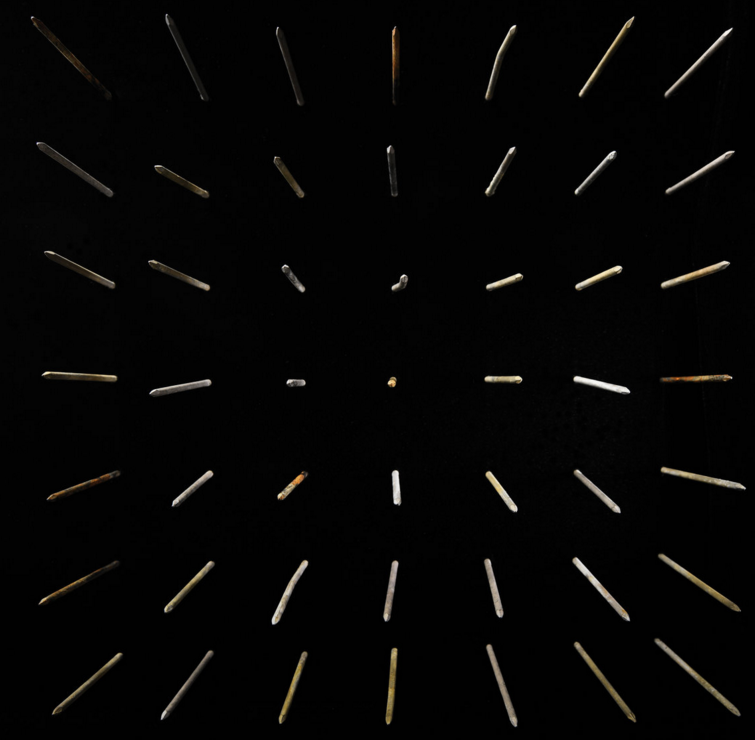
“Where no-one can hear you scream in space until its engine room sucks you in and spits you out” – RnV Oct 19
‘Nothing is Safe’, ‘He Dead’, ‘Run for Your Life’, ‘All in Your Head’…there’s nothing like a cult Clipping cakewalk leaving you gasping for breath. Holographic rhymes and reedy synth beats programmed like a doomed ignition sequence, whose sometimes beatlessness is replaced by wailing walls of surround sound hell and empty, nervous atmospherics, it’s the perfect deployment of the textbook pincer movement, peering stealthily around corners before letting the autofire get open until one great ball of fire engulfs everything. Crew commander Daveed Diggs plays on the edge of rogue Andre3000 operative with ambitions of hero decoration, and as blood both pumps and runs cold, the LA crew still manage to get street lifers Elcamino, Benny the Butcher and La Chat to buy into the mission of a burnt out future – game recognise game. Forget West Coast low-riders, these are the men who fell to earth: you’re pleased they just about survived to tell the tale, and something tells you they’d do it all over again, for club and country. (MO)
Cosmic Range ‘The Gratitude Principle’
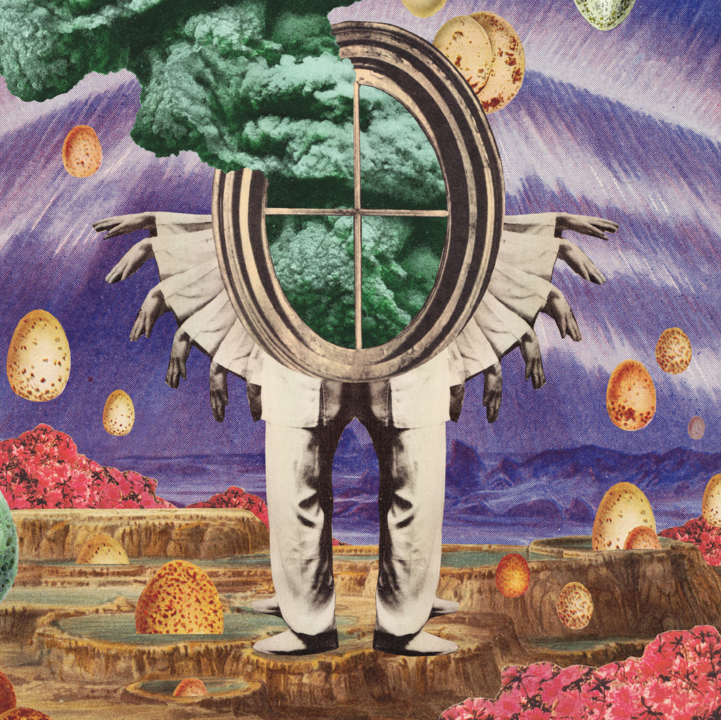
Guided by Toronto based everyman Matthew “Doc” Dunn the multi-limbed super-group collective of faces from the city’s most recent creative rise to prominence follow up their 2016 polygenesis New Latitudes debut with more of the same: Spotted dabbed slinking sexy spiritual jazz, flute-y Orientalism, snuggling air-y saxophone, wallowing subterranean funk and primal scream therapy peregrinations.
The Gratitude Principle gathers together the Slim Twig’s raging, wild wah-wah licks, the experimental snozzles and spiraling wildly saxophone of Andy Haas, Isla Craig’s ethereal siren vocal and flute duties, Kieran Adams’ drums and tinkerings with electronics, Brandon Valdivia’s congas and percussion, and the keys of Mike “Muskox” Smith and Jonathan Adjemian in a sub-aquatic yearning union of free and Afro jazz and Krautrock. Another trip into the cerebral: a jam session of epic mapping. (DV)
D….
Jack Danz ‘TMIB’
(Blah)
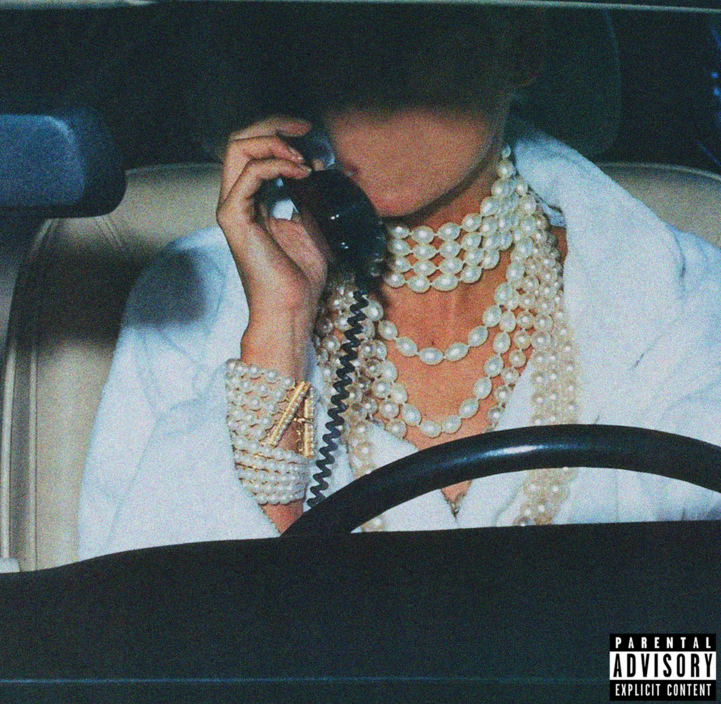
“Entwining the concepts of lo-fi and low life and guaranteed to get under your skin…the voice of someone who’s seen too much but knows exactly what’s going on” – RnV May 19
With rhymes offered as a grunt through what sounds like a prison intercom, Leeds’ Jack Danz is an on-point example of making something cutting edge out of a squalid image – aka, the Blah battalions. Sawn off trap bass, rinky-dink riffs taking on a spectral/lost perspective, and Danz succumbing/thriving while up to his eyeballs, TMIB is the cold light of day after a dive of debauchery: ideal listening for a trashed hotel room or freshly decorated squat riddled with wrongdoing. Danz’ numbness to what are undeniably a set of head nodders (where everything else appears dead from the neck down), makes his flow both out-of-body and trudgingly destructive. If he happens to be in character, it’s a natural role, giving him an impenetrability that means few can answer back to him. Including the engineered ambiguity of the sleeve, this is high power stuff out of sobering surroundings, particularly as there’s definite vulnerability being shown by the album’s end. (MO)
Datkid ‘Confessions of a Crud Lord’
(High Focus)

“On his worst behaviour when ‘Confessions of a Crud Lord’ writes red-top headlines, Datkid bullies the beats of Leaf Dog until he’s administering toilet swirlies” – RnV Apr 19
Goaded by 16 South Westerly beats that’ll have you nodding your way into an MRI scan – your neighbours will love being trolled by the bottom ends – from the moment the word ‘Crud’ stinks the title out, Datkid has it all his own way. An ambassador for UK hip-hop’s rise of the footsoldier, this Bristol blitzkrieg bop is detailed with the confidence of someone thinking they can take on the whole pub and exit with barely a scratch. Suffice to say it’s a relentless baseball bat swing of not giving a monkeys, loving to pounce on out-of-towner weakness in a heartbeat, and whose purity of show and prove, go hard or go home, is enough for guests Westside Gunn, Conway the Machine and Roc Marciano to show support. Once upon a time this would’ve been slapped with an ASBO, but the Crud is strong with this one: “what’s the point of living if you’re just surviving” shows that Datkid really knows where it’s at. (MO)
Graham Domain ‘Fragments Of Light’
(Metal Postcard Records)
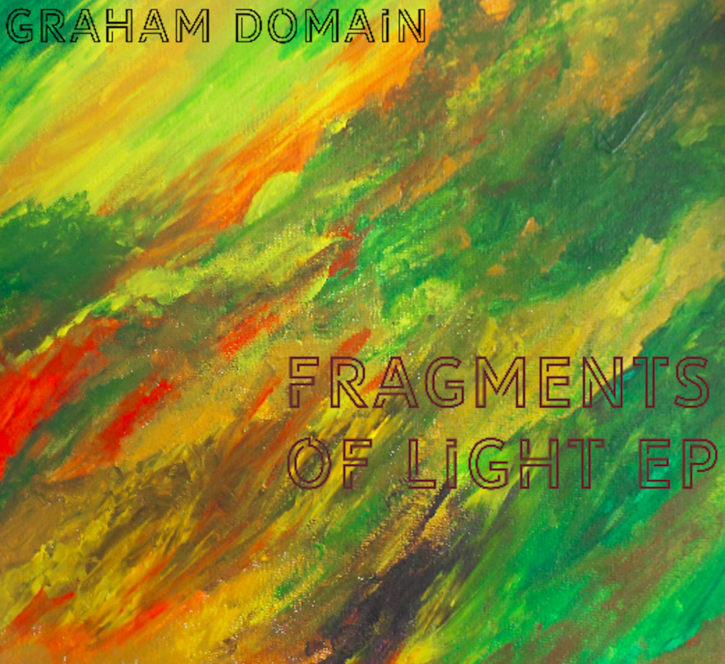
Graham Domain is an acquired taste I suppose. Why, I do not know as everyone needs some dark weird music in their drab lives, an ideal cross taste cannon submerge of Tom Waits, Bela Lugosi and Brian Cant naked massaging the tears out of a neglected and abused cabbage patch doll. Stray keyboard drifts beautifully over simple drum beats whilst duetting with the memory of a long lost lover’s memories of tasting your alcohol on her lips and tongue, the ghost of her naked form haunting the side of the bed that once belonged to her.
This mini album, as has been the other two Graham Domain releases this year, is a really must be heard LP that sadly are not being heard. Why, I really do not know. Maybe they are just too strange or just too emotional or simply people are not getting to know or hear about them. So if you are reading this review give it a listen and tell your friends. (BBS)
E…..
Callum Easter ‘Here Or Nowhere’
(Lost Map Records)

One of those dreamy disarming albums that creeps up on you, the Edinburgh-based Callum Easter’s poised and indolently profound debut, Here Or Nowhere, is a sparse affair of the heart. Often lyrically succinct, saying a lot with few words, Easter shifts tonally between the heavenly and more moody. Songs such as the South Seas charmed and swimmingly ‘Fall In Love’ offers the dreamy, whilst the enervated industrial strikes and gritty Scottish bur narration of ‘Fall Down’ offers something grittier.
After a late conversion to music, the self-taught afflatus voiced troubadour leaving a career in professional football behind him at the age of 21, Easter adopts a number of well-travil(ed) and dragged over musical influences. Somehow he makes them sound new, especially on the wonderful Southern echo-y bar room piano rock’n’roll blues hymnal ‘Only Sun’. There’s also a channeling of Charlie Megira, Alan Vega and The Legendary Stardust Cowboy on a range of beautifully poignant songs, and hints of a lot of 2000s Canadian and American indie.
Despite some of the wry mistrust and resigned despondency, Here Or Nowhere is a spiritual pop album suffused – for the main part – by choral angelics, reverent glissandos and a touch of the afflatus. It’s also an album of singles, with every track standing alone and separate in its own right away from the album as a whole: Nothing short of a marvelous alternative pop and gospel triumph. (DV)
Eerie Wanda ‘Pet Town’
(Joyful Noise Recordings)

The lost sounds of childhood summers, the finger clicking bliss of a Joe Meek hit, the beauty of the lost rainbow in an angels wish, this LP by Eerie Wanda makes me recall all this. Pet Town is a fine album indeed, at times it gives me the same feelings of joy I have when playing The Beach Boys much-underrated classic Friends; songs wrapped up in the power of the pureness in being alone.
This is simple in its beauty and the beauty is its simpleness, the vinyl etchings of acoustic nights wrapped in your ex’s arms soundtracked by a lovingly compiled mixtape of the Marine Girls and Holly Golightly’s softer moments.
Summing up, this is an LP to wrap around you to keep you warm in the coming winter months and the LP to play as you walk in the summer sun remembering how happy sad life can be. A stunner. (BBS)
Full review…
Ethnic Heritage Ensemble ‘Be Known Ancient/Future/Music’
(Spiritmuse Records)

From the doyen of the Chicago scene and alumni of that city’s famous hothouse of talent, the School of the Association for the Advancement of Creative Musicians, drummer/percussionist and bandleader Kahil El’Zabar is still exploring, still connecting five decades on from forming the spiritual jazz troupe Ethnic Heritage Ensemble.
Kahil and the current troupe of Corey Wilkes (trumpet), Alex Harding (baritone saxophone) and Ian Maksin (cello) together celebrate a prestigious 45-year career whilst also, and always, looking forward on the latest collection Be Known Ancient/Future/Music. Spanning live performances, recordings and even a track from the 2015 documentary that forms part of the title of this LP, Dwayne Johnson-Cochran’s exploration Be Known, the ensemble once more channel the ever-developing Chicago rhythm that has marked this city out for its unique, often raw, take on R&B, Soul, Dance Music and of course jazz.
Less cosmic than Sun Ra, and less out-of-the-park than the Art Ensemble Of Chicago, Kahil and the EHE tread a different path towards enlightenment; spreading the gospel of positive Afrocentric jazz to ever more dizzying and entrancing heights. Spiritual music with a message doesn’t come much better than this, the EHE showing no signs of waning after 45 years in the business. I’m off to hunt down and digest that lengthy cannon now and suggest you do too. (DV)
Full review…
F……
Frog ‘Count Bateman’
(Audio Antihero/Tape Wormies)

Frog are a kiosk by the sea, on a suburban beach. The essence of their work is gathered in a search for intimacy that is expressed in DIY and lo-fi passages; a very successful sound universe touched by Bon Iver, Daniel Johnston and other such sacred monsters. Their flame is lit on Count Bateman.
The new album in fact captures the peak of a clear path and placed lo-fi sound. The interweaving of stories on this record are a safe place that puts us at peace and in dialogue with the idea of Frog’s music.
Frog are like Matisse, painters of windows and fixtures that open in an expanse of neighborhoods, cities and stories. Count Bateman is an open window from which air enters and often there is also a hurricane breeze; in fact the second part of the record is full of unusual sounds and more driven, electronically, for the duo. (Gianluigi Marsibilio)
Full review…
G…….
Mike Gale ‘Summer Deluxe’
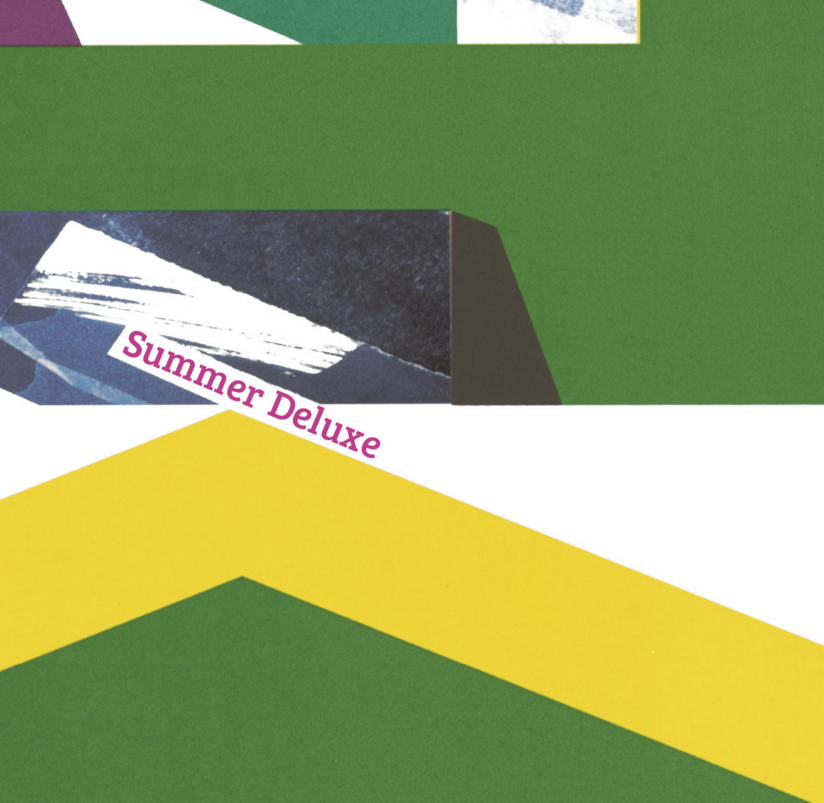
Escaping the short days and dreary dampness of an English winter, the Hampshire-based polymath Mike Gale (notable for his work with the Americana imbued Co-Pilgrim) suns himself in the dappled rays of lilted surf pop on his new solo album, Summer Deluxe.
Liberally splashing about in the efflux surf of The Beach Boys the much-prolific Gale (this is his fifth album alone in just five years) hides a certain sorrow, longing and yearn under the most colorful and dreamy of melodious harmonies.
Dazed and hazy, a hushed mirage of summer, the leaf-turning breeze of autumn is never far away, its arrival denoting all the connotations and metaphors you’d expect, that fleeting optimism of the summer masks and makes all our woes seem far less burdening. Summer Deluxe is swimmingly brilliant in its indie slacker charm with hints of Sparklehorse, Animal Collective and McCartney; a scion indeed of that Beach Boys spirit. (DV)
Full review…
Nicolas Gaunin ‘Noa Noa Noa’
(Hive Mind Records)
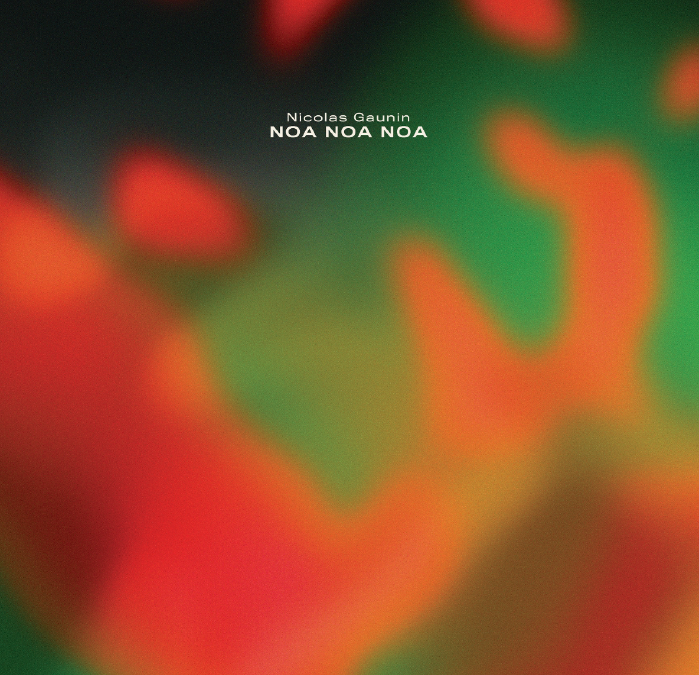
This is included because it sounds unlike anything else I’ve listened to in 2019. Originally put out in 2018 on the obscure Artetetra Records label, Nicola Sanguin, under his barely concealed appellation alter ego Nicolas Gaunin, strange exotic minimalist Noa Noa Noa LP has found a new home on the Brighton-based imprint Hive Mind.
With vague hints of Krautrock legends Embryo’s more percussive experiments in Africa, the dreamy mysterious invocations of Le Mystere Jazz de Tumbautau, Radio Tarifa, Ethno-jazz at its most untethered and Analogue Bubblebath era Richard James, Sanguin’s fantastical experiments mix vague sounds of thumb-piano, Serengeti and jungle wildlife, bamboo glockenspiel, clacking wooden and bass-heavy hand drums and nuanced workshop Techno.
Noa Noa Noa is indeed a thing of curious evocation; a searing balmy transduced soundtrack worth investigating.
Full review…
Gawd Status ‘Firmamentum’
(Tru Thoughts)

“Militant pride that’ll uproot those sitting on the fence, it’s a saga that must run and run. Absolutely boomin’” – RnV May 19
When the Big Bang wiped everything out first time around, Gawd Status saw it as an opportunity, in which Kashmere’s Strange U spaceship nosedives into the jungle, moondust dementia still sputtering from its exhaust, and Joker Starr swaps the battle arena for the cannibalistic, kill or be killed lawlessness of the Firmamentum outback. The Gawd Status is a complicated one, seriously heavy at a skinflint eight tracks long (even in the current age of artists finally getting album length right, 28 minutes is a bit of a choker), fiercely standing up for itself in articulation of black rage and examination of conspiracy theories, and revelling in The Iguana Man’s thick doomsday fog. The event completed by some utterly bumping soul sisterhood from Fae Simon, its arrival at Tru Thoughts is a slight surprise. Nonetheless it’s a work of art that burns bright like a brilliant, tumultuous dream. (MO)
The Good Ones ‘Rwanda, You Should Be Loved’
(Anti-Records)
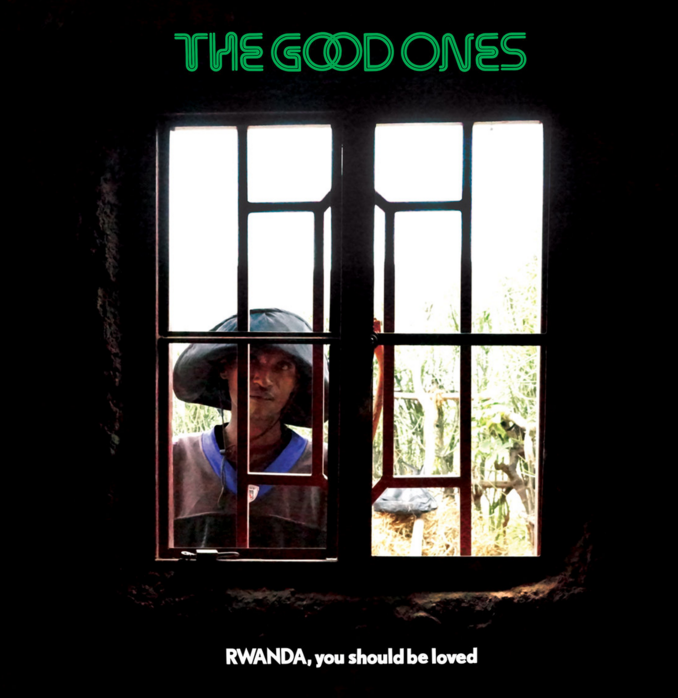
Finding the most earthy of uncluttered soul in the most inhospitable and traumatized of environments, global renowned producer/facilitator Ian Brennan once more sets up the most minimalist and unobtrusive of recording sessions; capturing the raw, natural magic of Rwanda’s The Good Ones for posterity before it dies out.
Though moving slowly past the scars of the country’s genocide, the glorious encapsulating and whistling voices that make up this collective live a bare sustenance, eking out a meager life as farmers in the remotest of landscapes.
Recorded at guitarist and vocalist Adrien Kazigira’s hillside farm, Rwanda, You Should Be Loved Place is as poignant as it is hearty; a songbook of lilting lullaby’s, forewarnings and lament. Not that there presence is needed, but a cast of Western artists – Kevin Shields, Corin Tucker, Tunde Adebimpe and Nels Cline – lend support on a number of these beautiful songs. (DV)
Adam Green ‘Engine Of Paradise’
(30th Century)

Meandering through the modern world of incessant tech-babble and validation cult, the former Moldy Peach turn left banke troubadour Adam Green once more traverses the boulevards and Greenwich Village hangouts of a more simpler, connected time on his wonderful folksy songbook, Engine Of Paradise.
Channeling a homage of Lee Hazlewood, Burt Bacharach, Harry Nilsson, Ian McCulloch, Jim Sullivan and Father John Misty our romantic and candid swooner delivers Midnight Cowboy like cocktail ruminations on love in the context of a society in the grip of an ever intrusive and alienating social media. Nostalgic certainly…but all the better for it. (DV)
Premiere: A Journey Of Giraffes ‘Kona’ LP
August 22, 2019
Premiere
Words: Dominic Valvona
A Journey Of Giraffes ‘Kona’
(Somewherecold Records) 23rd August 2019
John Lane has travelled a long way, in musical terms, from his burgeoning lo fi days recreating a Casio keyboard vision of Brian Wilson’s beachcomber dreamy beatifications, under the seashell symphony ego of Expo, to the more transcendental meditative beginnings of his present alter ego, A Journey Of Giraffes. The safari has moved, in more recent years, away from the Beach Boys to more ambient and traversing experimental influences. The last album from the unassuming Baltimore composer that we featured, a couple of years back, went all out on an aimless supernatural field-recorded walk through the forest. F² is an eerie and strange affair; a mixture of Arthur Russell meets Panda Bear and Alejandro Jodorowsky in the backyard of Maryland.
Taking another road-less-travail kind of amble through another sort of imaginative woods setting, Lane’s latest, and quite possibly his most complete, album Kona, which we are lucky and indeed honored to be premiering today, is inspired by a Japanese art, music and contemplation. A love letter in many ways to the late Japanese electronic composer Susumu Yokota, this sweeping, often subtly matriculate and ambient affair, suite pays a homage not only to his more washed and ruminative musical peregrinations but his quotes as well. The album title is itself taken from one such lyrical pronouncement/augur: “Bones of the dead are shattered like kona and sprinkled over the homeland. Children can fly in the sky when sprinkled with Angel’s kona.”
Known for bridging techno, house and more minimalistic, and almost the neo-classical, fields of electronic music to forge a thoroughly modern Japanese sound, it is Yokota’s brushed calligraphy and mysterious evocations that are used like footnotes to Lane’s interpretive exploration: Less the Jeff Mills and Rob Hood acid burbles and intelligent techno of Acid Mt. Fuji, and more the gliding, thoughtful intricacies and panoramas of Sakura.
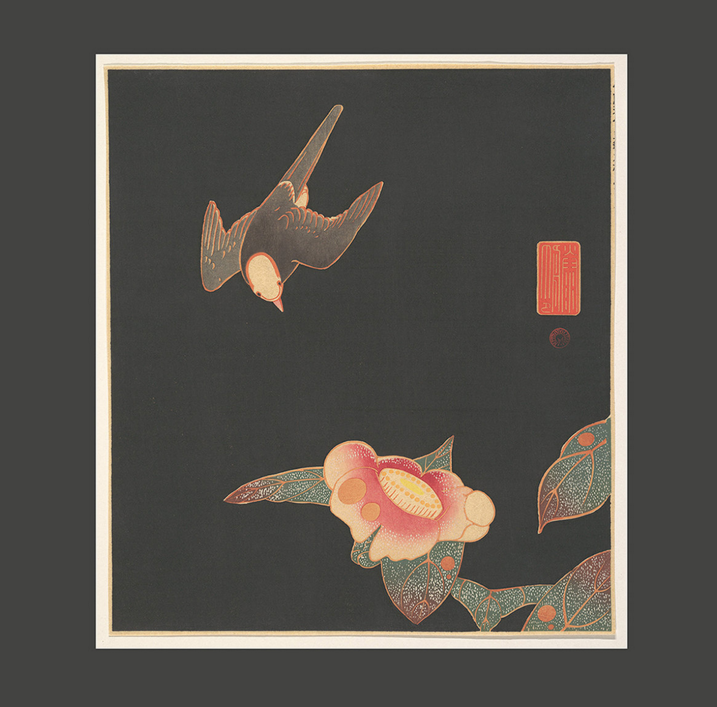
A clue as to what you might expect to hear from Lane’s Japonism, the quilted bird-in-motion artwork (Swallow and Camellia by Itō Jakuchū) is a suitable guide to this deep immersive experience; one that is influenced as much but the literary finesse of Natsume Soseki‘s The Three Cornered World novella as it is by Studio Ghibli’s seminal animated movie, Spirited Away. Kona is full of glistening water pool grottos and firefly lit paper lantern trails; a night garden both mysterious and imbued with peaceable Taoist understatement. You can certainly expect to hear dulcet thumb-plucked strings cascade against reverberated singular piano notes and pestle-and-mortar like scrapings, or, an insect chorus and water droplets falling on a millennia-aged and stoic moistened rock whilst hovering low synthetic drones pulse and throb. Beats are kept to a minimal, but they are there in the sophisticated mix of the fairytale and plaintive.
Magically ruminating, offering both the beatific and uncertain, Kona is an exotic, sometimes ceremonial, Zen like soundtrack that evokes the Fourth World Possible Musics of Jon Hassell, Popol Vuh and the higher plain communal glistened zither transcendence of Laraaji. As I’ve already said, this could be Lane’s most realized, complete album yet. And you can now wander that path yourself, as we premiere the album today, here:
Tickling Our Fancy 045: Bargou 08, Dr Chan, Delicate Steve…
January 26, 2017
NEW MUSIC REVIEW ROUNDUP
Words: Dominic Valvona

Tickling Our Fancy 045: A Journey Of Giraffes, Bargou 08, Delicate Steve, Dr Chan, Emptyset, The Food Of Love Project, Le Petit Diable and Julian & Roman Wasserfuhr.
In this edition of Tickling Our Fancy, the great and good of experimental and atavistic folk interpret sonnets and songs referenced in the works of Shakespeare, on The Food Of Love Project; John Lane produces his most experimental, esoteric, collection of field recordings yet, under his A Journey Of Giraffes alter ego; Delicate Steve marks his return with his first solo LP in four years, a collection of personable “songs without words”, entitled This Is Steve; Dr. Chan make their most “mature” howling skate punk meets primal garage row yet, $outh$ide $uicide; there’s mesmerizing Tunisian desert funk and atavistic vibes from Glitterbeat’s latest signing, the Bargou 08 project; the latest reification sonic suite from Emptyset; the accomplished jazz siblings, Julian & Roman Wasserfuhr’s recruit David Bowie’s Blackstar line-up for their Landed In Brooklyn suite; and finally, a welcome new solo direction from Jinko Vilova’s Ander López.
Bargou 08 ‘Targ’
Released by Glitterbeat Records, 17th February 2017
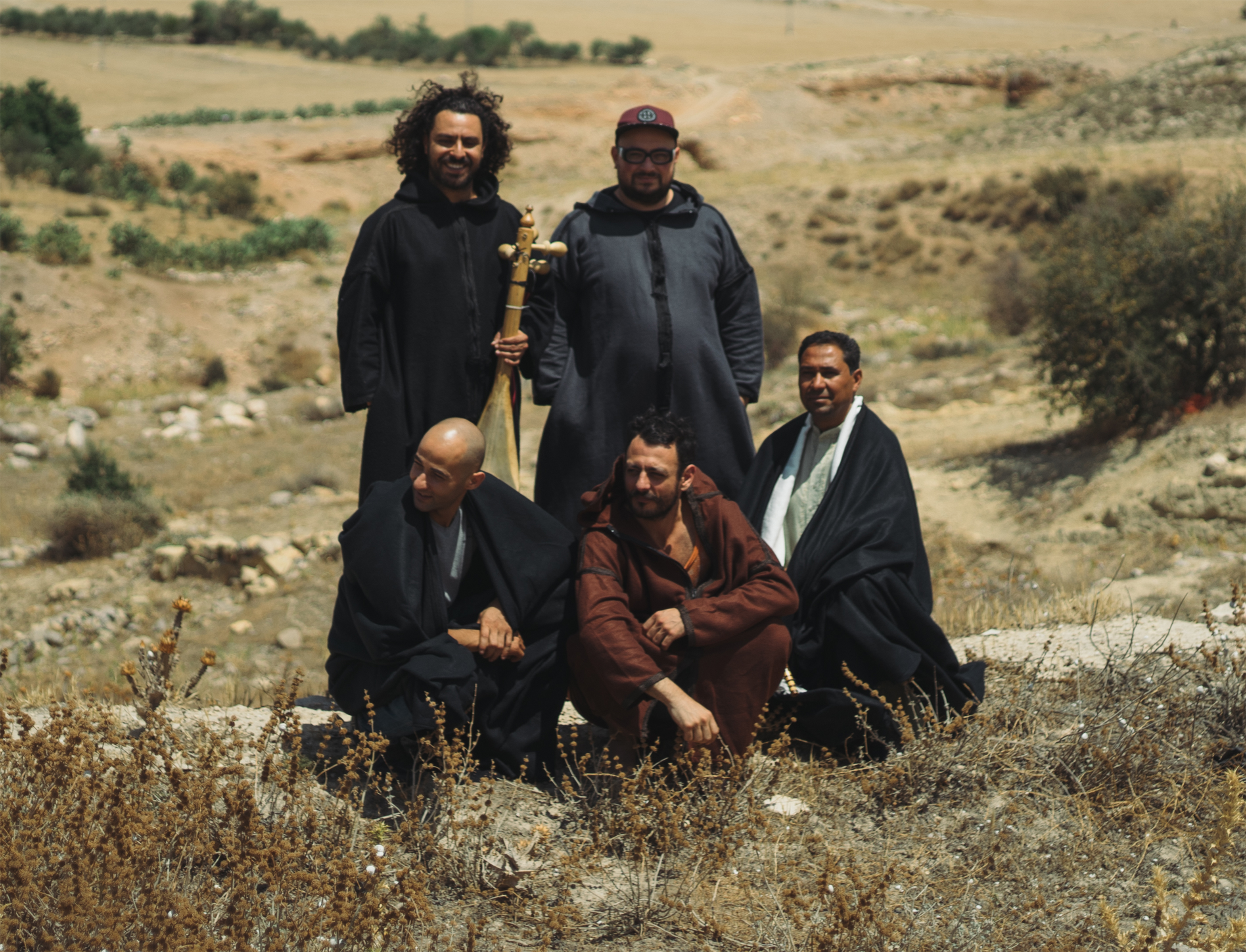
Ahh…the sounds of a dusky reedy gasba flute; the tactile patted and burnished bendir drum; the rustic, earthy strung loutar, and the flowing, scaling vocals of the Bargou 08 project’s chief instigator, Nidhal Yahyaoui, set an impressive atmosphere in the first couple of minutes of the album’s opening, Chechel Khater.
The source of this sound derives from a relatively uncharted region that lies obscured between the mountains of northwest Tunisia and the Algerian border, called the Bargou Valley, which despite its barren isolation, has cultured a unique musical fusion, stretching back hundreds of years. Captivating and magical enough in its ancestral unchanged form, the songs of the valley, sung in the local Targ dialect (a language that is one part Berber, the other Arabic), are given a contemporary jolt that transforms the atavistic paeans, odes and poetry of yore into an intoxicating swirling rapture of electronic North African funk.
In the same way that Noura Mint Seymali’s griot traditions of Mauritania were boosted by an infusion of psych and a polyrhythmic, bordering on breakbeat jazz, drums the Bargou valley’s heritage is given a fattened keyboard bassline, warping Moog oscillations and a modern production. The results are exciting and often lively. The dynamics, especially Yahyaoui’s emotionally powerful vocals, are an especially imaginative giddy thumping mix of desert rock, Arabian dance music and snake-charming mysticism. Suffused with this cocktail of sounds, each passionate evocation, learned and passed on by the village elders, begins with a signature introduction of searching, plaintive or mysterious flute before a pulsing backbeat kicks in; suddenly jump-starting and placing those songs in a modern context. Modulating between the nocturnal desert soundclash of Dek Biya and the Barbary coastal tidal motion candor of Le Min Ijina, different eras are magnificently bridged.
Honed on the road, the Bargou 08 project, conceived by Yahyaoui and steered by his musical partner and friend, keyboard player and producer Sofyann Ben Youssef, was recorded in an ad hoc manner: Youssef juggling both the recording equipment whilst playing the Moog. Yet despite its often loose and hypnotic nature, devoid of tension, this album is a highly sophisticated, joyful, groovy and tight; the musicianship first rate.
Filled with a legacy of turmoil and tension that goes back an aeon the song’s many themes, from describing a lover’s vital attributes on Mamchout to laments of alienation, resonate strongly with the growing unease of events, initiated six years ago by the Arab Spring. Tunisia itself is facing a struggle and teetering on the edge, with no guarantee that certain cultures won’t just disappear or be fragmented in the ensuing melee. Originally setting out to document his Bargou Valley home’s musical heritage before it disappeared, Yahyaoui has successfully and thankfully, with Youssef, captured this rich mesmeric culture for posterity. And in doing so, produced a masterpiece that will endure. 2017 will have to be an exceptional year if Targ doesn’t make this year’s “best of lists”; it’s certainly earmarked for ours.
Various Artists ‘The Food Of Love’
Released by Autolycus Records, via PinDrop and TMD Media, 20th February 2017

Despite being one the most laid back people I know, though judging by the multiple projects, schemes, events and albums he’s working on at any one time he may just be tired out, Oxford polymath Sebastian Reynolds is in a constant state of ennui. He made the TOF column four times in a row last year with various remixes and productions including the multimedia Thai meets West production Mahajanaka – a collaboration fusion of both traditional Thai forms and Western contemporary dance and music, which reinterprets the ancient stories of Buddha on his multiple incarnations journey of perfection towards becoming fully enlightened. In between his roles as a promoter and head honcho at PinDrop, Seb’s set to release a pair of solo albums, Remembrance and Epiphany, later in the year. It is once again in his role as both a performer and instigator that sees him, alongside Tom McDonnell of TMD Media, commission and curate a celebration of the great bard Shakespeare.
Originally part of the wider Oxford Shakespeare Jubilee festival programme in 2016, the adroitly conceived compilation has had some trouble with its official release date, being put back and now hovering over January ready to drop at anytime. But the wait has been worthwhile. The twelve-strong track list features an inspired choice of both Oxford locals and carefully plucked international artists interpreting, transmogrifying and playing around with both the most fleeting and integral songs performed or merely referenced in Shakespeare great cannon of work. In what is now an obligatory requisite, Seb performs with both the electronic-indie outfit he’s been a member for years, Flights Of Helios, and as one half of a unique collaboration with Food Of Love project partner McDonnell, under The Children Of The Midnight Chimes appellation. The first of these is a constantly evolving alternative indie and trip-hop dance peregrination of I Loathe That I Did Love from Hamlet, the latter, is a heavy, thick supernatural vortex drone representation of O Death, Rock Me Asleep from Henry IV Part 2. Considering its source is “allegedly” from a poem written by the tragic fateful Anne Boleyn on the eve of her execution, this abstract soundscape, which features shrouded in the ether vocals from McDonnell, is like a haunting: the unrested spectre of Ann caught in perpetual anguish.
Equally good at removing the original material from any sort of familiarity, taking it over the threshold into alien realms, steam-punk maverick and musical contraption inventor Thomas Truax transforms the Tudor court stalwart Greensleeves into a ethereal cosmic trip abroad Gene Roddenberry’s Starship Enterprise; landing on The Tempest inspired Forbidden Planet. David Thomas Broughton meanwhile closes the album with a ten-minute experimental finale, reinterpreting Lawn As White As Driven Snow from A Winter’s Tale. Sounding like multiple takes of the same song, set into motion at different times and played all at once, Broughton impressively weaves all the discord, overlaps and amorphous bleeds together to create a drifting, sometimes anemic panoply.
In a more congruous manner, closer to the times they were written in, the Scottish troubadour Alasdair Roberts, with only the minimal though attentively atmospheric “historically accurate” lute of Gordon Ferries to back him up, steps straight off a Tudor tapestry to coo in an atavistic lulling timbre the “oblique” referenced Caleno Custure Me from Henry IV Part 2. Elsewhere the tone is of a folksy twee yet often stark and ominous droning beauty. A Highland imbued version of Strength In A Whisper, from Much Ado About Nothing, by, another Scott, the folk songstress Kirsty Law, and a stirring quivered Celtic orchestral treatment of Bonnie Sweet Robin Is To The Greenwood Gone, from Hamlet, by the Dead Rat Orchestra both share hints of Jed Kurzel’s mesmerizing score for the 2015 movie version of Macbeth.
Missing unfortunately from the line-up, the classical folk legend John Renbourn sadly passed away before recording his contribution. The Food Of Love is as a result dedicated to his memory. And it is a touching tribute but most importantly a successful exercise in bringing vitality to Shakespeare’s yellowed parchment; lifting what were in many ways just fleetingly touched upon songs to life.
Delicate Steve ‘This Is Steve’
Released by ANTI-, 27th January 2017
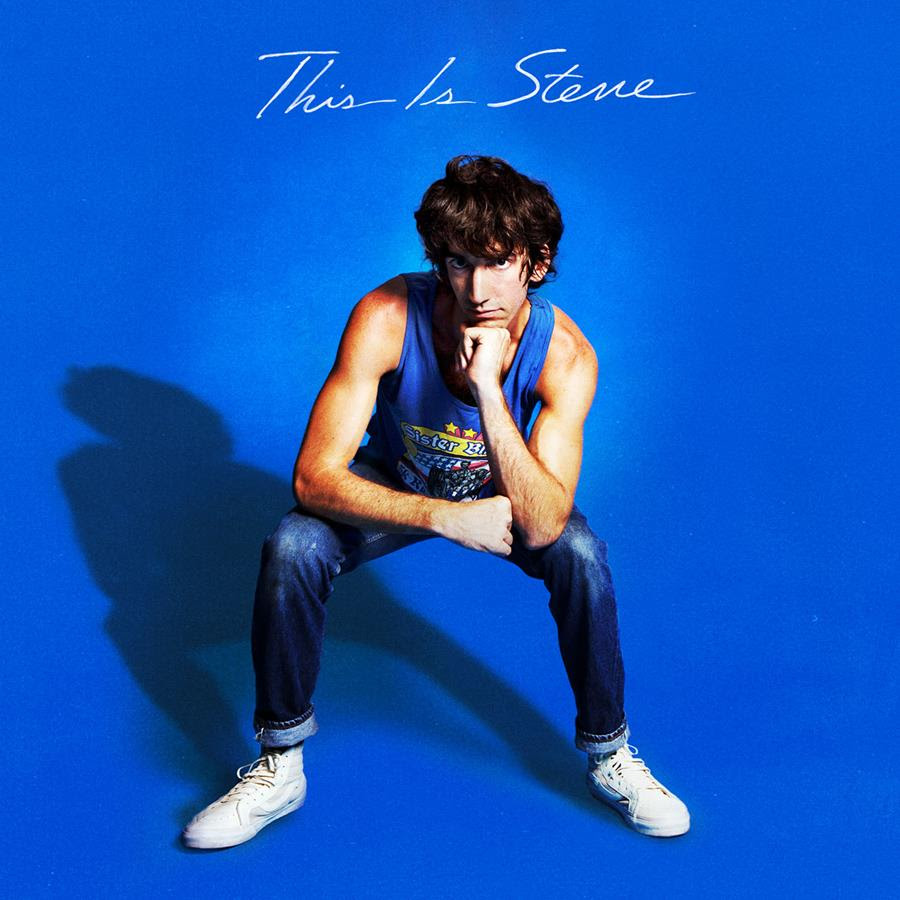
I must confess. Delicate Steve (as he’s known) has until now escaped my detection. The accompanying bio however offers an impressive resume, listing David Byrne, The Dirty Projectors, Lee Ranaldo and tUnE-yArDs as admirers and collaborators. As a testament to Steve’s range, the erudite guitarist and songwriter has “cut records” with both Sondre Lerche and Death Grip’s Zach Hill; and recently appeared playing guitar on the new Paul Simon record.
His first solo album in four years, and the first for the Anti- label, This Is Steve is billed as an “introduction” from the artist to you, the audience. A one-man band, producing and playing everything himself, Steve’s peaceable, often acid-country and surf twanged jaunty and ruminative, guitar themes run through an eclectic array of genres without settling on any specific. The signature cosmic swirling phaser guitar effect and intricate but relaxed perusal technique apes a number of other instruments, including the sitar on the opening glam-psych wilderness of Animals, the zither on the George Harrison exotic bluegrass walk along a California boardwalk Winners, and a Theremin on the nocturnal slouchy candor Nightlife.
Untethered as such; meandering mostly, but at times more forcefully careering through expressions and moods, Steve is scuzzing down ZZ Top’s highway towards a Todd Rundgren drive-through one minute (Cartoon Rock) and yearningly picking out a poignant personal Woodstock gospel anthem the next (This Is Steve).
Despite it being an entirely instrumental affair, you may find yourself singing along. And that’s due to each song’s uncanny familiarity, but also down to Steve’s personable touch, unguarded, channeling a lifetime of both conscious and unconscious melodies and articulating them in his own unique manner.
Emptyset ‘Borders’
Released by Thrill Jockey, January 27th 2017

Transmogrifying, compressing and distorting their chosen “tactile” instruments (which include a six-stringed zither-like contraption and a drum) through vintage analogue equipment, the Emptyset duo perform a live contortion of fuzzy and frazzling trepidation on this latest conceptual offering, Borders.
Commissioned in the past to articulate musically and sonically the abstract; Emptyset have produced successful reification suits, with a number of self-imposed rules, from a number of architectural spaces, including the decommissioned Trawsfynydd nuclear power station and the neo-gothic Woodchester Mansion. This time around, sat in a Faraday cage as towering metal leviathans communicate with each other overhead, James Ginzburg and Paul Purgas set themselves another series of prompting parameters to work within. On this particular score the duo focus on subtly adjusting the timbral qualities of their performance, for an often ominous concatenate series of sonorous and abrasive evocations.
Though Borders doesn’t seem to offer a specific architectural environment; it evokes instead an electrified industrial-scarred force field of dread. Sounding not too dissimilar to Sunn O))) making a cerebral techno album on Basic Channel, the eleven-track soundtrack is suffused with long drawn-out pylon throbbing rhythms, seething and flexing with various fluctuated menace. Descent for instance opens the furnace door of a machine-age fire-breathing Moloch, whilst Speak brays with a monstrous didgeridoo-like rasp.
The album is a heavy dose of bestial sizzled magnetic crackling and giant rumblings; an electrified fence of static doom, both highly atmospheric but also teasing with anticipation.
A Journey Of Giraffes ‘F²’
Self-released, January 11th 2017

A Journey Of Giraffes’ John Lane has come a long way since his chirpier and languorous lo fi Beach Boys (circa Pet Sounds and SMiLE) inspired renderings and washes. Now almost fully immersed in the esoteric; exploring strange new soundscapes, Lane takes “a long walk into the deep forest” of his Maryland, USA home for something approaching the supernatural. Those California vapours of old do still linger, though removed even further, lost on a swell of reverb, Foley sounds and a heavy miasma of abstracted experimentation. A leitmotif of field recordings from the Hampton’s Cromwell Valley Park underpin this latest journey: the trampling underfoot of the valley floor and, threatening to blow us off-course, gusts of wind create an environment that sounds like an ominous meander into the Blair Witch Project.
Best described as Coil picking apart Panda Bear on the way to Alejandro Jodorowsky’s Holy Mountain, F² (an element which you won’t find on the periodic table; a symbol instead that Lane uses to represent a sentiment of “family first”) features venerable monk-like chants and wordplay, subterranean echoes, Tibetan chimes and paranormal doo-wop. Hermitages, caves, atavistic idols to old gods the ghosts of previous generations that once hewed a living from the landscape and the sainted Father Damien De Veuster of the 19th century leprosy colony of Hawaii’s Molokai Island, all haunt Lane’s imagination.
Self-released via Bandcamp, almost happenstance style, this avant-garde soundtrack opus benefits from the kind of freedom that the internet can offer. However, with no restrictions and a methodology of total exploration, the album is perhaps overly long in places and can stretch the listener’s patience. Still, Lane works out his ideas and expands his sound further on every release; taking that original Beach Boys influence into seldom charted waters.
Dr Chan ‘Southside Suicide’
Released by Stolen Body Records, 24th February 2017

Like some obscure French exchange garage band of students – the kind you’d find, if it existed, on a European version of the Teenage Shutdown! compilations – hanging out in the 80s L.A. of plaid shirt and paisley bandana fatigue wearing skater-punks, Dr Chan are an abrasive and coarse mix of renegade petulant inspirations.
Essentially powered by garage rock and all its various manifestations, the group from the south of France hurtle through an up tempo and raging backbeat of The Chocolate Watch Band, Standells, Rationals, Black Lips and Detroit Cobras. The difference here is that they also throw in a miscreant Molotov of thrash punk, courtesy of Fidlar, and “death rap”, cue Florida’s $uicideboy$, into the riot. It gives the Chan’s brand of garage band mania a different intensity and drive: more screaming in a ball of flames spikiness than tripping psych.
The opening title track is a lively introduction to this controlled chaos; the distorted scrawling spunk-rockers rumbling and attacking surf, bluegrass and rock n roll in adolescent fury. It isn’t always this fast and noisy. I Can’t Change for example takes a, dare I say, poignant respite; sounding like a yearning Roky Erikson dodging the whistling drop of bombs from above.
Despite the increasingly distressed cartoon screamed resigned sentiment of the swansong, Life Is Not Fun – Southside Suicide is a blast. Riled and obviously pissed about the current state of affairs both at home and overseas, Dr Chan’s protests are in keeping with the primal spirit of rock’n’roll: fun, fun, fun! It’s a blast.
Julian & Roman Wasserfuhr ‘Landed In Brooklyn’
Released by ACT, 24th February 2017
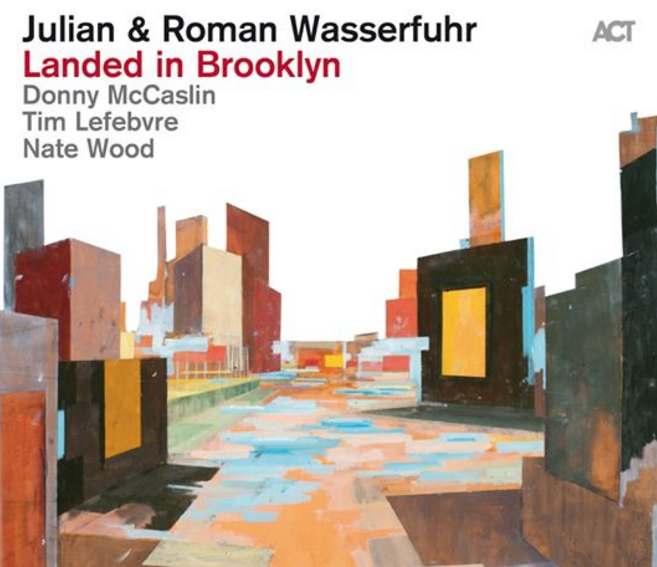
It can hardly be denied that New York always has and always will be an epicenter of musical innovation and fusion. Sure, there’s a growing unease at not just New York but mega beacons of creativity everywhere in the West. That the artists are pushed out and forced into the outlier regions because of gentrification, high rents and a general enervation of culture. Manhattan still has the jazz legacy and sports the venues (from the Lincoln Centre to The Village), but we’re increasingly told the “action” is happening elsewhere: in the borough of Brooklyn to be exact. A sprawling region of the New York panoply, Brooklyn has become a cheaper, more viable alternative; though in the last decade this hotspot has seen a massive influx of millennials, students and creatives flood the area, and so changed the very nature of the neighborhoods and inevitably made it more expensive.
Lured to this hotspot, the exceptionally talented trumpet (though on the latest album also partial to the flugelhorn) and piano sibling partnership of Julian and Roman Wasserfuhr “land” in Brooklyn for their 5th LP together. Prompted by the German jazz label ACT, and producer Siggi Loch (one of the first to foster the brothers talent, Loch produced their debut 2006 album Remember Chet, as part of that label’s “Young German Jazz” series) the duo initially hadn’t given much thought to the project. Spurred on however by the mounting reputation of New York’s largest borough, the brothers relocated. Imbuing themselves with Brooklyn’s history and present “where the action is” status, they recruited members of David Bowie’s Blackstar backline; man-of-the-moment tenor saxophonist and bandleader Donny McCaslin and the equally in-demand, former New York native, electric and double-bass player, Tim Lefebvre. Both have, in great part due to the attention Bowie inevitably drew, helped shape the city’s persona and rep for pushing the boundaries of jazz. And here they do what they do best; lifting and taking ideas and melodies into ever more inventive directions. Consummate enough to boost the foundations, yet also erudite enough to know when to blow or noodle away ten-to-the-dozen, they prove a congruous fit. Finishing the lineup, another link to McCaslin, is supremo drummer Nate Wood, who gets the chance to showboat with a salvo of never-ending rolls and crescendos on the cover of Tokio Hotel’s power-rock ballad, Durch den Monsun – a vast improvement upon the original.
Making a final connection to the city’s wider jazz legacy; the brothers chose to record at Joe & Nancy Marciano’s legendary System Two Recording Studio; using the venerated studio’s classic ribbon mic, once owned by John Coltrane no less, and a piano previously used for concerts at Carnegie Hall. Utilizing the environment, which has seen its fair share of legendary names from the jazz lexicon record there, the quintet produced an extemporized performance. Far from rehearsed and contrived – other than the choice of covers and the odd bit of sheet music – there’s little prompting on Landed In Brooklyn. Instead we get a flowing, loose semi-improvised interplay between all involved. This method is demonstrated on the opening “ensemble sound”, Bernie’s Tune. Relaxed, springy even, Julian Wasserfuhr and McCaslin’s interweaving horn section flews impressively over a quickened backbeat to create an update on the New York siren wailed TV detective theme tune. Roman Wasserfuhr, who leads on most of the album, is deft and supple on the ivories; caressing warming with a rippling effect even though you can tell he’s working hard on some complex countermelodies.
Whether it’s been planned, or unintentionally just floated into the quintet’s melting pot sound, there are traces and nods to a number of key jazz doyens throughout. There’s purposeful, and noted in the album’s accompanying booklet, hints of the horn geniuses Freddie Hubbard and Stanley Turrentine for instance on a couple of tracks, most notably however on the nestled trumpet and swaddling saxophone – Gershwin on Blue Note – Tinderly.
Elsewhere there’s Marimba-lilted waltzes; a 5/4 timing transformation of a moribund Sting song; and a cluttering railway-track travail style meditation on America’s past segregation woes to take in. And marvelous they all sound too. There can be no denying that this is a quality line-up; musically speaking, even if the covers are hardly inspiring, this is an accomplished recording. The Wasserfuhr brothers do creative things with the scenery and mood of a hub currently in the spotlight; producing an album that arguably bridges the old with the new guard.
Le Petit Diable ‘Seeds’
Self-released through Bandcamp, available now
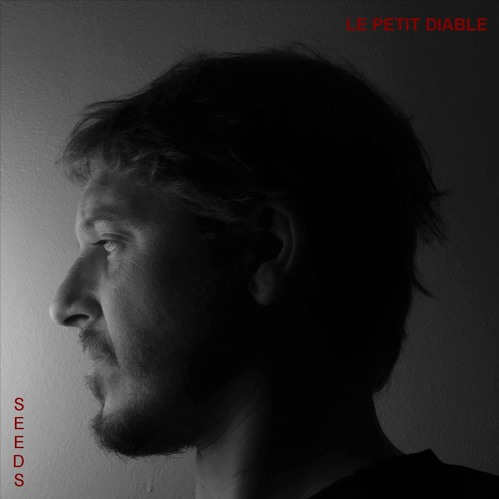
An important force for good on the underground Spanish music scene, predominantly in the last five years with the Krautrock and “Motor City” inspired Jinko Vilova, songwriter/musician and full-on space-rocker Ander López has taken on a new role as a troubadour for his solo album.
As demonstrated on his new collection, under the Le Petit Diable guise, López removes all but a brassy-stringed resonating acoustic guitar from the Jinko Vilova blueprint sound. Taken from the group’s previous LP, Líquid, the opening gambit, You’re Standing, is reduced from its original cosmic thickset Detroit bombast to a far more intimate acoustic affair, which sounds at times like a missing track from Can’s Unlimited Edition. It serves as a transitional introduction to ease the listener into the new raw, stripped direction. The album, Seeds (a metaphor for the ideas he’s evidently planting), has a real live quality about it, recorded in an atmospherically favourable space that lends itself to the echoing chimes and rings of his “lived-in” guitar playing.
Countering a gentler picking and plucking articulation with a mixture of attacking and ringing reverberation style rhythm guitar, López works up a fair old pace at times; filling the space when he needs to: The rebellious folk gallop, Purple Sphere, could be considered even spiky!
Vocally he channels a litany of hard-worn melancholic wayfarers; including Blixa Bargeld (Who Cast The First Stone), Nico (Snake’s Dance, Follow The Leader) and Roy Harper (My Eyes). There’s even a hint of the languid Damo Suzuki about López on the opener.
Le Petit Diable is a welcome move towards a parallel solo career; a surprise exploration and change from the music he’s become synonymous with. There is a lot of promise on this album, and the future looks bright.
 Monolith Cocktail Blog