THE MONTHLY DIGEST INCLUDES A CLUTCH OF ACCUMULATED NEW MUSIC REVIEWS; THE SOCIAL INTER-GENERATIONAL/ECLECTIC AND ANNIVERSARY ALBUMS CELEBRATING PLAYLIST; AND CHOICE PIECES FROM THE ARCHIVES.

Image: Violet Nox artwork by Allison Tanenhaus
_/THE NEW___
Bedd ‘Do Not Be Afraid’
31st October 2025
After an initial break from the site – this is down to me, and not the band -, the Oxford bedd project led by singer-songwriter, composer and producer Jamie Hyatt has now appeared twice in the space of just a few months: firstly, back in the June Digest with a bridging style EP entitled Monday 10:55, and now, this month, with a full debut album called Do Not Be Afraid.
Repeating myself again, sometimes I excel myself with a descriptive summary, and with one of bedd’s most early singles, ‘Auto Harp’ (released during the lockdowns of 2020) I described the sound as “an understated breath of fresh air from cosmic suburbia”. This beauty of a single was followed at a later date, during Covid isolation, by a premiere of ‘You Have Nice Things’, which seemed to have continued with its small-town landmarked sense of isolation and sad detachment on the EP’s title-track, the very specifically timed capture of nocturnal plaint and heartache ‘Monday 10:55’.
None of the tracks on that EP feature on this debut album, but it does gather up a string of previous singles, stretching back over the years, including ‘Party On dude (Endless)’, which featured on Jon Spira’s The Life and Deaths of Christopher Lee homage film in 2024. The track itself, is a two-parter of a sort, starting off with more haunted wistful piano tones, synthesized atmospherics and chemistry set sounds, before suddenly entering a party vibe of 80s old school hip-hop and electro samples and scratches and Chic-like funk: think Lovebug Starski meets Whistle and Doug E. Fresh in the graveyard. Jamie, the mastermind behind bedd and instigator of The Family Machine, The Desires and Medal trio of bands, has scored a few film projects over the years: most notably the Elstree 1976 documentary film that chronicles the making and legacy of Star Wars. You could say that this filmic quality and experience, a bit of scale and drama, has helped to lift much of the material, giving crescendo, a build-up and oomph to the mainly indie-rock and electronic-pop influenced sounds. Sometimes the near fatalistic tone of the voice and lyrics rises above the melancholy, malady and eulogy to twinkle and glisten with a big swell or sense of something much bigger: the universal perhaps.
Before going any further, I need to name the band that has formed around Jamie for this project, which includes “a range of celebrated local Oxford musical talent”. There’s bass player Darren Fellerdale and guitarist Neil Durbridge, both bandmates from Hyatt’s previous project The Family Machine, plus the guitarist Tom Sharp, electronic musician and producer Tim Midlen (aka The Mancles of Acid) and drummer Sam Spacksman. Together, they push the fragility and vulnerability towards the stars with music that sits comfortably between a traditional band set up and the electronic (much of which is atmospheric, rather than in the form of synth waves or bass lines and such; far more in the manner of the cosmic, of adding something more magical, of transmissions, the odd captured recordings of chatter and the environment); they sound on occasions vaguely Britpopish, a little like Radiohead circa Pablo Honey and The Bends, Jeff Buckley, Benjamin Shaw, and on the shorter saddened song track about expectations, of life and being left deflated ‘Bed Sheet’, like both Blur and Gene.
I’ve already used the word fatalistic, and with references to Bowie’s Ziggy period world ending calamity (‘Five Years’), and despondent impressions of our social media and self-obsessed culture and its ways of dealing with tragedy, death and loss (‘Gone’ and ‘I Whoo Yeah’), you’d be right to expect it. And yet, the candidness of Jamie’s lyrics, especially on the nostalgic and fragile eulogy ‘Everything’s Coming Around’, have lift and a quality of endurance as our protagonist pushes through a weight of memories. Cutting through beautifully the filters of an Instagram encased world, Jamie transforms real concerns, injury and failures into something very magical and full of memorable tunes, hooks and feeling. A great album from a fine project indeed.
Yusef Mumin ‘Journey To The Ancient’
(WEWANTSOUNDS) 31st October 2025
Continuing to unearth those both privately pressed and obscure recordings from a golden period of free from conscious and Black identity jazz, the reissue specialists at WEWANTSOUNDS have collaborated with the notable musician Yusef Mumin to bring some of his previously unreleased peregrinations and expressions to vinyl for the first time ever. Following on from last year’s extraordinary Black Artist Group ‘For Peace And Liberty, In Paris December 1972’ special (of which there are some musical parallels), the label has brought together a quartet of recordings from the multi-instrumentalist, co-band leader and pioneer’s personal archive. Bringing an expanded context, and a framing of the history, the relevance, the influences and sparks of inspiration, prominent jazz writer Pierre Crépon joins the dots with some insightful liner notes, making for a very desirable package.
Whilst I won’t just repeat Crépon’s studied but creatively written research and notes, a rough outline of Mumin’s career is needed before we go any further. Born Jospeh W Phillips on August 25th, 1944, the wartime baby grew up in Cleveland, a city that would prove a hub, crossroads for all kinds of societal, spiritual, radical and cultural activities. Drawn from a young age to such luminaries of the jazz form as The Modern Jazz Quartet and Yusef Lateef, but also classical pioneers such like Igor Stravinsky, Phillips would develop his own musical language, inspired by reading liberally a great many esoteric works: taking an interest in everything from Zen Buddhism to the Kabbalah, the Zohar, but eventually finding a calling from Islam. Cleveland during this time, as a growing epicentre of Black Nationalism, of Black self-preservation and worth, hosted such groups as the Nation of Islam (where they set up Mosque No. 18), a Moorish Science Temple and branches of the Ahmadiyya (an international Muslim movement started in India in 1889 by Mirza Ghulam Ahmad, who purported to be divinely appointed as both the Mahdi and Messiah). I’m not sure when, but in the tradition of such Islamic faith conversations, Phillips adopted the Yusuf Mumin name – a reconnection with his African/Islamic roots, a rebirth if you like and shedding of a European-Christianised identity, the mark of ownership.
Taking up alto saxophone, absorbing a fecund of jazz sounds and developments taking shape in the 1960s – from Ornette to Sun Ra and Ayler (an artist he’d have a lifeline interest in, a praise for; his own art said to be a continuation of what the free form tenor saxophonist started), Mumin gravitated towards the trumpeter Norman Howard, who’s credentials included a stint with Ayler: namely playing on his iconic Spirits LP. They formed a group together for a fleeting passage of time before Mumin co-founded his most iconic partnership a year or so later, the Black Unity Quartet. The original quartet soon pared down to the now legendary trio of Mumin (on reeds), the cellist Abdul Wadud and drummer Hasan Shahid (weirdly, and I must point this out, when searching online for a bio or any details of this short-lived group, there are multiple versions of this lineup being shared, examples of misinformation: names spelt wrong, instruments attributed wrongly too.) They’re predominantly known for the cult status and rarity of their only LP, Al-Fatihah, recorded in the December of ’68. Privately pressed with no interference, but crucially no publicity or push from a label, it would take decades for this record to be re-issued and given a larger significant launch and place in free form jazz history – an interview with Mumin, and a playlist selection featured in the Wire magazine at the time of this release. Inspired by the afflatus and the opening chapter of the Quran – the first seven verses of prayer that gives guidance and mercy -, Al-Fatihah can be translated into English as roughly “The Opening” and “The Key”. Carrying on this journey, going on to collaborate with an enviable cast of jazz greats Charles Tyler, Horace Tapscott, Arthur Blythe and Butch Morris, Mumin built up an impressive archive of his own recordings; some of which are now finally seeing the light of day as the Journey To The Ancients album.
With only his Dan Nuby double-bass credited pseudonym and the drummer William Holmes (an “associate” we’re told of the blistering alto free form, modal and hard bop luminary Sonny Simmons) as company, Mumin’s quartet of recordings are brought together for a fitting showcase of spiritual, longed, radical free-play and searching, questioning roots jazz. Despite featuring different themes, it feels like a complete work: a missing act from the celebrated cannon that connects the spiritual and political quest for African American liberty with a hunger for the homelands, and unity under the crescent flag. As my reading goes, the short opening passage of Bakumbadei, is a divine song of longing, and an invocation. As both Mumin himself and Crépon’s make clear, the title “relates to power of definition, or new wine, as offerings to the fathers.” Playing the cello, both as a mark of respect to his former foil Wadud (rightly acclaimed as one its finest practitioners in the jazz and classical fields) and because it just sounds so evocatively deep and almost pained in expressing a majesty, a dignity, and classical strain of the atavistic, Mumin also sings with an equally deep, but not quite baritone, voice, repeating the title chant, spell.
The very next piece, and title-track, now opens the door into a more extensive world of ancient caravan trail jazz. Incipient stirrings, shakes of Kahil El’Zabar and drifted rasps of saxophone moodily conjure up a landscape of some dreamt-up vision of Arabian North Africa, of the Middle East and the Fertile Crescent, but also of something far more out there in an alternative plane or dimension. A spiritual, pining Afro-journey with classical traces and a touch of the New York Art Quartet, Jospeh Jarman, Maurice McIntyre and the James Tatum Trio Plus. An awakening you could say, its sets the pathway up for what’s to come.
‘A Distant Land’ is another of those searches, this time for a new Jerusalem or a land in the sky. What could be tablas set up a more bended and buoyant Eastern feel of the longed. The spaced-out bass notes, sometimes ponderous, make steps on this slow rhythmic trial as the flute now, half in the style of Llyod McNeill and half in the style of Jeremy Steig chuffs and blows its course across a deep dive of temples and jungle.
More unsteady, with Holmes’ improvised like and active minor tumults of free form drumming, ‘Diaspora Impressionism’ is a tumble and uneven keel expression of the misplaced people, but also a response to the pain, ancestral trauma and indignity, the travails of the Transatlantic slave trade legacy. At time Mumin is blowing almost dry, without any spit, in reaching that encapsulation of hurt and anger; there’s parts in which he is literally, or sounds like it, fighting with his instruments as the fraught sax mimics the viola and violin. And yet amongst the splashes and rolls, there’s passages of rhythms and melody to be found; a yearning moment or two in which the trials and tribulations find some sort of peace. But as this combo go at it, they perform a wild form of jazz that has parallels with the art of the Children of the Forest, Wayne Shorter, Evan Parker’s more far out material, Ayler, Sunny Murray and Dewey Redman.
An album of beauty and toil; of consciousness and the imagination; a balanced and congruous set of recordings that feels like a unifying statement of divinity, experimentation, hardships and free expression. WWS have done it again and retrieved a vital album from a key and pioneering artist/musician in the story of free form jazz.
NiCKY ‘with’
(PRAH Recordings) 28th October 2025
Broadening the scope and the queer landscape musically whilst inviting in some congruous collaborative bedfellows since their last outing, with the by EP in 2024, the London songwriter and performance artist simply known as NiCKY presents a new songbook of haunted, touching, tender and resilient balladry, theatre-esque numbers, behind closed doors masquerades and near heartbreaking drama.
From the very first brush of tambourine and affecting touch of late-night saloon poised piano on the opening beautiful, but hunting, declaration ‘I Saw You’, I was sold. Slowly charged with expressions of both vulnerability and lust, played out in the dimmed lit recesses of an after-hours drinking hideaway, with one eye in anticipation of the next affair, the next pick-up, yet desiring a special frisson and love, with the passing influence of Lou Reed, John Cale, Stephan Trask and Anohni, NiCKY reworks lyrics originally conceived by the queer Irish playwright and activist Colm Ó Clúbhán and the theatre group that he became a member of once immigrating from his native Ireland to London in the early 70s, the Brixton Faeries: their activities emerging from the noted Railton Road squats. In its original form, the song first featured in the “agit-pop play about cottaging” GENTS, but finds a new avenue of expression, disarmed with a different kind of poignancy and heartache, and now repurposed for a restaging of Ó Clúbhán’s Reasons For Staying play – an avenue for telling the marginalised stories of the Irish diaspora in the capital, centring on the lives of its queer characters, but also of those women seeking abortions. It’s a highlight for me on a generous EP of such “uninhibited” serenades, off-Broadway cabaret turns, and the requited.
Already off to a great start then, the second number, ‘The Fall’ features the iconic French chanteuse, writer (from the International Times to plays), one-time tightrope walker (taking to the high wire or rope for such diverse companies as COUM Transmissions and Jérôme Savary’s Grand Magic Circus in Paris) and celebrated underground icon (memorably appearing and performing in Derek Jarman’s Jubilee and also, apparently taking part in Andrew Logan’s Alternative Miss World gala) Hermine Demoriane, who’s circus skills come in handy, metaphorically speaking, on a song about emotional support. Providing a safety net, Dermoriane’s unmistakable unique voice (for some reason, reminding me of Isabella Rosselini when she tries on a French accent) spins circus analogies to a piano led ballad that reminded me in part of both Mark Kuzelek and Elton. You can also pick up the soft, near brushed and slipped, drums I believe, of another guest, the alt-jazz, R&B and soul multi-instrumentalist and artist Donna Thompson, and the squeezed subtle wistful saxophone of either Euan Hinshelwood (who also produces and plays some bass on the EP) or CJ Calderwood (the multi-disciplinary artist and composer, who you may recognise as a member of both Lol K and Good Sad happy Bad): sorry, it doesn’t specify which one played on this track.
I use the words torch song, but in a lazy fashion, and it might be out of place here: Though you could perhaps argue that the heartbreaking curtain call, the swan song of ‘Fool’s Convention’ is one such torch song; apparently, so the notes say, a fusion of Kylie’s ‘I Believe In You’ and Nat King Cole’s ‘Nature Boy’. But there is a held, restrained, emotional charge to each of these songs that is hard to put a finger on.
In a liminal spot between resolution and malady; between hurt and lovelorn celebration; the rest of the album falls between Bob Fosse imbued theatre-musical and the music of John Howard, the observatory songwriting of Soho night owls, and a contemporary vision of a wistfully voyeuristic Ivor Novello cataloguing the goings ons and affairs at private views and parties in the capital. Although, the piano riff on ‘LDN Wars’ did remind me for some reason of Bruce Hornsby.
Variations on the signature include both the longed American dreamy stage number ‘Pink Pony Club’, which finds NiCKY adopting more of a Jack Shears persona; carried over into the next track, ‘Private Glance’, which has a Brazilian carnival meets Latin Miami atmosphere, and sounds at any one time like a shimmy-chimmy parade of Grace Jones, Midnight Magic and Roxy.
A most excellent second EP from an artist with much to share and shed on the themes of queer identity, vulnerability and resilience; the craft is superb and affecting. Definitely a choice release this month, if not this year.
Pray-Pax ‘The Lolita Years’
(Zel Zele) 24th October 2025
You’ve got admire anyone who can riff on CAN’s ‘Chain Reaction’ whilst deliberating on sexual and material fancies in the style of Lydia Lunch, but this is just one such take-away from a compilation style overview of the pioneering sound and musical theatre of the 1980s French duo. Combing a Krautrock sample with speeding cars and snatches, manipulations of Musique concrète, they turn a play-of-words on ‘Can’t’ to something approaching no wave post-punk swing. And they do this fusion of the haywire, the silly, the maverick, the dadaist and modern throughout a collection that brings together a multi-disciplinary array of their “unearthed” pieces.
A moiety, a part of the expanded Lolita Danse collective of dancers, artists, set designers and musicians – both that and the name of this survey possibly the very worst thing to ever look up online; that French obsession and flirtation with the taboo and all that -, Pray-Pax provided the soundtrack to an organised chaos of individual expressions and contemporary dances: an act that takes in circus-like acrobatics, the anarchic, kinetic and contemporary. And as part of a greater reprieve of this ensemble’s work, from ’81 to ’89, the design studio Mestiza Estudo is set to publish the Lolita Danse archive at the end of the year. As the press release outlines: “The book features material drawn from a selection of more than 10,000 images that document not only the collective’s performances but the entanglement of their personal and professional lives. This will form a portrait of the collective in motion: sets, costumes, music, videos, drawings, rehearsals, and more. The archive extends far beyond the visual: travel journals, letters, sound recordings, press clippings, and videos trace the full sweep of their creative ecosystem.”
Herding a messy story, from an ensemble that performed either solo in duets or as a group, and one that managed to slip any form of easy categorisation – never unifying under one banner, nor outlying or defining any particular sound or style -, the Istanbul/London shared label and NTS radio show platform Zel Zele present a fourteen (sixteen in the case of the digital formats, with the extras being bonus material as such) track document of art-music and sound fusions.
Behind the Pray-Pax moniker lies the creative instigators Thierry Azam and Alain Michon. These very capable experimental musicians combined the cabaret of the absurd, the frightening and playful with a sound collage that warped, reversed, cut-up and transmogrified everything from no wave to Iberian classical guitar, jazz, the classical, Fluxus, the concertinaed music of old France, post-punk, alt-Catholicism, the mysterious, noirish and the work of Francois Bayle and Pierre Schaeffer – especially on the opening flippery of the vague Afro-rhythmic, marimba bobbled, transmission synching cut-up ‘Domani non c’e sarà più’ (or “tomorrow there will be no tomorrow”), which sounds like a concrete version Holger Czukay, David Byrne and La Monte Young sharing the stage together.
There’s a combination of ideas that run from the rhythmic, the vocalised (though also examples of the talked, narrated and pranked) and beat driven to those that are soundtrack-like or just really odd. Tracks like ‘Down in the North’ sound like a phantom haunting The Residents and Art of Noise, whilst ‘Prudnik Blues’ sounds like a no wave jazz bluesy noirish juxtaposition of Cecil Taylor, Ramuntcho Matta and John Laurie. ‘Le Harve’ imagines Moebius and Roedelius decamping to the Northern French coastline, ‘No Regrets’ seems to transform some silver screen score from the 1920s into a Mexican mule ridden clip-clopping and French serenaded exotic experiment from Sakamoto’s Esperanto album. But bells also chime, pool balls are pocketed, dogs bark, wisps of ether draw across the crypt, and the rain falls on a number of atmospheric pieces. And within those perimeters you can detect passing traces of Devo, The Flying Lizards, Cage, and Lizzy Mercier Descloux.
Your mind has to do the conjuring without the performances (although there is a video of ‘Can’t’), and for that these pieces of music prove very intriguing, imaginative and in some instances, convulsive and hip in that downtown NYC way. In all, a very interesting survey of musicians combining performance art, dance and sound for a snapshot of the French experimental 80s.
Violet Nox ‘Silvae’
(Somewherecold Records) 21st October 2025
Building new worlds, futuristic landscapes and intergalactic safe havens in the wake of vapour trails of laconic, hypnotizing new age psy-trance mysticism, Violet Nox once more embrace Gaia, Greek mythological etymology, astrology and science-fiction/fact on their latest album, the poetically entitled Silvae.
The Boston, Massachusetts trio of synthesists and electronic crafters Dez DeCarlo and Andrew Abrahamson, and airy searching siren vocalist and caller Noell Dorsey occupy a dreamy ethereal plane that fits somewhere between Richard H. Kirk’s Sandoz, Vangelis, Lisa Gerrard, Banco de Gaia and ecological revering dance music – though that trio has expanded its ranks, indeed very pliable, over the course of the last decade.
On their eighth album together (released via the highly prolific and influential North American label Somewherecold Records) the topics of identity, androgyny, resolution, self-discovery, self-love and resistance are lifted towards the stars, pumped and projected through the veils of ambience, trance, dub, EDM, rave, electro-pop, cold wave, techno and more. The trio dreamingly, and in the moment, explore new textures, dynamics and atmospheres, and perhaps, produce their finest work to date: certainly, in places, the sound is more electronic-pop, with vague traces of New Order, Propaganda’s Claudia Brücken and 808 State – their sort of melodica like flutiness especially.
With references, title wise and lyrically to ancient Greek named guardian stars (“Arcturus”, brightest star in the Boötes constellation, notable for its seemingly red colouring, and observed, described by Ptolemy and Chaucer) and the ghostly visages of deep space to the “crescent” shaped cartilage of the knee (“Meniscus”), the album’s themes explore protection, recovery and pain (both physical and mental). Through the beckoning, the near operatic at times scaling, and drifted vocals of Dorsey they find relief, a second chance, in an astrosphere of near organic and sophisticated synthesizer and electronic apparatus plug-ins, effects, pads and keys. And sounds at any one time like a merger between Tangerine Dream, LFO and Massive Attack.
Whether it’s journeying into the subconscious or leaving for celestial rendezvous, Violet Nox turns the vaporous into an electronic art form that’s simultaneously yearning and mysterious, cinematic and ready for the dance floor. Fizzing with techy sophistication and escapism, the American electronic group continue to map out fresh cerebral sonic visions on their new, and again, possibly best album yet.
___/The Monolith Cocktail Social Playlist Vol. 102___
For the 102nd time, the Social Playlist is an accumulation of music I love and want to share, with tracks from my various DJ sets and residencies over the years and both selected cuts from those artists and luminaries we’ve lost on the way and from those albums celebrating anniversaries each month.
A couple of months back I celebrated the 100th edition of this series, which originally began over 12 years ago. The sole purpose being to select an eclectic and generational spanning playlist come radio show, devoid of podcast-esque indulgences and inane chatter. In later years, I’ve added a selection of timely anniversary celebrating albums to that track list, and paid homage to some of those artists lost on the way. In the former camp this month, and to tie in with the Archive spots on Ryuichi Sakamoto ‘Esperanto’ LP from 1985 and, though I actually missed the original release date in September, U.S. Girls’ Half Free LP from 2015. Other anniversary albums this month or year include François Hardy’s L’amitie (60), The Who’s By Numbers (50), Sparks Indiscreet (also 50), Grace Jones Slave To The Rhythm (40), Shriekback Oil And Gold (40), Pulp Different Class (30 this month, which I find hard to believe), DANGERDOOM ‘The Mouse & The Mask’ (20), Super Fury Animals ‘Love Kraft’ (20) and Broken Social Scene self-titled LP from 2005.
On the radar but missing out on a place in the blog’s Monthly Choice Music Playlist, I like to include a number of newish releases – anything really from the last four or five months of 2025. In October this list includes something from the L.A. collective Human Error Club, Alejandrito Argenal, Tetsuo ii, and Connect The Dots Movement collaboration with Sol Messiah.
The rest of this month’s social is made up of tunes loved, played out from across the last 60 or more decades: LICE (that rap union between Aesop Rock and Homeboy Sandman, which just so happens to be a decade old this year), François Tusques and Noel Mcghie, Harold Alexander, schroothoup, Angel Bat Dawid, Sandii, Inherit The Moon…
That Full track list is…
François Hardy ‘En t’attendant’
The Who ‘Dreaming From the Waist’
Broken Social Scene ‘Ibi Dreams Of Pavement (A Better Day)’
Mordicai Jones ‘Son Of A Simple Man’
Steve Reid ‘Kai’
Harold Alexander ‘New York Sister’
Sol Messiah & Connect The Dots Movement ‘What Goes Around’
Lice (Aesop Rock & Homeboy Sandman) ‘Katz’
Sparks ‘The Lady Is Lingering’
SANDII ‘Drip Dry Eyes’
Grace Jones ‘Slave To The Rhythm’
Super Fury Animals ‘Frequency’
Great Speckled Bird ‘Long Long Time To Get Old’
Shriekback ‘Nemesis’
Ryuichi Sakamoto ‘A Wongga Dance Song’
François Tusque & Noel Mcghie ‘Va Et Viens’
Pulp ‘Live Bed Show’
U.S. Girls ‘Sororal Feelings (Live)’
Alejandrito Argenal ‘Apasionada’
DANGERDOOM ‘The Mask’
HUMAN ERROR CLUB ‘FROGTOWN’
Angel Bat Dawid & Naima Nefertari ‘Black Stones of Sirius’
Tetsuo ii ‘Praise the Sun’
schroothoop ‘Bilkschade’
Amadou Diagne ‘Freedom’
We All Inherit the Moon ‘When We Finally Fall Asleep, Pt. 1’
Possible Humans ‘Absent Swimmer’
Polyrock ‘Cries and Whispers’
Trifle ‘Old Fashioned Prayer Meeting’
Excepter ‘Maids’
___/Archives___
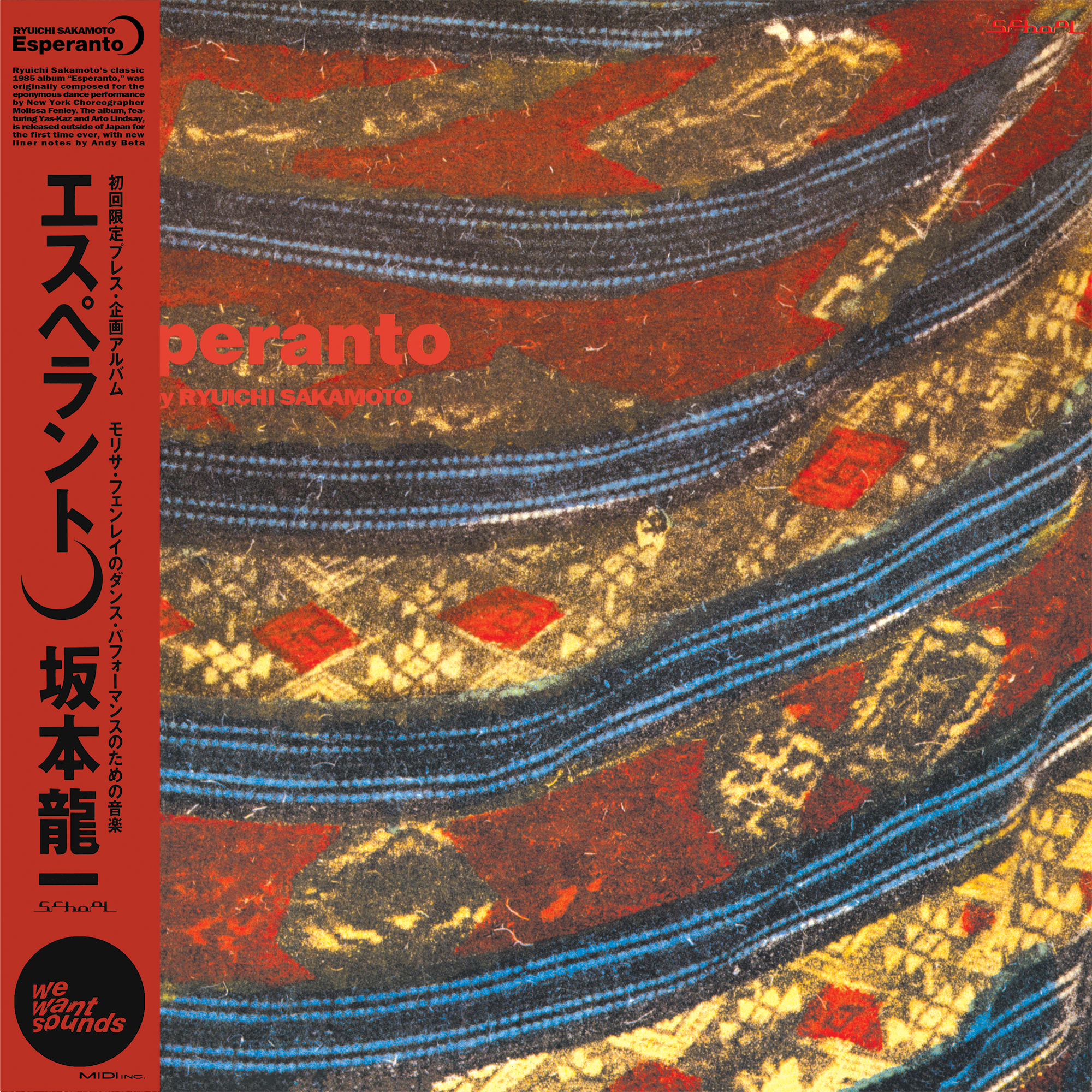
Ryuichi Sakamoto ‘Esperanto’
(Originally released October 5th 1985, and re-released by WEWANTSOUNDS in 2021)
Already riding the visionary synth waves with the Yello Magic Orchestra and through his inspirational projects with David Sylvian, Sakamoto went on to score success with the plaintive, harrowing Merry Christmas Mr. Lawrence soundtrack. The sixth solo release in that oeuvre however was a return to his more leftfield, challenging roots: a marked change from the semi-classical emotional pulls of the film soundtrack. A kind of cutting-edge theatre and ballet, Esperanto was composed for a performance by the New York choreographer Molissa Fenlay with contributions from the Lounge Lizard’s experimentalist guitarist Arto Lindsay and the Japanese percussionist Yas-Kaz. You’ll have to use your imagination to how it all worked visually – though later on art luminaries Kit Fitzgerald and Paul Garrin turned this soundtrack into a conceptual video project.
Sounding very much of its time, on the burgeoning apex of dance music and early hip-hop, electro, this polygenesis experiment often evokes both the Art Of Noise and Herbie Hancock’s ‘Rockit’. Using a super-sized computer and state-of-the-art tech, Sakamoto merged futuristic Japanese theatre with a mechanical Ballets Russes, workshop shunts and huffs with the plastic, and electronic body music with Hassell’s fourth world music inspirations.
Snatches of voices, dialogue get cut-up and looped in a primal techno performance of mechanics, rippled and tapping corrugated percussion, synth waves and oscillations, serial piano dashes and rolls, and Japanese spiritual garden enchantments. At any one time you can pick up the echoes of the Penguin Café Orchestra, Phillip Glass, Stockhausen, Kraftwerk, Depeche Mode, Eno and Populäre Mechanik within the often mysterious, exotic performativity. Motoring, bobbing or in staccato mode, Sakamoto produces a futurist dance set of suspense and experiment, an omnivorous feast of programmed and real sounds. Though very dated by today’s technological wizardry standards, the electro workshop Esperanto remains an iconic, very much sought after work well worth its admission price and indeed reissue status.
U.S. Girls ‘Half Free’
(4AD) 25th September 2015
Beckoned to the label hotbed of deconstructive cerebral pop 4AD, the Illinois raised, Toronto relocated, polygenesis songstress Meg Remy continues to entrance with her latest U.S. Girls album Half Free. Transmogrifying the template evocation of Ronnie Spector and The Shirelles with a fresh perspective and penchant for glitter ball maladies, neon lit dub and glamorous scintillating bubblegum pop, Remy’s moiety of revisionary girl group backbeats and venerable candid highly unsettling laments address a myriad of issues, from disparity between the sexes to the growing pains of modern womanhood – cue the unsettling vignette ‘Telephone Play No.1’, which plays out as a phone call catch-up between siblings but then unnervingly reinforces a deep resentment on stereotype psychology.
Remy’s most dazzling, hypnotically eclectic album yet, both thematically and musically, Half Free is essentially a highly sophisticated and gracefully slick pop triumph: On a parallel, alternative timeline this could have been (stay with me on this one) a Camille Paglia championed Madonna era masterpiece from the mid 80s; her veracious sensual heartache and woozy dream like escapism is certainly evoked at various times throughout the album. Madonna aside, Meg takes on the mantle of various female personalities and vamps, but often desexualizes and reduces their carnal allure to a sense of isolation and discomfort. Her cast of troubled personas this time around owes a debt to the characters of John Cassavetes and Michael Ondaatje, and to the broken-down protagonist of a lost 70s plaintive disco classic.
Channelling the wallowing despair of Ronnie Spector, and loosely walking the line of the troubled Nora Bass from Ondaatje’s Coming Through Slaughter novel, on the opening churning looped melodrama ‘Sororal Feelings’, Meg’s sisterly pleads of the broken wife yearningly progress through a Lee Hazelwood envisioned deep southern soundtrack: the strange fruit and methodology metaphorically replaced: “Going to hang myself. Hang myself from a family tree.” An emotional draining start, which grows on you with repeated plays, Sororal is followed up by the super-charged dub reggae hybrid ‘Damn That Valley’ – perhaps the most refreshing slice of on-message pop in 2015. Taking her cue from the acclaimed journalist Sebastian Junger’s Afghanistan front reportage War chronicles, Meg rages with a reverberating wall of sonic shrilling and grief as an imagined war widower riling against the futility and platitude sentiments of the government. Beating out an electro sound clash, part N.Y. City no wave of the early 80s, part Mikey Dread Jamaican sunshine dancehall, long-time collaborator and Toronto producer Onakabazien takes it to the next level.
Already aired, ‘Damn That Valley’ is the most colourfully vibrant of a trio of songs released since May in the run up towards the release of the LP. The second of these, ‘Woman’s Work’, closes the album. Extended from its more radio and video friendly version to a fading seven-minute plus requiem, the female gaze is sinisterly reproached by a Cindy Sherman posing façade and operatically Baroque gilded Moroder soundtrack. Amplifying the venerable atmospherics, Meg is joined by the siren sonic ethereal pitch of Ice Cream’s Amanda Grist – who can also be heard doubling-up on the Damn That Valley vocals – as they traverse an eerie veil of Catholic electro.
Released in more recent weeks, the last of this trio ‘Window Shades’ revives Gloria Ann Taylor’s original 70s unrequited disco ballad ‘Love Is A Hurting Thing’. Stumbled upon by Meg’s husband and DFA label signed artist Slim Twig (who contributes throughout the album); a touch of Madonna blusher and woozy glitter ball noir is added, whilst the universal theme is updated: apparently written after Meg watched the cod-autobiographical documentary Part Of Me, the meme circus spotlight on the life of Katie Perry that even with a soft coating of saccharine idolisation exposes the cracks and fatuous nature of celebratory.
Elsewhere on the album Meg appropriates the bubble gum glam of Bolan and the spikey punk beat of The Misfits on ‘Sed Knife’ (a minimal poem set to a bouncing backbeat, originally released as the B-side to 2012’s ‘Rosemary’). Whilst she offers an elegantly cool, misty oscillating sonorous bass-y air of mystique, – piqued by cold war jarred piano note suspense – clandestine variant on the spy thriller soundtrack with ‘New Age Thriller’: The actual battle it seems is between self-respect and male pressure. Red lipstick marks the collar of the churning, western guitar twanged, murky ‘Red Comes In Many Shades’, which itself borrows from the put-upon, downbeat beauty of Nancy Sinatra. Whether intentional or not, the song sounds like a slowed down version of New Age Thriller, and thematically dissects the struggles, and in this case, the betrayal of an affair.
Honing the darkness and plight of what was always celebrated as the innocent, teenage growing pains of adolescence with more gravitas, Meg’s robust themes swim amorphously through the dry-ice, crystal waves of the late 70s and 80s to produce a post-modern pop triumph. Progressing from the basement tapes and reverberated Spector sonic loops of the past to her latest incarnation as the pining pop artist, Meg Remy’s production values are highly ambitious: her previous work a precursor series of experimental outings. Without a doubt Half Free is her best, most mature, meticulous and glorious sounding collection of songs yet.
If you’ve enjoyed this selection, the writing, or been led down a rabbit hole into new musical terrains of aural pleasure, and if you can, then you can now show your appreciation by keeping the Monolith Cocktail afloat by donating via Ko-Fi.
For the last 15 years both me and the MC team have featured and supported music, musicians and labels we love across genres from around the world: ones that we think you’ll want to know about. No content on the site is paid for or sponsored, and we only feature artists we have genuine respect for /love or interest in. If you enjoy our reviews (and we often write long, thoughtful ones), found a new artist you admire or if we have featured you or artists you represent and would like to say thanks or show support, than you can now buy us a coffee or donate via https://ko-fi.com/monolithcocktail
Our Daily Bread 365: U.S. Girls ‘Heavy Light’
February 27, 2020
LP REVIEW
Dominic Valvona

U.S. Girls ‘Heavy Light’
(4AD) LP/6th March 2020
Marking a decade in a recording career that extends just beyond that, Meg Remy as the ambiguous U.S. Girls has progressed from bedroom diy-style 60s bleeding hearts girl group tape-loops to ever more sophisticated femme fatale politicized boogie, disco and funk. From performing as a, more or less, solitary figure from 2008 until she signed on in 2015 to 4AD, Meg has not only expanded her musical horizons and production techniques but also cast of collaborators: the last two albums for the much-mythologized indie label have included a full-on contorting live band, made up of Meg’s oft musical foil and partner the maverick guitar-slinging Maximilian Turnball (under his nom de plume of Slim Twig) and a host of Toronto talent; many of whom perform together as the multi-limbed collective Cosmic Range.
In (re)cycle mode Meg’s latest thematic cerebral pop opus, Heavy Light, is full of reflections and retrospection, not just on duality but hindsight. The seventh LP proper even features a trio of reworked recordings from the back catalogue; songs that chime with and make a connection to those very same themes, as Meg turns away (to a point) from her previous, almost, removed character sketches to gaze inward and take stock: going back even to recollections of childhood experiences. The first of this trio and a recent single ’Overtime’ first appeared on the 2013 Free Advice Column EP. Missing its lo fi Ronettes chimes, replaced with a more up-tempo gyrating workout of withering, cheated heart sassy funk, the refreshed Overtime now features a cameo pined saxophone requiem solo from Bruce Springsteen’s current E Street Band member Jake Clemons: his wane and whining contortions in parallel with the Linda Sharrock like pained wails. An annoyed song of deceit, the title an allusion to a partner drinking away his extra pay in overtime, is pretty much a universal and timeless theme given an uncomfortable twist: the protagonist laying six feet deep in the soil.
The second song to be lifted from its original time, ‘State House (It’s A Man’s World)’, first featured on the 2011 LP U.S. Girls On KRAAK. Given a little pep, crisper production too, the 2020 version keeps the backbeat but adds a choral quality of descending voices – on what sounds like a protest sway rather than march – and one of the album’s most featured backing instruments, the marimba. The lilted undulating sparkle and trickling marimba is interesting, as Meg has decided to record this latest album a little differently to the last; using a live band but with less augmenting beats and synthesized effects, to give it a different feel entirely to In A Poem Unlimited. And so it has a more natural less post-produced sound: “un-automated”, as the PR spill calls it. Though many of the same musicians from that previous LP remain, and Meg has brought in dance producer and remixing luminary Rick Morel (Pet Shop Boys, Cyndi Lauper, Yoko Ono), the instrumentation is more classical, chamber and symphonic – timpani, strings, double bass, balladry melodramatic piano, hand drums and percussion.
Album closer, ‘Red Ford Radio’, is the final track of the three revisions; having first appeared on Meg’s second LP, 2010’s grainy and discordant Go Grey. The lumbered slow-steamed haunting clang of the original remains, if slightly cleaner, and the revolving repetitive vocal loop of “I can’t breathe in this red ford anymore, I’d do anything to get out, get out” is intact, but lifted from the swampy mono gauze so that you can now hear the increasingly panicked mantra and the menacing bounced beats of an oil drum that allude to something far darker.
Heavy Light is as much about the vocals as the instrumentation and production, as Meg works with a host of singers to create a jubilation of gospel, soulful and theatre production chorus voices. Meg’s host of harmonious singers, conducted by the multi-talented Toronto stalwart and motivator Kitty Uranowski, sound like Bowie’s Philly-inspired plastic soul troupe on the weaponised Plastic Ono Band go disco swirled boogie, with Anita Baker in tow, ‘4 American Dollars’, and impassionedly sorrowful on the Mick Ronson tickles the ivories stage-y ballad to the complex notions of consent, ‘IOU’. This chorus not only sings with aria like ascendance but also lends it to the sound-art like collages that break-up the album’s collection of songs. Overlapping individual voices recollect their own unique anecdotes in a number of thematic vignettes, the question being posed through the track titles (‘Advice To Teenage Self’, ‘The Most Hurtful Thing’, ‘The Color Of Your Childhood Room’), with answers both cathartic and bland.
Taking its title cue from the Franz Kafka aphorism “A faith like an axe. As heavy as light”, this album takes both a wry and revisionist look at the past. The contrast of experiences themed ‘Woodstock ‘99’ – itself, a perhaps ill-advised festival cashing in on it’s own mythologized past; generation X attempting in some way to own a piece of the boomers history – even lifts lines from Jimmy Webbs classical pop breakup song, ‘MacArthur Park’: “Someone left the cake out in the rain, I don’t think that I can take it, ‘Cause it took so long to bake it. And I’ll never have that recipe again.” Written – I’m assured – about Webb’s breakup with Susan Ronstadt, turned down initially by The Association, it was Richard Harris who first made it a hit, but its Donna Summers version which seems to have inspired this vague transmogrification – that and a piece of Springsteen, The Boomtown Rats and Bowie’s piano moments on Hunky Dory. Almost with one eye winking, Meg’s impassioned sadness denotes a slight melodramatic indulgence on a song that has some really good lines about revising expectations and relationships with divided loyalties. ‘The Quiver To The Bomb’ goes much further back: four billion years in fact, to the dawn of womankind on a withering repetitive LCD Soundsystem piano drama.
Talking of borrowing, the brushed jazzy stagey, timpani rolled ‘Born To Lose’ has echoes of the sort of glass-y marimba and vibraphone chimes you’d hear on a Modern Jazz Quartet record. Those effective vibes, given a Latin makeover, can be heard again on the tropical, even Tango-esque, sauntering South American Spanish pop song ‘And Yet it Moves/Y Se Mueve’.
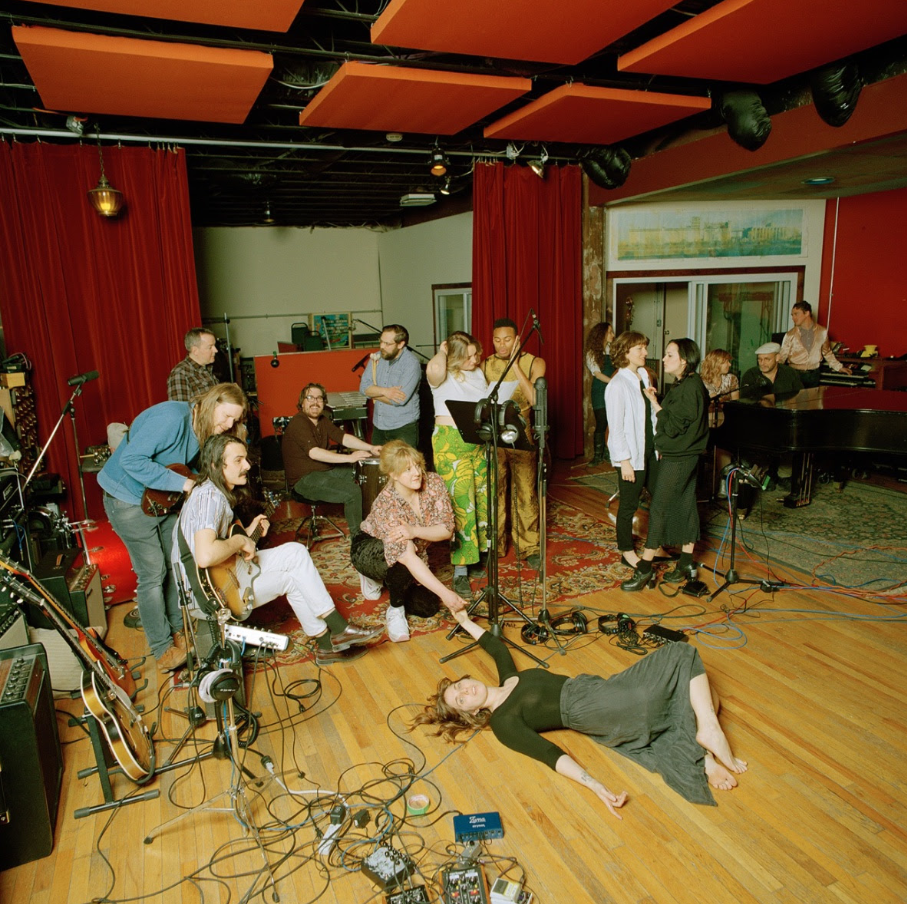
Personally though, it’s the beautifully conveyed and dreamy lulled ‘Denise, Don’t Wait’ and the already mentioned liquid funk soulful ‘4 American Dollars’ that I’m most endeared to. The former has that hanging on the end of a call that never comes, the expectant longing of a 60s girl-group heart breaker feel, skewered and reset in the now as a minor symphonic ballad. The latter shows off those over layered harmonies on a resigned polemic rile against the money men and the systematic failure of neoliberalism’s skewered capitalism- though I’d argue that a new elite of tech evangelists is a major driver of the inequality gap; those tech giants so-called altruistic virtues don’t wash as they hold onto ever greater reservoirs of capital and cash, usually offshore, instead of investing and spending in the economy at large: the drip down effect always an unsafe claim of multiple governments, even less effective when the rich don’t offer up even the most measly of crumbs.
Meg Remy remains one of the most consistent, (re)inventive and important pop artists and voices of the last decade. This, now, trio of 4AD records marks an unbroken run of assured quality; her finest work so far. No one quite politicizes disco, boogie and pop like it. No one sounds quite like her at the moment: not even close. There’s a lot of pain, a lot of hurt, and a lot of revising on Heavy Light as Meg holds up a mirror to both our conscious and unconscious biases, willing to root about in the grey areas and contradictions. Yet there is a sign of hope, a celebration of diversity –not in the achingly virtuous sense –, through the inclusion of eclectic voices and collaborators. U.S. Girls is not an expanded solo project but a hub, an all-welcoming activist umbrella that happens to produce some of the grooviest and most brilliant pop. I really do hope that I’m going to be marking Meg’s next decade in 2030!
Related posts from the Archives:
Half Free LP Review
In A Poem Unlimited Review
U.S. Girls Live Report
The Monolith Cocktail Is Now On Ko-Fi
Hi, my name is Dominic Valvona and I’m the Founder of the music/culture blog monolithcocktail.com For the last ten years I’ve featured and supported music, musicians and labels we love across genres from around the world that we think you’ll want to know about. No content on the site is paid for or sponsored and we only feature artists we have genuine respect for /love. If you enjoy our reviews (and we often write long, thoughtful ones), found a new artist you admire or if we have featured you or artists you represent and would like to buy us a coffee at https://ko-fi.com/monolithcocktail to say cheers for spreading the word, then that would be much appreciated.
Albums of 2018: Part Two: Thomas Nation to Thom Yorke
December 6, 2018
Albums Selected By Dominic Valvona and Matt Oliver.
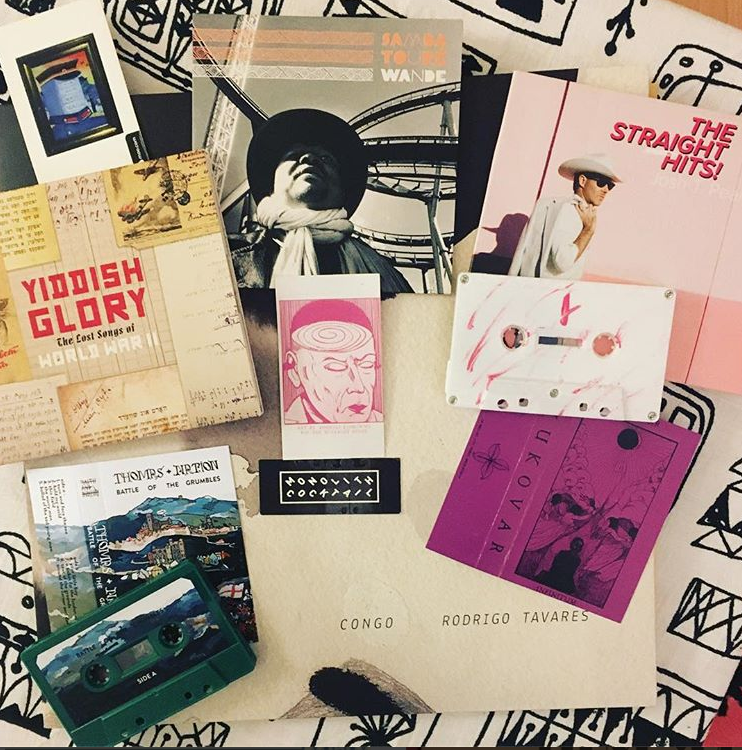
Welcome to Part Two of our alphabetically ordered best/choice/favourite albums of 2018 feature. You can find Part One here…
The decision making process:
Being the exhaustive and eclectic set of features our albums of the year are, we know you probably don’t need to or want to dally about reading a long-winded prognosis of our judgement process. But in short, here it is anyway.
Continuing to shy away from fatuous rating systems and ‘best of lists’, the Monolith Cocktail endeavors to offer a more visceral and personal spread of worthy ‘choice’ picks, with no album dominating or holding any particular numbered position – unlike most of our contemporaries lists, stuck with the ridiculous task, for example, of explaining why one album is more deserving of their numbered spot than another.
With no hierarchical order, we’ve lined our album choices up alphabetically; split into two features – Part One: A (Idris Ackamoor) to M (Moonwalks); Part Two:N (Thomas Nation) to Z (Thom Yorke).
All of our favourite new and reissued albums and EPs from 2018 are of course considered to be the most interesting, vibrant and dynamic of the year’s releases. But the best? Granted, to make this list you have to have made some sort of impact, but we’d never suggest these entries were categorically the best albums of 2018: even if that might be true. Instead our list is an indicator of our amorphous tastes, rounding up another year in the life of the Monolith Cocktail, and we hope, introducing you to titles and artists/bands that may have dropped below the radar or got lost in the noise of more commercial better promoted releases.
All selections in PART TWO from me (Dominic Valvona) and Matt Oliver.
N.
Thomas Nation ‘Battle Of The Grumbles’ (Faith & Industry)
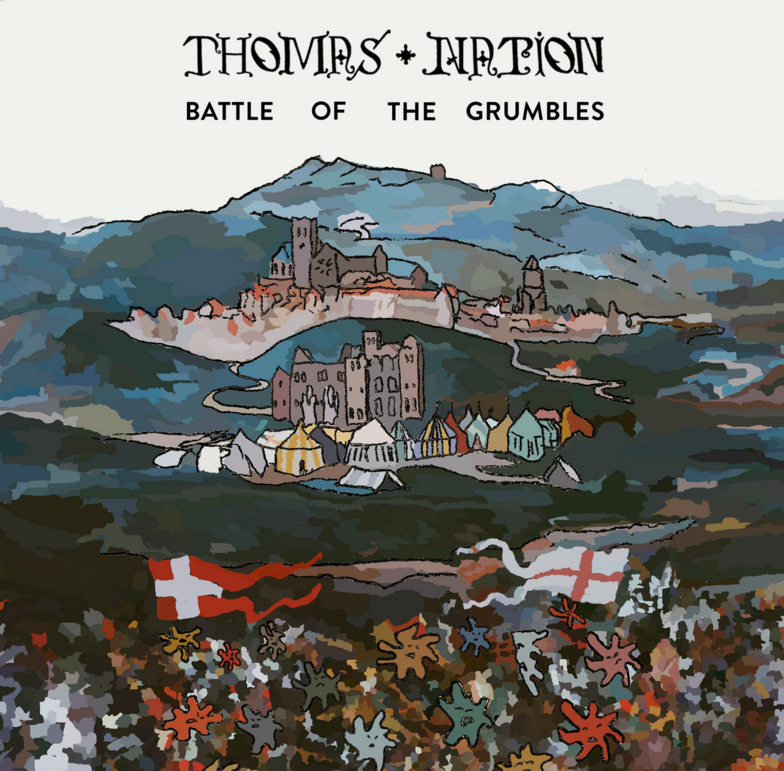
Fixed intently on the anguishes of identity in a post-Brexit voted England, yet bleaching his 1960s bucolic and 1970s lounge (erring towards yacht rock almost) imbued songbook with nostalgia, the lyrics themselves read as augurs yet embedded on parchment, Blue House front-man James Howard weaves a diaphanous if plaintively foreboding chronicle of the past and present.
Creating a whole new persona as Thomas Nation, his commitment to a hazy timeless sound, both rustic and ambitious, goes as far as using only his rough mono mixes; undeveloped and left in their most honest, purest form. You won’t be surprised to learn that Howard has also released his Nation moniker debut, Battle Of The Grumbles, on cassette tape.
Littered with references to this Island’s past (both at home and overseas), from the illustrated album cover scene of the 16th century ‘Battle of the Spurs’ (when the Holy Roman Empire teamed up with Henry VIII’s England) to more ambiguous stirrings and despondent yearnings that feature musical echoes from across that ages, Battle Of The Grumbles stands metaphorically at the precipice of the white cliffs of Dover awaiting Britain’s fate.
A gentle spirit, James Howard creates a pastoral nostalgic journey filled with augurs, despair and disillusion but always diaphanous. The first of what Howard hopes will be an annual ‘pilgrimage’, the Thomas Nation incarnation is a cerebral wonder through the essence of Englishness, questioning and probing the psyche as it meanders through the psychogeography and heart of the countryside. Full review…
(Dominic Valvona)
Tony Njoku ‘H.P.A.C’ (Silent Kid Records)
Bringing a very different perspective and life experience to the London avant-garde art and electronic music scene, the British-Nigerian producer with the earthy falsetto, Tony Njoku, articulates a most unique form of magical soul music on his stunning new album. Though undulated with an ethereal to malady suffused backing of sophisticated synthesized travails, Njoku’s vocals always seem to bobble and float above the choppy breaks and ebbing tides.
Adrift in so many ways, through his life experiences, transferring as he did at the age of fourteen to London from a life spent hiding his true personality in the toxic macho boarding schools of Lagos, the sensitive Njoku found at least one kind of solace; able to show a vulnerability and pursue the music career he really wanted having previously recorded a number of hip-hop albums (the first when he was only twelve) that proved entirely counterintuitive, but were completely in tune with Nigerian environment he grew up in. Yet in the arts community he joined in his new home of London, he found few Afrocentric voices or people he could identify with or relate to. From that isolation comes an album inspired by the ‘high art sonic’ forms of Arca and Anhoni, and by the metamorphosis nature of Bjork; Njoku’s own compositions feature a beautiful synthetic shuffle of Afrofuturism soul and more searing discordant synth waves that clash and distort on arrival but gradually sync and become part of the motion. From beauty to pain and release, and often back again, each track (and not in a bad way) seems open-ended; a constant flowing cycle of emotions, which can be healed during that moment, in that space and time, but will inevitably return: A calm followed by turbulence and hopefully the light.
Eloquently in a hymn like fashion between pained malady and the venerable, heavenly but also melancholic and turbulent, H.P.A.C is a futuristic soul album of delicate intellect. Full review…
(DV)
P.
Micall Parknsun & Mr Thing ‘Finish What We Started’ (Village Live)
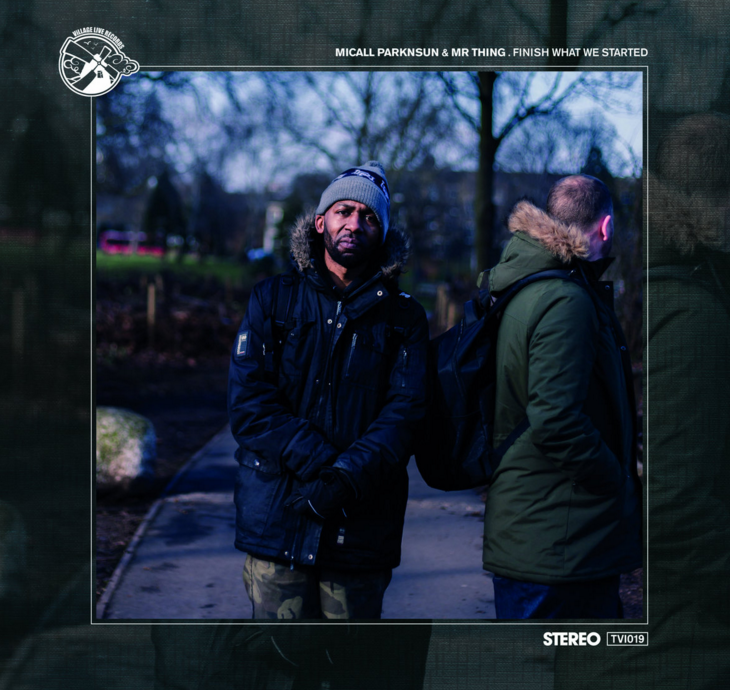
“Mainstays trusted with hip-hop restoration…with all the answers for those exaggerating hip-hop’s downfall” – RnV July 18
Featuring “beats to make your eyebrow dip” and the flow of one of the UK’s most reliably disdainful when it comes to holding your own, Micall Parknsun and Mr Thing made the very good decision to turn 2017’s one-off ‘The Raw’ into a 40 minute non-apology for playing the game properly. With hip-hop mumbling its way to the dogs, this pair have fire in the belly for the unfashionable return to beats and rhymes designed to stick around and give a damn. Measured run-ups streaked with bluesy, soulful headspace occupancy (with drums front and centre each and every time), a crux of blockbusters and pure boom bap battery, all land like a two-footed tackle, Thing researching and sculpting ‘the real’ without making it a puff piece on nostalgia or announcing they’re here to save the world. Park-E does his utmost to remain an upstanding citizen, pushed to his limits by both Thing’s heavyweight kicks and snares and general scene lethargy. The emcee’s systematic, it’s on when I say so-flow, perfectly lands the elbow once the producer has left you staggering backwards.
(Matt Oliver)
Josh T. Pearson ‘The Straight Hits’ (Mute)
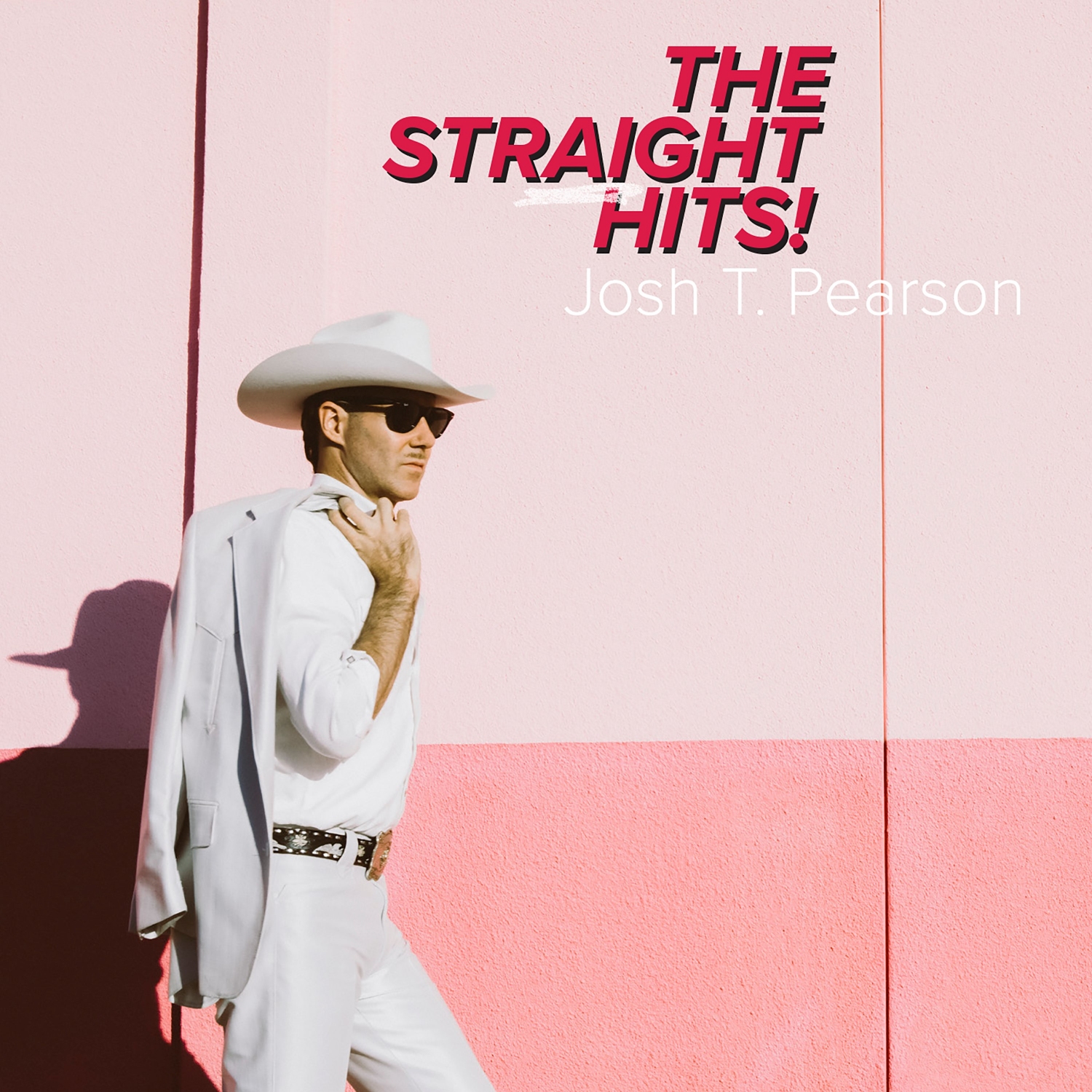
Changing his tune (literally) Josh T. Pearson, the lonesome blues Texan with a wagonload of baggage, heads out onto the range with a swag bag of more joyful, unencumbered ‘golden hits’ with his latest album for Mute Records.
Leaving behind the more apocalyptic gospel concepts of his work with the short-lived but acclaimed Lift To Experience, Pearson sets himself new parameters; adhering to a five-point rules system for transforming a “batch of tunes” he’d been working on for a decade. Earmarked originally for the ‘unrecorded’ Bird Songs album, the nine original songs on The Straight Hits are a lighter and as the title suggests ‘straighter’ attempt to change the mood.
Far from set in stone – the unwritten rock’n’roll law that all rules are written to be broken is invoked on the tender yearning A Love Song (Set Me Straight) – each song must at least try to follow Pearson’s self-imposed requirements: Number one, all songs must have a verse, a chorus and a bridge; two, the lyrics must run sixteen lines or less; three, they must have the word ‘straight’ in the title; four, that title must be four words or less; and five, they must submit to song above all else i.e. “You do as she tells you, whatever the song tells you”, “You bend to her, and not her to you.”
The Straight Hits is a most rallying rodeo that gives the Americana soundtrack a much-needed kick-in-the-pants; the themes of love, whether it’s the analogical kind, ‘take me right now’ kind, or lamentable kind, enacted across a varied but blistering songbook. Rejecting the stimulants and his demons, Pearson choses the good ol’ fashioned power and redemptive spirit of gospel ye-ye and country rock’n’roll. And don’t it sound just mighty fine and swell! Full review…
(DV)
Q.
Qujaku ‘Qujaku’ (So I Buried Records)
Occupying both the spiritual and cosmic planes, emerging from the gloom and holy sanctuaries of the dead, the brooding Hamamatsu-based Japanese band Qujaku wowed with their second album of operatic Gothic and psychedelic doom-mongering. Beginning as they mean to go on, the opening ‘Shoko No Hakumei’ suite, more an overture, is itself a full on Ring cycle (as conducted by Boris) that is dramatic and sprawling: running almost the entire length of a full side of a traditional vinyl album.
On a very large foreboding canvas, Qujaku build-up an impressive tumult across the album’s nine-tracks of prowling esotericism and galloping drum barrage immensity. Between crescendo-bursting three-part acts and shorter volatile slabs of heavy caustic drone rock, the group often evokes an Oriental Jesus And Mary Chain, Black Rebel Motorcycle Club and Spacemen 3, or Nine Inch Nails when at their most enraged. Psychedelic in the mode of The Black Angels, but also straying at their most languid and navel-gazing towards Shoegaze, Qujaku’s dark spanning cacophony of throbs and trembles bear many subtle nuances and becalmed breaks amongst the masses and maelstroms.
On an epic scale, dreaming big and intensely, Qujaku perform the most dramatic of daemonic theatre. Full review…
(DV)
R.
RAM ‘August 1791’
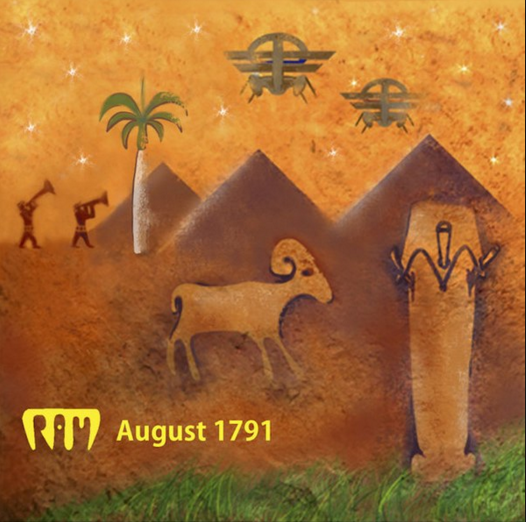
Considering the tumultuous bloody revolution from which an independent Haiti was born, RAM leader Richard A Morse‘s “Our existence is a political statement” mantra is unsurprising. Named after the initials of their road well travailed founder, RAM perform an entrancing spectacle of the ritualistic. Morse, originally born in Puerto Rico but brought up in Connecticut, spent the 80s rubbing shoulders with the polygenesis New York art and music scene’s Jean-Michel Basquiat and Warhol’s factory. His interest piqued by the new wave’s adoption of Afro-diaspora rhythms and world music, Morse decided to travel to his native homeland to study the Haitian sound.
The son of Haiti folk legend Emerante de Pradine, Morse was already well aware of his ancestral roots, but had yet to indulge in or absorb the rich history of the island fully. After an initial short trip, Morse found himself it seems so seduced and inspired by Haiti’s culture that he decided to stay for good. Marrying local dancer and singer Lunise, he kick started the frenzied, rambunctious troupe, channeling the ideas he picked up on in New York and merging them with the signature instrumentation and sounds of the local Vodou belief, mizik-rasin and the drifting currents of the Caribbean and Africa.
This year’s odyssey, guided by the spirits and with dedications to the marternel and those that have helped (including the pivotal film director Jonathan Demme, who prominently featured one of their tracks in his or award-winning Philadelphia movie in 1994) shaped the band over the years, springs from Haiti’s enslaved population’s struggle for independence from its European masters. August 1791, the year and month of revolution (inspired by their colonial masters own revolution), frames this tropical fusion of tragedy and sauntering joy. Returning to the legends that sparked this fight, such as the ill-fated former slave turned leader of revolt, Toussaint Louverture (driving out the Spanish and British but captured and imprisoned under Napoleon’s regime; languishing in a cell at Fort de Joux until he died in 1803), and first Emperor of Haiti, Jean-Jacques Dessalines (assassinated by disgruntled members of the burgeoning administration), RAM evoke the spark that set in motion the first free republic of African heritage people in the Western hemisphere. Their seventh album not only pays tribute but features a musical accompaniment from that era; with a sound more or less, when stripped to its essence, that would be familiar to the Creole and African communities of the late 18th century.
Uniting in a busy percussive fusion the Americas with the roots of Africa, RAM bustle and hustle traditions to produce a paean to the Island they call home.
(DV)
Soho Rezanejad ‘Six Archetypes’

Impressive in all its striking celestial and throbbing distressed staccato shimmer the experimental Danish artist Soho Rezanejad’s ethereal but equally futurist dystopian ambitious new LP, Six Archetypes, is a bold exploration of identity politics.
Interplaying six of the major character symbols (The Guardian, The Orphan, The Seeker, The Russian, The Idealist, The Prostitute) from the Tarot with Carl Jung’s Psychological writings on the collective and structured reality, Rezanejad weaves the complex contemporary themes of gender liquidity and self-discovery into an amorphous mix of electronica, darkwave and Gothic pop suites.
Though not always audible, Rezanejad’s untethered vocals – vaporous and often ghostly undulating in an aria style – whisper, coo, lull, pant, wrench and shout throughout the shard majestic and multilayered intricate backing of synthesized, programmed, modeled sounds. It’s a striking voice too. At times, such as the beautiful but serious stellar flight of the navigator, Bjork meets Chino Amobi, rotary opener Pilot The Guardian, she sounds like Nico. And at other times, such as the lush Bowie/Sylvian synchronicity, Soon, her vocals sound like a mixture of Jesus Zola and Lykke Li.
Returning to the soil, so to speak, Rezanejad saves her most heartfelt yearn until the end; lovingly but starkly impassioned, singing in her ancestral tongue of Farsi – Rezanejad is the daughter of first generation Iranian immigrants – the National Council Of Resistance Of Iran’s alternative national song in protest against the state’s heavy-handed ideology.
An ambitious debut opus of dark beauty and ominous despair, Six Archetypes is a highly impressive cosmology of gender, roots and futurism politics and narratives. Full review…
(DV)
S.
Sad Man ‘ROM-COM’
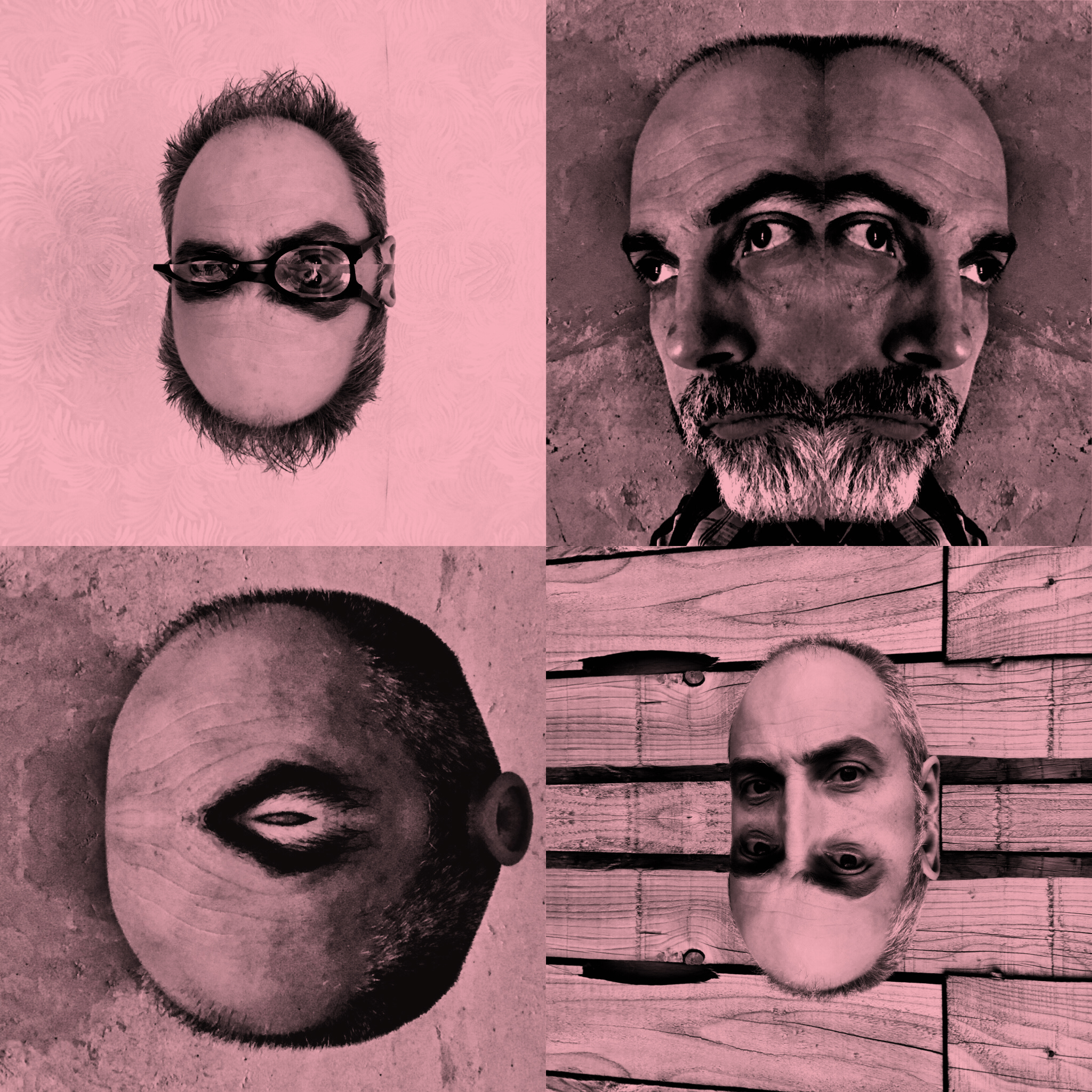
Haphazardly prolific, Andrew Spackman, under his most recent of alter egos, the Sad Man, has released an album/collection of giddy, erratic, in a state of conceptual agitation electronica every few months since the beginning of 2017.
The latest and possibly most restive of all his (if you can call it that) albums is the spasmodic computer love transmogrification ROM-COM. An almost seamless record, each track bleeding into, or mind melding with the next, the constantly changing if less ennui jumpy compositions are smoother and mindful this time around. This doesn’t mean it’s any less kooky, leaping from one effect to the next, or, suddenly scrabbling off in different directions following various nodes and interplays, leaving the original source and prompts behind. But I detect a more even, and daresay, sophisticated method to the usual skittish hyperactivity.
Almost uniquely in his own little orbit of maverick bastardize electronic experimentation, Spackman, who builds many of his own bizarre contraptions and instruments, strangulates, pushes and deconstructs Techno, the Kosmische, Trip-Hop and various other branches of the genre to build back up a conceptually strange and bewildering unique sonic shake-up of the electronic music landscape. Full review…
(DV)
Otis Sandsjö ‘Y-OTIS’ (We Jazz Records)
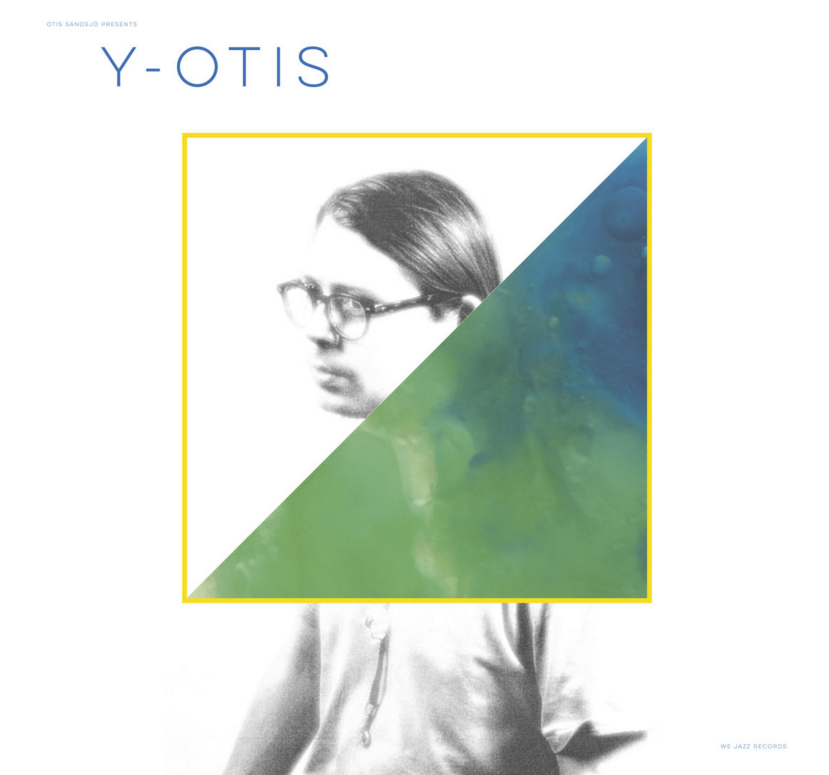
Imbued as much by the complex language of North American and European modernist jazz as those who use it to riff on in the hip-hop and electronic music genres, the adroit Gothenburg saxophonist and composer Otis Sandsjö transmogrifies his own jazz performances so they transcend, or at least amorphously (like liquid) expand into polygenesis soundscapes.
Y-OTIS reimagines a musical union between Flying Lotus and Donny McCaslin, or better still, Madlib reconstructing the work of 3TM; the flow, if you can call it that, sounding like a remix deconstruction in progress as the rapid and dragging fills and staggered rolls of his group’s drummer Tilo Webber are stretched out, inverted and reversed into a staccato to dynamic bursting set of breakbeats and loops. Mirroring all the various cut-and-paste techniques of the turntablist maestros, Sandsjö and his dexterous troupe of keyboardist Elias Stemeseder, bassist Petter Eidh and Webber sound like a group being remixed in real time, live: And it sounds brilliant, as you’re never quite sure where each of these compositions is going to end up.
Sandsjö’s debut album, released via the Helsinki festival and label platform We Jazz Records, is a multilayered serialism suite of ideas and experimental visions. All of which, despite that complexity and blending of sophisticated avant-garde jazz, hip-hop, R&B, trip-hop and dance music, keep an ear out for the melody. If the ACT label, or ECM, ever converges with Leaf and Anticon, Y-OTIS might well be the result. Full review…
(DV)
Scran Cartel ‘Blue Plaque Candidates’ (Scran Cartel)

“A great, belt-loosening spread grilling you with much more than just a bunch of culinary one-liners” – RnV Aug 18
Brit grafters MNSR Frites (Granville Sessions) and Benny Diction (Corners) read you the specials for twelve fascinating tracks, packing foot-related rhetoric from the moment the dinner bell sounds. It’s quite an accomplishment to master such a particular angle without it being a gimmick, and easy to forget that ‘Blue Plaque Candidates’ is not specifically a concept album, just an expression of culinary love. These two really know their cookbooks and have a shopping list that you can’t check out quick enough, from cordon bleu menu toppers to bread and butter basics and young at heart sweetshop favourites, the Estuary English plating your three squares a day with the same near-apathy as they do exotic, forbidden fruit. The jazzy, funky beats are garnish to the duo cookery schooling everyone, indulging in one sub-grime moment on the E-numbered ‘Dundee’, and a cultural knowhow showing that greed isn’t always good, adds weight to their sprattish statement of “we write and record rap songs about food”. A chef fingers’ kiss for this one.
(MO)
Skyzoo ‘In Celebration of Us’ (First Generation Rich)

“Some of the smoothest psychology and concrete consciousness you’ll hear this year. One to be toasted over and over” – RnV Feb 18
Giving ‘In Celebration of Us’ the grown man rap label is a bit of a giveaway given Skyzoo’s opening skit of confiding in a pal about giving up the streets for the sake of his newborn. The Brooklynite and new father speaks a lot of sense, a flow that will express disappointment rather than anger and keep the titular celebrations modest, and attracts a captive audience when aiming at your head twofold, comprehensively ensuring the wateriness of neo-soul doesn’t just ebb away, or the dustiness of Detroit-style beats fugs your judgement. Picture a sometimes reluctant lecturer, as everyman as the tales you’ll familiarise yourself with, but giving you the full education once the mic in his hand. Not clinging to verse, hook, verse structure, Skyzoo doesn’t ramble, rather makes certain that he’s examined everything from top to bottom, very much schooled in knowing that if something’s worth doing, do it properly. Enough to make you feel warm and fuzzy – there are some undeniably slick, R&B moves crossing over as well – and rather more pensive when presented with the cold light of day.
(MO)
The Last Skeptik ‘Under the Patio’ (Thanks for Trying)
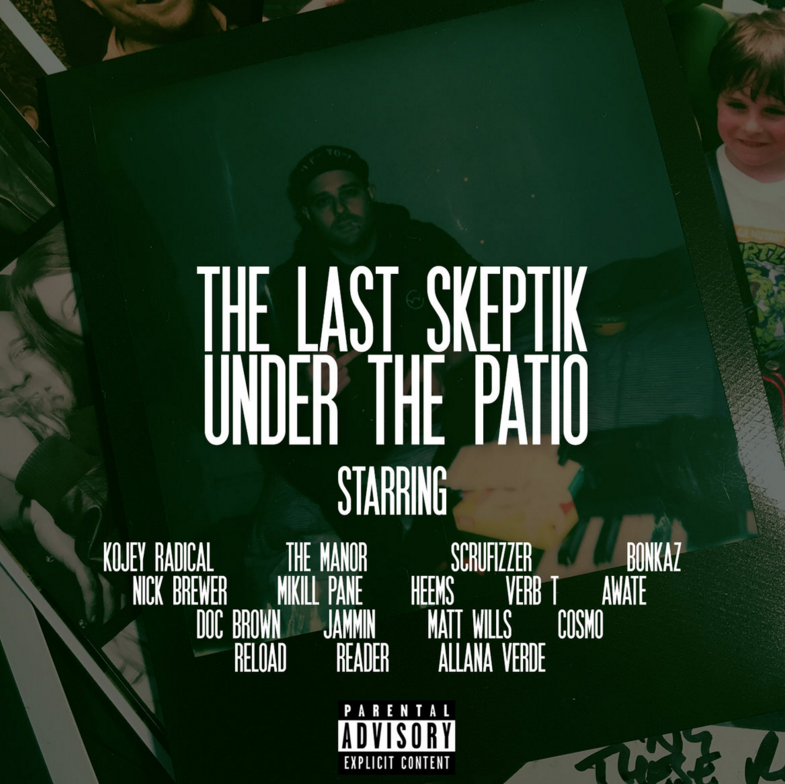
“An album simmering down the summer’s sticky restlessness: dusky beats that never fade to black, understated in their genre reach” – RnV July 18
Intense from The Last Skeptik, extremely well connected and arguably more well rounded since after a spell of paying extra-curricular dues. Surrounding himself with a boiling pot of hungry emcees gets a maximum return from teeth gritted, rapid fire, pound the road, witty unpredictables, all of whom casually playing down their iron mic grip. Synth-wired, at times spindly beats either host the back-to-mine session or storm the stage, perfect for its roll call – Bonkaz, Kojey Radical, Doc Brown, Scrufizzer but four headliners to pick from – to move through and dominate while playing the back, with motive or just willing daylight away. While originally noted for soundtracking summer humidity, ‘Under the Patio’ is decidedly not an album for office hours. Dabbling in shades of the exotic and skilfully soulful throughout for an album of rough edges, it’s the careful contrasts – the haunting ‘Hide & Seek’ featuring Matt Wills, the inexplicable but permissible ‘Calm Down’ inviting The Manor round for a knees up (there’s the versatility for you) – and Skeptik’s own version of ‘Deep Cover’ on posse cut ‘Oxymoron’ – that triumph in their cohesion to give TLS a massive W.
(MO)
Stella Sommer ’13 Kinds Of Happiness’ (Affairs Of The Heart)

In the vogue of an age-old central European malady, the dour romanticism that permeates the stunning solo debut album from the German singer/songwriter Stella Sommer is wrapped in a most beautiful gauze of melodious uplift and elegiac heartache.
Artistically, as the results prove, making the best decision of her career, Sommer steps out for a sojourn from her role in the German band Die Heiterkeit. Far from an extension of that group (though band mates Hanitra Wagner and Phillip Wolf both join her on this album), there are of course concomitant traces of it. Sommer however makes louder but also accentuates these traces and lingering relationships; her lived-in, far-beyond-her-years vocal more sonorous and commanding than before.
Possibly as perfect as an album can get, 13 Kinds Of Happiness is an ambitious, slowly unveiling album of diaphanous morose. Pastoral folk songs and hymn-like love trysts are transduced by a Gothic and Lutheran choral liturgy rich backing that reimagines Nico fronting Joy Division, or Marianne Faithfull writhing over a Scary Monsters And Super Creeps era Bowie soundtrack (especially on the galloping Northern European renaissance period evoking thunderous drumming ‘Dark Princess, Dark Prince’; just one of the album’s many highlights). I don’t use that Nico reference lightly: Sommer channeling the fatalistic heroine’s best qualities atmospherically speaking.
A curious Teutonic travail of venerable lovelorn despair and modesty, Sommer’s debut LP will take time to work its magic. But work its magic it will. A tremendous talent lyrically and vocally, serious and astute yet melodically enriching and lilted, her sagacious deep tones are starkly dramatic, but above all, rewarding. Here’s to a solo indulgence that I hope long continues. Full review…
(DV)
Station 17 ‘Blick’ (Bureau B)
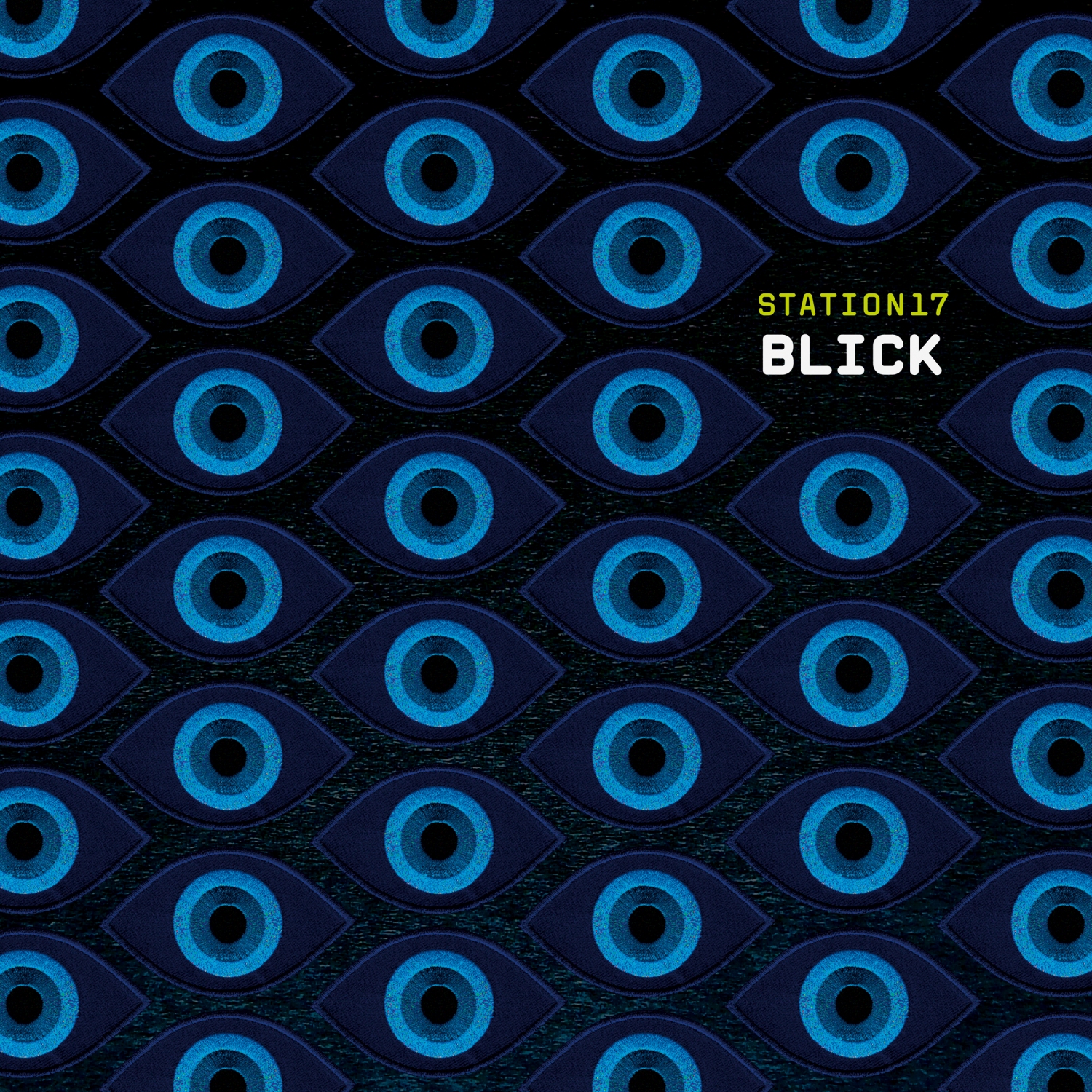
With near enough thirty years of experience behind them and a changeable lineup of both musicians with and without various disabilities, the Station 17 collective once more shift their focus and sound; moving away from the all-out pop of the last album Alles Für Alle for a more improvised travail through the Krautrock, Kosmische and experimental electronica cannon.
Free of predetermined structures, lyrics and ideas they enjoyed an improvised freedom; inviting a host of German musical royalty to take part in what is a collaborative recording experience – something they’ve done in the past, having worked with icons such as Michael Rothar and the late Holger Czukay. And so each of the album’s tracks feature the signatures sounds and quirks of its guests: The writhing prehistoric Krautrock-jazzy Le Coeur Léger, Le Sentiment D’un Travail Bien Fait for example features the guiding avant-garde, ‘musique concrète’ presence of drum and bass partnership of Jean-Hervé Péron (the French title track I dare say his idea) and Zappi Diermaier; key founders of the reverent agent provocateurs Faust, who in recent decades have broken away to form their own iteration of the group under the faUSt banner. And, though only as part of its most modern regeneration, Tangerine Dream’s Ulrich Schnauss appears to gaze through a progressive Kosmische tinged explored ‘astronomical telescope’ on the album’s heaven’s gate opening finale.
From another generation, Dirk Dresselhaus, aka Schneider TM, appears both as an engineer, capturing these sessions and crafting them into a coherent album, and as a collaborator on the kooky bossa nova preset Die Uhr Spricht. Andreas Spechtl of Ja, Panik! infamy appears alongside Station 17 singer Siyavash Gharibi on the poppier, Der Plan-esque Dinge, and another Andreas, Andreas Dorau, joins the same upbeat, marimba like candour on what we’re told is an “enduring appraisal of post-capitalist perversion”, Schaust Du, whilst Datashock travel through the primordial soup into another dimension on the Acid Mothers-hitch-a-ride-aboard-the-Cosmic Jokers-spaceship Zauberpudding.
Turning the dial on an imaginary radio station, attuned to all the highlights from Germany’s most experimental if rhythmic decades, Blick confidently absorbs the influences and inspirations of its multitude of guests to produce social commentary and reflect on the here and now. Full review…
(DV)
T.
Rodrigo Tavares ‘Congo’ (Hive Mind Records)
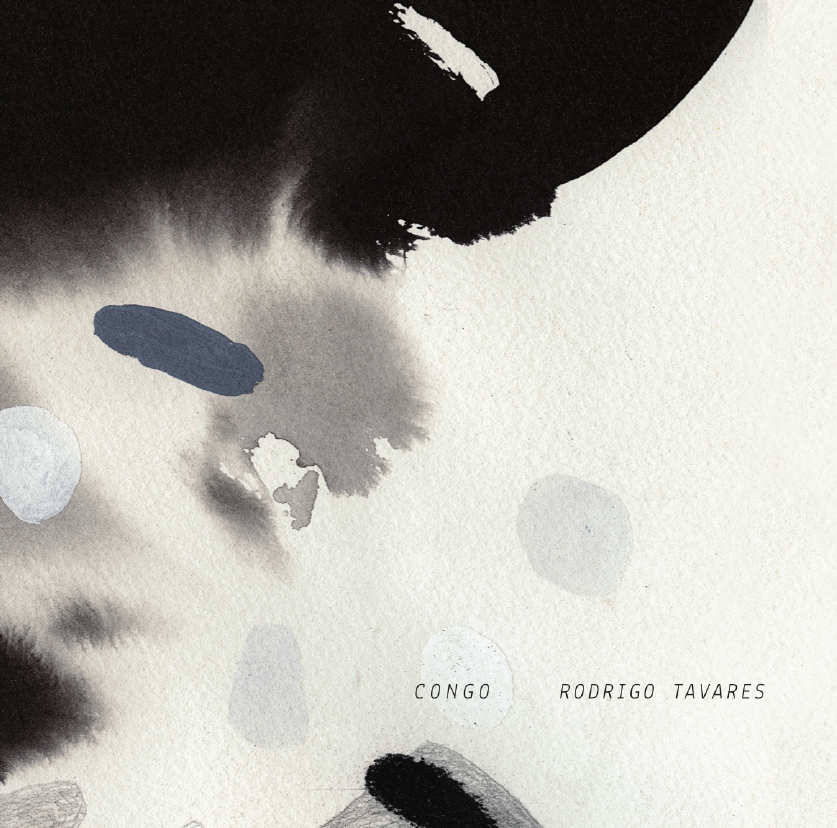
The amorphous traversing post-rock and jazz travelogue from Brazilian guitarist/composer Rodrigo Tavares is filled with a sense of contemplation and meditation, and a yearn for the spiritual. The spiritual is represented in Congo’s genesis; the catalyst for Tavares soundtrack inspired, in part at least, by a visit to the controversial ‘spiritual healer’ John of God – a medium, psychic surgeon of dubious repute -, who lives in the remote central Brazilian town of Abadiânia. The meditative, in this case, runs throughout the suggestive instrumental passages and vignettes that ponderously drift, cascade and ebb across a real and imagined borderless global soundtrack.
Suffused throughout this album you’ll find lingering traces of the ACT jazz label, minimalism, Tortoise post-rock, Brazilian legends Joâo Gilberto, Dorival Caymmi and Tom Jobim, and removed by quite a few degrees, a hint of the free-form untethered to any easy classification, evolving guitar experimentation of the Sun City Girls – as it happens a show in a remote former gay bar in Brazil by the same band was one of the stopovers on Tavares ‘transformative road trip’; the fruits of which and experience laying down the creative foundations for Congo.
Truly transglobal, Tavares helps take Brazilian music – like his fellow compatriot Sentidor – into often trance-y, unburdened and unlabored directions. With few rough edges, this congruous soundtrack makes for a ruminating, thoughtful smooth journey. Full review…
(DV)
Samba Touré ‘Wande’ (Glitterbeat Records)

In a country abundant with guitar virtuosos, the highly genial Samba Touré still stands out as one of Mali’s most celebrated and accomplished; transducing the travails, heartache but also joy of his homeland through his signature articulate nimble-fingered style of playing.
His third album for Glitterbeat Records – the first, Albala, was the label’s inaugural release in 2013 – Wande is billed as a warmer homely songbook: previous releases were produced during the Islamist insurgency that swept aside and hijacked the Northeastern Tuareg communities’ battle for autonomy in the north eastern regions of Mali. Far from a complete break, the sadness endures on Wande; though Touré sadness is a most beautiful, cantering and lingering one. Especially when paying tribute to his friend and collaborator, sokou fiddle maestro Zoumana Tereta, on the spoken word with wavering drifty, almost dub-like echo-y effects tracks of the same name, which features the late musician’s spindly evocations from beyond the ether.
Recorded in under two weeks, allowing weekends for band members to scratch a living playing at weddings, sessions for the album were relaxed, performances captured on their first take with few overdubs. The lo fi production feel of the rocking blues ‘Yerfara/We Are Tired’ could be a lost inspiration for 80s period Rolling Stones with its almost transmogrified Start Me Up like Richards riff. ‘Goy Boyro/The Good Work (Well Done)’ even begins with a Taj Mahal, BB King reminiscent introduction hook, before dipping over the horizon. But whatever you do, don’t call this is a desert blues album, or even an African one; Touré correctly insistent that this is contemporary ‘universal’ rock music.
Not quite such a leap of faith or different to previous albums, an unpolished and laidback methodology has produced a slightly more sagacious, free-floating quality and another essential Touré masterpiece. Full review…
(DV)
Ty ‘A Work of Heart’ (Jazz Re:Freshed)
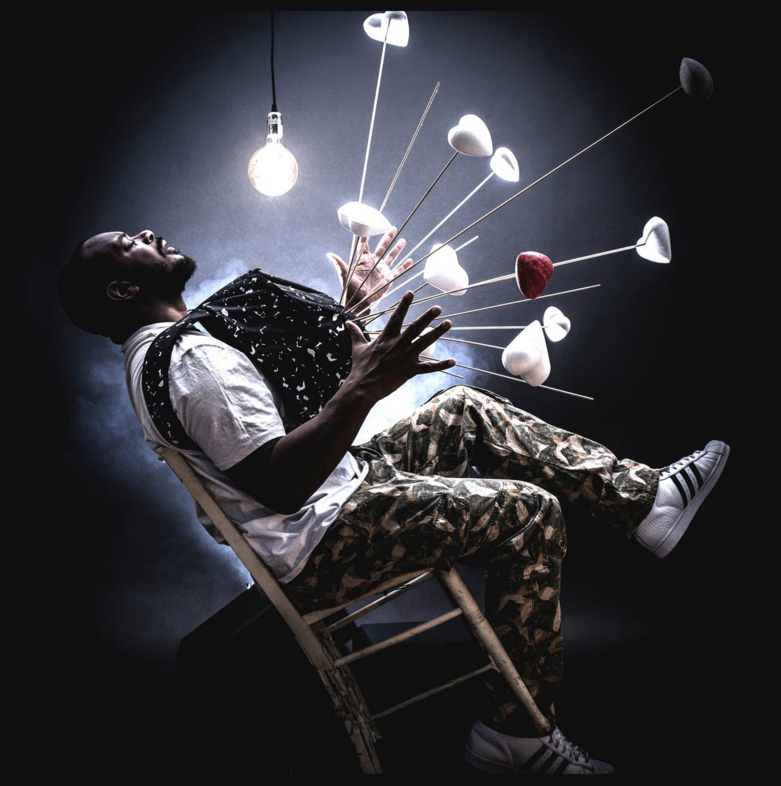
“Almost feels like a magic carpet ride over the capital’s skyline; come and spread your arms if you really need a hug” – RnV Mar 18
Soft focus viewed with the wisest of eyes cutting through life’s smokescreen: the eminent UK statesman preserves the essence of never getting too high or too low. Ty has long had that trustworthy delivery of a life coach who can pep you up – inspirational with quiet authority – and tell you to man up without raising his voice, any hints at vulnerability given the very British keep calm and carry on treatment (“when you smile with me publicly I’m wearing a mask, gritting my teeth, a wolf in a bundle of sheep”). The liltingly clean production is what might turn a few ears belonging to those thinking hip-hop’s not for them – right from the off it’s of a Ty-tracked, toasted cinnamon bun snugness, a concrete jungle paved with a yellow brick road heading towards promised lands, but with the plain sailing carrying some turbulence. ‘A Work of Heart’ sounds as good as when Jack Frost comes knocking, as much as when the summer’s hose pipes were forbidden fruit. And like the first blooms of spring. AND the first leaves of autumn falling too.
(MO)
U.
U.S. Girls ‘In A Poem Unlimited’ (4AD)

Featuring most of the Toronto cast of collaborators that propelled the first U.S. Girls release for 4AD records, Half Free, forward, but stretched and lushly flexed into space boogie and other equally eclectic grooves by the city’s multi-limbed collective The Cosmic Range, Meg Remy’s latest cerebral pop revision tones down some of the vibrancy for acerbic, sax-wailing pouted-lips resignation and introversion.
Moving across the border from the USA with her husband and musical collaborator Maximilian Turnbull, aka guitar-slinging maverick Slim Twig, long before Trump reached The White House, Remy has broadened her postmodernist transmogrification of bleeding hearts 60s girl group meets tape-loops signature to accommodate femme fatale disco and funk since making a new home for herself in Canada.
The momentum of this album fluctuates throughout, and compared to Half Free, takes a lot to bed in and flow – and I’m still not sold on the two skits -, starting as it does with the aching ponderous slow burner Velvet 4 Sale – perhaps Remy’s most dark fantasy yet, imaging (just imagining mind) a role reversal of power, as she implores a girl friend to buy a gun for protection, impressing that the only way to change men is for women to use violence. An unsettling twist played out to a dragging soul fuzz backing track, the song’s central tenant imagines a world where women take up arms against men, though Remy ‘deplores violence’ of course. It’s followed by an equally sensually nuzzling sax and yearned vocal performance, and take on the Plastic Ono Band, Rage Of Plastic, before picking up with the album’s most bouncy weaponized boogie, M.A.H. – a chic Ronnie Spector fronting Blondie style diatribe broadside aimed at the democrats venerated saviour Obama, who Remy condemns for the charismatic charm seduction that pulled-the-wool over many supporters eyes, hiding the fact that he presided over a covert number of unsavory drone strikes.
Hardly disarming then, In A Poem Unlimited deplores the present hierarchy with a seething checked rage, set to a challenging but melodious soundtrack of yearning no wave, scintillating chic disco, Plastic Ono Band soul, vaporous 80s pop and even jazz. The patriarch comes in for some scathing poetic justice; played out to some of the year’s best tunes and performances. Full review…
(DV)
V.
Vukovar ‘Infinitum’ (Le Recours Forêts Production)
Vukovar/Michael Cashmore ‘Monument’
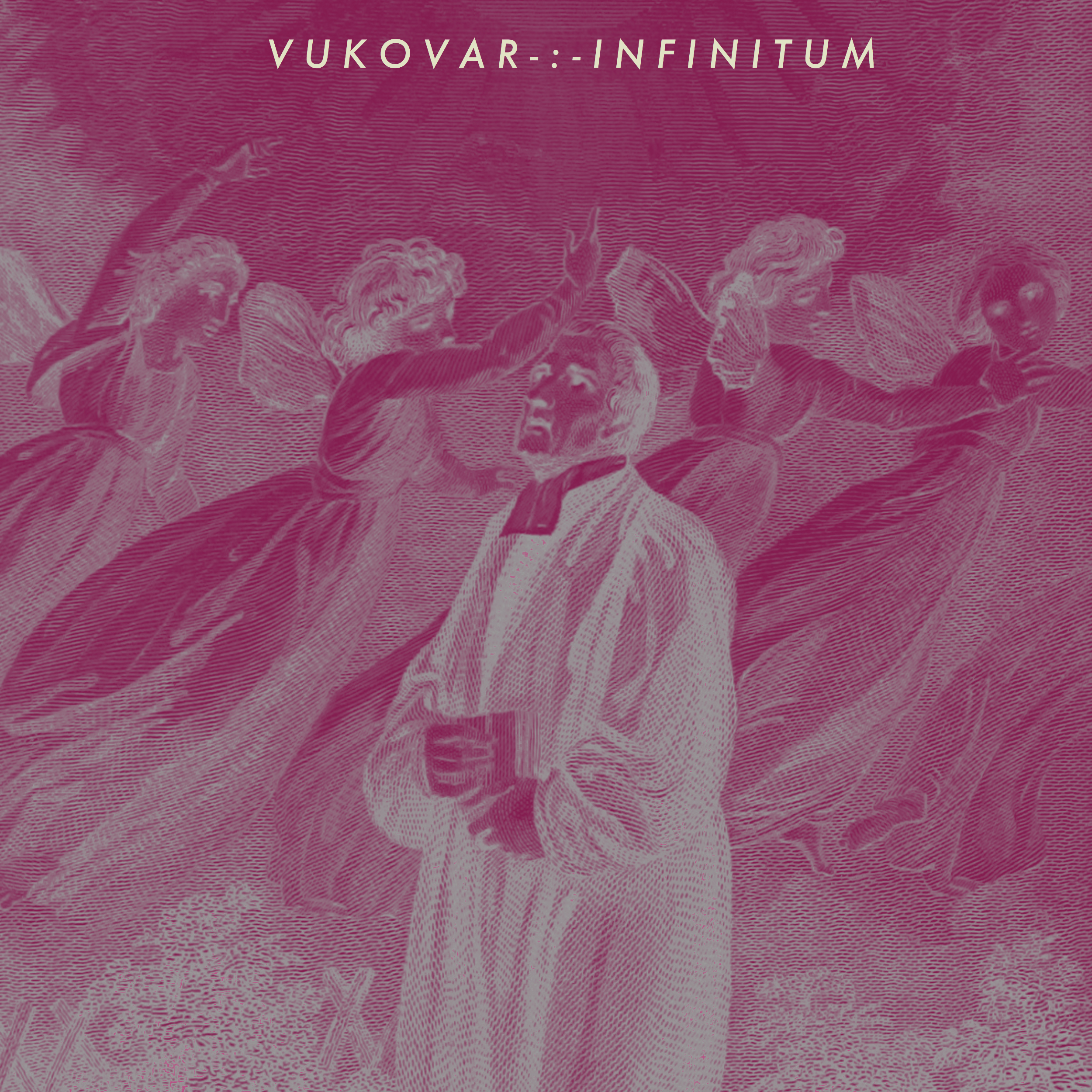
Among the most prolific of bands, Vukovar have released two of their most stunning albums in just the last quarter of 2018 alone. Keeping to the signature three-syllable grandly entitled Gothic statements of malcontent, melodrama, aggrandizement and melconholy, both Infintum and Monument romantically encircle the void better and with more sagacious quality than previous records. Though only in existence for barely three years, and perhaps already splitting up, Vukovar are improving on every release. Both are included because…well, I can’t make my mind up about which of these recent opuses of despair and hermetic exploration I prefer. Hell….they’re both great. And here’s why:
The fifth LP in the malcontent’s cannon, Infinitum, pulls at the mortal coil of human misery in a murky quagmire. An endless backing track of reverberating delayed snare strikes, a rolling timpani bounding bass drum, esoteric stately sounding waltzes, unwieldy bestial guitar, resigned new romantic synth and escaped melodies muddily, and often amorphously, swim and oscillate around a combination of longing, if worn down and depressed, swooning vocals and Rimbaud-meets-Crowley-meets-Kant-on-the-edge-of-an-abyss poetic despairing narration, on what is a bleak if at times gloriously dark beauty of an album.
Bound-up in their own self-imposed limitations, these anarchistic dreamers go one further than the Hebrew code of law commandments by adhering to 13 of their own; each one a rule or restriction in the recording process that couldn’t be broken, at any cost. So strict were these conditions that even if the band were close to finishing the album, any infringement no matter how minor, would result in the entire sessions being abandoned. Mercifully they made it through to the end; releasing a troubled, bleak lo fi ritualistic romance of an grand opus.
Cut from the same cloth, but collaborating with an undoubted influence, the group’s sixth LP, Monument, traverses the void with Current 93 stalwart and producer/composer Michael Cashmore (appearing under the guises of his Nature And Organization nom de plume). A congruous in what is a melancholy harrowing romantic partnership with the morbidly curious Vukovar, Cashmore leads with a vaporous, industrial and often godly (whichever God/Gods they be) brutalist swathe of sagacious moodiness. Arguably inheritors of Current 93 and, even more so, Coil’s gnostic-theological mysticism and brooding venerable communions, Cashmore seems the obvious foil. Current’s The Innermost Light and Coil’s (and John Balance’s swan song as it were) The Ape Of Naples both permeate this conceptual opus.
From haunting melodrama to harrowing decay, unrequited love to radiant escape, the loss of innocence and youth to sagacious death rattles, Vukovar prove ideal torchbearers of the cerebral Gothic sound and melancholic romanticism. A meeting of cross-generational minds with both partners on this esoteric immersive experience fulfilling their commitments, Monument shows a real progression for Vukovar, and proves a perfect vehicle for Cashmore’s uncompromising but afflatus ideas to flourish in new settings, whilst confirming his reputation and status.
Whatever happens next, this ambitious work will prove a most fruitful and lasting highlight in the Vukovar cannon; one that’s growing rapidly, six albums in with a seventh already recorded; another ‘momentous’ statement that affirms the band’s reputation as one of the UK’s most important new bands. Full reviews…
(DV)
Y.
‘Yiddish Glory: The Lost Songs Of World War II’ (Six Degrees)

In light of the recent Tree Of Life synagogue shootings in Pittsburgh, the increasingly uncomfortable language and hostility from the far Left, and the rising tide of European wide anti-semitism, this most tragic songbook of WWII Soviet Union laments from the Jewish community that joined Stalinist Russia’s defence against the Nazis, is a timely reminder of persecution from the graveyard of history. 400,000 men and women signed up to fight Hitler’s forces in one of the most bloody and apocalyptic campaigns in military history. If gratitude was ever warranted, the fate that awaited many of the survivors was anything but; mistrust and resentment instead led to swathes of the Soviet Union’s Jews being imprisoned, tortured and murdered by Stalin’s regime, their sacrifice for the mother nation all but airbrushed out of existence – almost.
Thought lost in the annals of time; suppressed, if not destroyed, the tragic but poetic WWII testaments, made lyrical prose, of just a small cross-section of Russia’s Jews is given the richly evocative and adroit production showcase it deserves by a collective of professors, producers and musicians. Originally unified in an anthology by an ethnomusicologist from the Kiev Cabinet For Jewish Culture, Moisei Beregovsky, alongside colleague Rovim Lerner, hundreds of Yiddish songs written by Red Army soldiers, victims and survivors of the Nazi’s massacres were gathered in the hope of being eventually published and performed. Unfortunately at the very height of the Communist Party’s purges in the decades that followed the end of WWII, both these well-intentioned preservationists were arrested. Subsequently the project was never finished, the work sealed up and hidden away. But as it would later transpire, not destroyed.
Transcribing these laments and firsthand accounts of endurance (many of which included testament evidence to various Nazi atrocities) would take patience, skill but above all respect. The results of this this most tragic desideratum are underscored by the musical director and violinist Sergei Erdenko‘s conducted stirring accompaniment ensemble of classically trained instrumentalists and singers; all of whom were brought together by the producer, and overseer (one amongst a whole group of people that have perserved, shared and made this project possible over the decades) Dan Rosenberg.
Songs of heroism, stoic belief, and even more violently encouraging prompts to machine gun as many Nazis as possible, are brought back to life. But despite the materials obvious harrowing and tragic heart-wrenching nature, the music throughout is a dizzying, waltzing mix of Yiddish, Roma, Klezmer, folk and even jazzy cabaret that’s often upbeat. The band does a sterling job in giving voice to those suppressed individuals and the songs that were believed lost forever, destroyed by a regime that would treat its loyal Jewish community, many of which made the ultimate sacrifice and wholeheartedly believed in the socialist doctrine, little better than the Nazis they so valiantly overcame. Yiddish Glory is not just a reminder however, or even just a revelation, but a beautifully produced and evocative performance. Full review…
(DV)
Thom Yorke ‘Suspiria (Music For The Luca Guadagnino Film) (XL Recordings)
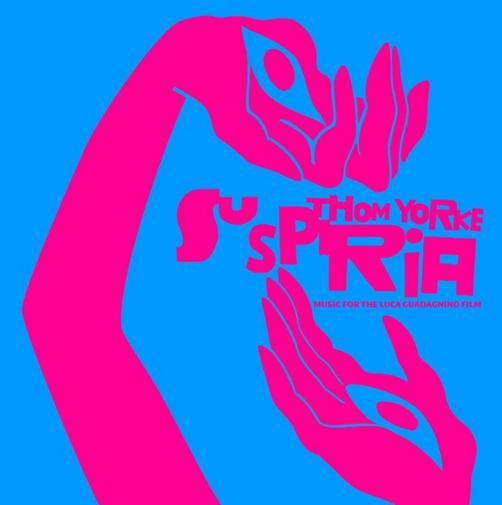
I’ve no idea of the inimitable Thom Yorke‘s methodology and process – whether he composed directly to a cut of Luca Guadagnino‘s remake, or, went away on the premise that…well, it’s Suspiria, and this iconic Gallo trip knows exactly what sort of a soundtrack it thirsts for, so I’ll just make it up in me head -, but whatever it is, his evocative harrowing soundtrack technique works; providing an eerie balance of spine-chilling tension and beautiful dreamy waltzes.
Elevating further the progressive and ritualistic treatment of the original 1977 Suspiria movie soundtrack by Italy’s revered Goblin, Yorke’s mirror-y hypnotised lingered vignettes and bestial guttural scares are treated with earnest seriousness.
If a film could be even more stylised than its original forbearers, this post-millennial disturbed take by Gundagino is an artistically knowing, conceptually aloof indulgence for the senses that receives the most stunning, richly esoteric of soundtracks. Compelling, alluring and plaintive; using many of the arty macabre’s signature tricks, atmospheric mood stirrers and prompts – from heightened Gothic choral aches to Carpenter meets Oldfield piano note and tubular chiming nerve tinklers – Yorke sets out his soundtrack somewhere between the perimeters of Kubrick, magic realism, psychological drama, Dario Argento, Francois de Roubaix and his very own solo work.
The proof is in the candle-lit shadowy mood induced eating of course, and sitting as I was in the daylight of the early afternoon, I couldn’t help but feel unnerved enough to check behind the curtains for murderous witchery dance troupe teachers, who’s intent was to embed a sacrificial knife into my skull. Yes I was spooked.
A frightful but often ethereal magical score, Yorke matches his Radiohead foil, Jonny Greenwood in the field of soundtracks: an artform all in itself. I’ve no doubt it will become a cult album; equal to the sacred Goblin score, if not, dare I suggest, an improvement.
(DV)
Live Review: Words: Dominic Valvona

U.S. Girls Live At Stereo, Glasgow, May 19th 2018
Swapping the tape collage and loops (to a point) for the full-on experience of a live band on tour, Meg Remy seduces the Glasgow audience tonight with the most sophisticatedly sexy, often louche, of pop dynamics.
Remy is able to captivate with bittersweet pouting malady the most traumatic, darkest nature of patriarchal sexual control and seamiest aspects of capitalism whilst slinking to a cerebral mix of glitterball disco, raunchy pop fantasy and on as demonstrated on the finale from her most recent album, In A Poem Unlimited, and tonight’s curtain dropper, ‘Time’, no wave meets contorted jazzy break beats.
Embracing then, the seductive forces of pop music, Remy’s unsavory but vital exposés and therapeutic exercises in acknowledging trauma and abuse are made more palatable by this shift; and in turn reaches an increasingly wider audience. Channeling femme fatales and maverick artists such as Ronnie Spector and Gloria Ann Taylor and more modern alluring pop stars, Remy slips these dark themes under a sonic soundtrack of glorious disco, boogie and avant-garde experimentalism.
Showcasing a looser funky sound, backed by the Toronto hothouse supergroup The Cosmic Range (a collective that at any one time traverses Afrobeat, Krautrock, boogie and free-jazz), the central force of nature at the heart of what was initially a solo project, since expanded with a full cast of writers, producers and collaborators all willing her on, Remy yet again performs in character. Previously taking the brilliant (and one of our albums of 2015) Half Free out on the road with just the backing vocalist Amanda Grist (of Ice Cream fame) to keep her company, dressed like a leotard wearing Olivia Newton John, sporting a chic cropped hairdo, Remy returns with longer sporty locks, wearing a laced backed crop top, flanked by a duo of energetic male and female vocal sparring partners.
Performing more or less the entirety of this year’s album (her second for 4AD), with subtle transformed versions of Half Free tracks ‘Window Shades’ and ‘Sororal Feelings’ (made far more limbering, elastic and, again, sexy), this flexing multi-limbed incarnation of the U.S. Girls powers through, what seems, a short but explosive set.
Far too many band members to name, let alone all chronicle their ever entangling nuances and connections, Remy’s Cosmic Range troupe notably features husband and native Canadian Maximilian Turnbull, aka the space boogie guitar maverick Slim Twig, on doodling and noodling guitar duties, but also, playing his lungs out, some guy whose name I didn’t catch sucking and blowing on the tiniest of saxophones a wailing but also accentuate contortion of the Plastic Ono Band and a strung-out soul imbued Bowie.
Arriving late and already half-cut (blame the Cup Final, Royal Wedding and a surprisingly summery day in Glasgow; celebrated with liberally poured cheap Champagne from Aldi) we missed ShitKid, who I’m sure was a perfectly congruous support act. But apologies aside the vocals tonight could have been clearer, obfuscated at times by the sonic overload of the Cosmic Range, bouncing off the venues walls and the unfortunately placed concrete column that cuts the room in two. We could have also done with an encore; the band pretty quickly exiting without a word, disappearing off stage with no announcement (in fact there wasn’t any dialogue with the audience at all) at barely 9:30pm (possibly the earliest finishing gig I’ve ever been to). But despite this and though the words and subjects may get lost, the cadence, mood and anger translates into the most hypnotizing of agonies and troubling ecstasy.
Still, the Obama berating cooed disco thumper ‘M.A.H’ sounded lusher and hypnotizingly powerful live, and the twisted gospel Catholic gilted ‘Pearly Gates’ (originally featuring the soulful tones of James Bayley) was positively withering with venerated parody and a sweating chemistry between Remy and her vocal partners. The all too soon last song of the evening, ‘Time’, was a wig out of taut jamming and increasingly distressed, almost primal, screaming: A sonic funk attack.
Remy once again held the audience in her gaze and proved beyond doubt that she is one of the most exciting, dynamic and interesting artists of the last five years. Me and my entourage, and by the look of it that night, the entire Glasgow audience was enthralled anyway.
Our Daily Bread 265: U.S. Girls ‘In A Poem Unlimited’
January 23, 2018
ALBUM REVIEW
WORDS: DOMINIC VALVONA
U.S. Girls ‘In A Poem Unlimited’
4AD, 16th February 2018
Featuring most of the Toronto cast of collaborators that propelled the first U.S. Girls release for 4AD records, Half Free, forward, but stretched and lushly flexed into space boogie and other equally eclectic grooves by the city’s multi-limbed collective The Cosmic Range, Meg Remy’s latest cerebral pop revision tones down some of the vibrancy for acerbic, sax-wailing pouted-lips resignation and introversion.
Moving across the border from the USA with her husband and musical collaborator Maximilian Turnbull, aka guitar-slinging maverick Slim Twig, long before Trump reached The White House, Remy has broadened her postmodernist transmogrification of bleeding hearts 60s girl group meets tape-loops signature to accommodate femme fatale disco and funk since making a new home for herself in Canada.
With the emphasis on the dark machismo and chauvinist undercurrents and pains of womanhood that lie beneath the surface of the records created by such groups as The Ronettes and disco artists such as Gloria Ann Taylor – her relatively obscure but sublime plaintive Love Is A Hurting Thing transformed into her own seductive lamentable Window Shades by Remy on her last album -, Remy makes acidic, sometimes bitter ironical commentary on contemporary issues; from personable anecdotal evidence to cross-societal issues: an end to the war machine; an end to the patriarch; an end to the nascent forces of disunity.
Thematically In A Poem Unlimited’s dark meditations and character studies reflect, as Remy puts it, ‘the changed atmospheres that directly precede and follow acts of violence and the desperate strategies used to mitigate its infliction’. Remy however also, and as a consequence, turns on political and spiritual leaders and the lies that they, as much as all of us, tell each other to survive. Though Trump can’t help but draw a miasma over proceedings, its surprisingly the charismatic, lauded over by the left, Obama who meets the ire of a disappointed, expectant but crushed, Remy on the album’s most bouncy weaponized boogie, M.A.H. Suddenly picking up after a somewhat labored start, the third track on this eleven track album, Mad As Hell, reevaluates those two-terms in office with a chic Ronnie Spector fronting Blondie style diatribe. Obviously an original supporter, now pulling apart the enigmatic myth, she lands some solid blows on a number of policies and actions – including an increase in drone strikes – that undermine Obama’s celebrated status (almost considered saintly). A real swell disco preening pop hit with substance, it’s one of the album’s most effective highlights and one of 2018’s best tracks.
Continuing that musical sensibility, the album’s other most vibrant pop standout, the seductively Catholic laced, anecdotal Pearly Gates, reimagines a controversial prime 80s Madonna in a venerated heavenly pout against the dubious and dangerous sexual practice of “pulling out” at the moment of release – another story as told to Remy by a friend, but an all too twisted practice of unprotected sex, the male protagonist boasts: “I’m really good at pulling out.” Twisting religious icons (St. Peter) and the liturgy into a tale of sexual pressure, Remy is joined by fellow Toronto artist James Bayley, who adds a real nice swooning soulful gospel harmony to the metaphorical “pearly gates” hip-hop, disco and pop crossover.
In the pop mood still, Incidental Boogie is a bruising (“to be brutalized means you don’t have to think”) tumult set to a contorting tropical limbering Chewing Gum Annie meets The Cosmic Range glitterball swank, whilst the, often egalitarian but fanciful sentiments utopia, arpeggiator electro glide in neon Poem sounds like a vaporous Moroder era Sparks fronted by Kylie Minogue channeling Olivia Newton John.
The influence of the Toronto Cosmic Range collective – an interstellar shindig facilitated by Matthew ‘Doc’ Dunn, which features both Meg and Turnbull and a host of other musicians from the area, with a sound that stretches from Ash Ra to Sun Ra – can be heard on the album’s more quack-boogie and contorting jazz pumped workouts. The final thrashed out jamming group effort Time grows and grows from funk chop bordering on Broken English style vivid broody 80s disco-pop to no wave.
The momentum of this album fluctuates throughout, and compared to Half Free, takes a lot to bed in and flow – and I’m still not sold on the two skits -, starting as it does with the aching ponderous slow burner Velvet 4 Sale – perhaps Remy’s most dark fantasy yet, imaging (just imagining mind) a role reversal of power, as she implores a girl friend to buy a gun for protection, impressing that the only way to change men is for women to use violence. An unsettling twist played out to a dragging soul fuzz backing track, the song’s central tenant imagines a world where women take up arms against men, though Remy ‘deplores violence’ of course. It’s followed by an equally sensually nuzzling sax and yearned vocal performance, and take on the Plastic Ono Band, Rage Of Plastic, before picking up with the already mentioned M.A.H.
Still an impressive album by an obvious great talent who dares to be provocative where it counts, adding danger and darkness to the mostly bland in comparison pop scene, Remy’s U.S. Girls vehicle – a collaborative effort, though Remy leads and carries it as a solo project – continues to revise past musical influences to produce an objectionable expression of feminist anger and grief. Hardly disarming, In A Poem Unlimited deplores the present hierarchy with a seething checked rage, set to a challenging but melodious soundtrack of yearning no wave, scintillating chic disco, Plastic Ono Band soul, vaporous 80s pop and even jazz. The patriarch comes in for some scathing poetic justice; played out to some great tunes.
 Monolith Cocktail Blog