Our Monthly Playlist selection of choice music and Choice Releases list from the last month.
We decided at the start of the year to change things a little with a reminder of not only our favourite tracks from the last month but also a list of choice albums too. This list includes both those releases we managed to feature and review on the site and those we just didn’t get the room for – time restraints and the sheer volume of submissions each month mean there are always those records that miss out on receiving a full review, and so we have added a number of these to both our playlist and releases list.
Keep an eye out next month for our end of the year lists; a compilation of all the choice releases from 2025.
November’s Choice Albums (in alphabetical order):
Babau ‘The Sludge of the Land’
(Artetetra) Review
Bad Trips ‘Nothing But Trouble’
Review
The Cindys ‘S-T’
(Breakfast Records/Ruination Records) Review
The Flower Press ‘Slowdance’
Review
Imperial Motors ‘Charlie Don’t Surf’
Review
Neon Kittens ‘21 Minutes of Adventure’
(Metal Postcard Records) Review
The Noisy ‘The Secret Ingredient Is Even More Meat’
(Audio Antihero) Review
Plants Heal ‘Forest Dwellers’
(Quindi) Review
Shoko Nagai ‘Forbidden Flowers’
(Infrequent Seams) Review
SML ‘How You Been’
(International Anthem) Review
Super Grupa Bez Fałszywej Skromności ‘The Book Of Job’
(Huveshta Rituals) Review
Suntou Susso ‘Jaliya Silokang: The Path Of A Griot’
Review
The Playlist:
Our Daily Bread 606: ‘Ulyap Songs: Beyond Circassian Tradition’
January 16, 2024
THE LONG REVIEW/Dominic Valvona
Various ‘Ulyap Songs: Beyond Circassian Tradition’
(FLEE) 19th January 2024
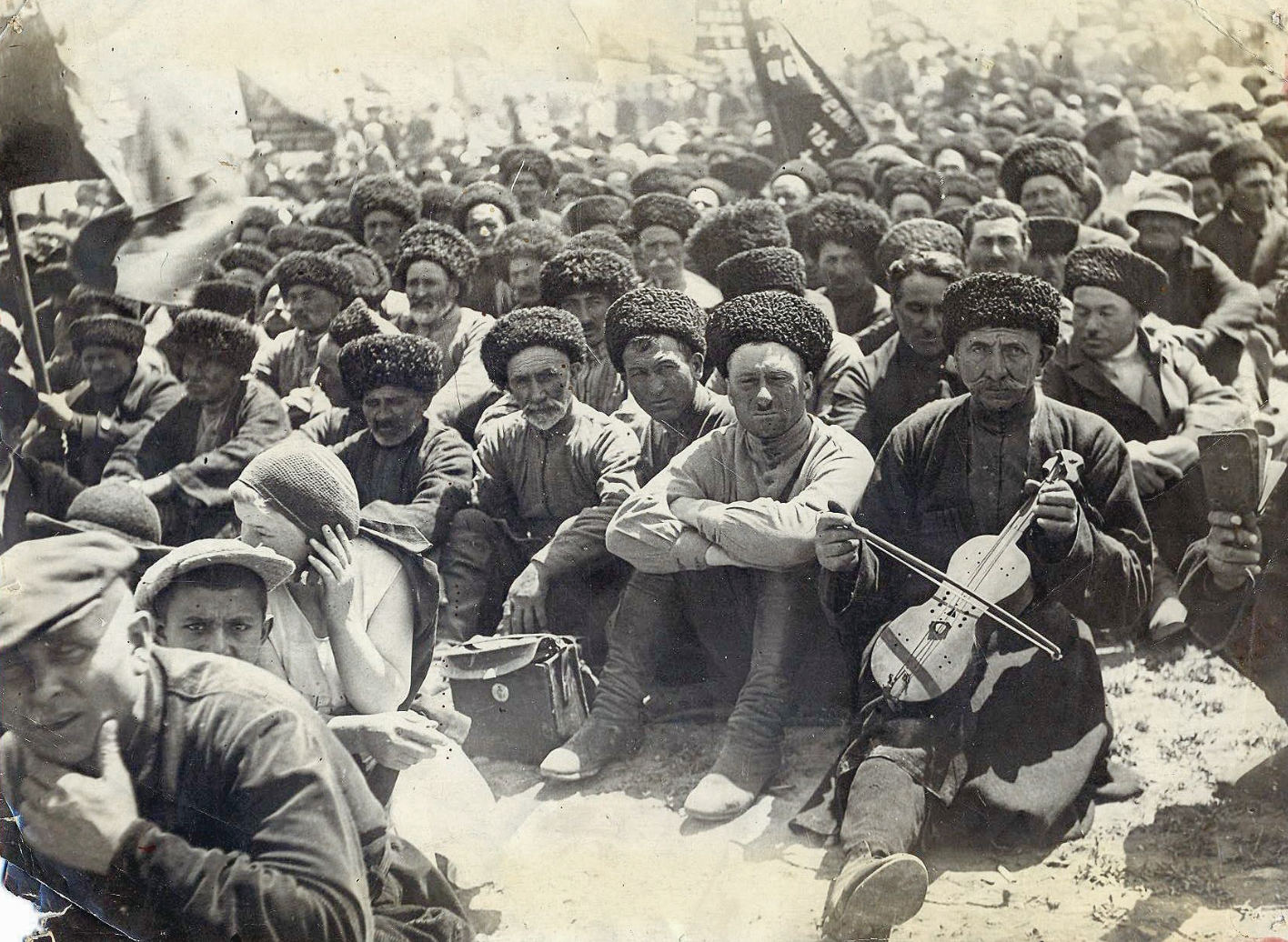
In spite of its natural imposing mountainous defenses, high altitudes and isolation, the Northern Caucasus region couldn’t help but be swept up into the ever-imposing empire grabs of Imperial Russia during the early 19th century. Although the blueprint was laid down much earlier by Peter The Great, and enacted two generations later by Catherine The Great, it would take Russia time to bring this warrior region to heel. Through conquest and treaty, Tsarist Russia saw the end of Islamic Persian influence in this part of the greater transcontinental Caucasus, which stretches out to the Black Sea in one direction, the Caspian in the other: bridging Asia and Europe.
In that expansionist drive Russia perpetrated untold horrors, genocide in fact, as they unleashed an invading campaign of terror on the local Circassian population. In scenes that would be repeated less than a century later on another Caucasus population, the Armenians, by Ottoman Turkey, those that weren’t massacred were deported on mass to the Middle East, and ironically, Turkey – even before that, many unfortunate souls were enslaved and decamped to Egypt to fill the ranks of the non-Arabian mercenary group, the Mamluks; eventually over generations growing into the ruling class itself and ruling huge swathes of North Africa and further abroad.
The once proud twelve historical provinces of the Circassian, represented on their green field and crossed arrows charged gold star flag, were divided up at first by Tsarist Russia, and later by the post-revolutionary Soviet camarilla into a number of ethnic republics: Adygea, Kabardino-Balkaria, Karachay-Cherkessia, Krasnodar Krai and Stavropal Krai. Despite emptying much of this ancient land already, a majority of the Muslim population from these areas was deported to dreaded Siberia and Central Asia. This was on the cusp of WWII.
It should be noted at this point that the history is both far more convoluted than this, and often confusing as it entails a host of ethnicities and cultures, and unfortunately, atrocities – these lands already devastated by Mongol hoards and disease before the Russians turned up. Rather helpfully, the guys behind this expanded project, that is, the FLEE publishing house/record label/curatorial platform and their extended cast of musical ethnologists, experts, writers and artists, have traced the history a lot better and in more depth than I have. But roughly, and for the sake of context and a better understanding of this project, we’re talking about one of the most contested regions in the world; fought over since the Soviet experiment collapsed in 1991. Out of the oppressive tyranny emerged the old realms once more: Armenia, Azerbaijan and Georgia, but also Dagestan, Chechnya, Abkhazia and Ossetia. Barely a year has passed without war or conflict in these regions; especially with the emboldened empire-building policies of Putin – an adept pupil of Soviet rather than Tsarist Russia, his ambition is to once more claim and conquer those Eastern European satellite states that came under Soviet control in the aftermath of WWII, and to build a corridor towards the Med, where he aims to keep a military naval presence.
Even recently, only a couple of Winter Olympics ago, the old Circassian capital of Sochi was used as grandstand aggrandizement of the Putin regime. Much to the locals anger; the graves of that earlier genocide literally paved over and erased just like that for a sporting event. Flashpoints extend beyond into the Ukraine and the disputed territory of Nagorno-Karabakh (internationally recognized as part of Azerbaijan, yet its population is largely Arminian). The former conflict probably had the greatest impact on this project; pushing back the release to this year, three years after FLEE met with the Nalchik-based music journalist/researcher and Ored Recordings co-founder Bulat Khalilov, who raved about the heavily-lubricated “petit criminal” and “gulag returnees ‘chanson’ music” of the Northern Caucasus.
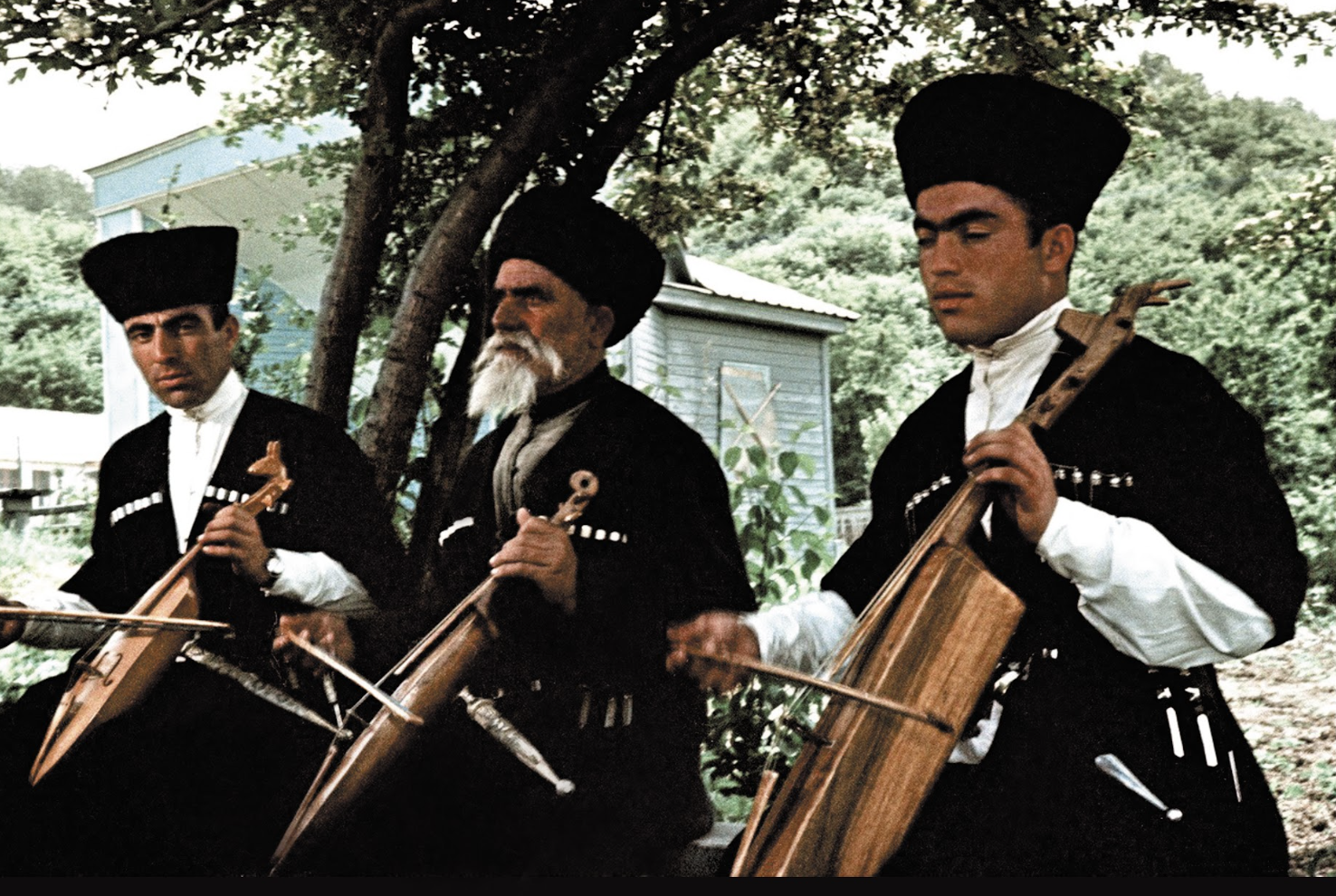
Knowing a thing or two about such traditions, a citizen of the Kabardino-Balkaria region in the foothills of the Caucasus Mountains, Khalilov opened the door on an often wildly whooping raucous and hardy culture. The FLEE collective travelled across this rugged terrain, taking in the sometimes (so it sounds) impromptu performances of knowing, winking rogues and bawdry women, breaking out into song at weddings and in the ‘kunakskaya’ guest rooms of this hospitable folk. One village stands out in this task. The remote Ulyap hamlet of only 1200 souls is a bastion of the bellowed chanson-like accordion sound that accompanies all the unfiltered original recordings on this collection.
A purview if you like, with not only the recent traditional performances but also a number of transformed, inspired Caucasus visions by a diverse range of experimental artists, there’s also the inclusion of essays, previously unpublished photographs and artwork.
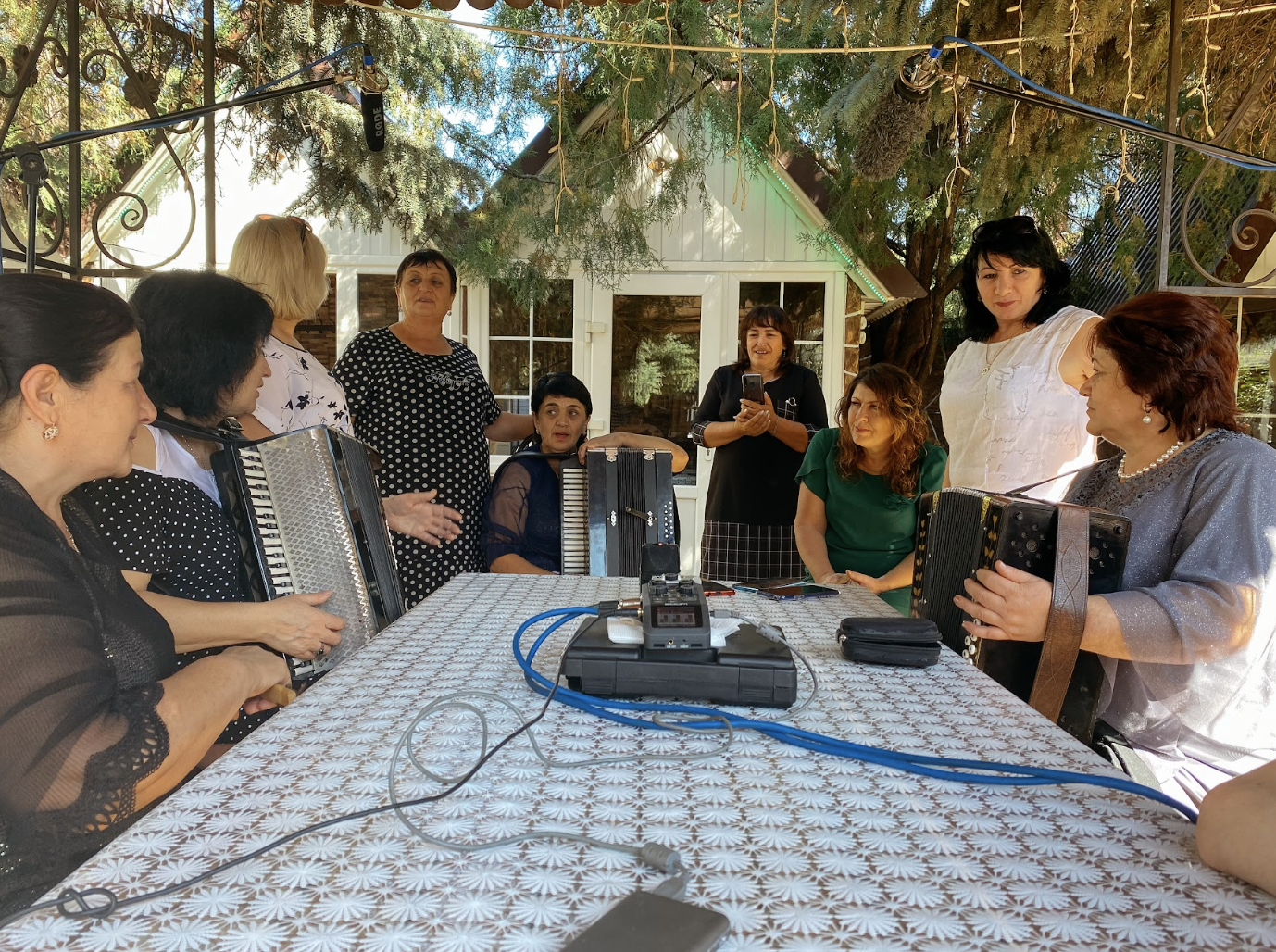
It all begins, however, with the ‘Women of Cherkessk’ (the capital city of the Karachay-Cherkessia republic), who show stoic form and strength in the middle of a wild washboard scrubbing and cutlery slapping percussive party of almost Francophone and Creole concertinaed accordion pumps and fairground dervish. Translated titles help of course, but the sentiment is often either lighthearted, heady or longing; sounding a lot like a drinking game or prompted outburst from a hooping bar room audience. When the ‘men’ of Ulyap surface, the rhythm is more like a seasick shanty; the voices like a couple of old boys propping up the bar, lending each other on, their ears pulled by the missus over their enthusiasm for vodka – “a little water”. Later on, the vocal tones and sorrow on Damir Guagov’s ‘Aminat’ seems to evoke not only the Slavic by Arabic; the accompaniment more like a cathedral piped organ. By the same artist, ‘Circassian Dancing Tones’ is a slow roller-coaster of accordion dips and scales; a lifting dance of beauty.
Smitten expressions, old country yearns, serenades and the knock-about convene on those no nonsense recordings from the post-Soviet underworld.
As if to reinforce the current tumult of oppression, a number of artists, commissioned to transform this tradition, have either left their Russian homelands or made a conscious decision to support Ukraine. Featured on this very blog (and making our choice albums list a couple of years back with his Roots album), Misha Sultan left the Siberian industrial city of Novosibirsh (the ‘Chicago’ of Siberia) behind some time ago. Sultan’s take (‘Siii Babe’) is a fantasy that transports the Northern Caucuses to a dreamy dub-y cartography of The Orb, Mulatu Astatke and Kutiman – an amorphous mirage of chuffed fluted blows, melodica and picky guitar.
The Kyiv-born, classically trained violinist Valentina Goncharova – stalwart of the Soviet avant-garde scene – fashions a near soundtrack fourth world ambient voyage out of the material that assails Tibet and the Steppes. Ariel Kalma meets Tony Conrad as broadcasts from the Soviet past magically materialize from the archives on this stretching of the ‘Evergrowing Tree’ roots.
Almost invasive by contrast, the combined Jrpjej and Ben Wheeler collaboration (the former, a post-traditional Circassian music group from Nalchik, and the latter, an experimental composer, ethnomusicologist using Caucasus influences, Soviet era electronics and modular synths) is like a near-distorted electric shock of rambunctious buzzy Gnawa or electric oud meets stunning voiced Persia.
The multi-disciplinary artist and composer (currently in at least four different bands) Simone Aubert creates a ethereal and moody windswept enveloped hallucination out of traditional elements and voices, and both the pairing of Emmanuelle Parrenin and Colin John seem to magic up dusky and hazy evocations of Natasha Atlas from the region’s links to Islam.
Minami Deutsch – a vehicle for the Tokyo-based motorik and ashram Amon Düül II imbued musician Kyotaro Miula – go the most way out, making a hypnotic crunching march out of a chorus of hand-clappers.
Broadening the scope, the guest list of collaborators stretches the imagination; often completely uncoupled from the source material. All together in one bumper package of ethnomusicology, it makes perfect sense, futuristic alternative planes and visions of a forgotten – mostly passed down orally – tradition. This is a document and testament to the hardiness, perseverance and survival of a culture massacred, exiled and incarcerated, the remnants of a culture almost lost in time, but proving to be very much alive and intriguing to our ears. FLEE and their collaborators, aiders have put together a brilliant, thorough piece of musical research that bristles and wafts with a bounty of possibilities.
Hi, my name is Dominic Valvona and I’m the Founder of the music/culture blog monolithcocktail.com For the last ten years I’ve featured and supported music, musicians and labels we love across genres from around the world that we think you’ll want to know about. No content on the site is paid for or sponsored and we only feature artists we have genuine respect for /love. If you enjoy our reviews (and we often write long, thoughtful ones), found a new artist you admire or if we have featured you or artists you represent and would like to buy us a coffee at https://ko-fi.com/monolithcocktail to say cheers for spreading the word, then that would be much appreciated.
Choice Albums of 2022: Part One M to Z: Machine Girl to THE Zew.
December 15, 2022
The second part of the Monolith Cocktail teams favourite albums of 2022.

A recap in case you haven’t yet read part one
Well was I wrong last year when called 2021 the annus horribilis of all years. It has been soundly beaten by the shit-show that is 2022. The invasion of the Ukraine, cost of living crisis, another hideous wave of Covid – which even if the jabs are being rolled out, and the deaths rate, hospitalizations is nothing like the first wave back in 2020, is still causing major illness, absences and disruptions to a society already facing a heap of doomsday scenarios -, strikes, activism, fuel poverty, looming austerity, and the continuing horror show of a zombie government being just some examples. Yes 2022 qualifies as one of the most incomprehensible years on record of any epoch; an ungovernable country in the grip of austerity point 2.0, and greater world untethered and at the mercy of the harridans on either side of the extreme political divide, the billionaire corporates and narcissist puritans.
And yet, it has been another great year for music. Despite the myriad of problems that face artists and bands in the industry, from a lack of general interest to the increasingly punitive costs of touring and playing live, and the ever encroaching problems of streaming against physical sales and exposure, people just can’t quit making music. And for that we, as critics – though most of us have either been musicians or still are – really appreciate what you guys do. In fact, as we have always tried to convey, we celebrate you all. And so, instead of those silly, factious and plain dumb numerical charts that our peers and rivals insist on continuing to print – how can you really suggest one album deserves their place above or below another (why does one entry get the 23rd spot and another the 22nd; unless it is a vote count) –, the Monolith Cocktail has always chosen a much more diplomatic, democratic alphabetical order – something we more or less started in the first place. We also throw every genre, nationality together in a serious of eclectic lists: no demarcation involved.
The lists include those albums we reviewed, featured on the site in some capacity, and those we just didn’t get the time to include. All entries are displayed thus: Artist in alphabetical order, then the album title, label, who chose it, a review link where applicable, and finally a link to the album itself.
This year’s picks have been chosen by (Dominic Valvona), Brian ‘Bordello’ Shea, Matt Oliver, Andrew C. Kidd and Graham Domain.
M.

Machine Girl ‘Neon White OST-The Wicked Heart’ ACK
Billy MacKenzie ‘Satellite Life’ (Cherry Red Records) GD
Mai Mai Mai ‘Rimorso’ (Maple Death Records) DV
Review
Nduduzo Makhathini ‘In The Spirit Of Ntu’ (Blue Note) DV
Marlowe ‘Marlowe 3’ (Mello Music Group) MO
Luke Mawdsley ‘Luke Two’ (Spine Records) DV
Premiere
Simon McCorry ‘Scenes From The Sixth Floor’ DV
Review
Brona McVittie ‘The Woman in the Moon’ (Arts Council of N. Ireland) GD
Review
Amine Mesnaoui & Labelle ‘African Prayers’ (Lo Recordings) DV
Review
Milc & Televangel ‘Neutral Milc Hotel’ (Filthy Broke Records) MO
Modern Nature ‘Island Of Noise’ (Bella Union) DV
Tumi Mogorosi ‘Group Theory: Black Music’ (Mushroom Hour & New Soil) DV
Montparnasse Musique ‘Archeology’ (Real World) DV
Review
Mount Kimbie ‘MK 3.5: Die Cuts | City Planning’ ACK
Muramuke ‘S-T’ (Accidental) DV
Ali Murray ‘Wilderness of Life’ (Dead Forest Records) GD
Reviews
N.
Nicole Faux Naiv ‘Moon Rally’ (Bronzerat) DV
No Age ‘People Helping People’ (Drag City) DV
Review
No Base Trio ‘II’ (Setoladi Maiale) DV
Review
Noah ‘Noire’ (Flau) DV
Review
Che Noir ‘Food For Thought’ (TCF Music Group) MO
O.

Old Fire ‘Voids’ (Western Vinyl Records) GD
Review
Open Mike Eagle ‘A Tape Called Component System With The Auto Reverse’ (Auto Reverse Records) MO
Orange Crate Art ‘Contemporary Guitar Music’ (Somewherecold) DV
Review
P.
The Paxton/Spangler Septet ‘Ugqozi’ (Eastlawn Records) DV
Review
Peace De Résistance ‘Bits And Pieces’ DV
Penza Penza ‘Neanderthal Rock’ (Funk Night Records) DV
Le Pietre Dei Giganti ‘Vetie e Culti’ (Overdub Recordings) DV
Review
Plastic Candles ‘Dust’ (Paisley Shirt Records) BBS
Review
Plop & Junnu ‘S-T’ (Fiasko Records) DV
R.
Revelators ‘Revelators Sound System’ (37d03d records) GD
Reviews
J Rocc ‘A Wonderful Letter’ (Stones Throw) MO
Robert ‘Orange is the New Black’ (Antelope Records) MO
Scott Robertson ‘Footprints In The Butter’ (Subjungle) BBS
Review
S.
Salem Trials ‘Love Joan Jett’ (Metal Postcard Records) BBS
Review
SAULT ‘AIR’ (Forever Living Originals) ACK
Review
Say What ‘S-T’ (We Jazz) DV
Review
Shabaka ‘Afrikan Culture’ (Verve/Impulse!) DV
Ignacio Simón ‘Old Friends’ (Bandcamp) GD
Review
Širom ‘The Liquefied Throne Of Simplicity’ (Glitterbeat) DV
Sis ‘Gnani’ (Native Cat Recordings) GD
Review
Silverbacks ‘Archive Material’ (Full Time Hobby) GD
Review
The Soft Pink Truth ‘Is It Going to Get Any Deeper Than This?’ ACK
Spygenius ‘Jobbernowl’ (Big Stir Records) BBS
Review
Staraya Derevnya ‘Boulder Blues’ (Ramble Records) DV
Review
Stepbrothers featuring the Honourable Ted ‘S/T’ EP (German Shepherd Records) GD
Review
Shepard Stevenson ‘Man Down’ (Somewherecold) DV
Review
Stereolab ‘Pulse of the Early Brain’ (Duophonic and Warp Records) GD
Robert Stillman ‘What Does It Mean To Be American’ (Orindal Records) DV
Carl Stone ‘We Jazz Reworks Vol. 2’ (We Jazz) DV
Review
Gillian Stone ‘Spirit Photographs’ DV
Review
STS & RJD2 ‘Escape From Sweet Auburn’ (RJ’s Electrical Connections) MO
Misha Sultan ‘Roots’ (Hive Mind) DV
Review
Sweeney ‘Stay for the Sorrow’ (Sound in Silence) GD
Review
T.

Team Play ‘Wishes And Desire’ (Soliti) DV
Mauricio Takara and Carla Boregas ‘Grande Massa D’Agua’ (Hive Mind) DV
Review
Tone Of Voice Orchestra ‘S-T’ (Stunt Records) DV
Review
Trupa Trupa ‘B Flat A’ (Glitterbeat) DV
Review
V.
Various/Solidary ‘Blue And Yellow’ & ‘Yellow And Blue: Help For Ukraine’ (Binaural Space) DV
Review
Various ‘Live at WOMAD 1982’ (Real World) DV
Review
Various ‘Mensajes del Agua: Nuevos Sonidos Desde Peru Vol 1’ (Buh Records) DV
Various ‘Music For Ukraine’ (We Jazz) DV
Review
Various ‘Pierre Barouh And The Saravah Sound: Jazz, Gumbo And Other Hallucinatory Grooves’ (WEWANTSOUNDS) DV
Review
Various ‘Spirit Of France’ (Spiritmuse) DV
Review
Vera Di Lecce ‘Alter Of Love’ DV
Violet Nox ‘Eris Wakes’ (Infinity Vine) DV
Review
Vukovar ‘The Body Abdicator’ (Other Voices) DV/BBS
Review
W.

Wish Master & Axel Holy ‘First Nature’ (Official Recordings) MO
Ethan Wood ‘Burnout’ (Whatever’s Clever) DV
Review
Billy Woods ‘Aethiopes’ & ‘Church’ (Backwoodz Studioz) MO
X.
Iannis Xenakis ‘Electroacoustic Works’ (Karlrecords) ACK
Z.

THE Zew ‘IFI1IFO’ (Numavi Records) BBS
Review
Hi, my name is Dominic Valvona and I’m the Founder of the music/culture blog monolithcocktail.com For the last ten years I’ve featured and supported music, musicians and labels we love across genres from around the world that we think you’ll want to know about. No content on the site is paid for or sponsored and we only feature artists we have genuine respect for /love. If you enjoy our reviews (and we often write long, thoughtful ones), found a new artist you admire or if we have featured you or artists you represent and would like to buy us a coffee at https://ko-fi.com/monolithcocktail to say cheers for spreading the word, then that would be much appreciated.
 Monolith Cocktail Blog