The Digest for March 2026: New Music/The Social Playlist
March 9, 2026
The monthly Digest includes a clutch of accumulated short new music reviews and the social inter-generational/eclectic and anniversary albums celebrating picks.
Image: Credited to the Asian Arts Initiative
Something a little different this month after missing February’s Digest deadline. In case readers/followers and those new to the site haven’t heard or seen on some of the blog’s social media platforms, I’ve been in the wars, spending a lot of time this year in hospital. Earlier this year after being ill for a while, I was diagnosed with an autoimmune kidney disease, but then was struck down, out of the blue (and totally unrelated) by a minor stroke. This has meant untold tests, appointments, and treatments, of which I’m merely just beginning to get my head around. I won’t lie, and whilst the stroke is still a mystery with no actual diagnoses as to why I had one yet, it has been a very frightening and confusing time. This will affect the site and my writing going forward, so I ask for some patience and understanding.
I’ve gathered together a number of reviews, pretty much completed before much of this happened for the new(ish) releases section. And for the archives and social playlist have decided to share videos of tracks taken from those albums enjoying various anniversaries this month (or thereabouts), from those dear artists/producers that have left our mortal realm.
___THE NEW (All those latest & upcoming releases in brief) ___
Camille Baziadoly ‘Skin On Fire EP’
(PinDrop) 6th March 2026
Somehow simultaneously intimate yet panoramic and universal, a whole emotive register of vulnerabilities emanates from the both aria-like cutting and yet also diaphanous breathed voice of the French-born, but Oxford-based, singer-songwriter Camille Baziadoly. The new EP, following on from last year’s favourably reviewed and received Fifteen album, opens with the former single and title-track, and from there, unfurls its beauty, its reverence and pained prangs of fragility across a quartet of newly written songs in the key of slowed-trip-hop-crunching-and-mechanized-winding dreampop and Gothic cinematic allurement.
Skin On Fire EP feels like a score; the soundtrack to what’s lyrically alluded to, an abstract feeling of recovery, therapeutic healing and self-care. From the very first line of declaration (“Skin is all I am”) to the loss and grief, the despondency and aches of the transfixed beatific yearned ‘Trial’ and the even more reverent, steamed and mirrored beat cranked ‘Under Water’. The former reminded me of a little of the dreamy, veiled music and voice of Celestial North, but the synths of Chromatics, whilst the latter, recalled the production of Julee Cruise and the submersible aquatic poetry and voice of Nino Gvilia and the atmospheres of This Mortal Coil. The final act, ‘Around You’, is perhaps the most tenderly if plaintive song of them all. Whether stepping outside and removed from this particular relationship, looking in from the ether and from behind the most minimalistic of backings, or lamenting someone else’s, Baziadoly fills the vapours with a real yearning.
Despite the care, gentleness and its subtleties in the use of both instrumentation and the electronic (from minimal but no less evocative piano and organ to various well-placed effects), the production has an air of gravitas and drama about it: of scale too if you like, and of ambition. Much of this is down to the highly prolific (and a constant presence on the Monolith Cocktail) Sebastian Reynolds, who in a producer’s role articulates, emphasis whilst also allowing Baziadoly’s voice to shine, resonate and breath. That production can at any time invoke the influence of Beach House, Air, and the Cocteau Twins.
It is the voice that truly makes this EP however, and its ability to soar towards the birds but also navigate the harsh realities, troubles and traumas of life, love and hurt. Baziadoly brilliantly and cerebrally emerges from the other side having shown such vulnerability and sang such heartaches of balladry to claim another transfixing success.
Márcio Cunha ‘Imaginary Soundtrack’
(Nostril Records) Released 8th January 2026
A sonic showreel collating a year’s worth of recordings made throughout the period of 2019 and 2020 – just as the world lurched fatally over the cliff edge of Covid -, the Portuguese experimental musician, composer and multidisciplinary artist Márcio Cunha’s newest release is a CV of possibilities. As a calling card and sampler of his obvious eclectic and omnivorous influences and talents, this generous thirty-six track work mines, traverse and explores a portfolio’s worth of stand-alone ideas, passages, vignettes, filmic scores, cosmic mirages and electronic motions, and comes together as one loose soundtrack.
Either submerged and muffled or clean and crystal, the overall atmosphere and sound is one of familiar Earth-bound electronica, instances of tangly and strung-out guitar and marching snares, and the buzz, fuzz and static generator force field charges of machines and the alien. For Cunha projects towards the stars, but often toward unseen, mysterious forces beyond our reaches.
Within that universe and orbit you can expect to hear techno, d ‘n’ b, kosmische, all kinds of beat-bouncing electronic, various mechanics, the more tribal, vapour waves, a roll of hand drums, liquidated electro, oscillations, the plastique, Basic Channel, Room Of Wires, Aphex Twin, Mouse On Mars, Sven Vath, Conrad Schnitzler, the industrial, music of the spheres, lunar indolent shimmies, wonky bell-ringing, the burbling, and the tubular. Some come with an added drama and celestial voiced airs, whilst others almost recall the post-punk. But there’s a general signature to be found throughout, connecting all these numerous experiments together; a sort of oeuvre with a general purpose and theme, guided or inspired by the unknown elements of the cosmos.
You’re bound to find something interesting, absorbing or able to send you off on some space adventure from this veritable CV of electronic experiments. A prolific range that will keep you invested for an hour or two.
The Early ‘I Want To Be Ready’
(Island House Recordings) 27th February 2026
Transposing a newly invested language of sonic, musical and extemporised ideas over the last five or six years together, the most recent version of an idea that was formed back in 2004, imbued by many of the Chicago undergrounds’ most enduring post-rock and post-jazz doyens (Tortoise being the most obvious glowing influence), sees guitarists and synths operator Alex Lewis and drummer and electronics manipulator Jake Nussbaum take inspiration from improvised dance.
Taking a lead from the central tenets of the choreographer, researcher and author Danielle Goldman’s 2010 published work I Want To Be Ready: Improvised Dance as a Practice of Freedom, the duo enact the book’s outlined “state of readiness for whatever’s to come”. As repeated and lifted from Goldman’s study, “A skilled improviser will be intimately familiar with her habitual ways of moving, as well as the shifting social norms that gives these movements meaning. Then, on a moment-to-moment basis, she figures out how to move.” This is a distillation of course, whittled down from years and acres of research enquiry. But as a starting point for The Early foils, this demonstratable exploration of improvisation proves a successful prompt to investigate or just let a feel lead the various forms of instrumentation towards interesting, tactile, multilayered and stirring spaces and horizons; some that melt, others that are near otherworldly or like mirages.
From the cluttering to reverberating and shuttering, the off jazzy breaks to post-rock mirages of wrangled, melting and spikier guitar entanglements and loops, meaning is transcribed via the caresses, the resonated touches, scuffs, the subtle streaks of movement up and down the nickel guitar strings, moments of melody, the drifted, the bending and various generated waves of electronica effects. Time itself falls freely in this space, the passing of it almost suspended for the duration as the duo feel their way with a kind of musical telepathy. From Tortoise-style blues to the Fourth World and the redolent explorations of Pacha Wakay, the sound of The Cosmic Range, the Zacht Autommat, of Daniel Lanois, the guitar work of Jeff Parker, Yonatan Gat, Steve Gunn and Christopher Haddow, and the pendulous near swung and thumping drumming of Werner ‘Zappi’ Deirmaier (especially on the Faust-like ‘SandClock’), there’s vague echoes of ethnic sounds and dreamt landscapes. It reminds me of a relatively obscure duo called Pidgins, and the way they stir up such familiar and yet almost unique soundscapes, horizons and atmospheres built from a stream of always evolving sources. And yet, once in the space, once together with the feelers spreading out, can magic up both dreams and the mysterious with equal skills. The non-musical and serial join together with passages of the rhythmic and melodious on an album that will unfurl its full creative expanses and oeuvre over numerous plays. A scion of the Chicago hothouse of such experiment, even if it was made in Philly, The Early pick up the baton and run with it.
MMBTUPM ‘Meditation Music Beyond The Unsleeping Psychopathic Mind’
(Hidden Harmony) 28th February 2026
Directed or merely amorphously suggested a direction by the multi-instrumentalist (mainly focused on the alto sax, the drums and synths, but I guess generally can get a sound out of anything) and prolific instigator Davin Brahja Waldman, the newly brought-together Meditation Music Beyond The Unsleeping Psychopathic Mind troupe of like-minded twisted and untethered artists/musicians invoke various apparitions, paranormal, spiritualist and new age vibrations from the Fortean transmitter on their inaugural session together.
Drawing from an ensemble that includes a triple-threat of saxophonists covering all the tones (Devin himself on alto of course, joined by Adam Kinner on tenor and Conner Bennett on soprano), another triple bill of keys, synth and vocalists (Annie Shaw, Sarah Good and Devin tour mate Nadah El Shazly), and various guitarists and drummers (Vicky Mettler and Alexei Orechin in the former camp, Daniel Gélinas and Philippe Melanson in the latter), Devin stirs up an improvised smog and hauntology of a both damaged and solace-finding bluesy psyche.
From stoking up supernatural atmospheres to charging up meditative pulsations fed through various generators, the atmosphere is heightened by a simultaneously feeling of unease and the unknown in equal measure. Redolent wafts, dried exhales and the pipe strains of jazz and such saxophone luminaries as Julius Hemphill, the Pharoah and Donny McCaslin are woven into a fabric of old RKO ghost scores, the wails, soars and apparitional otherworldly evoking vocal expressions and mewls of Matana Roberts, the synthesized calculus and data of esoteric technology, the brainwave experiments of Nehan, and the body movement mechanism rhythms of David Ornette Cherry. And even within that framework of the extemporised you’ll hear what can only be described as passages of New Orleans dockyard smog and procession, and a near child-like apparatus of ghost house toy instruments on the march.
A peculiar place and vibe are envisioned from an enviable pool of talent (Devin alone has performed with or played foil to Patti Smith, Thurston Moore, Lydia Lunch, his famous poet aunt Anne Waldman, and Malcom Mooney, but also steered his own Brahja band and been a member of Heroes Are Gang Leaders and Land of Kush) on their first outing together. A baptism of strange no wave jazz, the séance, the transcendental and paranormal cross streams in an improvised state awash and circulated by bellowed and wooden mechanised movements, bellows, roulette-like spins of bearings and the spellbound.
Phew & Danielle de Picciotto ‘Paper Masks’
(Mute) 20th February 2026
Whilst unassumingly stuck out in the hinterlands of experiment and electronica, a collaboration between Phew and Danielle de Picciotto proves an unmissable and intriguing phenomenon to experience and savour.
Phew’s own entry into this field of explorative and manipulated investigation and inquiry started with the instigation of the Osaka psychedelic-punk group Aunt Sally in 1978, which she fronted until their brief but influential burnout just a couple of years later. During the next decade Phew would work with an enviable cast of experimental doyens including Ryuchi Sakamoto, DAF’s Christo Haar, and, as if to tie in with this latest union, Danielle’s husband and foil Alex Hacke of Einstürzende Neubauten fame. Fast-forwarding to the noughties and the underground pioneer has performed live and recorded with The Raincoats’ Ana Da Silva, Jim O’Rourke and Ikue Mori and Yoshimi of the OOIOO/Boredoms/Saicobab arc of ensembles. Her solo work tends to err towards amorphous sonic sensibilities that exist both in the metallic gauze of space and in more concentrated earthly reverence.
Danielle meanwhile, is the co-founder of the Love Parade, the lead singer of the Space Cowboys, for a longtime, a stalwart member of Crime And The City Solution and member of Ministry Of Wolves. But for the last nine-years Danielle has been making some her most sublime and interesting work together with her husband Hacke under the “symbiotic” coupled Hackedepicciotto banner – standing at five albums thus far. Mixing anything from heightened snatches of beauty, romance and drama to a backdrop of the Biblical, cinematic and ominous, the Morricone, the Weimer and heavy meta, their sound and performances have proven as captivating as they are dream-like, Gothic and otherworldly.
Produced “quietly” we’re informed over the course of five years, the futuristic, alien and sci-fi contextualised, discombobulated and manipulated Paper Masks finds Danielle’s vocalised and spoken interests, stories, observations, fairy tales and inquisitive announcements transformed via Phew’s various apparatus of effects and minimalistic
Drawing on decades of experience whilst always responding to the now, both partners in this latest enterprise combine forces to create a unique space and soundscape; a cyber ecological plane of archaeology filled with the ghosts, traces, messages, and cerebral memories. Phew envelopes, wraps or places a factory of unseen mysterious alien machines and tech, acid squiggles, looming piercing arcs, code and high pitches and frequencies around, above and under Danielle’s both surreal and evocative wordage. From furry philosophers and ghosts to the tundra and fog, and the flights of whispered thoughts that are prompted by personalised memories and incidents, a transformed language of mewls, phrases, narration, song, the untethered and unshaped is now woven into a dialect both humanly distorted and droid-esque, mournful and ominous. And yet, at times, it feels or sounds like a fairy tale transposed to off-worlds and the age of technological symbiosis.
Simultaneously as haunting and mysterious as it is Intelligent and challenging, Paper Masks wears its many faces well to straddle the worlds of art, theatre, electronica, the spoken word and cyber. A signature Mute experiment and listening experience, and yet something very different and original. Let’s hope the two partners bring their talents together more often in the future.
Toshi Tsuchitori and Ryuichi Sakamoto ‘Disappointment–Hateruma’
(WEWANTSOUNDS) 27th February 2026
Whether it was building a unifying electronic music post-war future with the Yellow Magic Orchestra, building Bamboo houses of colour with David Slyvain, scoring the harrowing tragedy of war with Merry Christmas Mr. Lawrence, or winning gold at the Oscars/Grammys for his innovative soundtrack work, Ryuichi Sakamoto reworked neoclassical and electronica into a most influential new language – not totally at odds with its past, yet constantly evolving and probing at the edges of the undiscovered. But rewinding back further, to the incipient days of the early and mid 70s, whilst still a student at the Tokyo National University of Fine Arts and Music and a contributor to such influential outliers as Transonic Magazine, Sakamoto was navigating his way freely and untethered as a member of the multimedia group Gakushudan alongside future collaborative percussionist and ethnomusicologist Toshi Tsuchitori.
Crossing paths in those burgeoning days, the pair quickly worked upon their obvious musical/sonic chemistry to release a new language and interacted experience devoid of solid foundations and free of boundaries. Tsuchitori had recently returned from New York having imbued himself and embraced the philosophy of free form jazz luminary Milford Graves. For those unfamiliar with Graves natural fused approach, he drew upon Indian, African and Asian rhythms, playing with and for such icons as Sun Ra, Albert Ayler and Anthony Braxton. And if you have been following my Monolith Cocktail Social playlists over the years and months, will perhaps recognise Graves as the drummer totem alongside Arthur Doyle and Hugh Glover in the obscure but highly influential Children of the Forest trio.
Breaking from convention, the duo transmogrifies Shinto spirits and traditions and various other Japanese forms from across the centuries into a hurtled, collapsing, often racing and wild convergence of Western avant-garde forms, abstract-classical, free form jazz and the ambient. Certainly not music in any serial or familiar sense, these experiments, improvisations or whatever you wish to demarcate them are mostly devoid of rhythm and form; more expressive unyielding clashes and quietened passages of air, skying and the wind – passed through vents and metallic contraptions. Taking up a whole side, the opening ‘綾 (Aya)’ is one such climatic acceleration of drums, percussion and running, dashing and scuttling piano that recalls Graves and Billy Cobham stirring up voodoo spells, rituals and an entanglement of scrapes and rattles.
Later on, there’s what sounds like the marimba, the steel drums and more zippy prangs and hinged springs of piqued percussion. ‘a / Φ (musique differencielle 1°)’ however, sounds like something you’d expect to hear on an early Richard James album, and seems almost hypnotic: an early attempt in my mind at combining minimalist techno and mysticism. Playing with their lips and tongues at times, especially on the finale, ‘∫ / 𝔷 (musique differencielle 2°’, there’s another attempt to break away into something highly experimentally weird as, and I’m not sure who it is, puffs, shoos, exhales steam-like breaths and swats whilst the sticks roll across skins and rims, or sometimes fall imaginatively across an apparatus of world drums and percussive tools.
Released for the very first time on vinyl, this original 1976 LP (put out by the notable producer Yukio Kojima on his equally notable imprint label ALM Records) will find room with fans of Sakamoto, but also those craving something highly avant-garde and experimental, just with enough touches of African/Afro-Cuban/Asian and free form jazz drumming. Sakamoto wouldn’t dwell long on this phase of exploration, of breaking entirely from tradition and form, so get your fix whilst you can as I’m sure this highly sought-after vinyl package from the guys at WEWANTSOUNDS (one of my favourite such platforms over the last decade) will fly.
/ALBUM ANNIVERSARIES SECTION_______
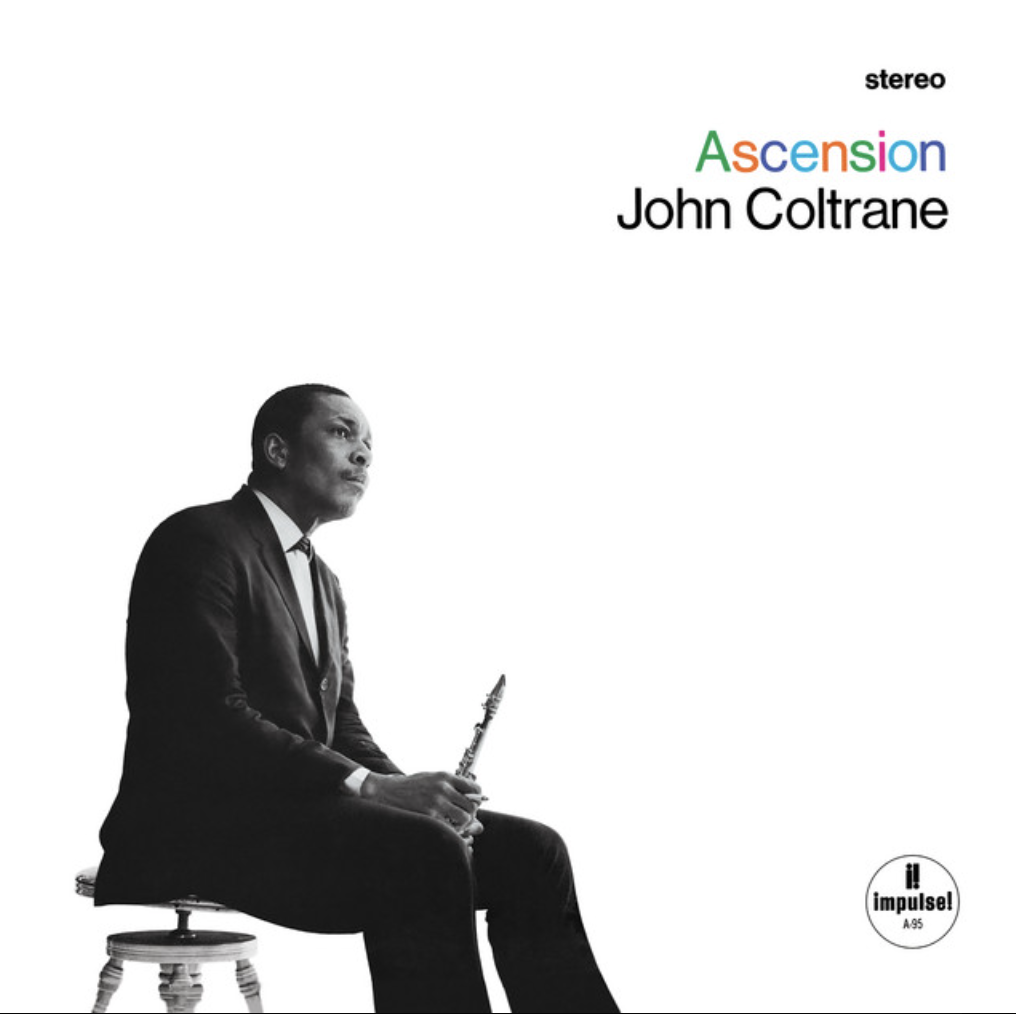
No playlist this month, but video selections tied to those albums celebrating anniversaries this month (and some from February too). Starting with demigod jazz sublime progenitor Coltrane and his 1966 LP Ascension.
Placebo meets Radiohead on the peripherals of Britpop, one of those unique bands form the period that should have been much bigger than they were: accumulating plaudits but not the sales and fame. Subcircus delivered one of the better LPs of that era with their debut Carousel.
Sparks Hello Young Lovers reaches its twentieth anniversary. The Gilbert And Sullivan of cerebral pop music takes the form to ever-new intelligent heights of absurdity and revelation. Daring to merge intellectual ideas and themes into an art form; yet never laborious, condescending or aloof, every song on this theatrical rock and pop suite features an infectious melody, satirical but heartfelt clever lyricism and the usual Noel Coward piano witticisms (updated for the modern age of course).
Time to rip it up with the screamin’ tantrum boom of The Sonics; Garage band proto-punk miscreant royalty, the band’s era defining Boom LP is unbelievably sixty years old.
One of Cope’s muthafuckers and idols, the Arthur Lee led Love dared to dream bigger with their Baroque flourishes, jangles and lamentable love requests. The tapestry songbook that is Forever Changes is also sixty years old this month.
Fast-forwarding to the 90s, and Howie B‘s influential LP, Music For Babies is thirty this month. In that Mo Wax trip hop way, here’s one of my faves, the title track:
Prince time. Parade is forty in March. And here’s my fave of all time video and track, Mountains. The man was incredible. How do you make the shakers effortlessly cool? Or running on the spot in Casanova Rose of Texas gear look cheekily sexy and sassy? Could be naff in anyone else’s hands, but works in the hands of such a singular talent. I miss the conceptual planning, the whole effort from pop stars today as AI does the heavy lifting, and most artists seem totally devoid of ideas. “Guitars and drums on the one!”
Mock 21st century terrordome meets art-punk new wave. Does anyone remember Sigue Sigie Sputnik? Well Flaunt It is forty this month, an LP perhaps ahead of its time or maybe not.
Something more cerebral and experimental now with a live version of the title cut from jazz guitarist progenitor Pat Metheny’s 1976 LP Bright Size Life. Still going strong, with recent releases, we hail back to the 70’s era of fusion-jazz.
__THE DEARLY DEPARTED/___
Pete Dello: Baroque scrolls and flourishes of yearned love, Pete Dello is best remembered as the lead singer of Honeybus during the 60s and for the hit single I Can’t Let Maggie Go. Which is enough in itself to be inducted into great hall of fame and pantheons. But growing up in my household it was Pete’s remarkable And Friends effort Into Your Ears that really resonated and led to my appreciation of his songwriting talents. Quintessentially English, forged from the worlds of Lewis Carroll and T.H. White, this cultish psychedelic Baroque folk songbook uses various characters (including the knightly earwig Harry) to imagine disarming songs of regret, the lovelorn, yearned and fantastical. If in raising a glass to Pete you explore any of his work, this is a great place to start.
John Maus: You got to feel for poor old Maus. Any other vocal pop group of the 60s era may have seen his rep fly. But unfortunately for Maus, he shared the stage with the genius baritone Scott Walker, who’s tones better suited the arrangements and the sense of scale and moodiness of sullen unrequited and dramatic love affairs. Both changed their names to better fit their newly formed Walker Brothers aggrandisement with third member and garage band royalty Gary Leeds (a former Standell no less). But whilst despite his own self-inflicted sabotages, Scott’s star rose, John’s merely fizzled out. And despite attempts to go solo after the Walkers first split in the late 60s, the trio in mosey mode donned cowboy denims and reformed in late ’74. Staying together until the dawn of the next decade before finally drifting aimlessly apart, they did manage to produce the coveted and extremely influential Nite Flights LP, which though unsuccessful in terms of sales is critically up there. In between regular jobs John knocked out the odd recording, but never returned to the heady days or success of the Walkers triumphant period in the 60s. And never really connected with his old foil Scott.
Simon Harris: Almost going unnoticed, but not to an old Britcore Hip-Hop head like me. Producer and Music of Life founder Simon Harris passed away last month. Its’ his highly influential and memorable comps from the 80s that cement the rep for me; platforming early raw tracks from the Demon Boyz, She Rockers, Derek B, Asher D & Daddy Freddy, Hijack, M.C. Duke and many others: part of the original stable of UK talent that fought back against the US wave of hip-hop, giving it a distinct UK twang and even harder edge at times. A real progenitor and leading light in the scene that deserves our full respect.
Country Joe McDonald: I couldn’t not mention counterculture figurehead Country Joe, who literally died in the last couple of days (as I write this). Obvious choice, but his famous crowd-led rendition of THE Vietnam protest song at Woodstock in ’69 – at the age of 17 he enlisted in the US Navy, stationed over in Japan. The Boomer journals will go in overdrive, so I’m not wasting time with obituaries or list of accomplishments. But suffice to say, Country Joe released a hell of a lot of quality protestations, rebellious yells, most notably with his The Fish comrades. Go seek out.
THE MONTHLY DIGEST INCLUDES A CLUTCH OF ACCUMULATED NEW MUSIC REVIEWS; THE SOCIAL INTER-GENERATIONAL/ECLECTIC AND ANNIVERSARY ALBUMS CELEBRATING PLAYLIST; AND CHOICE PIECES FROM THE ARCHIVES

(Cover Star Macie Stewart. Photo credit Shannon Marks)
_____/THE NEW____
Macie Stewart ‘When The Distance Is Blue’
(International Anthem) 21st March 2025
Perhaps one of the most prolific collaborators of recent years, across several mediums, the multi-instrumentalist, composer, songwriter and artist Macie Stewart has come to represent a flourishing, explorative contemporary music scene with multitudes of connections and threads. Apart from projects with choreographer Robyn Mineko, Sima Cunningham, and the Pacific Northwest Ballet, Stewart has become a stalwart of the International Anthem family, contributing and helping steering releases by Rob Mazurek – who literally appears below this review with his foil Alberto Novelle -, Bex Birch, Damon Locks, Makaya McCraven and Alabaster DePlume.
Another foil, featuring in the intimate ensemble that plays on this Stewart’s first solo album for the imprint – the actual debut solo LP, Mouth Full Of Glass came out a few years back on another label -, is Lia Khol, a cellist and sound artist who already collaborates with Stewart in a duo. There’s also the addition of both the equally versatile artist Whitney Johnson (credits include the Verma band and the avant-pop lo-fi Matchess alias) on viola, and Zach Moore on double-bass. This is where those inter-connections must end, as I could just carry on regaling all the various entries from the bio and dedicate this review piece to one of the most enviable of CVs in the music scene. But we must not get distracted, and instead now look at the album.
When The Distance Is Blue could be read as…well, perhaps blue in mood. But this is an album that slips poetically in and out of consciousness, inhabiting, ruminating over and in some cases writing the aural equivalent of a love letter to the spaces in-between the tangible and the environment, with background passages of field recorded interactions taken from public places. For instance, the famous Tsukjii district of Tokyo, near to the Sumida River (reclaimed originally from lowland marshes) is referenced as the title for an atmospheric piece of recorded street side, market interactions. It carries on over and bridges the reverberating, sifted, swept and delicately plucked and vibrated opening suite ‘I Forgot How To Remember My Dreams’ and the near atavistic recalled, apparitional haunted voiced ‘Murmuration/Memorization’. The former of which features Khol’s clean cello and Stewart’s meticulously struck piano notes in a near forlorn but beautifully evocative mood. It reminded me of both Cage and Reich, of the Japanese school of contemporary classical music, and even a little of Sebastian Reynolds work with cellist Anne Muller. The latter, which is named, in part, after the stunning synchronised patterns of large groups of starlings as they come together in flight, seems to dial into something old or timeless; an elliptical dance of Tony Conrad like bows, Hellenic-like spirit voices rising and falling like their avian subjects, and the neoclassical.
The album title, and the underlying theme, is inspired, imbued by the American writer and activist Rebecca Solnit’s A Field Guide to Getting Lost book. I’ve unfortunately not read it, but the L.A. Times summarised the nine essay pieces that make up this work as: “An intriguing amalgam of personal memoir, philosophical speculation, natural lore, cultural history, and art criticism.” Elsewhere it’s been described as a wondering and lurching zigzag through history, politics and art, with the author described as a “Intellectual nomad” by The Guardian’s Josh Lacey when he reviewed it. But all can agree about the book’s themes of change and transformation. Of which Stewart taps into, recording the almost unnoticed; an essence of a particular time and place; a captured seasonal moment of rumination and episodes that left their mark. Across this a near perfect length album, a complete journey is sounded out through both attentive and deeply felt strings, piano, percussion, wordless voices and double bass. It’s a liminal sound that evokes Sakamoto, Cale, Alison Cotton and a sense of the Oriental slow movement, as it moves beautifully and moodily between pizzicato plucks, the cascaded, watered, resonated and bowed. I’ll say it again, as perfect a vision as you can get, everything about When The Distance Is Blue is just so right; every feeling, note, sensibility carefully pitched in a dreamy and ached, subtle and often mysteriously intriguing way.
Alberto Novelle & Rob Mazurek ‘Sun Eaters’
(Hive Mind Records) 28th March 2025
A moment in time; an afternoon’s encounter. The symbiotic alignment and then transformation of the improvised and layered, sonic and sound art foils Alberto Novelle and Rob Mazurek transduce timbral elements and textures into an amorphous act of existence on their collaborative release for the discerning internationalist label Hive Mind Records.
Created in a day, extemporised to a point, the Sun Eaters album, despite its rhythms, is a serialism of encounters and reactions to recognisable lines, soundings, echoes, flutters, melodic addresses, nature trial organic serenades, shakes, tingles, jangles and bleats from Mazurek’s trumpet, flute and percussion of bells. His partner on this exploration transforms these instruments into hallucinatory and playful electronic, modular and oscillated new atmospheres and ambiguous soundscapes that simultaneously evoke Jon Hassell’s Fourth World inventions, the collaborative work of Ale Hop and Laura Robles, the Aphex Twin, Carmen Jaci and King Champion Sounds.
When you address both participants extensive and envious CVs, you can only assume that together they will make something very experimental and unique, but not so academic and avant-garde as to create something dry, theoretical and impenetrable. Before we can any further, just a brief summary of the experience brought to the Dobialab studio that day in Northeastern Italy. I was only the other month referencing Mazurek in relation to Damon Locks and his List Of Demands LP. The cornetist and interdisciplinary innovator featured Locks in his Exploding Star Orchestra lineup, just one of the numerous groups the countercultural Chicago figure and influencer had instigated over the decades; most notably Isotope 217, the varied Chicago Underground ensembles, and one of my favourites, the Sau Paulo Underground offshoot. I could list umpteen other incredible collaborations (his work with Jeff Parker to name just one), and run-off a long list of influential labels that have carried his work (my friends at International Anthem for one) over the years, but you can get this all off the various bios circulating on the internet. His foil, Novello, often “repurposes found or decontextualised analogue devices to investigate the connections between light and sound in the form of contemplative installations and performances” under the JesterN guise – I borrowed that from his Bandcamp page by the way, hence the italics. He’s assisted such notable talent as Alvin Lucier, David Behman, Nicholas Collins and Trevor Wishart, and improvised with such luminaries as Evan Parker, Butch Morris and Karl Berger.
Combining these experiences, echoes of Don Cherry, Peter Evans and Miles casting shadows across an arid Latin sounded landscape are sampled and looped, turned into a language of abstract data, mechanics, transmissions, signals and pitch registers. There’s a buoyancy swimming below the synthesized beds that indicates a certain rhythm and movement. And yet at times the pair seem to be floating in the cosmos or lost in an illusion as they pull the AEoC through the mirror backwards and shake and rustle the cow bells of a herd heading for Tibetan shrines. Those bells by the way also ring out like tubular long pipes or like a sleigh ride into spiritual transcended. But I can’t help feeling there’s a lot of fun at play too on these peregrinations, especially on the Mexican wrestler referenced snake-rattled and mirage-esque ‘Luchadores Sudden Embrace’.
Taking a completely different direction, the fungi studied inspired finale, ‘A New Mycological Framework of Narrative’, is the sound of Richard H. Kirk’s wordless mewling and mantras, a touch of Kriedler and even Kraftwerk, and Finnis Africae being fed into a strange soundboard and apparatus of conductors.
A different kind of creation, this six-track reconfiguration seems to just be. Neither non-musical nor musical; neither avant-garde nor defined; the results are beyond simplified categorisation. Mood pieces? Sensory exploration? Textual exercises in ambiguity? Abstracted visions conjured out of an apparatus and range of acoustic instruments? All viable descriptions perhaps for an amorphous collaboration. Followers of both artists will be happy with the outcome.
El León Pardo ‘Viaje Sideral’
(AYA Records) 21st March 2025
A “sideral”, or celestial bodies related, “voyage”, the new inviting album from the Colombian brass, wind and multi-instrumental encompassing artist El León Pardo is imbued by pre-colonial Colombian magic and contemporary musical hybrids that fuse cumbia with the Afro-Caribbean and cosmic.
Noted for spreading the word and virtuosity of his chosen instruments and culture to the world through his work with Ondatrópica, Curupira and Frente Cumbiero, Pardo is imbued by the sound and symbolism of the “Kuisi” end-blown flute, and Sierra Nevada de Santa Marta mountain range in which its whistly trill echoed; the loose Colombian originated infectious rhythm of cumbia, which in more recent times has switched the European influence of accordion for electric guitar, but has been restyled and modernised throughout time to include the trends the day; and the ancient Pre-Colombian Zenu people of the Sinú River Valley and their atavistic flute.
Channelling all this to conjure up a dream realism peregrination, dance and wonderment, Pardo invites a number of Colombian foils to join him on a sometimes-surreal corridor to the stars. Taking up the offer is fellow eclectic polymath Edson Velandia, emcee N. Hardem of LNI and Soul Am Beats fame, and “nueva (“new”) cumbia” motivators Frente Cumbiero, who’s main instigator Mario Galeano is also a member of both the already mentioned Ondatrópicaand Los Pirañas groups. This trio’s contributions further expand the scope of influences and ideas, heading down into the lively Bogota barrios, or snake rattling and sauntering into a spellbinding oblivion of magic eye Colombia and the cosmos.
As the tile translates, there’s a relationship between the stars, the celestial spheres, playing out on Viaje Sideral. A both playful and deep immersion of universal mirages and dream states that simultaneously sound Andean and yet futuristic and cosmological, the album’s nine tracks use tradition and modern tech to build up an alternative reality. Analogue synths echo and modulate those space sounds: a representation of beamed astral planes and spectral rays, and travellers from other worlds landing in the mountain valleys of Colombia.
Whilst traditional instruments, the chuffed, short and longer, more drifting and circular convulsed flutes and pipes, both brassy and Latin trumpet, reference imaginative invocations of his homeland. Factor in some of that Afro-Caribbean influence and a touch of Mad Professor dub effects to this playful, inviting, danceable, percussive infectious, pop-y, soulful (there’s even some electric guitar parts that I would swear were Rhythm & Blues flavoured) and mystical, and you have a dreamt landscape brought to vivid, rhythmic life. El León Pardo isn’t however just about the magic, but by using the instruments he does, bonds with and sticks up for those pre-Colonial indigenous roots as a form of activism and conservation, education. This is nothing short of a great imaginative Colombian trip, equally at home under a menagerie canopy of exotic conjuring as it is in space.
Puce Moment ‘Sans Soleil’
(Parenthèses Records) 21st March 2025
Tuning in via the kosmische, new age, trance and ambient imbued modular electronic laboratory to the courtly and Imperial Gagaku tradition, the Puce Moment reconfigure purposeful Japanese ceremony, dance and music to conjure up an otherworldly, haunting and mystical soundscape under a “sunless” sky – if you directly translate that album title of “Sans Soleil”.
Travelling to the notable Japanese city of Tenri (the old capital of Japan, for a very brief period during the late 5th century rule of Emperor Ninken) in 2020 to record and work with the local Gagaku Music Society, the French duo of Nicolas Devos and Pénélope Michel recontextualised an old but continuous form originally performed for the elite. They expanded this exploration turn transformation further with the addition of the São Paulo born choreographer and dancer Vania Vanneau: furthering the soundscape project into dance, visual movement and performance art.
For those unaware of this Japanese form, Gagaku’s roots can be traced back to the 6th century, perhaps earlier, when Japanese delegates were sent to China to learn about its culture. They are said to have brought back a fusion of both Chinese and Korean music, instruments and dances to the Imperial court; to be performed at banquets for the elite. But some historical sources suggest that it was through the spread of Buddhism, making its way across from China to Japan. And one of the main dances, the “Bugaku”, involves the wearing of intricate Buddhist costumes and masks.
Familiar sounds of this form include the famous barrel-shaped wooden “taiko” drum, the “Koto” 13-string zither, the “Biwa” short-necked lute and the “Shō” wind instrument – used for one of the six titles of this peregrination and mood musical work. All of which, I believe, can be heard both in their recognisable form and morphed and woven into a modulated, generated, filtered atmosphere of electronic apparatus drones, fizzes, oscillations and amorphous mysticism.
Hinting at rips in the fabric, a misty geography and periods of historical meaning and reference, Sans Soleil summons ghosts, voices from the ether and the four winds and wisps of Jon Hassell, Hiroshi Yoshimura, Popol Vuh, Tony Conrad’s work with Jennifer Walshe and Ash Ra to magic up a sound world that sits on the border of the alien and cosmic, landscape and pure atmosphere: The word used is liminal. This convergence of trance-y, lucid synthesised sounds and voices on the air merges dreamily and spookily with Japanese tradition, ceremony and choreography to create something more akin to an experience, an immersion and dance.
Alessandro Alessandroni ‘Paesaggio Bellico’
(Four Flies Records) 18th March 2025
Like much of mainland Europe scared, brutally traumatised and worn out by WWII, Italy and its battle-ravaged population pretty much became risk adverse to war. Although eventually changing sides back to the Allies, the ill-fated bedfellows of the Nazi Axis alliance were, apart from the diehards/racists/antisemites/psychopaths, were always ill at ease goosestepping to the tune of Hitler. In fact, no matter how history has been warped, the Italians put down and made the butt of so many jokes, the country had some of the largest numbers of partisans fighting against the Fascist regime – percentage wise in all of Europe, Italian partisans were far more likely to be killed and murdered by the Nazis than anyone else.
Italy favoured internal civil war over the international: a war of ideologies, corruption, state and philosophy that rages to this day. Terrorism and organised crime concentrated the mind. But no one in Italy could turn away from the events that followed in the wake of WWII: the Iron Curtain and Cold War to Korean, Vietnam and so on. And that brings us to the work of the stellar talented and connected iconic and cult Italian composer Alessandro Alessandroni, who scored an impressive range of war themed documentaries and films during a career that spanned a good half of the 20th century.
Born on the release date of this latest battle, war and psychological collection (18th March), Alessandroni came of age during the rise of fascism and the events that would lead to the Allies invasion of first Sicily then mainland Southern and Central Italy, the horrific bloody battle of Monte Cassino and the brutal air raid bombardments that destroyed so much of the country – an agreement between both sides thankfully saved Rome and several other important cultural cities.
During a period between 1969 and 1978, the maverick and highly influential composer and multi-instrumentalist recorded a catalogue of scores and atmospheric pieces, suites that dealt with not only the military aspects but the trauma of war and its effects upon those who both fought and faced its wrath. After the smut and titillation of the Music From Red Light Films 1976-1980 collection, the Italian label Four Flies unearths an impressive and quality selection of these tracks, previously left dormant in the vaults.
A peer, foil, mentor and friend to such luminaries as Ennio Morricone, the Rome born maestro and artist first made a name for himself with his Spaghetti Western twang-y Duane Eddy signature guitar and whistling scores for the highly influential film director Sergio Leone. But Alessandroni also founded the wordless octet vocal group I Cantori Moderni (“The Modern Choristers”), which featured his wife Giulia De Mutiis, and went on to form the brief prog-rock-psych group The Braen’s Machine with fellow Italian cult composer Piero Umiliani.
During the late 1970s he was scoring more and more mondo trash, erotica and garish S&M horror – see Lady Frankenstein and Killer Nun. And yet, the quality of his work is never in doubt; often elevating such tawdry, amateurish affairs to cultish status by the music alone. Although far from serious, it seems Alessandroni’s craft is likened to playing with an amusement park of ideas, sounds and instruments: entertaining but also captivating in equal measures. With an ear attuned to the contemporary fashions, but the classical and traditional too, a lot of musical ground is covered in his compositions: from Italian folkloric standards to disco, library music and the salacious.
In turn, this package (the vinyl copy features 15 tracks, whilst the digital is expanded to include 29) channels much of that legacy, but with far more seriousness, artistic depth, emotion and compassion. Most of those familiar with his work will instantly recognise the signatures and the palette; from the spine-tingling chills and fears of his Giallo-like scores to the arpeggios, the twang and pick of his Wild West evocations – namely on the couplet of cloud hanging “Pattugliamento Aereo” (“Air Patrol”) pieces; although the second “Aereo” matches that with vague Alice Coltrane harp-like plucks and a subtle prog-esque organ.
Where sentimentality and a touching relief is needed, tracks like ‘Lettere dal Fronte’ (“Letters from the Front”) air towards Bacharach and Morricone, and feature that recurring Baroque chamber sound of harpsichord or clavichord that gives each occasion a sense of spindled timelessness. ‘I Sopravvissuti’ (“The Survivors”) is a lovely touching sentimental piece that evokes both the balletic scores of Aram Khachaturian (sounds uncannily like his suite from Kubrick’s 2001: A Space Odyssey) and wartime period classical music. Talking of 2001, with the use of the I Cantori Moderni ensemble of wordless voices both appearing like apparitions and spirits of lost and dead souls, or like some removed version of ecclesial requiem choristers, there’s also a semblance of the stirring visionary ominous fears and otherworldliness of György Ligeti.
Quite rightly, the ‘Dachua’ suite should evoke an enormity of horror, but this score is more in the mode of supernatural horrors from the crypt than genocide shock. It sounds like some lost silent film theme of haywire Baroque piano: a combination of devilment and madness, with one hand delicately lacing the keys, and the other, hitting near off-key jarred and out-of-key notes. And whilst sounding the most terrible aspects of war, from execution to the shelled-out ruins of a psychologically destroyed mind, the music strikes up the military snare, playing it like a spraying machine gun, or, building up an unsettling drama of pain and anguish: all managed beautifully, even when dipping into Library music, the hallucinating, dreamy and psychedelic.
Military timpani and drills aplenty amongst the plaintive recall of the acts and dogs of war, this survey features supernatural forces, cold chills, suspense, loss, remembrance and hope.
The suites, atmospheric pieces, scores and signature found on this Paesaggio Bellico are all far too good to be left undisturbed, languishing in the vaults of cult obscurity. Fans, heads and even those with a cursory interest should investigate.
___/THE SOCIAL PLAYLIST VOLUME 95
The Social Playlist is an accumulation of music I love and want to share; tracks from my various DJ sets and residencies over the years; and both selected cuts from those artists, luminaries we’ve lost and those albums celebrating anniversaries each month.
Running for over a decade or more now, Volume 95 is the latest eclectic and generational spanning playlist come radio show from me – the perfect radio show in fact, devoid of chatter, interruptions and inane self-promotion.
Each month I mark the passing of those artists we’ve recently lost, and as this is the first opportunity to do so, I’ve included homages to the last “doll” David Johansen, the soul music’s Carol King, Roberta Flack, vibes innovator and jazz fusionist Roy Ayers and troubadour Bill Fay.
Anniversary albums wise there’s tracks from Herbie Hanock’s Maiden Voyage (celebrating its 60th anniversary this year), Bob Dylan’s Bringing It All Back Home (also unbelievably 60 years old), David Bowie’s Young Americans (50 this month; see my short analysis in the Archives section below), Parliament’s Chocolate City (also 50), Sonic Youth’s Bad Moon Rising (40 this month), Radiohead’s The Bends (30 years old this month), Gene’s Olympian (another 30th) and Edan’s Beauty And The Beat (where does the time go…seriously! How can this LP be 20 years old this month?!).
As usual, I like to throw in a smattering of cross-generational tracks and some more recent ones – those that missed out on the previous Monthly playlists of new music. In the latter camp, we have a resurfaced (so not strictly new) live version of Throbbing Gristle’s ‘Convincing People’ from Volksbühne, Berlin, recorded on New Year’s Eve in 2005; an imaginative reverberating study, peregrination from Dorothy Carlos; and some mirage grunge indie from Raisa K. In the former, a number of oldies from Krumbsnatcha, 21. Peron, Stanton Davis’ Ghetto/Mysticism, Gloria Jones, Flutronix, Berlin Brats, Pete Dello and more… Expect no substitutes. Expect no algorithmic replicants. Expect no AI bullshit. All playlists are compiled without any external influences, totally conceived by whatever I wish.
IN FULL:
New York Dolls ‘Private World’
Gloria Jones ‘Cry Baby’
Roy Ayers ‘Ain’t No Sunshine’
Roberta Flack ‘Compared to What’
Parliament ‘Ride On’
Edan ‘Promised Land’
Herbie Hancock ‘The Eye Of The Hurrican’
21. Peron ‘Bes’
Bill Fay ‘Dust Filled Room’
Radiohead ‘My Iron Lung’
David Johansen ‘Heart of Gold’
Berlin Brats ‘(I’m) Psychotic’
New York Dolls ‘Don’t Start Me Talking’
Sonic Youth w/ Lydia Lunch ‘Death Valley ‘69’
Throbbing Gristle ‘Convincing People Live’
Dorothy Carlos ‘Balm’
Raisa K ‘Affectionately’
Roberta Flack ‘Some Gospel According to Matthew’
David Bowie ‘Can You Hear Me’
Roy Ayers ‘Pretty Brown Skin’
Stanton Davis’ Ghetto/Mysticism ‘Space-A-Nova II’
Krumbsnatcha ‘Closer To God’
King Honey w/ Hezekiah, Gos and Chief Kamachi ‘Trinity’
Georges Bodossian ‘Punching Bull’
Flutronix ‘Crazy’
Meridionale des cayes ‘Zanmi femme’
Bob Dylan ‘Love Minus Zero’
Bram Tchaikovsky ‘Robber’
Gene ‘Olympian’
Pete Dello and Friends ‘Arise Sir Henry’
___/ARCHIVES
Each and every month, I use the digest as a good excuse to once more retrieve congruous and related posts from the archives. This month, to tie in with the 50th anniversary of David Bowie’s “plastic soul” period, a short piece on one of the soul crooning pale duke’s best album’s Young Americans – well, in my opinion top three.
And from this time, near enough, a decade ago, another chance to read my review of Glitterbeat Record’s Hanoi Masters: War Is A wound, Peace Is A Scar album, raw and therapeutic sessions recorded by Ian Brennan and released during March of 2015.
Disingenuous to a fault, the cracked actor’s ‘plastic soul’ conversion, raised more than a few pencilled-in eyebrows and frowns.
Totally free of his carrot-topped mullet crown, he now hotfooted across the Atlantic to Philly, intoxicated by the city of brotherly love’s sweet, lovelorn soul music.
A new face in town, the burgeoning ‘thin white duke’ employed a cast of ethereal backing singers (including an as yet famous Luther Vandross) and kindred musicians (notably Bowie’s new lead-guitarist foil, Carlos Alomar) on his cocaine-fuelled pursuit.
Calling in the favours, fellow alienated Brit in residence, John Lennon, helped write the cynical snide ‘Fame’ (he plays on the recording and adds harmonies too) and let Bowie cover his stirring cosmological trip, ‘Across The Universe’ – much maligned, but I really dig this version, and even play it regularly in my DJ sets.
Reflective, sophisticated, Bowie and his detractors may have labelled him with derogatory terms, yet there’s no denying it’s another successful musical adoption: truly up there with his best ever work; a complete showman chameleon transformation. Even one of his most infamous haranguers Lester Bangs couldn’t help but admire it: the only Bowie LP he ever gave him credit for.
Decreed as the leading highlight’s of the album by the majority –
Young Americans (single), Win, Fame (single)
Pay attention to these often overlooked beauties –
Somebody Up There Likes Me, Across The Universe
Various ‘Hanoi Masters: War Is A wound, Peace Is A Scar’ (Glitterbeat Records)
A side excursion, travelling due east to Asia and breathing in the evocative songs of Vietnam, Glitterbeat Records launch a new series of field recordings entitled Hidden Musics. Finding a congruous musical link with their usual fare of West African releases, the label sent Grammy-award winning producer Ian Brennan (credits include, Tinariwen, Malawi Mouse Boys, The Good Ones) to Vietnam in the summer of 2014 to record some of the most lamentable and haunting resonating war-scarred music.
Indelibly linked to what the indigenous population call ‘the American war’, the examples of both yearning and praise pay tribute to the fallen: delivered not in triumphant or propagandist bombast but in a gentle meditative manner, these survivors, forty years on from the end of the harrowing and catastrophic (the repercussion still reverberating in the psyche of the burned America and its allies) war still undergoing a healing process.
Tinged with an omnipresent lilting sadness these songs are imbued with battle scares (hence the albums sub-title War Is A wound, Peace Is A Scar), as the featured artisans and traditional music masters who had joined the cause, sometimes for the first time in years, allow` their voices to be heard once again. Brennan’s notes are littered with these various connections to the war: ‘…a thirteen year old whose job was to sing to the troops to boost morale and provide solace. Another was a former AK-47 issued village leader who had not sung in over forty years and proved to be the most dead-on vocally.’
‘Un-mediated’ and as raw as you’ll ever likely to hear these fragile, half-forgotten songs without being there yourself, played on the most obscure accompaniment of moon-shaped 2-stringed and zither instruments – including the strange K’ni, a plucked instrument clasped between the teeth, the local dialectic language spoken through the single string to produce a weird otherworldly vocoder like effect –, each documented performance is a lingering trace of an old world. Industrialisation and technology it seems has no respect for the past, increasingly infringing on even the most remote and relatively atavistic traditions in the mantra of “progress”, replacing those indigenous songs with the cultural imperialism of their south east Asian neighbours (Japan and South Korea) K-pop and karaoke genres. Here then, before they vanish forever, Vietnam’s victors speak; from the sweetly yearned Phạm Mộng Hải eulogy to departed souls For The Fallen to the dew dropping off the blossom love paean to her homeland, Nguyễn Thị Lân sung Road To Home, each purposeful – with the occasional clanging up tempo surprise – song is a revealing glimpse into loss, exile and resistance.
Considering the history and ill blood between cultures – though this has eroded as capitalism takes hold and the country opens up – it has in the past been difficult to investigate for the serene and attentive beauty of the Vietnam music scene, but this earnest and adroit study into a world seldom covered proves enlightening.
Hi, my name is Dominic Valvona and I’m the Founder of the music/culture blog monolithcocktail.com For the last ten years both me and the MC team have featured and supported music, musicians and labels we love across genres from around the world: ones that we think you’ll want to know about. No content on the site is paid for or sponsored, and we only feature artists we have genuine respect for /love or interest in. If you enjoy our reviews (and we often write long, thoughtful ones), found a new artist you admire or if we have featured you or artists you represent and would like to say thanks or show support, than you can now buy us a coffee at https://ko-fi.com/monolithcocktail
 Monolith Cocktail Blog