The monthly Digest includes a clutch of accumulated short new music reviews, the social inter-generational/eclectic and anniversary albums celebrating playlist, and a piece celebrating the 60th anniversary of Pet Sounds from the Archives.
___/NEW MUSIC IN REVIEW____
The Bordellos ‘Let’s Play Lo-Fi’
(Metal Postcard Records) Released 8th May 2026
Marking our own homework so to speak, regular contributor to the site Brian Shea and his family band The Bordellos have released a new album on the unsuspecting public. Well, I say new, but it is in fact another chance to hear a compilation of older tunes recorded over 26 years, mostly over the course of a drunken Friday night at Ant Shea’s abode.
Almost silently slipped out, unheralded and with absolutely jack-shit in the way of promotion, it’s as if it never happened. A campaign run out of embarrassment, or perhaps in the manner of their lo-fi(ish) credentials, dropped out of the ether without a thought. This compilation sounds like it could have in fact been recorded at any time over the last forty odd years. Pop songs saved from obscurity however, we are grateful for this opportunity to rave about the lost band.
A band that revels in self-sabotage, The Bordellos walk a line between notoriety and truth. But they need to unshackle from the lo fi prison they’ve built for themselves, as many of the aphorisms and self-deprecated songs on this new album are far too good to lay languishing in irrelevance and indifference. They are better than many of the bands they emulate, and a damn sight more witty, true and sharp than the overrated Jesus And Mary Chain, who they sometimes evoke – the buzzy and flange indie tune ‘Sleeptight’ sounds like a much more genuine and earnest version of the Scottish band’s Psychocandy era. Dan Shea’s vocals are a highlight as always, but that’s not to do down Ant and Brian Shea. With the bonus of youth, but just as malcontent, Dan isn’t quite as despondent and dispassionate as his dad and uncle, and recalls the very best of Sarah Records, Postcard, and umpteen great indie labels from the golden period of the C86 phenomenon. In contrast, his older generation X relations sound like John Shuttleworth (“Can I borrow Batman Forever? No, you got to bring it back tomorrow”)of John Cooper Clarke over a backing that despite the buzzes, the low rent apparatus, the chirping at one point of a budgie, and the distortion, could be off a New Order demo or The Sundays. Then again, you can’t not pick up on The Fall vibes; the love of beat groups and the garage music of the 1960s; all filtered through the hazy recollections of a Northern town in England during the 80s and 90s.
Appearing on bass, for at least some of the songs, is good old Gary Storey, who emphasis the band’s pop and post-punk credentials with a twang of Hooky and some C86 inspired lines.
An album filled with declaration to that age old trope of unrequited love, or lost love, or a love that cannot survive the class divides of a grimy life spent at the coalface of modern Britain – which is as Blur correctly pointed out, if in an actual halcyon age compared to now, on their famous LP of the early 90s. In the vape shop, nail salons and chicken takeaways dominate arcades and precents of shitty England, the band find something worth putting to song, as they praise, desire and court a string of both unsuitable and suitably uninterested muses. That and the odd drug addict; those that have fallen to the wayside in an age of despair and high anxiety. ‘Driftwood’ is an ode to the high jinks’ tragedy of Dennis Wilson, spooked by a Manson and heavy bass.
The lyrics make the album as usual. Far too many to quote, they could fill a book of modern toss age poetry with observational dark humour, despondent asides and gripes. But love is never far from the sneering captured lines that perfectly sum up the age in which we are unlucky to be living through. Heartfelt, lovelorn and yearning, you get a sense that the band really means it. And that’s where that truth comes to the forefront.
As I said already, this songbook is way too good to be lost on bandcamp amongst the millions of releases dolled out each day. Or indeed on Spotify, where it will be lucky to reach the proscribed limit to receive any compensation of a thousand plays. If this was released over forty years ago, we’d be speaking about The Bordellos in the same breath as the BMX Bandits and their ilk. As it is, this cult release will probably need every push it can get. Then again, the playfulness of the title, the silly snowman dress up costume that Brian adorns on the cover point towards a confliction of amateurish fucking around and finding the audience and acclaim they deserve: that’s showbiz. I’ve done my bit, the rest is up to you, kind followers/readers.
In The Labyrinth ‘Worlds On Fire’
Released 2nd May 2026
Across Nepalese mountain ranges at the heights of nirvana, then seamlessly blending into the Afghan valleys before taking the troubadour’s journey to Turkey and ending up in a fantastical vision of olde Europe, In The Labyrinth’s latest album collection of past material saved from the vaults and remade anew, of original new compositions and transformed covers takes its Nordic roots on a geographical music tour. From Arabia to Peshawar and Iran; from Tudor England to India, there’s musical absorptions that all fans of prog and psych-rock will be familiar with and various signature stopovers on the hippie trail: a Kabul of a very different era, the holy sanctuaries of Varanasi.
Orbiting around the Swedish version of Mike Oldfield – playing an exhaustive and too long to list assortment of instruments -, Peter Lindahl since the early 90s, but born out of the previous Aladdin’s Lantern in the 1980s, In The Labyrinth opens its doors to a wide range of foils and accomplices. So many people are involved, including former band members and acquaintances, over this album’s span of at least forty years of material refashioned or revived and newly augmented. There’s too many to name individually anyway, with various international musicians and voices – including the ethereal, soothing, near spirit-like backing vocals and harmonies of Helena Selander and Natalie Knutsen. One such mirror-y Krishna-vibe atmospheric soundtrack of replenished waters and Yeti era Amon Düül II-esque, ‘Varanasi Sunrise’, is recalled back from the late 90s, just before band member and drummer Feri (Fereidoun Nadimi) returned back to his native Iran.
Pulled through Lewis Carroll’s mirror both forwards and backwards, there’s a spectrum of psychedelic influences at play on this fantasy of tumultuous ills and more dream-like and healthy meditations.
The album opens with a revival of the Catholic litany, as made so cultishly famous by Axelrod’s Electric Prunes project on the Mass In F Minor LP of ’67. Here it’s given an almost pastoral feel that’s somewhere between a Medieval Yes, Clannad and The Far East Family Band sunning it in the Byzantine Court. ‘Kabul’ is very much of its inspiration but reminded me of that electric-saz vamped up Turkish-Anatolian configuration of Baba Zula, whilst the psychedelic posed ‘Disillusion’ – partly a new arrangement of a song from the turn of the 21st century about losing one’s self-esteem during a relationship gone sour – has a touch of Head era Monkees, Van Der Graaf Generator and the Strawberry Alarm Clock. One of the album’s covers/interpretations, ‘Golden Hair’ reimagines the Madcap Laughs Syd Barret in Rapunzel’s Indian acid-fairy tale tower, and the brassy sitar resonated ‘Sagarmatha’ – initially released back in ’99, the song was first featured on the Floralia Volume 3 compilation by Wot 4 Records – once more talks to Yogi on the ADII and Aphrodite’s Child, projecting in a trance-like state to mystical India.
Just when you think you may have the measure of this group, along comes the strange bass heavy and phaser, flange and vapour trip ‘The Endless City’; a mix of Steve Hillage, post-punk, and Hawkwind, this track is, I believe, an amalgamation of the 90s tracks ‘The Black Plague’ and ‘Lovecraft’ originally made under the Lovecraft moniker. The sword and sorcery of ‘Nightriders’ reminded me in part of Jefferson Airplane, whilst the hallucinogenic Alice In Wonderland-ish ‘The Mirror’ somehow reminded me of Bryan Ferry, but partnering up with Steve Hackett and Floyd. There’s also takes on the Swedish prog and rock scene of the 70s with versions of tracks based on or inspired by Gregg Fitzpatrick (the American bred musician slipped the Vietnam War ending up in India, before navigating back west to first Finland than his eventual home of Sweden, where he performed under various Nordic pseudonyms to escape detection, but managed to form many bands and have an eventful career) and Kebnekajse. The former, and the album’s title piece, takes the maverick American’s plaint and Medieval-like folkish lament and adds a mystifying layer of the Indian subcontinent, the Celtic and the environments of a bustling street. The later reprises a traditional Swedish folk song made famous by the “foremost” Swedish folk-rock band, amping up the fuzz and Queen-ish rock postures.
Each song has a story you could say. Each one a chapter in a particular period of the band and its offshoot’s career arcs. But all fit together rather well on this fantastical new age acid trip of evergreen troubadour folkery, prog, the regal, the enchanted and worldly musical.
Kyïvite ‘Broadcast’
(Staalplaat) Released 24th April 2026
As Putin’s increasingly unhinged invasion of Ukraine continues, now stretching into yet another year – a war period so long now that volumes and untold books about it have been published, but been found wanton or made redundant by the escalations and constant changing landscape of events both in Europe and outside it –, the survival of the country’s culture, its music, hasn’t just been left to those fighting on the extensive frontlines but its army of archivists, its radio stations still broadcasting under the frightening threat of drone and missile attacks and its many independent labels.
Despite it all, Putin’s previous cold steely determination and tyrannical unapologetic resolution has taken a battering. His war is all but check-mated, stalled and in fact losing ground. As untold thousands return to home from the front, with limbs missing, psychologically damaged, Russia’s people have seen the Vietnam effect– that and the hundreds of thousands of coffins – and realised the implications and realities of this unjust invasion. And as yet another peace deal, or at least break in the ongoing destruction is tabled, it will take some convincing in making the Ukraine give up any land or concessions, just as the tide has turned and they look to have made significant ground up and penetrated and set fear into the minds of Russia’s ruling regime.
One such conservationist of the country’s musical legacy is the Kyïvite, a Kyïv-based ambient-radio experimental music project that merges electronics with Ukrainian folk, archival recordings and minimalist sound design. Embodying erasure, the loss and way in which we remember fragments and scrapes of the past, the people behind this latest release recall and reprise filtered and deliberately made gauzier and obscured archival material from the country’s renowned Transcarpathian Folk Choir.
Led for a time between the years of 1954 and 1969 by the Kyïv Conservatory hot-housed conductor, composer and vocalist Mykkhailo Krechko, the professional artistic collective and recognized folk choir was founded in the Ukrainian city of Uzhgorod in 1945. Sitting by the Uzh River in Western Ukraine, the city is close to the country’s border with both Hungary and Slovakia; famous for its Medieval castle, its holy places and diverse cross-border mix of cuisines. Enduring the Soviet years, a range of the choir’s beatified and ethereal performances have had new life breathed back into them at a time when the country, suffering unimaginably, is working to save its independency, its spiritual nationalist identity and its very survival against an Empire bent on domination if not erasure of Ukraine and its history. Broadcast, then, isn’t just a creative, artistic exercise but an act of preservation.
Connecting old recordings with a contemporary interference of minimalist techno, broken beats, various sound effects of reverberation and the spectre of war, Kyïvite work a Fortean-like radio set to invoke ghostly visions. A hauntology of a kind, but one that churns, recycles and loops some truly beautifully sung and impressively voiced evocations of remembrance, loss, historical record and pastoral romantism. Holding on to that culture, each track merges its timelines whilst being submerged under a constant soundtrack of wax cylinder-like crackles, record scratches, static, retuning and a signalled calculus of buzzes and oscillations. Some titles prompt more elegiac and serious matters, whilst others reference traditional dances (track eight, ‘dudochka (pipe) dance’, is, I believe, a fast-paced Ukrainian folk dance performed in pairs, lines or solo; moving with lightness and flow) and draw on the country’s diverse historical peoples (a reference to the famed Cossacks of Ukraine; one strand of which can be rooted back to the famous western Zaporizhia Cossacks who were centred near the Dnieper River).
As with the terrain and focus there’s many an elegiac example to be found on this album: ‘ballad of a soldier’, ‘ballad of a widow’, ‘ballad of a Cossack’s death’. But all are as supernatural as they are evocative and near esoteric. Elsewhere there’s spells of what can only be described as dub, and other times, when the choirs are less obfuscated, some passages of the stately, the gospel and filmic.
The machine against the naturalistic vocals of a different time adds up to an experimental broadcast steeped in historical documentation, lament and the beautiful. Time is drawn back and forth in an alternative dimension, as Soviet era Ukraine, very much under the cosh and finding its former independence and sperate culture erased for that of tyrannical Communist ideals, connects with a country once more threatened with the very same erasure. At the time of writing this however, the tide has turned in Ukraine’s favour. Putin looks far less stable, and cracks are emerging. Let’s hope this conflict does end soon in Ukraine’s favour, and that we really don’t have to foresee the eradication of its culture and rich musical heritage.
Neuro…No Neuro ‘Memloss’
(Audiobulb) Released 2nd May 2026
Having had to face a debilitation of my cognitive capabilities, of memory erasure and problems with speech since being hit out of nowhere by a stroke this year (still waiting, still being tested to find out exactly why) I can sympathise and relate to the ongoing work of the Tucson, Arizona synthesist and electronic artist Kirk Markarian. Coming to terms with, or rather as a result of increasingly noticing that his own speech and memory has become inconsistent, Markarian (under his micro-inspired cerebral Neuro…No Neuro alias) finds that everything from articulating his emotions, thoughts and instructions to remembering steps in his various daily tasks are disappearing into the ether and fog. Those aren’t the words he’s using, but I get the sense that, and especially as demonstrated by the small sounds on this latest album, his grip on holding on to such memories is slowly being tested, and that his grasp on the routine tasks is being eroded.
To compensate, or to prompt and kick-start the neurological charges, Markarian has linked together the various detritus and fragments of life through producing a soundtrack of softened bulb-shaped notes, musical microbes and atoms, ambient waves and spheres and the tubular. If it was a colour (as demonstrated by the artwork) it would be a washed-out rose red or an enervated pink.
Using titles as prompts and reference points, a new language is created that hopes to remind or jog a memory in decline. Sometimes almost like illusions or mirages, and at other times like more saddened passages of loss, each track plays with the building blocks a little differently; from searching spheres of pretty notation bouncing or bobbling over vapours, to the glassy, the sticky, the licked and pinged. Sometimes there’s points in which it feels the artist has remembered something only for it to then fade away; a smack of this, a gamelan like pattern suddenly of metallic percussion, and a spacy fur of remembrance.
Tiny steps on the road to recovery of memories and the cognitive, Markarian’s latest work of erasure and recollective gravitas is suddenly more serious; a blueprint to sonically cataloguing and hanging on to what’s been lost.
___/THE SOCIAL PLAYLIST VOLUME 106
The Social Playlist is an accumulation of music I love and want to share; tracks from my various DJ sets and residencies over the years; and both selected cuts from those artists, luminaries we’ve lost and those albums celebrating anniversaries each month.
The series has been running for over a decade or more now. Volume 106 is the latest eclectic and generational spanning playlist come radio show from me – the perfect radio show in fact, devoid of chatter, interruptions and inane self-promotion.
Manic Street Preachers ‘Elvis Impersonator: Blackpool Pier’ – Taken from Everything Must Go album, released this month 30 years ago.
Super Fury Animals ‘Frisbee’ – Taken from the Fuzzy Logic album, released this month 30 years ago.
NOV3L ‘To Whom It May Concern’ – angular no wave funk dance from the Canadian collective.
High Pass Filter ‘Eat System’ – Melbourne electro-dub group, from the mid 90s to the early 2000s; once supported the likes of Tortoise, Fugazi and the Beasties.
Hamburger All-Stars‘One Million Hamburgers’ – Post-punk dub and funk no wave band from the West London squat scene of the early 80s. A shifting lineup as such that featured at any one-time members of Alternative TV, Blue Midnight, The Impossible Dreamers and The Pretenders.
Sleeper ‘Dress Like Your Mother’ – Taken from The It Girl album, released this month 30 years ago.
Dwi ‘Reanimate’ – just love this from the alter ego of Dwight Abell, the Vancouver-based multi-instrumentalist and bassist with The Zolas A newish track.
Nine Days Wonder ‘Hovercraft Queen’ – Sax-honked and squeezed, cow bell rock from the German group.
The Beach Boys ‘You Still Believe In Me (Mono)’ – Taken from the Pet Sounds 60th Deluxe anniversary edition; see also my piece on Pet Sounds in the Archives spot.
Beverly Martin ‘Get To The One I Want To’ – paying homage this month to the late folk icon (left somewhat in the shade by her famous husband), who died earlier this month.
The RDF ‘He Is Coming’ – An abbreviation of the band members, “Russ, Fred, and Dan”, a bluegrass down country Christian outfit.
The Difference Machine ‘Orange Lazarus’ – Futuristic Cosmic dystopian hip-hop from the counterculture Atlanta collective and friends.
Run-D.M.C. ‘Proud To Be Black’ – Taken from the Raising Hell album, released forty years ago this month.
Geeker-Natsumi ‘Advertiser’ – New tune from the Japanese maverick of odd pop and bitcrush game machine electronica shunts.
The Beach Boys ‘I Know There’s An Answer (Stack-O-Vocals)’ – Taken from the Pet Sounds 60th Deluxe anniversary edition; see also my piece on Pet Sounds in the Archives spot.
Keith Jarrett ‘Solara March (Dedicated To Pablo Casals And The Sun)’ – Originally released this month, fifty years ago.
Delired Cameleon Family ‘Le bouef’ – prog-electronica peregrinations from the obscurest 1970s French band.
Beverly Martin ‘Reckless Jane’ – paying homage this month to the late folk icon, who passed away earlier this month.
Nick DeCaro And Orchestra ‘Caroline, No’ – a cover version tribute this month, paying tribute to one of the most complete and perfect album’s ever made: Pet Sounds.
Susan Alcorn ‘Mercedes Sosa’ – new spiritualism suite from the iconic pedal steel guitarist, bandleader, improviser and composer.
The Jerry Hahn Brotherhood ‘Early Bird Café’ – One from the American jazz guitarist of repute and notable sessions star’s 1970 country-rock ensemble.
Electric Sandwich ‘China’ – Very much on topic this month, a hand-drum electrical rock jam from the Krautrock era group.
Pip Pyle ‘Hannello’ – Prog-jazz from the journeyman drummer and Canterbury scenester.
The Beach Boys ‘I Just Wasn’t Made For These Times (Stack-O-Vocals)’ – Taken from the Pet Sounds 60th Deluxe anniversary edition; see also my piece on Pet Sounds in the Archives spot.
Vincent Over The Sink ‘Number Theory’ – psychedelic mirage from the Australian duo.
The Tryp ‘I Dream In Black And White’ – British revivalist psych band.
Sonic Youth ‘Green Light’ – Taken from the Evol album, released forty years ago this month.
Scott Walker ‘Psoriatic’ – Taken From The Drift album, released 20 years ago this month.
The Butthole Surfers ‘Space’ – Taken from the Electriclarryland album, released forty years ago this year.
John Saturley and The Slumber Party ‘Midnight Deathbed’ – North Carolina outfit I believe, with scant information nor any real bio. Kind of spacy Human League meets Numan and Hercules & The Love Affair.
___/ARCHIVES______
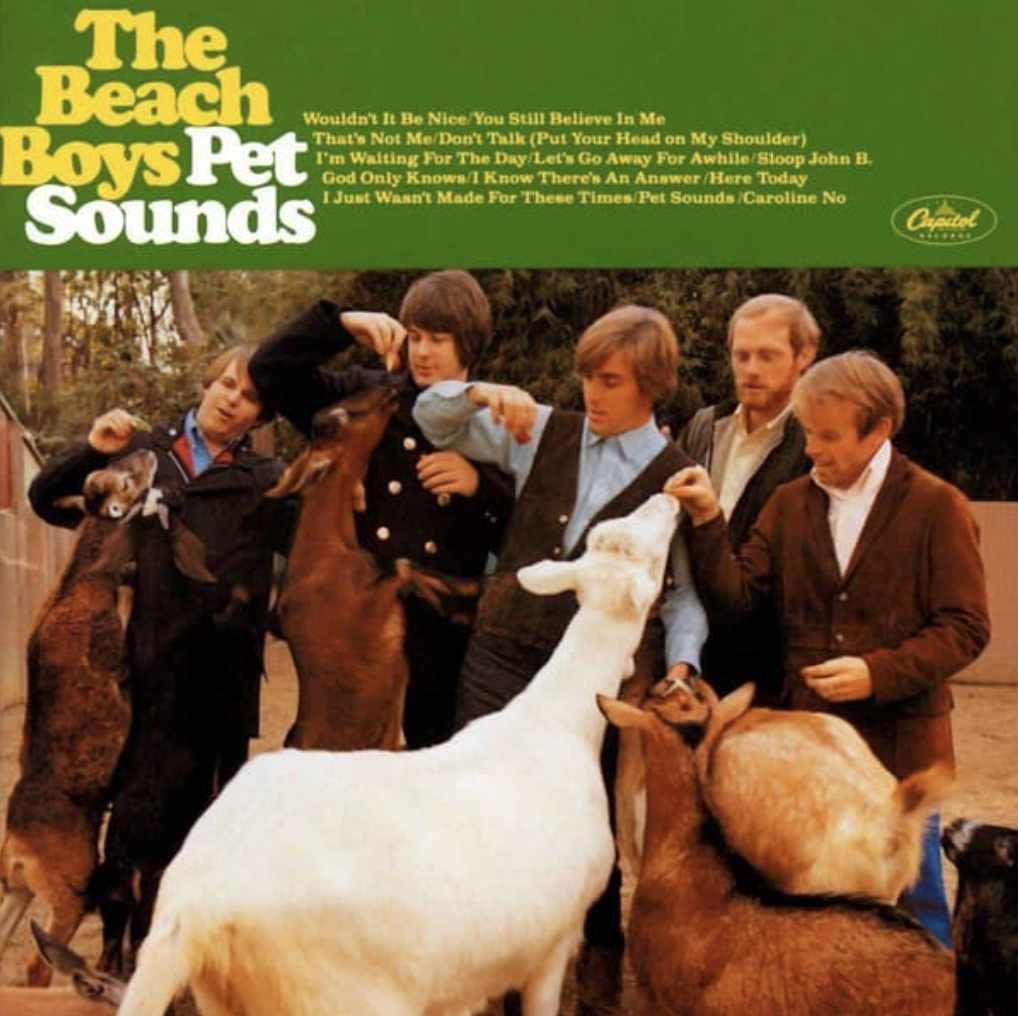
To coincide with the 60th anniversary of Pet Sounds (possibly one of the most complete and greatest albums in the rock/pop cannons), another chance (yet again, having already reprised it after the death of Brian Wilson) to read my review and purview of the 50th anniversary celebrations and tour that stopped off in Glasgow, back in 2016.
Brian Wilson presents Pet Sounds 50th Anniversary Celebrations
Friday 27th May 2016 at the Glasgow Royal Concert Hall
In a soft power, musical arms race with The Beatles, Brian Wilson more or less now mastering the known limits of the studio, was nudged towards ever more ambitious levels of creativity. As the old adage, music history folklore if you like, goes it was The Beatles Rubber Soul that finally did it for Brian. The retort to this foil would not only be The Beach Boys first masterpiece, but one of pop and rock music’s most enduring triumphs, Pet Sounds. No longer happy with the California high school, deuce coupe cruising, beach party spirit that had so far made the group world famous, cast even further adrift, introspective and all but retired from playing live with the his brothers and comrades, Brian was moving on from the fancy-free and footloose sound of the 45s that had always guaranteed a top ten place in the Billboard charts for something more…well, grown up. Voicing a growing anxiety – or the growing pains – of youth, Brian would compose the sound of young adulthood. As the world came to terms with the idea of the ‘teenager’, Brian began encompassing and articulating a new uneasy transition.
As much about the times as about the heartache and pains of being pure of heart, Pet Sounds marked a growing resentment towards the previous generation. At the beginning of a revolutionary change in attitudes, but a year before the ‘free love’ hippie idealism that brought in the psychedelic epoch, these former golden tanned beachcombers were breaking from their parent’s traditions and rules to set their own course: a life mapped out, from education to career and marriage. But at the very heart of all Brian’s work, even today, was a sense of innocence. An innocence lost as the lovesick but married Brian now in his mid-twenties, was coming to terms with the anxieties of that adulthood, and his growing mental anguish. Undiagnosed for years, left at the mercy of countless well-wishers and confidence tricksters, quacks and pseudo-therapists, Brian’s meticulous obsessive production of Pet Sounds and its subsequent, but not satisfactorily finished until 40 years later, magnum opus SMiLE, tipped him over the edge.
Pet Sounds would also mark a shift in lyricism, with Brian collaborating with his friend the lyricist and copywriter Tony Asher. A task of reification, Asher would take the often abstract and difficult expressions that roamed around inside the troubled mind and put them into song. Not exactly the most unified of atmospheres, Cousin Mike Love a constant daddy-o stuck-in-the-mud character, ready to pour a cold bucket of egotistic sick over anything that he felt would compromise or trouble the calm waters of The Beach Boys, so far, winning formula. To be fair, Love would be right to question this new shift towards melancholic, almost philosophical anguish. Asher at that time was but a burgeoning talent with little to back up his credibility as a top pop songwriter. Replacing previous writers and solid contributors with an unproven lyricist would however prove to be genius decision. But the success of the album was slow. Its renaissance and rebirth as one of the greatest albums of the twentieth century was down to the audiences overseas. The change in direction had unsettled the market, as America baulked at this sadder, more cerebral tone. Yet, the UK loved it, buying it in droves and sending it to the number 2 spot in the charts – compare that with its 106 placing in the Billboard. Pet Sounds could have been a disaster, but it was saved, becoming a cult, an iconic masterpiece. And though it would take a while to pick up the desirable sales, its legacy grew and grew years after its original release.
Arriving almost in tandem The Beatles Revolver was released just a couple of months later. Brian’s answer: SMiLE. If Pet Sounds had not only threatened but also sent Brian into a funk, then this grand American musical tour through the ages, from Plymouth Rock to the shores of the Spanish Peninsula, would all but consume and nearly destroy him. So ambitious was the vision that despite the near godlike genius of his assiduous sessions ensemble The Wrecking Crew, the social, political and historically woven rich tapestry lyrics of new songwriting partner Van Dyke Parks, and his own production prowess, the project stalled. Numerous mixes, snippets, vignettes and even completed songs made it onto various albums and compilations over the decades, including the enervated and rushed out – to appease and bring in some much-needed revenue – Smiley Smile. It would take decades for SMiLE to be eventually completed, albeit (sadly and for obvious reasons) without his brothers Dennis and Carl’s near ethereal soulful compassionate voices, and missing any input from Mike Love – now more or less carving the Beach Boys brand up, sporting it like a trophy as he has carte blanche and ownership of the name when touring with his own cabaret version of the group’s back catalogue. Brian did however manage, after spending the longest amount of time and money in recording history on a single, to release the perfectly epic pop rhapsody ‘Good Vibrations’.
Documented, quite favourably and sympathetically, by the Love & Mercy movie, Brian’s wilderness years lasted throughout the 80s and into the 90s, before the most accomplished of L.A. bands and Beach Boy fans The Wondermints helped lure Brian back on the road, performing a Pet Sounds extravaganza in 2000. Just four years later the band would join Brian in the studio to finish that nigh mystical, greatest album there never was, SMiLE, before taking it out on the road. Following in 2011 the eventual hidden away, locked in some fabled vaults, SMiLE Sessions of original material was finally released to the public.
A near renaissance, a scarred and troubled but blooming Brian Wilson is back once again on the road. This time he celebrates the 50th anniversary of Pet Sounds, arriving in my new hometown of Glasgow on a nationwide tour. Billed as an ‘anniversary celebration’ – the final performance of the iconic album in its entirety – tonight’s performance is a generous one. Split into two performances of greatest hits and Pet Sounds, with an encore of good time classics, Brian was backed by members of the Wondermints and flanked by special guests, Al Jardine and honouree Beach Boy Blondie Chaplin: a set up that has been repeated on many occasions.
As a steady presence for the vulnerable Brian, Al was on hand to soften the odd tremors of quivered uncertainty. But who was on hand to back up Al? Well as it happens his son Matt Jardine, proving himself the most apt of Beach Boy scions, was there to to aid his old man and Brian with the most adroit and sweetest of falsetto voices. A counterpoint to the now – and for good reason – limited vocal range of Brian, Matt took on the high notes with aplomb and even performed lead on one of the evenings early highlights, ‘Don’t Worry Baby’. He would play the role of a younger Brian during the entirety of the Pet Sounds album suite, almost seamlessly, taking on each alternating verse. However, and it seems almost too disingenuous to point out, there were a few wobbles and miscues throughout that just couldn’t be patched over. Yet we all willed Brian on, and when he took lead on the most diaphanous of love declarations, ‘God Only Knows’, the entire audience stood to their feet in adulated applause – the first of many rapturous ovations that night.
Directed and conducted by Paul ‘Von’ Mertens the entire ensemble began the evening with the heavenly choral warm-up ‘Our Prayer’; featured on 20/20 but originally the lead-in to the album version of SMiLE’s grand trans-American tour ‘Heroes And Villains’, which followed. We were then treated to a litany of favourites from the bobby sox high school daze back catalogue of hits, including a swinging, swayed medley of ‘California Girls’, ‘I Get Around’ and ‘Little Deuce Coupe’. Handing over the spotlight, Al performed centre stage with renditions of ‘Wake The World’, ‘Add Some Music To Your Day’ and ‘Cotton Fields’ – all songs plucked from the Brian breakdown period, when the rest of the Band were prompted to take over the creative reins. As lithe and energetic as ever, former Flame and Beach Boy band member (on tour and in the studio during the early 70s) Blondie Chaplin sprouted onto the stage to add some light-hearted theatrics and rock’n’roll vigour. The much-accomplished Durban guitar maestro, looking more and more like a cross between Jagger and Richards (all that time he spent touring with the Stones in the late 90s has worn off on him), launched into a strutting version of ‘Wild Honey’. Expanded from its soulful howled original setting, Chaplin went into bohemian guitar solo overdrive; showboating across the front of the stage and playing to the audience, who lapped it up. From The Beach Boys’ troubled but most brilliant 1973 album Holland, Chaplin picked up the ocean current waltz ‘Sail On Sailor’. The original vocalist on that recording, he returns to it with carefree élan, adding a wild guitar solo to the end, which sends Brian off into the wings in playful mock exasperation.
Back out for act two, the band minus Chaplin for now, begin the reverent Pet Sounds album. Largely enduring because it encapsulated a particular age and time in Brian’s genius, but mostly for capturing the love tribulations and torments of young adulthood in the most perfect pop songs, the album still chimes deeply with audiences fifty years later. Intricate and multi-layered but never ever laboured or strained – witness the Bond-esque Tropicana lounge instrumental suite title track -, each purposely-poised ballad, paean and tryst says all it needs to in less than two minutes. The rousing ‘Wouldn’t It Be Nice’, shared vocally by the Jardines and Brian, opens proceedings of course, followed by a gentler, more serene ‘You Still Believe In Me’. Highlights from the album set included an Al led version of the sea shanty in the manner of a doo wop Ivy League bruiser, with a reference to a particular paranoia plunged bad acid trip thrown in, ‘Sloop John B’, and flipping over the B-side, a poignant and encouraged Brian led ‘Caroline, No’.
The encore promised a “fun, fun, fun” package of hits. But first the band introductions, each band member receiving a musical signature tune as they came back out onto the stage after the interval. It was then straight into a full cast version of ‘Good Vibrations’, including the gesticulating tambourine wielding Chaplin who turned his percussive role into an art form. Rewinding back through the songbook, we were treated to the sing-along classics ‘Help Me Rhonda’, ‘Barbara Ann’, ‘Surfin USA’ and ‘Fun Fun Fun’. By now the audience were up and out of their seats, dancing where they could in the face of the po-faced security and attendants. From our balcony seats looking down on the main auditorium we witnessed hundreds swaying and weaving in almost perfect timing: the atmosphere couldn’t have been better. On a poignant, perhaps paused note Brian finished the evening with a version of the song that spawned the title of the recent movie, Love & Mercy. Written in more recent times, a reminder of the anxieties and anguish that once crippled Brian, the song’s central tenet is a perfect theme to finish on: a great sentiment for the audience to carry with them as they head home into the night. A joy to witness, the Pet Sounds legacy is in safe hands, especially here in Glasgow; a city twinned with Big Sur for one night only. Simply magical.
Here’s the message bit we hate, but crucially need:
If you’ve enjoyed this selection, the writing, or been led down a rabbit hole into new musical terrains of aural pleasure, and if you able, then you can now show your appreciation by keeping the Monolith Cocktail afloat through the Ko-Fi donation site.
Halloween 2025: The Hell’s Bells Playlist
October 27, 2025
Fiendish sounds and fever dreams, the devil’s music selection this year is, as ever, a twisted tale of soundtracks, freakish and macabre passages, harrowed indie, horrorcore rap, the theatrical, esoteric post-punk and rock ‘n’ roll jukebox mischief. The selection this year devilishly devised by Dominic Valvona.
Pulp ‘The Mark of the Devil’
My Solid Ground ‘The Executioner’
The Wytches ‘Coffin Nails’
The Awkward Silences ‘Haunted by my own ghost’
Byron Lee & The Dragonaires ‘Frankenstein’
Naked City ‘Graveyard Shift (Live in Quebec 1988)’
itsokaylove & Black Wick ‘The Grim Denial’
Casper Ghostly & Uncommon Nasa ‘Floor Thirteen’
Lords Of The Underground ‘Psycho’
Fatboi Sharif, Driveby & Lungs ‘Basquiat Painted Transylvania’
itchy-O ‘Entangled|Unbinding – JG Thirlwell Remix’
The Northern Lighthouse Board ‘Ancient Sorceries’
Ruth White ‘The Litanies of Satan’
Nick Kuepfer ‘Vampyro’
Thomas Truax ‘The Cannibals Have Captured Our Nicole Kidman (Sebastian Reynolds Remix)’
The Eurosuite ‘Reflection Monster’
Kitchen Cynics ‘Phosphorus Tenement’
Lalo Schifrin ‘A Pact with Satan’
Pere Ubu ‘Satan’s Hamster’
Sonic Youth ‘Satan Is Boring’
30 Door Key ‘Cavern Of The Seasons Gone By’
Tetsuo ii ‘The Howling’
The Pretty Things ‘Death’
Mint Tattoo ‘Mark Of The Beast’
Librarians With Hickeys ‘Ghoul You Want’
The Legless Crabs ‘Sleep Sweet Satan’
Candice Gordon ‘Cannibal Love’
So Beast ‘Beastride’
Society of the Silver Cross ‘Mourning the Night’
A smattering of previous Halloween playlists and posts:
From 2012: Selection of Youtube videos and tunes.
THE MONTHLY DIGEST INCLUDES A CLUTCH OF ACCUMULATED NEW MUSIC REVIEWS; THE SOCIAL INTER-GENERATIONAL/ECLECTIC AND ANNIVERSARY ALBUMS CELEBRATING PLAYLIST; AND CHOICE PIECES FROM THE ARCHIVES

(Cover Star Macie Stewart. Photo credit Shannon Marks)
_____/THE NEW____
Macie Stewart ‘When The Distance Is Blue’
(International Anthem) 21st March 2025
Perhaps one of the most prolific collaborators of recent years, across several mediums, the multi-instrumentalist, composer, songwriter and artist Macie Stewart has come to represent a flourishing, explorative contemporary music scene with multitudes of connections and threads. Apart from projects with choreographer Robyn Mineko, Sima Cunningham, and the Pacific Northwest Ballet, Stewart has become a stalwart of the International Anthem family, contributing and helping steering releases by Rob Mazurek – who literally appears below this review with his foil Alberto Novelle -, Bex Birch, Damon Locks, Makaya McCraven and Alabaster DePlume.
Another foil, featuring in the intimate ensemble that plays on this Stewart’s first solo album for the imprint – the actual debut solo LP, Mouth Full Of Glass came out a few years back on another label -, is Lia Khol, a cellist and sound artist who already collaborates with Stewart in a duo. There’s also the addition of both the equally versatile artist Whitney Johnson (credits include the Verma band and the avant-pop lo-fi Matchess alias) on viola, and Zach Moore on double-bass. This is where those inter-connections must end, as I could just carry on regaling all the various entries from the bio and dedicate this review piece to one of the most enviable of CVs in the music scene. But we must not get distracted, and instead now look at the album.
When The Distance Is Blue could be read as…well, perhaps blue in mood. But this is an album that slips poetically in and out of consciousness, inhabiting, ruminating over and in some cases writing the aural equivalent of a love letter to the spaces in-between the tangible and the environment, with background passages of field recorded interactions taken from public places. For instance, the famous Tsukjii district of Tokyo, near to the Sumida River (reclaimed originally from lowland marshes) is referenced as the title for an atmospheric piece of recorded street side, market interactions. It carries on over and bridges the reverberating, sifted, swept and delicately plucked and vibrated opening suite ‘I Forgot How To Remember My Dreams’ and the near atavistic recalled, apparitional haunted voiced ‘Murmuration/Memorization’. The former of which features Khol’s clean cello and Stewart’s meticulously struck piano notes in a near forlorn but beautifully evocative mood. It reminded me of both Cage and Reich, of the Japanese school of contemporary classical music, and even a little of Sebastian Reynolds work with cellist Anne Muller. The latter, which is named, in part, after the stunning synchronised patterns of large groups of starlings as they come together in flight, seems to dial into something old or timeless; an elliptical dance of Tony Conrad like bows, Hellenic-like spirit voices rising and falling like their avian subjects, and the neoclassical.
The album title, and the underlying theme, is inspired, imbued by the American writer and activist Rebecca Solnit’s A Field Guide to Getting Lost book. I’ve unfortunately not read it, but the L.A. Times summarised the nine essay pieces that make up this work as: “An intriguing amalgam of personal memoir, philosophical speculation, natural lore, cultural history, and art criticism.” Elsewhere it’s been described as a wondering and lurching zigzag through history, politics and art, with the author described as a “Intellectual nomad” by The Guardian’s Josh Lacey when he reviewed it. But all can agree about the book’s themes of change and transformation. Of which Stewart taps into, recording the almost unnoticed; an essence of a particular time and place; a captured seasonal moment of rumination and episodes that left their mark. Across this a near perfect length album, a complete journey is sounded out through both attentive and deeply felt strings, piano, percussion, wordless voices and double bass. It’s a liminal sound that evokes Sakamoto, Cale, Alison Cotton and a sense of the Oriental slow movement, as it moves beautifully and moodily between pizzicato plucks, the cascaded, watered, resonated and bowed. I’ll say it again, as perfect a vision as you can get, everything about When The Distance Is Blue is just so right; every feeling, note, sensibility carefully pitched in a dreamy and ached, subtle and often mysteriously intriguing way.
Alberto Novelle & Rob Mazurek ‘Sun Eaters’
(Hive Mind Records) 28th March 2025
A moment in time; an afternoon’s encounter. The symbiotic alignment and then transformation of the improvised and layered, sonic and sound art foils Alberto Novelle and Rob Mazurek transduce timbral elements and textures into an amorphous act of existence on their collaborative release for the discerning internationalist label Hive Mind Records.
Created in a day, extemporised to a point, the Sun Eaters album, despite its rhythms, is a serialism of encounters and reactions to recognisable lines, soundings, echoes, flutters, melodic addresses, nature trial organic serenades, shakes, tingles, jangles and bleats from Mazurek’s trumpet, flute and percussion of bells. His partner on this exploration transforms these instruments into hallucinatory and playful electronic, modular and oscillated new atmospheres and ambiguous soundscapes that simultaneously evoke Jon Hassell’s Fourth World inventions, the collaborative work of Ale Hop and Laura Robles, the Aphex Twin, Carmen Jaci and King Champion Sounds.
When you address both participants extensive and envious CVs, you can only assume that together they will make something very experimental and unique, but not so academic and avant-garde as to create something dry, theoretical and impenetrable. Before we can any further, just a brief summary of the experience brought to the Dobialab studio that day in Northeastern Italy. I was only the other month referencing Mazurek in relation to Damon Locks and his List Of Demands LP. The cornetist and interdisciplinary innovator featured Locks in his Exploding Star Orchestra lineup, just one of the numerous groups the countercultural Chicago figure and influencer had instigated over the decades; most notably Isotope 217, the varied Chicago Underground ensembles, and one of my favourites, the Sau Paulo Underground offshoot. I could list umpteen other incredible collaborations (his work with Jeff Parker to name just one), and run-off a long list of influential labels that have carried his work (my friends at International Anthem for one) over the years, but you can get this all off the various bios circulating on the internet. His foil, Novello, often “repurposes found or decontextualised analogue devices to investigate the connections between light and sound in the form of contemplative installations and performances” under the JesterN guise – I borrowed that from his Bandcamp page by the way, hence the italics. He’s assisted such notable talent as Alvin Lucier, David Behman, Nicholas Collins and Trevor Wishart, and improvised with such luminaries as Evan Parker, Butch Morris and Karl Berger.
Combining these experiences, echoes of Don Cherry, Peter Evans and Miles casting shadows across an arid Latin sounded landscape are sampled and looped, turned into a language of abstract data, mechanics, transmissions, signals and pitch registers. There’s a buoyancy swimming below the synthesized beds that indicates a certain rhythm and movement. And yet at times the pair seem to be floating in the cosmos or lost in an illusion as they pull the AEoC through the mirror backwards and shake and rustle the cow bells of a herd heading for Tibetan shrines. Those bells by the way also ring out like tubular long pipes or like a sleigh ride into spiritual transcended. But I can’t help feeling there’s a lot of fun at play too on these peregrinations, especially on the Mexican wrestler referenced snake-rattled and mirage-esque ‘Luchadores Sudden Embrace’.
Taking a completely different direction, the fungi studied inspired finale, ‘A New Mycological Framework of Narrative’, is the sound of Richard H. Kirk’s wordless mewling and mantras, a touch of Kriedler and even Kraftwerk, and Finnis Africae being fed into a strange soundboard and apparatus of conductors.
A different kind of creation, this six-track reconfiguration seems to just be. Neither non-musical nor musical; neither avant-garde nor defined; the results are beyond simplified categorisation. Mood pieces? Sensory exploration? Textual exercises in ambiguity? Abstracted visions conjured out of an apparatus and range of acoustic instruments? All viable descriptions perhaps for an amorphous collaboration. Followers of both artists will be happy with the outcome.
El León Pardo ‘Viaje Sideral’
(AYA Records) 21st March 2025
A “sideral”, or celestial bodies related, “voyage”, the new inviting album from the Colombian brass, wind and multi-instrumental encompassing artist El León Pardo is imbued by pre-colonial Colombian magic and contemporary musical hybrids that fuse cumbia with the Afro-Caribbean and cosmic.
Noted for spreading the word and virtuosity of his chosen instruments and culture to the world through his work with Ondatrópica, Curupira and Frente Cumbiero, Pardo is imbued by the sound and symbolism of the “Kuisi” end-blown flute, and Sierra Nevada de Santa Marta mountain range in which its whistly trill echoed; the loose Colombian originated infectious rhythm of cumbia, which in more recent times has switched the European influence of accordion for electric guitar, but has been restyled and modernised throughout time to include the trends the day; and the ancient Pre-Colombian Zenu people of the Sinú River Valley and their atavistic flute.
Channelling all this to conjure up a dream realism peregrination, dance and wonderment, Pardo invites a number of Colombian foils to join him on a sometimes-surreal corridor to the stars. Taking up the offer is fellow eclectic polymath Edson Velandia, emcee N. Hardem of LNI and Soul Am Beats fame, and “nueva (“new”) cumbia” motivators Frente Cumbiero, who’s main instigator Mario Galeano is also a member of both the already mentioned Ondatrópicaand Los Pirañas groups. This trio’s contributions further expand the scope of influences and ideas, heading down into the lively Bogota barrios, or snake rattling and sauntering into a spellbinding oblivion of magic eye Colombia and the cosmos.
As the tile translates, there’s a relationship between the stars, the celestial spheres, playing out on Viaje Sideral. A both playful and deep immersion of universal mirages and dream states that simultaneously sound Andean and yet futuristic and cosmological, the album’s nine tracks use tradition and modern tech to build up an alternative reality. Analogue synths echo and modulate those space sounds: a representation of beamed astral planes and spectral rays, and travellers from other worlds landing in the mountain valleys of Colombia.
Whilst traditional instruments, the chuffed, short and longer, more drifting and circular convulsed flutes and pipes, both brassy and Latin trumpet, reference imaginative invocations of his homeland. Factor in some of that Afro-Caribbean influence and a touch of Mad Professor dub effects to this playful, inviting, danceable, percussive infectious, pop-y, soulful (there’s even some electric guitar parts that I would swear were Rhythm & Blues flavoured) and mystical, and you have a dreamt landscape brought to vivid, rhythmic life. El León Pardo isn’t however just about the magic, but by using the instruments he does, bonds with and sticks up for those pre-Colonial indigenous roots as a form of activism and conservation, education. This is nothing short of a great imaginative Colombian trip, equally at home under a menagerie canopy of exotic conjuring as it is in space.
Puce Moment ‘Sans Soleil’
(Parenthèses Records) 21st March 2025
Tuning in via the kosmische, new age, trance and ambient imbued modular electronic laboratory to the courtly and Imperial Gagaku tradition, the Puce Moment reconfigure purposeful Japanese ceremony, dance and music to conjure up an otherworldly, haunting and mystical soundscape under a “sunless” sky – if you directly translate that album title of “Sans Soleil”.
Travelling to the notable Japanese city of Tenri (the old capital of Japan, for a very brief period during the late 5th century rule of Emperor Ninken) in 2020 to record and work with the local Gagaku Music Society, the French duo of Nicolas Devos and Pénélope Michel recontextualised an old but continuous form originally performed for the elite. They expanded this exploration turn transformation further with the addition of the São Paulo born choreographer and dancer Vania Vanneau: furthering the soundscape project into dance, visual movement and performance art.
For those unaware of this Japanese form, Gagaku’s roots can be traced back to the 6th century, perhaps earlier, when Japanese delegates were sent to China to learn about its culture. They are said to have brought back a fusion of both Chinese and Korean music, instruments and dances to the Imperial court; to be performed at banquets for the elite. But some historical sources suggest that it was through the spread of Buddhism, making its way across from China to Japan. And one of the main dances, the “Bugaku”, involves the wearing of intricate Buddhist costumes and masks.
Familiar sounds of this form include the famous barrel-shaped wooden “taiko” drum, the “Koto” 13-string zither, the “Biwa” short-necked lute and the “Shō” wind instrument – used for one of the six titles of this peregrination and mood musical work. All of which, I believe, can be heard both in their recognisable form and morphed and woven into a modulated, generated, filtered atmosphere of electronic apparatus drones, fizzes, oscillations and amorphous mysticism.
Hinting at rips in the fabric, a misty geography and periods of historical meaning and reference, Sans Soleil summons ghosts, voices from the ether and the four winds and wisps of Jon Hassell, Hiroshi Yoshimura, Popol Vuh, Tony Conrad’s work with Jennifer Walshe and Ash Ra to magic up a sound world that sits on the border of the alien and cosmic, landscape and pure atmosphere: The word used is liminal. This convergence of trance-y, lucid synthesised sounds and voices on the air merges dreamily and spookily with Japanese tradition, ceremony and choreography to create something more akin to an experience, an immersion and dance.
Alessandro Alessandroni ‘Paesaggio Bellico’
(Four Flies Records) 18th March 2025
Like much of mainland Europe scared, brutally traumatised and worn out by WWII, Italy and its battle-ravaged population pretty much became risk adverse to war. Although eventually changing sides back to the Allies, the ill-fated bedfellows of the Nazi Axis alliance were, apart from the diehards/racists/antisemites/psychopaths, were always ill at ease goosestepping to the tune of Hitler. In fact, no matter how history has been warped, the Italians put down and made the butt of so many jokes, the country had some of the largest numbers of partisans fighting against the Fascist regime – percentage wise in all of Europe, Italian partisans were far more likely to be killed and murdered by the Nazis than anyone else.
Italy favoured internal civil war over the international: a war of ideologies, corruption, state and philosophy that rages to this day. Terrorism and organised crime concentrated the mind. But no one in Italy could turn away from the events that followed in the wake of WWII: the Iron Curtain and Cold War to Korean, Vietnam and so on. And that brings us to the work of the stellar talented and connected iconic and cult Italian composer Alessandro Alessandroni, who scored an impressive range of war themed documentaries and films during a career that spanned a good half of the 20th century.
Born on the release date of this latest battle, war and psychological collection (18th March), Alessandroni came of age during the rise of fascism and the events that would lead to the Allies invasion of first Sicily then mainland Southern and Central Italy, the horrific bloody battle of Monte Cassino and the brutal air raid bombardments that destroyed so much of the country – an agreement between both sides thankfully saved Rome and several other important cultural cities.
During a period between 1969 and 1978, the maverick and highly influential composer and multi-instrumentalist recorded a catalogue of scores and atmospheric pieces, suites that dealt with not only the military aspects but the trauma of war and its effects upon those who both fought and faced its wrath. After the smut and titillation of the Music From Red Light Films 1976-1980 collection, the Italian label Four Flies unearths an impressive and quality selection of these tracks, previously left dormant in the vaults.
A peer, foil, mentor and friend to such luminaries as Ennio Morricone, the Rome born maestro and artist first made a name for himself with his Spaghetti Western twang-y Duane Eddy signature guitar and whistling scores for the highly influential film director Sergio Leone. But Alessandroni also founded the wordless octet vocal group I Cantori Moderni (“The Modern Choristers”), which featured his wife Giulia De Mutiis, and went on to form the brief prog-rock-psych group The Braen’s Machine with fellow Italian cult composer Piero Umiliani.
During the late 1970s he was scoring more and more mondo trash, erotica and garish S&M horror – see Lady Frankenstein and Killer Nun. And yet, the quality of his work is never in doubt; often elevating such tawdry, amateurish affairs to cultish status by the music alone. Although far from serious, it seems Alessandroni’s craft is likened to playing with an amusement park of ideas, sounds and instruments: entertaining but also captivating in equal measures. With an ear attuned to the contemporary fashions, but the classical and traditional too, a lot of musical ground is covered in his compositions: from Italian folkloric standards to disco, library music and the salacious.
In turn, this package (the vinyl copy features 15 tracks, whilst the digital is expanded to include 29) channels much of that legacy, but with far more seriousness, artistic depth, emotion and compassion. Most of those familiar with his work will instantly recognise the signatures and the palette; from the spine-tingling chills and fears of his Giallo-like scores to the arpeggios, the twang and pick of his Wild West evocations – namely on the couplet of cloud hanging “Pattugliamento Aereo” (“Air Patrol”) pieces; although the second “Aereo” matches that with vague Alice Coltrane harp-like plucks and a subtle prog-esque organ.
Where sentimentality and a touching relief is needed, tracks like ‘Lettere dal Fronte’ (“Letters from the Front”) air towards Bacharach and Morricone, and feature that recurring Baroque chamber sound of harpsichord or clavichord that gives each occasion a sense of spindled timelessness. ‘I Sopravvissuti’ (“The Survivors”) is a lovely touching sentimental piece that evokes both the balletic scores of Aram Khachaturian (sounds uncannily like his suite from Kubrick’s 2001: A Space Odyssey) and wartime period classical music. Talking of 2001, with the use of the I Cantori Moderni ensemble of wordless voices both appearing like apparitions and spirits of lost and dead souls, or like some removed version of ecclesial requiem choristers, there’s also a semblance of the stirring visionary ominous fears and otherworldliness of György Ligeti.
Quite rightly, the ‘Dachua’ suite should evoke an enormity of horror, but this score is more in the mode of supernatural horrors from the crypt than genocide shock. It sounds like some lost silent film theme of haywire Baroque piano: a combination of devilment and madness, with one hand delicately lacing the keys, and the other, hitting near off-key jarred and out-of-key notes. And whilst sounding the most terrible aspects of war, from execution to the shelled-out ruins of a psychologically destroyed mind, the music strikes up the military snare, playing it like a spraying machine gun, or, building up an unsettling drama of pain and anguish: all managed beautifully, even when dipping into Library music, the hallucinating, dreamy and psychedelic.
Military timpani and drills aplenty amongst the plaintive recall of the acts and dogs of war, this survey features supernatural forces, cold chills, suspense, loss, remembrance and hope.
The suites, atmospheric pieces, scores and signature found on this Paesaggio Bellico are all far too good to be left undisturbed, languishing in the vaults of cult obscurity. Fans, heads and even those with a cursory interest should investigate.
___/THE SOCIAL PLAYLIST VOLUME 95
The Social Playlist is an accumulation of music I love and want to share; tracks from my various DJ sets and residencies over the years; and both selected cuts from those artists, luminaries we’ve lost and those albums celebrating anniversaries each month.
Running for over a decade or more now, Volume 95 is the latest eclectic and generational spanning playlist come radio show from me – the perfect radio show in fact, devoid of chatter, interruptions and inane self-promotion.
Each month I mark the passing of those artists we’ve recently lost, and as this is the first opportunity to do so, I’ve included homages to the last “doll” David Johansen, the soul music’s Carol King, Roberta Flack, vibes innovator and jazz fusionist Roy Ayers and troubadour Bill Fay.
Anniversary albums wise there’s tracks from Herbie Hanock’s Maiden Voyage (celebrating its 60th anniversary this year), Bob Dylan’s Bringing It All Back Home (also unbelievably 60 years old), David Bowie’s Young Americans (50 this month; see my short analysis in the Archives section below), Parliament’s Chocolate City (also 50), Sonic Youth’s Bad Moon Rising (40 this month), Radiohead’s The Bends (30 years old this month), Gene’s Olympian (another 30th) and Edan’s Beauty And The Beat (where does the time go…seriously! How can this LP be 20 years old this month?!).
As usual, I like to throw in a smattering of cross-generational tracks and some more recent ones – those that missed out on the previous Monthly playlists of new music. In the latter camp, we have a resurfaced (so not strictly new) live version of Throbbing Gristle’s ‘Convincing People’ from Volksbühne, Berlin, recorded on New Year’s Eve in 2005; an imaginative reverberating study, peregrination from Dorothy Carlos; and some mirage grunge indie from Raisa K. In the former, a number of oldies from Krumbsnatcha, 21. Peron, Stanton Davis’ Ghetto/Mysticism, Gloria Jones, Flutronix, Berlin Brats, Pete Dello and more… Expect no substitutes. Expect no algorithmic replicants. Expect no AI bullshit. All playlists are compiled without any external influences, totally conceived by whatever I wish.
IN FULL:
New York Dolls ‘Private World’
Gloria Jones ‘Cry Baby’
Roy Ayers ‘Ain’t No Sunshine’
Roberta Flack ‘Compared to What’
Parliament ‘Ride On’
Edan ‘Promised Land’
Herbie Hancock ‘The Eye Of The Hurrican’
21. Peron ‘Bes’
Bill Fay ‘Dust Filled Room’
Radiohead ‘My Iron Lung’
David Johansen ‘Heart of Gold’
Berlin Brats ‘(I’m) Psychotic’
New York Dolls ‘Don’t Start Me Talking’
Sonic Youth w/ Lydia Lunch ‘Death Valley ‘69’
Throbbing Gristle ‘Convincing People Live’
Dorothy Carlos ‘Balm’
Raisa K ‘Affectionately’
Roberta Flack ‘Some Gospel According to Matthew’
David Bowie ‘Can You Hear Me’
Roy Ayers ‘Pretty Brown Skin’
Stanton Davis’ Ghetto/Mysticism ‘Space-A-Nova II’
Krumbsnatcha ‘Closer To God’
King Honey w/ Hezekiah, Gos and Chief Kamachi ‘Trinity’
Georges Bodossian ‘Punching Bull’
Flutronix ‘Crazy’
Meridionale des cayes ‘Zanmi femme’
Bob Dylan ‘Love Minus Zero’
Bram Tchaikovsky ‘Robber’
Gene ‘Olympian’
Pete Dello and Friends ‘Arise Sir Henry’
___/ARCHIVES
Each and every month, I use the digest as a good excuse to once more retrieve congruous and related posts from the archives. This month, to tie in with the 50th anniversary of David Bowie’s “plastic soul” period, a short piece on one of the soul crooning pale duke’s best album’s Young Americans – well, in my opinion top three.
And from this time, near enough, a decade ago, another chance to read my review of Glitterbeat Record’s Hanoi Masters: War Is A wound, Peace Is A Scar album, raw and therapeutic sessions recorded by Ian Brennan and released during March of 2015.
Disingenuous to a fault, the cracked actor’s ‘plastic soul’ conversion, raised more than a few pencilled-in eyebrows and frowns.
Totally free of his carrot-topped mullet crown, he now hotfooted across the Atlantic to Philly, intoxicated by the city of brotherly love’s sweet, lovelorn soul music.
A new face in town, the burgeoning ‘thin white duke’ employed a cast of ethereal backing singers (including an as yet famous Luther Vandross) and kindred musicians (notably Bowie’s new lead-guitarist foil, Carlos Alomar) on his cocaine-fuelled pursuit.
Calling in the favours, fellow alienated Brit in residence, John Lennon, helped write the cynical snide ‘Fame’ (he plays on the recording and adds harmonies too) and let Bowie cover his stirring cosmological trip, ‘Across The Universe’ – much maligned, but I really dig this version, and even play it regularly in my DJ sets.
Reflective, sophisticated, Bowie and his detractors may have labelled him with derogatory terms, yet there’s no denying it’s another successful musical adoption: truly up there with his best ever work; a complete showman chameleon transformation. Even one of his most infamous haranguers Lester Bangs couldn’t help but admire it: the only Bowie LP he ever gave him credit for.
Decreed as the leading highlight’s of the album by the majority –
Young Americans (single), Win, Fame (single)
Pay attention to these often overlooked beauties –
Somebody Up There Likes Me, Across The Universe
Various ‘Hanoi Masters: War Is A wound, Peace Is A Scar’ (Glitterbeat Records)
A side excursion, travelling due east to Asia and breathing in the evocative songs of Vietnam, Glitterbeat Records launch a new series of field recordings entitled Hidden Musics. Finding a congruous musical link with their usual fare of West African releases, the label sent Grammy-award winning producer Ian Brennan (credits include, Tinariwen, Malawi Mouse Boys, The Good Ones) to Vietnam in the summer of 2014 to record some of the most lamentable and haunting resonating war-scarred music.
Indelibly linked to what the indigenous population call ‘the American war’, the examples of both yearning and praise pay tribute to the fallen: delivered not in triumphant or propagandist bombast but in a gentle meditative manner, these survivors, forty years on from the end of the harrowing and catastrophic (the repercussion still reverberating in the psyche of the burned America and its allies) war still undergoing a healing process.
Tinged with an omnipresent lilting sadness these songs are imbued with battle scares (hence the albums sub-title War Is A wound, Peace Is A Scar), as the featured artisans and traditional music masters who had joined the cause, sometimes for the first time in years, allow` their voices to be heard once again. Brennan’s notes are littered with these various connections to the war: ‘…a thirteen year old whose job was to sing to the troops to boost morale and provide solace. Another was a former AK-47 issued village leader who had not sung in over forty years and proved to be the most dead-on vocally.’
‘Un-mediated’ and as raw as you’ll ever likely to hear these fragile, half-forgotten songs without being there yourself, played on the most obscure accompaniment of moon-shaped 2-stringed and zither instruments – including the strange K’ni, a plucked instrument clasped between the teeth, the local dialectic language spoken through the single string to produce a weird otherworldly vocoder like effect –, each documented performance is a lingering trace of an old world. Industrialisation and technology it seems has no respect for the past, increasingly infringing on even the most remote and relatively atavistic traditions in the mantra of “progress”, replacing those indigenous songs with the cultural imperialism of their south east Asian neighbours (Japan and South Korea) K-pop and karaoke genres. Here then, before they vanish forever, Vietnam’s victors speak; from the sweetly yearned Phạm Mộng Hải eulogy to departed souls For The Fallen to the dew dropping off the blossom love paean to her homeland, Nguyễn Thị Lân sung Road To Home, each purposeful – with the occasional clanging up tempo surprise – song is a revealing glimpse into loss, exile and resistance.
Considering the history and ill blood between cultures – though this has eroded as capitalism takes hold and the country opens up – it has in the past been difficult to investigate for the serene and attentive beauty of the Vietnam music scene, but this earnest and adroit study into a world seldom covered proves enlightening.
Hi, my name is Dominic Valvona and I’m the Founder of the music/culture blog monolithcocktail.com For the last ten years both me and the MC team have featured and supported music, musicians and labels we love across genres from around the world: ones that we think you’ll want to know about. No content on the site is paid for or sponsored, and we only feature artists we have genuine respect for /love or interest in. If you enjoy our reviews (and we often write long, thoughtful ones), found a new artist you admire or if we have featured you or artists you represent and would like to say thanks or show support, than you can now buy us a coffee at https://ko-fi.com/monolithcocktail
The Monolith Cocktail Social Playlist #73: Stella Chiweshe, Digable Planets, Milk TV, Sonic Youth, Bob Dylan, Dori Sorride…
February 13, 2023
Anniversary Albums And Deaths Marked Alongside An Eclectic Mix Of Cross-Generational Music, Newish Tunes And Surprises.
To reiterate last month’s message, just give me two hours of your precious time to expose you to some of the most magical, incredible, eclectic and freakish music that’s somehow been missed, or not even picked up on the radar. For the Social is my uninterrupted radio show flow of carefully curated music; marking anniversary albums and, sadly, deaths, but also sharing my own favourite discoveries over the decades and a number of new(ish) tracks missed or left out of the blog’s Monthly playlists.
Anniversary picks this month include tracks from 50th anniversary celebrating LPs from Dr. John (In The Right Place), Alice Cooper (Billion Dollar Babies) and The Stooges (Raw Power); 40th’s from the likes of Echo And The Bunnymen (Porcupine) and Sonic Youth (Confusion Is Sex); hip-hop heavy 30th’s from the Souls Of Mischief (93 ’till Infinity), Digable Planets (Reachin‘) and Brand Nubian (In God We Trust), plus more indie, just on the cusp of Britpop fair from Radiohead (Pablo Honey) and The Auteurs (New Wave).
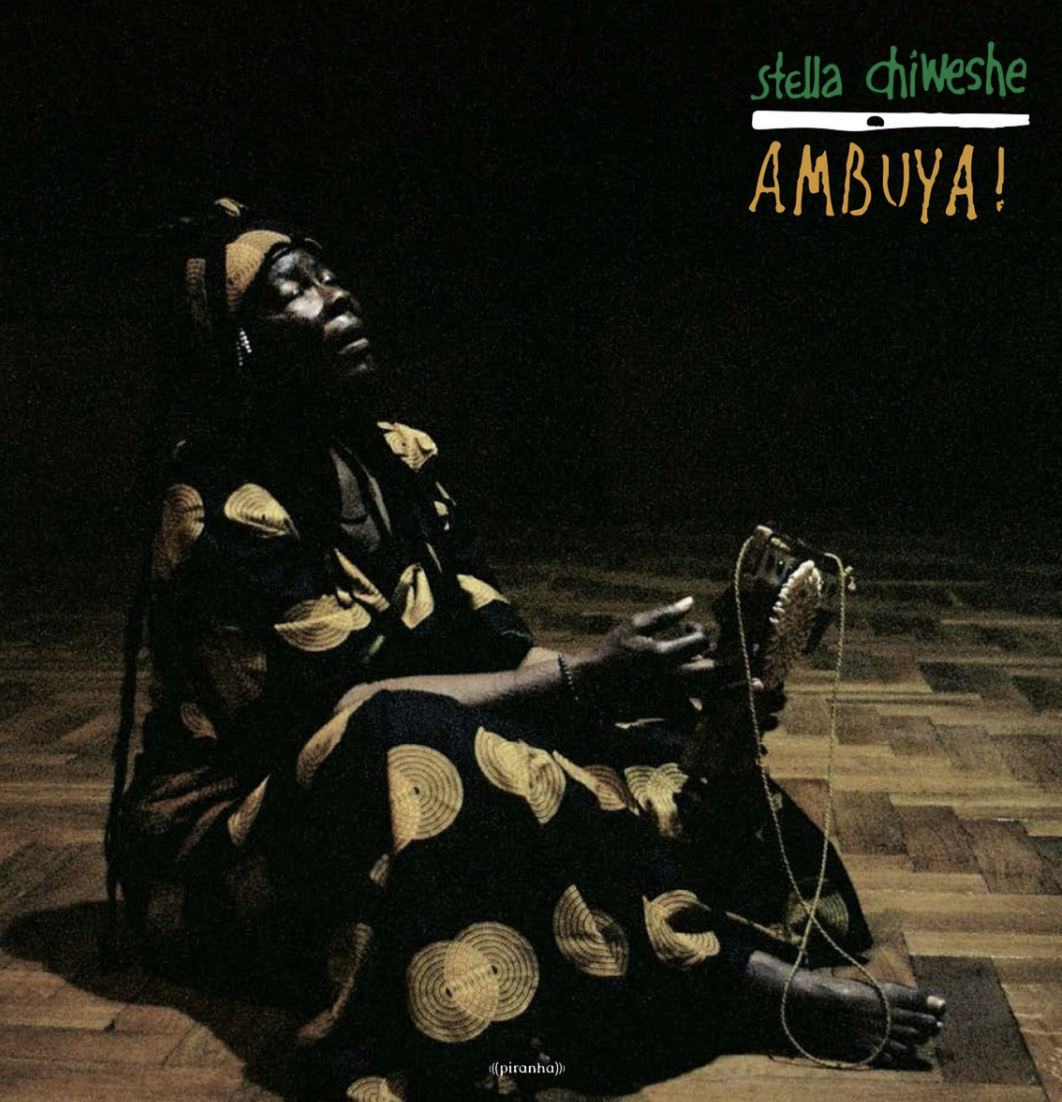
Marking those who’ve passed on in the last four weeks, where do you begin to start with such titans as Burt Bacharach, his genius, melody writ large into the very fabric of our culture, our cinema and musical cannon. Well, you just pick a favourite, and so I’ve gone for that Walkers Brother classic ‘Make It Easy On Yourself’. Similarly how do you represent the extensive, long career of the Zimbabwean songstress and ‘Queen of Mbira’ Stella Chiweshe with just one choice track. Again, just pick what you love and so here’s the opening buoyant lilt from her more recent Ambuya! album, ‘Chachimurenga’. It has been a terrible month for notable deaths, and so we also have tracks from Tom Verlaine and Yukihiro Takahashi too; the former, from the iconic doyen of alternative rock, new wave, punk’s 1979 eponymous solo, and the latter, taken from the former Yellow Magic Orchestra instigators’s 1981 solo album, Neuromatic – out new romantic(ing) the new romantics, and out Japan(ing) Sylvain’s Japan.
In the new(ish) category I’ve chosen a smattering of delights from Neuro….No Neuro, Karen Vogt & Simon McCorry, Marlene Riberio and Milk TV. That just leaves a curated selection of discoveries and music from my collection from across time and genres, and those older releases that have just been uploaded to Spotify in recent weeks, with songs and music from Jessie Mae Hemphill, Seventies Tuberide, Phil Mufu, A. R. & The Machines, Leo Sayer, Laurence Vanay, Chip Wickham, Ramon Farran & Lucia Graves and many more.
::That Tracklist In Full::
Stella Chiweshe ‘Chachimurenga’
A.R. & The Machines ‘Echo Boogie – Live At Elbphilharmonie Hamburg’
Dr. John ‘I Been Hoodood’
Digable Planets ‘Nickel Bags’
Madison Washington ‘((((Facts)))))’
Souls Of Mischief ‘Never No More’
Brand Nubian ‘Punks Jump Up To Get Beat Down’
Jessie Mae Hemphill ‘Tell Me You Love Me’
Some Cash Players ‘Cold 40s’
Seventies Tuberide ‘Eyes Closed’
Milk TV ‘Bowery’s Swing’
Tom Verlaine ‘Red Leaves’
Sonic Youth ‘Confusion Is Next’
Radiohead ‘I Can’t’
The Auteurs ‘How Could I Be Wrong’
Blue House ‘Accelerate’
Yukihiro Takahashi ‘Drip Dry Eyes’
Phil Mfu ‘Electronic Jam Number 7’
Joel Vandroogenbroeck ‘Rocks’
Neuro…No Neuro ‘Blunt Affect’
Karen Vogt & Simon McCorry ‘The Path Divides’
Marlene Riberio ‘You Do It’
Holly Henderson ‘The Planes’
Bob Dylan ”Till I Fell In Love With You’
Leo Sayer ‘Only A Northern Song’
Laurence Vanay ‘Voyage Les Yeux Fermes’
VRITRA ‘Safe Passage’
Burt Bacharach ‘Make It Easy On Yourself’
Dori Sorride ‘Persone Fragili’
Chip Wickham ‘Lower East Side’
Alice Cooper ‘Unfinished Sweet’
The Stooges ‘Shake Appeal’
Echo & The Bunnymen ‘Back Of Love’
Ramon Farran & Robert Graves ‘Under The Olives’
Nyokabi Kariuki ‘Ngurumo, Or Feeding Goats Mangoes’
Dougie Stu ‘Silhouettes’

