Perusal #78: Irmin Schmidt, Whitney Johnson, Lia Kohl & Macie Stewart, Golden Samphire Band…
April 13, 2026
A world of sonic/musical discoveries reviewed by Dominic Valvona. All entries in alphabetical order.
.at/on ‘ANTI-RAVE’
(Adventurous Music) Released 5th March 2026
The first of two experimental sonic releases from the Adventurous Music platform this month (see Lauré Lussier’s symphonic album featured further down the page), the mysteriously coded artist behind the .at/on guise has chosen to limit themselves, apparatus wise, with their newest release.
Building a sci-fi, alien sound world out of modified and abstracted component parts, steel works machinery, accelerated oscillations and bounced sheet metal Techno beats, .at/onmanages to create a whole universe out of the anti-rave named noise box/drum machine of the title. This free patching, fully modular synth in a compact form piece of kit is then sampled, re-sampled and processed until the desired effect is made: a sort of space-bound drifted vision of Bernard Szajner and Basic Channel.
The title by the way, and emphasised in the available scant info, in no reflects any political or musical stance on rave music; merely, as I’ve shared already, the name of the box of tricks used to produce this factory of the galvanized, the sometimes unsettling, and the magnetic.
From such minimal equipment a sonic universe is created, which often veers into stripped-down techno and even d ‘n’ b. From a prolific label and hub, another intriguing and cool experiment in the basics of electronic sound crafting.
Golden Samphire Band ‘Dream Is the Driver’
(Wayside & Woodland Recordings) 17th April 2026
For many years the brothers Hanscomb (that’s Mik and Rich) of Junkboy fame have idealised a triangular spread of counties, from Essex down to both East and West Sussex through their signature trade of harmonic poetic and descriptive lyrical forms of instrumentation. This soundtrack is embedded within a magical zen-like quality and an appreciation of English psych-rock, folk and the more exotic allure of Tropicália. The brother’s main creative vehicle has been augmented by the odd vocalised appreciation or encapsulation of these Southern English surroundings; that’s the pier dotted coastline of Brighton and its porous neighbours, the chalk figure decorated hillsides and valleys left behind by the Victorians and our more atavistic neolithic ancestors, and the mythologized woods and forests.
As an idyllic portal, or a form of escapism from the sorry state of the world, the mundane and divisive noise, the brothers weave more from that musical timeless palette with a new project. The Golden Samphire Band ordained trio ropes in former Junkboy foil Hannah Lewis, who’s soaring vocal range of folk-like arias and romanticized pleadings, and longed highs was last heard on the rightly applauded and well-received Littoral States album, back in 2023. Lewis’s range is allowed to a free reign and to wander on the trio’s debut songbook, with the ethereal, the pastoral, the near reverent (amplified by the undulations and foundations of stained class anointed organ and near venerated harmonies) and the sentimental.
Reflecting the wild coastal flower of the title, precariously clinging in full tufted bloom and beauty attached to sea cliffs or springing forth from salty marshes, the band wax both lyrical and in a sometimes more sombre mood about their various interactions with the landscape; from the sun-blessed pursuit of gardening to embracing the Japanese mindfulness art of Shinrin-yoka (in essence and translated into our own vocabulary as “forest bathing”; to take in the atmosphere as it were on a spiritual level). But the niggles and pains of the long commute, forced to live miles away from the job and places you grew up in because of affordability in one of the UK’s most expensive stripes of coastline, are drawn upon too; a disarming descriptive and beautifully conveyed point is made about this on the willowed and fluted, almost 90s-female-led indie hinted and Latin-soul lilted ‘(We Wunt) Travel Further’. Less a celebration of the age of steam and the electrified railways of an idealised England, and more a discontented poetic discourse on the commuter’s woes, plagued by a never-ending cycle of cancellations, engineering works and increased ticket prices. With more than a recurring use of shakers and such, the rhythm of the train is itself integral to the journey being made back and forth across the scenic borders. But if you want something truly sombre and inevitable, the album’s sympathetically and disarmingly handled eulogy to growing old and spending your last days in the care home system, ‘Bid Farewell’, brings a certain dignity, resplendent with some light strings and a Spanish flourish, to the crisis in caring for the elderly.
Elsewhere, aside from echoes of Hampshire & Foat, Tudor Lodge, Fortherringay, Pentangle, Judy Collins, Shelagh McDonald and Jerry Yester, songs like the opener ‘Chalk Space’, evoke eighties Athens, Georgia meets the pastoral backdrop of English folk-rock and Baroque-psych – imagine Peter Buck’s mandolin spells of Green, but also his hints of his jangle on earlier R.E.M. LPs from the mid 80s. There’s also a loose sense of early 90s-indie, and just a passing fancy of folk-inspired SFA to be detected.
But what really makes the album, lifts it, is Lewis’s rising scales, personification of each subject and ability to modulate her incredible range over the versants, the lines of woodland trees, the coastal pathways and lapping waves.
A truly dreamy combination that makes for a finely woven and articulated tapestry of South Coast mirages, soulful ruminations, self-help and natural bathing, the Golden Samphire Band excels on a debut stepped in topographical allurement, magic and sensibility. In my book, a resounding collaborative success story.
Whitney Johnson, Lia Kohl & Macie Stewart ‘Body Sound’
(International Anthem) Released 20th March 2026
A promising collaborative trio of experienced and multifaceted explorative players, pulled together under the International Anthem label banner, the potential of a Whitney Johnson, Lia Kohl and Macie Stewart project is always going to be one worth investigating and savouring. Between them more or less covering every nuance and expansion of the experimental and the avant-garde neo-classical scenes, the electro-acoustic and beyond, all three inspired players, composers and, in some cases, teachers pull together their talents and resources for a debut project.
But first, a run through of each participant’s CV.
Perhaps one of the most prolific collaborators of recent years, across several mediums, the multi-instrumentalist, composer, songwriter and artist Macie Stewart has come to represent a flourishing, explorative contemporary music scene with multitudes of connections and threads. Apart from projects with choreographer Robyn Mineko, Sima Cunningham, and the Pacific Northwest Ballet, Stewart has become a stalwart of the International Anthem family, contributing and helping steering releases by Rob Mazurek, Bex Birch, Damon Locks, Makaya McCraven and Alabaster DePlume. On top of this, Stewart has also collaborated in a duo project with Lia Kohl. Kohl proves a symbiotic foil in this latest project, having experimented within the spheres of sound art, sound installation and the extemporised through the use of the cello and an apparatus that incorporates synths, field recordings, toy instruments and radio. Projects are extensive and lengthy, with various works and performances at the Art Institute of Chicago, the Museum of Contemporary Art Chicago, The Renaissance Society, Union Station Chicago, Eckhart Park Pool, and Big Ears Festival. And she has also created sound installations for Experimental Sound Studios’ Audible Gallery and Roman Susan Art Foundation. The credits roll on and on.
Finalising the ranks of this trio is the equally prolific musical collaborator and music professor (currently assistant prof of Art and Technology/Sound Practices at the School of the Art Institute of Chicago) Whitney Johnson. Another Kohl collaborator on the Chicago scene, Johnson also goes under the pseudonym of Matchess, releasing music on the Drag City label. A violist equally adept at composing and performing on an apparatus of hardware, Johnson produces sound and music in the psychoacoustic idiom and beyond. The label website has the full CV, but it includes ‘recent performance-installations FIAT (2025, Indexical, Roulette Intermedium and 2023, Forecast Platform Berlin), The Tuning of the Elements (2023, Renaissance Society of the University of Chicago), Death in Trafo (or, The Crater) (2023, Logan Center for the Arts), Huizkol (2020, Lampo), and Fundamental 256 Hz (2019–2022, worldwide) which considers the possibility of brainwave entrainment, an alternative healing technique using binaural beats to induce relaxed or energized mental states.’
A multi-diverse lineup of possibilities awaits the listener, prompted by the shared couplet descriptive titles of the album; a language waiting to be deciphered across eleven strings-related deeply evocative suites: some sombre, others near esoteric and others lived. The impressions of these elemental titles and often droned or plucked interactions recall the neo-classical, the avant-garde, the descriptive, the near abstract but also melodious. An album of simultaneously thoughtful and mysterious meditations enquires and ruminations, the trio use both their signature stringed instruments and their voices to elicit abstract moods, descriptions, song and a rectification of the various moods they attempt to stir up.
Theatre, near veiled arias and sombre tones fill the space with ceremony, touches of the blues, the sublime and near folkloric ritualistic. For amongst the most beautiful qualities of these emotive, evocative pieces there’s passages or moments of the uneasy and fabric textural torn.
Reference points could well include the Velvet Underground, Cage, some Krautrock even, but also La Monte Young, Harry Patch, Morton Feldman, Fran & Flora and Alison Cotton. And yet, this is a unique draw of resources, experiences and articulation of mirages, feels, subjects and descriptions that is this entirely of the trio’s own making. A chamber set suites for our times. Every play uncovers more magic, more depth, more interactive intuition and playfulness. But essentially this trio have successfully aligned, making good on their inquisitiveness nature and abilities to score the most abstract.
Lauré Lussier ‘The Orphana Symphony’
(Adventurous Music) Released 26th March 2026
The strap line being the “Orphana Symphony does not plead: she moves forward”, Lauré Lussier’s middle section vision (part of an eventual finished triptych of such experimental suites) progresses (in a fashion) across a mysterious series of mythologised and alien ruins and misty veiled atmospheric mirages.
The second of two Adventurous Music releases to make my roundup this month – from an extensive list of explorations and avant-garde studies facilitated by the label hub -, merges the electroacoustic with both older echoes of the classics and the contemporary, but also makes stopovers within the fields of analogue, the Kosmische, the new age, the avant-garde, the scuzzed, the theatrical, and the operatic. High drama and suspense also play a part on the Quebec author and composer’s symphonic work of evocative and more still movements.
As I already said, this is the middle section of a triptych framed vision; although each album exists, it seems, in its own right: not a moiety but rather a close sibling. Eighty minutes in length, and split into two, these lengthy pieces are shaped over the course by various continuous sonic and more melodic changes; from the rolling thunderous timpani, the ziplines and cold winds that blow across tundra’s, the fogged ship’s horn, to moments of transformed Bach and Beethoven and the early synth work of Michael Hoenig, Peter Baumann and Suzanne Ciani, right through to more modern composers as Noémi Büchi and Brian Reitzwell. And yet that’s not nearly enough names to drop, or references to describe this incredible set of suites. For this would make an amazing film or operatic piece, perhaps even a ballet, with the foundations and repeated refrains of orchestra striking up from out of those mists to score moments of suspense. There are also sheet music dances aplenty, the concrete sounds mixed with elongated and tubular metals, hidden sourced instrumental scales and the more familiar sorrowed or esoteric sounds of Eastern European classical music, the Greco and more wild climatic drumming sprees of action and chaos.
Inspired I’m sure from myth, from some ancient source, and from the classical (those who know more about it than me will detect echoes of everything from avant-garde of the last century to the Baroque and Prokofiev I’m sure). As playful as it is mysterious and courtly, The Orphana Symphony is almost undefinable, and a score without a performance: Arcadia in turmoil. I look forward to hearing the as yet tbc third and final album in the series.
Irmin Schmidt ‘Requiem’
(Mute/Future Days Music (Spoon)) 24th April 2026
Hot housed in both the Stockhausen and Ligeti systems and the more starched schools of classical composition, the future titan of German innovation and experimentation Irmin Schmidt chose, early on, to lose himself in the burgeoning reverberations of the late 60s American counterculture. Whilst taking part in a compositional competition in New York, Schmidt took a detour via the Chelsea Hotel: seduced in a manner by a city that hosted a rich and seedy underworld of pop art and the Neo-dadaist high jinks conceptualism of Fluxus; the musical score supplied by the burgeoning Velvet Underground, Steve Reich, Terry Riley and John Cage (all of whom were introduced to Schmidt during his sojourn in the city).
Tuned-in to the generational divide that saw Schmidt and his compatriots reject Germany’s past horrors and fanaticism, he returned from the States with a new outlook and mission. Initially influenced more by The Jimi Hendrix Experience than the avant-garde, Schmidt helped form, what was essentially, the acid rock band Can. Their debut album proper, Monster Movie, was a feverish rolling totem: part psychedelic west coast part Velvet Underground east coast, those exploratory jams were held and concentrated around the strange beat poetic vocals of the American – ‘lost in a foreign land’ – sculptor, Malcolm Mooney. Not until Tago Mago would Can really venture into their own worlds; shaking off the shackles of music history, creating as they did a unique esoteric sound, totally adrift and bereft of any obvious influence from outside their own deranged and genius minds. An integral part of that experience – and all the Cologne-based group’s releases – would be their talisman organ, keyboards, effects magnet and composer Schmidt, whose databank of tricks and dials pumped out creatively warped textures and fluctuating soundscapes of otherworldly and mystical magnificence and horror.
Much more than just an acclaimed and respected Krautrock band, Can were and remain perhaps one of the most reverential landmark groups of gifted players in the music annals. But it is Schmidt’s solo work, away from that supergroup, which is being spotlighted by Mute and Future Days Music (Spoon), released now in his, unbelievably, eighty-ninth year – Roedelius perhaps the only other titan of that period, now tiptoeing into his nineties, still creating new music.
Schmidt’s CV is just as extensive and influential when spilt away from the band that first made his name. His collaborations are lengthy and legendary; either through the various scores and compositions he created for such luminaries of German film as Wim Wenders, his multiple projects with Jono Podmore aka Kumo, and his celebrated suite for Mervyn Peak‘s fantasy trilogy turned opera, Gormenghast.
Many of these works were gathered together thirteen years ago by Mute for the Villa Wunderbar compilation.Taking a sporadic journey through Schmidt’s back catalogue on the first CD of that collection, the label chose a mix of benchmark compositions and more neglected pieces, including the languorous drifting, jazzy Can-tastic, title track (from his 1987 LP, Musk At Dusk); esoteric Bavarian fairground of the damned, tongue-in-cheek castanet and wild strangled guitar ‘Le Weekend’ (a 1991 single); and the Miles Davis accompanied by a drum machine siesta, turn darker warped David Arnold Bond theme, ‘Kick On The Floods’ (from the 2008 Schmidt and Kumo collaboration project, Axolotl Eyes, album).
Popol Vuh had Werner Herzog, Can and to some degree in their incubator state, Amon Düül II, all had their own film auteur in the guise of Wim Wenders. A relationship which saw Schmidt score many of his film projects over the decades. Wenders curated and wrote the sleeve notes for that collection, picking another rich tapestry of Schmidt suites and extracts on CD number 2.
Following in its wake were 2018’s 5 Klavierstücke (a piano work using prepared and unprepared piano) and 2020’s Nocturne albums (a live album documenting his performance at the Huddersfield Contemporary Music Festival).
Years later, and when not still gathering what’s left of the Can archives and overseeing the release of a chosen curated schedule of live albums, or indeed being interviewed for various books on the subject, Schmidt spends his time reflecting on the garden space, and the natural surroundings of his home in Southern France.
A Requiem no less: but not in the grand sense of operatic scale; no grand dramatic choruses here, just the use of both prepared and unprepared piano plus the environmental recordings of nature, which seems to revolve a lot around a pond-like set of croaked-stretched and billing frogs, bird song and communication, and a distant (or what sounds like to me) baaing of lambs.
Separated into two lengthy suites or pieces, each recording embraces the elements: building up a sort of non-linear evocation, or settling up a meditative distraction, and at times even conjuring up Zen-like scenes of ritual and replenishment. There’s a sense of loss to that permeats certain passages of piano play and can sound near haunting as the act of reembrace and absence is conveyed through the merest of touches and tinkles. Whilst sometimes played or performed in the moment, a spontaneous reaction or even a lead, the piano parts have been further edited and helped along by Schmidt’s long-time foil René Tinner.Those parts increasingly become avant-garde in certain sections, with the sound of perhaps objects wedged into or hanging off the piano’s inner workings and stringed guts. You can hear all kinds of reverberations and resonated surprises from this experiment, including what sounds like a nodding or seesawing metal object being tipped up and down by the near continuous waters that either flow downstream or fall from the sky in sheets of rain. You could forgive yourself for being transported to either a Japanese garden of well-being, or to Java and even Tibet. Though the final minutes of the Part 2 sound like a trip through the dream portal into hallucinated mirages of a garden landscape left very far behind. Schmidt creates some both subtle and more deliberate, near struck sounds and abstracted dredges and plucks of transformed nature brilliantly and with a real curiosity; tying such observations, embraces and absorptions of the environment with contemporary ideas of classical experimentation, the avant-garde, the sounds of Walter Smetak, his old teachers in the movement and the imaginative. Not that I want to remind him, but in his eight-ninth year Schmidt continues to surprise and explore the very ideas and philosophical quandaries of nature’s soundtrack and its effects on the soul, body and mind.
The Three Seas ‘Antaḥkaraṇa’
(Earshift Music) Released 20th February 2026
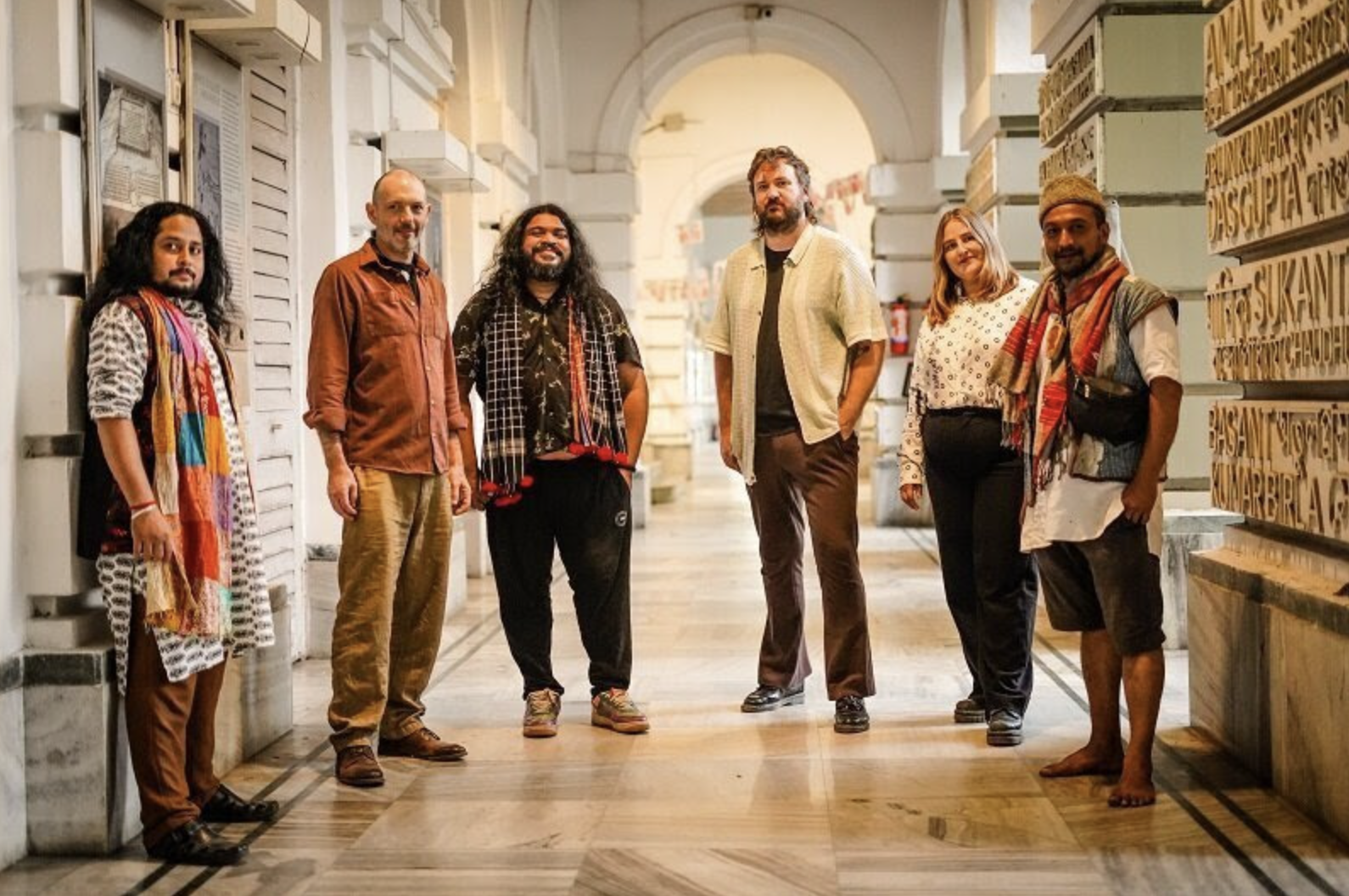
In a fabled exchange of metaphorical, lyrical, poetic and geographical sea routes, and across various trails and caravan routes on land, the fusion ensemble that is The Three Seas interweaves various global creative references with their roots on what has been billed as their most “expansive” and “spiritual” album yet.
Formed around seventeen years ago in the Bolpur neighbourhood of Shantinketan in West Bengal by the Australian saxophonist Matt Keegan and locals Deo Ashis Mothey, Gaurab “Gaboo” Chatterjee and Raju Das Baul, the troupe’s fortunes have followed the times, especially during the Covid years. But revigorated by a residency at the Edinburgh Fringe Festival in 2022, the group managed to write and put together their newest album; a call and yearn for transglobal embraces fused with the poetry and mysticism of the Baul.
As a foundation, the age old Baul tradition of minstrels and troubadour shared Sufism and Hindu Vaishnava Sahajiya (a tantric focused on the Radha Krishna workshop, specifically developed in Bengal. The verses of the Baul are both spontaneous and mystical, stepped in lore and spiritualism.
With all this in mind, there’s a transformation of what sounds like Baul spirituals, their yearns, their calls of prayer and desire to seek, mixed with Baul-jazz, a form invented, or so I’ve read, by one of The Three Seas band member’s fathers. Gaurab Chatterjee’s polymath musician father Gautam Chattopadhyay not only instigated that Baul-jazz form but was also a pioneering force in Indian fusion, founding the prog rock group Moheener Ghoraguli in the process. Track four on this new album, ‘Prithibi’, was written by the highly influential singer-songwriter and guitarist and refers to one of the Sanskrit words for the Earth goddess: responsible for many things, but essentially fertility, stability and grounding in Hindu mythology. Updated perhaps for the contemporary ear with fx sounds and what sounds like the synthesized, this paean of a kind takes its religious origins into the realms of fusion and along the Iberian coastline, the vocals a near call and response of the most soulful and yearned.
Reflecting their transglobal embrace of musical and cultural references, classical Indian religious symbols fuse with a cross-pollination of both Hindu and Sufi themes and motifs that sonically and lyrically encompass the longed and the religious with jazz, sonic effects, Bedouin rock, prog, Latin grooves and on the album’s finale, ‘Real World’, a Fela Kuti vibe – Matt Keegan’s sax actually reminded a little of Shango era Peter King.
Recorded at Peter Gabriel’s world-famous Real World studio, and with a unifying framework of the devotional and mystical, Antahkarana conjures up an eclectic magic of the spiritual and the electric, with moments when the action seems to recall bands like Amon Düül II and Embryo, and at other times, Dirtmusic and Genesis.
Shamanistic, venerable, worldly and full of grooves and various musical fusions, Antaḥkaraṇa is a yearn, a yin and spirited unification of musical ideas, cultures, devotions and questions that gels seamlessly together for a both mystical and danceable experience.
Here’s the message bit we hate, but most crucially need:
If you’ve enjoyed this selection, the writing, or been led down a rabbit hole into new musical terrains of aural pleasure, and if you able, then you can now show your appreciation by keeping the Monolith Cocktail afloat through the Ko-Fi donation site.
End of the Year Revue For 2025: Part Two: N to Z
December 15, 2025
Choice Highlights From The Last Year Part Two
In case you missed Part One of this illustrious list, here’s a recap.
I said I wasn’t going to do it this year. And this may be the last. But here is the second part of a comprehensive revue listing of choice albums (some extended EPs too) from 2025 that we returned to the most, enjoyed or rated highly. See it as a sort of random highlights package if you will.
As usual a most diverse mix of releases, listed alphabetically – numerical orderings make no sense to me unless it is down to a vote, otherwise what qualifies the placing of an album? What makes the 25th place album better than the 26th and so on…
Whilst there is the odd smattering of Hip-Hop releases here and there, our resident selector and expert Matt Oliver has compiled a special 25 for 25 revue of his own, which will go out next week.
Part One: A to M can be perused here
N……………
Neon Crabs ‘Make Things Better’ (Half Edge Records)
Review by Dominic Valvona
Noir & Superior, Che ‘Seeds In Babylon’
Picked by Dominic Valvona
Novelle & Rob Mazurek, Alberto ‘Sun Eaters’ (Hive Mind Records)
Review by Dominic Valvona
Nowaah The Flood ‘Mergers And Acquisitions’
Picked by Dominic Valvona
O……………
Occult Character ‘Next Year’s Model’ (Metal Postcard Records)
Picked by Dominic Valvona
P…………….
Philips Arts Foundation, Lucy ‘I’m Not A Fucking Metronome’
Reviewed by Brian Bordello Shea here
Phill Most Chill & Djar One ‘Deal With It’ (Beats House Records)
Picniclunch ‘snaxbandwitches’
Review by Brian ‘Bordello’ Shea
Pound Land ‘Can’t Stop’ (Cruel Nature Records)
Review by Brian ‘Bordello’ Shea
Q……………..
Querci, Cosimo ‘Rimane’ (Quindi Records)
Review by Dominic Valvona
R………………
Robertson, Kevin ‘Yellow Painted Moon’
Review by Brian ‘Bordello’ Shea
Rose, Sophia Djebel ‘Sécheresse’ (Ramble Records/WV Sorcerer Productions/Oracle Records)
Review by Dominic Valvona
Rumsey, Andrew ‘Collodion’ (Gare du Nord)
Review by Brian ‘Bordello’ Shea
S……………….
SAD MAN ‘Art’ (Cruel Nature Records)
Review by Dominic Valvona
Salem Trials ‘Heavenly Bodies Under The Ground’ (Metal Postcard Records)
Review by Brian ‘Bordello’ Shea
Sanders, Pharoah ‘Love Is Here – The Complete Paris 1975 ORTF Recordings’
(Elemental Music Records) Picked by Dominic Valvona
Schizo Fun Addict ‘An Introduction To…’ (Fruits der Mer)
Review by Brian ‘Bordello’ Shea
Schnitzler, Conrad ‘RhythmiCon’ (Flip-Flap)
Review by Dominic Valvona
Scotch Funeral ‘Ever & Ever’
Review by Brian ‘Bordello’ Shea
Silva, Maria Elena ‘Wise Men Never Try’ Review
‘Wise Men Never Try Vol. II’ Review by Dominic Valvona
Širom ‘In the Wind of Night, Hard-Fallen Incantations Whisper’
(Glitterbeat Records) Picked by Dominic Valvona
Sleepingdogs ‘DOGSTOEVSKY’ (Three Dollar Pistol Music)
Picked by Dominic Valvona
Soft Speaker ‘Rippling Tapestries’ (Cruel Nature Records)
Review by Brian ‘Bordello’ Shea
Sol Messiah ‘War of the Gods’ Picked by Dominic Valvona
Staraya Derevyna ‘Garden Window Escape’ (Ramble Records/Avris Media)
Review by Dominic Valvona
Stewart, Macie ‘When The Distance Is Blue’ (International Anthem)
Review by Dominic Valvona
T………………..
Teamaker, Marc ‘Teas n Seas’
Review by Brian ‘Bordello’ Shea
Theravada ‘The Years We Have’ Picked by Dominic Valvona
Toivanen Trio, Joona ‘Gravity’ (We Jazz)
Reviewed by Dominic Valvona here
Tomo-Nakaguchi ‘Out Of The Blue’ (Audiobulb Records)
Review by Dominic Valvona
Tortoise ‘Touch’ (International Anthem X Nonesuch Records)
Review by Dominic Valvona
Toxic Chicken ‘Mentally Sound’ (Earthrid)
Review by Brian ‘Bordello’ Shea
Trupa Trupa ‘Mourners’ (Glitterbeat Records)
Info/Singles Review Feature by Dominic Valvona
U…………………
Uhlmann, Josh Johnson, Sam Wilkes, Gregory ‘Uhlmann Johnson Wilkes’
(International Anthem) Review by Dominic Valvona
Ujif_notfound ‘Postulate’ (I Shall Sing Until My Country Is Free)
Review by Dominic Valvona
V………………….
Various ‘TUROŇ/AHUIZOTL’ (Swine Records w/ Fayuca Retumba)
Review by Dominic Valvona
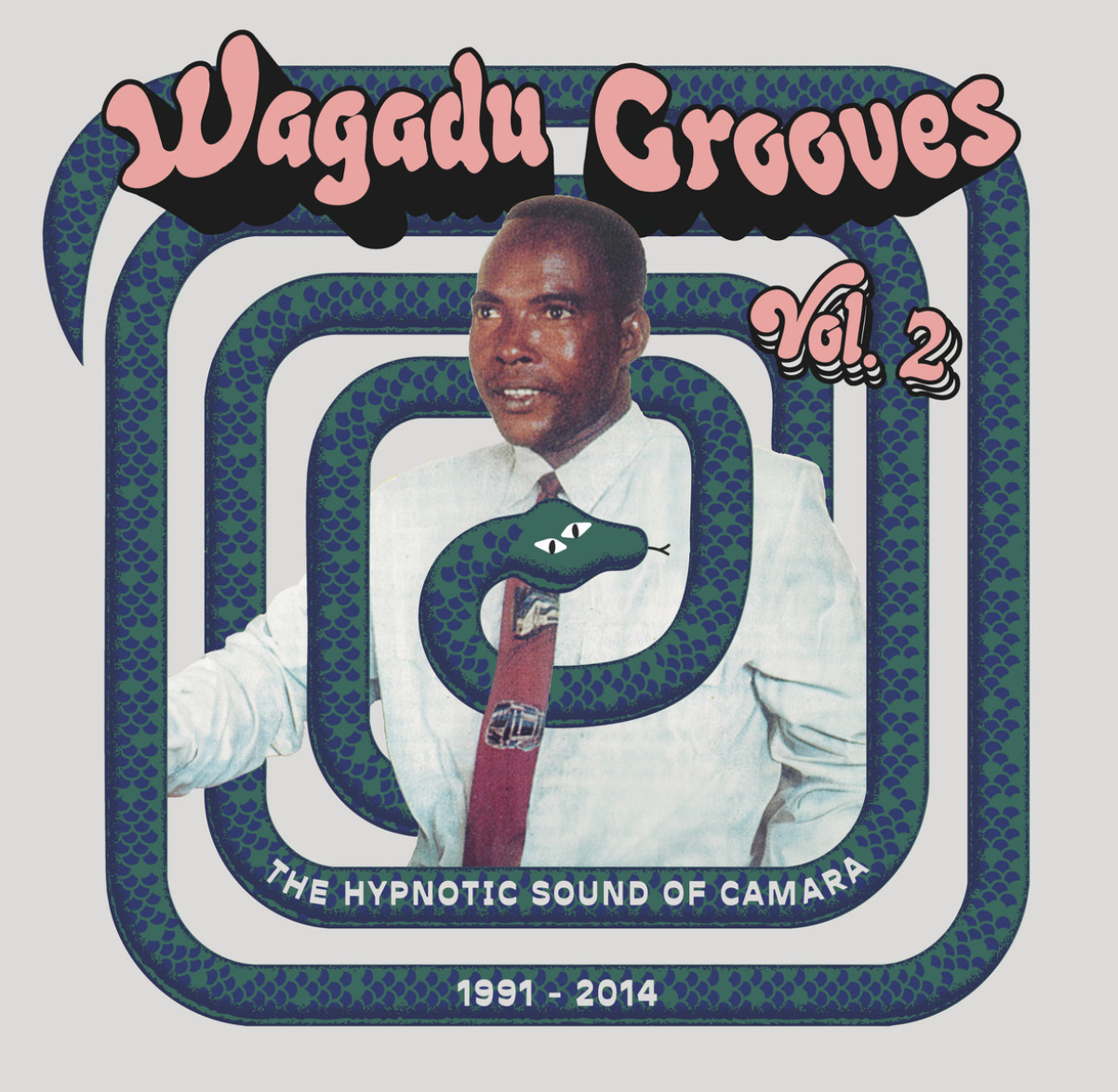
Various ‘Wagadu Grooves Vol. 2: The Hypnotic Sound Of Camera 1991 – 2014’
(Hot Mule) Review by Dominic Valvona
Vexations ‘A Dream Unhealthy’ (Cruel Nature Records)
Review by Brian ‘Bordello’ Shea
Violet Nox ‘Silvae’ (Somewherecold Records)
Review by Dominic Valvona
Voodoo Drummer ‘HELLaS SPELL’
Review by Dominic Valvona
W…………………..
Wants, The ‘Bastard’ (STTT)
Review by Brian ‘Bordello’ Shea
Warda ‘We Malo’ (WEWANTSOUNDS)
Review by Dominic Valvona
West Virginia Snake Handlers Revival ‘They Shall Take Up Serpents’
(Sublime Frequencies) Reviewed by Dominic Valvona
Winter Journey, The ‘Graceful Consolations’ (Turning Circle)
Reviewed by Dominic Valvona here
Y…………………….
Yellow Belly ‘Ghostwriter’ (Cruel Nature Records)
Review by Brian ‘Bordello’ Shea
Young Mothers, The ‘Better If You Let It’ (Sonic Transmissions)
Review by Dominic Valvona
Z……………………..
Zavoloka ‘ISTYNA’ Picked by Dominic Valvona
For those that can or wish to, the Monolith Cocktail has a Ko-fi account: the micro-donation site. I hate to ask, but if you do appreciate what the Monolith Cocktail does then you can shout us a coffee or two through this platform.
The Monthly Playlist selection of choice music, plus our Choice Albums list from the last month.

A couple of months back we decided to change things a little with a reminder (if you like) of not only our favourite tracks from the last month, but also a list of choice albums too. This list includes both those releases we managed to feature and review on the site and those we just didn’t get the time or room for. All entries are displayed alphabetically.
Our Monthly Playlist continues as normal, with tracks this month chosen by me, Dominic Valvona, Matt Oliver and Brian ‘Bordello’ Shea.
A Journey Of Giraffes ‘Emperor Deco’
(Somewherecold Records) Review
MC Paul Barman ‘Tectonic Texts’
Elea Calvet ‘Seasons’
Inturist ‘Tourism’
(Incompetence Records) Review
Eiko Ishibashi ‘Antigone’
(Drag City)
Timo Lassy Trio ‘Live In Helsinki’
(We Jazz)
Nickolas Mohanna ‘Speakers Rotations’
(AKP Recordings) Review
Che Noir & Superior ‘Seeds In Babylon’
Alberto Novelle & Rob Mazurek ‘Sun Eaters’
(Hive Mind Records) Review
Andrew Rumsey ‘Collodion’
(Gare du Nord) Review
Schizo Fun Addict ‘An Introduction To…’
(Fruits der Mer) Review
Snapped Ankles ‘Hard Times Furious Dancing’
Sonnyjim & Kong Artisan ‘Effortless, Almost Dead’
(Noel & Poland Records)
Russ Spence ‘Phase Myself’
(Metal Postcard Records) Review
Macie Stewart ‘When The Distance Is Blue’
(International Anthem) Review
Gregory Uhlmann, Josh Johnson, Sam Wilkes ‘Uhlmann Johnson Wilkes’
(International Anthem) Review
The Young Mothers ‘Better If You Let It’
(Sonic Transmissions) Review
Previous Monthly Choice Releases:
And now, the tunes of the month playlist selection:
Snapped Ankles ‘Pay The Rent’
Psychedelic Porn Crumpets ‘Weird World Awoke’
MC Paul Barman, Donwill ‘Killinagame’
Jansport J, Airplane James, Sham1016 ‘T-Top’
Alessandro Alessandroni ‘Militari in allarme’
Black Mynah ‘Colleen’
Che Noir, Superior ‘Sovereignty’
Droogie Otis, Boldy James ‘Everything Designer’
Timo Lassy Trio ‘Rumble Outro – Live’
Gregory Uhlmann, Josh Johnson, Sam Wilkes ‘Marvis’
Takuro Okada ‘Howlin’ Dog’
Inturist ‘Special Offer’
Elea Calvet ‘Bad Joke’
Sweeney ‘Love Is A Waste Of Time’
Eiko Ishibashi ‘Antigone’
Meggie Lennon ‘Connexion Astrale’
Apollo Brown ‘Honestly Don’t’
The Moose Funk Squad ‘Cheetah Piss’
Black Josh, Lee Scott ‘Aw, Here It Goes’
Queen Herawin, Pretty Bulli, Illa Ghee ‘Denial’
The Young Mothers ‘Better If You Let It’
Lord Finesse ‘Habits of Desperation’
Sonnyjim, Kong The Artisan, Lord Sko ‘Idiot Savant’
clipping. ‘Polariods’
Macie Stewart, Lia Kohl ‘I Forgot How To Remember My Dreams’
Nickolas Mohanna ‘Past Light Cone’
Previous Industries ‘Adriana Furs’
Sporaterra ‘Unglued’
PremRock, Sebb Bash ‘Did You Enjoy Your Time Here…?’
Flying Tulpa ‘Signless’
Andrew Rumsey ‘The Memorial Service Orders of Friends’
Nick Frater ‘One Minute’
Honor Saint William ‘THE IDIOT’
Puce Moment ‘Bugaku’
Alberto Novello & Rob Mazurek ‘Ricochet Edge Verse’
El Leon Pardo ‘Viaje Sideral’
Mick Harvey & Amanda Acevedo ‘Juliette’
Hi, my name is Dominic Valvona and I’m the Founder of the music/culture blog monolithcocktail.com For the last ten years both me and the MC team have featured and supported music, musicians and labels we love across genres from around the world: ones that we think you’ll want to know about. No content on the site is paid for or sponsored, and we only feature artists we have genuine respect for /love or interest in. If you enjoy our reviews (and we often write long, thoughtful ones), found a new artist you admire or if we have featured you or artists you represent and would like to say thanks or show support, than you can now buy us a coffee at https://ko-fi.com/monolithcocktail
THE MONTHLY DIGEST INCLUDES A CLUTCH OF ACCUMULATED NEW MUSIC REVIEWS; THE SOCIAL INTER-GENERATIONAL/ECLECTIC AND ANNIVERSARY ALBUMS CELEBRATING PLAYLIST; AND CHOICE PIECES FROM THE ARCHIVES

(Cover Star Macie Stewart. Photo credit Shannon Marks)
_____/THE NEW____
Macie Stewart ‘When The Distance Is Blue’
(International Anthem) 21st March 2025
Perhaps one of the most prolific collaborators of recent years, across several mediums, the multi-instrumentalist, composer, songwriter and artist Macie Stewart has come to represent a flourishing, explorative contemporary music scene with multitudes of connections and threads. Apart from projects with choreographer Robyn Mineko, Sima Cunningham, and the Pacific Northwest Ballet, Stewart has become a stalwart of the International Anthem family, contributing and helping steering releases by Rob Mazurek – who literally appears below this review with his foil Alberto Novelle -, Bex Birch, Damon Locks, Makaya McCraven and Alabaster DePlume.
Another foil, featuring in the intimate ensemble that plays on this Stewart’s first solo album for the imprint – the actual debut solo LP, Mouth Full Of Glass came out a few years back on another label -, is Lia Khol, a cellist and sound artist who already collaborates with Stewart in a duo. There’s also the addition of both the equally versatile artist Whitney Johnson (credits include the Verma band and the avant-pop lo-fi Matchess alias) on viola, and Zach Moore on double-bass. This is where those inter-connections must end, as I could just carry on regaling all the various entries from the bio and dedicate this review piece to one of the most enviable of CVs in the music scene. But we must not get distracted, and instead now look at the album.
When The Distance Is Blue could be read as…well, perhaps blue in mood. But this is an album that slips poetically in and out of consciousness, inhabiting, ruminating over and in some cases writing the aural equivalent of a love letter to the spaces in-between the tangible and the environment, with background passages of field recorded interactions taken from public places. For instance, the famous Tsukjii district of Tokyo, near to the Sumida River (reclaimed originally from lowland marshes) is referenced as the title for an atmospheric piece of recorded street side, market interactions. It carries on over and bridges the reverberating, sifted, swept and delicately plucked and vibrated opening suite ‘I Forgot How To Remember My Dreams’ and the near atavistic recalled, apparitional haunted voiced ‘Murmuration/Memorization’. The former of which features Khol’s clean cello and Stewart’s meticulously struck piano notes in a near forlorn but beautifully evocative mood. It reminded me of both Cage and Reich, of the Japanese school of contemporary classical music, and even a little of Sebastian Reynolds work with cellist Anne Muller. The latter, which is named, in part, after the stunning synchronised patterns of large groups of starlings as they come together in flight, seems to dial into something old or timeless; an elliptical dance of Tony Conrad like bows, Hellenic-like spirit voices rising and falling like their avian subjects, and the neoclassical.
The album title, and the underlying theme, is inspired, imbued by the American writer and activist Rebecca Solnit’s A Field Guide to Getting Lost book. I’ve unfortunately not read it, but the L.A. Times summarised the nine essay pieces that make up this work as: “An intriguing amalgam of personal memoir, philosophical speculation, natural lore, cultural history, and art criticism.” Elsewhere it’s been described as a wondering and lurching zigzag through history, politics and art, with the author described as a “Intellectual nomad” by The Guardian’s Josh Lacey when he reviewed it. But all can agree about the book’s themes of change and transformation. Of which Stewart taps into, recording the almost unnoticed; an essence of a particular time and place; a captured seasonal moment of rumination and episodes that left their mark. Across this a near perfect length album, a complete journey is sounded out through both attentive and deeply felt strings, piano, percussion, wordless voices and double bass. It’s a liminal sound that evokes Sakamoto, Cale, Alison Cotton and a sense of the Oriental slow movement, as it moves beautifully and moodily between pizzicato plucks, the cascaded, watered, resonated and bowed. I’ll say it again, as perfect a vision as you can get, everything about When The Distance Is Blue is just so right; every feeling, note, sensibility carefully pitched in a dreamy and ached, subtle and often mysteriously intriguing way.
Alberto Novelle & Rob Mazurek ‘Sun Eaters’
(Hive Mind Records) 28th March 2025
A moment in time; an afternoon’s encounter. The symbiotic alignment and then transformation of the improvised and layered, sonic and sound art foils Alberto Novelle and Rob Mazurek transduce timbral elements and textures into an amorphous act of existence on their collaborative release for the discerning internationalist label Hive Mind Records.
Created in a day, extemporised to a point, the Sun Eaters album, despite its rhythms, is a serialism of encounters and reactions to recognisable lines, soundings, echoes, flutters, melodic addresses, nature trial organic serenades, shakes, tingles, jangles and bleats from Mazurek’s trumpet, flute and percussion of bells. His partner on this exploration transforms these instruments into hallucinatory and playful electronic, modular and oscillated new atmospheres and ambiguous soundscapes that simultaneously evoke Jon Hassell’s Fourth World inventions, the collaborative work of Ale Hop and Laura Robles, the Aphex Twin, Carmen Jaci and King Champion Sounds.
When you address both participants extensive and envious CVs, you can only assume that together they will make something very experimental and unique, but not so academic and avant-garde as to create something dry, theoretical and impenetrable. Before we can any further, just a brief summary of the experience brought to the Dobialab studio that day in Northeastern Italy. I was only the other month referencing Mazurek in relation to Damon Locks and his List Of Demands LP. The cornetist and interdisciplinary innovator featured Locks in his Exploding Star Orchestra lineup, just one of the numerous groups the countercultural Chicago figure and influencer had instigated over the decades; most notably Isotope 217, the varied Chicago Underground ensembles, and one of my favourites, the Sau Paulo Underground offshoot. I could list umpteen other incredible collaborations (his work with Jeff Parker to name just one), and run-off a long list of influential labels that have carried his work (my friends at International Anthem for one) over the years, but you can get this all off the various bios circulating on the internet. His foil, Novello, often “repurposes found or decontextualised analogue devices to investigate the connections between light and sound in the form of contemplative installations and performances” under the JesterN guise – I borrowed that from his Bandcamp page by the way, hence the italics. He’s assisted such notable talent as Alvin Lucier, David Behman, Nicholas Collins and Trevor Wishart, and improvised with such luminaries as Evan Parker, Butch Morris and Karl Berger.
Combining these experiences, echoes of Don Cherry, Peter Evans and Miles casting shadows across an arid Latin sounded landscape are sampled and looped, turned into a language of abstract data, mechanics, transmissions, signals and pitch registers. There’s a buoyancy swimming below the synthesized beds that indicates a certain rhythm and movement. And yet at times the pair seem to be floating in the cosmos or lost in an illusion as they pull the AEoC through the mirror backwards and shake and rustle the cow bells of a herd heading for Tibetan shrines. Those bells by the way also ring out like tubular long pipes or like a sleigh ride into spiritual transcended. But I can’t help feeling there’s a lot of fun at play too on these peregrinations, especially on the Mexican wrestler referenced snake-rattled and mirage-esque ‘Luchadores Sudden Embrace’.
Taking a completely different direction, the fungi studied inspired finale, ‘A New Mycological Framework of Narrative’, is the sound of Richard H. Kirk’s wordless mewling and mantras, a touch of Kriedler and even Kraftwerk, and Finnis Africae being fed into a strange soundboard and apparatus of conductors.
A different kind of creation, this six-track reconfiguration seems to just be. Neither non-musical nor musical; neither avant-garde nor defined; the results are beyond simplified categorisation. Mood pieces? Sensory exploration? Textual exercises in ambiguity? Abstracted visions conjured out of an apparatus and range of acoustic instruments? All viable descriptions perhaps for an amorphous collaboration. Followers of both artists will be happy with the outcome.
El León Pardo ‘Viaje Sideral’
(AYA Records) 21st March 2025
A “sideral”, or celestial bodies related, “voyage”, the new inviting album from the Colombian brass, wind and multi-instrumental encompassing artist El León Pardo is imbued by pre-colonial Colombian magic and contemporary musical hybrids that fuse cumbia with the Afro-Caribbean and cosmic.
Noted for spreading the word and virtuosity of his chosen instruments and culture to the world through his work with Ondatrópica, Curupira and Frente Cumbiero, Pardo is imbued by the sound and symbolism of the “Kuisi” end-blown flute, and Sierra Nevada de Santa Marta mountain range in which its whistly trill echoed; the loose Colombian originated infectious rhythm of cumbia, which in more recent times has switched the European influence of accordion for electric guitar, but has been restyled and modernised throughout time to include the trends the day; and the ancient Pre-Colombian Zenu people of the Sinú River Valley and their atavistic flute.
Channelling all this to conjure up a dream realism peregrination, dance and wonderment, Pardo invites a number of Colombian foils to join him on a sometimes-surreal corridor to the stars. Taking up the offer is fellow eclectic polymath Edson Velandia, emcee N. Hardem of LNI and Soul Am Beats fame, and “nueva (“new”) cumbia” motivators Frente Cumbiero, who’s main instigator Mario Galeano is also a member of both the already mentioned Ondatrópicaand Los Pirañas groups. This trio’s contributions further expand the scope of influences and ideas, heading down into the lively Bogota barrios, or snake rattling and sauntering into a spellbinding oblivion of magic eye Colombia and the cosmos.
As the tile translates, there’s a relationship between the stars, the celestial spheres, playing out on Viaje Sideral. A both playful and deep immersion of universal mirages and dream states that simultaneously sound Andean and yet futuristic and cosmological, the album’s nine tracks use tradition and modern tech to build up an alternative reality. Analogue synths echo and modulate those space sounds: a representation of beamed astral planes and spectral rays, and travellers from other worlds landing in the mountain valleys of Colombia.
Whilst traditional instruments, the chuffed, short and longer, more drifting and circular convulsed flutes and pipes, both brassy and Latin trumpet, reference imaginative invocations of his homeland. Factor in some of that Afro-Caribbean influence and a touch of Mad Professor dub effects to this playful, inviting, danceable, percussive infectious, pop-y, soulful (there’s even some electric guitar parts that I would swear were Rhythm & Blues flavoured) and mystical, and you have a dreamt landscape brought to vivid, rhythmic life. El León Pardo isn’t however just about the magic, but by using the instruments he does, bonds with and sticks up for those pre-Colonial indigenous roots as a form of activism and conservation, education. This is nothing short of a great imaginative Colombian trip, equally at home under a menagerie canopy of exotic conjuring as it is in space.
Puce Moment ‘Sans Soleil’
(Parenthèses Records) 21st March 2025
Tuning in via the kosmische, new age, trance and ambient imbued modular electronic laboratory to the courtly and Imperial Gagaku tradition, the Puce Moment reconfigure purposeful Japanese ceremony, dance and music to conjure up an otherworldly, haunting and mystical soundscape under a “sunless” sky – if you directly translate that album title of “Sans Soleil”.
Travelling to the notable Japanese city of Tenri (the old capital of Japan, for a very brief period during the late 5th century rule of Emperor Ninken) in 2020 to record and work with the local Gagaku Music Society, the French duo of Nicolas Devos and Pénélope Michel recontextualised an old but continuous form originally performed for the elite. They expanded this exploration turn transformation further with the addition of the São Paulo born choreographer and dancer Vania Vanneau: furthering the soundscape project into dance, visual movement and performance art.
For those unaware of this Japanese form, Gagaku’s roots can be traced back to the 6th century, perhaps earlier, when Japanese delegates were sent to China to learn about its culture. They are said to have brought back a fusion of both Chinese and Korean music, instruments and dances to the Imperial court; to be performed at banquets for the elite. But some historical sources suggest that it was through the spread of Buddhism, making its way across from China to Japan. And one of the main dances, the “Bugaku”, involves the wearing of intricate Buddhist costumes and masks.
Familiar sounds of this form include the famous barrel-shaped wooden “taiko” drum, the “Koto” 13-string zither, the “Biwa” short-necked lute and the “Shō” wind instrument – used for one of the six titles of this peregrination and mood musical work. All of which, I believe, can be heard both in their recognisable form and morphed and woven into a modulated, generated, filtered atmosphere of electronic apparatus drones, fizzes, oscillations and amorphous mysticism.
Hinting at rips in the fabric, a misty geography and periods of historical meaning and reference, Sans Soleil summons ghosts, voices from the ether and the four winds and wisps of Jon Hassell, Hiroshi Yoshimura, Popol Vuh, Tony Conrad’s work with Jennifer Walshe and Ash Ra to magic up a sound world that sits on the border of the alien and cosmic, landscape and pure atmosphere: The word used is liminal. This convergence of trance-y, lucid synthesised sounds and voices on the air merges dreamily and spookily with Japanese tradition, ceremony and choreography to create something more akin to an experience, an immersion and dance.
Alessandro Alessandroni ‘Paesaggio Bellico’
(Four Flies Records) 18th March 2025
Like much of mainland Europe scared, brutally traumatised and worn out by WWII, Italy and its battle-ravaged population pretty much became risk adverse to war. Although eventually changing sides back to the Allies, the ill-fated bedfellows of the Nazi Axis alliance were, apart from the diehards/racists/antisemites/psychopaths, were always ill at ease goosestepping to the tune of Hitler. In fact, no matter how history has been warped, the Italians put down and made the butt of so many jokes, the country had some of the largest numbers of partisans fighting against the Fascist regime – percentage wise in all of Europe, Italian partisans were far more likely to be killed and murdered by the Nazis than anyone else.
Italy favoured internal civil war over the international: a war of ideologies, corruption, state and philosophy that rages to this day. Terrorism and organised crime concentrated the mind. But no one in Italy could turn away from the events that followed in the wake of WWII: the Iron Curtain and Cold War to Korean, Vietnam and so on. And that brings us to the work of the stellar talented and connected iconic and cult Italian composer Alessandro Alessandroni, who scored an impressive range of war themed documentaries and films during a career that spanned a good half of the 20th century.
Born on the release date of this latest battle, war and psychological collection (18th March), Alessandroni came of age during the rise of fascism and the events that would lead to the Allies invasion of first Sicily then mainland Southern and Central Italy, the horrific bloody battle of Monte Cassino and the brutal air raid bombardments that destroyed so much of the country – an agreement between both sides thankfully saved Rome and several other important cultural cities.
During a period between 1969 and 1978, the maverick and highly influential composer and multi-instrumentalist recorded a catalogue of scores and atmospheric pieces, suites that dealt with not only the military aspects but the trauma of war and its effects upon those who both fought and faced its wrath. After the smut and titillation of the Music From Red Light Films 1976-1980 collection, the Italian label Four Flies unearths an impressive and quality selection of these tracks, previously left dormant in the vaults.
A peer, foil, mentor and friend to such luminaries as Ennio Morricone, the Rome born maestro and artist first made a name for himself with his Spaghetti Western twang-y Duane Eddy signature guitar and whistling scores for the highly influential film director Sergio Leone. But Alessandroni also founded the wordless octet vocal group I Cantori Moderni (“The Modern Choristers”), which featured his wife Giulia De Mutiis, and went on to form the brief prog-rock-psych group The Braen’s Machine with fellow Italian cult composer Piero Umiliani.
During the late 1970s he was scoring more and more mondo trash, erotica and garish S&M horror – see Lady Frankenstein and Killer Nun. And yet, the quality of his work is never in doubt; often elevating such tawdry, amateurish affairs to cultish status by the music alone. Although far from serious, it seems Alessandroni’s craft is likened to playing with an amusement park of ideas, sounds and instruments: entertaining but also captivating in equal measures. With an ear attuned to the contemporary fashions, but the classical and traditional too, a lot of musical ground is covered in his compositions: from Italian folkloric standards to disco, library music and the salacious.
In turn, this package (the vinyl copy features 15 tracks, whilst the digital is expanded to include 29) channels much of that legacy, but with far more seriousness, artistic depth, emotion and compassion. Most of those familiar with his work will instantly recognise the signatures and the palette; from the spine-tingling chills and fears of his Giallo-like scores to the arpeggios, the twang and pick of his Wild West evocations – namely on the couplet of cloud hanging “Pattugliamento Aereo” (“Air Patrol”) pieces; although the second “Aereo” matches that with vague Alice Coltrane harp-like plucks and a subtle prog-esque organ.
Where sentimentality and a touching relief is needed, tracks like ‘Lettere dal Fronte’ (“Letters from the Front”) air towards Bacharach and Morricone, and feature that recurring Baroque chamber sound of harpsichord or clavichord that gives each occasion a sense of spindled timelessness. ‘I Sopravvissuti’ (“The Survivors”) is a lovely touching sentimental piece that evokes both the balletic scores of Aram Khachaturian (sounds uncannily like his suite from Kubrick’s 2001: A Space Odyssey) and wartime period classical music. Talking of 2001, with the use of the I Cantori Moderni ensemble of wordless voices both appearing like apparitions and spirits of lost and dead souls, or like some removed version of ecclesial requiem choristers, there’s also a semblance of the stirring visionary ominous fears and otherworldliness of György Ligeti.
Quite rightly, the ‘Dachua’ suite should evoke an enormity of horror, but this score is more in the mode of supernatural horrors from the crypt than genocide shock. It sounds like some lost silent film theme of haywire Baroque piano: a combination of devilment and madness, with one hand delicately lacing the keys, and the other, hitting near off-key jarred and out-of-key notes. And whilst sounding the most terrible aspects of war, from execution to the shelled-out ruins of a psychologically destroyed mind, the music strikes up the military snare, playing it like a spraying machine gun, or, building up an unsettling drama of pain and anguish: all managed beautifully, even when dipping into Library music, the hallucinating, dreamy and psychedelic.
Military timpani and drills aplenty amongst the plaintive recall of the acts and dogs of war, this survey features supernatural forces, cold chills, suspense, loss, remembrance and hope.
The suites, atmospheric pieces, scores and signature found on this Paesaggio Bellico are all far too good to be left undisturbed, languishing in the vaults of cult obscurity. Fans, heads and even those with a cursory interest should investigate.
___/THE SOCIAL PLAYLIST VOLUME 95
The Social Playlist is an accumulation of music I love and want to share; tracks from my various DJ sets and residencies over the years; and both selected cuts from those artists, luminaries we’ve lost and those albums celebrating anniversaries each month.
Running for over a decade or more now, Volume 95 is the latest eclectic and generational spanning playlist come radio show from me – the perfect radio show in fact, devoid of chatter, interruptions and inane self-promotion.
Each month I mark the passing of those artists we’ve recently lost, and as this is the first opportunity to do so, I’ve included homages to the last “doll” David Johansen, the soul music’s Carol King, Roberta Flack, vibes innovator and jazz fusionist Roy Ayers and troubadour Bill Fay.
Anniversary albums wise there’s tracks from Herbie Hanock’s Maiden Voyage (celebrating its 60th anniversary this year), Bob Dylan’s Bringing It All Back Home (also unbelievably 60 years old), David Bowie’s Young Americans (50 this month; see my short analysis in the Archives section below), Parliament’s Chocolate City (also 50), Sonic Youth’s Bad Moon Rising (40 this month), Radiohead’s The Bends (30 years old this month), Gene’s Olympian (another 30th) and Edan’s Beauty And The Beat (where does the time go…seriously! How can this LP be 20 years old this month?!).
As usual, I like to throw in a smattering of cross-generational tracks and some more recent ones – those that missed out on the previous Monthly playlists of new music. In the latter camp, we have a resurfaced (so not strictly new) live version of Throbbing Gristle’s ‘Convincing People’ from Volksbühne, Berlin, recorded on New Year’s Eve in 2005; an imaginative reverberating study, peregrination from Dorothy Carlos; and some mirage grunge indie from Raisa K. In the former, a number of oldies from Krumbsnatcha, 21. Peron, Stanton Davis’ Ghetto/Mysticism, Gloria Jones, Flutronix, Berlin Brats, Pete Dello and more… Expect no substitutes. Expect no algorithmic replicants. Expect no AI bullshit. All playlists are compiled without any external influences, totally conceived by whatever I wish.
IN FULL:
New York Dolls ‘Private World’
Gloria Jones ‘Cry Baby’
Roy Ayers ‘Ain’t No Sunshine’
Roberta Flack ‘Compared to What’
Parliament ‘Ride On’
Edan ‘Promised Land’
Herbie Hancock ‘The Eye Of The Hurrican’
21. Peron ‘Bes’
Bill Fay ‘Dust Filled Room’
Radiohead ‘My Iron Lung’
David Johansen ‘Heart of Gold’
Berlin Brats ‘(I’m) Psychotic’
New York Dolls ‘Don’t Start Me Talking’
Sonic Youth w/ Lydia Lunch ‘Death Valley ‘69’
Throbbing Gristle ‘Convincing People Live’
Dorothy Carlos ‘Balm’
Raisa K ‘Affectionately’
Roberta Flack ‘Some Gospel According to Matthew’
David Bowie ‘Can You Hear Me’
Roy Ayers ‘Pretty Brown Skin’
Stanton Davis’ Ghetto/Mysticism ‘Space-A-Nova II’
Krumbsnatcha ‘Closer To God’
King Honey w/ Hezekiah, Gos and Chief Kamachi ‘Trinity’
Georges Bodossian ‘Punching Bull’
Flutronix ‘Crazy’
Meridionale des cayes ‘Zanmi femme’
Bob Dylan ‘Love Minus Zero’
Bram Tchaikovsky ‘Robber’
Gene ‘Olympian’
Pete Dello and Friends ‘Arise Sir Henry’
___/ARCHIVES
Each and every month, I use the digest as a good excuse to once more retrieve congruous and related posts from the archives. This month, to tie in with the 50th anniversary of David Bowie’s “plastic soul” period, a short piece on one of the soul crooning pale duke’s best album’s Young Americans – well, in my opinion top three.
And from this time, near enough, a decade ago, another chance to read my review of Glitterbeat Record’s Hanoi Masters: War Is A wound, Peace Is A Scar album, raw and therapeutic sessions recorded by Ian Brennan and released during March of 2015.
Disingenuous to a fault, the cracked actor’s ‘plastic soul’ conversion, raised more than a few pencilled-in eyebrows and frowns.
Totally free of his carrot-topped mullet crown, he now hotfooted across the Atlantic to Philly, intoxicated by the city of brotherly love’s sweet, lovelorn soul music.
A new face in town, the burgeoning ‘thin white duke’ employed a cast of ethereal backing singers (including an as yet famous Luther Vandross) and kindred musicians (notably Bowie’s new lead-guitarist foil, Carlos Alomar) on his cocaine-fuelled pursuit.
Calling in the favours, fellow alienated Brit in residence, John Lennon, helped write the cynical snide ‘Fame’ (he plays on the recording and adds harmonies too) and let Bowie cover his stirring cosmological trip, ‘Across The Universe’ – much maligned, but I really dig this version, and even play it regularly in my DJ sets.
Reflective, sophisticated, Bowie and his detractors may have labelled him with derogatory terms, yet there’s no denying it’s another successful musical adoption: truly up there with his best ever work; a complete showman chameleon transformation. Even one of his most infamous haranguers Lester Bangs couldn’t help but admire it: the only Bowie LP he ever gave him credit for.
Decreed as the leading highlight’s of the album by the majority –
Young Americans (single), Win, Fame (single)
Pay attention to these often overlooked beauties –
Somebody Up There Likes Me, Across The Universe
Various ‘Hanoi Masters: War Is A wound, Peace Is A Scar’ (Glitterbeat Records)
A side excursion, travelling due east to Asia and breathing in the evocative songs of Vietnam, Glitterbeat Records launch a new series of field recordings entitled Hidden Musics. Finding a congruous musical link with their usual fare of West African releases, the label sent Grammy-award winning producer Ian Brennan (credits include, Tinariwen, Malawi Mouse Boys, The Good Ones) to Vietnam in the summer of 2014 to record some of the most lamentable and haunting resonating war-scarred music.
Indelibly linked to what the indigenous population call ‘the American war’, the examples of both yearning and praise pay tribute to the fallen: delivered not in triumphant or propagandist bombast but in a gentle meditative manner, these survivors, forty years on from the end of the harrowing and catastrophic (the repercussion still reverberating in the psyche of the burned America and its allies) war still undergoing a healing process.
Tinged with an omnipresent lilting sadness these songs are imbued with battle scares (hence the albums sub-title War Is A wound, Peace Is A Scar), as the featured artisans and traditional music masters who had joined the cause, sometimes for the first time in years, allow` their voices to be heard once again. Brennan’s notes are littered with these various connections to the war: ‘…a thirteen year old whose job was to sing to the troops to boost morale and provide solace. Another was a former AK-47 issued village leader who had not sung in over forty years and proved to be the most dead-on vocally.’
‘Un-mediated’ and as raw as you’ll ever likely to hear these fragile, half-forgotten songs without being there yourself, played on the most obscure accompaniment of moon-shaped 2-stringed and zither instruments – including the strange K’ni, a plucked instrument clasped between the teeth, the local dialectic language spoken through the single string to produce a weird otherworldly vocoder like effect –, each documented performance is a lingering trace of an old world. Industrialisation and technology it seems has no respect for the past, increasingly infringing on even the most remote and relatively atavistic traditions in the mantra of “progress”, replacing those indigenous songs with the cultural imperialism of their south east Asian neighbours (Japan and South Korea) K-pop and karaoke genres. Here then, before they vanish forever, Vietnam’s victors speak; from the sweetly yearned Phạm Mộng Hải eulogy to departed souls For The Fallen to the dew dropping off the blossom love paean to her homeland, Nguyễn Thị Lân sung Road To Home, each purposeful – with the occasional clanging up tempo surprise – song is a revealing glimpse into loss, exile and resistance.
Considering the history and ill blood between cultures – though this has eroded as capitalism takes hold and the country opens up – it has in the past been difficult to investigate for the serene and attentive beauty of the Vietnam music scene, but this earnest and adroit study into a world seldom covered proves enlightening.
Hi, my name is Dominic Valvona and I’m the Founder of the music/culture blog monolithcocktail.com For the last ten years both me and the MC team have featured and supported music, musicians and labels we love across genres from around the world: ones that we think you’ll want to know about. No content on the site is paid for or sponsored, and we only feature artists we have genuine respect for /love or interest in. If you enjoy our reviews (and we often write long, thoughtful ones), found a new artist you admire or if we have featured you or artists you represent and would like to say thanks or show support, than you can now buy us a coffee at https://ko-fi.com/monolithcocktail

