THE MONTHLY DIGEST INCLUDES A CLUTCH OF ACCUMULATED NEW MUSIC REVIEWS PLUS VOLUME 97 OF THE SOCIAL INTER-GENERATIONAL/ECLECTIC AND ANNIVERSARY ALBUMS CELEBRATING PLAYLIST.

Cosmic Ear
___/THE NEW___
LIUN + The Science Fiction Band ‘Does It Make You Love Your Life?’
(Heartcore Records) 23rd May 2025
In the making for five years the latest release from the alliance between the vocalist, artist, bandleader Lucia Cadotsch, producer and saxophonist Wanja Slavin and an ensemble of woodwind, strings and brass and electronic foils, is a magic electroacoustic trip of fantasy and fairytale.
With a voice that floats over contours, swirls, piques, spins, scales, plunges and drops, the dreaminess of Cadotsch is enhanced by an attentive soundtrack that is simultaneously dramatic, theatrical and musical. And yet it’s all somehow tethered to the urban, with its use of electronica (from synth pop to breakbeat and trip-hop) and often subtle but deep bass vibrations and near alien and imposing atmospheres.
Questioning and testing the boundaries without ever falling apart nor sounding incongruous, every turn and sound is perfectly balanced; from the near swells of orchestration that wouldn’t sound out of place in a Hans Zimmer or David Arnold score, to the jazzy woodland spritely breakbeating woodwind evocations of Otis Sandsjö found on the orbital progressive-jazz celestial ‘Bloody Breakup’ – the latter reference is unsurprising, as one of Cadotsch’s other projects, the Speak Low Trio, includes both Sandsjö and Peter Eldh amongst its ranks.
Everything is channelled into a concrete tripsy fusion of contemporary dance and the balletic, with the themes, the language translucently yet deeply connective; a yearn or near wistful set of observations on modern romance, attachment/detachment, place, belonging, and finding your feet and legacy in an increasingly cold and hostile environment. Titles include a reference to the iconic movie dame Faye Dunaway, who has gone through the mill herself, a unique tough singular talent hampered by travails aplenty, mental health, alcoholism, and the focus last year of a major (and candid) documentary, and an innocuous but curiously and inspired observed daddy longleg.
Though Swiss herself, most of Cadotsch’s partners in this union are from or work in Berlin, where this album was forged. The groundwork and ideas of which began back at the start of this decade. Does It Make You Love Your Life? was ushered in and helped on its way by Kurt Rosenwinkel, the American jazz guitarist and polymath who not only plays the synth on this album but also releases it on his own label Heartcore Records.
The talent pool is in no question, the enablers and musicians that join the mizzle and fuzzed, the blizzard-like chuffs, the lifting and raspy saxophone odes, etudes, cycles and sentiments of Slavin’s cinematic, stage and jazzy saxophone, and Cadotsch’s often melisma vocals adding an extended flavour of the playful, the worldly, the sentimental, the classical and avant-garde. At times this sound palette invokes a touch of Southeast Asia, of Indonesian Gamelan, and at others, like a strange version of a Satie music box.
Stirrings of the Tara Clerkson Trio, Qrauer, Ruth Goller, Kreidler, Alex Stolze, Nyman and Glass are transduced into urban pop and trip-jazz for an accomplished, often understated but impactful, album that has soul and magic in equal parts. Well worth the wait.
Your 33 Black Angels ‘Eternities II’
Released last month
Generously gifting us a vinyl version of their eighth album, the second ‘eternities’ volume (arriving six years after the first), the simultaneously pumped, glammed, moody and near psychedelic three-decade spanning New York kissed angels prove able and dynamic at integrating a fusion of electronic genres and ideas into their sound.
Sophisticated and lively, from the dancefloor to the darker creeping recesses of the underground and strip-light flickered underpasses, Dan Rosato, Josh Westfal and Daniel Bombach seem fresh and in an experimental mood. Considering the amount of time they’ve been producing their signature mix of “bubble house”, “acid pop wonder”, “electro” and “dream-pop”, they sound neither jaded nor tired. In fact, as familiar as the elements and various inspirations are, this is a dynamic record of the brooding and near euphoric. This is electronic pop with a certain, sometimes menacing, edge and depth of quality seldom heard in much synth-pop or electronic-indie music. For there is a range of effects, of influences and references both human and near otherworldly and alien – cosmic celestial sounds alongside more twisted and creepy affected voices; dystopian sci-fi against the cool chrome possibilities of Moroder-like arpeggiator.
The difference in mood and style is almost on a track-by-track basis; the atmospheric scene-setting ‘Test_Run’ opener of digital metaphor and cyber dread is from the underpass, or the Tresor bunker, with its pulsated broody beats, hints of Fad Gadget, a less bombastic Muse and Brian Reitzell, whilst the very next track, the surrealist novel inspired ‘Macunaíma’, has a strange, removed Latin electronica feel of vocoder lyrics, tripping memories and touch of Banco da Gaia new age trance. The latter of those two is a reference to the surrealist polymath Mário de Andrade’s famous novel, which I said to have either ushered in or been in the first flourish of what’s termed Brazil Modernism. Far too convoluted to get into here in the form of a music review, the protagonist, “a hero without any character”, stands as magical-realist metaphor for Brazil’s three races origin myths – the white, the black and the native. Director Joaquim Pedro de Andrade made a loosely based film of the story in 1969, changing some of the plot, with our main character near corrupted after leaving his Amazonian home for the city (Rio in the film, Sao Paulo in the book), and undergoing a transformation, changing his very race, meeting terrorists and birthing his only child – his own birth a really strange miracle, emerging fully formed as an adult from his elderly mother. Read into it what you will, but here there is a vibe that is swimmingly tripsy and soaring.
Further on, ‘Light Life’ seems to ape early Richard James and his Polygon Windows phase on Warp, and yet shimmers with globules and digital trails to emerge as a sci-fi pop version of Daft Punk and Beat Connection. ‘It’s In’ reminded me of 80s NYC electronic and synth collage experimentation, post-punk-disco, Front 242, Cabaret Voltaire and the Yellow Magic Orchestra. And ‘Shaggy & Joe’ could be a quirky kiss-off of Foster The People, Apparat and Reflektor era Arcade Fire. They finish off the album on a sort of Cathy Pacific serenade of glissando and plucked gilded beautifully reflective strings. But they really reminded me in places of Barbarian era Young Knifes. The grit and energy perhaps, and the acceleration. Computerised synthesisers, the drum pad fuzzes, breaks and machine-made beats and something of the kinetic is balanced by more humanistic-played instruments and vocals – although at times this voice is filtered, transformed through R&B pop-style vocoder and twisted into the near demonic. A constant thread of lip smacked rebuttals, of breakup and the machine is interlocked into a futuristic dance catalogue of eternal footprints.
Spelterini ‘Hyomon-Dako/Magnésie’
(Kythibong) 20th May 2025
Well-received last time on the Monolith Cocktail (back in 2022 as part of my Perusal #36 column with their ‘Paréidolie’ drum and drone journey) the French quartet are back with a “diptych” style album of longform rhythmic trances and squalling focused intensities.
Named in honour of the 19th century Italian tightrope walker, Maria Spelterini, who’s death-defying stunts included numerous handicapped (blindfolded, manacled or with weighted peach baskets strapped to her feet) walks across the Niagara Falls, the Spelterini pairing of Papier Tigre, La Colonie de Vacances and Chasusse Trappe members likewise walk a similar path, balancing between influences from the post-punk, minimalist, drone, kosmische and krautrock spheres. Once again keeping balanced whilst straddling the rhythmic, the droning, the hypnotising and wilder and more industrial, Pierre-Antoine Parois, Arthur de la Grandière, Meriadeg Orgebin and Nicolas Joubo emerge from their arts lab incubator to progress over what used to be in old money, the equivalent of two sides of a standard LP format.
Covering Side One, if you like, is the staccato turn cymbal splashed motoring (but not motorik) ‘Hyomon-Dako’. The starting point is a Stereolab magnetic bounce and paddled-like drums and dwindled guitars, with an essence of more modern faUSt and Beak>. You’d have to throw in Nurse With A Wound and This Heat as the action seems to build subtly over an entrancing beat that’s one part post-punk and another part locked-in kosmische hypnotism. The finale is a crescendo of harsher, near hardcore and industrial noise and static.
The white powder of magnesium oxide inspired ‘Magnésie’ is another twenty-minute build-up of similar influences but sounds like a transmogrified Velvets at times. Dot-dash-like Morse Code and heavier strains of wielding and welding work in and out of a looping-like concentration of psych-post-punk and needle-registering frequencies.
Spelterini combine their source, influences to create another hypnotising concentration of neo-krautrock and post-punk intensity and an ever-changing progressive trajectory.
Cosmic Ear ‘Traces’
(We Jazz) 25th May 2025
Traces of the Don Cherry sound imbue the debut album from the newly formed Cosmic Ear troupe of celestial and fourth world journeying accomplished intergenerational players. Referencing benchmarks, both familiar sounding and near amorphous geographical points of inspiration, this ensemble embark on the ancient trade routes that connect exotic mirages to straddle a number of inspired jazz soundscapes, rhythms and atmospheres.
No one is more able to carry on the legacy of this album’s spiritual guardian than the Swedish musician, composer and visual artist Christer Bothén, who collaborated frequently with Cherry back in the 70s. Expanding his own skills of instrumentation, and after learning hunter music and taking instruction from the Malian master musician Broema Dombia, Bothén introduced the innovative cornetist to the West African n’goni, a canoe-shaped, dried-animal skin wrapped lute favoured in Mali and its bordering regions. That same instrument now appears here, alongside the Angolan berimbau (a gourd resonating instrument used in Brazilin music) the Malian karignan (a metal scraper) and range of signature jazz instruments, from tenor sax to trumpet (of course), contra bass, clarinets, double bass, piano, various metal and tin sounding percussive tools and the congas.
Furthering the musical scope with Afro sounds (from Afro-jazz to Afro-Brazil and an essence of North Africa and Arabia) the group seamlessly meld flavours and spices, the “brown rice” ingredients, to conjure up their own worldly visionary sound that feeds on Cherry’s explorative work in the 1970s and 1980s; taking in, as referenced on the album’s finale ‘TRACES of Codona and Mali’, Cherry’s Codona triumvirate world fusion and free-jazz crossroads experiment with foils Colin Walcott and Nana Vasconcelos. The echoes ring exotically loud on not only this suite of spindly dulcimer-like threads, both calling and wilder expressions of Albert Ayler-like sax and Miles trumpet, and an overall essence of Alice Coltrane and fourth world possibilities, but across all the album’s six variant mood pieces, travels and motions.
With the leading sideman and instigating Swedish tenor saxophonist Mats Gustafsson, the Croatian roots composer, bandleader and trumpeter force behind the Tropiques, Fire! Orchestra, Angles 9 and Subtropic Arkestra projects Goran Kajfeš, South American studied noted percussionist Juan Romero and bassist and multi-instrumentalist extraordinaire Terbjorn Zetterberg (appearing here under his Kansan Zetterberg alias) completing the circle, the range of experiences is infinite. The quintet expands to include special guest Marianne N´Lemwo, adding a touch more of the West African sound to the varied peregrinations and feel. Within that lineup there’s plenty of crossovers, with various players at various points in their career joining forces: notably Bothén and the reeds experts Gustafsson and Kajfeš, all three Scandinavians having collaborated in various setups over the years.
In practice, this interchange of ideas summons up images of jungles, grasslands, sand dune processions, the cerebral, pining and cosmically mysterious and lunar. On the opening ‘Father and Son’ movement Cherry’s percussive elements – tubular metal instruments, dried beans and rice being shaken like slow waterfalls – mate with bristled and elephant trunk brass and Afro-jazz groove that wouldn’t sound out of place on an Orlando Julius or Peter King track. The near obligatory and worldly free-jazz explorers go to source of inspiration, ‘TRACES of Brown Rice’, draws from the Cherry wellspring but also recalls The John Betsch Society as the group move from the blues to mirage.
A sort of removed, or at less more oblique version of the romantic, ‘Love Train’ certainly has its dreamy evocations and serenades, but progresses from a classical but just off and contemporary enough to slightly jar Abdullah Ibrahim and McCoy Tyner style piano part to echoes of Tangiers and Salah Ragab style Cairo. That is until the horns bleat and scream, cry and climax in near hysterical fits of tumult and emotional discharge. ‘Right Here, Right Now’ features the already mentioned n’goni, but merges a Malian landscape with elements of the AEoC, Andy Haas and the oscillating shimmers of Irmin Schmidt. Sympathetically, and highly atmospheric, the hallucinatory serenades and longing conveyed on ‘Do It (Again)’ once more call upon Cherry’s spirit percussively: the general signature beads that shake and rattle, the textural sounds of instruments unfamiliar to Western ears, forming a lived-in but also fresh and exotic backdrop. There’s a suffix title, “For Sofia Jernberg”, which I believe is a nod to the Ethiopian-born and Swedish adopted singer, improviser and composer, and noted collaborator with her homeland’s most famous export, Hailu Mergia. Whilst nothing is so obvious as to reflect those roots, the track does have a certain vibration and bluesy gauze that could be said to have borrowed from that part of the world, and from Jernberg’s own cross-pollination embrace of the chamber, of jazz, the classical.
A new chapter. A new break. A new legacy-charged and inspired setup from some of Scandinavia’s most important and exploratively adroit players, Cosmic Ear is an open experiment of free, Afro, spiritual, bluesy, rootsy jazz that traverses all points of the African Continent (from South to the West, East and North), South America, the Indian Subcontinent and Arabia, whilst seeking the limitless expanses of the cosmos. A brilliant debut from a mighty fine ensemble of gifted sagacious but playful and experimental artists.
The Mining Co. ‘Treasure In Spain EP’
(PinDrop Records) 30th May 2025
More or less back in the present, or at least with recollections from a much more recent past, the Irish troubadour Michael Gallagher finds gold in his creative home-from-home of Andalusia in Spain. As the title suggests, this is a metaphorical, allegorical treasure of romantism and tender reflections on his muse and partner, but also another chance to bathe in the suffused warmth of Southern Iberia and the inspiring studio of his chosen producer Paco Loco.
Once more in the wings as overseer and foil, Loco (who has worked with the outstanding Josephine Foster, the Jayhawks’ Gary Louris and The Sadies) pitches in on bass and with a touch of glimmered and shimmering sustained Muscle Shoals spiritual organ and what sounds like an opened-up Exiles On Main Street piano – echoes of that iconic dishevelled album can be heard on the EP’s finale, ‘We Are Not Alone’, a country burred amalgamation of the Stones, Josh T Pearson and the Tindersticks in a sort of country-rock séance. That same track carries on the familiar theme of apparitions, spirits, and the supernatural that ran throughout last year’s Classic Monsters album – one of our choice albums 2024 no less –, and to a lesser extent on Gum Card. A creepy invocation, the dead walk amongst us, accompanied by flange effected guitar, harmonies and a full band feel of shambled, breaky heart Stones influences.
Filling out the role of Gallagher’s band is both Rober García and a returning Esteban Perles on drums, and Pablo Errea and Laia Vehí on backing vocals/harmonies. With the feel more or less a comfortable conjuncture of soft Southern soul, R&B backbeats as reimagined by Mick Ronson, Americana and country-rock. Perhaps the most fully realised performance yet, this four-track songbook is the most radio friendly too: which isn’t a bad thing.
With a mix of touching declarations of love and support to his muse and mini dramas, observations and reflections that play with analogies to scarred environments and plaintive souvenir collectors that hide a much deeper, troubling trauma, Treasure In Spain reminded me in parts of John Craigie, the Brakes, the Style Council and Boomtown Rats. Essentially, a well-crafted congruous production of rounded songs that balance paean with the lamented and lilting.
Gallagher’s most commercial, melodiously warm and fully communicated release yet is still rich with his Mining Co. signatures, tweaks, idiosyncrasies, turn-of-phrase and personality. Americana meets the Donegal diaspora after returning to Earth from his cosmological spells and more rooted autobiographical statements. Hopefully after plugging this man’s talents for so many years now, Treasure In Spain will finally shine more light on a under-appreciated songwriting treasure.
___/The Social Playlist Vol. 97___
The Social Playlist is an accumulation of music I love and want to share; tracks from my various DJ sets and residencies over the years; and both selected cuts from those artists, luminaries we’ve lost and those albums celebrating anniversaries each month.
Running for nearly 12 years now, Volume 97 is the latest eclectic and generational spanning playlist come radio show from me – the perfect radio show in fact, devoid of chatter, interruptions and inane self-promotion.
One of the pillars of that playlist series is the anniversary celebrating albums slots: usually 10th, 20th, 30th, 40th, 50th and 60th anniversaries. This month I’ve selected tracks from Albert Ayler’s supernatural apparition sprouting divine styled Spiritual Unity (60 this month); Minnie Riperton’s melliferous and slinking soul fantasy Adventures In Paradise (50th this month); New Order’s third album, the Kraftwerkian, German new waver Lowlife (40 this month); Scott Walker’s harrowed-by-thou-name Tilt (30 this year); and Teenage Fanclub’s Big Star and Crazy Horse imbued Grand Prix (dropping right in the middle of the Britpop phenomena in ‘95).
I always like to select a smattering of recentish releases each month, usually those tunes I missed or didn’t get the room to feature in the site’s exclusively new Monthly Playlist selections: consider it a second chance. May’s edition includes 2025 tracks from MIEN, the Natural Information Society with Bitchin Bajas, Occult Character, The Body, Dis Fig, and Peter Cat.
The rest of the playlist is made-up of tracks I rate, love, wish I owned or indeed do own, from decades of music collecting and DJing. So find RJ Payne, The God Fahim and Knowledge The Pirate on the spook vibes plus Shyheim, Joe Gibbs, Railroad Jerk, Howie B, The Black Lips, Captain Beefheart, Doris, Andre Williams, Kool Kim, Saar Band, The Mice, Toys That Kill, Luke Jenner, The Models, Docteur Nico, Charles Gayle, The Jean-Paul Sartre Experience, Mappa Mundi and French TV.
Tracks in full for Vol. 97 are:::
The Jean-Paul Sartre Experience ‘Einstein’
MIEN ‘Evil People’
Railroad Jerk ‘Don’t Be Jealous’
The Mice ‘Not Proud of the USA’
Captain Beefheart & His Magic Band ‘Click Clack’
Minnie Riperton ‘Feelin’ That The Feeling’s Good’
Saar Band ‘Double Action’
Andrew William’s Velvet Hammer ‘I Miss You So’
Shyheim ‘Here Come The Hits’
Natural Information Society & Bitchin Bajas ‘Nothing Does Not Show’
The Body, Dis Fig ‘Holy Lance (Audiotree Live Version)’
Scott Walker ‘Tilt’
Doris ‘You Never Come Closer’
Albert Ayler ‘Ghosts: First Variation’
RJ Payne, The God Fahim & Knowledge The Pirate ‘THE UGLINESS’
Occult Character ‘She’s A Reptile’
New Order ‘This Time of Night’
Luke Jenner ‘About to Explode’
Docteur Nico ‘Toyei Na Songo’
Joe Gibbs ‘He Prayed Version’
Howie B. ‘How To Suckie’
Kool Kim ‘The Heavenly Sword’
Teenage Fanclub ‘Don’t Look Back’
The Models ‘Bend Me, Shape Me’
Peter Cat ‘Starchamber’
Toys That Kill ‘Psycho Daisies’
Black Lips ‘You’re Dumb’
Charles Gayle ‘Compassion I’
French TV ‘The Kokonino Stomp’
Mappa Mundi ‘Sexafari’
Hi, my name is Dominic Valvona and I’m the Founder of the music/culture blog monolithcocktail.com For the last 15 years both me and the MC team have featured and supported music, musicians and labels we love across genres from around the world: ones that we think you’ll want to know about. No content on the site is paid for or sponsored, and we only feature artists we have genuine respect for /love or interest in. If you enjoy our reviews (and we often write long, thoughtful ones), found a new artist you admire or if we have featured you or artists you represent and would like to say thanks or show support, than you can now buy us a coffee or donate via https://ko-fi.com/monolithcocktail
THE MONTHLY DIGEST INCLUDES A CLUTCH OF ACCUMULATED NEW MUSIC REVIEWS; THE SOCIAL INTER-GENERATIONAL/ECLECTIC AND ANNIVERSARY ALBUMS CELEBRATING PLAYLIST; AND CHOICE PIECES FROM THE ARCHIVES.

____/THE NEW
Annarella and Django ‘Jouer’
ALBUM (We Are Busy Bodies/Sing A Song Fighter)
Born from the Senegalese imbued and inspired hub built around Sweden’s Wau Wau Collectif, another cross-cultural project that embraces that West African nation’s (and its neighbours) rich musical heritage. Fusing the roots, landscape and themes of Senegal with those of Europe, the partnership of Swedish flutist Annarella and the Malian born ngoni master Django absorbs the very atmosphere of that westernmost African republic, transposing and transforming age old traditions with a hybrid of contemporary musical effects and influences and guest list of diverse musicians and voices.
But before we go any further, delve deeper into this partnership’s debut album, a little background information/ context is needed. A key member of Karl Jonas Winqvist’s Wau Wau Collectif gathering since 2016, making the motivational trip to Senegal that more or less inspired that group’s sound, network of collaborators and friends – a trip that also planted the seed for Winqvist’s Sing A Song Fighter label, a partner in the release of the this album alongside We Are Busy Bodies -, the Örebro born flutist Annarella, believe it or not, trained as a psychologist. Honed on woodwind, but able to play a variety of instruments, Annarella has chosen a more playful approach to her craft: an eclectic one at that.
Annarella’s musical foil, meanwhile, was born in Mali and brought up in the ancient griot tradition of storytelling. The family tree of which is impressive. His cousin was the late and great kora (a 21-string long-necked harp-like instrument crafted out of a gourd, covered in cow skin) virtuoso Toumani Diabaté, who famously partnered with another legend, Ali Farka Touré, for a duo of Grammy Award winning albums. And his uncle was the master balafon (one of Mali and Western Africa’s most recognised sounds, the balafon is a gourd-resonated xylophone) player Kélétigui Diabaté. It’s no surprise then that Django picked up the ngoni, a (normally) animal skinned wrapped canoe-shaped lute instrument synonymous for accompanying the griot storyteller: A tradition that, some say, dates back to the Malian Empire of the 12th century. Django however upped sticks and made the move to Senegal and the capital of Dakar many years ago. It’s a city that is abstractedly threaded into the very fabric of this album: immortalised alongside Annarella’s hometown on the album’s first single and this debut album’s third track.
Whilst on tour together as part of the Wau Wau, they found themselves wiling away the downtime hours by jamming. A spark was ignited. A project formed. But for a time, both musicians had to return to their respective homes, where it seems they set to work on composing and laying down tracks for each other, ideas and prompts to riff on.
The sphere of influence grew further, as both participants in this international peregrination invited in several musicians and artists to carry the music into articulate and more atmospheric new spaces. Joining the duo were of course Winqvist, as co-producer and a member of the filled-out rhythmal section that also includes Lars Fredrik Swahn and Pet Lager, the renowned Swedish folk musician and multiple instrumentalist Ale Möller, who provides not only trumpet but the Jew’s harp, accordion, melodica and the double-reed shawm, and Django’s wife, Marietou Kouyaté, on harmonical vocals.
Altogether, this circle of impressive talent conjures up an atmosphere of the willowy, mystifying, hazy, rhythmically shuttering, dreamy, ached and yearning. Because whilst uniting two cultures together in a most congruous sounding, melodious and beautiful union, there are both musically felt and more obvious appearances of social and economic protestation to be found.
After the fluted leafy pastoral airs and light nimble twine of the intro, the gentle hi-hat claps, Arabian-like shawm, whistles, chuffs and fluty blows of the Francis Bebey motion ‘Aduna Ak Asaman’, and the near Malian Turag camel drive with bird-like woodwind and Chet Baker mirage trumpeted ‘Dakar-Örebro’, there’s a short tunning-like, freely and spiritual jug carrying backed snippet of the American economist Richard David Wolff besmirching the virtues of capitalism on ‘No More’. A noted Marxist economist, part of the Rethinking Marxism movement, Wolff’s words chime with the rampart, unforgiving nature of what I would call a twisted form of capitalism; the ill effects felt no more so than on the scarred, mined lands of Africa and its people. Picking up the ‘Megaphone’, the style is more African with a soft Dirt Music backbeat, the voices more reminiscent of Amadou & Mariam. That vocal partnership can be heard again on the longed and languid sand dune contoured, flighty and reedy trill fluted ‘Sarajalela’.
Django’s home environment and the outlier around it seeps into and materializes like a dreamy haze across all the album’s tracks, as evocations of the classical, of jazz and the blues mixes with the local stew of diverse languages. Tracks like ‘Degrees of Freedom’ are more mystical sounding, near cosmic, as the band saunter like gauze under the moon and across the desert’s sandy tides. There’s the Arabian, the African, the otherworldly and fantastical all rolled into a seamless hover and spindle of enchantment and mystery. ‘Hommage á Dallas Dialy Mory Diabate’ however, is just a pretty, sentimental passage of loving tribute – the tune is very familiar, but I’m kicking myself to place it.
Jouer, which translates from the French into “play”, is just that, a lovely stirring union of the playful that seamlessly entwines the two musician’s respective practices with sympathy, respect and the earthly concerns of our endangered societies and world. Hopefully this collaboration will continue and grow over the years; there’s not been a better one since Catrin Finch teamed up with Seckou Keita.
Peter Evans ‘Extra’
ALBUM (We Jazz) 25th October 2024
A meeting of avant-garde minds to savour, the union of Peter Evans with Koma Saxo and Post Koma instigator and bassist Petter Eldh and New York downtown experimental rock and jazz drummer pioneer Jim Black is every bit as dynamic, explosive, torqued, moody, challenging and exciting as you’d imagine.
Heading this trio and making his debut on Helsinki’s We Jazz label-festival-magazine platform (one of the best contemporary jazz labels in the universe, certainly quality wise and highly prolific with it), the New York-based musician and noted improviser synchronizes and leads a constant movement of breakbeat drums and wood stretched, thumbing and busy bass on his small, higher octave pitched, piccolo trumpet.
A crossroads of separate entangled influences and backgrounds, legacies, with all three practitioners in this Evans-fronted project and their CVs stretching back a few decades, the avant-garde rubs up against the blues, hard bop, atmospheric set scores, hip-hop style breaks, the electronic and classical. By using both the piccolo and flugelhorn on this album, some passages sound like Wynton Marsalis playing over Mozart, or Alison Balsom lending classical airs to an Alfa Mist production.
The classical brass is however adopted and adapted to stir up a wind and tumult of uncertainty as to what’s coming next. For the action, the rhythm and direction is as tightly wound as it is loose and slowed down: the ‘Nova’ passage, this album’s shortest track, seems to lurk in a strange otherworldly atmosphere of mysterious thriller piano prompts and vibrated percussive and cymbal shivered resonance. The following track, ‘Movement 56’, starts off with the brass sounding like it’s being played through a cone, before buzzing and expanding, contouring a cosmic calculus performance of the alien, unsure, spatial and lunar. It finishes with a bended generator motored ripple and signal that wouldn’t sound out of place on a Bernard Szajner record.
Elsewhere the action blows and gallops between moods and intensity. The opening ‘Freaks’ has a busy rhythm section, yet tampered, the nearly skims along (imagine Ben Riley circa ‘The Bridge’, a recognisable sprouting of Art Blakey, and touch of Mingus) that evokes 60s NYC skylines (but no swing) and the downtown happenings of the 80s with something quite bluesy but very of the moment. Meanwhile, Evan’s short and longer cyclonic trumpet breaths recall Ralph Alessi, Tomasz Stańko and Miles Davis. On the staccato fashion prowl of ‘Boom’, it’s Chet sharing room with Kirk Knuffke over a slightly less erratic and menacing Last Exit.
There’s so much to love about Extra. A combo that has worked together before I believe, shows how to find a perfect challenging balance of the dashed, of action and the more tactile and explorative without losing that essential breakbeat and woody stretched body resonating and pulled spring bass rhythm and movement: that movement always being ever forward. Never dwelled on, nor really repeated, this feels like an improvised session without the need for analysis or instruction from its leader Evans. Possibly one of the best jazz albums you’ll hear all year, with a spot saved for the choice albums of the year lists, Extras is a thoroughly inventive and exciting dynamism of contemporary luminaries at the height of their skills and knowledge.
Yaryu ‘For Damage’
ALBUM (Ramble Records – AUS/ Centripetal Force – US/ Cardinal Fuzz – UK)
25th October 2024
Eclectic Japanese collective Yaryu, birthed just a couple of years ago, invite a host of peers and influential teachers from the country’s acid, psych, cosmic and astral scenes to sprinkle some magic on the new album, For Damage.
Led by bulb-note and caressing soulful electric pianist, wafted and concertinaed melodica player, atmospheric stirring autoharpist, synthesist and percussionist Hyzo, the group play host to members of Sundays & Cybele, Dhidalah and the freak out titans of the form, the Acid Mothers Temple. In all, at least seventeen participants, playing everything from the instruments of a conventional band set-up to woodwind, traditional Japanese and brass. Some of which also lend various forms of vocalisation, from the mewling to folky, strange and supernatural.
Fanning out and expanding the range of spiritual and emotional influences, the album starts out with a seamless continuation of elemental waters (trickles, pours, running streams to more settled, light refracting twinkles), the leafy and blossoming, diaphanous and glittery. The gentle opening introduction of ‘Up The Creek’ is a beautiful guide to this magical, enchanted, but simultaneously mystical and mystery balance of tranquilly and the otherworldly; sounding at times like Mythos connecting with Hiroshi Yushimura and Meitei, and existing in the same realms of Kankyō Ongaku, or “environmental music”. ‘Asobe’ (which I think means “not working”, but spelt slightly different, could be a reference to the Shinto priestesses that performed rituals that appeased the souls of the dead during the Heian period) drifts towards dry bone rattled, ceremonial caravan of Alice Coltrane, Bernie Maupin and Pharoah Saunders vibes.
But though keeping in that relatively subtle direction, ‘Nagare’ seems a little jazzier and more soulful as it follows the currents of running water. It features a cornet-like trumpet, some soft whistles, a near wafted Hawaiian guitar – think Makoto Kubota – and hand drums in the mode of Curtis Mayfield as it sets out some idyllic castaway plane. ‘Utena’ floats close to the Far East Family Band, but with a Fleetwood Mac bassline, constant metronome like ticking away and shimmering cymbals. But by the time we reach the atavistic sounding ‘Gandhara’ (the ancient Indo-Aryan civilization centred in what it is today present northwestern Pakistan and northeastern Afghanistan), the mood is far more mystical and shrouded; a Japanese Gothic-psych visitation from the psychogeography of the wailed and ghostly. ‘Sacrifice’ is noirish in comparison but begins with a sort of Cluster-like synth-pop rhythm, before shimmering and soulfully gliding into Greg Foat territory. It evokes sun-lounging attendees at the shrine on one of Japan’s most exotic, paradise island borders.
The album finishes on what in old money vinyl terms would be the whole side of an album, and the near twenty-minute “melody” suite ‘Shirabe’. A wilderness of trees and roots and creaking, croaking bird life is converged with tranquil jazzy evocations, woodpecker knocks, soft and low inviting sax blows and subtle funky guitar. As the peregrination continues, that sax goes into Donny McCaslin mode, and connects to the weird and cosmic.
Another name to add to the rich legacy of cult, psychedelia, folk, esoteric and cult sounds emanating from Japan, Yaryuand their distinguished guests connect with the elements, the spirits and sprites, and the roots of their magical astral plane on several levels to create a both earthly, supernatural and spiritual daydream. Tending the garden whilst offering up mysticism and languid stirrings of the elements.
The Tearless Life ‘Conversations With Angels’
ALBUM (Other Voices Records) 27th October 2024
Both a transference of souls from the now cremated – or laid to rest, depending on your choice of metaphorical ritual death – Vukovar plus a host of orbiting “other voices”, the make-up of The Tearless Life remains relatively, and intentionally, shrouded, obscured.
What we do know is that this new entity is a meeting of minds that have spent the last decade ploughing their own unique vision of hermetic, esoteric alchemy of synth-pop, industrial, post-punk, darkwave and a form of neo-new-romantism influences. And whilst they remained criminally overlooked – sometimes due to their own self-sabotage – they attracted such acolytes and luminaries of the genre as Rose McDowall, Michael Cashmore and the late Simon Morris, all of whom proved worthy foils on various Vukovar-headed collaborative releases.
Taking a while to materialize, The Tearless Life’s debut opus is both the announcement of new age, but also a bridge between this latest incarnation and the former Vukovar invocation – they are in essence, a band that continues to haunt itself. Old bonds remain, sound wise and lyrically, but with a new impetus of murky, vapoured, gossamer, mono and ether effected solace, tragic romanticism, pleaded and afflatus love, spiritual inspired yearning and allegorical hunger.
The void needs to be fed in a Godless world as they say, as addictions, troubled relationships, the longing for a special someone who remains aloof, untouchable and beyond reach, and the metaphysical coalesce with an all-consuming passion.
Talking to angels, conversing with both the seraph and the fallen, the daemons and spirits of the alchemist’s alternative dimensions, the group transduce the writings of that most visionary seer John Dee, the opium eater Thomas De Quincey, William Blake, and the far more obscure Samuel Hubbard Scudder, who’s 19th century, fairy-like, Frail Children of the Air: Excursions Into The World Of Butterflies publication of philosophical essays lends its title to a song of tubular airy manifestations, distortion, wisped spiralling piques and beautified touching emotional anguish.
Atmospheric at every turn, swilling around in the shrouds, a Victorian music box and toll of peeling bells can evoke the creeping, the mysterious and tormented. Psychological trauma, and physical pains roam the wards of a mental hospital; stained-glass rays anoint lovers; death’s touch is never far away; the talking of tongues and language of the shriven invokes fantasies; and the spectre of morose dines on the unfortunates to create an esoteric banquet.
Some of these songs will sound familiar to those missing Vukovar, but The Tearless Life seem to have integrated a duality of harmonies and vocals much better. The music is itself at least attempting to find the light at the end of the tunnel, touching upon snatches, vague influences of Nature And Organisation, Death in June, Jarboe, Brian Reitzell, the Pale Fountains, Scorpion Wind, Les Chasseurs De La Niot, Alan Vega, and on the pump organ-like remembrance of darkened soul mates, ‘The Mistress’, a combination of Purple Rain era Prince and Ultravox!
My only disappointment is in the production, which could be so much more dynamic and clearer, instead of being so murky. I think it loses some of its impact. But this is minor in comparison to the depth, quality and atmospherics of such an ambitious undertaking. For this album transfers poetry, the writings and fiction of the hermetic and the dreamers wonderfully, if plaintively. If the world was indeed not so bereft of celestial beings’ wisdom and advice as it is, it would rightly receive the critical acclaim it deserves. Conversations With Angels is epic; the first step in, what I hope, will be a fruitful conversation to divine enlightenment, curiosity, psychological and philosophical intelligent synth-pop.
i4M2 ‘Shut Up’
ALBUM (Drone Alone Records)
Whilst eliciting feelings of grand, sometimes overbearing, landscapes and a sense of movement from granular gradients, frazzled fissures, currents under the he didnt appellation back in the summer, the shrouded Oxford-based producer, guitarist and musician now ventures out under the new guise of i4M2.
Although similarly charged with electricity, white noise, static and magnetic filings Shut Up is a very different record indeed. Gone are, for the most part, the blocks of drones for a tubular metallic coursing of melodic music, found sounds and field recordings of captured voices from a city environment, and the mysterious near supernatural at times: or perhaps more unknown, hard to figure out, and maybe alien. Whilst recognisable glimpses of overheard and taped conversations, of a company of choral singers, and wobbled broadcasts of a kind suggest humanity, there’s much machine coded, synthesised and cybernetic surface noise and unnerving drama to be found.
Inspired in part by the “…pirate-radio noise the kids play on their mobile phones at the back of the bus in London.” And by the energy of all those “…cool beats and ideas”, this debut album channels those sparks of inspiration into a sophisticated construction of techno, electronica, the metallic, buzzing and fizzled. Beats arrive in the form of the rotor-bladed, the wing flapped, corrosive, spun, padded and sizzled. Together with those passages and undulations of melody and tune, it sounds like a mix of Nik Colk Void, early Tresor, The Pyrolater, Aphex Twin, Carter and Tutti, Oberman Knocks and Boards of Canada.
Both forms of the London scenester dropped in rural Oxford are great, but for me, I think this latest alter ego just about edges it. Seek it out.
Suumhow ‘5ilth’
ALBUM (n5MD)
You could consider the fifth album from the Belgian experimental duo of Suumhow as a sonic companion piece to i4M2’s ‘Shut Up’ (see above); fizzing as it is with electrical charges, frazzles and sculpted, purposed distorted crunches and metal filings, but balanced by a certain sensitivity and pull towards hazy, gauzy light forces. For there is melody, a tune to be found amongst the bristled blizzard effects and slabs of static buzzing, the corrosive and outright “filthy”. That last one being especially prominent in both the language and text used to promote this album, and in the distorted joy of sonic bombardment and bracketed vibrated grimy, glitchy drilling.
5ilth is by nature a counterpoint of distressed post-industrial techno, the leftfield, the pneumatic and ricocheting, which then opens out into calmer, more reflective ambient passages and square waves; sometimes floating or maybe drifting above the clouds, and other times, ascending towards the light. Far from brutal, despite the rasping scrunched beats, and chain clinked synthesized percussion, the mood is mostly mysterious and dreamy, with some parts akin to gliding in the stratosphere – see the obliquely, not giving anything away, entitled ‘F’. Like rips and tears in the fabric, yet somehow harmonically compatible, the duo’s work craftily spins a harsh, ratcheted and crackled abrasion of sounds and effects with ambient stirring evocations of thought, quite wanderings and reflection.
I hate to repeat myself, but as with the last review, I’m hearing Aphex Twin, but this time in the company of Petrolio, Room of Wires, Emptyset and Forest Swords. Which I think is a very inviting proposition.
Rich God ‘Unmade’
ALBUM (Somewherecold Records) 31st October 2024
The third such album of static-charged dissonance and fizzles, sculpted to and rendered to provide the sound, score and expression of the concrete this month, the pairing of Blake Edward Conley, who regular readers will recognise as the droneroom, and Jason T. Lamoreaux, who goes under The Corrupting Sea appellation, will appeal to those who like to read the abstract messages and gauge a sense of place, time and mood from industrial noise and corrosive electricity.
Mainstay and founding artist of the experimental label, Somewherecold Records, Jason teams up with one of his most prolific label singings to sculpt meaning from the frazzled generated noise, crunched barrages of drums and the sifting, fizzled and warped rhythms. Conway’s usual signature of minimal alt-country and drone cowboy electric guitar tracings, brushes, hovered notes and sun-cooked melting vistas is absorbed and sometimes crushed almost by Jason’s industrial effects and mettalic needling.
With nothing to go on, theme wise or explanation wise to the album’s seven titles, it is left to us the listener to make what we will of this union. But my reading is a transmogrified vision of post-industrial rust belt horror and trauma. There’s certainly prompts in the use of samples taken from broadcasts, perhaps the TV – which often sounds like a flickering portal set to the paranormal and Fortean -, with some guy’s diatribe against the banks or stock exchange/Wall Street (“If money is evil, then that building is hell!”) and a radio phone-in exchange about some horrific psychosomatic condition (the words murder scene and suicide both pop up).
In what sounds like a psychogeography of old machinery, the apparatus of production and a troubled society, Unmade whips up a blizzard of crickets on a sweltering day on the road towards a run-down and foreboding field of decay; conjures up the empty silos, rusted conveyer belts of a desolate wrecked farming community; and uses the needle scratches of a polygraph test and the resonance of steel mill saws to channel a recognisable fear.
Whipped and industrialised, yet also showing less harsh and abrasive fragments, pauses in the rippled tears of the bestial, spooky, alien and caustic, Unmade is like a distortion of Bleaeck, Raime, Atsushi Izumi, Cabaret Voltaire and IDM influences. Not the easiest of listens, and certainly challenging, but worth the effort, as two experimental artists combine their signature qualities into a heavy loaded sonic statement for the times we find ourselves in.
Andy Haas ‘For The Time, Being’
ALBUM (Resonantmusic)
Time has never sounded so warped and amorphous, bereft of reference in a space that morphs into serialism, the surreal, the painful, the otherworldly, paranormal, conceptual and indescribable. Yes, once more the experimental saxophonist Andy Haas ventures into sonic territories seldom explored with his latest (I believe either 19th or 20th release for the Resonantmusic label) album of abstract trauma, avant-gardism, playfulness, and physicality. For this album is indeed a physical experience, focussed as it is on the Andy’s unique method of strapping a small tremolo box to his leg so that he can control the depth and the rate of extreme panning whilst playing the sax, and manipulating slowly spun vinyl records.
The discombobulating, shrieking, sonorous diffusions and effects hit hard at times, leaving a real sense that the soundwaves have penetrated the listener’s body and senses: To get the full effect, Andy stresses that For The Time, Being is experienced best on a system with better low end response: laptop speakers just won’t cut it.
Out on the fringes for at least five decades (and counting), with a brief period of commercial success as a founding member of the Canadian new wave band Martha And The Muffins (leaving the group after three albums to pursue more adventurous pathways in the New York underground scene of the early-to-mid 80s) , Andy’s original sparks of inspiration and catalysts for picking up the saxophone (his first instrument being one he rented for $5 a month in the 70s) were jazz avant-garde supremos Anthony Braxton and Evan Parker, who he witnessed playing together in concert at an early age back in the 70s. Both icons of the form permeate much of Andy’s work, including this newest experiment. But you can add a channelling of such diverse company as John Zorn, Marc Ribot, Zeena Parkins, Ikue Mori, Thurston Moore, Keiji Haino and Fred Firth, all artist’s Andy has worked with since the 80s, to that sound palette.
In more recent times, during the late nineties and the noughties, he’s collaborated with stringed-instrumentalist Don Fiorino on three extraordinary albums (American Nocturne, Don’t Have Mercy and Accidentals), toured and recorded with the Plastic Ono Band-esque reinvention of Meg Remy’s U.S. Girls, and been a member of Matt ‘Doc’ Dunn’s The Cosmic Range. Again, feeding into an already expansive field of influences.
But here, in solo mode, the perimeters, experiences are all reset and transmogrified into an intense, frightening and sometimes near cartoonish world of spatial manipulation and hallucination. This is jazz at its furthest boundaries, the avant-gardism of Fluxus, of Monty Young, Alan Sondheim (specifically T’ Other Little Tune LP), Richard Maxfield, David Tudor and Takehisa Kosugi combining with the dry, bristled and trilled raspy reedy blows, plastic tube-like sucks, flapped air and wind, the hinging and the movement of valves and atonal resonance, and the more melodic flutters and mizmar-like drones of Braxton, Parker, Roscoe Mitchell, Ornette Coleman, Marshall Allen and Oliver Lake.
Each track varies between unseen sources of accelerating motors, hovering drones overhead, the disorientating, the wounded, the near sci-fi and triggered, with signals and codes manipulated like slowing and speeding reel-to-reel tapes. Reality is questionable and the sense of time (although there is a parenthesis “nocturne” reference on one track) akin to a fever dream. Andy produces a unique physically effective sound experiment that is impossible to define; his saxophone simultaneously recognisable and yet parping, droning and in a cycle that pushes that instrument towards the tactile and spatial.
___/PLAYLIST: THE MONOLITH COCKTAIL SOCIAL VOLUME 91
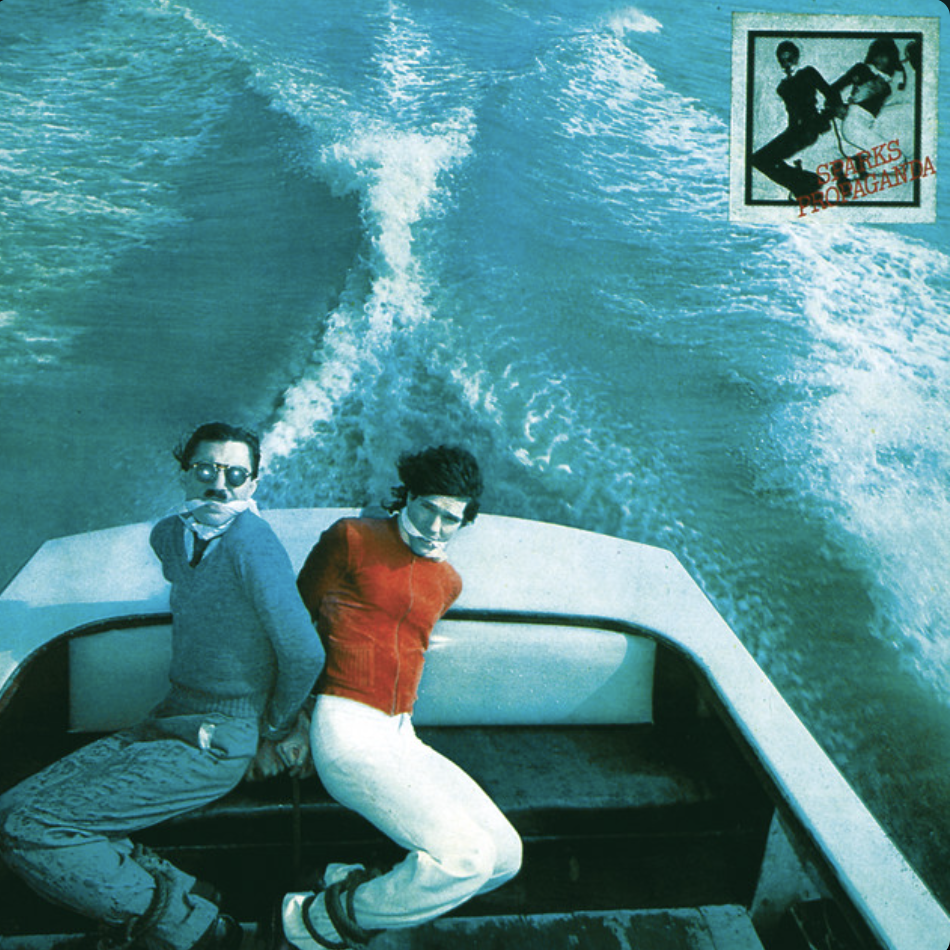
The Social Playlist is an accumulation of music I love and want to share, tracks from my various DJ sets and residencies over the years, and both selected cuts from those artists, luminaries we’ve lost and those albums celebrating anniversaries each month.
Running for over a decade or more, Volume 91 is as eclectic and generational spanning as ever. Look upon it as the perfect radio show, devoid of chatter, interruptions and inane self-promotion.
First up the LP anniversaries, starting with 50th nods to Sparks Propaganda (in my estimates, the double-acts’ best 70s album), Redbone’s Beaded Dreams Through Turquoise Eyes, Yumi Arai’s Misslim, and The Rolling Stones It’s Only Rock ‘n Roll – see below in the archives section for my little summary, if dismissive, piece on the album.
Released this month forty years ago, there’s tracks from The Fall’s The Wonderful And Frightening and Cabaret Voltaire’s Micro-Phonies. Jumping forward another decade, and I’ve also included a track from the Digable Planets’ 94’ released Blowout Comb. Another leap forward and I’ve chosen to also mark the tenth anniversary of Scott Walker’s collaboration with Sunn O))), Soused – you can read my original piece on the album in the archive below; one of my finest hours I reckon.
Whilst the Monolith Cocktail’s Monthly Playlist is all about the newest music, I miss things or just don’t have room to feature everything. And so, the Social offers room to some of those newish, recent releases that missed out. This month there’s choice tracks from Heyme, Waaju and Majid Bekkas, The Bordellos, Reverand Baron and Calvin Love, and Paten Locke.
You’ll also find, from across the decades, borders and genres, a smattering of musical choices from Heltah Skeltah, Lowlife, Samuel Prody, Gilli Smyth, The Sun Also Rises, Michel Magne, Debile Menthol, Lita Bembo, Art Zoyd, Tudor Lodge, Tommy Keene, The Silver Dollar, Vince Martin & Fred Neil, Yoch’ko Seffer, Male and Mahjun.
TrAcKlIsT iN fUlL
Michel Magne ‘Cine qua pop’
Debile Menthol ‘Tante Agathe’
Samuel Prody ‘She’s Mine’
Tudor Lodge ‘The Lady’s Changing Home’
Tommy Keene ‘My Mother Looked Like Marilyn Monroe’
The Rolling Stones ‘Dance Little Sister’
Cabaret Voltaire ‘James Brown’
The Bordellos ‘King Of The Bedroom’
The Fall ‘2 X 4’
Male ‘Bilk 80’
The Jazz June ‘Silver Dollar’
Mahjun ‘L’un dans I’autre’
Art Zoyd ‘Alleluia’
Yochk’o Seffer ‘GONDOLAT’
Waaju and Majid Bekkas ‘Fangara (Live Edit)’
Yumi Arai ‘On the Street of My Home Town’
Lita Bembo ‘Muambe’
Digable Planets Ft. Guru ‘Borough Check’
Paten Locke ‘Widdit’
Heltah Skeltah ‘Clan’s, Posse’s, Crew’s & Clik’s’
Redbone ‘Cookin’ with D’Redbone’
Heyme ‘Downtown Train’
Reverend Baron & Calvin Love ‘Famous Feelin’’
Scott Walker & Sunn O))) ‘Brando’
Lowlife ‘Again And Again’
Citymouth & People’s Palms ‘Singlecycles’
Gilli Smyth ‘Shakti Yoni’
The Sun Also Rises ‘Wizard Shep’
Vince Martin & Fred Neil ‘Morning Dew’
Sparks ‘Bon Voyage’
/ARCHIVES_____
This month, I’m reviving my archived pieces on The Rolling Stones It’s Only Rock ‘n Roll, which is fifty years old this month, and the late Scott Walker’s unholy alliance with Sunn O))), Soused, which reaches its tenth anniversary in October.
Relax, It’s Only Rock ‘n Roll. The Stones ’74 LP is 50 this month. (Appearing originally in my four part potted history of the group).
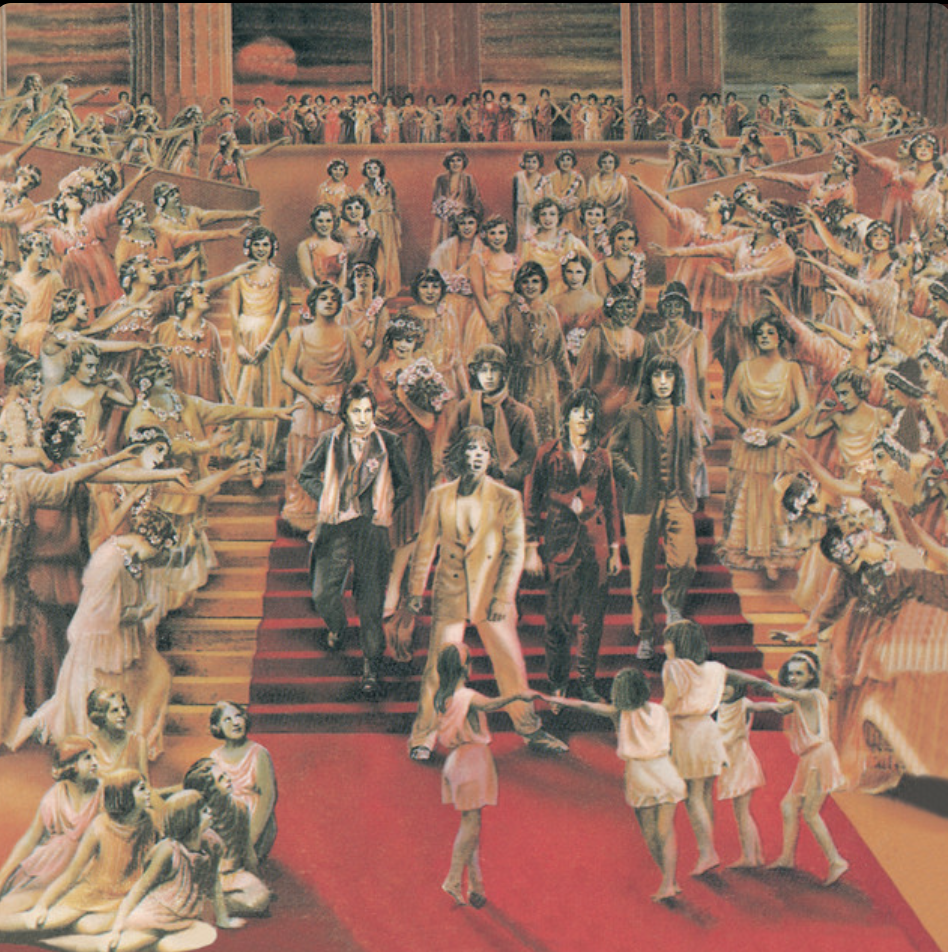
The basic premise of the Stones 12th album was to give their critics, especially the punctilious music writer Lester Bangs, the bird-finger.
Bangs’ condemnation at the paucity and profligate decline of the group was particularly scathing – quite justified in some respects – and only increased with each new release.
Incredulous at the growing derision and, as they viewed it, over-the-top analyses of their music, this album makes no bones about its regression back into the rock ‘n roll womb: albeit a version of that initial scene performed by a languid miscreant bunch of lolloping posers reprising oldies from the blues-R&B-r’n’r cannon.
The self-titled track and single from It’s Only Rock ‘n Roll (And I Like It) was strangely – so it’s claimed by Richards – conceived by a testy Jagger and recorded with his new “soul mate” Bowie as a rough demo. Such was the internal drift between the Stones creative partnership that Jagger often composed and thrashed out ideas away from his Glimmer Twins foil. During this break in communications, Richards was hanging out with The Faces lead guitarist and crow-haired sporting Ronnie Wood at his London studio. Wood had begun recording a solo LP and had asked along both Richards and Mick Taylor to add a touch of sleazy blues. Whilst at one of these relaxed sessions, Jagger dropped in and cut a version with Woods and, Small Faces/Faces drummer, Kenny Jones, but also produced another version with his comrades at a later date (Woods again played on this, contributing the rhythm guitar part on the 12-string). Regardless of who had their paws on it, It’s Only Rock ‘n Roll (And I Like It), is a stereotypical Stones pruning swaggered anthem, one that leans very heavily upon the strutting glam-rock pout of T-Rex.
Geographically separated, and as usual, sabre-rattling with the establishment, the band pushed-on, even though by now Richards’s increasing drug-fuelled skirmishes looked certain to scupper any attempts to successfully record.
To top it all, Taylor’s growing resentment at the lack of credit and acknowledgement for his contributions set the ball in motion for his resignation from the band a year later. Yet despite his disgruntlement, Taylor hung-on in there, playing on a majority of the albums ten-songs but not the title-track single; even though he appears in the video.
Without their due-diligent and overseeing producer, Jimmy Miller, the production fell to the aggrandising pairing of Jagger & Richards. Miller, a stalwart member of their inner circle and sometimes sobering force for good, had finally succumbed to his drug habit (picked-up whilst working with the band) and left, leaving the pair to take control for the first time since Their Satanic Majesties Request. And we all know how that turned out!
Scott Walker + Sunn O))) ‘Soused’ – Harrowed by thy name.

The usual rolled-out cliché of criticism that always greets every Scott Walker release, charts the enigmatic artist’s pop light to experimental morose career arc; from the teen swoon idol heady days of the Walker Brothers, via monastic alienation and Jacques Brel inspired crooner of esoteric idiosyncrasies, to existential avant-garde isolation.
Inhabiting the darkest recesses of humanity and history for at least half of that time, we should be used to this morbid curiosity, worn with earnest pride by Walker, who peers into the abyss on our behalf. Confronting with a meta-textural style the barbarity and failings of humanity for at least thirty odd years then, any developments in the Walker peregrination, shouldn’t really surprise anyone: at least the critic.
In what was met with certain trepidation or surprise by many, his unholy union with the habit adorned disciples of hardcore drone Sunn O))) is actually a very shrewd and congruous partnership; a 50/50 immersive experience, with both parties seemingly egging each other on. Walker for his part lyrically less cryptic, the Sunn chaps pushed to produce one of their most poetic and nuanced beds of sustained drones yet, and on this occasion, even cracking out various wild shortened, punctuating and unyielding riffs – verging on full metal and heavy rock riffage. Letting rip with a resonant field of sustained one-chord statements and caustic stings that bend or longingly fade out into a miasma, trying to find a meaning in these drones is akin to an Auger interpreting symbols and signs from the entrails of a wretched, just slain sacrificial beats. Yet it does work, and the bare minimal, fuzzy and wrenching bed of murmuring, primal guitars perfectly set up the intended atmosphere.
Once again, Daemonic forces have conspired. The result, a five act guttural opus, entitled Soused – in this instance the title is to be taken as a plunging or submersion into liquid or water, rather than a slang for hard liquor intoxication (though if it were, the brew on offer would be hemlock!).
What starts out and continues as a sort of proxy chorus (the nearest you’ll ever get to one on a Walker outing), the introductory crystallised, even dreamy, sense of melodic relief that introduces the album’s first musical tome, ‘Brando’, is soon corrosively despoiled by the menacing first strikes of a signature Sunn O))) chord and bullwhip.
A rather odd theme for Walker to build a threatening tower of misery from, the song alludes to the obligatory sacrificial martyrdom of the title’s Marlon Brando. Whether as self-flagellation, Brando had a penchant for taking on or even bringing (off his own back, so to speak) the act of taking a brutalised beating to his roles: from vigilante beatings in The Wild One to feeling the sharp end of a Elizabeth Taylor horse whipping in Reflections In A Golden Eye. Brando’s fatalistic characters were either the naïve well-intentioned disaffected (Terry Malloy in On The Waterfront) or assassinated disenchanted mavericks (Colonel Kutz in Apocalypse Now). The repeated lashings of a bull whip in this instance, however, refer to his role as the conniving bank robber Rio in the western One Eyed Jacks; one of the movie’s most memorable scenes being when Rio is administered the whipping of his life by a disgruntled and wronged former criminal partner, Dad Longworth (played by Karl Malden), in front of the towns people.
Perhaps this series of observations, first set off by watching One Eyed Jacks, from Walker is over-played, but it is remarkable as you play back through the actor’s movie catalogue and find a connective theme of taking the blows and even death on the chin. Probably reading too much into now and Walker does have a history of wry and acerbic wit, but Brando could be said to be offering his body up to the mortal sins as a punch bag (taking method acting literally) or was just masochistic (Last Tango In Paris M’lud). You decide, it makes for one reason or another a most apocalyptic soundtrack, mixing as it does, doom with Walker’s almost uplifting, visionary vocals to a flaying cycle of whip happy bullies.
Biblical in more ways than one, the standout mega-bestial centrepiece must be the harrowing ‘Herod 2014’; an atavistic disturbing chapter from the Roman occupied Middle East, it alludes to, what many historians say, is a wholly fictional tale of King Herod’s decreed infanticide of his kingdom (allowed by the Roman occupiers to reign over Judea and surrounding areas). Bathed in a sonorous reverberation of fearful discordance and a distressed unworldly cry of danger, this twelve-minute opus is stalked by the harangued forces of malcontent and revved-up torturous drones. The conceptual allusions, which can’t help but echo through time to the present, are far bigger than this baby cull, the region has, after all, always been awash with both the fabled and all too real episodes of death and misery for thousands of years. Yet despite this, the song is itself one of Walker’s best and even most melodically poetic, sitting happily with the material on his last two albums, The Drift and Bish Bosch.
Lyrically traumatic, but almost beautifully hewn from the English language, the opening lines bellow a nuanced scene-setting intellect, more novelistic pyschogeography than song: ‘She’s hidden her babies away. Their soft gummy smiles won’t be gilding the memory.’ In setting up the horrid event and psychological primal emotions that resonate with his audience, Walker goes on to mention two of the most famous painters to depict this crime, Nicolas Poussin and Rubens, who both fashioned their own (setting it in their own time) Massacre of The Innocents.
Herod 2014 straddles the LP like a monolithic titan. A real horror show, both wrenching yet also surprisingly compelling.
You would perhaps be fond of some relief after sitting through all that, but Walker won’t let you off that easily; summing another Sunn 0))) crackled, anvil- beating, industrial chorus of esoteric dread. ‘Bull’ is fraught with tension, languidly striking with stabbing guitars and post-industrial riffs one minute, sinking into the mire of silence and emerging like a troubled crooner monk the next. Heavy and brooding with mechanical timepieces, crowing shadows and subterranean spirits moving amongst the low buzzing presence of a pant-messing sustained drone, the Bull is unsettling to say the least, like a game of tag in the Labyrinth of the Minotaur. And the song with the longest outré of all; Walker finishing off his cryptic lines halfway through, leaving the last four minutes to his comrades to play out.
‘Fetish’ as it may already suggest is a sadomasochistic affair. A soundtrack set to some cannibalistic or serial killer shocker, where the action is carried out entirely on a Mona Hatoum barbed wire bed in a meatpacking factory. Thrashing around and violently piqued by a harassed beak like attack, the backing is a maelstrom of dentist drills, panting shakers and eerie hanging silence, until it breaks out with the album’s first drum break and rhythmic holy chorus. Throughout, Walker swoons in resignation, dropping lines like, “acne on a leaper”, and “glim away little brute”, in a disjointed narrated sombre tone that gets more dangerous as the song churns to its climax. A ritualistic metaphor, the song’s central tool of terror, the blade or scalpel, is held as an abstract reference point to gleam some meaning, whether it pertains to the cosmetic, life-threatening surgery, torture, the sexual or even tattooing, Walker and Sunn O))) build a nuanced layer upon layer of industrial buzzing queasiness to a trope.
Be under no illusion with the finale to this Dante inferno, the ‘Lullaby’ tones on offer here in no way promise a good night’s sleep. This is after all Walker’s crooned eulogy to assisted lullaby suicide, and the sound of death’s hallucinatory vibrations, gradually taking hold.
Interpreting the song in her own enigmatic way, Ute Lemper bravely grappled with the song for her 1999 album, Punishing Kiss, but Walker now takes back what he at first giveth, converting it into an even gloomier anthem with his monastic brethren.
You can almost hear the percussive ticking of a Newton’s cradle: the mortal clock running out as the drugs take effect; comfort is not an option. The whole thing sounds like a seething hotbed of psychological thrillers and horror, played out remorsefully until the final bleep of the life support signals the end. Walker never nails home his own social or political solutions, and so this, very much a topic debated in recent years and ongoing, is more a diorama set piece, which neither condones nor condemns assisted suicide.
Disturbing throughout, this unnerving suite is obviously not to be recommended to those already on the knife-edge or for those who stay clear of the news or anything that may remind them of human suffrage. You also need stamina and plenty of nerve to sit through this uncomfortable 49-minutes of music at its most challenging. Not so much hostile as shredded by a repeating rotor blade cutting action that piques and prods, even the quietest passages are threatened by an unseen presence of danger. Hell knows (literally) how this album would go down live, the option tentatively hanging in the air, depending on its reception; a possibility that could see the maverick auteur and theatrical seven-day avant-gardist performing for one of the first times in eons.
Both parties in this experiment prove their mettle, reinforcing their reputations but producing an album that is not only accessible to the devotees and followers but also those who’ve previously skirted around taking a walk through the catacombs of the bleakest recesses of a conflicted mind.
THE MONTHLY DIGEST OF ACCUMULATED NEW MUSIC, THE SOCIAL INTER-GENERATIONAL/ECLECTIC AND ANNIVERSARY ALBUMS CELEBRATING PLAYLIST, AND ARCHIVE MATERIAL CHOSEN BY DOMINIC VALVONA

___/NEW\___
Jonah Parzen-Johnson ‘You’re Never Really Alone’
(We Jazz)
The soloist is never alone it seems, when on stage. And the highly prolific, serial collaborator and in-demand Chicago born, but Brooklyn-based, alto and baritone saxophonist and flutist Jonah Prazen-Johnson (regular followers will recognize the name from his trio partnership appearance with the Lycia inspired Berke Can Özcanon the Twin Rocks album from late last year) stands in the spotlight reacting to, feeding off of, and giving it all back to his audience and the wider community: hence the “We made this together” statement included on the album cover.
In the age of high anxiety, division and unwilling compromise, Jonah finds both the space to let go of the strains on the mind, the worries and concerns. In a nutshell, with just the use of his polytonal saxophone holds, wanes and drones (between higher trills and deeper bass-y vibrations; often together simultaneously) and willow-y, natural blossom garden flute, he projects invocations of regret and rumination whilst offering support, and even “courage” to see through the worst of it. To the undulating waves, near bristled distortions and more melodious tones, to the didgeridoo-like circles, fog horns, honks and drawn-out, Jonah evokes melodic traces of his native home (Chicago), the avant-garde, explorative and pastoral. If names and luminaries such as Sam Rivers, Marshall Allen, Coltrane, Roscoe Mitchell (especially his partnership with Anthony Braxton), John Zorn, Peter Brötzmann and Jeremy Steig grab you, then make the commitment and purchase a copy a.s.a.p.
ZA! + Perrate ‘Jolifanto’
(Lovemonk) 22nd March 2024
Bonding together on one Dadaist inspired transmogrified cross-pollination of sonic and musical ideas, the Spanish collaboration of the duo ZA! (No strangers to this blog; first featured in my highly popular Spanish Underground piece from more than a decade ago) and the experimental vocalist Perrate come together on an extraordinary album of sound assaults and hybrids that turn Iberian traditions and cultures on their heads.
Both partners in this enterprise have spent two decades or more transforming the traditional music of their native land; the critically applauded Perrate exploring the “outer edges” of Flamenco, his identity and heritage entwined with the age-old Gitano Iberian Romani community of which he is descended – a culture abundant with the stars and progenitors, innovators of Flamenco -, and ZA! often crazily and imaginatively merging a variety of Spanish styles, folk music, with anything from the African beats to the psychedelic, electronic, Balinese polyrhythms, thick distortion, free jazz and the shepherds of Tuva.
Taking the first word from Hugo Ball’s exhaustive Dada recited ‘Karawane’ phonetic poem, “Jolifanto” is packed with ideas and flights of fantasy; yet never loses its Iberian foraged roots, with plenty of recognizable Flamenco guitar frills and intimate quivery entwined attentive and descriptive accompaniment – sometimes sounding like a cross between Raül Refree and Jeff Buckley. You can also pick up the atmospheric settings of the dance, the performance throughout the album. The original performance of that poem, performed at the famous iconic Cabaret Voltaire, put Hugo in a trance; the captivated audience compelled to rush up on stage before the Dadaist luminary was dragged away. A certain lunacy, this spirited experimentalism and performance is transcribed to a lot of ZA!’s music, but it somehow makes perfect sense when combined with the poetic longing calls, mewling, whoops, mantra, assonant and almost muezzin-like vocals of Perrate. At any one time you are likely to hear echoes of Moorish Andalusia, oscillated dub, elephant horns, percussive scuttles, krautrock, Vodun invocation, post-punk, no wave and Afro-Cuban, and pick out bursts of Jah Wobble, Anthony Braxton, Zacht Automaat, CAN, Greco and Cambuzat, African Head Charge, the Reynols, Mike Cooper & Viv Cooringham’s ‘A Lemon Fell’, Harry Belafonte (I kid you not), Sakamoto and the Gypsy Kings.
From the cosmic and unsettling to near terrifying, there’s a lot to process in this slightly madcap collaboration. And yet in saying that, this album has soul and a seriousness about it in revaluating, pushing at the boundaries and ideas of what Iberian culture means in the 21st century; finding connections across the borders with music from as far away as Arabia, South America and the original roots of the region’s Romani communities. A great work of art and brilliance from the partnership that will excite, wrong foot and entrance in equal measures.
Leonidas & Hobbes ‘Pockets Of Light’
(Hobbes Music)
Expanding upon their sonic partnership with a debut album of epic cosmological proportions, Leonidas & Hobbes reach further than ever before into both the cerebral and outer limits of space to channel a litany of anguish woes.
Between them, this pairing of like-minded curious and lauded electronic musicians/DJs/club night instigators, cover the capitals of London and Edinburgh with their enviable CVs and provenances in everything from house to techno, the ambient, Balearic and dance music genres. Making good on previous EPs (2017’s Rags Of Time and 2021’s Aranath) they now face the philosophical quandaries of humanity, technology, climate change, extinction and metaphysics across thirteen movements, dance grooves, soundtracks and celestial symphonies.
A self-proclaimed ‘lockdown album’, the pandemic and stretches of time spent apart from socializing and giging, have had a deep impact on both artists; combine that with becoming parents and breakups, and you’ll find a pair of minds concentrated on finding the ‘light’ in a universe of emptiness and apocalypse. With effected dialogue snatches of ground control communications and alternative pseudo drug escapes from authoritarian mind control and conditioning speeches, and broadcasted weather reports from the eye of the storm (in Charleston, North Carolina to be exact) smattered throughout, the concerns, enquires and philosophies of both partners on this odyssey are made clear.
Like one long set, a voyage of peaks, beats and more trance-y and contemplated ambient pieces, this album goes from literal takeoff to drifting untethered in the void and back to the inner mindscape. Production and style wise there’s retro-space and kosmische hints of Vangelis, La Dusseldorf, Iasos and Klaus Schulze next to more acid zapping old school evocations and breaks of Wagon Christ, Orbital, Luke Slater, Mo Wax and Howie B, plus a Balearic vision of The Orb and echoes of the 303 drum sounds of Mantronix and Man Parrish. Vapours and wisps mystify certain suites, whilst others bounce along on more kinetic waves as mindscapes are mixed with technology, science and the sci-fi. Pockets of Light channels Leonidas and Hobbes’ worries and prophecies into a reflective existential soundtrack.
Their Divine Nerve ‘The Return Of The Lamb’
(Staalplaat)
A second inclusion this year for the Ukrainian trick noise maker Dmytro Fedorenko, his last Variát collaborative venture with Masami Akita (under his Merzbow alias), Unintended Intention, was featured in this year’s inaugural Digest. A brutal, scarred abrasion of twisted steel and concrete that same atmospheric heavy set of dark META electronica is now stripped almost entirely of the human touch for something altogether more esoteric and alien.
With the Washington DC experimental artist Jeff Surak (who has a CV far too numerous and varied to list here, but in brief, he made his first tape manipulations in the 80s under the 1348 moniker on his own Watergate Tapes imprint, lived in Russia in the early 90s, and after returning home, directed the annual Sonic Circuits Festival of Experimental Music in DC for thirteen years…the list goes on) as his foil, Dmytro finds yet another vehicle for expelling demons, the bestial, the apparitions in the machines and unearthly. Under the afflatus/supernatural imbued Their Divine Nerve title both accomplished participants retune the Fortean radio set for a corrosive, fizzled, buzzing unholy noisy embrace of the pained, hurt, mystical and chthonian.
Generous with the amount and duration of the material, this is a serious set of discordant and more hermitic vibrations, spread over ten (thirteen tracks if you buy the “bonus” version, which does actually include the title-track) post-industrial strength hauntings of the soul and psyche. The action varies, however, from invocations of early Richard H. Kirk to Basic Channel, Bernard Szajner, SEODAH, Coil, Alejandro Jodorowsky’s Holy Mountain score, and Spain’s underground tape culture in the 80s. And within that sound-off board, portals and channels open up to the slithered tentacles of the Cthulhu and other leviathans from the depths, as dark matter is resourced to build a haunted factory of unidentified operative machinery and tools. Phantoms are everywhere in this fuckery of scrunched marches, square bladed sawing, needle sharp scratches of surfaces and iron materials.
Axes to grind, metaphors for the growing unease and trepidations of unimpeded violence, the continuing evil invasion of Ukraine, you could easily read the sonic tealeaves on this immersive experiment. All I know is that the biblical inspired The Return Of The Lamb offers analogies to the Christian symbol of sweetness, forgiveness, meekness, gentleness, innocence and purity, but it’s also a representation of both Christ himself and that of a sacrificial animal – when depicted with the Lion it can mean a state of paradise. Make what you will of that liturgy, but hope and salvation might yet arise from the distresses and savagery. In short, Their Divine Nerve is a successful debut in noisy art forms, horror, alien visitations and mystery.
Dave Harrington, Max Jaffe and Patrick Shiroishi ‘Speak, Moment’
(AKP Recordings)
An enviable trio of acclaimed and highly prolific musicians pulls together their talents and experiences for an improvisational album of both suffused gazing/reflection and wilder, unbound avant-garde extemporized entanglements. Dave Harrington, Max Jaffe and Patrick Shiroishi’s CVs, appearances and collaborations are lengthy and varied: far too numerous to list here anyway. But suffice to say this triumvirate of contemporary jazz explorers covers more or less all avenues of that genre’s legacy and penchant for change, experiment – from the more pliable to wielding and addressing the abstract evocations of trauma.
In the spirit of improvisation, all three players dashed this recording off in a single afternoon (as it happens, a couple of years back in an LA studio on the 25th October, my birthday!) having only met that same day for the first time. Astonishingly, Speak, Moment is a very sophisticated, cohesive album that gels together perfectly: even during its more untethered and intense passages of abandon.
The performances move loosely from the near ambient undertones of Jaffe’s incipient and resonating textural cymbal and sieved-like snare washes, the subtle twangs and psychedelic mirages of Harrington’s guitar, and the lilted tonal flutters and more tuneful rises of Shiroishi’s saxophone, to the near cacophony of staccato breaks of later tracks like ‘Ship Rock’ – a sort of stormy tempest rock-jazz fusion that sounds like The Jim Black Trio tied to a maelstrom tossed raft with Chris Corsano, Pat Metheny and the Red Crayola.
The traversed dreamy opener, ‘Staring Into The Imagination (Of Your Face)’, seems to allow the trio all the time and space needed to eloquently and in a more gauzy manner, express a soliloquy to the processing of feelings, environment and the unsaid – Harrington’s guitar reminding me in part of Fernando Perales and Myles Cochran, whilst Patrick Shiroishi’s sax has touches of Dexter Gordon, Roscoe Mitchell and Sam Rivers. Talking of Harrington, I did read that his own influences range from Bill Frisell to John Zorn and Jerry Garcia. The latter is very much channeled on the spiritual percussive trinket rattled and leviathan looming ‘How To Draw Buildings’, with guitar parts that sound almost late 60s Woodstock acid-rock in inspiration (almost Hendrix-like in his more restrained and meditative mode). You can also hear the aria-theremin higher voice-like notes of Sonny Sharrock amongst the wilderness and mizzle and sizzled resonance of Jaffe’s drums on that same track.
The next track, ‘Dance Of The White Shadow And Golden Kite’, reminded me of Ariel Kalma – that and Ornate Coleman in an exotic Afro-jazz bobbing dance with the Art Ensemble Of Chicago.
The atonal sensitivities shift amongst the ambiguous presence of other forces and introspective moods across a quintet of spontaneous explorations on an accomplished gathering of talented musicians. If you have an ear and like for the Cosmic Range, Tumi Mogorosi, Yonatan Gat and the Gunn-Truscinski Duo then you have to own this traversing improvised experiment.
Twin Coast ‘To Feel’
Back with another enveloped in guitar feedback sculpted and layered vision, the Chicago shoegazers and noiseniks Twin Coast get pulled into a paranormal alternate dimension: A static TV set cell that seems to be at least languidly comfortable and dreamy. Almost numbed to the whole sorry state of it all, the duo lose themselves in an unholy hallucinogenic white noise of static fuzz and crystal shimmers and flange reverberations. I’m calling erased apparitional shoegaze.
The traditional B-side as it were, is handed over to diy electronic artist Isaac Lowenstein, aka Donkey Basketball (a EDM project that apparently started off a joke but quickly grew into a very real act, mixing and merging everything from acid to jungle and techno). Isaac, a fellow Chicago resident, transform the original into a kinetic, machine and mechanics switching, twisting, ratcheting and spring-loaded minimalist techno percussive tunneled and vaporous space-trip. I’m hearing a touch of Mike Dred, Mouse On Mars, Ritchie Hawtin, Basic Channel and Autechre added to the mere essence of the original shoegaze immersion from the ether.
___/THE SOCIAL PLAYLIST: VOLUME 84\___

Continuing with the decade-long Social – originally a DJ club night I’d pick up at different times over the past 20 plus years, and also a café residency from 2012 to 2014 – playlist, each month I literally chose the records that celebrate anniversary albums, those that I’d love to hear on the radio waves or DJs play once and while, and those records that pay a homage and respect to those artists we’ve lost in the last month.
Anniversary spots this month go to the Style Council’s ’84 special Café Bleu (I’ve chosen to kick the whole playlist off this week with the more dance-funk, WAR impressionist ‘Strength Of Your Nature’, from an album that slips mostly into more Post-MOD, Jazz Café piano), RUN-DMC’s self-titled holler from the same year and Scott Walker’s menacing, out-there Climate Of The Hunter masterpiece. From a decade before, I’ve added a glam pop-gun tune from T. Rex’s Zinc Alloy And The Hidden Riders Of Tomorrow – the LP that must have been on Bowie’s mind when recording Young Americans. Leaping ahead twenty years and there’s a smattering of ’94 releases from the Hip-Hop royalty Gang Starr (Hard To Earn), Main Source (Fuck What You Think), The Auteurs (Now I’m A Cowboy) and the Aphex Twin (Selected Ambient Works 2; so good I’ve included two tracks). From more recent(ish) times, there’s a choice track from the late metal face don of leftfield Hip-Hop MF Doom and the equally revered Madlib, under their partnership guise of Madvilliany – I’ve chosen the Sun-Ra anointing ‘Shadows Of Tomorrow’, which pulls in the aardvark Quasimoto. And, as featured below in this month’s archive spot, a track from the Ministry Of Wolves ensemble cast of fairytale weavers album Republik Der Wölfe: subtitled ‘A Fairytale Massacre With Live Music’, a joint enterprise between the Dortmund Theater’s production director Claudia Bauer and musical director Paul Wallfisch, with the unholy musical alliance of Bad Seeds co-founder and adroit solo artist Mick Harvey, one time Einstürzende Neubauten, Crime And The city Solution grizzled maverick and one half of the Hackedepicciotto duo Alexander Hacke and fellow Crime and the City band mate, Berlin Love Parade co-instigator and the better half of that Hackedepicciotto partnership, Danielle De Picciotto, providing the suitable nursery grime soundtrack.
We can’t pass the month without marking the sad death of Karl Wallinger, the master songwriter behind hits for others, but also sole instigator of World Party – after leaving The Waterboys in the mid 80s. I guess ‘She’s The One’ will be rotated extensively, but I’ve chosen the just as popular and more soulfully blusy ‘Ship Of Fools’.
From the new to old past gloires, missives and curiosities, making up the rest of the playlist are tracks from Fat Francis, Dalla Diallo, Alamo, Trips And Falls, De La Soul, Heldon, MIZU, Gary Clail, Incentive and more….
TRACK LIST IN FULL:::::::::::::::::::::::::::::
The Style Council ‘Strength Of Your Nature’
Vampire Rodents ‘Trilobite’
Gang Starr ‘Code Of The Streets’
Run-DMC ‘Hollis Crew (Krush Groove 2)’
Madvillian (MF Doom/Madlib FT. Quasimoto) ‘Shadows Of Tomorrow’
Dalla Diallo ‘Sinde M’bobo’
T-Rex ‘Painless Persuasion V. The Meathawk Immaculate’
Metamorfosi ‘Caronte’
World Party ‘Ship Of Fools’
Walpurgis ‘Disappointment’
Fat Francis ‘It’s Not Rock and Roll’
Alamo ‘Got To Find Another Way’ We Cut Corners ‘Three People’
In Time ‘This Is Not Television’
The Wizards From Kansas ‘Hey Mister’
Eyes Of Blue ‘Largo’
Trips And Falls ‘I Learned Sunday Morning, On A Wednesday’
Kevin Vicalvi ‘Song From Down The Hall’
The Auteurs ‘Chinese Bakery’
Scott Walker ‘Rawhide’
The Ministry Of Wolves ‘Rumpelstiltskin’
MIZU ‘prphtbrd’
Heldon ‘Ballade Pour Puig Antich, Révolutionnaire Assassiné en Espagne’
Aphex Twin ‘#24’
Stringmodulator ‘White Noise’
Aphex Twin ‘#12’
Liz Christine ‘Two Seconds’
Heldon ‘Ouais, Marchais, Mieux Qu’en 68’
Incentive ‘Time Flows Beyond You’
Gary Clail ‘A Man’s Place On Earth’
Okay Temiz ‘Galaxy Nine’
De La Soul ‘What’s More’
Main Source ‘F*CK WHAT YOU THINK’
___/ARCHIVE\___
TEN YEARS OLD THIS MONTH: THE MINISTRY OF WOLVES ‘MUSIC FROM REPUBLIK DER WÖLF’
The Ministry Of Wolves ‘Music From Republik Der Wölfe’(Mute) 10th March 2014
Pre-dating the Viennese totem of the subconscious but already a Freudian labyrinth of analogy, metaphor and augury, the Gothic fairytale fables of the Brothers Grimm have just got a hell of a lot more unsettling and personal. Given a Pulitzer Prize winning overhaul by the esteemed award winning, self-confessional American poet Anne Sexton in her 1971 book ‘Transformations’, these same tales were brought back into the realm of the adults. Her candid, revisionist take, from the point of view of a ‘middle-aged witch’, on these standard stories is a beat poetic vivid survey on human nature: those all too familiar idiosyncrasies and failures set to a contemporary (for its time) miasma of inner turmoil.
Proving to be just as poignant forty odd years later, those reinterpretations are revitalized in a brand new multimedia stage production, debuting at the Theater Dortmund. To be performed tonight (15th February 2014) the Republik Der Wölfe, subtitled ‘A Fairytale Massacre With Live Music’, is a joint enterprise between both the Dortmund’s production director Claudia Bauer and musical director Paul Wallfisch, with the unholy musical alliance of Bad Seeds co-founder and adroit solo artist Mick Harvey, one time Einstürzende Neubauten and now Crime And The city Solution grizzled maverick Alexander Hacke and fellow Crime and the City band mate and Berlin Love Parade co-instigator Danielle De Picciotto, providing the suitable nursery grime soundtrack. Detached however from the visual spectacle, that very same soundtrack is due its own inaugural release next month; its loose narrative a series of congruous chapters, easily followed without any other stimulated aide to guide you.
Original characters that we’ve grown to love, hate, revile or recoil from, are transposed into the darker parts of our psyche. Those parable like lessons and auguries of danger get kicked around in a quasi-junkie Burroughs nightmare of cynicism and surreal terror. Tucked into a all too knowing grown ups world of jealousy and greed, Picciotto plays the part of storyteller – in this case switched, as I’ve already mentioned, from the usual young, naïve heroine into a middle-aged witch – on the opening account, ‘The Gold Key’. It’s followed by the Teutonic heavy drawling gusto of Hacke’s ‘Rumpelstiltskin’; played up to full effect, as the poisoned dwarf is revealed to be our doppelganger, ‘the enemy within’, and the spilt personality waiting to cut its way out of all of us. Sounding quite like a missing Amon Duul II number from the Hi Jack era, the song’s maligned and mischievous protagonist elicits a kind of sympathy: ‘No child will ever call me Papa’. Condemned to play the part of cruel interloper, poor old Rumpelstiltskin exists to remind us of our demonic, primal nature: a nagging inner soul tempting us to commit hari-kari on restraint.
The fabled ‘Frog Prince’ is a slithery customer, made to sound like an odious creep pursuing his very turned-off love interest. Mick Harvey moons and croaks with relish in recalling the bizarre tale of doomed romance; the moral, though dark and disturbing, can be summed up as: be careful what you wish for, the law of averages doesn’t exist and in this case turned out to be a dud, the frog was certainly no prince.
Happy endings become even more blurred with the triumvirate of leading ladies ‘Cinderella’, ‘Rapunzel’ and ‘Snow White’. ‘Cinders’ is a Casio pre-set piece of waltzing lullaby, dreamily led by our protagonist chanteuse, whilst Rapunzel and Snow White are given a fluid pained Leonard Cohen treatment. The latter a roll call of ‘seven’ inspired symbolism and metaphor, the former an idolised plaintive requiem to the exiled and ill-fated American dancer, Isadora Duncan – forced to leave the States for Europe because of her pro-Soviet sympathies, Duncan died rather ironically at the hands of the famous scarves she used to so great an effect in her dances, after one become entangled around the open-spoked wheels and rear axle of a car she was travelling in, breaking her neck.
Other notable tales of woe include the opium-induced, somnambulist ‘Sleeping Beauty’ – literally a languid sleepwalk through some Tibetan flavoured labyrinth – and lurid Harvey sung ‘Hansel & Gretel’ – the apparent naïve, saintly, twins getting the better of a cannibalistic old crone. But its ‘Little Red Ridding Hood’ who inhabits the most contemporary street hustling environment, transported from the danger lurking Black Forests into a world of creeps, junkies and ‘transmorphism’. The levels of macabre are amped up and the underlying psychosis adroitly delivered with atmospheric relish; our cast of ‘make-believe’ characters all too fallible human traits and sufferings enriched with a Murder Ballads style makeover, part Gothic part horrid histories.
FIFTY YEARS OLD THIS MONTH: T-REX ‘ZINC ALLOY AND THE HIDDEN RIDERS OF TOMORROW’
T-REX ‘Zinc Alloy And The Hidden Riders Of Tomorrow’ 1st March 1974
Whilst we are, or should be, aware of Bowie’s flirtatious lifting of Marc Bolan ideas, it’s the Zinc Alloy And The Hidden Riders Of Tomorrow: A Cream Cage In August album’s experiment with soul, a full eighteen months before the Thin White Duke’s own Young Americans, that proves to be the most obvious example of this latent influence (or if you want to be less generous, theft).
Swelling the ranks with the seductive, sumptuous tones of Gloria Jones – who evidently became Bolan’s love interest and partner till he died in 1977; a relationship that resulted in the birth of their son, Rolan – Bolan’s music opened out into yet greater velvety, blue-eyed soulful panoramas; a mix of plastic R&B, glamorous strutting and quasi-New York candy pop. From the bomp and shoop of the Gloria(fied), ‘Truck On’, to, in Bolan’s mind, one of T.Rex’s most ambitious singles, ‘Teenage Dream’, there’s an almost salacious knowing sophistication at work.
Already being regarded in some circles as washed-up, the ‘Zinc’ alter ego was an attempt to concentrate resources on the UK, as he’d spent considerable time attempting to crack the US market. He would continue to adapt the soul train, jingle-jangle sound with various other ‘boogie-woogie’ styles, including swamp rock; as he demonstrates with zeal on the poorly received LP, Bolan’s Zip Gun – at this point he may have thought seriously about sticking that ‘zip gun’ to his head as the album didn’t even chart.
Hi, my name is Dominic Valvona and I’m the Founder of the music/culture blog monolithcocktail.com For the last ten years I’ve featured and supported music, musicians and labels we love across genres from around the world that we think you’ll want to know about. No content on the site is paid for or sponsored and we only feature artists we have genuine respect for /love. If you enjoy our reviews (and we often write long, thoughtful ones), found a new artist you admire or if we have featured you or artists you represent and would like to buy us a coffee at https://ko-fi.com/monolithcocktail to say cheers for spreading the word, then that would be much appreciated.
FEATURE/SELECTION/Dan Shea

The Monolith Cocktail is ecstatic and grateful to have coaxed a guest spot contribution from the impassioned and adroit musician/writer Dan Shea. Roped into his family’s lo fi cult music business, The Bordellos, from a young age, the candid but humble maverick has gone onto instigate the chthonian Vukovar (currently working through a trio of ‘greatest hits’ packages here) and, with one part of that ever-shambling post-punk troupe, musical foil Buddy Preston, the seedy bedsit synth romantics Beauty Stab (who’ve just this week released their second single ‘French Film Embrace’, here)
An exceptional talent (steady…this is becoming increasingly gushing) both in composing and songwriting, the multi-instrumentalist and singer is also a dab hand at writing. For his debut, Dan shared a grand personal ‘fangirl’ purview of major crush, the late Rowland S. Howard (which can be found here), on the eve of Mute Records appraisal style celebration reissue of his highly influential cult albums ‘Teenage Snuff Film’ and ‘Pop Crimes’. This was followed by an often difficult, unsettling, potted with dark comedy, read on Dan’s friend and foil Simon Morris (of the Ceramic Hobs infamy; the piece can be read here), who took his own life last year.
Now, from his lockdown quarantine, Dan furnishes us with the first of his ‘imaginary film screening jukebox’ selections come loose horror fictions.
Surrender – Suicide
A Kenneth Anger motorbike gang, gay greasers checking their hair in the switchblade reflection. Using semen as Brylcreem. The homecoming queen dumped like so many empty bottles and cans.
Vega as Vegas.
The backing vocals drift in from a malt shop that was burned down by some queer bashers pre Stonewall and no one flinched. In a world where high school sweethearts go to a drive in to sneakily and fumblingly attempt autoerotic asphyxiation together as they watch Jayne Mansfield crash in slow motion.
When Vega sings, “I surrender to you”, it could be sex or God or just the voices shrieking through the tinfoil mirror of our synapses but aren’t all those things the same? Lynch would play this behind beehived girls in tight red sweaters first lesbian tryst behind a doughnut shop ran by Anton LaVey and Ricki Lake.
Which Way To Turn – Bryan Ferry
One of weird uncle David’s mystery blondes in trouble smiles from a smashed picture frame, a Stepford femme fatale. All the memory I can dredge up is here. Artfully hung and shot drapes blow in a late summer breeze. A heatwave desire and hungover regret. Blood on your lips, lipstick oozing out of your wounds. The plastic rum cups Mike gave us in the bar are overturned.
“I can’t control my feelings if I tried” sung with all the hauteur this high society Frankenstein can muster. Ferry is often spoken about as some style icon, ignoring how goofy he has frequently looked. See the Manifesto red leather suit, the Top of the Pops Jealous Guy Alan Partridge outfit or his giant shirt in The High Road. For ages I thought something was lost when he became the figure he started out parodying yet yearning to be on the first Roxy albums but that’s a lazy cliché.
This period is one of straw etching your initials in coke on a mixing desk, high-class session musicians playing three notes then disappearing. Some of my favourite stuff he did. The powder lasts an hour but the regret lingers eternal.
Lou Reed – Coney Island Baby
Lana Del Rey – Blue Jeans
The personal connections are all but overwhelming here. I band these two together as Lynch used Lou on a soundtrack and Lana IS Dorothy Vallens and Frank Booth and Sandy and Jeffrey. She’s not just the mystery woman in trouble but the architect of your demise. Lou, he’s the man behind the curtain. Whispering these tracheotomy hymns through a straw, through a hole in your wall into your sleeping mind.
I’d put these back to back to dehydrate myself: Lou’s choked murmur of “I could give the whole thing up for you” will never not crumple me. Send this one out to Lou and Rachel, the romantic ideal of my nightmares.
Lydia Lunch – I Fell In Love With A Ghost
I should’ve learned the lesson from Pet Sematary and Vertigo. I’d done all I could but she came back wrong.
She didn’t reply to anything I said, other than as a series of strangled groans. I heard “yes” where I wanted to hear yes. The first time I caught her crawling spider like along my ceiling, mournfully unaware how she got there should’ve been the tip off. Or the way there was nothing behind her eyes. But even though she’d died and she was now just a beautiful empty vessel, she looked the same. I imagined her side of our conversation the way I did when she was still dead.
Then she was in the bath. This was progress. She was able to wash herself. I supervised, to keep her safe and because I wanted to. She kept turning the hot tap. The bath water was boiling, smoke was rising and she was crying out pathetically. Water spilling over the edge of the bath. The screams got louder. I tried to turn the hot tap off and she lunged forward and head butted me with a force that sent me unconscious SPRAWLED.
I came around in a pool of bloody water in time to watch the love of my life disappear down the plughole.
Cocteau Twins – Musette and Drums
Dylan and Patrick meet in a side street. The snow is still falling lightly, flakes landing on their black leather jackets. They embrace knowing this is truly the last time. The sound of traffic is all but overwhelming but there is not a car to be seen.
They kiss and blood oozes from Dylan’s lips. He turns, walks away and disappears entirely into thin air. He is dragged out of the sea by trawlers, his arms tied behind his back and his eyes pierced by emeralds: “natural causes”.
Smoke enshrouds us as we reach the clearing. I take your hand and we kiss. The world is ending, the tiny grey pinpricks in the sky are opening up. Remember when I first told you I saw them? Be quiet, the ice is melting.
Xiu Xiu – Botanica de Los Angeles
Gersten Hayward is turning tricks now and I want her for her mind as much as her body. That’s okay. I’m turning tricks as well. You get a discount for hiring us as a couple. If you look like a young David Lynch then I don’t charge.
Her love is free to me and as for the whoring it keeps us in whiskey and hash browns. We watch Mulholland Drive together. She freezes, but not at the scene in the diner. Something suddenly clicks in her.
“Dan?”
“Yes darling?”
“I’ve got the incredible feeling that I’m not real”
“Gersten I’ve been dreading this conversation. It is true that you are fictional. I am unsure if I am also fictional.”
“How did my mother birth a fiction?”
I show her the clip from The Return where she is cradling her ODing boyfriend and gently tell her that because he was never born he can never die. This is why I am largely anti natalist. Then a client comes by.
SSQ – Anonymous
The party is over and we watch the nightlife crop itself shorter still through a haze of smoke. A mute TV shows static, like pictures in the fire I just about make out the image of a screaming man watching an emaciated woman disappearing down a plughole. He is entirely naked and smearing his genitals with lipstick.
Thankfully you / she steps in my way. A cigarette dangles from your drunken lips. You don’t even smoke. You in that black velvet dress. You turn around and bid me to unzip it, smiling at me.
Then I wake up in their living room. Where I first heard this record. I thought it was a synth pop revivalist record. Something like the Chromatics where it’s so fetishistically close to that mid 80s sound you think it could only have been made in the last ten years. No. It’s actually from the mid 80s and prefaces her hi NRG records.
The girl is real but she wants nothing to do with me. She probably doesn’t even own a black velvet dress. Gersten hasn’t been returning my calls. Maybe I should try ringing her number.
Scott Walker – Jesse
It’s a shame Lynch and Walker never worked together as this always makes me think of Episode 8. The slow motion Jailhouse Rock chords make me imagine the earth opening itself up to weep. The Penderecki strings that have ran through Scott’s work since as early as Plastic Palace People or It’s Raining Today.
The 50s he dreams of never happened. They are an autistic reflection in a fish bowl. Elvis was weirder than anything you could ever dream up. We don’t deserve rock’n’roll.
I dreamt you were crawling through a tunnel looking for me. My stuck needle entreaties and iconoclast drag. I watch her crawl across the ceiling. I, your supplanter.
Now I’m day drunk on daydreams on a train and an Indian man is shaking me. “We’ve terminated mate. The train is over”. My psychic next of kin I’d know you in my sleep. I, Supplanter.
Album Review: Dominic Valvona
Simon Bonney ‘Past, Present, Future’
(Mute) 3rd May 2019
Arguably one of the great voices of Australian music over the last four decades, Simon Bonney is nothing if not proficient in taking hiatuses. Emerging from just the most recent one, five years after the release of the last Crime And The City Solution opus American Twilight – itself, the first album by the iconic alienated nihilists turn beatific augurs of country-doom in twenty years -, and twenty-odd years since the shelving of his third solo LP Eyes Of Blue, Bonney makes a welcome return to the fold.
Prompted by the decision of Mute Records to facilitate the release of that fabled last solo songbook, the Past, Present, Future collection is both a reminder, featuring as it does tracks from both the 1992 Forever and 1994 Everyman albums, and showcase for six previously unreleased tracks from Eyes Of Blue.
Caught in the industry merger machinations of the late 90s, the Detroit imbued-recorded Eyes Of Blue fell victim to the fallout of A&M Records, “dissolved” into the behemoth of the Universal Music Corp just as Bonney was agreeing a deal with them to release it. As a consequence, what would have been his third solo outing and the perfect bookend to a brilliant run of country blues inspired songbooks, instead sat in the vaults, waiting patiently to get released.
Not new material but a catalyst for projects going forward, this solo collection proves as prescient today as it did back then. Especially the beguiling cover turns homage (in light of the recent passing of Scott Walker) of the brooding maestro’s stately majestic lament to fading beauty and decadence, ‘Duchess’. Brought to Bonney’s attention during recording suggestions for Eyes Of Blue by his producer on those sessions, Dave Feeny, Walker’s sullen lyrical masterpiece proves a congruous fit for the Australian’s rich lap steel and Dobro resonator thumbed and waning country malady signature style.
The effects of time and the changing landscape are running themes in all of Bonney’s solo work. Echoing loudly with the ongoing divisive debate of the present, many of these beautifully articulated sad declarations feature a protagonist searching for their place in the world, set often to a kind of American West favoured by The Band, but also the Outback. Alienation is a given: Bonney’s own past travails richly mined; the teenage runaway leaving behind the vast rustic expanses of Tasmania for the city life of Sydney, via the Australian metropolis’s Red Light district and squats. It was of course where the fourteen-year-old outsider formed the first incarnation of Crime And The City Solution, one of four such phases, the next taking shape with a move to London in 1984 and including both Mick Harvey and Rowland S. Howard (alongside the equally notable Harry Howard and Swell Maps’ Epic Soundtracks), the third such version taking shape in Berlin (embracing musicians from the city’s post-punk and post-Krautrock scenes, such as Einstürzende Neubauten’s Alexander Hacke), and fourth, in Detroit.
The greatest panoramic opus, an unedited version of the Everyman LP’s leitmotif, is in three parts a grand sweep with military snap snares. Bonney in resigned fatalism almost, swoons “I’m looking for a life I can’t explain” as a full-on assault from all directions bombards him. ‘Ravenswood’, taken from the Forever LP, is in a similar Western mythos mode a hard worn thunder and rain-beaten plaints with the age-old “rain on, rain on, rain on me” yearn that sets our high plains drifter on a course for redemptive change. Following in its wake is a ran of highlights from both Forever and Everyman, including the Orbison plays twanged angel to the Lone Justice declaration ‘Don’t Walk Away From Love’, the Lynchian motel spell (complete with a bongo anguish) ‘There Can Only Be One’, and bowing Greyhound bust tour through Texas Rose country runaway ‘Where Trouble Is Easier To Find’.
Much of the Bonney songbook, delivered with earnest, deep timeless country-imbued veneration, aches, even worships, for a string of muses; an undying, unwavering love to both the unattainable and lost. One such elegiac object of such pathos-inspired yearning is Edgar Allan Poe’s famous Annabelle Lee –the metaphorical lamentable figure of the Gothic polymath’s last poem -, who appears on both the eponymous and title tracks from Eyes OF Blue. Lovingly conveyed, even if it marks the death of that lady, it proves symmetry to the album’s profound poetic loss of influence, desire and alluring surface beauty of Duchess. Eyes Of Blue, which makes up half of this collection, follows on from the previous solo works perfectly. A touch deeper, even reverent perhaps, but every bit as bathed in country suffrage. Salvaged at long last, that lost album offers a closure of a kind. Proving however, to chime with the present, far from dated, the Eyes Of Blue part of this collection is a perfect finish to a great run of epic, though highly intimate, solo opuses; the songwriting as encapsulating and grandiose, earthy as you would expect.
Bonney remerges just when we need him; back after many setbacks, but enjoying music again (he says). Past, Present, Future can also be seen as perfect compilation of that solo catalogue for both hardy fans of the artist and as an introduction to one of Australia’s outstanding talents.
Words: Dominic Valvona
Album Review: Dominic Valvona

Raf And O ‘The Space Between Nothing And Desire’
(Telephone Records) 31st May 2019
Imbued by both the musicality and spirit of David Bowie, Scott Walker, David Sylvian (both as a solo artist and with the fey romantics Japan), Kate Bush and in their most avant-garde mode, Bjork, the South London based duo of Raf (Raf Montelli) and O (Richard Smith) occupy the perimeters of alternative art-rock and experimental electronica as the true inheritors of those cerebral inspirations.
Previous albums by the unique duo have featured the most spellbinding, frayed accentuate of Bowie covers, with even Aladdin Sane’s oft pianist Mike Garson extolling their strung out exploration of ‘Lady Grinning Soul’, and a version of the Philly Soul period ‘Win’, quite exceptional in its purring beauty, that ranks amongst the best covers I’ve ever heard. Paying further tribune to, easily, the duo’s most revered musical deity, they lay a diaphanous ethereal accompanied wreath at the metaphorical graveside on the latest, and fourth, album opener ‘A Bow To Bowie’. With all the duo’s hymnal and venerable qualities in full bloom, Raf’s dream-realism coos and fluctuating accented velvety tones ripple through the Bowie cosmos; sending thanks across a strange space-y soundscape of satellite bleeps, mirror reversals and twilight vortex. If he is indeed somewhere up there in the void or ether, pricking our consciousness, I’m sure he’ll appreciate such sentiments and idol worship.
To add to the covers tally, Raf And O also weave a sophisticated dreamy elegy of the early but burgeoning Bowie plaint ‘The London Boys’; a wistful malady, already ghostly when it first emerged, resurrected by Bowie himself and slipped into later setlists, now elegantly clothed in a spell bounding, draped gauze by our duo.
Almost held in as high esteem, sharing the pantheon of idols, Kate Bush can be heard channeled through Raf’s extraordinary vocals: on the surface vulnerable and stark yet beneath lies a steely intensity that often whips, lashes and jolts. It’s unsurprising considering that Raf’s most recent side-project, the Kick Inside, is an acoustic tribute to Kate Bush that almost spookily capture’s the doyen’s phrasings and deft piano skills perfectly.
On their spiritual and philosophical quest to articulate the space between nothing and desire, Raf embodies that influence once more; crystallizing and reshaping to just an essence; part of a diverse vocal range that always manages to sound delicate but otherworldly, like an alien pirouette doll full of colourful giddy exuberance, yet a darker distress and tragedy lurks in the shadows.
Swept up in the Lutheran romantic maladies of a third idol, Scott Walker, Raf And O strip down and reconstruct the late lonesome maverick’s Jack Nitzsche-string conducted gravitas ‘Such A Small Love’. That stirring, solemn almost, ballad of existential yearning was originally part of the inaugural solo-launched songbook Scott. In this version those strings are replaced by, at first, a minimal revolving acoustic guitar and wash of sonorous bass. And instead of the reverential cooed baritone Raf’s hushed beatific voice is shadowed instead by a second slurred, slowed and deep, almost artificial, one: think a dying HAL.
Beautifully spinning a fine web of both delicate vulnerability and strength, at times even ominous, Raf And O seek out enchanting pleasures beneath the sea on ‘Underwater Blues’, crank up the gramophone and let the tanks trundle across a churning lamentable wasteland re-imagination of Bertolt Brecht’s famous unfinished WWI Downfall Of The Egoist Johann Fatzer on ‘With Fatzer’, and coo with a strange clipped vocal gate over a mellotron-like supernatural ballad soundtrack on ‘The Windmill’.
Sublime in execution, subtle but with a real depth and levity, TSBNAD is an astonishing piece of new romantic, avant-theater pop and electronica that dares to unlock the mind and fathom emotion. I’m not sure if they’ve found or articulated that space they seek, between nothing and desire, but the duo have certainly created a masterclass of pulchritude magnificence. Lurking leviathans, strange cosmic spells and trips into the unknown beckon on this, perhaps their most accomplished and best album yet; an example of tactile machinations and a most pure voice in synergy.
The influences might be old and well used, but Raf And O, as quasi-torchbearers, show the way forward. They deserve far more exposure and acclaim, and so here’s hoping that TSBNAD finally gains this brilliant duo their true worth.
Playlist: The Monolith Cocktail Social #28
May 17, 2017
A PLAYLIST FROM OUR IMAGINERY RADIO SHOW OR ‘SOCIAL’
Chosen by Dominic Valvona
In case you don’t know the drill by now, previously only ever shared via our Facebook profile and on Spotify our regular Monolith Cocktail Social playlists will also be posted here on the blog itself. With no themes or demarcated reasoning we pick songs from across a wide spectrum of genres, and from all eras. Reaching edition #28 and eclectic as ever, this latest playlist chosen by the blog’s founder, Dominic Valvona, features magical Indian peregrinations from Ariel Kalma, deconstructed, only to be rebuilt in their vision, Wu-Tang soul from the El Michels Affair, early hand jive saxophone shenanigans from Scott Walker and Italo disco Afro soundtrack funk from In Flagranti, plus many more.
Tracklist:
Ariel Kalma ‘Almora Sunrise’
Sunbear ‘Let Love Flow For Peace’
Ikebe Shakedown ‘Road Song’
El Michels Affair ft. Lady Wray ‘You’re All I Need’
The Intruders ‘Turn The Hands Of Time’
Alice Coltrane ‘Om Rama’
Freestyle Fellowship ‘Inner City Boundaries’
Stetsasonic ‘Talkin’ All That Jazz’
Scott Walker ‘Willie And The Hand Jive’
Orlando Julius ft Ashiko ‘Awade (Here We Come)’
Ayyuka ‘Gabor’
K. Leimer ‘Lonely Boy’
Spectral Display ‘It Takes A Muscle (To Fall In Love)’
Outlands ‘New Reptiles’
79.5 ‘Terrorize My Heart (45 edit)’
Laurence Vanay ‘Strange Moment’
Merrymouth ‘Wenlock Hill’
Billy Thorpe & The Aztecs ‘Get To Hell Out Of Here (Live)’
Rob Galbraith ‘Happy Times’
Boco ‘Smile’
Dead Moon ‘Johnny’s Got A Gun’
CAN ‘Turtles Have Short Legs’
Patemoster ‘Old Danube’
In Flagranti ‘And You Know What?’
Harvey Mandel ‘Snake Attack’
Mighty Shadow ‘Dat Soca Boat’
Joni Haastrup ‘Wake Up Your Mind’
Gary Bartz Ntu Troop ‘Uhuru Sasa’
Banda Los Hijos De La Nina Luz ‘Quiero Amanecer’
Tito Rodriguez ‘Yambere’
Barney Wilson ‘Sannu Ne Gheniyo’
 Monolith Cocktail Blog