The Digest for September 2025: New Music/The Social Playlist/And Archives
September 22, 2025
The monthly Digest includes a clutch of accumulated new music reviews; the social inter-generational/eclectic and anniversary albums celebrating playlist; and choice timely pieces from the archives.
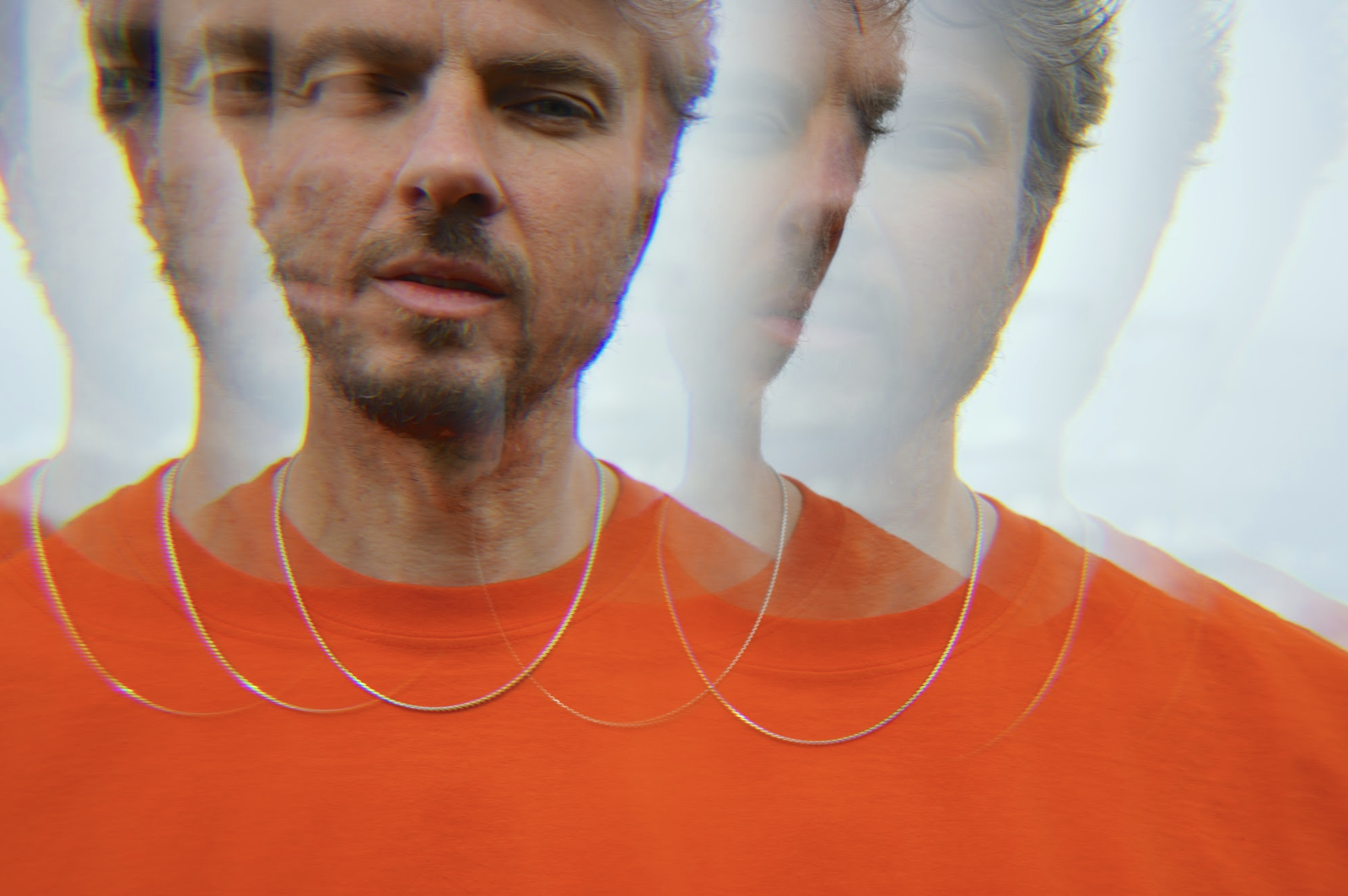
Tom Skinner photograph courtesy of Jason Evans.
___THE NEW___
Group Modular ‘The Tunnel/Lonely Pylon’
Reissue Special Released 19th September
The first transmission (or rather a retransmission if you like) from the Group Modular duo of Mule Driver and Marky Funk in three years, marks the inaugural chapter in a new series of special 7” releases “powered” by the duo’s alter ego Confused Machine and Delights labels. Those lucky enough to have grabbed original copies (sold in separate splits editions, both sold out almost immediately) of ‘The Tunnel’ and ‘Lonely Pylon’ will know that the former was part of Norman Records’ 2021 25th Anniversary split release by Polytechnic Youth, and that the latter was recorded exclusively for the third instalment in Russian Library’s L series of split 7” EPs back in 2022.
Back on the radar, with the chance to own these hauntological sci-fi suites and dramatization soundtracks, the self-described “Outer space sounds from Jerusalem-Tel Aviv route” library music makers reacquaint us all with their brand of analogue period cult space age influences and their taste for atmospheres and theme tunes that emit something that’s near supernatural. ‘The Tunnel’ is a curious Pietro Grossi like rocket ship steam and gas fusion of soft timpani, Roy Budd and Greg Foat-esque barque sci-fi harpsichord, and d ‘n’ b like dub beats. And the electric field throbbed ‘Lonely Pylon’ is a Library music imbued psychogeography of paranormal nature and unnerving children’s sci-fi TV of the 70s and early 80s – imagine Brian Hodgson, Sapphire and Steel and bygone public broadcasted information warnings resurrected by The Advisory Group or My Autumn Empire.
Hopefully this latest 7” series will prove a catalyst for more new recordings from the duo, who haven’t released anything together since Per Aspera Ad Astra in 2022. You’d better be quick, as I have a feeling it will sell out pretty sharpish.
Lt. Headtrip & Steel Tipped Dove ‘Hostile Engineering’
(Fused Arrow Records) 23rd September 2025
The gristle, outpoured thoughts, observations, protestations and glue between the oppressive urban structures of our dysfunctional, unworkable society both poetically and rhythmically twist and flow over a counterculture haunted psychedelic-prog, Krautrock and jazz-soul production on this debut project collaboration.
From the experimental, leftfield platform of Fused Arrow Records and its stalwart producer, engineer, beat maker and artist in his own right, Steel Tipped Dove, a new partnership with rapper, producer and instigator Lt. Headtrip.
Dove’s production and various studio skills can be heard on releases from such notable talent as Fatboi Sharif & Roper Williams, billy woods & Messiah Musik, Darko The Super, MC Paul Barman and Zilla Rocca. He’s also collaborated with the most dope and pioneering Dose One. The Lieutenant’s CV is no less impressive, setting up the ‘we are the karma kids’ label, organizing projects and events in the Brooklyn, Manhattan and Queens areas, and either collaborating or sharing stages with Armand Hammer, Open Mike Eagle, Quelle Chris, Beans, Backwoods Studioz, Reservoir Sound and Uncommon Records.
A magic combination of old hands from the underground scene then, the Hostile Engineering environment that engulfs them is twisted, churned, inhaled and transformed into a sometimes gothic, sometimes industrial, and sometimes more soulfully halo-lit arena for the spoken and rapped lyrics; the cadence of which reminded me at any one time of the Antipop Consortium, Rob Sonic, dalek, and when humorously and from a self-aware but confident in their own skin way, addresses the issues of sexuality, sex and the tired old tropes of rap machismo on the smoochy drifted saxophone and crunched drum beats produced ‘We Got The Sugar’, comes across a little like Homeboy Sandman: a sample of the lyrics being, “last week I was helpin’ his girl find her panties. This week I’m his bro’s new daddy. Just cause I can rap along to Liquid Swords don’t mean my dick’s boring.”
There’s more than enough clever ideas here, with samples I’ve yet to recognize, and an atmosphere that seems to channel all kinds of musical influences; from zappy Kraftwerkian synth and drum pads electro to the Floydian, Roy Ayers, Soul cuts, cult soundtracks (of suspense, horror and sci-fi futurism), heavy rock and prog – I think I’m overthinking it, but alongside what could be a sample from Sabbath or their ilk, it sounds like a short miraged shiver of cymbal resonance and slow drums from Neu!’s ‘Weissensee’ on the automation for the people, insurance servitude and dead-end careers themed polemic ‘0 Days Since Last Accident’.
Bot factories, the nightmarish promises of constant bodily cosmetic regeneration and the self-absorbed legacies that go with hanging on to the bullshit zenith of eternity, high anxiety, and on the repurposed halcyon soul Kayne-Jay-Z-Biggie fantasy “money, money, money” ‘Fund Don’t Stop’, a backslap to rampart consumerism and unsignifying spectacles of Black Friday (“We been shoppin’ since we bought that serpent’s product in the garden.”) – a lifetime of spending, from the womb to the tomb.
At thirty minutes long, there’s no fat on the bones, and yet plenty of tempo, musical changes, and a fresh rap style that neither preaches nor sits back in a nonchalant pose. A really successful pitch, bringing both talents together to fuse and articulate the present depressing miasma of the times in which we all live; glued to this rock, with no anchor, no compass, attached to the screen and validation culture of social media and its puppet masters. One of the freshest hip-hop releases of 2025.
Tom Skinner ‘Kaleidoscopic Visions’
(Brownswood/International Anthem) 26th September 2025
Reaching the midlife point, the UK drummer and composer Tom Skinner finds time to reflect and take stock with a mature kaleidoscope of culminated visions pulled and drawn from a highly prolific career and enviable CV of performances, collaborations and recordings (from Sons of Kemet to The Smile, David Byrne Floating Points…. the notable list goes on).
Arriving a few years after Voices Of Bishara (an album inspired by the American jazz and classical cellist Abdul Wadud and his seminal privately pressed cult masterpiece ‘By Myself’), the follow up weaves the former into a rich, often cinematic, psychedelic and floated meditation and dialogue of jazz, neo soul, cult soundtracks and the contemporary classical. At 45 years of age, the time felt right for such an undertaking. A culmination of experiences, of influences now coming together; a bond that embraces not only Skinner’s vaguely Middle Eastern entitled Bishara live band but a number of congruous international collaborating foils: neo-soul doyen, and right acclaimed, award-wining polymath (but you can list the main qualifications as singer-songwriter, poet and bassist) Meshell Ndegeocello; the self-described multifaceted Charleston musician, score composer, film and radio programmer and vocalist Khari Lucas, otherwise known as Contour; London born and raised but now Berlin-based keyboardist and vocalist Jonathan Geyevu, aka Yaffra; and on electric guitar for a couple of tracks, Adrian Utley of trip-hop luminaries Portishead.
That group of friends is split between two sides of a traditional vinyl format: a moiety of instrumental material and vocalist starring peregrinations, with side A featuring the electric-chamber-jazz Bishara quartet of bassist Tom Herbert, cellist Kareem Dayer, and woodwind and reeds players Robert Stillman and Chelsea Carmichael, and Side B, a cosmic mirage of sung and spoken discourse, soliloquy and healing. Described as “distinct sonic landscapes”, both parts are harmoniously conjoined, with leitmotifs, recurring sounds and an overall feel that draws upon a cosmology of Afro, spiritual, conscious, spacey, psychedelic and experimental jazz.
It begins with the promise of comfort; a putting of the mind at ease so to speak. ‘There’s Nothing To Be Scared Of’ begins with an incipient jingle-jangle and stirring drones of woodwind and the cello before hitting a peak of what can only be descried as Lalo Schifrin meets Bobby Hutcherson and Lonnie Liston Smith and the Cosmic Echoes on a 1960s filmset. From then on out, this jazz-chamber match the flighty, craned and fantastical with amorphous hints of Nicole Mitchell, Village Of The Sun, Kibrom Birhane, the Ancient Infinity Orchestra, Coltrane, Matana Roberts and Sven Wunder. You could call it a cross-generational sound, with the first half of the album feeling itself out across an evocative landscape and more abstract metaphysical space full of reflections on emotional states and those people held either dear or inspirational. That includes the late New Jersey born and raised novelist, writer, memoirist, poet and filmmaker Paul Astor (author of the loose New York Trilogy, Moon Palace and The Music Of Chance), and Skinner’s mother, the former classical concert pianist and victim of the arts misogyny, Anne Shasby.
There are some beautiful moments captured amongst the often-slow momentum, and the gander and bird-like flexes; a sense of the mellow and unfurled: the soulful too. And yet there’s a certain drama to be found, and even mystery to this section of instrumental description, of roots and spiritual emotions.
The second section features the vocal talents and essences of Skinner’s collaborative foils; starting with the soul, funk, jazz, hip-hop, reggae and rock spanning polymath Meshell Ndegeocello, who soulfully and dreamily oozes and woos a sense of both the ancestral therapy and a mirage feeling of homely comfort. Ndegeocello’s voice emerges from a hallucinatory wilderness, floating across a nine-minute cosmic-soul and R&B jazz suite of horn snozzles and soft burbles, glassy bulb vibraphone notes, and gentle plucks.
Taking a sadder, more pained discourse-like tone, Contour’s R&B neo-soul voice aches and yearns on the bluesy chamber-jazz piece ‘Logue’. The language is one of rise and fall, trauma and endurance, survival and striving in a ruthless landscape. And yet, again, there is a kind of near diaphanous beauty about some of the music, the flutier parts and delicate bulb-like notes that seem to float around in a slow ponderous rhythm. It’s the feeling of being drained, and the attempts to break free of the malaise.
The finale, ‘See How They Run’, features the soulful poetic spoken tones of Yaffra both responding to a secondary voice and speaking out loud his thoughts, enquires to the promise of eternal enlightenment, in an almost winding, untethered fashion. It reminded me in part of Andy Hay, Diggs Duke and even Tricky, playing out over another neo-soul leaning dreaminess.
Informed and prompted by middle age (a youthful middle age of experience rather than depressing aging pains), Skinner offers a retrospective pause whilst looking towards a creative future. Cross-generational concerns, references, influences converge in a mature work of feelers, reflections and freedom. Consolation in an age of accelerated isolating atomisation and introspective anxiety.
Water Damage ‘Live At Le Guess Who?’
(Cardinal Fuzz in Europe/12XU in N. America) Released 5th September 2025
In the venerated surroundings of the Medieval city of Utrecht, the religious epicentre of the Netherlands (or so it is said), as part of the Le Guess Who? Festival lineup, the Water Damage ensemble preached their own unique fire and brimstone of monotonous locked-in drones, the wailed and frayed, the squalled and resonant.
Whilst following no recognisable domination on this plane, the Austin collective of like-minded acolytes to all things underground, invoked some kind of near religious sonic experience as they went to work on the opening track, ‘Reel 28’, from their most recent album, Instruments (released back in May of this year). Without a break or let-up, they relentlessly, but slowly, created a mesmerising lumber of the avant-garde, of Motor City, Jap, Kraut and Doom rock. Enslaved to the rhythm you could say, for a full 45 minutes both the group and their audience are caught in the hypnotic flay and sway of the scuzzed and intense bowed needling and sawing momentum that is created.
Absorbed into the core for that performance, guests Ajay Saggar (a serial offender, featured untold times on this site over the years under various collaborative and solo guises: Bhajan Bhoy, Deutsche Ashram, King Champion Sound and University Challenged) and fellow astral traveller Patrick Shiroishi (the Japanese-American multi-instrumentalist and composer, based in L.A., last appeared on this site playing foil on saxophone to Dave Harrington and Max Jaffe on the Speak, Moment collaborative album) take up the mantle on guitar and “free-reeds”. Their contributions are equally as mystical, magical, intense and droning; with Shiroishi especially summoning both a Mogadon Hawkwind and Sam Rivers simultaneously.
With the “Maximal Repetition, Minimum Deviation” motto and mantra, they conure up a monster; a ceremonial rite; even, as the accompanying press release describes it, an exorcism. And yet it is quite melodic. Reference points, for me, would be Tony Conrad and Faust’s seminal Outside The Dream Factory, but also Tony’s Transit Of Venus collab with Hangedup, Glenn Branca, La Monte Young (these last two actually referenced by in the press release), Earth, Boris, Swans, Hala Strana, France, Smote, Pharoah Overlord and Amon Düüls I and II, and The Black Angels. But like the old city that played host to the festival and the Water Damage performance, there’s an almost otherworldly summoning of the Medieval: a sort of mythologised or transmogrified evocation of an abstract atmosphere from that period; it sounds at times almost like a hurdy-gurdy is being wound up like some kind of ancient transmitter; plugged in to a mystical and harrowing age.
I must add, for once, the sound is really good. You can hear every part, every contribution, and even the bass line (you wouldn’t believe how few recordings ever get the bass right, or let you hear anything more than just a mumble of bass; live recordings are often even worse, almost bass free). The bass here is integral to keeping up that never ending rhythmic sway; and despite its repetition, is such a great little riff that is never grows tired. Compliments to the sound engineer, and who ever mastered this performance, then, for instead of a block intensity of lost instruments you get a clear production, with every cog, every drone and note audible.
I’d say an improvement on the album track, and a really intensive yet hypnotic hermetic experience that feels untethered to any particular time, age or period.
___/The Monolith Cocktail Social Playlist Vol. 101___
For the 101st time, the Social Playlist is an accumulation of music I love and want to share, with tracks from my various DJ sets and residencies over the years and both selected cuts from those artists and luminaries we’ve lost on the way and from those albums celebrating anniversaries each month.
Last month we celebrated the 100th edition of this series, which originally began over 12 years ago. The sole purpose being to select an eclectic and generational spanning playlist come radio show, devoid of podcast-esque indulgences and inane chatter. In later years, I’ve added a selection of timely anniversary celebrating albums to that track list, and paid homage to some of those artists lost on the way. In the former camp this month, and to tie in with the Archive spots on Bowie and CAN, there’s a 30th anniversary nod to 1. Outside – a tour I actually witnessed, I kid thee not: Wembley Arena if you must know – and 50th nod to Landed. Joining this celebration there’s also tracks from Kate Bush’s Hounds Of Love (40 this year), The Fall’s This Nation’s Saving Grace (also 40), Blur’s The Great Escape (30), Dexter Gordon’s One Flight Up (60), Wolf Parade’s Apologies to the Queen Mary (20) and Mew’s And The Glass Handed Kites (also 20).
Each month I also like to add a number of newish/recentish tunes (more or less anything from the last year): those that either missed out on the regular Monthly Playlist of brand-new music releases, or only just come to my attention. We have Monde UFO, Lukid, the El Maryacho team up with Nowaah The Flood, Penza Penza, the Tone Of Voice Orchestra, Elkotsch (thanks to blog friend and supporter Andy Haas for recommending this one) and the triumvirate collaboration of Phew, Erika Kobayashi and Moebius. Oh, and something not so much new but surfaced from Dylan this week.
The rest of the playlist is an anything goes selection of stuff I’ve accumulated, loved, treasured, wanted to own or played out during my sets over the decades. In that category there’s music from the Walker Brothers, the Jazzpoetry Ensemble, Mother Lion, Garybaldi, A Tent, The Barrino Brothers, Departmentstore Santas, Gene Martin, and Akofa Akoussah.
Track List:::::
Wolf Parade ‘Shine A Light’
Butterglory ‘She Clicks The Sticks’
Blur ‘Entertain Me’
Mew ‘The Zookeeper’s Boy’
David Bowie ‘We Prick You’
Kate Bush ‘The Big Sky’
Garybaldi ‘Maya desnuda’
The Fall ‘I Am Damo Suzuki’
CAN ‘Vernal Equinox’
The Jazzpoetry Ensemble ‘Motherless (Live)’
Dexter Gordon ‘Darn That Dream’
Polyrhythm Addicts ‘Big Phat Boom’
Akofa Akoussah ‘Sumga Ma Bacci’
El Maryacho & Nowaah The Flood ‘SOAPS’
The Barrino Brothers ‘Born On The Wild’
Tone of Voice Orchestra ‘Tourist at God’s Mercy’
Penza Penza ‘Dusty’
Los Darlings De Huanuco ‘Lobos Al Escape’
Elkotsh ‘Da’a Adeema’
Monde UFO ‘Sunset Entertainment 3’
Phew, Erkia Kobayashi & Moebius ‘Katherine’
The Detroit Escalator Co. ‘Manuel Transmission’
A Tent ‘Seven Years – part 2 (Abundance)’
Lukid ‘The Secret of Bell Making’
Bob Dylan ‘Rocks And Gravel (Solid Road)’
Mother Lion ‘Simple House’
The Walker Brothers ‘Walkin’ in The Sun’
Departmentstore Santas ‘Play in the Sun’
Gene Martin ‘We Shall Be Like Him’
The Hitchhikers ‘Feel A Whole Lot Better’
___/Archives___
From the exhaustive Archives each month, a piece that’s either worth re-sharing in my estimates, or a piece that is current or tied into one of our anniversary-celebrating albums.
This month there’s my previous pieces on CAN’s Landed (50 this year) and Bowie’s 1. Outside (30 years old this month).
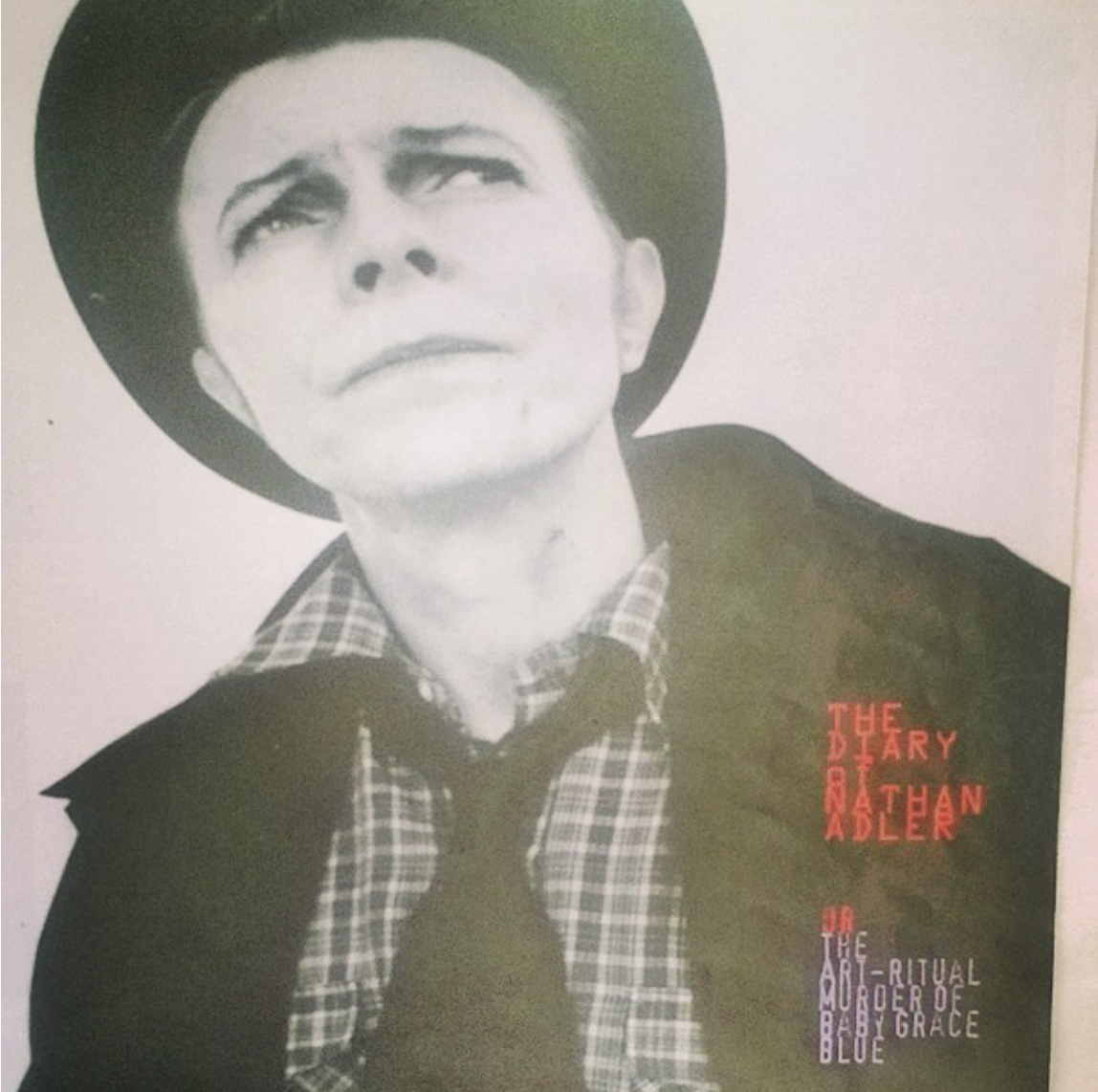
David Bowie 1.Outside (Arista/BMG) 1995
With ‘five years’ remaining until the new millennium, Bowie, tapping into the anxiety and quest for spiritual relief, returned to his first passion: contemporary art.
Back with his most innovative collaborator, Brian Eno, he dredged the bottomless pit of morose and despair. Dreaming up a morbid tale of future sacrificial performance art gone wild and taboo breaking cybernetics he narrated a woeful diegesis through a series of ‘verbasier programmed’ characters.
Disturbing to say the least, our ‘cracked actor’ pitches an avant-garde ‘whodunnit?’, set in a parallel bleak world where the self-mutilated gestures of Günter Brus (the patriarchal figurehead of body art) and ‘the orgiastic mystery theatre’ of Hermann Nitsch have been taken to new, hyper, extremes of bloodletting.
Led by the investigative diary of art crime detective Nathan Adler, a cryptic cut-up of Burroughs/Burgess language is used to not just explain the circumstances that befell the poor victim Baby Grace, but also delve into the collective psyche.
Out on a limb musically, Bowie’s home life may have been content, yet something suddenly propelled him to bravely create a depressive requiem. Easily the best, if not most original, material since Scary Monsters, 1.Outside was entirely written in the studio as the band extemporized: motivated by Eno’s synonymous oblique strategy cards.
Scott Walker lost in cyberspace; the industrial melancholy is at its most anguished on ‘A Small Plot Of Land’ (a version was used on the, Bowie as Warhol starring, tragic biopic of Basquiat directed by Julian Schnabel), yet a more revved-up, pummelling bombastic variant is used on ‘Hallo Spaceboy’ and ‘The Heart’s Filthy Lesson’ (perfectly playing out David Fincher’s Seven).
Leaving many fans bemused (as I myself witnessed on the Outside tour, the baying audience pleading for the greatest hits package), the philosophical snuff opus seemed puzzling to those familiar with the pop-lite Bowie. Thankfully Bowie cut loose the shackles of commerciality for a contemporary blast of shock and dread.
CAN ‘Landed’ (Virgin) 1975
Richard Branson’s pastoral record label Virgin hooked our Cologne ‘seven-day sonic avant-garde evangelists’ in early 1975, tempting them away from the clutches of their former masters United Artists, whose relationship with the band had been tenuous at best. They now joined the hippie-idealistically run, free thinking label of choice – at least that’s how it appeared to the onlooker-, sharing the stable with both fellow countrymen Faust, Tangerine Dream and Slapp Happy, the psychedelic progressive band Gong, and the million zillion selling Mike Oldfield, Virgin’s biggest selling artist by miles – whose Tubular Bells behemoth had reined in a load of money and success, paving and paying the way for most of the roster.
Branson may have looked like he’d stepped off the cover of a Jethro Tull album, but he turned out to be a shrewd businessman. After all, he managed to propel Faust into the album charts with their Faust Tapes mesh-mash classic: albeit that the said album was put on sale for a paltry 49p and probably didn’t actually net the group much money, but hell, it sold over 100,000 copies, so they became a household name in the head community for a while at least.
Business wise, sister label Harvest – equally rich in allusions to the Woodstock ethos – would distribute CAN’s records in their homeland, whilst EMI, who owned both labels, would just count the cash it hoped would now roll in. One of the stipulations in the Virgin contract was that the band would have to use superior recording equipment for their next album. A multi-tracking desk was delivered to their own sacred Inner Space studio HQ, which they were still allowed to use though the records would now be mixed elsewhere. Unfortunately, a deep sense of forlorn began to creep in, mixed with paranoia, the arrival of the new technology now making it possible for the band to record their parts separately if they so wished. Until this point Holger Czukay had masterminded all the recording and editing on just a two-track recorder. He had also always encouraged the group to play together in the spirit of improvisation. But now, the band could successfully overdub and add parts at a higher quality then had previously been possible before, taking a more insular approach to recording.
In scenes not too far removed from the Beatles fractured shenanigans on the White Album, the group began to play some of their own parts in secrecy, the thought of being scrutinized and criticized by their fellow band members filling them with dread.
Again, like The Beatles, they invited an outside musician into the studio to lift the tension and scrutiny. This fortunate man was Olaf Kubler, who had served as producer on both Amon Duul and Amon Duul II albums, although he dramatically fell out with one of AD II’s bandleaders John Weinzierl, who made his feelings towards him pretty clear in recent interviews. Kubler was called in for his saxophone prowess, being asked to lay down some cool sultry cuts on the track ‘Red Hot Indians’ for what would be the Landed LP.
Sessions for what would be the band’s Landed album began in the first few months of 1975, in-between tour commitments, which included a couple of gigs with the troubled American folk troubadour Tim Hardin, who it’s rumoured was asked to join the band full time.
Hardin didn’t really front CAN in these gigs, instead, he would merely leap on stage to perform one of his own tunes, usually something like ‘The Lady Came From Baltimore’, and maybe front a couple of the groups own tracks before exiting stage right. Whether he ever considered seriously joining the band, Hardin’s deadly heroin habit put a damp squib on things, finally getting the better of him in 1980 with one overdose too many.
Anyhow, Karoli had so far done a good job of semi-fronting the band, going on to lead all the vocals on this album; delivering some softly inspired dream like performances throughout.
Landed in some ways directly follows on from their previous effort Soon Over Babaluma, especially in the sound collage experiments of this album’s ‘Vernal Equinox’ centre piece and ‘Unfinished’, both of which re-work similar themes and threads found on ‘Chain Reaction’ and ‘Quantum Physics’. The rest of the LP consists of far rockier progressive tones, with allusions to their contemporaries, particularly Pink Floyd. To a point there is also an attempt towards the glam-rock of both Roxy Music, Bowie and Mott The Hopple – all influences CAN’s peers, Amon Duul II, also breathed-in on the 1974 album Hijack, though to a less successful degree.
‘Full Moon On The Highway’ and ‘Hunters And Collectors’ relish in the glow of these new influences, though remain slightly more conventional compared to CAN’s usual free roaming exploratory material. Most of the seven tracks now run in at under six minutes and sound much more formulated, the exceptions being the already mentioned two saga driven soundscape pieces, which combined, make up three quarters of the overall albums running time.
The lyrics themselves seem to be full of references to mysterious alluring women, clad in leathers, who turn up at ungodly hours on celestial described highways. Analogies run riot, the open road acting as a metaphor for following certain paths, Karoli constantly encouraging the listener to cut loose and float away. Journalist and friend to the band, Peter Gilmour, co-wrote both ‘Full Moon On The Highway’ and the lazy sedate ‘Half Past One’. Peter would also go on to write CAN’s biggest hit, the disco chugger ‘I Want More’.
Many critics have panned Landed, seeing it as the beginning of the end for the group. It does seem a slight exaggeration. Certainly, the dynamics were slowly ebbed away, the production becoming much more polished, though it suffers from some very messy trebly moments at times.
Footage of them performing ‘Vernal Equinox’ on the Old Grey Whistle Test at the time sees Irmin Schmidt wearing a fetching bondage inspired chain mail waistcoat whilst theatrically commits Hari Kari on his keyboards, whilst Czukay, all ten-yard stare, sports white gloves and a sheriffs’ badge. A mid-life crisis beckoned with all this new pomp and strange fashions, turning off many fans, including the disdain of Julian Cope who states that this act of regalia wearing extravagance ended his relationship with the band. So, in a way CAN did seem to be heading over the precipice, the best days behind them, but this album is viewed way too harshly.
Landed for what it’s worth is a decent album, with enough ideas and demonstrations of superb musicianship, Karoli alone performing some of his most sublime guitar work yet.
The albums artwork, by the curiously alluding Christine, displays a collection of passport photo sized images of the band. Each individual photo is covered in graffiti or scribbled on, lending silly moustaches, cartoon glasses and an array of comical hats and hairstyles to the now light-hearted looking band. Peering out from under the heavy de-faced images they pose in a manner that lets us know they still have much to give- also, am I imagining perhaps a Carlos the Jackal type reference here, the many disguises and such.
CAN shifted back towards the Afro-beat and World music styles on their next couple of releases and also brought in ex-Traffic members Rosko Gee on percussion and Reebop Kwaku Baah on the bass to great effect. Czukay moved away from his bass guitar duties so that he could explore radio short wave editing and cutting up techniques in greater detail. He would of course go on to leave the band in 1977, leaving Liebeziet, Schmdit and Karoli to carry on for a while before everyone split for good to pursue their own solo projects, a reunion in 1989 included Malcolm Mooney and resulted in a new album titled Rite Time.
The year is 1975 and CAN have laid down their 7th album, after being together for nearly eight years. To get this far they have travelled an etymological musical odyssey, that has taken in the dark esoteric voila seeped mood of The Velvet Underground, the psychedelic spiritual enlightenment of America’s west coast, the African dance style rhythms of Nigeria and Ghana, the dreamy hypnotic Turkish flavored folk music, the otherworld tour of the nebula emitted from Hendrix and the lessons learnt from Stockhausen and Von Biel. CAN had surpassed all their peers and become possibly one the greatest assembled bands of musicians that the west has ever seen – seriously these guys could out play anyone, though they never had time to wallow in ego and always looked towards experimentation rather than dwelling on their skills.
There now follows a run-through of the album:
Dropping in with an up-tuned arching guitar fuzz and treble heavy hi-hat, ‘Full Moon On The Highway’ leaps straight into action. Jaki Liebezeit sets down an incessant workman like beat, hammering away on the bass drum as Michael Karoli casually begins his salacious vocals –
‘I made it hard today,
For I had to do it to me.
And if it’s only to hold her,
She’s gonna get it today’
A certain sense of portend fear hangs in the air, Karoli in his full Germanic romantic disdain rattles off omnivorous statements about taking to the highway, where star crossed lovers may unlock some inner meaning and truth.
Rock hard screaming lead guitar hooks run rampant, exercising no sign of restraint and sprinting ahead as though in a 100-meter sprint. Piano flourishes and honky tonk bravado light up the mood as those bawling guitars and Alpha 77 effects wail away like banshees. Czukay takes his bass on free roaming tour of run downs, slides and felicitous infused funk workouts, never staying put in one place for too long, always running his fingers all over his instrument. An intense burst of exuberant searing drums, keyboards and clashing turmoil all culminate into a finale furore, that threatens to end in a mess but is saved by the rallying cry of Karoli riding in on his gleamed-up guitar. He transposes glam via Pink Floyd to produce something unheard, a riff from the other side.
Taking a more serene path, ‘Half Past One’ begins with some archaic ethnographically seductive Spanish guitar and heavy tub tapping drums. A dozy laid-back vocal pronounces –
Over the beach,
Into the sun,
Wake again by half past one,
Alright’
The last word being some kind of reassurance amid the strangely relaxed drug induced soirée, that peers at some snapshot of the protagonists’ relationships, a casual affair on the beach in this case.
Schmidt interjects with some delightful mandolin sounding oscillations and yowling alarmed synths, whilst Czukay adds some chuggering engine bass lines, sliding around the neck as though revving it up.
The general breathless ambiance begins to wash ashore, like a lapping tide, meandering its way towards some welcoming gypsy encampment. Quacking wah-wah and folk tale violins add to the general malaise, building towards a newfound intensity as the song picks up momentum: The final 30 seconds bathing in the now pressured final crescendo.
Now steps forward the ambiguous and genre dodging ‘Hunters And Collectors’, with its almost glam postulations and Afro- funk grooves, this four minute Floyd gesturing dose of mayhem ducks any formal categorisation.
A doom-laden piano emphasis each intro chord, like an operatic indulgence. Karoli in magi pose announces the chorus –
‘Hunters and collectors, all come out at night.
Hunters and collectors, never see the light’
The song now kicks in with some sky rocketing theatrics. Dense melodies of climbing synth lines and evocative sexed up Teutonic choral backing adding to the melodrama. Czukay and Liebezeit cook up a fine jumped-up funky backing, with double shimmering hi-hat action and posing bass guitar. They all soon break down into a more stretched out segue way, taking in the early years of Parliament and some Afro highlife.
Karoli now dabbles with the vocals, as they take on some added menace; he conjures up images of leather clad biker gangs, savage sexual degradation and drugs –
Thirty leather kids, on the gang ban trail,
Get your big brown man with the snakes in bed.
Dirty bother me now, it soaks into a cup,
She says “if you don’t start at all, you never have to stop”.
Other worldly radio signals and snippets of conversation from the ether add to the esoteric atmosphere that is entrenched in seedy tales of chemical indulgences.
The opera swoops back in before what sounds like the set-piece breakdown brings the curtain down, as strange broken cogs, ratchets and springs all produce a comical ending, just before the swept in majestic intro of ‘Vernal Equinox’ is brought in.
As the ambivalent last track on side one, ‘Vernal Equinox’ continues the dynamism and piano melody from the previous track, but runs rough shot and fancy free, producing an eight-minute omnivorous jam or epic narrative.
It all begins with a search light introduction of space age doodling, with a chorus of sonar equipment and lasers shooting off in all directions, all played out over a heavy laden piano, hurtling towards a cacophony of destruction.
Rabid lead guitar rips into the track, Karoli literally plays for his life in a fit of feverish exhaustion, running through the full collection of riffs and chord rushes that he’s picked up over the years.
Flailing drums explode like a barrage of mortars, as UFO’s crash land all around, Czukay finds some cover and rattles off his defensive bass.
That Alpha 77, the exulted secret box of tricks, spits out havoc. Crazed wrecking layers of multiplying textures take the drama back to the cosmos soul searching of Soon Over Babaluma, but with a now more invigorated pumped-up stance. The raging narrative falls into one of those accustomed breakdowns. Liebezeit and his meteoric rhythm accompany arpeggiator sonic waveforms and metallic sounding drips during this break in the pace. The full swing returns in style, turning the jamboree into a jazz funk quest, as what sounds like Robert Fripp battling it out with an alien horde from the planet of Sun Ra, delivers a belting finale of elation.
Side two opens with the bongo tribal reggae of ‘Red Hot Indians’, a jaunty slice of infectious pigeon-toed dance rhythms and cool wistful chant like grooves. Karoli goes all faux-Caribbean with his laid-back vocals, he casually lays down some lines in an almost staccato fashion –
‘It’s the DNA song, DNA song, it’s the DNA song.
Strike mess, hole mess, shadow mess’.
Kubler Olaf blurts out an effortlessly uber cool prompting saxophone melody, liberally peppering the track, whist Liebezeit just reclines back on his sun lounger, knocking off some tom rolls and sipping a pina colada.
Mixing in some more African highlife and even-tempered down Roxy Music, this track flows along in its own serenity. The second wind of extra rhythms start to sway in an hypnotic motion, like some kind of mantra as Karoli mumbles recollection of some cryptic halcyon memories –
‘Then you took me back, steam machine.
Dreamt my way into a daydream.
Let me vanish into yesterday,
And my night drops fade away’.
As though to ratify the shambling theme, the song naturally fades out on its own breezy demeanour.
We now come to the soundscape behemoth of ‘Unfinished’, which by its title remains to be determined by the listener as to whether or not this maybe the case.
A set piece of sound cutting and masking that harks back to Future Days, with its reverential cinema scope builds and gliding synths this track could just yet be one of CAN’s finest moments.
Opening with what sounds like an orchestra tuning up, we hear a noisy interlude of violins, strings, brass and unfamiliar instruments all preparing themselves for the performance. That looming ever-present box of tricks, the Alpha 77, fires up and screeches over the top of our orchestra pit, launching bolts of lightning along with the odd spark of lush melodic wonder.
Breathing in the same aroma found on their soundtrack piece ‘Gomorrha’ and the melodic beauty of ‘Bel Air’, our macabre galactic Schmidt now unleashes some welcoming felicitous doses of extreme perturbation, underpinned by some humbling broody but magisterial bass.
All of a sudden, a series of gory effects and sounds enters the stage, as the demonic bound trip to the nebula goes all pants messing chaotic. Squealing guitars, that evoke the sounds of distressed souls pleading, cut through the heightened tense mire.
Factory steam powered machinery like the sort found on the Forbidden Planet, is ratcheted up, bashing away and powering up some monstrous life form. Some tumbling toms are given a swift kicking, the occasional crash of a cymbal unsettling the air as Liebeziet desperately tries to carry on playing whilst his space craft flies into the sun: holding on for dear life he is soon saved by his comrades who now work towards an uplifting final stretch.
Whistling sounds fly overhead, and gongs gently shimmer in the background, Schmidt throws in everything even the studios sink, as a build towards some sort of journey to the upper echelons of the solar system begins.
Escapist melodies and angelic ethereal guitars all scale the dizzying heights, like the dark side of the moon played by Stockhausen and backed by Ornette Coleman. A dream- like vaporous empyrean utopia opens out as our Cologne astronauts now proceed to save the best till last. Pulchritude swathes of divine beauty flow with delight as a lavishly rich melody of heavenly choral opulence raises us to some higher plain. The final few minutes being amongst the most sublime that CAN ever laid down, a spiritual guiding stairway to the universe.
Here’s the message bit we hate, but crucially need:
If you’ve enjoyed this selection, the writing, or been led down a rabbit hole into new musical terrains of aural pleasure, and if you able, then you can now show your appreciation by keeping the Monolith Cocktail afloat through the Ko-Fi donation site.
For the last 15 years both me and the MC team have featured and supported music, musicians and labels we love across genres from around the world: ones that we think you’ll want to know about. No content on the site is paid for or sponsored, and we only feature artists we have genuine respect for /love or interest in. If you enjoy our reviews (and we often write long, thoughtful ones), found a new artist you admire or if we have featured you or artists you represent and would like to say thanks or show support, than you can now buy us a coffee or donate via https://ko-fi.com/monolithcocktail
THE MONTHLY DIGEST INCLUDES A CLUTCH OF ACCUMULATED NEW MUSIC REVIEWS; THE SOCIAL INTER-GENERATIONAL/ECLECTIC AND ANNIVERSARY ALBUMS CELEBRATING PLAYLIST; AND CHOICE PIECES FROM THE ARCHIVES.

____/THE NEW
Annarella and Django ‘Jouer’
ALBUM (We Are Busy Bodies/Sing A Song Fighter)
Born from the Senegalese imbued and inspired hub built around Sweden’s Wau Wau Collectif, another cross-cultural project that embraces that West African nation’s (and its neighbours) rich musical heritage. Fusing the roots, landscape and themes of Senegal with those of Europe, the partnership of Swedish flutist Annarella and the Malian born ngoni master Django absorbs the very atmosphere of that westernmost African republic, transposing and transforming age old traditions with a hybrid of contemporary musical effects and influences and guest list of diverse musicians and voices.
But before we go any further, delve deeper into this partnership’s debut album, a little background information/ context is needed. A key member of Karl Jonas Winqvist’s Wau Wau Collectif gathering since 2016, making the motivational trip to Senegal that more or less inspired that group’s sound, network of collaborators and friends – a trip that also planted the seed for Winqvist’s Sing A Song Fighter label, a partner in the release of the this album alongside We Are Busy Bodies -, the Örebro born flutist Annarella, believe it or not, trained as a psychologist. Honed on woodwind, but able to play a variety of instruments, Annarella has chosen a more playful approach to her craft: an eclectic one at that.
Annarella’s musical foil, meanwhile, was born in Mali and brought up in the ancient griot tradition of storytelling. The family tree of which is impressive. His cousin was the late and great kora (a 21-string long-necked harp-like instrument crafted out of a gourd, covered in cow skin) virtuoso Toumani Diabaté, who famously partnered with another legend, Ali Farka Touré, for a duo of Grammy Award winning albums. And his uncle was the master balafon (one of Mali and Western Africa’s most recognised sounds, the balafon is a gourd-resonated xylophone) player Kélétigui Diabaté. It’s no surprise then that Django picked up the ngoni, a (normally) animal skinned wrapped canoe-shaped lute instrument synonymous for accompanying the griot storyteller: A tradition that, some say, dates back to the Malian Empire of the 12th century. Django however upped sticks and made the move to Senegal and the capital of Dakar many years ago. It’s a city that is abstractedly threaded into the very fabric of this album: immortalised alongside Annarella’s hometown on the album’s first single and this debut album’s third track.
Whilst on tour together as part of the Wau Wau, they found themselves wiling away the downtime hours by jamming. A spark was ignited. A project formed. But for a time, both musicians had to return to their respective homes, where it seems they set to work on composing and laying down tracks for each other, ideas and prompts to riff on.
The sphere of influence grew further, as both participants in this international peregrination invited in several musicians and artists to carry the music into articulate and more atmospheric new spaces. Joining the duo were of course Winqvist, as co-producer and a member of the filled-out rhythmal section that also includes Lars Fredrik Swahn and Pet Lager, the renowned Swedish folk musician and multiple instrumentalist Ale Möller, who provides not only trumpet but the Jew’s harp, accordion, melodica and the double-reed shawm, and Django’s wife, Marietou Kouyaté, on harmonical vocals.
Altogether, this circle of impressive talent conjures up an atmosphere of the willowy, mystifying, hazy, rhythmically shuttering, dreamy, ached and yearning. Because whilst uniting two cultures together in a most congruous sounding, melodious and beautiful union, there are both musically felt and more obvious appearances of social and economic protestation to be found.
After the fluted leafy pastoral airs and light nimble twine of the intro, the gentle hi-hat claps, Arabian-like shawm, whistles, chuffs and fluty blows of the Francis Bebey motion ‘Aduna Ak Asaman’, and the near Malian Turag camel drive with bird-like woodwind and Chet Baker mirage trumpeted ‘Dakar-Örebro’, there’s a short tunning-like, freely and spiritual jug carrying backed snippet of the American economist Richard David Wolff besmirching the virtues of capitalism on ‘No More’. A noted Marxist economist, part of the Rethinking Marxism movement, Wolff’s words chime with the rampart, unforgiving nature of what I would call a twisted form of capitalism; the ill effects felt no more so than on the scarred, mined lands of Africa and its people. Picking up the ‘Megaphone’, the style is more African with a soft Dirt Music backbeat, the voices more reminiscent of Amadou & Mariam. That vocal partnership can be heard again on the longed and languid sand dune contoured, flighty and reedy trill fluted ‘Sarajalela’.
Django’s home environment and the outlier around it seeps into and materializes like a dreamy haze across all the album’s tracks, as evocations of the classical, of jazz and the blues mixes with the local stew of diverse languages. Tracks like ‘Degrees of Freedom’ are more mystical sounding, near cosmic, as the band saunter like gauze under the moon and across the desert’s sandy tides. There’s the Arabian, the African, the otherworldly and fantastical all rolled into a seamless hover and spindle of enchantment and mystery. ‘Hommage á Dallas Dialy Mory Diabate’ however, is just a pretty, sentimental passage of loving tribute – the tune is very familiar, but I’m kicking myself to place it.
Jouer, which translates from the French into “play”, is just that, a lovely stirring union of the playful that seamlessly entwines the two musician’s respective practices with sympathy, respect and the earthly concerns of our endangered societies and world. Hopefully this collaboration will continue and grow over the years; there’s not been a better one since Catrin Finch teamed up with Seckou Keita.
Peter Evans ‘Extra’
ALBUM (We Jazz) 25th October 2024
A meeting of avant-garde minds to savour, the union of Peter Evans with Koma Saxo and Post Koma instigator and bassist Petter Eldh and New York downtown experimental rock and jazz drummer pioneer Jim Black is every bit as dynamic, explosive, torqued, moody, challenging and exciting as you’d imagine.
Heading this trio and making his debut on Helsinki’s We Jazz label-festival-magazine platform (one of the best contemporary jazz labels in the universe, certainly quality wise and highly prolific with it), the New York-based musician and noted improviser synchronizes and leads a constant movement of breakbeat drums and wood stretched, thumbing and busy bass on his small, higher octave pitched, piccolo trumpet.
A crossroads of separate entangled influences and backgrounds, legacies, with all three practitioners in this Evans-fronted project and their CVs stretching back a few decades, the avant-garde rubs up against the blues, hard bop, atmospheric set scores, hip-hop style breaks, the electronic and classical. By using both the piccolo and flugelhorn on this album, some passages sound like Wynton Marsalis playing over Mozart, or Alison Balsom lending classical airs to an Alfa Mist production.
The classical brass is however adopted and adapted to stir up a wind and tumult of uncertainty as to what’s coming next. For the action, the rhythm and direction is as tightly wound as it is loose and slowed down: the ‘Nova’ passage, this album’s shortest track, seems to lurk in a strange otherworldly atmosphere of mysterious thriller piano prompts and vibrated percussive and cymbal shivered resonance. The following track, ‘Movement 56’, starts off with the brass sounding like it’s being played through a cone, before buzzing and expanding, contouring a cosmic calculus performance of the alien, unsure, spatial and lunar. It finishes with a bended generator motored ripple and signal that wouldn’t sound out of place on a Bernard Szajner record.
Elsewhere the action blows and gallops between moods and intensity. The opening ‘Freaks’ has a busy rhythm section, yet tampered, the nearly skims along (imagine Ben Riley circa ‘The Bridge’, a recognisable sprouting of Art Blakey, and touch of Mingus) that evokes 60s NYC skylines (but no swing) and the downtown happenings of the 80s with something quite bluesy but very of the moment. Meanwhile, Evan’s short and longer cyclonic trumpet breaths recall Ralph Alessi, Tomasz Stańko and Miles Davis. On the staccato fashion prowl of ‘Boom’, it’s Chet sharing room with Kirk Knuffke over a slightly less erratic and menacing Last Exit.
There’s so much to love about Extra. A combo that has worked together before I believe, shows how to find a perfect challenging balance of the dashed, of action and the more tactile and explorative without losing that essential breakbeat and woody stretched body resonating and pulled spring bass rhythm and movement: that movement always being ever forward. Never dwelled on, nor really repeated, this feels like an improvised session without the need for analysis or instruction from its leader Evans. Possibly one of the best jazz albums you’ll hear all year, with a spot saved for the choice albums of the year lists, Extras is a thoroughly inventive and exciting dynamism of contemporary luminaries at the height of their skills and knowledge.
Yaryu ‘For Damage’
ALBUM (Ramble Records – AUS/ Centripetal Force – US/ Cardinal Fuzz – UK)
25th October 2024
Eclectic Japanese collective Yaryu, birthed just a couple of years ago, invite a host of peers and influential teachers from the country’s acid, psych, cosmic and astral scenes to sprinkle some magic on the new album, For Damage.
Led by bulb-note and caressing soulful electric pianist, wafted and concertinaed melodica player, atmospheric stirring autoharpist, synthesist and percussionist Hyzo, the group play host to members of Sundays & Cybele, Dhidalah and the freak out titans of the form, the Acid Mothers Temple. In all, at least seventeen participants, playing everything from the instruments of a conventional band set-up to woodwind, traditional Japanese and brass. Some of which also lend various forms of vocalisation, from the mewling to folky, strange and supernatural.
Fanning out and expanding the range of spiritual and emotional influences, the album starts out with a seamless continuation of elemental waters (trickles, pours, running streams to more settled, light refracting twinkles), the leafy and blossoming, diaphanous and glittery. The gentle opening introduction of ‘Up The Creek’ is a beautiful guide to this magical, enchanted, but simultaneously mystical and mystery balance of tranquilly and the otherworldly; sounding at times like Mythos connecting with Hiroshi Yushimura and Meitei, and existing in the same realms of Kankyō Ongaku, or “environmental music”. ‘Asobe’ (which I think means “not working”, but spelt slightly different, could be a reference to the Shinto priestesses that performed rituals that appeased the souls of the dead during the Heian period) drifts towards dry bone rattled, ceremonial caravan of Alice Coltrane, Bernie Maupin and Pharoah Saunders vibes.
But though keeping in that relatively subtle direction, ‘Nagare’ seems a little jazzier and more soulful as it follows the currents of running water. It features a cornet-like trumpet, some soft whistles, a near wafted Hawaiian guitar – think Makoto Kubota – and hand drums in the mode of Curtis Mayfield as it sets out some idyllic castaway plane. ‘Utena’ floats close to the Far East Family Band, but with a Fleetwood Mac bassline, constant metronome like ticking away and shimmering cymbals. But by the time we reach the atavistic sounding ‘Gandhara’ (the ancient Indo-Aryan civilization centred in what it is today present northwestern Pakistan and northeastern Afghanistan), the mood is far more mystical and shrouded; a Japanese Gothic-psych visitation from the psychogeography of the wailed and ghostly. ‘Sacrifice’ is noirish in comparison but begins with a sort of Cluster-like synth-pop rhythm, before shimmering and soulfully gliding into Greg Foat territory. It evokes sun-lounging attendees at the shrine on one of Japan’s most exotic, paradise island borders.
The album finishes on what in old money vinyl terms would be the whole side of an album, and the near twenty-minute “melody” suite ‘Shirabe’. A wilderness of trees and roots and creaking, croaking bird life is converged with tranquil jazzy evocations, woodpecker knocks, soft and low inviting sax blows and subtle funky guitar. As the peregrination continues, that sax goes into Donny McCaslin mode, and connects to the weird and cosmic.
Another name to add to the rich legacy of cult, psychedelia, folk, esoteric and cult sounds emanating from Japan, Yaryuand their distinguished guests connect with the elements, the spirits and sprites, and the roots of their magical astral plane on several levels to create a both earthly, supernatural and spiritual daydream. Tending the garden whilst offering up mysticism and languid stirrings of the elements.
The Tearless Life ‘Conversations With Angels’
ALBUM (Other Voices Records) 27th October 2024
Both a transference of souls from the now cremated – or laid to rest, depending on your choice of metaphorical ritual death – Vukovar plus a host of orbiting “other voices”, the make-up of The Tearless Life remains relatively, and intentionally, shrouded, obscured.
What we do know is that this new entity is a meeting of minds that have spent the last decade ploughing their own unique vision of hermetic, esoteric alchemy of synth-pop, industrial, post-punk, darkwave and a form of neo-new-romantism influences. And whilst they remained criminally overlooked – sometimes due to their own self-sabotage – they attracted such acolytes and luminaries of the genre as Rose McDowall, Michael Cashmore and the late Simon Morris, all of whom proved worthy foils on various Vukovar-headed collaborative releases.
Taking a while to materialize, The Tearless Life’s debut opus is both the announcement of new age, but also a bridge between this latest incarnation and the former Vukovar invocation – they are in essence, a band that continues to haunt itself. Old bonds remain, sound wise and lyrically, but with a new impetus of murky, vapoured, gossamer, mono and ether effected solace, tragic romanticism, pleaded and afflatus love, spiritual inspired yearning and allegorical hunger.
The void needs to be fed in a Godless world as they say, as addictions, troubled relationships, the longing for a special someone who remains aloof, untouchable and beyond reach, and the metaphysical coalesce with an all-consuming passion.
Talking to angels, conversing with both the seraph and the fallen, the daemons and spirits of the alchemist’s alternative dimensions, the group transduce the writings of that most visionary seer John Dee, the opium eater Thomas De Quincey, William Blake, and the far more obscure Samuel Hubbard Scudder, who’s 19th century, fairy-like, Frail Children of the Air: Excursions Into The World Of Butterflies publication of philosophical essays lends its title to a song of tubular airy manifestations, distortion, wisped spiralling piques and beautified touching emotional anguish.
Atmospheric at every turn, swilling around in the shrouds, a Victorian music box and toll of peeling bells can evoke the creeping, the mysterious and tormented. Psychological trauma, and physical pains roam the wards of a mental hospital; stained-glass rays anoint lovers; death’s touch is never far away; the talking of tongues and language of the shriven invokes fantasies; and the spectre of morose dines on the unfortunates to create an esoteric banquet.
Some of these songs will sound familiar to those missing Vukovar, but The Tearless Life seem to have integrated a duality of harmonies and vocals much better. The music is itself at least attempting to find the light at the end of the tunnel, touching upon snatches, vague influences of Nature And Organisation, Death in June, Jarboe, Brian Reitzell, the Pale Fountains, Scorpion Wind, Les Chasseurs De La Niot, Alan Vega, and on the pump organ-like remembrance of darkened soul mates, ‘The Mistress’, a combination of Purple Rain era Prince and Ultravox!
My only disappointment is in the production, which could be so much more dynamic and clearer, instead of being so murky. I think it loses some of its impact. But this is minor in comparison to the depth, quality and atmospherics of such an ambitious undertaking. For this album transfers poetry, the writings and fiction of the hermetic and the dreamers wonderfully, if plaintively. If the world was indeed not so bereft of celestial beings’ wisdom and advice as it is, it would rightly receive the critical acclaim it deserves. Conversations With Angels is epic; the first step in, what I hope, will be a fruitful conversation to divine enlightenment, curiosity, psychological and philosophical intelligent synth-pop.
i4M2 ‘Shut Up’
ALBUM (Drone Alone Records)
Whilst eliciting feelings of grand, sometimes overbearing, landscapes and a sense of movement from granular gradients, frazzled fissures, currents under the he didnt appellation back in the summer, the shrouded Oxford-based producer, guitarist and musician now ventures out under the new guise of i4M2.
Although similarly charged with electricity, white noise, static and magnetic filings Shut Up is a very different record indeed. Gone are, for the most part, the blocks of drones for a tubular metallic coursing of melodic music, found sounds and field recordings of captured voices from a city environment, and the mysterious near supernatural at times: or perhaps more unknown, hard to figure out, and maybe alien. Whilst recognisable glimpses of overheard and taped conversations, of a company of choral singers, and wobbled broadcasts of a kind suggest humanity, there’s much machine coded, synthesised and cybernetic surface noise and unnerving drama to be found.
Inspired in part by the “…pirate-radio noise the kids play on their mobile phones at the back of the bus in London.” And by the energy of all those “…cool beats and ideas”, this debut album channels those sparks of inspiration into a sophisticated construction of techno, electronica, the metallic, buzzing and fizzled. Beats arrive in the form of the rotor-bladed, the wing flapped, corrosive, spun, padded and sizzled. Together with those passages and undulations of melody and tune, it sounds like a mix of Nik Colk Void, early Tresor, The Pyrolater, Aphex Twin, Carter and Tutti, Oberman Knocks and Boards of Canada.
Both forms of the London scenester dropped in rural Oxford are great, but for me, I think this latest alter ego just about edges it. Seek it out.
Suumhow ‘5ilth’
ALBUM (n5MD)
You could consider the fifth album from the Belgian experimental duo of Suumhow as a sonic companion piece to i4M2’s ‘Shut Up’ (see above); fizzing as it is with electrical charges, frazzles and sculpted, purposed distorted crunches and metal filings, but balanced by a certain sensitivity and pull towards hazy, gauzy light forces. For there is melody, a tune to be found amongst the bristled blizzard effects and slabs of static buzzing, the corrosive and outright “filthy”. That last one being especially prominent in both the language and text used to promote this album, and in the distorted joy of sonic bombardment and bracketed vibrated grimy, glitchy drilling.
5ilth is by nature a counterpoint of distressed post-industrial techno, the leftfield, the pneumatic and ricocheting, which then opens out into calmer, more reflective ambient passages and square waves; sometimes floating or maybe drifting above the clouds, and other times, ascending towards the light. Far from brutal, despite the rasping scrunched beats, and chain clinked synthesized percussion, the mood is mostly mysterious and dreamy, with some parts akin to gliding in the stratosphere – see the obliquely, not giving anything away, entitled ‘F’. Like rips and tears in the fabric, yet somehow harmonically compatible, the duo’s work craftily spins a harsh, ratcheted and crackled abrasion of sounds and effects with ambient stirring evocations of thought, quite wanderings and reflection.
I hate to repeat myself, but as with the last review, I’m hearing Aphex Twin, but this time in the company of Petrolio, Room of Wires, Emptyset and Forest Swords. Which I think is a very inviting proposition.
Rich God ‘Unmade’
ALBUM (Somewherecold Records) 31st October 2024
The third such album of static-charged dissonance and fizzles, sculpted to and rendered to provide the sound, score and expression of the concrete this month, the pairing of Blake Edward Conley, who regular readers will recognise as the droneroom, and Jason T. Lamoreaux, who goes under The Corrupting Sea appellation, will appeal to those who like to read the abstract messages and gauge a sense of place, time and mood from industrial noise and corrosive electricity.
Mainstay and founding artist of the experimental label, Somewherecold Records, Jason teams up with one of his most prolific label singings to sculpt meaning from the frazzled generated noise, crunched barrages of drums and the sifting, fizzled and warped rhythms. Conway’s usual signature of minimal alt-country and drone cowboy electric guitar tracings, brushes, hovered notes and sun-cooked melting vistas is absorbed and sometimes crushed almost by Jason’s industrial effects and mettalic needling.
With nothing to go on, theme wise or explanation wise to the album’s seven titles, it is left to us the listener to make what we will of this union. But my reading is a transmogrified vision of post-industrial rust belt horror and trauma. There’s certainly prompts in the use of samples taken from broadcasts, perhaps the TV – which often sounds like a flickering portal set to the paranormal and Fortean -, with some guy’s diatribe against the banks or stock exchange/Wall Street (“If money is evil, then that building is hell!”) and a radio phone-in exchange about some horrific psychosomatic condition (the words murder scene and suicide both pop up).
In what sounds like a psychogeography of old machinery, the apparatus of production and a troubled society, Unmade whips up a blizzard of crickets on a sweltering day on the road towards a run-down and foreboding field of decay; conjures up the empty silos, rusted conveyer belts of a desolate wrecked farming community; and uses the needle scratches of a polygraph test and the resonance of steel mill saws to channel a recognisable fear.
Whipped and industrialised, yet also showing less harsh and abrasive fragments, pauses in the rippled tears of the bestial, spooky, alien and caustic, Unmade is like a distortion of Bleaeck, Raime, Atsushi Izumi, Cabaret Voltaire and IDM influences. Not the easiest of listens, and certainly challenging, but worth the effort, as two experimental artists combine their signature qualities into a heavy loaded sonic statement for the times we find ourselves in.
Andy Haas ‘For The Time, Being’
ALBUM (Resonantmusic)
Time has never sounded so warped and amorphous, bereft of reference in a space that morphs into serialism, the surreal, the painful, the otherworldly, paranormal, conceptual and indescribable. Yes, once more the experimental saxophonist Andy Haas ventures into sonic territories seldom explored with his latest (I believe either 19th or 20th release for the Resonantmusic label) album of abstract trauma, avant-gardism, playfulness, and physicality. For this album is indeed a physical experience, focussed as it is on the Andy’s unique method of strapping a small tremolo box to his leg so that he can control the depth and the rate of extreme panning whilst playing the sax, and manipulating slowly spun vinyl records.
The discombobulating, shrieking, sonorous diffusions and effects hit hard at times, leaving a real sense that the soundwaves have penetrated the listener’s body and senses: To get the full effect, Andy stresses that For The Time, Being is experienced best on a system with better low end response: laptop speakers just won’t cut it.
Out on the fringes for at least five decades (and counting), with a brief period of commercial success as a founding member of the Canadian new wave band Martha And The Muffins (leaving the group after three albums to pursue more adventurous pathways in the New York underground scene of the early-to-mid 80s) , Andy’s original sparks of inspiration and catalysts for picking up the saxophone (his first instrument being one he rented for $5 a month in the 70s) were jazz avant-garde supremos Anthony Braxton and Evan Parker, who he witnessed playing together in concert at an early age back in the 70s. Both icons of the form permeate much of Andy’s work, including this newest experiment. But you can add a channelling of such diverse company as John Zorn, Marc Ribot, Zeena Parkins, Ikue Mori, Thurston Moore, Keiji Haino and Fred Firth, all artist’s Andy has worked with since the 80s, to that sound palette.
In more recent times, during the late nineties and the noughties, he’s collaborated with stringed-instrumentalist Don Fiorino on three extraordinary albums (American Nocturne, Don’t Have Mercy and Accidentals), toured and recorded with the Plastic Ono Band-esque reinvention of Meg Remy’s U.S. Girls, and been a member of Matt ‘Doc’ Dunn’s The Cosmic Range. Again, feeding into an already expansive field of influences.
But here, in solo mode, the perimeters, experiences are all reset and transmogrified into an intense, frightening and sometimes near cartoonish world of spatial manipulation and hallucination. This is jazz at its furthest boundaries, the avant-gardism of Fluxus, of Monty Young, Alan Sondheim (specifically T’ Other Little Tune LP), Richard Maxfield, David Tudor and Takehisa Kosugi combining with the dry, bristled and trilled raspy reedy blows, plastic tube-like sucks, flapped air and wind, the hinging and the movement of valves and atonal resonance, and the more melodic flutters and mizmar-like drones of Braxton, Parker, Roscoe Mitchell, Ornette Coleman, Marshall Allen and Oliver Lake.
Each track varies between unseen sources of accelerating motors, hovering drones overhead, the disorientating, the wounded, the near sci-fi and triggered, with signals and codes manipulated like slowing and speeding reel-to-reel tapes. Reality is questionable and the sense of time (although there is a parenthesis “nocturne” reference on one track) akin to a fever dream. Andy produces a unique physically effective sound experiment that is impossible to define; his saxophone simultaneously recognisable and yet parping, droning and in a cycle that pushes that instrument towards the tactile and spatial.
___/PLAYLIST: THE MONOLITH COCKTAIL SOCIAL VOLUME 91
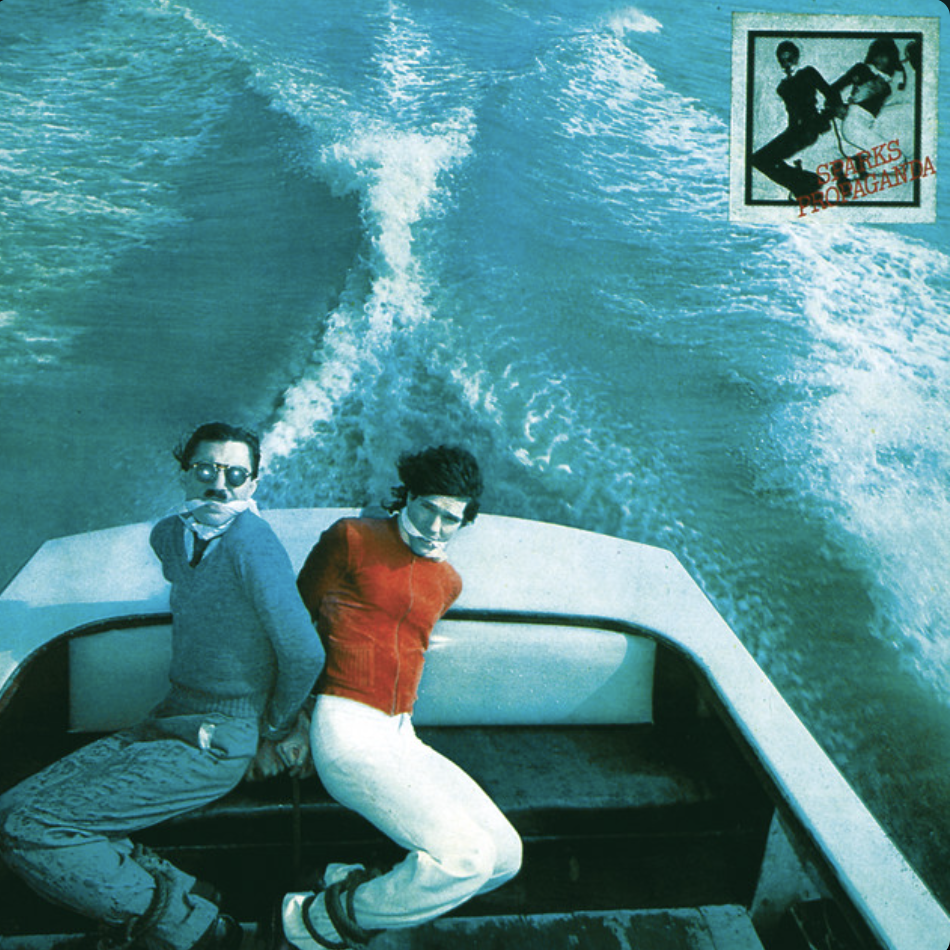
The Social Playlist is an accumulation of music I love and want to share, tracks from my various DJ sets and residencies over the years, and both selected cuts from those artists, luminaries we’ve lost and those albums celebrating anniversaries each month.
Running for over a decade or more, Volume 91 is as eclectic and generational spanning as ever. Look upon it as the perfect radio show, devoid of chatter, interruptions and inane self-promotion.
First up the LP anniversaries, starting with 50th nods to Sparks Propaganda (in my estimates, the double-acts’ best 70s album), Redbone’s Beaded Dreams Through Turquoise Eyes, Yumi Arai’s Misslim, and The Rolling Stones It’s Only Rock ‘n Roll – see below in the archives section for my little summary, if dismissive, piece on the album.
Released this month forty years ago, there’s tracks from The Fall’s The Wonderful And Frightening and Cabaret Voltaire’s Micro-Phonies. Jumping forward another decade, and I’ve also included a track from the Digable Planets’ 94’ released Blowout Comb. Another leap forward and I’ve chosen to also mark the tenth anniversary of Scott Walker’s collaboration with Sunn O))), Soused – you can read my original piece on the album in the archive below; one of my finest hours I reckon.
Whilst the Monolith Cocktail’s Monthly Playlist is all about the newest music, I miss things or just don’t have room to feature everything. And so, the Social offers room to some of those newish, recent releases that missed out. This month there’s choice tracks from Heyme, Waaju and Majid Bekkas, The Bordellos, Reverand Baron and Calvin Love, and Paten Locke.
You’ll also find, from across the decades, borders and genres, a smattering of musical choices from Heltah Skeltah, Lowlife, Samuel Prody, Gilli Smyth, The Sun Also Rises, Michel Magne, Debile Menthol, Lita Bembo, Art Zoyd, Tudor Lodge, Tommy Keene, The Silver Dollar, Vince Martin & Fred Neil, Yoch’ko Seffer, Male and Mahjun.
TrAcKlIsT iN fUlL
Michel Magne ‘Cine qua pop’
Debile Menthol ‘Tante Agathe’
Samuel Prody ‘She’s Mine’
Tudor Lodge ‘The Lady’s Changing Home’
Tommy Keene ‘My Mother Looked Like Marilyn Monroe’
The Rolling Stones ‘Dance Little Sister’
Cabaret Voltaire ‘James Brown’
The Bordellos ‘King Of The Bedroom’
The Fall ‘2 X 4’
Male ‘Bilk 80’
The Jazz June ‘Silver Dollar’
Mahjun ‘L’un dans I’autre’
Art Zoyd ‘Alleluia’
Yochk’o Seffer ‘GONDOLAT’
Waaju and Majid Bekkas ‘Fangara (Live Edit)’
Yumi Arai ‘On the Street of My Home Town’
Lita Bembo ‘Muambe’
Digable Planets Ft. Guru ‘Borough Check’
Paten Locke ‘Widdit’
Heltah Skeltah ‘Clan’s, Posse’s, Crew’s & Clik’s’
Redbone ‘Cookin’ with D’Redbone’
Heyme ‘Downtown Train’
Reverend Baron & Calvin Love ‘Famous Feelin’’
Scott Walker & Sunn O))) ‘Brando’
Lowlife ‘Again And Again’
Citymouth & People’s Palms ‘Singlecycles’
Gilli Smyth ‘Shakti Yoni’
The Sun Also Rises ‘Wizard Shep’
Vince Martin & Fred Neil ‘Morning Dew’
Sparks ‘Bon Voyage’
/ARCHIVES_____
This month, I’m reviving my archived pieces on The Rolling Stones It’s Only Rock ‘n Roll, which is fifty years old this month, and the late Scott Walker’s unholy alliance with Sunn O))), Soused, which reaches its tenth anniversary in October.
Relax, It’s Only Rock ‘n Roll. The Stones ’74 LP is 50 this month. (Appearing originally in my four part potted history of the group).
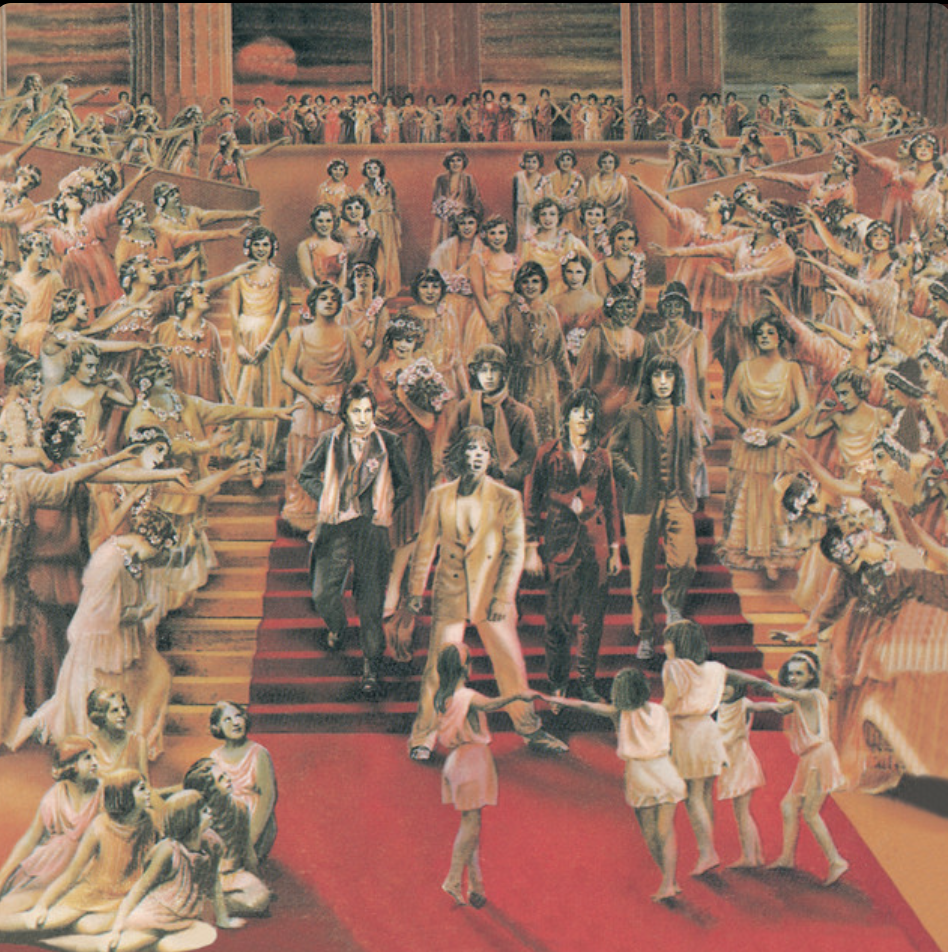
The basic premise of the Stones 12th album was to give their critics, especially the punctilious music writer Lester Bangs, the bird-finger.
Bangs’ condemnation at the paucity and profligate decline of the group was particularly scathing – quite justified in some respects – and only increased with each new release.
Incredulous at the growing derision and, as they viewed it, over-the-top analyses of their music, this album makes no bones about its regression back into the rock ‘n roll womb: albeit a version of that initial scene performed by a languid miscreant bunch of lolloping posers reprising oldies from the blues-R&B-r’n’r cannon.
The self-titled track and single from It’s Only Rock ‘n Roll (And I Like It) was strangely – so it’s claimed by Richards – conceived by a testy Jagger and recorded with his new “soul mate” Bowie as a rough demo. Such was the internal drift between the Stones creative partnership that Jagger often composed and thrashed out ideas away from his Glimmer Twins foil. During this break in communications, Richards was hanging out with The Faces lead guitarist and crow-haired sporting Ronnie Wood at his London studio. Wood had begun recording a solo LP and had asked along both Richards and Mick Taylor to add a touch of sleazy blues. Whilst at one of these relaxed sessions, Jagger dropped in and cut a version with Woods and, Small Faces/Faces drummer, Kenny Jones, but also produced another version with his comrades at a later date (Woods again played on this, contributing the rhythm guitar part on the 12-string). Regardless of who had their paws on it, It’s Only Rock ‘n Roll (And I Like It), is a stereotypical Stones pruning swaggered anthem, one that leans very heavily upon the strutting glam-rock pout of T-Rex.
Geographically separated, and as usual, sabre-rattling with the establishment, the band pushed-on, even though by now Richards’s increasing drug-fuelled skirmishes looked certain to scupper any attempts to successfully record.
To top it all, Taylor’s growing resentment at the lack of credit and acknowledgement for his contributions set the ball in motion for his resignation from the band a year later. Yet despite his disgruntlement, Taylor hung-on in there, playing on a majority of the albums ten-songs but not the title-track single; even though he appears in the video.
Without their due-diligent and overseeing producer, Jimmy Miller, the production fell to the aggrandising pairing of Jagger & Richards. Miller, a stalwart member of their inner circle and sometimes sobering force for good, had finally succumbed to his drug habit (picked-up whilst working with the band) and left, leaving the pair to take control for the first time since Their Satanic Majesties Request. And we all know how that turned out!
Scott Walker + Sunn O))) ‘Soused’ – Harrowed by thy name.

The usual rolled-out cliché of criticism that always greets every Scott Walker release, charts the enigmatic artist’s pop light to experimental morose career arc; from the teen swoon idol heady days of the Walker Brothers, via monastic alienation and Jacques Brel inspired crooner of esoteric idiosyncrasies, to existential avant-garde isolation.
Inhabiting the darkest recesses of humanity and history for at least half of that time, we should be used to this morbid curiosity, worn with earnest pride by Walker, who peers into the abyss on our behalf. Confronting with a meta-textural style the barbarity and failings of humanity for at least thirty odd years then, any developments in the Walker peregrination, shouldn’t really surprise anyone: at least the critic.
In what was met with certain trepidation or surprise by many, his unholy union with the habit adorned disciples of hardcore drone Sunn O))) is actually a very shrewd and congruous partnership; a 50/50 immersive experience, with both parties seemingly egging each other on. Walker for his part lyrically less cryptic, the Sunn chaps pushed to produce one of their most poetic and nuanced beds of sustained drones yet, and on this occasion, even cracking out various wild shortened, punctuating and unyielding riffs – verging on full metal and heavy rock riffage. Letting rip with a resonant field of sustained one-chord statements and caustic stings that bend or longingly fade out into a miasma, trying to find a meaning in these drones is akin to an Auger interpreting symbols and signs from the entrails of a wretched, just slain sacrificial beats. Yet it does work, and the bare minimal, fuzzy and wrenching bed of murmuring, primal guitars perfectly set up the intended atmosphere.
Once again, Daemonic forces have conspired. The result, a five act guttural opus, entitled Soused – in this instance the title is to be taken as a plunging or submersion into liquid or water, rather than a slang for hard liquor intoxication (though if it were, the brew on offer would be hemlock!).
What starts out and continues as a sort of proxy chorus (the nearest you’ll ever get to one on a Walker outing), the introductory crystallised, even dreamy, sense of melodic relief that introduces the album’s first musical tome, ‘Brando’, is soon corrosively despoiled by the menacing first strikes of a signature Sunn O))) chord and bullwhip.
A rather odd theme for Walker to build a threatening tower of misery from, the song alludes to the obligatory sacrificial martyrdom of the title’s Marlon Brando. Whether as self-flagellation, Brando had a penchant for taking on or even bringing (off his own back, so to speak) the act of taking a brutalised beating to his roles: from vigilante beatings in The Wild One to feeling the sharp end of a Elizabeth Taylor horse whipping in Reflections In A Golden Eye. Brando’s fatalistic characters were either the naïve well-intentioned disaffected (Terry Malloy in On The Waterfront) or assassinated disenchanted mavericks (Colonel Kutz in Apocalypse Now). The repeated lashings of a bull whip in this instance, however, refer to his role as the conniving bank robber Rio in the western One Eyed Jacks; one of the movie’s most memorable scenes being when Rio is administered the whipping of his life by a disgruntled and wronged former criminal partner, Dad Longworth (played by Karl Malden), in front of the towns people.
Perhaps this series of observations, first set off by watching One Eyed Jacks, from Walker is over-played, but it is remarkable as you play back through the actor’s movie catalogue and find a connective theme of taking the blows and even death on the chin. Probably reading too much into now and Walker does have a history of wry and acerbic wit, but Brando could be said to be offering his body up to the mortal sins as a punch bag (taking method acting literally) or was just masochistic (Last Tango In Paris M’lud). You decide, it makes for one reason or another a most apocalyptic soundtrack, mixing as it does, doom with Walker’s almost uplifting, visionary vocals to a flaying cycle of whip happy bullies.
Biblical in more ways than one, the standout mega-bestial centrepiece must be the harrowing ‘Herod 2014’; an atavistic disturbing chapter from the Roman occupied Middle East, it alludes to, what many historians say, is a wholly fictional tale of King Herod’s decreed infanticide of his kingdom (allowed by the Roman occupiers to reign over Judea and surrounding areas). Bathed in a sonorous reverberation of fearful discordance and a distressed unworldly cry of danger, this twelve-minute opus is stalked by the harangued forces of malcontent and revved-up torturous drones. The conceptual allusions, which can’t help but echo through time to the present, are far bigger than this baby cull, the region has, after all, always been awash with both the fabled and all too real episodes of death and misery for thousands of years. Yet despite this, the song is itself one of Walker’s best and even most melodically poetic, sitting happily with the material on his last two albums, The Drift and Bish Bosch.
Lyrically traumatic, but almost beautifully hewn from the English language, the opening lines bellow a nuanced scene-setting intellect, more novelistic pyschogeography than song: ‘She’s hidden her babies away. Their soft gummy smiles won’t be gilding the memory.’ In setting up the horrid event and psychological primal emotions that resonate with his audience, Walker goes on to mention two of the most famous painters to depict this crime, Nicolas Poussin and Rubens, who both fashioned their own (setting it in their own time) Massacre of The Innocents.
Herod 2014 straddles the LP like a monolithic titan. A real horror show, both wrenching yet also surprisingly compelling.
You would perhaps be fond of some relief after sitting through all that, but Walker won’t let you off that easily; summing another Sunn 0))) crackled, anvil- beating, industrial chorus of esoteric dread. ‘Bull’ is fraught with tension, languidly striking with stabbing guitars and post-industrial riffs one minute, sinking into the mire of silence and emerging like a troubled crooner monk the next. Heavy and brooding with mechanical timepieces, crowing shadows and subterranean spirits moving amongst the low buzzing presence of a pant-messing sustained drone, the Bull is unsettling to say the least, like a game of tag in the Labyrinth of the Minotaur. And the song with the longest outré of all; Walker finishing off his cryptic lines halfway through, leaving the last four minutes to his comrades to play out.
‘Fetish’ as it may already suggest is a sadomasochistic affair. A soundtrack set to some cannibalistic or serial killer shocker, where the action is carried out entirely on a Mona Hatoum barbed wire bed in a meatpacking factory. Thrashing around and violently piqued by a harassed beak like attack, the backing is a maelstrom of dentist drills, panting shakers and eerie hanging silence, until it breaks out with the album’s first drum break and rhythmic holy chorus. Throughout, Walker swoons in resignation, dropping lines like, “acne on a leaper”, and “glim away little brute”, in a disjointed narrated sombre tone that gets more dangerous as the song churns to its climax. A ritualistic metaphor, the song’s central tool of terror, the blade or scalpel, is held as an abstract reference point to gleam some meaning, whether it pertains to the cosmetic, life-threatening surgery, torture, the sexual or even tattooing, Walker and Sunn O))) build a nuanced layer upon layer of industrial buzzing queasiness to a trope.
Be under no illusion with the finale to this Dante inferno, the ‘Lullaby’ tones on offer here in no way promise a good night’s sleep. This is after all Walker’s crooned eulogy to assisted lullaby suicide, and the sound of death’s hallucinatory vibrations, gradually taking hold.
Interpreting the song in her own enigmatic way, Ute Lemper bravely grappled with the song for her 1999 album, Punishing Kiss, but Walker now takes back what he at first giveth, converting it into an even gloomier anthem with his monastic brethren.
You can almost hear the percussive ticking of a Newton’s cradle: the mortal clock running out as the drugs take effect; comfort is not an option. The whole thing sounds like a seething hotbed of psychological thrillers and horror, played out remorsefully until the final bleep of the life support signals the end. Walker never nails home his own social or political solutions, and so this, very much a topic debated in recent years and ongoing, is more a diorama set piece, which neither condones nor condemns assisted suicide.
Disturbing throughout, this unnerving suite is obviously not to be recommended to those already on the knife-edge or for those who stay clear of the news or anything that may remind them of human suffrage. You also need stamina and plenty of nerve to sit through this uncomfortable 49-minutes of music at its most challenging. Not so much hostile as shredded by a repeating rotor blade cutting action that piques and prods, even the quietest passages are threatened by an unseen presence of danger. Hell knows (literally) how this album would go down live, the option tentatively hanging in the air, depending on its reception; a possibility that could see the maverick auteur and theatrical seven-day avant-gardist performing for one of the first times in eons.
Both parties in this experiment prove their mettle, reinforcing their reputations but producing an album that is not only accessible to the devotees and followers but also those who’ve previously skirted around taking a walk through the catacombs of the bleakest recesses of a conflicted mind.
The Monolith Cocktail Social Playlist #64: The Fall, Your Old Droog, DakhaBrakha, The Jam…
March 4, 2022
PLAYLIST/Curated by Dominic Valvona
The Monolith Cocktail Social is one of two long-running playlist series on the blog. Running in tandem with the Monthly Revue, which represents all the new music both I and the MC team have been listening to and writing about during the month, the Social is a cross-generational, eclectic imaginary radio show, where anything goes: featuring tracks from the last 50 or more years.
Volume #64 features tracks from a number of anniversary celebrating albums. Kicking off proceedings, ‘Jawbone And the Air-Rifle’ is plucked from The Fall‘s 1982 Hex Education Hour, and from the same year, I’ve picked ‘Just Who Is The 5 O’Clock Hero’ from on The Jam‘s swansong The Gift, and the title track from Sparks‘ Angst In My Pants. There’s also the title cut from The Disposable Heroes Of Hiphoprisy‘s 92 special, Hypocrisy Is The Greatest Luxury, a gospel inspired southern roller from The Rolling Stones 72 opus Exile On Main Street and the title track from Faust‘s incredible So Far album.
In solidarity with our Ukraine friends, going through hell-on-earth at the hands of a raving despot, intent on reconquering the collapsed Soviet Union empire and a bit of Peter The Great’s grandiose plan, plus building a corridor to the Balkans, I’ve chosen some venerable, traditional and more contemporary tracks from the country’s artists (and choirs). Step forward the National Choir Of The Ukraine, Your Old Droog, Oleska Suyhodolyak and DakhaBrakha. I could resist including the Bee Gees beautified ‘Odessa‘ too.
Mingling amongst that lot are eclectic tracks from Pugh Rogefeldt, Dennis The Fox, Wau Wau Collectif, OKI, Solid Space, Life Pass Filter, Jim Ford and many others…
THOSE TRACKS IN FULL ARE:::
The Fall ‘Jawbone And the Air-Rifle’
The Jam ‘Just Who Is The 5 O’Clock Hero’
Pugh Rogefeldt ‘Love, Love, Love’
Dennis The Fox ‘Piledriver’
Yesterday’s Children ‘Sad Born Loser’
Rarelyalways & Hanni El Khatib ‘Manic’
The Disposable Heroes Of Hiphoprisy ‘Hypocrisy Is The Greatest Luxury‘
National Choir Of The Ukraine ‘Sviatyj Boje’
Cold Specks ‘Winter Solstice’
The Rolling Stones ‘I Just Want To See Your Face’
Wau Wau Collectif ‘Yaral Sa Doom’
Sven Wunder ‘Magnolia’
Georgia Anne Muldrow ‘Ayun Vegas (Ft. Ayun Bassa)’
Your Old Droog ‘Odessa (Ft. Billy Woods)’
La La Lars ‘Haxa’
Heshoo Beshoo Group ‘Emakhaya’
Fabrizio De Andre ‘Primo Intermezzo’
Sparks ‘Angst In My Pants’
Oleska Suyhodolyak ‘Gutsul Kolomyika (Dance-Song)’
OKI ‘Yaykatekar Dub (Love Dub)’
John Lurie ‘AI AI AI AI’
Sourakata Koite ‘Kano’
Solid Space ‘Radio France’
The Primitives ‘The Ostrich’
DakhaBrakha ‘Vynnaya Ya’
Mike Cooper ‘Boogie Boards And Beach Rubbish’
Robert Wyatt ‘Heaps Of Sheep’
Lua ‘Pozzanghere e Sigarette’
Life Pass Filter ‘Queen Ghat’
Faust ‘So Far’
Lonnie Holley ‘Crystal Doorknob’
The Blue Angel Lounge ‘Bewitch My Senses’
palliatives for dirty consciences ‘breakthrough’
Brigid Dawson And The Mothers Network ‘Ballet Of Apes’
Jim Ford ‘Point Of No Return’
Bee Gees ‘Odessa (City On The Black Sea)’
The Monolith Cocktail Social: Playlist #XXXII
February 12, 2018
DOMINIC VALVONA’S PLAYLIST

In danger of repeating myself forever, but for newcomers to the site here’s the premise of my playlist selections. Previously only ever shared via our Facebook profile and on Spotify our regular Monolith Cocktail Social playlists will also be posted here on the blog itself.
With no themes or demarcated reasoning we pick songs from across a wide spectrum of genres, and from all eras. Selection #32, chosen as always by me, Dominic Valvona, includes a couple of tributes to those we’ve lost over the last month (Mark E Smith, Hugh Masekela) plus no wave New York sazz from Konk, Kosmische Baroque synth dreamy classicism from Rick van der Linden, troubadour diaphanous from Catherine Howe, plus the usual ‘unusual’ voyages in jazz, Turkish electronic music, Britpop dreamers, psych, Afrobeat, soul and progressive rock.
Tracks:
Gökçen Kayatan ‘Doganin Ötesi’
Basil Kirchin ‘Silicon Chip’
Konk ‘Elephant’
Medium Medium ‘Hungry, So Angry’
Mr. Oizo ‘Jo’
MF DOOM ‘Bells Of DOOM’
Arawak ‘Accadde a Harlem’
Heavy Cluster ‘Gotta Get Away’
The Fall ‘Rollin’ Dany’
The Spyrals ‘Save Yourself’
Maxayn ‘Gimme Shelter’
Moses Boyd ‘Drum Dance’
The Jazz Epistles, Hugh Masekela, Dollar Brand ‘Uka-Jonga Phambili’
Binker And Moses ‘The Valley Of The Ultra Blacks’
Sundays & Cybele ‘Saint Song’
East Of Eden ‘Song For No One’
Curtiss Maldoon ‘Man From Afghanistan’
Sory Bamba ‘Kanaga 78’
Mor Thiam ‘Kele Mumbana’
Horseface ‘No Niin, Jääkausi’
Zazou Bikaye ‘Dju Ya Feza’
Jah Wobble ‘Long Long Way’
Embryo ‘Sango’
The Olivia Tremor Control ‘A New Day’
Octopus ‘Your Smile’
Margo Guryan ‘Something’s Wrong With The Morning’
Dean & Britta ‘Night Nurse’
Vanishing Twin ‘Telescope’
Dwight Sykes ‘Mystical Lady’
Terry Callier ‘Baby Take Your Time’
Living Voices ‘Eve Of Destruction’
Catherine Howe ‘Up North’
Rick van der Linden ‘Clouds’
Our Daily Bread 240: Blue Orchids ‘Skull Jam’
March 15, 2017
EP REVIEW
Words: Dominic Valvona

Blue Orchids ‘Skull Jam’
Released by Tiny Global Productions, 17th March 2017
I paraphrase, but the old in-joke adage that everyone who ever meets Mark E. Smith ends up serving a penance as a band member in The Fall isn’t far from the truth. It doesn’t seem to even matter if you have any musical knowledge, let alone can play an instrument (in the conventional sense), Smith will soon knock it out of you. If you happened to have lived in Manchester, let alone Smith’s native Salford, in the last forty years and consider yourself on the fringes of the music industry, then you’ve probably served an apprenticeship; a baptism of fire as a Fall initiate.
Part of the (depending on your viewpoint) iconic augur or shambling ravings Live At The Witch Trials lineup, Martin Bramah was a fleeting, but no less important, member of the ramshackle group; leaving halfway through sessions for The Fall’s second LP Dragnet. With legendary ennui and gusto, and a habit of snatching defeat from the jaws of victory, when Smith falls out with someone others usually follow; rallying to banishment, culled as it were. Joining Braham to form the Blue Orchids in 1981, a litany of former shunned Fall members filled the ranks. Travelling a far less painful parallel trajectory, Bramah’s Orchids shared but managed to forge a more harmonious Manchester sound during the 80s. Driven by similar influences, from The Monks to Arthur Lee, in a haze of rambunctious garage and post punk and giddy Mellotron psych, the Blue Orchids were a less discordant rabble, producing a controlled, more melodic, noise.
Christened, though in true rock’n’roll mythology, misheard, by the revered unofficial poet laureate of Salford, John Cooper Clarke, the ‘Blessed’ Orchids (as they would have been), have had a checkered history; plenty of ups and downs, break-ups and reformations, the last significant one being in 2012, put back together on a surge of new interest. Playing with more or less every significant musician on the Manchester music scene, Bramah has collaborated and even formed new bands along the way, including Factory Star in 2008.
On a roll in recent years he’s returned to ignite the Orchids, releasing a new album (riffing on T. H. White’s Arthurian masterpiece) The Once And Future Thing in 2016 off the back of a number of re-releases. Recorded at the same time and forming half of the group’s latest EP (their first release of 2017) Skull Jam, the title-track and swirling vortex centerpiece, Hanging Man, were originally earmarked as a follow-up single. However, clocking in at the seven-minute mark Hanging Man proved impossible to press onto vinyl without “drastic edits”. And so, it was put on hold. Shortly thereafter, and with another personnel change (Vince Hunt taking over on bass duties from Chris Dutton), rehearsals bore fruit, with two new songs, The Devil Laughs and Work Before The Moon Falls: ideal companions for the single that never was. In what would be another Mark E. Smith crossover, the latter of these more recently thrashed out tracks is an ironic riff on The Fall’s Before The Moon Falls, from the band’s second album, Dragnet. Bramah’s fingerprints were all over that original and half the music on the album, but in true curmudgeon Smith style, he went unaccredited – though even this petty-mindedness wouldn’t stop him from later returning to The Fall’s fold; before being unceremoniously sacked.
Proving to be on-form, dynamic, if not sagacious, Skull Jam, a prelude itself to a brand new album (no dates on that yet), is an intense but melodious carousel of quintessential Manchester psychedelia, garage and counter-culture rock’n’roll. The title-track has a certain air of acid country to its garage band guitar wrangling and constant churning “break the chains” incited mild rage – though mild irritation would be a better description. A lax Steppenwolf or Sky Saxon musing on the range, Skull Jam has a steady candour and looseness, playing lightly with its influences. Hanging Man, billed as the “full version” in brackets, is a worthy tour de force; an Inspiral Carpet and Teardrop Explodes dazzler realignment of the Modern Lover’s Roadrunner with gnarled but softened edges. The Devil’s Laugh maintains the post punk foundations, albeit slightly more thickset with a touch of hushed revenant organ and a Flamin’ Groovies feel, whilst Work Before The Moon Falls has a trace of The 13th Floor Elevators tripping on the Tex-Mex border with a ska gait rhythm and lonely plucked banjo for company.
It seems Bramah and his comrades haven’t lost faith, and continue in their inimitable way to call for us all to break free and loose from the man – “Must create a new regime, or live by another man’s”. With what seems like renewed vigour, the band going out on their longest tour in nearly thirty years, supporting The Nightingales, the Orchids have announced plans for a new, as yet untitled, album, which promises to bare a “more intense and disturbing sound”. Approaching another decade, and the band’s fortieth anniversary, it seems there is plenty more to come and look forward to from a blossoming Orchids.
 Monolith Cocktail Blog