The Digest for November 2025: New Music/The Social Playlist
November 19, 2025
THE MONTHLY DIGEST INCLUDES A CLUTCH OF ACCUMULATED NEW MUSIC REVIEWS AND THE SOCIAL INTER-GENERATIONAL/ECLECTIC AND ANNIVERSARY ALBUMS CELEBRATING PLAYLIST
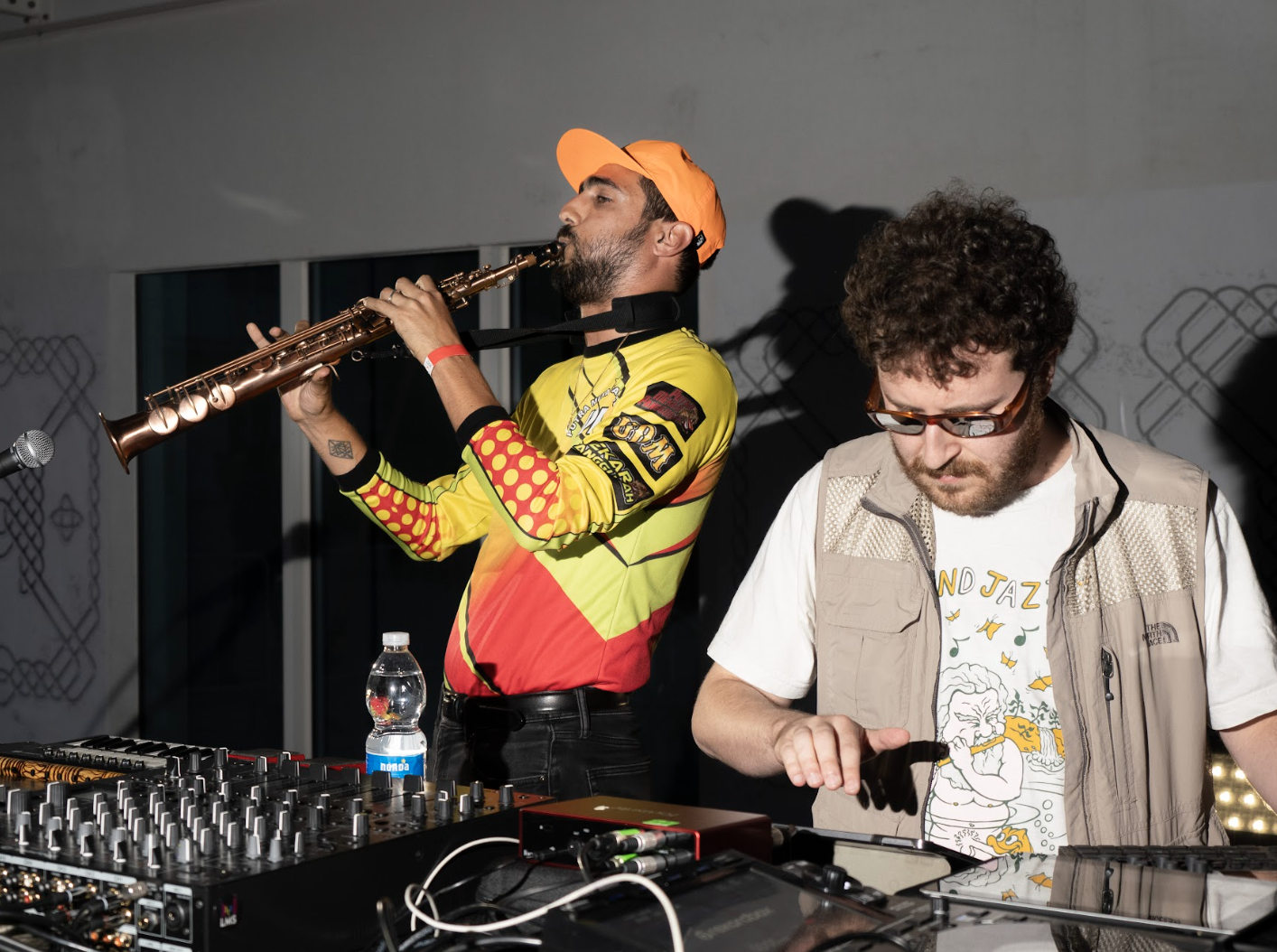
Photo Credit: Babau by Marco Valli
_/THE NEW___
Babau ‘The Sludge of the Land’
(Artetetra) 14th November 2025
A phantasmagorical shifting of tectonic plates and fever dream of a Henri Rousseau conjured equatorial lost world. And I could leave it at just that, but I’m sure both you as the reader and curious mind, and the duo behind this strange fourth worlds peregrination and inhabitation, would want a bit more to go on.
From the Artertra label founding sonic partnership of Italians Matteo Pennesi and Lugi Monteanni and their long-term Babau project an album that moves an imagined continent of influences towards new sonic, hallucinatory and kooky climes. The first “full length” work since 2023’s Flatland Explorations Vol.2, The Sludge of the Land funnels library music, the avant garde, the discombobulated, wonky electronica, the cartoonish, 32-bit console music, vague uses of ethnography and the atavistic, the visions of Jon Hassell, the breakdown shunts and floppy disc music of Esperanto era Sakamoto, the morphing AI electronic lunacy of Cumsleg Borenail, the fun kookiness and springy worlds of Carmen Jaci and Trans Zimmer & The DJs, new age trance, and at times, the more sublime drifts of Wu Cloud and Iasos into an odd repurposed wilderness. A track like ‘I tried to find myself but eventually found another, and now it’s the two of us somehow’ for example, merges Carl Stone with the mirage guitar bends and hangs of Daniel Vickers, the thinly dried blows of Ariel Kalma.
With titles that are so long as to read like haikus or little stories in their own right, there’s much in the way of descriptive prompts – although some seem like they might reflect the overuse these days of feeding blindly words, detritus and meta from the Internet into ChatGPT or some such device. Much of it describes a hodgepodge of ritual, mythologies, culture and the surreal. And musically and sonically reads like a mixed topography of palm trees, exotic islands, deserts, misty mountains and wet vegetation.
As part of a residency at Casa degli Artisti, Milan, in 2022, Babau turned their creative space into a recording studio and performing venue thanks to audio engineer and musician Francesco Piro, who produced the album. That apparatus includes instruments and effects that make sounds like reversed shaves, tangled and gangly wires, springs, chimes, the mistily fluted, and whistled alongside the recognisable sounds of a lingering foggy sax, of sauntered and hand tub drumming rhythms and both the inner workings of and the serial kooky notation of the piano.
This is an environment that squeezes the Mosquito coast up against Java, Malaysia, Polynesia and the near fantastical to produce something familiar but disjointed and surreal.
The Flower Press ‘Slowdance’
6th November 2025
Continuing to pursue a solo course, but now under the new appellation of the delicate craft imbued The Flower Press, Matt Donovan, in his own meditative and wistful way, turns the sudden loss of his sister into a subtly beautiful and reflective work of art on his fourth album.
The process of grief that prompted not only a change in musical direction (not so much that the musical signatures of past albums are entirely lost) but a much-needed therapeutic outlet, a project in which to find meaning from such a tragic event. The softly evocative Slowdance album offers consolation and testament to a life lived; the memories – referenced in a style with the track titles -, near abstract and visceral, are quantified and saved in sound and musical form to reflect upon with a great fondness and love. For Matt doesn’t just pay his respects, but also sends out moving testimony and vibrations as a way of keeping contact, of saying all the things he might have never had the chance to before, whilst healing himself.
Regular readers of the site may know Matt as the former motorising and propulsive drum beat behind Eat Lights Become Lights, and for his collaborative partnership with Nigel Bryant in the psych-Krautrock-post-punk-folk-industrial duo The Untied Knot. Away from the latter, Matt has released a trio of solo albums: Underwater Swimming (’21), Habit Formation (’22) and Sleep Until The Storm Ends (’23). This latest album of mainly instrumental pieces, takes some of the old influences but, with warmth and a wisped gauze of ether, is moving towards the orbits of Ariel Kalma, Daniel Lanois, The Durutti Column, the flange guitar-like ambient works of Harold Budd, Eno, Susumu Yokota and Mark Hollis post Talk Talk. But then there’s always a certain quirkiness and flash of post-punk and no wave dance music trebly bass playing to be found. And of course, the acoustic folksy and troubadour influences that sound particularly pastoral or in-situ: conjuring up some held dear or nostalgic escape, a glade perhaps or the sensation and touch of falling snowflakes and the building of a snowman. Some of those moments reminded me of the Wayside & Woodlands label whilst others of Arthur Russell.
The measuring of time, the chimes and triangle rings; the thin stick hitting tablas and the desert melting mirage guitar evocations of Daniel Vickers; the harmonium like moods and the Fripp-esque articulated memory of a slow dance watched from dreams; and both the stillness and the wavy, reverberated movements all articulate notions of remembrance and invested introspection. But also perhaps, manifestations of better times ahead, of durability in the face of such a heavy personal loss: the loss of a sibling hitting all that much harder.
A most wonderful album that eventually soars towards a starry celestial plane, Slowdance hovers and drifts above terra firma on a quest to evaluate and represent a life lived and the memories that pour forth from such fateful challenges. With a new title, Matt pushes into ever new and emotionally resonating territories.
Erell Latimer ‘Stay Still’
(Kythibong) 18th November 2025
The translation of visceral and abstract speech, dialogue, narration, poetry, testament, inquiry through musique concrète and tape manipulation, the new experiment from the sociolinguist composer and writer Erell Latimer is an immersive performance of reaction, interaction and interruption.
I’m not sure of the apparatus used, but other than the various machines used for effects, distortion, and what sounds like the manipulated in real time, folded, counter-folded and warped tape reels, both the long form pieces that make up this work rely upon Latimer’s voice and readings. Described in the accompanying notes as partly “concrete fiction”, fragments of Latimer’s text pieces and writings are set to a both alien and distorted, machine-like and discombobulated sounds and oscillations. Mostly in French, with passages of often disturbed or obstructed poetic philosophy and forbode from some English male speaker, the texts fluctuate between the hushed, the near in-hiding and held hostage to the clearly proclaimed and read. The cadence, both interrupted and defined signifies pain, anguish, the critical, stress, panic and theory.
The various resonated and reverberated voices and talks move from background quietness to foreground rustled distortion, and often form interlayered semantic rhythms and new utterances. Often though, Latimer’s voice is stripped down to an assortment of breathing techniques: often sounding like the aftermath of a panic attack, with Latimer trying to get her breath back or get it under control: exhales as important as anything else in this experiment and expression of “alienation, confinement, suffering, resignation, abandonment and death”.
There’s plenty of interesting, thrown, or points and nodes where both vocals and sounds interact to form hallucinations or more supernatural and haunting passages. Sometimes these interactions culminate in simulated tumults of hurricane winds, and others, into something far more musical; nearer the end of the first piece, ‘Ils seront silencieux après’ (“they will be silent after”), there’s a sort of lovely piece of music that’s part Gainsbourg, part Krautrock, part classical soundtrack.
From what sounds like paper or tape fluttering in the draft of a ventilation unit or extractor to bulb-like notes rings and chimes and the sounds of the environment, the voices and speech find space across a constantly explored soundscape of effects and obfuscation. At times it reminded me of Michèle Bokanowski, Matija Schellander, Lucie Vítková and that musique concrete progenitor Pierre Schaeffer; in short, an experimental work of language and semantics that deserves greater attention.
Plants Heal ‘Forest Dwellers’
(Quindi) 28th November 2025
The prolific and always into something drummer and trick noise maker Dave De Rose is back with his keyboardist/percussionist foil Dan Nicholls and visual anthropologist collaborator Louise Boer (otherwise known as Lou Zon) for another round of the electroacoustic project, Plants Heal.
De Rose popped up on the site as part of the Rave At Your Fictional Borders union of Jon Scott of (of GoGo Penguin note), Marius Mathiszik (Jan Matiz, I Work In Communications) and Henning Rohschürmann a while back, but his CV is packed with notable creative enterprises and collaborations, including membership of Electric Jalaba, a stint with the acclaimed Ethio-jazz luminary Mulatu Astake and instigation of the Athens-London traversing Agile Experiments project. The initial seeds for the Forest Dwellers project were planted both through the latter and through Nicholls and Lou’s London-based Free Movements events; both acting as intersections for all three contributors to cross paths, and to explore the central tenant of merging instrumental music with live electronics and DJ sets. If we’re talking about spheres of influence and CVs, Nicholls of course has just as prolific and busy schedule as a keyboardist, reeds player, composer, producer, and visual artis, whilst Lou’s documentary and experimental filmmaking and visual skills have led to a teaching role at Goldsmiths.
Lou’s work revolves around ecology, community, plant medicine, feminism, movement and experiments with analogue techniques. And this seems a good base from which De Rose and Nicholls have spontaneously reacted or conjured up improvised-like sounds and rhythms rich with organic meta and matter. During performances Lou improvises with analogue footage from her library run through video mixers and synthesisers, focused on medicinal plants such as yarrow, hawthorn, nettle and thistle. All those plants feature in processed form on the cover of the record, which was designed in collaboration with Lou’s brother Arthur Boer. Meanwhile, Lou recorded additional footage in Athens during the recording sessions to feed into the continued cycle of the project’s live evolution.
The trio’s second album together (their previous self-titled debut was released back in 2021) is a biomorphic eco system of new age trance music, techno, dub, light jazz, breaks, amorphous ethno-beats, acid and both plant-based and more alien atmospherics. Tech and nature combine to create a kind of Fourth World version of electronic dance music. But that’s really only part of the story, as the living and breathing creepers, vines and branches of the forest canopy and floor integrate with pulsations, shuttered, tubular, hollowed pole paddled and shaved or slowly released electronics to produce a camouflage reverberating effect of movement, growth and expansion.
There’s a revolution of a kind in the same air, with whispery like effected and morphed voices emerging from the fauna, and a revision of the old tribal gathering nature-tech and freedom rave-ups of the late 80s and early 90s. I’m hearing vague signs of Richard H. Kirk, FSOL, Jeff Mills, Lukid, Warp Records, Conrad Schnitzler, Mike Dred and Jon Hassell. Still, there’s more to unpick from the very much percussive and drum led rhythmic evolutions on this album; echoes of various more atavistic and exotic musical influences; timings and patterns enhanced by ethnography study and absorption. From terra firma to the stars, this organic flora form of electroacoustic dance music proves pliable, liquid but full of substance and the tactile, the earth and air.
Super Grupa Bez Fałszywej Skromności ‘The Book Of Job’
(Huveshta Rituals) 28th November 2025
From true obscurity and the dusty shelves of dormant archiving, The Book of Job emerges from its forty-year sleep – recorded as it was back in an omnipresent Soviet controlled Poland of 1985 – into a climate that scarily resonates. Whilst the sickle and hammer have disappeared from the flag, and Communist totalitarian rule has been replaced by a new form of oppressive authoritarianism in Putin’s leader-cult Russia, aggression persists and the threat of invasion, or at least escalation against those former countries that fell behind the Iron Curtain after WWII, looms large. No longer an abstract threat, Russia’s expansionist ambitions look to lock horns with Nato and the West, with a near apocalyptic destructive war in neighbouring Ukraine pushing at the borders of Poland. If nerves can no longer hold, if there is no end to the hostilities, no ground given on either side of this brutalist invasion, and if Ukraine is lost, then Poland becomes the new frontier between Europe and dictatorial Russia: a Russia hellbent it seems on regaining its lost influence and control of Eastern Europe.
There will be generations now totally separated from Poland’s past as an occupied state, subjected to draconian control by the USSR. But the timely arrival of this cult recording will once more remind its people and the world at large, of events in the 1980s; a decade when despite violent suppression, the population rose up to eventually overthrow its Soviet authorities at the end of that decade. When the various notable luminaries of the Polish underground and jazz scenes, and the counterculture’s actors and voices behind the collective ensemble of Super Grupa Bez Fałszywej Skromności first performed this multilingual and faith spanning work at the 1981 Jazz Jamboree festival, the omens weren’t quite so grave. Only weeks later the situation had changed dramatically, with Genral Jaruzelski’s ordained Martial Law rules cracking down ruthlessly on the population. In light of civil peaceful protest and the strike action and heroism of Lech Wałęsa’s famous Solidarity movement, the authorities more or less implemented a military coup of extreme measures: As the accompanying album’s scene-setting essay informs us, “Art was replaced by parades of heavy artillery”. By the time this same group recorded an album, four years later, the very act of making music would be considered a symbol of defiance: unless of course it was used to glorify the Soviet regime. “Paradoxically” the Catholic Church of Poland became a sanctuary. This may explain, in part, why the Hebrew’s Old Testament (reused in the Christian Bible and also “echoed” in the An-Nisa chapter of Islam’s Qur’an) chronicle of Job was used as totem for endurance in the face of such suffering. Because much as Job suffered tribulations and trails at the hands of God, beguiled and tempted by Satan to turn away from his piety, many of the Polish people found solace, resistance and hope despite the relentless attacks on their freedoms.
An allegory of the human condition, The Book of Job, for those who never attended their Sunday Schooling lessons, nor attended a faith-based school, tells the tale of the protagonist and his testing by God through litany and prose: that’s three cycles of debates between Job and his friends, Job’s lamentations, a poem to Wisdom, Elihu’s (a critic of Job and his friends, who may have been a descendent of the Abraham lineage) speeches, and God’s two speeches from a whirlwind. In short, Job is a wealthy God-fearing man with a comfortable life and large family, living in the Land of Uz (which has been situated in various locations of the atavistic Levant and beyond by various sources; anywhere from the old Aram, now modern Syria, to the Edomites kingdom, which now stretches across modern Jordon and Israel). God discusses his piety with Satan (though this is often written down as “adversary”, but we know who they mean), who rebukes God, stating that Job would turn away from God if he was to lose everything within his possessions: which was a lot. God decides to test that theory or challenge by allowing Satan to inflict pain on Job. The test increase, the suffering gets much, much worse, and Job ends up losing his wealth, children and health. Through it all he maintains his faith and piety, but not without much discussion and challenge. By the epilogue, Job’s fortunes and family are thankfully returned to him: Satan I take it, scuttling off to curse and sulk in the shadows.
Recorded in a makeshift “high-fidelity” studio at the STU Theatre in Krakow in the Spring of 1985, The Book of Job album draws with serious depth and political allegory upon the text. Covering everything from stage theatre to the filmic, the avant-garde and of course jazz – most of the lineup in this singular gathered super group hail from Poland’s incredible and influential jazz scene -, but so much else, the Holy Land is transported across porous borders to Eastern Europe to take in the Jewish diaspora, acolytes of Indian and Far Eastern scriptures and the then contemporary 80s sounds of the underground.
The “revered” pool of players, luminaries that took part include the multi-instrumentalist Milo Kurtis, a Pole of Greek origin, born into a family of refugees escaping the civil war in Greece, noted for his roles in Grupa w Skład, Ya-Sou, the cult rock band Maanam and jazz-fusion super group Ossian (also said to have worked with Don Cherry, who gifted Milo his ocarina), on percussion, Jew’s harp and trombita; the Polish flutist of world renown, composer and arranger Krzysztof Zgraja, who made his debut in the jazz-rock band Alter Ego, but also played with Czesław Gładkowski and Jacek Bednarek, on not only his main instrument of choice but the lighter made and smaller range Fortepiano; the Polish avant-garde and free jazz player Andrzej Przybielski, who’s notable credits include stints with the Gdansk Trio, Sesia 72, the Big Band Free Cooperation and Acoustic Action, on trumpet; drummer, composer and cultural animator Janusz Trzciński, known for his extensive work in the theatre, a writer of plays and one of the main instigators behind this project, on drums; the highly rated Zbigniew Wegehaupt, who played with just about every Polish jazz icon going and in both Wojciech Gogolewski’s Quartet and Extra Ball, on both electric bass and double-bass; and the Polish composer, multi-instrumentalist, vocalist and teacher Mieczysław Litwiński, who studied with such groundbreaking luminaries as Stockhausen and co-founded far too many groups and projects to list here, but notably the Independent Studio of Electroacoustic Music and Light For Poland, on sitar.
Added to that role call was an ensemble of either commanding, English Repertory-like or ominous voices and vocalists from stage, screen, including Ignacy Machowski, Adam Baruch, Zdzisław Wardejn, Jerzy Radziwiłowicz, Juliusz Berger and Andrzej Mitan. It must be pointed that only Mitan receives the credit of vocalist; the Polish poet, performer, founder of the Alma Art record label, chants a poetically evocative forgiving gospel of obedience and implored yearning whilst on the album track ‘When A Man Dies’. Echoed as much from a cavern or cave on the desolate plains of the Uz as in the synagogue, the repeated mantra of “Man. World. Pain. Silence” is stoically announced over and over to sombre and yet beautiful tones. The rest of that cast find themselves either narrating or interlayered with a whisper, chattering chorus of atmospheric dialogue. It reminded me, in part, of Aphrodite’s Child own Biblical opus 666.
Hallowed yet dark and almost Chthonian in places – a touch of Byzantine too – the album sets an otherworldly, afflatus but esoteric scene with the opening resonated waves of airy, fluted and blowy vibrations, moving like cycled or tubular wind from the subterrain, on the introductory entitled opener. Something mystical dances in the wind, as echoes of Alice Coltrane and Prince Lasha stir up spiritual jazz mirages and something quite ghostly seems to be lurking in the vibrations. The story unfolds, the mood suitably enacted. ‘Satan’s Concept’ follows this with percussive shimmer and shivers and a supernatural voice of forbode. Evocations of both Don Cherry and 80s Miles Davis like trumpet both trill and sound almost swaddled on another visceral and porous geographical musical landscape: the vibrated bowl sounds of Tibet for example. But the whole feel changes on the first of three litanies, with what could be called a post-punk bass and signs of krautrock and jazz-fusion: think an impressive union of Einstürzende Neubauten, My Life In The Bush of Ghosts Eno and Byrne, Desert Players Ornette Coleman, Jon Hassell and Ramuntcho Matta relocated to the land of the lost tribes. ‘Accusation’ has a promising Blue Note jazzy double bass introduction, a little bluesy and bendy. It’s accompanied by some rattled hand drums; the only instruments that express and lay down the atmospheric flexed, stretched, harmonic pinged backing to the biblical echoed English voice that narrates and questions God.
The post-punk-jazz mood is back for the second litany. A sort of no wave funk noodle of Dunkelziffer and Miles, a long low horn from the Steppes, and dialogue of wisped and more esoteric voices spoken in multiple dialects, there’s a supernatural quality to the atavistic summoning of scripture, and the age-old battles between good and evil. Almost skulked, there’s vocal coos and spectre like demons and angels in the shadows of this dramatic Krautrock-esque holy visitation. ‘Hope’ brings back in the Eastern influences, the sound of Buddhist India with the signature reverberations and brassy rings of the sitar: Shiva on the Vistula. With its psychedelic ragga mediations, the sitar acts in unison with the twanged boing sound of the Jew’s harp, the only accompaniment to the Hebrew narration.
The third and last of the litanies is quasi-80s funking jazz, with elements of Hassell’s Fourth World experiments. The flute whistles and flutters willowed fashion on a moving jazzy-fusion-funky-no-wave bass, as overlayed voices create a more convivial dialogue. There’s a smog horn too that creates a misty vapour effect. But the rhythm is like some kind of Israeli or Eastern European dance.
The album finishes on a strongly reverberated Hebrew voiced narration, a sacred holy conversation. Near the end of ‘Final’ a dreamier ray of light like flute emerges, slowly and softly drifting skywards. The sound of relief. A burden lifted.
You can easily find the parallels, the battles with faith in the face of such brutality, of oppression, and in this case, Soviet authoritarianism: The role of religion and believing playing a crucial part in resistance. As a near cryptic or hidden means of showing such defiance, The Book of Job and its lessons carried that message of artistic and political/social hope. This album, even without any of its important cultural and political context, is an artefact that deserves saving and savouring: a real intriguing, atmospheric and near theatrical experience worthy of attention and acclaim. Not just a slice of history but an experimental work of art.
___/The Monolith Cocktail Social Playlist Vol. 103___
For the 103rd time (and most probably the last as I change the format for next year), the Social Playlist is an accumulation of music I love and want to share, with tracks from my various DJ sets and residencies over the years and both selected cuts from those artists and luminaries we’ve lost on the way and from those albums celebrating anniversaries each month.
It was a few months back that I celebrated the 100th edition of this series, which originally began over 12 years ago. The sole purpose being to select an eclectic and generational spanning playlist come radio show, devoid of podcast-esque indulgences and inane chatter. In later years, I’ve added a selection of timely anniversary celebrating albums to that track list, and paid homage to some of those artists lost on the way.
The final social of 2025 merges together anniversary celebrating albums from both November and December. This selection includes 50th trumpeted milestones for Eno’s Another Green World, Patti Smith’s Horses, Kraftwerk’s Radio-activity, Burning Spear’s Marcus Garvey and Parliament’s Mothership Connection. There are even older throwbacks, 60th salutations, to The Who’s My Generation (I’ve gone for The Users version of ‘It’s Not True’ for something a bit different) and The Beatles’ Rubber Soul (I’ve gone for two covers, Davy Graham’s take on ‘I’m Looking Through You’, and Anne Murray’s version of ‘You Won’t See Me’). Added to that impressive list are 40th nods to The Jesus and Mary Chain’s Psychocandy, and LL Cool J’s Radio; and finally, whilst we’re in the hip-hop icon camp, I had to drop a track from the Genuis/GZA’s Liquid Swords, which is 30 this month.
The rest of the list includes songs from across the last five decades, with entries from Excepter, Vitriol, The Mattoid, Cowboys International, Milford Graves triumvirate free jazz experiment with Arthur Doyle and Hugh Glover under the Children of the Forest banner, Pekka Airaksinen, Sir Robert Orange Peel, Byzantium, Thony Shorby Nwenyi, Fat Spirit and more…
Tracks:
The Users ‘It’s Not True’
Anne Murray ‘You Won’t See Me’
Cowboys International ‘Part Of Steel’
Brian Eno ‘I’ll Come Running’
Excepter ‘Maids’
The Mattoid ‘Suicide’
Patti Smith ‘Redondo Beach’
The Jesus and Mary Chain ‘Taste The Floor’
Fat Spirit ‘Planet Earth III’
Catherine Ribeiro ‘Iona melodie’
The Springfields ‘Are We Gonna Be Alright?’
Davy Graham ‘I’m Looking Through You’
This Heel ‘Bad World Above’
LL Cool J ‘That’s A Lie’
Parliament ‘Mothership Connection’
GZA ‘Hell’s Wind Staff/Killah Hills 10304’
Pekka Airaksinen ‘Ratnasikhin’
Vitriol ‘Restart’
Sir Robert Orange Peel ‘Brutalists’
Kraftwerk ‘Antenna’
Et At It ‘Beets’
Burning Spear ‘Marcus Garvey’
Thony Shorby Nwenyi People in the World’
Milford Graves, Arthur Doyle and Hugh Glover ‘March 11, 1976 II’
Byzantium ‘What A Coincidence’
Dry Ice ‘Mary Is Alone, Pt. I’
EABS ‘Niekochana’
Jack Slade ‘Lipstick’
Eberhard Schoener ‘Only The Wind’.
THE MONTHLY DIGEST INCLUDES A CLUTCH OF ACCUMULATED NEW MUSIC REVIEWS; THE SOCIAL INTER-GENERATIONAL/ECLECTIC AND ANNIVERSARY ALBUMS CELEBRATING PLAYLIST; AND CHOICE PIECES FROM THE ARCHIVES.

Image: Violet Nox artwork by Allison Tanenhaus
_/THE NEW___
Bedd ‘Do Not Be Afraid’
31st October 2025
After an initial break from the site – this is down to me, and not the band -, the Oxford bedd project led by singer-songwriter, composer and producer Jamie Hyatt has now appeared twice in the space of just a few months: firstly, back in the June Digest with a bridging style EP entitled Monday 10:55, and now, this month, with a full debut album called Do Not Be Afraid.
Repeating myself again, sometimes I excel myself with a descriptive summary, and with one of bedd’s most early singles, ‘Auto Harp’ (released during the lockdowns of 2020) I described the sound as “an understated breath of fresh air from cosmic suburbia”. This beauty of a single was followed at a later date, during Covid isolation, by a premiere of ‘You Have Nice Things’, which seemed to have continued with its small-town landmarked sense of isolation and sad detachment on the EP’s title-track, the very specifically timed capture of nocturnal plaint and heartache ‘Monday 10:55’.
None of the tracks on that EP feature on this debut album, but it does gather up a string of previous singles, stretching back over the years, including ‘Party On dude (Endless)’, which featured on Jon Spira’s The Life and Deaths of Christopher Lee homage film in 2024. The track itself, is a two-parter of a sort, starting off with more haunted wistful piano tones, synthesized atmospherics and chemistry set sounds, before suddenly entering a party vibe of 80s old school hip-hop and electro samples and scratches and Chic-like funk: think Lovebug Starski meets Whistle and Doug E. Fresh in the graveyard. Jamie, the mastermind behind bedd and instigator of The Family Machine, The Desires and Medal trio of bands, has scored a few film projects over the years: most notably the Elstree 1976 documentary film that chronicles the making and legacy of Star Wars. You could say that this filmic quality and experience, a bit of scale and drama, has helped to lift much of the material, giving crescendo, a build-up and oomph to the mainly indie-rock and electronic-pop influenced sounds. Sometimes the near fatalistic tone of the voice and lyrics rises above the melancholy, malady and eulogy to twinkle and glisten with a big swell or sense of something much bigger: the universal perhaps.
Before going any further, I need to name the band that has formed around Jamie for this project, which includes “a range of celebrated local Oxford musical talent”. There’s bass player Darren Fellerdale and guitarist Neil Durbridge, both bandmates from Hyatt’s previous project The Family Machine, plus the guitarist Tom Sharp, electronic musician and producer Tim Midlen (aka The Mancles of Acid) and drummer Sam Spacksman. Together, they push the fragility and vulnerability towards the stars with music that sits comfortably between a traditional band set up and the electronic (much of which is atmospheric, rather than in the form of synth waves or bass lines and such; far more in the manner of the cosmic, of adding something more magical, of transmissions, the odd captured recordings of chatter and the environment); they sound on occasions vaguely Britpopish, a little like Radiohead circa Pablo Honey and The Bends, Jeff Buckley, Benjamin Shaw, and on the shorter saddened song track about expectations, of life and being left deflated ‘Bed Sheet’, like both Blur and Gene.
I’ve already used the word fatalistic, and with references to Bowie’s Ziggy period world ending calamity (‘Five Years’), and despondent impressions of our social media and self-obsessed culture and its ways of dealing with tragedy, death and loss (‘Gone’ and ‘I Whoo Yeah’), you’d be right to expect it. And yet, the candidness of Jamie’s lyrics, especially on the nostalgic and fragile eulogy ‘Everything’s Coming Around’, have lift and a quality of endurance as our protagonist pushes through a weight of memories. Cutting through beautifully the filters of an Instagram encased world, Jamie transforms real concerns, injury and failures into something very magical and full of memorable tunes, hooks and feeling. A great album from a fine project indeed.
Yusef Mumin ‘Journey To The Ancient’
(WEWANTSOUNDS) 31st October 2025
Continuing to unearth those both privately pressed and obscure recordings from a golden period of free from conscious and Black identity jazz, the reissue specialists at WEWANTSOUNDS have collaborated with the notable musician Yusef Mumin to bring some of his previously unreleased peregrinations and expressions to vinyl for the first time ever. Following on from last year’s extraordinary Black Artist Group ‘For Peace And Liberty, In Paris December 1972’ special (of which there are some musical parallels), the label has brought together a quartet of recordings from the multi-instrumentalist, co-band leader and pioneer’s personal archive. Bringing an expanded context, and a framing of the history, the relevance, the influences and sparks of inspiration, prominent jazz writer Pierre Crépon joins the dots with some insightful liner notes, making for a very desirable package.
Whilst I won’t just repeat Crépon’s studied but creatively written research and notes, a rough outline of Mumin’s career is needed before we go any further. Born Jospeh W Phillips on August 25th, 1944, the wartime baby grew up in Cleveland, a city that would prove a hub, crossroads for all kinds of societal, spiritual, radical and cultural activities. Drawn from a young age to such luminaries of the jazz form as The Modern Jazz Quartet and Yusef Lateef, but also classical pioneers such like Igor Stravinsky, Phillips would develop his own musical language, inspired by reading liberally a great many esoteric works: taking an interest in everything from Zen Buddhism to the Kabbalah, the Zohar, but eventually finding a calling from Islam. Cleveland during this time, as a growing epicentre of Black Nationalism, of Black self-preservation and worth, hosted such groups as the Nation of Islam (where they set up Mosque No. 18), a Moorish Science Temple and branches of the Ahmadiyya (an international Muslim movement started in India in 1889 by Mirza Ghulam Ahmad, who purported to be divinely appointed as both the Mahdi and Messiah). I’m not sure when, but in the tradition of such Islamic faith conversations, Phillips adopted the Yusuf Mumin name – a reconnection with his African/Islamic roots, a rebirth if you like and shedding of a European-Christianised identity, the mark of ownership.
Taking up alto saxophone, absorbing a fecund of jazz sounds and developments taking shape in the 1960s – from Ornette to Sun Ra and Ayler (an artist he’d have a lifeline interest in, a praise for; his own art said to be a continuation of what the free form tenor saxophonist started), Mumin gravitated towards the trumpeter Norman Howard, who’s credentials included a stint with Ayler: namely playing on his iconic Spirits LP. They formed a group together for a fleeting passage of time before Mumin co-founded his most iconic partnership a year or so later, the Black Unity Quartet. The original quartet soon pared down to the now legendary trio of Mumin (on reeds), the cellist Abdul Wadud and drummer Hasan Shahid (weirdly, and I must point this out, when searching online for a bio or any details of this short-lived group, there are multiple versions of this lineup being shared, examples of misinformation: names spelt wrong, instruments attributed wrongly too.) They’re predominantly known for the cult status and rarity of their only LP, Al-Fatihah, recorded in the December of ’68. Privately pressed with no interference, but crucially no publicity or push from a label, it would take decades for this record to be re-issued and given a larger significant launch and place in free form jazz history – an interview with Mumin, and a playlist selection featured in the Wire magazine at the time of this release. Inspired by the afflatus and the opening chapter of the Quran – the first seven verses of prayer that gives guidance and mercy -, Al-Fatihah can be translated into English as roughly “The Opening” and “The Key”. Carrying on this journey, going on to collaborate with an enviable cast of jazz greats Charles Tyler, Horace Tapscott, Arthur Blythe and Butch Morris, Mumin built up an impressive archive of his own recordings; some of which are now finally seeing the light of day as the Journey To The Ancients album.
With only his Dan Nuby double-bass credited pseudonym and the drummer William Holmes (an “associate” we’re told of the blistering alto free form, modal and hard bop luminary Sonny Simmons) as company, Mumin’s quartet of recordings are brought together for a fitting showcase of spiritual, longed, radical free-play and searching, questioning roots jazz. Despite featuring different themes, it feels like a complete work: a missing act from the celebrated cannon that connects the spiritual and political quest for African American liberty with a hunger for the homelands, and unity under the crescent flag. As my reading goes, the short opening passage of Bakumbadei, is a divine song of longing, and an invocation. As both Mumin himself and Crépon’s make clear, the title “relates to power of definition, or new wine, as offerings to the fathers.” Playing the cello, both as a mark of respect to his former foil Wadud (rightly acclaimed as one its finest practitioners in the jazz and classical fields) and because it just sounds so evocatively deep and almost pained in expressing a majesty, a dignity, and classical strain of the atavistic, Mumin also sings with an equally deep, but not quite baritone, voice, repeating the title chant, spell.
The very next piece, and title-track, now opens the door into a more extensive world of ancient caravan trail jazz. Incipient stirrings, shakes of Kahil El’Zabar and drifted rasps of saxophone moodily conjure up a landscape of some dreamt-up vision of Arabian North Africa, of the Middle East and the Fertile Crescent, but also of something far more out there in an alternative plane or dimension. A spiritual, pining Afro-journey with classical traces and a touch of the New York Art Quartet, Jospeh Jarman, Maurice McIntyre and the James Tatum Trio Plus. An awakening you could say, its sets the pathway up for what’s to come.
‘A Distant Land’ is another of those searches, this time for a new Jerusalem or a land in the sky. What could be tablas set up a more bended and buoyant Eastern feel of the longed. The spaced-out bass notes, sometimes ponderous, make steps on this slow rhythmic trial as the flute now, half in the style of Llyod McNeill and half in the style of Jeremy Steig chuffs and blows its course across a deep dive of temples and jungle.
More unsteady, with Holmes’ improvised like and active minor tumults of free form drumming, ‘Diaspora Impressionism’ is a tumble and uneven keel expression of the misplaced people, but also a response to the pain, ancestral trauma and indignity, the travails of the Transatlantic slave trade legacy. At time Mumin is blowing almost dry, without any spit, in reaching that encapsulation of hurt and anger; there’s parts in which he is literally, or sounds like it, fighting with his instruments as the fraught sax mimics the viola and violin. And yet amongst the splashes and rolls, there’s passages of rhythms and melody to be found; a yearning moment or two in which the trials and tribulations find some sort of peace. But as this combo go at it, they perform a wild form of jazz that has parallels with the art of the Children of the Forest, Wayne Shorter, Evan Parker’s more far out material, Ayler, Sunny Murray and Dewey Redman.
An album of beauty and toil; of consciousness and the imagination; a balanced and congruous set of recordings that feels like a unifying statement of divinity, experimentation, hardships and free expression. WWS have done it again and retrieved a vital album from a key and pioneering artist/musician in the story of free form jazz.
NiCKY ‘with’
(PRAH Recordings) 28th October 2025
Broadening the scope and the queer landscape musically whilst inviting in some congruous collaborative bedfellows since their last outing, with the by EP in 2024, the London songwriter and performance artist simply known as NiCKY presents a new songbook of haunted, touching, tender and resilient balladry, theatre-esque numbers, behind closed doors masquerades and near heartbreaking drama.
From the very first brush of tambourine and affecting touch of late-night saloon poised piano on the opening beautiful, but hunting, declaration ‘I Saw You’, I was sold. Slowly charged with expressions of both vulnerability and lust, played out in the dimmed lit recesses of an after-hours drinking hideaway, with one eye in anticipation of the next affair, the next pick-up, yet desiring a special frisson and love, with the passing influence of Lou Reed, John Cale, Stephan Trask and Anohni, NiCKY reworks lyrics originally conceived by the queer Irish playwright and activist Colm Ó Clúbhán and the theatre group that he became a member of once immigrating from his native Ireland to London in the early 70s, the Brixton Faeries: their activities emerging from the noted Railton Road squats. In its original form, the song first featured in the “agit-pop play about cottaging” GENTS, but finds a new avenue of expression, disarmed with a different kind of poignancy and heartache, and now repurposed for a restaging of Ó Clúbhán’s Reasons For Staying play – an avenue for telling the marginalised stories of the Irish diaspora in the capital, centring on the lives of its queer characters, but also of those women seeking abortions. It’s a highlight for me on a generous EP of such “uninhibited” serenades, off-Broadway cabaret turns, and the requited.
Already off to a great start then, the second number, ‘The Fall’ features the iconic French chanteuse, writer (from the International Times to plays), one-time tightrope walker (taking to the high wire or rope for such diverse companies as COUM Transmissions and Jérôme Savary’s Grand Magic Circus in Paris) and celebrated underground icon (memorably appearing and performing in Derek Jarman’s Jubilee and also, apparently taking part in Andrew Logan’s Alternative Miss World gala) Hermine Demoriane, who’s circus skills come in handy, metaphorically speaking, on a song about emotional support. Providing a safety net, Dermoriane’s unmistakable unique voice (for some reason, reminding me of Isabella Rosselini when she tries on a French accent) spins circus analogies to a piano led ballad that reminded me in part of both Mark Kuzelek and Elton. You can also pick up the soft, near brushed and slipped, drums I believe, of another guest, the alt-jazz, R&B and soul multi-instrumentalist and artist Donna Thompson, and the squeezed subtle wistful saxophone of either Euan Hinshelwood (who also produces and plays some bass on the EP) or CJ Calderwood (the multi-disciplinary artist and composer, who you may recognise as a member of both Lol K and Good Sad happy Bad): sorry, it doesn’t specify which one played on this track.
I use the words torch song, but in a lazy fashion, and it might be out of place here: Though you could perhaps argue that the heartbreaking curtain call, the swan song of ‘Fool’s Convention’ is one such torch song; apparently, so the notes say, a fusion of Kylie’s ‘I Believe In You’ and Nat King Cole’s ‘Nature Boy’. But there is a held, restrained, emotional charge to each of these songs that is hard to put a finger on.
In a liminal spot between resolution and malady; between hurt and lovelorn celebration; the rest of the album falls between Bob Fosse imbued theatre-musical and the music of John Howard, the observatory songwriting of Soho night owls, and a contemporary vision of a wistfully voyeuristic Ivor Novello cataloguing the goings ons and affairs at private views and parties in the capital. Although, the piano riff on ‘LDN Wars’ did remind me for some reason of Bruce Hornsby.
Variations on the signature include both the longed American dreamy stage number ‘Pink Pony Club’, which finds NiCKY adopting more of a Jack Shears persona; carried over into the next track, ‘Private Glance’, which has a Brazilian carnival meets Latin Miami atmosphere, and sounds at any one time like a shimmy-chimmy parade of Grace Jones, Midnight Magic and Roxy.
A most excellent second EP from an artist with much to share and shed on the themes of queer identity, vulnerability and resilience; the craft is superb and affecting. Definitely a choice release this month, if not this year.
Pray-Pax ‘The Lolita Years’
(Zel Zele) 24th October 2025
You’ve got admire anyone who can riff on CAN’s ‘Chain Reaction’ whilst deliberating on sexual and material fancies in the style of Lydia Lunch, but this is just one such take-away from a compilation style overview of the pioneering sound and musical theatre of the 1980s French duo. Combing a Krautrock sample with speeding cars and snatches, manipulations of Musique concrète, they turn a play-of-words on ‘Can’t’ to something approaching no wave post-punk swing. And they do this fusion of the haywire, the silly, the maverick, the dadaist and modern throughout a collection that brings together a multi-disciplinary array of their “unearthed” pieces.
A moiety, a part of the expanded Lolita Danse collective of dancers, artists, set designers and musicians – both that and the name of this survey possibly the very worst thing to ever look up online; that French obsession and flirtation with the taboo and all that -, Pray-Pax provided the soundtrack to an organised chaos of individual expressions and contemporary dances: an act that takes in circus-like acrobatics, the anarchic, kinetic and contemporary. And as part of a greater reprieve of this ensemble’s work, from ’81 to ’89, the design studio Mestiza Estudo is set to publish the Lolita Danse archive at the end of the year. As the press release outlines: “The book features material drawn from a selection of more than 10,000 images that document not only the collective’s performances but the entanglement of their personal and professional lives. This will form a portrait of the collective in motion: sets, costumes, music, videos, drawings, rehearsals, and more. The archive extends far beyond the visual: travel journals, letters, sound recordings, press clippings, and videos trace the full sweep of their creative ecosystem.”
Herding a messy story, from an ensemble that performed either solo in duets or as a group, and one that managed to slip any form of easy categorisation – never unifying under one banner, nor outlying or defining any particular sound or style -, the Istanbul/London shared label and NTS radio show platform Zel Zele present a fourteen (sixteen in the case of the digital formats, with the extras being bonus material as such) track document of art-music and sound fusions.
Behind the Pray-Pax moniker lies the creative instigators Thierry Azam and Alain Michon. These very capable experimental musicians combined the cabaret of the absurd, the frightening and playful with a sound collage that warped, reversed, cut-up and transmogrified everything from no wave to Iberian classical guitar, jazz, the classical, Fluxus, the concertinaed music of old France, post-punk, alt-Catholicism, the mysterious, noirish and the work of Francois Bayle and Pierre Schaeffer – especially on the opening flippery of the vague Afro-rhythmic, marimba bobbled, transmission synching cut-up ‘Domani non c’e sarà più’ (or “tomorrow there will be no tomorrow”), which sounds like a concrete version Holger Czukay, David Byrne and La Monte Young sharing the stage together.
There’s a combination of ideas that run from the rhythmic, the vocalised (though also examples of the talked, narrated and pranked) and beat driven to those that are soundtrack-like or just really odd. Tracks like ‘Down in the North’ sound like a phantom haunting The Residents and Art of Noise, whilst ‘Prudnik Blues’ sounds like a no wave jazz bluesy noirish juxtaposition of Cecil Taylor, Ramuntcho Matta and John Laurie. ‘Le Harve’ imagines Moebius and Roedelius decamping to the Northern French coastline, ‘No Regrets’ seems to transform some silver screen score from the 1920s into a Mexican mule ridden clip-clopping and French serenaded exotic experiment from Sakamoto’s Esperanto album. But bells also chime, pool balls are pocketed, dogs bark, wisps of ether draw across the crypt, and the rain falls on a number of atmospheric pieces. And within those perimeters you can detect passing traces of Devo, The Flying Lizards, Cage, and Lizzy Mercier Descloux.
Your mind has to do the conjuring without the performances (although there is a video of ‘Can’t’), and for that these pieces of music prove very intriguing, imaginative and in some instances, convulsive and hip in that downtown NYC way. In all, a very interesting survey of musicians combining performance art, dance and sound for a snapshot of the French experimental 80s.
Violet Nox ‘Silvae’
(Somewherecold Records) 21st October 2025
Building new worlds, futuristic landscapes and intergalactic safe havens in the wake of vapour trails of laconic, hypnotizing new age psy-trance mysticism, Violet Nox once more embrace Gaia, Greek mythological etymology, astrology and science-fiction/fact on their latest album, the poetically entitled Silvae.
The Boston, Massachusetts trio of synthesists and electronic crafters Dez DeCarlo and Andrew Abrahamson, and airy searching siren vocalist and caller Noell Dorsey occupy a dreamy ethereal plane that fits somewhere between Richard H. Kirk’s Sandoz, Vangelis, Lisa Gerrard, Banco de Gaia and ecological revering dance music – though that trio has expanded its ranks, indeed very pliable, over the course of the last decade.
On their eighth album together (released via the highly prolific and influential North American label Somewherecold Records) the topics of identity, androgyny, resolution, self-discovery, self-love and resistance are lifted towards the stars, pumped and projected through the veils of ambience, trance, dub, EDM, rave, electro-pop, cold wave, techno and more. The trio dreamingly, and in the moment, explore new textures, dynamics and atmospheres, and perhaps, produce their finest work to date: certainly, in places, the sound is more electronic-pop, with vague traces of New Order, Propaganda’s Claudia Brücken and 808 State – their sort of melodica like flutiness especially.
With references, title wise and lyrically to ancient Greek named guardian stars (“Arcturus”, brightest star in the Boötes constellation, notable for its seemingly red colouring, and observed, described by Ptolemy and Chaucer) and the ghostly visages of deep space to the “crescent” shaped cartilage of the knee (“Meniscus”), the album’s themes explore protection, recovery and pain (both physical and mental). Through the beckoning, the near operatic at times scaling, and drifted vocals of Dorsey they find relief, a second chance, in an astrosphere of near organic and sophisticated synthesizer and electronic apparatus plug-ins, effects, pads and keys. And sounds at any one time like a merger between Tangerine Dream, LFO and Massive Attack.
Whether it’s journeying into the subconscious or leaving for celestial rendezvous, Violet Nox turns the vaporous into an electronic art form that’s simultaneously yearning and mysterious, cinematic and ready for the dance floor. Fizzing with techy sophistication and escapism, the American electronic group continue to map out fresh cerebral sonic visions on their new, and again, possibly best album yet.
___/The Monolith Cocktail Social Playlist Vol. 102___
For the 102nd time, the Social Playlist is an accumulation of music I love and want to share, with tracks from my various DJ sets and residencies over the years and both selected cuts from those artists and luminaries we’ve lost on the way and from those albums celebrating anniversaries each month.
A couple of months back I celebrated the 100th edition of this series, which originally began over 12 years ago. The sole purpose being to select an eclectic and generational spanning playlist come radio show, devoid of podcast-esque indulgences and inane chatter. In later years, I’ve added a selection of timely anniversary celebrating albums to that track list, and paid homage to some of those artists lost on the way. In the former camp this month, and to tie in with the Archive spots on Ryuichi Sakamoto ‘Esperanto’ LP from 1985 and, though I actually missed the original release date in September, U.S. Girls’ Half Free LP from 2015. Other anniversary albums this month or year include François Hardy’s L’amitie (60), The Who’s By Numbers (50), Sparks Indiscreet (also 50), Grace Jones Slave To The Rhythm (40), Shriekback Oil And Gold (40), Pulp Different Class (30 this month, which I find hard to believe), DANGERDOOM ‘The Mouse & The Mask’ (20), Super Fury Animals ‘Love Kraft’ (20) and Broken Social Scene self-titled LP from 2005.
On the radar but missing out on a place in the blog’s Monthly Choice Music Playlist, I like to include a number of newish releases – anything really from the last four or five months of 2025. In October this list includes something from the L.A. collective Human Error Club, Alejandrito Argenal, Tetsuo ii, and Connect The Dots Movement collaboration with Sol Messiah.
The rest of this month’s social is made up of tunes loved, played out from across the last 60 or more decades: LICE (that rap union between Aesop Rock and Homeboy Sandman, which just so happens to be a decade old this year), François Tusques and Noel Mcghie, Harold Alexander, schroothoup, Angel Bat Dawid, Sandii, Inherit The Moon…
That Full track list is…
François Hardy ‘En t’attendant’
The Who ‘Dreaming From the Waist’
Broken Social Scene ‘Ibi Dreams Of Pavement (A Better Day)’
Mordicai Jones ‘Son Of A Simple Man’
Steve Reid ‘Kai’
Harold Alexander ‘New York Sister’
Sol Messiah & Connect The Dots Movement ‘What Goes Around’
Lice (Aesop Rock & Homeboy Sandman) ‘Katz’
Sparks ‘The Lady Is Lingering’
SANDII ‘Drip Dry Eyes’
Grace Jones ‘Slave To The Rhythm’
Super Fury Animals ‘Frequency’
Great Speckled Bird ‘Long Long Time To Get Old’
Shriekback ‘Nemesis’
Ryuichi Sakamoto ‘A Wongga Dance Song’
François Tusque & Noel Mcghie ‘Va Et Viens’
Pulp ‘Live Bed Show’
U.S. Girls ‘Sororal Feelings (Live)’
Alejandrito Argenal ‘Apasionada’
DANGERDOOM ‘The Mask’
HUMAN ERROR CLUB ‘FROGTOWN’
Angel Bat Dawid & Naima Nefertari ‘Black Stones of Sirius’
Tetsuo ii ‘Praise the Sun’
schroothoop ‘Bilkschade’
Amadou Diagne ‘Freedom’
We All Inherit the Moon ‘When We Finally Fall Asleep, Pt. 1’
Possible Humans ‘Absent Swimmer’
Polyrock ‘Cries and Whispers’
Trifle ‘Old Fashioned Prayer Meeting’
Excepter ‘Maids’
___/Archives___
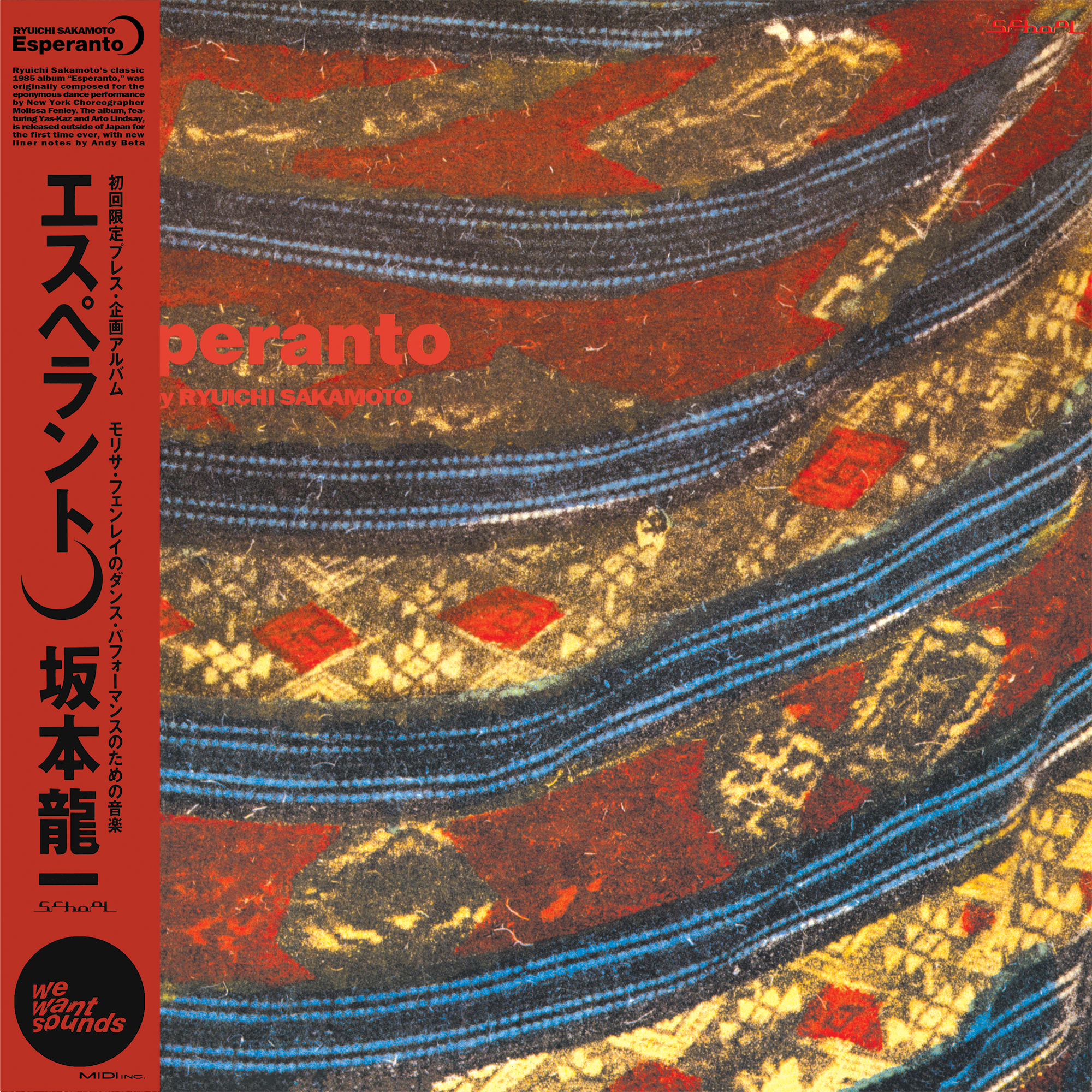
Ryuichi Sakamoto ‘Esperanto’
(Originally released October 5th 1985, and re-released by WEWANTSOUNDS in 2021)
Already riding the visionary synth waves with the Yello Magic Orchestra and through his inspirational projects with David Sylvian, Sakamoto went on to score success with the plaintive, harrowing Merry Christmas Mr. Lawrence soundtrack. The sixth solo release in that oeuvre however was a return to his more leftfield, challenging roots: a marked change from the semi-classical emotional pulls of the film soundtrack. A kind of cutting-edge theatre and ballet, Esperanto was composed for a performance by the New York choreographer Molissa Fenlay with contributions from the Lounge Lizard’s experimentalist guitarist Arto Lindsay and the Japanese percussionist Yas-Kaz. You’ll have to use your imagination to how it all worked visually – though later on art luminaries Kit Fitzgerald and Paul Garrin turned this soundtrack into a conceptual video project.
Sounding very much of its time, on the burgeoning apex of dance music and early hip-hop, electro, this polygenesis experiment often evokes both the Art Of Noise and Herbie Hancock’s ‘Rockit’. Using a super-sized computer and state-of-the-art tech, Sakamoto merged futuristic Japanese theatre with a mechanical Ballets Russes, workshop shunts and huffs with the plastic, and electronic body music with Hassell’s fourth world music inspirations.
Snatches of voices, dialogue get cut-up and looped in a primal techno performance of mechanics, rippled and tapping corrugated percussion, synth waves and oscillations, serial piano dashes and rolls, and Japanese spiritual garden enchantments. At any one time you can pick up the echoes of the Penguin Café Orchestra, Phillip Glass, Stockhausen, Kraftwerk, Depeche Mode, Eno and Populäre Mechanik within the often mysterious, exotic performativity. Motoring, bobbing or in staccato mode, Sakamoto produces a futurist dance set of suspense and experiment, an omnivorous feast of programmed and real sounds. Though very dated by today’s technological wizardry standards, the electro workshop Esperanto remains an iconic, very much sought after work well worth its admission price and indeed reissue status.
U.S. Girls ‘Half Free’
(4AD) 25th September 2015
Beckoned to the label hotbed of deconstructive cerebral pop 4AD, the Illinois raised, Toronto relocated, polygenesis songstress Meg Remy continues to entrance with her latest U.S. Girls album Half Free. Transmogrifying the template evocation of Ronnie Spector and The Shirelles with a fresh perspective and penchant for glitter ball maladies, neon lit dub and glamorous scintillating bubblegum pop, Remy’s moiety of revisionary girl group backbeats and venerable candid highly unsettling laments address a myriad of issues, from disparity between the sexes to the growing pains of modern womanhood – cue the unsettling vignette ‘Telephone Play No.1’, which plays out as a phone call catch-up between siblings but then unnervingly reinforces a deep resentment on stereotype psychology.
Remy’s most dazzling, hypnotically eclectic album yet, both thematically and musically, Half Free is essentially a highly sophisticated and gracefully slick pop triumph: On a parallel, alternative timeline this could have been (stay with me on this one) a Camille Paglia championed Madonna era masterpiece from the mid 80s; her veracious sensual heartache and woozy dream like escapism is certainly evoked at various times throughout the album. Madonna aside, Meg takes on the mantle of various female personalities and vamps, but often desexualizes and reduces their carnal allure to a sense of isolation and discomfort. Her cast of troubled personas this time around owes a debt to the characters of John Cassavetes and Michael Ondaatje, and to the broken-down protagonist of a lost 70s plaintive disco classic.
Channelling the wallowing despair of Ronnie Spector, and loosely walking the line of the troubled Nora Bass from Ondaatje’s Coming Through Slaughter novel, on the opening churning looped melodrama ‘Sororal Feelings’, Meg’s sisterly pleads of the broken wife yearningly progress through a Lee Hazelwood envisioned deep southern soundtrack: the strange fruit and methodology metaphorically replaced: “Going to hang myself. Hang myself from a family tree.” An emotional draining start, which grows on you with repeated plays, Sororal is followed up by the super-charged dub reggae hybrid ‘Damn That Valley’ – perhaps the most refreshing slice of on-message pop in 2015. Taking her cue from the acclaimed journalist Sebastian Junger’s Afghanistan front reportage War chronicles, Meg rages with a reverberating wall of sonic shrilling and grief as an imagined war widower riling against the futility and platitude sentiments of the government. Beating out an electro sound clash, part N.Y. City no wave of the early 80s, part Mikey Dread Jamaican sunshine dancehall, long-time collaborator and Toronto producer Onakabazien takes it to the next level.
Already aired, ‘Damn That Valley’ is the most colourfully vibrant of a trio of songs released since May in the run up towards the release of the LP. The second of these, ‘Woman’s Work’, closes the album. Extended from its more radio and video friendly version to a fading seven-minute plus requiem, the female gaze is sinisterly reproached by a Cindy Sherman posing façade and operatically Baroque gilded Moroder soundtrack. Amplifying the venerable atmospherics, Meg is joined by the siren sonic ethereal pitch of Ice Cream’s Amanda Grist – who can also be heard doubling-up on the Damn That Valley vocals – as they traverse an eerie veil of Catholic electro.
Released in more recent weeks, the last of this trio ‘Window Shades’ revives Gloria Ann Taylor’s original 70s unrequited disco ballad ‘Love Is A Hurting Thing’. Stumbled upon by Meg’s husband and DFA label signed artist Slim Twig (who contributes throughout the album); a touch of Madonna blusher and woozy glitter ball noir is added, whilst the universal theme is updated: apparently written after Meg watched the cod-autobiographical documentary Part Of Me, the meme circus spotlight on the life of Katie Perry that even with a soft coating of saccharine idolisation exposes the cracks and fatuous nature of celebratory.
Elsewhere on the album Meg appropriates the bubble gum glam of Bolan and the spikey punk beat of The Misfits on ‘Sed Knife’ (a minimal poem set to a bouncing backbeat, originally released as the B-side to 2012’s ‘Rosemary’). Whilst she offers an elegantly cool, misty oscillating sonorous bass-y air of mystique, – piqued by cold war jarred piano note suspense – clandestine variant on the spy thriller soundtrack with ‘New Age Thriller’: The actual battle it seems is between self-respect and male pressure. Red lipstick marks the collar of the churning, western guitar twanged, murky ‘Red Comes In Many Shades’, which itself borrows from the put-upon, downbeat beauty of Nancy Sinatra. Whether intentional or not, the song sounds like a slowed down version of New Age Thriller, and thematically dissects the struggles, and in this case, the betrayal of an affair.
Honing the darkness and plight of what was always celebrated as the innocent, teenage growing pains of adolescence with more gravitas, Meg’s robust themes swim amorphously through the dry-ice, crystal waves of the late 70s and 80s to produce a post-modern pop triumph. Progressing from the basement tapes and reverberated Spector sonic loops of the past to her latest incarnation as the pining pop artist, Meg Remy’s production values are highly ambitious: her previous work a precursor series of experimental outings. Without a doubt Half Free is her best, most mature, meticulous and glorious sounding collection of songs yet.
If you’ve enjoyed this selection, the writing, or been led down a rabbit hole into new musical terrains of aural pleasure, and if you can, then you can now show your appreciation by keeping the Monolith Cocktail afloat by donating via Ko-Fi.
For the last 15 years both me and the MC team have featured and supported music, musicians and labels we love across genres from around the world: ones that we think you’ll want to know about. No content on the site is paid for or sponsored, and we only feature artists we have genuine respect for /love or interest in. If you enjoy our reviews (and we often write long, thoughtful ones), found a new artist you admire or if we have featured you or artists you represent and would like to say thanks or show support, than you can now buy us a coffee or donate via https://ko-fi.com/monolithcocktail
The October Digest: Social Playlist Volume 80, Tamikrest, Billy Cobham and David Bowie…
October 18, 2023
ANNIVERSARY ARCHIVE SPOTS AND THE 80TH EDITION OF THE MONOLITH COCKTAIL SOCIAL PLAYLIST: DOMINIC VALVONA
Welcome all to the October edition of the Monolith Cocktail Digest, an archival driven column that celebrates anniversary albums each month and marks those special icons we’ve lost. In recent months this column has also become the home of the long-running cross-generational/international eclectic Social Playlist, which reaches its 80th edition this month.
Plucked from those back corridors of the blog’s archive, there are original pieces on the Tuareg desert blues-rockers Tamikrest and their 2013 album, ‘Chatma’, jazz drummer extraordinaire Billy Cobham’s Spectrum (50 years old this month), and David Bowie’s Reality (unbelievably already 20 years old).
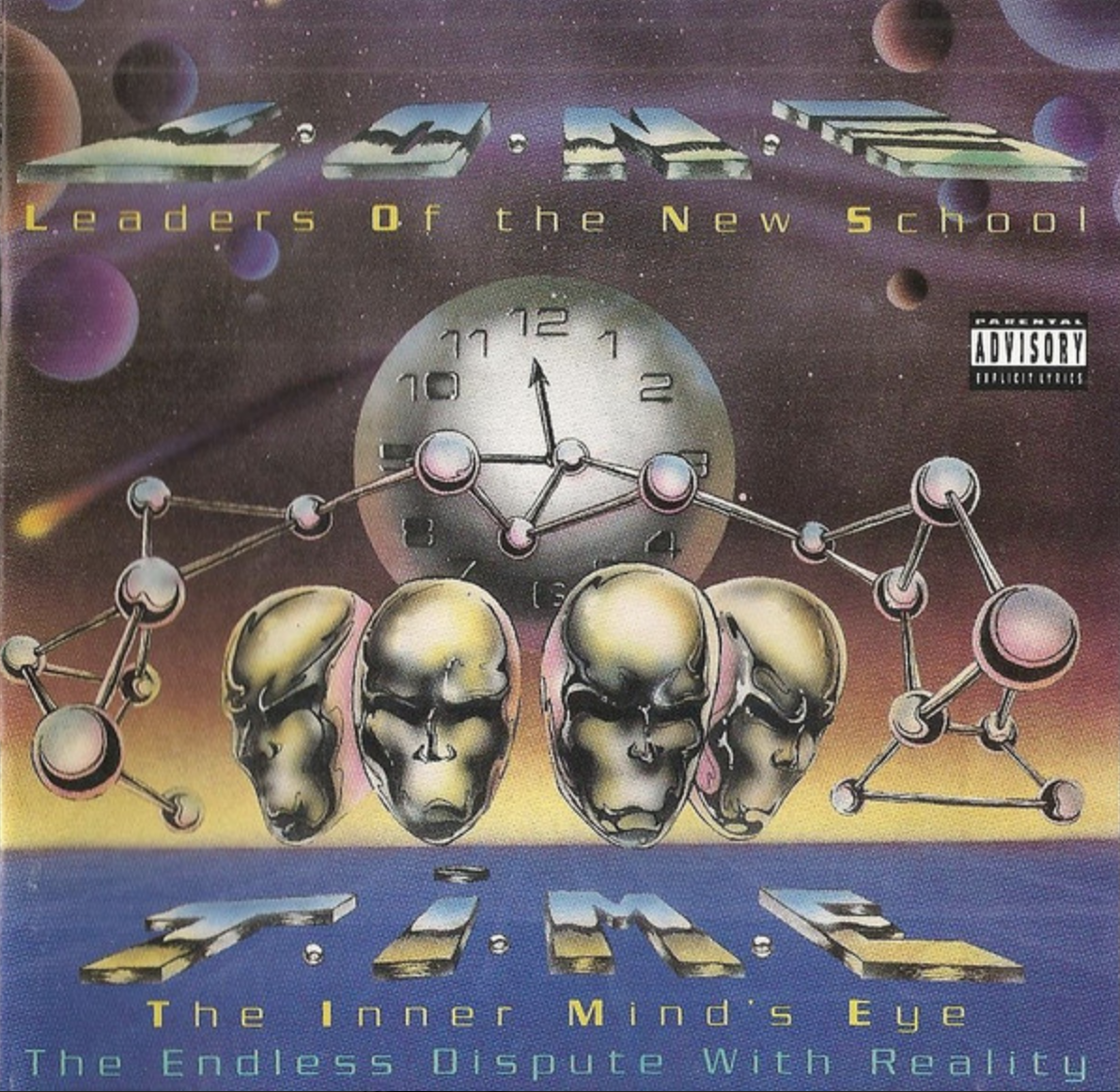
The Social meanwhile features tracks from all three of those featured records, plus 50th anniversary mentions for The Who (Quadrophenia) and Elton John (Goodbye Yellow Brick Road), a 40th mention for Bob Dylan (Infidels), and 30th mentions for the Leaders Of The New School (T.I.M.E.), Black Moon (Buck Em Down) and Teenage Fanclub (Thirteen). Amongst that smattering, there’s choice tunes from Henry Franklin, Cee-Rock, David Liebe Hart, Dog Faced Hermans, Elias Hulk, Prix, Sofia Rosa and many more special selective tracks.
FULL TRACK LIST IS AS FOLLOWS::::….
Tamikrest ‘Djanegh Etoumast’
Pinky-Ann-Rihal ‘The Indian Dance’
Dog Faced Hermans ‘How We Connect’
Bob Dylan ‘Man Of Peace’
The Meditation Singers ‘Look At Yourself’
Billy Cobham ‘Spectrum’
Henry Franklin ‘Venus Fly Trap’
Leaders Of The New School ‘Connections’
Black Moon ‘Buck Em Down’
Kid Acne & Spectacular Diagnostics ‘Batman On Horseback’
Cee-Rock, Stealthguhn & Don Jazz ‘Linden Boulez’
officerfishdumplings ‘Divine Procrastinator’
David Liebe Hart & Th’ Mole ‘Michael Likes To Smoke His Weed’
Thiago Franca, Marcelo Cabral & Tony Gordin ‘Parte 1, Pt. 2’
Missus Beastly ‘Gurus For Sale’
Elisa Hulk ‘Ain’t Got You’
David Bowie ‘Never Get Old’
M ‘Baby Close The Window (12” Version)’
The Research ‘Feels Like The First Time’
Teenage Fanclub ‘The Cabbage’
Rabbit Rumba ‘Don Toribio’
Sofia Rosa ‘Kumulundu’
Tabaco ‘San juan Guaricongo’
Dick Stusso ‘Haunted Hotel’
Pin Group ‘Hurricane Fighter Plane’
The Spells ‘Number One Fan’
Prix ‘Girl’
Stiv Bators ‘Little Girl’
Agnes Strange ‘Give Yourself A Chance’
The Who ‘The Real Me’
Shyane Carter & Peter Jefferies ‘Randolph’s Going Home’
Roger Tillison ‘Loving You Is Sweeter Than Ever’
Elton John ‘The Ballad Of Danny Bailey (1909-1934)’
ARCHIVAL SPOTS/ANNIVERSARY CELEBRATING LPS
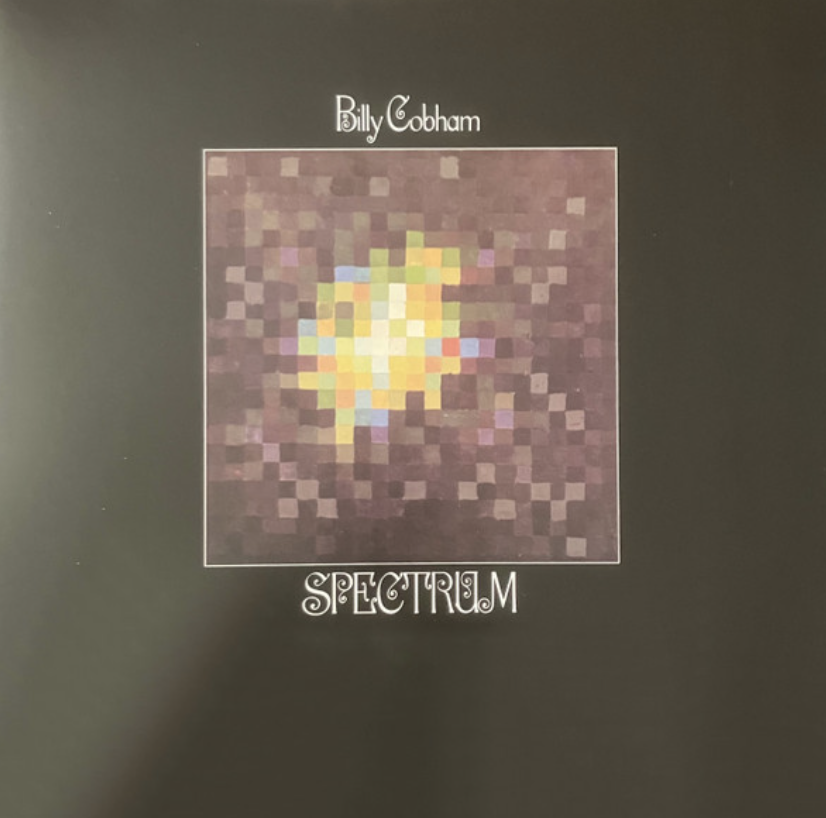
50th Anniversary Of Billy Cobham’s Spectrum
Moving on into the seventies with the voracious fusion of jazz, funk and the far out, former US army conscript Billy Cobham allowed his drum kit to roam wildly: and take a fair old pummelling in the process.
Leaping from the starched fatigues of conformity into apprentice slots with Miles Davis (famously on the Bitches Brew opus, and sitting-in at the Isle Of Wight Pop Festival of 1970) and Horace Silver, Cobham went on to form the influential Mahavishnu Orchestra: stretching the limitations of jazz all the way.
Whilst still a member of the MO (he’d leave for the first time in 1973, before returning for the MK II incarnation in the 80s), Cobham recorded his solo debut Spectrum; an unequivocal energetic mix of unwieldy cosmic slop guitar, thundering and rapid ricocheting double kick peddling drums, and 12-bar jazz gone native!
Featuring the arching, noodling rock guitar solos and lead that would become a familiar presence to the Cobham sound, Tommy Bolin (later to join Deep Purple), is tasked with really giving it some gospel. Sampled by future generations – Massive Attack fans will recognise Status – Cobham’s first album also drifted across the pond to Europe – Krautrock connoisseurs may pick up on the relationship to the music of Mani Neumeier’s Guru Guru (especially after their UFO LP). No matter how sophisticated, or ‘twiddly muso’, Cobham always inserted some humour into his work, from the video-game effects and title of Snoopy’s Search to the general free spirited nuttiness of some of the playing itself.
A great marker, laid down for the generations to come.
DAVID BOWIE’S REALITY IS TWENTY

Making the most of his creative flow, David Bowie’s next critically assiduous, soul-searching suite would draw from the ‘oil well’ of despair.
The hyper ‘reality’ that permeated throughout this sophisticated album reflected a woeful climate, specifically the unfolding drama in the Middle East. Allusions to neocon diplomacy, nepotism of the most colonially threatening kind and the crescent of Islam are interspersed with more pining romanticized themes of loss.
Assembling a ‘dream team’, Bowie’s backing group once again swelled with the talents of Mike Garson (piano), Tony Visconti (production duties), Earl Slick (guitar) and Carlos Alomar (guitar) – the latter two, both veterans of Young Americans. Slick and Visconti would of course go onto to form part of The Next Day recording hub.
That quality and old camaraderie proved every bit as tightly dynamic, Reality unequivocally the thin white duke’s best work since Earthlings.
Again, Bowie insists on appropriating or at least resorting to past endeavours, recalling Outside on his sardonic hustled cover of Jonathan Richman’s ‘Pablo Picasso’; Tonight on the samba weepie ‘Days’; and Black Tie White Noise on the thinly veiled indicative Dick Cheney putdown, ‘Fall Dog Bombs The Moon’: Bowie at his bleakest, “The blackest of years that have no sound, no shape, no depth, no underground/What a dog!’ But full marks for trying to get a grip of George Harrison‘s ‘Try Some, Buy Some’; made most famous (and infamously) by a reluctant Ronnie Spector.
An augury of what was to follow in 2013, the thumping kickdrum, rollicking anthem ‘Never Get Old’ has a resounding statement of intent from the artist: “Never ever gonna get old!” In character he may be, but Bowie’s cry against mortality is a personal one, echoed in the present. Unfortunately bowing to the so-called market forces – regardless of artistic values and sanctimonious vitriol, he always had an eye for making dough – Bowie lent the tune to mineral water brand Vittel, appearing in an advert which has an uncanny resonance with the ‘The Stars (Are Out Tonight)’ video.
For various reasons outside his control, namely the poor sods heart attack, Bowie had to wait eight years to produce another volume of reactionary post-millennium blues. The Next Day, despite the decade-long absence from recording, picks up where Reality left off.
TAMIKREST’S CHATMA IS TEN YEARS OLD ALREADY
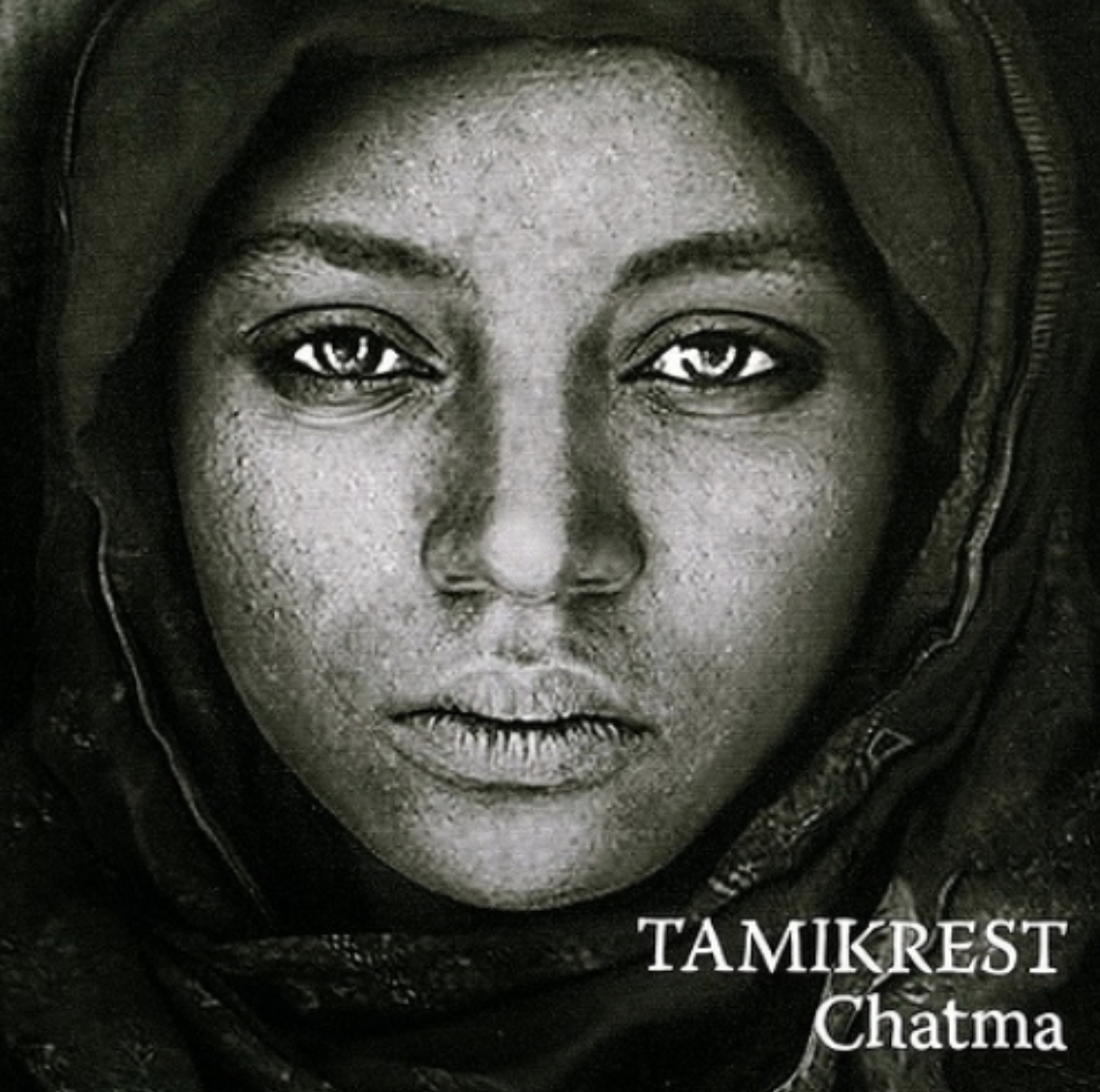
Mali’s rich musical culture isn’t confined to just the central and southern regions of the country, the northern Tuareg desert lands also evoke some passionate, soulfully rhythmic surprises too. Despite the unfavourable attention meted out to the Tuareg community in recent years (there cause for autonomy hijacked by far less scrupulous zealots for there own religious and political ends), many voices from that community have offered their services to peace. One example is the nomadic, sub-Saharan rock’n’rollers Tamikrest, whose Hendrix meets desert blues template proves there are two sides to every story; the new album, Chatma – which translates as ‘sisters’ – a tribute to the courage of the Tuareg women and spirit of a people.
Forced into exile in Algeria, Tamikrest plaintively, but with an ear for a good melody, reflect on the imposition of Sharia law – by those outsiders who at first lent help to the course but soon dominated with their own destructive agenda – and the loss of there heritage. Producing beautifully cooed laments with an infectious kick, but also deftly crafting meandrous, ethereal, desert songs, the group can transverse the grooviest of Bedouin rhythmic funk anthems with ponderous soundscapes – ‘Assikal’ is pure Ash Ra Temple meets atavistic sand dune eulogy.
Separated into many a ‘world music’ best of list this year, the Monolith Cocktail sees no such reason for such boundaries or demarcated categorising; Chatma is simply a wondrous piece of ‘head music’.
The Monolith Cocktail Social Playlist #58: Hus KingPin, Mick Ronson, Lotus Eaters, The Who, Shriekback, MF Grimm…
August 10, 2021
The Eclectic & Generational Spanning Playlist/Dominic Valvona
An imaginary radio show, a taste of our DJ sets, the Monolith Cocktail Social is a playlist selection that spans genres and eras to create the most eclectic of soundtracks. With tributes to those albums celebrating anniversaries this year too. Compiled by Dominic Valvona. This month’s edition includes nods to Cypress Hill (their highly influential West Coast Hip-Hop stoner raged debut is thirty years old this August), The Rolling Stones (Tattoo You is unbelievably forty years old this month) and The Who (their monolith piss stop, Who’s Next, is fifty years old).
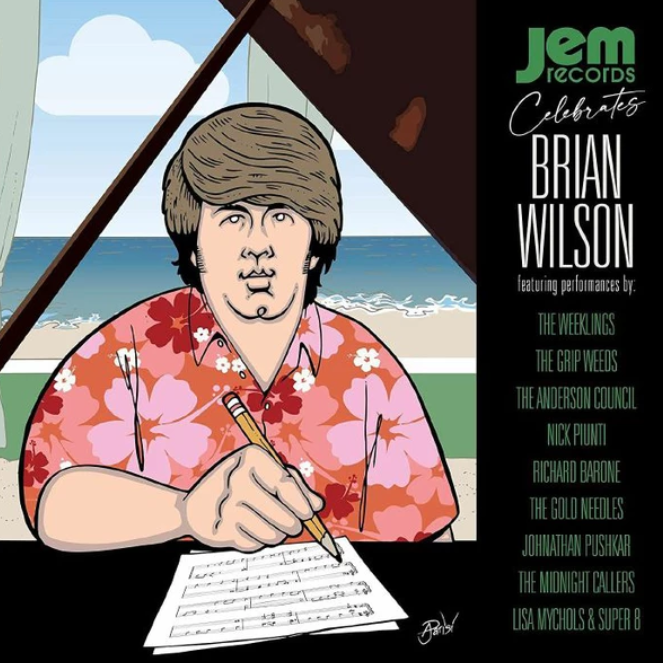
Joining them are newish and old tunes from the Brazilian force in rap, Hus KingPin, a recently resurfaced Mick Ronson at the Old Grey Whistle Test live recording, a couple of cover versions of Brian Wilson magic from Jem Records recent celebratory compilation of California’s favourite son, and a high fluting meandering stunner from Jeremy Steig. Plus music from the Lotus Eaters, Bunalimlar, Black Randy & The Metro Squad, Les Shleau Shleu, Dennis Wilson, Shriekback, MF Grimm and loads more of the good stuff.
Settle for no substitutes; expect to hear anything and everything.
Those Tracks In Full Are:
Barbara Acklin ‘I’m Living With A Memoary’
Shriekback ‘Everything That Rises Must Converge’
Jeremy Steig ‘Love Potion’
The Art Of Lovin’ ‘The First Time’
Geza X The Mommymen ‘Rio Grande Hotel’
The Intelligence ‘Celebration Ratio’
Perth County Conspiracy ‘Take Your Time’
Volo Volo ‘Manman’
Bunalimalr ‘Başak Saçlim’
Jiraphand Ong-Ard ‘Siamese Boxing’
Otis Jackson Jr. Trio ‘Free Son’
Cypress Hill ‘Hand On The Pump’
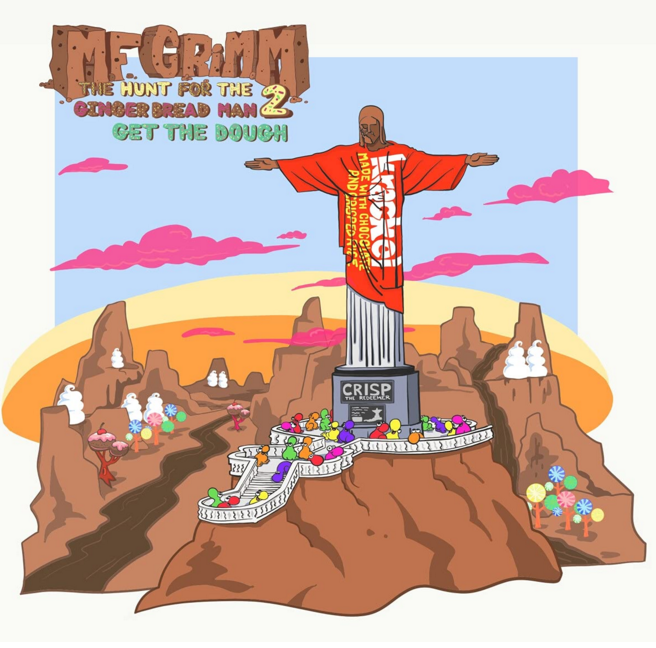
MF Grimm ‘Crumbs’
Binary Star ‘Conquistadors (Ft. Senim Silla & One Be Lo)
Piero Umiliani ‘Tiger Jazz’
DMZ ‘Watch For Me Girl’
Black Randy & The Metro Squad ‘Beer Shit/Disco Loner’
The Gold Needles ‘Love And Mercy’
The Folksmen ‘Start Me Up’
Hus KingPin ‘Mab’s’
J Scienide ‘Greetings From Bora Bora’
Ugo Busoni, Massimo D Cicco & Paolo Ferrara ‘Tokyo’
Mick Ronson ‘Play Don’t Worry (Live)’
The Beach Boys ‘Fallin’ In Love’
Geoff & Maria Muldaur ‘Catch It’
Richie Havens ‘Won’t Get Fooled Again’
Les Shleu Shleu ‘Gratteur’
Riz Ortolani ‘Picco Di Adamo’
Elizabeth Wyld ‘Something You Might Regret’
The Rolling Stones ‘Waiting On A Friend’
Dyke & The Blazers ‘Call My Name’
The Grip Weeds ‘Heroes & Villians/Roll Plymouth Rock’
The Tiffany Shade ‘One Good Question’
Gary McFarland ‘Suburbia Two Poodles And A Plastic Jesus’
The Lotus Eaters ‘Untitled 2’
Selector: Dominic Valvona
 Monolith Cocktail Blog