A world of sonic/musical discoveries reviewed by Dominic Valvona. All entries are in alphabetical order.
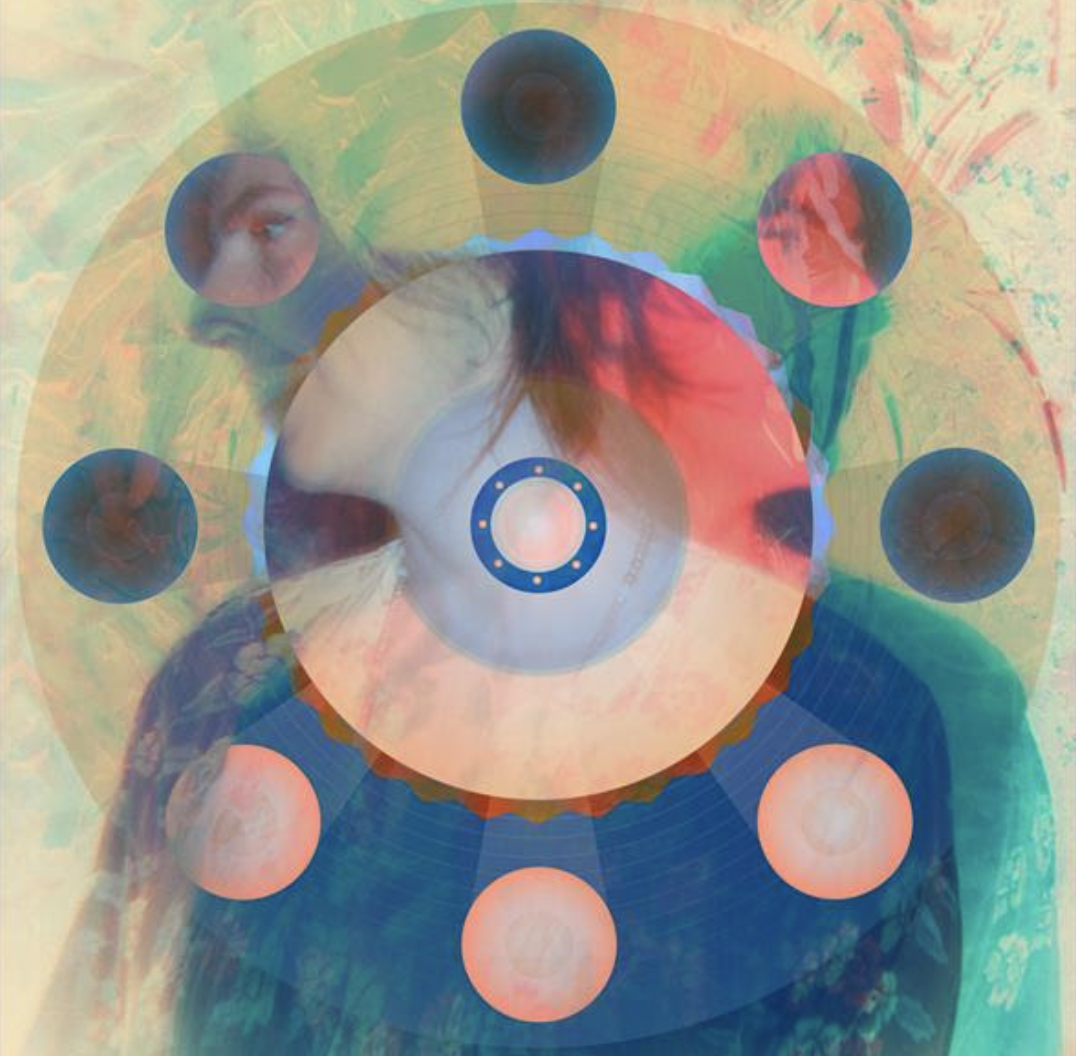
Geologist ‘Can I Get A Pack Of Camel Lights?’
(Drag City) 30th January 2026
Owing to their inarguable influence and impact on the American and international indie and underground scenes of the noughties, any release from a member of the Animal Collective fraternity is news. No less a debut solo, the inaugural album from the collective’s original founding member Brian Weitz, under the Geologist nickname that stuck since collage (apparently a friend misheard his major, but it also refers to the headlamp he wears to see his electronic apparatus during live shows) proves transitional; a step away almost entirely for the material he’s known for with his foils David Portner (better known as Avey Tare) and Noah Lennox (Panda Bear).
Incidentally, and still working in one way of another with his former band mates, Portner, another piler of the long since hibernated Animal Collective, pops up on bass alongside a host of contributions and help from Adam McDonald, Emma Garau, Alianna Kalalal, Ryan Oslance, Shane McCord, Micky Powers and Adam Lion. There’s also an intergenerational appearance from Wietz’s son Merrick on acoustic guitar, playing something resembling an indie-grunge rhythm on the strange bird hooting and whirly ‘Government Job’.
Under a throwaway entitled line, used repeatedly over time as a kind of in-joke, a winking aphorism, Weitz instrumentally and sound wise soundtracks his observations, traverses, reflections, the places he recalls and moments of both retrospection and introspection. But musically, this album is very different, taking as it does inspiration from the noted inventive guitarists Bill Orcutt and Susan Alcorn – though both artists, musicians’ talents extend beyond just that instrument. The steel pedal-like atmospheric and more wiry freeform Americana playing of these influences can be heard throughout, coupled also with Bill’s more gnarly free-post-punk-blues-jazz contortions and distortions (a touch of Bill Frith too for that matter). The second main influence is that of the hurdy-gurdy, its droning windups more in line with Ethan James’ reimagined Medieval tapestries and ceremonies, and Dorothy Carter, Le Tene, and GOAT. Its signature conjures up all sorts of imaginary landscapes, plateaus and scenes; from Tibet and the Himalayan holy valleys to the mirage arid dry lands of the America’s West and a dreamt-up revision of olde pastoral Europe.
With variations on each track, the mood and direction changes often: even if it inhabits an overall thematic musical world of drones, frequencies, circular blows, Chris Corsano-like free drums, the electrified, walking basslines, the hypnotic and near mystical. Period pieces via the Velvet Underground, Matthias Loibner and Emmanuelle Parrenia sit or run into wrangled post-punk post-rock tracks that sound more like a toss-up between PiL and Tortoise, and soundscape scores that wouldn’t sound out of place on a Daniel Lanois production. And then there’s the near native dances of tracks like glittery dusted, hurdy-gurdy wound, and padded foot stomping drummed ‘Pumpkin Festival’, and despite its title, ‘Not Trad’.
From highway oracles to dust bowls and soundtracks paid to the late repeated Altman player and Kubrick whipping girl ‘Shelly Duvall’ and the final desert peregrination turn splashing cymbal dusted and electric band motivated moving ‘Sonora’, the Can I Get A Pack Of Camel Lights? album is an open-ended enquiry of moods and memories; of exploration and the time spent in various places, landscapes. An interesting turn from the member of a band I once called a postmodernist noughties Beach Boys. A very different, unique direction indeed.
Clémentine March ‘Powder Keg’
(PRAH Recordings) 9th January 2026
The French-British chanteuse Clémentine March effortlessly swoons, coos, waltzes, saunters and hovers between the French and South American art pop decades with a multilingual ease on her latest, and third, album. And although its title, Powder Keg, was taken from a lyric out of Bonnie Tyler’s 80s power ballad, a ‘Total Eclipse of the Heart’, the inspiration and music sounds less sentimental big hair belter and more like a freed-up chamber-pop, alt-folk, country waned and glitterball hybrid of gathered thoughts, romantic encounters and introspections voiced by Brigitte Fontaine, Cate Le Bon and Gina Birch.
But that’s only really one part of this album’s scope, with the repertoire and influences opening up even more once March’s cast of friends and foils alike is brought in. Take the former Goat Girl band member turn solo folk singer Naima Bock, who March supported on a tour of the UK. Taking in some of Bock’s shared Greek-Brazilian heritage and folk signature March pays a bit of a homage on the opening song, ‘After The Solstice’; though to my ears, I’m picking up hints of John Cale, Aldous Harding and Dana Gavanski – it’s one of my favourites by the way. The latter of those names on this feathered country art-folk number, Gavanksi, is actually present as one of the many congruous ensemble members of March’s expanding circle. March is flanked throughout by Ollie Chapman on bass and Sophie Lowe on drums, but at any one time you’ll hear pop up a famous artist or musician across this songbook of the heart-pranged, fun, wistful and more driven. For after also paying a tribute of a kind to the Os Mutantes turn three-decade solo Brazilian icon Rita Lee on the suitably South American lilted ‘Lixo Sentimental’, March duets, in a style, with Evelyn Gray on the disco-indie spun ‘Fireworks’. Gray seems the ideal vocal partner on a more upbeat dizzy turn under the glitterball whilst alluding to “romantic encounters” at the Green Man Festival. The song takes in a Come Dancing Blancmange, Postcard Records, Lizzy Mercier Descloux Mambo Nassau and Hercules & The Love Affair.
The title-track itself sounds like a missing McCartneys family song whipped up by the SFA and Stereolab, and ‘Honestly’ sounds like Susana Vega borrowing an old Neil Young number. Little touches cause the ear to wander: the sax on ‘The Power Of Your Dreams’ reminded me of Don Weller’s sessions with 80s Bowie, and the faint Appalachian/bayou stirs of maverick bluegrass and Cajun ‘You Are Everything’ conjured up images of Isabelle Pierre or Karen Dalton fronting The Band. And then you get the more fuzzed-toned and powered-up indie-rock blast of ‘Upheaval’, which sounds like a cross between Husker Du and The Misfits.
As open as always, imbued by but never quite adopting the aloof coolness of the French new wave and its art pop existential chanteuses, March finds a personal, less cloying way of navigating sentiment, romance, the passing of time and how we measure it, the recall of memories and joy. A unique voice, constantly expanding and trying things out, March’s latest magical tour de force is both escapism and a dance around issues that both plague and enrich her life. Already one of my favourite albums of 2026.
Foster Neville ‘Through Lands Of Ghosts’
(Subexotic) 16th January 2026
Imbued by the late travel writer progenitor H.V. Morton and his quest to unearth, contextualise and celebrate the “mythical soul of England” from the 1920s to the 1940s, experimental musician (also the role of sound editor for the digital copy of the Trebuchet contemporary arts magazine) Foster Neville navigates his own sound map of these islands; atmospherically and unnervingly crossing national borders by starting his journey in Scotland before moving south throughout Northern England and the Southwest.
Morton’s never-out-of-print series of guides, written and often an accumulation of his columns for the Daily Express newspaper, have arguably influenced generations. Responsible for around forty such books, the topics covering not only England and Scotland but his numerous journeys throughout the Holy Land, Morton’s idiosyncratic English manners (often travelling in his typically unfussy and understated English motor, a bull-nosed Morris) and vignettes style embodied a near spiritual but difficult to encapsulate essence that bonded old England and its people. His reputational stock has however taken a severe knock ever since the publication of Michael Bartholomew’s biography. Through old dairy entries and letters Morton’s more distasteful and outright disgustingly racist prejudices came to light, most notably his Anti-Semitism but also slights on democracy (not a fan) and various other nationalities – he once described the US, dismissively, as “that craven of Jews and foreigners”. The famed journalist scooper, there at both the famous and infamous opening of Tutankhamen’s tomb, held not just questionable views but unfortunately seemed to flirt with fascism in the run up to the war, declaring that he found many of Hitler’s ideas appealing.
Parking that controversy aside, Foster is personally interested in Morton’s most famous totem, and much lauded In Search Of England, which could be said to lay some of the groundwork for the future study of “psychogeography”. A problematic term that now connects with Foster’s latest work, and pretty much one that is now dismissed by those who are said to embody it, the leading light of such dense readings and speculation of the land, or specific sites and communities (in this case, the Eastend of London) is the rightfully hailed Iain Sinclair. Preferring such terms as “deep topography” (as coined by the “London perambulator”, Nick Papadimitriou), detaching himself from an overused tag, one made almost redundant and often out of context, Sinclair’s own works merge old ghosts with history through the ages, the occult and multiple layers of cultural text. It’s why he was asked to pen an “appreciation” of Foster’s album, or rather the limited-edition vinyl version of Through Lands Of Ghosts – I’ve not had access to this by the way.
Tying together such esteemed authors, Foster’s album carries some weight; a touch of the studied even. And, despite the dismissal by some, uses the psychogeography description in the label’s press briefing; although they also use the more appropriate term of “hauntology” to describe this mystical ghostly and whispered, wisped and Kosmische-style take on the lie of the land.
Foster now builds his own picture; one steeped in the supernatural, of the memories and tracings and scars of locations marked by either death or the movements of time. These places seem empty of everything except its apparitions, its left recordings of voices and the sound and apparatus of subtle atmospheric and ambient equipment. A presence exists throughout; the haunted visitations that occupy a liminal space between the paranormal and more settled visions of an intriguing past and its elementals; of how it speaks to us now.
Sonically capturing something throughout this circumnavigation that seems to wander from the antler framed Highlands of Scotland and its most southern point on the Mull of Galloway and across the border to the site of a rail accident in Derbyshire, a nameless abandoned village and the neolithic chambered tombs of West Kennet’s famous long barrow excavations. Somewhere between the near sci-fi, séance, ambient music and Vangelis Olympian, new agism and apparitional vocals, Fowler engineers an often-veiled mystery of forgotten time and chapters from a both atavistic and more present age: The haunted “residue” of the Chapel-en-le-Firth freight train wreck tragedy, immortalised by Ewan McCall and Peggy Seegar in ‘The Ballad of John Axon’, the train driver who gave his life to avert an even greater disaster (posthumously awarded the George Cross for his actions) is invoked through the spectre aria shoos and coos and movements of sounds and what could be the environment around it.
From observing the dying flickers of lives once lived in the rural villages of WWI England and the absorption of an unseen ancient people who once roamed and buried their dead into the barrow mounds of that same countryside more than three millennia before, Foster connects various epochs, various events and the ebb and flow of time to conjure a 21st century quest to unearth the soul of the UK. I’d recommend this album to attentive listeners with an ear for the works of Oliver Cherer, Cold Hands Warm Heart, Ancient Plastix, Pye Corner Audio, Bagski and Tangerine Dream. A most successful, and I’m going to say it despite myself, psychgeography experience that could well lead to further exploration and investigation of the subject matter and locations mapped out sonically.
Sarah/Shaun ‘In Silence Love Speaks Loudest (EP)’
(Hobbes Music) Digitally Released December 2025/Physical Release 30th January 2026
The Lee Hazelwood and Nancy Sinatra of synthesized dream-pop, the Edinburgh wife and husband team of Sarah and Shaun McLachlan finish of an 18-month triptych run of EPS with this year’s simultaneously optimistic but ached and plaintive In Silence Love Speaks Loudest. Like a space-chartered St. Etienne, the couple’s latest four track showcase for the Scottish capital’s leading leftfield electronic and dance label Hobbes Music is another celestial bound flight of diaphanous pop and trip-hop break-like and trance-y electronica: stepping out on to the neon lit dancefloors on occasion too.
Making their debut in 2024 with the highly rated It’s True What They Say? (see my review of the stargazing EP), followed up by last year’s Someone’s Ghost, the duo has been busy on the live circuit making new allies and fans. And now ahead of the debut album, promised sometime this year, they’ve released this stardust sprinkled songbook of both heartache and romantic reassurances.
You might well recognize Shaun from his previous band, Delta Mainline. Coupling up with the missus, and most wooing of vocalist’s, Sarah, Shaun has concentrated all his efforts on expanding those musical horizons further. When we reviewed his band in the past, we compared them to an angelic Jesus And Mary Chain, OMD, Wilco and Spiritualized. And as it turns out the latter of those references now pops up here, with the group’s Tony ‘Doggen’ Foster adding some subtle sentimental rainbow arcs and bendy guitar/slide guitar to the dry-ice trapped-in-a-French-noir-movie-like floated ‘Desperation Looks Ill (From The Other Side)’. Appearing alongside Foster on that same track is Bruce Michie on Eno/Hansa Studio type romantically alluding saxophone duties and supplying the introductory French wafts of dialect Rebecca Growse.
As always there’s an extended cast number of foils ready to join the ranks, with both serial offenders Jaguar Eyes (a band mate of Shaun’s in Delta Mainline, contributing guitars and synths and arranging strings, programming drums and on engineering duties as well as co-producing the last three records by the coupling), and Darren Coghill (of Neon Waltz fame, providing some percussion, drums and effects) both cropping up. But also, this time around the addition of Roy Molloy (the Alex Cameron mucker appears with a soft toned saxophone sentiment on the finale, ‘Who Just Wants To Survive?’) and Exterior (a fellow Hobbes Music signing adding synths to ‘Heart Started Beating (Backwards)’).
As I’ve said before, the couple have an affinity for the ending of the Star Man movie, and its romantic allusions, but in particular the film’s score, twinned with, to my ears, the sound of dream pop, of waned country music, 80s electro-pop and Sarah Records. With songs that stretch right back to the Covid pandemic (the reassuring, despite the travails, ‘When We Dance’), or at least their inception, to songs written during the most tumultuous of periods, as the world falls apart around us, this third EP in the beautiful cosmic saga recalls hints of Air, The Tara Clerkin Trio, Beach House, The Sundays and the Cocteau Twins.
Tethered to the Earthly pains of the heart but looking towards the stars and the escape hatch, both co-writers, multi-instrumentalists and vocalists draw emotions of desperation and love from an understated but no less ambitious and anthemic production. The mood music of which varies between the near melancholic to the airy and wisped; the sad and more wistfully dreaming. Keeping up the quality, a congruous bookend to the series, In Silence Love Speaks Loudest further expands the sound and scope; an indicator perhaps of what to expect with that near future album.
Sis and the Lower Wisdom ‘Saints and Aliens’
(Native Cat) 9th January 2026
Disarmingly enchanting with the healing balm, the pliable near weightless songstress and multi-instrumentalist Jenny Gillespie Mason once more inhabits the role of generous light-bringing sister or Sis on a most beautiful album of hippy pop excellence.
Surrounded once more with a friendly circle of artis/musicians (named the Lower Wisdom) – you can hear the reassuring thumbs up from the recording studio sound desk on a couple of tunes, but feel a general support system of musical encouragement throughout -, Jenny weaves Alice Coltrane vibes with Fleetwood Mac and Alabaster DePlume to create a sort of jazz-pop-light magic version of new age 70s/80s songwriting.
Alighting the celestial staircase into a yoga retreat of snuggled and drifty serenaded and wafted saxophone, airy mystique and mirages, Saints and Aliens is a poetically descriptive album of both moods and songs. Bringing visitors from the stars to a world imbued by Jenny’s spiritual studies, the philosophical teachings of Sri Aurobindo and the Sanskrit language are called upon once more: or at least referenced on tracks like the near ethereal floaty jazzy calling ‘Yasholipsa’ – which translates into the desire for glory, the aspiration for fame, victory and power, and a spiritual striving for achievement and deep yearning for renown or divine accomplishment.
Away from the Gaia, the Indian divinities and the Gnosticism there’s a lovely blooming of soulful pop free-flowing singles like ‘Luce’ and the almost trippy and poetic opener ‘Crocus Man’: a sample of which is, “Quicksilver clown, you’ve been through hell”.
As diaphanous as it all is, there’s an undulating tone of travail; the lyrics often referring to overcoming various obstacles and finding a way out, the air to breath once more or height to elevate towards: Salvation awaits once you learn that the key is inside all of us.
The Sis alias delivers once more with a near faultless album of dipsy, sprite-like free pop and spiritual altruism. A great start album to start of the new year with.
Wilson Tanner Smith ‘Perpetual Guest’
(Sawyer Editions) 13th January 2026
Tying together the omnipresence, both in the past and in the now, of conflict, the Helsinki-based composer, improvisor/artist Wilson Tanner Smith uses site-specific performance art and music to evoke an essence of what was contained within the walls of the long since disused Kreenholm Textile Factory in Estonia’s Narva region. To be exact, located on an island in the middle of the river that gives its name to the city, slap bang in the middle too of the border with a threatening, overreaching expansionist Russia.
A flashpoint in what’s described as NATO’s most eastern flank, it has been breached in recent months by Russian soldiers – possibly testing reaction and defences. Narva has the largest Russian-speaking population, proportionally, in the EU at 97% (its total population is around 60,000). This is down to a legacy of historical invasions and the transporting of thousands of workers from Russia to work in its factories over time. Sitting across from its Russian counterpart of Ivangorod, the city is fatefully targeted as one of the starting points, if it ever comes, for WWIII: Putin has already mused in that sly threatening way he has that Narva was historically part of Russia and would be “taken back”. The city was of course under Czarist rule for a time until the revolution and Estonia’s fight for independence between 1918 and 1920.
Fast forward a generation and Soviet Russia invaded Estonia at the start of WWII. They lost it to Nazi Germany a short time later, before once more taking it back behind the Iron Curtain after Hitler’s catastrophic failure to invade and knock Russia out of the war. This situation remained right up until the fall of the Berlin Wall and the Soviet Union’s collapse at the start of the 1990s. For a long time after that period, Russians and Estonians moved freely between the two borders; the influx of Russian workers, as I mentioned earlier, living in a now industrialised Estonian city would frequently hop over that same border for shopping trips to St. Petersburg and the like.
With the heinous invasion of Ukraine in the last four years, and ramped-up – despite the talks of bring the conflict to an end – rhetoric of Putin and his expansionist plans to march right into Europe, that all came to a divisive halt. An uneasy situation prevails, with Estonia distancing itself from Russia – Estonia’s first female prime minister Kaja Kallas has been on the front-foot in supplying weaponry to Ukraine and fought to implement sanctions on Russia whilst also offering asylum to Russians escaping conscription. Kallas was at one point, put forward as a possible candidate to lead NATO; an organisation that Smith’s adopted country of Finland joined in 2023 following a rapid policy shift from military non-alignment to alliance membership in response to Russia’s aggression. Finland, which until that point had never countenanced joining, has prior aggrievances with Russia of course: a history that goes back to the Finnish War of 1808-1809, when Alexander’s Imperial Russia, allied with Napoleon, invaded and conquered Finland from Sweden, turning it into the autonomous Grand Duchy of Finland, and much later when fighting off Russia during both the Winter War of 1939 and 1940, and the Continuation War of 1941-44. Despite being heavily outnumbered on all fronts, the Finns managed to fight them off, albeit with a loss of some land. Their example may prove an omen, as Russia have likewise failed to steamroll the Ukrainians; the initial invasion planned to take months if not weeks to fully capture the country and force it back into Russian hands.
Before this becomes a geopolitical, military essay on the state of Eastern Europe and Russia, I should really focus now on Smith’s project; a series of performances created using both instruments brought to the space and the dust, the accumulation of memories of the environment itself. The prompts, the reference points as such or indicators and sparks for creativity reference the various scrapes of signage and other detritus found lying around, or reference and tie together both a shared bond between Finland and Estonia; the closing performance of ‘Läksin minä kesäyönä käymään’ (which can be translated into English as “I went out into the groove on a summer’s night”) is a kosmische-style beamed cathedral wonder of magic that features a melody borrowed from an obscure suite on Finnish Themes by the Russian composer and pianist Dmitri Shostakovich. Embarrassingly for the Soviets, it was meant to be played in Helsinki once it had been conquered during the first of those wars between the two countries. It never happened of course, and now acts in a manner as a reminder of overreached aggression and expansionism coming unstuck.
In this theatre, Smith performs a number of pieces of conceptual and environmental imbued and motivated musical and atonal art. Seeming to speak much of the times, and yet evoke a history of Eastern European malady, toil and travail.
Smith has connected the space and columns that hold it up the factory’s huge celling’s with rope and string, which he pulls on at points in this performance; dragging lightly, fragments of glass or what looks like metal along the floor to elicit a serial percussive sound. At other times, Smith is part of an avant-garde chamber trio of strings and woodwind and apparition vocalist calls from the ancestors; drawing on the labour, the emotive pulls of those that once worked this factory, whilst also referencing the geographical and looming presence of its neighbouring behemoth, Russia. But primarily, Smith is seated in front of the album’s most permeating instrument, a well-used antique harmonium that he found and repaired on site; and itself, handed and passed down from a church to a school, a living room and basement. It’s used to produce some of the most venerable of bathed pastoral drones, resonated chords, concertinaed waves and evocative reverberations. But its frame and lid is used too; the picking up of the hands as they press on the keys, or the foot pedal pump. And yet there’s also passages in which those bellowed-like breaths and airs, beds of layered tones, produce vibrations that are more unsettling (not quite Krzysztof Penderecki-like but getting there), and at other times, closer to psychedelic-folk.
Fluctuating at a slow pace between suggestions of the neo-classical, the work of Cage, Cale and Conrad, and brought forward into to the realms of Colin Stetson, Alison Cotton and Jeff Bird (I’m thinking of his more recent Cottage Bell Peace album), all the instruments and apparatus involved are simultaneously as harmonic as they are expressive in describing the abstract psychogeography of the factory, a location now standing on the edge of potential conflict; perhaps, but lets hope not, about to once more witness Russian expansionism.
Strangebird–Sounds ‘Minerals From The Crust’
(Audiobulb Records) 16th January 2026
Inspired by the natural jewels and gem-like minerals that lie beneath the Earth’s crust, the Belgium experimental composer Gregory Geerts, under the Strangebird–Sounds guise, transforms those crystallised forms into a most pleasant, subtle ambient-techno soundtrack and set of movements.
Materialising, metamorphosing and breathing each track is built around sonically capturing the abstract colourisation, the way the light plays, reflects or gleams on each chosen subject; add to that the soft use of environmental field recordings, the enervated veils of the surroundings and the just as subtle use of the everyday world in the form of various undulating captured voices, of play and people going about their business.
From the more commonly found Calcite to the rare quartz of Ametrine found almost exclusively centuries ago in just one mine in Bolivia, Geerts amplifies a sense of allure and mystery; but also feeds into the marvel of each element as it glistens and grows; pulses and vibrates. In doing so he opens up to the etymology and history, covering a millennia of usage: The atavistic Egyptians used to carve Calcite, relating it to their goddess Bast – hence part of the origins of the word alabaster -, and Ametrine, though long discovered by the native peoples of what would later become Bolivia, was, it’s been documented and said, to have made its way to Europe as part of the dowry between a local Ayoreo princess and Spanish conquistador in the 1600s. Sometimes these references are mythological: see the silicate mineral Neptunite, which is named after the Roman god of the sea of course, though because of its origins and locality of discovery is associated with the Scandinavian god of the sea, Ægir.
With the innovative use, we’re told, of a Eurorack modular apparatus our sound geologist presents an often lush, semi-tropical world of exotic birds, botanical foliage and replenishing life-giving waters. The underground is brought to the surface you could say, out into the open as it meets with the celestial and radiating. This is a subterranean world brough to life.
Both arpeggiator and freed-up notes bobble and bounce, or float like bulb-shaped and translucent particles and gentle specks against the biosphere; the synthesized; the occasional paddled tubular rhythms (on one occasion, almost like a Jeff Mills minimalist techno samba). The sounds of techno at its most sophisticated and ambient music, polygons and crystals, needles and sulphites all merge wonderfully to draw comparisons with the work of Xqui, Boards of Canada and Japanese environment music. Audiobulb continues to release some of the best work in this field, under the radar, out on the peripheral. Geerts Strangebird-Sounds vehicle is no exception; experimental without losing the listener; finding a most pleasant, inviting but also intriguing method, from the ground to the orbital, of giving sound to geological abstracts. `
Leo Wolf ‘Veiled In Light’
(The Oldest River) 13th January 2026
Following up on last year’s excellent I Saw Your Shadow On The Wall, North Carolina artist/musician Leo Wolf once more captures the abstract through the use of ambient, atmospheric and filmic granular processes, sampled material from classical records and field recordings and acoustic instruments; this time focusing on bringing the light in a range of descriptive, atonal and evocative ways.
Secular and venerated, stained glass anointed, veiled light sources cast circular-like beams and impressions on suitably invocative surfaces, columns and precious objects to capture a scenic and textural form of sonic and cinematic mysticism. Like longform and short form scores, a gradual slow movement of whispered and wispy disembodied and scaly voices, tubular machines, generators, apparitions and aliens, the sounds of hive-like buzzes and flies are echoed and reverberated to great descriptive effect. It reminded me in part of Ambient Works Aphex Twin, but also His Name Is Alive and Laraaji’s Baptismal collaboration with Kramer. And on a couple of occasions, when oscillating to an unsettling otherworldly vision of supernatural sci-fi György Ligeti.
Titles give some reference point; although I’m not sure if on the briefly gothic-like announcer’s tone narrated ‘Blood Meets The Iris’ if it is a reference to the revered Iris Murdoch’s The Sandcastle, which mentions some of the descriptive language of the track; especially the ritual part. They could be used of course just to set in motion an idea, theme or initial spark before opening up to be interpreted by the listener.
In ecclesiastical settings, in wet subterrains, from the centre of divination and various rituals, and out on cerebral planes of contemplated life and death cycles, I love how Wolf builds such plays between the venerated and unknown. Ebbing away or in constant motioned waves, the veiled presence and concrete inspirations are exaggerated or made new on an album that challenges as much as envelopes. Is something reaching out to us from the gauze, the soft and wispy shrouds? Only you can work that out. Another sophisticated and immersive ambient score from a deeply engaging composer.
Here’s the message bit we hate, but crucially need:
If you’ve enjoyed this selection, the writing, or been led down a rabbit hole into new musical terrains of aural pleasure, and if you able, then you can now show your appreciation by keeping the Monolith Cocktail afloat through the Ko-Fi donation site.
The Perusal #62: Kotra, Niton, Ruth Goller, The Dark Jazz Project, Martin Tétreault…
December 3, 2024
A WORLD OF SONIC/MUSICAL DISCOVERIES REVIEWED BY DOMINIC VALVONA
PHOTO CREDIT: PAULA RAE-GIBSON
(Unless stated otherwise, all releases are available now)

Kotra ‘Grit Light’
(I Shall Sing Until My Land Is Free)
As Putin’s invasion of the Ukraine depressingly continues unabated, passing the 1000 days mark a few weeks ago – which also happens to near enough coincide with the Ukraine’s commemorations of the Holodomer, a timely reminder of “mother” Russia’s destructive despotism and politically sanctioned revenge policies -, it falls upon labels like the electronic artists Dmyto Fedorenko and Kateryna Zavoloka’s I Shall Sing Until My Land Is Free to spread the sound of the sonic resistance. A soft power, a cultural emissary of that country’s experimental scene, the profits from its roster of artists, which includes both its founders, are donated to several self-defence and humanitarian foundations and local volunteer activists.
To paraphrase the opening from my 2024 review of Fedorenko (appearing under his Variát moniker) and the harsh and confrontational Japanese artist Merzbow’s Unintended Intentions collaboration, nothing concentrates the mind more than witnessing the brutal barbaric dystopian-scarred landscapes of war-torn Ukraine, and the carnage, loss of lives in the meat grinder of a bastardised WWI battle for survival. The fear, destruction of this conflict has been transmogrified into the abrasive, concrete debris soundscapes of nightmares on both that album and others; the Berlin-based Fedorenko appearing under a number of different guises, channelling heavy abstractions of sophisticated, industrial, intelligent techno and dance music across a swathe of concepts and works.
Escalating into the broader war many had forewarned, but unless willing to accept capitulation, further violent barbarity and the military conquest of even more of Eastern Europe, the Baltic nations and Balkans, there is no real painless conclusion to this invasion. Trump’s boastful rhetoric is just that. But worrying all the same, as negotiations, which can’t truly be anything other than favourable to Putin in any scenario offered, seem very likely in the New Year. The transactional President will want to wrap this horrifying, economically destructive war up, and so there is a rush now for both sides to gain their territorial footholds (the Ukraine’s incursion and hold over swathes of the Russian Kursk region will be vital in any deal negotiated; one of the country’s most successful military coups, and almost in itself the sole campaign that unnerved and setback Putin’s war machine the most). At long last the UK and America have given the go-ahead for long range missile attacks – though confined to the Kursk region. But it has come at such a late stage, even too late, just as the encumberment Ukraine supporting Biden administration is about to leave the White House. If delivered sooner alongside the delayed Leopard tanks and the F-16s (or in the numbers that President Zelensky asked for), we may very well be seeing the Ukraine in a much more favourable position. As it is, one of the only leverages that Trump could have used, those long range ATACMS, has been played. And what the Ukraine needs more than anything else is manpower.
Still, Putin’s Russia has failed to bully the Ukraine into subjugation and defeat. Russia’s military, for all the world to see, has been shown up on the battlefield and forced into sacrificing untold numbers in suicidal missions to gain mere yards of empty landscape. Drones have had the better of the Russians across the trenches and out at sea against the Black Sea fleet on numerous occasions. And in recent months, they’ve been joined by anywhere between ten to eleven thousand troops from North Korea in an attempt push the Ukrainians out of the Kursk. But even more unnerving and dramatic for the Russians is the unfolding events in Syria, which have taken Putin’s ally Assad by complete surprise. Insurgent/rebel groups opposed to the Syrian dictator have, even to their own astonishment, gained a vital foothold in Aleppo – the first time the Syrian government has lost control of the strategic and important city since the start of the civil war. A stretched Russia is currently bombing the hell out of them. The world is hanging on to see what happens next.
Bearing testimony to what has taken place and what might be about to happen in 2025, Fedorenko once more takes on the guise of another of his many faces, that of Kotra, to charge up the electrodes and electrical barbed wire with another heavy bass suffused and industrial techno album of electrification, force fields and buzzed machine hive activity. From dissonance and pulverizing bass noises a rhythm is hewn and honed; a buzz and scaffold of signals, of invisible forces and currents fused together with a bounce.
Carried across an hour-long immersion of sonic forbode and shuttered, tubed, kinetic and frazzled IDM-styled beats, there’s a thematic atmosphere of heavy payload alienness and humming, engineered and motorised machines. Some of these sounds mirror the ominous buzz of drones in the theatre of war, and others, the propeller-like hovered flight of bombers. In short, picture Rob Hood or Jeff Mills on Tresor, maybe even Basic Channel, collaborating with Carter Tutti Void whilst caught up in industrial scale warfare. I Shall Sing Until My Land Is Free have proved their worth in exporting such electronic experimentation to an international audience if nothing else. But this truly is music with a serious intention, forged in the darkness of barbaric invasion, from those who fight culturally and physically for the survival of their country’s identity.
Niton ‘11’
(Shameless Records/Pulver und Asche Records)
A connection to the Island of my birth, the Italian-Swiss trio of Niton bears the name of the small village on the Isle of Wight where Marconi famously and successfully transmitted some of the first wireless waves. On the 23rd of January 1901, on the verge of a new century, just a day after the death of Queen Victoria and that enduring epoch, the Italian inventor’s transmission reached from the southernmost tip of the Island to Lizard in Cornwall. By the end of that same year Marconi would attempt to reach America.
As we locals pronounce it, “Knighton” – which is really confusing as there is an actual Knighton on the Island too; we differentiate them by calling the latter “K-nighton” -, Niton lies close to the more famous and larger one-time Victorian resort of Ventnor on the southern coast. Marconi’s picturesque spot is the site of St. Catherine’s Lighthouse, looking out to the great beyond, where no land can be sited, and all that lies ahead is the expanse of the English Channel. Many have attached significance to this location over the years, and this experimental electronic-acoustic group have decided to adopt it as a link from one age to the next; of progression, the sense of opportunity and technological advancement against the implications of more foreboding era in which democratized altruism has turned into a dystopian nightmare.
Choosing a significant date of correspondence, “11th January 1901”, from the lead up to that successful experiment, the trio invite the French-born British composer, multidisciplinary artist and researcher Olivia Louvel to run Marconi’s written words through the Fortean radio set on the opening atmospheric piece from side B of their newest, and fourth, album. Currently (or so when I looked it up recently on Louvel’s own site) studying a PhD at Brighton – where coincidently I worked before making the move to Glasgow in 2015 – in the interplay of voice and sculpture across that University’s fine arts and sound art departments, the award-winning artist doesn’t just read aloud but transforms the material by playing with the language, from Italian to English and vice versa. Historical timelines are recalled but also erased by blankets of foggy time, separation and vaporous disembodied elements, as Louvel sounds both of that Victorian-on-the-cusp-of-a-new-century era and yet futuristically oblique.
A reference to that date, but also the number of collaborative artists taking part for the first time in expanding Niton’s sonic investigation and freedoms, 11 marks the group’s tenth anniversary and new approach.
Widening participation with an international cast, electronic violinist Zeno Gabaglio, analogue synthesist Luca Xelius and “amplified objects” manipulator El Toxyque work with both noted veterans and exciting burgeoning artists across a diverse range of genres and disciplines to provide something different; avenues, turns, peregrinations toward the surprising, intense or avant-garde.
Just to pluck out a few examples, the twin contributions of the Casablanca singer-songwriter and solo artist Meryem Aboulouafa and the award-winning Swiss poet, Babel festival for literature and translation founder/artistic director Vanni Bianconi open the album by airing an Italian poem read out and mystified with poignancy and pain of the bittersweet over a wispy mirage of amorphous Arabian and North African desert stirrings. But it’s followed by a complete change in direction with the glitch kinetics and quarks, the Duchampian bicycle wheel spokes turning and rattled, and drum smacked, punched and physically handled abstract ‘Spin-orbit interaction’, which features the experimental drummer-percussionist Julian Sartorius. There are experiments too that sound like a very removed vision of jazz with the English saxophonist John Butcher channelling Mats Gustafsson and Andy Haas strained sucked dry vibes and Krononaut-like abstract chills, visitations and alienness on the alternative Bureau B label-esque ‘I was dying’. And the Ex and Dog Faced Hermans guitarist Andy Moor provides resonating copper stringy wrangle, scraped and scratchy lines, carries, sustained hovers that sound like a fusion of the Red Crayola, Derek Bailey and Yonatan Gat on the psych-jazzy and mysterious living, breathing entity ‘Huella infinite’.
But perhaps the most out-there of these collaborations is with the Cameroon shaman Achille Ateba Mvando, who both ceremonially and excitable utters and dances the ancestors Bantu rituals to a combination of traditional hand drums and handclapped rhythms and more modern buzzes, glitches and starry projected ambience – reminding me in some ways of both Bantou Mentale and Avalache Kaito.
Transcribing a feel, a sense of history, invention and amorphous globalism, Niton and their foils/partners converse with the past whilst venturing further into electronic experiment and soundscaping on an immersive album of sonic atmospheres, investigation and evocation.
Ruth Goller ‘SKYLLA’
(International Anthem) 6th December 2024
For those that missed out at the time on the Italian-born but London-based composer, bassist and experimental vocalist Ruth Goller’s 2021 debut LP, those gracious folk at International Anthem have pressed another batch of vinyl copies: Such was the initial demand, and three years on, a clamour to own Goller’s inaugural soloist fronted album, that it felt right to make it available again. Originally released on longtime collaborator Bex Burch’s Vula Viel Records label – also, confusingly, the name of the composer, percussionist, producer and instrument maker’s group -, SKYLLA showcased an inner lucidity of expressive vocalisation and pinged, plucked, spindled and resonating bass guitar harmonics that garnered a host of plaudits.
But this timely reissue arrives in the wake of Goller’s impressive scope of activities since that album’s release, and just a few months after the release of the follow-up, SKYLLUMINA. The CV is way too prolific to list in its entirety here, but the expletory composer and bass player’s most notable credits include two of the most important and influential groups to set off a jazz renaissance in recent years, Acoustic Ladyland and Melt Yourself Down. Goller has also performed with such luminaries as Kit Downes, Sam Amidan, Marc Ribot and (Sir) Paul McCartney, and plays with both Let Spin and Vula Viel. And just in the last month Goller teamed up with the German drumming and saxophone TRAINING combo of Max Andrzejewski and Johannes Schleiermacher for the wild, tumultuous, wrangled and strange, yet also melodic and dreamy threads to knot album – a collaboration so good that it makes this year’s choice albums list, which goes out in the next week.
In an experimental, expressive and often otherworldly atmosphere – like a cross between introspective cerebralism, the alien and, later, the near chthonian and darkened –, Goller’s Nordic/Icelandic-like vocal utterances, soundings and spatial harmonical airings mirror the vibrating and trebly harmonic twangs, pulls and language of both the electric and double-bass. Accompanied by the attuned, often choral and tripsy sprite vocals of Alice Grant and Lauren Kinsella, the odd caught recognisable word is entwined with coos of the pastoral, the neoclassical, ethereal and pronounced and instrumental gangly strands and shuttered and bassy sonorous reverberations.
You could imagine Bjork, flanked by Susanna and Hatis Noit, conducting an alternative ceremony or a Northern European pagan woodland choir to the experimental bass guitar work of Jaco Pastorius and evocations of dal:um, Gunn-Truscinski, Ramuntcho Matta and on ‘In more turbulent times, she managed to take the perfect shot’ a touch of Refree – there’s what I can only describe as a transmogrified feel of the Iberian to this track. The vibes on the final third part of the album are more ominous, almost menacing, and recall the work of Scott Walker and Boris; albeit with more untethered, lighter voices floating about.
If any of that sounds like an invitation to rediscover Goller’s unique entwinned dance and abstract airs of voice and bass then you’d better make sure you get that copy ordered pronto, as the last time it sold out quickly.
To coincide with this reprise, Goller and filmmaker Pedro Velasco have created a suitable visual abstract swim of a video for the album track ‘What’s really important she wanted to know, pt. 2’. Filmed entirely underwater at a local public pool, the conceptual feelings of both floating and swimming in an abstract liquid are cut to the harmonic pings, padded springy climbs of the music.
The Dark Jazz Project ‘5’
(Irregular Patterns)
After a prolific fluctuation of identities and experiments, the singular maverick electronic and art-house boffin Andrew Spackman hung-up his former SAD MAN alias (after a splurge of numerous releases over the last five years) a few years back to crunch the codes of jazzcore under The Dark Jazz Project title.
‘100% political, 100% jazz, 100% dark’ we we’re told, this most recent platform for Andrew’s often sporadic leaps in electronic music and crushing techno filament cut ups is about as removed from that jazz tag as you can get. Any semblance to jazz has been lost under a heavy tubular and granular transmogrification of the ominous, mysterious and, well, dark. And after three albums in that mode, and after another change in the direction of travel with this April’s cult (re)score of The Cabinet of Dr. Caligari, Spackman drops a surprise album of material that further expands the boundaries – the only recurring theme being that you won’t find a shred of jazz.
Album number “5” combines the apparitional dance music and pop synth vocals of seafarer’s ghosts, dream creations and new age with the techno of the Artificial Intelligence series, House music and a range of sounds that can only be described as whistled pipes, magnetic, kinetic, crystalised and bassy.
Beneath, above and consumed by metaphorical and thematic waves, a shipping forecast of hallucination, ethereal allure, and the emotive is transduced and transmogrified through Spackman’s unique apparatus. For glimpses of Radiance Basic Channel, the acid of LFO, and dreaminess veils of epic45 morph into spells of Mixmaster Morris and 808 State on the 90s meets Ibiza entranced ‘The Boat Is Sinking’ – no, not a screaming tumult of shipwrecked fear and danger, but far more soulful electronic mirage of haunted dance music.
Tracks like ‘Too Far Away’ weave giddy high octave, near cartoonish, EDM singing with Depeche Mode and Mark Franklin, and the spatial counterpoint between space age fantasy and the more unsettling ‘Testpiece’ sounds like acid rain hitting a windowpane whilst Moroder sequences a trip through the mists of time. The opening thwack turn rhythmic, drum pad crunched metallic spindled ‘Thunder’, features turnkey twists and a strange, obscured sound source horn that sounds like something from Eno and Jon Hassell’s “possible musics” explorations.
For a reference and theme, Spackman maps out a new sound by utilising the plaint songs of love lost upon the waves. Meanwhile, the album’s artwork, credited to B.S. Halpern, illustrates the density of commercial shipping throughout the world’s oceans. But, as with so many of Spackman’s projects, those prompts are transformed into something alien and cerebral, yet also striking, discombobulating. I will say, it is among his most soulful and melodious works to date. A layered album of many strands musically and sonically, the voices, mostly ghostly but in a nice melodic dreamy way, go well together with the balance of electronic forces. Considering, and I lost track a while back now, that Spackman has probably released nigh on fifty albums and pieces since this blog started, he continues to equally surprise and develop.
Xqui & Dog Versus Shadows ‘Dwell Time’
(Subexotic) 6th December 2024
Mundane behemoths of consuming spending, the Arndale chain of America-style shopping malls, first exported to UK shores in the early 1960s, provides the environment and atmosphere for the latest project by the sonic partnership of Xqui and Dog Versus Shadows.
Lancashire artist Xqui will need little introduction to regular followers of the Monolith Cocktail. The highly prolific artist, occupying a liminal space between ambient music, sound art, musique concrete, field recordings, hidden source material, found sounds and voice experimentation/transference, has frequented my reviews roundups for years; always playing catch-up, he no sooner releases one project than another arrives along the pipeline a week or two later. But featuring for the first time on the site, Dog Versus Shadows is the nom de plume of the Nottingham-based and no less prolific Lee “Pylon”, who switched roles from platforming an abundance of experimental electronic sounds as the host of the underground radio show Kites & Pylons (broadcast on Doncaster’s Sine FM) to making music himself.
As part of a trilogy of shopping centre albums, made by a host of experimental contemporary artists for the Subexotic Records label, this duo transduces the innocuous consumption and day-to-day thoroughfare of such commercial spaces into J.G. Ballard style dystopias, the sci-fi, esoteric, playful, and inter-dimensional. Defined as the length of time a shopper spends in a shopping centre – from the moment they enter till the moment they leave -, the language of capitalist spending theory, “Dwell Time”, is enveloped by the synthesized, warped, mechanized and consumed atmospherics, sine waves, filters, effects, degraded surface sounds, rhythms, chemistry, liquids and data of electronic music.
Whilst no particular Arndale centre is named or made obvious – there were 23 of them built, from Aberdeen to Dartford -, the most infamous is probably Manchester, which was devastated by an IRA bomb in the mid 90s. Closer to home – well Lee’s anyway, there’s also one in Nottingham. Derided, quite rightly, for their original brutalist and unsympathetic architecture, and the way they popped up over the rubble and dust of far more congruous, loved Victorian High Streets, they’ve often served as the blights of modernity, a totem for all modernist ills and the degradation of far less consumerist-obsessed times, when shopping was a gentler and more localised affair. From the lay-out to displays and choice of pipped “muzak”, the Arndale – a portmanteau of its architects Arnold Hagenbach and Sam Chippendale – meccas of pointless spending lure the consumer into an artificial, alternative reality in which time, location doesn’t exist.
Here, the duo emphasis this dreamier fantastical but alien and looming ominous despair, balancing indoor water feature idyllic whimsy and enchantment, the projected paradise of shop display Flamingos with forbode, unease and the surreal. And so, they somehow express the hallucinatory transfixed shopper’s gaze at plastic exotica, so entranced that for a moment they zone out into a weird void, or, make something as ordinary as roller shutters, the mechanisms, and drudgery of opening or closing up take on something far more dramatic and overbearing – there’s what sounds like a enervated lash or whip that trashes away indolently throughout. ‘Bargain Bin Shuffle’ takes on a sort of train-like rhythm, whilst the retro ‘A Fancy Electronic Gadget’ tweets and bobbles like something from the minds of Bruno Spoerri and Nino Nardini. Weirdly, the title-track sounds like an ethnographic Dadaist take on Javanese music.
Mark E. Smith once prompted a Northern uprising over these encroaching dystopian examples of rampant consumerism, on his 1980 track ‘N.W.R.A.’; lyrically picturing the day it was razed to the ground (which nearly happened 16 years), with “security guards hung from moving escalators” – rather strong. Chiming even then with the loss of community shops to such temples of commercialism, it marked a worrying change in habits and spending powers. Xqui and Dog Versus Shadows channel such apocalyptic concerns, protestations and the mundane and artificialness of such environments into something approaching a both playful, retro, knowing and sci-fi soundtrack of transmogrified muzak.
Various Artists ‘Fauna’
(n5MD) 10th December 2024
A deeply connective reminder about what we owe to the natural environment and its wildlife, the newest compilation from Oakland-based label n5MD finds roster signing Franck Zaragoza (otherwise known as Ocoeur) curating a curious and emotionally pulled gathering of congruous ambient peregrinations, scores and vapoured sensibilities that abstractedly, or otherwise, fall under the topic heading.
The label statement drives at humanities growing divisions, pursuit of consumerist and selfish pleasures, destructive consumptions and exploitation of the planet. All this at the expense of our animal friends; our lengthy historical relationship one of detachment to their pain, emotions and needs. Released on International Animal Rights Day (December the 10th), and with proceeds going towards the French organization L214 (taking their name from the French rural code in which animals are described, or translated, as “sensitive beings”, this group’s origins grew out of a campaign to abolish the cruel practices of foie gras, and mass industrial scale meat and dairy production), Fauna gathers together the work of an international host of mostly solo electronic and neoclassical composers, musicians and duos. Many of which have released or continue to release music on the Californian label.
It’s curator himself, Zaragorza, lends a beautifully cooed and vaporous ambient evocation to the compilation. The French minimalist, known for his introspective pieces and soundtracks for video games and documentaries, appears under his long-standing Ocoeur moniker with the rather pleasing and drifted ‘Second Chance’.
But the album opens with the Turin artist Memory Noise, who ushers in the collection with the recollected vapours, adult and children’s voices of laughter and play, airy and surface atmospheric ‘L’ora’, which reminded me of both the Aphex Twin’s Selected Ambient Works Volume 2 LP and Eno. Memories resonate amongst the sine waves, shrouds of time and melodious textures on this stirring piece.
Within the fields of ambient music and its many pathways there’s examples of artists using subtle if deep and sonorous neoclassical piano (the Athens born but France-based multimedia composer of note, Zinovia Arvanitidi’s capitulating and heavenly play of elemental nature ‘Light And Clouds’, which is exquisite and moving, and reminded me of both Hania Rani and Nils Frahm), and what sounds like guitar (Micah Templeton-Wolfe, otherwise known as Stray Theories, use of a lingered and drifted guitar line on the glassy chimed, deep thinking if broody ‘Veil’ adds a touch of Land Observation to a Boards of Canada backdrop).
In the more ominous category, the Sardinian composer Martina Betti scores a dramatic psychogeography of welled suspense and lament and foreboding electricity on the incredibly evocative ‘Invisible Cities’. Whilst there’s a real hymnal beauty and emotional felt pull on Mikael Lind’s patter-like melodies and searching lullaby turn heightened strings stirring ‘Fur and Feathers’ – think a lamented tearful Sigur Ros collaborating with Harold Budd; one of the compilation’s highlights for me.
An emotional ambient coalesce of like-minded artists, aiming to make the world a better place, and to rebalance our neglective relationship and dominion over those we share planet Earth with, the benevolent Fauna is a gift, a magical and often mood-shifting immersive draw of top-quality stirring electronica.
Martin Tétreault ‘Vraiment plus du Snipettes!!!’
(DAME/Ambiances Magnétiques) 6th December 2024
As the exclamation marks denote this is the third such volume of retrieved archival experiments produced via an apparatus of record player, cassettes, radio and various surface sounds from the free improvisation Québec innovator Martin Tétreault. With over sixty releases under his belt there’s a lot of material floating about: a lot of it previously unused.
Although there’s been considerable gaps in this series, which initially began back in 1992 with the limited cassette collection Snipettes!, followed by a “reprise” in 2007 after that inaugural instalment was re-released on CD, the latest volume continues to draw upon the idiosyncratic turntablist’s more “irreverent” sonic, dialogue, concrete and musical collages. For there is levity, a sense of fun, playfulness, wit in the way each avant-garde etude, passage or improvised performance is spliced (more in the sense of how it sounds than actual methodology) and put together.
At the centre of it all, or most of this play, is the turntable, which often sounds as if it is being impeded or led astray through pitch and speed manipulation and covered or wrapped by hidden materials. Less Qbert or DJ Shadow and more Basquiat or Nam June Paik qualifying for an avant-garde version of the DMC World Championships, captured extracts of serious theory, science, philosophy, lectures, the state of consciousness are morphed, twisted or shunted by a lifetime of accumulated snippets from TV, radio, cartoons, theatre, the opera, the rock concert and the art world. High meets low art, popular soundtracks meet the Afro-Cuban, and retro futuristic predictions of computer power, of domed utopias and the like come up against the mooning, the loony and ridiculous.
At times it plays out like Fluxus skits, and at others, finds a new rhythm and groove bordering on Afro-jazz or no wave or even funk from the transformed source material. A bastardised jazz-prog-noodling Zappa can suddenly also evoke Django Reinhardt fronting The Fugs; an informative French speaker is taken over by staccato nylon-strung Caribbean music and an off-kilter transformation of the Tango; Michèle Bokanowski “cirque’ comes to town under a bendy hallucination of shooting effects and Library music zaps; an echo of Jef Gilson is lost in the background cacophony of classical theatre; articulated ideas on science and reality sit next to feminine coquettish French annunciation and the scraping, rubbing and distorted abrasion of paper; and retro computerised calculus and sci-fi is paired with the spooky gothic theatrics of Edgar Allen Poe. These are just some of the happy accidents or intended results (in my mind) of these often humorous and amusing snippets. The uninspiring concrete mundanity of loading the tape recorder and other mechanised clicks, the dialling of an old telephone, stretch the imagination, whilst also stretching the listener’s patience in what can only be described as another of these Tétreault teases or in-jokes.
Originally these recordings would have been directly recorded on to a reel-to-reel, bypassing any mixing console. And so all the “quirks” the surface noises, the fizzes, crispy crinkles and muffles are kept as part of the makeup, the character; as Tétreault puts it, in keeping with preserving as much of the original recordings as possible.
Reanimating and morphing a diverse range of collected fragments from lessons in hypnotising to Marx Brothers like nights at the opera, and from echoes of the Art Ensemble of Chicago to recontextualised lofty addresses and sketches, Vraiment plus du Snipettes!!! is in many ways an antidote to the seriousness and earnestness of this art form.
Facilitated by the Canadian Ambiances Magnétiques – just one of the many labels that gathers under the Distribution Ambiances Magnetiques (or DAME as it is known) platform umbrella – this third collection of fragments, variations further cements Tétreault’s playful and experimental legacy, whilst also introducing a new generation to his pioneering work in the field of turntable-led, but also radio and cassette tape, exploration and transference. I’d recommend to anyone interested in Philip Jeck, Christian Marcley, People Like Us and Milan Knizak.
Black Temple Pyrämid ‘Frontier Plains Wonderers’
(Cruel Nature Records)
Someone could easily dedicate a blog to just reviewing the output of Cruel Nature Records. This onslaught of a label catalogue can boast of around 58 releases in 2024 alone, ranging from the sublime to barracking and raw, the kosmische to avant-garde.
Brian ‘Bordello’ Shea has already dipped his toe into the prolific giving waters, reviewing a couple of records from the November schedule last month, but I’m going to pick up on a returning entity, the obscured Black Temple Pyrämid, who featured on this site back in 2021 with the veiled atmospheric acid-hippie folk, post-punk and kosmische style The Hierophant album – released on the most brilliant underground label Submarine Broadcasting Co.
Details remain succinct, but opening gateways into cultist worlds, imbued by the Teutonic luminaries of acid, trance krautrock, the Pyrämid seem to broadcast from Colorado. This latest album was previously “nestled” amongst a number of releases held together within Patrick R. Pärk’s Desolate Discs hexalogy, released back in October. Now uncoupled in its full visionary glory, the experience is one of hallucination, the paranormal, the pagan, the hermitic, the entrancing, the disturbed and alien.
Across a quartet of both rhythmic and soundtrack-style preignitions, the mood is one of mysterious immersion, occultist weird folk, of amorphous sounds from different geographical realms and vague religious atmospheres; starting with the near sinister industrial steam-pressed tunnel slow-beaten and clang-reverberated ‘Fishers Peak Worship Song’, which could be a slowed down version of a monotonous Neu! traveling down a metallic corridor with Fritch and A.R. & Machines until the krautrock vibes become overbearing, eating away at this Faust-like march.
‘6,651 Days’ (which I think I’ve calculated as eight years and a few months) is an oddity and off-kilter dance of Krautrock-jazz, Bex Burch and Brahja-like Ethnic fusions, and American Monoexide elements, whilst ‘Alchemy of Emptiness’ draws, at first, on John Carpenter and Goblin, before a supernatural fusion of Current 93 and Drew Mulholland passages emerge. You can throw in a transformed version of techno 2-step, steely effects pedal Ash Ra Tempel, ethereal spells of renaissance hermitic invention and the sound of a guitar being sawed or sheared on a workshop grinder.
The finale is a 23-minute soundtrack of twisted dirge-y post-punk and mystical pagan ceremonial rites and mood music. Suffrage, the state of it all, this traditional whole side of an LP spanning score keeps a constant smirched and gloomy rolling, beating rhythm whilst adding or subtracting, or congruously moving into varied passages of the choppy, the skippy, mystical, pained, recollected and at the very end a droning stained-glass ray of hope. I’m calling this is an atmospheric convene between The Legendary Pink Dots, a more subdued GOAT, the Velvets and Nature And Organisation.
Pitching it just right as always, Black Temple Pyrämid invoke mystery, thought and the abstract feelings of “loss” and “mid-life growth” in a temporal framework of visions.
For the last ten years I’ve featured and supported music, musicians and labels I and the blog’s other collaborators love across genres from around the world that we think you’ll want to know about. No content on the site is paid for or sponsored and we only feature artists we have genuine respect or love for. If you enjoy our reviews (and we often write long, thoughtful ones), found a new artist you admire, or if we have featured you or artists you represent and would like to buy us a coffee at https://ko-fi.com/monolithcocktail to say cheers for spreading the word, then that would be much appreciated.
A LOOK AT WHAT’S OUT THERE/
Dominic Valvona’s Roundup

ALBUMS/LONGPLAYERS
El Khat Aalbat Alawi Op. 99’
(Glitterbeat Records) 25th March 2022

First off, this is an incredible album; an incredible energy and an incredible elliptical disjointed clattering and snozzled, heralded horn blown fusion of the music carried out of the Yemen, the greater Middle East and North Africa. The Eyal el Wahab led Arabian swirled and rhythmic jolted El Khat (named after the popular chewed drug) are simultaneously diy, even punk whilst also creating a bombastic and hypnotising dynamism.
In the melting pot of Tel Aviv-Yafo and in the more isolated – cut-off from the digital and online world – deserts the self-taught cellist (despite not, at the time, being able to read music, managing to join the Jerusalem Andalusian Orchestra) El Wahab and his band use both regional instruments and reconstituted junk to make a wild border traversed sound like no other. A collage of influences, initially sparked off by the Qambus electric sampler of traditional music from the 1960s (the ‘Qat, Coffee & Qambus: Raw 45s From Yemen’ compilation to give it the full title), the group’s second album rewires its Yemen roots and faint, distant musical memories with the psychedelic, garage-rock, gnawa, Ethio-jazz and the raw.
A fondly, missed and remembered culture lies at the heart of this album. Throughout the tensions in the Arabian Peninsular in the last century, and ever since the formation of the Israel state in the aftermath of WWII, Yemen’s Jewish population (which was considerably large), but many others too, were forced to leave their homes for sanctuary. And so many, through no fault of their own, have found themselves decamped, living in Israel like the El Khat band – some for a generation, others for at least three or more. This is where that fusion meets at the crossing; one that sounds like Lloyd Miller conducting a Cairo marching band kicking a tin can down the Kasbah, or, a melodic rattled chaotic brilliance of Zafer Dilek, Salah Rageb, Bargou 08, Yontan Gat and nimble Tuareg guitar soloing. I’d even suggest that they’re bedfellows of their Glitterbeat Record label mate’s blk/JKS: a merger of the atavistic and something entirely exciting and fresh.
The album title itself shares this undertaking of piecing together in a new way, their influences. The “alba” part of “Aalbat” references a small tin box that can contain ‘many treasures’, the “Alwai” is a homage to the popular late Yemeni singer Faisal Alwai, and the “Op. 99” bit intended to give the compositions “the same respect as Western classical music”.
Despite the impact of Covid restrictions in Israel, forced to record separately (although during an easing of those rules, El Wahab was able to usher a chorus of seven people into his living room) and delayed by a self-imposed offline retreat into the expansive desert for six months, it all comes together like a live, unpredictable performance.
Familiar Middle Eastern spices, dances, celebrations and string-frayed bowed and rubber-band like elasticated rhythms are layered with staggering, sometimes drunken stomped, bounced, bounding drums. Mergia organ dabs sit alongside beautiful and swimmingly trilled vocals as hazed connections to the Yemen homeland drift in and out of focus. Some of the distinctive sounds can be traced back to El Wahab’s carpentry skills, building unique instruments from thrown-away scrapes of metal, wood and plastic: hence at least a partial diy, homemade ascetic. Although he’s long since left that Jerusalem orchestra, El Wahab conducts, leads his very own clever ramshackle vision fit for a world in turmoil, of mass emigration. Aalbat Alwai Op. 99 builds a bridge between past longings and a chaotic future of sonic possibilities and polygenesis crossovers. Turning throwaway trash into a freeform expression of vitality, importance but also the social-political, El Khat turn the humble tin can into a resonator that sends out shockwaves across the globe.
Tone Of Voice Orchestra ‘S-T’
(Stunt Records) 11th March 2022

What do you get if you cross radio hall, echoes of Jazzmeia Horn, Solange and Middle Eastern vocals with folk music, sea shanties, the woody stretched bounce of Henri Texier and swoons across the Turkish border? I’ll tell you. You get the soulfully lush, quasi-classical transglobal collaboration between the Danish indie singer-songwriter Trinelise Væring and award-winning saxophonist Fredrik Lundin; helped by an expanded cast of singers and eclectic musicians.
Although this is a Danish enterprise the Tone Of Voice Orchestra evokes a myriad of influences; from the Celtic to Eastern Europe; from India and beyond with their debut album offering.
Vocally, in unison throughout, the lyric book is straight from the R&B and soul songbook; with yearned and wistfully lush ditties on female empowerment, broken down relationships and moving on, plus the foibles, frustrations of living in the modern epoch. All of which are diaphanous, light yet powerfully delivered. The opener, ‘He Loves Her For It’, kind of skewers that modern feel with voices, words and music more in keeping with some hurdy-gurdy churned droned timeless folky shanty. At times this open-ended fusion sounds like a Nashville En Vogue dropped off in a chain dragging Anatolia soundscape (‘You Saw Yourself Out’), and at others, like a yearned pondered Arun Ghosh caravan (‘Kom Hjemtil Mig’).
For his part, Lundin oozes jazzy saxophone sophistication with straight-up circling breaths, some smooching and then more abstract feelers for time, landscape and mood: on one occasion seeming to mimic a harmonica!
Gypsy encampments, meanders across the Balkans, lingering’s of old Iberia and Rajasthan, and exotic camel-motioned creeps through jungles beckon on an album of slinking and rolling beautiful mooching, swells and gravitas. A very impressive start to a multifaceted dynamic to seems to easily sit between the contemporary and past.
Kristine Leschper ‘The Opening Or Closing Of A Door’
(Anti- Records) 4th March 2022

A rekindled lush, if somnolent with yearns and longing, affair with the things that really matter, Kristine Leschper absolutely wows on her sublime new album rebirth.
Detached from the post-punk Mothers, Kristine has given herself the space to reassess, to reconnect and importantly create something anew and utterly spellbinding.
Despite a complexity of thematic strands, imbued in part by the poetry, activism and essayist statements of the late iconic writer June Jordan, Kristine adopts a languid, sensory wonderment that’s almost childlike. More natural, organic than synthesized – although there’s a suffusion of atmospherics, light arpeggiator and electronic waves that congruously boost the mood, or, give certain songs an almost outside-of-itself cosmic push – this gorgeous sounding album beautifully meanders, glides and drifts through a fluted and willow-whistled woodland of first-rate multi-layered arrangements and emotional pulls.
Within that magical world there’s glimmers of Eerie Wanda, ‘Uncoiled’ Diva Moon and Mazzy Star against the imaginative Panda Bear. Songs like the opening semi-pastoral ‘This Animation’ take time to build and change; growing naturally (that word again) from a pipped forest introduction to a slow-release of buoyant bass and more grand drumming drama. It grows stronger and more delightfully surprising as it goes on. Importantly, Kristine is looking at a rafter of emotions, sentiments in a less than ideal, imperfect world, and so rather than progress in a linear fashion, songs, lyrics, feelings all circle back around and offer tangents; especially musically with the funkier DFA Records laxed disco-yearn, almost resigned, ‘Blue’.
Hallowed organs, hand claps and bottle-like tapping percussion, gentle lingers of piano and a general sense of airiness and space are just a few elements that permeate this parchment of woodwind concertos, folk, intricate electronica and dreaminess.
The lyrics themselves are poetic, vulnerable and constantly loving: none more so than on the album’s final, stripped to just a piano and voice ‘Thank You’, which brings down the house with a sweetened gesture of thanks to those who’ve helped keep Kristine afloat in trying times. The fleeting, like “moonbeams”, empirical words, scenes are given weight, tethered in voice and sound with a real depth that seems in practice too be lightly administered. But that’s the genius of this whole album, a laid bare language of great importance made so lushly engaging as to sound like the very opposite; light enough to float off into the expanses.
I’m probably making a right hash of this review, fumbling around to show it in the right light, but The Opening Or Closing Of A Door is difficult to capture. A new chapter in the life of a highly talented musician, composer, this delightful album is one of the best I’ve heard in 2022. There’s no doubt in my mind that this move has been creatively a success, and it will take some beating to be knocked out of the final year lists.
The Lancashire Hustlers ‘Big Ask’
(Steep Hill) 25th February 2022

It’s a half full cup of ‘pukka’ brand tea kind of attitude that unfurls in a disarming manner on The Lancashire Hustlers sixth studio album proper: Big Ask. As always melodically ambrosian and nostalgic the Southport duo harmoniously sound simultaneously reassuring yet defeated on a songbook of ‘bittersweet melancholy’ and softly rolling lover’s paeans; love letters to the 60s and early 70s.
Between them Ian Pakes and Brent Thorley fill the space of a mini studio band and orchestra; sharing a myriad of eclectic instruments, many of which can found adding both exotic and psychedelic chimes, afterglows and bell rung eastern delights.
Like a Neil Finn led Honeybus or Revolver era Beatles breaking bread with Emitt Rhodes, this, now 25-year spanning, partnership washes through societal and romantic disenchantment, but also praise those muses, lovers that make them better people. In the first of those thematic camps the almost pleaded melodious ‘Your Cool Reactions’ finds the lads frozen out, unable to read that love interest’s face, whilst a harmony of The Kinks, solo McCartney and a reminiscent ‘Out Of Time’ tune accompanies a beautifully resigned vocal. The esoteric in comparison, and filmic even, malady ‘Surrender’ sees the lads “wavering” on the brink of giving in. Still, songs like the Slim Chance painted gypsy caravan amble along a blooming hedgerow landscape ‘Bluebell Panther’, and the lost See For Miles label compilation nugget, via Robert Wyatt and a happy-go-lucky Velvets, ‘Happiness On A String’ seem to suggest more sentimental declarations.
There’s also fleeting moments that lead to a lifetime of unsaid connective destiny and bliss (the universal spark, glassy bulb troubadour paean ‘We Knew It Though We Do Not Know’), and feelings of missing out as time slips away (the cowboy booted stirrups jangling southern blues organ imbued ‘No Patience’).
Dreamily and at times in a soulful slinking mood, echoes of Labi Siffre, Roger Bunn, John Compton, Bacharach, Jimmy Campbell and Fleetwood Mac permeate this comfortably light songbook of well-crafted, instantly memorable tunes. Everything, in a true distinctly English way, sounds and feels better over a cup of tea, and I’ll enjoy my ‘organic’ ‘peace’ labelled teabag gift supplied with the lad’s album: thanks for that Ian and Brent.
The Lancashire Hustlers once again, like a northern England Every Brothers, harmoniously and with a real sense of melody read the tea leaves to create a cherished collection of lovelorn malady and magic.
Koma Saxo w/ Sofia Jernberg ‘Koma West’
(We Jazz) 18th March 2022

A pleasant change in direction (of a sort) from the contorting saxophone heavy (hence the name) Koma Saxo as the dynamic ensemble expand their ranks and conjure up a sort of Scandinavian version of Ornate Coleman’s concerto American suite, as remixed by J Dilla and Leafcutter John.
The core sax brethren once more transform and disguise a suffusion of alto, soprano, tenor and slide, and double-bassist, pianist, percussionist, sampler Petter Eldh leads. Only now we have the addition of the aria-like and lucid ethereal voice of Sofia Jernberg permeating evocations of Linda Sharrock and airy diaphanous airiness to enjoy. Which works extremely well in offering some vocalised lulls, waves, syllables, vowels and intonation to the reworked jazz sounds.
Koma West as the name might indicate, references a conceptual geographical theme; the West part marking a soundtrack inspired and imbued by Petter’s west coast Swedish roots. To be specific, the formative years spent in the town of Lysekil, which sits at the southern tip of the Stångenäs peninsula, at the mouth of the Gullmarn fjord. A magical untethered purview of that landscape’s outstanding beauty, drum breakbeats converge with woodwind sprites, a skiffle simmer of jazz, the orchestrally classical and homegrown folk on an album suite of the organic and electrified.
Leitmotifs of a Scandinavian Bernstein and Prokiev can be heard in tandem with flowery levitations and a shadowy reverberation of a tune-up on the opening ‘Lo Ve Ko Ma’. Pastoral sounds, the transparent fleeted appearance of some concerto and room full of voices weave in and out of a woody and tinkled piano passage. It’s at this point that Koma Saxo sound almost like an entirely different group; nearly wholly acoustic, in a mirage of the dreamy. ‘Croydon Koma’ (strange change of location) sees the familiar Mo Wax-esque breaks return as Petter stretches the thrummed double-bass strings and a chorus of saxophone hoots and rasps.
An ode to the flowery landscape feature ‘Kaprifol’ finds this ensemble conjuring up a soulful R&B and Lee Dorsey-like classical puppetry; a lushly decorated wander amongst the fauna that takes on a Southern states of America backbeat feel. Talking of the south, there’s a hint of New Orleans on the high rising sax peppered, rattled double-bass Swedish jazz bolero ‘Koma Fred’.
Mother nature’s son collaborates with the incredible, lofty and airy meandered lyricism and utterances of Sofia to conjure up dolphin echoed coastlines, a menagerie of instrumental evoked bird life, the local folkloric traditions and something approaching a starry cosmic ceiling. Keeping it rooted in a childhood home, Petter’s “momvillian” mum, Kiki, is drafted in to play a repeated shortened concertinaed accordion riff on the hip-hop(ish) attitude ‘Ostron Accordion’.
A family affair, return to nature and a cosmic whole, the Koma Saxo with more than a little help from their friends (the highly thought of and lauded Kit Downes on piano, plus Maria Reich on violin and Lucy Railton on cello) take a pleasing and innovative turn in the road to match their often freshly chaotic jazz, elements of John Zorn and Alfa Mist, and the lofty. A contemporary woodland orchestra and untethered voice falls in with exciting, often broken-up, staccato jazz to musically score an inspiring Swedish topography. The spirit of collaboration lives on.
Kick ‘Light Figures’
(Anomic Records/Dischi Sotterranei/Sour Grapes) 16th March 2022

A dissected grind and more dreamy investigation of love’s opposing forces, we have the rubbered-up, sadomasochistic, the materialistic and the wanton lamented kinds as backdrop for Kick’s new album Light Figures. The Brescia ‘sweet noise’ makers duo, beefed up by a number of guests, and ‘curated’ production wise by Marco Fasolo, dig into a number of complementary opposites as they reach out to the dark side of our personalities and various wept augurs about self-destructive behaviour.
Despite the sometimes serious, dark nature and the brilliantly broody post-punk menace and industrial slicing, Chiara Amailia Bernardini’s vocals ache a certain melodious lushness; cooing and swooning occasionally like she’s fronting a 90s alt-rock or shoegaze band: a bit of Throwing Muses, Breeders. Often it recalls a leather-strapped Ravenettes and their version of knowing 60s backbeat girl group crushes. Chiara’s voice however, is more in keeping with a scorned, provocative PJ Harvey on the BDSM flange-affected ‘Rubberlover’, which also features a/lpaca’s Christian Bindelli aiding a salacious repeated “punish me” mantra about power versus submission. Over her trebly, Banshees and Ester Poly like basslines Chiara is more tauntingly alluring on the mythical allegorical ‘Sirens Never Sleep’; these Greek tempests luring sailors on to the deadly rocks through their mystical hypnotic voices sitting in for their all-too-real dangerous counterparts on the Internet; coaxing us all down misdirected rabbit holes and leading us astray.
Contorted guitar string scrapes from Chiara’s foil Nicola Mova bolster the cold steel grist, the gnarling and gnawing sinister spells, the piercing feedback that often seeps into the gothic. Yet by the album’s third track, ‘Eleven’, the mood evokes an acoustic and spindly chimed accompanied Renaissance set piece; a haunted pastoral dreamy romanticism, though the language (swapping between English, their Italian mother tongue and a completely made-up cadence) is thoroughly modern. ‘Viole’ is another one for the dreamers, featuring as it does a Prokofiev like fluted fairy tale wind instrument contribution from C’mon Tigre and Calibro 35’s Beppe Scardino, and a Shacks-esque languid float-y-ness. Sleepwalking into a climate apocalypse, the finale ‘Atlandtide’ features a doomy gnawed bass, yet seems to waltz towards its fate. It must be said that the duo and friends sound better when the bass and guitar growl, wails and sounds cool-y detached than in hallucinatory, languorous mode; when the fuzz and gristle have an unsettling mood, a leaning dread of Giallo post-punk. Light Figures seems to balance that bruised, scarred heart with the wispy and drifting, baiting and cooing protestations and resignation all the while. If bands like Peter Kernel are your crush then get a load of Kick; they’ve converted this critic.
Pjusk ‘Sentrifuge’
(Somewherecold Records) 18th March 2022

Shaping washed-out, layered abstractions of thoughts, time, moods and places from out of the “modular system” apparatus and what sounds like the air itself, the Norwegian electronic artist Jostein Dahl Gjelsvik tries something a little different with his newest Pjusk release.
Subtly sculpting ambiguous, mysterious ambient worlds that never quite settle – traversing as they do the dreamy, otherworldly, fabled and cosmic planes -, Jostein’s inaugural release for the crazily prolific Somewherecold imprint favours slow builds and reverberated undulations that merge the organic and mechanical; a soundtrack in which the reedy rasps of an obscured instrument can conjure up Tibetan mystique whilst pondering a cloudless, incandescent blue evening sky, or, convey kosmische-like space freighters travelling towards alien paradises.
Modulations, sine waves, chinked and chimed bottles, metallic purrs and burns, zip-wires, liquefied shapes, solar winds, mirrored reversal effects are used to create visions of a propeller-propelled leviathan machine hovering over beautifully rendered landscapes. The tinkling of a buoy on a topographic ocean; a patchwork of firework stars; ethereal cosmic sirens; places in which gravity doesn’t exist, Jostein’s centrifugal motioned ship glides across and lands amongst some magnificent contemplative and stirring scenes.
Occasionally a quiet synthesised beat, some drum pad rhythm adds a semblance of direction and propulsion. Traces too can be felt, heard of distant radiowaves, broadcasts; the drifted resonance of voices and music caught in the atmosphere. Shades of neoclassical Roedelius, some of Tim Story’s piano touches, a little bit of Mapstation, Edgar Frosse, Air Liquide and early Aphex spring to my loosened mind, on what is a really impressive slow-moving modular and tonal piece of escapism.
Anthéne & Simon McCorry ‘Mind Of Winter’
(Hidden Vibes)

“In the bleak mid-winter”, or not as the case maybe, as the considered partnership of Monolith Cocktail regular, the cellist polymath, Simon McCorry and guitar manipulator Brad Deschamps contour a wintery soundtrack of beauty and meditation.
Inspired by the late American modernist poet Wallace Stevens and his ‘epistemology’ school of sublime poetics ‘The Snow Man’, both experimental artists come together to draw an abstract atmosphere and landscape around that poem’s counterbalance mind set of beautifully described coldness and existential feelings of ‘nothingness’.
Although produced during the pandemic, events have been overshadowed in recent weeks by the heinous invasion of Ukraine, and so the fact that this ambient winter’s tale has found a home on the Ukrainian label Hidden Vibes seems to now carry more weight and resonance. But this incredible merger of obscured, veiled cello and effected guitar, field recordings and occasional bobbing tongue-drum knocked beats describes a season of evocative shaped electric-charged cumuliform and nimbostratus clouds, faraway glimmers of the Spring light and melted snow; the very opposite of a nuclear winter auger – which considering the despotic madman behind the button is Putin, doesn’t seem that far-fetched.
Under his Anthéne alais, Brad perfectly matches, under rides and envelopes Simon’s subtle arches, long drawn sustained bows and tonal gauze with threaded, drifted guitar notes, phrases, flange-like reverberations and radiowaves. In this Winter sky static crackles and piped metallic whistles signal dense clouds brushing against each other, whilst on the ground primordial hazy stirrings evoke both the mysterious and foreboding.
Serenity follows in the wake of more concentrated forces; field recordings of climbing over rocks and footsteps across wooden floors mark the presence of human interaction in this atmospheric space. There’s a real gravity to this poetic imbued soundtrack, an essence of the elements and movement. The Mind Of Winter is nothing less than a sublime turn and adroit piece of ambient conjuring from the congruous collaborators.
THE SHORTS

A ‘FOR UKRAINE’ SPECIAL:
As Imperialistic Putin makes good on his ten year plus campaign of lies, deceit and conquer, with the invasion of Ukraine, the millions watching on in despair have been unanimous in their support of that nation’s struggle against a Tsarist despot attempting to rewrite history. Whilst it is still uncertain just what heinous crimes he’s plotting – whether it will stop at the Ukraine, continue into former conquered Tsarist or Soviet territories, or manifest in a corridor to the Balkans -, our friends in the whole of Europe, Britain, North America and beyond have been rallying to the cause (a staggering £100 million has so far been raised in the UK, as if of the 7th March). Musicians have been among the first to turn-around projects, release special records, compilations in aid of the many charities working to help the immense refuge crisis; to bring the essentials to those fleeing and those trapped in cities and towns under siege. Here are just some of those good souls, donating the proceeds to this cause.
Note: unless dated, all release available from now.
Various ‘I Won’t Give Up’
A dramatic outpouring of grief and horror at the heinous events unfolding in Eastern Europe, the #iwontgiveup project brings together over twenty Czech, Ukrainian, Russian and Belarusian musicians to express opposition to the war in Ukraine; sending a clear message to the world that “we are all in this together”.
A combination of the well-known songs ‘Obijmi’ (Hug me) and ‘Bez boj’ (Without Fighting) by the cult Ukrainian rock band Okean Elzy this new version was produced by the Czech Republic-based producer and musician Igor Ochepovsky. It features a cross Eastern European cast that includes the studio drummer and singer David Koller, actor and singer Igor Orozovič, singers Monika Načeva and Lenka Dusilová, guitarists Michal Pavlíček and Nikita Krein, accordionists Aliaksandr Yasinski and Roman Zabelov, guitarist and balalaika player Kirill Yakovlev, double bassist Taras Volos, violinists Vartui Saribekian and Natalia Lisniak, cellist Simon Marek, violist Jan Forest, domra player Kateryna Vatchenko and pianist Olesya Ochepovskaya.
“For Ukrainians, Russians and Belarusians these are absolutely iconic songs that we all know well. Our nations and lives are connected not only by the melodies, but also by the themes of love, hope, courage and determination. The musicians involved are some of the finest artists I know. Apart from our love for music, we are also united by our dissenting attitude towards current events,” says Igor Ochepovsky, explaining the background of the project.
The recording of the song took place on Monday, 28th February, four days after the start of the war in Ukraine, in Boris Carloff’s Soundevice studio.
“When my wife Alena woke me up on Thursday morning with the news that the war had really started, I was shocked. I immediately wondered what I could do. We sent money to charities, I called all my friends in Ukraine and Russia, and checked to see if I could help at the borders. However, I am a musician, I speak to people through music. So Alena and I sprung into action and within two days we had everything arranged. Those involved cancelled their original plans to support the project, for which they deserve a big thank you,” says Ochepovsky.
Escupemetralla ‘Maldacena Duality’
(Single Track also featured on Side-Line Magazine’s Face the Beat 7: Session 7 compilation)
Mad, bad and dangerous to know, those dark purveyors of obscene twisted experiments, Escupemetralla are back with a hadron collider of regurgitating, churned science fiction mania and buzzing occult unease; a vortex trip down a Black Hole.
Appearing on its own merits via their own dark arts platform, ‘Maldacena Duality’ also appears for a good cause on the latest Face The Beat compilation from Side-Line Magazine. 129 tracks, listed in alphabetical order, the seventh session of menacing, scarred darkened sub genre electronica sees the proceeds go towards various charities plus the humanitarian crisis in Eastern Europe.
Solidarity ‘Blue And Yellow’ & “Yellow And Blue’
(Binaural Space)
The effort made during the last two weeks has brought a tear to my eye, with so many artists bonding together over the Internet to quickly turn-around projects like this one to raise money for various charities and the relief effort in Ukraine. Everyone deserves a pat on the back, they really do. Featuring another enviable cast of electronic, neoclassical and experiment artists, the Prague-based label/artist Binaural Space has released two Ukrainian flag colour coordinated compilation stunners.
Familiar to regular Monolith Cocktail readers/followers, volume two (Blue And Yellow) favourites like the polymath cellist Simon McCorry (who appears with Anthéne in one of my album reviews above), the ever-brilliant Whettman Chelmets and lower case minimalist genius Andrew Heath amongst the likes of Jad Baron, Dirk Jacobs, Greg Nieuwsma (another MC featured review in 2021) and Selvedge. Volume One of this moiety features MC regular Toxic Chicken and SEODAH, alongside Ash Electric, XENNON and Kodomo. Buy them both now.
The Post-Everything Collective & Friends Present: ‘Ukrainian Relief Compilation’
(The Post-Everything Collective) 31st March 2022
We did post this one up directly onto the FB page last week, but in case you missed it, another impressive compilation of eclectic finds and nuggets from the Post-Everything crew.
A staggering 60-track behemoth of a compilation, so chances are there will be something to suit every taste. A lot of stuff on here I’ve never heard of, so will enjoy digging. 100% of the profits are going towards the Save The Children foundation for Ukraine.
Various ‘Music For Ukraine’
(We Jazz)
Our favourite European jazz imprint/festival/shop We Jazz has pulled it out the hat with an enticing compilation of previously unreleased goodies. If you have followed us over the years you’ll know just how much the blog rates this jazz label; probably reviewing, featuring three quarters of their entire catalogue at some stage.
No highlights, as they are all worthy great selections from the label roll. There’s some really great material on here, enviable in fact. So sort it out and get handing over that cash.
100% of all proceeds go towards humanitarian aid in Ukraine via verified charity sources. All donations will be announced.
Various Artists ‘Pacification’
(Chitra Records) 18th March 2022
American ambient specialists Chitra Records is putting out a twenty-track compilation next week. Some great names on this one, including Federico Balducci & fourthousandblackbirds, who’s last collaboration received a favourable review from me. Pulling no punches, they’ve contributed the ‘Up To 15 Years in Prison And Fines Of Up To 5 Million Rubles’ track; reference to the recent passed laws of stamping out all protest and revulsion at Putin’s grand plans of conquest. Starring alongside them are Sebby Kowai, Adrian Lane and FlownBlue.
All proceeds from the digital sales of the compilation on Bandcamp for the first two weeks from the release date (until March 21, 2022) will be sent to the Red Cross Society of Ukraine.
The Monolith Cocktail Social Playlist #64: The Fall, Your Old Droog, DakhaBrakha, The Jam…
March 4, 2022
PLAYLIST/Curated by Dominic Valvona
The Monolith Cocktail Social is one of two long-running playlist series on the blog. Running in tandem with the Monthly Revue, which represents all the new music both I and the MC team have been listening to and writing about during the month, the Social is a cross-generational, eclectic imaginary radio show, where anything goes: featuring tracks from the last 50 or more years.
Volume #64 features tracks from a number of anniversary celebrating albums. Kicking off proceedings, ‘Jawbone And the Air-Rifle’ is plucked from The Fall‘s 1982 Hex Education Hour, and from the same year, I’ve picked ‘Just Who Is The 5 O’Clock Hero’ from on The Jam‘s swansong The Gift, and the title track from Sparks‘ Angst In My Pants. There’s also the title cut from The Disposable Heroes Of Hiphoprisy‘s 92 special, Hypocrisy Is The Greatest Luxury, a gospel inspired southern roller from The Rolling Stones 72 opus Exile On Main Street and the title track from Faust‘s incredible So Far album.
In solidarity with our Ukraine friends, going through hell-on-earth at the hands of a raving despot, intent on reconquering the collapsed Soviet Union empire and a bit of Peter The Great’s grandiose plan, plus building a corridor to the Balkans, I’ve chosen some venerable, traditional and more contemporary tracks from the country’s artists (and choirs). Step forward the National Choir Of The Ukraine, Your Old Droog, Oleska Suyhodolyak and DakhaBrakha. I could resist including the Bee Gees beautified ‘Odessa‘ too.
Mingling amongst that lot are eclectic tracks from Pugh Rogefeldt, Dennis The Fox, Wau Wau Collectif, OKI, Solid Space, Life Pass Filter, Jim Ford and many others…
THOSE TRACKS IN FULL ARE:::
The Fall ‘Jawbone And the Air-Rifle’
The Jam ‘Just Who Is The 5 O’Clock Hero’
Pugh Rogefeldt ‘Love, Love, Love’
Dennis The Fox ‘Piledriver’
Yesterday’s Children ‘Sad Born Loser’
Rarelyalways & Hanni El Khatib ‘Manic’
The Disposable Heroes Of Hiphoprisy ‘Hypocrisy Is The Greatest Luxury‘
National Choir Of The Ukraine ‘Sviatyj Boje’
Cold Specks ‘Winter Solstice’
The Rolling Stones ‘I Just Want To See Your Face’
Wau Wau Collectif ‘Yaral Sa Doom’
Sven Wunder ‘Magnolia’
Georgia Anne Muldrow ‘Ayun Vegas (Ft. Ayun Bassa)’
Your Old Droog ‘Odessa (Ft. Billy Woods)’
La La Lars ‘Haxa’
Heshoo Beshoo Group ‘Emakhaya’
Fabrizio De Andre ‘Primo Intermezzo’
Sparks ‘Angst In My Pants’
Oleska Suyhodolyak ‘Gutsul Kolomyika (Dance-Song)’
OKI ‘Yaykatekar Dub (Love Dub)’
John Lurie ‘AI AI AI AI’
Sourakata Koite ‘Kano’
Solid Space ‘Radio France’
The Primitives ‘The Ostrich’
DakhaBrakha ‘Vynnaya Ya’
Mike Cooper ‘Boogie Boards And Beach Rubbish’
Robert Wyatt ‘Heaps Of Sheep’
Lua ‘Pozzanghere e Sigarette’
Life Pass Filter ‘Queen Ghat’
Faust ‘So Far’
Lonnie Holley ‘Crystal Doorknob’
The Blue Angel Lounge ‘Bewitch My Senses’
palliatives for dirty consciences ‘breakthrough’
Brigid Dawson And The Mothers Network ‘Ballet Of Apes’
Jim Ford ‘Point Of No Return’
Bee Gees ‘Odessa (City On The Black Sea)’
 Monolith Cocktail Blog