Perusal #83: megiapa, Stylianos Ou, Devon Church, Dragonflies…
September 16, 2026
In review: a world of sonic discoveries. Dominic Valvona

Photo by Robert Macaisa for Off the 405, Courtesy of Getty Museum
An Ambiances Magnétiques Label Double-Bill
Super Scintillant ‘Tarot’
Érick d’Orion’s ‘Mes fantômes’
(Ambiances Magnétiques) Both Released 25th September
Two similar(ish) spheres of influence and conceptual works from artists aligned with the Canadian label’s “adventurous music-making” aesthetic this month. Only appearing recently on my radar, the Ambiances Magnétiques platform is based on and around the province of Québec; it’s stock in trade to showcase interesting, explorative and avant-garde releases from both some heavy hitters in the form and burgeoning fresh talent.
Firstly, the debut collaboration between the performer, electronic musician and artist Nicolas Bernier and his foil, the notable bass clarinettist, lecturer and professor Mélanie Bourassa, Tarot. With everything that title might allude to, from its Kosmische and early analog conceptual traditions to its hermetic and esoteric connotations, its symbolism and prophetic omens and warnings, that umbrella is used amorphously to explore and shape electroacoustic and modular apparatus conjured atmospheres and descriptions manipulated, or so it sounds, in real time.
Both partners on this sonic mystery and sci-fi adventure, draw upon their extensive backgrounds; Bernier with both his merging of musical and artistic projects, and his extensive prolific catalogue of collaborations, including with leftfield underground hip-hop Antipop Consortium con-founder Beans, and Bourassa with her study and teaching, and depth of experiences working with the Québec Symphony, the Metropolitan Orchestra, the Montreal Symphony and Violons du Roy.
Crossing the classical, the avant-garde, even hints of jazz with that “super scintillant” of electronic sparks and effects, the signal from Bourassa’s bass clarinet is routed directly into Bernier’s “rig”, allowing him to control the parameters of his system using her output. That’s the underlying method that sets in motion a both alien and reimagined pastoral investigation of the instrument; transduced and transformed from its familiar bass-y tones and higher flutiness and cyclonic flutters to sound both of its tradition and yet astral and part of the Fourth World legacy of Hassell and Roberto Musci too.
Fibres, metallics, space craft mechanisms, counterflows, the tubular plastique and unsettling whispers move around or directly reverberate off the bass clarinet’s audible finger work, its space bird-like cries, duck billed croaks, its squeezes and piped melodic spirals and song.
There’s one point where the clarinet travels almost to Egypt – not without diverting via NYC Gershwin and a stalk in the bush -, another where the instrument reminded me of Park Jiha’s work, Sakamoto and Arve Henrikisen.
It’s a both kinetic and improvised entwinning of the two disciplines and their scopes to perform a contemporary ballet of machine engineering and the acoustically amplified and breathing. A stellar futuristic whisk and more majestically adroit collaboration of mystique and atmospheric stirrings that can sometimes being near hymnal and other times unsettling or at least filled with a sense of in trepidation.
Delving much further into a metaphorical Venn diagram of supernatural and paranormal alluded untethered jams, Érick d’Orion‘s septet assemble of eclectically concentrated musicians’ tune into the psychic to communicate with old and new apparitions. I say apparitions, but this is a live (by the sounds of the audience appreciation) draw of influences, inspirations and record collections plucked from the ether or pulled from past experiences to march and rollick all over any semblance of preparation.
The multi-disciplinary audio artist, composer and improviser of note has shared his skills and exploratory travelling mind with such notable company as Evan Parker, Martin Tétreault, Otomo Yoshihide, Robin Fox, Ilpo Vaisanen, Alexandre St-Onge, Sam Shalabi, Günter Müller, and eRikm. An enviable and diverse list that now comes in handy on this expedition beyond the paranormal.
Gathering together Marie-Pierre Brasset on synths, Émile Boucher Cloutier on percussion, Michel Potiron on electric guitar, Réal Gagnon on drums, Stéphane Beaulieu on electric bass and Nicolas Gobeil on trumpet for an invocation and dance with the phantoms of past musical excursions and memories (both the conscious and unconscious kinds), Érick plugs into a Fortean amplifier to create an Acid Mothers Temple-Last Exit scuff and splash of Poltergeist activity at a Sly & The Family Drone punch up with Fugazi and The Pop Group.
Over two sides (though my edition came with an unnamed bonus track) the troupe of sonic psychic investigators communicate with feedback and foldback invoked ghosts, unholy disorder and knocked transmissions from beyond even Mina Crandon’s imaginative cons, before the tempo, the direction of travel changes towards a sudden lilted sympathetic echo of Don Cherry’s cornet trumpet that soon apes the bugle call of some lost fort in a matinee film. But then, just as you get a pause in the action, a handle, we roll up into the freeform drumming prowess and wild kit turnouts of Milford Graves and Tatsuya Yoshida. But again, we then leap into the gargled revved-up attitude of hardcore and jazzgrind, of a leaderless and instrumental live Black Flag and the Dead Kennedys pulling out a knife on the Red Hot Chilli Peppers.
And that’s only track one, ‘Spectres’: which to be fair is over twenty minutes plus in duration. ‘Ectoplasm’ is shorter but no different in its mix of ideas and improvised scope, starting with occultist atmospherics, Faust-like ceremonial ominous punctuations, and metal shredded guitar. However, it takes hold of a groove of a kind, or a momentum; a space rock flight of fantasy over Tangiers, with elements of Hawkwind and Amon Düül II and the Arabian desert trumpet evocations of Lee Morgan and Chet Baker. Metallic whips lash at the spectacle, whilst electronic apparatus concoct zips, the bass a growl, and the drums scuff and gallop towards the demonic icon.
I will just mention that third track, which begins with a hand drums and group effort embrace of Afro-funk before switching to the esoteric procession and ending up once more in the hardcore and jazzcore realms of free enterprising dread: it actually reminded me weirdly of Wicked Lady, and also has an air of prog and metal about it too.
If Ill Considered and Scarla O’Horror spent more time skateboarding in the late 1980s or hooked up for a musical collaboration with Laddio Bolockos and Massacre than this might well be the result. And if that doesn’t pique your interest then nothing will.
The Bordellos ‘Oh Nora’
(Metal Postcard Records) 11th September 2026
No, not a tribute (as I initially thought when seeing the title) to Nora Batty the pinny wearing, wrinkled stockings and hair nut costumed stoic and hard-faced muse of Compo in that quintessential English comedy of life in a Northern town, Last Of The Summer Wine, the protagonists of this latest song from the maverick family band, The Bordellos, are two star crossed lovers/singers sharing the same name; neither of whom are aware of each other’s romantic infatuation with the other. Both Nora’s – one an aspiring younger singer trying to crack the music industry, the other, in her mid-sixties, finding a newfound cult status after her 1970s flopped LP is picked up by a new generation, and once again appearing on stage – love one another from a far without knowing it. And it’s that relationship, or the simultaneously tantalising and both hand-wrung agonising over the prospects of what could be that are so movingly and whimsically sung about on this latest single.
Taken from what could be (if the band’s co-founder and the vocalist and acoustic guitar player of this song, Brian ‘Bordello’ Shea, ever gets the time) a larger planned musical entitled ‘Oh Nora – A Small Town Story’, this single sets the lo fi sympathetic plaintive tone; a sort of grim up North version of folkish-country Dylan with a lilted lean towards Simon & Garfunkel’s ‘Mrs. Robinson’, and yet unmistakably low rent English kitchen sink romance. Brian’s son, Dan Shea (of Vukovar and Beauty Stab fame, also known to have penned the odd piece for this site over the years) can be heard weeping a haunted malady of steel pedal wanes and quavers, whilst Uncle and brother Ant Shea completes this disenchanted but romantic trio on harmonica and vocal harmonies.
Perhaps one of the band’s most charming, less acerbic and jokey polemics on the state of the nation, yet set to small town suspicions, bigotries and the unwillingness of some to accept change, Oh Nora’s central characters are used to demonstrate a continued sneering and outright homophobic prejudice to same sex relationships and of openly gay people in close-nit communities: especially in towns long since left to rack and ruin by not only Tory policies but Labour’s too.
There’s a real tenderness here, even nostalgia (though not for the 60s of homosexual criminality, nor the early 70s when artists were obliged if not forced to hide their sexuality even in a supposed “gender-bender” age), yet it’s saved from being truly saccharine by The Bordello’s signature lyrical takes on the everyday detritus of pop culture, of fumbled love affairs and the innocuous habits that immediately conjure up life in a Northern town of old: This is a liaison that is quintessentially both English and Northern.
It remains to be heard what can be expanded upon, but The Bordellos certainly have the groundings for a sweetened if self-depreciating propounded musical.
Devon Church ‘The Shame Of Winnipeg”
(Ruination Records) 18th September 2026
Taking its cue, I’m sure, from Leonard Cohen’s (written with his collaborative foil Sharon Robinson) languorous rile at the rotten state of the world, ‘Everybody Knows’, NY producer and songwriter Devon Church encapsulates the underlying sour and the disenchantment of that 1988 anthem to despondent protestation and cynical beguilement.
Originally released on Cohen’s I’m Your Man LP, and if anything, a resounding triumph of the poet’s disgruntled take on the stench of the times and the decades previous (a contemporary chime with the AIDs epidemic of course, but also with long held musings on both relationships and religion, thrown in with corruption), it’s since become a totem; a go-to for wised-up film producers and directors on the hunt for that one song that so sums up the times.
But Devon doesn’t just write a long love letter to that iconic tune, nor just snatch its sound, but delves deeper into the catalogue to reprise that sort of Med Greek Island holidaying and retreated Cohen vibe too; a subtle breezy adoption of sun-kissed adult louche new wave, rock and troubadour vibes that called be described in some instances as yacht rock. Then again, inspired by his early adoption analog, mic and keyboard purchases during the Covid pandemic, Devon also adopts a shimmy chimmy sound of swimming and faux-Latin presets, a flange-y and phaser-ed embrace of Isaak and Lynchian noir and a subtle borrow of the Aussie sound that became synonymous with Crime And The City Solution, and some of the Bad Seeds work during the later 80s.
Despite hanging out with the Millennials, feeling their pains and carrying their withering gripes – as laid down by the Frankfurt School, Reductionist and Deconstruction theorists –, Devon’s tone seems more boomer, or even Generation X; his influences obviously for the music and activist poetics and polemics of the ageing Boomer class of Cohen, Scott Walker and even Dylan (really hearing some chimed evocations of his 80s works). But it’s actually executed with a smoothness and maturity that might be beyond Devon’s years. He certainly seems to thread if not make obvious connections across the generations and years like Dylan; his reference points and slogans in a lucid if sometimes vague coalesce that attempts to wrap up the last century and the slow collapse of humanity and society in the face of capitalism’s battle with feudal technocratic authoritarianism, globalism, the drag of neo-liberalism and both a crash that still hasn’t ever been resolved and a pandemic that pretty much destroyed everything we know and hold dear (form our jobs to relationships, most obviously our health mentally, and our suspicions about those who hold high office).
How this pans out can be summed up on the open ‘Back From The Grind’ salvo at the rich, the multinational companies, the online titans, and the unedifying prospects of having to earn one’s own living in very discouraging and bleak roles: well, earning your paltry, just living salary to feather the beds of those at the very top pf the chain – that old adage that money trickles down, which might have been true decades ago, doesn’t cut it in the 2020s. I say a salvo, but Devon has turned his (I quote) “The body is the engine of the economy” mantra into a cooly and sexy indolent and disarming Marxist despondent grudge at those who would force him to leave his lover’s embrace (and more) and his own bed to clock in. To a signature cool wave and the pad drums and pre-sets of his Korg Mini Pop analog drum machine (if we’re being specific for tech heads, a SR-120 wooded panelled edition of the Japanese’s companies early drum machine, brought out in 1976) and that Isaak noirish ‘Wicked Game’ borrow, one of Devon’s many guests pull up to offer sighed breathless harmonies and confessions.
In a similar mode, albeit recalling for me, vocally, Babybird and both voice wise and musically Aldo Struyf’s Belgian psycho-killer super project Creature With An Atom Brain, ‘Neon Genesis Fidel Castro’ and its Western-Gothic mood weaves the Communist’s muses and champions in with a loose connective spook of apportions and UFOs. Paying metaphorical gratitude’s and reparations to the Civil Rights heroine of the desegregation crisis of November 1960, ‘Ruby Bridges’ is tied together with further lyrical broadsides at capitalism’s failures, and the narcissist crisis of our online era; An American almanac that reaches from the start of one decade – starting off with Bridges place in history, bang in the middle of policy and racial changes as the first African American student to attend the previous “Whites-only” William Frantz Elementary School in Louisiana – to finish on the dying embers of a civil rights and generational uprising at the other – referencing the pied piper of alt-counter-culture malevolence and chemical fuelled Manchurian candidate bloody sacrifice, Charlie Manson. Musically it all sounds a bit like a lo fi Spector Girl Group in bed with Dylan at a Black Panthers benefit.
I could easily write about every single track on this album, such is the abundance of musical layering and topics to unpick, but will briefly just mention the cooed caressed feminine accompaniments on the Heyme recalled and shimmied diaphanous new age curtain call title-track – a reference maybe to Kent Monkman’s exhibition of the same name in that city, or just because it’s yet another rile against those pesky colonists that took the land from its indigenous folk -, and the definitely Yacht Rock vibes of the Mediterranean lovesick Cohen-esque ‘Jamie Joins The Priesthood’. The latter is a story of protagonists, and the disappointments and despondent fatalistic chasms of expectation – a kind of Millennial Catcher in the Rye perhaps? There’s one bit where the female voices seem to mimic a reimagining of the Stones’ ‘Paint It Black’, though with all the medicinal meds I’m taking these days to stay alive, I could be hallucinating this.
There’s a mention of the Durutti Column’s Vini Reilly in the press notes and briefing; his signature flange-y and dreamy guitar pining’s and playing style being compared to Devon’s. A good call, but I’d throw in Kevin Ayers perhaps too, a little of Crime And The City Solution and of course the new wave school.
Biblical propositions, fables and bad omens are grafted to a louche and languorous spectre and cerebral backing that Cohen would possibly smile at. It’s a deep listen on some levels, but tuneful and pleasant at every turn; less a whine really and more a sophisticated, mature (that voice both often gravelly and filled with life experiences of and wry knowing; not so much miserable as making sense of how society came to its current crisis) observation to these trying times and the cultural malaise.
Dragonflies ‘S-T’
(Dark Horse Records/BMG) 18th September 2026
Drawn together under the fluttered magical and dreamy wings of Dragonflies, foils Dhani Harrison and Nigel Godrich make hay as the dream collaboration.
Touching base at different points in their respective careers, Harrison originally reached out to Godrich for “guidance” on what would become his second solo album, Innerstanding. This was during the concentrated, time-on-their-hands, period of the Covid pandemic. Fast forward a few years and invited by Godrich to shape a collaboration together in his Brixton studio, Harrison channelled his inner light whilst his creative partner shaped the results in real time. All of which was augmented or accompanied by the sensitive swells and lower case scored strings of the famed Canadian composer and arranger David Campbell, and the added shaken and shimmered percussion of Godrich’s Ultraísta and Atoms for Peace bandmate Joey Waronker.
Just a cursory glance at the enviable CVs on paper is more than enough to whet the appetite and rally anticipation. Godrich with his producing and engineering prowess, working and guiding everything from Radiohead’s highly influential and experimental catalogue to records by Beck, R.E.M., Pavement, U2, Arcade Fire, and Paul McCartney. As a musician in his own right Godrich has helped instigate both the cross-Atlantic experimental rock trio of Ultraísta with Waronker and Laura Bettison, and the international supergroup Atoms For Peace with oft foil Thom Yorke, Flea, Waronker (again) and Mauro Refosco – God knows how the dairies and commitments align for that one.
Dhani….well, apart from the near obligatory mention of his late iconic father and former Beatle, George – perhaps also proving a pressure to bear on those slim shoulders; to live up to that legend would fuck with anyone’s confidence – , the musician, composer and singer-songwriter has carved out a solo career for himself, whilst also fronting his own thenewno2 band, and joining another supergroup lineup, the Fistful of Mercy, with Ben Harper, Joseph Arthur, Jim Keltner and Jessy Greene.
Lauded quite rightly by the industry, at this point in both their careers they could choose or dismiss whatever projects they want. So, it’s encouraging to see – wished on by fans alike – that they’ve pulled together their talents, their aspirations, as well as more bluesy plaintive woes and concerns for a fragilely and honestly projected psychedelic trip-hop experience: a balance of organic intuition and the synthesized that works rather well.
Their titular debut opens with the dreamily Floydian via Radiohead ‘Slower’, which also recalls a softer and more trippy‘Sätt att se’ by Dungen and both the suspended slow “tiss” sounded drums of Portishead and the vocal delivery style of their frontwoman Beth Gibbons (credited as one of the trip-hop inspirations for this album). At this point Harrison’s voice is in a psychedelic mode, but they can also sail close to the delivery, cadence, mood (and production wise, the electronic accompaniment too) of early 90s David Sylvain, especially on the more minimalist step-padded and ghostly Radiohead-esque piano drifted ‘Straight Line’: you could throw in an essence of Mark Hollis to that equation too. It’s an amalgamation of spiritual yin, plaint vulnerabilities, disarming polemics against the material world, and the feminine; interwoven with the instinctive, near organic if synthesized and electronic backing of Godrich.
I found the whole thing surprisingly soulful, with touches of modern R&B to be found permeating amongst the very on-trend 90s influences (UNKLE for sure, but as I already referenced Radiohead, and also Lamb and some of the early Mo Wax releases). Harrison’s sensitive soul gives it a unique direction and when needed a certain elevation above the wallowed dystopian lament of signature trip-hop: I’m aware it’s not always like that, but anything Portishead wise, or that features Thom Yorke, could be said to encourage such moody inspection and a certain sorrowful tone.
Anyway, as a collaborative project Dragonflies seems both confidently experimental but also bankable and appealing enough to crossover the generations and fractured scenery of the present leftfield genre. I’d call that a success and expect to hear more from both Godrich and Harrison in the future.
Leenalchi ‘Sugungga’
(Luka Bop) 2nd October 2026
K-pop’s saccharine and vacuous domination eclipses all, delivered through its TikTok friendly vessel. And it would seem, as we are led to believe in the West, that this is all South Korea has to offer creatively and culturally at present. But there are thankfully many alternatives, including the ensembled septet of Leenalchi (very important so as not to multilingually astute and respectful in the company of South Koreans or your international friends that you drop the “L” and pronounce the moniker as “EEE-nal-chi”) who transform the age-old traditional form of pansori with a taste of the eclectic and hot-wired wildness and funk of the contemporary. You could say it was a colourful alternative to the performative pop music of K-pop, which leaves many of its acts’ soulless throwaways, exhaustively worn out and replaced by the next shiny and ever younger next big thing.
Instigated or led by composer extraordinaire (incredibly successful career at the vanguard of South Korean cinema with scores for Train to Busan, Sympathy for Mr. Vengeance and The Wailing) and indie scenester of repute (one such band, SsingSsing apparently “clocking up” nearly ten million views for their Tiny Desk Concert) Jang Young Gyu, the Seoul-based septet merge playfulness with the theatrical on their fantastical reinvention of storytelling, poetic yearning and surrealist posed tapestries of allegory and metaphor.
Jang (just to complicate matters further, its occasionally written as Youngkyu Jang) corrals the talents of singer, songwriter, and artist EJae on bass, Oh Hyung Suk on drums, and the quartet of Park Soo Bum, Ahn Yi Ho, Ra Seo Jin and Choi Su In on vocals. And together, this big sound can both bombastically or in more sophisticated strains inhabit both visceral worlds of influence; from stage acted folk, the unveiling plays of yesteryear, to the slicker finger-snapping funk and electronica R&B of a more contemporary climate.
Firstly, a little background on the band’s main focus and sound. Pansori’s etymology can be broken down thus: the “pan” part can be translated as an open space or a place where many can gather, whilst “sori” could be interpreted as singing, a sound, or song. The form itself dates back to the 17th century, with its settings, characters and situations rooted in Korea’s Joseon period (the longest and very last imperial dynasty in that region’s history, a period that ran from 1392 until 1910), set, at that time, in the capital of Hanyang (present day Seoul). It’s believed to have evolved from the expressions and narrative songs of the shaman; remaining for much of its existence as a purely oral tradition until the 19th century pansori acquired ever more sophisticated literary layers: A popular form by then with the urban elite. But through increasing rapid industrialisation and modernization in the next century and the explosion of Western influences on the musical culture this ancient storytelling tradition began to fade. However, there would be a revival in the 1960s with pansori securing its survival and posterity as a National Intangible Cultural Property.
Over the course of that history, pansori has retained, if evolved, its original performance set-up: stories are both sung or spoken by a single female or male performer called either a “gwangdae” or a “sorigun”, accompanied by a seated drummer (called a “gosu”). The spoken parts are called “aniri” and the sung parts, “chang”, and both are usually mixed into each performance, which can last anywhere up to eight hours in duration! The double-headed barrel shaped drum (a “buk”) can be said to emit a rattling sound, played as it is with a drumstick in one hand whilst the opposite hand maintains the rhythm.
With stylised speech, narrations and gesticulations both cyclical tales of love across class divides mix with more satirical and witty observances of the fantastical and surreal. Updated and thrust into a new millennium no less, Leenalchi home in on the anthropomorphism aspects; namely with the album’s leading single, ‘Crying Softshell Turtle’, the tale of the titular character’s quest to cure the dragon king. Through a thumped backbeat, synthy zaps, 90s indie vibes and tribal voices, a magical, if gory in places, fairytale unfolds: our protagonist turtle brings a sacrificial rabbit filled with medicinal greatness to the court with a beseeched implored promise and contract: “I beg you to open his belly, and I pray to God there is a liver there. But if there isn’t a liver, you can execute my whole family and tear me to pieces, and I won’t have any regrets.”
From the symbolism of courtly fairytales to the ridiculous, Sugungga opens with the silly mantra of ‘Mao Mao Mao’: more “mewl” “mewl” “miaow” than communist chairman propagandist. Sliding M People-esque soul-pop sidles up to guttural theatre and the paddled plastique. In a similar mode, yet far more disco and funkier, ‘Tiger Is Coming’ sounds simultaneously like kabuki and something from the Mongolian steppes. ‘A Fish Map’, with its funky duck bass lines, could be a toss-up between Bootsy Collins, Basement Jaxx and International Pony.
Touches of psych, a very removed vision of R&B, rock ‘n’ roll, electronica and pop match with a diverse register of vocals either agitated, dramatically acted, hysterical, throaty, bluesy, mulled and heavily accented. It’s different for sure. A harmonious funkified union that congruously revives an old tradition, still breathing and most importantly, still relevant in a technological divisive, anti-humanist world of AI and screen time indoctrination. It’s possibly even best experienced with friends and a dancefloor; its playful spirit whimsical yet showing depth without losing its energy and infectious call to shake that booty.
megiapa ‘Intentions’
(International Anthem) 25th September 2026
A match made in the heavens of soulful humanistic futurism and beat-making, the linguist, producer, visual artist and vocalist megiapa seemed destined to join Chicago’s renowned International Anthem label family. Making an album debut on that community hub’s platform, the Ohio-born soulstress gathers together material imbued, inspired and brought together on the Chicago underground beat scene; sounds forged and created through regular spots at the Push Beats, Open Beats and Fresh Roasted showcases, and from sharing the stage with such notable company as Sev Seveer, Radius ETC, Elijah Jamal Asani and DJ Moppy.
Leaving Chicago for L.A. in 2023, megiapa was soon embedded in that city’s “low end theory” imbued underground and leftfield hip-hop and jazz scenes; namely in the enviable company of such luminaries of the form as Madlib, Flying Lotus, Daedelus and Georgia Ann Muldrow – I can hear the latter’s signature to a degree laced throughout Intentions. And so, this becomes an album born of both cities, the finishing touches galvanised on the West Coast but starring a cast of contributions from across state lines, brought into the studio as both an additional band and chorus of voices and vocalists.
That relationship with International Anthem was originally inaugurated by the community leader, curator, radio broadcaster and DJ, King Hippo (the alias of Alejandro Ayala) who wove megiapa’s beat making soulful sounds into the label’s live presentations. There would be subsequent openings for the roster’s recording artists Makaya McCraven, Bottle Tree and Ben LaMar Gay.
From initially creating music in headphones at home and through the use of the popular audio editing and recording app Audacity, that sound has blossomed and expanded to now incorporate a full band of musicians (more or less) and host of networked foils. Step forward bassist (though a multi-instrumentalist too) and artist The Growth Eternal; Sudan Archives collaborator and pianist Ahmed Muhammad (aka Kafari); the cross-generational L.A. community institution, Pan Afrikan People’s Arkestra musical director and drummer Mekala Session; producer, composer and artist Telemakus; trumpeter, producer and composer Will Miller (who goes under the Resavoir project); and percussionist Allakoi “Mic Holden” Peete. Completing that gathered ensemble is the vocal pool of Aankha Neal (of the notable eclectic spiritual Voice of Creation choir), Blvck Spvde, 10.4 ROG and others.
Fluidly congruous with vocals both diaphanously porous and soulfully experimental, megiapa’s sound is floated and chicly layered up with melodious R&B, jazz, hip-hop, funk and celestial. From not so straight-shooting smooth soul of either a 90s or a further back 70s vibe to crystalised fantasies aboard sci-fi funkified UFOs and beat manipulations of the already mentioned Madlib but also Madegg and J Dilla kind, there’s an abundance of lyrical and musical ideas expressed and played with throughout the album’s fifteen-track running order (track number fifteen, a beautifully marooned pop-soul electronic love paean entitled ‘Together Forever’, in this case, and on the version I was sent, is marked down as a bonus).
That voice, which is at the centre of this whole enterprise, can change from soul diva to just the echoed reverberations of the non-worded, an essence in fact at times, or the multi-layered; sometimes reminding me of Khruangbin and Janelle Monáe, and at other times of NicoTheGodess and Martina Topley-Bird. In fact one voice or voices that came to mind was the Rotary Connection, who happen to be covered effortlessly well and dreamily on this album with a steel drums-like and willowed fluted oasis lush take on their most famous psychedelic-spiritual-soul tune ‘Black Gold of the Sun’ (for the pedantic, this gold-standard neo-soul classic originally featured on the 1971 LP Hey, Love; the inaugural airing of the group’s The New Rotary Connection change in moniker).
Cascades and the sprung are cross-patched with Prince and slick noodled funk, as perfectly floated bulb-shaped crystal notes from a jazzy electric piano, a distant hand drum rhythm reminiscent of Curtis Mayfield and Marvin Gaye, the sound of futurism, the laughter and sampled memories, recalls, healing balm and reassurance of friends, and both ends of the romantically alluded spectrum (from declarations of love to plaintive soul yearns of coping with and enduring bad relationships and the self-absorbed personalities of old lovers). Every single element, ingredient of which is all just so; placed to near perfection in its flow: and that’s despite the more staccato and not so much broken up but eloped and changing beats and rhythms that add a subtle friction or point towards more exotic and off-world planes.
In short: astral soul for the beats’ generation. A most satisfactory organic ear, attuned to the stars, the cerebral and the soul, and perfectly settled within the International Anthem family.
Stylianos Ou ‘Moodtoxicosis’
(Jollies Records) 10th September 2026
Nothing concentrates the mind or leads to anxious panics like a cancer diagnosis. But the Athens published author, article contributor, visual artist and trick sonic experimentalist Stelios Papagrigoriou has transduced his treatment (the ordeal of a thyroidectomy) for thyroid cancer into dadaist and fantasy arcade game symphonic spurt and cut-up of manipulation and discombobulation.
In no way wishing to make this about my own pains and travails, I can sympathise having been diagnosed at the start of the year (and spent much time in hospital) with an autoimmune disease that had attacked and damaged my kidneys, and then on release suffering a stroke. Just like Stelios completing and wishing to capture the exact moments of the worst and most hallucinogenic abstract pains of his illness on his laptop in hospital, hooked up to monitors, I was writing and trying to keep this site afloat and running whilst recovering from a biopsy, prodding, tests and various medicated experiments: unlike our Greek patient, my writings stayed within the lines of the barely coherent despite my cognitive issues and the constant exhaustion.
In an avant-garde mode, Moodtoxicosis processes and then releases the procedure and its effects like crazy sonic and vocalised microbes and cells bursting to escape and wreck mischief, havoc and tricksiness. With title references to adjacent or causal conditions (the ‘Hashimoto’ of ‘Hashimoto’s Cave’ namechecking a deliberating autoimmune disorder that attacks the thyroid gland) and medicines used to alleviate it (the ‘Levothyroxine’ of the ‘Levothyroxine Lament’ used to treat an underactive thyroid) fitted alongside various described metaphorical fortresses of the mind state and beastly phantoms, the tripping illusions and hallucinations of a time spent fighting off and repairing the inner and physical vessel that’s gone through hell are turned into a both near cartoon and Fluxus musical mania.
The Art of Noise meets Taito on a drug bender; the Aphex Twin’s own form of sound drukqs makes play time with Zappa; the haphazard sporadically bursts into song against a soundscape of scanners and distorted signals. Yes, this is both a crazy and fitting experiment in bubble gum game boy platforming, conceptual sound forms, floppy disc voices, the dreamy and tine plucked – coming unstuck or in a spindly condition of chirped and pinged chimes. And within that description there’s an abundance of unusual and transmogrified noises and tonsil gymnastics and hysterics.
Get well Stelios (that should be Stylianos Ou if we are to be true to the alias), and never lose that zest for experimental reinvention that’s served you so well.
Here’s the message bit we hate but crucially need to keep going:
If you’ve enjoyed this selection, the writing, or been led down a rabbit hole into new musical terrains of aural pleasure, and if you able, then you can now show your appreciation by keeping the Monolith Cocktail afloat through the Ko-Fi donation site. You can buy us the equivalent currency of a simple coffee, or maybe more if you are inclined. Thank you.
Our Daily Bread 648: Tortoise ‘Touch’
October 23, 2025
Album Review By Dominic Valvona
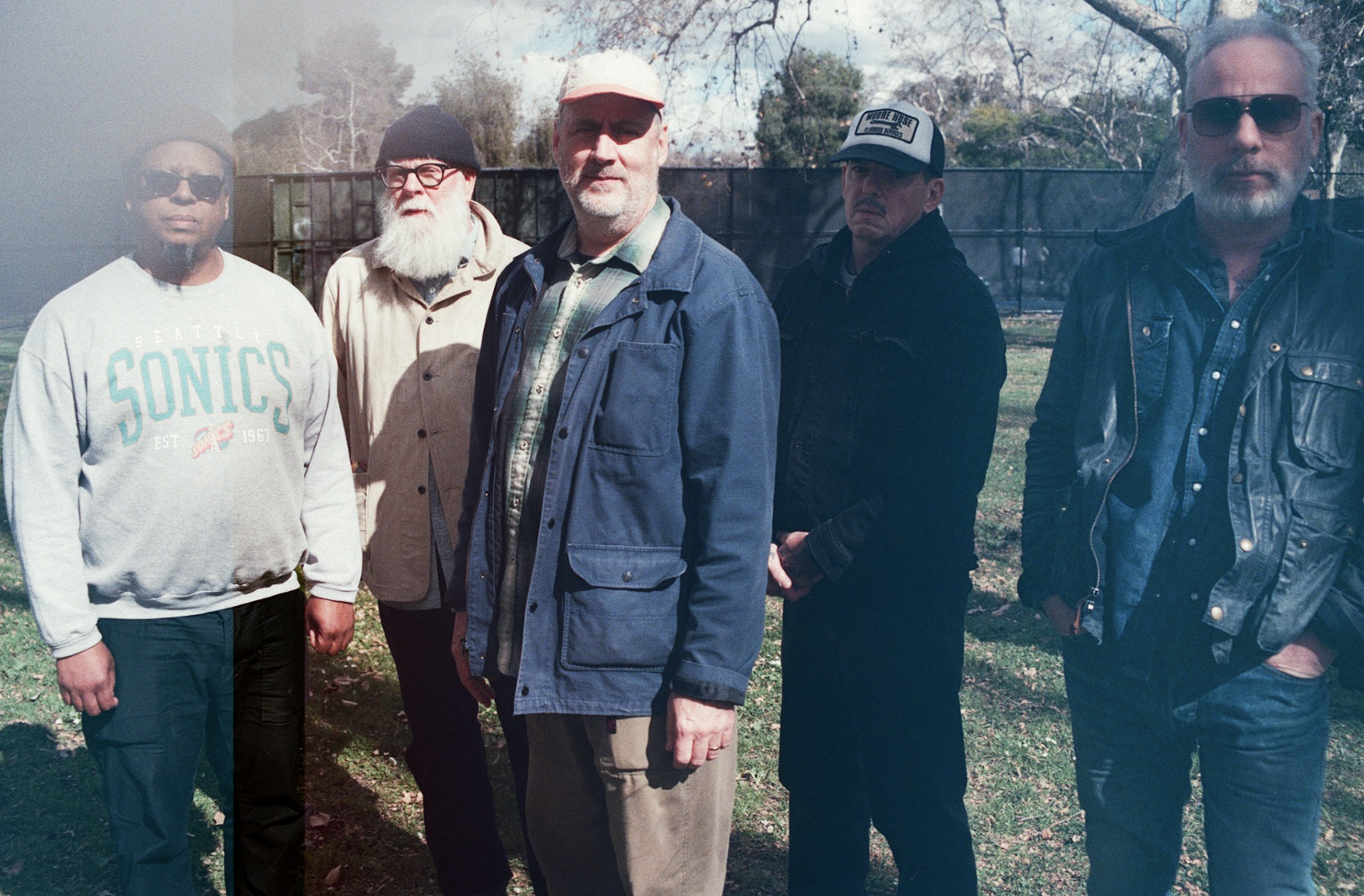
Image courtesy of Todd Weaver
Tortoise ‘Touch’
(International Anthem X Nonesuch Records) 24th October 2025
The highly influential and many tentacled Tortoise collective have pretty much reached a pantheon status as innovators of a postmodernist fusion of influences and musical strands that includes jazz and all its many fecund offshoots, rock, the leftfield, the avant-garde and the electronic. This almost seamless if explorative and experimental embrace of “post-everything” ideas is unsurprising, for they were hot-housed in that much important cultural hub of Chicago, home to some of the most important and most influential developments and artists in the jazz, the blues, rock ‘n’ roll, dance music and hip-hop fields. Of course, there’s also that post-rock scene tag to consider, a label that has followed the group around since their inception in the early 1990s – although the story really begins back in the late 80s with founding members Douglas McCombs and drummer John Herndorn, both of which, despite some lineup changes, departures and new recruitments over the past thirty odd years, have stayed the course.
Whether together under the Tortoise shell or apart, divided up into spin-offs and wholly sperate projects and entities (from the various versions of the Chicago Underground to Isotope 217 and Brokeback) their reach on the late 20th and early 21st centuries musical landscapes has been impressive. They’ve arguably created something that is there’s alone; a language and method (apparently anarchic yet egalitarian) that works for such a diverse range of musicians with experiences in an eclectic range of genres. But they’ve been apart as a group, so to speak, since the release of 2016’s The Catastrophist.
Committed however to unifying the vehicle that has proven so successful, stalwarts McCombs and Herndorn are joined by Dan Bitney, John McEntire and Jeff Parker for their eighth album, Touch. Their first album in nearly nine years is also the first album to be recorded across a tri-cities network. Previous records have been recorded more or less in the city that birthed them: Chicago. But now, members are spread across state lines, in Portland and L.A., and so there’s a new impetus and methodology of remote exchange and layering: The process has changed somewhat from the days of collectively living and creatively jamming together under one loft space roof.
They’re back, but then again, they never left, grouping as they have under various umbrellas and collaborations. For example, guitarist Parker has branched out in recent years under his own name with albums on International Anthem, one of the partners, alongside Nonesuch Records, in the co-operative label sharing enterprise behind the new Tortoise album. Just as renowned on record as they are live, fans and those who’ve yet to be drawn towards the group but who might find this latest album appealing, will be delighted to hear that there’s a whole bunch of both North American and European live dates to look forward to this year and next.
Preludes and tasters, videos and multimedia teasers have been dropped in the run up to the Touch album release – some involving recent International Anthem roster names. And so, the anticipation has been building for months. Those familiar with the treasured catalogue will find a group certainly keen to plough new sonic and musical furrows, and yet remain connected to such iconic albums as Millions Now Living Will Never Die and TNT.
With references to a demanding work by a love-sick and hurt Erik Satie, a submarine volcano in the Pacific and the heaviest element in the periodic table, there’s prompted doses of science, geography and the avant-garde made human with emotional pulls and swept gestures that could be called romantic. For this time around Tortoise, no matter how unique in practice, seem to be creating a certain drama and evocative sentiment on tracks like the estranged Parisian tango shimmy and classically strained ‘Promenade à deux’, and the twangy mirage Western, reframed by Sky Records, gravity defying cosmic soundtrack ‘Oganesson’ – named after the Armenian/Russian nuclear physicist and the element that has the most heavy protons and electrons on the Periodic table, atomic number 118: a synthetic element if anyone is asking, that doesn’t appear naturally on Earth and which is extremely difficult to process. The former of those two tracks features the guest strings pairing of violinist Marta Sofia Honer (readers may recall Honer’s The Closet Thing To Silence partnership last year for International Anthem with Ariel Kalma and Jeremiah Chiu, which went on to make our choice albums of 2024 list) and cellist Skip Vonkuske adding their own special something to the transmogrified Francophone vibes.
Expanding into all sorts of areas musically and sonically, the album matches The Cars with Pino Rucher and Holy Fuck on the tubular bristled, clapped and encouraged turn timpani rumbling and nicely rolled-off ‘Vexations’ – a reference to the incredibly tough one-page notation piece by Satie that calls for the pianist to repeat an instruction 840 times, and takes anywhere from 16 to 20 hours to perform; Cage, not one to put off by such trivialities of endurance and an audience’s attention, famously had a go at it -, and evokes a motorik driven sensibility of Rother and Electrelane with hints of Thomas Dinger on the electrically harped ‘Axial Seamount’ – named after the complex and still poorly understood, it’s said, Pacific Ocean submarine volcano that sits at the epicentre of the Cobb-Eickelberg Seamount chain; first discovered in the 1970s.
Many ideas are formed, all congruously converging to create something a bit different; the doorbell like chimes and lattice of tubular bells and scaffold coming together with jazz-rock and the kosmsiche, or the Techno beats of ‘Elka’ that follow on from the squirrelling 80s fusion of new wave jazz turn heavily laboured, weighted down ‘Works and Days’. ‘A Title Comes’ meanwhile, reminded me of Sven Wunder reimagining the Faust Tapes. This is what they do best, forming or transducing what could be a mess of influences, strands and experiences into something that gels and conjures up descriptions, emotions, scenes, events, science facts, chemicals, and states of the mind and the landscape. And with this latest album, the comeback that might or might not be, they continue to avoid definition. Flexing if anything and creating ever new pathways for sonic and musical exploration. This album however is filled with mood music: some that dances and is propulsive, and some that are far more lucid and sensitive. Touch is an album that I predict will grow on you and get better with each and every play. Only time will tell if it becomes one of their most endurable and lasting influential works.
For the last 15 years both me and the MC team have featured and supported music, musicians and labels we love across genres from around the world: ones that we think you’ll want to know about. No content on the site is paid for or sponsored, and we only feature artists we have genuine respect for /love or interest in. If you enjoy our reviews (and we often write long, thoughtful ones), found a new artist you admire or if we have featured you or artists you represent and would like to say thanks or show support, than you can now buy us a coffee or donate via https://ko-fi.com/monolithcocktail
The Perusal #63: Damon Locks, Robert Farrugia, Emily Mikesell & Kate Campbell Strauss, wjerstean…
January 13, 2025
A WORLD OF SONIC/MUSICAL DISCOVERIES REVIEWED BY DOMINIC VALVONA
(Unless stated otherwise, all releases are available now)

Damon Locks ‘List Of Demands’
(International Anthem) 31st January 2025
Connections, nodes and interplay. Someone should attempt to chart the family tree of influences that orbit and run through the International Anthem label hub, both those Chicago-natives and those drawn to the city from across America. Because in the grand tradition of Chicago beacons of influence, exploration and complex theory – from Chess to the Association for the Advancement of Creative Musicians and the city’s post-everything, polygenesis, Tortoise led scene of the 1990s – that label platform has pulled in a some of the scene’s most inventive and critically hailed artists and musicians over the last five years. A convoluted history for sure, created organically and creatively, and of which all its players freely move between projects and collaborations, with some artists popping up prolifically in the role of unscripted, unofficial house band members.
And so, to Damon Locks who’s enviable resume reaches every corner of Chicago’s hot-housed underground. The visual artist, educator, musician, DJ, vocalist and, in this instance, leading poetic soloist’s CV goes back to the late 1980s as co-founder and de facto leader of the post-hardcore-punk quartet Trenchmouth. Fast-forward through the years, and Locks joins forces with one of the city’s leading luminaries of conceptualised, experimental jazz Rob Mazurek, as the vocalist for the cornetist, visual artist’s Exploding Star Orchestra. The highly prolific Mazurek will be familiar to those lucky souls that, like me, have raved about and absorbed the sounds of the various Chicago Underground formations and the more obscure (but my favourite) Sao Paulo Underground.
Locks will be familiar to many in recent times for the much-championed Black Monument Ensemble, a collaborative liberation that can now be felt to some degree on his “first foray into creating an entire album based off of his poetry and texts” billed List Of Demands. Essentially an orated, spoken and poetical reading of our end times, the aftermath of BAME and affiliated protests, the inaugural Locks named list is a hip-hop album without a rap in sight.
Poetic righteous threads of consciousness and more focussed statements of indignity and protestation fade in and out to a collage of samples snatched from street protests and podiums and the archives of activism, social consciousness and theory, put together in the style of Madlib or MF Doom, or even RZA at times.
But let’s dig a little deeper, for there’s a lot to take in, a diverse range of multilayered influences to connect with.
Imbued by a litany of voices, speakers and musicians, from Fred Morton to Stokely Carmichael, Angela Davis, Michael Smith, Linton Kwasi Johnson, Ruby Dee and Sun Ra, Locks both quantifies and lets loose a untethered reading of the situation facing those battling the ungovernable forces of decay, the autocratic and prejudicial. But the initial spark for this concept was lit when Locks was approached to “present” a new sound piece for an exhibition at the Museum of Contemporary Photography in Chicago. Encouraged afterwards by Alex Inglizian of the Experimental Sounds Studio to expand further upon this piece (Inglizian offered his services free as an engineer on the resulting sessions), Locks set to work on a much bigger, more encompassing work, taking in his work educating aspirational incarcerated artists through the Statesville Correctional Centre and the Prison and Neighbourhood Arts/Education Project. Sometime last year, Locks’ class compiled a document of aspirational demands and beliefs. And at the end of the album’s title-track, he repeats those demands as “Beauty, form, destiny, love, time, future and light” to a collage of podium delivered unifying and resistance firing speeches, singing voices of endurance and quasi-Egyptian/North African shaken rhythms.
Joined in his endeavours by that International Anthem family and its close relatives of the form, there’s contributions from Ben LaMar Gay on cornet, Macie Stewart on violin, poet Krista Franklin and turntablist manipulator and drummer Ralph Darden (who also appears under the DJ Major Taylor moniker). The first two last appeared on this site through their contributions to Bex Burch’s There Is Only Love And Fear album, back in 2023. Here, Ben evokes a soft rendered feel of Miles Davies sketches and rich, sympathetic twills across the cinematic dramatic voiced supernatural samples, bluesy sentiment and hidden landscaped descriptive hues of environmental distress and darkly veiled analogy of ‘Holding The Dawn In Place (Beyond Pt. 2)’, and employs the use of a hallucinatory concertinaed melodica on the vague Thai-like sampled and El Michels affair-like pique of anxious, architecturally closed-in apocalyptic poetic distress and summary of the validation cult and tech giants garbage-feeding machines ‘Click’. Meanwhile, Macie’s empathetic sustained, hovering and warbled violin can be heard – like a mix of both Tony Conrad, John Cale and Michel Urbaniak – on the Hayes-like, requiem of voices snatched, cinematic turn hysteria screams of voices, whammy bar guitar and reversals ‘Distance’, and the Madlib & MF Doom skit soulful looping cosmic collapsing ‘Isn’t It Beautiful’. Krista, sounding a little like a cross between Tenesha The Wordsmith and Sarah Fabio Webster, offers a guiding light and the healing balm solution spirituals on the water replenishing, metaphorical seed planted dreamy ‘High Priestess’ – every now and then, from the parallel reality, a passage and stirring of activism, a squeal and churn of the upheaval brings us back into the world of hostile policing – , and Ralph drums a slow tumbled, near gravitational held break on the already mentioned ‘Isn’t It Beautiful’, and itches, scratches and slips and cuts the vinyl on his turntables for The Project Polaroid meets Afrikan Sciences “fiercely explosive” ‘Meteors Of Fear’.
But this album is all about the words, the judgements, the poetry and call of swooned, soothed, irate, actionist samples clutched from an exhaustible source of political movements, resistance groups, street protests, the disaffected and disenfranchised. And Locks seems to channel a sagacious yet youthfully fearless reaction to the world around him with a spoken narration, unfurling of thoughts that’s one part Sun Ra, one part Brother Ah, one part Last Poets, one part Fred Moten and one part Carl Hancock Rux. Put together with a sound that could be Adrian Younge or Cities Aviv mixing up The John Betsch Society, Lamplighter, Lynx 196.9, Doug Hammond, Flying Lotus and Curtis Mayfield, it all makes for an impressive collage of demands and requirements hewn from the desperate forbode of a society kettled and hemmed in, distracted by the manna of a never-ending feed of content fixes. Locks poetically blasts the weapons of authority, the constant wearing down and stresses with a despondent but still fighting delivery of soul, hip-hop and post-jazz. A lot of people are going to be very happy that this inaugural project stands up, and that the quality is erudite as well as chaotically appealing, disturbed and agitated.
Robert Farrugia ‘Natura Maltija’
(Phantom Limb/Kewn Records) 17th January 2025
Situated on the shallow shelf formed from the high points of a land bridge between its larger northern neighbour of Sicily and the North African continent, the Malta archipelago benefits from a diversity of fauna, flora and nature. Its position and geological formation at the centre of the Mediterranean is a godsend for a biosphere of beauty and diaphanous species, from octopus and turtles to birds and a rare weasel – the “Bellottra”, one of the smallest carnivores on the planet, is so beloved by the local population that they depicted this rarefied mammal on its coinage.
There’s over 1000 species in fact, with a 130 of that number being endemic to the islands themselves. Unfortunately, due to the loss of habitat, the spread of invasive species and human intervention, many are on the endangered list. And as is the case everywhere, a general lack of education about the environment and biosphere has led to a further disconnection, and a concerning ignorance of the growing dangers. Whilst vital to the economy, Malta has also seen a massive increase in tourism over the decades; the numbers swelling in recent years, often outnumbering the local population by three-to-one, and some years as much as five-to-one.
Addressing the plight and ongoing struggle to accommodate these problems, plus the spectre of climate change and its effects, producer and director Saviour Bonnici has created an inspiring and actionist documentary series, Natura Maltija, or “Maltese Nature”. Combating the gap in the education system, Bonnici has captured the beautified, near sacred and yet also plaintive fears and majesty of marine and land life in and around this famous archipelago, with the tone pitched between the “wistful” and “celebratory”. Echoing those same emotions and capturing a real gravity but intimacy too, ambient/neoclassical/IDM artist and composer Robert Farrugia has been tasked with using his signature processes and balance of real acoustic instruments and subtle, attuned and voice-like electronic apparatus to score the perfect soundtrack for this series.
Lovingly in awe and sanctity yet composing a both magical and playful score, Farrugia corresponds each subject with a suitable suite of floated serenity, refracted light patterns on the shallow seabed and near soft choral and pastoral hinted organ-like gravity. As naturalistic and organic as possible, each theme is either explored, marvelled or accentuated with a venerable subtlety that draws out both a beauty and sadness. The (sort of) long-nosed tiny shrew-like “Bugeddum” of Malta has its furry movements transformed into a beautifully gleamed and shake of twinkled classical Prokofiev-like percussion and glockenspiel, and the “Bufula” bird is articulated by a both pastoral and electronic attentive air of concert hall classicism and a synthesis of waveforms. The “Gamiem”, which I think is another bird, is represented by a dappled light play of spherical bulb-like notes and tinkles and a glimmer of Jarre, Boards of Canada and Röyksopp.
Below the waves, submersed in an underwater kingdom of dreaminess and subtle ethereal voice-like hymnals, the rare freshwater “Qabru” crab is accorded a respectful plaint of lower-case piano notes, suspended floating atmospheres and spiralled pitch shift reversals. The “Qarnita”, or octopus, features what sounds like rattled and chinking bottles that somehow ape tentacle movements, whilst an enveloped serenity offers something near holy and yet alien.
The score is pretty incredible, a near perfect ambient evocation of nature in its habitat. Simultaneously familiar and yet offering an alternative vibe, cleanliness and enchantment that sets this biosphere in a sensory light, Natura Maltija sounds at times like Brian Wilson (at its most playfully twinkled and chimed), Cage, Tangerine Dream, Harold Budd and Andrew Heath composing a soundtrack for Jacque Cousteau in the bejewelled clear seas and on the drought-immune planted lands of a Mediterranean oasis. Hopefully it educates as much as it inspires, and immerses the listener, for this is already one of the best albums I’ve heard in 2025.
wjerstean ‘Raspad’
(NEN Records)
You’d be forgiven for the lack of attention paid to the former Armenian majority mountainous Nagorno-Karabakh region of Azerbaijan and its fight to remain autonomous in the face of conflict. Located in the southern Caucasus, internationally recognised as part of Azerbaijan but governed by the Republic of Artsakh for years, and secured by Russia, Nagorno-Karabakh was originally established in 1923 by the Soviet Union.
Subsequent events led to fighting between both Armenia and Azerbaijan, escalated by the regional legislature’s resolution in 1988 to join the Republic of Armenia. Old rivalries and disputes were bought to the surface and violence soon ensued, including ethnic cleansing atrocities. In 1994 Russia secured a ceasefire after six years of conflict.
Fast forward to 2023, and with the Ukraine invasion in full bloody flow, the Middle East at war, an emboldened Azerbaijan (enabled really by Russia) made a lightning offensive move, occupying Nagorno-Karabakh and forcing out roughly half of the two hundred thousand majority population of Armenians – many fleeing to the mother country. Officially dissolved, Azerbaijan has begun a diplomatic process of normalization, despite claims of ethnic cleansing and violence.
Already suffering, perhaps, the first genocide of the last century, when forcibly marched, starved, massacred and deported from their lands by the Ottoman Empire during WWI, the Armenian people are unfortunately no strangers to trauma. You only need to see the physiological damage, the sunken lament of the subjects in some of Arshile Gorky’s paintings to register that grief and loss. In the aftermath, the Allied Powers recognized Armenia as a sovereign republic yet did nothing to aid it or stop its portioning by both Turkey and Russia.
Armenia would fight again when the Soviet Union collapsed in the late 80s and early 90s, and once more declare independence. And although life hasn’t been easy (see the anti-government protests of 2018, billed as the Armenian Revolution), Armenia’s adopted market economy has led to improvement and cordial relationships with many of its neighbours, including Georgia, but also the EU and the Arab League.
Tracing its history as far back as the Iron Age, with the traces of early civilization in the area dating to 4000BC, Armenia has survived various changes yet remained an identifiable independent state: even when gobbled up, strongarmed or forced into other empires and kingdoms. The first (I’m assured) state in the world to adopt Christianity as the national religion, retained now for 1700 years, Armenia’s arcane practices manifest on the debut cassette album from wjerstean, a solo artist living in the country since 2022. The guise of one Lisa Viktorova, this project mystically, harrowingly and esoterically channels the country’s atavistic psychogeography, its pains and peoples’ trauma to say, both obliquely and head on, something about the mental anguish, stresses and fatigue of the modern world. None more so than the millennial despondent Prozac Nation visit to the pharmacy ‘to take away’, a subdued but haunting Oriental-like accompanied indolent drawl of medicated grievances and pains.
Somewhere between darkwave pop, the post-industrial, the bleak awakening hours, the avant-garde, the religious and unearthly the Raspod album features an estranged commentary, yearn, resignation and lucid poetic decry delivered in both a recognisable and more amorphous language of utterances, swoons, wisps, and phonemes (the smallest unit of sound in a language that distinguishes one word from another). Some in English, others in a both a sullen and elusively shrouded and bloodied or fairytale manner, the songs are enveloped in a mysterious dreaminess that draws upon the esoteric, hermetic, apostolic and atavistic. And as an historical bridge for centuries before between the Roman, then Byzantium empires, and the Persian empire and tribes of the Steppes, the alchemy is eclectic in depth with traditional sounds woven into a mood music of dark materials, frayed eerie classicism, shadowed synthesized electronics and hidden sourced mechanisms, rachets, stretches, creaks and tools.
This is a chilling, though on occasion melodically stirring, fusion of Lusine Zakarian, Apokrifina Realnost, Coil, the Gazelle Twin, Psychic TV and Luis Pestana. There’s an almost courtly phantasm cover version too of 4AD goth signing Clan of Xymox’s slighted, spiteful and bloody ‘Creature’ from ’99 that wouldn’t sound out of place on a Leisure FM release.
Pulled through the mirror backwards into a world of pain and historical/generational trauma, Viktorova both plays on and navigates the harrowing darkness victims old and new, of Armenia’s past and future destination and survival in face of such despairing upheaval and autocratic barbarity. An uncompromising debut of subterranean exhaustion and attuned degrees of experimental weathering, loss and illusion.
Emily Mikesell & Kate Campbell Strauss ‘Give Way’
(Ears & Eyes Records) 24th January 2025
Naturally drawn together through their shared love for subtlety over displays of jazz virtuosity and indulgence, the New Orleans based duo of trumpeter, composer, arranger and activist Emily Mikesell and saxophonist, composer and educator Kate Campbell Strauss have produced a debut album that very much breathes in the now but harks back to a far more thoughtful, ruminated age of the emotionally charged and tender.
Early mild weathered strolls in the evening, castle shaped clouds, the calm paused reflections captured during the bustle, all are just some of the prompts and feels beautifully and organically articulated on these supple, giving and brassy suffused duets.
With the imbued spirit of Miles Davis and Gil Evans Sketches Of Spain (minus the castanets), Kenny Dorham, Chet Baker, Steve Lacy and Dexter Gordon flowing throughout, this brass double-act serenade, steadily climb and dance to a jazz sound swaddled in the blues, the seasonal classics, the romantic and the sentimental.
The opening number, ‘Cloud Castles’ eases the listener into this erudite and sweetly laced performance with echoes of Lester Young and what can only be described as a meeting of Chico Hamilton and Lalo Schifrin relocating a subdued soundtrack to the docks of New Orleans. It’s always a balance of the familiar and discovered, as the subtleties develop and place the action or emotion in a slightly more intriguing place, one minute drifting into a 60s film score or an episode of Colombo, the next, slowly rising and then relaxing to a sort of reggae-like signature whilst recalling The Godfather soundtrack! (check out ‘Recipe’ and tell me I’m wrong).
Mikesell and Strauss seem to place each reedy sustained and lingering exhale, deep bassy tone and shorter swanned and sharper circles perfectly; neither cutting in nor interrupting each other’s performances. Every note is audible, every feeling felt on an album of timeless quality and relenting ease. Forgiving with moments of happiness but introspection and the blues, Give Way is an exceptional jazz album from a pair of musicians that know their art and craft inside out. And for once, subtlety wins out against extremes, as these six tracks form a complete picture of beautifully emoted perfection.
30 Door Key ‘A Warning To The Curious’
(Subexotic) 31st January 2025
In a retro knowing Fortean-Ballard-Wiccan-Thelema-Chthonian-cult atmosphere of abundant references the Palermo (oh how I wish to return to one of my favourite cities one day soon) electronic artist Alessio Bosco invokes an oddball, quirky and ominous prowling soundtrack of simultaneous dystopian futurism and past visitations from the spirit world on his new album A Warning To The Curious.
Where to begin in unravelling this vinyl-issued spread. Well, we can start with that title, borrowed from the genius crafter of idiosyncratic English ghost stories M.R. James’ famous tale of an antiquarian and archologist protagonist named Paxton who happens across one of the legendary three crowns of the East Anglia kingdom one day, whilst holidaying in the idyll of Seaburgh – meant, we’re told to be a “thinly disguised” version of Aldeburgh in Suffolk. Unfortunately for Paxton his curiosity gets the better of him, as in retrieving this trophy from the psychogeographic soil of a realm destined to one day be brought back into being as a sole defence against invasion, he invokes the crown’s supernatural guardian, who then precedes to hound and stalk him to a “woeful” death.
The nom de plume of 30 Door Key is a reference, I believe, to the film adaptation of Witold Gumbrowicz’s 1937 book Ferdydurke, put onto screen by the Polish film director Jerzy Skolimowski in 1991. In short, this cult story and film’s young protagonist faces a conflict between acting his age at the onset of WWII in his Warsaw home, or of regressing and relapsing back into childhood as an escape.
Both references are entwinned and bolstered by a whole list from the artist himself, who name checks an exhaustible roll call of literary, musical and filmic inspirations: some obvious, others, a bit of a surprise. And so, you can expect to anything from Broadcast and Belbury Poly to Sidney Sager, from a removed version of Kraftwerk to Harmonia and early Human League. Cult library music is woven into evocations of Boards of Canada, John Carpenter, Vangelis, Richard H. Kirk, Adolf Wertemann, Andre Tschaskowski, Gene Moore, Andy Votel, Caravan of Anti-Matter, Trans Am and Thomas Dinger across nineteen varied tracks of science fiction and fact, kosmische technological wonder, children’s 80s fantasy soundtracks, Italian horror scores, paranormal activities, spells and dreams states.
Being an enthusiast, historically and culturally, of Bosco’s Sicilian home, I was drawn immediately to the title inclusion of the stunning coastal perched Norman cathedral town of Cefalù – about an hour’s train ride east of Palermo on the island’s northern coastline. The “Lucifer of Cefalù” is, I’m pretty sure, a reference to occultist icon Aleister Crowley’s who set up a Thelema temple in one of the town’s lesser, more inconspicuous villas with his “scarlet woman” acolyte Leah Hirsig. Long after its demise and return to shambling unkempt beacon for generations of occultist fiends, groupies and the like, Kenneth Anger uncovered several of its dusty covered murals, which he filmed to make up his infamous, now lost, Thelema Abbey film in the mid 1950s. If walls could talk – so Anger hoped -, the exploits within this modest pile have inspired numerous anecdotes, literary scenarios and scandal. Musically in the now, this inspiration is given an odd Stereolab-like acidy bounce and blip score that’s more library music sci-fi than Sodom and Gomorrah (or as in the case of Crowley and his disciples, more like sodemy and gonorrhoea) and Satanic invocations.
With the Fortean transmitter channelling everything from Hitchcock, Ken Russell phantasm and The Legacy to the music of the Amicus and Tigon film studios, pastoral hallucinations and veiled break beats, Boscoe summons up a BBC workshop of quirky magik, Lovecraftian atavistic shadows, suspense and whispered apparitional calls and dialogue from the supernatural archives. If you dug last year’s Night Blooming Flowers album collaboration between Drew Mulhollandand Garden Gate on the same label, then you will lap this curio up, which comes out on suitably ghoulish transparent green vinyl (of course!).
Trinka ‘S-T EP’
(Agogo Records) 24th January 2025
The debut six-track EP from the newly coalesced trio of Brazilian singer and synthesist Dandara Modesto, Portuguese writer, producer and guitarist João Pires and Brazilian percussionist Juninho Ibituruna is a beautifully soulful mirage of Lusophone language and cultural Afro-Brazilian influences: a dream-realism, sometimes lilted plead from a both familiar and contemporary transformed Latin-America.
Under the Trinka banner, well-versed and experienced through several projects over the years, the trio saunter and march (in the most forgiving, lucid of ways) to a different drum beat and atmosphere, as they channel the magically beautiful and trilling like a songbird-of-paradise vocalist Modesto’s Candomblé practice with a flowing and sometimes shuffled collage of recognisable elements from Brazil’s rich musical heritage. Candomblé for the uninitiated, harks back to the 19th century religion that developed in Brazil from the enslaved masses that were transported from West and Central Africa. On foreign soil the gods of the Yoruba, Bantu and Gbe come up against Roman Catholicism in a hybrid worship that venerates a whole host of “orixas” “inkice” and “vodun” spirits that serve a single all-powerful entity. The name of this religion translates as “dance in honour of the gods” and comes with its very own fusion of sounds and rhythms; and counts as just one aspect of this inaugural union of attentive, sentimental and spiritually giving souls
In this age, this landscape, Briela Oieda, Raz Olsher and Gabriele Viegas commune with Maria Toleda, LA LOM and the post-bossa triumvirate of Nana Vasconcelos, Mauricio Maestro and Joyce Moreno in a captivating dream of reimagined Afrocubism, Fado, Latin-jazz, folk and subtle synthesized effects.
Raising an emotionally diaphanous glass to yearning sentiments of spiritual recovery and healing, or in a dance through the exotic lush forests of Brazil, the trio are aided by a host of friends and like-minded artists, with Bianca Godoy, Jazzanova’s Stefan Merse Ulrich and Paul Kleber all pitching in throughout to further expand this lyrical, magical and stirring musical palette.
Soulful music for a world on the precipice of hate-filled autocratic destruction, the Trinka EP is a delightful and forgiving ray of beautified Lusophonic longing and movement. The future looks pretty promising for this trio; the sound exquisitely hankering for describing a loss of magic and spiritualism that can’t be ignored.
Memory Scale ‘Chapter Five’
(Audiobulb Records) 18th January 2024
A sensory appeal of time, place, geometry and the spherical orbits of the cosmos permeate this latest sophisticated offering from the Bordeaux residing artist Memory Scale, otherwise known as the guise of one Arnaud Castagné. Measured complexities are suffused with a rich and subtle palette of IDM, Kosmische, electronic and most notably ambient inspirations; channelling at any one-time echoes of Klaus Schulze, Tangerine Dream, Boards of Canada, Eno, Seefeel, Speedy J, Ash Ra, Jarre and Peter Michael Hamel as the synthesized merges seamlessly with elements of effected guitar and the stained glass lit sounds of an organ and the lightened bulb noted Rhodes.
But even within that scope of influences, I can hear something approaching a more sedate paced track “#7” from the Aphex Twins’ Ambient Works Vol.2 on the windy synth breathing and atmospheric lead-in ‘Causes & Effects’, the kind of synth bass you’d hear on an 80s cult samurai soundtrack and the supernatural retro feels of Kyle Dixon & Michael Stein on the crisp crackled surface sounded and deep ‘A Late Reading’, and a both playful atom spirograph and roulette wheeled movement of 90s Warp roster mavericks on the obscured transmission ‘Epicycloid’. Altogether a quality of depth, feelings and softly prompted suggestions of various attuned and attentive musical instruments, of ruminating thought processes, and the historical instruments that measured celestial bodies of our universe.
From the crystalized to the translucent the fantastical and moody, many bases are covered on a work that would suit a soundtrack of recalled and oblique memories.
As that title denotes, this is the fifth album, and third for the unassuming Audiobulb Records label, and it’s a classy, cerebral but emotionally drawn experience that borders on the filmic, the magical, more reflective and near haunted. A truly immersive experience.
ZD Grafters ‘Three Little Birds’
Digitally released last November/Vinyl arriving sometime this February 2025
The decaying edifice of dead birds found in the hearth is transmogrified into a distortion of death, pestilence, mortality and contorted, hurtled and unwieldly post-punk-no-wave-freeform-jazz-skonk-doom-metal by the ZD Grafters trio on their most recent album. Released at the tail end of 2024, it just missed out on my last Perusal (December) column. And so, I’m making up for it now by including it in my inaugural Perusal roundup of 2025, but also because a vinyl version is set to be released in February – which you can pre-order now on the featured Bandcamp page.
The family unit of busy drummer Zac and fuzz-filtered throbbing growly bassist Dave Kavanagh are joined in this chthonian, morbid curio enactment of stresses, sickness and dark meta(l) by skeletal bird contorted invoked saxophonist Riddel Thomas, who seems to be channelling some blurted and heralding, death rattling hybrid of Mats Gustafsson, Marshall Allen, Larry Ochs and Gunter Hampel across a miasma of both menace, dirtiness and soot. And yet, whilst that trebly growled, throbbed and lo fi filtered bass – sounding like its being played in another room or even in mono, or just heard through the studio headphones – and bashed, smashed, splashing and in constant movement drums express dark energy, stirrings of the ungodly, and evoke the Black Horse of the Apocalypse, the trio basically sound like they had fun stoking the engines of doom.
I can’t improve on the Kavanagh’s self-coined “parole jazz” label – there’s a real sinister, prowling stalking vibe of expelled no-good forces at work that is perfectly summed up by it -, but can offer some markers: imagine Andy Haas duelling with Glenn Branca in an avian graveyard, or, Melt Yourself Down lashing out at Laddio Bolocko, or even, Last Exit joining up with Death From Above 1979 and Zu to dissect, poke at and read the bones of those crows trapped and rotting away in the Kavanagh family fireside.
Heavy in the best possible way, Three Little Birds is a wailing and physically demanding riotous and freeform expulsion of primordial dark, confrontational and bugled no-jazz that evokes a world of its own making.
For the last ten years I’ve featured and supported music, musicians and labels I and the blog’s other collaborators love across genres from around the world that we think you’ll want to know about. No content on the site is paid for or sponsored and we only feature artists we have genuine respect or love for. If you enjoy our reviews (and we often write long, thoughtful ones), found a new artist you admire, or if we have featured you or artists you represent and would like to buy us a coffee at https://ko-fi.com/monolithcocktail to say cheers for spreading the word, then that would be much appreciated.
The Perusal #62: Kotra, Niton, Ruth Goller, The Dark Jazz Project, Martin Tétreault…
December 3, 2024
A WORLD OF SONIC/MUSICAL DISCOVERIES REVIEWED BY DOMINIC VALVONA
PHOTO CREDIT: PAULA RAE-GIBSON
(Unless stated otherwise, all releases are available now)
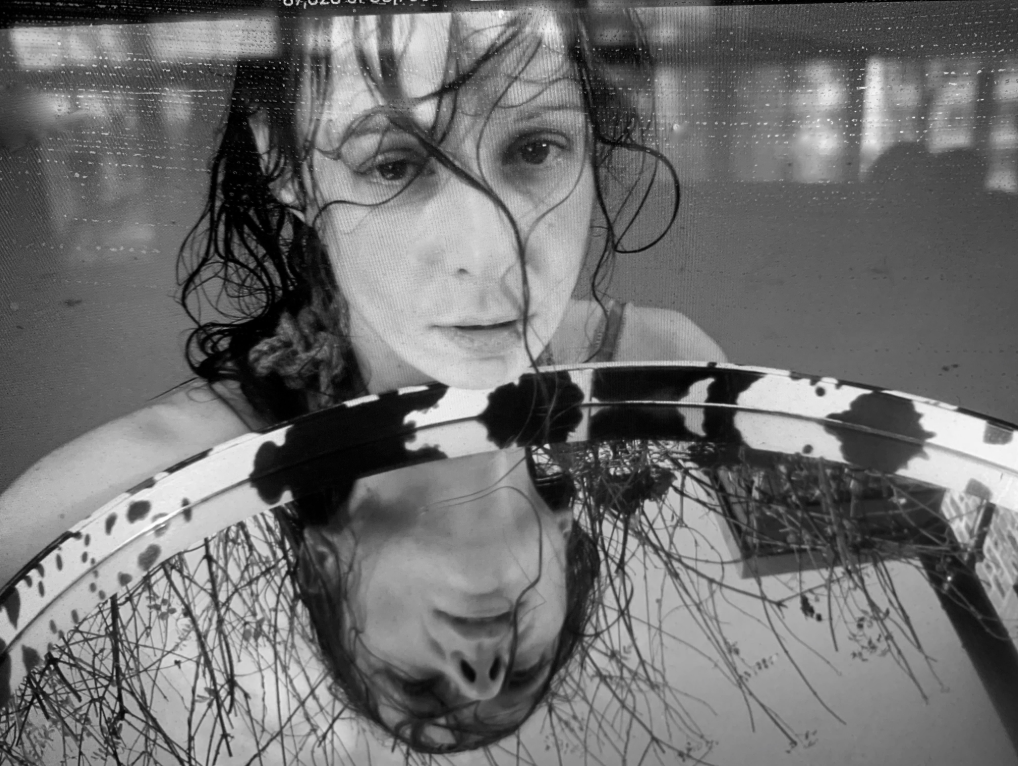
Kotra ‘Grit Light’
(I Shall Sing Until My Land Is Free)
As Putin’s invasion of the Ukraine depressingly continues unabated, passing the 1000 days mark a few weeks ago – which also happens to near enough coincide with the Ukraine’s commemorations of the Holodomer, a timely reminder of “mother” Russia’s destructive despotism and politically sanctioned revenge policies -, it falls upon labels like the electronic artists Dmyto Fedorenko and Kateryna Zavoloka’s I Shall Sing Until My Land Is Free to spread the sound of the sonic resistance. A soft power, a cultural emissary of that country’s experimental scene, the profits from its roster of artists, which includes both its founders, are donated to several self-defence and humanitarian foundations and local volunteer activists.
To paraphrase the opening from my 2024 review of Fedorenko (appearing under his Variát moniker) and the harsh and confrontational Japanese artist Merzbow’s Unintended Intentions collaboration, nothing concentrates the mind more than witnessing the brutal barbaric dystopian-scarred landscapes of war-torn Ukraine, and the carnage, loss of lives in the meat grinder of a bastardised WWI battle for survival. The fear, destruction of this conflict has been transmogrified into the abrasive, concrete debris soundscapes of nightmares on both that album and others; the Berlin-based Fedorenko appearing under a number of different guises, channelling heavy abstractions of sophisticated, industrial, intelligent techno and dance music across a swathe of concepts and works.
Escalating into the broader war many had forewarned, but unless willing to accept capitulation, further violent barbarity and the military conquest of even more of Eastern Europe, the Baltic nations and Balkans, there is no real painless conclusion to this invasion. Trump’s boastful rhetoric is just that. But worrying all the same, as negotiations, which can’t truly be anything other than favourable to Putin in any scenario offered, seem very likely in the New Year. The transactional President will want to wrap this horrifying, economically destructive war up, and so there is a rush now for both sides to gain their territorial footholds (the Ukraine’s incursion and hold over swathes of the Russian Kursk region will be vital in any deal negotiated; one of the country’s most successful military coups, and almost in itself the sole campaign that unnerved and setback Putin’s war machine the most). At long last the UK and America have given the go-ahead for long range missile attacks – though confined to the Kursk region. But it has come at such a late stage, even too late, just as the encumberment Ukraine supporting Biden administration is about to leave the White House. If delivered sooner alongside the delayed Leopard tanks and the F-16s (or in the numbers that President Zelensky asked for), we may very well be seeing the Ukraine in a much more favourable position. As it is, one of the only leverages that Trump could have used, those long range ATACMS, has been played. And what the Ukraine needs more than anything else is manpower.
Still, Putin’s Russia has failed to bully the Ukraine into subjugation and defeat. Russia’s military, for all the world to see, has been shown up on the battlefield and forced into sacrificing untold numbers in suicidal missions to gain mere yards of empty landscape. Drones have had the better of the Russians across the trenches and out at sea against the Black Sea fleet on numerous occasions. And in recent months, they’ve been joined by anywhere between ten to eleven thousand troops from North Korea in an attempt push the Ukrainians out of the Kursk. But even more unnerving and dramatic for the Russians is the unfolding events in Syria, which have taken Putin’s ally Assad by complete surprise. Insurgent/rebel groups opposed to the Syrian dictator have, even to their own astonishment, gained a vital foothold in Aleppo – the first time the Syrian government has lost control of the strategic and important city since the start of the civil war. A stretched Russia is currently bombing the hell out of them. The world is hanging on to see what happens next.
Bearing testimony to what has taken place and what might be about to happen in 2025, Fedorenko once more takes on the guise of another of his many faces, that of Kotra, to charge up the electrodes and electrical barbed wire with another heavy bass suffused and industrial techno album of electrification, force fields and buzzed machine hive activity. From dissonance and pulverizing bass noises a rhythm is hewn and honed; a buzz and scaffold of signals, of invisible forces and currents fused together with a bounce.
Carried across an hour-long immersion of sonic forbode and shuttered, tubed, kinetic and frazzled IDM-styled beats, there’s a thematic atmosphere of heavy payload alienness and humming, engineered and motorised machines. Some of these sounds mirror the ominous buzz of drones in the theatre of war, and others, the propeller-like hovered flight of bombers. In short, picture Rob Hood or Jeff Mills on Tresor, maybe even Basic Channel, collaborating with Carter Tutti Void whilst caught up in industrial scale warfare. I Shall Sing Until My Land Is Free have proved their worth in exporting such electronic experimentation to an international audience if nothing else. But this truly is music with a serious intention, forged in the darkness of barbaric invasion, from those who fight culturally and physically for the survival of their country’s identity.
Niton ‘11’
(Shameless Records/Pulver und Asche Records)
A connection to the Island of my birth, the Italian-Swiss trio of Niton bears the name of the small village on the Isle of Wight where Marconi famously and successfully transmitted some of the first wireless waves. On the 23rd of January 1901, on the verge of a new century, just a day after the death of Queen Victoria and that enduring epoch, the Italian inventor’s transmission reached from the southernmost tip of the Island to Lizard in Cornwall. By the end of that same year Marconi would attempt to reach America.
As we locals pronounce it, “Knighton” – which is really confusing as there is an actual Knighton on the Island too; we differentiate them by calling the latter “K-nighton” -, Niton lies close to the more famous and larger one-time Victorian resort of Ventnor on the southern coast. Marconi’s picturesque spot is the site of St. Catherine’s Lighthouse, looking out to the great beyond, where no land can be sited, and all that lies ahead is the expanse of the English Channel. Many have attached significance to this location over the years, and this experimental electronic-acoustic group have decided to adopt it as a link from one age to the next; of progression, the sense of opportunity and technological advancement against the implications of more foreboding era in which democratized altruism has turned into a dystopian nightmare.
Choosing a significant date of correspondence, “11th January 1901”, from the lead up to that successful experiment, the trio invite the French-born British composer, multidisciplinary artist and researcher Olivia Louvel to run Marconi’s written words through the Fortean radio set on the opening atmospheric piece from side B of their newest, and fourth, album. Currently (or so when I looked it up recently on Louvel’s own site) studying a PhD at Brighton – where coincidently I worked before making the move to Glasgow in 2015 – in the interplay of voice and sculpture across that University’s fine arts and sound art departments, the award-winning artist doesn’t just read aloud but transforms the material by playing with the language, from Italian to English and vice versa. Historical timelines are recalled but also erased by blankets of foggy time, separation and vaporous disembodied elements, as Louvel sounds both of that Victorian-on-the-cusp-of-a-new-century era and yet futuristically oblique.
A reference to that date, but also the number of collaborative artists taking part for the first time in expanding Niton’s sonic investigation and freedoms, 11 marks the group’s tenth anniversary and new approach.
Widening participation with an international cast, electronic violinist Zeno Gabaglio, analogue synthesist Luca Xelius and “amplified objects” manipulator El Toxyque work with both noted veterans and exciting burgeoning artists across a diverse range of genres and disciplines to provide something different; avenues, turns, peregrinations toward the surprising, intense or avant-garde.
Just to pluck out a few examples, the twin contributions of the Casablanca singer-songwriter and solo artist Meryem Aboulouafa and the award-winning Swiss poet, Babel festival for literature and translation founder/artistic director Vanni Bianconi open the album by airing an Italian poem read out and mystified with poignancy and pain of the bittersweet over a wispy mirage of amorphous Arabian and North African desert stirrings. But it’s followed by a complete change in direction with the glitch kinetics and quarks, the Duchampian bicycle wheel spokes turning and rattled, and drum smacked, punched and physically handled abstract ‘Spin-orbit interaction’, which features the experimental drummer-percussionist Julian Sartorius. There are experiments too that sound like a very removed vision of jazz with the English saxophonist John Butcher channelling Mats Gustafsson and Andy Haas strained sucked dry vibes and Krononaut-like abstract chills, visitations and alienness on the alternative Bureau B label-esque ‘I was dying’. And the Ex and Dog Faced Hermans guitarist Andy Moor provides resonating copper stringy wrangle, scraped and scratchy lines, carries, sustained hovers that sound like a fusion of the Red Crayola, Derek Bailey and Yonatan Gat on the psych-jazzy and mysterious living, breathing entity ‘Huella infinite’.
But perhaps the most out-there of these collaborations is with the Cameroon shaman Achille Ateba Mvando, who both ceremonially and excitable utters and dances the ancestors Bantu rituals to a combination of traditional hand drums and handclapped rhythms and more modern buzzes, glitches and starry projected ambience – reminding me in some ways of both Bantou Mentale and Avalache Kaito.
Transcribing a feel, a sense of history, invention and amorphous globalism, Niton and their foils/partners converse with the past whilst venturing further into electronic experiment and soundscaping on an immersive album of sonic atmospheres, investigation and evocation.
Ruth Goller ‘SKYLLA’
(International Anthem) 6th December 2024
For those that missed out at the time on the Italian-born but London-based composer, bassist and experimental vocalist Ruth Goller’s 2021 debut LP, those gracious folk at International Anthem have pressed another batch of vinyl copies: Such was the initial demand, and three years on, a clamour to own Goller’s inaugural soloist fronted album, that it felt right to make it available again. Originally released on longtime collaborator Bex Burch’s Vula Viel Records label – also, confusingly, the name of the composer, percussionist, producer and instrument maker’s group -, SKYLLA showcased an inner lucidity of expressive vocalisation and pinged, plucked, spindled and resonating bass guitar harmonics that garnered a host of plaudits.
But this timely reissue arrives in the wake of Goller’s impressive scope of activities since that album’s release, and just a few months after the release of the follow-up, SKYLLUMINA. The CV is way too prolific to list in its entirety here, but the expletory composer and bass player’s most notable credits include two of the most important and influential groups to set off a jazz renaissance in recent years, Acoustic Ladyland and Melt Yourself Down. Goller has also performed with such luminaries as Kit Downes, Sam Amidan, Marc Ribot and (Sir) Paul McCartney, and plays with both Let Spin and Vula Viel. And just in the last month Goller teamed up with the German drumming and saxophone TRAINING combo of Max Andrzejewski and Johannes Schleiermacher for the wild, tumultuous, wrangled and strange, yet also melodic and dreamy threads to knot album – a collaboration so good that it makes this year’s choice albums list, which goes out in the next week.
In an experimental, expressive and often otherworldly atmosphere – like a cross between introspective cerebralism, the alien and, later, the near chthonian and darkened –, Goller’s Nordic/Icelandic-like vocal utterances, soundings and spatial harmonical airings mirror the vibrating and trebly harmonic twangs, pulls and language of both the electric and double-bass. Accompanied by the attuned, often choral and tripsy sprite vocals of Alice Grant and Lauren Kinsella, the odd caught recognisable word is entwined with coos of the pastoral, the neoclassical, ethereal and pronounced and instrumental gangly strands and shuttered and bassy sonorous reverberations.
You could imagine Bjork, flanked by Susanna and Hatis Noit, conducting an alternative ceremony or a Northern European pagan woodland choir to the experimental bass guitar work of Jaco Pastorius and evocations of dal:um, Gunn-Truscinski, Ramuntcho Matta and on ‘In more turbulent times, she managed to take the perfect shot’ a touch of Refree – there’s what I can only describe as a transmogrified feel of the Iberian to this track. The vibes on the final third part of the album are more ominous, almost menacing, and recall the work of Scott Walker and Boris; albeit with more untethered, lighter voices floating about.
If any of that sounds like an invitation to rediscover Goller’s unique entwinned dance and abstract airs of voice and bass then you’d better make sure you get that copy ordered pronto, as the last time it sold out quickly.
To coincide with this reprise, Goller and filmmaker Pedro Velasco have created a suitable visual abstract swim of a video for the album track ‘What’s really important she wanted to know, pt. 2’. Filmed entirely underwater at a local public pool, the conceptual feelings of both floating and swimming in an abstract liquid are cut to the harmonic pings, padded springy climbs of the music.
The Dark Jazz Project ‘5’
(Irregular Patterns)
After a prolific fluctuation of identities and experiments, the singular maverick electronic and art-house boffin Andrew Spackman hung-up his former SAD MAN alias (after a splurge of numerous releases over the last five years) a few years back to crunch the codes of jazzcore under The Dark Jazz Project title.
‘100% political, 100% jazz, 100% dark’ we we’re told, this most recent platform for Andrew’s often sporadic leaps in electronic music and crushing techno filament cut ups is about as removed from that jazz tag as you can get. Any semblance to jazz has been lost under a heavy tubular and granular transmogrification of the ominous, mysterious and, well, dark. And after three albums in that mode, and after another change in the direction of travel with this April’s cult (re)score of The Cabinet of Dr. Caligari, Spackman drops a surprise album of material that further expands the boundaries – the only recurring theme being that you won’t find a shred of jazz.
Album number “5” combines the apparitional dance music and pop synth vocals of seafarer’s ghosts, dream creations and new age with the techno of the Artificial Intelligence series, House music and a range of sounds that can only be described as whistled pipes, magnetic, kinetic, crystalised and bassy.
Beneath, above and consumed by metaphorical and thematic waves, a shipping forecast of hallucination, ethereal allure, and the emotive is transduced and transmogrified through Spackman’s unique apparatus. For glimpses of Radiance Basic Channel, the acid of LFO, and dreaminess veils of epic45 morph into spells of Mixmaster Morris and 808 State on the 90s meets Ibiza entranced ‘The Boat Is Sinking’ – no, not a screaming tumult of shipwrecked fear and danger, but far more soulful electronic mirage of haunted dance music.
Tracks like ‘Too Far Away’ weave giddy high octave, near cartoonish, EDM singing with Depeche Mode and Mark Franklin, and the spatial counterpoint between space age fantasy and the more unsettling ‘Testpiece’ sounds like acid rain hitting a windowpane whilst Moroder sequences a trip through the mists of time. The opening thwack turn rhythmic, drum pad crunched metallic spindled ‘Thunder’, features turnkey twists and a strange, obscured sound source horn that sounds like something from Eno and Jon Hassell’s “possible musics” explorations.
For a reference and theme, Spackman maps out a new sound by utilising the plaint songs of love lost upon the waves. Meanwhile, the album’s artwork, credited to B.S. Halpern, illustrates the density of commercial shipping throughout the world’s oceans. But, as with so many of Spackman’s projects, those prompts are transformed into something alien and cerebral, yet also striking, discombobulating. I will say, it is among his most soulful and melodious works to date. A layered album of many strands musically and sonically, the voices, mostly ghostly but in a nice melodic dreamy way, go well together with the balance of electronic forces. Considering, and I lost track a while back now, that Spackman has probably released nigh on fifty albums and pieces since this blog started, he continues to equally surprise and develop.
Xqui & Dog Versus Shadows ‘Dwell Time’
(Subexotic) 6th December 2024
Mundane behemoths of consuming spending, the Arndale chain of America-style shopping malls, first exported to UK shores in the early 1960s, provides the environment and atmosphere for the latest project by the sonic partnership of Xqui and Dog Versus Shadows.
Lancashire artist Xqui will need little introduction to regular followers of the Monolith Cocktail. The highly prolific artist, occupying a liminal space between ambient music, sound art, musique concrete, field recordings, hidden source material, found sounds and voice experimentation/transference, has frequented my reviews roundups for years; always playing catch-up, he no sooner releases one project than another arrives along the pipeline a week or two later. But featuring for the first time on the site, Dog Versus Shadows is the nom de plume of the Nottingham-based and no less prolific Lee “Pylon”, who switched roles from platforming an abundance of experimental electronic sounds as the host of the underground radio show Kites & Pylons (broadcast on Doncaster’s Sine FM) to making music himself.
As part of a trilogy of shopping centre albums, made by a host of experimental contemporary artists for the Subexotic Records label, this duo transduces the innocuous consumption and day-to-day thoroughfare of such commercial spaces into J.G. Ballard style dystopias, the sci-fi, esoteric, playful, and inter-dimensional. Defined as the length of time a shopper spends in a shopping centre – from the moment they enter till the moment they leave -, the language of capitalist spending theory, “Dwell Time”, is enveloped by the synthesized, warped, mechanized and consumed atmospherics, sine waves, filters, effects, degraded surface sounds, rhythms, chemistry, liquids and data of electronic music.
Whilst no particular Arndale centre is named or made obvious – there were 23 of them built, from Aberdeen to Dartford -, the most infamous is probably Manchester, which was devastated by an IRA bomb in the mid 90s. Closer to home – well Lee’s anyway, there’s also one in Nottingham. Derided, quite rightly, for their original brutalist and unsympathetic architecture, and the way they popped up over the rubble and dust of far more congruous, loved Victorian High Streets, they’ve often served as the blights of modernity, a totem for all modernist ills and the degradation of far less consumerist-obsessed times, when shopping was a gentler and more localised affair. From the lay-out to displays and choice of pipped “muzak”, the Arndale – a portmanteau of its architects Arnold Hagenbach and Sam Chippendale – meccas of pointless spending lure the consumer into an artificial, alternative reality in which time, location doesn’t exist.
Here, the duo emphasis this dreamier fantastical but alien and looming ominous despair, balancing indoor water feature idyllic whimsy and enchantment, the projected paradise of shop display Flamingos with forbode, unease and the surreal. And so, they somehow express the hallucinatory transfixed shopper’s gaze at plastic exotica, so entranced that for a moment they zone out into a weird void, or, make something as ordinary as roller shutters, the mechanisms, and drudgery of opening or closing up take on something far more dramatic and overbearing – there’s what sounds like a enervated lash or whip that trashes away indolently throughout. ‘Bargain Bin Shuffle’ takes on a sort of train-like rhythm, whilst the retro ‘A Fancy Electronic Gadget’ tweets and bobbles like something from the minds of Bruno Spoerri and Nino Nardini. Weirdly, the title-track sounds like an ethnographic Dadaist take on Javanese music.
Mark E. Smith once prompted a Northern uprising over these encroaching dystopian examples of rampant consumerism, on his 1980 track ‘N.W.R.A.’; lyrically picturing the day it was razed to the ground (which nearly happened 16 years), with “security guards hung from moving escalators” – rather strong. Chiming even then with the loss of community shops to such temples of commercialism, it marked a worrying change in habits and spending powers. Xqui and Dog Versus Shadows channel such apocalyptic concerns, protestations and the mundane and artificialness of such environments into something approaching a both playful, retro, knowing and sci-fi soundtrack of transmogrified muzak.
Various Artists ‘Fauna’
(n5MD) 10th December 2024
A deeply connective reminder about what we owe to the natural environment and its wildlife, the newest compilation from Oakland-based label n5MD finds roster signing Franck Zaragoza (otherwise known as Ocoeur) curating a curious and emotionally pulled gathering of congruous ambient peregrinations, scores and vapoured sensibilities that abstractedly, or otherwise, fall under the topic heading.
The label statement drives at humanities growing divisions, pursuit of consumerist and selfish pleasures, destructive consumptions and exploitation of the planet. All this at the expense of our animal friends; our lengthy historical relationship one of detachment to their pain, emotions and needs. Released on International Animal Rights Day (December the 10th), and with proceeds going towards the French organization L214 (taking their name from the French rural code in which animals are described, or translated, as “sensitive beings”, this group’s origins grew out of a campaign to abolish the cruel practices of foie gras, and mass industrial scale meat and dairy production), Fauna gathers together the work of an international host of mostly solo electronic and neoclassical composers, musicians and duos. Many of which have released or continue to release music on the Californian label.
It’s curator himself, Zaragorza, lends a beautifully cooed and vaporous ambient evocation to the compilation. The French minimalist, known for his introspective pieces and soundtracks for video games and documentaries, appears under his long-standing Ocoeur moniker with the rather pleasing and drifted ‘Second Chance’.
But the album opens with the Turin artist Memory Noise, who ushers in the collection with the recollected vapours, adult and children’s voices of laughter and play, airy and surface atmospheric ‘L’ora’, which reminded me of both the Aphex Twin’s Selected Ambient Works Volume 2 LP and Eno. Memories resonate amongst the sine waves, shrouds of time and melodious textures on this stirring piece.
Within the fields of ambient music and its many pathways there’s examples of artists using subtle if deep and sonorous neoclassical piano (the Athens born but France-based multimedia composer of note, Zinovia Arvanitidi’s capitulating and heavenly play of elemental nature ‘Light And Clouds’, which is exquisite and moving, and reminded me of both Hania Rani and Nils Frahm), and what sounds like guitar (Micah Templeton-Wolfe, otherwise known as Stray Theories, use of a lingered and drifted guitar line on the glassy chimed, deep thinking if broody ‘Veil’ adds a touch of Land Observation to a Boards of Canada backdrop).
In the more ominous category, the Sardinian composer Martina Betti scores a dramatic psychogeography of welled suspense and lament and foreboding electricity on the incredibly evocative ‘Invisible Cities’. Whilst there’s a real hymnal beauty and emotional felt pull on Mikael Lind’s patter-like melodies and searching lullaby turn heightened strings stirring ‘Fur and Feathers’ – think a lamented tearful Sigur Ros collaborating with Harold Budd; one of the compilation’s highlights for me.
An emotional ambient coalesce of like-minded artists, aiming to make the world a better place, and to rebalance our neglective relationship and dominion over those we share planet Earth with, the benevolent Fauna is a gift, a magical and often mood-shifting immersive draw of top-quality stirring electronica.
Martin Tétreault ‘Vraiment plus du Snipettes!!!’
(DAME/Ambiances Magnétiques) 6th December 2024
As the exclamation marks denote this is the third such volume of retrieved archival experiments produced via an apparatus of record player, cassettes, radio and various surface sounds from the free improvisation Québec innovator Martin Tétreault. With over sixty releases under his belt there’s a lot of material floating about: a lot of it previously unused.
Although there’s been considerable gaps in this series, which initially began back in 1992 with the limited cassette collection Snipettes!, followed by a “reprise” in 2007 after that inaugural instalment was re-released on CD, the latest volume continues to draw upon the idiosyncratic turntablist’s more “irreverent” sonic, dialogue, concrete and musical collages. For there is levity, a sense of fun, playfulness, wit in the way each avant-garde etude, passage or improvised performance is spliced (more in the sense of how it sounds than actual methodology) and put together.
At the centre of it all, or most of this play, is the turntable, which often sounds as if it is being impeded or led astray through pitch and speed manipulation and covered or wrapped by hidden materials. Less Qbert or DJ Shadow and more Basquiat or Nam June Paik qualifying for an avant-garde version of the DMC World Championships, captured extracts of serious theory, science, philosophy, lectures, the state of consciousness are morphed, twisted or shunted by a lifetime of accumulated snippets from TV, radio, cartoons, theatre, the opera, the rock concert and the art world. High meets low art, popular soundtracks meet the Afro-Cuban, and retro futuristic predictions of computer power, of domed utopias and the like come up against the mooning, the loony and ridiculous.
At times it plays out like Fluxus skits, and at others, finds a new rhythm and groove bordering on Afro-jazz or no wave or even funk from the transformed source material. A bastardised jazz-prog-noodling Zappa can suddenly also evoke Django Reinhardt fronting The Fugs; an informative French speaker is taken over by staccato nylon-strung Caribbean music and an off-kilter transformation of the Tango; Michèle Bokanowski “cirque’ comes to town under a bendy hallucination of shooting effects and Library music zaps; an echo of Jef Gilson is lost in the background cacophony of classical theatre; articulated ideas on science and reality sit next to feminine coquettish French annunciation and the scraping, rubbing and distorted abrasion of paper; and retro computerised calculus and sci-fi is paired with the spooky gothic theatrics of Edgar Allen Poe. These are just some of the happy accidents or intended results (in my mind) of these often humorous and amusing snippets. The uninspiring concrete mundanity of loading the tape recorder and other mechanised clicks, the dialling of an old telephone, stretch the imagination, whilst also stretching the listener’s patience in what can only be described as another of these Tétreault teases or in-jokes.
Originally these recordings would have been directly recorded on to a reel-to-reel, bypassing any mixing console. And so all the “quirks” the surface noises, the fizzes, crispy crinkles and muffles are kept as part of the makeup, the character; as Tétreault puts it, in keeping with preserving as much of the original recordings as possible.
Reanimating and morphing a diverse range of collected fragments from lessons in hypnotising to Marx Brothers like nights at the opera, and from echoes of the Art Ensemble of Chicago to recontextualised lofty addresses and sketches, Vraiment plus du Snipettes!!! is in many ways an antidote to the seriousness and earnestness of this art form.
Facilitated by the Canadian Ambiances Magnétiques – just one of the many labels that gathers under the Distribution Ambiances Magnetiques (or DAME as it is known) platform umbrella – this third collection of fragments, variations further cements Tétreault’s playful and experimental legacy, whilst also introducing a new generation to his pioneering work in the field of turntable-led, but also radio and cassette tape, exploration and transference. I’d recommend to anyone interested in Philip Jeck, Christian Marcley, People Like Us and Milan Knizak.
Black Temple Pyrämid ‘Frontier Plains Wonderers’
(Cruel Nature Records)
Someone could easily dedicate a blog to just reviewing the output of Cruel Nature Records. This onslaught of a label catalogue can boast of around 58 releases in 2024 alone, ranging from the sublime to barracking and raw, the kosmische to avant-garde.
Brian ‘Bordello’ Shea has already dipped his toe into the prolific giving waters, reviewing a couple of records from the November schedule last month, but I’m going to pick up on a returning entity, the obscured Black Temple Pyrämid, who featured on this site back in 2021 with the veiled atmospheric acid-hippie folk, post-punk and kosmische style The Hierophant album – released on the most brilliant underground label Submarine Broadcasting Co.
Details remain succinct, but opening gateways into cultist worlds, imbued by the Teutonic luminaries of acid, trance krautrock, the Pyrämid seem to broadcast from Colorado. This latest album was previously “nestled” amongst a number of releases held together within Patrick R. Pärk’s Desolate Discs hexalogy, released back in October. Now uncoupled in its full visionary glory, the experience is one of hallucination, the paranormal, the pagan, the hermitic, the entrancing, the disturbed and alien.
Across a quartet of both rhythmic and soundtrack-style preignitions, the mood is one of mysterious immersion, occultist weird folk, of amorphous sounds from different geographical realms and vague religious atmospheres; starting with the near sinister industrial steam-pressed tunnel slow-beaten and clang-reverberated ‘Fishers Peak Worship Song’, which could be a slowed down version of a monotonous Neu! traveling down a metallic corridor with Fritch and A.R. & Machines until the krautrock vibes become overbearing, eating away at this Faust-like march.
‘6,651 Days’ (which I think I’ve calculated as eight years and a few months) is an oddity and off-kilter dance of Krautrock-jazz, Bex Burch and Brahja-like Ethnic fusions, and American Monoexide elements, whilst ‘Alchemy of Emptiness’ draws, at first, on John Carpenter and Goblin, before a supernatural fusion of Current 93 and Drew Mulholland passages emerge. You can throw in a transformed version of techno 2-step, steely effects pedal Ash Ra Tempel, ethereal spells of renaissance hermitic invention and the sound of a guitar being sawed or sheared on a workshop grinder.
The finale is a 23-minute soundtrack of twisted dirge-y post-punk and mystical pagan ceremonial rites and mood music. Suffrage, the state of it all, this traditional whole side of an LP spanning score keeps a constant smirched and gloomy rolling, beating rhythm whilst adding or subtracting, or congruously moving into varied passages of the choppy, the skippy, mystical, pained, recollected and at the very end a droning stained-glass ray of hope. I’m calling this is an atmospheric convene between The Legendary Pink Dots, a more subdued GOAT, the Velvets and Nature And Organisation.
Pitching it just right as always, Black Temple Pyrämid invoke mystery, thought and the abstract feelings of “loss” and “mid-life growth” in a temporal framework of visions.
For the last ten years I’ve featured and supported music, musicians and labels I and the blog’s other collaborators love across genres from around the world that we think you’ll want to know about. No content on the site is paid for or sponsored and we only feature artists we have genuine respect or love for. If you enjoy our reviews (and we often write long, thoughtful ones), found a new artist you admire, or if we have featured you or artists you represent and would like to buy us a coffee at https://ko-fi.com/monolithcocktail to say cheers for spreading the word, then that would be much appreciated.
The Perusal #60: Anna Butterss, Niwel Tsumbu, TRAINNING + Ruth Goller, Donald Beaman…
October 10, 2024
A WORLD OF SONIC/MUSICAL DISCOVERIES REVIEWED BY DOMINIC VALVONA
(Unless stated otherwise, all releases are available now)

Anna Butterss ‘Mighty Vertebrate’
(International Anthem)
Branching out once more to lead a company of long-time collaborators on an expletory journey of groove and rhythm (because no matter what the concept, the theory, the strategy, this album has both), bassist and composer Anna Butterss fuses the likely and unlikely into a new album of expressive possibilities, landscapes and feels.
The scope of wandering into new worlds, conjuring up new moods and peregrinations is large. Mainly a result of wanting to write music after a long period of extensive touring, Mighty Vertebrate is a refreshing outlet of ideas prompted by Oblique Strategy-like stimulations. Hardly restricting, as I’ve already laid out, these strategies spark creative trains-of-thought, of process, methodology and performance. So, for example, as Butterss describes, they are “…going to make a song where the bass doesn’t function in the role of a bass”, or, “…make a song that uses groups of three-bar phrasing”. And so on. Technical yet simultaneously vague and even open-ended, this amorphous set of rules merely acts as a starting point: not only for the in-demand bassist but their foils as well. And despite all that technical musical language and the range of influences, sounds, ideas, the bass guitar (sometimes Butterss switches to the upright) is mostly recognisable: sounding on occasion quite funky (think Bootsy Collins) and soulful, rather than avant-garde and deconstructed.
Moving in the right-on circles in L.A., and very much in-demand for not only heading their own projects but collaborating and improvising with such notable names as Jeff Parker, Makaya McCraven, Phoebe Bridges and Jason Isbell, the Australian-born artist is a member of that city’s Small Medium Large super-quintet. Members of that same group now join their bandmate on their solo adventure, with both Gregory Uhlmann (on guitar) and Josh Johnson (on saxophone) contributing parts throughout alongside International Anthem’s (pretty much) in-house sound mixer, Call & Response concert series founder, in-demand drummer and multi-instrumentalist Ben Lumsdaine (acting as the album’s co-producer and percussionist). Added to that quality lineup, the L.A. based guitarist and composer, “prolific sideman”, oft member of the highly influential Tortoise and founding member of both Isotope 217 and the Chicago Underground, Jeff Parker offers up a special one-off turn on the electro 80s, Japanese new wave and jazz twiddling fusion ‘Dance Steve’.
Hints and recalls from all the above’s own groups, ensembles and projects can be heard at one time during the duration of Mighty Vertebrate. And why not? This is one talented bunch of players and innovators, working in a very hot scene right now; encouraged by one of the most prolifically brilliant labels of recent years in contemporary jazz and beyond. And yet it feels like a culmination of musical threads being put together, whether intentionally or just going with the energy, the directional prompts of the moment.
Across many of the tracks there’s a balafon-like bobble and shuttering woody percussive influence of Africa (Mali, perhaps Kenya too), a simmered down Afrobeat rhythm ala Tony Allen in places, and the saxophone of Peter King. This fuses with a Tortoise, Yoshiaki Ochi and Ramuntcho Matta vibe on the opening ‘Bishop’, and merges with touches of label mates Jeremiah Chiu And Sofia Honer, Antibalas and LAGOSS on the fluted and smoky sax serenaded ‘Shorn’.
The more gently inclined and peaceable ‘Ella’ reminisce takes a jazzier blues and American prog approach. And the following mirage shimmered ‘Lubbock’ (named after the Texan city with a famous son, Buddy Holly, and famously nicknamed “Hub City”) reminded me of both Daniel Vickers and Daniel Lanois. ‘Breadrich’ is a real mix, with its crunching more gnarly bass, Cobham fusion jazz inklings and Brides Of Funkenstein meets cosmic 80s Italian new wave vibes. And then at other times it’s more like Ariel Kalma, Chick Corea’s Elektric Band, Alfa Mist, Joe Zawinul, Coltrane, and Matthew Halsall. But regardless of all that, Butterss finds a near intuitive pathway of individuality that crosses borders, timelines, moods, musical signatures and structures to find rhythm and groove balanced by emotional pulls to important reference points and feelings in their life. I’m not even sure if you’d call it leading so much, but this solo gig proves a stimulating treasure trove of musical and sonic ideas with purpose and skill.
TRAINNING + Ruth Goller ‘threads to knot’
(Squama Recordings) 18th October 2024
Two connective forces in the experimental, inventive contemporary jazz scenes combine their experiences and art on this sonic and musical hybrid.
Although both participants have crossed paths previously, this is the inaugural adventure from the German drumming and saxophone combo of Max Andrzejewski and Johannes Schleiermacher and the serial UK jazz movement instigator Ruth Goller. Regular readers may have recognised the former pairing, both being synonymous with the HÜTTE name, an ensemble that began back in 2011, and featured on the Monolith Cocktail back in 2019 with their radical take on the music of Robert Wyatt. Born out of more recent rehearsals, the TRAINNING appellation has stuck for now, and it is in this form that they appear now – although that Northern European HÜTTE influence is hard to resist.
Goller’s CV is way too impressive and prolific to list in its entirety here, but the composer and bass player’s most notable credits include two of the most important and influential groups to set off a jazz renaissance in recent years, Acoustic Ladyland and Melt Yourself Down. Goller has also performed with such luminaries as Kit Downes, Sam Amidan, Marc Ribot and (Sir) Paul McCartney, and plays with both Let Spin and Vula Viel.
There’s enough threads, nodes and junctions in between to feed off, but both partners in this knotted tension and more spiritual, lofty, airy and aria-like ether Linda Sharrock “ah’d” fusion of influences and prompted sparks of inspiration read each other very well. Directed by, and riffing off, the “Exquiste Corpse” parlour game so beloved by the Surrealist movement, the trio of players expand beyond the jazz idiom into shadow worlds, the mysterious, supernatural, cosmic and near industrial.
Although popular in France amongst many circles, the Surrealists used the exquisite corpse game as a subversive collaborative drawing exercise in which each participant added whatever subconscious extension they could dream up to a chain of hidden images, the results of which when revealed could result in the weirdest of oddities. With the likes of grand doyen of the form, and way beyond, Max Ernst taking part alongside Dali and Miró you might have big bird’s plumage next to the shapely naked crossed legs of a muse and tennis racket feet. It’s used differently here however, generations on, and in musical form, with one of the players either writing bars or music, but then passing only the last bar, or sometimes only the last two notes, onto the next, then the same again to the next player and so on until a song’s skeleton was formed.
Far from exotic creatures and humans of dreams and nightmares, the results are a mix of chaotic freeform, post-punk prowling, the down beat, the foggy and the fourth world experiments and suffused atmospheres of Jon Hassell.
Both the TRAINNING lads also play synths and guitars, and so the range of sounds and instruments is expanded even further than sax, drums, voice and bass: sometimes towards the electronic. There are oscillations, arpeggiators and synth lines that hint at the kosmische and early analogue sound: from Conrad Schnitzler to Kraftwerk and Schulze. The guitars meanwhile have more than a hint of Marc Ribot about them, especially in passages on the hovering, alt-country ritual of ‘Backlog’ – this one is as disturbing as it is mysterious and vague with its post-rock doom threads, singular thumped drum, shimmered hazy rattle shakes of percussion and harmonic picks and plucks.
Elsewhere, old as dirt, ‘Agelong’ walks in the shadows of Scott Walker and Krononaut; the bass guitar, gnarled and trebly in a post-punk fashion, lurking and shaking in an atavistic gloom. And the messy off-kilter escalation that grows out of the opening electronics of ‘Threadfin’ is more like Last Exit and Peter Brötzmann. But then as the track progresses the mood changes again, merging math rock and punk no wave with Ethio jazz, veiled gauzy voices and instances of a more soothed Ivo Pearlman in a spiritual communion with Matana Roberts. By contrast, ‘Finback’ reminded me of Tortoise in some parts, and Donny McCaslin in others, whilst the dotted cone-like electronics that bring in ‘Lineage’ change shape and form, breaking out into a spell of Ill-Considered jamming with Nocturnal Emissions.
Pretty much out on the peripherals of jazz, ascending, flexing, rasping, soothing and breathing iterations and more untethered expressions of freeform music, TRAINNING + Ruth Goller fashion organic fusions from a process that promises the wild, tumultuous, wrangled and strange, yet also provides the melodic and dreamy.
Niwel Tsumbu ‘Milimo’
(Diatribe Records)
So, what does it sound like when a Democratic Republic of Congo born and raised virtuoso guitarist brought up on that central African region’s homegrown Soukous, studies the classical, relocates to Ireland, and finds themselves recording their debut LP at Peter Gabriel’s famous Real World label studios with the assistance of the renowned engineer Dom Shaw. Well, it sounds almost courtly, Iberian, Baroque, intricate, studied, and bluesy with a jazzy lilt and underlying feel of the homeland. For such is the range of Niwel Tsumbu’s skills as a deft and expressively rich maestro of the nylon-stringed guitar that the blending of international inspirations and absorptions is near effortlessly merged to create something quite unique.
Outlined in the press blurb, Tsumbu’s music and direction of travel is as influenced by the classical genius of Bach as it is by the Spanish Flamengo maestro Paco de Lucía and jazz deity Charlie Parker. Match this with the inspirational sounds of François Luambo Luanzo Makiadi, aka the legendary “Sorcerer of the guitar” Franco, one of the most influential figures in Congolese music in the last century (one time leader of the mighty TPOK Jazz band), and Congolese Rhumba’s more up-tempo and brighter, more intricately played scion/offshoot, Soukous, and you have a real worldly fusion of cultures at play.
With not much more than a guitar, and on only one occasion, a voice that seems to follow that guitar’s versant and twirling patterns, you can hear legato, glissando and the “rubato” (from the Latin for “stolen time”) signature of expressing rhythmic freedom by slightly speeding up and the slowing down the tempo forms of those referenced inspirations. It’s de Lucía, with a little Sabicas too, on the opening ‘Rubato’ reflection, and on the entwinned gypsy classical, plucked and pricked ‘Polyphony’; Bach, with touches of courtly old England on the trio of ‘Etude’ shorts; and Parker, joined by Wes Montgomery, on the near romantic dappled and picked ‘Tirizah’. The open-ended finale of watery motioned notes, ‘To Be Continued’, could be Bach resurfacing during the jazz age of 1920s America. And the sliding intro title-track has a nylon buzzy toned resonation of Mali blues to it.
The album’s most experimental performance/composition, ‘The Silence Within’, takes a completely different turn. A resonation of harmonics, a shimmer and rung pluck of notes hangs and lingers in the echoed canyons of Tsumbu’s inner sanctum.
With both a depth and real intricate lightness of touch to the often rapid, near seamless phrases, runs, articulations and intonations on this solo offering, and with a foot in both Africa and abroad, a classical learning is blended with a contemporary ear and musically well-travelled soul to produce a modern guitar gem.
Donald Beaman ‘Fog On Mirror Glass’
(Royal Oakie) 25th October 2024
The play and course of light, the recurring “phantom” and a beautiful subdued, nigh on elegiac poetry conjures up a simultaneous union of the beatific and longing on the latest solo effort from Donald Beaman.
Like a drifter’s songbook of subtle, intimate and home-recorded wanderings, metaphors and the like for yearned and plaintive romantic loss, fondness, the passing/measuring of time, and the urge to find comfort and solace, Fog On Mirror Glass uses memories of the weather, the way the light touched or dimmed at a given moment in time, and the smallest of witnessed movements/touches to evoke the right atmosphere of gossamer and sparsity.
Although backed on his previous four outings by a full band, Beaman has stripped right back, recording the bulk of the material in his own living room: where he sat and wrote most of the songs. Longtime stalwart Kit Land helped Beaman set up a makeshift studio of a sort, whilst also contributing bass and keys, and that room’s resonance and reverberated surface sounds can be heard throughout. It also gives the album sound an almost lo fi quality at times: in a good way. Yet despite that pared down approach, Beaman states that this album emerged from an idea he had to “present solo performances in conversation with full-band work”. And so, he brings in Michael Nalin on brushing and dusting light drum duties – occasionally those same accentuated, snare resonating rattled and languid drums gather some more pace and rhythm -, Jen Benoit to add a subtle and emotional touch of attentive backing vocals to the stairway of winding time, ‘Awhile’, and the yearned, disconsolate ‘Usual Phantom’, and Ken Lovgren on additional guitar for the slow-paced, fatigued title-track.
In a former life part of The Doubles band, and a mover on the turn of the new millennium New York City scene, Beaman has in one guise or another shared stages with a staggeringly impressive range of artists, from the late Jonathan Richman to Sharon Van Etten, Mdou Moctar and Marisa Anderson, and toured with an eclectic list of noughties influencers.
But his music, and in this instance, is like a Venn diagram of Cass McCombs, Bob Dylan, Bert Jansch, Jeffery Silverstein, Jake Xerxes Fussell, The Mining Co. and early Fleetwood Mac. However, the opening lovely trickled and drifted warmth and resonance of ‘Glass Bottom Boat’, formed in New York and finished once making it to his new home of North California, has an air of Robbie Robertson playing some Baroque or near Greek beauty on a mandolin about it – by the way, I don’t believe it is actually a mandolin being played on the record, just has that feel. A wanderer’s tale; an alternative aquatic floating road trip in the humid heat, it’s perhaps one of my favourite songs on the album.
Some songs also have almost a country and bluegrass feel to them, like the skiffle and shuffled “drawn by the light” ‘Old Universe’ – one of those themes of distilling the entire gravity of it all, the world, the universe, into a moment captured, a gesture, a turn or look in a very particular room, on the stairwell or in an idyllic but less than homely scene by a river. There’s also the inclusion of a church-like organ to add some kind of beatific bathed light on the Leonard Cohen-esque ‘Your Dreaming Eyes’.
In all, a most impressive and understated songbook of honest quality and performance, themed largely around the way light falls upon any given metaphor, analogy, phrase, description and texture. Unadorned, the feelings are left to pull and draw the listener into a most intimate world. Each play reveals more, as the album really begins to grow on you. A fine record indeed.
Rhombus Index ‘hycean’
(See Blue Audio)
Named after the hypothetical type of planet with liquid water oceans under a hydrogen atmosphere – in other words, a promising candidate for habitability -, Rhombus Index’s fourth album for the discerning introspective ambient and electronic label See Blue Audio reflects on the ever expanding, and encroaching, fusion of artificial intelligence and the organic. Sonically in wonderment, if near joyously radiant and positive in places, that relationship between nature and the digital is stimulating, regenerative and subtly hypnotically entrancing.
Back in solo mode after his collaboration with See Blue Audio label mate f5point6, the West Yorkshire artist and crafter of biomorphic worlds continues that “symbiotic” union by releasing his album on the same day as his foil. Both are similarly cut from the same kinetic ambient and electronic cloth it seems.
hycean however, has a certain life force of softly bobbing bulb-like notes, melodic wave forms, gentle ebbing synthetic tides, dancing atoms and dispersing playful pollen fizzes that builds towards insect wing fluttered and rotor-bladed itchy ticking techno beats. The natural shapes of geography are mapped out on a soundboard of the blanketed, submerged, the beaming and vaporous. In fact, the gentle ambient undulated ‘Coastal Curve’ uses a “sonification of coastal path measurement data” to evoke the desired effect.
Sometimes the beats are more active, like on ‘Flotsam’. Here they sound almost like some kind of transformed version of sticks or hand drums, or even tablas, tapping away in a near soft d’n’b style. ‘Digital Anemone’ (from looking it up, I’ve come up with “anemone” being the word for a genus of flowering plants in the buttercup family) doesn’t so much break out into but builds lovingly towards a joyful beaming dance of subtle techno and trance.
A musical photosynthesis; a sonic growth of fauna, flora and algae; hycean is both an audio and image generated fusion – see the videos and accompanying artwork – of crystallisation, the blooming and expanding: an image manifestation that shows nature in a very alien new light. Part Dr. Alex Paterson ‘Loving You Live’, part Seefeel, part eco trance, it will (excuse the pun) really grow on you with each new listen.
Poppy H ‘Wadham Lodge’
(Self-Release)
Haunted invocations of past lives and half lost and half hallucinatory recalled memories swim around in the metallic filament ether of Poppy H’s imagination on the mysteriously veiled experimental artist’s latest release.
In “celebration” of the cassette format – the first physically tactile album in a while from the prolific composer -, all the foibles of that format are emphasised and played with; from the degradation in quality, changes in speed, and the signature surface sounds of tape itself, to the physical presses of the stop, pause and play buttons on a tape recorder. Finding its way onto tape culture, the expletory concept and processes used to conjure up Wadham Lodge – apart from the name of the semi-professional East London football team Walthamstow F.C.’s home ground, and the Tudor era Wadham patrons who founded an Oxford Collage, I’m not sure if this title is borrowed, meant to be based on a real place or a reference, or made up – are new. Physical recordings of his catalogue of work, both old and unreleased, were played and mixed live simultaneously, and accompanied by original live improvisation and compositions. This multilayered process was then captured and mixed, like much of his work, on to a mobile phone.
An interesting and novel concept that results in Fortean transmissions, mirages and vague traces of human activity, conversations and environment. Greyed out, filtered and often in a lo fi magnetic shroud that borders on the paranormal and apparitional, more melodic tunes, mechanised beats and sonic illusions manifest from the mystical fabric of reconstructed time.
Memories are fed into a cryptic model of visitations and sonic consciousness. Take ‘loosely based on grief’, which merges the familiar – albeit manipulated and filtered – sounds of industry and the train yard contact points – the iron scuffed and screeched sounds of a train moving down the tracks – with a Faust Tapes-like foreign broadcast. Or the woody mechanical slot machine-like sounds that merge with a mist of a supernatural Murcof and the Aphex Twin and tweeting bird life on the time measured ‘wild stab in the dark’. From these prompts, these maybe half lingered forgotten thoughts of scenes and the moving world around him, emerge visages and emotions.
It’s the sound of the Boards of Canada, Matthewdavid, Lukid and Oberman Knocks half reminisced, and captured on to ghost tapes. Another unique experiment from Poppy H that elicits new visions.
The Galactic Cowboy Orchestra ‘Lost In Numbers’
(Independent) 11th October 2024
Losing themselves in the mathematical technicalities, phrasings and time signatures of a tumultuous, but kind and melodious, jazz-prog-country-indie-alt-rock fusion, the highly talented Galactic Cowboy Orchestra run the numbers forwards, backwards and every which way their dynamic performances take them.
Originally founded back in 2009 by bassist extraordinaire John Wright, imbued and prompted by the music of such notable influences as King Crimson, Mahavishnu Orchestra and The Dixie Dregs, the quartet have since fashioned their own form of technically challenging music that expands beyond the fusion sphere into all kinds of genres and moods.
The most recent iteration of the group features John’s wife and electric violin/lead vocalist foil Lisi Wright, drummer/percussionist Mario Dawson and acoustic and electric guitarist Dan Neale (who also occasionally picks up the mandolin, in true prog rock instrument switching style). Across various themes they masterfully gallop, spike and pique, riding a constant shimmer and splash of cymbals and percussion, as they fuse a squalling Michael Urbaniak and Jessica Pavone with Arti & Mestieri, a noodling Jaco Pastoruis and King Crimson: and that’s just on the opening title-track. When Lisi sings however, the mood is more like The Charlottes or Belly, even Madder Rose, backed by Zappa or Rush – see the math rock prog and alt 90s female-led ‘Righteous’ and more enchanting lyrical winding ‘Faith, Peace, Hope’.
To further the sound and influences even further, the group mimic the speedy flourishes and scales of the Raga Piloo on ‘In Passing’ – entwinning the traditional Indian form with ariel-like violin and active busy drums -, and sound positively supernatural, otherworldly on, what I take to be a tamed riff on Coltrane’s even wilder, maddening ‘Ascension’.
The Galactic Cowboy Orchestra’s new album (their sixth I believe) is for those seeking something different in the jazz and rock-fusion worlds, something as melodic and tuneful as it is technically clever and complicated.
Groupe Derhane/ freddie Murphy & Chiara Lee ‘Batch #4’
ALBUM (Purplish Records)
When not in the company of the celebrated Tuareg musician-guitarist Mdou Moctar (in a roll that includes bass, guitar, backing vocals, drum machine and producing duties) Mikey Coltun runs his Purplish Records label, dropping unconventional releases in “batches”: a singing of which is the already mentioned Moctar. With this unique method, Coltun twin’s artists from completely different backgrounds, international zones and genres, in a double cassette package.
Volume #4 really attracts polar opposites, with albums from both the Niger Tuareg band Groupe Derhane, fronted by Issouf Derhane, and the Italian experimental partnership of freddie Murphy and Chiara Lee, who also go under the name of Father Murphy, channelling Catholic guilt through natural and synthetic manipulation.
What unites both participants is a shared reification of the concepts, atmospheres and geographies of deserts; Derhane, with the most exquisite camel motioned rhythm and with that signature desert blues and rock guitar resonance, contouring and paying respect, whilst also longing, for the south central Saharan region of Ténéré (which in the Tuareg language literally means “desert”), and the Murphy/Lee duo scoring the overwhelming nothingness of the white desert landscapes of Antarctica for fellow Italian film director Lorenzo Pallota. Both works find their creators embedded in the landscape, performing and extracting the mood of the place.
With a remarkable back story of travails and movement, Issouf Derhane started off life in the Tuareg (though it must be pointed out, depending on who you ask, that many from this community of freewheeling Beaudoin prefer the term Kel Tamashek instead of the later Tuareg colonial loaded name) encampment of Tidene in Niger, a hub as it turns out for exceptional musicians, including Omara “Bombino” Moctar. But he was quickly swept up, we’re told, and itching to travel, ending up in Libya where he picked up the guitar. As the horrific, destabilising shitstorm of that country’s civil war broke out, and the Gaddafi regime tumbled, Derhane was forced to move once again, returning to Niger and the city of Agadez, the “gateway to the desert”, in 2015. This is where he met a fellow guitar enthusiast by the name of Mohamed. A connection was made, fuelled by shared roots, and together they formed the Groupe Derhane band, which quickly became a bit of a sensation in Tuareg circles.
Channelling a tumultuous time in the Tuareg plight, with the fight still ongoing for autonomy within the regions that spread across Niger, Chad, Mali and the Sahel, the increasingly alarming over-desertification and effects of climate change, and preservation of their way of life, the Derhane group encapsulate a longing and paean for home and their roots that sounds entrancing, beautifully and emotionally charged. The clapped rhythms, motions of the camel trail and shifting sand dune contours, and constantly turning, brightly resonating and buzz of the guitar are close to the sound of such Tuareg icons of the form as Faris, Terakraft and Tinariwen. It’s not mentioned in the notes, but I take it that both the opening ‘Tamidtin’ and closing ‘Ténéré’ are both riffs on or covers of Tinariwen’s songs, albeit with a less bassy and low vocal, more echo and brightness.
There’s a subtle use of the synthesized and electronic, which makes the reverberating and buoyant ‘Khay Tamadroyte Tamacheq’ sound near cosmic and throbbing.
The six-track showcase is an invitation to dig deeper, consume and absorb a burgeoning talent on the Tuareg scene.
Sharing this dispatches double-bill, the Torino-based sonic partnership of freddie Murphy (the lower case is intentional) and Chiara Lee channel a whole different kind of desert. More an isolated, white awe-expansive tundra, they transform the abstract forbode, mystery and overwhelming senses of vast Antarctica into a soundtrack for Lorenzo Pallotta’s experiences aboard an icebreaker. On his return from this field trip, the film director emphasised the shock of readjustment in a land where the sun never sets; where time has no meaning, or at least is hard to measure. Pallotta also described the vibrations, the breakage of the vessel as it cut through the ice, sounding like a constant earthquake.
All of this is fed into a soundtrack of the paranormal, primal, fogged, beastly and wonderous. Manipulated off-world readings, hums, surfaces noises, drones, dissonance and obfuscated voices provide the paranoid, the esoteric and a sense of movement through a world with no borders, nothing concrete but just space: lots of white space. Nurse With Wound, Throbbing Gristles, Gunther Westhoff and Szajner lost in the cold psychogeography, the Antarctic is as disturbing as it is a polar adventure vision of the Heart Of Darkness. But then the finale double of ‘Intermezzo + Closer’ sounds like an electronic kosmische scenery of Dinger and Cluster and cult Library music; the radiant magnetic lights of the southern hemisphere shimmy to a tubular dance.
Consider the mood set, the senses retuned.
Batch number four is yet another unique pairing of influences and sounds; two different geographies, different methods, yet both sharing a general theme of landscape and all the unsaid or unsayable abstract feelings, atmospheres that go with it.
Pyramid Waves ‘Screaming Brain’
(Syrup Moose Records) 18th October 2024
A cerebral haemorrhage; a blunt force of industrial sonics, caustic electronica and Fortean distress, the fifth work of traumatic discourse and dissonance from the French duo of Pyramid Waves drills into the four pillars of our dysfunctional modern society: that being, addictions, mental health, anxiety and cravings.
A bastard trauma of Front Line Assembly, Test Dept. and Merzbow, the Screaming Brain improvisations (recorded at their home studio) will leave you in no doubt as to the pained sufferings of its creators.
Demarcated into four parts of static white noise, analogue reverberations and interdimensional radio transmissions, crunch and crumbled beats, and echoed voices from some distant harrowing memory, doors to a tumultuous mind are opened to forces from beyond the mortal world. Because whilst the gristle for this album is all very real, the sounds grate, spin, switch towards a phantasm of the paranormal and alien. It’s as if a trapped psychogeography of echoing stresses and long dormant troubled episodes in the cortex has been wired into a supernatural apparatus of haunted and bestial sonorous severe disturbances.
Unsettling to put it mildly – especially the repeating dreamy melodic piano part that plays and meanders over a coarse bed of fearful distortion on ‘Trapped Underwater’ -, this uncomfortable but fascinating pull into the metal torture workshop of neuroscience squeals, slaps meat, drills and thumps its way to challenging and meeting its psychological demons.
If Richard H. Kirk, Richard James and SEODAH invoked Cthulhu whilst all in a room together, hunched over an apparatus of transistors, generators, motors, tools, drum pads and effects, then this is surely what it would sound like. Screaming Brian by name and nature, Pyramid Waves dissect the psyche of our troubling times, and the battles faced by the individual screwed-up by the system with horror and hurt.
Hi, my name is Dominic Valvona and I’m the Founder of the music/culture blog monolithcocktail.com For the last ten years I’ve featured and supported music, musicians and labels we love across genres from around the world that we think you’ll want to know about. No content on the site is paid for or sponsored and we only feature artists we have genuine respect for /love. If you enjoy our reviews (and we often write long, thoughtful ones), found a new artist you admire or if we have featured you or artists you represent and would like to buy us a coffee at https://ko-fi.com/monolithcocktail to say cheers for spreading the word, then that would be much appreciated.

