Monthly Playlist: June 2023: Valia Calda, Killer Mike, Sparks, Kool Keith, Luzmila Carpio…
June 29, 2023

THE JUNE SELECTION: 50 plus tracks from the artists/bands we championed, rated and loved during the last thirty days. This is the eclectic, global and influential Monolith Cocktail Monthly Playlist, with music chosen from all the releases we covered in June plus those we didn’t have room for at that time. Selectors include Dominic Valvona (who curated this expansive playlist), Matt Oliver, Brian ‘Bordello’ Shea, Andrew C. Kidd and Graham Domain.
___TRACKLIST___
Valia Calda ‘Stalker’
La Jungle ‘La Compagnie de la Chanson’
Ramuntcho Matta ‘Hukai’
Pan Afrikan Peoples Arkestra ‘Nation Rising’
Killer Mike Ft. Jagged Edge ‘SUMMER’
Royalz Ft. THE HIDDEN CHARACTER ‘God In Da Ghetto’
Professor Elemental ‘Ready Or Not’
DJ Mk & Sonnyjim ‘WORTH THE RISK’
Revival Season ‘Chop’
Vieira and The Silvers ‘The Judge’
Trees Speak ‘Radiation’
Cat Box Room Bois ‘California Stars’
ANGHARAD ‘Postpartum’
Outer Limit Lotus ‘Let The Night Ride You’
The Kingfishers ‘Lapwings’
Sedona ‘Domino’
Katie Von Schleicher Ft. Lady Lamb ‘Elixir’
Mari Kalkun ‘Munamae Loomine (The Creation Of Munamagi|)’
Sparks ‘Not That Well Defined’
Bob Dylan ‘Queen Jane Approximately’
Maija Sofia ‘Four Winters’
Mike Cooper Ft. Viv Corringham ‘A Lemon Fell’
Dirty Dike Ft. Jam Baxter ‘The Places We’ve Been In’
The Chives ‘Your Mom’s A Bitch’
Lunch Money Life ‘The God Phone II’
Martha Skye Murphy ‘Dogs’
Sacrobosco ‘Pearl’
CODED ‘Binary Beautiful (Sunshine Variation)’
Baldruin ‘Zuruckgelassen’
Lauren Bousfield Ft. Ada Rock ‘Hazer’
Ital Tek ‘The Mirror’
Joe Woodham ‘Spring Tides’
WITCH ‘Streets Of Lusaka’
Celestial North ‘Otherworld’
Psyche ‘Kuma’
Omar Ahmad ‘Cygnet Song’
Luzmila Carpio ‘Inti Watana – El Retorno del Sol’
Ricardo Dias Gomes ‘Invernao Astral’
Andrew Heath ‘Fold’
Granny Smith ‘Egypt’
Spindle Ensemble & Evergreen Club Contemporary Gamelan ‘Lucid Living – Live’
Pawz One & Preed One ‘Revenge Of Silky Johnson’
ILL BILL, Non Phixion, La Coka Nostra, Kool G. Rap, Vinnie Paz ‘Root For The Villain’
Syrup Ft. Twit One, C. Tappin & Turt ‘Timing Perfect’
John Coltrane Ft. Eric Dolphy ‘Impressions – Live’
Vermin the Villain & ELAM ZULA ‘POWER OF TWO’
King Kashmere & Alecs Delarge Ft. HPBLK, Ash The Author & Booda French ‘Astro Children’
Lukah ‘First Copy’
Kool Keith ‘First Copy’
Stik Figa & The Expert ‘Slo Pokes’
S. Kalibre Ft. Scoob Rock, Slap Up Mill, Jabba The Kut ‘Murda Sound Bwoy’
Verbz, Nelson Dialect & Mr. Slipz ‘Beside Me’
Dillion & Diamond D ‘Uncut Gems’
The cult leader of the mighty Bordellos rages, swoons and…over a haul of new and recent singles and albums for the Monolith Cocktail

___SINGLES___
Angharad ‘Postpartum’
(Libertino Records)
Oh my lord I love this. I love listening to angry and pissed off Welsh women: maybe that’s why I have been married to one for 30 years. Typing that line has now made me wonder, ‘is my wife pissed off because she has been married to me for thirty years’…surely not, for I am a catch. But I digress. ‘Postpartum’ is a wonderful surge of aggression, an outpouring of pure primal scream emotion but with tinges of dark humour and real life. Art core PJ Harvey with a touch of John Cale at his finest. A beast of a track.
Nora Kelly Band ‘Roswell’
(Mint Records)
The Nora Kelly Band single ‘Roswell’ sweeps us up and gently wraps us in a candyfloss haze of country magic, with a song that aims for the stars and goes far beyond, gently rocking us to a place of seduction and dreams; a gentle place that erupts in a fountain of space cadet wonder and magic. A love song full of quirks and deep yearning. A love song that can make the heart flutter and your eyes water. A special talent indeed. From a forthcoming album Rodeo Clown; an album I will be adding to my collection no doubt.
Lauren Bousfield feat. Ada Rook ‘Hazer’
(Orange Milk Records)
The sound of smart phone pop eating itself, ever wondered what it sounds like? Well give this a listen.
M. Ward Feat. Scott McMicken ‘New Kerrang’
I saw the title and was overcome with a wave of nostalgia with memories of my then 14-year-old daughter texting me asking me every Tuesday if could I pick up the new copy of Kerrang Magazine. But “New Kerrang” is not actually about my then 14-year-old daughter texting me at work (which let’s be honest is not surprising), but it is a rather nifty little pop song that does take me back, but back to the days of late 60s Kinks when they offered flower like gems of pop perfection plastered in irony and heart pulling tugs of pure melancholy and nostalgia, and “New Kerrang” is blessed with the same magic.
Katie Von Schleicher (Ft. Lady Lamb) ‘Elixir’
(Sipsman)
I really like this single, it has a lovely slinkiness about it; a well-written guitar pop song filled with humour and intelligence and a laidback bewitching melody. And I also love the electric guitar, which has a touch of the Marc Bolan’s about it, which believe me is always a feather in the cap, or in this case a feathered boa around the neck. A lovely gem of a song.
Sedona ‘Domino’
I do love pop pop pop music (oh dear an attack of the M’s) and Sedona is indeed all “pop pop pop music”, in the good old fashioned 80s Madonna, Jane Wiedlin (of Rush Hour fame) was a great single way. Yes, Sedona has all it takes to succeed in this cutthroat business. She has all the qualities: the looks, the voice, the song, and has a carefree soulful pop sound that a lot of modern smart phone pop fails at. Sedona is one to watch trust me: have I been wrong before…well, yes many times. But this one is a banker.
Ex Norwegian ‘Real Bad Bunny’
A new single from Ex Norwegian is a wonderful thing in the way great pop music is a wonderful thing, because the new single by Ex Norwegian is great new pop music; the kind of song the radio should be playing on sunny days, and “Real Bad Bunny” really burrows into your head (see what I did there). Great melody, great lyrics, great attitude, just great wonderful pop music, and it’s not even the highlight of the three tracks on this EP. That is track three, “Talk Dirty”, which is all Pete Townsend 60s power chords and late seventies power pop/new wave arrogance and attitude. A wonderful release.
____EPS/ALBUMS___
John Dowler’s Vanity Project ‘Jukebox Amnesia’
(Half A Cow Records)

This is a fun listen, an EP of four covers by the John Dowlers Vanity Project; all four being very fine and wonderful songs, so you would have to be pretty untalented indeed not to make a EP of pure pop frenzy and fun out of them. It kicks off with a masterful version of The Masters Apprentice “War Or Hands Of Time” – I do like a bit of freakbeat it must be said – followed up with a version of the much covered but always fun to listen to “Psychotic Reaction”, which is a bit of a good idea, and then to the garage soul of Them‘s “Could You Would You”, and to finish with a bit of Jethro Tull; adding a bit of prog to the proceedings: well why not. A Vanity project that is indeed fun to listen to (for a change).
The Chives ‘S-T’
(Metal Postcard Records)

If shambolic rock ‘n’ roll is your thing, here is the album for you. A sublime car crash of The Rolling Stones, The Strokes and the great-lost American band 20TH Century Princess all wrapped in a not so neat parcel, but with melodies galore and not giving a damn attitude. It even has probably the third finest version of ‘Pleasant Valley Sunday’ you are ever likely to hear: For those who care the two better versions are the Carol King Demo version, followed by the Monkees classic, and not that far behind it this gem of a version. Rock ‘n’ roll is supposed to be fun slightly dangerous and sexy and The Chives debut ticks all the boxes; the box being filled full of post-punk speed fuelled frogs.
Our Daily Bread 579: Ital Tek ‘Timeproof’
June 22, 2023
ALBUM REVIEW/ANDREW C. KIDD

Ital Tek ‘Timeproof’
Timeproof is a soundtrack of our time: sobering; fierce – Hitchcockian. It is the seventh album of Alan Myson, better known as Ital Tek. Early Ital Tek was different. Cyclical (2008) was under-appreciated and served as a fine example of expansionist dubstep. Midnight Colour (2010) was two-/dubstep heavy with a blurrier focus on bass; it crossed the melodic line into intelligent dance music. Nebula Dance (2012) was pure footwork at a time when his label (Planet Mu) were dropping their hugely influential Bangs and Works Volumes. He took an abstract view of drum n’ bass on his sub-half hour mini-album Control (2013): the amen break was observed through broken glass. It was maddeningly chaotic. Conversely, the rhythmless Zero was the highlight on that release – shattering mellow synth and choral notes were released like steam from a venting fumarole*. Ital Tek’s sound changed dramatically thereafter. In Hollowed (2014) he actually entered the fumarole. He continues to inhabit this lightless space. His explorations have taken him through the metamorphic mantles, onwards to the metallic core. I recently revisited some of his previous extended plays. Dissonance featured heavily on Seraph (2020): an example of this is the opening chords on Granite & Glass. The choppy snare drums on the title track recalled his dubstep origins; its back-lit harpsichords ripped the whole sound open. Throughout Seraph I had visions of water. It was as if I was listening to something immensely epic that had been fully submersed. The melancholic Hazed cascaded like a waterfall: I watched its waters pile over a precipice in real-time – in my mind, the water reversed back upwards. After on The Speed of Darkness EP (2017) had brought me to a similarly restful space.
In stark contrast, Timeproof seeks to discompose. Ultimately, it is an aural observation on that great unknowable construct: time. The glass-seated chair that sits in the centre of the accompanying album art is hallucinatory. The chrome finish reflects inwards rather than outwards. Time is clearly considered to be recondite here, and surrealist (like the accompanying art). To the music! Granular subterranean tones flow beneath Phantom Pain. Ital Tek has opted for a different drum programme from what I can discern: early Skull Disco label meets the machinations of The Bug meets even earlier John Carpenter. It is as mettlesome as anticipated; son futur, musical noir played through voltage-controlled filters and a sustained envelope. The synth-glory that sonically needles its why into one’s ears was there in 2016 when he released his Beyond Sight EP; specifically, the final piece, Until The End Of Time. The opposing mellow hues split across a sunrise on Staggered. The two-keyed notes ascend before being called back in semi-tonic descent. It is monastic and fleeting – catharsis after the opening assault. Heart String is suspenseful with a locomotive-like opening as the chords are played through pulsing low-rpm drums. It beckons a deeper sub-melody that is improvised (rather oddly, I am reminded of Keith Hopwood and Malcolm Rowe’s score to the 1989 film adaptation of The BFG here, particularly the dissonant dreamcatcher sequences). It ends in an ascending tremolo to anti-climax. Darking proceeds and is empirical. Its movements blindside the listener. The synthesiser melody almost tears through the headphones to reveal a mathematical harpsichord melody is akin to ‘future baroque’. This Bach-like and cyclically-variable approach is evident on the hymnal Open Heart on his Outland LP as it switches to a quasi-organ sound around its midpoint. There are elements of Underworld and Jon Hopkins here (particularly the waltzing treble kick that staccato into an off-beat which is a signature of the latter artist). Ital Tek has been here before: listen to Time Burns Heavy on his Dream Boundary EP (2020). Similarly, on this LP, counterpoint synthesiser melodies play out on One Eye Open and Zero Point. As its title suggests: Darking is to be listened to underground. Hear, hear! to Ital Tek the fatalistic.
Zero Point is another good example of Ital Tek’s mastering of suspense: off-cut synths and synth waves pulse and swell; distorted sawing gnaws away to eventually overwhelm; a clever cut reveals a lithe, two-tone sub-melody. The rhythm section muscles-in as an early double-kick, part-syncopated and cyclical 4-4. Fourth dimensional bells are dissonant – they jangle, elevating the piece. The sub-bass is given momentary reprieve to breath. The latter has become a signature of Ital Tek: musical deconstruction in an act of self-interrogation followed by a systematic reworking that leads to reimagined drops or a cleverly concealed false summit as is the case on Zero Point. The tracks Endless and Oblivion Theme on his remarkable Outland long play (2020) also embody this metaphor of compositional disintegration.
Timeproof offers moments akin to a dystopian mass for modern times. Listen to the modular sequences that cascade on the The Mirror. Synth-swords are sharpened. Its beat is hi-hat-less grunge – trap for the modern era. Peremptory and leaden, the kick drum batters at the walls. On Cold Motion Ital Tek sustains the notes like the ambient-noire of Vangelis. It would suit the slow-shot of a Tarkovsky film: think the railroad sequence on Stalker (1979), or the Earth scene from Solaris (1972). The aesthetic is cataclysmal: slow-build; bittersweet melodia; major and minor progressions. The album becomes canonical at the juncture of its final two tracks: The Next Time You Die and the title track. The former opens with arresting vocals sung in strange triads. The melody is inconsistent and broken. The synths offset this, but only a little. It is a chorus of the two worlds that Ital Tek inhabits. The motif played on the organ at 2-minutes 34-seconds is progressed slightly until we are guided into the crypt. It is stony and marbled and mottled, yet in the same breathe, life-giving. The final (and title) track opens with low-frequency strings in a similar mode to the double basses that build upon the Aeolian scale of the opening movement of Henryk Górecki’s Symphony No. 3, Op. 36. The organ-like movement from the preceding track reappears; except, this time, it is held longer. The keys are pressed harder. They sustain and are sustained until they cannot sustain any more. The cacophony of sounds are pained. It grimaces at you, and eventually, a sardonic smile appears. The body of sound is then laid to rest. I think of many things when listening to this album. The sound is cathedralic. At points, it is cinematic. Ultimately, my thoughts rest on a chrysalis. From its ominous opening to hymnal finish, Timeproof grows inside a cocoon of polyrhythm and sub-melody until its wings eventually open to close, making a final and magnific opening in conquering glory.
*a fumarole is an opening in the Earth’s crust through which steam and gases are released
ANDREW C. KIDD
New Music on our radar, archive spots and now home to the Monolith Cocktail “cross-generational/cross-genre” Social Playlist – Words/Put Together By Dominic Valvona
A new thread, feed for 2023, the Digest pulls together tracks, videos and snippets of new music plus significant archival material and anniversary celebrating albums or artists -sometimes the odd obituary to those we lost on the way. From now on in the Digest will also be home to the regular Social Playlist. This is our imaginary radio show; an eclectic playlist of anniversary celebrating albums, a smattering of recent(ish) tunes and the music I’ve loved or owned from across the decades.
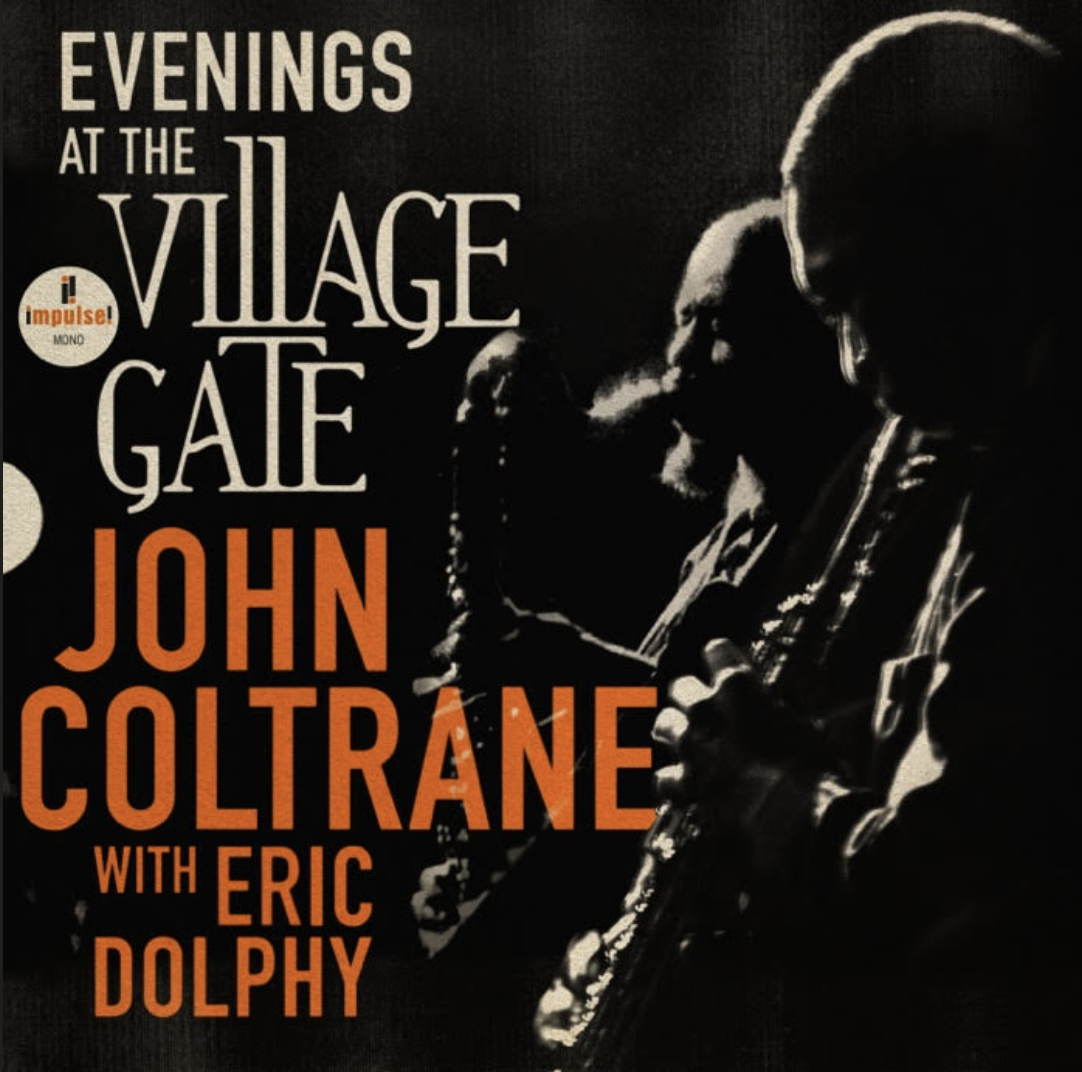
June’s edition features something old but new (if that makes sense), with an unearthed, “never heard before”, teaser of Coltrane and Dolphy at the Village Gate residency in the summer of ’61 – believe me when I say this is unbelievable. Plus new, new music from Celestial North, Omar Ahmad, Granny Smith and Hackedepicciotto. And in the Archives there’s the 50th anniversary of the Dusseldorf organic futurists, Neu! and their second, matter-of-factly entitled, album, 2.
NEW MUSIC IN BRIEF
John Coltrane Ft. Eric Dolphy ‘Impressions’
(Taken from EVENINGS AT THE VILLAGE GATE: JOHN COLTRANE WITH ERIC DOLPHY, released by Impulse! July 14th)
Staggering to think how many other lost recordings remain hidden, overlooked in the vast archives of The New York Public Library for the Performing Arts. I mean, imagine this incredible, exciting, evolution in jazz performance laying dormant forever, never to be heard again. It doesn’t bear thinking about.
Titan of the form John Coltrane and his celebrated quintet rip it up on this salvaged tape of performance gold from the summer of ’61 residency at the iconic Village Gate in Greenwich Village. Flanked and imbued by the powers of such luminaries as McCoy Tyner, Reggie Workman, Elvin Jones and Eric Dolphy, but an ever evolving cast of players, there was a trailblazing comet of talent igniting the jazz scene that glorious summer. The upcoming album will feature eighty minutes of never-before-heard music; offering a glimpse into a powerful musical partnership that ended much too soon – Dolphy sadly passed away three years later and this recording is the only live recording of their legendary Village Gate performances. In addition to some well-known Coltrane material (‘My Favorite Things’, and ‘Greensleeves‘), there is a breathtaking feature for Dolphy’s bass clarinet on ‘When Lights Are Low‘ and the only known non-studio recording of Coltrane’s composition ‘Africa‘ that includes bassist Art Davis. Another Dolphy communion, and Coltrane number, ‘Impressions‘, has been dropped as a teaser in the run-up to the official release, on the 14th July 2023. Enjoy the magic wail, bawl, spiralling tumult and energy of this phenomenal exchange between the deities, as they really tease out the best in each other: the quality of the recoding is outstanding too. Could it be, one of the best albums of 2023 will be a recording from 1961! Yes is the short answer.
Omar Ahmad ‘Cygnet Song’
(Single taken from the Inheritance album, released by AKP Recordings on 7th July)
The second single to be shared in the run-up to the attentive Palestinian-American composer/producer/DJ/sound artist Omar Ahmad‘s solo debut turn Inheritance, a peaceable calm of reverberated pattering rain and gentle, trickled contemplative acoustic guitar disarms deeper feelings of loss and the distant sirens of the emergency services blaring in the backdrop. ‘Cygnet Song’ is, as that title suggest, a swanned, slightly somber, enchantment of the ugly duck syndrome – a subject that is close to the artist’s heart; feeling for so long like that proverbial fledgling ignored, isolated, but eventually finding an inner beauty and self-realisation. Revisiting childhood once more, “lamenting the time lost” worrying about peer groups and the actions of others, Ahmad now turns over a descriptive guitar melody and picked sorrow under, what sounds like, a waterfall. Fragility finds a musical partner in playfulness on a loose stringed trickle of warmth.
Celestial North ‘Otherworld’
(Taken from the Otherworld album, released 7th July)
About as “pagan euphoria” as it gets, the Scottish-born siren and child of nature’s hermetic powers, Celestial North is once more dreamily occupying the twin planes of ethereal pop and apparitional electronica on her newest single, and teaser for the upcoming album of the same name, ‘Otherworld’.
The, now, Kendal relocated artist describes this latest vapour trail across menhir marked Ley Lines and dales as, “A rabble-rousing pick-me-up on days when life feels a bit much, a reminder that it will all be ok and that we are never truly alone in this world. Providing the beat and movement of life for us all to shake it off together.” And with a countenance and gauzy wisp voice that wouldn’t seem out of place on a Pre-Raphaelite diorama canvas, nor on some object beautifully crafted by the Celts, worlds and epochs are brought together in a techno-Avalon spell of Circe, Grimes and Rules. From the magic of Cumbria, where Sea Power (formerly “British” until the namedrop protestation in recent post-Brexit years) also hail (although, as I myself did bump into them from time to time, they are also and were a part of the Brighton scene for some considerable time; originally moving from Cumbria down to the Southern seaside belle of a city), and whose band member “woody” has produced the album, stirs something quite diaphanous and yet powerful. The omens pray good for the album, which drops in less than a month’s time.
Granny Smith ‘Egypt’
I seldom come across such perfect musical and visual alignments, but the latest and “greatest” (I’m told) step in the Toronto-born artist Jason Bhattacharya‘s journey is an incredible piece of artistry. Inspired by the painter grandparents he never got to meet, and using super8 film stills and photographs as prompts of remembrance and self-discovery, Bhattacharya’s slowly-released adroit applied washes of layered solo/acoustic/wah guitar, bass, piano, bongos and percussion are lent a constantly changing imagery both busily sketched and illusionary by Dan Trapper. Rushes of more arid landscapes change into sequences of lusher, meadow riversides and an evolving turn of flickery buildings, including a pyramid, through a combination of stopmotion animation and AI image generator software called Stable Diffusion.
Both beautifully etched and yet in a constant flux of memories and thought, Bhattacharya, appearing under his Granny Smith alias, creates something simultaneously timeless yet in the now; his deeply felt yet translucent quality composition suggesting an ambiguous psychogeography of the titular “Egypt”, but also the Levant and India – towards the end of this near entranced track, the guitar starts to sound almost like a sitar. Imaginative footsteps through a personal history are fully realised with a perfect symmetry of music and video art.
Hackedepicciotto ‘Schwarze Milch’
(Taken from the upcoming Keepsakes album, released by Mute on the 28th July 2023)
Entwined in a symbiotic marriage of creative ideas and sonic invention, the husband and wife team of Alexander Hacke and Love Parade co-founder Danielle de Picciotto have between them a notable worthy CV of explorations to channel in their own musical adventures together. Apart, Alexander has been a stalwart foil in Einstürzende Neubauten, whilst his wife, is and has been part of the Crime And The City Solution troupe. Together they’ve both appeared in the Ministry Of Wolves alternative nursery rhymes and fairytales project with Paul Wallfisch and Mick Harvey.
For the same label, Mute, the travailed and sagacious coupling have ventured out on the universal highway of cerebral experiment. Their last album, The Silver Threshold, made our choice albums of 2021 roundup; a universal, lockdown yearn of the Biblical kind. Choosing to embrace an old cliche, their latest album, Keepsakes, is billed as their most personal yet, with each track dedicated to a friend. But the recording environment also plays its part; this time in the form of the famous Auditorium Novecento in Napoli. With the likes of Enrico Caruso and his peers gliding through its doors, and a vast array of instruments to play with, including Ennio Morricone’s celeste, the sound has been expanded like never before.
From that upcoming album (released on the 28th July; a review forthcoming from us next month by the way) we share the surreal Weimar cabaret jazz brushed, hurdy gurdy winded ‘Schwarze Milch’. I can only decipher that this is a reference to the German-Mongolian film drama, which in English translates as “Black Milk”, directed and starring the German-Mongolian Uisenma Burchu, who plays the part of one of the film’s leading sisters character from two cultures, Wessi. Described by the Hollywood Reporter as a “sexually liberated drama of the Steppes”, it tells the story of two sisters reuniting after decades; Wessi’s character having left Mongolia for West Germany (in real life the director/actress’ family actually did move from that homeland to East Germany right before reunification) now makes a less than successful return home. I could have misread this entirely though, and the song may have sod all to do with it.
Back to the song itself, which is shared in narrated weirdness by the couple, who also don various animal mask (both pagan and odd) as they pick up each different instrument on this tubular, sifted, droning and smoked, snozzled sax rich languid look into an alternative world. A stage theatrical. A circus. A variety show complete with a ventriloquist dummy, childlike playfulness and yet something almost disturbing and mysterious, its Brecht meets Thomas Traux and the Bad Seeds in a basement magic show. I don’t know about you, but I’m looking forward to hearing the rest of the album.
ARCHIVES/ANNIVERSARY
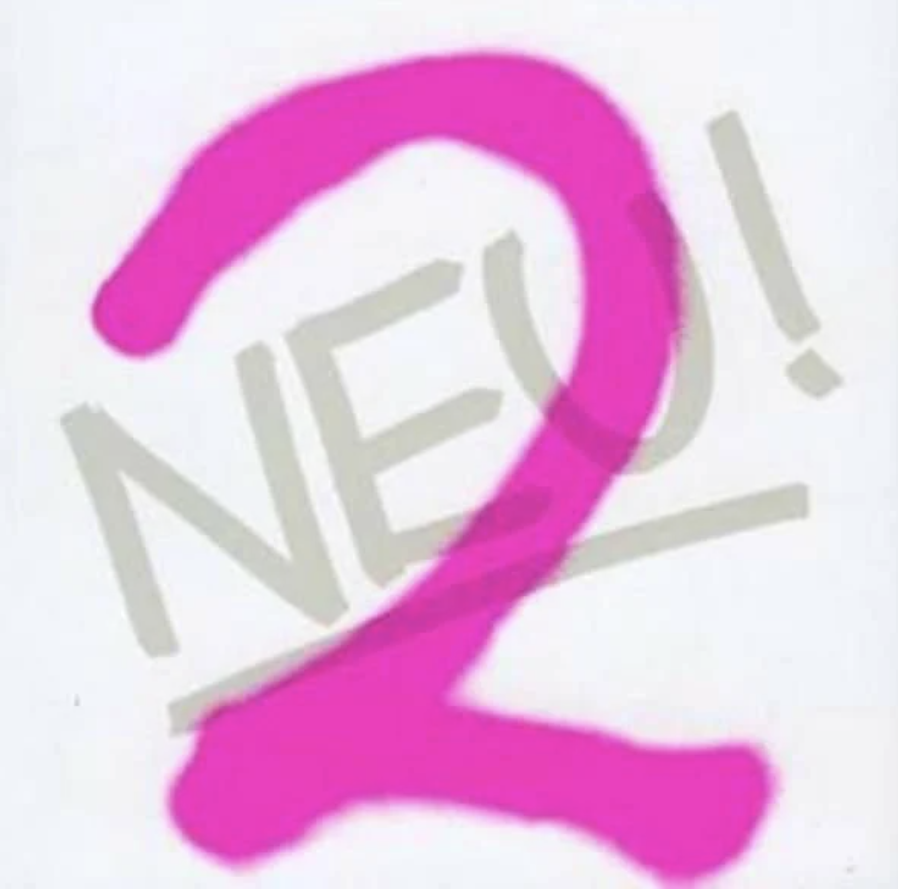
Neu! 2 Reaches Its 50th Anniversary This Year
Following the extolled reception and success of their stark, but incipient strident motorik debut, the Dusseldorf organic futurists hit the road for a tour. With former Kraftwerker Eberhard Krahnemann taking on bass duties, Neu! performed a number of concerts before being pressured to get back into the studio. Both Michael Rother and Klaus Dinger became slightly uneasy, it seems the much applauded Neu! desideratum blueprint resonated so well with both critics and fans that the duo became spooked – Rother would of course jump ship and join the recently formed Harmonia, but make an eventual return back into the arms of his musical partner, after much hand-wringing, for the Neu! 75 reunion. Things were made even worse when recording for the follow-up album actually began. After only laying down the inaugural vista spread of ‘Für Immer’, they were promptly told by the Brain record label that the budget had run out, there was no more money in the coffers.
A few months previously Neu! had made a single as a stop gap between LPs, though the label was dead set against it, out of commercial concerns. The double A-side of ‘Neuschnee/Super’ featured those marked references from their first album, but also came equipped with harder and more broodier proto-punk snarls and growls. Appearing on Neu! 2 alongside ‘Für Immer’ to make up for the startling gap now left after funds ceased, these tracks still only amounted to a running time of 18-minutes. Whether it was the production wizard of Krautrock’s idea or Dinger and Rother’s, it was decided that the recorded tracks should be cut up and pasted to make up a strange D.I.Y collage type fashioned suite. Only this merely equated to Dinger speeding and slowing down ‘Neuschnee’ and ‘Super’ on a record player, then re-recording them, or just holding his thumb down on the reel-to-reel machine and recording it; an idea that must have been hoisted up the flagpole and saluted by all concerned. The result was quite frankly weird, but not in a good way. In fact it sounds for the most part like a tomfoolery exercise in taking the piss: a fuck you to the label. Dispersed amongst the key tracks and ludicrous speed variant nonsense are a number of experimental atmospheric pieces and doomly staggered vignettes, which allude to esoteric imagined landscapes and scary extremes of mental cacophony.
Once again the Neu! branded moniker was brandished like a washing powder product. A spray can 2 marks the only difference from their last affair, whilst inside scrawled track names and info shadowed by photo booth passport photos, are crossed out and re-written.
‘Neu! 2’ lacks the calming vision of their famously lauded original ‘Neu!’ soundtrack. Full of miscalculated slip-ups, pressured ideas and short-change experiments, this miss-fire companion still radiates with some heightened moments of hymn like joy and traversing triumphs. Both ‘Für Immer’ and ‘Neuschnee’ build on the foundations of ‘Hallogallo’; adding richer textures and searing layers to the motif. ‘Super’ and ‘lila Engel’ meanwhile rough it out with Faust and metal; giving the duo an escape route towards darker musical pleasures. Short change accusations hinder this album to a degree. Rother famously took to the woods with Dieter Moebius and Hans-Joachim Roedelius to join their Harmonia project, after this album was released. Dinger meanwhile, began working on the La Dusseldorf imprint with both his brother Thomas and Plank’s tape operator, Hans Lampe, though their first offering wasn’t released until 1975. After a brief hiatus, both men made-up their differences – Rother and Dinger clashed often over direction and whether they should play live or not – and returned for the reunion ‘Neu! 75’ record in 1974, and later in the 80s for what would be the last hurrah of ‘Neu! 4’, an album Rother fell out over with his sparring partner.
But What Does It Sound Like?
Anticipation steadily builds as the very first stirrings of the Neu! signature, pulsing, motorik drill, incipiently fades into view. Prolonged laconic pronounced drums work their magic as Rother’s suffused guitar strains delicately kiss the flange coated textures of sound; produced from a mixture of Japanese banjo, fiddle, piano and various electronic devices. ‘Für Immer’ means “forever”, which this richly striding companion piece to the hallowed ‘Hallogallo’ certainly tries to achieve. Heavier interjections are implemented as though we were becoming dazed from the hypnotic, suffused, snarling jam of pulchritude. Echo-chamber shakes and vortex warping effects twist the percussion and pliable guitar mantras through a quantum leap, before emerging from a inter-dimensional mind bender back into the main groove all over again. Those recurrent waterside motifs continue, as lapping waves crash against the river bank, ‘Für Immer’ is caught in the tide and is beckoned beneath the waters to make way for the next section of ‘Neu! 2’. Isolation tank suffocated drums wallow in oscillating cycles of space-rock; ‘Spitzenqualität’ is coated in reverb and, yet more flange, as it manipulates timings with both distorted scathing guitar and laboured drumming: a desolate plains search and slow methodical pause of a tune.
Neu! tunes seldom end, they just tend to fizzle out or evaporate. With that in mind, ‘Gedenkminute’ takes over from its preceding triggered outro, wafting in on the last remaining resonating pools of sound. This short interlude drags us through some Edgar Allen Poe descriptive rich graveyard, the wind blowing menacingly as a haunted Germanic girls voice communicates to us from the other side. Thank the lord for the battering ram metal psych barrage of ‘Lila Engel’ (“Lilac Angel”) – surely a joke, this doomed warning of a tome is far from angelic or seraph. Sounding like the godfather to both the Southern Lord franchise of biblical droning rock, and to industrial punk. Dinger’s no-fucking-nonsense power tool drums compete with Rother’s revving, ringing-out licks, over a three-tier build-up. Each level increases in volume and savageness: yeah you never knew they could mix it with those barbarians of the wild frontier, Faust.
A collage of trickery and ameliorate masking awaits on side two, Neu! stretching the boundaries of what a band can get away with. Coming up short on material, they manipulatively assuage their own tracks starting with ‘Neuschnee’, which is introduced at 78 rpm. Dinger and Rother actually record the original single version sped-up – you even hear the hiss and crackles of the vinyl. Ridiculous high-pitched sounds give it a comedic Egyptian mystical garb, as the stylus jumps when it hits any scratches. ‘Super 16’ follows the same premise, only at 16 rpm. Slow over-aching momentum of a tune, this sounds like another doom inspired hellish crawl through the pits of Hades. – imagine Richard James remixing Boris and naming it ‘Satanic Moonscape’.
At last the authentic ‘Neuschnee’ is given an airing at the right speed. Thumb-plucked instruments ease in another classy Neu! motoring opus. Rother’s guitar now weeps and sings a glorious bewailing paean, whilst Dinger taps out some kind of secret code, hitting a cycle of drumrolls, and ending each run with a customary exclamation mark cymbal crash. ‘Casseto’ is a short vignette of caustic and harrying heaviness. The banging evil soundclash transcends nightmarish, repeating scariness. Back to the fatuous with ‘Super 78’, as now we are introduced to the crazily speeding variant of this key track, plucked from their original single. Once again a manic wheeze of squeezed demonic acid-mice, and galloping nonsensical bewilderment; fucked with and played to a skeptical audience – file under eccentric diversion tatic.
‘Hallo Excentrico!’ features half the title of their most famed and applauded track, but that’s where the similarities end. Dinger once more pisses about with the tape machine, his cohorts chattering away in the corner blissfully oblivious to the recording process. But it all gets swept up by the Teutonic brain food of ‘Super’, which pitches the signature whacker-whacker chops of Rother with a Stooges motor city Nuremburg stomp. A sublime smiling primal-scream and unscripted series of chants roll around in the background – signs of the Dinger archetype La Dusseldorf sound is woven here. ‘Neu! 2’ opens up the duo’s musical horizons, at times for the better, and at other times, its highly debatable. A harder and climatic dark side is implemented with their meditative explorations containing more layers and development of sound. Of the eleven-tracks, at least a third can be taken with a pinch of salt. Whether they generally believed that or this pokery would open up revelations or set off new discoveries remains iffy. The fact they’d been left in the shit with no money to finish recording may explain things. Still their second tome offers ethereal and inspired anthems, which in my view, are more influential then their debut.
The Social Playlist #77
Anniversary Albums And Deaths Marked Alongside An Eclectic Mix Of Cross-Generational Music, Newish Tunes And A Few Surprises.
Repeating myself, but if this is your first time here, first of all, welcome, and secondly here’s the lowdown on what the Social is:
Just give me two hours of your precious time to expose you to some of the most magical, incredible, eclectic, and freakish music that’s somehow been missed, or not even picked up on the radar. For the Social is my uninterrupted radio show flow of carefully curated music; marking anniversary albums and, sadly, deaths, but also sharing my own favourite discoveries over the decades and a number of new(ish) tracks missed or left out of the blog’s Monthly playlists.
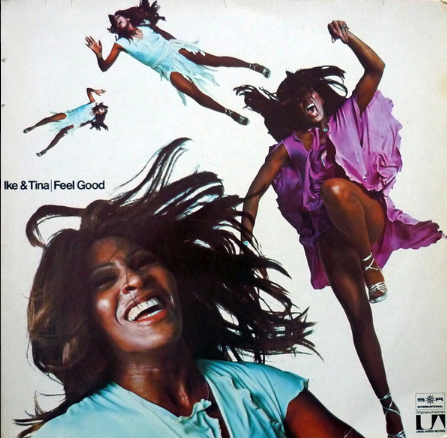
First off, couldn’t resist paying a little tribute to the late Barry Newman, who famously played the counterculture idol, disillusioned ex-cop and racing driver Kowalski, cranked on speed, star of the iconic drive through the heart of a Vietnam-fucked America Vanishing Point – musically, and all that goes with it, utterly stolen hook line and sinker by Primal Scream. I’ve chosen the main soul busting theme from a original soundtrack that plays like a radio station. And, what sort of lowlife piece of shit would I be if I didn’t pay homage to the Acid Queen of rawkish soul, R&B and rock, Tina Turner. A smattering from golden period Tina awaits.
Anniversary wise, there’s 50th celebrations this month of albums by Donny Hathaway (Extension Of A Man), Arthea Franklin (Hey Now Hey) and Roger McGuinn (Self-Titled), and 30th salutations from the Intelligent Hoodlum (Self-Titled) and Manic Street Preachers (Gold Against The Soul).
Added to that list is music, recent and old, from New Air, Szun Waves, Zacht Automaat, Bob Dylan, Kassi Valazza, The Shivvers, Bloodrock, Ezy Minus and many more…
_________TRACKLIST__________
Jimmy Bowen ‘Super Soul Theme’
Amiri Baraka ‘Kutoa Umoja’
Ike & Tina Turner ‘Such A Fool For You’
Aretha Franklin ‘Hey Now Hey (The Other Side Of The Sky)’
Donny Hathaway ‘The Slums’
Intelligent Hoodlum ‘Black And Proud’
Lynx 196.9 ‘No Apologies’
Ike & Tina Turner ‘She Came In Through The Bathroom Window’
Rick Asikpo ‘Ebun Oluwa’
Pixinguinha ‘Pula Sapo’
MUF ‘Wrong Age’
New Air Ft. Cassandra Wilson ‘Achtud El Buod (Childern’s Song)’
Flow Trio – Joe Mcphee ‘Incandescence’
Szun Waves ‘In The Moon House’
Double Happys ‘Needles And Plastic’
Manic Street Preachers ‘Roses In The Hospital’
Roger McGuinn ‘My New Woman’
Kassi Valazza ‘Room In The City’
Bob Dylan ‘When I Paint My Masterpiece’
Oracle Sisters ‘Lunch And Jazz Chords’
Hadley Caliman ‘Old Devil Moon’
James Henry & The Olmpics ‘Sticky’
Sandro Brugnolini ‘Amo Me (Vocal Version)’
Ike & Tina Turner ‘Bold Soul Sister’
The Shivvers ‘Hey Deanie’
Okan Dincer ‘Mutlu Ol’
BroselMaschine ‘The Old Man’s Song’
Bloodrock ‘Don’t Eat The Children’
Kraan ‘Prima Klima – Live At Porta Westfalica 1975’
Carlo Rustichelli ‘Missione Bionde Platino’
Ezy Minus ‘Nuvole Che Passano’
Zacht Automaat ‘Bite The Invisible Hand’
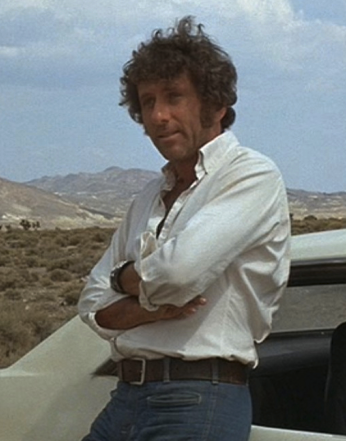
God I hate the hard sell, but Kowalski’s spirit says be cool and support the Monolith Cocktail. Life is hard but it goes much smoother with the help of a good friend and recommender of taste like my good self. If my departure, and that of the greater MC team, leaves a sad big hole in your lives, or the contemplation of this site’s death leaves you unable to sleep at night, you can always donate to our Ko-Fi micro-donation platform here. Thank you in advance. But hey, no worries if you can’t, we are all struggling in one way or another.
Exchange recommendations from our Italian penpals at Kalporz
Authored by Paolo Bardelli
Credit: Aron Lindhagen
Continuing our successful collaboration with the leading Italian music publication Kalporz , the Monolith Cocktail shares reviews, interviews and other bits from our respective sites each month. Keep an eye out for future ‘synergy’ between our two great houses as we exchange posts during 2023 and beyond. This month, from the site’s Thanks 4 All The Fish! series of recommendation reviews, a quartet of recent finds, brought to us from Paolo Bardelli.
This month we dedicate ourselves to a ThanksForAllTheFish! composed of albums that would have deserved individual reviews, because all of them are beautiful and some are truly impressive, but – you know – we are immersed in a fast-paced world and sometimes we have to adapt. To facilitate the choice we put them in order, from the best (Death And Vanilla) to the least of the four (Gnoomes), which is still a great album.
DEATH AND VANILLA, “Fliker” (Fire Records, 2023)
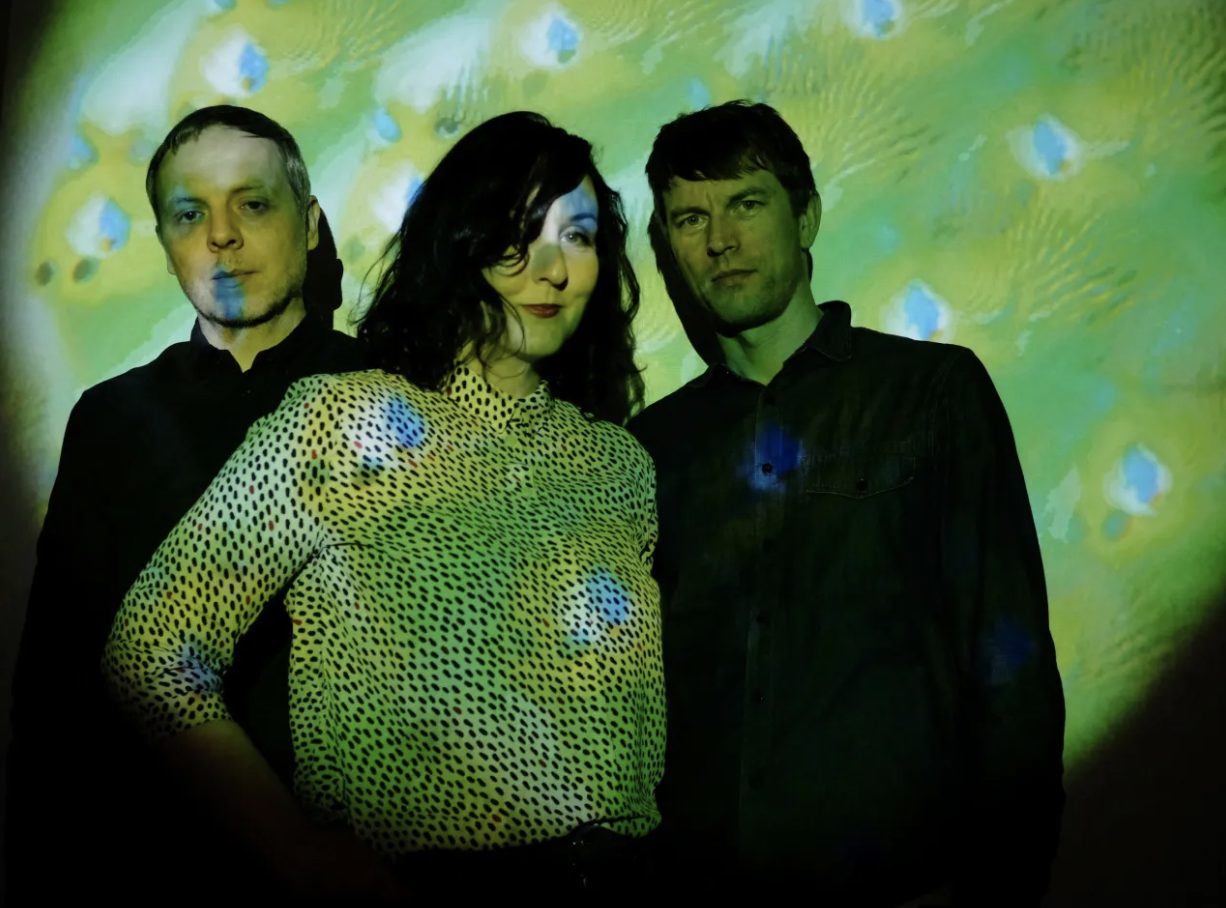
Death And Vanilla have put all their care and psychedelic imagination into this their “Fliker” after more than a decade of records (this should be the sixth, if we are not mistaken in mathematics, but in any case there are further ep’s on their bandcamp as well): these are delicate psychic digressions seasoned with a distinct and elegant pop in which the cerebrality and dimension of dreams (as in the beautiful “Baby Snakes”, a modern “Riders on the Storm”) is tempered in some passages by a physicality drier (“Find Another Illusion”) that the band refers, as a suggestion, “to the first Cure”.
The trio hails from Malmoè, Sweden, and is made up of musicians Marleen Nilsson, Anders Hansson and Magnus Bodin who play with vintage instrumentation, “to emulate the textures and magical sounds of soundtracks and library music, German krautrock and yèyè French pop from the 60s and 70s”.
Fantastic record in my opinion, which will probably be in my year-end rankings.
Album info: https://www.firerecords.com/product/death-and-vanilla-flicker/
TREES SPEAK, “Mind Maze” (Soul Jazz Records, 2023)
Another spectacular disc is this fifth by Trees Speak, a duo from Tucson (Arizona), composed of Daniel Martin Diaz and Damian Diaz who combine a very strong instrumental taste with a thousand influences and an absolute basic enjoyment. The press notes exaggerate a bit but begin to give coordinates: “Trees Speak is music as a cosmological translation, borrowing from Can and Miles Davis’ Bitches Brew era practice of the studio as a composition tool, in which long improvisations they merge into indelible flights of fancy with razor blade-assisted tape edits. Trees Speak operates between the subconscious and the unconscious, the radiant and the eclipse, the micro and the macro”.
Certainly German krautrock has something to do with it, just as the duo draws from the soundtracks of the 60s and from a certain free and unconstrained psychedelic rock with the cosmos as its destination: the Arizona desert as a universe to land on.
Personally, I have two songs that I wrote down with a handkerchief: “Syndrome” gives me the same anguish as Massive Attack, while “Sospetto” has the influence of the Italian soundtracks of the 70s and, as evident from the title, of Air’s “The Virgin Suicides”: only if you listen to it.
This album is also amazing.
WITCH, “Zango” (Desert Daze Sound, 2023)
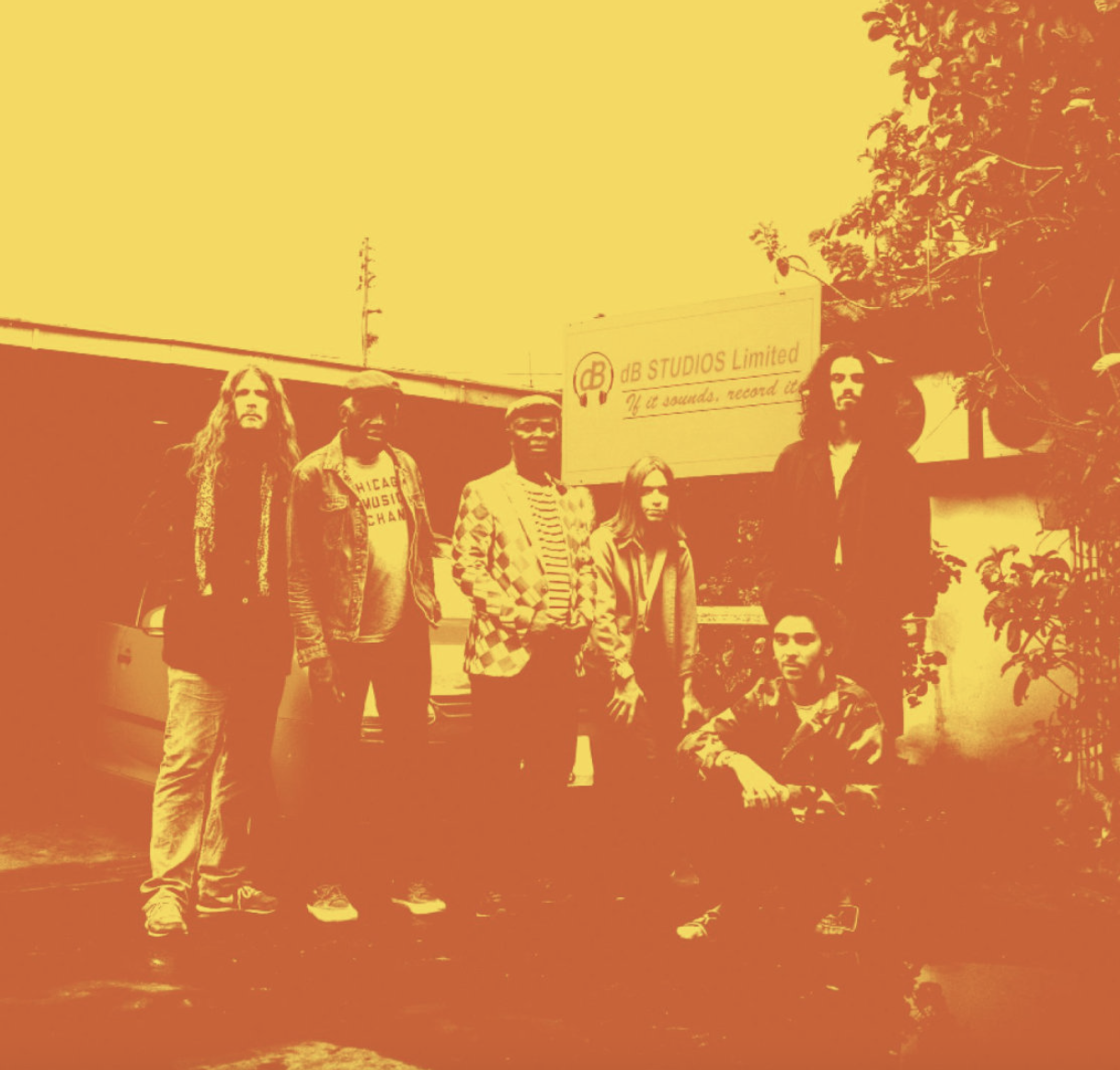
A story à la Rodriguez: between 1972 and ’77 the Witch, a band from Zambia, made five albums that were only released in Zambia. In 2010, reissues appeared in Europe and the United States: the Witch’s African rock-fuzz mix was liked so much that fans supported the tours of a new band that Jagari Chanda – the only survivor, now 71 – assembled six years ago, composed mainly of young European musicians.
Last week the Witch’s first album after four decades was released and Jacco Gardner both plays on it and produced it, a Dutch musician whom I love and about whom I was complaining via social media with my contacts about the long record absence only a few days ago (he had been spotted in Portugal in 2018 with “Somnium“). And yet here it is: he joined and produced the album of this historic band from Zambia and the result is amazing. The group’s African imprint explodes into a fuzz-based rock that is, to say the least, ultra-addictive. Leader Jagari Chanda was joined by new traveling companions Patrick Mwondela, Nico Mauskoviç, Charlie Garmendia, JJ Whitefield and Stefan Lilov.
A story and a record not to be missed.
GNOOMES, “Ax Ox” (Rocket Recordings, 2023)

Who’s Afraid of Russian Psychedelia? The war has erected barricades that music does not have, so here we are to recommend this fourth full-length from the band that comes from Perm who, after 3 albums characterised by the “exclamation point” (“MU!” of 2019, “Tschak! ” of 2017 and “Ngan!” of 2015), removes it from the title as if to normalise a proposal that is not normal . First of all, for the first time the quartet sings in their native language, Russian, and – since the beginning of the conflict with Ukraine – two of the members have fled Russia, which makes us understand the political approach of the band beyond a choice, that of using Russian this time, which would seem rather nationalist.
Musically, “Ax Ox” pushes a kraut direction elevated at times by techno beats (“Loops”) or garage-dark intuitions (“The Neighbor”), or diminished in porthole sensations à la Boards Of Canada (“Mirrors”).
Less recommended than the three albums above, but still out of the usual coordinates.
AUTHOR: Paul Bardelli
The Perusal #44: Pan Afrikan Peoples Arkesta, Matt Donovan, Baldruin, Spindle Ensemble, Marty Isenberg…
June 13, 2023
Dominic Valvona’s Eclectic Reviews Spot (Unless stated otherwise, all releases are available to buy now)
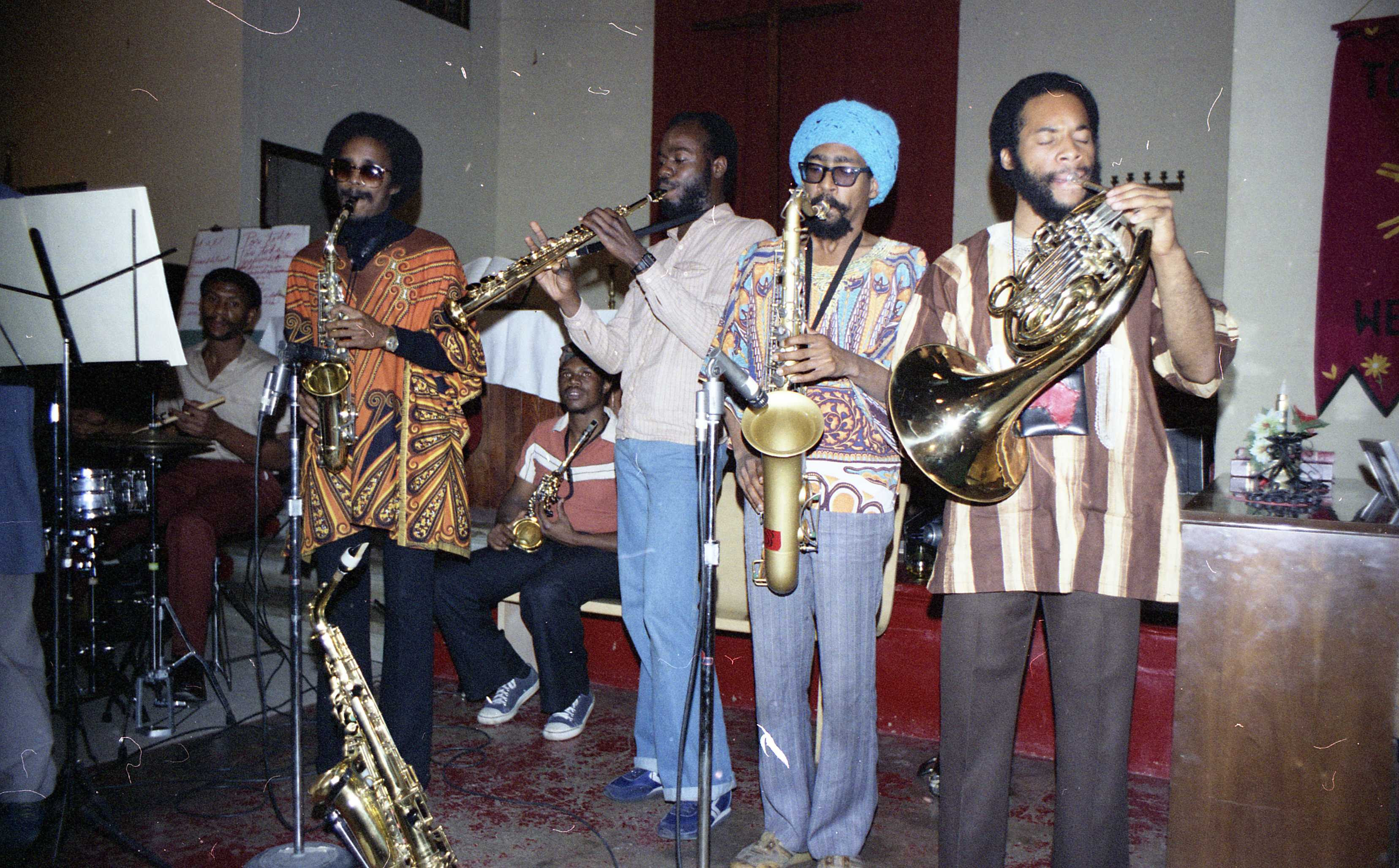
Photo Credit: Mark Weber
Pan Afrikan Peoples Arkestra ‘60’
(The Village) 14th June 2023
Serving the South Central L.A. Black community from within for six decades (and counting), the late Horace Tapscott and his preservation Arkestra ensemble captured and reflected the social and racial injustices of that oppressed community with a righteous politically conscious and radical jazz style blueprint; a documentation, but also self-reliant stand against the state’s brutality and economic suppression.
Two decades on from his passing and Tapscott’s vision has been handed down to a new generation; led in the new century by Mekala Session, scion of Arkestra stalwart alto Michael Session. More or less each incarnation, from a sixty year timeframe (hence that album title) is represented on this new celebratory collection; released by the ensemble’s own label imprint, The Village.
For a platform that continuously swelled its ranks with untold talent from the American West Coast and beyond (oft member, the trombonist and Tribe hub co-founder, Phil Ranelin is synonymous as a mainstay of the Detroit scene for example), and fermented connections culturally throughout the country, inspiring many, the Pan African Arkestra’s recordings on wax are few and far between. Most of the performances on this compilation journey through the years were collated from home-recordings; many of which have previously never been aired before. And the majority of those come from taped concerts in the L.A. arena, the exception being a summer of ’95 performance at the Moers Festival in Germany, during a period of “regrouping”. Some, believed missing, have been literally unearthed from the Ark’s archive; with even the lineup roll call having to be cross-referenced at times: and still not a 100% sure even then.

The Pan African Arkestra exists as a live entity; whether that was playing each weekend in the formative years at the South Park bandstand or, in the line of hostile LAPD fire as they played on a flatbed truck parked right in the middle of the street during the ’65 Watts riots (or “revolt” as its framed from the frustrated, put-upon Black community suffering inequality, little or no representation). In chronological order, the 60 album encapsulates each transformation of the troupe, beginning with the fifteen-minute long tribute to the ‘heart of the Tapscott family’ Pearline Fisher, or Gram Pearl “to those who loved her”. A grand matriarch, at the very centre of the family home, watching all the goings ons, including the band members arriving up the drive for rehearsals in the garage, Gram Pearl’s name was immortalised on the 1961 home recorded ‘The Golden Pearl’. Reverence shines through this early performance that seems to bridge the late 50s jazz of Gillespie, Ellington, Coltrane and the Savoy label with the coming age of the 60s Black consciousness and spiritual enlightenment. A “likely configuration” of Tapscott on a loose Oscar Peterson flow of barrel and saloon piano, Arthur Blythe and either Jimmy Woods or Guido Sinclair doubling up on saxophone, Lester Robertson on fluttered trombone, David Bryant on spoke-like and brushed double-bass and Bill Madison on swing-time and brushed drums mark one of the first lineups of the burgeoning Arkestra. As it turned out, pianist and conductor Tapscott was right to jump off Lionel Hampton’s Big Band tour bus that year; walking all the way back home, pissed but motivated to grow something new.
In the “pressure cooker” tumult of South Central L.A. a close-knit handful of artists gravitated to the beacon; at first going under the UGMA (Underground Musicians Association) abbreviation, this initial lineup included (amongst many others) the vocalist Linda Hill, drummer Donald Dean and the already noted bassist Bryant (who’ll crop up quite a lot during the course of this ensemble’s history) and saxophonist Woods. Many would appear on that compilation opener.
Although not until much later, the obvious influence/inspiration of Saturn’s cultural ambassador in Earth, Sun Ra, most be noted. Tapscott himself, easily an acolyte of that cosmic spirit, pointed out the differences between the two Arkestras; the original envisioned as an ark travelling through space, the other, a “cultural safe house for music” down here on terra firma. Whilst Sun Ra looked to the stars for an escape to some colour-blind society on a distant world, Tapscott’s troupe wanted to be amongst the people: screw the space race.
That blossoming unit found itself under FBI surveillance as a new decade beckoned; much of that paranoia down to the ensemble’s support for the Black Panthers. From the cusp of that decade, the 70s, there’s a recording of the Ark at Widney High School. With a far wider, expanded lineup and the Sarah Vaughan like commanding, but also dreamy, freely moving vocals of Hill and, so it seems, only a recurring Tapscott and Robertson, a lot of new faces appear on the fluctuating ‘Little A’s Chant’. A loose intoxication, a tamed wilderness permeates a mixture of The Lightman Plus One’s Cold Bair, Tyrone Washington’s Roots and the influence of Philip Cohran.
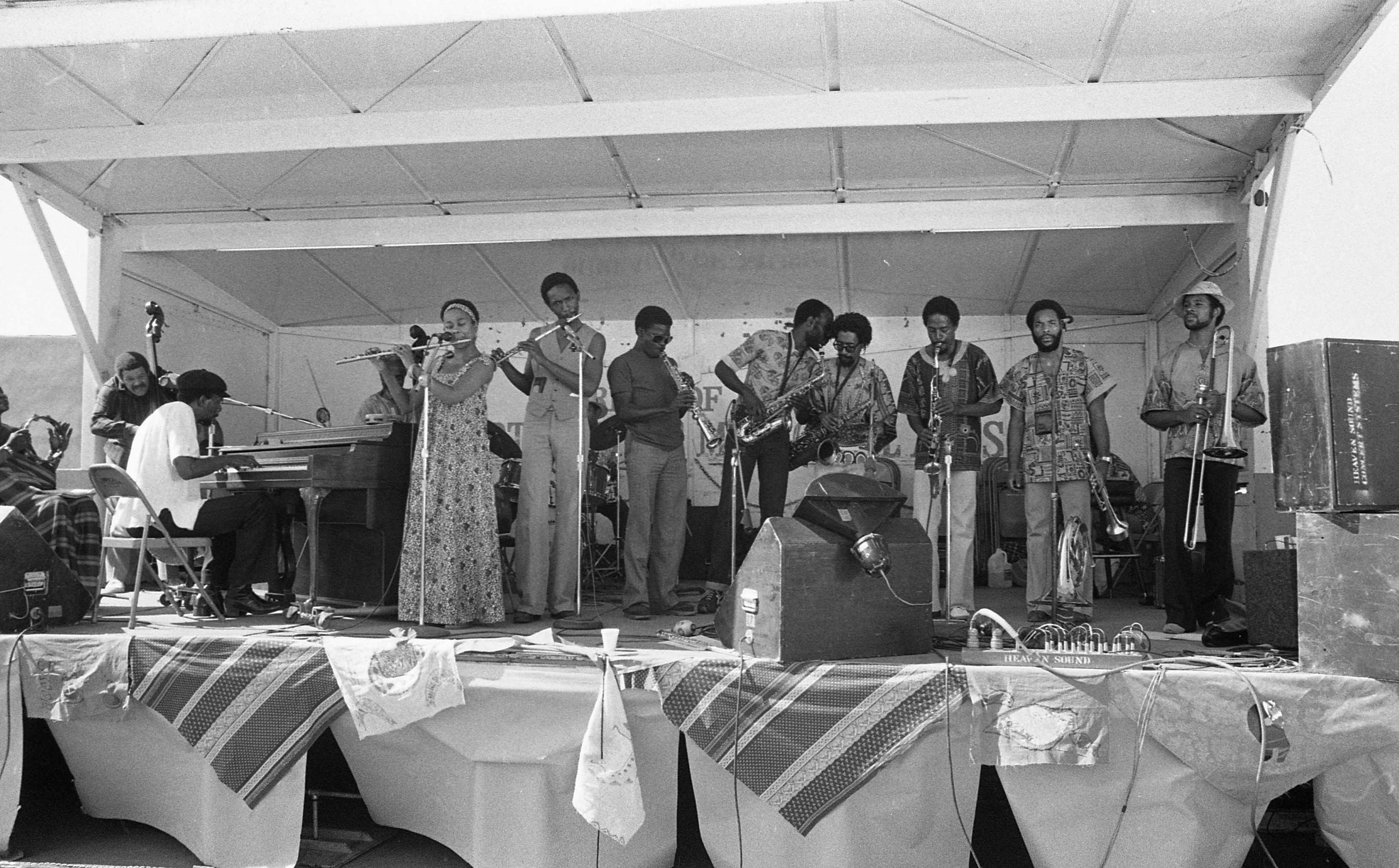
Photo Credit: Mark Weber
With the war paint on, entering the over-commodified decade of the 80s, the Ark, once more changing the roll call, fashion a piano heavy kaftan wearing fire out of Somaya “Peaches” Hasson’s ‘Nation Rising’. Turning in a Last Poets and Leon Thomas vocal performance, Juan Grey (aka Jujigwa) is a man in a hurry: he’s got “work to do”, “rising a nation”. Whistling and swinging down a boardwalk paved Nile on a Yusef Lateef and Pharaoh Sanders vibe, we got a double-front of both willowy flutes (Adele Sebastian and Dadisi Komolafa to thank for that) and altoists (Sabir Mateen delivering a honked and dynamic solo, with Gary Biar as foil), and the rattled congas of Moises Obligacion alongside the mini crescendo spiraling drums of Billy Hinton. Phew!
Forward again, and to the backdrop of an L.A. in flames, sparked by the Rodney King miscarriage of justice, the Ark are to be found on one of their rare trips to Europe; playing a concert at the Moers Festival in the summer of ’95. Regrouping with the help of a returning Jesses Sharps on soprano sax, Tapscott shares piano duties with Nate Morgan and a whole lot of brass on ‘The Ballad Of Deadwood Dick’. I will however name check Arthur Blythe on alto sax and recent converts Michael Session (on tenor), Charles Owens (also on tenor), Fundi Legohn (French horn), William Roper (tuba), Steve Smith (trumpet) and Thorman Green (trombone). An integral founding brother of the Ark, the already mentioned David Bryant is back on double bass, but sharing his duties with fellow bassist Roberto Miranda, whilst doubling up on the drums is the shared union of Fritz Wise and Sonship Theus. All together they conjure up another Egyptian tapestry whilst huffing and in bird-like illusion build up a brass heavy swing and sway. A galloping percussive rhythm (coconuts denoting a hoof-like fast trot) creates a travelling caravan vibe, as the melody, swells and punctuations evoke Skies Of America Ornate and touch of Bernstein.
The new century, a decade on from the death of their mentor and founder Tapscott, and the troupe is under a new steward and embracing another in-take of rightful minded jazz players. From a 2009 recording at the Jazz Bakery (pastries and bread with jazz, what’s not to like), with only a familiar Wise on drums (joined by Bill Madison), Sharp on soprano, Legohn on French horn and Smith on trumpet, we hear a Philip Cohran type spiritual and political fanfare for “justice”. L.A. notable Dwight Trible (recently giving divine voice to Kahil El’Zabar’s Ethnic Heritage Ensemble) is on expressive conscious-unloaded and right-on vocal duties, and the already mentioned Detroit icon Phil Ranelin can be heard on characteristic trombone. A riled and ached, seething indignation with shades of Sun Ra and the Pharaoh, ‘Justice’ is as free as it is fueled by rightful grievances.
The most recent performance, a decade later, is the Zebulon (in L.A. again) convert vision of ‘Dem Folks’. It’s conducted this time by another convert, the Egyptian-American-Muslim trombonist Zehkeraya El-Magharbel, who turns out to be a sound fit. The cast is further expanded with a quartet of spiritual rousing and more Gyrgory Ligeti otherworldly choral vocalists (Aankah Neel, Tamina Johnson-Lawson, Qur’an Shaheed and Maia, who’s also on flute), oboes, bass clarinets, a good showing of horns, and this time out, the keyboard skills of Brian Hargrove. A real fusion of dynamic parts, it begins with a virtuoso drilled, pummeled, slow to fast, percussive and drum introduction of rolls and cymbal hissing shimmers (ala Billy Cobham), before, at first, hitting a dissonance of wild drum mimicked voices. A soul-jazz groove finally lands after going through various changes, from fluted Lateef to echoes of Prince Lasha’s Search For Tomorrow communion with Herbie Hancock and a tumult of incantation and oscillated vocals. An untethered swell of orchestral jazz in the anointed light of Sun Ra and the wisdom of the ancients, ‘Dem Folks’ is the earthly community taken to anthemic highs. What a fitting, electrifying performance to mark the Pan Afrikan Arkestra’s newest incarnation; twenty years on from its pioneer’s death, the baton passed on and, as it obviously proves, is still in safe hands. The future is indeed bright for this long-running ensemble.
The 60 album proves an important preservation of a self-reliant social activist institution, integral to the community in which it serves, teaches and rises up. A great encapsulation of that story, musical journey and the changes it has gone through, this will both excite the Ark’s fans and newcomers to the cause.
Spindle Ensemble & Evergreen Club Contemporary Gamelan ‘Live In Toronto’
(Hidden Notes)
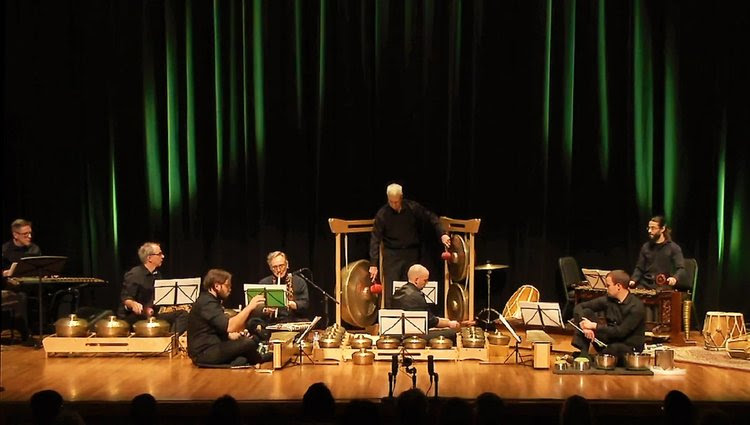
A congruous union of modern classical music and gamelan, Bristol’s Spindle Ensemble quartet and the Toronto Evergreen Club Contemporary Gamelan octet transport the listener to a blossomed, lush and evocative West Java landscape on their EP of both live and recorded studio performances.
In what proves to be an intuitive collaboration – the results of a chance meeting between the Spindle’s Harriet Riley and Evergreen’s Christopher Hull whilst both studying gamelan in Bali -, both partners respect and accentuate the qualities of their chosen forms and inspirations as they meld and weave together instruments from the West and Indonesian East. A balance is struck between contemporary explorations, probes and the timeless across three tracks. The gamelan ‘degung’ family of metallophones and bamboo instruments dance and bob along to and twinkle alongside the Spindle’s harp brushes, bulb-like note dripping marimba and vibraphone, sympathetic-bowed cello and violins, and deft subtle spells and waves of piano.
Written by the Spindle’s composer-pianist and harpist Daniel Inzani, the opening patter cascade of mallet notes and tinkles ‘Lucid Living’, was recorded at the Evergreen’s rehearsal space in downtown Toronto. A light enchanted dance of plucked and picked strings across lily pads, with an air of the willowed fluted pastoral, there’s an almost romantic but simultaneous closed-eyes, deep in thought moodiness to this first performance of adroit musicianship.
Also penned by a Spindle member, Harriet Riley’s mythological-loaded ‘Orpheus’ is part of the two group’s live performance at the city’s 918 Bathurst Street Centre For Culture, Arts, Media And Education – it must be noted at this point that the Bristol quartet travelled to the Evergreen’s backyard to foster this project, spending weeks rehearsing the repertoire before that inaugural live date. Barefoot in jungle temples, the Hellenic bard-poet (an Argonaut and famed survivor of Hade’s underworld) is planted down in the Indonesian exotic; wandering across an uninterrupted proscenium score of various Southeast Asian flavours. All the while accompanied by a soundtrack of pressing repeated chords, metallic chimes and drones, the arched and bowed. At times it’s a rasped mizzle, at others, a slow-paced rhythmic joy or flight that feels almost improvised if not free to fellow its natural path.
The final performance, ‘Open Fifths Gardens’, was composed by the Evergreen’s Andrew Timar and is another exotic allurement of the East. It suggested the dusk hour to me, and evoked the strings of Simon McCorry and Anne Müller: that push of classical instruments made to sound more contemporary and alive if abstract; not just read off the classical cannon score sheet but swelling up with a less guided, personal feel for the time, space and direction of travel in that moment.
In short: the gamelan sound is opened up further and spread wider into the arena of contemporary chamber and symphonic classical music, to conjure up an atmospheric kind of melodious and stirring theatre.
Matt Donovan ‘Sleep Until The Storm Ends’
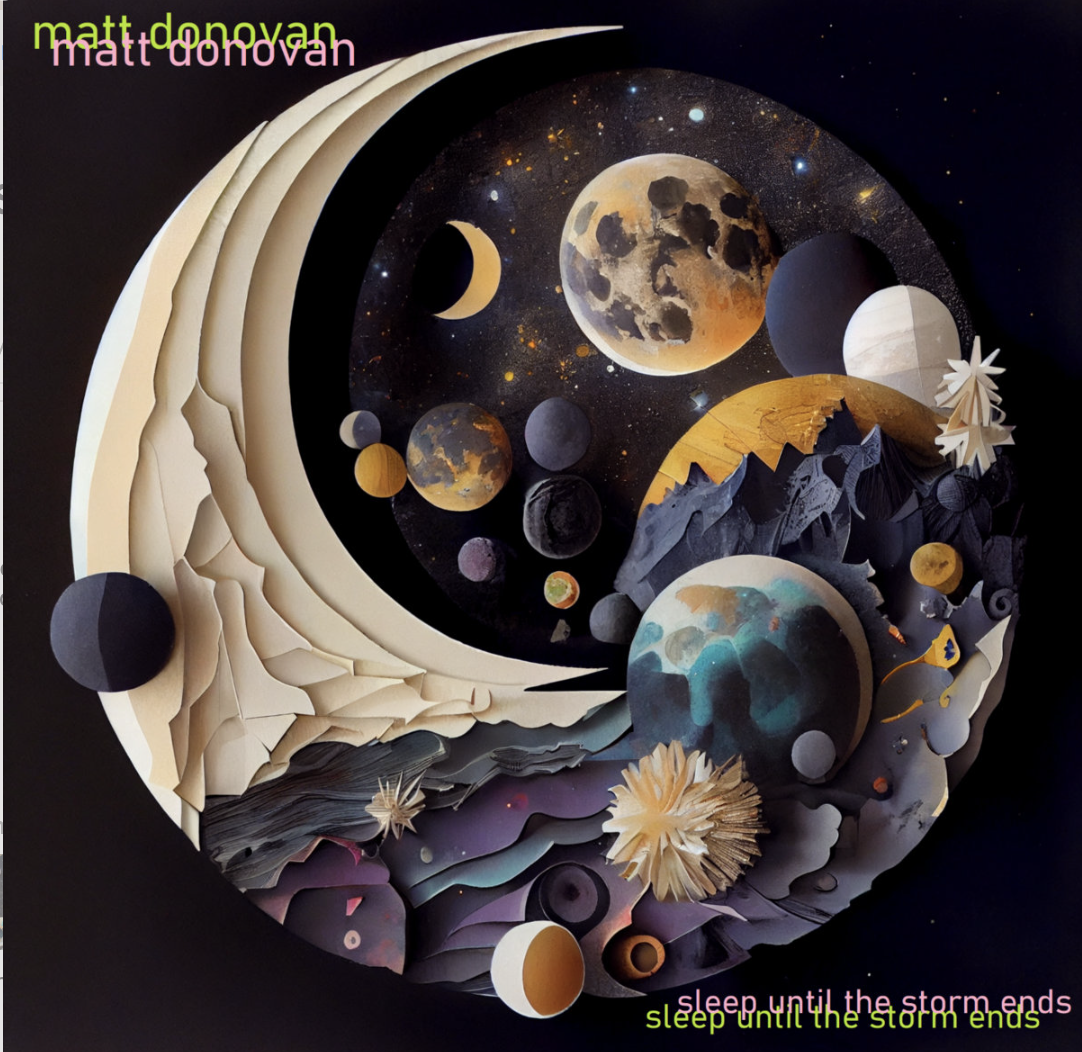
Marking three in a row of annual Spring-time delivered albums, the drummer-percussionist turn multi-instrumentalist solo artist Matt Donovan opens up his personal universe to the world. In the face of political, social discourse and ruin, lawlessness, loss and anxiety Donovan captures the evocative moments and scenes we all often take for granted; turning nighttime walks, the memories of loved ones into something musically and sonically lasting. A time is saved for posterity even if its just for Donovan and no one else; a kind of musical photo album that represents the sentiments, therapeutic stages of a period in his life.
And yet, with such universal tragedy and dislocation, there’s always hope; the music, even when the subject matter chimes with the God awful state of affairs currently destroying the country, remain loving and kind. Those of you who seeked out the (hopefully through my recommendations) previous Habit Formation (’22) and Underwater Swimming (’21) albums will find that Sleep Until The Storm Ends shares a familiar palette of kosmische/krautrock, alt 80s and 90s and post-punk influences. And yet it feels somehow different; mature and comfortable in its skin but exploring all the while.
With propulsive-motored stints in Eat Lights Become Lights, and as a foil to Nigel Bryant in the psych-krautrock-progressive-industrial Untied Knot duo, it’s hardly surprising to hear those Germanic influences permeating this newest album: A spot of the Dingers (Klaus and Thomas) here and a bit of Michael Rother and Manuel Göttsching guitar there. On some of the more reflective tracks like ‘A Sky Full Of Hope’ and ‘Night Walking’ its Tangerine Dream and company, albeit the latter has more than a touch of soundtrack Vangelis about it too, merged with pop, jazz and 80s indie influences. Although not German, just mere cousins on the astral plane, a few of these tracks reminded me of both Syrinx and Ariel Kalma’s new age, spiritual panoramic awakenings.
This is only half the story, as Donovan also effortlessly seems to weave The Field Mice’s ‘…letting go’ with Karl Hyde, Mick Harvey (especially on the few occasions he sings), the Durruti Column, Spaceman 3 and Eno (Another Green World era on the light-effected environmental plaint ‘The Crying Earth’). In practice this results in a sort of bell-tinkled and recalled leitmotif signature unfolding of Donovan’s moods and ruminations: goodbyes too. Sometimes its dreamy and other times near cosmic with climbing scales and Fripp-like sustain and flange-fanned guitar work, synth waves and heartfelt vibrations.
Barefoot Contessa daydreams sit well with clavichord buzz splintered boogies on yet another enriching and rewarding album that slowly unfurls its understated balm of warmth and also protestation gradually over repeated plays. On the fringes certainly, a true independent diy artist, Matt Donovan is far too good to stay under the radar. Do yourselves a favour, grab a copy on bandcamp now.
Baldruin ‘Relikte aus der Zukunfti’
(Buh Records) 19th June 2023

Lying somewhere between the Reformation, hermetic, supernatural and mysterious Far East, the German electronic musician-producer Johannes Schebler simultaneously occupies a liminal past and as yet unsure future on his latest journey, Relikte aus der Zukunfti.
Just as Roedelius, Moebuis and Schnitzler’s first recorded experiments, under the Kluster title, found a home on the synonymous German church organ music label Schwann, so congruous were those early kosmische innovators “hymnal qualities” and, if removed, links to the country’s rich venerated history of religious music, Schebler’s own small Bavarian village rectory upbringing can be heard permeating this fourteen-track traverse and score.
The chime and ring of Lutheran, but also Oldfield’s tubular, bells can be heard across a both holy and unholy atmosphere of cult Italian horror, prog-rock, krautrock, new age and vague Ethnographic absorptions. The paranormal and monastic; the chthonian and Oriental are constantly drawn upon to manifest a fog of uncertainty and intrigue; occasionally delivering heightened dramatics and the chills as the music evokes hints of Goblin, Fabio Frizzi and the presence of some ungodly force.
It begins however, with the blown, sax fluted and veiled ‘Under The Counter’ soundscape, which sounds more like a gauzy apparition of Sam Rivers or Colin Stetson in a Frederic D. Oberland expanse. ‘Ride On The Silver Lizard’ meanwhile, sounds like a brassy sitar transcendental mythology of Steve Hackett, Eroc and Srgius Golowin, and the airy ebbed ‘Predestined’ captures Finis Africae and Vangelis in a cloud vapour loop. The timpani-rumbled ‘Confused’ on the other hand could be a lost Sakamoto score; the late Japanese icon entering the underworld.
Stretching the imagination whilst hinting at various mystical lands, you can detect the more experimental, serial and less musical adventurous work of Širom and Walter Smetek existing in the same space as Popol Vuh, Alejandro Jodorowsky and the melodically afflatus. You’re never quite sure where you are exactly though: nor in what time period. The ground beneath your feet is translucent, or, like an ever-changing shimmer and shiver of evaporated atmospheres. This is a knowing album that taps into its influences and church music groundings to offer a balance between the spiritual and disturbing.
Ramuntcho Matta ‘S/T’
(WEWANTSOUNDS) 16th June 2023
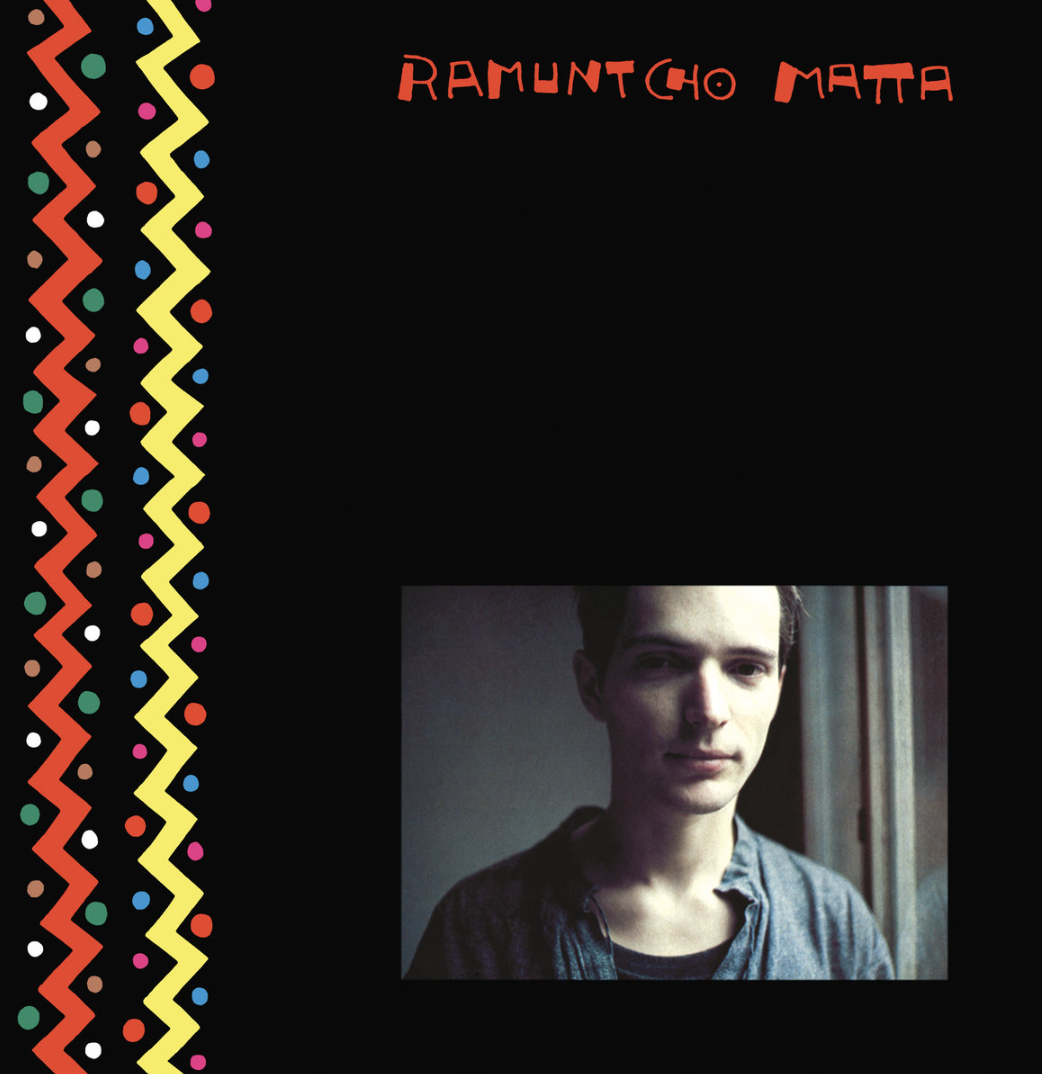
A sound production of contrasts; a collage of time spent in both New York City and Paris, where the graffiti’d downtown meets fourth world music explorations, Ramuntcho Matta’s absorption of those two cultural hives is a no wave and exotic theatre of diverse influences.
The younger sibling to and scion of the Matta arts brood – his father, the Chilean-born Roberto, a key if not always congruous member of the Surrealist movement with his ‘psychological morphologies’ or alien ‘inscapes’ coined subconscious manifestations, and brother, Gordon Matta-Clark, the ‘anarchitecture’ pioneer of such concepts as the ‘split’ house and various art performances -, Ramuntcho was a well-connected creative nomad who chose to plow his own furrow in the field of experimental music. He started out in this regard, in the company of such polymath avant-garde luminaries as Brion Gysin, Don Cherry and Laurie Anderson. The latter opened doors to everything New York had to offer in the late 70s and early 80s. Ramuntcho also shared a flat with scenesters Nana Vasconcelos and Arto Lindsay: living in the same building as the Talking Heads’ Chris Frantz and Tina Weymouth no less. Although tragedy would strike with the death of his brother and conceptual art icon Gordon in the late 70s, the burgeoning producer would stay on, falling in with the Mudd Club, CBGB and Danceteria in-crowd; taking note of the evolving polygenesis movements of early hip-hop, post-punk, electronica, no wave funk and more worldly sounds (from Soweto to the outback, Caribbean and Hispaniola).
But it all came together, or rather this particular project did – dusted off, remastered and given a deserving vinyl reissue by WEWANTSOUNDS – in Paris. With the CV –notably recording Don Cherry’s 1983 ‘Kick’ single for the boutique French label Mosquito, the original imprint for this self-titled album – and network expanding ever further, there would be performances with the Senegalese group Xalam and the Arabic rock group Carte de Séjour, with Rachid Taha. A residency in Lyon led to a meeting with the Algerian-born French avant-garde choreographer Régine Chopinot, who had taught dance at the city’s Croix-Rousse before forming her own experimental multimedia company. Chopinot invited Ramuntcho to compose the soundtrack to her upcoming Via show – the costume designer of which was a young aspiring Jean-Paul Gaultier.
Without seeing the actual production it’s difficult to gauge if the music was successful, complimentary or not. However, removed from that dance theatre setting the album works as a window in on a particular rich cultural exchange of ideas, sonics, sketches and soundscapes.
This ’85 released production was produced between Ramuntcho’s home and the Studio d’Auteuil in Paris; the former, a more solitary space for the album’s soundscapes and more ambient-minded pieces, the latter, a more rambunctious shared environment where all the album’s bandy and shunted no wave funk and Island life Grace Jones-esque tracks were recorded with the Stinky Toys and Elli & Jacno duo’s Elli Medeiros (on vocals), the Uruguayan percussionist Negrito Trasante, Suicide Romeo’s Frederic Cousseau (better known as Fred Goddard) on drums and Polo Lambardo on konks. That list may be extended depending on what information you read, although the WWS label and linear notes writer Jacques Denis have managed to pull together the fullest picture yet of a record hampered by misspelled band members and even a missing track listing. According to those same notes, Ramuntcho didn’t feel that the label had pushed the project or even promote it very well; hence why it disappeared: a find for crate diggers decades later.
A dance fusion of influences and ideas, this counterpoint of diverse elements opens on a gentler, almost mulling day dreamy guitar amble with the light-jazz touched ‘Gesti’. Like Marc Ribot on Iberian shores, there are a couple of these soloist moodscape pieces (see the more classical-tinged and loosened ‘Irimi Nage’). A second strand to this record’s sphere of influence is the didgeridoo sounding passages of Jon Hassell inspired sound cartography; as found on the outback resonated, barked fretboard experimental, water carrier poured ‘Avatar’, and mbira tine, funnel blowing, freight train honked primitive dance music spot ‘Zoique 3’.
The action sprawls across both the NYC and Paris underground on tracks like the shunting cut-up and counterbalance of discombobulated Art Of Noise and a repeated sweeter voiced spell of African or French-Polynesian Island song, on the ‘Sassam Kitaki’ switch. Most surprising is the fluid, bandy amalgamated hip 80s shining ‘Hukai’, which merges Casino Music with Orange Juice, Grace Jones, Lounge Lizards, Talking Heads and the sunny township polyrhythms of South Africa. ‘All Those Years’ in contrast, sounds like Saw Delight era Can rubbing shoulders with a reflectively blue XTC.
Also, in addition to shades of Dunkelziffer, Populaire Mechanik, Don Cherry (of course), Annie Anxiety and the Pop Group, there’s an exotic fauna and animalistic soundscape of French-Arabia, Africa and the Americas, to be found suffused amongst the electrified disjointed and vibrated no wave funky free-play.
I must confess, this album totally passed me by. I wasn’t even aware of it. Although only briefly, I even studied both Roberto and Gordon Matta when I was an art student, but had no idea there was another equally talented member of the clan. Hearing it now makes sense, so much of its makeup integral and over-used in the last two decades as the 80s becomes this generations’ 60s. There are some great eclectic hybrids and even no wave dance tunes to be found. Everything gels perfectly on this evolving, changing production; from the bendy to frazzled; atmospheric to off-kiltered. Ramuntcho’s theatre dance soundtrack is a complimentary bedfellow to Sakamoto’s computer disc experiments of the same(ish) period, released a while back on the WWS label. A great revived lost fusion from the avant-garde funk and no wave cannon.
Marty Isenberg ‘The Way I Feel Inside’
7th July 2023

It’s a name synonymous with whimsy poignancy, a signature frame and colour palette, but what the American filmmaker Wes Anderson and his perfectly constructed diorama movies are equally famous for is their carefully curated soundtracks. The scores of which have led to, in some cases, a revival of fortune for the said artists and bands that pepper such iconic films as Rushmore, The Royal Tenenbaums, The Life Aquatic, Fantastic Mr. Fox, Moonrise Kingdom and so on.
The unassuming Anderson has become such a cult figure himself that, in kind, a number of artists have penned homages or name checked his films or idiosyncratic view of the world. Arguably there is a certain hip, generation X selective and knowing calculation to those mixtape-like soundtracks that get used as prompts for poignancy, emotional states and the almost impossible to quantify with just actions or dialogue.
Not quite the homage in itself, the debut album from the NYC bassist and composer Marty Isenberg (stepping out under his own name for the first time) entwines the feelings of his own formative years with Anderson’s filmography: or rather, the music from those beautifully crafted stories of outsider isolation and pain. You could call it a covers album of a sort; an eight-song selection of reinterpretations would be better though. And yet, despite keeping some of the signature melodies, all of the original lyrics, Isenberg extends, menders and sets familiar emoted pulls in a different environment with a rich jazz transformation.
You’ll have to excuse my ignorance and a lack of info on who is joining Isenberg on this album: there’s electric guitar, drums, some sax and cornet, and a beautifully voiced singer with shades of Norah Jones and Esperanza Spalding. I’m going to suggest that members of Isenberg’s Like Minds Trio with Alicyn Yaffee and Eric Reeves could be involved. It would make perfect sense; the music does at least sound congruous.
Proving the most popular choices, The Royal Tenenbaums and The Life Aquatic dominant. From the former there’s a faithful harpsichord spindled version of the Velvet Underground’s ‘Stephanie Says’ that subtly transforms that Stones-like psychedelic old England vibe into a smooth 70s jazz light theme tune, with sections of swing and simmered feels. Velvet third wheel and oft collaborative partner, Nico has her pleasant of Lutheran melancholic song of regret and remembrance. ‘These Days’, lightened and taken back to Jackson Browne’s more lifted, sweetened origins. A Muscle Shoals electric piano (or Hammond) hovers as the vocals acquire more of a lilting and near scat-jazzy vocal arrangement that sounds almost Bacharach(ian).
Another Tenenbaums favourite, Eliot Smith’s ‘Needle In The Hay’ is given a jazzy touch. Isenberg opens with incipient bass bends, scales and nimble introspective picks as a less adolescent moody, despondent vocal points towards both Spalding and Tori Amos. The feels all there: the indie singer-songwriter dourness. Yet it’s given an off-script treatment of drama counterbalanced by the meandered.
Nick Drake’s achingly beautiful ‘Cello Song’, with all its connotations and personal tragedy, is a journey in itself of the wept and sympathetic. Sailing close to Beggars Banquet Stones, and the jazz of Mingus and Bobby Jackson at other times, a “cruel world” of sensitivity is softly expanded upon. That vocal is almost airy, if still carrying a beguiled plaintive tone.
My personal favourite (alongside Rushmore), The Life Aquatic offers up a double helping of Bowie covers and a Lennon/McCartney-like Zombies hymn. In what is a kind of meta exercise, the film’s Belafonte crew member and famous Brazilian musician Seu Jorge originally played around with a songbook of acoustic Bowie numbers; all of which are smattered throughout the Cousteau parody come homage. One of them, ‘Rebel Rebel’, is covered here; attuned more to Jorge’s Latin-sauntered origins than the glam-stomp actionist anthem of Diamond Dogs. In this version the song is played in the background of Peter Sellers’ The Party, or winding out of an early 60s jazz lounge. It’s both very twinkly and Tropicana light. ‘Life On Mars’ however, is faithful in part (tune wise anyway), yet takes the original crooner-vibe towards a mix of colliery band style horns and Stevie Wonder soul-jazz. The drama, edges are rounded but the overriding lament and emotional draw remain in tact. The pleasing ‘The Way I Feel Inside’ from a ‘65 Zombies is handled with a sweetness and enchantment that wouldn’t sound out of place on an Anderson film itself.
I’m totally unfamiliar with the band Steady Holiday, whose ‘So Long’ is playfully sent back to a dancehall era that weaves together echoes of WWII, the 50s and Dixie Jazz for a wistful, cornet nestled smooch.
Isenberg with subtlety and charm offers some surprising renditions. But what’s most surprising is that the bassist doesn’t grandstand, hog the spotlight with his double-bass instrument of choice; nor is this especially a bass-heavy showcase, but an adroit, attentive but ready to leap at a moment’s notice into action playing style that bends and lends itself to a variety of styles. There’s heartfelt connections balanced with a certain magic and even playfulness, a sharing of the artist’s tastes, record collection and personal aspirations; the main one being the loss of his father at a young age: old enough however to have been inspired by his dad’s own musical tastes, loves and collection of instruments. Finding a special affinity perhaps with Anderson’s many protagonists (there is a leitmotif of characters with only one parent in his films), that early loss led to Isenberg’s journey in musical study: from initially learning by feel and intuition, to majoring at the New School for Jazz And Contemporary Music in jazz performance. A beautiful and off-kilter, sometimes whimsical, songbook is transformed with a jazzy touch of personality.
Joe Woodham ‘Worldwide Weather’
(None More Records) 16th June 2023

Noting the changing tides and climate on warm suffused currents of looping guitar, field recordings and kosmische, post-rock and dream progressive styled languorous inspirations, Jouis band member Joe Woodham sonically and melodically charts various lunar-cycle driven weather fronts and metrological phenomena on his first solo album for the None More Records label.
Unburdened by climate change Cassandras’ and apocalyptic predictions, Woodham almost finds a certain comfort – even when yearning – in tracing and capturing the ebb and flow, the awe and beauty of the oceans as they are pulled by the moon’s cyclonic forces.
As an aside, and for trivia fans, album track ‘Neap Gloom’ (anything but as, well, gloomy as that title suggests; rather it’s a more airy and wafted proposition, with rain patters that sound rather nice) is a reference to the tide just after the first or third quarters of the moon: when there is the least difference between high and low waters.
The process of making this album itself comes from enjoyment, not dark clouds of angst or anxiety. The initial experiments were produced in fact on Woodham’s daughter’s Casio keyboard, which in turn was linked to a loop pedal. There’s more to it than that of course, but the intention was one of play and improvisation; later manipulated and layered with the clipped hiss, gates and crackled atmospherics of Matthew David, the suffused bird songs and whistles of Ernest Hood, and crashing surf and spray of the waves crashing against the shoreline.
The enormity is certainly present, but most of the peregrinations and moods slip and wash between the swimmingly and warmly drifting. It could be what sounds like a melodica on tracks like the gamelan malleted bells and concertinaed Parisian wafted ‘Gameplan B’ (no idea about that title, other than this could be a riff on the climate emergency brigades, “there is no planet B”, mantra), and squeezed mellowed, nicely wavy and dreamy (anything but) ‘Overcast’ that makes me think of Alex Paterson’s brand of mirage-dub. And, as referenced by Woodham himself in his accompanying quotes as the listening material when making this record, there’s an enervated whiff of Frances Bebey about the latter track, alongside hints of Jah Wobble and Odd Nosedam.
Amongst the variations of Manuel Göttsching, Michael Rother, Land Observation and Orange Crate Art guitar accents, lines, curves and cycles and sweeping weather fronts, the magical ‘Spring Tides’ builds from a Laraaji-like heavenly introduction into a slow forward momentum of beautiful slowcore and shoegaze (reminding me actually a little of The Besnard Lakes). Woodham actually sings on the psychedelic English folk-pastoral ‘Longshore Drift’ observation; sounding a little like James Yorkston in hymnal echoed benevolence.
Woodham effectively layers the counterflows and melodies of nature and the directions of tidal travel. There are some lovely moments on this album, some spots of reflection, as Woodham makes a case for just letting the music take you in its lunar drawn grasp. A really effective debut for the label.
Hi, my name is Dominic Valvona and I’m the Founder of the music/culture blog monolithcocktail.com For the last ten years this blog has featured and supported music, musicians and labels both I and my team of collaborators love across genres from around the world that we think you’ll want to know about. No content on the site is paid for or sponsored, and we only feature artists we have genuine respect and love for. If you enjoy our reviews (and we often write long, thoughtful ones), found a new artist you admire or, if we have featured you or artists you represent and would like to buy us a coffee at https://ko-fi.com/monolithcocktail to say cheers for spreading the word, then that would be much appreciated.
A RUN-THROUGH OF RECENT ALBUM RELEASES/ GRAHAM DOMAIN
OUTER LIMIT LOTUS ‘Dazzling Darkness’
(Sheep Chase Records) (Digital Download)
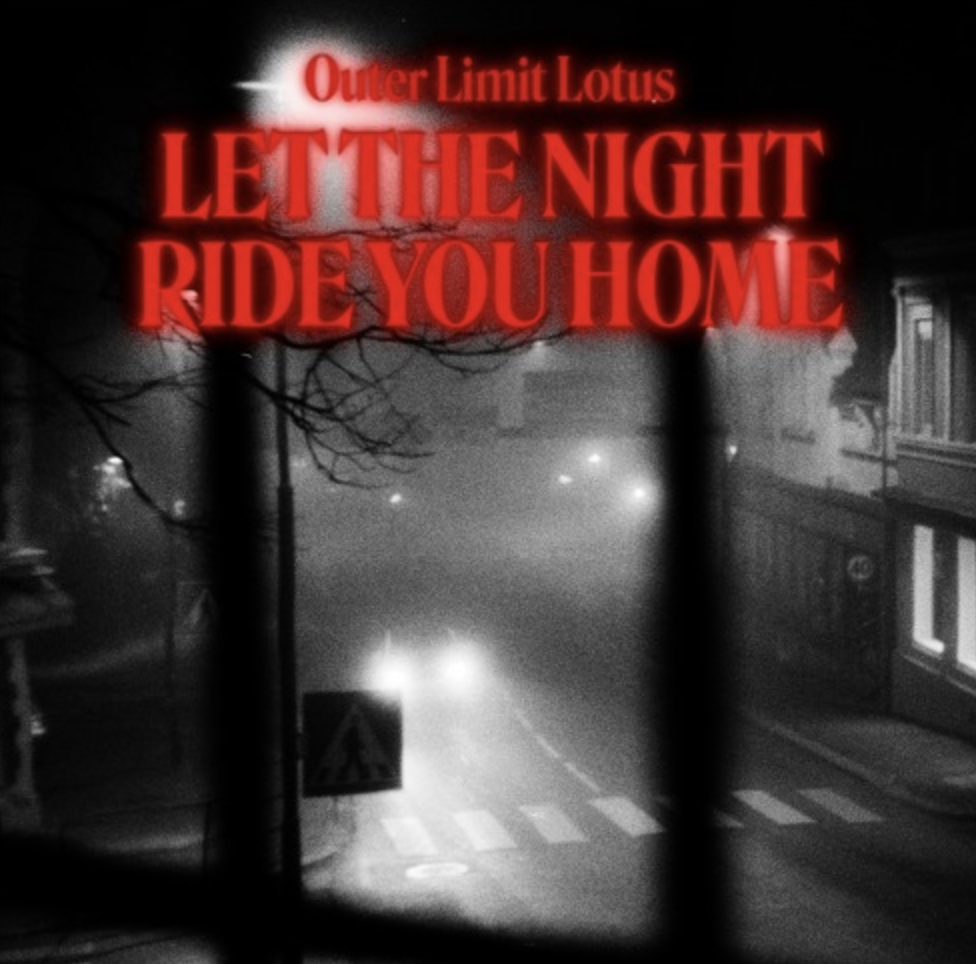
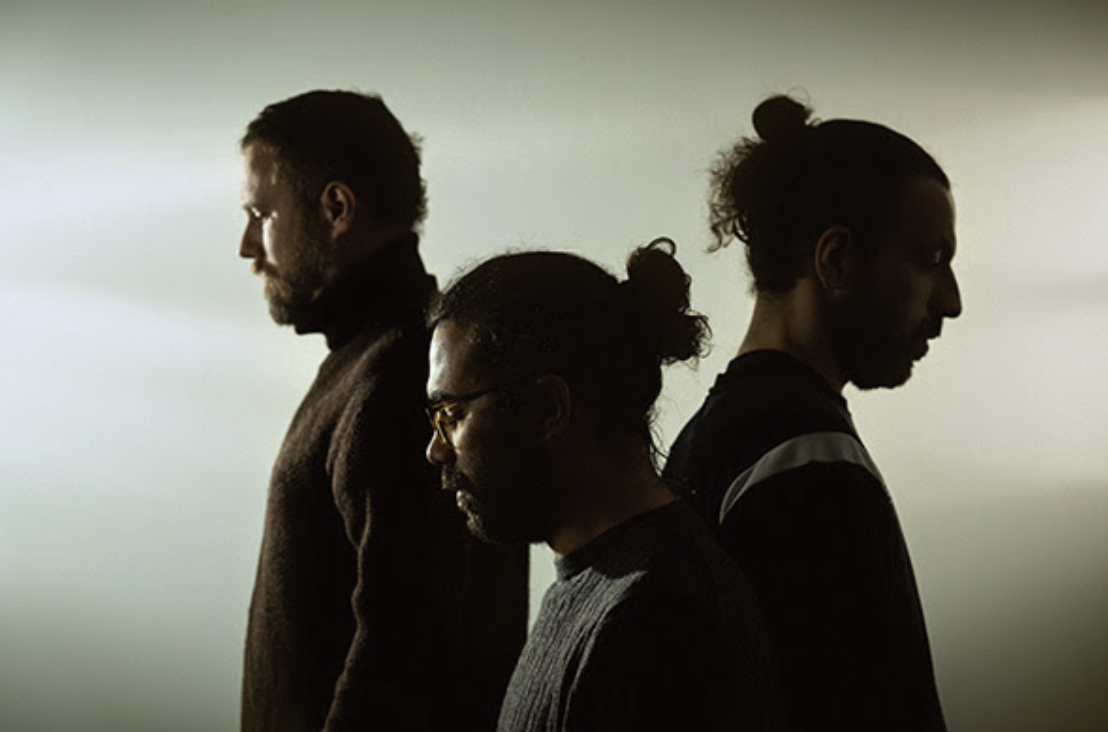
This is the dark new album from Norwegian post-punk band Outer Limit Lotus whose influences include Bauhaus and Christian Death. ‘Let the Night Ride You Home’ sounds like a Cure song played by Bauhaus – all spikey goth guitars, cobwebs and dark baritone with a screaming sax solo akin to the Pop Group. ‘Again Like Yesterday’ is reminiscent of Bauhaus and 80’s bands like the Sisters of Mercy. Meanwhile, ‘The Beach’ sounds like a song that could complete the soundtrack to any teen vampire flick. If you like your music dark, goth, with the sound of 1980’s alternative, then this is for you!
BOOM PAM ‘Royal’
(Batov Records) (Vinyl/Download Album)
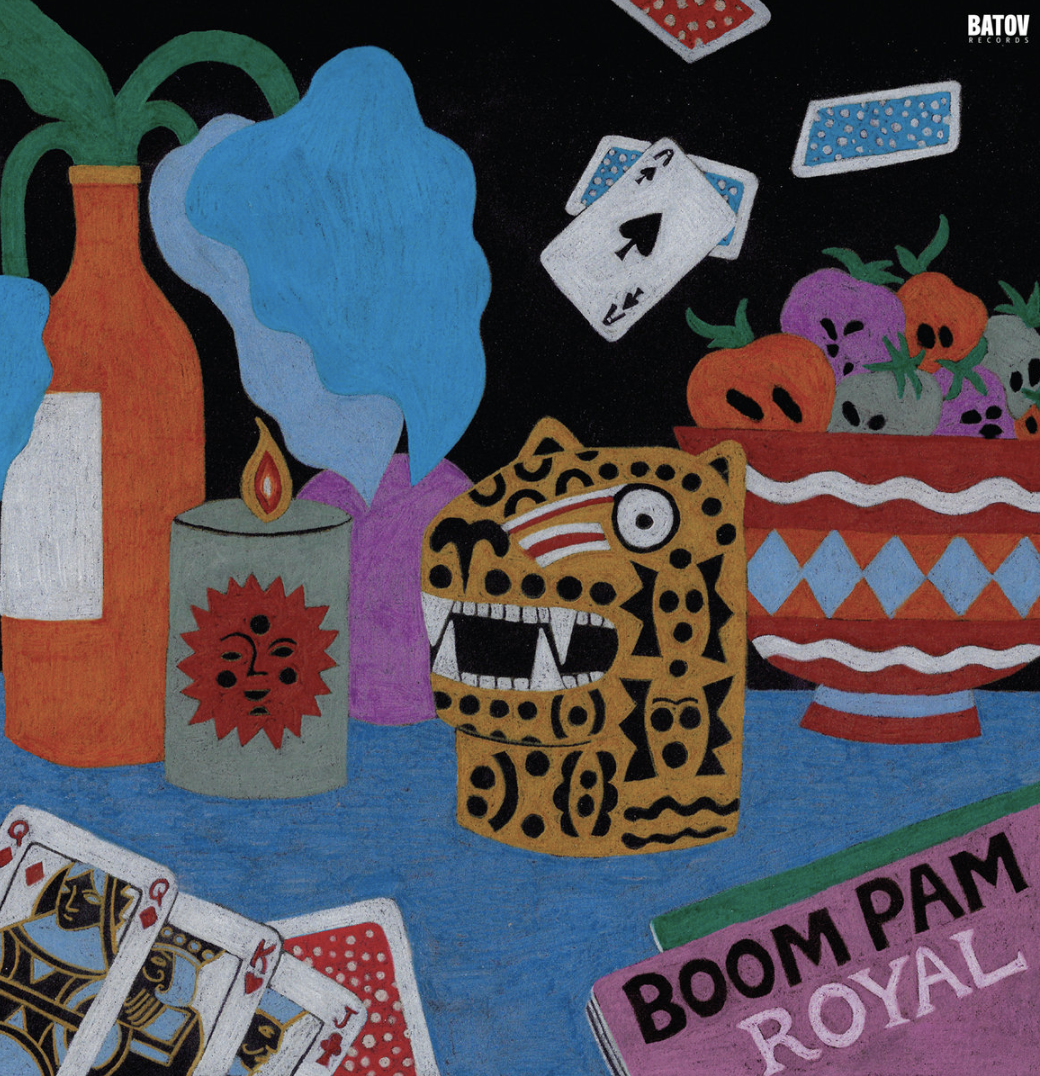
The Tel Aviv band produce another album of disco surf spaghetti western instrumental mish-mash music that would be great played at Butlins whilst waiting for the next terrible act. If it was an album recorded in the 1970’s it would perhaps be a much sort after holy grail of cheese fest! I kind of like it for lots of non-musical reasons! Terribly good!
THE KINGFISHERS ‘Reflections In a Silver Sound’
(Last Night From Glasgow) (Vinyl/Download Album)
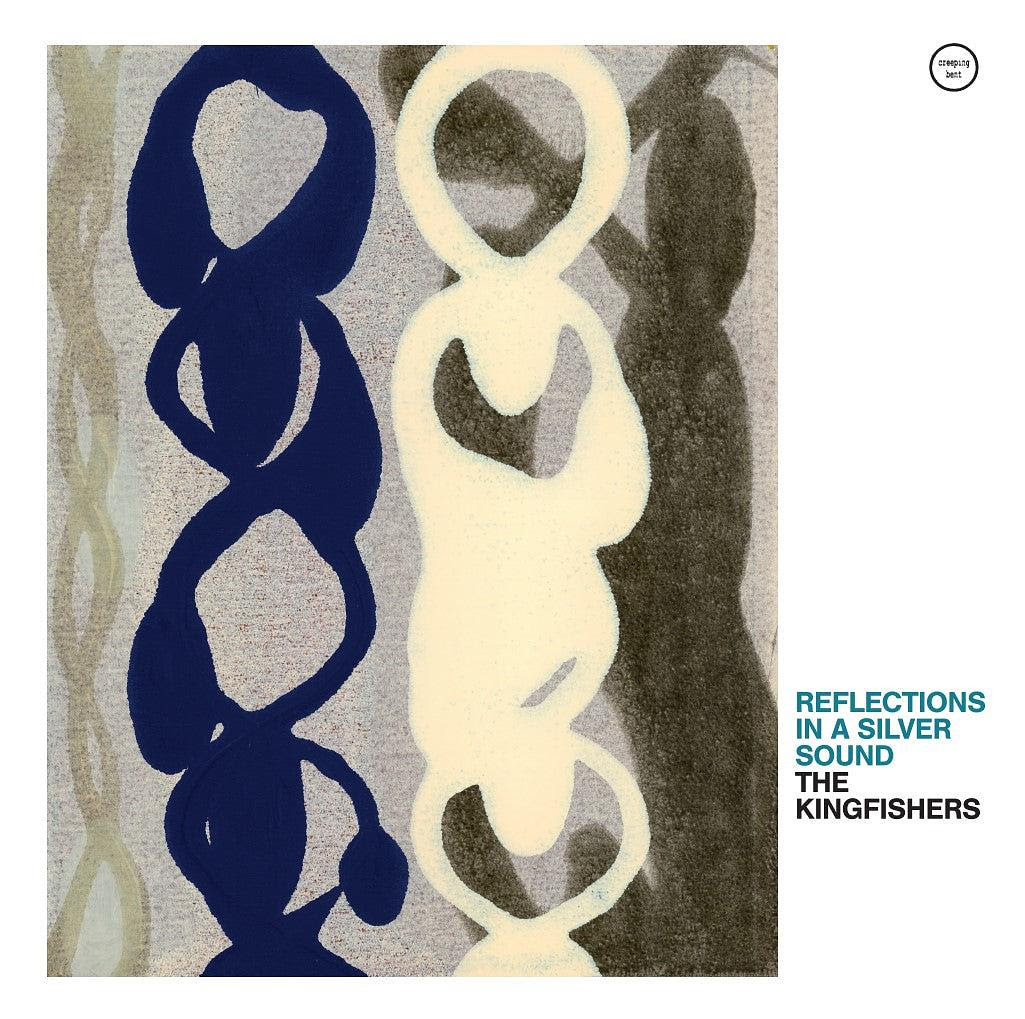
The Kingfishers formed in 1982 and split a year later after playing gigs with Aztec Camera and Prefab Sprout, their album unfinished. 40 years later their debut album is now available and what a great album it is. It is an album of melodic memorable pop songs that owes much to the sixties in its beat group sound that lies somewhere between the Searchers, the LA’s and Aztec Camera. A lost classic? Perhaps!
SACROBOSCO ‘IVXVI’
(Travarobato) (Digital Download Album)

An arresting album of electronic music from Italian producer Giacomo Giunchedi. The album is sprinkled with samples from some of the greats of Spiritual Jazz including Alice Coltrane and Pharoah Sanders. The single ‘Faint’ begins with a looped female choir that is hypnotic to listen to and reminds me of Julianna Barwick while the music has echoes of The Cinematic Orchestra and DJ Shadow. ‘Hashimoto’ meanwhile sounds like a Japanese Garden grown by AI and is disturbing in its repetition. An interesting album of cool ambience that will appeal to many but won’t be to everyone’s taste!
Psyché ‘Self Titles Debut Album’
(Four Flies Records) (Digital Download Album)
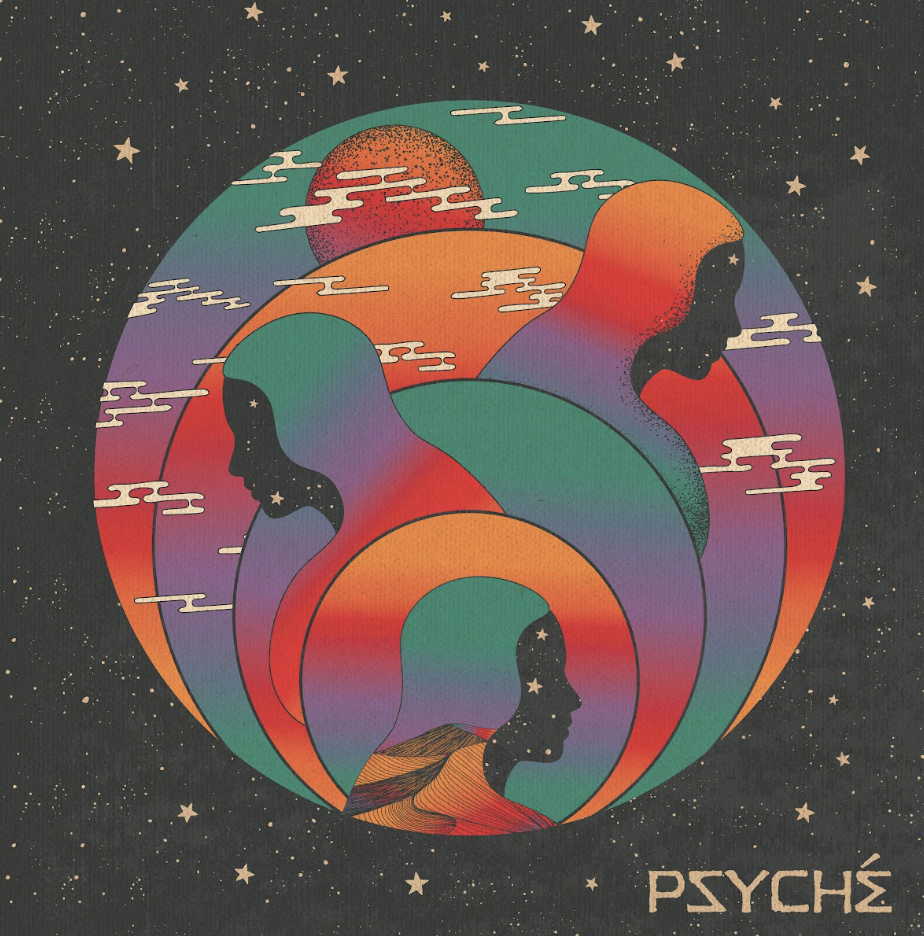
This is a brilliant album of funky Mediterranean psychedelic instrumentals that sits somewhere between Khruangbin and the Barry Gray Orchestra! Every track is a Gem! Wonderful!
ELEVEN MAGPIES ‘Two for Joy’
(Cuculi Records) (Bandcamp – CD / Digital Download)
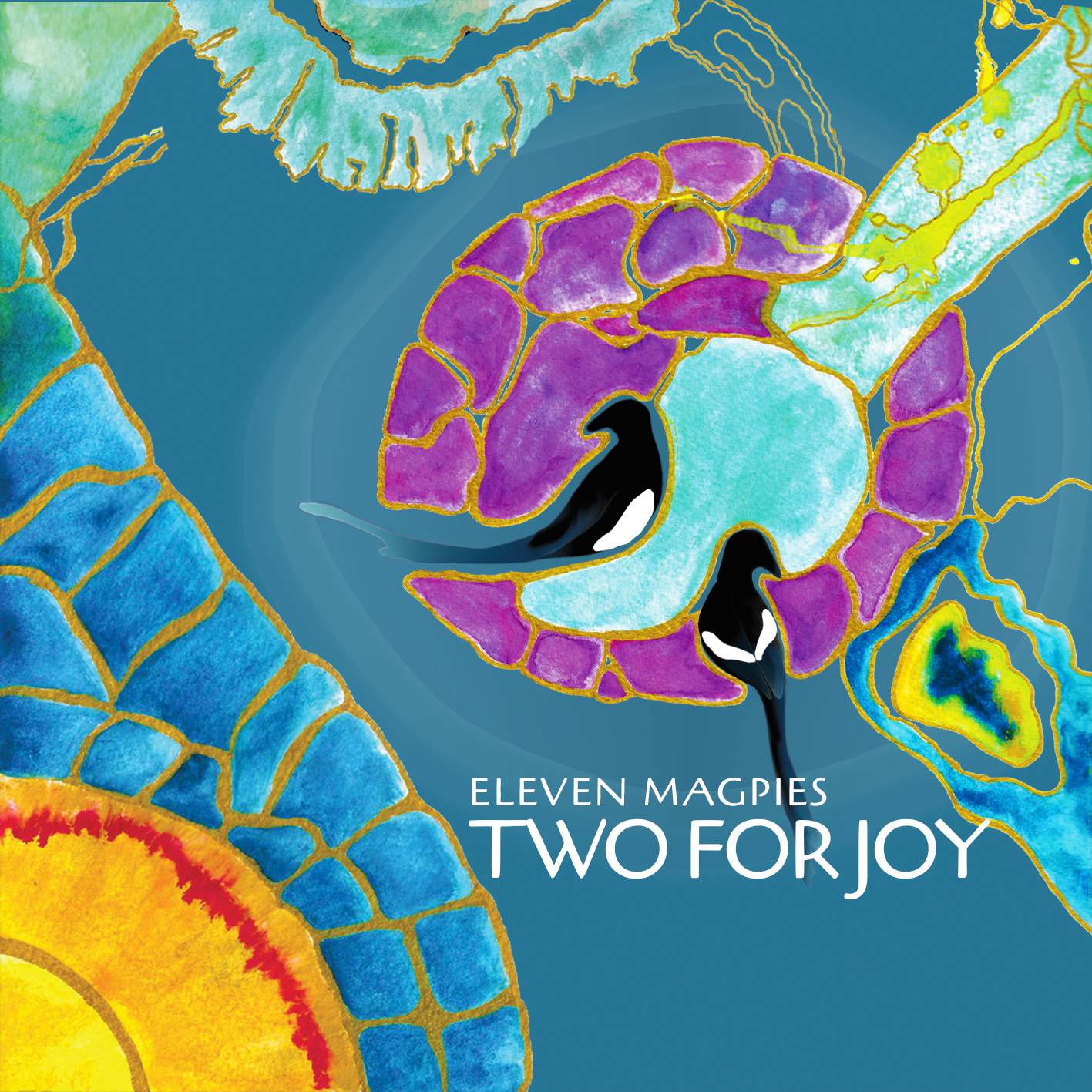
This is the second album from Bristol based Folk Instrumental Quartet Eleven Magpies. The album consists of thirteen instrumental pieces that could easily fit into any documentary or film about the countryside or farming. The music is also interesting enough to be listened to without visuals with its calm rustic feel and hints of traditional Gaelic music.
Premiere: (EP) Coded Scott ‘Binary Beautiful’
June 7, 2023
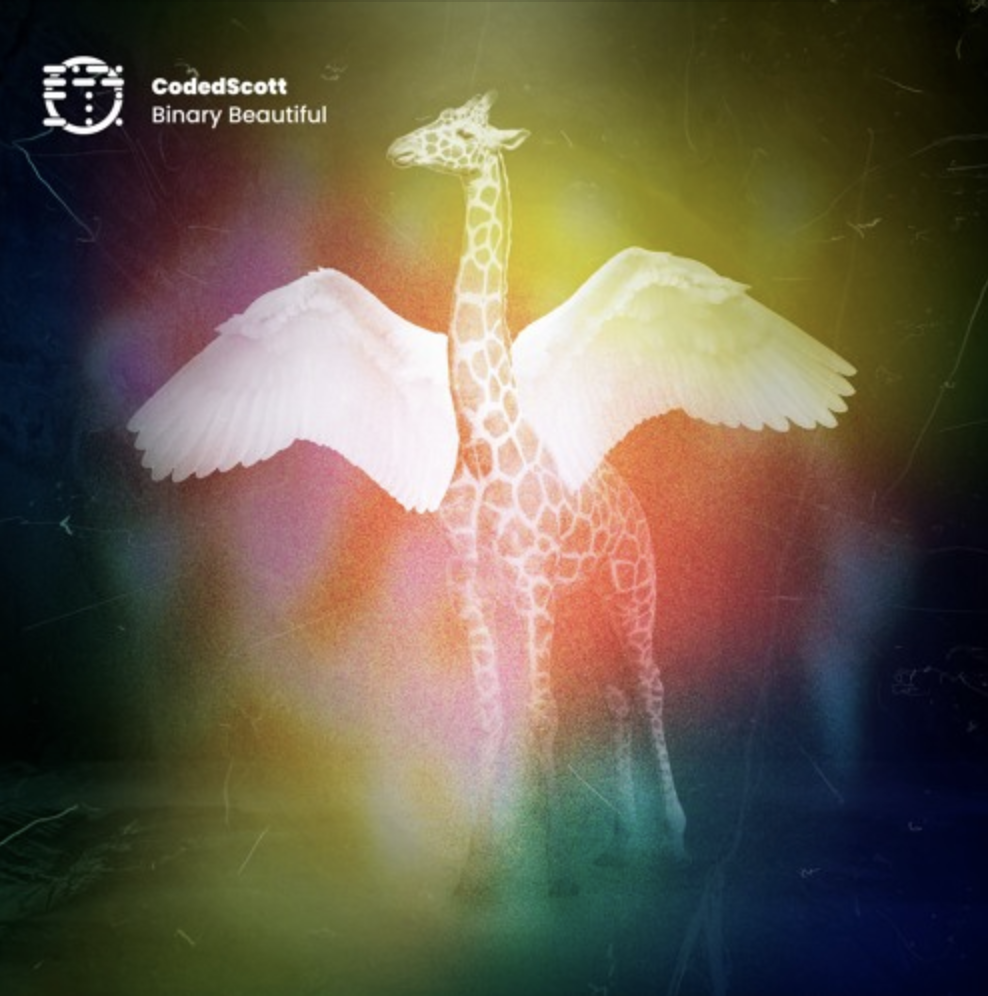
Coded Scott ‘Binary Beautiful’
9th June 2023
Ushering in the summer with a homage of a kind to the ingenuity of human technology and the, now nostalgic (in the face of AI and promises of quantum computers), binary system, the Wiltshire-based electronic musician-producer Scott Sinclair offers a quartet of trance, dub-techno variations on his main theme with the upcoming Binary Beautiful EP.
Causing a buzz on the local Bristol scene off the back of his Twisted Metal release in 2019, Scott (who goes under the Coded Scott alias) now creates a celebratory vaporous and swimmingly radiant, hazy dance track from the zeros and ones. From that original ‘Energetic’ version of Orb, System 7 and Seefeel-like electronic trance, cyber birdsong and wooded glen sunlit glow, there’s a trio of transported and playful versions that either further entrance or build on the lattice of code.
As the title suggests, the ‘Drift Away’ version does just that; floating a reworked vision of sophisticated new age and contemporary modulations, tight rattled synthesised beats and reflective surveying of the Wiltshire landscape. The ‘Sunshine’ version conjures up a lush birdsong serenaded tropical world that weaves together reverberations of Musicology’s ‘Telefone 529’, FSOL, Banco De Gaia and what sounds like a 80s Prince style beat. The finale, ‘Lost Edit’, has a subtle groove emerging from the quarks and plastic tubular beats, as Scott balances tech with an organic sun-refracted feel: those binary calculations have seldom sounded more natural, attuned to a light-dappled geography.
Scott had this to say about his EP: “…through untold numbers of ones and zeros, Binary weaves a story that connects people, creates memories, and moves us to tap our feet and nod our heads. It’s a truly beautiful thing.”
The Monolith Cocktail has been given an exclusive opportunity to premiere and share that EP with you all, ahead of its release on the 9th June. You can pre-order Binary Beautiful through Scott’s Bandcamp page here.
ALBUM REVIEW BY ANDREW C. KIDD

Gabríel Ólafs ‘Lullabies for Piano and Cello’
(Decca Records) 9th June 2023
Unsurprisingly, Icelandic lullabies are hard to come by. The few that do exist are comparatively bleaker – less cradle song; one could argue abstruse. Take the title of Móðir Mín Í Kví, Kví (in English, Mother of mine in the sheep pen), or the lines of Bíum bíum bambaló, a lullaby from Iceland made famous by Icelandic post-rock stalwarts Sigur Rós: ‘Bíum bíum bambaló / Bambaló og dillidillidó’; in English, ‘My little friend I lull to rest / But outside, a face looms at the window’. Still, a lullaby in the orthodox sense should serve to lull. Enter pianist Gabríel Ólafs. Lullabies for Piano and Cello offers something altogether gentler and less menacing. It is his second long play after the 2019 release Absent Minded, which earned him plenty of plaudits.
The opening piece is the spry Fantasía. It is finely poised and well-balanced. The long notes of Sigurðardóttir’s cello play slowly and jig around the piano keys that staccato and pirouette. Sálmur derives its title from the Old Norse word ‘salmr’, a psalm. The keys are bittersweet. Here there is clever use of the foot pedal: Ólafs holds the notes suspensefully, allowing the cello to inhale and exhale measuredly as they alternate between legato and bowed tremolo. Octaves are climbed by the piano, but the cello remains rooted in the bass clef. Moonlight streams in glittering certitude on Noktúrna. The piano is light and a little more distant than it was previously, perhaps in the same way that the eye perceives the blue light of the moon: familiar but altered – illusory even. Embers emerge and billow away on Eldur (from the Old Norse ‘eldr’, or fire). The cello enters and vacates as quickly as it emerged. It echoes the
piano, elongating the notes as it evaporates into the ether.
Ólafs is an effective narrator. On Frost, the left-hand plays gently. Its melody is simple and dots around a major scale. It is clear and glistens and is made momentary as it welcomes the sun; soon, it will become water, evaporating to air, exiting the world as quickly as it entered it. Is it too far-fetched to suggest that this is a bleak allegory of life? I shall leave that for the listener to decide. It is an Icelandic lullaby after all.

The harmonics of the cello play quietly, deepening the piano on Vísa. The melody is played legato. It is fluent. This deftness, this wonderful una corda (soft pedal) of the piano is felt again on Mamma which almost progresses into a lullaby; I write ‘almost’ because although the structure is circular, the melody is not repeated. Barnkind is Icelandic for ‘child’. The cello is the sole focus here. In the accompanying album notes, the cello is considered to be the “mother’s voice, sometimes speaking, sometimes singing” – this assertion is most evident on this piece. It soothes.
On Bambaló the cello bows quietly. It encompasses the mysticism of early folk – was this an ode to a tree, or a long-lost lover, or an ideal? The piece intensifies, yet the piano remains light and unimodal throughout. Its chords, its narrative, are progressed solely by the cello. The keys mimic in gentle accompaniment. It ends thoughtfully. Draumheimar is the final piece. It translates into English as ‘dreamworlds’. Clocking in at over three-minutes, it is longest piece on the album. The piano takes centre stage and plays a major key melody. I hear echoes of Ólafs’s previous LP at this juncture. The keys become less distinct and the hammer-action of the piano strings are audible here: they are dulcimer-like. It is pianissimo: very quiet; then calando: it softens and slows.
Lullabies for Piano and Cello is beguiling. Compared to much of modern-day classical composition, the pieces are very short, yet none are perfunctory. More so, it is completely emptied of electronics and field recordings. It is a work of simplicity. The melodies are short-lived and never reprised. Even more beguiling is the origins of this album: Ólafs chancing upon a collection of melodies in an antique bookshop. It beggars the question as to how many unplayed lullabies are lying unthumbed and unturned in bookshelves elsewhere in our world.
Our Daily Bread 576: Vieira and The Silvers, Tony Valentino, Fossil Beach, The Budos Band…
June 2, 2023
The idiosyncratic Brian ‘Bordello’ Shea rummages through another month of new and upcoming releases. (Unless stated otherwise, all releases are already available to buy).

SINGLES
Vieira and The Silvers ‘The Judge’
(Catch 21 Records)
There is something very Liverpool about this track; I was sure they would have been from Liverpool as they have the same Scouse pop feel that the Coral and the many bands from the Bandit era have. Maybe they take the same drugs and listen to the same records, either way this track is very good.
It starts off all Captain Beefheart and ends with the kind of Gospel inflections that Booby Gillespie would sell his favourite battered egg to have included on the much over-rated Screamadelica album; a good album, but not all as it is made up to be, unlike this single, which is pretty spiffing and yes spiffing is indeed pretty, and my word of the day. As is this single is my song of the day.
The Budos Band ‘Frontiers Edge’
(Diamond West Records)
I love this track; a sexy shimmy of spy Bond glamour with a hint of 60s hip swinging jazz in a spaghetti western type of way. The kind of track you want your night out on the town to be like – all glittered mini dresses bouffant hair and neon lights offering temptation and seduction. Yes indeed, just the kind of track to paint your evening. A hip swinging triumph.
Josienne Clarke ‘Anyone But Me’
“Anyone But Me” is a dark and bewitching folk song filled with both a sadness and relief that the affair is over, and I am quite taken with how Josienne sings the line, “how can you love anyone but me”. But that is the magic of song, a few brief seconds can transport one back to the dim and distant past and remember not so happy times. A beautiful song and an excellent video to go with it.
Beach Fossils ‘Dare Me’
(Bayonet) 2nd June 2023
Modern indie radio friendly guitar pop normally bores the pants off me: it does. I normally end up taking off my pants and wandering around the house with my them on my head, pulled over my ears whilst wondering how long the kettle is going to take to boil and what would come first: the boiling kettle or the end of the soulless dirge that someone has sent for me to review? Or the soulless dirge that BBC 6 music is forcing upon their daytime listeners, who I think have probably given up on life. But saying that, for some strange reason this song by Beach Fossil does not have that effect on me, even though it has all the lack of qualities that modern produced indie guitar pop has; the soulless production and the spray on radio BBC6 music sheen. But for some reason I like this. Why? Answers on a postcard.
bigflower ‘The Event’
The event by name, an Event by nature, we have a fine slab of mellow dance solitude that is both funky and slinky and electronic-like. And at just over three minutes long is far too short for its own good; double it and you have an ideal floor filler: yes, a floor filled with fine Manchester musicality. This could and should be a 12”, and reminds me a touch of Fatima Mansions in its dark outer grooves. How many times do I need to say, come on record labels sign this man up.
ALBUMS/EPS
Tony Valentino ‘Dirty Water Revisited’
(Big Stir Records) 26th May 2023

Tony Valentino was of course the lead vocalist with the 60s garage punk legends The Standells, and this, the Dirty Water Revisited album, is where he revisits his past with an album of reworkings of some the band’s classics, and some new songs too. And the reworkings of the classics are fun as all 60s garage songs should indeed be. “Good Guys Don’t Always Wear White” was always one of my fave garage rock songs and this version does not really take anything away from the original, as does none of the reworkings. And lets be honest, garage rock bands have been including these classics in their sets for years so why should Tony not revisit and pay respect to his own past. On the whole he has made an enjoyable romp of 60s garage punk/pop reworkings. And with last years new song single, “I’m A Sexy Punk Rocker”, included reminding us all where Iggy might have got some of his pop from.
Armstrong ‘Summer Is Here EP’

Summer is on its way, so what better way to celebrate than to listen to this 4-track beauty of pop overthrow; a quartet of summer breeze pop; an EP of pure jangle and sci-fi synths; a 4-track treasure of shadows of yesterday’s delights. But what else can one expect when it is the latest release from Armstrong, everybody’s favourite pop picker songs that has one thinking back to when Aztec Camera and Prefab Sprout would occasionally sneak into the top 40 and the internet was only something Leeds Utd supporters used to shout at three o clock on a Saturday afternoon. Sublime pop indeed and Summer Is Here is so summer sounding it has brought on my hay fever.
Cat Box Room Bois ‘Tinder Vittles’
(Metal Postcard Records)

Ah the lovely subtleties of American shambolic rock ‘n’ roll spews forth from this magical album featuring a member from the genius Legless Crabs. So it being shambolic rock ‘n’ roll is indeed nothing to be surprised at. And indeed, it is pure undiluted rock ‘n’ roll, with traces of the DNA of The Modern Lovers, Neil Young, The Marychain, the Velvet Underground and The Stooges in a loose and casual way that gives casual a new looseness.
It is the sound of a party in your pants. It is raunchy. It is sexy. It is funny. It actually sounds like a band rehearsing in your neighbour’s shed whilst the singer juggles extravagances in a cartoon denim and leather clad clown like way. Whilst the guitarist shows off his fretboard prowess imagining he was once a member of Red-Hot Chilli Peppers but was thrown out for being good and having lo-fi punk attitude. So if Lo-fi rock ‘n’ roll is your thing and you want an album that sounds like one of the most out of it bands from your neighbourhood jamming wildly on a summers day with the essence of weed and alcohol slowly drifting on a gentle summer breeze, or, The Beach Boys Party album but made by drug addled stoners brought up on a soundtrack of 70s Fm Rock and early 80s American punk , this album is for you. This a gem of an album.
 Monolith Cocktail Blog