The Monthly Playlist: Choice Music From August 2023: GOAT, Ramson Badbonez, Jaimie Branch, Part Bat, Dave Meder ..
August 30, 2023
PLAYLIST/TEAM EFFORT
A summary of the last month on the Monolith Cocktail site

Each month Dominic Valvona curates an eclectic musical journey from all the choice releases featured on the Monolith Cocktail, with records selected from reviews by Dominic, Brian ‘Bordello’ Shea and Andrew C. Kidd. Plus Matt Oliver’s essential hip-hop revue and a smattering of tracks we didn’t get the chance to write about for a lack of time and space.
_____TRACKLIST_____
Ramson Badbonez ‘Weight’
FRSHRZ X Tom Caruna Ft. Essa, Phill Most Chill, Clencha, Frisco Boogie, YU, Jehst, Homeboy Sandman, Willie Evans Jr., Dr Syntax, Doc Brown, Wizdom (Green Jade), Chill aka Greenzilla, Jaz Kahina, Mas Law, Koba Kane, Blade, Pavan, Seanie T, Michie One, Graziella, Watusi87, K9, Si Philli, Apex Zero, Genesis Elijah, Longusto, Nutty P, Tubby Boy, LeeN, Skillit, F-Dot-1, SKANDOUZ, Dray, Artcha, Georgious Lazakis, Dekay, Dee Lush, Briti$h, Anyway tha God, Quartz Crystallius, Lemzi, BREIS, Leo Coltrane, Jugg GTB, Slippy Skillz, Scorzayzee, Obi Joe, El Da Sensei, Whirlwind D, Dillon, Cuts From Jazz T ‘BARS 50MC – Remix’
Azalu ‘Fleshbite’
Lunch Money Life ‘Love Won’t Hide Your Fears (The Bishop And The Bunsen Burner)’
GOAT ‘Unemployment Office’
Flat Worms ‘Suburban Swans’
Part Bat ‘Okay’
Group O ‘The Answer Machine’
Black Milk ‘Downs Get Up’
Apollo Brown ‘Three Piece’
Open Mike Eagle ‘We Should Have Made Otherground A Thing’
Raw Poetic, Damu The Fudgemunk ‘The Speed Of Power’
Stik Figa, Blu ‘Uknowhut? (The Expert Remix)’
Jaimie Branch ‘Bolinko Bass’
Trademarc, Mopes, SUBSTANCE810 ‘No Huddle’
Joell Ortiz, L’ Orange ‘In My Feelings’
Kut One, Jamal Gasol ‘Stay Sucker Free’
Belbury Poly ‘The Path’
Hydroplane ‘Stars (Twilight Mix)’
Slow Pulp ‘Broadview’
Yann Tiersen ‘Nivlenn’
Rojin Sharafi ‘dbkkk’
Andrew Hung ‘Find Out’
Misya Sinista, ILL BILL, Vinnie Paz, DJ Eclipse ‘Verbal Assualt’
Verbz, Nelson Dialect, Mr. Slipz ‘Edge Of Oblivion’
Koralle, Kid Abstrakt ‘Mission’
Rhinoceros Funk, Rico James ‘Pump This’
Sa-Roc ‘Talk To Me Nice’
Elisapie ‘Isumagijunnaitaungituq (The Unforgiven)’
MacArthur Maze, DJ D Sharp, Blvck Achilles, Champ Green, D. Bledsoe ‘Switching Lanes’
Bixiga 70 ‘Malungu’
Gibralter Drakus ‘Exode Ritual’
Dave Meder ‘Modern Gothic’
Knoel Scott, Marshall Allen ‘Les Funambules’
Vitamin G, Illinformed ‘Big Spender’
NC Lives ‘Cycle’ Candid Faces ‘Coming Home’
The Legless Crabs ‘Unstoppable’
Neon Kittens ‘Sunburn On My Legs’
En Fer ‘Mon Travail, Mon Honneur Et Ma Perseverance’
Craig Fortnam ‘All Dogs Are Robots’
Liraz ‘Bia Bia – JM Version’
Galun ‘Mirror’
Exit Rituals ‘A Fluid Portrait’
Dot Allison ‘220Hz’
Hi, my name is Dominic Valvona and I’m the Founder of the music/culture blog monolithcocktail.com For the last ten years I’ve featured and supported music, musicians and labels we love across genres from around the world that we think you’ll want to know about. No content on the site is paid for or sponsored and we only feature artists we have genuine respect for /love. If you enjoy our reviews (and we often write long, thoughtful ones), found a new artist you admire or if we have featured you or artists you represent and would like to buy us a coffee at https://ko-fi.com/monolithcocktail to say cheers for spreading the word, then that would be much appreciated.
Exchange recommendations from our Italian penpals at Kalporz
Authored By Matteo Maioli
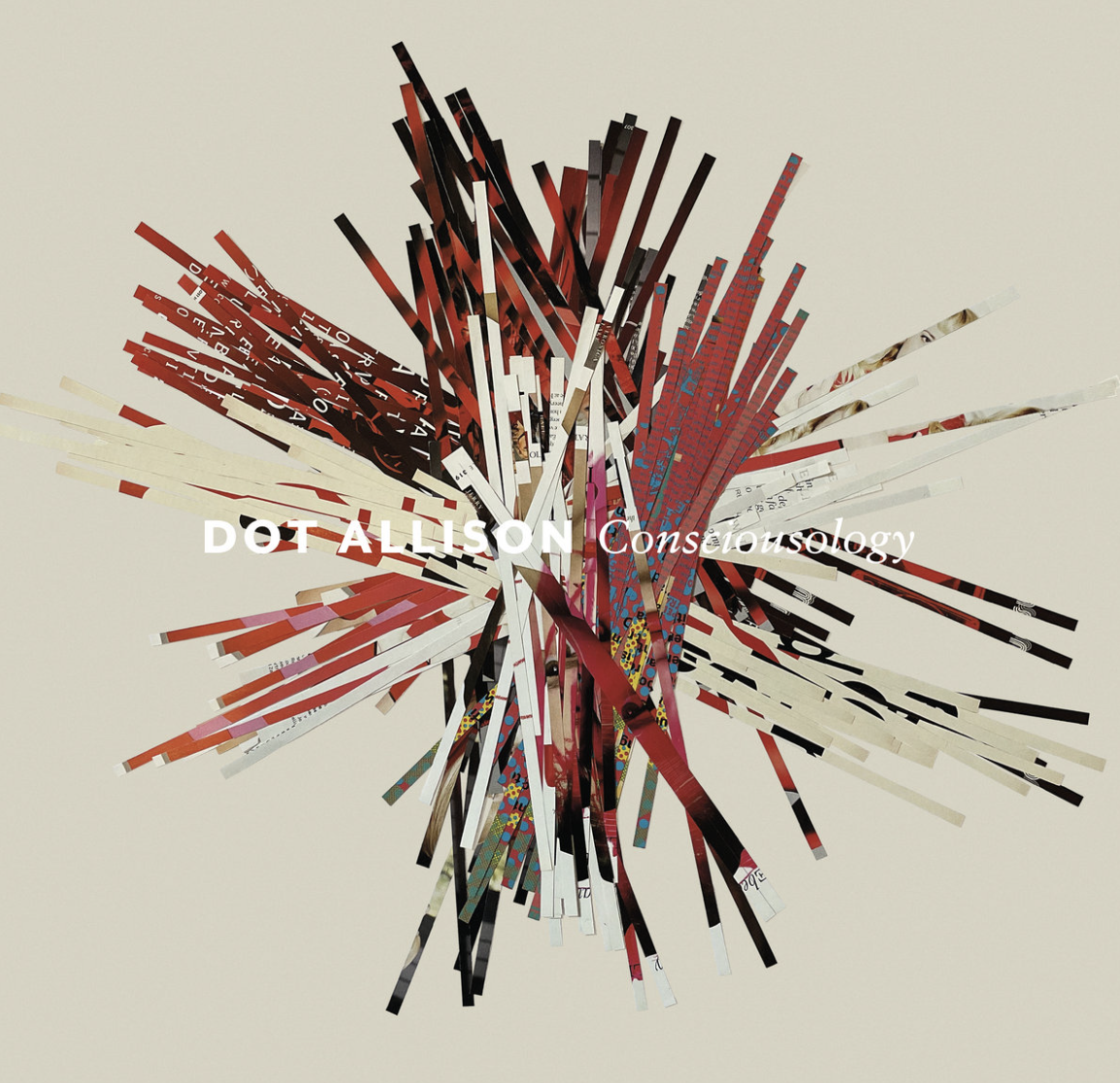
Continuing our successful collaboration with the leading Italian music publication Kalporz , the Monolith Cocktail shares reviews, interviews and other bits from our respective sites each month. Keep an eye out for future ‘synergy’ between our two great houses as we exchange posts during 2023 and beyond. This month, from the site’s This Rocks column, Matteo Maioli sells us on the music of the Scottish artist Dot Allison.
Dot Allison “Consciousology”
(Sonic Cathedral, 2023)
An established cliché in music in recent years is that great records are never released in the summer: well 2023 contradicts the matter wonderfully, from PJ Harvey to the Clientele (without forgetting the new Albarn… pardon Blur) to reach the artist whose least spoken of all but which once discovered never leaves you for life: Dot Allison from Edinburgh . “Consciousology” is her sixth album and comes out on Sonic Cathedral; produced with Fiona Cruickshank it includes collaborations from Andy Bell (Ride, Oasis), Hannah Peel and Zoë Bestel as well as the London Contemporary Orchestra who manage to give the songs a timeless charm.
As told by Sonic Cathedral’s Nat Cramp, “Dot’s voice has been a constant in our lives for the 30 years since One Dove’s “Morning Dove White” was released and we have always dreamed of working with her. We first met back in the early days of the label and she played for us a couple of times, including the legendary Lee Hazlewood tribute night at The Social. The self-effacing title “Consciousology” belies the seriousness of what lies within, and it’s impossible to not be completely consumed by the sheer beauty and intimacy of it all“. The sounds of Tim Buckley of “Starsailor” combined with Joni Mitchell and Van Morrison of “Astral Weeks” can give an idea of the source at the base of a raging and at the same time calm river that flows into the trip-hop and visionary electronics of Andrew Weatherall – a great friend and mentor of Allison -, already from the opener “Shyness Of Crowns”.
The strength of the collection emerges as much in Dot’s elegant and profound writing as in the work on her voice that sounds like the breath of nature; on “Moon Flowers” she whispers words of love transporting us to another dimension: “You reign, you influence the rain/In heaven and beyond you/There is a sunlight around you/You illuminate everything I do“, while with “Weeping Roses”, she returns to the fragile lesson of “Room 7 1/2” (Arthoused, 2009) punctuated by acoustics and piano, “ Bleeding roses they’re all you ever grew for me/I see blood in the spray, on the petals/Now , it’s so plain to see/Do you feel it too, tell me do you feel it too “. The launch piece “Unchanged” thrives on a soul-rock crescendo that explodes in a refrain worthy of Verve and Spiritualized.
Where in “Bleached By The Sun” she makes us miss the Air of “Talkie Walkie”, in the transcendent “Double Rainbow” she invents a cosmic manifesto that wouldn’t sound out of place in Rob Mazurek’s latest release with the Exploding Star Orchestra . And if I haven’t convinced you yet, the sweetness of “Milk And Honey” will take care of making you fly away from the wear and tear and problems of the modern era, starting like this: “I’d walk 10,000 suns/To have you next to me/Bridges I ‘d burn/To give you the rest of me/Lilac-coloured stars that glisten, beckoning/Galaxies of tumbling suns, are blessing me “.
Folks? backstory? Chamber-pop? I do not know. All this and also none of it. Simply: Dot Allison.
Our Daily Bread 589: Exit Rituals ‘Blinding Void’
August 23, 2023
ALBUM REVIEW/ANDREW C. KIDD

Exit Rituals ‘Blinding Void’
(Just Isn’t Music)
Blinding Void (Just Isn’t Music, August 2023) is the collaborative effort of husband and wife, Alan Myson (Ital Tek) and Anneka Warburton. I have previously written about Itak Tek on the Monolith Cocktail, which included a brief overview of his back catalogue: Our Daily Bread 579: Ital Tek ‘Timeproof’ June 22, 2023.
Anneka Warburton has an extensive musical curriculum vitae. She has collaborated with various artists on Mike Paradinas’s Planet Mu label; examples include the track Heart Space on the Vex’d album Cloud Seed (March 2010), the single of Starkey’s Ear Drums and Black Holes LP (April 2010), and my favourite FaltyDL vocal track, the rhythmical Gospel Of Opal on his You Stand Uncertain LP (March 2011). She collaborated with Forest Swords on the tribal track Anneka’s Battle from his lauded Engravings LP (Tri Angle, August 2013). Warburton also collaborated with Myson, featuring on Restless Tundra, the concluding track to Ital Tek’s Midnight Colour LP (Planet Mu, June 2010) – a time when footwork was regal, when bells and hit-hat hits and four-four beats tripped to skip into their next bar. Anneka has an EP to her name: the soulful Life Force (Anti Ghost Moon Ray, April 2017), the fourth track of which was showcased by Mary Anne Hobbs on BBC 6Music in January 2015. Her quasi-baroque experimentations using a Korg Minilogue on the track Burst (self-released, February 2018) confirmed her compositional skill.
We return to August 2023. Alan Myson and Anneka Warburton have collaborated again, this time as Exit Rituals, a group in its own right. Blinding Void opens with Soon Bloom. Sustained glass-shattering synths pierce the headphones; beneath this, the deep sounds of a cello bowing. A three-note pad eventually filters through, its minor melody proliferates, ascending to fuse in unison. Everything eventually exits. Warburton’s vocals are expanded further on A Fluid Portrait. She sings atop a sonic soup which stirs circumspectly. The vocoded vocals double up over an alarm-like synth that keys indistinctly.
A thudding heartbeat rumbles on Dream Canyon. This is not the lub-dub of a mammalian heart. Perhaps the life sounds of an object in the cosmos, or even light? Its reverberated third beat thrums. On the subject of light, this appears in many forms on this track, and the EP more generally: vocals, pushed away into the peripheries, aerate; an occasional electronic flourish tremolos into the distance. As the denouement of Dream Canyon is reached, the heartbeat becomes clearer, less muddy, until suddenly – it cuts out. Treble reigns supreme at this juncture. I am reminded of Björk circa Vulcincura (One Little Independent Records, January 2015).
The double-unison vocals of The Knife play out on The Light. The deep cello sound makes a further appearance. Staccato-synths provide momentary reference. There is no exposition on this track, no coda; rather, it moves seamlessly onto the title track which showcases the vocal talents of Warburton. She sings hazily, wavering even. I imagine her sung voice corresponding to the visible wavelengths of light; drawn out across their electromagnetic spectrum, the sharper frequencies are red, and the quieter violet stretch until they become ultraviolet, and onwards to X-rays. The synths are stripped-back and the bass bright. Everything coalesces.
Warburton’s vocals chop and stutter on Lacerate, helicoptering around to achieve impossible frequencies. In time they descend to merge with the bass-heavy undertones that have rumbled throughout this EP. The concrete synths of Myson begin to pummel the aural cavities of the listener. We are offered only perfunctory light on this track: the slightest of key changes in its very last moments.
Does Blinding Void have a narrative? It has yet to become clear. The highlight? The electro-classical Soon Bloom which mirrors the life-cycle of a flower. And where does this EP stand in the respective output of the couple? The earliest collaboration between Myson and Warburton was on Ital Tek’s 808-driven, sitar-infused dubstep EP, Deep Pools (Square Records, December 2007). The intensity of Weave on that release echoed the likes of Benga and Skream and Shackleton. Their collaboration then was a modern Lamb, of sorts. The respective sounds of Myson and Warburton have travelled a long way since then. With Exit Rituals, they achieve balance. Warburton brings warmth and light and organicity that offsets the machinations of the drum machines and caliginous synthwork of Myson. With Exit Rituals, there is a suggestion of gravity in the deep vacuum of electronica.
Jointly by Andrew C. Kidd and Ross Perry

Black Dog Productions ‘Bytes’ [1993]
The Black Dog ‘Spanners’ [1995]
(Warp Reissues)
Intelligent dance music. IDM. A difficult-to-define genre (if it even was one). Experimentation in dance music? The awkward shoehorning of ambience and danceable music? Flawed nomenclature aside, pinpointing the start of the movement is an even trickier task.
To dance is to move rhythmically. Ussachevsky and Stockhausen were creating electronic music in the 1950s, albeit it is difficult to argue that their creations were ‘danceable’. There are danceable moments on Spiral (Vangelis, 1977) and Équinoxe (Jean-Michel Jarre, 1978). Then there was the electro-pop Kraftwerk and the danceable synth-pop sounds of the likes of OMD, Moroder, Numan and Cabaret Voltaire. Yet, the sound that we most associate with modern-day IDM probably arrived in the very early 1990s. Utd. State 90 by 808 State (ZZT Records, June 1990) is an early example of the abstraction which underpins IDM, albeit that album was palpably more familiar as a resident in acid house. Tricky Disco by Tricky Disco (Warp, July 1990), Frequencies by LFO (Warp, July 1991) and Analogue Bubblebath by Aphex Twin (Mighty Force, September 1991) were IDM pathfinders. The public were probably exposed to IDM through Accelerator by Future Sound of London in April 1992 (released on Jumpin’ & Pumpin’). Warp can take credit for the naming of IDM on the compilation album, Artificial Intelligence, in July 1992.
Bytes (originally released in March 1993) is one of the most influential works in the intelligent dance music scene (it is regarded by some as the seminal work of IDM). The first iteration of the track Clan (Mongol Hordes), the work of I.A.O, an early moniker of Ken Downie (one of three aliases used on Bytes), featured on Warp’s AI compilation. Although Bytes is a compilation album, it has always been more synergistic than that – a musical Megazord of sorts (if such an obviously ‘90s reference can be afforded!). It was the third album in the Artificial Intelligence series and is thirty this year. When it was first released, it was a promise of futurity. Akin to the golden age of science fiction, there was experimentation, and comparatively difficult-to-differentiate narratives – the listener is drawn in and out of various sequences, some real, others fanciful.
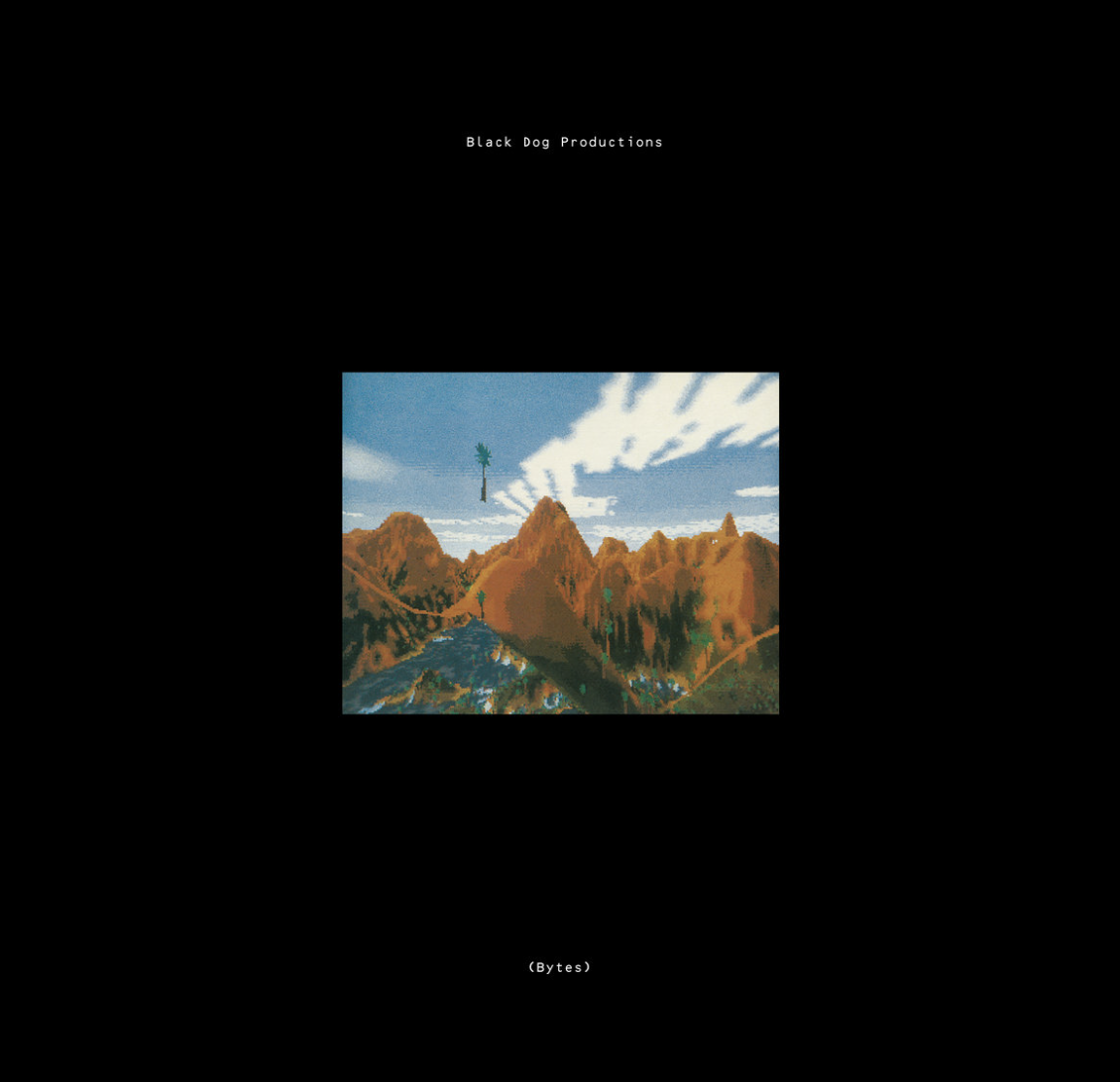
There is no doubting the influence of the Detroit techno scene of the mid-1980s and its dramatis personae: the joyful R-Tyme; the villainy of Suburban Knight; the realism of Model 500; and of course, Derrick May. Listen to the analog crunch and pulsing rhythm on the opening Object Orient (Plaid) – two hallmarks of that sub-genre. It railroads through the sonic journey with playfully synthetic melodies, slowing only occasionally for brief vinyl cuts. It is a deconstruction of what preceded it, like time folded up in slow motion. Similarly, the repetitive four-four chops on Merck are akin to a Mayday track; the keys, syncopated at times, improvised later, dance their macabre dance. The Phil 5 interlude that precedes Fight The Hits harkens back to The Art of Stalking by Suburban Knight; the same could also be said for Atypic’s masterpiece Otaku which sadly did not appear on Bytes – this featured on the Black Dog Productions E.P. released in May 1992.
Bytes is fantastically congruous. After Merck (Balil) fires off high-frequency plasma rifle shots in rapid succession, its latter half is mesmeric and glistens into the orchestral opening of Jauqq (Close Up Over)*. As the syncopated rhythm fades, a metallic beat enters, and the sound is progressed. Another fine example of this is Olivine (Close Up Over) – IDM in the definitive sense – and its light synths that dot around the checked squares of some strange sonic chessboard. Here, the rhythm progresses up and down like opposing rooks; the L-shapes of the syncopated synth are warring knights. The lithe ending is regal, and heralds Clan (Mongol Hordes) (I.A.O.)– queenly, like the multidimensional chess piece, it serves to take the rest of the board out. It is IDM ex-animo. Its movements pitch-alter. This is music from the soul. It sounds as genre-buckling now as it will have done in the early 1990s. The alarm-like initial melody initially hides the subtle breakbeat that builds into the piece. The 4-4 rhythm doubles up, almost rolling over itself. The four-key synth melody stirrups. The melody changes. A deeper bass commandeers.
Futurism: lasering zaps and string stabs on Caz (Close Up Over) and the steely undertones of Jauqq (Close Up Over). Sporadic canons also unload on Focus Mel (Atypic) in a manner that is not too dissimilar to early Subotnick and Nu-Sound II Crew (nearly a half-century later), or an A. Bertram Chandler hero travelling ahead to save us, the listeners in the present day. Its outro is an echoing aftershock from another place – the future is being told by Xeper as he knocks hard on the other side of the great glass door of time. The track preceding it – Carceres Ex Novum (Xeper) – underpins the experimentation which defines Bytes.
Fight the Hits (Discordian Popes) is an awesome percussive assault (similar to Polygon Window’s Quoth) which serves as a bit of a palate cleanser and a much-needed bridge between the chaotic Yamemm and Handley’s magisterial three-track denouement. Yamemm (Plaid) itself is fragmented and perhaps anomalous in this album†.
Bytes concludes with 3/4 Heart (Balil). The stock-heavy modulations are polyrhythmic. A Vangelis-esque synth is organ-like at points. The melody is snappy – danceable even! A half-clap effect – perhaps an imagined crowd – heralds the vocal line, “we must surf the universe”. The sound at this juncture is more refined, the narrative complex – the listener revolves around in a full-circle. Oneness is achieved.
At this point, it is worth mentioning how instrumental Ed Handley is to the legacy of Bytes as a groundbreaking album in IDM’s naissance. Atypic(Turner)’s Focus Mel is excellent, but it his only solo track on the entire record, and Downie’s three contributions are dynamic detours in their own right. Handley absolutely dominates this album with five solo tracks and two as part of Plaid. Whether it is Balil or Close Up Over, his mastery of clever arpeggios, countermelodies and otherworldly harmonic pads married with second-wave Detroit rhythms give the album a melodic heart, which beats all the way through from Object Orient to 3/4 Heart.
Bytes (and by extension, The Black Dog Productions moniker) also acts as an important milestone in Plaid’s evolution as a duo. Before it, we can hear on disc one of Trainer (Warp, July 2000) – an excellent compilation of Plaid’s early career output – that the group were more experimental, sample-happy, willing to genre-hop. Take the Latin-infused breakbeat stylings of Scoobs In Columbia, the jazz-tinged Slice of Cheese, or even the proto-jungle of Perplex (all these tracks were originally released from the oft-forgotten debut album Mbuki Mvuki, released on The Black Dog Productions label in 1991). Bytes on the other hand showcases a more focused pair, albeit a little lop-sided, that fills the record with top-tier ambient techno (which yes, will always get the IDM treatment!).
Spanners (originally released in January 1995), their first release on Warp, was the hit LP of The Black Dog – and for good reason. It is great to think that ‘way back then’ albums that clocked in at 75-minutes were charting (imagine that nowadays when albums are often sub-30-minutes). Admittedly, we live in a different time where attention spans are shorter. Most tracks on Spanners feel like a tug-of-war between Plaid as a duo and Downie as a solo artist. Plaid in 1994/95 had their more functional IDM/ambient-techno sound figured out, whilst Ken Downie remained somewhat of a wild-card: his trappings being more cinematic, sample-based and experimental, drawing from a much broader spectrum of influences. One of the elements we most enjoy about the output from the original Black Dog has been trying to surmise not only who did what in each track, but also which members were involved in certain outings. This is no more rewarding than on Spanners where some tracks seem like the work of a sole member (usually Downie), whereas other tracks feel like the work of a tag-team, either consisting of a Plaid member and Downie, or in the case of Tahr and Frisbee Skip, Plaid on their own. Frisbee Skip could very well double as a bonus track on the duo’s first (mainstream/Warp) full length, Not for Threes, released in October 1997.
The opening to Spanners is Raxmus, a classic in the downtempo repertoire; its sawing introductory synth leads into a horizontally relaxed beat. Raxmus feels like one of the more seamless tracks on the album, and we speculate that it is possibly a Downie/Handley duet: Downie providing the trip-hop template; Handley layering in his Balil-style harmonics.
The heavily-syncopated rhythm on Barbola Work (which disintegrates towards the end of the track) is interspersed with boings and hits and twizzles. It follows the formula that many of the early tracks on this album have: Downie providing the track’s introduction, throwing a wide range of vocal samples and/or exotic instruments at you, before Plaid build the track up with their infectious basslines, whirring clicks, zapping sound effects and magical synths. The Sugarhill Gang-laced explosion of an intro on Barbola Work is Downie through and through. Plaid then takes over to put down the melodic scaffolding and beat-work. The transition admittedly does not work quite as well on this occasion as it does on the proceeding track, Psil-Cosyin, perhaps coming off as a little dissonant.
Arguably the most cohesive three-track sequence (or four if one includes Bolt 3) follows. A major Locrian scale surfaces on Psil-Cosyin and scintillates in scaling brightness as the piece progresses. This is one of two clear highlights of the album where all three members of The Black Dog play to their individual and collective strengths and produce a definitive masterpiece. As an early Spanners track, the song structure is as described in the last paragraph. One can consider Psil-Cosyin as being composed of three suites: in the first, Downie arrests your attention with a mysterious intro of odd vocal samples and pipes; the second is signature Plaid with a slow and progressive build-up; the third is a roaring crescendo which serves as a climax. Here, all three members of the group function as a rare and perfect whole: Turner’s acid synths; Downie’s eclectic sampling; Handley’s Balil-esque angelic arpeggio. The concluding higher-rpm of the track serves perfectly to lead-in the membranophonic beat that anchors the light synth swathes on Chase The Manhattan, which may be a Downie solo venture or a collaboration between Downie and Turner. It is tribal-house-infused. The spacey pads are those that we often associate with Downie’s Xeper alias; Turner possibly contributes with acid licks and humming bass lines.
Tahr is an amalgam of the latter two tracks: a polymer-pungi weaves around a 4-4 beat. In this piece we hear a lot of Turner’s percussive sensibilities, addictive basslines and frantic trance-like synths (these can also be heard on Atypic’s Jolly on Trainer). Handley comes in later with another Locrian melodic flourish. Although Tahr is a short track, it is a great example of Plaid’s symbiosis.
One criticism we have of Spanners is its length. The 19 tracks are not an issue (the Bolt skits are sometimes only seconds long); rather, it is the occasional meanderings of the trio. Perhaps this is because thirty years have passed and listeners of the present day are used to more perfunctory albums clocking in at sub-30-minutes. Take Further Harm as an example. It is an expansive piece, one that stretches in and out, starting in the realms of downtempo, ending in synth-plopping abstraction. That said, it is one of the greatest examples of the stylistic fork-in-the-road (or tug-of-war) between Plaid and Downie. All three members are involved here, and the stop-start industrial breakbeat combined with the odd mantra of a vocal sample gives it a ‘train that is meandering down the track and picking up steam’ feel. More samples are layered in as well as all the sonics that Downie brings to the table, and then, two minutes in, the signature Plaid-synths, pads and basslines play out to give the track a melodic grounding that it did not have before. The hip-hop breakbeat is replaced entirely by a more industrial one in its later stages. As a piece that starts off travelling in one direction, Further Harm changes tracks, and an unpredictable journey ensues – it is a microcosm of Spanners.
Utopian Dream is similarly frequentative. It is one of the most leftfield pieces on the album. We have never heard anything like this from the Plaid members (was this a Downie solo?); imagine a harsher version of Boards of Canada’s Zoetrope on In A Beautiful Place Out In The Country (Warp, November 2000). The elegiac Nommo and its modulated synth stanzas and bassline climb their respective octaves – sequentially. It could have featured in a fictional Xeper album along Carceres Ex Novum on Bytes. Could the track idea have been consolidated, or even progressed like Olivine or Clan On Bytes? Regardless, Nommo remains cinematic.
The right balance between track length and monoinstrumention is achieved on Chesh, the other album highlight (it feels like more of a Handley solo piece, or mostly Handley with (possibly) Turner adding in a background layer). Pseudo-mythical modulations ascend and descend masterfully – imagine Ransom first exploring Malacandra (an Out Of This Silent Planet by C. S. Lewis reference), or the space sequence in the 1950 film, Destination Moon. There are echoes of Andreas Vollenweider too. The Balil style countermelodies and light airy synths interplay with the heavier reverb-laden keys – it is a magnificently poignant closer.
Spanners is a work of subtly in both melody and rhythm. Take the lithe key flourishes on Pot Noddle, ceilinged by the quiet clarion of higher synths; the guitar is indistinct, and the rhythm section almost organic. Fast forward to the sounds of Four Tet. The start-stop breakbeats we heard on Further Harm, albeit slower. The frantic ‘western saloon piano’ sample serves as a mid-point alarm clock. End of Time thunderously drums around penetrating synthetics. It is punchy, echoing the head nodding thrums of Fight the Hits (Discordian Popes) on Bytes. It is also trancey, and chaotically space-like (imagine the Starship Enterprise on an intentional suicide mission!). The time-warping synths are magnificent and reminiscent of early Black Dog tracks like Ambience With Teeth and Virtual, both released on the Virtual EP (Black Dog Productions, April 1989).
The skits Bolt 1 – 7 appear at varying intervals on Spanners. Some are simply white noise and filtered static, others almost wheezy. Their purpose is unknown – are they the voices of pulsars, or the sounds one would experience in the belly of an exploratory spaceship? Bolt 3 harks back at the Phrygian Psil-Cosyin and the chaotic goblet drum effect that thrums on Chase The Manhattan. Bolt 7 slides into obliquity, and onwards to Frisbee Skip. Listening to the Bolt skits again, their darker and more intense aesthetic share a similarity to Allegory 1 [Red], which Downie et al dropped in 2020. The third track on that release – Bar 331 – is metallic and off-key, an eerie transmission that has resurfaced 25-years later. Unlike the Phil interludes on Bytes, which serve as key intros and outros and transitions between certain tracks, the Bolt skits feel more like aural non-sequiturs. After listening to them again, they remind us of the more experimental segments of tracks we would hear on later Plaid albums such as Rest Proof Clockwork (Warp, June 1999) and Double Figure (Warp, May 2001).
Perhaps due to it being released on General Production Recordings rather than Warp, we consider it interesting that The Black Dog’s second album – Temple Of Transparent Balls – has not been reissued. It split their audience down the middle. We still enjoy listening to the ‘progenitor’, almost stock sounds that feature on that release. It had a machine-like quality, an insight into the deeper engineering works of IDM: a sonic forge with the anvil strikes on display.
On Spanners and Temple Of Transparent Balls, Downie’s approach and sound is definitely more unpredictable and harder to pin down than the Plaidsters’ experimentations and manipulation. We feel that the Plaid duo provide the two Black Dog albums‡ with less experimentation and a lot of the more conventional beat-work, basslines and melodic structure that would soon form the foundations of their Warp-era work, whilst Downie, the aforementioned wild-card of the trio, added in an off-the-cuff sample here, some industrial Meat Beat Manifesto-esque breakbeats there, or some bizarre and dissonant sound effects out of nowhere. He also seems to be the more cinematic of the three; his sounds are often themed on science fiction, and past and future landscapes.
So, in 2023, where do Bytes and Spanners sit in the pantheon of intelligent dance music? Well, Handley, Turner and Downie are rightly the archetypes of the IDM sound in the same way that Richard D. James (as The Dice Man), B12 (as Musicology), Autechre and Alex Paterson (as Dr Alex Paterson) are by their participation on the first Artificial Intelligence release. Having been forged out of the molten ambient techno and fiery rave scenes, the joy in returning to Bytes has been its rhythmic experimentation. Although not perfect, Spanners achieved what it set out to do. It is expansive, and labyrinthine – it washed away the harsh melodia of Detroit techno to toy with its listeners.
After the synergy, the separation. We are left with The Black Dog Mk.2 (Downie and the Dust brothers) and Plaid. The subsequent releases of The Black Dog marked a departure in sound in some regards, yet their output remains as heterogenous and experimental as it did all those years ago. The ambience of Music For Photographers (2021) is one for the musical aesthetes of this world; as an album inspired by the slab-grey brutality of the concrete architecture of Sheffield, it is wonderfully light.
The work of Turner and Handley continued as the dynamic Plaid. The duo would go on to become a permanent fixture with electronic giants Warp, starting with the ambitious and guest-heavy Not For Threes in 1997, consistently putting out records with the label to this day, a very impressive feat indeed. But how does Spanners fit in with Plaid’s break-away from The Black Dog? From what we can hear on Spanners, Plaid had become an almost-finished article with both members Handley and Turner comfortable in their respective roles. Handley clearly had already found his niche as the melodic heart of the group under his Balil alias on Parasight EP (Rising High Records, November 1993) and Bytes. We hear this consistently again and again on the most melodic segments on Spanners. By this point, Turner had also spread his wings under the Tura alias, switching to this from Atypic around 1994 (his work as Tura can be heard on the earlier-mentioned Trainer). This cemented his role as the more technical of the two: a master of infectious basslines, staccatic synths and dissonant zaps. Interestingly, Handley and Turner’s decision to move on as a duo also led to them re-embracing the genre-bending experimentalism that marked their earliest Plaid material, particularly Mbuki Mvuki. Nevertheless, no matter what sub-genre they would delve into on subsequent albums, Bytes and Spanners provided the blueprint for what would become Plaid’s core sound.
Those who listen to Bytes and Spanners in the present day will enter a sonic-time capsule: a time when a new world was burgeoned upon the drawing of the hip hop, electro and early Detroit techno influences of the late 1980s. This was a time of innovation, and deeply intelligent composition.
Footnotes:
* On the original Bytes release, this opening was actually an interlude titled Phil(7), the final of the Phil interludes. These interludes (mysteriously credited to Echo Mike, a handle to whom the identity has never been revealed) are not listed as separate tracks on the re-issue, yet they are vital elements ensuring that Bytes as an album works as a cohesive whole.
† This feels like something from Plaid’s 1989–1992 phase when they were experimenting with different sounds and styles, particularly hip-hop, early ‘90s industrial-breakbeat and house. These styles are also evident on the early EPs of The Black Dog.
‡ We are careful not to classify Bytes as a Black Dog album as it was released under Black Dog Productions, the name of their label, and a sort of holding company of all three members of the group’s respective aliases. We have also been careful in differentiating between this and The Black Dog which was the name used for their group efforts as a trio.
THE KING OF NO-FI BRIAN ‘BORDELLO’ SHEA REVIEWS ANOTHER HAUL OF NEW AND UPCOMING RELEASES FOR THE MONOLITH COCKTAIl. (Unless stated otherwise, all releases are available at time of publication)

/SINGLES\
Tearless Life ‘Conversations With Angels’
(Other Voices Records)
The debut single from The Tearless Life and a strange thing it is indeed; part post-punk gothitude, part Harry Styles: maybe they should have called themselves Boy Division. It is a quite interesting and enjoyable pop single and is blanketed in a summer warmth that captures the long lost summer radio evenings of Radio one, when Kid Jenson and Janice Long used to entertain us whilst waiting for the stranger sounds from John Peel. And the B-side does not half remind me of Julian Cope in one of his stranger pop explosions of leather flying pants glory. A quite wonderful pairing.
Candid Faces ‘Coming Home’
(Warren Faces)
Every week I seem to have an email box full up of great guitar music by young bands. Sadly I cannot write about them all, so Candid Faces are one of the chosen ones in this month’s round up. And as I have just written, they are young, full of life and humour, vim and vigour, and are blessed with a pop nonchalance that I very much approve of. I’m very sure they will be riding the waves of success when the damn breaks and guitar music will once again become a musical mainstream necessity.
Hydroplane ‘Stars (Twilight Mix)’
(World Of Echo)
A sweet twee last dance of a song, all heavenly bobby socks melodies chiming Buddy Holly guitars and the taste of the end or the beginning of first love; the sound of the ending of innocent wishes and kisses and a rather beautiful thing it all is too.
Slow Pulp ‘Doubt’
(ANTI-)
Slow Pulp’s ‘Doubt’ is an enjoyable little indie rock/emo pop song that my daughter seemed to enjoy. As I was listening to the track she asked what and who it was, and is now considering going to watch them at Jimmys in Liverpool in November. So they must be doing something right, and is nice to know that music still reaches out and touches the souls and inspires youngsters to go out and have a good night with friends. The power and emotional pull of music will never subside.
\ALBUMS-EPS/
Liam Gallagher ‘Live At Knebworth 22’
11th August 2023

Ok, people who know anything about me know that I’m really not an Oasis fan. I find them extremely over-rated and I think they put guitar music back 30 years with their unimaginative paint by numbers guitar sludge. They made it fashionable to be average and beige, and to make mock ‘n’ roll music. For real rock ‘n’ roll has a spirit; a sexiness; a taste of adventure that Oasis songs really do not have: they have as much danger as watching an episode of Hollyoaks.
So I admit I wasn’t expecting to really like this album much. And for once I was right: I really do not like this album at all. It has all the lack of qualities that Oasis had. It is of course Liam Gallagher‘s triumphant return to Knebworth in all its paint by numbers glory. Liam standing bow legged like he has a full nappy singing in his voice like he has just been told off by his mum, backed by a band who knows all the right chords and are played in all the right order with no deviation from the recorded and released versions. Half the songs are Oasis classics (if classics is the right word for songs of such stodgy lack of glamour), but at least they have a melody unlike the other half of the album made up of highlights from his solo albums – again, highlight might not be the right word as the highlight of a Liam album is the last bar of the last song on it. I know people will say Liam must be good because he sold out Knebworth so many times and all these people went to watch him. Yes indeed, but remember people also pay to watch Golf.
Is there anything good I can say about this album? Well actually I can find two things. The first is it does not have a version of ‘Little James’ on it, which is the worst song ever written by a grown up, and the second thing, is at least it is not a Noel Gallagher solo album, which would take tedium to new highs: or would that be lows. So an album to be avoided by all: even if you are an Oasis fan. You might as well listen to your already cherished copies of the studio albums as there is nothing different here, just the same old sameness.
Mick Harvey and Amanda Acevedo ‘Phantasmagoria In Blue’
(Mute) 1st September 2023

Phantasmagoria In Blue is an album of sweeping lush duets between a man and a woman; mostly covers with a couple of originals thrown in. An old and wonderful concept that has done many times before, but a concept that I for one never tire of, as I never grow tired of renditions of ‘Songs For The Siren’. For yes there is another version on Phantasmagoria In Blue, and a fine version it is, swathed in beauty and strings and conjuring up images of windswept lovers meeting on winter beaches with the ocean whispering sweet truths and wishful wants.
The whole album in fact is one long journey; one long story that sets a mood and for the length of the album never loses that mood; an album of romantic redemption; an album to lose yourself in with the partner of your choice or one to soundtrack the unforgiving beauty of loneliness.
Craig Fortnam ‘Ruins In Time EP’
(Believer’s Roast)

Late 60s early 70s psych folk vibes abound with this rather spiffing three-piece slice of Bandcamp magic. From the excellent opener, the Syd Barrett like ‘Shepard’s On The Lawn’, through to the second and my fave of the three, the rather beautiful folky ‘Ruins In Time’ – which had me wondering where I have left my ‘A Game For All To Play Boxset’ – these tracks really do take you back to a much gentler and magical time. The only bad point about this EP is that it not an album.
Funeral Cake ‘One Funny Place EP’
(Dandy Boy Records)

Does anyone out there want a slice of Funeral Cake? A 4 track EP of fuzzy guitar pop and tuneful melodies, that sounds a lot like those pesky Primitives; yes, that band from the 80s that held our pop hearts in their hands and juggled and performed various holiday fairylike tricks with it sprinkling sparkle dust over the pesky blighter. Yes indeed, the Funeral Cake carry the same magic, the same pop suss, the same melodious let-me-tickle-your-funny-bones-and-make-your-day-a-sunny-treat. Yes, Funeral Cake are popadelica: a real treat for you.
DOMINIC VALVONA’S MONTHLY RECCOMEDNATIONS AND DISCOVERIES
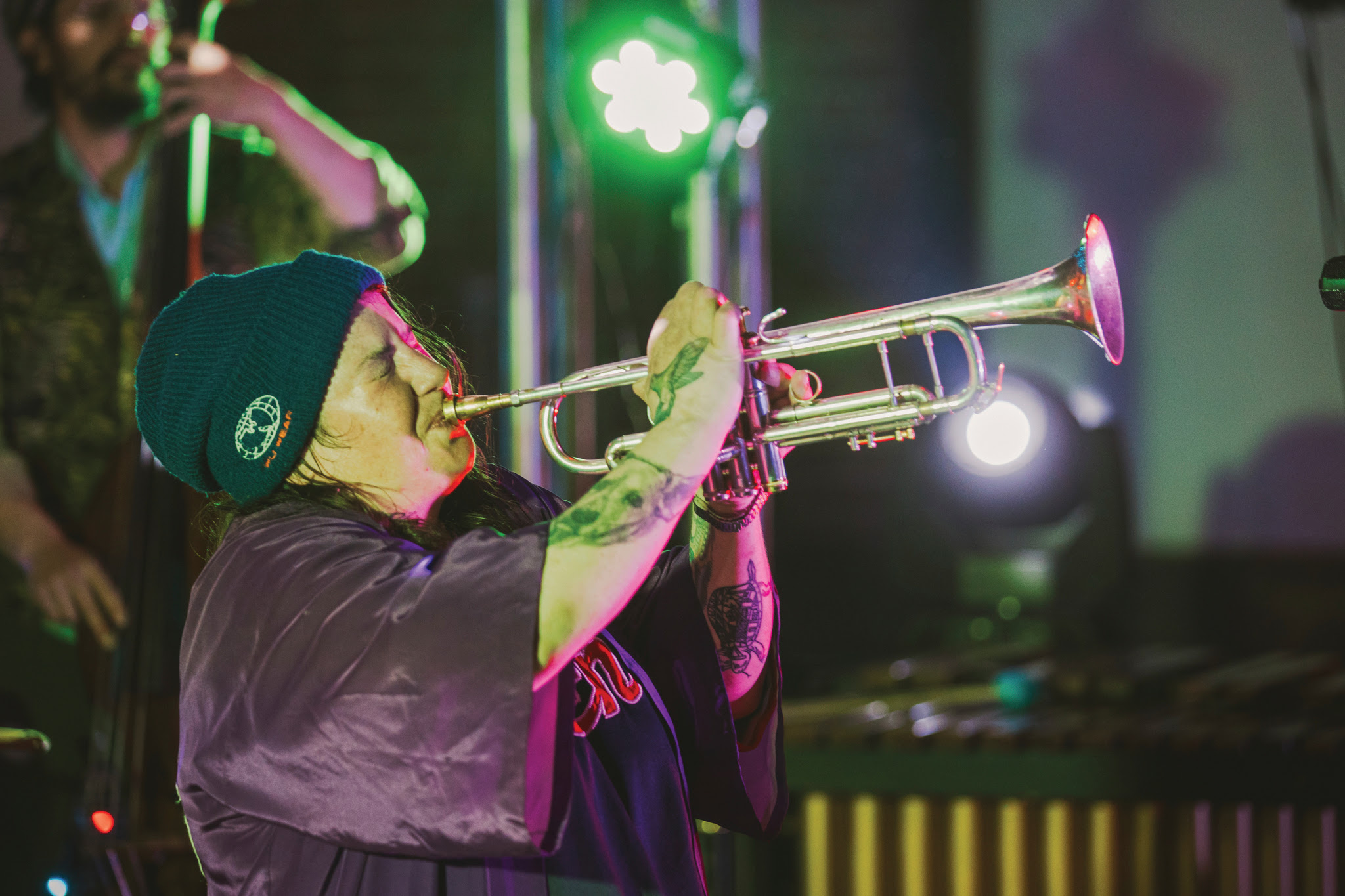
(Photo credit: Ben Semisch, courtesy of Bemis Center for Contemporary Arts)
Jaimie Branch ‘Fly Or Die Fly Or Die Fly Or Die ((word war))’
(International Anthem) 25th August 2023
As an unwittingly last will and testament, the late experimental trumpeter Jaimie Branch’s final led album with her Fly Or Die ensemble is a beautiful collision of ideas and worldly fusions that pushes and pulls but never comes unstuck. In fact, despite the “world war” suffix backdrop this album of both hollered and more disarming protestation colourfully embraces the melodic, the groove and even the playful.
Whilst the “avant-garde” label sticks, this rambunctious, more ambitious, more demanding minor opus flows and swings to a polygenesis mix of spiritual, conscious, Afro, Latin and Ethio-jazz, the great American songbook, no wave, noise and the psychedelic. And yet, on the other hand, is almost punk in attitude; a sort of anything goes in the pursuit of the message: an embodiment of challenging the boundaries.
In light of her untimely death at the age of just thirty-nine last year (the release of this album tying in with the first anniversary of her passing), this incredible statement can be read as a sonic monument; a legacy project left behind as a blueprint for a whole movement. The lyrics to the actionist rumpus ‘Burning Grey’, delivered more like Ariel Up or Polystyrene, to a swinging protest march of Phil Cohran, the Pan Afrikan Peoples Arkestra and Cab Calloway, seem almost prophetic: “Wish I had the time” and the lasting sign-off, “Don’t forget to fight”.
The final album is one Branch would recognize; more or less musically complete, recorded as it was back in April of 2022 during an artist residency at the Bemis Center For Contemporary Art in Omaha, Nebraska. However, Branch’s sister Kate and a cast of collaborators rallied round to finish the artwork and production; the final article a proud achievement encouraged on by well-wishers and friends alike.
Alongside “Breezy” Branch, who not only masters the trumpet but pushes her voice like never before and picks up on the percussion and some keys, is her stalwart troupe of Lester St. Louis (cello, flute, keys, marimba and voice), Jason Ajemian (double bass, electric bass, marimba and voice), and Chad Taylor (bells, drums, mbira, timpani and, you guessed it, marimba). That quartet is expanded further by an array of guests, including a trio of notable Chicago-hailed innovators (the city, one of Branch’s biggest influences and home for a period), the arranger/composer/engineer/trombonist Nick Broste, musician/vocalist Akenya Seymour and fellow International Anthem label mate, the drummer Daniel Villarreal (he released his debut, Panama ’77 on the imprint last year). Rounding that worthy impressive list off is the American multi-instrumentalist, Cave/Exo Planet/Circuit des Yeux (the list goes on) instigator Rob Frye.
Not so much a surprise, the album opens with a sort of stained glass bathed organ overture: part the afflatus, part pastoral hallowed ELP, part new age kosmische. A roll of bounded controlled thunder and gravitas is added to a crystal bellow and squeeze of radiant notes and the thinly pressured valves of Branch’s trumpet, which makes a brief appearance after the Ariel Kalma-like transcendence. ‘Aurora Rising’ lays down a short ceremonial communion with nature’s light before changing gear and spheres of influence. ‘Borealis Dancing’ now adds Mulatu Astake Ethio-jazz, a touch of Fela Kuti, Don Cherry and Yazz Ahmed to the ephemeral Northern Lights show as Branch toots long and softly at first before changing to higher pitch shrills. The rhythm, timing changes at the halfway mark towards a slinking groove of funk and Afro-jazz, the trumpet now cupped and echoing.
By the fourth track, ‘The Mountain’, there’s a complete sea change in mood, direction as Branch and her foils transform The Meat Puppets quickened country yin ‘Comin’ Down’. A dueting Branch and Ajemian bring it back home (so to speak) to the Ozarks and Appalachians via Paul Simon, Dylan, 60s West Coast troubadour traditions and a reimagined Sun Records. A brassy-sounded trumpet repeats the tone and springy country vocals as a gurgle of drawn-out cello plays a more somber rumination of hardy travail. To be honest, I was unaware of The Meat Puppets original, but this is a welcome meander in a different direction.
A full lineup joins in on the marimba heavy carnival turn mysterious swamp ether ‘Baba Louie’. Francis Bebey swerves to Satchmo New Orleans, whilst taking a dance around Masekela’s Soweto on a bustled bounce of joy and triumph, before succumbing to the voodoo psychedelic vapours; enticed by a cooing R&B flavoured misty Seymour. This bleeds into the bluegrass fiddled stirrings of ‘Bolinko Bass’, another Orleans evoked, almost regimental drummed bayou Mardi Gras of David Byrne, Funk Ark and Phil Ranelin. Almost mournful, ‘And Kuma Walks’ is more bluesy sounding, yet estranged at the same time; skulking amongst the spirits as someone saws through a fiddle as the trumpet aches in elegiac plaint.
Single, ‘Take Over The World’ is a hyped-up rattle and untethered excitement of no wave, punk jazz. Branch repeats a wild mantra and plays a burning bright thrill of trumpeted blasts whilst a controlled chaos spins all around her. Protest and partying converge for an electrifying, and later on, psychedelic bending stretched act of defiance.
The album ends by simmering down to a period of Afro-spiritual lament and reflection, on the sloganist berating ‘World War (Repirse)’. There’s serious bowed strings, trilled and forewarned trumpet, a sustained organ and windy, desolate enacted atmosphere on this weary actionist swan song: Branch urging caution at “false flags” and encouraging the fight.
For me Branch’s main instrument burns bright, and yet never seems to dominate, lead or overstay its welcome at any point on the album. Not for nothing is her own quote of “…meaning every note”, with not one rasp, trill, toot and cycle out of place; nothing is pushed but just felt and right at that moment. It feels to me, despite such a rich and diverse back catalogue, that Branch had so much more to give, her best still to come. And her gift was not just in crossing and mixing styles, influences, but also in pushing others to reach their own full potential as musicians. Fly Or Die Fly Or Die Fly Or Die ((word war)) is an accomplished album that channels the legacies of Chicago, New Orleans and New York to create an eclectic modern adventure in protest jazz.
Knoel Scott Ft. Marshall Allen ‘Celestial’
(Night Dreamers)
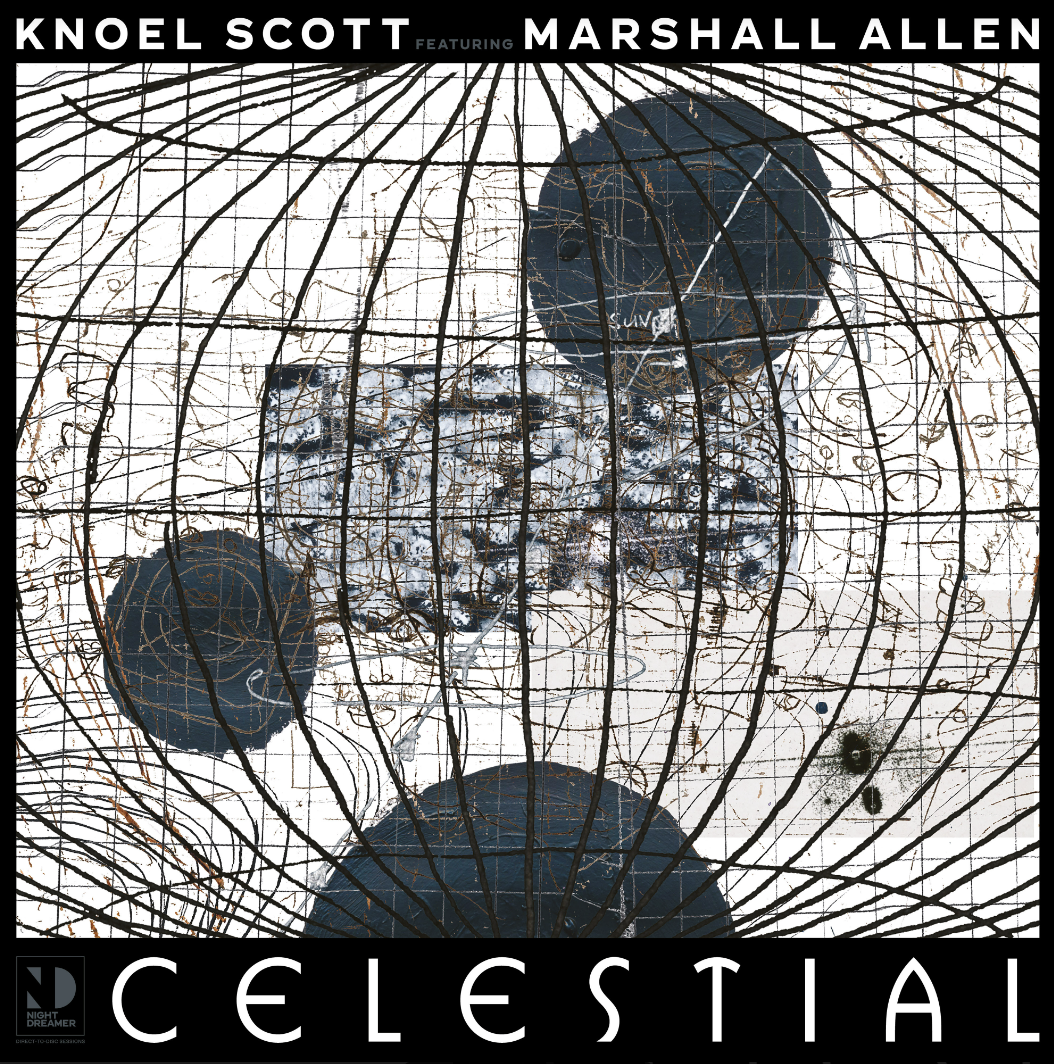
A leading light in the Sun Ra cosmology since auditioning for the Saturn jazz ambassador’s famous Arkestra ensemble in 1979, the baritone saxophonist, composer, vocalist and, when the occasion arises, dancer Knoel Scott amasses a lifetime of experience and musicianship on his debut solo-headed album. I say debut and solo, and without the extension of his previous KS Quintet named release, but the reeds specialist shares his Celestial project title with the Arkestra’s freeform progenitor, Marshall Allen.
Allen’s relationship with Sun Ra, on an album positively radiant and lunar with his guardianship and influence, goes back much further than Knoels; a stalwart since the ensemble’s formation in the 1950s, leading the troupe, the baton passed down as it were, after the cosmic Afrofuturist titan’s death in 1993. Unbelievably still in fine fettle, despite almost celebrating his centenary (that’s next May by the way), the avant-garde, inter-dimensional alto saxophonist, flutist, oboe, piccolo and EWI (that’s Electronic Wood Instrument) synthesist can be heard lending the latter’s strange sci-fi arcs, bends and space dust to the album’s title-track. It’s unsurprising to find that ‘Celestial’ has all the hallmarks of Ra too, written as it was originally with strings for the Arkestra, but never recorded.
The Arkestra family is extensive with celestial poetry taken from the late Arnold “Arto” Jenkins, recited on this universal lullaby. Art stuck with the Arkestra for thirty-six years, right up until his death in 2012. You can hear him and his “space megaphone” delivered offerings to the galaxy on Secrets Of The Sun, way back in 1962. As a homage to that universal-spiritualist’s wanton guidance, Knoel trips the radiant light fantastic, giving praise to the wisdom of the ancients and star people on a seeker’s performance of UFO oscillations, serenaded sentiments and dreamy translucence. It sounds like Cab Calloway and 50s wings being beamed up into Sun Ra’s off-world paradise.
The influence continues with the presence of the Paris scene stalwart and multifaceted (from Dancehall to Makossa, and of course jazz) drummer Chris Henderson, who’s experiences lend a both studied and more untethered freeform feel that moves between swing, big band, Latin, bop and the experimental.
This however is an inter-generational album, with fresher faces of the London scene, the very much in-demand UK keyboardist and versatile pianist Charlie Stacey and Verona-bred electric bassist and oft Arkestra and Knoel Quartet foil, Mikele Montolli. Hailed, quite rightly, as an advanced player, able to adapt to a wealth of styles, Stacey’s touch can evoke the best of those sublime 50s Blue Note recordings, touches of Oscar Peterson and Allen collaborator Terry Adams. The piano both flows with a tinkled busy lightness or strikes the heightened and jarring near-dissonance of freeform jazz; a descending off-tune part here, Cuban show time and bluesy or smoky lounge parts elsewhere: Unstated, yet moving along the action, or taking a soft stroll down the scales.
It’s another musician, part of the luminary brethren, that inspires the Afro-Cuban via Saturn’s rings ‘Makanda’. Paying tribute to a late mentor, Dr. Ken “Makanda” McIntyre, Knoel cooks up a Latin flavoured cool breeze of Havana, Harold Land vibes and R&B grooves: all undulated by sci-fi warbles and flits. A pivotal figure and influence for Knoel, “Makanda” (a name bestowed upon the reeds maestro and composer when playing in Africa, it translates from the Ndekele language as “many skins”, and in the Shona as “many heads”) founded the first ever African American music program in the States in 1971, and had worked with such notable talent as Eric Dolphy, Cecil Taylor and Nat Adderlay. Knoel and friends up the funk and balmy rhythms on this soulful homage to the late great man.
On his part, Knoel’s saxophone squawks, strains, honks and squeaks, and yet also serenades: even soothes. Wilder higher registered beak pecks turn into a near chaos, a cacophony, on the improvisation piece ‘Conversation With The Cosmos’. Coltrane, Sam Rivers and Anthony Braxton wail in zero gravity, whilst those wild rasps feel almost smoldering and lounge-like on the final mid paced twelve-bar slinky ‘Blu Blues’.
What a stellar set from the Arkestra acolyte, the Marshall and inner circle; and well done to the Night Dreamers for coaxing out this cosmic marvel. The process if you’re new to this label project, is to record the performances direct to tape before cutting on a Sally lathe the final vinyl artifact. In mono, recorded in an analogue studio, the sound is alive, inviting and, well, “celestial”. The experience speaks, communicates, and pushes the perimeters on every note, as a culmination of African American jazz styles are attuned to the stars.
Andrew Hung ‘Deliverance’
(Lex Records) 11th August 2023
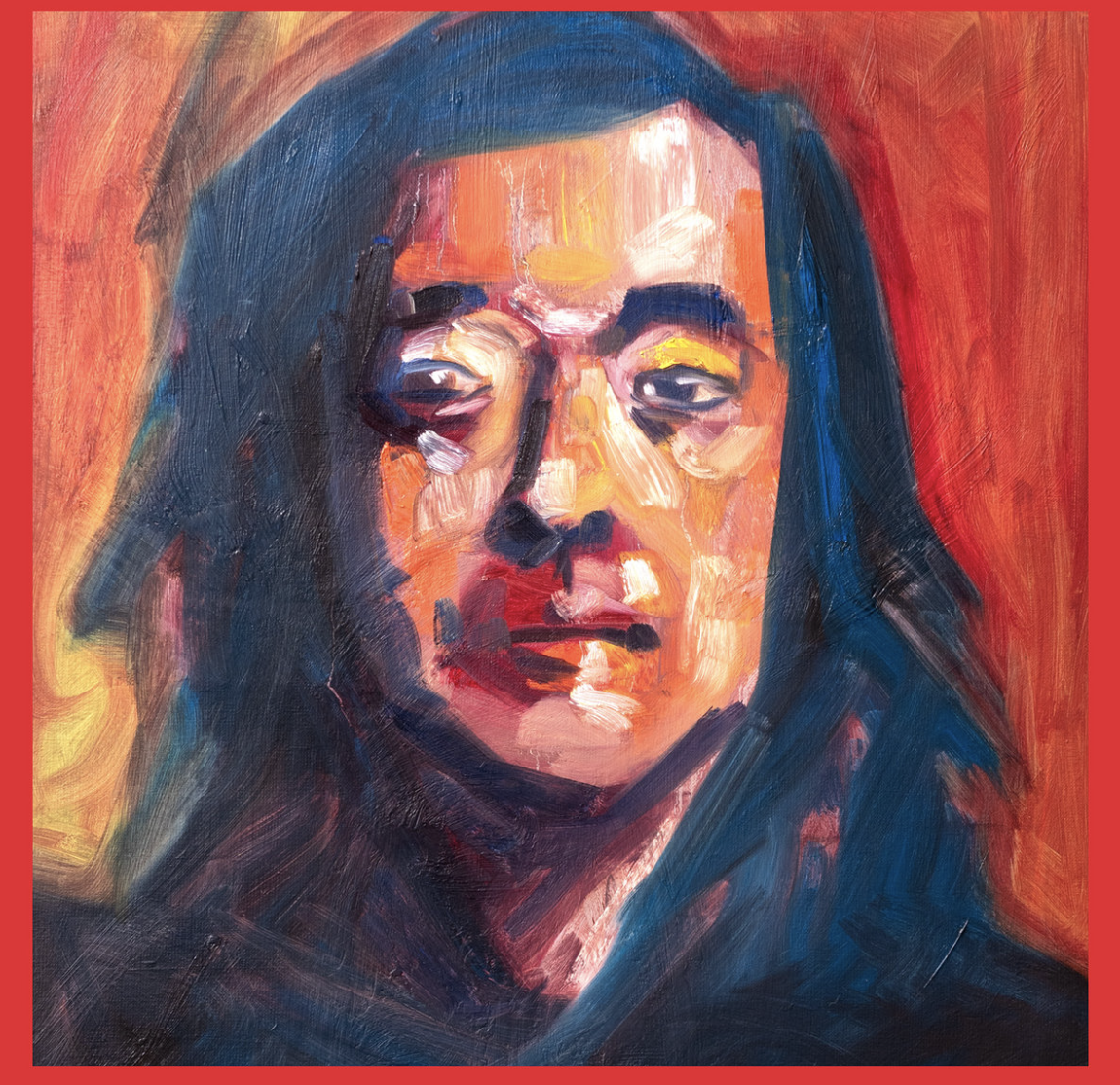
With pain, suffering and anguish former Fuck Buttons trick noise maker Andrew Hung finds a cathartic release on his third solo outing, Deliverance. But as that title suggest, the anxieties and sense of isolation and belonging now seem to have slowly dissipated as Hung feels he’s been delivered from the morose and dark fog of depression; although there’s plenty of broody, moody despair and darkened thoughts to wade through before catching the light of hope.
Hope, being set free, the constantly developing artist and producer does seem to have found his creative peace; likening this album to “the end of the chrysalis stage, like breaking free from a previous life.” Not so much reincarnation as a new incarnation, pushed on during lockdowns to mine the deep well of his soul, to face regrets and failings, but also find what’s missing.
An act of self-realization perhaps, Hung conducts a therapeutic session both unflinching and revealing. If the lyrics of ‘Don’t Believe It Now’ are anything to go by, thoughts and mental anguish at one point were truly dark. However, that filtered vapour counters the resigned with a reviving build up. And on the opening tunneled, Sister Bliss and Underworld like, moody turn freedom spin, ‘Ocean Mouth’, Hung faces a list of disappointing traits head on: Almost like taking a breath as the Robert Smith-like palpitations and rave-y Bloc Party velocity of the production avoids suffocation and gravitates towards the techno cathedral of light. Submerged at every turn with recurring references to water, Hung swims and navigates the torrents and tides to find a number of revelations about himself: conquering fear.
The previous solo album, Devastations (a choice album no less in my end of year lists for 2021) looked to the cosmos with a propulsion of electronic, kosmische, motorik, Madchester and synth pop influences, and featured Hung the self-taught singer evoking a mix of Robert Smith (some very cure-esque touches musically too), Karl Hyde, Mark Hollis and The Cry’s Kim Berly. More distressed, gasping and wrenching Hung takes some of those same influences forward on Deliverance, whilst also seeming to whip up a touch of Minny Pops, New Order, Soft Cell and John Foxx on the struggles of isolation and need to belong themed neo-romantic ‘Find Out’.
In another honest cycle of shedding shame and casting away the pain in favour of finding that alluded love “saturation”, ‘Never Be The Same’ builds from synthesized drum pad elements of the 80s German new wave, Factory Records and industrial synth-pop into another unshackled escape towards the light of revelation. I’d throw in Martin Dupont, Tears For Fears and Yazoo to that both pumped and vapourous mix.
Floundering no more, Hung looks to have found his place, his voice too. Deliverance finds him channeling his lamentable, pained, and unsure emotions into something positive and bright with another candid confessional solo album of rave-y synth-pop indie brilliance.
Various ‘Intended Consequences’
(Apranik Records)
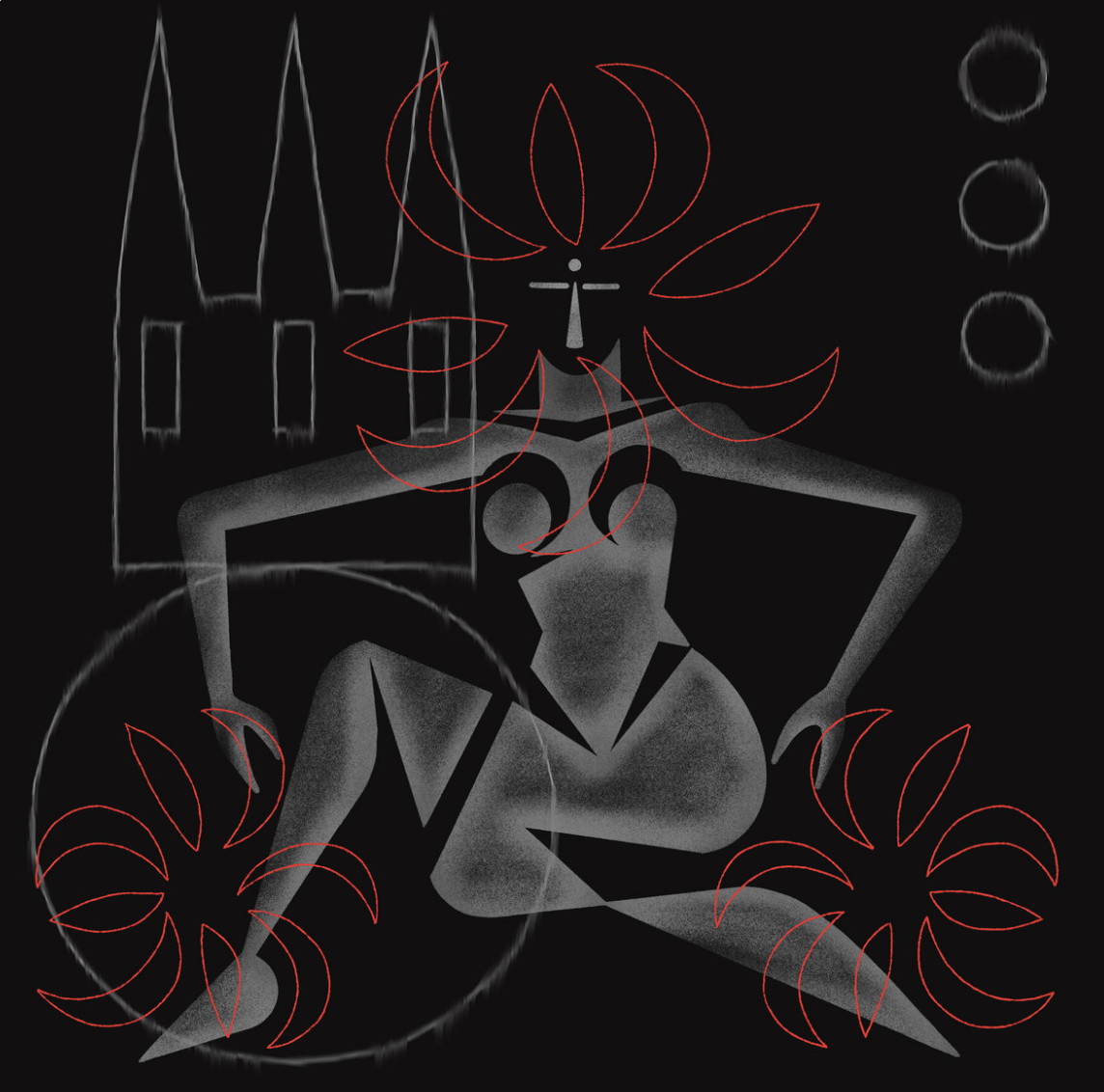
With a hellish multitude of flashpoints and distractions across the globe keeping the continuing fight for women’s liberation in Iran off the news rolls, it has become apparent that the Iranians themselves have been left to carry on the struggle with little support. In an ongoing war between the forces of the authoritarian religious state and a younger generation demanding an end to the erosions of there civil liberties and freedoms, the crisis in the country entered a dark bloody chapter last year with the murder in custody of Masha Zhina Amini by the “morality police”.
After a rightful campaign of protest and action at such a heinous crime, a brutal crackdown by the state led to mass arrests and even executions (mostly of male supporters, activists, and usually on trumped up charges). Further restrictions were invoked. And just as horrifying, in the last year, and right up to the last few months, there has been a nationwide spate of deliberate poisonings of schoolgirls (one of the groups who mobilized against the authorities in the wake of Amini’s cruel death) on mass. Defiant still, even in the face of such oppression, the brave women of Iran have strengthened their resolve only further.
In the face of such attacks, clampdowns, the music scene has responded with a strong message of resistance and solidarity. Despite everything, cities like the capital of Tehran have a strong music scene of contemporary artists, composers, DJs and performers working across all mediums, including art (which is probably why so much of the music is also so visceral, descriptive and evocative of imagery). One such collaborative force of advocates, AIDA and Nesa Azadikhah, co-founded the Apranik Records label, a platform for female empowerment. Following this year’s earlier Women Life Freedom compilation, a second spotlight volume delves further into not only the Tehran scene but picks out choice tracks from those female Iranians working outside the country, in such epicenters as London (AZADI.mp3) and Berlin (Ava Irandoost).
Sonic wise it covers everything from d’n’b, trance, deep house and techno to sound art experimentation. The range of moods is just as diverse in that respect, from restlessness to the reflective and chaotic.
Contributions from both Azadikhah (the hand drum rattled d’n’b breaks and spacy, airy trance ‘Perpetual’) and AIDA (the submerged melodious and dreamy techno ‘Ode To Expectations’, which features the final love-predicament film sample, “You know that I love you, I really do. But I have to look after myself too.”) can be found alongside a burgeoning talent pool. The already mentioned London-based producer and singer AZADI.mp3 opens this collection with a filtered female chorus of collective mantra protest, set to a sort of R&B, 2-step and bass throbbed production, on ‘Empty Platform’– just one of many tracks that uses the sounds of a more traditional Iran, especially the daf drum, alongside modern and futuristic warped effects. The sound artist and composer Rojin Sharafi likewise features the rattled rhythms of hand drums and some hidden spindled instrument – like running a stick across railings – on her entrancing kinetic techno ritual of “trauma”, ‘dbkk’.
Abji_hypersun allows the sounds of the environment to seep into her slow-building track of field recordings, collage and breaks (two-stroke scooters buzz by as distant female conversations reverberate on the street). Part jungle breaks pirate radio, part Matthew David, Jon The Dentist and LTJ Bukem, ‘Resist The God Trick’ evokes a tunneled vision of haunted reminisces and resistance in the shadows.
Emsho’s ‘Down Time’ is a rotor-bladed electro mix of Basic Channel and The Chemical Brothers, and Aida Shirazi’s mysterious wind of dark meta ‘R.E.V.O.L.U.T.I.O.N’ spells out the rage with a shadowy, near daemonic scripture of wrath and revenge – a gothic synth sinister avenging angel promises that the women of Iran will neither “forget” nor “forgive” their oppressors, torturers and murderers. Farzané seems to evoke the alien, the sci-fi on her experimental, sometimes disturbing dial twisting and crackled ‘Quori’ transmission, and the Berlin-based DJ, video artist and music producer Ava Irandoost draws on Laraaji-like dulcimer tones for her dream mirrored kosmische evocation ‘CINEREOUS’. The Tehran composer, pianist and bassist Ava Rasti draws a close to the compilation with a classical-tinged, harmonic ringed, saddened piano-lingering performance, entitled ‘Eight Night’ – an atmospheric troubled trauma is encapsulated with the deftest of touches.
It might be my own nostalgic penchant for 90s electronic music (my formative years of course), but this series (if we can call it that) could be an Iranian version of the Trance Europe Express compilations brought out during that decade; a treasure trove of discoveries and whole scenes that opened up a world of previously unknown music to many of us not living in the epicenters of North America, the UK and Europe and beyond. Hopefully this latest platform of innovative artists from across the arts will draw the attention it deserves; the message hardly virtuous, in your face, but sophisticated: the very act of female Iranians making a name for themselves despite censorship and bans a sign of empowerment and resistance in itself. Few groups deserve our support (which in the West has been sadly absent) more, but don’t just purchase for the cause but for the musical strives being awakened and produced under tyrannical oppression, and because this is a solid collection of great electronic music.
Nagat ‘Eyoun El Alb’
(WEWANTSOUNDS) 25th August 2023
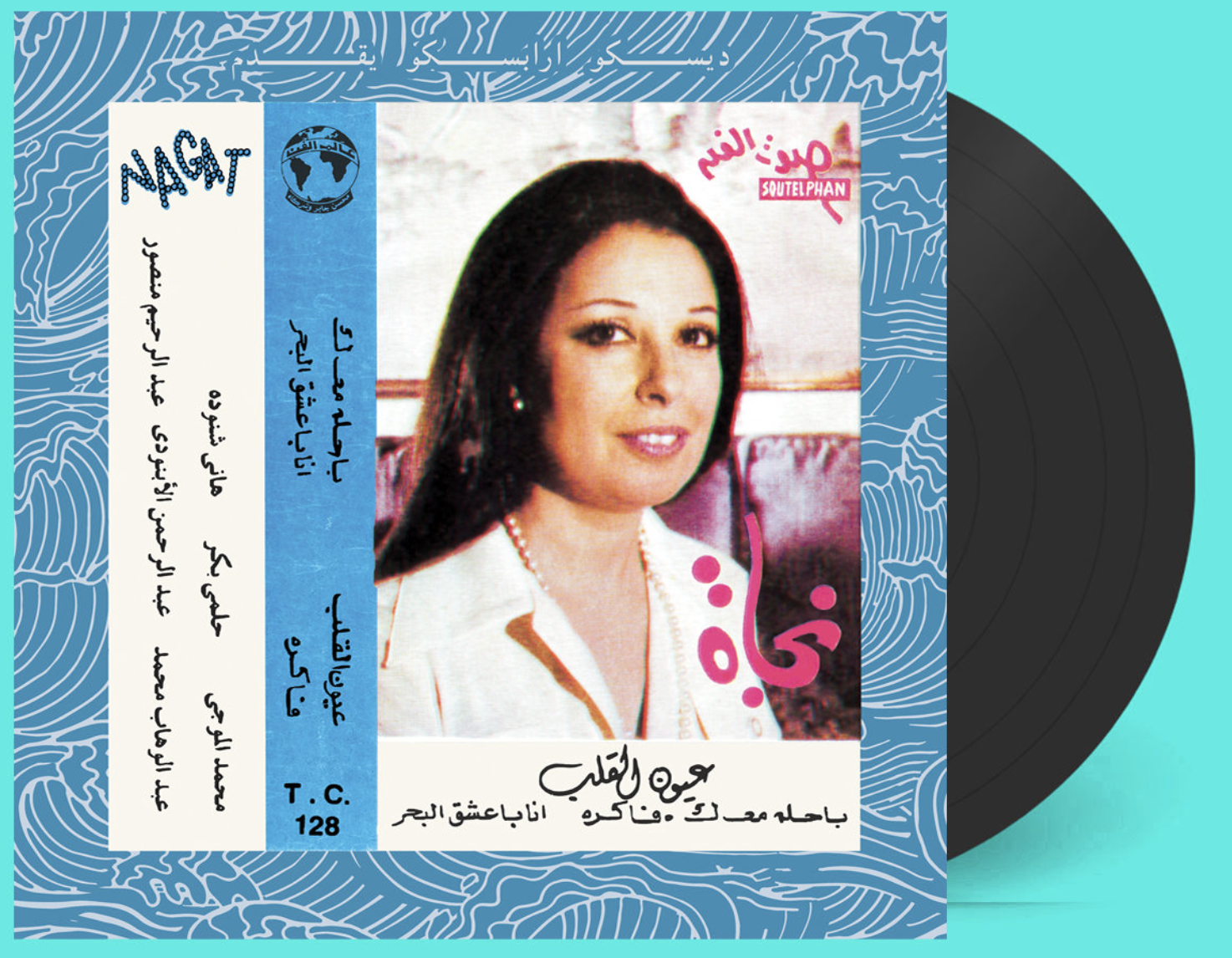
Renowned as one of the greatest, most exceptional voices to have emerged from the golden 40s/50s/60s epoch of Egyptian and the greater Arabian songstresses and divas, Nagat El Seghirah was a rightly revered performer, who’s career spanned more than half a century.
Even in an age rich with accomplished, influential and groundbreaking singers Nagat held her own against such icons as Oum Kalthoum, Fairuz, Warda and perhaps the most celebrated of the lot, the anointed “voice of Egypt” Umm Kulthum. The latter, hailed the “star of the east”, was an influence on the early starter during the burgeoning years of imitation, when Nagat was a child, barely in her teens. Her affectionate appellation, “El Seghirah” or “El Sagheera”, can be translated as “the small”, “the young”, and marks the singer, performer and film star’s young apprenticeship; from entertaining the notable guests that gathered at her father’s (the famed calligrapher Mohamad Hosny) home at the age of five onwards, to her first role in cinema at the age of eight, starring in the 1947 film Hadiya. Hosny was known to push his extensive brood of children from two marriages, sometimes excessively, into various creative careers: Nagat’s half-sister was the famous actress Soad Hosny, her older brother, Ezz Eddin Hosni, a notable composer who helped her own development and natural talent.
During those initial years of development Nagat would interpret songs by such legendary figures as Mohamed Abdel Wahab, Baligh Hamdy and Kamal Al Taweel, but would find both her true and distinctive voice when interpreting the work of the Syrian diplomat-poet Nizar Qabbani. She gained adulation and fans after performing the esteemed poet’s tragic ‘Irja Ilyya’ (“Return To Me”), which is based on his sister who committed suicide rather than enter into an arranged marriage. Plaintive, stark, it rightly struck a chord with the public at the time, with its feminist lyrics and spotlight on forced marriages. It would be become a torchlight for freedom and injustice, with Nagat adding her own improvised original lines during the 1970s.
Born in 1938 but already gaining plaudits by the end of the next decade, into the next, Nagat released her first actual song ‘Why Don’t You Allow Me To Love You’ in 1955; the year she would also be married, for the first time, to a friend of one of her brothers: still only sixteen. It’s no surprise, although in no way a forced marriage, that she could, with a commanding voice, perform Qabbani’s tragedy. That marriage would only last however until the turn of the 1960s; when Nagat went on to marry the Egyptian film director Houssam El-din Mustafa in 1967 (a marriage that lasted an even shorter time). Nagat would remain, in fact seeing as she is still alive, in her eighties, remains unmarried. In recent years, since her singing retirement over twenty years ago, living a semi-reclusive life in Cairo but in poor health, there’s been some contact, even projects floated. Only last year she was featured on the official soundtrack for the streaming service series Moon Knight.
From concert to soundstage with starring roles in the films Black Candles, Beach Of Fun, My Dear Daughter and Dried Tears, Nagat gradually moved from shorter songs to ever more lengthy performances, some of which would last an hour. As time went on the songstress actress would find it harder to find those inspired works to perform. Retiring from film in 1976, Nagat would still persevere with music. And by the time she reached her early forties, in the 1980s, would release this four-track showcase of matured talented performances entitled Eyoun El Alb.
Originally brought out exclusively on cassette (like so much of the Egyptian music market), forty odd years later the reissue vinyl specialists of impeccable tastes (releasing a myriad of jazz titles and nuggets from across the Arabian world and Japan), WEWANTSOUNDS in conjunction with the Arabia and North African crate-digger Disco Abrabesquo (the moniker of the Egyptian, Amsterdam-residing DJ, Moataz Rageb), have pressed it onto vinyl for the first time. If you are a regular reader, or in fact a regular WWS’s follower and buyer, then you will be aware of that label’s previous collaboration with DA, last year’s (although they’ve also released a smattering of Egyptian focused records too over the years) Sharayet El Disco compilation. One notable inclusion on that eye-opening compilation (reviewed by me in May’s Perusal column) was from the legendary Al Massrieen. A much sought after recording outfit, the group’s Hany Shenouda produced the scenic, romantic ‘Ana Bashaa El Bahr’ (or “I Adore The Sea”) finale on this Nagat album. Adoration and yearned dreaminess for a place and time are evoked to Shenouda’s trebly near-psych tremolo guitar and light hand drum patters. Alongside the more lilting and fluted ‘Bahlam Meeak’ (“I Dream With You”), this is one of those examples of Nagat’s shortened form of storytelling romance and heartache. ‘Bahlam Meeak’ is also an example of Nagat’s more lightened, honeyed approach to what is a tinkled serenaded, wafted vision of blossom scented sand dune balladry. It evokes the music of Bacharach and the cool soundtracks of early 60s French and Italian new wave cinema.
Taking up the entirety of Side One, there’s the long form titular performance of heightened drama and searing swirled strings oboe and scuffled trinkets. Over eighteen-minutes of longed romantic gestures, the action pauses repeatedly between undefined sections; allowing the auditorium audience to show its appreciation, encouragement, which they do constantly, even when the music starts back up again. On a Matinee scale, this mini-story, unveiling of lovelorn exultations, but vulnerability and occasional lament, moves like a desert caravan across an Egyptian set, or, sumptuously glides into a Persian court. A fantastic display of sagacious craft, Nagat’s voice never has to rise or push to convey a class piece of theatre and effective yearn of love.
Only half that duration, but still a long track, ‘Fakru’ (“Do You Remember”) is a rumination; the vibrating pools of memoary reflected in the dreamy wobbled effects that permeate this fluctuating lead vocal delivery and prompting chorus of female voices. Classical Cairo, there’s a chink and tinkle of percussion and shimmy-shaking, belly dancing rhythm that luxuriantly accompanies a yearning poetic and sometimes coquettish Nagat on her reminisces. As I said already, this album represents various sides of the enchanting, soulful and also distinctive icon’s vocal presence and range. The long and short: the unmistakable sound of Egypt, but also those influences from abroad too, are melded together on a classy piece of cinematic and poetic mastery. Make room again on those creaking shelving units for another vinyl addition to the collection.
CHELA ‘Diagonal Drift’
(Echodelick – USA, We Here & Now – CA, Ramble Records – Aus, Worst Bassist Records – EU)
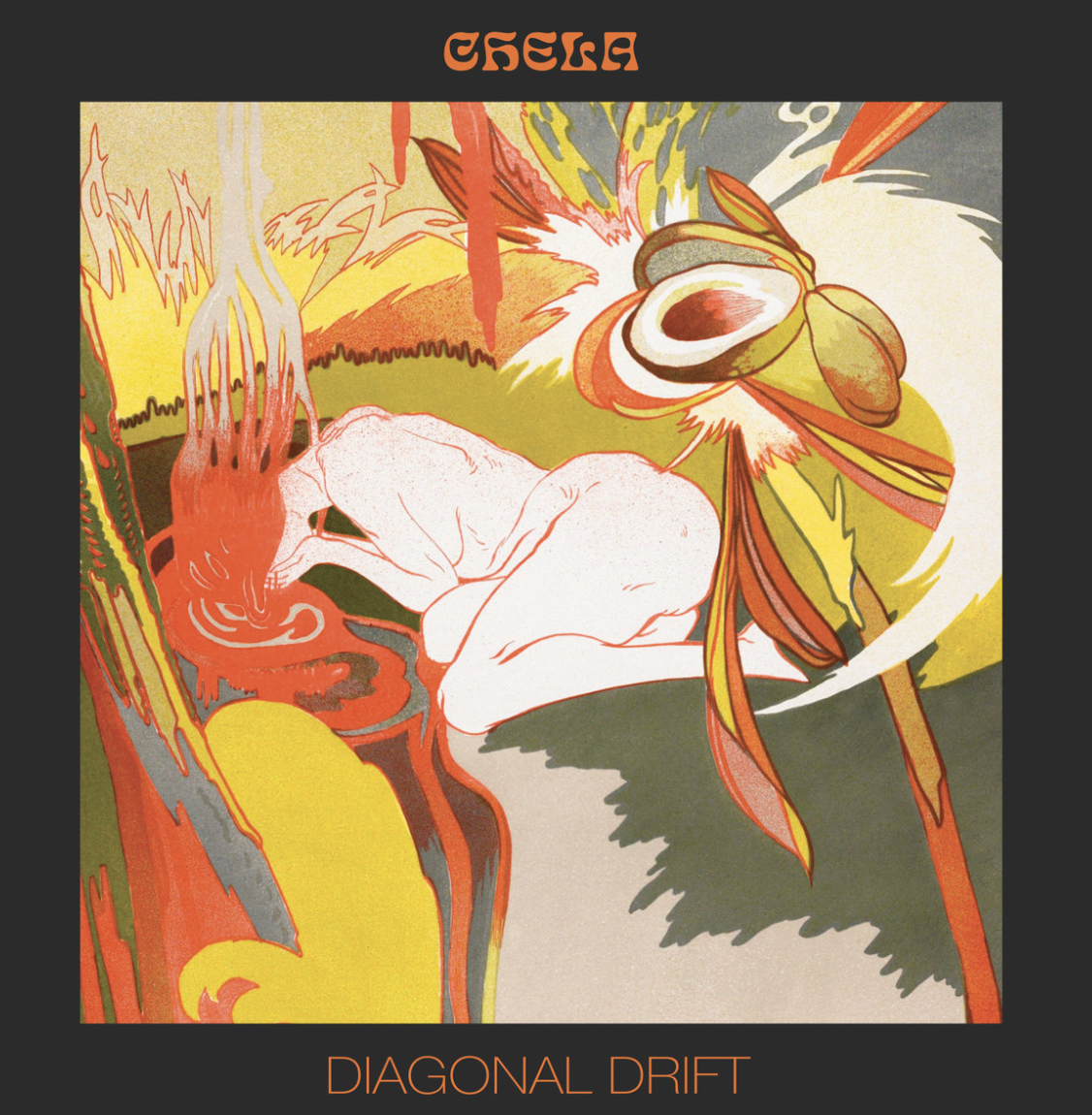
In communion with his long-time friend and collaborative foil in the University Challenged trio (alongside Oli Heffernan) Kohhei Matsuda, Ajay Saggar extends his blessed travels along the astral highways and byways with a new venture, CHELA.
Absorbed, imbued and inspired by Indian spiritualism, history and travails, its psychogeography and trauma, both partners in the new direction come together under the Sanskrit word for “disciple”; taken from the verb and root “to serve”, the “Chela” is similar in concept to a student, but implies a more loyal closeness with their teacher. In Hinduism this bond is considered sacred: An apt moniker for such inter-dimensional, afflatus dreamers and acolytes of raga, the new age, psychedlia and kosmische music.
Divine styler Saggar (who is also a member of King Champion Sounds, solos under the Bhajan Bhoy alias, and collaborates with Merinde Verbeck in the Deutsche Ashram duo) and Japanese noisenik Matsuda (most notably a member of the Bo Ningen quartet) spent much of 2022 putting this inaugural baptism together. And so with dedication to their art, the duo have sonically and melodically taken time, given depth to their new mysterious broadcast; that is, broadcasts from the ether, supernatural, uncertain, Fortean and cosmic. Different yet not entirely detached from previous incarnations, fans of both artists will pick up on past signatures, sounds and conceptions. However, they’ve managed to realign those same signatures, tuning into the mystical but often with trepidation and a sense that the noisier elements could consume all in their path.
Think Julius Eastman meets Fennesz we’re told; a good succinct summary. But I’d add a hell of a lot more, including Taylor Deupree and a cosmology of cosmic couriers. The opening ripple in the fabric of time, ‘Flyspray’, is an expanded peregrination of Beautifully tinkled Florian Fricke-like piano hauntings, Ariel Kalma and Syrinx new ageism and various Sky Records pioneers (Asmus Tietchens and Riechman spring to mind), all caught up in analogue wispy wind cacophony of divine rays, the esoteric and Eastern drones. Trippy warped reversals and folds, generator and processors nearly overwhelm the vague evocations of Tony Conrad, Schultz and a springy, but also spoke splayed banjo (which in itself seems to vaguely evoke the Balkans, Greece and strangely, India) on the reverberating ‘Appalachjo’.
In what could be a suggestion of “peace” and “harmony”, or reference to the Japanese town, ‘Heiwa’ is a hummed raga-like hymnal. A stand-up barrel-type piano plonks away from the ether, whilst ambient waves and traces of Dyzan invite heavenly reflection. ‘Ticker’ is a very different proposition. An intense chemistry of signals, beeps, quickened arrpegiator, moody signs of Faust and the sound of the Heart Of Darness are melted with Günter Schickert guitar, heavy acid Gong and various calculations.
‘Tanker’ feels like the most obvious attempt to score the sound of the title’s overbearing object; sounding like a alien freighter, both foreboding and mysterious. A scrawl and flapped ripple of radar and sonar bites into a resonating field of drones and sound waves, fog and guitar.
The final, spiritual and otherworldly track, ‘Worship’, features ghostly Indian voices and visitations from an event, service or chapter in time and history. A melodious piano chimes away in wisps of fanned cosmic mystique and cyclonic radio effects, whilst shades of FSOL, King Creosote (From Scotland With Love period) and Boards Of Canada linger. The video is more illuminating, a sepia film of bedside “worship”, healing for a leader, martyr, and a travelling funeral cortege that takes in rows of witnesses moved to touch, or just be in the essence of a distinguished teacher.
Once again with the cosmic and afflatus, Saggar and Matsuda expand their sound further. Diagonal Drift’s transcendental projection is just that, despite the building intensity and uncertainty, the broadcast noise of krautrock and kosmische styled aerial bends and radio tunings. CHELA is another welcome addition to the two artists oeuvre: one more step on the astral journey of mind-expanding experimentation.
Archive spots and now home to the Monolith Cocktail “cross-generational/cross-genre” Social Playlist – Words/Put Together By Dominic Valvona

A new thread, feed for 2023, the Digest pulls together tracks, videos and snippets of new music plus significant archival material and anniversary celebrating albums or artists -sometimes the odd obituary to those we lost on the way. From now on in the Digest will also be home to the regular Social Playlist. This is our imaginary radio show; an eclectic playlist of anniversary celebrating albums, a smattering of recent(ish) tunes and the music I’ve loved or owned from across the decades.
The August edition includes anniversary celebrating spots for both the Rolling Stones 1973 classic Goat’s Head Soup and Faust’s IV albums. There’s also volume 79 of the Social Playlist, with smatterings of class cuts from the late Jane Birkin (this month’s cover start) and Sinéad O’Connor, more anniversary albums and a mix of newish and older choice tunes from every genre possible and corner of the globe.
The Social Playlist #79
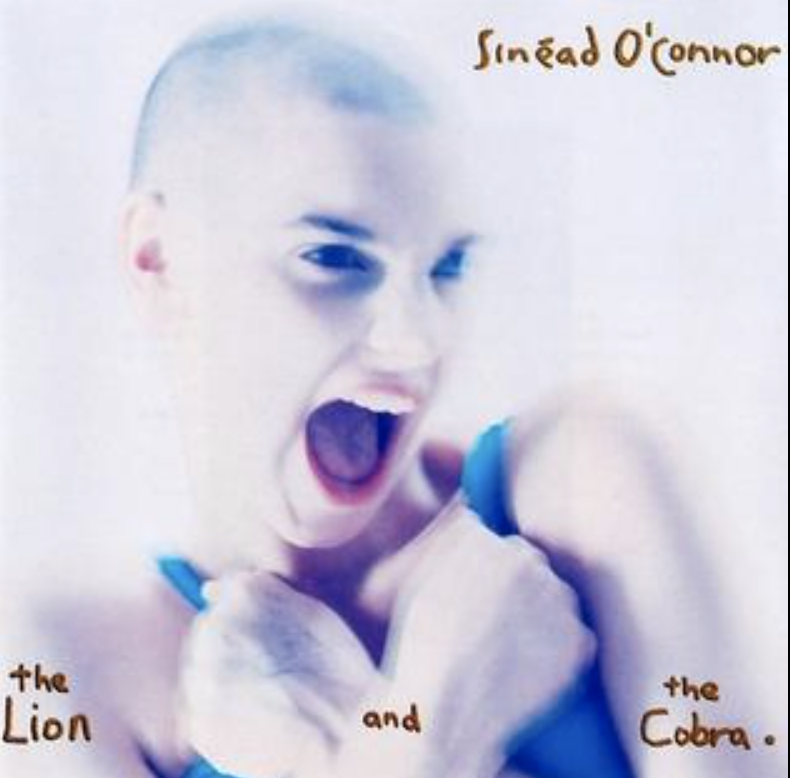
Anniversary Albums And Deaths Marked Alongside An Eclectic Mix Of Cross-Generational Music, Newish Tunes And A Few Surprises
Repeating myself, but if this is your first time here, first of all, welcome, and secondly here’s the lowdown on what the Social is:
Just give me two hours of your precious time to expose you to some of the most magical, incredible, eclectic, and freakish music that’s somehow been missed, or not even picked up on the radar. For the Social is my uninterrupted radio show flow of carefully curated music; marking anniversary albums and, sadly, deaths, but also sharing my own favourite discoveries over the decades and a number of new(ish) tracks missed or left out of the blog’s Monthly playlists.
We start of course with the twin tragedies of loss, and the passing of two of the most enigmatic, idiosyncratic and individual artists, Sinéad O’Connor and Jane Birkin. The former, never lost for words and causes, could channel Yeats whilst haranguing the Pope; pontificate on the Irish famine and sing ethereal tenderness like no one else. Sinéad didn’t always get it right (and has said some right old rubbish in her time), but whatever ire was raised her cause and protestations, actions had an impact; her music incredibly moving and evocative. So astonishing a talent, she managed to rile Prince to a state of jealous incandescent (and allegedly) and physical rage after the Irish singer-songwriter covered and pretty much owned the Purple One’s ‘Nothing Compares 2 U’. I never understood her conversion to Islam – what with all its own problematic ideals, scriptures and general feelings towards women – but that was Sinéad, always plowing her own pathway in the world, carrying a lifetime of travails and baggage, pain and anger. The latter of the two, Jane Birkin, was something else entirely. Pretty much destined it seemed and more comfortable with the culture and lifestyle of her adopted France, the coquettish muse enraptured the country’s supreme talent, Serge Gainsbourg – and John Barry before that – , and pretty much became a French deity. A polymath of a sort, from film to of course performing both with Serge and a solo career, she was a fashion icon to generations but above all, eccentrically unique: a true individual in every sense of the word. Both artists leave a great legacy of material behind, of which I’ve merely chosen a smattering of personal favourites.
Anniversary wise, and featured below in more detail, there’s tracks from The Rolling Stones Goats Head Soup and Faust IV. Alongside Stevie Wonder‘s glorious Innervisons, they all celebrate the big 5-0 this year. Alongside them are 40th anniversary nods to Cabaret Voltaire‘s The Crackdown and The Chameleons View From A Hill, plus a 30th acknowledgment to Amorphous Androgynous‘ Tales Of Ephidrina.
Newish tunes this month in the Khalab, Saigon Blue Rain, Laura Agnusdei and Zeus B. Held sit alongside older eclectic tracks from The Nuns, Family Band, Motion Man, Erica Pomerance, Fapardokly, Trends Of Culture, Kuumbia-Toudie Heath, A.B. Crentsil, Bonnie Koloc, Felius Andromeda and more…
ARCHIVE/ANNIVERSARY
Goats Head Soup: recipe for distraction
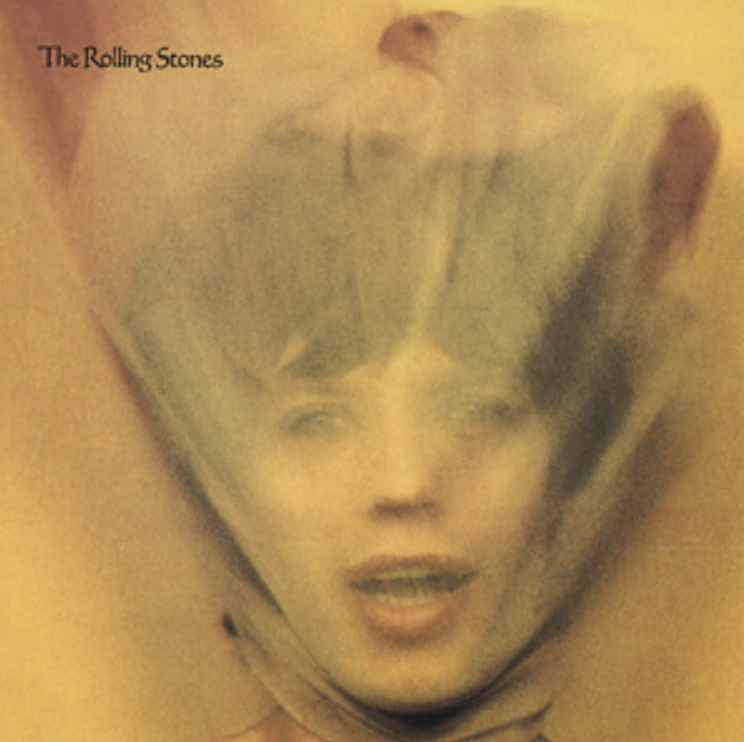
Taken out of storage, from my original potted history of The Rolling Stones series, another chance to read my concise summary of Goats Head Soup, which is of course 50 years old this year.
As the first Rolling Stones tenure drew to a close and a new epoch approached, the now appellate “Greatest Rock ‘n’ Roll band in the world” could look back proudly on a fruitful career – despite the smack, in-fighting and tragedies of course (namely the loss of Brian Jones). From 1962 to ‘72 they’d released ten, mostly, omnivorous and stunning albums and a staggering forty-five singles; many of which didn’t appear on the albums.
Their next stormy chapter would mark the end of their most productive period.
Sounding like a playful allusion to Satanism (again!) or a sub-Saharan delicacy, Goats Head Soup is a strange heady brew that has more in common with Beggars Banquet and Let It Bleed than with their last magnum opus, Exile On Main St.
In an exile funk, arguably of his own making, Richards’ options of residency were limited. Booted-out of France, non-grata for tax purposes in the UK, and out-staying his welcome in the States, it was either the “yodel-leh-hee!” skiing ranges and mountains of Switzerland or…the pleasurable oasis of Jamaica. Yep, Richards and his debacle settled in that winter of 72 upon the island, setting up base at Kingston’s Dynamic Sound Studio.
Remarkably, the evident aroma of the local intoxicates didn’t seem to upset the bands flow; if anything, they wrote and recorded far too many tracks. The old magic returned as Jagger settled down and began strumming the opening chords of the Gram Parsons-esque Winter; a number first conceived during sessions for Sticky Fingers.
Hustling that now synonymous Louisiana drawl and salacious swagger, the album opens with a voodoo raunchy skulk across a St. Louis cemetery on Dancing With Mr. D. Heard crackling and seeping through in a state of efflux, the chiming funk-fried presence of Billy Preston can be heard playing the clavinet on both this nod to mortality and the rest of the LP. Recalled for a second time, alongside Richards’s right-hand sax man and friend BobbyKeys, he joined an exotic mix of percussionists to add a certain reverent tone and mood that sways between the reflective beguilement of 100 Years Ago, and the “urban R&B”Doo Doo Doo Doo Doo (Heartbreaker); a song in which Jagger interweaves the tall tales of a boy mistakenly shot dead by US cops, and a 10 year-old girl who dies of a drug overdose in a sleazy back alley.
Faust ‘Faust IV’: 50 years old and still the sound of the future.

Taken from my original Krautrock series meander through the back catalogues of Popol Vuh, Can, Guru Guru, and of course Faust. Written around 16 years ago.
Nestled snugly in the quaint Oxfordshire countryside, the 16th century converted recording studio known simply and synonymously as The Manor, is up for sale.
This reputable legendary grade 2 listed building has been home to a right motley bunch of bands over its almost forty-year history, and seen some right old carry ons, including a naked Keith Richards running away from an aggrieved shotgun wielding husband, and countless Hieronymus Bosch like depictions of debauchery.
In 1971 Richard Branson brought this country pile and set about renovating it to accommodate a full-on state of the art studio with overnight rooms for bands to decamp, as part of his vision to change the way albums were made.
Up until this time most musicians had to travel to the major cities and record in workman like three-hour sessions, in much the same way that classical musicians did. Branson thought this was all a bit un-rock’n’roll like and arcane, he’d rather send off his bands to more tranquil and inspiring pastures far from the confines of the inner city, somewhere they could work 24 hours on their music without any worries or distractions, with a bed to lay the weary heads upon only a crawls length away.
One of the first artists to record at The Manor, was the rather green 19-year old Mike Oldfield, whose Tubular Bells new age classic single handily bankrolled the entire Virgin Label. Alongside him were groups such as The Bonzo Dog Do-Dah Band, Tangerine Dream and of course the mighty Faust. Later on Queen, XTC, Black Sabbath and Radiohead would all pass through its doors to record singles or LPs.
In 1973 Faust had a sort of partial success from the release of their Faust Tapes album, which carried the publicity stunt ’49p’ mark-up, and sold in abundance, though a whole swathe of the public who purchased it remained bewildered by it. A collection of cutting room floor outtakes and burgeoning ideas, roughly collaged together for release as a sort of interregnum between albums, the Tapes was a buffer for the groups next release proper, Faust IV – the true successor to So Far.
Faust began sessions in the spring, with the band haphazardly jamming new material, racing through ideas at a great speed, yet finding it difficult to settle on any specifics.
In fact a deep dragging feeling of ennui had taken hold, with cracks starting to appear in the dynamics and leadership. Recent touring had jaded them, especially Péron, as they were encouraged to keep to a similar set list of tracks and to tone down the more outrageous behaviour.
Faust weren’t normally used to repeating a performance, having had the luxury of being able to experiment at will, and also being lavished with their very own studio back in Wümme, where they could produce anything they wanted and change when the mood took them.
No. Faust were not used to conventions, which led to the albums sessions being fraught with tension and lethargy, and with Sosna repeatedly calling for his antagonistic fellow band members to slow down and relax a little.
If anyone needed any evidence of their short attention span then you’d only have had to have seen them live, with all their props including a load of TV sets, that may have indicated by their presence as being apparatus for some actionist performance art, but were in fact for the sake of the band in case they got bored – sometimes Zappi would mic them up if anything interesting did come on, jamming along to it in a kind of impromptu sampling session.
Frustrated at a lack of progress after months of work, and feeling constrained, they promptly reverted back to their old ways in antagonistic behaviour and began to waste Virgins money as quickly as they did Polydor’s. Yet it must be said that they did manage to create some really evocative and startling tracks in the village green picturesque landscape of The Manor, with the hypnotic ‘Jennifer’ and raucous ‘Giggy Smile’ amongst them, which both encapsulated the multifaceted angles of the bands sound to that point.
In fact IV is arguably the most balanced and complete LP in their catalogue, with its almost greatest hits sampler conclusive feel and well-rounded overall sound, it brings together the cut-up vignettes from The Faust Tapes and the best song based moments from So Far.
Their time at The Manor wasn’t entirely wasted.
Eventually they managed to produce at least the remunerates of an album, though they still needed a few tracks to finish off. With time running out, they included two good old recordings from the Wümme days, the trance heroics of the affectionately mocking entitled ‘Krautrock’, which had already been played on the John Peel radio show, and the German released single ‘It’s A Bit Of A Pain’. They also reworked the minor segue way ‘Picnic On A Frozen Lake’ from So Far, this time in the guise of an extended assemblage piece and sporting the added suffix of ‘…Deuxieme Tableux’, to finally put a lid on it.
Before it was released to the general public, compatriots and fellow sympathetic musicians had often dropped in to see what was afoot, eagerly looking forward to hearing this new material. Members from the Anglo/French trippers Gong – who shared the billing with Faust for a few concerts – and also Henry Cow – who were inspired by the group – both shared a perplexed and disappointed criticism of the album, feeling it lacked lustre.
Many critics only liked the second side, preferring its more welcoming and polished tones, writing off, as they saw it, the befuddled ‘Krautrock’ and dirge acid haze of ‘Jennifer’.
On the other hand, some fans were very vocal in criticising the record for not being radical enough, and for the more conventional leanings found on some of the tracks.
Faust IV failed to carry on the momentum of their last Virgin release, which sold an impressive 100,000 plus copies, though most people who owned a copy soon wished they hadn’t. Though not a failure, it hardly set the world alight, with its sometimes Pink Floyd psychedelic folk tones and vague lyrical drug fuelled floating excesses, as well as the blank music sheet artwork and workman like title, it did little to inspire.
But hey, lets not be too ingenuous, as it is a remarkable record full of some epic moving moments, and genius ideas – apart from maybe ‘The Sad Skinhead’, which seems to be an exercise in Germanic humour at our expense.
Uwe and the boys soon frustratingly packed their bags and left old Blighty for the Fatherland, where they booked into a Munich studio to record their next album, again the brain storming sessions for album titles can’t have been up to much as they called it Faust V.
Both Irmler and Sosna were supposed to produce this album of improvised recording sessions, but those cracks between the members started to really pull proceedings apart, with tensions running high both in the group and with the label.
Péron and his cohorts booked themselves into a luxury hotel, using the good old ‘We’re with Virgin’ excuse to pass the check-in desk.
After running up an extortionate bill, they decided to do a runner, with the repeat offender Péron acting as getaway driver. Unfortunately the hotels foyer entrance had a concrete post with an attached metal barrier, which they promptly drove straight into. They were then apprehended by the local plod and slung in jail. A rather embarrassing phone call to their parents eventually got them released, but not before a bill for 30,000 DM was flung in their face – they often joked that they’d never ever managed to pay it off.
The eventual album that emerged from the this chaos, was ceremonially turned down flat by Virgin, and only existed as a promotional tape for years, though you can find various versions on CD nowadays.
Faust and Uwe became disillusioned and decided to call it a day, splitting into two factions, who both went on to spasmodically release albums over the next thirty years, and occasionally tour.
The ‘drum and bass’ combo version of Faust, which featured Zappi and Péron, released a seminal return to form album in 2009, to favourable reviews – making it into my very own top albums of 2009 list.
They still manage to show those pesky kids a thing or two, with their uncompromising theatrics and forty plus years of anarchic grizzled moodiness, though there’s always a twinkle in their eye.
REVIEW
Faust waste no time with introductions, instead leaping straight into the twelve-minute throbbing minor opening opus of ‘Krautrock’, which languishes in its profound moniker and delivers on its bombastic arrogance with a snide oft-hand touch of heavy caustic jamming.
Flange and delay bounce around with about being reigned in; creating a dreamy psychosis that draws the listener in with faint promises of reaching some undiscovered and unattainable higher level of knowledge – they wish!
Huge swathes of backward effects and layers of phasered guitars, tambourines and biting bass fall all over the swirling off-kilter timing, which obscures where one bar begins and another ends.
This electric soup of an instrumental is penetrated on all sides by static, blips and radio interference for over seven minutes, before an organ is totally thrashed and Zappi barges his way through the mire with the first sign of drums crashing in on a signature roll.
‘Krautrock’ continues at a pace, with barrages of humming white noise, whilst the backing fades in and out, fooling with our tiny minds.
Faust waste no time with introductions, instead leaping straight into the twelve-minute throbbing minor opening opus of ‘Krautrock’, which languishes in its profound moniker and delivers on its bombastic arrogance with a snide oft-hand touch of heavy caustic jamming.
Flange and delay bounce around with about being reigned in; creating a dreamy psychosis that draws the listener in with faint promises of reaching some undiscovered and unattainable higher level of knowledge – they wish!
Huge swathes of backward effects and layers of phasered guitars, tambourines and biting bass fall all over the swirling off-kilter timing, which obscures where one bar begins and another ends.
This electric soup of an instrumental is penetrated on all sides by static, blips and radio interference for over seven minutes, before an organ is totally thrashed and Zappi barges his way through the mire with the first sign of drums crashing in on a signature roll.
‘Krautrock’ continues at a pace, with barrages of humming white noise, whilst the backing fades in and out, fooling with our tiny minds.
Our voracious crew turn their hand to reggae next, on the track ‘The Sad Skinhead’, albeit a version of the genre that’s uniquely German.
Coming across like Television ironically discovering the attributes of Kingston’s second finest export via a squat in the downtown New York district of Soho, Faust bumble their way through in an embarrassing whiter than white mocking style.
They of course inject some of their very own brand of squelch like cosmic sounds and slightly off-beat rhythms to the song, even going as far as to throw in an indulged burst of insane solo guitar chatter and delightful twinkling away xylophone.
The song’s lyrics further pour scorn on the subject material, taking a barely disdainfully hidden pop at those shaven headed miscreants, whose gestures, choice of street wear and haircut hardly seem to resonate with the music of Jamaica –
‘Apart from all the bad times you gave me,
I always felt good with you.
Going places, smashing faces,
What else could we do?’
Side one closes with, perhaps, one of Faust’s finest recordings, the ethereal chimerical and hypnotising ‘Jennifer’.
A diaphanous pulsating chorus of dreamy biting effects and a series of tom rolls beckon in assiduous waves of floating drifting synths, as a delicate soft toned Syd Barrett, or even Donovon, swoons a quite moving Beatlesque ode amongst the truly startling layers.
The almost acid fueled lyrics consist of only a few lines, yet somehow manage to convey more then enough and make sort of sense –
‘Jennifer your red hairs burning,
Yellow jokes come out of your mind’.
As the track moves into the chorus, of sorts, a descending run gives the flange absorbed backing and timing a slight kick, then returns to that familiar oscillating repetitive echoing theme.
After proceeding along at a numbing intoxicating pace, which sends you off into a relaxed state, the song changes into a more crunching distorted instrumental, that picks up a whole myriad of manic sounds on its journey to shaking us from our stupor.
It all ends with the arrival of an old fashioned barrel organ, that plays some traditional Bavarian tavern tune from a passed epoch in time, before slap dashingly stepping out of synch and exploding in a blaze of fuzz.
Side two opens its account up with the broody, looming and swaggering bass/drums combo introduction of ‘Just A Second’, strutting out from the stereo uninvited and ready to inflict some pain.
Wüsthoff picks out some unremitting piercing notes and displays a care free attitude, by unloading some killer deft guitar riffs of the heavy loaded variety and dropping chords wherever he sees fit – very cool.
Again as with most of these tracks, the mood shifts as swarms of galactic swamp insects converge on the studio, their dangerous white noise buzzing sucking the very life out of the band.
Esoteric atmospherics soon boil over, with a piano being launched down a flight of stairs and into the nightmarish caustic sea of ungodly spirits, whilst the rest of the band are drowned by some lurking macabre atavistic life forms, who emerge from the pool of asperity intent on dragging their prey with them.
Due to some mislabelling confusion, the next track should really be ‘Giggy Smile’ instead of ‘Picinic On A Frozen River, Deuxieme Tableux’ – this mix up appears on the CD versions and may also affect download versions too. Also it must be pointed out that Faust themselves use a different track list on their own site, for reasons of clarity I’m using the version I purchased in 2000.
‘Giggy Smile’ strides along, bouncing on a pumped up constant strafing bass line, which evokes those late 60’s west coast jazz-rock heads.
The vocals are pretty much quaint and jovial, seeming to play around with references to naked Germans and Burroughs own starkly bare lunch, as the guys wax about a certain tease, whose ‘giggy smile’ sends them overboard.
They shift the tempo and go all out on a redolent burst of Cream – if they’d been born in Munich – whilst punctuating the mood with just the merest hint of David Axlerod’s old worldly charm heroics.
A solo spot is reserved for the saxophone, that squeals and blows itself out by taking a chaotic detour, whilst Péron leads the band into another gear change, with merrily contorted rundowns and impressive feats of twiddling freeform bravado.
Percussive backing turns us onto an almost hurried dash through some whimsical medieval carry-on, as Wüsthoff strangles his guitar into submission.
The band find themselves unceremoniously cut-off in their prime at the end, as if the meter had run out on them.
‘Picnic On A Frozen River, Deuxieme Tableux’ begins with some studio banter before a romanticised acoustic guitar strums a wistful sonnet.
Tambourine, handclaps and laidback drums tap out a pleasing pulchritude love tryst, to the mid-tempo calm contemplative melody, that invokes images of J.A Waterhouse’s Victorian period Arthurian maidens.
Soon a lyrical prose is poetically crooned in the language of love – French of course – and a violin/flute combination waltz together, flirting with each other in the background and accompanied by a mouth organ, that sends the mood towards a Morricone film score.
An undulating low moody synth, or, organ slowly builds up an ambient atmospheric Eno type soundscape on the introductory tones of ‘Laüft…Heisst Das Es Laüft Oder Es Kommt Bald…Laüft’ – which doesn’t actually translate well, but loosely comes out as ‘run is called that it run or it comes soon run’.
Indolent and inspiring, waves of extra subtle sound are added, which leads to the distant echoes becoming louder, before melting away.
Some brief distorted harsher hums are added for just a moment before elegantly being subdued again.
Gently strummed acoustic guitars return to play out the final track, sounding evocative of Ziggy’ era Bowie, on ‘It’s A Bit Of A Pain’.
Nick Drake tones influence the vocal direction, as our protagonist repeats the same few lines of resigned indifferences to his plight-
‘It’s a bit of a pain,
To be where I am.
It’s a bit of a pain,
To be where I am,
But it’s all right now.’
A chanteuse of mystery takes over the vocal duties, reading out, rather then singing those same lyrics, though in a semi sultry German style.
Garbled flange assisted guitar sticks a fist into proceedings, signalling some sort of alert, every time it gets too comfortable and soulful.
Barely three minutes long, this relaxed ditty finishes the album on a highly accessible success.
It’s been said, that Faust IV manages to encompass and coalesce all the work that came before. Merging all those cut and paste heroics, experimental vignettes, epic freewheeling behemoths, startling laid bare nuances, anarchic scrapes and unworldly segue ways into one album, Faust quite possibly recorded their most serene volume of work.
 Monolith Cocktail Blog