The End of the Month Playlist Revue for June 2026
June 30, 2026
Our Monthly Playlist selection of choice music from the last month. Curated by Dominic Valvona & Matt Oliver.
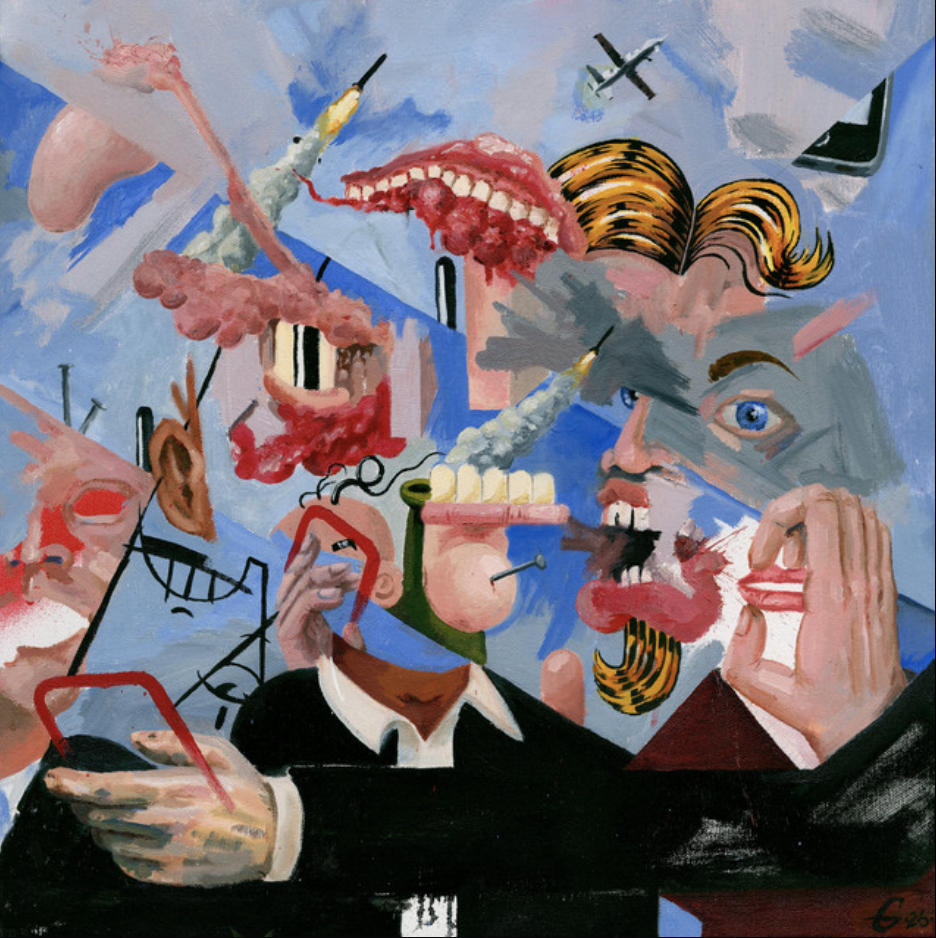
Track Listing is as follows:
Ferg’s Imaginary Big Band ‘Do The Right Thing’
Pussy Riot ‘PAIN/БОЛЬ’
Parallel Thought ‘Casus Belli’
Sam Krats, Edo. G, Jeru The Damaja, El Da Sensei & DJ Rougue ‘360’
Wiki Ft. Your Old Droog ‘All in The Lining’
The Difference Machine, Day Tripper, Dr. Conspiracy & GRETZKY DA ‘Star Children’
Baba Zula ‘Kutsal Zeytin Halayi’
The Taps of the Holy Trinity ‘Most Of Them Were Ghost’
Movie Star Junkies ‘Hard To Beat’
Mick Harvey & Amanda Acevedo ‘Perfect Storm’
Tele Novella ‘Ring Of Stones’
Claptrap ‘Shrug Emoji’
Oopsie Daisies ‘HAGS’
Schizo Fun Addict ‘Scent Of Heather’
BLEU REINE ‘Cavalier Seul’
Leah Callahan ‘Driving’
The Loft ‘Sad Comedian’
Max Knouse ‘Cavalrain’
Suzanne Ciani, Metropole Orkest & Simon Dobson ‘Section 4: Animal Kingdom’
The Moose Funk Squad & The Primitive One ‘Freaks of Nature’
Wish Master ‘Think About It’
Awon and The Other Guys ‘Ice Rink’
Kong the Artisan, J Littles & Blak Twang ‘Know About Me’
Qewl & Nightwalker ‘On My Mama’
Supreme Cerebral & The Beat Junkies ‘Supreme Junkies’
Boards of Canada ‘Blood In The Labyrinth’
Fatoumata Diawara ‘Massa’
Puce Moment ‘Tehuano’
DJ Grzyb, Tamten, Maysia Osu, Silky Oolong ‘Trombita Dub’
Tomat ‘Blue Reverie’
Here’s the message bit we hate, but need:
If you’ve enjoyed this selection, the writing, or been led down a rabbit hole into new musical terrains of aural pleasure, and if you able, then you can now show your appreciation by keeping the Monolith Cocktail afloat through the Ko-Fi donation site.
BRIAN ‘BORDELLO’ SHEA’S REVIEWS ROUNDUP – INSTANT REACTIONS. ALL ENTRIES IN ALPHABETICAL ORDER
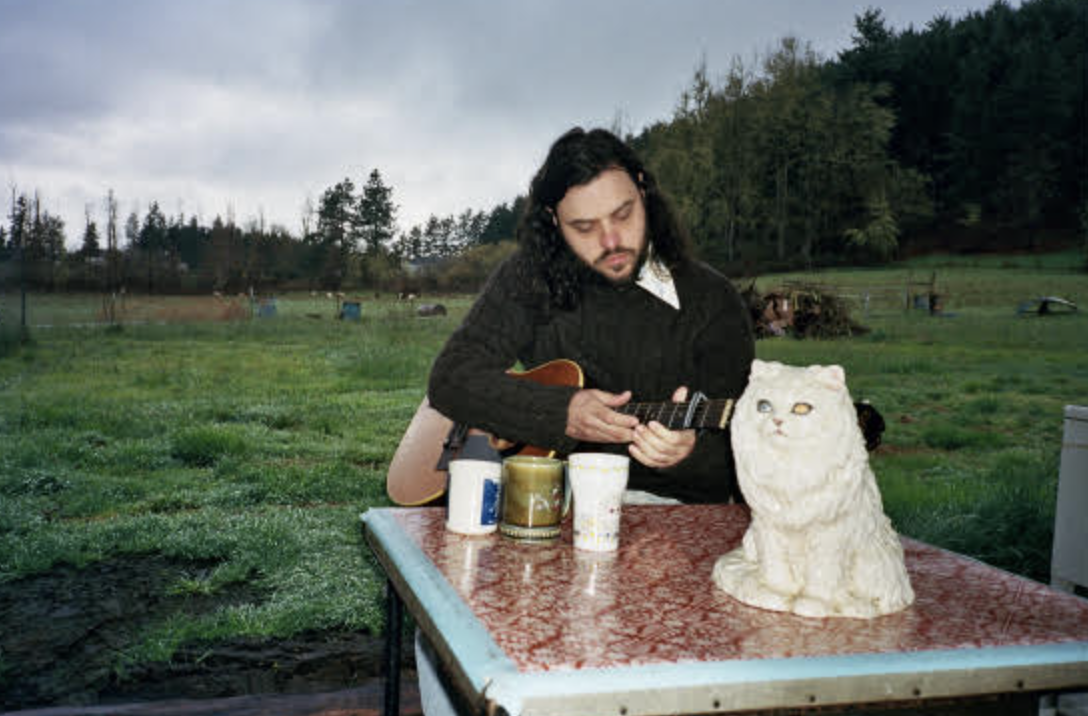
bigflower ‘Difficult Times’
Track – Released 11th June 2026
Now then, this does not sound like the Rolling Stones but for some reason reminds me off them: Maybe if sucked through a high-powered vortex and fed into a mincer of self-doubt paranoia anger and hope it might be what they would sound like. It certainly has a rather nagging wonderful guitar riff that is digitally delayed to the inch of its life. Once again bigflower blooms again.
Cult Of Free Love ‘Know Your Name / She Floats On Fire’
Single (Fuzzed up & Astromoon Records) Released 19th June 2026
Psychedelic is what we have here, not the 60’s variety but an early 90’s sounding variety [to my ageing ears anyway], the kind that would have had A&R men stroking their chins and wallets to sign back in the day when The Stone Roses ruled the roost and bands like the Telescopes were releasing sublime and ignored gems of albums like their second album Higher And Higher, and Thee Hypnotics were playing to 5 men and a slightly bedraggled caricature of Moe Bandy who had turned up thinking it was country night.
Yes indeed, The Cult Of Free Love have captured the magic in the bottle of that era and shaken it up and soaked we the jolly listeners with a splendid froth of psychedelic guitar riffs that leaves us an aural adventure of crushed velvet; of a time when goths where goths and knew a thing or two about style and elegance. All in all, a psych goth gem.
Earth Mother Fucker/ Poundland ‘Split”
Album (Cruel Nature Records) 8th July 2026
Mind-bending blitzkrieg bop punk rock garage punk sizzle. Yes, that is one way to poetically describe this fine album by Earth Mother Fucker and Poundland. Two bands that soundtrack these unpleasant divided days of living in the UK when life is coloured concrete grey and all the magic has gone.
Life is no longer John Lennon chewing gum while singing “All You Need Is Love” or The Sex Pistols saying shit on national TV. Music really does not speak to a nation anymore. It is as underground as it has ever been. It no longer shocks or delights a nation. Music no longer matters to kids like politics no longer matters to kids. There are no longer any teenage tribes. They all dress the same, they have had all the individuality drilled out of them by the saturation of not upsetting the norm.
I guess that is why Earth Mother Fucker and Poundland sound like they do, because they are probably at the age when they knew how much music mattered and changed lives and brought great change to life and culture. And if a couple of people under the age of twenty hear this album and it inspires them to pick up an instrument and express emotion and love and anger there is hope for the world yet.
Max Knouse ‘Goat Pupil’
Album (Ruination Records) Released 12th June 2026
Goat Pupil is an album of well written and performed Smog like alt country blues folksongs. Max Knouse is a talented chap and has a wonderful way about how he draws you in with his laid-back lazy drawl (drawl you in even). There is a charm and earthy gentleman like elegance about his delivery and his softly picked strummed guitar floats like a fading butterfly surfing the barbecue smoke filled evening air casting future memories waiting to be plucked from the shadows of the dying sun.
The Loft ‘Badges’
Album (Tapete) Released 8th May 2026
The Loft are back with their second album, and very good it is to if you are fan of indie guitars that chime and jangle and were young when Creation Records had never even heard of Oasis; and yes I am all of the above so love the T-rex guitar riffage of “Sad Comedian” and can appreciate the summery Go Betweens’ pop “Campervan”: how middle aged is to write an indie rock song about escaping in a campervan…Very.
This album is indeed a fun listen and is always a delight to hear the distinctive vocals of Pete Astor backed by the fine indie guitar chime of Andy Strickland, and lovely to know that they still have it after all these years.
Oopsie Daisies ‘HAGS’
(Metal Postcard Records) Released 11th June 2026
The warm swooshing sound of synth; the jangling of guitars; the sublime melodies of youth; yes, this is the sound of Bedroom pop, the true magic of music captured not in the hallowed walls of Abbey Road haunted by the ghosts of The Beatles and The Hollies and George Martins’ white shirts but in a room with a bed in it and curtains overlooking the streets of Portland. Yes, indeed music can be made anywhere, all you need is some cheap instruments and songwriting talent which Mr Oopsie Daisies has in abundance it seems.
Schizo Fun Addict ‘Indigo Teleport’
Video B-Side (Fruits de Mer Records)
Indigo Teleport is the latest track by Schizo Fun Addict. Well actually it’s the B-side to their last single, released as a very ltd 7 inch on Fruits De Mer, but they have posted it now online and it can be heard on YouTube, so if that is your thing give it a watch and listen and you will find them in and on post punk territory. Yes, touches of the mighty Fall and early Pavement lay waste to the slumber party of life, and we are left deriding the pitiful state of UK radio when one would hear this and its ilk on night time national radio and now we are left scouring YouTube for morsels of musical glory.
Emmaleen Tangleweed ‘The Weaving’
Album (Cruel Nature Records) 31st July 2026
The Weaving is a Country blues and folk masterclass, the kind of album that could have been made any time in the last 70 years, not a synth or any AI in sight, just a talented songwriter guitarist singing well written and performed magnificently songs of darkness and loss and death. Not an album to be played at your daughters twelve birthday party, and I cannot imagine any tracks being slipped in between “Agadoo” and “Ooops Upside Your Head” at a wedding disco soon.
The Weaving is an album to be played late at night as the rain bewitches the window, with a glass of whiskey by your side as memories and heartache waltz seductively like a candleflame dancing sweet nothings casting shadows of virginal enticement.
Wire Worms ‘Beneath The Eildon Tree’
(Cruel Nature Records) 31st July 2026
Wire Worms are a six-piece Northern neo-folk band and like all the best neo-folk bands draw influences from many other genres; so one can feel the influence of experimental noise and the whispering tangents of Black Metal if not in sound but in atmospheric Eastern European wanderings.
Beneath The Eildon Tree is an album that should appeal to both those with a fondness of traditional British Folk and those who bow their heads at the altar of Current 93 and Death In June. There is a wonderful darkness and melancholy that seeps and indeed sweeps from Beneath The Eildon Tree that leaves the listener in a catatonic trance like state of pure oneness with bliss.
The monthly Digest includes a clutch of accumulated short new music reviews, the social inter-generational/eclectic and anniversary albums celebrating playlist and pieces from the Archives.
___/NEW MUSIC REVIEWS___
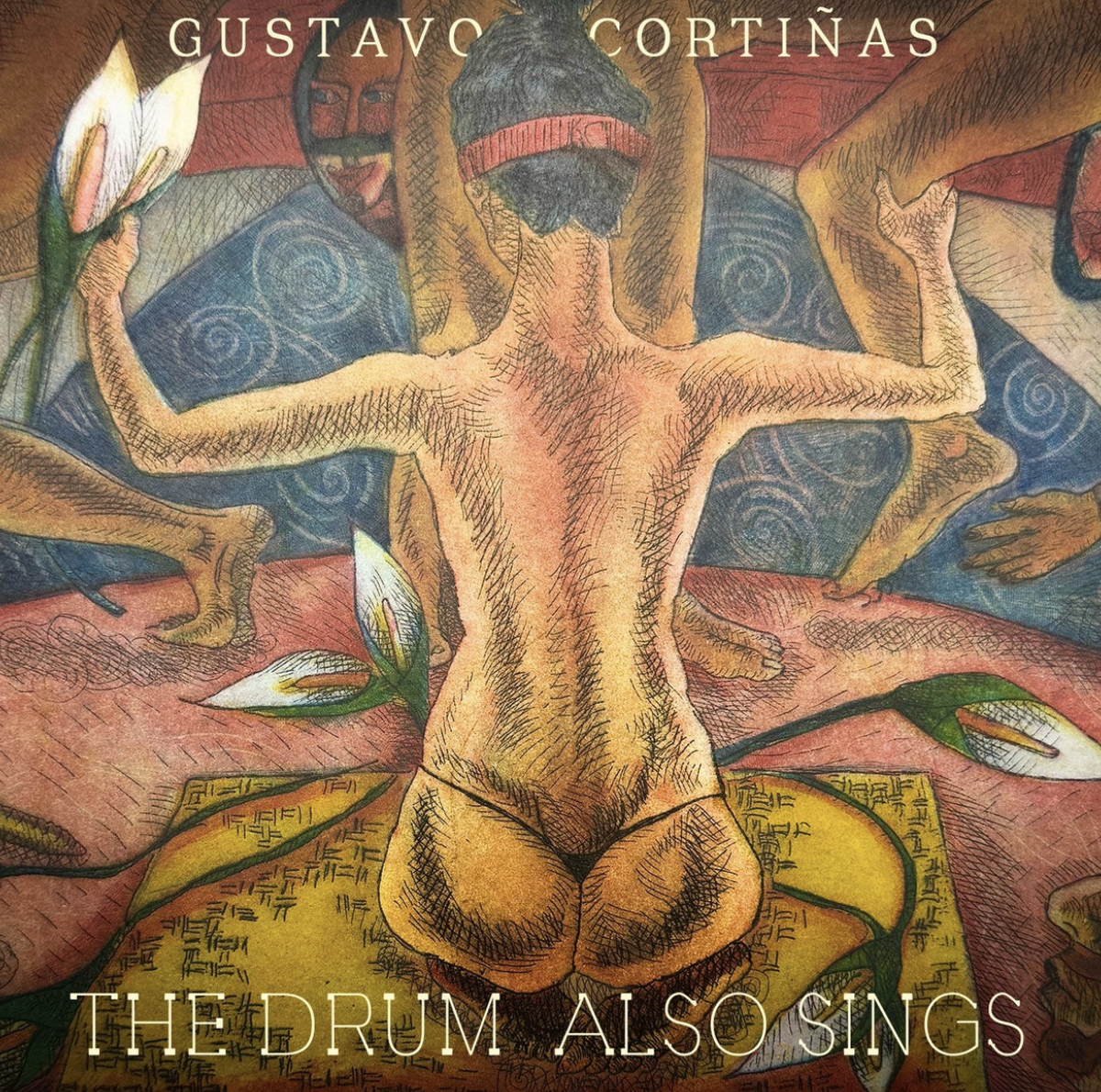
Gustavo Cortiñas ‘The Drum Also Sings’
Released 5th June 2026
Hot-housed within the great Chicago hothouse of influences but stretching way beyond to encompass and be imbued by the talking, communicating, expressive, storytelling drums that made their way across the Atlantic (to both North and South America) from Africa through the heinous slave trade, the latest album by the impressive and noted drummer polymath Gustavo Cortiñas does indeed sing but also gesticulates and splashing around in describing both the abstract and the visceral.
Exchanging rhythms and phrases with his peers, the Chicago-based (via a craft studied and at both New Orleans and Northwestern Universities) drummer extraordinaire, composer, producer and educator shares the studio with not only the living but the luminaries of jazz past: namechecking the rightly exalted and praised Max Roach, championing his famous melodic drumming style, but also at times during the more tumultuous but controlled parts the late great icon’s Absolution period. And via Roach, there’s also a reference to the late Blue Note anointed Chicago great, Big Sid Catlett on one of the album’s triumvirate of “dialogues”. Part II of that same communication with the past, bounded forward into the now, is a collective improvisation of a Papa Jo Jones phrase, the band leader and drummer famously who “anchored” the Count Basie Orchestra during the 1930s and 1940s.
With that much pioneering talent onboard Cortiñas expands the ranks to include the duo percussive and drumming dynamism of Dave King and Isaiah Spencer; the former of course a founding member of both the Bad Plus and Happy Apple, and the latter, the Chicago-born and active instigator of a much enviable exciting and groundbreaking scene both as a collaborator and as the band leader of his own sextet. Whether feeding off of their host, or pummelling away, or finding a secondary rhythm and counterpoint, or rustling and feeding their hand expressions through various snake-like and dry beaded percussive instruments, they match, entwine and often expand each performance across a healthy relay of styles and influences: from Afro-Latin to New Orléans, the carnival and the vine swings of Art Blakey, the big band swing too of the 1920s, and play of Baby Dodds.
But whilst the drums talk a parade of contemporary feminine voices reach back and forth across time, cultures and geography and meaning to sing or speak. The young Tzotzil poet Angelina Suyul, can be heard uttering in the Mayan phonetic across the textually scuffed, sieved, scrapped and constantly rolling, forward momentum expression of Roy Haynes and Anthony Williams-like ‘The Spontaneity Of Heartbeats’, whilst the Chilean singer-songwriter, visual artist and sculptor of electronic folklore, La Paula Horrera,lends a diaphanous lullaby turn fierce and phonetic-dancing plead to the barricade of emotions and swinging drumming and percussive attuned ‘Your Resilience Is Resistance’. Also hailing from the South American continent is the Argentinian vocalist Martya de Humahuaca; a voice that both moves on the air and convulses in an atavistic-like aria over stick-beaten tribal dance rhythms and lolloping rolls. From the much-loved, on this blog anyway, and praised Chicago label hub of International Anthem, polymath (by my reckoning the CV includes composer, improvisor, clarinettist, pianist, vocalist and educator) Angel Bat Dawid interprets Psalm 23 on the closing well of powerful litany and increasingly wildly and disruptive scripture. Reiterating certain lines (that’s the whole “My Lord is my Shepard”, and “Yea, though I walk through the valley of the shadow of death” speech) with ever more energetic and possessed hysterics, Dawid takes the Biblical via the American Spiritual for a tumultuous outpouring of the gabbled and pointed.
Tracing and improvising with the strong and enduring beat that drove jazz, swing, the big bands, the Latin and more, Cortiñas and his foils roll across a porous borders geographically, technically and rhythmically; experimenting with the litany but also with a rewilding of influences, inspirations whilst making expressive overtures and references to Roach and his peers (even those that in turn inspired that giant of the drumming world).
DJ Grzyb & The Make-Believe Ensemble ‘The Return Of DJ Grzyb’
(HUVESHTA RITUALS) Released 10th June 2026
Through a sonic and multilayered ricochet and echoed leitmotif of psy-dub, psy-trance and IDM, fantastical myths are tied together with amorphous cross-references to both Eastern European and Far Eastern folklore, the occult, the hermitic and supernature.
The return of Warsaw-based producer, DJ and live performer Tamten, under the mystically aligned club-sounds anchorite alias of DJ Grzyb, marks a collaborative sonic, rhythmic and absorbed geography of both mushroom induced invocations and new age mantras. Reeling in both a Polish and international cast of artists and musicians, playing a multitude of worldly instruments or using their voices to evoke the right mood, Tamten and friends embark on a sort of quasi-holy mountain rave-up, but one that’s been recorded at Lee Scratch Perry’s Black Ark and then transported to a supernatural and fabled terrain of dream-magic and half-realities. Step forward the roll call of Marysia Osu on lattice-worked and glistened harp; Silky Oolong (aka, we’re told, the later ego of Kaja Domańska) lending an almost mystically entrancing cyber voice whilst giving instruction to a majority of the tracks; Milo Kurtis multitasking with vocals, clarinet, ocarina, percussion and the oddly curious tine twanged zanaz; Sทา้ว หมาหยยุ on an assortment of Thai instruments, including the chuffed and blown Khaen, the thick finger cymbal chimed and rung ching and the traditional bamboo pi phu thai instrument; Andrzej Dudek-Dürer on the brassy resonating sitar and the long-necked tanpura; Otto Topola adding whispery poetics to the lunar shuttering beat trancey ‘The Big Red Moon’, Marysia Osu as a second harpist on a quartet of tracks; Naphta (the alias of Pawel Klimczak) putting down thick wobbled stringy guitar reverberations and plastic tubbed-like percussion on muffled and then galloping ‘The Three Deaths’.
Almost continuous, each track sems to lead into the next, or at least sit in its languid altered state of drugged-up ritual together like a sort of concept album for the raved-up spiral tribe. Left of field reports, mountain worship and tales of the psychogeography fuse with the sound of David Wojnarowicz being transformed via Amorphous Androgynous, the Dead Skeletons, Cosma and Cousin Silas And the Glove Of Bones. Oddities are thrown up by this club-like dream-trance of ideas and traditional transmogrified sounds: The pan-piped Shepard’s ‘The Matys Song’ sounds like The Golden Child score meets Banca de Gaia, whilst the Indian-entranced evocation of ‘Hall Of All Weather Gods’ sounds like something from David Ornette Cherry’s Organic Nation Listening Club.
Reality and myth converse on the pine forest (though it oftens feels musically like the rainforests of new age musical South America) dancefloor on an album that celebrates as much as mystifies and plays with Polish folklore, its history and geographical porous borders of extended fables and alternative worships. Probably sounds even better and makes more sense on mushrooms.
Kirigirisu Recordings Double-Bill
Autodetuned ‘Clutter’
Meadow Argus ‘Dreams Are Another Doorway’
Both released 29th May 2026
A double helping of abstracted tones and sonic atmospheres from former Audio Antihero label stalwart Neil Debnam (of Flying Kites note, and after an accident which put him out of action for a time, the more stripped back Broken Shoulder outlet) and his Tokyo-based platform. After neglecting the label for a fair time, I’ve added to just two recentish releases from the sporadic schedule.
First up and it’s the latest project from the Madrid-based sound artist Juan Cepas, Autodetuned. Eager followers of the genre and its adjoined nodes of influence might recognise Cepas for his improvised partnership with José Mª Pérez-Flor in the 500 Goats duo: first initiated during the Covid pandemic. “Tones over tunes” is the watch word for this solo exploration of concreate and alien industrial experiments.
With an apparatus of contact microphones, effects chains, reverberating trebly guitar strings, various unidentified and unknown metallic tools and objects, pitches and field recordings the results are akin to taking a fantastic voyage of the paranormal inside the very substances of concrete, stone and metal themselves: like a endoscope inside the textures and binding agents of amorphous materials used as foundation building blocks of the various chambers, chasms and more tubular corridors being investigated. Then again, it’s often more akin to the sci-fi, to off-worlds and the haunted presence of mysterious actors funnelling, whistling, stretching out and broadcasting from the Fortean TV set. Signals and communications from the fabric of this strange tonal world are charged with crispy electricity, the overspill of dust speckled rain and the gargle of curious amphibians moulded from cement.
Next, we have a hauntology of dream scenarios, wanderings, fragments that appear during the hours of sleep, problems or enquires that need to be worked out during those somnolent and relaxed hours, by Tynam Krakoff’s Meadow Argus sonic outlet.
The accompanying Bandcamp descriptive spill/part review in itself by Joe Posset kind of does my job for me (it’s a damn fine articulated description of the album for sure) and mentions Boards of Canda (when they were good) as a reference. Spot on with that observance.
But I guess I’d better add something of my own.
Dreams Are Another Doorway opens into a strange, near ghostly and unconscious state of disembodied snatches of dialogues and enquires on the brain. The miracle of thought processes, the retained snippets and incidents, the conversations and ideas that we mull over in that unconscious state are played out over scratchy films of old gramophone and radio broadcasts, ambient ebbs and a ghostly mirage of a sea shanty-like harmonium. Reminisces, the sound of shared laughter is blended with mysterious sound effects and enervated waves of the near ominous and untethered.
From seas of tranquillity to altered states of reality via vague echoes of Mo Wax, Leaf label, The Northern Lighthouse Board, the Orb and even a passing of jazz, Krakoff’s latest soundscape is an immersive experience that will do anything but send you off to sleep. There’s far too much, even in its most ambient and longform passages, to pick out and experience for that. This strange tape embodies an indolent and almost woozy experiment in entering a dreamlike state of inquisitiveness and also a clockwork satsuma of half-remembered interactions, broadcasts and information.
New York City Chapters vs Weird Shit U.S.A. 2 ‘Slow Diet Ketamine Era’
(Artetetra) 30th June 2026
Hallucinating tape spools and the corner ketamine dealer skits converge for a most warped generator of sound and vocal snippets and snatches on this discombobulating and transmogrified mix tape from the weirdo union of Aaron Anderson’s latest illusion-guise and the “sampledelia” and “digital feed hijacking” duo of New York City Chapters.
From dialling into the passing TV broadcasts from across the street vendor’s store to fucking with a stream of Meta and a drug-induced digestion of breaks, misplaces of jazz, the sounds and voices of New York City, the looping eccentricities of just fucking around with effects and speed shifts, and the slicing and spicing of a mental record collection, there’s much to unpick from the tape’s two sides of leftfield mind-bending clatter, clutter and looping lunacy. And yet, it makes sonic sense: in some ways. For using the city as a backdrop, a sound lab and lobotomy, they’ve made a sort of Matthew David vision of New York that filters but embraces its most crazy biomorphic extremities: from the reshaping of the architecture to a sudden appearance of Alica Keys most iconic if insufferable anthem and passages of hip-hop, jive talk and jazz. But then you also get a stream of consciousness that sounds like a Mogadon-induced cut-up of Odd Nosedam, Edan and Cities Aviv. There’s a loop of “I want to break free” Feddy Mercury against pop-like funk, 4 Tet, the Dream Warriors, Bowie and mizmar-horns.
Part 2 has a slightly different take, with passages more…well, only just slightly more melodic and not so manic. There’s a lot of growly cyber bass, but plenty of warped spells of tuneful reverberations, dub, no wave and more current electronic experimentation.
Together it makes for the craziest of sonic fever dreams; a kind of more energized and charged-up cLOUDDEAD if you like.
___/THE MONOLITH COCKTAIL SOCIAL PLAYLIST VOL. 107____
The Social Playlist is an accumulation of music I love and want to share; tracks from my various DJ sets and residencies over the years; and both selected cuts from those artists, luminaries we’ve lost and those albums celebrating anniversaries each month.
Running for over a decade or more now, Volume 107 is the latest eclectic and generational spanning playlist come radio show from me – the perfect radio show in fact, devoid of chatter, interruptions and inane self-promotion.
As with most months, I inevitably mark the passing of those artists we’ve recently lost, and as this is the first opportunity to do so, there’s a smattering of entries from the late genius of the jazz form and saxophonist extraordinaire Sonny Rollins. Going right back, almost to the beginning and the mid 1950s, I’ve gone for ‘Valse Hot’ from the Plus 4 LP with Clifford Brown, Max Roach, Richie Powell and George Marrow – an enviable lineup – then some action from Live At the Village Vanguard with ‘Old Devil Moon’, and finally something from the Freedom Suite.
From the world of art, creating a landscape that anyone with sense would happily walk into and never leave again, I’ve paid a little homage to the late painter David Hockney. Nico Muhly is inspired by a palette full of signature themes from the Hockney collection, but I’ve opted for one of the most obvious and celebrated, ‘Pools’. And I couldn’t leave the TV Personalities and their ‘David Hockney’s Dairy’ knockabout out.
My haul of Anniversary albums this month includes Bob Dylan’s Blonde On Blonde, which is sixty years old this month. But I’ve gone for covers versions rather than the originals to mix it up, choosing Julie Felix’s impression of ‘Sad Eyed Lady Of The Lowlands’, and Marianne Faithfull’s interpretation of ‘Visions Of Johanna’. Also celebrating its sixth this year is Aretha Franklin’s R&B and gospel showcase, Soul Sister, The Mothers Of Invention’s whackoo trip ‘Freak Out!, and Wayne Shorter’s Speak No Evil opus. Jumping forward another decade and there’s choice tracks from both La Dusseldorf’s eponymous LP of ’76, and the garage rock ‘n’ roll, Byrd’s psych, bubblegum revivalist new wavers the Flamin’ Groovies’ Shake Some Action.
From 1986, there’s nods to The Smiths’ The Queen Is Dead, Madonna’s True Blue, and The Fall’s Bend Sinister (trueful, I’m a bit early with this one as I’m sure it was released a little later in the year). Forward yet another decade and its tunes from Placebo’s self-titled debut LP and Beck’s Odelay. And finally, from the archive spots below, tracks from both Bowie’s Labyrinth soundtrack LP (released in 1986) and Spain’s Carolina LP (a mere decade old in June).
From my collection, and the ever-growing list of releases I wished I’d owned, a complete random selection with tracks from A Clean Kitchen Is A Happy Kitchen, A Dancing Beggar, La Shark, aCivilian, Adhelm, Screaming Urge, From Nursery To Misery, Selezione Naturale…
Complete Track List is as follows:
Sonny Rollins ‘Someday I’ll Find You’
Aretha Franklin ‘Can’t You Just See Me’
The Mothers Of Invention ‘Trouble Every Day’
The Fall ‘Gross Chapel – British Grenadiers’
A Clean Kitchen Is A Happy Kitchen ‘Yellow’
Screaming Urge ‘War’
Placebo ‘Bionic’
aCivilian ‘Cheat’
Le Shark ‘I Know What You Did Last Summer’
Television Personalities ‘David Hockney’s Diary’
Nico Muhly ‘Pools’
Marianne Faithfull ‘Visions Of Johanna’
The Smiths ‘Cemetery Gates’
Flamin’ Groovies ‘I Can’t Hide’
La Dusseldorf ‘La Dusseldorf’
Sonny Rollins ‘Old Devil Moon – Live At The Village Vanguard’
Adhelm ‘Swin’
Selezione Naturale ‘Ritmo Avanti’
A Dancing Beggar ‘Here Come the Wolves’
Julie Felix ‘Sad Eyed Lady Of The Lowlands’
Madonna ‘Live To Tell’
David Bowie ‘Magic Dance’
From Nursery To Misery ‘The Oak Tree’
Wayne Shorter ‘Wild Flowers’
Chance ‘Too High To Land’
Beck ‘Diskobox’
Spain ‘The Depression’
Platonica Erotica ‘Pawnshop’
Tim Hollier ‘Evolution’
Sonny Rollins ‘Valse Hot’
____/ARCHIVES_____
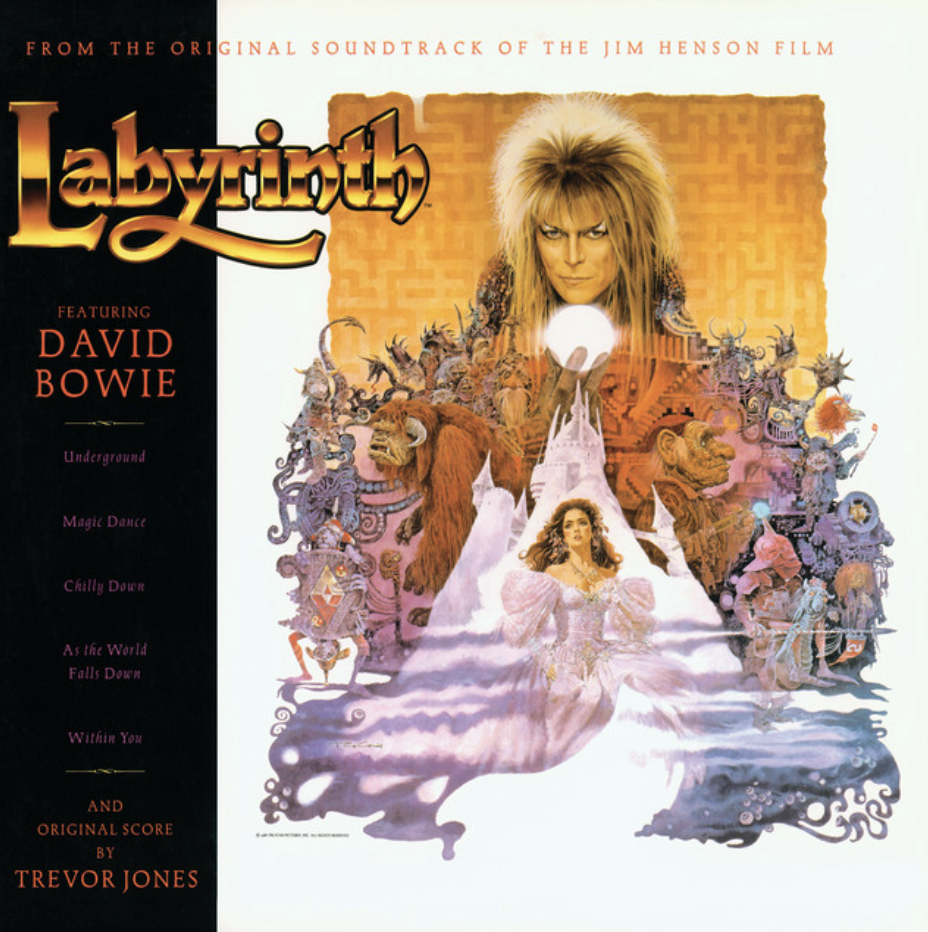
It was forty years ago since David Bowie donned his pantomime garb and took on the role of camp arch villain in Labyrinth; or rather, the soundtrack album was released to the general public. For better or worse, here’s my appraisal, plucked from part three of my Bowie homage, published over a decade ago. And from a mere decade ago, plucked from the archives for June 2016, my original review of Josh Haden‘s slowcore Americana Spain alias LP, Carolina.
Labyrinth (EMI) 1986
Dressed to kill as the pantomime dame in a pupated fantasy world, Bowie moons forlornly in the children’s movie of Labyrinth. Cast as the archetypal misguided villain Jareth, our cracked actor fulfils his need to sing and dance, from behind another façade.
For those expecting a whimsical affair, the Trevor Jones and Bowie soundtrack is itself full of both mellifluous romantic waltzes and ominous discordance. Of course, the South African composer of over fifty films, was used to scoring this sort of picture, having already done Time Bandits and The Dark Crystal. Bowie however offers up some pining laments, capturing the spirit of his conceited but lovelorn goblin king. In fact, though obviously directed at a younger audience, the vocal tracks have an instant commercial allure to a mature market too, tapping into the new fan base, which he picked-up on Let’s Dance.
In truth the fun-frolicking joyous ‘Magic Dance’ and gospel backed ‘Underground’ are better than anything off his previous release Tonight (with the exception of ‘Blue Jean’ and ‘Loving The Alien’). The slippery chameleon was however ‘losing his edge’, identified as a crooning balladeer in a sharp lapelled suit, devoid of new ideas. The next few years wouldn’t change that opinion.
Spain ‘Carolina’
(Glitterhouse Records) 3rd June 2016
With a poignant prompt, Carolina is the first album by Josh Haden’s musical project Spain since the death of his father Charlie in 2014. Amongst the most renowned and celebrated jazz bassists of the last century, working with such major heavyweights as Keith Jarrett and Ornette Coleman, the late Charlie was for obvious reasons a handy mentor to his son, contributing throughout with advice and even playing on the records. Tribute would be too strong a word, instead imbued by and referenced in a number of themes, Charlie’s spirit is omnipresent throughout.
It has however given Josh pause for thought: solace and reflection being the album’s key subjects. Though the very nature of the ‘slowcore’ music Josh, alongside other innovators of the genre such as Low and Willard Grant Conspiracy, has become renowned for is based on if not constantly paying homage to the great Americana songbook of the past two hundred years. Coming almost full circle, the literally titans of the 1929 great depression, both in fiction and reportage, chime with the events of 2008. Even when the protagonist of a beautifully descriptive lament eulogies an American victory in the 1777 campaign for independence on ‘Battle Of Saratoga’, Josh has his mind on the present: augurs for the future, compelled by events in the past.
Entrenched in not just the history of the expansive, pioneer spirit America but in its music too, the opening alt-country swoon ‘Tennessee’ absorbs the ghosts of Nashville and Memphis. A grand vista indeed that captures the American state in a tale of loss and escape – the protagonist losing land, trapped by history itself – ‘Tennessee’ has a plaintive quality of resignation. No less steeped in myth, ‘Apologies’ moves the action to Beverly Hills, Josh joined by a female counterpoint vocal on the repeating, “There was a witness” refrain, sings almost softly as though floating through or above the unfolding events.
Josh goes onto evoke both an air of The Band’s Rick Danko on both the stirring ballads ‘Lorelei’ and ‘Starry Night’, and a heavier alternative rock and blues, often reminiscent of a cowboy twanging Pearl Jam, tone on ‘For You’.
Life on the homestead, the American War of Independence, Steinbeck’s visions of the great depression, mining disasters and William Faulkner’s short sentence encapsulation of a time and events are woven into both Josh’s formative years growing up in Malibu, and a more contemporary setting to create a deeply moving album.
Here’s the message bit we hate, but crucially need:
If you’ve enjoyed this selection, the writing, or been led down a rabbit hole into new musical terrains of aural pleasure, and if you able, then you can now show your appreciation by keeping the Monolith Cocktail afloat through the Ko-Fi donation site.
Our Daily Bread 657: Boards Of Canada ‘Inferno’
June 15, 2026
Thirteen years after Tomorrow’s Harvest, Boards of Canada return with Inferno – a dense, haunting and deeply rewarding record. Glasgow local Mikey McDonald explores the duo’s long-awaited comeback.
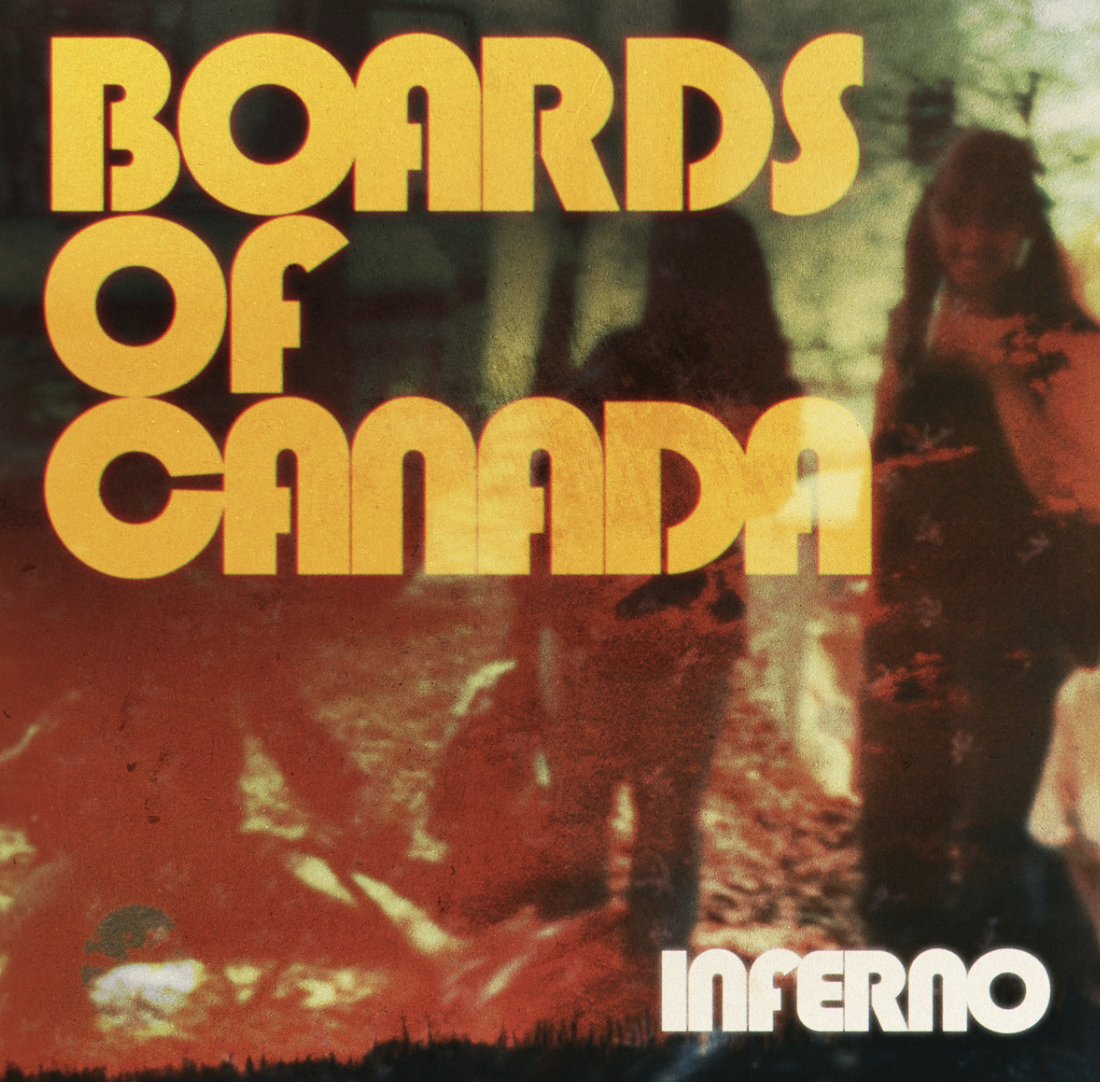
Boards of Canada ‘Inferno’
(Warp) Released 29th May 2026
Boards of Canada are brothers Michael and Marcus Sandison who, contrary to popular belief, are in fact Scottish, not Canadian. They make music from their own studio, somewhere in the hills in the middle of nowhere (postcode N/A). The best compliment I can pay Boards of Canada is that they’re masters of their craft, pioneers of electronic music, and true visionaries. For decades they have dazzled us by blending the analogue and digital worlds, creating melodies and soundscapes that could belong only to them.
And yet, the brothers have always carried an air of mystery. In fact, if you dig deep enough into the internet, you’re likely to find only one interview (approximately a minute and a half) when they were invited onto The John Peel Show back in 1998, shortly after the release of their groundbreaking debut Music Has the Right to Children, one of the most influential albums in contemporary music. In the interview, one of the brothers informs us that his favourite letter of the alphabet is ‘M’ before remarking, “we’re off to the pub actually” – a phrase that should be all too familiar to us Scots.
I was first introduced to Boards of Canada way back in high school when a friend (thanks Tino) put me on to none other than Dayvan Cowboy from The Campfire Headphase. I was pretty blown away. Not just by the track itself, but by the way electronics were fused with acoustic guitars throughout the album. I hadn’t really heard anything quite like it. That record in particular is home to some of my favourite tracks of all time, including Macquarie Ridge, Peacock Tail and Tears from the Compound Eye.
Anyway… It’s 2026, and after a 13-year hiatus, the duo are back with their latest album, the forebodingly titled Inferno, which marks their fifth full-length under Warp Records. It’s natural to draw comparisons to Music Has the Right to Children, Geogaddi or their last release, Tomorrow’s Harvest, but the truth is that Inferno exists within its own world, quietly blazing from within. I’m going to use that old cliché that it’s a difficult listen but a highly rewarding one, and it’s true.
Hydrogen Helium Lithium Leviathan, besides being a mouthful to say, references the three elements that started this whole universe thing – a theme the album isn’t shy about exploring. And then there’s Leviathan, the biblical sea monster. On a good set of headphones, you can actually detect an inhuman groan buried deep in the mix, and I can’t help but wonder if this is the creature stirring beneath the surface.
Age of Capricorn continues the zodiac thread running through their discography, after Aquarius on Music Has the Right to Children and Gemini on Tomorrow’s Harvest. Spiritual chants and religious broadcasts intertwine throughout the track before a voice confesses, “I’m a sinner. All have sinned. You bore my sin. You shed your blood for me”. The contrast between the track’s warm glow and its uneasy spiritual undertones feels entirely deliberate.
Memory Death features swarms of bugs and ominous bleeps – we’re alive, but for how long? Out of nowhere, breathtaking vocal samples emerge and offer some much-needed space to breathe.
Inferno is one of those rare albums that changes depending on how you hear it. Through speakers it expands outward, filling the room with warmth, static and shadow. Through headphones it collapses inward, revealing hidden voices, tiny details and fragments of memory buried beneath the surface. Both experiences are rewarding: one lets you inhabit the world, the other lets the world inhabit you.
Elsewhere, Blood in the Labyrinth sounds sick. Not just ‘sick bro’, but actually infected. To say this track is eerie and capable of haunting your dreams would be an understatement. Perhaps most surprising is the inclusion of a sitar, which shouldn’t really work with everything else around it, but somehow it does.
Disturbing male vocal samples can be heard, but you’d be doing well to decipher those without Googling. Perhaps most heart-wrenching is when a young female recalls a harrowing moment in her life:
“You know, and I- when I finally did dive in and get her she was already dead, and um, after that I just ran off screaming”
Unlike the former, there’s nothing hazy or muffled about these words, and maybe we’re meant to feel her pain. It does make me feel a little sad, so I turn into the sad me. The juxtaposition between these samples is true mastery, and it’s hard not to feel shivers.
Anyway… What’s quite memorable is how the album closes. Penultimate track You Retreat in Time and Space feels like the album’s true closer, but Boards of Canada wouldn’t let us off the hook that easily. The track twinkles and shines, and where Age of Capricorn feels triumphant, Retreat radiates serenity, hope, and optimism. The track is both lush and divine, featuring angelic vocals and what sounds like boats docking in the latter half, perhaps offering a chance to escape.
Unfortunately, or fortunately, it’s not over.
I Saw Through Platonia feels like one of the most important tracks the duo have ever written. If Retreat offers a place to rest, then Platonia brings us crashing back down to Earth. It’s a track so utterly terrifying that it could soundtrack the end of the world. And if it did, you’d have to applaud – no end could ever be this beautiful. It sounds windy, but even those winds feel as though they’ve been lifted from the hostile atmosphere of Venus, and only Boards of Canada could make a piano sound so utterly morbid. It’s painfully magnificent.
Bells drift in and out of the mix, though they sound less like a Sunday church service and more like waiting to ride the escalator to hell. An unnerving heartbeat pulses beneath everything before abruptly stopping, leaving the listener with six long seconds to contemplate what they’ve just encountered. Is this the end? Is Inferno Boards of Canada’s farewell fire?
Now that the review is almost over, and we have jointly exercised our constitutional rights, I would like to leave you with one very important thought. Sometime after reading this, you may have the opportunity to listen to Boards of Canada.
Do it.
You know, there’s a lot of fucked up shit going on in the world we live in. Sometimes it’s overwhelming, and that chaos, that darkness can feel unbearable and contagious. Yet somehow Boards of Canada continue to find beauty in the static. Thirty-one years on, they’re still dazzling us in ways nobody else can.
So go on, hit play, and open the light.
They must be so fucking proud.
And there’s a proud me too…
Mikey McDonald
ALBUM REVIEWS BY DOMINIC VALVONA: A WORLD OF SONIC DISCOVERIES
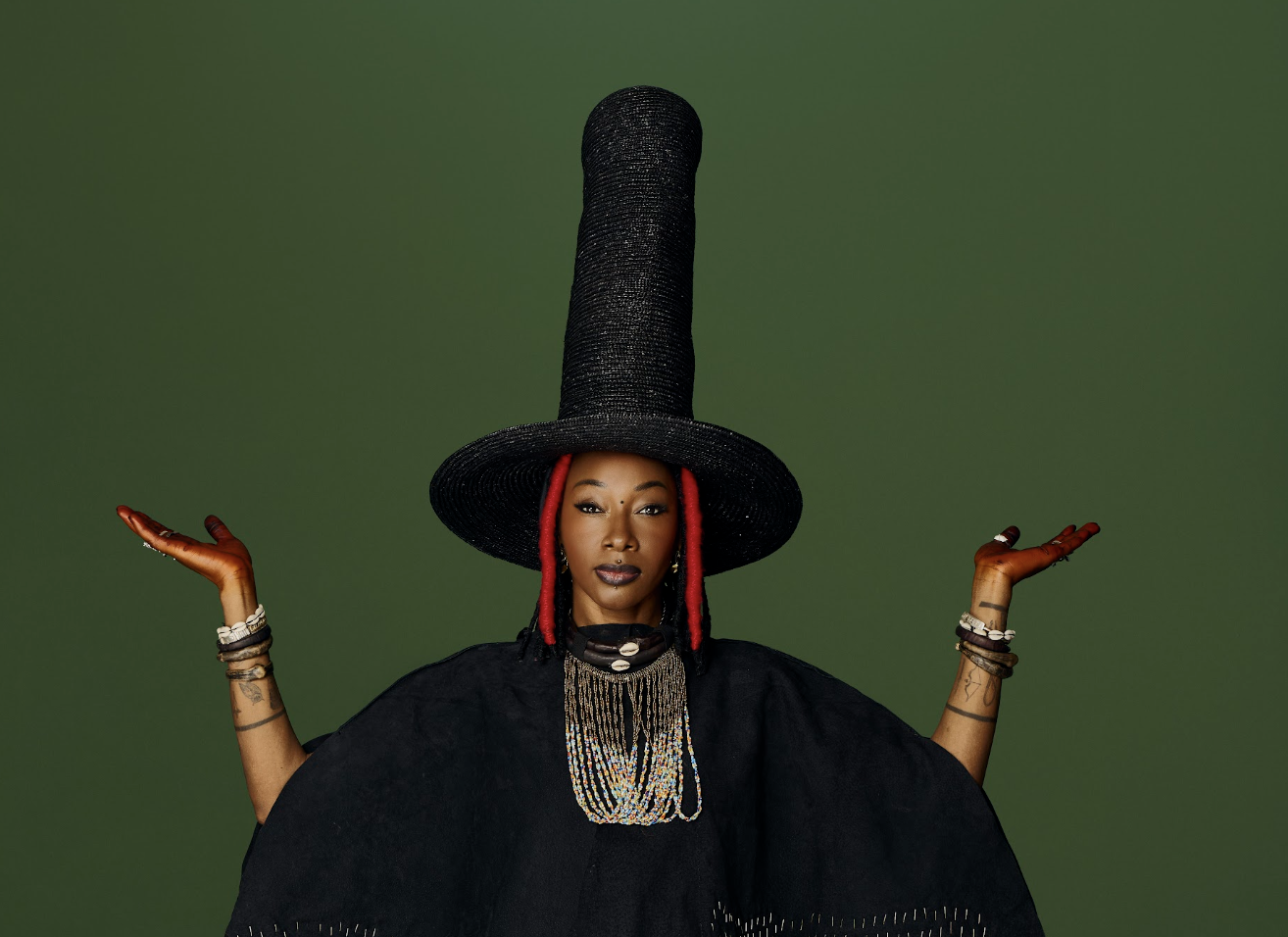
Photo Credit: Trevor Stuurman
Burial Cake ‘small steps’
(Somewherecold Records) 19th June 2026
Motivated, or forced if you like, to reevaluate life after the triple whammy of a near-death experience, subsequent hospitalisation and the implosion of a twelve-year relationship, Blake Edward Conley picks and shakes away at a new tonal pathway of soundtrack-like strung-out and mirage evoked Americana under the newly fashioned alias of Burial Cake.
His usual signature trade of abandonment, oaths, mourning and love hang like tangible descriptions in rippled, palpitating and softly juddered panoramas and mirages. But with a sudden change in misfortune, Blake heads inside, faces the interiors of an intimate setting and just lets the tape roll as his off-grid atmospheric and often moody reflections take shape; manifestations and haunted near improvised and spontaneous sounding efforts produced to comprehend the abstract and all too real brushes with mortality and a love lost.
Without prying, and as the PR blurb enquires from the beginning, this latest album of what looks like randomly smattered numbered recordings could be experienced perfectly well without its context and backstory. But once the circumstances are revealed its difficult not to hear or read into each tremolo vibration, stroke, zoomed slides, body and fretboard knocks and tactile hand gestures something both darker and often lonely. But then out of the rustle and wrangle, the more melodic attempts – like Robbie Robertson’s caught on the Twin Peaks set, or a foggy recollection of the Spanish-Texas sound -, there’s a couple of answer machine messages to prompt and make pretty clear the background to this sorry tale of woe, recovery and heartache. The spikey bluesy distorted ‘small steps #13’ and the melted country-drone ‘small steps #14’ both feature these final worries and concerns, both callers imploring Blake to get in contact as soon as possible. It can’t but prompt also concerns in us the listener of the state of the artist, in his dark place, breaking off or unable to reciprocate that same concern back: to just let them know he’s alive, let alone all right.
Inspired in part, title wise, by a reversal of Coltrane’s seminal famous Giant Steps LP of 1960 on Atlantic Records, Blake actually, especially on the opening track, seems to almost ape the saxophone with a magnetic-like buzz and fuzz of vibrated electrified strings. A gateway to modern improvised jazz, that LP signalled something new and the way forward. Blake however, in a much more intimate, private way, still recalls his long-standing droneroom project, but tries to refocus his artform and channel it differently with this latest project and move (as a consequence I believe of the split) from Tacoma to Seattle (although a city move, he remains in the same Northwestern state of Washington).
Magnetic with spells of the dreamy and near magical, the feel and musicianship is a balance of broodier and more attentive forces: Sunn O))) meets Gunn, or Fred Frith in a crush with Ry Coder. Rattle snacks, a long since abandoned rust belt, the cactus dotted landscapes and borderlands all merge into that performance space of gloomy rumination and bluesy experimental loss. It feels like some passages are there to haunt Blake, whilst others almost offer some light, a way to process and recover.
Hadley Caliman ‘Iapetus’
Reissue Special (Wewantsounds) 19th June 2026
Our friends at the specialist rare finds and vinyl reissue label WEWANTSOUNDS continue to mine the vaults of the crate-digger’s and breakbeat connoisseur’s favourite, the Mainstream label this month. The first such vinyl reissue of its kind, the imprint has resurrected one of the best ever recorded examples of its kind, with one of the most outstanding and illustrious of lineups, shining a light on the tenor saxophonist and flutist Hadley Caliman’s much revered and classic solo album of 1972, Iapetus.
Bob Shad’s original Mainstream “broad church” imprint grew out of an already 30-year spanning career when it took shape in the 1960s; a showcase for prestigious artists, session players and Blue Note luminaries chancing their arm in the bandleader or solo spotlights. A musical journeyman himself, Shad (whittled down from Abraham Shadrinsky) began his producer’s apprenticeship at the iconic Savoy label, then moved to National Records before taking up an A&R role at Mercury, where he launched his own, and very first, label EmArcy. It was during this time that Shad would produce records for the venerated, celebrated jazz singer deity Sarah Vaughan, the Clifford Brown & MaxRoach Quintet, Dinah Washington and The Big Brother Holding Company.
Mainstream was home to the developing tastes and an incubator for 70s jazz, whether that was fusion, the spiritual, the art rock variety or the conscious kind. One such glowing example was Shad’s signing, the highly impressive Oklahoma raised but L.A. and San Francisco hot-housed Caliman, who recorded a couple of impressive and defining solo LPs for the label at the turn of that new decade.
After securing his platform in 1971 with the self-titled debut, Caliman followed up with the Greek Titan and Jupiter moon etymological entitled Iapetus. The majority of the compositions on this far-reaching and renowned LP were composed by the no less notable and influential pianist, composer, electronic musician, essayist and conceptual artist Todd Cochran; just one of the many doyens and acclaimed artists and musicians lining up to enrich and push the boundaries of Caliman’s Modal and spiritual vibed visions.
With so many crossovers, links in the network and amongst the players on this rarefied treasure, it would be fair to outline each band member’s diverse backgrounds and connections. Cochran himself is the polymath most responsible for helping put this LP together, having arrived off the back of performing on and shaping the Bobby Hutcherson’s Quartet’s iconic Head On LP for Blue Note, and already releasing a couple of LPs for Prestige. As a side nom de plume for some his career, Cochran also went under the Bayeté name. As a master of composition and keys virtuoso, you can hear a heavy use of the Fender Rhodes on Caliman’s eclectic fusion of a showcase LP; bulbs shaped electrified notes hover, hang around like pollen and space dust, or reverberate, whilst Oscar Peterson-like displays of modal and explorative notes and runs cascade and trickle both melodically and in a more avant-garde style.
Stepping up next, we have the sensational Woody “Sonship” Theus, an L.A. birthed virtuoso who was already “well acquainted” with the flute, violin, trumpet and piano as a kid before homing in on the drums. By the way, that middle name is in honour of not only Jesus but Coltrane’s ‘Sun Ship’. As an incredible engine room, but tactile drummer too, Theus worked with such luminaries of the art as Larry Nash, John Klemmer, Charles Llyod, McCoy Tyner, Woody Shaw, Freddie Hubbard, Michael Urbaniak and the exalted Pharoah. Here, he delivers a drumming showcase, splashing around with cymbals, hurtling away in an Irmin Schmidt-like phaser and flange tunnelled cosmic psych effect, and rolling and beating out a spiritual, experimental and sometimes just funky breakbeat. He’s just as at ease on the more mirage and dreamy peregrinations and settings; sifting, sieving and tactile across primal horizons and nature. Rhythms and timings can suddenly leap into action from nowhere, and he’s been left at times to play off in duets with just the double-bass or the keys.
Moving on, but in the same music section of the ensemble, we also have the percussive pairing of Spanish Harlem’s conga and timbales player Victor Pantoja and the Dominican drummer and fellow timbales player Hungria Garcia. The former is probably best known for his time with both Santana and the also the Latin rock band Azteca – founded and linked by Santana percussionist Coke Escovedo – and was named by his peers and foils as “El Negrito”, whilst the latter was famously a member of Mongo Santamaria’s Cuban spectacle and outfit, going on to form the Riot rock group in the 70s, and playing with such noted visionaries as Gabor Szabo, Don Ellis and Stevie Wonder. They both add a certain exotic presence, a simmer, rattle and shake of dragon flies and butterflies, the brush and scrub of the earth, and the jingle of cattle bells from the African bush on the atmospheric dreamy nature and spiritual yin ‘Dee’s Glee’. It might also well be their inclusion that helps to steer the Latinised ‘Quadrivium’ towards the Afro-Latin sounds of Brazil and Cuba; an almost pan-fluted and whistle caress of Latin America via Hermeto Pascoal and Jeremy Steig.
Next on trumpet and flugelhorn, the Houston born but Afro-Cuban roots Luis Gasca, who also (and that’s where those connections and nodes cross once more) played with Mongo Santamaria he also but played with that other Latin-Jazz titan Tito Puente, but once he let his hair down, or grow, in keeping with the hippie countercultural norms of the late 60s, hung out as a renowned sideman on the San Francisco Bay scene, turning up as at Woodstock with Janis Joplin and The Big Brother Holding Co., lending his now psychedelic horns to the Grateful Dead, and also filling the ranks of Santana’s band during those heady days. His cult LP, For Those That Chant, is a classic. That trumpet is equally as blazing and burning as it is burnished and dry across the Iapetus skyline: recalling a host of gifted auteurs of the art form but swinging also to a 50s and early 60s period of influences too.
Finally, we have the moving Modal bass lines and flexes of the notable double-bassist James Leary. The CV is impressive to say the least, with periods conducting on Broadway and stints with Count Basie, Eddie Harris, Dizzy and Max Roach. There’s plenty of room for that hummed and descriptive double-bass to swing between stage and the golden era of Blue Note, whilst also sounding out the terrain on the dreamier hallucinated and lunar pieces.
I guess we should return back to the man of the hour, and Caliman’s own impressive background. Crossing networks porously, and just like a number of his foils on this LP, he also worked up musical relationships with Santana, but also whilst moving between the West Coast and Washington, with such luminaries and notables as Earl Hines, the Grateful Dead, Freddie Hubbard and Jon Hendrick, and Ray Draper. L.A and San Fran were the calling, and his sophomore LP, illuminated by the mythological references to a progenitor of mankind, the father of Prometheus, and the astrological references to the mostly iced, distinctively bright and dark hemispheres observed their largest moon of Saturn, sits well in that environment; from noirish blues to showtime swing, the near psychedelic, the spiritual, and when the keys and drums and horns merge on the opening ‘Watercress’, evocations of Bitches Brew Miles and soul-jazz.
Elsewhere you can pick up flashes of Byard Lancaster, Joe Zawinul and Miles’ own electric key experiments, plus Oscar Peterson, Max Roach, the funk and more soulful, and something almost otherworldly.
Far too impressive, and filled with a most enviable ensemble, to lay dormant or unloved, the Iapetus reissue is a stunning, visionary masterclass in both expanding and firing up jazz so that it swings as much as it floats or hovers between the Latin and the experimental, the orbital and the primal.
Fatoumata Diawara ‘MASSA’
(NØ FØRMAT!) 6th June 2026
Although the diaphanous voiced Fatoumata Diawara hardly shies away from delicately and beautifully articulating the subjects she holds dear, to spotlighting with a certain tenderness but also power the problems of polygamous family woes in Western African, of motherhood and the contemporary ills that plague not just her homeland but the world as a whole, her music is a celebration of roots and culture; an exchange of ideas and art between her homeland and the modern approaches and pop and club music of the French producer and project instigator -M-.
Whilst Mali is being ripped apart, a decade or more into a grippling war and ongoing, but never extinguished, Islamic insurgency, its music scene has never been more influential and in rude health. It must be said, mainly as a result of its musical diaspora, with many forced to flee to Europe, across the borders: from various celebrated Tuareg nomadic groups to a number of internationally acclaimed virtuosos. Many have stayed of course, but the daily threat of attacks must be plaguing their nerves.
A complicated picture that needs far more nuance and context than I can give it here, the back-and-forth battle between the government and the combined forces of the al-Qaeda-linked Jama’at Nusrat al-Islam wal-Muslimin (JNIM) and ethnic Tuareg separatists under the umbrella of the Azawad Liberation Front (FLA), rages on indefinitely; once halted by the intervention of the former colonial forces of France, who were themselves more or less kicked out of the country to be replaced, by of all the worst possible choices, a ragtag of Russian mercenary forces – who have themselves failed miserably and dangerously to defend the capital and huge swathes of the country, letting the insurgents gain the upper hand. As it stands, Mali is on the precipice of an Islamic terrorist takeover if something isn’t done soon by the current governing regime.
Concentrating many minds, Diawara, who runs a charity in Mali that provides financial support to make art and music accessible to children with albinism and disabilities, must look on with horror at the developing crisis back home. But this album, in this time, is as I’ve already said, a kind of celebration or at least outward unifying collaboration between Mali and the contemporary productions of Europe.
Already working with a host of such projects, including the Gorillaz, the singer, songwriter, guitarist (influential and acclaimed enough on this instrument to have made history this year as the first black woman to sign a signature guitar deal with Gibson Epiphone) now reconnects with -M-‘s Malian-French Lamomali collective; the lineup of which often features the acclaimed kora maestro Toumani Diabate and his grandson, the singer, kora scion and producer Sidiki Diabate. But as a solo fronted venture, Diawara keeps the roots of home very close whilst expanding her sights on futurizing that sound with synthesizer effects, and a quite subtle but effective use of modern production. And so, whilst imbued by the desert blues, the stripped rock n roll and the more traditional vocals of Mali, you can expect to hear her storytelling prowess and messages of resilience, the “orphan’s song”, faith and motherhood blended with spells of Afropop, Chic-like funk, modern R&B, pop and electronica.
Alongside the synthesizer pads, the metallic effected parts of piano, the flat drumbeats and Euro-club feels, you can hear Diawara’s electrified and acoustic guitar trills, solos, and nomadic desert bluesy landscape projections and a voice that is commanding and yearned as it is filled with reassurance and sympathy for the subjects she’s articulating or agitating.
As an experiment in spreading Malian music to an ever-greater international audience I’d suggest Fatoumata Diawara, with help from her production foil -M-, has achieved those aims with aplomb, depth and with an ease of the rhythmic and funky.
Ferg’s Imaginary Big Band ‘The New Atomic’
(Trash City Records) 26th June 2026
Transmogrified through a maximalist and hysterical, but also attentive and swooning use of untold influences and accumulated aspirations, Fergus Quill goes fully “atomic” on a revived Big Band sound.
Long since grown unfashionable and no longer economically viable for the most part, Quill throws everything but the kitchen sink at it; scattering an eclectic record collection, years of experiment and a healthy absorption of inspirations into a thoroughly excitable, dramatic and unifying set of performances and transformed cover version homages.
Already a renowned instigator, musician and bandleader on the British jazz scene (although you’re as likely to think you’ve been dropped in the Chicago, New York, old MGM backlot scene of L.A. in the golden age of cinema and New Orleans hothouses of the past as you are the in a more contemporary London), notable for his contributions alongside Theo Goss and Nico Widdowson in a critically applauded trio since 2020, and for co-founding the Independent Record label and his involvement with the National Youth Jazz Orchestra, Quill draws in a number of friends and past collaborators for his Imaginary Big Band’s third outing. There’s a writing credit for Widdowson on the Lalo Schifrin horn blazing and whacker Mainstream funk label Cotton Club vine swinging street beat ‘Do The Right Thing’ and an arranging credit on the more intimidate, dreamy and magical WWII era radio music hall sentimental recall ‘Same Sky’. The former could be a manic reconstruct of Spike Lee’s home turf brought into the hands of Jimi Tenor, whilst the latter, features the swooning and contralto-like wartime heartache of co-writer and vocalist Amy Clark (Quill is co-signer so to speak on that same flashback to a bygone era; a mix of Radio Hall Sarah Vaughan and Vera Lynn!).
Just the opening nine-minute blast of interstellar atomic age throwbacks, ‘Jay Sufin On Saturn’, runs through an entire album’s worth (for anyone else) of ideas and references; from Saturn’s cultural ambassador to Earth Sun Ra to The Big Easy, the soundtracked beat of Eastwood’s Callahan in San Fran, Duke Ellington, Screamin’ Jay Hawkins, Gershwin, Gil Evans, James Chance, Skies Of Americas Ornette Coleman, Cab Calloway and Glenn Branca. Fast forward to the creature-feature drama of ‘iBesszilla’, and the action is a fun and silly madness of Max Steiner, horror picture shows of the 1950s and the more experimental dried reed and strangulated horns of Sam Rivers and Anthony Braxton, and a sudden acceleration of hardcore.
A bit of a surprise, but there’s a stalking Muscle Shoals via swamp soul version of Bob Dylan’s minor key bitter love pill ‘Love Sick’. Here, and with a renewed if plaintive vocal treatment, Time Out Of Mind Dylan is given a delta bluesy jazzy feel that seems entirely plausible. The curtain call protestation, ‘I Shall Not Be Removed’ is returned back to its American Spiritual roots, its gospel home ground so to speak, with a harmonious and beautified Orleans influence and snuggled Big Band finish.
Breathing new life into the Big Band sound whilst referencing its past glories and the very reasons its both bombastic and more romanticised sounds were so special and revered, Quill and his imaginary troupe playfully and in actionist dynamism, realign the olds with a refreshing blast of no wave, the avant-garde, Afro-futurism, and a mania of contemporary flashpoints. There’s much to unpick and enjoy in equal measure.
Andy Haas ‘Messianic Time’
(Resonant Music) Released 14th May 2026
On a creatively prolific role of late, with a trio of headed albums plus a recent dispatch from the Van Pool (check out my review from April) unit, Andy Haas isn’t just pushing envelopes but refolding them into shapes and sonic sounds unbeknown to the saxophone outside the arenas of freeform jazz, the avant-garde and musique concrete.
I’ve previously outlined Andy’s CV, his background, and untold cross-generational collaborations both in the New York scene and over the border in Canada. Too many to list, the orbit that has been pulled towards the explorative musician is exceptional; everyone who’s worth mentioning on the underground during the course of the last forty plus years anyway.
Flanked once more by a revolving lineup of such gifted players, Andy’s latest project includes the gangly post-punk, hardcore and no wave jazz growls, revved-up and snarled bass pulsations and prowls of Brenna Rey, and the tumultuous freefalling and rolling thunderous drums of James Paul Nadien – think Art Blakey meets Fuzai and Last Exit.
Our saxophonist of note is back at the centre of this both bestial, wild and Antony Braxton-style piped and squeezed experiment; once more setting the controls of his effects apparatus in real time and afterwards to suck out the tune or to give his horn a vibrating mania of high pitch tones, squeals, metallic resonance, something that can only be described as snorkelling, and an edge. That sax sounding at any one time like an old-fashioned kettle whistling and pleading to be taken off the stove, the oboe and the mizmar.
Theme wise, it seems the trio are either manifesting or invoking the arrival of a new messiah or taking part in a primal scream therapeutic session to overcome the end times. With violent near hardcore thrashed blasts at war itself and Blurt and The Flying Luttenbachers no wave blasts at sacred cow gods, the Abrahamic triangle of religious apocalyptic texts, there’s a funnelling of oppressions waiting to explode. You can hear what sounds almost like the steam being released, the pressure valves being opened on that old golden calf as Moses descends from the heights carrying God’s ten commandments, or the impending doom of the next missile as it lands and tears up another Guernica.
At this point I have to point out that Messianic Time has a slight novelty factor track list wise, with the Bandcamp version containing two tracks not on the CD version, whilst the physical version contains four tracks not available on Bandcamp. Just for transparency, I jumped the gun and listened to the Bandcamp version whilst waiting on the CD. But the general improvised growl and darkened jazz mood is the same I believe across both.
It’s not all action, but the forces of Rosco Mitchell, Laddio Bolocko, Pere Ubu, Dewey Redman (circa Tarik), Brom, Peter Kowald, and Scrala O’ Horror all collide to evoke a maelstrom of Biblical chaos and hope. Another incredible performance of effects manipulated free-dark-hardcore-jazz and oft-groove from the sax maverick and his foils.
Puce Moment ‘O.R.G.II’
(Odd Doo) 12th June 2026
A continuation of Nicolas Devos and Pénélope Michel’s Puce Moment’s collaborative spirit of exploration; an exercise in transformative pipe organ music, imbued by and then lifted from the venerated stage of St. Jospeh Church in Armentières (located on the Belgian border, Northwest of Lille) and set to the performance of Christian Rizzo’s à l’ombre d’un vaste détail, hors tempête at the Biennale de Lyon in 2025.
First Introduced to a 1942 mechanical instrument version of the organ in February of 2019, the conceptual duo has built upon those early experiments, working with the likes of the artistic director, curator, choreographer and visual artist polymath Rizzo, but also with such international company as the Gagaku Music Society and the São Paulo born choreographer and dancer Vania Vanneau. This has led to a merger of their Kosmische Zodiak Club-esque soundscapes with dance, visual movement and performance art over the years, and most recently, this droned and piped contextualized special performance.
With titles that reference a multitude of mythological and religious etymological derived forms of wind and air (from the widely-used Ottomon Turkish derived sea breeze of “Imbat” to the Hebrew “wind”, “breath” of the Holy Spirit “Ruach”, and the violent “Tehuano” wind that blows through the gap of the Chivela Pass in Mexico), the source and inspiration is referenced in every breath and bellow that’s played through that auspicious organ; augmented by the duo’s electronic apparatus, and featuring a specially constructed mechanical hand, used to play along on one octave and controlled by a sequencer.
More akin to the kosmische expansions of early Popol Vuh, Tangerine Dream and their ilk, and to the pastoral ambience of Jeff Bird than the holy and reverential, the pumped, filtered and droned atmospheres seem to reach out past the stained-glass and into the abstract and as yet undiscovered. Melodic rays and patterns seem to emerge from the enveloped and a foundational bed of undulated pipe music. At times almost glassy, and at others, throbbed and anointed by repeating touches of light, the sounds stretch out and expand into the air itself. Hymnal qualities are balanced by both the playful and by the elemental manifestations of the titles: such as the scorched, arid and sun blared aspects of the opening Church service come Kosmische-inspired ‘Simoon’; a reference to the strong, hot, dry and dust-laden desert “poison wind”.
Organ music is once more transformed and yet despite the various concepts and effects, doesn’t lose its sustained, rising and building qualities and evocations.
The Taps Of The Holy Trinity ‘Customs & Rituals’
(Fenny Compton) 20th June 2026
Invoking the ancestors through various “customs and rituals”, the Australian troupe with strong Hellenic and Mediterranean roots cast suitably evocative spells and conjure up various visions of both the atavistic and esoteric as the newly formed The Taps Of The Holy Trinity cult.
From Dionysus to the Byzantine, and via the Ottoman Empire’s colonisation and conquest of Greece and its neighbours, an atmosphere of acid-psych-folk and atavistic past lives that brush up against passages of Aussie Gothic, the dirt music of Hugo Race and Chris Eckman, and a strange mirage of Outback and North African desert blues melts perfectly with a hauntology of diaspora and displacement. Whilst Australia seems to have been a real pull for tens of thousands of Greek citizens, their journey starts back in less auspicious times, fighting for national identity against the Ottomans during the 19th and 20th centuries – a history that is way too complex and layered to go into here. The first Balkan War (in short, and again, without the entire history and context, this period references the war between 1911 – 1912, when Bulgaria alongside Greece, Serbia and Montenegro fought against the Ottoman Empire, just before its historic loss, its demise and rebirth as Turkey after World War I) led to such displacement and a refugee crisis. There’s a reference on the album to the walking on fire ritual of ‘Anastenaria’, which, depending on the sources you research, seems to have originated either from Ancient Greece or from those refugees (many of which were Bulgarian) forced out of what was then known as Eastern Thrace (a geographical and historical region in Southeast Europe that roughly corresponds with what we know as Thrace) following the first Balkan War of its name. Dancing in an ecstatic ceremony across burning coals, this show of faith proves fertile inspiration for the crackled and exhaled mysticism of the group and their trippy manifestation of a mystified land full of apparitions.
Lining up to field this project is the Aussie with Med ties pairing of Arthur Karanikas (of BBQ Haque note we’re told) and Michael Plater (working both solo and as The Right Hand Is Doomed To Blacken, and the H.P. Lovecraft or M. R. James-esque The Northern Lighthouse Board). They are joined on a suitably eclectic variety of traditional and indigenous instruments by Dee Hannan (a member of the congruously evoked George Xylouris Ensemble), Dave Bullock (of both the incredibly entitled Paul Kidney Experience, and Kiss My Poodle’s Donkey), and Danny Martinov (of The Exit Keys). That foundation is rounded off with the European showing of Italian violinist Massimiliano Gallo and the UK experimentalist Paul Rodgers. Widening the scope further, this culmination of talent lays down the popular Demotika folk style of Greece with the folk styles of Anatolia and its surrounding lands with an exotic Byzantine incense of magic, courtly rituals, the hungering and hallucination.
Golden metallic-encased gong-like shimmers and the rustle and jangle of trinkets build up an atmospheric picture, as ghostly wails and Boyd Rice and Current 93-like male vocals play on the esoteric – you can throw in Nature & Organisation and Sol Invictus if you desire. At times it’s like Brian Jones unshackled from the Stones, cross-legged in a Sublime Porte opium bizarre with the Velvets and Aphrodite’s Child. But then you get, like on the whistly piped and reverberated bluesy ‘Burial Crowns’, a whiff of Alejandro Jodorowksy and Popol Vuh.
A sonic version of the bubble rising inside a lava lamp, the The Taps Of The Holy Trinity’s debut album is an intriguing debut from a Hellenic vision of the Incredible String Band brought up on the dirt music of the 80s Aussie scene; a meeting with the ancestors and stories of a magically imbued and yet also lamentable land trapped on an astral plane of psychedelic mischief and panoramic cosmic gazing.
Here’s the message bit we hate, but crucially need more than other:
If you’ve enjoyed this selection, the writing, or been led down a rabbit hole into new musical terrains of aural pleasure, and if you able, then you can now show your appreciation by keeping the Monolith Cocktail afloat through the Ko-Fi donation site.
Our continuing partnership with the leading Italian culture/music site and platform Kalporz.
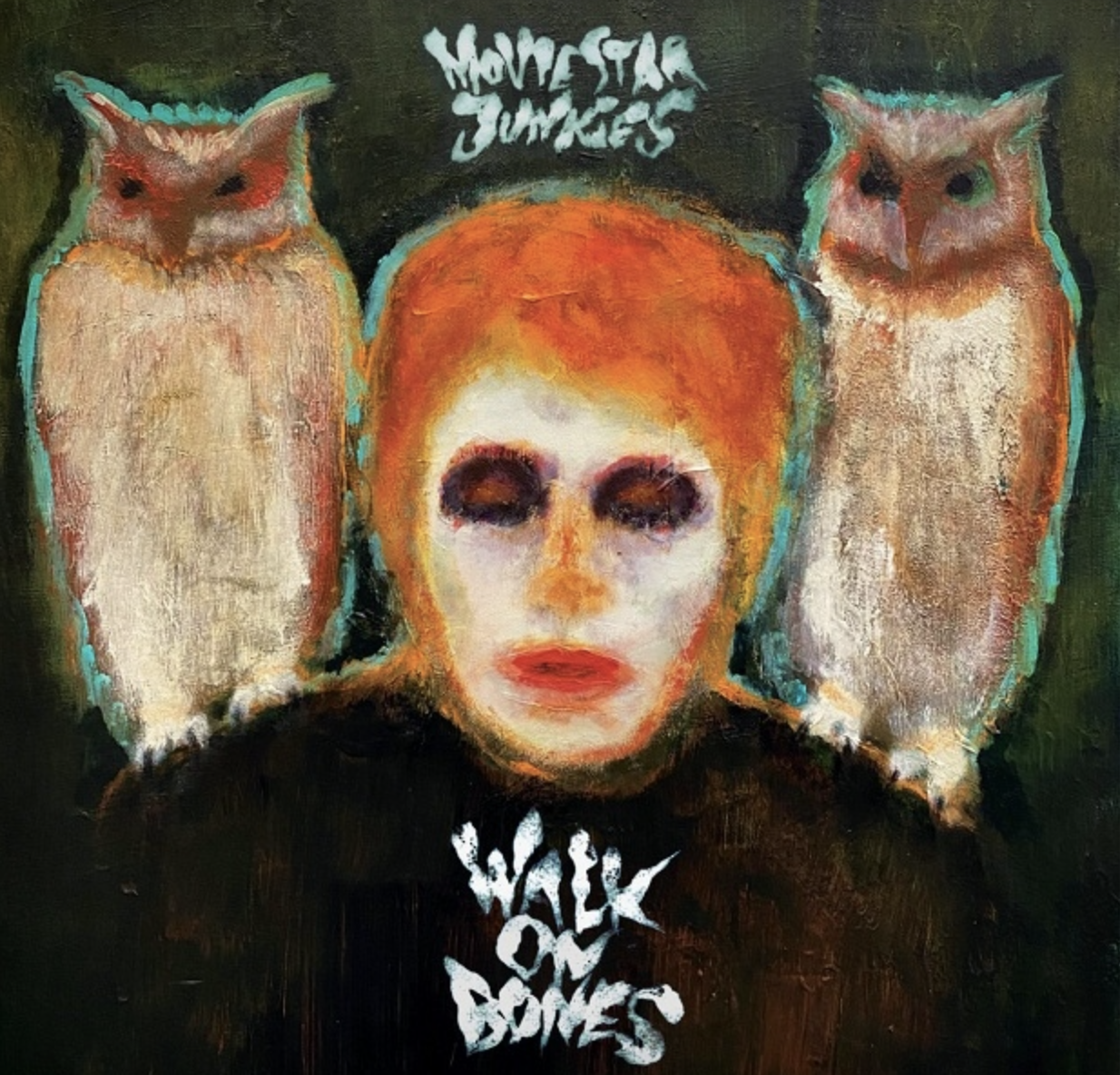
At regular points during the year the Monolith Cocktail will be sharing posts from our Italian pen pals at Kalporz. This month, Lorenzo Centini peruses the latest album from the Italian band the Movie Star Junkies.
Movie Star Junkies “Walk On Bones”
(Beast Records, 2026)
Old legends and curses
Besides making me happy, it gives me a strange feeling of familiarity to encounter a new Movie Star Junkies album again after so many years. But I was the one who stopped following them after Sons of Dust. That was in 2012. In reality, they moved on, slowly, emerging from the depths of the crypt only when the time was right. Evil Moods and Shadow of a Rose carried on the legend of the darkest Italian band. In the voodoo sense. Punk and blues, r’n’b and bluegrass. Two years ago, it was a single, Boy, Life is Chaos, that so suddenly reawakened me and reminded me of old legends and curses.
Dance on a bed of bones
A few weeks ago, their new album, Walk On Bones, was released. It’s more or less what the title promises: a lopsided, at times sarcastic dance on a bed of bones, old sacrifices, old mysteries. A little less serene than their more recent efforts, on the twelve-inch scale. Hard to Beat, for example, is wild, relentless, and anarchic. Melvillian. They’re cursed, just as they were at the time of that phenomenal debut. It’s strange to think that eighteen years have passed. More time means less impetuosity and fewer rough edges, but also more stories to tell, more demons. Somewhere Below tells some of them, beneath the surface of the ocean, like a sea ballad. Just as Behind the Hills seems to refer to something not too far away, perhaps in the woods.
The darkness that remains, and the lights that come on
When the Night Comes, there’s still reason to be afraid, yet the album’s length also offers some reassurance. Sandra and In Circles are two jaunts, perhaps deliberately conceived one after the other, at the centre of the album, to break the bad grip. Don’t be afraid, however, to tackle Walk On Bones; it might seem less abysmal than I describe it. It depends on the inspiration, or how deep you intend to delve. In any case, a good dose of irony is always advisable, should you encounter a black mastiff and a funny demon at a crossroads.
70/100
(Lorenzo Centini)

