Perusal #80: Hadley Caliman, Ferg’s Imaginary Big Band, Andy Haas, Fatoumata Diawara…
June 4, 2026
ALBUM REVIEWS BY DOMINIC VALVONA: A WORLD OF SONIC DISCOVERIES
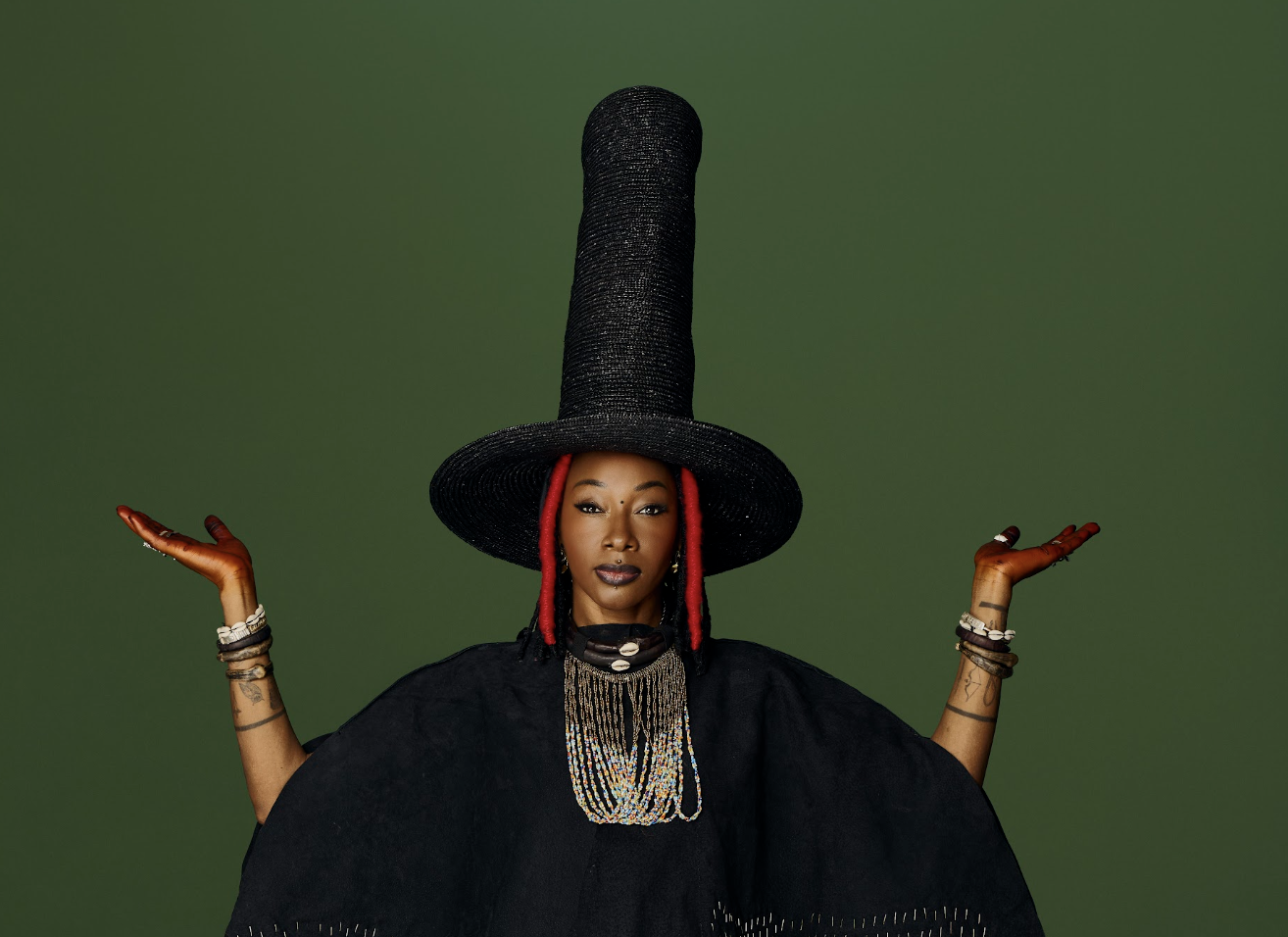
Photo Credit: Trevor Stuurman
Burial Cake ‘small steps’
(Somewherecold Records) 19th June 2026
Motivated, or forced if you like, to reevaluate life after the triple whammy of a near-death experience, subsequent hospitalisation and the implosion of a twelve-year relationship, Blake Edward Conley picks and shakes away at a new tonal pathway of soundtrack-like strung-out and mirage evoked Americana under the newly fashioned alias of Burial Cake.
His usual signature trade of abandonment, oaths, mourning and love hang like tangible descriptions in rippled, palpitating and softly juddered panoramas and mirages. But with a sudden change in misfortune, Blake heads inside, faces the interiors of an intimate setting and just lets the tape roll as his off-grid atmospheric and often moody reflections take shape; manifestations and haunted near improvised and spontaneous sounding efforts produced to comprehend the abstract and all too real brushes with mortality and a love lost.
Without prying, and as the PR blurb enquires from the beginning, this latest album of what looks like randomly smattered numbered recordings could be experienced perfectly well without its context and backstory. But once the circumstances are revealed its difficult not to hear or read into each tremolo vibration, stroke, zoomed slides, body and fretboard knocks and tactile hand gestures something both darker and often lonely. But then out of the rustle and wrangle, the more melodic attempts – like Robbie Robertson’s caught on the Twin Peaks set, or a foggy recollection of the Spanish-Texas sound -, there’s a couple of answer machine messages to prompt and make pretty clear the background to this sorry tale of woe, recovery and heartache. The spikey bluesy distorted ‘small steps #13’ and the melted country-drone ‘small steps #14’ both feature these final worries and concerns, both callers imploring Blake to get in contact as soon as possible. It can’t but prompt also concerns in us the listener of the state of the artist, in his dark place, breaking off or unable to reciprocate that same concern back: to just let them know he’s alive, let alone all right.
Inspired in part, title wise, by a reversal of Coltrane’s seminal famous Giant Steps LP of 1960 on Atlantic Records, Blake actually, especially on the opening track, seems to almost ape the saxophone with a magnetic-like buzz and fuzz of vibrated electrified strings. A gateway to modern improvised jazz, that LP signalled something new and the way forward. Blake however, in a much more intimate, private way, still recalls his long-standing droneroom project, but tries to refocus his artform and channel it differently with this latest project and move (as a consequence I believe of the split) from Tacoma to Seattle (although a city move, he remains in the same Northwestern state of Washington).
Magnetic with spells of the dreamy and near magical, the feel and musicianship is a balance of broodier and more attentive forces: Sunn O))) meets Gunn, or Fred Frith in a crush with Ry Coder. Rattle snacks, a long since abandoned rust belt, the cactus dotted landscapes and borderlands all merge into that performance space of gloomy rumination and bluesy experimental loss. It feels like some passages are there to haunt Blake, whilst others almost offer some light, a way to process and recover.
Hadley Caliman ‘Iapetus’
Reissue Special (Wewantsounds) 19th June 2026
Our friends at the specialist rare finds and vinyl reissue label WEWANTSOUNDS continue to mine the vaults of the crate-digger’s and breakbeat connoisseur’s favourite, the Mainstream label this month. The first such vinyl reissue of its kind, the imprint has resurrected one of the best ever recorded examples of its kind, with one of the most outstanding and illustrious of lineups, shining a light on the tenor saxophonist and flutist Hadley Caliman’s much revered and classic solo album of 1972, Iapetus.
Bob Shad’s original Mainstream “broad church” imprint grew out of an already 30-year spanning career when it took shape in the 1960s; a showcase for prestigious artists, session players and Blue Note luminaries chancing their arm in the bandleader or solo spotlights. A musical journeyman himself, Shad (whittled down from Abraham Shadrinsky) began his producer’s apprenticeship at the iconic Savoy label, then moved to National Records before taking up an A&R role at Mercury, where he launched his own, and very first, label EmArcy. It was during this time that Shad would produce records for the venerated, celebrated jazz singer deity Sarah Vaughan, the Clifford Brown & MaxRoach Quintet, Dinah Washington and The Big Brother Holding Company.
Mainstream was home to the developing tastes and an incubator for 70s jazz, whether that was fusion, the spiritual, the art rock variety or the conscious kind. One such glowing example was Shad’s signing, the highly impressive Oklahoma raised but L.A. and San Francisco hot-housed Caliman, who recorded a couple of impressive and defining solo LPs for the label at the turn of that new decade.
After securing his platform in 1971 with the self-titled debut, Caliman followed up with the Greek Titan and Jupiter moon etymological entitled Iapetus. The majority of the compositions on this far-reaching and renowned LP were composed by the no less notable and influential pianist, composer, electronic musician, essayist and conceptual artist Todd Cochran; just one of the many doyens and acclaimed artists and musicians lining up to enrich and push the boundaries of Caliman’s Modal and spiritual vibed visions.
With so many crossovers, links in the network and amongst the players on this rarefied treasure, it would be fair to outline each band member’s diverse backgrounds and connections. Cochran himself is the polymath most responsible for helping put this LP together, having arrived off the back of performing on and shaping the Bobby Hutcherson’s Quartet’s iconic Head On LP for Blue Note, and already releasing a couple of LPs for Prestige. As a side nom de plume for some his career, Cochran also went under the Bayeté name. As a master of composition and keys virtuoso, you can hear a heavy use of the Fender Rhodes on Caliman’s eclectic fusion of a showcase LP; bulbs shaped electrified notes hover, hang around like pollen and space dust, or reverberate, whilst Oscar Peterson-like displays of modal and explorative notes and runs cascade and trickle both melodically and in a more avant-garde style.
Stepping up next, we have the sensational Woody “Sonship” Theus, an L.A. birthed virtuoso who was already “well acquainted” with the flute, violin, trumpet and piano as a kid before homing in on the drums. By the way, that middle name is in honour of not only Jesus but Coltrane’s ‘Sun Ship’. As an incredible engine room, but tactile drummer too, Theus worked with such luminaries of the art as Larry Nash, John Klemmer, Charles Llyod, McCoy Tyner, Woody Shaw, Freddie Hubbard, Michael Urbaniak and the exalted Pharoah. Here, he delivers a drumming showcase, splashing around with cymbals, hurtling away in an Irmin Schmidt-like phaser and flange tunnelled cosmic psych effect, and rolling and beating out a spiritual, experimental and sometimes just funky breakbeat. He’s just as at ease on the more mirage and dreamy peregrinations and settings; sifting, sieving and tactile across primal horizons and nature. Rhythms and timings can suddenly leap into action from nowhere, and he’s been left at times to play off in duets with just the double-bass or the keys.
Moving on, but in the same music section of the ensemble, we also have the percussive pairing of Spanish Harlem’s conga and timbales player Victor Pantoja and the Dominican drummer and fellow timbales player Hungria Garcia. The former is probably best known for his time with both Santana and the also the Latin rock band Azteca – founded and linked by Santana percussionist Coke Escovedo – and was named by his peers and foils as “El Negrito”, whilst the latter was famously a member of Mongo Santamaria’s Cuban spectacle and outfit, going on to form the Riot rock group in the 70s, and playing with such noted visionaries as Gabor Szabo, Don Ellis and Stevie Wonder. They both add a certain exotic presence, a simmer, rattle and shake of dragon flies and butterflies, the brush and scrub of the earth, and the jingle of cattle bells from the African bush on the atmospheric dreamy nature and spiritual yin ‘Dee’s Glee’. It might also well be their inclusion that helps to steer the Latinised ‘Quadrivium’ towards the Afro-Latin sounds of Brazil and Cuba; an almost pan-fluted and whistle caress of Latin America via Hermeto Pascoal and Jeremy Steig.
Next on trumpet and flugelhorn, the Houston born but Afro-Cuban roots Luis Gasca, who also (and that’s where those connections and nodes cross once more) played with Mongo Santamaria he also but played with that other Latin-Jazz titan Tito Puente, but once he let his hair down, or grow, in keeping with the hippie countercultural norms of the late 60s, hung out as a renowned sideman on the San Francisco Bay scene, turning up as at Woodstock with Janis Joplin and The Big Brother Holding Co., lending his now psychedelic horns to the Grateful Dead, and also filling the ranks of Santana’s band during those heady days. His cult LP, For Those That Chant, is a classic. That trumpet is equally as blazing and burning as it is burnished and dry across the Iapetus skyline: recalling a host of gifted auteurs of the art form but swinging also to a 50s and early 60s period of influences too.
Finally, we have the moving Modal bass lines and flexes of the notable double-bassist James Leary. The CV is impressive to say the least, with periods conducting on Broadway and stints with Count Basie, Eddie Harris, Dizzy and Max Roach. There’s plenty of room for that hummed and descriptive double-bass to swing between stage and the golden era of Blue Note, whilst also sounding out the terrain on the dreamier hallucinated and lunar pieces.
I guess we should return back to the man of the hour, and Caliman’s own impressive background. Crossing networks porously, and just like a number of his foils on this LP, he also worked up musical relationships with Santana, but also whilst moving between the West Coast and Washington, with such luminaries and notables as Earl Hines, the Grateful Dead, Freddie Hubbard and Jon Hendrick, and Ray Draper. L.A and San Fran were the calling, and his sophomore LP, illuminated by the mythological references to a progenitor of mankind, the father of Prometheus, and the astrological references to the mostly iced, distinctively bright and dark hemispheres observed their largest moon of Saturn, sits well in that environment; from noirish blues to showtime swing, the near psychedelic, the spiritual, and when the keys and drums and horns merge on the opening ‘Watercress’, evocations of Bitches Brew Miles and soul-jazz.
Elsewhere you can pick up flashes of Byard Lancaster, Joe Zawinul and Miles’ own electric key experiments, plus Oscar Peterson, Max Roach, the funk and more soulful, and something almost otherworldly.
Far too impressive, and filled with a most enviable ensemble, to lay dormant or unloved, the Iapetus reissue is a stunning, visionary masterclass in both expanding and firing up jazz so that it swings as much as it floats or hovers between the Latin and the experimental, the orbital and the primal.
Fatoumata Diawara ‘MASSA’
(NØ FØRMAT!) 6th June 2026
Although the diaphanous voiced Fatoumata Diawara hardly shies away from delicately and beautifully articulating the subjects she holds dear, to spotlighting with a certain tenderness but also power the problems of polygamous family woes in Western African, of motherhood and the contemporary ills that plague not just her homeland but the world as a whole, her music is a celebration of roots and culture; an exchange of ideas and art between her homeland and the modern approaches and pop and club music of the French producer and project instigator -M-.
Whilst Mali is being ripped apart, a decade or more into a grippling war and ongoing, but never extinguished, Islamic insurgency, its music scene has never been more influential and in rude health. It must be said, mainly as a result of its musical diaspora, with many forced to flee to Europe, across the borders: from various celebrated Tuareg nomadic groups to a number of internationally acclaimed virtuosos. Many have stayed of course, but the daily threat of attacks must be plaguing their nerves.
A complicated picture that needs far more nuance and context than I can give it here, the back-and-forth battle between the government and the combined forces of the al-Qaeda-linked Jama’at Nusrat al-Islam wal-Muslimin (JNIM) and ethnic Tuareg separatists under the umbrella of the Azawad Liberation Front (FLA), rages on indefinitely; once halted by the intervention of the former colonial forces of France, who were themselves more or less kicked out of the country to be replaced, by of all the worst possible choices, a ragtag of Russian mercenary forces – who have themselves failed miserably and dangerously to defend the capital and huge swathes of the country, letting the insurgents gain the upper hand. As it stands, Mali is on the precipice of an Islamic terrorist takeover if something isn’t done soon by the current governing regime.
Concentrating many minds, Diawara, who runs a charity in Mali that provides financial support to make art and music accessible to children with albinism and disabilities, must look on with horror at the developing crisis back home. But this album, in this time, is as I’ve already said, a kind of celebration or at least outward unifying collaboration between Mali and the contemporary productions of Europe.
Already working with a host of such projects, including the Gorillaz, the singer, songwriter, guitarist (influential and acclaimed enough on this instrument to have made history this year as the first black woman to sign a signature guitar deal with Gibson Epiphone) now reconnects with -M-‘s Malian-French Lamomali collective; the lineup of which often features the acclaimed kora maestro Toumani Diabate and his grandson, the singer, kora scion and producer Sidiki Diabate. But as a solo fronted venture, Diawara keeps the roots of home very close whilst expanding her sights on futurizing that sound with synthesizer effects, and a quite subtle but effective use of modern production. And so, whilst imbued by the desert blues, the stripped rock n roll and the more traditional vocals of Mali, you can expect to hear her storytelling prowess and messages of resilience, the “orphan’s song”, faith and motherhood blended with spells of Afropop, Chic-like funk, modern R&B, pop and electronica.
Alongside the synthesizer pads, the metallic effected parts of piano, the flat drumbeats and Euro-club feels, you can hear Diawara’s electrified and acoustic guitar trills, solos, and nomadic desert bluesy landscape projections and a voice that is commanding and yearned as it is filled with reassurance and sympathy for the subjects she’s articulating or agitating.
As an experiment in spreading Malian music to an ever-greater international audience I’d suggest Fatoumata Diawara, with help from her production foil -M-, has achieved those aims with aplomb, depth and with an ease of the rhythmic and funky.
Ferg’s Imaginary Big Band ‘The New Atomic’
(Trash City Records) 26th June 2026
Transmogrified through a maximalist and hysterical, but also attentive and swooning use of untold influences and accumulated aspirations, Fergus Quill goes fully “atomic” on a revived Big Band sound.
Long since grown unfashionable and no longer economically viable for the most part, Quill throws everything but the kitchen sink at it; scattering an eclectic record collection, years of experiment and a healthy absorption of inspirations into a thoroughly excitable, dramatic and unifying set of performances and transformed cover version homages.
Already a renowned instigator, musician and bandleader on the British jazz scene (although you’re as likely to think you’ve been dropped in the Chicago, New York, old MGM backlot scene of L.A. in the golden age of cinema and New Orleans hothouses of the past as you are the in a more contemporary London), notable for his contributions alongside Theo Goss and Nico Widdowson in a critically applauded trio since 2020, and for co-founding the Independent Record label and his involvement with the National Youth Jazz Orchestra, Quill draws in a number of friends and past collaborators for his Imaginary Big Band’s third outing. There’s a writing credit for Widdowson on the Lalo Schifrin horn blazing and whacker Mainstream funk label Cotton Club vine swinging street beat ‘Do The Right Thing’ and an arranging credit on the more intimidate, dreamy and magical WWII era radio music hall sentimental recall ‘Same Sky’. The former could be a manic reconstruct of Spike Lee’s home turf brought into the hands of Jimi Tenor, whilst the latter, features the swooning and contralto-like wartime heartache of co-writer and vocalist Amy Clark (Quill is co-signer so to speak on that same flashback to a bygone era; a mix of Radio Hall Sarah Vaughan and Vera Lynn!).
Just the opening nine-minute blast of interstellar atomic age throwbacks, ‘Jay Sufin On Saturn’, runs through an entire album’s worth (for anyone else) of ideas and references; from Saturn’s cultural ambassador to Earth Sun Ra to The Big Easy, the soundtracked beat of Eastwood’s Callahan in San Fran, Duke Ellington, Screamin’ Jay Hawkins, Gershwin, Gil Evans, James Chance, Skies Of Americas Ornette Coleman, Cab Calloway and Glenn Branca. Fast forward to the creature-feature drama of ‘iBesszilla’, and the action is a fun and silly madness of Max Steiner, horror picture shows of the 1950s and the more experimental dried reed and strangulated horns of Sam Rivers and Anthony Braxton, and a sudden acceleration of hardcore.
A bit of a surprise, but there’s a stalking Muscle Shoals via swamp soul version of Bob Dylan’s minor key bitter love pill ‘Love Sick’. Here, and with a renewed if plaintive vocal treatment, Time Out Of Mind Dylan is given a delta bluesy jazzy feel that seems entirely plausible. The curtain call protestation, ‘I Shall Not Be Removed’ is returned back to its American Spiritual roots, its gospel home ground so to speak, with a harmonious and beautified Orleans influence and snuggled Big Band finish.
Breathing new life into the Big Band sound whilst referencing its past glories and the very reasons its both bombastic and more romanticised sounds were so special and revered, Quill and his imaginary troupe playfully and in actionist dynamism, realign the olds with a refreshing blast of no wave, the avant-garde, Afro-futurism, and a mania of contemporary flashpoints. There’s much to unpick and enjoy in equal measure.
Andy Haas ‘Messianic Time’
(Resonant Music) Released 14th May 2026
On a creatively prolific role of late, with a trio of headed albums plus a recent dispatch from the Van Pool (check out my review from April) unit, Andy Haas isn’t just pushing envelopes but refolding them into shapes and sonic sounds unbeknown to the saxophone outside the arenas of freeform jazz, the avant-garde and musique concrete.
I’ve previously outlined Andy’s CV, his background, and untold cross-generational collaborations both in the New York scene and over the border in Canada. Too many to list, the orbit that has been pulled towards the explorative musician is exceptional; everyone who’s worth mentioning on the underground during the course of the last forty plus years anyway.
Flanked once more by a revolving lineup of such gifted players, Andy’s latest project includes the gangly post-punk, hardcore and no wave jazz growls, revved-up and snarled bass pulsations and prowls of Brenna Rey, and the tumultuous freefalling and rolling thunderous drums of James Paul Nadien – think Art Blakey meets Fuzai and Last Exit.
Our saxophonist of note is back at the centre of this both bestial, wild and Antony Braxton-style piped and squeezed experiment; once more setting the controls of his effects apparatus in real time and afterwards to suck out the tune or to give his horn a vibrating mania of high pitch tones, squeals, metallic resonance, something that can only be described as snorkelling, and an edge. That sax sounding at any one time like an old-fashioned kettle whistling and pleading to be taken off the stove, the oboe and the mizmar.
Theme wise, it seems the trio are either manifesting or invoking the arrival of a new messiah or taking part in a primal scream therapeutic session to overcome the end times. With violent near hardcore thrashed blasts at war itself and Blurt and The Flying Luttenbachers no wave blasts at sacred cow gods, the Abrahamic triangle of religious apocalyptic texts, there’s a funnelling of oppressions waiting to explode. You can hear what sounds almost like the steam being released, the pressure valves being opened on that old golden calf as Moses descends from the heights carrying God’s ten commandments, or the impending doom of the next missile as it lands and tears up another Guernica.
At this point I have to point out that Messianic Time has a slight novelty factor track list wise, with the Bandcamp version containing two tracks not on the CD version, whilst the physical version contains four tracks not available on Bandcamp. Just for transparency, I jumped the gun and listened to the Bandcamp version whilst waiting on the CD. But the general improvised growl and darkened jazz mood is the same I believe across both.
It’s not all action, but the forces of Rosco Mitchell, Laddio Bolocko, Pere Ubu, Dewey Redman (circa Tarik), Brom, Peter Kowald, and Scrala O’ Horror all collide to evoke a maelstrom of Biblical chaos and hope. Another incredible performance of effects manipulated free-dark-hardcore-jazz and oft-groove from the sax maverick and his foils.
Puce Moment ‘O.R.G.II’
(Odd Doo) 12th June 2026
A continuation of Nicolas Devos and Pénélope Michel’s Puce Moment’s collaborative spirit of exploration; an exercise in transformative pipe organ music, imbued by and then lifted from the venerated stage of St. Jospeh Church in Armentières (located on the Belgian border, Northwest of Lille) and set to the performance of Christian Rizzo’s à l’ombre d’un vaste détail, hors tempête at the Biennale de Lyon in 2025.
First Introduced to a 1942 mechanical instrument version of the organ in February of 2019, the conceptual duo has built upon those early experiments, working with the likes of the artistic director, curator, choreographer and visual artist polymath Rizzo, but also with such international company as the Gagaku Music Society and the São Paulo born choreographer and dancer Vania Vanneau. This has led to a merger of their Kosmische Zodiak Club-esque soundscapes with dance, visual movement and performance art over the years, and most recently, this droned and piped contextualized special performance.
With titles that reference a multitude of mythological and religious etymological derived forms of wind and air (from the widely-used Ottomon Turkish derived sea breeze of “Imbat” to the Hebrew “wind”, “breath” of the Holy Spirit “Ruach”, and the violent “Tehuano” wind that blows through the gap of the Chivela Pass in Mexico), the source and inspiration is referenced in every breath and bellow that’s played through that auspicious organ; augmented by the duo’s electronic apparatus, and featuring a specially constructed mechanical hand, used to play along on one octave and controlled by a sequencer.
More akin to the kosmische expansions of early Popol Vuh, Tangerine Dream and their ilk, and to the pastoral ambience of Jeff Bird than the holy and reverential, the pumped, filtered and droned atmospheres seem to reach out past the stained-glass and into the abstract and as yet undiscovered. Melodic rays and patterns seem to emerge from the enveloped and a foundational bed of undulated pipe music. At times almost glassy, and at others, throbbed and anointed by repeating touches of light, the sounds stretch out and expand into the air itself. Hymnal qualities are balanced by both the playful and by the elemental manifestations of the titles: such as the scorched, arid and sun blared aspects of the opening Church service come Kosmische-inspired ‘Simoon’; a reference to the strong, hot, dry and dust-laden desert “poison wind”.
Organ music is once more transformed and yet despite the various concepts and effects, doesn’t lose its sustained, rising and building qualities and evocations.
The Taps Of The Holy Trinity ‘Customs & Rituals’
(Fenny Compton) 20th June 2026
Invoking the ancestors through various “customs and rituals”, the Australian troupe with strong Hellenic and Mediterranean roots cast suitably evocative spells and conjure up various visions of both the atavistic and esoteric as the newly formed The Taps Of The Holy Trinity cult.
From Dionysus to the Byzantine, and via the Ottoman Empire’s colonisation and conquest of Greece and its neighbours, an atmosphere of acid-psych-folk and atavistic past lives that brush up against passages of Aussie Gothic, the dirt music of Hugo Race and Chris Eckman, and a strange mirage of Outback and North African desert blues melts perfectly with a hauntology of diaspora and displacement. Whilst Australia seems to have been a real pull for tens of thousands of Greek citizens, their journey starts back in less auspicious times, fighting for national identity against the Ottomans during the 19th and 20th centuries – a history that is way too complex and layered to go into here. The first Balkan War (in short, and again, without the entire history and context, this period references the war between 1911 – 1912, when Bulgaria alongside Greece, Serbia and Montenegro fought against the Ottoman Empire, just before its historic loss, its demise and rebirth as Turkey after World War I) led to such displacement and a refugee crisis. There’s a reference on the album to the walking on fire ritual of ‘Anastenaria’, which, depending on the sources you research, seems to have originated either from Ancient Greece or from those refugees (many of which were Bulgarian) forced out of what was then known as Eastern Thrace (a geographical and historical region in Southeast Europe that roughly corresponds with what we know as Thrace) following the first Balkan War of its name. Dancing in an ecstatic ceremony across burning coals, this show of faith proves fertile inspiration for the crackled and exhaled mysticism of the group and their trippy manifestation of a mystified land full of apparitions.
Lining up to field this project is the Aussie with Med ties pairing of Arthur Karanikas (of BBQ Haque note we’re told) and Michael Plater (working both solo and as The Right Hand Is Doomed To Blacken, and the H.P. Lovecraft or M. R. James-esque The Northern Lighthouse Board). They are joined on a suitably eclectic variety of traditional and indigenous instruments by Dee Hannan (a member of the congruously evoked George Xylouris Ensemble), Dave Bullock (of both the incredibly entitled Paul Kidney Experience, and Kiss My Poodle’s Donkey), and Danny Martinov (of The Exit Keys). That foundation is rounded off with the European showing of Italian violinist Massimiliano Gallo and the UK experimentalist Paul Rodgers. Widening the scope further, this culmination of talent lays down the popular Demotika folk style of Greece with the folk styles of Anatolia and its surrounding lands with an exotic Byzantine incense of magic, courtly rituals, the hungering and hallucination.
Golden metallic-encased gong-like shimmers and the rustle and jangle of trinkets build up an atmospheric picture, as ghostly wails and Boyd Rice and Current 93-like male vocals play on the esoteric – you can throw in Nature & Organisation and Sol Invictus if you desire. At times it’s like Brian Jones unshackled from the Stones, cross-legged in a Sublime Porte opium bizarre with the Velvets and Aphrodite’s Child. But then you get, like on the whistly piped and reverberated bluesy ‘Burial Crowns’, a whiff of Alejandro Jodorowksy and Popol Vuh.
A sonic version of the bubble rising inside a lava lamp, the The Taps Of The Holy Trinity’s debut album is an intriguing debut from a Hellenic vision of the Incredible String Band brought up on the dirt music of the 80s Aussie scene; a meeting with the ancestors and stories of a magically imbued and yet also lamentable land trapped on an astral plane of psychedelic mischief and panoramic cosmic gazing.
Here’s the message bit we hate, but crucially need more than other:
If you’ve enjoyed this selection, the writing, or been led down a rabbit hole into new musical terrains of aural pleasure, and if you able, then you can now show your appreciation by keeping the Monolith Cocktail afloat through the Ko-Fi donation site.

