Our Daily Bread 615: Sahra Halgan ‘Hiddo Dhawr’
March 26, 2024
ALBUM REVIEW: DOMINIC VALVONA

Sahra Halgan ‘Hiddo Dhawr’
(Danaya) 29th March 2024
Few artists from the disputed region of Somaliland could qualify better than the singer, freedom fighter and activist Shara Halgan to represent their country’s musical legacy. As an unofficial cultural ambassador and symbol for female empowerment Halgan’s journey is an inspiring one: Forced out of her homeland during a destructive civil war – in which she played a part in nursing and “comforting” fighters from Somaliland’s secession movement, sometimes alleviating suffering through song –, Halgan had to flee abroad to “survive” hardships and dislocation in France, but eventually, a decade after the overthrow of Siad Barre’s ruling military junta, returned home to motivate and promote proud in Somaliland’s cultural heritage.
It was during her time in France, removed from her roots and homesick, that Halgan would meet the musicians that went on to form her studio and touring band: step forward percussionist and founder of the French-Malian group BKO Quintet, Aymeric Krol, and the guitarist and member of the Swiss ensemble Orchestre Tout Puissant Marcel Duchamp and L’etrangleuse, Maël Salètes. Both appear on the latest, and third Halgan album, alongside newest recruit Régis Monte, who adds “vintage organ” and “proto-electronic embellishments” to the heady and fuzzed mix.
Before we go any further, a little insight, context is called for, as Halgan’s themes, messages are wrapped up in the history, turmoil and ambitions of this disputed region on the Horn of Africa. Firstly, Somaliland is an independent state within the greater scope of a troubled geography, neighbour’s to Somalia, Djibouti and Ethiopia. Going back to the 7th century, this land’s tribes were swept up in the great Islamic conversion, but by the 14th century, as power shifted between states and kingdoms, they came under the suzerainty of the, then, Christian Ethiopian Empire. Islam would always remain integral, through not only its teachings but poetry too. Fast-forward to the late 1800s and the arrival of the British, who established the troublesome protectorate of British Somaliland; joined in the region by the ambitions of Italy. Although this forced state lasted up until independence in 1960, there would be a number of rebellions and breakaway movements – most notably, the Dervish State revolt set up by Sayyid Mohamed and the poet Salihiyya Sufi in the late 1800s and early 1900s; a convoluted story that needs far more space and depth than I can offer, but that’s goals were to essentially reestablish the Sufi system of governance and independence; this period would eventually lead to the establishment of the state of Somalia, but also war amongst the colonial powers and neighbouring Ethiopia.
When independence did arrive in 1960, there was a brief blossoming for Somaliland, the “de jure” unrecognized breakaway part of Somali. Existing for a mere five years as a “sovereign entity”, it was gobbled up into the greater Republic of Somalia. But it is said that this fleeting state was economically and artistically fully independent and burgeoning before “internal tensions and violent repression” took its toll; leading later to the already mentioned civil war that kicked off in 1981, finally ending with the overthrow of Siad Barre and his military junta in 1991. Somaliland currently remains a fully functioning, near stable, state, one of the safest in the region despite all the turmoil and civil war over the border in Ethiopia, the turmoil of Somali and greater dangers of Islamic insurgencies, and now the extended crisis taking hold in the Middle East.
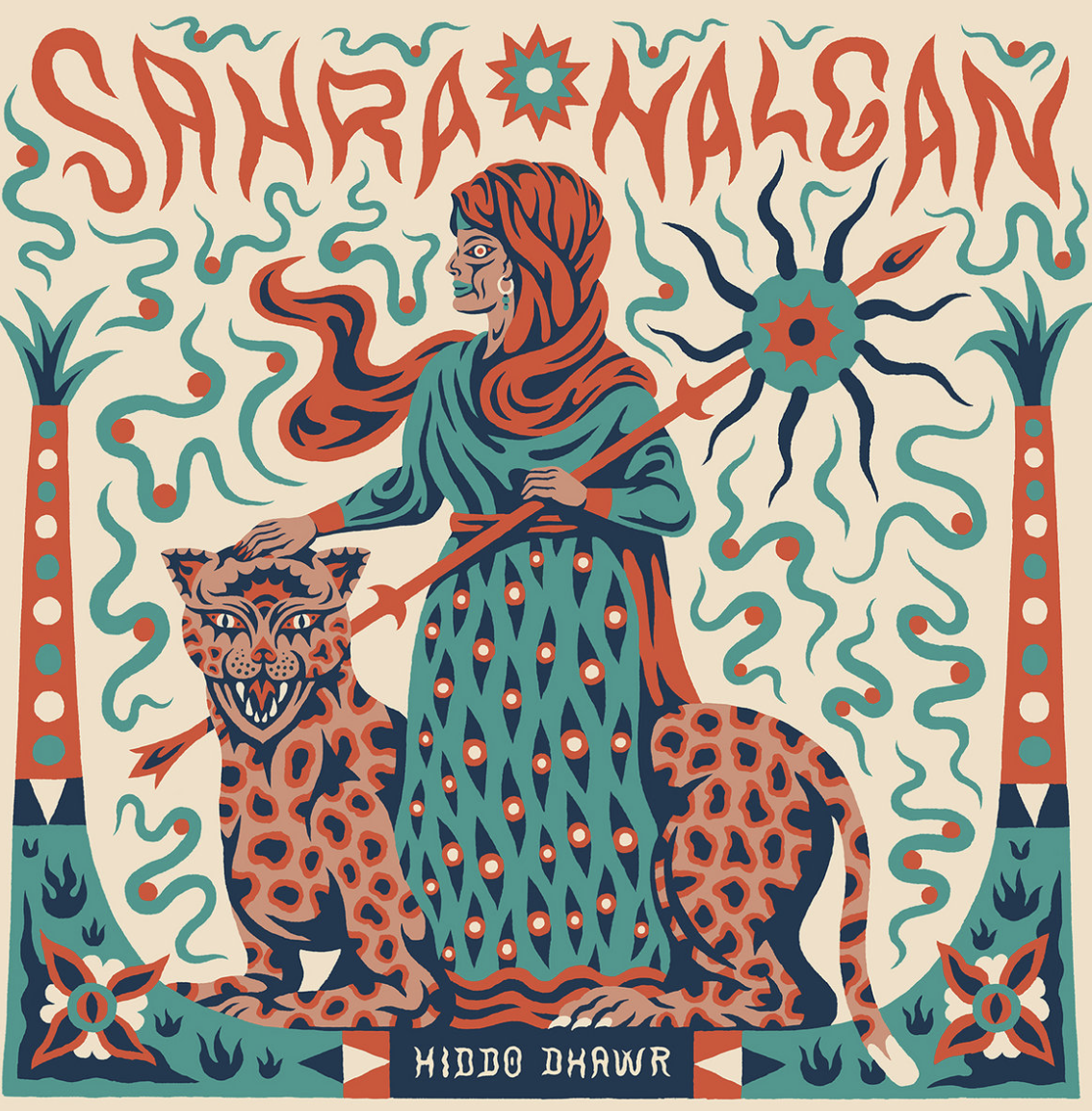
Since her return to the homeland in 2005, Halgan has helped nourish and cultivate a female-led scene by setting up the capital’s first music venue in the more tranquil surroundings of downtown Hargeisa – the once atavistic trading hub and watering hole for the local tribes, growing into a successful city over time, it’s also the de facto governing capital of Somaliland. The name of which, Hiddo Dhawr (which the PR notes translate literally as “promote culture”), now lends its name to this new album of eclectic fusions and Somaliland traditions. A hybrid if you will, Halgan and her group really open up to an abundance of influences and atmospheres whilst retaining the unmistakable sound of the environment and legacy; from the wild trills to griot storytelling poetics and general effortless sounding buoyancy and contoured sand dune rhythms and feel.
But first, the lead single and opening track, ‘Sharaf’ bounds in on a semi-garage, semi-Glam-rock and semi-swamp-boogie backbeat. A “love song and hymn to the importance of human dignity”, this electrified, fuzzy scuzz guitar licked desert rocker has both afflatus and loving intentions; Halgan’s voice nothing but lifting and softly commanding. By the second track, ‘Laga’, a “tender love song” is transported to both Egypt and Bamako in Mali, via the organ prods and radiant suffused keys of both Question Mark and the Mysterians and Hailu Mergia.
Melodious examples of the “modern style” of Qaraami can be found transformed on bluesy and wrangled dirty guitar, trinket jingling, and rocking accompanied title-track, and the soul-beat, hand-clapped giddy ‘Diiyoohidii’. Whilst that age-old form’s subject matter is love, Halgan replaces it with a love for her people, the culture and fertile land itself. Both are beautifully, emotionally conveyed, with a semblance of both pop and rock ‘n’ roll – I’m hearing both The Artic Monkeys and Dirt Music with a touch of Les Amazones d’Afrique.
Some songs change vocally between the lyrical and the narrated, or the spoken. ‘Lilalaw’ features the later, an address to a near two-tone beat fusion of the spacy desert trance, twirled and trundled African percussion and swamp blues pedals fuzz. The finale, ‘Dareen’, is almost entirely stripped back to allow a longing unimpeded curtain call from Halgan; only the suffused subtle keys of a Muscle Shoals-like organ across the swept vistas is needed. Talking of atmospheres, the Malian blues and dried bones and beads shaken ‘Hooyalay’ features cosmic desolation and misty mysterious vibes and winds, making it the album’s most experimental song.
Enriched soul music with a edge and buzz, Halgan and her troupe strike a balance between the heartfelt and empowered on electrifying album; that focal voice sounding so fresh and young yet wise and experienced, able to encapsulate a whole culture whilst moving forward.
THE MONTHLY DIGEST OF ACCUMULATED NEW MUSIC, THE SOCIAL INTER-GENERATIONAL/ECLECTIC AND ANNIVERSARY ALBUMS CELEBRATING PLAYLIST, AND ARCHIVE MATERIAL CHOSEN BY DOMINIC VALVONA

___/NEW\___
Jonah Parzen-Johnson ‘You’re Never Really Alone’
(We Jazz)
The soloist is never alone it seems, when on stage. And the highly prolific, serial collaborator and in-demand Chicago born, but Brooklyn-based, alto and baritone saxophonist and flutist Jonah Prazen-Johnson (regular followers will recognize the name from his trio partnership appearance with the Lycia inspired Berke Can Özcanon the Twin Rocks album from late last year) stands in the spotlight reacting to, feeding off of, and giving it all back to his audience and the wider community: hence the “We made this together” statement included on the album cover.
In the age of high anxiety, division and unwilling compromise, Jonah finds both the space to let go of the strains on the mind, the worries and concerns. In a nutshell, with just the use of his polytonal saxophone holds, wanes and drones (between higher trills and deeper bass-y vibrations; often together simultaneously) and willow-y, natural blossom garden flute, he projects invocations of regret and rumination whilst offering support, and even “courage” to see through the worst of it. To the undulating waves, near bristled distortions and more melodious tones, to the didgeridoo-like circles, fog horns, honks and drawn-out, Jonah evokes melodic traces of his native home (Chicago), the avant-garde, explorative and pastoral. If names and luminaries such as Sam Rivers, Marshall Allen, Coltrane, Roscoe Mitchell (especially his partnership with Anthony Braxton), John Zorn, Peter Brötzmann and Jeremy Steig grab you, then make the commitment and purchase a copy a.s.a.p.
ZA! + Perrate ‘Jolifanto’
(Lovemonk) 22nd March 2024
Bonding together on one Dadaist inspired transmogrified cross-pollination of sonic and musical ideas, the Spanish collaboration of the duo ZA! (No strangers to this blog; first featured in my highly popular Spanish Underground piece from more than a decade ago) and the experimental vocalist Perrate come together on an extraordinary album of sound assaults and hybrids that turn Iberian traditions and cultures on their heads.
Both partners in this enterprise have spent two decades or more transforming the traditional music of their native land; the critically applauded Perrate exploring the “outer edges” of Flamenco, his identity and heritage entwined with the age-old Gitano Iberian Romani community of which he is descended – a culture abundant with the stars and progenitors, innovators of Flamenco -, and ZA! often crazily and imaginatively merging a variety of Spanish styles, folk music, with anything from the African beats to the psychedelic, electronic, Balinese polyrhythms, thick distortion, free jazz and the shepherds of Tuva.
Taking the first word from Hugo Ball’s exhaustive Dada recited ‘Karawane’ phonetic poem, “Jolifanto” is packed with ideas and flights of fantasy; yet never loses its Iberian foraged roots, with plenty of recognizable Flamenco guitar frills and intimate quivery entwined attentive and descriptive accompaniment – sometimes sounding like a cross between Raül Refree and Jeff Buckley. You can also pick up the atmospheric settings of the dance, the performance throughout the album. The original performance of that poem, performed at the famous iconic Cabaret Voltaire, put Hugo in a trance; the captivated audience compelled to rush up on stage before the Dadaist luminary was dragged away. A certain lunacy, this spirited experimentalism and performance is transcribed to a lot of ZA!’s music, but it somehow makes perfect sense when combined with the poetic longing calls, mewling, whoops, mantra, assonant and almost muezzin-like vocals of Perrate. At any one time you are likely to hear echoes of Moorish Andalusia, oscillated dub, elephant horns, percussive scuttles, krautrock, Vodun invocation, post-punk, no wave and Afro-Cuban, and pick out bursts of Jah Wobble, Anthony Braxton, Zacht Automaat, CAN, Greco and Cambuzat, African Head Charge, the Reynols, Mike Cooper & Viv Cooringham’s ‘A Lemon Fell’, Harry Belafonte (I kid you not), Sakamoto and the Gypsy Kings.
From the cosmic and unsettling to near terrifying, there’s a lot to process in this slightly madcap collaboration. And yet in saying that, this album has soul and a seriousness about it in revaluating, pushing at the boundaries and ideas of what Iberian culture means in the 21st century; finding connections across the borders with music from as far away as Arabia, South America and the original roots of the region’s Romani communities. A great work of art and brilliance from the partnership that will excite, wrong foot and entrance in equal measures.
Leonidas & Hobbes ‘Pockets Of Light’
(Hobbes Music)
Expanding upon their sonic partnership with a debut album of epic cosmological proportions, Leonidas & Hobbes reach further than ever before into both the cerebral and outer limits of space to channel a litany of anguish woes.
Between them, this pairing of like-minded curious and lauded electronic musicians/DJs/club night instigators, cover the capitals of London and Edinburgh with their enviable CVs and provenances in everything from house to techno, the ambient, Balearic and dance music genres. Making good on previous EPs (2017’s Rags Of Time and 2021’s Aranath) they now face the philosophical quandaries of humanity, technology, climate change, extinction and metaphysics across thirteen movements, dance grooves, soundtracks and celestial symphonies.
A self-proclaimed ‘lockdown album’, the pandemic and stretches of time spent apart from socializing and giging, have had a deep impact on both artists; combine that with becoming parents and breakups, and you’ll find a pair of minds concentrated on finding the ‘light’ in a universe of emptiness and apocalypse. With effected dialogue snatches of ground control communications and alternative pseudo drug escapes from authoritarian mind control and conditioning speeches, and broadcasted weather reports from the eye of the storm (in Charleston, North Carolina to be exact) smattered throughout, the concerns, enquires and philosophies of both partners on this odyssey are made clear.
Like one long set, a voyage of peaks, beats and more trance-y and contemplated ambient pieces, this album goes from literal takeoff to drifting untethered in the void and back to the inner mindscape. Production and style wise there’s retro-space and kosmische hints of Vangelis, La Dusseldorf, Iasos and Klaus Schulze next to more acid zapping old school evocations and breaks of Wagon Christ, Orbital, Luke Slater, Mo Wax and Howie B, plus a Balearic vision of The Orb and echoes of the 303 drum sounds of Mantronix and Man Parrish. Vapours and wisps mystify certain suites, whilst others bounce along on more kinetic waves as mindscapes are mixed with technology, science and the sci-fi. Pockets of Light channels Leonidas and Hobbes’ worries and prophecies into a reflective existential soundtrack.
Their Divine Nerve ‘The Return Of The Lamb’
(Staalplaat)
A second inclusion this year for the Ukrainian trick noise maker Dmytro Fedorenko, his last Variát collaborative venture with Masami Akita (under his Merzbow alias), Unintended Intention, was featured in this year’s inaugural Digest. A brutal, scarred abrasion of twisted steel and concrete that same atmospheric heavy set of dark META electronica is now stripped almost entirely of the human touch for something altogether more esoteric and alien.
With the Washington DC experimental artist Jeff Surak (who has a CV far too numerous and varied to list here, but in brief, he made his first tape manipulations in the 80s under the 1348 moniker on his own Watergate Tapes imprint, lived in Russia in the early 90s, and after returning home, directed the annual Sonic Circuits Festival of Experimental Music in DC for thirteen years…the list goes on) as his foil, Dmytro finds yet another vehicle for expelling demons, the bestial, the apparitions in the machines and unearthly. Under the afflatus/supernatural imbued Their Divine Nerve title both accomplished participants retune the Fortean radio set for a corrosive, fizzled, buzzing unholy noisy embrace of the pained, hurt, mystical and chthonian.
Generous with the amount and duration of the material, this is a serious set of discordant and more hermitic vibrations, spread over ten (thirteen tracks if you buy the “bonus” version, which does actually include the title-track) post-industrial strength hauntings of the soul and psyche. The action varies, however, from invocations of early Richard H. Kirk to Basic Channel, Bernard Szajner, SEODAH, Coil, Alejandro Jodorowsky’s Holy Mountain score, and Spain’s underground tape culture in the 80s. And within that sound-off board, portals and channels open up to the slithered tentacles of the Cthulhu and other leviathans from the depths, as dark matter is resourced to build a haunted factory of unidentified operative machinery and tools. Phantoms are everywhere in this fuckery of scrunched marches, square bladed sawing, needle sharp scratches of surfaces and iron materials.
Axes to grind, metaphors for the growing unease and trepidations of unimpeded violence, the continuing evil invasion of Ukraine, you could easily read the sonic tealeaves on this immersive experiment. All I know is that the biblical inspired The Return Of The Lamb offers analogies to the Christian symbol of sweetness, forgiveness, meekness, gentleness, innocence and purity, but it’s also a representation of both Christ himself and that of a sacrificial animal – when depicted with the Lion it can mean a state of paradise. Make what you will of that liturgy, but hope and salvation might yet arise from the distresses and savagery. In short, Their Divine Nerve is a successful debut in noisy art forms, horror, alien visitations and mystery.
Dave Harrington, Max Jaffe and Patrick Shiroishi ‘Speak, Moment’
(AKP Recordings)
An enviable trio of acclaimed and highly prolific musicians pulls together their talents and experiences for an improvisational album of both suffused gazing/reflection and wilder, unbound avant-garde extemporized entanglements. Dave Harrington, Max Jaffe and Patrick Shiroishi’s CVs, appearances and collaborations are lengthy and varied: far too numerous to list here anyway. But suffice to say this triumvirate of contemporary jazz explorers covers more or less all avenues of that genre’s legacy and penchant for change, experiment – from the more pliable to wielding and addressing the abstract evocations of trauma.
In the spirit of improvisation, all three players dashed this recording off in a single afternoon (as it happens, a couple of years back in an LA studio on the 25th October, my birthday!) having only met that same day for the first time. Astonishingly, Speak, Moment is a very sophisticated, cohesive album that gels together perfectly: even during its more untethered and intense passages of abandon.
The performances move loosely from the near ambient undertones of Jaffe’s incipient and resonating textural cymbal and sieved-like snare washes, the subtle twangs and psychedelic mirages of Harrington’s guitar, and the lilted tonal flutters and more tuneful rises of Shiroishi’s saxophone, to the near cacophony of staccato breaks of later tracks like ‘Ship Rock’ – a sort of stormy tempest rock-jazz fusion that sounds like The Jim Black Trio tied to a maelstrom tossed raft with Chris Corsano, Pat Metheny and the Red Crayola.
The traversed dreamy opener, ‘Staring Into The Imagination (Of Your Face)’, seems to allow the trio all the time and space needed to eloquently and in a more gauzy manner, express a soliloquy to the processing of feelings, environment and the unsaid – Harrington’s guitar reminding me in part of Fernando Perales and Myles Cochran, whilst Patrick Shiroishi’s sax has touches of Dexter Gordon, Roscoe Mitchell and Sam Rivers. Talking of Harrington, I did read that his own influences range from Bill Frisell to John Zorn and Jerry Garcia. The latter is very much channeled on the spiritual percussive trinket rattled and leviathan looming ‘How To Draw Buildings’, with guitar parts that sound almost late 60s Woodstock acid-rock in inspiration (almost Hendrix-like in his more restrained and meditative mode). You can also hear the aria-theremin higher voice-like notes of Sonny Sharrock amongst the wilderness and mizzle and sizzled resonance of Jaffe’s drums on that same track.
The next track, ‘Dance Of The White Shadow And Golden Kite’, reminded me of Ariel Kalma – that and Ornate Coleman in an exotic Afro-jazz bobbing dance with the Art Ensemble Of Chicago.
The atonal sensitivities shift amongst the ambiguous presence of other forces and introspective moods across a quintet of spontaneous explorations on an accomplished gathering of talented musicians. If you have an ear and like for the Cosmic Range, Tumi Mogorosi, Yonatan Gat and the Gunn-Truscinski Duo then you have to own this traversing improvised experiment.
Twin Coast ‘To Feel’
Back with another enveloped in guitar feedback sculpted and layered vision, the Chicago shoegazers and noiseniks Twin Coast get pulled into a paranormal alternate dimension: A static TV set cell that seems to be at least languidly comfortable and dreamy. Almost numbed to the whole sorry state of it all, the duo lose themselves in an unholy hallucinogenic white noise of static fuzz and crystal shimmers and flange reverberations. I’m calling erased apparitional shoegaze.
The traditional B-side as it were, is handed over to diy electronic artist Isaac Lowenstein, aka Donkey Basketball (a EDM project that apparently started off a joke but quickly grew into a very real act, mixing and merging everything from acid to jungle and techno). Isaac, a fellow Chicago resident, transform the original into a kinetic, machine and mechanics switching, twisting, ratcheting and spring-loaded minimalist techno percussive tunneled and vaporous space-trip. I’m hearing a touch of Mike Dred, Mouse On Mars, Ritchie Hawtin, Basic Channel and Autechre added to the mere essence of the original shoegaze immersion from the ether.
___/THE SOCIAL PLAYLIST: VOLUME 84\___

Continuing with the decade-long Social – originally a DJ club night I’d pick up at different times over the past 20 plus years, and also a café residency from 2012 to 2014 – playlist, each month I literally chose the records that celebrate anniversary albums, those that I’d love to hear on the radio waves or DJs play once and while, and those records that pay a homage and respect to those artists we’ve lost in the last month.
Anniversary spots this month go to the Style Council’s ’84 special Café Bleu (I’ve chosen to kick the whole playlist off this week with the more dance-funk, WAR impressionist ‘Strength Of Your Nature’, from an album that slips mostly into more Post-MOD, Jazz Café piano), RUN-DMC’s self-titled holler from the same year and Scott Walker’s menacing, out-there Climate Of The Hunter masterpiece. From a decade before, I’ve added a glam pop-gun tune from T. Rex’s Zinc Alloy And The Hidden Riders Of Tomorrow – the LP that must have been on Bowie’s mind when recording Young Americans. Leaping ahead twenty years and there’s a smattering of ’94 releases from the Hip-Hop royalty Gang Starr (Hard To Earn), Main Source (Fuck What You Think), The Auteurs (Now I’m A Cowboy) and the Aphex Twin (Selected Ambient Works 2; so good I’ve included two tracks). From more recent(ish) times, there’s a choice track from the late metal face don of leftfield Hip-Hop MF Doom and the equally revered Madlib, under their partnership guise of Madvilliany – I’ve chosen the Sun-Ra anointing ‘Shadows Of Tomorrow’, which pulls in the aardvark Quasimoto. And, as featured below in this month’s archive spot, a track from the Ministry Of Wolves ensemble cast of fairytale weavers album Republik Der Wölfe: subtitled ‘A Fairytale Massacre With Live Music’, a joint enterprise between the Dortmund Theater’s production director Claudia Bauer and musical director Paul Wallfisch, with the unholy musical alliance of Bad Seeds co-founder and adroit solo artist Mick Harvey, one time Einstürzende Neubauten, Crime And The city Solution grizzled maverick and one half of the Hackedepicciotto duo Alexander Hacke and fellow Crime and the City band mate, Berlin Love Parade co-instigator and the better half of that Hackedepicciotto partnership, Danielle De Picciotto, providing the suitable nursery grime soundtrack.
We can’t pass the month without marking the sad death of Karl Wallinger, the master songwriter behind hits for others, but also sole instigator of World Party – after leaving The Waterboys in the mid 80s. I guess ‘She’s The One’ will be rotated extensively, but I’ve chosen the just as popular and more soulfully blusy ‘Ship Of Fools’.
From the new to old past gloires, missives and curiosities, making up the rest of the playlist are tracks from Fat Francis, Dalla Diallo, Alamo, Trips And Falls, De La Soul, Heldon, MIZU, Gary Clail, Incentive and more….
TRACK LIST IN FULL:::::::::::::::::::::::::::::
The Style Council ‘Strength Of Your Nature’
Vampire Rodents ‘Trilobite’
Gang Starr ‘Code Of The Streets’
Run-DMC ‘Hollis Crew (Krush Groove 2)’
Madvillian (MF Doom/Madlib FT. Quasimoto) ‘Shadows Of Tomorrow’
Dalla Diallo ‘Sinde M’bobo’
T-Rex ‘Painless Persuasion V. The Meathawk Immaculate’
Metamorfosi ‘Caronte’
World Party ‘Ship Of Fools’
Walpurgis ‘Disappointment’
Fat Francis ‘It’s Not Rock and Roll’
Alamo ‘Got To Find Another Way’ We Cut Corners ‘Three People’
In Time ‘This Is Not Television’
The Wizards From Kansas ‘Hey Mister’
Eyes Of Blue ‘Largo’
Trips And Falls ‘I Learned Sunday Morning, On A Wednesday’
Kevin Vicalvi ‘Song From Down The Hall’
The Auteurs ‘Chinese Bakery’
Scott Walker ‘Rawhide’
The Ministry Of Wolves ‘Rumpelstiltskin’
MIZU ‘prphtbrd’
Heldon ‘Ballade Pour Puig Antich, Révolutionnaire Assassiné en Espagne’
Aphex Twin ‘#24’
Stringmodulator ‘White Noise’
Aphex Twin ‘#12’
Liz Christine ‘Two Seconds’
Heldon ‘Ouais, Marchais, Mieux Qu’en 68’
Incentive ‘Time Flows Beyond You’
Gary Clail ‘A Man’s Place On Earth’
Okay Temiz ‘Galaxy Nine’
De La Soul ‘What’s More’
Main Source ‘F*CK WHAT YOU THINK’
___/ARCHIVE\___
TEN YEARS OLD THIS MONTH: THE MINISTRY OF WOLVES ‘MUSIC FROM REPUBLIK DER WÖLF’
The Ministry Of Wolves ‘Music From Republik Der Wölfe’(Mute) 10th March 2014
Pre-dating the Viennese totem of the subconscious but already a Freudian labyrinth of analogy, metaphor and augury, the Gothic fairytale fables of the Brothers Grimm have just got a hell of a lot more unsettling and personal. Given a Pulitzer Prize winning overhaul by the esteemed award winning, self-confessional American poet Anne Sexton in her 1971 book ‘Transformations’, these same tales were brought back into the realm of the adults. Her candid, revisionist take, from the point of view of a ‘middle-aged witch’, on these standard stories is a beat poetic vivid survey on human nature: those all too familiar idiosyncrasies and failures set to a contemporary (for its time) miasma of inner turmoil.
Proving to be just as poignant forty odd years later, those reinterpretations are revitalized in a brand new multimedia stage production, debuting at the Theater Dortmund. To be performed tonight (15th February 2014) the Republik Der Wölfe, subtitled ‘A Fairytale Massacre With Live Music’, is a joint enterprise between both the Dortmund’s production director Claudia Bauer and musical director Paul Wallfisch, with the unholy musical alliance of Bad Seeds co-founder and adroit solo artist Mick Harvey, one time Einstürzende Neubauten and now Crime And The city Solution grizzled maverick Alexander Hacke and fellow Crime and the City band mate and Berlin Love Parade co-instigator Danielle De Picciotto, providing the suitable nursery grime soundtrack. Detached however from the visual spectacle, that very same soundtrack is due its own inaugural release next month; its loose narrative a series of congruous chapters, easily followed without any other stimulated aide to guide you.
Original characters that we’ve grown to love, hate, revile or recoil from, are transposed into the darker parts of our psyche. Those parable like lessons and auguries of danger get kicked around in a quasi-junkie Burroughs nightmare of cynicism and surreal terror. Tucked into a all too knowing grown ups world of jealousy and greed, Picciotto plays the part of storyteller – in this case switched, as I’ve already mentioned, from the usual young, naïve heroine into a middle-aged witch – on the opening account, ‘The Gold Key’. It’s followed by the Teutonic heavy drawling gusto of Hacke’s ‘Rumpelstiltskin’; played up to full effect, as the poisoned dwarf is revealed to be our doppelganger, ‘the enemy within’, and the spilt personality waiting to cut its way out of all of us. Sounding quite like a missing Amon Duul II number from the Hi Jack era, the song’s maligned and mischievous protagonist elicits a kind of sympathy: ‘No child will ever call me Papa’. Condemned to play the part of cruel interloper, poor old Rumpelstiltskin exists to remind us of our demonic, primal nature: a nagging inner soul tempting us to commit hari-kari on restraint.
The fabled ‘Frog Prince’ is a slithery customer, made to sound like an odious creep pursuing his very turned-off love interest. Mick Harvey moons and croaks with relish in recalling the bizarre tale of doomed romance; the moral, though dark and disturbing, can be summed up as: be careful what you wish for, the law of averages doesn’t exist and in this case turned out to be a dud, the frog was certainly no prince.
Happy endings become even more blurred with the triumvirate of leading ladies ‘Cinderella’, ‘Rapunzel’ and ‘Snow White’. ‘Cinders’ is a Casio pre-set piece of waltzing lullaby, dreamily led by our protagonist chanteuse, whilst Rapunzel and Snow White are given a fluid pained Leonard Cohen treatment. The latter a roll call of ‘seven’ inspired symbolism and metaphor, the former an idolised plaintive requiem to the exiled and ill-fated American dancer, Isadora Duncan – forced to leave the States for Europe because of her pro-Soviet sympathies, Duncan died rather ironically at the hands of the famous scarves she used to so great an effect in her dances, after one become entangled around the open-spoked wheels and rear axle of a car she was travelling in, breaking her neck.
Other notable tales of woe include the opium-induced, somnambulist ‘Sleeping Beauty’ – literally a languid sleepwalk through some Tibetan flavoured labyrinth – and lurid Harvey sung ‘Hansel & Gretel’ – the apparent naïve, saintly, twins getting the better of a cannibalistic old crone. But its ‘Little Red Ridding Hood’ who inhabits the most contemporary street hustling environment, transported from the danger lurking Black Forests into a world of creeps, junkies and ‘transmorphism’. The levels of macabre are amped up and the underlying psychosis adroitly delivered with atmospheric relish; our cast of ‘make-believe’ characters all too fallible human traits and sufferings enriched with a Murder Ballads style makeover, part Gothic part horrid histories.
FIFTY YEARS OLD THIS MONTH: T-REX ‘ZINC ALLOY AND THE HIDDEN RIDERS OF TOMORROW’
T-REX ‘Zinc Alloy And The Hidden Riders Of Tomorrow’ 1st March 1974
Whilst we are, or should be, aware of Bowie’s flirtatious lifting of Marc Bolan ideas, it’s the Zinc Alloy And The Hidden Riders Of Tomorrow: A Cream Cage In August album’s experiment with soul, a full eighteen months before the Thin White Duke’s own Young Americans, that proves to be the most obvious example of this latent influence (or if you want to be less generous, theft).
Swelling the ranks with the seductive, sumptuous tones of Gloria Jones – who evidently became Bolan’s love interest and partner till he died in 1977; a relationship that resulted in the birth of their son, Rolan – Bolan’s music opened out into yet greater velvety, blue-eyed soulful panoramas; a mix of plastic R&B, glamorous strutting and quasi-New York candy pop. From the bomp and shoop of the Gloria(fied), ‘Truck On’, to, in Bolan’s mind, one of T.Rex’s most ambitious singles, ‘Teenage Dream’, there’s an almost salacious knowing sophistication at work.
Already being regarded in some circles as washed-up, the ‘Zinc’ alter ego was an attempt to concentrate resources on the UK, as he’d spent considerable time attempting to crack the US market. He would continue to adapt the soul train, jingle-jangle sound with various other ‘boogie-woogie’ styles, including swamp rock; as he demonstrates with zeal on the poorly received LP, Bolan’s Zip Gun – at this point he may have thought seriously about sticking that ‘zip gun’ to his head as the album didn’t even chart.
Hi, my name is Dominic Valvona and I’m the Founder of the music/culture blog monolithcocktail.com For the last ten years I’ve featured and supported music, musicians and labels we love across genres from around the world that we think you’ll want to know about. No content on the site is paid for or sponsored and we only feature artists we have genuine respect for /love. If you enjoy our reviews (and we often write long, thoughtful ones), found a new artist you admire or if we have featured you or artists you represent and would like to buy us a coffee at https://ko-fi.com/monolithcocktail to say cheers for spreading the word, then that would be much appreciated.
A WORLD OF SONIC/MUSICAL DISCOVERIES REVIEWED BY DOMINIC VALVONA
(Unless stated otherwise, all releases are available now)

(Photo : Zara Saraon @zarasaraon)
Luce Mawdsley ‘Northwest & Nebulous’
(Pure O Records) 29th March 2024
Over several years now the former Mugstar guitarist Luce Mawdsley has progressively shorn the more predatory slurred spoken-word mise-en-scenes and lurid, sleazy torturous self-harm from their music; gradually removing the “verbasier” programmed-like demonic effects from their voice and freeing themselves from a circled abyss of sonnets.
During that time Luce has also gravitated ever nearer towards a self-described “queer” vision of the Western soundtrack. This can be especially felt and heard on the last solo album to be featured and premiered on the Monolith Cocktail, Vulgar Displays Of Affection, which showed the Liverpool-based artist/musician moseying to a removed, transported alternative version of this Western re-imaging: a culminated merger of Morricone, Blood Meridian, Crime And The City Solution, El Topo and Hellenica.
Now onto their sixth studio album proper, Luce not only fully embraces that Americana influence but also now joins it with echoes of the English pastoral tradition and chamber music.
Another alternative score, and another progressive step in Luce’s well-being and journey of self-discovery and identity, all traces of their voice have been erased to escape an unhealthy cycle of unhappiness. In penning those disturbed and candid poetics and morbid descriptions, Luce wasn’t released from their torment, but instead locked into a spiral of reinforced misery. Breaking free from that process, Luce has found sanctum with their latest journey-like score, Northwest & Nebulous – the first to be released on Luce’s own label imprint, Pure O Records. Through a “non-human lens” the often amorphous, sometimes ambiguous, landscapes of this new record seem to let nature take its course: wherever it may lead.
Under the auspices of a Grade II listed Scandinavian church in Liverpool, and with chamber pairing of Nicholas Branton on clarinets and Rachel Nicholas on viola (making another appearance after adding something of the ethereal to the Vulgar Displays Of Affection album) at Luce’s side, a magical bucolic spell is unlocked. The music and atmospheres are mysterious in part, yet more natural and placeable, invoking landscapes, lakesides, and woodlands simultaneously quintessentially English and yet also American – think the Catskills, the Appalachians, and the Deep South. Within that tapestry the wildlife is mimicked with pecking and swanned charm – on the cockerel evoked ‘Roosting’, you could imagine a Jemima Puddle-duck like character waddling across the barnyard, albeit to a reimagined vision of bluegrass music composed by Vaughan Williams.
An holistic record that rescores the English scenery and places held near for Luce, the unfolding stages are both beautifully conveyed and hallucinatory in equal measure; a retold fairytale without any prompts, and without a human cast; a window in on the enchantments but also non-hierarchical, non-binary and free nature of the wilds and geography: a metaphor for Luce’s struggles to find an identity that feels natural, safe and unburdened.
One part classical, one part Americana, and one part folksy (a touch of the Celtic too) there’s still a very modern twist to what we may identify as the familiar: imagine Prokofiev on an acid trip, or Ry Cooder (all the melted, bendy, twanged, picked, tremolo guitar work down to Luce, who also provides the organ and percussion) in an English pasture laying down breadcrumbs for Hampshire & Foat. And then again, there are echoes of the occult, a little Wicca, and the occasional wilder sound of the clarinet harking like Anthony Braxton. The Moody Blues, Between, Jade Warrior, Federico Balducci, Andrew Wasylyk all appear on the horizon of this earthly paradise and portal. Luce might just have found their sanctuary amongst the unencumbered undergrowth; beside the refracted light inspired lakes, the gentle versants, and valleys of Northern England. Luce’s imagination is certainly in a better place, the organic nature of their music proving creatively successful in counterbalancing two great and much inspired landscapes together to produce something very beautiful and magical.
Ivo Perelman, Chad Fowler, Reggie Workman and Andrew Cyrille ‘Embracing The Unknown’ (Mahakala Music) 29th March 2024
A true “cross-generational” (with two of the participants born in the 1930s) coming together of avant-garde, freeform and hard bop talent, the ensemble quartet of Ivo Perelman, Chad Fowler, Reggie Workman and Andrew Cyrille “embrace” experiment. You could call it an extemporized gathering, with no prior arrangements and not much in the way of dialogue. And you called also say it was an intentional sounding collaboration, taking in, as it does, the Brazilian roots of the tenor saxophonist Perelman and the American roots (from Arkansas to Memphis, Philly and New York) of stritch (a large straight sax or alto sax without the curved bell) and saxello (a unique soprano sax with a curved bell and neck that lets out a distinctive sound) player Fowler, bass, saw and percussionist Workman and fellow percussionist Cyrille.
Released on Fowler’s own imprint, this circle of acclaimed and proficient artists/musicians brings a wealth of experience to the studio, performance space. Workman’s CV alone is incredible, knocking around with such gods of the form as Coltrane, Blakey and Monk, whilst drummer Cyrille had a long-standing association with the free jazz pianist-poet luminary Cecil Taylor. For their parts, Perelman has a prolific catalogue of albums stretching back to his debut in 1989 (moving from his native Sao Paulo that same year to New York), whilst the multi-instrumentalist Fowler has played on and produced everything from soul to R&B and jazz recordings.
From the titles alone this pooling of experiences, from across 70 plus odd years, Embracing The Unknown takes an undefined freeform journey of the mind; the references to “self” to “reflection” and “introspection” obvious, prompted and described, in a fashion, by the tones, pitches, entanglements, wails, strains and blasts of intensity. An expulsion of expressive query, and maybe a lighthearted leap from the psychiatrist’s couch the self-exploration of the mind and soul combine to evoke shades of the Art Ensemble of Chicago, Marshall Allen, Pharoah Sanders, John Zorn, Barney Wilen, Roscoe Mitchell and Sam Rivers. The inner self is landscaped with the skylines of New York, but a semblance also of a transported South America and New Orleans in the untethered mix.
The various saxophones often resemble a gaggle of geese, or squeak, shrill, squawk, and squeal to the rafters. Hysterics of a kind are met with the giddy and more soul-searching passages. And then you get almost apparition-style spells: more playful than scary. Those horns can pierce but also serenade wistfully, as they do on the measured and near soliloquy sonnet, and Coltrane-light ‘Self-Reflection’. The percussive elements and drums can also be varied, with more springy “boings”, metal and tin cup scuttles and rattles, and the dusting, sieving of drum skins. Those same drums break out at times into a pattern of a kind; sometimes in an almost freeform swing fashion and at others, almost hitting hard bop. It’s hard to describe or even get across what I mean, but certainly the finale, ‘Self-Contemplation’, has the spindled and tinny semblance of something approaching Latin America.
Making the abstract seem even more so, yet somehow conveying mood, emotions and self-expression, this descriptive and totally improvisational master class in free-thought-jazz somehow captures the internal struggles and reflections of the mind during an age of high anxiety, rage, divisiveness and unease.
Arushi Jain ‘Delight’
(Leaving Records) 29th March 2024
Rejuvenation, reinvention and reenergized, the melodious form of the Ragga Bageshri is adopted by the polymath artist, musician, composer, vocalist, engineer and ‘modular synthesist’ Arushi Jain on the follow up to 2021’s well-received Under A Lilac Sky album. Undergoing various changes, imbued with, and surrounded by, the wildlife, light, and art of an empty house on the seaside, that original romantic Indian ragga of longing conveyed the feelings of a lover waiting to reunite with their beloved, but Jain now replaces that devotional love with invocations of “delight”: or as Jain puts it, “…to instill belief in the ever-present nature of delight…assert[ing] the need to actively seek it when not readily found.”
Jain also transduces and transforms the arrangement and the essence of that tradition into something very futuristic, artful, and ethereal sounding; the main sound, sonic and instrument being that incredible voice, which can be as sonorous as it can be vaporous. Across nine highly atmospheric tracks of the astral, celestial, ebbing, beatific and technological, that voice is built upon with layers of tonal lulls and coos or, in stark but reverberated contrast, sings to the heavens, the higher learning. Yet there are also assonant utterings that call to the “void”; propelled forward on a Basic Channel, Jeff Mills-esque chopper-like minimalist techno beat. At times those effected vocals and wafted harmonies are morphed into synthesized waves and lines (at one point almost monastic), and at other times are left to convey the sentiments of the theme – the quasi-remix like ‘You Are Irresistible’ being the clearest example; a mix of club, modern warbled R&B and hypnotizing cosmic dream spells.
Underneath, undulating or attentively in unison with that magical voice there’s a sophisticated envelope of light-giving arpeggiator and algorithms, and the distilled, transparent, and warping. The environment is itself, as I mentioned earlier, transduced into an artificial metallic menagerie, with the sun’s rays and beams gently radiating and penetrating the dreamy new age and trance-y ambience. Notes fall, cascade, and drop like crystalloid bulbs, whilst a synthesized symphonic orchestra pipes up with a whistled and fluty spring and bounce. I can hear a semblance of marimba, or something very much like it bobbling about on ‘Our Teaching Tongues’, which also features a building chopper, rotor-bladed circulation of minimalist electronic. And there seems to be some sort of mizzle-like seepage of a horn too in places.
Every element is put together wonderfully as a softened balance is sort between the soaring and suffused, insularly reflected and the amorphously never-ending. And through it all “delight” is sort out, courted, embraced and enraptured in a futuristic retelling of sagacious Indian arts, wills and universal feels; producing an extraordinary and diaphanous biosphere.
Ill Considered ‘Precipice’
(New Soil) 22nd March 2024
Despite the hurry to lay down this stripped-down improvised vision of the jazz ensemble – recorded in a day, with no overdubs; mixed the following day –, the refreshed Ill Considered trio exercise a new verve and itch to reassemble, recreate and reignite without sounding in a rush. Back to a core triumvirate lineup of Idris Rahman on saxophone, Liran Donin on bass and Emre Ramazanoglu on drums, the very much lauded UK jazz collective set a new course free of augmentation and effects; an invocation of the great trios of jazz’s golden age through a modern lens, with all the history and development that comes with it.
Away from the dramatics of the album’s “precipice” title, this is a group in flux, reconnecting perhaps with the basics in an act of renewal (a lot the “re” going on I know); starting over you could say, but nothing so year zero as that. The dynamics and interactions of which are balanced: the wild with a certain tightness, and an abstractedness and playfulness that never quite breaks out into the freeform. Whilst Rahman’s saxophone penetrates and shrills, sometimes bristles and trills more fervently, you can always recognize it – a more melodic hybrid of Sam Rivers, Jonah Parzen-Johnson and Alex Roth. His foils on drums and bass seem pretty anchored as they lay down the various rhythms and feels. Donin seems to cross post-punk, no wave (there’s a particular Liquid Liquid spin on the Arthur Russell goes downtown ‘Linus With The Sick Burn’) and, of course, jazz bass lines, repeated prods, probes and elasticated wobbles, whilst Ramazanglu plays with breakbeats, drills, rattled spidery sticks and more percussive sounding scuttles.
Whether the titles came later, or were used as prompts, reference points, they do go some way in describing the performances: to a point. Name checking mythology, repair and the natural world, improvisations like ‘Vespa Crabro’, as in the European hornet, does have a real spikey buzz and sting to it; the bass like a rubber band being pulled and twanged in a busy manner, whilst the sax honks and cuts right through like the angry said wasp darting from one direction to the next. The fire ants, ‘Solenopsis’, that lend their name to the ninth improvisation on this album evoke West Africa; a desert farm setting in which the drums seem to work off the metals, the cattle bells and water troughs as the sax pecks bird-like, or flits about on the dry earth. ‘Kintsugi’ feeds into the thinking behind this slimmed-down chapter of the group; referencing as it does the Japanese art of repairing broken pottery by mending the areas of breakage with slow-drying ‘urushiol’ based lacquers, dusted or mixed with powdered gold, silver or platinum. The philosophy of which is that you treat breakage and repair as part of that objects history, rather than try to disguise it. Sound wise, the trio seems to touch on splayed Afro-rhythms and hip-hop, as the bass bounces in the spaces and skips, and the sax reverberates and drifts. ‘Katabatic’ on the other hand, takes a chthonian journey into Greek myth with a tunneled sax circulating in an underworld atmosphere of mysterious probes and J Dilla breaks.
Ill Considered in trio form is neither reductive nor compromised, managing instead to transform and amplify the basics into a concentration of promising new material. Laid down in the moment, feeding off of each other’s energy but sense of control and direction too, they open up their horizons with a riff on the jazz trio idiom.
Alison Cotton ‘Engelchen’
(Rocket Recordings)
In the wake of the barbaric terrorism of Hamas on October 7th, and the ensuing destructive retaliation/ obliteration of Gaza by Israel since, there seems little room – let alone nuance and balance – on the debate; battle lines have been drawn and divisions sowed. And so this inspired tale of ‘derring-do’ (originally performed live at the Seventeen Nineteen Holy Church in Sunderland) performance suite from the Sunderland composer Alison Cotton is a most timely reminder of dark history, but also of altruistic acts of kindness.
Scoring the story of the innocuous Cook sisters, Ida and Louise, and their incredibly brave rescue attempts to save the lives of twenty-nine Jews from occupied Europe during the build-up and eventual outbreak of WWII, Cotton ties in the modern plight of refugees escaping similar persecutions: the album’s reprised neo-classical pained and suffered leitmotif, and a capella style stirring voices, are used on the finale, ‘Engelchen Now’, to draw attention to a female Kurdish “teacher/activist”, making a similar passage and aided by similar “angels” over eight years later.
Originally from Cotton’s hometown, the Cook sisters moved on to London, with jobs in the civil services, and remained largely innocuous until their obsession for opera took them to Germany during Hitler’s rise to power. In an age when international travel was still very much the preserve and enjoyment of the upper echelons of society, the sisters managed to visit many of the famous opera houses on both the continent and across the Atlantic. Over the course of many years they built up friendships with such well-known and respected figures as the Austrian conductor Clemens Krauss and his wife, the Romanian opera singer Viorica Ursuleac, whilst also hobnobbing with such stars of the form like Rosa Ponselle and Ezio Pinza. Through sending boutiques to dressing rooms, requesting autographs and photographs with the stars, the Cook sisters would build up a network that would prove vital in saving Jews from the Nazi purge.
Almost like characters from an Ealing Comedy or Hitchcock movie, the sisters surface naivety and eccentricity proved a good cover; the sisters managing to bluff their way past SS guards on a few occasions, and remain undetected even when smuggling through those escapees furs and jewelry. Unflattering, but both sisters were described as being “plain” and “gawky”, their clothes made from magazine patterns by Ida. And so they were often dismissed: under the radar as it were. They used this to their advantage, and in so doing saved many lives in what was a most dangerous climate.
For their kind acts they were anointed as “Engelchens” (“angels”), and given the honorific title of Righteous Among the Nations: a title used by ‘Israel to describe all of the non-Jews who, for purely altruistic reasons, risked their lives in order to save Jews from being exterminated by Nazi Germany during the Holocaust.’
Despite this, the Cook sisters’ exploits have remained relatively obscure: although Ida did pen a memoir, We Followed Our Stars, in the 1950s (reprinted as Safe Passage in 2008), and there is a possible film adaptation in the works. (Ida incidentally wasn’t the only writer, sibling Louise, going under the pen name of Mary Burchell, had a sideline in writing romances for Mills & Boon). Through their connection with Cotton’s Sunderland hometown, that story is now picked-up and relived: reimagined through the use of strings and voice by a dedicated composer.
Less a morbid, dark soundtrack to the evils of the Nazi regime and Holocaust, Cotton instead conveys the enormity and the danger of the Cook’s enterprise through slow tidal movements, tones, intonations and changes in the atmosphere. Throughout it all a prevailing presence and emotional pull can be felt: The mood music of grief, the plaintive and sorrowful cumulating in a beautifully played series of arrangements and suites that are as somber as they are beautiful and moving – reminding me in parts of Alex Stolze, Anne Müller, Simon McCorry and Aftab Darvishi.
Both wordless Hebrew hymnal lulls and sung poetics hold and swim in the haunted ripples of time, as the story unfolds in bellowed and concertinaed breaths and to the bowed strains of strings. There are subtle drums too on occasion, either brushed and sieved, or marching like a softened military drill – prompting that danger I mentioned, militaristic Germany, the warning of a firing squad and peril.
Some movements have a squeezebox, almost folk and near Celtic, saltiness that evokes the sea; none more so than the album’s first single, ‘The Letter Burning’. Pulled, drawn from obfuscation, the correspondence that was burned by Louise from that time, are ruminated upon to the strike of the gong and an organ-like (could be a harmonium) tide of simultaneously haunting and dreamy a capella remembrance and woe. Sung references are made to those “saved”, and the location where news of their plight was first discussed. Whilst the intentions behind the erasure of these letters are unknown, Cotton interprets Louise’s actions as a gesture of remorse at all those poor souls the sisters couldn’t save: literally haunted by the thought of their fates. Perhaps it was an attempt at moving on with their lives, to not dwell on such tragedy, and instead look to more hopeful times. The world was moving on, quickly forgetting, even aiding and abetting many former Nazis. After the anger and some justice, initial worldwide broadcasted trials soon vanished from the public psyche. Many perpetrators, facilitators of that regime were soon forgotten.
In the wake of another tumultuous, scary period of anti-Semitism, but in a more general manner, with hostility at an all time high towards to the refugee community, it is such stories and projects as Cotton’s Engelchen that remind us of the cost of our loss of humility and humanity. With so many layers to the Cook sisters’ story (let alone the obvious there’s a strong feminist angle to raise) and connotations for our own time, this score, soundtrack, performance comes full circle: the fates of 1930s/40s Jews in Germany tied to those of Kurds and other persecuted ethnic groups in the 21st century.
Andrew Heath And Mi Cosa de Resistence ‘Café Tristesse’
(Audiobulb) 16th March 2024
Composer of “lower case” minimalism Andrew Heath and his willing foil on this collaboration, the Argentinian ambient composer Fernando Perales (under the guises of his Mi Cosa de Resistence alias), slow down time to convey abstract disquiet and a sense of the plaintive on their first proper album together – the pair previously worked together on A Speechless Body, but this is their first actual fully shared collaborative immersion. For the title translates from the French as “a state of melancholy sadness”; an encapsulation of a mood made famous and iconic by the lauded surrealist and poet Paul Éluard who in turn inspired his French compatriot Françoise Sagan to pen the 1954 novel Bonjour Tristesse, which went on to spawn a movie adaptation. Obviously the “café” part if that album title needs less explanation or inquiry, evoking as it does the legacy of ruminating whilst measuring the passage of time sipping on a cappuccino or knocking back espressos: The café as centre of every movement worth mentioning in the 19th and 20th centuries, especially in Europe where this sort of almost resigned and wistful contemplation.
Having built up quite the reputations and CVs (Heath no stranger to this blog, with his last solo album, Scapa Flow making our “choice albums of 2023” lists) both participants bring much adroit subtlety to this dreamy drifting traverse of feelings that cannot be described so much in words or song. Perales’ main job seems to be in picking out the right atmospheric guitar notes, the right motifs and bended mirages, which in turn either linger or float over Heaths vapours, ambient scapes and wafts. Across strange refractive sun-lit Western vistas, near ethereal visions and rain swept European boulevards, those synthesized and tremulous, gently plucked and pinged instruments – a signature presence too of Heath’s translucent and more dulled piano is also in attendance – somehow manifest images of the French waiter taking his break in-between services, taking a drag perhaps on a cigarette to unwind from the tensions, stresses as he or she watches the comings and goings on the street outside: Time seems to be suspended during these moments of contemplation.
And yet there are moments that, to me, suggest an almost Vangelis-style Blade Runner kind of pathos (especially the ambient vision ‘The Absentee’). There’s certainly the air of mystery suffused throughout this album of musical novellas. If the guitar work of Fererico Balducci and Myles Cochran enthuse merging perfectly with invocations of Eno, John Laneand Roedelius enthuse you then this perfectly matched collaborative affair of the heart and cerebral feels will very much impress.
NAH ‘Totally Recalled’
(Viernulvier Records) 15th March 2024
Not so much disjointed or a clattering collision but more an “overlapping” controlled chaos of influences, sounds and beats, the drummer, producer and visual artist NAH rebuilds and shuttles a polygenesis set of rhythms into a noisy assemblage of broken beats, cosmic effects, repurposed House and Rave music, removed jazz, hip-hop, d’n’b and Techno.
Releasing this latest experiment, propelled from an effects pedal embellished drum kit, on the Ghent, Belgium art center of Viernulvier’s label (Use Knife, Youniss and Hieroglyphic Being), NAH’s sonic immersion is, when seen in the live environment, complimented with visuals. But I wouldn’t call this a art project as such, more an experiment in combining the chaos, constant generated overflow of information in a world in which technology encroaches ever more upon our understanding of being human: tying in with NAH’s balancing of the acoustic and synthetic.
This latest album “serves headphones submersion” but is better “witnessed live in all its decibel meter breaking glory.” It’s certainly full of noise and constantly on the move, shuttling, galloping and barreling around, or in pneumatic fashion, drilling those beats into the conscious. A jumbled cacophony at times of J Dilla, People Like Us, Plug, Wagon Christ, Bugz In The Attic and Cities Aviv (who is just one of many artists NAH has collaborated with over the years, since his debut in 2011) with transmogrified and more clearer vocal samples (many of which seem to have been borrowed off soul and R&B records), Totally Recalled is like an inner rolodex of logged breaks and snippets pulled together to create “alternative” movement of musical ideas, dynamisms. And so you might hear an alternative version of Tony Allen drumming on R&S Records in the 90s, or, Kosmische-like star gate synthesized space takeoffs as envisioned by Tomat. Some tracks seem to discombobulate hip-hip, d’n’b and hardcore Techno in one go; clattering together in the same space without sounding a mess, but somehow making perfect sense – imagine Madlib working with Jeff Mills. There’s even, what sounds like, a beat made out of a typewriter at one point.
Looped, remodelled, recharged and rebuilt, NAH’s methodology and processes continue to wrong-foot and drum up invigorating or overloaded rhythmic, percussive accelerations into immersive and exciting uncertainty.
Various ‘Africamore – The Afrofunk Side Of Italy (1973-1978)’
(Four Flies Records) 22nd March 2024
Shedding ever more light on Italian curiosities of a certain vintage and status, the Four Flies Records label digs out of the vaults another selection of cult finds; building on a rich archive catalogue of Italian film composers, personalities with a compilation of African and Afro-Caribbean inspired nuggets from a mixed bag of mavericks, entertainers, obscure bands and producers.
Covering a five-year period and the advent of the disco era, this showcase explores the Italian music industry’s fascination and adoption of African music and sounds in the 1970s, from the most sampled and covered African track of all time, the Cameroon saxophonist Manu Dibango’s ‘Soul Makossa’ – covered in this instance by African Revival (whoever the hell that was), who take it via the grasslands into Peter King and Fred Wesley territories -, to the imported vodun spells of Hispaniola – the Italian-Eritrean singer, entertainer, impresario and record producer Silvana Savorelli (who went under both the Tanya and, in this instance, the Lara Saint Paul aliases) works her kitsch magic on ‘The Voodoo Lady’; the sort of fake swamp mist effected Afro-Caribbean tropical lilt, with chuffing woodwind, that you might expect to hear in an episode of Miami Vice (and to think Savorelli was once produced by Quincy Jones, and this particular track, featured on her winning, commercially successful 1977 LP Saffo Music, amazingly enough featured The Pointer Sisters on backing vocals).
Prompted and influenced by what was developing across the Atlantic in the States, with the already mentioned Dibango classic picked up by such impresario DJs on the New York scene as Dave Mancuso (mentioned in the liner notes to this compilation) Italy gratefully received the Afro-funk, Afro-beat and Afro-Latin sounds. The infectious groove that would propel a boom in nightclubs, these sounds, tribal rhythms were both fired up and exploited in equal measures; although the Italian husband and wife duo behind Chrisma (made up from the couple’s names of Maurizio Arcieri and Christina Moser; later on in the new wave era renamed Krisma) has the legendry Ghanaian-British Afro-Funk band Osibisa providing the rhythm section on their delicious, tropically-lilted, semi-Gainsbourg mating dance, ‘Amore’ (produced, extraordinarily, by Nico Papathanassiou and his more famous sibling Vangelis), and the Jamaican actress, model, presenter, singer and, of all things, aphrodisiac cook book author Beryl Cunningham fronts the hand drum heavy, ocean side view cabaret ‘Why O’ – Beryl, who famously starred in the Italian erotic Le Salamandre drama before shooting to semi-fame in such films as The Weekend Murderers and The Black Decameron, sounds like a cross between Marva Broome and Miriam Makeba.
Expanding on that international field, there’s even room on this collection for the Indian percussionist Ramasandiran Somusundara, who offers up his “bean smuggling” single from 1973. A member at one time or other with Bambibanda E Melodie, Maya and New Trolls Atomic System (is that even real?!), his musicality in this regard seems to combine bush whacker rituals with Black Level on a classic Italo-funk record.
Returning to the Euro fold, Luca D’Ammonio mixes NYC Latin soul with Joe Baatan and Cymande on his white boogaloo mover ‘Oh Caron’, whilst the film composer (The Bronx Warrior, Our Man In Bagdad, The House By The Cemetery) Walter Rizzati rustles up a quasi streets of San Fran action thriller score on ‘L’unica Chance’: a paler shade of Black sounds, with a soft scuzz on the whacker guitar, some chuffing Jeremy Steig flute, and a touch of cool jazzy-funk organ and claves (the sort of music lapped up by Sven Wunders and Greg Foat at one time).
The strange pairing of The Real McCoys and Italian composer, arranger and TV personality Augusto Martelli (famous for his Il Dio Serpente theme, which topped the charts and set his career in motion) come up with the collection’s most unusual track, ‘Calories’, which seems to marry Nino Ferrer and the new wave in a limbo of libido thrusts and alluring promises of coquettish sexual desires. Covering everything from Saravah Records to the Jorge Autuori Trio, Idris Muhammad, Drummers of Burundi, Mongo Santamaria, Paulo Ferrarai, Bruno Nichols and the disco era, this compilation of cultish singles and album tracks is more Dr. No than Shaft In Africa – I’m almost detecting Iron Butterfly’s most famous riff on the more flowery, slick but wild ‘Africa Sound’ track by the duo of Jean Paul and Angelique, who were a woodwind/strings and guitar combo of note, originally making records together under the Elio & Angelique moniker. But then I’m being too harsh, as there are some right stonkers and infectious dancefloor fillers amongst the kitsch and enervated Afro influences. And many better known tracks and composers (see Albert “Weyman” Verrecchia) already finding an audience in the crate digger and vinyl aficionado communities. But if you thought you’d heard it all on the Italian music front, then Africamore will give succour to new discoveries, and fill in some of the history.
Hi, my name is Dominic Valvona and I’m the Founder of the music/culture blog monolithcocktail.com For the last ten years I’ve featured and supported music, musicians and labels we love across genres from around the world that we think you’ll want to know about. No content on the site is paid for or sponsored and we only feature artists we have genuine respect for /love. If you enjoy our reviews (and we often write long, thoughtful ones), found a new artist you admire or if we have featured you or artists you represent and would like to buy us a coffee at https://ko-fi.com/monolithcocktail to say cheers for spreading the word, then that would be much appreciated.
RELEASES ON THE RADAR FROM THE LAST FEW MONTHS REVIEWED BY WRITER-MUSICIAN GRAHAM DOMAIN

photo credit : Morgane Landrieu
____/SINGLES-EPS\____
Colin Johnco ‘L’Air Qui Danse (the Air that Dances)’
(Johnkool Records)
The first single released from Colin Johnco’s forthcoming album Crabe Geant (Giant Crab) is a piece of atmospheric piano and orchestral jazz ambience, that is intermittently manipulated electronically. I can’t see it receiving much airplay but it is a lovely piece of atmospheric ambience.
Essence Martins ‘Deer in the Headlights’ EP
(Young Art Records)
The debut EP by Essence Martins is a thing of beauty; six songs of warmth, humanity and love by a beautiful soul. She reminds me of a young Corrinne Bailey Rae, but make no mistake, she is copying no one and shows a maturity and clarity of thought in the mastering of her emotive warm songs.
‘Wandering Souls’ is a wonder, with its contemplation of human existence and the continuation of the human soul-consciousness. Beautiful.
‘Brussel Sprouts’ is like a warm cocoon, full of love – with the refrain ‘some people have goodness in their bones’. Destined to become a song standard if it gets the exposure it deserves.
This is a wonderful debut and I can’t wait to hear more.
Charlie Risso ‘Alive’
(T3 Records)
The new single from Italian singer Charlie Risso is a dark ballad sitting somewhere between Marissa Nadler and Lana Del Rey. It is also the title track of her wonderful new album out in April. FFO Isobell Campbell, Mark Lanaghan, Marissa Nadler, Lana Del Rey.
K Board & The Skreens ‘Mistery Magoo’ and ‘Rocchenroll’
(Metal Postcard Records)
The latest two singles from K Board & the Skreens are Fantastic!
‘Mistery Magoo’ sounds like Boris Pickett and the Crypt Kickers with The Specials covering the Clash! Picture a creepy clown playing sinister circus music on an organ as IT grumbles away! Suddenly the beat kicks in and the tempo speeds up with cries of ‘Magoo, Magoo we’ve got him, we’ve got him’ as all hell breaks loose! No idea what it’s all about but I can well imagine some wild cartoon characters running amok in the video for the song! Brilliant stuff!‘Rocchenroll’ meanwhile, starts like a rave track with arpeggiated synths and just at the point where a fast Prodigy beat should kick in, we get instead what sounds like a depressed Glitter Band invoking the spirit of Glam and rocking out in a downward spiral of depression, thus inventing a new genre: Bi-Polar Beat.
TIM M. ‘The Road Home’ and ‘I’m Not The Man’
(Metal Postcard)
Two more classy singles from TIM M.
‘The Road Home’ would have been a massive hit had it been released in 1976 to compliment Gerry Rafferty’s ‘Baker Street’ and Bill Withers ‘Lovely Day’. It has that same high-end pop song production complete with Sax solo and a melody to match.
‘I’m Not The Man’ has that ‘Guilty Pleasures’ AOR sound in a song where the protagonist accepts full responsibility for the failure of his relationship. A refreshing-take on the love rejection theme!
___//ALBUMS\\___
Laetitia Sadier ‘Rooting for Love’
(Duophonic Super 45s) (CD/Vinyl/DD)
There is something unique about the music of Laetitia Sadier. Something magical and in definable, whether it’s with Stereolab, in one of her many collaborations (such as Modern Cosmology) or indeed as a solo artist. Any song by, or featuring, Laetitia Sadier is always instantly recognisable, imbued with Sunshine, a point of view, humour and humanity. If any music makes me feel happy and alive then it is the music of Laetitia Sadier. ‘Emperor Tomato Ketchup’ by Stereolab will always be my choice for sunniest album ever!
The new album ‘Rooting for Love’ follows suit and features ten splendid tracks full of colour, movement and sunshine – humanity in all its guises. Every track offers something different, from the joyous Brazilian vocal chants of ‘The Dash’ to the inner turmoil of ‘Cloud 6’.
In these times of uncertainty – climate change, unnatural disasters, smaller chocolate bars, conflicts, war and the rising price of tea bags – there is still Hope, still Sunshine. There is still Laetitia’s joyous music. Before the final days, the Margerine Eclipse, enjoy the music, get excited at the sound of carpet, live your life with Love, care and help others! Be Happy!
Comet Gain ‘BBC Radio Sessions (1996-2011)’
(Tapete Records) (CD/Vinyl/DD)
After last year’s excellent album of rarities ‘The Misfit Jukebox’, we now get a compilation of all the radio sessions Comet Gain recorded for the BBC (John Peel, Mark and Lard (Marc Riley) and so forth). And what an excellent set of radio sessions it is – essential for any completest collector! Some of these songs are seeing the light of day for the first time having only been recorded in session (see ‘Love and Hate on the Radio’).
Thus, we get songs overlapping several genres, some played for the first time and tested in radio demos. Brave perhaps, but more likely played to get new songs recorded to be worked on later. This may be why the compilation musically lacks focus. We have noisy pop songs reminiscent of the Only Ones (‘Say Yes’), songs akin to the Go-Betweens (‘Pier Angeli’), songs that sound polished and almost mainstream (‘Stripped’). And yet, it could be said that the band had too much breadth of vision giving them a less identifiable ‘sound’ of their own. Still, there are a lot of good songs on here and hats off to them for recording their own songs without a contrived masterplan, but with the conviction that good songs will stand on their own two feet (regardless of genre).
A worthy addition to the Comet Gain music catalogue and one that should please a myriad of CG fans.
Mark Trecka ‘The Bloom of Performance’
(Beacon Sound)
Mark Treka’s new album is a vibrant and engaging avant-garde, experimental album of songs incorporating elements of industrial, post-punk, goth and found sound. Tape loops play a large part in the construction of each ‘song’ creating drama and conflicting atmospheres.
Musically, the album brings to mind Mark Stewart (post Pop Group), late period Scott Walker, Circuit Des Yeux (Haley Fohr), Clock DVA and the end of the pier sadness of Arnold Loxham.
There are elements of early Roxy, Bowie, Nico, the Associates, Diamanda Galas, Dead Can Dance, Bauhaus and early Cabaret Voltaire in the mix, more in the sonic experimentation and atmospherics than actually sounding like any of those icons.
It begins with the dramatic ‘Utter Bloom Things’, a tape looped piano motif is accompanied by pounding tom-tom drum machine before being overtaken by a more melodic keyboard, then back to the drama. The vocals sounding close to a fearful Brendan Perry in the dentist waiting room. Love it!
‘Houndedness’ is stunning. It begins with a shining bass bringing to mind Adrian Borland’s group the Sound, before the vocals come in sounding something akin to late period Scott Walker. An Ebow-like sustained guitar builds towards the end accompanied by found sound, which shifts through dimensions of melancholia. As poignant in its way as ‘New Dawn Fades’.
‘Go Through’ ends the album with an almost Brendan Perry sounding vocal over a commercial bass and a tape loop of 2 seconds of the Tardis materialising! Hypnotic! As commercial as it gets!
Whilst it may not for everyone, if you like your music dark, experimental, strange, on the edge, then you should have a listen to this compelling, complex, emotional album.
Felix Machtelinckx ‘Night Scenes’
(Subexotic Records)
The new album from Belgium singer, songwriter and producer Felix Machtelinckx is a strange album. In part electronic, it has an ethereal dreamlike quality where the music seems distant and the vocals sound as though they have been beamed through space from a distant galaxy.
Vocally, Felix has a voice as different and distinct as Anthony Hegarty (or Anohni as she is now known), with echoes of Amber Webber (Lightning Dust). The music is very abstract and otherworldly, in part like some of James Blake’s music but more in-definable. A track like ‘Hypnose’ for example is almost organic, as though it is a living organism slowly growing in the womb of a brand-new species! ‘Make Me Sad’ meanwhile begins with Amber Webber-like vocals before a stunted keyboard or guitar joins in with floor tom drums seeping through from another dimension. ‘Love Made Me B*tter’ sounds more contemporary, like Hosier recorded in a large glass walled cavern. ‘Buwigabuwi’ is the standout track with echoes of Radiohead, Sigur Ros and Old Fire in its DNA to create a stunning original!
Night Scenes is an intriguing album that is hard to define, but one that grows in definition, depth and subtle beauty with each play. It might prove to be a contender for album of the year.
CAST ‘Love is the Call’
The album opens with an acoustic song ‘Bluebeard’ that sounds initially like the Moody Blues and proves to be quite lovely. John Powers voice has matured and sounds fantastic, if not a touch too much like John Lennon.
The production is interesting and a few songs are dressed in shiny Psychedelia. However, the trouble with the songs themselves is that they fail to make any emotional impact. I am left wondering if they are actually about anything at all. The lyrics are bland and unoriginal and the songs are lacking in ideas. It seems as though Cast have concentrated more on the production than on good song ideas. The songs are repetitive. But repeating bland words that mean very little, does not make a song interesting or memorable just annoying, however you dress it up!
The stand out track is the ridiculous ‘Starry Eyes’, which sounds like the Glitter Band with Gene Pitney.
David Newlyn ‘Encouraged to Lose’
(Sound In Silence Records)
This is a beautiful album of emotive ambience.
‘March’ is a minimal ambient piece of melodic piano and electronics. It sits somewhere between Harold Budd with Brian Eno and Nils Frahm. Lovely.
‘Under the Lifeboat Pier’ reminds me very much of Max Richters first album, Memory House: all minimalist melody and droning beauty.
‘A Secluded Scene’ is the aural equivalent of a long summer Sunday afternoon in the 1970s when everywhere was closed and no buses ran. A blanket of warm emptiness and mournful beauty.
‘A Strange Kind of Confusion’ sounds like a wasp nest caught in a church organ. Beautifully warped with an air of menace and an undertow of danger.
‘17th out of 19’ should come with a mental health warning – contains the bleakest feelings of loss, self-doubt, black worry and crippling despair!
Sinerider ‘Perennial’
(Sound In Silence Records)
SineRider (Devin Powers) returns with another haunting ambient album of otherworldly beauty and grace.
The album begins with ‘Perennial’, an ambient piece that sits somewhere between David Sylvian and Holger Czukay and Harold Budd. ‘Roadmap’ follows in the same vein. Its atmospheric drones and synths giving it the air of a post-apocalypse world, similar in feel to the soundtrack for ‘The Road’. ‘Wildflowers’ brings in a piano melody to add to the melancholy and desolate soundscape.
The whole album is like a flower slowly opening up. Subtle drones and synths combine with occasional guitar and piano to provide a lovely ambience of dreamlike quality. A masterpiece of calm.
A ROUNDUP OF NEW MUSIC REVIEWS BY CULT INSTIGATOR OF THE NO-FI, AND SIBLING BAND MEMBER OF THE BORDELLOS, BRIAN SHEA.
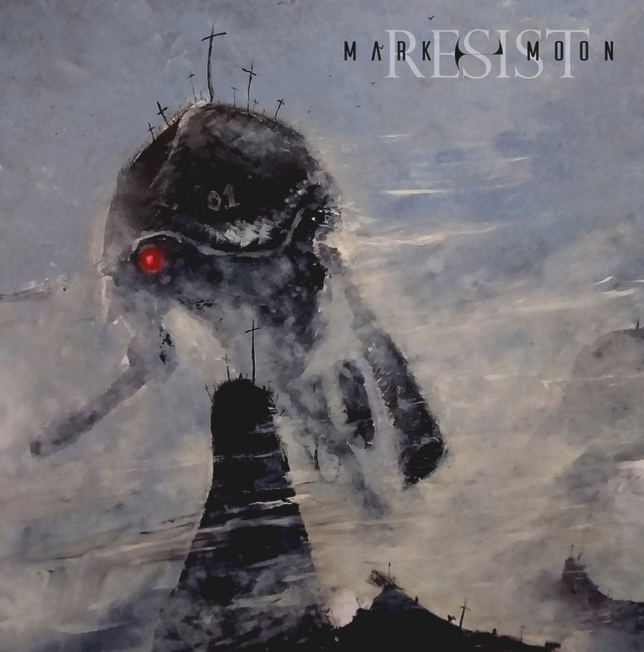
___/SINGLES – EPS\___
The Blow Monkeys ‘Stranger To Me Now’
(Last Night From Glasgow)
Admittedly I do like The Blow Monkeys from way back, but have sort of lost track over the years and have not really paid much attention since their 80s heyday, which on listening to this their new single has been slightly remiss of me as this is a lovely soft blue eyed soul slow dance of a song: a lovely little thing indeed.
Amateur Cult ‘Eyes’
This is a humdinger of a single, all 80s synth and sax post punkery with a splash of Krautrock and a dash of the Silver Apples like genius. We have a fine radio friendly experimental radio friendly smash here.
Bright Islands ‘Five Songs’
There is nothing surprising about this EP. It is simply well written guitar indie pop that has a lovely laid back feel, and could have been made anytime over the last 40 years or so. And there is nothing wrong with that, at times reminding me of Gene, at other times, the Wedding Present in their quieter moments. And any lovers of indie guitar and jangle pop should enjoy this EP.
____/ALBUMS\____
John Howard ‘Single Return’
(Kool Kat Records)
With it being 10 years since John Howard and The Night Mail got together to record their eponymous album, Kool Kat records have decided, it being a good idea, to release the original solo John Howard versions. And as an idea, it is indeed a good one.
Just John alone with his piano singing songs of love and loss and sketches of life and characters; songs that dip and swoon into memories, just a man alone putting his heart into his art, painting lyrical pictures of the poetic injustices and the apple stork romantic eccentricities that invade and dive bomb our thought’s on a daily basis. John Howard is a national treasure: a lost pleasure. If he was given the record label backing back in the 70s his debut album deserved John would now be seen as the English Randy Newman or the modern day Noel Coward writing pithy vignettes on the UK’s ever increasing lack of culture and panache; writing songs with a style and eloquence and wit one can only stand back and admire. Single Return is a great place to start if you have had the misfortune of never hearing John’s music before; a fine album from a fine artist.
Poundland ‘Mugged’
(Cruel Nature Records)
Sludge rock, the sound of old-fashioned punk rock, metal and the slow grind of decay erupting in an explosion of bile and chaos and shambolic tension. That is the ideal description of “mugged”, this fine album by Poundland.
Recorded in a studio in a day, ala The Beatles with their debut LP Please Please Me, but whereas The Beatles captured the excitement and joy and the freedom of being young in 1963, Mugged by Poundland captures the terror and horrors of life in the UK in 2024: the poverty, violence and dying high-street where closing banks are replaced by food banks and people working full time cannot afford to heat their houses or feed their kids.
Lets be frank about this music. It should and could be the catalyst for cultural change like Rock N roll did in the 50s and The Beatles/Dylan did in the 60s and Punk rock of the 70s. We need a revolution now in 2024 and we are slowly and quietly having one; it is slowly building momentum and will soon explode in a beautiful array of sound and when it does Poundland will be there at the forefront with their caustic tales of life backed by the sound of chaotic noise pollution.
Avi C. Engel ‘Too Many Souls’
(Cruel Nature Records)
“Too many Souls” is a hauntingly bewitching album; an album that carries the acoustically sonic ambience of the Gene Clark “No Other” LP – it carries the same atmosphere, the sound of mother earth placing her arms around you gently caressing, running her fingers through your hair whispering that all will be all right.
This is the sound of sitting on a mountain by a gentle running stream lost in your thoughts and memories and hopes; listening to the breeze echo around the majestic Ness of the fading light. “Too Many Souls” is once again a truly artful release by Cruel Nature Records.
Curling ‘No Guitar (Deluxe Edition)’
Do not let the title of this album fool you, “No Guitar” is in fact full of the little bleeders twanging and rocking away in an explosion of Big Star/Velvet Crush/Teenage Fanclub and Creation era Nick Heyward. Frenzied weaving melodies pull you into the days when radio and music magazines was a must in discovering what musical delights you should be looking out for. Yes indeed, this is an album of well written guitar songs that could have been written anytime over the last 50 or so years; songs that could have been entertaining you, soundtracking your preparations for a night out in the local bar to watch some wonderful up and coming guitar band: which could in fact sound like Curling.
Yes this is the sound of the days before smart phones and the Internet got in the way of seeking adventure, of not knowing what the band sounded like before going to watch them, of taking a punt on an album that you actually had to buy to hear. Curling brings all those days back, and if it was those days and you did take a punt on “No Guitar” then you wouldn’t have been disappointed.
Jordan Jones ‘And I, You’
(Kool Kat Music)
I do have a thing for tastefully produced melodious 70s style piano driven pop, so “And I, You” is right up my Tin Pan Alley. It is an album that brings the joy of mainstream 70s radio to your speakers; music to brighten up this horrible depressing decade with a touch of old fashioned flared sunshine; songs that could be introduced by Dave Lee Travis or Terry Wogan; songs that have you scrambling back through your memories to “just what was that Gerard Kenny hit again that I used to like” and “did the sun always seem to shine in the school holidays those where the days when the transistor radio was your best friend and you always had chips for your tea.” Yes Jordan Jones is a wonderful throwback to better times “And I, You” is a true beaut of a pop album.
Mark E Moon ‘Resist’
(Cold Transmission Music)
Resist by Mark E Moon is an over the top gothic flamboyance of album; the sort one should listen to wearing ill-fitting velvet pantaloons whilst sipping red wine from an engraved silver goblet. Imagine if Robbie Williams had taken a turn for the Goth instead of making his Rudebox monstrosity, if he had been injected with the blood of Dave Vanian circa “Eloise” and decided to thrill his adoring public with the outpourings of the slightly dark and sinister, it could have well sounded like this entertaining album.
Resist has a pop sheen and a camp glamour that is brought into line with the Depeche Mode and very early New Order synth like greyness that makes Resist an album that is in fact hard to resist.
NCD Instigators ‘Swimming With Sharks’
The NCD Instigators were Tony, Brendan, and Desi Bannon, three brothers from Newcastle County Down in Northern Ireland who decided to form a band in the 80s together after many years of playing in various other bands. They took their love of metal, prog, folk and rock and home recorded several albums for their own pleasure, burning them onto CDRs to give to friends and family and playing the occasional gig.
This Album, Swimming With Sharks, was the 5th album and their first concept album; one about a young lad entering into the world of big business and boardrooms, and one that became a bit of a considered lost underground prog classic, with burned off CDR’s passed around like nobody’s business – this was pre internet days remember. It has never been officially released until now, after a cdr came into the hands of myself which I raved about and passed onto the head of Metal Postcard Records.
This might well be an album that draws on the trio’s love of Pink Floyd (post Syd, a band, as many know, I hate) but for some reason I love this and prog folk in equal measures. There is a home recorded warmth and a love of prog that shines through, and it helps matters that at times Brendan’s guitar playing is simply stunning, and that the songs are just so fucking weird: “Hammerhead” is an early 80s New Romantic, Post Punk and mid-seventies Pink Floyd on a collision course, that has one at times thinking of what the Orb would have sounded like if they had six pints of Guinness each before going into the studio and decided they wanted to sound like Public Image Ltd.
“Shark Attack” is an instrumental gem; a duel of guitar and Keyboard that shows off Des’s love of The Doors.
There is just something quite magical about this album, and it is sad that now it is only being released years after the fact and that Tony (bass and vocals) is no longer with us, having passed away in 2020. Hopefully this release will ignite some long overdue interest in this underground lost great band from Northern Ireland.
The Monthly Playlist Revue: February 2024
February 29, 2024
ALL THE CHOICE MUSIC FROM THE LAST MONTH

Let’s keep this short and get straight to the action, with the musical journey we’ve created for you. From the Monolith Cocktail TEAM (that’s me, Dominic Valvona, plus Matt Oliver and Brian Bordello Shea) all the choice music from February on one exceptional, eclectic playlist.
:::TRACKLIST:::
Bab L’ Bluz ‘Imazighen’
Liraz ‘Bia Bia – Reeperbahn Festival Collide Session’
Trio Rosario ‘Cuande Me Muera’
Masta Ace & Marco Polo ‘Certified’
Your Old Droog w/ Roman Streetz ‘Northface With The ACGs’
clipping. ‘Tipsy’
Bostjan Simon ‘Bebey’
Vatannar & G.A.M.S. ‘Aminat Pt. 4’
Will C. ‘Colossal Pound Cake Break’
Yamin Semali ‘Boo Boo The Fool’
Juga-Naut ‘Shampain’
Revival Season ‘Chop’
Willie Evans Jr. ‘Bargaining’
Nowaah The Flood & Giallo Point ‘No Speculation’
Black Milk ‘In The Sky’
mui zyu ‘The Mould’
Ariel Kalma, Jeremiah Chiu and Marta Sofia Honer ‘Stay Centered’
OdNu + Umlaut ‘Kaizen’
Louis Carnell & Wu-Lu ‘Eight’
Madeleine Cocolas ‘Bodies II’
Otis Sandsjo ‘OOMY’
David Liebe Hart & Jason The Cat ‘I Believe In The Unknown’
Kahil El’Zabar’s Ethnic Heritage Ensemble ‘Open Me’
Confucius MC, Pitch 92 & Jehst ‘Days Hours Minutes’
Dr. Syntax & Gotcha ‘The Urge’
Sly Moon ‘Aces Baby’
Reef The Lost Cauze ‘Umar’s Revenge’
Renelle 893 & Bay29 ‘Art Thief’
Kingmakers Of Oakland ‘Too Long’
Kemastry, Jazz T & Ramson Badbonez ‘Apocalyptic Flows’
Dyr Faser ‘Bronze’
Ryann Gonsalves ‘Lost & Found’
Oliver Birch ‘On Our Hill’
BMX Bandits ‘Time To Get Away’
DAAY ‘Follower’
Maria Arnqvist ‘Rubies And Gold’
The Children’s Hour ‘Dance With Me’
The Pheromoans ‘Faith In The Future’
Boeckner ‘Euphoria’
epic45 ‘Be Nowwhere’
James jonathan Clancy ‘Black & White’
Flowertown ‘The Ring’
twin coast ‘Forget To Know’
The Legless Crabs ‘Stuckist Manifestos In The Western World’
The Deli, Moka Only & Baptiste Hayden ‘Fivefourthreetwoone’
Ol’ Burger Beats ‘For The Family FT. Awon’
Da Flyy Hooligan, D-Styles ‘Gallery Oasis’
Spectacular Diagnostics ‘1000 Heartbeats’
Our Daily Bread 612: Kahil El’Zabar’s Ethnic Heritage Ensemble ‘Open Me, A Higher Consciousness Of Sound And Spirit’
February 26, 2024
REVIEW/DOMINIC VALVONA
PHOTO CREDIT: TRIO SHOT BY CHRISTOPHER ANDREW
Kahil El’Zabar’s Ethnic Heritage Ensemble ‘Open Me, A Higher Consciousness Of Sound And Spirit’ (Spiritmuse Records) 8th March 2024
I need little persuasion to review this latest album from the Ethnic Heritage Ensemble, having already subscribed and danced to the Kahil El’Zabar rhythm for some time now. I must also declare that this same label invited me a couple of years back to provide the liner notes to the Kahil El’Zabar’s Quartet’s A Time For Healing LP; one of now six such collaborative albums the Chicago doyen has released on the Spiritmuse platform in the last decade – arguably his most prolific period, in a career that stretches back across more than five decades as a willing foil sideman, bandleader and collaborator.
Hot-housed in the Association for the Advancement of Creative Musicians (the mid-1960s nonprofit organization instigated by Muhal Richard Abrams, Jodie Christian, Steve McCall and Phil Cohran in Chicago, which El’Zabar himself once chaired) incubator, El’Zabar’s percussive, drumming rhythms for the mind, body and soul, channeled the windy city’s rich musical lineage of jazz, blues, R&B, soul, Godspell and what would become house and dance music. Within that influence, you can hear the inspiration, pioneering spirit of Louis Armstrong, Jellyroll Morton, Sidney Bechet, Benny Goodman, and trace the beating language of the talking drums of the motherland. Even in that company of such acclaimed innovators, El’Zabar’s style, choice of instrumentation was remarkably unique.
Paying his dues under the mentorship of such deities of the form as Eddie Harris, the multi-instrumentalist and composer went on to found his most enduring troupe, the EHE, in 1974. And so hence the 50th anniversary release date of that group’s Open Me, A Higher Consciousness Of Sound And Spirit LP; a celebratory healing balm of both revisited originals and transformed classics that also coincides with Black History Month and the ensemble’s North American tour. Originally in quintet form, the EHE soon slimmed down to a trio by the time of their first official album release in 1981, the cut-to-the-chase, no explanations needed, entitled Three Gentlemen From Chicago. Whilst the lineup has changed over the ensuing decades (numbering the likes of Light Henry Huff, Kalaparusha Maurice Macintyre, Joseph Bowie, Hamiett Bluiett, and Craig Harris at any onetime over that timespan), in recent times El’Zabar has corralled the well-respected Chicago trumpet player and bandleader Corey Wilkes to his steady ranks, and invited in the Detroit-born baritone saxophonist Alex Harding, who he’s knocked about with since the beginning of the 2000s: both playing together in Joseph Bowie’s Defunkt. But in a change of direction, he’s brought in the evocative and wilder strings of the Chicago-based violin/viola player and leader James Sanders (notably leading the Latin ensembles Conjunto, and Proyecto Libre), and the cellist, improviser and composer Ishmael Ali. This partnership adds a yearned, timeless and sorrowful Michael Urbaniak-esque layer of folk, Catskills country, the classical and wilder sympathies and stirrings to the eclectic range of horn styles and percussion, which also includes a full drum kit by the sounds of it – coming in handy when evocating the busy, always moving splash, bounce and rolling crescendos of drumming demigod Elvin Jones, on the McCoy Tyner burst of restless, near North African, energy, the ‘Passion Dance’. Jones famously appeared alongside Joe Henderson and Ron Carter on the title-track from the jazz pianist Tyner’s Real McCoy Blue Note release in 1967; a classic that has been picked up by El’Zabar on his latest EHE album.

THANKS TO CHRISTOPHER ANDREW FOR THE IMAGE
Following on from last year’s Spirit Gather tribute to Don Cherry (which featured the worldly jazz icon’s eldest son David Ornette Cherry shortly before his death) this latest conscious and spiritual work channels El’Zabar’s legacy whilst once more worshipping at the alter of those icons, progenitors and idols that came before; namely, in this instance, Miles Davis, Eugene McDaniels and the already mentioned Tyner.
It’s a version, of a kind, of Davis’s ‘All Blues’ (with an added “The” from the EHE) that opens the album. Originally the opening suite on Side 2 of the gold standard Kind Of Blue opus, this twelve-minute example of modal blues in G mixolydian piece is, thanks to Wikipedia on this score, ‘a twelve-bar blues in 6/8 time signature’, of which, ‘the chord sequence is that of a basic blues and made up entirely of seventh chords, with a ♭VI in the turnaround instead of just the usual V chord. In the composition’s original key of G this chord is an E♭7.’ On this sympathetic take, an air of the pastoral, of country folk and Southern roots is merged with smokestack smoldered city skylines, skonk baritone sax, turning-over kalimba tines-plucked harmonics and a constant timekeeping jangle of bells. It’s still very much a part of the blues idiom, but there’s a new soul and relaxed murmur of close-eyed healing that takes it someplace else.
A favourite of El’Zabar’s father, Clifton Blackburn, Eugene McDaniels’ stalwart protest song ‘Compared To What’, is given a fresh workout by the ensemble; that original 60s polemic to hypocrisy (taking in the Vietnam War, LJB and inequality), made famous on record by Roberta Flack in 1969 but also given an outing by Les McCann and Eddie Harris at the Montreux Jazz Festival in the same year, is now shuffled along to what can only be described as an acoustic house music beat and elephant trunk lifting heralding honks and jangled bells. Almost riffing at a leisurely pace throughout, El’Zabar channels Gil Scott-Heron vocally on this enriched street level shakedown.
And as with most El’Zabar led projects, there’s always a tribute or two, a homage and laying down of fealty of a most respectful sort, to one of the old guard: the pioneers. And so why not pay it to one of the deities of the form, the free jazz demigod himself, Ornette Coleman. Although neither in the Science Fiction nor Skies Of America modes, the ensemble revise that esteemed innovator’s legacy with what can only be described as a slinky soul-funk and hip-hop groove and untethered flight of Ornette-style brass.
From across the back catalogue, there’s a smattering of original compositions reenergized and given a new impetus. From his 1998 Bright Moments LP collaboration with saxophonists Joseph Jarman and Kalaparusha Maurice McIntyre, bassist Malachi Favors and pianist Adegoke Steve Colson, the titular album and track title ‘Return Of The Tribe’ is like a concrete safari strutting from swing Chicago to hot-stepping New Orleans and Latin Quarters NYC with Cab Calloway, the Art Ensemble Of Chicago and La Monte Young in processional tow.
From the same decade, albeit the opposite end of the 90s, another album and track title take, in the form of the EHE’s ‘Hang Tuff’, is given an airing. Stepping in for the originals, Edward Wilkerson and Joseph Bowie, Corey and Sanders raise their horns skywards, whilst Harding and Ali wildly entangle themselves at a busy junction of avant-garde folk-country and Mondrian age crosstown traffic jazz. From the Ritual Trio’s (that’s El’Zabar with Ari Brown and Malachi Favors; a group that lasted over fourteen albums, right up until 2014) Conversations LP partnership with the venerated Archie Shepp, there’s also an off-kilter, early 60s inspired version of ‘Kari’. Obviously, now featuring the wiry and scribbled addition of cello and violin, the original composition has a new feel and direction of travel.
Elsewhere, ‘Can You Find A Place’ swings from the vine into a spiritual wilderness and swamp of sorrowed cornet blues, whilst ‘The Whole World’ finds El’Zabar channeling Bill Withers, the Isley Brothers and righteous Last Poets on a street side hummed liturgy of godly universal benevolence and unity. But the title-track that brings down the curtain on this conscious elevating rhythm provider evokes both Davis and Coleman, heading out east on an Afro-Latin percussive prayer and house music style primal beat.
El’Zabar’s once more heals, opens up minds and elevates with another rhythmic dance of native tongue and groove spiritualism: a balm for the mind, body and soul. The ancient roots of that infectious groove and the urgency of our modern times are bonded together to look back on a legacy that deserves celebrating. After fifty years of quality jazz exploration and collaboration, El’Zabar proves that there is still much to communicate and share as he and the EHE recast classics and original standards from the back catalogue.
Please help if you can to keep the Monolith Cocktail afloat in 2024:
Hi, my name is Dominic Valvona and I’m the Founder of the music/culture blog monolithcocktail.com For the last ten years I’ve featured and supported music, musicians and labels we love across genres from around the world that we think you’ll want to know about. No content on the site is paid for or sponsored and we only feature artists we have genuine respect for /love. If you enjoy our reviews (and we often write long, thoughtful ones), found a new artist you admire or if we have featured you or artists you represent and would like to buy us a coffee at https://ko-fi.com/monolithcocktail to say cheers for spreading the word, then that would be much appreciated.
Kalporz X Monolith Cocktail: (Review) James Jonathan Clancy ‘Sprecato’
February 22, 2024
REVIEW FROM OUR FRIENDS AT Kalporz
AUTHORED BY Matteo Maioli – TRANSLATED BY Dominic Valvona
PHOTO CREDIT: Luca Mazzieri
Continuing our successful collaboration with the leading Italian music publication Kalporz , the Monolith Cocktail shares and translates reviews, interviews and other bits from our respective sites each month. Keep an eye out for future ‘synergy’ between our two great houses as we exchange posts during 2024 and beyond. This month regular Kalporz scribe Matteo Maioli reviews the latest album by James Jonathan Clancy on his own Maple Death label.
After the experiences with His Clancyness, A Classic Education, Settlefish and Brutal Birthday and seven years after his last album , the Italian-Canadian James Jonathan Clancy returns with the first album under his own name, released earlier in February by label he founded Maple Death Records.
Sprecato (which translates from Italian into “wasted”), written and recorded between Bologna and London at intervals between 2018 and 2023, presents the first of a visual and graphic collaboration with Michelangelo Setola – borne in an exchange of suggestions between the two artists through music and drawing, in the sharing of an almost apocalyptic idea of ”urban pastoral” with marginality, exploitation and alienation of the individual at its centre.
Across eleven tracks our many musical souls converge, from the role of the cosmic loner folk in “I Want You” to those of the avant-garde on “To Be Me”. But also bucolic minimalism in the opener “Castle Night”, no-wave bathed in electronics for “A Worship Deal” – which fuses together Cabaret Voltaire and Pop Group -, and psychedelia on the splendid “Had It All” – between Tim Hardin and Flying Saucer Attack. Dreamlike dilations combined with Walkerian lyricism thus traces a line of demarcation crossed by a Clancy in constant emotional transport. The setlist effectively alternates imaginative songs that occupy space and then immobilise it, see “Precipice”, with soundtracks from a primordial world (“Fortunate”, the Radioheadian Amnesiac heights of “Immense Immense Wild”).
To complete Sprecato Clancy brought together a cast of friends and international guests including Stefano Pilia, co-producer of the album and true right-hand man of the operation (like a Warren Ellis for Nick Cave perhaps?), Andrea Belfi on drums, Enrico Gabrielli of Calibro 35 and Afterhours fame on flutes and Francesca Bono on both piano and vocals, whilst the core of the band is formed by the Maple Death house musicians Dominique Vaccaro (guitars, aka JH Guraj), Andrea De Franco (synths, Fera) and Kyle Knapp (sax, of Cindy Lee). The curiosity is all about the live performance now, because the album easily ranks among the most successful things in James Jonathan Clancy’s decade, and more, spanning career.
SCORE: 81/100
THE MONTHLY DIGEST OF ACCUMULATED NEW MUSIC, THE SOCIAL INTER-GENERATIONAL/ECLECTIC AND ANNIVERSARY ALBUMS CELEBRATING PLAYLIST, AND ARCHIVE MATERIAL CHOSEN BY DOMINIC VALVONA

Continuing a series that started in 2023, the Digest is my one-stop column of the new and the old; a secondary home to all those releases I missed out on or didn’t get room to feature in either my Perusal reviews features or singular Our Daily Bread posts, plus a chance to celebrate timely anniversary albums and dip into my own record collection with the a special anything goes playlist, and to, finally, dip into the Monolith Cocktail Archives.
The New: this will be a briefing of a sort, with a short outline, thoughts and reactions to a number of recent albums from my inbox – currently a 1000+ releases a month on average!
The Social Playlist: choice music collected from across the ages, borders and genres, with a smattering of tracks from choice anniversary celebrating albums of worth and cult status. Consider it my unofficial radio show. The Archives: self-explanatory, but each month I chose past pieces from the extensive Monolith Cocktail back pages that have a timely ring to them.
___/NEW\___
Mohammad Syfkhan ‘I Am Kurdish’
(Nyahh)
To do justice to the backstory (one that’s filled with tragedy and yet musically inspiring) of the Syrian-Kurdish surgical nurse and musician-artist Mohammad Syfkhan, I’d need far more room. But in brief, the heralded ‘bouzouki’ (a round bodied, with flat top, long-necked lute with resonating and sharp metal strings strummed and picked with a plectrum, that was brought to Greece from Anatolian refugees) maestro and singer was forced to abandon his family’s home in the city of Raqqa during the senseless apocalyptic Syrian civil war. As various fractions fought against the Assad regime, Islamist’s most feared and brutal cult, ISIS, swooped in and proclaimed that atavistic Euphrates located city their capital: the centre of operations and a new sickening, destructive caliphate. As a minority Kurd, Syfkhan was already in danger, but when one of his son’s was murdered by the terror group, they had to join the growing diaspora of Syrians fleeing the country and region to escape persecution (by not only ISIS but Assad too); splitting the family between Germany and Ireland, where Syfkhan, his wife and young daughter were kindly taken in.
Poured into his debut album (although he started his own band The Al-Rabie Band decades ago back in Syria; and a very popular, sought-after troupe they were too) that loss and upheaval is balanced with certain joyous and romantic gusto. Longing for home mostly certainly, and yet making a new life in his adopted Leitrim sanctuary on the River Shannon; in the moment, spreading the traditional and more contemporary music of his Kurdish and Syrian roots whilst also collaborating with those native musicians and those that have also made that same Irish village their home too (including on this stunning album the composer, improviser, sound artist and saxophonist Cathal Roche, and the composer, improviser and cellist Eimear Reidy).
Like a ascending stairway, or flowing and resonating with evocative melodies magic, lute stirring ruminations sweep over Arabia and surrounding regions; referencing anonymous, collective and some original-penned compositions and dances to Islam’s ‘golden age’ of fairytale (‘A Thousand And One Nights’), Kurdish pride in the face of repression (the title-track of course) and its peoples’ struggle for independence and respect (‘Do Not Bow’), lovelorn enquires (‘Do You Have A Lover Or Not?’), and the missed daily activities, interactions of life back home in Raqqa Across it all the hand drums tab, rattle and roll; the cello arches, weeps and bows in sympathy; and the bouzouki lute swoons and rings out the most nimble and beautiful of ached and more up-tempo giddy tunes. There’s a real weight and energy at times, balanced out with slower emotional reflections; but when they go, they go! All the while you can trace the lineage, the scope of the sound back to the Middle East, to old Anatolia, more modern Turkey, and even the Hellenic; and from weddings parties to the courtly, to the caravan trails and souk. I couldn’t recommend this album enough; already sitting as it does in my favourite choice releases of 2024.
epic45 ‘You’ll Only See Us When The Light Has Gone’
(Wayside And Woodland)
With enervated and evaporated applied washes, and drifting along with a certain despondency, Ben Holton and Rob Glover’s long-running – but due to circumstances beyond their control, interrupted – epic45 project finds much to cover; from Brexit to the lunacy of the housing ladder; the parental cliques of the school gates to the death-by-a-thousands-cuts decline of England’s rural and seaside towns.
Already, unbelievably, four years since the last album (finding a favourable audience at this blog) Cropping The Aftermath (released during the height, more or less, of the Covid pandemic), You’ll Only See Us When The Light Has Gone arrives in the wake of setbacks – from the repercussions of both Brexit and Covid on touring (with the band’s Japanese tour cancelled, but also, Europe for us Brits, no longer part of the free-movement agreement, becoming a major pain-in-the-arse to circumnavigate) – to the on-going issues of Holton’s severe back problems.
But persist they did, and went away to produce this idiosyncratic take on the modern life is rubbish (and expensive) idiom. This is a resigned but rallying push back against life in, what they call, the ‘edgleland’, the ‘nowhere places’; pushed out onto the peripherals of society and inclusion. The very English preoccupations of owning a home permeate, from the ill-planned ‘floodplain’ sites that many are forced to accept, to the grander housing development promises of ‘stepping stones to country homes’. But this is a wider statement on a nation in crisis, and the pressures of keeping heads and minds above the crushing effects of unceasing disillusion; ‘dignity’ in the face of narcissistic cultural and political vacuous, the cost of living and bad health.
A very different record from its predecessor, Holton and Glover bring songwriting and vocals to the forefront; from the near forlorn shoegaze-y and woe of late 80s and early 90s indie, to what I can only describe as higher scale soulful indie and more modern effected R&B aches. But the music hasn’t exactly taken a back seat, with vapours of ‘Oh So’ period Charlatans, Neon Neon, Seefeel and The Last Sound, touches of soft power rock from the 80s and 70s, and the appearance of their former live, and My Autumn Empire, drummer Mike Rowley powering the breaks with evocations of Bloc Party at their most subdued and building a soft momentum when the drive is needed to escape the wispy drifting. Within that framework there are other nice little touches too: the glimpse of surface, environmental ambience and dialed-out conversations, a touch of folksy Iberia guitar here and there, and veil-like chime of the celeste.
epic45 somehow manage to retrieve hope and possibility from the ether of debilitating tiredness on an album that sees them move in more melodious and vocalised direction.
Boštjan Simon ‘Fermented Reality’
(Nature Scene)
Glitches in the cerebral; a coming to terms with the current age of high anxiety and alternative realities of a world in turmoil and flux; the debut solo turn from the Slovenian saxophonist and various electronic apparatus experimentalist Boštjan Simon puts the former instrument through a process of external effects to sound a surprisingly rhythmic vision of explorative jazz, broken beats, breakbeats, library music, kosmische and fourth world music.
Regular readers of the blog might recognize the name as part of the Slovenian trio of Etceteral, but Simon’s CV and involvement also runs to the groups Velkro and Trus!, plus a duo with the percussionist Zlatko Kaučuč. But now, stepping out on his own, he creates a soundboard and environment from a modified sax fitted with sensors to enable the triggering of oscillators in a modular system setup, using a new experimental interactive module called Octosense.
The results of which combine abstract blows, holds and wanes with more melodic and fluty vapours of sax, and Eastern German space programme oscillations with primal lunar bobbles and Asmus Tietchens popcorn. Taking the Jazz Messenger Jackie Mclean’s famous “saxophone is a drum” as a prompt, that instrument is reshaped in the style of Alex Roth and Andy Haas to explore new quadrants and feels of the keen and untethered: remarkably very melodious and tuneful in places, with some beats sounding like Madlib or Farhot at the helm. You can add Thomas De Pourquery to that list of reference points, but also Frédéric D. Oberland, Otis Sandsjö, Laurence Vaney, Joe Meek, Bernard Estardy (the last three in relation to the more playful, retro sounding bobbly liquids and satellite communication moments) and, on the near new age disorientated dance of ‘Gmnoe’, Ariel Kalma. That should be enough to go on for now. A solid, or not so solid but more open-ended and explorative, start to the solo career, Fermented Reality is a unique album of saxophone evocations and environmental probes.
Poppy H ‘Grave Era’
(Cruel Nature Records)
Zombie medication, zombie blades, zombie government: what a world to be dragged into. As the always awake screen lights up another terrible, distressing notification, or yet another crisis to weigh on the mind, the multi-instrumentalist, field recordist and producer Poppy H holds a phone up to society and openly records the decay, the innocuous and fleeting interactions of a world on standby as Rome burns to the ground all around them. Coping for many – and it’s neither their fault nor ours – is to keep keeping on with the daily grind; the one highlight of the day, picking up that mundane “flat white”.
All the commonality and evaporated stains of modern Britain are played out across a simultaneously creepy, lo fi bucolic, planetary, industrial and Fortean soundscape of café orders, snippets of conversations and crackles of interference. The Grave Era is certainly haunting and gray at times, and yet has a sort of reverberation of Andrew Wasylyk and the Cold Spells’ hallucinatory pastoral rusty piano, and a dreamy filter of piped church organ music – there’s even a sort of spell of what sound like the courtly music of Medieval or Tudor England at one point. For the most part, this is an album of chemical and more obscure prompts; a window in on the radioactive, plastic and technological flitching and glitch fabric of a fucked-up culture in turmoil and decline, yet far too inoculated through drugs (both the legal and illegal kinds) and the social media validation cult to face it or indeed change it. The sounds, production and vapours, visitations reminded me in equal parts throughout of the Sone Institute, Belbury Poly, Walter Smetek, Fiocz and Boards Of Canada, but go far further outside this country’s borders on tracks like the drifted passing melodious ‘Shaid & Irfan’, which could be a recording, as the traffic and daily business of others carries on in the foreground and background, of musicians from anywhere in North Africa, the Middle East, Afghanistan or Pakistan.
A country haunting itself, this is England in the dying embers of climatic, societal and political change; scored by a unique theme of recordings that masterfully encompass the erosion of action, living and hope in the “grave era”.
Meiko Kaji ‘Gincho Wataridori’
(WEWANTSOUNDS) 23rd February 2024
Heralding the transition of the cult Japanese actress-singer Meiko Kaji’s move to recording artist in the early 1970s, the vinyl specialists at WEWANTSOUND, in partnership with Teichiku Records, continue to reissue the leading star of B-movie and “ero guro” movie franchises’ back catalogue of influential albums. Following in the wake of last year’s Hajiki Uta LP, and reissued for the very first time, Tarantino’s crush (no Kill Bill’s bride without Kaji’s groundwork as the avenging Lady Snowblood; one of her most iconic roles) and untold influence for many over the decades, the star of many infamous Japanese schlock and brutal revenger horrors and violent killings sprees’ debut LP, Gincho Wataridori is up next in the roster.
Originally coaxed into the studio environment to sing the songs that would appear in and accompany a list of movie franchises (from Female Prisoner Scorpion to Blind Woman’s Curse and Stray Cat/Alleycat Rock), Kaji’s songbook repertoire expanded to include the Enka (a performative traditional form that often carried masked messages of political texts, later on, stylized with modern pop sensibilities in the post-war period), psych rock and Kayokyoku (a Japanese pop style with simple melodies and lyrics easy to play and sing along to).
The first of five albums recorded between 1972 and 1974 for Teichiku, the inaugural songbook in this run features a quartet of softly lush and Vaseline camera smeared dramatic fatale yearns and spindled, gently mallet(ed) funk-whacker and tremolo fuzzed dramas from both the Wandering Ginza Butterfly and Blind Woman’s Curse films – both Yakuza and Bōsōzoku themed revenge twists on the genre. The rest of the songs comprise of signature Oriental riffs on Axelrod, Bacharach, 60s French and Italian pop sirens and smoky cocktail cabaret jazz. Keji’s accompaniments are masterful, if light, and do the trick as her alluring, coquettish and often longed vocals rise to the occasion. Sven Wunder seems to make a Mosaic out of it, and a multitude of Hip-Hop artists have sampled it, but Gincho Wataridori remains a cult album ripe for reevaluation and attention.
Ap Ducal ‘U’
(Weisskalt Records)
Visioning a saturated spectral display of waveforms, moving bass lines and acid turned dials Camilo Palma (under his twelve year running project alter ego Ap Ducal) manages to blend kosmische and early synthesizer music with the German New Wave and post-punk genres, and various other cosmic electronics on his new succinct, minimalist entitled album U.
Collaborating with the Chilean musician Sebastián Román (otherwise known as Persona RS), Palma unites two sounds, two crafts to a fizzled, metallic filament cold wave soundtrack that moves between soft deep curves on the radar to the motorik and interstellar. Amongst the analogue electronics, the synthesized algorithms, the oft four-to-the-floor beat, and the paddled, rotor-bladed and tubular rhythms there’s echoes of Bernard Szajner, Sky Records, Heiko Maiko, Ulrich Schnauss, Michael Rothar, Eat Lights Become Lights, Basic Channel and Leonidas. ‘UUUU’ is a little different however: reminding me a bit of a Goblin Italo-Giallo horror soundtrack merged with the icy distillations and peregrinations of Edgar Froese; a bit of mystique, the occult and cold airy vacuums folded within the cold wave calculations.
Cosmic Couriers of a kind, the sonic partners on this forward propulsion make kosmiche and krautrock influences dance to a filter of tape music and minimalist techno. I’d say it was a successful conversion of all those inspirations/influences; making for a roaming and hypnotic experience.
____//THE SOCIAL VOLUME 83\\____
Continuing with the decade-long Social – originally a DJ club night I’d pick up at different times over the past 20 plus years, and also a café residency from 2012 to 2014 – playlist, each month I literally chose the records that celebrate anniversary albums, those that I’d love to hear on the radio waves or DJs play once and while, and those records that pay a homage and respect to those artists we’ve lost in the last month.
February has been a harsh harbinger of death, taking away from us both the mushroom incantation haiku experimental artist Damo Suzuki and motor city muthafucking jam kicking guitar-slinger antagonist Wayne Kramer. As a front man of a sort for Can during perhaps their most creatively fertile and influential period, from Soundtracks through to the Future Days opus, Suzuki also fronted numerous collaborative projects, his own “network” and “band”, whilst also knocking about with the post-punk-kruatrock legends Dunkelziffer. Tracks from more or less all of these ensembles appear here, alongside a couple of homages to the former MC5 rebel Kramer – ‘Ramblin’ Rose’ from the defining live rallying call for a generation Molotov Kick Out The Jams, something from his Citizen Wayne solo affair, and, just to be different, a track from his drug-addled hangout with Johnny Thunders, ‘They Harder They Come’.
Anniversary spots this month are taken up with covers of songs from Bob Dylan’s 1964 LP, The Times They Are A-Changin’, something off Amon Duul II’s less than celebrated, but much loved by me, Hijack LP from ’74, and tracks from Aretha Franklin’s Let Me In Your Life (50 this month), Mick Ronson’s Slaughter On 10th Avenue (another 50th celebration), Tangerine Dream’s Phaedra (see my archive piece below), Julian Cope’s Fried (40), Pavement’s Crooked Rain, Crooked Rain (30) and Down South’s Lost In Brooklyn (also 30 this month).
Scattered throughout are tracks I just love or dig from across the spectrum of time and genres, and, just recently loaded up onto streaming services and let out of the vaults, the title-track performance from the goddess of sublime mediative vibrations, Alice Coltrane’s Shiva-Loka Live album.
Tracks In Full:::::
Damo Suzuki ‘Wildschweinbraten (Single)’
Amon Duul II ‘Mirror’
Omar Rodriguez-Lopez and Damo Suzuki ‘Please Heat This Eventually Pt. III’
Wayne Kramer ‘Stranger In The House’
Hunger ‘Portland 69’
Aretha Franklin ‘Let Me In Your Life’
Damo Suzuki’s Network ‘Manager Cinderella’
CAN ‘Moonshake’
CAN ‘Don’t Turn The Light On, Leave Me Alone’
Johnny Thunders & Wayne Kramer ‘The Harder They Come’
Pavement ‘Elevate Me Later’
Dunkelziffer ‘Network’
Odetta ‘The Times They Are A-Changin’
Down South ‘Sitting Here’
Julian Cope ‘Me Singing’
Matt Donovan ‘Black Crow’
MC5 ‘Ramblin’ Rose’
Supersister ‘She Was Naked’
Mick Ronson ‘Growing Up And I’m Fine’
Billy Childish ‘Ballad Of Hollis Brown’
The Yankee Dollar ‘Live & Let Live’
Alice Coltrane ‘Shiva-Loka (Live)’
Tangerine Dream ‘Movements Of A Visionary’
Lee Hutzulak ‘Behind The Singing Bush’
Limber Limbs ‘Golden Rust’
James Quell ‘The World Got Taken Over By Billionaire Scum’
Arti & Mestieri ‘Saper Sentire’
PTC ‘Freestyle Na Vrtaci’
CIX ‘Clitor’s Eye’
CAN ‘I’m So Green’
____///ARCHIVES\\\____
Tangerine Dream ‘Phaedra’ Reaches 50 (From my original piece for the now sadly defunct London electronic music and architectural journal Vessel, nearly 14 years ago)
Phaedra the tragic mythological love-torn, and cursed wife of Theseus has lent herself to many plays, poetic prose, operas and even an asteroid. This rebuked siren from Greek tragedy is immortalised for a new epoch as part of the West Berlin synthesizer group’s re-textured sweeping experiments. Covering the entirety of side one, on this their first LP for Virgin, Phaedra is like an acid-trance choral eulogy of incipient multilayer motifs and arpeggiator modulations. The sounds of a ghost ship’s switchboard interlaced with twisting metallic reverb both gravitate and loom over a meandering pan-European work-out on this improvised track, which unintentionally, but rather pleasingly and to great effect, fluctuated in tone and tempo-atmospheric changes that played havoc with the analog equipment. Edgar Froese and his ever-rotating line-up of fellow freethinking cohorts had moved on from their so-called ‘Pink Period’ on the German Ohr label, to a more transcendental and ambient approach on the burgeoning Virgin imprint. Phase three in the Tangerine Dream life cycle saw them showered with, almost, unlimited funds and full use of the famous Virgin Manor Studios in Oxford – where fellow compatriots Faust recorded their IV album, a few months before. Flanking Froese on this adventure were the ex-Agitation Free drummer Chris Franke, and Peter Baumann; who’d already left the trio once before, returning just in time to record this musical suite.
Phaedra would be an album of firsts for the band with the introduction and use of sequencers and the MOOG. Franke would adopt DR. Robert Moog’s invention as a substitute to the bass guitar on the visionary soundscape ‘Mysterious Semblance At The Stand Of Nightmares’ – surely the catalyst and influence behind Bowie’s ‘Warszawa’. The polyphonic Mellotron, used to elegiac effect on the very same track, is tenderly coaxed and teased by Froese, whilst the VCS 3′s battleship pin board decked oscillation generator glides and bubbles throughout the four musical vistas of heavenly orchestrated electronica. Baumann explores the use of tape-echo and filtered effected flute on his own paean composed passage, ‘Sequent C’; a short wistful and haunting soundtrack to some imagined eastern elegy.
Released simultaneously in both Germany and the UK on the cusp of 1974, this album more than any ever by the Dream team cemented their reputation. With scant publicity and sporadic underground radio play, it sold in excess of 100,000 copies overseas and entered the top twenty album charts in Blighty, changing the fortunes of the Virgin label forever. However these prophets failed to drum-up the same exultation and adulation back in their homeland, barely shifting 6,000 records. Considered a sea-change in style and dynamics; a marked departure from their classic ‘Alpha Centauri’, this New Age themed cantata pitches itself somewhere between pantheism, mythology and a nebula traversing flight.
Our Daily Bread 611: Interview With Forest Swords
February 16, 2024
MIKEY MCDONALD SITS DOWN WITH THE FACE BEHIND THE FOREST SWORDS NOM DE PLUME, MATTHEW BARNES
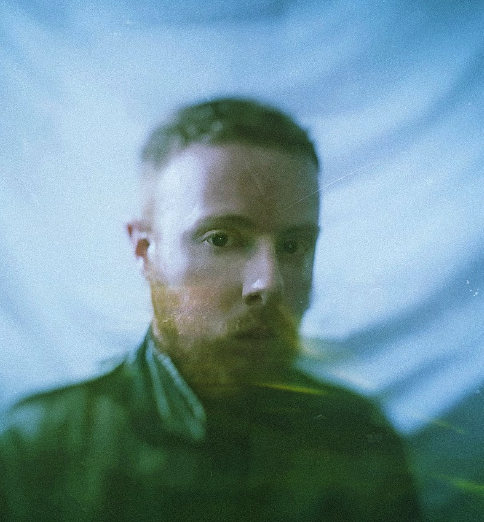
In today’s exclusive interview on The Monolith Cocktail, Mikey McDonald sits down with one of UK’s most talented electronic musicians Matthew Barnes AKA Forest Swords. Barnes hails from Liverpool and has been releasing music under the Forest Swords moniker for over a decade.
They discuss the recent release of his third studio album titled Bolted as well as what the artist has been up to and future plans.
MM. Hi Matthew. Thanks for taking the time to chat, I really appreciate it. First thing is first, congrats on the new album. A mere six years have passed since your last full-length release. Why don’t you start by telling us a little bit about what you’ve been up to in this time?
FS. Mostly concentrating on scoring work. I was lucky to be asked to do a bunch of different stuff across video games, dance and art installations over the past few years and it took up a lot of my time, so it didn’t feel right to try and balance it with starting an album. I’ve learned to listen to those sorts of gut instincts over time.
MM. Obviously Bolted has already received a lot of critical acclaim. Is that something you pay attention to, critic reviews?
FS. I don’t read any reviews, the most I’ll see is maybe just one-line quotes that get put on a press release or whatever. I see some feedback on things like my social media profile but it’s not something I want to be glued to. It’s really bad for anyone’s mental health to be checking in so much with that sort of thing, and I learned pretty early on that it wasn’t good or productive for me to engage with it. I’m really happy and grateful if people connect with anything I make though.
MM. From what I gather you’ve set up your own studio now in a former munitions (military weapons) factory in Liverpool. It was quite interesting to read that as part of your creative process you were visualising what oil spilling might sound like and became interested in things like metal and steel. These are very physical, inanimate things which we wouldn’t normally associate with sound. Working in a space with such history, did that inspiration come about naturally or did you have a particular vision before setting foot in the studio?
FS. I went to a Factory Records exhibition when one of the lockdowns lifted and I decided I really wanted some sort of warehouse or factory space, just to see what kind of things I could cook up in it, and because there’s still a few of these spaces left in Liverpool and they haven’t been gentrified out yet, unlike other cities. It was only really once I got in the space that the feel of the building and the architecture of it started to seep into the sounds I was making and the visual world I was trying to make.
MM. A lot was made about the fact Engravings was mixed outdoors and the impact this had on the record. Engravings has a woodlands feel to it and just listening you can practically hear the tracks leaching out of the soil…I guess the word I’m looking for here is organic. How did the mixing process go this time round? Do you find yourself constantly chopping and changing things in striving for perfection, or is that just it – can striving for perfection be a dangerous thing?
FS. I think like most creative things you just get a sense of when to stop. There’s a point with music, in particular, when you can tinker with something for so long that it loses all sense of excitement, and you also personally lose all objectivity over it. I’ve made enough tracks that I know when that point is before it falls over a cliff, so I’m fairly self-disciplined at stopping. Bolted I mostly mixed while I was going along, so it came out fairly fully formed at the end.
MM. I’m curious as to how you arrived at the album title?
FS. The studio space has these big metal doors I had to unlock every day with deadbolts. It became a sort of visual representation for me of creating the album, and sums up a lot of the sound world on the record too. I was struggling with a broken limb and other stuff while I was making it too so the idea of calling it ‘Bolted’, as in someone running away from something, became kind of bleakly absurd to me.
MM. Did you bother running any of the new tracks through your old four-track tape recorder, just for that extra bit of warmth and texture?
FS. Lots of it went through tape, most of the beats on it. A lot of the rhythms are quite heavy and came back through really blown out. Many of the synth sounds were put through it as well, and even mid-song I’ll switch between the digital version and tape version of a melody or beat. It’s a really hands on and easy way for me to get some texture and artefacts without running it through digital plugins.
MM. Let’s talk about one of my favourite cuts Line Gone Cold. The progression on this one is wild. I don’t know why but I feel like I’m being consumed by a blazing fire when listening to this, then we’re hit with some signature Forest Swords vocal passages. The strings are also a nice surprise, sort of devastating. On this track you sample the late Lee ‘Scratch’ Perry, almost a full decade on after he remixed the otherworldly Thor’s Stone. Was this a case of returning the favour? Cool to think his legacy will live on in your music.
FS. Lee and I had always circled each other but I never met him in person. He was very gracious to do that Thor’s Stone remix and I knew I really wanted him on this record. I’d had this voice note from him for a while and it just seemed to fit right at the end of Line Gone Cold, which was always going to be the last on the track-listing because it felt like quite a finite song somehow. As soon as I put him on there it felt like it immediately crystallised into something more powerful and he kind of completed it for me.
MM. Probably a question you get a lot, but I must ask, what is your desert island synth?
FS. It’s not really a synth but I would want the Electron Octatrack. It’s so unique, frustrating and I also couldn’t live without it.
MM. Any releases you’ve been digging from this past year, electronic or otherwise?
FS. I like Holy Tongue who do dubby live jams, and I’ve rediscovered Seefeel from the 90s who are one of the only bands right now that soothe my brain when I’m feeling frazzled.
MM. Churches or power plants?
FS. A church inside a power plant, ideally.
MM. You’ve been doing this for a while now whilst dabbling in some scoring and side projects. What does the future look like for Forest Swords?
FS. I’ve got a couple of scoring things lined up for this spring and then I’m also chipping away at a new album that will appear at some point. Bolted was personally quite a difficult time for me and so I want to make a record while I’m in a good place. I’m just keen to keep learning and making work in whatever form that comes in.
MM. Well, it’s been a pleasure. Thanks again for chatting and all the very best for the next album and in the future!
Keep up-to-date with Forest Swords releases via the official website.
Or visit the bandcamp page.
 Monolith Cocktail Blog