Première (Video): Kid Kin ‘Under A Cloud Of Fret’
June 1, 2021
Première/Dominic Valvona
Photo Credit: Helen Messenger

Kid Kin ‘Under A Cloud Of Fret’
Making good on his previous, eponymously entitled, EP from 2018, the Oxfordshire based producer and multi-instrumentalist Peter Lloyd now spans ever widening cinematic quality skylines and emotions on his forthcoming Discompose release. From that Kid Kin ascribed EP of new suites the considered composer has already showcased the airy and blissful slowly released ‘Control’, featuring the lulled almost breathless vocals of guest artist The Bobo: A diaphanous vaporous highlight with wisped veils of both the Chromatics and Cocteau Twins.
Following in that single’s vapour trail (released just last week) is the EP’s opener and second single, the gorgeous climbing piano patter and chimed dreamwave meets a far less earnest post-rock swelled, ‘A Cloud Of Feet’. Accompanying that filmic quality emphatic track is today’s premiere video; beautifully crafted by Sarah Hoyle, who with tactile skill and subtle sensibilities captures the anxious and fretting themes and sincerity perfectly and imaginatively: from a scrabbled clouded fog of anxiety and the feelings of isolation to finding relief on calmer seas, navigated into a safe harbor towards less burdensome mental fatigue.
As Hoyle explains: “The initial concept came from the song title, thinking about someone who’s clouded by anxiety and isolation. But to show how making a human connection to someone who’s able to relate can bring some relief and strength to weather the storms. I wanted the animation to be hand-drawn with texture and movement to give those feeling as well.”
The Discompose, which means to disturb or agitate someone, is nothing of the like musically; as the two remaining slowly revealed suites will testify. Under a ‘Heron Sky’ the Kid plays subtly with classical tones and synthesized threads and undulating and bobbed electronic toms on a track that evokes both a certain majesty and gravitas. ‘Last Dance At The Nave’ suggests the ecclesial and an air of the romantic, but moves gracefully across a similar build up of strings and held but skittish synthesized kinetics until reaching a final static override.
Ambitious scale electronica with a small ‘a’, Kid Kin’s latest grand work is highly sophisticated, deep and beautifully composed, with each track reaching for the slow release of light.
Discompose is due out later this month on the 24th June. The ‘Under A Cloud Of Fret’ single was released on the 27th May.
About today’s premiered artist:
Kid Kin has released a string of acclaimed singles, remixes and EPs. He has toured the UK and supported luminaries such as Public Service Broadcasting and Haikut Salut and appeared at UK festivals such as Are You Listening? (Reading), Audioscope (Oxford), Threshold Festival (Liverpool) and A Carefully Planned Festival (Manchester).
Monolith Cocktail Monthly Playlist: May 2021: Los Kings, BLK JKS, L’Orange & Namir Blade, Sparks, Holy Hive…
May 28, 2021
PLAYLIST/Dominic Valvona/Matt Oliver/Brian ‘Bordello’ Shea

A summary, revue style playlist of all the choice music the Monolith Cocktail have enjoyed over the last month, including the odd reissue here and there. Our selectors are Dominic Valvona, Matt Oliver and Brian ‘Bordello’ Shea.
Those Tracks In Full:
Los Kings ‘Empecemos (Let’s Start)’
Manzanita y Su Conjunto ‘Shambar’
Vargas Pinedo & Conjunto Típico Corazón de la Selva ‘Picaflor Loretano’
Francis Bebey ‘Lamido’
PS5 ‘Transe Napolitaine’
Mdou Moctar ‘Taliat’
BLK JKS ‘Running – Asibaleki/Sheroes Theme’
L’Orange & Namir Blade ‘Nihilism’
Wordsmiff FLIP & Tom Caruana (FT. Tenchoo, Verbz, Omus One, Hozay) ‘Study In Fear’
Lewis Parker (FT. Planet Asia) ‘Thug Livin’’
Lice, Aesop Rock & Homeboy Sandman ‘Ask Anyone’
Florence Adooni ‘Naba Aferda’
Holy Hive ‘Color It Easy’
GINA ÉTÉ Troubleshooting’
Sparks (FT. Adam Driver & Marion Cotillard) ‘So May We Start’
Gary Lover ‘Diana Check The Weather’
Pony Hunt ‘Stardust’
Nicholsan Heal ‘Apophenia’
Cochemea ‘Burning Plan’
Antonis Antoniou ‘Angali’
Florian Pellissier Quintet ‘Wildcards’
Versylen ‘Paradigm’
Mark Ski (FT. Lulla HF) ‘Gone Shopping’
Pitch 92 (FT. Jehst) ‘Live From London’
Crab Costume ‘Disaster’
Apathy ‘We Don’t Fuck Around’
Otis Sandsjö (With Petter Eidh, Tilo Weber & Dan Nicholls) ‘Tremendoce Pt. 3’
Lewis Parker ‘All I Got’
Verbz & Illinformed ‘Calling Me Back’
Gary Wilson ‘Nosery’
Salem Trials ‘Children Of The Crash’
Dez Dare ‘Conspiracy, O’ Conspiracy’
Wojtek The Bear ‘One Thing’s For Certain’
Wladyslaw Trejo ‘Nuestra Voz’
Liars ‘Sekwar’
Brendan Byrnes ‘VC…’
ABRAMOVIC ‘Flutes’
Roedelius & Czjzek ‘Sonniger Morgen’
Rachel Langlais ‘De Belles Jours’
John Duncan & Stefano Pilia ‘Fare Forward’
Leslie Winer ‘Skin’
Field Kit ‘Don’t’
Astrid Swan ‘Silvi’s Dream’
Lunar Bird ‘Second Circle’
Sarah Neufeld ‘With Love And Blindness’
Spindle Ensemble ‘Okemah Sundown’
Rezo ‘Girl From Margate’
Holiday Ghosts ‘Mr. Herandi’
The Bablers ‘Psychadilly Circus’
Hi, my name is Dominic Valvona and I’m the Founder of the music/culture blog monolithcocktail.com For the last ten years I’ve featured and supported music, musicians and labels we love across genres from around the world that we think you’ll want to know about. No content on the site is paid for or sponsored and we only feature artists we have genuine respect for /love. If you enjoy our reviews (and we often write long, thoughtful ones), found a new artist you admire or if we have featured you or artists you represent and would like to buy us a coffee at https://ko-fi.com/monolithcocktail to say cheers for spreading the word, then that would be much appreciated.
ALBUM REVIEW/Dominic Valvona
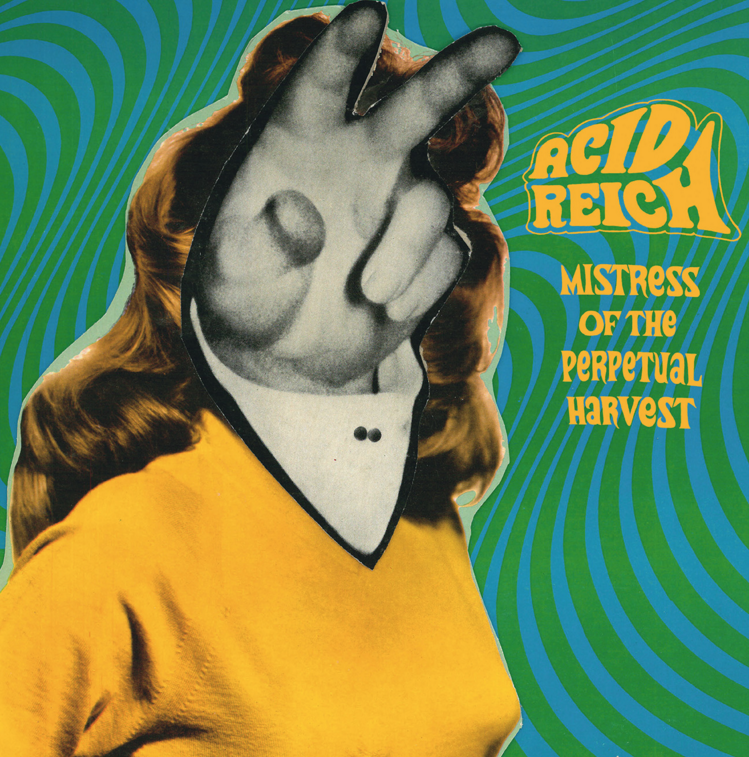
Acid Reich ‘Mistress Of The Perpetual Harvest’
(Mental Experience) 14th may 2021
From the bums on a turd ride book of liberal kool aid goofing, and just one of the various acid soaked experiments that birthed a behemoth, arrives a scuzz wreckage of early rambled psych nonsense attached to the founding fathers of Monster Magnet.
Miscreants John McBain, Dave Wyndorf and Tim Cronin, aided by Ripping Corpse’s Shaune Kelly and hellsausage’s Joe Paone would have probably gotten away with this drug-fueled ridiculous echoplex pedaled Floydian slip if it hadn’t been for those pesky crate diggers of such missives as Steve Krakow (aka linear notes provider Plastic Crimewave) and the Mental Experience label.
Past crimes it seems can never be erased; even if the home recorded, privately pressed Acid Reich sessions proved an incubator for what was to come. Unsurprisingly then, this is the first ever proper sanctioned release of this 1989 artifact; a mildly amusing fuzzed up trash can of drudge rock, heavy me(n)tal, krautrock and of course liquid acid tripping. As future (though the wait was mere months) Monster Magnet guitarist McBain nailed the vibe just right: “We sounded like Amon Düül with Uli Jon Roth sitting in.” And before readers start scuttling off to look that reference up, Roth was part of the Teutonic heavyweights Scorpion.
You can add to description a heavy dose of 60s drug exploitation movies (when it wasn’t quite yet passé to have a giggle or seem both provocative and hip to take the piss out of public broadcast bewilderment and paranoia), a Mogadon slipped Hawkwind, stone age primal Rubbles drumming, The Stooges, Deviants, Cream and the debauched mayhem of Leary indoctrination.
Ironic or in homage, I can’t decide, but this tripping cast of loons channel Surrealist Pillow era Jefferson meets Country Joe and Roky Erickson in covering that Woodstock era reignited borrowed anthem, ‘Amazing Grace’. And yes that really is a second cover version of Floyd’s hallucinatory cosmic psych opus ‘Set The Controls From The Heart Of The Sun’ you can hear: albeit a lot worse that the original by light years.
This is one spiked chalice of an acid album; a maelstrom of heavy riffage, vocals that border on the daemonic, and pummelled beats from the dungeons at the Whisky a Go Go. From beyond the calico wall indeed, all of this is drenched, enveloped in a soup of echo; played on all the right vintage gear (both instrument and amplification wise; and I suspect drug wise too) in a state of languid but devilish fun. Monster Magnet fans will be delighted I expect at the evolution; for the rest of us, well it will turn heads in the “heads” community for sure. It’s a heap of fuzz acid shit: but a great piece of fuzz acid shit!
Hi, my name is Dominic Valvona and I’m the Founder of the music/culture blog monolithcocktail.com For the last ten years I’ve featured and supported music, musicians and labels we love across genres from around the world that we think you’ll want to know about. No content on the site is paid for or sponsored and we only feature artists we have genuine respect for /love. If you enjoy our reviews (and we often write long, thoughtful ones), found a new artist you admire or if we have featured you or artists you represent and would like to buy us a coffee at https://ko-fi.com/monolithcocktail to say cheers for spreading the word, then that would be much appreciated.
Reviews Roundup/Brian ‘Bordello’ Shea
Photo Credit: Mark James for his shot of Gruff Rhys
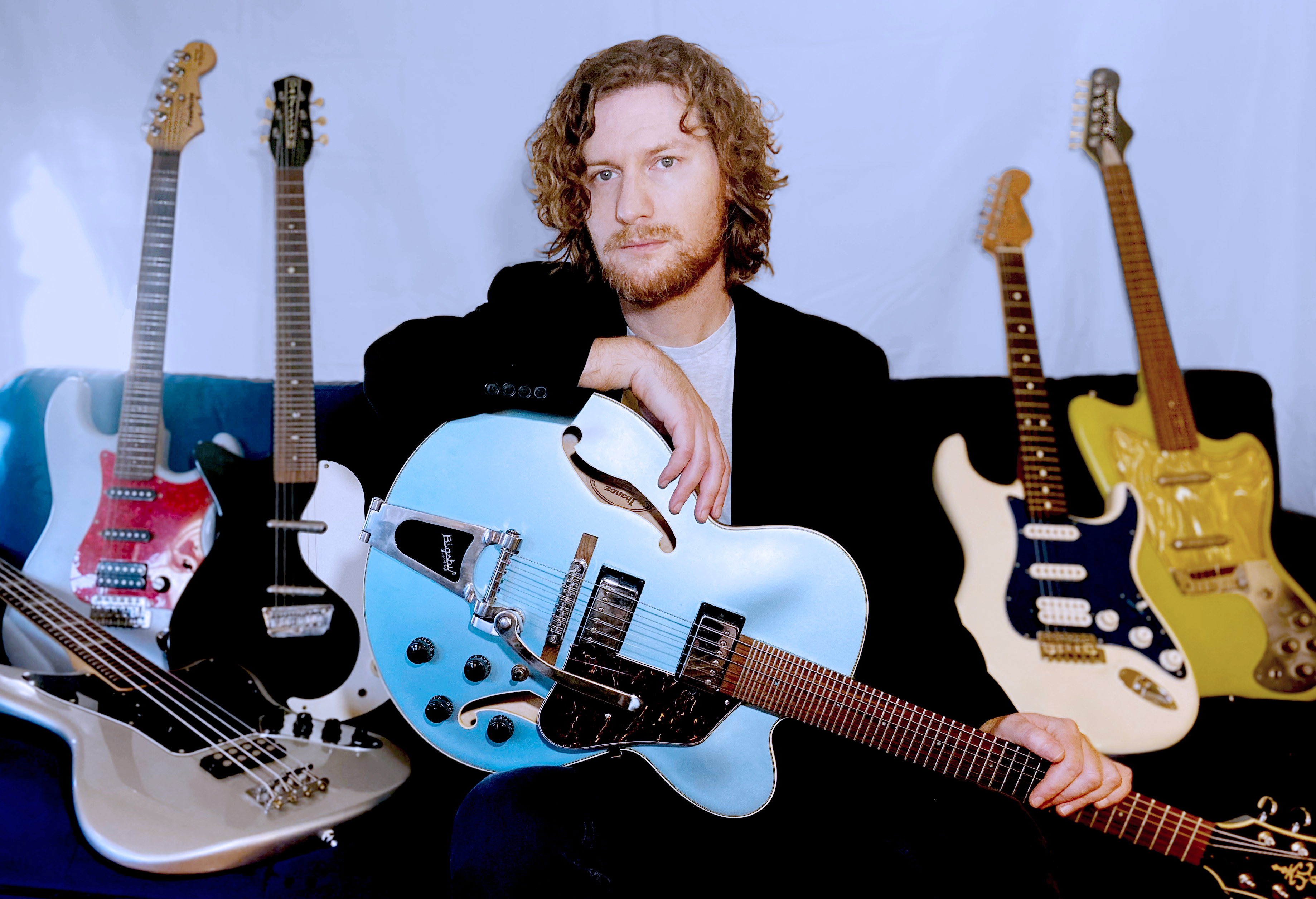
The cult leader of the infamous lo fi gods, The Bordellos, Brian ‘Bordello’ Shea has released countless recordings over the decades with his family band of hapless unfortunates, and is the owner of a most self-deprecating sound-off style blog. His most recent releases include the King Of No-Fi album, a collaborative derangement with the Texas miscreant Occult Character, Heart To Heart, and a series of double-A side singles (released so far, ‘Shattered Pop Kiss/Sky Writing’ and ‘Daisy Master Race/Cultural Euthanasia’). He has also released, under the Idiot Blur Fanboy moniker, a stripped-down classic album of resignation and Gallagher brothers’ polemics.
Each week we throw whatever sticks at the inimitable music lover, and he comes up with this…
Singles/Tracks.

Gruff Rhys ‘Mausoleum Of My Former Self’
(Rough Trade Records) 21st May 2021
So Gruff Rhys the nicest man in rock is back with a lovely laid-back strum along of pure pop bliss, the kind of track Teenage Fanclub no doubt wanted on their latest album but somehow got bogged down in middle agedness. But Gruff averts the oncoming of middle age with the pop suss and blissed out pop magic one would expect from the leader of one of the 90s finest bands. ‘Mausoleum Of My Former Self’ is not just a great song title but also a rather dandy pop song.
Nicholson Heal ‘Apophenia’
(Breakfast Records) 21st May 2021
This is a rather charming bbc6 radio friendly track; normally the kind of track I pour scorn on and makes me want to get out my todger and piss all over the listening device. But for some reason I find myself liking this. For some reason it reminds me of the golden boy from pop past Nick Heyward, but does not actually sound like him. Maybe it is the sunny lightness and all-round niceness of the song or maybe I’m being taken over by an angelic entity. Let’s hope for the future of pop that is not so and this is just a slight blip in my dour outlook on everything.
Island ‘Do You Remember The Times’
(Frenchkiss Records)
I like the romance of the lyrics to this little ditty – the kind of thing the underrated Babybird knocks out with alarmingly regularity. It has an all-round sheen of melancholy and catchiness that pop singles are supposed to have but with an underlying edge of darkness like a beloved TV entertainer with hidden mental health issues.
Albums/EPs..
The Pink Chameleons ‘Peace & Love’
(Soliti) 21st May 2021
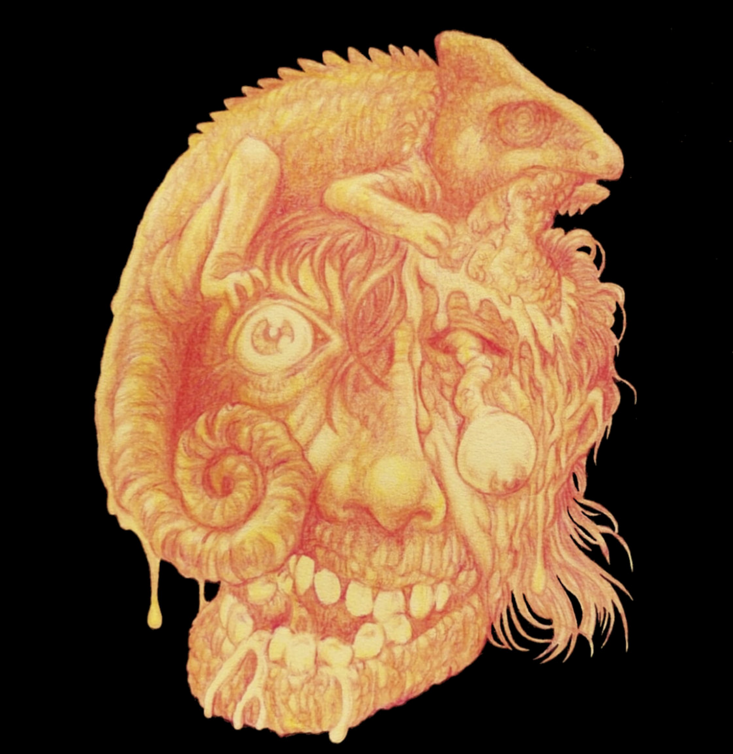
The Pink Chameleons are offering us a wham bam thank you mam of a garage rock album. Nothing truly original but this is garage rock so what do you expect. You get songs about the shitiness of life (‘Dead End Life’), and every other song on the album, but it is done in such a lovingly angry way that it really is appealing: all fuzz lead guitar lines, guitar chops and Stooges attitude.
It’s also blessed with some fine 60s tinged melodies, the kind you hear on those wonderful garage rock comps Pebbles and such like. Peace and Love is an album of supreme 60s tinged enjoyment and one I would recommend to all you connoisseurs of Garage rock and all things 60s.
Amy Cutler ‘The End (Also Ends) Of (The) Earth And Variants’
(Crow Versus Crow) 14th May 2021
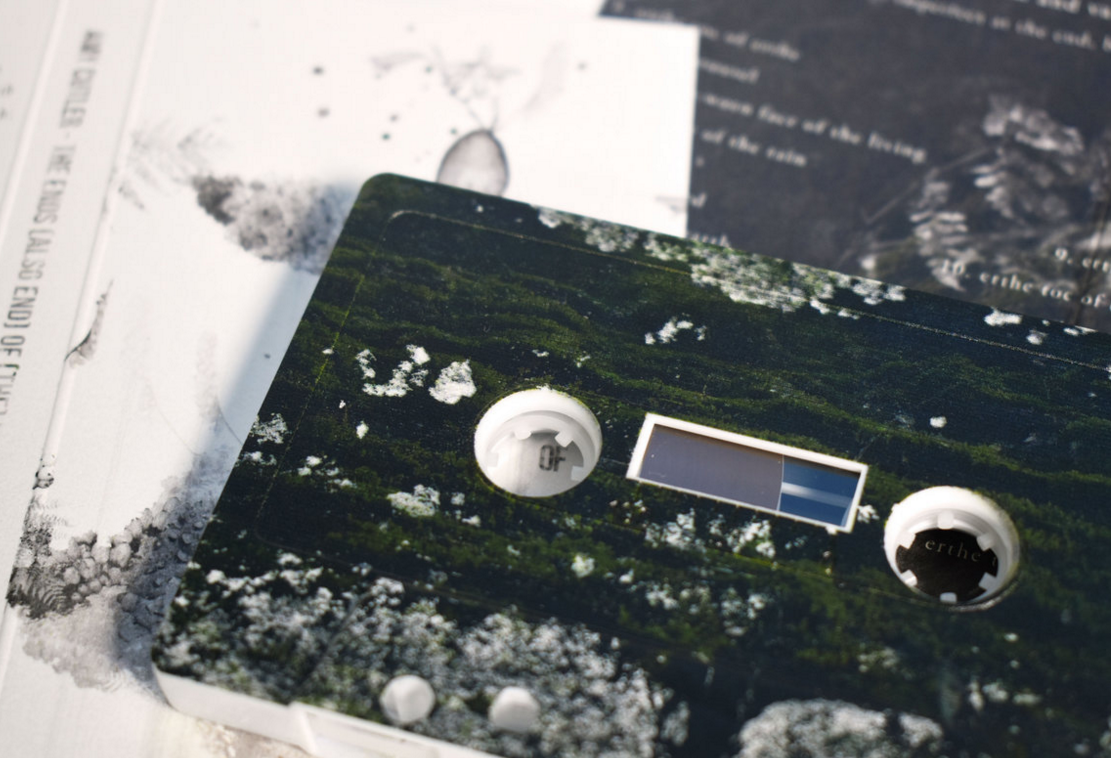
This album was described as earthen lullabies in the press release, and who am I to argue. It’s not the Shangri-La’s, that’s for sure, and certainly not a wannabe Beatle mop top; no, this is an album of atmospheric mood pieces: and is actually very good.
It’s very relaxing; like lying in bed on a cold night as the icy rain beats its merry rhythms on the windows and the ghosts of your mind slow dance with the dead and the dying; embers of a burned out shell of past lovers come back to caress the parts of you no longer thought about, and Jacob Marley tap dances on the window sills of your youth. Earth crackles and open log fires takes turns in slowly rewinding that old tape you never get around to playing and oscillates with the most heavenly voices you can only dream about sound tracking your forthcoming descent into slumber.
There are only 50 copies of this beautiful cassette, and I would advise anyone wanting to escape the pressures of life for 60 minutes or so could do worse than investing in a copy now.
Brendan Byrnes ‘2227’
28th May 2021
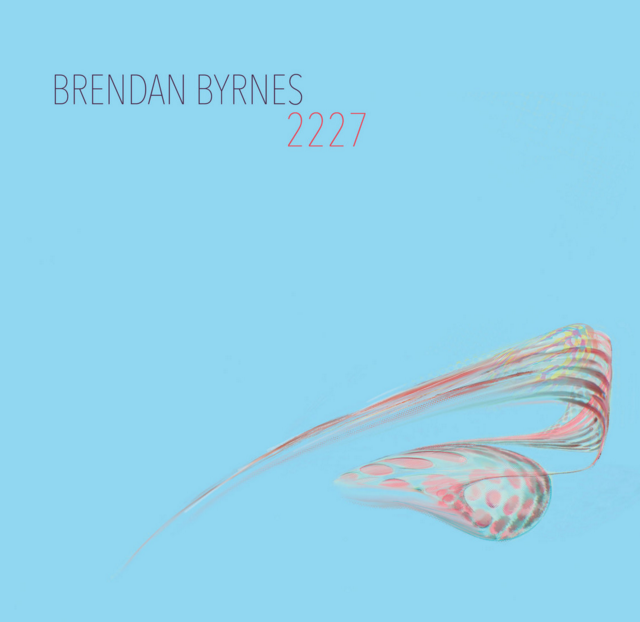
Imagine if you will if Joe Meek had invited Sonic Youth into his home studio to record an album of Microtonal jazz guitar pieces, it may or may not have sound like this. What this sounds like is an enjoyable album of instrumental tracks that range from songs you may hear soundtrack the little girl play noughts and crosses on the 70s TV testcard, which if I remember correctly featured some pretty out there music: one minute Manuel and His Music from the Mountains, the next, a Zappa like freak out. This of course wanders more into the Frank Zappa territory.
Passing through the collected works of Weather Report with a subtle 60s sci-fi feel, you can imagine the track ‘Pangaean Islands’ fitting nicely on the already mentioned Joe Meeks I Hear a New World album. That is what is so great and enjoyable about this album, as all good instrumental albums should; it succeeds in taking you to places letting your mind run riot painting pictures of many colours of many things of many emotions, and 2227 succeeds in doing that extremely difficult task.
Mekong ‘End Of The World’
14th May 2021
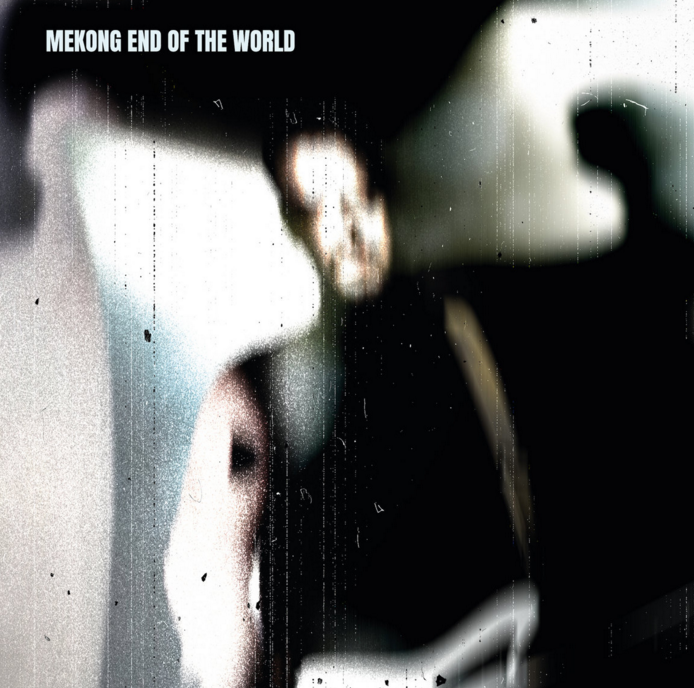
I think maybe that Mekong have heard of The Cure and have a few of their albums in their record collection. In fact I wouldn’t be surprised if they all have Robert Smith Tattoos on their arses. They are definitely an influence to put it mildly, and I against my better judgment am warming to them.
Is it possible to warm cold wave I wonder? But no this is an enjoyable comic romp through the dark side with some really funny [unintentionally I presume] lyrics: ‘Saving Jesus’ had me laughing out loud. This album really is a must hear for all the right and wrong reasons. But music is an entertainment and this album is certainly entertaining; ‘Black Swan’ has the classic opening line: “He has the body of a leprechaun and he parties so hard like he is 21”. Pure and utter comic gold.
Mekong might be becoming my new favourite band the further I indulge and listen to this wonderful gothic comic gold of an album.
The Bablers ‘Psychadilly Circus’
(Big Stir Records) 29th May 2021
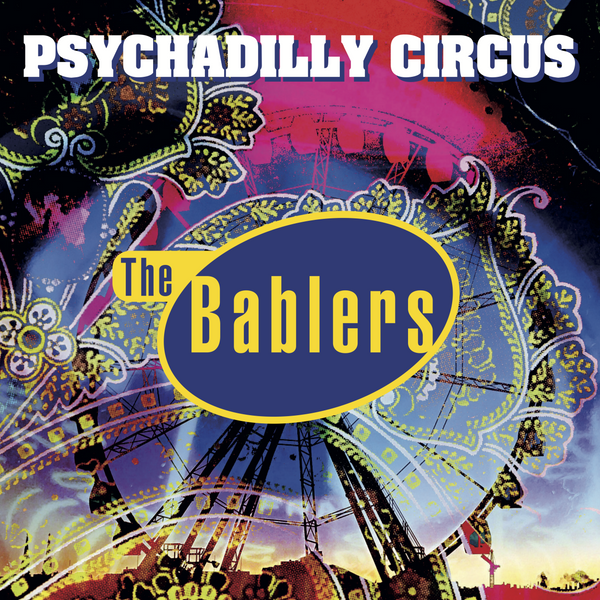
The Bablers Psychadilly Circus is an album of what I call middle-aged Psyche; an album full of songs that people of a certain age and a certain taste in music will enjoy a great deal. This is a album that knows its audience and caresses that audiences taste buds; an album filled with the influences of The Beatles, Electric Light Orchestra, Bad Finger, Bill Fay (especially on the opening track ‘Love Is Everything’) and all other late 60s early 70s psych bands but with a added hint of power pop.
Psychadilly Circus is an album filled with well written, well produced, well performed songs; songs that are not going to break into a rap in the middle of, or suddenly go all punk rock. These songs are like an old favourite jumper that always fits and you always feel comfortable in; an album that will fit into your record collection perfectly next to your well thumbed through listened to critically acclaimed rock classics.
Hi, my name is Dominic Valvona and I’m the Founder of the music/culture blog monolithcocktail.com For the last ten years I’ve featured and supported music, musicians and labels we love across genres from around the world that we think you’ll want to know about. No content on the site is paid for or sponsored and we only feature artists we have genuine respect for /love. If you enjoy our reviews (and we often write long, thoughtful ones), found a new artist you admire or if we have featured you or artists you represent and would like to buy us a coffee at https://ko-fi.com/monolithcocktail to say cheers for spreading the word, then that would be much appreciated.
Spindle Ensemble 448: Spindle Ensemble ‘Inkling’
May 24, 2021
ALBUM REVIEW/Dominic Valvona
Spindle Ensemble ‘Inkling’
(Hidden Notes Records) 27th May 2021
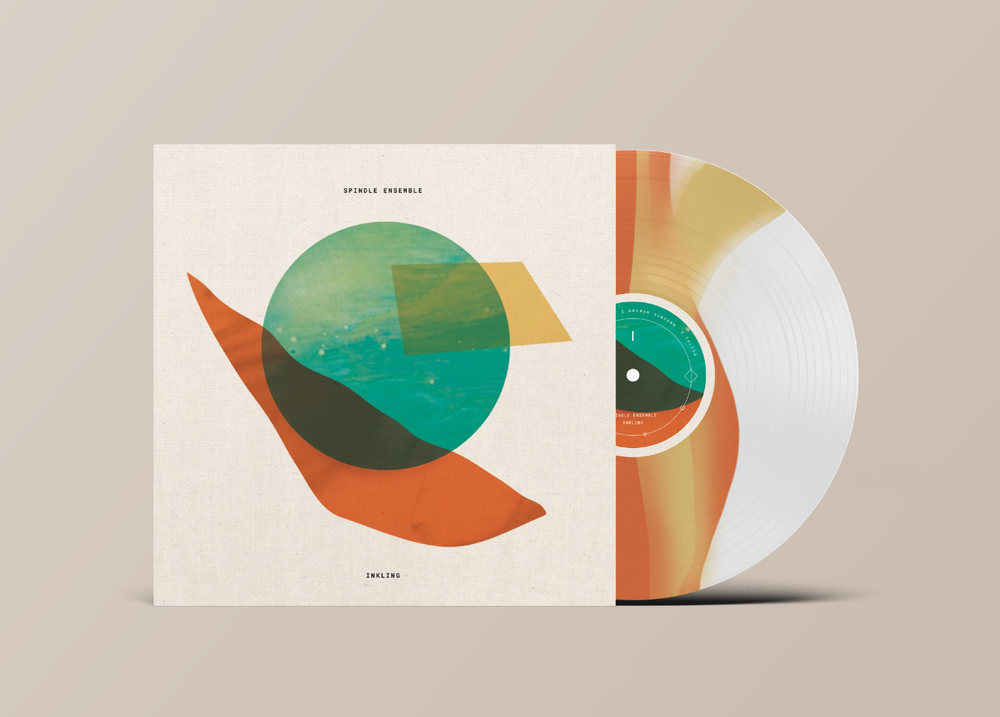
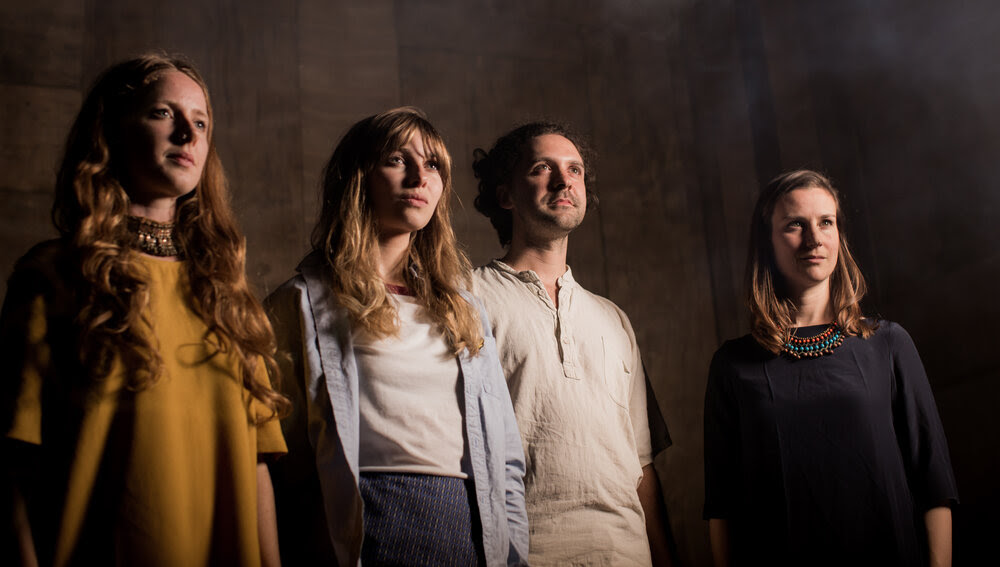
As spindly woven as that moniker suggests, the gently stirring and often transportive classical and chamber suites on the ensemble’s second album are diaphanous, elegant and adroitly magical.
Following on from the Bristol quartet’s debut birthed Bea album in 2017, Inkling continues to match a contemporary feel with the timeless and cinematic. Released last year as a double A-side single, with accompanying videos by the acclaimed film makers Fred Reed and Marie Lechevallier, the counterbalance couplet of the dashing quickened ‘Chase’ and more softly mosey Western style ‘Okemah Sundown’ both showcase that filmic soundtrack part. Both of these brilliantly evoked imaginings of the familiar can be found on this sweeping and gracefully composed work of deeply moving set piece reflections and dramas.
Led by composer-pianist Daniel Inzani and featuring percussionist Harriet Riley, cellist Jo Silverston and violinist Caelia Lunnis, the obviously talented, well-read musically, quartet send the listener off into various scenes and landscapes. The latter half of that already mentioned single, named after the small Oklahoma town in which Woodie Guthrie was born (named after a Kickapoo indigenous chief, which also translates as “thing up high”), ‘‘Okemah Sundown’ is the sound of a sayonara Morricone drifting towards a mirage of Oriental tinged Western themes on the Mexican border. On the enchanted dainty tiptoe ascent up heavens glass staircase opening dream suite title-track, they magic up the evocation of a Hollywood silent film era stage set.
There’s a permeation of the turn-of-the-century on the Edwardian ballroom sweep ‘Waves’, which features that silent film age soundtrack way of signaling a change in mood or the danger of something: perhaps distrust, the signal that there is something clandestine going on. Not quite the moustache twirling stereotype, but something altogether subtler, deeper.
Bonus track ‘Menilmontant’ goes even further, referencing both the outer Parisian ‘arrondisement’ of the title and the 1926 Dimitri Kirsanoff film. There’s plenty of Satie influence amongst nocturnal flits, dashes and spirals on that meadow roll into the secret garden.
Imbued by the sensibilities of not just Satie but a litany of other greats (Pärt, Ravel, Reich, Glass, right up to the Penguin Café Orchestra) the Spindle Ensemble dance on the edges of classicism and the experimental: never once losing the melodious and serene thread. It’s a journey that despite the pauses, swells and changes keeps up a constant flow of beautifully and moody fluctuated imaginative musicality; fit for stage, cinema screens and beyond. Inkling can be captivating, quaint, dreamy, light and soft-footed affair, but always grandiose in its craft for stimulating new experimental classical music visions.
Hi, my name is Dominic Valvona and I’m the Founder of the music/culture blog monolithcocktail.com For the last ten years I’ve featured and supported music, musicians and labels we love across genres from around the world that we think you’ll want to know about. No content on the site is paid for or sponsored and we only feature artists we have genuine respect for /love. If you enjoy our reviews (and we often write long, thoughtful ones), found a new artist you admire or if we have featured you or artists you represent and would like to buy us a coffee at https://ko-fi.com/monolithcocktail to say cheers for spreading the word, then that would be much appreciated.
Perusal #13: Lunar Bird, Khasi-Cymru Collective, Rachel Langlais, Andrés Vargas Pinedo, Versylen, Wladyslaw Trejo
May 20, 2021
A Short Roundup Of Recommended Releases On The Peripheral/Dominic Valvona

Andrés Vargas Pinedo ‘The Fabulous Sound Of Andrés Vargas Pinedo: A Collection Of Amazonian Popular Music (1966-1974)’
(Buh Records) Digital April/Vinyl 25th May 2021
Whistling, tooting under a living Amazonian canopy and across the heights of the Andean mountain range, celebrated Peruvian street musician Andrés Vargas Pinedo brings a smile to the face and lifts the mood on a cheery, merry and rain forest carnival bustling showcase of his sauntered music. Collated together from recordings authored directly by the blind composer, violinist and quena (the traditional flute of the Andes) virtuoso, this compilation finds the bird-whistling piper leading both the Conjunto Típico Corazón de la Selva and Los Pihuichios de la Selva bands down a fife–beating, hand-clapping and joyful Amazon pathway.
Originally hailing from the vibrant interchange Amazon port city of Yurimaguas, Andrés later moved to Lima, joining various popular groups and movements in the process. From an eight-year period in a long career the Buh label has chosen the meandering star’s infectious mix of local and further afield musical rhythms from between the years 1966 to 1974. Aping the wildlife, enacting a fever of calls, howls, trills and energetic encouragement, Andrés music weaves and shakes as it embraces tropical festival and processional music, seafaring jigs, canters, Mexican westerns and the Celtic on a most joyous sweet dance.
Lunar Bird ‘S/T’
(Self-release – supported by Help Musicians ‘Do It Differently Fund 2020’)
Out Now Digitally/CD Version 2nd July 2021
A pure blossoming of enchantment and dreams, the beguiling Cardiff troupe has just unfurled the most diaphanous lucid radiant album this month. On a granderscale and canvas, theytransform certain vulnerabilities and yearns into something positively and celebratory spellbinding and golden; meandering, tinkling and floating across a fairytale that evokes hints of Beach House and Diva Dompe wafting in lush and vaporous landscapes.
Valuing instead of diminishing fragility and all it entails, the Italian formed, but in recent years Wales-based, Lunar Bird (a reference to Joan Miró’s famous abstract bronze sculpture of the same name) enrapture themselves in a cosmic, romantic fantasy. The focus in this beautifully realised mirage remains the translucent siren tones of the group’s vocalist Roberta Musillami; a sort of drifting apparition and lushly voiced songstress, inhabiting a dreamscape of languid and more heart aching uncertainty. A bewitching album at times, the band occasionally slips into esoteric realms, yet remain constantly beautified and untethered. Hopefully this will finally put the dreamers on the map.
Khasi-Cymru Collective ‘Sai-thaiñ ki Sur’
(Naxos World/ARC) 28th May 2021
An interwoven musical connection between two very different communities, the Welsh music prize winner Gareth Bonello, in collaboration with a myriad of musicians, poets and enablers, has bonded the folklore, poetry and reverent, spiritual music of both Wales and the North East Indian region of the Khasi Hills together in a mutual union of universal suffrage. Finding an affinity with the Assam and Bangladesh bordering region, which became the very first location for the Welsh Calvinistic Methodists inaugural overseas mission in the 1840s, Bonello (who often appears under The Gentle Good alias) explores his native land’s religious-ideological led history with the Khasi people.
Though reverent colonialists to an extent, superseding the indigenous cultures traditions for their own, the Welsh were a little more sympathetic to the Khasi identity – perhaps in part because they too had fallen prey to British Empire hegemony, and lost much of their own unique traditions. Some good did come out of the mission (education, healthcare), but this extensive album project that grew out of academic study is all about finding a certain commonality in saving each other’s roots, whilst seamlessly flitting between languages and indigenous musicianship to condemn, pay attention to contemporary issues, from the environment to women’s rights. The first of those can be heard in resigned malady on the folky poetic ‘Soso & Waldo’, the second, on the proposed bill amendment to strip Khasi women of their status should they marry outside of their own community powerfully spoken-worded ‘To The Men With Hate Speech On Their Lips’. Just one of the brilliant artists to appear on this album, Lapdiang Syiem delivers that strong retort to a John Cale, bordering on Reich, stark soundtrack.
Earthy yet transient, the (translated roughly into English) “weaving of voices” album features open-air performances in thunder cloud downpours, and to the sound of rhythmic crickets and cuckoos, and reinvented, repurposed hymns, poems and wistful beautiful yearns. Amongst the echoes of lovely Welsh valley harmonies and folk the Khasi bird-like flighty bamboo flute (the “besli”) and rustic banjo expressive guitar-like “duitara” add an almost oriental, atavistic feel that pushes this album into a beautiful hinterland.
The concerns, history are deeply serious but delivered so magically and in such a compelling way as to transport the listener to a peaceable, earnest but lush landscape of shared dreams, dignity and conservation. A successful exchange in other words.
Rachel Langlais ‘Dothe’
(unjenesaisquoi) 28th May 2021
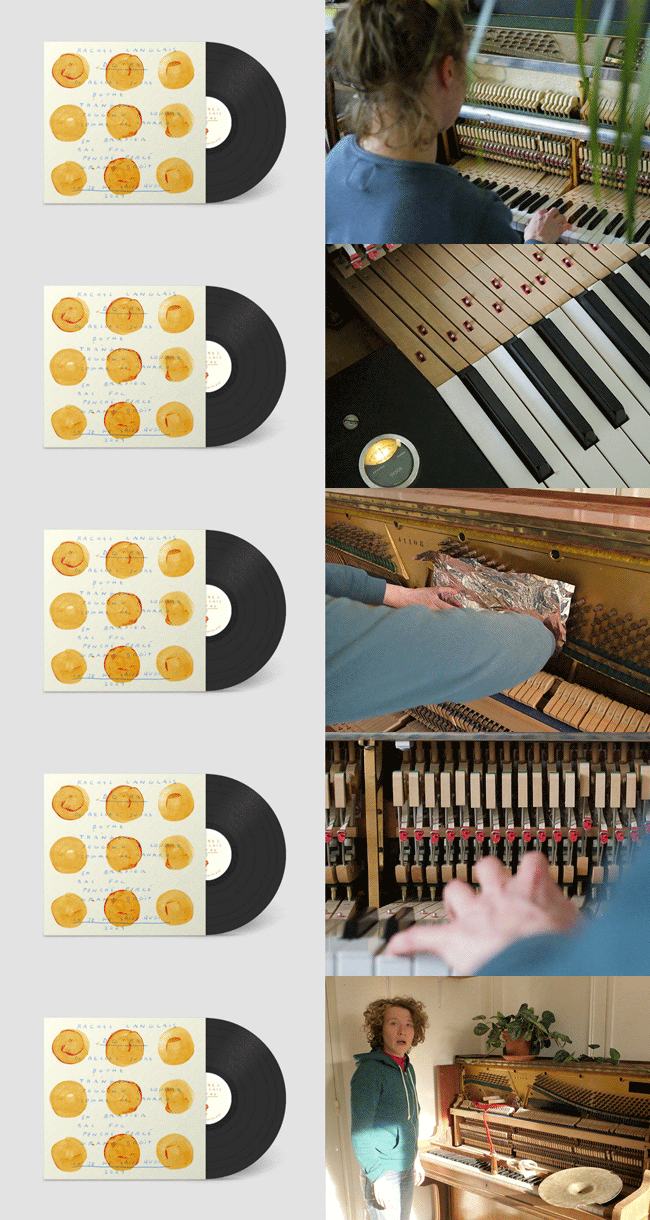
The inaugural album of experimental piano suites from Rachel Langlais is filled with adroit compositions that convey so much, even with such a minimal and sparse use of the instrument. Imbued by John Cage’s famous use of prepared pianos, Langlais places a myriad of tactile and more abrasive materials (paper, metal objects, pieces of wood, adhesive tape, plastic etc.) directly onto the strings to create a sound both interwoven with spindly harp like cascading flows, starker jarred singular notes and neo-classical touches of melodious evocation. Further to the application of materials, the piano tuner graduate also uses a number of recording and digital processing techniques (from cutting to slowing it down) to manipulate something familiar into, well, something less so.
No matter how minimal those notes are they all seem to resonate melody or the semblance of a tune, a movement; from trickled arpeggiator, to deeper more sonorous bass notes; metallic springy thumps to more playful tiptoes across the keyboard.
The title is borrowed from Ursula K. Le Guin’s science-fiction novel The Left Hand of Darkness (1969), in which “dothe” is a nervous hysterical strength that can be controlled and that is practiced by some inhabitants of a planet called Gethen. After using dothe, the body must take a rest called “thangen.” And that is more or less exactly what you get on this contextual articulation of explorative energy.
Wladyslaw Trejo ‘Nuestra Voz’
(Leipzig Inn Records) 12th May 2021
An ultra rare release physically (being confined to thirteen copies ‘carved in real time on lathe’) Wladyslaw Trejo’s latest yelp of pyschogeography pain, despair and angst is dedicated to Warsaw – a city that has seen and suffered greatly from of all too real effects of totalitarianism; caught between both Fascist Germany and Soviet Russia in the last century. Part one of this shared single, ‘Nuestra Voz’, is a forewarning poem about the creeping, silent threat of such dictatorial regimes, put to the soundtrack of post-punk tight delay snare snaps, synthesizer moody suspense and looping windy ill tides; an uneasy early electro seedy Eastern European meets Italian occult preened mix of Bernard Szajner, Kraftwerk, Kas Product, The Normal, and early Human League.
Part Two, ‘Tranzyt W’, meanwhile is a no less moody instrumental float of lo fi Depeche Mode meets DAF synthesized beats and sizzled drum machine and bounced nodes that soundtracks ‘the walk of an inveterate observer’ (that’s Wladyslaw himself), ‘through the streets of modern Warsaw’. Like a despondent electronic peruse, it bends and bubbles and warps as finally meets the void.
Released by the micro-label Leipzig Inn Records (an imprint that only publishes special and limited editions of underground and exploratory electronics), you’d better be quick to snap up the physical copies. If you miss out, you can always thankfully purchase the digital, now on Bandcamp.
Versylen ‘Radiance’
(See Blue Audio) 14th May 2021
Continuing to assail an ocean of the most sophisticated, subtly cinematic and developing ambient and electronica music, the Barcelona-based See Blue Audio label is on an impressive run of under-the-radar classics – just catch my review of last month’s adroit, ascending and lofted materialisations by the Cretan traveller Bagaski for proof. Undulating some most gorgeous ambient geographical peregrinations, washes, expansions and radiant skyscapes with kinetic Techno, Hip-Hop and ‘post-dubstep’ rotating, wavering beats, the young producer Versylen (aka Elliot Ferguson) brings yet another fresh and expanded vision to the imprint. The perfectionist we’re told has spent a lot of time getting this five-track suite right, so take just as much time out to enjoy and reflect on these meticulous yet airy moodscapes.
Hi, my name is Dominic Valvona and I’m the Founder of the music/culture blog monolithcocktail.com For the last ten years I’ve featured and supported music, musicians and labels we love across genres from around the world that we think you’ll want to know about. No content on the site is paid for or sponsored and we only feature artists we have genuine respect for /love. If you enjoy our reviews (and we often write long, thoughtful ones), found a new artist you admire or if we have featured you or artists you represent and would like to buy us a coffee at https://ko-fi.com/monolithcocktail to say cheers for spreading the word, then that would be much appreciated.
Playlist/Dominic Valvona
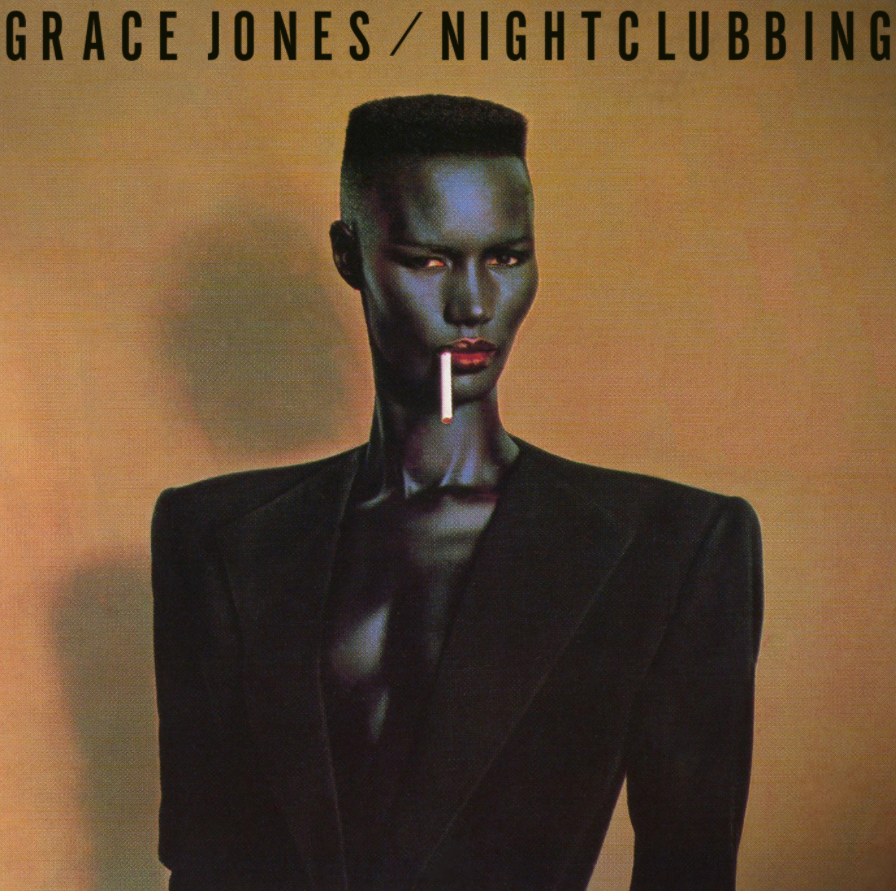
An intergenerational, eclectic playlist vision, the Monolith Cocktail Social is the blog’s imaginary radio show; a smattering of music from my personal collection, my DJ sets and a lot of music I just wish I owned. Devoid of themes, restraints, or trends, expect to hear anything and everything; including some tributes to album that celebrate their 50th, 30th and 10th anniversaries: A very out-there, Mogadon slipped, version of Marvin Gaye’s ‘What’s Happening Brother’, plus tracks from Grace Jones’ infamous aloof cyber noir Nightclubbing (and a Jamaican lit track that never made it to that album), McCartney’s Ram, and Nice And Smooth’s Ain’t A Damn Thing Changed. There’s a nod also to the recent passing of Digital Underground’s chief instigator and maverick genius Shock G.
Amongst that lot you will hear Kenny Knight, Joan Of Arc, Kazumichi Komatsu, Krown Rulers, Reymour, Shelagh McDonald, The Freeborne, Cassie and much more.
Tracks:
Shelagh McDonald ‘Waiting For The Wind To Rise’
Paul McCartney/Linda McCartney ‘Too Many People’
Pantherman ‘Panther Walk’
Ford Theatre ‘I’ve Got The Fever’
Kevin Vivalvi ‘Another Day, Another Time’
The Freeborne ‘Images’
Billy Changer ‘Black Angel’
Chris Stamey ‘When We’re Alone’
Cassie ‘The Light Shines On’
Reymour ‘De Ma Tour’
Grace Jones ‘Art Groupie’
Poor Righteous Teachers ‘Easy Star’
Digital Underground ‘No Nose Job’
Joe Farrell ‘Seven Seas’
Nice & Smooth ‘Pump It Up’
Krown Rulers ‘Paper Chase’
Wreckx-N-Effect ‘New Jack Swing II (Hard Version)’
Carlos Garnet ‘Good Shepherd’
James Brooker ‘Feel So Bad’
A.B. Crentsil ‘Juliana’
Embryo ‘Wajang Woman’
Grace Jones ‘If You Wanna Be My Lover’
Daddy Lumba ‘Nom Nsuo Twen Ope’
Kenny Knight ‘Carry Me Down’
Joan Of Arc ‘I Love A Woman (Who Loves Me)’
The Aggregation ‘The Lady At The Gate’
Moonkyte ‘It’s The Same Thing’
Walter Smetak ‘Uibitus e Beija-Flores Etc.’
Kazumichi Komatsu ‘U+2657’
Poets Of Elan ‘What’s Happening Brother’
Laurie Spiegal ‘Three Sonic Spaces II’
Laurent Thibault ‘Aquadingen’
Between ‘Kalenda Maya’
Puccio Roelens ‘Lillian’
Johnny Pearson ‘Baubles, Bangles, And Beads’
Margie Day ‘Wine In The Wind’
Paul Siebel ‘Jack-Knife Gypsy’
Tartit ‘Holiyane Holiyana’
Our Daily Bread 447: BLK JKS ‘Abantu/Before Humans’
May 17, 2021
ALBUM FEATURE/REVIEW/Dominic Valvona
BLK JKS ‘Abantu/Before Humans’
(Glitterbeat Records) 21st May 2021
From the South African underground to meteoric international success, championed by an American hipster parade of luminaries (from Diplo through to TV On The Radio, The Mars Volta), the innovative soundclash that is BLK JKS have found that leap, and that keeping up the profile, takes its toll. They worked hard on the circuit for years in Johannesburg before hot-footing across the Atlantic to become some sort of exotic darlings of the hype industry: jamming with The Roots, photo opportunities with Pharrell, hanging with the late Lou Reed at SXSW.
Signing to another of those virtuous bastions of the hip market, Secretly Canadian in 2009, the quartet released a career defining and highly influential debut album: After Robots. A “channel-hopping” frenzied Internet collage of post-apocalyptic Afro-funk, rock, jazz, kwaito, folk, renegade dub and pysch this fired up statement attracted even more admirers to the fold, including (rather surprisingly) Dave Grohl, who not only rated it his favourite album of that year but would invite them to open for his Foo Fighters, five years later. By that time however the group had grown jaded and tired by the touring and other travails, and had returned back home to South Africa. Some members split to pursue other projects, whilst a core stayed and went back to performing on the underground scene of local festivals and nightclubs.
Fast-forward to 2018 and the group recorded a tribute to one of their fellow compatriots and mentors, the now sadly missed late genius, Hugh Masekela (‘revisioning’ his ‘The Boys Doin’ It’) and jammed with the Malian guitar legend (no stranger to this blog) Vieux Farka Touré and hip-hop innovator and Beastie Boys foil Money Mark – the results of which appear on this new album. This would be a year of reactivity, a restart of a kind, as the ruminants of the troupe invited in the young trumpet virtuoso Tebogo Seitei to complete a new incarnation of the quartet; fit once more to enter the studio and record that long overdue album.
Setting up in what was the orchestra pit in the Soweto Theatre, BLK JKS began a fatalistic recording session: fatalistic because their studio was burgled, ransacked, with the hard drives that the group had saved those recordings on stolen in the bargain. Despondent to say the least, they nevertheless decided to just go for it and record a 2.0 version in just three days; the results of which have finally now seen the light of day in 2021.
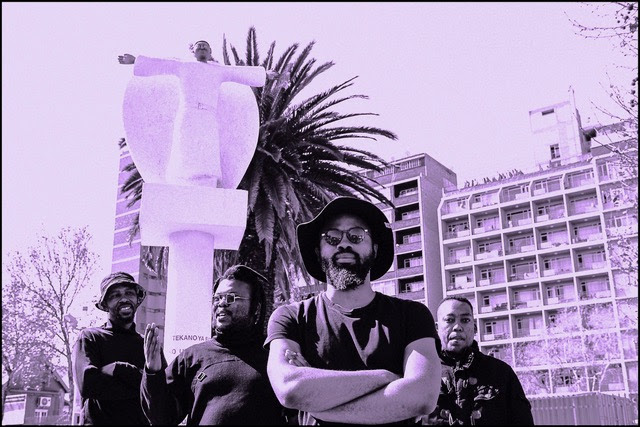
The travails and hard graft have produced something more earthy, mature and actually purposeful despite the drifts and amorphous cross-pollination of influences, ideas. Framed as a ‘prequel’ in fact to After Robots, Abantu/Before Humans time-travels between the atavistic, primal and the future. It’s a sonic and hauntingly soulful set world of ancestral trauma and deliverance; a mystical soundtrack to archeological dug-up pasts, proud civilizations and an African continent thousands of years before European colonization.
There’s a statement on the record cover that goes some way towards articulating this backdrop and source of inspiration: “A complete fully translated and transcribed Obsidian Rock Audio Anthology chronicling the ancient spiritual technologies and exploits of prehistoric, post-revolutionary afro bionics and sacred texts from The Great Book On Arcanum by Supernal 5th Dimension Bound 3rd Dynasty young Kushites from Azania.” From that we can make out references to secrets, mysteries and the Tarot (that’s the “Arcanum” bit), allusions to the sky, the heavens (“Supernal”), and mention of the ancient kingdom of Nubia that gained independence from Egypt under King Kashta in around 1050 B.C. (hence the “Kushites”). There’s also a reference to original name bequeathed upon the southern tip of Africa and beyond by such scholars as Pliny, “Azania”: championed in the 20th century by such groups as the Pan Africanist Congress of Azania, and even touted as a possible name for independent South Sudan in the 21st century.
In the footprints of the forbearers, but even further back to “before humans”, there’s a dirt music feel of desert mirage blues, wafted jazzy trumpet serenades and punctuated plaints, and a sort of Adam Ant toms patter tribal beat of messenger drums all broadcasting across the plains, sand dunes and grasslands. This is an album that first begins with a sort of rustic hymnal blues harmony and tapping hand drums – which as the communion progresses slap quickly until blurring into a digital code -, yet soon limbers into a loose sunshine cohesion of Masekela trumpeted warmth, reggae and post-punk: imagine PiL, The Slits and Sly & Robbie sharing the air fare to South Africa.
It’s a spindled Middle Eastern and North African vibes, with hints of a Tinariwen and Afro-soul, on the almost romantic but slightly warning ‘Q(w)ira – Machine Learning Vol. 1’. Songs like this push towards the haunted description, which continues on the Kele Okereke fronts an Afrofuturist Specials ached and longing, elephant heralding trumpeted ‘Human Hearts’. Oddly, they turn an acoustic twangy B52s riff into a modern electro dancehall hymn on the deeply voiced narrated ‘Harare’.
They go on to spit a lot of “fuck you(s)” on the album’s most volatile, actionist grumble: ‘Yoyo! – The Mandela Effect/Black Aurora Cusps Druids Ascending’; also the album’s most obvious call-to-arms, but equally disdainful disappointment at a less than revolutionary zeal to take power and make the change.
On an almost seamless ride, with tracks more or less blending into each other, carrying over certain threads and rhythms from the previous track, Abantu warps and channels localised music dances, ska, Afro-jazz, and on the final strung-together codex like drift and sound collage, ‘Mmmao Wa Tseba-Nare/Indaba My Children’, hints of the Red Hot Chili Peppers and Pixies emerging from the ether. This track actually fades out; leaving a silent gap of anticipation before the Foley sounds of a pier and seaside scene are funnelled into a vortex finale: a return to something more human, communal. After such a hiatus – though let’s not be too harsh, the pandemic that ripped through South Africa accounts for at least 18 months of that time – it’s heartening to once more hear the BLK JKS’s distinct underground intuition of blending so many diverse sounds, ideas. Somehow idiosyncratically South African, but above all unique, this is a sound that time-travels between the mystical, haunted and spiritual; an eclectic fanfare of psychogeography, prayer and protestation, from a wizened band that limbers to a soundtrack of soulful punk, rock-reggae, South African musical styles and beyond. It’s Bad Brains meets Sun Ra and Funkadelic on a millennia historiography tour, from the soil upwards, of Africa.
Hi, my name is Dominic Valvona and I’m the Founder of the music/culture blog monolithcocktail.com For the last ten years I’ve featured and supported music, musicians and labels we love across genres from around the world that we think you’ll want to know about. No content on the site is paid for or sponsored and we only feature artists we have genuine respect for /love. If you enjoy our reviews (and we often write long, thoughtful ones), found a new artist you admire or if we have featured you or artists you represent and would like to buy us a coffee at https://ko-fi.com/monolithcocktail to say cheers for spreading the word, then that would be much appreciated.
Our Daily Bread 446: Rezo ‘Travalog’
May 14, 2021
ALBUM REVIEW/Dominic Valvona
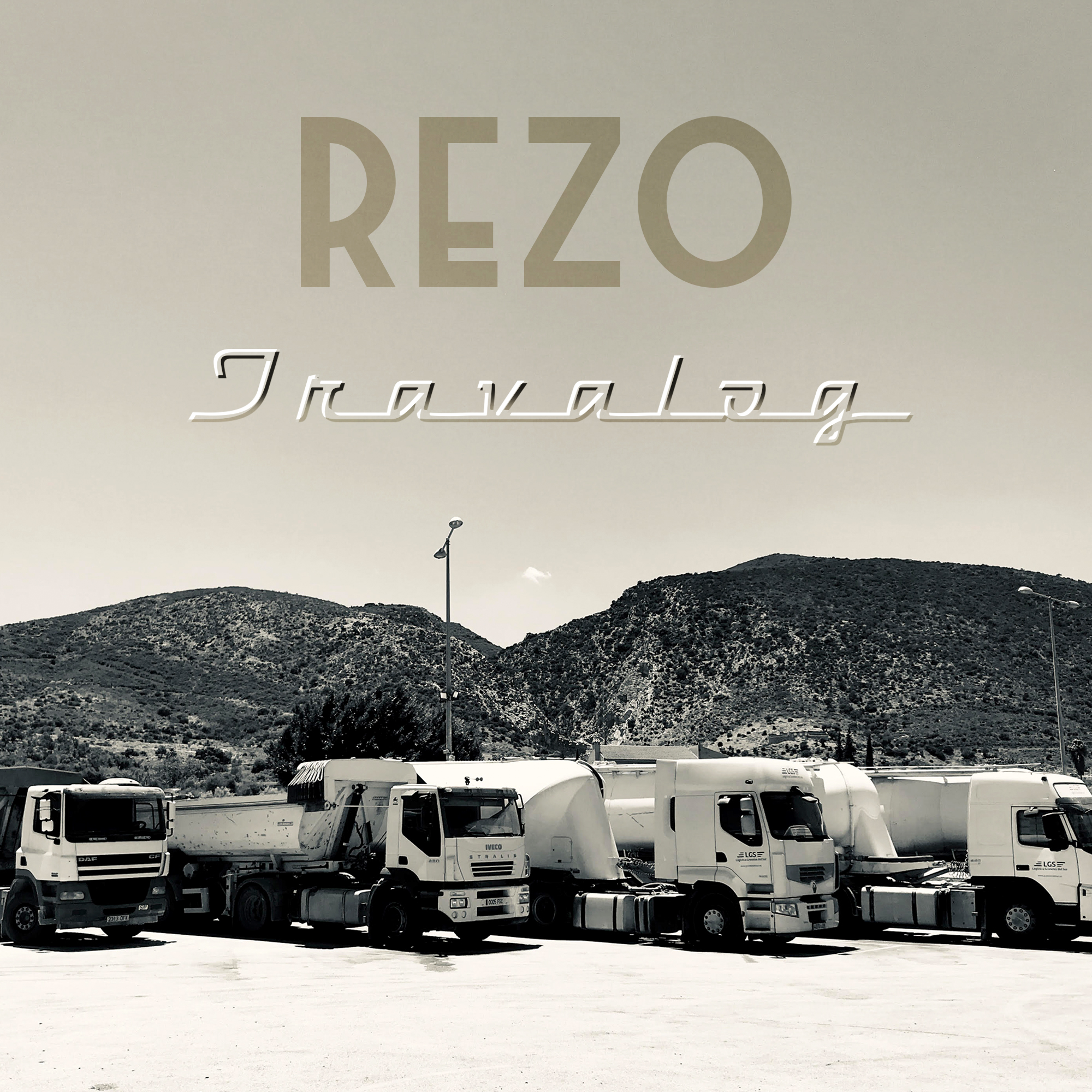
Rezo ‘Travalog’
17th May 2021
Few albums to emerge from these unprecedented pandemic-eclipsed times have yet managed to quite articulate the draining emotional fatigue of lockdown, yet also dares to hope for a bright release of humility in the slow emergence from it as the Irish duo of Colm O’Connell and Rory McDaid. For The Mitcheners band mates have accomplished something very special indeed on their debut album of gently unfurled travails and blissful sentiment; composing a warm, welcoming songbook unafraid of a beautiful melody, even when translating the restrictive and debilitating symptoms (and metaphors) of Covid-19.
Travalog is an album that travels well and far despite being created in isolation, a thousand or more miles apart, swings between American troubadour and country influences, the new wave (both British and German), folk, indie and what can only be described as Spanish acoustic guitar led electronica Ibiza: A mix in fact of both real instruments and the computerized, delivered with an analogue feel.
This seamless transition and balance between the softened, eloquent and hushed sung Sparklehorse and CSN&Y lit ‘Rezo’ and the Der Plan meets Moroder in Magaluf sunnier dispositional ‘Route 1’ is in part down to the musical partners lockdown separation; with O’Connell working from his home studio in Dublin and McDaid from his studio in Malaga – not to be disingenuous to Ireland and its temperate damp climate, but McDaid may have had the luck of the draw in that department.

Like musical chameleons on this virtual travelogue, they adopt a meander of Damon Albarn, Baxter Dury, Blue House and a sedated Warren Zevon when pining for a more “ordinary” life after the pandemic on the semi-wistful ‘Life During Lockdown’; Paul McCartney, XTC and Mark Hollis on the breathless themed ‘Loner’; and a nice hazy acid wash of New Order, Jason Pierce and Stereolab on the touching, and utterly gorgeous lulled tribute to Margate’s greatest but most abused export, Tracy Emin (‘Girl From Margate’): a seaside town backdrop yearn prompted by Alan Yentob’s candid TV interview come documentary on the YBA star’s infamous career; a projection that took her from Kent to global success. It’s possibly the album’s most heartbreaking ditty too; prescient in light of Emin’s near terminal cancer diagnosis in 2020, the chances of survival so slim that doctors didn’t believe she’d make it past Christmas. Fortunately now in remission, Emin has not only defied that diagnosis but will also make it to her new show at the Royal Academy this summer.
An album of poignancy (never laid on thickly mind) there’s even a lullaby-like, softly pitter-patter rhythmic song about O’Connell’s daughter Rosa to bring us all full circle, back to family and that joy of parenthood: a safe haven focus in the midst of a despairing, raging plague.
Travalog is almost like two albums in one; with a penchant for Joe Jackson bassline new wave, soft rock and transformed country sophistication on one hand, and something akin to the Beloved and soulful electro indie on the other. It works well, and suddenly changes the mood and direction when it makes that change, more or less, halfway through the album. A highly mature production with a certain analogue warmth, and yes a certain air of pleasant nostalgia, the duo’s debut musical map of life in extreme times is a real achievement; a triumph of great melody, feel, and above all songwriting. It would be a travesty if it didn’t make the best albums of the year: it will certainly be heading towards mine.
Hi, my name is Dominic Valvona and I’m the Founder of the music/culture blog monolithcocktail.com For the last ten years I’ve featured and supported music, musicians and labels we love across genres from around the world that we think you’ll want to know about. No content on the site is paid for or sponsored and we only feature artists we have genuine respect for /love. If you enjoy our reviews (and we often write long, thoughtful ones), found a new artist you admire or if we have featured you or artists you represent and would like to buy us a coffee at https://ko-fi.com/monolithcocktail to say cheers for spreading the word, then that would be much appreciated.
Our Daily Bread 445: Best Of John Howard
May 12, 2021
ALBUM FEATURE/REVIEW/Dominic Valvona
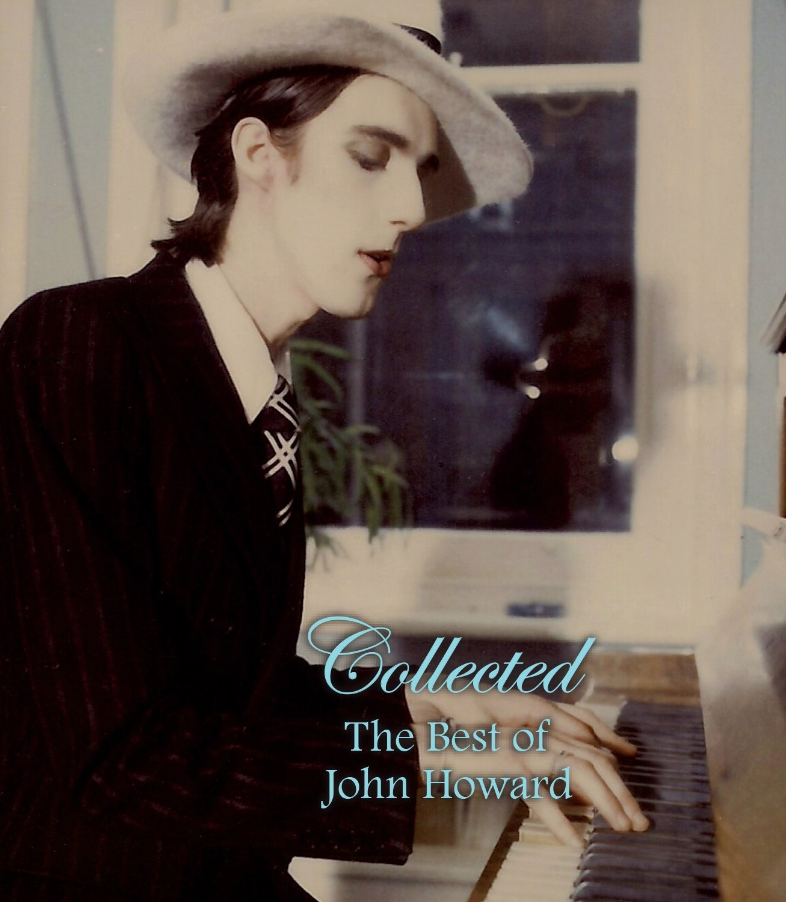
John Howard ‘Best Of…’
(Kool Kat Musik/I Don’t Hear A Single) 14th May 2021
The musical career of John Howard (five decades and still counting) has hardly been plain sailing; with a majority of the songs he both wrote and recorded during his initial short-lived ascendance in the mid 1970s either shelved or sidelined. In fact, the bon vivant pianist, troubadour, former A&R man and now author’s musical output has arguably been more prolific, yielded better riches, in the last decade than it ever did when the young burgeoning star was on the cusp of success in 1974, after signing to CBS.
Hampered however by a myriad of setbacks and travails (both professionally and personally), the eyes-wide-open Lancashire gay lad in the big smoke found his recording career quickly stifled, even blocked by a thoroughly unsympathetic and often ruthless music industry after the commercial failure of his debut album, Kid In A Big World in 1975. Though gaining some critical acclaim at the time, the album’s singles failed to meet with the approval of the radio camarilla. The debut single from that starry-eyed but resigned to the usury of others thematic album, the grandeur sighed melodrama ‘Goodbye Suzie’, was deemed far too downbeat for the daytime audience needed to make it a hit. And to be fair, the fateful subject of this stage tragedy does end up dead. But what a way to go! Drowned to the soundtrack of a graceful and most lovely of slow building chorus maladies.
That single opens this, the first proper, wide-ranging ‘Best Of…’ compilation of Howard’s songbook to ever be released: ahead it seems of a new album, Single Return; as denoted by the Bacharach shares the piano stool with Brecht vision of the former Aztec Camera instigator Roddy Frame’s starry lower case universal yet personal anthem ‘Small World’. A bookended collection if you like, with the very first rudimental demos from a teenage Howard appearing alongside those from a future release.
Chronicled so far in two autobiographical volumes of memories, this survey’s track list mirrors Howard’s oft toing and froing between actual realized projects: of which there is many. There’s a lot of music on this 2XCD spanning celebration that never saw the light of day when it was recorded during the backend of the Glam epoch; a hell of a lot it subsequently picked up and redistributed across various low key compilation EPs and albums, released a decade or two (even three) later. There are a litany of reasons for this: the already mentioned lack of support, the interference of others, but also by a terrible, almost fatal, accident that threatened to cut his career short. Pursued by mad Russian sailor, a ‘bit of rough’, brought back to his shared accommodation by his colourful Filipino gay flat mates (relocating to London to escape the clutches of dictator Ferdinand Marcos), Howard would end up breaking both his back and his feet escaping this manic, intent on murder, when jumping from a window to escape. Recovery was convoluted, yet Howard did return to the bar stool, recording studio and pen thank god.
Under the Kid In A Big World trilogy umbrella a quick succession of albums were recorded in a two-year window of opportunity. Only the first of which, and the only that gives its name to this flurry of recordings, actually made it to the release stage. The album that announced Howard’s arrival is for obvious reasons well represented on this compilation. Dressed like Annie Hall era Diane Keaton shopping at Biba, Howard’s blossoming as a quality balladeer of semi-foppish stagey drama is both very much of its time. There’s the doleful, softly soothed if fearful and yearned Bernie and Elton melodrama title track, the Steve Harley accented and Bolan “lalala” marimba bobbing ‘Family Man’ (actually released as a single on the said sainted day for lovers), and attempt at Fitzgerald roaring twenties Hollywood glam, ‘Maybe Some Day In Miami’. Despite some of the over-production (mostly against Howard’s wishes) and schmaltz, there’s always something deeper and often autobiographical in many of these songs; an artistry that saves such pop cabaret hits from mediocrity.
During the CBS label years, Howard would record songs for both the Technicolour Biography and Can You Hear Me OK? albums. Both put on the indefinite backburner at the time, but appearing in smatterings at a later date, some of this material now appears here. The former is represented by the sorrowful CSN&Y-esque ‘Oh Dad (Look What You Done)’, the Elton fandango with Mick Ronson plaintive ‘Take Up Your Partners (Finale)’, and the sadly romantic, cerebral character arc mini opus title track (a touch of Robin Gibb and even Freddie Mercury on that one). The latter of those two albums is represented by the Lynsey de Paul disco swinger ‘I Got My Lady’, daytime TV weepy, fluty and theatrical album title track, and Gibb Brothers (them again) lawsuit sound-a-like ‘I Can Breathe Again’.
Going back before even this trilogy, and appearing thirty-odd years later on the cozily nostalgic entitled Front Room Fables EP, there’s a genuine rarity from a seventeen year-old Howard finding his soul and craft. From the sitting room, the grainy acoustic guitar driven home demo of ‘I’ll Feel What I Feel’ shows a strong penchant for the music of Donovan and Roy Harper, rather than the glitz of what was to come. That Harper reference isn’t so surprising, as an older Howard covered the erstwhile counter-culture English troubadour’s ‘Another Day’, which, as it goes is included on this compilation. Unless you know your Howard back catalogue inside-out, the next chunk of this collection’s curated track list gets confusing; taken as they are from other smaller, more concentrated samplers of Howard’s 70s and 80s output released in the 90s and much later still. The Hidden Beauty compilation from 2008 is a case in point: a collated survey of misplaced and rare recordings. There’s a strong showing from that album in particular with Howard channeling a heart aching Lennon on the romantic plaint demo from ’79, ‘Loving You’, and tenderly evoking shades of Love Affair, McCartney and unsurprisingly, considering it was produced by Eddie Pumer, Fairfield Parlour on ‘Smalltown Adventures’. Meanwhile the spindled, warm 60s sounding ‘Three Years’ (one of a few songs never before available until now on CD) finds Howard in Butch Cassidy Bacharach territory, and caught between Gilbert O’Sullivan and Sparks on the superhero caper ‘Comic Strip’.
From Howard’s litany of ill-advised and realized re-launches, there was an awful sci-fi concept that saw him don a pastiche of Midge Ure and Gary Numan mimicry in an attempt to buck the trends of the early 80s. Thankfully there isn’t much from that period, only some good ideas turned into over-ripe, over-produced schmaltz for the disco and pop age. If we leap forward, we arguably find some of Howard’s best work is relatively more recent. Though fed up enough to jack it in (to a point) and turn A&R man during the 80s and 90s, Howard still continued to tickle the ivory and carry on recording: from 1989, there’s the inclusion of Howard’s love letter of support to his husband, ‘Neil (You Can Depend On Me)’; another over-produced 80s glitter of daytime Pebble Mill soft pop rock that could have been a missing hit for Cliff Richard; produced strangely enough by Acker Bilk!
Into another decade completely Cole Porter shares the keyboard with Rufus Wainwright, whilst a melody that strongly suggests CSN&Y’s ‘Our House’ and a ’68 period Kinks, on the 2005 recorded ‘The Dilemma Of The Homosapien’. We actually hear a proper poetic tinseled lyrical homage to Rufus on this compilation; one of a few that also includes Howard’s Broadway sign off sigh to the glam fated Jobriath; putting music and sagacious voice to Robert Cochrane’s lyrics on the 2006 curtain call malady ‘Stardust Falling’.
In a freer age, able to cast off the burdens (mostly) and prejudices that went some way to curtailing his career in the 70s, Howard is almost a rejuvenated character these days. The expectations of fame are now long gone: Howard is pretty much free to record when and however he likes; untethered to fashions and the industry. But with age comes the impossible to avoid rumminations and reflections on the past, of which there is much to wade through on this compilation. Offerings include many dedications to mum and dad, and the growing pained ‘Injuries Sustained In Surviving’, taken from the most recent album, To The Left Of The Moon’s Reflection. Considering the topics and travails of that number, the accompaniment and cadence has an air of a hearty Dylan-esque chiming breeze to it. From the album previous to that one, Cut The Wire, there’s the no less reflective Friends era Beach Boys missing diaphanous ‘lifetime of love’ ballad, ‘Becoming’.
Added to those are an abundance of songs collated from another ten albums and EPs and missives; some show tunes here, an unfinished track saved for posterity there; a borrowed Anthony Reynolds penned dreamy malady next to both of them. Personally though, I’d have liked to have seen something from Howard’s extraordinary long form experimental songbook, Across The Door Sill; if not only because its damn brilliant and full of descriptive, almost filmic, lyrics, but also because it shows an entirely different side to this talented assiduous artist’s storytelling skills and poised musicality. Saying that, it would sound admittedly a little incongruous to the rest of the collection’s soundtrack. I would have also loved to see Howard’s fantastic cover version of ‘The Bewlay Brothers’, which I rate amongst his best performances. It wasn’t to be: maybe on the next compilation.
We do have however a brilliant, refreshing and upbeat live performance of Howard and the band that led to the creatively successful Night Mail album collaboration. Howard and ensemble are captured at the Servant Jazz Quarter playing a Mike Scott meets Ian Hunter-esque bouncy and warm version of ‘Deadly Nightshade’. Again, ever the professional, yet loosened up and enjoying the whole thing, Howard happily sits alongside a younger generation of admirers with nothing to prove, just unadulterated joy.
An exhaustive, far-ranging compilation the first official ‘Best Of…’ will attract diehards and those still unacquainted with Howard’s back and future catalogue alike. It makes for a flourishing, rich songbook of his stage, cabaret, AOR, pop, rock and glam infused timeless craft. This is a celebration as much as declaration of fandom to an artist in their fifth flush of youth; the first real pause in creating, to look back at both what is and what could have been. The auguries are good for that future, with Howard showing no signs of stopping: if someone is willing to hear it, Howard is willing to play it.
A History Of John Howard On The Monolith Cocktail:
To The Left Of The Moon’s Reflection Album
Cut The Wire Album
From The Morning Album
It’s Not All Over Yet Single
Across The Door Sill Album
Incidents Crowded With Life Autobiography
Illusions Of Happiness Autobiography Volume 2
Hi, my name is Dominic Valvona and I’m the Founder of the music/culture blog monolithcocktail.com For the last ten years I’ve featured and supported music, musicians and labels we love across genres from around the world that we think you’ll want to know about. No content on the site is paid for or sponsored and we only feature artists we have genuine respect for /love. If you enjoy our reviews (and we often write long, thoughtful ones), found a new artist you admire or if we have featured you or artists you represent and would like to buy us a coffee at https://ko-fi.com/monolithcocktail to say cheers for spreading the word, then that would be much appreciated.
 Monolith Cocktail Blog