A Look At What’s Out There by Dominic Valvona

THE SINGLES/TRACKS/VIDEOS SELECTION:
Motorists ‘Through To You’
(We Are Time) Out There Now
Jangling towards the sound of power pop, with excursions to the golden age of Athens, Georgia, the Toronto-based Motorists channel a disarming melodious, infectious miscellaneous of R.E.M., The Weather Prophets, Guadalcanal Diary, The Three O’ Clock, Teenage Fanclub and fellow Canadians, Sloan on their ‘preview type’ showcase, ‘Through To You’. Dropping in the long lead up to the trio’s debut album Surrounded (released on the 3rd September) as an sort of introduction statement of intent, the rather marvelous underground paisley chimed and driving gentle, winding rocker certainly gets my seal of approval.
‘Through to You’ we’re told, is a song about ‘a yearning to connect with other people, attempting to peel back the curtain of solitude that has engulfed us over the last 15 months or so. Written during the first lockdown, when hope for a bit of familiarity was starting to blossom, it zeroes in on the desire to feel close to someone without having to speak a word.’ We can all relate to that.
Speaking about the song, Motorists guitarist/vocalist Craig Fahner (flanked in this set up by Matt Learoyd on bass, and Jesse Locke on drums) has this to say: “It’s an unabashedly nostalgic song, both musically and lyrically. It’s about teenage love, fucking around in the summertime, and most of all, the joy of finding a shared language beyond words to connect with the people around you – a language that operates outside of the rigidity of everyday life.”
The video that accompanies it was created by Fahner and Michelle Lemay, and features the band performing live in-studio. It harkens back to the ’70s and ’80s German TV program Beat Club, which featured live performances from musicians playing against a backdrop of analog video psychedelia.
The rock ‘n’ roll tropes of getting away from it, escaping in a cult automobile – even if the realties of driving in an ever gridlocked world prove contrary to that myth -, are all in evidence as the band investigate the “isolation” of a “technologically saturated society, laden with romanticism around radical togetherness.” Expect a full review later this year when that album drops.
PTČ ‘PAPAGAJ Ft. Vazz’
Out There Right Now
Yeah I know: Slovenian Hip-Hop, who’d have thought it! And yet it exists, and I can confirm it’s actually very good. This shortish skit from the Ljubljana based duo of PTČ is the last in a series of singles to drop from their upcoming debut album ‘NEKI TKO VSAKDAN’ (or Everyday Similes). Featuring fellow compatriot rapper Vazz, ‘PAPAGAJ’ features stark stanzas peppered over a playful but edgy hip-hop beat. The accompanying video visuals are said to combine ‘the bleakness of abandoned military hangars with youthful naivety’.
The much-contested Central European Republic gateway to the northern alpines, southern Balkans and east has seen its fair share of history and conflict; in the great break up of Yugoslavia in the 90s, Slovenia once more broke loose. Going through some the duo’s previous tracks, it seems they reinvent the Slavic culture of old and romanticised feudal traditions with low rider east coast American rap, R&B, Jeru The Damaja and the Wu-Tang Clan (amongst many others). The results of which provide a fresh new unique commentary on the contemporary; a whole different perspective. I implore you to check both them and Vazz out as soon as possible: you’ll thank me for it.
ALBUMS SELECTION:
Kaukolampi: We Jazz Reworks Vol.1
(We Jazz Records) 30th July 2021
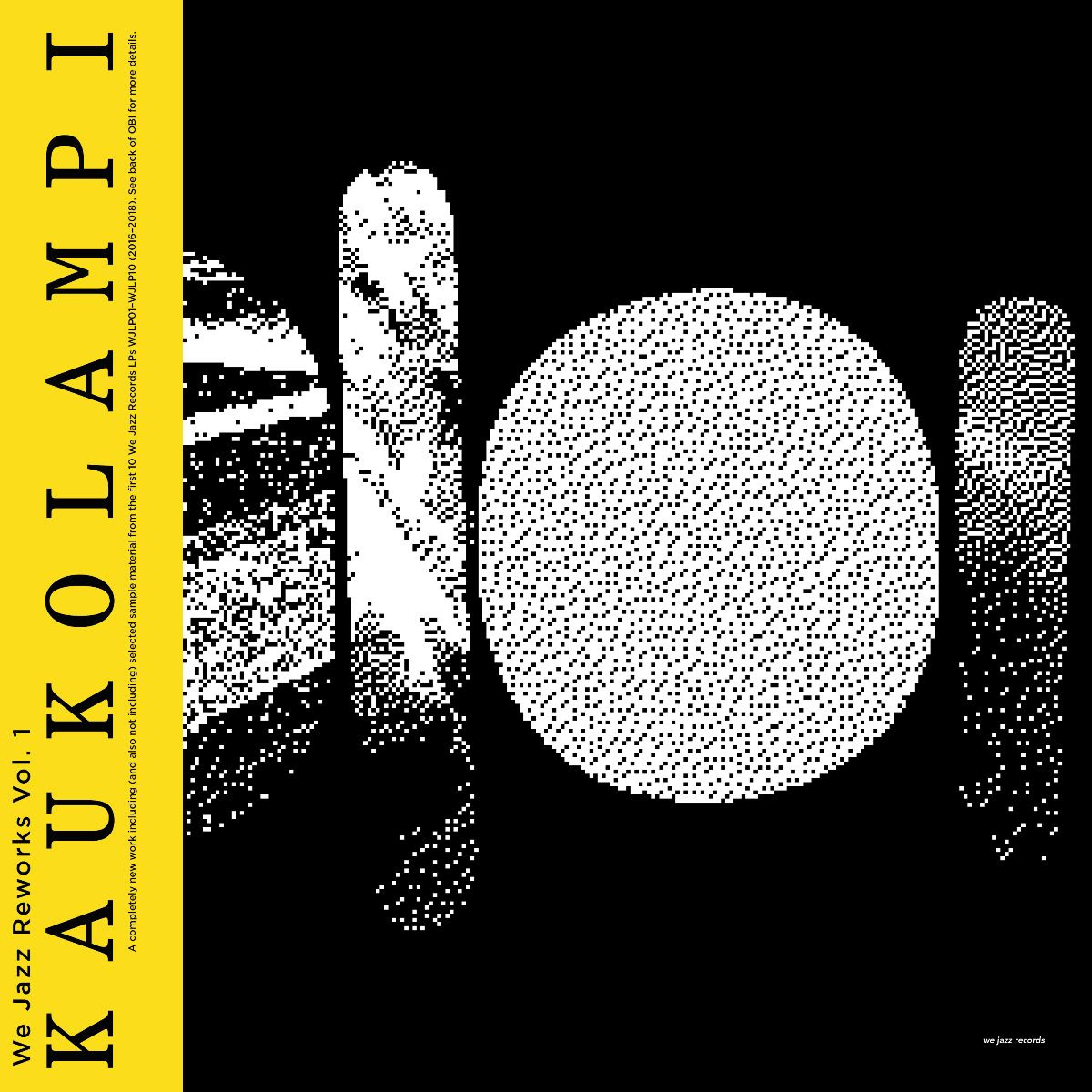
Barely recognizable, the first ten albums from the Helsinki-based label We Jazz are transformed, transmogrified and taken to the outer limits of an ambiguous cosmos – a place, level, dimension where Pharoah Sanders breaks bread with the Drum Circus, Syrinx, Ariel Kalma, Amon Düül II and Madlib – in the first of a new series of outsider reinventions.
Fellow Finn and sonic force behind K-X-P, foil to Tuomo Puranen, Timo Kaukolampi is the inaugural artist to take on the challenge of reinventing that contemporary jazz imprint’s back catalogue. With complete freedom Kaukolampi has created an impressive, untethered kosmische, krautrock and abstract progressive jazz soundtrack in ten parts. Unveiled and performed originally at the We Jazz Festival showcase in 2018, but subsequently built upon on over several further studio sessions, this reworked venture frazzles, reverberates, effects, bends, pulls apart and samples bits and bobs from records by such roster acts as Alder Ego and the Bowman Trio, amongst others: though without any reference points in the notes it’s anyone’s guess as to what exact phrases, performances, drum breaks appear, reconstructed out in the expanses of an echoed space.
Saxophone trills mutate, float or snozzle in various ethers and on various planes, whilst the trinket tingles, resonated and splashed gongs and bells create a mystical atmosphere: a pathway to transcendence. Although divided into ten parts, each passage, traverse, experimental drama flows into the next, like one long continuous suite. Yet some parts traverse replenished insect chattering rainforests, whilst others touch upon satellites, comets and the unidentified objects of a cosmic courier galaxy. The drums however become staccato breaks in the fashion of UNKLE, or something from the Anticon and Mo Wax stables on the album’s biggest splurge of heavy beatmaking: ‘Part 8’.
Astronautically far out like a mysterious mirage, Kaukolampi’s adventures in We Jazz label transformation are extraordinary. New worlds merge from the source material, as a semblance of jazz is drawn, stretched out and strung out in a stellar and often supernatural exploration. If you thought the originals were already pretty experimental and on the fringes, then you’re in for a surprise with this treatment that take’s the label’s first ten albums to an entirely new level. At the moment We Jazz and its roster can do no wrong; easily one of the best jazz labels on the planet and beyond, as this experiment proves.
Requiem & Simon McCorry ‘Critical; Mass’
(Hush Hush Records) 19th July 2021

An ambient neoclassical symphony of incipient drama, forebode and reflection, the Critical; Mass album from the transatlantic collaboration of Requiem and Simon McCorry emerges from the pandemic miasma of the last 18 months to move both the soul and mind.
Cinematic in scope despite the subtleties and minimalistic approach, this album’s trio of synthesized, electrified and acoustic suites transforms the growing concerns of our day and the specter of Covid into a deep, slow burning soundtrack that builds and builds towards swells of either esoteric unease or cathedral-in-the-sky arching beauty.
The adroit ensemble behind this meeting of minds has enviable and wide-ranging form. No stranger to this blog, the highly prolific UK-based classically-trained cellist, composer and producer McCorry has worked across various arenas (from theatres to contemporary dance), whilst the Washington D.C. Requiem duo of Tristan Welch and Douglas Kallmeyer are both solo artists in their own right with varied backgrounds in experimentation to draw upon. Welch, when not sonically pushing the envelope as a guitarist, working his way from the diy noise and rock scenes of the US capital, works full-time as a funeral home director. Unsurprisingly this gives him a rather unique and close relationship to mortality. Welch’s foil, Kellmeyer, is a real multi-disciplinary musician with experience in playing bass, soundsystems, audio equipment, live mixing, production, and is also the ‘driving force’ behind the Verses Records label. If not busy enough, he’s also working with a range of human rights campaigns, including projects centered round the effects of music and PTSD awareness.
All this scope of experience is channeled into an album of semi-colon couplet related thoughts and expressive washes; steered evocatively by barely recognizable wanes, faints and concentrated brow stirred cello and guitar. Across three different multi-layered peregrinations, the trio tenderly and in airy translucence sky past clouds; place us amongst foggy shrouded beasts and leviathans; and gradually build towards a symphonic heavy atmosphere and shapeless ambient finale.
Unsettled drama and obscured anguish meet ambiguous reflections on a seriously good, moody collaboration: a minimalistic ambient, verging on the classical, soundtrack for the uncertainty of our present times.
Also Read:
Simon McCorry ‘Nature Is Nature’
Simon McCorry ‘(Premiere) Pieces Of Mind’
Taras Bulba ‘Sometimes The Night’
(Riot Season) 30th July 2021
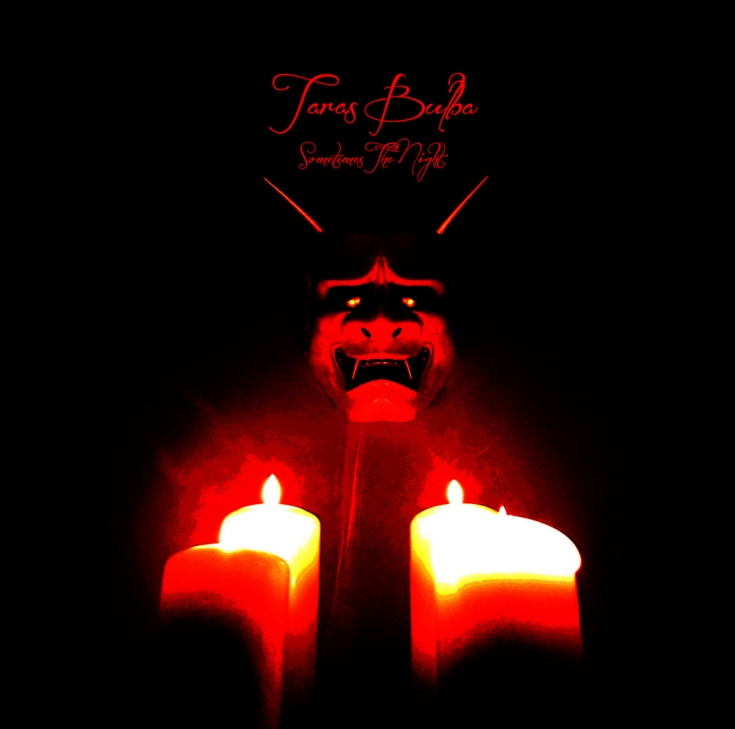
Transducing a healthy miscellaneous diet of Kung-Fu horror flicks, David Lynch, Noir crime movies, Jean Cocteau and the works of the controversial, ‘seppuku’ committed, Japanese polymath Yukio Mishima into both the ethereal and a more raunchy, drugged and grinded rock ‘n’ roll, the former Earthling Society instigator Fred Laird unveils his lockdown preoccupations, influences on his third album, Sometimes The Night.
Laird, as you may know, called time on the liberal kool-aid swigging krautrock and acid psych Earthling Society a few years back. The band’s swansong was a madcap alternative soundtrack to a ridiculous psychedelic supernatural chop suey movie. This latest album kicks off with a congruous leftover from that last minor filmic opus, with another laughable sample from some Shaw Brothers or obscure Kung-Fu flick, before steaming and growling into something altogether different and transformed. For Laird, during the period of last summer and the beginning of this year, was also getting heavily into the self-recorded primal music of Hasil Adkins and Link Wray’s eponymous entitled first album for the Polydor label (that iconic cult favourite from 1971, which saw Wray donning Native Indian garb, marked the changing times and moods whilst staying close to roots and blues music).
Less cosmic, or psychedelic, and instead more salacious, with a penchant for the Bad Seeds, early Crime And The City Solution, The Cramps and servings of Wray and Bill Justis, Laird’s, sort of, solo outing is a darkly gothic laced version of 50s and early 60s rock ‘n’ roll horrors and druggy beat poetry era pastiche. Guitars are often skeletal or quivering in a Dick Dale fashion, whilst the piano offers up Nick Cave-like bar room blues and swag. Meanwhile a haunted organ replicates Gene Moore’s strange unnerving score for the cult Carnival Of Souls classic B-movie. A creeping gauze and heightened spell of the spooky seeps into the slinky, rowdy thickly laid on phantasm of post-punk blues.
Exceptions to the rule are made when Laird’s two guests show up: Vocalist Daisy Atkinson’s Lynchian like style diaphanous siren call from a shoegaze ether that’s part All About Eve, part Strawberry Switchblade on the Jean Cocteau dedication ‘Orphee’. On the surprising music change, big production job, ‘Sometimes The Night’, she offers a certain MBV like heavenly lush vocal over what could be a slow released epic by Spiritualized, or even the Besnard Lakes. Playing accentuated and melodic scaling romantic serenaded saxophone, Mike Blatchford provides the untethered and wafted to Laird’s more reverberated, phaser and whirlpool organ mysteries and grind on both the ‘The Big Duvall’ (dedicated to Andy Duvall of Carlton Melton infamy) and ‘House In The Snow’ tracks.
Another change of musical scenery, ‘The Sound Of Waves’ is like a Japanese version of GOAT conjuring up the ritual rites to some Amicus production folk-psych Green Man – those waves incidentally, do appear much later, after a dose of Bamboo music fluted krautrock.
Funeral slumber lounge music meets blue Hawaii and Swans, whilst early Zombie invasion scores get swept into a heavy strung-out dirty vision of rock ‘n’ roll on an epic size, omnivorous devouring album. Sometimes The Night is an altogether different and enthralling adventure in dirge-y and more translucent esoteric music.
The Tape Recorders ‘Wire’
(Somewherecold Records) 23rd July 2021
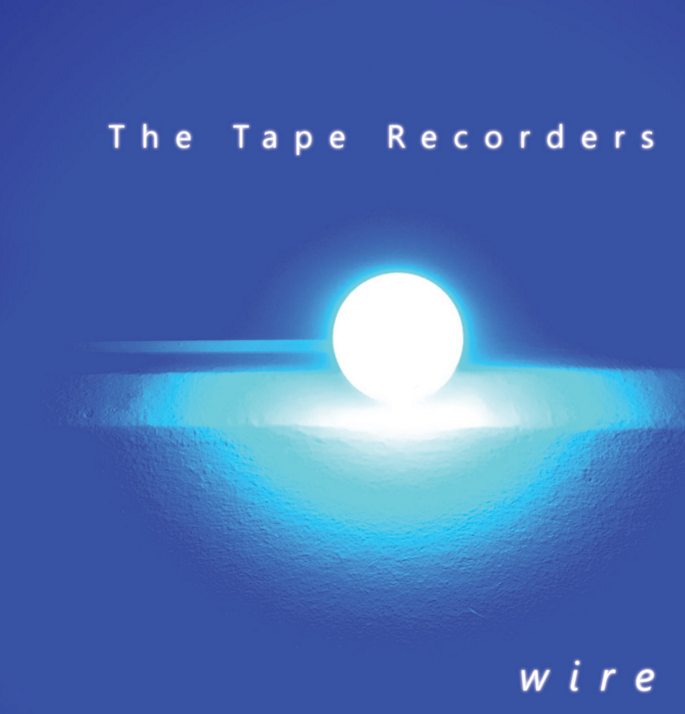
Inviting us all into the both literary and kosmische imbued dreams of The Tape Recorders’ Argentine author and music maker Gabriel Rojo, the analogue and synthesized throwback Wire album could be a missing concept from the old German Ohr (or even Sky Records) label. New age visions and vague hints of Klaus Schulze, the Tangerine Dream, Vangelis, Mythos and Jean-Michel Jarre stir the emotions on Rojo’s debut album for the ever-expanding Somewherecold label.
With additional encouragement, help from Mel Helmick (who provides extra atmospheric field recordings and touches, and the artwork) and Diego Masarotti (collaborating on the album’s pleading, confessional narrated filmic soundscape, ‘Why We Forgive’), the Buenos Aires sonic explorer brings the outside world, title references to philosophical journeyed literature, and a deep sense of mysterious forebode into his geometric pulsing dreams.
That ambient and neoclassical lucid state of dreaming features both cushioned melodies and more sonorous, deep looming synthesized bass. It also features messages, augers from the ether, and plenty of sprinkled Library music stardust, tubular beams and UFO wobbles.
Multi-layered vapours, rays and arpeggiators build curious horizons and mindscapes: from Tron-like life in the machine to contemplation. These kosmische-traveller peregrinations are littered with subtle movements; with real world motorbikes revving alongside the racing acceleration of imagined futuristic craft and various nodes.
Appearing at the middle mark of the dream that started this whole journey, the incredibly influential luminary John Cale makes an appearance. There’s no obvious reference to his music however, only the vague illusions to the more abstract uses of the viola.
Wire is a successful kosmische style flight into the imagination; an album that also channels South America’s own burgeoning adventures in electronic and analogue experimentation in the 70s; a dream cast traverse.
Antonello Perfetto & Greg Nieuwsma ‘Aquarium’
(Submarine Broadcasting Co.) Available Now
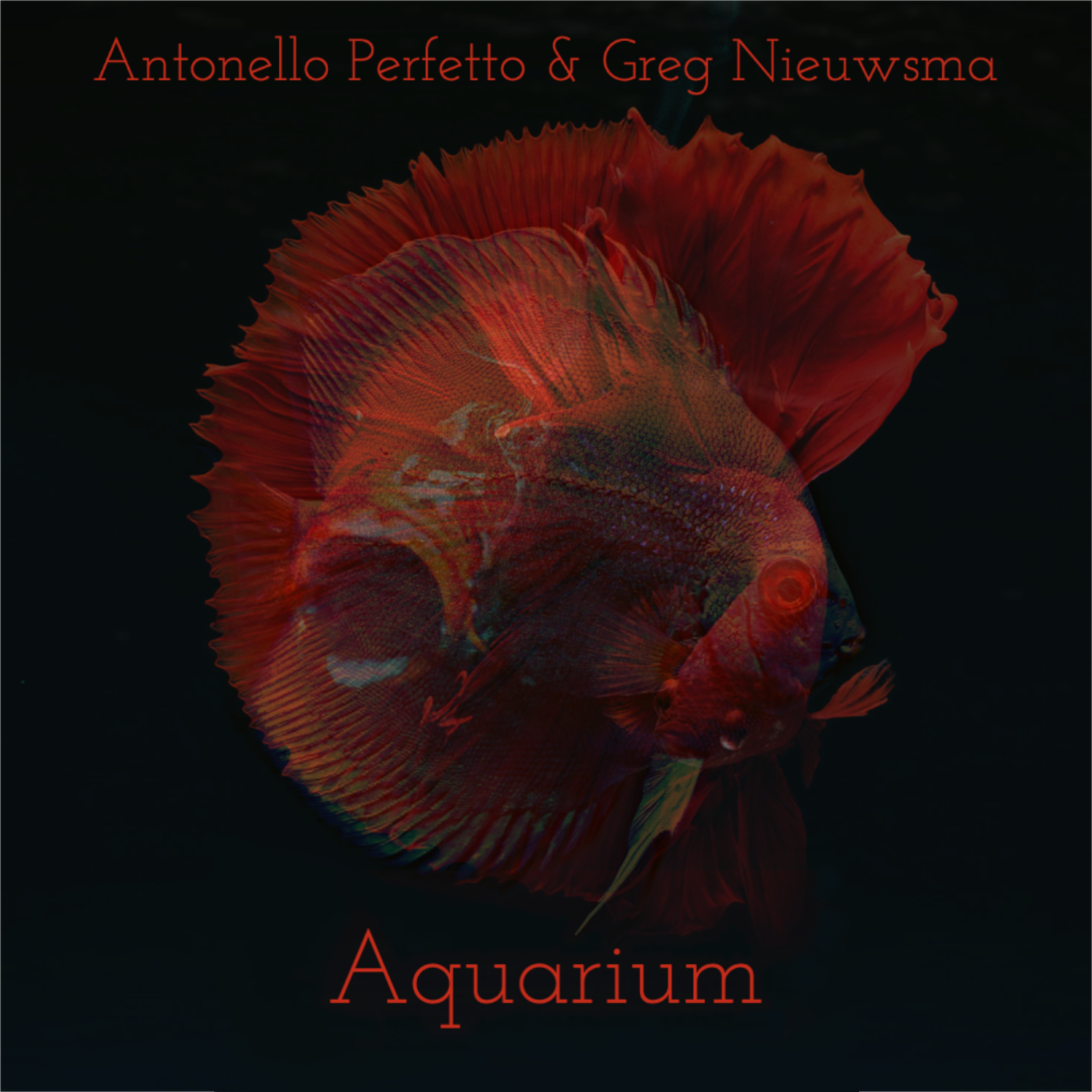
A fecund of experimental music has grown out of a Krakow hothouse in recent years, centered on the strange sounds of Sawak and the inventive Krautrock replicents Corticem. The latter’s last brilliant opus, Planetarium (which made my choice albums of 2020), was a bunker produced cosmology of Swans, the fa US t pairing of Jean-Hervé and Zappi Diermeir, Mythos, The Cosmic Range and Ash Ra Tempel. Many of those same names pop up on this new breakaway union of Corticem and Sawak band members: the Antonello Perfetto and Greg Nieuwsma collaboration.
Prompted by the loss of their previous shared rehearsal space and recording studio during the pandemic last year, the two set up an impromptu, rudimental space in Perfetto’s living room. Due to sharing their last one and various time constraints, most of the music was originally spontaneous, more improvised. But then a roomier studio became available, which meant that the duo’s aquatic themed new offering could be planned in advance for the first time. But though they wanted to keep within the same realms as the previous Planetarium epic, drummer Perfetto and his foil Nieuwsma decided to mess around with synthesizers: midi synching two synths together without any more than a basic understanding of these instruments.
‘Outside’ their comfort zones and inspired by avid book digger/collector Nieuwsma’s off-the-wall Fish Diseases: Diagnosis And Treatment read (mostly flicked through when seated on the bog), the sonic partnership submerged their heads beneath a cosmic-psych, krautrock and kosmische refracted aquarium.
What begins as a sort of joke ended up as a loose concept, with every track on this underwater misadventure named after some exotic or other fish: each signature different, the scope varied and always mysterious. The ‘Chocolate Frogmouth Catfish’ (which I can’t believe exists as anything but a fantastical dreamt up hybrid) for example, is represented by an odd Cajun banjo plucked shuffle and chorus of happy whistlers, whilst the ‘Green Terror’ is represented by Higamos Hogamos or Holy Fuck jamming it out. Some tracks offer floatation tank mindful drifts, and others, garbled, sporadic tangles of gnarled post-rock guitar and off-kilter drum splashes, hits and shimmers. Swimmingly eloping to an often alien fish tank archipelago where the Tangerine Dream merge with Hailu Mergia in an English fairytale horror (‘Black Parrot Cichild’), or, circular Wurlitzer’s spin a choral siren call of deep water mystique (‘Bleeding Heart Tetra’), the fruitful ideas bouncing duo with little knowledge of synths manage to create a psychedelic and avant-garde underwater opus.
Rhombus Index ‘Planar EP’
(See Blue Audio) Available Now

Under the equilateral Rhombus Index moniker of anonymity, the mysterious Halifax producer behind the alias treads an ambient pathway through an inspired West Yorkshire landscape on their inaugural EP for the burgeoning Spain-based label, See Blue Audio.
With a series of previous EPs and soundtracks for several theatre productions on the resume, Rhombus Index’s Planar showcase is rich with suffused big scale panoramas and gravitas, and algorithmic incandescent bulbs and synth notes that dance like life-giving microbe forms under the microscope.
Method wise filed recordings and found sounds ‘sourced in the open spaces around’ that scenic countryside county, recorded just after heavy rainfall on a Spring day in 2019, are used as the foundation for further studio manipulation and transformation. This process creates something iridescent and deeply reflective: from the earth, the elements, yet somehow more mysteriously sensory: even spacey at times. ‘Node’ for instance, as it title suggests, has various signals and bleeps and piano notes cross, branch out from the fissures-in-the-fabric and hovering bass drone network: sounding like Basic Channel meets late the Tangerine Dream. ‘Leptusol’ may make reference to the soil – that title being a geological name for both very shallow soils over hard rock, or, deeper soil that’s extremely gravelly – but sonically and rhythmically there’s a swimming light breeze of the Balearics, and enervated hints of North Africa, on that enveloping patterned minimal electronic dance suite. Another scientific nature reference title is ‘Xylem’; one of two types of transport tissue found in vascular plants, which transports water from the roots to the stems and leaves, but also carries nutrients too. Ecology aside this finale features layers of transformed xylophone recordings, which overlap: some with an almost glassy texture, others, like an uninterrupted quickened trickle. Over and in the centre you can hear tiny molecules playfully bobbing and travelling.
Close at times to Warp, and at others, the serial majesty and lightness of new classical ambient Roedelius, the Planar EP prompts a degree of deep reflection with contemplations at the enormity of it all. This is a slow brilliant ambient release of melodic calm and inspired wetted landscape observations that flows along with nature’s rhythms to convey the abstract.
Hi, my name is Dominic Valvona and I’m the Founder of the music/culture blog monolithcocktail.com For the last ten years I’ve featured and supported music, musicians and labels we love across genres from around the world that we think you’ll want to know about. No content on the site is paid for or sponsored and we only feature artists we have genuine respect for /love. If you enjoy our reviews (and we often write long, thoughtful ones), found a new artist you admire or if we have featured you or artists you represent and would like to buy us a coffee at https://ko-fi.com/monolithcocktail to say cheers for spreading the word, then that would be much appreciated.
Our Daily Bread 458: Anton Barbeau, Brian, Lauran Hibberd, Rob Majchrowski, Daniel Vujanic, Yammerer, The Telephone Numbers…
July 15, 2021
Brian ‘Bordello’ Shea’s Roundup

The cult leader of the infamous lo fi gods, The Bordellos, Brian ‘Bordello’ Shea has released countless recordings over the decades with his family band of hapless unfortunates, and is the owner of a most self-deprecating sound-off style blog. His most recent releases include the King Of No-Fi album, a collaborative derangement with the Texas miscreant Occult Character, Heart To Heart, and a series of double-A side singles (released so far, ‘Shattered Pop Kiss/Sky Writing’, ‘Daisy Master Race/Cultural Euthanasia’ and ‘Be My Maybe/David Bowie’). He has also released, under the Idiot Blur Fanboy moniker, a stripped-down classic album of resignation and Gallagher brothers’ polemics.
Each month we supply him with a mixed bag of new and upcoming releases to see what sticks.
Singles/One-Offs/Tracks/Videos
Lauran Hibberd ‘Bleugh’
I like Lauran Hibberd. I think she might have something interesting to say, and she has a true-life observant humour in her lyrics that is both refreshing and entertaining: something my dear friends that all music should attempt to contain. It also contains a wonderful two chord guitar riff that has been used so many times, and I am certain will be used many more times in songs, because it is a great two chord guitar riff and all indie glam garage rock songs at least should attempt to use it.
Yammerer ‘Tell Me What the Ancient Astronaut Theorists Believe’
(Restless Bear Records) Available Now
Yammerer are from Liverpool and remind me of the kind of band I used to go and watch all those years ago in the 80s, in the clubs and venues of Liverpool and Merseyside. A wonderful time with some wonderful venues with some wonderful bands, and Yammerer would have fitted well into those times as there is revolution in the air, fuck the Tories, fuck unemployment, the future is now, we have a voice and we are going to use it. Yes, Yammerer are an enjoyable force of nature, reminding me of The Levellers 5 and the much missed A House. Can you pay a band a higher compliment than that? No I do not think you can.
bigflower ‘Hanging On’
Available Now
So, for the latest release from the masterful bigflower we have a rather fetching and warm moody romantic guitar drenched version of the Supremes‘You Keep Me Hanging On’. To my mind one of the greatest pop songs ever written, and this version brings to mind the sun scorched sky, a tear in the eye, and lips full of quivering regret etched onto a scratched vinyl copy of Neil Youngs’ Decade, which was the last LP she ever played of yours before departing into the night to destroy somebody else’s life…yet once again beautiful.
Brian ‘Cycle Super Highway’
(Time For Art Records) Available Now
I really like this. It has a beautiful shimmering summer quality about it, like if The Beach Boys were young men and just starting out today. Eloquent harmonic vocals float and drift with electro synths and drum machines to supply us with a four-minute plus aural treat. The subtlety slowly washing over the listener pulling us into a state of blissed out dreamland like heaven.
Albums/EPs
Anton Barbeau ‘Oh The Joys We Live For’
(Big Stir Records) 16th July 2021
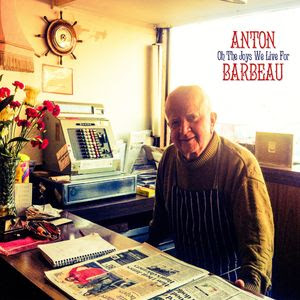
There is something quite beautiful about this album. There is a beauty in the way Anton describes life with a slightly outsider eccentric point of view. This is an album of perfect domesticity, an album that takes the mundane and every day and makes it magical. The final track for instance, the Beatley ‘I Been Thinking Of You’, beneath the chiming guitars and perfect beatastic melody lies a song of love, wanting, escape and the mundane (“I am a teenage man in a minivan squeezing milk for an old cup of tea”). And that is a special talent to have: not squeezing milk for a cup of tea, although that does indeed come in handy, but being able to take the everyday and paint a velvet wash of lyrical surrealism that is based on everyday life.
Anton Barbeau has that special lyrical knack/talent of doing so, a little like what the great Julian Cope also does, and can draw a warm smile on the listeners face with his words of poetic delight. The music and melodies that wrap around the fine lyrics are drawn from a love of folk /synth pop and psych and a little dose of experimental guitar pop; in fact some of the songs could be described as synth folk: ‘Cowbell Camembert’ being a perfect example: squelchy synth, a simple disco drum machine beat and chiming 12 string guitars; as if Roger McGuinn had joined the Legendary Pink Dots for an evening. ‘Oh The Joys We Live For’ is an album of love warmth and humour, and like this album is something we all need in our life.
The Poppermost ‘Hits To Spare’
30th July 2021
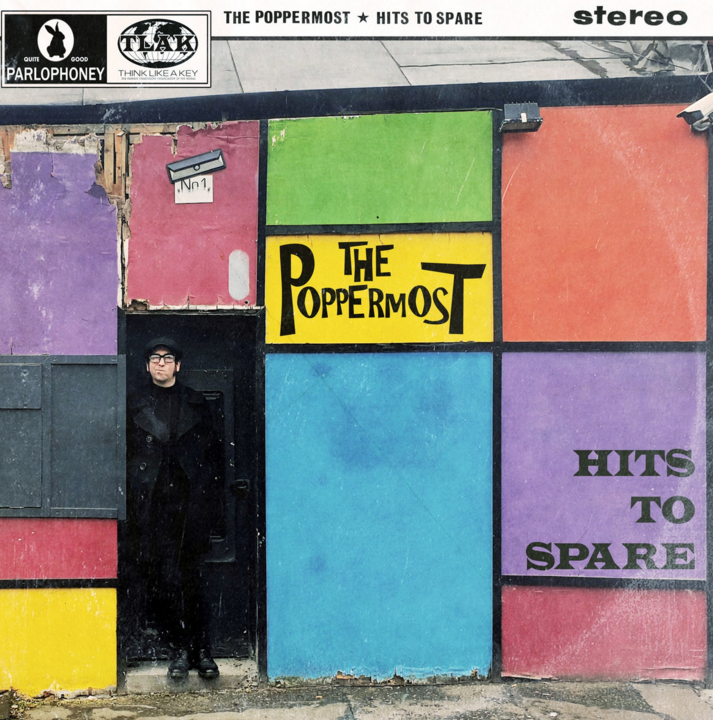
The Poppermost is one-man band Joe Kane, who is a raving Merseybeat fanatic who loves all things Fab Four, and this fine album is his tribute to the music from those swinging days. This is not just a whitewashed Beatles album that so many power poppers have recently forced on us, with shit lyrics, second hand melodies and Beatle mop top haircuts. Joe is actually a very talented songwriter who would not have seemed out of place emerging from a transistor radio, the dial set to Radio Caroline or one of those other legendary pirate radio stations.
What makes this album even more impressive is that it actually sounds like a band, not just one-man in his home studio painstakingly layering down very authentic 60s riffs and harmonies. There are so many highlights, from the opening track ‘Egg and Chips’, which you could imagine the Big Three performing in the Cavern, to the very Beatles like ‘Yes It’s True’ being an unreleased track from The Hard Day’s Night album, and the very Jimmy Campbell-esque ‘One Of The Gerliss’.
This is an album of beautifully written and performed sixties inspired beat pop songs. Anyone who has ever sat and got misty eyed over Billy J Kramer’s Best Of album (which I admit to), this is certainly a must buy album and another fine release from the wonderful Think Like A key Label; an album that deserves to be top of the hit parade pop pickers.
Daniel Vujanic ‘Paramnesia’
(Submarine Broadcasting Co.) Out There Right Now
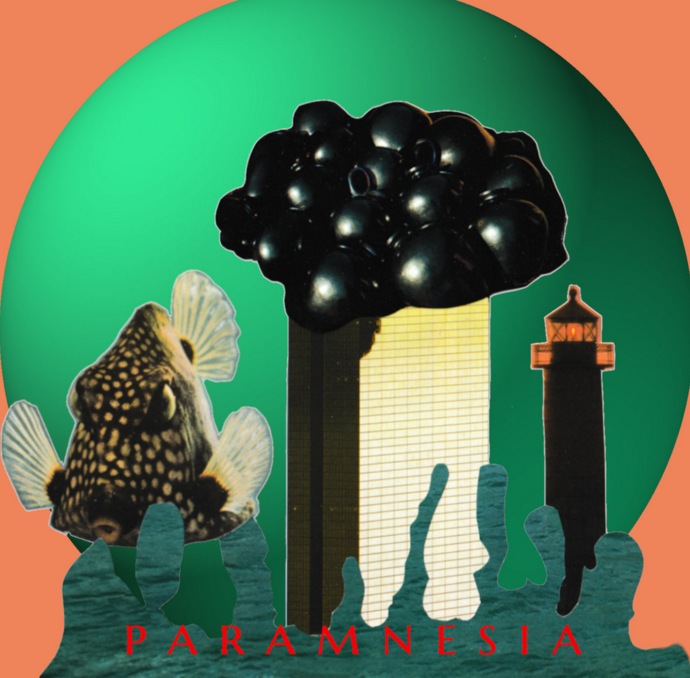
To shy away from experimental music and to just listen to guitars and drums and bass and vocals is foolhardy for many reasons: one being that you are obviously emotionally and artistically stunted with little outlook for adventure and sublimity, and another, you are missing out on this fine musical journey into the world of genre hopping eccentricity, part Faust part Miles Davis part Silver Apples. Yes, an album of eight mid to longish instrumental leaps into the unknown; eight tracks to lose and find yourself and re-find yourself in only to discover at the end of the album you are not who you thought you were in the first place. A beautiful work of aural art.
Rob Majchrowski ‘Summer 2021’
Available Now
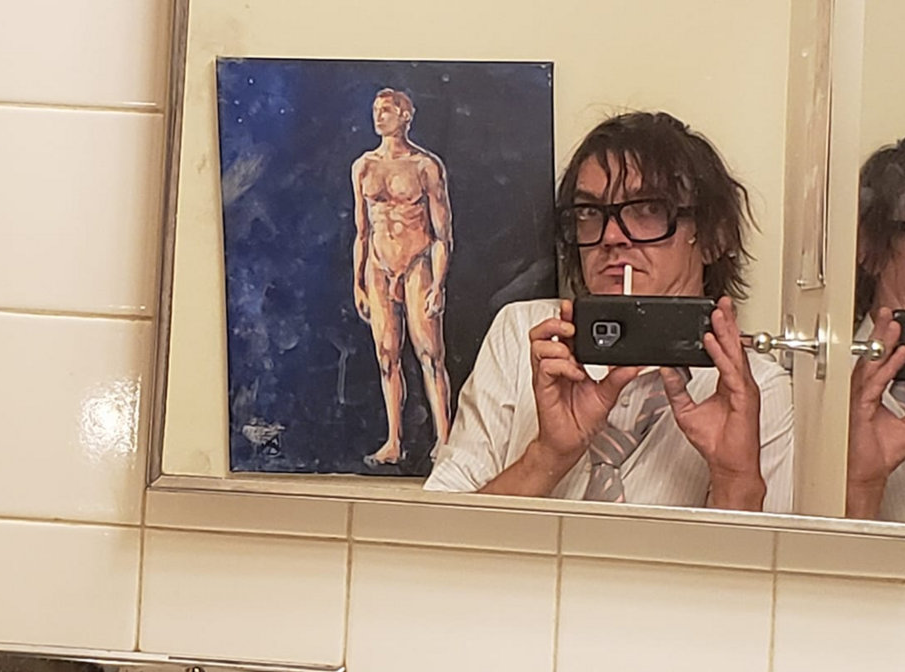
I like Rob Majchrowski, he seems like a bit of a character, and the kind of chap who I think I might like to spend an hour or two chatting in a pub to. I enjoy his homemade music. He has a wit and charm and down at heel glamour and romance, and is a fine songwriter; and as you know, anyone who knows or reads these little reviews, I’m rather fond of fine lyrics and Rob M certainly writes some fine lyrics. “Out for sex but finding fights,” says it all; a perfect description of this seven track excellent album.
Musically it has the same feel as early Pulp with a touch of Beck and Grandaddy/Mercury Rev, and deserves to find a wide audience, as it really is rather splendid stuff indeed. It can be download on a pay what you want basis from his Bandcamp and I would certainly suggest you do.
The Telephone Numbers ‘The Ballad Of Doug’
(Paisley Shirt Records) Available Now
The Telephone Numbers The Ballad Of Doug is a lovely jangle pop of an album. An album full of melodies, charming harmonies and chiming guitars; one that takes you back to the halcyon days of when the likes of the June Brides and the Chesterfields and the Go Betweens would share mixtape space as you strummed along on your recently bought and recently just learned how-to-play Fender copy guitar.
Yes, an album that captures the never grow old charm of a lovingly written ode to love, music and everyday life, and the Telephone Numbers write and perform their aural magic very well indeed. The Ballad Of Doug is an album that captures all that is good about guitar pop.
Occult Character ‘The Song Remains The Stain’
(Metal Postcard Records) Available Now
A new album from my friend and fellow Metal Postcard Records label mate Occult Character is always a welcome thing as I think he is a bit of a fine songwriter: in fact one of the finest. A man with originality and dark wit who raises his middle finger to life in the USA, who lyrically hits his targets with the accuracy of a sniper’s bullet.
The Song Remains The Stain is an album made up of 27 shortish songs, and on this one ignores his guitar to give us a guide in how to make an alternative electro album. So this is an album of electro throbbing synth bass, chiming drum machines and wonderful mechanical ice cream like melodies, and of course his wonderful lyrics and vocal styling: part Lou Reed, part Roky Erikson, part deranged robot.
Occult Character is indeed a one off and will one day be seen as one of the greats. And The Song Remains The Stain is an enjoyable and rewarding listen; an album filled with originality wit and intelligence.
ALBUM REVIEW/Dominic Valvona
Ed Scissor + Lamplighter ‘Joysville’
(High Focus Records) 15th July 2021
From one winter of discontent to the next, the dystopian visionary collaborative pairing of unique wordsmith Ed Scissor and atmospheric soundscaper and sparse beat maker Lamplighter navigate and survive yet another nightmare miasma. Together again, though methodology wise (and not just because of the pandemic restrictions) working apart in different locations, the duo provides a sullen, brooding, resigned commentary on lives lived in ‘lockdown one’.
Probably aggrieved and anxious enough at the height of the initial panic back in March of last year, as this new album shows, both artists’ are numbed by the time the groundhog daily routine of Covid variants hits the second and (most probably) third lockdowns. However the ironic entitled Joysville was produced over the internet during the first wave of restrictions, and compared to the unflinching and darkly moody post-Brexit 2016 vote album, Tell Them It’s Winter, the subject matter is on a whole new level of apocalyptic doom.
A concept album that follows a certain thread of disappointment, loss and isolation, this vivid if often worn-down delivered soundtrack features Ed’s rich untethered and highly descriptive lyricism and Lamplighter’s signature minimalist bed of perfectly placed deep techno and leftfield hip-hop beats, bass and sound environments. It’s possibly the best record they’ve made too: most candid and honest.
This time around the process was approached differently, evolving into a complete work from initial instrumental sketches. But then the strain and rich material of such a remarkable, once in a century, event can inspire such grand concepts, no matter what. And Joysville paints a both bleak and disturbing vision of England in the grip of a pandemic; though by the end of the album a mournful church service announces a less than bright emergence from a climate crisis, a hundred years on in a charcoaled land riven by rising oceans and floods. From one disaster to the next, that two-part finale points towards the augers of The Road: an unceasing acrid rain drenches the populace that’s left. That same rain falls a lot during the course of the album, both marking out the passages of time and used as a sort of bad omen. It appears and pours down on the brief ‘One Year Later’ passage for example, the chocked engine of which metaphorically represents the constant stalling promises of lifting lockdown and return to a normality that never arrived.
Despite the album’s spacious soundscapes this is a world of claustrophobic anxiety and stress; an inner city dome of grimy lit empty motorways, disturbed character portraits, uncared for “Burger King tumble weed” environments and online paranoia. Within that framework a whole lexicon of personal connections, memories of attractions and love, and far more sinister, menacing dramas – one of which, ‘Picture A Day’, features an ambiguous one-way mobile phone conversation on the beach that turns sinister and violent when we hear a woman squeal, the sound of broken glass and a number of deadly shots from a gun ringing out.
This partnership works extremely well, with Ed weaving in a mix of trap-like staggered rap, unguarded soliloquy and more soulfully sung lines over his foil’s pocket calculator Kraftwerkian and Japanese imbued synthesizer waves, rays and arpeggiator, and lingering piano and static hums. Great lines are too numerous to pull out of their context, but Ed is able to poetically wind a whole cosmology of language around some of the most mundane actions, woes and, almost so insignificant as to be the most important, tactile descriptions of life in a dragged down gig economy.
Joysville encapsulates the divisive, paranoid times with sonorous chimes of lament and truth: a truly incredible embodiment of unease and lockdown fatigue. An unsettling but important work, this is the duo’s most evocative and creative album to date.
Hi, my name is Dominic Valvona and I’m the Founder of the music/culture blog monolithcocktail.com For the last ten years I’ve featured and supported music, musicians and labels we love across genres from around the world that we think you’ll want to know about. No content on the site is paid for or sponsored and we only feature artists we have genuine respect for /love. If you enjoy our reviews (and we often write long, thoughtful ones), found a new artist you admire or if we have featured you or artists you represent and would like to buy us a coffee at https://ko-fi.com/monolithcocktail to say cheers for spreading the word, then that would be much appreciated.
Premiere: (Video) Violet Nox ‘Haumea’
July 12, 2021

Violet Nox ‘Haumea Video’
Taken From The Whispering Galaxy EP (Infinity Vine Records)
Pretty much encapsulated in the title of the Boston-based synth collective’s fourth and most recent EP, Whispering Galaxy proved to be just that: a dreamy, ethereal chorus of hushed, diaphanous whispery voices, emanating from and sending out a siren’s choral voice across an expansive galaxy.
Whilst previous releases have been slightly disorientating with ominous visions of futurism and unearthly cybernetics, the encouraging Whispering Galaxy featured glimpses of mid-90s Bowie, Brian Reitzell and countless dreamy, synth-pop inspirations, and the cooed promise of sweet ‘somethings’ to the awe, mystique and trepidation of a space beyond our reach. From that EP’s wispy, airy depths, the mythical and planetary inspired ‘Haumea’ is given a reactive display of liquid, wavy and vibrating synthetic abstract visuals by the artistChris Konopka.
On the almost spiritually voiced ‘Haumea’, Violet Nox’s spacecraft hurtles through a trippy, warped sonic vortex of echoed industrial gnarled guitar, various fusions, generator knocks, bauble tight delayed bounces and ticks towards a dwarf planet, located just beyond Neptune’s orbit. Named after the Hawaiian goddess of childbirth, and only discovered in 2004, Haumea inspires a suitable enough galaxy quest soundscape; one in which the Nox seem to turn off the engines and just drift towards in a suspended state of aria vocalized homage aboard the Tangerine Dream spaceship; a craft that’s also shared by Orbital and the Future Sound Of London.
Collective instigator, guitarist, sonic effects manipulator, synth player, lyricist and vocalist on a number of the EP’s tracks, Dez DeCarlo worked and reworked over and over ‘Haumea’ with fellow Violet Nox members Andrew Abrahamson (credited with playing a majority of the instruments alongside Dez, but under the mysterious, ambiguous description of ‘synthesis and clocked machines’ provider) and Fen Rotstein (vocals, turntables, Synth-Traktor, Native Instruments S4 Mk II on three of the EP’s tracks). Contributing remotely, were organ/synth player and siren Karen Zanes, and Noell Dorsey, of the band Major Stars fame, who provided the lead vocals.
Dez DeCarlo: ‘Haumea went through many formats to become the final song. It took months to write during the pandemic. I was definitely influenced by the magical energy of the goddess Haumea and it’s also a dwarf planet. I love astronomy!’
Premiered today by the Monolith Cocktail, you can experience it below:
Hi, my name is Dominic Valvona and I’m the Founder of the music/culture blog monolithcocktail.com For the last ten years I’ve featured and supported music, musicians and labels we love across genres from around the world that we think you’ll want to know about. No content on the site is paid for or sponsored and we only feature artists we have genuine respect for /love. If you enjoy our reviews (and we often write long, thoughtful ones), found a new artist you admire or if we have featured you or artists you represent and would like to buy us a coffee at https://ko-fi.com/monolithcocktail to say cheers for spreading the word, then that would be much appreciated.
Our Daily Bread 456: A Journey Of Giraffes ‘Spool’
July 9, 2021
ALBUM REVIEWS/Dominic Valvona
A Journey Of Giraffes ‘Spool’
(Somewherecold Records) 9th July 2021
The criminally unknown John Lane – in obscurity parading under the delightfully envisioned A Journey Of Giraffes appellation – transduces abstract and complex concepts into ambient soundtracks of the mysterious, diaphanous and often strange.
Five albums in with the ridiculously prolific North American label, Somewherecold Records, Lane once more explores and expands his sound; changing and modifying his deep understanding of the ambient genre on every release. And as with each project, the unassuming artist is inspired by a chosen theme: perhaps a work of art, a location or a book (see both the Armenia and Kona albums for example).
The latest album, Spool, is no different in that respect, being subtly, almost amorphously imbued by the late WG Sebald’s acclaimed trilogy of cerebral travelogues: The Rings Of Saturn, The Emigrant and Vertigo. Lane taps into the author’s preoccupied themes of the ‘loss of memory’ and ‘decay of civilizations, traditions and physical objects’.
Spool is bookended in this respect by two fairly low key New Jersey boroughs only ever observed by Lane from a car window; fleetingly glanced at as turnings on signposts whilst driving up and down the ‘turnpike’. Yet both locations have led Lane’s imagination cogs to start turning, as he daydreams about the lives of those who’ve made those small towns their home. ‘Swedesboro’, as the name makes pretty clear, was founded by Swedish immigrants over three hundred years ago, and is known for its fine balance of ‘urban forestry’ (thank you Wikipedia). Here, that inconspicuous enclave is soundtracked by suffused fuzz, ascending elevators, lingering electric piano notes and indistinct workshop sounds: like a Twin Peaks sawmill. ‘Glassboro’ meanwhile, built on an early history of glass making, gets an almost ghostly, etched and translucent score – there’s also a constant communicative knock like sound that could be someone stuck in a tank.
The album’s other geographical reference points are the beautiful Japanese woodblock printed artwork scene ‘Slope At Senko’ and ‘Campfire On Gibraltar’. Kawase Hasus’ original enervated snow blizzard picture is rendered a suitable evocative flutter that sounds like someone changing channels on a static fuzzy snowy TV set on the first of those tracks, whilst the second is a near hymnal cooed embrace of the elements, set around that title’s crackling flame licked campfire side.
Elsewhere the album embodies the idea of the traveller, who can never settle, yet soaks up the psychogeography, depth and atmosphere of each place they visit. Lane does this with compositions that stir the merest traces of the Japanese school of ambient electronica and electric piano notes that wouldn’t sound out of place on both Roedelius and Thomas Dinger’s solo works.
Lane’s Spool is yet another layer, another explorative page on a log journey that I hope leads to greater recognition. Composing in relative isolation, releasing unheralded works of brilliance, he damn well deserves it.
Hi, my name is Dominic Valvona and I’m the Founder of the music/culture blog monolithcocktail.com For the last ten years I’ve featured and supported music, musicians and labels we love across genres from around the world that we think you’ll want to know about. No content on the site is paid for or sponsored and we only feature artists we have genuine respect for /love. If you enjoy our reviews (and we often write long, thoughtful ones), found a new artist you admire or if we have featured you or artists you represent and would like to buy us a coffee at https://ko-fi.com/monolithcocktail to say cheers for spreading the word, then that would be much appreciated.
Monolith Cocktail Social #57: CV Vision, Guru Guru, Falle Nioke & Sir Was, Greentea Peng, Sparks…
July 7, 2021
Dominic Valvona’s Eclectic/Generational Spanning Playlist
An imaginary radio show, a taste of my DJ sets, the Monolith Cocktail Social is a playlist selection that spans genres and eras to create the most eclectic of soundtracks. Among the international and generational spanning selection of the old and new, is a smattering of tributes to anniversary celebrating albums (Guru Guru Hinten, Poor Righteous Teachers Pure Poverty, Sparks Whomp The Sucker, Super Fury Animals Rings Around The World).
Tracks:
Poor Righteous Teachers ‘Methods Of Droppin’ Mental’
Greentea Peng ‘This Sound’
Little Annie ‘I Think Of You’
Lives Of Angels ‘Imperial Motors’
Kit Sebastian ‘Lady Grinning Soul’
CV Vision ‘Should I Tame Me Endless Mind’
The Groupies ‘Hog (I’m A Hog For You Baby)’
Sam Gopal ‘Escalator’
Guru Guru ‘Bo Diddley’
Glass Beams ‘Taurus’
Nicole Paquin ‘Dis Lui Que Je L’Aime’
Sparks ‘Suzie Safety’
Magic Castles ‘Lost Dimension’
Darker My Love ‘What A Man’s Paris’
Jose Mauro ‘Rua Dois’
Khruangbin ‘Right’
George Harrison ‘Run Of The Mill (Session Outtakes And Jam)’
Super Fury Animals ‘Juxtaposed With U’
A Cooper/Emerald Web/S. Mcloughlin ‘Hexagons Above Dovestones’
Ìxtahuele Xenia Kriisin ‘The Lion’
King Just ‘Warrior’s Drum’
Krack Free Media ‘Difference Dealer (Spot The Difference Pt. II)’
The Awakening ‘Mode For D.D.’
True Loves ‘First Impression’
International Harvester ‘Kuk-Polska’
Trader Home ‘The mixed Up Kind’
Mário Rui Silva ‘Kazum-zum-zum’
Falle Nioke & Sir Was ‘Wonama Yo Ema’
Caroline ‘Skydiving Onto The Library Roof’
Hans Koller & Wolfgang Dauner ‘Adea’
Mazaher ‘Yawra & Rekousha’
DM Bob & The Deficits ‘Into My Own Thing’
Real Live ‘Pop The Trunk’ Riz Ortolani ‘Riti e Folklore’
Perusal #16: Chris Sharkey, Manzanita y Su Conjunto, Jason Nazary, Passepartout Duo, Raf And O, Karen Zanes…
July 5, 2021
A Look At What’s Out There
Dominic Valvona

Singles/Videos/One-Offs/EPs:
Raf And O ‘Tommy Newton’
The ever incredible idiosyncratic dream reality duo of Raf (Raf Montelli) and O (Richard Smith) furnish us with another sublime avant-garde yearned imagining from their on-going David Bowie and Kate Bush imbued online tour. Finding inspiration from Nicolas Roeg’s iconic visionary, tragic interpretation of Walter Tevis’ 1963 sci-fi novel The Man Who To Fell To Earth, the often otherworldly musical partnership have penned and performed a spellbinding lamentable love song from the dream melancholic perspective of Mary-Lou – the often hapless and much put upon partner to the book’s alien visitor, stranded on Earth, Thomas Jerome Newton (played of course by Bowie in that film).
A bittersweet plaint that could all just be in the unraveling mind of Mary-Lou, this reflective song casts moon bending yearns over a dramatic malady that is both captivating and kookily jarring enough to send shivers down the spine. You should really all try to catch the remaining dates of the duo’s The Tour Online, which continues until September 2021. Alongside renditions and interpretations of Kate Bush and David Bowie songs, they also perform original material from their back catalogue and new material like ‘Tommy Newton’. Remaining dates are as follows, tickets and details are available on Raf and O’s website.
10 July
24 July
7 August
28 August
11 September
Also Read:
Raf And O ‘The Space Between Nothing And Desire’
The Albums Trove:
Manzanita y Su Conjunto ‘Trujillo, Peru 1971-1974’
(Analog Africa) 2nd July 2021

Once more sending us sauntering and swaying into the summer months, Analog Africa can always be relied upon to release the sort of carefree, infectious rhythms we hunger for at this time of the year: pandemic or not. The label returns once again to the South American continent, showcasing the quickened glissando, melodious licks and riffs of Peru’s electric guitar legend Manzanita.
Thankfully brought to the attention of that label’s chief honcho Samy Ben Redjeb by the record collector and passionate, all things ‘cumbia’, blog founder Victor Zela – who graciously let Samy have ‘one of the best records ever recorded in Peru’, Manzanita’s Manzaneando com Manzanita LP, from his enviable collection -, the 60s and 70s six-string idol can now be heard by a much wider international audience with this new highlights compilation.
Imbued by the continent’s breakout musical fusion of cumbia (hailing originally from Colombia, this genre gets its foundation rhythms from Africa and everything else from various indigenous styles), the psychedelic (a brief flash of which could be heard on Peru’s airwaves before Juan Velasio’s coup in ’68 and the country’s cultural shift towards only promoting local culture) and the rapid tempo with comic or picaresque lyrics Cuban ‘guaracha’, Manzanita became a real trailblazer.
From his iconic 72-73 album sessions on the Virrey label, Samy has chosen fourteen tracks of sizzled exotica and tropical dancing to tantalise the listener. The main man’s guitar playing style itself is a sort of mix of Dick Dale, Link Wray, a more peaceable blues, rock ‘n’ roll and Ritchie Havens, with crisscrossing excursions across the Tex-Mex border. There’s some very quick finger work, a lot of slipping and sliding, and vocal line imitation, yet mostly nothing that shows off: no ridiculous lengthy soloing. His band tap away all the while on rustic, scrappy and brushed percussion, lightened horns and the odd chorus effort of wandering, sighed or serenaded vocals. It’s everything you need for a summer soundtrack.
Jason Nazary ‘Spring Collection’
(We Jazz) 25th June 2021
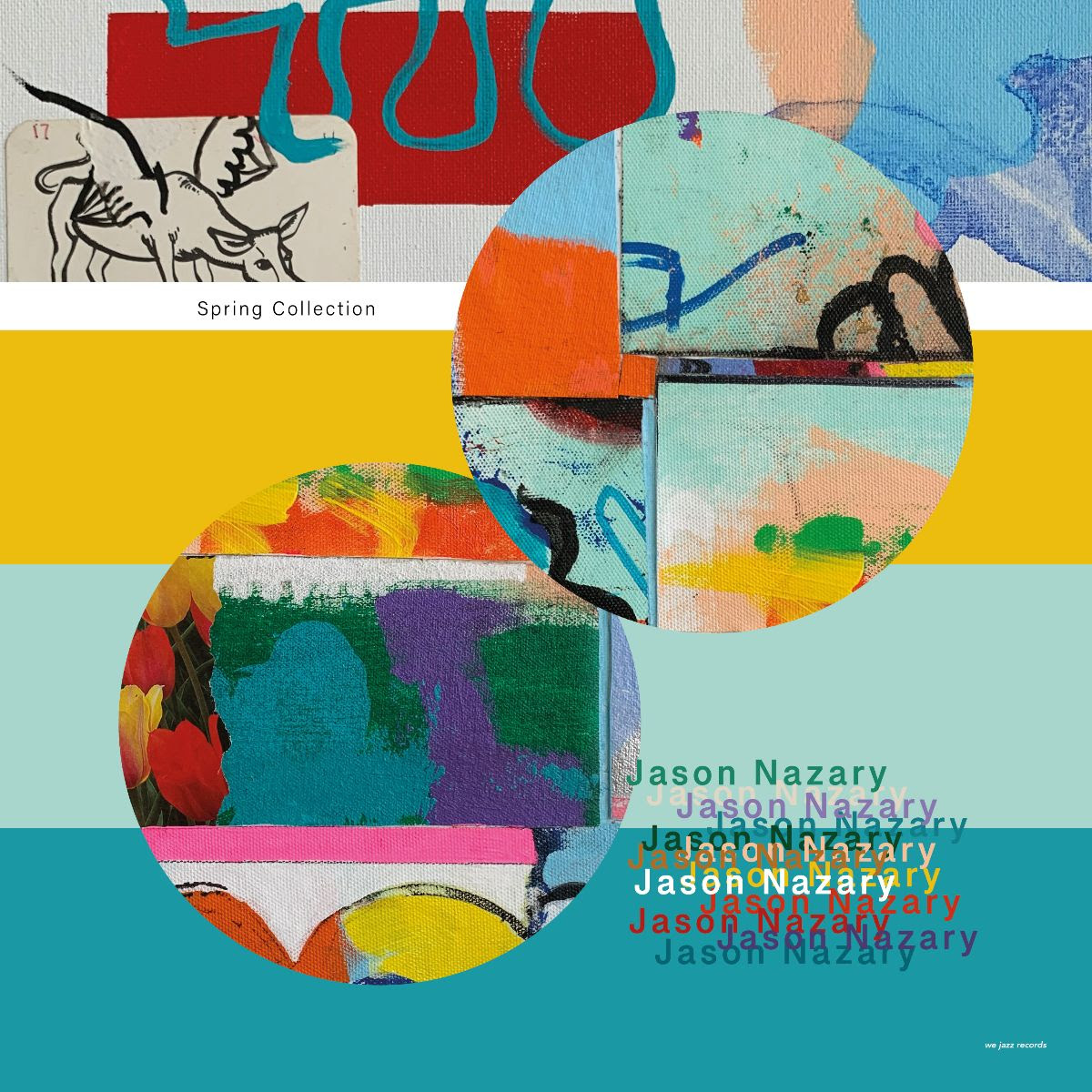
In an age in which, thanks to a global pandemic, the joys of spontaneity have almost vanished it’s great to hear such spontaneous immediacy in the untethered improvised solo and collaborative work of Jason Nazary. Confined like most of us over the last 17 months to home and neighbourhood meanders, the Brooklyn drummer and producer’s concentrated mind wondered elsewhere for something to concentrate on; turning in the end, as it did, to a caffeine-fueled experiment in reassembling and fiddling around with his modest modular set-up ad a sparse kit of bells, shakers, pots and pans. The results of which fill this avant-garde haven of barely recognizable jazz, electronica and library music; spurred on by an equally experimental guest list of both US and European mavericks, and Nazary’s foil in the Anteloper duo, Jamie Branch.
Nazary’s inaugural release on the most brilliant Helsinki label We Jazz (I personally think this is one of the best contemporary jazz labels of recent years) is a both sporadic and kooky freefall of science fiction atmospheres, sonic flotsam, and bubbled and burped chemistry. Off-kilter, stumbled and galloping bursts and more singular hits on an unconventional drum kit face off against static raspberries, dreamy floatation, primal soups and twinkled circuitry on what is a truly ‘out-there’ album.
As for those many guests, fellow Brooklynite-based musician, the Cuban-American reeds specialist and producer David Lean, puffs away on various hinging and whittled flutes and a piccolo on the Sergei Prokofiev like (as transmogrified by fellow label mate Otis Sandsjö) ‘Pulses Of Wind, Real Or Imagined’. And Jamie Branch’s trumpet gargles and makes wispy sounds that evoke Jon Hassell being sucked backwards through a vortex on the cosmic scramble ‘Dust Moth’. Tongues In Trees co-leader, guitarist, singer and producer Grey McMurray uses his surround voice to dreamy echoed and multi-layered effect on the Tomat-esque, and most flowing track, ‘Days & Nights, For Em’.
If the idea of Ornette Coleman and his drummer extraordinary foil Ed Blackwell being fucked-up and tripped-up by Flying Lotus and µ-Ziq sounds like a joy then Narzary’s Spring Collection is the album for you. Challenging most certainly, but moist and tricksy enough to offer a playful avant-garde burst of spontaneity to your life.
Passepartout Duo ‘Daylighting’
(AnyOne) 25th June 2021
Taking quite a gamble travelling once more across various borders in both China and the surrounding areas, and negotiating various diplomatic headaches in a pandemic, the avant-garde Passepartout Duo must have had their work cut out producing this latest album of ‘timbrical, rhythmic and melodic’ explorations.
Once again in partnership with the AnyOne Beijing Arts Company label and curatorial platform, and invited by the design hotel, Sunyata Meili, to continue their work, the freely traversing partnership of Nicoletta Favari and Christopher Salvito roam inspiring landscapes to feed their curious performative practice.
This time around it’s the awe-inspired realms of the Meili Snow Mountains, Lijiang and the fabled imaginations of Shangri-La that enthuse such ambient, textured suites. As with the last project, 2020’s Vis-á-Vis, they layer personalised, purposeful built instruments (the ‘fuzzy synth’) with a portable mix of percussion; in this instance the familiar chimes and resonated rings of spiritual and mystical Tibet.
As the duo themselves put it, the ‘overall structure’ of this experiment is ‘built through momentary collisions between layers of sound that exist in parallel dimensions, continuously and independently’. The results evoke stillness on the beamed Moebius and Roedelius melodic title track, and build up abstract environmental contemplations and Himalayan scenery on others. Crystallised flakes, subtle arpeggiator, bobbing spheres and bass drones converse or merge with clopping percussive rhythms, sharper ringed piques and herded cattle bells on a tactile mission of visceral geography.
Chris Sharkey ‘Presets’
(Not Applicable Recordings) 25th June 2021

More demanding than most ambient music, the improvised textural mood music on the acclaimed electronic musician and producer Chris Sharkey’s latest album is far from background noise and atmospheres.
Inspired by the long hours waiting in airports and longer journeys on the motorway, both travelling to and in-between gig dates across Europe and beyond, and by the slowly building experiments of Ghettoville and Hazyville era Actress, Sharkey’s Presets album exists outside the usual perimeters of time. For this is an improvised soundtrack left to develop, progress and roam wherever the initial sounds and moods take it; fizzing out or reaching a climatic point unburdened by the constraints of time.
Sharkey, who only used an electric guitar and some tech hardware, set the only limitations as such. Without any prepared music he just hit the record button to see where sonic sparks and drones would take him. These experiments sound sonorous and often full of gravity, slowly shifting from an opening position to something you can’t ignore: something that called be said to be penetrative even.
There’s as much beauty (believe it or not), hint of melodies, as there is machine music. Yet it all still sounds very organic, if alien.
It reminded me in some ways of His Name Is Alive, and the hummed generator cyclonic motors, hovering forces and organ like stirrings of the 17-minute epic, ‘The Sharecropper’s Daughter’ brought to mind Popol Vuh’s Affenstunde.
Reverberating guitar harmonics and notes linger whilst fizzled and fuzzy crisp effects buzz. Atmospheres gradually fluctuate or climb, offering some surprising, moving dramatics. One standout track, ‘Evangelist (Salvation History)’, is an incredible hallowed cosmic mysterious evocation if ever I heard one: an ambiguous grand spiritual ascendance towards space. The eventual metallic rippled oscillations, movements and airflow suffused finished pieces (whittled down from over four hours of recordings) are deep and anything but contemplative, anonymous and monotonous; layered and striking enough to touch and feel.
Karen Zanes ‘Cloaked’
(Aumega Project) Available Right Now

Uncoupling from the futuristic rays of the synthesized Violet Nox collective, Karen Zanes is away with the fairies once more as the singer-songwriter returns to composing bucolic like tapestries on her new acid folk light album, Cloaked. Treading like a barefoot contessa in a hazy landscape of psychedelic dreams, Zanes meanders and winds down the forest path, conjuring up Fairfield Parlour visions of romantic yearning and fate, tragic pre-Raphaelite maidens and the airy mystical mists of Avalon.
An album of poetry put to a subtle accompaniment of both suffused hallowed and more esoteric vintage organ drones, gently brushed guitar and spindly, plucked harp-like tones, Cloaked sounds like a less Gothic Jodie Lowther of Quimper infamy, performing Astral Weeks. From disarming daisy-chain swoons to more giddy rides on the carousel, Zanes exudes a certain languid air of the mysterious vocally, with unhurried breaths of dreamy intoxication and calming ethereal balms. This delivery might well hide some of the more haunting seriousness of the lyrical themes, which in this feudal psych troubadour environment sound timelessly enchanting and even unearthly and sad.
Talking of that sadness, this album is dedicated to the late music writer blogger Mark Barton, who sadly passed away last year. His Sunday Experience blog proved a comforting haven away from the hype and overly promoted mainstream; Barton championed many obscure talents and would no doubt have found room to herald this album. In tribute, Zanes penned the album’s title-track sonnet, which is a beauty. As is this entire songbook of wistful dreamy abandon.
The Corrupting Sea ‘Chamber Music For The Dead’
(Somewherecold Records) 18th June 2021
A soundtrack fit for these challenging times, Somewherecold label boss and electronic music explorer in his own right, Jason T. Lamoreaux once more sails The Corrupting Sea alias as he crafts a moiety of pandemic inspired industrial-ambient-trance chamber suites.
The Shelbyville, Kentucky-based artist navigates the miasma, anxieties and sense of helplessness on the fateful bell tolled Chamber Music For The Dead album. Yet though this timely ill-wind of feudal electronica and highly atmospheric uncertainty fits in perfectly with the dread and drag of the Covid pandemic, the album is both a distillation of six years worth of mixed emotions (both disconnected and deeply personal ones) and a concept plague story set against the backdrop of a ‘tin-pot dictator’ controlled society (plenty of challengers to that title). In practice this sounds like the last broadcasts, the last sense of hope, recorded under ominous vapours and wisps, and the chilled hand of death.
Relief from an icy lament and the funeral service choral synthesized voice waves arrives in the shape of ether-penetrated passages of cloud gazing and with cathedral expansive breathing spaces.
A balance is struck between the foreboding and the lighter periods of reflection, release and airy escapist hope on a soundtrack of plague-riven doom.
Hi, my name is Dominic Valvona and I’m the Founder of the music/culture blog monolithcocktail.com For the last ten years I’ve featured and supported music, musicians and labels we love across genres from around the world that we think you’ll want to know about. No content on the site is paid for or sponsored and we only feature artists we have genuine respect for /love. If you enjoy our reviews (and we often write long, thoughtful ones), found a new artist you admire or if we have featured you or artists you represent and would like to buy us a coffee at https://ko-fi.com/monolithcocktail to say cheers for spreading the word, then that would be much appreciated.
Kalporz X Monolith Cocktail: ‘Le Mariage Collectif’ (1971): The soundtrack found in a Parisian rubbish dump.
July 2, 2021
Album Review/Words: Monica Mazzoli

Continuing our collaboration with the leading Italian music publication Kalporz , the Monolith Cocktail shares reviews, interviews and other bits from our respective sites each month. Keep an eye out for future ‘synergy’ between our two great houses as we exchange posts during the 2021 and beyond.
This month Monica Mazzoli waxes lyrical on the chance rubbish tip find, the cult Le Mariage Collectif soundtrack.
The obscure fascination of certain music for the Cinema of the sixties and seventies seems to be endless: many film soundtracks have never been published (perhaps lost forever?) and continue to be shrouded in mystery. One thinks of the OST of Diabolik(1968) by Ennio Morricone, which seems to have been destroyed. The conditional is a must, of course.
Then, fortunately, there are also soundtracks that have been brought back to light and that often conceal stories to be believed: this is the case of the music of Les Chemins de Katmandou (1969) – one of the products of the collaboration between Serge Gainsbourg and Jean-Claude Vannier – recovered by the daughter of Vannier’s copyist (Daniel Marechal) and published in 2017 by Finders Keepers.
The medal for the world’s craziest vinyl-finding story, however, goes to the person who found in a landfill in Paris the acetate record copy of the soundtrack to Le Mariage Collectif, a 1971 film. The music for the erotic-hippie film directed by Sven Olsen and Sven Holm, composed by Jean-Pierre Mirouze and never released (except for the 45 rpm of ‘Together/Sexopolis’), is remarkable. Psychedelic instrumental moments alternate with funk and jazz passages. For Mirouze, it’s a bit of a return to his roots, he can experiment as he did in the early 1960s when, before working for television, he was part of the Groupe de recherches musicales (GRM) of the ORTF (the French national public broadcasting service), a group dedicated to the study of sound and electroacoustic music.
To Liberation in 2012, the composer said:
“I was mainly interested in the relationship between music and image. But at a certain point I had to find something that would make me live. I looked for work in television, where I found myself doing sound dressing, theme songs and small fleeting sound events” and, again, “I regret, however, the dispersion of the sound heritage of the time, the wonderful things that have been stolen from the ORTF sound library. Le Mariage Collectif is part of this wound, but there are many other things that will never be found”.
How can you blame him, perhaps a lot of material we may never hear. A pity.
The soundtrack to Le Mariage Collectif was released in 2012 by Born Bad Records, both on CD and vinyl. (Monica Mazzoli)
Monthly Playlist Revue For June 2021
June 30, 2021
PLAYLIST SPECIAL/DOMINIC VALVONA/MATT OLIVER/BRIAN ‘BORDELLO’ SHEA

Join us for the most eclectic of musical journeys as the Monolith Cocktail team compiles another monthly playlist of new releases and recent reissues we’ve featured on the site, plus tracks we’ve not had time to write about but have been on our radar. That includes epic Buryat anthems from the Steppes, sulky struts, explorative ambient vistas, summer surf wafts, spindled Korean majesty, lolloping bravado, twisted jazz and many of the current choice hip-hop cuts.
STARRING THE FOLLOWING MONOLITH COCKTAIL ANOINTED ARTISTS AND TRACKS:::
Namgar ‘Green Grass’
Squid ‘G.S.K.’
Andrew Hung ‘Brother’
Pons ‘LELAND (CLUB MIX)’
Heiko Maile ‘Vega Drive (Tape 13)’
The Early Mornings ‘Departure From Habit’
Occult Character ‘(I Think I Wanna Have A) Meltdown’
Edna Frau ‘Angry Face Man’
Dwi ‘Freak N Out’
Hectorine ‘Saltwater’
Meggie Lennon ‘Night Shift’
Rhona Stevens ‘Solo’
Seagullmoine ‘Contrails’
Foreign Age ‘Apathy By Proxy’
Mike Gale ‘Awake Awake’
The Beach Boys ‘Big Sur’
Simon Waldram ‘Don’t Worry’
Shannon And The Clams ‘Year Of The Spider’
Paragon Cause ‘Disconnected’
RULES ‘Say It Ain’t So’
Violet Nox ‘Cosmic Bits (J. Bagist Remix)’
Evidence ‘Talking To The Audience’
DJ JS-1 (Ft. Rahzel, Mr. Cheeks and Craig G) ‘Open Up The Door’
Tyler The Creator ‘LUMBERJACK’
Tanya Morgan (Ft. Jack Davey) ‘A Whole Mood’
Juga-Naut & Jazz T ‘Marble & Granite’
Skyzoo ‘I Was Supposed To Be A Trap Rapper’
Sone Institute ‘Dead Ahead’
Brian Jackson, Adrian Younge and Ali Shaheed Muhammad ‘Mars Walk’
Jaubi (Ft. Tenderlonious and Latarnik) ‘Satanic Nafs’
Hassan Wargui ‘Azmz’
Clamb ‘Eggs In The Mainstream’
Hailu Mergia and The Walias ‘Mestriawi Debdabe’
Goodparley ‘Dissected Frequencies’
Sara Oswald & Feldemelder ‘Fishes In Histogram Waterfalls’
Marco Woolf ‘Modus Operandi’
Amaro Freitas ‘Batucada’
Space Afrika (Ft. Blackhaine) ‘B£E’
Apathy (Ft. Brevi) ‘Jonathan Livingston Seagull’
Masai Bay (Ft. EI-P) ‘Paper Mache’
Abir Patwary ‘Avalon’ Petter Eldh (Ft. Richard Spaven) ‘Goods Yard’
Kid Kin ‘Under A Cloud Fret’
The Liminanas ‘Stoker The Smoker’
Night Sky Pulse ‘Missing’
dal:um ‘TAL’
Alice Coltrane ‘Krishna Krishna’
Provincials ‘Feels Like Falling’
Hi, my name is Dominic Valvona and I’m the Founder of the music/culture blog monolithcocktail.com For the last ten years I’ve featured and supported music, musicians and labels we love across genres from around the world that we think you’ll want to know about. No content on the site is paid for or sponsored and we only feature artists we have genuine respect for /love. If you enjoy our reviews (and we often write long, thoughtful ones), found a new artist you admire or if we have featured you or artists you represent and would like to buy us a coffee at https://ko-fi.com/monolithcocktail to say cheers for spreading the word, then that would be much appreciated.
Our Daily Bread 455: Cathal Coughlan, The Early Mornings, Paragon Cause, Salem Trials, Synthetic Villains…
June 28, 2021
Brian ‘Bordello’ Shea’s Roundup

ABOUT THE AUTHOR:
The cult leader of the infamous lo fi gods, The Bordellos, Brian ‘Bordello’ Shea has released countless recordings over the decades with his family band of hapless unfortunates, and is the owner of a most self-deprecating sound-off style blog. His most recent releases include the King Of No-Fi album, a collaborative derangement with the Texas miscreant Occult Character, Heart To Heart, and a series of double-A side singles (released so far, ‘Shattered Pop Kiss/Sky Writing’, ‘Daisy Master Race/Cultural Euthanasia’ and ‘Be My Maybe/David Bowie’). He has also released, under the Idiot Blur Fanboy moniker, a stripped-down classic album of resignation and Gallagher brothers’ polemics.
Tracks/Singles…
Paragon Cause ‘Disconnected’
18th June 2021 (Taken from the duo’s upcoming album Autopilot, released 13th August 2021)
I like this track it has an aura of pop songs from the past like Jane Weilden’s ‘Rush Hour’, or one of those other fine breezy pop songs. It has the wind in its sails and floats like a bobcat with the ear of the bank manager’s fond final digressionary wish ringing in its typecast high school jinx way. Trust me it is a lovely joyful pop song and I for one cannot get enough of those. And my dear readers I have the feeling that you cannot either. And if you can get enough, you are reading the wrong blog…go and stroke your chin to the Quietus and lose yourself in a nose flute extravaganza box set.
Salem Trials ‘Head Full Of Stinging Bees’
Available right now
A slice of alternative guitar magic from Britain’s greatest current guitar band. Yes indeed, the Salem Trials are back with a scratchy almost Goth like vignette with Scary Monster era Bowie guitars and Russ ranting as only Russ can. Just over two minutes in length and it sounds like no one but the Salem Trials. ‘Head Full Of Stinging Bees’ can be downloaded for free from their Bandcamp page, which I urge you to do or you will be ever known as a twat who likes to preen yourself in front of a Shane Richie poster circa his days in the Grease Stage show.
Mega Bog ‘Weight Of The Earth, On Paper’
(Paradise Of Bachelors) Out there right now
I like this; it has an air of a post punk hippy commune getting together to make an enjoyable romp through the pages of a musical that should have been written but for some strange reason never was. It could have been Hair for the balding generation. I can imagine this band drinking green tea and driving badly due to their minds being somewhere else…yes, I enjoyed this.
Eamon The Destroyer ‘My Drive /Silver Cloud’
(Bearsuit Records) Available Right Now
I am a huge fan of Liverpool based guitar wonder extremist bigflower and ‘My Drive’ and ‘Silver Shadow’ have the same appeal. Both of the songs have the same melancholy, the same scorched by the sun lost in a desert atmosphere a place where the neglected go to dream bittersweet dreams of a past memory not knowing if it truly happened or not. These two tracks are lost in a world of their own and will certainly appeal to lovers of Mercury Rev and the Flaming Lips as they plough the same furrow. I’m looking forward to their forthcoming album, which should be a rewarding and interesting listen going off the excellence of this debut single.
Albums/EPs..
Synthetic Villains ‘Obstacle Navigation’
Available right now
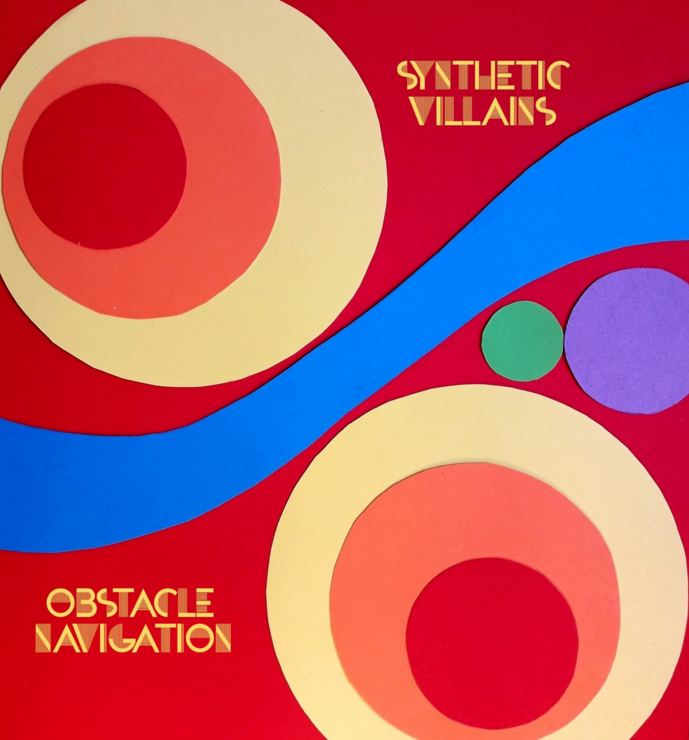
Obstacle Navigation is actually a very good listen; ten tracks of mostly synth instrumentals that use old Analogue drum machines and synths with electric and acoustic guitars processed via violin bows, ebows and various effect pedals.
The tracks take in moody synth pop but have more than a tinge of psychedelia: ‘Sunbeam Flyer’ could easily slot onto Primal Scream’s Screamadelica without much fuss, even borrowing the ‘Loaded’ bass line, which of course the Scream themselves borrowed, and ‘Wander Off Wondering’ reminding me of the early Shaman before they struck it rich with ‘Ebenezer Good’.
This is an inventive and very relaxing album, and as with all good instrumental albums does not have one waiting for the vocals to arrive. It will take you on a soothing and rewarding journey to the centre of your own psyche.
Foreign Age ‘Understanding Animals’
Available Right Now

The three B’s, The Beatles, Blur and Barrett seem to be the order of the day with Foreign Age. Pure pop for nostalgic people, all descending Beatle guitar chords and vocal harmonies, the sort of album The Bees used to release with little commercial success in the early noughties and I expect this album to achieve the same fate. I’m not saying that this is a bad album, for it is not, it is a very enjoyable album, but the days of “ba ba ba” choruses are no longer the order of the day sadly. But Foreign Age does the artier side of Brit pop very well. And the album is well worth investigation.
The Early Mornings ‘Unnecessary Creation EP’
Available right now
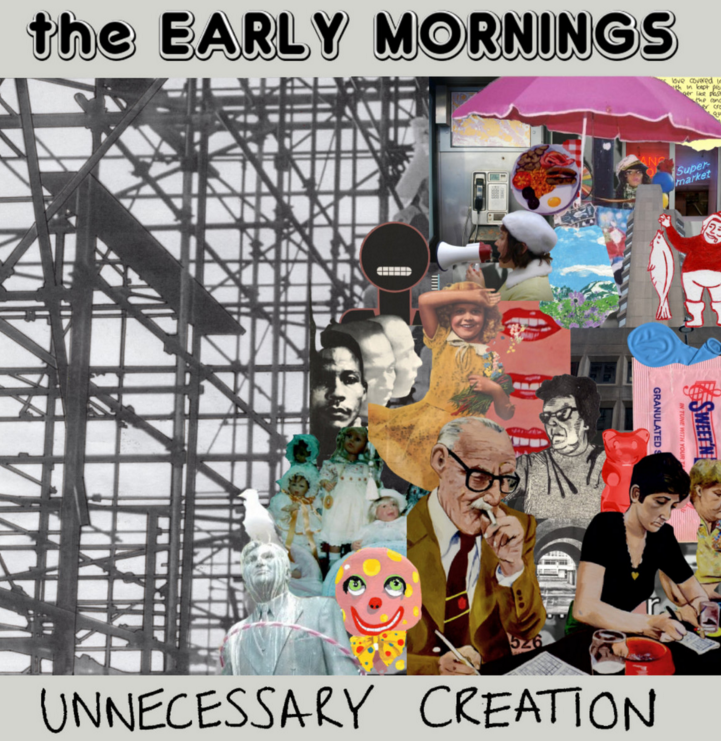
Jerky rhythms and slandered guitars are always a joy to behold with one’s ears and The Early Mornings are indeed a joy. It’s like the Slits if they were a cartoon band guesting on The Banana Splits. The Banana Slits in fact: what a perfect description. Yes, The Early Mornings are one of those wonderful post punk bands who have a talent of having melodies float from their scratchy guitars and performing well written songs of teenage lust and teenage problems even if the band themselves are not teenagers. The kind of band who makes one wish they were young again: and believe me that is always the sign of a good band.
Cathal Coughlan ‘Song Of Co-Aklan’
(Dimple Discs) Available Right Now

I always loved Fatima Mansions, one of my fave bands from the 90s, so was pleased to see this in my inbox as Cathal is a fine songwriter, a gifted lyricist, and has a voice like spiked honey, and as angry as a box of shaken Bees. And I’m pleased to say his new album has all the aforementioned in great quantities, and I’m not disappointed at all.
He always had a way with the written word Cathal; a little like his hero Scott Walker whose music and song writing is an obvious influence in they both dwell on the darker side and darker characters of life, and like Scott, Cathal knows his way around a melody and how to paint such beautifully dark and sometimes comedic images with his lyrics. And after listening to the track ‘Owl In The Parlour’, I ask why has Cathal never been asked to record a James Bond theme for he certain could give Matt Monroe a run for his money.
Song Of Co-Aklan is an album of dark adventure; an unfurling of one of Music’s great mavericks; a reminder of just how great a songwriter this often-ignored artist truly is.

