Premiere: (Video) Mike Gale ‘Go Help’
August 5, 2020
Premiere/Dominic Valvona
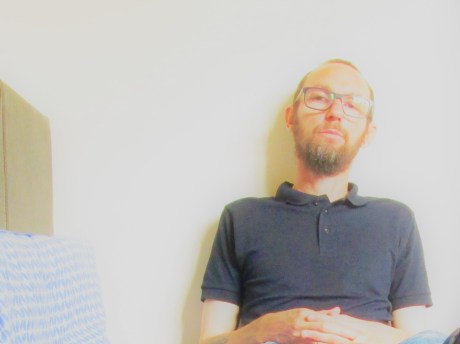
Mike Gale ‘Go Help’
Video track taken from the upcoming album The Star Spread Indefinite, released 25th September 2020
A tropical-lilted wistful tiptoe sauntering continuation of the plaintive beachcomber Beach Boys sound that permeated the reclusive polymath’s output for a number of years, Mike Gale once again does wonders with another disarming yet disconsolate bobbing beauty, ‘Go Help’.
The former Co-Pilgrim and Black Neilson instigator has been highly prolific of late with last year’s Pacific Ocean lulled sorrow Summer Deluxe album, a recent compilation of (far from) unfinished works and B-side ruminations, paeans and breezes entitled B, C, D Side Volume 1, and a lockdown mini-album Sunshine For The Mountain God. And now with this precursor video track Gale announces the release of his next fully realized songbook, The Star Spread Indefinite; released on the 25th September 2020.
“A celebration of the value of quiet contemplation and the pursuit of solicitude and calm”, lockdown it seems may have just suited Gale, who retired from live performances in 2018. Inspired, in part, by escaping the daily divisive barrage of noise, Gale has also been reading Justin Hopper’s The Old Weird Britain book; in particular the passage about the ancient artwork found scratched into the wall of a flint mine in Sussex, who’s discoverer, rather poetically, embellished it with the title that is now borrowed to adorn Gale’s upcoming album.
Premiering today on the Monolith Cocktail, we have the ‘Go Help’ video, made by the photographer and video maker Jussi Virkkumaa, who juxtaposes the song’s quiet “dystopia” unease with a rotation of revolving surrealist objects: from a mannequin’s hand in a steaming bowl to fidgeting fauna and a stuffed crane like bird. Virkkumaa has this to say about his visual accompaniment and the song:
“Well I think that what I love about Go Help, is that I got a feeling of happy isolation, and little by little I begin to question the lullaby-kind of tune to be something more to the dystopian. It delivers (for me at least) a feeling of lost control, but at the same time there’s beauty. I tried to go kind of a similar route, choosing symbolic figures, which are in an absurd environment, just rolling around endlessly. I think the situation could be something like the Voyager’s golden record flying in outer space, just in case, a time capsule to burn in some distant planets atmosphere.”
If this latest effortless sounding wash of Afro-Caribbean lilt, Beat Connection surf noir and 80s pop snuzzled trumpet is anything to go by, then Gale’s cosmic-dreamily entitled The Star Spread Indefinite is set to be another languidly beautiful affair.
Related posts form the ARCHIVES:
Mike Gale ‘B, C, D Sides’ Review
Mike Gale ‘Summer Deluxe’ Review
Hi, my name is Dominic Valvona and I’m the Founder of the music/culture blog monolithcocktail.com For the last ten years I’ve featured and supported music, musicians and labels we love across genres from around the world that we think you’ll want to know about. No content on the site is paid for or sponsored and we only feature artists we have genuine respect for /love. If you enjoy our reviews (and we often write long, thoughtful ones), found a new artist you admire or if we have featured you or artists you represent and would like to buy us a coffee at https://ko-fi.com/monolithcocktail to say cheers for spreading the word, then that would be much appreciated.
Our Daily Bread 390: Paper Birch ‘MORNINGHAIRWATER’
August 3, 2020
Review/Dominic Valvona

Paper Birch ‘MORNINGHAIRWATER’
(TAKUROKU) 5th August 2020
Mooning and pining through a caustic wall of fuzz, feedback and waning the cross-city, cross-border collaboration of Dee Sada and Fergus Lawrie articulate desire and heartbreak in a pandemic. Recorded during the lockdown, between the months of May and June, former primal yelping An Experiment On A Bird In The Air Pump D-bird and current member of NEUMES Sada and her Glasgow pen pal foil Lawrie, of cult Urusei Yatsura fame, meet up in the internet ether to construct both a chthonian and dreamy long-distance musical romance.
Pooling their resources together under the peeling bark lament of the Paper Birch tree the duo wistfully woo sweet discourse amongst an invocation of squalling scuzz, shoegaze, C86, drone space rock and post-punk; all of which they manage to wield to their own unique desires and plaintive resignation, in the face of a quarantined blues.
Sada’s signature softly cooed atmospheric translucent vocals prove a congruous fit with Lawrie’s deeper, more grunge-y despondency; sounding at times like Psycho Candy era Jesus And Mary Chain in harmonious matrimony with Mazzy Star, or, the Pop Group hooks up with MBV. Sada often ventures out solo on this gauzy album, lulling diaphanous heartache like an apparition. This brilliant pairing sound like star-crossed lovers in duet mode, poetically, if sometimes forlornly, missing the other’s company. This love can be creepy and Gothic too, with the duo conjuring up a vision of Jason Pierce’s Spiritualized tuning into a lunar radio broadcast as Sada lurks in a moonlit serenaded graveyard on ‘Cemetery Moon’, and acts the part of a lamenting phantom on ‘Elegy (As We Mourn)’. The veiled, almost submerged, supernatural dreamscape ‘Hide’ even slips into the Lynchian. Less morbid, the duo wistfully ties Lou Reed, Suicide and the Spacemen 3 together on the leather surf entanglement ‘I Don’t Know You’.
Despite a cursed language of disenchantment, and even the metaphorical pained heartbreak of poisoned relationships, plus a tumult of stressed white noise and distorted guitar contouring Sada and Lawrie swoon in beautifully fragile harmony throughout this experimental album. London and Glasgow sensibilities and beautiful morose come together to add something different to the vaporous influences that have inspired it. A barbed romance and set of mentally fatigued musings set in anxious times, MORNINGHAIRWATER marks a divine conjuncture between its creators; a baptism not only for Paper Birch but Café OTO’s newly formed label platform TAKUROKU. I really hope that both parties continue to pursue this successful union, as this burgeoning effort is fast becoming one of my favorite records of 2020.
Hi, my name is Dominic Valvona and I’m the Founder of the music/culture blog monolithcocktail.com For the last ten years I’ve featured and supported music, musicians and labels we love across genres from around the world that we think you’ll want to know about. No content on the site is paid for or sponsored and we only feature artists we have genuine respect for /love. If you enjoy our reviews (and we often write long, thoughtful ones), found a new artist you admire or if we have featured you or artists you represent and would like to buy us a coffee at https://ko-fi.com/monolithcocktail to say cheers for spreading the word, then that would be much appreciated.
Monolith Cocktail Monthly Playlist: July 2020: El Michels Affair, Miles Davis, Oddisee, Bob Dylan…
July 31, 2020
PLAYLIST REVUE/Dominic Valvona/Matt Oliver/Brain ‘Bordello’ Shea
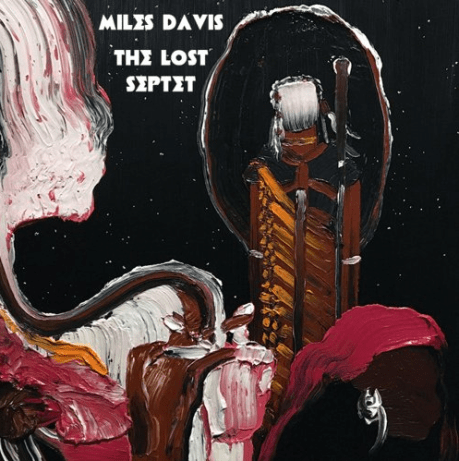
Join us for the most eclectic of musical journeys as the Monolith Cocktail compiles another monthly playlist of new release and recent reissues we’ve featured on the site and tracks we’ve not had time to write about but have been on the radar – some of which have literally just been released today. There’s a glorious full-on sixteen-minute Miles Davis peregrination, taken from the lost Septet live performance of 1971, the latest experimental agit lesson from Beans, dreamwave enchantment from Zoe Polanski, good times disarming profound poetics from Bob Dylan and razor sharp electro pop spite from Violent Vickie.
TRACKS:
El Michels Affair ‘Dhuaan’
The Liminanas ‘Calentita’
Violent Vickie ‘The Blame’
Rob Bradley ‘The Demise Of Pennywise’
Miles Davis ‘What I Say’
Beans ‘Isaac Burns Murphy’
Joey Paro/Badhabitz ‘2 Wheelin’ It’
JAF Trio ‘Something New’
Tony Price ‘Discount’
Yamin Semali/Lazarus ‘Marianas Web’
Idris Ackamoor & The Pyramids ‘Tango Of Love’
Eto/Nyticka Hemingway ‘Nothin’ Like You’
Gee Bag/Illinformed ‘American Dreams’
Otis Sandsjo ‘Tremendoce’
Oddisee ‘Shoot Your Shot’
Cambatta/Kenny Buttons ’33’
Blu & Exile ‘Roots Of Blue’
Adonis/DJ Skizz ‘Leather Rebel’
Manage ‘The Ol’ Mighty’
Koralle/Isatta Sheriff ‘Laid Back’
Apollo Brown/Che Noir ’12 Hours’
Soulchef/Hydroponikz ‘Last Time’
Coops ‘Factory Reared’
Haich Ber Na ‘By Floras’
Bantou Mentale ‘Moto’
Dillion ‘Fresh Air’
Clbrks/Morriarchi ‘WINE LIST’
Abdominal And The Obliques ‘Gone Fishin”
Shabazz Palaces ‘MEGA CHURCH’
Verbz/Mr. Slipz ‘For My Peeps’
Iron Wigs ‘Six Fisted Sisyphus’
Grapefruit ‘Tracers’
Wu Cloud ‘Jambi’
Conformist ‘Something Beautiful Remix’
She’s A Fish ‘Skyline’
Mieko Shimizu ‘Lazy Light (Mike Lindsey Remix)’
Zoe Polanski ‘Violent Flowers’
The Vapour Trails ‘Golden Sunshine’
Campbell Sibthorpe ‘Father Carpenter’
Bob Dylan ‘Goodbye Jimmy Reed’
Golda May ‘Hear Me Out’
Chantel Van T ‘Rumble And Crawl’
A.R. Pinewood ‘So I’ve Been Publicly Shamed’
Astral Swans ‘Bird Songs’
Liz Davinci ‘Joni Blue’
The Icebergs ‘Motorcycle’
Salem Trials ‘What People Think’
Twisted Ankle ‘A Bag Of Pasta’
Luke Mawdsley ‘Misery Gland’
Hi, my name is Dominic Valvona and I’m the Founder of the music/culture blog monolithcocktail.com For the last ten years I’ve featured and supported music, musicians and labels we love across genres from around the world that we think you’ll want to know about. No content on the site is paid for or sponsored and we only feature artists we have genuine respect for /love. If you enjoy our reviews (and we often write long, thoughtful ones), found a new artist you admire or if we have featured you or artists you represent and would like to buy us a coffee at https://ko-fi.com/monolithcocktail to say cheers for spreading the word, then that would be much appreciated.
Dan Shea’s Lockdown Jukebox: Part Three
July 30, 2020
Selection/Writings/Fiction/Dan Shea

The Monolith Cocktail has coaxed a number of guest spot contributions from the impassioned and adroit musician/writer Dan Shea. Roped into his family’s lo fi cult music business, The Bordellos, from a young age, the candid but humble maverick has gone onto instigate the chthonian Vukovar (currently working through a trio of ‘greatest hits’ packages here) and, with one part of that ever-shambling post-punk troupe, musical foil Buddy Preston, the seedy bedsit synth romantics Beauty Stab (who’ve just this week released their second single ‘French Film Embrace’, here)
An exceptional talent (steady…this is becoming increasingly gushing) both in composing and songwriting, the multi-instrumentalist and singer is also a dab hand at writing. For his debut, Dan shared a grand personal ‘fangirl’ purview of major crush, the late Rowland S. Howard (which can be found here), on the eve of Mute Records appraisal style celebration reissue of his highly influential cult albums ‘Teenage Snuff Film’ and ‘Pop Crimes’. This was followed by an often difficult, unsettling, potted with dark comedy, read on Dan’s friend and foil Simon Morris (of the Ceramic Hobs infamy; the piece can be read here), who took his own life last year.
Now, from his lockdown quarantine, Dan furnishes us with his new series of ‘imaginary film screening jukebox’ selections come loose horror and increasingly unfathomable, intangible fictions.
John Foxx – Blurred Girl
Glosso la la la la la lalia
What a beautiful word. What a beautiful world. What a beautiful girl. Birds are blue and sky is singing.
Christmas trees covet British DAYTIME and turn to warn mum but continuing from love, because, I was hunting. Talking (!).. was I furry from the covenant and hating the lithium charityyyyslide. But really I am merely soft and disappointing. I will either become an institution or institutionalised. I cannot sleep i am merely erratic and depressing, it’s fun and then it’s not and then I sleep no more.
When I sleep for too long it feels like sex magick. I fall from one dream into another and you’re mine all of the time. Maybe my dreams are the most significant part of my life and reality is a distraction? Do you ever feel that way?
Gersten doesn’t have a key but she was suddenly with me in the shower. She shaved me, fully clothed all soaking wet and making sure to “accidentally” cut me in the right places. She put cigarettes out on my nipples as the sun came up. When the moon fell she was gone again. I don’t know where. She doesn’t ask me questions so I try not to be nosey. Nostalgia carved a glow ghost into me.
4
1
5
Syd Barrett – Late Night
I remember playing this and drinking gin and orange while Ronnie fucked the guy from the arts council. The orange ran out as I was drinking the juice straight so eventually I was just necking gin. I passed out face down in a copy of House of Leaves.
My nan gave my dad that record player when he was a teenager as she thought he was dying. I’m 28 so it’s nearly 40 years old. Maybe he did die. Maybe none of this is real.
I fucking hope so or I’ll have to go to my mum and ask her to have an extremely late term abortion. “But REDACTED it’s been nearly 30 years!”, “This is best for everyone.”
The grey eyeless world sighs blood red and steeple dark. The rune cloud shows your name meandering into mine. I can’t remember my name but names aren’t important. There’s nothing in a name. When someone asks me my name I wonder what they think it means and why they believe I’m being honest with them.
The party is over and we watch the nightlife crop itself shorter still through a haze of smoke. A mute TV shows static, like pictures in the fire I just about make out the image of a screaming woman being forced down a plug hole by a man who is nothing more than dead air. He stares into the camera.
You’d like to think he was looking at you thinking about getting pregnant with my genius but you realise only you think that way and I only ever did in the most mixed of company.
Leonard Cohen – First We Take Manhattan
Lynch or Badalamenti must have played this before they scored Twin Peaks. The horn motif from I’m Your Man happening in the intro to this, foreshadowing almost, makes me view the album like a movie: as endings go Tower of Song is up there with Vertigo or the undecayed angelangelangel in Fire Walk With Me.
I am not tranquil I am merely tranquilised.
I put his girlfriend’s dress on and honour his memory with my hands over my reflection for the second time in as many hours. Imagining my voice is her bratty whine and her hands are mine and he is watching.
Dark mutterings about a car so big you can lose a kid in it and the text messages we swapped after Michael Jackson died. If Kanye was white would you still be mocking him for having a manic episode or would you adopt the standard lib standpoint of making noises about “removing the stigma around mental health issues” while hoping we die soon?
Guilty fantasies about a specific guy caught on To Catch A Predator and what I’d do to make him think he could be released. Cum and come to senses. Gin + rap battles.
“You loved me as a loser now you’re worried that I just might win” – L Cohen
Gersten/Rotten is insistent that I transcribe the contents of the tape I found so I will.
It begins with a voice, perhaps your own, asking for your number so they can phone you. It is followed by Surrender by Suicide; Coney Island Baby by Lou Reed; Blue Jeans by Lana Del Rey; Hospital Hurts the Girl by Lemon Kittens; a recording of gurgling water and a man screaming;
Dead Radio by Rowland S Howard; First We Take Manhattan by Leonard Cohen; Voices Seers Voices by Vukovar; Taking Life In Your Hands by John Cale; Blurred Girl by John Foxx; a man screaming about whores; a dignified old man with his hands folded; a man finding a cassette in a fridge.
Robert Rental – Double Heart
Side 2 begins with Double Heart by Robert Rental; a man listing songs on a cassette; Jesse by Scott Walker; a man in a shower weeping and screaming into a plug hole; Rothko’s kitchen sink; Voices Seers Voices by Vukovar; ectoplasm; Subterraneans by David Bowie; more ectoplasm; a girl in a black velvet dress; static; JG Ballard JG Ballard JG BALLARD; a megaphone swan song; Rook from Black Dresses describing you; an eternal loop of Gersten pissing.
Me I’m fine. The Swastika Girls dropped around and silently put beer in my fridge. I have been renamed Thomas Communication.
SHIT taming a hoover feel your gratitude and do my own part by some shouting. I want not know not feela thing same the and same the outside your mum arrives and 2 rings in2 hovering ion.
You were my music box dancer and you tried to be everything to everyone. I think endlessly of you in humiliating situations. I draw sigils on paper and use this to mop up drops of dhaal.
Double Heart by Robert Rental drips the grey romance of a woozy early morning in Glasgow. It makes me shiver. It’s so fragile, unadorned angelangelixx. The drums are by the guy from DAF I believe. It’s a truly beautiful record. Like if Arthur Russell was Scottish.
In my memory it was playing when me and Ronnie sat down in that bubble tea place at what felt like the latest hour possible but was in fact March 8PM. In reality some terrible Disney sounding Asian pop music was playing. I remember buying a book of all the artwork from Mute Records releases and sitting in the sun getting gradually less and less sensible in some terrible hipster bar’s beer garden reading it. That was a great solitary afternoon. I prefer it when it’s by choice, though.
Tom Waits – Sea of Love
“Do you think Waits and Lynch working together would be too on the nose? To straightforwardly look at these old American weirdos fan service?”
An old man in a shop mobility scooter is slumped dead to the world behind the wheel. He is careening down a hill holding a can of cider which remains unspilled.
“Nah. You overthink. The preponderance of midgets and people missing limbs in both their work aside.”
Transcript from Scene from Pulaski: The Disappeared
Sam is sat outside a cafe smoking a cigarette. She is drinking a cup of coffee. She is dressed in terrible early 00s cyber goth clothes including huge sunglasses. Pulaski approaches and sits down opposite her.
Sam
Are you not going to have anything?
Pulaski
There’s time for that later. We can have all we want when we get there.
Sam
Where?
Pulaski
Remember that dream, where you were sat where I am now? Your sunglasses were just as big.
Sam
You kept telling me I looked like a goth owl.
Pulaski
Andrew Owldritch, yes.
Sam
Who?
Pulaski
And now you sound like an owl.
Sam
Who’s Andrew Owldritch?
Pulaski
It’s a play on Andrew Eldritch.
Sam
Who’s Andrew Eldritch?
Pulaski
Sisters of Mercy.
Beat.
Pulaski
You’re a shit goth. Let’s go.
Sam walks off with Pulaski still holding her cup and saucer.
That’s how I remember it. I don’t think Lynch directed it as everyone had Northern accents and the dialogue definitely isn’t Lynchian. I’d upload a link to it but it’s only sometimes on my hard drive and whenever I upload the video my bathroom ceiling collapses.
Fragments of it keep bleeding through, distorted other dream languages. I’ll keep you updated as I remember it.
Galaxie 500 – Snowstorm
Several times I find myself soundtracking my life like its a film. Like the way I deliberately put Technique on when Ronn was arriving; or when I played Celluloid Heroes by The Kinks walking through a downpour knowing it’d make me feel like I was in a Wes Anderson film.
This was accidental and I’m aware I’m stretching the limits of plausible deniability here but I hope up to this point in my rolling news for Monolith Cocktail I have given you no reason to doubt the veracity of anything you have read.
I didn’t originally plan to perform the ritual that briefly brought Ronnie back. I’d had a heavy night okay.
One calm crisp evening I had finished work for the week. I went home, had a shower and as is my custom dressed up nicely to go out and see friends.
I wore a blue and black polka dot shirt, some new black jeans, my brown leather Chelsea boots and my battered leather jacket. I put on a bit of eye shadow and back combed my hair a bit so I’d look full Mary Chain. Checking my pockets for my phone, wallet, keys and personal alarm I set out into a calm crisp winter evening.
The holes in the sky were for once conspicuous by their absence although en route I did nearly get into a fight with a tree. A perfect moment – as Snowstorm by Galaxie 500 played it began to snow. A moment of beauty that compelled me to sit in the park by the bar til it was over.
I drank too much this I know but I’m told I did nothing embarrassing and no one even knew there was an issue. Walking home however was a fucking nightmare. Not just because of the snow and hail getting in my eyes but because as I approached the stretch of road to the HACK DOOR my surroundings began to shift.
The lightings were all a lot brighter now but flicker. The ground now throbbed criss-crossed with network veins that pulsated sickeningly conveying the blood through the infant city. I dragged on, trying to avoid the veins as you would cracks in the pavement. A sudden sense something was watching me as the path home elongated. Every step the word Ritual. Step. Ritual. Step. Ritual.
I looked to his left to see the source of the voice. The voice I think with sounds like my own so I knew it wasn’t me. Nothing. Buildings unchanged. To the right there was a thing dragging itself along. A bloated foetal figure gurgling and puking, an umbilicus ever extending with my every step. The malformed lips mouth ritual but the sound arrives fully formed in my head.
This continued for hours and somehow along the way I found myself naked and bloodied. Ritual. Step. Ritual. Step. Finally my head voice spoke yes and I found myself again fully dressed and deposited on the back step. I looked up at the HACK DOOR and saw it form in smoke. Ritual. Your bind rune meanders into mine forming ours. Tattooed on the tin foil mirror of my synapse the first time she came home from death.
I realise I drew this sigil the night we met. That’s the night I first knew I was your pet. I want to tell you how much I love you but I’m drowning in a sea of love where everyone would love to drown.
Ramones – Pet Sematery
Farrow sits in his office staring blankly at a block red painting with a black life rune drawn on it. Smoke spools outside the window. A cup of coffee on his desk, a cigarette in his hand. An assistant walks in and, trying not to make eye contact with him, hangs a black painting with a red death rune on next to it. He then scurries out. Farrow stands.
Farrow
How blind I have been!
He then sits down again and resumes staring.
The display turns to static. Maybe your own refleReflected in the TV is a worried looking man sat next to a catatonic woman. The head resting on his shoulder: is it for comfort or to keep her upright?
Dan Shea
Previous Episodes:
Written by Rick Clarke/Illustrations by Andrzej Klimowski
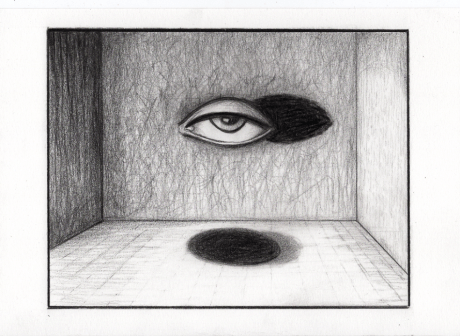
Expanding the Monolith Cocktail’s remit to include more in the way of new literature and poetic musings of a kind, we are pleased to announce the serialization of burgeoning author and rallying beacon of the band Vukovar Rick Clarke’s new novel The Great Immurement. Following on from the first three chapters, kindly and perceptively illustrated by the much-respected Andrzej Klimowski, you can now read the next trio of chapters below.
THE GIRL AND THE PLAY-THING
The Great Immured/I/Us/They still absorb the contents of this sticky, crumpled paper from time to all-time. The letter received:
Said the girl to her play-thing:
‘Sometimes I feel you don’t belong… anywhere’
She stroked
And stroked
And thought…
‘Except I wouldn’t want you to be anywhere else – I would be enraged… inconsolable…’
And so they sat upon their metallic plinth, the rust gathering rust in their infinite day-time play-time.
The play-thing, red, raw, balding and seeping felt it belonged … anywhere … except its current placement, and so it left.
The girl cried. She ignored the pain of the departing-wound, with all the blood, pus, open flesh and swinging innards and all else with it, and instead, she felt the pain of her lament for her greatest lover.
All day she cried.
All day….
All day….
All-Every-Day.
On her plinth, in the outskirts of the inner Otherlands – not quite all white, all light – she cried.
The play-thing had escaped into the inner Otherlands – all white, all light – and lost itself in amongst other clawing appendages of desires and almost irretrievably gave itself to the brutality.
It found peace and rested.
The girl did not stop crying. The departing-wound was healed to a smooth white mound, hairs penetrated the flesh (inwards and outwards) unevenly at uncoordinated angles.
The play-thing heard the sobs. The glistening, slightly sticky tears it could see without seeing were replicated in excitement rather than despair.
The play-thing found the girl. An arrival-wound could not be forced. However, the two were reconciled in a new way; a happy ending for both.
Sometimes these crumpled, sticky papers would get more crumpled and sticky at differing alltimes. Unreadable, in fact.
THE PARTIAL SEIZURE
To the doctor RE: Immurement – there are things my/our body/hole is doing without instruction ||| INFORM ME THAT I MAY REINSTRUCT THEE ||| Yes doctor.
In the Otherlands – I know longer know anywhere else – the temporal shifts are plentiful.
The rooms and the dimensions… the shapes… constantly change – permanent revolution, something I would wish on noone.
The shift comes.
LOSE YOURSELF TO IT AND DESCRIBE FULLY ||| … .
I don’t hate the weirds I see in the street. They amuse me. I find them amusing. I find it amusing that they can’t detect their own filthy stench when everybody else can. Unwashed flesh, soiled clothes… the piss of their cats spray from their throat as they invent nonsensical sentences…outloud… to themselves of course. Who else will listen?
An all too familiar summer’s breeze passes over and through my skin. Everything seems to be happening in slow motion, overlapping with real time, causing sickness and nausea before I’m even aware of the fact. I’m disconnected. I’m watching myself from within myself. My thoughts are about my thoughts. Maybe the faint sound of music that’s drifting into my insides from a nearby side-street is the cause, maybe it’s the scent of some familiar-unfamiliar fauna or washing powder. Maybe it’s everything combined. Whatever the trigger, I’m hit.
A rising liquid warmth from the pit of my stomach spreads upwards through my chest, across to my fingertips and upwards once more to every nook and darkened lump in my brain.
It isn’t possible to overstate the sickness.
I see what’s in front of me as any non-blind does, but I see more… There’re images that I
can’t
quite
identify.
I can understand them for no more than a nano second, these pictures are seen with eyes open, mixed in some impossible way with the reality that’s in front of me.
I glimpse a man who I recognise and instantly unrecognise. I just about hold in the vomit.
This is the point where my deitic coronation and entitlement reigns supreme. I know all, I see all, I have lived everything that is going to happen, my foresight shows me what I am about to live, a second in advance. Just a second.
And it’s all true.
For half a minute I am the King of all things. And then… again…
I’m hit.
The line of time – the timeline – that is lay out before me, by me, collapses immediately under noteven-close scrutiny. Everything was and is ridiculous, nonsensical… This future that had been crafted that fitted glove-like now appeared to be like the crackpot ramblings of the cat-piss-breathweirds I saw before. For now, they don’t amuse me anymore. I feel hatred and I feel no sympathy for these scums. It won’t last, I know when I’m next out in amongst them, I’ll giggle inwardly at a rogue flailer, escaping with a childlike glee from its carer.
I get home and my body purges itself, uncontrolled by my mind or my will, and I rest. Nothing feels completely real for a v v v long while after, not until the next day.
HOW OFTEN DO YOU GO THROUGH THIS? ||| Every moment of every time. ||| … ||| What can you do? Relieve me. ||| NOTHING. ||| Help me. ||| NO. EMBRACE THE ALL-KNOWLEDGE. YOU CAN RELIEVE YOU AND YOU CAN RELIVE YOU. RELIVE YOUR OWN DECAY. ||| … .
WOMB OF ALL THINGS TO DIE
In which The Great Immured thought of himself, sang to himself, trapped himself.
Though any future of you and I
Was hastily stored and shut inside
The womb of all things to die,
Still I await you, arms open wide.
And though briefly this foetus came alive
And escaped its home in the deathly bride
The Motherly noose was quickly tied;
The babe now rots in its natal slime.
I swim the lakes of happiness denied
With each stroke I am to defy
Our deceased future over which I have cried
To punish myself in self-righteous, self-spite.
Through this act I manage to say goodbye
To the terminal tumour that engulfs my pride
And though I’ve longed and lusted and tried
I let it go to let it lie.
Rick Clarke
Parts One to three here…
Our Daily Bread 089: Zoe Polanski, Forest Robot, Stanley J. Zappa, John Howard, Yanti Bersaudara…
July 27, 2020
REVIEWS/Dominic Valvona

As usual, another international whirlwind of stopovers awaits reader, as I pick out choice and interesting new releases and reissues from across the globe. Channeling his traverses, mountain climbs and treks across the California wilderness into ambient peregrinations, Fran Dominguez as the Forest Robot, takes the listener out into the great outdoors, with his latest suite After Geography. An aural escape, a safe spatial plain, Dominguez creates an environment in which to take stock. A Finnish-American freeform jazz partnership is in vogue with Stanley J. Zappa’s new album for the Baltic coastal label We Jazz. Saxophonist and clarinetist Zappa (a nephew of the late Frank) and drummer/percussionist Simo Laihonen traverse British-Columbia and all points in-between on Muster Point. Creating the most hushed and diaphanous of cinematic dreampop, Israeli artist Zoe Polanski releases the Violent Flower album. I also take a look at the troubadour pianist John Howard, who from his Spanish studio home, ties in his latest adroit songbook To The Left Of The Moon’s Reflection with the second part of his published memoirs, Illusions Of Happiness, this month. And in my reissues section there’s the first ever reissue of the West Java Yanti Bersaudara sisters honeyed soul and beat group psych exotic self-titled ’71 nugget. The Australian born, but bought up in a rural backwater of England troubadour Campbell Sibthorpe returns back to his roots with the expansive storybook, Ytown.
Towards the fantastical, though based in geological science, experimental dub unit Cousin Silas And The Glove Of Bones reimagine a lost continental bridge of shared deities and cultures on the new album Kafou In Avalonia. And finally, we have the new no-fi songbook of despondent poetic scorn and resignation from our very own Brian ‘Bordello’ Shea, The King Of No-Fi’.
Zoe Polanski ‘Violent Flower’
(Youngbloods) Album/17th July 2020

Despite, at various times, living in one of the most contested dangerous spots on the global stage, Israeli artist Zoe Polanski transduces all the violence, danger and stresses into a most diaphanous, sometimes fantastical, synthesized musical haze. Her latest fully-realized shoegaze electronic swoon of an album – co produced and written with the Tel Aviv producer Aviad Zinemanas – is subtle but immersive, moody yet dreamy. Lit though by Polanski’s travails, a deep sense of sadness and sighed questioning lyricism permeates the wispy vaporous smoke machine pop production.
Beautiful throughout, hushed and fragile, Violent Flowers is a sweeping cinematic articulation of conflicted feelings. The title-track, and former single, draws upon the ongoing Israeli-Palestine tensions; which has taken on even more drama in recent months with the policy of planned Israeli annexations in the West Bank.
Channeling the Cocteau Twins and Chromatics, this gauzy serenade of blossoming synth-pop is a disarming evocation of lightness that features Polanski yearningly searching for a way back home amid the division. The album’s second single, ‘The Willows’, mourns not only the painful end of a “surreal” affair whilst travelling across the USA, but is also inspired by Polanski’s mixed feelings of empathy towards her Palestine neighbours with a longing to escape the rocket attacks that passed overhead when she lived in the atavistic port city of Jaffa, during the 2014 conflict with Gaza.
Born in another ancient city port, Haifa, on the slopes of Mount Carmel, Polanski escaped the tumult through music and cinema. The experimentally burgeoning musician and singer later moved to the States, recording with the NYC band Katamine and enrolling on a summer course in cinematography at the prestigious School of Visual Arts. The fruits of which can be heard evoking a kind of dream realism on this filmic scored album.
As it happens, on returning to Israel and settling in the liberal creative hothouse of Tel Aviv, Polanski started a new project of soaked-reverb “slow cinema verite” named after the renowned Hungarian filmmaker Béla Tarr. Tarr’s actual cinematographer Fred Kelemen caught Polanski at a live show. So impressed, he invited her to score his own upcoming film.
This latest vision sees the visual-audio talent reach ethereal, almost apparitional scales of atmospheric beauty as she sings veiled lines over her creative foil Zinemanas’ mirror-y and airy synthesis of arpeggiator, sine waves and enervated percussion. Dream pop and neon lit electronica meets Israeli panoramas, mysterious island inlets, touches of Vangelis (on the glassy contoured ‘Humboldt Current’), soft bobbing beats and pulchritude waves of silk.
Gentle, enchanting with an aching depth, Zoe Polanski together with Zinemanas have created a refreshing vision of dreamwave electronic pop and filmic music; one that offers a different perspective and sumptuous mystery. Turmoil has seldom sounded so gossamer and hushed.
Kalporz X Monolith Cocktail: Zoe Polanski ‘Pharaoh’s Island’
Stanley J. Zappa ‘Muster Point’
(We Jazz) Album/7th August 2020
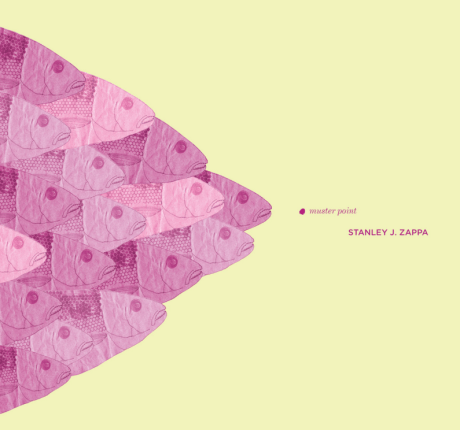
A regular stopover on my global tour of reviews, the Helsinki festival-label-store hub We Jazz are proving to be among the most prolific deliverers of quality contemporary and experimental jazz. Earlier this month the assured label put out albums from the Danish-Finn JAF Trio and Gothenburg saxophonist Otis Sandsjö. Their latest release pairs up two former acolytes of the Mitford Graves school of free jazz enterprise: the American tenor/soprano saxophonist and alto clarinetist Stanley J. Zappa (who’s name embellished this LP) and Finnish drummer, percussionist Simo Laihonen. The Queens-made drummer extraordinaire and teacher Graves is renowned for his avant-garde contributions working with Albert Ayler, Paul Bley and the N.Y. Art Quartet; a reputation that is lapped up by his former students on this set of probing impulsive serialism recordings.
You may have guessed by the name, and yes Stanley is indeed a scion of the famous Zappa family tree: a nephew of the late rock-fusion genius Frank. Erring towards jazz, Stanley proves that old adage that the apple doesn’t fall far from the tree; highly adroit and proficient in pushing at the foundations, able to switch between the spiritual and hard bop. His foil Laihonen, of the long-standing Black Motor trio, proves equally as talented, propelling in bursts and snaps or in an amorphous fashion hitting and reeling shapeless accents and meanderings.
Joining them on the odd radial exploration, bassist Ville Rauhala adds some stringy, rubber-band thrummed double-bass runs and bodywork thwacking: less rhythmic and traditional, more loose and wandering.
Muster Point, a reference heavy album of track title locations (much of which name check places in Stanley’s British Columbia Canadian home), was recorded both in the studio and out on the road. You can hear some of the live spontaneity and an appreciative applause on the flighty clarinet and looming bass, with sporadic drum breaks, avant-garde piece ‘Muster Point IV’. Split between shorter ambling and more energetic incipient Muster Point entitled flexes, and deeper, longer workouts this album strikes out towards Pharaoh Sanders’ Egypt on the opening suite to dishing out tougher, heavier breaks on the street map ‘538 E14th, City Of Piss, USA’.
Fluting, twirling and coiling over the tumbling drums, rumbling timpani and shaking percussion, Stanley’s vibrato sax hawks and spirals with both longer and shorter breaths. Often sailing at a counter speed to Laihonen’s quickened rolling patterns, that wondering instrument trills freely as light as air itself. Well, for the most part. Stanley can also toot rapidly and with force when the occasion arises.
From drawing on the ancestral (on the Kahil El’ Zabar watery percussive underflow ‘Pleasant Avenue’) to skitting across a NYC boardwalk, Muster Point plays hard and footloose with freeform jazz; dipping into the spiritual and rapidly evoking hard bop dashes. Yet again its another fruitful experiment and performance from the We Jazz label.
Otis Sandsjo ‘Y-Otis 2’
JAF Trio ‘ST’
Forest Robot ‘After Geography’
Album/28th August 2020

With a deep connective respect to the landscapes this intrepid mountaineer and sonic explorer has scaled and traversed, Fran Dominguez provides a subtly evocative safe space in the most tumultuous of times. When all the elements of a virus epidemic and the ongoing tensions of Black Lives Matter mix with the divisive rage of social media and fake news, the only tool we have left to navigate the storm of constant faux-outrage is “intuition”. Put both together, as the California-based trekker Dominguez has done, and you get a most beautifully subversive ambient soundtrack; a tenderly produced sonic psychogeography of both the synthesized and naturalistic; a million miles away from the hubbub and stress of the online world. A sort of self-help guide for contemplation and rest you could say, the softened bobbing and trickled piano notes and gently blowing winds washing over the listener with just enough depth and interest to transport them to the awe-inspiring landmarks of nature.
With over 400 ascents and 6,000 odd miles of cross-country exploring under his belt, Dominguez tunes into those experiences when composing music under the Forest Robot title. Intuition, that main motivation and driver for the latest tonal contouring suite, After Geography, comes into practice after all the preparation in the world fails to allow for the variables that arise when climbing those magnificent rocky peaks. Though obviously a great title in itself and an encapsulation of the Forest Robot’s meditative semi-classical, semi-Kosmische maps, the inspiration behind it comes from Ringo Starr. As the anecdote from rock’s backpages goes, the bejeweled digit fingered Beatles drummer proposed it when the Fab Four were stumped for a title for their next album after Revolver. As a lighthearted chide at the rivals, The Rolling Stones, who’d just released Aftermath, Starr chimed in with “After Geography”. It seems highly appropriate in this context, and in this time.
An escapist survey that breaths in the influences of Roedelius, Boards Of Canada, Erik Satie, Harold Budd, Nils Frahm and Small Craft On A Milk Sea era Eno, the album covers the terrain in a gauze of delicate resonance, notation and obscured woody movements. Track titles become descriptive reference points and wildlife moments experienced, on this aural map; a clue at times to the scenic inspirations that encouraged them. ‘Of Birds Migrating In The Distance’ is for example a winged patted dance and flutter across the ivory, and the marimba-like bobbing ‘Glacial Architecture Of The Mountain Corridor’ features crystalized icy notes and melting droplets: it’s almost as if Dominguez captures the sunlight gleaming off the slowly melting glacier. ‘Over The Drainage Divide’, which doesn’t exactly sound very inspiring, is surprisingly wondrous, even spiritual, with its choral ethereal waves and hints of ghostly visitations. An ascendant version of that choral spirit can also be heard on the soft droning, delayed and bouncing notes beauty ‘All Across The High Plain After The Storm’.
A mostly peaceable geography, Dominguez’s latest impressive suite offers the safety of a timeless rugged pristine panorama. A breath of fresh air; a sonic plain on which to gain some perspective, that intuitive methodology proves highly successful on a most pleasing, imaginative ambient experience.
Campbell Sibthorpe ‘Ytown’
EP/21st July 2020
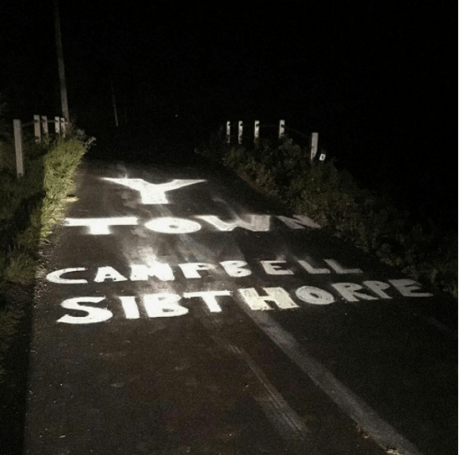
Following up on the impressive choral anthem ‘Good Lord’, which we premiered last month on the MC, the yearning troubadour Campbell Sibthorpe proves he has more than it takes to deliver the full emotionally stimulating package with his new, generous EP Ytown. Over seven tracks of similar beautifully realised rustic anthems and shorter mood passages, Campbell expands his themes of escaping the pastoral backwaters of small town life.
Both a travail down memory lane and pilgrimage, nature’s son returns from London to the town in which he spent those formative years, on the outskirts of Bristol, to mull over the past, but above all, as the Australian born songwriter/multi-instrumentalist set out to serenely on that ‘God Lord’ hymn, seeks to find himself amongst the humdrum scenery. Ytown could be many towns, any town, yet it proves evocative and creatively fertile enough to inspire this expansive songbook. The very essence of the place seeps into the music through field recordings and the sound of the local church’s pump organ – used very subtly as a sadly reverent undertow on the setting-sun curtain call ‘Strawberry Line Pt. 2’ a couplet to the EP’s only scenic twinkled if musing instrumental, The Shins like ‘Strawberry Line Pt. 1’.
Entirely self-produced and recorded from the bedroom of his youth, Ytown pays homage to innocence, to his childhood relationship with his ‘Father Carpenter’, and the unburdened freedoms of nature. The first of those is a powered-up Midlake country folk anthem, the latter, an achingly harmony rich longing to be as free and detached as the ‘Dandelion’.
Almost echoing an early Radiohead paired with the Fleet Foxes, the tender woven poetic ‘Pastel Porcelain’ seems to have stepped out of a medieval tapestry, and the opening dappled lit blossoming ‘The Sun Appeared’ shows an almost filmic and experimental quality to Campbell’s music.
A balance of acoustic naturalism and full on, climatic singles, Ytown is a great piece of expansive storytelling, a conceptual EP perfect in length, depth and heartfelt searching.
Campbell Sibthorpe ‘Good Lord’ Premiere
Brian Bordello ‘The King Of No-Fi’
(Metal Postcard Records) Album/16th August

The self-anointed king of no-fi returns with another songbook of quasi-demoed wistful despondency and self-deprecation; a stripped-back one-track display of rough charms that cuts to the heart of the cult St. Helens malcontent’s sardonic, but also extremely vulnerable, annoyances about modern life.
The idiosyncratic de facto leader of the long standing dysfunctional family legends The Bordellos, and the barely concealed instigator of the anti-Brit pop and plodding rock Idiot Blur Fanboy, Brian ‘Bordello’ Shea (who I must also point out is a regular contributor to these very pages) follows up on his recent solo offerings, the Liverpool Hipster Scene EP and Boris Johnson Massacre single, with another album for the Aussie platform, Metal Postcard Records. Recorded during lockdown whilst growing tired at the lack of revolutionary zeal and wit in contemporary music, and the reliance upon of nostalgia, regurgitation in the industry (both musically and through blogs, publications, radio), Brian has penned a quite sincere collection of romanticized sufferings, regrets and love songs.
Making even Sparklehorse sound like ELO in comparison, the no-fi production values on offer are raw but never really coarse or discordant. No augmentation, filters, effects or sundry, just a bare accompaniment of rough’n’ready but melodious acoustic guitar and the whirling of a rudimental four-track; the click of the record button and, at the end of each performance, the stop button.
Channeling various maverick troubadours, post-punk poets (Dan Treacy springs to mind) and a Brylcreem of rock’n’roll idols (ironically enough the release of this album intentionally falls on the anniversary of the true king, Elvis’ death), Brian postulates on a lack of energy and rage in music, the death of the mutherfucker personalities, a bevy of “scarlet” women and lost innocence. Brian can be a romantic sod at times, even sentimental; writing some real tender poetic lines amongst the scorn and despair, with even a hint of Bacharach on ‘Banana Splits’ (yeah, imagine that!). Various stolen kisses, evocations of less complicated, less divisive magical times permeate the album despite the constant references to the death of this and that and the lamentable resignations and threats to give it all up. Sometimes Brian just tersely pays homage to his icons, such as Lou Reed and Billy Fury.
Quite swooning in places, this is neither a plaintive nor angry songbook, but as I said before a sincere often humorous yearn from a maverick soul stuck in lockdown. The King is dead; long live the King.
The Bordellos ‘Debt Sounds’
The Bordellos ‘Will.I.Am You’re Really Nothing’
Cousin Silas And The Glove Of Bones ‘Kafou In Avalonia’
(Submarine Broadcasting Company) Album/19th June 2020
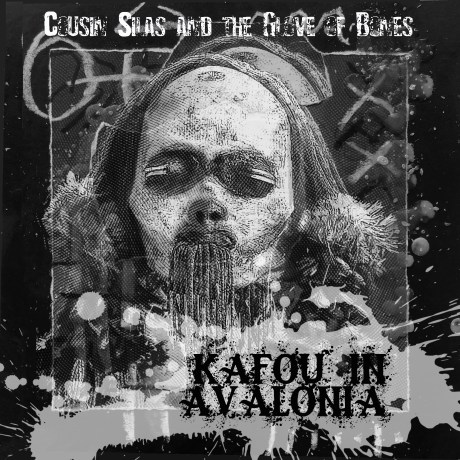
Reimaging a time when Earth’s landmasses were being reshaped, the atavistic geological inspired futurist dub unit pose a cultural “what if?” with their fourth “set”, Kafou In Avalonia. Developing out of a volcanic arc at the northern edges of the “supercontinent” Gondwana (we’re talking about 550 million years ago; when this leviathan contained one-fifth of all the planet’s land) but decoupling to form a drifting micro continent of its own, Avalonia, if it didn’t eventually breakup and collide with Pangea, would have bridged what is now the Atlantic Ocean. Crustal fragments underlie parts of Southwest England, Southern Ireland and the East Coast of America. Wishful dreaming Cousin Silas And The Glove Of Bones picture an alternative reality; one in which Avalonia still existed as a gateway between all Earth’s cultures and peoples. It acts as the crossroads that might have set out an entirely different course for civilization; a more integrated, less fractious one perhaps. In this setting Haitian, Brazilian, Angolan and Nigerian deities, spirits and rituals converge with an experimental soundtrack of post-punk dub, Kosmische and electronica.
Invoking a lost world, a quasi-Atlantis, they merge voodoo ceremony and tribal incantation with sonorous throbbing basslines, barracking drums, heavy reverb and craning Manuel Gottsching like guitar.
A reference heavy album, with various “Loa” (spirits) and divinities summoned and made offerings, the track titles name check a pantheon of the worshipped. The opening gabbling dub and primordial shrouded ethereal jug-poured ‘Oxûm Over Water’ pays homage to the Yoruba peoples river goddess, while the singing chorus and insect chirped trans-Europa rail momentum Kraftwerk meets Guru Guru ‘Oxalá Of The White Sky’ takes its name from the Brazilian “sky father” and creator of human beings. Elsewhere, Haiti’s spiritual ancestors are represented in the shape of the serpent creator of the cosmos, Damballa (the On-U-Sound dub prowling low frequency crumbled bass languorous ‘Damballah Of The Dark Sky’), and senior Petro visitation born from the heinous savagery and injustice of slavery, Ezilí Dantor (the lolloping Orb submersion ‘Ezilí Dantor Awake’). Incidentally, that last spirit especially took kindly too offerings of crème de cacao and jewelry, and on its birthday, a wild pig. It’s believed that one such feast in honor to Dantor preceded the infamous slave revolt of 1791.
Ancestral ghosts meet synthesized futurism on this mystical transformed aural geography, as recordings of various rituals swirl in and around a cosmic soup. A supernatural and celestial, seeping and vaporous vortex of polygenesis sources are gathered together to create an imaginative cosmology hybrid. If The Future Sound Of London and Ash Ra Tempel recorded an album at Lee Scratch Perry’s black ark studio it might very well have sounded something like this. And that’s me saying this is a bloody great experimental dub album. Seek out now.
John Howard ‘To The Left Of The Moon’s Reflection’
(UK John Howard/USA through Kool Kat Musik) Album/7th August 2020
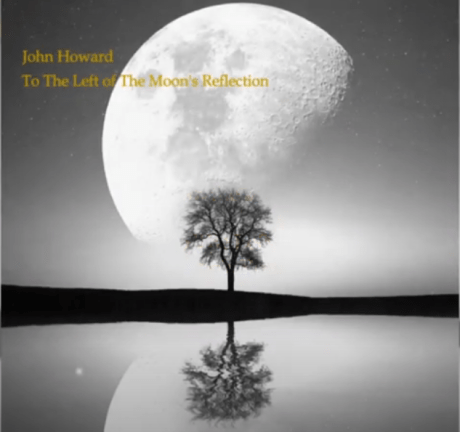
Chiming with the second candid, sometimes wistful, chapter in the pianist raconteur’s memoirs, this latest fragrant songbook manages past regrets with wizened heartfelt balladry. With plenty of time, including the lockdown, to mull over the past, after writing two volumes of self-effacing recollections (part two, Illusions Of Happiness, is scheduled to tie in with this album, published on the 7th August) John Howard channels a lifetime of setbacks and learning through the philosophical and metaphorical.
Coming to terms and letting go in some respects, the fledging 70s star set back by a series of career mishaps and a traumatic accident (forced to make a fateful leap from the window of an apartment he shared in Earl’s Court with some colourful Filipino gay characters, who brought back a mad Russian ‘bit of rough’ intent on murder) muses over breakups (the la la, almost Christmas seasonal, chiming mini anthem ‘I’m Over You’) and a broken friendship (the regretful heartache ‘Echoes Of Pauline’). The latter’s real life subject appears as a recurring figure of that regret in John’s work; the best friend from school losing touch since 1973 (as John admits, probably down to him and not Pauline) first pops up on ‘The Flame’ from the career launching Kid In A Big World showcase, and later on ‘Pauline’s Song’, which featured on the 2009 EP Songs For A Lifetime.
Pauline’s presence, companionship is much missed it seems, as John looks out from his Spanish home veranda on an uncertain, if scenic, world. Idyllic though it is, his life in the Southeastern Spanish town of Murcia can’t make up for the pining of his former Welsh home, and even further back, Lancashire. Moving across the seas to preempt Brexit, John recalls a Welsh pastoral bliss on the wistfully beautiful melodious ‘And Another Day’. Yet both lyrically and through his signature subtle minor key changes moves deftly into the sadness of leaving it all behind. The scented waltz-y ‘Illusions Of Happiness’ ambles through a perfumed garden of delights but also mournfully wades out into the sea; waiting on something, a ship, vessel, the final boat ride perhaps.
Old ghosts mingle with analogies of saviors, and the tropes of coming-to-terms with one’s decisions. This is all done with a most adroit touch of pastoral organ, Baroque chamber pop, gentle Dylan-esque harmonica, concertina and softened tambourine rattled crescendos: all of which is played by John. It’s a sound that is saved from the saccharine and pushed towards the yearning beauty of the early Bee Gees, late 60s Beach Boys and the Incredible String Band, whilst echoing the flourishes of John’s burgeoning pianist troubadour career in the 70s.
The 17th album proper in a career that has regularly stalled (mostly down to the mishandling of others), with gaping holes in which John turned his hand to A&R, the lyrical To The Left Of The Moon’s Reflection follows on from last year’s brilliant Cut The Wire – just one album in a long line of such releases from arguably his most creatively prolific tenure. The poetically scene-setting songbook is a perfect accompaniment to those memoirs; a mature retrospection of a life well lived.
John Howard ‘Cut The Wire’
John Howard ‘Incidents Crowded With Life’
John Howard ‘Across The Door Sill’
Reissue
Yanti Bersaudara ‘ST’
(La Munai Records) Album/7th July 2020

A beautiful three-part harmony serenade drifting out of West Java, the much sought after 1971 album from the endearing Yanti sisters is finally being reissued for the first time ever. From Indonesian musical treasure hunters, La Munai Records, a befitting repackaged version of that original Bamboo Music magical Sundanese suffused treat.
Previous twee recordings, which swing between Merseybeat and enervated gospel soul, have made it digitally onto a number of platforms and compilations over the years, but the sisters’ later self-titled nugget has remained pretty elusive.
Released towards the end of their tenure, this beautifully cooed, lulled and charming harmony rich record seems oddly out of step with its time; though the strict regime in Indonesia had the gall to ban rock’n’roll, and so outpourings of fuzz-thrilled rebellion and salacious gyrating were kept to the minimum: more the early fab four’s ‘Tell Me Why’ or anything by The Tremeloes than the dirty scuzz and teasing of the Rolling Stones. That’s not to say the odd frizzle of psych and a coarse guitar twang or two doesn’t pop up here and there, but this early 70s songbook is mostly dreamy, heavenly even, and spiritual.
Whilst channeling the siblings (that’s Yani, Tina and Lin Hardjakusumah) West Javanese heritage of Bamboo Music, Gamelan and Jaipongan, you will also hear a constant sustained and fanning ray of church organ too. The lovely honeyed vocals even reach the ethereal heights, sounding like an Indonesian version of Dusty sings gospel.
The second most populous ethnic group in Indonesia, the Sundanese people (a name derived from the Sanskrit prefix “su”, which means “goodness”), of which the sisters belong, reside in a part of the country synonymous for its rich musical traditions. Soothed into an exotic dreamboat mix of angklung ringing and bamboo bobbing, reedy staccato surf guitar and ticking away drums those delicate ancestral chimes are propelled into the beat group era, and on the misty organ ghostly ‘Bulan Dagoan’, a spooked funhouse garage band era.
Coquettish, enticing, at other times like the 5th Dimension and choral rhyming, the girls vocal sound is sweetened; flourishing with yearned and exotic swooning.
For those of you wishing to enjoy a languorous dreamy slow boat to Java, with just enough fuzz thrills to pique the interest, let the Yanti sisters provide the hip accompaniment. If you’ve already been entertained by the trio, then you’ll find this ’71 release less saccharine and girl-group than previous albums; more magical and with more stained glass soul.
Hi, my name is Dominic Valvona and I’m the Founder of the music/culture blog monolithcocktail.com For the last ten years I’ve featured and supported music, musicians and labels we love across genres from around the world that we think you’ll want to know about. No content on the site is paid for or sponsored and we only feature artists we have genuine respect for /love. If you enjoy our reviews (and we often write long, thoughtful ones), found a new artist you admire or if we have featured you or artists you represent and would like to buy us a coffee at https://ko-fi.com/monolithcocktail to say cheers for spreading the word, then that would be much appreciated.
Dan Shea’s Lockdown Jukebox: Part Two
July 24, 2020
Selection/Horror-Lit/Dan Shea

The Monolith Cocktail is grateful to have coaxed a number of guest spot contributions from the impassioned and adroit musician/writer Dan Shea. Roped into his family’s lo fi cult music business, The Bordellos, from a young age, the candid but humble maverick has gone onto instigate the chthonian Vukovar (currently working through a trio of ‘greatest hits’ packages here) and, with one part of that ever-shambling post-punk troupe, musical foil Buddy Preston, the seedy bedsit synth romantics Beauty Stab (who’ve just this month released their second single ‘French Film Embrace’, here)
An exceptional talent (steady…this is becoming increasingly gushing) both in composing and songwriting, the multi-instrumentalist and singer is also a dab hand at writing. For his debut, Dan shared a grand personal ‘fangirl’ purview of major crush, the late Rowland S. Howard (which can be found here), on the eve of Mute Records appraisal style celebration reissue of his highly influential cult albums ‘Teenage Snuff Film’ and ‘Pop Crimes’. This was followed by an often difficult, unsettling, potted with dark comedy, read on Dan’s friend and foil Simon Morris (of the Ceramic Hobs infamy; the piece can be read here), who took his own life last year.
Now, from his lockdown quarantine, Dan furnishes us with his new series of ‘imaginary film screening jukebox’ selections come loose horror fictions. Part Two awaits….
Lemon Kittens – The Hospital Hurts The Girl
“Not all lives matter. Not the lives of the people who make people like us into people like us. Not at all”
4
1
5
“Some fires have to be put out. No one cares for the sentience of the flame. I invite you closer, with that, to a darker fire.”
4
1
5
“What’re you cunting on about you drunk cunt?”
Listening to music in the shower is a pointless exercise as the water drowns it out. Drinking in silence in the shower is pure desolation. Listening to music in the shower while drinking, baby, that’s where it’s at. O the cruelty of duty. Memory shards hath made me a glow ghost.
4
5
1
I closely inspect the plughole. She’s not down there. Ronette, baby, how could we fall so far? Karl Blake’s stentorian voice washes over me as I drain the rest of this can of Perla. It seems she only appears in the drain when I’m blinking so I stop blinking. The water is hot, but not that hot. Not as hot as it was when
“Well, you know”
988rtdCdf4e3
A series of still images:
A small child falling down the stairs. The doll body photographed mid air.
A bird falling from the sky. The bird is photographed mid air.
A dignified old man, clasping his hands in front of him. His granddaughter is playing with a toy monkey.
An echo, maybe your echo.
John Cale – Taking Life In Your Hands
Gersten called. It was the strangest thing. I didn’t even need to switch my phone on to hear her speaking. When we last spoke I’d called her drunk out of my mind because I’d deluded myself that she’d committed suicide. She said she was worried about me and wanted to check I was okay. I reassured her that I wasn’t.
“Sampling is such an integral part of the process for many that sample clearance isn’t a worry unless you sell a million records anyway. Incidentally I am quite pissed and thinking about weird fetishes I have developed. Like attractive women coughing, dunno what that’s about. Gerst, I frequently imagine you in humiliating situations but ones where your beauty is fully showcased.”
Our favourite client called around as well. He wanted to check I was okay. I reassured him I wasn’t then I sucked his dick. I wish people would stop pitying me and checking on me.
‘magine et main line the scene – he’s pissed on supermarket spirits that he’s drinking out of a Pepsi bottle in the snow and you’re doing exactly the same. He’s sat outside a pub smoking the lonely remnants of a fag. And then i come along, also the lonely remnants of a fag.
The echo resounds, maybe even your own echo.
Gersten angel angelangelangelangel.
It’s at this point it becomes clear that there is either more than one narrator or that the narrator has lost his fucking mind.
A bird falling from the sky. The bird is photographed mid air. Fish are flopping gasping and rotting on the dried up riverbed. The dog kids have arrived. The grey pin prick holes are opening wider to close again when you look away. The moon stands still on the day I am finally calcified.
David Bowie – Subterraneans
Low is a great album about depression. It really captures that feeling perfectly. I read a section in a recent Bowie biography recently about him totally losing his shit when John Lennon died. Otherwise he came off as quite cold and calculating.
Low was finishing on the afternoon Gersten came into my life. I was sat, hungover, in my living room listening to Low when a mist descended upon me. Not a metaphorical mist either. The air was electric blue and sugar. My senses were not all that was fogged. As Subterraneans wound to a close, Bowie’s lonely sax honks amid the churning proto Coil electronics, there was a knock at the door.
I waded through the fog to the hack door. I had presumed it was someone who knew me, as it’s common knowledge I only really answer the front door to get a pizza. An attractive woman in her late 30s was stood there. G.
“Dan I need to hide out somewhere for a while. Things just aren’t making sense.”
She kissed me and I didn’t care that I didn’t know who she was but she somehow knew who I was. When a film noir beauty shows up, as soon as you’ve felt her up enough to be clear she’s not packing heat you let the dame in and pour her a drink.
The first time a client came around was a bit of a shock I’ll admit but I just busied myself in the living room. The first time a client asked me to join in was even more of a shock but now we work only as a pair. It’s cool. I get to live out my Dennis Cooper fantasies even as my late 20s takes me from twink to otter.
The broad certainly had a hold on me, a vice like grip on the verge of splitting my balls like an egg.
I envision us now. The party is over and I’m on the verge of disappearing into the couch. I’ve put Roy Orbison’s bizarre attempt at disco Laminar Flow on to gently encourage people to fuck in the off direction. Our mute TV shows only static. You step in front of me in your black velvet dress. I unzip it to find you have nothing on underneath. You climb into my lap, Gersten/Ronette/Naomi and this comes on.
Rowland S Howard – Dead Radio
I’ve always found pale skinny boys who look like they take too many drugs smoking to be a turn on. Now it turns out, thanks to you, I’m turned on by women doing it.
I was SCREAAAAAMING into a microphone between your legs as you dumped the ashes into a can of Red Stripe. We were both naked. This was streamed across the world and we both got ourselves off to the video after the fact.
This tension in glances, this French film embrace this lustful tarantella. I carve my initials into you with my tongue. You’re the most beautiful woman of my nightmares. Your voice is lullaby soft and ethereal chimes sound in your wake. I press my face between your thighs and whisper your name into the depths of you.
I refuse to watch this one disappear. I call her up, I’ve fallen off the wagon and I’m making no sense. I’ve not eaten for days because I’m conscious of people wondering who the fat guy she’s with is. Maybe he’s a community pet she looks after. Maybe the council make her drive him around.
I was having one of my nightmares about past abuse and I woke up sweating in her arms. She calmed me down until I closed my eyes and saw her ceiling spider crawling. He reopened the eyes and you said softly to him “Supplanter?”
Vukovar – Voices / Seers / Voices
One of my clients was Dan from Vukovar. Apparently his then girlfriend had paid for him to hook up with me and G, she was a stern faced American lady who sat and watched. Anabella her name was. What he lacked in confidence he made up for with a strange, hand flapping autistic charm.
One SNOWY CALM CRISP FUCK morning I awoke to find someone had dumped a fridge behind my house. IN THERE I FOUND A CASSETTE. I WILL TRANSCRIBE THE TRACK LIST FOR YOU WHEN I AM AT LIBERTY. AT PRESENT THAT DAME IS MONOPOLISING MY TIME LIKE CYNDI LAUPER.
Dan wouldn’t stop going on about this guy called Simon, stank of booze and insisted on us playing Rowland S Howard while this was all happening which suited me. Everything was amazing and cool to him, like he was American or something. He was strangely insistent on blowing me on the shower and he kept inspecting the plug hole as if I he could see her peeking out.
What gets me isn’t the lurid neon atrocity but the revelation of the lack revealed. Gemma Barker. I’m like Sotos but I fetishise the aggressor not the victim. My art will bleed into your world and you will question even traffic lights. Show me what you are and I’ll show you what I’ve already taken. Relax, baby. It’s done.
New Order – Dream Attack
I remember the first time I met Ronette. We’d been talking online for a long time and she flew over from Germany for us to both stay in an Air B’n’B (bed and breakfast) in Hulme. I wanted to go there but my passport had expired and I was skint. She looked a lot like Gersten come to think of it.
I was greeted at the door by a dishevelled Welsh man in a bathrobe called Ralph who gave me the key to the flat and we sat and had a cup of tea and bemoaned the fortunes of Blackburn Rovers. My mate Cam had a trial for them. Good guy, Cam. We met in a dream.
I was listening to Technique by New Order and then I got a text. “Sweetie I’m outside”. Me and Ronnie met for the first time with Dream Attack playing, and Ralph was there. We kissed like our lips were molten.
Part of the reason I love Dream Attack is that despite Bernard’s obvious lyrical shortcomings, “I can’t see the sense in you leaving” is such a great line. Such a practical Northern way of looking at it. “Do you have to go? It’s a bit pointless.”. I couldn’t see the sense in Ronnie going that time. Or when she went down the plug hole. That was really fucking weird.
Dan Shea
Our Daily Bread 388: Beauty Stab, The Legless Crabs, Peel Dream Magazine, The Waterboys…
July 23, 2020
REVIEWS/Brian ‘Bordello’ Shea
Brian ‘Bordello’ Shea joined the Monolith Cocktail team in January 2019. The cult leader of the infamous lo fi gods, The Bordellos, has released countless recordings over the decades with his family band of hapless unfortunates, and is the owner of a most self-deprecating sound-off style blog. His most recent releases include The Bordellos beautifully despondent pains-of-the-heart and mockery of clique “hipsters” ode to Liverpool, and the diatribe ‘Boris Johnson Massacre’. He has also released, under the Idiot Blur Fanboy moniker, a stripped down classic album of resignation and Gallagher brothers’ polemics. His next album, The King Of No-Fi is due out next month on Metal Postcard Records.
Each week we send a mountain of new releases to the self-depreciating maverick to see what sticks. In his own idiosyncratic style and turn-of-phrase, pontificating aloud and reviewing with scrutiny an eclectic deluge of releases, here Brian’s latest batch of recommendations.
Beauty Stab ‘French Film Embrace’
Single/12th July 2020
Oh lord this is bloody good. It’s perfect pop in its most perfect form. It gives me goosebumps. It has everything one wants in pop music. No wonder there is a buzz about this band that has not been heard of since…well, lord knows when.
This is worthy of The Associates at their heartbreaking best; a song that could and should if there was any justice in the world be all over the radio to brighten and enlighten, we the listening masses. Maybe too early in the year to say single of the year…but I will say it anyway…single of the year.
Related:
Beauty Stab Interview
Beauty Stab ‘O Edan’
The Waterboys ‘The Soul Singer’
(Cooking Vinyl) Single/Out Now
I have a bit of a soft spot for The Waterboys; I quite like how Mike Scott had the music world at his feet with the release of the This Is The Sea album, and was on the verge of U2 like success. It was his for the taking, but instead he locked himself away in Ireland and made two beautifully of kilter folk albums. That kind of career sabotage has to be applauded.
One of rock music’s more eccentric and lovable characters, and here we have a sonnet to another one of rock’s eccentrics the grumpily lovable Van Morrison. This is a fine sun filled pop song in a Radio 2 kind of way, the kind of song that will have you tapping your fingers on the steering wheel as you listen to the radio stuck in traffic. I wonder what Van thinks of it.
She’s A Fish ‘Downstream’
(Puffy Pastryd) Single
This is one for all you pop pickers out there with a taste for the mildly twisted, Shadow hungry psychedelic sounds bordering on the kind of off kilter post punk delights served up by the wonderful Swell Maps all those years ago; hastily scrubbed semi acoustics scratch out the nagging melody of pure austere glory. A little gem of a song.
Peel Dream Magazine ‘Moral Panics’
EP/3rd July 2020

I like this especially track two, the ridiculously titled ‘Verfremdungseffekt’, which comes on like early Julian Cope circa his first two solo albums, and early Belle and Sebastian. A mellow pop treat for sure, the Casio organ and fine melody gives one a splendid few minutes of pop bliss. The rest of the EP is fine garage pop psych tinged mellow shoegaze with lovely floating Casio like keyboards that are both soothing and enriching, giving you the warm feeling of being sponged down by the greatest hits of a sexy but enigmatic European.
Violent Vickie ‘The Blame’
Single/10th July 2020

I wonder if Violent Vickie has ever had her music described as splendid before. For that is what it is: splendid. It has a splendid lo-fi dark syntheses about it that can only be described as, well, splendid. It has a lovely dark crunchy guitar and vocals that can only be described as, splendid. The splendicity of this track is one I enjoyed a great deal and I was a bit concerned at first the press release mentions Joy Division, and normally that is a big turn off in a press release mentioning Joy Division, as every bugger who classes their music as Dark Synth always mentions Joy Division and this sounds nothing like Joy Division I’m pleased to report; there will be no mishaps hanging up her washing…thank the lord, as there is always room for splendid music in my life.
Astral Swans ‘Bird Songs’
Single/10th July 2020

Now I do like a good pop song stuffed with self-loathing and unhappiness but disguised with pop melody and sing-along ability, and this track has those qualities in abundance. It has the same feeling and in fact same beat as Smogs wonderful ‘Cold Blooded Old Times’. It is a song to sing to yourself while walking alone in the park, and we all need one of those in our life.
The Legless Crabs ‘One People One Mind One Death’
(Metal Postcard Records) Album/25th June 2020

The debut proper from the Texas Punk rockers The Legless Crabs is upon us, and what a fine LP it is too. Discordant guitar, ramshackle drums, echo laden vocals and off beat lyrics takes us to the strange world they inhabit. Pussy Galore, The Jesus And Mary Chain and The Shaggs are fine reference points, but placed into a glittering concrete music mixer to supply a musical house art all of its own making; a place where Roky Erickson would happily reside. The 13th Floor elevators are also brought to mind especially on my personal favourite, the wonderfully spaced out ‘Not The Good Kind’, which starts out as almost strange lounge punk and then erupts into waves of feedback, a track of pure wonder which perfectly fits on this album of pure wonders. I can say, without a doubt in my mind, one of the albums of the year.
Serialization: THE GREAT IMMUREMENT by Rick Clarke
July 22, 2020
Written by Rick Clarke/Illustrations by Andrzej Klimowski
Expanding the Monolith Cocktail’s remit to include more in the way of new literature and poetic musings of a kind, we are pleased to announce the serialization of burgeoning author and rallying beacon of the band Vukovar Rick Clarke’s new novel The Great Immurement. The first three chapters, kindly and perceptively illustrated by the much-respected Andrzej Klimowski, can be found below with an introduction from Monolith Cocktail contributor, budding author in his own right and Vukovar bandmate, Dan Shea.
INTRODUCTION UNDER NO DURESS
It’s not about our friendship or his influence on my own writing – not at all. What you are about to read is the process of years of reduction. It’s easy to vomit a stream of consciousness onto a blank page; far harder to chip the block away into something meaningful.
Rick has written something that, in my view, is beautifully emotive without ever being obvious. I feel he’s a great talent and I’m privileged to call him a friend and have the invitation to write this. Under no duress whatsoever. (Dan Shea)
THE GREAT IMMUREMENT
This is the first and last time there will be grounding in real-life, real-earth. All that flows forth from now is descension, are fever dreams; are misremembered and dismembered recollections of the disordered mind; are actual encounters of the im/possible death of The Great Immured. The six year span of this entrance into the Otherlands is where eternity ends, where the Abdication Of The Body begins.
Let me then create you.
This is the end. This is the start.
Let me then begin this eternal six years. Today is the oldest I will ever be again. I lock ourselves away, I construct no exit and I instruct a way out to those outside, those negligible energies. My name means first and last.
The walls are concrete, the doors are concrete, the windows are concrete. There was a concrete fantasy. I stare straight into the greyness.
There is no-thing here, no descriptions. All that is needed is no-thing; there should never be a need.
When we are immured, when we see it from the inside, we see that all light is absent and all light is present; this retinal pessimism dictates that there is nothing to see, but it’s all that we can see. And then all times are in the mind’s eye.
THE CONCRETE FANTASY

There’s a town. The town in which we lived, actually. At the moment it sickens this irrelevant little God with the halfway devotions to our own aesthetic ideals. It wants/wanted to be a brutalist wasteland, but is as yet, as is now, uncommitted. A place as a partial seizure.
The people are inbred (which is fine) and offer nothing except hedonism (which is fine) which we can get anywhere. We want something less, we want less than nothing.
Of this town, I am thine only saint; the Patron Saint Of The Archaic, and I need my own continuous monument.
We keep looking into the every-greying grey, my stare travels through eight interlocking circles. We decide it can’t be broken, and so, for now, it can’t.
I dream of razing the town in a similar circles, a radius of 13 miles in fact. And I want the garden to be perfectly flat concrete. A Concretopia. A blinding greyness.
In the V V V centre is a building. It’s an imposing concrete cube. There are no windows except one tiny one on each of the four faces. Every one of the four is near the top, right in the middle, so that I can look upon my Winter, my own purgatory. But we never will. There are mirrors in the windows, designed in a miracle way to only have a view as though I were looking from the outside. We only want to look upon my creation.
We hear us think of the inside, but we cut this from our mind. Some of us prefer an illusion, some of us prefer the mystery. Once the unknown becomes known, it can be the Death of Desire. I’d rather suffer from my love of all this because at least this malady has a melody, rather than the emptiness of content. Or maybe all these things all other ways around.
Dim the vision and stop the tape – and now it didn’t happen. The secrets of the secrets are still hidden.
THE VISIBLE MAN
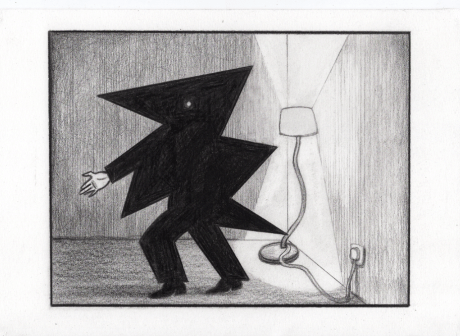
Knock knock? You are all the guest we need.
Knock knock. Okay.
An invisible fist upon my invisible door.
I reach up and out of my invisible chair, turn to the invisible lamp and reluctantly switch it on.
The invisible rays strike my eyes, strike my face and light up my invisible room. It’s unforgivingly vast.
Nothing is real, we offhandedly tell myself. It’s easily forgotten.
My invisible window allows me to peer into the invisible unknown.
I can see the invisible man, flooded by his invisible coat and holding in his invisible hand, an invisible letter.
I take the invisible envelope which contains an invisible message, which should enthral me or at least catch my attention, but I find that it doesnt.
Not much does, not least invisible objects of invisible non-desire.
I sink back into my invisible chair.
In silence, I take up my invisible pen and so begin to scrawl across invisible paper a lackluster response.
Not quite invisible, but not far off. I smile – somewhat – into my invisible mirror and thank an invisible God that I may still see myself.
Author Rick Clarke/Illustrations by Andrzej Klimowski
Premiere: (Track) Luke Mawdsley ‘Misery Gland’
July 20, 2020
PREMIERE/REVIEW/Dominic Valvona
Luke Mawdsley ‘Misery Gland’ taken from the upcoming album Vulgar Displays Of Affection, released on 24th July 2020 through Maple Death Records.
For those of you with a morose curiosity you’ll find that Luke Mawdsley’s metaphorical river of consciousness runs deep with it. The former Mugstar guitarist circumnavigates the dark waters of trauma and anxiety on his second solo outing, but first for the caustic experimental Italian label Maple Death Records, Vulgar Displays Of Affection.
Billed as a “cathartic meticulous journey brimmed with emotion and failure”, Mawdsley’s spoken-word mise en scène dictation is masked with a warped and slurred daemonic vocal effect, both menacing and disdainfully as it splashes around in the mire of minimalist industrial electronica and the harrowing flagellations of Scott Walker. Plumbing the depths Mawdsley’s one part King Midas Sound, one part the more deranged examples of a “verbasier programmed” Bowie on the Outside album removed voice pours a lucid string of vivid depictions and despair into the listener’s ears. Today’s premiere track, taken from that upcoming album, is a case in point; the murky generator throbbing and wretched stained ‘Misery Gland’, a vision of Einstürzende Neubauten trading blows with Coil, seers with despondent spoken monotones and more speeded-up demon giggles.
The scene is set with sonorous rings, strung-out tremolo, hammerings and knocks, tight-delayed repetitive drum machine hi-hats, fizzles and a looming threat of synthesized atmospherics. It is a stench as much as a tonal soundtrack that reaps a malady of industrial noise, drifting esoteric blues and the Lynchian. An uncertain, anxious and often sinister creeping discourse on the themes of sexuality and disorientation, this haunted murky generated dungeon music draws from a well of disillusion.
The lyrics themselves either slither through the mulch of a mashed-up brain or almost predatory turn subjects into the lurid and dangerous. There are various play-on-words type track titles, from ‘Vauxhall (Cavalier) & I’ – a space-echoed car boot lubricated with a threatening musk – to ‘A Grudge Supreme’, and a chilling Ry Cooder blues fantasy built around the fictional parody of the Dr. Steve Brule hosted public access psycho-analysis spoof Check It Out! – the naïve Brule character played by John C. Reilly, expunges by happenstance horrifying details of his life story whilst discussing a range of topics. Sometimes despite the pain, distress and that creepiness, Mawdsley can offer a twisted sort of humour with the surreal images he conjures up. And the music does offer some lovely melodious waves, and even the glimmer of something less suffocating.
‘The River Takes It All’ declares the album’s finale; an increasingly distorted caustic and hostile wrangle of a climax with tortuous appeal, the waters of which threaten to engulf. A deeply revealing experience of the lurid, coarse, disturbing and vivid, Mawdsley’s immure vulgar displays rest wearily upon the shoulders. In this cursed time of uncertainty and vehement argument, the pained artist struggles through the miasma of indignity to create a drip-feed of chthonian distress.
Ahead of its release, we bring you the premiere of the album track ‘Misery Gland’.
Hi, my name is Dominic Valvona and I’m the Founder of the music/culture blog monolithcocktail.com For the last ten years I’ve featured and supported music, musicians and labels we love across genres from around the world that we think you’ll want to know about. No content on the site is paid for or sponsored and we only feature artists we have genuine respect for /love. If you enjoy our reviews (and we often write long, thoughtful ones), found a new artist you admire or if we have featured you or artists you represent and would like to buy us a coffee at https://ko-fi.com/monolithcocktail to say cheers for spreading the word, then that would be much appreciated.

