A WORLD OF SONIC/MUSICAL DISCOVERIES REVIEWED BY DOMINIC VALVONA

Battle Elf ‘10’
(Birdman Records) 2nd May 2025
Tago Mago era CAN invoking visitations in cahoots with Third era Soft Machine, the sound of the motor city trio of Battle Elf is a mysterious, supernatural concentration of various elementals and threads pulled together in heavy psychedelic dose of “conflict” and “redemption”.
Harnessing the Detroit environment of both active and defunct, rusted decayed industry and manufacture, the triumvirate draw of Gretchen Gonzales and Chris Peters on guitars and David Hurley on drums moves across a simultaneously disturbing and experimentally evocative landscape of cosmic and tribal mirages, the barren and chaotic. With leaps and bounds of faith and reaction, they recall the already mentioned influences of CAN – especially ‘Aumgn’, although ‘Stops Pretty Places’ could be a live version of the group – and the Soft Machine – tell me that doesn’t remind you of proto–Mike Ratledge Geiger-counter-like ripped organ on the opening part of the album’s first track, ‘Behind The Wilderness’ – alongside Fred Frith, Eddie Hazel, Ash Ra Tempel, and most surprisingly, the Cosmic Jokers. Apart from the Canterbury troupe, the rest are all referenced in the PR notes. But you could add Bill Orcutt and maybe some Faust to that list, along with a whole modern smorgasbord of similar sounding kosmische and experimental psych travellers, of avant-garde and space jazz funk influences. For an album without brass or horns of any kind, 10 has a real jazz feel and sound about it: you could say a Cosmic Slop version of Bitches Brew and such psychedelic affected LPs.
It helps that all three members of this project, between them, have a diverse range of bands, collaborations to channel; from Peters’ Racehorses Are Resources union with hip-hop producer and artist Quelle Chris, to Gonzales’ Universal Indians partnership with John Olson of Wolf Eyes note, and Hurley’s membership and crossover union with Peters in the Panto Collapsars trio. All tangents, interactions now meet at the Detroit crossroads: motor city now a distant memory of a heyday, superseded by kick out the jams, the revolutionary call of post-industry decline and the electricity and rebellion that forged the techno movement of the 1980s.
In this time and space, out on the margins, they counter actions of entanglement with the resonating effects of machinery and steel, the otherworldly and alien with the chthonian and wild. Free-range and yet examined, this avant-hard mood music of a kind is both improvisational and yet concentrated in heavy meta.
There’s plenty of nice touches, surprising and intriguing sounds and motions to be found across the quartet of long form pieces, with untethered rhythms emerging from the melee and more considered passages of guitar play and obscured atmospheric soundings. At times they manage to echo Manuel Gottsching’s transcendent and alien visions: both the menacing kind and the inviting astral plane kinds.
A cult record for head music nuts, the fantastical role-playing Battle Elf pulls together a strange, unearthly and yet industrial scarred heavy psych trip of the supernatural, marooned and wild.
A Single Ocean ‘S-T’
2nd May 2025
From the Chicago hot-house resurgence of cross-pollinated ideas and experiments, another vital conjuncture of that city’s underground post-everything sounds. In the form of an amorphous single ocean of rhythms, of fourth world possible and Japanese environmental musics, of organic electronica and analogue patterns, of post-rock-no-wave-funk and the chimed, the trio of Cameron Brand, Scott McGaughey and Christopher Schreck come together in a special union of transformed and edited improvisation.
After ‘formerly’ coming together to produce a solo album by McGaughey back in 2018, all three foils decided to continue the good work under the open-ended, all flows into the same body of water metaphor, A Single Ocean heading. The collaboration’s debut album is an impressive, congruous but fluctuating immersion and absorption of influences both studied and traversing.
There’s subtlety but more than enough surprising turns on the way, as that ocean of music ebbs and flows between shifts in emotion, pitch, rhythm and style. But that rhythmic response and the ease of the swimmingly and magnetic flows alongside the quirks, the manipulations, and building blocks (layering like bricks of sound, loops, percussion on top of each other) that echo Harmonia & Eno’s ’76 union as much as they do Eno’s My Life In The Bush Of Ghosts collab with Byrne, and even, Bowie’s Hansa period – especially the momentary squeezes and freedom wafts of saxophone. But from the opening dulcimer-like chimes and bamboo music, the near breathes of flute and the use of what could be a Fairlight-like 80s evocative synth, the trio meticulously seem to place the inspired spark of influence soundly in the 1980s and late 1970s. I’m hearing Japan (both the country and band) on the sprinkled ‘Cascades’ alongside Cybe; a hint of Orchestral Manoeuvres In The Dark’s inaugural LP alongside skying new age trance, Masayoshi Fujita and Tortoise – taking the post-rock out of the highly influential Chicago ensemble’s sound – on the poles and tubular synth shuttered and percussive ‘6.4 Blocks’; and a near complete change around of brooding bass and cool no wave on the synth-pop meets 80s cut-up hip-hop collage ‘White Bright Light’. You could add shades of moody TV On The Radio, Holy Fuck and Major Force to the latter. This is all within the boundaries of the first few tracks on a twelve-track spread, as the trio merge hidden sources of percussive instrumentation with the tubular and the electronic. For instance, ‘Waterways’, to these ears, reminded me of a Warp 9 kind of near nu-funky bassline, yet also seemed to work in Jon Hassell and Ramuntcho Matta to the clap of wood and bubbled bulbs of sparkle and strange dialectical, non-religious but near sacred or mysteriously voiced, hints of Bowie’s Low period. Voices, when they appear, are often obscured in some way, or broken up like a clicky disembodiment. There are snatches of what could be samples, snippets from various sources adding to a sense of tuning in to the frequency of the time and place, but perhaps eliciting another evocation, a sense that there is more going on beneath and surface and woven into the fabric.
By the time we reach the second half of the album, there are beams of near cathedral and pastoral organ, those drifted elements of a transmogrified Modern Jazz Quartet, and moments of Casio preset Arabia, Tonto’s Exploding Head Band, Richard Pinhas, Myssa Musique and Lukid; all effortlessly flowing to a data calculus, chemistry and airy mix of electronic movement music. A perfect balance and perfect album that will surprise as much as hypnotise and transport you, A Single Ocean is fresh and inventive enough to softly and subtly set its own course over familiar seas of sounds and influences. This comes highly recommended, especially for those fans of International Anthem and the rich Chicago underground scene.
OvO/Mai Mai Mai ‘Split Album’
(Arsenic Solaris) 25th April 2025
Both frightening visions and supernatural arcane traditions are invoked by the two sets of partners on this split album release from the French label. Having crossed paths a few years back at the Roadburn Festival in the Netherlands, the Ravenna-originating noiseniks OvO duo of chthonian and daemonic Biblical sludge-metal-doom-dread and the disguised Rome-based sonic explorer Mai Mai Mai converge for a special shared vinyl title: four new tracks from the former and two from the latter.
I’ve championed the work of Mai Mai Mai before. A few years back, I was kindly asked to premiere the ‘Fimmene Fimmene’ track from 2023’s double-spread Rimorso album, a work that drew upon the traditions and mysticism of the Apulia region of Italy’s deep south and included a contribution from the mesmerising ethereal elementals siren and Apulia folkloric choreographer dancing spirit of Vera di Lece. Something I called “Gothic ethnological” at the time, Mai Mai Mai transforms, transmogrifies the rural outliers, the regions shrouded in occult traditions, taking recordings from toiled fields, old superstitious rituals and traditional forms of music and combining them with the industrial, proto-techno, drones and, sometimes, punishing miasmic electronics.
Identified as Toni Curtone when unshrouded, the Rome artist now provides a couplet of supernatural atmospheres based around real documentations of spiritualism and old beliefs. ‘Affascino’ (or “I fascinate”) uses a recording of a Calabrian ritual to protect against the “evil eye”. Slowed down otherworldly transformations of monastic-like ceremonial incantation and instruction are merged with force fields, unidentified looming and zip-line craft, exorcism and an anointing cleansing cymbal brush.
‘Portatore di Luce’ (“bearer of light”) is similar in atmosphere and theme, featuring as it does the credited voice of M.E.R. taking part in a Mediumship trance. Communing with the spirit world in whispers before inhabiting some strange apparitional force, the voices of spiritualism are gradually turned into near animalistic barks, pants and unholy evocations as sonic wisps of paranormal activity envelope an ominous entrancement.
OvO (who I must admit I’m not familiar with) consists of guitarist and vocalist Stefania Pedretti and drummer Bruno Dorella, who seem to drag up from the bowels of hell, a heavy meta(l) of apocalyptic distress and bestial vocalised conniption. Across a quartet of fresh recorded material, the duo generates tunnelled industrial unit forbode, drag carcasses across morbidly curious horizons and attune themselves to heretic broadcasts. From the near laboured, and in some kind of near suspended pendulum drop, to accelerated kick drumming pummels and needle-like scratches, various 666 invocations and more mystical cultish atavistic forces are conjured up in infinite realms of horror and trauma. Pedretti talks in tongues, curses and growls from the very depths of pained recall and stressed guttural unhinged torment, as noise, various metals and machinery, and pulses stir up something unashamedly prophetic and fucked-up. ‘In Hollywood’ for example, features a repeated sample from some radio announcement transmogrified into something weirdly supernatural and creepily abstracted.
Together in a near unholy and otherworldly premonition of sonic manipulation, both partners prove their worth in striking up visitations and avant-doom communions.
SAD MAN ‘Art’
(Cruel Nature Records) 9th May 2025
The title is Art, and perhaps the first time that the Sad Man – uncloaked as Andrew Spackman – has cast off the implied references to his great love, his career outside the circuitry and boffin-made instrumentation and electronics of sound and rhythm, to make clear his intentions and inspirations.
Spackman’s most prolific guise yet is once more absorbed in the concept of art, or to be more particular surrealism. Taking as a muse, or a springboard for leaps further into the fantastical, this latest work of electronica and voice manipulation, dream-realism and alien supernaturalism is inspired by the famous English surrealist artist and poet Emmy Bridgwater. Though her station in Edwardian England and before WWII was hardly destitute, but of working-class stock, her progression and life choices were stymied – both due to her parent’s profession and her sex. And yet she entered both the Birmingham and London circles of the Surrealist movement, becoming a prominent member of both groups through her use of automatist pen ink drawings, magic realist and abstract paintings and collage.
Unlike many of her peers at the time, there would be no artistic furores to Paris, the epicentre of that movement during the first half of the 20th century. Many of Emmy’s contemporaries were of largely middleclass and upper-class stock, and so able to afford the time to pursue their art, to travel freely and even idle away their lives dining out on their radical ideas and playing out various stunts to overthrow closeted society. Emmy was already relied upon to care for her disabled sister, and when her mother took ill, she was forced to pretty much stall her artistic ambitions. But there would be return, in the 1970s, a time far more used to conceptualism and long since familiar with surrealism and all its eccentricities. The focus was now on collage and that continued use of juxtaposition and symbols, of placing the familiar in more magical or strange landscapes and situations.
One piece in particular, the Garden of Pleasure, has informed Spackman’s latest Sad Man concept story and soundtrack. A menagerie of animals both wild and domesticated, from a bird of prey to Heffer, butterflies and elephants, have been picked up and placed in a new setting, up on the hills whilst down below a cast of characters (from the shoulders up) have been plunked on pedestals. And a group of straw-hatted workers toil away in an unspecified field in the corner of the picture. The train-of-thought that has been imitated has spun a woven back story featuring a fictionalised version of Emmy; pulled out of time and cast in a story that both makes some sense and none at all. For a father, who isn’t really who he says he is, dies and leaves the family farm to his daughter Emmy – very prescient in these times, with Labour’s inheritance tax changes to farmers, and the ensuing battle between a political metropolitan class at odds with those of the traditional rural heartlands. Whilst travelling to the village in which she grew up, and to claim her holdings – although she doesn’t want or need a farm, and will sell it -, Emmy meets various suicidal characters and ghosts of the past. Between the linear narrative there’s chapters that hark back to the family history; a father overseas winning the war but making a fateful poor decision to throw the deeds on the show of a hand of cards, and Emmy’s special gift of talking to animals is described through what could be imagined events. The farm is central to all this, but the village pub, which is situated, it is said, across ley lines, is also a focus of strange going ons, a time-travelling portal to inquiries and philosophical questions of time itself and belonging.
Each chapter (there is ten in all) loosely applies to the sound world and the manifestations conjured and manipulated by Spackman on the score to this tale. However, the soundtrack extends to twelve pieces, each one having its own title and flight of reference point fantasy. Some of which seem to be computed spelling glitches, others more obvious descriptions such as ‘Voice’, which builds an almost serial suite and canvas of mysterious futurism, rotary shaved metallic pins, a walking or stomping soft but deep bass sense of movement and cybernetic techno from the panted, the uttered, rattled and detuned samples of an AI-like siren – sounding like Holly Herndon, who Spackman has collaborated with in the past on a NFT project that used her Holly+ AI digitalised vocals, and Laure Anderson. I’m convinced that this voice is repeating a line that sounds something like “hot house” at the start of the track.
Capturing the “surrealist” element in the making, Spackman’s artform is an attempt to subvert and find a unique or new approach to creating music and sound; to encapsulate the abstract in a form that doesn’t depend on the usual tools, the usual processes, especially in his chosen field of experimental electronica and soundtrack. Whilst even with the Panglossian lure and excitement of AI, it is almost impossible to make anything anew, unheard before. But Spackman’s discontented sounding Sad Man has a good try at remodelling a form that has now been around for half a century, combining a constant movement, his own juxtaposition of abrasive, coarse, needle-sharp electronic stalactites and beats, of magnetics and metal fillings with melodic touches, airs, beams of Tangerine Dream-like cathedral cosmic light, and the vapoured visions of Vangelis. He is after all looking for the “beauty” in such harsh examples of the kinetic, of mechanics and the bit-crushed and tightly wound.
Across both longer and shorter pieces, all of which themselves go through various changes, never ending up in the place in which they started, there’s those moments of tubular rays, wisps of cloud, dreamt vistas, parallel worlds and the playful. Overall, that grasp, the unearthing or celebration of crystal light and beams, reflections, is very sci-fi. Solar airs and stratospheric cathedrals hover and hang over a more hardened techno and electronic soundscape, as hints of Riley and Glass emerge from force fields, obscured alien terrains and ghostly visitations. The familiar trigger of tablas and a near lulling guitar stand out in the washes, the moistened dripped environments, and constantly evolving, changing passages of distortion, the plastique, and granular shapeshifting. Within that sphere there are sounds that could be alien breathing apparatus, an electrical storm of hailstones falling on a screen and shooting lasers.
Choosing a more inventive way to form this soundtrack, Spackman’s mode of dream-realism, his surrealist inspirations, sound somehow out of time and yet very much futuristic. The Garden of Pleasure collage is now more alien and needs deciphering, transformed as it is into a space between technological meltdown and the hallucinogenic. For Spackman this is yet another intriguing conceptual score and piece of literature fantasy. Art also pays homage to a pivotal figure within the English surrealist movement, and a local Brummie icon in freedom and inventive art – Spackman is himself from near about that neck of the wood -; one that deserves far wider attention.
Tomo-Nakaguchi ‘Out Of The Blue’
(Audiobulb Records) 3rd May 2025
A refined balance of the sonorous and lightened, of microtonal sounds and wave forms, and transformed instruments, constantly drifting and wafting and sometimes reverberating over a traverse of serenity, the lunar and blossomed, Tomo-Nakaguchi’s third album for the Audiobulb label is, as it is billed in the promotional material, “meticulous” and “intricate”.
Adroit with every sound, every texture and translucent jingle and tinkle placed perfectly to both subtly evoke a dance of filaments, of abstracted but felt scenes, moments captured in time and more cosmic/kosmische suspended animations.
As the title suggest, Out Of The Blue does have its surprises; the appearance out of more quiet and subdued ambient fields of a more abrasive but not overhearing electric guitar, sustained in an ebbing fashion, or, the beauty of a beachside aviary succumbing to hallucinatory mirages of the acoustic guitar: as transformed as it to sound more like a dulcimer or even a celeste. The flap of loosened recording tape, the sound of an amp switch, of the power sources that fire it up are there to offer a technological contrast to the more naturalistic soundings, the weightless and warming.
The generated soon winds down. The beauty soon shines through. And distortions never hide or shade the mostly floated airs of the saxophone, the bulb-like electric piano notes that pollinate the sun-bathed haze and various glassy tones. Environment music of 80s Japan, a touch of early Cluster, even something approaching the Kraftwerkian on the majestic ‘Filament’, and A Journey of Giraffes all came to mind when absorbing this slow ambient, modernist classical and cerebral electronic voyage of the inner and outer spaces, imaginings and landscapes transduced into an atmospheric dream. In all, a most immersive experience from the Japanese musician and composer, and contender for this month’s choice albums list.
Neon Crabs ‘Make Things Better’
(Half Edge Records) 2nd May 2025
Another twisted conception as members of the highly prolific and durable Neon Kittens and The Legless Crabs pool together in both a riled and darkly humorous, embittered frenzy; with jived barbed lyrics and wrangled steely sinewy guitar projectiles, sustain, wails and chugged punk-snot-rock and post-punk velocity aimed at the Trump administration and the greater board of douche bags running the “USS of A”. Yes, as the title of this remotely orchestrated and recorded project’s opening salvo makes clear, this is a rebellious sonic and hardwired dig at the authoritarian rule of the Donald and his cronies; a call-to-arms against the fascistic goosestepping march of a class that seems to relish being a piece-of-no-good-shit.
From both sides of the Atlantic, the British Neon’s instigator Andy Goz and his foils Nina K and Hope Munro join forces with their estranged Legless Crabs American maverick cousin Matt Nauseous on an album of bleak aphorisms, derangement, petulance and suicidal tendencies. Catching the zeitgeist, as the Trump maxim of unchained and lethal disruption, bullying negotiation and chaotic messaging throws up a new kind of hell and threatens to supersede the globalised norms of the past two decades for an unruly alliance of authoritarian “strongmen”, this violent, contortion of underground artists mines the present landscape of drug dependency escapism, disillusion, victimhood, suffering, austerity and anxiety.
Coming on at times like a wake-up call from a union between Iggy Pop and the B52s, and at others, like a skulking PiL and Scary Monsters Bowie, or even Sonic Youth, the action and timings fluctuate between the driven, the motoring and more strung-out. For this is often an album that evokes a bastardised and re-routed route 66 rock’n’roll Alan Vega shake of the open and on the road vision of America. Nauseous takes this on an amusing detour, via the Hitchhiker’s Guide To The Galaxy, The Beach Boys and Kim Fowley’s Animal God of the Streets, on the phaser and flange guitar mockery of intergalactic frippery ‘Space Vibes USA’ – a dig perhaps at the egotistical Musk and other entrepreneurial space dreamers.
The lyrics, as always, are fucking great; both fun, mocking (that word again) and hardcore. Not so much whining or crying, but simultaneously as irreverent as they are making a serious point about the disfunction of our times, and the spectre of fascism – I’d argue this word has been often overused in the past, and perhaps has outlived its usefulness, as fascism now, to me, doesn’t so much reflect its origins, its supremacist roots as stand for authoritarianism nationalism of a different ideological stripe; so for instance, Russia is fascistic, Iran is fascistic, China is fascistic, and so on and so on. A civil war, a cultural war has already begun – perhaps as long ago as a decade or more. A battle between the classes and the politics of globalism, open borders against the warranted fears of those that haven’t benefited a cent or penny from it. I’m being glib, opining a summary, when the various motivations and reasons need reams and hours of discussion. The Neon Crabs have a good stab at it though; paring down sometimes into one line how we all feel, or how fucking crazy the whole damn situation is.
Concerning to these ears though, the dejected Heroes style ‘Age of Annihilation’ sounds like a suicide chatroom. Nina K delivers a customary deadpan mix of virtual girlfriend empathetic malfunction and a Slavic version of Michi Hirota on this distraught Armageddon anthem. In contrast, ‘Some Random Country’ takes the throwaway disingenuous bully boy put-downs and antagonism of Trump and his shrill Vance against foreigners and the international community on a hyperbole piss-take – Vance, as he showed against Zelensky in the worst disrespected exchange to soil the White House, has no real grasp of history or geography; his comments aimed at Europe, but we all know he meant Britain and France, on war and conflict were so twisted and contemptible as to make this plank sound like a thicko tool in pay of the Russian state. (Has America actually won, outright, a single conflict on its own? Britain in contrast has, and so has France, but both have enabled, sacrificed and fought with America; both joined the coalitions in America’s war with Iraq and Afghanistan alongside something like 50 other countries. America, for all its recent pomp, hasn’t stood alone since Vietnam: and we all know how that turned out.)
As Nauseous hails on the drug-kick Iggy turn ‘J Spaceman’s Blues’ “wake up man!”. But then he also sings, “you bring the needle, I’ll bring the crystal”, and fist pumps drug addiction as Rome comes tumbling down around him. As the American SS reigns supreme, ripping up and skidding across the White House lawn in their gas-guzzling convertible Humvee, the Neon Crabs shake, rattle and roll up a post-punk derisory resistance. Long live this cross-Atlantic union.
Xqui ‘The Colour Of Spring’
2nd May 2025
Although, for the most part, a form of emotive evocative purity, of colder near tundra-like white breaths, tubular airs and chills, the highly prolific experimental composer Xqui ushers in the warming seasonal change, as the clocks go forward and the evenings get lighter. For Spring sounds less like a pretty, flowering, budding and blossoming dance of dewdrops and hazy sun beams, and more a thawing out distillation of Winter.
And then again, just to throw us off the scent, Xqui pays homage to the late, great Mark Hollis by naming both the album title and tracks after both songs from his Talk Talk and soloist (if that did mean only one, very influential and acclaimed, album under his own birth name) catalogues. The legacy of the adventurous and pioneering artful pop group Talk Talk is echoed mostly through those title references, with examples such as ‘Life’s What You Make It’, ‘Spirit of Eden’, ‘After The Flood’ and ‘Chameleon Day’. But it is Hollis’s sparser minimalistic later work that can be detected here across eleven ambient, atmospheric and near glacial visions of the crystalized, blowen and clean. Visions that often promise serenity and reflection, but also offer subtle hints of enormity, of environmental change and the cosmic. Some tracks could even be said to be moving in a sci-fi direction, aping echoes of the Kubrickian, of Tangerine Dream and a host of other quality synthesized and analogue space score sculptors. There are signs of deeper leviathans, of the alien, or a presence of some kind – maybe even some form of craft, or Arthur C. Clarke visionary intelligence aboard…I don’t know, maybe a cigar-shaped, impenetrable ship that hovers on the border of the ominous and awe-inspired on the edge of our atmosphere. At other times, this could the bow of a ship hidden in a fog or even an ether, slowly passing by in cycles. The ether element is a key one I think, as sometimes the atmospheres, the refined, perfectly measured minimal waves, pitches, scales seem to serenely merge with such a substance and mystery.
Alongside the mentioned spheres of influence and sounds, there’s a sense of drama, a transformed version of hidden sources and instruments and sentiment of reverence – especially on the lower but soft scales and movements of the mysterious ship like bows on ‘It’s Getting Late In The Evening’ – a title borrowed from the B-side to one of Talk Talk’s most commercially successful singles, ‘Life’s What You Make It’. Elsewhere, we are submerged within amorphous shaped clouds and elements that seem to have no density at all. And yet there is a real weight to it all that’s hard to describe. But for the most part Xqui creates the merest of essences, as he sculpts and prompts reactions and encapsulates a feeling and scape from the ether, his sources and finely attuned inspirations. Not so much a homage, as a prompt, a transformed response to the late Hollis, Spring is an original seasonal abstraction, and further expansion of Xqui’s desire to carry on communicating his sonic and compositional experiments to the wider world.
Greg Nieuwsma & Antonello Perfetto ‘Bird Brain’
(Cruel Nature Records) 25th April 2025
Connecting in Krakow as members of the progressively experimental Sawark before an eventual disbandment, the Midwest American and Neapolitan bred musicians Gerg Nieuwsma and Antonello Perfetto formed the Corticem partnership before sporting their own birth names for a new avant-garde chapter. After a number of albums, and once more partnering up with the Cruel Nature Records limited edition cassette platform, the duo expands their sound further still, prompted by a pair of nesting blackbirds observed over a month-long duration on Nieuwsma and his family’s balcony.
Taking the usual “bird brain” put-down and flipping it round to reflect both an affinity and near reverence for our avian friends, the duo sound out and react to the cerebral, philosophical and impressive behaviour and communications of the blackbird. But, inspired by Nieuwsma and his wife studying with curiosity and anticipation the birth of a quartet of “nestlings”, these themes also incorporate the very humanistic feelings of loss and nurturing, with Nieuwsma’s own thoughts about his kids leaving the family roost. And yet, after reading and swatting up on the study of such pioneering theorists as Robert Dooling and the philosophers Michel Serrer and Vinciane Despret, found that his perceptions, his sympathies and actions to protect and nurture were unwarranted. This was made clear when with a concentrated mind and plenty of research material, he found that blackbirds, and all birds, measured time differently: to them a month may seem like a year. This was made clear when the blackbird family abandoned their nest after only a month on Nieuwsma’s balcony, bringing up their family of fledglings in what seemed like such a short space of time.
Time and perception are the key words, but this album is also the reification of fascinating stats and theories on how we perceive the life cycle and our humanistic projections on nature as a whole. It all makes for an interesting, near miraged at times and psychedelic, soundboard experiment and device for free-improvised quantification. The blackbird’s song, the communication between its cloud or merl, are transformed from the familiar to the near alien, disturbing and supernatural through a trio of environmental field recordings. In either naturalistic real time or stretched-out and compressed, these recordings take on various transformative values; the variations change from the tranquil capture of passing time to a near otherworldly and paranormal pairing of cult Italian horror suspense and early Amon Düül II. Chirps suddenly sound more like squiggles, as the passing motions of hidden real sounds take on the generated machine sounds of a space craft.
Musically though, the rest of the album is in either a state of near slow suspension, a slowing down of time, or more spilled and splashing with the feelers in a sort of improvised mode of travel. With Nieuwsma on guitar and his foil Perfetto on a constant move across his drum kit and percussive apparatus, the playing shifts between a slacker-like bluesy psych vibe, post and math-rock, raga-like hallucinations and melts, and a strange aping of Moroccan gnawa. You could describe it better as Guru Guru meets King Champion Sounds, Don Caballero and Rhyton in a loose, acid head rock world of the wild and more languorous – throw in a little Velvets and a Mogadon induced Archers of Loaf to that mix for the full picture.
As momentary expectant, encouraging parents to a blackbird family, Nieuwsma and Perfetto channel study, theory, surprise, shock, and observation into a musical and sonic experimental flight of fantasy and improvised-like free play. Cerebrally transducing how time is measured by more or less embodying or looking at the subject through the eyes and brains of our avian friends, the duo question, inquire and mark their intricate behavioural patterns and unsaid intelligence, their speech and remarkable life cycles.
Hi, my name is Dominic Valvona and I’m the Founder of the music/culture blog monolithcocktail.com For the last ten years both me and the MC team have featured and supported music, musicians and labels we love across genres from around the world: ones that we think you’ll want to know about. No content on the site is paid for or sponsored, and we only feature artists we have genuine respect for /love or interest in. If you enjoy our reviews (and we often write long, thoughtful ones), found a new artist you admire or if we have featured you or artists you represent and would like to say thanks or show
Choice/Favourite Albums Of The Year: Part Two: H to N
December 14, 2023
SELECTED BY GRAHAM DOMAIN, BRIAN ‘BORDELLO’ SHEA & DOMINIC VALVONA

Welcome to PART TWO of this year’s favourite/choice albums features. If you missed PART ONE, follow this link.
2023’s list, as ever in alphabetical order, is broken down into three more digestible parts.
And as we have since our inception back in 2008, the Monolith Cocktail continues to avoid those silly, factious and plain dumb numerical charts that our peers and rivals insist on continuing to print – how can you really suggest one album deserves their place above or below another; why does one entry get the 23rd spot and another the 22nd; unless it is a vote count. We’ve always chosen a much more diplomatic, democratic alphabetical order – something we more or less started in the first place.
Whilst we are proud to throw every genre, nationality together in a serious of eclectic lists, this year due to various collaborators commitments, there will be a separate Hip-Hop roundup by Matt Oliver in the New Year.
The lists, broken up this year into three parts (A to F, H to N, P to Z), includes those albums we’ve reviewed or featured on the site in some capacity, plus a smattering of those we just didn’t get the time to include. All entries are displayed thus: Artist in alphabetical order, then the album title, label, who chose it, a review link where applicable, and finally a link to the album itself and a quote.
So without further ado, cast your eyes over the H to N entries for 2023.
H________
Hackedepicciotto ‘Keepsakes’ (Mute)
Chosen by Dominic Valvona/Reviewed by DV/Link
‘The sound of Berlin with stopovers across Europe and New York City, Keepsakes conjures up evocative visions, dramas and characters out if the arty, the gothic, the cerebral and surreal; creating an alternative photo album and collection of memories, events. As earthy as it is dreamily floating in a constructed world of fairytale, myth and magic, the creatively sagacious couple draws upon a lifetime of experiences, friendships to produce another captivating album for the Mute label.’ DV
H. Hawkline ‘Milk For Flowers’ (Heavenly)
Chosen by DV/Reviewed by Gillian Stone/Link
‘Starting out a certain way, where you think you know what you’re getting into, then taking you by surprise, is the thematic journey of H. Hawkline’s Milk For Flowers (Heavenly). So is lyrical vulnerability.
Milk For Flowers begins steeped in traditional songwriting, takes you on a breathless journey, then brings you back into a place of safety, where feelings can be acknowledged and processed.’ GS
Healing Force Project ‘Drifted Entities Vol. 2’ (Beat Machine)
Chosen by DV/Reviewed by DV/Link
‘The re-rebirth of cool in an ever-forward momentum of flux, Antonio Marini’s Healing Force Project once more tumbles across a broken-beat, jungle, free-jazz and cosmic spectrum of reverberating exploration and spliced assemblage.
A splashy mirage of effected, realigned beats and reframed jazz inspirations sent out into space, Volume 2 in this series continues the ‘spiritual music mission’ but offers something once more eclectic and boundless.’ DV
Andrew Heath ‘Scapa Flow’ (Disco Gecko)
Chosen by DV/Reviewed by DV/Link
‘A geopoetry; a psychogeography of that famous body of shallow waters, Heath’s gauzy drifts, serene washes, glassy piano notes, Myles Cochran and Joe Woodham-like post-rock refracted guitar bends and harpic zither spindles coalesce to score an effective mysterious soundtrack to the former naval base and battleship graveyard.
Andrew Heath plays a combination of instruments, merged with ambient and real sounds that falls somewhere between such notable artists as his old foil Roedelius, Eno, John Lane (i.e. A Journey Of Giraffes), Jon Tye, Ulrich Schnauss and Flexagon. Stirrings from beneath are conveyed with a subtle drama and sonic history on yet another exemplary album of minimalist music.’ DV
The Holy Family ‘Go Zero’ (Rocket Recordings)
Chosen by DV/Reviewed by DV/Link
‘A phantasmagoria of occult manifestations, conjured or drawn from out the old soil, from out of the ether, The Holy Family’s Go Zero album offers darkness with glimmers of light. The Holy of their name, taken from the controversial Angela Carter narrated documentary on Christ’s depiction in the Western art cannon, not so forgiving and Christian, but an open vassal for confronting and exploring the divine and ungodly. Guidance there is none, as the band unnerve, rush, grind or prowl across a mystical dreaded mind fuck of a world that mirrors our own mortal chaotic, ungovernable hell hole. In short, it’s a great dense trip with dramatic voodoo and accelerated velocity.’ DV
James Howard ‘Peek-A-Boo’ (Faith & Industry)
Chosen by DV/Reviewed by DV/Link
‘To a languid soundtrack of bendy, dreamy blue Hawaii (relocated to Margate), and Tales Of The Unexpected and Third Man waltzes performed in a spoiled ballroom that Strictly Come Dancing couldn’t even revive, James Howard once again wanders wistfully across a worn, battered, disconsolate post-Brexit landscape.
Augurs of a reckoning; the sullied state of a septic Isle; an English seaside Ennio Morricone; just some of the feels and atmospheres all listlessly and longingly channeled into a well-crafted songbook (complete with leveling-up asides/intervals). Howard shields the hurt to an extent with his soft stinging observations, aphorisms and melodramas on yet another fantastic album; one of my favourites of 2023 already.’ DV
J__________
Carmen Jaci ‘Happy Child’ (Noumenal Loom)
Chosen by Dominic Valvona/Reviewed by DV/Link
‘A brilliance of candy-electronica and Casio symphonies, Happy Child is a clever work of unburdened, unpretentious, but indeed deliberate and well-crafted, kidulthood. Jacki Carmen’s magical, if occasionally straying into the mysterious, new album pings back and forth with humour and, above all else, playfulness. Not for the burgeoning artist (I say burgeoning, Carmen is quite the professional technician with some years of experience: you can even pay for one-on-one tuitions at her own studio) the sour-faced seriousness of many of her peers, this is electronic music with a taste of fantasy and fun recollections of childhood.’ DV
Kenneth Jimenez ‘Sonnet To Silence’ (We Jazz)
Chosen by DV/Reviewed by DV/Link
‘Taking a leap into the untethered realms of Kenneth Jimenez’s dreams, the jump off point for his newest album literally takes flight. The Brooklyn-based bassist, composer and quartet bandleader runs for the mountains and sprouts wings; flying over the valley and the versant contours of free jazz and hard-bop: ala New York style.
So much is happening on this incredible, engaging and sometimes challenging (in the best possible way) album, which draws you in and then ups or changes the tempo, mood and direction. This is free jazz at its most promising; certainly encouraging and with dreamy quality that lifts you up into an imaginative vision of soaring and more complicated expression. Kenneth Jimenez and his quartet have produced one of the leading jazz albums of 2023.’ DV
Darius Jones ‘fLuXkit Vancouver (i̶t̶s suite but sacred)’ (We Jazz/Northern Spy)
Chosen by DV/Reviewed by DV/Link
‘Absorbing all the history and ethos of Vancouver’s multidisciplinary Western Front hothouse, the acclaimed alto-saxophonist, composer and bandleader Darius Jones conceptually, artfully embodies the spirit of that creative hub’s avant-garde, Fluxus/Duchampian foundations on his new album of free-jazz movements.
Jones and ensemble have created something emotionally charged and highly expressive (challenging too, in a good way) from a site and history. The home of the avant-garde in Vancouver proves fertile, fiery kindle for an impressive, raw at times, catharsis and unload of free thought and art.’ DV
Junkboy ‘Littoral States’ (Wayside & Woodlands)
Chosen by DV/Reviewed by DV/Link
‘A loving tribute, romantic cartography and healing process, Littoral States provides an alternative pathway from another age; a world away from the vacuous self-absorption of popular culture and the distractions of the internet. It’s a wonderful, magical, and for the most part reassuring, gentle gradient landscape that the brothers dream up; tailoring nostalgia and influences into something picturesque, peaceable but above all, moving. Folklore from a recent past is woven into much older geological layers, with the emphasis on the element of water; acting as the source, the road that connects the stopover on this West and East Sussex travelogue photo album. It’s good to have them back in the fold, so to speak, waxing lyrical and dreamily envisioning such beautiful escapism.’ DV
L____________

Laraaji & Kramer ‘Baptismal’ (Shimmy Disc)
Chosen by DV/Reviewed by DV/Link
‘Divine styler of radiant ambiance zither spiritualism Laraaji can be found in communion with no less a pioneer than Shimmy Disc founder and downtown no wave doyen Mark Kramer, on this latest release from the New York label. Two pioneers of their form together over four movements of immersive, deeply affected mood music, draw on their extensive knowledge and intuition to create suites rich in the mysterious, the afflatus and more supernatural. What’s not to like.’ DV
Natalie Rose LeBrecht ‘Holy Prana Open Game’
Chosen by DV & Graham Domain/Reviewed by Graham Domain/Link
‘This is a beautiful album of cosmic folk strangeness singular in its vision and unique today, in its combination of sounds.
Sitting somewhere between Nico, Linda Perhacs and Alice Coltrane, the six haunting songs have superb intricate arrangements and a wonderful spiritual element! It could easily be mistaken for a long-lost album from the 1970’s, such is its charm.
Every home should own a copy of this album and play it each day as the sun rises bringing hope to the world.’ GD
Legless Crabs ‘American Russ’ (Metal Postcard Records)
Chosen by Brain Bordello Shea/Reviewed by BBS/Link
‘What if Joan Jett was telling lies and she did not love Rock ‘n’ roll at all, and she was just playing at it to make her millions, and really she loved nothing better than to listen to the old sequence dance compilations – the Swing And Sway series say – or was really a closet Pat Boone fan and preferred his version of Long Tall Sally and not in a ironic way, and did not believe in the old adage that the devil had all the best tunes (which to be truthful is not true, as Cliff Richards Jesus single was one of the finest singles of the 1970s). If Joan Jett was indeed a fake I am sure The Legless Crabs could and would turn the leather panted one to the dark side. And I don’t mean the Dark Side Of The Moon as that is as rock ‘n’ roll as a defrosted box of Fish Fingers. I mean the dark side of rock ‘n’ roll, the side filled with feedback and Cramps like guitar riffs and both sexual frustration and sexual exploitation (in a seedy 70s porn like way). See, that is what I like about the Legless Crabs, they are rock ‘n’ roll in a seedy 70s porn like way.’ BBS
Yungchen Lhamo ‘One Drop of Kindness’ (Real World Records)
Chosen by GD/Reviewed by GD/Link
‘This is a fantastic album of beautiful spiritual music by the wonderful world-renowned Tibetan female singer. Accompanied by a variety of acoustic instruments from around the world the seven songs are offerings to the Great Divine Spirit ‘devoted to spiritual awakening, unconditional love and compassion for all beings!’ A record to treasure – a beacon of hope in the darkest of times.’ GD
The Lilac Time ‘Dance Till All The Stars Come Down’ (Poetica)
Chosen by BBS
‘‘Why Stephen Duffy is not as big as Bob Dylan, I will never know. Maybe it is because Dylan did not form Duran Duran or make albums with Robbie Williams and Nigel Kennedy (one of the best LPs from the 90’s). Dance Till The Stars Come Down is yet another album from The Lilac Time‘s that is criminally ignored.’ BBS
Antti Lütjönen ‘Circus/Citadel’ (We Jazz)
Chosen by DV/Reviewed by DV/Link
‘During the initial pandemic wave of April 2020 the double-bassist maestro Antti Lötjönen released his debut proper as bandleader to a quintet of exciting Finnish jazz talent.
That album, Quintet East, with its monograph vignettes and flexible free-play of be bop, Sonny Clark, the left bank and Bernstein-like musical NYC skylines, is improved upon by the ensemble’s follow-up, Circus/Citadel. With a title both inspired and imbued by the Romanian-born, German-language titan of 20th century poetry, Paul Celan, the issues of a tumultuous world on the precipice of disaster is channeled through a controlled chaos and a reach for the old and new forms of expressive jazz.
I’m always building the We Jazz label up; always aggrandising that Helsinki based hub of Scandinavian jazz. But really, this is an enriching, immersive and artful start to the label’s 2023 calendar with a classic jazz album in the making. I reckon it will be one of the year’s best.’ DV
Lukid ‘Tilt’ (Glum)
Chosen by DV/Reviewed by DV/Link
‘Those of you waiting on a new Lukid album will not be disappointed. If more ‘refined’, composed and ‘simplistic’ than before, there’s still a real rhythm to Luke’s form of subtle but effective electronica. A ‘tilt’ perhaps of process, method and outcomes, this is a minimalistic iteration styled vision of dance music, submerged in lo fi veils, fuzz and gauze.
Tilt is an album of real quality; a cerebral distillation of Ambience, Techno, House and Electronic forms into some reification of time and moments caught before they disappear in smoke. This is a great returning album from the Lukid alias, one of the best in its field in 2023.‘ DV
Lunar Bird ‘The Birthday Party’
Chosen by DV/Reviewed by DV/Link
‘Disarming malady and alienation with such vaporous gauzy diaphanous veils of dream wave, Lunar Bird with a myriad of fellow Italian artists and musicians weave vulnerability and fragility into the most purified of intoxicating pop songs.
Not so much dipping as submerged fully in that drowsy intoxicating dream vision, Lunar Bird entwine emotional pulls, anxieties with the most delicious, sumptuous of Southern European ethereal pop. The Birthday Party is a spellbinding songbook that subtly pushes the Italo-Welsh group into swimmingly new waters without losing the signature diaphanous bohemian sound we all love them for. There’s absolutely no reason they shouldn’t be much bigger, well known and successful with potential hits like this.’ DV
M_____________
June McDoom ‘With Strings’ (Temporary Residence Ltd.)
Chosen by DV/Reviewed by DV/Link
‘Despite the diaphanous, wispy and hushed delivery, June McDoom’s voice is anything but evanescent or forgettable. Because just like one of her most cherished heroines, Judee Sill, every word and expression is believable as a lived experience of heartbreak, yearning and a close relationship with the elementals of an ethereal, but deeply felt, nature.
McDoom’s inspirations are worn on the sleeves, and yet I keep racking my brain to fathom who she reminds me of. An American Maria Monti? A softer Natalie Ribbons? Maybe a passing resemblance to Connie Converse perhaps? McDoom settles somewhere in-between them all as a refreshing, heavenly talent as she disarms the hurt and depth of emotional turmoil, inquiry and wonder with the most beautiful and impressive of deliveries.’ DV
Jean Mignon ‘An/al’ (Metal Postcard)
Chosen by GD/Reviewed by GD/Link
‘
‘Raucous debut album by New York based Johnny Steines. A mixture of high energy garage punk and high-speed rock and roll – it sounds like a live album such is the energy contained in the grooves!
‘Tackled By Men’ recycles parts of ‘Jumping Jack Flash’, whilst ‘Canadian Exit’ has echoes of Warsaw’s ‘Failures’. If he can produce this excitement in a live-setting he will surely make his own impact! Primal Rock and Roll that screams from the speakers andexcites like a high-speed car chase!’ GD
Liela Moss ‘Internal Working Model’ (Bella Union)
Chosen by GD/Reviewed by GD/Link
‘There are some great melodies and expressive vocal performances on the album. At times, she reminds me of Sarah Blasko at her most colourful and daring! ‘The Wall from the Floor’ sounds like a James Bond theme with its ethereal vocals and ‘Bad World’ refrain! ‘Ache in the Middle’ meanwhile has a melody that falls somewhere in-between Tears for Fears Mad World and Kate Bush the Sensual World! ‘New Day’ feels like a hymn to World Leaders for a better tomorrow – a call to feel empathy for others, concern and love for each other! If the overall feel of the electronic music is one of dystopia, alienation and oppression, the intent, the motivation is human – love and kindness as the antidote to isolation and inertia, feelings of helplessness transformed into positivity and action!’ GD
MultiTraction Orchestra ‘Reactor One’ (Aion Records)
Chosen by DV/Reviewed by DV/Link
‘‘A moving, evocative odyssey [through] a myriad of imaginative, mysterious environments and landscapes. One of those albums that truly gets better and better with every listen.’ DV
N______________

N’dox Électrique ‘Tëdd ak Mame Coumba Lamba ak Mame Coumba Mbang’ (Bongo Joe) Chosen by DV/Reviewed by DV/Link
‘Continuing to circumnavigate the depths of Africa, on a quest to connect with the purest origins of that continent’s atavistic rituals, the Mediterranean punk and avant-rock motivators Gianna Greco and François R. Cambuzat seize on the adorcist practices of Senegal’s Lebu people.
The successor to that partnership’s Ifriqiyya Electrique collaboration with the descendants of Hausa slaves (a project that produced two albums of exciting Sufi trance, spirit possession performance and technology), the next chapter, Ndox Électrique, radically transforms the Lebu’s N’doep ceremonies of spirit appeasement.
Between worlds the Ndox Électrique transformation moulds spheres of history and sound, whilst creating a dramatic new form of communication and ritual. Summoning up answers to a sickening society, both groups of participants in this blurred boundary exchange rev-up the sedate scene with a blast of authentic regeneration and dynamism. One that is neither wholly African nor European. Dimensions are crossed; excitement and empowerment, guaranteed.’ DV
Neon Kittens ‘Nine Doesn’t Work For An Outside Line’ (Metal Postcard Records)
Chosen by BBS & GD/Reviewed by BBS/Link
‘Post-punk beatnik shenanigans are afoot with this the new release from Neon Kittens. Their second album [I think] carries on where their last left off, with spoken female vocals purring erotically like an attractive nun filing her nails, smiling, knowing her crotchless knickers are only slightly hidden by her too short mini habit wondering just where to place her oversized cross next, over the scratch and sniff guitar yearnings that are part Fire Engines, part Scary Monster & Super Creeps, part rock ‘n’ roll, and part sexual abandonment. Yes, this is the true sound of total derailment. This is the sound of a 15 year old girl French kissing her jazz induced slightly older best friend with benefits; an album of pure off-center genius.’ BBS
Sam Newsome & Jean-Michel Pilc ‘Cosmic Unconsciousness Unplugged’
Chosen by DV/Reviewed by DV/Link
‘Joining the ranks of the great jazz (although they go beyond that, into the blues, classical and avant-garde) duos, the partnership of experimental soprano saxophonist and composer Sam Newsome and pianist, composer and educator Jean-Michel Pilc left a critically acclaimed marker with 2017’s Magic Circle album. Before that, and ever since, both foils in that collaborative duet built up enviable reputations, notably with Newsome as a soloist, and Pilc with his trio.
There’s some real class mixed with the unburdened pouring through every second of this album’s fifteen pieces; a real sense of freedom on the move, with the destination uncharted, unsettled and in some small part, mysterious. But as a showcase, the ‘unplugged’ consciousness platform reinforces the reputations of Sam Newsome and Jean-Michel Pilc’s explorative mastership and ingenious collaboration.’ DV
Greg Nieuwsma & Antonello Perfetto ‘Earth’ (Submarine Broadcasting Co.)
Chosen by DV/Reviewed by Andrew C. Kidd/Link
‘The score offered by Nieuwsma and Perfetto is as complex and intricate as the source material. Their waveforms and filters arpeggiate poetically to illuminate its idealism. They bring me closer to the chimaera of collectivisation that Dovzhenko was perhaps intending to showcase.’ ACK
Gard Nilssen’s Supersonic Orchestra ‘Family’ (We Jazz)
Chosen by DV/Reviewed by DV/Link
‘The debut from Gard Nilssen and his Supersonic Orchestra Family album is ambitious in scale and musicality; a real impressive first effort that in which Prikoviv, Ayler, Coleman, Braxton, Dolphy and Phil Ranelin mix it with Ill Considered, Binker & Moses and The Hypnotic Brass Band over an octet of extended suites. I can hardly do it justice in the brief space I’ve got left, but suffice to say, this is an incredible cacophony of every era in the jazz and classical cannon you can think of; everything from Latin to bop, the soulful, theatrical, wild and even stage. Wow. A real feat.’ DV
Hi, my name is Dominic Valvona and I’m the Founder of the music/culture blog monolithcocktail.com For the last ten years I’ve featured and supported music, musicians and labels we love across genres from around the world that we think you’ll want to know about. No content on the site is paid for or sponsored and we only feature artists we have genuine respect for /love. If you enjoy our reviews (and we often write long, thoughtful ones), found a new artist you admire or if we have featured you or artists you represent and would like to buy us a coffee at https://ko-fi.com/monolithcocktail to say cheers for spreading the word, then that would be much appreciated.
ALBUM PURVIEW by Andrew C. Kidd
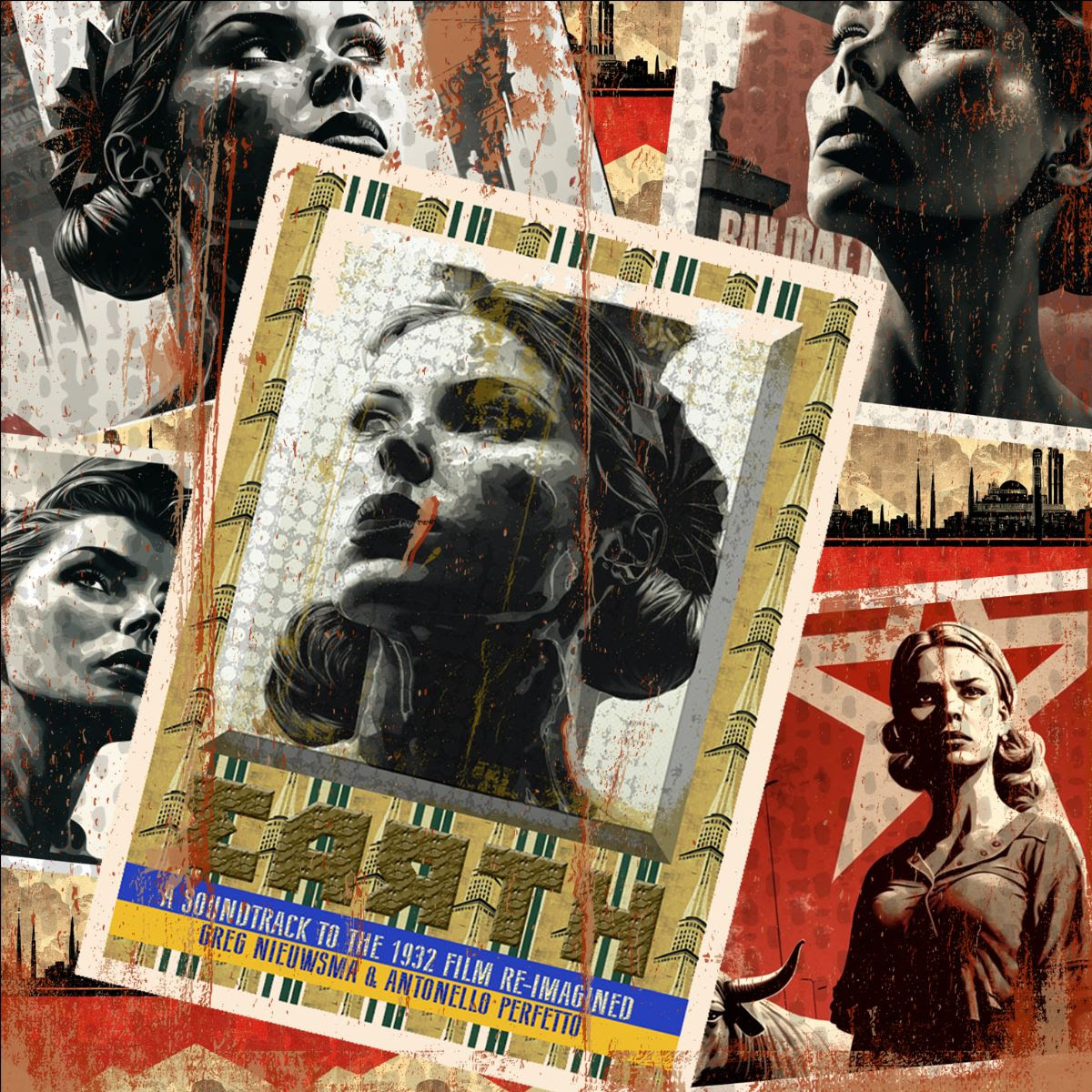
Greg Nieuwsma and Antonello Perfetto ‘Earth’
(Submarine Broadcasting Co.)
Although Oleksandr Dovzhenko’s Earth aligned with many of the Soviet ideologies of its day, the film stands irresolute in this regard. This is perhaps because it is viewed through the retrospectoscopic lens of the present-day. Even so, its poetic symbols must have seemed somewhat removed from the usual plainsong of socialist realism of its day. I detect agitation. Take the crushed chaff of the wheat that billows into the air, referencing the yellow-blue bicolour of the Ukrainian flag that was banned at the time. In the same breath, Earth promotes atheism and contains split-screen shots of humans and plant life (depicting the ‘community of life’), which are more in keeping with the Soviet aesthetic. These opposing philosophies are not co- equal; rather, Earth is predominantly realist, somewhat beset by moments of idealism. In newspeak: idrealism.
The silent film inspired Greg Nieuwsma and Antonello Perfetto to compose a novel score, which has been released on the Submarine Broadcasting Company label. Before the tribulation of synchronising the original cinematic footage on YouTube with this new score (which, coincidentally, was one of the joys of reviewing this piece), I decided to explore some of the antecedent outputs by the duo. Asylum, released by Hreám Recordings in May 2021, is absurdist, disentangling reality through its revision of everyday objects. Then there is the obfuscous Aquarium LP, another Submarine Broadcasting Company release in June 2021. The track ‘Momento’ on the Hiyachuchi LP (Submarine Broadcasting Company, April 2022) had all the xylophonic-analogue-drone futurism of a Jon Hassell release. The musique concrete of El-Dabh echoes distantly on ‘dsinθ=mλ’ on the LP Interference Patterns (released on Strategic Tape Reserve in November 2021).
I return to Earth. The Carpenter-esque ‘Opening Credits’ rattle and jangle into Chapter 1. We are standing in an open field of grass and grain and sunflowers and apples. Songbirds natter in the background. A lightly tapped acoustic drum beats down rhythmically like the hot sun. Altered strings and distorted guitars cut into the tiers of droning synths that sway like wheat crops in the wind. The strings are like that of a bandura, the lute-zither of Ukraine. It is an Eden-like opening – a Tolstoyan utopia. It is equally unnerving and fugitive. An old peasant, the grandfather of Vasyl who we will meet shortly, dies quietly in an orchard. An arabesque melody is played out on woodwind. I imagine this as a sopilka flute. It is limber, and light. This Byzantine influence features throughout the score. It is synonymous with the music of the Russian orthodoxy (I suspect antonymic on the most part here).
We inevitably meet the cold hand of conflict in Chapter 2. This is Soviet cinema after all. On screen, fists clench. Vasyl and his father argue. Their argument concerns dekulakisation, the targeting of wealthier landowners (kulak in Russian, or kurkul in Ukrainian) under Stalin’s First Five-Year Plan. The son takes a pro-stance on the assimilation of individuals’ farms into landholdings owned by the state. The father is doubting. The hammer action of piano keys pulse scornfully and guitar chords stab into an ascending scale. We meet Vasyl again in Chapter 3. He smiles youthfully. His father is ashen. A plodding off-key melody kicks in as the plot quickens. In Chapter 4 we are outside again. This time, clouds gather and wheatgrass jolts. The music is sustained. The piano from Chapter 2 is reprised – this time it plays freeform. Children observe an old man sitting reflectively by a grave. He places his ear to the ground. The children laugh and are scorned. The rhythm is kick-drum-heavy. A glockenspiel plays melodiously. The cowbells match the cows in the field. Farmers and tractors are in motion. The score quickens and loops round like the brief shot of a windmill. The tractor makes its arrival to a full audience. It overheats. Peasants piss onto the radiator tank. After it cools down, it flies. “We’ll prosper with tractors!”. The music is privately triumphant: stock brass and horns play gleefully, perhaps ironically. They dance a desultory dance. This chapter concludes with a ritardando and staccatos to a halt. Nieuwsma and Perfetto have been clever here, matching the antagonistic approach taken by Dovzhenko. Did he know that the celebrations would be short-lived? In the two years that followed the premiere of Earth, a famine caused by collectivisation would kill millions.

Earth was filmed in Poltava Oblast in Ukraine on the left bank of the Dnieper. I can visualize Tara Shevchenko’s poem Testament: “in steppeland without bound / whence one may see wide-skirted wheatland”. An arpeggiated synthesiser melody ascends and descends and churns into itself like the harvester threshing the land on Chapter 5. The modular sequence twists into complex patterns like the hands of the on-screen women who thatch-weave. Vasyl is taking a merry ride in his tractor. His father hacks at the land with his scythe. The score pulses and thrums and clangs and echoes. A baying horse welcomes a counter melody. It is here that the famous sequence starts to play out: the grain of wheat jostles and shakes fervently in its wooden containers and carriages. A psychedelic mélange of guitar notes tremolo as the wet dough peels off the churning blades – and just like that, bread is made. It conveyor-belts away on the soft bow of a stringed solo.
Chapter 6 opens circumspectly. The strings are tentative, the visuals blurry. It is dawn. A light choral section is advective: it rolls off like water vapour on a cold river. The morning mist manoeuvres in diagonal ascent: step-like, and slow. The effect here is to disarm the listener. The same effect is created on-screen as crepuscular rays rip through the sky. The piano opens up here despite this. The guitar and drum sections are undeniably krautrock as Vasyl dances a traditional dance called a hopak. The altering time signature of the score keeps apace with his heels that kick white dust of the track into the air. It is incorporeal. Again, we have poetic symbols: Vasyl’s hopak mirrors the earlier mechanisms of the modern bread-making process; the dust dug up from the land serves to foretell his murder.
Chapter 7A is mesmeric. “Vasyl is dead!”. Horror is scored into his fiancé’s face. The guitar and drums rattle into an accusatory double-snare-hit rock rhythm. “Khoma, was it you?”. A cymbal crashes. The melody flat-lines out into a whorled mass of contemplation. An off-beat rhythm drives the scene forward. It was Khoma. He will eventually go insane. The synth sparkles as the guitar picks away unconsciously. The piano keys half-glissando as the score disintegrates, almost completely, until it finds salvation in a glockenspiel. This is apparition-like as it appears and reappears. The burial will be an irreligious affair. Denuntiatio dei. Vasyl’s father opts for a new way. The score masterfully conveys this. Simple synth-fare plays a melodic canto; wordlessly, it sings peacefully – funereal even. Chapter 7B is a powerful sequence. The aforementioned music of the Byzantium Empire reappears here as women make crosses with their hands. The composers start to revisit all their previous motifs and compositional elements. I close my eyes for a moment. I imagine the reverse-tape looping as the farmers on-screen playing the otherworldly tsymbaly (a Ukrainian hammer dulcimer). I imagine the swathes of synths as long notes of a trembita (wooden horn) and gusli (a Ukrainian relative of the zither). G-modal tuning is being plucked on a kobza (lute). The dead Vasyl files past the bowing sunflowers in a cart- coffin. The scene is both warm and distant. The priest scorns the impious. Words of resistance flash on the screen: “It’s my Earth, I won’t give it up!”. Rather poignantly, the chorus line is not sung in anger. A mournful string section plays as the synths are laid bare like Vasyl’s naked fiancé. A symbolic downpour ensues to cleanse the world. It is the lifeblood of the fields and the orchards. The bright key change in the score reflects this. In its denouement, there is false peace.
I have listened to previous scores to Dovzhenko’s Earth, including Ovchinnikov’s famous 1971 version and the poly-symphonia of the live bijū recording on Komuna Warszawa. The score offered by Nieuwsma and Perfetto is as complex and intricate as the source material. Their waveforms and filters arpeggiate poetically to illuminate its idealism. They bring me closer to the chimaera of collectivisation that Dovzhenko was perhaps intending to showcase.
The Perusal #38: David Lance Callahan, Designers, Anton Barbeau…
December 5, 2022
Dominic Valvona’s Album Roundup

A final roundup of eclectic and interesting new albums released at the end of last month and in December.
David Lance Callahan ‘English Primitive II’
(Tiny Global Productions)

As the current political shit show moves on at a rapid pace, with even 24 hours now seeming such a ‘long time in politics’, music makers can quickly seem out of step with the changing circumstances, upheavals and latest outrage. Unfortunately the climate in the UK has been bleak for a good many years, and so when David Lance Callahan originally set out on his address to the nation last year the despondency mixed with anger held: and still holds today, even if it has got a lot worse.
The former mover of both The Wolfhounds and Moonshake bands, Callahan wears his own name whilst retreading and reflecting the psychogeography and rich maverick history of England; the positives of which (social experiments and Bevin’s state institutions) are balanced against the overwhelming negatives.
Mostly recorded during the same sessions as English Primitive I, which felt like a modern lens angled at an eclectic Commonwealth style soundtrack, set to Punch and A Rake’s Progress. In the same vein round II in this repurposed folk mode uses a similar dirt music, African, Arabian, psych and Southern swamp boogie sound and that (for most of the album) winning male/female vocal delivery: a disarming it must be said, often harmonic, union that articulates tragedy, alarm, plague and even murder.
It begins with the pent-up grievances of a “regular person” played out to rusty Benin guitar fuzz and facemask shaking Mummers, ‘Invisible Man’. It’s as if The Pop Group shared bread with Francis Bebey on a churned kick of primitivism, on this load-bearing opener.
Hanif Kureishi’s iconic ‘Beautiful Launderette’ is repurposed as a metaphor for the sleazy enterprise of laundering ill-gotten gains and the proceeds of crime (from Russian oligarchs to financial rip-offs, the drug’s trade and kleptomaniac tyrants, civil servants and politicians). London being the leading epicenter of such a rotten trade comes in for a kicking to the music of Afro-post-punk and a stoner Doors. A ‘rant at the government’, ‘The Parrot’ uses various avian Scarfe-like sharpened ink pen cuts at the enablers that fail to be held to account. Musically its swamp boogie, a hint of Rhyton, Mick Harvey, David Cronenberg’s Wife and Canned Heat moving to a menacing backbeat and scuzz of tangled whining guitar.
A darkly disturbing prowl down memory lane, ‘Bear Factory’ is the album’s most serious drama. Back to the 1970s, in a world that’s described with the miasma of a David Peace novel, and the events that led to and around the murder of one of Callahan’s primary school mates is played out to plaintive melodramatic strings.
He who walked with astral beings and angels, William Blake and his famous London poem forms the literary food for the album’s finale, ‘London By Blakelight’; a walk across a manacled meta-layered city to a fuzzed drum beat and touch of John Johanna psych-blues-African-buzz.
Callahan’s worldly sound threads converge with a more idiosyncratic leftfield English (un)civil war commentary on a society gone to rack and ruin: one that’s mostly been fucked-up and over through self-sabotage. Part II of this rewired English, Gilbert & George- like stained glass-anointed gumbo extends on that ‘primitive’ vibe, the use of the word being a positive one, finding a familiar sense of the roots that bind us all.
Noémi Büchi ‘Matter’
(-OUS)
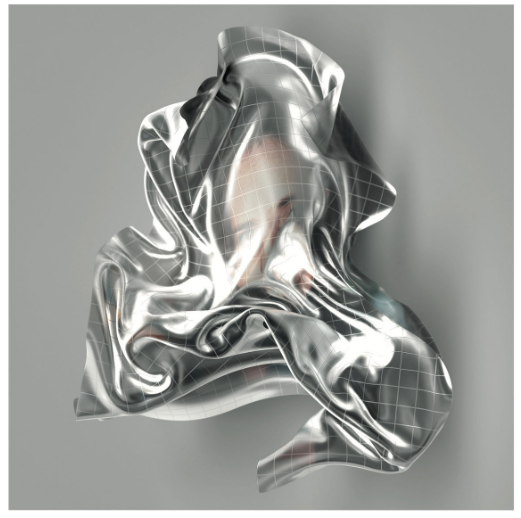
Exploding with a beautiful dramatic form of broken glass symmetry, the burgeoning composer and sound artist Noémi Büchi cerebrally and stunningly transforms the musical hallucinations of György Liget and the classical romanticism of the last century on the debut album suite, Matter.
Taking such symphonic inspirations as a starting point, Büchi thrusts this material into the contemporary and future with a centrifugal rotation of various electronic, metallic affects, sound waves and rhythms.
Mirrored and reflected back from states of stirring emotional intense gravitas and catharsis, the “matter” at hand is transformed out of the abstract into something more solid: a reification of feelings, anxieties and stresses you could say. Using an often-dramatic maximalist method in processing these moods, a perfect balance is struck between the harsher, granular and deep, even seismic, use of techno and the magical swells and pulls of pioneering classical music. But, as Büchi states in the accompanying press notes, this album is also a playful exploration of counterbalances and opposing forces too: like decay and growth; consonance and dissonance; the physical and ephemeral.
In pure sonic spectacle this translates into revolving suites of heavy Meta, more brutalistic scrunched and sharper focused intensity, and soundtrack sorcery – both the fantastical, kinetic Basic Channel like static-pelted ball-bearing beat driven ‘Measuring All Possibilities’, and Vangelis future world hallucination of unease, travail and alien mystique ‘Uncertainty Of An Undefined Interpendence’ would make great scores.
At times these tracks evoke illusions of chimed timepiece Baroque, set in some sci-fi environment, and at others, Jeff Mills conducting and warping the works of Igor Stravinsky. ‘Taking The Train With Mr. Shark’ travels down the stargate rails in the company of Mira Calix and Kraftwerk’s ‘Europe Endless’. ‘Screaming At Brutism’, as the title shouts, pounds away at the granite edifice of violence like the Pyrolator and Emptyset.
There is however as much beauty, light and hymnal stark release as there is the mysterious, the churned and weighted on an album that pulls together opposing forces to create a truly out-of-time, out-of-frame electronic symphony. Matter is a startling, intense and machine-sculpted debut.
Björn Magnusson ‘Nightclub Music & Ethereal Faith’
(Specter Fix Press) 16th December 2022

From an alpine location looking back at the mood music, emotional pulling atmospheres and moments caught in a reminiscing wooziness the Zurich-based artist Björn Magnusson seems to have encompassed a particular amalgamation of New York City arty aloofness and streetwise existential pain on his new album. For this is a songbook suffused by two factories of influence: Warhol’s and Tony Conrad’s. Lou Reed’s Transformer (a little throwback to the Velvets as well) and Conrad’s Theater Of Eternal Music circle and his drone conjuncture Four Violins come together, or threaten to come unstuck, on a both loosened and more intensified dissonant album that hoovers up the psychogeography of the city.
But within that framework lies a sort of no wave, Hansa Studio and jazz vibe, with both Nikki Sudden and Kid Congo Power’s Danny Hole (amongst a rafter of other instruments played) and the Swiss-Zimbabwean free jazz musician Tapiwa Svosve both on saxophone duties throughout. Never forceful or overriding the rest of the musical circle (which also includes Dean & Britta and Luna foil Sean Eden on guitar and of course Björn) those sax sounds offer both an atonal mizzle and freeform breathes and parped wails, strains and contortions.
When pulled together with Björn voice and songwriting this all sounds like a brilliant, sophisticated mismatch of Arto Lindsay, Hunky Dory and Heroes Bowie, England’s Glory, Chris Spedding, Low Cut Connie, Ariel Pink and John Cale in a well-worn city, gathered around a rolling barrel organ in some lower Manhattan bar, washed up and out, yet still capable of producing pop, rock and jazz with a certain off-kilter spirit of wistfulness, despondency and romantic disconnection. Something like that anyway.
As the RP blurb usefully summarizes, Björn’s almost final lyric, on the album’s swansong ‘Everybody’s Got Something’, says it all: “Sometimes the world is an oyster, sometimes an ashtray”.No better line is needed for an album that sits on the blues junction between a rambunctious and artsy NYC. There’s even a dreamily strung-out loosened piano with brassy resonance vision of the city’s leftfield auteurs Suicide and their own take on “America eats its young”, sleaze in leather and haunting polemic, ‘Ghost Rider’. You can’t get much more underground New York than that. And this tribune repurposes that cult jukebox turn for a wistful splice of hallucinogenic bar room philosophizing.
Five years on from Björn’s Almost Transparent Blues debut and the wait has been worthwhile, with an album of lived-in dreams and momentary abstract feelings captured for posterity on a sort of new wave suite composed for the iconic meeting spots and streets of an almost romanticised New York boardwalk. A great album to finish the year off on.
Orchid Mantis ‘How long Will It Take’

Bleached by the sun over time and through various hazy sepia lenses, the placable recordings of the Atlanta artist Thomas Howard languidly bleed into a number of musical genres. Dream pop, lo fi, the psychedelic, surf and indie all merge with the field recordings of subway and airport lobby limbos to construct an attenuate-layered soundtrack to a world of wistful plaint, transient yearns and drowsy, if deeply felt, romantic sentiment: “You have my soul forever, and always.”
Under the Orchid Mantis moniker, Howard has been somnolently and dreamily applying that method since 2014, releasing six albums and a number of EPs in that period. How Long will It Take – a generous fifteen-track offering – marks his seventh expanded release of sun bendy enervated, affected and mirage trippy pop songs that embrace a certain lucidity and disarming quality of nostalgia for the early noughties wave of lo fi washed-out warmth.
On each wave, both brushed and mono-tunneled drum beat, and evaporated effect Howard seems to go with a very nice bendy flow. That’s not to say there’s a lack of direction or focus. Oh no. Just a more veiled and dappled intimate softened sharing of waking moment’s anxieties, the nature of our world and declarations of love.
If phases and flanged blurred suffusions of Cass McCombs, Yoni Wolf, epic45, Summer Heat, The Drums and laidback later 70s California ocean view singer/songwriter material grabs you, then Howard’s Orchid Mantis alias will snuggly wrap its arms around your lugholes and work its inquiring magic.
Designers ‘S-T’
(We Jazz Records)

Another month and another freshly assembled addition to the leading Scandinavian-based label We Jazz. This time it’s in the shape of the impressive geometric and architectural imbued/inspired Designers trio.
An international hailed group based in Nantes, the trio’s Belgium composer and double-bassist (also a very dab hand at the piano) Joachim Florent is joined by the Finnish pianist Aki Rissanen and Australian drummer Will Guthrie on a debut album suite of both patterned and freer empirical mod pieces.
Florent’s accompanying quotes set the scene and theme for this eight-track work of various jazz and semi-classical styles. The defacto instigator, leader found that his piano studies back in 2019 were, happily, but unintentionally resembling what he called a “pretty” geometry. Further on, Florent chanced upon the often surreal, imaginative architectural photography of Filip Dujardin. Rather than building blocks though, the Designers turn clever forms into feelings, reflections and melodic atmospheric journeys to vaguely geographic locations, landscapes: The opening, stirring and subtly Middle Eastern/Arabian ‘Lebanon’ being one such example; a camel motioned caravan through a soft Yusef Lateef, Tarek Yamani and Ahmed Jamel Trio scored trinket percussive and trickled piano notation market place. I’ve no idea what or where ‘Moulindjek’ is but it sounds very mysterious with its dabbed and busier plinks and plonks, country-bowed graceful evocations, glissando and fluctuations.
Elsewhere there is a reference to the iconic Estonian minimalist composer Arvo Pärt’s “tintinnabules” compositional process and writing technique. Translating as “bells” more or less, and borrowed from the Catholic liturgy, it also translates as “crosstalk”, when two voices come together to form something inseparable, or, when pairs of notes are constructed one against the other. In this capacity the trio invoke the technique on the reflective, spiritual jazz hinted and serious minded ‘Tintinabulisme’ piece.
Touches of 60s period Blue Note, the Bad Plus, Keith Jarrett and the Neil Cowley Trio can be picked up across an album of poised thoughtfulness and more playful freeform musicianship. He geometric waters are both choppy, heightened and yet equally in a legato style throughout. Florent uses every inch of the double-bass to offer a foundation, a rhythm, a droning or sonorous bed, but also springs into action on occasion and quickens into a blur during one particular near solo act. His foil Rissanen’s piano seems to overlay itself, yet also displays more singular accentuations, descriptive patterns or trickles. And Guthrie’s drums seem to sizzle and simmer beneath the surface, yet also dish out tumbles, tight breaks and more loose percussive displays of skill.
A sophisticated, movable synthesis of balanced geometry awaits on an album of fluctuating tides, climbs, spiralled descents and even a little positivity – see the ‘White Keys’ finale, a dash and simmering charge in the right direction. The Designers set down quite the marker in that European semi-classical jazz vogue.
Greg Nieuwsma & Antonello Perfetto ‘Chase ritual’
(Cruel Nature Records)

Connecting in Krakow as members of the progressively experimental Sawark before an eventual disbandment, the Midwest American and Neapolitan bred musicians Gerg Nieuwsma and Antonello Perfetto formed the Corticem partnership before sporting their own birth names in a new avant-garde chapter.
Last year’s Aquarium album cemented a reputation for both playful and strange experimentation and exploration. The latest, Chase Ritual, strays into ever more expansive realms, with an entrancing (for the most part) long form trio of cosmic-reflective and krautrock/kosmische imbued ethnographic journeys.
‘Star Birthmark’ sets things in motion with a near twenty-minute warm revolving Cluster-like peregrination. Roedelius and Florian Fricke sit at the piano as waves of flange guitar drones and fairground synth rotate around them. There are stopovers in North Africa (by the sounds of it) with vague echoes of scrappy-tinny Gnawa percussion (that will be the krakebs), some Egyptian flute or oboe, and spiritual paean of worldly voices. Half mirage, half prog-jazz suite, this side one spanning track builds towards a final squall of noise, haphazard piano and tumbled drums.
As a comedown, of a kind, the lengthy entitled ‘Supernatural Ears Hear The Call Of Faraway Mountains’ – half a haiku in its own right – floats off into the celestial. Spherical galactic rotations, serenading prog guitar and relaxed splashy and rattled drums drift around the outer reaches like a Tangerine Dream score.
The final track, ‘Ovine Wheel’, is all cathedral harmonia reverberated Popol Vuh, with spells of holy swoons, hints of a more traversing later Guru Guru and an ongoing, sometimes looped, analogue phone call between two European characters. Extra voices are added to the swell from what could be (again) Africa, but also Arabia and further afield.
Chase Ritual is an album to plug straight into; headphones on, ready to be immersed in globe-spanning and cosmic listening adventures.
Anton Barbeau ‘Stranger’
(Gare Du Nord) 9th December 2022

An omnivorous child of Ian Hunter, Lawrence Haywood, Kim Fowley and David Bowie, the both playful and broody artist Anton Barbeau is at it again with his myriad of influences, taking the familiar and bending it to his own ends.
Psychedelia, glam, new wave (that’s the German, American and Australian kinds), pop, scuzz rock and noughties indie gel together on a lamentable yet also romantically gestured catchy songbook; one that finds Barbeau “bumped” back to his wife’s farmstead in small town California from his Berlin sojourn. We have the pandemic to thank for that move, as Barbeau struggles to adjust to life back in the States, a “stranger” as it were to a culture and environment he left behind for Europe. As a Yellow Brick Elton once despondently sang, “I’m going back to my farm”. And it does seem there is a theme of shunning one life of endless pro-Covid tours and artistic pressures for a rustic idyll, isolated yet finding eventual content and purpose settling down with his wife Julia in domestic bliss.
Even his worldly band of contributors added their parts remotely; tuning in from Chesterfield, Lille, Detroit, Hastings and elsewhere. It doesn’t show for a minute, as everything seems to gel together so well.
Inner and outer turmoil, the turning over of thoughts and a sense of detachment are the main drivers on what most be Barbeau’s 30th, or something like that, album – so prolific that near enough everyone at the blog has had a go at reviewing one of his untold many albums, now coming full circle back to me. It starts with, I think, one of the album’s best tracks, a self-titled kind of gently brooding Heyme, Eno and Bowie-esque laced longing, searching plaint about being a stranger in a strange land. That disconnection bleeds over into the transatlantic version of Kraftwerk, via DAF, Der Plan and the new romantics, ‘Ant Lion’.
Barbeau’s musical allies are 2000s Bowie (Reality and Heathen especially), later 70s Roxy, the female harmony backed Kevin Ayers of Bananamour, Bolan, Ty Segall and Beck, but that extends, expands to so much more. At times I can hear (intentionally or not) an air of Neil Finn (admittedly arm-in-arm once more with Bowie) on the new wave-ish ‘Sugarcube City’ – a good line of which, as the song disappears into the ether, being, “You’re only as beautiful as your mirror.” And many of the album’s shorter, vignettes evoke all sorts of musical inspirations; from a drip reverbed, female cooed listing of ‘Favourite Items’ to the dreamy vapoured, soft dalek-like ‘Out Of Sight’.
To more romantic settings and the declaration of wedding vowels, the Stranger album pays a serious noted tribute to Barbeau’s wife, who may just have saved him from himself. Dedicated to his better half then, the Casio preset, nutritious-kissed ‘Farm Wife’ slips into the more Lennon-esque soppy “I owe you everything” sentiment of ‘Slight Chance’. It means all the insecurities and wantonness of many of the previous songs finds a balance and that sense of comfort, ending on a note of marital contentment. Barbeau bounces, trips and moodily sulks his way around a psychedelic ‘microdosed’ cannon of the fuzzed, serenaded, backbeat sprung and pop powered-up. The returning stranger may just have found his place for now, conjuring up a familiar sounding songbook of ideas and poignancy. As my colleague Mr. Domain has already written, when reviewing what is meant to be Stranger’s sister album, Power Pop!!! earlier this year, there’s nothing highly original here. Yet it is still a cracking album nonetheless, an idiosyncratic offering from a constantly evolving and changing artist.
Kinked And Señor Service ‘Reincanto/Real Bwoy’
(Artetetra)
From the bonkers symphony of experimental and playful electronic music label that last month brought us the insane sinfonetta that was Trans Zimmer & The DJs a split showcase of liquid, bubbled kooky arcade music and imaginative alien soundscaping. Sharing, in a most congruous fashion, the bill is the interchangeable Lapo Sorride/Don Sorride alter ego Kinked, and Umberto Pasinetti solo project Señor Service.
Sorride, whose music is described as a ‘leftfield-ritualism of vocal gestures and granular realities’, appears in various forms as a ‘visual and text researcher’ and ‘tenco-grime lyricist’ (whatever that is). In the Kinked guise we find Sorride running back and forth across a digital audio workstation, a Roland VT3 and Yamaha PSR E363 keyboard. Landing on everything but only holding onto any specific micro-sound for a few seconds, the action is constantly moving. Singular drum hits with some occasional rolls of a kind and even melodic, ambient waves emerge from out of a pneumatic soundtrack of power-ups, high-pitched frequencies, moistened effects, burbles and a strange version of computer game primitivism.
It’s as if µ-Ziq had created the early evolving forms of new life, a whole contained world; growing and learning to communicate with life outside a virtual biosphere. An improvisation with some very interesting, playful, on occasion, fun but also touching on quieter more serious tones, Reincanto, through chance, conjures up an alien and haphazard world of skittish soundscaping.
In a similar, if more realized and slightly more settled, mode, Señor Service sounds like Sakamoto’s floppy disks in the hands of the Aphex Twin. Quirks, looms and concertinaed MIDI-like sounds emanate from Pasinetti’s omnivorous feasting soundboard of quarks and cutesy dialogue samples.
At times this sounds like a marimba-twinkled score to some fantasy island level on a Japanese computer game of the nighties, at others, like the light flash patterned communications between the aliens of Close Encounters and the imagined inner worlds of a microchip. Cartoon arias and 64-bit scales combine with pleasing melodies, melodica-like waves and furry creatures on a synthesized, programmed collage of constantly evolving and progressive play. This is what happens when no one tells you to stop messing around in your bedroom with all those electronic music making devices. A free reign that magic’s up the goods.
It seems that to qualify for the Artetetra label nod of approval you need to be drinking from a whole other, fun and mad source than the rest of the electronic music fraternity. Always on a leftfield bent, and entertaining to boot, the Milan-based collective imprint once again delights as much as it does amuse in the pursuit of pushing at the fun buttons and outer limits of electronic and avant-garde music. A great split coupling of intriguing artists that demand further investigation.
Various ‘Perú Selvático – Sonic Expedition Into The Peruvian Amazon 1972 – 1986’
(Analog Africa) 16th December 2022

Sometimes as a critic you just want something fun and playful to listen to. To escape the lectures, the woes. And with Analog Africa’s latest visit to the cumbia mecca of Perú, you’re suddenly whisked away to the beach side parties and jungle shindigs of South America.
Released in conjunction with a rarefied collection of dance tunes from Sonido Verde de Moyobamba by the label’s Limited Dance Editions imprint, the Perú Selvático compilation draws together a survey of Amazon style cumbia movers and shakers from the early 1970s to the mid 80s. Sonido make a couple of appearances on this selection, so you can pretty much test whether you want to shell out for both albums in this two-pronged Perúvian showcase.
But before all that, just a little context and information is needed first. If you’re just a cursory listener or newcomer to the phenomenon of cumbia music then in short it can be described loosely as a Latin-wide style that swaps or picks up changes wherever it falls within the South and Central American regions. Originally starting off in Colombia as a merger of African, indigenous and European styles of music, cumbia spread like wildfire to most communities; adopted, adapted and again melded with even more sounds as it travelled. That underlying saunter cannot be mistaken however, nor the courtship for that matter.
The main European element, the accordion, would later be replaced by the electric guitar as electricity reached even the most densely covered areas of the Amazon; once more changing the sound in the process. Just to confuse matters, a sub-genre called “chichi” was to emerge specifically from inland Perú. This was a kind of Andean music that became popular in the country’s coastal cities, especially in Lima. Named after the favoured Inca corn-based liquor, chichi’s roots began in the oil boomtowns and interchanges of the Amazon. Speaking totally as a mere student of ethnography, I’m sure the music on this compilation is either part of it or at least a close relative. They both share the same penchant for surf guitar and rudimental synthesised sounds if this compilation is anything to go by. Add to that the party spirit – an itch to join a long conga line -, the use of Bill Justus-like raunchy licks, tropical hints of the Caribbean and a suffusion of bandy organ.
Behind the pin-up cover lies a less seedy, a bit sensual, collection of rare hits mostly confined, success wise, to the Amazon. Highly popular locally, it would take time to make it to the Lima airwaves. A smattering of producers took to the road, helping to spread that sound to cities like Tarapoto, Moyobamba and Pucallpa – only reachable by air or boat that last one. There’s a god showing of groups (I presume) from those mentioned regions, with The Ventures and Shadows twing-twang, scuffed percussion and playful spirit of the already mentioned Sonido Verde de Moyobamba, to the opening swimmingly wavy beachside Latin, low-volt amped guitar buzz of Pucallpa’s Los Royals, and the Meek-like echo-y reverb of Fresa Juvenil De Tarapoto. Talking of popularity, or just more prolific if you like, Los Zheros get three bites of the cherry. They saunter to congas and spindly percussion on ‘Selva Virgen’, stir up slightly more exotic sandy relaxed vibes on ‘Alibaba’ – some Arabian night fantasy perhaps -, and magic up seductive move on ‘La Uñita’. Likewise Los Cisnes get an equal three-way selection, with the Brazilian-flavoured ‘La Hamaca’, bendy and fuzz guitar surfing ‘Safari En La Selva’, and the held-organ, soft drum rolling ‘Rio Mar’.
Elsewhere there’s a balance of the laidback and racing, and a number of attempts to electrify cumbia with some synthesized technology; some zaps and wobbles and bobbed liquid bendy bits here and there, which mostly lean towards the lo fi and kitsch.
Intentional or not, some tracks veer over the borders, picking up sounds, grooves, rhythms from the East Coast of South America, Sun Records America and Mexico: or so it sounds. It’s a party whatever way you choose to look at it.
Analog Africa lift some sweet, cool tunes from out of obscurity, or at least highlight a cult sound to a wider audience. So give Christmas a more infectious Latin feel and joy this year, you won’t regret it.
Hi, my name is Dominic Valvona and I’m the Founder of the music/culture blog monolithcocktail.com For the last ten years I’ve featured and supported music, musicians and labels we love across genres from around the world that we think you’ll want to know about. No content on the site is paid for or sponsored and we only feature artists we have genuine respect for /love. If you enjoy our reviews (and we often write long, thoughtful ones), found a new artist you admire or if we have featured you or artists you represent and would like to buy us a coffee at https://ko-fi.com/monolithcocktail to say cheers for spreading the word, then that would be much appreciated.
 Monolith Cocktail Blog