The Digest for April 2025: New Music/The Social Playlist
April 25, 2025
The Monthly Digest includes a clutch of accumulated new music review, and the Social Inter-Generational/Eclectic and Anniversary Albums Celebrating Playlist.
___/THE NEW___
Staraya Derevyna ‘Garden Window Escape’
(Ramble Records/Avris Media) 2nd May 2025
Pulling out of the historic district of St. Petersburg once more to conjure up an amorphous polygenesis-sourced hallucination, the pan-global Staraya Derevyna capture of diverse artists, led by the Israel/Ukrainian musician and sound engineer Gosha Hniu, wheel out the mechanical dream-machine on their latest estranged and avant-garde descriptive album Garden Window Escape.
Imagine Beefheart conducting the Sharmanko Kinetic Theatre, or Faust manhandling a pair of shearing buzzing shavers. Perhaps, the Plastic Beatniks warped mirage vision of Americana coming up against the sound worlds and the alternative pyschogeographic folk of Širom and La Tène. You can imagine the Red Crayola in Eastern Europe during the Medieval times, hanging out with CAN as they dish out their EFS series experiments whilst a languid Einstürzende Neubauten add their signature imaginings and post-punk industrial stirrings.
The imaginative hermitic workings and the transmogrified poetic works of the Russian polymath Arthur Molev that suffuse this latest release of performative and fantasy clockwork circus merges the mysterious with the murky, the atmospherics of alternative pastoral histories with the strained, strangulated and brassy textural wanes of bass clarinet, the flute and the cello, and the hidden source sounds of rope pulleys and cogs and levers that need oiling. For the icon Rus, the holy reimagined Rus is rewoven by the merry-go-round minstrels of Maya Pik, Ran Nahmias, Grundik Kasyansky, Miguel Pérez, Yoni Silver and Andrea Serafino to atheatre of esoteric poetry and dreams.
Who knows what it all means, but this collective always impress with their journeying and deeper connections to a sense of conceptualisation steeped in both the real and fantastical. Through the abstract and most emotive and surreal, every Staraya Derevyna is a revelation. And Garden Window Escapeis just as imaginative and evocative.
Michael Sarian ‘ESQUINA’
(Greenleaf Records) 25th April 2025
On the corner or a “corner”, albeit with a Spanish/Portuguese language entitled twist, the accomplished trumpeter, bandleader and composer Michael Sarian is imbued by the spirit of Miles Davis’s iconic 1972 LP – that and the electrified period that also took in Bitches Brew, Black Beauty and Agharta albums – on his latest album, ESQUINA.
Full of lunar mystery and dreamy mirages, Sarian traverses, hovers, inhabits and floats across a largely improvised vision of prog-jazz and jazz fusion; taking a different direction after a trio of albums that bordered more upon a chamber-jazz and acoustic sound. The same players now venture into territory mapped out so cosmically and exploratively by Jon Hassell, the Soft Machine, Nucleus, Weather Report, Herbie Hancock and the already mentioned Davis. In addition to the long form peregrinations that make up this three track album, the ensemble also transposes Portishead’s classic trip-hop track ‘Glory Box’; an influence for Sarian since he first heard it as a kid on its original release in the mid 90s, and here, transformed into a spacy soul-jazzy lounge vision of Pink Floyd and the El Michels Affair with the smooth melodic trumpet drifts and near sensitive expressions of Chat Baker and Kenny Dorman.
Back in the fold, now reconfigured and in a freeform mood of prompted celestial and hallucinatory dream experimentation and resonating gauze, noted Argentine pianist and composer Santiago Leibson probes, dabs, sustains Marion Brown bulb-like notes, galactic Davis sounds and Herbie Hancock effects, metallic and vibrating languages from the Hammond B3, the Mini Moog and Wurlitzer, Alaska born, NYC relocated in-demand bassist Marty Kenny offers near cosmic soulful bass lines, prog noodling and swamp funk undertones, and renowned Brooklyn-based drummer Nathan Ellman-Bell makes his way around the kit as he offers the subdued and descriptive and leaps of near d ‘n’ b-like breaks and cymbal splashes. As I said before, this is near lunar in its projection, on the edges of tripping out; at times, and as noted in the PR notes, sounding not too dissimilar to the work of Donny McCaslin. At other times it reminded me of Arve Henriksen. We are of course in the jazz fusion sphere of influence, but not quite indulgently prog enough to put people off.
Instead, we get a band escaping their surroundings, pepped up on electric Davis but not quite breaking out into the psychedelic funk boom-bap of that period. Dreaming and pushing an intuitive bond they conjure up an intergalactic dream of influences, musical genres as they enter another dimension. Tamed but adventurous, this is a group at their playful and inventive best.
iyatraQuartet ‘Wild Green’
11th April 2025

Imbibed by individually strong and impressive classical CVs and a shared experience of study at the Royal Academy of Music, the iyatraQuartet ensemble have previously merged a penchant for India and Arabia with European and closer-to-home influences from across time.
The last time I featured the quartet, back in 2020 with the Break The Dawn album, they gravitated towards India, both musically and religiously. The group’s name, pronounced “ey-at-ra”, is even taken from the Hindu expression for travel, “yatra”. It helps that the quartet’s co-founder and violinist maestro (to name just one instrument among her eclectic repertoire) Alice Barron studied South Indian violin techniques with the country’s star turn duo, the Mysore Brothers. And on this latest empirical and tapestry-come-alive thematic album of nature’s cycles and seasonal graces, Wild Green, you can hear the distinctive bellowed drone of that region’s Shruti box instrument on the title-track. As an indicator of the direction of travel and the scope of influences, this venerable, stirring choral fluctuated voiced sprouting of the pastoral was actually originally inspired by the noted historical European polymath figure of Hildegard of Bingen, better known as the Sibyl of the Rhine, who, apart from being a Benedictine abbess, founder of monasteries, a medical writer and practitioner, philosopher, mystic and visionary was also an influential composer of “monophony”, the simple musical form typically sung by a single singer or played by a single instrumentalist. In choir, or choral form as it is here, it usually means the ensemble of voices all singing the same melody. Incorporated within that framework is a vast swathe of traditional and folk music that counters subtle hints of those Indian foundations with the Medieval.
Either literally woven from a parchment canvas or played in the “wilds”, the garden idyllic, Barron, alongside George Sleightholme on clarinets, Rich Phillips on cello and Will Roberts on percussion (all four pitch in together voice wise), compose a greenery of Orcadians’ prayers, legendary tales of enchanted fish, lunar bound vibrations, Yuletide lullaby and the changing of the calendar seasons.
Beautifully pitched between the romantic languages of old Europe (the music box springs dance and love song ‘Beatriz’ is sung in the Medieval language of Occitan, which poured across borders from France into pockets of Spain, the valleys of Italy and Calabria) and vocalised expressions of the apparitional and banshee-like, the classical and atavistic, life is breathed into a rousing scenery. Celtic, Eastern European, the Baltics, the South American and fantastical are all entwinned on an album of minor rhapsody, the plaintive, yearned and near mysterious; the musicianship first rate as you’d expect, expressive, just as identifiable as it is obscured and used to sound out the growth of branches, seeds and flowers, the atmospheres of antiquity and a present reflection on nature, and the shrills, vibrations, looming arches and mists of imaginative storytelling. The voices, from across the ages, personify historical references and skill; illuminating and beatified in equal measures, with an ear for the classics, the folk-rock of the 1960s and early 1970s, various traditions, and the improvised.
This is living, breathing music that reflects the imaginative surroundings and themes of the ensemble as they mould chamber music, the classical, the pastoral, folklore and folk music to their own unique signature of the felt and stirring.
IOM ‘Spiritual Wastelands’
(Cruel Nature Records) 28th March 2025
Circulating, pulsing and dancing through the magnetic circuits of the inner body and mind, caught up in the chaotic stresses and violence of our current times, the latest album from the Spanish musician and sound designer Iker Ormazabal Martinez is powered by a caustic electricity and metallic industrial percussive tools.
Under the soloist guise of IOM, Martinez wields his EBM and industrial synth-techno influences to beat out and charge up a physical sonic response to modern existence. Wretched, sometimes near violent, but always with structure and rhythm, the nine concomitant pieces that make up the thematic whole of Spiritual Wastelands move between the darker club music of the German underground and the alien factories of dead industry.
From Basque country Vitoria to Catalonia Barcelona and a relocation in recent years to London, the granular guide of frazzled and force field gated electronica has merged his experiences as a keyboardist and sample-instigator for pop and rock groups, a musician with a company of Butoh dancers (originally a Japanese “dance of utter darkness” in which performers, usually covered in white paint makeup, intentionally use slow body movements and confront themes of darkness and transformation, but also far more radical and taboo subjects), and experimental electronic artist to create a vaporising density of tubular, barracking sheet metal dance music. Through the distress and clang of the pipes, the fizzled and machine reverberated, glimpses of trance-y light are found, and on the mystical voiced ‘Light’, featuring The Seer no less, there’s an obscured hint of Middle Eastern horns and a shrouded spiral of the Sufi against a darker churn of laboured drones and resonating steel.
Vocals sound near Germanic, or of that school, or go deep and near sinister; reminding me in part of Front 242 and NIN but put against sounds and rhythms and beats that err towards Basic Channel, Pan Sonic, Cabaret Voltaire and CABLE. The futuristic computerised and iterated saw brushed ‘Somatic Response’, sounds almost Kraftwerkian in comparison: perhaps a little Kriedler.
Mind and body yearning for spiritual guidance or a way out, react to the modern furnace on an album full of oomph and fried electricity. Does After releasing a variety of works on a myriad of labels, IOM finds the perfect pitch with Cruel Nature ever seldom put out an uninteresting or intriguing album.
Conrad Schnitzler ‘RhythmiCon’ and ‘Drei Kugeln’
(Flip-Flap) 29th March 2025
A leading, if often overlooked, progenitor of the Kosmiche and Krautrock eras, Conrad Schnitzler’s various stints as a founding member and instigator of the inaugural Kluster (forming the trio with fellow Zodiak Free Arts Lab stalwarts Hans-JoachimRoedelius and Dieter Moebius in 1969) and Tangerine Dream groups (an early member in 1970, he featured on the group’s debut LP Electronic Meditation) would reverberate throughout his solo and collaborative work, right up until his death in 2011. After more or less setting in motion an entire field of sound experimentation in the 1970s, by the 1980s Conrad had accumulated a strong body of work and was once again forming new bonds and ideas with Germany’s post-punk generation: integrating some of the more interesting ideas into his synthesizer-based modulations and soundscapes that would both echo and inform the German new wave and techno.
A Berlin stalwart and co-founder of the already mentioned and famous Zodiak Arts Lab, it would be Conrad’s contact with the leading performance and installation progenitor of that era, Jospeh Beuys, that helped form his early thinking and ideas of free play and experimentation. Leading, an admittedly amateur musician, to a both conceptual and playful method of exploration within the circuitry, cables, soundboards, switches and apparatus of electronic and analogue fields of sound development and rhythm. None more so than with this double-bill of unearthed album selections from the Flip-Flap label; a special platform set up in 2021to release a limited-edition series of selective works personally chosen by Conrad himself. A while back, it was the Hamburg-based, all-things German electronica, label Bureau B that seemed to have the role of releasing his recordings from the vaults and lab; some of which featured reworks, and finishing touches by the artist/musician/producer Kurt Dahlke (a founding member of D.A.F. and Der Plan of course), under his Pyrolator alias. But, seemingly, picking up the baton, this enterprise revives that body of work, previously left dormant or sealed behind closed doors.
The first album of which, Rhythmicon, is, as that title suggest, a selection of tracks focussed on the play and kinetic chain reactionary experiments of prompted, set in motion and manipulated rhythmic constructions. As part of my research, I’ve looked that album title up and found that it actually references an electro-mechanical musical instrument of the same name, designed and built by Leon Theremin for composer Henry Cowell. It was intended, so the Wikipedia entry goes, “to reveal connections between rhythms, pitches and the harmonic series.” A further description: the Rythmicon “used a series of perforated spinning disks, similar to a Nipkow disk, to interrupt the flow of light between bulbs and phototoreceptors aligned with the disk perforations. The interrupted signals created oscillations which were perceived as rhythms or tones depending on the speed of the disks. It generated both pitches and rhythms and has been described as a precursor of drum machines.”
I take it that this apparatus signals Conrad’s own idiosyncratic rhythm productions, created over an eighteen-year period from 1982; now collected together for an hour-plus album of strange, modulated shapes, reverberations, chemistry, neutrons, rays, bounces and tubular metallic cosmic dances and playful techno visions made on some orbiting spacelab.
Part futuristic, part tribal, part alien, part chemistry, part hypnotically entrancing and part new wave, Conrad sometimes leads and sometimes absorbs the current trends, the evolution taking place within electronic music during the pivotal 80s and 90s periods. And so, you can hear echoes of Luke Slater, Rob Hood, Autechre, Populaire Mechanik (the brainchild of fellow Berlin-based musician/drummer Wolfgang Seidel, who actually collaborated with Conrad during the Zodiak Lab days and was inspired to form the mechanic group as a consequence), Kriedler, Basic Channel and on the “7:51” track (all tracks are named after their duration in minutes and seconds) a touch of OMD’s debut album.
Intentionally made to be simple, there is however a lot of sophistication and skill in these often off-kilter rhythmic reactions; the art and skills of constant movement and drum machine-like patterns really mesmerising and spacy, but near skeletal industrial and machine made too with particles bouncing around and various symbiotic shapes forming.
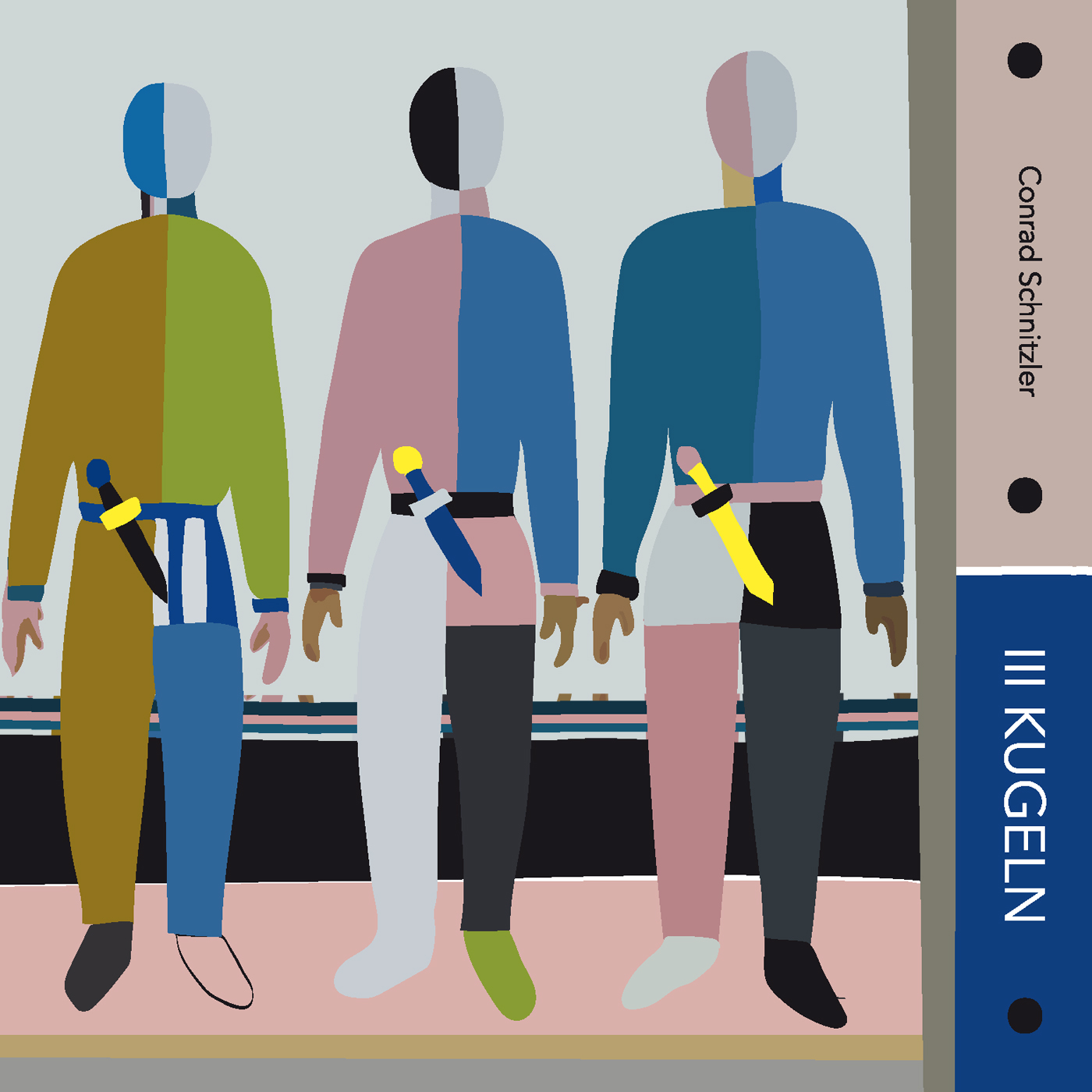
By contrast, the second album to transmit from the Flip-Flap facilitators, Drei Kugeln, is more about the soundscape and the atmosphere. A continuous soundtrack in a manner, the thirty tracks that make up this both mysterious and alien visitation from the reaches of some science-fiction evoked off-world, subtly build or change a thematic sound palette of hidden metallic sources, force fields, paranormal activity, reversals, signals, lost and found transmissions and near choral passages of space awe and venerable breath.
Channelling past experiments with Tangerine Dream and other such congruous nebula searching and invoking kosmische music projects, but mythology and technology too, Conrad brings mystique to his deep investigations and chilled solar wind breathed vortex transformation of inner and outer space. Aboard a supernatural space freighter, or sucked into the very machine itself, Drei Kugeln is a very rare sonic immersive experience with plenty of interesting, explorative changes and feelings of both the uncertain and dreamy.
This is a great package and showcase for an innovator who is sadly missed and often forgotten in the story of electronic and analogue evolution. Proving just as fresh, alive and futuristic as the day they were recorded, these experiments perfectly balance out the more rhythmic encounters of the first album. Both releases are perfect examples of Conrad’s art form and constant motivation to explore and experiment. Nothing short of revelations from a back catalogue and library of electronic play and inventiveness that needs to be in the public realm and celebrated. Don’t choose, but put both releases on your wish list.
___/THE SOCIAL PLAYLIST VOLUME 96__
The Social Playlist is an accumulation of music I love and want to share; tracks from my various DJ sets and residencies over the years; and both selected cuts from those artists, luminaries we’ve lost and those albums celebrating anniversaries each month.
Running for over a decade or more now, Volume 96 is the latest eclectic and generational spanning playlist come radio show from me – the perfect radio show in fact, devoid of chatter, interruptions and inane self-promotion.
Each month I mark the passing of those artists we’ve recently lost, and during the last four weeks both Clem Burke (an oft Mod Ramone for the kicks, stalwart and force behind Blondie, and numerous collaborations, sit-ins) and David Thomas (the iconic frontman of the cult Pere Ubu).
In the Anniversary albums category, there’s tracks from Joan Baez’s Diamonds & Rust (released 50 years ago this mont), Roland Haynes’ 2nd Wave (another 50th), Prince’s Around The World In A Day (40 years old this exact week), the Aphex Twin’s …I Care Because You Do (30 this month), Pavement’s Wowee Zowee (also 30 this month), the Tindersticks celebrated self-titled LP of 1995, and The Books’ Lost And Safe (20 this month).
Amongst a selection of tracks from across the ages, the genres, and from across the world, there’s a smattering of recentish tracks from MC Paul Barman, Che Noir, Marcelo D2, Eiko Ishibasi and Leah Neal.
__/TRACKLIST____
Blondie ‘Dreaming’
Pere Ubu ‘Modern Dance’
Leah Neal ‘Down On The Freeway’
Joan Baez ‘Simple Twist Of Fate’
Eiko Ishibasi ‘Trial’
Che Noir ‘Bow And Arrow’
Erick Cosaque ‘An madam cadimalade’
Roland Haynes ‘2nd Wave’
MC Paul Barmen ‘Pearl Of Light’
Prince ‘America’
Pavement ‘Fight This Generation’
Pere Ubu ’49 Guitars And One Girl’
Aphex Twin ‘Next Heap With’
The Books ‘Vogt Dig For Kloppervok’
Marcelo D2 ‘LUCIDEZ
Agincourt ‘Going Home’
Tindersticks ‘No More Affairs’ The Anderson Council ‘Do You Remember Walter’
Kak ‘Electric Sailor’
Suburban Studs ‘PUTIN’S BOMB’
Blondie ‘Love At The Pier’
Autosalvage ‘Rampart Generalities’
Buffalo ‘Ballad Of Irving Fink’
Robert Dick ‘Third Stone From The Sun’
Blondie ‘Kung Fu Girl’
Chandra ‘Get It out of Your System’
Pere Ubu ‘Love Is Like Gravity’
Thee U.F.O ‘Kranke Schussel’
Romeo Void ‘Six Days and One’
Teisco ‘Vision of Shore’
Now For The Pleading:
Hi, my name is Dominic Valvona and I’m the Founder of the music/culture blog monolithcocktail.com For the last ten years both me and the MC team have featured and supported music, musicians and labels we love across genres from around the world: ones that we think you’ll want to know about. No content on the site is paid for or sponsored, and we only feature artists we have genuine respect for /love or interest in. If you enjoy our reviews (and we often write long, thoughtful ones), found a new artist you admire or if we have featured you or artists you represent and would like to say thanks or show support, than you can now buy us a coffee at https://ko-fi.com/monolithcocktail
THE MONTHLY DIGEST OF ACCUMULATED NEW MUSIC, THE SOCIAL INTER-GENERATIONAL/ECLECTIC AND ANNIVERSARY ALBUMS CELEBRATING PLAYLIST, AND ARCHIVE MATERIAL CHOSEN BY DOMINIC VALVONA

___/NEW\___
Jonah Parzen-Johnson ‘You’re Never Really Alone’
(We Jazz)
The soloist is never alone it seems, when on stage. And the highly prolific, serial collaborator and in-demand Chicago born, but Brooklyn-based, alto and baritone saxophonist and flutist Jonah Prazen-Johnson (regular followers will recognize the name from his trio partnership appearance with the Lycia inspired Berke Can Özcanon the Twin Rocks album from late last year) stands in the spotlight reacting to, feeding off of, and giving it all back to his audience and the wider community: hence the “We made this together” statement included on the album cover.
In the age of high anxiety, division and unwilling compromise, Jonah finds both the space to let go of the strains on the mind, the worries and concerns. In a nutshell, with just the use of his polytonal saxophone holds, wanes and drones (between higher trills and deeper bass-y vibrations; often together simultaneously) and willow-y, natural blossom garden flute, he projects invocations of regret and rumination whilst offering support, and even “courage” to see through the worst of it. To the undulating waves, near bristled distortions and more melodious tones, to the didgeridoo-like circles, fog horns, honks and drawn-out, Jonah evokes melodic traces of his native home (Chicago), the avant-garde, explorative and pastoral. If names and luminaries such as Sam Rivers, Marshall Allen, Coltrane, Roscoe Mitchell (especially his partnership with Anthony Braxton), John Zorn, Peter Brötzmann and Jeremy Steig grab you, then make the commitment and purchase a copy a.s.a.p.
ZA! + Perrate ‘Jolifanto’
(Lovemonk) 22nd March 2024
Bonding together on one Dadaist inspired transmogrified cross-pollination of sonic and musical ideas, the Spanish collaboration of the duo ZA! (No strangers to this blog; first featured in my highly popular Spanish Underground piece from more than a decade ago) and the experimental vocalist Perrate come together on an extraordinary album of sound assaults and hybrids that turn Iberian traditions and cultures on their heads.
Both partners in this enterprise have spent two decades or more transforming the traditional music of their native land; the critically applauded Perrate exploring the “outer edges” of Flamenco, his identity and heritage entwined with the age-old Gitano Iberian Romani community of which he is descended – a culture abundant with the stars and progenitors, innovators of Flamenco -, and ZA! often crazily and imaginatively merging a variety of Spanish styles, folk music, with anything from the African beats to the psychedelic, electronic, Balinese polyrhythms, thick distortion, free jazz and the shepherds of Tuva.
Taking the first word from Hugo Ball’s exhaustive Dada recited ‘Karawane’ phonetic poem, “Jolifanto” is packed with ideas and flights of fantasy; yet never loses its Iberian foraged roots, with plenty of recognizable Flamenco guitar frills and intimate quivery entwined attentive and descriptive accompaniment – sometimes sounding like a cross between Raül Refree and Jeff Buckley. You can also pick up the atmospheric settings of the dance, the performance throughout the album. The original performance of that poem, performed at the famous iconic Cabaret Voltaire, put Hugo in a trance; the captivated audience compelled to rush up on stage before the Dadaist luminary was dragged away. A certain lunacy, this spirited experimentalism and performance is transcribed to a lot of ZA!’s music, but it somehow makes perfect sense when combined with the poetic longing calls, mewling, whoops, mantra, assonant and almost muezzin-like vocals of Perrate. At any one time you are likely to hear echoes of Moorish Andalusia, oscillated dub, elephant horns, percussive scuttles, krautrock, Vodun invocation, post-punk, no wave and Afro-Cuban, and pick out bursts of Jah Wobble, Anthony Braxton, Zacht Automaat, CAN, Greco and Cambuzat, African Head Charge, the Reynols, Mike Cooper & Viv Cooringham’s ‘A Lemon Fell’, Harry Belafonte (I kid you not), Sakamoto and the Gypsy Kings.
From the cosmic and unsettling to near terrifying, there’s a lot to process in this slightly madcap collaboration. And yet in saying that, this album has soul and a seriousness about it in revaluating, pushing at the boundaries and ideas of what Iberian culture means in the 21st century; finding connections across the borders with music from as far away as Arabia, South America and the original roots of the region’s Romani communities. A great work of art and brilliance from the partnership that will excite, wrong foot and entrance in equal measures.
Leonidas & Hobbes ‘Pockets Of Light’
(Hobbes Music)
Expanding upon their sonic partnership with a debut album of epic cosmological proportions, Leonidas & Hobbes reach further than ever before into both the cerebral and outer limits of space to channel a litany of anguish woes.
Between them, this pairing of like-minded curious and lauded electronic musicians/DJs/club night instigators, cover the capitals of London and Edinburgh with their enviable CVs and provenances in everything from house to techno, the ambient, Balearic and dance music genres. Making good on previous EPs (2017’s Rags Of Time and 2021’s Aranath) they now face the philosophical quandaries of humanity, technology, climate change, extinction and metaphysics across thirteen movements, dance grooves, soundtracks and celestial symphonies.
A self-proclaimed ‘lockdown album’, the pandemic and stretches of time spent apart from socializing and giging, have had a deep impact on both artists; combine that with becoming parents and breakups, and you’ll find a pair of minds concentrated on finding the ‘light’ in a universe of emptiness and apocalypse. With effected dialogue snatches of ground control communications and alternative pseudo drug escapes from authoritarian mind control and conditioning speeches, and broadcasted weather reports from the eye of the storm (in Charleston, North Carolina to be exact) smattered throughout, the concerns, enquires and philosophies of both partners on this odyssey are made clear.
Like one long set, a voyage of peaks, beats and more trance-y and contemplated ambient pieces, this album goes from literal takeoff to drifting untethered in the void and back to the inner mindscape. Production and style wise there’s retro-space and kosmische hints of Vangelis, La Dusseldorf, Iasos and Klaus Schulze next to more acid zapping old school evocations and breaks of Wagon Christ, Orbital, Luke Slater, Mo Wax and Howie B, plus a Balearic vision of The Orb and echoes of the 303 drum sounds of Mantronix and Man Parrish. Vapours and wisps mystify certain suites, whilst others bounce along on more kinetic waves as mindscapes are mixed with technology, science and the sci-fi. Pockets of Light channels Leonidas and Hobbes’ worries and prophecies into a reflective existential soundtrack.
Their Divine Nerve ‘The Return Of The Lamb’
(Staalplaat)
A second inclusion this year for the Ukrainian trick noise maker Dmytro Fedorenko, his last Variát collaborative venture with Masami Akita (under his Merzbow alias), Unintended Intention, was featured in this year’s inaugural Digest. A brutal, scarred abrasion of twisted steel and concrete that same atmospheric heavy set of dark META electronica is now stripped almost entirely of the human touch for something altogether more esoteric and alien.
With the Washington DC experimental artist Jeff Surak (who has a CV far too numerous and varied to list here, but in brief, he made his first tape manipulations in the 80s under the 1348 moniker on his own Watergate Tapes imprint, lived in Russia in the early 90s, and after returning home, directed the annual Sonic Circuits Festival of Experimental Music in DC for thirteen years…the list goes on) as his foil, Dmytro finds yet another vehicle for expelling demons, the bestial, the apparitions in the machines and unearthly. Under the afflatus/supernatural imbued Their Divine Nerve title both accomplished participants retune the Fortean radio set for a corrosive, fizzled, buzzing unholy noisy embrace of the pained, hurt, mystical and chthonian.
Generous with the amount and duration of the material, this is a serious set of discordant and more hermitic vibrations, spread over ten (thirteen tracks if you buy the “bonus” version, which does actually include the title-track) post-industrial strength hauntings of the soul and psyche. The action varies, however, from invocations of early Richard H. Kirk to Basic Channel, Bernard Szajner, SEODAH, Coil, Alejandro Jodorowsky’s Holy Mountain score, and Spain’s underground tape culture in the 80s. And within that sound-off board, portals and channels open up to the slithered tentacles of the Cthulhu and other leviathans from the depths, as dark matter is resourced to build a haunted factory of unidentified operative machinery and tools. Phantoms are everywhere in this fuckery of scrunched marches, square bladed sawing, needle sharp scratches of surfaces and iron materials.
Axes to grind, metaphors for the growing unease and trepidations of unimpeded violence, the continuing evil invasion of Ukraine, you could easily read the sonic tealeaves on this immersive experiment. All I know is that the biblical inspired The Return Of The Lamb offers analogies to the Christian symbol of sweetness, forgiveness, meekness, gentleness, innocence and purity, but it’s also a representation of both Christ himself and that of a sacrificial animal – when depicted with the Lion it can mean a state of paradise. Make what you will of that liturgy, but hope and salvation might yet arise from the distresses and savagery. In short, Their Divine Nerve is a successful debut in noisy art forms, horror, alien visitations and mystery.
Dave Harrington, Max Jaffe and Patrick Shiroishi ‘Speak, Moment’
(AKP Recordings)
An enviable trio of acclaimed and highly prolific musicians pulls together their talents and experiences for an improvisational album of both suffused gazing/reflection and wilder, unbound avant-garde extemporized entanglements. Dave Harrington, Max Jaffe and Patrick Shiroishi’s CVs, appearances and collaborations are lengthy and varied: far too numerous to list here anyway. But suffice to say this triumvirate of contemporary jazz explorers covers more or less all avenues of that genre’s legacy and penchant for change, experiment – from the more pliable to wielding and addressing the abstract evocations of trauma.
In the spirit of improvisation, all three players dashed this recording off in a single afternoon (as it happens, a couple of years back in an LA studio on the 25th October, my birthday!) having only met that same day for the first time. Astonishingly, Speak, Moment is a very sophisticated, cohesive album that gels together perfectly: even during its more untethered and intense passages of abandon.
The performances move loosely from the near ambient undertones of Jaffe’s incipient and resonating textural cymbal and sieved-like snare washes, the subtle twangs and psychedelic mirages of Harrington’s guitar, and the lilted tonal flutters and more tuneful rises of Shiroishi’s saxophone, to the near cacophony of staccato breaks of later tracks like ‘Ship Rock’ – a sort of stormy tempest rock-jazz fusion that sounds like The Jim Black Trio tied to a maelstrom tossed raft with Chris Corsano, Pat Metheny and the Red Crayola.
The traversed dreamy opener, ‘Staring Into The Imagination (Of Your Face)’, seems to allow the trio all the time and space needed to eloquently and in a more gauzy manner, express a soliloquy to the processing of feelings, environment and the unsaid – Harrington’s guitar reminding me in part of Fernando Perales and Myles Cochran, whilst Patrick Shiroishi’s sax has touches of Dexter Gordon, Roscoe Mitchell and Sam Rivers. Talking of Harrington, I did read that his own influences range from Bill Frisell to John Zorn and Jerry Garcia. The latter is very much channeled on the spiritual percussive trinket rattled and leviathan looming ‘How To Draw Buildings’, with guitar parts that sound almost late 60s Woodstock acid-rock in inspiration (almost Hendrix-like in his more restrained and meditative mode). You can also hear the aria-theremin higher voice-like notes of Sonny Sharrock amongst the wilderness and mizzle and sizzled resonance of Jaffe’s drums on that same track.
The next track, ‘Dance Of The White Shadow And Golden Kite’, reminded me of Ariel Kalma – that and Ornate Coleman in an exotic Afro-jazz bobbing dance with the Art Ensemble Of Chicago.
The atonal sensitivities shift amongst the ambiguous presence of other forces and introspective moods across a quintet of spontaneous explorations on an accomplished gathering of talented musicians. If you have an ear and like for the Cosmic Range, Tumi Mogorosi, Yonatan Gat and the Gunn-Truscinski Duo then you have to own this traversing improvised experiment.
Twin Coast ‘To Feel’
Back with another enveloped in guitar feedback sculpted and layered vision, the Chicago shoegazers and noiseniks Twin Coast get pulled into a paranormal alternate dimension: A static TV set cell that seems to be at least languidly comfortable and dreamy. Almost numbed to the whole sorry state of it all, the duo lose themselves in an unholy hallucinogenic white noise of static fuzz and crystal shimmers and flange reverberations. I’m calling erased apparitional shoegaze.
The traditional B-side as it were, is handed over to diy electronic artist Isaac Lowenstein, aka Donkey Basketball (a EDM project that apparently started off a joke but quickly grew into a very real act, mixing and merging everything from acid to jungle and techno). Isaac, a fellow Chicago resident, transform the original into a kinetic, machine and mechanics switching, twisting, ratcheting and spring-loaded minimalist techno percussive tunneled and vaporous space-trip. I’m hearing a touch of Mike Dred, Mouse On Mars, Ritchie Hawtin, Basic Channel and Autechre added to the mere essence of the original shoegaze immersion from the ether.
___/THE SOCIAL PLAYLIST: VOLUME 84\___

Continuing with the decade-long Social – originally a DJ club night I’d pick up at different times over the past 20 plus years, and also a café residency from 2012 to 2014 – playlist, each month I literally chose the records that celebrate anniversary albums, those that I’d love to hear on the radio waves or DJs play once and while, and those records that pay a homage and respect to those artists we’ve lost in the last month.
Anniversary spots this month go to the Style Council’s ’84 special Café Bleu (I’ve chosen to kick the whole playlist off this week with the more dance-funk, WAR impressionist ‘Strength Of Your Nature’, from an album that slips mostly into more Post-MOD, Jazz Café piano), RUN-DMC’s self-titled holler from the same year and Scott Walker’s menacing, out-there Climate Of The Hunter masterpiece. From a decade before, I’ve added a glam pop-gun tune from T. Rex’s Zinc Alloy And The Hidden Riders Of Tomorrow – the LP that must have been on Bowie’s mind when recording Young Americans. Leaping ahead twenty years and there’s a smattering of ’94 releases from the Hip-Hop royalty Gang Starr (Hard To Earn), Main Source (Fuck What You Think), The Auteurs (Now I’m A Cowboy) and the Aphex Twin (Selected Ambient Works 2; so good I’ve included two tracks). From more recent(ish) times, there’s a choice track from the late metal face don of leftfield Hip-Hop MF Doom and the equally revered Madlib, under their partnership guise of Madvilliany – I’ve chosen the Sun-Ra anointing ‘Shadows Of Tomorrow’, which pulls in the aardvark Quasimoto. And, as featured below in this month’s archive spot, a track from the Ministry Of Wolves ensemble cast of fairytale weavers album Republik Der Wölfe: subtitled ‘A Fairytale Massacre With Live Music’, a joint enterprise between the Dortmund Theater’s production director Claudia Bauer and musical director Paul Wallfisch, with the unholy musical alliance of Bad Seeds co-founder and adroit solo artist Mick Harvey, one time Einstürzende Neubauten, Crime And The city Solution grizzled maverick and one half of the Hackedepicciotto duo Alexander Hacke and fellow Crime and the City band mate, Berlin Love Parade co-instigator and the better half of that Hackedepicciotto partnership, Danielle De Picciotto, providing the suitable nursery grime soundtrack.
We can’t pass the month without marking the sad death of Karl Wallinger, the master songwriter behind hits for others, but also sole instigator of World Party – after leaving The Waterboys in the mid 80s. I guess ‘She’s The One’ will be rotated extensively, but I’ve chosen the just as popular and more soulfully blusy ‘Ship Of Fools’.
From the new to old past gloires, missives and curiosities, making up the rest of the playlist are tracks from Fat Francis, Dalla Diallo, Alamo, Trips And Falls, De La Soul, Heldon, MIZU, Gary Clail, Incentive and more….
TRACK LIST IN FULL:::::::::::::::::::::::::::::
The Style Council ‘Strength Of Your Nature’
Vampire Rodents ‘Trilobite’
Gang Starr ‘Code Of The Streets’
Run-DMC ‘Hollis Crew (Krush Groove 2)’
Madvillian (MF Doom/Madlib FT. Quasimoto) ‘Shadows Of Tomorrow’
Dalla Diallo ‘Sinde M’bobo’
T-Rex ‘Painless Persuasion V. The Meathawk Immaculate’
Metamorfosi ‘Caronte’
World Party ‘Ship Of Fools’
Walpurgis ‘Disappointment’
Fat Francis ‘It’s Not Rock and Roll’
Alamo ‘Got To Find Another Way’ We Cut Corners ‘Three People’
In Time ‘This Is Not Television’
The Wizards From Kansas ‘Hey Mister’
Eyes Of Blue ‘Largo’
Trips And Falls ‘I Learned Sunday Morning, On A Wednesday’
Kevin Vicalvi ‘Song From Down The Hall’
The Auteurs ‘Chinese Bakery’
Scott Walker ‘Rawhide’
The Ministry Of Wolves ‘Rumpelstiltskin’
MIZU ‘prphtbrd’
Heldon ‘Ballade Pour Puig Antich, Révolutionnaire Assassiné en Espagne’
Aphex Twin ‘#24’
Stringmodulator ‘White Noise’
Aphex Twin ‘#12’
Liz Christine ‘Two Seconds’
Heldon ‘Ouais, Marchais, Mieux Qu’en 68’
Incentive ‘Time Flows Beyond You’
Gary Clail ‘A Man’s Place On Earth’
Okay Temiz ‘Galaxy Nine’
De La Soul ‘What’s More’
Main Source ‘F*CK WHAT YOU THINK’
___/ARCHIVE\___
TEN YEARS OLD THIS MONTH: THE MINISTRY OF WOLVES ‘MUSIC FROM REPUBLIK DER WÖLF’
The Ministry Of Wolves ‘Music From Republik Der Wölfe’(Mute) 10th March 2014
Pre-dating the Viennese totem of the subconscious but already a Freudian labyrinth of analogy, metaphor and augury, the Gothic fairytale fables of the Brothers Grimm have just got a hell of a lot more unsettling and personal. Given a Pulitzer Prize winning overhaul by the esteemed award winning, self-confessional American poet Anne Sexton in her 1971 book ‘Transformations’, these same tales were brought back into the realm of the adults. Her candid, revisionist take, from the point of view of a ‘middle-aged witch’, on these standard stories is a beat poetic vivid survey on human nature: those all too familiar idiosyncrasies and failures set to a contemporary (for its time) miasma of inner turmoil.
Proving to be just as poignant forty odd years later, those reinterpretations are revitalized in a brand new multimedia stage production, debuting at the Theater Dortmund. To be performed tonight (15th February 2014) the Republik Der Wölfe, subtitled ‘A Fairytale Massacre With Live Music’, is a joint enterprise between both the Dortmund’s production director Claudia Bauer and musical director Paul Wallfisch, with the unholy musical alliance of Bad Seeds co-founder and adroit solo artist Mick Harvey, one time Einstürzende Neubauten and now Crime And The city Solution grizzled maverick Alexander Hacke and fellow Crime and the City band mate and Berlin Love Parade co-instigator Danielle De Picciotto, providing the suitable nursery grime soundtrack. Detached however from the visual spectacle, that very same soundtrack is due its own inaugural release next month; its loose narrative a series of congruous chapters, easily followed without any other stimulated aide to guide you.
Original characters that we’ve grown to love, hate, revile or recoil from, are transposed into the darker parts of our psyche. Those parable like lessons and auguries of danger get kicked around in a quasi-junkie Burroughs nightmare of cynicism and surreal terror. Tucked into a all too knowing grown ups world of jealousy and greed, Picciotto plays the part of storyteller – in this case switched, as I’ve already mentioned, from the usual young, naïve heroine into a middle-aged witch – on the opening account, ‘The Gold Key’. It’s followed by the Teutonic heavy drawling gusto of Hacke’s ‘Rumpelstiltskin’; played up to full effect, as the poisoned dwarf is revealed to be our doppelganger, ‘the enemy within’, and the spilt personality waiting to cut its way out of all of us. Sounding quite like a missing Amon Duul II number from the Hi Jack era, the song’s maligned and mischievous protagonist elicits a kind of sympathy: ‘No child will ever call me Papa’. Condemned to play the part of cruel interloper, poor old Rumpelstiltskin exists to remind us of our demonic, primal nature: a nagging inner soul tempting us to commit hari-kari on restraint.
The fabled ‘Frog Prince’ is a slithery customer, made to sound like an odious creep pursuing his very turned-off love interest. Mick Harvey moons and croaks with relish in recalling the bizarre tale of doomed romance; the moral, though dark and disturbing, can be summed up as: be careful what you wish for, the law of averages doesn’t exist and in this case turned out to be a dud, the frog was certainly no prince.
Happy endings become even more blurred with the triumvirate of leading ladies ‘Cinderella’, ‘Rapunzel’ and ‘Snow White’. ‘Cinders’ is a Casio pre-set piece of waltzing lullaby, dreamily led by our protagonist chanteuse, whilst Rapunzel and Snow White are given a fluid pained Leonard Cohen treatment. The latter a roll call of ‘seven’ inspired symbolism and metaphor, the former an idolised plaintive requiem to the exiled and ill-fated American dancer, Isadora Duncan – forced to leave the States for Europe because of her pro-Soviet sympathies, Duncan died rather ironically at the hands of the famous scarves she used to so great an effect in her dances, after one become entangled around the open-spoked wheels and rear axle of a car she was travelling in, breaking her neck.
Other notable tales of woe include the opium-induced, somnambulist ‘Sleeping Beauty’ – literally a languid sleepwalk through some Tibetan flavoured labyrinth – and lurid Harvey sung ‘Hansel & Gretel’ – the apparent naïve, saintly, twins getting the better of a cannibalistic old crone. But its ‘Little Red Ridding Hood’ who inhabits the most contemporary street hustling environment, transported from the danger lurking Black Forests into a world of creeps, junkies and ‘transmorphism’. The levels of macabre are amped up and the underlying psychosis adroitly delivered with atmospheric relish; our cast of ‘make-believe’ characters all too fallible human traits and sufferings enriched with a Murder Ballads style makeover, part Gothic part horrid histories.
FIFTY YEARS OLD THIS MONTH: T-REX ‘ZINC ALLOY AND THE HIDDEN RIDERS OF TOMORROW’
T-REX ‘Zinc Alloy And The Hidden Riders Of Tomorrow’ 1st March 1974
Whilst we are, or should be, aware of Bowie’s flirtatious lifting of Marc Bolan ideas, it’s the Zinc Alloy And The Hidden Riders Of Tomorrow: A Cream Cage In August album’s experiment with soul, a full eighteen months before the Thin White Duke’s own Young Americans, that proves to be the most obvious example of this latent influence (or if you want to be less generous, theft).
Swelling the ranks with the seductive, sumptuous tones of Gloria Jones – who evidently became Bolan’s love interest and partner till he died in 1977; a relationship that resulted in the birth of their son, Rolan – Bolan’s music opened out into yet greater velvety, blue-eyed soulful panoramas; a mix of plastic R&B, glamorous strutting and quasi-New York candy pop. From the bomp and shoop of the Gloria(fied), ‘Truck On’, to, in Bolan’s mind, one of T.Rex’s most ambitious singles, ‘Teenage Dream’, there’s an almost salacious knowing sophistication at work.
Already being regarded in some circles as washed-up, the ‘Zinc’ alter ego was an attempt to concentrate resources on the UK, as he’d spent considerable time attempting to crack the US market. He would continue to adapt the soul train, jingle-jangle sound with various other ‘boogie-woogie’ styles, including swamp rock; as he demonstrates with zeal on the poorly received LP, Bolan’s Zip Gun – at this point he may have thought seriously about sticking that ‘zip gun’ to his head as the album didn’t even chart.
Hi, my name is Dominic Valvona and I’m the Founder of the music/culture blog monolithcocktail.com For the last ten years I’ve featured and supported music, musicians and labels we love across genres from around the world that we think you’ll want to know about. No content on the site is paid for or sponsored and we only feature artists we have genuine respect for /love. If you enjoy our reviews (and we often write long, thoughtful ones), found a new artist you admire or if we have featured you or artists you represent and would like to buy us a coffee at https://ko-fi.com/monolithcocktail to say cheers for spreading the word, then that would be much appreciated.
Monolith Cocktail Social #71: Tame One, Aphex Twin, Orange Juice, CAN, Ryo Fukui, Bnny…
November 9, 2022
THE CROSS-GENRE/CROSS-GENERATIONAL PLAYLIST
DOMINIC VALVONA SELECTS
The final Social of 2022 is another bonanza of both the well-worn and more obscure tunes from across the expanses of eclectic music with a few recent choice tracks thrown in. My imaginary radio show, a taste of my collection and my past audio misadventures in DJing, the Social is meant to be a diverse soundtrack free of barriers and cliquey snobbery.
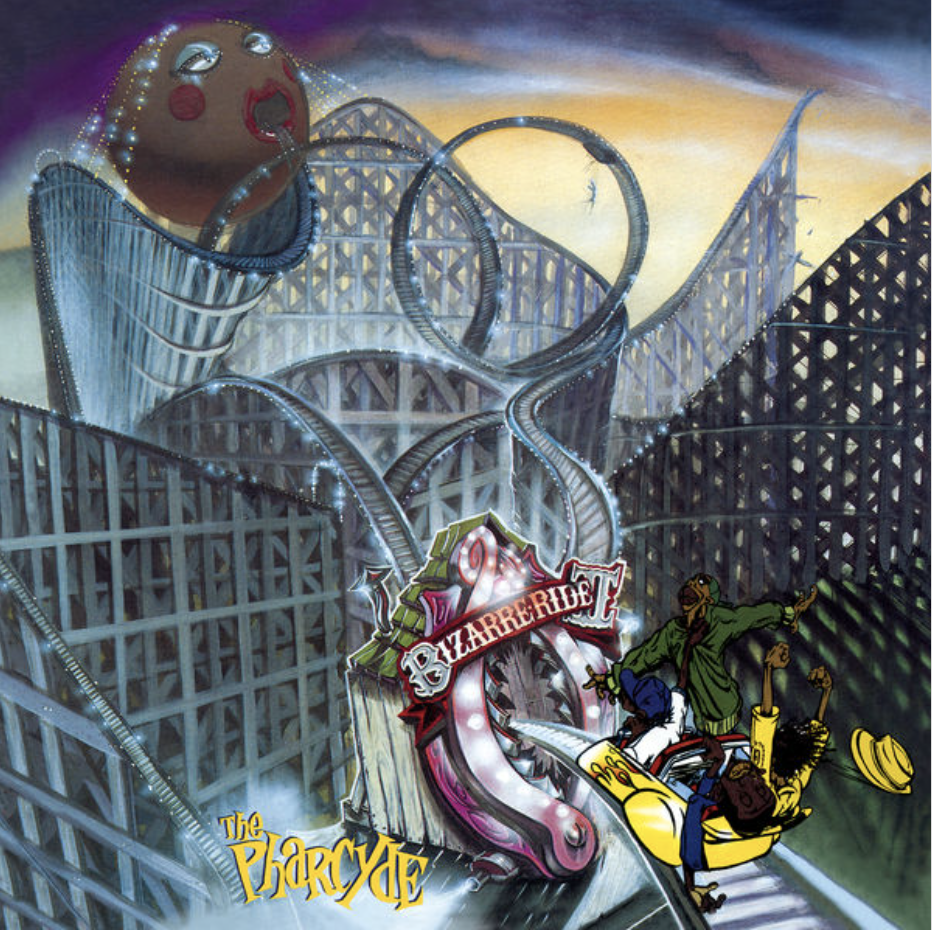
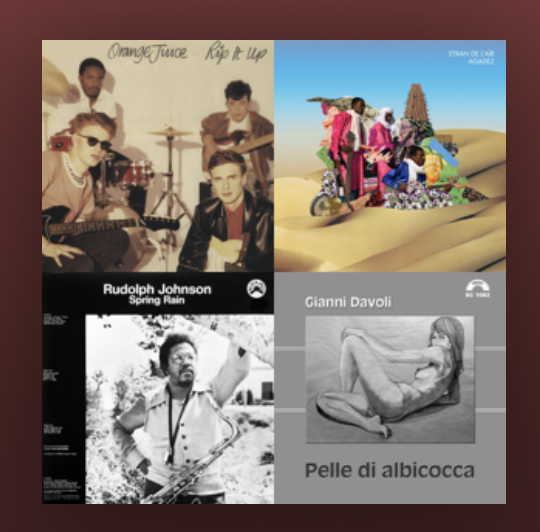
As always it’s both a celebration and commiseration as I mark the passing of both the hip-hop legend Tame One and the mad, bad and dangerous to have known rock ‘n’ roll progenitor Jerry Lee Lewis, whilst also highlighting the 50th anniversaries of Lou Reed’s Transformer, Hawkwind’s Doremi Fasol Latido, CAN’s Ege Bamyasi and Nektar’s A Tab In The Ocean albums; the 40th anniversary of Orange Juice’s Rip It Up and the 30th anniversaries of The Pharcyde’s ‘Bizarre Ride II The Pharcyde’ and the Aphex Twin’s Selected Ambient Works 85-92 LPs – both of which I remember buying on their release.
Added to that list are some incredible jazz suites from Rudolph Johnson, The John Betsch Society and Ryo Fuki; a pained score from the Ukrainian frontline by Angel Rada; another glimpse into the Beach Boys upcoming Sail On Sailor 1973 box set with the previously unreleased (officially speaking) Holland outtake ‘Carry Me Home’, penned and sung by Dennis Wilson, and amongst the fandom, hailed is one of the group’s most sublime and best songs to get the elbow; and Sahal sounds from Etran de L’Air, with a track from their new album, Agadez. Vince Tempera, Plone, Shawn Lee’s Ping Pong Orchestra, First Frontal Assault, Fall of Saigon, New Burns and more can be added to that list too.
TRACK LIST FOR THE MONOLITH COCKTAIL SOCIAL VOLUME #71
Orange Juice ‘Flesh Of My Flesh’
Etran de L’Air ‘Imouwizla’
Rudolph Johnson ‘Devon Jane’
Vince Tempera ‘Pelle di Albicocca’
The John Betsch Society ‘Ra’ Jerry Lee Lewis ‘Money – Live At The Star Club, Hamburg 1964’
Mickey Gloss ‘Crocodile Smile’
Plone ‘Minature Magic’
Aphex Twin ‘Pulsewidth’
Elzhi ‘Amnesia’
First Frontal Assault ‘Bloodfire Assault’
Tame One ‘Da Ol’ Jersey Bastard’
The Pharcyde ‘Pack The Pipe’
Shawn Lee’s Ping Pong Orchestra ‘Rocket Ship’
CAN ‘One More Night’
Fall Of Saigon ‘Visions’
Lou Reed ‘Andy’s Chest’
Stockholm Monsters ‘Winter’
Christine Perfect ‘And That’s Saying A Lot’
Ryo Fukui ‘Speak Low’
New Burns ‘Marlene Left California’
The Beach Boys ‘Carry Me Home’
The Idets ‘Look My Way’
Bnny ‘I’m Just Fine’
Som Imaginario ‘Armina – Vineta 1’
Plastic penny ‘Your Ways To Tell Me Go’
Nekter ‘King of Twilight’
Little Free Rock ‘Wait A While’
Angel Rada ‘Ghost In Odessa’
Hawkwind ‘Urban Guerilla’
Diane Cluck ‘4 Score Lightnings’
Museao Rosenbach ‘Zarathustra – Il Tempio Delle Cles’
Hamilton Leithauser & Paul Maroon ‘How & Why’
Weekly Post Playlist#3: Aphex Twin, Any Other, Low…
September 21, 2018
Gianluigi Marsibilio’s Weekly Post Playlist
We’re back with our beloved weekly playlist. For this return I decided to bring you many beautiful new releases.
A cut above all and all there is, the featured track from Any Other we have to report is one of the most beautiful pieces from the Two, Geography album: a rare gem to be discovered absolutely.
Not only young discoveries like Any Other or TENUE but also absolute confirmations like the Low, who have produced a complex album, deep and able to reach the unreachable peaks for most of the bands in activity, a disk from low, but definitely not low-profile.
On the playlist we also share with you a more acoustic choice from Riccardo Sinigallia, singer-songwriter of the great Italian tradition who manages to combine wonderful texts, a coefficient of experimentation, always right and weighted.
The climax of the weekly point is a track from the Aphex Twin new Collapse EP; there is no need to say anything about a job of this kind perfectly pigeonholed in what is a unique project, visionary, music that goes beyond the common feeling.
Gianluigi Marsibilio
 Monolith Cocktail Blog