The Digest for September 2026: New Music/The Social Playlist/Archives
September 2, 2026
The monthly Digest includes a clutch of accumulated short new music reviews, the social inter-generational/eclectic and anniversary albums celebrating playlist and an Archives Special.
___/NEW MUSIC REVIEWS___
(All entries in alphabetical order)
boycalledcrow ‘The Sprawl’
(Mortality Tables) 11th September 2026
Previous musical hallucinations have taken Carl M Knott (aka a boycalledcrow) through a Northern India roadmap, William Gibson’s dystopian sci-fi visions, and a strange manifestation of dream-realism that seems to be attached to, but very much removed from weird England. All of which has been woven into a sort of near avant-garde transported invocation of outsider art music.
Back with no less a “psychedelic” traverse of his obsessions – the ideas and questions that keep him up at night -, Knott turns long walks in search of UFOs (or as the recent senate hearings on the subject have now referred to them, UAP – that’s Unidentified Aerial Phenomena or Unidentified Anomalous Phenomena) and the search for aliens. Obsessed indeed with the whole conspiracist fantasy of government alien cover-ups, and the UAP phenomena – “show me the aliens!!” as Neil deGrasse Tyson would say -, the allure of declassifying files and perhaps finally exposing what so many hoped has been little more than a sensationalist anticlimax. It could in fact have been a government plot all along to encourage its citizens to watch the skies for them as documenters and early warning systems – as they can’t be everywhere – against enemy States infiltrating US airspace. Rod Dreher and JD Vance would have us perhaps believe that these alien entities were not from other galaxies but the Christian demons of our own nightmares.
Unexplained phenomena aren’t the only obsessions; whilst only alluding to it in the accompanying PR notes, Knott mind is also concentrated on the sorrowful pains of losing a “cherished loved one”. And often, there feels like a balance between the two worlds: the immaterial and the cosmic.
Taking a lead from such philosophical quandaries, Knott walks a mysterious and almost Freudian line between nightmares and dreams, lost as he is in the woods of his own imaginings, communing with the wildlife and familiars of a surrealist trippy kind to produce his most psychedelic walk-about yet.
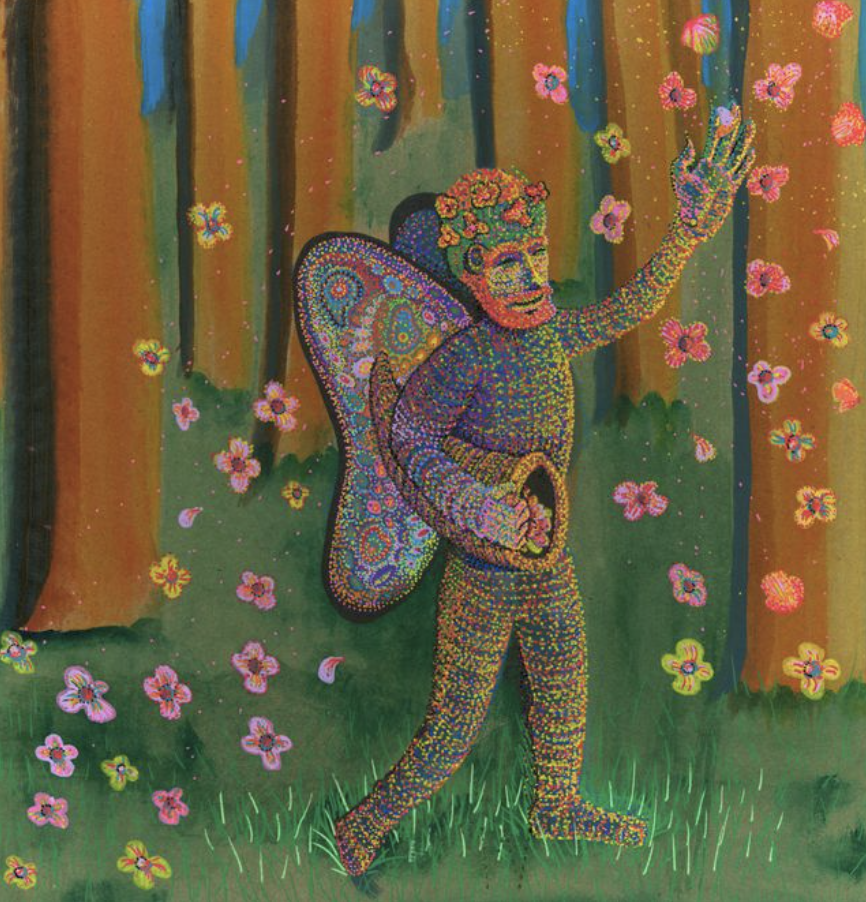
It’s a musical landscape in which the pastoral English folk magik of the Green Man kind and the floral costumed mysterious figures of lore and traditional planes meet something far odder; a manifestation of strange visitations from both beyond the material and outer space.
Whilst previous releases have been built upon Knott’s reverberating loops of interlayered nylon-stringed acoustic guitar samples, this time around that instrument is not so prominent. It is of course there, hidden or far more medically dreamy; a few notes or a brief fairytale passage here and there arriving from the ether. The difference on The Sprawl is Knott’s use of live played drums to create slipped trip-hop and more like hip-hop instrumental beats, and his embrace of ambient and new age trance music to create a sort of familiar but unique radiated and mellotron-like rotor mysticism.
Boards of Canada at their best mutate into Pan-American, Black Dog, Casino Versus Japan and Susumu Yokoto across a spectrum of both near slow-released euphoric and moodier, near ominously alien and mournful hallucinations. ‘Mantis Man’ for some reason (and remember, I have had a stroke recently) reminded me at one point of a fairground Beatles during their Magical Mystery Tour period being warped and reversed through a portal and transformed into the Beta Band.
A cylindrical and gradually beamed presence of other worlds, of psychedelic sci-fi and entrancing electronica from a golden era in 90s Britain, and vapours all coalesce to build up a dream state that unveils more on each listen through. This really is an album that gets better with every play. I’d even suggest it’s one of the boycalledcrow project’s best yet.
Dollar Brand, Don Cherry & Carlos Ward ‘Third World – Underground’
(WEWANTSOUNDS) 11th September 2026
Quite rightly one of the most iconic collaborations in free/spiritual jazz circles; a cult and most treasured, revered LP on its release and ever since, the Third World Underground performance and LP unified the talents of the iconic jazz triumvirate of the South African pioneer Dollar Brand (the moniker used by Abdullah Ibrahim until the later 70s), American nomad Don Cherry and Panama-born, American bred Carlos Ward. Released in its original form over fifty years ago, recorded however live in 1972, that promising communion of luminaries and their roots expansive show is finally getting a proper international vinyl release (for the first time ever I believe) from the good folk at WEWANTSOUNDS.
A salivating proposition for jazz aficionados and anyone who rightly claims to love exploration and the pursuit of furthering the form, this iconic cult favourite (if you were both lucky enough to own a copy in its limited form or hear it by other means) was first released by the notable Japanese label Trio Records via their even rarer and revered Nadja imprint. Holding the license in that territory for the rightly iconic ECM, the roster included both pioneering and acclaimed experiments and influential LPs from not only the American scene but a smattering too of homegrown talent: Ryo Fukui and Kunihiko Sugano for example sharing space with the likes of Art Pepper and David Murray…though the list goes on.
It is then a very special release, especially in light of the recent passing of one of its chief architects, the foundation and cornerstone, and man responsible for the lion’s share of arrangements (its most constant rhythm of life, flow and timekeeper) Abdullah Ibrahim or Dollar Brand as he was known at the time before that religious conversion.
Rightly occupying the same lauded heights of veneration as his South African compatriot and good friend Hugh Masekela the sagacious adroit Ibrahim received nothing but respect and praise for his activism and musicianship; with even Nelson Mandela no less, anointing him as “South Africa’s Mozart”. Embodying the many travails of his homeland, giving voice to the townships with what many consider the unofficial national anthem of the anti-apartheid movement, ‘Manneberg’, he spent decades fighting the system through his music: mostly in the jazz form but the classical too. In a former epoch, when merely performing jazz in South Africa was seen as an act of resistance, the pianist-composer was mixing it up with his legendary counterparts across the Atlantic, playing with a staggeringly impressive cast of doyens including Duke Ellington, Max Roach, John Coltrane and Ornette Coleman. The Duke, alongside both Monk and Fats, is honoured on one of his earlier 70s LPs; the opening ‘Saleem Peace’ being one arrangement I can’t help but feel and hear being riffed on the opening performance of this LP: that and perhaps Ibrahim’s own ‘Ancient Africa’ tune.
Intersecting across timelines and through various set-ups, Ibrahim’s foil, the renowned Don Cherry, fell into his orbit on numerous occasion; both serving at various opportunities under or with Coleman: Cherry appearing in the pioneer’s groundbreaking Shape Of Jazz To Come quartet of ’59.
On his way to becoming the restless musical nomad of jazz lore, Cherry’s eventual self-exile to Sweden was set in motion by his mid-60s tours of Scandinavia, especially Denmark. The burgeoning trumpeter and cornet star played in the country’s capital of Copenhagen in ’63 with Archie Shepp, and in ’64 with Albert Ayler before returning in the pivotal year of ’65 to record a quartet of original and standard performances for Denmark’s national radio station. Though often dismissed by cats like Miles Davis for a lack of technical proficiency, Cherry’s constantly evolving visceral style had gained him an envious apprenticeship, partnering up as a foil to a litany of be-bop, hard-bop and free jazz doyens: from Sonny Rollins to Coltrane.
Famously and influentially, Cherry’s organic societal caravan trek and meander across porous borders expanded the cultural language of jazz; his collaborative spirit with a cross-generational and worldly network of artists and players covers everything from French no wave to the music of Turkey and of the Far East.
No less impressive a CV, alto-saxophonist and flutist Carlos Ward is perhaps best known as a jazz and funk sideman, though he would also go on to lead his own quartet in the 80s and release a quartet of LPs. Born in Ancón in Panama, but incubated in the USA, Ward’s formal training in music was via the Navy School of Music. Part of that military tour included a stint in Germany, where he met the bop, freeform, modal and jazz-rock infused trombonist of note Albert Mangelsdorff. But his first big break was with Coltrane’s octet of 65-66. At the same time Ward crossed paths with Cherry who was also playing with Ibrahim, who’d left his apartheid homeland five years beforehand. That association carried over, with a notable soloist spot on Cherry’s Relativity Suite being just one example, and an ever-developing collaboration with Ibrahim that lasted into the 90s.
Already well attuned to each other’s musical languages, the global influences and a growing connection to the roots’ basis of the jazz form and its African heritage, by the early 70s and date of this live recording all three foils were at their creative heights. There’s much made of the societal tumult of the era and the decolonization of Africa’s former European colonies during the 60s and 70s; said to be reflected in this live coalesce of talent and their free expressive lines of enquiry and amorphous third world regeneration. That title being an indicator of course of ownership, the trio have taken back a derisory if for a very long time, an academic term for countries seemingly underdeveloped and even backwards in comparison to the great Western powers of the 20th century; Africa’s many nations but as a whole falling under this sweeping statement, though South Africa was only third world in relation to its apartheid segregated mistreatment and heinous degradation of its indigenous Black population; one reason why Ibrahim left to pursue his art and activism abroad.
Recorded at the prestigious Jazzhaus Montmartre in Copenhagen – a venue on par, its boasted, with the Village Vanguard and Ronnie Scotts, and a familiar stage for Cherry from back in the mid 60s -, this union riffed on, around and in the fourth dimension added to Ibrahim’s arrangements and on the opening span of cascaded waters over the rapids via the imaginary bugle-like-calls and heralds of fort on the borders of Texas during another age, a Cherry credited number.
From the outset, Ibrahim keeps up a momentum of simultaneously troubled and ravine trickled waters on the piano as Cherry and Ward sound the call to meet on the parade ground and to shine, blaze with brightened horns of sentiment and mystery.
The second track is named I believe in honour of Cherry, and a version featured on Ibrahim’s Ancient Africa LP – let me know if I’m wrong on this score, especially linear notes writer of engaging and descriptive musically flourishing prose, Jaques Denis. Carry on that Victora Falls flow, there’s a shift towards Ibrahim’s joyful township gospel vibe. You can hear the enjoyment in the playing on this percussively scraped and spoons-like rattled warm melodious celebration; a nod perhaps to Cherry, but also the Pharaoh and Yusef Lateef.
In old money, side Two is a near seamless performance both of jazz’s African roots and further nomadic trail through the form’s cannon, its inceptions, mixed with a removed form of the classical.
It begins with a fusion of saloon and New Orleans bluesy jazz – think Oscar Peterson sharing the pianist bench with Toussaint and Cecil Taylor -, a riff on ‘The Moon’ and a trumpeted caravan trail over the sand dunes, before accenting the drama and peaks of the piano’s near off-kilter and simultaneous trembles and rhythmic waterfalls. ‘Jabulani-Easter Joy’ follows, keeping the signature piano sound and feel, but swaddled as it plays through an African marketplace to the tune of Hugh Masekela, a distant Mariachi band and the show bands of the 1920s.
There’s a communal township chorus of voices on the next part, a take on the traditional ‘Waya-Wa-Egoli’: already an album track of Ibrahim’s, paired up, as it is here with the accompanying ‘Swazi’. I believe all three foils are taking part, pleasingly humming and mouthing a hypnotic chant and mantra; a sing-along of the atavistic and spiritual; a connection to the continent. It ends on ‘Wayeah-Wayeah-O’, a final South African imbued calm of swimmingly hummed piano and fizzled-out saxophone.
At every turn the horn partnership proves as attentive as they do dynamic and free; mimicking each other at times, and at others in spirals of cyclonic honks and circus wails. Ibrahim enforces just how bloody good he was; the keys and notes pouring forth, flourishing and sweeping whilst at the same time repeating high noted repetitive tremors and spiky near out of key free hand accents and descriptive dances of the soul.
The word iconic is used too freely, but this revived and, finally, properly released LP, pressed onto vinyl, will do much to spread the word and accumulate new fans, new listeners to a magical trio at the height of their creative powers. Jazz royalty out on the fringes one minute, back into a melodious union of African soul and joy the next, Third World – Underground is a wonderous, dynamic and serenaded performance of the nomadic spirit; a return you could say to the roots, but also venture forth into the unknown or less charted.
Regina Collage ‘Horizont’
(Do You Have Peace?) Released 21st August 2026
Though the circumstances could have been better, the Ukrainian artist Regina Collage’s love of her newish Bristol home and its internationally influential and renowned music scene has opened new doors of introduction to a sound steeped in a kind of vapour and filter of dreamwave, coldwave, no wave, post punk synth pop and Goth electronica.
Forced to move away from her Kharkiv home on the Northeastern boundaries of Ukraine due to the relentless bombing campaigns by the Russian invaders since the outbreak of war over four years ago, Collage has found a strange kind of sanctuary in England; as the this latest album title alludes, the translated “Horizon” seems out of touch, never quite in sight or within reach; a metaphor for home and the detachment from events thousands of miles away in Eastern Europe’s most savagely and contested fought war.
Whilst events across the globe – from Israel’s ongoing war with Hamas and Iran’s proxies in the Middle East to the USA’s still very much active war with Iran itself – have pushed Ukraine’s defence against Russia off the newsfeeds, and as both attention spans have wearied or moved on and the divisive sides in the political ideological war of the West put each conflict in two regimented camps – usually the Ukraine falls into both the Right and Left’s conspiracist orbits, with, depending on which side, support and sympathy sometimes skewered for Russia and Putin -, this brutalist war continues unabated. Kharkiv’s importance strategically and geographically as the country’s second major city has made it one of the most important targets in Putin’s campaign; attacks from drones and missiles are almost a daily occurrence, with injuries and deaths registered every week, infrastructure and homes destroyed regularly: Already out of date at the time of writing, last month’s statistics roughly amounted to the total or partial destruction of 13,000 buildings and 9,000 apartments since the start of the war in 2022.
Changing hands over time, Kharkiv was once the capital of the Ukrainian S.S.R. until Kyiv took over in 1934. An epicentre of theatre, literature and the arts, home to the country’s Romantic writers’ revival, the city boosted an enviable cultural scene that revived and fed into a sense of independence. Although various periods of instability and the overbearing control from Tsarist Russia, then the Soviets and after the fall of the Berlin Wall, a post-Cold War Russia, have suppressed and worse, attempted to rewrite history, Ukraine maintains that same spirit of maintaining its own independence and destiny.
Collage’s parents remain in the city, which must be constant source of anguish and fear for Regina. These feelings, I would imagine, sung in a dreamy melange of echo, filters, vapes, industrial resonated moodiness and lament, are conveyed across the album’s thirteen differing tracks of influence and inspiration. It’s emphasised in the accompanying notes that the Liz Fraser meets lo fi minimal French chanteuse, Raincoats and Conny Frischauf-like vocals are all sung in a Ukrainian dialect. And it feels like the unearthing at times of some formerly hidden underground 80s synth-pop and Gothic release, revitalised with contemporary apparatus and the mood music of the times. You can add in a sort of Jah Wobble wavey and wobbly bass, some flange and phaser effects guitar playing (almost Banshees territory and the early Mute and 4AD Record labels roster) and atmospheric spells of Nocturnal Emissions, the Au Pairs and Coil.
Created between makeshift “bedroom recordings” and “borrowed studios” in and around Bristol, occupying thoughts and abstract expressions of the war and settling in a new home but not really knowing if it is temporary or for the long haul are transduced into a work of both weariness and endurance.
It all opens with the Eno/Harmonia and Thomas Dinger feel of ‘Tremelo’, which goes on to recall Stereolab, and strangely, Beach House, and works its way back and forth to the Cocteau Twins via factory reverberations, dissipated drum pad smacks and splays, and darker post-punk borrowings. New horizons are amorphously and moodily set beyond arrival on an album that conjures up diaspora disconnects and burnt-out maladies. Still, Bristol has opened up a music box of possibilities and foils with which to work out these desperate plights and exhaustive weathered thoughts of never quite reaching the acquired or ideal horizon.
Luce Mawdsley ‘Dream, Baby Butch’
(Pure O Records) 4th September 2026
What could be a daunting task, encapsulating and reflecting only the entire cannon of Western portraiture art and its idea of the feminine and queer gaze as realigned and recontextualised, reappropriated by the leading photography artist Catherine Opie, is handled with such sensibility by the former Mugstar guitarist and soloist composer of an as yet undiscovered but explored queer and non-binary vision of Americana, Luce Mawdsley.
After initially breaking free to pursue their own unique musical story with a number of abyss drawn sonnets informed by predatory slurred spoken-word mise-en-scenes and lurid, sleazy torturous self-harm, the Liverpool-based artist/musician began to pretty much mosey through an alternative version of this Western re-imaging: a sound I described at the time as a culminated merger of Morricone, Blood Meridian, Crime And The City Solution, El Topo and Hellenica.
Moving on still further with that developing soundscape and soundtrack-rich practice, Luce’s 2024 album, Northwest & Nebulous, created a continuous thread between that Western transformation and the traditional tones and echoes of both English pastoral and chamber music. Successfully integrated, the results now continue on this latest three-track soundtrack accompaniment to Becky Manson’s film, which presents Opie’s recent commission for the National Galleries of Scotland. Representing the devotional aspects of that same tradition, but through a mirage of new ideas on belonging and the art and curation of replacing old symbols and old representations with the stories and images of a LGBTQ+ community previously left out or removed from the gallery and museum space, Luce’s soundtrack reflects the three main themes, chapters in the journey from Opie’s formative crisis with identity and conformity in Cleveland to her experiments with gender at art school and the travails of motherhood as a lesbian. Marked by the retrospective span of Opie’s career, each project from that fifty-year career as a photographer, and I’d say installation, artist, is marked musically with moving adroit appeal; from the initial near angelic hymnal mirages and wavey subtle hints of Americana, but also (to my ears) the lilt of Hawaiian music of Luce’s main chosen pedal steel instrument on the opening title-track to the point in which that signature sound suddenly merges seamlessly with the near pipped gravitas and reverent devotional sound of the Cathedral – reminding me a lot of Jeff Bird of Cowboy Junkies note, but a soloist artist of similar influence.
Each musical passage proves just audible enough to not so much punctuate but to articulate the moment of each candid Opie declaration and explanation, as it sympathetically matches the juxtaposition of the artist’s own landmarks with those of other 500 years-worth of portraiture from the Western cannon. From both a decorative depiction of Mary and Child from the Renaissance epoch and a more modern rendering of motherhood by Picasso twinned with Opie’s own revelations and shared experiences of child-rearing, to what looks to be a family “collage” (as she describes it) from the English Civil War epoch countered by Opie’s own portraits series of domesticity in the lesbian community around America, each section is beautifully captivating musically. Luce doesn’t pull away from the focus but sets the tempo and suits the mulling over of what’s being described: serious but also dreamily ruminating and deeply felt. (Just to add, I personally love Opie’s portrait of a queer figure placed a few feet away from that of a painted Highland’s clan tartan clothed ruddy-faced Scotsman from the 17th century, when both should be at odds with each other they seem to strangely and brilliantly connect and make perfect sense at this time and in this place.)
The artwork is important of course (you or I could spend paragraphs and ages discussing all the various ideas, themes and relevancies of not only portraiture but art history; my thoughts just scratching the mere surface) but Luce’s score once isolated reveals ever more subtleties: just the merest hint of what sounds like metallic shimmers, a enervated softened and turned down low drum shuffle and textural brushes across the snare skin and off the rims, and a bassier undertone of real depth. If I was trying to find a reference, perhaps the work of Andrew Wasylyk and Daniel Vickers would be good, plus the already mentioned Jeff Bird. But what Luce seems to be doing is finding a new voice for the traditional steel pedal sound, which they describe as “surely the most nonbinary queer coded Western instrument”. Though I’m not so sure myself of that description, the instrument certainly seems to have more of a lilt, and I would say femineity to it when used as a balance against the more masculine stoicism and machismo of most traditional Americana and Country & Western music – just to take one example, the cosmic cowboy himself and former Monkee, Mike Nesmith always seemed to use it as a weeping melody or high aria-like plaint on his hangdog and hapless songs about regret and unrequited love. I expect you could probably get a grant these days to research and write a PhD paper on it, but it is something that Luce is pursuing; providing an alternative just like Opie’s own photographic works provide that alternative visual documentation of our progressively changing times, and a new sense of confronting the issues of belonging and erasure.
Euphoria is mentioned, even the Seraphim order of the highest of highest seated celestial angels, but a certain transcendence is reached on the pilgrimage to realisation and for finding a place in a world that has so far seemed hostile and cold to the LGBTQ+ identity within portraiture and this particular strand of musicality. As echoed in a most revealing film and project, Opie and Luce seem to prove a perfect collaboration.
You can visit Opie’s made visible themed To Be Seen retrospective come commission re-alignment of Scotland’s National portraiture collection in the Royal Scottish Academy building in Edinburgh until Sunday the 1st of November 2026. Taken from that show, Opie’s earliest self-portrait as a child posing like Charles Atlas in Cleveland adorns Luce’s EP, which is released via Luce’s own label, Pure O Records, with all proceeds going towards Liverpool’s oldest LGBTQ+ charity Sahir.
Shapeshifter ‘S-T’
(Lit Soc Records) 4th September 2026
The distinguished and loftier jazz critics through their industry outlets will home in on this trio’s technical abilities – which are top quality by the way -, but I’m drawn to performance, the feel and musicality; whether it’s experimental or an immersive experience that draws you in and makes you want, nee need, to hear more. And I’m pleased to announce that the rightly renowned but still burgeoning saxophonist and composer and now bandleader, Brittany Pitt has achieved it all on her inaugural Shapeshifter album.
Imbued and feeding off of the legacy – and very much still evolving – Toronto jazz scene, Brittany and her foils of fellow University of Toronto Faculty of Music alumni and guitarist/composer Dan Pitt, and drummer/composer/curator/educator Aidan McConnell manage to incorporate their previous projects and eclectic experiences on a live recorded performance that recalls moments and evocations of jazz-fusion, jazz-rock, the European school of contemporary jazz, and the freeform.
All three credited improvisers of that form bring something special and personal; drawing upon the jazz traditions of exploration and a forward momentum that simultaneously offers syncopation and the extemporised to breach and probe at the boundaries, yet still maintain something melodic, feelings and expressions of thought and rumination.
Cross-networks with CVs that contain an abundance of collaborations and studies with Canda’s new and established schools of jazz, it’s that scope of learning and sharing that now enfolds over nine tracks of both mirages and more active, busier pieces. The title-track jumps into life after an inviting tenor lead-in and Allen Holdsworth-like clever but attuned to the direction of travel guitar and spidery bouncing drums. As the track progresses from the floor of the “beloved” Toronto Sellers & Newel Second Hand Books store – doubling as a venue for such experimental and improvised showcases -, echoes of Europe’s ACT and We Jazz labels resonate with the American stirrings of Donny McCaslin and the intricate guitar work of Wes Montgomery before finally resting.
Harmonic pings and the bell of what sounds like a bicycle sound out across hi-hats chaffs and squeezed breaths over the tenor’s mouthpiece on the next track, ‘Union Street’. Every town or city has one it seems, but this busy bluesy sidewalk shuffle and snozzled accompanied piece builds in its momentum towards a strange alliance between Zappa and Beefheart strung-out and wiry guitar experiments and echoes of Black Conscious jazz from the 70s.
The shorter, near vignette ‘Prospect’ intro strangely evoked Jeff Buckley at a contemplating jazz retreat under the tutelage of Pat Metheny. This bleeds into a full-on and fully realised improvisation of bandy lunar guitar, dusted and shuffled busy drums and an air of spiritual jazz. ‘The Meaningful Conversation’ meanwhile reminded me of a downplayed borrow of Idris Ackamoor and Peter King, transported to the dry rasped planes of the desert. In other places the album draws comparisons (to my ears anyway) with Anteloper, the Jim Black Trio (minus the piano, which sounds odd I know), Bill Frisell and on the ‘Mentally Heavy’ Balearic-like and tuneful improv Lalo Schifrin via Coltrane – that same track has some wild fretboard strokes and noodling going on, plus soloist rock-jazz cries and whines.
Fulfilling its role, the inaugural Shapeshifter live showcase (recorded back in January of this year) does much to cement the reputation and draw of the Toronto jazz scene. One of the best examples of its kind in 2026, fusing the European with North America to balance out an idiosyncratic performance hard to repeat.
___/THE MONOLITH COCKTAIL SOCIAL PLAYLIST VOL. 110____
A little early this month, brought forward by the deaths of both country dame Dolly Parton and the never miscast or typecast actor and musical artist Tim Curry. I’ve added a smattering of tracks from the two on volume 110 of the long-running inter-generational/international/eclectic Monolith Cocktail Social Playlist – a kind of quasi radio show, or even a DJ set (yes, believe it or not I did used to gig as a DJ).
There’s more from both Curry and Parton in the Archive section below this; a sort of playlist of video moments and adjacent curated acts that seem close to or that orbit those two worlds.
If you’ve been following the site for some time, or just like the playlists I’ve been compiling, you will know that each month there’s a selection of tracks from anniversary celebrating LPs.
This month I’ve chosen tracks from The Remains’ self-titled debut of 1966, Funkadelic’s Tales of Kidd Funkadelic and Hardcore Jollies albums (both released in 1976). Another leap forward in the decades, and David Slyvian’s Gone To Earth is forty. I’ve also added a quartet of tunes from R.E.M.’s Adventures In Hi-Fi’, Suede’s Coming Up, Octopus’s From A To B (criminally overlooked), and The Cardigans’ First Band On the Moon, all of which celebrate their thirtieth birthdays this month.
The rest of the playlist is made up of the old and newish, with choice music from Mia Joy, The God Fahim and friends, Keiron Phelan & Peace Signs, 4 Mars, B Flatt, Sylvain Kassap, Don Peretz, Solso, Pipes You See Pipes You Don’t, Idioma Ideal, TESTPATTERN and Second Layer.
Volume 110’s Track List::::….
Dolly Parton ‘Help!’
4 Mars ‘Natesha (Conpassion)’
Octopus ‘Everyday Kiss’
Suede ‘Starcrazy’
Second Layer ‘Zero’
Funkadelic ‘Let’s Take It To The People’
The God Fahim Ft. NicoJP & Lil Supa ‘Lotus’
B Flatt ‘Crushed by Your Dreams’
The Remains ‘Lonely Weekend’
Pipes You See, Pipes You Don’t ‘Ten Thousand Years Old’
TESTPATTERN ‘Beach Girl’
Tim Curry ‘Hide This Face’
Vita Bergen ‘Disconnection’
Don Peretz ‘Epater Le Bourgeois’
David Sylvian ‘Gone To Earth’
R.E.M. ‘E-Bow The Letter’
Bix Medard ‘Are You Ready?’
Adelie ‘Sylvain Kassap’
Dolly Parton ‘You Gotta Be My Baby (Live)’
Keiron Phelan & Peace Signs ‘Robinson Crusoe’
Funkadelic ‘Soul Mate’
Kristoffer Bolander ‘I Forgive Nothing’
Porter Wagoner & Dolly Parton ‘The Pain of Loving You’
Mia Joy ‘See Us (Demo)’
Idioma Ideal ‘Puerta Secreta’
Solso ‘Lontana de me’
Opus Avantra ‘Il Pavone’
Dolly Parton ‘Purple Rain’
Bear Driver ‘Never Never’
The Cardigans ‘Choke’.
____/ARCHIVES_____
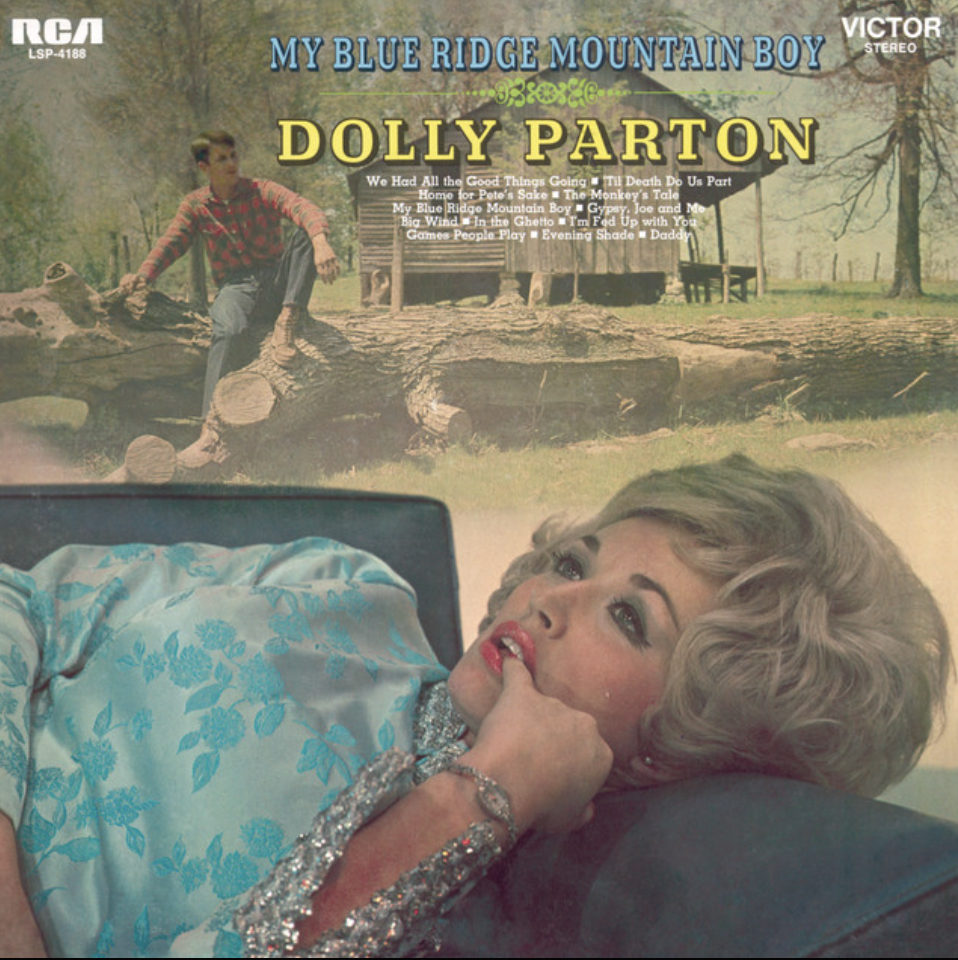
Something different this month, a hotchpotch smattering of favourite moments from Dolly and playlist of those who shared a similar trek or could feel indebted to that Tennessee gal’s travails and fortunes. Under the Sweethearts of the Rodeo & Log Cabin porch Divas heading, I’ve collected together a playlist to capture the musical joys, plaints and transcendence of Dolly and her peers, her scions and fans.
A Dolly Mixture of moments:
One: Dolly in a life-affirming duet with Kermit the Frog, riffing on Sly & The Family Stone’s ‘Everyday People’.
Two: And for balance, Dolly upstaged by Miss Piggy.
Three: Warming up for that eventual Trio album release many years later, Dolly nearly upstages the ridiculously sublime voices and presence of Emmylou Harris and Linda Ronstadt; covering one of a number of songs together, this time a song made famous by the legendary Carter Family, ‘Bury Me Under The Weeping Willow’.
Four: The odd couple. Dolly pays a visit to the lunacy and kooky childish playhouse of Pee Wee Herman. Excuse the quality of the video. Hang around until ‘Hey Good Lookin’, which is a hell of a lot more fun and brilliant than it ought to be.
Five: Let’s hear from dear ol’ Sis to see if it runs in the family.
Six: The technically adroit and informative Wings of Pegasus analyses the genius of Dolly Parton. No one should be in any doubt (and I’m pretty much sure that WoP is the only such analyst worth his salt on Youtube) of Dolly’s guitar prowess and performance after watching this – and remember kids…practice on that instrument.
Seven: A real teary-eyed tug on the heartstrings. The sorrowful lament would make angles cry. Dolly performs ‘Down From Dover’. The lyrics are incredible, the story tragic and bold for not only her times but anyone’s. Written originally when Dolly was just 18! I can’t believe anyone now at that age could be sagacious, already worn and hurt enough, nor lived enough life to come up with such a heart torn asunder malady. PS: I actually originally thought this was a cover; something from the Fairport and their ilk songbook…a traditional mourn brought up to date.
Eight: A no brainer, considering that rural upbringing and her own travails of poverty and Southern twang that Dolly would cover this. Elvis famously wished to record Dolly’s own ‘I Will Always Love You’, but as the Colonel’s 50% publishing ownership travesty of a deal threatened to run right over an aspiring songwriting Dolly, our Tennessee dame rightly decided a big fat no! Anyway, she does a service (just as gospely and spiritual) to the conscious, right-on Elvis and his Memphis social spun commentary.
Nine: Dolly with Oprah Winfrey sharing a joke that would probably never be dared aired or even considered now – more’s the pity. Dolly auditions for Porgy and Bess.
Ten: Taking it back down the country to the Southern Baptist, Dolly sings ‘Higher and Higher’ and the choking-back-tears, ‘Me and Little Andy’ on Carson Tonight – her inaugural appearance, which she even admits was probably the biggest moment in her career in terms of reaching that universal crossover audience.
“Give My Regards To (Off) Broadway”: Tim Curry Jukebox:
Tim Curry ‘We Went As Far As We Felt Like Going’
Tim Curry ‘Hide This Face’
Tim Curry And Eddie Murphy ‘Saturday Night Live Monologue’
Tim Curry ‘Paradise Garage’
Jobriath ‘Take Me I’m Yours’
Lou Reed ‘Andy’s Chest’
David Johansen ‘Here Comes The Night’
David Bowie ‘Rock ‘n’ Roll With Me’
Here’s the message bit we hate, but crucially need:
If you’ve enjoyed this selection, the writing, or been led down a rabbit hole into new musical terrains of aural pleasure, and if you able, then you can now show your appreciation by keeping the Monolith Cocktail afloat through the Ko-Fi donation site.
The Digest for April 2025: New Music/The Social Playlist
April 25, 2025
The Monthly Digest includes a clutch of accumulated new music review, and the Social Inter-Generational/Eclectic and Anniversary Albums Celebrating Playlist.

___/THE NEW___
Staraya Derevyna ‘Garden Window Escape’
(Ramble Records/Avris Media) 2nd May 2025
Pulling out of the historic district of St. Petersburg once more to conjure up an amorphous polygenesis-sourced hallucination, the pan-global Staraya Derevyna capture of diverse artists, led by the Israel/Ukrainian musician and sound engineer Gosha Hniu, wheel out the mechanical dream-machine on their latest estranged and avant-garde descriptive album Garden Window Escape.
Imagine Beefheart conducting the Sharmanko Kinetic Theatre, or Faust manhandling a pair of shearing buzzing shavers. Perhaps, the Plastic Beatniks warped mirage vision of Americana coming up against the sound worlds and the alternative pyschogeographic folk of Širom and La Tène. You can imagine the Red Crayola in Eastern Europe during the Medieval times, hanging out with CAN as they dish out their EFS series experiments whilst a languid Einstürzende Neubauten add their signature imaginings and post-punk industrial stirrings.
The imaginative hermitic workings and the transmogrified poetic works of the Russian polymath Arthur Molev that suffuse this latest release of performative and fantasy clockwork circus merges the mysterious with the murky, the atmospherics of alternative pastoral histories with the strained, strangulated and brassy textural wanes of bass clarinet, the flute and the cello, and the hidden source sounds of rope pulleys and cogs and levers that need oiling. For the icon Rus, the holy reimagined Rus is rewoven by the merry-go-round minstrels of Maya Pik, Ran Nahmias, Grundik Kasyansky, Miguel Pérez, Yoni Silver and Andrea Serafino to atheatre of esoteric poetry and dreams.
Who knows what it all means, but this collective always impress with their journeying and deeper connections to a sense of conceptualisation steeped in both the real and fantastical. Through the abstract and most emotive and surreal, every Staraya Derevyna is a revelation. And Garden Window Escapeis just as imaginative and evocative.
Michael Sarian ‘ESQUINA’
(Greenleaf Records) 25th April 2025
On the corner or a “corner”, albeit with a Spanish/Portuguese language entitled twist, the accomplished trumpeter, bandleader and composer Michael Sarian is imbued by the spirit of Miles Davis’s iconic 1972 LP – that and the electrified period that also took in Bitches Brew, Black Beauty and Agharta albums – on his latest album, ESQUINA.
Full of lunar mystery and dreamy mirages, Sarian traverses, hovers, inhabits and floats across a largely improvised vision of prog-jazz and jazz fusion; taking a different direction after a trio of albums that bordered more upon a chamber-jazz and acoustic sound. The same players now venture into territory mapped out so cosmically and exploratively by Jon Hassell, the Soft Machine, Nucleus, Weather Report, Herbie Hancock and the already mentioned Davis. In addition to the long form peregrinations that make up this three track album, the ensemble also transposes Portishead’s classic trip-hop track ‘Glory Box’; an influence for Sarian since he first heard it as a kid on its original release in the mid 90s, and here, transformed into a spacy soul-jazzy lounge vision of Pink Floyd and the El Michels Affair with the smooth melodic trumpet drifts and near sensitive expressions of Chat Baker and Kenny Dorman.
Back in the fold, now reconfigured and in a freeform mood of prompted celestial and hallucinatory dream experimentation and resonating gauze, noted Argentine pianist and composer Santiago Leibson probes, dabs, sustains Marion Brown bulb-like notes, galactic Davis sounds and Herbie Hancock effects, metallic and vibrating languages from the Hammond B3, the Mini Moog and Wurlitzer, Alaska born, NYC relocated in-demand bassist Marty Kenny offers near cosmic soulful bass lines, prog noodling and swamp funk undertones, and renowned Brooklyn-based drummer Nathan Ellman-Bell makes his way around the kit as he offers the subdued and descriptive and leaps of near d ‘n’ b-like breaks and cymbal splashes. As I said before, this is near lunar in its projection, on the edges of tripping out; at times, and as noted in the PR notes, sounding not too dissimilar to the work of Donny McCaslin. At other times it reminded me of Arve Henriksen. We are of course in the jazz fusion sphere of influence, but not quite indulgently prog enough to put people off.
Instead, we get a band escaping their surroundings, pepped up on electric Davis but not quite breaking out into the psychedelic funk boom-bap of that period. Dreaming and pushing an intuitive bond they conjure up an intergalactic dream of influences, musical genres as they enter another dimension. Tamed but adventurous, this is a group at their playful and inventive best.
iyatraQuartet ‘Wild Green’
11th April 2025

Imbibed by individually strong and impressive classical CVs and a shared experience of study at the Royal Academy of Music, the iyatraQuartet ensemble have previously merged a penchant for India and Arabia with European and closer-to-home influences from across time.
The last time I featured the quartet, back in 2020 with the Break The Dawn album, they gravitated towards India, both musically and religiously. The group’s name, pronounced “ey-at-ra”, is even taken from the Hindu expression for travel, “yatra”. It helps that the quartet’s co-founder and violinist maestro (to name just one instrument among her eclectic repertoire) Alice Barron studied South Indian violin techniques with the country’s star turn duo, the Mysore Brothers. And on this latest empirical and tapestry-come-alive thematic album of nature’s cycles and seasonal graces, Wild Green, you can hear the distinctive bellowed drone of that region’s Shruti box instrument on the title-track. As an indicator of the direction of travel and the scope of influences, this venerable, stirring choral fluctuated voiced sprouting of the pastoral was actually originally inspired by the noted historical European polymath figure of Hildegard of Bingen, better known as the Sibyl of the Rhine, who, apart from being a Benedictine abbess, founder of monasteries, a medical writer and practitioner, philosopher, mystic and visionary was also an influential composer of “monophony”, the simple musical form typically sung by a single singer or played by a single instrumentalist. In choir, or choral form as it is here, it usually means the ensemble of voices all singing the same melody. Incorporated within that framework is a vast swathe of traditional and folk music that counters subtle hints of those Indian foundations with the Medieval.
Either literally woven from a parchment canvas or played in the “wilds”, the garden idyllic, Barron, alongside George Sleightholme on clarinets, Rich Phillips on cello and Will Roberts on percussion (all four pitch in together voice wise), compose a greenery of Orcadians’ prayers, legendary tales of enchanted fish, lunar bound vibrations, Yuletide lullaby and the changing of the calendar seasons.
Beautifully pitched between the romantic languages of old Europe (the music box springs dance and love song ‘Beatriz’ is sung in the Medieval language of Occitan, which poured across borders from France into pockets of Spain, the valleys of Italy and Calabria) and vocalised expressions of the apparitional and banshee-like, the classical and atavistic, life is breathed into a rousing scenery. Celtic, Eastern European, the Baltics, the South American and fantastical are all entwinned on an album of minor rhapsody, the plaintive, yearned and near mysterious; the musicianship first rate as you’d expect, expressive, just as identifiable as it is obscured and used to sound out the growth of branches, seeds and flowers, the atmospheres of antiquity and a present reflection on nature, and the shrills, vibrations, looming arches and mists of imaginative storytelling. The voices, from across the ages, personify historical references and skill; illuminating and beatified in equal measures, with an ear for the classics, the folk-rock of the 1960s and early 1970s, various traditions, and the improvised.
This is living, breathing music that reflects the imaginative surroundings and themes of the ensemble as they mould chamber music, the classical, the pastoral, folklore and folk music to their own unique signature of the felt and stirring.
IOM ‘Spiritual Wastelands’
(Cruel Nature Records) 28th March 2025
Circulating, pulsing and dancing through the magnetic circuits of the inner body and mind, caught up in the chaotic stresses and violence of our current times, the latest album from the Spanish musician and sound designer Iker Ormazabal Martinez is powered by a caustic electricity and metallic industrial percussive tools.
Under the soloist guise of IOM, Martinez wields his EBM and industrial synth-techno influences to beat out and charge up a physical sonic response to modern existence. Wretched, sometimes near violent, but always with structure and rhythm, the nine concomitant pieces that make up the thematic whole of Spiritual Wastelands move between the darker club music of the German underground and the alien factories of dead industry.
From Basque country Vitoria to Catalonia Barcelona and a relocation in recent years to London, the granular guide of frazzled and force field gated electronica has merged his experiences as a keyboardist and sample-instigator for pop and rock groups, a musician with a company of Butoh dancers (originally a Japanese “dance of utter darkness” in which performers, usually covered in white paint makeup, intentionally use slow body movements and confront themes of darkness and transformation, but also far more radical and taboo subjects), and experimental electronic artist to create a vaporising density of tubular, barracking sheet metal dance music. Through the distress and clang of the pipes, the fizzled and machine reverberated, glimpses of trance-y light are found, and on the mystical voiced ‘Light’, featuring The Seer no less, there’s an obscured hint of Middle Eastern horns and a shrouded spiral of the Sufi against a darker churn of laboured drones and resonating steel.
Vocals sound near Germanic, or of that school, or go deep and near sinister; reminding me in part of Front 242 and NIN but put against sounds and rhythms and beats that err towards Basic Channel, Pan Sonic, Cabaret Voltaire and CABLE. The futuristic computerised and iterated saw brushed ‘Somatic Response’, sounds almost Kraftwerkian in comparison: perhaps a little Kriedler.
Mind and body yearning for spiritual guidance or a way out, react to the modern furnace on an album full of oomph and fried electricity. Does After releasing a variety of works on a myriad of labels, IOM finds the perfect pitch with Cruel Nature ever seldom put out an uninteresting or intriguing album.
Conrad Schnitzler ‘RhythmiCon’ and ‘Drei Kugeln’
(Flip-Flap) 29th March 2025
A leading, if often overlooked, progenitor of the Kosmiche and Krautrock eras, Conrad Schnitzler’s various stints as a founding member and instigator of the inaugural Kluster (forming the trio with fellow Zodiak Free Arts Lab stalwarts Hans-JoachimRoedelius and Dieter Moebius in 1969) and Tangerine Dream groups (an early member in 1970, he featured on the group’s debut LP Electronic Meditation) would reverberate throughout his solo and collaborative work, right up until his death in 2011. After more or less setting in motion an entire field of sound experimentation in the 1970s, by the 1980s Conrad had accumulated a strong body of work and was once again forming new bonds and ideas with Germany’s post-punk generation: integrating some of the more interesting ideas into his synthesizer-based modulations and soundscapes that would both echo and inform the German new wave and techno.
A Berlin stalwart and co-founder of the already mentioned and famous Zodiak Arts Lab, it would be Conrad’s contact with the leading performance and installation progenitor of that era, Jospeh Beuys, that helped form his early thinking and ideas of free play and experimentation. Leading, an admittedly amateur musician, to a both conceptual and playful method of exploration within the circuitry, cables, soundboards, switches and apparatus of electronic and analogue fields of sound development and rhythm. None more so than with this double-bill of unearthed album selections from the Flip-Flap label; a special platform set up in 2021to release a limited-edition series of selective works personally chosen by Conrad himself. A while back, it was the Hamburg-based, all-things German electronica, label Bureau B that seemed to have the role of releasing his recordings from the vaults and lab; some of which featured reworks, and finishing touches by the artist/musician/producer Kurt Dahlke (a founding member of D.A.F. and Der Plan of course), under his Pyrolator alias. But, seemingly, picking up the baton, this enterprise revives that body of work, previously left dormant or sealed behind closed doors.
The first album of which, Rhythmicon, is, as that title suggest, a selection of tracks focussed on the play and kinetic chain reactionary experiments of prompted, set in motion and manipulated rhythmic constructions. As part of my research, I’ve looked that album title up and found that it actually references an electro-mechanical musical instrument of the same name, designed and built by Leon Theremin for composer Henry Cowell. It was intended, so the Wikipedia entry goes, “to reveal connections between rhythms, pitches and the harmonic series.” A further description: the Rythmicon “used a series of perforated spinning disks, similar to a Nipkow disk, to interrupt the flow of light between bulbs and phototoreceptors aligned with the disk perforations. The interrupted signals created oscillations which were perceived as rhythms or tones depending on the speed of the disks. It generated both pitches and rhythms and has been described as a precursor of drum machines.”
I take it that this apparatus signals Conrad’s own idiosyncratic rhythm productions, created over an eighteen-year period from 1982; now collected together for an hour-plus album of strange, modulated shapes, reverberations, chemistry, neutrons, rays, bounces and tubular metallic cosmic dances and playful techno visions made on some orbiting spacelab.
Part futuristic, part tribal, part alien, part chemistry, part hypnotically entrancing and part new wave, Conrad sometimes leads and sometimes absorbs the current trends, the evolution taking place within electronic music during the pivotal 80s and 90s periods. And so, you can hear echoes of Luke Slater, Rob Hood, Autechre, Populaire Mechanik (the brainchild of fellow Berlin-based musician/drummer Wolfgang Seidel, who actually collaborated with Conrad during the Zodiak Lab days and was inspired to form the mechanic group as a consequence), Kriedler, Basic Channel and on the “7:51” track (all tracks are named after their duration in minutes and seconds) a touch of OMD’s debut album.
Intentionally made to be simple, there is however a lot of sophistication and skill in these often off-kilter rhythmic reactions; the art and skills of constant movement and drum machine-like patterns really mesmerising and spacy, but near skeletal industrial and machine made too with particles bouncing around and various symbiotic shapes forming.
By contrast, the second album to transmit from the Flip-Flap facilitators, Drei Kugeln, is more about the soundscape and the atmosphere. A continuous soundtrack in a manner, the thirty tracks that make up this both mysterious and alien visitation from the reaches of some science-fiction evoked off-world, subtly build or change a thematic sound palette of hidden metallic sources, force fields, paranormal activity, reversals, signals, lost and found transmissions and near choral passages of space awe and venerable breath.
Channelling past experiments with Tangerine Dream and other such congruous nebula searching and invoking kosmische music projects, but mythology and technology too, Conrad brings mystique to his deep investigations and chilled solar wind breathed vortex transformation of inner and outer space. Aboard a supernatural space freighter, or sucked into the very machine itself, Drei Kugeln is a very rare sonic immersive experience with plenty of interesting, explorative changes and feelings of both the uncertain and dreamy.
This is a great package and showcase for an innovator who is sadly missed and often forgotten in the story of electronic and analogue evolution. Proving just as fresh, alive and futuristic as the day they were recorded, these experiments perfectly balance out the more rhythmic encounters of the first album. Both releases are perfect examples of Conrad’s art form and constant motivation to explore and experiment. Nothing short of revelations from a back catalogue and library of electronic play and inventiveness that needs to be in the public realm and celebrated. Don’t choose, but put both releases on your wish list.
___/THE SOCIAL PLAYLIST VOLUME 96__
The Social Playlist is an accumulation of music I love and want to share; tracks from my various DJ sets and residencies over the years; and both selected cuts from those artists, luminaries we’ve lost and those albums celebrating anniversaries each month.
Running for over a decade or more now, Volume 96 is the latest eclectic and generational spanning playlist come radio show from me – the perfect radio show in fact, devoid of chatter, interruptions and inane self-promotion.
Each month I mark the passing of those artists we’ve recently lost, and during the last four weeks both Clem Burke (an oft Mod Ramone for the kicks, stalwart and force behind Blondie, and numerous collaborations, sit-ins) and David Thomas (the iconic frontman of the cult Pere Ubu).
In the Anniversary albums category, there’s tracks from Joan Baez’s Diamonds & Rust (released 50 years ago this mont), Roland Haynes’ 2nd Wave (another 50th), Prince’s Around The World In A Day (40 years old this exact week), the Aphex Twin’s …I Care Because You Do (30 this month), Pavement’s Wowee Zowee (also 30 this month), the Tindersticks celebrated self-titled LP of 1995, and The Books’ Lost And Safe (20 this month).
Amongst a selection of tracks from across the ages, the genres, and from across the world, there’s a smattering of recentish tracks from MC Paul Barman, Che Noir, Marcelo D2, Eiko Ishibasi and Leah Neal.
__/TRACKLIST____
Blondie ‘Dreaming’
Pere Ubu ‘Modern Dance’
Leah Neal ‘Down On The Freeway’
Joan Baez ‘Simple Twist Of Fate’
Eiko Ishibasi ‘Trial’
Che Noir ‘Bow And Arrow’
Erick Cosaque ‘An madam cadimalade’
Roland Haynes ‘2nd Wave’
MC Paul Barmen ‘Pearl Of Light’
Prince ‘America’
Pavement ‘Fight This Generation’
Pere Ubu ’49 Guitars And One Girl’
Aphex Twin ‘Next Heap With’
The Books ‘Vogt Dig For Kloppervok’
Marcelo D2 ‘LUCIDEZ
Agincourt ‘Going Home’
Tindersticks ‘No More Affairs’ The Anderson Council ‘Do You Remember Walter’
Kak ‘Electric Sailor’
Suburban Studs ‘PUTIN’S BOMB’
Blondie ‘Love At The Pier’
Autosalvage ‘Rampart Generalities’
Buffalo ‘Ballad Of Irving Fink’
Robert Dick ‘Third Stone From The Sun’
Blondie ‘Kung Fu Girl’
Chandra ‘Get It out of Your System’
Pere Ubu ‘Love Is Like Gravity’
Thee U.F.O ‘Kranke Schussel’
Romeo Void ‘Six Days and One’
Teisco ‘Vision of Shore’
Now For The Pleading:
Hi, my name is Dominic Valvona and I’m the Founder of the music/culture blog monolithcocktail.com For the last ten years both me and the MC team have featured and supported music, musicians and labels we love across genres from around the world: ones that we think you’ll want to know about. No content on the site is paid for or sponsored, and we only feature artists we have genuine respect for /love or interest in. If you enjoy our reviews (and we often write long, thoughtful ones), found a new artist you admire or if we have featured you or artists you represent and would like to say thanks or show support, than you can now buy us a coffee at https://ko-fi.com/monolithcocktail

