End of the Year Revue For 2025: Part One: A to M
December 11, 2025
Choice Highlights From The Last Year
I said I wasn’t going to do it this year. And this may be the last. But here is the first part of a comprehensive revue listing of choice albums (some extended EPs too) from 2025 that we returned to the most, enjoyed or rated highly. See it as a sort of random highlights package if you will.
As usual a most diverse mix of releases, listed alphabetically – numerical orderings make no sense to me unless it is down to a vote, otherwise what qualifies the placing of an album? What makes the 25th place album better than the 26th and so on…
Whilst there is the odd smattering of Hip-Hop releases here and there, our resident selector and expert Matt Oliver has compiled a special 25 for 25 revue of his own, which will go out next week.
Without further ado….the first half of that selected works revue:
A.
A Journey Of Giraffes ‘Emperor Deco’ (Somewherecold Records)
Review by Dominic Valvona
Alien Eyelid ‘Vinegar Hill’ (Tall Texan)
Review by Brian ‘Bordello’ Shea
Allen, Marshall ‘New Dawn’ (Week-End Records)
Review by Dominic Valvona
Armstrong ‘Handicrafts’
Review by Brian ‘Bordello’ Shea
Audio Obscura ‘As Long As Gravity Persists On Holding Me to This Earth’
Review by Dominic Valvona
Aus ‘Eau’ (Flau)
Review by Dominic Valvona
B..
Balloonist, The ‘Dreamland’ (Wayside & Woodland)
Review/Piece by Dominic Valvona
Barman, MC Paul ‘Tectonic Texts’
Picked by Dominic Valvona
Bedd ‘Do Not Be Afraid’
Review by Dominic Valvona
Bird, Jeff ‘Ordo Virtutum: Jeff Bird Plays Hildegard von Bingen, Vol 2’
(Six Degrees Records) Review by Dominic Valvona
Blanco Teta ‘‘La Debacle las Divas’ (Bongo Joe)
Review by Dominic Valvona
Bordellos (with Dee Claw)/Neon Kittens, The ‘Half Man Half Kitten’
(Cruel Nature Records) Review by Dominic Valvona
Braxton, Anthony ‘Quartet (England) 1985’ (Burning Ambulance)
Picked by Dominic Valvona
Brody, Jonah ‘Brotherhood’ (IL Records)
Review by Dominic Valvona
Brother Ali ‘Satisfied Soul’ (Mello Music Group)
Picked by Dominic Valvona
Burning Books ‘Taller Than God’ (Ingrown Records)
Reviewed by Dominic Valvona
C…
Cindy ‘Saw It All Demos’ (Paisley Shirt Records)
Reviewed by Brian ‘Bordello’ Shea here
Craig, Kai ‘A Time Once Forgotten’ (Whirlwind Recordings)
Review by Dominic Valvona
Crayola Lectern ‘Disasternoon’ (Onomatopoeia)
Review by Dominic Valvona
Cross, Theon ‘Affirmations: Live at Blue Note New York’ (New Soil)
Review by Dominic Valvona
Cubillos, Julian ‘S-T’ (Ruination Record Co.)
Review by Dominic Valvona
Cumsleg Borenail ‘10mg Citalopram’ (Cruel Nature Recordings)
Review by Dominic Valvona
Joel Cusumano ‘Waxworld’ (Dandyboy Records)
Review by Dominic Valvona
D….
Dammann Sextet, Christopher ‘If I Could Time Travel I Would Mend Your Broken Heart aka Why Did The Protests Stop’ (Out of Your Head Records) Review by Dominic Valvona
Darko The Super ‘Then I Turned Into A Perfect Smile’
Picked by Dominic Valvona
Dyr Faser ‘Falling Stereos’
Picked by Dominic Valvona
E…..
Eamon The Destroyer ‘The Maker’s Quilt’ (Bearsuit Records)
Review by Brian ‘Bordello’ Shea
Expose ‘ETC’ (Qunidi)
Reviewed by Brian ‘Bordello’ Shea here
F……
Farrugia, Robert ‘Natura Maltija’ (Phantom Limb/Kewn Records)
Reviewed by Dominic Valvona here
Fir Cone Children ‘Gearshifting’ (Blackjack Illuminist Records)
Review by Brian ‘Bordello’ Shea
Fortunato Durutti Marinetti ‘Bitter Sweet, Sweet Bitter’ (Quindi Records/We Are Time)
Review by Dominic Valvona
G…….
Goldman, Ike ‘Kiki Goldman In How I Learned To Sing For Statler And Waldorf’
Review by Brian ‘Bordello’ Shea
Good Ones, The ‘Rwanda Sings With Strings’(Glitterbeat Records)
Review by Dominic Valvona
H……..
Haas & Brian g Skol, Andy ‘The Honeybee Twist’
Review by Dominic Valvona
Howard, John ‘For Those that Wander By’(Think Like A Key)
Review by Brian ‘Bordello’ Shea
I………
Ishibashi, Eiko ‘Antigone’ (Drag City)
Picked by Dominic Valvona
iyatraQuartet ‘Wild Green’
Review by Dominic Valvona
J……….
Jay, Tony ‘Faithless’
Review by Brian ‘Bordello’ Shea
Johanna, John ‘New Moon Pangs’(Faith & Industry)
Review by Dominic Valvona
K………..
Kheir , Amira ‘Black Diamonds’(Sterns Music/Contro Culture Music)
Review by Dominic Valvona
Khodja, Freh ‘Ken Andi Habib’(WEWANTSOUNDS)
Review by Dominic Valvona
Kweli, Talib & J Rawls ‘The Confidence Of Knowing’
Picked by DV
L…………
Lassy Trio, Timo ‘Live In Helsinki’ (We Jazz)
Picked by Dominic Valvona
Last Of The Lovely Days, The ‘No Public House Talk’(Gare du Nord)
Review by Brian ‘Bordello’ Shea
Lt. Headtrip & Steel Tipped Dove ‘Hostile Engineering’ (Fused Arrow Records)
Review by Dominic Valvona
LIUN + The Science Fiction Band ‘Does It Make You Love Your Life?’
(Heartcore Records) Review by Dominic Valvona
Locks, Damon ‘List Of Demands’ (International Anthem)
Reviewed by Dominic Valvona here
M………….
Mikesell, Emily & Kate Campbell Strauss ‘Give Way’ (Ears & Eyes Records)
Reviewed by Dominic Valvona here
Mirrored Daughters ‘S/T’ (Fike Recordings)
Review by Dominic Valvona
Mohanna, Nickolas ‘Speakers Rotations’ (AKP Recordings)
Review by Dominic Valvona
If you’ve enjoyed following and reading the Monolith Cocktail in 2025, and if you can, then please show your appreciation by donating to our Ko-Fi account. The micro donation site has been vital in keeping us afloat this year.
For the last 15 years both me and the MC team have featured and supported music, musicians and labels we love across genres from around the world: ones that we think you’ll want to know about. No content on the site is paid for or sponsored, and we only feature artists we have genuine respect for /love or interest in. If you enjoy our reviews (and we often write long, thoughtful ones), found a new artist you admire or if we have featured you or artists you represent and would like to say thanks or show support, than you can now buy us a coffee or donate via https://ko-fi.com/monolithcocktail
Our Monthly Playlist selection of choice music and Choice Releases list from the last month.
We decided at the start of the year to change things a little with a reminder of not only our favourite tracks from the last month, but also a list of choice albums too. This list includes both those releases we managed to feature and review on the site and those we just didn’t get the time or room for – time restraints and the sheer volume of submissions each month mean there are always those releases that miss out on receiving a full review, and so we have added a number to both our playlist and list.
All entries in the Choice Releases list are displayed alphabetically.
Meanwhile, our Monthly Playlist continues as normal, with all the choice tracks from June taken either from reviews and pieces written by me – that’s Dominic Valvona – or Brian ‘Bordello’ Shea. Our resident Hip-Hop expert Matt Oliver has also put forward a smattering of crucial and highlighted tracks from the rap arena.
CHOICE RELEASES FROM THE LAST MONTH OR SO:
Armstrong ‘Handicrafts’
Review
Audio Obscura ‘As Long As Gravity Persists On Holding Me to This Earth’
Review
Francis Bebey ‘The African Seven Edits’
Jeff Bird ‘Ordo Virtutum: Jeff Bird Plays Hildegard von Bingen, Vol 2’
(Six Degrees Records) Review
Che`Noir ‘The Color Chocolate 2’
Dave Clarkson ‘Was Life Sweeter?’
(Cavendish House) Review
Half Naked Shrunken Heads ‘Let’s Build A Boy’
(Metal Postcard Records) Review
Novelistme ‘Fabulous Nonsense’
Review
Nowaah The Flood ‘Mergers And Acquisitions’
Luiz Ser Eu ‘Sarja’
(Phantom Limb)
Various ‘TUROŇ/AHUIZOTL’
(Swine Records w/ Fayuca Retumba) Review
Voodoo Drummer ‘HELLaS SPELL’
Review
The Wants ‘Bastard’
(STTT) Review
Warda ‘We Malo’
(WEWANTSOUNDS) Review
THE PLAYLIST
Bedd ‘Messed up Your Head’
Dragged Up ‘Clachan Dubh’
John Johanna ‘Seven Hunters’
Vlimmer ‘Gleichbau’
Heavenly ‘Portland Town’
Novelistme ‘I Want You Here’
Half Naked Shrunken Heads ‘Let’s Build A boy’
Juppe ‘Woozy’
Noura Mint Seymali ‘Guereh’
Francis Bebey ‘Agatha – Voilaaa Remix’
Anton de Bruin & Fanni Zahar ‘Running On Slippers’
Chairman Maf ‘Wild Turkey’
Lord Olo & TELEVANGEL ‘BEAT EM!”
Masta Killa Ft. Raekwon & Cappadonna ‘Eagle Claw’
Aesop Rock ‘Movie Night’
Oddisee ‘Natural Selection’
Nowaah The Flood ‘Protocol’
Ello Sun ‘River’
Luiz Ser Eu ‘O Sol Nas Suas Pestanas, Adora’
Elena Baklava ‘Kamber’
Jason van Wyk ‘Remnants’
Mary Sue & Clementi Sound Appreciation Club ‘Horse Acupuncture’
Evidence ‘Different Phases’
Vesna Pisarovic ft. Noël Akchoté, Tony Buck, Greg Cohen, Axel Dörner ‘Vrbas vodo, što se često mutiš?’
Itchy-O ‘Phenex’
Tom Caruana Ft. Dynas ‘Aisle 9’
C-Red & Agent M ‘Godspeed’
Scienze & NappyHIGH Ft. Benny The Butcher and Elaquent ‘Capt. Kirk’
Charles Edison ‘No Love Lost’
Parallel Thought & Defcee ‘Graduation Picture’
Fashawn & Marc Spano Ft. Blu ‘No Comply’
Che Noir ‘Blink Twice’
Saadi ‘Homo sapiens’
Charlie Hannah ‘St. Gregor the Good’
HighSchool ‘149’
Swansea Sound ‘Oasis v Blur’
The Wants ‘Data Tumor’
Tigray Tears ‘Wishing for Peaceful Times to Return’
Jeff Bird ‘Shining White Lillies’
The Good Ones ‘Agnes Dreams of Being an Artist’
Briana Marela ‘Value’
The Still Brothers & Vermin the Villain ‘Alright’
LMNO & D-Styles ‘Best to Lay Low’
The High & Mighty Ft. Breeze Brewin ‘Super Sound’
Slick Rick & Nas ‘Documents’
If you’ve enjoyed this selection, the writing, or been led down a rabbit hole into new musical terrains of aural pleasure, and if you can, then you can now show your appreciation by keeping the Monolith Cocktail afloat by donating via Ko-Fi.
For the last 15 years both me and the MC team have featured and supported music, musicians and labels we love across genres from around the world: ones that we think you’ll want to know about. No content on the site is paid for or sponsored, and we only feature artists we have genuine respect for /love or interest in. If you enjoy our reviews (and we often write long, thoughtful ones), found a new artist you admire or if we have featured you or artists you represent and would like to say thanks or show support, than you can now buy us a coffee or donate via https://ko-fi.com/monolithcocktail
A world of sonic/musical discoveries reviewed by Dominic Valvona. All releases are featured in alphabetical order.

Audio Obscura ‘As Long As Gravity Persists On Holding Me to This Earth’
20th May 2025
Slipping in and out of realities and consciousness, between field recordings of nature with its birdcall choruses and the metallics, oscillations of the electronically engineered and synthesized, Neil Stringfellow – aka Audio Obscura – offers a liminal balance of sound collage, melody, and the alien drawn to a both felt and metaphorical gravitational pull on his first album in just over a year.
Returning after a fallow period of sonic recording with a new creative impetus – spending a good part of last year gigging heavily, with notable performances in Poland and at Switched On in Whitby –, As Long As Gravity Persists On Holding Me to This Earth is just the first of a number of releases due out this year – the Mortality Tables label has offered Stringfellow a platform for a new project in September. And it at least in part maintains a connection to last year’s brilliant hagiography album, Acid Field Recordings: the avian signatures and passages that seem near hallucinogenic; the subtle use of underlying or undulated soft beats. The elements of electro and trippy trance-y dub however are not so obvious: don’t get me wrong, you can still pick out evocations of The Orb, FSOL and Amorphous Androgynous. Instead, there is a new found beauty of moving classical strings, more piano and melodious qualities to be found in an amongst the tangible and intangible ambient dreaminess of magic, mystery, inquiry and the universal.
Held together by an ether and a sense that there is something that’s bigger than all of us out there in the expanses beyond these tethered gravity fields, Stringfellow’s expletory recordings seem to drift and linger in an ambience that is one part sci-fi, another organic, and another near cosmically holy. Choral voices, again in the classical mode between the pastoral, spiritual and otherworldly near aria work of György Ligeti and Popol Vuh swell and ascend as ghostly notes and lower-case Andre Heath style piano deeply and softly tinkle or draw into focus, and sonorous low sounds pulsate or throb in the wispy airs of the cerebral.
Despite the ambience and leitmotif of nature, the walks through the meadows and environmental field recorded scenes, some of these tracks offer drama, a gravitas, or break into electronic passages of beats and tubular patterned, plastique padded rhythms: to these ears a touch of Luke Slater, Wagon Christ, Air Liquide and Richard H. Kirk. You could venture to suggest sophisticated, but always felt and evoking, influences of trip-hop, downtempo, minimalist techno, even club electronica. It offers some surprising directions and turns from the spells of dream-realism and amorphous gravitational anchor: you would be hard pressed to plant your feet on ground in this constantly floated mirage, despite that gravitational force that bounds you to it.
A track such as ‘The Weight Of The World’ can throw us off balance with its brilliant and subtle dissonance and giddiness; a sound collage of layers, both found and collected and made anew, includes a kind of Revolution No.9 style Stravinsky type tune-up heightened fit of excitable and swirling orchestra, Don Cherry and Booker Little style cornet trumpet, a trudge through the grass, piques of reality and the beats of Howie B. I’m hearing hints of Fran & Flora, Xqui, Greg Nieuwsma & Antonello Perfetto and Alison Cotton converging with Bernard Szajner and Richard H. Kirk on an album of differing but congruous moods. For this feels like one long conceptual piece: Sure, each track begins as it also finishes as a separate vision, but without much effort they could more or less run seamlessly together with no pauses or interruptions into one ambitious movement of essence and reverberated fantasy.
You’ll be hard pressed to find a better, more complete vision in this field of musical, sonic and field recorded experiment this year: I say experiment, but this is a most lovely if sometimes mysterious and alien work of art to lose yourself in for an hour.
Jeff Bird ‘Ordo Virtutum: Jeff Bird Plays Hildegard von Bingen, Vol 2’
(Six Degrees Records) Released last month
Both outside itself with a certain gravity and majesty and sense of presence that isn’t wholly religious and divine, and yet very personal and sensitive to its creator, Jeff Bird’s second volume of harmonica, organ pump and Fron initiated compositions transposes the liturgies of the venerated historical European polymath figure of Hildegard of Bingen, taking her famous Order of Virtues play and transporting its glorious Benedictine stained-glass chorales and an essence of the anointed versant landscapes of Medieval Europe, to a vision of both of America’s Old West and southern borders.
Essentially, this is a further study and celebration of Bird’s love for the transcendent music of the 12th century abbess, whose talents stretched to practicing medicine, writing, philosophy and mysticism: often referred to as the “Sibyl of the Rhine”. A visionary to boot, she was also just as importantly an influential composer of “monophony”, the simple musical form typically sung by a single singer or played by a single instrumentalist – In choir, or choral form, it usually means the ensemble of voices all singing the same melody. She is indeed the patron saint of musicians and writers – although, her official canonization by the church would take over 800 years. One of her most established, noted works is a collection the Symphonia armonie celestium revelationum, an ordered liturgy of 77 sacred songs. On his previous beatified volume, Bird took another work, the O Felix anima, a piece written in poetry and music as a response to the relatively localised and obscured St. Disibod.
Ordo Virtutum – to give it its Latin name – is an allegorical morality play, or sacred music drama, composed during the construction of Hildegard’s abbey at Rupertsburg in 1151. Theme wise, a lyrical, choral and also more discordant struggle for a human soul, in a theosophy battle between the Virtues and the Devil, the story can be divided into five parts. Each part, character is represented by a singing voice or chorus; only the devil, who Hildegard says cannot produce divine harmony, is missing such a beautiful voice, his parts delivered in grunts or yells. Depending on sources, it has been suggested that the “soul” of that struggle refers to Richardis von Satde, a fellow Benedictine nun and friend, who left to become the abbess of another convent. Richardis was upset by this appointment, attempting to have it revoked. Unsuccessful, Richardis departed only to die some time shortly after – October 29th, 1151, to be precise. It has been also suggested that just before her untimely fateful death, she old her brother Bruno that she wished to return to Hildegard in an act similar to the “repentant soul” of the Ordo Virtutum.
Whatever the allusions, the allegory, it is a beautiful work; one of the first of its kind. Inspiring devotion, touched by the afflatus, Bird now transports the listener from its origins to vistas, reflections and environments that at first seem quite a distance away from that Medieval period struggle and drama. This is mostly down to the choice of instrumentation, with new arrangements created for a string orchestra, a pump organ, the harmonica and the more recently invented Fron – named after its inventor, the clockmaker and woodwork specialist Fron Reilly, this strange looking apparatus is essentially “a cylindrical instrument with a frame drum suspended in the centre of 10 strings. To play it, you have to turn a crank handle to make the instrument spin while using a bow or wand to vibrate its strings.”
A long-time foil within the Cowboy Junkies circle and multi-instrumentalist performer with an enviable list of notable artists over the decades, the founder member of the Canadian folk band Tamarack, who also scores music for TV and Film, sure has a rich CV to draw upon and channel into this project. Mastering an eclectic range of instruments, on last year’s Cottage Bell Peace Now Bird got to grips with a grand imposing pipe organ; a gift that he refurbished over time. I said at the time, when reviewing this highly recommended work, that in his hands the “pumped waves and layers emote spatial lenses, dusted beams of light, the concertinaed, ripples and spells of near uninterrupted cycles of abstract soul searching and peaceful inquiry.” And now back again, entwinned at times with the hinge-motion, country pining, mirage-invoked and concertinaed harmonica, this organ lays down breaths and sonorous deeply moving empyreal and elegiac beds and melodic directions to folkloric warriors, spiritual transcendence, redemption and the solace.
This is music that is both relenting and deeply moving; a sensitive but powerful score that twins alternative Western scores and music with the pastoral, classical and blessed. I’m picturing Bob Dylan Portraits, old Missouri, the southern borders of America in the 19th century, the work of Daniel Vickers, Laaraji and Bruce Langhorne; the lone bugle caller at a fort, a Colliery band, a Lutheran Popol Vuh. There’s just a passing evocation of the Cantonese on the spindled and string pulled ‘The Old Serpent Has Been Bound’; Bird creates a sort of shivered, scaly-like mythical dragon description from his chosen instrument that conjures up esoteric and supernatural illusions.
Dreamily merging various worlds into an hallucination of church parable and the more personal, Bird has pitched this album perfectly between swelling gravitas and the ambient and calming. Hildegard’s original is given a new impetus, a new direction, a living breathing embodiment of Bird’s Western visions and beyond. In one word: superb. And one of my favourite immersive experiences in a long time. The Devil it turns out, doesn’t always have the best tunes.
Dope Purple ‘Children In The Darkness’
(Riot Season Records) 20th June 2025
Seeing the light two years on from its inception in March of 2023, the midnight hour recording sessions that make up this mystical, supernatural album conjure up temple lurked spirits, an expressive cry from the shrouds, and monastic Shinto apparitions. All of which is consumed and enveloped within an acid-psych space-rock and fee-jazz rock out of the contorted, squeezed and wailed.
The Taiwanese group with feelers that extend out towards much of Southeast Asia, were joined on that fateful night by the Malaysian saxophonist Yong Yandsen and the British, but Singapore-based, drummer Darren Moore, and an audience of head music acolytes.
Just the sort of thing you’d expect from the mighty Riot Season camp, the trio of tracks that make up Children In The Darkness sound like Nic Turner going full welly on the saxophone whilst his Hawkwind band mates whip up a cosmic cacophony. But there’s far more to process than just that glib one-liner description, as the group also bleat, go wild, score, screech, peck, spin and whip up evocations of Bill Dixon, the ZD Grafters, Last Exit, Acid Mothers Temple, Ghost, Anthony Braxton and John Sinclair’s Beatnik Youth recordings with Youth.
Whilst unbound to a particular theme or a concept as such, the title was invoked by the atmosphere and mood of that session, recorded at Revolver in the Taiwan capital of Taipei City. And though it summons forth certain allusions to the chthonian, to the esoteric, and to the metaphorical, I can’t help feeling there is something in it about the uncertain, dreaded shadow of China and the limbo of the geopolitical events that could result in an invasion of that sovereign island nation: A new young generation used to freedoms and liberty on the precipice of a tyrannical struggle. For it is certainly near a horror show in places, summoning up the old spirits. But this album seems like a pained whelp from the shadows and an interstellar oscillation, ariel bending motherboard of escapist space projections that go both hard and more sensitively, with plenty of incipient starry passages, the odd near tender, mournful moment and some parts which seem more languid and emotionally drawn.
A great trip from a dope name play on the progenitors of dark and harrowed heavy meta(l), the Purple host go full on cosmic-occult.
Tigray Tears ‘The World Stood By’
13th June 2025
As attention spans seem to contract and the 24-hour newsfeed cycle is forced to update and move on every nanosecond in the battle to retain minds and lock in followers for monetary gain and validation, or to offer up a hit of dopamine, many geopolitical events – once seen as cataclysmic and about to push the world into climate crisis or war – seem to be quickly forgotten about. Usurped for the most part and replaced by the next teetering-into-the-abyss flashpoint, the next outrage. And so, as I’ve said before about the Rohingya genocide in a previous review, do you remember the humanitarian crisis, the large-scale deaths in the conflict between Tigray and Ethiopia? Of course you don’t. That’s old news. Slipped from the public gaze. We’ve had the aftereffects of COVID to contend with, the cost-of-living crisis and high inflation, Russia’s barbaric invasion of Ukraine, the continuing incursions of Islamic terrorism in Africa, and now, since the horrific vile attacks on Israel on October 7th by Hamas, another ongoing escalating conflict in the Middle East. Chuck in Trump’s return to power, and the ensuing appeasement of both Putin and China (will they, won’t they, soon invade Taiwan), the huge mess that is the Tariff wars, civil unrest and disillusionment, and what could be a full scale war between India and Pakistan and there just doesn’t seem to be enough room or bandwidth to take it all in, let alone worry and press for solutions.
Once again, the producer extraordinaire, writer and musician Ian Brennan is on hand to wake us from our stupor and ignorance; this time setting up his in-situ style recording equipment to record the pleaded, sorrowful, longed and outraged but just as magical and astonishing voices and music of exiled Tigray living in the Ethiopian capital of Addis Ababa and the Amhara region; forced to leave their disputed home in what many describe as a civil war, others a conflict over autonomy and rights, and others still, a battle between ethnic groups for dominance in the region.
To be honest, it’s far beyond my own knowledge and scope of specialism, the conflict fought in the Tigray region (the most northern state within the borders of Ethiopia) is convoluted and has a long history stretching back generations. But to be brief, this two-year conflict pitted forces allied to the Ethiopian federal government and Eritrea against the Tigray People’s Liberation Front (TPLF). The TPLF had previously been a dominant force politically in Ethiopia before conflict with its neighbours, unrest within the country, and disputes over leadership spilled out into horrific violence. But during this particular and most recent chapter, between the 3 November 2020and 3 November 2022, it is estimated that two million people were displaced from the region, and 600,000 killed. Tigray was itself left in ruins; its capital turned over to the federal government. Reports began to emerge in the aftermath of ethnic cleansing and war crimes. And the situation is no more stable now, a few years along, with conflict once more looming with Eritrea.
Loosened and set free from the archetypal studio, Ian’s ad hoc and haphazard mobile stages have included the inside of a Malawi prison, disputed regions of the Mali deserts, and the front porches and back rooms of Southeast Asia: one of which was on the direct flight path of the local airport. And yet that is only a tiny amount of the forty plus releases Brennan has recorded over the last two decades.
As if being a renowned producer of serious repute wasn’t already enough, he could also be considered a quality author; so far publishing four digestible tomes on a range of music topics and regularly contributing to a myriad of publications. He’s turn of phrase and candid nature brings music, the relationships, and journeys to vivid life, whilst never blanching from describing the harrowing, disturbing and traumatic realities of the geo-political situations, the violence – each release features a brilliant vivid travelogue written by Brennan to set the mood.
As a violence prevention expert and advocate, Brennan’s recordings can be said to act as both a testament and a healing process. It has taken him and his partner, foil on many of these recording projects, the Italian-Rwandan photographer, author and filmmaker Marilena Umuhoza Delli, who documents each trip, to some of the most dangerous places in the world; many of which have had little or no real coverage by the wider media.
The partnership now turns attention to the injustice and plight of the Tigray, perhaps one of the most forgotten or ignored groups in recent times – although the Rohingya of Myanmar (Brennan released a project on this very topic last year), the Uyghurs of China, and various other ethnic groups that have faced or are facing similar acts of violence, of ethnic cleansing and displacement could argue their cases just as strongly. The exiled are given an opportunity to reach the audience that so ignored them, with various voices conveying their fears and hopes, but also asking, pleading why it was allowed to happen. As Brennan says in the intro, “The majority sang plaintively and with unerring directness. As so often proved the rule, the person with the worst attitude proved the best singer. They were unburdened by any seeming eagerness to please.” But in saying that, there’s not really one example of the angered, the riled rand enraged; seldom any political redress but instead, either humbled and soulfully yearned expressions of the reconciliatory, some with heartache, and others, with voices that carry and echo. You only have to read those titles to gauge the mood here: ‘Wishing For Peaceful Time To Return’, ‘I Want My Mother To Be Happy And At Peace’, ‘Please Speak Kindly To Avoid Arguments (People Should Live In Love)’. All of which, staying connected to their roots and homeland, are sung in the Tigrinya language: from the soul.
Brennan doesn’t normally go in for editing much, nor does he usually add filters or effects, but this time around he seems to have congruously reverberated and played with some of the original organic recordings to give them an experimental and contemporary feel: something that transcends the location, heading towards the otherworldly, cosmic and the atmospheric. None more so than track ‘No Matter Where I Am, I Miss Tigray’, which fades into a gathering of various interlayered high and lower pitched vocals and a near trill but ends up enveloping the participants into some cosmic wind tunnel. And vocal on ‘My Heart Pleads For Your Forgiveness’ is undulated by shooting ray beams and quasi-spacey vibes.
Most of these singers are accompanied by the rustically struck, brushed and rhythmically stringy Krar, a five or six-stringed lyre tuned to the pentatonic scale (that’s five notes per octave) that was used to “adulate feminine beauty, create sexual arousal, and eulogize carnal love”. The Derg military junta that ruled the region and Eritrea between the mid 1970s and 1980s banned its use: going as far as to imprison those who played this popular instrument. The Wikipedia entry states that the krar had been “associated with brigands, outlaws, and Wata or Azmari wanderers. Wanderers played the krar to solicit food, and outlaws played it to sing an Amhara war song called Fano.” Brennan calls it the “sonic core for the [Tigray] culture”.
Sound wise, what is interesting and revelatory is the connections, the similarities and evocations between this region of East Africa and that of Southeast Asia (I’m thinking Cambodia and Vietnam), the Tuareg and actually many of Brennan’s other recordings: a connective sense of roots music, the origins of the blues, but also the theme of processing trauma, a troubled history, the longing for a return – endurance is another.
“What is the world saying about Tigray?” Not much, especially with the crisis in next door Southern Sudan overshadowing all events in East Africa – the humanitarian tumult putting as many as nine million people at jeopardy of starvation in the tumult that has followed that country’s independence and self-determination. But in a small way, Brennan at least tries to draw attention to this plight, and I so doing, introduces many of us to unique, magical, evocative and poetic voices.
Jason van Wyk ‘Inherent’
(n5MD) 13th June 2025
From the very start the subtleties, vapours and tubular notes on the South African composer and producer’s latest album imply a certain gravitas: even in their most serene, quiet and ambient moments. For this is a work of air and wind, but substance and depth that is capable of stimulating and evoking something beyond its both melodic and textural wave forms, its hidden sources of movement and a presence that is difficult to describe.
Said to be ‘a clear evolution of its predecessor’, and striking a balance between melody and atmosphere, Jason van Wyk manages to add drama to the merest of electronic wisps and breaths, and to conjure up feelings, contemplations and yearns. Both futuristic and yet identifiable to our times, with touches of the cosmic and the cerebral, Inherent is both an album that feels connected to self-exploration and the abstract, difficult to describe senses of something greater, an undefined force of nature, of space and emotions.
What’s more, Wyk manages to artfully build some of these fields of cloud and more granular passages into the rhythmic with the introduction of sophisticated beats, throbbing and deep bass, and undulations of the tubular and magnetic. For example, ‘Inner’ evolves from its fading ambience into a trance-like amalgamation of Moroder, Sven Vath and Eastern European techno, whilst ‘Remnants’ starts off with those melodic ambient waves, stirrings of a deeper hummed bass and engine, and builds into a near club-like sound, with echoes also of Emptyset and the Bersarin Quartet. ‘Cascades’ is similar in this regard but feels more like an epic movie soundtrack.
Thrushes of wrapped electronica and static merge with gauze, melodic fluctuations and drifts and a prism of projected light sources on a beautifully produced work of mystery, exploration and reflection.
Voodoo Drummer ‘HELLaS SPELL’
Was Released on the 11th May 2025
A kind of Odyssey, weaving and transposing into something weird, otherworldly and dadaist Greek myth, tragedy, atavistic verse and the classical whilst interrupting both iconic and traditional compositions by various idiosyncratic mavericks along the way, the debut album from the Athenian duo (and contributing friends) of Chris Koutsogiannis and Stavros Pargino takes us on a both fun and evocative theatrical journey in which all roads lead back to the underworld and “hell”.
Referencing all things Greco-absurdist and mythological, the self-anointed VOODOO DRUMMER – a name that formulated after participating, we’re told, in a Benin funeral, and from his appearances on the esoteric New Orleans scene – and his cellist foil fuse lofty aspirations with a spirit of playfulness across an album of original and transmogrified material that, for the most part, relates to Hellenic culture. And yet, off the beaten track, the roots of “rebetiko” Greek music from another age, the ancient scales and poetry of that Mediterranean civilization are crossed with early 20th century America, Western and Eastern European classical music from the 19th century, the avant-garde, the stage and the counterculture.
Those Greek references include a Dionysus leitmotif. The fecund god of wine, vegetation, orchards, fruit, fertility, theatre, religious ecstasy also dealt in ritual madness and insanity, and is featured as the drunken swaying Bacchus, complete with hiccups, unsteady feet and wordless murmurs and mumbles on his namesake track. He then appears as the wicked fickle punisher of the fated mythological king, Pentheus of Thebes, in the ‘Bacchae’ tragedy. In this lamentable tale, written by the famous Euripides during his late flourishing in Macedonian court of Archelaus I, Dionysus drives poor Pentheus mad for rejecting his “cult”: rather grimly, the orgiastic frenzied women of Thebes tear him apart in the final act.
Inspired by the Ancient Greek playwright Aristophanes’ comedic play of the same title, Antiquity beckons once more as Dionysus enters stage left on ‘Aristophanes’ Frogs’; a triumvirate set of movements under one roof. With prompts, scales and falls, the liberating god, who despairing of the state of Athens’ tragedies, travels to the underworld of Hades to bring the playwright Euripides back from the dead. And so, we begin this chthonian adventure to the sounds of rattlesnake percussion, Hellenic pitter-patters, rolling drum rhythms and the plucks of 5th century BC Athens, before rowing across a splish-splashing pizzicato and majestically bowed lake (complete with a croaking frogs chorus), and a sort of Faust meets strangely quaint experimental late 60s vocal. The final movement strikes up a controlled tumult of screaming and harassed viola and “Afro-Dionysus” drums as Hades opens up and swallow’s whole. Koutsogiannis andParginosare joined on this Dionysus inspiration by Blaine L. Reininger (of Tuxedomoon note) on violin and Martyn Jacques (of the Tiger Lillies) echoing the famous line from the play.
At this point, it must be pointed out that the duo expands the ranks to include contributions from a pair of Tiger Lillies and a Malian virtuoso. Koutsogiannis toured with the former in a previous life. Here, he brings in the already mentioned Jacques to narrate the final outro on the L.A. salacious dirty-mouthed referenced figure of countercultural pulp-poet-writer Charles Bukowski – in a somewhat dry, solemn but authoritarian cadence, Jacques echoes the literary badnik’s words, “We’re here to drink beer/We’re here to kill war/To laugh and live our lives so well/that death will tremble to take us.” Tiger foil Adrian Stout takes to the quivering aria apparitional saw on the opening partnership of ‘Pink Floyd in 7/8/John Coltrane’. A Saucerful of Secrets’ ‘Set The Controls To The Heart Of The Sun’ acid-cosmic trip is somehow given a new timing signature (the original is in 7/4 timing I believe) and smoothly twinned with Coltrane’s most beloved influential work, ‘A Love Supreme’ (a more conventional 4/4 time for the most part). It starts with a recurring frame drum or military ritualistic beaten drum, has the chimed ring of tubular-like bell soundings, and features retro Library sci-fi bends and theremin like warbles before changing the rhythm to one of light shuffling jazz. Something familiar of the two separate tracks can be heard, estranged as they are. Featuring on warm and humming, almost ambled bass guitar is another cast member, Tasos Papapanos.
Coining the description of “Afro-Dionysian”, the duo’s Hellenic tastes, reinventions bond with those of West Africa on occasion; especially when the kora marvel and artist Mamadou Diabaté makes an appearance on the ragtime dadaist, boozy cup poured and rattled, shaken voodoo inebriated “Drunk Dionysus”. The Malian virtuoso plays a one octave, out-of-tune version of the African metallophone, the metal balafon (reclassed as the “Weirdofon” by the Voodoo Drummer); sounding out vibes that are one part Roy Ayers, another part bobbing chimes and tinkling tines in the style of the Modern Jazz Quartet on a field trip to Bamako.
Back to those Greek references and allusions, and the second pairing of agreeable – when the timings are changed, the originals transported to Athens – covers, ‘Erik Satie In 7/8/Milo Mou Kokkino’ pulls together the first movement of the French composer’s famous Gnossiennes pieces and a traditional melody and song from Greece. Part of the original Trois Gnossiennes (followed by a further series) that Satie composed in the later years of the 19th century, these iconic and influential piano experiments were based around what is termed a free time method (devoid of time signatures or bar divisions) that plays with form, rhythm and chorded structures. Already etymology wise – and this is very interesting as it ties in with this album’s culture themes – in use before Satie coined the term, “Gnossiennes” could be found in French literature as a reference to the ritual labyrinth dance created by Greek mythological hero Theseus to celebrate his victory over the Minotaur. It was first described in the ‘Hymn to Delos’ by Callimachus, the ancient Greek poet, scholar and librarian, who resided in 3rd century BC Alexandria. Musically those dried bones rattle once more over dainty plucks, dissipated cymbals and a courtly dance. But then the cello, punctuated by a booming beaten drum, both strikes and laments like a siren performing a gypsy folk dance.
Taken in another direction, has is the way of things by this duo, there’s a transformed version of the street poet shaman Moondog’s ‘Elf Dance’, which has a certain classical gravity, a drama, a romantic bluesy feel and touch of Eastern European Klezmer. A very interesting take on an album that transposes the familiar to different climes.
HELLaS SPELL is a Hellenic chthonian voodoo vision in which Cab Calloway, 20s jazz radio hall, the far away influences of Appalachia and New Orleans meet dada and performative conceptual theatre. An intriguing debut that deserves attention.
Warda ‘We Malo’
(WEWANTSOUNDS) 13th June 2025
Continuing to unearth and showcase recordings from those defining sirens and chanteuses of the Arabian world during a golden age, the vinyl specialists WEWANTSOUNDS once more home in on the captivating performances of the late diva Warda Mohammed Ftouk. Simply Warda as she was known to a not only North African, Middle Eastern and Levant audiences but across the world, her name became a totem, and synonymous with the fight for not only Algerian independence in one age, but also as the voice for the soundtrack to the later Arab Spring. Invited as the voice of a nation on the eve of celebrating Algeria’s fiftieth anniversary as an independent country in 2012, right in the middle of the demonstrations, Warda was meant to sing the anthemic ‘We’re Still Standing’. Sadly, it wasn’t to be, as she suffered a fatal heart attack just a couple of months before the performance. Health problems, from a liver transplant in the 1990s to heart surgery in the early 2000s, often hampered Warda’s career, more so in the decades when she returned from her hiatus in the 1960s – her husband of the time, the former FLN (Algerian National Liberation Front) militant, now army officer, Djamel Kesri forbid her to sing, and so she spent a decade concentrating on raising a family before being invited to return to singing once more, in part at the bequest of Algeria’s president Houari Boumédiène who wished her to commemorate the country’s tenth anniversary of independence from France; which she did, performing in Algiers with an Egyptian orchestra. But both sampled liberally by the hip-hop fraternity and beyond, that voice, alongside its stirring, swirled, buoyant and undulating musical accompaniment, seems even more prescient in these troubled times, with conflict and the changing tides of politics in the Middle East and further afield.
Though born in Paris, Warda’s roots were both Algerian and Lebanese. Fate however, due to the ramifications of support for the former’s independence struggle by her father, would see the family expelled from France.
Whilst only a child in the 1950s Warda made her singing debut at her father Mohammed Ftouki’s renowned cabaret and North African diaspora hotspot, La Tam-Tam (the name derives from an amalgamation of Tunisia, Algeria and Morrocco). Here she was soon discovered by Pathé-Marconi’s Ahmed Hachlaf (the artistic director, programmer and radio host charged with looking after the famous studio and label’s Arabic catalogue), who quickly managed a recording session for the nascent star. But after the club was used to hide a cache of weapons bound for the fight against the French state in Alegria (La Tam-Tam and Ftouki tied, it is said, to the FLN and the political Movement for the Triumph of Democratic Freedoms), Warda’s father was imprisoned. After his release, and now denounced by the French authorities, the family left France to live in Beirut, in the Hamra Quarter of the city. Now concentrating his efforts on both Warda and her talented brother Messaoud (a renowned percussionist and composer), Ftouki dedicated his time to training the siblings for artistic success.
A hit on the Beirut cabaret scene, in 1959 Warda’s star would rise further when she met the legendary famous Egyptian composer, screen idol, crooner and songwriter Mohammed Abdel Wahab at a casino in the Lebanon city of Aley. Wahab took the burgeoning siren under his wing, teaching her classical techniques and writing for her: famously adapting the poet Ahmed Shawqi’s ‘Bi-Omri Kullo Habbitak’ “qasida” (an ancient Arabic word for poetry, often translated as “ode”). A leading light, able to rub shoulders with the great and impressive, Wahab’s name could open doors across the board, especially with the Arab leadership of the time, including Gamel Abdel Nasser. The infamous Egyptian leader suggested that Warda be cast in a pan-Arabian opera and perform Wahab’s ‘Al Watan Al Akbar’ song. She was duly signed by Helmy Rafla, the Egyptian director of musicals. A career on stage and the silver-screen followed, with Warda starring in both the Almaz We Abdo El-Hamouly and Amirat al-Arab films.
However, in a new decade, the 1960s, she married Kesriand took a forced break from her singing. Warda would divorce Kesri on the cusp of the 1970s (rather amicably we’re told), once more making a move and taking up permanent residence in Egypt, where she resumed her career once more. During this next chapter, she would remarry the Egyptian composer of note Baligh Hamdi, who went on to compose Warda’s most famous song. Working now with many of the country’s top composers, Warda would however fall foul of Egypt’s leader Anwar Sadat, who banned her from performing after she praised Arab rival leader, and dictatorial Libyan tyrant Muammar Gaddafi in the song ‘Inkan el-Ghala Yenzad’. Egypt’s First Lady and fan, Jehan Sadat, would thankfully soon lift this ban.
Warda’s career hit its peak during that decade, seeing her make a return to France for a famous recital at the iconic Olympia. And during the 80s and 90s, despite numerous health problems, some near fatal, Warda would cement her reputation as one of the Arabian world’s most beloved, respected divas.
This latest release from the vinyl revivalists both honours and goes some way to capturing the star at her peak during the 1970s. Partnering with her husband Hamdi, she created a series of albums filled, as the notes describes, ‘with lengthy, hypnotic compositions that showcased her commanding voice”. WEWANTSOUNDS and their partners have chosen to revive one such album, We Malo (or “So What”); a mesmerising, dramatic and near theatrical live recording from 1975. Backed by an Egyptian orchestra of signature rousing, stirred and attentive strings and the fluted, and by buoyant, dipped hand drums, an organ of some kind and the contemporary addition of a both trebly and bassy electric guitar, Warda, unsurpassed, holds the audience’s attention with a superb performance that runs through the emotions.
As story, declaration, or ode, Warda is as strong as she is venerable, reciting and playing with an appreciative audience, who clap, shout out, whistle and join in like for passages of call-response. She can be as coy and near flirtatious as she can be emotionally rousing and commanding. From plaintive heartache to vocally dancing over the attuned orchestral accompaniment, the nightclub atmospheric performance shimmies, swirls and lifts to a signature Egyptian matinee score. Warda is on a musical or film set, as she flows the contours of the sand dunes and embodies the spirited pull of an exotic land.
Repeating certain parts, musically and vocally, the whole five sectioned alum is essentially one long piece with pauses and sections when the music is wound down ready to strike up again for the next part. From the opulent regal and cabaret stage instrumentation and exotic belly-dancing-like trinkets shaking to the prominent in the mix sliding and plucked guitar notes of the later parts, you can easily hear why so many samplers, crate diggers form the hip-hop community have picked up on Warda’s back catalogue: you’ve probably never even realised that you’ve heard her reverent, romantic pleads and intonation sustained undulations before, cut-up and repurposed for a new generation.
Both very much of her age and yet timeless, stretching back to the atavistic soul of North Africa, but just as relevant for the age of cinema, and propelled forward, the voice of struggle, of self-determination in a tumultuous upended Arabian world, Warda’s voice cuts right through to hit you both hard and softly. But this album is like a familiar friend, welcomed and applauded back into the spotlight; a both fun and emotionally charged drama of falls, sweeps, swoons, the held and powerful. What a talent.
An essential purchase for those with a penchant for revered sirens of the Arabian world, We Malo is a gift of an album. Dominic Valvona
If you’ve enjoyed this selection, the writing, or been led down a rabbit hole into new musical terrains of aural pleasure, and if you can, then you can now show your appreciation by keeping the Monolith Cocktail afloat by donating via Ko-Fi.
For the last 15 years both me and the MC team have featured and supported music, musicians and labels we love across genres from around the world: ones that we think you’ll want to know about. No content on the site is paid for or sponsored, and we only feature artists we have genuine respect for /love or interest in. If you enjoy our reviews (and we often write long, thoughtful ones), found a new artist you admire or if we have featured you or artists you represent and would like to say thanks or show support, than you can now buy us a coffee or donate via https://ko-fi.com/monolithcocktail
CHOICE TRACKS FORM THE LAST MONTH
CHOSEN BY DOMINIC VALVONA/MATT OLIVER/BRIAN ‘BORDELLO’ SHEA

Representing the last 30 days’ worth of reviews and recommendations on the Monolith Cocktail, the Monthly Playlist is our chance to take stock and pause as we remind our readers and flowers of all the great music we’ve shared – with some choice tracks we didn’t get room or time to feature but added anyway.
Without delay, here’s that eclectic track list in full:::
Liraz ‘Haarf’
Lolo et L’Orchestre O.K. Jazz ‘Lolo Soulfire’
Benjamin Samuels ‘Crazy DNA’
Dirty Harry, Nat Lover & Shuteyes ‘Tons Of Drums’
Valentina Magaletti ‘Drum Jump’
The Alchemist, Oh No & Gangrene ‘Watch Out’
Junior Disprol, Roughneck Jihad & Stepchild ‘Doomsday Clock’ – this month’s cover art
Talib Kweli, Madlib, Wildchild, Q-Tip ‘One For Biz’
The Alchemist, Oh No, Gangrene ‘Oxnard Water Torture’
Sebastian Reynolds ‘Final Push (the darqwud remix)’
Distropical ‘Jagauarundi’
Cyril Cyril ‘Chat Gepetto’
HOUSE OF ALL ‘For This Be Glory’
The Bordellos ‘Poet Or Liar’
Picturebox ‘(The World Of) Autumn Feelings’
Nights Templer ‘Perversion’
Legless Trials ‘Huffin’
Leah Callahan ‘No One’
Sarah/Shaun ‘Dust Tears’
NAHreally & The Expert ‘Smarter Than I Am’
Vincent, The Owl, Nick Catchdubs ‘Bruv My Luv’
Midnight Sons, Midaz The Beast, Curly Castro ‘Marathon Man’
Sahra Halgan ‘Lamahuran’
Arab Strap ‘Strawberry Moon’
Nicolas Cueille ‘Grand Finale’
George Demure ‘One More Story’
Blu, Shafiq Husayn, Chuuwee, Born Allah ‘I’m G (OMG)’
DJ D Sharp, St Spittin ‘Profile Pics’
NxWorries, Anderson .Paak, Knowledge ‘86Sentra’
Marv Won, Fatt Father, Elzhi ‘Measuring Stick’
Room Of Wires, Station Zero ‘Sand Eater’
Herandu ‘The Ocher Red’
Violet Nox ‘Varda (J. Bagist Remix)’
Audio Obscura ‘Babyloniacid’
Morriarchi, AJ Sude ‘Rapid Eye Movement’
Apathy ‘Vaction’
Your Old Droog, Method Man, Denzel Curry, Madlib ‘DBZ’
Read Bad Man, Lukah ‘The Facilitator’
A Lily ‘Thallinx’
Micah Pick ‘Chiastic Crux’
Fran & Flora ‘Nudity’
Khora ‘Rigpa’
Rohingya Refugees ‘We Are Stuck Here In The Camps’
Kira McSpice ‘Get You Out’
Esbe ‘Little Echo’
Martha Skye Murphy, Roy Montgomery ‘Need’
Mike Gale ‘Unsteady’
Soop Dread, Morriarchi ‘Silver Surfer’
Sonnyjim, Statik Selektah ‘Chun King’
J-Live ‘Lose No Time’
Bless Picasso, Kool G Rap, Conway The Machine ‘Paper Spiders’
A WORLD OF SONIC/MUSICAL DISCOVERIES REVIEWED BY DOMINIC VALVONA
(Unless stated otherwise, all releases are available now)
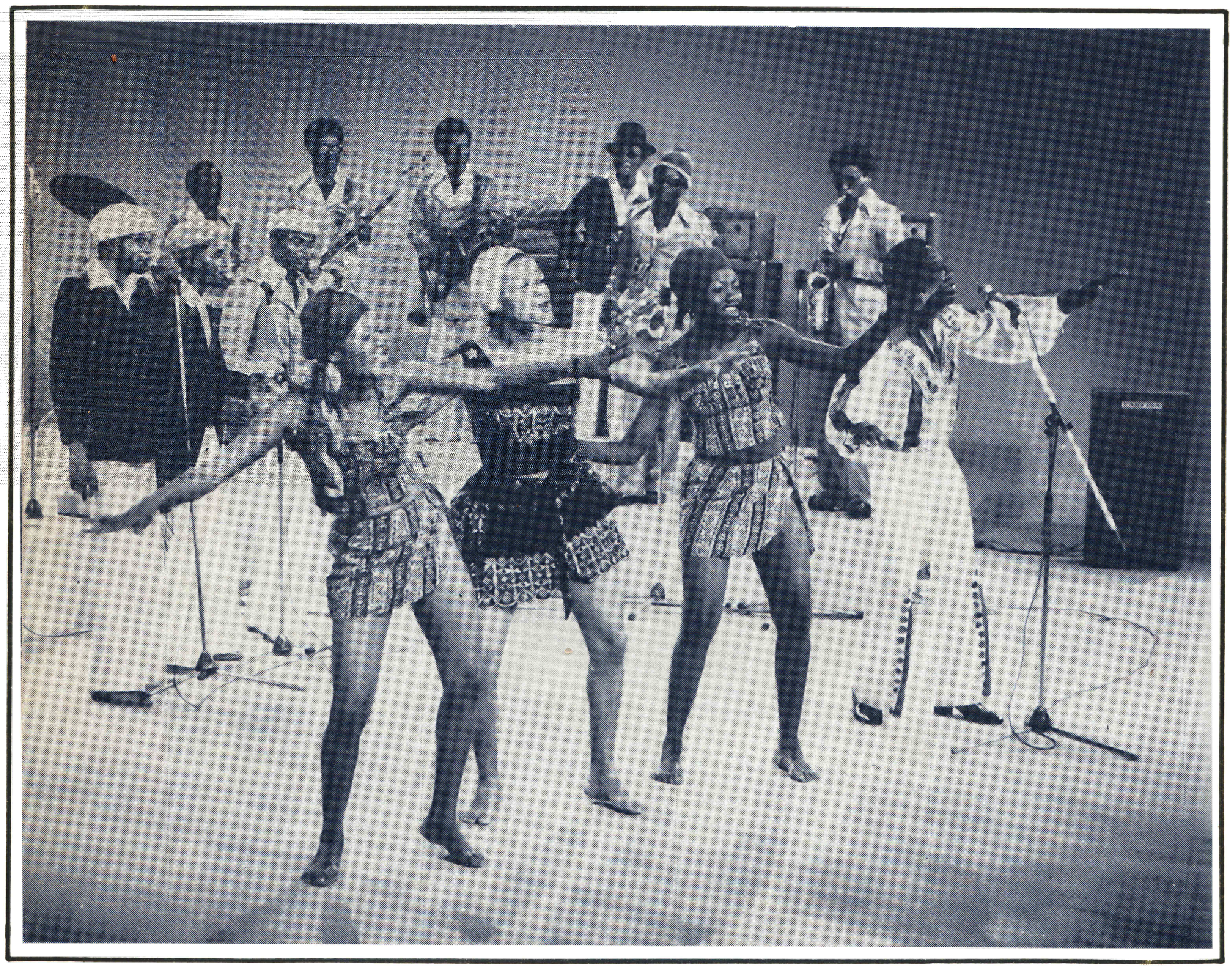
Tabu Ley and African Fiesta National, 1970 (Copyright – Analog Africa)
Various ‘Congo Funk! – Sound Madness From The Shores Of The Mighty Congo River (Kinshaha/Brazzaville 1969-1982)’ (Analog Africa)
A tale of two cities on opposites sides of the same river, the Congo, the latest excursion for the Analog Africa label celebrates and showcases an abundance of dynamite, soul and funk tracks from the two capitals of Kinshasa and Brazzaville.
The roots of both are entwined and yet very different. The mega city of Kinshasa only adopted its name during independence (but not without interference from its former brutal colonial masters Belgium, and also the West, and in more recent times, China) in the 1960s, a product of the “authenticity”, or “renativizing”, policies of Joseph Désiré Mobutu. The largest city and capital of the Democratic Republic of Congo – itself, renamed over centuries depending on who controlled it, but for a twenty-six year window between 1971 and 1997 known as Zaïre – the constantly expanding Kinshasa was founded in the late 19th century by Henry Morten Stanley, who was in the employ at the time of the Congo’s most disastrous barbaric ruler, Leopold II. Named in his honour, it stood for half a century or more as a hub for Belgium’s rape of the gargantuan central African country’s natural resources, minerals and people. Once free (only to a point) of European mastery its name was changed to reflect a hunger for authentic African heritage: named in fact after what was once a humble village on the same site.
On the northern side of the Congo River stands the capital of the Congo Republic, Brazzaville. It too was originally founded by a European, the Italian-born – but later granted French citizenship – explorer Pierre Savorgnan Brazza, who took it as a prize for the French Empire. The name stayed, but after greater independence this city became a thriving hive of activity for the burgeoning music scene: designated by UNESCO in 2013 as a “city of music” no less.
Circling back on its regional neighbor, Kinshasa became a seat of power for the dictatorship of Mobutu (the Belgium and US-backed usurper who took power after the assassination of the promising Black Nationalist, but Soviet-favored, Patrice Lumumba). Famously drawing a global audience in 1974, the world tuned into the legendary, iconic titanic grudge match between Ali and Foreman: aka the “rumble in the jungle”. Instigated by the boxing promoter and hustler Don King off the back of Ali’s full “motherland” endorsed conversion, Mobutu saw the potential in not only raising his own profile but that of his country by vouching for and putting on this great boxing spectacle in a revitalized Kinshasa.
History would later prove Mobutu to be a tyrant and thief, but for this shining moment of self-publicity the American stars of the fighting game and music/entertainment scenes were lured to the city. Seen in various documentaries since, but favouring the American stars of R&B, soul and funk – including the anointed godfather of soul himself, James Brown – the African artists and musicians that took part in a three-day festival of music around the main event included a rafter of local talent too. Competing to gain the spotlight, dominated by the likes of B.B. King, Bill Withers, The Pointer Sisters and The Fania Latin All Stars, were two of the Congo’s most famous icons: the bandleader, honed pioneer of an attacking repetitive guitar style that tore up the local dancefloors and airwaves, Francois “Franco” Luambo, and rival Pascal-Emmanuel Sinamoyi Tabu, aka Tabu Ley, the leading light of African rumba and one of the continent’s most influential artists. Franco fronted the TPOK Jazz troupe at that music extravaganza, a band with a lot of history: famous for their part in spreading Congolese rumba.
The event’s musical organizers, Hugh Masekela and Stewart Levine, gave Franco free reign as a creative guide, but it’s said that Tabu stole the show. It’s a convoluted backstory, but the band that Franco fronted, the TPOK, actually changed their name from the O.K. Jazz band a decade or more after forming in the mid 50s – even more confusing, you will see the name written down in various forms, sometimes with the abbreviated dots. Both this troupe and Tabu make appearances on this Congo Funk! showcase – the funk being only one part of a both dynamite electrifying and more riverside lilted set of Afro-rock, soul, R&B and more localized serenading sweetness. Tabu for his part, leading the Et L’ Orchestra Afrisa, moves to a forgiving soulful rumba-esque groove (Congolese rumba being a signature, often dominate, movement honed in the region by such luminaries as Tabu and the famous Verckys) on the sun-blazed horn serenaded and buzzing guitar licked ‘Adeito’. With their L’ Orchestre additional name, O.K. Jazz makes an appearance under the Lolo affixed title (I will readily admit I have not read the liner notes this time around, and so have no idea if this is an artists or just a reference to one of the villages in the area) on the funky raw Booker T/Stax steal ‘Lolo Soulfire’, and holding the full limelight, go for some “humph” and laughter on ‘Kiwita Kumunani’.
As with much of the collection’s roster, less established acts and groups outside the major label networks (many subsidiaries of Western labels) struggled at first to get heard or raise the prohibitive sums needed to record. The PR notes briefly describe what happened, but to fill the void, a number of pioneering entrepreneurs entered the market to levitate the costly process. The likes of smaller, more independent labels such as Cover No.1, Mondenge, Editions Moninga and Super Contact could take a punt on newly emerging younger artists; those who were influenced by the “rumble in the jungle” festival of sound, going on to cut their own hybrid versions of American soul and funk, of which this compilation is filled. Pumped out across the airwaves of Radio Brazzaville or beamed out by Télé-Zaïre and RTV du Zaïre – the TV shows of which were apparently so huge that the president ordered the latter to put out daily concerts because they were found to quell unrest and criminal activities during transmissions. Arriving at the opposite end of this compilations window, released in 1982, the opening salvo, ‘Sungu Lubuka’ by Petelo Vicka Et Son Nzazi, seems a likely candidate for this change. Sounding like the heralding horn section from a Dexys track and homage to Jackie Wilson and his peers, before slipping into a Latin-like groove, this track connects two worlds: as influenced by the Fania All Stars as it is by disco funk. It’s certainly a blazing start to a cracking collection, and obvious single choice. It’s followed by the Afro-rock and Kuti horns simmering ‘Mfuur Ma’ by the Groupe Minzoto Ya Zaïre; yet another single showstopper that seems to echo the Pazent Brothers and J.B.’s. And another worthy punchy tune, the closing ‘Ah! Congo’ by the Orchestre National Du Congo, proves the perfect, high energy R&B, bookend to a brilliant compilation.
Tracks like Les Bantous De La Capitale’s ‘Ngantsie Soul’ just roll on and on like a 12” disco mix; a funky but not erratic groove that pulls you in with a constantly fluid moving soul riff and clopping percussion. Next to that, Les Frères Soki Et L’ Orchestre Bella-Bella’s ‘Nganga’ shuffles and scuffles down the train tracks to a fit of horns in a workout that lasts nearly nine minutes.
Congo Funk in all its many variations is put under the spotlight, with an outstanding set list of fourteen tracks (whittled down from a container’s worth of singles) that will enthral and educate in equal measures. Essential dance floor fillers await.
Fran & Flora ‘Precious Collection’
(Hidden Notes) 12th April 2024
Arriving just months after Alex Roth’s new Cut The Sky project’s Esz Kodesz debut and Alison Cotton’s Engelchen, Fran & Flora release their own European Jewish culturally and historically inspired album. Addressing similar passages of loss and commemoration to the absence and tragedy of the Eastern and Central European branches of that community’s heritage, they also respond to its most joyous, strengthened traditions, transforming in a sophisticated, adroit and knowledgeable way the music of the Ashkenazi: otherwise known as “Klezmar”. And whilst those mentioned albums by Roth and Cotton channel different aspects of history – the former, covering the same Ashkenazi communities, but in Galicia, and the later, telling the story of the English Cook sisters who helped to save fleeing Jews from Germany during WWII -, the first overlaps this duo’s emotive and stirring story of lineage by overcoming tumultuous times to preserve a culture in a part of the continent that ruthlessly eradicated it’s identity and people.
For as Roth channeled past barbarity and conflict in what is now Ukraine for a harrowing and incredible abstract reaction, Francesca Ter-Berg and Flora Curzon (to give them their full names) also tread the same lands, but also across into Romania – as the album’s second track, the beautifully but moodyily and mysteriously described Eastern-European fairytale ‘Romanian Fantasies II’ makes abundantly clear (imagine the strings aspects of The Holy Mountain soundtrack meets Širom and Gypsy music, whilst a didgeridoo-like sound blows away).
I might be reading too much into it, but the duo’s Precious Collection suite closes with what, over time, has become a formal greeting in the Jewish community: “Sholem Aleichem”. Translating from Hebrew etymology to mean “[May] peace [be] upon you”, it was also the nom de plume of the famous Yiddish author and playwright Solomon Naumovich Rabinovich, whose stories of Tevye the Dairyman were the source for the Fiddler On The Roof musical. Born in the old Tsarist Russian conquered and subjected shtel of Voronkiv in what is now central Ukraine, Rabinovich experienced the pograms firsthand; escaping to the USA at one point, but in doing so promoted the often looked-down-upon Yiddish culture and language. Also, and not surprising when facing the marauding savagery and alienation of the Russian Empire’s genocidal actions, and the Anti-Semitism and ruinous policies of the Austro-Hungarian empire too, that he also advocated the return of his people to the Holy Land as a member of the Hovevai Zion (lovers of Zion) cause. Hounded out of his homeland when alive, a Putin era Russia erected a monument in his honour in Moscow, whilst Ukraine paid homage throughout its many cities and even issued stamps – ironically or not, many of those cities have been bombed relentlessly by Russia in the past two years. Whether this is a mere coincident or not, it’s a useful connection and part of the history of the region covered on this album; especially as the place where Klezmer was born or at least fashioned – that loose confederation of dance tunes, ritual melodies and “virtuosic improvisations” is made up of influences from the Jewish diaspora, from Ottoman Greece and Romania to the Germany and Slavic countries. The “Klei” part of that form means “tools, utensils or instruments of” and the “zemer” translates as “melody”, an assemblage if you like, of different musical threads but rooted in the faith. Klezmer was, and of course still is, played at weddings and other social functions, but more importantly it is a bond and hand-me-down language, poetry and litany of their heritage and story.
Drawing upon this legacy and knowledge the duo of cellist Fran and violinist Flora (both also cover the vocals and electronic elements) both interpret traditional material and compose new arrangements that simultaneously evoke classical music and the atmospheric, with echoes of folktronica, the avant-garde resonance and atonal essence of hidden metallic and instrumental sources and fantastical – imagine Walter Smetek conducting a Eastern European chamber ensemble. There’s even a removed hint of jazz and near breakbeat drums at one point, when they do get to sustain a rhythm. The drumming circle is courtesy of guests Ursula Russell (of Snapped Ankle and Alabaster DePlume fame) and Simon Roth (Chris Potter, Alice Zawadzki, Adrian Dunbar on his CV), plus, what the PR notes call, the appearance of a Ukrainian Poik style marching drum – my research has drawn a blank on this one I’m afraid.
Some pieces of music directly reference Jewish culture, history, with the stripped and plucked diaphanous but haunting ‘Nign’ a unique take on the traditional religious vocal song of the same name. Largely improvised, sung in groups, Bible verses or classical quotes from other Jewish texts are repeated to form what’s know as a “nign”. Sometimes a lamented prayer, and at other times out of joy or victorious, this contemporary vision sounds like beatific and ethereal sirens uttering assonant mystique and worry from behind a translucent covering. But the vibrations, melodies even amongst the most abstracted, near non-musical parts still carry, forming as they do, evocations of landscapes and time. Sympathetic and attentive at all times, the music encompasses wild playfulness and abandonment on the opening running freedom of ‘Nudity’, and nature’s call on the Caucuses imbued, choral lulled ‘Feygele – Little Bird’.
Woven at times like a tapestry, and at other times, near esoteric, the beatific merges with the plaintive, pleaded and mysterious, and folk music is effortlessly weaved with folk-rock, the experimental and the classical. Within that framework traditional dances and songs are wrapped up in a meticulously crafted otherworldly suite of experimental strings and minimalistic electronica. The Klezmer source material is held on to but transformed with a contemporary expansion of ideas and experimental composition, all of which flows lucidly and in a most stirring manner to create an exceptional album.
Herandu ‘Ocher Red’
(Hive Mind Records) 26th April 2024
A second release on the Hive Mind label to feature Misha Sultan, or rather the true face behind that guise, Mikhail Gavrilov, the Herandu debut is a new project and new sound for the Siberian artist and his brother Evgeny (who has his own alias of Dyad).
The siblings, caught between the Covid pandemic and invasion of Ukraine by Russia, put this latest vehicle in motion during trips back home to Siberia’s most populous city of Novosibirsk in 2022. The so-called “Chicago of Siberia”, Novosibirsk is situated on the banks of the Ob River, a crossing point of the romanticised and legendary Trans-Siberian Railway and historically an important flashpoint during the Russian civil war and engine of post-revolutionary Russian industry. Originally founded in 1893 and christened with the Tsarist Imperialist title of Novonikolayevsk after Emperor Nicholas II, the Communists gave it the current name of “New Siberia” in 1926. Geographically sitting between the Ural Mountains and Northern Asia, touching the Pacific in the East, Siberia isn’t just the infamous exiled atelier of record and literature but a beautifully diverse Eurasian landscape.
As on Mikhail’s Misha alias Roots album, released by Hive Mind back in the late Spring of 2022 (as it happens, that marvelous album also included a cameo from his brother, under his Dyad moniker), that famous industrial transport capital and its outlying regions are once more transduced via the soundboard and imagination to articulate and convey backdrop set moments of rumination, of particular captured interactions and moods, and an essence of place and time – the industrial set against the more plush shades of nature. Informing and inspiring a new direction, the label has described the brother’s collaboration as sounding like Metalheadz meets Weather Report; or to my ears, Plug plays around with the music of the Mahavishnu Orchestra using the production of 80s Miles Davis records whilst hauling in later 70s and 80s Herbie Hancock on cosmic ray beam keys and what sounds like a keytar.
Actually, with a mix of warmer sounding live instrumentation (from Stanley Clarke-light jazzy-funk slap and picked bass guitar and Greg Foat-esque electric-piano to pinning, floating and sizzled reedy saxophone – courtesy of friend and musician Vladimir Luchansky) and more programmed synthesized breakbeats, chops and atmospheres, the brothers branche out into all kinds of international genres, with evocations of the Caucasus, Tibet and both East and North Africa merging with photons and clap-drums. Jazz-fusion and world music hybrids from the Silk Road and Samarkand cross paths with Jimi Tenor, Amorphous Androgynous, Rip Rig & Panic, Transglobal Underground and The Pop Group. And yet that only goes so far in describing the subtle but cross-pollination of influences on show. The timpani bounds of ‘An Incident At The Theater’ play up the title’s stage drama, but soon break out into those Weather Report references, and the misty vaporous ‘Downtown Street’, heads off in the direction of both Hansa studio and later Outside period Bowie and 80s Scott Walker.
Trance is spun with bass noodling, Ethio-jazz, post-punk funk, Moroccan and Arabian cassette culture, retro space age keys, no wave dance music and the Aphex Twin to create an interesting explorative zap, skip, playful, mysterious and dreamy vision that mirrors the brothers feelings of their native landscape, and the episodes of life, the shaping of their creativity, born in that setting.
Kira McSpice ‘The Compartmentalization Of Decay’
12th April 2024
Nature’s compartmentalized reactions to injury and decay (via the studied description laid down by the pathologist and biologist Alex L. Shigo) are drawn upon, referenced and used as a metaphor for Kira McSpice’s own coping mechanisms; the American singer-songwriter and musician dealing with trauma by channeling both desirable and undesirable energy into working through the darkest, most fearful physical and mental strains of painful morose.
Almost like therapy, although bad dreams plagued McSpice throughout the writing process, the troubled chanteuse of the self-coined “freak folk” sound faces blow after blow of gothic lament and harrowing despair. And yet there is a beauty too, with passages of the near ethereal, beatific and afflatus ebbing over chthonian mourning and distress. In fact, the suffused nocturnal atmospherics, whilst hiding allegorical esoteric nightmares and spirits, are like a strange fairytale set filled by operatic and theatrical characters and life.
It’s the voice that draws you into that visionary world however; an apparitional-like calling, lulling, assonating and hurting vocal that soars past the contralto-bass to reach near aria like heights. With an obvious keenness and deep knowledge of the craft, McSpice artfully constructs inter-layered choral circles and marooned, mournful and cut-to-the-marrow pained releases, which as the album progresses gradually seem to find the gauzy light – ‘Photosynthesis’ facing that light source and growing in a somnolent fashion sounds almost like a daydreaming Mazzy Star. The welling and plaintive, sometimes struggling, voiced woes and pathos is enveloped with heightened atmospherics, suffused and smothered hazy horns (what sounds like a tuba, but also oboe, clarinet and maybe a saxophone of a sort), a Goth acoustic air of All About Eve, and Tilt-period Scott Walker eerie, stark and heart of darkness style electric guitar. All of which has a very distinct sound: pitched somewhere between haunted chamber music, the operatic and baroque and obscure, hermetic prog-folk. Slowly removing a metaphorical armour. McSpice arises from the symbolic mists and fogs to forge a shaken, knocked but hard-won identity. The rooms and spaces maybe dark, but through McSpice’s cleverly poised and escalating vocal chills and more beautifully heartbreaking, fraught processes there is a clearing of the miasma and the promise of a reprieve. Nothing short of an extraordinary album.
Pando Pando ‘S-T’
(Not Applicable) 12th April 2024
With enviable experience and CVs with incredible depth and variation, all three participants in the Pando Pando project tantalize with the prospects of their experimental explorations. The names of trumpeter, electronic musician, engineer and producer Alex Bonney (performing with Leverton Fox, Scarla O’ Horror, Brass Mask, the list goes on), drummer and percussionist Jem Doultan (played in Róisín Murphy’s band for seven years, drummed in The Thruston Moore Group and is one part of the Too Many Things duo) and fellow drummer/percussionist Will Glaser (a stalwart of the UK jazz scene, teacher and foil for an impressive roster of bands and artists including Soweto Kinch, Kit Downes, Yazz Ahmed and Sly And The Family Drone) will be familiar to many on the contemporary improvisational scene.
All three crossed paths through the New River Studios arts space in London, forming a trio off the back of a series of improvised gigs in the capital. In partially describing their evolution and process they’ve named themselves after one of the natural world’s largest single living connective organisms, or in its scientific terminology, “a clonal organism that represents an individual male quaking aspen that spans 106 acres and is the largest tree by weight and by landmass.” This breathing, living behemoth of plant life is, in case you were interested, located in the District of Fishlake National Forest, between Colorado and South-Central Utah.
Growing in a quasi-organic abstract fashion, the drum and percussion heavy avant-garde movements and stirrings on the trio’s debut album take electroacoustic probes, prods and tumultuous splashes into the depths as a foundation to build otherworldly atmospheric workouts, prowls and freeform breakouts. Recognizable instruments and electronic elements, effects are used to evoke the most unusual and sometimes esoteric. An assemblage of trinkets, bells, finger cymbals, metallic textures, pots and pans and tubular scaffolding are used alongside the drum kit to evoke the influence of such luminaries of the form as the Art Ensemble Of Chicago (mentioned in the PR notes that accompanied this release), but to my ears, also the E.F.S experiment extractions from Can’s Limited/Unlimited LPs, Valentina Magaletti, Krononaut, Mani Neumeier and, on the weird d’n’b veiled clanged and distorted ‘Fluffy Wires’ like Matthewdavid warping a samba band of drummers. However, the peculiarly named ‘Eno’s Bathroom’ is not what I would imagine the ambient doyen’s bathroom to sound like at all; less scented candles, sandalwood and eco-friendly, fair trade handmade soap and more krautrock and ghost freighter Tibetan lurking mind-bended weirdness.
Titles, like much of the music, is on the disturbing side with references to marine deaths (the windbreaker flapping prowl into the ocean abysses ‘The Graveyard Of Sharks’ and incipient sonar signaled, dub-y ricochet thrash around in marooned waters ‘Dolphin Suicide’) and blamed birds (the final wing-flapped primordial squelch, and mystical gongs, bowls and tool brushed and sifted ‘It Must Have Been The Magpies’ –our common English garden visitor has a bad rep for a variety of things, from the old adage about bad luck to stealing anything that glitters, and for savagely protecting its nests).
An evolving organism of their own making, breaking out of, growing and expanding the perimeters of improvised electroacoustic experimentation, the Pando Pando trio make unsettling tones and sounds, rhythms and serialism for ecologically climatic times.
Audio Obscura ‘Acid Field Recordings In Dub’
(Subexotic Records) 26th April 2024

Drifting in and out of post-op drug-induced recuperation, Neil Stringfellow (aka Audio Obscura) laces his dreamscapes and stupors with signature 303 acid squelches and dial releases, frequencies, snatches of broadcasts and bubbled liquids; much of which is transformed or made out of the archive of sounds he’s built up over the last twelve years, from a recurring flock of chirping birdlife to the innocuous, taken for granted and missed, sounds of the streets outside and daily interactions between, in this case, hidden sources of dialogue and conversation, even child’s play.
Take all that and expand the mystery, the unease and esoteric with a wafted reverberation and echo of dub and you have a real hallucinogenic experience, the ebbing of the consciousness between passages of the recognizable and distorted. That roosting menagerie of birds that Neil could hear from his hospital bedside, out of the window on one humid day in 2022, now resembles the acid-dial-turns of Mike Dred, a street cleaner’s broom, banging against his cart as he wheelbarrows it down a hill in Norwich, suddenly mimics a dub snare drum when added with plenty of On-U Sound echo.
The gravity fields, cartography, the memorable (through a soporific haze of painkillers) passages of a day and the unidentified coastline take on otherworldly dimensions through this mirage-inducing lens as elements of Air Liquide, The Orb, Amorphous Androgynous, Cousin Silas And The Glove Of Bones, FSOL, Andrew Wasylak and Cabaret Voltaire pass through – the latter is unsurprising, and not for the obvious reasons that CV are just one of the all-time most influential and inspired electronic groups of all time but because the Cabaret’s Chris Watson hosted a field recording introductory week that Neil attended.
Field recording adventures in sound, under the dreaded sirens of a nuclear winter and apocalyptic distress, this album is a lucid acid wash of near-remembered haunted piano melodies, various sonic yips and yeeps, bulb-shaped notes, recalled melodica, lost transmissions half-heard, radioactive effects, the atonal and prowling. Paranoia meets the languorous and medicated on a productive experiment in acid-dub and sound art.
Khôra ‘Gestures Of Perception’
(Marionette) 19th April 2024
Ambitious in scope and influence, Matthew Ramolo’s Plato-coined Khôra vessel overlaps the afflatus with the mythological, hermetic and philosophical across a double-album spread of peregrinations, processions and transcendental mysticism. References abound from opened seals, with nods to branches of Buddhism, astronomy, the Hellenic, Tibetan, Heliopolis and atavistic: all the way back to the creation myth. Literally from the ground up (the Dzogchen concept of “rigpa”, which subscribes the qualities of purity, spontaneity and compassion to the primordial ground), Ramolo, using an apparatus of international instrumentation, drums-up simultaneous visions of the new age and alien. Name checking the Latinized, the Orient and spiritual Asia in its many forms, but also cosmic projecting, the alchemy at play on this opus vibrates with evocations of ksmische, Jon Hassell’s “fourth world musics” explorations, trance, magnetic electronics, courtly and ceremonial.
The central sounds are percussive in nature; from those Tibetan stirrings of bowls, tubular bells, wind chimes and movements that sound like the turning of a mani wheel, to claves, what sounds like stones, a scaffold of pans and tubes, and frame, hand and other more rhythmic drums. Other elements include electronic vapours and waves, the springy and plucked, divine radio and satellite transmissions, occasional bellowed wafts and bulb shaped notes of light. Yogi talks to, well…the world, as nirvana is opened to all on this trip of dial up meditations, explorations and mysterious off-world atmospherics. The echoes of Syrinx, Kalacakra, Bhajan Bhoy, Ariel Kalma, A.R. & Machines, Sergius Golowin and Iasos wrap themselves around an epic suite of spiritual and mystical excursions in the pursuit of navigating a formless, third way through new envisaged worlds: or something like that. Eastern spiritual music is often abstracted in this world, merged with hidden sources to produce something familiar yet a bit different.
Esbe ‘La Serenissima’
(New Cat Music)
Inhabiting each world she enters as if it were a past life, another reincarnation, the gifted singer-songwriter Esbe steps right out of the times, the locations and scenery as if she was born to it. From atavistic Egyptology to classic songbook reinterpretations, from across the ages and genres, Esbe seems to belong to whatever setting she channels.
Proving consistent in every endeavor and prolific, she now releases her ninth album of magical revue; once more interpreting the old, but also conjuring up original compositions and arrangements that congruously feel like part of the traditional cannon. Sweeping into the city of duality, Venice, or rather the 17th century anointed “La Serenissima” as it was once known, Esbe channels its famous history, literature, art and architecture; from a secret rendezvous on a canal bridge to masked balls, painted scenes from the late Renaissance and cinematic sweeps that move like the tidal currents out of the city and carry on towards the exotic and cosmopolitan hubs of this city-state’s once expansive empire of trading routes. I say duality, because this is both the city of love and center of much political and stately intrigue during the Medieval period, when what we now know as a unified Italian geography was split into various warring and competing Papal states; the port cities being amongst the strongest, carrying more weight with their navies and trading fleets, able to negotiate or bring in allies from abroad to support their claims of dominance.
Mentioned as an inspiration, Shakespeare’s The Merchant Of Venice – or rather its most famed locations within the city – throws up all kinds of Anti-Semitic stereotypes; the city’s Jewish ghetto appalled a conquering Napoléon centuries later: commanding the French forces that occupied Venice in 1797, the as yet to be emperor would famously end the ghetto’s separation from the rest of the city, removing barriers and renaming it the Contrada dell’unione. But Esbe is tapping into the city’s mystery, its art and majesty, whilst casting yearns outbound from the harbor to old trading routes in the Med and further abroad: see the heart-wrenching, diaphanous soaring operatic ‘Palazzo’, a Thomas Newman modern Bond-esque filmic score that evokes Istanbul, passionately sung in the Turkish language.
The very embodiment of a certain style of Venetian art, Canaletto’s iconic (though many disparage it as mere chocolate box art) cityscape dioramas are referenced within the PR briefing; a inspiration, jump off point for magical lyrical and musical painting and storytelling imagination. Almost a feature of a certain time back in England, my late grandfather like many of his generation, had a print on the wall – of Italian decent himself, his one and only actual visit to the homeland was as part of the Allied forces making their way up through Italy to capture Rome during WWII, and even then, he never managed to get to Venice. You can now imagine Esbe, one hand trailing in the canal waters or “sighing” over a romantic set bridge gazing at the light play on the surrounding architecture; dreamily envisioning a bygone time as she sings and coos about imagined liaisons, and characters that could have walked straight off a Medieval tapestry.
As with most of her work, Esbe balances the atavistic and traditional with more modern electronic vapours and wisps of the esoteric, haunting and spellbinding. Sounding somewhere between Dead Can Dance, Maria Callas, the Baroque, folk and Arabian, she can turn a foggy apparitional mystique into an aria, an expelled breath into a whole act, or story. Her most obvious talent is with that already described voice, which is as dramatic and theatrical as it is ethereal and subtle; delivering a suspenseful Latinized lulled and desired vocal on the Catholic regal service ‘Te Amo’ – luring us towards a steeped in mystery and serious alter -, and lending a near dreamy tidal pulled entranced performance on the romantic vision ‘Amarilli, Mia Bella’ – a reinterpretation of Giulio Caccini’s operatic love song, written for the 1602 Le Nuove Musiche collection of monodies and songs for solo voice and basso continuo.
Classical styles feature heavily, but are veiled or gauzily enveloped to sound more haunting, atmospheric and even like a mirage in some cases. Throughout it all the instrumentation, from chamber to synths, guitars and the sound of bubbling waters, are artfully suggestive and stirring; scoring the drama, downcast lament of a returning army from one of the Papal wars, or in emoting misty-eyed overtures to mysterious subjects.
Esbe once again breathes life into her surroundings, this time around playing with and choreographing an inspired songbook of Venetian evocations; absorbing the lagoon and canals of this impressive, iconic city and its forbearers to envision something that’s simultaneously magical and hauntingly surreal.
Hi, my name is Dominic Valvona and I’m the Founder of the music/culture blog monolithcocktail.com For the last ten years I’ve featured and supported music, musicians and labels we love across genres from around the world that we think you’ll want to know about. No content on the site is paid for or sponsored and we only feature artists we have genuine respect for /love. If you enjoy our reviews (and we often write long, thoughtful ones), found a new artist you admire or if we have featured you or artists you represent and would like to buy us a coffee at https://ko-fi.com/monolithcocktail to say cheers for spreading the word, then that would be much appreciated.
 Monolith Cocktail Blog