THE DIGEST FOR SEPTEMBER 2024: New Music/The Social Playlist/And Archives
September 23, 2024
THE MONTHLY DIGEST INCLUDES A CLUTCH OF ACCUMULATED NEW MUSIC REVIEWS; THE SOCIAL INTER-GENERATIONAL/ECLECTIC AND ANNIVERSARY ALBUMS CELEBRATING PLAYLIST; AND CHOICE PIECES FROM THE ARCHIVES.

____/THE NEW
Holy Matter ‘Beauty Looking Back’
ALBUM 4th October 2024
Bathed in a new diaphanous light, Leanna Kaiser steps away from her ambient shrouded Frances With Wolves duo (albeit with an embraced cast of familiar faces and musicians) to take up the soloist guise of Holy Matter.
Following up on a tapestry of enchanted and dreamy singles, woven from gossamer threads of fairytale and fantasy, the musician, songwriter and filmmaker now unfurls an entire beautiful album of nostalgic imbued troubadour-folk, softened psychedelia and country woes, sad lilted resignation, solace, reflection and pathos.
Using a poetic license inspired by Leonard Cohen (that new moniker lifted straight from the pages of Beautiful Losers, and one inspiring mantra from that same book, “I change; I am the same”, can be read as this album’s slogan) and the Ukiyo-e style artworks of Hishikawa Moronobu as an illustrated mirrored metaphor, Beauty Looking Back explores the personal, environmental and seasoned changes in Kaiser’s life. Namely her move to L.A. from St. Louis, and the relationships either left behind or maintained through the framing of memorable weather and atmospheres.
On the surface a most magical, wisped and tubular bells chiming yearning, and at times full of moving regret and the evocations of the Laurel Canyon and Riot On Sunset Strip eras, there’s a real depth to the lyrics, musicianship and reference points. Moronobu’s iconic Beauty Looking Back painting for instance, features sartorial readings of status and the changing of fashions and traditions in Edo period Japan; the muse, subject of this work embellished in the striking red kimono decorated with chrysanthemums and cherry blossoms of the wealthy and yet to be married. To keep a relative peace during an epoch of conservative but prosperous Shogunate rule, an age of pleasure was ushered in with the building of designated walled areas inside Japan’s cities, put aside for the growth of tea houses, brothels and Kubuki theatre. Artists such as Moronobu were on hand to paint and depict the new “free-flowing nature of urban life”.
Seeking both comfort and reassurance from a nostalgic haze however, Kaiser, together with her former bandmate foil Andy Kahn on keys, guitar and bass, her partner Matt Popieluch (of Big Search note) on classical, near Iberian and South American-flavoured guitar, 12-string and violin, Kate Bellinger on backing vocals, and producer David Glasebrook, who also brings in drummer Raphi Gottesman and upright bassist Josh Housh, convey a mirage shimmer and fey delicate trace of Judee Sill, Sibylle Baier, Jewel, Marina Allen and The Unknown Mortal Orchestra. The vampiric Laurel Canyon ‘Eve’s Hollywood’, apart from its magik and scene-setting lyrics, has a touch of a laconic and knowing Nancy Sinatra about it.
Gazing both lamentably and in sighed resignation from metaphorical fairytale towers and vantage points emphasised by poetic weather patterns, Kaiser gently exudes a longing sense of wistful pulchritude. The past is always near, inescapable and worn like a comfort blanket; moulded to Kaiser’s desires, sorrows, reflections and duality. Holy Matter proves an interesting alluring and enchanting creative progression for Kaiser, her debut solo a refreshing take on the familiar and the tropes of time.
Scarla O’ Horror ‘Semiconductor Taxidermy For The Masses’
ALBUM (Not Applicable)
We could be here all day if I listed the various musical achievements, the actions and the cross-fertilisations and creative fraternizing of this London-based collaboration of jazz (in all its many guises) players and explorers. Within the Scarla O’ Horror’s sphere of influence, in-demand tenor saxophonist, bass and clarinettist James Allsopp has worked with such notable pioneers and shakers as The Last Poets, David Axlerod, Mulatu Astake, Kit Downes, and picked up awards for innovation and the best album from the BBC over the course of a twenty-year thus career. His foils in this quartet include the no less talented and renowned producer, performer and, on this album, trumpet player Alex Bonney, who you may recognize from such groups as Leverton Fox, Brass Mask, lightbox and both Olie Brice’s Quintet and Octet; the multiple award-winning prodigy drummer Tim Giles, who’s credits include collaborations with Allsopp, Riaan Vosloo and Ben Lamdin; and the electronic trick noise maker, sound artist, software developer and composer Sam Britton, otherwise known as Isambard Khroustaliov – Monolith Cocktail readers will definitely recognise this name, as San has appeared under that non de plume a number of times on the site over the years.
An enviable dynamic grouping of talent that’s ready to push the boundaries, react and counteract to the environment, situation and conditions of the studio setup, the quartet pool their resources and experience into another experimental free form and avant-garde extemporization. Dissection, taxidermy, semi-conductors…what’s that all about? Well, sound wise those prompts unleash a supernatural, data and robotic calculus off-world soundtrack of tremulant, tooted, straining brass, rolling and scrabbling drums, near avant-garde classical clarinet strains and synthesized mirages, illusions and gleaming, glinting and searing alien technology. It all begins with the lead-in, introductory ‘Racoon With A Wound’, which reimagines some kind of mysterious, near extraterrestrial fusion of Esa Helasvuo, cult Italian horror soundtracks, Walter Smetek, Don Cherry and Kinkajous.
We then hit the main event, with two uninterrupted improvisations of far out Fortean radar, and ghost freighter free jazz. The first, ‘The Rats Of Gilet Square’ is inspired by the group’s observation one night of rats having a whale of a time scurrying around and “plundering” the rubbish bins outside the Vortex Jazz Club. Sound wise, you can pick up elements of Sun Ra, Kaleidoscope Ornette Coleman, Anthony Braxton, the Art Ensemble of Chicago, BAG, Sam Newsome, Bendik Giske and Marja Ahti. The second long form piece, ‘Ermine Chowder’, reminded me of Chet Baker wandering a futuristic space version of the Mary Celeste. The atmosphere is sifting almost, with peaks and sci-fi, György Ligeti, Khroustaliov’s In The Gloaming album collaboration with Lothar Ohlmeier and Rudi Fischerlehner, Lynch, Eric Dolphy and Daniel Carter’s collab with Jim Clouse.
Untethered responses to a method, of a kind, and process, Semiconductor Taxidermy For The Masses opens up possibilities, spaces and expands horizons further. Concentrated, yet free, exploratory jazz at its finest, the quartet chalk up another illusionary and paranormal, sci-fi and near ominous performance.
Banco de Gaia ‘Trauma’
ALBUM (Disco Gecko)
Has it really been eight years since Toby Marks last made a record under his trance global alter ego Banco de Gaia moniker. Apparently so, as the latest digital and compostable bio-wrapped coloured vinyl LP Trauma follows on from his 2016 set of peregrinations The 9th Of Nine Hearts. And from that title, and period of travails, there is a lot to unpack: climate change, Brexit and an ungovernable land, war, a pandemic, economic disparity, divisiveness on a scale not seen before, the advent of AI….the list goes on and on and on.
For those unfamiliar with Marks Banco de Gaia project and label, next year marks the thirtieth anniversary of his highly influential trance and techno marker Last Train To Lhasa. On the cusp of Britpop, hung-over from grunge, guitars were about to once again dominate whilst house and techno music in all its many guises had reached superclub status; the underground movements fractured and broken up into a myriad of smaller tribes. Ambient and trance, usually the preserve of after hours clubbing or allocated space in the “chill out” zones had already blossomed into its own industry. That unfairly and often fatuous “chill out” idiom used to sell everything from nirvana relaxation and transience to any ‘new age” missive. Never new, until progress and technology made it easier and offered more options, the core ambient ingredient had already been in existence for decades. And despite what you may have read, Eno may have given it a name, but he certainly didn’t invent it. In this evolving stage of dance music, Marks went to town, sitting on a fluffy cloud, hovering between trance and techno.
Last Train To Lhasa’s suffused panoramic station-to-station soundtrack was different. Sharing some of the peaceable beautiful nephology of The Orb and Air Liquid but with the satellite guided twinkle and kinetic rhythms of Orbital, the album sounded every bit as organic as it did electronic. And despite the heavy Tibetan reference, the album and sound was global, taking in samples, sounds from Africa, the Middle East and Orient.
Expanding that unique universe, Marks has built up a discography of eclectic experiments over the decades. And now, in 2024, he’s decided to unload his concerns, worries about the state of the world across eight tracks (the digital versions include two extra tracks, the trauma channelling and pained Natacha Atlas-like, dub-ricochet shot ‘Endure’ andthe Philip K. Dick meets Adamski and Coldcut-up exotic whomp and whooped ‘Electric Sheep’) of varying moods, timings and influences. On an album of, as Marks himself points out, ‘juxtapositions’ the opening serene spacy ‘Mir’ plays of both the Russian translation of that title, “peace”, and the name of that nation’s orbiting space station. Looking down on Earth before re-entering the atmosphere, the Floydian saxophone space bird plaints and enormity-emotional stirrings of guest Matthew Jenkins serenade a prog-ambient yearn. Sparked by a bee sting – the poor crash-landed bee on the album’s cover I’m assuming -, ‘A Bee Song’ features said hive humming buzzes and sense of earthly nature. The first signs of the Banco global samples appear alongside the insect accompaniment, with a recording of a traditional hand and wood clapping song/dance from Namibia. When such ethnic strands meet with electronica and trance, the new age and breaks, it sounds like Real World Records fusing with Gary Numan, System 7, Saafi Brothers and Children of the Bong.
The read-out Cymraeg poem of ‘Draig Ddu’ is a vehicle for Welsh nationalism but is also used here as a process for grieving and loss. An air of mystery wraps itself around this ratcheted-up 90s techno-trance plaint. ‘War is self-explanatory. The frustrations, the breakdown in international dialogue and onset of violence, are transduced into a heavier slice of techno and EDM, with missiles and projectiles and various questioning and resigned spoken samples laid over a production that’s part The Prodigy, part The Orb and part Ammar 808.
Borders, or maverick circumnavigations of them and government control, are the feature of the next track, ‘My Little Country’. To a dance like mix, you can hear the voice of the late radio ham Roy Bates being interviewed on his self-declared Sealand principality and famous former sea fort turn pirate radio station, Roughs Tower; a convoluted story of evading the censorship and draconian broadcasting rules of the 1960s in Britain that needs far more room and space to regale in full here – but look it up.
From the Irish for “my god”, Marks looks at the near religious awe of space exploration, the universe and all that, on the talking head satellite orbiting, Massive Attack and Lisa Gerrard-like ‘Mo Dhia’. But by the “dying light”, the insect chatter has returned, and a sense of universal worth and levity is invoked with a cosmic uplift and bathing light beams. Through it all, Marks finds himself transcending the traumatic breakdowns of communication and umpteen different disasters that threaten to tip civilisation over the edge into total disaster, finding solace and escape routes, ideals and joy despite it all to a soundtrack of trance, EDM, techno, new age, trip-hop, breakbeats and vapour synth conjured moods.
Unicorn Ship Explosion ‘There’s A Rhinoceros In The Mega Church’
ALBUM (Sound Record) 4th October 2024
Refreshingly self-deprecating in their own skills as musicians, despite their listed achievements (of a sort) and obvious knowledge and experiences with juggling around with a multitude of styles and influences, the Unicorn Ship Explosion duo of Rob (who apparently did attend jazz school at least, whatever that is, and is “near the final chapter of piano lessons”) and Sash (a “great guy” we’re assured, but “average musician”, who gets by on tinkering around with modular synths whilst making the odd sound design pitch for designer brands) unleash their debut album of cross-pollinated sounds upon the general public.
Where to begin on an album that seems to pack a lot in, fusing countless genres into a discombobulating and atmospheric playful hybrid that AI would find beyond its capacity to emulate. Just the opening account of ‘All Things Everywhere’, which gives us a clue to this method, traipses over borders, timelines and inspirations to sound at any one time like a limbering Tony Allen, Ethio-jazz, Melt Yourself Down, Embryo and pylon buzzed electricity.
By track two we’ve already shifted the pitch by being introduced to the drawled, questioning and confrontational performative voice of sometime collaborator Agnieszka Szczotka – a Polish cross between Gina X, Saâda Bonaire’s Claudia Hossfeld and Little Annie -, who in lingering and almost dismissive style inhabits the nighttime and dances with identities on the celestial edges primal space bound ‘Agi Took The Choo Choo Train’. Szczotka, a former Royal Academy student of conceptual art, is used sparingly, and only appears again with the Freudian mothering sexual analogy of “cum” and spit loaded poetics ‘Bloody Bastard (Like Mother)’ – there’s many connotations to unload from that one.
The influences, the combinations expand further than that though, with hints of Library music, sci-fi, dark jazz, fusion jazz, percussive passages that sound like the missing link between Tibet and Valentina Magaletti, Battles, Holy Fuck, Jan Hammer, Portico Quartet, International Pony, floppy disk experimenting Sakamoto (listen to ‘Yeah But’ and get back to me if I’m wrong) and Rave At Your Fictional Borders. It’s a mad roll and round kit demonstration of drums and electronic apparatus in full breakbeat, electro, funky, otherworldly and metal pots and pan rattled splash mode. The album bends between playful fuckery and reconfiguration, free of artifice and dullness. Put it this way, they don’t take themselves too seriously: even if there are obvious loaded references, a pun here and there that suggests unease, protestation and that all is not well in the state of the world. Enjoyably familiar at every turn, the duo and their foil partner in this escapade fuse various mood music and energetic performances together to make anew.
ShitNoise ‘I Cocked My Gun And Shot My Best Friend’
ALBUM (Cruel Nature Records)
Shit noise. Shit house. Shit shitty world. Shit outcomes for one and all. Yes, as rats fester on our decline and the parasitic spectres of autocracy, divisive ideologies and malware bleed into our craniums, you can always rely on someone or some group, in this case a duo, to channel such bleak outcomes into a riling torment of mania, hysterical, resigned and frothing near daemonic expression. And ShitNoise dine out on a veritable feast of outrageous indignation, piss poor behaviours, and the problems that grind many of us down each day. But some rats eat out better than others and being down and out in Monte-Carlo is better than most places. Hailing from that Rivera paradise, the duo’s Aleksejs Macions (on vocals and guitar) and Paul Albouy (on drums) can see, experience a near unparalleled division between the casino, the F1 jet set and those eking out a living from the morsels drip fed from those bulging crypto, old money, asset rich digital wallets. There are worse places to be for sure, but a killer to witness all that luxury during an age of such misery and despair.
This brings us to the duo’s latest and third album thus far, I Cocked My Gun And Shot My Best Friend, which is framed as a more polished and mature departure from their more noise-crushing signature. I can hear that. But as someone who is very new to the duo, it still sounds intensely dissonant, grinding and full of barraging, barrelling and head-kicked-in drum bashing. However, it does have melody, and it does have some tunes too. I also believe there are points in which you can even dance to it. They’ve widened their influences, and brought in a little more shade and light, changed the tempos and had a go at knocking the shit out of and repurposing a haul of bands from the punk, metal, alt rock, no wave, noise, grunge, doom and industrial scenes. Although, ‘Hashish (The Yelling Song)’ features UFO oscillating take-offs and Itchy-O ritual magik. It’s like Mudhoney brawling with the Sea Hags one minute, Nitzer Ebb in a knife fight with Ministry and Lightning Bolt the next. And I do believe they are having a lot of fun doing it: despite the crushing blows, dread and yelling!
It gets less noisy as the album progresses; the trajectory between the opening cranium screams and angle grinding industrial punk scrawl of ‘Ho-Ho! (No More)’ and the closing alt-rock late night bar room knockabout chorus affinity of ‘The Ballroom Brawl’ is congruous but worlds apart. The former, sounds like the Revolting Cocks, Spanish underground tape culture of the 80s and CUNTROACHES in some unholy union, whilst the latter, is a more lolling drinking game between Swans and The Heartbreakers, with David Bowie’s Hansa saxophone serenading and coiling round the bar tab. The vocals meanwhile have a range that takes in the Occult Character, the indescribable, the resigned, the sulky and menacing.
Playing hard and loose with the noise, the duo have moulded frustration and protestation into a hacked-off thrashing, barracking and distorting maelstrom of various funnelled music channels and organised chaos.
Leisure FM ‘Illuminated Manuscript’
Single
Like some Gothic fairytale from Eastern Europe, the Szymanek twins materialized a while back in Southeast London, via time spent in the lyrical Wales of Dylan Thomas. From the English capital’s warehouse scene of recent years and a monthly RTM Radio spot, Milena and Weronika progressed to conjuringuphallucinatory imagery, dejection andfate under their later ego, Lesuire FM. Receiving a favourable review by me, their fables EP set an atmosphere of Eastern European morose, magic, demons and cathartic relief.
Loaded with the Catholic imagery and theatre of their Polish homeland, the twins of woozy struggles of the heart turn their chthonian and weary poetic gaze on the fatalistic Greek myth of Icarus with a new single, ‘Illuminated Manuscript’. Flying too close to the sun, his wings clipped and burned and crashing to his death, the tragic parable of that sorry tale and all its connotations are whittled down into a modern resigned plaint that balances the ecstasy of freedom and escape with the agony of falling out of the sky to one’s death, and the devastating consequences of not heeding instruction, advice in the pursuit of big rewards and high risk: in Icarus’s case, ignoring the advice of his sagacious dad Daedalus. This sorry tale plays out to a misty veil of chugging and flange-like Banshees guitar, trip-hop drums and swirled Tom Arnold thriller-like strings, sounding at times like Lomi MC singing over Delerium, Switchblade Symphony, the Tara Clerkin Trio, SU and Propaganda. But in short, thematically, poetically and fatalistically, imagine a Hellenic Lyudmila Petrushevskaya conspiring with Dylan Thomas.
The B-side (in old money) is a guest remix version of the title-track from the twin’s 2023 EP fables. The chosen candidate Kourosh Oliver Floyd Adhemy casts a phantasmagoria spell over the original, adding his very own misty filters, near demonic voice effects, vapours, tabla-like tripsy beats and bulb shaped notes. Together, both tracks atmospherically waft around in Gothic trip-hop revelation, caught between worlds.
Elea Calvet ‘Trigger (Acoustic)’
SINGLE (Mahogany Records)
After artfully captivating listeners with the sighed adroit wistfulness of ‘Sinuous Ways’ earlier this year, the burgeoning enchantress Elea Calvet now breathes an almost knowing southern gothic air of doomed bleak mystery and trauma into the subtly dramatic ‘Trigger’.
Triggering a sublime duality of the diaphanous and noirish, of malady and allurement, of the pained and unbound, Calvet’s vulnerability is matched by her strength in conveying abstract feelings of the bittersweet and identity.
Entirely self-produced over the course of one inspiring weekend at her “overcrowded home studio”, ‘Trigger’ can be imagined as a misty and near supernatural country cinematic hunger of Anna Calvi, PJ Harvey and Amanda Acevado.
We’ve been assured that another single is on its way next month, but in the meantime take in the magical torment and achingly writhed quality of Calvet’s growing songbook.
____/THE SOCIAL PLAYLIST VOLUME 90
The Social Playlist is an accumulation of music I love and want to share, tracks from my various DJ sets and residencies over the years, and both selected cuts from those artists, luminaries we’ve lost and those albums celebrating anniversaries each month.
Running for over a decade or more, Volume 90 is as eclectic and generational spanning as ever. Look upon it as the perfect radio show, devoid of chatter, interruptions and inane self-promotion.
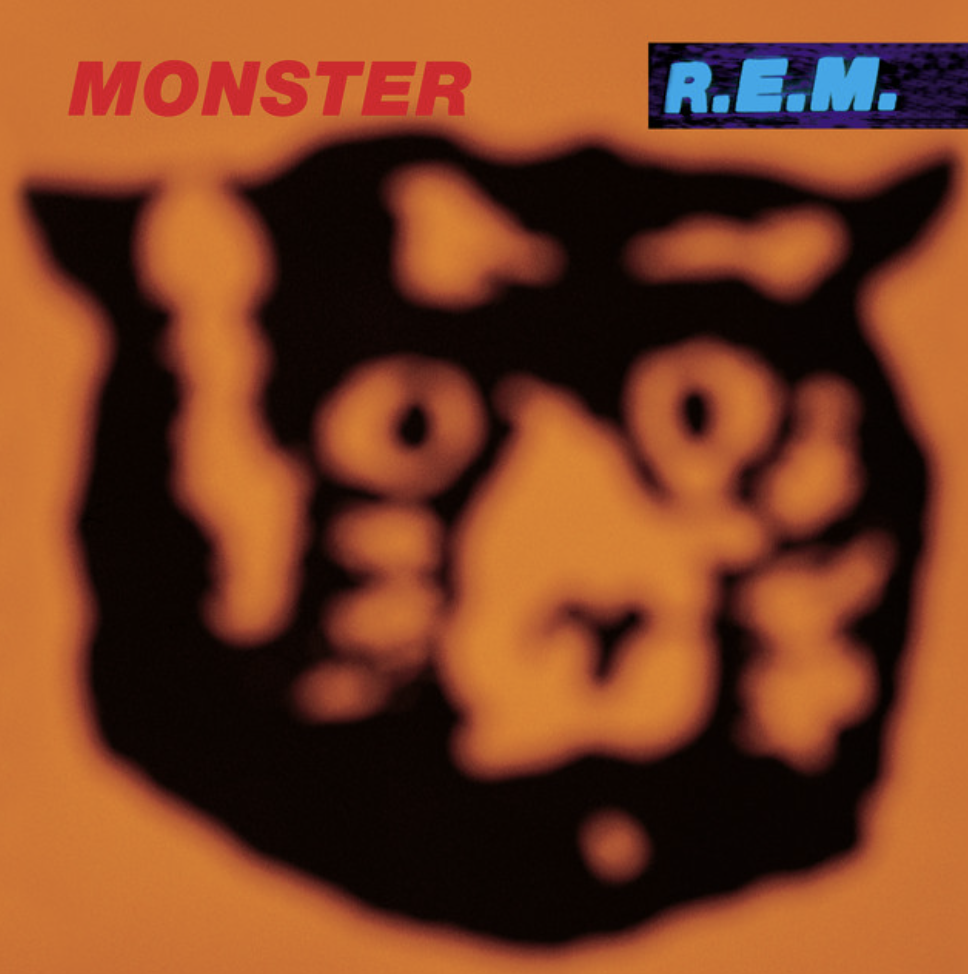
This month’s choice tracks include a bundle of anniversary albums from John Lennon (Walls And Bridges ’74), David Bowie (Tonight ’84), R.E.M. (Monster ’94), Cluster (Zuckerzeit ’74) and Gudrun Gut and Joachim Irmler (500m 2014). I’ve gone for something a little different with the first of those two selections; choosing to kick off the playlist with the TV Personalities rambunctious gnarly version of Lennon’s ‘Whatever Gets You Thru The Night’, and Icehouse’s sympathetic take on Bowie’s ‘Loving The Alien’. I’ve also chosen a live cut of one of my favourite tracks from R.E.M.’s Monster, ‘Strange Currencies’.
There’s a small selection too of newish tracks – those that have been released in the last couple of months that I either missed or didn’t get room to place in the Monthly Playlist selections. In that camp there’s Jay Cue, Conjunto Media Luna, Dr. Walker, Reymour and Vox.
In between those selections I’ve scattered a smattering of music from Bad Dream Fancy Dress, Son Of Noise, Ms. Melodie, Baseball Furies, Tal Rose, Antonino Riccardo Luciani and others. There’s also a cap doffed in respect to the late Herbie Flowers, who passed on earlier this month, with the inclusion of Sunforest’s ‘Where Are You’, just one of many such album session Flowers played on over the years.
tRaCkLiSt
Television Personalities ‘Whatever Gets You Thru The Night’
Flora Purim ‘Stories To Tell’
Cossa Nostra ‘Nuestra Cosa’
Poobah ‘Watch Me’
Reale Accademia di Musica ‘Macumba Hotel’
Azar Lawrence ‘Novo Ano’
Conjunto Media Luna ‘Doombia del Agotamiento’
Dogbowl ‘Love Bomb’
Nicolas Greenwood ‘Hope And Ambitions’
Reymour ‘Sleepy time’
Bad Dream Fancy Dress ‘Lemon Tarts’
Icehouse ‘Loving The Alien’
Jay Cue ‘Hyperbolic Time Chamber’
Dr Walker ‘Was ist Dad Rap?’
Son Of Noise ‘Down With Son Of Noise’
Ms. Melodie ‘Remember When…?’
This Kind Of Punishment ‘Some More Than Others’
Baseball Furies ‘Ain’t Comin’ Home’
Bass Drum of Death ‘Left For Dead’
Tal Ross ‘Green and Yellow Daughter’
R.E.M. ‘Strange Currencies (Live at the BBC)’
Lee Baggett ‘All Star Day’
Appaloosa ‘Tulu Rogers’
Sunforest ‘Where Are You’
Antonino Riccardo Luciani ‘Eclisse lunare’
General Strike ‘Next Day’
Cluster ‘Rotor’
Michael Garrison ‘Theme to Onday’
Vox ‘Metaphysical Back Alley’
Gut und Irmler ‘Chlor’
____/ARCHIVES
Albums decades apart, both released originally during this month, there’s another chance to read my review of Bowie’s Tonight LP from 1984, and Gudrun Gut and Joachim Irmler’s dizzying altitude 500m collaboration of 2014.
Tonight (EMI)
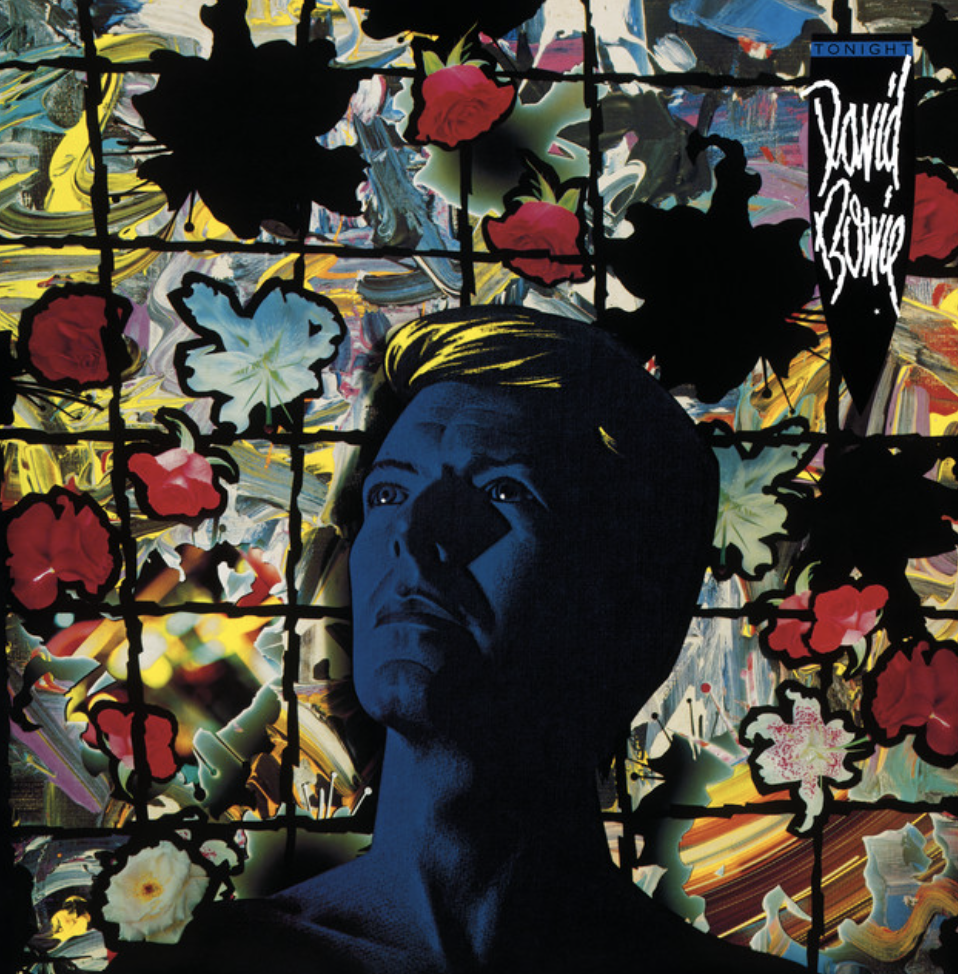
‘Keeping his hand in’ so to speak, Bowie kept up the pop-lit pretence with Tonight. Arriving straight off the back of his Serious Moonlight world tour, and with the very same backing group – including the Borneo horns troupe – the follow-up to his massively successful Let’s Dance showcase was a far patchier affair.
A filled-out, skiing obsessed, pastel shaded crooner, long since divorced from his moiety Angie, and now in custody of their child Zowie, he was less concerned with previous concepts and play acting and more interested in growing pains and heart-strung romantic indulgence.
Of course, every time ‘Davey Jones’ sported new garbs and ventured out on the road he was always acting a part. But the burgeoning film career, which began with The Man Who Fell To Earth through to his stage roles in Baal and The Elephant Man on Broadway, allowed a new avenue of total immersion for Bowie. Channelled then via celluloid, the previous year alone saw him star as a forlorn ageing vampire in The Hunger, and as the English prisoner-of-war ‘Strafer Jack’ Celliers in Merry Christmas Mr. Lawrence: that exuberant theatrical spirit was missing for the most part from his music.
However, Bowie did get to indulge himself on the ‘Blue Jean’ (perhaps Tonight’s saviour from total disaster). Well, the video/mini-movie at least, directed by Julian Temple, and stretched out to twenty-minutes, featured the singer adorned with a makeshift turban and piled-on make-up.
A new production, the largely untested Derek Bramble, and Hugh Padgham tried to mix things up, but instead lost their way as Bowie made a pig’s ear of things. The fact that his knock-about ‘comrade-in-arms’ Iggy Pop pitched in is almost irrelevant, as all the edge is erased by a fuzzy saccharine mush. Using a maudlin calypso and faux reggae backing he teamed up for countless misfires; duetting with Tina Turner on the dawdling title track (originally sung by Pop on his second solo LP, Lust For Life): ruining all his erstwhile partner’s contributions. “God Only Knows” what he was thinking by covering Brian Wilson’s (lyrics by Tony Asher) beatific masterpiece, and you also must question the addition of Jerry Leiber and Mike Stoller’s gold standard, ‘I Keep Forgettin’: thrown in as a so-called return to rock’n’roll? Hardly!
Luckily ‘Saving The Alien’ was on hand to at least stop the spread of rot. ‘All the gear and no idea’, Tonight paved the way for Labyrinth, Bowie’s forked tongue and sardonic protestations all but muted so that his crossover, inter-generational appeal could now reach even the youngest sections of society.
Gudrun Gut and Joachim Irmler ‘500m’
(bureau b) Released 8th September 2014
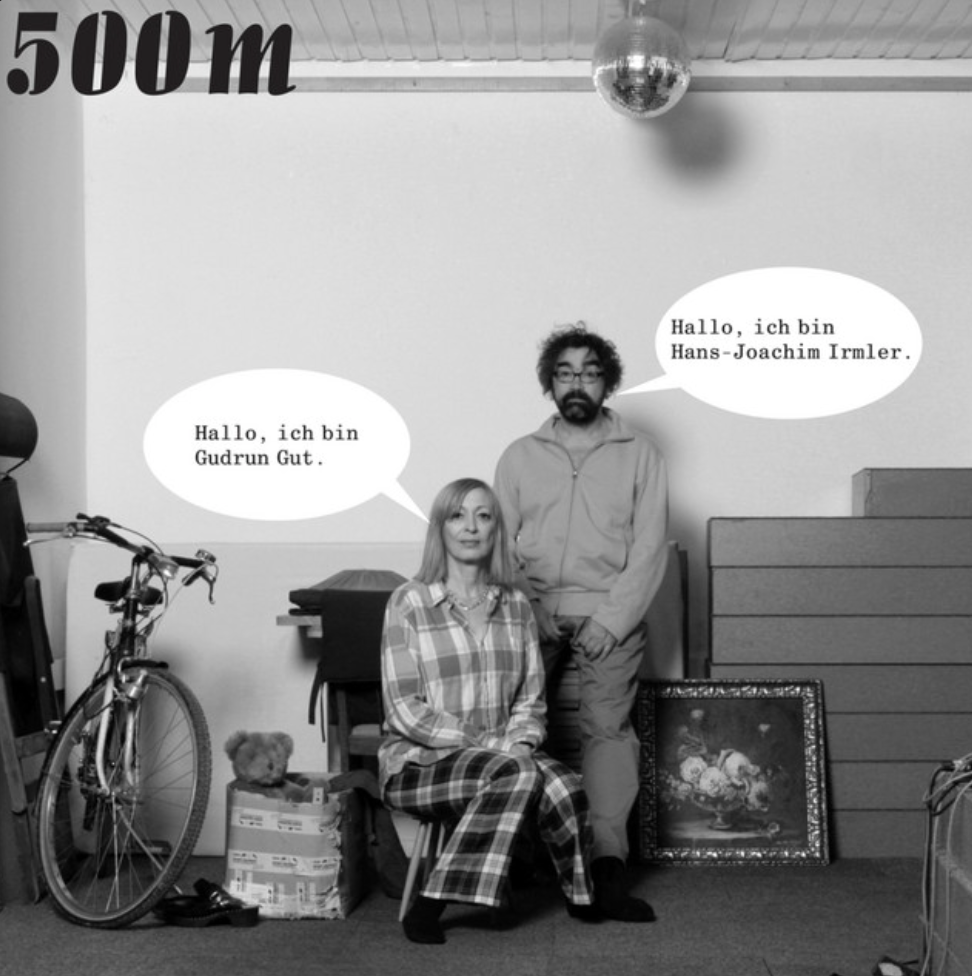
Doyens, and for that matter mavericks, of the more cerebral and avant-garde boarders of the German music scene, otherworldly evocative organ grinder Hans-Joachim Irmler and his visual artist musical polymath siren, Gudrun Gut, join forces for a mesmerizing electronic trip.
As a founding member of the mighty irritant, heavy mentalists Faust in the 70s, Irmler’s keyboard hovered ominously between the alien and sublime. Continuing to bear the name – existing in a disconnected alter-dimensional timeline with an alternative Faust that features fellow founder members, Jean-Hearve Péron and Werner ‘Zappi’ Diermaier – Irmler founded an eponymous named studio, used by a who’s who of the German and beyond experimental electronica and classical scenes: from Cluster to the Modern String Quartet. Whilst the man himself has collaborated both wide and far, recently releasing the Flut LP with Can’s drum titan, Jaki Liebezeit on his own label, Klangbad – set up 15-years ago to originally release continuing Faust projects, but since expanded into a full-on label and festival, duty bound in ‘nurturing’ ‘genre bending’ music.
Gudrun, no less active, moved to Berlin in the mid 70s. An early member of the industrial strength Einstürzende Neubauten, Gudrun would go on to appear in and help form a number post-punk and electronic bands, including Mania D, Malaria!, Matador and also bring out a solo debut effort, I Put A Record On, in 2007. She is also head honcho at the labels Monika Enterprise and Moabit Musik.
Together, both artists create a collection of transient progressive techno moods. Developed in two stages, the congruous collaboration first improvised at Irmler’s lightheaded inducing Scheer, Baden-Württemberg located Faust studio – the name of the album alluding to the giddy effecting altitude of the studio, 500 meters above sea level, which gave Gudrun a constant sense of dizziness – before Gudrun refined and added her own techy, scuttling and nuanced drum loops, back in her own space. These recordings would then once again make their way back to Irmler for further exploration and tweaking.
Billed as a merger between Irmler’s ‘meandering, wistfully psychedelic organ sound’ and Gudrun’s ‘reverb-laden, whispering, breathy voice’, the results of this union obscure and abstract both. Loaded instead with vapourous and metallic waltzing veils, interchangeable programmed drum patterns (mostly caustically trebly but cut with pinpoint accuracy and among some of the most sophisticated I’ve heard in ages) and esoteric percussion.
Succinctly entitled, each track is both simultaneously a concomitant lead into the next and an individual self-contained, evocative story of its own. Not that those titles give much away, but on occasion they allude to a rectification of some vague theme. For example, ‘Traum’, translated as ‘dream’, has a magical Freudian hallucinatory quality, and festive wintery charm broken up by a freakish raspy and squelching noise, underfoot.
‘Noah’ on the other hand may or may not bare any relationship to the Biblical flood survivor and great God hope for the future, being more of a ritualistic gaze at shooting stars and passing satellites. However, Irmler adds some extemporized gabbling speech, delivered by a remote transmission affected, introverted megaphone – you can even hear Gudrun off mic, laughing or encouraging Irmler, from the sidelines.
‘Früh’ translates as ‘early’, but early for what exactly we can’t quite tell, the rotor-bladed intro cylindrically bringing in a chain-reaction of busily interchanging particles and tight delay mechanics, all heading down a highway marked ‘the future’.
Always moving somewhere, either skywards from a subterranean vault or as with ‘Auf Und Ab’, ‘to and fro’ between the kinetic beats of Detroit techno, circa Rob Hood’s Metroplex days, and a sort of moody decadence. Upward and onwards then, 500m travels on the solar winds and elevates from a reverent esoteric organ produced sanctum into another great mystery.
PLAYLIST/Dominic Valvona
Let me first wish everyone, new and old readers/followers alike, a happy new year. And thanks for all your continued support in what are the most tumultuous and anxious of times. For my part, with what little comfort I can give, I’ll still bring you all the best, experimental, and diverse sounds during 2022: through reviews, columns, playlists and the like.
The Monolith Cocktail Social is one of two long-running playlist series on the blog. Running in tandem with the Monthly Revue, which represents all the new music both I and the MC team have been listening to and writing about during the month, the Social is a cross-generational, eclectic imaginary radio show, where anything goes: featuring tracks from the last 50 or more years.
It’s also my chance to show off my own tastes, records from my collection, and to both celebrate those albums reaching anniversary milestones and pay tribute to recent artists and figures we’ve lost during that month.
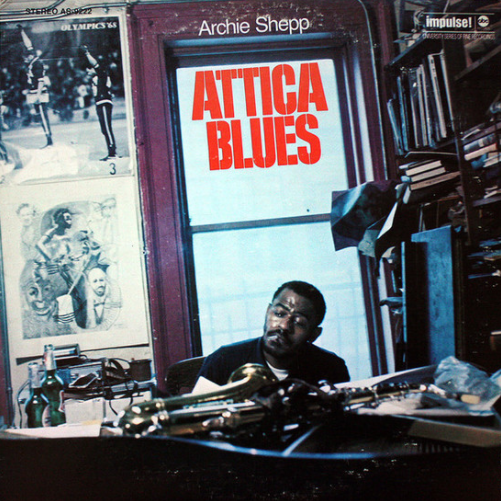
The first playlist, volume #62, of the year features 50th anniversary treats from Archie Shepp (the title-track from his 1972 album Attica Blues), Cymande (the much sampled ‘The Message’ from their self-titled ‘72 special), Paul Simon (‘Armistice Day’ from the self-titled ‘72 album), Aretha Franklin (a beautified cover of ‘The Long And Winding Road’ from the soul deity’s Young, Gifted And Black album), Cluster (‘Für Die Katz’ from the Kosmische travellers ’72 album Cluster II), Neu! (‘Hero’ from the self-titled ’72 album), Popol Vuh (the venerable ‘Kyrie’ taken from the divine stylers ’72 album Hosianna Mantra), and Annette Peacock (a idiosyncratic version of ‘Love Me Tender’ from her ’72 I’m The One album).
There’s also recent(ish) tracks from Fake Fruit, Large Plants, Jeff Parker, Family Portrait dotted amongst goodies from Kaleidoscope, The Gods, Caetano Veloso, Eddie Hodges and Biff Rose: 35 tracks in all.
Listen how you like, but when compiling these playlists I do work out a particular order: a journey for the listener.
Those tracks are full are:
Archie Shepp ‘Attica Blues’
Kaleidoscope ‘Chocolate Whale’
Quella Vecchia Locanda ‘Dialogo’
Muito Kaballa Power Ensemble ‘Don’t Go Too Far’
100 Proof Aged In Soul ‘Backtrack’
Fake Fruit ‘No Mutuals’
Large Plants ‘La Isla Bonita’
Cymande ‘The Message’
Innovations ‘Put A Little Away’
Los Dangers ‘No Te Quiero Más’
Sophie Knapp & Dungen ‘Desert Moon’
The Gods ‘Eight O’clock In The Morning’
Jeff Parker & The New Breed Ft. Ruby Parker ‘Soul Love’
Paul Simon ‘Armistice Day’
Hamilton Leithauser & Kevin Morby ‘Virginia Beach’
Family Portrait Ft. Julian Lynch ‘What Does It Take’
Aretha Franklin ‘The Long And Winding Road’
Annette Peacock ‘Love Me Tender’
Caetano Veloso ‘Lost In The Paradise’
Parasites Of The Western World ‘You Must Be Joe King’
Between ‘Tape’
Steauna De Mare ‘Ork Style’
Cluster ‘Für Die Katz’
The Holydrug Couple ‘Arcatina’
Tibetan Miracle Seeds ‘Nectarine Dreams’
Gianfranco Plenizio ‘Afyon’
Slag Boom Van Loon ‘Poppy Seed’
Neu! ‘Hero’
Phantom Payn Days ‘Screen Idol From France’
Branko Mataja ‘Tamo Daleko’
Popol Vuh ‘Kyrie’ Eddie Hodges ‘Shadows And Reflections’
Biff Rose ‘Take Care of My Brother’
Marina Allen ‘Sleeper Train’
Female Species ‘Tale Of My Lost Love’
Hi, my name is Dominic Valvona and I’m the Founder of the music/culture blog monolithcocktail.com For the last ten years I’ve featured and supported music, musicians and labels we love across genres from around the world that we think you’ll want to know about. No content on the site is paid for or sponsored and we only feature artists we have genuine respect for /love. If you enjoy our reviews (and we often write long, thoughtful ones), found a new artist you admire or if we have featured you or artists you represent and would like to buy us a coffee at https://ko-fi.com/monolithcocktail to say cheers for spreading the word, then that would be much appreciated.
ODB 374: Roedelius ‘Selbstporträt Wahre Liebe’
April 2, 2020
ALBUM REVIEW
Words: Dominic Valvona

Roedelius ‘Selbstporträt Wahre Liebe’
(Bureau B) LP/10th April 2020
Losing none of that zest for creating and wonderment, the eight-five year old progenitor of ambient, new age and neo-classical music Hans-Joachim Roedelius is still exploring and still producing experimental compositions at a prolific rate. There is, four decades on from his richest period of self-discovery and defining the perimeters of what electronic music could be, no let up in the Roedelius schedule. As famous for his collaborative partnership with the late Dieter Moebius in the Kluster/Cluster/Qluster arc, the Berlin born masseur and physiotherapist turned self-taught composer, has also laid down a breadcrumb trail of impressive and highly influential solo releases, numbering somewhere in the 100s.
Just one part of that extensive catalogue of solo work, the introspective Selbstporträt series is being revisited by the aging doyen for the Bureau B label. Originally made during various sessions for Cluster, between 1973 to 1979, these intimate contemplative and ruminating self-portraits were released in the late 70s and early 80s – later volumes appear sporadically in the 90s and 2000s too. Though always going forward, Roedelius has been nudged into a challenge as Bureau B founder Gunther Buskies proposes the octogenarian return to the processes and methodology of that period to create another ‘Selbstporträt’. Cheekily as the PR spill has it, seeing if he, ‘was capable of “beaming back” to his youthful years, reaching into the sonic past of the Self-Portrait series to deliver similarly persuasive results.’ The short answer to that is: Yes. But before we divine the results of Selbstporträt Wahre Liebe, a little background colour first.

A founding pillar of the Kosmische sound in the late 1960s and early 70s, originally taking shape from experimental performances at the legendary Berlin club they helped found, the Zodiak Free Arts Lab, the first incarnation of this amorphous partnership that made Roedelius’ name, Cluster, featured Joseph Beuys disciple and electronic music progenitor Conrad Schnitzler; the music, almost dark, Lutheran and hymn like, an early modulation of piano, organ and guitar, fed through an array of homemade effects, that made its debut on a label sonorous for its stoic church organ music. This was the first incarnation, Kluster.
Many ‘head music’ fans will be enamored or at least familiar with the second phase, as Kluster interchanged its capital letter to a ‘C’ and Schnitzler left (for the first time). Releasing some of the most sublime peregrinations and odd candy coated pop electronica under the Cluster banner, their most formative period during the early to mid 70s remains their most famous and influential. This brought plenty of admirers and fellow sonic travelers to the Forst located woodland glade studio retreat. Most famously Brian Eno and Michael Rothar of Neu! Both of whom would join Roedelius and Moebius to form the (a)side project supergroup Harmonia.
Apart from a dormant period during the 80s, as Roedelius and Moebius pursued both solo and collaborative careers (many of which would overlap), Cluster survived well into the next century. Finally calling it a day in 2010: For this version of the partnership anyway. Dropping the C for a ‘Q’ this time around, Roedelius found a new collaborative partner in the sound installation artist and like-minded sonic explorer keyboardist Onnen Bock. After a number of albums together the duo expanded to a trio when bass player virtuoso and (another) keyboardist Armin Metz joined the ranks. In the last few years the Qluster trio have been drawn to Roedelius’ neo-classical piano compositional improvisations and sketches; the previous suite Tasten was built around a trio of them, and the more electronic offering Echtzeit, though far less so, also seemed informed by it.
In many ways following on from the last album together, making a return to the warmth and traversing heavenly space sounds we have come to associate with all things Kosmische, the golden epoch of that genre filled our ears once more on Qluster’s seventh (and so far last) album, Elemente; a feat that is repeated on this solo portrait.
Leaving Qluster aside for the moment, Onnen Bock, together with Wolf Bock, shadows Roedelius on this vintage warm-up. Intimately (re)acquainted with himself, the fascinations and interests that originally sparked the previous series of visceral sketches may have changed but the soundboard tools remain the same, with Roedelius once more making use of the Farfisa organ, Fender Rhodes, drum machine and tape-delay to fashion a new empirical suite of Kosmische neo-classical moods and dreamgazing.
Though it’s been over four decades since those iconic peaceable recordings, the old apparatus from that period is just as warm and receptive to the ambient progenitor’s touch and imagination. If you’re familiar with those composition then you’ll bound to recognize the recurring Baroque fairground piped merry-go-rounds and serene glide motifs that appear on this wonderful erudite album. Especially the playful but calmed trans-alpine gliding ‘Geruhsam’, which – in my imagination anyway – conjured up an image of either a bossa signature steamboat sailing across a Swiss lake, or, a enervated chuffing steam engine travelling across a tranquil mindscape.
Elsewhere the bright diaphanous notes of the Rhodes lightly hang in the air as they did before; lingering with an echo of glassy Kosmische reverent soul on compositions such as the romantic resonate ‘Wahre Liebe’ – that’s ‘true love’ – and dreamily fanned on the comforting cloud breathing ‘Nahwärme’ – which translates as, depending on your fancy, either ‘local heating’ or ‘convenient heat’; an aloof soundtrack for a German boiler installation company perhaps? Sometimes that organ glistens and at other times almost drifts into the ecclesiastical. The complimentary Farfisa is equally as gorgeous; deftly played and perfectly attuned. A real warmth is created (there’s that word again), but also an overlapping cascade of bulb-like notation and subtle refractions of light play.
Reverent, beautiful, encapsulating, with even a touch of giddy uncertainty – I’m referring to the ‘roundabout’ motion of ‘Im Kreisel’ – Roedelius has lost none of his sparkle, or for that matter his romanticism and hope. A fine balance between past triumphs and the new, Selbstporträt Wahre Liebe is unhurried and playfully understated; a timeless album simultaneously made with a sagacious touch and young curiosity. At the stately age of 85, Roedelius proves to still be on form as he looks back once more before easing forward.
Related posts from the Archives:
Hans-Joachim Roedelius Interview
Qluster ‘Elemente’ Review
Hans-Joachim Roedelius ‘Kollektion 2: Roedelius – Electronic Music Compiled By Lloyd Cole’ & ‘Tape Archive 1973-1978’ Review
Cluster ‘1971 – 1981’ Boxset Review
And Now, A Word From Our Founder
Hi, my name is Dominic Valvona and I’m the Founder of the music/culture blog monolithcocktail.com For the last ten years I’ve featured and supported music, musicians and labels we love across genres from around the world that we think you’ll want to know about. No content on the site is paid for or sponsored and we only feature artists we have genuine respect for /love. If you enjoy our reviews (and we often write long, thoughtful ones), found a new artist you admire or if we have featured you or artists you represent and would like to buy us a coffee at https://ko-fi.com/monolithcocktail to say cheers for spreading the word, then that would be much appreciated.
Our Daily Bread 283: Qluster ‘Elemente’
October 15, 2018
Album Review/Dominic Valvona
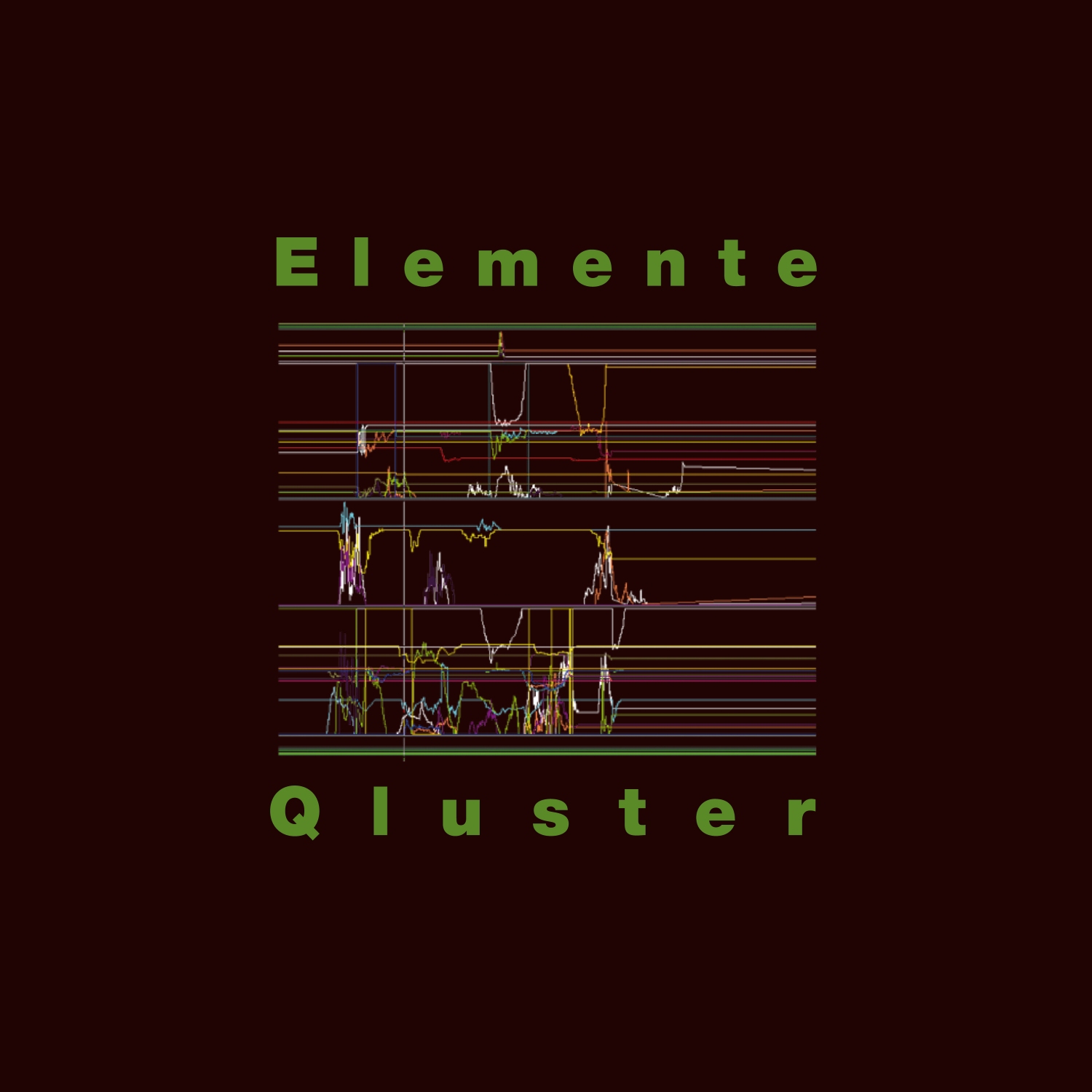
Qluster ‘Elemente’ (bureau b) November 2nd 2018
Transforming through the decades, as contributors to the Hans-Joachim Roedelius and (late) Dieter Moebius navigated unit have joined and left, the Kluster/Cluster/Qluster arc has taken on various forms over the last five decades. A founding pillar of the Kosmische sound in the late 1960s and early 70s, originally taking shape from experimental performances at the legendary Berlin club they helped found, the Zodiak Free Arts Lab, the first incarnation of this amorphous partnership featured Joseph Beuys disciple and electronic music progenitor Conrad Schnitzler; the music, almost dark, Lutheran and hymn like, an early modulation of piano, organ and guitar, fed through an array of homemade effects, that made its debut on a label sonorous for its stoic church organ music.
Many ‘head music’ fans will be enamored or at least familiar with the second phase, as Kluster interchanged its capital letter to a C and Schnitzler left (for the first time). Releasing some of the most sublime peregrinations and odd candy coated pop electronica under the Cluster banner, their most formative period during the early to mid 70s remains their most famous and influential. This brought plenty of admirers and fellow sonic travelers to their Forst located woodland glade studio retreat. Most famously Brian Eno and Michael Rothar of Neu! Both of which would join Roedelius and Moebius to form the (a)side project supergroup Harmonia.
Apart from a dormant period during the 80s, as Roedelius and Moebius pursued both solo and collaborative careers (many of which would overlap), Cluster survived well into the next century. Finally calling it a day in 2010: For this version of the partnership anyway. Dropping the C for a Q, Roedelius found a new collaborative partner in the sound installation artist and like-minded sonic explorer keyboardist Onnen Bock. After a number of albums together the duo expanded to a trio when bass player virtuoso and (another) keyboardist Armin Metz joined the ranks. In the last few years the Qluster trio have been drawn to Roedelius’ neo-classical piano compositional improvisations and sketches; the previous suite Tasten was built around a trio of them, and the more electronic offering Echtzeit, though far less so, also seemed informed by it.
In many ways following on from the last album together, making a return to the warmth and traversing heavenly space sounds we have come to associate with all things Kosmische, the golden epoch of that genre fills our ears once more on Elemente. Once again meeting in the unassuming hamlet of Schönberg to perform an unhurried series of improvisations, later distilled to shorter passages with the odd melody, beat and effect added in post-production, the instrumentation has changed to accommodate sequencer triggered loops for the first time. The piano is enervated, removed almost entirely, replaced by the wondrous sound of the ARP2600, a Farfisa organ and Fender Rhodes, all of which are filtered through various lunar and otherworldly effects. The results of which are both expansively mysterious and often diaphanous in their celestial transcendence.
As the title suggests, the opening continuum ascendance of ‘Perpetuum’, and forevermore gliding spacescapes of ‘Infinitum’ both promise an unending voyage into the interiors of the universe and mind. The first of which recalls the Tangerine Dream and the Baroque cosmos of Sky Records, the second, the dreamy visions of Novalis. The possibilities of these arpeggiator style space-dusting, aura-anointed bookend tracks seem endless.
When not echoing through deep space Qluster, using that dream-melody maker, the ARP 26000, float close to the Adriatic cascades and mirages of Vangelis and Xaos on ‘Zeno’ (a reference I assume to the Greek philosopher and his confounding paradoxes); lift the lid up on the inner workings of a piano and pluck out a Japanese like sprung-y melody on ‘Xymelan’; and introduce a flattened beat to the Techno-bordering-on-Acid ‘Tatum’.
Tubular droplets, rapidly calculating algorithms and chemical elements interplay with overlapping, transformed organ and electrified piano melodic wafts throughout this most thoughtful sound map. The reification, the feelings of awe-inspiring expanse and discovery are subtly set in motion and made visceral. On the cusp of his 84th birthday, Roedelius shows no signs of retiring let alone resting as he leads his troupe to infinite possibilities.
https://soundcloud.com/bureau-1/symbia?in=bureau-1/sets/qluster-elemente
Our Daily Bread 232: Moebius ‘Musik fur Metropolis’
January 5, 2017
LP REVIEW
Words: Dominic Valvona
Moebius ‘Musik fur Metropolis’
Released on CD/LP/DD by Bureau B, January 6th 2017
Standing like a shard beacon of expressionist light in 20th century cinema Fritz Lang’s, and let’s not forget his wife and co-auteur on this visionary opus Thea von Harbou, futuristic visual requiem Metropolis is rightly hailed as a classic. Borne out of the most tumultuous of periods in German history, as the artistically creative but decadent disconnect of the Weimar Republic was about to crumble and the menace of the National Socialists was goose-stepping towards an eventual Armageddon, Metropolis may have been about a future world but was making glaringly obvious analogies and metaphors about the present.
Modeled in the Art Deco style of its day the centuries old struggle between the elite and those on the lower strata of society continued unabated in the movie’s 21st century dystopian setting. A privileged minority of wealthy industrialists, living in the lofty heights of a N.Y. on steroids skyline, lorded it over those who toil in perpetual labour below, firing up and feeding the machinery that keeps the balance of power in check. The cast includes the love spurned mad scientist Rotwang, whose resurrection totem robot creation became the poster child for the film and continues to be one of the most iconic symbols of malevolent technology; the dandy of the ‘upper world’ turn inspired ‘mediator’, reformed hero Freder and his father the city’s “master” Joh Fredersen; and the idealist heroine of the piece, Maria. All parties are forced to reconcile after a series of events, sparked by Freder’s epiphany after witnessing a deadly explosion in the boiler rooms; enchanted and led to the workers via his love for Maria.
Ambitious in any era, Metropolis despite pushing cinematography towards dizzying heights of inventiveness and scope was considered too lengthy and it’s central tenet naïve on its inaugural release. A substantial cut was made, losing many scenes and even characters, before a final edited version was released to the greater public. Believed discarded and lost, the original became something of an enigma until a full-length version turned up in 2005 in a museum in Argentina. Restored to near 95% completion it was unveiled five-years later and has ever since been lavished with special screenings and accompanied by a myriad of different scores, including the catalyst for this special release. Invited in 2012 to perform a semi-improvised soundtrack leading avant-garde composer and founding member of the Kluster/Cluster/Harmonia triumvirate of cosmic progressives Dieter Moebius composed a suitably atmospheric, often unsettling and evocative industrial suite. Not the first and certainly not the last artist to soundscape this Silent Age behemoth, attempts to furnish the action with a suitable musical score stretch right back to Gottfried Huppertz’s original in 1928, to Moroder and “friends” gratuitous pop soundtrack remake in the 80s, and the more successful interpretations of Techno music giant Jeff Mills in 2000 and the lavish 96-piece orchestra and 60-strong choir opus in 2004 by Abel Korzeniowski.
Using pre-arranged tracks and samples, treated by an array of effects, Moebius’ one-off performance was always destined for release at a later date. Unfortunately as it turned out a reimagined album version would elude the Kosmische pioneer who passed away in the summer of 2015. With the help and support of his widow Irene and longtime musical partners Tim Story and Jon Leidecker, the Berlin musician Jonas Förster finished the remaining work that needed to be done and completed the production: quite satisfactorily as it transpires. A performance in four concomitant acts, Moebius loyally matches up the drama onscreen with a serial suffused and nuanced avant-garde narrative. Swaying in their unison of drudgery the somnolent work gangs of the opening Schicht (“layer”) section are accorded a lamentable industrial march. At the core of this soundscape is a monotony of hissing valves, descending and bending generator drones and the sound of steam-pumped hydraulics. Layer upon layer is carefully administered whilst the clocking-in gong vibrates a foreboding signal for the day’s subjugated graft.
In a film packed with vivid iconography, analogies and scenes, Freder’s hallucinogenic like vision of the city’s underbelly, the boiler room if you will, reimagines the machineries of Metropolis transformed into the atavistic figurehead for a sacrificial ritual: workers climb the altar steps to be fed into the furnace mouth of the Canaanite god Moloch in one of the movie’s most memorable sequences, and the second chapter on this album. The atmosphere more esoteric, features an ominous – as you’d quite rightly expect – tribal rhythm with stifled synthesizer screams and strange obscured hoots. Yet Moebius, who could go all out on this bestial scene, is quite reserved, holding back from full Biblical bombast and horror. Tiefenbahen is equally as disturbing with its static field of electrons buzzing away to the loading of an unidentified mechanism and the discarded discord of bounding bass drums and a venerable organ: a lingering signature from Kluster. An attempt is made to set into motion a shuffling groove of some kind; again heavy and in keeping with the monotonous miasma of the storyline but offering a glimmer, a lift from the veils of the macabre.
Finally the “mediator” or Mittler, the dystopian end run that brings together all parties and forces mediation – though Lang’s not so subtle communist solutions proved naïve –, beginning with a death grapple between Freder and the miscreant scientist Rotwang, is accompanied by a finger-cymbal and sleigh bells percussion, sharp metallic pulses and what sounds like iron filings being moved around on a sheet of metal.
In safe hands, Moebius’ posthumous Metropolis soundtrack proves a distinctly descriptive enough and evocative narrative experience in isolation, separated from the visual motivation of the film. Fans of the Kosmische progenitor’s work will find it familiar territory but notice enough examples of subtle explorations and interplay unique to an improvised performance to find it worthwhile purchasing.
https://soundcloud.com/bureau-1/sets/moebius-musik-fur-metropolis-snippets
Choice Albums of 2016 (Part One): A – L
December 1, 2016
Aesop Rock to Bob Lind.

Continuing to shy away from fatuous rating systems and ‘best of lists’, the Monolith Cocktail endeavours to offer a more eclectic spread of worthy ‘choice’ picks, with no album dominating or holding any particular numbered position – unlike most of our contemporaries lists; stuck with the ridiculous task, for example, of explaining why one album doesn’t deserve the number 32 spot and has been placed at number 33 instead.
Lined up in alphabetical order then, our favourite new and reissued albums from 2016 are of course considered to be the most interesting, vibrant and dynamic of the year’s releases. But the best? Granted, to make this list you have to make some sort of impact, but we’d never suggest these entries were categorically the best albums of 2016, even if that might be true. Instead our list is an indicator of our amorphous tastes, rounding up a year in the life of the Monolith Cocktail, and we hope, introducing you to titles and artists/bands that may have dropped below the radar.
Split into two parts, the first installment begins with Aesop Rock’s‘s hip-hop masterpiece The Impossible Kid and ends with the latest adroit songbook from the legendary troubadour Bob Lind. In between those two sagacious bookends are albums from David Bowie, David Broughton, Danny Brown, Cluster, Eleanor Friedberger and John Howard (plus many others).
Aesop Rock ‘The Impossible Kid’ (Rhymesayers)
“The waterfall of words, snide quips and intricate stories recalled from both close to home and far away worlds, are as good as he’s ever done”. Matt Oliver
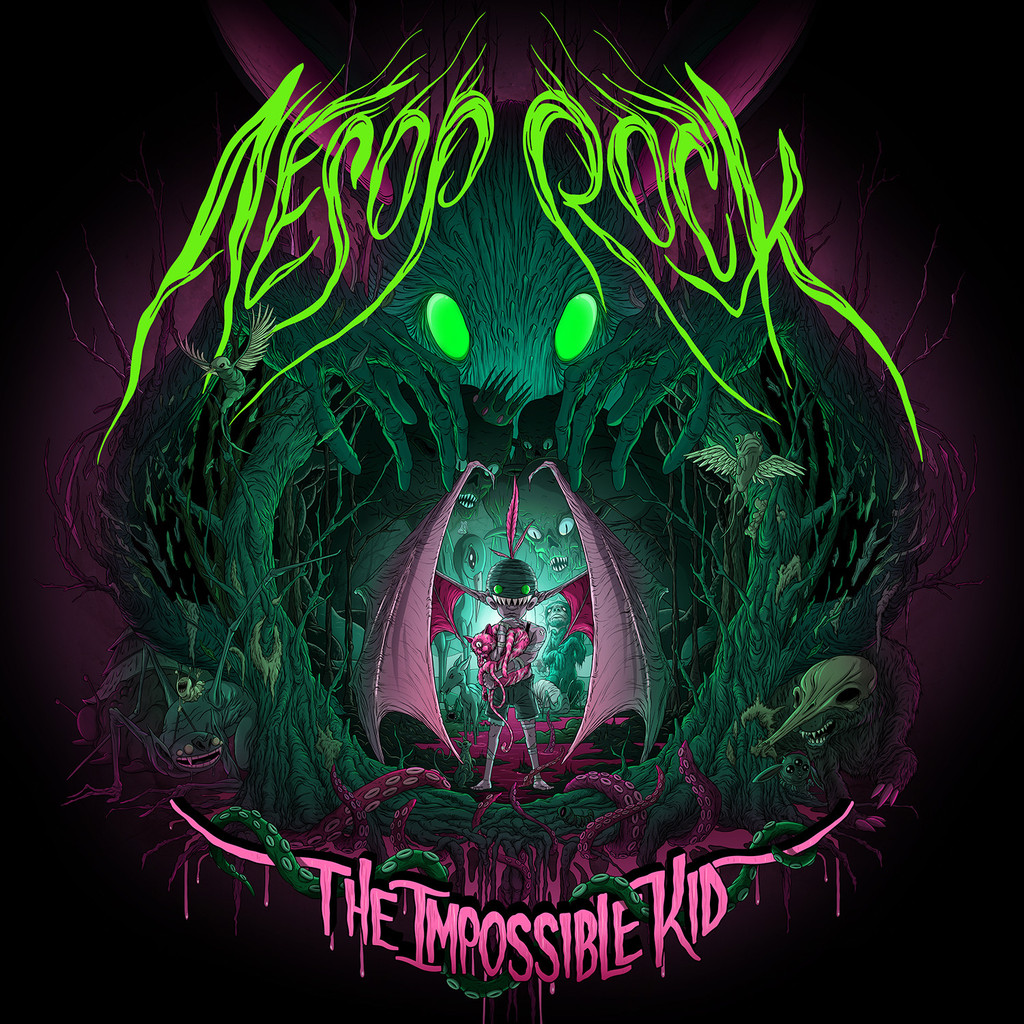
Seeming to get better rather than older (and don’t you dare mention the ageing process as per ‘Lotta Years’), the original ‘Bazooka Tooth’ is still ablaze out of somewhere to the left, but now giving lesser mortals more of a chance of accessing him than ever before. Entirely self-produced and applying funkiness to the bulkiness of alien-scanned beats he’s always rocked his way, AR’s extra superpower as the self-deprecating hero of syllaballistics (“the impossible kid , everything that he touch turns probably to shit”), is to humanise the fantastical and still make the everyday sound like a comic book lead, even when soul is bared for all to analyse. Rock also added more great cover art, and the visuals for ‘Rings’ and ‘Kirby’ are bound to feature in hip-hop video of the year lists.
Read original review here…
Afro-Haitian Experimental Orchestra ‘A.H.E.O’ (Glitterbeat Records)
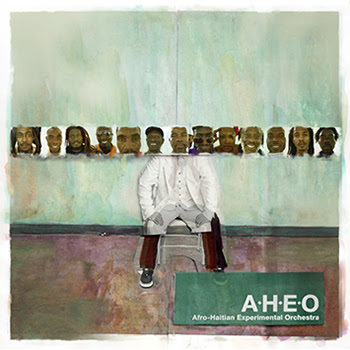
‘Elevating beyond the borders it was created behind, the Afro-Haitian Experimental Orchestra’s root foundations shuffle and shake free of their stereotypes to move freely in an increasingly amorphous musical landscape. You’re just as likely to hear vibrations and traces of Dub, native Indian plaintive ghostly echoes, Sun Ra’s otherworldly jazz and funk as to hear the indigenous Haiti sounds and Afrobeat pulse. Tony Allen is once more at the heart of another bustling, dynamic explosion in rhythm.’ Dominic Valvona
Progenitor and embodiment of the Afrobeat drum sound, still in high demand four decades after his explosive partnership with Fela Kuti, the much-venerated Tony Allen once more extends his infectious percussion style beyond the African homeland. Sharing an obvious entwined history with Africa, the shared Hispaniola Island of Haiti proves both an esoterically mysterious and congruous collaborative foil to Allen’s distinct drumming patois.
Invited to perform in 2014 by the French Institute Of Haiti’s director Corinne Micaelli, Allen’s visit would end with a public broadcasted concert in the main square of the capital, Port-au-Prince. Collaborating with Allen would be a cross-section of local percussionists and singers recruited by vocalist, dancer, ‘voodoo priest’ and director of the Haitian National Bureau Of Ethnology, Erol Josué; Josué would himself lend his sweet yearning and reflective tones to two of the tracks on this album.
The call went out and the great and good of the Haitian music scene came. Racine Mapou de Azor, the Yizra’El Band, Lakou Mizik and, featured on the Monolith Cocktail at the start of the year and one of the choice albums of 2016 with their highly-rated Manman M Se Ginen LP, RAM. Another Monolith regular and one-time Port-au-Prince resident, Mark Mulholland was drafted in as the experimental orchestra’s guitarist, and as it would turn out, eventual legacy overseer. Swelling the ranks still further were Olaf Hund, recruited on keyboards and ‘electronics’, and an old friend of Allen’s, the bassist Philippe Dary, who became the de facto musical director. With only five days of studio rehearsal time to gel and work out their performance, the sessions proved both, as Mulholland observed, ‘chaotic’ and overwhelming’. Based upon various sparks of inspiration and rhythmic workouts the eventual structured compositions took shape from organically flowing jams. At the heart of each, Allen’s signature Afrobeat drums and Dary’s liquid, and often funky sumptuous basslines.
Read the full review here…
Bitori ‘Legend of Funaná – The Forbidden Music Of The Cape Verde Islands’
(Analog Africa)

‘Following the summertime thrills aplenty Space Echo – The Mystery Behind The Cosmic Sound Of Cabo Verde Finally Revealed compilation, with the emphasis on the Funaná; Analog Africa continues to pay homage to the previously suppressed music genre with a reissue of, what many consider, the best Funaná album ever recorded, Bitori Nha Bibinha.’ DV
Helping to ignite a full-on Funaná revival, the quintessential and legendary anthem of Cape Verde’s once banned – considered too salacious and unruly by the Portuguese authorities who ran this archipelago of islands until the mid 1970s – infectious music style was given a reprise by Analog Africa this year. A master class from the inter-generational duo of singer Chando Graciosa and renowned gaïta maestro Victor Tavares (better known as Bitori), who’d both grown up with the blazing and often raucous Funaná, Bitori Nha Bibinha captures the passion and spirit of the people and the times it survived.
Read the full review here…
The Bordellos ‘How To Lose Friends And Influence No-One’
(Small Bear Records)

‘Despite the caustic bravado and world-weary bitterness channeled into the antagonistic song titles on this new album, The Bordellos lo fi edicts are always surprisingly melodic. Think of them as a tuneful The Fall; resigned and swiping at society but hopeful enough to challenge it despite banging their collective heads on the doors of the music industry for years.’
Gaining this coveted spot (sic) in our ‘choice albums’ feature for perseverance in the face of despair, the St. Helens trio once more man the barricades with another despondent protest. Feeling, like many of us (I know we do), out of synch with the digital epoch, they rally against the Internet’s most depressing byproducts, and the loss of real ‘motherfuckers’ from the music world – who they duly list on a song of the same name; a cry for a new leader or at least more individuals and rebels. Wearily antagonistic, righting slights and a lifetime of rejection, The Bordellos go for broke on How To Lose Friends And Influence No-One with titles such as ‘Did The Bastards At The BBC Kill John Peel?’, ‘Gary Glitter’ and ‘Piss On Spotify’. Uneasy truths to a lo fi backing of The Velvet Underground, Julian Cope and The Fall abound, yet this could be the group’s best and most complete songbook to date.
Read the full review here…
David Bowie ‘Blackstar’ (ISO/RCA)

‘…this could be the most pure, at least concerned, version of Bowie yet. Resurrected free of his characterisations, the gilded “Blackstar” is just as uneasy and scared at the anxieties, stresses and daunting prospects of the future as the rest of us. Fame, celebratory is mere smoke after all and offers little in the way of comfort and safety in the face of the impending end times. Yet despite being easily his best album since Earthling, Blackstar is still underwhelming and falls short of being a classic.’ DV
The swansong of an irreplaceable polymath proved to be one of the year’s most sad moments, as the man who fell to Earth, Aladdin Sane, the Young American, the thin white duke, the absolute beginner, whichever version you fell in love with, departed for the ether. We lost a great many unique and inimitable artists in 2016 but though ever death is tragic none left quite the pit of despair that David Bowie‘s did. Don’t even try to crown a successor; he was a force unto himself, the “Blackstar”, the supernova of pop. Reams have been written – a great many by myself – yet no one will ever truly reflect his importance and legacy.
Though released just before his death the augur that is ★ was a curtain call. Just as oblivious to Bowie’s fatal cancer as everyone else, I did remark at the time that this album seemed to be a poignant goodbye, an elegy even. Returning to a first love, jazz, Bowie who proved an eager saxophonist in the burgeoning years of his career worked with a N.Y. West Village jazz troupe to produce one of his best albums in decades. Old faces, including a decomposing Major Tom, themes and sounds returned, with traces of Diamond Dogs, Scary Monsters, Black Tie White Noise and Outside. Despite the often cryptic and veiled words, this was an anxious, weary and reflective Bowie; looking back before a rebirth. A pity time ran out for him.
Read the full review here…
David Thomas Broughton ‘Crippling Lack Vol. 1 – 3’ (Song, By Toad Records)

‘An ambitious undertaking, David Thomas Broughton’s sprawling opus Crippling Lack is both musically and geographically expansive. Recorded trans-continental style with a host of collaborators over the last few years, Broughton, who’s based himself more recently in the capitals of, unbelievably, North and South Korea, has laid down various parts and vocals in France, the UK and the US. Logistically impressive, Crippling Lack is a testament to the DIY ethic and remote collaborative experimentation.’ DV
A magnificent and masterful undertaking by Broughton, the Crippling Lack trio of recordings is demarcated into three parts, the entire song collection, if you decide to experience in one sitting, stretching to 1 hour 40 minutes. It features twelve songs in all of varying meticulously and slowly unfurled beauty, with some, epics in their own right. The press release separates the album out into a musical journey, beginning with what it calls ‘deceptively approachable pop songs’, moving through a more testing ‘unraveling and disintegrating and barely-stretched fragments’ segment, before ending with a final section that ‘slowly weaves’ all the loose and previous sections together.
It is nothing short of a magnum opus; cohesive and flowing along to a sophisticated backing, sonorous with the artist’s venerable travailed voice, and his acerbic foils wit. The album’s scope is immense even though it meanders to a, mostly, folk signature and gentle accompaniment. It is outstanding even by Broughton’s standards.
Read the full review here…
Danny Brown ‘Atrocity Exhibition’ (Warp)

“Juggling the mic like a grenade missing a pin…one of 2016’s most individual threats.” MO
‘Atrocity Exhibition’ throws up so many positive talking points. #1 – the transatlantic odd couple of Danny Brown and Paul White, a relationship rooted in 2011’s ‘Rapping With Paul White’ album, fears nothing and no-one. #2 – Brown continues to show he has one of the maniacal mic grips in the game that you can’t ignore, here with added malleability. #3 – White’s reputation has really hit its stride on an upward curve; though other producers contribute (Black Milk, Alchemist and Evian Christ are not to be sniffed at), it’s essentially the Englishman’s show on the boards. #4 – a show stopping hook from Kendrick Lamar on ‘Really Doe’ doesn’t hurt one bit. #5 – despite Brown’s mile-a-minute persona shearing safety bars off rollercoasters, and White and co by default becoming the straight man sidekick, you really have no idea what’s around the next corner, from soaring superhero soundtracks to proper hip-hop dope to something suspiciously shuffling through the undergrowth. “This is not regular rap”, Brown offers. Amen.
Read the original review here…
Cappo ‘Dramatic Change of Fortune’ (YNR)

“When autumn becomes winter, here’s your listening.” MO
You should always bet on the flow of Nottingham’s finest that has evolved into a complex work of art. On past albums and years gone by Cappo would’ve destroyed opposition with crosshairs locked and ammo loaded; here his own brand of introspection, still packing uniquely orbital rhyme schemes but now more than ever full of coded messages and open ended verses awaiting interpretation, kills the noise and heighten the mysteries surrounding the emcee’s inner thoughts and circles. It packs two absolutely heaters of singles as well – ‘OOB’ and ‘Ether’ are both unassuming phantoms of the opera, but white hot in a pretty slimline session – another contributing factor to the building of the suspenseful and mournful, chilling on a razor’s edge. YNR took the weight off their plates in 2016, but this was easily the jewel in their calendar year crown.
Read original review here…
CHUCK ‘My Band Is A Computer’ (Old Money Records)

‘CHUCK’s kooky collage-rock and lo fi wonky electronic pop, which congruously flows between The Magnetic Fields, Mercury Rev, Weezer, Apples In Stereo and even The Pixies, absorbs its influences to create a gorgeous, quietly optimistic, kind of melancholy and pathos.’ DV
From the inimitable label of hopeless optimism and resigned despair another lo fi songbook of obscure modern idiosyncratic pathos. Released via Audio Antihero’s new imprint Old Money Records this marvelous kooky collection from Massachusetts’s songwriter and multi- instrumentalist CHUCK is a congruous bedfellow of the label’s previous releases from Benjamin Shaw, Frog and Cloud.
Bringing an upstate, more pastoral, lilt to the New York metropolis where he now resides, CHUCK’s quasi-Tropicana Casio preset bed of quirky wounded observations are both funny and profoundly sad; lo fi but ambitious. An outsider in some sense; an observer of the foibles and peculiarities of the Brooklyn boroughs, the maverick artist paints a reflective, wry and often ironic picture of our modern times.
Far too good to be hidden away his collection of songs, penned over the last decade, have thankfully been given the platform to reach a wider audience.
Read the full review here…
Clipping ‘Splendor & Misery’ (Sub Pop)

“Provocative electronics and sermons from the LA leftfielders will clamp you to the edge of your seat.” MO
For the record, ‘Splendor & Misery’ is a 20/80 split in favour of the latter. Comprehensively proving that the end of the days is still compelling material when done as well as this, particularly in this year of all years, Clipping were another to give themselves a veneer of accessibility with their zero gravity screams. Futility set adrift to a perfectly captured fear found frozen behind the visor, had rhymes dealing with the pending shitstorm with West Coast fearlessness usually reserved for low-rider rollin’. Interspersed with choral episodes praying for the album’s lead, the intelligent stage management demands your full attention; that’s to say, it’s a struggle to dip in and out or pick a favourite track by itself – do so and you’ll risk detracting from the whole performance pushing hip-hop’s outersphere. What odysseys are made of and reputations are built on.
Read the original review here…
Cluster ‘1971 – 1981’ (Bureau B)

‘Patriarchs of the German music scene, Cluster, are quite rightly celebrated for their contribution to the last forty-odd years of experimental electronic and ambient music with this latest grandiose gesture of adulation. Though attempts have been sporadic, past collections have gathered together, more or less, all the standard Cluster recordings, leaving out live and more obscure albums, until now. German label Bureau B, concentrating on the group’s output from 1971 to 1981, chronologically compile a full discography from that decade, which for the first time ever includes the previously unreleased Konzerte 1972/1977 album.’ DV
All attentively remastered, rather impressively I might add, by Willem Makkee, the nine-album box set offers the die-hards another excuse to own the back catalogue, with the added bonus of requiring that former live LP that got away, Konzerte, and for those not familiar or with a passing fancy, the best complete picture and evolution yet of the much revered group. 1971- 1981 will serve as a worthy testament and reawakening of the Cluster back catalogue and legacy: now sounding better than ever, the remastering for once very much welcomed.
Read the full review here…
Ian William Craig ‘Centres’
Passing us by on release Ian William Craig‘s unassuming but nevertheless epic sweeping ambient opus Centres arrived without much fanfare on its release. However, these cerebral peregrinations, songs of hope, soulful expansive hymns and sonic journeys into space were given rave reviews by those who did pay attention. And so initially missing coverage on the Monolith Cocktail, we’ve made up for it since by featuring tracks from the album in our ‘quarterly playlists’ and now, in our ‘choice albums of 2016’ feature. It is one of the year’s most beautiful, inspiring and often just meditative concatenate suites; offering glimmers of awe. DV
Dillon & Paton Locke ‘Food Chain’ (Full Plate)

“Gourmet underground platters rooted in the South but giving you seven courses of funk and back.” MO
It might only be found as small print on some menus, but who are we to ignore prime indie cuts encouraging you to “pour a bucket of gravy over yourself and just feel that”. When they’re not rewriting the rules of the Ice Bucket Challenge, Dillon & Paton Locke are always gnawing on something, rhyming as they chew it. Funky, crate-rifling beats are laced with an overzealous streak, cogently able to stop the album dead from 60 to 0 and then re-energise it the other way, and a press-record-and-just-go appetite never misses a trick on the mic, with a hint of political soap-boxing and getting down to some grown man, take a look around biz. Their guest chef specials aren’t too salty either – R&V favourites Homeboy Sandman and J-Live, Dres from Black Sheep and people’s president Lobsterdamus, help flavour a certified belly-buster for 2016.
Read the original review here…
Ed Scissor & Lamplighter ‘Tell Them It’s Winter’ (High Focus)
“An intriguingly created world of wisdom, paranoia, numbness and finding peace in its own mind”. MO
High Focus have had the mother of all years, the consistency of everything they’ve dropped dominating the last 12 months of homegrown hip-hop. Ocean Wisdom (‘Chaos 93’) boasted youthfully infinite ammunition. Dabbla (‘Year of the Monkey’) got up to a whole load of japery reaching across the bar. Fliptrix (‘Patterns of Escapism’) executed label ideals to the fullest. Yet in the spirit of thinking differently, Ed Scissor and Lamplighter, the absolute antithesis of those mentioned, take the honours by a short head. Blair Witch hip-hop with its nose to the wall, barely keeping its head above water while barely raising an eyebrow, pulls off the Houdini-like stunt of subverting hip-hop norms while sticking close to them like a second skin. A slow and deliberate bittersweet bloom of triumph, creating the ultimate flip script of offering easy solace and comfort when all looks lost.
Read the original review here…
Elzhi ‘Lead Poison’ (Glow365)
“Ear-catching narratives covering the everyday grind…not far off being a complete LP”. MO
Coming out the other side of mental health issues has Elzhi using ‘Lead Poison’ as catharsis, resulting in some of the year’s most vividly delivered rhymes and storytelling in the process. Done so in near enough bite sized chapters, proves that if the story’s interesting enough, it’s long enough. Never buckling under pressure, even when the likes of ‘Cloud’ feel like everything is conspiring against him (not to mention the potential of his health showing overall weakness), heart is worn on sleeve and self-examinations are set to a forceful soul soundtrack pushing its protagonist. With softer neo-soul going back to Elzhi’s Slum Village heritage, there’s also room for a little light heartedness, with ‘She Sucks’ doing forbidden love by garlic and wooden stakes, and ‘MisRight’ bending the thesaurus. An album that goes from strength to strength, listen on listen.
Read the full review here…
Eleanor Friedberger ‘New Views’ (Frenchkiss Records)

Another album we missed on its release, Eleanor Friedberger‘s third solo spot New View is another impressive songbook of idiosyncratic pop. Streamlining the signature intelligent reference-heavy prose of her sibling act The Fiery Furnaces, Eleanor continues the clever turns of phrase but in a more attentive, breezier and lightened but less cluttered manner. With elan she sets out on a dry-witted but emotionally philosophical picnic through the East Village with Patti Smith and Harry Nilsson in tow.
Paul Hawkins and the Awkward Silences ‘Outsider Pop’ (Blang Records)

‘Lethargically executed and quintessentially an antifolk statement of protest, Outsider Pop is a highly infectious album of pop parodies that penetrate the bland veneer of the contemporary irksome vacuum known as the mainstream. Shambling discontent at its finest.’ DV
The disgruntled savant of disco funk pop and antifolk Paul Hawkins completely in the dark, oblivious to the dreadful proclamation of David Bowie’s impending death paid an augur homage to his white-suited and booted pop incarnation of the 1980s by transmogrifying ‘China Girl’ into an Outsider Pop anthem. Produced by that nutflake nostalgist, and one of the busiest men in the industry right now Ian Button (of the mighty Papernut Cambridge, Gare du Nord label and umpteen other projects), Hawkins’ third album also finds foibles of inspiration from REM, The Fall, Toto and The Art Of Noise; reflecting a much broader sound than before. The no wave, white funk, pop melodies act as a Trojan Horse, the themes far from advocating a hedonistic lust for life or suggesting the listener suppress the doldrums of modern life, are filled with malcontent at the state of the world.
Read the full review here…
John Howard ‘Across The Door Sill’ (Occultation Recordings)

‘Not so adrift and experimental as to have cut all ties to his signature profound sincerity and sad romanticism, John Howard’s Across The Door Sill dares to go further with an even more immersive experience. Expanding his poetic lyricism and piano performances, stark and stripped-back, his vocals multiplied to fill the space and build the atmosphere; Howard has room and time to create some stirring music. It is a most sagacious reflection from the artist, still finding the inspiration to develop and take risks. In doing so he’s reached what could be one of the creative pinnacles of his career.’ DV
Imbued with the 13th century poet Rumis ‘Quatrains’ poem, which encourages us to broaden our horizons and to not just accept what we’ve done in the past, the adroit songwriter and pianist John Howard experiments with a stripped back sound of multilayered vocals and the melodious gravitas on his latest songbook Across The Door Sill. Attentive and epic the album’s sagacious stream of consciousness is a deeply reflective observance on where we are now. In no hurry to get to a hook or chorus, his source material, a collection of unhindered, unhurried and floating poems, was developed overtime, set to music in an organic fashion. Hence why three of the five songs on this LP are nine-minutes long. On a successful run of collaborations and solo projects Howard is enjoying his most productive period yet in a career that’s spanned five decades.
Read the full review here…
Illogic ‘A Man Who Thinks With His Own Mind’ (Weightless)

“Streams of quotable IQ create a fever dream. Snooze, you lose.” MO
Ohio rhyme scientist Illogic provided his own version of a hip-hop out of body experience, a canon of verbosity when bedding down for the night and setting free streams of consciousness while looking through a telescope. This in itself created its own contradiction of being an album expressly trained to set you afloat (The Sound Cultivator’s star-shaped soul powered by plasma rays > strictly no cloud rap), which still kept you wide awake with naturally intricate rhymes, both book and street smart, about life, the universe and everything else. Anyone who starts an album with the observation that “the tofu was not as firm as I’m used to” deserves nothing but praise and respect. The modern equivalent of becoming engrossed in a good book that tells your imagination to run.
Read the original review here…
J-Zone ‘Fish n Grits’ (Old Maid Entertainment)

“Dripping in home truths from his funk soapbox, disillusionment with hip-hop and its cultural hangers-on has never been more entertaining”. MO
Better placed than most to justify a love-hate relationship with hip-hop, J-Zone proclaimed “there’s only two types of music – good and bad. Make good music, or shut the fuck up.” Paired with helium alter-ego/juvenile imaginary friend Chief Chinchilla as hilarious equal opportunity offender, and showing the strain of ‘Peter Pan Syndrome’ remains strong, ‘Fish n Grits’ goes in with scathingly relatable accuracy about the state of the game, misty-eyed nostalgia replaced by a nose-bloodying team of goons busting a whole load of myths. Additionally, whereas Zone’s production used to pop off all over the place in a skilfully spring-loaded criss-cross, he’s honed his own funk skills into a true mastery to compliment his industry disses. Hallelujah that he can’t leave the game alone.
Read the full review here…
Fela Ransome-Kuti And His Koola Lobitos ‘Highlife-Jazz And Afro-Soul 1963-1969’ (Knitting Factory Records)

‘Hot stepping and sure footing through Savoy label like jazz and Stax/Volt revue soul, Fela and his first ever professional band Koola Lobitos were the missing link on the eventual road to the Afrobeat phenomenon. An evolving Fela, only a few shuffles short of cultivating his signature, already shows a raw energy on this compilation’s studio and live recordings.’ DV
In the midst of another celebration and anniversary appraisal the Afrobeat pioneer and political protagonist Fela Kuti has seen the back catalogue legacy re-released and repackaged countless times. There’s been a stage production of his life, and a documentary film in the last couple of years alone. But one of the most revealing and raw tributes is this burgeoning showman showcase; a labour of love that collates together a number of previously scattered, thought lost, rare early recordings – both in the studio and on stage – from the stax/funk/soul years. A “labour of love”, stemming from Toshiya Endo’s African Music Home Page website, launched in the late 90s, the Fela Kuti and His Koola Lobitos material were collected from around the world, from the collections of various fans. By day a professor of Chemistry at Ngoya University, Endo’s passion and hobby of cataloguing West African music attracted the author of the Fela: The Life & Times Of An African Musical Icon bio Michael E. Veal. Lucky for us the dynamic duo produced this lavish and arduous compilation of explosive early Fela beauties; one of the best and revelatory introductions to the great polymaths work yet.
Read the full review here…
Bob Lind ‘Magellan Was Wrong’ (Ace Records)

Another masterclass from the sagacious Bob Lind, his latest album is a majestical and often jazzy lilting lesson in songwriting. With decades of elan and adroit performance behind him Lind isn’t ready just yet to rest on past melodic triumphs and spoils, showing himself ready to adopt and try out new ideas on Magellan Was Wrong – a reference to the Portuguese explorer who first circumnavigated the world, proving it was of course a globe and not flat, though Lind’s song of the same name and homage metaphor questions that wisdom in the face of despondency and disappointment. The characteristic voice and style is of course signature Lind, the songs and themes timeless. With a host of producers, including progressive jazz pianist and composer Greg Foat, on board this strongly nautical feel and reference strong songbook, both the entertainer and troubadour are lent a new lease of life.
 Monolith Cocktail Blog