Most Loved and Enjoyed Highlighted Albums of 2024: Part Two: M – Z
December 16, 2024
Part Two of the Monolith Cocktail’s most loved and favourite albums of 2024 lists: from M to Z. Put together by Dominic Valvona and Brian ‘Bordello’ Shea.

Picking up on where we left off with Part One of the Monolith Cocktail’s most enjoyed and loved albums of 2024, Part Two continues to list all entries in alphabetical order, starting with M. So without further ado, here is the concluding spread of chosen albums – although anything we reviewed during the year should be considered a winner in that regard.
M_____________
Felix Machtelinckx ‘Night Scenes’ (Subexotic Records)
Chosen Dominic Valvona, reviewed originally by Graham Domain/Review
“The new album from Belgium singer, songwriter and producer Felix Machtelinckx is a strange album. In part electronic, it has an ethereal dreamlike quality where the music seems distant and the vocals sound as though they have been beamed through space from a distant galaxy.
Night Scenes is an intriguing album that is hard to define, but one that grows in definition, depth and subtle beauty with each play. It might prove to be a contender for album of the year.” GD
Marcelo D2 & SambaDrive ‘Direct-to-Disc’ (Night Dreamer)
Chosen by DV/Review
“Transforming choice tracks from his back catalogue of solo albums, put out between 1998 and 2013, the influential and acclaimed Brazilian rapper Marcelo D2 replaces the samples, breaks and scratching for a live, reactive Latin-jazz and samba trio.
As part of the championed ‘direct-to-disc’ series overseen by the Night Dreamer label, the South American hip-hop legend laid down ten performed tracks backed by the brilliant SambaDrive direct onto vinyl at the Haarlem Artone Studio in Holland. With no cuts, no edits, as little interference as necessary, these recordings sound near spontaneous, in the moment. The attitude, the passion, the crammed-in flow and more peppered lyricism is still very much on show, only now lilted towards a jazzier and Latin-fuelled backing that balances the urgency and freewheeling of the rapping with something more pliable, dissipating, funky and stylishly cool. Marcelo D2 & SambaDrive have created something very special; not so much an improvement as an alternative fruitful vision of Samba-rap. “ DV
Luce Mawdsley ‘Northwest & Nebulous’ (Pure O Records)
Chosen by DV/Review
“Over several years now the former Mugstar guitarist Luce Mawdsley has progressively shorn the more predatory slurred spoken-word mise-en-scenes and lurid, sleazy torturous self-harm from their music; gradually removing the “verbasier” programmed-like demonic effects from their voice and freeing themselves from a circled abyss of sonnets.
An holistic record that rescores the English scenery and places held near for Luce, the unfolding stages are both beautifully conveyed and hallucinatory in equal measure; a retold fairytale without any prompts, and without a human cast; a window in on the enchantments but also non-hierarchical, non-binary and free nature of the wilds and geography: a metaphor for Luce’s struggles to find an identity that feels natural, safe and unburdened. One part classical, one part Americana, and one part folksy (a touch of the Celtic too) there’s still a very modern twist to what we may identify as the familiar: imagine Prokofiev on an acid trip, or Ry Cooder in an English pasture laying down breadcrumbs for Hampshire & Foat.” DV
The Mining Co. ‘Classic Monsters’ (PinDrop Records)
Chosen by DV/Review
“Continuing to mine his childhood the London-based singer-songwriter Michael Gallagher once again produces a songbook of throwbacks to his formative adventures as a kid growing up in Donegal in Ireland.
His previous album almanac, Gum Card, touched upon a silly fleeting dabble with the occult, but this latest record (his sixth so far) is filled with childhood memories of hammy and more video nasty style supernatural characters, alongside a whole host of “weirdos”, “freaks” and “stoners”.
Once more back in his childhood home, frightened to turn the lights off, checking for Christopher Lee’s Dracula and the Wolfman under his bed, yet daring himself to keep watching those Hammer house of horror b-movies, Salem’s Lot and more bloody shockers, Gallagher links an almost lost innocence with a lifetime of travails, cathartic obsessions and searching desires.
I’m still astounded by the lack of support for his music or exposure, as Gallagher’s The Mining Co. vehicle is worthy of praise, airplay and attention. Hopefully it will be sixth album lucky for the Irishman.” DV
Hannah Mohan ‘Time Is A Walnut’ (Egghunt Records)
Chosen by DV/Review
“Geographically settling long enough to pen this solo songbook offering, but anything but settled emotionally, the former And The Kids vocalist-songwriter Hannah Mohan attempts to process the break-up of all break-ups.
Mohan rides the roller coaster of a drawn-out break-up with quirkiness and vulnerability, turning tortuous heartache into one of the best and most rewarding songbooks of the year. Mohan may have let her soul sing out, as she comes to accept an emotional turbulent period of stresses and anxieties and pain. But whether she’s finally pulled through the other side or not is up to you the listener.” DV
Jamison Field Murphy ‘It Has To End’ (Tomato Flower)
Chosen by Brian ‘Bordello’ Shea/Review
“Ah yes this is more like it. At last, an album with warmth, soul experiment and beauty. Just when I was beginning to think that it was a thing of the past James Field Murphy turns up with this home recorded gem, an album that combines all the things I love about the magic of music: songs with melody, “That Boy” could well be an outtake from The Beach Boys Smiley Smile album, and “It has To End” has a wonderful bonkers McCartney feel to it [remember McCartney was the most experimental of all the Beatles], and this track combines pop with experimental to a beautifully short and wistful degree. “Hate” is another beautiful song; yes indeed, a hate that is alright to love and love it I do. I love the tape pops in the background: you really cannot beat recording on tape.
It Has To End is a rare thing, an album you do not want to end. It’s an album I will be returning to on a regular basis over the coming months as James manages to balance off pop/psych beauty with experimentation perfectly.” BBS
N______________
NCD Instigators ‘Swimming With Sharks’ (Metal Postcard Records)
Chosen by BBS/Review
“The NCD Instigators were Tony, Brendan, and Desi Bannon, three brothers from Newcastle County Down in Northern Ireland who decided to form a band in the 80s together after many years of playing in various other bands. They took their love of metal, prog, folk and rock and home recorded several albums for their own pleasure, burning them onto CDRs to give to friends and family and playing the occasional gig.
There is just something quite magical about this album, and it is sad that now it is only being released years after the fact and that Tony (bass and vocals) is no longer with us, having passed away in 2020. Hopefully this release will ignite some long overdue interest in this underground lost great band from Northern Ireland.” BBS
Neon Kittens ‘It’s A NO Thing’ (Metal Postcard Records)
Chosen by BBS/Review
“The Kittens have a magic and their own sound: The guitar wizardry of Andy G (In a ideal world David Bowie would not be dead and Andy would be his guitarist songwriter partner) and the spoken, I am going to shove my stiletto shoe heel into your yearning heart, vocal coolness of Nina K. The Neon Kittens are one of those rare bands; we need them more than they need us.” BBS
Neutrals ‘New Town Dream’
Chosen by BBS/Review
“This is splendid stuff, an album of supreme guitar jangle, of well written and catchy songs about life in a small town that at times musically reminds me of early Wedding Present and The Pastels with such wonderfully British lyrics; although I wonder when “Travel Agents Window’s” was written as he mentions buying a bag of chips for 50p, when was the last time you managed to buy a bag of chips for 50p? Maybe life in this small town isn’t as bad as the Neutrals think. I do love this album though. I love the romance of everyday life songs, like little mini-Kitchen sink dramas filmed in grainy black and white. This is quite a gem of an album.” BBS
Not My Good Arm ‘Coffee’
Chosen by BBS/Review
“They take Rock ‘n’ Roll, Ska, Punk and Soul and tie it up and skin it alive whilst berating it with the sort of political soulful joyful nous that hasn’t been heard or witnessed since the Mighty Dexy’s Midnight Runners held the Top Of The Pops viewers enrapt with their explosion of attitude and musical good taste back in the early 80’s. Yes indeed, Coffee is a Northern indie soulful romp of an album by a band that I can imagine being a hell of a good night out to watch and by the looks of it gig on a very regular basis. So, keep your eyes scanned as they may be coming to your locality soon. I understand you can pick up a copy of Coffee on CD from their gigs, as by the looks of it they’ve not yet updated their bandcamp: probably too busy putting the fun into funk.” BBS
O_______________
OdNu + Ümlaut ‘Abandoned Spaces’ (Audiobulb)
Chosen by DV/Review
“Drawn together on what proves to be a deeply intuitive union for the Audiobulb label, the Buenos Aires-born but NY/Hudson resident Michel Mazza (the OdNu of that partnership) and the US, northern Connecticut countryside dweller Jeff Düngfelder (Ümlaut) form a bond on their reductive process of an album, Abandoned Spaces.
Tracks are given plenty of time to breathe and resonate, to unfurl spells and to open-up primal mirage-like and psyche-concocted soundscapes from the synthesized and played. And although this fits in the ambient electronic fields of demarcation, Abandoned Spaces is so much more – later on in the second half of the eight-track album, the duo expresses more rhythmic stirrings and even some harsher (though we are not talking caustic, coarse or industrial) elements of mystery, inquiry and uncertainty.” DV
Berke Can Özcan & Jonah Parzen-Johnson ‘It Was Always Time’ (We Jazz)
Chosen by DV/Review
““It Was Always Time”, and it was always meant to be, for the telepathic readings of both creative partners in this project prove synchronised and bound, no matter how far out and off-kilter their experiments of curiosity go or take them.
The Turkish polymath drummer and sound designer Berke Can Özcan and his foil the Brooklyn-based baritone/alto saxophonist and flutist Jonah Parzen-Johnson, have worked together before, namely on the former’s Lycian atavistic geographical infused and inspired Twin Peaks album, last year.
But before even that, back in the April of 2022, Parzen-Johnson found himself boarding a flight to Istanbul to perform a one-off gig with Özcan. Incredibly the two had never met until thirty minutes before going on stage for a soundcheck. The gig must have proved a creative, dynamic success as both musicians have now come together under the equal billing of this new album, recorded for the Helsinki-based hub We Jazz.
From the dubby to tribal, the esoteric to cloud gazing, Berke Can Özcan and Jonah Parzen-Johnson play out their fears and joys across an exciting album of possibilities and expressive, erring on the heavenly at one point, feelings. A fruitful combination that will endure, and hopefully reconvene in the future.” DV
P_______________
Pastense Ft. Uncommon Nasa ‘Sidewalk Chalk, Parade Day Rain’ (Uncommon Records)
Chosen by DV/Review
“Continuing to attract and surround himself with like-minded curious, inventive artisans of prose from the underground leftfield hip-hop scene, the Long and Staten Islands’ rapper and producer/beatmaker Uncommon Nasa now facilitates Pastense’s return with a post-pandemic opus of metaphysical, cosmological unravelled consciousness alchemy.
With no let-up in the quality of the expansive lyrical metaverse, tech comes in conflict with the forest’s birds and nature’s fight for survival amongst the concrete and chemically poisoned wells of so-called progression on an artistically simulated and stimulating canvas of thoughts and connectivity.
Pastense, in partnership with Nasa, creates a most excellent mind-expanding universe, and in doing so, one of the year’s best hip-hop albums: this is an artist and record worth championing.” DV
Ivo Perelman, Chad Fowler, Reggie Workman and Andrew Cyrille ‘Embracing The Unknown’ (Mahakala Music) Chosen by DV/Review
“A true “cross-generational” (with two of the participants born in the 1930s) coming together of avant-garde, freeform and hard bop talent, the ensemble quartet of Ivo Perelman, Chad Fowler, Reggie Workman and Andrew Cyrille “embrace” experiment. You could call it an extemporized gathering, with no prior arrangements and not much in the way of dialogue.
Making the abstract seem even more so, yet somehow conveying mood, emotions and self-expression, this descriptive and totally improvisational master class in free-thought-jazz somehow captures the internal struggles and reflections of the mind during an age of high anxiety, rage, divisiveness and unease.” DV
James P M Philips ‘Spite, Bile & Beauty’ (Turquoise Coal)
Chosen by BBS/Review
“Punk, folk, rock and a medieval becoming strangeness all collide to bring us another album of psychedelic whimsy from the head and heart of James P M Phillips: an album of joy, sadness, humour and pain. Whether it be the quite wonderfully disturbingly jagged “My Head Is Full Of Rats” or the quite beautiful folk strum of “My New Friend”, James has his own unique way of making music and writing songs; dipping his own original thought patterns into a hybrid of musical genre hopping eccentricity.” BBS
Poppycock ‘Magic Mothers’
Chosen by BBS/Review
“The whole album is joy. I love the mix of jazz, folk and psychedelic pop: alas, if only the last Zombies album was as enjoyable as this.” BBS
Pound Land ‘Live At New River Studios/ Worried’ (Cruel Nature Records)
Chosen by DV, but reviewed originally by Brian ‘Bordello’ Shea
“This new album by Pound Land is a double whammy of an affair. The first side recorded live, captures the band without guitar but with a rather fetching squelching punk rock synth suppling the health out of the watching masses. Pound Land are of course a punk and post punk rock outfit of political magnitude. A band that captures the atmosphere of living in this divided land we call the United Kingdom and make a hell of a fine racket while capturing the atmosphere as the live side of this cassette magically proves. The second side is taken up by the thirty-one-minute track, “Worried”, which is a fine sonic journey of sadness, horror and experimental splendour that takes in dub, punk, and electro soundscapes; a dream of a nightmare track that really needs to be heard by all.” BBS
R__________________
Revival Season ‘Golden Age Of Self Snitching’ (Heavenly Recordings)
Chosen by DV
Totally missed at the time by us (well, we did feature ‘Chop’ on the February edition of the Monthly playlist), this incredible union between Brandon “BEZ” (B Easy) Evans and beatmaker/producer Jonah Swilley is so “now” it hurts. A synergy that captures the times it was forged in, Golden Age Of Self–Snitching crafts electronic dance music both dystopian and club, hip-hop, 2-Step, the kind of fusions that TV On The Radio used to generate, locked beats and breaks and dub into a commentary on societal change, protestation and revolution. An essential flow of concentrated angst, frustrations and observation criminally overlooked, and which should make every end of year list of there was any real justice in this god damn forsaken world. DV
Kevin Robertson ‘The Call Of The Sea’
Chosen by BBS/Review
““The Call Of The Sea” is the fourth solo album from Kevin Robertson, a man who is also one of the vocalists/guitarists from Scottish guitar band The Vapour Trails. And here we have him once again showering us with sublime melodies. Melodies that are wrapped in Byrdsian like guitar jangle and vocal harmonies that have just stepped from scratched vinyl copies of ye olde mid-sixties beat boom collectables stopped for a cup of the finest Earl Grey with late 80’s early 90’s Scottish indie guitar wunderkinds’ Teenage Fanclub and Superstar while scribbling on postcards to send their love to those old scouse reprobates Shack and The La’s and the Coral.” BBS
S___________________
Salem Trials ‘View From Another Window’ (Metal Postcard Records)
Chosen by BBS/ Review
“The Salem Trials are clinically rambunctious. They are never further than being an arm’s length away from genius. They have their own sound: their own model of post-punk if you like. They take all the usual subjects (The Fall, Wire, Gang Of Four, the Blue Orchids and Subway Army) and mix them with a no wave sound coming from the streets of New York in the late 70s early 80s. They release albums constantly – this is actually the first of 2024 though, and fits in nicely with the army of their previously released albums.
Andy still being the inspired guitarist that he is, riffing like a cross between Keith Richards, Tom Verlaine and Brix Smith with a army of admirers gathering in her Dis guarded nightwear, and Russ still being the nutter on the bus wearing the splatter ballistic cop t-shirt and spitting feathers at the naked chickens queuing up outside to be the first in line for the latest modern contraption while he is creating art at its best out of the fuzzy felt of yesteryears clowns hats. You really have to love the Salem Trials.” BBS
The Salisman Communal Orchestration ‘A Queen Among Clods’ (Cruel Nature Records)
Chosen by BBS/Review
“I love the psychedelic otherworldliness of SCO. I love the way the lead vocalist phrases his words. He sings with the soul of an sad imperfect empathetic angel, you actually believe in what he is saying, “[If I Wasn’t ]So Godam Blue” is so goddamn beautiful, and with some pretty wonderful lyrics: “remember those days when I pissed in the street, well that is not my style anymore”. Pure heartbreak poetry at its best. The following track “Rum Punch” is as equally beautiful, a psych country-tinged beauty full of sadness and pathos.
I really do love this album SCO have the perfect blend of magic and tragic, and “A Queen Among Clods” is defiantly one of the most impressive and heartfelt original sounding albums I have had the pleasure to write about this year. A true stunner.” BBS
Sly & The Family Drone ‘Moon Is Doom Backwards’ (Human Worth)
Chosen by DV/Review
“A wrestling match on the barricades between the forces of Marxism, Populism, the consumer culture, nepotism, and encroaching forces of a technological dystopia, the collective forces of this group provide a reification-style soundtrack to the crisis of our times. Often this means escaping via a trapdoor to beyond the ether, or, to off worlds and mysterious alien landscapes. But we’re always drawn back into the horror, stresses and contorted darkness of reality; a sonic PTSD manifested in industrial noises from Capitalism’s workshop.
Poltergeist’s jamming activity, fizzles of sound waves and transmissions from the chthonian, ghost ship bristled low horns and higher pitched shrieks, bestial tubular growls, cymbal shaves, disturbances in the matrix, a short melody of pastoral reeds, drums that sounding like a beating. This is the sound of Moon Is Doom Backwards; pushing and striving to score this hideous age through the cerebral and chaotic.” DV
Juanita Stein ‘The Weightless Hour’ (Agricultural Audio)
Chosen by DV/Review
“And perhaps it all comes to this, that after twenty-five years in the music business as both the frontwoman of the Howling Bells and as an established solo artist Juanita Stein has finally found the strength of her own voice and creative force. Stepping out from behind the safeguards of noisy rock to find that silence resonates deeper and further, Juanita erases everything but the most vital, emotionally receptive and connective elements from her music to produce a sagacious, confident (despite the fragility and vulnerability in places) songbook of personal memories.
The Weightless Hour is the perfect album from a great voice and songwriter, who’s now able to find that distance from the events of the past and a new sense of reflected candidness and honesty in motherhood. Juanita’s true self and strength opens-up, the noise diminished for something far more powerful. Not so much defiant as confident. A definite album of the year.” DV
Mohammad Syfkhan ‘I Am Kurdish’ (Nyahh)
Chosen by DV/Review
“Like an ascending stairway, or flowing and resonating with evocative melodious magic, lute stirring ruminations sweep over Arabia and surrounding regions; referencing anonymous, collective and some original-penned compositions and dances to Islam’s ‘golden age’ of fairytale (‘A Thousand And One Nights’); Kurdish pride in the face of repression (the title-track of course) and its peoples’ struggle for independence and respect (‘Do Not Bow’); lovelorn enquires (‘Do You Have A Lover Or Not?’) and the missed daily activities, interactions of life back home in Raqqa. Across it all the hand drums tab, rattle and roll; the cello arches, weeps and bows in sympathy; and the bouzouki lute swoons and rings out the most nimble and beautiful of ached and more up-tempo giddy tunes.” DV
T____________________
The Tearless Life ‘Conversations With Angels’ (Other Voices Records)
Chosen by DV/Review
“Both a transference of souls from the now cremated – or laid to rest, depending on your choice of metaphorical ritual death – Vukovar plus a host of orbiting “other voices”, the make-up of The Tearless Life remains relatively, and intentionally, shrouded, obscured.
Taking a while to materialize, The Tearless Life’s debut opus is both the announcement of new age, but also a bridge between this latest incarnation and the former Vukovar invocation – they are in essence, a band that continues to haunt itself. Old bonds remain, sound wise and lyrically, but with a new impetus of murky, vapoured, gossamer, mono and ether effected solace, tragic romanticism, pleaded and afflatus love, spiritual inspired yearning and allegorical hunger.
Talking to angels, conversing with both the seraph and the fallen, the daemons and spirits of the alchemist’s alternative dimensions, the group transduce the writings of that most visionary seer John Dee, the opium eater Thomas De Quincey, William Blake, and the far more obscure Samuel Hubbard Scudder, who’s 19th century, fairy-like, Frail Children of the Air: Excursions Into The World Of Butterflies publication of philosophical essays lends its title to a song of tubular airy manifestations, distortion, wisped spiralling piques and beautified touching emotional anguish.
Conversations With Angels is epic; the first step in, what I hope, will be a fruitful conversation to divine enlightenment, curiosity, psychological and philosophical intelligent synth-pop.” DV
TRAINING + Ruth Goller ‘threads to knot’ (Squama Recordings)
Chosen by DV/Review
“Two connective forces in the experimental, inventive contemporary jazz scenes combine their experiences and art on this sonic and musical hybrid.
There’s enough threads, nodes and junctions in between to feed off, but both partners in this knotted tension and more spiritual, lofty, airy and aria-like ether Linda Sharrock “ah’d” fusion of influences and prompted sparks of inspiration read each other very well. Directed by, and riffing off, the “Exquiste Corpse” parlour game so beloved by the Surrealist movement, the trio of players expand beyond the jazz idiom into shadow worlds, the mysterious, supernatural, cosmic and near industrial.
Pretty much out on the peripherals of jazz, ascending, flexing, rasping, soothing and breathing iterations and more untethered expressions of freeform music, TRAINING + Ruth Goller fashion organic fusions from a process that promises the wild, tumultuous, wrangled and strange, yet also provides the melodic and dreamy.” DV
Twile (featuring Laura Lehtola) “Hunger Moon” (Cruel Nature Records)
Chosen by BBS/Review
““Hunger Moon” is an album that combines folk, trip-hop, electronica and magic, and weaves together a tapestry of undiluted majestic swoonincity that has not been heard since the Portishead debut album “Dummy”.
Hunger Moon really does not put a foot out of place as it flows and hooks you into its warm strangeness, cradling you and sweeping you up to a safe place where dreams are free to play and cast shadows over your deepest thought and emotions. Eight tracks to soundtrack you as you come down from your highest high. Truly magnificent.” BBS
V______________________
Various ‘Athos: Echoes From The Holy Mountain’ (FLEE)
Chosen by DV/Review
“Context is vital: history essential. For the publishing house/record label/curatorial/ethnologist platform FLEE has spent a year unravelling, digging and excavating and researching their grand project dedicated to the Athos monastic community.
No one quite puts in the work that FLEE and their collaborators do, with the scope and range of academia wide and deep. Musically, across a double album vinyl format there’s a split between those artists, DJs and producers that have conjured up new peregrinations influenced by the source material, and a clutch of recordings taken in the 1960s and in recent times of the Daniilaioi Brotherhood Choir, Father Lazaros of the Grigoriou monastery, Father Germanos of the Vatopedi and Father Antypas – there’s also attributed performances to the Iviron and Simonopetra monasteries too.
As an overall package however, Echoes From The Holy Mountain is a deep survey of a near closed-off world and all the various attached liturgical and historical threads. FLEE reawaken an age-old practice, bringing to life traditions that, although interrupted and near climatically hindered, stretch back a millennium or more. No dusted ethnographical academic study for students but an impressive and important purview of reverential dedication and a lifetime of service, this project offers new perspectives and takes on the afflatus. Yet again the platform’s extensive research has brought together an international cast, with the main motivation being to work with tradition to create something respectful but freshly inviting and inquisitive. The historical sound, seldom witnessed or heard by outsiders, is reinvigorated, as a story is told through sonic exploration.” DV
Various Artists ‘I’m Glad About It: The legacy Of Louisville Gospel 1958 – 1981’ (The Louisville Story Program/Distributed Through Light In The Attic) Chosen by DV/Review
“When Ben Jones, one of the many voices of authority and leading lights of the Louisville gospel legacy, enthuses that the talent at every Black church during the golden years chronicled in this ambitious box set was akin to witnessing and hearing “ten Aretha Franklins at every service”, he’s not boasting. Jones’ contributions, as outlined in this multimedia package’s accompanying 208-page full colour booklet, lays down the much unrepresented story of a thriving, enduring scene. Alongside a host of reverent members of the various Evangelist, Pentecostal, Baptist and Apostolic churches, artists, instigators and custodians, his informative, animated and passionate words draw you into a most incredible cross-community of afflatus bearers of the gospel tradition. For the Louisville scene was and continues to be every bit the equal of its more famous and celebrated rivals across the American South. And that Aretha quote is no exaggeration, as you will hear some of the most incredible voices and choirs to ever make it on to wax, or, in some cases, make it onto the various radio stations and TV shows that promoted this divine expression of worship. 83 songs, hymns and paeans of assurance, great comfort, tribulations and travails from a gospel cannon of pure quality, moving testament and joy.
‘I’m Glad About It: The legacy Of Louisville Gospel 1958 – 1981’ is an unprecedented example of just how to display and facilitate such a multifaceted project of documentation and archive – in the package I received there were links to a brilliant visual timeline and archive of some 1000 songs recorded by 125 different gospel artists. A labour of love and recognition, taking over three years to put together, The Louisville Story Program has not just set out to preserve but also equip the communities they serve with a genuine platform which can be added to overtime. But importantly, they’ve brought in a number of inspiring voices to help build a concise story of legacy and continued influence of the city and gospel music in general – Ben Jones citing Drake and Kayne unable to find a beat that they didn’t hear in church.” DV
Various ‘Congo Funk! – Sound Madness From The Shores Of The Mighty Congo River (Kinshaha/Brazzaville 1969-1982)’ (Analog Africa) Chosen by DV/Review
“A tale of two cities on opposites sides of the same river, the Congo, the latest excursion for the Analog Africa label celebrates and showcases an abundance of dynamite, soul and funk tracks from the two capitals of Kinshasa and Brazzaville.
Congo Funk in all its many variations is put under the spotlight, with an outstanding set list of fourteen tracks (whittled down from a container’s worth of singles) that will enthral and educate in equal measures. Essential dance floor fillers await.” DV
Various ‘Ghana Special 2: Electronic Highlife & Afro Sounds In The Diaspora 1980-93’ (Soundway Records) Chosen by DV/Review
“The first decade of the new millennium proved a fruitful period for (re) discovering Africa’s rich dynamic and explosive music heritage, with both (through their various Afro-funk and Afro-psych compilations) Soundway Records and Analog Africa (in particular their influential African Scream Contests) spoiling connoisseurs and those with just a curiosity alike to sounds rarely heard outside the continent. The former’s original five album Ghana Special spread was one such indispensable collection from that time; a perfectly encased box set survey of one of Africa’s most important musical junctions. Now, unbelievably, a full twenty years later Soundway have followed up that “highlife” triumph with a second volume; moving the action on into a new decade. Ghana Special part two is a refreshing map of the diaspora fusions and hybrids that spread across Europe during a time of movement and turmoil from Ghana’s hotbed of influential stars and musicians. In highlighting the stories and journeys of Ghana’s émigrés, and in introducing us to those sounds, movements that remain either forgotten or just not as celebrated, Volume 2 will become as indispensable as the first.” DV
Various ‘Ulyap Songs: Beyond Circassian Tradition’ (FLEE)
Chosen by DV/Review
“Broadening the scope, the guest list of collaborators stretches the imagination; often completely uncoupled from the source material. All together in one bumper package of ethnomusicology, it makes perfect sense, futuristic alternative planes and visions of a forgotten – mostly passed down orally – tradition. This is a document and testament to the hardiness, perseverance and survival of a culture massacred, exiled and incarcerated, the remnants of a culture almost lost in time, but proving to be very much alive and intriguing to our ears. FLEE and their collaborators, aiders have put together a brilliant, thorough piece of musical research that bristles and wafts with a bounty of possibilities.” DV
Various ‘Wagadu Grooves: The Hypnotic Sound Of Camara 1987-2016’ (Hot Mule)
Chosen by DV/Review
“Shedding light on a rarely told story, the latest showcase compilation from the Paris label Hot Mule unfolds the backstory and “hypnotic” sounds of Gaye Mody Camara’s iconic label; a story that encompasses the West African Soninke diaspora and legacy. The entrepreneur turn label honcho and umbrella for those artists both from the mainland French migrant community and from across swathes of what was the atavistic kingdom of the Soninke ethnic groups’ Wagadu, Camara, through various means and links, helped create a whole industry of music production in Paris during the 80s, 90s and new millennium. The sound is always amazing, and the voices commanding, a mix of those inherited Griot roots, the club, pop and caravan trial. Most importantly Wagadu does have that eponymous ‘groove’ of the title: the ‘hypnotic’ bit too.” DV
Violet Nox ‘Hesperia’ (Somehwerecold Records)
Chosen by DV/Review
“Building new worlds, futuristic landscapes and intergalactic safe havens, and leaving vapour trails of laconic, hypnotizing new age psy-trance mysticism, a message of self-discovery and of resistance in their wake, Violet Nox once more embrace Gaia, Greek and Buddhist etymology and astrology to voyage beyond earthly realms.
Referencing mythological starry nymphs, a sun god’s charioteer, Agamemnon’s granddaughter and scientific phenomenon as they waft, drift and occasionally pump through veils of ambience, trance, dub, EDM and techno, the Boston, Massachusetts trio (although this core foundation is pliable and has expanded its ranks on previous releases) of synthesists and electronic crafters Dez DeCarlo and Andrew Abrahamson, and airy, searching siren vocalist and caller Noell Dorsey, occupy a dreamy ethereal plane that fits somewhere between Vangelis, Lisa Gerrard, Mythos, Kavinsky, Banco de Gaia and ecological revering dance music.” DV
Virgin Vacations ‘Dapple Patterns’
Chosen by DV/Review
“From a multitude of sources, across a number of mediums, the concentrated sonic force that is Virgin Vacations ramp up the queasy quasars and the heavy-set slab wall of no wave-punk-jazz-maths-krautrock sounds on their debut long player. With room to expand horizons the Hong Kong (tough gig in recent years, what with China’s crackdowns on the free press and student activists; installing authoritarian control over the Island) ensemble lay out a both hustled, bustled and more cosmic psychedelic journey, from the prowling to the near filmic and quasi-operatic -from darkened forebode to Shinto temple bell-ringing comedowns that fade out into affinity.” DV
Z__________________________
Tucker Zimmerman ‘I Wonder If I’ll Ever Come True’ (Big Potato Records)
Chosen by DV
Whilst living in idyllic seclusion in Belgium during the 1970s, the venerated but underrated idiosyncratic US-born troubadour/singer-songwriter Tucker Zimmerman left the door ajar to friends (namely Ian A Anderson & Maggie Holland) and the like to spin a collection of unburdened, unpressured homegrown recordings. The results, unsurprisingly magical, halcyon and unassumingly poignantly poetic. The first ever release for ‘I Wonder If I’ll Ever Come True’ is as revelatory as much as it is sublime, felt, intimate, boosting a reputation and clamour for an overlooked maestro. DV
If you enjoyed or were introduced to new discoveries and wish to support us, you can donate the price of a coffee to https://ko-fi.com/monolithcocktail
A WORLD OF SONIC/MUSICAL DISCOVERIES REVIEWED BY DOMINIC VALVONA
(Unless stated otherwise, all releases are available now)
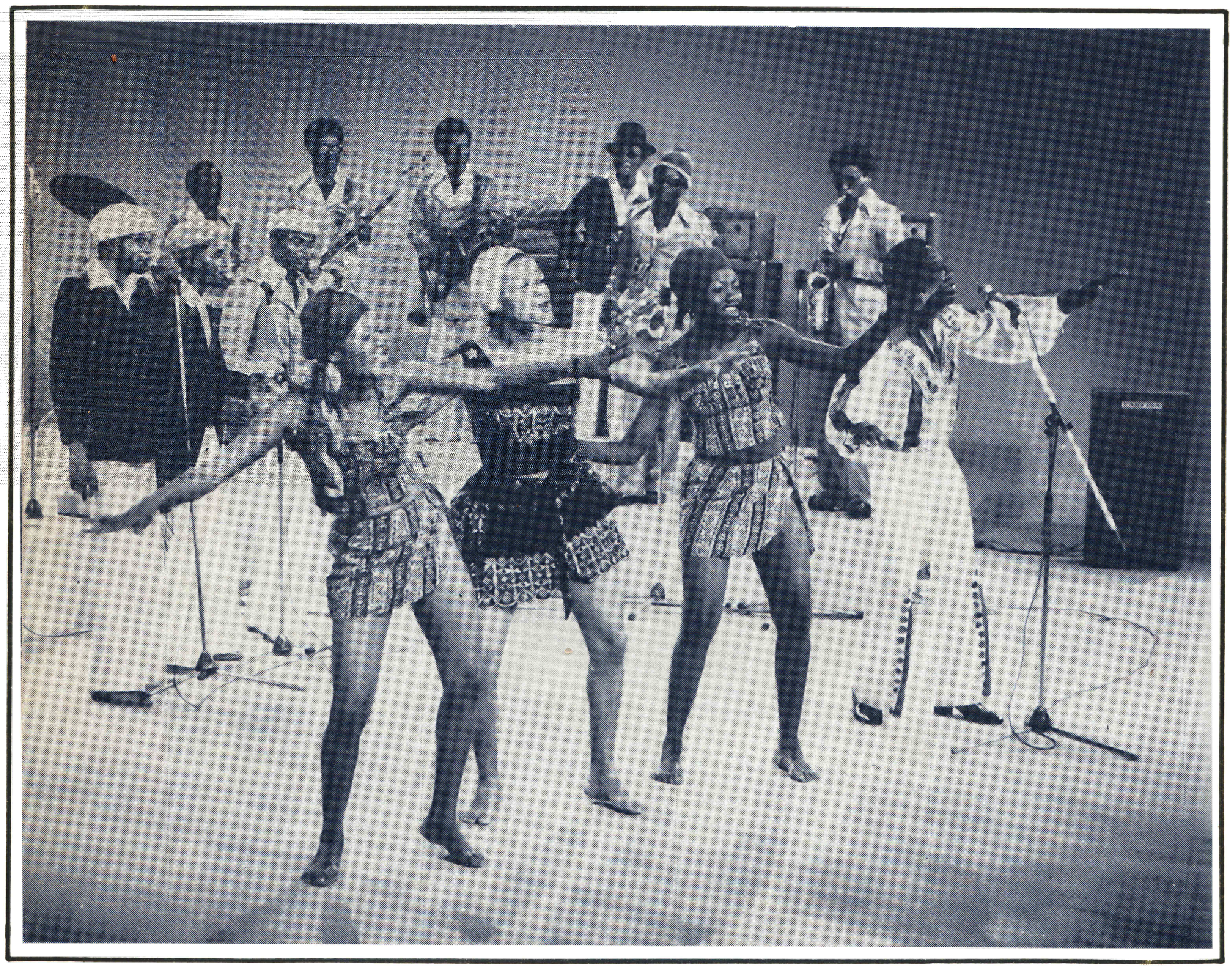
Tabu Ley and African Fiesta National, 1970 (Copyright – Analog Africa)
Various ‘Congo Funk! – Sound Madness From The Shores Of The Mighty Congo River (Kinshaha/Brazzaville 1969-1982)’ (Analog Africa)
A tale of two cities on opposites sides of the same river, the Congo, the latest excursion for the Analog Africa label celebrates and showcases an abundance of dynamite, soul and funk tracks from the two capitals of Kinshasa and Brazzaville.
The roots of both are entwined and yet very different. The mega city of Kinshasa only adopted its name during independence (but not without interference from its former brutal colonial masters Belgium, and also the West, and in more recent times, China) in the 1960s, a product of the “authenticity”, or “renativizing”, policies of Joseph Désiré Mobutu. The largest city and capital of the Democratic Republic of Congo – itself, renamed over centuries depending on who controlled it, but for a twenty-six year window between 1971 and 1997 known as Zaïre – the constantly expanding Kinshasa was founded in the late 19th century by Henry Morten Stanley, who was in the employ at the time of the Congo’s most disastrous barbaric ruler, Leopold II. Named in his honour, it stood for half a century or more as a hub for Belgium’s rape of the gargantuan central African country’s natural resources, minerals and people. Once free (only to a point) of European mastery its name was changed to reflect a hunger for authentic African heritage: named in fact after what was once a humble village on the same site.
On the northern side of the Congo River stands the capital of the Congo Republic, Brazzaville. It too was originally founded by a European, the Italian-born – but later granted French citizenship – explorer Pierre Savorgnan Brazza, who took it as a prize for the French Empire. The name stayed, but after greater independence this city became a thriving hive of activity for the burgeoning music scene: designated by UNESCO in 2013 as a “city of music” no less.
Circling back on its regional neighbor, Kinshasa became a seat of power for the dictatorship of Mobutu (the Belgium and US-backed usurper who took power after the assassination of the promising Black Nationalist, but Soviet-favored, Patrice Lumumba). Famously drawing a global audience in 1974, the world tuned into the legendary, iconic titanic grudge match between Ali and Foreman: aka the “rumble in the jungle”. Instigated by the boxing promoter and hustler Don King off the back of Ali’s full “motherland” endorsed conversion, Mobutu saw the potential in not only raising his own profile but that of his country by vouching for and putting on this great boxing spectacle in a revitalized Kinshasa.
History would later prove Mobutu to be a tyrant and thief, but for this shining moment of self-publicity the American stars of the fighting game and music/entertainment scenes were lured to the city. Seen in various documentaries since, but favouring the American stars of R&B, soul and funk – including the anointed godfather of soul himself, James Brown – the African artists and musicians that took part in a three-day festival of music around the main event included a rafter of local talent too. Competing to gain the spotlight, dominated by the likes of B.B. King, Bill Withers, The Pointer Sisters and The Fania Latin All Stars, were two of the Congo’s most famous icons: the bandleader, honed pioneer of an attacking repetitive guitar style that tore up the local dancefloors and airwaves, Francois “Franco” Luambo, and rival Pascal-Emmanuel Sinamoyi Tabu, aka Tabu Ley, the leading light of African rumba and one of the continent’s most influential artists. Franco fronted the TPOK Jazz troupe at that music extravaganza, a band with a lot of history: famous for their part in spreading Congolese rumba.
The event’s musical organizers, Hugh Masekela and Stewart Levine, gave Franco free reign as a creative guide, but it’s said that Tabu stole the show. It’s a convoluted backstory, but the band that Franco fronted, the TPOK, actually changed their name from the O.K. Jazz band a decade or more after forming in the mid 50s – even more confusing, you will see the name written down in various forms, sometimes with the abbreviated dots. Both this troupe and Tabu make appearances on this Congo Funk! showcase – the funk being only one part of a both dynamite electrifying and more riverside lilted set of Afro-rock, soul, R&B and more localized serenading sweetness. Tabu for his part, leading the Et L’ Orchestra Afrisa, moves to a forgiving soulful rumba-esque groove (Congolese rumba being a signature, often dominate, movement honed in the region by such luminaries as Tabu and the famous Verckys) on the sun-blazed horn serenaded and buzzing guitar licked ‘Adeito’. With their L’ Orchestre additional name, O.K. Jazz makes an appearance under the Lolo affixed title (I will readily admit I have not read the liner notes this time around, and so have no idea if this is an artists or just a reference to one of the villages in the area) on the funky raw Booker T/Stax steal ‘Lolo Soulfire’, and holding the full limelight, go for some “humph” and laughter on ‘Kiwita Kumunani’.
As with much of the collection’s roster, less established acts and groups outside the major label networks (many subsidiaries of Western labels) struggled at first to get heard or raise the prohibitive sums needed to record. The PR notes briefly describe what happened, but to fill the void, a number of pioneering entrepreneurs entered the market to levitate the costly process. The likes of smaller, more independent labels such as Cover No.1, Mondenge, Editions Moninga and Super Contact could take a punt on newly emerging younger artists; those who were influenced by the “rumble in the jungle” festival of sound, going on to cut their own hybrid versions of American soul and funk, of which this compilation is filled. Pumped out across the airwaves of Radio Brazzaville or beamed out by Télé-Zaïre and RTV du Zaïre – the TV shows of which were apparently so huge that the president ordered the latter to put out daily concerts because they were found to quell unrest and criminal activities during transmissions. Arriving at the opposite end of this compilations window, released in 1982, the opening salvo, ‘Sungu Lubuka’ by Petelo Vicka Et Son Nzazi, seems a likely candidate for this change. Sounding like the heralding horn section from a Dexys track and homage to Jackie Wilson and his peers, before slipping into a Latin-like groove, this track connects two worlds: as influenced by the Fania All Stars as it is by disco funk. It’s certainly a blazing start to a cracking collection, and obvious single choice. It’s followed by the Afro-rock and Kuti horns simmering ‘Mfuur Ma’ by the Groupe Minzoto Ya Zaïre; yet another single showstopper that seems to echo the Pazent Brothers and J.B.’s. And another worthy punchy tune, the closing ‘Ah! Congo’ by the Orchestre National Du Congo, proves the perfect, high energy R&B, bookend to a brilliant compilation.
Tracks like Les Bantous De La Capitale’s ‘Ngantsie Soul’ just roll on and on like a 12” disco mix; a funky but not erratic groove that pulls you in with a constantly fluid moving soul riff and clopping percussion. Next to that, Les Frères Soki Et L’ Orchestre Bella-Bella’s ‘Nganga’ shuffles and scuffles down the train tracks to a fit of horns in a workout that lasts nearly nine minutes.
Congo Funk in all its many variations is put under the spotlight, with an outstanding set list of fourteen tracks (whittled down from a container’s worth of singles) that will enthral and educate in equal measures. Essential dance floor fillers await.
Fran & Flora ‘Precious Collection’
(Hidden Notes) 12th April 2024
Arriving just months after Alex Roth’s new Cut The Sky project’s Esz Kodesz debut and Alison Cotton’s Engelchen, Fran & Flora release their own European Jewish culturally and historically inspired album. Addressing similar passages of loss and commemoration to the absence and tragedy of the Eastern and Central European branches of that community’s heritage, they also respond to its most joyous, strengthened traditions, transforming in a sophisticated, adroit and knowledgeable way the music of the Ashkenazi: otherwise known as “Klezmar”. And whilst those mentioned albums by Roth and Cotton channel different aspects of history – the former, covering the same Ashkenazi communities, but in Galicia, and the later, telling the story of the English Cook sisters who helped to save fleeing Jews from Germany during WWII -, the first overlaps this duo’s emotive and stirring story of lineage by overcoming tumultuous times to preserve a culture in a part of the continent that ruthlessly eradicated it’s identity and people.
For as Roth channeled past barbarity and conflict in what is now Ukraine for a harrowing and incredible abstract reaction, Francesca Ter-Berg and Flora Curzon (to give them their full names) also tread the same lands, but also across into Romania – as the album’s second track, the beautifully but moodyily and mysteriously described Eastern-European fairytale ‘Romanian Fantasies II’ makes abundantly clear (imagine the strings aspects of The Holy Mountain soundtrack meets Širom and Gypsy music, whilst a didgeridoo-like sound blows away).
I might be reading too much into it, but the duo’s Precious Collection suite closes with what, over time, has become a formal greeting in the Jewish community: “Sholem Aleichem”. Translating from Hebrew etymology to mean “[May] peace [be] upon you”, it was also the nom de plume of the famous Yiddish author and playwright Solomon Naumovich Rabinovich, whose stories of Tevye the Dairyman were the source for the Fiddler On The Roof musical. Born in the old Tsarist Russian conquered and subjected shtel of Voronkiv in what is now central Ukraine, Rabinovich experienced the pograms firsthand; escaping to the USA at one point, but in doing so promoted the often looked-down-upon Yiddish culture and language. Also, and not surprising when facing the marauding savagery and alienation of the Russian Empire’s genocidal actions, and the Anti-Semitism and ruinous policies of the Austro-Hungarian empire too, that he also advocated the return of his people to the Holy Land as a member of the Hovevai Zion (lovers of Zion) cause. Hounded out of his homeland when alive, a Putin era Russia erected a monument in his honour in Moscow, whilst Ukraine paid homage throughout its many cities and even issued stamps – ironically or not, many of those cities have been bombed relentlessly by Russia in the past two years. Whether this is a mere coincident or not, it’s a useful connection and part of the history of the region covered on this album; especially as the place where Klezmer was born or at least fashioned – that loose confederation of dance tunes, ritual melodies and “virtuosic improvisations” is made up of influences from the Jewish diaspora, from Ottoman Greece and Romania to the Germany and Slavic countries. The “Klei” part of that form means “tools, utensils or instruments of” and the “zemer” translates as “melody”, an assemblage if you like, of different musical threads but rooted in the faith. Klezmer was, and of course still is, played at weddings and other social functions, but more importantly it is a bond and hand-me-down language, poetry and litany of their heritage and story.
Drawing upon this legacy and knowledge the duo of cellist Fran and violinist Flora (both also cover the vocals and electronic elements) both interpret traditional material and compose new arrangements that simultaneously evoke classical music and the atmospheric, with echoes of folktronica, the avant-garde resonance and atonal essence of hidden metallic and instrumental sources and fantastical – imagine Walter Smetek conducting a Eastern European chamber ensemble. There’s even a removed hint of jazz and near breakbeat drums at one point, when they do get to sustain a rhythm. The drumming circle is courtesy of guests Ursula Russell (of Snapped Ankle and Alabaster DePlume fame) and Simon Roth (Chris Potter, Alice Zawadzki, Adrian Dunbar on his CV), plus, what the PR notes call, the appearance of a Ukrainian Poik style marching drum – my research has drawn a blank on this one I’m afraid.
Some pieces of music directly reference Jewish culture, history, with the stripped and plucked diaphanous but haunting ‘Nign’ a unique take on the traditional religious vocal song of the same name. Largely improvised, sung in groups, Bible verses or classical quotes from other Jewish texts are repeated to form what’s know as a “nign”. Sometimes a lamented prayer, and at other times out of joy or victorious, this contemporary vision sounds like beatific and ethereal sirens uttering assonant mystique and worry from behind a translucent covering. But the vibrations, melodies even amongst the most abstracted, near non-musical parts still carry, forming as they do, evocations of landscapes and time. Sympathetic and attentive at all times, the music encompasses wild playfulness and abandonment on the opening running freedom of ‘Nudity’, and nature’s call on the Caucuses imbued, choral lulled ‘Feygele – Little Bird’.
Woven at times like a tapestry, and at other times, near esoteric, the beatific merges with the plaintive, pleaded and mysterious, and folk music is effortlessly weaved with folk-rock, the experimental and the classical. Within that framework traditional dances and songs are wrapped up in a meticulously crafted otherworldly suite of experimental strings and minimalistic electronica. The Klezmer source material is held on to but transformed with a contemporary expansion of ideas and experimental composition, all of which flows lucidly and in a most stirring manner to create an exceptional album.
Herandu ‘Ocher Red’
(Hive Mind Records) 26th April 2024
A second release on the Hive Mind label to feature Misha Sultan, or rather the true face behind that guise, Mikhail Gavrilov, the Herandu debut is a new project and new sound for the Siberian artist and his brother Evgeny (who has his own alias of Dyad).
The siblings, caught between the Covid pandemic and invasion of Ukraine by Russia, put this latest vehicle in motion during trips back home to Siberia’s most populous city of Novosibirsk in 2022. The so-called “Chicago of Siberia”, Novosibirsk is situated on the banks of the Ob River, a crossing point of the romanticised and legendary Trans-Siberian Railway and historically an important flashpoint during the Russian civil war and engine of post-revolutionary Russian industry. Originally founded in 1893 and christened with the Tsarist Imperialist title of Novonikolayevsk after Emperor Nicholas II, the Communists gave it the current name of “New Siberia” in 1926. Geographically sitting between the Ural Mountains and Northern Asia, touching the Pacific in the East, Siberia isn’t just the infamous exiled atelier of record and literature but a beautifully diverse Eurasian landscape.
As on Mikhail’s Misha alias Roots album, released by Hive Mind back in the late Spring of 2022 (as it happens, that marvelous album also included a cameo from his brother, under his Dyad moniker), that famous industrial transport capital and its outlying regions are once more transduced via the soundboard and imagination to articulate and convey backdrop set moments of rumination, of particular captured interactions and moods, and an essence of place and time – the industrial set against the more plush shades of nature. Informing and inspiring a new direction, the label has described the brother’s collaboration as sounding like Metalheadz meets Weather Report; or to my ears, Plug plays around with the music of the Mahavishnu Orchestra using the production of 80s Miles Davis records whilst hauling in later 70s and 80s Herbie Hancock on cosmic ray beam keys and what sounds like a keytar.
Actually, with a mix of warmer sounding live instrumentation (from Stanley Clarke-light jazzy-funk slap and picked bass guitar and Greg Foat-esque electric-piano to pinning, floating and sizzled reedy saxophone – courtesy of friend and musician Vladimir Luchansky) and more programmed synthesized breakbeats, chops and atmospheres, the brothers branche out into all kinds of international genres, with evocations of the Caucasus, Tibet and both East and North Africa merging with photons and clap-drums. Jazz-fusion and world music hybrids from the Silk Road and Samarkand cross paths with Jimi Tenor, Amorphous Androgynous, Rip Rig & Panic, Transglobal Underground and The Pop Group. And yet that only goes so far in describing the subtle but cross-pollination of influences on show. The timpani bounds of ‘An Incident At The Theater’ play up the title’s stage drama, but soon break out into those Weather Report references, and the misty vaporous ‘Downtown Street’, heads off in the direction of both Hansa studio and later Outside period Bowie and 80s Scott Walker.
Trance is spun with bass noodling, Ethio-jazz, post-punk funk, Moroccan and Arabian cassette culture, retro space age keys, no wave dance music and the Aphex Twin to create an interesting explorative zap, skip, playful, mysterious and dreamy vision that mirrors the brothers feelings of their native landscape, and the episodes of life, the shaping of their creativity, born in that setting.
Kira McSpice ‘The Compartmentalization Of Decay’
12th April 2024
Nature’s compartmentalized reactions to injury and decay (via the studied description laid down by the pathologist and biologist Alex L. Shigo) are drawn upon, referenced and used as a metaphor for Kira McSpice’s own coping mechanisms; the American singer-songwriter and musician dealing with trauma by channeling both desirable and undesirable energy into working through the darkest, most fearful physical and mental strains of painful morose.
Almost like therapy, although bad dreams plagued McSpice throughout the writing process, the troubled chanteuse of the self-coined “freak folk” sound faces blow after blow of gothic lament and harrowing despair. And yet there is a beauty too, with passages of the near ethereal, beatific and afflatus ebbing over chthonian mourning and distress. In fact, the suffused nocturnal atmospherics, whilst hiding allegorical esoteric nightmares and spirits, are like a strange fairytale set filled by operatic and theatrical characters and life.
It’s the voice that draws you into that visionary world however; an apparitional-like calling, lulling, assonating and hurting vocal that soars past the contralto-bass to reach near aria like heights. With an obvious keenness and deep knowledge of the craft, McSpice artfully constructs inter-layered choral circles and marooned, mournful and cut-to-the-marrow pained releases, which as the album progresses gradually seem to find the gauzy light – ‘Photosynthesis’ facing that light source and growing in a somnolent fashion sounds almost like a daydreaming Mazzy Star. The welling and plaintive, sometimes struggling, voiced woes and pathos is enveloped with heightened atmospherics, suffused and smothered hazy horns (what sounds like a tuba, but also oboe, clarinet and maybe a saxophone of a sort), a Goth acoustic air of All About Eve, and Tilt-period Scott Walker eerie, stark and heart of darkness style electric guitar. All of which has a very distinct sound: pitched somewhere between haunted chamber music, the operatic and baroque and obscure, hermetic prog-folk. Slowly removing a metaphorical armour. McSpice arises from the symbolic mists and fogs to forge a shaken, knocked but hard-won identity. The rooms and spaces maybe dark, but through McSpice’s cleverly poised and escalating vocal chills and more beautifully heartbreaking, fraught processes there is a clearing of the miasma and the promise of a reprieve. Nothing short of an extraordinary album.
Pando Pando ‘S-T’
(Not Applicable) 12th April 2024
With enviable experience and CVs with incredible depth and variation, all three participants in the Pando Pando project tantalize with the prospects of their experimental explorations. The names of trumpeter, electronic musician, engineer and producer Alex Bonney (performing with Leverton Fox, Scarla O’ Horror, Brass Mask, the list goes on), drummer and percussionist Jem Doultan (played in Róisín Murphy’s band for seven years, drummed in The Thruston Moore Group and is one part of the Too Many Things duo) and fellow drummer/percussionist Will Glaser (a stalwart of the UK jazz scene, teacher and foil for an impressive roster of bands and artists including Soweto Kinch, Kit Downes, Yazz Ahmed and Sly And The Family Drone) will be familiar to many on the contemporary improvisational scene.
All three crossed paths through the New River Studios arts space in London, forming a trio off the back of a series of improvised gigs in the capital. In partially describing their evolution and process they’ve named themselves after one of the natural world’s largest single living connective organisms, or in its scientific terminology, “a clonal organism that represents an individual male quaking aspen that spans 106 acres and is the largest tree by weight and by landmass.” This breathing, living behemoth of plant life is, in case you were interested, located in the District of Fishlake National Forest, between Colorado and South-Central Utah.
Growing in a quasi-organic abstract fashion, the drum and percussion heavy avant-garde movements and stirrings on the trio’s debut album take electroacoustic probes, prods and tumultuous splashes into the depths as a foundation to build otherworldly atmospheric workouts, prowls and freeform breakouts. Recognizable instruments and electronic elements, effects are used to evoke the most unusual and sometimes esoteric. An assemblage of trinkets, bells, finger cymbals, metallic textures, pots and pans and tubular scaffolding are used alongside the drum kit to evoke the influence of such luminaries of the form as the Art Ensemble Of Chicago (mentioned in the PR notes that accompanied this release), but to my ears, also the E.F.S experiment extractions from Can’s Limited/Unlimited LPs, Valentina Magaletti, Krononaut, Mani Neumeier and, on the weird d’n’b veiled clanged and distorted ‘Fluffy Wires’ like Matthewdavid warping a samba band of drummers. However, the peculiarly named ‘Eno’s Bathroom’ is not what I would imagine the ambient doyen’s bathroom to sound like at all; less scented candles, sandalwood and eco-friendly, fair trade handmade soap and more krautrock and ghost freighter Tibetan lurking mind-bended weirdness.
Titles, like much of the music, is on the disturbing side with references to marine deaths (the windbreaker flapping prowl into the ocean abysses ‘The Graveyard Of Sharks’ and incipient sonar signaled, dub-y ricochet thrash around in marooned waters ‘Dolphin Suicide’) and blamed birds (the final wing-flapped primordial squelch, and mystical gongs, bowls and tool brushed and sifted ‘It Must Have Been The Magpies’ –our common English garden visitor has a bad rep for a variety of things, from the old adage about bad luck to stealing anything that glitters, and for savagely protecting its nests).
An evolving organism of their own making, breaking out of, growing and expanding the perimeters of improvised electroacoustic experimentation, the Pando Pando trio make unsettling tones and sounds, rhythms and serialism for ecologically climatic times.
Audio Obscura ‘Acid Field Recordings In Dub’
(Subexotic Records) 26th April 2024

Drifting in and out of post-op drug-induced recuperation, Neil Stringfellow (aka Audio Obscura) laces his dreamscapes and stupors with signature 303 acid squelches and dial releases, frequencies, snatches of broadcasts and bubbled liquids; much of which is transformed or made out of the archive of sounds he’s built up over the last twelve years, from a recurring flock of chirping birdlife to the innocuous, taken for granted and missed, sounds of the streets outside and daily interactions between, in this case, hidden sources of dialogue and conversation, even child’s play.
Take all that and expand the mystery, the unease and esoteric with a wafted reverberation and echo of dub and you have a real hallucinogenic experience, the ebbing of the consciousness between passages of the recognizable and distorted. That roosting menagerie of birds that Neil could hear from his hospital bedside, out of the window on one humid day in 2022, now resembles the acid-dial-turns of Mike Dred, a street cleaner’s broom, banging against his cart as he wheelbarrows it down a hill in Norwich, suddenly mimics a dub snare drum when added with plenty of On-U Sound echo.
The gravity fields, cartography, the memorable (through a soporific haze of painkillers) passages of a day and the unidentified coastline take on otherworldly dimensions through this mirage-inducing lens as elements of Air Liquide, The Orb, Amorphous Androgynous, Cousin Silas And The Glove Of Bones, FSOL, Andrew Wasylak and Cabaret Voltaire pass through – the latter is unsurprising, and not for the obvious reasons that CV are just one of the all-time most influential and inspired electronic groups of all time but because the Cabaret’s Chris Watson hosted a field recording introductory week that Neil attended.
Field recording adventures in sound, under the dreaded sirens of a nuclear winter and apocalyptic distress, this album is a lucid acid wash of near-remembered haunted piano melodies, various sonic yips and yeeps, bulb-shaped notes, recalled melodica, lost transmissions half-heard, radioactive effects, the atonal and prowling. Paranoia meets the languorous and medicated on a productive experiment in acid-dub and sound art.
Khôra ‘Gestures Of Perception’
(Marionette) 19th April 2024
Ambitious in scope and influence, Matthew Ramolo’s Plato-coined Khôra vessel overlaps the afflatus with the mythological, hermetic and philosophical across a double-album spread of peregrinations, processions and transcendental mysticism. References abound from opened seals, with nods to branches of Buddhism, astronomy, the Hellenic, Tibetan, Heliopolis and atavistic: all the way back to the creation myth. Literally from the ground up (the Dzogchen concept of “rigpa”, which subscribes the qualities of purity, spontaneity and compassion to the primordial ground), Ramolo, using an apparatus of international instrumentation, drums-up simultaneous visions of the new age and alien. Name checking the Latinized, the Orient and spiritual Asia in its many forms, but also cosmic projecting, the alchemy at play on this opus vibrates with evocations of ksmische, Jon Hassell’s “fourth world musics” explorations, trance, magnetic electronics, courtly and ceremonial.
The central sounds are percussive in nature; from those Tibetan stirrings of bowls, tubular bells, wind chimes and movements that sound like the turning of a mani wheel, to claves, what sounds like stones, a scaffold of pans and tubes, and frame, hand and other more rhythmic drums. Other elements include electronic vapours and waves, the springy and plucked, divine radio and satellite transmissions, occasional bellowed wafts and bulb shaped notes of light. Yogi talks to, well…the world, as nirvana is opened to all on this trip of dial up meditations, explorations and mysterious off-world atmospherics. The echoes of Syrinx, Kalacakra, Bhajan Bhoy, Ariel Kalma, A.R. & Machines, Sergius Golowin and Iasos wrap themselves around an epic suite of spiritual and mystical excursions in the pursuit of navigating a formless, third way through new envisaged worlds: or something like that. Eastern spiritual music is often abstracted in this world, merged with hidden sources to produce something familiar yet a bit different.
Esbe ‘La Serenissima’
(New Cat Music)
Inhabiting each world she enters as if it were a past life, another reincarnation, the gifted singer-songwriter Esbe steps right out of the times, the locations and scenery as if she was born to it. From atavistic Egyptology to classic songbook reinterpretations, from across the ages and genres, Esbe seems to belong to whatever setting she channels.
Proving consistent in every endeavor and prolific, she now releases her ninth album of magical revue; once more interpreting the old, but also conjuring up original compositions and arrangements that congruously feel like part of the traditional cannon. Sweeping into the city of duality, Venice, or rather the 17th century anointed “La Serenissima” as it was once known, Esbe channels its famous history, literature, art and architecture; from a secret rendezvous on a canal bridge to masked balls, painted scenes from the late Renaissance and cinematic sweeps that move like the tidal currents out of the city and carry on towards the exotic and cosmopolitan hubs of this city-state’s once expansive empire of trading routes. I say duality, because this is both the city of love and center of much political and stately intrigue during the Medieval period, when what we now know as a unified Italian geography was split into various warring and competing Papal states; the port cities being amongst the strongest, carrying more weight with their navies and trading fleets, able to negotiate or bring in allies from abroad to support their claims of dominance.
Mentioned as an inspiration, Shakespeare’s The Merchant Of Venice – or rather its most famed locations within the city – throws up all kinds of Anti-Semitic stereotypes; the city’s Jewish ghetto appalled a conquering Napoléon centuries later: commanding the French forces that occupied Venice in 1797, the as yet to be emperor would famously end the ghetto’s separation from the rest of the city, removing barriers and renaming it the Contrada dell’unione. But Esbe is tapping into the city’s mystery, its art and majesty, whilst casting yearns outbound from the harbor to old trading routes in the Med and further abroad: see the heart-wrenching, diaphanous soaring operatic ‘Palazzo’, a Thomas Newman modern Bond-esque filmic score that evokes Istanbul, passionately sung in the Turkish language.
The very embodiment of a certain style of Venetian art, Canaletto’s iconic (though many disparage it as mere chocolate box art) cityscape dioramas are referenced within the PR briefing; a inspiration, jump off point for magical lyrical and musical painting and storytelling imagination. Almost a feature of a certain time back in England, my late grandfather like many of his generation, had a print on the wall – of Italian decent himself, his one and only actual visit to the homeland was as part of the Allied forces making their way up through Italy to capture Rome during WWII, and even then, he never managed to get to Venice. You can now imagine Esbe, one hand trailing in the canal waters or “sighing” over a romantic set bridge gazing at the light play on the surrounding architecture; dreamily envisioning a bygone time as she sings and coos about imagined liaisons, and characters that could have walked straight off a Medieval tapestry.
As with most of her work, Esbe balances the atavistic and traditional with more modern electronic vapours and wisps of the esoteric, haunting and spellbinding. Sounding somewhere between Dead Can Dance, Maria Callas, the Baroque, folk and Arabian, she can turn a foggy apparitional mystique into an aria, an expelled breath into a whole act, or story. Her most obvious talent is with that already described voice, which is as dramatic and theatrical as it is ethereal and subtle; delivering a suspenseful Latinized lulled and desired vocal on the Catholic regal service ‘Te Amo’ – luring us towards a steeped in mystery and serious alter -, and lending a near dreamy tidal pulled entranced performance on the romantic vision ‘Amarilli, Mia Bella’ – a reinterpretation of Giulio Caccini’s operatic love song, written for the 1602 Le Nuove Musiche collection of monodies and songs for solo voice and basso continuo.
Classical styles feature heavily, but are veiled or gauzily enveloped to sound more haunting, atmospheric and even like a mirage in some cases. Throughout it all the instrumentation, from chamber to synths, guitars and the sound of bubbling waters, are artfully suggestive and stirring; scoring the drama, downcast lament of a returning army from one of the Papal wars, or in emoting misty-eyed overtures to mysterious subjects.
Esbe once again breathes life into her surroundings, this time around playing with and choreographing an inspired songbook of Venetian evocations; absorbing the lagoon and canals of this impressive, iconic city and its forbearers to envision something that’s simultaneously magical and hauntingly surreal.
Hi, my name is Dominic Valvona and I’m the Founder of the music/culture blog monolithcocktail.com For the last ten years I’ve featured and supported music, musicians and labels we love across genres from around the world that we think you’ll want to know about. No content on the site is paid for or sponsored and we only feature artists we have genuine respect for /love. If you enjoy our reviews (and we often write long, thoughtful ones), found a new artist you admire or if we have featured you or artists you represent and would like to buy us a coffee at https://ko-fi.com/monolithcocktail to say cheers for spreading the word, then that would be much appreciated.
 Monolith Cocktail Blog