THE MONTHLY DIGEST INCLUDES A CLUTCH OF ACCUMULATED NEW MUSIC REVIEWS; THE SOCIAL INTER-GENERATIONAL/ECLECTIC AND ANNIVERSARY ALBUMS CELEBRATING PLAYLIST; AND CHOICE PIECES FROM THE ARCHIVES

(Cover Star Macie Stewart. Photo credit Shannon Marks)
_____/THE NEW____
Macie Stewart ‘When The Distance Is Blue’
(International Anthem) 21st March 2025
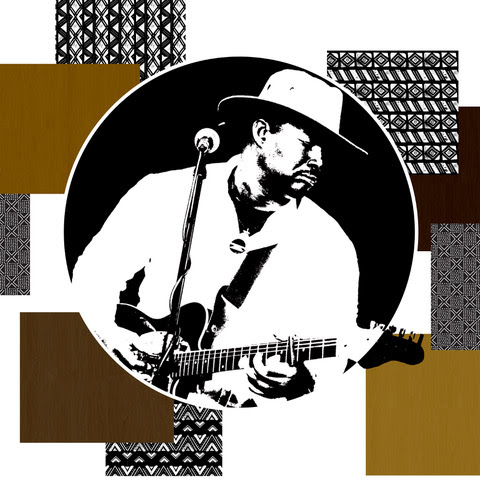
Perhaps one of the most prolific collaborators of recent years, across several mediums, the multi-instrumentalist, composer, songwriter and artist Macie Stewart has come to represent a flourishing, explorative contemporary music scene with multitudes of connections and threads. Apart from projects with choreographer Robyn Mineko, Sima Cunningham, and the Pacific Northwest Ballet, Stewart has become a stalwart of the International Anthem family, contributing and helping steering releases by Rob Mazurek – who literally appears below this review with his foil Alberto Novelle -, Bex Birch, Damon Locks, Makaya McCraven and Alabaster DePlume.
Another foil, featuring in the intimate ensemble that plays on this Stewart’s first solo album for the imprint – the actual debut solo LP, Mouth Full Of Glass came out a few years back on another label -, is Lia Khol, a cellist and sound artist who already collaborates with Stewart in a duo. There’s also the addition of both the equally versatile artist Whitney Johnson (credits include the Verma band and the avant-pop lo-fi Matchess alias) on viola, and Zach Moore on double-bass. This is where those inter-connections must end, as I could just carry on regaling all the various entries from the bio and dedicate this review piece to one of the most enviable of CVs in the music scene. But we must not get distracted, and instead now look at the album.
When The Distance Is Blue could be read as…well, perhaps blue in mood. But this is an album that slips poetically in and out of consciousness, inhabiting, ruminating over and in some cases writing the aural equivalent of a love letter to the spaces in-between the tangible and the environment, with background passages of field recorded interactions taken from public places. For instance, the famous Tsukjii district of Tokyo, near to the Sumida River (reclaimed originally from lowland marshes) is referenced as the title for an atmospheric piece of recorded street side, market interactions. It carries on over and bridges the reverberating, sifted, swept and delicately plucked and vibrated opening suite ‘I Forgot How To Remember My Dreams’ and the near atavistic recalled, apparitional haunted voiced ‘Murmuration/Memorization’. The former of which features Khol’s clean cello and Stewart’s meticulously struck piano notes in a near forlorn but beautifully evocative mood. It reminded me of both Cage and Reich, of the Japanese school of contemporary classical music, and even a little of Sebastian Reynolds work with cellist Anne Muller. The latter, which is named, in part, after the stunning synchronised patterns of large groups of starlings as they come together in flight, seems to dial into something old or timeless; an elliptical dance of Tony Conrad like bows, Hellenic-like spirit voices rising and falling like their avian subjects, and the neoclassical.
The album title, and the underlying theme, is inspired, imbued by the American writer and activist Rebecca Solnit’s A Field Guide to Getting Lost book. I’ve unfortunately not read it, but the L.A. Times summarised the nine essay pieces that make up this work as: “An intriguing amalgam of personal memoir, philosophical speculation, natural lore, cultural history, and art criticism.” Elsewhere it’s been described as a wondering and lurching zigzag through history, politics and art, with the author described as a “Intellectual nomad” by The Guardian’s Josh Lacey when he reviewed it. But all can agree about the book’s themes of change and transformation. Of which Stewart taps into, recording the almost unnoticed; an essence of a particular time and place; a captured seasonal moment of rumination and episodes that left their mark. Across this a near perfect length album, a complete journey is sounded out through both attentive and deeply felt strings, piano, percussion, wordless voices and double bass. It’s a liminal sound that evokes Sakamoto, Cale, Alison Cotton and a sense of the Oriental slow movement, as it moves beautifully and moodily between pizzicato plucks, the cascaded, watered, resonated and bowed. I’ll say it again, as perfect a vision as you can get, everything about When The Distance Is Blue is just so right; every feeling, note, sensibility carefully pitched in a dreamy and ached, subtle and often mysteriously intriguing way.
Alberto Novelle & Rob Mazurek ‘Sun Eaters’
(Hive Mind Records) 28th March 2025
A moment in time; an afternoon’s encounter. The symbiotic alignment and then transformation of the improvised and layered, sonic and sound art foils Alberto Novelle and Rob Mazurek transduce timbral elements and textures into an amorphous act of existence on their collaborative release for the discerning internationalist label Hive Mind Records.
Created in a day, extemporised to a point, the Sun Eaters album, despite its rhythms, is a serialism of encounters and reactions to recognisable lines, soundings, echoes, flutters, melodic addresses, nature trial organic serenades, shakes, tingles, jangles and bleats from Mazurek’s trumpet, flute and percussion of bells. His partner on this exploration transforms these instruments into hallucinatory and playful electronic, modular and oscillated new atmospheres and ambiguous soundscapes that simultaneously evoke Jon Hassell’s Fourth World inventions, the collaborative work of Ale Hop and Laura Robles, the Aphex Twin, Carmen Jaci and King Champion Sounds.
When you address both participants extensive and envious CVs, you can only assume that together they will make something very experimental and unique, but not so academic and avant-garde as to create something dry, theoretical and impenetrable. Before we can any further, just a brief summary of the experience brought to the Dobialab studio that day in Northeastern Italy. I was only the other month referencing Mazurek in relation to Damon Locks and his List Of Demands LP. The cornetist and interdisciplinary innovator featured Locks in his Exploding Star Orchestra lineup, just one of the numerous groups the countercultural Chicago figure and influencer had instigated over the decades; most notably Isotope 217, the varied Chicago Underground ensembles, and one of my favourites, the Sau Paulo Underground offshoot. I could list umpteen other incredible collaborations (his work with Jeff Parker to name just one), and run-off a long list of influential labels that have carried his work (my friends at International Anthem for one) over the years, but you can get this all off the various bios circulating on the internet. His foil, Novello, often “repurposes found or decontextualised analogue devices to investigate the connections between light and sound in the form of contemplative installations and performances” under the JesterN guise – I borrowed that from his Bandcamp page by the way, hence the italics. He’s assisted such notable talent as Alvin Lucier, David Behman, Nicholas Collins and Trevor Wishart, and improvised with such luminaries as Evan Parker, Butch Morris and Karl Berger.
Combining these experiences, echoes of Don Cherry, Peter Evans and Miles casting shadows across an arid Latin sounded landscape are sampled and looped, turned into a language of abstract data, mechanics, transmissions, signals and pitch registers. There’s a buoyancy swimming below the synthesized beds that indicates a certain rhythm and movement. And yet at times the pair seem to be floating in the cosmos or lost in an illusion as they pull the AEoC through the mirror backwards and shake and rustle the cow bells of a herd heading for Tibetan shrines. Those bells by the way also ring out like tubular long pipes or like a sleigh ride into spiritual transcended. But I can’t help feeling there’s a lot of fun at play too on these peregrinations, especially on the Mexican wrestler referenced snake-rattled and mirage-esque ‘Luchadores Sudden Embrace’.
Taking a completely different direction, the fungi studied inspired finale, ‘A New Mycological Framework of Narrative’, is the sound of Richard H. Kirk’s wordless mewling and mantras, a touch of Kriedler and even Kraftwerk, and Finnis Africae being fed into a strange soundboard and apparatus of conductors.
A different kind of creation, this six-track reconfiguration seems to just be. Neither non-musical nor musical; neither avant-garde nor defined; the results are beyond simplified categorisation. Mood pieces? Sensory exploration? Textual exercises in ambiguity? Abstracted visions conjured out of an apparatus and range of acoustic instruments? All viable descriptions perhaps for an amorphous collaboration. Followers of both artists will be happy with the outcome.
El León Pardo ‘Viaje Sideral’
(AYA Records) 21st March 2025
A “sideral”, or celestial bodies related, “voyage”, the new inviting album from the Colombian brass, wind and multi-instrumental encompassing artist El León Pardo is imbued by pre-colonial Colombian magic and contemporary musical hybrids that fuse cumbia with the Afro-Caribbean and cosmic.
Noted for spreading the word and virtuosity of his chosen instruments and culture to the world through his work with Ondatrópica, Curupira and Frente Cumbiero, Pardo is imbued by the sound and symbolism of the “Kuisi” end-blown flute, and Sierra Nevada de Santa Marta mountain range in which its whistly trill echoed; the loose Colombian originated infectious rhythm of cumbia, which in more recent times has switched the European influence of accordion for electric guitar, but has been restyled and modernised throughout time to include the trends the day; and the ancient Pre-Colombian Zenu people of the Sinú River Valley and their atavistic flute.
Channelling all this to conjure up a dream realism peregrination, dance and wonderment, Pardo invites a number of Colombian foils to join him on a sometimes-surreal corridor to the stars. Taking up the offer is fellow eclectic polymath Edson Velandia, emcee N. Hardem of LNI and Soul Am Beats fame, and “nueva (“new”) cumbia” motivators Frente Cumbiero, who’s main instigator Mario Galeano is also a member of both the already mentioned Ondatrópicaand Los Pirañas groups. This trio’s contributions further expand the scope of influences and ideas, heading down into the lively Bogota barrios, or snake rattling and sauntering into a spellbinding oblivion of magic eye Colombia and the cosmos.
As the tile translates, there’s a relationship between the stars, the celestial spheres, playing out on Viaje Sideral. A both playful and deep immersion of universal mirages and dream states that simultaneously sound Andean and yet futuristic and cosmological, the album’s nine tracks use tradition and modern tech to build up an alternative reality. Analogue synths echo and modulate those space sounds: a representation of beamed astral planes and spectral rays, and travellers from other worlds landing in the mountain valleys of Colombia.
Whilst traditional instruments, the chuffed, short and longer, more drifting and circular convulsed flutes and pipes, both brassy and Latin trumpet, reference imaginative invocations of his homeland. Factor in some of that Afro-Caribbean influence and a touch of Mad Professor dub effects to this playful, inviting, danceable, percussive infectious, pop-y, soulful (there’s even some electric guitar parts that I would swear were Rhythm & Blues flavoured) and mystical, and you have a dreamt landscape brought to vivid, rhythmic life. El León Pardo isn’t however just about the magic, but by using the instruments he does, bonds with and sticks up for those pre-Colonial indigenous roots as a form of activism and conservation, education. This is nothing short of a great imaginative Colombian trip, equally at home under a menagerie canopy of exotic conjuring as it is in space.
Puce Moment ‘Sans Soleil’
(Parenthèses Records) 21st March 2025
Tuning in via the kosmische, new age, trance and ambient imbued modular electronic laboratory to the courtly and Imperial Gagaku tradition, the Puce Moment reconfigure purposeful Japanese ceremony, dance and music to conjure up an otherworldly, haunting and mystical soundscape under a “sunless” sky – if you directly translate that album title of “Sans Soleil”.
Travelling to the notable Japanese city of Tenri (the old capital of Japan, for a very brief period during the late 5th century rule of Emperor Ninken) in 2020 to record and work with the local Gagaku Music Society, the French duo of Nicolas Devos and Pénélope Michel recontextualised an old but continuous form originally performed for the elite. They expanded this exploration turn transformation further with the addition of the São Paulo born choreographer and dancer Vania Vanneau: furthering the soundscape project into dance, visual movement and performance art.
For those unaware of this Japanese form, Gagaku’s roots can be traced back to the 6th century, perhaps earlier, when Japanese delegates were sent to China to learn about its culture. They are said to have brought back a fusion of both Chinese and Korean music, instruments and dances to the Imperial court; to be performed at banquets for the elite. But some historical sources suggest that it was through the spread of Buddhism, making its way across from China to Japan. And one of the main dances, the “Bugaku”, involves the wearing of intricate Buddhist costumes and masks.
Familiar sounds of this form include the famous barrel-shaped wooden “taiko” drum, the “Koto” 13-string zither, the “Biwa” short-necked lute and the “Shō” wind instrument – used for one of the six titles of this peregrination and mood musical work. All of which, I believe, can be heard both in their recognisable form and morphed and woven into a modulated, generated, filtered atmosphere of electronic apparatus drones, fizzes, oscillations and amorphous mysticism.
Hinting at rips in the fabric, a misty geography and periods of historical meaning and reference, Sans Soleil summons ghosts, voices from the ether and the four winds and wisps of Jon Hassell, Hiroshi Yoshimura, Popol Vuh, Tony Conrad’s work with Jennifer Walshe and Ash Ra to magic up a sound world that sits on the border of the alien and cosmic, landscape and pure atmosphere: The word used is liminal. This convergence of trance-y, lucid synthesised sounds and voices on the air merges dreamily and spookily with Japanese tradition, ceremony and choreography to create something more akin to an experience, an immersion and dance.
Alessandro Alessandroni ‘Paesaggio Bellico’
(Four Flies Records) 18th March 2025
Like much of mainland Europe scared, brutally traumatised and worn out by WWII, Italy and its battle-ravaged population pretty much became risk adverse to war. Although eventually changing sides back to the Allies, the ill-fated bedfellows of the Nazi Axis alliance were, apart from the diehards/racists/antisemites/psychopaths, were always ill at ease goosestepping to the tune of Hitler. In fact, no matter how history has been warped, the Italians put down and made the butt of so many jokes, the country had some of the largest numbers of partisans fighting against the Fascist regime – percentage wise in all of Europe, Italian partisans were far more likely to be killed and murdered by the Nazis than anyone else.
Italy favoured internal civil war over the international: a war of ideologies, corruption, state and philosophy that rages to this day. Terrorism and organised crime concentrated the mind. But no one in Italy could turn away from the events that followed in the wake of WWII: the Iron Curtain and Cold War to Korean, Vietnam and so on. And that brings us to the work of the stellar talented and connected iconic and cult Italian composer Alessandro Alessandroni, who scored an impressive range of war themed documentaries and films during a career that spanned a good half of the 20th century.
Born on the release date of this latest battle, war and psychological collection (18th March), Alessandroni came of age during the rise of fascism and the events that would lead to the Allies invasion of first Sicily then mainland Southern and Central Italy, the horrific bloody battle of Monte Cassino and the brutal air raid bombardments that destroyed so much of the country – an agreement between both sides thankfully saved Rome and several other important cultural cities.
During a period between 1969 and 1978, the maverick and highly influential composer and multi-instrumentalist recorded a catalogue of scores and atmospheric pieces, suites that dealt with not only the military aspects but the trauma of war and its effects upon those who both fought and faced its wrath. After the smut and titillation of the Music From Red Light Films 1976-1980 collection, the Italian label Four Flies unearths an impressive and quality selection of these tracks, previously left dormant in the vaults.
A peer, foil, mentor and friend to such luminaries as Ennio Morricone, the Rome born maestro and artist first made a name for himself with his Spaghetti Western twang-y Duane Eddy signature guitar and whistling scores for the highly influential film director Sergio Leone. But Alessandroni also founded the wordless octet vocal group I Cantori Moderni (“The Modern Choristers”), which featured his wife Giulia De Mutiis, and went on to form the brief prog-rock-psych group The Braen’s Machine with fellow Italian cult composer Piero Umiliani.
During the late 1970s he was scoring more and more mondo trash, erotica and garish S&M horror – see Lady Frankenstein and Killer Nun. And yet, the quality of his work is never in doubt; often elevating such tawdry, amateurish affairs to cultish status by the music alone. Although far from serious, it seems Alessandroni’s craft is likened to playing with an amusement park of ideas, sounds and instruments: entertaining but also captivating in equal measures. With an ear attuned to the contemporary fashions, but the classical and traditional too, a lot of musical ground is covered in his compositions: from Italian folkloric standards to disco, library music and the salacious.
In turn, this package (the vinyl copy features 15 tracks, whilst the digital is expanded to include 29) channels much of that legacy, but with far more seriousness, artistic depth, emotion and compassion. Most of those familiar with his work will instantly recognise the signatures and the palette; from the spine-tingling chills and fears of his Giallo-like scores to the arpeggios, the twang and pick of his Wild West evocations – namely on the couplet of cloud hanging “Pattugliamento Aereo” (“Air Patrol”) pieces; although the second “Aereo” matches that with vague Alice Coltrane harp-like plucks and a subtle prog-esque organ.
Where sentimentality and a touching relief is needed, tracks like ‘Lettere dal Fronte’ (“Letters from the Front”) air towards Bacharach and Morricone, and feature that recurring Baroque chamber sound of harpsichord or clavichord that gives each occasion a sense of spindled timelessness. ‘I Sopravvissuti’ (“The Survivors”) is a lovely touching sentimental piece that evokes both the balletic scores of Aram Khachaturian (sounds uncannily like his suite from Kubrick’s 2001: A Space Odyssey) and wartime period classical music. Talking of 2001, with the use of the I Cantori Moderni ensemble of wordless voices both appearing like apparitions and spirits of lost and dead souls, or like some removed version of ecclesial requiem choristers, there’s also a semblance of the stirring visionary ominous fears and otherworldliness of György Ligeti.
Quite rightly, the ‘Dachua’ suite should evoke an enormity of horror, but this score is more in the mode of supernatural horrors from the crypt than genocide shock. It sounds like some lost silent film theme of haywire Baroque piano: a combination of devilment and madness, with one hand delicately lacing the keys, and the other, hitting near off-key jarred and out-of-key notes. And whilst sounding the most terrible aspects of war, from execution to the shelled-out ruins of a psychologically destroyed mind, the music strikes up the military snare, playing it like a spraying machine gun, or, building up an unsettling drama of pain and anguish: all managed beautifully, even when dipping into Library music, the hallucinating, dreamy and psychedelic.
Military timpani and drills aplenty amongst the plaintive recall of the acts and dogs of war, this survey features supernatural forces, cold chills, suspense, loss, remembrance and hope.
The suites, atmospheric pieces, scores and signature found on this Paesaggio Bellico are all far too good to be left undisturbed, languishing in the vaults of cult obscurity. Fans, heads and even those with a cursory interest should investigate.
___/THE SOCIAL PLAYLIST VOLUME 95
The Social Playlist is an accumulation of music I love and want to share; tracks from my various DJ sets and residencies over the years; and both selected cuts from those artists, luminaries we’ve lost and those albums celebrating anniversaries each month.
Running for over a decade or more now, Volume 95 is the latest eclectic and generational spanning playlist come radio show from me – the perfect radio show in fact, devoid of chatter, interruptions and inane self-promotion.
Each month I mark the passing of those artists we’ve recently lost, and as this is the first opportunity to do so, I’ve included homages to the last “doll” David Johansen, the soul music’s Carol King, Roberta Flack, vibes innovator and jazz fusionist Roy Ayers and troubadour Bill Fay.
Anniversary albums wise there’s tracks from Herbie Hanock’s Maiden Voyage (celebrating its 60th anniversary this year), Bob Dylan’s Bringing It All Back Home (also unbelievably 60 years old), David Bowie’s Young Americans (50 this month; see my short analysis in the Archives section below), Parliament’s Chocolate City (also 50), Sonic Youth’s Bad Moon Rising (40 this month), Radiohead’s The Bends (30 years old this month), Gene’s Olympian (another 30th) and Edan’s Beauty And The Beat (where does the time go…seriously! How can this LP be 20 years old this month?!).
As usual, I like to throw in a smattering of cross-generational tracks and some more recent ones – those that missed out on the previous Monthly playlists of new music. In the latter camp, we have a resurfaced (so not strictly new) live version of Throbbing Gristle’s ‘Convincing People’ from Volksbühne, Berlin, recorded on New Year’s Eve in 2005; an imaginative reverberating study, peregrination from Dorothy Carlos; and some mirage grunge indie from Raisa K. In the former, a number of oldies from Krumbsnatcha, 21. Peron, Stanton Davis’ Ghetto/Mysticism, Gloria Jones, Flutronix, Berlin Brats, Pete Dello and more… Expect no substitutes. Expect no algorithmic replicants. Expect no AI bullshit. All playlists are compiled without any external influences, totally conceived by whatever I wish.
IN FULL:
New York Dolls ‘Private World’
Gloria Jones ‘Cry Baby’
Roy Ayers ‘Ain’t No Sunshine’
Roberta Flack ‘Compared to What’
Parliament ‘Ride On’
Edan ‘Promised Land’
Herbie Hancock ‘The Eye Of The Hurrican’
21. Peron ‘Bes’
Bill Fay ‘Dust Filled Room’
Radiohead ‘My Iron Lung’
David Johansen ‘Heart of Gold’
Berlin Brats ‘(I’m) Psychotic’
New York Dolls ‘Don’t Start Me Talking’
Sonic Youth w/ Lydia Lunch ‘Death Valley ‘69’
Throbbing Gristle ‘Convincing People Live’
Dorothy Carlos ‘Balm’
Raisa K ‘Affectionately’
Roberta Flack ‘Some Gospel According to Matthew’
David Bowie ‘Can You Hear Me’
Roy Ayers ‘Pretty Brown Skin’
Stanton Davis’ Ghetto/Mysticism ‘Space-A-Nova II’
Krumbsnatcha ‘Closer To God’
King Honey w/ Hezekiah, Gos and Chief Kamachi ‘Trinity’
Georges Bodossian ‘Punching Bull’
Flutronix ‘Crazy’
Meridionale des cayes ‘Zanmi femme’
Bob Dylan ‘Love Minus Zero’
Bram Tchaikovsky ‘Robber’
Gene ‘Olympian’
Pete Dello and Friends ‘Arise Sir Henry’
___/ARCHIVES
Each and every month, I use the digest as a good excuse to once more retrieve congruous and related posts from the archives. This month, to tie in with the 50th anniversary of David Bowie’s “plastic soul” period, a short piece on one of the soul crooning pale duke’s best album’s Young Americans – well, in my opinion top three.
And from this time, near enough, a decade ago, another chance to read my review of Glitterbeat Record’s Hanoi Masters: War Is A wound, Peace Is A Scar album, raw and therapeutic sessions recorded by Ian Brennan and released during March of 2015.
Disingenuous to a fault, the cracked actor’s ‘plastic soul’ conversion, raised more than a few pencilled-in eyebrows and frowns.
Totally free of his carrot-topped mullet crown, he now hotfooted across the Atlantic to Philly, intoxicated by the city of brotherly love’s sweet, lovelorn soul music.
A new face in town, the burgeoning ‘thin white duke’ employed a cast of ethereal backing singers (including an as yet famous Luther Vandross) and kindred musicians (notably Bowie’s new lead-guitarist foil, Carlos Alomar) on his cocaine-fuelled pursuit.
Calling in the favours, fellow alienated Brit in residence, John Lennon, helped write the cynical snide ‘Fame’ (he plays on the recording and adds harmonies too) and let Bowie cover his stirring cosmological trip, ‘Across The Universe’ – much maligned, but I really dig this version, and even play it regularly in my DJ sets.
Reflective, sophisticated, Bowie and his detractors may have labelled him with derogatory terms, yet there’s no denying it’s another successful musical adoption: truly up there with his best ever work; a complete showman chameleon transformation. Even one of his most infamous haranguers Lester Bangs couldn’t help but admire it: the only Bowie LP he ever gave him credit for.
Decreed as the leading highlight’s of the album by the majority –
Young Americans (single), Win, Fame (single)
Pay attention to these often overlooked beauties –
Somebody Up There Likes Me, Across The Universe
Various ‘Hanoi Masters: War Is A wound, Peace Is A Scar’ (Glitterbeat Records)
A side excursion, travelling due east to Asia and breathing in the evocative songs of Vietnam, Glitterbeat Records launch a new series of field recordings entitled Hidden Musics. Finding a congruous musical link with their usual fare of West African releases, the label sent Grammy-award winning producer Ian Brennan (credits include, Tinariwen, Malawi Mouse Boys, The Good Ones) to Vietnam in the summer of 2014 to record some of the most lamentable and haunting resonating war-scarred music.
Indelibly linked to what the indigenous population call ‘the American war’, the examples of both yearning and praise pay tribute to the fallen: delivered not in triumphant or propagandist bombast but in a gentle meditative manner, these survivors, forty years on from the end of the harrowing and catastrophic (the repercussion still reverberating in the psyche of the burned America and its allies) war still undergoing a healing process.
Tinged with an omnipresent lilting sadness these songs are imbued with battle scares (hence the albums sub-title War Is A wound, Peace Is A Scar), as the featured artisans and traditional music masters who had joined the cause, sometimes for the first time in years, allow` their voices to be heard once again. Brennan’s notes are littered with these various connections to the war: ‘…a thirteen year old whose job was to sing to the troops to boost morale and provide solace. Another was a former AK-47 issued village leader who had not sung in over forty years and proved to be the most dead-on vocally.’
‘Un-mediated’ and as raw as you’ll ever likely to hear these fragile, half-forgotten songs without being there yourself, played on the most obscure accompaniment of moon-shaped 2-stringed and zither instruments – including the strange K’ni, a plucked instrument clasped between the teeth, the local dialectic language spoken through the single string to produce a weird otherworldly vocoder like effect –, each documented performance is a lingering trace of an old world. Industrialisation and technology it seems has no respect for the past, increasingly infringing on even the most remote and relatively atavistic traditions in the mantra of “progress”, replacing those indigenous songs with the cultural imperialism of their south east Asian neighbours (Japan and South Korea) K-pop and karaoke genres. Here then, before they vanish forever, Vietnam’s victors speak; from the sweetly yearned Phạm Mộng Hải eulogy to departed souls For The Fallen to the dew dropping off the blossom love paean to her homeland, Nguyễn Thị Lân sung Road To Home, each purposeful – with the occasional clanging up tempo surprise – song is a revealing glimpse into loss, exile and resistance.
Considering the history and ill blood between cultures – though this has eroded as capitalism takes hold and the country opens up – it has in the past been difficult to investigate for the serene and attentive beauty of the Vietnam music scene, but this earnest and adroit study into a world seldom covered proves enlightening.
Hi, my name is Dominic Valvona and I’m the Founder of the music/culture blog monolithcocktail.com For the last ten years both me and the MC team have featured and supported music, musicians and labels we love across genres from around the world: ones that we think you’ll want to know about. No content on the site is paid for or sponsored, and we only feature artists we have genuine respect for /love or interest in. If you enjoy our reviews (and we often write long, thoughtful ones), found a new artist you admire or if we have featured you or artists you represent and would like to say thanks or show support, than you can now buy us a coffee at https://ko-fi.com/monolithcocktail
Our Daily Bread 557: Trupa Trupa ‘ttt’
February 9, 2023
Cassette Tape Album Review

Trupa Trupa ‘ttt’
(Glitterbeat Records) 21st February 2023
The Polish outfit Trupa Trupa fashion their very own Faust Tapes out of an accumulation of sonic explorations, unfinished jams and rehearsal sessions, field recordings and play, off the back of their highly acclaimed (made my choice albums list of 2022) B Flat A album last year.
In the interval between recording new martial ttt is an almost seamless cassette offering of two experimental sound collages – coming in at just under the forty-minute mark. A development played out under the spell of psychedelic hallucination, mirage and more caustic machined distortions and abrasions, the triple “ts” experiment could be read as a really untethered avant-garde outlet for the band. Not that they’ve ever been conventional on that front with previous works melding and contorting, as they do, psych with no wave, post-punk, the industrial and indie to produce a multi-limbed psycho drama or revelation, the hypnotic and propulsive.
In fact, and as this latest couplet of suites proves, Trupa Trupa have always managed to layer the meta, whether its been on the Syd Barrett-esque succinct voiced lyricism of the whirled kooky ‘Uniforms’ (from B Flat A) or the heavy guitar wrangled, Swans cover The Church, ‘Remainder’ (from the 2019 album Of The Sun). Of The Sun, as I wrote at the time, even has a sort of Can Unlimited track called ‘Angle’, which wouldn’t sound out of place on this tape. As it also happens, Can’s late tape manipulator, early sampler and cut-up doyen, Holger Czukay was born in the band’s home city of Gdansk (albeit when it was the known as the Free City of Danzig), a fact that can’t have escaped them, especially as the already mentioned off-cuts, experimental threads compilation of Unlimited and indeed Can themselves could well be a heavy influence.
De facto spokesman, point of contact for me, Grzegorz Kwiatkowski mentions similar(ish) musical and visual experiments in this field by Glenn Gould (The Idea Of North) and The Beatles (‘Revolution 9’), both of which I can detect: to a point. But this is most definitely the spliced and continuously assembled world of Trupa Trupa, both in the metaphysical environments and psychogeorgaphy of Gdansk and out on the road. With that in mind, sides A and B suggest a radio free Europe of transmissions, dialled in emergent glimpses of ideas and rehearsal space workouts with industrialisation, mystery and the recondite.

Part A begins with a looping guitar that almost trips over itself, and cooed, mooning and aaah’d voices – a sort of outsider art form of primitivism and the psychedelic. Soon the atmosphere changes into a form of metal machine music, with a mysterious darkened funnel of Scott Walker and Sun O))) and a sharp static Lynchian scratch of something alien, and perhaps ominous. As it goes on the mood shifts from Cosey Fanni Tutti and Kluster to the lo fi-ness of Sonic Youth and the Red Crayola; later on it’s incipient stirrings of space rock Hawkwind and ADII. A knocking tool, utensil sounds like it’s hitting a wooden fence panel by the end of this journey.
Over to side B and strung-out voices and the sound of tape itself make way for a dreamy, jazzy session of enervated psych-gospel. A recent Radiohead vibe and Can evocations merge for a played-out musical performance that wanders almost listlessly into a cosmic peregrination. But then something almost daemonic tries to contact us through the Fortean Times radio set, and we’re back in more esoteric territory. Answer machine or a fax or photocopier set of stretched bleeps repeat across a pulsating passage of ambience after that, but makes way for a spike of backbeat Suicide and a squall of windy distortion. A finale wash, flow of voluminous water pours over a reflective environmental outro. You can hear a soft, almost peaceable guitar being strummed delicately in a troubadour style as thoughts meander against the hidden backdrop of a fountain, or a waterfall, or even a watermill – maybe none of these -; a gushing stream of consciousness balanced against gentler trials and errors in music making.
Reminisces, vignettes of a particular time and place; what could have been an evanescent moment lost; radiophonics and the extemporised are all captured within the unburdened perimeters of Trupa Trupa’s unlimited world of sound exploration. An intriguing “annex” as it were to the sonic, literary, philosophical, and historical interlayering processes of this Polish band, ttt offers, nee suggests ever more experimental avenues and an alternative release of the group’s inner workings; a sort of non-linear (off)roadmap to a “lost highway” and a mysterious European trauma. And yet for a band synonymous with grappling with the difficult questions, the evils of legacy (especially when confronting episodes from Poland and Europe’s history in relation to Kwiatkowski’s own Concentration Camps heritage) this tape is a mostly congruous affair.
Trupa Trupa are in their ascendency all right, their creative collective consciousness constantly dreaming up fresh ways of hearing and articulating the wastelands of what was once called civilisation; the discourse all but filtered out for the most part on this immersive experience. They can do no wrong it seems at the moment, and must be considered one of the most important bands to emerge from Europe in the last decade. On the strength of this latest release it will be very interesting to know where they will go next.
You can order that tape here, and if you’re quick enough, can grab one of the limited edition signed copies.
A LOOK AT WHAT’S OUT THERE/
Dominic Valvona’s Roundup

ALBUMS/LONGPLAYERS
El Khat Aalbat Alawi Op. 99’
(Glitterbeat Records) 25th March 2022

First off, this is an incredible album; an incredible energy and an incredible elliptical disjointed clattering and snozzled, heralded horn blown fusion of the music carried out of the Yemen, the greater Middle East and North Africa. The Eyal el Wahab led Arabian swirled and rhythmic jolted El Khat (named after the popular chewed drug) are simultaneously diy, even punk whilst also creating a bombastic and hypnotising dynamism.
In the melting pot of Tel Aviv-Yafo and in the more isolated – cut-off from the digital and online world – deserts the self-taught cellist (despite not, at the time, being able to read music, managing to join the Jerusalem Andalusian Orchestra) El Wahab and his band use both regional instruments and reconstituted junk to make a wild border traversed sound like no other. A collage of influences, initially sparked off by the Qambus electric sampler of traditional music from the 1960s (the ‘Qat, Coffee & Qambus: Raw 45s From Yemen’ compilation to give it the full title), the group’s second album rewires its Yemen roots and faint, distant musical memories with the psychedelic, garage-rock, gnawa, Ethio-jazz and the raw.
A fondly, missed and remembered culture lies at the heart of this album. Throughout the tensions in the Arabian Peninsular in the last century, and ever since the formation of the Israel state in the aftermath of WWII, Yemen’s Jewish population (which was considerably large), but many others too, were forced to leave their homes for sanctuary. And so many, through no fault of their own, have found themselves decamped, living in Israel like the El Khat band – some for a generation, others for at least three or more. This is where that fusion meets at the crossing; one that sounds like Lloyd Miller conducting a Cairo marching band kicking a tin can down the Kasbah, or, a melodic rattled chaotic brilliance of Zafer Dilek, Salah Rageb, Bargou 08, Yontan Gat and nimble Tuareg guitar soloing. I’d even suggest that they’re bedfellows of their Glitterbeat Record label mate’s blk/JKS: a merger of the atavistic and something entirely exciting and fresh.
The album title itself shares this undertaking of piecing together in a new way, their influences. The “alba” part of “Aalbat” references a small tin box that can contain ‘many treasures’, the “Alwai” is a homage to the popular late Yemeni singer Faisal Alwai, and the “Op. 99” bit intended to give the compositions “the same respect as Western classical music”.
Despite the impact of Covid restrictions in Israel, forced to record separately (although during an easing of those rules, El Wahab was able to usher a chorus of seven people into his living room) and delayed by a self-imposed offline retreat into the expansive desert for six months, it all comes together like a live, unpredictable performance.
Familiar Middle Eastern spices, dances, celebrations and string-frayed bowed and rubber-band like elasticated rhythms are layered with staggering, sometimes drunken stomped, bounced, bounding drums. Mergia organ dabs sit alongside beautiful and swimmingly trilled vocals as hazed connections to the Yemen homeland drift in and out of focus. Some of the distinctive sounds can be traced back to El Wahab’s carpentry skills, building unique instruments from thrown-away scrapes of metal, wood and plastic: hence at least a partial diy, homemade ascetic. Although he’s long since left that Jerusalem orchestra, El Wahab conducts, leads his very own clever ramshackle vision fit for a world in turmoil, of mass emigration. Aalbat Alwai Op. 99 builds a bridge between past longings and a chaotic future of sonic possibilities and polygenesis crossovers. Turning throwaway trash into a freeform expression of vitality, importance but also the social-political, El Khat turn the humble tin can into a resonator that sends out shockwaves across the globe.
Tone Of Voice Orchestra ‘S-T’
(Stunt Records) 11th March 2022

What do you get if you cross radio hall, echoes of Jazzmeia Horn, Solange and Middle Eastern vocals with folk music, sea shanties, the woody stretched bounce of Henri Texier and swoons across the Turkish border? I’ll tell you. You get the soulfully lush, quasi-classical transglobal collaboration between the Danish indie singer-songwriter Trinelise Væring and award-winning saxophonist Fredrik Lundin; helped by an expanded cast of singers and eclectic musicians.
Although this is a Danish enterprise the Tone Of Voice Orchestra evokes a myriad of influences; from the Celtic to Eastern Europe; from India and beyond with their debut album offering.
Vocally, in unison throughout, the lyric book is straight from the R&B and soul songbook; with yearned and wistfully lush ditties on female empowerment, broken down relationships and moving on, plus the foibles, frustrations of living in the modern epoch. All of which are diaphanous, light yet powerfully delivered. The opener, ‘He Loves Her For It’, kind of skewers that modern feel with voices, words and music more in keeping with some hurdy-gurdy churned droned timeless folky shanty. At times this open-ended fusion sounds like a Nashville En Vogue dropped off in a chain dragging Anatolia soundscape (‘You Saw Yourself Out’), and at others, like a yearned pondered Arun Ghosh caravan (‘Kom Hjemtil Mig’).
For his part, Lundin oozes jazzy saxophone sophistication with straight-up circling breaths, some smooching and then more abstract feelers for time, landscape and mood: on one occasion seeming to mimic a harmonica!
Gypsy encampments, meanders across the Balkans, lingering’s of old Iberia and Rajasthan, and exotic camel-motioned creeps through jungles beckon on an album of slinking and rolling beautiful mooching, swells and gravitas. A very impressive start to a multifaceted dynamic to seems to easily sit between the contemporary and past.
Kristine Leschper ‘The Opening Or Closing Of A Door’
(Anti- Records) 4th March 2022

A rekindled lush, if somnolent with yearns and longing, affair with the things that really matter, Kristine Leschper absolutely wows on her sublime new album rebirth.
Detached from the post-punk Mothers, Kristine has given herself the space to reassess, to reconnect and importantly create something anew and utterly spellbinding.
Despite a complexity of thematic strands, imbued in part by the poetry, activism and essayist statements of the late iconic writer June Jordan, Kristine adopts a languid, sensory wonderment that’s almost childlike. More natural, organic than synthesized – although there’s a suffusion of atmospherics, light arpeggiator and electronic waves that congruously boost the mood, or, give certain songs an almost outside-of-itself cosmic push – this gorgeous sounding album beautifully meanders, glides and drifts through a fluted and willow-whistled woodland of first-rate multi-layered arrangements and emotional pulls.
Within that magical world there’s glimmers of Eerie Wanda, ‘Uncoiled’ Diva Moon and Mazzy Star against the imaginative Panda Bear. Songs like the opening semi-pastoral ‘This Animation’ take time to build and change; growing naturally (that word again) from a pipped forest introduction to a slow-release of buoyant bass and more grand drumming drama. It grows stronger and more delightfully surprising as it goes on. Importantly, Kristine is looking at a rafter of emotions, sentiments in a less than ideal, imperfect world, and so rather than progress in a linear fashion, songs, lyrics, feelings all circle back around and offer tangents; especially musically with the funkier DFA Records laxed disco-yearn, almost resigned, ‘Blue’.
Hallowed organs, hand claps and bottle-like tapping percussion, gentle lingers of piano and a general sense of airiness and space are just a few elements that permeate this parchment of woodwind concertos, folk, intricate electronica and dreaminess.
The lyrics themselves are poetic, vulnerable and constantly loving: none more so than on the album’s final, stripped to just a piano and voice ‘Thank You’, which brings down the house with a sweetened gesture of thanks to those who’ve helped keep Kristine afloat in trying times. The fleeting, like “moonbeams”, empirical words, scenes are given weight, tethered in voice and sound with a real depth that seems in practice too be lightly administered. But that’s the genius of this whole album, a laid bare language of great importance made so lushly engaging as to sound like the very opposite; light enough to float off into the expanses.
I’m probably making a right hash of this review, fumbling around to show it in the right light, but The Opening Or Closing Of A Door is difficult to capture. A new chapter in the life of a highly talented musician, composer, this delightful album is one of the best I’ve heard in 2022. There’s no doubt in my mind that this move has been creatively a success, and it will take some beating to be knocked out of the final year lists.
The Lancashire Hustlers ‘Big Ask’
(Steep Hill) 25th February 2022

It’s a half full cup of ‘pukka’ brand tea kind of attitude that unfurls in a disarming manner on The Lancashire Hustlers sixth studio album proper: Big Ask. As always melodically ambrosian and nostalgic the Southport duo harmoniously sound simultaneously reassuring yet defeated on a songbook of ‘bittersweet melancholy’ and softly rolling lover’s paeans; love letters to the 60s and early 70s.
Between them Ian Pakes and Brent Thorley fill the space of a mini studio band and orchestra; sharing a myriad of eclectic instruments, many of which can found adding both exotic and psychedelic chimes, afterglows and bell rung eastern delights.
Like a Neil Finn led Honeybus or Revolver era Beatles breaking bread with Emitt Rhodes, this, now 25-year spanning, partnership washes through societal and romantic disenchantment, but also praise those muses, lovers that make them better people. In the first of those thematic camps the almost pleaded melodious ‘Your Cool Reactions’ finds the lads frozen out, unable to read that love interest’s face, whilst a harmony of The Kinks, solo McCartney and a reminiscent ‘Out Of Time’ tune accompanies a beautifully resigned vocal. The esoteric in comparison, and filmic even, malady ‘Surrender’ sees the lads “wavering” on the brink of giving in. Still, songs like the Slim Chance painted gypsy caravan amble along a blooming hedgerow landscape ‘Bluebell Panther’, and the lost See For Miles label compilation nugget, via Robert Wyatt and a happy-go-lucky Velvets, ‘Happiness On A String’ seem to suggest more sentimental declarations.
There’s also fleeting moments that lead to a lifetime of unsaid connective destiny and bliss (the universal spark, glassy bulb troubadour paean ‘We Knew It Though We Do Not Know’), and feelings of missing out as time slips away (the cowboy booted stirrups jangling southern blues organ imbued ‘No Patience’).
Dreamily and at times in a soulful slinking mood, echoes of Labi Siffre, Roger Bunn, John Compton, Bacharach, Jimmy Campbell and Fleetwood Mac permeate this comfortably light songbook of well-crafted, instantly memorable tunes. Everything, in a true distinctly English way, sounds and feels better over a cup of tea, and I’ll enjoy my ‘organic’ ‘peace’ labelled teabag gift supplied with the lad’s album: thanks for that Ian and Brent.
The Lancashire Hustlers once again, like a northern England Every Brothers, harmoniously and with a real sense of melody read the tea leaves to create a cherished collection of lovelorn malady and magic.
Koma Saxo w/ Sofia Jernberg ‘Koma West’
(We Jazz) 18th March 2022

A pleasant change in direction (of a sort) from the contorting saxophone heavy (hence the name) Koma Saxo as the dynamic ensemble expand their ranks and conjure up a sort of Scandinavian version of Ornate Coleman’s concerto American suite, as remixed by J Dilla and Leafcutter John.
The core sax brethren once more transform and disguise a suffusion of alto, soprano, tenor and slide, and double-bassist, pianist, percussionist, sampler Petter Eldh leads. Only now we have the addition of the aria-like and lucid ethereal voice of Sofia Jernberg permeating evocations of Linda Sharrock and airy diaphanous airiness to enjoy. Which works extremely well in offering some vocalised lulls, waves, syllables, vowels and intonation to the reworked jazz sounds.
Koma West as the name might indicate, references a conceptual geographical theme; the West part marking a soundtrack inspired and imbued by Petter’s west coast Swedish roots. To be specific, the formative years spent in the town of Lysekil, which sits at the southern tip of the Stångenäs peninsula, at the mouth of the Gullmarn fjord. A magical untethered purview of that landscape’s outstanding beauty, drum breakbeats converge with woodwind sprites, a skiffle simmer of jazz, the orchestrally classical and homegrown folk on an album suite of the organic and electrified.
Leitmotifs of a Scandinavian Bernstein and Prokiev can be heard in tandem with flowery levitations and a shadowy reverberation of a tune-up on the opening ‘Lo Ve Ko Ma’. Pastoral sounds, the transparent fleeted appearance of some concerto and room full of voices weave in and out of a woody and tinkled piano passage. It’s at this point that Koma Saxo sound almost like an entirely different group; nearly wholly acoustic, in a mirage of the dreamy. ‘Croydon Koma’ (strange change of location) sees the familiar Mo Wax-esque breaks return as Petter stretches the thrummed double-bass strings and a chorus of saxophone hoots and rasps.
An ode to the flowery landscape feature ‘Kaprifol’ finds this ensemble conjuring up a soulful R&B and Lee Dorsey-like classical puppetry; a lushly decorated wander amongst the fauna that takes on a Southern states of America backbeat feel. Talking of the south, there’s a hint of New Orleans on the high rising sax peppered, rattled double-bass Swedish jazz bolero ‘Koma Fred’.
Mother nature’s son collaborates with the incredible, lofty and airy meandered lyricism and utterances of Sofia to conjure up dolphin echoed coastlines, a menagerie of instrumental evoked bird life, the local folkloric traditions and something approaching a starry cosmic ceiling. Keeping it rooted in a childhood home, Petter’s “momvillian” mum, Kiki, is drafted in to play a repeated shortened concertinaed accordion riff on the hip-hop(ish) attitude ‘Ostron Accordion’.
A family affair, return to nature and a cosmic whole, the Koma Saxo with more than a little help from their friends (the highly thought of and lauded Kit Downes on piano, plus Maria Reich on violin and Lucy Railton on cello) take a pleasing and innovative turn in the road to match their often freshly chaotic jazz, elements of John Zorn and Alfa Mist, and the lofty. A contemporary woodland orchestra and untethered voice falls in with exciting, often broken-up, staccato jazz to musically score an inspiring Swedish topography. The spirit of collaboration lives on.
Kick ‘Light Figures’
(Anomic Records/Dischi Sotterranei/Sour Grapes) 16th March 2022

A dissected grind and more dreamy investigation of love’s opposing forces, we have the rubbered-up, sadomasochistic, the materialistic and the wanton lamented kinds as backdrop for Kick’s new album Light Figures. The Brescia ‘sweet noise’ makers duo, beefed up by a number of guests, and ‘curated’ production wise by Marco Fasolo, dig into a number of complementary opposites as they reach out to the dark side of our personalities and various wept augurs about self-destructive behaviour.
Despite the sometimes serious, dark nature and the brilliantly broody post-punk menace and industrial slicing, Chiara Amailia Bernardini’s vocals ache a certain melodious lushness; cooing and swooning occasionally like she’s fronting a 90s alt-rock or shoegaze band: a bit of Throwing Muses, Breeders. Often it recalls a leather-strapped Ravenettes and their version of knowing 60s backbeat girl group crushes. Chiara’s voice however, is more in keeping with a scorned, provocative PJ Harvey on the BDSM flange-affected ‘Rubberlover’, which also features a/lpaca’s Christian Bindelli aiding a salacious repeated “punish me” mantra about power versus submission. Over her trebly, Banshees and Ester Poly like basslines Chiara is more tauntingly alluring on the mythical allegorical ‘Sirens Never Sleep’; these Greek tempests luring sailors on to the deadly rocks through their mystical hypnotic voices sitting in for their all-too-real dangerous counterparts on the Internet; coaxing us all down misdirected rabbit holes and leading us astray.
Contorted guitar string scrapes from Chiara’s foil Nicola Mova bolster the cold steel grist, the gnarling and gnawing sinister spells, the piercing feedback that often seeps into the gothic. Yet by the album’s third track, ‘Eleven’, the mood evokes an acoustic and spindly chimed accompanied Renaissance set piece; a haunted pastoral dreamy romanticism, though the language (swapping between English, their Italian mother tongue and a completely made-up cadence) is thoroughly modern. ‘Viole’ is another one for the dreamers, featuring as it does a Prokofiev like fluted fairy tale wind instrument contribution from C’mon Tigre and Calibro 35’s Beppe Scardino, and a Shacks-esque languid float-y-ness. Sleepwalking into a climate apocalypse, the finale ‘Atlandtide’ features a doomy gnawed bass, yet seems to waltz towards its fate. It must be said that the duo and friends sound better when the bass and guitar growl, wails and sounds cool-y detached than in hallucinatory, languorous mode; when the fuzz and gristle have an unsettling mood, a leaning dread of Giallo post-punk. Light Figures seems to balance that bruised, scarred heart with the wispy and drifting, baiting and cooing protestations and resignation all the while. If bands like Peter Kernel are your crush then get a load of Kick; they’ve converted this critic.
Pjusk ‘Sentrifuge’
(Somewherecold Records) 18th March 2022

Shaping washed-out, layered abstractions of thoughts, time, moods and places from out of the “modular system” apparatus and what sounds like the air itself, the Norwegian electronic artist Jostein Dahl Gjelsvik tries something a little different with his newest Pjusk release.
Subtly sculpting ambiguous, mysterious ambient worlds that never quite settle – traversing as they do the dreamy, otherworldly, fabled and cosmic planes -, Jostein’s inaugural release for the crazily prolific Somewherecold imprint favours slow builds and reverberated undulations that merge the organic and mechanical; a soundtrack in which the reedy rasps of an obscured instrument can conjure up Tibetan mystique whilst pondering a cloudless, incandescent blue evening sky, or, convey kosmische-like space freighters travelling towards alien paradises.
Modulations, sine waves, chinked and chimed bottles, metallic purrs and burns, zip-wires, liquefied shapes, solar winds, mirrored reversal effects are used to create visions of a propeller-propelled leviathan machine hovering over beautifully rendered landscapes. The tinkling of a buoy on a topographic ocean; a patchwork of firework stars; ethereal cosmic sirens; places in which gravity doesn’t exist, Jostein’s centrifugal motioned ship glides across and lands amongst some magnificent contemplative and stirring scenes.
Occasionally a quiet synthesised beat, some drum pad rhythm adds a semblance of direction and propulsion. Traces too can be felt, heard of distant radiowaves, broadcasts; the drifted resonance of voices and music caught in the atmosphere. Shades of neoclassical Roedelius, some of Tim Story’s piano touches, a little bit of Mapstation, Edgar Frosse, Air Liquide and early Aphex spring to my loosened mind, on what is a really impressive slow-moving modular and tonal piece of escapism.
Anthéne & Simon McCorry ‘Mind Of Winter’
(Hidden Vibes)

“In the bleak mid-winter”, or not as the case maybe, as the considered partnership of Monolith Cocktail regular, the cellist polymath, Simon McCorry and guitar manipulator Brad Deschamps contour a wintery soundtrack of beauty and meditation.
Inspired by the late American modernist poet Wallace Stevens and his ‘epistemology’ school of sublime poetics ‘The Snow Man’, both experimental artists come together to draw an abstract atmosphere and landscape around that poem’s counterbalance mind set of beautifully described coldness and existential feelings of ‘nothingness’.
Although produced during the pandemic, events have been overshadowed in recent weeks by the heinous invasion of Ukraine, and so the fact that this ambient winter’s tale has found a home on the Ukrainian label Hidden Vibes seems to now carry more weight and resonance. But this incredible merger of obscured, veiled cello and effected guitar, field recordings and occasional bobbing tongue-drum knocked beats describes a season of evocative shaped electric-charged cumuliform and nimbostratus clouds, faraway glimmers of the Spring light and melted snow; the very opposite of a nuclear winter auger – which considering the despotic madman behind the button is Putin, doesn’t seem that far-fetched.
Under his Anthéne alais, Brad perfectly matches, under rides and envelopes Simon’s subtle arches, long drawn sustained bows and tonal gauze with threaded, drifted guitar notes, phrases, flange-like reverberations and radiowaves. In this Winter sky static crackles and piped metallic whistles signal dense clouds brushing against each other, whilst on the ground primordial hazy stirrings evoke both the mysterious and foreboding.
Serenity follows in the wake of more concentrated forces; field recordings of climbing over rocks and footsteps across wooden floors mark the presence of human interaction in this atmospheric space. There’s a real gravity to this poetic imbued soundtrack, an essence of the elements and movement. The Mind Of Winter is nothing less than a sublime turn and adroit piece of ambient conjuring from the congruous collaborators.
THE SHORTS

A ‘FOR UKRAINE’ SPECIAL:
As Imperialistic Putin makes good on his ten year plus campaign of lies, deceit and conquer, with the invasion of Ukraine, the millions watching on in despair have been unanimous in their support of that nation’s struggle against a Tsarist despot attempting to rewrite history. Whilst it is still uncertain just what heinous crimes he’s plotting – whether it will stop at the Ukraine, continue into former conquered Tsarist or Soviet territories, or manifest in a corridor to the Balkans -, our friends in the whole of Europe, Britain, North America and beyond have been rallying to the cause (a staggering £100 million has so far been raised in the UK, as if of the 7th March). Musicians have been among the first to turn-around projects, release special records, compilations in aid of the many charities working to help the immense refuge crisis; to bring the essentials to those fleeing and those trapped in cities and towns under siege. Here are just some of those good souls, donating the proceeds to this cause.
Note: unless dated, all release available from now.
Various ‘I Won’t Give Up’
A dramatic outpouring of grief and horror at the heinous events unfolding in Eastern Europe, the #iwontgiveup project brings together over twenty Czech, Ukrainian, Russian and Belarusian musicians to express opposition to the war in Ukraine; sending a clear message to the world that “we are all in this together”.
A combination of the well-known songs ‘Obijmi’ (Hug me) and ‘Bez boj’ (Without Fighting) by the cult Ukrainian rock band Okean Elzy this new version was produced by the Czech Republic-based producer and musician Igor Ochepovsky. It features a cross Eastern European cast that includes the studio drummer and singer David Koller, actor and singer Igor Orozovič, singers Monika Načeva and Lenka Dusilová, guitarists Michal Pavlíček and Nikita Krein, accordionists Aliaksandr Yasinski and Roman Zabelov, guitarist and balalaika player Kirill Yakovlev, double bassist Taras Volos, violinists Vartui Saribekian and Natalia Lisniak, cellist Simon Marek, violist Jan Forest, domra player Kateryna Vatchenko and pianist Olesya Ochepovskaya.
“For Ukrainians, Russians and Belarusians these are absolutely iconic songs that we all know well. Our nations and lives are connected not only by the melodies, but also by the themes of love, hope, courage and determination. The musicians involved are some of the finest artists I know. Apart from our love for music, we are also united by our dissenting attitude towards current events,” says Igor Ochepovsky, explaining the background of the project.
The recording of the song took place on Monday, 28th February, four days after the start of the war in Ukraine, in Boris Carloff’s Soundevice studio.
“When my wife Alena woke me up on Thursday morning with the news that the war had really started, I was shocked. I immediately wondered what I could do. We sent money to charities, I called all my friends in Ukraine and Russia, and checked to see if I could help at the borders. However, I am a musician, I speak to people through music. So Alena and I sprung into action and within two days we had everything arranged. Those involved cancelled their original plans to support the project, for which they deserve a big thank you,” says Ochepovsky.
Escupemetralla ‘Maldacena Duality’
(Single Track also featured on Side-Line Magazine’s Face the Beat 7: Session 7 compilation)
Mad, bad and dangerous to know, those dark purveyors of obscene twisted experiments, Escupemetralla are back with a hadron collider of regurgitating, churned science fiction mania and buzzing occult unease; a vortex trip down a Black Hole.
Appearing on its own merits via their own dark arts platform, ‘Maldacena Duality’ also appears for a good cause on the latest Face The Beat compilation from Side-Line Magazine. 129 tracks, listed in alphabetical order, the seventh session of menacing, scarred darkened sub genre electronica sees the proceeds go towards various charities plus the humanitarian crisis in Eastern Europe.
Solidarity ‘Blue And Yellow’ & “Yellow And Blue’
(Binaural Space)
The effort made during the last two weeks has brought a tear to my eye, with so many artists bonding together over the Internet to quickly turn-around projects like this one to raise money for various charities and the relief effort in Ukraine. Everyone deserves a pat on the back, they really do. Featuring another enviable cast of electronic, neoclassical and experiment artists, the Prague-based label/artist Binaural Space has released two Ukrainian flag colour coordinated compilation stunners.
Familiar to regular Monolith Cocktail readers/followers, volume two (Blue And Yellow) favourites like the polymath cellist Simon McCorry (who appears with Anthéne in one of my album reviews above), the ever-brilliant Whettman Chelmets and lower case minimalist genius Andrew Heath amongst the likes of Jad Baron, Dirk Jacobs, Greg Nieuwsma (another MC featured review in 2021) and Selvedge. Volume One of this moiety features MC regular Toxic Chicken and SEODAH, alongside Ash Electric, XENNON and Kodomo. Buy them both now.
The Post-Everything Collective & Friends Present: ‘Ukrainian Relief Compilation’
(The Post-Everything Collective) 31st March 2022
We did post this one up directly onto the FB page last week, but in case you missed it, another impressive compilation of eclectic finds and nuggets from the Post-Everything crew.
A staggering 60-track behemoth of a compilation, so chances are there will be something to suit every taste. A lot of stuff on here I’ve never heard of, so will enjoy digging. 100% of the profits are going towards the Save The Children foundation for Ukraine.
Various ‘Music For Ukraine’
(We Jazz)
Our favourite European jazz imprint/festival/shop We Jazz has pulled it out the hat with an enticing compilation of previously unreleased goodies. If you have followed us over the years you’ll know just how much the blog rates this jazz label; probably reviewing, featuring three quarters of their entire catalogue at some stage.
No highlights, as they are all worthy great selections from the label roll. There’s some really great material on here, enviable in fact. So sort it out and get handing over that cash.
100% of all proceeds go towards humanitarian aid in Ukraine via verified charity sources. All donations will be announced.
Various Artists ‘Pacification’
(Chitra Records) 18th March 2022
American ambient specialists Chitra Records is putting out a twenty-track compilation next week. Some great names on this one, including Federico Balducci & fourthousandblackbirds, who’s last collaboration received a favourable review from me. Pulling no punches, they’ve contributed the ‘Up To 15 Years in Prison And Fines Of Up To 5 Million Rubles’ track; reference to the recent passed laws of stamping out all protest and revulsion at Putin’s grand plans of conquest. Starring alongside them are Sebby Kowai, Adrian Lane and FlownBlue.
All proceeds from the digital sales of the compilation on Bandcamp for the first two weeks from the release date (until March 21, 2022) will be sent to the Red Cross Society of Ukraine.
Our Daily Bread 435: Samba Touré ‘Binga’
March 29, 2021
ALBUM REVIEW/Dominic Valvona
Band Photo Credit: Karim Diarra
Samba Touré ‘Binga’
(Glitterbeat Records) 9th April 2021
Learning his craft as a member of the late and iconic Ali Farka Touré band, the Malian guitar star and artist Samba Touré soon found his own voice and signature style when he began a career as bandleader in the 90s. Samba’s wonderings and spirit of curiosity has seen him weave his Songhoy heritage with rock ‘n’ roll, r ‘n’ b and the blues to much acclaim; both nationally and internationally.
Yet for most of that time, especially within the last decade, this musical legacy has been created during the turbulence of war, drought, insurgencies and coups. Most of which Samba has addressed on his last three albums for the highly prolific global showcase label Glitterbeat Records. Two of those albums, Albala and Gandadiko, were both produced during the (still ongoing) Islamist terror group insurgency that more or less hijacked Mali’s Tuareg militants fight for an autonomous state within the Saharan bordering regions of the country. Spared at least some of the worst violence and atrocities having left his village home in the rural Malian region of Binga as a young man to find work in the capital of Bamako, Samba managed to record some most entrancing, captivating work; most of which called for unity and especially – a subject it seems very dear to his heart – issued calls to open the schools in Mali hit by security problems, strikes, but also in the last year, the worldwide Covid-19 pandemic. On Samba’s fourth release for the label, and a nod to his homely roots, Binga, he channels a wizened, grizzled Muddy Waters on the stately blues and stoic but incandescent with angry cries ‘Atahas’; a song, more like a protest, against the sorry state of education in the country.
As if the tumult couldn’t be even more, well…tumultuous; after halting the Islamist militants with the help of former colonialists France, the Malian army is currently in the frontline with units from Chad, Niger, Mauritania and Burkina Faso, alongside the UN, in multiple operations to stave off Isis affiliated groups on the Mali borders and in its neighbor’s backyards. Attacks on government targets, soldiers and civilians continue unabated however: even as recent as January 2021.
With all these pressures, Mali’s own government continues to lurch from one crisis to the next; an uneasy interim style leadership, peppered by young officers from the Army who staged a coup back in the summer of last year (the exact same time this album was recorded), currently holds power. That coup’s leader, Colonel Assimi Goita, holds the title of Vice President, though this is only until elections are held later in the year.

Reminiscing of better times, or at least a ‘golden epoch’ in the greater region’s history, Samba’s new album features an opening and bookended tribute to songs from the Songhoy era; an empire that once stretched across most of the Western Sahel, the largest such kingdom in Africa during the 15th and 16th centuries. That empire’s crowning glory, Timbuktu, lies just 100 Km from Samba’s birthplace: It’s reverence, almost destroyed in the recent fighting, still inspires. Covering a couplet of traditional Songhoy fair, Samba and his intimate band join a great legacy of compatriots who’s also covered, interrupted atavistic songs from that period. Recounting the exploits of that tradition’s ‘great figures’, Samba’s version of the ‘Tamala’ standard is helped along on its way by his relaxed signature weaves of trickled and nimbly spun notes, played over a sinking but rooted bluesy rhythm. With a courtly evocation, and the harmonized vocal accompaniment of guest Djeneba Diakité, Samba softly flows with a little buoyancy across a Sahel vision. ‘Terey Kongo’ meanwhile is almost elliptical in its rhythm; almost sensual to a point; a nice wash in fact for a tale about admiring looks at the Malian women on the riverbank, observed on a trip down the Niger river towards Timbuktu.
Drawing back a little from the fuller sound of his previous album Wande – Samba’s bass player having now moved to the States – Samba mainstays Djimé Sissoko (on the ngoni) and Souleymane Kane (on calabash) move in close and intimately on what’s billed as the Malian virtuoso’s ‘most personal album yet’. This trio is augmented in parts with the most subtle of brooding low synthesized atmospherics, some country waned harmonica and additional shaken and tub patting percussion. Nothing ever quite breaks out, yet the sound is full, deep and resonating all the same; and above all, just as hypnotic: like a dipped motion camel ride across the desert plains. It’s a beautiful undulated journey that features jammed horizon mirages (the matter of fact entitled ‘Instrumental’) and elegiac reverent tributes (‘Kola Cissé).
Once more Samba Touré embodies the music of the Songhoy on an album of mixed blessings: the bittersweet in counterpoint with sagacious optimism. Returning to the source, geographically and creatively, the Binga albums is as soulful as it is bluesy; as courtly as it is traversing; and a really satisfying immersive experience all round from one of Mali’s greatest exports.
See also…
Glitterbeat Records 5th Anniversary Special
Hi, my name is Dominic Valvona and I’m the Founder of the music/culture blog monolithcocktail.com For the last ten years I’ve featured and supported music, musicians and labels we love across genres from around the world that we think you’ll want to know about. No content on the site is paid for or sponsored and we only feature artists we have genuine respect for /love. If you enjoy our reviews (and we often write long, thoughtful ones), found a new artist you admire or if we have featured you or artists you represent and would like to buy us a coffee at https://ko-fi.com/monolithcocktail to say cheers for spreading the word, then that would be much appreciated.
Our Daily Bread 401: Ustad Saami ‘Pakistan Is For The Peaceful’
September 25, 2020
Review
Words: Dominic Valvona

Ustad Saami ‘Pakistan Is For The Peaceful’
(Glitterbeat Records) Album/9th October 2020
The only living master of an ancient Sufi devotional form in transcendence, the seventy-six year old Ustad Saami lives in hope that his transportive blessed “Surti” music may yet bring peace to a most turbulent and dangerous Pakistan. In a region in which fundamentalism holds a powerful grip of fear on the population, most forms of music that don’t conform to a strict Islamic code are banned or at the very least pressured to go underground.
The danger is all too real and prevalent, and in venturing to Pakistan a few years ago to record the great adorations of Saami, the in-situ American producer Ian Brennan (no stranger to this blog) was taking a huge risk. Brennan is of course used (to a point) of luring out forgotten, ignored and obscure voices from some of the most inhospitable places and warzones in the world. The Hidden Music series for Glitterbeat Records, of which this is the second Saami album to be appear, has seen the Grammy Award winning producer already travel to both a post genocide Rwanda and Cambodia, and also to a mine-riddled Vietnam to coax out the most striking emotional of open and frank recordings. Now capturing for posterity, he once again facilitates the most intimate conditions for another deeply immersive liturgy of heavenly Surti adulations.
Pakistan Is For The Peaceful is, considering the geopolitical tumult and violence, a hopeful title. But then the exalted master has spent a lifetime in the service of his music; learning the forms 49-note microtonal system of vocal prayers since being singled out for the pathway to devotion. It has been a harsh learning at that; the pupil Saami forbidden by his master from speaking or communicating verbally, instead guided towards lyrical expressions. He wouldn’t even get to step on stage to perform this eight centuries generational hand-me-down veneration until the age of thirty-five. And then, until only in recent years, more or less confined to his home of Pakistan. Now in his mid seventies, a more worn Saami still manages to rise every morning at 4am to practice and perform his drill exercises until dawn.
Following on from the well-received 2019 album God Is Not A Terrorist this second brassy resonating, concertinaed and bellowed magisterial rich suite of incredibly hypnotic lengthy performances is even better.
Joined by his four sons (Rauf, Urooj, Ahmed and Azeem), who both vocally respond to Saami’s paeans and provide an assortment of dipped, purposeful and reverberating harmonium, tambura and tabla, the master conjures up a holy out-of-body experience. Performing from Saami’s rooftop home in Karachi, this ensemble entrance and send the listener off into the inspired heavens.
The leading voice of Saami comes from the gut, but isn’t so much guttural as aching in its reverence and otherworldliness. Those shimmering nodes of resonance and sorrowed drones meanwhile stir up a spiritual epiphany: something extremely special.
This album is why I started this whole damn blog; a search for those uncynical real performances that get lost in the daily hubris of incessant noise and divisive outrage. This is music from another dimension in comparison to all that. And thanks in part to Brennan; it will now exist as a recorded testament forever, even if it this form of Islamic spiritualist music is set to die out with its leading light. As sad as that sounds, that dying art has never sounded so ethereal and yet alive. So I say: soak it up; bathe in the glow.
Also…
Ustad Saami ‘God Is Not A Terrorist’ here…
Glitterbeat Records 5th anniversary special here…
The Ian Brennan interview here…
Hi, my name is Dominic Valvona and I’m the Founder of the music/culture blog monolithcocktail.com For the last ten years I’ve featured and supported music, musicians and labels we love across genres from around the world that we think you’ll want to know about. No content on the site is paid for or sponsored and we only feature artists we have genuine respect for /love. If you enjoy our reviews (and we often write long, thoughtful ones), found a new artist you admire or if we have featured you or artists you represent and would like to buy us a coffee at https://ko-fi.com/monolithcocktail to say cheers for spreading the word, then that would be much appreciated.
Perusal #010: Singles, Previews & Oddities Roundup: Shaw & Grossfeldt, Lucidvox, Makoto Kino, Supergombo…
April 29, 2020
New Music/Dominic Valvona
The Perusal is a great chance to catch up, taking a quick shifty at the mounting pile of singles, EPs, mini-LPs, tracks, videos and oddities that threaten to overload the Monolith Cocktail’s inboxes each month. Chosen by Dominic Valvona, this week’s roundup includes choice picks from Mexico City, Moscow, Lyon, and the UK from Shaw & Grossfeldt, Lucidvox, Makoto Kino, Quimper and Supergombo.
Lucidvox ‘Knife (Нож)’
(Glitterbeat Records) Single/28th April 2020 & Video/29th April 2020
Hell hath no fury like a squalling sonic quartet of post-punk and psychedelic razor slashing Muscovites banshees intent on a musical knife fight. Better known as the firebrands Lucidvox, Alina (vocals/flute), Nadezhda (drums), Galla (guitar) and Anna (bass) have returned from a two-year hiatus to once more kick up a caustic anarchic storm of emotional guttural truth with a new album, appropriately entitled, Knife (Нож). In a baptism of fire, the modestly acclaimed diy band will release this LP on the ever worldly Glitterbeat Records label: another coup and string to the bow of an ever expanding eclectic and welcoming hub for interesting new sounds.
Shared with our readers today, way ahead of the album’s release on the 9th October 2020, is the lead introductory single ‘We Are (мы Есть)’; a swirling post-punk meets prog and math rock union of stumbling and lugging drums, scuzzy resonance and tangled riffing guitars that regales a harshly worded witch-burning metaphorical story of guilt, affection, and acceptance:
I stuck a knife in your back
Trampled your dreams
Burn me like I’m a witch
Don’t look in my eyes, but burn
I’m lying, protecting myself
Burn me like I’m a witch
Burn me to the bottom, to the bottom
I don’t ask for trust
I’m not close, I don’t wait and don’t believe
I laugh and spit in your face
Crucify me and feed me to the beast
I don’t repent, I don’t care
I don’t cry asking for forgiveness
Do not believe my sweet lies anymore
Burn me like I’m a witch
Do not seek my salvation, but burn.
The fuse has definitely been lit for the third phase of the Lucidvox movement. You have been warned.
Shaw & Grossfeldt ‘Klavier p’
Single/Available To Stream Now
https://soundcloud.com/drone-out/shaw-grossfeldt-p
Simian Mobile Disco’s Jas Shaw and “new talent” Bas Grossfeldt have teamed up to deliver a cerebral and sophisticated propulsive album of both Basic Channel imbued Techno and Hauschka purposeful piano minimalism built around the high-tech reproducing Yamaha Disklavier keyboard. It’s an apparatus style concept that produces the most poised and deep of albums without losing the throbbing and dub-y rhythms of dance music; a centrifugal unveiling of deft piano and kinetics in motion.
The background story and inspiration for this album, Klavier, came about by chance; whilst Jas was in Cologne for a gig with Bas, the latter booked studio time in the local art school he was working and studying at. On arriving, they noticed a Disklavier in the live room – a real piano fitted with electronic sensors and triggers.
Ditching their original plan to set up and use synths, this union decided instead to use the Disklavier and its attributes to produce something different. Instead of sequencing the synths, they ended up with an unusual and unplanned system where a Max MSP software patch controlled the piano and, while one guided the patch, the other controlled the piano by dampening strings to create interesting sounds.
Klavier is comprised partly of sections from the session where their system came together nicely – simply documented and with minimal postproduction. Other tracks are the result of treating the piano recordings as one might treat a synth – chopping and processing them through gear. The entire LP is defined by that lucky day though, when a spontaneous change of plan bore strange new fruit.
As one half of Simian Mobile Disco, Jas Shaw has been a key fixture in electronic music for over a decade. With SMD on temporary hiatus, in 2018 he released a collaborative album called On Reflection with Gold Panda under the name Selling, followed by his solo project Exquisite Cops last year. He continues to receive treatment for AL amyloidosis – a rare disorder of bone marrow cells.
Coming from a fine arts background working in installation, choreography and performance art under real name Søren Siebel, Shaw’s partner on this sonic voyage has adopted the alias Bas Grossfeldt to focus on music. His talent for recording has quickly been recognised, both with this album and also a forthcoming solo EP on Detroit legend Juan Atkins’ feted label Metroplex. Back in the wider arts world, he is working on “a constellation of seven contemporary dancers, a spatial intervention and a live-sound performance” called ‘The Architecture Of The Unconscious’.
Shaw & Grossfeldt are already working on more new material, a live show and a club tour – which will showcase their intense back-to-back DJ sets. Ahead of that new album, released on June 5th, here’s the single ‘Klavier p’.
Supergombo ‘Alien Felines From Across The Galaxy’
(Z Production) Video/Available Now
With paper-cut diorama visuals of half-human animals battling it out in a titanic struggle, the newest fused jamboree video from the seven-piece troupe Supergombo is a surreal anthropomorphic collage every bit as fun as the band’s eclectic sound. Underlined with an obvious cosmological message of interconnectivity amongst the debris of all-out worldwide war, the Supergombo raise their sun-bleached Afrobeat horns, strum their space funk licks and chops, and aim their guided Afrodisco lasers at the dancefloor on the B-movie entitled ‘Alien Felines From Across The Galaxy’.
There’s a lot to take in with this French group’s international offshoot-of-offshoot hybrid of rhythms and sounds; mixing as they do those sci-fi honk and squawks and infectious Kuti with the ‘a shock’, ‘jolt’ ‘jerk’ of the Congolese Soukous – a dance with seeds in the local rumba phenomenon -, and the sacred ceremonial Sabar drumming of Senegalese Mbalax. It all combines to produce a most pleasing funk.
A heralded fanfare and tantalizing taster, ‘Alien Felines From Across The Galaxy’ is being released ahead of the troupe’s extravaganza album showcase SigiTolo, released in October.
Makoto Kino ‘Glitter Rose Garden’
Mini LP/available Now
The alter ego of the Mexico City based musician Francisco Cabrera Celio, Makoto Kino is a both dreamy and Gothic kaleidoscopic platform for the artist’s sonic rituals and multi-layering entranced mantras.
Composed and produced between 2015 and 2020, in-between other projects by the musician, Glitter Rose Garden showcases Francisco’s various electronic music influences; from the electronic stuttering cut-up abrasions and Grimes like dreamy high-pitched trip-hop pop of the opening ‘West Madoka’ to the cavernous bity club glitch spooky reverberations of ‘Scorpio Waters’ and the building trance-y traverse of the whispery chiming ‘Hànzì Semiotics’. However, the final twelve-minute opus ‘Angel’s Garden’ veers away from the electronica towards a strange dreamy fusion of bluesy Prince guitar licks and soulful gossamer vocals that eventually drifts towards a spiraling escalation of reverberated texturing.
Using the metaphor of a garden that needs due care and attention if it’s to avoid decay, Francisco explores the central themes of the consequences and emotional burdens of putting oneself as priority. This comes across as often searching, and even hallucinatory, on a soundscape and melodious mini-album of reflective quixotic electronica.
Francisco is influenced by artists like Rites Wild, Holly Herndon, Laurel Halo, Tentenko, Aqours, the Japanese idol scene, contemporary Asian music, the international club scene, astrology and mysticism, so expect some interesting if subtle multi-layering of ideas.
Quimper ‘Boroq-Thaddoi’
EP/Available Now
Conjured up from the disturbed, if often quaint, imaginations of John Vertigen, who is on occasions joined in his visions by the ghostly visitation whispers of foil Jodie Lowther (Jodie also provides the neo-surrealist De Chirico meets Ensor praying to the Wicker Man artwork), Quimper gently and mysterious drift towards the most serenely disturbing of ruins.
Once more summoning up vague vapours of Eastern European art house magical-realism, 1970s library music and the sort of British horror soundtracks favoured by the Belbury Poly, The Advisory Circle and Berberian Sound Studios period Broadcast, Vertigen’s latest invocation of escapism, Boroq-Thaddoi, evokes The Cleaners From Venus in a haunted house of ambient paranormal activity.
The songs on this particular EP – though you’d be pushed to ever work it out for yourselves – are about ‘waiting, cleaning up, cheerful annihilation and monochrome computer games about ants’. In short, a strange plane of the supernatural and retro-futurism.
The Monolith Cocktail is now on Ko-Fi, the micro-donation and support platform.
Hi, my name is Dominic Valvona and I’m the Founder of the music/culture blog monolithcocktail.com For the last ten years I’ve featured and supported music, musicians and labels we love across genres from around the world that we think you’ll want to know about. No content on the site is paid for or sponsored and we only feature artists we have genuine respect for /love. If you enjoy our reviews (and we often write long, thoughtful ones), found a new artist you admire or if we have featured you or artists you represent and would like to buy us a coffee at https://ko-fi.com/monolithcocktail to say cheers for spreading the word, then that would be much appreciated.
Our Daily Bread 362: Pulled By Magnets ‘Rose Golden Doorways’
February 3, 2020
Album Review
Dominic Valvona

Pulled By Magnets ‘Rose Golden Doorways’
(tak:til/Glitterbeat) LP/28 February 2020
Prime motivator/instigator behind a myriad of acclaimed experimental jazz outfits, Seb Rochford’s influences and scope could be said to be wide-ranging and highly eclectic. This is due in part to the prolific and very much in-demand polymath’s Anglo-Indian and Irish-Scottish heritage; all of which has been fed, transduced into contemporary luminaries Polar Bear, Sons Of Kemet and Basquiat Strings, his collaborations with such notable doyens as Patti Smith, David Byrne and Brian Eno, and his soundtrack work. Though it might not be initially obvious, but the Indian part of that heritage informs his newest and most dark, murky abstracted project yet, Pulled By Magnets. Imbued by that and recent travels to India itself, the pacing and timings of the improvisational colouring ‘raag’ permeate the serialism subterraneans of this new trio’s debut LP, Rose Golden Doorways.
Featuring fellow Polar Bear Pete Wareham on contorting inpained and withering saxophone and Zed-U and Empirical’s Neil Charles on stalking, menacing bass guitar duties, Seb instigates, sets in motion opaque industrial post-punk rituals and esoteric jazz moods from his drum kit on an album of both the primal and mysteriously cryptic – adding another layer of mystique and interpretation through the album’s artwork, Seb visually offers a number of numerical value symbols to decipher.
Recorded in a Stoke Newington church (of all places), the atmosphere is not so much godly as supernatural, often even chthonian. No holy communion here, rather a recondite performance of searching and roaming about in the darkness under various stresses. The album starts with a howl of machinery and industrial wanes; a heart of darkness oscillation of piercing quivers and Bish Bosch style Scott Walker mood accompaniment. From this the staccato and strung-out evocations move with a certain menace through a suite of pendulous tribal witchery, lurking leviathans, lunar prisms, dungeons and cosmic doldrums. Between the churning maelstrom and river Styx voyages you may hear shadows of Andy Haas, Arthur Russell, Massive Attack, Mani Neumeier, Faust and a sedated King Crimson. All of which is of course undulated with that transformed vision of classical Indian music; a melodic framework that has no direct translation to the classical ideas of European music, and so encourages this kind of experimentation that Seb’s new project grants it.
Not a jazz album in the traditional or even avant-garde sense, Rose Golden Doorways is Seb’s most amorphous dark exploration yet; a total escapism from the tangible. It will be interesting to hear where he goes next.
Hi, my name is Dominic Valvona and I’m the Founder of the music/culture blog monolithcocktail.com For the last ten years I’ve featured and supported music, musicians and labels we love across genres from around the world that we think you’ll want to know about. No content on the site is paid for or sponsored and we only feature artists we have genuine respect for /love. If you enjoy our reviews (and we often write long, thoughtful ones), found a new artist you admire or if we have featured you or artists you represent and would like to buy us a coffee at https://ko-fi.com/monolithcocktail to say cheers for spreading the word, then that would be much appreciated.
Our Daily Bread 358: Lina_ Raül Refree ‘S/T’
January 6, 2020
REVIEW
Words: Dominic Valvona
Images: Luis Mileo

Lina_Raül Refree ‘S/T’
(Glitterbeat Records) LP/17th January 2020
Stripped bare and rebuilt from the foundations up, the congruous and accentuate sonic and voice union of the striking siren simply known as Lina and Raül Refree subtly revive the often sullen and forlorn Portuguese tradition of ‘fado’. Working together for the first time, this collaborative partnership transforms a classic songbook of material made famous by the queen of fado, Amália Rodrigues, whilst keeping an essence of that folkloric style’s veneration and plaintive pull.
Continuing with a fresh formula that in the last few years has worked wonders for his collaborations with Sonic Youth’s Lee Ranaldo and the “incendiary” flamenco artist Rosalia, and created an experimental sonic mirage out of the on and off set atmosphere of Isaki Lacuesta’s flamenco exploration ‘Entre dos Agua’, Refree transports that tradition beyond its origins into an abstract soundscape that could evoke French Chanson as much as the Kosmische, and even the soundtrack work of Angelo Badalamenti. Not so much a sacrilege as a move away from past constrictions the multi talented musician/producer puts a contemporary spin on the indigenous musical form by removing the synonymous acoustic guitar accompaniment for a nuanced atmosphere of augmented, reverent and ambient analogue synthesizer and neoclassical piano.
Enervated circular metallic, vaporous mists and centrifugal forces envelope, caress or appear like distant murmurings, layered beneath Lina’s diaphanous and starkly sonorous vocals; taking the determined and soulful kernel of fado into some gauze-y, ominous and alien dimensions. Channeling the spirit of chanteuse and actress Amália Rodrigues – who did more than anyone to spread fado beyond the borders of Portugal – Lina’s adroit refashioning of the late performer’s repertoire plays centre stage on this experimentally minimalist LP.

A scion of fado, Lina inherited an interest in the style at the age of fifthteen. Broadening horizons, the burgeoning enchantress also studied opera; the barest, although highly impressive, opening up of those scales can be heard at key punctuated moments throughout. Building a reputation for her haunted interpretations and range, Lina has performed as a regular at the venerated Clube de Fado in Lisbon. Venturing into new uncharted soundscapes, Lina invited Refree in to apply a more liberal contemporary, even mysterious, production.
The dynamics of these two artists works in part because of Refree’s lack of investment or adherence to fado’s signatures and history. Relatively unburdened by its weighty worthiness, though no less respectful, these classical lamentable yearns and ballads open out into magical realism, the dreamy and the esoteric. On the echoed ‘Sta Luzia’ Lina sounds like a Portuguese transmogrification of Marianne Faithfull singing the ‘Ballad Of Lucy Jordan’, and on the rising torrid haunted sea omen ‘Gaivota’ you can hear touches of Diamanda Galas.
The beauty of morose and tragedy is explored with a synthesized and reconstructive intimacy that loses none of fado’s naturalistic and guttural heartbroken fragility. Refree’s production proves complimentary if subtly transformative; underpinning and accentuating the power and stark brilliance of Lina’s stirring performances without infringing upon the sensitivity or meaning.
Bellowed, ghostly, sensual, soothed and melodic: this album is all of these. Yet it is also sparse and stripped, almost to just the faintest of renderings with Refree’s presence at times almost recorded from beyond the ether. Fado’s legacy is in good hands as it lingers on into a new decade with a contemporary purpose.
Dominic Valvona
Tickling Our Fancy 078: Bantou Mentale, The Cosmic Dead, Catgod, Chief Stephen Osita Osadebe, The Cold Spells, Los Pirañas, Max Andrzejewski’s Hütte…
September 18, 2019
Album Reviews
Words: Dominic Valvona
After a short but knackering break from the site – moving house if you must know -, and with a waiting period nearly as long as the proroguing of parliament, as my broadband was activated – surely in this day and age it can’t seriously take over two weeks to be connected – I’m back with another eclectic roundup of the curious and recommended.
An international affair as ever, flying the flag for Colombia, the Bogotá union of Los Pirañas provides a cultish, kitsch and cosmic psychedelic cosmology on their third album, Historia Natural. Back across the Atlantic, and to Nigeria, I take a look at the seminal 80s Highlife-meets-Caribbean Osondi Owendi LP from the legendary Chief Stephen Osita Osadebe, whilst in Europe, the Chateau Rouge borne project Bantou Mentale rewires the sounds and energy of the Democratic Republic Of Congo to create a dynamic and soulful new sound for the 21st century chaos. I also find much to enjoy about the Flemish language rewiring of Calypso and Savoy era jazz classics and obscurities from one-time dEUS guitarist Mauro Pawlowski – going under just one many of his alter egos, Maurits Pauwels.
Closer to home, a couple of UK releases, the first, Feel It Go Round, from the folksy psychedelic Oxford-based sibling led Catgod, and the second, Scottish Space Race, from the Glasgow ‘head music’ group The Cosmic Dead.
Finally, I take a look at a duo of albums that rewire and channel the influence of Robert Wyatt; the first, by Max Andrzejewski and his Hütte troupe of friends, pays a special homage to the maverick’s back catalogue, whilst the second, from the alternative pastoral Cold Spells, resonates with his more vulnerable fragile qualities.
Bantou Mentale ‘Bantou Mentale’
(Glitterbeat Records) 25th October 2019

A sizzle. A static shock, a charge that most importantly signals something is changing in the musical fabric; a signal of something dynamic but also something dangerous, a mirror image of the real world, the real refugee and migrant experience and chaos. Vivid and fresh being the optimum words as the Bantou Mentale vehicle shakes up the melting pot convergence of Paris’ infamous Chateau Rouge; addressing assumptions/presumptions about their native Democratic Republic of Congo home in the process. Not so much explosive, the electric quartet seem relaxed, even drifting as they channel the soul and spirit of co-operation; opening up aspects of the DRC culture and humility often lost or obscured in the noise of negativity – and the Congo has had more than its fair share of violence and tumult both pre and post Colonialism.
More light (enlightenment even) than darkness, the rim-shot echo-y untethered sonics chime as much with dub and Afro-psychedelic soul traverses as they do post-punk and a contemporary hybrid of various dance trends. But before we go any deeper, a little background information, some providence is needed.
Drawn from a rich selection of Kinshasa (and beyond) sonic propulsive outfits and artists, including Staff Benda Bilili, Konono No.1, Koffi Olomide, Jupiter & Okwess and Mbongwana Star, concept guy (for this is a project, a statement, that moves beyond music to encompass performance and visuals), drummer and singer/songwriter Cubain Kabeya, guitarist Chicco Katembo and singer Apocalypse have all been around the block, fronting or backing every fresh new development on the Paris scene. Closing the circle, the Irish born and Parisian raised all-rounder and producer Liam Farrell (professionally known as Doctor L) brings an equally impressive resume to the dynamic venture; working with such luminaries as Tony Allen and Babani Koné. Cubain and Katembo both previously worked with Damon Albarn back in 2010 as part of the Kinshasa One Two album, whilst Farrell has collaborated with Cubain on a number of electro-fried African dance projects: Black Cowboys and Negro-P.
Here and now they combine forces with scenester Apocalypse to push the envelope further still, merging the industrial with 2-step, d-n-b, electro, hip-hop, soukous, ndombolo, grime, funk and rock. Everything except the DRC’s rumba; far too smooth for the raw energy and prescient turmoil that the Mentale are articulating.
Borne in the furnace of a riotous, equally hostile city, this latest album follows the migrant’s plight like a pilgrimage, commentating sorrowfully on a pitiful existence traversing deserts on the way to escape – as documented on the reimagined PiL trip-toeing with a dub-transformed Ben Zabo in the wilderness ‘Zanzibar’. Though they also celebrate the fellowship and “wild uncertainty” of the migrant’s progress on the album’s scatter-like ratcheting and kinetic beat homage to the African village diaspora where it all started, ‘Chateau Rouge’: for the band but also the destination for so many migrants too. There’s also cautionary advice on this adventure in the form of the wanton mirage-flange prayer style ‘stay out of jail’, ‘Boloko’.
But for the most part this album is suffused with reverb-relaxed intentions of peace; underscored with a subject close to the quartet’s heart, the travail and inhumanity that has been inflicted on the peaceable Batswa (or Batshua) people by their own community, the ‘Bantou’ of the band name. These atavistic people, guardians of the environment – if not forced out or persecuted -, the Batswa are known by the more derogatory term of “pygmy”. Though once respected for their deep knowledge of nature and close connection with the land, they have been colonized, enslaved and derided by not only the Bantou but also various forest tribes and colonial powers. In more recent years though their story and culture has been shared. Label mate of a kind, and on-hand producer Ian Brennan has even recorded the Why Did We Stop Growing Tall? of Rwanda “abatwa” for Glitterbeat Records Hidden Musics series , and documentaries, such as Livia Simoka’s Extreme Tribe: The Last Pygmies, have shone a light on these communities. In a chance meeting with a Batswa named Wengy Loponya Bilongi, Cubain traveled into the bush and spent time with the “genies of the forest”, as they’re known in more compassionate, complimentary circles. This journey was captured by the filmmakers Renaud Barret and Florent de la Tullaye for the Pygmy Blues film; a journey that has changed Cubain, and now informs at least some of the underlying messages of respect and peaceful reconciliation that are suffused throughout this album.
Kinshasa reloaded; Bantou Mentale is a thoroughly modern sonic vision of peaceful cross-border fraternization. Lingering traces of Jon Hassell & Eno, Radio Tarifa, UNCLE, TV On The Radio and even label mates Dirtmusic are absorbed into an electrified subterranean of frizzles, pylon-scratches and hustle-bustle. Above all, despite the subject matter, despite the polygenesis sonic hubbub this is a soulful soundtrack: cooperation ahead of fractious division and hostility. A more positive collaboration for a 21st century chaos.
Chief Stephen Osita Osadebe ‘Osondi Owendi’
(Hive Mind) 6th September 2019
Reviving an unassuming Highlife classic from the mid 80s, the Brighton-based vinyl and cassette specialists Hive Mind have chosen to push the laidback balmy saunter delights of the Nigerian legend Chief Stephen Osita Osadebe for their next ‘choice’ release.
First appearing on the Lagos scene in 1958 as a crooning Nat King Cole influenced vocalist with the Steven Amechi led Empire Rhythm Skies Orchestra, the regally entitled Chief Stephen released his debut single, ‘Lagos Life Na So So Enjoyment’, the following year. He’d soon become an important and pivotal figure on the Nigerian scene for decades to come.
Produced at a time when Nigeria’s once popular and dominant Highlife had lost some of its appeal, superseded not only by Fela Kuti’s more explosive Afrobeat marriage of that same style to funk, soul and R&B but a post Biafra War generation cultivated on the music of America and looking for something with a rawer, sometimes hostile, edge, Chief Stephen’s Osondi Owendi LP chimed with the more relaxed, soothing undulations of the 50s and 60s, and the lullaby lilting sounds of South Africa. Sweetly laced with those signature gentle Highlife swinging and singing horns and busy percussion, the two lengthy workouts drift on a raft anchored in the Caribbean, as waves of those Island’s calypso swash are suffused with the sounds of Nigeria.
More or less translated from the old Igbo adage as “what is cherished by some is despised by others”, the album’s title track is a beautifully conceived meander of soothing vocals, rattling and tub-thumping rhythms, scraping percussion and tethered but loose solos: from cupped Afro-Cuban cornet trumpet to thin wah-wah guitar riffs. The searching accompaniment, ‘Nigeria Kanyi Jikota’ is an extension of that relaxed spirit; a downtown canter with a dash more brassy resonance and Spanish Hispaniola frills.
A less intense alternative, more in keeping with the smoother production of 80s soul, the Chief’s quilted shimmy and sway is a tropical fused balance of congruous sweltering sounds; the perfect last dance of the summer season.
Max Andrzejewski’s Hütte ‘Hütte And Guests Play The Music Of Robert Wyatt’
(Why Play Jazz) 4th October 2019

Meandering both playfully and experimentally outside the lucid, often serendipitous, guidelines of their idiosyncratic muse Robert Wyatt, Max Andrzejewski’s Hütte and guests style ensemble pay homage to the fated maverick’s surreal and unpredictable back catalogue.
Originally formed for the 42nd Leipzig Jazztage, bandleader, drummer and vocalist Andrzejewski’s adroit sextet chose to perform the music of the much-cherished icon for a tribute program themed around British jazz artists. Remaining together beyond that inaugural performance they decided to record their unique takes of Wyatt’s original material for posterity.
Counterbalancing the former Soft Machine and Matching Mole alternative-England visionaries’ venerable fragility with his whimsical sense of humour and play, they offer a dreamy tension of free-falling avant-garde jazz and elasticated limbering breaks. Riffing wondrously throughout on their well-chosen track list, picked from across four decades and eight albums, the fluid troupe accentuate the longer, more realised peregrinations and extend some of Wyatt’s shorter mumble-y musings. Fro Wyatt’s interregnum years between the Soft Machine and (albeit with a host of facilitators and collaborators) his solo run there’s a synth-y cosmic soul vision of the 1972 Matching Mole prog and organ heavy (veering towards The Nice) ‘Instant Kitten’ that sounds like a jazzy reworking of Marvin Gaye’s ‘What’s Going On’, and a skippy, gently tumbling soothing take on the Maoist-faux period operatic lament ‘Starting In The Middle Of The Day We Can Drink Our Politics Away’, taken from the Mole’s Little Red Record – marking not only Wyatt’s, far from flirtatious, commitment to Communism (though we won’t hold that against him) but informing his worldly view.
The fantastical Floydian progressive jazz meets Wind In The Willows road trip nursery rhyme moiety of ‘Little Red Riding Hood Hits The Road’ and ‘Little Red Robin Hood Hits The Road’, taken from Wyatt’s 1974 Rock Bottom LP, are faithfully recreated, leaving just enough space and room to be stretched and remodeled into timeless traversing drifts. Band member Cansu Tanrikulu’s high-falutin fluting untethered and Nordic-soul bent vocals on the latter – they’ve chosen to turn the former into a vocal-free instrumental piece – grow increasingly raspy, croaky and almost sulky as she not only sings Wyatt’s original lyrics but Ivor Cutler’s original faux-Scottish Jamaican burr poetics on this whimsical if unsettling piece. Of course, the album that these two choices comes from, Rock Bottom, remains an important turning point for Wyatt, creatively and personally; the almost fatal accident that led to his paraplegic brittle state happened during recording sessions for the album.
Slipping into the oddness of Wyatt’s 80s catalogue, the ensemble transforms the 1982 Eno meets Indian tabla quirk ‘Grass’ by adding an undulation of vibrating, dipping and chirping retro-electronica and tripping vocals. Paying a funny sort of homage to his writing-partner and wife, illustrator/lyricist Alfreda Benge, the bubbled, lax jazzy and vocally mumbled ambling ‘Duchess’, from the 1997 daydreaming LP Shleep, is taken on a particularly meandrous journey. The canter of the old nursery-rhyme riff is further eroded on this tiptoeing version; Tanrikulu applies a cocktail jazz swoon and croon to the original passive/aggressive lyricism.
From this millennium the Jon Hassell breaks bread with Talk Talk venerable ‘You You’, from 2007’s guest-heavy Comicopera, is swerved towards Skip Spence and The Velvet Underground, and the Sparks-esque choral synth elegy to the maligned ‘Cuckoo Madam’, from the 2003 Cuckooland LP, is lent a sympathetic romantic malady.
A seriously good tribute to every facet of the Wyatt sound, with some surprising choices (not all the most obvious jazz-friendly ones neither) Max Andrzejewski’s Hütte and guests fill every nook and twist with something worth listening to. Learning from one of the best, they inhabit but also revive the, unfortunately retired, maverick’s back catalogue with élan and dexterity.
Los Pirañas ‘Historia Natural’
(Glitterbeat Records) 11th October 2019

A proxy “supergroup” of celebrated Colombian musicians, the Los Pirañas features a triumvirate of Bogotá players from such luminary bands as the Meridian Brothers, Chúpame el Dedo, Frente Cumbiero, Ondatropica and Romperayo. Pals and collaborators since High School, the coalesce trio of Eblis Alvarez, Mario Galeano and Pedro Ojeda return to those school daze roots twenty five years later on their new, and third, album together, Historia Natural.
Harking back to more unburdened and carefree times with a sense of idolized unabashed joy, Los Pirañas play loose with their influences; transducing decades worth of Colombian culture into a quivery retro-futurist purview.
Yet, though they saunter and sway to the native rhythms throughout this zippy, tropical album there’s a cross-pollination of source material and references from outside the South American idyll woven into the kooky tapestry: ‘Palermo’s Crunch’ take’s its name from the bustling cornucopia capital port city of Sicily, and its musical direction from Tex-Mex 60s garage bands, The Monkees and California surf music to create a lunar Pradomar surf soundtrack.
From Bogotá to Barranquilla, throwing together everything from Cumbia, Afro-Colombia, Champeta, Salsa and Mambo Loco they reignite a familiar backdrop to gallop and canter across a reimagined cosmology. Most of the time this sounds like a tropical island marooned Joe Meek and Les Baxter, and at other times, a quirky oscillating rave-up of the Julián y Su Combo and a hornless version of Glitterbeat label mates Sonido Gallo Negro. They do all this with a lively, sometimes silly, FX heavy backing of retro-calculating computers, kazoos, bee-trapped-in-a-jar and tremolo guitar and a constantly busy tapping, tinkering, rattling and scraping percussion that flows between the relaxed and erratic.
A fun oddity of the traditional, psychedelic and kitsch, Historia Natural conjures up an imaginative fertile landscape of surfin-bird Caribbean facing Colombian beaches, UFO landing site mountain tops, abandoned mythological temples, volcanoes and piranha-infested rivers on what is one hell of a trippy cultish South American lark.
The Cold Spells ‘Interstitial’
(Gare du Nord) 11th October 2019

Tentatively hoping that the English duo’s 2018 self-titled debut (which made our “choice albums of the year” features) wasn’t just a fluke I’m happy to announce that their 2019 follow-up, Interstitial, is every bit as subtly plaintive and melodically beautiful as that record.
A lucid meander across a divisive, anxious landscape in turmoil, Tim Ward and Michael Farmer’s Cold Spells ruminations ponder on the spaces between both the more incidental and loftier metaphysical. This “interstitial” state is a Kosmische folktronica vision; a pylon-dotted pastoral countryside, where the psychic resonance of history bleeds into the present stasis; a place in which Georgian tavern poesy and lamentable tragedy converge with the Canterbury and 60s psychedelic folk scenes.
Vocally they marry the despondent but beatific fragile lyrical profoundness of Robert Wyatt with the estuary lilt of Damon Albarn, musically, the Incredible String Band, Shirley Collins and Davy Graham with the subtlest of synth-generated undertones, undulations and atmospherics: reminiscent in places of both Arthur Russell and Broadcast. It’s a seemingly familiar soundtrack, yet there’s something quite different going on as the duo squeeze what they can out of their influences. And so just when you might have a handle on the Faustian deal-with-the-devil rustic-psych, ‘For All Us Sorry Travellers’, the Thackeray-etched lyricism suddenly jolts with a well-timed, pushed into the present, use of the word “cunt”: In what seems to be an 18th century English sorry tale, with the protagonist spilling his woes from atop of a perched chair, a noose around his neck, suddenly resonates with suicidal despair in the here and now. This counterpoint between timelines continues, suffused, throughout the album. Songs such as the opening ‘Leviathan’ balance a maudlin balmy charm with a codex of aerials and intermittent broadcast signals, and the instrumental title-track interlude imagines an Eagle Comic’s envisioned spaceport in the idylls of a twill English meadow: though it must be said, the album closer, ‘You Play My Mistakes’, stands out for its plaintive Soho lounge bar feel, more in the mode of Scott Walker.
Understated in execution, this sophisticated album gently unfurls its serious ruminations and forlorn slowly to reveal a melodious pastoral-cosmic treasure every bit as deep and unassuming as their magnum opus debut.
Maurits Pauwels en de Benelux Calypso ‘Tien Toppers Uit Trinidad’
(Jezus Factory) 23rd August 2019
Even for a label that prides itself on pushing beyond the alt-rock cliché to discover and then promote new and interesting finds from the Benelux countries, the latest curiosity and change (again) in direction from one-time dEUS guitar-for-hire Mauro Pawlowski could be considered a surprise even by the standards of Jezus Factory Records output. Used to releasing a multitude of projects and sidebars from a host of Northern Europe’s rockers, a Flemish-style rave-up of Calypso music classics and obscurities raises eyebrows. Happily it works, as the sound of the Caribbean is given a rambunctious Lutheran makeover.
Under the Dutch native tongue alter ego of Maurits Pauwels, Mauro and his troupe take on the Calypso sound and the age in which it was most influential; adding Savoy label, be-bop, New Orleans’ ragtime jazz, dancehall and, on the LP’s most surprising break from the formula remit, ‘Alleen een Dwaas’, a kind of mish-mash of saddened progressive balladry and requiem Procol Harum.
Jostling to a backing track accompaniment of cupped and heralding brass, tumbled toms and saloon bar tonk (no honk) piano Mauro and his band sumptuously roll between vine-swinging Jungle Book, Caribbean cruise ships, be-bop joints and Egyptian art deco gin palaces; atmospheres in which you’re likely to hear the jovial Byron Lee, Lloyd Miller, New York Jazz Ensemble, Mighty Sparrow and Dizzy Gillespie rubbing up against more contemporary wry and serious themes: “dancing whilst thinking” as it’s billed.
It works well, as I said, another string to a crowded bow and one of Mauro’s most brilliantly executed and absorbing vehicles yet. And that’s from someone who’s back catalogue features over 90 projects. Take a punt and a swing whilst this limited edition release is still available.
Catgod ‘Feel It Go Round’
September 2019

Less an adoration style worship of a feline deity and more a peaceable, if deep, gentle collection of modern sonnets, the Oxford based Catgod attempt to make sense of all life’s woes with the subtlest of touches on their debut LP, Feel It Go Round.
Fronted, if that’s the right word, by the dual vocalist siblings Robin Christensen-Marriott and Catherine Marriott this gauze-y, dreamy, on occasion haunted, folksy troupe wind through a contemporary Southeast of England landscape in hushed, diaphanous tones.
Somehow making the daily humdrum trudge of commuting sound like a John Martyn psychedelic mirage of beautifully lulled harmonies and hazy-light dappled wistful heartache, they can turn the most mundane into the magical. The song in question here, ‘New Cross’, almost romanticizes Robin’s commute between East London and his Oxford home; immortalizing familiar locations (obviously the title itself but also Dalston) in ruminating song. Standard tropes appear in the form of mortality anxiety on the wonderfully, if plaintive, Catherine lead ‘Heartbeat In My Hand’, and the tumult of a difficult relationship is dramatized on the drowning-in-the-mire of ‘Cold, Numb And Empty’. A concern of our times however, the unease of privacy erosion and validation in an increasingly infringing social media epoch is mused over on the wistful malady chorus piece ‘What They Think’.
Musically untethered in folk and country, Catgod surprisingly often sound like a pastoral hybrid of Radiohead and Lamb at their most interesting and trip-hoping psychedelic: The flute-y ‘Sleep In’ the most surprising song on the entire LP crosses Joni Mitchell with Pentangle and then adds a faux-reggae gait. Vocally (on occasion narrated and half-spoken) the sibling dynamic is entrancing, softly yearning and brilliantly harmonious. Catherine’s voice especially sounds like a Nordic bent version of Sandy Denny or Christine McVie.
A considered placeable debut of both enchantment and forlorn, Feel It Go Round is gently stirring and quite lovely. Indeed, a “hushed reverie” as the PR spill puts it; a better description than any I can find for this magnificent album.
The Cosmic Dead ‘Scottish Space Race’
(Riot Season Records) 20th September 2019

Letting the kaleidoscopic imagination lift-off, Glasgow’s head music astronauts, The Cosmic Dead, blast off from a Central Belt vision of a futuristic spaceport into the void on their latest interstellar overdrive, scoring the “Scottish space race”.
The recently modified line-up (the group’s first LP to feature the propulsive drumming of Tommy Duffin and quivery evocative lap-steel of Russell Andrew Gray) pierces the stratosphere and astral plane in opiate symmetry over four live-recorded performances from the summer of 2018. Sucked through the ‘Portal’ the Dead begin their ascendance in communion with the Kosmische leviathan sculpting of Tangerine Dream, the eastern esoteric acid-psych of the Acid Mothers, mantra incantations of the Dead Skeletons, Native Indian pow wow and sorcery. By the time they reach the “Great Bear” constellation we’re in space rock and acid country; funneling dawn emergent transcending Ash Ra with Xhol caravan, Guru Guru and Rhyton.
The air is heavier however on the album’s title-track, melding Sabbath with Hawkwind on a stomp punctuated by the doom-rock “can you dig it!” refrain, and the galactic chorus, lap-steel waning and bashed out ‘The Grizzard’ feeds The Dead Meadows, Birth Control and Ten Years After into the Hadron Collider.
The Dead set a course for a stoner-doom ridden Krautrock cosmology of sonic possibilities on a sprawling, pulsing epic. Strap yourselves in tightly, the stars have aligned; the Scottish space race now has its own unofficial ‘head music’ soundtrack.
ALBUM REVIEW
Words: Dominic Valvona
Photo Credit: Tadej Čauševič

Širom ‘A Universe That Roasts Blossoms For A Horse’
(tak:til/Glitterbeat)
30th August 2019
Channeling the varied topography of their respective parts of the Slovenian landscape via a kitchen table of both recognizable instrumentation and found assemblage (everything including the kitchen sink and water tank), the Širom trio of Iztok Koren, Ana Kravanja and Samo Kutin create a kind of dream realism. Inspired by this environment yet ambiguous, they float across the borders to evoke a certain mystery and yearn to create something new. In so doing, they’ve coined the term ‘imaginary folk’ to describe their amorphous blending of geographical evocations and echoed fables.
However, the roots of this music is tethered to the cartography of Slovenia, a country that the empirical travel writer Simon Winder summarizes in his Danubia purview as a state “[…] stuck together from the rubble of the [Habsburg] Empire’s end, with its core made up from the Duchy of Carniola with bits of Styria, Gorizia, Istria and a small piece of the old Hungarian country of Vas.” Despite being pulled this way and that over a millennia; despite countless displacements and border changes/reductions – mostly enforced by a succession of conquering empires and invaders – Slovenia’s people remained stoic with a distinct identity. Yet rather than nationalistic pride, the trio in this instance use their native environment’s history and sense of belonging and its apparatus to traverse new sonic terrains. And so with vague undulations and floating echoes of an atavistic Balkans remaining a constant they venture into the Orient, North Africa, Middle East and Americas; never quite settling anywhere, in place or time.
Whilst improvisation is part of the initial creative process for Širom, all these drifting and free moving sounding peregrinations are planned and crafted with precision: the end results very considered and articulated and not left to chance.

A concomitant extension of their last musical journey, I Can Be A Clay Snapper (which made our albums of 2017 features), the propound folkloric entitled A Universe That Roasts Blossoms For A Horse features many of the lingering, visionary magical astral planning themes of that previous unique album. Humdrum items from the trio’s rural retreat studio rub against a myriad of instrumentation from every continent: ribab, balafon, gamelan, banjo and lyre. In their hands a rack of kitchen utensils can suddenly be transformed into something cosmic and mystical, even ominous. And on this five-track suite, there’s plenty of that. Even the voice takes on a veiled new form, as both Kravanja and Kutin bewail, lull and warble melodically like sirens and ghosts: Kravanja, on the opening magik soundtrack ‘Spran Fantič Iz Vreče Žabje Vzema Fosile’ (A Washed Out Boy Taking Fossils From A Frog Sack), simultaneously evokes, with her vivid longing wails, images of India, Kathmandu, Marrakesh and Greek tragedy.
From the Mongolian Steppes to sorrows of East Europe and the hints of the Appalachians and Sumatra, Širom draw inspiration – whether intentional or not – from a fecund of sources; the Slovenian backdrop melting into a polygenesis mirage. With this spiritual, ritual, dreamy longing for a kaleidoscope of real and imaginary cultures the trio’s second album for the Glitterbeat label’s instrumental imprint tak:til is as poetically wondrous as it is (sometimes) supernatural and otherworldly. An alternative folk fantasy imbued in part by the hard won geography, Širom once more wander unafraid across an ever-ambiguous musical cartography that (almost) fulfills their wish to produce something unique: A soundtrack of infinite possibilities.
If you were in love with, or found a connection with the last album than this latest expansive query will not disappoint. There are really few musical excursions and explorations quite like it.
Photo Credit: Tadej Čauševič
 Monolith Cocktail Blog