The Digest for February 2025: New Music/The Social Playlist/And Archives
February 17, 2025
THE MONTHLY DIGEST INCLUDES A CLUTCH OF ACCUMULATED NEW MUSIC REVIEWS; THE SOCIAL INTER-GENERATIONAL/ECLECTIC AND ANNIVERSARY ALBUMS CELEBRATING PLAYLIST; AND CHOICE PIECES FROM THE ARCHIVES.

Witch ‘n’ Fox: Image courtesy of Camille Blake
____/THE NEW____
Witch ‘N’ Fox ‘Outfox’
28th February 2025
Transformative spaces, panoramas, sites of meditation and sonic communication with the environment, the vulpine allegorical and metaphorical entitled opus from the Medelin-London duo of Mauricio Velasierra and Heidi Heidelbery is a vision and reshaping of a re-imagined landscape. As an escape from the divisive and addictive selfish pull of a life spent hooked up to a screen, Outfox continues the reflective “Geocache” sound walks, the return to seeking refuge in the built-up suffocation of the city.
They transport the listener to realms, atmospheres and moods caught between the melodious and experimental, the staccato and lucid. Imagine a sonic and musical balance vocally of soprano and aria-like Jen Shyu, Linda Sharrock and Flora Purim fluidly cooing, wooing or in spiritual and near-venerable passion announcing the new sunrise to chuffed and bristled, willowy and more abstracted South American flutes (both the Andean wooden canoe-shaped “Kena” and much larger blowing pipe-style “Moseño”), scratchy and rhythmic, fuzzed and plucked electric guitar, robot and metalized effects, and an essence of slow-blown and breathed wispy, misty inter-dimensional fourth world atmospheres.
Recognisable instruments, from the electric and synthesized to wind and traditional are reconfigured and converted through various manipulations and improvised suggestion to build up a magical landscape of birth, of seedling growth, of expanding fauna and invested interest in the biosphere. And yet, this landscape is also simultaneously an organic metaverse that’s switched-on to revolutionary zeal and the moment of activism, with the action moving from echoes of Hermeto Pascoal, Priscilla Ermel, Jon Hassell and Nicole Mitchell to a more needled and avant-garde punk struggle of hysterics and hard plectrum scratched “revolution”.
There’s much to unravel from this conversation, this view, as the re-wired Andean and Colombian imbued soundscapes and expressions meet the near operatic, a more freeform, tonal and rhythmically oblique form of jazz and beyond. Some tracks seem to inhabit reverberated depths (the echoed spaces of the Ariel Kalma meets Tomaga ‘Blossom’) whilst planting life, as others get caught up a squall of expressive hunger and agitation (the swamp traversed realisation ‘Expansion’).
Like Rahsaan Roland Kirk assisted by Prince Lasha on the fluted moments, mixed with the music and voices of Flutronix, James Newton and Robert Dick’s Third Stone From The Sun LP, Outfox outmanoeuvres, outplays the forces of distraction to lay down a visionary immersive atmosphere, biosphere of amorphous spiritualism and escapism: even when drawn to wild displays of rage and protestation. I highly recommend taking this journey: you may well discover something new.
Pacific Walker ‘Lost In The Valley of the Sun’
(Bluesanct) 14th February 2025
Cast adrift to the sound of a prog-rock saxophone swanning across the wisps and mists coming off topographic oceans, languid doped acoustic guitars, sparkles of icy synth, the tubular and mystical vague evocations of the cosmos, the hermetic, the new age and chthonian, the Pacific Walker pairing of Michael Tapscott and Issac Edwards once more sail beyond the earthly plains.
Invoking Roman paganism, early Christianity, self-help manuals on spiritual enlightenment inspired by India, the occult, the Fortean, peyote-inducing psychedelic desert realisation and yogi mysticism, they build up a subtle and melodic ambient soundtrack of mystified inquiry across eight varied tracks of influences/inspirations.
It all begins in the realms of the esoteric cosmic cowboy, traveller, as the rustic resonated guitar is joined by Native American invocation shakers, tinkles of glockenspiel and skying winds on the opening “Induction Ceremony” and additional bracketed “White Woman in White Robes Clapping”. A conversion, in a manner, of Bruce Longhorne, Hale Strana and Roy Montgomery, the tunnelled oscillation corridor from phantom desert to the astral is played out beautifully and evocatively.
Drifting into the next track, “Blessed In The Chapel of the Tears (Crying)”, and the mists hang over a whispered and slowed-down to near slurred undecipherable muffle of the ambient, of prog, and the sounds of Current 93, Popol Vuh, Stars Of The Lid and a Mogadon drugged Beta Band. Christian mysticism, the monastic tones of hermits and the guitar work of Sol Invictus, plus a semblance of new age Serguis Golewin and Iasos, meet space rock effects and oscillated dream casting on “Shepards”: Et in Arcadia ego meets the allegorical symbolism of the New Testament.
Another of those Biblical tracings, “Fishers of Men (Eternal Return)”, is difficult to surmise musically; making a break with both its Amazonian fluted and softly blowing pipes, elements of Ash Ra, but 80s beatific mix of singular plinked splashed Talk Talk piano notes, The Durrtti Column, Deux Filler and the near Gothic: the vocals sound almost like Boyd Rice and Friends. This, as dreamily wrapped as it is, sticks out for me as one of the album’s best, most creative tracks.
The finale, “Some Kind of Guru”, keeps with the signature feels, and yet stands out for its almost slurred and slowed vocals and general psychedelic masked vibe of strangeness, hippie instruction and spiritual hunger.
A perfect loaded vessel of psychedelic drugs, meditative self-help instruction, Alexandra David-Néel’s Himalayan mysticism, gladiatorial and Latin lament, Roman deities and the lost souls of loved ones, rainbow chasing and cosmic desires, Lost In The Valley of the Sun is a both beautiful and mystical experience to be taken in as a whole. If the kosmsiche, the new age, the progressive, the folksy, the hermetic and the idea of a strange vision of Americas desert peyote inducing self-realisation rituals sounds inviting, then open your inner and outer senses to this brilliantly lucid and indolent album.
Light.box & Tom Challenger ‘Eyre’
(Bead Records) 28th February 2025
We last heard of Pierre Alexandre Tremblay (one half of the trick noise manipulator and glitchy modulators light.box duo alongside trumpeter and electronics apparatus diviner Alex Bonney), or rather his transformative hardware effects, on last year’s Shadow Figures performance collaboration with Spaces Unfolding. Also released on the revitalized Bead Records label, that avant-garde serialism of challenging site-specific experiments coincided with the imprint’s 50th anniversary.
Fast forward just a few months later and Tremblay is back to improvise new sonic, tonal and this time tuneful expressions and cries with both his light.box foil Bonney and the noted, and very much in demand, tenor saxophonist, composer, band leader, side man, educator and researcher Tom Challenger.
Intersecting at this time and juncture, the wealth of experience and impressive CVs of all three participants’ reads like a who’s who of contemporary and extemporised jazz in the UK and beyond. Take Bonney for instance, He’s popped up on the Monolith Cocktail for his role in Pando Pando, Leverton Fox and Scarla O’ Horror, but also collaborates with Will Glaser. Challenger meanwhile has a never-ending stream of credits and projects, both one-offs and longer lasting partnerships: one of his most notable being with Kit Downes. Tremblay, meanwhile, has just as enviable a career as his two foils; a polymath electroacoustic musician who plays bass, guitar, and transmogrifies electronic sounds and operations via a laptop, he’s been on the fringes and at the forefront of pushing jazz and experimental electronics via successive projects and groupings.
Using both the reference language of a Medieval English travelling court and bonded atoms, the trio invoke manifestations of shadow play, foreboding soundtracks, the kosmische and a removed version of the great tenor saxophonist and trumpet progenitors of atonal and freeform jazz.
And yet for all of that, the actual brass is often melodic when seeping, traversing or drifting across a bed of Affenstunde era Popol Vuh and Kluster alien generations, oscillations, zaps and charged electricity. There’s an essence of Ornette Coleman, of Jonah Parzen-Johnson, of Andy Haas, of Ariel Kalma and Archie Shepp crossing nodes, or shadowing the brassy heralds of Sketches Miles and Don Cherry; both sounding out across the cosmic and more mysterious machine hums, ziplines, vibrations and dark atmospheres – like the overhead prowls of alien zeppelins or an icebreaker carving through a supernatural Artic. There are intense passages of duck-billed honks, whines, the bristled and harassed of course, but nothing quite like Last Exit.
In other sections Killing Joke and Jah Wobble loose rubbery post-punk trebly bass notes pulsate and reverberate as the frictions, frequencies, signals, waveforms, slithers, crackles of an electronic soundboard – part Irmin Schmidt, part Tangerine Dream – undulate or sweep and expand like chemistry and atoms.
If I was to summarise, or offer a reference, think Taj Mahal Travellers get into it with Oren Ambarchi, Sly and the Family Drone, Schneider Kacirek and the Black Unity Trio. A total experience that merges elements of jazz, post-punk, kosmische music, techno and avant-garde into an unnerving but also imaginative soundtrack-like performance of playful shadowy curiosity and gravitas. For all three musicians, another successful merger and pooling together of improvisational and explorative skills.
Oksana Linde ‘Travesías’
(Buh Records) 21st February 2025
Retrieved from private studio recordings, the brilliant Buh Records label compiles a second volume of traverses, floated mirages and crossings from the pioneering Venezuelan electronic composer of note, Oksana Linde.
From the same period as the previous Aquatic and Other Worlds album, released back in 2022, this latest collection/extension is divided into new age, kosmische and early electronic styled sound pieces and scores originally created for a presentation at the Casa Rómulo Gallegos centre of Latin American studies – part of the influential 3rd Encounter of New Electronic Music event that took place at that Caracas creative institution during February of 1991 -, and for use in meditation sessions. Together, it sounds truly mesmerising, magical and pretty, whilst also evoking more moody depths of misty and vaporous mystery.
For those unfamiliar with Linde’s work and notable reputation, the Venezuelan daughter of Ukrainian immigrants started out as a chemical researcher, before ill health forced her to abandon that career and turn to music. Partially informing her idiosyncratic journey and discipline of electronic exploration an embrace of meditation and Reiki was interwoven into serene passages, ebbing tidal motions and moving mood music. From original preserved cassette tapes, there’s quartet of examples from this meditative strand of Linde’s work. The opening ‘Luciérnagas en los manglares’, or “Fireflies in the mangroves”, makes a promising start with its measuring waters, sympathetic melodious sighs of tinkled and delicate synthesized chords, rounded tine-like notes and buoyancy. It reminded me of Raul Lovisoni’s work with Francisco Messina, of Klaus Schulze and Laurie Speigel.
From the same mould, there’s a “starry” (‘Estrellas I’ and ‘II’) couplet of meditations that drift off into the cosmic, dreaming of diaphanous comfort and transference. The first of which sparkles with clean glassy synth crystals, a near romantic tune and soft rings, peal of enervated bells – a vague sounding of the Tibetan and closer to home monastic church bells found in Catholic Latin American. Oddly or not, and perhaps with Lynch’s passing on my mind, it reminded me of Angelo Badalamenti’s Twin Peaks soundtrack music.
Once more evoking tranquil far-off worlds and oceans, ‘Kerepacupai vena’ has an air of Cluster about it. Crystals, winds and tides moodily invoke the famous waterfall of the title. The tallest uninterrupted waterfall in the world, Venezuela’s magnificent majestical feature was rechristened Angel Falls in the last century after the American aviator, Jimmie Angle, who was the first person to ever fly over it – his ashes were later scattered over the fall in 1960. I’m not sure if it ever ended up officially being recognized or rectified but about fifteen years ago, Venezuela’s then President, the now late Hugo Chávez, declared that he would change the name back to its indigenous etymological origins. That Venezuelan landmark can’t help but inspire, and so it proves an evocative source for Linde’s meditative washes.
Moving on, this collection’s title is itself taken from the Travesías Acuastral (“Aqua-Astral journey”) project created for the already mentioned 3rd Encounter of New Electronic Music event, produced originally by Maite Galán in collaboration with the Venezuelan trio Musikautomatika – said to have been “a milestone in shaping experimental electronic music” in Venezuela. From that set – if that’s the right word – there’s the bass-y synth undertow and shaved metallic textures and cyber-organic dream state of ‘Mundos flotantes’ (“floating worlds”); a presence like zeppelin looms over a beautiful yet moody piece with echoes of Vangelis, the Berlin-Japanese Garden music of Bowie and Eno and Tangerine Dream. From that same landscape, ‘Horizontes lejanos’ (“distant horizons”) feels near Artic in comparison: chilled with its icy synthesized voices and tubular frozen wisps.
Effective throughout, revealing sublime ambient and new age kosmische explorations of the imaginary and very real inspiring features of the Venezuela’s wilds and beyond, this latest collection of Oksana Linde’s work is revelatory, and a great introduction to the talents of a pioneer that needs further investigation. I shall definitely be investigating further, and at the end of the day, if an album switches you on to that artist’s art and makes your life that more rewarding or enriching, then it has succeeded.
The Bordellos with Dee Claw/Neon Kittens ‘Half Man Half Kitten’
(Cruel Nature Records) 21st February 2025
Before the social media tide turned, and in its infancy, MySpace was at the epicentre of a collaborative, multinational experiment; a platform for so many of us to share our music whilst meeting potential new foils and connecting with labels, promoters and those facilitators that could push bedroom music towards a global audience. Negatives…there were plenty. But somehow, in a naïve age before the divisive hot war took over and condemned us to a life of online addiction and validation, MySpace felt less viral led, less “me me me”, and more creatively positive. Personally I loved it. People, artists seemed so much approachable and down-to-earth. At a time when Mick Ronson was riding high with Amy Winehouse, we chatted about The Coasters – the janitor at one of Mick’s early schools had been a member of that 50s doo-wop R&B cult act that had slipped into obscurity -, and as Edan was releasing one of the most iconic and influential leftfield hip-hop albums of the 2000s, we chatted about his incredible pool of samples and influences. I wasn’t even really writing at this point, working a day job, a career in music and sound production, whilst trying to make a name for myself with various projects and remixes.
As MySpace pegged it, superseded by Facebook and then in turn Twitter and its ilk, a whole generation has passed through unaware that it existed.
The first half of this latest split release from Cruel Nature Records, was first conceived and recorded during the dying embers of that platform. A collaborative affair/flirtation between St. Helen’s most idiosyncratic bedraggled family, The Bordellos, and the Stateside Persian Claws enchantress feline Dee Claw, the pun-intended riff of Songs In The Key Of Dee release should have been released over 18 years ago. But due to various hurdles and roadblocks, self-sabotage and a general lack of interest from labels at the time, remained sitting on an unloved server. Praise be that a revival of interest, stoked up on Facebook, rescued it from cult oblivion and the graveyard of “what ifs?”. And that Andy of this split cassette tape’s Neon Kittens, was there to encourage its retrieval from the vaults, agreeing that his most recent needled guitar led hustle could share the release. Step forward Cruel Nature, who kindly offered to put it out on their label and Bandcamp page.
Taking up the first half of this C60 split – a riff in itself, format wise, on one strand of the band’s influence, the 1980s culture of C86 and the various cassette tape length releases that were doled out and evangelized by the music press at the time – The Bordellos own lo fi rough and maverick homegrown tunes of aphorism, the pursuit of love in a Northern town, of frustration and above or, of being ignored, are given a more feminine, less blokey quality by their foil Dee Claw. With a shared love of all thing’s cult, the sound of the Shangri-La’s, The Cramps, Lenny Kaye’s iconic and highly influential Nuggets compilation of 60s garage, backbeat, American Mersey beat impressions and psych, the punk and post-punk scenes, both partners on this project repurpose a songbook of abrasion, fuzz and distortion to reach across the Atlantic.
A Zoroastrian, Achaemenian to pre-revolution 60s swinging Shah ruled imbued Dee wiles and beguiles, sings with defiance, duets and coos apparition style over the mixed vocals of Brian and Dan Shea and a scrunch and whine and tambourine shake of Half Man Half Biscuit (another riff title wise), New Order (Dan turning in a killer Bernard Summers, whilst the bass guitarist, who I think is family affiliate Gary Storey, corralled into the recording, does a very keen Peter Hook impression), The Flatmates, Anton Barbeau, early Floyd (as anyone with even a cursory knowledge or interest in The Bordellos’ Brian Shea will know, only Syd Barrett era Floyd will pass muster, anything after that is loathsome) and The Misfits influences.
Northern burred malcontent passions meet with the exotic and rockabilly, as the sound of Iran’s The Rebels and Littles rubs up against Denim, Spiral Scratch Buzzcocks and a supernatural teen death rider vision of Hawkwind on the solar mist formed ‘Set Your Heart To The Sun’. Mind you, ‘Pretty Rich Girl’ is the sound of Johnny Thunders slinging an arm around the BMX Bandits.
It’s hard to pin down Dee’s voice: part Pat Benatar, part Siouxsie, part sunset strip. But her voice, her presence pays dividends, especially on the evangelized power of rock ‘n’ roll homage to Julian Cope: the Piltdown Man of head music, who’s musical legacy and art of turning his apostles and followers onto the greatest cult sounds and countercultures of the past 70 years is legendary. Here they anoint him with saintly beatification to a version of, arguably, The Bordello’s resounding grinded down anthem. We’ve waited far too long for this. But what a collaborative turn.
The Neon Kittens, formed by The Salem Trials’ Andy Goz, includes Nina K on near insolent, automated, indifferent and dismissive vocals, and Hope M on drum, synthesized operations. A lost group from the 80s no wave and post-punk eras, they release tunes at the drop of a proverbial hat and knock out albums by the week.
With a signature sound that transmogrifies the guitar work of Keith Levene, Michael Karoli and Wires’ Matthew Simms with Scary Monsters and Outside Bowie, the Banshees, Neue Deutsche Welle, Annie Anxity, the Putan Club, Martin Dupont and Kas Product, the Kittens (named apparently after mishearing a lyric by Ultravox) display a taut aloofness of grinded gears and rebar twisted angulations. The vocals, out of spite, sometimes in a near dominatrix putdown to the snivelling, and at other times near coyishly, seem to be read out like a transcript from chatbot. Nina’s voice being almost like an AI girlfriend putting down her prompter, is vaguely Japanese, vaguely European, and then again, vaguely Slavic; emoting tongue-lashes, sexual undertones and intimate moments on the leather couch that could be purposely initiated to get caught out, sex dungeon menace and disgust.
The Kittens seem to be getting plenty of milage out of their both driving and torqued guitar embrace of needle and sustained industrial wielding. Each track is great: a post-punk clash of new wave and no wave and waves that no-one can name yet. A recall of another age, of abrasion, humour and caustic catty acidic observations.
You won’t find a finer low budget gathering of cult music anywhere else; a showcase, after all these years, that may just gain both groups of collaborators the limelight and respect they deserve: the Monolith Cocktail has certainly been plugging away at it for a decade or more.
____/THE SOCIAL PLAYLIST VOLUME 94___
The Social Playlist is an accumulation of music I love and want to share; tracks from my various DJ sets and residencies over the years; and both selected cuts from those artists, luminaries we’ve lost and those albums celebrating anniversaries each month.
Running for over a decade or more, Volume 94 is the latest eclectic and generational spanning playlist come radio show from me – the perfect radio show in fact, devoid of chatter, interruptions and inane self-promotion.
We bid farewell this month to Marianne Faithfull of course, marking a career blighted by incidents, addiction and travails, rather than celebrated for her majesty. Of course, those who know, know otherwise; of her gifts, her magical allure and strength. And so, I’ve picked out an offering of both diaphanous plaints and maladies from a decades-spanning songbook of intelligent emotional pulls.
My anniversary selection this month includes entries from hardcore electro and hip-hop legend Schoolly D (his school of hard knocks self-titled debut LP is 40 years old this month), Country-folk troubadour Doug Firebaugh (his lone album, Performance One, is 50), Greenwich mover, Dylan bestie David Blue, (Com’n Back For More is also 50 this year), Neu! (See below in the Archives section for a full purview of Neu! 75, which marks its 50th birthday this month), Louden Wainwright III (Unrequited, my favourite LP in the iconic songwriter’s oeuvre, is also 50), Lowlife (the band’s mini-album Rain is 40) and Amon Düül II (their ambitious theatrical opus Made In Germany is 50 this year: see my full-on purview in the Archives section below).
Missing from our new music Monthly playlist, I’ve included a small number of recent(ish) tunes from Kloot Per W, Peter Evans, Etella, and Verses Bang, plus a smattering of olds from across the decades: Krown Rulers, Michael Gately, Dando Shaft, Skip Battin, Swamp Rats, Roland Haynes, Natik Awayez and more…
Marianne Faithfull ‘It’s All Over Now Baby Blue’
Skip Battin ‘Bolts of Blue’
Collectors ‘Things I Remember’
Dan Melchior’s Broke Revue ‘Hungry Ghosts’
Swamp Rats ‘Hey Freak’
David Blue ‘Lover, Lover, Lover’
Kloot Per W ‘Music’
Verses Bang ‘Prudence’
Krown Rulers ‘Kick the Ball’
Schoolly D ‘I Don’t Like Rock ‘N’ Roll’
Peter Evans ‘Roulette’
Roland Haynes ‘Descent’
Dila ‘Adeus Bomfim’
Marianne Faithfull ‘Song for Nico (Live at Montreux Jazz Festival)’
Amon Düül II ‘Ludwig/The King’s Chocolate Waltz/Blue Grotto’
Ken McIntyre ‘Cosmos’
Lowlife ‘Sometime Something’
Etella ‘Omorfo Mou’
Dando Shaft ‘Magnetic Beggar’
Loudon Wainwright III ‘Kick In The Head’
Marianne Faithfull w/ Warren Ellis ‘She Walks In Beauty’
Neu! ‘Isi’
Doug Firebaugh ‘Past The Point Of Caring’
Michael Gately ‘Karo’
Zoppo Trump ‘Confusion’
The Auras ‘Charlton Heston’
Marianne Faithfull ‘Witches’ Song’
Comsat Angels ‘Missing In Action’
Natik Awayez ‘Al Manafi (The Land of the Exiles)’
Nick Kuepfer ‘Red Sand Market’
___/THE ARCHIVES___
Each month I pick out two or three appropriate pieces from the Archives; usually those that tie in with an anniversary, an announcement or, more unfortunately, the passing of an iconic, championed artist.
This year marks the 50th anniversary of albums by two of the German scene’s most influential progenitors, the acid-rock Amon Düül II and motorik driven Neu! The first, ADII’s conceptual opus Made In Germany, and the second, Dinger & Rother’s ’75 special. Both pieces were originally part of my 40-plus chapters series on Krautrock from twenty years ago.
Neu! ‘Neu! 75’
(Brain Records)

‘I am sure that in this very moment of national disaster the German nation will develop life-giving forces. It may be that they will produce intellectual and artistic achievements, which will in some measures, compensate for our evil reputation in the world in the last few years’.
Correspondence from Albert Speer to Werner Baumbach, during the Nuremburg trials, 30th July 1946.
A presumptuous, even pseudo, introduction perhaps, but Germanys cultural comeback, less than a generation after the apocalyptic war, helped shape the musical landscape and went some way to removing the country’s shame.
As a reactionary, mostly Marxist and Socialist, protest, the German youth rejected their elder’s post-war governance and hang-ups; breaking with heritage, breaking with convention. And Neu! demonstrated better, to some extent, this separation.
The third chapter in their motorik traversing career, ‘Neu! 75’ certainly went some way towards creating a new aesthetic as a precursor to the punk scene – and a heavy influence on such future scene-shapers as John Lydon –, whilst also lending the spark to Bowie that culminated in him producing some of his best work alongside Eno.
Yet side one of this LP, their finest hour, betrays moments of the Germanic grand tradition of representing the landscape. In a way Rother and Dinger compose a meditative spiritual suite that sounds both ancestral and, at the same time, modern. The tracks ‘Isi’ and ‘Seeland’ convey similar grandiose outdoor themes; scored with elements of established time-honoured and present-day instruments that are distinctly different to the motorway ode-to-joy of Kraftwerk. Neu! would in effect bridge the divide between the old country and new.
Back in 1973 after the initial fallout from ‘Neu! 2’, Rother was attracted to the work of the stripped-down duo Cluster, whose Hans-Joachim Roedelius and Deiter Moebius had just joined the Brain label. Suffering from ennui themselves, Cluster looked for a new direction and welcomed in Rother. The now legendary brave new sound of Harmonia was born.
Rother and his sparring partner, Dinger, had never formally laid their Neu! creation to rest: temperamentally there were of course differences, even exchanged words in anger, but Rother’s unease and move towards forming new partnerships didn’t stop Dinger from holding onto the hope that they would heal their rift and reform.
As it was, Dinger passed the time setting-up his ill-fated Dingerland label and conceiving the eventual formation of La Dusseldorf. Fortunately, in 1974 they decided they’d both been hasty, and that they should at least give it one last chance; pulling the Neu! dreadnought out of dry dock, and once again setting sail towards uncharted waters.
Rother’s more chilled and tripping atavistic approach met head-on with Dinger’s Germanic snarling nihilistic, new wave attitude. A greater palate of instrumentation was introduced to that benchmark sound, with Dinger recruiting his brother Thomas, and former Neu! recordings tape-operator Hans Lampe to the cause; both playing drums live and on the new album – this would also be more or less the foundation set-up for La Düsseldorf.
Rehearsals for the album began in the summer of 1974 with an apprehensive gig or two. Their faithful producer, Conny Plank, came back on board recording the band in his new Cologne studio during both the December of ’74 and the first week of January ‘75.
As I’ve already mentioned, the album is made up of two parts: in short, the Rother Seite and the Dinger Seite. ‘Isi’ – phonetically pronounced as “easy”, and an abbreviation for the Spanish name Isabella – opens up the unimaginatively, matter of fact, titled ‘Neu! 75’ album. A tempting, diaphanous piano leads us ceremonially into this scenic gliding mini-opus, which features a thematic ticking metronome – a key part of the entire album, marking the passage of time – and astral travelling alluded, gracious melodies. Rother’s Harmonia mindset takes full control as his blessed-out overture breathes in an air of Popol Vuh majestic, and even, dare I say, Kraftwerk peregrination Euro-traveller-like pace.
The following monotheistic bookend ‘Seeland’ – which can be interoperated as either sea land or lake land – is a more pronounced dreamy requiem, or indeed hymn. It methodically prowls across palatial horizons, soaking up the immortal Teutonic scenery, and seeping into the ethnographical layers of the soil. The ebb and flow of this passing soundtrack is interrupted by a contemplative downpour and lapping tide – the river, and shore motif can be found throughout all of Neu!’s work.
Slowly fading in, during this rumination, is the Rother trance wash of ‘Leb’ Wohl’, or ‘Farewell’, a flowing metronome stream of swooning choral utterances, and low eulogy composed piano. If nothing else, ‘Leb’ Wohl’ created a template for the future sublime drones of Spaceman 3, and a whole atelier of shoe-gazing bands.
Side 2 is more or less a Dinger pet-project. He plays lead agit stance guitar and handles the continental-styled sneering sibilant vocals throughout, and ropes in the pairing of his sibling, Thomas Dinger, and Hans Lampe on drums.
More a guidebook then blueprint to Bowies krautrock flirtation and trio of Berlin LPs – we must not forget, Eno, who was dully implicit in adopting the Fatherlands music for the UK– , the 3-tracks that made up Dinger’s contributions are now seen as a leading influence on punk and its post resulting musical scenes. The opening ‘Hero’ – borrowed and made a lot more radio-friendly by the leather-clad, dry-ice, cold-war impressionist Bowie – features Roxy Music-esque chugging guitar riffs ploughing over a man-the-barricades strut. Dinger raves a vehement “Riding through the night” chanting chorus in the style of a Westphalian Iggy Pop, to a motoring rallying-call drumbeat.
‘E-Musik’ – or ‘series music’, the contraction of the German term, ‘Esmte Musik’ – sloops into the sound of birds chattering and planes flying overhead. Vapour turns to phaser as the instruments are manipulated through this cyclonic, weaving effect. The constant shuffling drums never skip or miss a trick, whilst the tripped-out knees-up on the surface of Mars beat fades in and out of consciousness. Warped and bent to fit, this oval-shaped rhythmic workout sounds like nothing else.
Misty atmospherics once again cloud over, plunging us back into the revisionist version of ‘Hero’, on ‘After Eight’. Spiky and full of spunk, Dinger leads a final Hussar charge. Far from being a tribute to the after dinner treat for show-offs, ‘After Eight’ is a huffing proto-futuristic howling blues mash-up of ‘Virginia Plain’ and the ‘Can-can’, played by louts schooled in Wagner and Stockhausen: a fine ending for such a tempest of an album.
Neu! their work done, yet again walk off into the Hinterland. Rother ran back to the arms of Moebius and Roedelius, producing their Cluster album ‘Zuckerzeit’, before reforming the Harmonia supergroup. Meanwhile Dinger reinvented the Neu! sound for his Euro-anthemia, new wave riding La Düsseldorf outfit; taking his brother and Hans with him.
Of course there would be several attempts to resurrect Neu!, with numerous material from previous sessions seeing the light of day. Yet due to various wrangles and fallings-out over ownership, both Dinger and Rother stayed away from each other for over a decade, before trying out the old magic for one last time on the ‘Neu! 86’, or ‘Neu! 4’, album sessions – an ill-fated venture left unfinished, and released without Rother’s consent in 1996 as a bootleg. After the death of Dinger in 2008, Rother worked out a deal with his widow to re-edit and finish the tracks and release the sessions as the revised ‘Neu! 86’ album: completed with remixes and other related material. Only last year, Rother released the all-encompassing Neu! boxset, which draws together the entire history and catalogue of the band: a deserved survey of a much lauded and respected duo.
Amon Düül II ‘Made in Germany’
(Nova Records/ATCO) 1975

This epic homage (arguably) to The Who’s Tommy and other such monolithic concept albums, broadly mixes in all the most tragic and culturally celebrated highlights from Germany’s much tumultuous and troubled history: from the birth of a united country in the late 1800s, to the fall-out of World War II. Along the way countless references incorporate a host of cultural figures, from composers such as Wagner to the philosopher Kant. Politically charged and self-mocking this album both courted mock disdain and controversy – more of which, we will come to later.
But first, let us rewind back to 1974, a stressful period in the band’s career. Coming home after a taut and emotionally draining tour the guys were needing a little downtime; a revolving door policy had seen members leave under a dark cloud; the band unsure of musical direction and management. Along comes the A&R man Jurgen. Korduletsch, a man of considerable means who had recently set up his own label Lollipop Records. Certain promises were made and before you knew it, they found themselves signed up to a new contract. Once the ink dried, Korduletsch immediately pushed the band straight into the studio. These hastily orchestrated sessions would become the backbone of their next release Hi-Jack. This strange record became their most commercial marketable album yet and oddly borrowed heavily from Bowie, Roxy Music and Mott The Hoople: known as the rather demeaning toe-curling ‘glam rock album’ alongside Viva La Trance.
It was at this point that Atlantic records came calling, offering a deal to release the band’s music in the States: though they would also release the LPs under the ATCO division in the US and Canada. This may have been in response to the relative success that Virgin were currently having with German bands like Tangerine Dream and Can.
After some initial success with Hi-Jack it was agreed that now would be the time to follow up with something quite ambitious: as well as a great fuck-you to the establishment and sensibilities of the man. As the group’s defacto co-leader John Weinzierl puts it, they basically become disillusioned with the so-called changes in society and empty gestures of the underground youth movements. Also, it was apparent to him that history itself was not moving on and that his fellow compatriots were still seen as the bogeyman of Europe. Even though his generation had seen the horrendous fall-out from the former regime and reacted to it by pushing the leftist antidote forward, they were still envisaged as the bad guys. As much as they tried to separate and fight against it, the world carried on viewing them with suspicion: always eager to remind them of the war.
With all this in mind Weinzierl and the group embarked on a grand project, which would see them releasing a double album of songs based around a central theme of irony and self-provocation. This would take both real and made-up figures from the rich history of the country, borrowing heavily from literature, film, opera, fantasy and real-life events: The Weimar Republic, Fritz Lang, King Ludwig, Hitler and Marlene Dietrich would all make an appearance in this cliche heavy diatribe.
From unification under the heavy brow beating of Prussia – which came decades before, and after the eventual victory over Napoleon – to an initial story involving a character named Mr. Kraut, this LP crams it all in.
By this point they shared little in common with any of their fellow countrymen in style or direction, as they went out on a limb with their new brand of classical music and progressive rock.
In the krautrock fraternity this record is usually given a wide berth: which is unfair. A loyal bunch of us have a certain fondness though and will go on about it quite a lot: spreading the word so to speak.
The cover artwork of Made In Germany is itself different, depending on which of the two different versions you have. In both the US and UK, a compressed single LP version was released. This had the band’s Teutonic siren Renate Knaup dolled up to look like Marlene Dietrich from the movie ‘The Blue Angel’; she has an alluring but contemptuous gaze as she straddles a chair in true Cabaret style.
The original version used a picture of the band sitting for an old-fashioned portrait bedecked in various costumes of Bavarian pomp, what looks like a Zeppelin pilot and Renate as a heroine from Wagner’s Ring Cycle – Bizarrely, and considering their bland music and influences, Kasabian re-enacted this same image on the cover of their West Ryder Pauper Lunatic Asylum album; fans apparently of the acid-rock progenitors and Made In Germany.
This original was included in the single version on the inlay sleeve as well. The reasons for their being two variations comes down to a fall out with Atlantic boss Ahmet Ertegun, who was mightily surprised to find his latest signing offer up this platter of Germanic mayhem and political satire. Finding it in poor taste and, possibly, misreading the concept he got cold feet and cut the album down: only Germany itself, to my knowledge, received the proper double album at the time. It’s pretty obvious that Ahmet’s Jewish heritage played a part in this decision. It didn’t help that Amon Duul II wanted to embark on a US tour/invasion by traveling over in a Zeppelin: Remember, this is only thirty years after the end of World War II itself. Also, the original contains a mock shock DJ interview with Hitler, which uses his speeches as the DJ pokes fun with a knowing wink and some poor taste quips. All this has been available on CD for years now, so you don’t have to miss any of the material that was cut out on the single album.
The recording itself included session players such as Thor Baldursson – the Icelandic keyboardist and singer who worked with Giorgio Moroder and Grace Jones – Heinz Becker, Lee Harper, Bobby Jones and Helmut Sonnleitner, who all had backgrounds in jazz. New boy Nando Tischer became a fully ingrained member of the band, playing guitars and singing as well as composing some of the songs. Robby Heibl was back on duty again and mucked in on near enough everything; he was also now the designated bass player of the group. John Weinzierl is credited as guitarist but was the leader so to speak of Amon Duul II and is responsible for a far old share of the concept and composition. Renate and Chris Karrer alongside Tischer do most of the singing whilst Falk U Rogner supplied his sonic deft touches on synth and organ. The talented Peter Leopold, who gets some room to show off his old Yeti solos, supplied drums as usual.
There now follows a run-through the album:
A rolling timpani and clashes of cymbals announce the theatrical opening bars of ‘Overture’. A prelude orchestral snippet of all the tunes to come, it is used in a similar fashion to the same titled overture on The Who’s Tommy magnum opus. This Wagner evoking composition transcends his Ring Cycle stiffness and is instead an uproarious celebration of the inspired requiem Amon Duul II have set sail upon. Played out in full classical pomp this overture of sorts’ sets us up for the 150-year journey through Germany’s history.
The track makes its way through all the album’s different melodies; eight-bars or so of each song to come is given the ceremonial treatment before a final clash of the gong and the next track ‘Wir Wollen’ strikes up. Roughly translated as “Come On!”, this rock steady instrumental groover continues the classical mood: an assortment of old joy-de-vie orchestral pieces from past dead German composers interacts with the lead guitar of Weinzierl as the percussion crashes about in the background; culminating in an epic finale.
‘Wilhelm Wilhelm’ breezes along on some hip riffs as Renate and Karrer enter the fray with their harsh Germanic tones, recalling the tale of King Wilhelm I of Prussia (between 1861 – 1888) and later, the whole of united Germany (1871 – 1888). Wilhelm had fought against Napoleon in his youth and went onto to rule the kingdom of Prussia before eventually brow beating all the separate states, of what was to become Germany, into eventual unification. He famously appointed Otto Von Bismarck as his Prime Minister, which was in part due to the ill feeling and distrust between the royal household and parliament. Bismarck was to act as his man on the inside and to be sympathetic to the King’s views, but this gave way to him taking on most of the decisions and led to him gaining most of the real power. Added to this the founding of a new Fatherland were plots of assassination by anarchist and left-wing groups, which led to draconian laws being introduced against liberals and free thinkers alike. King Wilhelm was lucky to escape with his life, wounded in one of the many attempts. He saw this as a wakeup call: not for reforms but a militarised state: ring any bells!
Our three-minute funky number encapsulates all this background into a poppy little ditty that is both sung in English and the native German tongue. A chiming melody and a crunchy wah wah effects driven guitar gives this song an almost rock disco feel, whilst Leopold lets loose on the cymbals that climax in another AD II proto-eruption.
The strange and exotic titled ‘SM II Peng’ is next up; another instrumental interlude. It ambles along in fine fettle abandon, riffing off a 12-bar blues boogie with the accompaniment of some spooky sounding effects from Rogner. The track sounds like a cheerful wander through a graveyard or a sit down at a séance in a Gothic bedecked palace. This is followed by another instrumental segue way entitled ‘Elevators Meets Whispering’, which apart from its strange use of English is another slice of mysterious creepy and misty fog bound graveyard atmospherics. Our odd curio is given some gravitas from Weinzierl; and his strung-out haunting guitar strums before this short interruption abruptly ends and makes way for the big guns.
‘Metropolis’ begins with a grand piano, which accompanies a staccato riff of rock as Renate’s sultry Teutonic tones gloriously paint a picture of 1920s Weimar through the films of Fritz Lang. Lang and his most famous work of art Metropolis is dissected and referenced throughout the tune; nods to both locations and the underlying plot are connected to paint a picture of disillusionment. Angles, Dr. Mabuse and Zeppelins all pop up, as the workers remain left at the bottom of a modern-day version of the Tower of Babel. As in the biblical tale a common language is lost between those in control who reached the peak by standing on the proletarians faces, and those who ended up in a shit pile after building futile monuments to false ideologies. This expressionistic romp both mixes Sparks and Roxy Music into a boogie Euro stomp; Renate adds a dose of eccentricity with her approach to the vocals that are sung with enthusiasm but also with the hint of cynicism. She sounds like a heroine from one of Klimt’s paintings or an oracle from Wagner’s Valkyrie. This is one of the albums many highlights.
Next up is the three-part story arc suite of poor old King Ludwig, a much maligned and ridiculed figure from German history. The first of these acts is ‘Ludwig’ itself, which tells the tale of his apparent suicide by drowning; part, it’s said, of a strange plot to get rid of him by his ministers that makes for a good conspiracy theory.
Ludwig II of Bavaria was brought up in a privileged world. He inherited his father’s exuberance for fantasy and myth – This lonely king it is said, was more at ease with images of old folklore and Arthurian legend then with the day-to-day running of his country. And his love for music and the arts led to him patronising the controversial Richard Wagner, who had been involved in anti-establishment intrigues and had run away once after taking part in protests.
After the unification of all the individual kingdoms by Wilhelm, Ludwig stayed on his throne but with a diminished role. Following his late father’s building plan of extensive palaces and castles, he plunged his domain into bankruptcy. Not wishing to take advice from his ministers he threatened them with being removed. Plots to have the king certified as mentally unstable were slowly put into place: a hasty draft was sent for approval to Bismarck himself who dismissed the claims. Another attempt with the involvement of four prominent physicians of the day sealed his fate; though he didn’t come quietly, and its alleged he may have been shot whilst escaping on Lake Starnberg. It was announced to the world that he had committed suicide, but we know better – right?
Ludwig’ crams all of this background into a satire inspired Kraut-boogie, with Renate on lead vocals.
Following on, ‘The Kings Chocolate Waltz’ is an instrumental stopgap built around a sad sounding Wurlitzer loop. Some echo and deep reverb drenched guitars are added to the stirring ambiance.
Our short story arc is finalised with ‘Blue Grotto’, with its poetic and fairytale lullaby crooned delivery from Renate. Ludwig and his eccentricities are given an airing in this ballad to the misunderstood actions of the deluded king. What chance did he have when he was famously brought up in the Disney like palace of Neuschwanstein, situated near to Schwansee: or under its better-known moniker Swan Lake. Ludwig was nicknamed the Swan King after it.
All the references in this song are adhered to in the true misfortunes of the foppish monarch, moonlight picnics and hanky panky in the nude with his male servants add to the fascinating tale of a little boy lost. Renate has named this her favourite song in the whole Amon Duul catalogue.
Leaving behind the fateful old charming Ludwig we end the first part of the album with the eight minute long tale of ‘Mr.Krauts Jinx’. A heavily German toned vocal from Karrer sets up the story of our unfortunate character Mr. Kraut: more of that tongue in cheek approach of self-disdain. Whilst exploring the Valley of the Kings in Egypt, our protagonist is beamed up by extraterrestrials. This unforeseen addition to his holiday sees Mr. Kraut travel through the cosmos and placed in a space zoo as an exhibit: Some anthropologist type of table turning or reference to the search by right wing ideologists for a white superman: we can’t be sure. But over the course of the song, we go from a warm acoustic introduction in the vein of Dylan before progressing to what amounts to some thrashing out rock aspirations.
The end of our story is kind of positive, as Mr. Kraut is thrown a concubine of well-equipped proportions to spend his eternity with; our man now has a smile on his face. With a final refrain of “Cause future ain’t tomorrow, future is today” fate is sealed. Karrer seems to have a few problems with singing this track, as he almost goes out of tune with some of the lines.
I’m at odds with this track as it remains in my eyes a bit of a filler and lets the whole album down with its almost embarrassing Euro-pop direction.
The second part of the album starts with the country rock inspired buoyant jaunt of ‘Wide-Angle’. Renate is at her ‘All Years Round’ best as she reminisces about the days of self-abandon in the Munich communes. Dropping acid and hanging onto every word of a lost love interest that long since moved on and left the original principles of change back at the bed-sit.
Both the aspirations and drugs are now replaced in the star’s backstage with “compromised cocktails”, lavishly bestowed upon our band by the new suit wearing management. I can’t help but think this is a dig at how their music has been adopted into a more commercial arena along with bands like Can who after seven or eight years had to, to a point, compromise their sound.
‘Three Eyed Overdrive’ is another one of those instrumental interludes, which features more haunting synths and organs. This time the main thrust is a pulsating synth that becomes pretty disturbing as it moodily stews away.
Karrer delivers a heavy burdening thick German accent in the next tune ‘Emigrant Song’. Cuckolding a parody driven lament to the story of the first German settlers to try and make their way in the USA. Escaping all the loons and stiffs from back home they hope to take a slice of the new world but end up in the inhospitable lands of Sierra Nevada. It would take brave men indeed to tame this mountainous region which had the worst of both climates: it could be either stiflingly meltingly hot or become a snowbound frozen tomb.
Some stereotyping of German traits is delivered with an outburst of banjo and homage to the Native Indians history as penned by Bob Dylan and The Band.
The paintings of Otto Dix, Max Beckmann and George Grosz influence the Weimar Republic hedonism of the next track, ‘Loosey Girls’. Heavy doses of Pink Floyd era Meddle are played out over this alluring jazz number, which features a saxophone solo and the hard-pressed vocals of Karrer. A cabaret inspired world of depravity in the days before the stirrings of the far right put an end to such loose times, this song weaves a heartfelt poem of woe as our prostitute heroine falls into a society of despair. It all sounds like Karrer has seen it happen too many times, though it has quite a moving melody and hits the right spot even though it carries some sentimentality.
Top Of The Mud’ ups the tempo as we get a heavy rock rendition of blues that ends in a glam infused knock at the current music scene. Renate and Karrer sing in unison as they lampoon their own route from space rock troubadours playing music from another dimension to the more structured ambitions of recent years. With lines like “might not be much fun, without any fans” they comment on their own situation within the industry and sound jaded and knocked about by the increasing lack of faith in what they’re doing. Though it is unfair as this album could be among their best.
Confidently sweeping in is the heavy South American tango tinged ‘Dreams’. Passionate Cuban tango like sounds and melody infused with the ruminants of a flamingo style shindig add to a track that has Karrer swoon about sharing thoughts of a love that got away through his dreams.
A segue way instrumental ‘Gala Gnome’ intrudes proceedings with an ambient brief interlude. Delayed synth combined with a low engine like hum produce an unnerving breather before the next song ‘5.5.55’ arrives: to much anticipation. Better known as the 5th of May 1955 this is the date that West Germany gained full sovereignty, though the US kept a presence there hoping to put off any plans the Soviets might have creeping over the border. The economic miracle of which this track speaks started off through the seeds of the Marshall plan and catapulted the Germans to becoming one of world’s most productive and eventually rich economies. By 1973 they had helped found the G6 nations group and became the industrial capital of Europe, all within thirty years of the end of the war. Contrary to belief they didn’t exactly get away with it easily, as both culturally and scientifically all intellectual property was either appropriated by the US or swallowed up into the allied nations own companies. Both France and the UK received more money through the Marshall plan then Germany: it wasn’t until the 1980s that we in the UK paid our debt off. Germany had paid a higher interest fee off and eventually by the mid Seventies had got rid of its debt. All this is adhered to in the song as this rock heavy jolting tune asks what could have been, space programmes are both mentioned in the sense of lost opportunity but also pilloried as being paid for by those who can’t afford it.
A reference is also made to the Krupp dynasty, a 400-year-old industrial family who owned some of the biggest steel and ammunitions factories in the country. Sympathetically playing to whoever was in charge at the time the family business survived most leaderships. A cosy relationship with the Nazi party helped them get all the major contracts to supply the army. Alfried Krupp, head of the company at the time in the 1930s and 40s, was an opportune shady wheeler-dealer who used slave labour during the war supplied by an ever-helpful Herr Hitler. Alfried got cold feet after the failure of the German invasion of Russia and started to siphon off money and try to keep a distance from the regime. After the war he was put up for war crimes and received a 12-year sentence. He was made to sell off his company, but here’s the sickening part. No one bought his business, and after spending half his initial sentence incarcerated, he was allowed out to take back control of it. This reinforces in part the underlying mistrust by the next generation who inevitably ended up trying to overthrow the system.
At the end of ‘5.5.55’ there is a short interjection. In the style of a shock jock US radio interview, a rambling 80 syllables a second ranter puts across questions to Hitler as though he was questioning the leader of some band. Hitler answers with snippets of his original speeches as our DJ mockingly goads him. This interview builds up with what sounds like an audience waiting in a theatre for the performance to begin. All of a sudden, they all break out into a fervent applause and cheering as Amon Duul II strike up their last jam. It becomes apparent that this audience is the one at Nuremberg.
The six minute instrumental ‘La Krautoma’ is based on the popular South American derived ‘La Paloma’, an old folk type of song that has been recreated a million times across every country: Hell, even Elvis used it for his hit ‘No More’. This space rock balling freak- out mixes in the old country tune as Leopold lets rip with one of his most ambitious drum solos of all time. Aggressive guitars intercede as notes are left on sustain and put through pitch shifters, whilst all hell breaks loose as pure flights of fancy take hold of the band. As the last galactic charging rhythms and effects fade out ‘Excessive Spray’ draws this grand opus to a close.
Military played recall on the snare accompanied by Yeti era subtle ambient stirrings end in triumph. Falk’s synth has its last say with some Gothic pretensions, whilst we feel a sudden sadness loom over the horizon. Never again would we hear Amon Duul II in such a creative manner, complete sounding: even if it is a move away from the improvised jams of yore.
And so, ends Krautrock’s most overtly ambitious and aspiring work of art; a beacon of farce that attracts only those willing to learn and willing to experience a direction in music rarely repeated. To be fair I’ve dissected this album to the point of obsession but hope in doing so that my enthusiasm sends you in the right direction and that you don’t dismiss the record as folly or high jinks theatrics. Though I hate bands who gabble on about their influences, Kasabian’s unexpected nod to Made In Germany may give it some attention, the richly deserved sort of attention that bands like Neu! and Can attract with ease. Though these guys sound practically stiff and cold in comparison to this flight of fantasy.
Please help to get an independent voice afloat in 2025:
Hi, my name is Dominic Valvona and I’m the Founder of the music/culture blog monolithcocktail.com For the last ten years I’ve featured and supported music, musicians and labels we love across genres from around the world that we think you’ll want to know about. No content on the site is paid for or sponsored and we only feature artists we have genuine respect for /love. If you enjoy our reviews (and we often write long, thoughtful ones), found a new artist you admire or if we have featured you or artists you represent and would like to buy us a coffee at https://ko-fi.com/monolithcocktail to say cheers for spreading the word, then that would be much appreciated.
The Monthly Playlist: April 2022: SAULT, Nduduzon Makhathini, Lyrics Born, Ed Scissor…
April 28, 2022
PLAYLIST SPECIAL

The sounds that have piqued the team’s interest, filled their hearts, fucked with their heads, or just sent sauntering towards escapism, the Monthly playlist gathers together all the music we’ve featured over the last month. We’ve also picked some of those tracks that managed to evade us and some we just didn’t get the time or room to exalt.
Our eclectic as usual mix starts in Tel Aviv with the Şatellites and moves across continents to take in Rwanda’s The Good Ones, Sao Tomé and Principe’s vintage África Negra, the Georgian choir Iberi, and one of Scandinavia’s principle jazz ensembles, OK:KO.
There’s plenty of more, with a freshly produced diaphanous, slow knocking beat gauzy treatment of the burgeoning pop enchantress and dystopian muse Circe’s ‘Mess With Your Head’ – now transformed into ‘It’s All Over’ under the Secret World Orchestra guise -, and a rafter of choice hip-hop cuts from Billy Woods, Dabbla, Lyrics Born and Lunar C with Jehst. Pop, jazz, electronic, dreamwave, psychedelic and post-punk are all represented. And there’s even a track from our very own Brian Shea and his cult dysfunctional family band The Bordellos.
The Monolith Cocktail team, corralled into action by me, Dominic Valvona, currently includes Matt Oliver, Brain ‘Bordello’ Shea, Graham Domain and Mikey MacDonald.
Those Tracks In Full Are:{
Şatellites ‘Zuhtu (Live)’
Melody’s Echo Chamber ‘Personal Message’
IKE (Ft. Sera Kalo) ‘What Then’
Dana Gavanski ‘Indigo Highway’ Crystal Eyes ‘Wishes’
Pete Rock ‘Brother On The Run’
Steve Monite ‘Only You’
África Negra ‘Vence Vitoria’
Samora Pinderhughes ‘Holding Cell’
Izzi Sleep & Rat Motel ‘Good Going Down’
Mercvrial ‘Look Inside’
The Bordellos ‘I Hate Pink Floyd Without Syd Barrett’
Peace De Résistance ‘Boston Dynamics’
The Legless Crabs ‘Boo Hoo Hoo’
Otoboke Beaver ‘YAKITORI’
Papercuts ‘Palm Sunday’
Kloot Per W ‘Le Pays’
Nicole Faux Naiv ‘Moon Really’
Liz Davinci ‘Daisy’
Julia Holter, Harper Simon & Meditations On Crime ‘Heloise’
Amine Mesnaoui & Labelle ‘Bleu Noir’ Billy Woods ‘Wharves’
Professor Elemental ‘Inn At The End Of Time (Remix)’
Dabbla ‘Alec Baldwin’
Nelson Dialect & Mr. Slipz ‘Association’
SAULT ‘June 55’
Nduduzo Makhathini ‘Amathongo’
Rob Cave & Small Professor ‘Respect Wildlife’
Lyrics Born (Ft. Rakaa Iriscience, Shing02, Bohan Phoenix, Cutso) ‘Anti (Remix)’
Kino & Sadistik ‘The Earth Was Empty’
Aethiopes (Ft. El-P, Breeze Brewin) ‘Heavy Winter’
Laddio Bolocko ‘Nurser’
Novelistme ‘Never’
Astrel K ‘Maybe It All Comes At Once’
David J ‘(I Don’t Want To Destroy) Our Beautiful Thing’
Jörg Thomasius ‘Okoschadel’
Ed Scissor ‘Dad’
Violet Nox ‘Eris’
Moscoman ‘Dalmar Is Back And It’s Final’
Grandamme, Claudia Kane & Bastien Keb ‘Nirvana’
FloFilz (Ft. Dal) ‘Levada’
Chairman Maf ‘Gammon Island’
Moon Mullins ‘Welcome To Tilden’
IBERI ‘Arkhalalo’
Papé Nziengui ‘Gho Boka Nzambé’
The Good Ones ‘Happiness Is When We Are Together’
OK:KO ‘Vanhatie’
Ubunye ‘Our Time’
Shrimpnose & BLOOD $MOKE BODY ‘Beyond The Villian’
Justo The MC & Remulak ‘Knockturnal’
Lunar C (Ft. Jehst) ‘Any Given Wednesday’
Qrauer ‘The Mess’ Circe/Secret World Orchestra ‘It’s All Over’
Brianwaltzera ‘tracing Rays [reality glo]’
Kota Motomura (Ft. Akichi) ‘Flower’
ALBUMS AND EXTENDED RELEASE REVIEWS/PLUS A SPECIAL LITTLE SOMETHING/Dominic Valvona
SPECIAL LITTLE SOMETHING
IFRIQIYYA ELECTRIQUE ‘Nafta Naghara’
From the 25th March 2022
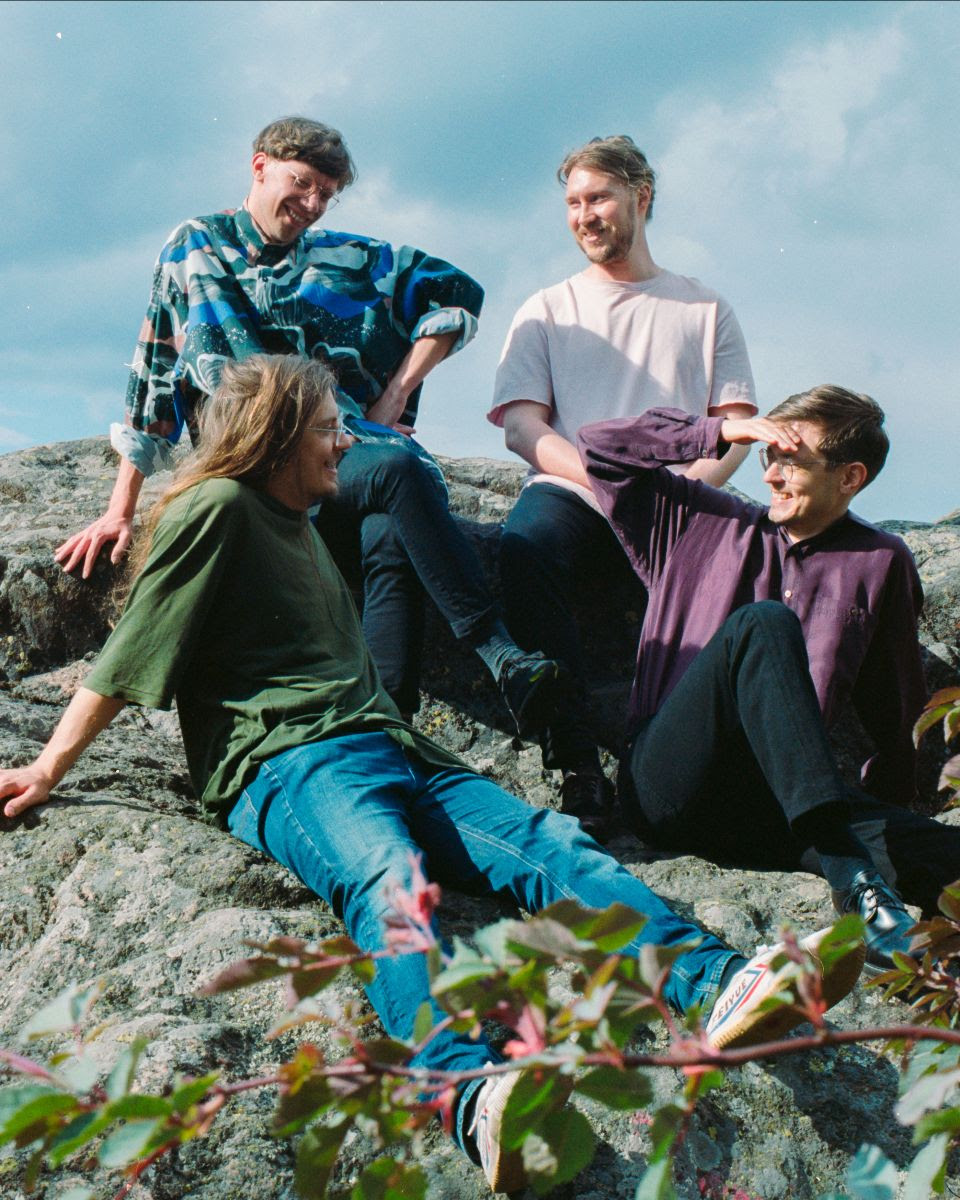
From our friends IFRIQIYYA ELECTRIQUE, a mesmerizing, loud and incredible dynamic fusion of unworldly chthonian elements, Sufi trance, spirit possession performance and post-punk electronics; recorded live in the last month at La Casa Musicale in Perpignan, France.
Originally formed in the Djerid Desert, a coloration between field-recordist and veteran guitarist of the politically-charged Mediterranean punk and “avant-rock” scenes, François Cambuzat, and bassist Gianna Greco – both of which occasionally join forces with that livewire icon of the N.Y. underground, Lydia Lunch, to form the Putan Club – and Banga musician Ali Chouchen – joined in the live theatre by an expanded cast of fellow voices, krabebs and Tunisian tabla players from the community, which has featured Tarek Sultan, Yahia Chouchen and Youssef Ghazala – the lineup has fluctuated over two stunning albums and live dates.
Performing a track from their second album Laylet El Booree (released back in 2019) ‘Nafta Naghara’ sees both Syna Awel and Dyaa Zniber (on both voice duties and percussion) change the dynamic once more as they join Greco (voice & bass) and Cambuzat (on guitar, choir & computer) for breathtaking communal.
ALBUMS
Jane Inc. ‘Faster Than I Can Take’
(Telephone Explosion Records) 22nd April 2022
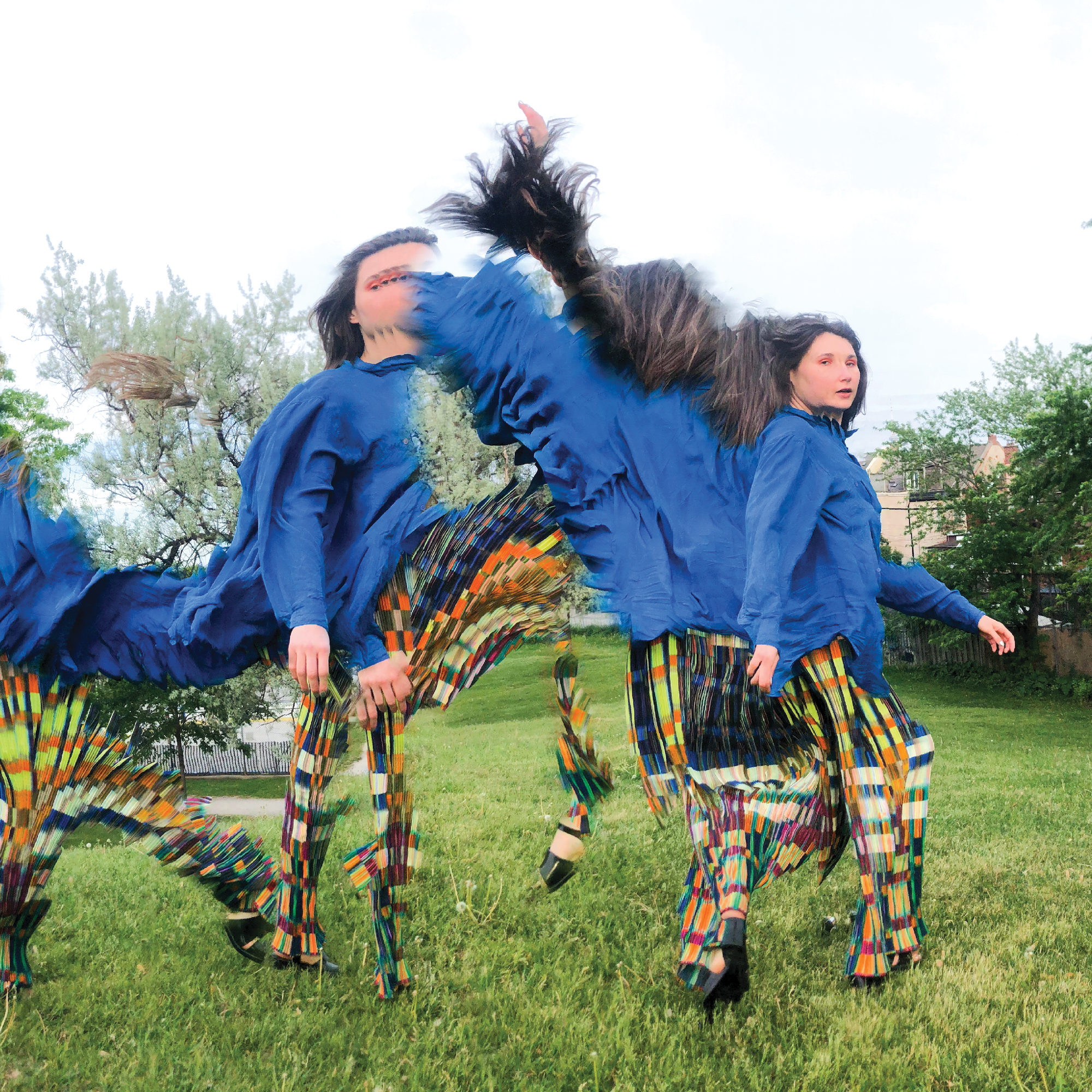
Although the musical DNA was there from the start, through her dance pop duo Ice Cream with Amanda Crist and contributions to Darlene Shrugg and Meg Remy’s ever growing U.S. Girls ensemble, Carlyn Bezic effortlessly shimmied towards the disco, dream-pop dancefloor with last year’s Number One album debut as Jane Inc. – one of my choice albums of 2021.
Bearing all the strains, vulnerabilities but shorn of pity, Carlyn makes good on that previous congruous change with a both disarming fantasy and more heartbreaking plaintive songbook, fit for the age of high anxiety, self-doubt and connection through the computer, smart phone lens.
Life just never feels right, and time…well, time seems to have sped up, hijacked by those seeking to consume all our precise use of it, concentrated down the portal of a constantly changing feed of attention grabbing, virtue competiveness and narcissistic obsessions. Without the space to breathe, process, to take it all in, we’ve been mostly reduced to vacuous, fleeting well-wishers; meaningful, deep connections just for a few, because whose got the time to offer anything lasting. Ok, I’ve gone slightly off the rail, but our epoch, lurches from, but then forgetting, one crisis to the next: though in recent months that carousal has swung from the climate emergency to Covid to the cost-of-living and Ukraine. Who wouldn’t be anxious, drained mentally under such an onslaught?
On the album’s opener, and first single, ‘Contortionists’ Carlyn sings about the effects of time anxiety, of being both trapped simultaneously in the past, present and future, all in the same moment. Transfiguring a 80s musical palette, this crystalized arpeggiator emotional pull dances through softened shades of n-r-g, robotic soul pop, fitness video music and disco: with a certain echo of Chaka Khan thrown in. Fellow Toronto collaborator Dorothea Pass adds a touch of ethereal cooing to a vulnerable but danceable highlight.
Although a mostly synthesized, electro affair, Carlyn finds the human soul, a connectedness throughout. No more so then on tracks like ‘Human Being’ (for obvious reasons), which explores isolation, the requirements of instagram, and that always living your ‘best life’ crap, in an online world to the dualist Giallo glitterball pop, and suggestions of the Juan MacLean and St. Vincent (via Wendy & Lisa). Dreamy realism meets with a haunted reflection, with another signature mirror turn. In a similar lamentable disconnect, the four-to-the-floor, Vogue era Madonna ‘Dancing With You’ projects a romantic embraced dance at the Paradise Garage, but is really a dance for one in front of the computer screen in a bedroom.
Amongst the glitterball emitting lasers Carlyn expands the musical scope, sauntering down to Rio like a 70s Joni Mitchell sharing a fantasy with Seu Jorge on ‘Picture The Future’ – which actually, despite its accompaniment of soft-paddled samba moves, describes a calendar rota of metaphorical growth. ‘An Ordinary Thing’ takes an acoustic direction towards the troubadour sorrow of Evie Sands or Catherine Howe on a cathartic, candid Baroque turn of resignation. The close, ‘Pummeled Into Sand’, features strains of both reversed phaser and Brian May guitar licks, hints of Aldous Harding and Eleanor Friedberger on the Mexican border.
I’m drawn however to the gorgeous if heartbreaking ‘Every Rip’. A Diplo remixed Vangelis patterned lush ache of vulnerability, this dream-wave pop lament will bring a tear to the eye.
The absence of the physical (love, friendship) echoed through the full spectrum of emotions couldn’t sound more effortless. Even if the artist feels fragile, this second album under the Jane Inc. flag couldn’t be more assured in pop brilliance. Taking the familiar tones of disco, pop, new wave, fitness video n-r-g, Carlyn takes a more carefree, danceable approach to deeper feelings in an era of rapid change and disorientation. You won’t hear much better.
Birds In The Brickwork ‘Recovery’
(Wayside And Woodland)

The first in a promised series of multimedia releases from Benjamin Holton’s latest inspired alias, Birds In The Brickwork, the Recovery album contours a both faded and quintessentially damp English landscape; as seen through Holt’s photographic lens.
A concomitant partner to the gauzy, washed guitar and synth music of epic45, his longstanding duo with foil Rob Glover, Holton once more plugs into a familiar, if far more dreamy and beautifully languid, mode.
Before we dive in though, a little background to this newly adopted moniker is needed. Sympathising greatly myself with this, Holton was forced to give up work due to a ‘massive flare-up’ with his back. During a time of recovery (hence that title) the Staffordshire native attempted to document the period with the tools-at-hand. This included that already mentioned guitar (both acoustic and electric by the sounds of it), a camera and computer.
Finding all life’s answers, pathos and bathos in the natural typography and its artificial markers, structures, the focus of this project is on the landscape; something that could be seen as a reoccurring feature, theme in much of his work, especially the pylon straddled haze and nostalgic glaze of My Autumn Empire.
Capturing the ephemeral through various instrumental traverses, Holton sculpts magical, mysterious radiating versant slopes, hills and the ghostly pastoral visage of a village hall, as he wells up a mood board of the wondrous, universal and cerebral. Evoking a languorous Land Observations without his bass notes, the descriptive and higher-purposed guitar playing of Craig Ward, Spiritualized Jason Pierce and Myles Cochran, Holton evokes the halcyon, conversational, the empirical.
Through lingered, floated, finely attuned guitar work, synthesized washes and waves, pitch-shifts and attentive drums he gently encompasses the fields of post-rock, the psychedelic, shoegaze, acid-country and kosmische; whether that’s unveiling the enormity of the great expanse or in solitude, waiting to get back out into the world of small wonders: ‘small glimmers’, the ‘old blossom’ and the reconnected resonance of ‘people talking’. All things missed and now documented with a lightness of touches.
The inaugural visions of a geography taken for granted, barely noticed, comes to life in the first Birds In The Brickwork audio setting. With art prints, DVDs and postcards still to come Recovery puts down the marker for a fruitful new musical horizon: even if it was borne out of pain.
Kota Motomura ‘Pay It Forward’
(Hobbes Music) 22nd April 2022
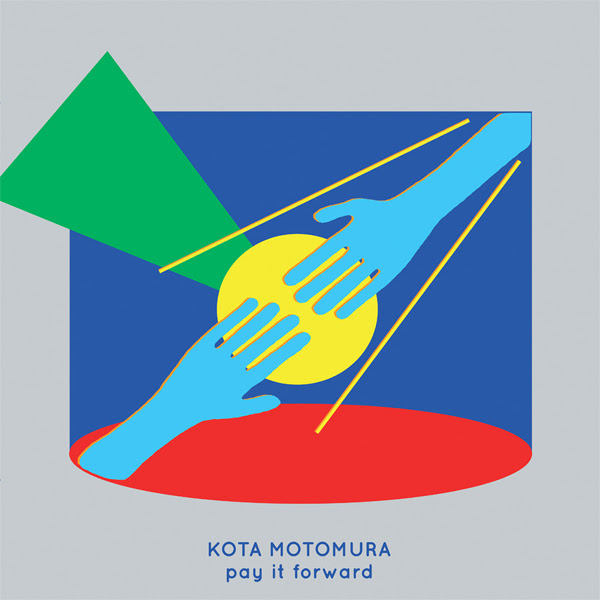
Although it’s been a few years, the experimental Tokyo artist Kota Motomura makes good on his previous free-floating, swimmingly jacked-up House and Balearic flowed EP for the Hobbes Music imprint with a just as tropical, eclectic album.
Pay It Forward once more sees Kota reunited with his foil Mutsumi Takeuchi on reeds. Later on, with this album’s paradise plaint closer, ‘Flowers’, a second guest, Akichi, joins the twosome, adding a wistful but dreamy Balearic acoustic guitar accompaniment, sat under a canopy of heavenly bird song and humid tropical heat. That curtain call is the most placid, scenic track on the whole album, with the rest destined for the club environment: albeit set in the rainforests or in some futuristic vision of 80s Tokyo.
The actual entitled ‘Paradise’ features Mutsumi’s snozzled jazz-house toots, spirals and drifted hazy rasps and Kota’s detuned, almost distorted, piano stabs over a sort of Japanese 80s new wave pop production with shooting lasers: imagine a bit of Haruomi Hosono shaking it down with Yasuaki Shimizu.
A change in style, ‘Tropical’ sounds more like an ethnographic sampled lost treasure from Byrne and Eno or, the sort of no wave experiment Basquiat would have been throwing down in ’82. Native voices, pneumatic drilled samples, shuttled sticks and hand drums evoke the veldt, the Maasai, as remixed by Coldcut and the 900ft Jesus.
‘To Be Free’ is an upbeat number of Farley Jackmaster Funk’s Chicago grooves, handclap beats, arpeggiator patterns and funk, whilst ‘Emotion’ sees Mutsumi on flute, blowing merry suffused charms over a pumped N-R-G meets New Orleans Mardi Gras House music groove.
The highlight for me though is the constantly changing, evolving percussive and drumming relay, ‘Rhythm’. It could be a Brazilian Samba band, the African diaspora or even a Cuban rhythm section on a coked-up Miami night, but the beats just keep rolling and rattling, even galloping.
Pay It Forward is essentially a well-crafted, fun experiment in dance music genre hopping. It’s House and Techno music with a spirit of adventure that’s never idol and always up for taking the audience across a movable dance floor.
OK:KO ‘Liesu’
(We Jazz) 15th April 2022

Named after its drummer-composer/bandleader Okko Saastamoinen, the Finnish OK:KO quartet have been accumulating fans and acclaim alike over the last five years. Now onto their third album with the leading Euro jazz label and festival hub (and now quarterly magazine) We Jazz, they once more show-off a signature sound that’s imbued by the roots of hard-bop, free jazz and the more explorative, envelope pushing of a small tight combo. The notes sum up that style perfectly as, ‘adventurous but accessible’.
In practice that means Coltrane and Harden on the Savoy label, Charlie Parker, the Bill Evans Trio, Nate Morgan and Sonny Stitt taken on a scenic, poetic ride across the Finnish pastoral. Mikael Saastamoinen’s double-bass on the most naturalistic composition, ‘Kirkkis’, even manages to emote an oaken tree spreading its branching: The bass actually begins to sound like a cello against a wooded stretch of rim rattles and brushes. Later on, with that same composition, the quartet moves towards both the blues and luxuriant swing; beamed and trained on 60s NYC.
Bandleader Okko’s drums follow a constant leitmotif of splashed cymbals and rolling maelstroms that never quite penetrate the sea wall defenses, as Jarno Tikka goes high with flighty spirals and lower register rasps and descriptive lulls, and Toomas Keski-Säntti plays piano with a sense of both freedom and emergent-gestured melodies.
Tunes vary between expressive dances and erudite scene-setting emotions. The opener, ‘Anima’, goes for a visceral encapsulation of that title’s Latin origins – the breath, soul, spirit of vital forces -, whilst ‘Arvo’ pushes into more serious, noirish directions: like a bluesy but mysterious sassy accompanied skulk in a 1950s stripe joint. Throughout this album were constantly drawn back to the sea; both a very real Baltic one but also a metaphorical one of choppy emotions and swelled intensities. There’s drama yet nothing that ever proves too frantic, fierce, as this quartet keep it all in check, constantly flowing no matter how high those waves get. I love it, and still think Finland is producing some of the best contemporary jazz in not only Europe but beyond that. OK:KO’s reputation is save and broadening on the strength of this third album of the lively and emotive.
Kloot Per W ‘Arbre A Filles’
(Jezus Factory) 22nd April 2022

Despite doing it all so well, the maverick Kloot Per W, as a Belgian from the other side of the multi-linguistic quandary that is Belgium, apparently should be frowned upon, snubbed for singing in the French vernacular. In a culture, historical battle I’m unwilling to get drawn into, there’s a whole legacy of political backlashes against those with the Flemish mother tongue singing or speaking in the much-guarded French language: Jacques Brel aside. Actually that’s a terrible example, as Brel’s Flemish family actually dropped it to adopt the French language.
Anyway, the seven-decade spanning journeyman Kloot has decided to give it another bash, following the success of his inaugural Francophone EP, Nuits Blanches, from last year. Like the already mentioned Brel, and because of a history of reinvention, sagacious wit and self-depreciation, the Flemish cult artist dons a gauloise smoking jacket with élan and a certain fuck you attitude on his new songbook, Arbre A Filles (or the odd phrased “girl tree”).
A sort of intergenerational project, again, Kloot calls upon the production, collaborative help of Pascal Deweze: a full twenty-years Kloot’s junior we’re informed. And swinging by the studio, repeat offender foil, guitar-slinger for hire and ex dEUS band member Mauro Pawlowski and his collaborative partner Randy Trouvé add a bit of (middle-age) youthfulness; a taste of contemporary alt-rock to the songs. Keen Monolith Cocktail followers will of course remember (hopefully) that Marco and Kloot brought out their very own dysfunctional, knockabout White Album, called Outsider/Insider, a while back (making our choice picks at the time).
A road well-travailed, Kloot’s numerous musical changes – stretching back to the late 60s and early 70s as a bassist for The Misters and as a guitarist for The Employees, to a solo spell and the JJ Brunel produced Polyphonic Size – have lent the music a wise ring of authenticity; a life well-lived and experienced. And on this new songbook themes range from such timeless concerns as facing one’s mortality and more contemporary fare like Internet conspiracy theorists, cultural divisions. This is a grown-ups album then: despite the reference to Kloot’s worries on his cock size, though thankfully not a French speaker, I have no idea where this obsession springs-up on the album, as it’s only pointed out in the accompanying notes.
It all begins with the opening fuck you attitude of the French new wave, via Lou Reed, Mick Harvey and Anton Barbeau, styled ‘Tu Me Troubles’ (“you disturb me”), which has both bristle and sophistication, coquettish doo wop female backing singers and a touch of Britpop melody. ‘Le Pays’ (“the country”) moves the action towards a smoky blend of the Jazz Butcher and the Bad Seeds, as satellites’ twinkled communications blink over a psychedelic starry, starry night café scene. A spooked Morricone creeps around on the vibrato, cooing female-voiced backed ‘Girl On The Phone’, but it’s Blixa Bargeld fronting the Os Mutantes in a haunted jazz lounge on the title-track.
Raspy, grizzled and also mooning when not crooning, Kloot’s lyricism is fitted with a movable backing of both salon and Muscle Shores piano, strokes of beat music, glam, rock ‘n’ roll, radio city music hall, a touch of Cohen, and on the “lalala” flittered ‘Super Likeus’ a hint of both rebel country and the paisley underground. Yet everything is still contained in the French vogue, if from a unique perspective.
There’s a lot to like about this album, and it goes someway to Andrew Bennett (Jezus Factory’s one-man cottage industry founder) aggrandisement that Kloot is “Belgium’s best kept secret”. If there was any justice in the world (you’re kidding, right?!) this album would reach a wide audience and shine a light on, certainly, one of Belgium’s great talents. It’s also a killer French language songbook that proves the Flemish can indeed sing the Frenchman blues.
Jörg Thomasius ‘Acht Gesänge der Schwarzen Hunde (Experimenteller Elektronik-Underground DDR 1989)’ (Bureau B) 15th April 2022

From the steel curtained side of the Berlin Wall, a second GDR dedicated showcase of electronica from the noted Jörg Thomasius. At various times an artist in his own right (under the Tomato moniker), but also a member of the Das Freie Orchester, a radio show presenter, author, boiler man and exhibition technician, the East German maverick knocked-about with the likes of Andreas Grosser, Lars Stroschen and Conrad Schnitzler – working with the last two to set up the Tonart label.
It was the former, the renowned technician Grosser who opened up a whole world of electronic exploration, and instigated a train of events that led to Jörg meeting Terry Riley: freely handing out LSD at the time. Whilst under the authoritarian grip, Jörg still managed to connect with the burgeoning scene in West Berlin. And his experiments, collected together here from three different sources, easily fall into the greater Kosmische and new wave brackets.
Acht Gesänge der Schwarzen Hunde brings together diy explorations, peregrinations, sketches from his 80-85 documented Schwarze Hände (“black hands”) cassette, his own Kröten Kassetten label’s Gesänge der Komparsen (“songs of the extras”) 89 release, and the 90s After Eight – released again on another of his own label hubs, just after he left Das Freie Orchester.
Across the majority of this collection each modulated, oscillated, effected idea weighs in under the three-minute mark; glimpsing at, vanishing clips of what could be more expanded, drawn-out scores. The opener, ‘Besen Im kopf’ (“broom in the head”), seems to feature a strung-out, deconstructed orchestra of the avant-garde, classical and even Fluxus kind: Low ship horns sound, the inner workings of a piano resonate with a brassy metallic spindly sound. ‘Okoschadel’ (“eco skull”) and ‘Erste Himmelsmelodie’ (“first heavenly melody”) have more than a hint of early computer tech sampling; the kind Sakamoto was experimenting with in the early 80s. A mix if synthesized cut-ups, tubular bell percussion and staccato fashioned splurges.
‘Küss Mich Mien Liebchen’ (“kiss my love”) features (I take it) Jörg’s vocal ravings over a squiggled loon of underground tape culture, post-punk, Faust and Populäre Mechanik weirdness.
Ghosts in the machine, aerial whirled chattering space birds, slapped beats, timpani and lo fi computerized effects permeate the first nine oddities on this compilation. The tenth and final track however is an expansive twenty-minute plus sun rays ‘Meditation’. In that languid, relaxed time frame, Jörg astral-planes hints of Popol Vuh, Frosse, Ocean Of Tenderness Ash Ra on a new age equinox of spiritual alignment.
The Hamburg label Bureau B continues as custodians of Germany’s past and present electronic, experimental, Kosmische and new wave genres with another intriguing showcase come reminder of East Germany’s part in the underground music scene that defined a generation. Fans of those musical fields will find this an interesting addition to that story.
Qrauer ‘Heeded’
(Nonostar Records) 22nd April 2022

The most electronic signing yet to Alex Stolze’s burgeoning Nonostar imprint, the congruous fit of Christian Grochau and Ludwig Bauer coalesce their respective disciplines once more as the Qrauer duo.
With Christian’s percussionist, production and remix and Ludwig’s pianist, multi-instrumentalist and composing skills, Qrauer’s latest EP is a sophisticated shift of layered electronic body movement techno and reverberated spells both on and inside a neoclassical attuned piano. In the former camp, the EP’s first trio of tracks includes the subtle air-pinched filtered, cybernetic convergence of Four Tet, Carl Graig and trance style techno ‘The Mess’; the tinkling, translucent bulb mirrored short ‘Stardoll’; and the more clean-cut beats meets mysterious and gauzy wooed ‘No Sh.Left’, which features the wafted, ghostly and vaporous vocals of the German singer Sea Of Love.
Taking a slightly different path, the title-track is a sort of experiment in scoring a mini electroacoustic soundtrack. ‘Heeded’ is highly atmospheric, with the echoed resonance of a piano’s guts being touched by various textured materials, and a moving melody of both singular and a more uninterrupted flow of notes played from the keyboard itself. Almost a seamless follow-on, ‘Lustend’ features staccato cut-up samples of a voice and piano, but soon, in a relaxed fashion, bobs along to jug-poured and steel drum reverberated techno effects – like a calypso Phylyps on Basic Channel.
Sounding in many ways like a remix of chamber piano work, with all the original elements washed-out, the Heeded EP is a cerebral version of techno, trance and electronic dance music for people who hanker after more than just a four-to-the-floor beat and repetition.
Astrel K ‘Flickering I’
(Duophonic Super 45s Mail Order) 29th April 2022
Like one long mirage, a psychedelic tinged wavy trip inside the preoccupations of Rhys Edwards, the newly imagined Astrel K set-up sees the one-time Ulrika Spacek member swim in solo Scandinavian waters.
Although a solo platform, a moniker under which to pursue his songwriting, Astrel K does in fact include an array of local musicians from Rhys new(ish) home of Stockholm. We should of course name them at least: Lili Holényi, Milton Öhrström, Niklas Mellberg and Thomas Hellberg; all of whom make it possible for this hallucinogenic musical world to float.
Leaving behind the now defunct Spacek music factory, KEN, in (one of my old stomping grounds) Homerton, Rhys finds inspiration in the Swedish capital. Via the mail order label, Duophonic Super 45s, his debut Astrel long-player (the first single, the wobbled, languid and quivered Beatles and Velvets jangle, ‘You Could If You Can’ sold out rapidly on vinyl) swimmingly and with a gauzy lushness balances hazy winding L.A. scenery detective and romantic movie scores and tinkled ray-shining Library music with somnolent Floyd, Edward Penfold and Flaming Lips psychedelic pop, dreamwave and distant lingered, suffused trails of saxophone. All elements that come together across golden slumber cooed songs and shorter Stereolab and KPM like instrumental interludes.
Actually, one of the album’s best tracks is the expanded burnished and sax-swaddled ambient score ‘Forwardmomentum’ – reminding me of the Canadian school of such astral peregrinations, Matthew ‘Doc’ Dunn’s work.
Whimsy, wistfulness and druggy stupors hide pressing matters in the real world: the anxieties of the environment and online worlds especially. Certain paradoxes and idiosyncratic observations, plaints are dreamily wooed to a most fluid and softened backing of light and shade. Occasionally there’s a touch of fuzz, a little electric grind, but it’s mostly a lunar and tropical affair of psychedelic pop, enervated soundtrack strings, quirky changes, knowing easy-listening and beautifully conveyed, soulful songwriting.
No matter what the themes are, Flickering i is a languorous, swell and trippy bubble of a place to sit and reflect.
Sinnen ‘Hawk Moth Man’
(Hreám Recordings) 11th April 2022
I’m going to be honest with you all. I’m going in blind with this slow-release of pent-up energy; woes and guitar pedal effects sustain contouring.
Released on the always intriguing, and reliable, Hreám Recordings, Sinnen’s latest drudge and cymbal-splashed resonated traverse has an esoteric menace running throughout its gnawing and yearned core. A psychogeography of darwave, grunge, slowcore, the industrial, doom and the dreamy, the sword and sorcery title referencing Hawk Moth Man reimagines Mike Cooper fronting Sunn O))). Well, at least some of the time.
Shafts of soulful despondency, a release of abstract imagings languidly emerges from a slow-motion dissipation of shimmy and halftime beaten drums and amplified hums, drones. After one of those amplifier-contoured lead-ins, the first expanded track proper, ‘Painting Daisy’, grinds through a sludge of Codine, Fritch and Dinosaur Jnr.; a haze of the occult and that already mentioned grunge sound.
As the title would suggest, the next slow driven gruel, ‘Bury Your Regrets In Frozen Ground’, drags the listener across a harrowed soundscape. By contrast, a brief pause, an interlude of a sorts, ‘Shifter’ is an ambient (almost) vignette of holy orders as preached by Popol Vuh and Vukovar.
Personally I’m hearing shades of Outside Bowie on the very strange and curious ‘Hill’: a creeping sense of menace, trauma that seems to reach back into civil war period England. But it’s the semi-epic slowcore and flange wave, force field vibrating ‘Se Boda’, which sounds like Michael Stipe singing with The Telescopes, in some alternate universe, that I especially love.
There’s much to untangle, demystify from the heavy atmosphere of suspended pain, discord: one being, why the reference to the swordsman character from the 80s cartoon adventure, The Black Cauldron, ‘Taran’? What’s that all about then?
In all that slow dissonance there’s still some light, and so it never feels too dark, too much to bear. Having never crossed paths with the band/artist before, this could be their stock-in-trade signature: or not of course. Anyway, it gets a recommendation from me.
Hi, my name is Dominic Valvona and I’m the Founder of the music/culture blog monolithcocktail.com For the last ten years I’ve featured and supported music, musicians and labels we love across genres from around the world that we think you’ll want to know about. No content on the site is paid for or sponsored and we only feature artists we have genuine respect for /love. If you enjoy our reviews (and we often write long, thoughtful ones), found a new artist you admire or if we have featured you or artists you represent and would like to buy us a coffee at https://ko-fi.com/monolithcocktail to say cheers for spreading the word, then that would be much appreciated.
Our Daily Bread 315: Per W/Pawlowski ‘Outside/Insider’
April 3, 2019
Album Review: Dominic Valvona

Per W/Pawlowski ‘Outsider/Insider’
(Jezus Factory/Starman Records) 29th March 2019
Thirteen years after their first collaboration together, two stalwarts of the alternative Belgian music scene once more reunite to produce, what they call, their very own unique White Album curiosity. The intergenerational musical partnership of one-time dEUS guitar-slinger for hire Mauro Pawlowski and maverick legend Kloot Per W proves an experimental – if odd – success in mining both artist’s influences and providence; the results of which, transformed into a playful, often knowing and pastiche, misadventure, are performed with conviction. Behind the often-masked mayhem and classic rock poses lurk serious, sometimes cathartic wise observations.
No stranger to regular readers of this blog, the Hitsville Drunk and solo collaborator in a host of projects that include a Zappa bastardized covers album with The Flat Earth Society and a Dutch language folk record under the Maurits Pauwels appellation, Pawlowski last appeared as a member of the Pawlowski, Trouve & Ward triumvirate, who’s soloist shared collection, Volume 2, showcased various expletory suites from each respective artist involved. For his part, Pawlowski contributed a 80s schlock driller-killer, straight-to-video, soundtrack (complete with made-up advert slots); the highlight of which, and a blast of inspiration for this latest album, was the pyrotechnic explosion, fist-bumping, AM radio rock anthem, ‘Starught’.
His compatriot on this ride, Per W, has a form that stretches right back to the late 60s, most notably as the bassist for The Misters and then as a guitarist for The Employees. A solo career in the early 80s saw the idiosyncratic musician knock out a slew of albums, the majority of which were purposely limited to cassette only releases; his first proper vinyl album, Pearls Before Swine, arriving in the later part of that decade. Various stints in the JJ Burnel produced Polyphonic Size and the Sandie Trash, Strictly Rockers, Chop Chicks and De Lama followed. In more recent years he’s recorded an album of Velvet Underground covers (called Inhale Slowly And Feel) and the DRILL collection of abstract music, composed for an art installation based on rebuilding the composer and inventor Raymond Scott’s Manhattan Research Inc. studio. A mixed resume I’m sure you’ll agree; one that fuels a diverse twenty-one track spanning opus of songs, traverses and instrumental vignettes.
With the deep sagacious and world-weary voice of Per W leading, Outsider/Insider merges the mixed fortunes of both artists; whether it’s the jangly Traveling Wilburys like power rock pastiche ‘KPW On 45’ and its commentary on the cultural overbearance of American culture (“American rock star live in my European food!”) or, the iron fire-escape tapping, industrial funk gyrating, seductive if awkward ‘Room!’, Per W adds just enough off-center lyricism and ambivalence to make even the most obvious-sounding straight-A tune take a turn into weirdville.
There are twilight rodeo love swoons, complete with female muse (‘We Won’t Lose Touch’), pendulous Marillion-meets-Dave Arnold-soundtrack like jabbering allusions to Beatles songs (a cover for all I know of ‘Eleanor Rigby’, or just nicking the title), early Soluwax cowbell synth-rock (‘Waitin’ For The Con Man’), and various probes into the cosmos with the arpeggiator stained-glass synth-y new romantics ‘Human Groin’, space-rock doctors waiting room diorama ‘Say What You Do’, and glistened Tangerine Dream, ‘The Dream Pop Spa’. Visages of new wave pop bastions The Cars connect with Gothic vapours; breakouts of dEUS rock wrangle with Outside era Bowie sinister art-school pretensions; and Eagle-Eye Cherry drowns in post-punk malady on an album of both wizened angst and “que sera sera” relief.
At ease in their own skins, these two mischievous bedfellows have a devil-may-care attitude to making music; free of commercial pressures (to a point) Pawlowski and Per W seem to record whatever the fuck they want, yet do it with total conviction and adroit skill.
Off-white to The Beatles stark magnolia gloss, Outsider/Insider is hardly a classic – dysfunctional or otherwise –, but is an amusing, sometimes absurd, and well-crafted alternative art-rock record of some ambition and style.
 Monolith Cocktail Blog