Tickling Our Fancy 057: Alpine Those Myriads, Hamad Kalkaba And The Golden Sounds, Fela Kuti…
November 27, 2017
NEW MUSIC REVIEW ROUNDUP
WORDS: DOMINIC VALVONA
A somewhat shorter selection but just as much quality and eclecticism, my final roundup of the year includes the cinematic pop and harrowing void explorations of Alpine Those Myriads; the latest compilations from Edinburgh label of alternative and post rock mavericks and sonic explorers, Bearsuit Records’ The Invisible & Divided Sea, and the altruistic, charity driven Submarine Broadcasting Company’s latest sprawling collection, Post:Soc; the fourth edition of Knitting Factory’s curated Fela Kuti box sets, with albums chosen by that rebel soul songstress and polymath Erykah Badu; and for the first time ever the entire – admittedly small – 1970s recorded oeuvre of one of Cameroon’s leading Gandjal rhythm providers, Hamad Kalkaba and his Golden Sounds band.
Alpine Those Myriads ‘Visions & Disorders’
See Hear Feel Smell, out now.

Set adrift out into the void, though as the motivational prompt, ‘climb the mountain and jump off it!’ that was taped to the artist’s working desk during the process of making this harrowing beauty of a minor opus suggests, Alpine Those Myriads’ Marius Bastiansen is, if throwing himself into a chasm of uncertainty and pushing limits, still tethered to earthly realms.
Now deduced to a solo project, cut loose from previous incarnations of the Norwegian group that originally got together back in 2001, the one-man band ATM is highly ambitious musically and conceptually. Inspired by the evanescent memories of watching both the dreamy visionary cinema of Russian auteur Tarkovsky (in particular, by the sounds of and echoes of retro-futuristic signals that are suffused throughout this album, the late filmmakers celebrated science fiction magnum opus Solaris) and the existential, love/hate figure, Lars Von Trier – depending on who you listen to either a madman, risqué agent of controversy or genius.
Aching with a Nordic poetic romanticism, often frail but cutting through the sonic maelstrom and haunted panoramas, Bastiansen merges the gloom and ominous miasma of Scott Walker with The Parenthetical Girls, Fever Ray and Oh No Ono on this cosmological kaleidoscopic concatenate set of traverses, Visions & Disorders. The latter of that title and constant shift towards the discordant is handled with a certain élan; churning, lumbering, bleating, caustic, sending out paranormal broadcasts and on the daemonic reprise version of the album’s opener, Nocturnal Hysteria, featuring the presence of some sort of Lovecraftian Clutha submerged in the subterranean dankness, the horror and uncertainty never quite reaches Walker’s sublime distress, always returning as it does to an uncomfortable but still melodious beauty.
Challenging but balanced, an implosion of tight progressive electronic beats and pained bedraggled saxophone is pitched against the theatrical on the Pale Fountains remixed by Haxan Cloak opener, Radiohead swirl in a charged techno hinterland on Mail Order Doom (WHWGH), Sparks relocate to the Forbidden Planet on the synthesizer pop melodrama Milk The Peacock, and the finale, An Archetype veers into Baroque Kosmische and switched-on Wendy Carlos transduced harpsichord.
Hallowed organs and Moss Garden evocations are layered against ice-y synths, off-kilter lurching loops and warping effects as the ether joins the cosmic in what is a highly impressive cinematic rich album of sonic pop exploration: imagine a more intense Tomat’s 01-06 June with Simon Bookish vocals.
Various ‘The Invisible And Divided Sea’
Bearsuit Records, 1st December 2017
Supplying me during the year with a never-ending variety of disjointed alternative lo fi post-rock and maverick electronic music releases, Edinburgh’s inimitable Bearsuit Records has kept up their impressive momentum by sending me this latest compilation of the kooky, odd and curious: to be fair, some of the artists on this compilation are actually more conventionally brilliant, especially the opening undulated Vangelis voyager style waltz into the cosmos, Fulfilling Eclipse, a serene with moments of trepidation electronic strings traverse by the Brussels composer/producer Alexander Stordiau and one of the album’s most outstanding contributions.
Featuring both present and the odd upcoming track from the label’s expanding roster of international artists, this latest collection congruously moves between the Holger Czukay like chanteuse jazz meets chaotic shouting hysteria of Tous Les Rochers by the mysterious Yponomeutaneko, and the spooky shoegaze ephemeral Julee Cruise-esque swooned Le Sablier, by the Boston electronic composer Petridisch – both of which get to submit two tracks, and both of which have a certain penchant for the French language.
Though every contribution has its merits, some are more dysfunctional than others, some interesting and pushing boundaries. Just out and out weird however, the wax cylinder sounding oomph band on the trail of the lonesome pine, comically voiced missive from some scratchy old western movie, World Travel Of The Piano Tuner, and concertinaed, bellowed, childish Wednesday (January 1992), both by the Japanese folky pop artist Shinnosuke Sugata, are utterly dotty and bewildering, if quaint. Joining them in the almost impossible to categorize ‘out there’ stakes is the avant-garde cut-up workshop The Ha-Happy App derangements of the Scottish and Japanese duo Kirameki.
Social worker by day, channeling his Talking heads eaten up and spat out in tetchy, scratchy spitball of cuckoo Clanger sounds and post-rock by Deerhoof, the Hamburg musician Martin Pozdrowicz, under his PoProPo alter ego, adds rhythm to his strange inventive Freakshow-Dance 2. Elsewhere label stalwarts The Moth Poets see who comes off worse in their musical battle between Jeff Mills and St.Vincent on the crushed indie curio The Shabby Gentlemen, the Edinburgh duo Ageing Children stalk and limber through hip-hop, and PiL style post-punk on the broody industrial beat shuffling Sick Puppy – a teaser/taster track from their, as yet untitled, upcoming new release, due in 2018 -, and Evan O’Malley, donning the Martian Subculture moniker, languidly broadcasts a tripsy soft bulletin from the lunar surface on his yearned space psych ode Chewing Gum.
Bringing a certain calm, float-y and softly played final breath of serenity to the collection, Glasgow based musician Chas ‘Annie’ Kinnis contributes a sort of twinkled lullaby, his peaceable Annie & The Station Orchestra Song For The Invalid Drivers represented by a most dreamy tranquil Ullapul remix. It is a befitting end to a compilation of such extremes: the psychedelic to trip-hop, ambient to orchestral, from the avant-garde to cosmic. Bearsuit continue to surprise; attracting some of the most strange and experimental of music makers, and confounding (in a good way) with every release.
Various ‘Post:Soc’
Compiled and distributed by the Submarine Broadcasting Co, out now
A convenient segue way exists between this compilation and Bearsuit Records; this latest altruistic (all proceeds going to the DePaul International Group for homeless charities) project from the Submarine Broadcasting Company features a number of artists from the Edinburgh label, including Bunny And The Invalid Singers and Kirameki. It is a congruous partner to The Invisible & Divided Sea on many levels, sharing with it a similar sense of experiment with a roster of equally obscure, mysterious and lo fi composers and artists.
Responsible for the Syrian Relief compilation One-String Inspiration, the enabler curators behind the Post:Soc behemoth (30 tracks with a second overspill type volume moiety, Post:Script also available) have once again made the call for submissions, asking for sonic interpretations and evocations of a post-everything society: post-Trump, post-truth, post-factual, post-Brexit, post-postmodern, post-isms even, you name it someone’s been inspired or enraged by it. The only perimeter that were set, and which are breached countless times, is that each track should try to not overrun a six-minute set duration. Other than that it seems a free-for-all.
As you’d expect, the hysterical age in which we live is hardly the stuff of uplifting, happy-go-lucky paeans and celebrations – unless you did vote for Brexit, May, Trump or Catalonian Independence, in which case your views won’t be articulated here – for most artists on the left. And so this collection seethes with either self-pitying contempt (Bridget Wishart & Everling’s dystopian augur Yesterday’s Future) or less obvious ominous and haunting ambient peregrinations (at least a third of the contributions fall into this bracket, from the paranormal organ of Mean Flow’s Post-Necropsy Society to the trance-y Mogwai barren post-rock of Martin Neubold’s Music For A Post-Intolerant Society – ouch with the title!).
As the defining decision of recent times in Britain, Brexit cops its fair share of plaintive dower melancholy and protest. It even gets its own atmospherically ice-y-vaporous Post-Ambient suite, courtesy of Playman 54.
Elsewhere the caps locked SOLILOQUA dredges back up those fatuous images of the David Cameron #piggate affair, with the moody techno Lipstick On The Pig; Anata Wa Sukkari & Tsukarete Shimai offer up a shoegazing and glitchy fuzzy eulogy, Post-Mortem; the Crayon Angels sing a quaint disarming folksy lullaby about a metaphorical Insect Bite (the sort of veiled tsetse fly poison that encourages ignorance); and Ian Haygreen posing the understated We Live In Interesting Times surmise, merges Revolution 9 with Scott Walker and trip-hop.
Mostly instrumental, and with that ambient, Post:Soc offers a full gamut of moods and explorations, evocations and sad meditations on the present state of affairs. It promises both the peaceful and doom inducing, and goes some way to offering a musical soundtrack to what may yet be the end times!
Fela Kuti ‘Vinyl Box Set #4: Curated By Erykah Badu’
Knitting Factory, 15th December 2017

Despite it being a good few years since Knitting Factory and a host of other labels and ventures began a schedule of Fela Kuti evangelism, Fela fever is still alive going strong. There’s already been a celebratory run of events, from theatre production to cover albums, festivals and of course the remaster repackaging of every album Nigeria’s favourite son recorded, but going forward into 2018, there will also be a number of events commemorating what would have been Kuti’s 80th birthday.
One of the many Kuti evaluations, the Knitting Factory’s ‘curated series’ of box sets has reached its fourth edition. Previous editions have featured Questlove, Ginger Baker and Brian Eno choosing personal favourites from Kuti’s extensive back catalogue of 50 plus albums. Lavishly packaged with both original artwork, essays from the curators and experts alike – including Afrobeat historian Chris May – unseen photos, lyrics and of course remastered/restored versions of the original tracks, these deluxe box sets offer, what surely must be by now, the final word: the ultimate collection as it were.
Lending her sagacious ear and fiery ‘no-shit’ defiant attitude to this latest edition, rebel, actress, activist, Grammy Award winning polymath Erykah Badu picks albums from Kuti’s most elegiac, despondently enraged and also clarion calls for a united Africa periods.
A fierce critic, martyr at times, of Nigeria’s successive corruptible governments and elites – from the decade-long military rule that followed the country’s Biafra Civil War in 1969, to the miscreants that took office in the aftermath – politics defined Kuti’s music: the two were inseparable. Even though the music remained sizzling, funky and bright after years, nee decades of fighting the system – with relatives bearing the brunt of establishment attacks – Kuti’s protestations remained fierce if softened in part by the scintillating, sauntering Afrobeat rhythm and effortless candour of the musicianship.
Coffin For Head Of State, one of the seven albums chosen by Badu, was perhaps his saddest statement. Released at the beginning of a new decade of hope, the two-part remembrance service condemns those involved in the fateful events that led to the death of his mother, Funmilayo. A raid on Kuti’s infamous compound, the Kalakuta Republic, in 1977 saw soldiers threw Funmilayo out of a second floor window. And though she wouldn’t die until later, the injuries sustained at the time of this assault contributed to medical complications and her death. In a bold act of defiance, Kuti, family and followers carried her coffin to the army barracks entrance, petitioning for Funmilayo to assume the position of President of Nigeria. Despite the somber mood the music that it inspired, though of course noticeably pinning with elegiac mantras, is understated, sweet and also infectiously funky.
‘The Black President’, a name synonymous with Kuti’s stature and unofficial role as the alternative, countercultural candidate of choice for presidency might have happened if he’d run for office. The denouncement, vilification platform of V.I.P. (or Vagabonds In Power) could be read as a quasi-opening to a political campaign, this live album recorded at the Berlin Jazz Festival in 1978 featured the man-who-could-be-president addressing a European audience, delivering a scathing attack on Nigeria’s ruling classes whilst calling for a better understanding of African culture to a customary shuffling Afrobeat and jazz accompaniment. Rumours abound that the proceeds from the show would go towards his presidential campaign. This didn’t exactly go down well with his beleaguered band. The increasingly disgruntled legendary Afrika ‘70 fell out with their bandleader over money and split; V.I.P. being the last album they recorded together.
In a chronological order, the golden Kuti period of the 70s – though he’d of course carry on making records into the 1990s, and only stopped a few years before his death in 1997 – is represented on this box set of Badu choices by the preaching condemnation, gospel dabs electric organ, female chorus, saw wailing jazzy funk of Yellow Fever – a reference to the dubious, dangerous skin-bleaching chemicals used to whiten complexions, though it gave off a more jaundiced, ill skin tone, hence the album title -; the Lester Bowie – of the jazz godfathers of avant-garde, the Art Ensemble Of Chicago – starring trumpet trills and spiraling, simmering soul rich No Agreement; and the ‘Live at the Kalakuta Republic’ recorded sumptuous, hand drum rattling Johnny Just Drop.
With a new incarnation of his backing group, Afrika ’80, denoting a new decade, Kuti’s relaxed entrancing but bright Army Arrangement protestation featured a soulful Kuti sticking it once again to the powers that be – by now, and even with a large oil wealth at their disposal and the end of military rule Nigeria was every bit as corrupt, stifling and quick to denounce, eradicate descent; Kuti was himself trumped up on dubious charges and thrown in prison during Muhammadu Buhari’s short reign as head of state in the mid 80s. Even later into the 90s, with Kuti being accused of taking part in a murder and facing ill health, the final album in this survey, Underground System, keeps up the antagonism, repeating accusations of ‘thievery’ to a busy tight, piano spotting groove on part one, and aping (literally) the derogatory language of the racist colonial masters (“give me banana”, “jump like a monkey”) on the probing, horn lingering breakbeat second installment. If anything this ’92 album was every bit as good as his more popular 70s material.
Keeping it Afrocentric, even when abroad, Kuti’s most repeated mantras of unity, pride and a return to the roots and atavistic values of pre-colonial African continent are echoed in Badu’s own work. But as Badu explains, it’s the “effortless” candour she so loves: “IT’S SO GOOD that there is NO way he gave it any thought. With Fela, it seems to just have spilled right out of him.”
Badu goes on to pontificate with passion that she was also attracted to the connectivity and the “pure honesty” that Kuti delivered in abundance. Her final words recommend setting up the right listening experience atmosphere: “listen to these tracks, preferably with a nice blunt…with a nice slow burn.”
Whether you take up that preferred choice or recreational enjoyment or not, Badu’s selection is not the most powerful Afrobeat frenzy of ‘deluxe box sets’, but possibly the most leisurely, meditative and rich one.
Hamad Kalkaba And The Golden Sounds ‘1974 – 1975’
Analog Africa, 8th December 2017
Purveyors of Africa’s finest and explosive forgotten treasures, Analog Africa can always be relied upon to dig up some fascinating musical discoveries. Continuing to shed light on Cameroon’s rich history of mostly obscure and passed-over marvels, the German-based label follows up this summer’s eye-opening Pop Makossa ‘invasive dance beat’ compilation with the collected singles of Gandjal sauntering maverick Hamad Kalkaba and his Golden Sounds backing group.
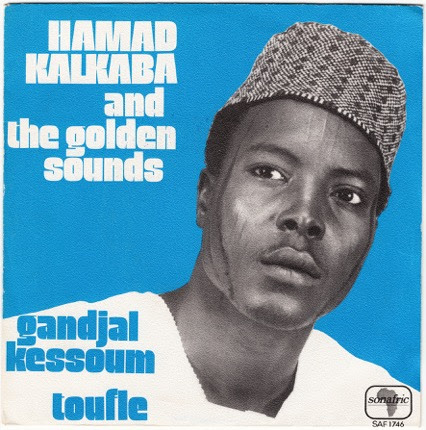
Hamad’s entire recorded oeuvre stretched to just three, hard to source, singles; all released over a twelve-month period in the mid 70s – hence the title. So this is quite an obscure compendium, and as Analog Africa’s Samy Ben Redjeb reminisces in the compilation’s liner notes, chanced upon by complete accident. The initial 7-inch that kick started this project was found in a record store in the Cameroonian capital of Yaounde; a transfixed Samy, by now the expert crate digger, sniffed out the goods, playing what would turn out to be Hamad’s Gandjal Kessoum/Toufle single on repeat. A chain of events led to him eventually tracking down the fabled original second and third singles – one of which took six years to find –, copies of which (and here’s a result) had lain dormant unplayed and untouched.
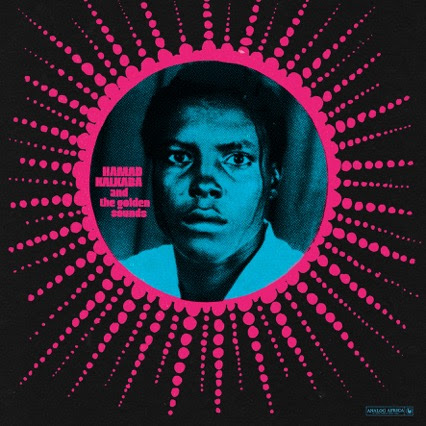
Part of the attraction of these finds were the picture covers that housed them: vividly scared down both sides of his face by tribal markings, Hamad’s gaze is as serious looking as it is cool. Born into the Musgum culture and heritage of northern Cameroon, squeezed between Chad to the east and Nigeria to the west, Hamad scored into his face the tribe’s vertical marks as a young boy. Promoting those traditions and the homegrown Gandjal rhythm in what would turn out to be a brief musical career, Hamad put out a trio of scintillating, shuffling singles, all backed by The Golden Sounds.
Following one of the other Musgum legacies, he would pretty much turn his back on that most fleeting of musical careers to join the army and to thrive as an athlete: when Samy tracked him down he found Hamad was not only a retired colonel but the current President of The Confederation Of African Athletics. Though enthusiastic about the idea of this collection, he was initially dismissive of his youthful dalliances as a singer. Yet the sentiment and drive were commendable, and the music, as you will hear, was both entrancing and relaxingly swinging.
The A-sides and B-sides have been separated and mixed up on this six track compilation, so the slinky, snake charming, bendy opener Astadjam Dada Sare, originally found on the third single release called Nord Cameroon Rhythms, is followed by one side of the initial single that set this collection in motion, the sweetly laced, swaddling horns and languid saxophone dappled Toufle. Hamad’s vocals are either relaxed in a sort of veneration – no doubt emphasized by the equally religious toned organ – style of prayer (Fouh Sei Allah) or more dynamically charged, on the cusp of a Stax showman, shouty and lively (Lamido).
Cooking up a funk and soulful stew, at times sending the needles into the red and distorting, Hamad and his troupe don’t so much blast or hurtle towards the thrills, lifts and breaks as amble: A band in no hurry to arrive at their destination.
It’s a shame Hamad didn’t stick it out, as these few but illuminating, sauntering Gandjal heavy tracks and dancefloor shufflers prove he had plenty of potential and talent. Released in the run-up to Christmas, this little collection will warm up the winter freeze and transport you to far sunnier climates. Analog Africa end the years as they started it with another essential showcase from Africa’s mostly ignored and forgotten musical past.
Tickling Our Fancy 055: AUDIAC, Matt Finucane, Andrew Heath, In Time, Poly Ester, Psycho & Plastic and TootArd.
October 10, 2017
NEW MUSIC REVIEWS
WORDS: DOMINIC VALVONA

Welcome as always to the latest edition of my reviews roundup. Meeting with my approval this month, there’s the (both literally and musically metaphorical) ‘laissez passer’ wandering TootArd from the Golan Heights making an international debut on Glitterbeat Records; the return, in a manner, of the enigmatic Brighton-based artist Matt Finucane; a stunning theatrical avant-garde meets Chanson and morose romantic pop opus from AUDIAC, waltzing onto the stage after years of inactivity; the pique soundclash of Swiss drum and electric bass combo Ester Poly; and the fourth album of ‘lower-case’ minimalism and ambient music from Andrew Heath.
I also take a look at the fanboy style resurrection of the obscure 80s Pennsylvania garage, punk, post-rock and psych outfit In Time, by thrift store digger Steve Krakow, who celebrates the fleeting and undiscovered group’s only album (found unloved by Krakow on cassette tape) and a number of unreleased attic recordings for the Guerssen label. Last but in no means the least of today’s selections, I take a look at the debut album from the Berlin duo of kooky and fun electronica and techno, Psycho & Plastic, Kosmopop. Championed from the very start on this very blog, it seems to have taken the duo – who to be fair are busy with a multitude of projects including the running of their label GiveUsYourGOLD – an age to finally release it.
Read on…
TootArd ‘Laissez Passer’
Glitterbeat Records, 10th November 2017

Photo credit: Mercedes Ortego González.
Caught in, what might seem to them, a perpetual limbo, devoid of a recognized identity, the collective band members of the omnivorous Levant group TootArd are officially stateless: citizens in effect of nowhere. Growing up in the contested, bloodily fought over, Golan Heights the group’s mouthpiece, guitarist Hasan Nakhleh, articulates the predicament of a population stuck between two, once, warring factions – feeling detached with no legal representation; no sense of belonging – throughout the press notes that accompanied this, their latest album, Laissez Passer.
Carved up in two by the former warring states of Syria and Israel after the divisive Yom Kippur War of 1973 and the eventual ceasefire that followed – with the greater share by some distance given to the latter -, the Golan Heights has been uneasily observed by both parties for decades. Under an accord the following year, an international buffer zone – known as the UNDOF ‘purple line’ – was put in place to help keep a fragile peace. Before the apocalyptic civil – and proxy – war in Syria begun, both nations seemed to be approaching some agreement over the region. Israel however, following a policy of non-intervention, is in no hurry to secede ground to Syria.
Under the authority of Israel but without official citizenship, the native inhabitants of the western Golan Heights region are forced to carry the special situation, ‘laissez passer,’ papers of TootArd’s album title to cross borders and travel. Despite this the group have found a certain musical freedom; amorphously drifting across those imposed demarcation lines to adopt styles from across the entire Levant; from Africa and even Jamaica. Originally covering the Caribbean island’s most famous musical export, the group started out playing reggae covers before relishing a change in direction.
However, before settling on their recent traverse fusion of desert blues – finding a commonality and affinity with the Beaudion and, equally stateless, Tuareg -, Arabic modalities, rock and funk influences, the founding members of the group all left for Europe; all going their separate ways: Hasen Nakhleh moving to Berlin and then Bern, recalls that this sojourn period would split the collective up internationally, yet when visiting home they would all regroup for impromptu performances in their native villages, as if they’d never been apart. After a two-year hiatus Hasen and his brother, multi-instrumentalist Rami Nakhleh – missing their fellow compatriots – organized a reunion of a sort, preparing the way forward for a reincarnation of their band.
With a new enthusiasm, new material and new sound, TootArd’s second album – though billed as their ‘international’ debut showcase – Laissez Passer has much to contemplate and pine over; framed as it is in the ‘blues’ tradition. Themes of identity and the chaos that continues to engulf their homeland dominate the album. Yet far from lamentable and sad this latest effort is surprisingly relaxed, with controlled swells of more funky and soulful driven upbeat rhythms throughout, and even the odd saunter of swaying joy. The languid reggae candor, transmogrified into a Levant groove, helps to create a sort of Baba Zula souk gait, whilst hints of Tamikrest and Tinariwen’s camel gangly, handclapping, desert blues funk gives the music a drive on both the title-track and, almost galloping and spinning into Dervish territory, Bayati Blues.
But those bluesy ruminating and gazing ponderously inducing themes do often sound haunting; especially with the addition of Ams Mdah’s snake charming and romantically dusky jazz saxophone evocations, and Hasen’s modified oud sounding electric guitar – extra frets added to ape the synonymous dulcet tones of the short-necked lute-like string instrument.
Bringing people together under darkening skies or gazing out across the Golan Heights prism back towards Syria with a Rast scale composed travailing moody accompaniment, TootArd flow and spiral subtly across the region soaking up ancestral musical customs as they go. Though imposed upon them, the Laissez Passer status hasn’t held the group back creatively: forcing them in fact by circumstance to find a new musical freedom. They are, even if it sounds a tad clichéd, only limited by their own restless imaginations, and this album indeed dreams big.
AUDIAC ‘So Waltz’
Klangbad Records, 20th October 2017

In the age in which the majority of recording artists and bands are struggling to survive on the mediocre, almost vaporous, earnings from their craft and graft, it could be argued that without a monetary reward (no matter how modest) and without security you may as well take risks; push the boundaries; never compromise, and in the case of the Tübingen and Hamburg straddling duo AUDIAC, concentrate your efforts on producing a ‘work of art’. And make no mistake So Waltz is an ambitious album’ bordering at times on the theatrical, but definitely art-y.
Knowing admittedly nothing about this duo, I can only assume they were lucky enough to have at least the time to pursue these artistic ambitions. Though as the press release is not entirely clear, I assume this latest album is the follow up to Alexander Wiemer von Veen and Niklas David’s 2003 debut, Thank You For Not Discussing The Outside World; marking quite an absence between releases, but nevertheless indicating that they certainly had enough time to create an epic suite. They also had one of the (infamous) original co-founders of Germany’s most uncompromising iconic groups, the mighty Faust, Hans Joachim Irmler on board to produce; his impressive skillset, shaped in a baptism of fire during the Krautrock epoch, and explorations pushing his chagrins further into sonic experimentation.
Remaining true to that debut album however, AUDIAC still sound inspired by Chanson, trip-hop, chamber pop, psychedelic music and Kurt Weill. Only they drop some of those more psychedelic pretensions this time in favour of melodrama and spectacle; dancing in malcontent and lament to a semi-classical avant-garde soundtrack, both melodically beautiful and elegiacally forlorn.
With all the limitations and pressures lifted, the duo is able to put forward their grandiose schemes undaunted by commercial success: or so they say. And so moving quasi-classical soul merges with Popol Vuh like divine choral atmospheres, and harsher, stark declarations of pained expression. Not quite in the realms of Scott Walker but sailing pretty close, the vocals and backing fluctuate the malady intensity and constantly restless plunging piano playing and voice combo of Diamanda Galas at its most harrowing – especially on the tumultuous, in a state of despair and rage, Doberman -, and the aching blue-eyed soul of George Michael and cerebral crooning accentuation of David Sylvian at its most romantic. Yet this concatenate pan-European songbook, mostly travailing the moody northern realms of Germany, France and the Lowlands, evokes a penchant for the UK too. Hints of Massive Attack, Thom Yorke, an enervated Underworld, early Queen and the Welsh maverick John Cale appear amongst the waltzing, gushing and graceful allusions of a spurned brooding European protagonist – probably sucking on a Gitanes; carrying all the weight of the world’s problems on his shoulders.
Returning with an impressive minor opus, So Waltz sounds like it took a lot of time and effort to create. Highly dramatic, occasionally indulgent, yet always quite moving they make quite the statement with this bleak but diaphanous and expressive tragedy.
Psycho & Plastic ‘Kosmopop’
GiveUsYourGOLD, 20th October 2017
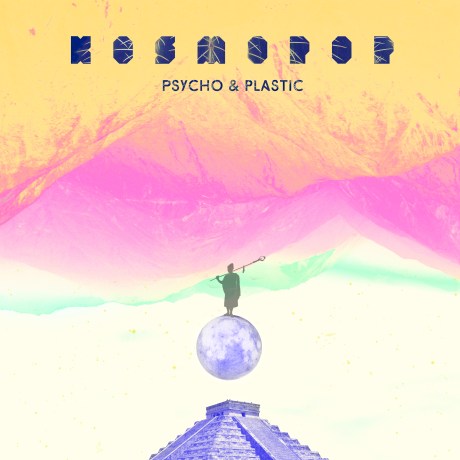
Guiding lights into the expanses of an imaginary galaxy, the Psycho & Plastic duo of Berlin dance music stalwarts, Thomas Tichai and Alexandre Decoupigny, search both inner and outer space with a suave funky and cosmic techno soundtrack on their new album, Kosmopop.
Previously releasing a string of EPs and videos, with the emphasis on fun and quirky electronic dance music experimentation – bordering at times on the goofy and cartoonish -, the duo have finally found time to produce a more complex, daresay conceptual, album; with aloof wondrous inspirations abound. Self-released through their burgeoning label GiveUsYourGOLD (Armour, AXLOTL, Irk Yste), their debut album proper dials down the more loony, bubbly and tropical kooky influences in favour of smoother, groovier rhythms. This isn’t to suggest they’ve suddenly become serious; the larks and optimism remain, with fond homages to the first and second summers of love, and a particular penchant for the unconscious organic flowering of the 90s rave scene.
Alluding to certain science-fiction ascetics in the artwork, the music is itself alien and mysterious at times, erring towards Kosmische influences like Tangerine Dream on the more enigmatic searching voyages – check the brocaded synth fanning, solar winds blowing and whistling satellite signally Superflare and Banco de Gaia does Mayan temple dub Entropy.
For the major part however, the music sounds like a Mir Space Station house band of Der Plan, Niles Rodgers, International Pony and Felix da Housecat beaming down a love-in direct to the berlin dancefloors. Expect to hear astral funk lightly entwining with early echoes of the electro hip hop compilations; echoes and specs of an alien presence reverberating and floating over Chicago House; sitar like brass-y meditations chiming along to pocket calculator algorithms; stoic Germanic tuned narration encouraging philosophical self-discoveries across the universe whilst also urging the listener “to get down” to tribal beats and 808 preset percussion – the four-to-the-floor disco punk Divine Loser even reimagines Depeche mode being born in Düsseldorf rather than Basildon.
Psycho & Plastic’s interstellar travels flow in a cyber boogie motion, gazing as they do into the wonders of a funky techno and as pop disco vision of space. Kosmopop is a cracking debut album and marks a small but significant sophisticated change in the duo’s style; more ambitious, smoother and sleeker.
Andrew Heath ‘Soundings’
Disco Gecko, 3rd November 2017
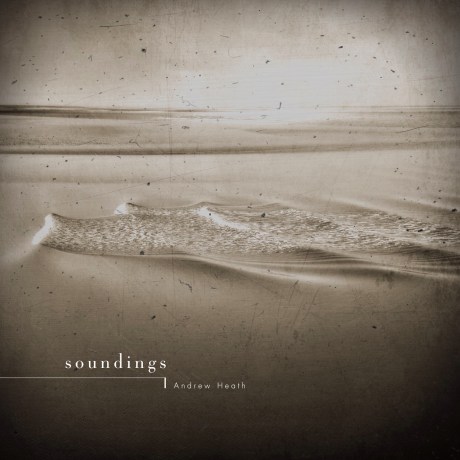
Praised as a sort of progressive sound and ambient music torchbearer of a genre renowned for such luminaries as Brian Eno and Hans-Joachim Roedelius, Andrew Heath’s own experiments in the field lean towards the reification of the fleeting, disturbed and ephemeral quiet traces of ‘people within spaces’. The self-styled composer of ‘lower-case’ minimalism evokes enigmatic, mysterious and occasionally mournful passages of evolving, passing time through the use of found and created sound manipulation and in-situ (a concatenate theme that connects to Heath’s site specific video art) field recordings.
His fourth solo album for Disco Gecko follows on from previous work, building up both synthetic and natural textural layers, drones, obscured broadcast voices and sonorous piano phrases. However, the main difference with Soundings is the atmosphere it creates; the echoing leitmotif of creaking footsteps pacing up and down a room and the almost heavy methodical concentration of memories pouring from the typewriter notation for me conjure up a writer’s garret: the author’s struggle, turmoil and thoughts represented by Heath’s serialism soundtrack.
Used subtly the neo-classical instrumentation that swirls and floats around the concrete sounds is used to bring melody, intrigue and sometimes, sadness. As well as Heath’s lingering, pondering classical piano notes and scales, there’s a touching twinkling and warmer Fender Rhodes offering lighter jazzy tinged, comfort and balance; a counterpoint interaction between the two instruments that began in the 90s when Heath collaborated with Felix Joy under the experimental Aqueous banner. It also resonates with similar piano explorations by Roedelius, who as it happens has worked with both Heath and Joy previously, most famously on the Meeting The Magus album, and more recently with Heath and fellow avant-garde composer/artist Christopher Chaplin on the live improvised recording Triptych In Blue. Roedelius could be said to have an open-ended collaboration with Heath, who it must be said can’t help but be enthused by the Kluster/Cluster/(and in more recent times) Qluster trinity steward of Kosmische and neo-classical exploration.
Another (on-going) collaboration with the Dutch ambient musician Anne Chris Bakkes continues on both the album’s winter moody traipse through the Dutch province of Noorderhaven, and the serene Happenstance articulation. Bakkes on her part performs a masked and fluttering guitar peregrination and plays with more unusual, mostly unidentifiable background sounds on the two tracks: described in the press release as ‘ephemeral’.
Breaking the veiled, swirling clouds hovering atmospherics, Stéphane Marlet and Bill Howgego are on hand to offer both arching serious, lamentable, and swooned jazz inspiration; the former enriches the cyclonic pondering Days In-Between with saddening cello, the latter tenderly sailing above the Tibetan imaginations of A Break In The Clouds with a striking clarinet flourish.
Pivoting between levitating above the heavens and space and counting the days in a haunted soundscape of captured movements and memories on Earth, Soundings hints at scenes and scenery alike; the traces of which make up this gently unfolding series of ambient descriptive passages in time.
Matt Finucane ‘Threaten Me With Your Love’
Light Crude, 25th October 2017

Returning after what seems an age away from crafting some of the most understated moodily resigned and mentally fatigued indie, Brighton-based all-rounder Matt Finucane is back with an instrumentally pared down, but just as sophisticated, duo of EPs this Autumn.
Not that we wish to pry, and only knowing Finucane from a distance, it seems his travails and dysfunctional personal life has got the better of him recently and in the past: hence the absence; part of which was spent in rehab. Threaten Me With Your Love is the idiosyncratic troubadour’s first proper release since then.
Back doing what he does so well, with eight new songs split between two staggered EPs, Finucane has employed the talents of fellow Brighton musician Mik Hanscomb – one half of the city’s (via Southend) pastoral Laurel Canyon imbued folk siblings Junkboy – to accompany him both live and on this recording.
Once again channeling vague notions of Lou Reed, David Slyvian, Ian Hunter, Bowie and Bolan, Finucane’s more relaxed, even languid, acoustic heavy material has an unintentional but accepted ‘druggy malaise’ feel to it. Crooning with a certain drowsy but meandrous confidence, our swooning maverick also often channels the quivering moodiness and slick sneer of a 50s rock’n’roll performer – similar in style to Bradford Cox’s very own donning of the vestiges of a crooning 50s rock’n’roll balladeer on the Atlas Sound LP Parallax. Updated of course with slivers of glam rock and post punk, and with the concerns and sentiments closer in principle to the loss of innocence and the emotional wreckage of ‘dead man’s curve’ than the harmless High School melodramas of the genre.
Experimenting with delivery throughout, the vocals often trail off, swooning into the crevices of Finucane’s darkened room, or loosely hovering between both the high and low registers; tripping along in what sounds like an exercise in catharsis; releasing thoughts in a melodically enriching counsel session. The music echoes that mood, both rallying and accentuating the sentiment and evocations on the acoustic rhythm and electric guitar – Moon Madness for some reason reminded me of Mick Harvey. However, the final song of this four track collection, Self Possession Version Two, moves through a number of musical ideas; reverberating brassy guitar strings jangle through Gothic cowboy boot spurs rattling back beat, new romanticism and the Velvet Underground before pushing into a bent-out-of-shape Sonic Youth and ending on a haunting final waning dissipation.
Still finding his range with one of his most stripped-down recordings yet, Finucane thankfully makes a welcome return to the music scene, and once again defies categorization with a unique, if despondent lovelorn, style of delivery.
In Time ‘Inside Your Mind’
Mental Experience via Guerssen, 13th October 2017

The, what seemed almost limitless at the time, pool of lost and obscure garage band treasures was drained a long time ago. Well, at least the halcyon days of the original primal punk, pop-sike, blue-eyed soul and psychedelic R&B back beat era in the 60s; the architects of the Nuggets-Rubbles-Pebbles-Teenage Shutdown compilations feast truly now exhausted. Drying up the reserves of every band and tenuous collection of misfits that ever recorded a single or had a whiff of a named – no matter how minor and obscure – record label or, managed to wow the locals in the provincial state scene for even the most briefest of moments, many crate-diggers and dewy-eyed salivating acid and garage freaks started dredging up the most amateur of home recordings and wannabe demos.
This process has been repeated for most genres, moving on to different more fertile ground in the following decades, and as with this obscurity from Pennsylvania outfit In Time, honing in on the 80s revival; though equally at the apex of both the raw indie and grunge fusions that were to come.
Skeptical about these finds ever since a musician I used to knock about with in the 90s – Spacemen 3 and Sun Ra enthusiast I recall – told me the story of when he and his band mates used to mischievously pass off mock garage band recordings of themselves as authentic lost ‘nuggets’ from the 60s USA hinterland; leaving these constructed recordings on cassette tapes in secondhand stores, or as the American’s would say “thrift stores”. Whether anyone was ever taken in or not, discovering such curiosities has always made me cautious and nervous. In the photocopied ‘ultra rare’ D.I.Y. mode, what might be a cunning ruse or by luck a damn good find, the only ever release by the In Time quartet, Inside Your Mind, was discovered in such circumstances in a Chicago ‘thrift store’. How it got there is anyone’s guess, but this discovery enthused the guy who found it, the Plastic Crimwave’s Steve Krakow, enough to set in motion a fanboy like zeal to track down the culprits responsible; leading to an official reissue style celebratory vinyl release of the boys only proper showcase: boosted by a number of unreleased raw and experimental detritus from the attic.
Krakow pinned down for long enough one of the original members of the shallow angst and knockabout youth punk-garage-psych for a terse interview; chronicling the little information he did obtain in the Ugly Things/Greg Shaw typewritten fanzine style accompanying liner notes. Surprised that anyone gave a shit, two decades on, Stephen Turk, Stephen Daly, Ed Keer and Anthony (AJ) Fischer nonetheless are now immortalized, in a fashion, by their champion Krakow.
‘Homespun’ indeed, In Time sound rough and sloppy, powering through a dizzy carnage of the TV Personalities, Subway Sect, 13th Floor Elevators, Swell Maps, The Dils, a thoroughly unclean version of The Clean, and The Gruesomes for starters. Growling and looning throughout, the often hard-to-fathom vocals change from a surly Yank version of John Lydon to a disheveled Dan Treacy; the music from primal rough’n ready Apache beat garage rock to indulgent shimmery meandering. Theme wise the band takes adolescent swipes at the elderly (Old Ladies) and those who meet the ire, or moon about isolation and detachment from the Outside world whilst reserving a special kind of malcontent and rage at a love spurned.
Whether its aping The Residents strangulating Paint It Black on the astonishing and lolloping Antonetta Perplexes Me, or sinking in the hallucinatory toxins of a vat of Kool Aid on the phaser messy experiment Many Are The Tears, the musical reference points are numerous and thickly applied. Despite sounding erratic, on the edge of distortion – the volume and cacophony constantly threatening to overload the sound – and about to fall apart, In Times spirited recordings and unfinished, rehearsal style ideas betray a melodious sophistication and decent performance dynamic. Too late for the original garage band phenomenon and for punk obviously, the band made sure they’d make, no matter how fleeting, some kind of mark on the 80s revival. And yet they are an augur for what was to follow, with hints of post-rock and grunge, and at times sounding like the forefathers of bands such as The Hunches.
Well there time has finally come, or at least a fanboy nod of approval in the right direction, a mark of respect. This collection is every bit as much about the obsession of Krakow as much as it is about the injustice that such a group could fail to catch on, disappearing instead into the ether…well, at least Pennsylvania’s attics and Chicago’s thrift stores.
Ester Poly ‘Pique Dame’
Ikarus Records, October 6th 2017
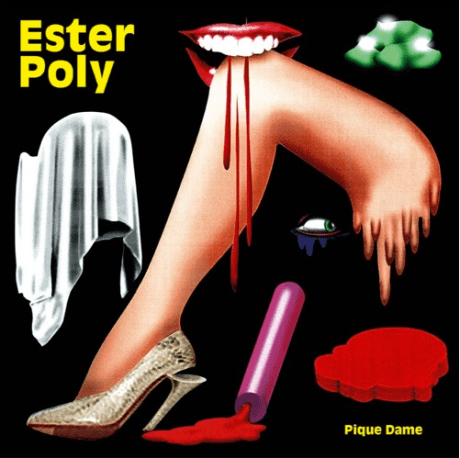
Experimentally rocking the cantons of their Swiss home for a while in their respective separate outfits, Béatrice Graf and Martina Bérther unite as an unholy drum and electric bass alliance under the Ester Poly (a scramble of ‘polyester’ of course) banner.
Pitching generation X(er) Bérther with Y(er) Graf, this rambunctious vehicle for the duo’s feminist protestations and irony began as a casual improvised meeting of minds a few years back, before blossoming and gaining traction with more structured, paced material. The spirit of volatility and avant-garde probing experimentation is no less diminished now that they’ve channeled that energy and ennui into nine, more controlled, songs: granted many fall outside the perimeters of the formulaic; amorphously clashing and flaying, dissipating and fading out between the loosest of vocal and instrumental performances and narratives.
Framed as a clash of styles and inspirations, with even the record label unsure of how exactly to position the duo’s new album, Pique Dame, Ester Poly perform with great dexterity and articulation as they thrash through brash Stilts bravado (Slutwalk); catch themselves in an overlap, churlishly antagonizing the 72 virgins myth to a Giallo paperback thriller soundtrack (72 Vierges); sultrily but with ominous overtones, apply trebly gangly Pylon throbbing basslines and a Raincoats reggae gait to a sinister Chanson cover (La Vie En Rose); and smash along to a bestial doom soundscapes (The Rise Of The Witches).
Not hampered in anyway by the limitations of their chosen drum and bass instrumentation, and hardly comparable to any of the many such similar combinations plying their trade, Ester Poly use a stack of effects and distortion tools to widen the sound spectrum; evoking hints and obvious homages to post-punk, art school, Jazz, doom rock, heavy metal, no wave and Krautrock in the process. The latter influence of which pops up a lot actually. Whether it’s the transmogrified inaction of a limping Mother Sky by Can on Dienstag, or the redolent constant rolling motion syncopation of the same group’s late rhythm provider, Jaki Liebezeit, or the prowling, growling bended bass playing of Faust’s Jean-Hervé Péron, that Teutonic influence be heard loud and clear: they even sound like a riot grrrl Neu! on the track Big Bang.
Recorded in more or less one-takes, both combatants facing off against each other in the studio with no headphones or click track, Pique Dame captures not only the lively, hostile and enraged but also the humour (even if it is dark and resigned) of this energetic union. Despite the raging tumults, dynamism and soundclash of ideas, this album is a steady and even showcase of festering ideas and moods. It’s also quite brilliant and encapsulates the ‘pique’ perfectly; arousing, curious and irritated!
Tickling Our Fancy 054: Oliver Cherer, Joss Cope, Gwyneth Glyn, Sad Man…
September 19, 2017
NEW MUSIC REVIEWS ROUNDUP
WORDS: DOMINIC VALVONA
A mixed bag, even for me, this month, with a triple haul of albums from the Kent estuary dreamers wishing to travel far, Gare du Nord. A trio of releases from Ian Button‘s pet project label includes a Pop-sike collection from Joss Cope, fairytale metaphor folk spells from Karla Kane and a ‘switched-on Bach’ like treatment of Vivaldi Baroque classics from modular synth composer Willie Gibson. We also have a new album of Victorian themed pastoral forebode that chimes with our times from Oliver Cherer; a brilliant experimental grunge, new wave and alt-rock experimental album from Martin Mânsson Sjöstrand; the debut album from Gwyneth Glyn for the new artist/label partnership Bendigedig; and finally, two chaotic avant-garde electronic music soundclashes from maverick artist Andrew Speckman, under his recently adopted Sad Man persona.
Read on….

Joss Cope ‘Unrequited Lullabies’ (6th October 2017)
Karla Kane ‘King’s Daughters Home For Incurables’ (6th October 2017)
Willie Gibson ‘Vivaldi: Seasons Change’ (13th October 2017)
All three released on the Gare du Nord.
Absent from my review selections for a while now, estuary romantics Gare du Nord – Ian Button’s independent label, run from an HQ that sits on the edge of the metropolis of London and the pastoral pleasantries of backwaters Kent – have sent us a triple bundle of releases, all earmarked for release in the first half of October. This autumnal flurry includes a new album of psychedelic pop soft bulletins from Joss Cope; an Anglophile hushabye fairytale of folk from Californian sun-kissed artist Karla Kane, of The Corner Laughers fame; and a transduced ‘switched-on’ modular synth treatment of Baroque Vivaldi classics from, the non de plume of George Baker, Willie Gibson.
A real mixture you’ll agree, the first of which, Cope’s Unrequited Lullabies, is in the mode of classic 60s revivalism and 80s psychedelic pop.
Sibling to arch druid polymath of the ‘head’ community, Julian, brother Joss Cope shares an equally colourful CV; serving and rubbing shoulders during his formative years with a number of famous and cult figures from the Liverpool music scene, including Echo & The Bunnymen Les Pattinson, Wah Heat’s Peter Wylie and Spiritualized’s Mike Mooney. Not before fleetingly spearheading Bam Caruso label favorites Freight Train – releasing the modestly pivotal album Man’s Laughter in 1985 – before splitting and joining ‘rivals’ the Mighty Lemon Drops, Joss left Liverpool to be absorbed into the Creation Records mayhem of London. During his spell in the capital he played with Crash, The Weather Reports and Rose McDowell before carving out a solo career, releasing two albums under the Something Pretty Beautiful banner.
Inevitably Joss would at some point cross paths with his elder brother, contributing famously to the Fried and St. Julian solo albums; co-writing with both Julian and his former Freight Train band mate Donald Ross Skinner the album tracks Pulsar and Christmas Morning.
Before this becomes just a biography, Joss would form and play with many more bands during the 90s and noughties – The United States of Mind, Dexter Bentley and Sergeant Buzfuz among them -, balancing music with a careers as a video director for MTV, narrator for a children’s BBC animation series and an online producer/activist for Greenpeace.
This latest chapter in a checkered backstory of affiliations sprung from Joss’ regular sleepovers in Finland, home to his current partner, the cartoonist Virpi Oinonen. In 2016 he began collaborating with the guitarist Veli- Pekka Oinonen, bassist Esa Lehporturo and percussionist Ville Raasakka trio of Helsinki talent, and the (what must be the most Irish of Irish sounding names in history) keyboardist O’Reilly O’Rourke on what would become this album, Unrequited Lullabies.
Not quite as gentle as the title suggests, but still quite meandrous, peaceable and safe, the lullabies, coastal tidal ebbs and flows and metaphorical drownings include the full range of influences from Joss’ earlier output on Bam Caruso; namely the cult label’s Circus Days compilations of obscurities and novelties from the mostly kaleidoscopic afterglow music scene of English psych and pop-sike. At various times you can expect to hear traces of 70s era Pretty Things, House Of Love, Mock Turtles, early Charlatans, Robyn Hitchcock, Dave Edmunds, XTC, The Eyes, and most obviously (and prominent) Syd Barrett. Controlled with assured maturity throughout, those influences loosely flow between the pastoral, shoegaze, backbeat pop and acid psychedelia.
Yet despite tripping occasionally into mellotron steered mild hallucinogenics, there’s nothing here that ventures beyond the ‘calico wall’; no surprises or raw energetics; no teeth rattling scuzz and fuzz or melting chocolate watchbands. Unrequited Lullabies is instead an understated effort, erring towards gestures of love – as Joss himself rather poignantly and regretfully puts it about one particular song, “Love songs to the children I never had…’ -, with a side order of ruminations and the sagacious forewarning advice of a late generation X(er) on the ‘good and bad’ aspects of life ‘in this magical place’. All played out to a most melodic songbook of classic psychedelic pop.
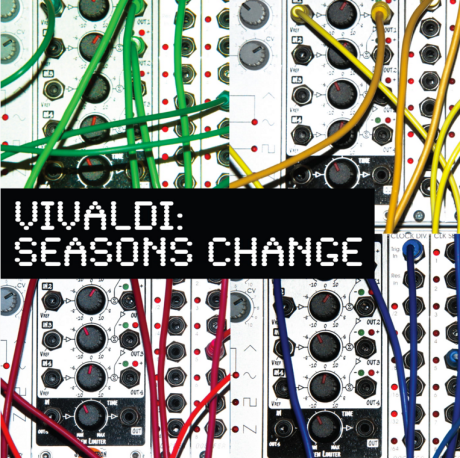
Time-travelling off on a completely different tangent, the Willie Gibson alter-pseudonym of one-time British soul journeyman George Barker (playing trumpet back in the late 60s and early 70s with J J Jackson, Tony Orlando and Dawn, and the “sweet soul music” Stax legend, Arthur Conley) transduces the Baroque classics of Vivaldi via a range of modular synthesizers; ala a strange kitsch sounding combination of Wendy Carlos, stock 80s paranormal soundtracks and a quaint sounding Kraftwerk.
Moving from soul into post-minimalist electronica on the cusp of a new era in technological advances, Barker was among the first recipients of the iconic all-in-one multi purpose digital synth/sampler/workstation, the Fairlight CMI; using its signature sound to produce sound design and music for radio and TV commercials in the 80s, whilst also lending his skills on this apparatus to Madness and Red Box on a number of recordings during the same period. Under the Ravenwood Music banner, Barker has carved out a career for himself as a producer and music publisher of synth based composition.
Modulating a fine sine wave between ‘on hold’ call-waiting style background electronica classicism and cult retro-futurism, this latest treatment of the Italian genius’ most familiar and celebrated set of opuses – Opus 8, Il Quatrro Staginoni i.e. ‘the four seasons’ – certainly has its moments. The actual execution, made more difficult by Barker’s process of ‘un-creatable’ layering, playing one part at a time with no recall, but constantly evolving his set-up and expanding until all that remains is the ‘control data’ – like the written score itself – is quite clever.
Split into triplets of quarters, each section features a subtle fluctuation of changes and melodies. The first trio of compositions, La Primavera 1 – 3, features fluttering arpeggiators, heralded pomp and glassy toned spritely descending and ascending robotic harpsichord. It sounds at times like a 80s video arcade symphony from Stranger Things. Both majestically reverent and cascading patterns follow, as Barker conducts his way through a carnival four seasons and trilling Baroque sitting room recital. Later on however, the L’Inverno 1 – 3 suite sends Vivaldi towards Georges Méliès visions of space; bounding and mooning around on a nostalgic romanticized dreamy lunar surface.
A future cult obscurity, Seasons Change is a knowing, clever exercise in retro-modular synthonics; returning to the classical source to produce a well-produced and crafted homage.

The final album release of October from the label is in conjunction with the group that US troubadour Karla Kane leads, The Corner Laughers: all three band members including husband Khoi Huynh, who co-produces and accompanies Kane throughout, appear on this album.
A cross-Atlantic venture between the two, Kane’s debut solo, King’s Daughters Home For Incurables, unveils its true intentions and angst from behind an enchanting, lullaby-coated folksy and disarming veneer. Partly post-Trump diatribe fashioned to a rich metaphor of Grimm tale whimsy and a Lewis Carroll meets a lilting Ray Davis like meander through – what I interpret as – a sulky ironic vision of an old insular England and aside at those who voted for Brexit, this songbook, written under the comforting shade of a beloved oak tree in Kane’s California backyard, states a clear position; knowing exactly which side of the fence it sits.
An Anglophile of a sort, much of this solo debut is informed by Kane’s experiences touring the UK. Recordings from an idyllic pastoral England, courtesy of Richard Youell, imbue endearing lulls with birdsong and the friendly buzz of bumblebees. Also from this ‘septic isle’, the idiosyncratic Martin Newell of the cult favorites Cleaners From Venus fame is invited to add a narrated stream of British institutions and romanticized descriptions of eccentric foibles and pastimes in a sort of Larkin-style (“cricket matches seen from trains”).
Mellifluously sung and played, though on a few occasions pushed through with bit of intensity and swelling anger, Kane’s sugar-coated ruminations are deeply serious; touching as they do on feminism, immigration and the anxieties of motherhood in what can, especially in the demarcated political bubble of social media, seem like an ever more oppressive climate. Kane does hold out hope however; as the accompanying PR blurb cites, Kane has a deep desire to summon optimism and hope in a dark world. Something I can confirm she conveys extremely well on this, her debut solo album.

Oliver Cherer ‘The Myth Of Violet Meek’
Wayside & Woodland, 29th September 2017
Wayside & Woodland, home to haunting folk, conceived not under an old steadfast oak tree but the man-made pylon, and super 8 nostalgic field recordings, has been busy of late. A flurry of activity has seen a duo of albums – an appraisal collection of Home Electronics produced in the 90s by the Margate dreamers of ambitious electro and new wave pop, They Go Boom!!, and the Bedrooms, Fields & Houses compilation sampler of label artists – released in recent weeks. And now, following in their wake, and earmarked for a 29th September release date, is this latest brilliant travail from Oliver Cherer, The Myth Of Violet Meek.
Probably most recognized for his Dollboy persona, Cherer’s varied musical affiliations and projects also includes the big beat Cooler, Non-Blank and experimental popsters Rhododendron. Here, he drifts towards a hazy fictional reminiscent style of folk and pastoral psych, a musical vision pulled from the ether and a Bellows Camera captured past, on this poignant fantastical tale of Victoriana.
Set in the Forest of Dean, this lamentable concept album (billed as ‘part-fiction’ ‘part fact’) weaves the dreamy folkloric story of the tragic Violet Meek (a play on words of ‘violence’); mauled to death or not by the dancing bears of a visiting circus troupe in the twisted and, musically alluded ominous maybe magical, tree thickened woods. Based we’re told on a vaguely real event that happened in the 1880s, Cherer’s story isn’t just a vintage walk in the past and melodic indictment on the cruelty of Victorian society towards women, but draws parallels with the continuing issues of inequality, chauvinism and mistreatment still prevalent in our own times.
This album is also a homage of a sort to Cherer’s own formative years as a teenager spent in the Forest of Dean – the diorama setting for this sorry tale – and a troubled and plaintive denouncement of the suspicions and distrust of a small community; casting out the strange misunderstood and foreign. It is the treatment of Violet though, slurred by innuendo – sharing a similar kind of ‘horseplay’ sexual predilection of idle gossip, and immature sniggers that continues to still colour the reputation of Catherine The Great – that lies at the heart of and moves on this beautifully articulated collection of harmonious crooning, lulling laments and leitmotif instrumentals.
This is an unforgiving unflattering portrayal of England, a nascent nostalgic one with little room for equality and the presence of outsiders, which is every bit as revealing about the present. As lovely, often dreamily so, as the music is the 70s pastoral accompaniment is often trembling and quivering, the fiddles distressed and bewitchery, enticing us into a esoteric psychogeography that features a languid brushed backbeat and Morris Dancers like flourish around the maypole on one song, but finds evil in the idyllic scenery on another.
Traces of 70s era Floyd, Wiccan folk, the Super Furry Animals and Darren Hayman’s civil war opus The Violence fill my senses; though Cherer stamps his own signature confidently among the inspirations and influences. Dollboy fans will find much to admire in this understated, assured and beautifully put together minor opus, as will those familiar with the Wayside & Woodland label output. A most stunning and beautiful work.

Sad Man ‘S/T’ (OFF Records), ‘CTRL’ (Self-released)
Both released on 8th September 2017
From the harebrained imagination of garden shed avant-garde (and often bonkers) electronic music composer Andrew Spackman, emanates another of his personas, the Sad Man. Like an unconscious, untethered, stream of sonic confusion and madness, Spackman’s experiments, played and transmogrified through a collection of purpose-built gizmos – including remodeled and shunted together turntables -, combine art school practice conceptualism with the last thirty years worth of developments in the electronic and dance music arenas.
Acid, techno, trip-hop, breakbeat, UNKLE, DJ Shadow and early Warp (especially the Aphex Twin) are all channeled through the Duchampian inspired artist’s brain and transformed into an often rambunctious, competitive soundclash.
Featured on the Monolith Cocktail under his previous Nimzo-Indian identity, Spackman’s newest regeneration is an exploration in creating ‘the saddest music possible’. It is far from that. More a sort of middle age resigned sigh and sonic assault with moments of celestial melodic awe than plaintive and melancholic despair. Perhaps throwing even more into the Sad Man transformation than he did with the Nimzo-Indian, all the signature wonky squiggles, interchanges; quirks and quarks remain firmly in place, though heavier and even more bombast.
Usually found, and despite my positive reviews, by mistake, languishing on Bandcamp, Spackman deserves a far wider audience for his maverick mayhem and curiosity. This month he plows on with a duo of Sad Man showcases; the first, a generous self-titled compilation of released through the Belgian enterprise OFF Records, the other, a shorter self-released keyboard command inspired album, CTRL. The former, launched from a most suitable platform, features an idiosyncratic collection of obscure recordings, spread over a traditional 2xCD format. Full tracks of caustic, twitchy, glitches-out cosmic mayhem and internal combustions sit alongside shorter sketches and edits, presenting the full gamut of the Sad Man musical vernacular. CTRL meanwhile, if it has a concept or pattern at all, seems to be a more quantifiable, complete experience, far less manic and thunderously chaotic.
Kosmische, acid gargles, breakbeats, trip-hop and the trusty faithful speeded-up drum beat pre-sets of late 80s and 90s techno music wrestle with each other for dominance on this seven-track LP – each track named after a key command, all five combining for some imaginary keyboard shortcut. Struggling to break through a constant rattling, distressed and distorted barrage of fuzzy panel-beaten breaks are cosmic symphonic melodies, stain glass organs and tablas. And so, pummeled, punch bag warping ride over serene glimpse of the cosmos, and raspy rocket thrusters blast off into more majestic parts of the galaxy. A space oddity for sure, a tumultuous flight into the unknown lunar expanses, but also a soundtrack of more Earthly chaos, CTRL is essentially a mental breakdown yet strangely also packed full of lighter more fun moments.
Thankfully neither of the Sad Man releases live up to the central ‘saddest music’ tenet, though probably best experienced in small doses to be on the safe side. This duo of offerings will hopefully cement a reputation for eccentric electronic cacophonies, and showcase an interesting body of work.
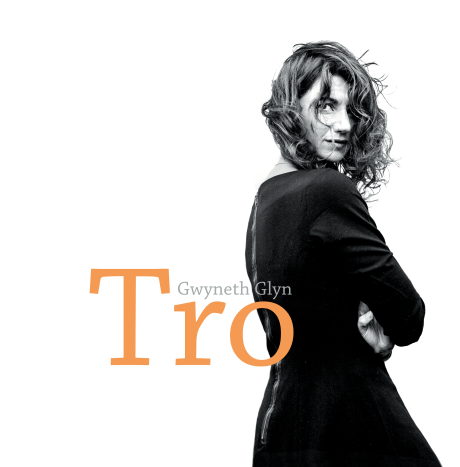
Gwyneth Glyn ‘Tro’
Bendigedig, 29th September 2017
Lighting the way for a new ‘integrated independent partnership’ between the Cardigan-based Theatr Mwldan, the polygenesis renowned ARC label, and artist, the first major solo album from assiduous writer, poet and songstress Gwyneth Glyn, effortlessly traverses the Welsh valleys, Scottish Highlands, Appalachian Mountains and West African landscapes with an assured earnestness and the most delicate of touches.
In what will be a long gap in scheduled releases – the next in line an album from Catrin Finch and Seckou keita won’t be out until April 2018 -, Glyn’s inaugural album of both Welsh and English language sung songs proves a wise choice with which to usher in the Bendigedig platform.
The Jesus College, Oxford philosophy and theology student and revue performer, with stints in the folk Americana group Coco Rose and the Dirty Cousins, was the Welsh poet laureate for children between 2006 and 2007, and it’s her native home to which she returns again on Tro. A journey back to Glyn’s roots in rural Eifionydd, after a five-year sojourn in Cardiff, Tro, or ‘turn’, is inherently a Welsh imbued songbook. However, despite ten of the thirteen odes, ballads, elegies and explorations being sung in the native tongue, Glyn’s transformations of universal and ancestral standards drift subtly across the Welsh borders into a Celtic and beyond inspired influence of sound and ideas.
Previous collaborations with Indian music artist Tauseef Akhtar and the already mentioned Senegal kora player Seckou Keita resonate on this ‘Wales meets the world’ self-styled album. Keita in fact adds a touch of plucked lilting Africa to many of the songs on Tro; joining the sounds of the metal tine African mbira, played throughout by Glyn’s producer and the multi-instrumentalist Dylan Fowler, who also performs on an array of equally exotic instruments from around the globe on Tro.
Dampened, often wafting along or mirroring the ebb and flow of the tides and shifts of both the ominous and changing prevailing winds, the backing of plucked mandocello, tabwrdd one-handed snare drum, bellowed shruti box and banjo sitar genteelly emphasis and pushes along the imagined atmospheres; moving from the Celtic to country genres, the Indian drone to the south of the equator music zones.
Glyn’s choice of cover material and her controlled but stirring, lingering vocals hint at America and Britain’s legacy of counterculture troubadour heroines, including Joan Baez, Vashti Bunyan, Joni Mitchell – a famous quote of Mitchell’s, ‘Chase away the demons, and they will take the angels with them’, is used as catalyst for Glyn’s music in the press release – and the not so political, more sedate, Linda Ronstadt. The train-like motion rhythm Ffair, – a translation of the Irish folk song She Moved Through The Fair – even sounds like a Celtic Baez, and the American/Scottish woe Y Gnawas (The Bitch) – an adaption of the old standard Katie Cruel – was first brought to Glyn’s attention via another revered voice of the times, Karen Dalton, who as you expect, made her own inimitable, unique mark upon the song when she covered it many moons ago.
Unfamiliar with the Welsh dialect as I am, I can only imagine that the lyrical tumults offer the usual fare of sad betiding’s and lament. Whatever the subject may be, she sings, nee swoons, with ease and comfort; the phrasing unforced, flowing but far from untethered. And so Glyn proves to be a singer of great talent and skill as she bares her soul across an age of pastoral, rural furrowed folk.
Ushering in the label/artist partnership on an adroit, though at times indolent, debut, Tro is a subtle refined encapsulation of the Bendigedig platform’s raison d’être; an enriching experience and showcase for an impressive singer. On the strength of this album alone that new venture looks set to be creatively rewarding.

Martin Mânsson Sjöstrand ‘Wonderland Wins’
Jangle Nest, September 2nd 2017
Recording under a variety of guises over the years, including Dog, Paper, Submarine and This Heel, the Swedish songwriter and multi instrumentalist Martin Mânsson Sjöstrand uses his own name once again on this, perhaps one of his most, omnivorous of albums. Stridently changing styles at a whim, Sjöstrand has previously tested himself with lo fi, instrumental surf, prog and alternative rock, but now tries his luck with a mixture of grunge, indie and new wave influences on the recently released Wonderland Wins.
Those influences play out over a combination of shorter incipient doodles and fleeting meditations and more complete songs; Pavement on the garbled megaphone vocal lo fi strummed In the Orbit Of The Neutron and sunshine pop remix of Calla Lily, Weezer on Man Of Self Contempt, and Nirvana, well, everywhere else. But saying that, you’re just as likely to pick up references to Guided By Voices, Devo, The Residents, Flaming Lips and DEUS on an album that doesn’t really have a theme as such or musical leitmotif.
There is a sort of coherency here however with the album’s brilliant Archers Of Loaf meets Placebo power pop alt-rocker Waiting: a full on electric Yank-twanged vocal version opens the album, and a stripped-down more poignant and sad live version (Live At The Animal Feed Plant) closes it. Waiting for a myriad of cryptic endings and a release, this standout minor anthem sounds like a missing gem from the grunge era of the early 90s.
Sjöstrand also likes to experiment, and those already mentioned shorter excursions certainly head off on curious tangents. The most silly being the self-titled fairground organ giddy romp; the most plaintive, the acoustically picked romantic “last dance”, Myling; and the most ominous, the force field pulsing bassline warning and crackling heavy transmission, The Moon Is A Playground.
A quirky take on a familiar back catalogue of inspirations, playing with a number of classic alt-rock tropes, Sjöstrand’s Wonderland is a well-produced, confident album of ideas, and more importantly has one or two great tunes.
REVIEWS/PREVIEWS ROUNDUP
WORDS: DOMINIC VALVONA

Not that I ever mean to do it, but this month’s roundup does have a tenuous theme of sorts, or rather many of the releases in this, the 52nd edition of my eclectic revues, are more or less all experimenting with the electronic music format in one way or another. The sagacious counterculture totem and beatnik poet of renown, John Sinclair leads the charge this month, his vivid jazz lyricism recitations put to an evocative soundtrack by Youth on the mini-album Beatnik Youth Ambient. Jono Podmore’s recently re-launched label, Psychomat, follows up on the inaugural release with another electronic peregrination – this time far more melodic and dreamy –, from the mysterious Reason Stendec. Working in isolation and apart, never meeting in person, the Room Of Wires duo release their third EP of otherworldly and atmospheric techno and downtempo beats, Black Medicine. And an assortment of artists from the ambient, trance, electronica fields contribute towards the One String Inspiration project, highlighting and collecting money for the Syria Relief charity effort.
We also have the latest and it seems final album of outsider New York slacker pathos from Charles Griffin Gilson, otherwise known as CHUCK. Calling it quits on his alter ego, due to a multitude of reasons, Gilson records his sincere CHUCK swan songs collection, Frankenstein Songs For The Grocery Store, for the Audio Antihero label.
Read on for full analysis and review…
John Sinclair ‘Beatnik Youth Ambient’
Ironman Records, 28th July 2017

Synonymous for steering and kicking out the jams in his short role as manager of Detroit’s renowned rebel rousing motherfuckers The MC5, renegade poet, scholar, activist and establishment rattler John Sinclair is also remembered for his free radical zeal and dalliances with the law.
Even too hardcore for the MC5, Sinclair’s foundation of the anti-racist socialist White Panthers, and his countless associations with equally revolutionary counterculture players and shakers, marked him out; leading as it did to the now infamous drug bust for marijuana possession in 1969. Whilst his love for the herb and gesticulations, whether through poetry or diatribes, is in no doubt, the way this particular bust was set-up (for what was a very insignificant amount of drugs) is considered heavy-handed and unjustifiable. Handed an initial ten-year sentence, Sinclair’s status in the “heads” and political agitators communities had singled him out as a poster child for deterring the like-minded boomer generation from stepping out of line. Fortunately (to a degree) this sentence and media furor galvanized support and sympathy and reduced that ten-year stretch to two, with Sinclair emerging from jail in 1971.
Keeping his hand in so to speak, but taking up residency in Amsterdam – a much safer bet -, the beatnik jazz sage continued, and as you can hear on this latest recording, continues, to record and perform in a host of setups with a multitude of contributors and backing bands.
The appropriately (in every sense) entitled Beatnik Youth Ambient mini LP is a foretaste, and as the title implies, ambient treatment version of material from a full-length album, due to be released later on in September. The “Youth” of that title refers of course to the Killing Joke bassist turn in-demand producer Martin Glover. Arguably one of the most consistent producers over the last few decades in the UK, Glover, under his Youth alter ego, has taken on more or less most forms of music and worked on both commercial and underground experimental projects. But he’s perhaps better known for pushing the boundaries of dub through his own productions and with a number of other artists; notably setting up the WAU! Mr. Modo imprint with fellow Orb band member Alex Paterson in 1989.
He now provides Sinclair’s “literary synthesis” with a suitable “beatnik ambient” soundtrack: a serialism quartet of turmoil, turbulent jazz and dreamier trance.
Split into two sides, Sinclair’s sagacious burr recitations are left to flow with only an occasional echo, reverb or metallic ominous effect added for atmosphere or to reinforce the sentiment and hallucinatory philosophy. The opening history lesson, Do It, which enthuses this generation to once again upend the status quo, turns Sinclair’s cerebral lyricism into a quasi-dance track rallying cry: the lingering reflective melodic and amorphous synth chorus in the first half of the track gradually joined by an Orb-like cloud-bursting trance beat.
Running through a vivid purview of postwar counterculture, bringing to life the energy and excitement that writers such as Kerouac (who gets referenced a lot) captured when seeing the Bebop jazz revolution and its great proponents perform, Sinclair delivers a magical enthusiastic experience on the next peregrination and nod to Thelonious Monk’s 1957 LP of the same name, Brilliant Corners. Titans of American beatnik and psychedelic literature lineup, Burroughs, Ginsberg and Neal Cassady (“…had the ability to park a car anywhere”, just one of his talents alongside his status as the “human bridge between the 50s and 60s.”), rubbing shoulders with jazz music’s new guard Lester Young, Byrd and Gillespie; immortalized by Sinclair to “head music” cosmos of jazzy lamenting woe, ghostly squawking and hooting saxophone and swirling mirages.
The greatest “head trip” however is saved until last. Sinclair channeling Captain Beefheart delivering the most “high” meandering TED talk ever, translates, or rather makes a reification of the almost impossible to articulate spark and feelings that kick started the whole boomer generation of beatniks, on the spiritual jazz voyage Sitarrtha. Sitars shimmer, an electric guitar twists and contorts, snares are played in a military, misty revolutionary reveille style, and the saxophone battles on as Sinclair implores us to grasp his message: a return to the real.
A eulogy of a sort, certainly homage, fellow renegade and jailbird, the late convivial Welsh sage Howard Marks reads out a befitting War On Drugs. Part epistle, part rambling thoughts, Marks, the cosmic prophet, weaves between the nonsensical and profound, the intimate and enraged. An obvious candidate and fellow drug evangelist, Marks makes a welcome addition to Sinclair’s congregation.
If anything, Beatnik Youth Ambient leaves the listener pining for a lost age; Sinclair’s evocative prose and delivery lifted (and cradled at times) by Youth’s congruous seething tensions and floaty dream-like production, which enthrall me to once again get stuck in to the “beat generation” and spin those Savoy label jazz totem recordings again. A prompt for the present times, the zeal of the postwar “baby boomers” (those with a soul anyway) counterculture not necessarily translating to generations X, Y and Z, even if it is needed; Sinclair’s language is nevertheless just as powerfully descriptive and energizing now as it was over forty years ago.
Reason Stendec ‘Impulsion EP’
Psychomat, 17th July 2017

Wingman to Can’s Irmin Schmidt and the late Jaki Liebezeit, on both a myriad of band legacy projects and various collaborations over the years; solo electronic music composer, and professor to boot; and in the last few years, part of the analogue manifesto enthused trio, Metamono; Jono Podmore has just recently, in the last two months, after a twenty year hiatus, re-launched his 90s Psychomat record label. The aim being to release, in both physical and digital formats, a cerebral experimental run of electronic music 7”s.
Featured on the Monolith Cocktail in June the inaugural extemporized Podmore & Swantje Lichtenstein partnership of serialism amorphous avant-garde backing and exploratory spoken word, Miss Slipper/Lewes, and subsequent series of remixes that followed, laid down the foundations and signature ascetics of the label. Record number two, Reason Stendec’s Impulsion EP, congruously keeps up the momentum: just as shrouded in mystery; every bit as challenging, but this time around for more melodic and flowing, and on Podmore’s (under his Kumo persona) remix treatment transforms the original material into a bubbling Roland TRs acid techno (reminiscent of Waveform Transmission era Jeff Mills and Derrick Carter) thumper.
An interesting story lies behind that Reason Stendec moniker, which helps to reinforce a sense of mystique. “Stendec” was the last, and as it turned out confounding, word of a Morse code message sent by the crew of the doomed Lancastrian flight between Buenos Aires and Santiago on August 2nd 1947. Turning into a conspirator dream factory of ever outlandish, convoluted theories, including the obligatory alien abduction angle, the Stendec saga had to wait 51 years to be finally laid to rest. It certainly had all the right components for a conspiracy or unworldly mystery, disappearing completely as it did, with no signs of wreckage, no bodies and the most cryptic of messages left to unscramble. But as it turned out the plane crashed, the impact as it hit one the looming mountain ranges triggered an avalanche that buried and entombed the plane and passengers for decades in an area known as the Tupungato glacier. As it thawed over those years, the plane was exposed and finally discovered by mountain climbers.
With this in mind, Reason Stendec cast a spell of otherworldliness; wafting along on a ghostly visage of Pan-European and Arabian sounding influences: like a breeze over an imaginary sand dune landscape, heightened by knife-sharpening percussion.
Like Grace Jones’ Parisian tango en vogue dalliances and contralto husky romantic burr crossed with a restrained Diamanda Galas, the vocals on this track follow the sonic contours; switching from an opening chant to English, French and German. A Vocal Mix version of the same track manipulates, pitch-shifts, bit-crushes, and refashions the voice into various forms: ominous and cybernetic, ritualistic and floating; one minute quivering towards the operatic, the next, in an incantation style.
A languid, lingering and sophisticated turn, the Impulsion EP is another electronica adventure and move in the right direction; both befitting the Psychomat label’s raison d’être yet cerebrally drifting off into more melodic, flowing directions.
CHUCK ‘Frankenstein Songs For The Grocery Store’
Audio Antihero, 18th August 2017

Bowing out (or bailing out) on a high note with another signature collection of pathos rich idiosyncratic slacker anthems and plaints, Charles Griffin Gilson calls time on his alter ego CHUCK. Stating a number of reasons for this closure, including his recent marriage, hitting thirty and honestly feeling he just hasn’t got it in him anymore, Gilson releases his final swansong, Frankenstein Songs For The Grocery Store, on the perfect home for such a maverick artists, Audio Antihero.
A most generous offering it is too: fifteen observatory songs and instrumentals of wistful, often of a despondent, bent, with ruminations on diets, exercise, work, love, TV and animals – more in the metaphorical sense.
An outsider of a kind, originally upping sticks from his Massachusetts home to New York, Gilson’s CHUCK persona whimsically, though often stirringly sad, looks at the foibles of living in the metropolis. This is exemplified in the most direct way on the bubbly knockabout (tongue-in-cheek) tribute to New York and its citizens, New Yorker, which lists a number of postcard landmarks made (in)famous in song and reputation (from Rockaway Beach to Hipster Williamsburg), and the personal traits, such as their stereotype brash offensive manner, of many of its residents: “Get the hell outta my way/Now go and die.”
Though just as domineering theme wise is the ‘social media’ constraints and context of a wider world, encroaching upon (as much as deriving from) these New York musings. This can be heard on the millennial blues trysts Becky and Bodies, which both feature a number of references to our obsession for validation in the online world. The pains of never growing up, streaming lives through a never-ending feed of updates and memes, Gilson encapsulates in his slightly nasal lo fi emo meets Tom Petty, Jonathan Richman, Clouds and Daniel Johnston waking up late in a Williamsburg bedsit style of delivery the regrets and anxieties of a generation growing up in a society that’s never offline: one that conducts its love affairs over a smart phone.
There’s a real sadness to many of these relationship-themed laments; the modern travails of long-distance love in an ever-connected but alienating world, and as with the Dylan-esque flowing turn pizzicato Arcade Fire rousing Caroline, an almost resigned to fate, shrugged, relationship with the ill-suited cavalier subject of the title: “My friends say you’re wasting my time/Baby I don’t mind.”
Whether dreamily drifting along to tropical palm swaying alluded notes, lasers, synthesizer presets and fanned phaser effects, Gilson sings of both unrequited love, gaining and regaining love in a languorous candid manner: removed but betraying a real fragility and care for his characters.
And so we bid fond well to CHUCK, though whether that means a more grown-up post-millennial with commitments Gilson emerges in its wake remains to be seen and heard. I only know that it’s a real shame that he’s decided to call time on his creation. Frankenstein Songs For The Grocery Store is a fitting swansong.
Various Artists ‘One String Inspirations’

So much has happened on the international stage since the April release date of this benefit for Syria album, yet the bitter catastrophic Syrian civil war still rages on unabated by talks and the erosion of ISIS in the country and bordering regions (especially more recently, Iraq). Now in its seventh year with no sign of ending anytime soon, the ensuing humanitarian tragedy throws more desperate Syrian refugees to the mercy of people smugglers and their cadre. Entangled with a never-ending flood of those escaping the devastation of this conflict and with those escaping poverty and violence from across a wide area of the Middle East, Asia and Africa, the Mediterranean has, even this summer, seen huge numbers desperately making the crossing to Europe.
Statistics are staggering: the Syria Relief charity website, which all funds from this release go towards, refers to 6 million children inside the warzone currently needing urgent humanitarian assistance, alone. With this glaring travesty in mind, the 28-track One String Inspiration compilation offers a stirring collection of poetic (and not so poetic: see the bish bosh no-nonsense punk raging Hostile Skies by 3 Chords & A Lie) indictments and bleak instrumental soundtrack atmospheres. The premise of which, alluded to in some ways via the title, challenges each artist to feature either a found or self-made instrument in their composition. Not that any of the results sound restrictive, even if it means some artists have had to move outside their “comfort zones” in the process.
Most of the contributions could be classed in the ambient or experimental sound and mood categories: The opening tabla rattling, spinning travail Night Journey To The Coast by Bowmer Holmes setting the right scene of magical Middle Eastern promise and reflection. Serene veiled drones and obscured leviathan movements follow with the Melodic Energy Commission’s Hole In Timeless and the transmogrified Animal Waves, by Can, put through a wobbly switched-on Bach treatment Budget Airlines from Detlev Everling – which shows a certain sense of humor and offers a kooky respite from the moodier material.
Tribal futurism, ratchet-y workshop mechanics, Transglobal Underground laments and duck quacks abound until reaching the stark folksy plaintive lyricism of Anna Knight’s unapologetic indictment on the refugee crisis, With His Lifejacket. Following the fateful plight of one poor unfortunate child, drowned like so many others crossing the straits to Europe, Knight somberly mourns but also attacks the inhumanity and cruelty of it all.
Full-on warping drum’n’bass and techno (courtesy of the tetchy Kitchen Sink Drama by Glove Of Bones) at its most lively, tapping an object to produce a serial environmental accompaniment at its most minimalist, and whistling to a wood shavings itchy dub track at its most strange, One String Inspiration features a diverse and generous range of wonders; many of which evoke the Warp (early on in its creation), Leaf and First World labels.
A few months on and just as vital, the collection in its own small way keeps the crisis in the spotlight, as more and more artists do their bit and make sense of such chaos.
Room Of Wires ‘Black Medicine’
Section 27
For a duo of sonic experimentalists that have never met – working apart in total isolation -, the Room Of Wires partnership, no matter how seething with ominous twists and turns, is a complimentary synchronized meeting of minds.
The rather anonymous, faceless downtempo and in industrial techno composers manipulate, churn and whip up a mysterious combination of futuristic atmospheres and inner turmoil on their third, most recent, EP Black Medicine.
Beginning as they mean to progress, the kinetic chain snaking opener Game Over builds gradually, weaving touches of Kraftwerk, Basic Channel and Mike Dred to a rhythmic soundscape of harmonious discord. Undulating spheres, radio waves, obscured broadcasted voices and stretching creaks and expanding steel structures move overhead on the following space journey Protected Space, whilst Temple Run juxtaposes lumbering bit-crushing monolith punctuations with a haunting Oriental siren chorus.
Unsettling and sonorous in places, yet able to lift the miasma and darkness with lightened breaks of more serene, glowing synth waves, Room Of Wires constantly offer glimmers of humanity and nature: even if the voices, transmissions sound lost and ebbing away like ghostly visages. A mouthful of Black Medicine that won’t do you any harm.
NEW MUSIC REVIEW
WORDS: DOMINIC VALVONA
Featuring: The Bordellos, Diagnos, Eberhard Kranemann & Harald Grosskopf, Lucy Leave, The Telescopes and Terry.
More eclectic sounds from across the whole spectrum and from around the world in this edition of Dominic Valvona’s ramshackle reviews roundup, including the disarming snappy punk and cool pop of Melbourne’s scenester gang Terry, Oxford’s elastic new wave funk and math rock trio Lucy Leave, the pastoral pagan psychedelic and folky Kosmische Swedish duo Diagnos, St. Helen’s most dysfunctional lo fi rock’n’roll gods, The Bordellos, paragons of the (rather missive termed) Krautrock epoch, Eberhard Kranemann & Harald Grosskopf, and sonic vessels of the void, The Telescopes.
Terry ‘Remember Terry’
Upset The Rhythm, July 7th 2017

The Terry gang is back in town. The disarming world-weary punk and quirky pop touting quartet of Melbourne scenesters, banding together under the ubiquitous titular moniker, follow up a prolific run of 2016 EPs and their debut LP with another acerbic witted, snappy melodious release of profound disenchantment and wistful “wish fulfillment”.
Continuing with the shared girl/boy dynamic of lulling, placeable idiosyncratic vocals and flexible punk, country and new wave bubblegum backing, Terry look to expand their repertoire on Remember. The combined musical savvy and experiences of band members Amy Hill (of Constant Mongrel and School Of Radiant Living), Al Montfort (UV Race, Dick Diver, Total Control), Zephyr Pavey (Eastlink, Russell St Bombings and also Total Control) and Xanthe White (Mick Harvey, Primo) push the quartet into all kinds of nonchalant mischief. The gang embraces nonplussed French new wave chanteuse vibes on the brilliant breezy, mosey country lilting, Toy Love meets Serge Gainsbourg Take Me To The City (one of the tracks of the summer), and snappy, bouncy indie synth pop on Rio. At their most raucous, rough and ready to tumble, Terry softens the edges of The Damned on both their keystone kops rave-up Start The Tape and spiky frazzling Give Up The Crown.
Suggesting nothing more rebellious than a cheeky smoke behind the bike sheds, the group’s knockabout catchy hooks and charm cloak a personal profound response to the political and personal anxieties and dramas of the times. And they do this with a certain aloof coolness and adroit ear for a great tune, making this a most melodious and catchy album of knowing pop slanted punk.
Lucy Leave ‘The Beauty Of The World’
15th June, 2017

Venting opprobrious discourse at the result and ongoing shambles of Brexit – though I’m waiting for creative responses from the “leave” camp to materialize – the burgeoning Oxford trio Lucy Leave put forward an ennui fit of 80s downtown white funk and erratic polyrhythm bendy protestation on their latest EP’s opening diatribe, Talk Danish To Me.
Written whilst on holiday in the Danish capital, this discordant yet highly elastically funky number is as complicated as it sounds; the group reflecting the Brexit vote of 52% for leave with irrational dissonance and a whole tone scale flourish. Yet, despite this, that opening tumultuous track is surprisingly flexible and even melodic; tracing a path back through The Rapture, Liquid Liquid, ESG, A Certain Ratio, American alt rock, grunge and Oxford’s own synonymous – well made famous by – “math rock” scene.
The press one-sheet may have other ideas on where the trio’s influences lie, citing Deerhoof, Tortoise and The Minutemen. But on songs such as the spasmodic disjoint title track they channel PiL (the bass lines most definitely deftly sliding and dipping towards Jah Wobble), and, of all groups, the Red Hot Chili Peppers (though don’t hold that against Lucy Leave, as they sound a whole lot more credible), whilst it’s the floating semblances of Pink Floyd coupled with the slacker mumblings of grunge in the ascendance on Josh. Their appetite for sounds is as omnivorous as it is pliable.
Lucy Leave’s siblings Pete (on drums) and Mike Smith (guitar), and Jenny Oliver (bass and occasional succinct saxophone jazz gestures) all take it in turns to sing. Each bringing a subtle distinct tone and phrasing, especially Oliver who sounds like a submerged Vivian Goldmine or Dominique Levillain of Family Fodder, on the watery reggae gait and psychedelic swelling car crash inspired NIGHTROAD.
Hurtling without a map but a studious head for music theory and figures through The Beauty Of The World, Lucy Leave produce a magnificent bendy chaos. Without a doubt one of the most interesting new bands and among the most unpredictable releases of 2017 for me.
The Telescopes ‘As Light Return’
Tapete Records, 7th July 2017

After thirty years of tuning in and out of the void The Telescopes – or rather the only founding member to have endured this sonic travail, Stephen Lawrie – suggest there might be a glimmer of light at the end of the tunnel on their ninth drone behemoth album, As Light Return. Don’t get your hopes up just yet though. The miasma caustic discord still hangs like a millstone around Lawrie’s neck; a heavy weight that all but keeps him from clawing out of the vault towards the surface for air: the shoegaze melodious elements and audible vocals of yore all but dissipated and recondite.
If there is any kind of let up in this latest album’s unrelenting sustained waves of abrasive and searing feedback then its very subtle one. Whilst not quite daemonic and not quite as bleak as the visions of Sunn O))), As Light Return is still unyieldingly dark.
Relief is hard won, with any emerging semblances of a Mogadon induced Spector motorcycle gang doo-wop and Spacemen 3 redemption – most notably on the opening lament You Can’t Reach What You Hunger – being obscured and dragged under the ominous efflux of guitars. Just as the fuzz, squalls and unflinching bed of drawn out drones resemble anything moodily melodic they meet a stubborn indolence of gnawing white noise. As usual Lawrie’s vocals remain cryptically veiled in the gauzy production: detached in a stupor as the overpowering seething vortex of layering consumes all.
Using a revolving door policy of guitarists and continuing to change set ups, though Lawrie once again indoctrinates band members from St Deluxe on this album, As Light Return shares much musically, within the perimeters of anyway, with the previous drone suite album, Hidden Fields. However, the tone is even darker and serious, despite the light referenced title; sonically turning the cursed ashes of unheeded augurs into an atmospheric malaise and sound experience.
Diagnos ‘Diagnos’
Control Kitten Records, July 14th 2017

Building on an initial music project stemming from Marcus Harrling’s filmskills (one half of the Diagnos duo) this extended eponymous soundtrack of concomitant mystical ambient electronica, folk and psych is the perfect accompaniment for an imaginary 1970s set pagan horror: a kind of Scandinavian Wicker Man if you like.
Harrling, a graduate filmmaker of The Royal Institute of Art in Stockholm, originally developed Diagnos with Per Nyström to score a number of his super 8 camera shot travel films. Both stalwarts of their native Swedish independent music scene; members of The Concretes, Monsters, Mackaper, and Sons Of Cyrus; the duo ask a number of compatriots to contribute to their debut (proper) album. The roots of which first emerged in 2009 when Daniel Fagerström of The Skull Defekts arranged a “one-minute-festival” show for them; a performance that led to the creation of the incipient radiant synth and swooning incantation When The Sun Comes Up: a full version of which now closes this album.
Made up of instrumental passages, vignettes and cooing, psychedelic folky vocal tracks, Diagnos uses a backing of suffused sampled sounds, keyboards, purposeful attentive drums and guitar loops to create the right dreamy esoteric and folkloric atmosphere. Guest collaborators Nadine Byrne, Tove El, Maria Eriksson, Niek Meul, Oscar Moberg and Felix Unsöld add wafting, swaddled saxophone, lulling and supernatural pastoral lush vocals and hallucinogenic inducing tones to this magical journey.
Floating between flute-y synthesizers, primal tribal reverberation percussion and more drawn-out, but softened, drones, this suite weaves progressive and Kosmische influences into a gauze-y bed of spiritual and ominous layers; recalling the dissipating echoes of early Popol Vuh, Kluster, Ash Ra Tempel, Sonic Youth, Land Observation, Air, and on the languid trip-hop like Reflections, the soundtracks of Basil Poledouris.
Eberhard Kranemann & Harald Grosskopf ‘Krautwerk’
Bureau B, 28th July 2017
Stalwarts of Germany’s influential late 1960s and 70s experimental transformative Kosmische and Krautrock music scenes, Eberhard Kranemann and Harald Grosskopf join forces to celebrate a legacy. Representing two of the country’s most important epicenters and incubators of electronic music, Berlin and Dusseldorf, the duo glide and ponder through all the various iterations from that era on the pun-intended Krautwerk album.
Provenance wise Grosskopf drummed on a number of early Klaus Schulze albums (reverberations of the legendary electronic composer can be found throughout) and recorded thirteen albums with the Ashra incarnation of the iconic acid transcendental Ash Ra Tempel originators (again, traces of which can be heard here). Kranemann’s travails in Krautrock took the usual course, studies in more classical music at the Dortmund Conservatory and art at the Kunstakademie Dusseldorf (studying under the behemoth of European conceptualism, Joseph Beuys), followed by a baptism of fire, propelled into the earliest developments of German electronica, co-founding such giants of the scene as Kraftwerk, Neu! and Pissoff.
In the aftermath of that most important decade in German music history both artists went on to release numerous solo projects. Their paths however didn’t cross until 2016, and by chance; both solo artists booked to perform at the very same music festival, where they planned this melding of minds project.
Two schools of thought and conceptualism, Krautwerk is a sophisticated, sagacious sextet of analogue (featuring of all things an Hawaiian guitar and, not so surprising, a cello) and synthesized peregrinations and moods. Channeling a wealth of experience and influences this congruous partnership combines the graceful transience and stirring futuristic ambience of Cluster and Tangerine Dream with the tangled, industrial guitar playing of Manuel Göttsching and the progressive kinetic beats of the Pyrolator and Kraftwerk. Clandestine romanticized reflections captured at midnight appear alongside mystical cello etched beasts in the Tibetan mists, on the Deutsch Nepal trail, and more nonsensical Japanese phonetic silliness to cover a swathe of Dusseldorf and Berlin inspirations.
Though there’s also a strong nod in the direction of the musical styles that evolved from and ran parallel to Krautrock/Kosmische with Moroder style arpeggiator propulsion and 80s drum machine percussion on the vortex sucking and reversed hi-hat Basic Channel transmogrified Be Cool, and Jeff Mills cerebral techno on the Tresor club turn Banco de Gaia trance journey Happy Blue.
Every bit as erudite as you’d expect; finely tuned and considered, Kranemann and Grosskopf celebrate a full gamut and heritage. Yet sound relatively contemporary at times and fresh despite the fact that these musical genres were created in the 60s. Fans of Kosmische and electronica music in general will lap it up.
https://soundcloud.com/bureau-1/sets/eberhard-kranemann-harald-grosskopf-krautwerk-snippets
The Bordellos ‘Life, Love & Billy Fury’
Recordiau Prin, 16th June 2017
Prolific, if haphazardly, dropping albums upon the unsuspecting, and quite frankly undeserving, public, St. Helen’s greatest dysfunctional family bring us one of their most ambitious collections of cynical derision and honest yearned anxiety yet: a kind of Joy ‘de vive’ Division.
More or less The Bordellos love songs collection, this latest lo fi affair – that makes even The Fall sound professional – is a raw opening of the heart, and in some cases, the veins. Transmogrifying Spector’s voices of the beehives (The Crystals to The Ronettes), the Spacemen 3, The Cure and, of course, The Velvet Underground, The Bordellos eulogize the nearly man of British rock’n’roll, Billy Fury, craft (perhaps) one of their most beautiful ballads, Starcrossed Radio, and pen a “speeding train” metaphor themed ode to breakups.
That signature mumbled and pained expression of malaise and the miserable backbeat and tambourine jangled foundations, we Bordellos fans love and find so endearing, prevail but are joined by meandered detours and passing fancies of inspiration: on the heavily medicated Secret Love it’s a touch of (would you believe it) Lee Hazlewood and Nick Cave, on the breezier “what’s cooking” kitchen sulk Brief Taste it’s a conjuncture of Siouxsie Sioux’s Banshees and The Clean, and on the Adriatic wooing Signomi, Arketa!, I can hear Talk Talk beating out a military tattoo rhythm on Adam and the Ants Burundi drums.
Romancing the stoned, the life, loves and failures of rock’n’roll are laid bear and as usual, ignored by an unsympathetic, disinterested public. But despite mostly alluding recognition and validation (because that seems to be all that matters in the social media age: affirmation from the echo-chamber of peers), The Bordellos mope and grind on, producing some of the most important diatribes and, in this case, scuzzy, dirge-y and primal garage band spirited love-pained grievances.
Tickling Our Fancy 046: Clap Your Hands Say Yeah, The Nightjar…
February 14, 2017
NEW MUSIC REVIEWS
Words: Dominic Valvona
Tickling Our Fancy 046: Srdjan Beronja, Nick Blackos, Clap Your Hands Say Yeah, Irk Yste, IRL Remixes, The Nightjar and Baluji Shrivastav.
In this edition of Tickling Our Fancy, Alec Ounsworth, under his famous Clap Your Hands Say Yeah moniker, returns with a brilliant new “cathartic” purging of an album, The Tourist; the inconspicuous but effective in spreading ever more eclectic world music sounds to a wider audience, Independent Records Ltd label, celebrates its first fifteen years in the business with an album of transmogrified remixes, entitled Terraforming In Analogue Space; ARC Music release two Indian music inspired albums, with a Best Of the legendary Baluji Shrivastav (who made London his home in the early 80s) and a new travelogue that straddles not only India, but also the Balkans and the Middle East, from the erudite Serbian multi instrumentalist Srdjan Beronja; The Nightjar unfurl their accentuated and stark contemplated post-folk debut, Objects; plus the inaugural release for the German label, GiveUsYourGOLD, from the Weimar Techno duo Irk Yste, and a new album of Nick Blackos hip-hop instrumentals from the burgeoning ONV blueprint.
Clap Your Hands Say Yeah ‘The Tourist’
Released 24th February 2017
Inimitably jump-starting a cerebral indie-pop scene in the mid noughties with his unique off-kilter melodies and quivered, yodeled vocals, the fiercely independent, Alec Ounsworth created major ripples with his nom de plume, Clap Your Hands Say Yeah’s self-released debut in 2005.
Every critics nightmare in the labored name department, and so abbreviated to save precious time (oh pity us poor feckless critic darlings!), CYHSY was instrumental in influencing and inspiring a rafter of artists and bands. Ounsworth’s peers have evidently caught up, and his fifth album, The Tourist, reflects this; suffused as it is with familiar echoes of The Parenthetical Girls, Les Savy Fav, Elliot Smith, the Arcade Fire, and on the askew r’n’b lite, A Chance To Cure, Chk Chk Chk.
One man’s vision, orchestrated in a solitary fashion, Ounsworth is self-confessedly “stubborn” when it comes to recording. However, though he writes and arranges everything he’s joined in the studio by a bassist and drummer, who offer a bright, expanded “band feel” to the material. These recordings were further embellished with additional back-up vocals, keyboards, guitars and percussion, tidied up by engineer Nick Krill and eventually mixed (and egged-on) by CYHSY “anchor” Dave Friedman – who previously worked of course on the Some Loud Thunder and Only Run albums. The results of this process are magnificent; the anxiety-ridden, rich challenging themes channeled through an airy and often breezy big sound.
Ounsworth stumbles and ponders through a “post factual” strewn world of challenging emotions trying, to make sense of it all. At times the album title could even be said to act as a metaphor for the artist’s own estranged and removed soul-searching: a tourist in his own country. As lyrically adroit as ever, he carefully crams in as many associated references and wordplays as he can, squeezing a lot out of every phrase and expression in a characteristic style that leans towards a more cheery disposed Thom Yorke. Despite some sad and profound pathos heavy lyricism, Ounsworth’s “purging” of thoughts is meant to be a cathartic experience. The anxieties of our times can’t help but leak from every other line, yet The Tourist is a fairly warm, jangly surprise package of lolloping and anthemic songs. Building and soaring to an emotive brightened crescendo of sweetness and yearning on The Vanity Of Trying; contorting and bending guitar textures in a Robert Fripp fashion on the psych-pop gnarled Down (Is Where I Want To Be); and, up close and personal (every breathe audible) to the mic, driving through an 80s nocturnal rock ballad on Better Off, the inimitable Ounsworth careers through a full gamut of moods and chaos in the most natural and energetically purposeful way.
Clocking in at well under the forty minute mark (bands and artists take note) The Tourist is an unlabored, near-perfect melodious album. It says all it needs to and more; free of indulgence, and despite its bombast, sophisticated suffused layering is incredibly lean and brisk. A most enjoyable if poignant experience, this album already sets the benchmark in 2017, and is without doubt one of CYHSY’s best.
Various ‘Terraforming In Analogue Space – IRL Remixes 2000 – 2015’
Released by IRL, 24th February 2017
Celebrating fifteen years (the first that is) of “global music” transmogrification – transforming what are in many cases the most raw and basic of field recordings into stunning peregrinations and flights of internationally amorphous fantasy – Independent Records Ltd. have chosen label stalwart Nick “Dubulah” Page to curate a 100th release special of remixes, that once again, in-keeping with their “raison d’être”, offers an alternative sonic vision of choice tracks from the back catalogue.
Regular Monolith Cocktail followers may recall my review of Page’s Xaos mythical Hellenistic soundscape collaboration with Ahetas Jimi and a group of traditional musicians, which made the blog’s choice albums of 2015 feature. The multi-instrumentalist, producer and writer may also be familiar to readers for his work with Transglobal Underground and Dub Colossus. All three of which appear in one form or another on this reinvigorated album: that reimagined Greek tragedy Xaos, for instance, is represented with a David Sylvian flittering, and quickened rhythm and beats swaddled TJ Rehmi mix of Pindos Full Moon, and a subtle bounding timpani, 80s synth-horror soundtrack style treatment, by Stereo Mike, of the esoteric Byzantine evocation Processional – one part atavistic Biblical Aphrodite’s Child, the other, John Carpenter in the “fog”.
But before we venture any further, a little background is needed. The illusive IRL – not one to herald and pontificate loudly – have remained a highly influential purveyor of music from across the most wild, isolated and wondrous corners of the world, even if they remain on the peripherals; relatively obscure. Originally formed by a trio of artist/band managers, whose eclectic CV included managing at one time or another, Sinead O’Connor, Beth Orton, Rialto, Jah Wobble and The Wonder Stuff, IRL’s remit was to remain inconspicuous. Key figures in this enterprise, the guitarist and in recent years, member of Robert Plant’s Sensational Space Shifters, Justin Adams, and field recording specialist extraordinaire and general polymath of distinction, Ian Brennan, have brought the goods, or at least help shape them. And it’s no surprise that they feature heavily, with both their own productions and songs receiving the remix treatment, but also appearing in their original form on a second CD. Brennan, who I interviewed for the blog last year, memorably introduced the sublime ragged and dusty gospel-influenced Malawi Mouse Boys to the label. The rodent kebab sellers and, as it turns out, gifted musicians/singers from one of the poorest of poor hamlets are given a galloping dubstep-lite flitter by The Dhol Foundation on the village serenaded and lolloping, Ndinasangalala (I Was Happy), and acquire a Teutonic electro affects package of drum pad lasers, modulating contoured synth and handclap percussion (remolded from the joyous clapping on the original) on Dalek Romeo’s horizon floating mix of Manja (Clap Your Hands). Other choice Brennan productions, reconfigured and taken off-course, include the Lunar Drive mix of General Paolino’s Congratulations South Sudan, which shifts between two-step accelerated shuffling and half-time dreamy lilting soul, and the Penguin Café Orchestra’s, as ever, lush and subtle scenic mix of Acholi Machon’s Convoy.

Making the most appearances however, the already mentioned Justin Adams appears in many guises, both as a solo artist and as a collaborator and producer. His own lo fi Desert Road trip is underlain with a percussive cycle of tight-delayed electronic snare and soft prodding synthesized bass by Dub Colossus, but keeps its original mirage-shimmering candor. There’s also a lunar whistling and quivering Radar Station mix of Adams’, with Juldeh Camera’s Ngamen, and a trio of, mostly subtle transformations of the French chanson group Lo’Jo, who Adams produced. Heavily intoxicated by North African musical influences, Lo’Jo in fact took Adams on his first trip to Mali, which as a result, led to them both producing the sublime Tuareg desert blues group Tinariwen’s legendary 2001 release, The Radio Tisdas Sessions.
Complementing Lo’Jo’s Arab-Franco signatures further, as if in some kind of dreamscape, Bernard O’Neill (comrade-in-arms of Page in Dub Colossus and other incarnations), appearing here under the Syriana banner, accentuates the jazzy seductive, liaison-amongst-the-Tunisian-sand-dunes, mood with a Holger Czukay-like evocation on the group’s Sur Des Carnet Nus. A Boyscout mix of their languid Yalaki reimagines them as Moloko, whilst album closer, Carnet US Vatican Radio, also mixed by O’Neill, lets the concertinaed, yearning lived-in French vocals and atmospheric crackles dissipate into the ether.
Broadening musical horizons, if politically and societally it seems many are retreating towards nationalistic introspection, IRL have released some superb albums. It was through the label’s 2003 Festival In The Desert LP that I first heard the mesmerizing Saharan transcendental blues of Tinariwen. And the “terraforming in analogue space” album opens with a suitably suffused desert contoured and Kraftwerk-like kinetic beats driven peregrination of their entrancing Oualahila by the world music and electronica fusion doyens Transglobal Underground.
Taking the LP title literally, “terraforming” describes the process of making a planet habitable for us humans, changing the atmosphere and life-giving properties to that of Earths. In this instance, IRL allow others to reshape their back catalogue in an attempt to introduce the listener to inhabit an ever richer and eclectic space. Despite drifting untethered into the galaxy, at times sounding almost alien, this remix appraisal seeks to bring the global community together in the spirit of human commonality.
The Nightjar ‘Objects’
Released 17th March 2017
To the group’s credit, The Nightjar’s accentuated and stark contemplations on the human condition and the constructs that give meaning to reality itself, including the inevitable specter of death, couldn’t have sounded more peaceable and full of grace. Such heavy themes as these, inspired in part by both Eastern philosophy and the Catholic afflatus metaphysical quandaries, posed by the late venerable French composer Olivier Messiaen, usually promise a hard slog and grueling experience for the listener. Yet, despite the raw directness of this Bristol ensemble’s naturalistic, poised, songbook of “hope, loss and disaster”, every performance is beautifully and dreamily executed.
Referring to their debut album, Objects, as a collection of “songs for the end of time”, “concerned with transformation, transience and impermanence”, The Nightjar articulates the fleeting and sings of a time when nature reclaims the encroaching man-made landscape. Describing their particular style as “lo fi post-folk”, they do push and experiment with the folk genre, though the choice of themes, and even with the inclusion of the re-arranged traditional songs Hangman and Dle Yaman, summon up the atavistic. For instance, the age-old standard, Hangman, is a scion of over hundreds of variations on the same central trope; an unknown fated protagonist waits, hoping that out of a litany of visitors, from family members to lovers, someone will arrive in time with the right coinage bribe to free them from the hangman’s noose. The Nightjar hauntingly resurrect this morbid tale with a suitable lamentable vocal, paused, sighing electric guitar and a harrowed bowed drone. Albeit from what I can gather with little information, Dle Yaman is another standard, this time a plaintive Armenian ode, an exclamation of mourning, which the group furnishes with a divine sacrosanct ascendency.
Exploring the void, submerged under a amorphous gauze of diaphanous and ether atmospherics, The Nightjar recorded their album in rural Portugal on the most basic of equipment. Informed by such “interesting” locations as a dilapidated bar in the Old Town of Sertã, and the distressed run-down piano that came with it, they fluctuate between (what sounds like) a gramophone scratched transmission, from the great beyond, and a clearer, more evocative and resonated style or recording. The backing is mostly subtle and attentive: the electric and acoustic guitars erudite and drums attentive throughout, ascending, descending in the ebb and flow of the building drama. But most striking is the vocal work of Mo Kirby, who perfectly articulates the mood with a measured performance of sorrow, yearning, tumultuous lament and the ethereal.
Finding a passage through an allegorical “wardrobe” into an earnest, toiled world of cockleshell dredger inhabited coastal shorelines and riverbeds; swallowed whole by the soil into the psychogeography, The Nightjar waft through centuries of despair and meaning to map out an auger of unease about our future.
Baluji Shrivastav ‘Best Of…’
Srdjan Beronja ‘Sounds Of The East: Music From The Balkans, India And The Middle East’
Both released by ARC Music, 24th February 2017

Photo credit to Simon Richardson
Capping off last year’s 40th anniversary celebrations with a top three placing in the highly regarded Womex “top 20 labels” awards, the industrious world music label ARC Music starts the new year as they mean to go on, with a duo of congruous Eastern imbued musical travelogues from Baluji Shrivastav and Srdjan Beronja. The first of which is a “best of” collection and timely appreciation of the revered Indian music virtuoso – who was recently honoured with an OBE -, the second, is a collection of field recordings taken from a geographical triangle of India, the Balkans and the Middle East. Both albums overlap; Shrivastav’s polygenesis array of ragas and concepts chiming with Beronja’s own sitar and Indian redolent cornucopia of recordings. And coming as they do from different starting points and cultures, compliment each other well.
Highly qualified, gaining a degree for his vocal studies from the University of Lucknow, and a BA for tablas and an MA for sitar from the Allahabad University, respectfully, multi-instrumentalist composer Baluji Shrivastav has journeyed a well-travail(ed) road to reach his richly deserved status as one of India’s most cherished exports. Musically championed of course on this collection, he’s equally respected for his fervent campaigning as a cofounder, alongside his wife, the composer and songwriter Linda Shanson, of the London-based Baluji Music Foundation. Shrivastav, who was blinded at only eight months from glaucoma, and Shanson’s foundation has and continues to help further the cause of the blind and visually impaired, as well as disabled in music. Whilst this impairment hasn’t held the gifted and tactile musician back – if anything, inspiring experimentation and an alternative, sometimes original, way of doing things – it has obviously shaped him.
A positive extension of his foundation is the Inner Vision Orchestra; steered and directed by Shrivastav, the 14-piece ensemble is a melting pot of cultures, with members from the Afghanistan, Iran, Lebanon, Japan, and Nigeria. This troupe can be heard on both the exotic Persian love yearned Chashma Sia Dari (sung in the Dari dialect, a spoken form of Persian used in Afghanistan), and the swimmingly reedy ensemble-vocal piece, Diggy Diggy Diggy Ya Rababa.

Photo credit to Simon Richardson
Making London his home in the early 80s, Shrivastav’s humble journey from the North Indian state of Uttar Pradesh to the streets of the England capital informs most of the material. Taken from his recording career over this four-decade period, some tracks make more obvious allusions to this than others. One of the earliest, Fruit from 1982, is a lilting sitar version of the Linda Shanovitch written South American-bound love tryst. Languid Cuban flavours and sauntering sway work well with the Indian instrumentation, in what is a fusion of styles we seldom hear. Reflecting, in a more grandiose manner, his attentive first steps in, and embrace of, London, there’s the instrumental trilogy of Discovering London & Friendship, Walking Through The Streets and Mixing With The Crowd And Spirit Of Joy. All of which tie together Shrivastav’s experiences, mixing classical British pomp and circumstance with the exotic reverberations of India across three various mood soundtracks. The rest of this collection mixes more traditional adaptations with contemporary arrangements; devotional standards such as the melodious Raag Shobhavari, and the spritely, full of life, Indian dance, Nartaki.
As highly complex and intricate as you’d expect, with countless forms, scales and “ascending’, “descending” notes of praise, adulation and contemplation, as well as guest appearances from not only Inner Vision but also the Egyptian master tabla player Hossam Ramzy, Andy Sheppard and Guy Baker, all these performances remain organic and fluid – there is a detailed inventory and backstory booklet however for those who wish to dip further into the finer details.
Though he’s worked with a dizzying cast of eclectic performers including tabla legends Anindo Chatterji and Ustad Fayaz Khan, and artists as diverse as Massive Attack and Stevie Wonder over the years, Baluji Shrivastav is now enjoying a welcome appraisal: On top of that OBE he received in the Queen’s birthday honours list last year, a GG2 Leadership Award for Achievement Through Adversity, there’s also a new documentary about the Inner Vision Orchestra, Colours Of Sound, from the director Marie-Cécile Embleton, and now this highly enjoyable survey compilation. An introduction and retrospective, this Best Of album will endear the listener to the prowess and multifaceted evocations of the sitar and its accompanying Indian instrumentation.

Imbued with a similar Indian sound palette, though one that has amorphously blended it with those of the Middle East and the Balkans, Serbian composer Srdjan Beronja takes the familiar buzz of the sitar and highly deft, rapid tapping rhythms of the tabla and merges them with a host of instruments from ancient Persia and North Africa on his latest album, Sounds Of The East. Drifting across a geographical triangle of influence, the ethnomusicologist travels between all three corners of his sonic map, recording both traditional and original field recordings and improvised performances. It is in short, a veritable odyssey of discoveries; moving seamlessly through the exotic landscape, capturing many unusual and surprising sounds.
Following on “effortlessly” from his previous 2015 album, Sounds Of Varanasi – the Indian holy town of the title appears again on this collection -, Beronja, again, spends most of his time in India. Recordings vary in length and drama; from the menagerie “morning chorus” of wild twirling, hooting and convoluted birdlife, found on the heat-sapping Alapana – recorded in Kerala – to the gunpowder explosion firework snapshot of the famous Diwali Festival Of Light, on Visphot – meant as a poignant reflection on the damage that this bombastic firework display inflicts on the environment. There’s also more performance-based instrumentals, including the improvised, joyful, Raag Jog Dhun, which partners Beronja on the tabla-like darabuka drum with maestro violinist Pt Sukhdev Prasad Misha (a revered ambassador of Hindustani classical music no less), and the more groovy but reflective, Raga Sitar-Daf Kirvani, which sees Beronja play the Persian frame “daf” drum and the notable Pt Dhruv Nath Mishra sit in on the sitar.
Leaving behind the scenery but not the music, those Indian sounds lingering on as Beronja journeys to the Middle East and the Balkans. The strangest recording, Nora Of Hama, captures the weird buzzsaw and motorbike revving sounds of a wooden water wheel in the Syrian town of the title. Disturbing, almost ominous, the scraping and creaking mechanics offer a surreal window into age-old apparatus; still in use; still providing an essential resource. In a similar landscape of musical influence, the Serbian composer invites the Sarajevo born oud player and multi-instrumentalist Marina Tošić to join him on the “open air” improvised liturgy, Maqam Bayati Oud Taqsim. Tošić also appears, playing the pan flute, on the live in concert recorded, Shepherd’s Love Song. Two musical spheres and traditions, one from (again) India, the other, the Balkans, entwine on this sad tale of the lonely shepherd pining on the hillside in wistful lament because of a former lover’s unreciprocated love. Another “virtuoso” (just one of the many) oud player, but also more than handy on the zither-like qanun, Stefan Sablić plucks away dreamily on the ethereal album closer lullaby, Maqam Ajam Qanun Taqsim.
As with many ARC Music releases, in depth notes can be found in the accompanying album booklet. Not that you need an extensive knowledge, and with so many different influences and ways of interpreting meaning from the highly sophisticated, centuries old traditions of specific scales, it’s better to let the music breathe unburdened. Of course it’s all interesting and informative, but it also shows the cross-pollination process and intricate blending of styles that makes this music so universally connected. Sounds Of The East is an intriguing, often surprising, musical travelogue; one that reminds us just how erroneous those musical borders really are, as Beronja finds the sounds that bind us.
Nick Blackos & LOA ‘No Reason’
Released by ONV, available now

Dropping releases surreptitiously without any fanfares or grandstanding, the burgeoning London-based hip-hop (and all it’s many congruous bedfellows) label ONV has in the last week, shinnied an eight-track instrumental showcase up the flagpole in the hope someone will salute it. Entitled No Reason of course, this latest collection of transmogrified 808 beats, tight kinetic drums, tetchy glitches, and warped languid samples is every bit as in line with the label’s signature subterranean and gritty London-soundscape style as previous EPs, LPs and odd tracks.
No Reason travails a strewn, strung-out sonic landscape, littered with cryptic chemicals (T88), vortex obscured utterances, speech and lulling voices (Four Horsemen, Get Away), languid vapours of dubstep and grime (Grotti), and the slow ticking away of time (Tranceforma). Lo fi and off most radars, ONV’s principle Nick Blackos, and the mysterious LOA, have produced another curious, underground and leftfield hip-hop album.
Irk Yste ‘Wumpe/Stroppe’
Released by GiveUsYourGOLD, 3rd February 2017

The first release of the year from our friends at GiveUsYourGOLD – the artist-run Berlin label founded a few years ago by Alexandre Decoupigny and Thomas Tichai, of Psycho & Plastic fame -, the cool aloof Irk Yste debut is a sophisticated three-track techno transmission from the historically and culturally important eastern German town of Weimar.
Since bonding in the sandbox of their playschool in ’84, the Irk Yste’s Christoph and Benjamin (no surnames given) have shared a penchant for music, especially acid techno. Introduced to the style whilst in Denmark during the dawn of the noughties, the musical partnership toured the (as the bio describes it) “flattest of kingdoms” to ride on that inimitable acid wave. Via a number of projects, including The Zonnhaider’s Club and Norsal Flow, and a sojourn studying electroacoustics at the SeaM institute, in the city they now call home, the Weimar duo now release their inaugural explorations under their latest darkly melodic techno incarnation.
Informed by an “iterative” process of building sonic structure and harmony before dismantling and starting anew, the three-track Wumpe/Stroppe suite is a sophisticated, suffused mix of minimal techno, house and, even, jazz. The opening machine-age with soul, Wumpe, starts with a nauanced chain reaction of R&S and Basic Channel flavoured kinetic beats and a sonorous bass drum, but gradually builds to an ascendant, cinematic melody finish. From a similar mould but hinting towards a more lilting nocturnal escape, Stroppe is a metallic glistening slow ride into an unsure future scape. More a vignette, the final track, Pumps, fades in on a stirring pronounced synthesizer drone wave, before a serial accompaniment of warping, wobbling robotic and dial-up sounds interweave with the minimalist stripped-down techno foundations.
An impressive glimpse inside the machine, GiveUsYourGOLD promise that there’s more to come from their latest signing. Stay tuned for further techno explorations in the future-now.
Our Daily Bread 236: Retoryka ‘The Enhanced Techniques EPs’
February 7, 2017
REVIEW
Words: Ayfer Simms

Retoryka ‘Enhanced Techniques I.’ & ‘Enhanced Techniques II. EPs’
Released by Everyday Life Recordings, 20th January 2017
Retoryka hooks its amplifiers somewhere in the horizon, to let their sound blow with the four winds, standing perfectly tranquil amid the chaos and commotion they create with their instruments: there’s a party under a shade.
Dazed, rapturous and noisy, underground and yet classy, peaceful even, the melodic vintage compositions of the band are like masses of energy breaking down in brief fluttering lethal notes, all mingling together in a distorted tireless ensemble.
The tunes under that shade give the spotlights to well-approved guitar swirls, whilst turmoil prevails in the tiny details of all the tracks. Retoryka seems to go loose, walking gleefully along a greasy and messy road full of complexity because different styles collide and merge, the same way they would on a newly forming galaxy. At first we feel off balanced and then the cohesion miraculously appears.
Our feet are dangling from a truck; we are dizzy while the music plays. The instruments’ cords slowly become our umbilical sweaty bond that provides us with nourishment and an ear-splitting nursery rhythm to our nights.
These are destructive younglings, in search, of the perfect shriek, with sprouting shy impressions in the first EP and calmer ripened attitude in the second. In contrast the vocals are soft and endearing, welcoming, like the soft touch of a wobbly titan.
The notes and the guitar may show some rebellious arching but the listen is all around light, with agreeable melodies and “safe” spurts of the instruments.
Tickling Our Fancy 045: Bargou 08, Dr Chan, Delicate Steve…
January 26, 2017
NEW MUSIC REVIEW ROUNDUP
Words: Dominic Valvona
Tickling Our Fancy 045: A Journey Of Giraffes, Bargou 08, Delicate Steve, Dr Chan, Emptyset, The Food Of Love Project, Le Petit Diable and Julian & Roman Wasserfuhr.
In this edition of Tickling Our Fancy, the great and good of experimental and atavistic folk interpret sonnets and songs referenced in the works of Shakespeare, on The Food Of Love Project; John Lane produces his most experimental, esoteric, collection of field recordings yet, under his A Journey Of Giraffes alter ego; Delicate Steve marks his return with his first solo LP in four years, a collection of personable “songs without words”, entitled This Is Steve; Dr. Chan make their most “mature” howling skate punk meets primal garage row yet, $outh$ide $uicide; there’s mesmerizing Tunisian desert funk and atavistic vibes from Glitterbeat’s latest signing, the Bargou 08 project; the latest reification sonic suite from Emptyset; the accomplished jazz siblings, Julian & Roman Wasserfuhr’s recruit David Bowie’s Blackstar line-up for their Landed In Brooklyn suite; and finally, a welcome new solo direction from Jinko Vilova’s Ander López.
Bargou 08 ‘Targ’
Released by Glitterbeat Records, 17th February 2017
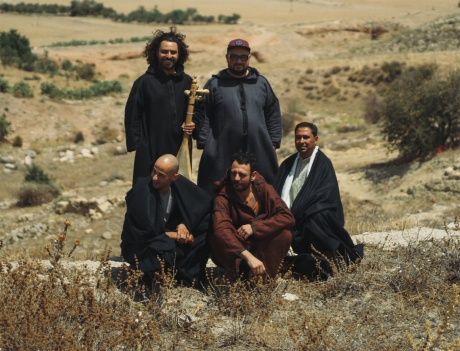
Ahh…the sounds of a dusky reedy gasba flute; the tactile patted and burnished bendir drum; the rustic, earthy strung loutar, and the flowing, scaling vocals of the Bargou 08 project’s chief instigator, Nidhal Yahyaoui, set an impressive atmosphere in the first couple of minutes of the album’s opening, Chechel Khater.
The source of this sound derives from a relatively uncharted region that lies obscured between the mountains of northwest Tunisia and the Algerian border, called the Bargou Valley, which despite its barren isolation, has cultured a unique musical fusion, stretching back hundreds of years. Captivating and magical enough in its ancestral unchanged form, the songs of the valley, sung in the local Targ dialect (a language that is one part Berber, the other Arabic), are given a contemporary jolt that transforms the atavistic paeans, odes and poetry of yore into an intoxicating swirling rapture of electronic North African funk.
In the same way that Noura Mint Seymali’s griot traditions of Mauritania were boosted by an infusion of psych and a polyrhythmic, bordering on breakbeat jazz, drums the Bargou valley’s heritage is given a fattened keyboard bassline, warping Moog oscillations and a modern production. The results are exciting and often lively. The dynamics, especially Yahyaoui’s emotionally powerful vocals, are an especially imaginative giddy thumping mix of desert rock, Arabian dance music and snake-charming mysticism. Suffused with this cocktail of sounds, each passionate evocation, learned and passed on by the village elders, begins with a signature introduction of searching, plaintive or mysterious flute before a pulsing backbeat kicks in; suddenly jump-starting and placing those songs in a modern context. Modulating between the nocturnal desert soundclash of Dek Biya and the Barbary coastal tidal motion candor of Le Min Ijina, different eras are magnificently bridged.
Honed on the road, the Bargou 08 project, conceived by Yahyaoui and steered by his musical partner and friend, keyboard player and producer Sofyann Ben Youssef, was recorded in an ad hoc manner: Youssef juggling both the recording equipment whilst playing the Moog. Yet despite its often loose and hypnotic nature, devoid of tension, this album is a highly sophisticated, joyful, groovy and tight; the musicianship first rate.
Filled with a legacy of turmoil and tension that goes back an aeon the song’s many themes, from describing a lover’s vital attributes on Mamchout to laments of alienation, resonate strongly with the growing unease of events, initiated six years ago by the Arab Spring. Tunisia itself is facing a struggle and teetering on the edge, with no guarantee that certain cultures won’t just disappear or be fragmented in the ensuing melee. Originally setting out to document his Bargou Valley home’s musical heritage before it disappeared, Yahyaoui has successfully and thankfully, with Youssef, captured this rich mesmeric culture for posterity. And in doing so, produced a masterpiece that will endure. 2017 will have to be an exceptional year if Targ doesn’t make this year’s “best of lists”; it’s certainly earmarked for ours.
Various Artists ‘The Food Of Love’
Released by Autolycus Records, via PinDrop and TMD Media, 20th February 2017

Despite being one the most laid back people I know, though judging by the multiple projects, schemes, events and albums he’s working on at any one time he may just be tired out, Oxford polymath Sebastian Reynolds is in a constant state of ennui. He made the TOF column four times in a row last year with various remixes and productions including the multimedia Thai meets West production Mahajanaka – a collaboration fusion of both traditional Thai forms and Western contemporary dance and music, which reinterprets the ancient stories of Buddha on his multiple incarnations journey of perfection towards becoming fully enlightened. In between his roles as a promoter and head honcho at PinDrop, Seb’s set to release a pair of solo albums, Remembrance and Epiphany, later in the year. It is once again in his role as both a performer and instigator that sees him, alongside Tom McDonnell of TMD Media, commission and curate a celebration of the great bard Shakespeare.
Originally part of the wider Oxford Shakespeare Jubilee festival programme in 2016, the adroitly conceived compilation has had some trouble with its official release date, being put back and now hovering over January ready to drop at anytime. But the wait has been worthwhile. The twelve-strong track list features an inspired choice of both Oxford locals and carefully plucked international artists interpreting, transmogrifying and playing around with both the most fleeting and integral songs performed or merely referenced in Shakespeare great cannon of work. In what is now an obligatory requisite, Seb performs with both the electronic-indie outfit he’s been a member for years, Flights Of Helios, and as one half of a unique collaboration with Food Of Love project partner McDonnell, under The Children Of The Midnight Chimes appellation. The first of these is a constantly evolving alternative indie and trip-hop dance peregrination of I Loathe That I Did Love from Hamlet, the latter, is a heavy, thick supernatural vortex drone representation of O Death, Rock Me Asleep from Henry IV Part 2. Considering its source is “allegedly” from a poem written by the tragic fateful Anne Boleyn on the eve of her execution, this abstract soundscape, which features shrouded in the ether vocals from McDonnell, is like a haunting: the unrested spectre of Ann caught in perpetual anguish.
Equally good at removing the original material from any sort of familiarity, taking it over the threshold into alien realms, steam-punk maverick and musical contraption inventor Thomas Truax transforms the Tudor court stalwart Greensleeves into a ethereal cosmic trip abroad Gene Roddenberry’s Starship Enterprise; landing on The Tempest inspired Forbidden Planet. David Thomas Broughton meanwhile closes the album with a ten-minute experimental finale, reinterpreting Lawn As White As Driven Snow from A Winter’s Tale. Sounding like multiple takes of the same song, set into motion at different times and played all at once, Broughton impressively weaves all the discord, overlaps and amorphous bleeds together to create a drifting, sometimes anemic panoply.
In a more congruous manner, closer to the times they were written in, the Scottish troubadour Alasdair Roberts, with only the minimal though attentively atmospheric “historically accurate” lute of Gordon Ferries to back him up, steps straight off a Tudor tapestry to coo in an atavistic lulling timbre the “oblique” referenced Caleno Custure Me from Henry IV Part 2. Elsewhere the tone is of a folksy twee yet often stark and ominous droning beauty. A Highland imbued version of Strength In A Whisper, from Much Ado About Nothing, by, another Scott, the folk songstress Kirsty Law, and a stirring quivered Celtic orchestral treatment of Bonnie Sweet Robin Is To The Greenwood Gone, from Hamlet, by the Dead Rat Orchestra both share hints of Jed Kurzel’s mesmerizing score for the 2015 movie version of Macbeth.
Missing unfortunately from the line-up, the classical folk legend John Renbourn sadly passed away before recording his contribution. The Food Of Love is as a result dedicated to his memory. And it is a touching tribute but most importantly a successful exercise in bringing vitality to Shakespeare’s yellowed parchment; lifting what were in many ways just fleetingly touched upon songs to life.
Delicate Steve ‘This Is Steve’
Released by ANTI-, 27th January 2017
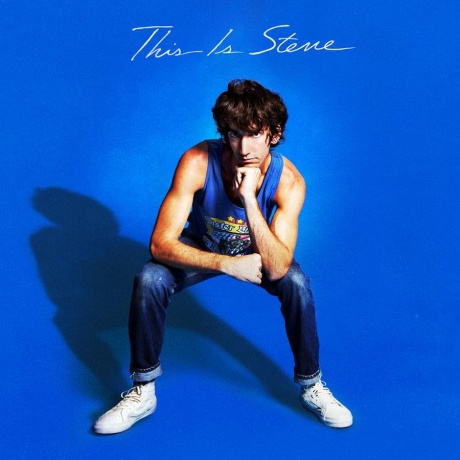
I must confess. Delicate Steve (as he’s known) has until now escaped my detection. The accompanying bio however offers an impressive resume, listing David Byrne, The Dirty Projectors, Lee Ranaldo and tUnE-yArDs as admirers and collaborators. As a testament to Steve’s range, the erudite guitarist and songwriter has “cut records” with both Sondre Lerche and Death Grip’s Zach Hill; and recently appeared playing guitar on the new Paul Simon record.
His first solo album in four years, and the first for the Anti- label, This Is Steve is billed as an “introduction” from the artist to you, the audience. A one-man band, producing and playing everything himself, Steve’s peaceable, often acid-country and surf twanged jaunty and ruminative, guitar themes run through an eclectic array of genres without settling on any specific. The signature cosmic swirling phaser guitar effect and intricate but relaxed perusal technique apes a number of other instruments, including the sitar on the opening glam-psych wilderness of Animals, the zither on the George Harrison exotic bluegrass walk along a California boardwalk Winners, and a Theremin on the nocturnal slouchy candor Nightlife.
Untethered as such; meandering mostly, but at times more forcefully careering through expressions and moods, Steve is scuzzing down ZZ Top’s highway towards a Todd Rundgren drive-through one minute (Cartoon Rock) and yearningly picking out a poignant personal Woodstock gospel anthem the next (This Is Steve).
Despite it being an entirely instrumental affair, you may find yourself singing along. And that’s due to each song’s uncanny familiarity, but also down to Steve’s personable touch, unguarded, channeling a lifetime of both conscious and unconscious melodies and articulating them in his own unique manner.
Emptyset ‘Borders’
Released by Thrill Jockey, January 27th 2017
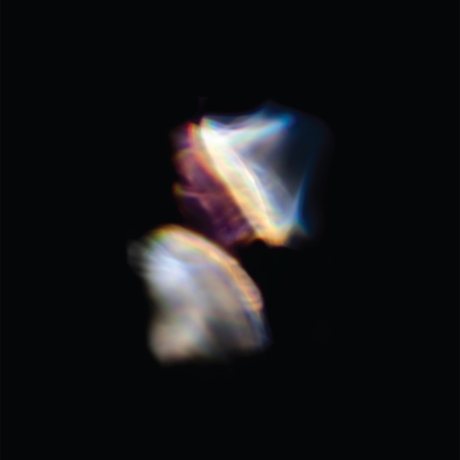
Transmogrifying, compressing and distorting their chosen “tactile” instruments (which include a six-stringed zither-like contraption and a drum) through vintage analogue equipment, the Emptyset duo perform a live contortion of fuzzy and frazzling trepidation on this latest conceptual offering, Borders.
Commissioned in the past to articulate musically and sonically the abstract; Emptyset have produced successful reification suits, with a number of self-imposed rules, from a number of architectural spaces, including the decommissioned Trawsfynydd nuclear power station and the neo-gothic Woodchester Mansion. This time around, sat in a Faraday cage as towering metal leviathans communicate with each other overhead, James Ginzburg and Paul Purgas set themselves another series of prompting parameters to work within. On this particular score the duo focus on subtly adjusting the timbral qualities of their performance, for an often ominous concatenate series of sonorous and abrasive evocations.
Though Borders doesn’t seem to offer a specific architectural environment; it evokes instead an electrified industrial-scarred force field of dread. Sounding not too dissimilar to Sunn O))) making a cerebral techno album on Basic Channel, the eleven-track soundtrack is suffused with long drawn-out pylon throbbing rhythms, seething and flexing with various fluctuated menace. Descent for instance opens the furnace door of a machine-age fire-breathing Moloch, whilst Speak brays with a monstrous didgeridoo-like rasp.
The album is a heavy dose of bestial sizzled magnetic crackling and giant rumblings; an electrified fence of static doom, both highly atmospheric but also teasing with anticipation.
A Journey Of Giraffes ‘F²’
Self-released, January 11th 2017
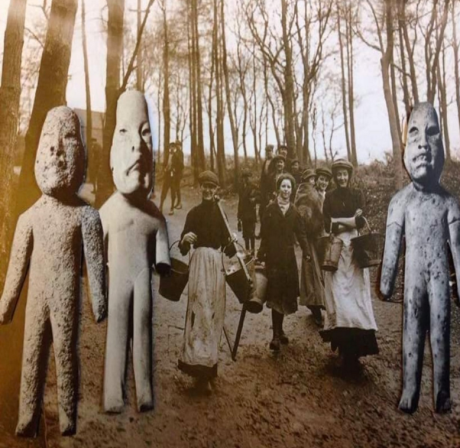
A Journey Of Giraffes’ John Lane has come a long way since his chirpier and languorous lo fi Beach Boys (circa Pet Sounds and SMiLE) inspired renderings and washes. Now almost fully immersed in the esoteric; exploring strange new soundscapes, Lane takes “a long walk into the deep forest” of his Maryland, USA home for something approaching the supernatural. Those California vapours of old do still linger, though removed even further, lost on a swell of reverb, Foley sounds and a heavy miasma of abstracted experimentation. A leitmotif of field recordings from the Hampton’s Cromwell Valley Park underpin this latest journey: the trampling underfoot of the valley floor and, threatening to blow us off-course, gusts of wind create an environment that sounds like an ominous meander into the Blair Witch Project.
Best described as Coil picking apart Panda Bear on the way to Alejandro Jodorowsky’s Holy Mountain, F² (an element which you won’t find on the periodic table; a symbol instead that Lane uses to represent a sentiment of “family first”) features venerable monk-like chants and wordplay, subterranean echoes, Tibetan chimes and paranormal doo-wop. Hermitages, caves, atavistic idols to old gods the ghosts of previous generations that once hewed a living from the landscape and the sainted Father Damien De Veuster of the 19th century leprosy colony of Hawaii’s Molokai Island, all haunt Lane’s imagination.
Self-released via Bandcamp, almost happenstance style, this avant-garde soundtrack opus benefits from the kind of freedom that the internet can offer. However, with no restrictions and a methodology of total exploration, the album is perhaps overly long in places and can stretch the listener’s patience. Still, Lane works out his ideas and expands his sound further on every release; taking that original Beach Boys influence into seldom charted waters.
Dr Chan ‘Southside Suicide’
Released by Stolen Body Records, 24th February 2017

Like some obscure French exchange garage band of students – the kind you’d find, if it existed, on a European version of the Teenage Shutdown! compilations – hanging out in the 80s L.A. of plaid shirt and paisley bandana fatigue wearing skater-punks, Dr Chan are an abrasive and coarse mix of renegade petulant inspirations.
Essentially powered by garage rock and all its various manifestations, the group from the south of France hurtle through an up tempo and raging backbeat of The Chocolate Watch Band, Standells, Rationals, Black Lips and Detroit Cobras. The difference here is that they also throw in a miscreant Molotov of thrash punk, courtesy of Fidlar, and “death rap”, cue Florida’s $uicideboy$, into the riot. It gives the Chan’s brand of garage band mania a different intensity and drive: more screaming in a ball of flames spikiness than tripping psych.
The opening title track is a lively introduction to this controlled chaos; the distorted scrawling spunk-rockers rumbling and attacking surf, bluegrass and rock n roll in adolescent fury. It isn’t always this fast and noisy. I Can’t Change for example takes a, dare I say, poignant respite; sounding like a yearning Roky Erikson dodging the whistling drop of bombs from above.
Despite the increasingly distressed cartoon screamed resigned sentiment of the swansong, Life Is Not Fun – Southside Suicide is a blast. Riled and obviously pissed about the current state of affairs both at home and overseas, Dr Chan’s protests are in keeping with the primal spirit of rock’n’roll: fun, fun, fun! It’s a blast.
Julian & Roman Wasserfuhr ‘Landed In Brooklyn’
Released by ACT, 24th February 2017
It can hardly be denied that New York always has and always will be an epicenter of musical innovation and fusion. Sure, there’s a growing unease at not just New York but mega beacons of creativity everywhere in the West. That the artists are pushed out and forced into the outlier regions because of gentrification, high rents and a general enervation of culture. Manhattan still has the jazz legacy and sports the venues (from the Lincoln Centre to The Village), but we’re increasingly told the “action” is happening elsewhere: in the borough of Brooklyn to be exact. A sprawling region of the New York panoply, Brooklyn has become a cheaper, more viable alternative; though in the last decade this hotspot has seen a massive influx of millennials, students and creatives flood the area, and so changed the very nature of the neighborhoods and inevitably made it more expensive.
Lured to this hotspot, the exceptionally talented trumpet (though on the latest album also partial to the flugelhorn) and piano sibling partnership of Julian and Roman Wasserfuhr “land” in Brooklyn for their 5th LP together. Prompted by the German jazz label ACT, and producer Siggi Loch (one of the first to foster the brothers talent, Loch produced their debut 2006 album Remember Chet, as part of that label’s “Young German Jazz” series) the duo initially hadn’t given much thought to the project. Spurred on however by the mounting reputation of New York’s largest borough, the brothers relocated. Imbuing themselves with Brooklyn’s history and present “where the action is” status, they recruited members of David Bowie’s Blackstar backline; man-of-the-moment tenor saxophonist and bandleader Donny McCaslin and the equally in-demand, former New York native, electric and double-bass player, Tim Lefebvre. Both have, in great part due to the attention Bowie inevitably drew, helped shape the city’s persona and rep for pushing the boundaries of jazz. And here they do what they do best; lifting and taking ideas and melodies into ever more inventive directions. Consummate enough to boost the foundations, yet also erudite enough to know when to blow or noodle away ten-to-the-dozen, they prove a congruous fit. Finishing the lineup, another link to McCaslin, is supremo drummer Nate Wood, who gets the chance to showboat with a salvo of never-ending rolls and crescendos on the cover of Tokio Hotel’s power-rock ballad, Durch den Monsun – a vast improvement upon the original.
Making a final connection to the city’s wider jazz legacy; the brothers chose to record at Joe & Nancy Marciano’s legendary System Two Recording Studio; using the venerated studio’s classic ribbon mic, once owned by John Coltrane no less, and a piano previously used for concerts at Carnegie Hall. Utilizing the environment, which has seen its fair share of legendary names from the jazz lexicon record there, the quintet produced an extemporized performance. Far from rehearsed and contrived – other than the choice of covers and the odd bit of sheet music – there’s little prompting on Landed In Brooklyn. Instead we get a flowing, loose semi-improvised interplay between all involved. This method is demonstrated on the opening “ensemble sound”, Bernie’s Tune. Relaxed, springy even, Julian Wasserfuhr and McCaslin’s interweaving horn section flews impressively over a quickened backbeat to create an update on the New York siren wailed TV detective theme tune. Roman Wasserfuhr, who leads on most of the album, is deft and supple on the ivories; caressing warming with a rippling effect even though you can tell he’s working hard on some complex countermelodies.
Whether it’s been planned, or unintentionally just floated into the quintet’s melting pot sound, there are traces and nods to a number of key jazz doyens throughout. There’s purposeful, and noted in the album’s accompanying booklet, hints of the horn geniuses Freddie Hubbard and Stanley Turrentine for instance on a couple of tracks, most notably however on the nestled trumpet and swaddling saxophone – Gershwin on Blue Note – Tinderly.
Elsewhere there’s Marimba-lilted waltzes; a 5/4 timing transformation of a moribund Sting song; and a cluttering railway-track travail style meditation on America’s past segregation woes to take in. And marvelous they all sound too. There can be no denying that this is a quality line-up; musically speaking, even if the covers are hardly inspiring, this is an accomplished recording. The Wasserfuhr brothers do creative things with the scenery and mood of a hub currently in the spotlight; producing an album that arguably bridges the old with the new guard.
Le Petit Diable ‘Seeds’
Self-released through Bandcamp, available now
An important force for good on the underground Spanish music scene, predominantly in the last five years with the Krautrock and “Motor City” inspired Jinko Vilova, songwriter/musician and full-on space-rocker Ander López has taken on a new role as a troubadour for his solo album.
As demonstrated on his new collection, under the Le Petit Diable guise, López removes all but a brassy-stringed resonating acoustic guitar from the Jinko Vilova blueprint sound. Taken from the group’s previous LP, Líquid, the opening gambit, You’re Standing, is reduced from its original cosmic thickset Detroit bombast to a far more intimate acoustic affair, which sounds at times like a missing track from Can’s Unlimited Edition. It serves as a transitional introduction to ease the listener into the new raw, stripped direction. The album, Seeds (a metaphor for the ideas he’s evidently planting), has a real live quality about it, recorded in an atmospherically favourable space that lends itself to the echoing chimes and rings of his “lived-in” guitar playing.
Countering a gentler picking and plucking articulation with a mixture of attacking and ringing reverberation style rhythm guitar, López works up a fair old pace at times; filling the space when he needs to: The rebellious folk gallop, Purple Sphere, could be considered even spiky!
Vocally he channels a litany of hard-worn melancholic wayfarers; including Blixa Bargeld (Who Cast The First Stone), Nico (Snake’s Dance, Follow The Leader) and Roy Harper (My Eyes). There’s even a hint of the languid Damo Suzuki about López on the opener.
Le Petit Diable is a welcome move towards a parallel solo career; a surprise exploration and change from the music he’s become synonymous with. There is a lot of promise on this album, and the future looks bright.
Tickling our Fancy 044: Baba Zula, Piano Magic, Dearly Beloved…
January 12, 2017
New Music Reviews Roundup
Words: Dominic Valvona
Welcome back to the first review roundup of 2017, which gets off to a grand start with this dazzling cornucopia of new releases from Baba Zula, Dearly Beloved, Hanitra, Mikko Joensuu, Piano Magic, James McArthur and Pawlowski, Trouvé & Ward.
In this edition of my regular review roundup we have the grand sweeping gestures of Mikko Joensuu’s second album in the Amen cycle; the second idiosyncratic folk and country idyllic songbook from James McArthur; some tender sounds “from the heart of Madagascar” in the shape of the Island’s talented songstress Hanitra; plus a bit of hardcore from the Dearly Beloved. There’s also a trio of special anniversary releases, the first, a triumvirate of solo work from Pawlowski, Trouvé & Ward, celebrating the tenth birthday of Jezus Factory Records, the second and third mark the twentieth anniversaries of both the chamber pop dreamers Piano Magic, who have chosen to have one last fling before disbanding this year, and the polygenesis dub Istanbul outfit Baba Zula.
Baba Zula ‘XX’
Released by Glitterbeat Records, 27th January 2017

BABA ZULA. (FOTOGRAF: CAN EROK – 20.09.2016)
Bastions of a psychedelic Istanbul scene, they’ve arguably made their very own, the omnivorous Anatolian Acid Mother Temple of dub-styled Baba Zula have been melding all their many musical inspirations together for twenty years now. Co-founded by Osman Muret Ertel and Levent Akman in 1996, the kaleidoscopic group originally sprung from Ertel’s previous ZeN Outfit as a one-off soundtrack project for a film director friend. Two decades later and we can surely assume that Baba Zula won out.
Inspired by the first wave of Turkish bands, that grew out of a previous generations atavistic folk scene, in the 1960s, notably the psych pioneers Moğollar, Ertel and Akman helped revitalize an age of experimentation, lost during the tumultuous upheavals of Turkey’s coups in the 70s and 80s. Politically acute, challenging the authorities with trance-like joyous expression, Baba Zula are once again finding themselves overshadowed by developments in their own backyard. And so just when we and their comrades need them that discerning label of new musical discoveries from the African continent and beyond, Glitterbeat Records, have decided to celebrate the band’s legacy with a generous double helping of reimagined material and a whole host of transmogrified dub treatments from congruous bedfellows and admirers alike – including the Mad Professor, Dr. Das and Glitterbeat’s quasi in-house band Dirtmusic.
Choosing a unique method of documenting that twenty-year career (and counting), Ertel explains: “None of the pieces here are in their original forms. Instead, we picked remixes, re-recordings, collaborations, live tracks, all the possibilities, but none of these have been released before.”
Transformed but not enough to completely obscure the source, the first of these two CDs (or albums) travels back and forth across the decades, with the earliest example being the feverish female protagonist orgasm over a DJ Shadow backbeat Erotika Hop from 1997, and one of the latest, a nine-minute Tamikrest-on-an-exchange-trip-to Byzantine Aşiklarin Sözu Kalir (otherwise known as “External Is The Word Of Poets”). Elsewhere you’ll find the group’s biggest hit to date, Bir Sana Bir De Bana (“One For You And One For Me”) playfully re-styled as a Gainsbourg-on-the-Bosphorus duet between a French woman and an Armenian man.
Opening this meandering journey, Ozgür Ruh showcases the group’s signature languid dub sound; a free-spirited melting of ascending, whirling electric saz (a long-necked lute-like instrument), accentuated brushed bendir hand drums, longing male and female vocals and a cosmic Jamaica blown off course towards the Adriatic, vibe. However, there’s no mistaking the band’s roots on Biz Size Asik Olduk; a curious dervish romance with the candor and atmosphere of a desert blues serenaded camel caravan trail. The final two tracks are live. There’s, what sounds at first like a tuning-up session, kosmische freestyle Çöl Aslanlari performance from the Bada Bing in Berlin (handed over to Einstürzende Neubauten’s Alexander Hacke to mix) and a nineteen-minute experimental reverb-heavy dub odyssey version of Abdülcanbaz from the Piraeus Resistance Festival In Greece to lose oneself in. Both are great examples of their untethered abandon and float-y transcendental mesmerism.
The accompanying (mis)adventures in dub companion is a veritable feast of the most somnolent drifting mixes. It helps that Baba Zulu’s exotic vapours lend themselves so well to dub, imbued as they are by it. But with no limits set and with a litany of dub explorers allowed a free-reign to remodel, the band’s material is swathed in so much echo that it almost disappears into the ether.
The first few tracks are by the group themselves and someone known as “arastaman”. Reshaping their own catalogue and sound they use the lingering traces of a song and submerge beneath a smog of warbled theremin and phaser effects on Alem and cut up the vocals on a mind-bending Ufak. Guest mixes include the radical Asian Dub Foundations’ Dr Das and his Uncle style heavy shake-up of Iki Alem; Dirtmusic’s mysterious lunar sandscaped ‘Hopche’; and The Mad Professor’s quartet of polygenesis traverses: merging a South American tropical groove to the Istanbul guitar cycles of ‘Baso’ and playing with the convulsing vocals and howling calls of ‘Erotik Adab’.
To a backdrop of continued violence (at the time of going to press there’s been both the shootings at Istanbul’s Reina nightclub and the car bomb/gun attack on the courthouse in Izmir, in just the last two weeks alone) and heightened turmoil, caught in the midst of suppressive regime currently removing dissenting and alternative voices from the street with the most tenuous of reasons it’s hardly surprising that many wish to escape the realities of daily life. Baba Zula know more than most how dire the situation is; Ertel’s own late uncle, a journalist, was tortured and imprisoned for his troubles. Though highly entrancing and mostly destined for psychedelic shindigs this eclectic voyage is every bit the rallying call of protestation; just existing amounts to a form of dissention in the face of increasing nationalism. Here’s to another twenty years of stirring the omnivorous musical stew.
Dearly Beloved ‘Admission’
Released by Aporia Records, January 27th 2017
Recorded through Dave Grohl’s acquired custom-built 70s Neve 8028 analogue console, at his famous Studio 606, the desk that that facilitated Nirvana’s Nevermind has imbued the latest steely hardcore row from the Dearly Beloved duo. Still thundering along at a furious velocity, thrash-powering their way through a scowling mix of Black Flag, Black Sabbath and The Pixies, the dynamic Niva Chow/Rob Higgins gut-thumping and bewailing partnership have acquired an extra, controlled, ingredient of grunge.
More suffused, the light and shade of Admission rages in a thoughtful depth between dystopian drones and full-on esoteric rock’n’roll, ala a Mogadon induced Royal Trux in a switchblade scuffle with The Black Keys – the opening RIP track showing a flair even for southern boogie blues, albeit a very noisy one. For a band that fluidly absorbs a litany of hardcore, punk and doom influences, Admission is surprisingly melodic and nuanced. And so you’re are just as likely to hear echoes of Placebo and the Moon Duo as you are Death From Above 1979, and run through not just broody miasma moods but also fun-thrilled frolics.
Whipped into shape (not literally of course!) by Ramones and Misfits producer Daniel Rey who laid out a relentless schedule that had the duo rehearse in a East L.A. sweatbox for eight hours a day for a week, the Dearly Beloved for the first time entrusted an outsider to sit behind the controls. As it turns out, the road-tested and solid work out sessions have captured the duo’s live energy perfectly, delivering a lean, sinewy, heavy-as-fuck rage with all the indulgences and chaff taken out. That tumultuous, controlled but far from caged performance matches the turbulence of the times we’re living in.
Pawlowski, Trouvé & Ward ‘Volume 2’
Released via Jezus Factory Records, January 20th 2017
A decade on from the last Mauro Pawlowski, Rudy Trouvé and Craig Ward triumvirate compilation of solo work and to celebrate the tenure of the label vassal of so many Belgium borne alternative rock projects, Jezus Factory Records have now released a long-awaited follow up; named simply Volume 2. All at one point or another members of Belgium’s, arguably, most famous export dEUS, all three musicians have also shared a highly complex interlocking relationship; each serving together in a rambunctious myriad of side projects, team-ups and explorations, most notably The Love Substitutes, iH8 Camera and Kiss My Jazz: if anyone could ever be bothered, it would make a convoluted but interesting rock family tree diagram. Crossing over and extending beyond the dEUS hub it feels like the common bond of releasing their material on Jezus Factory could see the trio join forces at any moment.
Showcasing their individual flights of fantasy, this second volume of solo work is sometimes bizarre, often curious and occasionally silly; traversing the more serious glacial suffused drones of Ward’s four-track travail; the guitar and post-punk synth of Trouvé; and the killer-ziller-driller lunacy of Pawlowski’s imaginary 80s movie soundtrack, complete with commercial breaks!
A familiar face on the Monolith Cocktail, the erudite Scottish guitarist/composer Craig Ward was originally invited many moons ago to holiday in the Belgium city of Antwerp by dEUS and Zita Swoon stalwart Stef Kamil Carlens. Somehow instead of returning home, he stayed and signed-up for in a stint in a local band, Kiss My Jazz, before inevitably joining the dEUS fraternity; playing guitar and delivering vocals on the In A Bar Under The Sea and The Ideal Crash albums. Ward subsequently left to form both The Love Substitutes and A Clean Kitchen Is A Happy Kitchen. More recently he’s carved out a solo niche for himself with the suitably evocative ambient suite New Third Lanark whilst also running a guesthouse in his native Scotland. Earlier in 2016 he was awarded a Scottish Arts Council grant to complete his ambitious solo opus Leave Everything Move Out, which was actually recorded in France with the Grammy Award winner David Odlum. Sticking to the same tone of moody strangeness and drawn-out drones, his environmentally descriptive quartet of soundscapes cover the territory of Ash Ra Tempel and Tangerine Dream. Ward circumnavigates with a touch of subtle gravitas the mysterious veiled landmarks, circling the behemoth omnipresence of Mount Betsy; hovering In The Wet Maze; dreamily rowing the topographic ocean from Island To Any Islands; and lurking in the claustrophobic atmosphere of a Sunless compression of resonating guitar notes and heavy-leaden synth modulations. It’s classic Ward at his deepest.
Still holding down the day job as a member of dEUS, Pawlowski has really gone for broke on this compilation with his 80s pastiche soundtrack. A quick run-through of the CV is needed first before we go into the details. Pawlowski originally rose to fame in the Evil Superstars, until they called it quits at the peak of their career. He went on however to release the Dave Sardy produced album Songs From A Bad Hat and launch a string of experimental groups and collaborations, including a Dutch language folk LP under the Maurits Pauwels appellation, and the Hitsville Drunks and Gruppo Di Pawlowski (recorded incidentally by Steve Albini) projects.
Throwing a tongue-in-cheek (I assume) curveball at 80s cinema, his eleven-track mix of Casio demo display crescendos, yapping seal noises, and Carpenter meets John Hughes is pure bonkers. There’s bad acid telly binges and garbled industrial menace aplenty, but the best is saved until last with the finale firework exploding retro tribute to AM college radio rock, Starught: a mix-up of Strangers When We Meet era Bowie, The Cars, Queen and Boston, it is an unashamed punch-in-the-air love song anthem. Pawlowski’s contribution is certainly the most varied and odd, detached from the more serious and dour tones of his album mates.
The final leg, the baton handed over to Trouvé, fluctuates between the stripped guitar sounds of The Durutti Column and a 80s homage of despondent Visage and Soft Cell synth maladies. Originally a founder member of dEUS but tiring of the group’s major label success and all the bullshit that comes with it (the band’s debut was released on Island Records), Trouvé left to form the Heavenhotel Presents label and play in the Ornette Coleman inspired experimental project Tape Cuts Tape, the The Mechanics (with Pawlowski) and the “all star” improvising iH8 Camera.
With a wealth of experience and enough of an eclectic swag of influences behind him, from post-punk to avant-garde jazz, ready to surface at anytime, his twelve-strong contribution of meditative and considered explorations reflects an omnivorous craving. And so one minute you’ll hear a hint of Spiritualized or DAF, the next minute, John Cale, yet the underlying sound remains signature Trouvé.
A decade in, weary and beleaguered with the current Brexit woes (just wait until it’s actually been triggered and unraveled), Andrew Bennett’s showcase label for music from the nation that unfortunately symbolizes both the best and worst excesses of the EU, has a challenging future ahead of it. There’s no signs however of fatigue nor a dip in quality or originality; Pawlowski, Trouvé & Ward still producing the goods no matter what the augurs foretell.
James McArthur and the Head Gardeners ‘Burnt Moth’
Released via Moorland Records, 20th January 2017

Conjuring up an idyllic image of sipping Cider with Rosie on the back of Constable’s Hay Wain, Welsh-born troubadour James McArthur and his Head Gardeners troupe return with another lilting album of bucolic folk and country songs on Burnt Moth.
Following up on the Strange Readings From The Weather Station debut, which announced McArthur’s move from backing Paul Weller on drums to fronting his very own songbook, this second peaceable collection continues to wander a perpetual end of summer into early autumn seasonal landscape. Picking away and plucking attentively in the style of Bert Jansch or Mike Cooper, the serenade-style poetic musicianship on display is effortlessly timeless, yet the often meandering lyrics chime with the contemporary themes of an ever-changing society moving unabated towards a digital, even virtual, immersion: encroaching on the tranquility and earnest pastoral ideals of a slower-paced more personal interactive world, which to all intents and purposes is proving a sanctuary from the fully-connected hum of the internet.
Mostly acoustic, McArthur is also accompanied throughout by an accentuated backing of burnished and dampened drums, slowly released from its quivered tension strings (all co-written and arranged with Jim Willis, who also plays mandolin on the album), rustic pining pedal steel guitar and on the classically leaning yearned To Do the lulling coos of guest vocalist Samantha Whates. Not only assisting McArthur in the making of this album but also chipping in with backing vocals and bass on the roulette wheel of lovelorn fortune, Evens On Green, is Joel Magill of the psychedelic Canterbury band Syd Arthur.
Burnt Moth is a charming sun-dappled tapestry of McCartney-esque, and on the title track finale, Harry Nilsson (fronting a dreamy Morricone romance) idiosyncratic storytelling and musings. McArthur is in no hurry to reveal and unfurl the album’s many nuances and beauty; toiling away gently to create a most enjoyable and thoughtful songbook.
Mikko Joensuu ‘Amen 2’
Released by Svart Records, end of 2016.

The middle of an ambitious all-expansive soul-searching trilogy, the second Amen chapter finds a vulnerable Mikko Joensuu rising from the porch of his cabin retreat to step forth into the radiant majesty of the Finnish landscape. Finding an obvious awe-inspiring beauty in the stunning vistas yet equally overwhelmed, Joensuu attempts to cope with his troubled past. An epiphany if you like, the Finnish troubadour “lost his religion” a while back and has since been attempting to draw back from a mental abyss. Imbued with the candid soul and gospel of Jason Pierce’s Spiritualized and the melodious drone of My Bloody Valentine, Joensuu’s second album in this triumvirate cycle balances the ethereal with a tumultuous chorus of peaks and lows; the opening Drop Me Down opus for example gently builds from the diaphanous to a nosier cacophony of horns. Even when the fuzz, distortion and tribal backbeat dynamics are let loose the dappled light pours in.
An alternative questioning and sincere hymn supported by the North Finnish veranda, Amen 2 is a grandiose stunning visceral work of art.
Hanitra ‘Lasa’
Released by ARC Music, 6th January 2017

An unofficial cultural ambassador for her homeland of Madagascar, the sagacious and much-celebrated talented songstress Hanitra sheds light on both the personal and environmental plights of the unique Indian Ocean Island and the universal suffrage of women in the wider world on her latest album Lasa.
For many, Madagascar continues to be an enigma: Famous unfortunately as the title of a DreamWorks animation franchise, but apart from its reputation as a colourful menagerie for all kinds of exotic wildlife and fauna, it remains a mystery to many. Musically speaking it has attracted a host of composers and musicians, including the recently revived French ethno jazz maestro Jef Gilson with his Et Malagasy masterpiece.
Almost as an anthropological experiment and survey Madagascar’s isolation and history has fascinated many. Lying off the southeastern coast of Africa, it’s strategic position has made it a popular port-of-call for traders and explorers, though many literally bumped into it unaware it existed. Despite a litany of famed travellers, from the Arabs to Marco Polo, recording its discovery over the centuries, it would be France that colonized it. However, whether warranted or not, conquerors and traders alike left traces, resulting in a cross-pollination of influences including music. On Lasa you can hear this legacy well with elements of jazz, the Balearics, Arabia and even the reverberations of an old Afghanistan – resonating from the evocative sound of that country’s lute-like rubab instrument; used to plaintive dreamy effect throughout on this album – entwined with a distinct foundation of Madagascar folk and gentle African rhythms. But it’s the award-winning siren’s vocals, flexing with élan, which encompass this imbued richness. Inherently timeless, fluidly moving between cooing, almost lullaby, and effortless soaring tension, Hanitra’s voice subtly matches the themes of her album without showboating. The double-meaning title song for instance, translated from the Malagasy dialect as to “go past”, is an elegy of a sort to the French-Canadian singer Lhasa de Sela, who passed away in 2010 from breast cancer. Yet this touching tribute to a singer is far from sentimental; its Middle Eastern permutations and tenderness sweet and reflective rather than downcast and lamentable.
Soothingly in an array of colourful hues and tones, Hanitra addresses the themes of maltreatment, meted out both physically and psychologically towards women, on Eka and Avia, deforestation, in particular the devastating environmental costs of cutting down and selling Madagascar’s rosewood, on Mivalo, and another of those tributes, this time to the Vezo fishermens wives on the Island’s southeastern coastlines, eking out a hard living, on the oceanic motion Ampela. There’s celebration, paeans even, with the relaxed, lilting defense of same-sex marriage on Myriam and an invitation to dance in joyful abandon on Lalao. Whatever the emotion, Hanitra articulates her concerns and protestations with a soulful sincerity.
Lasa’s extended title is “from the heart of Madagascar”, and this is very true, yet the Island’s melting pot of musical influences and Hanitra’s own global travels mean this album is in fact universal.
Piano Magic ‘Closure’
Released by Second Language Music, 20th January 2017

Calling time on a twenty-year career with one last swansong, the Anglo-French Baroque indie dreamers Piano Magic echo the sentiments and themes of their 2000 song No Closure on their final majestic and profound album, Closure.
The self-proclaimed purveyors of “ghost rock”, formed at the height of the Britpop, have traversed and mapped out a moody romantic pathway for themselves over the years. Originally starting out as a lo-fi electronica trio in 1996, soon finding favour with John Peel, Piano Magic gradually grew into a full-on tour de force alternative rock band as the millennium drew near; recording amongst their notable cannon both a soundtrack for the Spanish director Bigas Luna’s Son De Mar and the Writers Without Homes album, which famously featured the folk legend Vashti Bunyan – who emerged from a 30-year musical silence to dust off the quelled vocal chords for the band. Still far off his critical-applauded born again renaissance as a “torch singer”, that same album also featured the dour talents of John Grant; just one of many collaborations over the years, the band also working at one time or another with Alan Sparhawk of Low, Brendan Perry of Dead Can Dance, Cornershop and Tarwater. Closure is no different in featuring a suitably congruous number of guest spots, with Peter Milton Walsh, singer of the fellow chamber pop, Australian band, The Apartments channeling Mick Harvey, and Oliver Cheer (aka Dollboy) providing a south of the Rio Grande style swooning brass accompaniment on the Choir Boys-travail-a-literary-rich-Outback Attention To Life. Offering harmonic and atmospheric support on backing vocals, Josh Hight of Irons can be heard wafting about on the album’s opening grandiose and subtle opus title track and the stripped-down electro pop, in a quasi New Order style, Exile.
Drawn to a despondent melancholy, a most diaphanous one at that, the sagacious founder member and songwriter Glen Johnson is aided in this enterprise by Franck Alba (guitars), Jerome Tcherneyan (drums, percussion), Alasdair Steer (bass) and the band’s original drummer from their debut gig at the infamous Wag Club, Paul Tornbohm, now providing keyboards. Wounded and troubled as ever by the lingering traces and ghosts of past relationships and liaisons, Johnson’s resigned poetics attempt to meet head-on those feelings he just can’t seem to lay to rest: as Johnson calls it, the “mythical formal conclusion”, the need to “move on” from broken relationships is not so easy. And so he croons, “Let’s get this thing sewn up” on the Morricone meets Ry Cooder cinematic title track, knowing full well that “…you never get closure.” The supernatural echoes of a lost love, channeled through a dusty answering machine message séance, on Landline leave the singer’s voice paled and weakened; lamenting loss form the far side of the ether. Marooned as a passive onlooker to the goings-on in the backstreets of his southeast London neighbourhood, a voyeuristic, removed Johnson (in Talk Talk mode) vanishes almost completely before our very ears. The song’s sad lyrics it must be said are a most beautiful kind of misery.
Magnificent in their despair, the musicianship poised, purposeful and subtly stirring, Piano Magic’s last ever fling is one of the band’s most accomplished, and definitely one to savour. As near perfect as any Piano Magic suite can be, Closure proves that you can perhaps after all find a satisfactory ending.
 Monolith Cocktail Blog