The Monthly Playlist For August 2024
August 30, 2024
CHOICE MUSIC FROM THE LAST MONTH ON THE MONOLITH COCKTAIL: TEAM EFFORT
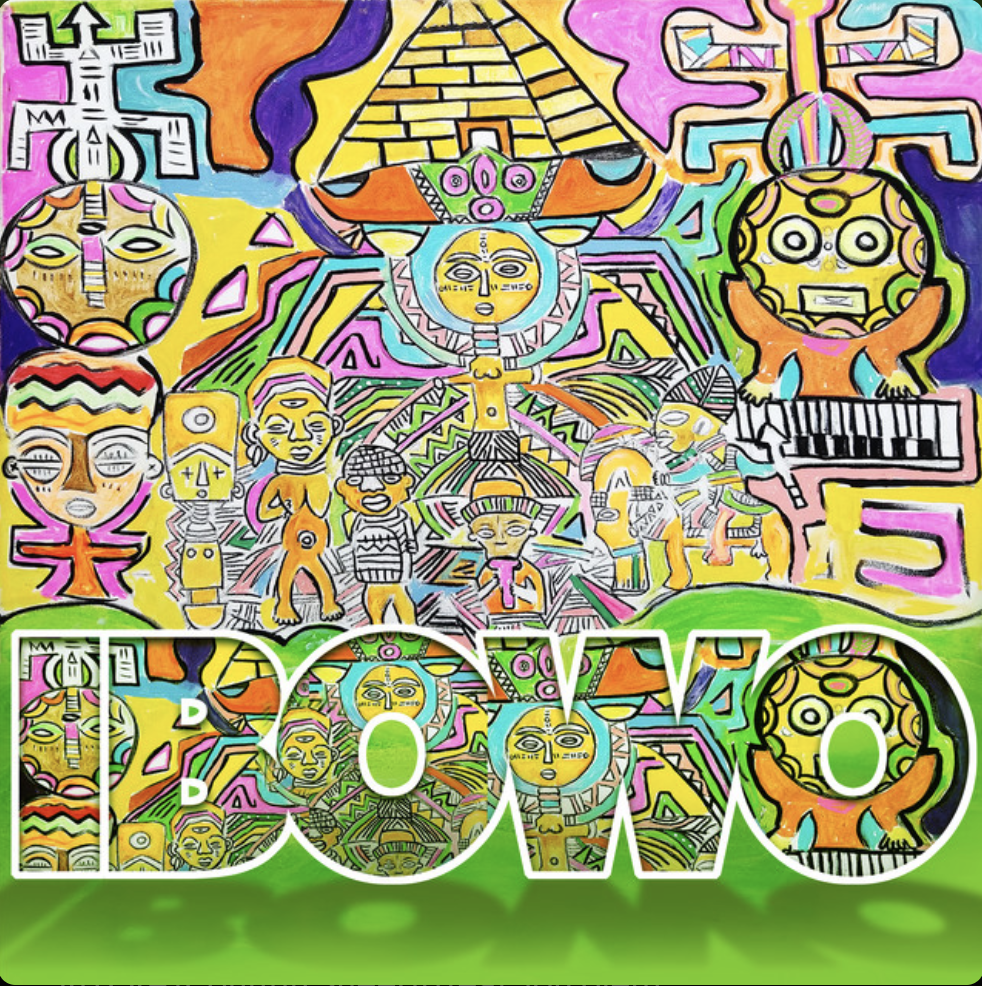
The Monthly Revue for August 2024: Thirty-eight choice tracks chosen by Dominic Valvona, Matt ‘Rap Control’ Oliver and Brian ‘Bordello’ Shea from the last month. Features a real shake up and mix of tracks we’ve both covered in our review columns and articles. We’ve also added a smattering of tracks that we either didn’t get the room to feature or missed at the time. Covering many bases, expect to hear and discover new sounds, new artists. Consider this playlist the blog’s very own ideal radio show: no chatter, no gaps, no cosy nepotism. An Oasis free zone.
TrAcKliSt
Zack Clarke ‘Alternativefacts’
Leif Maine/Jackson Mathod/J. Scienide ‘Volte-Face’
OldBoy Rhymes/Mr. Lif/Sage Francis ‘American Pyramids’
boycalledcrow ‘magic medicine’
Dead Players ‘Gasoline Sazerac’
J Littles & Kong The Artisan ‘Do The Job’
Flat Worms ‘Diver’
Fast Execution ‘Total Bitch’
The Mining Co. ‘Time Wasted’
Tucker Zimmerman/Big Thief/Iiji/Twain ‘Burial At Sea’
Alessandra Leao & Sapopemba ‘Exu Ajuo’
Randy Mason ‘Wallet Phone Keys’
L.I.F.E. Long/Noam Chopski/Elohem Star ‘Cross Ponds’
Jacob Wick Ensemble ‘Rough And Ready’
Silas J. Dirge ‘Running From Myself’
Kayla Silverman ‘Maybe’
Hohnen Ford ‘Another Lifetime’
Sans Soucis ‘Brave’
Sweeney ‘School Life’
Chinese American Bear ‘Take Me To Beijing’
Tony Jay ‘Doubtfully Yours’
The Soundcarriers ‘Sonya’s Lament’
Henna Emilia Hietamaki ‘Maan alle’
Drew Mulholland & Garden Gate ‘Tumulus’
Tetsuo ii ‘Heart of the Oak’
Xqui & Agnieszka Iwanek ‘Echoes of Serenity 10b’
Poeji ‘Whoo’
Camille Baziadoly ‘Fading Pressure’
Petrolio ‘La Fine Della Linea Retta’
Fiorella 16 & Asteroide ‘PRIMAvera’
Michele Bokanowski ‘Andante’
Jan Esbra ‘Returning’
Nicole Mitchell & Ballake Sissoko ‘Kanu’
Jasik Ft. Frankie Jax No Mad ‘Atako (Pass The Champagne)’ Apollo Brown & CRIMEAPPLE ‘Coke with Ice’
Verb T/Malek Winter/BVA ‘Rubble’
Ivan the Tolerable ‘Floating Palm’
Pauli Lyytinen ‘Lehto II’
A WORLD OF SONIC/MUSICAL DISCOVERIES AND POSSIBILITIES REVIEWED BY DOMINIC VALVONA
(Unless stated otherwise, all releases are available now)
Credit: Hanne Kaunicnik
Poeji ‘Nant’
(Squama)
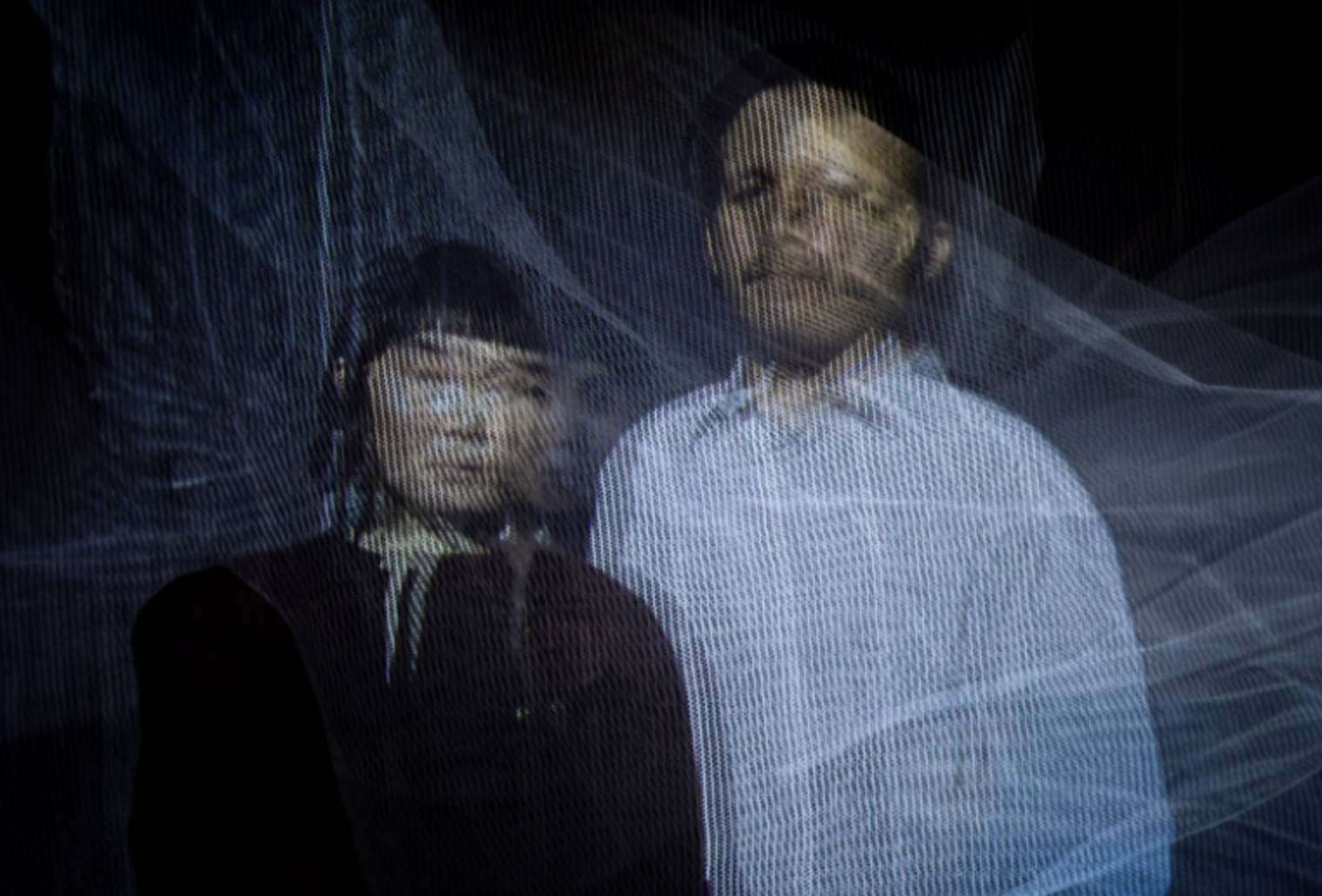
In shrouded chambers polygenesis cultures and roots cross paths and open up an amorphous portal to a unique world of redolent Asian percussion and Mongolian “urtyn duu” vocal soundings.
Making good on their cryptically coordinate-like coded 031921 5.24 5.53 EP from 2022, German drummer extraordinaire Simon Popp and the Ulaanbaatar born vocalist Enkhjargal Erkhembayar (shortened to Enji) have combined their individual disciplines and scope of influences to venture even further into uncharted territory.
For his part, the Bavarian Popp uses an extensive apparatus of hand drums and worldly sourced percussion to conjure up an atmosphere of both atonal and rhythmic (sometimes verging on a break or two) West Africa, Tibet, gamelan Indonesia and Japan. This in turn evokes a transmogrified vague sense of the avant-garde, of Kabuki theatre, of Shinto and Buddhist mysticism and mystery.
Popp’s collaborative foil Enji is a scion of the old Mongolian tradition of the Long song, a form of singing that emphasis and extends each syllable of text for long stretches of time. It’s said that a song with only ten actual words can last hours. Strong on the symbolism of the Mongolians much dependable horse, the long song form can be philosophical, religious, romantic or celebratory. Now, in a different century, Enji channels this heritage to voice, utter, accent, assonant, woo, and like breathing onto a cold glassy surface, exhales the diaphanous, gauzy, ached and comforting – the truly mysterious hummed ‘Buuwein Duu’ sounds like a lullaby.
Although much of the wording is linked to those roots, there’s an ambiguity to much of the carrying style vocals. For instance, the duo’s appellation of Poeji was chosen because it can be translated into various languages: meaning “sing” in Slovenian and roughly “poetry” in Japanese. The album title, Nant, is itself old Welsh in derivation, and can be translated as both “stream” and “valley”.
A fourth world dialect is achieved; a communication that needs no prior knowledge or understanding as the meaning is all in the delivery, emotion the cadence and largely extemporized feels and mood of the moment.
Described as working in the vernacular of post-dub and the downtemp, Nant reminded me in parts of the “tropical concrete” of the Commando Vanessa label pairing of Valentina Mag aletti and Marlene Riberio, Hatis Noit, Steve Reich and Werner “Zappi” Diermaier’s various drumming experiments as part of the faUSt duo with fellow original Faustian Jean Harve-Pèron. It is a unique conjuring of tones, textures, atmospheres, the avant-garde, the spontaneous (wherever the mood takes them) and the esoteric that won’t scare the horses. Instead, it sets a wispy, shrouded course to ventures into new realms of improvised communication; a bridging of cultures that reaches into new spheres of worldliness and the realms of new dimensions.
Raymond Antrobus & Evelyn Glennie ‘Another Noise’
30th August 2024
So tangible and effective is the clever – if taking a leap into the unknown and by chance – union between the two accomplished deaf artisans of their artistic forms that each pin-like sharp spike, each metallic shave, rattle and atmospheric undulation that builds around the unflinching candid delivery really hits hard and marks: leaves an audible impression.
The musicality, the rhythm is all in the poet Raymond Antrobus’ voice and often put-upon and sometimes self-doubting, cadence. It can’t all be put down to his deafness, but it offers something unique – although the William Blake professor of the album’s final bittersweet sign-off was both condescending and embittered-sounding in his succinct dismissal of Antrobus. I guess what I’m trying to say, is that sure the deafness is crucial, and that it opens up new or different ways of creating and circumnavigating the loss of this sense, but there is so very much more to both partners in this venture’s art form and genius that transcends the deaf condition.
Framed as it is, this inaugural collaboration between the poet and the virtuoso percussionist/composer Evelyn Glennie pushes the boundaries of poetry and sound; causing us to reevaluate our own perceptions. And with the equally acclaimed – and no stranger to this blog, as probably its most prolific featured artist/producer – in-situ producer Ian Brennan on board there’s an authenticity to what develops from the readings and mostly improvised percussive soundscapes.
Both partners on this evocative project can hardly be said to have a condition, a disability, or suffer for it. Glennie especially, through her old teacher Ron Forbes during her formative years, learnt to hear sound through different parts of her body: a physical response and channeling of sound that has helped and shaped the star percussionist to become one of the world’s greatest living musicians.
Unencumbered, the poetic language conveys, describes that unique relationship with sound, music and noise. The opening tubular shaken and spindled ‘The Noise’, which features the wooing, near ethereal sweet hummed undulations of guest artist Precious Perez, is the most obvious example of this. Rather importantly, the classically trained but eclectic Latin singer/songwriter/educator Perez, who is herself blind, is the president of the RAMPD.org charity fighting for disabled performers in the arts and more access. But it is her evocative voice that is called upon to offer something approaching a subtle wooing-like hum.
Giving each poetry performance a shiver of avant-garde, concrete and abstract sound art (even near Dadaist and Fluxus), Glennie (who had no prior knowledge of the material she was contextualizing or sounding) uses an apparatus of spokes, chains, tubes, bells and metallic-sounding brushes to articulate but also dramatically jolt and jar the alien, the unknown, but also the disturbing. She can also emphasis a state of isolation very well too; her foil’s themes often touching on a feeling of dislocation, not only because of his own deafness but because of his mixed ethnic roots: a feeling of the other you could say; of feeling adrift of both his English and Caribbean heritage.
Antrobus is unflinching on the topic of ancestral Black trauma and legacy. ‘Horror Scene As Black English Royal’ is a vivid example of slavery and that heritage that the Black community feels it can never leave behind or unshackle; prompted, I take it, by the whole Meghan Markle debacle and her fleeting acceptance into English royalty before the deluge of perceived outsider, and skin colour muddied the calm waters of stiff upper lipped etiquette in the White establishment. Glennie scores this poem with an atmosphere of horror and hurt; the sound of what could be an animalistic growl and pain striking out from the torture of slavery. ‘Ode To My Hair’ meanwhile, deals with the kinks and prejudice of a said Black “throw”, with Antrobus underlying dislocation once more emphasized as Black enough to be the victim of racism, but not Black enough for some in the Black community itself. There’s also a secondary theme of reconnection, using a haircut to talk about his relationship with his father. There are a few poems like this, where the touching relationship to a loved one, a child and even a cat is poignantly open and candid without resorting to the saccharine or to platitudes.
Talking of animals, birds, with all their various connotations, feature at various points on the album; cleverly linked to the learning of signing and to the very rhythm of city life on the visceral and incredible ‘Resonance’. I love some of the descriptions on this reading, especially the lyrically language used to describe their movement, like an “uncharted astronomy”, and the way Antrobus describes city birds as a whole different species to their country cousins.
Affectionate, personal as much as near dystopian, unnerving and hurting, Another noise is unlike anything you may have heard or felt in some time. For both artists sound and speech is near tangible; something you can almost touch. A sensory experiment, this collaboration does much to push, probe and explore perceptions of language, timbre, performance and delivery. This album is nothing less than a genuine work of artistic achievement from two of the UK’s most important artists.
The Mining Co. ‘Classic Monsters’
(PinDrop Records) 9th August 2024
Continuing to mine his childhood the London-based singer-songwriter Michael Gallagher once again produces a songbook of throwbacks to his formative adventures as a kid growing up in Donegal in Ireland.
His previous album almanac, Gum Card, touched upon a silly fleeting dabble with the occult, but this latest record (his sixth so far) is filled with childhood memories of hammy and more video nasty style supernatural characters, alongside a whole host of “weirdos”, “freaks” and “stoners”.
Once more back in his childhood home, frightened to turn the lights off, checking for Christopher Lee’s Dracula and the Wolfman under his bed, yet daring himself to keep watching those Hammer house of horror b-movies, Salem’s Lot and more bloody shockers, Gallagher links an almost lost innocence with a lifetime of travails, cathartic obsessions and searching desires.
A recurring metaphor, analogy and theme of blood runs throughout Classic Monsters, whether it’s the Top Trumps ghoulish kind of youth, or the more mature, adult-themed kind found on the taking-stock, trying not to run away, ‘Rabbit Blood’. The life force is both a reminder of immortality and the source of adolescent frights.
As always Gallagher’s lyrics are layered with references and meaning, and stretch the loose concept to open-up about anxieties, growing up and both the bliss and pains of love; the alum finale, ‘Planetarium’, sets a near ethereal astrological scene from the said title’s stargazer observatory, as two star-crossed in stoned awe and wonder look up to the celestial heavens to a retro-lunar, Theremin-like voiced and ballad style piano soundtrack. Songs like that evoke Gallagher’s sci-fi passions, and alternative Dark Star songbook score fixations (see the brilliant Phenomenology album). But even though there’s a smattering of space dust, and no matter what, a musical signature that runs throughout all his work – enervated cosmic cowboy troubadour, soft rock and evocations of the Eels, The Thrills, Josh T Pearson, Rezo and The Flaming Lips – Gallagher has changed his set-up a little.
Recording back in the Spanish studio environment that has served him so well, and once again working with the musician and producer Paco Loco (credits and highlights include working with the outstanding Josephine Foster, the Jayhawks’ Gary Louris and The Sadies), Gallagher is now also backed by the Los Jaguares de la Bahía band, who bring subtle psychedelic country and alternative rock influences to the sound. The cover art, especially the lettering style, signals The Flying Burrito Brothers or The Byrds – both of which you may detect – but there’s an almost distinct CAN-style drum on the opening sparse and wisped ‘Failure’, and a touch of Bonnie Prince Billy, Phosphorescent and Fleet Foxes.
Step forward Pablo Erra on bass, Patri Espejo on piano, Esteban Perler on drums and Loco on synths and ambient effects, for they manage to seamlessly evoke Bill Callahan one minute and Lou Reed the next. And yet also sound like Joe Jackson teaming up with Nick Lowe and the Boomtown Rats – to be honest, that last reference is largely down to the piano sound. They make the vampiric and howling themed ‘Blood Suckers’ sound disarmingly like a Scarlet’s Well fairytale of sweet dreams, soothed from beneath a baby’s calming mobile hanging over the cot. Weirdly (or not) both the band and Gallagher reminded me of Elbow and David Gray on the very 90s upbeat tempo’d ‘Killer Sun’.
It’s a winning combination that expands Gallagher’s musical scope without altering his signature style and voice, feel and intimacy. I’ve said it before about Phenomenology, but I really do think this is now his best album to date. And I’m still astounded by the lack of support for his music or exposure, as Gallagher’s The Mining Co. vehicle is worthy of praise, airplay and attention. Hopefully it will be sixth album lucky for the Irishman.
Jessica Ackerley ‘All Of The Colours Are Singing’
(AKP Recordings) 16th August 2024
Gifted guitarist, composer, bandleader and soloist Jessica Ackerley adds even more colour (sometimes vivid and striking, at other times, more pastel or muted) to their pliable sonic/musical palette. Seamlessly crossing over into art – inspired in part by the arid desert outdoor symbolic and metaphorical flowerings and abstracted landscapes of Georgia O’ Keefe – the now Honolulu-based musician turns markings and sketches into both untethered performative compositions that traverse the avant-garde, jazz, blues, experimental rock, R&B and the virtuoso. O’ Keefe’s “to see takes time” wisdom is used almost like a catalyst for the album’s articulation and more energetic ways of seeing.
Recorded in the unceded territory of the indigenous Kanaka Maoli, in the Mānoa Valley (one of Hawai’i’s venerated mythological creation story landscapes) All Of The Colours Are Singing filters an inspiring geography, sense of time and place whilst also channeling Ackerley’s synesthesia – hence that title.
With a rich CV of performances (from John Zorn’s The Stone to The Metropolitan Museum of Art) and projects behind them (from their extensive catalogue of eclectic work with such notable musicians as Marc Edwards, Tyshwan Sorey and Patrick Shiroshi), it’s no wonder that Ackerley manages to attract a talented pool of collaborators or foils. Step forward Walter Stinson on upright bass, Aaron Edgcomb on drums and Concetta Abbata on alternating violin and viola. Boundaries are crossed and blurred with this ensemble on an album of varying beauty and wilder improvisations; an album in which subtle sensibilities are comfortably followed by challenging free expressions of fusion and freeform progressive jazz. If there was an underlying genre or influence sound wise, then it must be jazz in its many forms, with echoes of the Sonny Sharrock Band and Philip Catherine, but also shades of the noirish, the smooth and more impressively quickly played and bent-out-of-shape kinds. Edgcomb’s drums can add to the jazzy feel, but also sieves, brushes and sweeps across the snare in a more tactile fashion – almost like applying brush strokes at times. It might just be me, but he reminded me of Guru Guru’s Mani Neumeier on the changeable in tempo and style, jazz-fusion ‘The Dots Are The Connection’.
But then there’s the near sweetly hummed and dreamy intro to that O’ Keefe borrowed title quote, and then what sounds like Tuareg desert or Songhoy blues guitar on the first part of the ‘Conclusion: In Four Micro Parts’ finale – this soon develops into a bout of buzzy intense Yonatan Gat experimental physical rock. That use of strings obviously steers the music away from the jazz sound towards the classical and chamber. Abbato, subtly reinforcing or emphasising the moments of grief, mourning and thoughtfulness, can both articulate dew being shaken off fluttered shaken feathers and stretch, strain and fray the violin and viola in a more avant-garde fashion – reminding me of Alison Cotton, Alex Stölze and, although she is a cellist, Anne Müller. Ackerley uses the guitar like an artist’s brush stroke, whether it is in a frenzy or blur of abstract or rapid markings and swishes, or more placed and calming. Invoking such refined and experimental bedfellows as Joe Pass, Marisa Anderson, Bill Orcutt, Chuck Johnson and the Gunn-Truscinski Duo, they walk a unique personalised pathway between medias and art forms to showcase and push at the boundaries of artful guitar-led performance and inner emotional workings.
Drew Mulholland & Garden Gate ‘Night Blooming Flowers’
(Subexotic Records) 23rd August 2024

Serial offenders of occult sounds and more nostalgic early analogue and library music, the transatlantic sonic conjuring sparring partners Drew Mulholland and Timmi Meskers have coalesced their individual disciplines for a suitably atmospheric esoteric soundtrack of retro horror novelties and pastoral chamber folkloric magik.
By candelabra light Meskers’ Garden Gate alter ego is called upon to bring a certain ethereal apparitional siren allure, enchantment and vintage, and bowed classical heightened spine-tingles and spooks to Mulholland’s BBC Radiophonics Workshop and his very own Mount Vernon Arts Lab project style electronics.
The University of Glasgow lecturer and composer-in-residence and his American “Baroque psych/horror savant” foil don’t do things by halves, having written a mini synopsis storyline of a kind for the protagonist of this horticultural paranormal and dream-realism tale. The title more or less tells you all you need to know: that is, a search and waylaid adventure to find the rarest of flowers, the botanist’s precious treasure, that only bloom’s at night. In between the start of a expedition and the final unveiling of this sought-after flower, there’s many a misstep along the pathway, as the dark arts merges with pagan and idyllic folklore to drag our main character into various spellbound jeopardies, fairytales and hallucinations.
Imbibed and inspired by a number of sources, one of Meskers most notable is the late British historian Emma Wilby’s Cunning Folk And Familiar Spirits: Shamanistic Visionary Traditions In Early Modern British Witchcraft And Magic tome; the central propound argument of which is that early modern beliefs and witchcraft were influenced by a substratum of shamanistic beliefs found in pockets of Europe – of which they are many detractors. You can throw in the Tarot and what musically sounds like to me the cult British horror soundtracks of the Amicus and Tigon studios, Dennis Wheatley, Isobel Gowdrie and a whole woodland of sprites, fairies and mythical beasts.
Altogether, with both partners’ range of influences, the soundtrack shivers, creeps and in both a supernatural and merrily manner merges the otherworldly analogue-sounding atmospheres of Belbury Poly, The Focus Group, Pye Corner Audio and Bibio with the pastoral willowy tapestries and bewitching spells of Tristram Cary, Marc Wilkinson, James Bernard, Harry Robinson and Sproatly Smith.
From dramatic stiletto piano and meanderings amongst the grass snake foliage and Piltdown Man decorated hilltops, to more hallucinatory passages of enticement, each piece of music conjures up a scene or chapter in a larger idiosyncratic tale from the pages of the Fortean Times, King James’s Daemonologie or pulp supernatural fiction. As Hauntology projects go, Night Blooming Flowers is a retro-styled success of subtle but effective storytelling, mystery and cult references; a soundtrack that now needs a film to go with it.
Asteroide & Fiorella16 ‘Suni A Través Del Espejo’
Downtime ‘Guts’ (Cruel Nature Records)
Through the various sonic peregrinations, noises and protestations of their extensive roster, the Northumberland diy label Cruel Nature travels between the hard bitten dystopias of life in a modern fractured state to more fantastical climes out in the expanses of space. Keeping up a steady prolific schedule each month, the label covers everything from the psychedelic to riled punk and societal angst.
Just dipping into the July haul of releases, I’ve picked out two albums from the mysteriously cosmic and krautrock imbibed camps; the Peruvian pairing of the Asteroide duo and Fiorella16’s Suni A Través Del Espejo and Downtime’s seemingly uninterrupted one-take Guts jam.
The former channels the psychogeography (both atavistic and otherworldly) of the Andean Altiplano, which spans Boliva, Chile and Peru. A natural phenomenon, the Altiplano (from the Colonial Spanish for “high plain”) is the most extensive high plateau on the planet outside of Tibet. It encompasses a whole high altitude giddy biosphere of pristine environments: from the famous Salar de Uyuni salt plains to Lake Titicaca – one of the main hubs along its banks, Puno, is where one half of this collaboration, the indy rock siblings Asteroide, hail from. “Through the looking glass” (as that album title translates), alongside sonic foil José María Málaga, aka Fiorella16, they magic up a highly mysterious communion with the elements and the forms, the ghosts and the extraterrestrial bodies that flicker in and out of the consciousness; that appear like dizzy, lack of oxygen and air, hallucinations and mirages.
A biomorphic score created in-situ, the properties of water, the season of Spring and a hilltop suddenly sound like the cosmic whirrs of UFOs, alien transmissions and caustic stirrings from the belly of volcanic chambers. A mixture of Steve Gunn and The Howard Hughes Suite-like post-rock Americana and harder Sunn O))) and Gunter Schickert guitar and synthesised atmospherics, generators, oscillations, satellites and Throbbing Gristle coarseness build up a near esoteric, primal communication with the plateau’s guardians. The finale, ‘PRIMAvera’, with its ‘Jennifer’ style reverberated throbbing wobbled bass, sulfur waves and data exchanges, finds the collaborative partners finally beamed-up via the tractor beam to some subterranean alien dimension.
A little bit different, though there are some krautrock-style overlaps, the “power duo” Downtime orbit head music space on their latest just-let-the-tape-record-whatever-emerges-from-an-intense-heavy-jam-like-session. Over forty minutes of edited thrashing, kraut/heavy/acid/doom rock, the participants in this expulsion of energy channel everything from the Boredoms, Acid Mothers Temple, Zeni Geva, Hawkwind, Ash Ra Tempel and Boris.
In a cosmic vacuum, near virtuoso fuzzy and scuzzy soloing and ripping phaser and flange guitar and tempo-changing beaten, crashed, squalling drums and acid galactic effects create a heavy meta(l) space rock behemoth of interstellar proportions.
A mere whiff of what to expect from this label’s catalogue, both albums are worthy of your credit and spare change.
Zack Clarke ‘Plunge’
(Orenda)
The critically hailed pianist-composer, New York improvised jazz scene stalwart, and bandleader Zack Clarke finds ever more inventive and omnivorous ways to push both the jazz form and his studied instrument on his latest album for the Orenda label.
“Building” (to paraphrase the album notes) bridges between groups of people, and cleverly merging the intelligent dance music movements with cosmic-funk-jazz, hip-hop breaks, prog and both classical and avant-garde forms, Clarke takes the proverbial “plunge” and resurfaces with a sometimes fun and at other times intense serialism of either spasmodic and stuttering or free-flowing discombobulating performative fusions.
Using modern production methods and a whole kit of tech, Clarke takes the idea of jazz in its earliest incarnation as dance music and runs with it; aping the minimalist techno and electronic rhythmic off-kilter mayhem of such iconic labels as Warp through an effects transforming removed version of the piano.
Dashed, chopped and cross-handed sophisticated modal runs and the piano’s very guts (its inner wiry stringy workings played at times almost like a splayed mallet(ed) chiming dulcimer) work with varied combinations of breakbeats, clattered, rattled, splashing and electronic padded drums and what sounds like 303 or 808 electro synths across a generous sixteen tracks.
At times all this sounds like Keith Jarrett corrupted by Drukqs era Aphex Twin; or like µ-Ziq fucking around with zappy-futuristic Herbie Hancock; or even Zappa jamming with Chick Corea. But then certain compositions (if that’s the appropriate word) reminded me of The Bad Plus, of Radiohead In Rainbows, of Mantronix, Squarepusher and Andrew Spackman’s Sad Man alter ego. It might only be me, but album finale ‘ANTHEM’ sounds like Abdullah Ibrahim transduced through d’n’b and breakbeat filters.
There’s a lot to unpick, to absorb, but weirdly enough Clarke’s inventive intentions are successfully accomplished as he bridges the avant-garde and jazz with a spectrum of fusions and experimental technology to produce a unique vision of dance music for a new century.
___/+ THESE RECOMMENDATIONS IN BRIEF
Any regular readers will know that I pride myself in writing more in depth purview-style reviews with a wider context. This means I naturally take more time and effort. Unfortunately, this also means that I can only ever scratch the surface of the thousands of releases both the blog and I get sent each month. As a compromise of sorts, I’ve chosen to now include a really briefly written roundup of releases, all of which really do deserve far more space and context. But these are recommendations, a little extra to check out of you are in the mood or inclined to discover more.
Poppy H ‘Good Hiding’
ALBUM (Adventurous Music)
In a constant artistic flux, the idiosyncratic trick noise maker and musical statements composer Poppy H always manages to embody a whole new sound with each release and project. The latest is no different for being different in that regard. A Good Hiding (a reference to taking a good beating or kicking, or just literally a “good hiding place”) is both a studied and beautifully evocative chamber haunting of removed folk and traditional ideas, windy funnelled atmospheres, low key padded bobbling and spinning electronics, voices and whispers from the air, ghostly classical piano and suffused ambient drama. To truly articulate the elegance, near Gothic mystery and dreaminess of it all would need far more words and depth: a real long form reading. But hopefully this will be enough to whet the appetite, as this is a very good album indeed.
Cumsleg Borenail ‘Broadmoor Time’
TRACK/VIDEO
Prolific instigator of phantasmagoria electronica Cumsleg Borenail is at it again with another fucked-up nightmare of sonic disturbance. As you may have rightly guessed from the title, this ominous, scary score channels the abusive, harrowing pained psychogeography of the infamous high-security psychiatric hospital in Berkshire, England. A right rogue’s gallery of inmates has occupied this facility over the decades; some of the UK’s very worst and unhinged offenders and murderers. And you can read much into the reasons behind the subject matter, the mental health care aspects and treatment especially, but it is a very haunted soundtrack of the recognisable made otherworldly, scaly and metallic.
Pauli Lyytinen ‘Lehto/Korpi’
ALBUM (We Jazz) 30th August 2024
Conjuring up a whole eco system of forest canopy menageries and lush greenness, the Finnish saxophonist Pauli Lyytinen sets out a “deep forest grove” biosphere of fertile heavenly auras and bird-like reedy probes on his solo debut for the We Jazz label.
A moiety of Don Cherry, both 60s hippy idealistic eco-friendly and more divine Biblical MGM sound studios soundtracks, cylindrical Fourth World blasts, and hints of Stetson and Brötzmann, Lyytinen’s saxophone positively sings on the wing whilst opening a blessed environment. Mentioned in the references, and on the nose, our fluttered, feathery saxophonist has Evan Parker’s own bird songs down to a tee. An unassuming charmer and yet full of experiment and organic untethered freedoms, Lehto/Korpi is far too good an album to be missed or overlooked.
Hi, my name is Dominic Valvona and I’m the Founder of the music/culture blog monolithcocktail.com For the last ten years I’ve featured and supported music, musicians and labels we love across genres from around the world that we think you’ll want to know about. No content on the site is paid for or sponsored and we only feature artists we have genuine respect for /love. If you enjoy our reviews (and we often write long, thoughtful ones), found a new artist you admire or if we have featured you or artists you represent and would like to buy us a coffee at https://ko-fi.com/monolithcocktail to say cheers for spreading the word, then that would be much appreciated.
 Monolith Cocktail Blog