THE MONTHLY DIGEST INCLUDES A CLUTCH OF ACCUMULATED NEW MUSIC REVIEWS; THE SOCIAL INTER-GENERATIONAL/ECLECTIC AND ANNIVERSARY ALBUMS CELEBRATING PLAYLIST; AND CHOICE PIECES FROM THE ARCHIVES.

(Photo by Todd Weaver)
___THE NEW___
Ingebrigt Håker Flaten’s (Exit) Knarr ‘Drops’
(Sonic Transmissions) 22nd August 2025
Growing, developing and expanding the remit from what was meant to be a one-off commission, brought together especially for the Vossajazz Festival, the troupe is now on its third titanic fusion rich studio album proper. Set in motion by Ingebrigt Håker Flaten (who also runs the Sonic Transmissions label, home to the ensemble’s recordings) a number of years back, the (Exit) Knarr now acts as the ‘main creative vehicle’ for the Norwegian bassist going forward it seems.
Settling with a reasonable lineup on this third chapter but inviting in a number of guests on the album’s statement piece, a transformed vision of jazz deity Wayne Shorter’s ‘Deluge’ piece from the revered and influential 1965 album release JuJu, on this outing the sextet takes prompt or inspiration from a more visual source. In the sphere of the Russian maverick abstract visionary and Bauhaus professor Wassily Kandinsky and Swedish mystic and abstract progenitor – some would say the true and first ever abstract artist, beating her peers (Malevich and Mondrian) to pure abstraction by a few good years – Hilma af Klint, a number of graphic scores have been used to foster untethered freedoms and play from a group already in the freeform mode. In one way, addressing perhaps the lack of knowledge, the place in which she should stand, there’s an unsaid elevation of Klint, an early adopter of the very spiritualism, Theosophy, that first led the way for Mondrian and many of his circle to dare to strip away every last visage, reference of the world for abstraction. Arguably Klint can be said to preceded Kandinsky and the others to this goal. And her work is filled with the iconic circular shapes, the colurs that would go on to inspire Sonia Delaunay and many others.
As a visual methodology, these scores go some way to painting a reification of a partly live studio performance and the ‘tweaked’ effected and transmogrified aftermaths.
Bringing together Amalie Dahl on alto, Karl Hjalmar Nyberg on tenor and electronics, Marta Warelis on piano and also on electronics, Jonathan F. Horne on guitar, Olaf Olsen on drums and of course IHF on what sounds like both electric and double bass, the album divides two longer form performances with a couple of shorter pieces. Speaking the experimental language of Anthony Braxton with garbled, hysterical and squeezed abandon, and inspired by the equally freeform pioneering Mats Gustafasson and his No Ensemble, the ensemble open with an already mentioned version of Shorter’s ‘Deluge’; taking the original’s more controlled bluesy swing style of simmering and serenaded and crooned sax for a tumultuous ride on the open seas of both discord and crested freefalls. It starts with twisted guitar wire grabbing and neck sliding and incipient tethered drums but soon develops into a recognisable, familiar feel before numerous swells and peaks resemble a fusion of the Henry Grimes Trio (cicra ‘Fish Story’ if we’re being specific), Rashied Ali, the Anthony Braxton Quartet, Keith Jarratt and Darius Jones. Wild in places, with the guitar going on to sound like a sci-fi dialect of tabbed beeps and switches, and the horns squeezed until the pips fall out, the action is shared out equally between all participants without losing a single instrument.: and that’s when you consider there’s also the guests, Mette Rasmussen on a second alto and a second drummer, Veslemøy Narvesen added to that untamed tidal wave experiment.
The album title is next. A change of a kind in tempo and thought this shorter composition articulates those droplets in various ways on a performance that sounds more open air than studio recorded. The sound of a dragon fly’s wings in rapid hovered form hangs around in a chamber-esque atmosphere of musing and pondering. Part JAF Trio, part ECM and part classical-minded jazz of a certain vintage, the gentle cascade of drips and drops fall very nicely and mysteriously on this Scandinavian ice float.
A second centrepiece if you like, ‘Kanon’ is dedicated to the renowned Norwegian drummer, composer and free jazz improvisor of note Paal Nilssen-Love. From his parents famous Stavanger jazz club located incubator to the capital and onto wide world recognition, Paal played with such notable company as Mats Gustafasson and Peter Brotzmann’s Chicago Tentet, before going on to set up his own All Ears festival. As an inspiration to a generation of Norwegians, Paal’s influence is huge. And in this mode, at this time, the sextet conjures up a semblance of his artform and free experimentation. But first, it all starts with some speaking panning of a curled up rattling drum roll, the quivers and quavers of the piano and what could be the attempt to match the sound of a buzzing bee. But it all soon develops into a wilder proposition of Masayuki Takayanagi, Eric Dolphy (I’m thinking specifically here of Out To Lunch!), Roscoe Mitchell, Andy Haas, Bill Dixon and Last Exit. It keeps changing; whether that’s in the action, dynamics between players, the tampering down parts that then peak into hysterical cries of squeezed, rasped and the burbled. A surprising passage of play even takes on a Lalo Schifrin vibe nearer the end.
The finale is left down to a performance that’s manipulated (or ‘tweaked’ as it’s written here), stretched out and elongated into a sci-fi hallucination. As if being treated and remodelled in real time, it sounds like the band is being pulled via a prism into the mirror backwards. It reminded me of the We Jazz label and their own retreated, remixed projects over the years. But stands as a more electronically led production that offers up a slightly off-kilter and magically alien version of their sound.
Ingebrigt Håker Flaten’s (Exit) Knarr colour new directions with an extended palette of ideas and sounds; heading towards breaking point before returning back to a recognition of the free form jazz movement that we can recognise. Source it out.
Andy Haas & Brian g Skol ‘The Honeybee Twist’
1st August 2025
Striking up an online and postal friendship since first writing about the highly experimental saxophonist, trick noise maker and effects manipulator when touring as a band member with Meg Remy’s Plastic Ono Band-esque U.S. Girls a few years before Covid, the former Muffin, NYC side man to the city’s attracted maverick luminaries of the avant-garde and freeform jazz, and prolific collaborator with Toronto’s most explorative and interesting artists, has sent me regular bulletins (and physical copies) of his various projects. Some have been in the solo mode, others with friends, foils and collectives.
Running off just a smattering of those releases (a majority of which have been with the highly obscure Resonantmusic imprint) from the last decade or so, and you have three extraordinary albums with the stringed-instrumentalist Don Fiorino (American Nocturne, Don’t Have Mercy and Accidentals), various appearances on records by Matt ‘Doc’ Dunn’s The Cosmic Range, the warped and discombobulating For The Time, Being solo act, and the avant-garde improvised performative triumvirate of SCRT with regular collaborator David Grollman and Sabrina Salamone.
Andy Haas now partners up with fellow Toronto native Brian g Skol for an unusual duet of saxophone and drums. Although it was recorded back in that city in 2024, the finished concentration and spatial experiment is now seeing the light with an official release via Haas’s own Bandcamp profile. I’m glad it hasn’t disappeared into obscurity, as it is one of the best, most radical but surprisingly rhythmic and pumped, worldly sounding album’s he’s made; much of this is down to the visual artist and percussionist/drummer Skol’s expressive and grasp/ear for international influences of rhythm, from both the Latin and Afro-South American to North Africa and the influence of Jaki Liebezeit.
The Honeybee Twist is a strange union between two instruments seldom pitted against each other; certainly not in this setting, with Haas once more wildly controlling the panning of his serialism style and both atonal and shrilling, bristled circular breathing sax and Skol combining hand drums, various percussive elements and drum kit breaks to provide a beat, a groove or more sporadic passages of the tactile, textures and tumultuous.
From nothing, reifications of the fire thief Prometheus, compounds, a vertical axis used in a 3-D space to show depth and elevation, self-assembly and play of words take some form of shape across an album of mystery, extemporization, and musing. Whilst stirring up these evocations, these reference points, both players traverse and kick around Arabian landscapes, Jon Hassell’e fourth world, the extremes of Eric Dolphy, Albert Ayler, Sonny Simmons, Andrew Cyrille and Evan Parker, and the factory. The opening mythologically entitled ‘The Eagle And Prometheus’, sounds like a sax and drums transmogrification of Battles; leaping straight in with beating drums, splashes of cymbal and that signature circular breathing technique. This is where I believe you can hear an echo of Saw Delight era CAN relocated to Egypt or the Arabian souk: Haas’s sax starts to sound more like a shrilling vibrating mizmar or even a zurna, and Skol’s drums could be mistaken for the daf and riz on occasion.
Against the near constantly moving, feeling and exploring drums and percussion, Haas’s effected sax goes from blues to freeform jazz, to reflections and colloquy and soliloquy. There’s a harshness and roughness at times to that instrument as it goes through various warbles, buzzes, rasps and drones.
Despite the title of ‘Maybe I’m A Machine’, there is no mistaking that this is a very human interaction between two highly experienced experimental artists circumnavigating any kind of easy label, demarcation. The notes of an abstract nature bristle, vibrate and trill to a near amorphous global rhythm on a most experimentally original collaboration. Please seek it out.
Maria Elena Silva ‘Wise Men Never Try Vol. II’
1st August 2025
As promised last month, the second volume in the Wise Men Never Try series from the near evanescent and relaxed but deeply effecting singer and musician Maria Elena Silva.
After previous releases, some of which featured such notable company as Jeff Parker and Marc Ribot, and after stripping back Bob Dylan’s courtly enigmatic dames to their most essential essences with interpretations of both ‘Queen Jane’ and a summoned bell rung ‘Sad-Eyed Lady of the Lowlands’, the Chicago homed Maria has turned to readapting, revaluating and transposing various themed songbooks from America’s past. Volume I, reviewed in the July Digest, turned to the pages of the Great American Songbook with familiar standards made anew and enigmatic through the emotively ethereal, connective, almost otherworldly and with a real sense of depth and something approaching the tactile – especially instrument wise.
Under that same ‘umbrella title’ the second volume travels further back in time to the America Civil War period of rousing, rallying, sorrow, tragedy and hope sheet music; much of the material used to bolster a flagging campaign by the Union during the early and mid-years of that horrifying, destructive and divisive war – arguably never really settled, with suspicion still between the North and South of the country culturally, politically and economically. In fact, recalling songs from nigh on 160 years ago has never seemed more prescient; chiming true with the age we find ourselves in right now. A balance is struck, history revisited, propaganda resized, and the sentimental repurposed. But arguably, the emphasis in this case is on the music of the eventual winners in this five-year conflict; although a number of the songs and rallying calls for the Union were also adopted and adapted by the Confederacy after they’d seen the effect it had on boosting morale and symbolising the cause.
Once more in an intimate setting with just the accompaniment of Erez Dessel on piano, Tyler Wagner on double-bass, and Maria on guitar, the Civil War period is amorphously twisted into minimalist meanders and dreamily untethered shapes of the tactile, the avant-garde, and descriptive. At the heart of it all, Maria’s voice is relaxed and diaphanous; pitched somewhere between folk, the Celtic, the traditional and the jazzy. The tragically played out ‘Booth Killed Lincoln’ sounds a little like Joan Baez in parts. It certainly, in all its traditionalist lament, has an air of Dylan about it and the Laurel Canyon circle of female troubadours. Like a play in itself, the acts, steps that lead to the assassination of Abraham Lincoln on that fateful day, at that fateful performance at the Ford Theatre, Washington D.C., could be lifted off the sensational pages of that time’s broadsheets. Lincoln’s last breath, rather ironically to the last, is very much Dylan: “Of all the actors in this town, I loved John Wilkes Booth the best.” Musically, there’s but an essence of accompaniment, with the double-bass strings sounding more like a wooden set of spokes and a sort of dampened drum. The odd harmonic is twinged.
However, the album strikes a jarring chord of dissonance, a heavily pressed and free form piano opening gambit of Keith Jarrett and Thomas Schultz. Interpreting the American composer of romance and patriotism George Frederick Root’s most popular rallying call, ‘Battle Cry Of Freedom’, Maria seems to counterbalance Dessel’s passing storms, shades of forbode, salon bar upright tones, uncertainty, the abstract and discordant with disconsolate beauty. A second Root interpretation, the succour giving ‘Tramp Tramp Tramp’ (aka ‘The Prisoner’s Hope’, written in the later stages of the war) is sympathetic to the original, but more melodiously jazzy.
Some of the material leans towards country: albeit a version that exists in a fog of the Appalachians and Woodstock. There’s even a moment on ‘Abraham’s Daughter’ where either the double-bass or guitar resembles a banjo. And the album’s most unusual break from the formula (though to use that word is doing Maria and her foils a disservice), the finale ‘My Old Horse Died’, features a far more rustic, loosely and buzzier more carelessly strummed guitar and the sound of what could be some kind of replicated plucking/picking tines. I do love this song; it sounds like Dylan writing a filmic Western song to feature in Little Big Man or McCabe & Mrs. Miller. As far as I can hear, there isn’t much in the way of horses, but some ironic metaphor for loss, wistful financial and property woes: “Swallowed the place where my home stood. Mortgage guy came round, claimed the hole in the ground where my home once stood.” It almost sounds drunken this slice of Western music from the counterculture.
Remembrance, tragedy, the call to arms, and above all, the encouraging original lyrics of the abolitionist (one of the key themes, subjects of many of these songs) ring like wispy or beautified and pining poetry from the battle fields of America. Only, that same divisive rage, the splits, the distrustfulness and hunger for independence rages still to this day; a constant cry wolf of civil war is voiced whenever the political class weaponizes its losses, or failure to win an election. Handled with subtly, and a classy skill that stretches out the meaning, the lyricism, the mood and intention further, a new spotlight has been drawn upon these historical songs; taken into an avant-garde territory without losing sight of a melody, a form or shape, Maria and her foils create a rather unique and incredible atmosphere; bringing dusted off Civil War pamphlets, sheet music and the like to a new audience. Every bit as encapsulating and dreamy as Volume I. It will be interesting to see what Volume III offers, and where Maria goes next. An excellent, spellbinding series so far.
Saul Williams, Carlos Niño & Friends ‘Saul Williams meets Carlos Niño & Friends at TreePeople’ (International Anthem) 28th August 2025
An enviable collaborative union of talent from both the East and West coasts of an America on the eve (or thereabouts) of Trump’s inauguration, under the TreePeople canopy of righteous indignation at the state of a nation, gathered the totemic voiced poetic polymath Saul Williams, the divine styler, multi-instrumentalist, percussionist and producer of afflatus and new age conscious jazz and its many strands, Carlos Niño, and a host of congruous musical friends from a scene of ever-expanding inter-connections. You can’t get any more symbolic than this; setting up for an experimental – perhaps extemporized in part – performance beneath the black oak and walnut trees in Coldwater Canyon Park, L.A. Recorded at the time and now seeing the light (so to speak) eight months later into the new Presidency, this ensemble piece’s headlined foils and longtime friends since the 1990s, combine forces across an archaeological dig of free associations.
But before peeling back the layers of this psychogeography, a little about the artists involved in this part explorative, part free expressive, part oratory and part theatre. Not that Niño would boast, but the highly prolific producer, ‘expansive percussionist’, experimental composer, connector and communicator, has made albums as and with such notable luminaries as Ammoncontact, Build An Ark, The Life Force Trio, and others. And also overseen the Alice Coltrane protégé – the keyboardist, composer and actor – Surya Botofasina’s2022 devotional Everyone’s Children. All the while, leading or instigating his own loose ensemble of multidisciplinary artists and the & Friends banner. This time around, those friends include recurring foil Nate Mercereau (the solo artist in his own right’s skills include the guitar, composing, songwriting, live sampling and improvising), Aaron Shaw (the horn player has worked with such notable icons and names as Elijah Blake, Anderson Paak., Dave Chappelle, Herbie Hancock, and made music for TV and film), Andres Renteria (the L.A. percussionist/drummer and DJ has worked with an impressive host of artists over the year: Jose Gonzalez, Father John Misty, Flying Lotus and Nick Waterhouse), Maria The Artiste (hot-housed in the AACM of Chicago, the woodwind player, vocalist, vibraphonist, bandleader and composer is also a member of the late Horace Tapscott initiated, and now six decade running, Pan Afrikan Peoples Arkestra), Francesca Heart (the partial alias of Italian artist, researcher and electronic artist with a skill at playing the conch shell Francesca Mariano, who makes new age music of a kind on computers), Kamasi Washington (the saxophonist who’s profile has possibly been highest over the last twenty years, after ushering in a revival of a sort on spiritual, odyssey jazz, has picked up a number of awards and plaudits for his work and collaborations) and Aja Monet (the lauded and awarded contemporary poet, writer, lyricist and activist can be heard joining Williams with a forewarned and haunting poetic vision on ‘The Water is Rising/as we surpass the firing squad’).
Needing no introduction, but getting one anyway, American rapper, singer, songwriter, musician, poet, writer, and actor Saul Stacy Williams first came to attention during the late 1980s on the New York café poetry scene. The burgeoning innovator, mixing beat/poetics/slam and hip-hop, soon stood out. A big break came as the lead in the awarding winning Marc Levin directed movie SLAM in the 90s; the phenomenon of slam poetry, its reach via competitive performance outside academia, set free from the stiff studied branches of the elite institutions. The list of peers that Williams has performed with is incredible; from blast master KRS-One to illmatic Nas, The Fugees, beat poet Allen Ginsberg and Black arts movement luminary Sonia Sanchez. Williams has also been a driving force behind the Brooklyn Afro-punk movement, written a libretto for Ted Hearne’s LA Philharmonic produced oratorio PLACE and two symphonies by the late Swiss composer, Thomas Kessler, based on two books of Saul’s poetry, Said the shotgun to the head and The Dead Emcee Scrolls. The scope and range are wide indeed, with both Williams film roles and a stint on Broadway as the lead in the first hip-hop musical, Holler If You Hear Me – based upon the lyrics of Tupac Shakur – to consider. And on top of that a sextet of studio albums and quartet of poetry books, all translated into multiple languages. The self-titled album debut of which was produced by Rick Rubin. There’s so much more of course; a whole Wikipedia page in fact to delve into.
But what’s important is that the experience, creative richness and innovativeness of all participants in this movement of change is in no doubt. And when all brought together like this, the results have a real depth and breadth, weaving together so many connective threads of outrage and riled injustice and indignation. This is meta, an alternative, sometimes more felt than real, history toiled over until exposing the roots.
To distil this performance down to jazz would be an injustice in itself, as the ensemble and their two leads accentuate, ring and punctuate, and, without rhythm in most cases, build a spiritual, conscious and traumatic atmosphere around and bedded beneath the either peppered, prophesied, near uninterrupted flow of racial injury, of hurt, of rage and recourse. The musical and sound elements certainly recall some of the signatures of jazz; of artists such as Coleman, the Pharoah, the Art Ensemble of Chicago, of Don Cherry, The John Betsch Society, of Brother Ah and Idris Ackamoor. But nothing quite frames this performance, demarcated into four parts with an after show of appreciation and emotional final word sit-down with the audience. For amongst the collage of the atavistic and primal, as prehistoric beasts lift their heads disturbed by the stirring hands of the dig, and Edan’s wildlife emerges from the grasslands, and the sax sings a parched reedy song, the percussion mirrors the sounds of dry bones and beads, and the vibraphone’s bulb-like notes float like particles in the style of Jamal, Williams delivers omens and a associative thread of technological, economic, political, social ills. Williams sounds one part Quelle Chris, another part Amiri Baraka on that opening “land map”: that cradle of uncivilised repeal. Later on, as the poetics seem to be less interrupted or stretched, the style is more Watts Prophets; especially on ‘We are calling out in this moment’, which links together the origins of Manhattan and its stock exchange with the original Lenape peoples that once farmed it, cultivated it and called it home before the arrival of the Dutch and then the English. Origin stories connect with the occupy movement, Black Lives Matter in a flurry of redress; the financial epicentres slave trading roots almost matter-of-factly and shockingly mapped out.
Later on, Williams is joined by Aja Monet for the new age balm turn African wilderness haunting ‘‘The Water is Rising/as we surpass the firing squad’, who’s contribution amongst the vibraphone tinkles and dreamy serenaded saxophone wafts and lingers and pines, and the “insect gossip”, recalls Tenesha The Wordsmith passing the mic to the Last Poets, once Williams takes up his post in front of the said allegorical “firing squad”.
Sitting down with the audience at the very end of this astonishing performance – bordering on both the theatre, the counterculture, and the activist -, and after the stats, the re-purposed jargon, the rebalance of history as it was and is, a time of emotional pleading and reminder that there is still work to be done. But that message is one of community and the need to build and maintain networks of support in the tough times; not to wallow or give in. But as one stage in the fight this album marks a new enterprise and platform for greater harmony and a safe place for experimentation. International Anthem can do no wrong, as they continue to facilitate such creative sparks of inventive free play and poetry.
___/The Monolith Cocktail Social Playlist Vol. 100___
For the 100th time, the Social Playlist is an accumulation of music I love and want to share; with tracks from my various DJ sets and residencies over the years and both selected cuts from those artists and luminaries we’ve lost on the way and from those albums celebrating anniversaries each month.
Running for nearly 12 years now, Volume 100 is the latest eclectic and generational spanning playlist come radio show from me – the perfect radio show in fact: devoid of chatter, interruptions and inane self-promotion.
Here’s to the hundredth edition, which features a homage or two to Terry Reid and Howie Tee, who we both lost recently. Self-coining his own nickname, Reid’s voice was lionised as “superlungs” for his incredible vocal prowess. But as an all-round package, voice, guitarist and rock artist of universal repute – in any article or description, Reid is anointed as the ‘artists’ artist’ -, Reid could shake the foundations of blue-eyed soul and maximum R&B, blues rock and heavy rock. His name was touted around the 1960s, courted to front or join countless luminaries, from Led Zep and Deep Purple (he turned them both down). There’s many eclectic steps on the way, including a penchant for the Latin rhythms of Brazil (falling into his orbit during 1969, Gilberto Gil and Caetano Veloso, recently exiled by the military dictatorship of Brazil, were helped by Reid’s attorney to come to London; they would go on to flank Reid at the seminal Isle of Wight Pop Festival almost a year later in 1970), a direction into introspective jazz, desert mountain commune living and session work for Don Henley, Jackson Browne and Bonnie Raitt – this came after Reid more or less decided to retire from his solo career. A rich life lived. So, in my selection I’ve gone for a smattering spread of tracks from the cannon, starting back at the beginning with the title track from the 1968 LP bang bang you’re Terry Reid plus ‘The Hand Don’t Fit The Glove’, ‘Rich Kid Blues’, ‘Live Life’ and ‘Ooh Baby (Make Me Feel So Young)’.
From a whole other sphere of the musical landscape, Howie Tee, the hip-hop and new jack swing hit maker of repute during the 80s and 90s. Born in the UK, but raised up in Flat Bush, Brooklyn, Tee’s (or the name his folks would recognise, Howard Anthony Thompson) musical protectory took flight with a break in the early electro crew CDIII. Already familiarising himself with the mixing desk and production tools, Tee quickly jumped ship to producing, his first success being in conjunction with U.T.F.O.’s Kangol Kid, with the commercially hot hip-hop group Whistle. At the same time Tee also put together the equally successful Real Roxanne collaboration, scoring with ‘Bang Zoom (Let’s Go-Go)’ – which as the name suggests, rides on the go-go phenomenon. There would also be production credits for records by Cash Crew, Seeborn & Puma, E.S.P. and Izzy Ice. Tee then became the in-house producer for the New Jersey-based independent label Select Records, producing relative hits for Special Ed and Chubb Rock. But it wasn’t all hip-hop orientated, for in 1991 he mixed and co-produced Color Me Badd’s ‘I Wanna Sex You Up’: a Billboard number one. And he also made remixes for such diverse acts as Madonna and Maxi Priest. I’ve chosen both Special Ed and the Real Roxanne, plus Chubb’s bromance cut, ‘DJ Innovator’.
In a celebratory mood, I’ve also kept up the monthly inclusion of anniversary album tracks, with 60th nods to The Beatles Help, Dylan’s Highway 61 Revisited (I’ve gone for, what I hope, is two not so common of known cover versions from both) and Miles Davis E.S.P. There’s also 50th glass raisers to Cortex’s cult favourite, Troupeau Bleu, Don Cherry’s pioneering Brown Rice, and Eno’s Another Green World.
Every month I like to collect up some of the more newish or recent tracks that didn’t make the Monthly playlist selection – either for lack of space or I just forgot to include at the time. In that category there’s Elaine Howley’s diaphanous, translucent ‘Hold Me In A New Way’, Mike Cooper’s vague South Seas, Pacific exotic mirage ‘Eternal Equinox’, U.S. Girls’ Jane (Doe) Country and Plastic Ono Band funk ‘No Fruit’, the collaborative PAUER/Wolfgang Perez/Der Wandler/Magic Island union’s yearning ‘Falling Over You’, and Pons hi-energy 80s work-it no wave dance diatribe ‘Fast Money Music’. There’s also a track from the recently released, and featured, Woody at Home Vols 1 and 2 – Guthrie hanging round like Banquo’s ghost over Dylan, who’s Highway is revisited this month.
The rest of the playlist is made up of cross-generational from across the ages by Jaz-O, Baby Washington, Isan Slete, Vincent Over The Sink, Phantom Payn Days, Lynn Castle, Mad Walls, Massacre and more…
TRACK LISTING:
The Real Roxanne FT. Howie Tee ‘Bang Zoom (Let’s Go-Go)’
Pons ‘Fast Money Music’
Themselves ‘Roman is as Roman Does’
Waylon Jennings ‘You’ve Got To Hide Your Love Away’ Mariangela Celeste & Vangelis ‘Honolulu Baby’
Woody Guthrie ‘One Little Thing An Atom Can’t Do’
Frankie Valli & The Four Seasons ‘Queen Jane Approximately’
Terry Reid ‘The Hand Don’t Fit The Glove’
Baby Washington ‘The Ballad Of Bobby Dawn’
Terry Reid ‘Rich Kid Blues’
U.S. Girls ‘No Fruit’
Lynn Castle ‘You Are the One’
John Baldry ‘It Ain’t Easy’
Isan Slete ‘Lam Phloen’
Terry Reid ‘Bang, Bang (My Baby Shot Me Down)’
Miles Davis ‘R.J.’
Jaz-O ‘Put The Squeeze On ‘Em’
Special Ed ‘I Got It Made’
Cortex ‘Automne – Colchiques’
Brian Eno ‘Sky Saw’
Furniture ‘My Own Devices’
Mad Walls ‘Lily’
Massacre ‘Bones’
Terry Reid ‘Live Life’
Mint Tattoo ‘Wrong Way Girl’
Terry Reid ‘Ooh Baby (Make Me Feel So Young)’
Chubb Rock Ft. Howie Tee ‘DJ Innovator’
Don Cherry ‘Degi-Degi’
Elaine Howley ‘Hold Me In A New Way’
Mike Cooper ‘ETERNAL EQUINOX’
Xul Solar ‘Sigh’
Vincent Over the Sink ‘Number Theory’
Phantom Payn Days ‘primitive chamber music phone call blues’
Woody Guthrie ‘I’m A Child Ta Fight’
Willis Earl Beal ‘Like A Box’
Marcos Resende & Index ‘Nina Nenem’
___/Archives___
From the exhaustive Archives each month, a piece that’s either worth re-sharing in my estimates, or a piece that is either current or tied into one of our anniversary-celebrating albums. From the former category, my original review of Willis Earl Beal’s nite flights soul harrowed and ached Noctunes album, released a decade ago this month.

Willis Earl Beal ‘Noctunes’
(Tender Loving Empire) Released 28th August 2015
Whether stretched beyond the realms of fact and fiction or not, the many travails of Willis Earl Beal fit the outsider artist profile perfectly. With more deaths/rebirths than the Dali Lama’s had reincarnations, Beal’s self-made and put-upon myth status as the Zorro masked articulate esoteric blues and soul poet, only reinforces the mystery that surrounds him. Hardly the result of an easy life – one that’s seen him grow up in a sort of odd isolation, plagued by both physical and mental health; a consequence in no small part of his injuries sustained when trying out for the army.
His musical epiphany arrived whilst down-and-out in Albuquerque, New Mexico. The untrained, and at one time homeless, but naturally gifted songwriter recorded the rawest of lo fi tracks, leaving them with his hand drawn cover art at various coffee shops around town, alongside flyers seeking a girlfriend with his phone number written on them. These unassuming offerings eventually made their way onto the cover of Found Magazine in America and from there, fell into the hands of XL Recordings Jamie-James Medina. Originally signing to the labels Bronx-based offshoot Hot Charity, releasing two well-received albums – his debut Acousmatic Sorcery in 2012 and Nobody Knows follow up in 2013 – Beal succumbed to either ennui, despondency or the pressures of suddenly being foisted into the music business and quit. Beal slopped off into a self-imposed exile in the backwoods of Olympia, Washington, and became the Noctunes crooner.
As the title suggests – a riff on nocturnes – these twelve nocturnal lullabies, paeans and plaintive ballads evoke the romantic nighttime meditations. Stripped to the barest of accompaniments, yearningly swooning with the occasional burst of a drawn-out primal scream, high notes and pained wallowing, Beal creates a haunted soundtrack. Part southern river ambient journey, part soul-baring soliloquy.
Once again dodging definition, he takes the mournful strings and suffused hymn like aspects of his previous recordings and ditches the bounce and R&B elements for minimalism. Still channelling Otis Redding with a side order of Bill Withers and echoing traces of TV On The Radio’s most dilatory maladies, Noctunes is, when prescribed in small doses, a visceral stirring experience. Choosing to say more with a lot less, lyrics, which if uttered by many other artists would sound like mere platitudes, are given a gut-wrenching and despondent leverage when leaving Beal’s lips.
Often draining, and at times laying it on a bit too thick, the album’s impact can be enervated when digested in one session. Lingering manifestations rather than epiphanies, it feels like our protagonist is unburdening his heart. A tough call on paper, yet the bare faint undertones of funeral parlour organ, stuttering jazz style drums, murmuring hums and synths lift the songs gently above morose and indulgence.
We need your help. If you’ve enjoyed this selection, the writing, or been led down a rabbit hole into new musical terrains of aural pleasure, and if you able, then you can now show your appreciation by keeping the Monolith Cocktail afloat by donating via Ko-Fi.
For the last 15 years both me and the MC team have featured and supported music, musicians and labels we love across genres from around the world: ones that we think you’ll want to know about. No content on the site is paid for or sponsored, and we only feature artists we have genuine respect for /love or interest in. If you enjoy our reviews (and we often write long, thoughtful ones), found a new artist you admire or if we have featured you or artists you represent and would like to say thanks or show support, than you can now buy us a coffee or donate via https://ko-fi.com/monolithcocktail
A Look At What’s Out There In The World Of Music And Sonics/Dominic Valvona
Singles/Tracks/EPs:
Pons ‘The Pons Estate EP’
13th August 2021
A rambunctious gatecrash trample across aristocratic lawns, the ever-disjointed, disturbed and thrashing Pons trio gallop back onto the scene with this new EP. A somehow melodic and exciting shambles – a right tear up -, this high class troupe have expanded upon last year’s volatile, chaos in motion, stonker Intellect (which made this blog’s choice albums of 2020 features); reaching out to embrace a bastardised version of techno and nu rave. Tracks like the drum machine bobbing, electronic scattered ‘Johnny Persuasion’ knocks the shit out of the Klaxons and Late Of The Pier, whilst the erratic Lynchian inspired ‘Leland’ is a real sleazy, creeping mind-bender of The Liars, LCD Soundsystem and Swans hovering up killer lines on the set of Twin Peaks: an imaginary dungeon discotheque to be exact.
If you’ve picked up our Pons recommendations then you’ll know that the band’s signature is to make constant gear changes in their songs; from the strung-out to the dashing; noisy to surprisingly tactile; the discordant lo fi to indie-pop. This holds up well on The Pons Estate; the caustic opener, ‘Imbound!’, sprinting between wild horseplay, hints of White Denim and The Strokes (having a stroke) and the in the red looning Black Lips, yet able to throw in a more melodious no wave style saxophone or two. ‘Bardo’ by comparison, is a much more sulking languid affair of lo fi grandeur that reverberates with quivered viola (a new instrument in the Pons repertoire).
Other than that we’re looking at a brilliant manic power-up of The Parquet Floors, Tokyo Police Squad, Glamor For Better and an air, I dare say, of petulant Smiths. It’s another unruly blast of young energy and moodiness that pisses over the stately gardens of the mundane, and captures the discord of our times with rowdy flair.
Sebastian Reynolds ‘Crows EP’
(Faith & Industry) 6th August 2021
The crows are circling, which can only usually mean one thing. Yet, instead of harbingers of doom, augurs for the fall of civilizations, this carrion is reflected both with lofting clarinet majesty and an acidy techno pulse.
No stranger to cerebral contemplations, posed quandaries and spiritual philosophy, polymath composer/artist Sebastian Reynolds follow’s up The Universe Remembers and, the more recent, Nihilism Is Pointless EPs with a split release of original scores plus two treated remixes.
Featured umpteen times over the years for a multitude of collaborations and projects (from the Solo Collective triumvirate to the Maṇīmekhalā dance drama), Reynolds has only, relatively, recently taken to releasing music under his own name. The collaborations continue however, with both the adroit clarinet player Rachel Coombes (who also added evocative swanning feel to Reynolds’s The Universe Remembers) and former drummer and founding member of the Oxford band The Guillemots, Grieg Stewart appearing on the EP’s titular suite.
Coombes adds a low tone register of long wafted clarinet to the skying opener, whilst Stewart joins in slowly with a short shot of kick drum and snare as Reynolds conjures up suitably atmospheric synth throbs and ambient strokes. The mood and urgency change completely on the avian title-track; Reynolds twists the dials towards the acid techno of Mike Dred; turning up the synthesized pulsations, fizzles and mechanics on a EDM vision of the Utah Saints rewiring Amorphous Androgynus and the Public Service Broadcasting: Stewart’s drums get more of a work out that’s for sure.
Remix wise, Thai producer Pradit Saengkrai filters the original ‘Crows’ through a frazzled static rasp force field; a generated spell where the drums are rebounded and warped, and the synths made to sound more alien. L’ Étranger (the Camus inspired French house music alias incarnation of the UK’s beat maker Ben Thomas) for his treatment gives that same track an electro Basic Chanel production of 808 preset toms, drum machine tight-delay percussion and handclaps and whipped fizzes. A repeated tubular bell tolls at the end.
Reynolds vision is ambiguous on this occasion, musically and sonically experimenting with the neo-classical, electro and ambient genres yet expanding the horizons to filter techno and a sort of indie-rave Klaxons. Intentions wise, those naturally dark cloaked birds remain pretty aloof.
Albums::
Paxton Spangler Septet ‘Anthem For The New Nation’
(Eastlawn Records) 4th July 2021
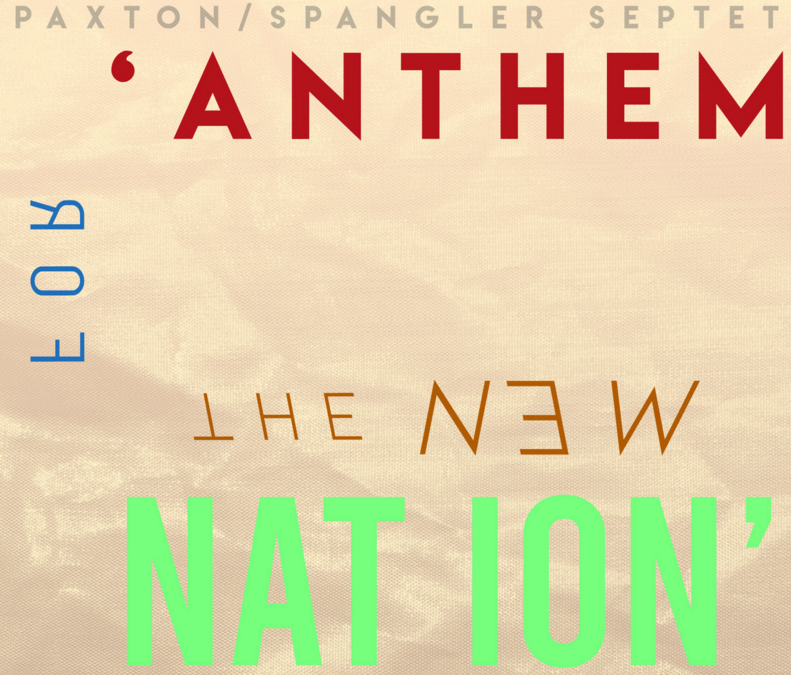
Treading the fertile pathway of South African jazz, imbued by that region’s pioneers and greats for over three decades, the co-led Paxton Spangler Septet once more hone in on the magic of the pianist/composer Abdullah Ibrahim.
Paying a special homage to the fecund of talent and signature sweltered toil, spiritual and activist driven vibes that has poured out of the much troubled South Africa, trombonist Tbone Paxton and his percussionist foil RJ Spangler have collect various awards for various album projects; from recordings with the Sun Sounds Orchestra to their work with the PD9 Township Jazz troupe. Musicians from the latter of those make an appearance as part of the Septet on this latest Ibrahim dedication; the heralded Anthem For The New Nation, a title with so many connotations, released as it was on America’s Independence Day, yet from the perspective of the icon they are covering, an anthem prayer for the birth of a new, anti-apartheid South Africa.
This faithful to the course rainbow nation imbued group is ‘built’ (we’re told) around the splashed and rolling drums of Sean Perlmutter, noodling flexed bass of Damon Warmack and spirited Ibrahim recondite piano of Phil Hale. That set ups extended by Dan Bennett on tenor sax, the flute player and alto saxophonist Rafael Leafar, and second alto saxophonist Kasan Belgrave, with special guest spot on flugelhorn (of all things) from James O’Donnell. Together they make a great job of breathing life into Ibrahim’s 70s and 80s dawning back catalogue; a relaxed at times, warmly enthused saunter and pride of Safari animals like run through some of the legend’s most important, emotive pieces.
Once anointed by Nelson Mandela as ‘South Africa’s Mozart’, the rightfully lauded jazz star added a certain languid homeland groove and the classical to the jazz he’d absorbed playing in the States with such luminaries as Duke Ellington, John Coltrane, Max Roach and Ornette Coleman. Signing as Dollar Bill for a while, until converting to Islam in the late 60s, Ibrahim went from the intimacy of a duo to a twelve-piece band, composing both lush hymns to his country and unofficial national anthems for the anti-apartheid movement. Anthems like ‘Manneberg’, originally released in 1974. Here the septet place it together with the title-track from the ’77 LP, Cape Town Fringe; alternating between a blend of slow bass note piano, drifting horns and a familiar township groove, and a sudden waters-breaking cascade of combined instrument duets and come alive saxophones. ‘Soweto’, the title-track from the titular ’78 LP, is another township anthem handled by the group. More celebratory, with a great Afro-jazz verging on mardi gras side ordering of funk, that 70s joyful freedom dance proves a perfect choice for this Detroit troupe, who roll the original into a new century.
This homage-performed album is dotted with Ibrahim favourites; from the lovely peaceable bustle of the balmy Highlife meets early 60s classic jazz imbued ‘African Marketplace’ (another titular composition, from the ’79 LP on Elektra) to the classical mode, trinket shaking ‘Moniebah’ (taken from the ’73 LP Good News From Africa). Optimistic undulated paeans to not only South Africa but the African continent as a whole are given a faithful soundtrack of elephant trunk trumpeted and spiralled horns, flighty flute, soulful dotted and dappled organ and shuffled drums by the ensemble in a show of respect, but also to share a love and passion for the music of an often in-turmoil land. Fans of Ibrahim won’t be disappointed, put it that way.
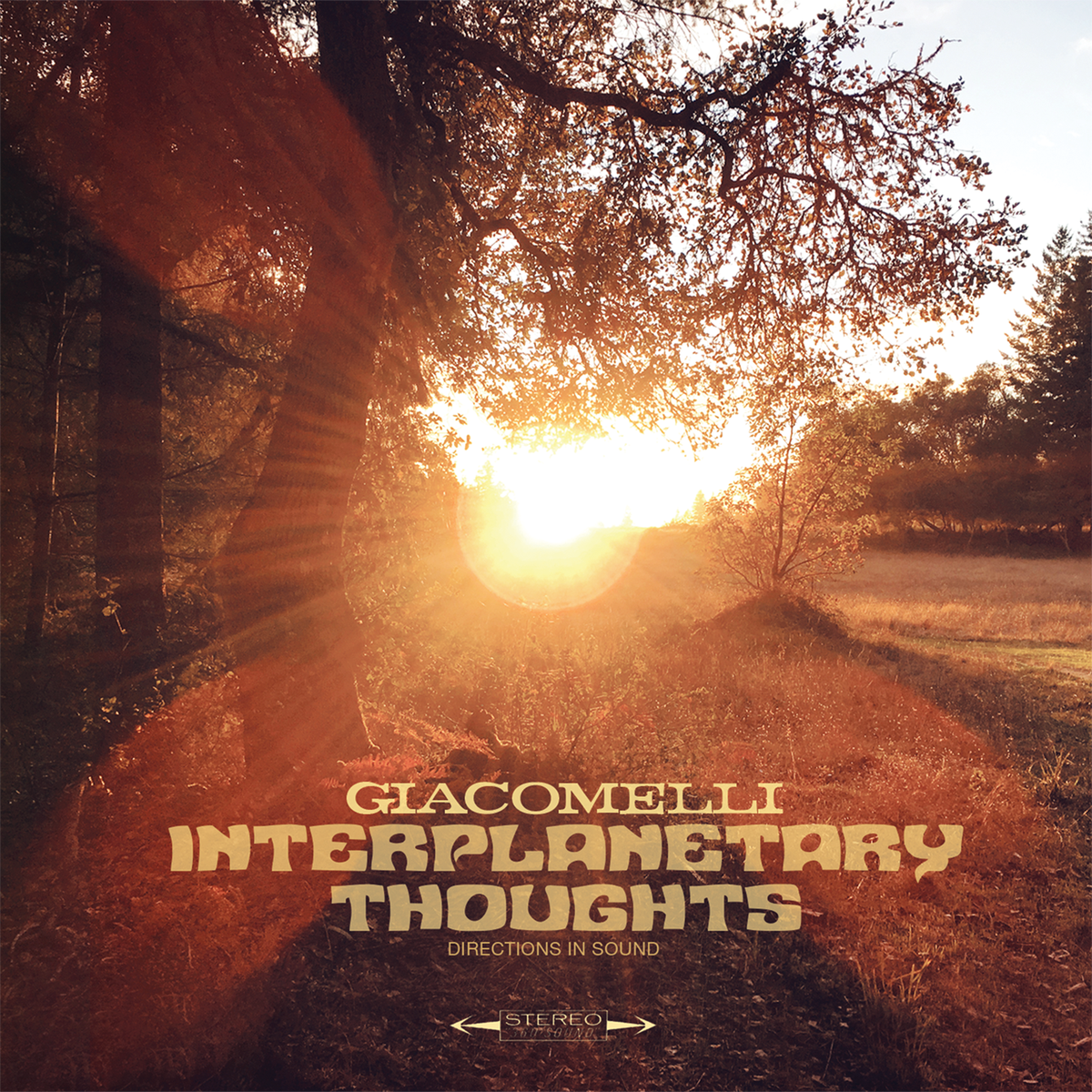
Giacomelli ‘Interplanetary Thoughts’
(Somewherecold Records) 30th July 2021

Machine sculptured but inspired by both Earthly nature and the cosmos, Steve Giacomelli peruses sonic ‘interplanetary thoughts’ on his fifth album for the constantly illuminating Somewherecold label.
Regular readers may have seen my premiere last September of the Silicon Valley composer’s ‘The Best Of Both Worlds, Part II’; taken from the epic sprawled Cosmic Order album of ARP synthesised lunar kosmische riches. Using that same iconic 70s apparatus for this new celestial and sun bathed, if often dramatically mysterious, set of suites the composer invokes shades of Froese, Schulze, Cluster, a bit of Eno and some Olympiad Vangelis on a glorious fanned spread of ambient waves, oscillations and equinox majestic worship.
From an enviable commanding studio lab view, perched above the Santa Cruz Mountains, light beams and life-giving forces are made concrete; captured in serene and arcing magic. Broad awakenings and phased ripples meet more Tangerine Dream imbued three-parter scaled hovers in the starry expanses of space. For this is a filmic like soundtrack that has visions of a light-playing mirage shimmered terra firma, and the fluted, whistled, solar wind blowing realms of a mystical galaxy: one that’s constantly expanding, throbbing in concentric rhythms. Both of these phenomenons take centre stage; unfurling an organic beauty and weight of awe-inspiring gravitas.
It seems odd to speak of the composition’s organic, almost naturalistic qualities, considering everything you hear is engineered electronically. Yet that’s how it feels and sounds: natural light transduced through an analogue filter.
Interplanetary Thoughts is another unheralded album of ambient brilliance from the West Coast electronic composer.
Sølyst ‘Spring’
(Bureau B) 13th August 2021

Springing, fizzing, sizzling and bouncing along to a moody and kinetic beat, Kriedler drummer (a mark of true quality if any was needed) Thomas Klein arrives with his fourth Sølyst alter-ego album.
Slotting, genealogy wise, with the Dusseldorf composer’s previous trio of albums (2011’s Sølyst, 2013’s Lead and 2016’s The Steam Age), the Spring movement of metallic and tubular percussion and beats proves a congruous fit.
Made up of material explorations from the last three years, with some elements either discarded or reworked, this latest succinct series of entitled tracks seem to be named after each composition’s rhythm and evocation. So ‘Flex’, for example, does just that; flexing between a processed drum kit of kling klang nu-wave sparks, chipping away metal blocks, and a vague flavor of lilting jug poured Africa sounds. The following track, ‘Thief’, lurks in the industrial shadows, creeping about as softened reverberated distant drums bang away – evoking a steel mesh echoed conjuncture of Die Wilde Jagd and solo Moebius.
Elsewhere it’s a case of a modern autobahning Kraftwerk motoring down neon highways; buzzing quarks and a removed affected version of cosmic steel drums; a taste of Cosey Fanni Tutti; and paddled hallowed tube beats on a highly sophisticated album of rhythmic manipulation and overlapping networks.
Xqui X SEODAH ‘Sufficiently Disconcerting’
(Wormhole World) 6th August 2021
The full name of at least one of the sonic partners in this unsettling affair should tell you all you need to know about this both Latin liturgy and supernatural inspired collaboration: Sound Effects Of Death And Horror describes this unholy union well; a six track pairing of sonic antagonist Xqui and the abbreviated, morbidly curious SEODAH.
This is the inaugural team-up; a balance of the disturbing and monastic; between unease and cathedral like choral gravitas. Half the material is a synthesized transmogrification of established Latin choral music; originally meant for solo soprano or baritones and choruses; for chamber or string quartets. ‘Timete’, ‘Exultate’ and ‘Oculi Mei’ are the suites cast in that mould; the first a merger of Tangerine Dream and Jerry Goldsmith’s Omen score, the second, a calmer glassy bauble floated and ether probing version of Popol Vuh, and the third, a kosmische traverse of metal tapped rhythms.
In between those transformations, apparitions are the panic attack deranged symphony mirage of Library Music and sampled Yank veiled, ‘An American Man Stole My Balloons’; the phasered circular drone with serial piano notes airy phantasm, ‘Probosis (Wins By A Nose)’; and the, full length horror soundtrack in its own right, Giallo scene-munching and drudge metal marching three-act ‘Hallucigenetic’.
Faith will be tested on an unnerving, ‘sufficiently disconcerting’ disturbance in sonic dread and mystery.
Viktor Timofeev ‘Palace Of Peace & Reconciliation’
(Lo Bit Landscapes) 13th August 2021

Five years on from the unexpected shutdown of label facilitators Lo Bit Landscapes’ Brooklyn home, Viktor Timofeev’s much-delayed caustic sprawl, Palace Of Peace & Reconciliation, finally emerges from all the misery and setbacks.
Originally set to follow in the wake of the noted visual artist and composer’s debut album GIVE_HEALTH999, this voyage into both the disturbing and code calculating depths of an ever alienating digital world fits in congruously with the current climate of stressed unease, uncertainty and fear.
Timofeev’s epic soundtrack like album draws you into a speed-shifted, reversed and reverberated spool-squealing, shuddering matrix. Its divided along the lines of more coarse sci-fi abstract immersions and gabbled-like sped-up manic chakras and obscured churned lo fi garage. The second half is in fact like a weird Faust like transmogrification of vague Indian music, ceremony and echoed ramblings beyond the calico wall. The first half by comparison sounds like Bernard Szajner reversing church bells as a busy signaling of date hovers overhead, on the opening unsettled nine-minute ‘Tevek Fritoiov’ suite. The atmosphere then changes on the following loop pedal guitar, pattered beat ‘Memoriatrium’: think Land Observation meets Federico Balducci.
The mysterious Alienboy featured ‘Pyramid Of Accord’ cast His Name Is Alive out into a metallic rainstorm in space. I’m not sure if it’s the so-called guest or not, but gaseous, burbled exhales and monastic moans permeate wave after wave of static frying noise and mooning.
Distortions in the fabric, unholy organ kosmische and more serene inner space meditations wait on an epic lengthened album of dissonance and warped strains; peregrinations and digital explorations. Put it this way, it’s well with the long wait.
D:Rom/Shreddies ‘Sucker’
(New Haven Tapes) 11th August 2021

What a time to be an electronic artist or DJ, yet despite the slow slog towards reopening the clubs and live venues (to a point; COVID passport of a kind holders only) one Welsh sonic dance music maverick has decided to take the plunge and set up a new label venture. Although originally envisioned solely as a vehicle for the founder, Shreddies, music, the New Haven Tapes imprint has expanded to include other like-minded noise-makers from the region’s underground scene; such as the fellow techno and footwork artist D:Rom.
The inaugural longplayer is a congruous split release, with three tracks from each artist. D:Rom kicks things off on sucker with a trio of fuzzy-squalling, warped and pumped lo fi acid from another age. Run through a reverberated, bit-crush filter ‘I Kuw Gna Paly Me’ gallops to a space invaders 8-bit and ping-pong bounce of oomphing tropical disco NRG house and Djax-Up-Beat techno, whilst ‘Bleachful’ mellows the pace a touch, as the synthesized 303 or 808 hi-hats press away to shades of slag Boom Van Loon’s ‘Poppy Seed’ and softened recollections of early Jeff Mills.
Up next, Cardiff’s won Shreddies races through resonating hi-hats and a Basic Channel like techno dance beat on the airy, melodic sinewave ‘Fuego’; mutates a fusion of trance-y 808 State and R&S Records on the housing ‘Texacco’; and goes for something altogether more shimmered and mirror-y on ‘(no body)’: imagine Laraaji refitted for a Chicago house dancefloor.
Sucker marks a positive start for this underground platform; it’s dance music, but not as you know it.
Ester Poly ‘Wet’
(Hummus Records) 20th August 2021

Four years on from their blazing feminist, contorting debut Pique Dame, and the Swiss canton post-punk rocking Ester Poly duo are back. In all that time there’s been a whole opprobrium of protestation material and issues to cause the already riled piqued dames to leap into action.
Still with the commodification and unsolicited, unwanted interest of sexual desire on their minds, the cross generational, cross cities duo of Martina Berthes and Béatrice Graf titillate with suggestive visuals and lyrics on the innuendo entitled Wet.
With that signature mix of strong female led influences (from The Slits to Delta 5 and Girls At Our Best) and a slice of humour, the busy partnership of electric bass and drums (shared vocal duties) both smashes and offers more erotic whispered sloganism on the topics of diversity and racism: A call in a manner for self-love and acceptance that implores us all to stop following “the mainstream”. (I’d add Twitter, FB et al to that list of vile, fame hungry platforms).
Despite the limitations of their instruments, Ester Poly use both abrasive and more space-y effects to widen the scope and influence of sounds. They also sing, shout, pant and breathlessly communicate tin English, German and French to varying degrees of excitement and salacious protest. It’s a sort of mantric chant however that’s used on the album’s opener and recent single, ‘Reject My Speck’: a rattled sticks on drum rims recall of The Stray Cats meets The Raincoats stumbling and scowling down a dark alley; the repeated refrain of “respect/accept” rings throughout.
They prowl and creep into the Dead Kennedys territory on the Teutonic ‘Braun’, and offer an avant-garde panting vision of Royal Blood on the French language ‘Presses’. Elsewhere they offer up tangles of post-rock, math rock, and on the album’s last couplet of remixes, an indie dance and a retreated version of Italo house meets French electro (on the Berthes and Franca Locher remix of the titular tune from the riotous grrrls debut album).
Sexual slang by-words and scented metaphors are floated or thrown around in a vortex of strong-willed feminine wiles and irony throughout this fruity exchange. It seems there’s still enough “pique” to go round, as the Swiss duo demands ownership and respect in a fit of post-punk and beyond energy.
Hi, my name is Dominic Valvona and I’m the Founder of the music/culture blog monolithcocktail.com For the last ten years I’ve featured and supported music, musicians and labels we love across genres from around the world that we think you’ll want to know about. No content on the site is paid for or sponsored and we only feature artists we have genuine respect for /love. If you enjoy our reviews (and we often write long, thoughtful ones), found a new artist you admire or if we have featured you or artists you represent and would like to buy us a coffee at https://ko-fi.com/monolithcocktail to say cheers for spreading the word, then that would be much appreciated.
Perusal #14: Clamb, Kety Fusco, Mike Gale, Meggie Lennon, Modern Blonde, Pons, Palais Schaumburg
June 2, 2021
A Short Roundup Of Recommended Releases On The Peripheral/Dominic Valvona

Pons ‘Leland (Club Mix)’
Single Premiered on Youtube 28th May 2021
Causing a right furor with their mischievous bombardments and jerked dance debut album last year, Pons are back with a new single and video (directed and edited by the L.A. production porthole Lazy Eye) that filters the band’s whipped up erratic diy version of garage, post-punk and beyond via a sleazy, degenerate drug-fueled night out at the club.
Lyrically following a narrative from the point-of-view of the infamous ‘murderer-in-disguise’ of its title, ‘Leland’ is a strung-out, creeping and brooding Lynchian proposition made all the more agreeable by its coarse electronic treatment: It sounds like the Liars exchanging lines with the Foals, LCD Soundsystem and Swans on the set of Twin Peaks.
Making good on that previous album, Intellect, last year, it’s great to hear the band are back and still developing that sound and scope.
Kety Fusco ‘Ma Gnossienne’
Single Released 28th May 2021
Magical and mysterious the transcendent panoramas and cascading harp notes that emanate from the Italian-Swiss harpist and composer Kety Fusco’s instrument of choice stir up vague hints of the Middle East and beyond on this homage treatment to that famous French progenitor of late 19th century and early 20th century minimalism and repetitive music, Erik Satie.
The experimental, transportive harpist uses the sounds of vinyl scratched on metal strings, objects struck on the soundboard of a pre-sampled classical harp and analogue effects manipulated live to create a sonic visage of the composer’s original ‘Gnossienne N.1’ suite. Renamed ‘Ma Gnossienne’ by Fusco, this reinvention is full of caresses and plucks, reversal effects, searing and heavenly breathless atmospherics.
Fusco has embarked on a unique harp sound research, working with Delta Electric Harps from Salvi Harps, who have taken her on as their official Ambassador. Her exploration of harp and effects technology began successfully with the debut of her album DAZED. Kety Fusco has over 80 concerts throughout Europe, and she is working on the first world’s sound library of non-traditional harp sounds. This latest score uses some of that unconventional experimentation to evocative affect.
Meggie Lennon ‘Night Shift’
(Mothland) Taken from the upcoming Sounds From Your Lips album, released 9th July 2021
Sometimes the artist and their representatives do all the work for you. And for sure the litany of great influences, hinted echoes of does read correct: Donovan’s The Hurdy Gurdy Man and Syd Barrett’s The Madcap Laughs, and the more contemporary Beach House, MGMT, Weyes Blood, Helena Deland and Air’s Moon Safari (though I would add the French duo’s incredible sighed, dream like mirage, The Virgin Suicides as well to that list, plus a touch of Jacco Gardner). The Dears also make sense, the Montreal-based Meggie Lemon having opened for that most brilliant of Canadian institutions.
In short ‘Night Shift’ is a gently unfurled mellowing escape from Lemon, who is set to release her debut album songbook Sounds From Your Lips next month. An incredible song actually, which leads the listener through a reversal portal towards the most sublimely melodious of disarming pop songs. Blissful, this gorgeous rayed dream was inspired by late night cycle rides home from good nights out in the city, and the blinding sun that shined through the studio windows. A melodrama of the exhilarating and joyful set to the most floating and drifted of tunes, ‘Night Shift’ offers a glimpse into what that beautiful upcoming album beholds.
Modern Blonde ‘Candyland’
(Plato’s House) 24th May 2021
Dropping Raymond Chandler into the Matrix, the Salford trio of Modern Blonde conjures up a “mock-conceptual” cyber-noir phantasm on their virtual simulated Candyland soundtrack. A microcosm of all our present worries about freethinking sentience A.I. avatars, drones, reality TV and the corporatization of the Internet, this anything but harmless candy floss coated world is a snapshot of all our futures.
Following, interacting with the album’s central simulated character, Detective Candy of Candyland homicide, listeners are immersed in a dreamwave fantasy of both 80s danceable post-punk synth and more sour, even daemonic, voiced menace. The original blueprint for a trillion recreated micro worlds, this one sees our protagonist navigate a both alluring and dystopian twisted synthesized narrative; pushed on by unforeseen forces and a multitude of interactions.
Supposedly in the mold of a unveiling Hollywood movie, all the tropes of that golden age of American detective fiction are present, transformed and warped in a retro-futuristic new age. It’s an interesting set-up; prescient in a pandemic era in which virtual worlds, dislocation and escapism seem even more desirable. Playfully executed too, despite the depth of topics and often sonorous forebode that borders at times on the esoteric and Gothic.
You often only hear or catch threads, the odd line of the both manipulated vocals and narration. Sonic wise we’re talking about Vengelis’ futuristic panned cinematic scores meet DAF. But you can hear traces of 80s sci-fi soundtracks and Klaus Schulze on the neon lit introduction, ‘Becoming Candy’; Suicide on the simultaneously heavenly and creepily voiced ‘Too Tough To Die’; Bran Van 3000 lost in a warping enchanted dream state, on the rotating ‘Candyland Theme’; and an increasingly deranged ‘dirty cigarette’ poncing Iggy Pop fronts Swans, on ‘Plague 2’. In lighter, more burbling electronic pop moments (such as the sampled voices in a haunted nightclub, ‘Totems In The Night’), the Blondes evoke Der Plan and Station 17; and when the vocal affects slip, they sound not unlike a Salford version of Renegade Soundwave.
Arpeggiators remain constant as the mood switches between the unsettling and plain weird (transmogrifying a line out of Joe Dolce ‘Shaddup Your Face’ on the languid bandy ‘NO RESPECT’), the brooding and grand (check out the cathedral size theatrical synth swells of the dungeon finale ‘The Tomb Of Love’). If Lynch had been asked to direct a murder mystery in the Matrix universe, then Candyland is the soundtrack.
Clamb ‘Earth Mother Grapefruit’
4th June 2021
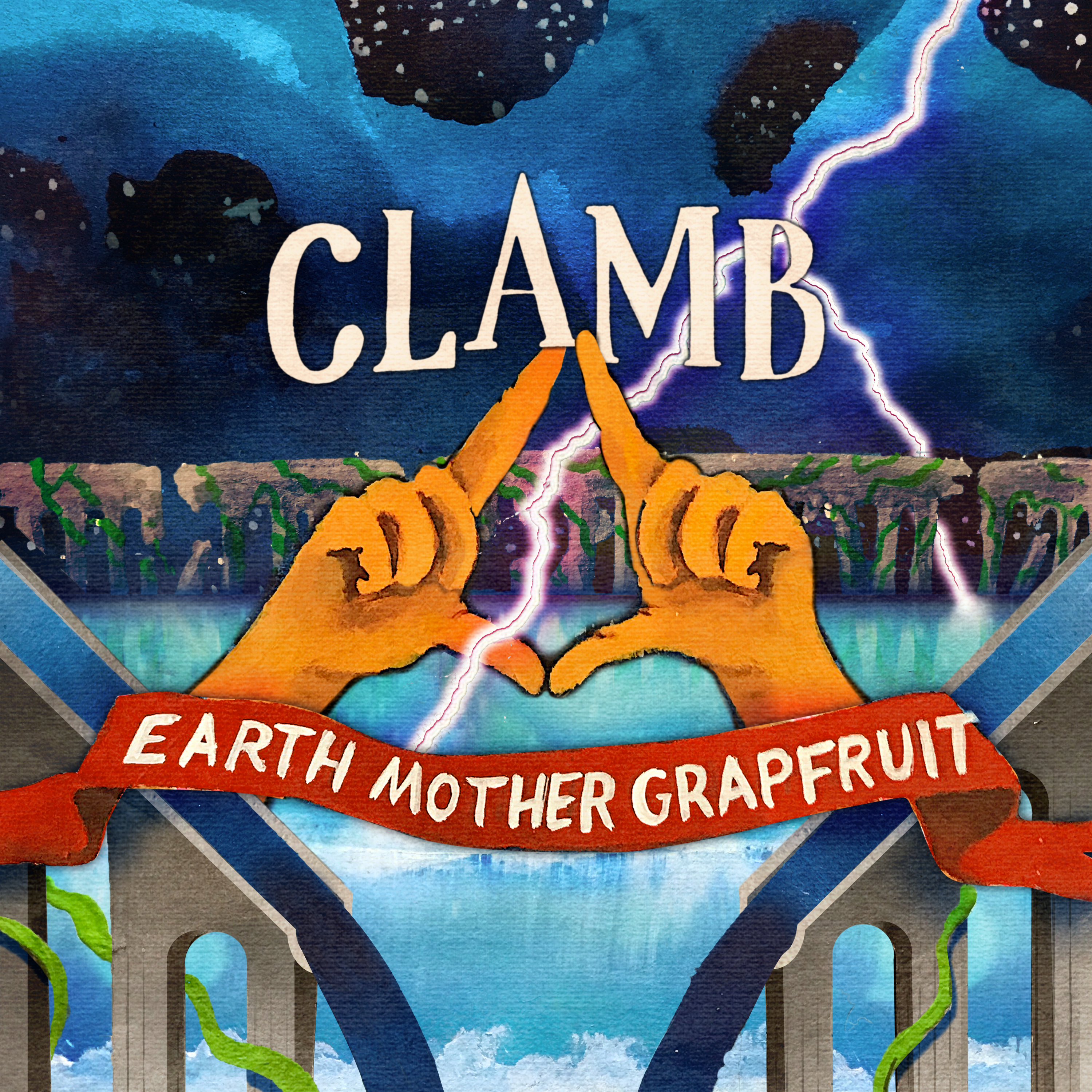
Powered by the symbolic, mystical vibrations of the ‘three’, in the shadows of the atavistic pyramid stargazers, the Massachusetts ‘earth magik peacelords’ Clamb navigate the astral and universal on their debut album, Earth Mother Grapefruit.
Imbued by a cosmology of conceptual space rock, prog, jazz fusion and even alternative funk albums with a similar penchant for otherworldly realms, the trio’s triangular coded fixated opus travels the outer and inner mind for a both mysterious and playful space bound trip: Mystery in the dry-ice vaporous shape of the cosmic evaporations and post-punk menace vision of Klaus Schulze sharing a space craft pod with Floyd, King Crimson and Amon Düül II, on ‘Power Pyramid’, playful wise, on the smoother, keytar like cyber-funking ‘Party Pyramid’.
This instrumental band has the celestial keys to unlock a treasure trove of influences and sounds; some which prove pretty surprising: One minute it’s the growling alt-rock bass of Archers Of Loaf and the drive of Adam’s Castle, the next, John Carpenter’s The Fog and the alien generator pulses, soundscapes of an early Tangerine Dream. ‘Ascending’ a pantry of lunar veiled and zapped ‘eggs’ and cosmic funk ‘oysters’, currents of Compost, Ozric Tentacles, Out Of Focus, Qüassi and Embryo get channeled into an impressive mind expanding fusion. Imagine a cosmic slop of funk elevating across the moon’s surface in a barge fit for the Nile. Where others maybe jaded or adverse to the idea of progressive jazz and fusion, Clamb absolutely lap it up in droves on an album that takes offerings from Earth and the celestial. Prepare to sup from the grapefruit bowl and be whisked past the eye of Horus and beyond.
Mike Gale ‘Twin Spirit’
4th June 2021
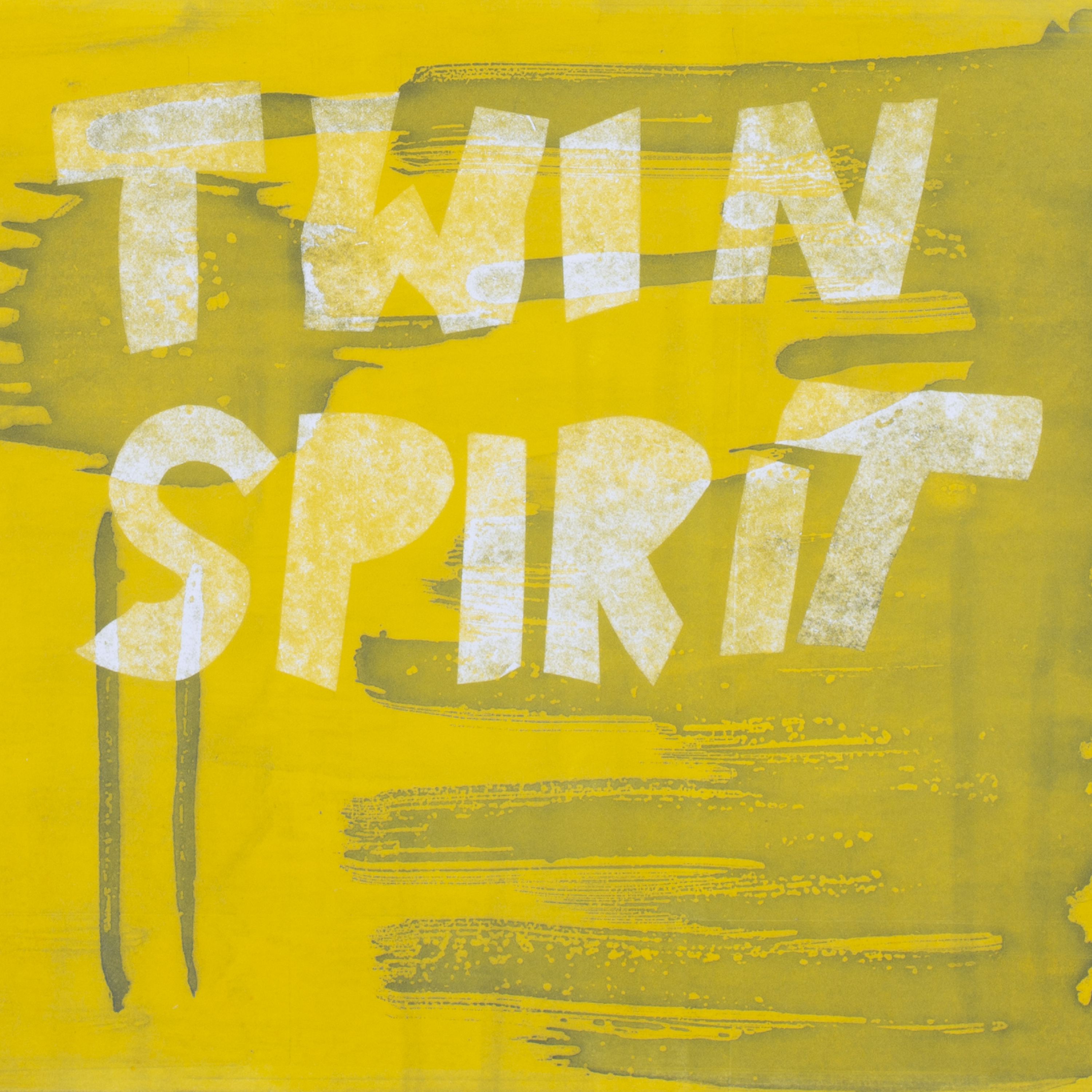
Formerly of Black Neilson, then flying solo under the Co-Pilgrim banner, Mike Gale has been sunning it in the warm glow of the Beach Boys (via the Animal Collective) influence as a solo artist over the last few years. Once more yearning for and reminiscing about past escapes, Gale’s latest lockdown songbook dreamily articulates all our longing wishes to break free of this suffocating, restrictive pandemic epoch.
More or less using only samples (fed up with playing guitar; though the guitar does make an appearance) for once, the wistful, winsome summer holiday troubadour languidly and swimmingly goes with a most drifting and bendy flow on the melting Twin Spirit album.
All those Beach Boy harmonies, exquisite melodies and sometimes beautiful melancholy are present and correct; merged, woven into a palette that includes shades of White Album (and solo) McCartney (on the opening saloon honky tonk piano weather report ‘Don’t Mind The Weather’); the lilted bounce of an Hawaiian shirt bedecked Paul Simon and the tropical bobbing marimba pop of Nick Hayward (both sharing the stage on the African light ‘Awake Awake’ escape); C Duncan (the fluty-synth noted, wavy ‘I’ve Got A Soul For Your Mind’); and Nilsson (on the 70s airport lounge thoroughfare ditty ‘Welcome To Amsterdam’).
Scratched gramophone woes and spindled South Sea romantic getaways sit alongside Bossa saunter serenade postcards from the Argentine town of San Luis on an album that sounds anything but sampled. Yes there’s plenty of underwater gargled effects, fleeting distant voices, the sound of certain ambiences and even what sounds like a speeded up Grimes on the boomerang halcyon ‘Better’, but it all feels pretty organic and always dreamily scenic. Someone please lift this miasma of Covid soon and let Gale and the rest of us find some relief in the glowing embrace of a summer holiday. Failing that, get this album on your sound system instead. Magic. Pure magic.
Palais Schaumburg ‘S/T’
(Bureau B) 11th June 2021
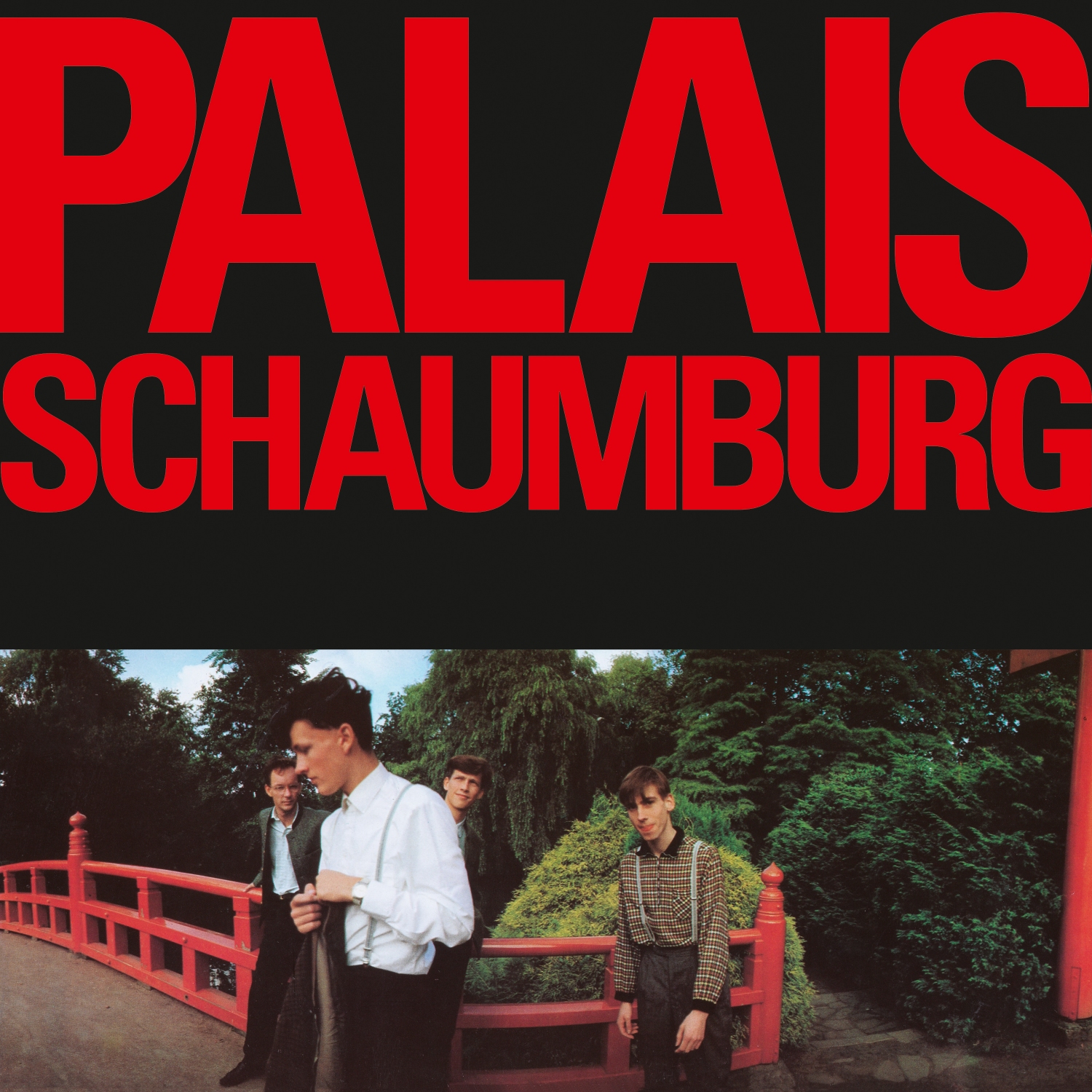
Lifted out of relative obscurity by the Hamburg label Bureau B (enjoying a renaissance of German New Wave releases at the moment), this incredible jerked and transmogrified art school melting pot album, which celebrates its 40th anniversary this month, channels Neue Deutsche Welle, no wave, blue-eyed funk, industrial music and avant-garde kling klang indie into one blast of pop experimentation. From the sounds of it, Palais Schaumburg’s eponymously entitled debut album has arguably influenced a whole generation of post-punk and post-krautrock artists.
The Hamburg Art Academy incubated band’s lineup is perhaps better known for the projects and groups that it spawned, with members joining Einstürzende Neubauten and starting up the iconic Basic Channel imprint.
A link from the krautrock era to the omnivorous and amorphous possibilities of a new decade, Palais Schaumburg ran traces of Can’s E.F.S. series of stiff bowed strings in the attic experiments and a removed ‘Vitamin C’ propulsion throughout the speed-shifting jerk-dance ‘Morgen Wird Der Wind Gefegt’, and seem to appropriate the piano from ‘Turtles Have Short Legs’ for the Altered Images in deconstruction clack and clamber funk, ‘Gute Luft’.
Produced by the Flying Lizards’ David Cunningham with a band that had already lost members and recruited their replacements (a practice that would continue over the mayfly longevity of the band’s fleeting career), the cold war federal chancellery entitled blast hysterically and in cool aloof sneers sounded the start of a new wave movement. Like the European cousins of ESG, James Chance, Devo and a shaky distraught David Byrne, the Palais contorted those no wave signatures, blurts and quickened jerky saxophone hoots and blasts and beats into something distinctively German.
Radical in so many ways, a totem inspiration for what was to come, Palais Schaumburg rightly deserve this reissue spotlight: even it is about the second or third time the label has done so (2012 on Spotify and the label also brought out a deluxe version in 2017). Perhaps sensing it won’t be the most popular of releases though, the red vinyl version is limited to only 500 copies – which I suspect will fly out of the Bureau B offices. I suggest you buy it and own a bit of new wave history, still very much fresh sounding and exciting.
Hi, my name is Dominic Valvona and I’m the Founder of the music/culture blog monolithcocktail.com For the last ten years I’ve featured and supported music, musicians and labels we love across genres from around the world that we think you’ll want to know about. No content on the site is paid for or sponsored and we only feature artists we have genuine respect for /love. If you enjoy our reviews (and we often write long, thoughtful ones), found a new artist you admire or if we have featured you or artists you represent and would like to buy us a coffee at https://ko-fi.com/monolithcocktail to say cheers for spreading the word, then that would be much appreciated.
Tickling Our Fancy 091: Maalam Mahmoud Gania, Pons, Rüstəm Quliyev, Schlammpeitziger, Sheltered Workshop Singers…
September 14, 2020
Album Reviews Galore
Words: Dominic Valvona

An eclectic array of reviews, Dominic Valvona’s long-running Tickling Our Fancy column aims to cast the net wide, choosing a diverse collection of recent and upcoming releases for your perusal.
This month’s selection includes two special reissues, the first, the cross-pollinating “Azerbaijani Gitara” music of the late Caucasus legend Rüstəm Quliyev, the second, a beatific Gnawa set of recordings from the late esteemed Moroccan master Maalam Mahmoud Gania.
I also have a gander at the fantastical anthropologist ambient tape from the shrouded Maitrii Orboreal Ceremony, and a new album of sun-dappled affirmations from the Beach Boys imbued pastoral recluse Mike Gale. There’s the American three-piece Pons, who launch a torrid of punk and indie-dance mayhem on the unsuspecting public with their debut album, Intellect. From the prolific Hamburg label of experimental electronica, there’s a new reggae-imbued techno suite from Schlammpeitziger, and a very special project from the renowned producer Ian Brennan, his most personal yet, the Sheltered Workshop Singers (perhaps the first recording of its type anywhere). And finally, Esbe takes us on an Egyptian and Sufi India fantasy with her new synthesised album, Saqqara.
Pons ‘Intellect’
(Stick ’n’ Move Records) Album/17th September 2020
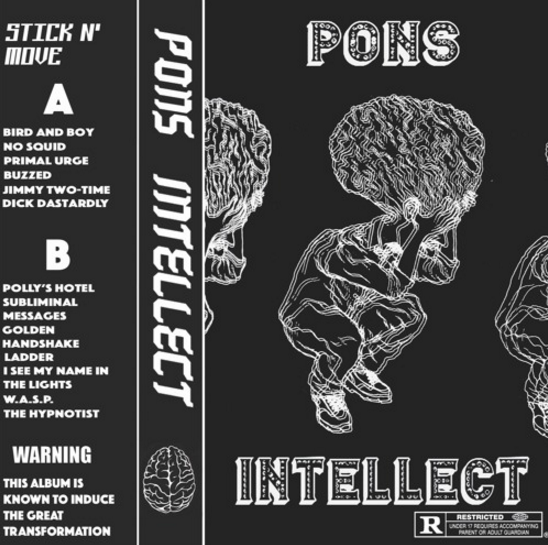
A volatile chaos that is remarkably tactile in places, the blossoming erratic American trio of Pons throw everything into their debut album Intellect. The culmination of various mischievous bombardments and jerked dances on a slew of EPs and singles, from a band that first formulated their blueprint in North Carolina in 2018 before relocating a year later to Virginia, this paranoid hectic and ridiculous fully realised long-player whips up a torrid of unhinged energy.
Reminding me of that first White Denim album, yet coarser and heavier, Intellect is full of ideas in what, by now, is a worn cross-section of post-punk and garage related genres. From the off though, you know this is going to be something else; a diy friction of scuzzed garage/skate/doom punk that creeps as much towards the Gothic as it does towards indie-dance.
They set us up with a reverberated, eerie lead-in of “we got a winner” samples and bird squawks, then roll pendulously into an harassed vision of The Stooges ripping it outta the Talking Heads before speed-freaking style riffing on Liquid Liquid, Ludus, Essential Logic and The Black Lips: Phew! Suck that up.
An ennui of rhythms, time changes and moods flip constantly between intense mania and more limbering no-wave downtown NYC Keith Herring doodled electro-funk. ‘Primal Urge’ is just that: a primal doom quickened, kettle rolling grunt of 80s Californian punk. ‘Jimmy Two-Dimes’ fucks up brilliantly The Strokes, and even, smashes up the NY Dolls and Suicide. But if we’re talking of real concentrated madness, ‘Dick Dastardly’ runs that cartoon scoundrel through a gruff free fall of James Chance, Ornate Coleman (yeah imagine that!) and space rock.
Funhouse Teenage Shutdowns, Nuggets garage gets roughed up on ‘Fabrication’, and Black Randy fights it out with The Electric Eels on the paranoia enclosing ‘Polly’s Hotel’. Single ‘Subliminal Messages’ takes a different musical route entirely; the advertiser slated consumerist nightmare limbers onto a dancefloor occupied by Disco Drive, Gang Gang Dance and Juan MacClean. ‘I See My Name In Lights’ bastardizes Electric 6, DAF, the Italian proto-punk dance miscreants Halleluah!, Renegade Soundwave and Death Grips: perhaps a touch of a synth-punk Beastie Boys.
What a record. I’m not sure I could really argue that the Pons are doing anything particularly new. Yet Intellect has quickly enthralled and excited me. Subtle meets the hardliners, as the bonus of youth drudges, sludges and drums up a vortex of generation X and boomer credulity. Nothing short of a brilliant noise, energy directed for the benefit of all, a glorious skewered and deranged indie-dance album of punk snot petulance and fun.
Mike Gale ‘The Star Spread Indefinite’
Album/25th September 2020
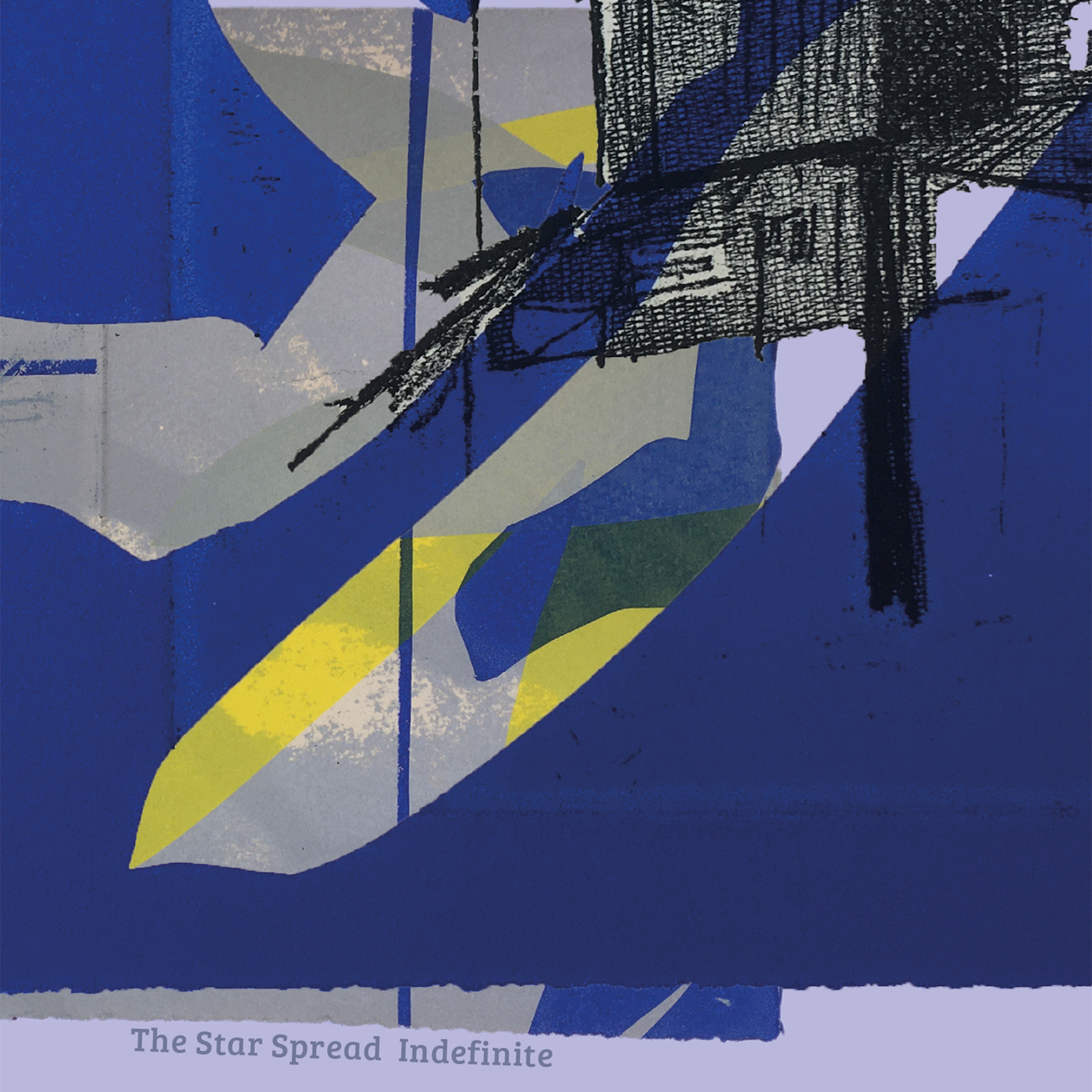
The former Co-Pilgrim and Black Nelson instigator Mike Gale may have retired from performing live some time ago now, but he’s still been highly prolific in recording. Using his trusty 32-track TASCAM cassette recorder, in just the last 18 months Gale has released the Pacific Ocean lulled sorrowed album, Summer Deluxe, a recent compilation of (far from) unfinished works and B-side paeans and breezes entitled B, C, D Side Volume 1, and a lockdown mini-album, Sunshine For The Mountain God. And now with this latest acoustic-led songbook, Gale furnishes us with the astral dreamy entitled The Star Spread Indefinite.
That cosmological title was found amongst his recent reading material, in Justin Hopper’s The Old Weird Albion. In one particular section, the uncovering of an ancient piece of artwork, scratched into the wall of a flint mine in Sussex triggered a beautiful starry-poetic response from the discoverer who found and named it. As a poetic prompt it brings Gale out of the melancholy of lockdown into a most dreamy state of reflection. And in his most lulled, drifting ruminating moments, balances a languid sense of yearning despondency with a peaceable message of positive affirmation for our near-miraculous existence.
The Monolith Cocktail was lucky enough to share the album’s precursor video-track (created by Jussi Virkkumaa) recently, ‘Go Help’: A tropical-lilted wistful tiptoe sauntering, and disarming disconsolate bobbing continuation of the plaintive beachcomber Beach Boys sound that has permeated the reclusive polymath’s output for a number of years. That means more of those lulled layered harmonies and the present lingering presence of a distant lapping tide. Though Gale lends an English pastoral bent to the Beach Boys California beach combing romanticisms. You can hear it clearly on the 70s AM radio dial wash ‘Stripped Sunlight’, which has an air of the SMiLE era about it.
Elsewhere in his harmonious gauzy hushed way, Gale evokes the Laurel Canyon dappled loveliness of Marc Eric, a beachside relocated epic45 and Roger Bunn on the sweetly synthesized golden ray affirmation ‘This Year’. The starry lush ‘Pastel Coloured Warm’, with its bahbahbah lilting chorus, hints at a meeting between the Go-Betweens and Prefab Sprout. Albeit a less sparse version, Gale also channels the spirit of Sparklehorse throughout this often-gossamer songbook. There’s also an easing into the Yacht Rock genre and the 80s phaser-effect and dry-ice cool of Phil Collins to provide a softened pop feel to some of the washes.
With soothing élan and shimmery dreaminess, Gale aches and wistfully fights through the disappointment, knock backs and anxiety to lift himself above it all with repeated mantras of “I’ll get my wish”, or, “This year I’m going to make it.” Let’s hope he does make it, as Gale is a fine musician and songwriter. The Star Spread Indefinite confirms that.
See also…
Mike Gale ‘Go Help‘ Premiere
Schlammpeitziger ‘Ein Weltleck In Der Echokammer’
(Bureau B) Album/25th September 2020

After previously unconsciously composing a kind of reggae and dub vision of Kraut-tronica over nine albums, Cologne stalwart of thirty years Jo Zimmermann has decided to now consciously meld those genres to his quirky lilt of electronic music on the tenth album, Ein Weltleck In Der Echokammer (for those needing a translation, that’s “a world leak in the echo chamber”).
It wasn’t, we’re told, until Zimmermann’s friend and ‘reggae expert’ Bettina Lattak remarked upon the composer, illustrator and performance artist’s oblivious use of those Caribbean flavours that it all suddenly clicked. And for this latest electro-fusion, fun, radiant, bouncing and sub-tropical suite, he, unabashed, tinkers almost effortlessly with a reggae sound stripped of context, history and religion: Just the feel, vibe and resonance. In practice this results in dubby warbled bass and echo, limbering gaited rhythms and a laid-back candour. There’s even a lilted saunter of steel drums to be heard, bobbing away on the tropical soulful electro-funk ‘Handicapfalter’.
That relaxed sound and sway – bordering on sun-bleached escapism – is counterbalanced by electro-cool starry synths, industrial metallic scuttles and a sophisticated layering of synthesized toms, kick-drums and polygons. It’s a sound that transduces label mates Station 17 and Clap! Clap!, a more languid Dunkelziffer, Holgar Czukay and Kraftwerk into a kind of Krautrock Compass Points Allstars, or, a futurist Marvin Gaye produced by a late 70s post-punk erring Eno. The itching percussive space-y tweeting ‘Tanzfußfalle’ seems to have invited Air, Psycho & Plastic and International Pony onto a dancefloor. That Kraftwerk namedrop evidently is a given. Zimmermann, trading under his longstanding Schlammpeitziger persona, references the Baroque harpsichord neo-classical Trans-European Express suite ‘Spiegelsaal’ (or ‘The Hall Of Mirrors’ as most of us know it) on his own mirrored trans-alpine refracted Oompah magic ‘Hüftgoldpolka’. Imbued with the Dusseldorf unit’s own spell-casting allusions on fame and image, Zimmermann leads a merry dance of his own.
There are of course some serious moments on what is essentially a tempered subtle pleasant soundtrack of understated techno, Kosmische and dance music. In what is a newish development, on this the second release for Bureau B, Zimmermann takes to singing; adding a cryptic whimsy and curiosity of half-narrated and humming, sighing and despondent lyricism to a number of tracks.
A warping, bended and sometimes crystalline, sometimes rattling, reggae-light sonic quirk, Ein Weltleck In Der Echokammer seems to offer a bright window into another world; a ladder out of the echo chamber towards a nice suffusion of Germanic electronic escapism.
Sheltered Workshop Singers ‘Who You Calling Slow?’
Album/18th September 2020

Used to travelling around the globe as the inconspicuous in-the-field recordist and in-situ producer, Ian Brennan has made a critically acclaimed career out of recording some of the most persecuted, ignored and neglected communities: from an Albinism refuge in Tanzania to the Abatwa pygmies of Rwanda and the victims of Pol Pot’s genocide in Cambodia. It’s a varied career; with projects as diverse as the Malawi Mouse Boys film score that never was to recording the prisoners of that same country’s maximum-security facility in Zomba.
Yet all of those projects share Ian’s overriding raison d’être, as laid out in his brilliantly engaging How Music Dies (Or Lives) tome: ‘My concern is not cultural authenticity, but emotional truth and uncloying performances. Purity, without baggage!’
The Grammy-nominated award winner’s latest project though, is his most personal yet. Collaborating with his only sister, Jane, who has Down Syndrome, Ian uniquely facilitates a platform for the Sheltered Workshop of diverse voices; spotlighting the ‘developmentally-disabled’ population in what could be the first ever album of its kind. In his notes Ian refers to a nameless “music expert” and his recent assertions that there was no such thing as a “virgin birth”, as he called it, left in music, that it was all based on “outside influence”. Ian however calls upon that “expert” to witness “what can happen when you hand a guitar for the first time to someone who has only partial use of their limbs.” As do some of the ensemble on this remarkable set of recordings. For this is a cast that have never before had that access or even opportunity to make themselves heard through the connective joy of music: the same one Ian enjoys with his sister Jane.
This album is far from an exercise in either charitable virtue or worse, exploitation. It’s more an overdue platform for those who have previously been ignored, sidelined and even patronized due to their needs and disabilities; especially vocally with most unable to articulate because of a reduced vocabulary and speech impediment. However, Ian finds that there are few more “expressive singers” than that are “non-verbal”. And the various pure emotions on display from this group of performers, who’ve previously never sung in front of a mic or played an instrument before, are deeply felt and resonating.
It’s a language that often sounds strikingly stripped of convention; often, to my ears, having more in common with Ian’s recordings from Africa, especially the incredibly vulnerable Tanzania Albinism community on the White African Power album. Sometimes almost ghostly and fragile, and at other times harmonic and utterly compelling, these voices can be as succinct as the performer Dan repeating his name with a raspy growl over a twanged guitar string accompaniment, or, as amorphous as the group effect of mourned vocals on ‘I Love You (Farewell Father)’. Incantation mantra meets the soulful and even fearless.
Accompaniments come in the form of the most expressive and unburdened of experimentation. The already mentioned Dan seems to channel both Medieval sonnet and primal blues-y-swamp rock on his opening turn, whilst Grace’s life story, with its guitar buzz, distortion and drone, hints at psychedelic grunge and shoegaze doom. Tom’s disconsolate ‘Sometimes I Feel Just Like A Zombie’ is so mysterious with its throat-singing snouts and hums that it could be some lost Tibetan malady. Glass-sounding xylophone keyboard effects, trembled strings, slapped rhythms and choruses of kazoos all make appearances on this open and candid collection of unbridled and unreserved communication. But don’t ever think to buy this album just out of charity or compassion, or even as a novelty (even though proceeds do go to a great cause); instead buy it because of those purely uncloying and truthful performances. But buy it because it has personality and something important to say.
See also…
Ian Brennan ‘Interview’ (here)
Ustad Saami ‘God Is Not A Terrorist’ (here)
Malawi Mouse Boys ‘Score For A Film About Malawi Without Music From Malawi’ (here)
Tanzania Albinism Collective ‘White African Power’ (here)
Esbe ‘Saqqara’
(New Cat) album/25th September 2020

Channeling a dreamy cast of ancient Egyptian characters (both fictional and historical), the diaphanous-breathed enchantress Esbe conjures up a most atmospheric peregrination on her fifth album, Saqqara. A musical odyssey of imagined reincarnated lives, the vocalist, producer and composer drifts down an atavistic Aswan, past the landmarks of Pharaoh dynasties: A musical traverse that extends from one civilisation to the next, past Arabia towards Uruk and then into the mystifying regions of Indian Sufi.
But firstly, more about the Egyptian allure that drew Esbe in. The album’s title Saqqara (or sometimes spelt as “Sakkara”) refers to the desert edge site of the awe-inspiring pyramid-tomb of the IIIrd dynasty Pharaoh Djoser; son of the dynasty foundress Nimaathap, who ruled sometime between the years of 2667 – 2648 BC. Not just a resting place but a show of power, Djoser’s impressive tomb was conceived by the even more famous polymath prime minister, high priest and royal architect (known by some Egyptologists as the Egyptian Leonardo) Imhotep. It forms part of the legendary City Of The Dead necropolis that extends across Giza and Dahshu, but is the only one still standing. As it inspired countless others before, this Step Pyramid now forms at least some of the storytelling poetry and atmospherics of this continuously hypnotizing electronic, real instruments and vocal mirage.
Under that monument’s shadow Esbe imagines an Egyptian woman dreaming of a lover, symbolically laying down with the revered Arabian leopard, to an entrancing, circling exotic menagerie and a shimmered procession on the album’s opening ambient fusion ‘My Love Knows No Bounds’. Esbe also evokes the torrid romance between Cleopatra and Mark Anthony on an updated vision of the sword and sandal soundtrack, ‘Carry Me Away’. Half Mills & Boon, half alluring lovelorn exotic camel trail; the two star-crossed lovers are cast adrift to a sound-bed of ponderous synthesizer vapours and cluttering drums.
The desires of escapism of a slave girl, seconded to laboring under the deathly heat on the pyramids, form the yearning sorrows of the Celtic-Arabian ‘I’ll Fly’. Subtle tubular Japan-esque synth percussion and sand dune jazz, dusky trumpet serenade and snake rattles converge to create the musical accompaniment.
Biblical augurs of doom are given a pining 80s synth dreamwave of crystal rays on the duel environmental and lunar phenomenon ‘Paint The Moon’, and low key acid-Arabia undulations permeate the caressed astral ‘Bedouin Prince’.
Moving further east to the subcontinent of India, Esbe lulls and coos melodious devotionals in the style of the Sufi music of Qawaali. Inspired by that forms doyen Nusrat Fateh Ali Khan, Esbe spindles an electronic spiritual version of Transglobal Underground on ‘Qawaali Dance’, and builds up a filmic drama of unfurled beauty on the epic ‘Qawaali Siesta’.
It’s a cinematic musical world that fuses tablas, zither and electronics with the sounds of the desert wildlife. Vocally Esbe draws on her eclectic Polish, Lithuanian and Jewish roots whilst embracing the phrasings, melodies of North Africa, the Middle East and mystical India. It makes for an ambiguous and impressive vocal that soars aria-like and chorally fills the space: A voice that even smolders.
Saqqara is a dreamy soundtrack that perfectly encapsulates an Egyptian fantasy: one that has a lushly performed lyrical and thematic message for the present epoch.
Maitrii Orboreal Ceremony ‘Prismic Passageways’
(Moonside Tapes) Album/11th August 2020
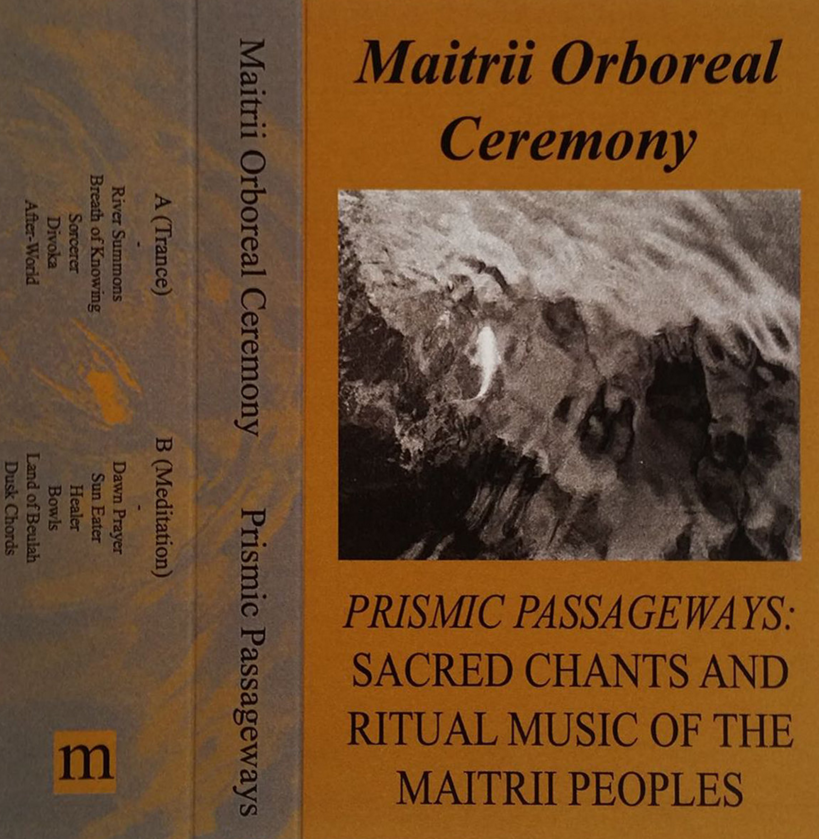
An ethnographical fiction, bordering on Atlantis myth, the shrouded instigators behind this latest experimental ambient peregrination for the always intriguing cassette label Moonside Tapes set sail for an imaginary land of shaman rituals and mysticism.
With a backstory mined from the annals of real historical anthropology and the field recorder’s archives, those mysterious forces of the Maitrii Orboreal Ceremony build up a half-convincing soundscape catalogue of fantastical atmospheres from the missing geographical link of Maitrii, a South Pacific realm that could have been part of another fantastical dreamed-up sunken continent, Aninomola. Because it never existed, it acts as an inspiration and blank canvas for an atavistic soundtrack of quasi-tribal primitivism and spiritualism.
The back-story goes that the only remnants, evidence of this obscure place and civilization are to be found in the notebooks and recordings of the anthropologist Dr. August Maynard, who it seems disappeared; his belongings in turn, found by villagers on the shores of that equally mystical, though very real, abandoned oasis, Easter Island.
Split into two lengthy recordings of grouped together themes, Prismic Passageways is divided into Trance and Meditation suites. “Presented here unabridged” and in “stereo”, the trance quintet of seamlessly strung-together tracks swirls around in Shamanistic communion, whilst the meditation sextet of dreamy esoteric atmospheres ventures past the misty coastline holy places into the interior. That first side of the tape feels like a misty ether veiled rowing boat drift to Skull Island. Summoned forth into a strange landscape, obscured creature calls and the haunted presence of the Maitrii spirits lure the weary travellers into an ambient sound world. A sorcerer’s crystalline ray reaches out to break the omnipresent foggy mirage at one point, and later, those so far feint rolls across a frame drum and lightly woody beaten pallets are ramped up into heavily reverberating, echoed elongated rhythms. It ends in an intoxicant spiral of drug-induced hallucinogenics: a spiral wispy drowsy and unsure ceremony in the catacombs.
That flip side, which traverses a ‘dawn prayer’, the fabled sun eater, and references the Hebrew biblical place of the ‘Land of Beulah’ – a place somewhere between Heaven and Earth -, features a venerable resonance of South Seas ancient mantric voices, bobbing trickled wooden marimba and minimal ambient suffusions.
For those wishing something different from their ambient traverses, enter the strange anthropological mystery of the Maitrii Orboreal Ceremony.
See also:
Jimmy W ‘Midi Canoe’ (here)
Cousin Silas And The Gloves Of Bones ‘Kafou In Avalonia’ (here)
Reissue Features:
Rüstəm Quliyev ‘Azerbaijani Gitara’
(Bongo Joe) Album/18th September 2020

The history and travails of the fecund oil rich country of Azerbaijan are atavistic. This is a nation that has striven to gain independence from a string of empires: both Tsarist and Soviet Russia, Iran, Albania, and much further back, the great Mongol Khan Timur. Desired not only for its abundance in fossil fuels – providing 80% of the Soviet’s oil on the Eastern Front during WWII, and continuing even now to be a vital pipeline for the post-communist Russian Federation – but for its geographical corridor to its fellow Transcaucasia neighbours of Georgia and Armenia in the west, to the south, Iran, in the north, Russia, and to the west, the vast inland lake, the Caspian Sea.
Khanates, caliphates, communism and secularism – Azerbaijan’s first declaration of independence came in 1918 and with it the first secular Muslim state – have all made their marks on this fertile land that in recent years has attempted to make inroads with NATO, the EU and China, whilst shaking off corruption. Since the collapse of the Soviet Union and with it Azerbaijan’s second declaration of independence, coups and counter-coups have hampered a smooth transaction towards democracy. Though the country remains stable, if governed for at least the last two decades by the Aliyev family.
Bordering as it does so many cultures, its no wonder that one of the country’s most celebrated guitar pioneers Rüstəm Quliyev absorbed and embraced such a diverse range of customs from abroad and far; from local modals, wedding celebrations and traditions to the regal music of the Persian court, Bollywood musicals and dreamy evocations of Arabia. Reissued by those tastemakers at Bongo Joe Records, this incredible sounding compilation brings together a smattering of eclectic guitar led tracks from the late legend’s expansive diy produced catalogue.
As with many of his forbearers and peers, Rüstəm would firstly master the region’s traditional instruments, the tar (an ornate curvy looking waisted long-necked lute) and saz (another long-necked lute instrument, shaped like a teardrop almost) before picking up the guitar; an instrument or version of which first trickled into the country from the Czech factory makers Jolana in the 1960s. But Rüstəm’s first introduction to the “gitara” was whilst serving in the Soviet military in Russia; an episode that soon ended, allowing the burgeoning talent to return to a civil war in his own homeland.
Hailing from the disputed mountainous Nagorno-Karabakh region of Azerbaijan, Rüstəm’s backyard was in the middle of a war. A convoluted history, but circumstances saw the autonomous Armenian ethnic-majority southern Caucasus area internationally recognized as part of Azerbaijan, but governed by the Republic Of Artsakh. Both breakaway states locked horns in the wake of the Soviet implosion; old rivalries, disputes were bought to the surface and violence soon ensued, including ethnic cleansing atrocities. In 1994 Russia secured a ceasefire after six years of conflict. As a consequence of this upheaval, with populations dispersed in some cases, Rüstəm moved further west towards the country’s Caspian costal capital of Baku; a move that would connect the rural visionary’s formative training with the lakeside cosmopolitan city’s network of international visitors and students, one of which, a student from Afghanistan, would introduce Rüstəm to such Afghan luminaries as Ahmed Zair. Included in this collection, ‘Əfqan Musiqisi’ is inspired by a track on a mixtape his Afghan student pal made for him. As an honour to him this pining song includes the heartfelt lines, “Let’s meet each other again, my friend, because separating is like unexpected death.” It sounds, as does most of his music, like a cross-pollination of influences; a Silk Road lament of bobbed hand drums, threaded lute and synthesized moaning choral voices. That synthesizer patch work is an integral part of the music by the way; a cheap sounding keyboard theatre of misty gazing ambience, punctuation of bass and percussive rolls that accompanies the often rapid, if elegant, nimble guitar performances.
Imbued both by doyens of the country’s “gitara” scene, including fellow Karabakh legend Rafiq Hüsey (aka Ramis), yet experimenting himself by refashioning a Jolana Czech guitar, Rüstəm managed to craft a unique merger of the past and present, the traditional and innovative. It helped that he came from a family of engineers, and with his brothers was able to set up a home studio. You can, if inclined, read more details about his tweaks, tunings and such in the liner notes provided by the album’s compilers Ben Wheeler and Stefan William. But in short, his style incorporated a wealth of inspirations, even wider than those already mentioned. For example, you can hear that wealth of influences on both the scenic searching, rough ’n ’ready Persian blues and rock number ‘İran Təranələri’, and the misty-eyed classical, popular Iranian street number, ‘Fars Musiqisi’ – the former via a transmogrified Niles Rodgers. Looking towards India, a famous Bollywood song imbues the strangely windy, horn heralding Western gallop ‘Tancor Disko’: imagine Pino Ruches riding shotgun with Ry Coder and Link Wray. Rüstəm transforms the highly complex classical poetic and improvised folk traditions of the country’s Mugham culture with the silken courtly, echoed fret work of ‘Neyçün Gəlməz’, and replaces the saz for his rapid guitar riffing on the Baba Zula like psychedelic ‘Yanıq Kərəmi’ and 80s sheened wedding dance ‘Baş Sarıtel’.
A caucuses Dick Dale, Omar Souleyman, Hank Marvin, perhaps as some people have proposed, even a touch of funk Mardi Gras Eddie Hazel, Rüstəm was an extraordinary gifted guitarist; one that could riff and strangulate, wrangle a constant trickle of quickened notes and multilayering, resonating poetry. Often he mimics a voice, at other times the lute or saz, yet always sounds mesmerizing and untethered. A rich showcase indeed, it’s time to traverse the Transcaucasia, the Steppes and beyond for those bored with western guitar slingers. Dip your toes into a whole unique and heartening guitar landscape.
Maalam Mahmoud Gania ‘Aicha’
(Hive mind Records) Album/October 2020

After various cultural excursions in South America, Arabia and West Java, Hive Mind Records return full circle to the “Gnawa” music that launched them with a striking reissue package of the beatific Aicha album by the form’s late great doyen Maalam Mahmoud Gania. It was of course Gania’s final studio album Colours Of The Night that first kicked off the label a few years ago. Now, picking up on that saintly venerating Moroccan music again, and in collaboration with Gania’s family, the label have chosen this moment of great turmoil (you could say it was a calm, healing balm just when we needed it most) to release a previously shrouded 90s cassette tape of entrancing communion and invocations from an artist rightly celebrated for pushing Gnawa beyond his hometown of Essaouira to an international audience. For one thing, Gania is celebrated for, perhaps, releasing the first ever Gnawa record, but also for working with such luminaries as Pharaoh Sanders, Bill Laswell and Santana.
The Islamic spiritual devotional poetry, dance and music of the Gnawa ethnic group – a group of Sub-Saharan people descended from slaves – this trance like sound is said to be one of the roots of the “blues” rhythm. Though a scion of the Islamic faith, this music is less restrictive in paying devotion and paean to a host of earthly saints and supernatural “mluk” (or “melk”). These abstract entities, the mluk, are represented by seven saints and seven colours; colours that “entrancer” dancers can wear in the form of robes or scarves. On the album’s bluesy, even jazzy threaded ‘Assamaoui’, those trancers wear blue in reference to the song’s sainted “Sidi Sma” (or “Samaoui”) and their implied ascendant relationship to the sky.
Gnawa is, in short, a music, culture of displacement because of its origins, but taken hold in Morocco, especially Gania’s home the key port of Essaouira, a strategically important fortress trading port on the country’s western coastine with the Atlantic. Gania’s home is where this set of recordings was made with an intimate setting of musicians. Though information remains scant, Berkley scholar and curator of the Moroccan Tape Stash blog Tim Abdellah attempts to dig deep and uncover the details; invited as he was to write the extensive liner notes and context for this special reissue. In fact, I’ve learnt a hell of a lot from his writing and scholarly notes on the subject. There’s even a translation of the exonerating call and response lyrics, which are often short lines of veneration for sainted shrines and deities that can be both combined with or sung in any order depending on occasion and mood.
Aicha, itself a reference to “she of many monikers”, a powerful female entity with untold mythical origins, is rich with the anticipated quivery strums and throbbing tensions of Gania’s “gumbari” – a camel-skin covered three-string lute. Bowed, stringy and incessant, but gentler and deeper than his playing on Colours Of The Night, Gania’s signature instrument weaves a nice bluesy accompaniment to his soulful exaltations. As always Gania’s gumbari lead is joined by the scuttled, scratchy tin paddled percussive rhythm of the iron castanets, the “krakebs”. It makes for a lively but soothing liturgy of entrancing adulation and praise.
Hypnotizing as always, with the galloping kept to a minimum, this spiritual six-track album is a Gnawa highlight, and a great place to begin discovering this immersive and special music. The label’s done another first class job of bringing this to a wider audience.
See also…
Maalam Mahmoud Gania ‘Colours Of The Night’ (here)
Houssam Gania ‘Mosawi Swiri’ (here)
Moulay Ahmed El Hassani ‘Atlas Electric’ (here)
Rodrigo Tavares ‘Congo’ (here)
Hi, my name is Dominic Valvona and I’m the Founder of the music/culture blog monolithcocktail.com For the last ten years I’ve featured and supported music, musicians and labels we love across genres from around the world that we think you’ll want to know about. No content on the site is paid for or sponsored and we only feature artists we have genuine respect for /love. If you enjoy our reviews (and we often write long, thoughtful ones), found a new artist you admire or if we have featured you or artists you represent and would like to buy us a coffee at https://ko-fi.com/monolithcocktail to say cheers for spreading the word, then that would be much appreciated.
Monolith Cocktail Monthly Playlist: August 2020: Secret Machines, Nosaj Thing, Charles Tolliver, Fliptrix, AUA…
August 28, 2020
PLAYLIST REVUE/Dominic Valvona/Matt Oliver/Brain ‘Bordello’ Shea
Join us once more for the most eclectic of musical journeys as the Monolith Cocktail compiles another monthly playlist of new release and recent reissues we’ve featured on the site, and tracks we’ve not had time to write about but have been on the radar.
The August edition kicks off with a blistering sunny-disposition Ron Gallo,space rock barrage returning Secret Machines and riotous Young Knives. Later on we’ve a host of jazz smarts from Stanley J. Zappa & Simo Laihonen, Charles Tolliver and Donny McCaslin.
As diverse as ever though, there’s a host of genres represented, including ‘Sufi Dub’ (Ashraf Sharif Khan & Viktor Marek) ‘after geography’ ambience (Forest Robots), ‘Eastern European femme fatal punk’ (Shishi) and ‘Euclid inspired polygon techno’ (Kumo).
Matt Oliver furnishes as ever with a host of choice hip-hop tracks from Fliptrix, Helsinki Booze Mercanhts, Loki Dope and Verb T.
There’s also a second despondent melodious grunge-y new wave rocker from the burgeoning talent that is Jacqueline Tucci. Something for everyone, more or less.
TRACKS
Ron Gallo ‘HIDE (MYSELF BEHIND YOU)’
Secret Machines ‘Everything’s Under’
Young Knives ‘Swarm’
Death By Unga Bunga ‘Trouble’
Shishi ‘OK Thx Bye’
Jacqueline Tucci ‘Sweeter Things’
Elian Gray ‘High Art’
Loki Dope ‘Have You Any Wool?’
Stanley J. Zappa & Simo Laihonen ‘E38 E 14th, City Of Piss, USA’
Charles Tolliver ‘Copasetic’
Nosaj Thing ‘For The Light’
Donny McCaslin ‘Reckoning’
VRITRA ‘CLOSER TO GOD’
Remulak & Type.Raw ‘Mad Skillz’
Vex Ruffin ‘Hinde Naman’
Mazi & Otarel ‘Staiy’
Fliptrix ‘Holy Kush’
Sausage Spine & Relentless Exquisite ‘Skin Diamond’
Verb T & Illinformed ‘Rotten Luck’
Pitch 92 & Lord Apex ‘Suttin’ In The Trunk’
Helsinki Booze Merchants ‘Tokyo Drift’
Fliptrix ‘Powerizm’
Diassembler ‘A Wave From A Shore’
Forest Robots ‘Over The Drainage Divide’
Mark Cale, Ines Loubet and Joseph Costi ‘Bodies Of Water’
Lucia Cadotsch, Otis Sandsjo, Petter Eldh ‘Azure’
Paradise Cinema ‘Possible Futures’
Only Now ‘Merciless Destiny’
J. Zunz ‘Four Women And Darkness’
Alan Wakeman, Gordon Beck ‘Chaturanga’
BROTHER SUN SISTER MOON ‘Numb’
Brian Bordello ‘Rock n Roll Is Dead’
The Hannah Barberas ‘W.Y.E.’
AUA ‘I Don’t Want It Darker’
Ashraf Sharif Khan & Viktor Marek ‘Drive Me On The Floor’
Harmonious Thelonious ‘Hohlenmenschemuziek’
Kumo ‘South African Euclid’
Cabaret Voltaire ‘Vasto’
Pons ‘Subliminal Messages’
Freak Heat Waves ‘Busted’
Constant Bop ‘Alone Again (Naturally)’
Josephine Foster ‘Freemason Drag’
John Howard ‘Injuries Sustained In Surviving’
Hi, my name is Dominic Valvona and I’m the Founder of the music/culture blog monolithcocktail.com For the last ten years I’ve featured and supported music, musicians and labels we love across genres from around the world that we think you’ll want to know about. No content on the site is paid for or sponsored and we only feature artists we have genuine respect for /love. If you enjoy our reviews (and we often write long, thoughtful ones), found a new artist you admire or if we have featured you or artists you represent and would like to buy us a coffee at https://ko-fi.com/monolithcocktail to say cheers for spreading the word, then that would be much appreciated.
 Monolith Cocktail Blog