The monthly Digest includes a clutch of accumulated short new music reviews, the social inter-generational/eclectic and anniversary albums celebrating playlist, and a piece celebrating the 60th anniversary of Pet Sounds from the Archives.
___/NEW MUSIC IN REVIEW____
The Bordellos ‘Let’s Play Lo-Fi’
(Metal Postcard Records) Released 8th May 2026
Marking our own homework so to speak, regular contributor to the site Brian Shea and his family band The Bordellos have released a new album on the unsuspecting public. Well, I say new, but it is in fact another chance to hear a compilation of older tunes recorded over 26 years, mostly over the course of a drunken Friday night at Ant Shea’s abode.
Almost silently slipped out, unheralded and with absolutely jack-shit in the way of promotion, it’s as if it never happened. A campaign run out of embarrassment, or perhaps in the manner of their lo-fi(ish) credentials, dropped out of the ether without a thought. This compilation sounds like it could have in fact been recorded at any time over the last forty odd years. Pop songs saved from obscurity however, we are grateful for this opportunity to rave about the lost band.
A band that revels in self-sabotage, The Bordellos walk a line between notoriety and truth. But they need to unshackle from the lo fi prison they’ve built for themselves, as many of the aphorisms and self-deprecated songs on this new album are far too good to lay languishing in irrelevance and indifference. They are better than many of the bands they emulate, and a damn sight more witty, true and sharp than the overrated Jesus And Mary Chain, who they sometimes evoke – the buzzy and flange indie tune ‘Sleeptight’ sounds like a much more genuine and earnest version of the Scottish band’s Psychocandy era. Dan Shea’s vocals are a highlight as always, but that’s not to do down Ant and Brian Shea. With the bonus of youth, but just as malcontent, Dan isn’t quite as despondent and dispassionate as his dad and uncle, and recalls the very best of Sarah Records, Postcard, and umpteen great indie labels from the golden period of the C86 phenomenon. In contrast, his older generation X relations sound like John Shuttleworth (“Can I borrow Batman Forever? No, you got to bring it back tomorrow”)of John Cooper Clarke over a backing that despite the buzzes, the low rent apparatus, the chirping at one point of a budgie, and the distortion, could be off a New Order demo or The Sundays. Then again, you can’t not pick up on The Fall vibes; the love of beat groups and the garage music of the 1960s; all filtered through the hazy recollections of a Northern town in England during the 80s and 90s.
Appearing on bass, for at least some of the songs, is good old Gary Storey, who emphasis the band’s pop and post-punk credentials with a twang of Hooky and some C86 inspired lines.
An album filled with declaration to that age old trope of unrequited love, or lost love, or a love that cannot survive the class divides of a grimy life spent at the coalface of modern Britain – which is as Blur correctly pointed out, if in an actual halcyon age compared to now, on their famous LP of the early 90s. In the vape shop, nail salons and chicken takeaways dominate arcades and precents of shitty England, the band find something worth putting to song, as they praise, desire and court a string of both unsuitable and suitably uninterested muses. That and the odd drug addict; those that have fallen to the wayside in an age of despair and high anxiety. ‘Driftwood’ is an ode to the high jinks’ tragedy of Dennis Wilson, spooked by a Manson and heavy bass.
The lyrics make the album as usual. Far too many to quote, they could fill a book of modern toss age poetry with observational dark humour, despondent asides and gripes. But love is never far from the sneering captured lines that perfectly sum up the age in which we are unlucky to be living through. Heartfelt, lovelorn and yearning, you get a sense that the band really means it. And that’s where that truth comes to the forefront.
As I said already, this songbook is way too good to be lost on bandcamp amongst the millions of releases dolled out each day. Or indeed on Spotify, where it will be lucky to reach the proscribed limit to receive any compensation of a thousand plays. If this was released over forty years ago, we’d be speaking about The Bordellos in the same breath as the BMX Bandits and their ilk. As it is, this cult release will probably need every push it can get. Then again, the playfulness of the title, the silly snowman dress up costume that Brian adorns on the cover point towards a confliction of amateurish fucking around and finding the audience and acclaim they deserve: that’s showbiz. I’ve done my bit, the rest is up to you, kind followers/readers.
In The Labyrinth ‘Worlds On Fire’
Released 2nd May 2026
Across Nepalese mountain ranges at the heights of nirvana, then seamlessly blending into the Afghan valleys before taking the troubadour’s journey to Turkey and ending up in a fantastical vision of olde Europe, In The Labyrinth’s latest album collection of past material saved from the vaults and remade anew, of original new compositions and transformed covers takes its Nordic roots on a geographical music tour. From Arabia to Peshawar and Iran; from Tudor England to India, there’s musical absorptions that all fans of prog and psych-rock will be familiar with and various signature stopovers on the hippie trail: a Kabul of a very different era, the holy sanctuaries of Varanasi.
Orbiting around the Swedish version of Mike Oldfield – playing an exhaustive and too long to list assortment of instruments -, Peter Lindahl since the early 90s, but born out of the previous Aladdin’s Lantern in the 1980s, In The Labyrinth opens its doors to a wide range of foils and accomplices. So many people are involved, including former band members and acquaintances, over this album’s span of at least forty years of material refashioned or revived and newly augmented. There’s too many to name individually anyway, with various international musicians and voices – including the ethereal, soothing, near spirit-like backing vocals and harmonies of Helena Selander and Natalie Knutsen. One such mirror-y Krishna-vibe atmospheric soundtrack of replenished waters and Yeti era Amon Düül II-esque, ‘Varanasi Sunrise’, is recalled back from the late 90s, just before band member and drummer Feri (Fereidoun Nadimi) returned back to his native Iran.
Pulled through Lewis Carroll’s mirror both forwards and backwards, there’s a spectrum of psychedelic influences at play on this fantasy of tumultuous ills and more dream-like and healthy meditations.
The album opens with a revival of the Catholic litany, as made so cultishly famous by Axelrod’s Electric Prunes project on the Mass In F Minor LP of ’67. Here it’s given an almost pastoral feel that’s somewhere between a Medieval Yes, Clannad and The Far East Family Band sunning it in the Byzantine Court. ‘Kabul’ is very much of its inspiration but reminded me of that electric-saz vamped up Turkish-Anatolian configuration of Baba Zula, whilst the psychedelic posed ‘Disillusion’ – partly a new arrangement of a song from the turn of the 21st century about losing one’s self-esteem during a relationship gone sour – has a touch of Head era Monkees, Van Der Graaf Generator and the Strawberry Alarm Clock. One of the album’s covers/interpretations, ‘Golden Hair’ reimagines the Madcap Laughs Syd Barret in Rapunzel’s Indian acid-fairy tale tower, and the brassy sitar resonated ‘Sagarmatha’ – initially released back in ’99, the song was first featured on the Floralia Volume 3 compilation by Wot 4 Records – once more talks to Yogi on the ADII and Aphrodite’s Child, projecting in a trance-like state to mystical India.
Just when you think you may have the measure of this group, along comes the strange bass heavy and phaser, flange and vapour trip ‘The Endless City’; a mix of Steve Hillage, post-punk, and Hawkwind, this track is, I believe, an amalgamation of the 90s tracks ‘The Black Plague’ and ‘Lovecraft’ originally made under the Lovecraft moniker. The sword and sorcery of ‘Nightriders’ reminded me in part of Jefferson Airplane, whilst the hallucinogenic Alice In Wonderland-ish ‘The Mirror’ somehow reminded me of Bryan Ferry, but partnering up with Steve Hackett and Floyd. There’s also takes on the Swedish prog and rock scene of the 70s with versions of tracks based on or inspired by Gregg Fitzpatrick (the American bred musician slipped the Vietnam War ending up in India, before navigating back west to first Finland than his eventual home of Sweden, where he performed under various Nordic pseudonyms to escape detection, but managed to form many bands and have an eventful career) and Kebnekajse. The former, and the album’s title piece, takes the maverick American’s plaint and Medieval-like folkish lament and adds a mystifying layer of the Indian subcontinent, the Celtic and the environments of a bustling street. The later reprises a traditional Swedish folk song made famous by the “foremost” Swedish folk-rock band, amping up the fuzz and Queen-ish rock postures.
Each song has a story you could say. Each one a chapter in a particular period of the band and its offshoot’s career arcs. But all fit together rather well on this fantastical new age acid trip of evergreen troubadour folkery, prog, the regal, the enchanted and worldly musical.
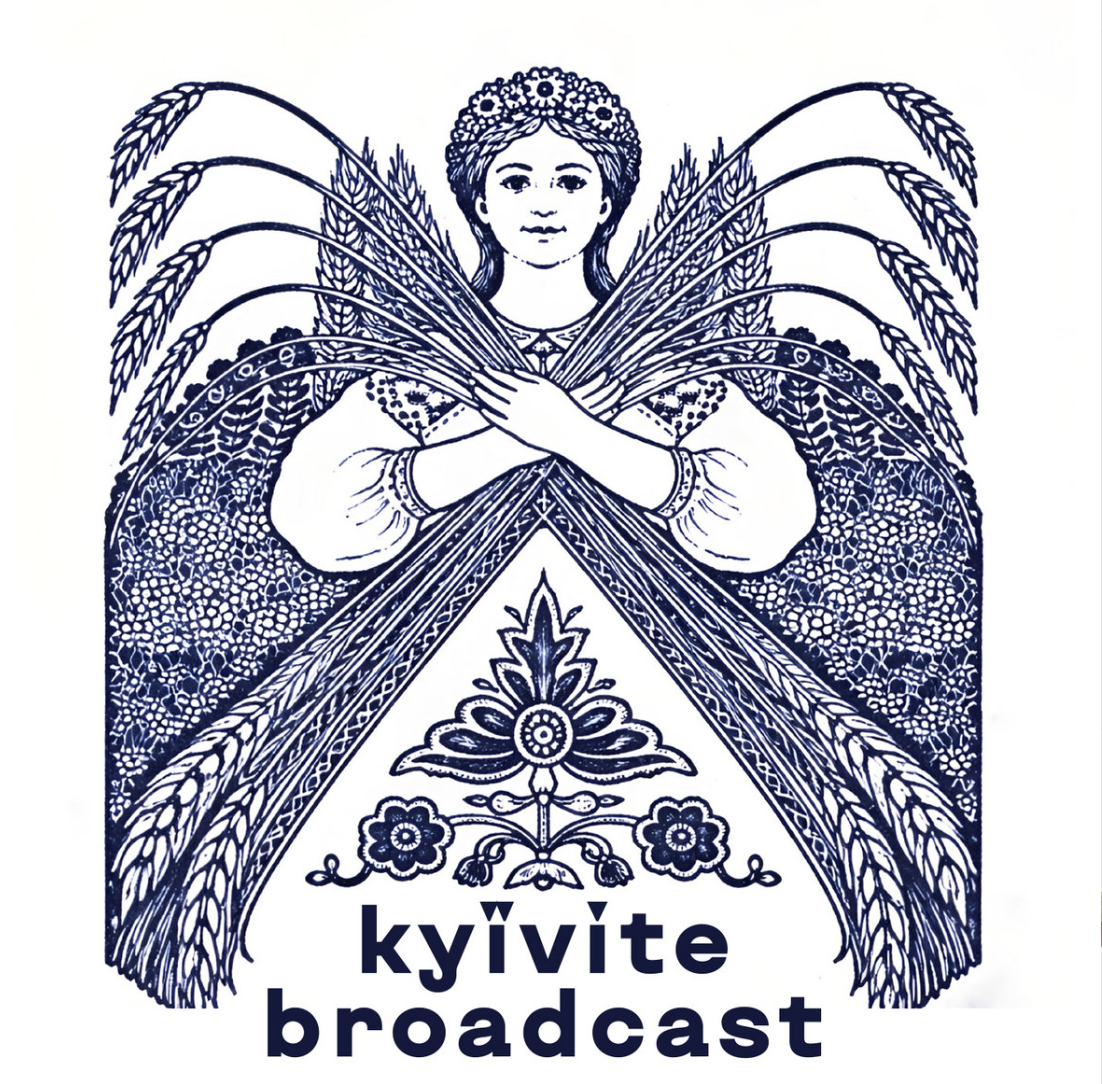
Kyïvite ‘Broadcast’
(Staalplaat) Released 24th April 2026
As Putin’s increasingly unhinged invasion of Ukraine continues, now stretching into yet another year – a war period so long now that volumes and untold books about it have been published, but been found wanton or made redundant by the escalations and constant changing landscape of events both in Europe and outside it –, the survival of the country’s culture, its music, hasn’t just been left to those fighting on the extensive frontlines but its army of archivists, its radio stations still broadcasting under the frightening threat of drone and missile attacks and its many independent labels.
Despite it all, Putin’s previous cold steely determination and tyrannical unapologetic resolution has taken a battering. His war is all but check-mated, stalled and in fact losing ground. As untold thousands return to home from the front, with limbs missing, psychologically damaged, Russia’s people have seen the Vietnam effect– that and the hundreds of thousands of coffins – and realised the implications and realities of this unjust invasion. And as yet another peace deal, or at least break in the ongoing destruction is tabled, it will take some convincing in making the Ukraine give up any land or concessions, just as the tide has turned and they look to have made significant ground up and penetrated and set fear into the minds of Russia’s ruling regime.
One such conservationist of the country’s musical legacy is the Kyïvite, a Kyïv-based ambient-radio experimental music project that merges electronics with Ukrainian folk, archival recordings and minimalist sound design. Embodying erasure, the loss and way in which we remember fragments and scrapes of the past, the people behind this latest release recall and reprise filtered and deliberately made gauzier and obscured archival material from the country’s renowned Transcarpathian Folk Choir.
Led for a time between the years of 1954 and 1969 by the Kyïv Conservatory hot-housed conductor, composer and vocalist Mykkhailo Krechko, the professional artistic collective and recognized folk choir was founded in the Ukrainian city of Uzhgorod in 1945. Sitting by the Uzh River in Western Ukraine, the city is close to the country’s border with both Hungary and Slovakia; famous for its Medieval castle, its holy places and diverse cross-border mix of cuisines. Enduring the Soviet years, a range of the choir’s beatified and ethereal performances have had new life breathed back into them at a time when the country, suffering unimaginably, is working to save its independency, its spiritual nationalist identity and its very survival against an Empire bent on domination if not erasure of Ukraine and its history. Broadcast, then, isn’t just a creative, artistic exercise but an act of preservation.
Connecting old recordings with a contemporary interference of minimalist techno, broken beats, various sound effects of reverberation and the spectre of war, Kyïvite work a Fortean-like radio set to invoke ghostly visions. A hauntology of a kind, but one that churns, recycles and loops some truly beautifully sung and impressively voiced evocations of remembrance, loss, historical record and pastoral romantism. Holding on to that culture, each track merges its timelines whilst being submerged under a constant soundtrack of wax cylinder-like crackles, record scratches, static, retuning and a signalled calculus of buzzes and oscillations. Some titles prompt more elegiac and serious matters, whilst others reference traditional dances (track eight, ‘dudochka (pipe) dance’, is, I believe, a fast-paced Ukrainian folk dance performed in pairs, lines or solo; moving with lightness and flow) and draw on the country’s diverse historical peoples (a reference to the famed Cossacks of Ukraine; one strand of which can be rooted back to the famous western Zaporizhia Cossacks who were centred near the Dnieper River).
As with the terrain and focus there’s many an elegiac example to be found on this album: ‘ballad of a soldier’, ‘ballad of a widow’, ‘ballad of a Cossack’s death’. But all are as supernatural as they are evocative and near esoteric. Elsewhere there’s spells of what can only be described as dub, and other times, when the choirs are less obfuscated, some passages of the stately, the gospel and filmic.
The machine against the naturalistic vocals of a different time adds up to an experimental broadcast steeped in historical documentation, lament and the beautiful. Time is drawn back and forth in an alternative dimension, as Soviet era Ukraine, very much under the cosh and finding its former independence and sperate culture erased for that of tyrannical Communist ideals, connects with a country once more threatened with the very same erasure. At the time of writing this however, the tide has turned in Ukraine’s favour. Putin looks far less stable, and cracks are emerging. Let’s hope this conflict does end soon in Ukraine’s favour, and that we really don’t have to foresee the eradication of its culture and rich musical heritage.
Neuro…No Neuro ‘Memloss’
(Audiobulb) Released 2nd May 2026
Having had to face a debilitation of my cognitive capabilities, of memory erasure and problems with speech since being hit out of nowhere by a stroke this year (still waiting, still being tested to find out exactly why) I can sympathise and relate to the ongoing work of the Tucson, Arizona synthesist and electronic artist Kirk Markarian. Coming to terms with, or rather as a result of increasingly noticing that his own speech and memory has become inconsistent, Markarian (under his micro-inspired cerebral Neuro…No Neuro alias) finds that everything from articulating his emotions, thoughts and instructions to remembering steps in his various daily tasks are disappearing into the ether and fog. Those aren’t the words he’s using, but I get the sense that, and especially as demonstrated by the small sounds on this latest album, his grip on holding on to such memories is slowly being tested, and that his grasp on the routine tasks is being eroded.
To compensate, or to prompt and kick-start the neurological charges, Markarian has linked together the various detritus and fragments of life through producing a soundtrack of softened bulb-shaped notes, musical microbes and atoms, ambient waves and spheres and the tubular. If it was a colour (as demonstrated by the artwork) it would be a washed-out rose red or an enervated pink.
Using titles as prompts and reference points, a new language is created that hopes to remind or jog a memory in decline. Sometimes almost like illusions or mirages, and at other times like more saddened passages of loss, each track plays with the building blocks a little differently; from searching spheres of pretty notation bouncing or bobbling over vapours, to the glassy, the sticky, the licked and pinged. Sometimes there’s points in which it feels the artist has remembered something only for it to then fade away; a smack of this, a gamelan like pattern suddenly of metallic percussion, and a spacy fur of remembrance.
Tiny steps on the road to recovery of memories and the cognitive, Markarian’s latest work of erasure and recollective gravitas is suddenly more serious; a blueprint to sonically cataloguing and hanging on to what’s been lost.
___/THE SOCIAL PLAYLIST VOLUME 106
The Social Playlist is an accumulation of music I love and want to share; tracks from my various DJ sets and residencies over the years; and both selected cuts from those artists, luminaries we’ve lost and those albums celebrating anniversaries each month.
The series has been running for over a decade or more now. Volume 106 is the latest eclectic and generational spanning playlist come radio show from me – the perfect radio show in fact, devoid of chatter, interruptions and inane self-promotion.
Manic Street Preachers ‘Elvis Impersonator: Blackpool Pier’ – Taken from Everything Must Go album, released this month 30 years ago.
Super Fury Animals ‘Frisbee’ – Taken from the Fuzzy Logic album, released this month 30 years ago.
NOV3L ‘To Whom It May Concern’ – angular no wave funk dance from the Canadian collective.
High Pass Filter ‘Eat System’ – Melbourne electro-dub group, from the mid 90s to the early 2000s; once supported the likes of Tortoise, Fugazi and the Beasties.
Hamburger All-Stars‘One Million Hamburgers’ – Post-punk dub and funk no wave band from the West London squat scene of the early 80s. A shifting lineup as such that featured at any one-time members of Alternative TV, Blue Midnight, The Impossible Dreamers and The Pretenders.
Sleeper ‘Dress Like Your Mother’ – Taken from The It Girl album, released this month 30 years ago.
Dwi ‘Reanimate’ – just love this from the alter ego of Dwight Abell, the Vancouver-based multi-instrumentalist and bassist with The Zolas A newish track.
Nine Days Wonder ‘Hovercraft Queen’ – Sax-honked and squeezed, cow bell rock from the German group.
The Beach Boys ‘You Still Believe In Me (Mono)’ – Taken from the Pet Sounds 60th Deluxe anniversary edition; see also my piece on Pet Sounds in the Archives spot.
Beverly Martin ‘Get To The One I Want To’ – paying homage this month to the late folk icon (left somewhat in the shade by her famous husband), who died earlier this month.
The RDF ‘He Is Coming’ – An abbreviation of the band members, “Russ, Fred, and Dan”, a bluegrass down country Christian outfit.
The Difference Machine ‘Orange Lazarus’ – Futuristic Cosmic dystopian hip-hop from the counterculture Atlanta collective and friends.
Run-D.M.C. ‘Proud To Be Black’ – Taken from the Raising Hell album, released forty years ago this month.
Geeker-Natsumi ‘Advertiser’ – New tune from the Japanese maverick of odd pop and bitcrush game machine electronica shunts.
The Beach Boys ‘I Know There’s An Answer (Stack-O-Vocals)’ – Taken from the Pet Sounds 60th Deluxe anniversary edition; see also my piece on Pet Sounds in the Archives spot.
Keith Jarrett ‘Solara March (Dedicated To Pablo Casals And The Sun)’ – Originally released this month, fifty years ago.
Delired Cameleon Family ‘Le bouef’ – prog-electronica peregrinations from the obscurest 1970s French band.
Beverly Martin ‘Reckless Jane’ – paying homage this month to the late folk icon, who passed away earlier this month.
Nick DeCaro And Orchestra ‘Caroline, No’ – a cover version tribute this month, paying tribute to one of the most complete and perfect album’s ever made: Pet Sounds.
Susan Alcorn ‘Mercedes Sosa’ – new spiritualism suite from the iconic pedal steel guitarist, bandleader, improviser and composer.
The Jerry Hahn Brotherhood ‘Early Bird Café’ – One from the American jazz guitarist of repute and notable sessions star’s 1970 country-rock ensemble.
Electric Sandwich ‘China’ – Very much on topic this month, a hand-drum electrical rock jam from the Krautrock era group.
Pip Pyle ‘Hannello’ – Prog-jazz from the journeyman drummer and Canterbury scenester.
The Beach Boys ‘I Just Wasn’t Made For These Times (Stack-O-Vocals)’ – Taken from the Pet Sounds 60th Deluxe anniversary edition; see also my piece on Pet Sounds in the Archives spot.
Vincent Over The Sink ‘Number Theory’ – psychedelic mirage from the Australian duo.
The Tryp ‘I Dream In Black And White’ – British revivalist psych band.
Sonic Youth ‘Green Light’ – Taken from the Evol album, released forty years ago this month.
Scott Walker ‘Psoriatic’ – Taken From The Drift album, released 20 years ago this month.
The Butthole Surfers ‘Space’ – Taken from the Electriclarryland album, released forty years ago this year.
John Saturley and The Slumber Party ‘Midnight Deathbed’ – North Carolina outfit I believe, with scant information nor any real bio. Kind of spacy Human League meets Numan and Hercules & The Love Affair.
___/ARCHIVES______
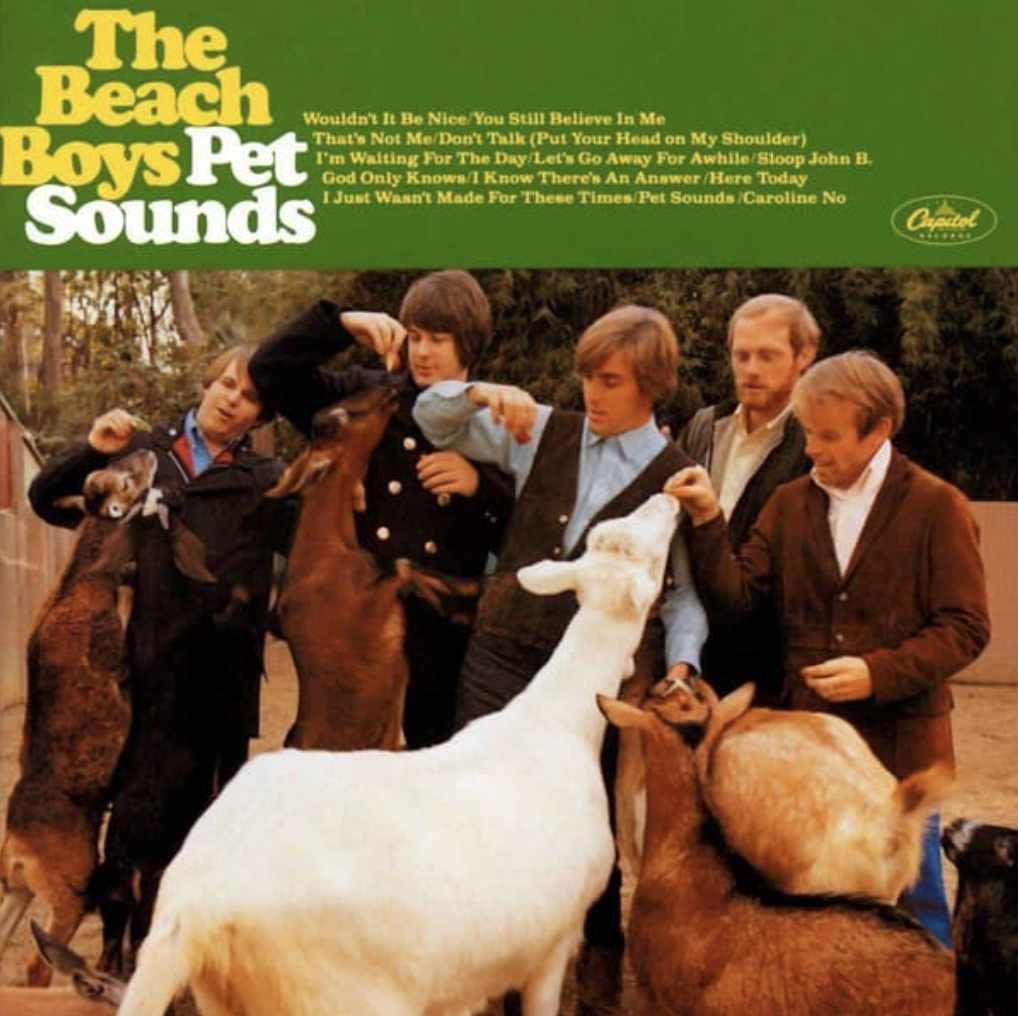
To coincide with the 60th anniversary of Pet Sounds (possibly one of the most complete and greatest albums in the rock/pop cannons), another chance (yet again, having already reprised it after the death of Brian Wilson) to read my review and purview of the 50th anniversary celebrations and tour that stopped off in Glasgow, back in 2016.
Brian Wilson presents Pet Sounds 50th Anniversary Celebrations
Friday 27th May 2016 at the Glasgow Royal Concert Hall
In a soft power, musical arms race with The Beatles, Brian Wilson more or less now mastering the known limits of the studio, was nudged towards ever more ambitious levels of creativity. As the old adage, music history folklore if you like, goes it was The Beatles Rubber Soul that finally did it for Brian. The retort to this foil would not only be The Beach Boys first masterpiece, but one of pop and rock music’s most enduring triumphs, Pet Sounds. No longer happy with the California high school, deuce coupe cruising, beach party spirit that had so far made the group world famous, cast even further adrift, introspective and all but retired from playing live with the his brothers and comrades, Brian was moving on from the fancy-free and footloose sound of the 45s that had always guaranteed a top ten place in the Billboard charts for something more…well, grown up. Voicing a growing anxiety – or the growing pains – of youth, Brian would compose the sound of young adulthood. As the world came to terms with the idea of the ‘teenager’, Brian began encompassing and articulating a new uneasy transition.
As much about the times as about the heartache and pains of being pure of heart, Pet Sounds marked a growing resentment towards the previous generation. At the beginning of a revolutionary change in attitudes, but a year before the ‘free love’ hippie idealism that brought in the psychedelic epoch, these former golden tanned beachcombers were breaking from their parent’s traditions and rules to set their own course: a life mapped out, from education to career and marriage. But at the very heart of all Brian’s work, even today, was a sense of innocence. An innocence lost as the lovesick but married Brian now in his mid-twenties, was coming to terms with the anxieties of that adulthood, and his growing mental anguish. Undiagnosed for years, left at the mercy of countless well-wishers and confidence tricksters, quacks and pseudo-therapists, Brian’s meticulous obsessive production of Pet Sounds and its subsequent, but not satisfactorily finished until 40 years later, magnum opus SMiLE, tipped him over the edge.
Pet Sounds would also mark a shift in lyricism, with Brian collaborating with his friend the lyricist and copywriter Tony Asher. A task of reification, Asher would take the often abstract and difficult expressions that roamed around inside the troubled mind and put them into song. Not exactly the most unified of atmospheres, Cousin Mike Love a constant daddy-o stuck-in-the-mud character, ready to pour a cold bucket of egotistic sick over anything that he felt would compromise or trouble the calm waters of The Beach Boys, so far, winning formula. To be fair, Love would be right to question this new shift towards melancholic, almost philosophical anguish. Asher at that time was but a burgeoning talent with little to back up his credibility as a top pop songwriter. Replacing previous writers and solid contributors with an unproven lyricist would however prove to be genius decision. But the success of the album was slow. Its renaissance and rebirth as one of the greatest albums of the twentieth century was down to the audiences overseas. The change in direction had unsettled the market, as America baulked at this sadder, more cerebral tone. Yet, the UK loved it, buying it in droves and sending it to the number 2 spot in the charts – compare that with its 106 placing in the Billboard. Pet Sounds could have been a disaster, but it was saved, becoming a cult, an iconic masterpiece. And though it would take a while to pick up the desirable sales, its legacy grew and grew years after its original release.
Arriving almost in tandem The Beatles Revolver was released just a couple of months later. Brian’s answer: SMiLE. If Pet Sounds had not only threatened but also sent Brian into a funk, then this grand American musical tour through the ages, from Plymouth Rock to the shores of the Spanish Peninsula, would all but consume and nearly destroy him. So ambitious was the vision that despite the near godlike genius of his assiduous sessions ensemble The Wrecking Crew, the social, political and historically woven rich tapestry lyrics of new songwriting partner Van Dyke Parks, and his own production prowess, the project stalled. Numerous mixes, snippets, vignettes and even completed songs made it onto various albums and compilations over the decades, including the enervated and rushed out – to appease and bring in some much-needed revenue – Smiley Smile. It would take decades for SMiLE to be eventually completed, albeit (sadly and for obvious reasons) without his brothers Dennis and Carl’s near ethereal soulful compassionate voices, and missing any input from Mike Love – now more or less carving the Beach Boys brand up, sporting it like a trophy as he has carte blanche and ownership of the name when touring with his own cabaret version of the group’s back catalogue. Brian did however manage, after spending the longest amount of time and money in recording history on a single, to release the perfectly epic pop rhapsody ‘Good Vibrations’.
Documented, quite favourably and sympathetically, by the Love & Mercy movie, Brian’s wilderness years lasted throughout the 80s and into the 90s, before the most accomplished of L.A. bands and Beach Boy fans The Wondermints helped lure Brian back on the road, performing a Pet Sounds extravaganza in 2000. Just four years later the band would join Brian in the studio to finish that nigh mystical, greatest album there never was, SMiLE, before taking it out on the road. Following in 2011 the eventual hidden away, locked in some fabled vaults, SMiLE Sessions of original material was finally released to the public.
A near renaissance, a scarred and troubled but blooming Brian Wilson is back once again on the road. This time he celebrates the 50th anniversary of Pet Sounds, arriving in my new hometown of Glasgow on a nationwide tour. Billed as an ‘anniversary celebration’ – the final performance of the iconic album in its entirety – tonight’s performance is a generous one. Split into two performances of greatest hits and Pet Sounds, with an encore of good time classics, Brian was backed by members of the Wondermints and flanked by special guests, Al Jardine and honouree Beach Boy Blondie Chaplin: a set up that has been repeated on many occasions.
As a steady presence for the vulnerable Brian, Al was on hand to soften the odd tremors of quivered uncertainty. But who was on hand to back up Al? Well as it happens his son Matt Jardine, proving himself the most apt of Beach Boy scions, was there to to aid his old man and Brian with the most adroit and sweetest of falsetto voices. A counterpoint to the now – and for good reason – limited vocal range of Brian, Matt took on the high notes with aplomb and even performed lead on one of the evenings early highlights, ‘Don’t Worry Baby’. He would play the role of a younger Brian during the entirety of the Pet Sounds album suite, almost seamlessly, taking on each alternating verse. However, and it seems almost too disingenuous to point out, there were a few wobbles and miscues throughout that just couldn’t be patched over. Yet we all willed Brian on, and when he took lead on the most diaphanous of love declarations, ‘God Only Knows’, the entire audience stood to their feet in adulated applause – the first of many rapturous ovations that night.
Directed and conducted by Paul ‘Von’ Mertens the entire ensemble began the evening with the heavenly choral warm-up ‘Our Prayer’; featured on 20/20 but originally the lead-in to the album version of SMiLE’s grand trans-American tour ‘Heroes And Villains’, which followed. We were then treated to a litany of favourites from the bobby sox high school daze back catalogue of hits, including a swinging, swayed medley of ‘California Girls’, ‘I Get Around’ and ‘Little Deuce Coupe’. Handing over the spotlight, Al performed centre stage with renditions of ‘Wake The World’, ‘Add Some Music To Your Day’ and ‘Cotton Fields’ – all songs plucked from the Brian breakdown period, when the rest of the Band were prompted to take over the creative reins. As lithe and energetic as ever, former Flame and Beach Boy band member (on tour and in the studio during the early 70s) Blondie Chaplin sprouted onto the stage to add some light-hearted theatrics and rock’n’roll vigour. The much-accomplished Durban guitar maestro, looking more and more like a cross between Jagger and Richards (all that time he spent touring with the Stones in the late 90s has worn off on him), launched into a strutting version of ‘Wild Honey’. Expanded from its soulful howled original setting, Chaplin went into bohemian guitar solo overdrive; showboating across the front of the stage and playing to the audience, who lapped it up. From The Beach Boys’ troubled but most brilliant 1973 album Holland, Chaplin picked up the ocean current waltz ‘Sail On Sailor’. The original vocalist on that recording, he returns to it with carefree élan, adding a wild guitar solo to the end, which sends Brian off into the wings in playful mock exasperation.
Back out for act two, the band minus Chaplin for now, begin the reverent Pet Sounds album. Largely enduring because it encapsulated a particular age and time in Brian’s genius, but mostly for capturing the love tribulations and torments of young adulthood in the most perfect pop songs, the album still chimes deeply with audiences fifty years later. Intricate and multi-layered but never ever laboured or strained – witness the Bond-esque Tropicana lounge instrumental suite title track -, each purposely-poised ballad, paean and tryst says all it needs to in less than two minutes. The rousing ‘Wouldn’t It Be Nice’, shared vocally by the Jardines and Brian, opens proceedings of course, followed by a gentler, more serene ‘You Still Believe In Me’. Highlights from the album set included an Al led version of the sea shanty in the manner of a doo wop Ivy League bruiser, with a reference to a particular paranoia plunged bad acid trip thrown in, ‘Sloop John B’, and flipping over the B-side, a poignant and encouraged Brian led ‘Caroline, No’.
The encore promised a “fun, fun, fun” package of hits. But first the band introductions, each band member receiving a musical signature tune as they came back out onto the stage after the interval. It was then straight into a full cast version of ‘Good Vibrations’, including the gesticulating tambourine wielding Chaplin who turned his percussive role into an art form. Rewinding back through the songbook, we were treated to the sing-along classics ‘Help Me Rhonda’, ‘Barbara Ann’, ‘Surfin USA’ and ‘Fun Fun Fun’. By now the audience were up and out of their seats, dancing where they could in the face of the po-faced security and attendants. From our balcony seats looking down on the main auditorium we witnessed hundreds swaying and weaving in almost perfect timing: the atmosphere couldn’t have been better. On a poignant, perhaps paused note Brian finished the evening with a version of the song that spawned the title of the recent movie, Love & Mercy. Written in more recent times, a reminder of the anxieties and anguish that once crippled Brian, the song’s central tenet is a perfect theme to finish on: a great sentiment for the audience to carry with them as they head home into the night. A joy to witness, the Pet Sounds legacy is in safe hands, especially here in Glasgow; a city twinned with Big Sur for one night only. Simply magical.
Here’s the message bit we hate, but crucially need:
If you’ve enjoyed this selection, the writing, or been led down a rabbit hole into new musical terrains of aural pleasure, and if you able, then you can now show your appreciation by keeping the Monolith Cocktail afloat through the Ko-Fi donation site.
THE MONTHLY DIGEST INCLUDES A CLUTCH OF ACCUMULATED NEW MUSIC REVIEWS; THE SOCIAL INTER-GENERATIONAL/ECLECTIC AND ANNIVERSARY ALBUMS CELEBRATING PLAYLIST; AND CHOICE PIECES FROM THE ARCHIVES.

(Photo by Todd Weaver)
___THE NEW___
Ingebrigt Håker Flaten’s (Exit) Knarr ‘Drops’
(Sonic Transmissions) 22nd August 2025
Growing, developing and expanding the remit from what was meant to be a one-off commission, brought together especially for the Vossajazz Festival, the troupe is now on its third titanic fusion rich studio album proper. Set in motion by Ingebrigt Håker Flaten (who also runs the Sonic Transmissions label, home to the ensemble’s recordings) a number of years back, the (Exit) Knarr now acts as the ‘main creative vehicle’ for the Norwegian bassist going forward it seems.
Settling with a reasonable lineup on this third chapter but inviting in a number of guests on the album’s statement piece, a transformed vision of jazz deity Wayne Shorter’s ‘Deluge’ piece from the revered and influential 1965 album release JuJu, on this outing the sextet takes prompt or inspiration from a more visual source. In the sphere of the Russian maverick abstract visionary and Bauhaus professor Wassily Kandinsky and Swedish mystic and abstract progenitor – some would say the true and first ever abstract artist, beating her peers (Malevich and Mondrian) to pure abstraction by a few good years – Hilma af Klint, a number of graphic scores have been used to foster untethered freedoms and play from a group already in the freeform mode. In one way, addressing perhaps the lack of knowledge, the place in which she should stand, there’s an unsaid elevation of Klint, an early adopter of the very spiritualism, Theosophy, that first led the way for Mondrian and many of his circle to dare to strip away every last visage, reference of the world for abstraction. Arguably Klint can be said to preceded Kandinsky and the others to this goal. And her work is filled with the iconic circular shapes, the colurs that would go on to inspire Sonia Delaunay and many others.
As a visual methodology, these scores go some way to painting a reification of a partly live studio performance and the ‘tweaked’ effected and transmogrified aftermaths.
Bringing together Amalie Dahl on alto, Karl Hjalmar Nyberg on tenor and electronics, Marta Warelis on piano and also on electronics, Jonathan F. Horne on guitar, Olaf Olsen on drums and of course IHF on what sounds like both electric and double bass, the album divides two longer form performances with a couple of shorter pieces. Speaking the experimental language of Anthony Braxton with garbled, hysterical and squeezed abandon, and inspired by the equally freeform pioneering Mats Gustafasson and his No Ensemble, the ensemble open with an already mentioned version of Shorter’s ‘Deluge’; taking the original’s more controlled bluesy swing style of simmering and serenaded and crooned sax for a tumultuous ride on the open seas of both discord and crested freefalls. It starts with twisted guitar wire grabbing and neck sliding and incipient tethered drums but soon develops into a recognisable, familiar feel before numerous swells and peaks resemble a fusion of the Henry Grimes Trio (cicra ‘Fish Story’ if we’re being specific), Rashied Ali, the Anthony Braxton Quartet, Keith Jarratt and Darius Jones. Wild in places, with the guitar going on to sound like a sci-fi dialect of tabbed beeps and switches, and the horns squeezed until the pips fall out, the action is shared out equally between all participants without losing a single instrument.: and that’s when you consider there’s also the guests, Mette Rasmussen on a second alto and a second drummer, Veslemøy Narvesen added to that untamed tidal wave experiment.
The album title is next. A change of a kind in tempo and thought this shorter composition articulates those droplets in various ways on a performance that sounds more open air than studio recorded. The sound of a dragon fly’s wings in rapid hovered form hangs around in a chamber-esque atmosphere of musing and pondering. Part JAF Trio, part ECM and part classical-minded jazz of a certain vintage, the gentle cascade of drips and drops fall very nicely and mysteriously on this Scandinavian ice float.
A second centrepiece if you like, ‘Kanon’ is dedicated to the renowned Norwegian drummer, composer and free jazz improvisor of note Paal Nilssen-Love. From his parents famous Stavanger jazz club located incubator to the capital and onto wide world recognition, Paal played with such notable company as Mats Gustafasson and Peter Brotzmann’s Chicago Tentet, before going on to set up his own All Ears festival. As an inspiration to a generation of Norwegians, Paal’s influence is huge. And in this mode, at this time, the sextet conjures up a semblance of his artform and free experimentation. But first, it all starts with some speaking panning of a curled up rattling drum roll, the quivers and quavers of the piano and what could be the attempt to match the sound of a buzzing bee. But it all soon develops into a wilder proposition of Masayuki Takayanagi, Eric Dolphy (I’m thinking specifically here of Out To Lunch!), Roscoe Mitchell, Andy Haas, Bill Dixon and Last Exit. It keeps changing; whether that’s in the action, dynamics between players, the tampering down parts that then peak into hysterical cries of squeezed, rasped and the burbled. A surprising passage of play even takes on a Lalo Schifrin vibe nearer the end.
The finale is left down to a performance that’s manipulated (or ‘tweaked’ as it’s written here), stretched out and elongated into a sci-fi hallucination. As if being treated and remodelled in real time, it sounds like the band is being pulled via a prism into the mirror backwards. It reminded me of the We Jazz label and their own retreated, remixed projects over the years. But stands as a more electronically led production that offers up a slightly off-kilter and magically alien version of their sound.
Ingebrigt Håker Flaten’s (Exit) Knarr colour new directions with an extended palette of ideas and sounds; heading towards breaking point before returning back to a recognition of the free form jazz movement that we can recognise. Source it out.
Andy Haas & Brian g Skol ‘The Honeybee Twist’
1st August 2025
Striking up an online and postal friendship since first writing about the highly experimental saxophonist, trick noise maker and effects manipulator when touring as a band member with Meg Remy’s Plastic Ono Band-esque U.S. Girls a few years before Covid, the former Muffin, NYC side man to the city’s attracted maverick luminaries of the avant-garde and freeform jazz, and prolific collaborator with Toronto’s most explorative and interesting artists, has sent me regular bulletins (and physical copies) of his various projects. Some have been in the solo mode, others with friends, foils and collectives.
Running off just a smattering of those releases (a majority of which have been with the highly obscure Resonantmusic imprint) from the last decade or so, and you have three extraordinary albums with the stringed-instrumentalist Don Fiorino (American Nocturne, Don’t Have Mercy and Accidentals), various appearances on records by Matt ‘Doc’ Dunn’s The Cosmic Range, the warped and discombobulating For The Time, Being solo act, and the avant-garde improvised performative triumvirate of SCRT with regular collaborator David Grollman and Sabrina Salamone.
Andy Haas now partners up with fellow Toronto native Brian g Skol for an unusual duet of saxophone and drums. Although it was recorded back in that city in 2024, the finished concentration and spatial experiment is now seeing the light with an official release via Haas’s own Bandcamp profile. I’m glad it hasn’t disappeared into obscurity, as it is one of the best, most radical but surprisingly rhythmic and pumped, worldly sounding album’s he’s made; much of this is down to the visual artist and percussionist/drummer Skol’s expressive and grasp/ear for international influences of rhythm, from both the Latin and Afro-South American to North Africa and the influence of Jaki Liebezeit.
The Honeybee Twist is a strange union between two instruments seldom pitted against each other; certainly not in this setting, with Haas once more wildly controlling the panning of his serialism style and both atonal and shrilling, bristled circular breathing sax and Skol combining hand drums, various percussive elements and drum kit breaks to provide a beat, a groove or more sporadic passages of the tactile, textures and tumultuous.
From nothing, reifications of the fire thief Prometheus, compounds, a vertical axis used in a 3-D space to show depth and elevation, self-assembly and play of words take some form of shape across an album of mystery, extemporization, and musing. Whilst stirring up these evocations, these reference points, both players traverse and kick around Arabian landscapes, Jon Hassell’e fourth world, the extremes of Eric Dolphy, Albert Ayler, Sonny Simmons, Andrew Cyrille and Evan Parker, and the factory. The opening mythologically entitled ‘The Eagle And Prometheus’, sounds like a sax and drums transmogrification of Battles; leaping straight in with beating drums, splashes of cymbal and that signature circular breathing technique. This is where I believe you can hear an echo of Saw Delight era CAN relocated to Egypt or the Arabian souk: Haas’s sax starts to sound more like a shrilling vibrating mizmar or even a zurna, and Skol’s drums could be mistaken for the daf and riz on occasion.
Against the near constantly moving, feeling and exploring drums and percussion, Haas’s effected sax goes from blues to freeform jazz, to reflections and colloquy and soliloquy. There’s a harshness and roughness at times to that instrument as it goes through various warbles, buzzes, rasps and drones.
Despite the title of ‘Maybe I’m A Machine’, there is no mistaking that this is a very human interaction between two highly experienced experimental artists circumnavigating any kind of easy label, demarcation. The notes of an abstract nature bristle, vibrate and trill to a near amorphous global rhythm on a most experimentally original collaboration. Please seek it out.
Maria Elena Silva ‘Wise Men Never Try Vol. II’
1st August 2025
As promised last month, the second volume in the Wise Men Never Try series from the near evanescent and relaxed but deeply effecting singer and musician Maria Elena Silva.
After previous releases, some of which featured such notable company as Jeff Parker and Marc Ribot, and after stripping back Bob Dylan’s courtly enigmatic dames to their most essential essences with interpretations of both ‘Queen Jane’ and a summoned bell rung ‘Sad-Eyed Lady of the Lowlands’, the Chicago homed Maria has turned to readapting, revaluating and transposing various themed songbooks from America’s past. Volume I, reviewed in the July Digest, turned to the pages of the Great American Songbook with familiar standards made anew and enigmatic through the emotively ethereal, connective, almost otherworldly and with a real sense of depth and something approaching the tactile – especially instrument wise.
Under that same ‘umbrella title’ the second volume travels further back in time to the America Civil War period of rousing, rallying, sorrow, tragedy and hope sheet music; much of the material used to bolster a flagging campaign by the Union during the early and mid-years of that horrifying, destructive and divisive war – arguably never really settled, with suspicion still between the North and South of the country culturally, politically and economically. In fact, recalling songs from nigh on 160 years ago has never seemed more prescient; chiming true with the age we find ourselves in right now. A balance is struck, history revisited, propaganda resized, and the sentimental repurposed. But arguably, the emphasis in this case is on the music of the eventual winners in this five-year conflict; although a number of the songs and rallying calls for the Union were also adopted and adapted by the Confederacy after they’d seen the effect it had on boosting morale and symbolising the cause.
Once more in an intimate setting with just the accompaniment of Erez Dessel on piano, Tyler Wagner on double-bass, and Maria on guitar, the Civil War period is amorphously twisted into minimalist meanders and dreamily untethered shapes of the tactile, the avant-garde, and descriptive. At the heart of it all, Maria’s voice is relaxed and diaphanous; pitched somewhere between folk, the Celtic, the traditional and the jazzy. The tragically played out ‘Booth Killed Lincoln’ sounds a little like Joan Baez in parts. It certainly, in all its traditionalist lament, has an air of Dylan about it and the Laurel Canyon circle of female troubadours. Like a play in itself, the acts, steps that lead to the assassination of Abraham Lincoln on that fateful day, at that fateful performance at the Ford Theatre, Washington D.C., could be lifted off the sensational pages of that time’s broadsheets. Lincoln’s last breath, rather ironically to the last, is very much Dylan: “Of all the actors in this town, I loved John Wilkes Booth the best.” Musically, there’s but an essence of accompaniment, with the double-bass strings sounding more like a wooden set of spokes and a sort of dampened drum. The odd harmonic is twinged.
However, the album strikes a jarring chord of dissonance, a heavily pressed and free form piano opening gambit of Keith Jarrett and Thomas Schultz. Interpreting the American composer of romance and patriotism George Frederick Root’s most popular rallying call, ‘Battle Cry Of Freedom’, Maria seems to counterbalance Dessel’s passing storms, shades of forbode, salon bar upright tones, uncertainty, the abstract and discordant with disconsolate beauty. A second Root interpretation, the succour giving ‘Tramp Tramp Tramp’ (aka ‘The Prisoner’s Hope’, written in the later stages of the war) is sympathetic to the original, but more melodiously jazzy.
Some of the material leans towards country: albeit a version that exists in a fog of the Appalachians and Woodstock. There’s even a moment on ‘Abraham’s Daughter’ where either the double-bass or guitar resembles a banjo. And the album’s most unusual break from the formula (though to use that word is doing Maria and her foils a disservice), the finale ‘My Old Horse Died’, features a far more rustic, loosely and buzzier more carelessly strummed guitar and the sound of what could be some kind of replicated plucking/picking tines. I do love this song; it sounds like Dylan writing a filmic Western song to feature in Little Big Man or McCabe & Mrs. Miller. As far as I can hear, there isn’t much in the way of horses, but some ironic metaphor for loss, wistful financial and property woes: “Swallowed the place where my home stood. Mortgage guy came round, claimed the hole in the ground where my home once stood.” It almost sounds drunken this slice of Western music from the counterculture.
Remembrance, tragedy, the call to arms, and above all, the encouraging original lyrics of the abolitionist (one of the key themes, subjects of many of these songs) ring like wispy or beautified and pining poetry from the battle fields of America. Only, that same divisive rage, the splits, the distrustfulness and hunger for independence rages still to this day; a constant cry wolf of civil war is voiced whenever the political class weaponizes its losses, or failure to win an election. Handled with subtly, and a classy skill that stretches out the meaning, the lyricism, the mood and intention further, a new spotlight has been drawn upon these historical songs; taken into an avant-garde territory without losing sight of a melody, a form or shape, Maria and her foils create a rather unique and incredible atmosphere; bringing dusted off Civil War pamphlets, sheet music and the like to a new audience. Every bit as encapsulating and dreamy as Volume I. It will be interesting to see what Volume III offers, and where Maria goes next. An excellent, spellbinding series so far.
Saul Williams, Carlos Niño & Friends ‘Saul Williams meets Carlos Niño & Friends at TreePeople’ (International Anthem) 28th August 2025
An enviable collaborative union of talent from both the East and West coasts of an America on the eve (or thereabouts) of Trump’s inauguration, under the TreePeople canopy of righteous indignation at the state of a nation, gathered the totemic voiced poetic polymath Saul Williams, the divine styler, multi-instrumentalist, percussionist and producer of afflatus and new age conscious jazz and its many strands, Carlos Niño, and a host of congruous musical friends from a scene of ever-expanding inter-connections. You can’t get any more symbolic than this; setting up for an experimental – perhaps extemporized in part – performance beneath the black oak and walnut trees in Coldwater Canyon Park, L.A. Recorded at the time and now seeing the light (so to speak) eight months later into the new Presidency, this ensemble piece’s headlined foils and longtime friends since the 1990s, combine forces across an archaeological dig of free associations.
But before peeling back the layers of this psychogeography, a little about the artists involved in this part explorative, part free expressive, part oratory and part theatre. Not that Niño would boast, but the highly prolific producer, ‘expansive percussionist’, experimental composer, connector and communicator, has made albums as and with such notable luminaries as Ammoncontact, Build An Ark, The Life Force Trio, and others. And also overseen the Alice Coltrane protégé – the keyboardist, composer and actor – Surya Botofasina’s2022 devotional Everyone’s Children. All the while, leading or instigating his own loose ensemble of multidisciplinary artists and the & Friends banner. This time around, those friends include recurring foil Nate Mercereau (the solo artist in his own right’s skills include the guitar, composing, songwriting, live sampling and improvising), Aaron Shaw (the horn player has worked with such notable icons and names as Elijah Blake, Anderson Paak., Dave Chappelle, Herbie Hancock, and made music for TV and film), Andres Renteria (the L.A. percussionist/drummer and DJ has worked with an impressive host of artists over the year: Jose Gonzalez, Father John Misty, Flying Lotus and Nick Waterhouse), Maria The Artiste (hot-housed in the AACM of Chicago, the woodwind player, vocalist, vibraphonist, bandleader and composer is also a member of the late Horace Tapscott initiated, and now six decade running, Pan Afrikan Peoples Arkestra), Francesca Heart (the partial alias of Italian artist, researcher and electronic artist with a skill at playing the conch shell Francesca Mariano, who makes new age music of a kind on computers), Kamasi Washington (the saxophonist who’s profile has possibly been highest over the last twenty years, after ushering in a revival of a sort on spiritual, odyssey jazz, has picked up a number of awards and plaudits for his work and collaborations) and Aja Monet (the lauded and awarded contemporary poet, writer, lyricist and activist can be heard joining Williams with a forewarned and haunting poetic vision on ‘The Water is Rising/as we surpass the firing squad’).
Needing no introduction, but getting one anyway, American rapper, singer, songwriter, musician, poet, writer, and actor Saul Stacy Williams first came to attention during the late 1980s on the New York café poetry scene. The burgeoning innovator, mixing beat/poetics/slam and hip-hop, soon stood out. A big break came as the lead in the awarding winning Marc Levin directed movie SLAM in the 90s; the phenomenon of slam poetry, its reach via competitive performance outside academia, set free from the stiff studied branches of the elite institutions. The list of peers that Williams has performed with is incredible; from blast master KRS-One to illmatic Nas, The Fugees, beat poet Allen Ginsberg and Black arts movement luminary Sonia Sanchez. Williams has also been a driving force behind the Brooklyn Afro-punk movement, written a libretto for Ted Hearne’s LA Philharmonic produced oratorio PLACE and two symphonies by the late Swiss composer, Thomas Kessler, based on two books of Saul’s poetry, Said the shotgun to the head and The Dead Emcee Scrolls. The scope and range are wide indeed, with both Williams film roles and a stint on Broadway as the lead in the first hip-hop musical, Holler If You Hear Me – based upon the lyrics of Tupac Shakur – to consider. And on top of that a sextet of studio albums and quartet of poetry books, all translated into multiple languages. The self-titled album debut of which was produced by Rick Rubin. There’s so much more of course; a whole Wikipedia page in fact to delve into.
But what’s important is that the experience, creative richness and innovativeness of all participants in this movement of change is in no doubt. And when all brought together like this, the results have a real depth and breadth, weaving together so many connective threads of outrage and riled injustice and indignation. This is meta, an alternative, sometimes more felt than real, history toiled over until exposing the roots.
To distil this performance down to jazz would be an injustice in itself, as the ensemble and their two leads accentuate, ring and punctuate, and, without rhythm in most cases, build a spiritual, conscious and traumatic atmosphere around and bedded beneath the either peppered, prophesied, near uninterrupted flow of racial injury, of hurt, of rage and recourse. The musical and sound elements certainly recall some of the signatures of jazz; of artists such as Coleman, the Pharoah, the Art Ensemble of Chicago, of Don Cherry, The John Betsch Society, of Brother Ah and Idris Ackamoor. But nothing quite frames this performance, demarcated into four parts with an after show of appreciation and emotional final word sit-down with the audience. For amongst the collage of the atavistic and primal, as prehistoric beasts lift their heads disturbed by the stirring hands of the dig, and Edan’s wildlife emerges from the grasslands, and the sax sings a parched reedy song, the percussion mirrors the sounds of dry bones and beads, and the vibraphone’s bulb-like notes float like particles in the style of Jamal, Williams delivers omens and a associative thread of technological, economic, political, social ills. Williams sounds one part Quelle Chris, another part Amiri Baraka on that opening “land map”: that cradle of uncivilised repeal. Later on, as the poetics seem to be less interrupted or stretched, the style is more Watts Prophets; especially on ‘We are calling out in this moment’, which links together the origins of Manhattan and its stock exchange with the original Lenape peoples that once farmed it, cultivated it and called it home before the arrival of the Dutch and then the English. Origin stories connect with the occupy movement, Black Lives Matter in a flurry of redress; the financial epicentres slave trading roots almost matter-of-factly and shockingly mapped out.
Later on, Williams is joined by Aja Monet for the new age balm turn African wilderness haunting ‘‘The Water is Rising/as we surpass the firing squad’, who’s contribution amongst the vibraphone tinkles and dreamy serenaded saxophone wafts and lingers and pines, and the “insect gossip”, recalls Tenesha The Wordsmith passing the mic to the Last Poets, once Williams takes up his post in front of the said allegorical “firing squad”.
Sitting down with the audience at the very end of this astonishing performance – bordering on both the theatre, the counterculture, and the activist -, and after the stats, the re-purposed jargon, the rebalance of history as it was and is, a time of emotional pleading and reminder that there is still work to be done. But that message is one of community and the need to build and maintain networks of support in the tough times; not to wallow or give in. But as one stage in the fight this album marks a new enterprise and platform for greater harmony and a safe place for experimentation. International Anthem can do no wrong, as they continue to facilitate such creative sparks of inventive free play and poetry.
___/The Monolith Cocktail Social Playlist Vol. 100___
For the 100th time, the Social Playlist is an accumulation of music I love and want to share; with tracks from my various DJ sets and residencies over the years and both selected cuts from those artists and luminaries we’ve lost on the way and from those albums celebrating anniversaries each month.
Running for nearly 12 years now, Volume 100 is the latest eclectic and generational spanning playlist come radio show from me – the perfect radio show in fact: devoid of chatter, interruptions and inane self-promotion.
Here’s to the hundredth edition, which features a homage or two to Terry Reid and Howie Tee, who we both lost recently. Self-coining his own nickname, Reid’s voice was lionised as “superlungs” for his incredible vocal prowess. But as an all-round package, voice, guitarist and rock artist of universal repute – in any article or description, Reid is anointed as the ‘artists’ artist’ -, Reid could shake the foundations of blue-eyed soul and maximum R&B, blues rock and heavy rock. His name was touted around the 1960s, courted to front or join countless luminaries, from Led Zep and Deep Purple (he turned them both down). There’s many eclectic steps on the way, including a penchant for the Latin rhythms of Brazil (falling into his orbit during 1969, Gilberto Gil and Caetano Veloso, recently exiled by the military dictatorship of Brazil, were helped by Reid’s attorney to come to London; they would go on to flank Reid at the seminal Isle of Wight Pop Festival almost a year later in 1970), a direction into introspective jazz, desert mountain commune living and session work for Don Henley, Jackson Browne and Bonnie Raitt – this came after Reid more or less decided to retire from his solo career. A rich life lived. So, in my selection I’ve gone for a smattering spread of tracks from the cannon, starting back at the beginning with the title track from the 1968 LP bang bang you’re Terry Reid plus ‘The Hand Don’t Fit The Glove’, ‘Rich Kid Blues’, ‘Live Life’ and ‘Ooh Baby (Make Me Feel So Young)’.
From a whole other sphere of the musical landscape, Howie Tee, the hip-hop and new jack swing hit maker of repute during the 80s and 90s. Born in the UK, but raised up in Flat Bush, Brooklyn, Tee’s (or the name his folks would recognise, Howard Anthony Thompson) musical protectory took flight with a break in the early electro crew CDIII. Already familiarising himself with the mixing desk and production tools, Tee quickly jumped ship to producing, his first success being in conjunction with U.T.F.O.’s Kangol Kid, with the commercially hot hip-hop group Whistle. At the same time Tee also put together the equally successful Real Roxanne collaboration, scoring with ‘Bang Zoom (Let’s Go-Go)’ – which as the name suggests, rides on the go-go phenomenon. There would also be production credits for records by Cash Crew, Seeborn & Puma, E.S.P. and Izzy Ice. Tee then became the in-house producer for the New Jersey-based independent label Select Records, producing relative hits for Special Ed and Chubb Rock. But it wasn’t all hip-hop orientated, for in 1991 he mixed and co-produced Color Me Badd’s ‘I Wanna Sex You Up’: a Billboard number one. And he also made remixes for such diverse acts as Madonna and Maxi Priest. I’ve chosen both Special Ed and the Real Roxanne, plus Chubb’s bromance cut, ‘DJ Innovator’.
In a celebratory mood, I’ve also kept up the monthly inclusion of anniversary album tracks, with 60th nods to The Beatles Help, Dylan’s Highway 61 Revisited (I’ve gone for, what I hope, is two not so common of known cover versions from both) and Miles Davis E.S.P. There’s also 50th glass raisers to Cortex’s cult favourite, Troupeau Bleu, Don Cherry’s pioneering Brown Rice, and Eno’s Another Green World.
Every month I like to collect up some of the more newish or recent tracks that didn’t make the Monthly playlist selection – either for lack of space or I just forgot to include at the time. In that category there’s Elaine Howley’s diaphanous, translucent ‘Hold Me In A New Way’, Mike Cooper’s vague South Seas, Pacific exotic mirage ‘Eternal Equinox’, U.S. Girls’ Jane (Doe) Country and Plastic Ono Band funk ‘No Fruit’, the collaborative PAUER/Wolfgang Perez/Der Wandler/Magic Island union’s yearning ‘Falling Over You’, and Pons hi-energy 80s work-it no wave dance diatribe ‘Fast Money Music’. There’s also a track from the recently released, and featured, Woody at Home Vols 1 and 2 – Guthrie hanging round like Banquo’s ghost over Dylan, who’s Highway is revisited this month.
The rest of the playlist is made up of cross-generational from across the ages by Jaz-O, Baby Washington, Isan Slete, Vincent Over The Sink, Phantom Payn Days, Lynn Castle, Mad Walls, Massacre and more…
TRACK LISTING:
The Real Roxanne FT. Howie Tee ‘Bang Zoom (Let’s Go-Go)’
Pons ‘Fast Money Music’
Themselves ‘Roman is as Roman Does’
Waylon Jennings ‘You’ve Got To Hide Your Love Away’ Mariangela Celeste & Vangelis ‘Honolulu Baby’
Woody Guthrie ‘One Little Thing An Atom Can’t Do’
Frankie Valli & The Four Seasons ‘Queen Jane Approximately’
Terry Reid ‘The Hand Don’t Fit The Glove’
Baby Washington ‘The Ballad Of Bobby Dawn’
Terry Reid ‘Rich Kid Blues’
U.S. Girls ‘No Fruit’
Lynn Castle ‘You Are the One’
John Baldry ‘It Ain’t Easy’
Isan Slete ‘Lam Phloen’
Terry Reid ‘Bang, Bang (My Baby Shot Me Down)’
Miles Davis ‘R.J.’
Jaz-O ‘Put The Squeeze On ‘Em’
Special Ed ‘I Got It Made’
Cortex ‘Automne – Colchiques’
Brian Eno ‘Sky Saw’
Furniture ‘My Own Devices’
Mad Walls ‘Lily’
Massacre ‘Bones’
Terry Reid ‘Live Life’
Mint Tattoo ‘Wrong Way Girl’
Terry Reid ‘Ooh Baby (Make Me Feel So Young)’
Chubb Rock Ft. Howie Tee ‘DJ Innovator’
Don Cherry ‘Degi-Degi’
Elaine Howley ‘Hold Me In A New Way’
Mike Cooper ‘ETERNAL EQUINOX’
Xul Solar ‘Sigh’
Vincent Over the Sink ‘Number Theory’
Phantom Payn Days ‘primitive chamber music phone call blues’
Woody Guthrie ‘I’m A Child Ta Fight’
Willis Earl Beal ‘Like A Box’
Marcos Resende & Index ‘Nina Nenem’
___/Archives___
From the exhaustive Archives each month, a piece that’s either worth re-sharing in my estimates, or a piece that is either current or tied into one of our anniversary-celebrating albums. From the former category, my original review of Willis Earl Beal’s nite flights soul harrowed and ached Noctunes album, released a decade ago this month.

Willis Earl Beal ‘Noctunes’
(Tender Loving Empire) Released 28th August 2015
Whether stretched beyond the realms of fact and fiction or not, the many travails of Willis Earl Beal fit the outsider artist profile perfectly. With more deaths/rebirths than the Dali Lama’s had reincarnations, Beal’s self-made and put-upon myth status as the Zorro masked articulate esoteric blues and soul poet, only reinforces the mystery that surrounds him. Hardly the result of an easy life – one that’s seen him grow up in a sort of odd isolation, plagued by both physical and mental health; a consequence in no small part of his injuries sustained when trying out for the army.
His musical epiphany arrived whilst down-and-out in Albuquerque, New Mexico. The untrained, and at one time homeless, but naturally gifted songwriter recorded the rawest of lo fi tracks, leaving them with his hand drawn cover art at various coffee shops around town, alongside flyers seeking a girlfriend with his phone number written on them. These unassuming offerings eventually made their way onto the cover of Found Magazine in America and from there, fell into the hands of XL Recordings Jamie-James Medina. Originally signing to the labels Bronx-based offshoot Hot Charity, releasing two well-received albums – his debut Acousmatic Sorcery in 2012 and Nobody Knows follow up in 2013 – Beal succumbed to either ennui, despondency or the pressures of suddenly being foisted into the music business and quit. Beal slopped off into a self-imposed exile in the backwoods of Olympia, Washington, and became the Noctunes crooner.
As the title suggests – a riff on nocturnes – these twelve nocturnal lullabies, paeans and plaintive ballads evoke the romantic nighttime meditations. Stripped to the barest of accompaniments, yearningly swooning with the occasional burst of a drawn-out primal scream, high notes and pained wallowing, Beal creates a haunted soundtrack. Part southern river ambient journey, part soul-baring soliloquy.
Once again dodging definition, he takes the mournful strings and suffused hymn like aspects of his previous recordings and ditches the bounce and R&B elements for minimalism. Still channelling Otis Redding with a side order of Bill Withers and echoing traces of TV On The Radio’s most dilatory maladies, Noctunes is, when prescribed in small doses, a visceral stirring experience. Choosing to say more with a lot less, lyrics, which if uttered by many other artists would sound like mere platitudes, are given a gut-wrenching and despondent leverage when leaving Beal’s lips.
Often draining, and at times laying it on a bit too thick, the album’s impact can be enervated when digested in one session. Lingering manifestations rather than epiphanies, it feels like our protagonist is unburdening his heart. A tough call on paper, yet the bare faint undertones of funeral parlour organ, stuttering jazz style drums, murmuring hums and synths lift the songs gently above morose and indulgence.
We need your help. If you’ve enjoyed this selection, the writing, or been led down a rabbit hole into new musical terrains of aural pleasure, and if you able, then you can now show your appreciation by keeping the Monolith Cocktail afloat by donating via Ko-Fi.
For the last 15 years both me and the MC team have featured and supported music, musicians and labels we love across genres from around the world: ones that we think you’ll want to know about. No content on the site is paid for or sponsored, and we only feature artists we have genuine respect for /love or interest in. If you enjoy our reviews (and we often write long, thoughtful ones), found a new artist you admire or if we have featured you or artists you represent and would like to say thanks or show support, than you can now buy us a coffee or donate via https://ko-fi.com/monolithcocktail

