The Digest for March 2026: New Music/The Social Playlist
March 9, 2026
The monthly Digest includes a clutch of accumulated short new music reviews and the social inter-generational/eclectic and anniversary albums celebrating picks.
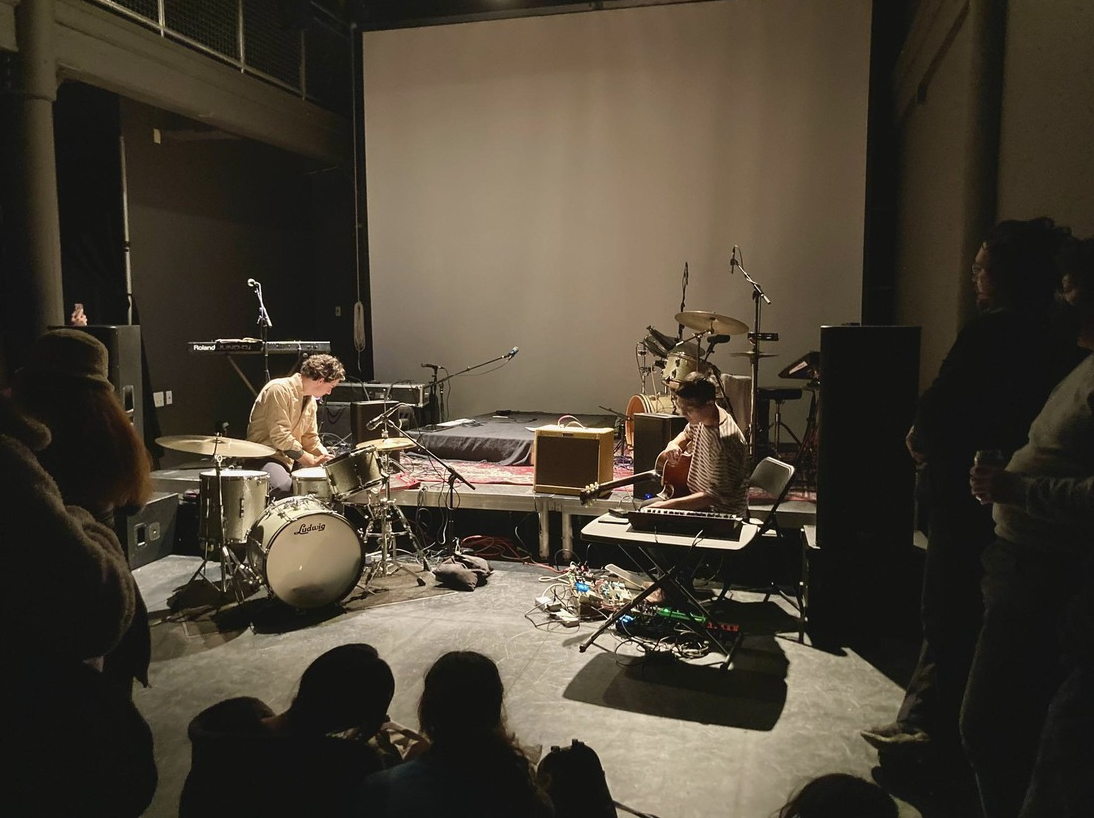
Image: Credited to the Asian Arts Initiative
Something a little different this month after missing February’s Digest deadline. In case readers/followers and those new to the site haven’t heard or seen on some of the blog’s social media platforms, I’ve been in the wars, spending a lot of time this year in hospital. Earlier this year after being ill for a while, I was diagnosed with an autoimmune kidney disease, but then was struck down, out of the blue (and totally unrelated) by a minor stroke. This has meant untold tests, appointments, and treatments, of which I’m merely just beginning to get my head around. I won’t lie, and whilst the stroke is still a mystery with no actual diagnoses as to why I had one yet, it has been a very frightening and confusing time. This will affect the site and my writing going forward, so I ask for some patience and understanding.
I’ve gathered together a number of reviews, pretty much completed before much of this happened for the new(ish) releases section. And for the archives and social playlist have decided to share videos of tracks taken from those albums enjoying various anniversaries this month (or thereabouts), from those dear artists/producers that have left our mortal realm.
___THE NEW (All those latest & upcoming releases in brief) ___
Camille Baziadoly ‘Skin On Fire EP’
(PinDrop) 6th March 2026
Somehow simultaneously intimate yet panoramic and universal, a whole emotive register of vulnerabilities emanates from the both aria-like cutting and yet also diaphanous breathed voice of the French-born, but Oxford-based, singer-songwriter Camille Baziadoly. The new EP, following on from last year’s favourably reviewed and received Fifteen album, opens with the former single and title-track, and from there, unfurls its beauty, its reverence and pained prangs of fragility across a quartet of newly written songs in the key of slowed-trip-hop-crunching-and-mechanized-winding dreampop and Gothic cinematic allurement.
Skin On Fire EP feels like a score; the soundtrack to what’s lyrically alluded to, an abstract feeling of recovery, therapeutic healing and self-care. From the very first line of declaration (“Skin is all I am”) to the loss and grief, the despondency and aches of the transfixed beatific yearned ‘Trial’ and the even more reverent, steamed and mirrored beat cranked ‘Under Water’. The former reminded me of a little of the dreamy, veiled music and voice of Celestial North, but the synths of Chromatics, whilst the latter, recalled the production of Julee Cruise and the submersible aquatic poetry and voice of Nino Gvilia and the atmospheres of This Mortal Coil. The final act, ‘Around You’, is perhaps the most tenderly if plaintive song of them all. Whether stepping outside and removed from this particular relationship, looking in from the ether and from behind the most minimalistic of backings, or lamenting someone else’s, Baziadoly fills the vapours with a real yearning.
Despite the care, gentleness and its subtleties in the use of both instrumentation and the electronic (from minimal but no less evocative piano and organ to various well-placed effects), the production has an air of gravitas and drama about it: of scale too if you like, and of ambition. Much of this is down to the highly prolific (and a constant presence on the Monolith Cocktail) Sebastian Reynolds, who in a producer’s role articulates, emphasis whilst also allowing Baziadoly’s voice to shine, resonate and breath. That production can at any time invoke the influence of Beach House, Air, and the Cocteau Twins.
It is the voice that truly makes this EP however, and its ability to soar towards the birds but also navigate the harsh realities, troubles and traumas of life, love and hurt. Baziadoly brilliantly and cerebrally emerges from the other side having shown such vulnerability and sang such heartaches of balladry to claim another transfixing success.
Márcio Cunha ‘Imaginary Soundtrack’
(Nostril Records) Released 8th January 2026
A sonic showreel collating a year’s worth of recordings made throughout the period of 2019 and 2020 – just as the world lurched fatally over the cliff edge of Covid -, the Portuguese experimental musician, composer and multidisciplinary artist Márcio Cunha’s newest release is a CV of possibilities. As a calling card and sampler of his obvious eclectic and omnivorous influences and talents, this generous thirty-six track work mines, traverse and explores a portfolio’s worth of stand-alone ideas, passages, vignettes, filmic scores, cosmic mirages and electronic motions, and comes together as one loose soundtrack.
Either submerged and muffled or clean and crystal, the overall atmosphere and sound is one of familiar Earth-bound electronica, instances of tangly and strung-out guitar and marching snares, and the buzz, fuzz and static generator force field charges of machines and the alien. For Cunha projects towards the stars, but often toward unseen, mysterious forces beyond our reaches.
Within that universe and orbit you can expect to hear techno, d ‘n’ b, kosmische, all kinds of beat-bouncing electronic, various mechanics, the more tribal, vapour waves, a roll of hand drums, liquidated electro, oscillations, the plastique, Basic Channel, Room Of Wires, Aphex Twin, Mouse On Mars, Sven Vath, Conrad Schnitzler, the industrial, music of the spheres, lunar indolent shimmies, wonky bell-ringing, the burbling, and the tubular. Some come with an added drama and celestial voiced airs, whilst others almost recall the post-punk. But there’s a general signature to be found throughout, connecting all these numerous experiments together; a sort of oeuvre with a general purpose and theme, guided or inspired by the unknown elements of the cosmos.
You’re bound to find something interesting, absorbing or able to send you off on some space adventure from this veritable CV of electronic experiments. A prolific range that will keep you invested for an hour or two.
The Early ‘I Want To Be Ready’
(Island House Recordings) 27th February 2026
Transposing a newly invested language of sonic, musical and extemporised ideas over the last five or six years together, the most recent version of an idea that was formed back in 2004, imbued by many of the Chicago undergrounds’ most enduring post-rock and post-jazz doyens (Tortoise being the most obvious glowing influence), sees guitarists and synths operator Alex Lewis and drummer and electronics manipulator Jake Nussbaum take inspiration from improvised dance.
Taking a lead from the central tenets of the choreographer, researcher and author Danielle Goldman’s 2010 published work I Want To Be Ready: Improvised Dance as a Practice of Freedom, the duo enact the book’s outlined “state of readiness for whatever’s to come”. As repeated and lifted from Goldman’s study, “A skilled improviser will be intimately familiar with her habitual ways of moving, as well as the shifting social norms that gives these movements meaning. Then, on a moment-to-moment basis, she figures out how to move.” This is a distillation of course, whittled down from years and acres of research enquiry. But as a starting point for The Early foils, this demonstratable exploration of improvisation proves a successful prompt to investigate or just let a feel lead the various forms of instrumentation towards interesting, tactile, multilayered and stirring spaces and horizons; some that melt, others that are near otherworldly or like mirages.
From the cluttering to reverberating and shuttering, the off jazzy breaks to post-rock mirages of wrangled, melting and spikier guitar entanglements and loops, meaning is transcribed via the caresses, the resonated touches, scuffs, the subtle streaks of movement up and down the nickel guitar strings, moments of melody, the drifted, the bending and various generated waves of electronica effects. Time itself falls freely in this space, the passing of it almost suspended for the duration as the duo feel their way with a kind of musical telepathy. From Tortoise-style blues to the Fourth World and the redolent explorations of Pacha Wakay, the sound of The Cosmic Range, the Zacht Autommat, of Daniel Lanois, the guitar work of Jeff Parker, Yonatan Gat, Steve Gunn and Christopher Haddow, and the pendulous near swung and thumping drumming of Werner ‘Zappi’ Deirmaier (especially on the Faust-like ‘SandClock’), there’s vague echoes of ethnic sounds and dreamt landscapes. It reminds me of a relatively obscure duo called Pidgins, and the way they stir up such familiar and yet almost unique soundscapes, horizons and atmospheres built from a stream of always evolving sources. And yet, once in the space, once together with the feelers spreading out, can magic up both dreams and the mysterious with equal skills. The non-musical and serial join together with passages of the rhythmic and melodious on an album that will unfurl its full creative expanses and oeuvre over numerous plays. A scion of the Chicago hothouse of such experiment, even if it was made in Philly, The Early pick up the baton and run with it.
MMBTUPM ‘Meditation Music Beyond The Unsleeping Psychopathic Mind’
(Hidden Harmony) 28th February 2026
Directed or merely amorphously suggested a direction by the multi-instrumentalist (mainly focused on the alto sax, the drums and synths, but I guess generally can get a sound out of anything) and prolific instigator Davin Brahja Waldman, the newly brought-together Meditation Music Beyond The Unsleeping Psychopathic Mind troupe of like-minded twisted and untethered artists/musicians invoke various apparitions, paranormal, spiritualist and new age vibrations from the Fortean transmitter on their inaugural session together.
Drawing from an ensemble that includes a triple-threat of saxophonists covering all the tones (Devin himself on alto of course, joined by Adam Kinner on tenor and Conner Bennett on soprano), another triple bill of keys, synth and vocalists (Annie Shaw, Sarah Good and Devin tour mate Nadah El Shazly), and various guitarists and drummers (Vicky Mettler and Alexei Orechin in the former camp, Daniel Gélinas and Philippe Melanson in the latter), Devin stirs up an improvised smog and hauntology of a both damaged and solace-finding bluesy psyche.
From stoking up supernatural atmospheres to charging up meditative pulsations fed through various generators, the atmosphere is heightened by a simultaneously feeling of unease and the unknown in equal measure. Redolent wafts, dried exhales and the pipe strains of jazz and such saxophone luminaries as Julius Hemphill, the Pharoah and Donny McCaslin are woven into a fabric of old RKO ghost scores, the wails, soars and apparitional otherworldly evoking vocal expressions and mewls of Matana Roberts, the synthesized calculus and data of esoteric technology, the brainwave experiments of Nehan, and the body movement mechanism rhythms of David Ornette Cherry. And even within that framework of the extemporised you’ll hear what can only be described as passages of New Orleans dockyard smog and procession, and a near child-like apparatus of ghost house toy instruments on the march.
A peculiar place and vibe are envisioned from an enviable pool of talent (Devin alone has performed with or played foil to Patti Smith, Thurston Moore, Lydia Lunch, his famous poet aunt Anne Waldman, and Malcom Mooney, but also steered his own Brahja band and been a member of Heroes Are Gang Leaders and Land of Kush) on their first outing together. A baptism of strange no wave jazz, the séance, the transcendental and paranormal cross streams in an improvised state awash and circulated by bellowed and wooden mechanised movements, bellows, roulette-like spins of bearings and the spellbound.
Phew & Danielle de Picciotto ‘Paper Masks’
(Mute) 20th February 2026
Whilst unassumingly stuck out in the hinterlands of experiment and electronica, a collaboration between Phew and Danielle de Picciotto proves an unmissable and intriguing phenomenon to experience and savour.
Phew’s own entry into this field of explorative and manipulated investigation and inquiry started with the instigation of the Osaka psychedelic-punk group Aunt Sally in 1978, which she fronted until their brief but influential burnout just a couple of years later. During the next decade Phew would work with an enviable cast of experimental doyens including Ryuchi Sakamoto, DAF’s Christo Haar, and, as if to tie in with this latest union, Danielle’s husband and foil Alex Hacke of Einstürzende Neubauten fame. Fast-forwarding to the noughties and the underground pioneer has performed live and recorded with The Raincoats’ Ana Da Silva, Jim O’Rourke and Ikue Mori and Yoshimi of the OOIOO/Boredoms/Saicobab arc of ensembles. Her solo work tends to err towards amorphous sonic sensibilities that exist both in the metallic gauze of space and in more concentrated earthly reverence.
Danielle meanwhile, is the co-founder of the Love Parade, the lead singer of the Space Cowboys, for a longtime, a stalwart member of Crime And The City Solution and member of Ministry Of Wolves. But for the last nine-years Danielle has been making some her most sublime and interesting work together with her husband Hacke under the “symbiotic” coupled Hackedepicciotto banner – standing at five albums thus far. Mixing anything from heightened snatches of beauty, romance and drama to a backdrop of the Biblical, cinematic and ominous, the Morricone, the Weimer and heavy meta, their sound and performances have proven as captivating as they are dream-like, Gothic and otherworldly.
Produced “quietly” we’re informed over the course of five years, the futuristic, alien and sci-fi contextualised, discombobulated and manipulated Paper Masks finds Danielle’s vocalised and spoken interests, stories, observations, fairy tales and inquisitive announcements transformed via Phew’s various apparatus of effects and minimalistic
Drawing on decades of experience whilst always responding to the now, both partners in this latest enterprise combine forces to create a unique space and soundscape; a cyber ecological plane of archaeology filled with the ghosts, traces, messages, and cerebral memories. Phew envelopes, wraps or places a factory of unseen mysterious alien machines and tech, acid squiggles, looming piercing arcs, code and high pitches and frequencies around, above and under Danielle’s both surreal and evocative wordage. From furry philosophers and ghosts to the tundra and fog, and the flights of whispered thoughts that are prompted by personalised memories and incidents, a transformed language of mewls, phrases, narration, song, the untethered and unshaped is now woven into a dialect both humanly distorted and droid-esque, mournful and ominous. And yet, at times, it feels or sounds like a fairy tale transposed to off-worlds and the age of technological symbiosis.
Simultaneously as haunting and mysterious as it is Intelligent and challenging, Paper Masks wears its many faces well to straddle the worlds of art, theatre, electronica, the spoken word and cyber. A signature Mute experiment and listening experience, and yet something very different and original. Let’s hope the two partners bring their talents together more often in the future.
Toshi Tsuchitori and Ryuichi Sakamoto ‘Disappointment–Hateruma’
(WEWANTSOUNDS) 27th February 2026
Whether it was building a unifying electronic music post-war future with the Yellow Magic Orchestra, building Bamboo houses of colour with David Slyvain, scoring the harrowing tragedy of war with Merry Christmas Mr. Lawrence, or winning gold at the Oscars/Grammys for his innovative soundtrack work, Ryuichi Sakamoto reworked neoclassical and electronica into a most influential new language – not totally at odds with its past, yet constantly evolving and probing at the edges of the undiscovered. But rewinding back further, to the incipient days of the early and mid 70s, whilst still a student at the Tokyo National University of Fine Arts and Music and a contributor to such influential outliers as Transonic Magazine, Sakamoto was navigating his way freely and untethered as a member of the multimedia group Gakushudan alongside future collaborative percussionist and ethnomusicologist Toshi Tsuchitori.
Crossing paths in those burgeoning days, the pair quickly worked upon their obvious musical/sonic chemistry to release a new language and interacted experience devoid of solid foundations and free of boundaries. Tsuchitori had recently returned from New York having imbued himself and embraced the philosophy of free form jazz luminary Milford Graves. For those unfamiliar with Graves natural fused approach, he drew upon Indian, African and Asian rhythms, playing with and for such icons as Sun Ra, Albert Ayler and Anthony Braxton. And if you have been following my Monolith Cocktail Social playlists over the years and months, will perhaps recognise Graves as the drummer totem alongside Arthur Doyle and Hugh Glover in the obscure but highly influential Children of the Forest trio.
Breaking from convention, the duo transmogrifies Shinto spirits and traditions and various other Japanese forms from across the centuries into a hurtled, collapsing, often racing and wild convergence of Western avant-garde forms, abstract-classical, free form jazz and the ambient. Certainly not music in any serial or familiar sense, these experiments, improvisations or whatever you wish to demarcate them are mostly devoid of rhythm and form; more expressive unyielding clashes and quietened passages of air, skying and the wind – passed through vents and metallic contraptions. Taking up a whole side, the opening ‘綾 (Aya)’ is one such climatic acceleration of drums, percussion and running, dashing and scuttling piano that recalls Graves and Billy Cobham stirring up voodoo spells, rituals and an entanglement of scrapes and rattles.
Later on, there’s what sounds like the marimba, the steel drums and more zippy prangs and hinged springs of piqued percussion. ‘a / Φ (musique differencielle 1°)’ however, sounds like something you’d expect to hear on an early Richard James album, and seems almost hypnotic: an early attempt in my mind at combining minimalist techno and mysticism. Playing with their lips and tongues at times, especially on the finale, ‘∫ / 𝔷 (musique differencielle 2°’, there’s another attempt to break away into something highly experimentally weird as, and I’m not sure who it is, puffs, shoos, exhales steam-like breaths and swats whilst the sticks roll across skins and rims, or sometimes fall imaginatively across an apparatus of world drums and percussive tools.
Released for the very first time on vinyl, this original 1976 LP (put out by the notable producer Yukio Kojima on his equally notable imprint label ALM Records) will find room with fans of Sakamoto, but also those craving something highly avant-garde and experimental, just with enough touches of African/Afro-Cuban/Asian and free form jazz drumming. Sakamoto wouldn’t dwell long on this phase of exploration, of breaking entirely from tradition and form, so get your fix whilst you can as I’m sure this highly sought-after vinyl package from the guys at WEWANTSOUNDS (one of my favourite such platforms over the last decade) will fly.
/ALBUM ANNIVERSARIES SECTION_______
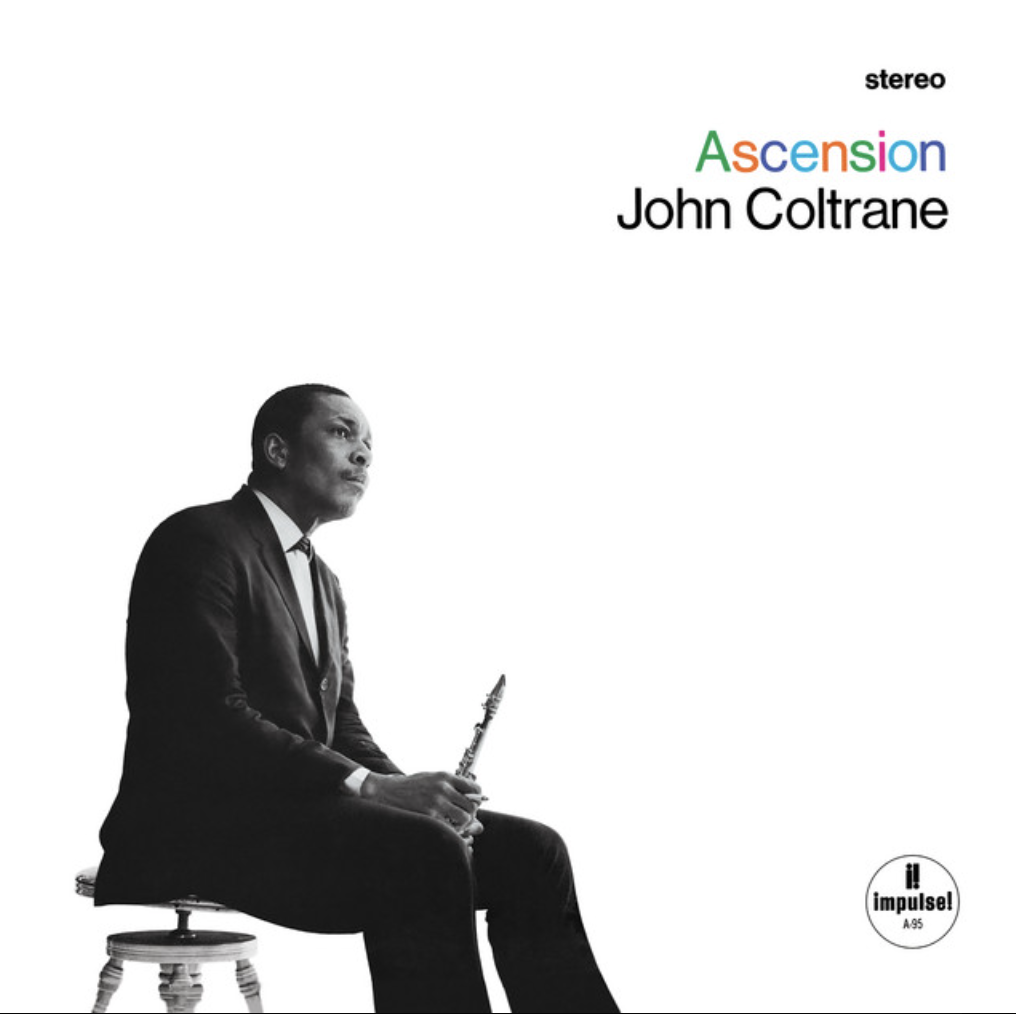
No playlist this month, but video selections tied to those albums celebrating anniversaries this month (and some from February too). Starting with demigod jazz sublime progenitor Coltrane and his 1966 LP Ascension.
Placebo meets Radiohead on the peripherals of Britpop, one of those unique bands form the period that should have been much bigger than they were: accumulating plaudits but not the sales and fame. Subcircus delivered one of the better LPs of that era with their debut Carousel.
Sparks Hello Young Lovers reaches its twentieth anniversary. The Gilbert And Sullivan of cerebral pop music takes the form to ever-new intelligent heights of absurdity and revelation. Daring to merge intellectual ideas and themes into an art form; yet never laborious, condescending or aloof, every song on this theatrical rock and pop suite features an infectious melody, satirical but heartfelt clever lyricism and the usual Noel Coward piano witticisms (updated for the modern age of course).
Time to rip it up with the screamin’ tantrum boom of The Sonics; Garage band proto-punk miscreant royalty, the band’s era defining Boom LP is unbelievably sixty years old.
One of Cope’s muthafuckers and idols, the Arthur Lee led Love dared to dream bigger with their Baroque flourishes, jangles and lamentable love requests. The tapestry songbook that is Forever Changes is also sixty years old this month.
Fast-forwarding to the 90s, and Howie B‘s influential LP, Music For Babies is thirty this month. In that Mo Wax trip hop way, here’s one of my faves, the title track:
Prince time. Parade is forty in March. And here’s my fave of all time video and track, Mountains. The man was incredible. How do you make the shakers effortlessly cool? Or running on the spot in Casanova Rose of Texas gear look cheekily sexy and sassy? Could be naff in anyone else’s hands, but works in the hands of such a singular talent. I miss the conceptual planning, the whole effort from pop stars today as AI does the heavy lifting, and most artists seem totally devoid of ideas. “Guitars and drums on the one!”
Mock 21st century terrordome meets art-punk new wave. Does anyone remember Sigue Sigie Sputnik? Well Flaunt It is forty this month, an LP perhaps ahead of its time or maybe not.
Something more cerebral and experimental now with a live version of the title cut from jazz guitarist progenitor Pat Metheny’s 1976 LP Bright Size Life. Still going strong, with recent releases, we hail back to the 70’s era of fusion-jazz.
__THE DEARLY DEPARTED/___
Pete Dello: Baroque scrolls and flourishes of yearned love, Pete Dello is best remembered as the lead singer of Honeybus during the 60s and for the hit single I Can’t Let Maggie Go. Which is enough in itself to be inducted into great hall of fame and pantheons. But growing up in my household it was Pete’s remarkable And Friends effort Into Your Ears that really resonated and led to my appreciation of his songwriting talents. Quintessentially English, forged from the worlds of Lewis Carroll and T.H. White, this cultish psychedelic Baroque folk songbook uses various characters (including the knightly earwig Harry) to imagine disarming songs of regret, the lovelorn, yearned and fantastical. If in raising a glass to Pete you explore any of his work, this is a great place to start.
John Maus: You got to feel for poor old Maus. Any other vocal pop group of the 60s era may have seen his rep fly. But unfortunately for Maus, he shared the stage with the genius baritone Scott Walker, who’s tones better suited the arrangements and the sense of scale and moodiness of sullen unrequited and dramatic love affairs. Both changed their names to better fit their newly formed Walker Brothers aggrandisement with third member and garage band royalty Gary Leeds (a former Standell no less). But whilst despite his own self-inflicted sabotages, Scott’s star rose, John’s merely fizzled out. And despite attempts to go solo after the Walkers first split in the late 60s, the trio in mosey mode donned cowboy denims and reformed in late ’74. Staying together until the dawn of the next decade before finally drifting aimlessly apart, they did manage to produce the coveted and extremely influential Nite Flights LP, which though unsuccessful in terms of sales is critically up there. In between regular jobs John knocked out the odd recording, but never returned to the heady days or success of the Walkers triumphant period in the 60s. And never really connected with his old foil Scott.
Simon Harris: Almost going unnoticed, but not to an old Britcore Hip-Hop head like me. Producer and Music of Life founder Simon Harris passed away last month. Its’ his highly influential and memorable comps from the 80s that cement the rep for me; platforming early raw tracks from the Demon Boyz, She Rockers, Derek B, Asher D & Daddy Freddy, Hijack, M.C. Duke and many others: part of the original stable of UK talent that fought back against the US wave of hip-hop, giving it a distinct UK twang and even harder edge at times. A real progenitor and leading light in the scene that deserves our full respect.
Country Joe McDonald: I couldn’t not mention counterculture figurehead Country Joe, who literally died in the last couple of days (as I write this). Obvious choice, but his famous crowd-led rendition of THE Vietnam protest song at Woodstock in ’69 – at the age of 17 he enlisted in the US Navy, stationed over in Japan. The Boomer journals will go in overdrive, so I’m not wasting time with obituaries or list of accomplishments. But suffice to say, Country Joe released a hell of a lot of quality protestations, rebellious yells, most notably with his The Fish comrades. Go seek out.
The Digest for April 2025: New Music/The Social Playlist
April 25, 2025
The Monthly Digest includes a clutch of accumulated new music review, and the Social Inter-Generational/Eclectic and Anniversary Albums Celebrating Playlist.

___/THE NEW___
Staraya Derevyna ‘Garden Window Escape’
(Ramble Records/Avris Media) 2nd May 2025
Pulling out of the historic district of St. Petersburg once more to conjure up an amorphous polygenesis-sourced hallucination, the pan-global Staraya Derevyna capture of diverse artists, led by the Israel/Ukrainian musician and sound engineer Gosha Hniu, wheel out the mechanical dream-machine on their latest estranged and avant-garde descriptive album Garden Window Escape.
Imagine Beefheart conducting the Sharmanko Kinetic Theatre, or Faust manhandling a pair of shearing buzzing shavers. Perhaps, the Plastic Beatniks warped mirage vision of Americana coming up against the sound worlds and the alternative pyschogeographic folk of Širom and La Tène. You can imagine the Red Crayola in Eastern Europe during the Medieval times, hanging out with CAN as they dish out their EFS series experiments whilst a languid Einstürzende Neubauten add their signature imaginings and post-punk industrial stirrings.
The imaginative hermitic workings and the transmogrified poetic works of the Russian polymath Arthur Molev that suffuse this latest release of performative and fantasy clockwork circus merges the mysterious with the murky, the atmospherics of alternative pastoral histories with the strained, strangulated and brassy textural wanes of bass clarinet, the flute and the cello, and the hidden source sounds of rope pulleys and cogs and levers that need oiling. For the icon Rus, the holy reimagined Rus is rewoven by the merry-go-round minstrels of Maya Pik, Ran Nahmias, Grundik Kasyansky, Miguel Pérez, Yoni Silver and Andrea Serafino to atheatre of esoteric poetry and dreams.
Who knows what it all means, but this collective always impress with their journeying and deeper connections to a sense of conceptualisation steeped in both the real and fantastical. Through the abstract and most emotive and surreal, every Staraya Derevyna is a revelation. And Garden Window Escapeis just as imaginative and evocative.
Michael Sarian ‘ESQUINA’
(Greenleaf Records) 25th April 2025
On the corner or a “corner”, albeit with a Spanish/Portuguese language entitled twist, the accomplished trumpeter, bandleader and composer Michael Sarian is imbued by the spirit of Miles Davis’s iconic 1972 LP – that and the electrified period that also took in Bitches Brew, Black Beauty and Agharta albums – on his latest album, ESQUINA.
Full of lunar mystery and dreamy mirages, Sarian traverses, hovers, inhabits and floats across a largely improvised vision of prog-jazz and jazz fusion; taking a different direction after a trio of albums that bordered more upon a chamber-jazz and acoustic sound. The same players now venture into territory mapped out so cosmically and exploratively by Jon Hassell, the Soft Machine, Nucleus, Weather Report, Herbie Hancock and the already mentioned Davis. In addition to the long form peregrinations that make up this three track album, the ensemble also transposes Portishead’s classic trip-hop track ‘Glory Box’; an influence for Sarian since he first heard it as a kid on its original release in the mid 90s, and here, transformed into a spacy soul-jazzy lounge vision of Pink Floyd and the El Michels Affair with the smooth melodic trumpet drifts and near sensitive expressions of Chat Baker and Kenny Dorman.
Back in the fold, now reconfigured and in a freeform mood of prompted celestial and hallucinatory dream experimentation and resonating gauze, noted Argentine pianist and composer Santiago Leibson probes, dabs, sustains Marion Brown bulb-like notes, galactic Davis sounds and Herbie Hancock effects, metallic and vibrating languages from the Hammond B3, the Mini Moog and Wurlitzer, Alaska born, NYC relocated in-demand bassist Marty Kenny offers near cosmic soulful bass lines, prog noodling and swamp funk undertones, and renowned Brooklyn-based drummer Nathan Ellman-Bell makes his way around the kit as he offers the subdued and descriptive and leaps of near d ‘n’ b-like breaks and cymbal splashes. As I said before, this is near lunar in its projection, on the edges of tripping out; at times, and as noted in the PR notes, sounding not too dissimilar to the work of Donny McCaslin. At other times it reminded me of Arve Henriksen. We are of course in the jazz fusion sphere of influence, but not quite indulgently prog enough to put people off.
Instead, we get a band escaping their surroundings, pepped up on electric Davis but not quite breaking out into the psychedelic funk boom-bap of that period. Dreaming and pushing an intuitive bond they conjure up an intergalactic dream of influences, musical genres as they enter another dimension. Tamed but adventurous, this is a group at their playful and inventive best.
iyatraQuartet ‘Wild Green’
11th April 2025

Imbibed by individually strong and impressive classical CVs and a shared experience of study at the Royal Academy of Music, the iyatraQuartet ensemble have previously merged a penchant for India and Arabia with European and closer-to-home influences from across time.
The last time I featured the quartet, back in 2020 with the Break The Dawn album, they gravitated towards India, both musically and religiously. The group’s name, pronounced “ey-at-ra”, is even taken from the Hindu expression for travel, “yatra”. It helps that the quartet’s co-founder and violinist maestro (to name just one instrument among her eclectic repertoire) Alice Barron studied South Indian violin techniques with the country’s star turn duo, the Mysore Brothers. And on this latest empirical and tapestry-come-alive thematic album of nature’s cycles and seasonal graces, Wild Green, you can hear the distinctive bellowed drone of that region’s Shruti box instrument on the title-track. As an indicator of the direction of travel and the scope of influences, this venerable, stirring choral fluctuated voiced sprouting of the pastoral was actually originally inspired by the noted historical European polymath figure of Hildegard of Bingen, better known as the Sibyl of the Rhine, who, apart from being a Benedictine abbess, founder of monasteries, a medical writer and practitioner, philosopher, mystic and visionary was also an influential composer of “monophony”, the simple musical form typically sung by a single singer or played by a single instrumentalist. In choir, or choral form as it is here, it usually means the ensemble of voices all singing the same melody. Incorporated within that framework is a vast swathe of traditional and folk music that counters subtle hints of those Indian foundations with the Medieval.
Either literally woven from a parchment canvas or played in the “wilds”, the garden idyllic, Barron, alongside George Sleightholme on clarinets, Rich Phillips on cello and Will Roberts on percussion (all four pitch in together voice wise), compose a greenery of Orcadians’ prayers, legendary tales of enchanted fish, lunar bound vibrations, Yuletide lullaby and the changing of the calendar seasons.
Beautifully pitched between the romantic languages of old Europe (the music box springs dance and love song ‘Beatriz’ is sung in the Medieval language of Occitan, which poured across borders from France into pockets of Spain, the valleys of Italy and Calabria) and vocalised expressions of the apparitional and banshee-like, the classical and atavistic, life is breathed into a rousing scenery. Celtic, Eastern European, the Baltics, the South American and fantastical are all entwinned on an album of minor rhapsody, the plaintive, yearned and near mysterious; the musicianship first rate as you’d expect, expressive, just as identifiable as it is obscured and used to sound out the growth of branches, seeds and flowers, the atmospheres of antiquity and a present reflection on nature, and the shrills, vibrations, looming arches and mists of imaginative storytelling. The voices, from across the ages, personify historical references and skill; illuminating and beatified in equal measures, with an ear for the classics, the folk-rock of the 1960s and early 1970s, various traditions, and the improvised.
This is living, breathing music that reflects the imaginative surroundings and themes of the ensemble as they mould chamber music, the classical, the pastoral, folklore and folk music to their own unique signature of the felt and stirring.
IOM ‘Spiritual Wastelands’
(Cruel Nature Records) 28th March 2025
Circulating, pulsing and dancing through the magnetic circuits of the inner body and mind, caught up in the chaotic stresses and violence of our current times, the latest album from the Spanish musician and sound designer Iker Ormazabal Martinez is powered by a caustic electricity and metallic industrial percussive tools.
Under the soloist guise of IOM, Martinez wields his EBM and industrial synth-techno influences to beat out and charge up a physical sonic response to modern existence. Wretched, sometimes near violent, but always with structure and rhythm, the nine concomitant pieces that make up the thematic whole of Spiritual Wastelands move between the darker club music of the German underground and the alien factories of dead industry.
From Basque country Vitoria to Catalonia Barcelona and a relocation in recent years to London, the granular guide of frazzled and force field gated electronica has merged his experiences as a keyboardist and sample-instigator for pop and rock groups, a musician with a company of Butoh dancers (originally a Japanese “dance of utter darkness” in which performers, usually covered in white paint makeup, intentionally use slow body movements and confront themes of darkness and transformation, but also far more radical and taboo subjects), and experimental electronic artist to create a vaporising density of tubular, barracking sheet metal dance music. Through the distress and clang of the pipes, the fizzled and machine reverberated, glimpses of trance-y light are found, and on the mystical voiced ‘Light’, featuring The Seer no less, there’s an obscured hint of Middle Eastern horns and a shrouded spiral of the Sufi against a darker churn of laboured drones and resonating steel.
Vocals sound near Germanic, or of that school, or go deep and near sinister; reminding me in part of Front 242 and NIN but put against sounds and rhythms and beats that err towards Basic Channel, Pan Sonic, Cabaret Voltaire and CABLE. The futuristic computerised and iterated saw brushed ‘Somatic Response’, sounds almost Kraftwerkian in comparison: perhaps a little Kriedler.
Mind and body yearning for spiritual guidance or a way out, react to the modern furnace on an album full of oomph and fried electricity. Does After releasing a variety of works on a myriad of labels, IOM finds the perfect pitch with Cruel Nature ever seldom put out an uninteresting or intriguing album.
Conrad Schnitzler ‘RhythmiCon’ and ‘Drei Kugeln’
(Flip-Flap) 29th March 2025
A leading, if often overlooked, progenitor of the Kosmiche and Krautrock eras, Conrad Schnitzler’s various stints as a founding member and instigator of the inaugural Kluster (forming the trio with fellow Zodiak Free Arts Lab stalwarts Hans-JoachimRoedelius and Dieter Moebius in 1969) and Tangerine Dream groups (an early member in 1970, he featured on the group’s debut LP Electronic Meditation) would reverberate throughout his solo and collaborative work, right up until his death in 2011. After more or less setting in motion an entire field of sound experimentation in the 1970s, by the 1980s Conrad had accumulated a strong body of work and was once again forming new bonds and ideas with Germany’s post-punk generation: integrating some of the more interesting ideas into his synthesizer-based modulations and soundscapes that would both echo and inform the German new wave and techno.
A Berlin stalwart and co-founder of the already mentioned and famous Zodiak Arts Lab, it would be Conrad’s contact with the leading performance and installation progenitor of that era, Jospeh Beuys, that helped form his early thinking and ideas of free play and experimentation. Leading, an admittedly amateur musician, to a both conceptual and playful method of exploration within the circuitry, cables, soundboards, switches and apparatus of electronic and analogue fields of sound development and rhythm. None more so than with this double-bill of unearthed album selections from the Flip-Flap label; a special platform set up in 2021to release a limited-edition series of selective works personally chosen by Conrad himself. A while back, it was the Hamburg-based, all-things German electronica, label Bureau B that seemed to have the role of releasing his recordings from the vaults and lab; some of which featured reworks, and finishing touches by the artist/musician/producer Kurt Dahlke (a founding member of D.A.F. and Der Plan of course), under his Pyrolator alias. But, seemingly, picking up the baton, this enterprise revives that body of work, previously left dormant or sealed behind closed doors.
The first album of which, Rhythmicon, is, as that title suggest, a selection of tracks focussed on the play and kinetic chain reactionary experiments of prompted, set in motion and manipulated rhythmic constructions. As part of my research, I’ve looked that album title up and found that it actually references an electro-mechanical musical instrument of the same name, designed and built by Leon Theremin for composer Henry Cowell. It was intended, so the Wikipedia entry goes, “to reveal connections between rhythms, pitches and the harmonic series.” A further description: the Rythmicon “used a series of perforated spinning disks, similar to a Nipkow disk, to interrupt the flow of light between bulbs and phototoreceptors aligned with the disk perforations. The interrupted signals created oscillations which were perceived as rhythms or tones depending on the speed of the disks. It generated both pitches and rhythms and has been described as a precursor of drum machines.”
I take it that this apparatus signals Conrad’s own idiosyncratic rhythm productions, created over an eighteen-year period from 1982; now collected together for an hour-plus album of strange, modulated shapes, reverberations, chemistry, neutrons, rays, bounces and tubular metallic cosmic dances and playful techno visions made on some orbiting spacelab.
Part futuristic, part tribal, part alien, part chemistry, part hypnotically entrancing and part new wave, Conrad sometimes leads and sometimes absorbs the current trends, the evolution taking place within electronic music during the pivotal 80s and 90s periods. And so, you can hear echoes of Luke Slater, Rob Hood, Autechre, Populaire Mechanik (the brainchild of fellow Berlin-based musician/drummer Wolfgang Seidel, who actually collaborated with Conrad during the Zodiak Lab days and was inspired to form the mechanic group as a consequence), Kriedler, Basic Channel and on the “7:51” track (all tracks are named after their duration in minutes and seconds) a touch of OMD’s debut album.
Intentionally made to be simple, there is however a lot of sophistication and skill in these often off-kilter rhythmic reactions; the art and skills of constant movement and drum machine-like patterns really mesmerising and spacy, but near skeletal industrial and machine made too with particles bouncing around and various symbiotic shapes forming.
By contrast, the second album to transmit from the Flip-Flap facilitators, Drei Kugeln, is more about the soundscape and the atmosphere. A continuous soundtrack in a manner, the thirty tracks that make up this both mysterious and alien visitation from the reaches of some science-fiction evoked off-world, subtly build or change a thematic sound palette of hidden metallic sources, force fields, paranormal activity, reversals, signals, lost and found transmissions and near choral passages of space awe and venerable breath.
Channelling past experiments with Tangerine Dream and other such congruous nebula searching and invoking kosmische music projects, but mythology and technology too, Conrad brings mystique to his deep investigations and chilled solar wind breathed vortex transformation of inner and outer space. Aboard a supernatural space freighter, or sucked into the very machine itself, Drei Kugeln is a very rare sonic immersive experience with plenty of interesting, explorative changes and feelings of both the uncertain and dreamy.
This is a great package and showcase for an innovator who is sadly missed and often forgotten in the story of electronic and analogue evolution. Proving just as fresh, alive and futuristic as the day they were recorded, these experiments perfectly balance out the more rhythmic encounters of the first album. Both releases are perfect examples of Conrad’s art form and constant motivation to explore and experiment. Nothing short of revelations from a back catalogue and library of electronic play and inventiveness that needs to be in the public realm and celebrated. Don’t choose, but put both releases on your wish list.
___/THE SOCIAL PLAYLIST VOLUME 96__
The Social Playlist is an accumulation of music I love and want to share; tracks from my various DJ sets and residencies over the years; and both selected cuts from those artists, luminaries we’ve lost and those albums celebrating anniversaries each month.
Running for over a decade or more now, Volume 96 is the latest eclectic and generational spanning playlist come radio show from me – the perfect radio show in fact, devoid of chatter, interruptions and inane self-promotion.
Each month I mark the passing of those artists we’ve recently lost, and during the last four weeks both Clem Burke (an oft Mod Ramone for the kicks, stalwart and force behind Blondie, and numerous collaborations, sit-ins) and David Thomas (the iconic frontman of the cult Pere Ubu).
In the Anniversary albums category, there’s tracks from Joan Baez’s Diamonds & Rust (released 50 years ago this mont), Roland Haynes’ 2nd Wave (another 50th), Prince’s Around The World In A Day (40 years old this exact week), the Aphex Twin’s …I Care Because You Do (30 this month), Pavement’s Wowee Zowee (also 30 this month), the Tindersticks celebrated self-titled LP of 1995, and The Books’ Lost And Safe (20 this month).
Amongst a selection of tracks from across the ages, the genres, and from across the world, there’s a smattering of recentish tracks from MC Paul Barman, Che Noir, Marcelo D2, Eiko Ishibasi and Leah Neal.
__/TRACKLIST____
Blondie ‘Dreaming’
Pere Ubu ‘Modern Dance’
Leah Neal ‘Down On The Freeway’
Joan Baez ‘Simple Twist Of Fate’
Eiko Ishibasi ‘Trial’
Che Noir ‘Bow And Arrow’
Erick Cosaque ‘An madam cadimalade’
Roland Haynes ‘2nd Wave’
MC Paul Barmen ‘Pearl Of Light’
Prince ‘America’
Pavement ‘Fight This Generation’
Pere Ubu ’49 Guitars And One Girl’
Aphex Twin ‘Next Heap With’
The Books ‘Vogt Dig For Kloppervok’
Marcelo D2 ‘LUCIDEZ
Agincourt ‘Going Home’
Tindersticks ‘No More Affairs’ The Anderson Council ‘Do You Remember Walter’
Kak ‘Electric Sailor’
Suburban Studs ‘PUTIN’S BOMB’
Blondie ‘Love At The Pier’
Autosalvage ‘Rampart Generalities’
Buffalo ‘Ballad Of Irving Fink’
Robert Dick ‘Third Stone From The Sun’
Blondie ‘Kung Fu Girl’
Chandra ‘Get It out of Your System’
Pere Ubu ‘Love Is Like Gravity’
Thee U.F.O ‘Kranke Schussel’
Romeo Void ‘Six Days and One’
Teisco ‘Vision of Shore’
Now For The Pleading:
Hi, my name is Dominic Valvona and I’m the Founder of the music/culture blog monolithcocktail.com For the last ten years both me and the MC team have featured and supported music, musicians and labels we love across genres from around the world: ones that we think you’ll want to know about. No content on the site is paid for or sponsored, and we only feature artists we have genuine respect for /love or interest in. If you enjoy our reviews (and we often write long, thoughtful ones), found a new artist you admire or if we have featured you or artists you represent and would like to say thanks or show support, than you can now buy us a coffee at https://ko-fi.com/monolithcocktail
The Monolith Cocktail Social: Volume #70: Pharoah Sanders, Ros Serey Sothea, R.E.M., J Scienide, Genesis, Nicolini…
October 14, 2022
Dominic Valvona’s Eclectic/Generational Spanning Playlist

More or less the blog’s radioshow (minus any vacuous chat and clique guests), the Social is my ‘anything goes’ playlist selection of tracks I’ve played out, accumulated, come across or been handed over the last forty years.
Reaching the 70th volume this month, the choice tracks are every bit as eclectic, sometimes fun, and intriguing. I usually pay homage or doff my cap to those we’ve lost in that time, but also to those albums celebrating special anniversaries. In the former camp I couldn’t not miss the opportunity to say farewell to astral, spiritual and freeform jazz doyen Pharoah Sanders, including a smattering of personal favourites and a snatch of interview from the In The Beginning 1963-64 album.
In the celebratory mode, I’ve picked tracks from Prince’s 1999 LP (marking its fortieth anniversary this October), R.E.M.’s Automatic For The People (thirty this month) and Genesis’ Foxtrot (unbelievably a half century).
However, we kick off volume 70 with the Cambodian chanteuse Ros Serey Sotha and the electrified, hot-footing Orchestra Baobob from Senegal – we’ve already raked up the musical air miles with just those two opening acts. Added to that there are cuts from Annie Anxiety, Stelvio Cipriani, Platonica Erotica, Magic Mixture, Ill Biskits, the Jim Black Trio and more.
That Track List In Full:
Ros Serey Sotha ‘Easy Come Easy Go’
Orchestra Baobab ‘Kelen ati leen’
Pharoah Sanders ‘High Life’
Santiago Córdoba/Bauls Of Bengal ‘Tigres En Fuga’
More Eaze/Claire Rousay ‘kyle’
Annie Anxiety ‘Closet love’ Prince ‘Delirious’
Stelvio Cipriani ‘Bersaglio altezza uomo (Titoli)’
Universal Totem Orchestra ‘Codice Y16’
Platonica Erotica ‘Holy Holy’
Romica Puceanu ‘Multă Lume Noroc Are’
David Ackles ‘Surf’s Down’
R.E.M. ‘The Sidewinder Sleeps Tonite’
Nicolini ‘Snake Head Wine’
Algebra Suicide ‘Somewhat Bleeker Street’
NINA/Dean Blunt ‘grandiosee’
Paul Jacobs ‘After Dark’
Able Tasmans ‘Dileen’
Magic Mixture ‘You’
Flaming Ember ‘Livin’ High, Money Low’
’68 Comeback ‘Clean Yong 16’
Pharoah Sanders ‘Farrell Tune (Live In Paris 1975)’
Barney Wilen ‘Scorpion’
Ill Biskits ‘Let ‘Em Build’
Mic Geronimo/Murder Inc. ‘Time To Build’
J Scienide ‘Why Even Try???’
Between ‘Song For Two’
Genesis ‘Watcher Of The Skies’ Nick Garrie ‘Ink Pot Eyes’
Pharoah Sanders w/Sun Ra & Black Harold ‘The Shadow World’
Picchio dal pozzo ‘Cocomelastico’
Jim Black Trio ‘Next Razor World’
Dom Um Romao ‘Jungle Carnival’
Pharoah Sanders ‘Interview – Coming To New York’
Pharoah Sanders ‘Colors’
Tickling Our Fancy 067: Kiddus, Dur-Dur Band, Spike & Debbie…
August 21, 2018
New music reviews/Words: Dominic Valvona

Welcome to Dominic Valvona’s regular reviews roundup. This latest edition of Tickling Our Fancy includes albums, EPs and singles by the Dur-Dur Band, Spike & Debbie, Angels Die Hard, Cassini Division, Vigüela and Kiddus.
As always an eclectic mix of music from around the globe, the latest edition of my reviews jamboree and recommendations includes two albums released through the Benelux-heavy Jezus Factory label; the first, a prog, alt-rock, math rock and Krautrock environmental charged tropical Island soundtrack from Angels Die Hard, the second, an analogue synth driven oceanography purview of the Bermuda Triangle phenomena (released on cassette tape) by Miguel Sosa, under the guises of his Cassini Division moniker. Analog Africa keep up the good work in digging up and reissuing the most essential music from Africa and beyond with their latest and most dangerously sourced album collection yet: the very rare first two albums from the Somalia new wave-funk-reggae-soul-traditional fusion sensations, the Dur-Dur Band.
ARC Music bring us another meticulously researched and performed traditional songbook of music from Spain; the Vigüela troupe, ‘Ronda’ style, once more breathing life into sones, laments, carols and fandangos from the country’s interior; and Tiny Global Productions bring us a compilation of past musical projects from the Afro-Caribbean meets C86 indie partnership Spike & Debbie; and finally we have the brand new EP from the hallucinogenic languid soulful new Bristolian talent Kiddus, Snake Girls.
Dur-Dur Band ‘Dur Dur Of Somalia: Volume 1, Volume 2 And Previously Unreleased Tracks’ (Analog Africa) 14th September 2018
Bravely (or foolishly) indifferent o the climate of the Somalia flashpoint of Mogadishu, Analog Africa’s head honcho Samy Ben Redjeb travelled to the former trading hub jewel of the African NorthEast coast in 2016 to both dig and soak up the atmosphere and history of the very streets and sounds that once provided the infectious deep funk fusions of the legendary Dur-Dur Band.
A failed state in fluxes since the 1990s, Somali and by extension the faction-fighting battleground of its capital is, to put it mildly, bloody dangerous! Accustomed to risky and contentious political no-go zones Redjeb has form in visiting some of Africa’s most volatile hotspots in his pursuit of tracing the artists and original recordings down. This trip, which had been on the cards for years and had become a personal preoccupation, was I imagine hinging on security issues. But with an armed escort (an ad hoc volunteer at that) in tow at all times, Redjeb eventually arrived to source that elusive band’s impressive discography.
Going further than most to prove it was all worthwhile Redjeb digs up one of the funkiest and cool finds from the African continent yet. Embodying a period in the 1980s when Mogadishu could boast of its cosmopolitan reputation – notably the European chic Via Roma stretch in the Hamar-Weyne district, a colonnade for café culture, cinema and of course music – the hybrid Dur-Dur Band moped up the polygenesis fever of their native city with effortless aplomb. Particular places of interest in this story and geography are the iconic moiety of record shops the Shankarphone and Iftinphone, both run by members of the Dur-Dur Band’s nearest rivals, the Iftin Band, and the Jubba Hotel, where the Dur-Dur enjoyed a fractious residency: Balancing this coveted spot at one-point with a, by popular demand, extended run as the backing band for the play ‘Jascyl Laba Ruux Mid Ha Too Rido (May One Of Us Fall In Love)’ play, at the Mogadishu national theatre.
Making an impact, creating a “wow” from the outset, they enjoyed a short reign as the country’s number one band; releasing a quick-succession of albums, the first two volumes of which alongside two previously unreleased tracks make up this, the first in a series of Dur-Dur Band, re-releases. Though certainly a sensational and popular act the civil unrest that followed in the 90s would all but stifle their potential. They would only come to a greater audience outside Somalia via cassette-copying, Youtube and by happenstance; most notably the Milwaukee-based musicologist John Beadle, who in 2007 uploaded a tape he’d been handed twenty years previously by a Somalia student to his Likembe blog. Featured under the now famous ‘Mystery Somali Funk’ heading, Beadle’s post originally miscredited this convulsing funk gem to their Dur-Dur Band’s chief rivals of the time, the already mentioned Iftin Band – a mistake rectified by the Iftin’s band leader, who suggested it was in fact the fabled Dur-Dur.

So what makes this band and their rare recordings so special? Saved from ‘tape-hiss’ and ‘wobbles’, remastered to sound the best they’ve ever sounded, these curious but above all loose-limbed nuggets successfully merged a myriad of Somalia traditions with a liberal smattering of disco, reggae (via the northern part of the country’s ‘Daantho’ rhythm style; an uncanny surrogate for Jamaica’s number one export), soul and funk. Mirroring a similar fusion thousands of miles away in New York, the Dur-Dur languidly produced an electrified no wave new wave melting pot.
They were fortunate with their insightful founder and keyboard star Isse Dahir who molded a formidable forward-thinking group from a number of other Somali bands, including the rhythm providers, Ujeeri on bass (plucked from the Somali Jazz) and Handel on drums (the Bakaka Band). He also drafted in his siblings, with Abukaron taking on lead guitar and Ahmed enrolled as the band’s permanent sound engineer; a role that partially explains why they became known as one of the country’s ‘best sounding’ groups. The vocals meanwhile, which sway between the spiritually devotional and pop, were split three ways between another former Bakaka Band member, and Daantho style acolyte, Shimaal, the young female singer, whose voice assails the homeland to sound at times almost Indian, Sahra Dawo, and the spaghetti body shaped, nicknamed, Baastow – brought in for his ‘deep knowledge’ of traditional Somali music, in particular the atavistic spirit summoning ‘Saar’, a style perceived as far too dangerous by the manager of the infamous Jubba Hotel for his European guests: “I am not going to risk having Italian tourists possessed by Somali spirits! Stick to disco and reggae.”
Split up across a triple LP and double CD formats the Dur-Dur Band’s first two albums proper, Volumes 1 and 2, and a couple of unreleased tunes feature on this, the first in a promised series of re-issues. Released originally in 1986, the first of these and the band’s debut album, Volume 1, has a rawer unpolished but snazzy sound that saunters, skips and grooves along with aloof coolness to sweltering laidback funk. Opening with wah-wah chops and a fuzzy organ, ‘Ohiyee’ lays down a sophisticated but explosive spiritual dancefloor thriller. This is repeated on the bands first official hit ‘Yabaal’, which turns a traditional song into something approaching the no wave of ESG, mixed with tooting Afrobeat sax and disco swerves. The bendy warbled guitar soloing, snozzled sax fluttering ‘Doon Baa Maraysoo’ sounds like The J.B’s cantering down the Via Roma, or a lost Stax Vaults recording.
Volume 2 by contrast seems a little brighter and tropical; beginning as it does with the dub echoed, Trenchtown pirate radio broadcast ‘Introduction’. Sweeter dreamy saunters meet Muslim belt funk on songs such as ‘Jaceyi Mirahiis’, and on the singles ‘Dab’ and ‘Diinleeya’ you can hear evocations of quasi-reggae: Mogadishu meets Kingston on a spiritual plain!
A highlight in a catalogue of outstanding reissues, the Dur-Dur Band collection is quite unique. And a shining example of African fusions seldom heard outside the borders of its origins. Redjeb’s perseverance has paid off, introducing us to the formidable and exciting Somali polygenesis funk scene of the 80s. You’ll be hard-pressed to find anything that can compare or compete with this band’s solid sound.
Spike & Debbie ‘Always Sunshine, Always Rain’ (Tiny Global Productions) 21st September 2018
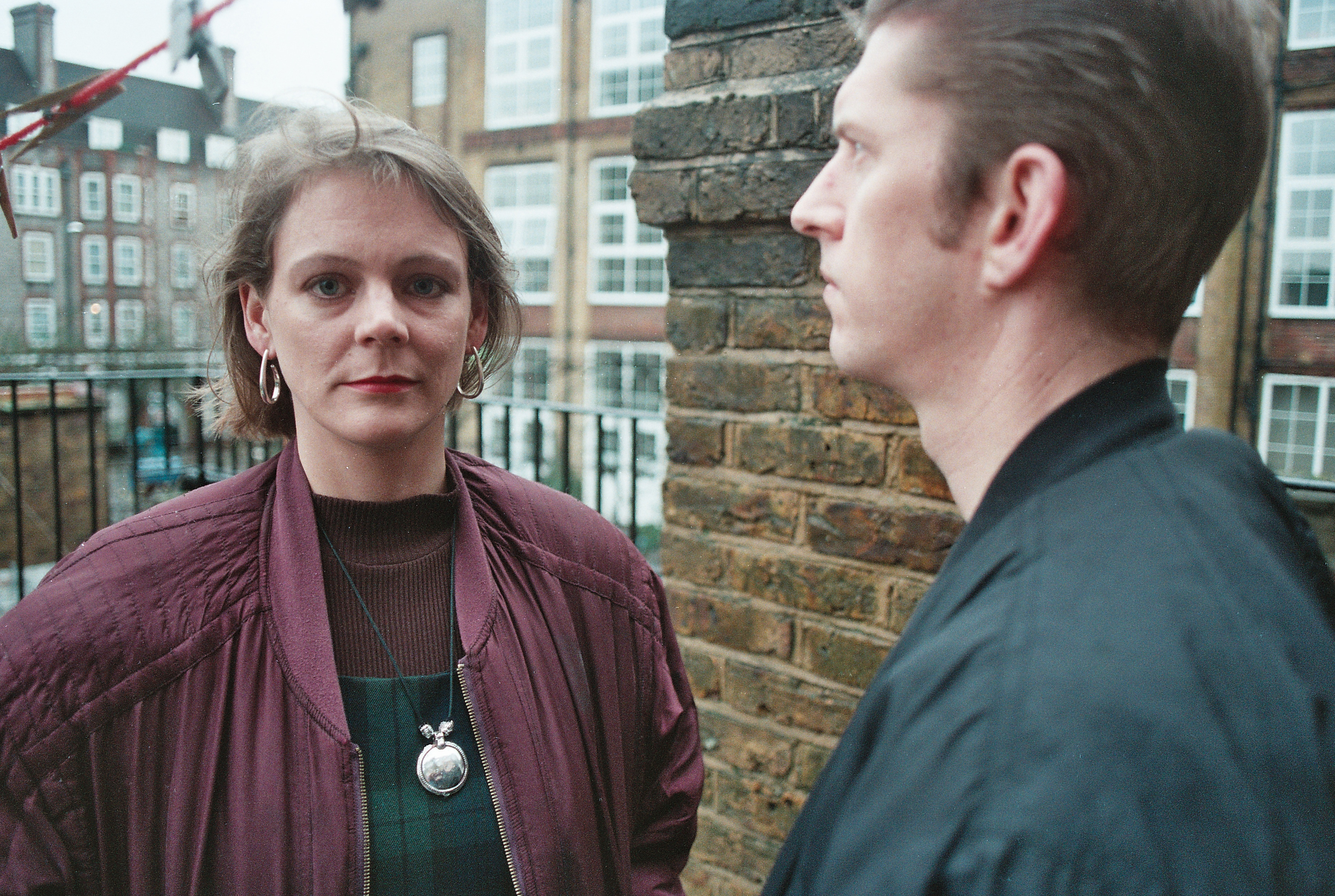
A convoluted rock family tree, the meandering interwoven historiography behind one of Cardiff’s ultimate underground indie sensations, The Young Marble Giants, draws in the congruous lilted partnership behind this most brilliant new collection from the Tiny Global Productions label.
As a catalyst facilitator for the YMG’s leap from disbandment on the cusp of the 1980s to success and cult status after signing to a burgeoning Rough Trade, Mark ‘Spike’ Williams is perhaps forever immortalized as the ‘guitar pal’ who talked the feted band into recording the two tracks that would turn-around their fortunes: Already a well known figure on the diy Cardiff scene, instigating various projects (Reptile Ranch being just one) and co-founding Z Block Records, he encouraged a dejected YMG into providing a couple of songs for the Is The War Over? compilation; the rest is history as they say.
Forming all manner of collaborations with various YMG band members, Spike has and continues to work with the band’s Alison Statton (originally as the Weekend and currently going under the Bimini moniker), but also formed Bomb And Dagger with more or less the entire Giants lineup in 1983 (an offshoot of another Cardiff obscurity, Splott). From outside the YMG sphere, Bomb And Dagger would feature Debbie ‘Debris’ Pritchard, an artist and disarming vocalist who’d appear alongside Spike under an umbrella of guises including Table Table and The Pepper Trees. From this union a collection is born, Always Sunshine, Always Rain, pretty much a fey summary of the partnerships sighing demeanor and sound collects all manner of recordings from across the full spectrum of their endeavors.
Beautifully sung to a mostly lo fi Afro-Caribbean meets C86 indie backing of scuffling skiffle brushed drums, tropical lilted melodies and post-punk guitar, the sunny disposition of the music is a counterpoint to the political messages that lie at the heart of Debbie’s peaceable protestations and multicultural celebrations. From what is a collection of mostly rare recordings, ‘Strike’ builds a musical union between the under-the-cosh miners of Wales and their kin in South Africa. A post-punk Paul Simon twinning Cardiff indie with Soweto solidarity, ‘Strike’ (a track originally recorded for a miners benefit compilation) is a perfect example of Spike & Debbie’s pleasant shuffling and soulful magic.
Finding a tropical balance between Family Fodder, The Marine Girls and The Raincoats, the duo delivered messages of anxiety, oppression, patriarchal domineering, both physically and mentally (a recurring theme of being suffocated, drained and controlled by a partner in a relationship, permeate) to a most sauntering backing. At times limbering towards Camera Obscura and even the Cocteau Twins, they evoke a fantastical vision of Pauline Black fronting Ludas, though the most odd conjuncture is the elasticated ‘Houses’, which sounds like The Raincoats’ Ana da Silva fronting an Unlimited Edition Can.
For fan and completest alike this collection features the original lo fi quality skitty soul meets ruminating pop ‘Seaport Town’, later revisited by Spike and the Alison Statton, and the ‘Ilkeston’ version of a scratching dawdled guitar and echo-y ‘Assured Energy’, which appeared in a completely different form on the Stuart Moxham (another YMG, but going under The Gist title here) album Holding Pattern.
In chronological order, it is fair to say that most of the compilation has until now remained difficult to acquire or source. Differing in recording quality with slight musical differences between groups of songs, as each project adds or draws in a myriad of inspirations and musicians, this twenty strong collection is full of sunny gentle post-punk gems. The story of Spike & Debbie, their projection across a decade and more, proves an essential and pleasurable missing chapter in the story of the Welsh indie scene.
Angels Die Hard ‘Sundowner’ (Jezus Factory) 1st September 2018
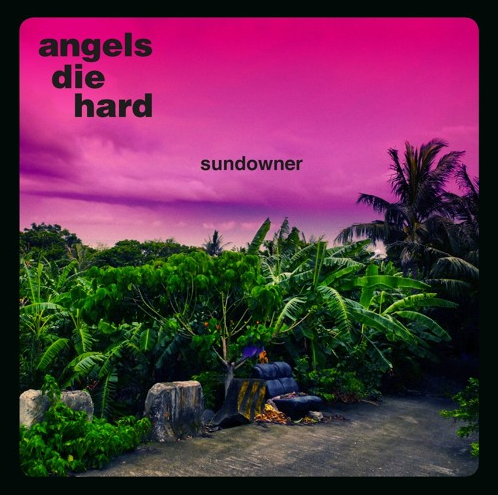
Keeping to the instrumental group’s psychedelic imaginations the latest concept album from Angels Die Hard is set in the dreamy, if in peril, Monsterism Island meets Les Baxter ethnographic phantasm of a remote Southeast Asian archipelago.
On a sabbatical, retreating to the wilds and ideals of life on the tropical island of Andaman, where, so the faux-legend spill goes, they hoped to find and record the mating call of the Drongo bird, the original trio passed the time playing all the local dives, opium dens and beach clubs. Chancing upon fellow sonic explorer and drummer/percussionist Alain Ryant, who was on a break from playing with Maxon Blewitt & Eriksson-Delcroix, the Angels expanded the ranks to become a quartet after some sort of tribal rites-of-passage style ceremony.
As backpacker anecdotes go this colourful semi-fictional backstory is one of liberal exotica consumption. It does however have a serious note: the ecological impact of a plastics-Moloch consuming society on the brink of a cataclysmic point-of-no-return, as the detritus of a throwaway globalized marketplace leaves no idyllic, isolated paradise untouched. Seeing the plastics efflux wash-up on the coastline of their present haven – a story about the final straw breaking the metaphorical camel’s back was seeing a local ‘sea gipsy’ smoking a bong made out of a Starbucks cup – the Angels were feted to dedicate, at least partially, their third and newest album, Sundowner, to this environmental tragedy. Of course a sizable chunk is also dedicated to those old tropes of emotional complexity (more specifically and blushingly, the ‘complex sensations’ before and after the act of lovemaking); articulated somehow in the group’s instrumental sagas and workouts.
Imbued with a legacy of progressive, alt-rock, psych, exotica and post-punk influences plus Julian Cope’s Krautrock compendium, the Angels transduce and channel a cornucopia of styles once more. Though this album doesn’t truly come alive until it reaches the VHS esoteric Western soundtrack title-track. It’s the first time we hear the arpeggiator neon space dream sequences, mixed with a panoramic Adam’s Castle view of psychedelic math rock: and highly dramatic and highly atmospheric it sounds too. Slower waveforms and smoke-machine effects appear on the lost Sky Records Kosmische meets Moroder cult theme tune meets Air ‘Dancing Algae’. But this album really gets going on the lengthy epic ‘Gutter Glory’, a two-part fantasy that progresses from a holy union of late 70s Eno, Jah Wobble and Andean soaring noodling to a full-on Brainticket sonic assault. Almost its twin in scale, ‘Acid Beach’ reimagines mid-70s Amon Duul II and Battles beachside at Cape Canaveral: the guitars mimicking a space shuttles thrusters and boosters.
Earlier tracks sound like space cowboy peregrinations accompanied by a cosmic reimagined vision of early U2 and Simple Minds, Holy Fuck and a motorik version of dEUS: A lot of ideas bouncing around inside the group’s shared mind-meld. They end on the album’s most serene if plaintive meditation, ‘Dirty Sunset’; a Floydian kind of jazzy blues serenading, with guitar notes falling like tears, the last image saved, the sun going down on a besmirched paradise: a downer bro.
You got to hand it to the Angels for expanding their horizons (literally), though far too many tracks end up going nowhere particularly new or rewarding. Yet when they do get it right they produce some fantastic opuses of amorphous abandon. Beachcombing a radioactive luminous landscape of musical opportunity they produce one of their best albums yet.
Cassini Division ‘Bermudas’ (Jezus Factory) August 31st 2018
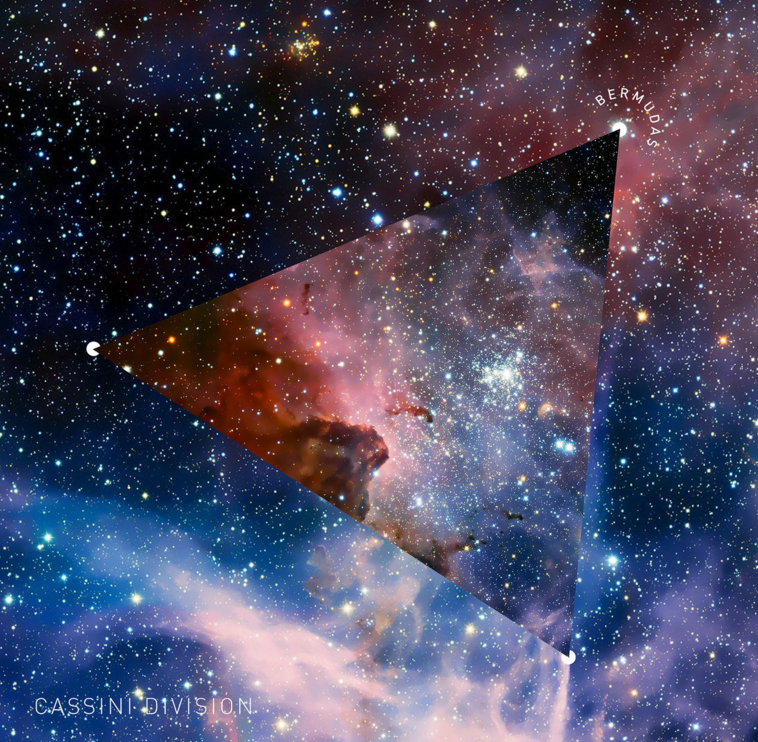
The enigma that is the Bermuda Triangle, a confounding phenomena, a twilight zone of improbability, a loosely demarcated area in the North Atlantic Ocean that has been written about and inspired countless generations. Unexplained disappearance central, a chasm for the ships and aircraft that have either lost momentarily or forever within its dimensions, the Bermuda Triangle (also called the Devil’s Triangle) lies across one of the world’s busiest shipping lanes. For though hundreds of incidents have been recorded over the centuries, they form an almost insignificant percentage of the overall traffic that made it through this mysterious void unscathed. Many of these disappearances have been exaggerated and misreported, so accounts are spurious. Yet this hasn’t stopped the endless flow of conspiracy theories: extraterrestrial interference being top of the list alongside inter-dimensional fantasies, the paranormal and governmental maleficence.
Jezus Factory stalwart Miguel Sosa, better known for his part in the bands Strumpet, iH8 Camera, Monguito and Parallels, composes a conceptual purview of not only the Triangle but the surrounding geography on his analogue cosmic cassette tape special, Bermudas. Under the solo Cassini Division mantle, beaming an experimental score from his Buenos Aires studio, Sosa seems to be having fun with his 70s/80s rack of switchboard patches and analogue equipment, retuning and configuring the pioneering quirkiness of fellow Argentine Waldo Belloso, the more Kosmische soaring otherworldliness of Tangerine Dream, and on the album’s scarier foreboding and wilder moments (‘Tropical Cyclone’ for one), a union of John Carpenter’s score for The Fog and W. Michael Lewis & Mark Lindsay’s soundtrack for Shogun Assassin.
A barely veiled tribute to the burgeoning age of the Moog and ARP Odyssey this kooky experiment is filled with all the signature burbles, wobbles, modulations/oscillations you’d expect to hear; from the primordial soup miasma to the bubbling apparatus of a mad scientist and 8-bit loading sounds of a Commodore 64 game. Every now and then you hear something really odd, especially when the drum machine is added; tight-delayed paddled snares and toms are rapidly sped-up or strung out and staggered. There’s even, what sounds like, a marimba on the Tangerine Dream transmogrify The Beach Boys ‘Seaweed Theme’.
For the most part articulating looming otherworldly leviathans and ominous confusion, Bermudas extends UFO period Guru Guru with a supernatural oceanography of submarine sonar rebounds and tidal motion sine waves. Arthur C. Clarke’s Cradle meets Chariots Of The Gods; Sosa’s analogue visions channel every facet of the Triangle’s legacy – the alien, supernatural, human and environmental -, his track titles plotting interesting and relevant historical and topographical references to events such as the point (or plateau) from which the Transatlantic cable started to the natural phenomenon of this region’s hazardous weather conditions.
As a break from the catalogue of bands he often plays with and leads, the Cassini Division instrumental psychogeography proves a worthy oddity of analogue synth curiosity.
Vigüela ‘A Tiempo Real – A New Take On Spanish Tradition’ (ARC Music) 24th August 2018

As the title of the latest album by the much-acclaimed Spanish troupe Vigüela makes clear, this atavistic imbued group of adroit multi-instrumentalists and singers offer a revitalization, a twist on the traditional paeans, chants, carols and yearning songs of their native homeland: especially their own El Carpiode Tajo village. Traditionally the music that permeates throughout Vigüela’s signature sound was never meant for the stage, but is played informally, almost unrehearsed, throughout the hamlets and villages of Spain’s interior.
Meandering through a timeless landscape finding and learning all manner of old customs, always ready to be taught or re-educated, an introductory anecdote from the group’s Juan Antonio Torres Delgado goes some way encapsulating both Vigüela’s methodology and inspirations. Torres believing he was quite well informed when it came to the courtship dance and folk song style of the Spanish ‘Jota’, was soon humbled by one of its leading lights, the singer Tia Chata, who he’d made a special pilgrimage to see in her home village of Menasalbas (located within the Toledo province, where the lion’s share of the music on this ambitious collection derives). Bringing out his guitar and (bearing in mind Torres is a pretty deft accomplished player) striking up a Jota rhythm, he was abruptly stopped in his flow by his muse: “Dear boy, you don’t know how to play the Jota. Wait until my husband comes home from work, he will show you.” The lady was right, once her husband returned home after work he really did show Torres how to play it. Though to be fair the Jota differs from region to region, each part of the country adopting its own unique version. As a testament to both their commitment and intergenerational interactions, learning and keeping local traditions alive, it proves a good one.
Returning to the source, adopting various customs on the way, they take a particular fancy to the ‘walking and singing in the street’ custom of ‘Ronda’. They reinterpret this unplugged carousing and minstrel like performance style alongside of others, including Christmas carols, ‘Seguidillas’, ‘Sones’ and the ‘Fandango’.
Spread over two discs with a generous running time of a hundred minutes, A Tiempo Real showcases not only the soul and aching heart of Spain but of course also shows off the masterful musicianship and voices of the groups meticulous lineup, which often expands to accommodate even more players: increasing in this case, from a quartet. Pretty much tapping, rubbing, peddling, plucking and strumming every sort of Spanish instrument they could lay their hands on, as well as a hardware store of miscellaneous object that include bottles and kitchen utensils, Vigüela go to work on their songbook collection.
With a more stripped and pared down accompaniment the first CD of this double album features an accompaniment of bottle-washer rattling percussion, huffing blows from an instrument (think a ceramic trombone crossed with a heifer) I can’t identify and the strange ‘Zambomba’ drum (traditionally used for music at Christmas to accompany chants and carols; played by hand with sticks or metal brushes). The impressive duets, call and response and chorus ensemble vocals are prominent above this backing. From rustic bewailing to robust a capella, these voices are all stoic, pained and even critical: Songs such as the theatrical, wry but joyful ‘Eldemonio El Calderero (The Demon Coppersmith)’ are characterized as a ‘Romance story’, yet you will find a satirical criticism within the lyrics, aimed at the Catholic Church. Raw but beautiful, endurance reigns above all else; the dreams and love trysts of a rural population exquisitely bound up in effortless serenades and Cantina porch sways, Vigüela bring us reverberations of Española, the Arabic Spain, and its overseas colonies in Northwestern and Southern America.
Metaphorical lovers depicted as birds (‘El Pájaroya Voló and ‘Arrímate, Pichón, A Mi’), laments brought back from the frontlines of war in 19th century Cuba (‘Allá En La Habana’) and tribunes to love interests (‘Moreno Mío, Cuán To Te Quiero’ and ‘La Niña De Sevilla’) are given a new lease of life by Vigüela. Straddling eras, blowing off the dust, they inject a bit of energy and dynamism back into the songs of their ancestors.
Taking a slightly different route on the second CD, the guitars are finally unleashed; courtship dances and songs of defiance now feature a fuller, sometimes cantering rhythm and flourish. Those signature trills, crescendos and unfurled castanets now accent or punctuate this songbook, giving it a great deal more volume, yet still subtle enough to accommodate and not override the beautiful chorus of voices.
It’s not integral – though this is every bit as academic a recording as it is an entertaining performance – but the linear notes, which are extensive, provide a providence and go some way to explaining exactly what you’re listening to and how Vigüela personalized it: Take ‘Que Si Quieres, Moreno’, a typical melodic variant from Campo de Montiel en La Mancha de Ciudad Real, it differs from some styles and ways of playing the Fandango by featuring the signature accent on the first beat. It helps to know all this of course to fully appreciate the group’s skill and attention to detail.
Already attracting plaudits in Spanish music circles, Vigüela could always do with finding a wider audience for their sincere interpretations and twists on the traditional music of the regions they research and relive. Hopefully this latest album will help; it will certainly enhance their reputation if nothing else. With a foot in both eras, they bridge the divides and generations to encapsulate the provincially isolated spirit of Spain; reaffirming a joy but also preserving songs previously neglected and forgotten.
Kiddus ‘Crazy You (Video/Single)’ & ‘Snake Girls (EP)’ TBA/Sometime in October

If Drake or The Young Fathers had made a record with the Anticon or UNO label it wouldn’t have sounded too dissimilar to the upcoming EP from the teenage Bristolian enigma, Kiddus. Shifting between hallucinogenic states of listless discord, Kiddus’ cathartic visages melt with languid beauty throughout. Dripping R&B amorphously merges with hip-hop and reverberations of The Gazelle Twin, Chino Amobi and the sort of neo-experimental electronic soul that sits well over at Erased Tapes on every track of this impressive release.
Just like The Gazelle Twin before him, Kiddus transmogrifies his own version of a Prince classic, ‘Crazy You’. The lead single from Snake Girls, this transformation of an early Prince classic replaces the original’s tingling percussion, falsetto and oozing sexuality with something far more sauntering, beat-y and loose. It sounds great: an over-layering acid trip of veiled soulful sadness and sophistication.
That quality of lingering sadness and nuanced encrypted inspirations is spread throughout the rest of the EP’s assuage meanderings. ‘Dreaming In 30 Fps’ and ‘Vapid Me’ (as the title suggests) are as vaporously float-y as they are disorientating. Multiple samples linger and echo in and out of focus, mirroring and articulating the various conflictions and anxieties of the young artist; building into a chaotic crescendo on the Radiohead-esque cyclonic drum fitting ‘ARGH’. Indolently beautiful in a dreamy psychosis, the finale ‘theplumeetwhenuronurown’ features fragmented warnings and a quant sample that disarms a message, perhaps, of terminally drifting off into a never-ending sleep.
Snake Girls is essentially a soul record: a deeply soulful one at that. A recontextualized vision of troubadour soul crooning, lost in a confused hyper-digitized virtual reality, Kiddus’ senses blinker, light up and then dissipate to a 21st century soundtrack of pliable experimentation.
 Monolith Cocktail Blog