Albums of 2018: Part One: Idris Ackamoor to The Moonwalks
December 3, 2018
Selected by Dominic Valvona, Matt Oliver and Gianluigi Marsibilio.

The decision making process:
Being the exhaustive and eclectic set of features our (choice) albums of the year are, we know you probably don’t need to or want to dally about reading a long-winded prognosis of our judgement process. But here it is anyway.
Continuing to shy away from fatuous rating systems and ‘best of lists’, the Monolith Cocktail endeavors to offer a more visceral and personal spread of worthy ‘choice’ picks, with no album dominating or holding any particular numbered position – unlike most of our contemporaries lists, stuck with the ridiculous task, for example, of explaining why one album is more deserving of their fatuous numbered spot than another.
With no hierarchical order, we’ve lined our album choices up alphabetically; split into two features – A (Idris Ackamoor) to M (The Moonwalks), andN (Thomas Nation) to (Thom Yorke) Z.
All of our favourite new and reissued albums and EPs from 2018 are of course considered to be the most interesting, vibrant and dynamic of the year’s releases. But the best? Granted, to make this list you have to have made some sort of impact, but we’d never suggest these entries were categorically the best albums of 2018: even if that might be true. Instead our list is an indicator of our amorphous tastes, rounding up another year in the life of the Monolith Cocktail, and we hope, introducing you to titles and artists/bands that may have dropped below the radar or got lost in the noise of more commercial better promoted releases.
All selections have been made by me (Dominic Valvona), Matt Oliver and Gianluigi Marisibilio.
A.
Idris Ackamoor and The Pyramids ‘An Angel Fell’ (Strut Records)

Serving a worthy musical apprenticeship from and imbued by the masters Coltrane, Rahsaan Roland Kirk and Cecil Taylor, the polymath musician, activist, director of The Pyramids ensemble and torchbearer of spiritual and Afrofuturist jazz, Idris Ackamoor once more makes holy communion with the cradle of civilisation on the lamentable An Angel Fell. Imploring a unified message, a connectivity, a reminder that we can all trace our ancestry back to the same place, Ackamoor follows up on ‘We All Be Africans’ with an epic sweeping album of Afro-jazz 2-Step ‘Warrior Dances’ and plaintive primal jazz catharsis.
Walking through the Valley of The Kings; sailing aboard Sun Ra’s Arkestra; conducting the empyrean; evoking Kuti’s Lagos Afrobeat jive; Ackamoor and his troupe traverse the mismia of a broken, corrupt world, delivering cries of anguish and auguers aplenty. Whether penning requiems to the gunned-down black victims of the US Justice system (‘Soliloquy For Michael Brown’), or in radiant prayer (‘Sunset’), they effortlessly and wondrously summon forth the leading lights of each musical genre they inhabit. Afrobeat, gospel, spiritual, funk, blues, future-past-present all come together in one of the year’s most important, enlightening and defining opuses.
(Dominic Valvona)
Ammar 808 ‘Maghreb United’ (Glitterbeat Records)

Throwing the traditional unwieldy Maghreb, before it was demarcated and split into colonial spheres of influence, back together again in the name of progress and unity, Sofyann Ben Youssef fuses the atavistic and contemporary. With past form as one half of the Bargou 08 partnership that gave a modern electric jolt to the isolated, capitulating Targ dialect ritual of the Bargou Valley on the northwestern Tunisia and Algeria border, Youssef under the moniker of Ammar 808 once again propels the region’s diverse etymology of languages, rhythms and ceremony into the present, or even future: hopefully a more optimistic one.
Jon Hassell’s ‘possible musics’ meets Major Lazer, the traversing adaptations from the Gnawa, Targ and Rai traditions and ritual are amorphously swirled or bounced around in a gauze of both identifiable and mystically unidentifiable landscapes. Mixing modern R&B, dub, electro effects with the dusky reedy sound of the evocative gasba and bagpipe like zorka, and a range of earthy venerable and yearning vocals from Morocco, Tunisia and Algeria artists, Youssef distorts, amps up or intensifies a resonating aura of transformative geography and time.
Nothing short of visionary. Full review…
(DV)
Angels Die Hard ‘Sundowner’ (Jezus Factory Records)
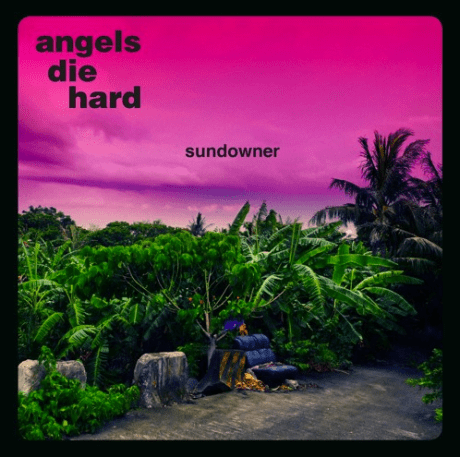
Admittedly taking some time to grow on me, the Angels Die Hard combo’s Monsterism Island meets Les Baxter ethnographic phantasm of a remote Southeast Asian archipelago instrumental concept album, Sundowner, has finely unfurled its full magic: just in time to be included in the annual albums of the year features.
Imbued with a legacy of progressive, alt-rock, psych, exotica and post-punk influences plus Julian Cope’s Krautrock compendium, the Angels transduce and channel a cornucopia of styles once more as they soundscape the tropical island of Andaman. An environmental clarion call as much as a progressive rocking exotica, Sundowner is dedicated, at least partially, to the environmental tragedy of the plastic-strewn oceans.
Beachcombing a radioactive luminous landscape of musical opportunity, from bummer downers to mind-expanding space rock jams, these Angels expand their horizons (literally), on the band’s best album to date. Some ideas work better than others of course, but when they do get it right they produce some fantastic opuses of amorphous abandon. Full review…
(DV)
Any Other ‘Two, Geography’ (42 Records)

The story of Adele Nigro (Any Other) is made of beautiful songs originating from a desire to subvert a rather conservative musical culture, just like the Italian one.
2018 has given us many beautiful pieces, of the most varied atmospheres, but to find a compact and complete album in each of its parts, touch refuge in Two, Geography (42 Records).
The numerous collaborations that Any Other has collected, as a musician, in recent years, have been invaluable to develop, refine and embellish her poetics.
The sonorities of the album are very distinct, and at the same time loquaciously soaked by all the experiences brought on stage (or in the studio) during the year that is inexorably past.
With Two, Geography, however, there is more, Adele coming out with her head held high, they are not only beautiful pieces that stand out for their immediacy and vitality, but also the international character of the project.
Any Other’s work was immediately presented as something else, for depth and acuity, starting from that ‘Roger Roger, Commander’ or from the same singles who announced Two, Geography.
The simplicity in intertwining linear arpeggios, bright rhythmic lines and a voice, both delicate and particular, makes us immediately think of the disc in a different way, we immediately understand that such a sound must be appreciated with attention and in its various nuances.
Since the first bars of ‘Silently. Quietly. Going Away’ (the first work of Any Other) you could see her skill in shaping a song form as a real opportunity for musical and textual speculation.
The song ‘Capricorn No’ is a monument of modernity that comes on, not only for its immediate and deep style, but because it plays with the atmosphere that you can hardly expect from an Italian artist.
The work as a whole is a challenge, a part of a musical resistance, a progressive push in the sea magnum of ideas that too often settle down, even in brilliant artists.
Any Other is the 2018, the beautiful and fundamental face to make us remember that, all in all, this year went well.
(Gianluigi Marsibilio)
B.
Anton Barbeau ‘Natural Causes’ (Beehive/Gare du Nord)

Ian Hunter via Robyn Hitchcock via Luke Haines via Julian Cope, wrapped inside an enigma, the Sacramento born, Berlin-based, Anton Barbeau changes his style of delivery repeatedly yet always maintains an idiosyncratic ingenuity in whatever he does. The results of an aborted project under the Applewax banner, made in the run up to the 2016 US elections, Natural Causes is the reflective, more open antithesis to what would have been a far darker and mournful proposition. Richly melodious and halcyon, this most brilliant new collection finds Barbeau both transforming some of the back catalogue (for the better) and penning new glorious sounding maverick pop songs: The quality of which are cerebral, memorable, melodic but also adventurous and inventive.
Barbeau and a congruous cast of guests lend a touching caress to a songbook of contemporary surreal lyrical musings and love songs. Unrushed, even breezy in places but hardly lacking intensity, there’s an air of nostalgia in homages to the radio stations and DJs that first sparked interest in the young Barbeau on the Hunter fronts Tom Petty band finale Down Around The Radio. And with a nod to one of the music cannons greatest ever records, The Beatles Sgt. Pepper kaleidoscope, a stab at a popsike hit (a missing link from one of Strange Days magazines 80s halcyon compilations) is made with a song that was originally written to be recorded at the venerated Fab Fours’ inner sanctum of Abbey Road, with the quirky Disambiguation.
Fans of Barbeau will be once again charmed by his unique songwriting abilities, and those still unfamiliar with the inimitable generation X artist of renown will find much to love about his psychedelic pop genius. Full review…
(DV)
MC Paul Barman ‘Echo Chamber’ (Mello Music Group)

“Potent politics, funky lounge lizard off-the-tops and bizarre hypotheses, burrowing its way through the toughest of leather bound volumes to have you picking the bones out for weeks on end” RnV May 18
In many ways this is the consummate Paul Barman album, but it bears repeating straight off the bat, while trying super hard to not sound incredulous, that ‘Echo Chamber’ features production from ?uestlove, DOOM and Prince Paul (funky/sidekick status, from stoop to playground), with additional contributions from Mark Ronson (upping the ludicrousness with a tweak of The Ronettes’ ‘Sleigh Ride’), Masta Ace and Open Mike Eagle. That’s some serious string pulling from an explicitly cult concern only reinforcing his standards in lewdness and a smart Aleck riot act both downplaying and toadying a racing IQ (his relocation to Mello Music Group keeps him in his own lane as well). Ridiculous as ever with the dictionary and remaining a brilliant observer – see ‘Youngman Speaks on Race’, and ‘Commandments’ going one better by taking the Decalogue to Sesame Street and Biggie’s Bed-Stuy – Barman carries on making the longest of long shots with battle raps that’ll bamboozle and WTF one-liners that Jackanory or congress will sadly never benefit from. Bigger, better and geekier than ever.
Bixiga 70 ‘Quebra Cabeça’ (Glitterbeat Records)
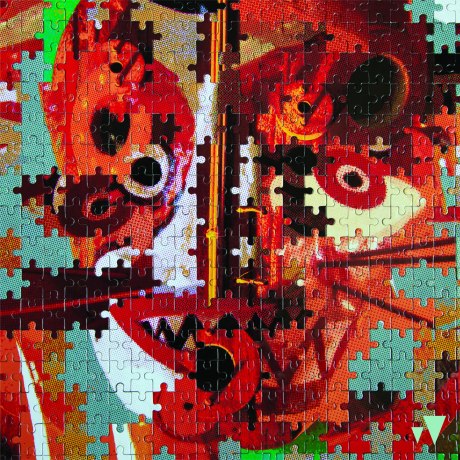
Translating as the ‘puzzle’, Bixiga 70‘s latest album is a full 360-degree panoramic evocation (both joyful and lamentable) of their homeland’s African roots. Translating those roots, an ancestry that runs through many of the band members (some individuals descended from the Africa-Caribbean religion of ‘candomble’ for instance), Bixiga are also inspired on this journey by some of the highly talented artists they’ve shared various stages with over the years. Artists such as the Ghanaian highlife singer Pat Thomas, the Nigerian sublime traversing saxophonist legend Orlando Julius and Brazilian octogenarian star João Donato. Incorporating the lot they merge their brass-y signature carnival funk and shaking Afrobeat sass with cosmic voodoo, Afro-jazz and sloping funk.
The quality as always shines through on every track, with the visions and evocations of both Africa and Bixiga’s city home of Sao Paulo articulated by an energetic but also ruminating soundtrack of the tribal, funky, cosmic, tropical, gospel and ritual. The slave portal of Benin, further outlying deserts of the sub-Sahara and busy rhythmic bustles of Nigeria are channeled via the melting pot hubs of Brazil on the group’s most epic, ancestral and geographical straddling album. It only remains to see just how great it will sound live on stage. Full review…
(DV)
The Bordellos ‘Debt Sounds’
Brian Bordello ‘The Death Of Brian Bordello’ (Metal Postcard Records)
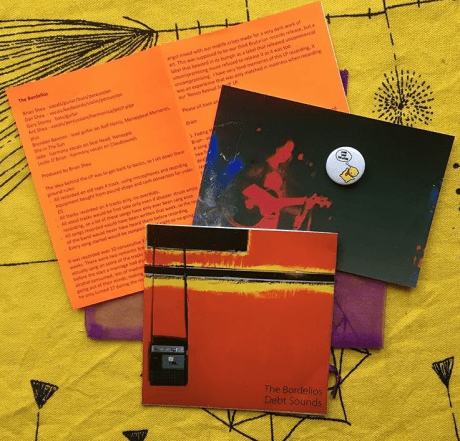
In a parallel universe the Jesus And Mary Chain never left East Kilbride; Julian Cope never formed the Teardrop Explodes; and Brian Wilson was in fact born in St. Helens in the late 1960s, and recorded all his opusus on a Tascam four-track, inspired by Mark E Smith. This alternative world is one the dysfunctional family circle The Bordellos inhabit. Probably the best lo fi rock’n’roll-meets-post-punk-meets-the-Spaceman 3 hapless band you’ve never heard of, the prolific group, headed by the patriarchal masthead Brian Bordello, have been luridly, sinisterly, laughably and pessimistically knocking-out their brand of disgruntled alternative yearnings for a decade or more with little attention from anyone other than us loyal fans – who probably need our heads examined in all honesty. You either get them or you don’t. And you could find some of their more confrontational dark humour (songs about the BBC killing John Peel, still loving the musical cannon of Gary Glitter, and on this album, Debt Sounds, some sinister predatory sexual allured shclock about Rolf Harris) too unsettling, even perverse.
Debts Sounds, in the manner of a Half Man Half Biscuit play-on-words, is The Bordellos low cost Pet Sounds. That may not be initially obvious. But stay with me on this one. Fashioned and realised by Brian from the band members and even affiliates, girlfriends and whatnots various outpourings and late night sessions into a most epic song book of unrequited love, sick love, obsessed love, compromised love, salacious love, and even some tender love – they excel themselves on the laid bare and touching ‘Spirograph’ and quasi-Beatles ‘My Life’ meets the hardened north romanticism of ‘I May Be Reborn’ (Take this for a line: “Every smoking chimney my Statue of Liberty”), Debt Sounds is full of great maverick performances and songwriting, made in a period of crisis, anxiety and manic depression. Ok…so more Don Van Vliet than Brian Wilson, but still a valid comparison.
Whereas will you hear odes, homages and eulogies to Jimmy Campbell and Faron’s Flamingos to a back track featuring vague indifferent shades of Thom Yorke, Cope, Velvet Underground, Red Crayola, Joy Division and the The Seeds? Nowhere that’s where. Brian Bordello’s Track-by-track breakdown…
Knocking out records on a whim, it seems inconceivable that the leader of the Bordellos has never actually released a solo effort until this year (and only a few weeks from the end of 2018). Paring down, enverated, Brian Bordello steps outside the family unit on his debut solo, The Death Of... Not expecting many flowers on that graveside elegy of a album title, Brian takes a sort of reflective pause and looks back on a litany of tropes that have come to encapsulate his resigned fatalism. With only a clipped, rough and unguarded acoustic guitar and his trusted Tascam for company, Brian pays tribute to rock’n’roll icons Eddie Cochran (again) and Mark E Smith (who Brain thinks should be canonised as a saint); wears his heart on his sleeve cooing songs about lingering memories of bunk-ups, unrequited wooing gone wrong and lost kitchen sink romances; and languishly but candidly weary sonnets on depression.
As lo fi as it can get, Brian’s most intimate, personal performances yet strip away all the caustic dissonance and fuzz to reveal his most brilliant songwriting. The Death Of is an often beautifully morose songbook that lays bare the talents of a true uncompromising outsider.
(DV)
Brace! Brace! ‘S/T’ (Howlin Banana)

Producing gorgeous hues of softened psychedelia, new wave, Britpop and slacker indie rock, this young but sophisticated band effortlessly melt the woozy and dreamy with more punchier dynamic urgency on their brilliant debut album.
Squirreled away in self-imposed seclusion, recording in the Jura Mountains, the isolation and concentration has proved more than fruitful. Offering a Sebastian Teller fronts Simian like twist on a cornucopia of North American and British influences, Brace! Brace! glorious debut features pastel shades of Blur, Gene, Dinosaur Jnr., Siouxsie And The Banshees (check the “I wrecked your childhood” refrain post-punk throb and phaser effect symmetry guitar of ‘Club Dorothée’ for proof) and the C86 generation. More contemporary wafts of Metronomy, Mew, Jacco Gardner, the Unknown Mortal Orchestra and Deerhunter (especially) permeate the band’s hazy filtered melodies and thoughtful prose too.
A near-perfect debut album, an introduction to one of the most exciting new fuzzy indie-pop bands of the moment. Full review…
(DV)
Apollo Brown & Joell Ortiz ‘Mona Lisa’ (Mello Music Group)

“Rugged but always smooth, reflective with a forked tongue…there’s a lot of comfort to be taken from the union of two opposing authority figures exercising supreme quality control” – RnV Nov 18
This duo’s mutual will to only work with the elite – Joell Ortiz as a member of Slaughterhouse, Apollo Brown extending his collaborative run after shared albums with Skyzoo, Ghostface Killah, Ras Kass, Planet Asia – is head start number one. Yes these are extremely experienced experts in their field who shouldn’t drop the ball, but 12 tracks, one emcee and one producer, two guests maximum, and everything absolutely finely tuned is still the best advantage to press home. A steadiness to both performances has BPMs instantly finding their sweet point so instrumental richness can build, settle, simmer and seduce, and vocals slip straight into the pocket housing an imperceptible line between recognition and vengeance. The introspection of ‘Mona Lisa’ pays respects with a feeling that it doesn’t pay to dwell, that while everything may be upbeat and secure – visuals of sauntering down a street and coloured in something like a high definition sepia – slippery slopes, with ‘Cocaine Fingertips’ the album’s most rotten apple and situations like the bittersweet resonance of ‘That Place’, are always around the corner. Another win for the seemingly indefatigable Mello Music Group as well.
(Matt Oliver)
C.
The Cold Spells ‘S/T’ (Gare du Nord)
Esoterically gentle and wistful, The Cold Spells debut long player is a gauze-y organic and ambiguous (to a point) affair of undulating ‘moss covered’ circuitry, folk, quintessential English psych, paisley patterned hallucinogens and Kosmische.
Communing with the ether, connecting with the psychogeography of their chosen environment – from the soft Wiccan with forebode travail of Thomswood Hill to the alluded-to abandoned mental hospital waste ground near Hainault -, a host of spirits tune in and out of the continuous, though (as we’re told) not in a linear order, flowing suite of laudanum imbued Victoriana lyricism and Beatles-esque melody.
A surprise package, quietly unassuming, the trio’s encapsulation of an age of ghostly memories – the ancestors inhabit the band’s present to address the here and now concerns of a troubled, unstable world – is magical and gently lamentable; a perfect evocation of aicd folk and pastoral esotericism, as beautifully plaintive as it is ominous. Full review…
(DV)
D.
Die Wilde Jagd ‘Uhrwald Orange’ (Bureau B)
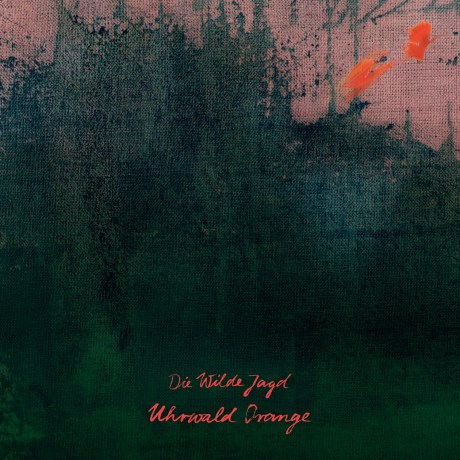
Fashioning a mysterious ‘Clockwood Orange’ world of Gothic and ominous dreamscapes, inspired by and named, in part, after the studio it was produced in, and by both the 17th century menagerie paintings of the Flemish artist Frans Snyder and the collected devotional Medieval period songs of the Llibre Vermell De Montserrat artifact, Die Wilde Jagd’s Sebastian Lee Philipp takes us on an eerie, cosmic and slinking travail through a throbbing sophisticated earthy electronic soundtrack. His musical partner on the group’s adroit debut self-titled experiment, producer Ralf Beck, is excused from the follow-up but lends out his extensive racks of vintage analogue synthesizers to Philipp, who transforms and obscures their banks of sounds into ghostly permutations, shadowy creatures and lurking, dancing and honking sonorous cries from a murky wilderness.
Uhrwald Orange is a classy imagined score, balancing cool, gleaming and aloof German electronica with menacing, nocturnal earthiness, yet also reaching for the celestial. One minute imbued with hints of Bauhaus, Killing Joke, Eno, Cluster, and Faust, the next slinking on to the Tresor club or Basic Channel dancefloor. In short: a most impressive album. Full review…
(DV)
Dur-Dur Band ‘Dur Dur Of Somalia: Volume 1, Volume 2 And Previously Unreleased Tracks’(Analog Africa)

A highlight in a catalogue of outstanding reissues from the Analog Africa label, intrepid crate digger Samy Ben Redjeb reprises the first two volumes of Somali fusion funk music from the legendary 1980s outfit, the Dur-Dur Band. Embodying a period in the decade when Mogadishu could boast of its cosmopolitan reputation – notably the European chic Via Roma stretch in the Hamar-Weyne district, a colonnade for café culture, cinema and of course music – the hybrid Dur-Dur Band moped up the polygenesis fever of their native city with effortless aplomb during their short heyday.
Saved from ‘tape-hiss’ and ‘wobbles’, remastered to sound the best they’ve ever sounded, these curious but above all loose-limbed nuggets successfully merged a myriad of Somalia traditions with a liberal smattering of disco, reggae (via the northern part of the country’s ‘Daantho’ rhythm style; an uncanny surrogate for Jamaica’s number one export), soul and funk. Mirroring a similar fusion thousands of miles away in New York, the Dur-Dur languidly produced an electrified no wave-new wave melting pot.
Split up across a triple LP and double CD formats the Dur-Dur Band’s first two albums proper, Volumes 1 and 2, and a couple of unreleased tunes feature on this, the first in a promised series of re-issues. Released originally in 1986, the first of these and the band’s debut album, Volume 1, has a rawer unpolished but snazzy sound that saunters, skips and grooves along with aloof coolness to sweltering laidback funk; opening with the wah-wah chops and a fuzzy organ stunner, ‘Ohiyee’ , which lays down a sophisticated but explosive spiritual dance floor thriller. Volume 2 by contrast seems a little brighter and tropical; beginning as it does with the dub echoed, Trenchtown pirate radio broadcast ‘Introduction’.
Going further than most to bring the sounds of Africa to a wider audience, the Dur-Dur Band release proved to be one of the label’s most difficult, as Redjeb tackled the geopolitical fall-out of a country devastated by civil war to bring us a most unique sounding and essential collection. Full review…
(DV)
E.
Elefant ‘Konark Und Bonark’ (9000 Records)

Emerging from the Belgium underground scene, with members from a myriad of bands, each one more obscure than the next, the Elefant in this room is a twisted agit-post-punk, boiler come forensic team suited troop of noise peddlers. Lurking around basement venues for a while now, the sludge metal and gallows Krautrock merchants have released a slurry of EPs but never a fully realized album until now.
For an album that grapples with Marilyn Manson, Swans, Killing Joke, Muse, industrial contortions and Germanic experimentation, Konark Und Bonark is a very considered, purposeful statement. Though things get very heavy, implosive and gloomy and the auger like ghosts in the vocals can sound deranged, there is a semblance of melody, a tune and hint of breaking through the confusing, often pummeling, miasma of artificial intelligence armageddon.
A seething rage is tightly controlled throughout, the sporadic flits and Math Rock entangled rhythms threatening to engulf but never quite reaching an overload, or for that matter, becoming a mess. Elefant’s prowling and throbbing sound of creeping menace and visions of an artificial intelligent domineering dystopia is an epic one. Arguably the band have produced their most ambitious slog yet and marked themselves out as one of Belgium’s most important exports of 2018. Full review…
(DV)
Bernard Estardy ‘Space Oddities: 1970-82’ (Born Bad)
‘Fragmented D’une Empreinte Magnétique: Rares 1966-2006’ (Gonzai Records)
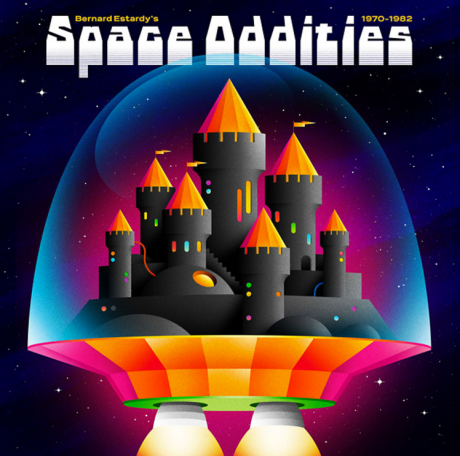
Because sometimes you just can’t decide, I’ve chucked in two reappraisal celebrating compilations of the odd, curious, thrilling and kitsch flights of fantasy musical fragments/sketches/soundtracks/compositions from the late and most gifted venerated French composer Bernard Estardy. I can’t even claim that these are great collections, let alone the best albums of the year, but they’ve kept me smiling all year.
Nicknamed ‘The Baron’, the founder of the CBE recording studio (which he set up in 1966) collaborated with a host of famous French icons in his time (arranging, producing or sound engineering for Johnny Hallyday, Francoise Hardy, Nino Ferrer, Michel Sardou and Jean Guidoni amongst others), but found an unleashed creative freedom as the master of consoles on his own excursions and dream flights of curiosity. Enjoying a resurrection of a sort in 2018, in part down to his daughter Julie Estardy‘s biography ‘The Giant’, Bernard’s eclectic back catalogue, from the realised to cutting room floor, is being reissued or rediscovered by a new generation through a number of different labels, both in France and internationally.
Two such compilations swept me up in their bombast; the first an album that couldn’t be described any better than the title it comes with, Space Oddities, and the second, Fragmented D’une Empreinte Magnétique, a Gauloises hotbed of weepy venerated organ romanticism and salacious sleek soundtracks. The first takes library music to the stars and beyond on a sassy opulent voyage of esoteric cosmic discovery. Jazz meets deep space on a drum-heavy collection of mysterious thrillers, phantasms and exotic awe. Tracks such as the more romantic, flute-y glide in space blues ‘Slow Very Slow’ sound like they could have made it to the ears of Goldfrapp or Greg Foat. The second of the pairing frequents more Earthy realms, pitching gospel with Bacharach yearnings, sentimental laments (the torn love soliloquy ‘It’s A Lovely Day To Die’ sums it up perfectly) and the strangest of deep-chested sung French cowboy soundtracks (A very Parisian journey to buy your ciggies, ‘La Route Au Tabac’, is rerouted through a lonesome pine trail). Both are as brilliant as they are audacious; a refreshing escapism and proof of a unique talent.
(DV)
Evidence ‘Weather or Not’ (Rhymesayers)
“From the moment he draws first breath on ‘Weather or Not’, Evidence embarks on a masterclass” – RnV Feb 18
A meteorological masterpiece showing that it’s rarely sunny in LA, whenever it rains it pours, and that Evidence is always bringing the weather with him. Ever laconic but whose economy of words is always wisely directed and word association seems slight but cuts deep, Ev walks the streets with collar up and hands dug into pockets, seemingly always in search of a contentment whose elusiveness he’s fine with. This prolongs a character pairing the enigmatic with a spokesman calling it straight down the line (“things I never thought about, trying to be elusive in the process, get forgot about”), a wallowing wanderer with whiplash in the tale and forever in control of his destiny (feel the tempered triumph of the concluding ‘By My Side Too’). A spread of AM band forecasts, a splash of psychedelic epiphanies and head nodders that buck like a bronco from Premier, Nottz and Babu, plus some Step Brothers espionage from Alchemist, allow the Dilated Peoples man to find you: because ‘Weather or Not’, you can’t run, you can’t hide.
(MO)
F.
Flora Fishbach ‘À Ta Merci’ (Blue Wrasse)

The French music press we’re told have fallen hook, line and synth for the alluring contralto voice of Flora Fishbach, who’s 80s revisionist pop twist on chanson oozes with such sophistication that its difficult not to embrace. Fishbach picked up the album révélation award at the Le Prix des Indés for best independent debut LP, winning high praise and plaudits galore ever since. Looking to make a similar impact across the Channel, the ‘bohemian darling’ has just released a deluxe edition of her electro pop requiem À Ta Merci. That decision is more or less echoed in the album’s title, which translates as, “at your mercy”.
Featuring the original running order and a bonus septet of gorgeous live recordings, this aloofly chic, yet theatrical, and especially when performing, animated album recasts Françoise Hardy as a disco pop and electro swooned crooner. Effortlessly channeling the vaporous dreamy pining of Kazu Makino on the moon dust sprinkled fantasy title-track and ambient textured, synthesizer bass bubbling yearned lament ‘Un beau langage’, and a Gallic Alison Goldfrapp on the opening ice-y cool malady ‘Ma voie lactée’, Fishbach adds a French nuance and sensibility to the synthesized pop ascetic: a signature you could say that despite the revivalist backing of electronic drum pads, post-punk sass, Moroder arpeggiator, Rococo harpsichord and hi-energy is unmistakably contemporary and French.
With the momentum already building in France and with the recent runaway success of music press darling Christine And The Queens (who I personally find utterly dull) I’m sure the UK will embrace this sophisticated chanteuse. This is overwhelmingly a better, more fun record than Christine’s (or the name she’s now adopted, Chris). Fishbach has certainly impressed me enough – what’s not impressive about referencing the philosophical aloof quandary that is Rimbaud’s “Je est un autre” (“I am another”) on a tropical slinking crystalline pop song, Un Autre Que Moi (“Another Me”) – to recommend her as one to watch in 2019. Full review…
(DV)
Fliptrix ‘Inexhale’ (High Focus)

“‘Inexhale’ masters the art of knocking you down with a feather: the pugilistic psychoanalysis is untouchable” – RnV Sept 18
It’s a little disingenuous to say Fliptrix became the High Focus main man this year, given he’s the driving force behind the label and already has a back catalogue of textbook pen and pad amplification. What with the label’s ever bubbling pool of talent seeing Ocean Wisdom blazing all and sundry, Jam Baxter expanding his cult appeal and two late night smokers from Coops, ‘Inexhale’ could’ve played the holding role and sat in the pack. But with breath control putting a copyright on the title and not a single word wasted, it’s an album that will leave you levitating. Be that from his street level strain of spirituality – letting the sharp end of something herbal work him over, or thoroughly aware of the rights and wrongs of his surroundings – or from the velocity of what’s spat (‘Inside the Ride’ doesn’t and won’t ever flop). Then flipping what the surroundings suggest, and never getting lost in the haze even with eyes at the reddest, Fliptrix finds the perfect medium between headphone moments and smacks to the head.
(MO)
Fofoulah ‘Daega Rek’ (Glitterbeat Records)
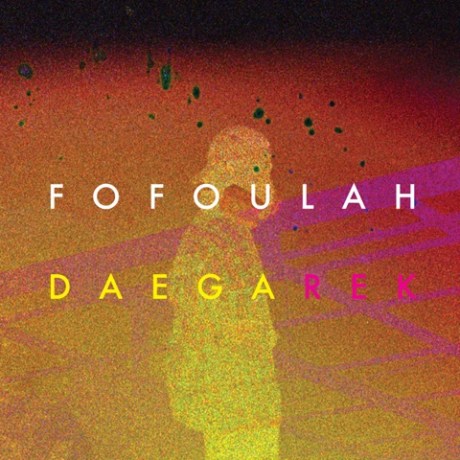
Bustling onto the transglobal London and Bristol scenes in 2014 with their earthy and urban bombastic fusion of Wolof African culture and dub electronica rich debut LP, the Fofoulah ensemble laid down the template for the a unique adventurous sound. Though taking its time to materialize, four years on, the follow-up album hasn’t just moved on but supersonically zoomed into the experimental void; even an esoteric, spiritual one at times.
Daega Rek, ‘the truth’ when translated from the Wolof language of coastal West Africa, sees Fofoulah’s saxophonist, keyboardist and producer Tom Challenger transmogrify the original Gambian talking drum of the group’s shamanistic rapping lead Kaw Secka and the accompanying percussion and propulsive drumming rhythms of his band members. (All of which were laid down at the Real World studios). Secka would then reappear in post-production to record his half spoken/half-rapped protestations and observations; the results all re-shaped into a ricocheting lunar-tropical bounding dub cosmology.
Skipping and skittish in motion; pushing the envelope as they pay tribute to lost brothers (‘Kaddy’ pays 2-Step rhythmic eulogy to the late photographer Khadija Saye who died in the Grenfell Tower disaster), the visceral taste of home (‘Chebou Jaine’ dedicated to Secka’s cousin, who cooked the best national Gambian dish) and search for the truth, Fofoulah lunge into the electrified dub ether of sonic adventure. Full review…
(DV)
G.
Goatman ‘Rhythms’ (Rocket Recordings)
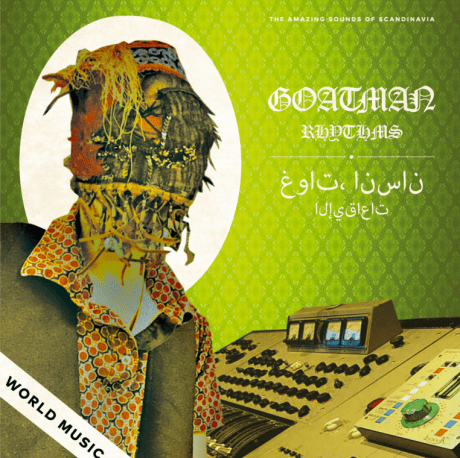
An amorphous exploration of world ‘rhythms’ as transduced by one the mysterious Scandinavian GOAT band members through a an arsenal of filters, modulators and oscillations, the debut Goatman suite blends its polygenesis inspirations perfectly.
Offering up magical and scintillating rhythms galore, from Kuti’s compound Afrobeat to a tremolo and laser bouncing variant of RAM’s Haiti vibe, you can expect to hear the venerable tones of gospel, jazz, reggae, psych and pure ethereal acoustic Kosmische on this sonic flight of fantasy. Earthy yet light enough to soar, this impressive experiment side-project channels its influences perfectly to conjure up new musical ideas. Echoes of GOAT are never far away of course, yet this imaginative take feels more natural, more organic, and above all, more soulful. A fantastic debut.
(DV)
H.
Jack Hayter ‘Abbey Wood’ (Gare du Nord)

Bringing light, or at least opening up a psycho-geographical narrative dedicated to the very edges of a largely ignored London postcode – so far out on the South Eastern outskirts as to be part of Kent –, an earnest Jack Hayter composes a yearning lament to Abbey Wood on what is his first solo album in fifteen years.
Hayter’s deftly played, with twangs of bucolic and Baroque folk, blues, synthesized atmospherics, Americana and reverent chamber music, multilayered songbook connects with the psychogeography of his chosen location. From songs about the Abbey Wood diaspora and its position as a gateway to the world to laying cooing elegiac wreaths to those unfortunate victims of the WWII Arandora Star passenger ship tragedy, Hayter produces a lived-in musical novel, rich with references, landmarks and peopled by those who left an indelible, if at times fleeting, mark upon this much forgotten or passed over postcode: their ghosts, no matter how small the part they played in its story, never inconsequential; remembered and written about with a certain gravitas by the erstwhile troubadour, who performs the most accomplished and brilliant of testaments. Full review…
(DV)
Homeboy Sandman & Edan ‘Humble Pi’ (Stones Throw)

“A banquet of slaps that will become one of your five a day, and ultimately year” – RnV Oct 18
If seven or so tracks are good enough for Pusha T, Kanye etc, then they’re an ample fit for this elite underground swashbuckler of a showdown brought to us by the matchmaking Gods. Having flitted around the periphery for what seems forever, Edan returns with some of his best, ear-piercing archaeology to date as he shifts the B-boy-psych continuum once more; and Homeboy Sandman, both revelling in getting in the thick of it and firing off missives as he’s swept along for the ride, gets off the wall (“see me looking photogenic in the Book of Genesis, waving off medicines”), yet reels off some of the realest in recent times (it’s still, and shall remain, all about ‘Never Use the Internet Again’, which stylistically is actually a bit of a left-turn). The feeling pervades that the pair are proudly gladiatorial, indulging in friendly, unspoken competition as much as fighting the good fight as anointed hip-hop saviours. Let’s hope the sub 30-minute running time means the door is open for a second bout some time soon.
(MO)
J.
Juga-Naut & Sonnyjim ‘The Purple Door’ (Eat Good Records)
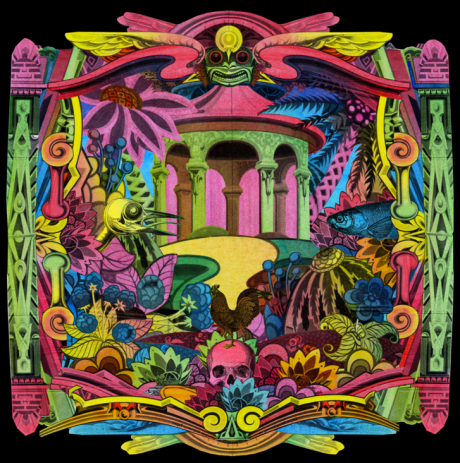
“Their usual, indomitable personas on the mic never skimp on Michelin-starred quality, and they still aren’t the ones to test if you think they’re pushing their luck” – RnV Aug 18
It’s an album largely based on elitist boasts, expensive trinkets and accessories and some pretty outlandish claims, but hey, these boys done good. Larger than life and living the playboy lifestyle making the ludicrous seem obtainable – you too can be a ‘Purple Door’ gold card holder – Juga-Naut and Sonnyjim transform the Midlands into St Tropez with a load of gala funk to make a red carpet entrance to, with just a hint of a twinkle in its eye like a felonious exile that has everyone’s backing. That said, you can’t live the life of a Rat Packer if you ain’t got the gab, and these two are no novices: the great suitability of their top table rhyme personas – Juga-Naut will have you believing every word he spits, Sonnyjim coming in dry and stonefaced yet smelling (and producing) like a million bucks – shares a love of all things gastronomic on the likes of ‘Duck Season’ that comes sweeping down a spiral staircase, while ‘Look Around’ takes a moment to act more tactfully, pledging family honour like a good fella. It might not be dining etiquette, but these two are pulling chairs from under the competition.
(MO)
Park Jiha ‘Communion’ (Glitterbeat Records)

Circumnavigating the globe to bring much-needed exposure to new sounds, Glitterbeat Records imprint tak:til gives a second wind to a suite of acuity serialism from Southeast Asia. Released originally in South Korea in 2016, the neo-classical musician/composer Park Jiha’s debut solo album Communion is given an international release by the label.
Inspiring what we’re told is a burgeoning Korean music scene (well, an alternative to the K-Pop craze), a chief progenitor of the movement Jiha alongside collaborative partner Jungmin Seo originally melded the country’s musical heritage with an eclectic range of contemporary sounds as the 숨[suːm] duo in 2007. Releasing the highly influential regional albums Rhythmic Space: A Pause For Breath (2010) and 2nd (2014), Park and Seo crossed the time zones to perform at both WOMAD and SXSW. Congruously putting the duo on hold to explore a more ‘personal’ and minimalistic ‘musical vocabulary’ as a solo artist, Jiha dexterously balances the air-y abstract breathes of the ‘piri’ double reed bamboo flute, the searing twang of the ‘saenghwang’ mouth organ and the softly paddled patter of the ‘yanggeum’ hammered dulcimer in what is a dialogue between a dulcet calm, the meditative and an entangled dissonance.
Transforming Korean traditions into a more experimental language that evokes the avant-garde, neo-classical and jazz yet something quite different, Park Jiha’s tranquil to entangled discourse evocations reach beyond their Southeast Asian borders both musically and metaphysically into something approaching the unique and amorphous. Full review…
(DV)
John Johanna ‘I’ll Be Ready When The Great Day Comes’ (Faith And Industry)
More a mini-album, even 12″ to be contrary, the beautifully cooed, warbled and ached venerable I’ll Be Ready When The Great Day Comes is nothing less than an afflatus anointed paean to a higher purpose. Informed by the mystical cosmology of the Eastern Orthodox Church, John Johanna‘s spiritual blues-y and gospel rock’n’rock hymns are both diaphanous and mesmerizing, even hypnotic; recalling visages of Morricone, Fleetwood Mac, Terakaft, Dirtmusic and Wovenhand as it wanders a picturesque but troubled soundscape.
On the devotional pilgrimage, the troubadour of the most evocative, stirring country burr, switches between aching falsetto yearning to lovelorn cowboy on the Andes romanticised cooing, and from the ethereal to fraught, as he makes communion.
No two songs are quite the same, as the wooing rustic sits next to (what can only be described as) the holy desert rock fusion of Native Indian and Afro-beat title track, and Bossa shuffle meets Yonatan Gat raindance. It all congruously comes together in one most divine service. A minor masterpiece.
(DV)
M.
Marlowe (L’Orange & Solemn Brigham) ‘Marlowe’ (Mello Music Group)
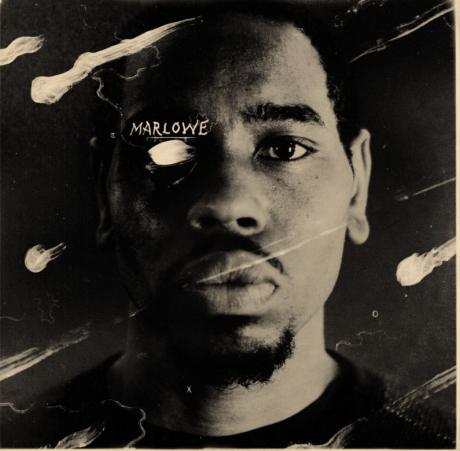
“Both excel in never revealing what’s steaming around the next corner, even when you’ve grabbed your toothcomb for the umpteenth time” – RnV July 18
Another yearly round up, another L’Orange inclusion. North Carolina stands up as latest collaborator Solemn Brigham rhymes his ass off: weirdly, without necessarily feeding off what the producer is trawling, and helping create something of an odd couple match made in heaven. L’Orange sets the scene, usually a funky hoedown, a sample-heavy brouhaha anticipating a stand-off or a psychedelic neck-snap. As is his wont, there’s a narrative to be spun, or some simple time-travelling to be done where no two bops are the same. Brigham on the other hand, blurbed as “summoning the holy spirit of Big L” without getting sucked into the danger zone, just jumps in with a garrulous B-boy stance and goes for it. Without L’Orange surrounding him in a world of imagination, give Brigham a park bench and a ghettoblaster and the results would be the same. What he does guarantee is that you’ll be going back to what he has to say, and whatever the variables, the energy and entertainment (grounded surrealism?) never dips. L’Orange may have found himself an emcee to keep on retainer.
(MO)
Hugh Masekela ’66-‘76’ (Wrasse Records)

A most poignant and timely reminder of one of the true greats, the mammoth 66-’76 collection shows a multifaceted Hugh Masekela: The exile. The trumpet maestro. The bandleader. The activist. The colonial revisionist. The angry young man. But also the conciliatory. These are just some of the many faces of the South African titan of jazz and African musical fusions that can be found inside the latest essential collection of the late great polymaths’ back durable catalogue.
Put together especially by Masekela and his good friend, producer and collaborator on a number of projects together, Stewart Levine, just before he passed away at the beginning of this year, the three disc spanning collection features key tracks from many of his most iconic and experimental albums (two of which are included in their entirety). But what makes this especially appealing to collectors and fans alike, is that many of these albums were never officially released in the UK and Europe before. Progressing in the chronological order they were recorded, we follow Masekela’s journey not just musically but politically across his most formative decade and his partnership with Levine and collaborations with such legendary ensembles as the Hedzoleh Soundz combo. From the combined jazz and Township fusions of The Emancipation Of Hugh Masekela all the way to criss-crossing the transatlantic slave routes on Colonial Man, this collection is a sheer joy. Full review…
(DV)
(MO)
Brona McVittie ‘We Are The Wildlife’
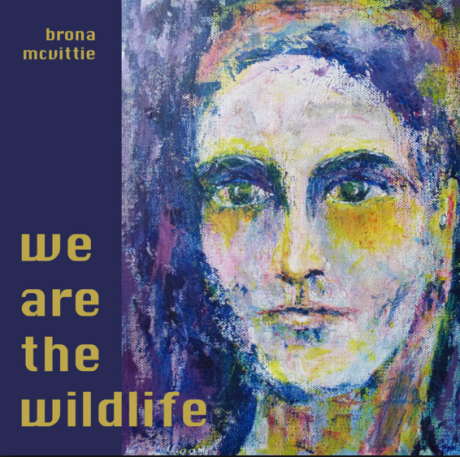
With the lightest, most deft of touches, Irish songstress and harpist Brona McVittie embarks on a voyage of ‘psycho-geographic’ inspired encapsulations of a mysterious, magical landscape and history on her debut album, We Are The Wildlife.
Tracing the sonic contours of London’s urban fringes and the rural landscapes of Mourne, McVittie pitches her fluttery diaphanous harp-led songbook somewhere between post-folk and the cinematic – helped along in part by the drifting trumpet evocations of film composer Hutch Demouilpied, who’s contributions sound at times like Miles Davis Dingo transported to an Irish peat bog.
Her ephemeral harp melodies and phrases often feel like a breath or just the merest hazy lingering presence of the instrument, which might in some ways be down to McVittie’s technique of playing them all on the guitar first before transcribing over. It certainly offers a different perspective and technique. And it certainly takes this heavenly traditional instrument into even more mystical, accentuate abstract realms, helped of course by an accompaniment of meadow flute (Keiron Phelan), sad bowed delicate strings (Richard Curran), searching fleeting slide-guitar and shuffling to full-on breakbeat drums (Myles Cochran). All of which amorphously pushes the often-ancient feelings and geography towards John Martyn and Bert Jansch one minute, towards the Incredible String Band or trip-hop the next.
Played with the lightest of touches, McVittie’s wildlife and Celtic inspired filmscape subtly crafts tradition into a cerebral suite of neo-classical and ambient folk. We Are The Wildlife is the most inviting and unique of debuts. Full review…
(DV)
Minyeshu ‘Daa Dee’ (ARC Music)

From the tentative first steps of childhood to the sagacious reflections of middle age, the sublime Ethiopian songstress Minyeshu Kifle Tedla soothingly, yearningly and diaphanously articulates the intergenerational longings and needs of belonging on her epic LP, Daa Dee.
Minyeshu left her native Ethiopia in 1996, but not before discovering and then learning from such acolytes as the doyen of the country’s famous Ethio-Jazz scene, Mulatu Astatke, and the choreographer Tadesse Worku and singers Mahmoud Ahmed, Tilahun Gessesse and Bizunesh Bekele. First moving to Belgium and then later to the Netherlands, the burgeoning star of the Ethiopian People To People music and dance production has after decades of coming to terms with her departure finally found a home: a self-realization that home wasn’t a geographical location after all but wherever she felt most comfortable and belonged:“Home is me!”
Evoking that sense of belonging and the theme of roots, but also paying a tribute and lament to the sisterhood, Minyeshu conveys with a sauntering but sorrowful jazzy blues vibe not only the burden and grind of daily life for many of her compatriots back home in the tumultuous climate of a fragmented and often chaotic Ethiopia, but also the joy of song and togetherness.
Not only merging geography but musical styles too, the Daa Dee LP effortlessly weaves jazz (both Western and Ethiopian) R&B, pop, dub, the theatrical, and on the cantering to lolloping skippy ‘Anteneh (It Is You?)’, reggae. Piano, strings and brass mix with the Ethiopian wooden washint flute and masenqo bowed lute to create an exotic but familiar pan-global sound. Minyeshu produces a masterful heartwarming, sometimes giddy, swirling testament that is exciting, diverse and above all else, dynamic. Her voice is flawless, channeling various journeys and travails but always placing a special connection to and emphasis on those special roots. Full review…
(DV)
Moonwalks ‘In Light (The Scales In The Frame)’ (Stolen Body Records)

At least geographically close to the spirit of the Motor City, if generations apart, Detroit’s Moonwalks brood in the shadows of the counterculture doyens that made it such an infamous breeding ground for snarling attitude garage, psych and acid rock in the 60s and early 70s.
Transitioning, so we’re told, from ad hoc abandon warehouse performances as a diy glam psych rock troupe to experimental space rock stoners, spiraling in a vaporous gauzy vortex of 80s British Gothic and acid shoegaze influences, the Moonwalks make a certain dynamic progression on their second full length album, In Light.
Sometimes they sound like a black magic rites Byrds and at others like a doomed The Glass Family on a bum ride. Their curtain call, The Joy Of Geraniums, is the most odd song of all; taking the Moonwalks into a whistling led peyote-induced trip to the Mojave Desert.
Vocally malaise the voices waft between Siouxsie Sioux, Bauhaus’ Peter Murphy and Slowdive’s Rachel Goswell. Of course it fits the nebulous cosmic doom and dreamy psych style of the group perfectly; ambiguously drifting through magical rites and sulky pretensions aplenty. Full review…
(DV)
Tickling Our Fancy 063: Tony Njoku, Yonatan Gat, Black Light White Light, The Lancashire Hustlers…
April 20, 2018
REVIEWS

Interesting releases from across the world and music spectrums; Tickling Our Fancy is the, Monolith Cocktail founder, Dominic Valvona’s most eclectic of reviews roundups. With no themes, demarcations of any kind, or reasoning other than providing a balanced platform for the intriguing, the great and at times, most odd releases, I bring you this month’s latest selection.
A packed installment this week with the Ennio Morricone suffused debut album from The Magic City Trio, Amerikana Arkana; Black Light White Light’s Martin Ejlertsen takes the band on a Lynchian’ inspired psychedelic journey to new horizons; Op Art meets free-rock, jazz and Krautrock in Geneva 1972 on the latest obscure reissue from the Mental Experience label, Mouvements; Andrew Spackman is back as the spasmodic ennui conjuring electronic music wiz Sad Man, with his latest collection of garden shed productions, Slow Bird; British-Nigerian producer Tony Njoku shares his distinct and stunning soulful avant-garde electronica on his new album, H.P.A.C.; and the Israeli maelstrom guitarist Yonatan Gat records his first album, an expansive entangle of shared history and sounds, for Glitterbeat Records imprint tak:til. There’s also the lush dreamy soulful psychedelic debut track from Evil Bone; the third album from the mysterious Edinburgh electronic and rock guitar welding maverick Bunny & The Invalid Singers; and the upcoming psychedelic pop nostalgic afterglow brilliance of The Lancashire Hustlers.
Tony Njoku ‘H.P.A.C’ Silent Kid Records, 27th April 2018
Bringing a very different perspective and life experience to the London avant-garde art and electronic music scene, the British-Nigerian producer with the earthy falsetto, Tony Njoku, articulates a most unique form of magical soul music.
Though undulated with an ethereal to malady suffused backing of sophisticated synthesized travails, Njoku’s vocals always seem to bobble and float above the choppy breaks and ebbing tides.
Feeling an outsider, transferring at the age of fourteen to London from a life spent hiding his true personality in the toxic macho boarding schools of Lagos, the sensitive Njoku found at least one kind of solace; able to show a vulnerability and pursue the music career he really wanted having previously recorded a number of hip-hop albums (the first when he was only twelve) that proved entirely counterintuitive, but were completely in tune with Nigerian environment he grew up in. Yet in the arts community he joined in his new home of London, he found few Afrocentric voices or people he could identify with or relate to. The arts and, especially avant-garde, music scenes are dominated by what Njoku calls the ‘affluent bourgeoisie’. Though to be fair anything that falls outside the most commercial perimeters is patronized and subsidized in one form or another. And this is obviously reflected in what is a majority European culture: resulting in a lack of voices from Africa. It means that Njoku stands out, but in a positive sense; his music amorphously blending both cultures successfully to create something familiar yet somehow fresh and untethered.
Inspired by the ‘high art sonic’ forms of Arca and Anhoni, and by the metamorphosis nature of Bjork, Njoku’s own compositions feature a beautiful synthetic shuffle of Afrofuturism soul and more searing discordant synth waves that clash and distort on arrival but gradually sync and become part of the motion. From beauty to pain and release, and often back again, each track (and not in a bad way) seems open-ended; a constant flowing cycle of emotions, which can be healed during that moment, in that space and time, but will inevitably return: A calm followed by turbulence and hopefully the light.
Remain Calm, a song in two parts, starting with a romantically plaintive half of bobbing tablas floating on an increasingly choppy mental exerted ocean of troubles before being overpowered and capsized by more stressed and sharper sonic invasions, exemplifies Njoku’s shifting emotional turmoil. It’s also one of the album’s standout tracks; recently featured in our first choice songs of 2018 playlist last month.
The rest of H.P.A.C. is as equally diaphanous, despite the longing, hurt and frailty on display. Remaining buoyant in the face of an increasing voluminous distress on My Dear The Light Has Come; aching on the moonbeam blues All Its Glory; plunging from a cosmic enveloped precipice by the end of the sea of reverb consuming Surely This Is As Good As It Gets; and left “twisted out if shape” like an “origami swan” on the whistle R&B lilted As We Danced, Njoku shares his vulnerabilities like an open book. And doesn’t it sound just wonderful: eloquently in a hymn like fashion between pained malady and the venerable, heavenly but also melancholic and turbulent, a futuristic soul album of delicate intellect. Anguish has seldom sounded sweeter.
Yonatan Gat ‘Universalists’ tak:til/Glitterbeat Records, 4th May 2018

Photo credit: Caio Ferreira.
Banned from performing in his native homeland of Israel for taking his former band Monotonix’s confrontational style of rock’n’roll live and, literally, direct to the audience, Yonatan Gat has channeled the buzz and maelstrom of his entangled guitar work into a productive and creatively eclectic solo career since relocating to New York a number of years ago.
Toning down the shock of Monotonix for something more expansive and ambitious, as the title and imagery of his latest album for Glitterbeat’s more experimentally traversing and meditational imprint tak:til suggests, the Universalists of Gat and his drum and bass wingmen, Gal Lazer and Sergio Sayeg, expand their tumultuous galloping desert transcendence style of echo-y tremolo and fuzz beyond the sand dunes towards the imaginary psychogeography of atavistic Europe, Southeast Asia and Northwest America.
Holding up his guitar like some sort of offering, or a transmitter to the sky, Gat stands as a vessel for a cerebral multilayering of musical influences. Nothing is quite what it seems; ghostly visages of Alan Lomax’s 1950s recording of the Trallalero monosyllabic derived polyphonic style of choral folk song, practiced in the mountain villages and port of Genoa, appear on the opening eloquently shambling (the drums majestically in time rolling down a hill) Cue The Machines, and excerpts from the traditional work songs of Mallorca culture romantically waft over drifting guitar and ambient mirages on Post World. Further on, Gat fuses the Algonquin Eastern Medicine Singers pow wow drum group with his trio’s sinewy trance and scratch work to stomp out a shamanistic post-punk ritual on the Native Indian inspired Medicine.
Gat counterbalances his own group’s mystical maelstroms of pummeling, unblinking rapid rambunctiousness and more dream world jazzy shuffling with passages, memories and textures from socially and geopolitically important traditions. Chronology for example, a peregrination of many segments, features not only a scuzzed-up throw down version of Middle Eastern guitar and a vocal sample (sounding a lot like it was pulled from the ether) of a Spanish harvest song, but also entwines a passage from the famous Czech composer Antonín Dvořak’s String Quartet in F Major: better known as the chamber piece standard, The American Quartet. Written during the composer’s time spent both teaching at the N.Y.C. National Conservatory and living amongst the Czech exiles in the desired haven state of Iowa, this New World Symphony as he called it, is included for its own embrace of Native Indian culture, the Irish immigrants folk songs and the music of the misfortunate African slaves.
Of course you don’t have to pick up on all these deeper references as the music speaks for itself; the ‘universalists’ message of borderless, timeless exploration and shared need for a release from these hostile dangerous times is clear.
Black Light White Light ‘Horizons’ Forwards Backwards Recordings, 20th April 2018
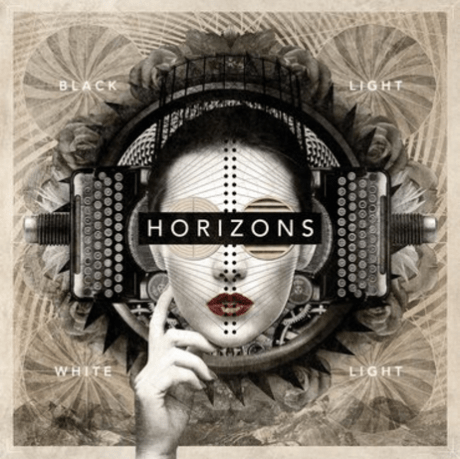
Created out of a desire in 2015 to take stock of the band’s short but impressive back catalogue, the Danish and Swedish exchange Black Light White Light, or more importantly the group’s central focus, singer/songwriter and guitarist Martin Ejlertsen, plow forward with their third vaporwave psychedelic rock hadron collider LP, Horizons.
Obviously as the title would suggest, horizons new and expanding are key; the group in co-operation with new drummer Viktor Höber and producer/engineer and fellow musician Christian Ki, putting into practice, during there basement sessions deep underground in Copenhagen, a vaporous often Gothic pop rock vision of cinematic influenced charter duality and darkly lit escapism.
Though never quite as surreal and twisted, or as violently indifferent as Ejlertsen’s key inspirations, David Lynch and Nicolas Winding Refn, there’s still plenty of cryptic lyricism – usually sung under the smog of megaphone effects and resonating trembled fuzz – and sinister mystery. Take the progressive The Fool, which begins with hints of The Cult, Moody Blues and The Beatles but gradually creeps towards the choral and eastern esotericism of Wolf City period Amon Düül II.
Tailoring each track slightly to throb or hazily permeate with a myriad of musical styles and influences, the group attune themselves to The Painted Palms psychedelic pop on the opening King Kong; transduce the Madchester golden age on the halcyon Teenage Drum; evoke Yeti Lane on the more relaxed space rock pulse of Illusions/Emotions; and pass through the lobbies of both DFA Records, and Factory Records, and pick up melodies and inspiration from Jacco Gardner, Pink Floyd, The Stone Roses and Broadcast on the remainder of the album’s eleven tracks.
Floating between harder, barracking drums led psych rock and a shoegaze dreamy portal, Horizons is no matter how serious and mysterious the intentions (and I’m sure, after catching the odd line amongst the veiled effects, there is some dark and prescient themes being alluded to), filled with nuanced melodies and glimmers of pop. Billed as a very different kind of Black Light White Light album, Ejlersten going as far as strongly considering releasing it under an entirely separate project moniker, the horizons explored and discovered on this record prove very fruitful indeed.
The Magic City Trio ‘Amerikana Arkana’ Kailua Recording, 20th April 2018

It’s as if Ennio Morricone had skulked into town himself, as they very first tremolo resonating notes strike and the lush orchestration sweeps in to announce the arrival of this cinematic Americana imbued suite. A Western adventure of melancholic beauty, the debut album from The Magic City Trio treads familiar ground as it pays homage to a century and more of the frontier spirit and tragedy.
Covering everything from pre-war country music to modern hillbilly noir, this gathering of musicians and artists, which includes The June Brides’ Frank Sweeney and Annie And The Aeroplanes’ Annie Holder serenading and out front, mosey, ponder and lamentably create their own visionary cinematic songbook. Liltingly duets in the manner of an imagined partnership between Lee Hazlewood and Emmylou Harris feature throughout, whilst hints are made to The Flying Burrito Brothers one minute and a lonesome pinning Richard Hawley on the ranch, the next. Sweeney and Holder certainly set the mood when embracing references as varied as Steinbeck’s depression era novels and the murder ballads of the old west borderlands.
Missing out on scoring the golden age of Westerns then, The Magic City Trio (which expands to accommodate a number of guests) walk the walk, talk the talk, but update the old tropes for a post-modernist take. The opening, beautifully crooned, Black Dog Following Me even tackles depression; a subject hardly congruous to the stoic ‘man’s gotta do what a man’s gotta do’ machismo of cowboy yore. It sounds like an unforgiving vision as re-imagined by a 70s period Scott Walker, earmarked for a revisionist Tarantino Western.
You can’t fault the careful and lightly applied musicianship, nor the deliberately pronounced and richly swooned vocal partnership; whether it’s in the mode of a mariachi soundtrack quilted murder scene (22), or a lilting pedal steel, Sweetheart Of The Rodeo, eulogy to a dear departed friend (Goodbye My Friend).
Far more than a pastiche or mere homage, Amerikana Arkana is a subtly attuned to modern sensibilities version of a lost classical Western soundtrack: a most diaphanous and sweetly lamentable one at that.
Mouvements ‘Mouvements’ Mental Experience, March 22nd 2018

How they find them is not our concern, but those fine excavators of miscellaneous avant-garde and leftfield treasures, Mental Experience, don’t half unearth some obscure artifacts. One of their latest reissues is the amorphous experiment between extemporized music and op art Mouvements. This Geneva underground scene missive was originally released as a private box set, limited to only 150 copies and sold at art galleries.
Instigated by the guitar player (though free and easy across a whole instrument spectrum) Christian Oestreicher after meeting the artist and painter Richard Reimann at the Aurora art gallery in Geneva, the Mouvements project emulated what was an already flourishing scene of cross-pollinated arts.
Oestreicher on his part, attempted a process of reification through a mix of free-jazz, musique-concrete, psych rock, tape effects manipulation and Krautrock; Reimann would provide the reference point metallic and shimmered geometric artwork.
Sessions for the eventual album began in 1972; recorded at an ad hoc studio in an occupied mansion using a trio of Revox machines. Joining Oestreicher with his improvisations were friends Jean-Fançois Boillat (of Boillat-Thérace obscurity), Blaise Catalá and Jerry Chardonnens – names which probably mean more to the ‘head’ community, but we can take as granted were probably notable in their fields. Allowing his influences to permeate and flow through each gesture, riff and applied layering, Oestreicher’s troupe – gathered round in a circle to perform – sound like a hazy mixture, a primordial soup and veiled ramble of Zappa, early Can, Ornette Coleman, Chuck Berry, Soft Machine, Amon Düül II and the neo-classical.
Conceived as a concept album, there’s a constant, if interrupted, ebb and flow to proceedings; one that moves between minimal garblings and full-on psychedelic jazzy rock’n’roll. A number of recurring instruments, such as the violin and guitar, return us to some sort of thematic semblance, something to follow and recognize. Oestreicher’s guitar (as you might expect) has a prominent role to play; riffing and contorting rock’n’roll licks with snatches of Manuel Göttsching and jazz.
Often sounding as though they’d been recorded from outside or from the other side of a partitioning wall, these ‘mouvements’ vary in their intensity: the opening Largo Pour Piano Et Océan starts the album off on an isolated beach vista; the serialism piano plucking away therapeutically as the waves hit the shore and lonely breeze blows through. But the next track, Goutte De Sang En Feu takes off into a jamming freestyle of barnyard fiddle folk, Mothers Of Invention and Floh De Cologne. There’s even an attempt at a sort of Afro-funk on the vignette Ailleurs, and Le Voyage Sperber has a concoction of West Coast lounge and Lalo Schifrin soundtrack funky jazz running through it.
The main album’s eight tracks pretty much say it all, but included with this reissue bundle is a smattering of bonus tracks; all of which generally riff on or are cut from the same clothe: The Playwriter’s Drift for example, another variation on the Zappa transmogrified rock groove, and the eighteen minute opus, My Guitar Is Driving Me Mad (Take 2), is a strange attempt by Oestreicher to exorcise his instrument over a creepy psychedelic jam.
A spark of interest for those unfamiliar with the Swiss branch of the art-rock crossover in the early 70s, this most intriguing artifact from the period focuses on a hitherto forgotten, or at least passed over, development in the story of European avant-garde; a time when Op Art and free-music experimentation collided. Not to everyone’s tastes, and covering a lot of familiar ground – the sound quality on my CD was very quiet -, Mouvements is nonetheless a curious suite.
https://soundcloud.com/mental-experience-594217473/sets/mouvements-mouvements-snippets
Sad Man ‘Slow Bird’ 16th April 2018

Featured regularly over the years, the contorted machinations and transmogrified electronic music experiments of artist/composer Andrew Spackman have kept us both entertained and dumbfounded. Building his own shortened, elongated and mashed-up versions of turntables and various plucked, rung or clanged instrumentation in his garden shed, his process methods would seem almost impossible to replicate let alone repeat. And so this often ennui shifting and dislocation of the avant-garde, techno, breakbeat and Kosmische sounds often unique.
Previously causing mayhem under the – Duchampian chess move favorite – Nimzo-Indian moniker, Spackman has now adopted a new nom de plume; a home for what he intends to be, like the name suggests, the most saddest music. Yet with a few releases already under his tool belt, the latest epic, Slow Bird, is more an exploration in confusion and ghostly visages of the cosmos than a melancholic display of plaintive moping. There are by all means some moody, even ominous, leviathans lurking and the odd daemonic vocal effect, but as with most of the tracks on this LP they constantly evolve from one idea into the next: anything from a panic attack to the kooky.
With a menagerie theme running throughout the many song titles, it’s difficult to tell if the source of any of them began with the bird in question or not. The title track itself certainly features flighty and rapid wing flapping motions, yet rubs against more coarse machinery, knife sharpening percussive elements and Forbidden Planet eeriness. Parrot by comparison, sounds like an inverted PiL, languidly reversed to the undulations of bongos, whilst Sparrow pairs Cecil Taylor piano serialism with, what sounds like, a wooden ball rolling across a tabletop. It’s not only the feathered variety being used as bait for spasmodic and galactic manipulation. There’s a Bear Reprise (another repeating theme; ‘reprises’ of one sort or another popping up a lot) of all things, which consists of 808 claps, broken electro and particle dispersing glassy sprinkles, and a very weird tuba like theme tune, dedicated to the Slug.
A cacophony of clever layering and ever-changing focus takes tubular metallics, UNCLE drum break barrages, Ippu Mitsui, Add N To (X), giddy oscillations, haywire computer and staccato phonetic languages, Vader mask style breathing, glints of light beams, the Aphex Twin on xylophone and produces his own, whatever that is, niche of electronic composition. It can feel a slog and overwhelming at times, but Slow Bird is one of his most progressive and well-produced releases yet; mayhem at its best.
Evil Bone ‘In Vain’ 13th April 2018
Battling to overcome the mentally and physical debilitations of anxiety disorder, the artist (who I only know as John) behind this new solo project, Evil Bone, seeks a reification of its enervated effects on the soporific, halcyon In Vain. The title, a quite resigned one, refers to his attempts to beat it: all to no effect. Though, as John candidly muses, it is now a part of his make up, and in many ways impacts on the music he creates.
Despite often stifling creativity, the first track from Evil Bone is a haze of languid shoegaze and soulful dream pop that recalls Slowdive and The Cocteau Twins cloud bursting in vaporous anguish. Influenced by more modern psychedelic vaporwave bands such as the Unknown Mortal Orchestra and Tame Impala (both can be detected here), John is also quite taken with hip-hop, R&B and soul music; especially Anderson Paak and Kendrick Lamar – music with a more colourful sound and soulful vibe. And this can be heard on In Vain’s lush soul-tinged wafted undulations; taking it away from simple lingering dreamwave production towards something with a little more depth and lilt.
Promising an extended release later in the year, In Vain sets the marker for beautifully layered anxious psychedelic pop.
Bunny & The Invalid Singers ‘Fear Of The Horizon’ Bearsuit Records, 20th April 2018
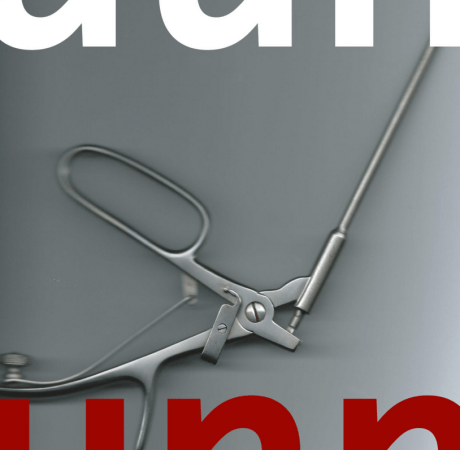
Quite the enigma, the music of Edinburgh solo musician/artist Dave Hillary seems to be adrift of reference, familiarity and classification (an easy one anyway). Though his image is plastered (or is it!) indiscriminately amongst a collage of collected imagery, from holiday postcards to family moments and music paraphernalia, on the inlay of his latest album, his identity has been largely guarded.
Mysterious then, unsettled, the experimental electronic music with textured industrial and squalling rock guitar style of sonic noodling Hillary produces is more akin to an amorphous collection of soundtracks than identifiable song material. Evocations, moods, setting the scene for some futuristic heart of darkness, Hillary fashions a gunship waltz of tetchy synthesized percussion, fairground noises, whistling satellites and rocket attacks on the fantastical entitled Eamon The Destroyer, whilst on the title track, he plays around, almost plaintively, with folksy acoustic plucked notation, sighing strings, twinkly xylophone and arched electric guitar. Hints of the Orient (I’m imagining Hong Kong for some reason) linger on both the weird cut-up The Positive Approach To Talkative Ron and the marooned, twanged and bowed Cast Adrift. Yet, even with title prompts, you could be anywhere on these unique vistas and musings. The closest you’ll find to this meandering is the Leaf label, or the experimental Jezus Lizard sanctioned experiments of Craig Ward.
Fear Of The Horizon is the third such album from the interchangeable Bunny & moniker – Hillary’s debut, Fall Apart In My Backyard, released under the Bunny & The Electric Horsemen title. However, the Bearsuit Records stalwart, constantly popping up on the label’s maverick compilations, and one-time member of Idiot Half Brother and Whizz Kid, is at his most mysterious and serious as Bunny & The Invalid Singers. Truly plowing his very own furrow, Hillary’s warped evolving, sometimes clandestine, electronic and steely guitar evocations once more wander into unusual territory.
The Lancashire Hustlers ‘Stuck In A Daydream’ Steep Hill, 11th May 2018

Following on from the warm afterglow of their last outbound journey, Adventure, the London-based (though originally hailing from Southport) duo of lilted psychedelic pop once more dip liberally into the 60s (and early 70s) songbook on their fourth album, Stuck In A Daydream. It’s never quite clear, nostalgia being their bag and signature, if The Lancashire Hustlers are seeking sanctuary in that halcyon age, or commenting wryly on those who seek to turn back the tide of change and return to a preconceived ideal that never quite existed. It is of course what every generation does; fondly celebrating a time they never lived through, and ‘Generation X’ is no different; though the evidence is pretty overwhelming and convincing, the ‘Baby Boomers’ possibly living through an extraordinary golden age, never to be repeated. The duo of Brent Thorley and Ian Pakes sing fondly of that era, relishing in nostalgia on the Celesta dappled and cabassa percussive pining Valley Of The Dinosaurs. Reaching a falsetto pitch at one point, Thorley pays homage to that, not so, lost world; a sort of quasi I Just Wasn’t Made For These Times sentiment.
Suffused with their hazy recondite influences throughout, they channel Jimmy Campbell, Badfinger, Bread and Let It Be era Beatles alone on the first yearning and rolling piano glorious pop song, Consider Me. With a troubadour glow of bouncing lovelorn abandon, the harmonious and ‘considered’ lightness of touch on this perfectly crafted opener is instantly cozy and familiar to the ear. It’s a brilliant breezy start to the album, and exemplifies the duo’s move towards more direct, simpler songwriting.
Later on we hear lullaby twinkled mobiles that hang over daydreamers in the style of Fairfield Parlour; the sea shanty whimsy lament of a lovesick merman as fashioned by The Kinks; troubled relationships as re-imagined by an art philistine metaphorical Rubber Soul era George Harrison; and a sad eulogy to an absent friend as plaintively sung by Gram Parsons.
Let loose in the music box, expanding their repertoire and softened harmonious bulletins, they not only add a wealth of interestingly plucked and dabbed instrumentation (kalimba, taishogoto, metallophone and mellotron) but bring in Rob Milne of the jazzy Afrobeat Nebula Son to play both lingering accentuate flute and bass clarinet and more intense saxophone on a number of the duo’s exotic adventures.
Finding solace in the never-ending 60s revival, The Lancashire Hustlers’ timeless songbook can feel like a nostalgia trip. However, its age old themes speak volumes about the here and now, offering shelter and an antidote to these tumultuous times; those gilded metaphors speaking volumes about the here and now.
Tickling Our Fancy 055: AUDIAC, Matt Finucane, Andrew Heath, In Time, Poly Ester, Psycho & Plastic and TootArd.
October 10, 2017
NEW MUSIC REVIEWS
WORDS: DOMINIC VALVONA
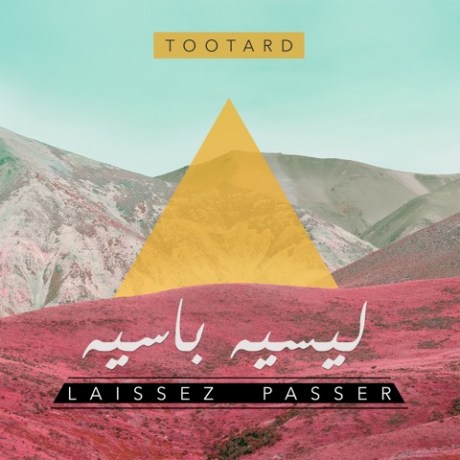
Welcome as always to the latest edition of my reviews roundup. Meeting with my approval this month, there’s the (both literally and musically metaphorical) ‘laissez passer’ wandering TootArd from the Golan Heights making an international debut on Glitterbeat Records; the return, in a manner, of the enigmatic Brighton-based artist Matt Finucane; a stunning theatrical avant-garde meets Chanson and morose romantic pop opus from AUDIAC, waltzing onto the stage after years of inactivity; the pique soundclash of Swiss drum and electric bass combo Ester Poly; and the fourth album of ‘lower-case’ minimalism and ambient music from Andrew Heath.
I also take a look at the fanboy style resurrection of the obscure 80s Pennsylvania garage, punk, post-rock and psych outfit In Time, by thrift store digger Steve Krakow, who celebrates the fleeting and undiscovered group’s only album (found unloved by Krakow on cassette tape) and a number of unreleased attic recordings for the Guerssen label. Last but in no means the least of today’s selections, I take a look at the debut album from the Berlin duo of kooky and fun electronica and techno, Psycho & Plastic, Kosmopop. Championed from the very start on this very blog, it seems to have taken the duo – who to be fair are busy with a multitude of projects including the running of their label GiveUsYourGOLD – an age to finally release it.
Read on…
TootArd ‘Laissez Passer’
Glitterbeat Records, 10th November 2017

Photo credit: Mercedes Ortego González.
Caught in, what might seem to them, a perpetual limbo, devoid of a recognized identity, the collective band members of the omnivorous Levant group TootArd are officially stateless: citizens in effect of nowhere. Growing up in the contested, bloodily fought over, Golan Heights the group’s mouthpiece, guitarist Hasan Nakhleh, articulates the predicament of a population stuck between two, once, warring factions – feeling detached with no legal representation; no sense of belonging – throughout the press notes that accompanied this, their latest album, Laissez Passer.
Carved up in two by the former warring states of Syria and Israel after the divisive Yom Kippur War of 1973 and the eventual ceasefire that followed – with the greater share by some distance given to the latter -, the Golan Heights has been uneasily observed by both parties for decades. Under an accord the following year, an international buffer zone – known as the UNDOF ‘purple line’ – was put in place to help keep a fragile peace. Before the apocalyptic civil – and proxy – war in Syria begun, both nations seemed to be approaching some agreement over the region. Israel however, following a policy of non-intervention, is in no hurry to secede ground to Syria.
Under the authority of Israel but without official citizenship, the native inhabitants of the western Golan Heights region are forced to carry the special situation, ‘laissez passer,’ papers of TootArd’s album title to cross borders and travel. Despite this the group have found a certain musical freedom; amorphously drifting across those imposed demarcation lines to adopt styles from across the entire Levant; from Africa and even Jamaica. Originally covering the Caribbean island’s most famous musical export, the group started out playing reggae covers before relishing a change in direction.
However, before settling on their recent traverse fusion of desert blues – finding a commonality and affinity with the Beaudion and, equally stateless, Tuareg -, Arabic modalities, rock and funk influences, the founding members of the group all left for Europe; all going their separate ways: Hasen Nakhleh moving to Berlin and then Bern, recalls that this sojourn period would split the collective up internationally, yet when visiting home they would all regroup for impromptu performances in their native villages, as if they’d never been apart. After a two-year hiatus Hasen and his brother, multi-instrumentalist Rami Nakhleh – missing their fellow compatriots – organized a reunion of a sort, preparing the way forward for a reincarnation of their band.
With a new enthusiasm, new material and new sound, TootArd’s second album – though billed as their ‘international’ debut showcase – Laissez Passer has much to contemplate and pine over; framed as it is in the ‘blues’ tradition. Themes of identity and the chaos that continues to engulf their homeland dominate the album. Yet far from lamentable and sad this latest effort is surprisingly relaxed, with controlled swells of more funky and soulful driven upbeat rhythms throughout, and even the odd saunter of swaying joy. The languid reggae candor, transmogrified into a Levant groove, helps to create a sort of Baba Zula souk gait, whilst hints of Tamikrest and Tinariwen’s camel gangly, handclapping, desert blues funk gives the music a drive on both the title-track and, almost galloping and spinning into Dervish territory, Bayati Blues.
But those bluesy ruminating and gazing ponderously inducing themes do often sound haunting; especially with the addition of Ams Mdah’s snake charming and romantically dusky jazz saxophone evocations, and Hasen’s modified oud sounding electric guitar – extra frets added to ape the synonymous dulcet tones of the short-necked lute-like string instrument.
Bringing people together under darkening skies or gazing out across the Golan Heights prism back towards Syria with a Rast scale composed travailing moody accompaniment, TootArd flow and spiral subtly across the region soaking up ancestral musical customs as they go. Though imposed upon them, the Laissez Passer status hasn’t held the group back creatively: forcing them in fact by circumstance to find a new musical freedom. They are, even if it sounds a tad clichéd, only limited by their own restless imaginations, and this album indeed dreams big.
AUDIAC ‘So Waltz’
Klangbad Records, 20th October 2017

In the age in which the majority of recording artists and bands are struggling to survive on the mediocre, almost vaporous, earnings from their craft and graft, it could be argued that without a monetary reward (no matter how modest) and without security you may as well take risks; push the boundaries; never compromise, and in the case of the Tübingen and Hamburg straddling duo AUDIAC, concentrate your efforts on producing a ‘work of art’. And make no mistake So Waltz is an ambitious album’ bordering at times on the theatrical, but definitely art-y.
Knowing admittedly nothing about this duo, I can only assume they were lucky enough to have at least the time to pursue these artistic ambitions. Though as the press release is not entirely clear, I assume this latest album is the follow up to Alexander Wiemer von Veen and Niklas David’s 2003 debut, Thank You For Not Discussing The Outside World; marking quite an absence between releases, but nevertheless indicating that they certainly had enough time to create an epic suite. They also had one of the (infamous) original co-founders of Germany’s most uncompromising iconic groups, the mighty Faust, Hans Joachim Irmler on board to produce; his impressive skillset, shaped in a baptism of fire during the Krautrock epoch, and explorations pushing his chagrins further into sonic experimentation.
Remaining true to that debut album however, AUDIAC still sound inspired by Chanson, trip-hop, chamber pop, psychedelic music and Kurt Weill. Only they drop some of those more psychedelic pretensions this time in favour of melodrama and spectacle; dancing in malcontent and lament to a semi-classical avant-garde soundtrack, both melodically beautiful and elegiacally forlorn.
With all the limitations and pressures lifted, the duo is able to put forward their grandiose schemes undaunted by commercial success: or so they say. And so moving quasi-classical soul merges with Popol Vuh like divine choral atmospheres, and harsher, stark declarations of pained expression. Not quite in the realms of Scott Walker but sailing pretty close, the vocals and backing fluctuate the malady intensity and constantly restless plunging piano playing and voice combo of Diamanda Galas at its most harrowing – especially on the tumultuous, in a state of despair and rage, Doberman -, and the aching blue-eyed soul of George Michael and cerebral crooning accentuation of David Sylvian at its most romantic. Yet this concatenate pan-European songbook, mostly travailing the moody northern realms of Germany, France and the Lowlands, evokes a penchant for the UK too. Hints of Massive Attack, Thom Yorke, an enervated Underworld, early Queen and the Welsh maverick John Cale appear amongst the waltzing, gushing and graceful allusions of a spurned brooding European protagonist – probably sucking on a Gitanes; carrying all the weight of the world’s problems on his shoulders.
Returning with an impressive minor opus, So Waltz sounds like it took a lot of time and effort to create. Highly dramatic, occasionally indulgent, yet always quite moving they make quite the statement with this bleak but diaphanous and expressive tragedy.
Psycho & Plastic ‘Kosmopop’
GiveUsYourGOLD, 20th October 2017
Guiding lights into the expanses of an imaginary galaxy, the Psycho & Plastic duo of Berlin dance music stalwarts, Thomas Tichai and Alexandre Decoupigny, search both inner and outer space with a suave funky and cosmic techno soundtrack on their new album, Kosmopop.
Previously releasing a string of EPs and videos, with the emphasis on fun and quirky electronic dance music experimentation – bordering at times on the goofy and cartoonish -, the duo have finally found time to produce a more complex, daresay conceptual, album; with aloof wondrous inspirations abound. Self-released through their burgeoning label GiveUsYourGOLD (Armour, AXLOTL, Irk Yste), their debut album proper dials down the more loony, bubbly and tropical kooky influences in favour of smoother, groovier rhythms. This isn’t to suggest they’ve suddenly become serious; the larks and optimism remain, with fond homages to the first and second summers of love, and a particular penchant for the unconscious organic flowering of the 90s rave scene.
Alluding to certain science-fiction ascetics in the artwork, the music is itself alien and mysterious at times, erring towards Kosmische influences like Tangerine Dream on the more enigmatic searching voyages – check the brocaded synth fanning, solar winds blowing and whistling satellite signally Superflare and Banco de Gaia does Mayan temple dub Entropy.
For the major part however, the music sounds like a Mir Space Station house band of Der Plan, Niles Rodgers, International Pony and Felix da Housecat beaming down a love-in direct to the berlin dancefloors. Expect to hear astral funk lightly entwining with early echoes of the electro hip hop compilations; echoes and specs of an alien presence reverberating and floating over Chicago House; sitar like brass-y meditations chiming along to pocket calculator algorithms; stoic Germanic tuned narration encouraging philosophical self-discoveries across the universe whilst also urging the listener “to get down” to tribal beats and 808 preset percussion – the four-to-the-floor disco punk Divine Loser even reimagines Depeche mode being born in Düsseldorf rather than Basildon.
Psycho & Plastic’s interstellar travels flow in a cyber boogie motion, gazing as they do into the wonders of a funky techno and as pop disco vision of space. Kosmopop is a cracking debut album and marks a small but significant sophisticated change in the duo’s style; more ambitious, smoother and sleeker.
Andrew Heath ‘Soundings’
Disco Gecko, 3rd November 2017
Praised as a sort of progressive sound and ambient music torchbearer of a genre renowned for such luminaries as Brian Eno and Hans-Joachim Roedelius, Andrew Heath’s own experiments in the field lean towards the reification of the fleeting, disturbed and ephemeral quiet traces of ‘people within spaces’. The self-styled composer of ‘lower-case’ minimalism evokes enigmatic, mysterious and occasionally mournful passages of evolving, passing time through the use of found and created sound manipulation and in-situ (a concatenate theme that connects to Heath’s site specific video art) field recordings.
His fourth solo album for Disco Gecko follows on from previous work, building up both synthetic and natural textural layers, drones, obscured broadcast voices and sonorous piano phrases. However, the main difference with Soundings is the atmosphere it creates; the echoing leitmotif of creaking footsteps pacing up and down a room and the almost heavy methodical concentration of memories pouring from the typewriter notation for me conjure up a writer’s garret: the author’s struggle, turmoil and thoughts represented by Heath’s serialism soundtrack.
Used subtly the neo-classical instrumentation that swirls and floats around the concrete sounds is used to bring melody, intrigue and sometimes, sadness. As well as Heath’s lingering, pondering classical piano notes and scales, there’s a touching twinkling and warmer Fender Rhodes offering lighter jazzy tinged, comfort and balance; a counterpoint interaction between the two instruments that began in the 90s when Heath collaborated with Felix Joy under the experimental Aqueous banner. It also resonates with similar piano explorations by Roedelius, who as it happens has worked with both Heath and Joy previously, most famously on the Meeting The Magus album, and more recently with Heath and fellow avant-garde composer/artist Christopher Chaplin on the live improvised recording Triptych In Blue. Roedelius could be said to have an open-ended collaboration with Heath, who it must be said can’t help but be enthused by the Kluster/Cluster/(and in more recent times) Qluster trinity steward of Kosmische and neo-classical exploration.
Another (on-going) collaboration with the Dutch ambient musician Anne Chris Bakkes continues on both the album’s winter moody traipse through the Dutch province of Noorderhaven, and the serene Happenstance articulation. Bakkes on her part performs a masked and fluttering guitar peregrination and plays with more unusual, mostly unidentifiable background sounds on the two tracks: described in the press release as ‘ephemeral’.
Breaking the veiled, swirling clouds hovering atmospherics, Stéphane Marlet and Bill Howgego are on hand to offer both arching serious, lamentable, and swooned jazz inspiration; the former enriches the cyclonic pondering Days In-Between with saddening cello, the latter tenderly sailing above the Tibetan imaginations of A Break In The Clouds with a striking clarinet flourish.
Pivoting between levitating above the heavens and space and counting the days in a haunted soundscape of captured movements and memories on Earth, Soundings hints at scenes and scenery alike; the traces of which make up this gently unfolding series of ambient descriptive passages in time.
Matt Finucane ‘Threaten Me With Your Love’
Light Crude, 25th October 2017

Returning after what seems an age away from crafting some of the most understated moodily resigned and mentally fatigued indie, Brighton-based all-rounder Matt Finucane is back with an instrumentally pared down, but just as sophisticated, duo of EPs this Autumn.
Not that we wish to pry, and only knowing Finucane from a distance, it seems his travails and dysfunctional personal life has got the better of him recently and in the past: hence the absence; part of which was spent in rehab. Threaten Me With Your Love is the idiosyncratic troubadour’s first proper release since then.
Back doing what he does so well, with eight new songs split between two staggered EPs, Finucane has employed the talents of fellow Brighton musician Mik Hanscomb – one half of the city’s (via Southend) pastoral Laurel Canyon imbued folk siblings Junkboy – to accompany him both live and on this recording.
Once again channeling vague notions of Lou Reed, David Slyvian, Ian Hunter, Bowie and Bolan, Finucane’s more relaxed, even languid, acoustic heavy material has an unintentional but accepted ‘druggy malaise’ feel to it. Crooning with a certain drowsy but meandrous confidence, our swooning maverick also often channels the quivering moodiness and slick sneer of a 50s rock’n’roll performer – similar in style to Bradford Cox’s very own donning of the vestiges of a crooning 50s rock’n’roll balladeer on the Atlas Sound LP Parallax. Updated of course with slivers of glam rock and post punk, and with the concerns and sentiments closer in principle to the loss of innocence and the emotional wreckage of ‘dead man’s curve’ than the harmless High School melodramas of the genre.
Experimenting with delivery throughout, the vocals often trail off, swooning into the crevices of Finucane’s darkened room, or loosely hovering between both the high and low registers; tripping along in what sounds like an exercise in catharsis; releasing thoughts in a melodically enriching counsel session. The music echoes that mood, both rallying and accentuating the sentiment and evocations on the acoustic rhythm and electric guitar – Moon Madness for some reason reminded me of Mick Harvey. However, the final song of this four track collection, Self Possession Version Two, moves through a number of musical ideas; reverberating brassy guitar strings jangle through Gothic cowboy boot spurs rattling back beat, new romanticism and the Velvet Underground before pushing into a bent-out-of-shape Sonic Youth and ending on a haunting final waning dissipation.
Still finding his range with one of his most stripped-down recordings yet, Finucane thankfully makes a welcome return to the music scene, and once again defies categorization with a unique, if despondent lovelorn, style of delivery.
In Time ‘Inside Your Mind’
Mental Experience via Guerssen, 13th October 2017

The, what seemed almost limitless at the time, pool of lost and obscure garage band treasures was drained a long time ago. Well, at least the halcyon days of the original primal punk, pop-sike, blue-eyed soul and psychedelic R&B back beat era in the 60s; the architects of the Nuggets-Rubbles-Pebbles-Teenage Shutdown compilations feast truly now exhausted. Drying up the reserves of every band and tenuous collection of misfits that ever recorded a single or had a whiff of a named – no matter how minor and obscure – record label or, managed to wow the locals in the provincial state scene for even the most briefest of moments, many crate-diggers and dewy-eyed salivating acid and garage freaks started dredging up the most amateur of home recordings and wannabe demos.
This process has been repeated for most genres, moving on to different more fertile ground in the following decades, and as with this obscurity from Pennsylvania outfit In Time, honing in on the 80s revival; though equally at the apex of both the raw indie and grunge fusions that were to come.
Skeptical about these finds ever since a musician I used to knock about with in the 90s – Spacemen 3 and Sun Ra enthusiast I recall – told me the story of when he and his band mates used to mischievously pass off mock garage band recordings of themselves as authentic lost ‘nuggets’ from the 60s USA hinterland; leaving these constructed recordings on cassette tapes in secondhand stores, or as the American’s would say “thrift stores”. Whether anyone was ever taken in or not, discovering such curiosities has always made me cautious and nervous. In the photocopied ‘ultra rare’ D.I.Y. mode, what might be a cunning ruse or by luck a damn good find, the only ever release by the In Time quartet, Inside Your Mind, was discovered in such circumstances in a Chicago ‘thrift store’. How it got there is anyone’s guess, but this discovery enthused the guy who found it, the Plastic Crimwave’s Steve Krakow, enough to set in motion a fanboy like zeal to track down the culprits responsible; leading to an official reissue style celebratory vinyl release of the boys only proper showcase: boosted by a number of unreleased raw and experimental detritus from the attic.
Krakow pinned down for long enough one of the original members of the shallow angst and knockabout youth punk-garage-psych for a terse interview; chronicling the little information he did obtain in the Ugly Things/Greg Shaw typewritten fanzine style accompanying liner notes. Surprised that anyone gave a shit, two decades on, Stephen Turk, Stephen Daly, Ed Keer and Anthony (AJ) Fischer nonetheless are now immortalized, in a fashion, by their champion Krakow.
‘Homespun’ indeed, In Time sound rough and sloppy, powering through a dizzy carnage of the TV Personalities, Subway Sect, 13th Floor Elevators, Swell Maps, The Dils, a thoroughly unclean version of The Clean, and The Gruesomes for starters. Growling and looning throughout, the often hard-to-fathom vocals change from a surly Yank version of John Lydon to a disheveled Dan Treacy; the music from primal rough’n ready Apache beat garage rock to indulgent shimmery meandering. Theme wise the band takes adolescent swipes at the elderly (Old Ladies) and those who meet the ire, or moon about isolation and detachment from the Outside world whilst reserving a special kind of malcontent and rage at a love spurned.
Whether its aping The Residents strangulating Paint It Black on the astonishing and lolloping Antonetta Perplexes Me, or sinking in the hallucinatory toxins of a vat of Kool Aid on the phaser messy experiment Many Are The Tears, the musical reference points are numerous and thickly applied. Despite sounding erratic, on the edge of distortion – the volume and cacophony constantly threatening to overload the sound – and about to fall apart, In Times spirited recordings and unfinished, rehearsal style ideas betray a melodious sophistication and decent performance dynamic. Too late for the original garage band phenomenon and for punk obviously, the band made sure they’d make, no matter how fleeting, some kind of mark on the 80s revival. And yet they are an augur for what was to follow, with hints of post-rock and grunge, and at times sounding like the forefathers of bands such as The Hunches.
Well there time has finally come, or at least a fanboy nod of approval in the right direction, a mark of respect. This collection is every bit as much about the obsession of Krakow as much as it is about the injustice that such a group could fail to catch on, disappearing instead into the ether…well, at least Pennsylvania’s attics and Chicago’s thrift stores.
Ester Poly ‘Pique Dame’
Ikarus Records, October 6th 2017
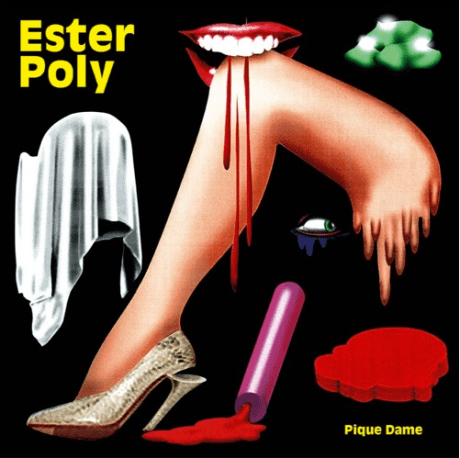
Experimentally rocking the cantons of their Swiss home for a while in their respective separate outfits, Béatrice Graf and Martina Bérther unite as an unholy drum and electric bass alliance under the Ester Poly (a scramble of ‘polyester’ of course) banner.
Pitching generation X(er) Bérther with Y(er) Graf, this rambunctious vehicle for the duo’s feminist protestations and irony began as a casual improvised meeting of minds a few years back, before blossoming and gaining traction with more structured, paced material. The spirit of volatility and avant-garde probing experimentation is no less diminished now that they’ve channeled that energy and ennui into nine, more controlled, songs: granted many fall outside the perimeters of the formulaic; amorphously clashing and flaying, dissipating and fading out between the loosest of vocal and instrumental performances and narratives.
Framed as a clash of styles and inspirations, with even the record label unsure of how exactly to position the duo’s new album, Pique Dame, Ester Poly perform with great dexterity and articulation as they thrash through brash Stilts bravado (Slutwalk); catch themselves in an overlap, churlishly antagonizing the 72 virgins myth to a Giallo paperback thriller soundtrack (72 Vierges); sultrily but with ominous overtones, apply trebly gangly Pylon throbbing basslines and a Raincoats reggae gait to a sinister Chanson cover (La Vie En Rose); and smash along to a bestial doom soundscapes (The Rise Of The Witches).
Not hampered in anyway by the limitations of their chosen drum and bass instrumentation, and hardly comparable to any of the many such similar combinations plying their trade, Ester Poly use a stack of effects and distortion tools to widen the sound spectrum; evoking hints and obvious homages to post-punk, art school, Jazz, doom rock, heavy metal, no wave and Krautrock in the process. The latter influence of which pops up a lot actually. Whether it’s the transmogrified inaction of a limping Mother Sky by Can on Dienstag, or the redolent constant rolling motion syncopation of the same group’s late rhythm provider, Jaki Liebezeit, or the prowling, growling bended bass playing of Faust’s Jean-Hervé Péron, that Teutonic influence be heard loud and clear: they even sound like a riot grrrl Neu! on the track Big Bang.
Recorded in more or less one-takes, both combatants facing off against each other in the studio with no headphones or click track, Pique Dame captures not only the lively, hostile and enraged but also the humour (even if it is dark and resigned) of this energetic union. Despite the raging tumults, dynamism and soundclash of ideas, this album is a steady and even showcase of festering ideas and moods. It’s also quite brilliant and encapsulates the ‘pique’ perfectly; arousing, curious and irritated!
Our Daily Bread 255: Vukovar ‘The Clockwork Dance’
August 4, 2017
Single/Video Exclusive
Words: Dominic Valvona
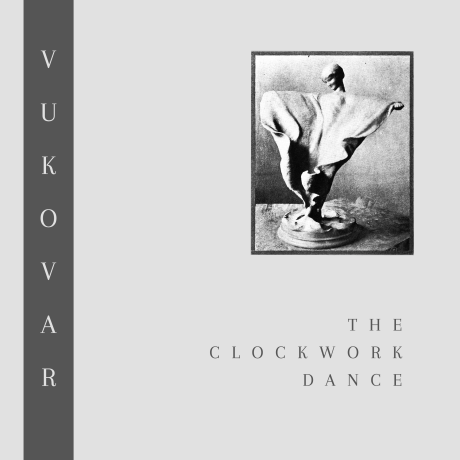
Vukovar ‘The Clockwork Dance’
4th August 2017
“Resistance is token. Commence the clockwork dance.”
Vukovar – a band name that signifies the abject horror of the Croatian City that saw one of the worst atrocities in the Balkan civil war implosion of the 90s – would, if you asked them, say they were frustrated and perturbed by the delays of releasing material, and the process, self-aggrandizement, of promotion.
However, the trio remains quite prolific, having already released three albums of spiraling blissful apocalyptic post-punk and discordant heavy Krautrock flavours since their inception in 2015. And now ahead of a fourth, Puritan, the group unveil a new single, The Clockwork Dance as an advance warning.
Waltzing with romantic anarchist melancholy towards the end times, the despondent outsiders ponder melodically in a swirling Gothic version of a Phil Spector backbeat, almost in a dream like stasis. Quietly anthemic and yet calmly settling, The Clockwork Dance evokes a rapturous OMD joining Echo & The Bunnyman and The The on Nero’s veranda, contemplating the futility of it all.
If like me, you love the group’s more melodious, bordering on cerebral pop, balance between broody and soaring shimmery majesty, and in particular the band’s baptism of fire debut Emperor (more specifically the tracks Koen Cohen K and The New World Order) then you’ll embrace this latest sublime lament.
The B-side as it were, is a live version of Quiet from the group’s second album Voyeurism, which acts as a showcase for the band’s darker, rowdy and raw form of performance and howling rage. Channeling The Birthday Party, Bauhaus and the shaman blues style of The Doors, Vukovar put the frighteners on the original; bending and stretching Quiet with a stalking trebly bass and bedeviled and bedraggled rock’n’roll punctuations, before playing out on a long extended fuzzy rippling electronic drone.
Following up on this year’s transmogrified covers album, Fornication, Vukovar’s fourth (and again, featuring a three syllable title) Puritan will be released on the 25th October 2017. If The Clockwork Dance is any indication, then I’m pretty excited at the prospect of what might be one of the year’s best releases.
NEW MUSIC REVIEW
WORDS: DOMINIC VALVONA
Featuring: The Bordellos, Diagnos, Eberhard Kranemann & Harald Grosskopf, Lucy Leave, The Telescopes and Terry.
More eclectic sounds from across the whole spectrum and from around the world in this edition of Dominic Valvona’s ramshackle reviews roundup, including the disarming snappy punk and cool pop of Melbourne’s scenester gang Terry, Oxford’s elastic new wave funk and math rock trio Lucy Leave, the pastoral pagan psychedelic and folky Kosmische Swedish duo Diagnos, St. Helen’s most dysfunctional lo fi rock’n’roll gods, The Bordellos, paragons of the (rather missive termed) Krautrock epoch, Eberhard Kranemann & Harald Grosskopf, and sonic vessels of the void, The Telescopes.
Terry ‘Remember Terry’
Upset The Rhythm, July 7th 2017

The Terry gang is back in town. The disarming world-weary punk and quirky pop touting quartet of Melbourne scenesters, banding together under the ubiquitous titular moniker, follow up a prolific run of 2016 EPs and their debut LP with another acerbic witted, snappy melodious release of profound disenchantment and wistful “wish fulfillment”.
Continuing with the shared girl/boy dynamic of lulling, placeable idiosyncratic vocals and flexible punk, country and new wave bubblegum backing, Terry look to expand their repertoire on Remember. The combined musical savvy and experiences of band members Amy Hill (of Constant Mongrel and School Of Radiant Living), Al Montfort (UV Race, Dick Diver, Total Control), Zephyr Pavey (Eastlink, Russell St Bombings and also Total Control) and Xanthe White (Mick Harvey, Primo) push the quartet into all kinds of nonchalant mischief. The gang embraces nonplussed French new wave chanteuse vibes on the brilliant breezy, mosey country lilting, Toy Love meets Serge Gainsbourg Take Me To The City (one of the tracks of the summer), and snappy, bouncy indie synth pop on Rio. At their most raucous, rough and ready to tumble, Terry softens the edges of The Damned on both their keystone kops rave-up Start The Tape and spiky frazzling Give Up The Crown.
Suggesting nothing more rebellious than a cheeky smoke behind the bike sheds, the group’s knockabout catchy hooks and charm cloak a personal profound response to the political and personal anxieties and dramas of the times. And they do this with a certain aloof coolness and adroit ear for a great tune, making this a most melodious and catchy album of knowing pop slanted punk.
Lucy Leave ‘The Beauty Of The World’
15th June, 2017

Venting opprobrious discourse at the result and ongoing shambles of Brexit – though I’m waiting for creative responses from the “leave” camp to materialize – the burgeoning Oxford trio Lucy Leave put forward an ennui fit of 80s downtown white funk and erratic polyrhythm bendy protestation on their latest EP’s opening diatribe, Talk Danish To Me.
Written whilst on holiday in the Danish capital, this discordant yet highly elastically funky number is as complicated as it sounds; the group reflecting the Brexit vote of 52% for leave with irrational dissonance and a whole tone scale flourish. Yet, despite this, that opening tumultuous track is surprisingly flexible and even melodic; tracing a path back through The Rapture, Liquid Liquid, ESG, A Certain Ratio, American alt rock, grunge and Oxford’s own synonymous – well made famous by – “math rock” scene.
The press one-sheet may have other ideas on where the trio’s influences lie, citing Deerhoof, Tortoise and The Minutemen. But on songs such as the spasmodic disjoint title track they channel PiL (the bass lines most definitely deftly sliding and dipping towards Jah Wobble), and, of all groups, the Red Hot Chili Peppers (though don’t hold that against Lucy Leave, as they sound a whole lot more credible), whilst it’s the floating semblances of Pink Floyd coupled with the slacker mumblings of grunge in the ascendance on Josh. Their appetite for sounds is as omnivorous as it is pliable.
Lucy Leave’s siblings Pete (on drums) and Mike Smith (guitar), and Jenny Oliver (bass and occasional succinct saxophone jazz gestures) all take it in turns to sing. Each bringing a subtle distinct tone and phrasing, especially Oliver who sounds like a submerged Vivian Goldmine or Dominique Levillain of Family Fodder, on the watery reggae gait and psychedelic swelling car crash inspired NIGHTROAD.
Hurtling without a map but a studious head for music theory and figures through The Beauty Of The World, Lucy Leave produce a magnificent bendy chaos. Without a doubt one of the most interesting new bands and among the most unpredictable releases of 2017 for me.
The Telescopes ‘As Light Return’
Tapete Records, 7th July 2017

After thirty years of tuning in and out of the void The Telescopes – or rather the only founding member to have endured this sonic travail, Stephen Lawrie – suggest there might be a glimmer of light at the end of the tunnel on their ninth drone behemoth album, As Light Return. Don’t get your hopes up just yet though. The miasma caustic discord still hangs like a millstone around Lawrie’s neck; a heavy weight that all but keeps him from clawing out of the vault towards the surface for air: the shoegaze melodious elements and audible vocals of yore all but dissipated and recondite.
If there is any kind of let up in this latest album’s unrelenting sustained waves of abrasive and searing feedback then its very subtle one. Whilst not quite daemonic and not quite as bleak as the visions of Sunn O))), As Light Return is still unyieldingly dark.
Relief is hard won, with any emerging semblances of a Mogadon induced Spector motorcycle gang doo-wop and Spacemen 3 redemption – most notably on the opening lament You Can’t Reach What You Hunger – being obscured and dragged under the ominous efflux of guitars. Just as the fuzz, squalls and unflinching bed of drawn out drones resemble anything moodily melodic they meet a stubborn indolence of gnawing white noise. As usual Lawrie’s vocals remain cryptically veiled in the gauzy production: detached in a stupor as the overpowering seething vortex of layering consumes all.
Using a revolving door policy of guitarists and continuing to change set ups, though Lawrie once again indoctrinates band members from St Deluxe on this album, As Light Return shares much musically, within the perimeters of anyway, with the previous drone suite album, Hidden Fields. However, the tone is even darker and serious, despite the light referenced title; sonically turning the cursed ashes of unheeded augurs into an atmospheric malaise and sound experience.
Diagnos ‘Diagnos’
Control Kitten Records, July 14th 2017

Building on an initial music project stemming from Marcus Harrling’s filmskills (one half of the Diagnos duo) this extended eponymous soundtrack of concomitant mystical ambient electronica, folk and psych is the perfect accompaniment for an imaginary 1970s set pagan horror: a kind of Scandinavian Wicker Man if you like.
Harrling, a graduate filmmaker of The Royal Institute of Art in Stockholm, originally developed Diagnos with Per Nyström to score a number of his super 8 camera shot travel films. Both stalwarts of their native Swedish independent music scene; members of The Concretes, Monsters, Mackaper, and Sons Of Cyrus; the duo ask a number of compatriots to contribute to their debut (proper) album. The roots of which first emerged in 2009 when Daniel Fagerström of The Skull Defekts arranged a “one-minute-festival” show for them; a performance that led to the creation of the incipient radiant synth and swooning incantation When The Sun Comes Up: a full version of which now closes this album.
Made up of instrumental passages, vignettes and cooing, psychedelic folky vocal tracks, Diagnos uses a backing of suffused sampled sounds, keyboards, purposeful attentive drums and guitar loops to create the right dreamy esoteric and folkloric atmosphere. Guest collaborators Nadine Byrne, Tove El, Maria Eriksson, Niek Meul, Oscar Moberg and Felix Unsöld add wafting, swaddled saxophone, lulling and supernatural pastoral lush vocals and hallucinogenic inducing tones to this magical journey.
Floating between flute-y synthesizers, primal tribal reverberation percussion and more drawn-out, but softened, drones, this suite weaves progressive and Kosmische influences into a gauze-y bed of spiritual and ominous layers; recalling the dissipating echoes of early Popol Vuh, Kluster, Ash Ra Tempel, Sonic Youth, Land Observation, Air, and on the languid trip-hop like Reflections, the soundtracks of Basil Poledouris.
Eberhard Kranemann & Harald Grosskopf ‘Krautwerk’
Bureau B, 28th July 2017
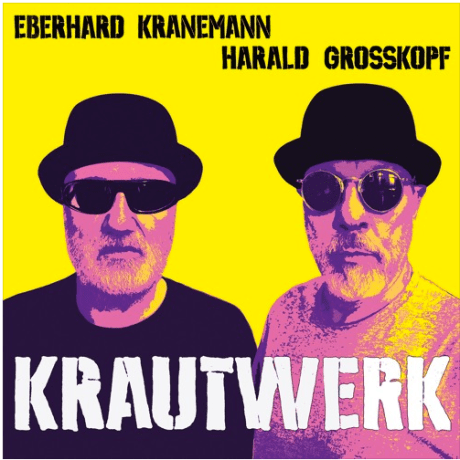
Stalwarts of Germany’s influential late 1960s and 70s experimental transformative Kosmische and Krautrock music scenes, Eberhard Kranemann and Harald Grosskopf join forces to celebrate a legacy. Representing two of the country’s most important epicenters and incubators of electronic music, Berlin and Dusseldorf, the duo glide and ponder through all the various iterations from that era on the pun-intended Krautwerk album.
Provenance wise Grosskopf drummed on a number of early Klaus Schulze albums (reverberations of the legendary electronic composer can be found throughout) and recorded thirteen albums with the Ashra incarnation of the iconic acid transcendental Ash Ra Tempel originators (again, traces of which can be heard here). Kranemann’s travails in Krautrock took the usual course, studies in more classical music at the Dortmund Conservatory and art at the Kunstakademie Dusseldorf (studying under the behemoth of European conceptualism, Joseph Beuys), followed by a baptism of fire, propelled into the earliest developments of German electronica, co-founding such giants of the scene as Kraftwerk, Neu! and Pissoff.
In the aftermath of that most important decade in German music history both artists went on to release numerous solo projects. Their paths however didn’t cross until 2016, and by chance; both solo artists booked to perform at the very same music festival, where they planned this melding of minds project.
Two schools of thought and conceptualism, Krautwerk is a sophisticated, sagacious sextet of analogue (featuring of all things an Hawaiian guitar and, not so surprising, a cello) and synthesized peregrinations and moods. Channeling a wealth of experience and influences this congruous partnership combines the graceful transience and stirring futuristic ambience of Cluster and Tangerine Dream with the tangled, industrial guitar playing of Manuel Göttsching and the progressive kinetic beats of the Pyrolator and Kraftwerk. Clandestine romanticized reflections captured at midnight appear alongside mystical cello etched beasts in the Tibetan mists, on the Deutsch Nepal trail, and more nonsensical Japanese phonetic silliness to cover a swathe of Dusseldorf and Berlin inspirations.
Though there’s also a strong nod in the direction of the musical styles that evolved from and ran parallel to Krautrock/Kosmische with Moroder style arpeggiator propulsion and 80s drum machine percussion on the vortex sucking and reversed hi-hat Basic Channel transmogrified Be Cool, and Jeff Mills cerebral techno on the Tresor club turn Banco de Gaia trance journey Happy Blue.
Every bit as erudite as you’d expect; finely tuned and considered, Kranemann and Grosskopf celebrate a full gamut and heritage. Yet sound relatively contemporary at times and fresh despite the fact that these musical genres were created in the 60s. Fans of Kosmische and electronica music in general will lap it up.
https://soundcloud.com/bureau-1/sets/eberhard-kranemann-harald-grosskopf-krautwerk-snippets
The Bordellos ‘Life, Love & Billy Fury’
Recordiau Prin, 16th June 2017
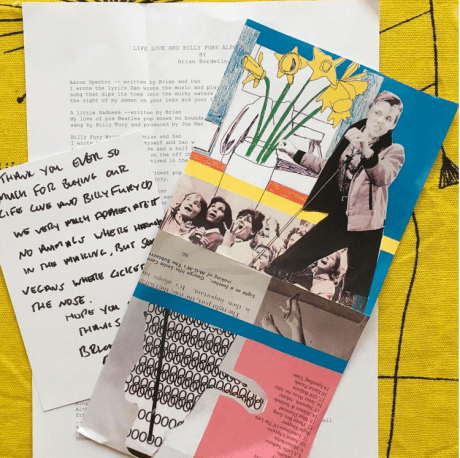
Prolific, if haphazardly, dropping albums upon the unsuspecting, and quite frankly undeserving, public, St. Helen’s greatest dysfunctional family bring us one of their most ambitious collections of cynical derision and honest yearned anxiety yet: a kind of Joy ‘de vive’ Division.
More or less The Bordellos love songs collection, this latest lo fi affair – that makes even The Fall sound professional – is a raw opening of the heart, and in some cases, the veins. Transmogrifying Spector’s voices of the beehives (The Crystals to The Ronettes), the Spacemen 3, The Cure and, of course, The Velvet Underground, The Bordellos eulogize the nearly man of British rock’n’roll, Billy Fury, craft (perhaps) one of their most beautiful ballads, Starcrossed Radio, and pen a “speeding train” metaphor themed ode to breakups.
That signature mumbled and pained expression of malaise and the miserable backbeat and tambourine jangled foundations, we Bordellos fans love and find so endearing, prevail but are joined by meandered detours and passing fancies of inspiration: on the heavily medicated Secret Love it’s a touch of (would you believe it) Lee Hazlewood and Nick Cave, on the breezier “what’s cooking” kitchen sulk Brief Taste it’s a conjuncture of Siouxsie Sioux’s Banshees and The Clean, and on the Adriatic wooing Signomi, Arketa!, I can hear Talk Talk beating out a military tattoo rhythm on Adam and the Ants Burundi drums.
Romancing the stoned, the life, loves and failures of rock’n’roll are laid bear and as usual, ignored by an unsympathetic, disinterested public. But despite mostly alluding recognition and validation (because that seems to be all that matters in the social media age: affirmation from the echo-chamber of peers), The Bordellos mope and grind on, producing some of the most important diatribes and, in this case, scuzzy, dirge-y and primal garage band spirited love-pained grievances.
Tickling our Fancy 044: Baba Zula, Piano Magic, Dearly Beloved…
January 12, 2017
New Music Reviews Roundup
Words: Dominic Valvona
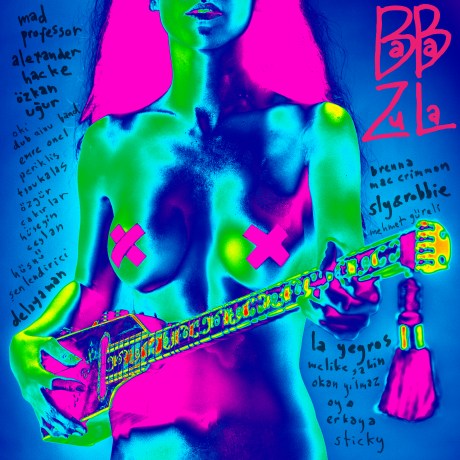
Welcome back to the first review roundup of 2017, which gets off to a grand start with this dazzling cornucopia of new releases from Baba Zula, Dearly Beloved, Hanitra, Mikko Joensuu, Piano Magic, James McArthur and Pawlowski, Trouvé & Ward.
In this edition of my regular review roundup we have the grand sweeping gestures of Mikko Joensuu’s second album in the Amen cycle; the second idiosyncratic folk and country idyllic songbook from James McArthur; some tender sounds “from the heart of Madagascar” in the shape of the Island’s talented songstress Hanitra; plus a bit of hardcore from the Dearly Beloved. There’s also a trio of special anniversary releases, the first, a triumvirate of solo work from Pawlowski, Trouvé & Ward, celebrating the tenth birthday of Jezus Factory Records, the second and third mark the twentieth anniversaries of both the chamber pop dreamers Piano Magic, who have chosen to have one last fling before disbanding this year, and the polygenesis dub Istanbul outfit Baba Zula.
Baba Zula ‘XX’
Released by Glitterbeat Records, 27th January 2017
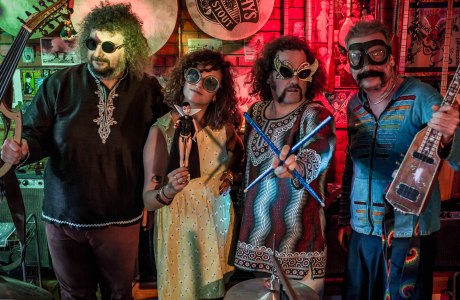
BABA ZULA. (FOTOGRAF: CAN EROK – 20.09.2016)
Bastions of a psychedelic Istanbul scene, they’ve arguably made their very own, the omnivorous Anatolian Acid Mother Temple of dub-styled Baba Zula have been melding all their many musical inspirations together for twenty years now. Co-founded by Osman Muret Ertel and Levent Akman in 1996, the kaleidoscopic group originally sprung from Ertel’s previous ZeN Outfit as a one-off soundtrack project for a film director friend. Two decades later and we can surely assume that Baba Zula won out.
Inspired by the first wave of Turkish bands, that grew out of a previous generations atavistic folk scene, in the 1960s, notably the psych pioneers Moğollar, Ertel and Akman helped revitalize an age of experimentation, lost during the tumultuous upheavals of Turkey’s coups in the 70s and 80s. Politically acute, challenging the authorities with trance-like joyous expression, Baba Zula are once again finding themselves overshadowed by developments in their own backyard. And so just when we and their comrades need them that discerning label of new musical discoveries from the African continent and beyond, Glitterbeat Records, have decided to celebrate the band’s legacy with a generous double helping of reimagined material and a whole host of transmogrified dub treatments from congruous bedfellows and admirers alike – including the Mad Professor, Dr. Das and Glitterbeat’s quasi in-house band Dirtmusic.
Choosing a unique method of documenting that twenty-year career (and counting), Ertel explains: “None of the pieces here are in their original forms. Instead, we picked remixes, re-recordings, collaborations, live tracks, all the possibilities, but none of these have been released before.”
Transformed but not enough to completely obscure the source, the first of these two CDs (or albums) travels back and forth across the decades, with the earliest example being the feverish female protagonist orgasm over a DJ Shadow backbeat Erotika Hop from 1997, and one of the latest, a nine-minute Tamikrest-on-an-exchange-trip-to Byzantine Aşiklarin Sözu Kalir (otherwise known as “External Is The Word Of Poets”). Elsewhere you’ll find the group’s biggest hit to date, Bir Sana Bir De Bana (“One For You And One For Me”) playfully re-styled as a Gainsbourg-on-the-Bosphorus duet between a French woman and an Armenian man.
Opening this meandering journey, Ozgür Ruh showcases the group’s signature languid dub sound; a free-spirited melting of ascending, whirling electric saz (a long-necked lute-like instrument), accentuated brushed bendir hand drums, longing male and female vocals and a cosmic Jamaica blown off course towards the Adriatic, vibe. However, there’s no mistaking the band’s roots on Biz Size Asik Olduk; a curious dervish romance with the candor and atmosphere of a desert blues serenaded camel caravan trail. The final two tracks are live. There’s, what sounds at first like a tuning-up session, kosmische freestyle Çöl Aslanlari performance from the Bada Bing in Berlin (handed over to Einstürzende Neubauten’s Alexander Hacke to mix) and a nineteen-minute experimental reverb-heavy dub odyssey version of Abdülcanbaz from the Piraeus Resistance Festival In Greece to lose oneself in. Both are great examples of their untethered abandon and float-y transcendental mesmerism.
The accompanying (mis)adventures in dub companion is a veritable feast of the most somnolent drifting mixes. It helps that Baba Zulu’s exotic vapours lend themselves so well to dub, imbued as they are by it. But with no limits set and with a litany of dub explorers allowed a free-reign to remodel, the band’s material is swathed in so much echo that it almost disappears into the ether.
The first few tracks are by the group themselves and someone known as “arastaman”. Reshaping their own catalogue and sound they use the lingering traces of a song and submerge beneath a smog of warbled theremin and phaser effects on Alem and cut up the vocals on a mind-bending Ufak. Guest mixes include the radical Asian Dub Foundations’ Dr Das and his Uncle style heavy shake-up of Iki Alem; Dirtmusic’s mysterious lunar sandscaped ‘Hopche’; and The Mad Professor’s quartet of polygenesis traverses: merging a South American tropical groove to the Istanbul guitar cycles of ‘Baso’ and playing with the convulsing vocals and howling calls of ‘Erotik Adab’.
To a backdrop of continued violence (at the time of going to press there’s been both the shootings at Istanbul’s Reina nightclub and the car bomb/gun attack on the courthouse in Izmir, in just the last two weeks alone) and heightened turmoil, caught in the midst of suppressive regime currently removing dissenting and alternative voices from the street with the most tenuous of reasons it’s hardly surprising that many wish to escape the realities of daily life. Baba Zula know more than most how dire the situation is; Ertel’s own late uncle, a journalist, was tortured and imprisoned for his troubles. Though highly entrancing and mostly destined for psychedelic shindigs this eclectic voyage is every bit the rallying call of protestation; just existing amounts to a form of dissention in the face of increasing nationalism. Here’s to another twenty years of stirring the omnivorous musical stew.
Dearly Beloved ‘Admission’
Released by Aporia Records, January 27th 2017
Recorded through Dave Grohl’s acquired custom-built 70s Neve 8028 analogue console, at his famous Studio 606, the desk that that facilitated Nirvana’s Nevermind has imbued the latest steely hardcore row from the Dearly Beloved duo. Still thundering along at a furious velocity, thrash-powering their way through a scowling mix of Black Flag, Black Sabbath and The Pixies, the dynamic Niva Chow/Rob Higgins gut-thumping and bewailing partnership have acquired an extra, controlled, ingredient of grunge.
More suffused, the light and shade of Admission rages in a thoughtful depth between dystopian drones and full-on esoteric rock’n’roll, ala a Mogadon induced Royal Trux in a switchblade scuffle with The Black Keys – the opening RIP track showing a flair even for southern boogie blues, albeit a very noisy one. For a band that fluidly absorbs a litany of hardcore, punk and doom influences, Admission is surprisingly melodic and nuanced. And so you’re are just as likely to hear echoes of Placebo and the Moon Duo as you are Death From Above 1979, and run through not just broody miasma moods but also fun-thrilled frolics.
Whipped into shape (not literally of course!) by Ramones and Misfits producer Daniel Rey who laid out a relentless schedule that had the duo rehearse in a East L.A. sweatbox for eight hours a day for a week, the Dearly Beloved for the first time entrusted an outsider to sit behind the controls. As it turns out, the road-tested and solid work out sessions have captured the duo’s live energy perfectly, delivering a lean, sinewy, heavy-as-fuck rage with all the indulgences and chaff taken out. That tumultuous, controlled but far from caged performance matches the turbulence of the times we’re living in.
Pawlowski, Trouvé & Ward ‘Volume 2’
Released via Jezus Factory Records, January 20th 2017
A decade on from the last Mauro Pawlowski, Rudy Trouvé and Craig Ward triumvirate compilation of solo work and to celebrate the tenure of the label vassal of so many Belgium borne alternative rock projects, Jezus Factory Records have now released a long-awaited follow up; named simply Volume 2. All at one point or another members of Belgium’s, arguably, most famous export dEUS, all three musicians have also shared a highly complex interlocking relationship; each serving together in a rambunctious myriad of side projects, team-ups and explorations, most notably The Love Substitutes, iH8 Camera and Kiss My Jazz: if anyone could ever be bothered, it would make a convoluted but interesting rock family tree diagram. Crossing over and extending beyond the dEUS hub it feels like the common bond of releasing their material on Jezus Factory could see the trio join forces at any moment.
Showcasing their individual flights of fantasy, this second volume of solo work is sometimes bizarre, often curious and occasionally silly; traversing the more serious glacial suffused drones of Ward’s four-track travail; the guitar and post-punk synth of Trouvé; and the killer-ziller-driller lunacy of Pawlowski’s imaginary 80s movie soundtrack, complete with commercial breaks!
A familiar face on the Monolith Cocktail, the erudite Scottish guitarist/composer Craig Ward was originally invited many moons ago to holiday in the Belgium city of Antwerp by dEUS and Zita Swoon stalwart Stef Kamil Carlens. Somehow instead of returning home, he stayed and signed-up for in a stint in a local band, Kiss My Jazz, before inevitably joining the dEUS fraternity; playing guitar and delivering vocals on the In A Bar Under The Sea and The Ideal Crash albums. Ward subsequently left to form both The Love Substitutes and A Clean Kitchen Is A Happy Kitchen. More recently he’s carved out a solo niche for himself with the suitably evocative ambient suite New Third Lanark whilst also running a guesthouse in his native Scotland. Earlier in 2016 he was awarded a Scottish Arts Council grant to complete his ambitious solo opus Leave Everything Move Out, which was actually recorded in France with the Grammy Award winner David Odlum. Sticking to the same tone of moody strangeness and drawn-out drones, his environmentally descriptive quartet of soundscapes cover the territory of Ash Ra Tempel and Tangerine Dream. Ward circumnavigates with a touch of subtle gravitas the mysterious veiled landmarks, circling the behemoth omnipresence of Mount Betsy; hovering In The Wet Maze; dreamily rowing the topographic ocean from Island To Any Islands; and lurking in the claustrophobic atmosphere of a Sunless compression of resonating guitar notes and heavy-leaden synth modulations. It’s classic Ward at his deepest.
Still holding down the day job as a member of dEUS, Pawlowski has really gone for broke on this compilation with his 80s pastiche soundtrack. A quick run-through of the CV is needed first before we go into the details. Pawlowski originally rose to fame in the Evil Superstars, until they called it quits at the peak of their career. He went on however to release the Dave Sardy produced album Songs From A Bad Hat and launch a string of experimental groups and collaborations, including a Dutch language folk LP under the Maurits Pauwels appellation, and the Hitsville Drunks and Gruppo Di Pawlowski (recorded incidentally by Steve Albini) projects.
Throwing a tongue-in-cheek (I assume) curveball at 80s cinema, his eleven-track mix of Casio demo display crescendos, yapping seal noises, and Carpenter meets John Hughes is pure bonkers. There’s bad acid telly binges and garbled industrial menace aplenty, but the best is saved until last with the finale firework exploding retro tribute to AM college radio rock, Starught: a mix-up of Strangers When We Meet era Bowie, The Cars, Queen and Boston, it is an unashamed punch-in-the-air love song anthem. Pawlowski’s contribution is certainly the most varied and odd, detached from the more serious and dour tones of his album mates.
The final leg, the baton handed over to Trouvé, fluctuates between the stripped guitar sounds of The Durutti Column and a 80s homage of despondent Visage and Soft Cell synth maladies. Originally a founder member of dEUS but tiring of the group’s major label success and all the bullshit that comes with it (the band’s debut was released on Island Records), Trouvé left to form the Heavenhotel Presents label and play in the Ornette Coleman inspired experimental project Tape Cuts Tape, the The Mechanics (with Pawlowski) and the “all star” improvising iH8 Camera.
With a wealth of experience and enough of an eclectic swag of influences behind him, from post-punk to avant-garde jazz, ready to surface at anytime, his twelve-strong contribution of meditative and considered explorations reflects an omnivorous craving. And so one minute you’ll hear a hint of Spiritualized or DAF, the next minute, John Cale, yet the underlying sound remains signature Trouvé.
A decade in, weary and beleaguered with the current Brexit woes (just wait until it’s actually been triggered and unraveled), Andrew Bennett’s showcase label for music from the nation that unfortunately symbolizes both the best and worst excesses of the EU, has a challenging future ahead of it. There’s no signs however of fatigue nor a dip in quality or originality; Pawlowski, Trouvé & Ward still producing the goods no matter what the augurs foretell.
James McArthur and the Head Gardeners ‘Burnt Moth’
Released via Moorland Records, 20th January 2017

Conjuring up an idyllic image of sipping Cider with Rosie on the back of Constable’s Hay Wain, Welsh-born troubadour James McArthur and his Head Gardeners troupe return with another lilting album of bucolic folk and country songs on Burnt Moth.
Following up on the Strange Readings From The Weather Station debut, which announced McArthur’s move from backing Paul Weller on drums to fronting his very own songbook, this second peaceable collection continues to wander a perpetual end of summer into early autumn seasonal landscape. Picking away and plucking attentively in the style of Bert Jansch or Mike Cooper, the serenade-style poetic musicianship on display is effortlessly timeless, yet the often meandering lyrics chime with the contemporary themes of an ever-changing society moving unabated towards a digital, even virtual, immersion: encroaching on the tranquility and earnest pastoral ideals of a slower-paced more personal interactive world, which to all intents and purposes is proving a sanctuary from the fully-connected hum of the internet.
Mostly acoustic, McArthur is also accompanied throughout by an accentuated backing of burnished and dampened drums, slowly released from its quivered tension strings (all co-written and arranged with Jim Willis, who also plays mandolin on the album), rustic pining pedal steel guitar and on the classically leaning yearned To Do the lulling coos of guest vocalist Samantha Whates. Not only assisting McArthur in the making of this album but also chipping in with backing vocals and bass on the roulette wheel of lovelorn fortune, Evens On Green, is Joel Magill of the psychedelic Canterbury band Syd Arthur.
Burnt Moth is a charming sun-dappled tapestry of McCartney-esque, and on the title track finale, Harry Nilsson (fronting a dreamy Morricone romance) idiosyncratic storytelling and musings. McArthur is in no hurry to reveal and unfurl the album’s many nuances and beauty; toiling away gently to create a most enjoyable and thoughtful songbook.
Mikko Joensuu ‘Amen 2’
Released by Svart Records, end of 2016.

The middle of an ambitious all-expansive soul-searching trilogy, the second Amen chapter finds a vulnerable Mikko Joensuu rising from the porch of his cabin retreat to step forth into the radiant majesty of the Finnish landscape. Finding an obvious awe-inspiring beauty in the stunning vistas yet equally overwhelmed, Joensuu attempts to cope with his troubled past. An epiphany if you like, the Finnish troubadour “lost his religion” a while back and has since been attempting to draw back from a mental abyss. Imbued with the candid soul and gospel of Jason Pierce’s Spiritualized and the melodious drone of My Bloody Valentine, Joensuu’s second album in this triumvirate cycle balances the ethereal with a tumultuous chorus of peaks and lows; the opening Drop Me Down opus for example gently builds from the diaphanous to a nosier cacophony of horns. Even when the fuzz, distortion and tribal backbeat dynamics are let loose the dappled light pours in.
An alternative questioning and sincere hymn supported by the North Finnish veranda, Amen 2 is a grandiose stunning visceral work of art.
Hanitra ‘Lasa’
Released by ARC Music, 6th January 2017

An unofficial cultural ambassador for her homeland of Madagascar, the sagacious and much-celebrated talented songstress Hanitra sheds light on both the personal and environmental plights of the unique Indian Ocean Island and the universal suffrage of women in the wider world on her latest album Lasa.
For many, Madagascar continues to be an enigma: Famous unfortunately as the title of a DreamWorks animation franchise, but apart from its reputation as a colourful menagerie for all kinds of exotic wildlife and fauna, it remains a mystery to many. Musically speaking it has attracted a host of composers and musicians, including the recently revived French ethno jazz maestro Jef Gilson with his Et Malagasy masterpiece.
Almost as an anthropological experiment and survey Madagascar’s isolation and history has fascinated many. Lying off the southeastern coast of Africa, it’s strategic position has made it a popular port-of-call for traders and explorers, though many literally bumped into it unaware it existed. Despite a litany of famed travellers, from the Arabs to Marco Polo, recording its discovery over the centuries, it would be France that colonized it. However, whether warranted or not, conquerors and traders alike left traces, resulting in a cross-pollination of influences including music. On Lasa you can hear this legacy well with elements of jazz, the Balearics, Arabia and even the reverberations of an old Afghanistan – resonating from the evocative sound of that country’s lute-like rubab instrument; used to plaintive dreamy effect throughout on this album – entwined with a distinct foundation of Madagascar folk and gentle African rhythms. But it’s the award-winning siren’s vocals, flexing with élan, which encompass this imbued richness. Inherently timeless, fluidly moving between cooing, almost lullaby, and effortless soaring tension, Hanitra’s voice subtly matches the themes of her album without showboating. The double-meaning title song for instance, translated from the Malagasy dialect as to “go past”, is an elegy of a sort to the French-Canadian singer Lhasa de Sela, who passed away in 2010 from breast cancer. Yet this touching tribute to a singer is far from sentimental; its Middle Eastern permutations and tenderness sweet and reflective rather than downcast and lamentable.
Soothingly in an array of colourful hues and tones, Hanitra addresses the themes of maltreatment, meted out both physically and psychologically towards women, on Eka and Avia, deforestation, in particular the devastating environmental costs of cutting down and selling Madagascar’s rosewood, on Mivalo, and another of those tributes, this time to the Vezo fishermens wives on the Island’s southeastern coastlines, eking out a hard living, on the oceanic motion Ampela. There’s celebration, paeans even, with the relaxed, lilting defense of same-sex marriage on Myriam and an invitation to dance in joyful abandon on Lalao. Whatever the emotion, Hanitra articulates her concerns and protestations with a soulful sincerity.
Lasa’s extended title is “from the heart of Madagascar”, and this is very true, yet the Island’s melting pot of musical influences and Hanitra’s own global travels mean this album is in fact universal.
Piano Magic ‘Closure’
Released by Second Language Music, 20th January 2017

Calling time on a twenty-year career with one last swansong, the Anglo-French Baroque indie dreamers Piano Magic echo the sentiments and themes of their 2000 song No Closure on their final majestic and profound album, Closure.
The self-proclaimed purveyors of “ghost rock”, formed at the height of the Britpop, have traversed and mapped out a moody romantic pathway for themselves over the years. Originally starting out as a lo-fi electronica trio in 1996, soon finding favour with John Peel, Piano Magic gradually grew into a full-on tour de force alternative rock band as the millennium drew near; recording amongst their notable cannon both a soundtrack for the Spanish director Bigas Luna’s Son De Mar and the Writers Without Homes album, which famously featured the folk legend Vashti Bunyan – who emerged from a 30-year musical silence to dust off the quelled vocal chords for the band. Still far off his critical-applauded born again renaissance as a “torch singer”, that same album also featured the dour talents of John Grant; just one of many collaborations over the years, the band also working at one time or another with Alan Sparhawk of Low, Brendan Perry of Dead Can Dance, Cornershop and Tarwater. Closure is no different in featuring a suitably congruous number of guest spots, with Peter Milton Walsh, singer of the fellow chamber pop, Australian band, The Apartments channeling Mick Harvey, and Oliver Cheer (aka Dollboy) providing a south of the Rio Grande style swooning brass accompaniment on the Choir Boys-travail-a-literary-rich-Outback Attention To Life. Offering harmonic and atmospheric support on backing vocals, Josh Hight of Irons can be heard wafting about on the album’s opening grandiose and subtle opus title track and the stripped-down electro pop, in a quasi New Order style, Exile.
Drawn to a despondent melancholy, a most diaphanous one at that, the sagacious founder member and songwriter Glen Johnson is aided in this enterprise by Franck Alba (guitars), Jerome Tcherneyan (drums, percussion), Alasdair Steer (bass) and the band’s original drummer from their debut gig at the infamous Wag Club, Paul Tornbohm, now providing keyboards. Wounded and troubled as ever by the lingering traces and ghosts of past relationships and liaisons, Johnson’s resigned poetics attempt to meet head-on those feelings he just can’t seem to lay to rest: as Johnson calls it, the “mythical formal conclusion”, the need to “move on” from broken relationships is not so easy. And so he croons, “Let’s get this thing sewn up” on the Morricone meets Ry Cooder cinematic title track, knowing full well that “…you never get closure.” The supernatural echoes of a lost love, channeled through a dusty answering machine message séance, on Landline leave the singer’s voice paled and weakened; lamenting loss form the far side of the ether. Marooned as a passive onlooker to the goings-on in the backstreets of his southeast London neighbourhood, a voyeuristic, removed Johnson (in Talk Talk mode) vanishes almost completely before our very ears. The song’s sad lyrics it must be said are a most beautiful kind of misery.
Magnificent in their despair, the musicianship poised, purposeful and subtly stirring, Piano Magic’s last ever fling is one of the band’s most accomplished, and definitely one to savour. As near perfect as any Piano Magic suite can be, Closure proves that you can perhaps after all find a satisfactory ending.
 Monolith Cocktail Blog