THE MONTHLY DIGEST INCLUDES A CLUTCH OF ACCUMULATED NEW MUSIC REVIEWS; THE SOCIAL INTER-GENERATIONAL/ECLECTIC AND ANNIVERSARY ALBUMS CELEBRATING PLAYLIST; AND CHOICE PIECES FROM THE ARCHIVES.

Cover Stars: Blanco Teta
___THE NEW___
(all reviews are in alphabetical order)
bedd ‘Monday 10:55 EP’
27th June 2025

Once more on the site after quite a break – my fault not theirs -, the Oxford project led by singer-songwriter, composer and producer Jamie Hyatt is back with a bridging style EP ahead of a debut album, released in the Autumn.
Sometimes I excel myself with a descriptive summary of a sound, and with bedd’s ‘Auto Harp’ single I described their sound as “an understated breath of fresh air from cosmic suburbia”. This beauty of a single was followed at a later date, during Covid isolation, by a premiere of ‘You Have Nice Things’, which seems to have now continued with its small-town landmarked sense of isolation and sad detachment on the EP’s title-track, the very specifically timed capture of nocturnal plaint and heartache ‘Monday 10:55’. The focus song features fellow Oxford musician, the vocalist and guitarist Emma Hunter (who’s own brand of music, created with drumming foil Tom Bruce, merges the worlds of David Lynch with a penchant for Flamenco, Catholic litany and culture and the 1950s), with extra subtle emotional pull, adding harmony and a touch of the soaring to this drifted indie-blues track. It reminded me in places of Ride and the Engineers.
Before we go any further, we must mention the rest of the band, the ranks of which feature ‘a range of celebrated local Oxford musical talents’, including bass player Darren Fellerdale and guitarist Neil Durbridge, both bandmates from Hyatt’s previous project The Family Machine. Completing the lineup is the guitarist Tom Sharp, electronic musician and producer Tim Midlen (aka The Mancles of Acid) and drummer Sam Spacsman. The EP itself was performed, recorded and produced by Hyatt himself with the band at Glasshouse studios in rural Oxfordshire and mixed and mastered by Robert Stevenson at Sweetzerland Studios.
That’s the credits out of the way. The title-track is flanked at both sides by two very differently paced and performed songs; the opening ‘Messed Your Head’, has more oomph with its mix of Blur’s sliding bass on ‘Beetlebum’ and The Breeders bass line on the equally famous ‘Cannonball’, Elastica-style “woah” and messed up knock-back passionate off-the-chest power-Britpop-indie-rock (I’d go as far as saying an influence of The Pixies), whilst the closer, ‘D Minor’, is a more echo-y reverberated stripped down and atmospheric piece of disconsolate love strains and emotional discourse that has an air of Jeff Buckley about it.
It is not meant as a criticism in anyway, but bedd sent me right back to the 90s with this EP mix of shoegaze, Britpop, indie and grunge-rock. But they add a certain quality of the soundtrack, something that’s a little bit grander. It will be interesting to see what the album is like later this year. But on the strength of this trio of songs, it looks to be a winner.
Blanco Teta ‘La Debacle las Divas’
(Bongo Joe) 4th July 2025
Delivering their 2025 manifesto of the riled and near bestial, the hellraising and electrifying Argentine quartet of Blanco Teta throw off the metaphorical chains of tech disparity and servitude with a mix of the devilish and hardcore.
In the face of AI, ‘crypto-serfdom’, ‘techno-feudalism’, the constantly ever-changing, updated feeds of social media, the pressures of instant gratification and attention seeking validation, and that everything these days only makes an impact culturally if it was prompted or began on tiktok, the group show both their venerability and strengths. They face the uncertainties and anxious dread of our times with velocity as they pound and churn, twist and channel aspects of the post-hardcore sound, punk, riot grrrl-style power-ups, death metal (almost), grunge, rock and 2000s indie-rave-punk-rock.
Marking a return to Bongo Joe, the La Debacle las Divas (‘the debacles of the divas’) album sees the quartet of Josefina Barreix (on vocals), Violeta García (cello), Carlos Quebrada (electric bass) and Carola Zelaschi (drums) change things up, recording for the very first time live in the studio direct to tape. Without edits and overdubs, the album has a real new dynamic; the whole record more or less without a pause, thrashing and driving through an eleven-song set, as if it were a live stage performance. There are various let-ups, if that’s the word, and mood changes, a change in tempo and ferocity too. But this remains a chthonian and cosmic swirl of the grounded-up, menacing, prowled, alarmed, dragged and charged.
The atmosphere of this album is one in which the bonus of youth is wasted, broken upon the pressurised novelties of being young and in the moment, but ready to be disregarded and tossed away into the internet wilderness. They band themselves declare that they feel caught between a stasis of being both in their prime yet already growing too old to be feted. And whilst they were indeed feted, their lives haven’t exactly change for the better: mentally or financially, still burdened to surviving on the vaporous fumes of goodwill, popularity and a presence on the internet. Channelling all that into this diva-rage, borrowing that title and turning its connotations on its head, Blanco Teta (which I think translates as ‘white tit’?) launch a mix of disgruntled and disenchanted maelstroms and more near plaintive reproach and forlorn.
They open with the sound of generator fuzz and scuzz, in a heavy drive of Courtney Love, the Raw Brigade, Bikini Kill and L7. Heavy trebly bass, descending spirals, pounded beaten drums rule the day, but the action and influences fluctuate; on the excitable protestation ‘Subiduki’, I’m hearing Anthrax, Faith No More and Death From above 1979, on raged thud rocked sassy and maniacal decried ‘Joven Promesa’ CSS sharing the stage with Shonen Knife, and on the hardcore, morse code guitar wired space-rocking-psych ‘Perdida’ the Klaxons and The Fall. They also reminded me in part of a Latin version of the Slavic quartet Lucidvox; only with far more guttural daemonic vocals.
Tough and ready for the rumble, yet disconsolate and bereft of answers, Blanco Teta serve up a vortex and heavy meta(l) outcry and alarm at the state of society and the music industry. That debacle of divas has produced one of the year’s most promising, fierce and unique performances.
Dave Clarkson ‘Was Life Sweeter?’
(Cavendish House) 9th May 2025
After briefly crossing paths on Bluesky earlier this month, I’m aware that I’ve entered upon the electronic sound worlds, expressions and atmospheres of Dave Clarkson at a very late point in a career that spans decades of experiment/exploration; at a point when the soloist and collaborating composer is taking stock, questioning that old generational trope of nostalgia for a time that probably never really ever existed. It’s easy to see why of course: seeking comfort, reassurance and perhaps some form of guidance from a period when you were young, still hopeful, at your creative best and fancy free – well for many of us anyway. But no one can really believe at this point in time, with all the social ills, conflict, and tyranny that the future is looking anything but dystopian. Clarkson however draws a line in the sands of wishful thinking time, opting to create a confectionary and candy concepted reification of a childhood. In Clarkson’s own words, this latest album questions ‘the whole hauntological culture of escaping to the past and whether this is a denial of a future left to live.’
Previous works have explored ‘British faded fairgrounds, coastal quicksands, shorelines, caves and forests’, and been created, at least partially, in the field so to speak. Was Life Sweeter? uses a similar device and methodology, with recordings taken in various confectionery sites around the country. And so, you will hear amongst the engineered electronics the complete journey from Space Dust powder, fizzy drinks, ice cream vans and sweet shops indulgence to the inevitable visit to the dentist’s surgery, completed with the sounds of their terrifying cavity filling drills. From what I remember in the 80s, it really didn’t pay to have a sweet tooth; the barbarity of those early visits, the fillings in my milk teeth, still plaguing me with fear to this day.
It all starts in a dreamy-like state, with translucent bulb-like notes suspended and tinkling above the swept waveforms of phaser air, on the mirage of innocence ‘Milk Teeth’. The scoped-up actions, the anticipated weighing of your favourite sweets, is transformed into another piece of skying kosmische fantasy made nearly mystical on ‘Ye Olde Sweet Shop’, whilst space dust explodes on the tongue on the next track: childhood happiness at this candy firework made near dreamlike and then sci-fi. There’s the easily identified fizz of pop later on, and the recordings of voices, the captured playfulness and buzz of devouring such sweet connections to childhood.
The innocuous treat though of a ‘Three Blind Mice’ calling ice-cream van is made cosmic, with the nursery rhyme siren carried on into the infinities of inner space, kept locked in nostalgic memory. And there’s always some sign of the more haunted, more foreboding aspects of that nostalgia trip; recalling those 80s soundtracks from supernatural TV series, the harsh life’s lessons and warnings made terrifyingly clear in TV ads aimed at kids during that decade and something that’s hard to pin down but seems off-kilter and near alien. ‘Sugar Rush (Speed of Life)’ is a speed’s freak sweetened running man, part electro and part German electronica of a certain vintage. An alarm bell rings, and the listener is sprinted off the starting blocks on a rush of candy adrenalin.
Clarkson successfully balances a hallucinatory world of childhood sweetness made more ominous and haunting with abstract quandaries of past lives, miss-reflection and the need to push on through and fully adopt the age in which someone is present. I’d recommend this album for those with an ear for the sounds of the Radiophonic Workshop, Toshimaru Nakamura, The Advisory Circle, Belbury Poly, Jez Butler, Lukid and Harmonia – which should sound like an inviting proposition.
Itchy-O ‘SÖM SÂPTÂLAHN’
Released back in May 2025
Beating out a ritualistic circus of chthonian and alchemist theatre around hell’s gateway, the expanded Denver collective of performers, artists, musicians and conjurers known as Itchy-O once more record their invocations for posterity. Although celebrated for the staging of various themed performances set against a Mad Max meets Mexican Day of the Dead like decorated back drop of iconic and wasteland ruined Denver locations (from the Mission Ballroom to New Tech Machinery buildings, and Covid initiated drive-ins), the circle has only released a smattering of packages to the public since inception.
Described as a ‘Voyage into Exocosm’, their latest behemoth of an album opens both atmospherically disturbing and interdimensional, cosmic instructive portals to the hermetic and spiritual. From – I believe – the Norwegian for ‘seam’ and ‘seven grains’, SÖM SÂPTÂLAHN envelopes mournful bowed Eastern lamented classical strings and the vibrations, frequencies of a specially commissioned apparatus of bronze percussion (to be accurate, 600 pounds of reclaimed bronze remodelled into gongs and metallophones by the group’s collaborative partners, the Colorado School of Mines) with the industrial, otherworldly visitations, magik and necromancy.
Day spa new age outer body experiences tied to mystical and darker forces, transcendental instruction, exercise converge on the astral highway to voodoo and demonology. In practice, that sounds like the Phoenix rising forth, or rather the Great Marquis of Hell, known as ‘Phenex’, to scuzz scales and fried and sawing electric guitar, ringing and resonating gongs and a lattice work of metallophones. It can also sound like an aural rebalance of spectral harmony: As found on the longer form instructive ‘Ptothing/Soktū ōbu’, which soothes the listener with an interactive navigator realignment of the speakers for a cerebral session of breathing exercises and cosmic escape. That greeting and guidance turns into a cinematic-scale, sonorous and daunting projection into dark sci-fi, before release and a unification of mind and body. This is a musical and sonic world in which you will find references to demons, the Latinized groans of chthonian dread, and tuning fork like signals to unnamed leviathans beyond the fourth dimension.
Ambiguously lurking and congregating under the canopy of mystical jungles, or, hanging from the vines; retreating to cult 50s and 60s scored Javanese islands; and conducting ritual replenishment in the shadows of a temple complex, Itchy-O simultaneously draw upon aspects of gamelan, the fairytale, industrial music, the classical, the filmic, folkloric, new age and the avant-garde to pit machine against the physical in an act of exploratory performance, instruction and esoteric mantra.
JLZ ‘Tumba’ (Swine Records) 7th June 2025
Various ‘TUROŇ/AHUIZOTL’ (Swine Records w/ Fayuca Retumba) 17th June 2025
Arriving in the last week or so, a doublet of releases from the collective webmagazine turn newly founded label imprint Swine Records. First up from this venture is the Brazilian producer JLZ’s chthonian and magical esoteric vision of the Brazilian Baile Funk genre known as ‘Romano’. Baile is itself a kind of transformation of hip-hop developed and born in Rio de Janeiro, that takes its influences from a range of sources including Miami bass and freestyle whilst also connecting back to the country’s various indigenous musical styles. The ‘Latin Grammy nominee’ emerges from a thick bass vibrating and high pitch signal arcing canopy of the supernatural and tribal. The EP’s Portuguese title translates into “tomb”, and it’s easy to see why. With a darker electronica filter, some zaps, shuttering and amorphous bass beats and collected vocal samples from hidden sources there’s a suitably mysteriously, hermetic and sometimes Catholic atmosphere of mysticism and multi-layered nocturnal city forebode. Those voices are both evocative of the Afro-Brazilian influence and from some entrancing, lamented corner of the Levant and Middle East. If I had to think of anyone as a reference, then perhaps Cities Aviv, or Escupemetralla.
The second release is a joint venture between the Slovakian imprint and the Mexican label Fayuca Retumba – a project by the Mexican producer Yourte Bugarac. After appearing in an interview for Swine Daily (the web mag outlet of the Swine hub), an idea was formed to commission a number of both Slovak and Mexican artists to create sonic and musical pieces inspired by the “Turoň”, a mythological creature, principally, from Slovak (particularly around Čičmany village), and the Aztec mythological creature “Ahuizotl”. The labels have helpfully summarised, and contextualized each of those inspired prompts for us:
Turoň also called turôň, or chriapa, is a carnival mask that was known not only in Slovakia, but also in Poland and the Czech Republic. Its name is derived from the tur, an animal similar to an ox, which became extinct in Slovakia in the 17th century, and in the magical ideas of our ancestors, symbolized strength and fertility.
Ahuizotl was a water monster in Aztec mythology. It was described as a dog with monkey-like limbs, pointed ears, and a third hand at the end of its long tail. It lured its victims by imitating the cries of a child along the banks of rivers, then caught them with its third hand. The ancient Mexicans considered it an emissary of Tlaloc, the rain god who resided in the depths of rivers. Its function was to catch people by the hand on their tails, drown them, and send them to the god’s house as his servants. In Nahuatl, a(tl) means “water” and huiz(tli) means “thorn”. This name was taken by the warlike and fierce Aztec emperor Ahuítzotl, the eighth tlatoani of Tenochtitlan, who ruled from 1486 to 1502.
Etymology folklore, magic and the ominous converge to form various takes on both of these myths; starting with Lénok electronic pad whipped demonic buzzing hardcore hallucination of swirling vortex orchestra samples, thrashing tentacle slithers and frazzled broken-up beats morphing ‘NeBoyIM’. Dead Janitor’s ‘Ooze’ is like a percussive alien farmyard scene of cow bells and crunchy, crushed d ‘n’ b, whilst Schop1nhauer transmogrifies a creepy hinge worn gate into some industrial haunted factory bit-crush and pylon static frying paranormal unease, on ‘Ungulatheion’. Con Secuencias ‘Stinking Corpse’ opens with cop car sirens before sloping in a laidback style into Miami bass culture repurposed with a flavour of Latin America. The second half of this compilation has a signature Central and South America vibe to its unorthodox techno, trance, EDM and hip-hop sources. El Ángel Exterminador’s ‘Hierba Retorcida’ has just that, a removed rhythmic interpretation of indigenous percussion, a guiro that sounds like a pack of cards being flicked through at high speed, and a sort of cumbia-like vibe that saunters along. The laser shooting 80s VHS cult sounding ‘IZANAMI’ by OFYERF sounds more like Der Plan meets Damon Wild & Tim Taylor.
Altogether a most promising start and introduction to two underground labels doing intriguing, interesting and encouragingly strange, porous boundary experimentation.
Charles Kynard ‘Woga’
(WEWANTSOUNDS Reissue of Mainstream Records original release) 27th June 2025
After recent cult reissues and specials from Egypt and Japan vinyl specialists WEWANTSOUNDS return stateside and to L.A.’s Mainstream Records label, reissuing on wax for the first time the jazz-funk icon Charles Kynard’s much coveted and influential Woga LP.
Regular readers and followers of my review columns over the years may remember the label’s last stopover at Bob Shad’s imprint, with the Mainstream Funk comp a number of years back. One of the brightest progenitors of that roster, the Hammond and electric organist and St. Louis native – before relocating to L.A. after a brief period spent in Kansas – Kynard, memorably fused everything from R&B, the blues, soul and funk to his jazz and gospel background. A staple of the breaks, acid-jazz and hip-hop communities, its highly probable that you’ve heard samples of his music; especially from his key albums for Mainstream in the early 70s, and of course this revitalized LP – remastered with a bonus track and accompanying new notes and essay.
A little background is needed, and one that doesn’t paraphrase those liner notes – of which I learnt a lot. Kynard’s upbringing was imbued by the confluence of sounds washed down the Mississippi and Missouri Rivers. Born in the 1930s in that former French founded outlier, a staging post for Lewis and Clarke’s famous expeditions West, Kynard absorbed the cross- junction of church music, gospel, jazz, blues, soul and R&B at an early age. The virtuoso uprooted, journeying to Kansas before landing for more or less good in L.A. in the early 1960s having made a name for himself. He quickly started recording for the producer Richard Bock and drummer Roy Harte’s Pacific Jazz label – their signature at the time before expanding the remit, “cool West Coast jazz”. It was during this point that Kynard started working with such luminaries as Howard Roberts, Sonny Stitt and Buddy Collette. His actual debut LP came out in the pivotal year of 1963. But he then switched labels, moving over to Prestige Records; a time in which some of his most influential work was recorded: the jazz-fusion specials Reelin’ With The Feelin’ (1969), Afro-Disiac (’70) and Wa-Tu-Wa-Zui (’71).
Such was his status and rep that when once more changing labels, this time to Mainstream on the cusp of a new decade, his next trio of LPs would attract an enviable cast of talented and iconic players. For the debut offering, arriving in a tumult of social and conscious Black power, of activism and protest, the Swahili borrowed word for “fear” (or “timidity”), Woga, featured an ensemble of notable session players; all of whom, more or less, were in their own right also recording stars and bandleaders, but also sidemen and women to some of the most influential names in Black music. Amongst the ranks for that LP were bass player Chuck Rainey, possibly the most credited bassist in recording history (a 1000 album credits its believed); Tennessee bred blues guitarist Arthur Adams; the Canadian-born arranger, conductor, ensemble leader, trombonist David Roberts; Motor City native and Motown horns player George Bohanon, who at one time was a member of Chico Hamilton’s Quartet, and worked with such luminaries as Alice Coltrane, Miles Davis and Michel Legrand (on the Dingo Soundtrack); the lesser known trumpeter and flugelhorn player James Kartchner; Minnesota trumpeter and flugelhorn player Jerome Rusch, who played with such talented icons as Gerald Wilson, Ray Charles and Willie Bobo; and the exceptional Detroit drummer Paul Humphrey, who worked with the Four Tops, Wes Montgomery, Coltrane, Mingus, Marvin Gaye, Solomon Burke and Quincy Jones (the list goes on).
For the bonus track, a cover the actionist soul-funk group The Undisputed Truth’s ‘Smiling Faces Sometimes’, that same set up features a couple of noted replacements, with the infinitely famous and acclaimed Wrecking Crew member Carol Kaye on customary felt and anchored bass, and the electric guitarist Charles Mallory providing heavy soul licks, and Larry McGuire taking a turn on blazed and searing, truth-will-out, trumpet. Incidentally, on an album that split between originals and covers, Rainey played on the original version of Aretha Franklin’s ‘Rock Steady’ the previous year – featured as it was on the soul diva’s inspirational Young, Gifted and Black LP. A new arrangement means at least a variation on Rainey’s Fender tones; especially as Kynard seems to murmur or hum the original tune to slipped bristling hi-hats, breaks style drums and a movie soundtrack horn section.
It is at this point in my review that I feel I should at least outline the backstory of Mainstream Records: the label that facilitated this LP. Set up by Bob Shand as a “broad church”, the label grew out of what was already a 30-year spanning career when it took shape in the 1960s; a showcase for prestigious artists, session players and Blue Note luminaries chancing their arm at the bandleader or solo spotlight. A musical journeyman himself, Shad (whittled down from Abraham Shadrinsky) began his producer’s apprenticeship at the iconic Savoy label, then moved to National Records before taking up an A&R role at Mercury, where he launched his own, first, label EmArcy. It was during this time that Shad would produce records for the venerated, celebrated jazz singer deity Sarah Vaughan, the Clifford Brown & Max Roach Quintet, Dinah Washington and The Big Brother Holding Company.
As a testament to his craft, Vaughan would go on to record eight albums on Shad’s label, the next chapter, leap in a career that traversed five decades of jazz, soul, blues, R&B, rock, psych and of course funk. Mainstream’s duality mixed reissues (from such iconic gods of the jazz form as Dizzy Gillespie) with new recordings; with its golden era arguably, the five-year epoch chronicled in the compilation that WEWANTSOUNDS put out a number of years ago.
Spotting the potential in Kynard’s jazz-fusions and ability to transpose signatures and sounds from a wellspring of Black music styles, Shand invited the keys specialist to record a trio of LPs, with Woga being the first.
Despite the warm tones, the rays, shimmers, buzzes of church organ and of reverence gospel, this LP was forged in a time of the conscious Black movements, of Black power, Vietnam outrage, social division and revolutionary zeal. And so, most of the covers chosen for reinvention and homage were from a cadre of strong, troubled and lamented voices appealing for change. I already mentioned Aretha, but there’s also Donny Hathaway’s iconic soul anthem ‘Little Ghetto Boy’, the glorious Staple Singers’ ‘Name The Missing Word’ and the beautifully mellifluous and aching folk protestation ‘The First Time Ever (I Saw Your Face)’, written originally by Ewan MacColl for folk royalty Peggy Seeger, and made famous, given a soulfully blessed but plaintively charged direction by the late Roberta Flack. The former of that trio adds a touch of Nautilus wavy Bob James to a Southern Spiritual church organ sound of the velvety punched and near scored, whilst the latter transposes a familiar melody to sound almost like an Otis Redding ballad recorded on Stax; the organ simmering like a mirage in the sweltering Southern heat; the horns, in sympathy channelling both R&B and the blues. As a worshipping fan of all things Staples, I was pleased to see Kynard having a go at the smoother gospel-soul-R&B smoky and oozing with cool Southern attitude ‘Name The Missing Word’, first released just the previous year. Kynard retains mood, the flavour, but the bass seems a little more menacing, nearly dark, and the timing changes to one that can only be described as Latin-esque.
Kynard showcases his own talents, not just for rearranging, but for composing new jam-like numbers. The trio of ‘Hot Sauce’, ‘Lime Twig’ and ‘Slop Jar’ shows a range of styles, of timings and moods; the first, fusing soft jazz influences with ghetto soul, R&B, blazing lifted horns from Hollywood, and saddling up to funk with some whammy-like whacker guitar; the second, takes the action down a notch or two, to find a mellower tempo that’s more Herb Albert and Bacharach; the dreaminess and melody reminding me in part of Stevie Wonder. The last of those originals is a cool mix of Steve Cropper meets Hendrix and the J.B.’s. There’s some muscle and grunt to this scorched Hammond number. Occasionally the horns section recalls something of Lalo Schifrin, and at other times, of Gil Evans and his orchestra. A real showcase of influences brought together for an impressive smooth and more punchy fusion.
A treat for samplers and acid-jazz, boogaloo fusion fans alike, the range of this revived LP is wide but tethered as always to Kynard’s impressive and warm radiant, sustained and scorching spiritual, jazzy and soul-gospel keys. His wingmen, and one woman, proving an elite force of super experienced players from every field of Black music going. Anyone with even a passing interest in jazz-fusion and soul should grab a copy: I’ve a feeling this will quickly sell out.
___/The Social Playlist Vol. 98___
The Social Playlist is an accumulation of music I love and want to share; with tracks from my various DJ sets and residencies over the years and both selected cuts from those artists and luminaries we’ve lost and those albums celebrating anniversaries each month.
Running for nearly 12 years now, Volume 98 is the latest eclectic and generational spanning playlist come radio show from me – the perfect radio show in fact: devoid of chatter, interruptions and inane self-promotion.
June has been a cruel month, taking two titans of popular music away from us. Losing Sly Stone is one thing, but Brian Wilson in just the matter of two days seems just plain spiteful. Wilson’s travails have been well documented, the effects of various mental and physical conditions, of traumas, taking their toil for decades. But in losing the one woman who did more than most to bring Brian back into the land of the living, to revive his fortunes, Melinda Ledbetter’s death at the beginning of 2024 must have had an unspeakable impact. Although carrying on for another 18 months, his health deteriorated even further, with news that Brian had dementia; and on the death of Melinda, the family filed a petition to place him under conservatorship to help manage his personal and medical needs. But despite all this, there had been an announcement of a new album, Brian’s country songbook, in 2026 – a revival of the 1970 Cows in the Pasture recordings that were shelved when Brian lost interest. This may now see the light of day as tribute. You will find a piece on the late genius from my Brain Wilson files in the Archives section below this.
Suffering just as many travails, addictions and setbacks, grand funk evangelist Sly Stone had spent his later years in court battling for royalty payments against his former manager – a case he won, but still lost out on -, and living a subsistence lifestyle from a camper van. Although riding high as the true innovator of funk-soul-R&B-psychedelic-rock-pop fusion in the 60s and laying down the rhythms and feel and energy for disco and much or less everything that followed, Sly’s battles with drugs – leading to jail time for absconding a drug-driving arrest – hampered his recording career in the 70s and beyond. And yet, the Pentecostal baptised superstar pretty much invented a whole explosion of unifying voices and sounds that merged the counterculture and pop worlds. He’d find a revolutionary voice alright, but one that still had faith in the spirit of compassion, and one that brought everyone together no matter what the creed.
Both late deities will feature in this month’s Social Playlist selection, with a smattering of choice cuts from each one’s cannon. But joining them this June is the electronic music composer Alexander Julien, who followers may recall appeared many moons ago on the site under one of his many non de plumes, Vision External – others included Vision Lunar and Soufferance. I was contacted by his late spouse Rain Frances recently with the sad news of his passing:
‘Vision Eternel’s Alexander Julien passed away on May 14, 2025. Those who are familiar with Vision Eternel, know that Alex’s music is based on nostalgia, emotion and heartbreak. He experienced a lot of anguish in his short 37 years and was often overcome by it. He translated this pain beautifully into his music. His idea of making concept albums showed his talent as well as his dedication to leaving a legacy of music that told the story of love and heartache. He will be missed by all those who loved him.’
Alexander had left notes in his will instructing Rain to get in contact with all the sites that ever reviewed his work. As part of a Special trio of releases from the North American label Somewherecold, I wrote about his For Farewell Of Nostalgia EP a good few years ago:
‘Back towards the ambient spectrum, the final release in the special is a most emotively drawn and purposeful EP of intimate mood music by the Montréal-based Vision Eternel. Coining the phrase “melogaze” to describe his lush “emo” brand of majestic and caressed swirling feelings, heartbreaks and loves, the band’s founder Alexander Julien soundtracks a love lost affair with a most swaddled suite of ambient music, shoegazing, and semi-classical longings.
Over a quartet of channelled “movements” (rain, absence, intimacy and nostalgia), Julien charts this affair-of-the-heart with a both cinematic and melodious touch. The EP though is a greater conceptual work that even arrives accompanied by a short story and plenty of poetic, stirring baggage. Lingering reminisces pour from this composer’s light yet deep vaporous yearnings.
On the cover itself, Julien is painted as some kind of Left Banke thinker meets Graham Greene Third Man and shoe-string Marlowe; a riff on 50s and older covers of that vogue. And so, nostalgia is certainly evoked on this almost timeless EP of abstracted emotionally pulled memories made tangible. It’s actually a most lovely, touching trembled and graceful encapsulation of the themes; beautifully put together. It’s also entirely different and like all three of these releases pushes experimental, ambient music in different directions, yet never loses sight of taking the listener on those same sonic journeys into the cosmic, imaginary, and intimate.’
A glowing review I think you’d agree. And in tribute and as a mark of respect, a track from this EP will feature in the Social playlist this month.
In a more celebratory mood, I’ve pulled together a selection of tracks from those albums that have reached specific milestones this month and year. These include the tenth anniversary of Vukovar’s debut LP proper Emperor, which is being specially re-released this month (see the Archives this week for my original review), plus tracks from Nick Cave and The Bad Seed’s The Firstborn Is Dead…(forty this month), R.E.M.’s Fables of the Reconstruction (also forth this June), Dylan and The Band’s The Basement Tapes (fifty this June), and Them’s The Angry Young Men (sixty this month).
The rest of the playlist is made up of tracks from across time, with choice cuts from Volume 10, Credit to the Nation, The Neats, Van der Graaf Generator, Helicon, Sahar Nagy, Drug Rug and many more.
That track list in full::::::
Brian Wilson ‘Rhapsody in Blue (Intro)’
Sly & The Family Stone ‘Underdog’
Karim Mosbahi ‘Hanni ya I’hanay karim mosbahi’
Bob Dylan and The Band ‘Odds and Ends’
Sly & The Family Stone ‘I Gotta Go Now (Up On The Floor)/Funky Broadway’
Credit to the Nation ‘Teenage Sensation’
Sahar Nagy ‘Baa Keda’
The Neats ‘Lies’
Kai Martin & Stick! ‘Vi kunde vara allt’
Vukovar ‘The New World Order’
R.E.M. ‘Maps And Legends’
Drug Rug ‘Day I Die’
Brian Wilson & Van Dyke Parks ‘Hold Back Time’
Brian Wilson ‘That Lucky Old Sun’
Vision Eternal ‘Moments Of Absence’
The Beach Boys ‘Cabin Essence’
Niandan Jazz ‘Idissa-So’
Louden Wainwright III ‘Dilated to Meet You’
Them ‘My Little Baby’
The Beach Boys ‘Time To Get Alone’
Brian Wilson ‘Love And Mercy’
Van der Graaf Generator ‘House With No Door’
International Noise Orchestra ‘Groovin up Slowly’
Deuter ‘Der Turm/Fluchtpunkt’
Locomotive ‘You Must Be Joking’
Sly & The Family Stone ‘Searchin’’
Sly & The Family Stone ‘I Want To Take You Higher – Live At Woodstock’
Major Force ‘America 2000’
Sly & The Family Stone ‘Fun’
Volume 10 ‘A’cappella/Styleondeck’
Helicon ‘Chateau H (D.ross Remix)’
Sly & The Family Stone ‘Luv N’ Haight’
Nick Cave & The Bad Seeds ‘Train Long Suffering’
Naked City ‘Surfer Girl/Church Key – Live in Quebec ‘88’
Vukovar ‘Regular Patrons of the Salon Kitty’
___/Archives____
The archives return this morning in homage to the late, great Brian Wilson, with a smattering of pieces from the files. Arguably the late 20th and 21st centuries rhapsodic incarnation of Bernstein, Gershwin and Bach, Brian is perhaps one of the only true geniuses of any age, an example of a once-in-a-generation icon. So where do you start? Well, over the years I’ve written reams on the subject, and of course the group he co-founded, The Beach Boys. I’ve included a piece I wrote back in 2016 on the occasion of the tour anniversary of Pet Sounds, plus my original review of the biopic Love & Mercy movie.
But there’s another chance to read my original review of Vukovar’s debut album, Emperor, which is being re-released on the event of its tenth anniversary. Sadly, the band is now defunct, reincarnated in a different light as The Tearless Life.
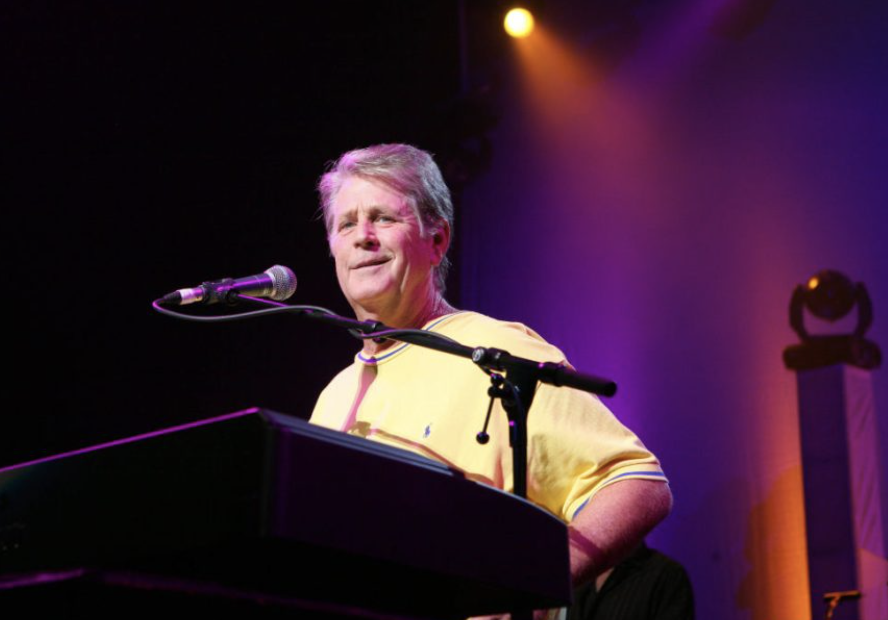
Brian Wilson presents ‘Pet Sounds’ 50th Anniversary Celebrations
Friday 27th May 2016 at the Glasgow Royal Concert Hall
In a soft power musical arms race with The Beatles, Brian Wilson more or less now mastering the known limits of the studio, was nudged towards ever more ambitious levels of creativity. As the old adage, music history folklore if you like, goes it was Rubber Soul that finally did it for Brian. The retort to this foil would not only be The Beach Boys first masterpiece, but one of pop and rock music’s most enduring triumphs, Pet Sounds. No longer happy with the California high school, deuce coupe cruising beach party spirit that had so far made the group world famous, cast even further adrift, introspective and all but retired from playing live with the his brothers and comrades, Brian was moving on from the fancy-free and footloose sound of the 45s that had always guaranteed a top ten place in the Billboard charts for something more…well, grown up. Voicing a growing anxiety – or the growing pains – of youth, Brian would compose the sound of young adulthood. As the world came to terms with the idea of the ‘teenager’, Brian began encompassing and articulating a new uneasy transition.
As much about the times as about the heartache and pains of being pure of heart, Pet Sounds marked a growing resentment towards the previous generation. At the beginning of a revolutionary change in attitudes, but a year before the ‘free love’ hippie idealism that brought in the psychedelic epoch, these former golden tanned beachcombers were breaking from their parent’s traditions and rules to set their own course: a life mapped out, from education to career and marriage. But at the very heart of all Brian’s work, even today, was a sense of innocence. An innocence lost as the lovesick but married Brian, now in his mid-twenties, was coming to terms with the anxieties of that adulthood and his growing mental anguish. Undiagnosed for years, left at the mercy of countless well-wishers and confidence tricksters, quacks and pseudo-therapists, Brian’s meticulous obsessive production of Pet Sounds and its subsequent, but not satisfactorily finished until 40 years later, magnum opus SMiLE tipped him over the edge.
Pet Sounds would also mark a lyrically shift, with Brian collaborating with his friend the lyricist and copywriter Tony Asher. A task of reification, Asher would take the often abstract and difficult expressions that roamed around inside the troubled mind and put them into song. Not exactly the most unified of atmospheres, Cousin Mike Love, a constant daddy-o stuck-in-the-mud character, was ready to pour a cold bucket of egotistic sick over anything that he felt would compromise or trouble the calm waters of The Beach Boys, so far, winning formula. To be fair, Love would be right to question this new shift towards the melancholic, almost philosophical anguish. Asher at that time was but a burgeoning talent with little to back up his credibility as a top pop songwriter. Replacing previous writers and solid contributors with an unproven lyricist would however prove to be genius decision. But the success of the album was slow. Its renaissance and rebirth as one of the greatest albums of the twentieth century was down to the audiences overseas. The change in direction had unsettled the market, as America baulked at this sadder, more cerebral tone. Yet, the UK loved it, buying it in droves and sending it to the number 2 spot in the charts – compare that with its 106 placing in the Billboard. Pet Sounds could have been a disaster, but it was saved, becoming a cult, an iconic masterpiece. And though it would take a while to pick up the desirable sales, its legacy grew and grew years after its original release.
Arriving almost in tandem, The Beatles Revolver was released just a couple of months later. Brian’s answer: SMiLE. If Pet Sounds had not only threatened but also sent Brian into a funk, then this grand American musical tour through the ages, from Plymouth Rock to the shores of the Spanish Peninsula, would all but consume and nearly destroy him. So ambitious was the vision that despite the near godlike genius of his assiduous sessions’ ensemble, The Wrecking Crew, the social, political and historically woven rich tapestry lyrics of new songwriting partner Van Dyke Parks, and his own production prowess, the project stalled. Numerous mixes, snippets, vignettes and even completed songs made it onto various albums and compilations over the decades, including the enervated and rushed out – to appease and bring in some much-needed revenue – Smiley Smile. It would take decades for SMiLE to be eventually completed, albeit (sadly and for obvious reasons) without his brothers Dennis and Carl’s near ethereal soulful compassionate voices, and missing any input from Love – now more or less carving the Beach Boys brand up, sporting it like a trophy as he has carte blanche and ownership of the name when touring with his own cabaret version of the group’s back catalogue. Brian did however manage, after spending the longest amount of time and money in recording history on a single, to release the perfectly epic pop rhapsody ‘Good Vibrations’.
Recently documented, quite favourably and sympathetically, by the Love & Mercy movie, Brian’s wilderness years lasted throughout the 80s and into the 90s, before the most accomplished of L.A. bands and Beach Boy fans The Wondermints helped lure Brian back on the road, performing a Pet Sounds extravaganza in 2000. Just four years later the band would join Brian in the studio to finish that nigh mystical, greatest album there never was, SMiLE, before taking it out on the road. Following in 2011 the eventual hidden away, locked in some fabled vaults, SMiLE Sessions of original material was finally released to the public.
A near renaissance, a scarred and troubled but blooming Brian Wilson is back once again on the road. This time he celebrates the 50th anniversary of Pet Sounds, arriving in my new hometown of Glasgow on a nationwide tour. Billed as an ‘anniversary celebration’ – the final performance of the iconic album in its entirety – tonight’s performance is a generous one. Split into two performances of greatest hits and Pet Sounds, with an encore of good time classics, Brian was backed by members of the Wondermints and flanked by special guests, Al Jardine and honouree Beach Boy Blondie Chaplin: a set up that has been repeated on many occasions.
As a steady presence for the vulnerable Brian, Al was on hand to soften the odd tremors of quivered uncertainty. But who was on hand to back up Al? Well as it happens his son Matt Jardine. Proving himself the most apt of Beach Boy scions, he was there to aid his old man and Brian with the most adroit and sweetest of falsetto voices. A counterpoint to the now – and for good reason – limited vocal range of Brian, Matt took on the high notes with aplomb and even performed lead on one of the evenings early highlights, ‘Don’t Worry Baby’. He would play the role of a younger Brian during the entirety of the Pet Sounds album suite, almost seamlessly taking on each alternating verse. However, and it seems almost too disingenuous to point out, there were a few wobbles and miscues throughout that just couldn’t be patched over. Yet we all willed Brian on, and when he took lead on the most diaphanous of love declarations, ‘God Only Knows’, the entire audience stood to their feet in adulated applause – the first of many rapturous ovations that night.
Directed and conducted by Paul ‘Von’ Mertens the entire ensemble began the evening with the heavenly choral warm-up ‘Our Prayer’; featured on 20/20 but originally the lead-in to the album version of SMiLE’s grand trans-American tour ‘Heroes And Villains’, which followed. We were then treated to a litany of favourites from the bobby sox high school daze back catalogue of hits, including a swinging, swayed medley of ‘California Girls’, ‘I Get Around’ and ‘Little Deuce Coupe’. Handing over the spotlight, Al performed centre stage with renditions of ‘Wake The World’, ‘Add Some Music To Your Day’ and ‘Cotton Fields’ – all songs plucked from the Brian breakdown period, when the rest of the Band were prompted to take over the creative reins. As lithe and energetic as ever, former Flame and Beach Boy band member (on tour and in the studio during the early 70s) Blondie Chaplin sprouted onto the stage to add some light-hearted theatrics and rock’n’roll vigour. The much-accomplished Durban guitar maestro, looking more and more like a cross between Jagger and Richards (all that time he spent touring with the Stones in the late 90s has worn off on him), launched into a strutting version of ‘Wild Honey’. Expanded from its soulful howled original setting, Chaplin went into bohemian guitar solo overdrive; showboating across the front of the stage and playing to the audience, who lapped it up. From The Beach Boys’ troubled but most brilliant 1973 album Holland, Chaplin picked up the ocean current waltz ‘Sail On Sailor’. The original vocalist on that recording, he returns to it with carefree élan, adding a wild guitar solo to the end, which sends Brian off into the wings in playful mock exasperation.
Back out for act two, the band minus Chaplin for now, begin the reverent Pet Sounds album. Largely enduring because it encapsulated a particular age and time in Brian’s genius, but mostly for capturing the love tribulations and torments of young adulthood in the most perfect pop songs, the album still chimes deeply with audiences fifty years later. Intricate and multi-layered but never ever laboured or strained – witness the Bond-esque Tropicana lounge instrumental suite title track -, each purposely-poised ballad, paean and tryst says all it needs to in less than two minutes. The rousing ‘Wouldn’t It Be Nice’, shared vocally by the Jardines and Brian, opens proceedings of course, followed by a gentler, more serene ‘You Still Believe In Me’. Highlights from the album set included an Al led version of the sea shanty in the manner of a doo wop Ivy League bruiser, with a reference to a particular paranoia plunged bad acid trip thrown in, ‘Sloop John B’, and flipping over the B-side, a poignant and encouraged Brian led ‘Caroline, No’.
The encore promised a “fun, fun, fun” package of hits. But first the band introductions, each band member receiving a musical signature tune as they came back out onto the stage after the interval. It was then straight into a full cast version of ‘Good Vibrations’, including the gesticulating tambourine wielding Chaplin who turned his percussive role into an art form. Rewinding back through the songbook, we were treated to the sing-along classics ‘Help Me Rhonda’, ‘Barbara Ann’, ‘Surfin USA’ and ‘Fun Fun Fun’. By now the audience were up and out of their seats, dancing where they could in the face of the po-faced security and attendants. From our balcony seats looking down on the main auditorium we witnessed hundreds swaying and weaving in almost perfect timing: the atmosphere couldn’t have been better. On a poignant, perhaps paused note Brian finished the evening with a version of the song that spawned the title of the recent movie, Love & Mercy. Written in more recent times, a reminder of the anxieties and anguish that once crippled Brian, the song’s central tenet is a perfect theme to finish on: a great sentiment for the audience to carry with them as they head home into the night. A joy to witness, the Pet Sounds legacy is in safe hands, especially here in Glasgow; a city twinned with Big Sur for one night only. Simply magical.
Love & Mercy Film Review/Purview
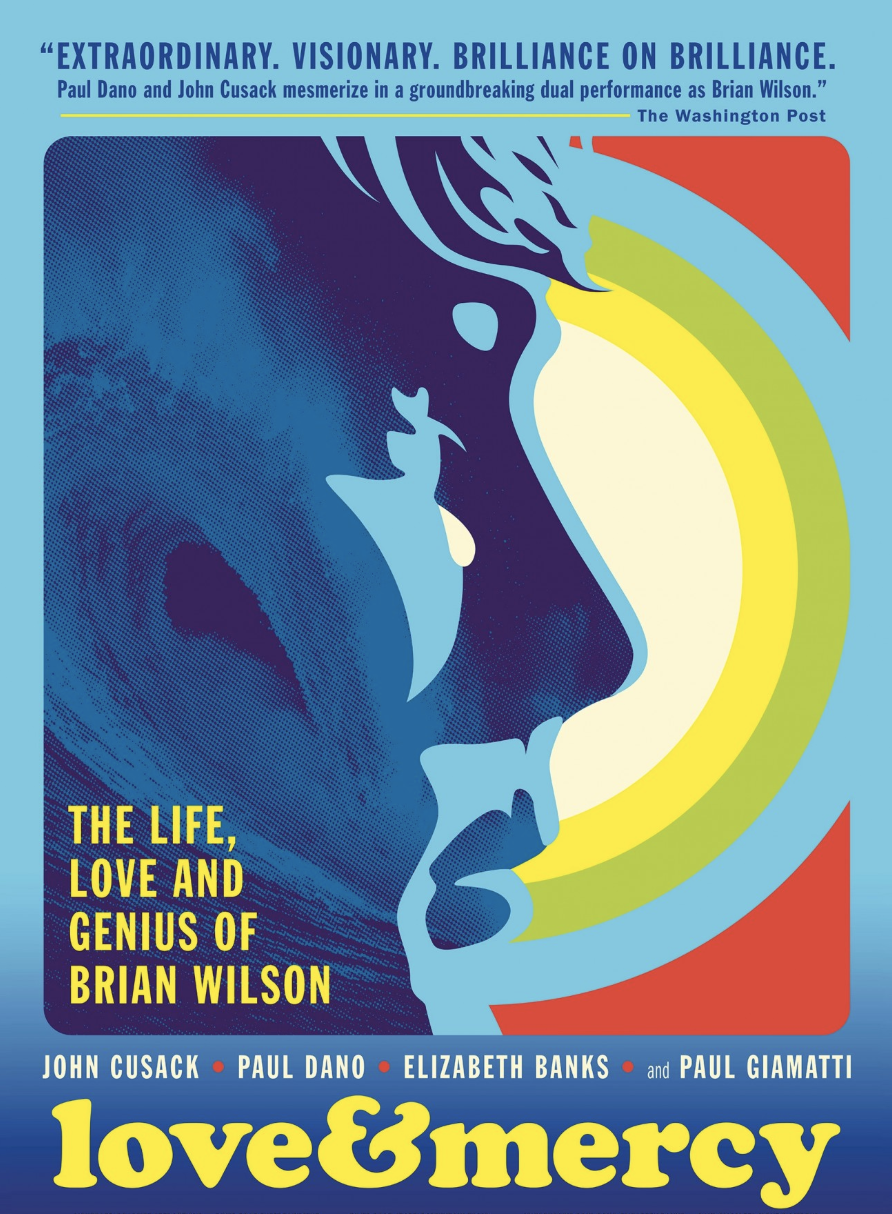
By now (or so I believed) the well documented rise and fall and then revival of one of pop music’s titans and true geniuses, shouldn’t come as any shock. Perhaps the nuanced details remain a mystery to most, but the crippling mental fatigue and illnesses that conspired to overwhelm Brian Wilson now go hand-in-hand with and are synonymous with The Beach Boys legacy. Plagued since childhood by the overbearing bullying of others, Brian was made nearly deaf by the clouting punishment of his patriarch Murry Wilson (a failed composer with little talent, forever enviously cruel towards his eldest son); worn down by his cousin and bandmate Mike Love – a year older than Brian but may as well been twenty, the omnipresent ‘straight’ put off by anything less than sweet and commercial, constantly grappling in a power game to control the band -; and emasculated, cut off from the world by the dubious therapist Dr. Eugene Landy. Arguably this triumvirate of manipulative, all damaged in their own way, individuals reflected their own insecurities, envy and even misunderstandings – Love just not getting it and stoic in not wishing to rock the proverbial boat of success – onto Brian; and perhaps due to a lack of ego himself, was unable to believe in his own self-worth allowing others to both take advantage and question his musical aspirations.
Unnerved, strung out and growing isolated from both his childhood sweetheart and first wife Marilyn, and his siblings, Brian went into a slow and long-drawn-out decline. Rare touches of genius would still sparkle occasionally, but after the less than rapturous reception at the release of Pet Sounds, and the aborted (though saved from the ashes and finally recorded and played live forty years later) American peregrination SMiLE, it was more or less downhill all the way.
Adrift now of The Beach Boys, wheeled out sporadically but later sacked, Brian had already undergone numerous treatments during the late 60s, and in 1975 at her wits end, Marilyn called in the services of the quack to the stars, Landy. The movie depicts his motives and less than orthodox style of treatment as quite sinister, but nevertheless he did manage to reduce a bloated lethargic Brian into a slimmer, healthier individual, ready to return back to The Beach Boys fold. However, as it would transpire, Landy took rather too much of an interest, going as far as to attend band meetings and make decisions on Brian’s creative dealings. He was ceremoniously sacked and cast out, losing not only his golden egg, but also losing his professional licence for his methods and liberal pill dispensing (the press would Christian him Dr. Feelgood). Yet ironically, he was recalled back during the 80s after Brian, at his lowest ebb, took an overdose of alcohol, cocaine and psychoactive drugs. This time Landy gave no quarter and micromanaged every single aspect of his patient’s life. Brian would be completely cut off from everyone, and handled like a simpering child by his new legal guardian (who merely replaced Brian’s monstrous real father Murry), with a team on standby to make sure he never wandered from the good doctor’s path of recovery: a recovery that led to Brian’s eponymous solo album of 1988 (Landy brazenly got credits as executive producer and co-writer), of which the opening track Love & Mercy is used for the film’s title. In fear of being institutionalised, Brain would meekly allow this infringement of his privacy and daily life. Overstepping his remit and coming up against Brian’s – depending on who’s account you believe – saviour Melinda Ledbetter (a model turn Cadillac sales women), Landy was eventually forced out when his name mysteriously appeared as the main benefactor on Brian’s will. Already handing over a percentage and forced back into the studio to cover costs, Brian’s publishing rights would still not satisfy Landy’s mounting costs – charging an eye-watering $430,000 annually between 1983 to 1986 – and this along with Melinda’s timely intervention conspired to finally remove him.
A complicated story then, the emphasis on redeeming a fragile genius from a reversion to a near childlike numb state, the film makers and script writers can’t possibly capture every nuance. Instead, Oren Moverman and Michael A. Lerner‘s touching story and unconventional story arc focuses on the perspectives of Brian and Melinda, and hones in on two specific timelines: the mid 60s and 80s. Whilst the story begins with the muddled mind of a younger Brian (an uncannily fragile and compassionate performance from Paul Dano) fading out to darkness, followed by a background montage of the Beach Boys more naive, carefree days (though even these moments show an already uneasy Brian plucking away on his bass guitar, wishing to be anywhere but on stage or in the limelight), we’re speedily propelled forward to John Casuck‘s placid later day Brian’s first meeting with Melinda. Virtuously played throughout by a thoroughly convincing, purposeful Elizabeth Banks, director Bill Pohlad uses her face as a gauge for reaction, whether it’s being played a whimsically beautiful piano motif or hearing the disturbing abuse meted out to Brian by his father. In her opening scene she attempts to sell him a car, before Landy and his posse arrive, but not before Brian slips her a note with ‘Lonely, scared, frightened’ scrawled on it.
Not that the intention is to show any balance in Landy’s depiction, the wig adorned Paul Giamatti is a raging control freak; ready to suddenly blow in a torrid at any time, and constantly, even when smoothing things over, adding a creepy and threatening undertone to every word of advice and suggestion. Meeting one of the only real forms of opposition, Landy’ warnings towards Melinda eventually boil over into some hostile confrontations: an early scene in the dating storyline, with Giamatti’s Landy holding court whilst flipping burgers, grows steadily uneasy and finally ends with an explosive outburst, as a doped-up Brian petulantly interrupts a boorish egotist regaling his own questionable writing virtues with calls to be fed.
Faithfully recreated, Dano’s parts are sometimes tear-jerking. Though we’ve grown used to the back catalogue, hearing the building blocks and attentive beginnings of ‘You Still Believe In Me’, ‘Surf’s Up’ (this performance further convinces me of its eulogy quality and that it belongs on the 1971 titular LP rather than SMiLE), and ‘God Only Knows’ (stunning even its most fragile form, when the young Brian seeks his father’s approval but is despairingly put down by pater’s heartbreaking responses) send chills down your spine. Enthusiasts will be interested in seeing the mechanics of the Pet Sounds and SMiLE sessions; the fantasy of seeing the famed and near mythical Wrecking Crew at work. The crew’s revered and experienced drummer, possibly the best session drummer of the 60s, Hal Blaine is used as a vessel to get the plot moving; his references and reassurances (in one memorable exchange and moment of doubt, the elder statesman’s and cool Hal, sucking on a cigarette, assures Brian that having worked with Phil Spector and a legendary rooster of other talent, the young pup is on another level entirely of genius) are used to settle a young Brian in the grip of mania. But wait until the final sequences, a redeemed Brian breaking from his stupor, soundtracked by the stunning, and reflective diaphanous ‘Til I Die’ – a song that took Brian a year to complete, and was to no one’s surprise by now, originally dismissed before being embraced by Love.
With the emphasis on these characters, most of the extended cast are reduced to walk-on parts and though some background is referred to, Van Dyke Parks and many others aren’t introduced at all, merely swanning about – apart from a meeting in the swimming pool – at various dinners and pool parties. Even his poor siblings Dennis and Carl are more or less demoted to the odd clueless look whilst Al Jardine doesn’t even get a line: Dennis himself succumbed to his own torments, which left him adrift of his family and band mates; his spiral into drink and drugs ended tragically when he drowned just weeks after his 39th birthday in 1983. It is the mixed portrayal of his cousin Love that is emphasised, not really a hero or villain, but malcontent and totally unhip individual uneasy at the changing face of a turned-on L.A. in the grip of LSD. I feel a little sorry for him, played I might add brilliantly by an unrecognisable Jake Abel, who would eventually have to lead the group and take up the mantle; always that little bit older, not so fortunate in the hair department (his fetish for hats arguably covering up his early balding), and ever the professional he found it hard to fit in.
Love & Mercy moves full circle, Melinda coaxing the responsive artist and adult from his child like shell, finishing with Brian’s – and I was lucky enough to attend one of his comeback shows with the Wondermints – return to the stage in the noughties, performing the titular song. Those stumbling blocks and manias that prevent not just geniuses, from making their ideas concrete, still persist. But at least Brian finally received the correct diagnosis of manic depression with auditory hallucinations that can be successfully treated: Landy’s schizophrenia diagnosis and treatment did more harm than good, arguably worse than the cocktail of illicit drugs that Brian was popping so freely before the quack came on the scene. The best hope is that this movie encourages discussion; that we can talk candidly and address the controlling mechanisms that condemn many people to a life spent dealing in isolation with their mental health.
Vukovar ‘Emperor’
(Small Bear Records) – Originally release in 2015; re-released on the 1st July 2025 with various mixes and extras.
Punching well above its weight, the serendipitous label of vaporous lo fi and languid shoegaze Small Bear Records has slipped onto the market its most ambitious marvel yet. From their Isle of Man recording HQ, the Vukovar builds a funeral pyre for the ‘new world order’.
Helping them man the barricades are Rick Clarke and Dan Shea (also of The Bordellos and Neurotic Wreck, but most formerly of the “disintegrated” The Longdrone Flowers), joined by an extended cast of Small Bear artists; including the dreamily aspiring Postcode’s Mikie Daugherty, Jonny Peacock and Marie Reynolds, and Circus worlD’s Mark Sayle all making guest appearances: a super group performance if you will.
Rallying round the decree of “idealists, voyeurs and totalitarians”, and referencing a list of one-word actions/stances (“Ultra-Realism”, “Depravity”, “Monotony”) to describe their sound, the band’s lyrics certainly seem fuelled with protestation and anger. Yet for the most part, they sound despondently magnificent in the most melodic, beautiful shoegaze fashion. Their brand of lush 80s driven alternative rock and more caustic, punchy industrial noise is far too melodic and majestic to be truly brutal.
Taking their name from the infamous Croatian city, the site of an heinous blight on modern European history (always conveniently airbrushed from bellicose EU propaganda; the sort that preaches its union has put paid to and secured the continent from conflict and war amongst its neighbours), when 300 poor souls, mostly Muslims, were rounded up and barbarically executed by Serb paramilitaries and the Yugoslav People’s Army (the worst committed atrocity of its kind since WWII), Vukovar appeal to the listener who wants to scratch beneath the surface of the banal mainstream. They offer an invitation into the darker recesses of history and social politics unseen in much of the dross that calls itself alternative – even their bandcamp page features an exhaustive manifesto style edict (sometimes tongue-in-cheek) of intent. And so they offer a an out-of-body majestical shoegazing waltz through Reinhard Heydrich’s honey trap brothel and centre of Nazi espionage, the ‘Regular Patrons of Salon Kitty’; drift into Spiritualized and New Order territory on the softly pranged hymn to a former Japanese princess, ‘Part 1: Miss Kuroda’s Lament’; and channel a despondently romantic but resigned Ian Curtis as they utter with despondent beauty that “we’re cowards” on the beautifully sullen and dreamy ‘Nero’s Felines’.
With a maelstrom of clanging, fuzz and Inspiral Carpets jamming with a motor city turned-on Julian Cope vibe, the group yells, shakes and rattles on their noisier outings, ‘Lose My Breath’ and ‘Concrete’. Not always their best material it must be said, they add some tension to the more relaxed melodic and – dare I say – pop songs, which sound far more convincing: ‘Koen Cohen K’ and ‘The New World Order’ are just brilliant; imagine what Joy Division might have sounded like if Ian Curtis had lived on and found solace in the lush veils of shoegaze, or if he fronted Chapterhouse.
Fiddling romantically whilst Olympus burns, the Vukovar’s stand against the illuminati forces of evil couldn’t have sounded any more beautifully bleak, yet somehow liltingly inspiring.
If you’ve enjoyed this selection, the writing, or been led down a rabbit hole into new musical terrains of aural pleasure, and if you can, then you can now show your appreciation by keeping the Monolith Cocktail afloat by donating via Ko-Fi.
For the last 15 years both me and the MC team have featured and supported music, musicians and labels we love across genres from around the world: ones that we think you’ll want to know about. No content on the site is paid for or sponsored, and we only feature artists we have genuine respect for /love or interest in. If you enjoy our reviews (and we often write long, thoughtful ones), found a new artist you admire or if we have featured you or artists you represent and would like to say thanks or show support, than you can now buy us a coffee or donate via https://ko-fi.com/monolithcocktail
THE DIGEST FOR SEPTEMBER 2024: New Music/The Social Playlist/And Archives
September 23, 2024
THE MONTHLY DIGEST INCLUDES A CLUTCH OF ACCUMULATED NEW MUSIC REVIEWS; THE SOCIAL INTER-GENERATIONAL/ECLECTIC AND ANNIVERSARY ALBUMS CELEBRATING PLAYLIST; AND CHOICE PIECES FROM THE ARCHIVES.

____/THE NEW
Holy Matter ‘Beauty Looking Back’
ALBUM 4th October 2024
Bathed in a new diaphanous light, Leanna Kaiser steps away from her ambient shrouded Frances With Wolves duo (albeit with an embraced cast of familiar faces and musicians) to take up the soloist guise of Holy Matter.
Following up on a tapestry of enchanted and dreamy singles, woven from gossamer threads of fairytale and fantasy, the musician, songwriter and filmmaker now unfurls an entire beautiful album of nostalgic imbued troubadour-folk, softened psychedelia and country woes, sad lilted resignation, solace, reflection and pathos.
Using a poetic license inspired by Leonard Cohen (that new moniker lifted straight from the pages of Beautiful Losers, and one inspiring mantra from that same book, “I change; I am the same”, can be read as this album’s slogan) and the Ukiyo-e style artworks of Hishikawa Moronobu as an illustrated mirrored metaphor, Beauty Looking Back explores the personal, environmental and seasoned changes in Kaiser’s life. Namely her move to L.A. from St. Louis, and the relationships either left behind or maintained through the framing of memorable weather and atmospheres.
On the surface a most magical, wisped and tubular bells chiming yearning, and at times full of moving regret and the evocations of the Laurel Canyon and Riot On Sunset Strip eras, there’s a real depth to the lyrics, musicianship and reference points. Moronobu’s iconic Beauty Looking Back painting for instance, features sartorial readings of status and the changing of fashions and traditions in Edo period Japan; the muse, subject of this work embellished in the striking red kimono decorated with chrysanthemums and cherry blossoms of the wealthy and yet to be married. To keep a relative peace during an epoch of conservative but prosperous Shogunate rule, an age of pleasure was ushered in with the building of designated walled areas inside Japan’s cities, put aside for the growth of tea houses, brothels and Kubuki theatre. Artists such as Moronobu were on hand to paint and depict the new “free-flowing nature of urban life”.
Seeking both comfort and reassurance from a nostalgic haze however, Kaiser, together with her former bandmate foil Andy Kahn on keys, guitar and bass, her partner Matt Popieluch (of Big Search note) on classical, near Iberian and South American-flavoured guitar, 12-string and violin, Kate Bellinger on backing vocals, and producer David Glasebrook, who also brings in drummer Raphi Gottesman and upright bassist Josh Housh, convey a mirage shimmer and fey delicate trace of Judee Sill, Sibylle Baier, Jewel, Marina Allen and The Unknown Mortal Orchestra. The vampiric Laurel Canyon ‘Eve’s Hollywood’, apart from its magik and scene-setting lyrics, has a touch of a laconic and knowing Nancy Sinatra about it.
Gazing both lamentably and in sighed resignation from metaphorical fairytale towers and vantage points emphasised by poetic weather patterns, Kaiser gently exudes a longing sense of wistful pulchritude. The past is always near, inescapable and worn like a comfort blanket; moulded to Kaiser’s desires, sorrows, reflections and duality. Holy Matter proves an interesting alluring and enchanting creative progression for Kaiser, her debut solo a refreshing take on the familiar and the tropes of time.
Scarla O’ Horror ‘Semiconductor Taxidermy For The Masses’
ALBUM (Not Applicable)
We could be here all day if I listed the various musical achievements, the actions and the cross-fertilisations and creative fraternizing of this London-based collaboration of jazz (in all its many guises) players and explorers. Within the Scarla O’ Horror’s sphere of influence, in-demand tenor saxophonist, bass and clarinettist James Allsopp has worked with such notable pioneers and shakers as The Last Poets, David Axlerod, Mulatu Astake, Kit Downes, and picked up awards for innovation and the best album from the BBC over the course of a twenty-year thus career. His foils in this quartet include the no less talented and renowned producer, performer and, on this album, trumpet player Alex Bonney, who you may recognize from such groups as Leverton Fox, Brass Mask, lightbox and both Olie Brice’s Quintet and Octet; the multiple award-winning prodigy drummer Tim Giles, who’s credits include collaborations with Allsopp, Riaan Vosloo and Ben Lamdin; and the electronic trick noise maker, sound artist, software developer and composer Sam Britton, otherwise known as Isambard Khroustaliov – Monolith Cocktail readers will definitely recognise this name, as San has appeared under that non de plume a number of times on the site over the years.
An enviable dynamic grouping of talent that’s ready to push the boundaries, react and counteract to the environment, situation and conditions of the studio setup, the quartet pool their resources and experience into another experimental free form and avant-garde extemporization. Dissection, taxidermy, semi-conductors…what’s that all about? Well, sound wise those prompts unleash a supernatural, data and robotic calculus off-world soundtrack of tremulant, tooted, straining brass, rolling and scrabbling drums, near avant-garde classical clarinet strains and synthesized mirages, illusions and gleaming, glinting and searing alien technology. It all begins with the lead-in, introductory ‘Racoon With A Wound’, which reimagines some kind of mysterious, near extraterrestrial fusion of Esa Helasvuo, cult Italian horror soundtracks, Walter Smetek, Don Cherry and Kinkajous.
We then hit the main event, with two uninterrupted improvisations of far out Fortean radar, and ghost freighter free jazz. The first, ‘The Rats Of Gilet Square’ is inspired by the group’s observation one night of rats having a whale of a time scurrying around and “plundering” the rubbish bins outside the Vortex Jazz Club. Sound wise, you can pick up elements of Sun Ra, Kaleidoscope Ornette Coleman, Anthony Braxton, the Art Ensemble of Chicago, BAG, Sam Newsome, Bendik Giske and Marja Ahti. The second long form piece, ‘Ermine Chowder’, reminded me of Chet Baker wandering a futuristic space version of the Mary Celeste. The atmosphere is sifting almost, with peaks and sci-fi, György Ligeti, Khroustaliov’s In The Gloaming album collaboration with Lothar Ohlmeier and Rudi Fischerlehner, Lynch, Eric Dolphy and Daniel Carter’s collab with Jim Clouse.
Untethered responses to a method, of a kind, and process, Semiconductor Taxidermy For The Masses opens up possibilities, spaces and expands horizons further. Concentrated, yet free, exploratory jazz at its finest, the quartet chalk up another illusionary and paranormal, sci-fi and near ominous performance.
Banco de Gaia ‘Trauma’
ALBUM (Disco Gecko)
Has it really been eight years since Toby Marks last made a record under his trance global alter ego Banco de Gaia moniker. Apparently so, as the latest digital and compostable bio-wrapped coloured vinyl LP Trauma follows on from his 2016 set of peregrinations The 9th Of Nine Hearts. And from that title, and period of travails, there is a lot to unpack: climate change, Brexit and an ungovernable land, war, a pandemic, economic disparity, divisiveness on a scale not seen before, the advent of AI….the list goes on and on and on.
For those unfamiliar with Marks Banco de Gaia project and label, next year marks the thirtieth anniversary of his highly influential trance and techno marker Last Train To Lhasa. On the cusp of Britpop, hung-over from grunge, guitars were about to once again dominate whilst house and techno music in all its many guises had reached superclub status; the underground movements fractured and broken up into a myriad of smaller tribes. Ambient and trance, usually the preserve of after hours clubbing or allocated space in the “chill out” zones had already blossomed into its own industry. That unfairly and often fatuous “chill out” idiom used to sell everything from nirvana relaxation and transience to any ‘new age” missive. Never new, until progress and technology made it easier and offered more options, the core ambient ingredient had already been in existence for decades. And despite what you may have read, Eno may have given it a name, but he certainly didn’t invent it. In this evolving stage of dance music, Marks went to town, sitting on a fluffy cloud, hovering between trance and techno.
Last Train To Lhasa’s suffused panoramic station-to-station soundtrack was different. Sharing some of the peaceable beautiful nephology of The Orb and Air Liquid but with the satellite guided twinkle and kinetic rhythms of Orbital, the album sounded every bit as organic as it did electronic. And despite the heavy Tibetan reference, the album and sound was global, taking in samples, sounds from Africa, the Middle East and Orient.
Expanding that unique universe, Marks has built up a discography of eclectic experiments over the decades. And now, in 2024, he’s decided to unload his concerns, worries about the state of the world across eight tracks (the digital versions include two extra tracks, the trauma channelling and pained Natacha Atlas-like, dub-ricochet shot ‘Endure’ andthe Philip K. Dick meets Adamski and Coldcut-up exotic whomp and whooped ‘Electric Sheep’) of varying moods, timings and influences. On an album of, as Marks himself points out, ‘juxtapositions’ the opening serene spacy ‘Mir’ plays of both the Russian translation of that title, “peace”, and the name of that nation’s orbiting space station. Looking down on Earth before re-entering the atmosphere, the Floydian saxophone space bird plaints and enormity-emotional stirrings of guest Matthew Jenkins serenade a prog-ambient yearn. Sparked by a bee sting – the poor crash-landed bee on the album’s cover I’m assuming -, ‘A Bee Song’ features said hive humming buzzes and sense of earthly nature. The first signs of the Banco global samples appear alongside the insect accompaniment, with a recording of a traditional hand and wood clapping song/dance from Namibia. When such ethnic strands meet with electronica and trance, the new age and breaks, it sounds like Real World Records fusing with Gary Numan, System 7, Saafi Brothers and Children of the Bong.
The read-out Cymraeg poem of ‘Draig Ddu’ is a vehicle for Welsh nationalism but is also used here as a process for grieving and loss. An air of mystery wraps itself around this ratcheted-up 90s techno-trance plaint. ‘War is self-explanatory. The frustrations, the breakdown in international dialogue and onset of violence, are transduced into a heavier slice of techno and EDM, with missiles and projectiles and various questioning and resigned spoken samples laid over a production that’s part The Prodigy, part The Orb and part Ammar 808.
Borders, or maverick circumnavigations of them and government control, are the feature of the next track, ‘My Little Country’. To a dance like mix, you can hear the voice of the late radio ham Roy Bates being interviewed on his self-declared Sealand principality and famous former sea fort turn pirate radio station, Roughs Tower; a convoluted story of evading the censorship and draconian broadcasting rules of the 1960s in Britain that needs far more room and space to regale in full here – but look it up.
From the Irish for “my god”, Marks looks at the near religious awe of space exploration, the universe and all that, on the talking head satellite orbiting, Massive Attack and Lisa Gerrard-like ‘Mo Dhia’. But by the “dying light”, the insect chatter has returned, and a sense of universal worth and levity is invoked with a cosmic uplift and bathing light beams. Through it all, Marks finds himself transcending the traumatic breakdowns of communication and umpteen different disasters that threaten to tip civilisation over the edge into total disaster, finding solace and escape routes, ideals and joy despite it all to a soundtrack of trance, EDM, techno, new age, trip-hop, breakbeats and vapour synth conjured moods.
Unicorn Ship Explosion ‘There’s A Rhinoceros In The Mega Church’
ALBUM (Sound Record) 4th October 2024
Refreshingly self-deprecating in their own skills as musicians, despite their listed achievements (of a sort) and obvious knowledge and experiences with juggling around with a multitude of styles and influences, the Unicorn Ship Explosion duo of Rob (who apparently did attend jazz school at least, whatever that is, and is “near the final chapter of piano lessons”) and Sash (a “great guy” we’re assured, but “average musician”, who gets by on tinkering around with modular synths whilst making the odd sound design pitch for designer brands) unleash their debut album of cross-pollinated sounds upon the general public.
Where to begin on an album that seems to pack a lot in, fusing countless genres into a discombobulating and atmospheric playful hybrid that AI would find beyond its capacity to emulate. Just the opening account of ‘All Things Everywhere’, which gives us a clue to this method, traipses over borders, timelines and inspirations to sound at any one time like a limbering Tony Allen, Ethio-jazz, Melt Yourself Down, Embryo and pylon buzzed electricity.
By track two we’ve already shifted the pitch by being introduced to the drawled, questioning and confrontational performative voice of sometime collaborator Agnieszka Szczotka – a Polish cross between Gina X, Saâda Bonaire’s Claudia Hossfeld and Little Annie -, who in lingering and almost dismissive style inhabits the nighttime and dances with identities on the celestial edges primal space bound ‘Agi Took The Choo Choo Train’. Szczotka, a former Royal Academy student of conceptual art, is used sparingly, and only appears again with the Freudian mothering sexual analogy of “cum” and spit loaded poetics ‘Bloody Bastard (Like Mother)’ – there’s many connotations to unload from that one.
The influences, the combinations expand further than that though, with hints of Library music, sci-fi, dark jazz, fusion jazz, percussive passages that sound like the missing link between Tibet and Valentina Magaletti, Battles, Holy Fuck, Jan Hammer, Portico Quartet, International Pony, floppy disk experimenting Sakamoto (listen to ‘Yeah But’ and get back to me if I’m wrong) and Rave At Your Fictional Borders. It’s a mad roll and round kit demonstration of drums and electronic apparatus in full breakbeat, electro, funky, otherworldly and metal pots and pan rattled splash mode. The album bends between playful fuckery and reconfiguration, free of artifice and dullness. Put it this way, they don’t take themselves too seriously: even if there are obvious loaded references, a pun here and there that suggests unease, protestation and that all is not well in the state of the world. Enjoyably familiar at every turn, the duo and their foil partner in this escapade fuse various mood music and energetic performances together to make anew.
ShitNoise ‘I Cocked My Gun And Shot My Best Friend’
ALBUM (Cruel Nature Records)
Shit noise. Shit house. Shit shitty world. Shit outcomes for one and all. Yes, as rats fester on our decline and the parasitic spectres of autocracy, divisive ideologies and malware bleed into our craniums, you can always rely on someone or some group, in this case a duo, to channel such bleak outcomes into a riling torment of mania, hysterical, resigned and frothing near daemonic expression. And ShitNoise dine out on a veritable feast of outrageous indignation, piss poor behaviours, and the problems that grind many of us down each day. But some rats eat out better than others and being down and out in Monte-Carlo is better than most places. Hailing from that Rivera paradise, the duo’s Aleksejs Macions (on vocals and guitar) and Paul Albouy (on drums) can see, experience a near unparalleled division between the casino, the F1 jet set and those eking out a living from the morsels drip fed from those bulging crypto, old money, asset rich digital wallets. There are worse places to be for sure, but a killer to witness all that luxury during an age of such misery and despair.
This brings us to the duo’s latest and third album thus far, I Cocked My Gun And Shot My Best Friend, which is framed as a more polished and mature departure from their more noise-crushing signature. I can hear that. But as someone who is very new to the duo, it still sounds intensely dissonant, grinding and full of barraging, barrelling and head-kicked-in drum bashing. However, it does have melody, and it does have some tunes too. I also believe there are points in which you can even dance to it. They’ve widened their influences, and brought in a little more shade and light, changed the tempos and had a go at knocking the shit out of and repurposing a haul of bands from the punk, metal, alt rock, no wave, noise, grunge, doom and industrial scenes. Although, ‘Hashish (The Yelling Song)’ features UFO oscillating take-offs and Itchy-O ritual magik. It’s like Mudhoney brawling with the Sea Hags one minute, Nitzer Ebb in a knife fight with Ministry and Lightning Bolt the next. And I do believe they are having a lot of fun doing it: despite the crushing blows, dread and yelling!
It gets less noisy as the album progresses; the trajectory between the opening cranium screams and angle grinding industrial punk scrawl of ‘Ho-Ho! (No More)’ and the closing alt-rock late night bar room knockabout chorus affinity of ‘The Ballroom Brawl’ is congruous but worlds apart. The former, sounds like the Revolting Cocks, Spanish underground tape culture of the 80s and CUNTROACHES in some unholy union, whilst the latter, is a more lolling drinking game between Swans and The Heartbreakers, with David Bowie’s Hansa saxophone serenading and coiling round the bar tab. The vocals meanwhile have a range that takes in the Occult Character, the indescribable, the resigned, the sulky and menacing.
Playing hard and loose with the noise, the duo have moulded frustration and protestation into a hacked-off thrashing, barracking and distorting maelstrom of various funnelled music channels and organised chaos.
Leisure FM ‘Illuminated Manuscript’
Single
Like some Gothic fairytale from Eastern Europe, the Szymanek twins materialized a while back in Southeast London, via time spent in the lyrical Wales of Dylan Thomas. From the English capital’s warehouse scene of recent years and a monthly RTM Radio spot, Milena and Weronika progressed to conjuringuphallucinatory imagery, dejection andfate under their later ego, Lesuire FM. Receiving a favourable review by me, their fables EP set an atmosphere of Eastern European morose, magic, demons and cathartic relief.
Loaded with the Catholic imagery and theatre of their Polish homeland, the twins of woozy struggles of the heart turn their chthonian and weary poetic gaze on the fatalistic Greek myth of Icarus with a new single, ‘Illuminated Manuscript’. Flying too close to the sun, his wings clipped and burned and crashing to his death, the tragic parable of that sorry tale and all its connotations are whittled down into a modern resigned plaint that balances the ecstasy of freedom and escape with the agony of falling out of the sky to one’s death, and the devastating consequences of not heeding instruction, advice in the pursuit of big rewards and high risk: in Icarus’s case, ignoring the advice of his sagacious dad Daedalus. This sorry tale plays out to a misty veil of chugging and flange-like Banshees guitar, trip-hop drums and swirled Tom Arnold thriller-like strings, sounding at times like Lomi MC singing over Delerium, Switchblade Symphony, the Tara Clerkin Trio, SU and Propaganda. But in short, thematically, poetically and fatalistically, imagine a Hellenic Lyudmila Petrushevskaya conspiring with Dylan Thomas.
The B-side (in old money) is a guest remix version of the title-track from the twin’s 2023 EP fables. The chosen candidate Kourosh Oliver Floyd Adhemy casts a phantasmagoria spell over the original, adding his very own misty filters, near demonic voice effects, vapours, tabla-like tripsy beats and bulb shaped notes. Together, both tracks atmospherically waft around in Gothic trip-hop revelation, caught between worlds.
Elea Calvet ‘Trigger (Acoustic)’
SINGLE (Mahogany Records)
After artfully captivating listeners with the sighed adroit wistfulness of ‘Sinuous Ways’ earlier this year, the burgeoning enchantress Elea Calvet now breathes an almost knowing southern gothic air of doomed bleak mystery and trauma into the subtly dramatic ‘Trigger’.
Triggering a sublime duality of the diaphanous and noirish, of malady and allurement, of the pained and unbound, Calvet’s vulnerability is matched by her strength in conveying abstract feelings of the bittersweet and identity.
Entirely self-produced over the course of one inspiring weekend at her “overcrowded home studio”, ‘Trigger’ can be imagined as a misty and near supernatural country cinematic hunger of Anna Calvi, PJ Harvey and Amanda Acevado.
We’ve been assured that another single is on its way next month, but in the meantime take in the magical torment and achingly writhed quality of Calvet’s growing songbook.
____/THE SOCIAL PLAYLIST VOLUME 90
The Social Playlist is an accumulation of music I love and want to share, tracks from my various DJ sets and residencies over the years, and both selected cuts from those artists, luminaries we’ve lost and those albums celebrating anniversaries each month.
Running for over a decade or more, Volume 90 is as eclectic and generational spanning as ever. Look upon it as the perfect radio show, devoid of chatter, interruptions and inane self-promotion.
This month’s choice tracks include a bundle of anniversary albums from John Lennon (Walls And Bridges ’74), David Bowie (Tonight ’84), R.E.M. (Monster ’94), Cluster (Zuckerzeit ’74) and Gudrun Gut and Joachim Irmler (500m 2014). I’ve gone for something a little different with the first of those two selections; choosing to kick off the playlist with the TV Personalities rambunctious gnarly version of Lennon’s ‘Whatever Gets You Thru The Night’, and Icehouse’s sympathetic take on Bowie’s ‘Loving The Alien’. I’ve also chosen a live cut of one of my favourite tracks from R.E.M.’s Monster, ‘Strange Currencies’.
There’s a small selection too of newish tracks – those that have been released in the last couple of months that I either missed or didn’t get room to place in the Monthly Playlist selections. In that camp there’s Jay Cue, Conjunto Media Luna, Dr. Walker, Reymour and Vox.
In between those selections I’ve scattered a smattering of music from Bad Dream Fancy Dress, Son Of Noise, Ms. Melodie, Baseball Furies, Tal Rose, Antonino Riccardo Luciani and others. There’s also a cap doffed in respect to the late Herbie Flowers, who passed on earlier this month, with the inclusion of Sunforest’s ‘Where Are You’, just one of many such album session Flowers played on over the years.
tRaCkLiSt
Television Personalities ‘Whatever Gets You Thru The Night’
Flora Purim ‘Stories To Tell’
Cossa Nostra ‘Nuestra Cosa’
Poobah ‘Watch Me’
Reale Accademia di Musica ‘Macumba Hotel’
Azar Lawrence ‘Novo Ano’
Conjunto Media Luna ‘Doombia del Agotamiento’
Dogbowl ‘Love Bomb’
Nicolas Greenwood ‘Hope And Ambitions’
Reymour ‘Sleepy time’
Bad Dream Fancy Dress ‘Lemon Tarts’
Icehouse ‘Loving The Alien’
Jay Cue ‘Hyperbolic Time Chamber’
Dr Walker ‘Was ist Dad Rap?’
Son Of Noise ‘Down With Son Of Noise’
Ms. Melodie ‘Remember When…?’
This Kind Of Punishment ‘Some More Than Others’
Baseball Furies ‘Ain’t Comin’ Home’
Bass Drum of Death ‘Left For Dead’
Tal Ross ‘Green and Yellow Daughter’
R.E.M. ‘Strange Currencies (Live at the BBC)’
Lee Baggett ‘All Star Day’
Appaloosa ‘Tulu Rogers’
Sunforest ‘Where Are You’
Antonino Riccardo Luciani ‘Eclisse lunare’
General Strike ‘Next Day’
Cluster ‘Rotor’
Michael Garrison ‘Theme to Onday’
Vox ‘Metaphysical Back Alley’
Gut und Irmler ‘Chlor’
____/ARCHIVES
Albums decades apart, both released originally during this month, there’s another chance to read my review of Bowie’s Tonight LP from 1984, and Gudrun Gut and Joachim Irmler’s dizzying altitude 500m collaboration of 2014.
Tonight (EMI)
‘Keeping his hand in’ so to speak, Bowie kept up the pop-lit pretence with Tonight. Arriving straight off the back of his Serious Moonlight world tour, and with the very same backing group – including the Borneo horns troupe – the follow-up to his massively successful Let’s Dance showcase was a far patchier affair.
A filled-out, skiing obsessed, pastel shaded crooner, long since divorced from his moiety Angie, and now in custody of their child Zowie, he was less concerned with previous concepts and play acting and more interested in growing pains and heart-strung romantic indulgence.
Of course, every time ‘Davey Jones’ sported new garbs and ventured out on the road he was always acting a part. But the burgeoning film career, which began with The Man Who Fell To Earth through to his stage roles in Baal and The Elephant Man on Broadway, allowed a new avenue of total immersion for Bowie. Channelled then via celluloid, the previous year alone saw him star as a forlorn ageing vampire in The Hunger, and as the English prisoner-of-war ‘Strafer Jack’ Celliers in Merry Christmas Mr. Lawrence: that exuberant theatrical spirit was missing for the most part from his music.
However, Bowie did get to indulge himself on the ‘Blue Jean’ (perhaps Tonight’s saviour from total disaster). Well, the video/mini-movie at least, directed by Julian Temple, and stretched out to twenty-minutes, featured the singer adorned with a makeshift turban and piled-on make-up.
A new production, the largely untested Derek Bramble, and Hugh Padgham tried to mix things up, but instead lost their way as Bowie made a pig’s ear of things. The fact that his knock-about ‘comrade-in-arms’ Iggy Pop pitched in is almost irrelevant, as all the edge is erased by a fuzzy saccharine mush. Using a maudlin calypso and faux reggae backing he teamed up for countless misfires; duetting with Tina Turner on the dawdling title track (originally sung by Pop on his second solo LP, Lust For Life): ruining all his erstwhile partner’s contributions. “God Only Knows” what he was thinking by covering Brian Wilson’s (lyrics by Tony Asher) beatific masterpiece, and you also must question the addition of Jerry Leiber and Mike Stoller’s gold standard, ‘I Keep Forgettin’: thrown in as a so-called return to rock’n’roll? Hardly!
Luckily ‘Saving The Alien’ was on hand to at least stop the spread of rot. ‘All the gear and no idea’, Tonight paved the way for Labyrinth, Bowie’s forked tongue and sardonic protestations all but muted so that his crossover, inter-generational appeal could now reach even the youngest sections of society.
Gudrun Gut and Joachim Irmler ‘500m’
(bureau b) Released 8th September 2014
Doyens, and for that matter mavericks, of the more cerebral and avant-garde boarders of the German music scene, otherworldly evocative organ grinder Hans-Joachim Irmler and his visual artist musical polymath siren, Gudrun Gut, join forces for a mesmerizing electronic trip.
As a founding member of the mighty irritant, heavy mentalists Faust in the 70s, Irmler’s keyboard hovered ominously between the alien and sublime. Continuing to bear the name – existing in a disconnected alter-dimensional timeline with an alternative Faust that features fellow founder members, Jean-Hearve Péron and Werner ‘Zappi’ Diermaier – Irmler founded an eponymous named studio, used by a who’s who of the German and beyond experimental electronica and classical scenes: from Cluster to the Modern String Quartet. Whilst the man himself has collaborated both wide and far, recently releasing the Flut LP with Can’s drum titan, Jaki Liebezeit on his own label, Klangbad – set up 15-years ago to originally release continuing Faust projects, but since expanded into a full-on label and festival, duty bound in ‘nurturing’ ‘genre bending’ music.
Gudrun, no less active, moved to Berlin in the mid 70s. An early member of the industrial strength Einstürzende Neubauten, Gudrun would go on to appear in and help form a number post-punk and electronic bands, including Mania D, Malaria!, Matador and also bring out a solo debut effort, I Put A Record On, in 2007. She is also head honcho at the labels Monika Enterprise and Moabit Musik.
Together, both artists create a collection of transient progressive techno moods. Developed in two stages, the congruous collaboration first improvised at Irmler’s lightheaded inducing Scheer, Baden-Württemberg located Faust studio – the name of the album alluding to the giddy effecting altitude of the studio, 500 meters above sea level, which gave Gudrun a constant sense of dizziness – before Gudrun refined and added her own techy, scuttling and nuanced drum loops, back in her own space. These recordings would then once again make their way back to Irmler for further exploration and tweaking.
Billed as a merger between Irmler’s ‘meandering, wistfully psychedelic organ sound’ and Gudrun’s ‘reverb-laden, whispering, breathy voice’, the results of this union obscure and abstract both. Loaded instead with vapourous and metallic waltzing veils, interchangeable programmed drum patterns (mostly caustically trebly but cut with pinpoint accuracy and among some of the most sophisticated I’ve heard in ages) and esoteric percussion.
Succinctly entitled, each track is both simultaneously a concomitant lead into the next and an individual self-contained, evocative story of its own. Not that those titles give much away, but on occasion they allude to a rectification of some vague theme. For example, ‘Traum’, translated as ‘dream’, has a magical Freudian hallucinatory quality, and festive wintery charm broken up by a freakish raspy and squelching noise, underfoot.
‘Noah’ on the other hand may or may not bare any relationship to the Biblical flood survivor and great God hope for the future, being more of a ritualistic gaze at shooting stars and passing satellites. However, Irmler adds some extemporized gabbling speech, delivered by a remote transmission affected, introverted megaphone – you can even hear Gudrun off mic, laughing or encouraging Irmler, from the sidelines.
‘Früh’ translates as ‘early’, but early for what exactly we can’t quite tell, the rotor-bladed intro cylindrically bringing in a chain-reaction of busily interchanging particles and tight delay mechanics, all heading down a highway marked ‘the future’.
Always moving somewhere, either skywards from a subterranean vault or as with ‘Auf Und Ab’, ‘to and fro’ between the kinetic beats of Detroit techno, circa Rob Hood’s Metroplex days, and a sort of moody decadence. Upward and onwards then, 500m travels on the solar winds and elevates from a reverent esoteric organ produced sanctum into another great mystery.
THE MONTHLY DIGEST OF ACCUMULATED NEW MUSIC; THE SOCIAL INTER-GENERATIONAL/ECLECTIC AND ANNIVERSARY ALBUMS CELEBRATING PLAYLIST; AND ARCHIVE MATERIAL.ALL WRITTEN & CHOSEN BY DOMINIC VALVONA

___/NEW\___
Leah Callahan ‘Curious Tourist’
29th April 2024
Still channeling The Glass Set’s The Sundays and My Bloody Valentine vibes, Bostonian singer-songwriter Leah Callahan continues the musical journey under her own name. The fourth album since leaving behind the group she once fronted in the mid 2000s, Callahan works hand-in-hand with foil Chris Stern of The Sterns fame. A fan of Callahan’s former band, Stern’s congruous contributions including co-writing, arranging, producing and playing a number of instruments on Curious Tourist: a title that more or less sums up both partners on this songbook’s exploration and revival of various music scenes and sounds; like a re-energized flick back through the record collection, picking out and giving a contemporary take on the new wave, power pop, C86, alt-synth-pop, shoegaze and Britpop genres.
Callahan’s voice has already been compared to a female Morrissey, whilst the flange reverberations and chimes of Johnny Marr’s guitar riffs can be heard ringing out across a number of the tracks on the newest album. But I also detect more modern echoes of the Sparrow & The Workshop’s Jill O’ Sullivan and a touch of LoveLikeFire. However, every track seems to take a different turn from the one before; from the cathedral organ intro that soon turns into an indie anthem of languid yearned vocals and strings – evoking both Lush and Echobelly – ‘Nowhere Girl’, to the indie-country espionage merger of Howling Bells, Interpol and Blondie ‘No One’. Those Western twangs are made even more obvious and atmospheric on the next song and title track, with rattle snake tambourine shakes, cinematic vistas and melting heat mirage guitar bends and tremolo – imagine a more subtle Heartless Bastards. Taking yet another turn on the highroad, ‘Ordinary Face’ was written as an answer to the Bronski Beat’s ‘Smalltown Boy’, but I’m picking up Beatles and early Floyd, mixed with 90s Dubstar, light psych-pop vibes.
Often such pick ‘n’ mix attempts can sound incoherent and incongruous, but Callahan and Stern make each excursion their own; keeping a momentum and signature that is all theirs. I hope Callahan stays “curious”.
Sarah/Shaun ‘It’s True What They Say?’
(Hobbes Music)
A sprinkled stardust statement of heartbreak and yearned romanticism from the Edinburgh wife and husband team of Sarah and Shaun McLachlan, making their debut on the Scottish capital’s leftfield electronic (and beyond) label, Hobbes Music. Shaun’s previous highlights with Delta Mainline (a band we have reviewed in the past, comparing them to an angelic Jesus And Mary Chain, OMD, Wilco and Spiritualized) put him in good stead, working arm-in-arm with Sarah on their duo’s first EP, with that band’s expansive epic ambitions and big horizons carried over into this more cosmic alluded project.
The lovelorn voiced pair, who duet together or back each other up harmoniously throughout and play and arrange a multitude of instruments between them, are joined by complimentary friends and foils Jaguar Eyes (a band mate of Shaun’s in Delta Mainline, contributing guitars and synths and arranging strings, programming drums and on engineering duties), Darren Coghill (of Neon Waltz fame, providing some percussion and drums, effects and, rather strangely, credited on “fire extinguisher”), Daniel Land (The Modern Painters’ instigator helps out on guitar), Chris Dixie Darley (the oft Father John Misty guitarist offers touches of slide guitar), Bruce Michie (brass) and Gavin King (the longtime collaborator and pal provides keys, and offers his pre-production and engineering skills). Altogether, this ensemble cast open up the sound: dreamily in a shoegaze fashion, but big.
With an affinity for the ending of the Star Man movie, and its romantic allusions, but in particular the score, Sarah and Shaun paly star-crossed lovers across a constellation of diaphanous synth and dream pop, of waned country music and Sarah Records influences. Imbued with memories, the almost impossible to describe feelings of everything from hope to family and community, the EP changes course from soft electronic pumped reminisces of the 80s to star-gazing from a range in the old West. Lulled, soothed and other times almost lamented, the vocals voice lyrical fancies of love but also heartbreak and concern at veiled loss and breakups.
Musically, sonically, the duo and their contributing partners touch upon Beach House, Ladytron, The Sundays, The Mining Co., The Field Mice, Sparklehorse, Duke Spirit and Cocteau Twins. From moseying across the open plains to following vapour trials; from electronica to starry strings arranged dreamy indie; and from the filmic to the personal; the scale is epic and feels nostalgic. I’m looking forward to more from this duo over the coming year: if only to see how expansive and enveloped in twinkled space dust it can get.
Nicolas Cueille ‘Curiositi’
(Un je-ne-sais-quoi)
As that title – one amongst a number of phonetically broken down prompts and descriptions of the artist’s headspace, direction of travel – translates, the French composer and multi-instrumentalist Nicolas Cueille let’s his curiosity run loose on the first album he’s ever released under his “birth” name.
A magical, and as stated, “discombobulated” realm of field recordings, digital and analogue synths, Cueille’s gentle succinct vocals settle amongst a wonderment of strangely constructed yet organic wildernesses and liquid primordial cup-poured and water-mill turning exotic atmospheres. The voice is almost soulfully indie (like a cross between Douglas Dare and Panda Bear) compared to the synthesized springy and sprung oddities, the textural transmogrified tin and string stretched sounds, rustles in the undergrowth, ambiguous workshop tools and machinery and waves of arpeggiator.
Abstractions of Walter Smetak, Fabbrica Vuota, David Slyvian (his music not voice in this instance), Heiko Maile, Eno, The Books, abstract works era Aphex Twin, µ-Ziq, neo-romantic synth and Library Music inhabit this quirky see-saw balance of softly put questions and emotions. The sounds of a cup-and-ball, knocks, nocturnal wildlife, plops and cheek slapping are transformed across Cueille curious musical terrains, his yins and whims and inquiries, to create something quite unique: the machine integrating with the biosphere.
Alexander Stordiau/The Stordiau Revolution ‘Skin Of Salt’
Breathing in the coastal airs, conversing with the local seagulls, and ruminating about such existential enquires as the circle of life and the still lingering traces of those loved-ones that passed on, the Belgium-based electronic composer, DJ and producer Alexander Stordiau returns with his revolutionary-suffix moniker to provide a new soundtrack to the motions and questions circling around in his consciousness.
Featured on the Monolith Cocktail over the years, through his partnerships with the Edinburgh label Bearsuit Records and Tokyo label Pure Spark, Stordiau has been constantly evolving his sound into various categories, split into the fields of ambience, trance, analogue sounding early electronica, minimal techno and kosmsiche. All of which are now enacted on his newest release, Skin Of Salt; a sophisticated retro soundtrack of fluctuating synthesized, arpeggiator movements and wave forms both shooting through the galaxy and articulating matters closer to home.
Covering millenniums, as humanity left the “salty water” and primordial soup to live on land, and articulating the abstract, almost impossible to describe traces and sounds left behind in the family home after parents pass away – the comforting sound, in this case, of fond memories of mum opening drawers in the corridor cupboards -, Stordiau uses a sound palette of Roedelius, Vangelis, Tangerine Dream, Sky Records, Jarre, Schulze and stripped back techno to build his thematic tracks. Alpha waves and knocked beats pass by the Twilight Zone, as theremin-like kooky waves evoke the lunar and supernatural on what sounds like a soviet era space programme documentary soundtrack on the opener ‘Fear Merges Easily’, whilst the title-track travels back to the dawn of time and back in state of near transcendental mystique of cathedral Tangerine Dream and retro-synth dramas.
Over four tracks the electronic fields vary, with even moments of 303 hi-hats and claps that wouldn’t sound out of place on early Ritchie Hawtin records, and there’s always a touch of Library music to be found in the more quirky parts. Supernatural breathes, lunar spells, the vaporous and visitations are all involved on this sophisticated electronic sound suite, as Stordiau transduces his environment and thoughts into another class retro-synth journey.
Distropical ‘Jaguarundi’
19th April 2024
As diverse and numerous as their globally sourced sounds and field recordings, the new EP from the Milan duo of Govind Singh Khurana and Stefano Greco borrows from nature, the landscape and ethnographical. Taking inspiration from an amorphous map of possible worldly fusions, the electronic partnership warp, effect and morph the sounds and vegetation of India, South America, the Far East and Africa, merging them with sophisticated dance beats, bounced bass, and diamond crystalized synth rays – there’s also an effect that sounds like the slow reassembling of broken glass.
From Asian monkeys (‘Astral Langur’) to the tiny Japanese town that hosts a remarkable small shrine (‘Birds of Toi’) and a famous Venezuelan cacao-producing village that can only be reached by boat (‘Chuao Chuao’), reference points on the compass are brought to sonic life. Traditional sounds and in-situ recordings from these navigated locations are amplified and given a House, Psy-Trance and Techno spin. Rainforest raves meet clattering tribal rhythms in the dense lush undergrowth, whilst futuristic tech is overgrown with the fertile vines. Chuffed blows from Castaneda’s fantastical shaman are pumped along by a combination of Basic Channel, Anteloper, Lion’s Drum, Bonobo, Ammar 808 and Mr. Ozio. Authenticity – from the recordings of Afro-Venezuelan drums to the unforgettable South American sounding acoustic guitar used on the wild ‘cougar-esque’ feline referenced title-track, ‘Jaguarundi’ – is still at the root of these electronic propulsive transformations; two worlds, two histories, coming together in a congruous dance-fueled exotic combination.
Empty House ‘Bluestone’
(Cruel Nature Records) 26th April 2024
The megalithic period “cromlech” (frequently interchanged with and referred to a “dolmen” too) construction of large stone blocks that stands within the borders of the Pembrokeshire Coast National Park, in the village of Pentre Ifan, acts as a gateway to the imagination for the Blackpool-based musician Fred Laird, who goes under the moniker of Empty House.
Theories as to the purpose, significance of these stones vary: A monument perhaps? A communal burial chamber, maybe? Or perhaps an elaborate demonstration of its builders’ skills? Whatever that purpose, in the right light, the right season this atavistic assemblage evokes the mysterious, mystical, and otherworldly. Even the stones’ geological make up, providence is used as a soundboard; the album title of Bluestone even references it – one now long debunked theory suggested that the local bluestone was used and carted all the way to build Stonehenge. That same bluestone is thought to have been hewn and moved from Pembrokeshire’s Preseli Mountains (also often referred to as the less imposing “hills”) region which surrounds the cromlech at the centre of this complimentary partner album to February’s “brighter sounding” The Golden Hour – recorded in a similar fashion, but during the Spring/Summer of 2023. Its “lunar sister” (recorded last November) is a field trip of atmospheric psychogeography; an empirical soundtrack that channels the emanating signals that either exist or remain mere fantasy.
It’s one of Wales’s most impressive and largest structures of that age and kind (we’re talking more than 5000 odd years ago here). If it could talk/communicate, what stories it could tell. Laird gives it a suitable antiquarian, new age and megalithic ambient go anyway; telling or implying and evoking a veiled timeline of Druidic initiations, of magic, of pagan rituals, of long dead spirits invoked, of Medieval pastoral processions, and of the more ominous and near doomed.
Traversing and absorbing various elements, from the supernatural to Wiccan, the ancients to the kosmische music of the 70s, Laird uses sonorous guitar drones, sustained e bow feedback, suitably evocative synthesized melodies, the pastoral spindled movements and folk sounds of the Irish bouzouki (an adopted version of the original Greek long-necked and pear-bottomed shaped plucked instrument, introduced to Irish music in the mid 60s, most notably by the Sweeney’s Men folk group), tinkled piano notes, a crackling fire and subtle bellows to magic up a soundscape illusion. Introduced into that sphere, Nick Raybould and his West African rope-tuned goblet drum, a djembe, make a guest appearance on the fire-lit crackled hybrid ‘Fires At Midnight’ – a scene that merges the relaxed hand drum patters of the djembe with kosmische oscillations, a Fortean transmitter and hints of sci-fi.
Avalon mists descend across a communication with the landscape, whilst shriven archaic reenactments stir-up the hallucinatory and esoteric. Old vacuums of air blow through the spaces in between the stones as a haunted geology shrieks, howls, mourns and swirls. And a wispy passage of monastery choral voices carries on the wind as children giggle and the neolithic generator revs up vibrations and pulses from the afterlife. The Incredible String Band makes merry with Julian Cope; Steve Hillage joins Ash Ra Tempel; and Affenstunde period Popol Vuh invokes ghostly parallel histories with Xqui and Quimper on a tour of Ley lines. Atmospheres and scenes from a long history of settlement, of the spiritual, envelope the listener on a most subtle but rich field recording trip.
___/THE SOCIAL PLAYLIST VOLUME 85\___
Continuing with the decade-long Social – originally a DJ club night I’d pick up at different times over the past 20 plus years, and also a café residency from 2012 to 2014 – playlist, each month I literally chose the records that celebrate anniversary albums, those that I’d love to hear on the radio waves or DJs play once and while, and those records that pay a homage and respect to those artists we’ve lost in the last month.
Anniversary picks this month include a big 60th shoutout to The Rolling Stones debut (see a little piece on my thoughts further down the page), 50th call outs to jazz-funk-soul greats Calvin Keys (Proceed With Caution!) and Weldon Irvine (Cosmic Vortex (Justice Divine)), Funkadelic (Standing On The Verge Of Getting It On). Moving into the 80s, REM’s Reckoning is unbelievably now 40 years.
Pulp’s His ‘N’ Hers LP, and Britpop’s near zenith with it, reaches the 30th milestone. An album that couldn’t be more different from the same year, Nas’ decade defining Illmatic is also 30 this month.
We now reach the unfortunate part of the playlist selection: the deaths or death in this case of the one of the last mavericks, John Sinclair. Synonymous for steering and kicking out the jams in his short role as manager of Detroit’s renowned rebel rousing motherfuckers The MC5, renegade poet, scholar, activist and establishment rattler John Sinclair is also remembered for his free radical zeal and dalliances with the law.
Even too hardcore for the MC5, Sinclair’s foundation of the anti-racist socialist White Panthers, and his countless associations with equally revolutionary counterculture players and shakers, marked him out; leading as it did to the now infamous drug bust for marijuana possession in 1969. Whilst his love for the herb and gesticulations, whether through poetry or diatribes, is in no doubt, the way this particular bust was set-up (for what was a very insignificant amount of drugs) is considered heavy-handed and unjustifiable. Handed an initial ten-year sentence, Sinclair’s status in the “heads” and political agitators’ communities had singled him out as a poster child for deterring the like-minded boomer generation from stepping out of line. Fortunately (to a degree) this sentence and media furor galvanized support and sympathy and reduced that ten-year stretch to two, with Sinclair emerging from jail in 1971.
Keeping his hand in so to speak but taking up residency in Amsterdam – a much safer bet -, the beatnik jazz sage continued to perform, write, and record. I’ve chosen a mere smattering of his recordings.
I always sprinkle a few newish tracks into the cross-generational mix. This month it’s the turn of the Neon Kittens, Mick Harvey, Nduduzo Makhathini and Forest Swords.
The rest of the playlist, well, it’s just tunes I played out, own or just rate. In that vein, there’s Mary Wells, Nefertiti, The 3, The Mad’s, Okay Temiz, Danny Arakaki, Ilous and more….
Calvin Keys ‘Aunt Lovey’
Weldon Irvine ‘Love Jones’
Jean Wells ‘Somebody’s Been Loving You (But It Ain’t Me)’
Funkadelic ‘Sexy Ways’
Nefertiti ‘Miss Amutha Nature’
3 Melancholy Gypsys ‘The 3’
Nas ‘It Ain’t Hard To Tell’
John Sinclair ‘When Will The Blues Leave’
The Mad’s ‘Feels Like Love’
The Rolling Stones ‘Little By Little’
Eulenspygel ‘Menschenmacher’
Okay Temiz ‘Galaxy Nine’
The Monkees ‘Time And Time Again’
Donnie Fritts ‘Prone To Lean’
Danny Arakaki ‘All Thanks’
Samadi ‘La Luna Llena’
Coumba Sidibe ‘Djagolla’
Ilous ‘Chanson Chagrin’
John Sinclair ‘Ain’t Nobody’s Business’
R.E.M. ‘Little America’
Neon kittens ‘Schrodinger’s Party Animal’
Virna Lindt ‘Shiver’
Pulp ‘Joyriders’
The Twilights ‘Sorry, She’s Mine’
Mick Harvey ‘When We Were Beautiful & Young’
Clancy Eccles ‘I Need You’
Gerardo Manuel & El Humo ‘Where Did You Go’
Nduduzo Makhathini ‘Libations: Omnyama’
Forest Swords ‘Torch’
John Sinclair ‘Sitarrtha’
__//ARCHIVES\\__

50th Anniversary to Guru Guru’s Dance Of The Flames and a staggering 60th to The Rolling Stones’ Debut.
Guru Guru ‘Dance of The Flames’
(Atlantic Records)
Trawling around Europe – and wherever they found a door that was laid open to them – like a ragtag gypsy caravan convoy, Guru Guru took their 1973 album, Don’t Call Us (We Call You), out on the road. With most of their monies funneled into purchasing a solid and heavy monolithic ballsy sound-system, they bled dry the ears of many a ‘head’.
The trios imbued in sonic genius and omnivorous lynch-pin guitar gunslinger, Ax Genrich, somehow managed to disappear from this mad procession, leaving the group and heading into nigh obscurity. His difference of opinion on which direction the ennui band of lunatics should progress resulted in a split, with Mani Neumaier hell bent on creating improvisational material against Genrich’s more delineate structured compositions – though it must be made clear that Genrich always threw himself unwieldy into every track, regardless of who wrote it or what form it took. For a scene that produced an abundance of over-qualified, sickeningly gifted, innovative, and erudite guitarists – West Germany spewed them out like an ever-efficient Volkswagen production line – it was, you could say, a job to stand out from the mighty throngs of erudite axe welders. Yet Genrich with his re-wired Hendrix and deconstructed rock’n’roll space licks, managed to leave an indelible footprint in the Krautrock canon, and hall of fame.
To plug this gaping chasm, and before embarking on the next LP, the one-time member of the progressive jazz outfit Eliff and exotically named Houchäng Nejadepour – half German, half Persian – joined the one-album veteran Hans Hartmann and founding father Neumaier to become part of Guru Guru mark III. Talented in many disciplines including guitar and sitar, alongside both compositional and technical production skills, Nejadepour added a more Popol Vuh-esque flavour to the band’s sound, lending Guru Guru a Balearic and far eastern quality. Such was his contribution – though this could also be partially down to Neumaier’s lack of new material – that the well-talented troubadour composed half of all the tracks on their next album, Dance Of The Flames. Unfortunately, that listless and cold-footed obligation to move on, led to Nejadepour’s departure soon after the LP’s recording in the Spring of 1974 – his replacement was Gila axe man Conny Veit, who himself only managed a short sojourn of a few months.
Dance Of The Flames, the second release on Atlantic, not only saw a wider and more cosmopolitan influence and catchment, but it also grew fat on a robust hard rock sound, which at times plunged into the dark recesses of Gothic heavy metal. Andalusian vistas and South American themed Sambas cut the collection of eight-songs into two camps. Neumaier, as chief patriarch, tends to either brood on or veer towards folly. Take the opening grandstanding ‘Dagobert Duck’s 100th Birthday’, a paean ode to Donald Ducks tight-beaked Uncle Scrooge, that could also be a reference to the last Merovingian king of the Franks, but then maybe not. The track features a display of fatuous duck-call kazoos and outlandish gestures of both The Edgar Winter Bands ‘Frankenstein’ and King Crimson, on showboating duties. But then there are also ethereal opuses, such as the romanticized ‘The Girl From Hirschhorn’ – a lament to the mysterious figure of affection, who resides in the nearby German town of the title – to balance it all out.
Production values are high, and slickly executed with every note, no matter how drenched in echo, reverb, or fuzz, all audible and separated apart. Those erratic rolling time signatures and unruly voracious drum solos of Neumaier are all still in evidence, as usual, as are the dependable assiduous bass runs and jazz riffs, favored by Hans Hartmann who’d joined the Guru Guru family the previous year. The high-plain astral traveler, preparing us for a meeting with visitors from beyond the stars, is almost erased from the groups original founding musical manifesto, replaced by a sturdier rock and, world music, agenda.
From the start:
Kazoo twitching gonzo trumpets announce the extravagant goof-off rock opus that is ‘Dagobert Duck’s 100th Birthday’ party anthem. This flitting Alice Cooper muscling rocker features a jovial, if under the surface portentous, ode to Donald Duck’s disparaging money grabbing capitalist Uncle Scrooge – known in Germany as Dagobert. Macho feats of savage and squalling guitar solos brand scorch marks across the stonking, stalking monster backing track; Nejadepour hurtling through the scales at a rabid rate of knots, hoping to erase the hovering presence of Ax Genrich, with his own blistering blurry-eyed fret work. Gratuitous and highly ridiculous in equal measure, this slab of over-cooked mega prog, is used as some kind of showcase, just to prove their mettle.
An inexorable ethereal and lightly laid-back gallop of a groove rolls into view over a harmonic pinpoint sweeping introduction. The diaphanous love pinning tryst, ‘The Girl From Hirschhorn’ – placed highly in my all-time top 100 Krautrock tunes, just in case you were wondering – floats in on the dreamy breezy melody. Hans Hartmann builds up a repetitive pounding bass line, as a gliding quivering lead guitar preens and majestically swoons along to the rousing pleasing and drifting backing. After seven-minutes of proto-Amon Düül II Wolf City era bliss, and dashes of love-in Acid Mother Temple – you can see why Neumaier went on to work with them – a vocal relief sublimely transcends the soundtrack, as Neumaier exhales joyfully –
“I can’t stop thinking of you.
Where could you be, little babe,
Why I am gently playing this song for you?”.
With his querying display of lament finally let out, the band hyper-drive towards a lunar wah-wah stop/starting outré; shimmering in reverb and slipping into a jazz-rock sporadic free-for-all, that spills over and onto side one’s closing track, a bombastic spasmodic odyssey.
‘The Day Of Time Stop’ is Sun Ra, Beefheart and Santana all sharing a pleasure voyage to the 5th Dimension. Staccato timings create a jump and off-kilter raging loop, that acts as a cyclonic spiraling blast for Nejadepour to launch another blast of light-speed attacking pomp, searing from his bewildered guitar. Stumbling drums and octave hurling bass brew up a right shitstorm before the trio use the Arthur. C. Clarke galactic elevator to the stars, disappearing into some distant cosmological whirlpool of depravity. Like Edger Winter, our maddened guitar alchemist, runs wild, flipping through key changes and reeling off utterly fanciful and one-fingered licks – total filth.
Side two begins with the album’s title track. Neumaier promptly rattles off a smashing cymbals introduction, as Hartmann slaps his bass around some bending rhythms. Everything is coated in a strange reverberated and, reversed effect, flipping backwards and forwards, stretching out the instrumental and whipping it into a twisted carcass of a song, with the very air itself sucked out into some kind of vacuum.
A taste of the Samba is up next, albeit an Hieldberg etymological version of the sun-kissed exotic dance. Nejadepour’s sprightly jazz-tinged composition sounds like a happy-go-lucky Yes, twinned with the be-bop indulgences of Herb Albert. Hartmann twangs and bounces along on the contra bass, as a cheerful Neumaier taps away on the congas, each of them enjoying the succinct distraction that is ‘Samba Dos Rosas’ – just one of Hejadepour’s Balearic enthused joints that make up most of side two’s track list.
‘Rallulli’ is cast from the same mold, but steers closer to home, as the musical accompaniment melds together fits of acoustic jamming and hidden-in-the-attic sound effects. Tablas, congas, and a trapped jar of hornets produce a strange old avant-garde miss-mash, the final word going to a flushed toilet – perhaps a critique of the track, or more of that Neumaier humor.
Those Andalusian plains and mountains come a calling, as pranged delicate harmonies add to a pained melancholic mood-piece entitled ‘At The Juncture Of Light And Dark’. Hemmingway-esque Death In The Afternoon allusions are cast, with resplendent flamingo flourishes and a suspense filled air of Spanish mystery – file under evocative musical narrative.
Bringing the album to a dramatic close is the doom lit curtain call of ‘God’s Endless Love For Man’, a Gothic heavy metal droning and throbbing prowling instrumental that stabs a fork in the eye of the creator. More like an attempt to soundtrack the works of Bosch then a hymn to the divine, this bubbling cauldron of a stonker takes over from Amon Düül II’s Phallus Dei quest and drags Black Sabbath through the killing fields. This is indeed some scary shit: Guru Guru on a fuck-rock satanical crusade, summoning up some kind of end-plan Armageddon. Interspersed in the mire, bursts of rapid-fire jazz rich breaks and tangled glorious guitar solos add a glimpse of hope to this one-way helter skelter ride into the abyss.
The Rolling Stones ‘S-T’
(Decca) 1964
Those sulky near petulant straight-faced punks stare out from their dark shadowed album with a look that means business. Made-up almost entirely of cover versions, grabbed from the patron black blues and r’n’b characters of Chicago, The Mississippi and Tennessee, the debut LP is almost an exalted tribute to their heroes.
Rambunctious and loud, the pure rawness and bleed over of the instruments (something that no-one seemed concerned about in the studio at the time; encouraged by their manager Oldham) as they filled each other’s space, was a mixture of giddy adulation and blue-eyed indecorous rebellion. From the frayed, proto-punk amateurish sound of ‘Route 66’ to the gospel ye-ye of ‘Can I Get A Witness’, this album shambles along and offers up some convincing attempts to sound like Jimmy Reed, Willie Dixon and Slim Harpo. Of course, they fail but the results are better than the intention in many ways; the vital kick start to a whole scene and call for a generation. Can it really be sixty years old this month?!
The April Digest 2023: Voodoo Drummer, African Head Charge, Marta Salogni and Tom Relleen, Social Playlist #75, Bowie, Sakamoto…
April 11, 2023
New Music on our radar, archive spots and now home to the Monolith Cocktail “cross-generational/cross-genre” Social Playlist
Words/Put Together By Dominic Valvona

A new thread, feed for 2023, the Digest pulls together tracks, videos and snippets of new music plus significant archival material and anniversary celebrating albums or artists -sometimes the odd obituary to those we lost on the way. From now on in the Digest will also be home to the regular Social Playlist (this month reaching its 75th edition); this is our imaginary radioshow, an eclectic playlist of anniversary celebrating albums, a smattering of recent(ish) tunes and the music I’ve loved or owned from across the decades.
April’s edition also features new music from the VOODOO DRUMMER, Peggy Seeger, Marta Salogni & Tom Relleen, Gabrielle Ornate, African Headcharge and Vukovar. And in the Archives there’s a trio of Bowie album celebrations; the 50th anniversary of Aladdin Sane, 40th of Let’s Dance and 30th of Black Tie White Noise (all released in the April of their respective years).
NEW MUSIC IN BRIEF
VOODOO DRUMMER ft. Blaine L. Reininger & Martyn Jacques ‘Aristophanes’ FROGS’
Inspired by he Ancient Greek playwright Aristophanes’ comedic play of the same title, Antiquity beckons on a new triumvirate set of movements from the Greek artist VOODOO DRUMMER and his contributing foils. On this Athenian mythological imbued single of neoclassical, the atavistic, avant-garde, theatrical and yet hopping playfulness, the drumming alter ego is joined by Stavros Parginos on cello, Blaine L. Reininger (of Tuxedomoon note) on violin and Martyn Jacques (Tiger Lillies) echoing the famous line from the play.
The microcosm style odyssey follows the liberating God Dionysus who, despairing of the state of Athens’ tragedies, travels to the underworld of Hades to bring the playwright Euripides back from the dead. And so we begin this adventure to the sounds of rattlesnake percussion, Hellenic pitter-patters, rolling drum rhythms and the plucks of 5th century BC Athens, before rowing across a splish-splashing pizzicato and majestically bowed lake (complete with a croaking frogs chorus), and a sort of Faust meets strangely quaint experimental late 60s vocal. The final movement strikes up a controlled tumult of screaming and harassed viola and “Afro-Dionysus” drums as Hades opens up and swallows whole. An inspired musical, sound experiment performance.
Peggy Seegar ‘The First Time Ever I Saw Your Face’
Of course they’ve all tried, some convincingly, others less so, but the rightly venerated doyen Peggy Seegar is the muse behind this iconic love yearn. And at the age of 87, with all the travails of age and loss, but wisdom and reflection it brings, Peggy reclaims this masterpiece for a new era. ‘The First Time Ever I Saw Your Face’ was originally written for Seeger by her then-estranged lover Ewan MacColl in early 1957. He sang it down a crackling transatlantic phone line to Peggy who had returned to the USA, unwilling to continue an affair with a married man. That was the only time he ever sang the song, but it went on to be covered by most of the greats, and become one of the great standards.
Simplistically stripped to just a piano accompaniment, Peggy’s gracefully works the magic.
Peggy says; I’ve had two life partners, one male and one female, and I have three children and 9 grandchildren. I’ve come to realise that the lyrics can be interpreted in so many ways. Ewan wrote the tune to mimic the heartbeat of someone wildly in love and I used to feel like a soaring bird when I sang this song. Now I’m grounded within it and that makes me happy.
The 2023 recording – released for the 67th anniversary of verse 2 (The first time ever I kissed your mouth…..) – arrives alongside the first segment of a new documentary about Peggy, Scenes From A Life, which details the history of the song.
Marta Salogni and Tom Relleen ‘Internal Logic II‘
A mirage; a twinkle of refractions and calling undulations; the alchemist’s stone drawing light through a filtered bendy lens. Yes, the surroundings found on the new sonic peregrination by Marta Salogni and Tom Relleen invite evocative visions, and convey ambiguous, mysterious settings, landscapes. ‘Internal Logic II’ is just one of a myriad of such electronic cartography inspired traverses from the duo’s upcoming album Music For Open Spaces (released 11th May 2023). If you don’t know the story, Relleen died from cancer just after recording this album, and so this is a posthumous tribute to the late experimental seeker, as a dreamy, deep listen showcase for his foil Salongi.
Conceived between the triangle of the reverent Joshua Tree shrine and desert, the Cornish coastline and London, award winning artist, producer and engineer Marta Salogni (Björk, Holly Herndon, Lucrecia Dalt) and the much missed musician and artist Tom Relleen (Tomaga, Oscillation) conjure alternative road trips, destinations and geography. The first track to be aired, ‘Internal Logic II’ ushers in a promising expanded work.
Gabrielle Ornate ‘Delirium’
Turning on the rawkish rock mode of St. Vincent, but in a 90s invoked musical setting of bohemia, the free-spirited Ornate is back with another full-on maximalist confident pop explosion of “delirious” empowerment. Delirium is just another strong dream spell statement from the versatile artist, who’s currently drawing attention through her Instagram account, the good old word-of-mouth and blogs like mine (although Ornate has also recently featured on the BBC Introducing platform). After a run of equally bestridden pop-rock gems, with hints of Prince and Christina Aguilera, Ornate must be contemplating that first album. I for one will be looking forward to that.
African Head Charge ‘Microdosing’
(On-U Sound)
Taking me back to the toking days of idle youth, splayed out around the Phibb’s house listening to the wafting smoking waves of reggae and dub emanating from Eric’s sound system, one of the most popular choice soundtracks to wile away those 90s hazed evenings was African Head Charge. Of course so very much more, and though generally in a languid intoxication from drugs or booze that iconic project had a lot going on, multilayered in the mix than we first appreciated: Proving highly influential in fact; that sound resonating with subsequent generations, regenerating my decade of the 90s.
After a twelve year layoff, the titans of that UK scene, On-U Sound, have announced the news of a new album entitled A Trip To Bolgatanga. That cult label’s instigator Adrian Sherwood once more joins AHC founding member Bonjo Iyabinghi Noah on another evolving, developing dubby-laden, amorphous Afro trip. Extending that partnership multi-instrumentalist Skip McDonald and fellow Tackhead co-conspirator Doug Wimbish. Drummer Perry Melius, whose involvement in the project dates back to the early 90s, adds a righteous rhythmic heft to a trio of tunes. In addition there are a number of notable fresh recruits. The horns and reeds of Paul Booth, Richard Roswell, and David Fullwood; Ras Manlenzi and Samuel Bergliter on keys; Vince Black on guitar. There’s additional percussion from Shadu Rock Adu, Mensa Aka, Akanuoe Angela, and Emmanuel Okine, strings from Ivan “Celloman” Hussey, plus the voice of the mighty Ghetto Priest. Very special guest, and one of Ghana’s foremost kologo players, King Ayisoba also provides vocals, and demonstrates his dexterity on the traditional two-stringed lute.
From that upcoming album (released July 7th) a taster of the album’s Ghanian roots odyssey, with ‘Microdosing’.
Vukovar ‘An Invisible Prison II/Eternally Yours’
And so the final death knell has been announced for Vukovar. After eight years – despite numerous wrangles and bust-ups, episodes of self-flagellation/self-destruction – the hermetic romantics of cold wave and all its musical bedfellows have signed their fate. The perron foundations are still strong however, with news of a new birth and direction (of a kind). This is a digest of course, so far too much water has flowed down the River Styx to cover in this brief feature, but I feel like a champion for this underground phenomenon – the Monolith has even played host to band members Rick and Dan and their various posts, serialisations over the last few years. And have pretty much covered near enough every release – which in that short period covers at least ten full albums, live ones too, singles and various other releases. And so I will leave you with links to the numerous reviews I’ve penned below.
Vukovar leave one last memento however: the final single, leaving present ‘An Invisible Prison II’ and a B-side of a sort, ‘Eternally Yours’. Treasure them both, as the funeral pyre burns, the alchemists of esoteric new wave are no more.
Vukovar/Michael Cash ‘Monument’
Vukovar ‘The Great Immurement’
Rick Clarke’s The Great Immurement
Rick Clarke ‘Astral Deaths & Astral Lights’
Dan Shea ‘Jukebox Lockdowns/Tribute to Simon Morris’
ARCHIVES/ANNIVERSARY
A trio of Bowie album anniversaries of one kind or another this April. The oldest of which, Aladdin Sane is unbelievably 50! Whilst Lets Dance is 40, and Black Tie White Noise is 30 this month.
Killing off Ziggy Stardust to assume the lightning anointed role of Aladdin Sane, Bowie’s split personality only partially moved on from its precursor. If Hunky Dory pretty much alluded to the USA from a distance, then Sane is living it.
From the scuzzed rock’n’roll chugging riffs to the Latin-Cuban styled piano flourishes and ‘give my regards to Broadway’, Bernstein/Brecht passing fancies (thank you Mike Garson on phenomenal pianist chops and theatrical duties), Bowie is cast adrift, absorbed in the aroma of the Americas as an unbalanced gender bending dame, trying to make sense of it all.
Fantastical, yet nostalgic in equal measure, the backlot of 50s drive-ins, Che Guevara styled revolution on the streets of Detroit and heart-crushing laments, effortlessly turn from tears to swaggered rock, with ‘Time’ hanging over proceedings as a monolithic reminder of death: the stereotype rock star death in particular, in the case of the New York Dolls‘ Billy Murcia, as immortalised in the song’s lyrics. That’s all without even mentioning the aching, plaintive malady of ‘Lady Grinning Soul‘; perhaps one of the best things Bowie had ever written to that point.
An ott full-on glamified version of the Stones‘ ‘Let’s Spend The Night Together’ signals Bowie’s intent, a precursor to his love letter to the British ‘beat group’ (1964-67) era, and the covers album Pin Ups – released later in the same year, as the final-finale death knell of Stardust and his alter egos. Glorious, one of Bowie’s greatest fantasies and never out if my top five, if occasionally making the number one spot.
Protesting his innocence, rather too strongly, the $17.5 million dollar-richer Bowie inadvertently struck commercial gold with his 15th studio album Lets Dance. The formative RCA years were replaced with an uneasy transition to EMI, whose pricey acquisition would at least boost the label’s coffers during the mid to late 80s.
Undervalued and inappropriately shafted, Bowie’s long-time collaborator Tony Visconti was dropped at the eleventh hour in favour of Chic’s Nile Rodgers.
What Rodgers brought to the table was a vibrant, polished, more swaggering sound. MTV friendly and able to rouse the masses to their feet – just listen to the infectious gilding that turned a simple backbeat and Kenny Logan-esque guitar lick into something way beyond pop on ‘Modern Love’.
Apart from a few well-meaning but dawdling numbers, this album was really a collection of potential, and in the case of ‘Cat People’, previously successful singles. A jumbled coherence of themes permeate however, as a faux-colonial, abroad in WWII backlit Singapore or Macao, mixed with sharp lemon meringue zoot suit, Bowie launched into a diatribe on domestic abuse, racism and oppression. Taking a special interest in the aborigines cause, he dedicated the eponymous title track to their struggle.
For every guarded metaphorical attack, there was a counterbalanced slide onto the dance floor – ‘Shake It’ one of the thin white duke’s less challenging but contagious soulful paeans to courtship. Presented as a ‘singers’ album, Bowie concentrated on honing his electric-blues vocal delivery, relinquishing the usual playing duties.
Despite selling six million copies and attracting a newfound audience, he resented the attention and increased pressure, especially as Let’s Dance was at odds with his original intentions. He’d blame Rodgers’ varnished production – though this never stopped them from working together again years later on Black Tie White Noise – for sending him in a commercial, but aridly dry artistic direction. However, it’s an impressive work of spritely charming and neon-glowing pop. Just the opening global hot-steeping trilogy of ‘Modern Love’, ‘China Girl’ and ‘Let’s Dance’ would be enough to justify Bowie’s tumultuous decade alone.
Bowie the glowing groom was above the trivial of platitude wedding vowels and practicing special moves for the couple’s signature last dance. For his marriage to Iman Abdulmajid, he composed a typically nuanced musical suite in lovesick tribute.
Part of this ceremonial accompaniment (the opening moiety of ‘The Wedding’ and bookended ‘The Wedding Song’) was integrated, in to what would be, his heralded solo comeback LP, Black Tie White Noise.
Meant as a representation of two entwined cultures, the vaguely eastern romantic saxophone and western backbeat were used as a leitmotif: seeping into a fair share of the album’s twelve tracks. Tied-in with a return to a city that had dominated his songbook with themes of isolation and drug addiction (from Young Americans to Lodger), L.A, would settle for Bowie’s take on the race issues of the day. Jetting in as the whole Rodney King episode sparked off an apocalyptic raging inferno, Bowie both scared and exhilarated, breathed in the toxic air for inspiration.
Eager to refrain from sounding too glib, he wrote the album’s title track as a counterbalance to the grinning, smug optimism found on the “United Colours of Benetton” billboards. Angling his wit at the ethnocentric MOR, Bowie himself liberally drops in slogans and motifs from Marvin Gaye, faux-reggae and New Jack Swing, as he duets with one of the scenes passing stars, Al B Sure!
Mixing it up in the ‘ghetto’, Bowie once again ropes in Niles Rodgers to add some funky gristle and sheen to the jazzy, soulful template. He also took notes from Miles Davis’s late 80s/early 90s adoption of street sounds and be bop; bringing in the revered former Art Ensemble of Chicago’s trumpet player, Lester Bowie, to blow the sort of signature-plaintive squeals and trapped bumble bee solos commonly found in Davis’s repertoire.
The influence works both ways of course, but the omnipresent Scott Walker has always forced Bowie to…well, improve himself. Not so much a competition – Bowie would never quite reach the stripped avant-garde morose of his American rival – the two artists nevertheless spur each other on. Paying back a favour, Bowie covers Walker’s 1978, traversing grown-up, ‘Nite Flights’ (attributed to The Walker Brothers, their last album together as a reformed trio), aping but doing it justice. Whether intentionally imbued by the Walker spirit, the original intended Tin Machine song, ‘You’ve Been Around’ (written with Reeves Gabrels) sounds even more like one of his than Nite Flights.
Former glorious foil, Mick Ronson is heard on the placid, smooth, cover of Cream’s ‘I Feel Free’ (instigated as a result of Ronson’s work on Morrissey’s Your Aresnal) and illusionary rich, autobiographical ‘Jump They Say’: the first time Bowie addresses his half-brother Terry’s suicide in the 80s, by equating his own metaphorical artistic leap.
The odd ‘pop-lite’ tune, Caribbean warbling karaoke ditty (‘Don’t Let Me Down & Down’) and garish, over-egged, rendition of Morrissey’s ‘I Know It’s Going To Happen Someday’ threw spanners into the works, yet Black Tie White Noise pointed towards a wider Bowie renaissance, as it triggered an impending tenure of solid, experimental releases.
Tracks and a few cover version surprises await on the Social Playlist below:
The Social Playlist #75
Anniversary Albums And Deaths Marked Alongside An Eclectic Mix Of Cross-Generational Music, Newish Tunes And A Few Surprises.
Just give me two hours of your precious time to expose you to some of the most magical, incredible, eclectic, and freakish music that’s somehow been missed, or not even picked up on the radar. For the Social is my uninterrupted radio show flow of carefully curated music; marking anniversary albums and, sadly, deaths, but also sharing my own favourite discoveries over the decades and a number of new(ish) tracks missed or left out of the blog’s Monthly playlists.
Volume 75 of this long-running playlist series pays a humble, but sizeable, elegy to the recently departed Japanese genius Sakamoto. Whether it was building a unifying electronic music post-war future with the Yellow Magic Orchestra, building Bamboo houses of colour with David Slyvain, scoring the harrowing tragedy of war with Merry Christmas Mr. Lawrence, or winning gold at the Oscars/Grammys for his innovative soundtrack work, the iconic composer reworked neoclassical and electronica into a most influential new language – not totally at odds with its past, yet constantly evolving and probing at the edges of the undiscovered. With over 50 albums, probably a lot more to pick from, I’ve purely chosen personal favourites from a mere smattering of his cannon.
As I mentioned in my Bowie archive spot, and part of this month’s anniversary celebrating albums selections, there’s a healthy dose of original versions and covers from Aladdin Sane, Let’s Dance and Black Tie White Noise. Joining the thinned white duke in the anniversaries are R.E.M. (Murmer is 40 this month), the Freestyle Fellowship (Intercity Griot‘s 30th) and the Yeah Yeah Yeahs (Fever To Tell‘s 20th).
Recent editions to Spotify include Don Cherry and foil Jean Schwarz paying homage to the deity Ornette Coleman on the ’77 Live special Roundtrip, ‘Cat Nip‘ from Levoit‘s Sharav album, and butt end of 2022 tracks from Raw Poetics and Elizabeth M. Drummond. Plus a real catch of choice music from across the ages and genres by New Young Pony Club, Sunny & The Sunliners, Oswald D’Andrea, Fred Pallem, Sweet Tee, Shira Small and others.
THAT TRACK LIST IN FULL________
Octopus ‘Panic In Detroit’
David Bowie ‘Shake It’
New Young Pony Club ‘Hiding On The Staircase’
Ryuichi Sakamoto ‘Just About Enough’
Pralo Ormi e la sua Orchestra ‘Black Pipe’
Ryuichi Sakamoto ‘The Garden Of Poppies’
Leslie Winer ‘John Says’
HEC ‘The Prettiest Star’
R.E.M. ‘West Of The Fields’
Yeah Yeah Yeahs ‘Black Tongue’
Alejandro Bravo ‘Naranjita’
Lulu ‘Watch That Man’
Sunny & The Sunliners ‘I Can Remember’
Oswald D’Andrea ‘Bambou Jump’
Harold McKinney ‘Freedom Jazz Dance’
Freestyle Fellowship ‘Heavyweights’
Ryuichi Sakamoto ‘ADELIC PENGUINS’
Elizabeth M. Drummond ‘Congratulations’
Metro ‘Criminal World’
Terry Riley & John Cale ‘Church Of Anthrax’
Leviot ‘Catnip’
Don Cherry & Jean Schwarz ‘Tribute To Ornette (Live)’
Fred Pellam & Le Sacre du Tympan ‘Stratageme 34’
Ryuichi Sakamoto ‘ISLAND OF WOODS’
David Bowie ‘Miracle Goodbye’
Sweet Tee ‘On The Smooth Tip’
Raw Poetic & Damu The Fudgemunk ‘A Mile In My Head’
Joe Mensah ‘Happy Beat’
Shira Small ‘Lights Gleam Lowly’
David Bowie ‘Nite Flights’
Ryuichi Sakamoto & David Slyvian ‘Heartbeat’
Cheval Sombre ‘Time Waits For No One’
Ryuichi Sakamoto ‘Before The War’
Shukar Collective ‘Calling Tagomago’
Ryuichi Sakamoto ‘riot in Lagos’
The Monolith Cocktail Social: Volume #70: Pharoah Sanders, Ros Serey Sothea, R.E.M., J Scienide, Genesis, Nicolini…
October 14, 2022
Dominic Valvona’s Eclectic/Generational Spanning Playlist

More or less the blog’s radioshow (minus any vacuous chat and clique guests), the Social is my ‘anything goes’ playlist selection of tracks I’ve played out, accumulated, come across or been handed over the last forty years.
Reaching the 70th volume this month, the choice tracks are every bit as eclectic, sometimes fun, and intriguing. I usually pay homage or doff my cap to those we’ve lost in that time, but also to those albums celebrating special anniversaries. In the former camp I couldn’t not miss the opportunity to say farewell to astral, spiritual and freeform jazz doyen Pharoah Sanders, including a smattering of personal favourites and a snatch of interview from the In The Beginning 1963-64 album.
In the celebratory mode, I’ve picked tracks from Prince’s 1999 LP (marking its fortieth anniversary this October), R.E.M.’s Automatic For The People (thirty this month) and Genesis’ Foxtrot (unbelievably a half century).
However, we kick off volume 70 with the Cambodian chanteuse Ros Serey Sotha and the electrified, hot-footing Orchestra Baobob from Senegal – we’ve already raked up the musical air miles with just those two opening acts. Added to that there are cuts from Annie Anxiety, Stelvio Cipriani, Platonica Erotica, Magic Mixture, Ill Biskits, the Jim Black Trio and more.
That Track List In Full:
Ros Serey Sotha ‘Easy Come Easy Go’
Orchestra Baobab ‘Kelen ati leen’
Pharoah Sanders ‘High Life’
Santiago Córdoba/Bauls Of Bengal ‘Tigres En Fuga’
More Eaze/Claire Rousay ‘kyle’
Annie Anxiety ‘Closet love’ Prince ‘Delirious’
Stelvio Cipriani ‘Bersaglio altezza uomo (Titoli)’
Universal Totem Orchestra ‘Codice Y16’
Platonica Erotica ‘Holy Holy’
Romica Puceanu ‘Multă Lume Noroc Are’
David Ackles ‘Surf’s Down’
R.E.M. ‘The Sidewinder Sleeps Tonite’
Nicolini ‘Snake Head Wine’
Algebra Suicide ‘Somewhat Bleeker Street’
NINA/Dean Blunt ‘grandiosee’
Paul Jacobs ‘After Dark’
Able Tasmans ‘Dileen’
Magic Mixture ‘You’
Flaming Ember ‘Livin’ High, Money Low’
’68 Comeback ‘Clean Yong 16’
Pharoah Sanders ‘Farrell Tune (Live In Paris 1975)’
Barney Wilen ‘Scorpion’
Ill Biskits ‘Let ‘Em Build’
Mic Geronimo/Murder Inc. ‘Time To Build’
J Scienide ‘Why Even Try???’
Between ‘Song For Two’
Genesis ‘Watcher Of The Skies’ Nick Garrie ‘Ink Pot Eyes’
Pharoah Sanders w/Sun Ra & Black Harold ‘The Shadow World’
Picchio dal pozzo ‘Cocomelastico’
Jim Black Trio ‘Next Razor World’
Dom Um Romao ‘Jungle Carnival’
Pharoah Sanders ‘Interview – Coming To New York’
Pharoah Sanders ‘Colors’
PLAYLIST/DOMINIC VALVONA
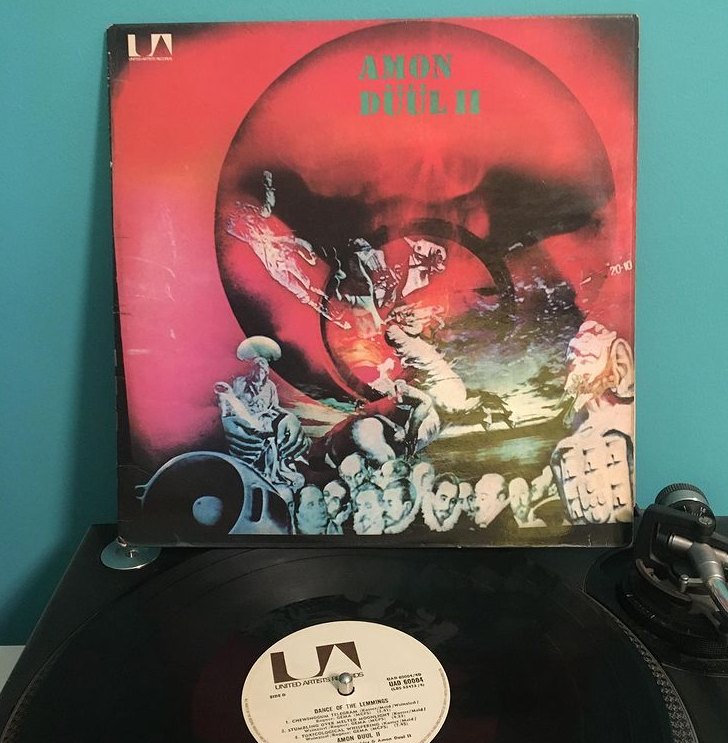
For those of you unfamiliar with the long-running Monolith Cocktail Social Playlist, this is Dominic Valvona’s eclectic and cross-generational imaginary and dream version of the blog’s radio show. It’s also a chance to show off his record collection, and the sort of music he’d play when DJing over the past thirty years. Expect the unexpected, as the oddities and the sublime rub up against each other on a curated playlist with no limits, no borders, and no one to please other than ourselves: we just hope you enjoy and share some of our tastes, or get switched and turned on to what we rave about.
Volume #53 includes the mad, bad and dangerous to know alongside turns from the post-pink, pub rock, jazz, Krautrock, psychedlic, garage, transient, soundtrack genres. Dominic also raises a glass to both the 50th anniversary of Amon Duul II’s Dance Of The Lemmings and the 30th anniversary of R.E.M.’s Out Of Time albums.
The Full Track List Is As Follows:
The Count Bishops ‘Down In The Bottom’
Viv And The Sect. ‘Blues Days’
Poison Girls ‘Underbitch’
Oblivians ‘Motorcycle Leather Boy’
Bailey’s Nervous Kats ‘Surf Express’
Avavikko ‘Alas Volgaa’
Jan Ptaszyn Wroblewski ‘Sweet Beat’
Ihre Kinder ‘Wrote’
Message ‘THOUGHTS’
Afous ‘Malha’
Ernie Hawks ‘Cold Turkey Time’
Phill Most Chill ‘This Is What It Is’
Lejuan Love ‘My Hardcore Rhymes’
Marley Marl & Craig G ‘Droppin’ Science’
Falle Nioke ‘Barke’
Exuma ‘Empty Barrels’
The Cutlass Dance Band ‘Odofo Na Aden’
Comadre Florzinha ‘Arauna’
Maria Monti ‘Il Pavone’
Freur ‘Matters Of The Heart’
The Sixth Great Lake ‘Ballad Of A Sometimes Traveller’
The Field Mice ‘End Of An Affair’
R.E.M. ‘Country Feedback (Live)’
Supreme Dicks. ‘In A Sweet Song’
Elysian Spring ‘2 & 2’
Dennis Farnon ‘The Trackers’
Compton & Batteau ‘Honeysuckle’
Bill Jerpe ‘Mrs. Frost’
Michael Bundt ‘Midnight Orange Juice’
Alphataurus ‘Croma’
Ruth Copeland ‘Your Love Been So Good To Me’
Peace and Love ‘Until’
Remigio Ducros ‘Fabbrica Vuota’
Amon Duul II ‘Chamsin: Toxicological Whispering’
Eroc ‘Abendmeer’
 Monolith Cocktail Blog