The Perusal #60: Anna Butterss, Niwel Tsumbu, TRAINNING + Ruth Goller, Donald Beaman…
October 10, 2024
A WORLD OF SONIC/MUSICAL DISCOVERIES REVIEWED BY DOMINIC VALVONA
(Unless stated otherwise, all releases are available now)

Anna Butterss ‘Mighty Vertebrate’
(International Anthem)
Branching out once more to lead a company of long-time collaborators on an expletory journey of groove and rhythm (because no matter what the concept, the theory, the strategy, this album has both), bassist and composer Anna Butterss fuses the likely and unlikely into a new album of expressive possibilities, landscapes and feels.
The scope of wandering into new worlds, conjuring up new moods and peregrinations is large. Mainly a result of wanting to write music after a long period of extensive touring, Mighty Vertebrate is a refreshing outlet of ideas prompted by Oblique Strategy-like stimulations. Hardly restricting, as I’ve already laid out, these strategies spark creative trains-of-thought, of process, methodology and performance. So, for example, as Butterss describes, they are “…going to make a song where the bass doesn’t function in the role of a bass”, or, “…make a song that uses groups of three-bar phrasing”. And so on. Technical yet simultaneously vague and even open-ended, this amorphous set of rules merely acts as a starting point: not only for the in-demand bassist but their foils as well. And despite all that technical musical language and the range of influences, sounds, ideas, the bass guitar (sometimes Butterss switches to the upright) is mostly recognisable: sounding on occasion quite funky (think Bootsy Collins) and soulful, rather than avant-garde and deconstructed.
Moving in the right-on circles in L.A., and very much in-demand for not only heading their own projects but collaborating and improvising with such notable names as Jeff Parker, Makaya McCraven, Phoebe Bridges and Jason Isbell, the Australian-born artist is a member of that city’s Small Medium Large super-quintet. Members of that same group now join their bandmate on their solo adventure, with both Gregory Uhlmann (on guitar) and Josh Johnson (on saxophone) contributing parts throughout alongside International Anthem’s (pretty much) in-house sound mixer, Call & Response concert series founder, in-demand drummer and multi-instrumentalist Ben Lumsdaine (acting as the album’s co-producer and percussionist). Added to that quality lineup, the L.A. based guitarist and composer, “prolific sideman”, oft member of the highly influential Tortoise and founding member of both Isotope 217 and the Chicago Underground, Jeff Parker offers up a special one-off turn on the electro 80s, Japanese new wave and jazz twiddling fusion ‘Dance Steve’.
Hints and recalls from all the above’s own groups, ensembles and projects can be heard at one time during the duration of Mighty Vertebrate. And why not? This is one talented bunch of players and innovators, working in a very hot scene right now; encouraged by one of the most prolifically brilliant labels of recent years in contemporary jazz and beyond. And yet it feels like a culmination of musical threads being put together, whether intentionally or just going with the energy, the directional prompts of the moment.
Across many of the tracks there’s a balafon-like bobble and shuttering woody percussive influence of Africa (Mali, perhaps Kenya too), a simmered down Afrobeat rhythm ala Tony Allen in places, and the saxophone of Peter King. This fuses with a Tortoise, Yoshiaki Ochi and Ramuntcho Matta vibe on the opening ‘Bishop’, and merges with touches of label mates Jeremiah Chiu And Sofia Honer, Antibalas and LAGOSS on the fluted and smoky sax serenaded ‘Shorn’.
The more gently inclined and peaceable ‘Ella’ reminisce takes a jazzier blues and American prog approach. And the following mirage shimmered ‘Lubbock’ (named after the Texan city with a famous son, Buddy Holly, and famously nicknamed “Hub City”) reminded me of both Daniel Vickers and Daniel Lanois. ‘Breadrich’ is a real mix, with its crunching more gnarly bass, Cobham fusion jazz inklings and Brides Of Funkenstein meets cosmic 80s Italian new wave vibes. And then at other times it’s more like Ariel Kalma, Chick Corea’s Elektric Band, Alfa Mist, Joe Zawinul, Coltrane, and Matthew Halsall. But regardless of all that, Butterss finds a near intuitive pathway of individuality that crosses borders, timelines, moods, musical signatures and structures to find rhythm and groove balanced by emotional pulls to important reference points and feelings in their life. I’m not even sure if you’d call it leading so much, but this solo gig proves a stimulating treasure trove of musical and sonic ideas with purpose and skill.
TRAINNING + Ruth Goller ‘threads to knot’
(Squama Recordings) 18th October 2024
Two connective forces in the experimental, inventive contemporary jazz scenes combine their experiences and art on this sonic and musical hybrid.
Although both participants have crossed paths previously, this is the inaugural adventure from the German drumming and saxophone combo of Max Andrzejewski and Johannes Schleiermacher and the serial UK jazz movement instigator Ruth Goller. Regular readers may have recognised the former pairing, both being synonymous with the HÜTTE name, an ensemble that began back in 2011, and featured on the Monolith Cocktail back in 2019 with their radical take on the music of Robert Wyatt. Born out of more recent rehearsals, the TRAINNING appellation has stuck for now, and it is in this form that they appear now – although that Northern European HÜTTE influence is hard to resist.
Goller’s CV is way too impressive and prolific to list in its entirety here, but the composer and bass player’s most notable credits include two of the most important and influential groups to set off a jazz renaissance in recent years, Acoustic Ladyland and Melt Yourself Down. Goller has also performed with such luminaries as Kit Downes, Sam Amidan, Marc Ribot and (Sir) Paul McCartney, and plays with both Let Spin and Vula Viel.
There’s enough threads, nodes and junctions in between to feed off, but both partners in this knotted tension and more spiritual, lofty, airy and aria-like ether Linda Sharrock “ah’d” fusion of influences and prompted sparks of inspiration read each other very well. Directed by, and riffing off, the “Exquiste Corpse” parlour game so beloved by the Surrealist movement, the trio of players expand beyond the jazz idiom into shadow worlds, the mysterious, supernatural, cosmic and near industrial.
Although popular in France amongst many circles, the Surrealists used the exquisite corpse game as a subversive collaborative drawing exercise in which each participant added whatever subconscious extension they could dream up to a chain of hidden images, the results of which when revealed could result in the weirdest of oddities. With the likes of grand doyen of the form, and way beyond, Max Ernst taking part alongside Dali and Miró you might have big bird’s plumage next to the shapely naked crossed legs of a muse and tennis racket feet. It’s used differently here however, generations on, and in musical form, with one of the players either writing bars or music, but then passing only the last bar, or sometimes only the last two notes, onto the next, then the same again to the next player and so on until a song’s skeleton was formed.
Far from exotic creatures and humans of dreams and nightmares, the results are a mix of chaotic freeform, post-punk prowling, the down beat, the foggy and the fourth world experiments and suffused atmospheres of Jon Hassell.
Both the TRAINNING lads also play synths and guitars, and so the range of sounds and instruments is expanded even further than sax, drums, voice and bass: sometimes towards the electronic. There are oscillations, arpeggiators and synth lines that hint at the kosmische and early analogue sound: from Conrad Schnitzler to Kraftwerk and Schulze. The guitars meanwhile have more than a hint of Marc Ribot about them, especially in passages on the hovering, alt-country ritual of ‘Backlog’ – this one is as disturbing as it is mysterious and vague with its post-rock doom threads, singular thumped drum, shimmered hazy rattle shakes of percussion and harmonic picks and plucks.
Elsewhere, old as dirt, ‘Agelong’ walks in the shadows of Scott Walker and Krononaut; the bass guitar, gnarled and trebly in a post-punk fashion, lurking and shaking in an atavistic gloom. And the messy off-kilter escalation that grows out of the opening electronics of ‘Threadfin’ is more like Last Exit and Peter Brötzmann. But then as the track progresses the mood changes again, merging math rock and punk no wave with Ethio jazz, veiled gauzy voices and instances of a more soothed Ivo Pearlman in a spiritual communion with Matana Roberts. By contrast, ‘Finback’ reminded me of Tortoise in some parts, and Donny McCaslin in others, whilst the dotted cone-like electronics that bring in ‘Lineage’ change shape and form, breaking out into a spell of Ill-Considered jamming with Nocturnal Emissions.
Pretty much out on the peripherals of jazz, ascending, flexing, rasping, soothing and breathing iterations and more untethered expressions of freeform music, TRAINNING + Ruth Goller fashion organic fusions from a process that promises the wild, tumultuous, wrangled and strange, yet also provides the melodic and dreamy.
Niwel Tsumbu ‘Milimo’
(Diatribe Records)
So, what does it sound like when a Democratic Republic of Congo born and raised virtuoso guitarist brought up on that central African region’s homegrown Soukous, studies the classical, relocates to Ireland, and finds themselves recording their debut LP at Peter Gabriel’s famous Real World label studios with the assistance of the renowned engineer Dom Shaw. Well, it sounds almost courtly, Iberian, Baroque, intricate, studied, and bluesy with a jazzy lilt and underlying feel of the homeland. For such is the range of Niwel Tsumbu’s skills as a deft and expressively rich maestro of the nylon-stringed guitar that the blending of international inspirations and absorptions is near effortlessly merged to create something quite unique.
Outlined in the press blurb, Tsumbu’s music and direction of travel is as influenced by the classical genius of Bach as it is by the Spanish Flamengo maestro Paco de Lucía and jazz deity Charlie Parker. Match this with the inspirational sounds of François Luambo Luanzo Makiadi, aka the legendary “Sorcerer of the guitar” Franco, one of the most influential figures in Congolese music in the last century (one time leader of the mighty TPOK Jazz band), and Congolese Rhumba’s more up-tempo and brighter, more intricately played scion/offshoot, Soukous, and you have a real worldly fusion of cultures at play.
With not much more than a guitar, and on only one occasion, a voice that seems to follow that guitar’s versant and twirling patterns, you can hear legato, glissando and the “rubato” (from the Latin for “stolen time”) signature of expressing rhythmic freedom by slightly speeding up and the slowing down the tempo forms of those referenced inspirations. It’s de Lucía, with a little Sabicas too, on the opening ‘Rubato’ reflection, and on the entwinned gypsy classical, plucked and pricked ‘Polyphony’; Bach, with touches of courtly old England on the trio of ‘Etude’ shorts; and Parker, joined by Wes Montgomery, on the near romantic dappled and picked ‘Tirizah’. The open-ended finale of watery motioned notes, ‘To Be Continued’, could be Bach resurfacing during the jazz age of 1920s America. And the sliding intro title-track has a nylon buzzy toned resonation of Mali blues to it.
The album’s most experimental performance/composition, ‘The Silence Within’, takes a completely different turn. A resonation of harmonics, a shimmer and rung pluck of notes hangs and lingers in the echoed canyons of Tsumbu’s inner sanctum.
With both a depth and real intricate lightness of touch to the often rapid, near seamless phrases, runs, articulations and intonations on this solo offering, and with a foot in both Africa and abroad, a classical learning is blended with a contemporary ear and musically well-travelled soul to produce a modern guitar gem.
Donald Beaman ‘Fog On Mirror Glass’
(Royal Oakie) 25th October 2024
The play and course of light, the recurring “phantom” and a beautiful subdued, nigh on elegiac poetry conjures up a simultaneous union of the beatific and longing on the latest solo effort from Donald Beaman.
Like a drifter’s songbook of subtle, intimate and home-recorded wanderings, metaphors and the like for yearned and plaintive romantic loss, fondness, the passing/measuring of time, and the urge to find comfort and solace, Fog On Mirror Glass uses memories of the weather, the way the light touched or dimmed at a given moment in time, and the smallest of witnessed movements/touches to evoke the right atmosphere of gossamer and sparsity.
Although backed on his previous four outings by a full band, Beaman has stripped right back, recording the bulk of the material in his own living room: where he sat and wrote most of the songs. Longtime stalwart Kit Land helped Beaman set up a makeshift studio of a sort, whilst also contributing bass and keys, and that room’s resonance and reverberated surface sounds can be heard throughout. It also gives the album sound an almost lo fi quality at times: in a good way. Yet despite that pared down approach, Beaman states that this album emerged from an idea he had to “present solo performances in conversation with full-band work”. And so, he brings in Michael Nalin on brushing and dusting light drum duties – occasionally those same accentuated, snare resonating rattled and languid drums gather some more pace and rhythm -, Jen Benoit to add a subtle and emotional touch of attentive backing vocals to the stairway of winding time, ‘Awhile’, and the yearned, disconsolate ‘Usual Phantom’, and Ken Lovgren on additional guitar for the slow-paced, fatigued title-track.
In a former life part of The Doubles band, and a mover on the turn of the new millennium New York City scene, Beaman has in one guise or another shared stages with a staggeringly impressive range of artists, from the late Jonathan Richman to Sharon Van Etten, Mdou Moctar and Marisa Anderson, and toured with an eclectic list of noughties influencers.
But his music, and in this instance, is like a Venn diagram of Cass McCombs, Bob Dylan, Bert Jansch, Jeffery Silverstein, Jake Xerxes Fussell, The Mining Co. and early Fleetwood Mac. However, the opening lovely trickled and drifted warmth and resonance of ‘Glass Bottom Boat’, formed in New York and finished once making it to his new home of North California, has an air of Robbie Robertson playing some Baroque or near Greek beauty on a mandolin about it – by the way, I don’t believe it is actually a mandolin being played on the record, just has that feel. A wanderer’s tale; an alternative aquatic floating road trip in the humid heat, it’s perhaps one of my favourite songs on the album.
Some songs also have almost a country and bluegrass feel to them, like the skiffle and shuffled “drawn by the light” ‘Old Universe’ – one of those themes of distilling the entire gravity of it all, the world, the universe, into a moment captured, a gesture, a turn or look in a very particular room, on the stairwell or in an idyllic but less than homely scene by a river. There’s also the inclusion of a church-like organ to add some kind of beatific bathed light on the Leonard Cohen-esque ‘Your Dreaming Eyes’.
In all, a most impressive and understated songbook of honest quality and performance, themed largely around the way light falls upon any given metaphor, analogy, phrase, description and texture. Unadorned, the feelings are left to pull and draw the listener into a most intimate world. Each play reveals more, as the album really begins to grow on you. A fine record indeed.
Rhombus Index ‘hycean’
(See Blue Audio)
Named after the hypothetical type of planet with liquid water oceans under a hydrogen atmosphere – in other words, a promising candidate for habitability -, Rhombus Index’s fourth album for the discerning introspective ambient and electronic label See Blue Audio reflects on the ever expanding, and encroaching, fusion of artificial intelligence and the organic. Sonically in wonderment, if near joyously radiant and positive in places, that relationship between nature and the digital is stimulating, regenerative and subtly hypnotically entrancing.
Back in solo mode after his collaboration with See Blue Audio label mate f5point6, the West Yorkshire artist and crafter of biomorphic worlds continues that “symbiotic” union by releasing his album on the same day as his foil. Both are similarly cut from the same kinetic ambient and electronic cloth it seems.
hycean however, has a certain life force of softly bobbing bulb-like notes, melodic wave forms, gentle ebbing synthetic tides, dancing atoms and dispersing playful pollen fizzes that builds towards insect wing fluttered and rotor-bladed itchy ticking techno beats. The natural shapes of geography are mapped out on a soundboard of the blanketed, submerged, the beaming and vaporous. In fact, the gentle ambient undulated ‘Coastal Curve’ uses a “sonification of coastal path measurement data” to evoke the desired effect.
Sometimes the beats are more active, like on ‘Flotsam’. Here they sound almost like some kind of transformed version of sticks or hand drums, or even tablas, tapping away in a near soft d’n’b style. ‘Digital Anemone’ (from looking it up, I’ve come up with “anemone” being the word for a genus of flowering plants in the buttercup family) doesn’t so much break out into but builds lovingly towards a joyful beaming dance of subtle techno and trance.
A musical photosynthesis; a sonic growth of fauna, flora and algae; hycean is both an audio and image generated fusion – see the videos and accompanying artwork – of crystallisation, the blooming and expanding: an image manifestation that shows nature in a very alien new light. Part Dr. Alex Paterson ‘Loving You Live’, part Seefeel, part eco trance, it will (excuse the pun) really grow on you with each new listen.
Poppy H ‘Wadham Lodge’
(Self-Release)
Haunted invocations of past lives and half lost and half hallucinatory recalled memories swim around in the metallic filament ether of Poppy H’s imagination on the mysteriously veiled experimental artist’s latest release.
In “celebration” of the cassette format – the first physically tactile album in a while from the prolific composer -, all the foibles of that format are emphasised and played with; from the degradation in quality, changes in speed, and the signature surface sounds of tape itself, to the physical presses of the stop, pause and play buttons on a tape recorder. Finding its way onto tape culture, the expletory concept and processes used to conjure up Wadham Lodge – apart from the name of the semi-professional East London football team Walthamstow F.C.’s home ground, and the Tudor era Wadham patrons who founded an Oxford Collage, I’m not sure if this title is borrowed, meant to be based on a real place or a reference, or made up – are new. Physical recordings of his catalogue of work, both old and unreleased, were played and mixed live simultaneously, and accompanied by original live improvisation and compositions. This multilayered process was then captured and mixed, like much of his work, on to a mobile phone.
An interesting and novel concept that results in Fortean transmissions, mirages and vague traces of human activity, conversations and environment. Greyed out, filtered and often in a lo fi magnetic shroud that borders on the paranormal and apparitional, more melodic tunes, mechanised beats and sonic illusions manifest from the mystical fabric of reconstructed time.
Memories are fed into a cryptic model of visitations and sonic consciousness. Take ‘loosely based on grief’, which merges the familiar – albeit manipulated and filtered – sounds of industry and the train yard contact points – the iron scuffed and screeched sounds of a train moving down the tracks – with a Faust Tapes-like foreign broadcast. Or the woody mechanical slot machine-like sounds that merge with a mist of a supernatural Murcof and the Aphex Twin and tweeting bird life on the time measured ‘wild stab in the dark’. From these prompts, these maybe half lingered forgotten thoughts of scenes and the moving world around him, emerge visages and emotions.
It’s the sound of the Boards of Canada, Matthewdavid, Lukid and Oberman Knocks half reminisced, and captured on to ghost tapes. Another unique experiment from Poppy H that elicits new visions.
The Galactic Cowboy Orchestra ‘Lost In Numbers’
(Independent) 11th October 2024
Losing themselves in the mathematical technicalities, phrasings and time signatures of a tumultuous, but kind and melodious, jazz-prog-country-indie-alt-rock fusion, the highly talented Galactic Cowboy Orchestra run the numbers forwards, backwards and every which way their dynamic performances take them.
Originally founded back in 2009 by bassist extraordinaire John Wright, imbued and prompted by the music of such notable influences as King Crimson, Mahavishnu Orchestra and The Dixie Dregs, the quartet have since fashioned their own form of technically challenging music that expands beyond the fusion sphere into all kinds of genres and moods.
The most recent iteration of the group features John’s wife and electric violin/lead vocalist foil Lisi Wright, drummer/percussionist Mario Dawson and acoustic and electric guitarist Dan Neale (who also occasionally picks up the mandolin, in true prog rock instrument switching style). Across various themes they masterfully gallop, spike and pique, riding a constant shimmer and splash of cymbals and percussion, as they fuse a squalling Michael Urbaniak and Jessica Pavone with Arti & Mestieri, a noodling Jaco Pastoruis and King Crimson: and that’s just on the opening title-track. When Lisi sings however, the mood is more like The Charlottes or Belly, even Madder Rose, backed by Zappa or Rush – see the math rock prog and alt 90s female-led ‘Righteous’ and more enchanting lyrical winding ‘Faith, Peace, Hope’.
To further the sound and influences even further, the group mimic the speedy flourishes and scales of the Raga Piloo on ‘In Passing’ – entwinning the traditional Indian form with ariel-like violin and active busy drums -, and sound positively supernatural, otherworldly on, what I take to be a tamed riff on Coltrane’s even wilder, maddening ‘Ascension’.
The Galactic Cowboy Orchestra’s new album (their sixth I believe) is for those seeking something different in the jazz and rock-fusion worlds, something as melodic and tuneful as it is technically clever and complicated.
Groupe Derhane/ freddie Murphy & Chiara Lee ‘Batch #4’
ALBUM (Purplish Records)
When not in the company of the celebrated Tuareg musician-guitarist Mdou Moctar (in a roll that includes bass, guitar, backing vocals, drum machine and producing duties) Mikey Coltun runs his Purplish Records label, dropping unconventional releases in “batches”: a singing of which is the already mentioned Moctar. With this unique method, Coltun twin’s artists from completely different backgrounds, international zones and genres, in a double cassette package.
Volume #4 really attracts polar opposites, with albums from both the Niger Tuareg band Groupe Derhane, fronted by Issouf Derhane, and the Italian experimental partnership of freddie Murphy and Chiara Lee, who also go under the name of Father Murphy, channelling Catholic guilt through natural and synthetic manipulation.
What unites both participants is a shared reification of the concepts, atmospheres and geographies of deserts; Derhane, with the most exquisite camel motioned rhythm and with that signature desert blues and rock guitar resonance, contouring and paying respect, whilst also longing, for the south central Saharan region of Ténéré (which in the Tuareg language literally means “desert”), and the Murphy/Lee duo scoring the overwhelming nothingness of the white desert landscapes of Antarctica for fellow Italian film director Lorenzo Pallota. Both works find their creators embedded in the landscape, performing and extracting the mood of the place.
With a remarkable back story of travails and movement, Issouf Derhane started off life in the Tuareg (though it must be pointed out, depending on who you ask, that many from this community of freewheeling Beaudoin prefer the term Kel Tamashek instead of the later Tuareg colonial loaded name) encampment of Tidene in Niger, a hub as it turns out for exceptional musicians, including Omara “Bombino” Moctar. But he was quickly swept up, we’re told, and itching to travel, ending up in Libya where he picked up the guitar. As the horrific, destabilising shitstorm of that country’s civil war broke out, and the Gaddafi regime tumbled, Derhane was forced to move once again, returning to Niger and the city of Agadez, the “gateway to the desert”, in 2015. This is where he met a fellow guitar enthusiast by the name of Mohamed. A connection was made, fuelled by shared roots, and together they formed the Groupe Derhane band, which quickly became a bit of a sensation in Tuareg circles.
Channelling a tumultuous time in the Tuareg plight, with the fight still ongoing for autonomy within the regions that spread across Niger, Chad, Mali and the Sahel, the increasingly alarming over-desertification and effects of climate change, and preservation of their way of life, the Derhane group encapsulate a longing and paean for home and their roots that sounds entrancing, beautifully and emotionally charged. The clapped rhythms, motions of the camel trail and shifting sand dune contours, and constantly turning, brightly resonating and buzz of the guitar are close to the sound of such Tuareg icons of the form as Faris, Terakraft and Tinariwen. It’s not mentioned in the notes, but I take it that both the opening ‘Tamidtin’ and closing ‘Ténéré’ are both riffs on or covers of Tinariwen’s songs, albeit with a less bassy and low vocal, more echo and brightness.
There’s a subtle use of the synthesized and electronic, which makes the reverberating and buoyant ‘Khay Tamadroyte Tamacheq’ sound near cosmic and throbbing.
The six-track showcase is an invitation to dig deeper, consume and absorb a burgeoning talent on the Tuareg scene.
Sharing this dispatches double-bill, the Torino-based sonic partnership of freddie Murphy (the lower case is intentional) and Chiara Lee channel a whole different kind of desert. More an isolated, white awe-expansive tundra, they transform the abstract forbode, mystery and overwhelming senses of vast Antarctica into a soundtrack for Lorenzo Pallotta’s experiences aboard an icebreaker. On his return from this field trip, the film director emphasised the shock of readjustment in a land where the sun never sets; where time has no meaning, or at least is hard to measure. Pallotta also described the vibrations, the breakage of the vessel as it cut through the ice, sounding like a constant earthquake.
All of this is fed into a soundtrack of the paranormal, primal, fogged, beastly and wonderous. Manipulated off-world readings, hums, surfaces noises, drones, dissonance and obfuscated voices provide the paranoid, the esoteric and a sense of movement through a world with no borders, nothing concrete but just space: lots of white space. Nurse With Wound, Throbbing Gristles, Gunther Westhoff and Szajner lost in the cold psychogeography, the Antarctic is as disturbing as it is a polar adventure vision of the Heart Of Darkness. But then the finale double of ‘Intermezzo + Closer’ sounds like an electronic kosmische scenery of Dinger and Cluster and cult Library music; the radiant magnetic lights of the southern hemisphere shimmy to a tubular dance.
Consider the mood set, the senses retuned.
Batch number four is yet another unique pairing of influences and sounds; two different geographies, different methods, yet both sharing a general theme of landscape and all the unsaid or unsayable abstract feelings, atmospheres that go with it.
Pyramid Waves ‘Screaming Brain’
(Syrup Moose Records) 18th October 2024
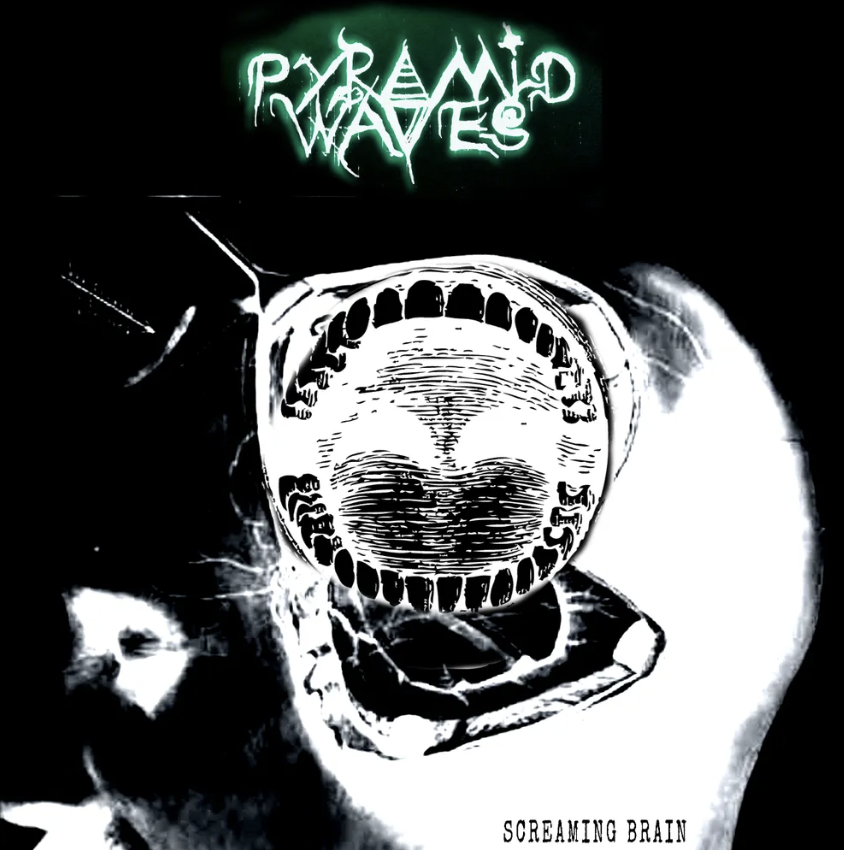
A cerebral haemorrhage; a blunt force of industrial sonics, caustic electronica and Fortean distress, the fifth work of traumatic discourse and dissonance from the French duo of Pyramid Waves drills into the four pillars of our dysfunctional modern society: that being, addictions, mental health, anxiety and cravings.
A bastard trauma of Front Line Assembly, Test Dept. and Merzbow, the Screaming Brain improvisations (recorded at their home studio) will leave you in no doubt as to the pained sufferings of its creators.
Demarcated into four parts of static white noise, analogue reverberations and interdimensional radio transmissions, crunch and crumbled beats, and echoed voices from some distant harrowing memory, doors to a tumultuous mind are opened to forces from beyond the mortal world. Because whilst the gristle for this album is all very real, the sounds grate, spin, switch towards a phantasm of the paranormal and alien. It’s as if a trapped psychogeography of echoing stresses and long dormant troubled episodes in the cortex has been wired into a supernatural apparatus of haunted and bestial sonorous severe disturbances.
Unsettling to put it mildly – especially the repeating dreamy melodic piano part that plays and meanders over a coarse bed of fearful distortion on ‘Trapped Underwater’ -, this uncomfortable but fascinating pull into the metal torture workshop of neuroscience squeals, slaps meat, drills and thumps its way to challenging and meeting its psychological demons.
If Richard H. Kirk, Richard James and SEODAH invoked Cthulhu whilst all in a room together, hunched over an apparatus of transistors, generators, motors, tools, drum pads and effects, then this is surely what it would sound like. Screaming Brian by name and nature, Pyramid Waves dissect the psyche of our troubling times, and the battles faced by the individual screwed-up by the system with horror and hurt.
Hi, my name is Dominic Valvona and I’m the Founder of the music/culture blog monolithcocktail.com For the last ten years I’ve featured and supported music, musicians and labels we love across genres from around the world that we think you’ll want to know about. No content on the site is paid for or sponsored and we only feature artists we have genuine respect for /love. If you enjoy our reviews (and we often write long, thoughtful ones), found a new artist you admire or if we have featured you or artists you represent and would like to buy us a coffee at https://ko-fi.com/monolithcocktail to say cheers for spreading the word, then that would be much appreciated.
Our Daily Bread 403: Bastien Keb ‘The Killing Of Eugene Peeps’
October 7, 2020
Album Review/Dominic Valvona
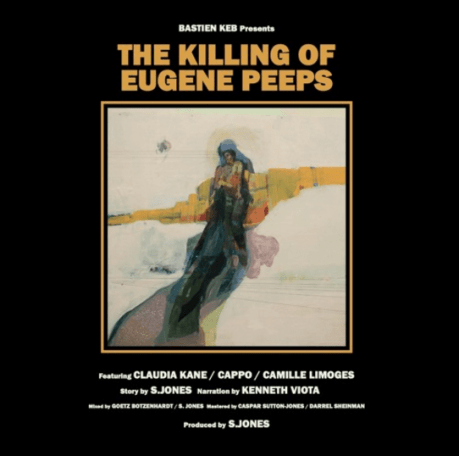
Bastien Keb ‘The Killing Of Eugene Peeps’
(Gearbox Records) 9th October 2020
The soundtrack to an American-noir-meets-Jackie Brown-meets-cross-continental-cult-60s movie that’s playing out in the head of Sebastian Jones, this ambitious suite of partly lulled and narrated cinematics, instrumentals and set pieces is as diaphanous as it is mournful. With a wide lens Jones (under the nom de plume of Bastien Keb) languidly drip feeds his fatigued melancholy, anxieties and deepest thoughts through a sorry tale of death and despair; as unveiled by a gonzo/Burroughs monologue style gumshoe, and sung, cooed by a fragile soul.
An ode we’re told to Italian Gallo paperbacks on screen, crime flicks of many other kinds and French New Wave cinema, The Killing Of Eugene Peeps mixes genres and influences up into a nostalgic opus that also has something to say about the draining mental stresses and indolent fatalism of the modern world too. Jones, using music as some kind of therapeutic outpouring, impressively managed to find the strength and will to create this impressive (if downbeat and aching) album whilst working a hard slog in a warehouse each night: The exhausting effects of which Jones says turned him into a zombie for a year.
The talented multi-instrumentalist, apart from guest spots by Kenneth Viota, Cappo and Camille Imogues, even played, recorded and produced this whole album single-handedly.
A work in three parts (the film score, soundtrack and incidental music), the dead-body-in-the-room Peeps is not so much told as a murder mystery but dissected in the form of soliloquys and resigned derisions on how this sad tragic event unfolded.
There’s plenty of title riffing on those crime flick inspirations, and musically Jones uses a leitmotif of nods to Lalo Schifrin, Issac Hayes, Alessandro Alessandroni and Krzysztof. A recurring San Fran/New York 70s detective movie and TV sound can he heard on the opening ‘Main Title’, which sounds like Hayes conducting an elegiac Corleone death march side-by-side with a New Orleans band, as a proto Tom Waits drawled figure narrates our city skyline information. Yet musically Jones moves on with the very next track, the soulful oozing pained ‘Lucky (Oldest Grave)’, which has an air of both a choral Clouddead (especially Yoni Wolf) and TV On The Radio about it. Sometimes the vocals are double-tracked, with one track being slurred as to sound almost drugged and lethargic. By the time we reach ‘Theme for An Old Man’ the brass and timpani detective noir is mixed seamlessly with jazz, soul and trip-hop (imagine Four Tet playing around with Portishead). And then the dreamy fluty gauze of ‘All That Love In Your Heart’ evokes some kind of 60s Italian or French flashback.
Echoes of dub, vibes, Ethno-jazz, Bernard Estardy, Miklos Roza, James Reese And The Progressions, Curtis Mayfield and hip-hop follow. Deft Nottingham rapper Cappo switches the narrative and sound, letting loose to a zappy 70s cult score with a consciousness left to roam freely flow on the ominous ‘Paprika’. A jazzy vision of Mike Patten and Jean-Claude Vannier’s creative partnership one moment, a wah-wah soul maverick cop score the next, Jones eclectic musicianship produces a modern noir both poignant and clever. All those various strands are pulled together for a sophisticated despair and eulogy, but also curiosity. This is a most beautiful, ambitious if often traumatic inquiry of a fully released drama, a filmic album of great depth and scope that has Jones channel his personal struggles to the soundtrack of poignant drama.
Monolith Cocktail Social Playlist #XLVII: Ennio Morricone, Art Decade, Voilaaa, Kahvas Jute…
July 15, 2020
PLAYLIST/Dominic Valvona
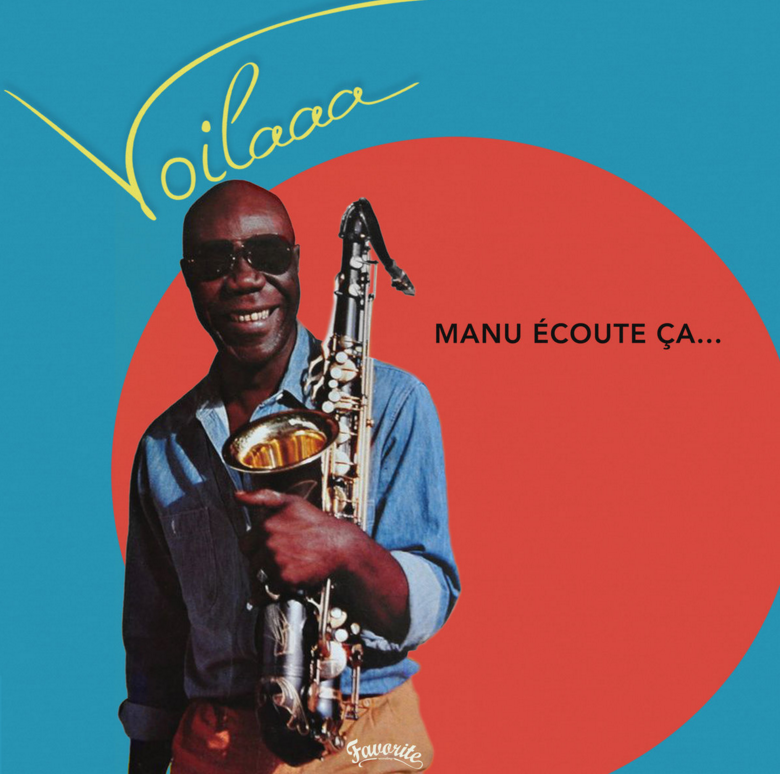
Welcome friends to another one of Dominic Valvona’s eclectic/generational spanning playlists; the Monolith Cocktail’s imaginary radio show. In practice this amounts to Dominic picking whatever he sees fit, including tributes to fallen idols and tracks from recent reissues. This month’s edition pays a small homage to the late Italian deity of soundtracks and composition, Ennio Morricone. Joining him in on this journey is Art Decade, Voilaaa, Kahvas Jute, Tono S., Pharoah Sanders, Electric Eels, Faris, VED, Abel Lima, The Staple Singers, Jerzy Milian and twenty-three other eclectic choice artists.
Listen how you choose, but each playlist is curated in a special order.
As usual, for those without Spotify (or boycotting it, pissed with it or whatever) you can find a smattering of videos from the set below the track list.
Track List:
Mike James Kirkland ‘What Have We Done’
Voilaaa ‘Manu ecoute ca…’
Pharaoh Sanders ‘Farrell Tune (live In Paris 1975)’
Tono S. & DJ Metys ‘Recept Na Uspech’
Lord Finesse with Sadat X and Large Professor ‘Actual Fatcs’
Weldon Irvine ‘Love Your Brother’
Ted Hawkins ‘Sweet Baby’
Tripsichord ‘The New World’
Kahvas Jute ‘Shes So Hard To Shake’
Country Weather ‘Boy Without A Home’
Orangutan ‘Chocolate Piano’
Jessamine ‘Inevitably’
Electric Eels ‘Sewercide’
Indianizer ‘Mazel Tov II’
Hypnotuba ‘Hubbubuzz’
Art Decade ‘Delta’
Ndikho Xaba ‘In Praise Of Women’
VED ‘Sture External’
Faris ‘Oulhawen Win Tidit’
Velvett Fogg ‘New York Mining Disaster 1941’
Group 1850 ‘Hunger’
Pisces ‘Oh Lord’
Yanti Bersaudara ‘Pohon Kenari’
DakhaBrakha ‘Vynnaya Ya’
Abel Lima ‘Aonte’
Ennio Morricone ‘Arianna’
Marva Josie ‘He Does It Better’
Gryphon ‘Mother Nature’s Son’
Robert Lester Folsom ‘Ginger’
Quiet World ‘Star’
Minami Deutsch ‘Sunrise, Sunset’
Uniting Of Opposites ‘Ancient Lights’
Jerzy Milian ‘Hausdrache’
Ennio Morricone ‘The Chase’
The Staple Singers ‘Washington We’re Watching you’
VIDEOS:
Hi, my name is Dominic Valvona and I’m the Founder of the music/culture blog monolithcocktail.com For the last ten years I’ve featured and supported music, musicians and labels we love across genres from around the world that we think you’ll want to know about. No content on the site is paid for or sponsored and we only feature artists we have genuine respect for /love. If you enjoy our reviews (and we often write long, thoughtful ones), found a new artist you admire or if we have featured you or artists you represent and would like to buy us a coffee at https://ko-fi.com/monolithcocktail to say cheers for spreading the word, then that would be much appreciated.
Monolith Cocktail Social #XXXV: Roger Bunn, Yasuaki Shimizu, Don Muro, Black Savage…
February 28, 2019
Playlist: Dominic Valvona Selects
I haven’t put together one of these selections in a while; in fact this, Volume XXXV, is the first Social of 2019. But in danger of repeating myself, for newcomers to the site here’s the premise of my playlist selections:
The Monolith Cocktail Social playlist is the blog’s imaginary eclectic radioshow, or DJ set, selection of throwbacks, missives, golden oldies and just cool shit; from across genres, timelines and borders. Previously only ever shared via our Facebook profile and on Spotify our regular Monolith Cocktail Social playlists will also be posted here on the blog itself.
Enjoy…
Tracks:
Don Muro ‘Camel Ride’
Toncho Pilatos ‘Wait’
Lula Côrtes e Zé Ramalho ‘Maracas de Fogo’
Keni Okulolo ‘You Can Only Live But Once’
Willie Dixon ‘Bring It On Home’
Otis Redding ‘Shout Bamalama’
Black Savage ‘Rita’
Little Mell ‘Ain’t That Funky Monkey Fonky’
Vijay Benedict ‘Kasam Paida Karnewale Ki’
Beat Connection ‘Silver Screen’
Les Garçons ‘Les Deux Amants’
The Nerves ‘Sex Education’
The Goats ‘Do The Digs Dug? (Todd Terry Mix)’
FU-Schnickens ‘True Fuschnick’
Farm ‘Sunshine In My Window’
Maya ‘Distant Visions’
Los Dug Dug’s ‘Lost In My World’
Assagai ‘Telephone Girl’
Black Zenith ‘Shango Oba Onina’
Fear Itself ‘The Letter’
Hand ‘The Load’
Bix Medard ‘Tabi’
Bullion ‘The Age Of Self’
Yasuaki Shimizu ‘Mari-Chan’
Sensations Fix ‘Barnhaus Effect No.3’
Peace And Love ‘We Got The Power’
Bongos Ikwue ‘One United Nigeria’
Society Inc. ‘Disc Jockey Jam’
Bossa Jazz 3 ‘Outra Vez’
Bola Johnson And His Easy Life Top Band ‘Jeka Dubu’
Luli ‘Ballero’
Marconi Notaro ‘Fidelidade’
Peter Schickele & Joan Baez ‘Silent Running’
Chuck & Mary Perrin ‘You Knew All Along’
J. Jasmine ‘Broke And Blue’
Anthony Moore ‘Stitch In Time’
Roger Bunn ‘Gido The Magician’
The Kinks ‘Time Song’
Our Daily Bread 281: Malawi Mouse Boys ‘Score For A film About Malawi Without Music From Malawi’
September 12, 2018
LP REVIEW: WORDS: DOMINIC VALVONA

Malawi Mouse Boys ‘Score For A film About Malawi Without Music From Malawi’ 21st September 2018
The cheek of it, yet sadly all too common practice of the film and music industries I’m afraid to say, the authentic sound of the much-loved and acclaimed Malawi Mouse Boys was unceremoniously dropped from the first ever Malawi feature film; replaced by the music of an ‘experienced’ composer from outside the country. The location and story of impoverishment is one the Mouse Boys know only too well: a group if anything that after seeing footage from the film felt they were even poorer than the stories poverty-stricken protagonist, whom they felt was actually well off in comparison.
Though unconventionally discovered by the Grammy Award winning producer, instigator and field recording maestro Ian Brennan (no stranger to this blog) at the side of a Malawi freeway selling barbecued mice skewered on sticks as a fast food pick-me-up for passing motorists (hence the group’s, as it turns out, self explanatory if odd nom de plume), their earthy gospel blues vocals revealed, caught on tape and subsequently beamed to a global audience, the Mouse Boys lives changed it seemed for the better; the revenue from their first LP showcase with Brennan He Is #1 making things a little more tolerable; enabling them the fundamental comforts of an air mattress, as opposed to sleeping directly on the hard dirty floor, English lessons and a bicycle. Despite this they remain embedded in the same community, but resented by some of their compatriots for the little success they’ve had but destitute enough to have no access to a reliable electricity source or running water. And two of the core quartet that emerged out of an originally wider circle of mouse-hunters and coal-hawkers (slightly safer than catching mice in the snake infested dangerous wild bush) from the Sunday Church imbibed community, have through desperation fled across borders to find work in an increasingly hostile-to-incomers South Africa.
In a country where most of the population live on less than a dollar a day, the Mouse Boys have at least reached out beyond their impoverished state and received a small compensation for their unique gospel imbued talents: Not the first Westerner to discover this community of phenomenal rough-around-the-edges singers and players, the revered producer is the only one to keep to his side of the deal, returning to Malawi and handing over every cent they’re due.

Saving what could have been a major financial setback for the group after they forked out the money and time to produce the material for a soundtrack that wasn’t to be, Brennan, who’s done more than most to facilitate and bring the music of isolated communities to an international audience (often as part of a healing process after various traumas; see his work in Cambodia and Vietnam), has helped to salvage their spurned material; collating an alternative cinematic score, releasing it as the Mouse Boys fourth official album. Of course the title says it all; instead of abandoning what is a highly supernatural otherworldly but also earthy dusty sketchbook of vignettes, fragments and longer pieces of mostly stripped-down-to-an-essence vocal and Musique Concrete – the real sources used to create an almost esoteric sound environment deriving from water buckets, a broken spoke, beer bottles, an alpha monkey’s call, shovel scrapes and a machete – that fateful ghostly soundtrack lives on.
Raw and atmospherically in-tune with the film’s premise, it would have been great to experience the audio and visuals together. But we are where we are. And we are asked to experience the sounds and music in isolation; our imagination left to fill in the blanks.
Track titles describe what would have been the film scenes; from the distant sonorous booms and crackle of the opening ‘Power Lines’ to the tool-clanging and ad hoc rhythmic patterns that emerge from clambering over a ‘Tin Roof’. Those celebrated gospel choral vocals, when they do appear (spread out between the more experimental environment soundscapes), are transcendent, plaintive and venerable. Making an afflatus call on the beautifully yearned hymn ‘Hunger’, or, tongue-clicking and soulfully gathered in ‘Hope’, the vocal chorus is as heavenly as it is earthy and sad.
Experimenting like never before there’s plenty of strange, sometimes eerie, sounds being used to conjure up both the spiritually alien and all too real tragedy of survival in Malawi. ‘Dirt Floors’ for instance stirs up a spindly, twanging synthesis of rustic blues from striking, scraping and pulling at and running up and down the frets of a homemade amplified and distorted guitar, whilst ‘Ghosts’ appropriately features an apparitional looming scene, produced in part from a chirping chorus of jarred bugs.
The Malawi Mouse Boys first leap into cinema may have hit the buffers, but with Brennan’s help they manage to save what is a most unique soundtrack from total obscurity. Few albums will sound as raw, remote or strange this year as this truly haunting, as it is beautiful and experimental, score.
Words: Dominic Valvona
Tickling Our Fancy 060: Park Jiha, Hampshire & Foat, Rodrigo Tavares, Flights Of Helios, Perhaps, Flora Fishbach.
February 20, 2018
DOMINIC VALVONA’S ESSENTIAL REVIEWS ROUNDUP
Reaching the sixtieth edition of my eclectic music revue – that’s roughly 500 albums over the last four years – I find an as ever eclectic mix of albums from around the globe; from South Africa to South Korea; from Brazil to Sweden and France.
Searching out the best or at least notable and interesting releases from the last month or so then, my latest circumnavigation includes the Brazilian composer/guitarist Rodrigo Tavares first album on the new Hive Mind Records label, the traversing amorphous road trip Congo, and the second soundtrack-like collaboration between Hampshire & Foat, the yearningly beautiful fairytale suite The Honey Bear. I also take a look at the ambitious debut album from the Oxford-based expansive indie pop and celestial electronic collective Flights Of Helios (Endings); the international debut release of Korean avant-garde, soundscape and minimalism rising star Park Jiha’s Communion; another numeral entitled free-jazz and Kosmische blowout from the USA trio Perhaps; the fourth album of matriarchal harmonious a cappella from the South African vocal group, the Afrika Mamas; a reissue of the obscure Swedish prog and heavy rockers Bättre Lyss’ 1975 private pressing Till Den Sträng Som Brast Än Att Aldrig Spänna En Båge; and the impressive ‘deluxe’ edition of the pop-revisionist chanson album À Ta Merci by French sensation Flora Fishbach.
Hampshire & Foat ‘The Honey Bear’ Athens Of The North, 28th February 2018

As with all fairy tales, the roots of these often enchanting stories lie in real psychological trauma and truths – forewarning metaphors aimed at finding happy endings, yet alerting to the dangers of a myriad of human failings: ones we all share by the way. The congruous partnership of jazz pianist/composer Greg Foat and ex-Bees multi-instrumentalist Warren Hampshire – both natives of the Isle Of Wight, which they use as a base, retreat and inspiration for much of the music on this their second album, as a collaborative duo, together – are ambiguous about the narrative that underpins the charmingly weaved The Honey Bear album, but the references and themes are all signposted well enough to be deciphered.
Based on an imaginative fictional children’s book, each instrumental track attributed to one of its chapters, The Honey Bear could be read in a number of ways; alluding as it does to sagacious rumination, the passing of time and seasons, innocence and of course the travails of addiction, the search for the magic elixir of life. You can substitute ‘honey’ for as many different substances and desires as you want; the kooky candy stitched honey bear that merrily jaunts into a magical if ominous woods on the cover may be all sweet and light, but that innocence is tested in the beautifully yearning bucolic soundtrack.
Foat – riding high creatively off the back of a stunning run of well-thumbed sci-fi novel and library music imbued jazz albums with the Jazzman label – and his Island compatriot Hampshire – no less accomplished, the former Bees band member turned in an equally adroit, articulate performance on the duos last highly praised collaboration, Galaxies Like Grains Of Sand – in what seems like no time at all, embark on their second peaceable relenting journey for the Edinburgh label, Athens Of The North. Always developing and exploring with each release, the duo take a romantic diaphanous traverse through the pastoral; a fantastical world of Ralph McTell folksy storytelling, Peter Ilich Tchaikovsky (Peter And The Wolf especially), both cult Eastern European dreamscape and Wiccan fable inspired English cinema of the 70s, the Jewish traditional music of Central Europe, and Kosmische (the fluctuating analogue synth whirling that undulates beneath the field recorded buzz of The Hive). An interplay that works well, featuring the string composed arrangements of Foat and Hampshire’s borderless guitar narratives, an album that was envisioned on the Jurassic coastline of Ventnor – about as far east as you can go in the UK – and added to in Edinburgh, travels well across national demarcations, picking up a myriad of inspirations on its 500 mile journey.
Following, what might be either a solace or (honey) trap, our lolloping protagonist starts this wandering album with a comforting patchwork accompaniment of gentle plush strings and the fluttery charming song of the flute; meandering towards the warbled and trilling bird call of a Brothers Grimm forest diorama – a certain ache and sadness subtly coming through a beautifully played suite. During an expedition to locate the honeyed prize, the listener is dreamily introduced to characters, the weather and metaphorical objects of desire and reflection.
Expressionistic pucks articulate the clawing scratch of Crow’s Feet – perhaps another analogy to ageing, for obvious reasons -, whilst the cliff or beach head environment – featuring real field recording sounds of seagulls, surf and of course a fly – of the wandering meditative beachcomber and his only companion in this isolated paradise, The Fly And I, feature the most subtle, minimal of acoustic guitar. Almost melancholic and heartbreaking in comparison, the stirring Winter Bound majestically sweeps in storm clouds, as the mood turns sentimentally mournful. Yet without doubt it is the album’s most painfully beautiful track. It doesn’t last long, this sadness, as the mood is lightened with the folksy down-the-rabbit-hole enchantment of Honey Dreams, and the entrancing evergreen Polynesian/South Seas floating The Elderflower. By the time we reach the closing Honey For A Penny, it feels like the clouds and sorrow have dissipated; the burden lifted, as we reach a sort of slow joyful release; played out to a fluttering ascendant flute and tranquil troubadour rhythm guitar.
Plush, often sumptuous, Hampshire & Foat continue to create beautifully articulated narratives and imaginary soundtracks for as yet unmade films. This children’s fairytale is certainly sweet and lilting, yet wise: analogy laden, waiting to be unpicked and interpreted. For Foat it proves a welcome escape from the jazz scene; a showcase for his arrangement skills – with the piano lid firmly shut on this project. For Hampshire, it is another gentle encapsulation of his wandering guitar compositions; unbridled free to roam where the mind takes him across cultures and time.
And to think, without the generosity of others via a crowd funder initiative this album might have never seen the light of day. Those who pledged have been well rewarded with a most gorgeous, yearning and evocative soundtrack.
Rodrigo Tavares ‘Congo’ Hive Mind Records, Available now digital release/Vinyl version 15th March 2018
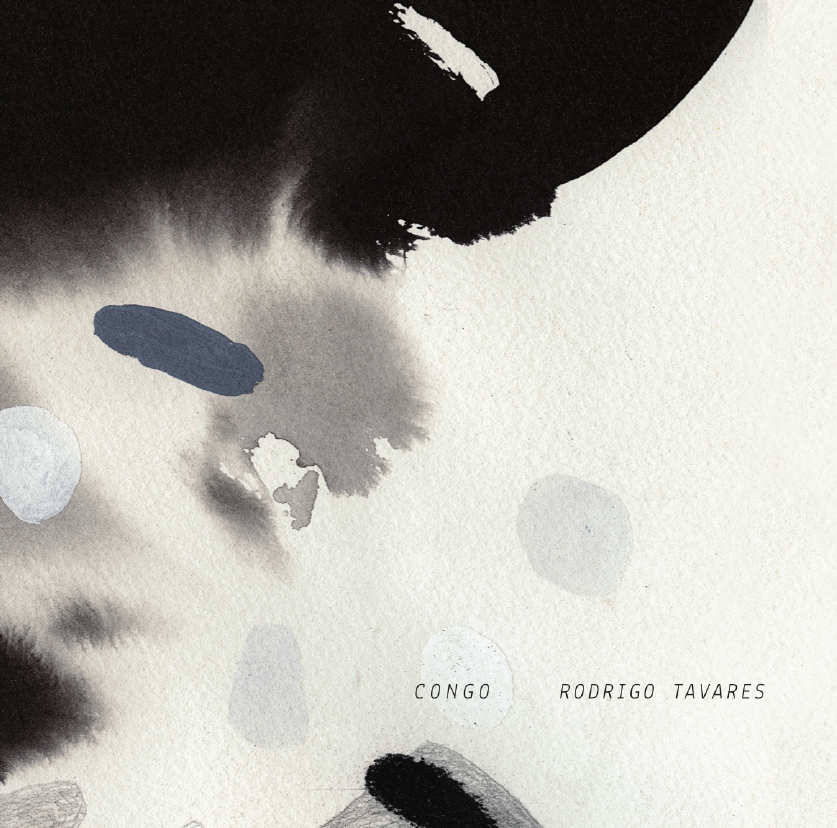
Far too early of course to define a burgeoning label with only two releases on its roster, but the new amorphous traversing post-rock and jazz travelogue from Brazilian guitarist/composer Rodrigo Tavares shares a similar meditative and spiritual yearn with Hive Mind Records inaugural Maalem Mahmoud Gania communion Colours Of Night.
The spiritual here is represented in Congo’s genesis; the catalyst for Tavares soundtrack inspired by, in part, a visit to the controversial ‘spiritual healer’ John of God – a medium, psychic surgeon of dubious repute -, who lives in the remote central Brazilian town of Abadiânia. The meditative, in this case, runs throughout the suggestive instrumental passages and vignettes that ponderously drift, cascade and ebb across a real and imagined borderless global soundtrack.
Tavares is joined on this ambiguous journey by a host of complementary musicians on accentuate sliding double-bass, brushed and sauntering drums, splashing, softly trickled percussion, octave ascending light Fender Rhodes, the subtlest of Ayers vibraphone notes, pining saxophone and a harmonic twanging, jazzy dreamy guitar.
Suffused throughout are lingering traces of ACT label jazz, minimalism, Tortoise post-rock, Brazilian legends Joâo Gilberto, Dorival Caymmi and Tom Jobim, and removed by quite a few degrees, a hint of the free-form untethered to any easy classification, evolving guitar experimentation of the Sun City Girls – as it happens a show in a remote former gay bar in Brazil by the same band was one of the stopovers on Tavares ‘transformative road trip’; the fruits of which and experience laying down the creative foundations for Congo.
Amorphous as I said before, though there’s no mistaking that South American influence, you could just as easily be anywhere along the Atlantic coastline splashing in the surf on the opening dreamy Rosa Rio, and be transported to Moorish Spain on the romantically mysterious sketch, Cidade Sol II. Still, there’s plenty of that Latin American vibe to be heard on these waterfall and mountain peregrinations; especially on the progressive movement A Raposa E O Corvo and the sauntering De Roda.
Truly transglobal, Tavares helps take Brazilian music – like his fellow compatriot Sentidor – into often trance-y, unburdened and unlabored directions. With few rough edges, this congruous soundtrack makes for a ruminating, thoughtful smooth journey.
Park Jiha ‘Communion’ tak:til/Glitterbeat Records, 2nd March 2018
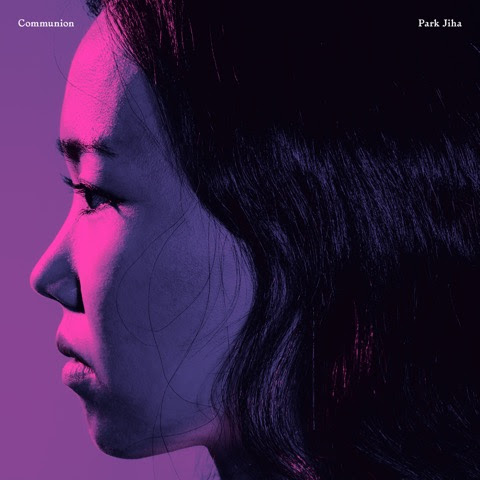
Circumnavigating the globe to bring much-needed exposure to new sounds, Glitterbeat Records imprint tak:til gives a second wind to a suite of acuity serialism from Southeast Asia. Released originally in South Korea in 2016, the neo-classical musician/composer Park Jiha’s debut solo album Communion is given an international release by the German-based label or repute.
Inspiring what we’re told is a burgeoning Korean music scene (well, an alternative to the K-Pop craze), a chief progenitor of the movement Jiha alongside collaborative partner Jungmin Seo originally melded the country’s musical heritage with an eclectic range of contemporary sounds as the 숨[suːm] duo in 2007. Releasing the highly influential regional albums Rhythmic Space: A Pause For Breath (2010) and 2nd (2014), Park and Seo crossed the time zones to perform at both WOMAD and SXSW.
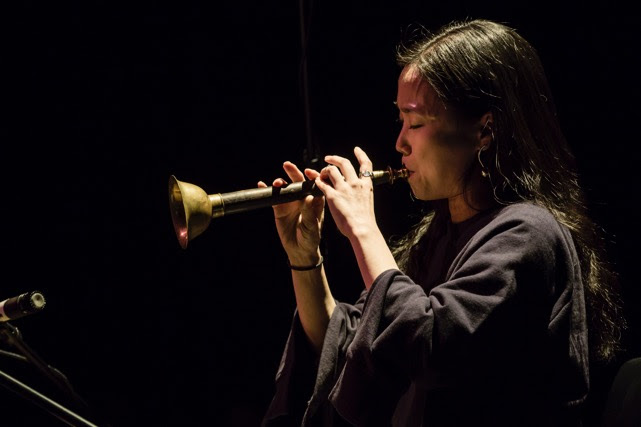
Congruously putting the duo on hold to explore a more ‘personal’ and minimalistic ‘musical vocabulary’ as a solo artist, Jiha dexterously balances the air-y abstract breathes of the ‘piri’ double reed bamboo flute, the searing twang of the ‘saenghwang’ mouth organ and the softly paddled patter of the ‘yanggeum’ hammered dulcimer in what is a dialogue between a dulcet calm, the meditative and an entangled dissonance.
Each of these instruments represents a different voice: each one expressing certain sensitivity or a sharpened pique. Along with the equally expressive accompaniment of Kim Oki’s trilling, wildly intense tenor saxophone and yearned bass clarinet, John Bell’s gentle resonating vibraphone, and Kang Tekhyun’s tubular trickling and rattling atmospheric percussion, Jiha’s untethered compositions also articulate the solemn of a holy retreat – the monastery in Leuven, Belgium to be exact; a space used by Jiha’s band to rehearse -, the flow and cascading beauty of water, reverberations from the moon, and the passing of time itself – measured out on the fluctuating rapid movement of a seconds hand and the slower candor tick of an hour hand on the springs, cogs and coil microseism, Accumulation Of Time.
Quite tender in the beginning, each track builds a poetic minimalistic and avant-garde jazz interplay between all the numerous traditional instrumentation. It must be said that the tenor sax takes a leading role in piercing the serene and often majestically plucked performances of Jiha, pleading and occasionally pained, even squealing as it does in aching ‘communion’. Sometimes hypnotic, sometimes at a fever pitch of discordant beauty, a balance is cleverly struck between intensity and the attentive. At its most quiet and abstract, you can hear the most delicate of controlled breathing, blowing across the reed. At its most liberated, set free, those same breathes become harsh and attacking.
Transforming Korean traditions into a more experimental language that evokes the avant-garde, neo-classical and jazz yet something quite different, Park Jiha’s tranquil to entangled discourse evocations reach beyond their Southeast Asian borders both musically and metaphysically into something approaching the unique.
Afrika Mamas ‘Iphupho’ ARC Music, 23rd February 2018

Released in the year of what appears to be pique matriarchal fight back in the West, the gorgeous sounding 6-piece a cappella group Afrika Mamas remind us of the travails and hard won freedoms of women from outside the European and North American bubbles. In a year in which we rightly celebrate the achievements of the Women’s suffrage movement in attaining the ‘vote’, the indigenous women of South Africa would have to wait an age longer to not only get that same vote but to also overthrow the entire Apartheid system that had, until the 1990s, kept them segregated by race. Though Nelson Mandela rightly stands as the bastion of reconciliation and unity, the right leader at the right time as history would have it, it is the strong prevailing character and struggles of the country’s matriarch that deserves recognition now; celebrated and cherished on the Mamas’ fourth album together, Iphupho.
Mandela’s legacy can’t help but cast an omnipresent shadow over everything in South Africa; especially as his party have failed in many ways to build on his foundations, with talk of high-level corruption and a ruling government that over the past year has fought to remove the controversial President, Jacob Zuma – who as this goes live has since resigned and stepped down, replaced by the ANC candidate and Deputy President Cyril Ramaphosa, in the face of mounting opposition and an untenable position caused in part by his connections to the wealthy, Indian-born Gupta family. From the most beautiful soprano to the contralto bass, the all-female close-harmony group pays an almost effortlessly soulful paean to ‘Madiba’; Sister Zungu’s penned tribute, which borders on the gospel, touchingly thanks the late leader for bringing, amongst other things, free education to children in primary schools and for getting free school uniforms and food for those children from the most deprived families.
Iphupho meaning ‘the dream song’ is itself a reference to the Mamas’ own struggles and ambitions in bringing the Zulu heritage to a wider audience. Made-up of single mothers from Durban striving to make their way in a male-dominated industry, the ladies hope to emulate the success and reach of the four times Grammy award winners, Ladysmith Black Mambazo. Vocal wise they are sensational; perfectly pitched, pure and soothing.
The stories, anecdotes and themes of their songs highlight the daily lives and practicalities of survival in a climate of injustice and poverty; exasperated by the hindrance of the menfolk. Despite being tired in some cases of men – Ulwabishi (which means ‘rubbish’), penned by the group’s Sindisiwe Khumalo, makes a languidly cutting disapproval of those men who don’t support their families; instead hanging around, causing a nuisance and not looking for work, yet demanding their food on the table when they dictate – the group recorded this latest album at the famous Sibongiseni Shabalala co-founded United Rhythm Studio with top world music producer and maskandi tradition guitarist Maghinga Radebe. The lyrically named Shabalala is of course the son of Ladysmith Black Mambazo founder and former musical director Joseph – a group he himself joined. That influence can be felt suffused throughout Iphupho with the ‘a cappella’ style they’ve adopted, the ‘isicathamiya,’ a predominantly male vocal Zulu tradition. Those traditions, rolling back and forth from the lead call and backing chorus response are evoked on the lush veld-rolling lament to the plight of the KwaZulu dwellers of Natal on Lapha KwaZulu, and soothing lullaby heartache of ‘my mum is ill’, uMama Uyagula.
Enjoying a real momentum musically and culturally over the last decade, with South African artists as diverse as Die Antwoord, Dope Saint Jude, Spoek Mathambo, and scenes like the Shangaan Electro craze, a small but interesting touch of the contemporary makes its way into the Mamas more traditional rootsy vocal music with the guest appearance of leading South African beatboxer Siyanda Pasgenik Makhathini. He adds a down tempo sort of trip-hop meets R&B percussive rhythm to the Mamas’ graceful if ominously low harmony Ispoki – a song penned by group member Sibongile Nkosi about her father’s belief in the ‘bad spirits’ that make a nuisance of themselves outside his home at night. The only other accompaniment (the only actual instrumentation) is the jangle of percussion and a smattering of hand drums on Ulwabishi from Ayernder Ngcobo. Other than that it’s all down the clear lush, tongue-clicking and strong bass vocals of the ladies.
Highly impressive, articulated beautifully and at times spiritually soaring, the Afrika Mamas thoroughly deserve a place on the global stage. They bring a much-needed perspective, strong and defiant yet achingly blissful and majestic.
Flora Fishbach ‘À Ta Merci’ Blue Wrasse, Available Now

The French music press we’re told have fallen hook, line and synth for the alluring contralto voice of Flora Fishbach, who’s 80s revisionist pop twist on chanson oozes with such sophistication that its difficult not to embrace. Fishbach picked up the album révélation award at the Le Prix des Indés for best independent debut LP, winning high praise and plaudits galore ever since. Looking to make a similar impact across the Channel, the ‘bohemian darling’ has just released a deluxe edition of her electro pop requiem À Ta Merci. That decision is more or less echoed in the album’s title, which translates as, “at your mercy”.
Featuring the original running order and a bonus septet of gorgeous live recordings, this aloofly chic, yet theatrical, and especially when performing, animated, album recasts Françoise Hardy as a disco pop and electro swooned crooner. Effortlessly channeling the vaporous dreamy pining of Kazu Makino on the moon dust sprinkled fantasy title-track and ambient textured, synthesizer bas bubbling yearned lament Un beau langage, and a Gallic Alison Goldfrapp on the opening ice-y cool malady Ma voie lactée, Fishbach adds a French nuance and sensibility to the synthesized pop ascetic: a signature you could say that despite the revivalist backing of electronic drum pads, post punk sass, Moroder arpeggiator, Rococo harpsichord and hi-energy is unmistakably contemporary and French.
À Ta Merci is a warm album despite the clandestine thriller backing of songs such as the haunted, bell tolled theatre Feu; the soundtrack skipping and modulating through Clavinet boogie, Madonna (the earlier queen of MTV era), Chateau opulent disco, Air and even the fathers of French synth pop, Space.
The bonus material is by contrast, and for obvious reasons stripped of its cleaner production, more intimate with a harder edge. The title-track, recorded at the famous and fateful Bataclan in 2017, maintains a full backing but sounds purposeful; Fishbach sounding emotionally raspy and poised on a version of the original that features an almost venerable pause. Live Le Meilleur de la fête becomes a post-punk Bowie tangoing with Talking Heads. The venerability on these live performances is at the forefront, emotionally starker and raw.
In an industry burdened by a zillion synth-pap artists it will really take some effort from an individual voice to break through. With the momentum already building in France and with the recent runaway success of music press darling Christine And The Queens (who I personally find utterly dull) I’m sure the UK will embrace this sophisticated chanteuse. She’s certainly impressed me enough – what’s not impressive about referencing the philosophical aloof quandary that is Rimbaud’s “Je est un autre” (“I am another”) on a tropical slinking crystalline pop song, Un Autre Que Moi (“Another Me”) – to recommend her as one to watch in 2018.
Flights Of Helios ‘Endings’ Available now
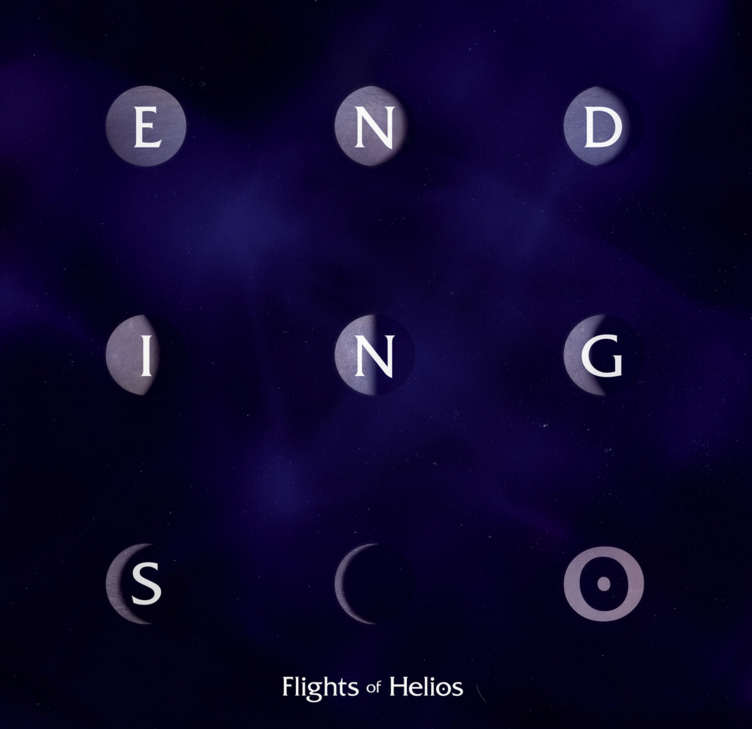
Full on expansive; up amongst the mythological heavens that have inspired the Oxford collectives Titan harbinger of the sun band name and lyricism, Flights Of Helios go deep and spatial on their debut album, Endings.
A credible Everything Everything. A space pop indie band with metaphysical intentions dreaming big, Flights Of Helios bring together a quintet of musicians, producers and composers with backgrounds in a wealth of genres: Seb Reynolds (no stranger to this site) on sonic layering and production duties, Phil Hanaway-Oakley on bass and vocals, Chris Beard on lead vocals, James Maund on guitar texturing and James Currie on drums.
Featuring both previous singles and new material, Endings flights of panoramic fantasy are certainly ambitious; an epic undertaking from a collective who’ve previously honed their balance of space rock, drones, indie and post-rock on a number of celestial transcendental remixes and projects. Far more interesting when touching on the venerable, alluding to spiritual, heavenly or otherworldly elements than when more grounded, the Helios sun worshippers sound like Kasabian on the motorik shuffled cyclonic Factory – a lyrical response we’re told to the Spanish auteur Alejandro Iñãrritu’s convoluted film Biutiful – and an esoteric Klaxons on the haunted, brooding implosion to the enchantress folkloric demons Succubus – who take, so the legend dictates, on the form of an alluring seductress to reel in their male prey. Both of these tracks, previous singles, have more of an urgency and thump about them, whereas the rest of the album’s quartet of, often vulnerable, opuses are allowed the time and subtlety to expand.
The opening twelve-minute Donalogue, a transmogrified version of the traditional a cappella Irish folk ballad, builds and builds. This oscillating cosmological hymn to spurned love introduces us not only to each of the collective’s individual components and the building blocks of the Helios sound, but also the angelic choral quality of Beard’s lofty vocals. Swooning, often fragile, and at times not even decipherable – uttering vowels and mouthed shapes instead of words – Beard stretches his range, helped by Hanaway-Oakley who also provides support.
Remodeling another key influence, alongside atavistic Celtic inspirations, they turn the Bleeding Heat Narrative’s Cartographer track into a hallowed ethereal eulogy. Lingering in a plaintive beauty of angel-kissed whispery synth, reverberated vocals and slow drums, this trance-y swansong sounds like I See You era XX, the Arcade Fire and A Dancing Beggar in a holy communion.
Lolloping in a constant swill of stormy tides and paranormal Gothic metaphors, one of the album’s most striking tracks, Funeral, pitches esoteric Americana and progressive electronica on the high seas. Bashing against the rocks in a barrage of swells, what starts out as Depeche Mode and Radiohead slowly builds like an improvised trip into energetic psych garage.
Evolving within the perimeters of each track, Funeral encapsulates the organic transformations that propel the group forward into such epic grand spaces, creating cerebral sensibility escapist music for a pop and indie audience. Rather than ‘endings’, Flights Of Helios have produced the sonic building blocks for a glowing future under this their most panoramic collective umbrella.
Bättre Lyss ‘Till Den Sträng Som Brast Än Att Aldrig Spänna En Båge’ Sommer, February 22nd 2018
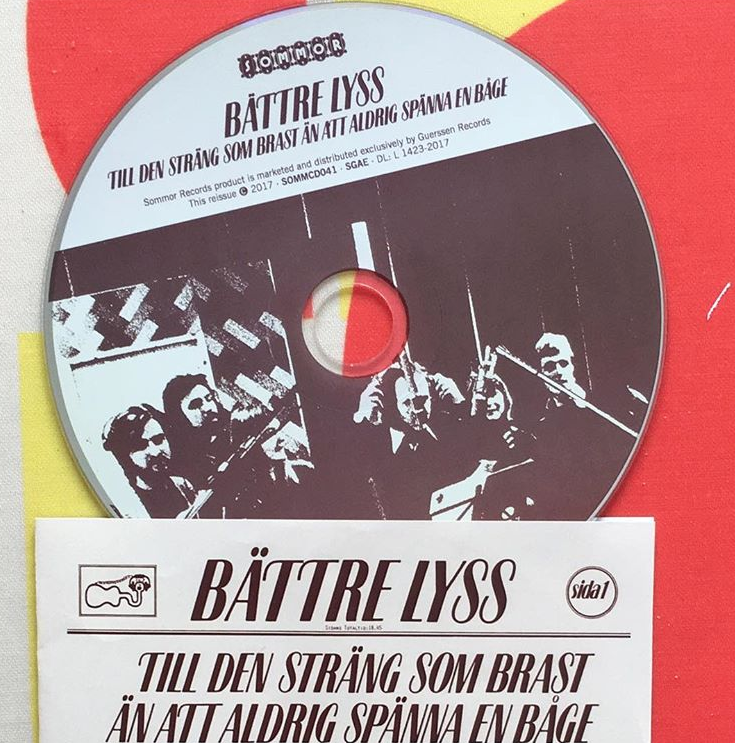
From a label I’ve previously had no experience with, another rarity from the 70s Swedish heavy and progressive rock vaults to drool over with the first ever reissue of the obscure Bättre Lyss group’s private pressing Till Den Sträng Som Brast Än Att Aldrig Spänna En Båge.
Notable for featuring guitarist Anders Nordh of LIFE fame (check out their highly impressive self-titled album from the early 70s) as an outlier member of the Bättre Lyss core trio of Rolf Hammarlund (vocals, bass), Christer Palmquist (vox, acoustic guitar, piano) and Rolf Johansson (drummer and songwriter), the group adopted a whole myriad of rock music influences on this rare find: the soft kind, the glam kind, the progressive kind and the American West Coast psychedelic heavy kind.
Formed during 1973-1974 by mutual friends Hammarlund and Palmquist, the duos first furors together were written in English. Johansson joined just after they switched to singing in the native tongue, and in time to record the group’s debut album, released a year later in ’75. Bolstered, as you will hear, by a number of talented extended pals on guitar, saxophone, flute and organ the group attempt in their own inimitable way to do justice to soft rock power balladry and epic rock outs. Sounding at any one time like 1st era Bee Gees cutting up rough with Spirit on the energetic opener Göta Lejon, or a Scandinavian Bread on the following heart-yielding Emma, or indeed King Crimson on the slightly menacing, slinking saxophone keen Vapnet, they seem to change the nuance and adapt their sound to each song. And so at times it sounds more like a collection of recordings than complete album. The only constant in fact is the often enervated, softly sweet vocals, which do, it must be said, occasionally soar and utter anguish.
Though I can’t fault the musicianship, and there are more than enough convincing, if sentimental, songs to grab you on this album, they can’t help but bare an uncanny resemblance to Blonde On Blonde, Savoy Brown, Forest, Humble Pie, Mott The Hoople, even Boston, throughout. There’s a total of four guitarist too, each one displaying telltale signs of riffage and refrains, bends and pleading lines from the era.
Lilting and flowing between troubadour piano and full-on progressive jamming, this more than competent Swedish slab of rock is well worth reviving. It also offers another look at the, probably largely unnoticed, developments in the Swedish head music scene; picking up what is essentially a rare marriage between the heavy stuff and a more commercial melodic sensibility.
Perhaps ‘V’ Cassette version available now via Important Records, Vinyl also available now, via Riot Sunset
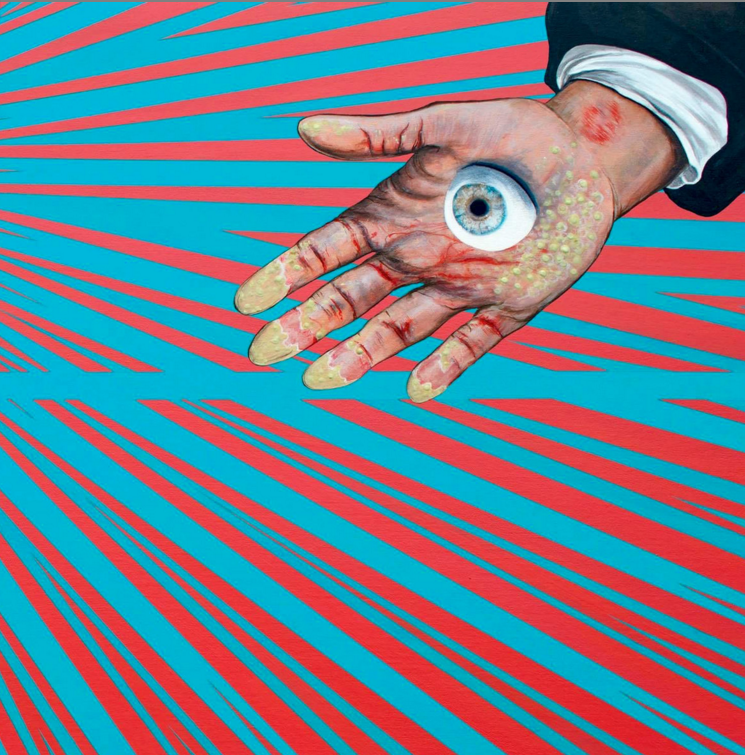
I can’t be expected to keep tabs on every exciting, mad or Kool-aid chalice glugging band from a scene that is over-subscribed with a landfill sites worth of promising, but quickly disappearing into obscurity, releases. Of course it doesn’t help that the psychedelic-Krautrock-Kosmische-whatever genre is also filled with the most unimaginative and cover-band like pastiches of groups that originally did it so much better. Yet once in a while, finding its way into my inbox, there is a rare find. For ‘head music’ aficionados then, a three-piece of Teutonic, free-jazz, cosmic explorers from Boston, Massachusetts known as Perhaps – an open-ended moniker, without a question mark in sight, that alludes to possibility.
Scant information is provided, only that their origins go back as far as the year of their debut album, Volume One, in 2012, and that the line-up comprises of ‘ringleader’ and bassist Jim Haney, drummer Don Taylor and guitarist Sean McDermott. Unsurprisingly picking up on a few inspired vibes during their collaborations and tours with the rambunctious Acid Mothers Temple and one-time shaman poet Can member Damo Suzuki, Perhaps go all out free-spirited psychedelic and Kosmische on their fifth numeral entitled album V.
The sole track of this album performance, Mood-Stabilizer is a thirty-seven minute continuous ebbing and flowing contortion jam of floating louche saxophone, fret scratching and tangled guitar, and stop/start drums that hints at the Acid Mothers (of course), Brainticket, Guru Guru, Embryo, Agitation Free and in one particular segment, a Mogadon drugged Amon Duul II.
From topographic submerged guitar pangs to tubular fuzzy vortexes and squalls, the trio travel via the primordial soup to gaze into deep space. Moving like a liquid and gaseous entity throughout a combined atmosphere of wafting, languid jazz and more dissonance fuzz frazzling waves of spiraling noise, it’s surprising to hear them meander, almost sexily, into slow jam Funkadelic territory in the first third of this meta space exploration. Whilst at their most heavy they slip into PiL.
Honing their own signature interpretation of the music that so inspires them, Perhaps’ oscillating heavy, Ash Ra commune trip shows a real depth and intelligence; a group sucked in the portal, taking their time to build a space-rock, free-jazz blowout of a journey. Enjoy hitching a transcendental ride into the deepest trenches of contemporary ‘head music’: no ticket required.
 Monolith Cocktail Blog