The Monthly Playlist for October 2024
October 31, 2024
CHOICE MUSIC FROM THE LAST MONTH ON THE MONOLITH COCKTAIL: TEAM EFFORT

The Monthly Revue for October 2024: Sixty choice tracks from the last month, chosen by Dominic Valvona, Matt ‘Rap Control’ Oliver and Brian ‘Bordello’ Shea. Features a real shake up and mix of tracks we’ve both covered in our review columns and articles over the last month.
We’ve also added a smattering of tracks that we either didn’t get the room to feature or missed at the time. Covering many bases, expect to hear and discover new sounds, new artists. Consider this playlist the blog’s very own ideal radio show: no chatter, no gaps, no cosy nepotism.
tRaCkLiSt
Anna Butterss ‘Bishop’
Peter Evans w/ Petter Eldh and Jim Black ‘Fully Born’
Juga-Naut ‘Two Thousand’
Mark Ski & Katiah One ‘I’m A Gamer’
Hemlock Ernst & Icky Reels ‘Break Time/In The Factory’
The Eurosuite ‘Bagman’
Not My Good Arm ‘Let em burn’
TRAINNING + Ruth Goller ‘lineage’
SCHØØL ‘The End’
Cosmopaark ‘Olive Tree’
Sassyhiya ‘Boat Called Predator’
Paten Locke & Dillon ‘JustRockin’
Sadistik & Alla S. ‘Figure with Meat’
Philmore Greene ‘Money Over Vegas Story’
Habitat 617 & DJ Severe ‘Soundclash’
Mr Slipz, Vitamin G, Jehst & Farma G ‘The Internet’
Rev. Eddie James and Family ‘Jesus Will Fix It’
Khalab ‘I Need A Modem (Nihiloxica Remix)’
Distropical ‘Independent Cricket League’
Greentea Peng ‘TARDIS (hardest)’
Che Noir & Rapsody ‘Black Girl’
Exterior ‘Boreal (Edit)’
Elea Calvet ‘Don’t make me go’
Juanita Stein ‘Mother Natures Scorn’
The Tearless Life ‘Beyond the Thread the Spinners Span’
Newburg Radio Chorus ‘Stand Up for Jesus’
Donald Beaman ‘Old Universe’
Groupe Derhane ‘IIkmge Tillnam’
The Poppermost ‘I Don’t Want To Know’
The Armoires ‘Ridley & Me After the Apocalypse’
Mike Chillingworth ‘Friday The Thirteenth’
Rachel Eckroth & John Hadfield ‘Saturn’
Niwel Tsumbu ‘Afrique Moderne’
Annarella and Django ‘Aduna Ak Asaman’
Alex Stolze ‘Tumult’
Violet Nox ‘Umbre’
Rhombus Index ‘Giiflora’
freddie Murphy & Chiara Lee ‘Terra Nova Part II’
Suumhow ‘E’
Cumsleg Borenail ‘Words Formed Around Swollen Gums Then Puked’
Yellow6 ‘Restart’
Max Jaffe ‘The Droopy’
Kungfoolish ‘Guns Down’
Skuff ‘Doozie’
Habitat 617, Lee Ramsay & Scorzayzee ‘The Settlement’
Sonnyjim, Giallo Point & Farma G ‘Exotic Cough’
Wish Master & Sonnyjim ‘Crème de la Crème’
Aidan Baker & Stefan Christhoff ‘Januar Pt.4’
Ex Norwegian & John Howard ‘What Are We Doing Here?’
The Junipers ‘While You Preside’
The Smashing Times ‘Mrs. Ladyships and The Cleanerhouse Boys’
Yaryu ‘Gandhara’
The Bordellos ‘I’m A Man’
Farma G & Jazz T ‘In Between The Lines’
The Expert & NAHreally ‘Sports!’
Wish Master, Kong The Artisan & Datkid ‘Masterpiece’
Jabee & Marv Won ‘Money Ain’t Everything’
Sparkz & Pitch 92 ‘Start And Show’
Clbrks & NickyDiesel ‘ADIOS’
Newburg Radio Chorus ‘Calvary’
Hi, my name is Dominic Valvona and I’m the Founder of the music/culture blog monolithcocktail.com For the last ten years I’ve featured and supported music, musicians and labels we love across genres from around the world that we think you’ll want to know about. No content on the site is paid for or sponsored and we only feature artists we have genuine respect for /love. If you enjoy our reviews (and we often write long, thoughtful ones), found a new artist you admire or if we have featured you or artists you represent and would like to buy us a coffee at https://ko-fi.com/monolithcocktail to say cheers for spreading the word, then that would be much appreciated.
The Monthly Playlist For September 2024
September 30, 2024
CHOICE MUSIC FROM THE LAST MONTH ON THE MONOLITH COCKTAIL: TEAM EFFORT

The Monthly Revue for September 2024: Fifty choice tracks from the last month, chosen by Dominic Valvona, Matt ‘Rap Control’ Oliver and Brian ‘Bordello’ Shea. Features a real shake up and mix of tracks we’ve both covered in our review columns and articles. We’ve also added a smattering of tracks that we either didn’t get the room to feature or missed at the time. Covering many bases, expect to hear and discover new sounds, new artists. Consider this playlist the blog’s very own ideal radio show: no chatter, no gaps, no cosy nepotism.
TrAcKliSt
David Liebe Hart ‘James Earl Jones’
Mosik Rhymes & Tha God Fahim ‘E.S.P.’ – this month’s cover art
Seez Mics & Metermaids ‘Walter Wrong’
Kong The Artisan, Essa & Phat Kat ‘Get Nasty’
Etran de L’Air ‘Amidinine’
Carmen Souza ‘Amizadi’
Daniel Inzani ‘Beyond The Pale’
Zerrin ‘Spring Cleaning’
Black Artist Group ‘For Peace And Liberty Part 2’
Michal Urbaniak ‘UrbTrap’
AINON ‘Komorebi’
Derrero ‘Painting with Sound’
Neon Kittens ‘Lika Like’
SHITNOISE ‘Gum Opera’
The legless Crabs ‘Piercings And Tattoos’
I do You do Karate ‘Jabiru’
Cuushe ‘Faded Corners’
Inflatable Men ‘He’s Going Out With Marilyn’
Inre Kretsen Grupp & Prins Emanuel ‘Volta Semantron’
Phantom Handshakes ‘Dusk Enchanted’
Xeno & Oaklander ‘Via Negativa (in the doorway light)’
Beauty Stab ‘Use Me As Bait’
Wings Of Desire ‘OTTAMYMIND’
Nonpareils ‘Bring It On’
Short Fuze & 4Most ‘3AM Thoughts’
Desert Camo, Heather Grey & Oliver the 2nd ‘Sun Lord Mixtape’
leisure fm ‘illuminated manuscript’
Ghostwriter ‘Satan, Your Kingdom Must Come Down’
Elea Calvet ‘Trigger – Acoustic’
Holy Matter ‘The Dove’
Trust Fund ‘The Mirror’
Christopher Haddow ‘Look Homeward’
John Howard ‘Great Horse’
Minarets of Nessef ‘Instrumental’
Daniilaioi Brotherhood Choir ‘Christos Anesti, Mode Plagal A’
Umlaut ‘Gaze back into you’
Anja Ngozi & OKI ‘Utanobori’
Will Lawton and the Alchemists ‘Fossils of the Mind – Sebastian Reynolds Rework’
The New Tigers ‘Saba’
Viktor Ori ‘Vsetci sme v tom spolu’
Banca De Gaia ‘Electric Sheep’
Tanya Morgan, 6th Sense & Rob Cave ‘The Motion’
The Doppelgangaz ‘W.I.T.H.H.’
Xray & Monsta Island Czars ‘Evacuate The Club’
Jon Phonics ‘U JUST A LYING ASS HOE’
Ant ‘4-Track Beyond Beat 1996’
Leonard Charles ‘Rose’
Dr. Syntax & Pete Canon ‘Robot Problem’
Diamond D & KRS-One ‘THE KINGS’
Dead Players ‘Just Above Water’
Our Daily Bread 623: Tetsüo ii ‘Menagerie’
August 16, 2024
ALBUM REVIEW/ANDREW C. KIDD
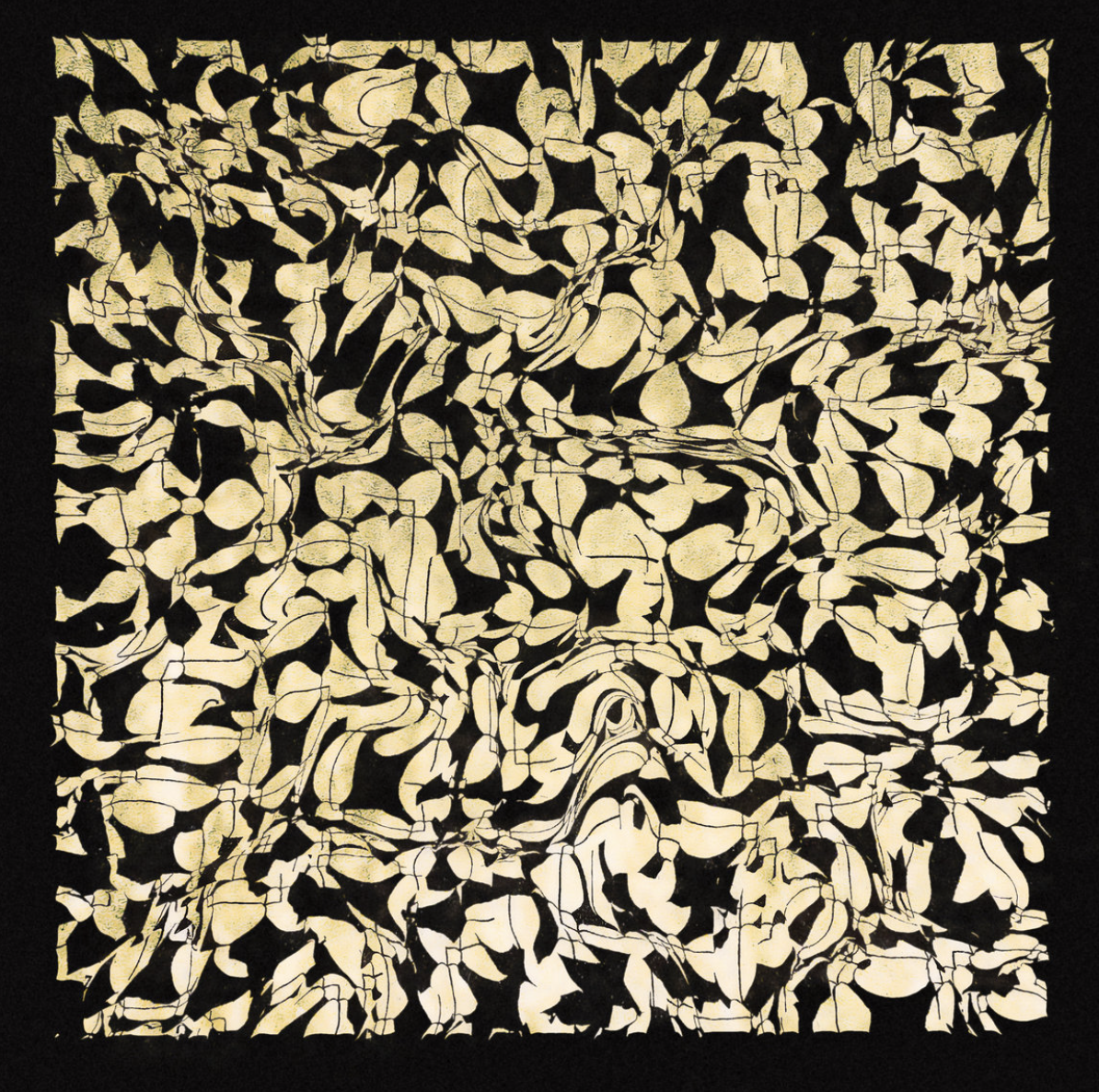
Tetsüo ii ‘Menagerie’
Available Now
You have emerged from a deep dive with eyes still blurry from the salt water. Silhouetted figures stand on a smoke-brimmed horizon. Rather than focusing on the outlines of the indistinct entities that come slowly into view, observe their shadows that coalesce into transient forms. Embrace the illusory. Meet the unperceivable as Tetsüo ii do. Sonically (and thematically), Dave Duval and Scott Saad reside in these foggy realms. Their musical introversions are often brief, but when listened to sequentially, each piece becomes part of a greater whole.
There are hallmarks of the duos previous works on Menagerie. Every semibreve, every cadence, every rest note is deliberate and measured. They continue to locate discreet spaces within the phonic interstitium. The synth patches are still carefully woven into a complex, three-dimensional quilt. The listener experiences synaesthesia on Summer’s Veil. Sustained pads play out on Getting Late. A lithe, piccolo-high melody aerates the beatless and breathy Pale Blue. The step-like, almost cinematic pattern that emerges on Heart of the Oak yields to a fixed tonality that cuts right through the piece, severing it in two. This funnelled distortion in the opening act serves to test the listener.
The experimentation continues on Whose Roots are Stars in the Human Mind (the title presumably inspired by the guttered glistening of the half-painted, half-photographic patchwork of images of Yggdrasill by avant-gardist filmmaker, Stan Brakhage). Here, Morton Subotnick meets LFO-circa-1995. There are: circling analogue sounds; minor key pseudo-melodia; glistening silver-like sounds. Akin to the Brakhage footage, I start to envisage static shots of sun glitter bursting out between the clouds.
The musical theme on Menagerie is not a melodious one. And neither is it confluent. One or two keyed synth notes sink and echo and play out in a repetitive refrain; each one is inkier than the last. The demonic horn on Molten Synapse (another nod to Brakhage) are future sirens. These are wavelengths that serve to warn. Perhaps they are the final sounds that enter the last auditory meatus there ever was. A similarly low-frequency waveband emerges between the swathes of CS-80-sounding pads that key a mournful melody on the title track. A strange electro-woodwind solo whistles. A whirling, grey-noise outro serves as an intermission.
What noises do clouds make when they move? Is there a symphonic kinesia? The undercurrent that rumbles and whirrs and distorts on Hungry Skies proffers one theory. The synth-work is arpeggiated, contrapuntal even. There is a reprise of Whose Roots are Stars in the Human Mind. Clangs and analogue splashes are perhaps indicative of precipitation. Where do these raindrops fall? The organ-inspired synths of Terra carefully bellow the longest melody of the album. And like organs, they expand and breathe. From the mid-way point on this piece, there is sonic diffidence. I imagine the droplets being absorbed into the earth, saturating the seeds that take root. In some respects, this mirrors the structure of the opening piece Heart of the Oak; yet here, in the deeper reaches of the album, there is no reprise of the organ that came before it. We are left in a cold place – a lightless space. Or perhaps we are simply deaf to the symphony of soil-concealed germination.
Coarse crackles like thunder introduce the The Swimmer. There is a bright, almost chromatic opening that edges upwards. The first sprouts peek out and gain height. Their stalks extend like limbs to touch an uncertain world. Bassy undertones provide rhythmic stability. Each stalk is anchored and made unmovable in their firmly-rooted positions. A deep synth note continues to play. The oscillating broken sounds – again, a little like a siren – would normally serve as a background; yet, at this point in the denouement of the piece, I concentrate on it almost entirely. Here, the listener is reminded that the fruits of the growing plants will eventually be threatened. As the wizened voice on the title track stated earlier in the album: “Even the most prolific species cannot be controlled by the sheer variety of life in the bush…and the variety of appetites they possess.”
Duval and Saad pen concept works. Menagerie is to be considered their ‘deep earth’ album, somewhat contrasting their previous ‘deep space’ releases (Tetsüo ii, released by Dagger Forest, and !!, self released, both in October 2023). Menagerie ends with Summer’s Veil (Reprise) which is a fragmented version of its former self. Nature seems to prosper here, but only temporarily. The light melody soon disappears into the umbra of the deep earth.
Monthly Playlist Revue: March 2024
March 28, 2024
ALL THE CHOICE MUSIC FROM THE LAST MONTH

From the discombobulated and sublime to the sound of AI in the death throes of a nervous breakdown, all tastes are covered, all borders breached on the Monthly Revue: Our chance to compile the best representation of the last month’s choice music, with tracks from both reviews and those we didn’t get time to feature but piqued our interest. Those picks come from myself, Dominic Valvona, plus Matt Oliver, Brian ‘Bordello’ Shea and Graham Domain.
Without further ado, here’s the link and full track list:::
Augusto Martelli & The Real McCoy ‘Calories’
Avalanche Kaito ‘Tanvusse’
Amateur Cult ‘Eyes’
Ill Considered ‘Linus With The Sick Burn’
Rosie Tee ‘Night Creature’
Circe ‘Blue Love’
Diamanda Galas ‘A Soul That’s Been Abused (Live)’
Madison McFerrin ‘God Herself (Tune-Yards Remix)’
Laetitia Sadier ‘Une Autre Attente’
Mark Trecka ‘New Dreaming Gestures’
Curling ‘Hi-Elixir’
NAH ‘People Lie And Suck’
Blu & Shafiq Husayn Ft. MED/THurz/YaH-Ra ‘We Bang’
Pastense & Uncommon Nasa ‘The Ills’
Cookin Soul/The Musalini/Tha God Fahim ’92 Olympics’
Ethnic Heritage Ensemble ‘Hang Tuff’
Mark E Moon ‘Daylight’
Renelle 893 & Bay29 ‘Art Thief’
Leaf Dog ‘Till I’m Clocking Out’
Dave Harrington/Max Jaffe/Patrick Shiroishi ‘Dance Of The White Shadow And Golden Kite’
Twin Coast ‘to feel (Donkey Basketball Remix)’
Cumsleg Borenil ‘exis-ANENCE-sixe, Exis Constraint’
Colin Johnco ‘L’air qui danse’
Lou Lyne & The Blue Almond Project ‘Saudade Tactia’
Luce Mawdsley ‘Latex Feather’
Charlie Risso ‘Good Track’
NCD Instigators ‘Shark Attack’
Felix Machtelinclx ‘Buwigabuwi’
Sinerider ‘Glowing’
Jonah Parzen-Johnson ‘What They Love’
Arushi Jain ‘You Are Irresistible’
Leonidas & Hobbes ‘Space Raga’
Regulat Henry (Moses Rockwell & Plain Old Mike) Ft. Dezmatic ‘Pedal Boat’
Homeboy Sandman ‘Do It Right’
Jynx716 & Che Noir ‘Second Impression’
Omniscence Ft. Toz Torcha ‘Stage Presence’
Mega Ran & Jermiside ‘Drop’
ZA! & Perrate ‘Steve Kahn’
Christian Wittman ‘Birth And Death Of An Unknown Star’
Andrew Heath & Mi Cosa de Resistance ‘Until We Meet Again’
Society Of The Silver Cross ‘Wife of the Sea – Temple Hymns Vol 1’
group O ‘ThickO/not thee brightest spark in ur Fukushima plant (37.3920666, 141.0749483)’
Alison Cotton ‘Crepuscule’
THE MONTHLY DIGEST OF ACCUMULATED NEW MUSIC, THE SOCIAL INTER-GENERATIONAL/ECLECTIC AND ANNIVERSRAY ALBUMS CELEBRATING PLAYLIST, AND ARCHIVE MATERIAL CHOSEN BY DOMINIC VALVONA

Continuing a series that started in 2023, the Digest is my one-stop column of the new and the old; a secondary home to all those releases I missed out on or didn’t get room to feature in either my Perusal reviews features or singular Our Daily Bread posts, plus a chance to celebrate timely anniversary albums and dip into my own record collection with the a special anything goes playlist, and to, finally, dip into the Monolith Cocktail Archives.
The New: this will be a briefing of a sort, with a short outline, thoughts and reactions to a number of recent albums from my inbox – currently a 1000+ releases a month on average!
The Social Playlist: choice music collected from across the ages, borders and genres, with a smattering of tracks from choice anniversary celebrating albums of worth and cult status. Consider it my unofficial radio show.
The Archives: self-explanatory, but each month I chose past pieces from the extensive Monolith Cocktail back pages that have a timely ring to them.
_((THE NEW))_
LINA_ ‘Fado Camões’
(Galileo Music)
Fado dramatist with the spellbinding voice, LINA_ follows up her impressive collaboration with Raul Refree with another unique reading of the famous Portuguese form of sullenness, sorrow and plaint. On that previous project, the diaphanous and emotionally sonorous pulling songstress and composer transformed the music of the Fado legend and actress Amália Rodrigues; filtering that icon’s songbook through a modern production of minimalistic gauze and sonic atmospheric effects.
Back this time with the British producer and musician Justin Adams (credits include projects with Robert Plant, Tinariwen, Eno and Sinead O’Conner to name but a few) and a small ensemble, LINA_ takes on the classical 16th century poetics of Portugal’s most famous literary son, Luís Vaz de Camões. So titan a figure in that country’s rich history, his medieval period language of lyrical romantic aches, mortality and nature is said to be the basis of Portuguese itself: often called the “language of Camões”. Integral to the very soul of Portugal then, it’s fitting that such a talent as LINA_ is behind this interpretation of his work; transcribing it’s prescient and near timeless reach to the music of Fado. Examples of which include, when translated into English from the original lyrical language, “They hear the tale of my misfortunes, and cure their ordeals with my hell”. Tortured but also overwhelmingly beautiful and romantic throughout, it suits the musical form very well across twelve near magical songs of air-y mysticism, the venerable, yearning and dreamy. Musically tender, accentuated and like a fog, mist at times, even vapour of the mere essence of a score, there’s echoes of old Spain, the Balearics, North Africa, the Middle East but also Turkey and the Hellenic. You can also add the supernatural to that list too: a passing over into the ether. At times other times there is an almost semi-classical feel, merged with Iberian and Galician new wave, with some songs standing out as radio-friendly floated diaphanous pop visions of the Fado spirit.
Incredible throughout, LINA_ once more proves herself the most striking if not talented artist in this field of exploration and music; bring together beautifully and evocatively time honoured traditions and the legacy of literary Portugal with the country’s most prized and famous export to magic up another essential album. LINA_ is a leading light, pushing the boundaries without losing the soul, truth and appeal of the music she adopts and transforms. Fado Camões is another artistic triumph.
Andy Haas/David Grollman ‘Act Of Love’
The experimental NYC percussionist-assemblage artist and knight of the Ghosts Of The Holy Ghost Spermic Brotherhood (alongside saxophonist Andy Haas and the late multi-tasking Michael Evans) David Grollman knows more than most about the cruelties of the Alzheimer’s Disease; losing his wife, the poet Rita Stein-Grollman to Early Onset Alzheimer’s in early 2023.
Funneled and channeled into this most recent album with Haas, Grollman and his sonic partner of avant-garde arts and evocations reflect the very essence of loss through an apparatus of Dadaist and Fluxus apparatus: namely in Grollman’s case the balloon, with the textured tactile touches and stretches of its latex surface wrinkling as it expels its air; in a manner, like the life force slowly leaving the deflated body and personality of what someone once was as they lose themselves to this incurable disease. Meanwhile on sax, Haas deals in exaggerated long, slowly drawn-out breathes and blows; sometimes appearing to lift the weight that sits on his lungs, and at other times making noises that resemble steam and the pressure of valves being released and squeezed. Together it sounds like La Monte Young, John Zorn, Anthony Braxton and Marshall Allen in remembrance.
But then there’s another dimension, the brilliant, often acerbic poetry of Rita (written before she succumbed to the disease), which is read out in both almost laconic and grumpy confrontational style by David. Another piece of text, ‘Message From ME’, which the title makes obvious, is a voicemail left by the already mentioned and late Michael Evans (who passed away back in 2021), another knock-about figure on the scene and much missed member of the Ghosts Of The Holy Ghost Spermic Brotherhood. Act Of Love is a challenging and strained but obviously emotional well of remembrance, with the harsh and more attentive abstractions of the performances somehow managing to convey that which can’t always be said or represented.
Variát & Merzbow ‘Unintended Intentions’
(I Shall Sing Until My Land Is Free) – Released the end of last year
Unsurprisingly concentrating the mind, the brutal barbaric dystopian-scarred landscapes of war-torn Ukraine have been transmogrified into the abrasive, concrete debris soundscapes of nightmares by the trick noisemaker of dissonance and pulverizing noise, and co-instigator of the Prostir label, Dmyto Fedorenko (aka Variát). As his homeland continues to be bombarded and churned up by the invading forces of the despot Putin, Fedorenko teams up with fellow noise sculptor of some standing, Masami Akita – the harsh and confrontational Japanese artist behind the 500 plus back catalogue Merzbow project – to reshape the needled, scowled, squalled, overbearing, sinister, menacing and static coarse ruins: the only hope of which, is in the “resilience” of the Ukrainian people holding back the tide of destruction and evil.
Crushing morbid forces merge with the air raids of drone attacks, decay, coded signals, charged force fields, transistors, the Fortean radio set and the alien. Occasionally a keyboard chord materializes, along with the recognizable sounds of toms and breaks – the drums sounding like at times like they’re being beaten with boxing gloved pummeling hands. At one point it could be the set of a roofless cathedral, another, from the charred remains of a devastating fire: I could of course be projecting all this.
Throbbing Gristle, Gunther Wüsthoff, Jóhann Jóhannsson, Sunn O))) (if they cashed in their guitars for synths and a laptop), Oberman Knocks, Boris and Scott Walker are all brought to mind. And yet this is a unique collaborative pneumatic and caustic vision from the two artists, one that can’t help but evoke the devastating, mindless and distressing scenes unfolding. And if you needed any prompting or a reminder, profits for this release all go to supporting ‘Ukraine resistance against Russia’ with donations made to self-defense and humanitarian foundations. PS: Thanks by the way to the label, I Shall Sing Until My Land Is Free, for the CD and stickers; always appreciated to receive something physical in an increasingly soulless, downloaded or streaming, non-committal world.
Various ‘Hyperboloid 2024’
(Hyperboloid Music)
I had to try and shoehorn this end-of-year compilation from the Latvian label in to the Digest this month. Twenty-five visionary trance-y and techno tracks from the roster’s myriad of artists – a sort of Balkans and beyond Warp label Artificial Intelligence series for the new age and new century -, there’s variations of the electronic genre spread out across a generous showcase that marks yet another creatively successful year for the imprint. Old skool rave breaks sit next to entrancing vista soundscapes; d’n’b with hardcore; and near Grimes-like pop electronica with thoughtful rumination. Get stuck in.
Roma Zuckerman ‘Phenomenon of Provincial Mentality’
(Gost Zvuk)
Filaments, electric currents, crispy buzzes and granular fizzles combine to form the most redacted and evocative of minimal techno, deep house and EBM-esque dance music on the Siberian producer’s archival showcase for the Gost Zvuk label. Charged, pulsing and rhythmic at all times, Roma Zuckerman’s spheres of influences run through glimpses and throbs of Basic Channel, Kreidler, Rob Hood and Dave Clarke, twinned and merged with an alternative cosmonaut Soviet era vision of Sky Records. And most surprising of all, on the collection’s finale, ‘Compañeros’, there’s a move toward windy-fluted Latin American with the use of a Spanish pastoral rhythm guitar. Voices, the echoes and morphed ravings, communications and alien warped effects of which, play their part too; at times sounding like Richard H. Kirk, and at others, like some two-way radio cosmic interface between ground control and Soyuz shuttle. A highly recommended slice of deep bass, futuristic and simultaneously retro-futuristic minimalist techno that will almost definitely make the end of year lists.
(((THE SOCIAL/VOLUME 82)))

Continuing with the decade-long Social – originally a DJ club night I’d pick up at different times over the past 20 plus years, and also a café residency from 2012 to 2014 – playlist, each month I literally chose the records that celebrate anniversary albums; those that I’d love to hear on the radio waves or DJs play once and while; and those records that pay a homage and pay respects to those artists who we’ve lost on the way.
January starts with one such sad but celebratory nod to the late Marlena Shaw, who passed away last weekend (I’m incidentally writing this at the start of the third week of the month). The California Soul(stress) had some real sass and attitude, as proven by the provocative, taking-no-shit, title of her 1974 LP, Who Is This Bitch, Anyway?; from which I’ve included the short gospel-light ‘The Lord Giveth And The Lord Taketh Away’. Also 50 this year, there’s tracks from Pekka Pohjola’s Harakka Bialoipokku, Harmonia’s ‘Musik Von Harmonia’ and (sticking with a kosmische/krautrock theme) something from the quartet of albums made under the auspices of The Cosmic Jokers nom de plume – a supergroup that never really was, the main participants of which included such lauded icons as Manuel Göttsching, Klaus Schulze, Jürgen Dollase and Harald Grosskopf fucking around in Dieter Dierks’ studio; the results of which, unknowingly recorded by Rolf-Ulrich Kaiser and Gille Lettman at the time were put out during 1974 – Schulze was incandescent enough to sue over the whole affair.
40th anniversary nods go to Finnis Africae’s incredible fourth world self-titled peregrination, Bob Dylan’s Planet Waves and Harold Budd & Eno’s prized and influential The Pearl LP. A decade later and there’s also tracks from The Wake’s Tidal Wave Of Hope and Air Liquide’s Nephology (see my archive essay style piece further down the column).
I usually leave the most current and newest of tracks to the Monolith Cocktail’s Monthly Playlist (next edition due next week), but have included recent(ish) tracks from Igor Osypov, Bagaski, Nicole Mitchell and, not really new but reissued late last year, a track from the originally 1984 released Ein Bundel Faulnis in der Grube album by Holger Hiller (of Palais Schaumburg German new wave fame) – reissued that is by krautrock/kosmische specialists Bureau B.
The rest is for you to discover; a smattering of eclectic delights, wonders and nuggets from across time and from across the globe. Actually, if you are reading this, and if you have time, I’d really like some feedback on the length of these playlists. I’ve gradually tightened the running order down to around the 30 mark and the length under 3 hours – down from 33 last year, and before that anything from 40 to 100!!! Let me know if this is a ridiculous number, or just right.
___TRACK LISTING AS FOLLOWS:
Marlena Shaw ‘The Lord Giveth And The Lord Taketh Away’
Bob Dylan ‘Tough Mama’
Ethel-Ann-Powell ‘The Jaybird Song’
Acayouman ‘Si Ou Ladje Moin’
The Wake ‘Britain’
A Passing Fancy ‘Your Trip’
The New Tweedy Brothers ‘I Can See It’
Americo Brito ‘Sabe Na Panama’
J.O. Araba ‘Kelegbe Megbe’
Finnis Africae ‘Zoo Zula’
The Cosmic Jokers ‘Power Drive’
Ike Yard ‘Beyondersay’
Air Liquide ‘Semwave’
Holger Hiller ‘Chemische und physikalische Entdeckungen’
Harmonia ‘Sonnenschein’
Fireballet ‘Carrollon’
Pekka Pohjola ‘Hereillakin uni jatkuu’
Dhidalah ‘Adamski’
Son Of Bazerk ‘The Band Got Swivey On The Wheels’
Bagaski ‘Hawkish Torso’
Joe Mubare ‘Number 8’
Nicole Mitchell ‘You Know What’s In There’
Igor Osypov ‘Vango’
Lard Free ‘Warinbaril’
Teengenerate ‘Something You Got’
Tasavallan Presidentti ‘Weather Brightly’
Second Hand ‘I Am Nearly There’
Duffy Power ‘Glimpses Of God’
Grothbros ‘Tollah Tra Flex’
((((ARCHIVES))))
Air Liqude ‘Nephology – The New Religion’ Is 30 Years Old This Month

Selective electronic musicians often come out with the line that they’ve been influenced on a particular album by the Krautrock greats, citing such luminaries as Roedelius, Michael Rothar, Klaus Schulze, Irmin Schmidt etc. – as though they were in some way picking up the baton and running with it.
Of course most of this is a whole crock of shit, as hardly anyone essentially understood that those innovators from the 70s were always moving forward and re-inventing their sound, never usually dwelling on the past; just copying it or reprising it totally misses the point.
OK, so I’m sort of meandering off on a tangent, but basically you can take a look at the likes of Neu!, Cluster, Kraftwerk and CAN and see they were making something fresh and new; to really take on their train of thought means to push those delineated boundaries even further.
Heir apparent to the synthesizer and analogue re-wiring school of exploration, were, and still are, the Cologne duo of Air Liquide. They took up their forefathers brave new world mantle, and built an ambitious and inspiring variation based around the technological leaps in music production; concentrating on the styles of Techno and Acid House.
Their seminal opus of 1994, Nephology, adopts vestiges of cinematic, industrial, ambient and dub; producing an impressive soundtrack that stands up well even by today’s standards, and adheres to the German desires of progress.
The duo comprised of the exceptionally talented Cem Oral and Ingmar Koch, better known as Jamin Unit and Dr. Walker, both entrenched in technical know-how – Koch was the lucky recipient of a Roland JX3P synthesizer on his 14th birthday, a gift that led to him being hired by Korg to program sounds for a number of their iconic models.
Koch began recording in the late 80s, composing, as he puts it, assembly line House and Hip Hop tracks for the German labels Hype! and Technoline. The latter label went bankrupt, prompting him to join a course on electronic composition at a University in Cologne. He would soon meet fellow student and synth enthusiast Oral, and find that he also shared a common interest for groups like Tangerine Dream, CAN, Heaven 17, early New York Hip Hop and Chicago acid: working together seemed almost inevitable.
By the end of 1991 Air Liquide was born, with their first EP release following in a matter of months, and a self-titled debut at the end of 1992. Their second album, the 1994 released Nephology opus, really upped the ante with its mostly innovative themes and layered tracks modeled around the more sophisticated tones of intelligent Techno and dance music – future projects saw the duo experimenting with Gabba hardcore and ethereal fashioned traversing styles of trance.
Singing from the same hymn sheet as The Orb, and many similar ambient acts, they immersed themselves in a haze of new-age touchy-feely rhetoric, using both celestial horizons and the skies above as the central theme to hang their music to: That Nephology title is itself taken from the, originally Greek, word for clouds; adopted as the terminology for the study of their formations – interestingly over the last century it has remained a rather marginalised and forgotten art…well, that was until the recent interest in global warming.
The 14-track album is split into various sections, with the main tracks interspersed amongst the otherworldly type segue ways and vignettes.
A central atmospheric resonance runs throughout, evoking a cosmological and space-age mood, one that has an often ominous or threatening feel to it; charged with rippling static effects.
Mainly we are treated to some indolently and cleverly multi-layering techniques, produced from an impressive display of iconic analogue/electronic equipment, including the Roland Tr 808, Jupiter 8, ARP 2600 and a pair of Moogs.
Side one of this double album entirely consists of acid drenched grooves and bouncing taut techno. The grand opening of ‘The Cloud’ emerges refined and full of empyrean quality from the ether, its tightened rolling drums and throbbing bass cascade over an electrified wild jungle rich sound collage; sounding like a Germanic 808 State. As though in tribune to Klaus Schulze and his cohorts, the duo interweave startling ambient sequences, dousing the beats in swathes of metallic walled corridor sounds and whispering missed conversations.
This swirling tome is followed by the more Chicago house style of ‘Semiwave’; a sauntering announced rhythmic workout, full of ever-tightened repetitive percussion, moody dramatic bass and lethargic plonking notes. Ethereal strains of some distant cooing float in and out of the track, setting the look-to-the-skies above scene perfectly, sending us hurtling ever further into the stratosphere.
Caustic meatier bass lines and squelchy 909 bleeps flourish on the bonus track ‘Auroral Wave’ – seems this and one other tune, are not included on all versions.
Hardened ticking away drums and pre-set handclaps encounter Mo Wax space-esque sustains, whilst moving along at a Mannuel Göttsching pronounced building pace.
Air Liquide manage to absorb many different styles of music including dub; the strong use of dark moody bass can be found on tracks like ‘THX is on’, where Sly and Robbie meet Carl Graig’s Plastic People period flow. There’s also room for Hip Hop, with the duo re-working Cypress Hill’s ‘Insane In The Brain’ for their own beguiling electro track ‘Stratus Static’. They manage to meld both the stoner-induced sample of the Hill’s track with what sounds like a dub-esque clattering Art of Noise, to produce something quite original and sublimely dizzying.
Scattered throughout are more light-hearted moments, including ‘If There Was No Gravity’, where they take on the ambient workshops of both The Orb and Orbital. Wispy willowy female vocals poetically describe a sort of dipsy journey through the clouds, the lyrics leaning towards cliché almost:
“How you’d love to live up there,
Kiss the sun and walk on air.
If there was no gravity,
You’d be in nephology”.
Dubtastic bass lines bumble along to fill the sweeping calm and dreamy melodics, in a display of evanescent pulchritude. The looming presence of Kubrick, or rather the meticulous chosen soundtracks that go hand-in-hand with his films, add dramatic passages of tension and suspense. ‘Die Reisse Im Teekeesel’ (loosely translated as ‘Those travels in the tea boiler’) uses 2001 A Space Odyssey harrowing soundscapes, with the chanting evocative mantras from ‘So Spoke Zarathustra’ to add intrepid doom. Both ‘Kymnea’ and ‘Im Grlenmeyerkolben I and II’ echo and groan with menacing moments plucked straight from A Clockwork Orange: Walter (Wendy) Carlos’s switched on treatment of Henry Purcell’s ‘Music For The Funeral Of Queen Mary’, and the tormented ‘Timesteps’ are brought to mind.
Eerily the duo can’t help but intersperse a sober and haunting array of imbued cinematics, dropping in hints of Dune, Star Trek and The Thing to create an often emotive or imaginative atmospherics, which lends the album a certain gravitas.
On the closing track, ‘The Clouds Have Eyes’, they end on a chaotic hypnotic flourish. Helicopter chopping Jeff Mills style beats rapidly rotate, as an operatic style haunted choral sweep swirls around in the tumultuous cyclonic blades. That almost disturbing voice-like loop, calls out from the melee as though an apparition from some distant planet or dimension: a perfect finish.
Nephology does undoubtedly sound of its time to some extent; tied in some respects to a particular epoch, yet though it’s over thirty-years old it somehow rises above sounding dated. In fact recent revivals of the late 80s and early 90s electronic scenes – where labels such as R & S, Harthouse, Structure and Rising High fed the deep thinking dance music appetite – have encouraged a mini-renaissance and re-valuation. In 2024 you could easily slip a bit of the old Nephology into the club, and no one would blink.
Hi, my name is Dominic Valvona and I’m the Founder of the music/culture blog monolithcocktail.com For the last ten years I’ve featured and supported music, musicians and labels we love across genres from around the world that we think you’ll want to know about. No content on the site is paid for or sponsored and we only feature artists we have genuine respect for /love. If you enjoy our reviews (and we often write long, thoughtful ones), found a new artist you admire or if we have featured you or artists you represent and would like to buy us a coffee at https://ko-fi.com/monolithcocktail to say cheers for spreading the word, then that would be much appreciated.
Our Daily Bread 599: Tetsüo ii ‘S-T’
November 6, 2023
AN ALBUM PURVIEW BY ANDREW C. KIDD

Tetsüo ii ‘Tetsüo ii’
(Dagger Forest)
The London-based tape label Dagger Forests boasts “sounds of dreaming and nightmares, dark and pop”. Theirs is an eclectic library of sound: vaporwave (Odours『香水』, July 2015); footwork (the track I Am, If You Want Me To Be on Heaven’s Night by Edith Underground, December 2022); and, witchhouse (Haunted by PVNDV, released in August 2023). The 2014 promo is a fine listen: the wonderful TUUTH – Fake Flowers (Draft 2) echoes the finest microhouse of DJ Koze and Gold Panda.
One half of Tetsüo ii is Dave Duval, also one half of, alongside Scott Nemeth, Zeit. His cryptic, often medieval-themed artwork beguiles; he references the gothic on his track Carmilla (ZEIT collection, released on NB Noise Brigade in July 2018). The other half is Scott Saad, a.k.a. Void Ant. The colourful Roswell aliens (some hooded, others revealed) on his cover art since 2015 are entertaining. Has the duo’s nom de guerre been borrowed from Tsukamoto’s Tetsuo science fiction horror flicks (Tetsuo: The Iron Man in 1989 and Tetsuo II: Body Hammer in 1992)?
From the droning litheness of the opener, Spectral Return, which ascends in a cycle of forever-sustain, to the pulsing repetitiveness of Charades, the self-titled album of Tetsüo ii is abstract. It is also exoteric: the motif from Spectral Return recurs at regular intervals throughout the LP, and somewhat less lithely on Spectral Return (Reprise), which – in a manner not too dissimilar to Kubrick’s 2001: A Space Odyssey and the sequential menace of Strauss’s Also sprach Zarathustra – decomposes. Blurry vocals enter on this reprise. Zaps pass by distantly. There is modulation, which oozes harmony and bleeds discordantly. We hear the motif again in Colors of the Dark, which I make further reference to later.
Lament plays out into a large glass bowl: the reverberation-less Vangelis synths matt against the steely and charcoal-grey drones that echo away in descent. The modular-style synths of Wight play in harmony as if some giant cosmic organ pipes out its flourishes and metallic embellishments. Again, there is clever use of repetition; there are few notes, but each contribute. There is a now signature diminuendo.
I will interject at this juncture to highlight my main criticism of Tetsüo ii: the curtailment of some of its pieces. Take Charades: the duo expand their sonic repertoire with a downtempo stock beat drumming in the background; the hi-hat taps are increasingly intricate; the narrative has only really taken fruition, when, all of a sudden – it stops. This is less of an issue on Slough* which is short but achieves totality. This same completeness plays out on In Space There is No Law. White-noise pulsations cut in and out like thrusters of a spaceship making its final approach to dock. Subtle sounds clamour like metal. A keyed melody twinkles. Its outro chimes.
Colors of the Dark is the penultimate piece on the LP. It is a speculative minor masterwork. As the motif from Spectral Return is reprised, I am a passenger in deep space considering what colours constitute darkness. Darkness: the absence of illumination. Yet, this track is far from being light-doused. Its ambient drones lift the listener. It is thematically cosmic. Red shifts appear. Blinking starlight is referential. Across its length of 16-minutes, synth layers build and expand. There are discordant moments such as low-frequency notes (perhaps asteroids striking different planets?). Sustained synths are suspenseful; these prolonged treble-heavy passages offer glimpses into the unknown. The shimmering notes that enter at the 8-minute mark are warm, almost reed-like, breathing out into the swarms of passing synth notes that filter through as muons and anti-muons and neutrinos and other elements that have yet to be discovered and named. The organ-like sounds that cascade after 9-minutes elevate the listener; this disappears to reappear in step-like descent after 12-minutes – this time, a minor key proliferates. Each note progresses through their respective scales, always achieving harmonic balance. It counterbalances the more discordant Wight and In Space There is No Law. Colors of the Dark is devoid of any discernible time signature, which is good – time is only an imagined construct after all. The thrumming notes in the denouement of the piece allude to thrusters being primed in a pre-propulsive state: onwards to vacuity – we who occupy this great vessel are shuddered and jolted in a forward-fling to an even deeper unknown.
Tetsüo ii concludes with Glossolalia (translation: tongue-talking). The tone on this piece is quite different to the rest of the LP. Voices emerge from the counterpoint synths as they did on Spectral Return (Reprise). It is at this point that a perfunctory narrative becomes clear. We emerge from the merging of black holes, a place where all the ancient languages and cultures have been pulled into a place of celestial merging lasting billions of years. The outcome: communicative enlightenment. These were the strange visions I had when listening to Tetsüo ii.
* Did I hear a subtle reference to the late Ryuichi Sakamoto at 1 minute 34 seconds? Perhaps a refrain from Merry Christmas, Mr. Lawrence. I tip my hat to the Tetsüo ii duo if that is the case.
Our Daily Bread 594: Sebastian Reynolds ‘Canary’
October 3, 2023
ALBUM REVIEW/DOMINIC VALVONA
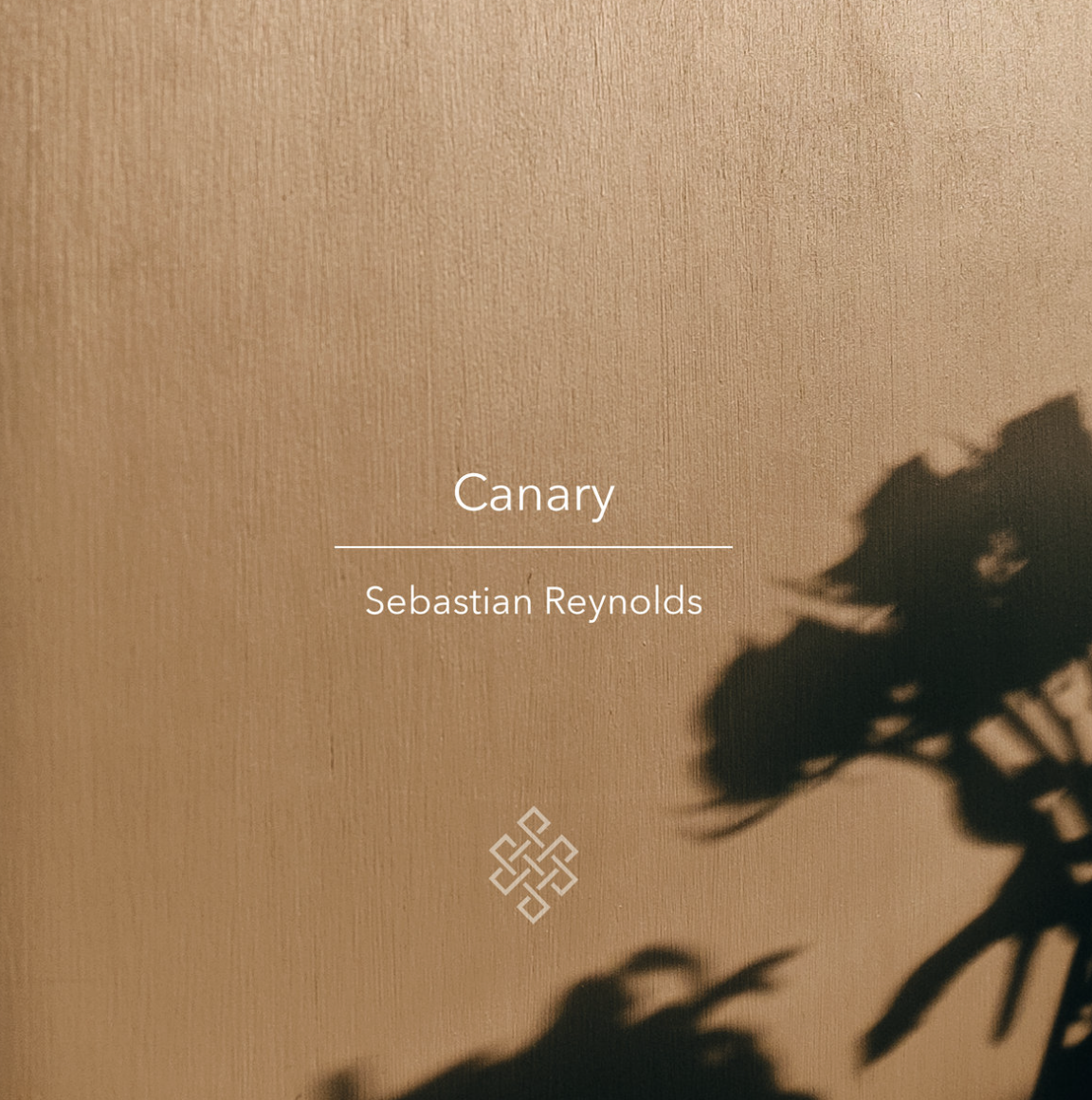
Sebastian Reynolds ‘Canary’
(PinDrop Records)
After what seems like an age, and with a prolific string of projects, collaborations and EP releases behind him, Sebastian Reynolds finally unveils his debut solo album. Then again, the musician, artist, producer, remixer, PR and label boss has been busy: both creatively and privately.
A quick run-through of the CV since 2017 reveals two impressive volumes of electronic-chamber music with the Anglo-German Solo Collective (a trio that included the virtuoso cellist Anne Müller alongside Reynolds’ longtime foil, the violinist, electronic music star Alex Stolze, who makes several appearances on this album); the multimedia Jataka texts inspired Maṇīmekhalā dance and musical scored drama with a host of collaborators, including the Neon Dance company, chorographer Pichet Klunchun and The Jongkraben Ensemble; The Universe Remembers, Nihilism Is Pointless and Crows run of cerebral EPs; and the long distance running inspired Athletics EP (a sporting passion for Reynolds, who’s a pretty decent amateur runner and contender in his own right). That’s without taking into account all his production and remixing duties, or his various stints in other groups. And as you will hear on the Canary album of augurs and forewarnings, there’s been much to process from a private life of loss: but joy too.
You could say this has all been channeled into the sonic tapestry of this expanded statement: the grief of losing his mother and baby, Noah; a study of Buddhism and meditation practices; and quest for realisation and rationality in an increasingly hostile world of self-absorption, vacuous validation, the non-committal and self pity.
Finding plenty of sample material from the self-help industry of podcasts (personally I find the whole medium tedious, and one of the very worse ways of communication) and endless analysis (enough already), Reynolds’ Canary (as in the famous trope of the ‘canary in the coal mine’ warning) album is part counselling manual, part encouraging transcendence, part cerebral, and part grief management. And whereas Akira The Don used Jordon Peterson, Reynolds envelopes the “when things get crazy, don’t get crazy too” actualisation mantra of the former Navy SEAL, Iraq combatant turn author and podcaster Jocko Willink in wavy vapours, psy-trance and Orb-like wafts of ambience. The author of Extreme Ownership peddles a more responsible approach to coping with whatever life throws at you; in a fashion, the very opposite of the confessional therapeutic method that puts the individual before and above every one else. And then there’s Carl Jung, who’s quantified abstracts of the consciousness and its relation to reality crops up on the opening oboe-fluted-melodica vaped ‘Sleeping Meadow’; a floated crossover of post-punk dance music, FSOL, 808 State and Yann Tierson.
Certainly a thinker, Reynolds weaves his penchant for such philosophical enquires and curiosities, both scientific and spiritual – see the repeating theme of Buddhist liturgy references suffused throughout the album. The more modern scientist scholars of serial podcasts, Sam Harris and Lex Fridman, appear on the Pali language (the traditional language of the Theravada Buddhist scriptures) entitled ‘Viññāna’. A conversation on the “nature of mind” and “consciousness” is lifted and given a suitable Eastern feel and touch of Vangelis, Boards Of Canada and Black Dog; a buoyant dip of tablas on a slow march towards the mysterious.
In the same sphere, ‘Temple Gong’ stirs up more of those Buddhist vibes with its mallet-like bamboo flutters of gamelan and Eastern menagerie; and the two-part ‘Vimutti’ suite, which features the already mentioned Stolze on chamber violin woes and more wispy experimental touches (merging with the synthesised), is the filmic soundtrack to a mirage retreat of enveloping washes, Ajay Saggar and Jóhann Jóhannsson.
Circling back on grief and the process period of the initial shock at the passing of family members, the eventual acceptance and the coping strategies that are needed are aired on a number of tracks. The ambient wafted, faint piano dappled, muffled padded deep plunge into conveying death and memories themed ‘Shortest Day’ mourns the loss of Reynolds’ mother who passed away in the summer of 2016. As the seasonal and metaphorical light fades away, this improvisational bedded piece proves a subtle augur, recorded as it was three years before his computer engineer mother died; her, now much missed, comforting voice just about audible in the last wisps and vapours of the track. Growing up surrounded by now defunct, nostalgic electronic equipment and computers – the objects, apparatus and tools amassed by his mother who built computers for Research Machines -, Reynolds was always destined to pursue a pathway in electronic, synthesised and computerised music it seems.
Tragically, Reynolds and his partner Adrienne lost their baby Noah in the July of 2020. And all the sorrow and questions that such an incomprehensible event can manifest are channeled into the wept, hurt and ached emotionally charged ‘Fetus’. Submerged in a moving electronic score of McCorry and Jed Kurzel-like plaintive and deepened cello drones (courtesy of Jonathan Ouin), higher pitched whistles of a kind and subtle hints of mystical gamelan gongs, bowls being vibrated, a life is both missed and remembered in an abstract sonic suite.
The finale, ‘The After Life’, is more about acceptance; the fate we’re all promised at some point. The vibe is more twinkly, childlike and starry, like Banco de Gaia’s trance-Tibetan train chuffing through Prokofiev’s woodwind magical forest. A release, some kind of comfort, the next incarnation awaits if you’re a student of Buddha.
But back to the defining themes of Canary once more; the titular track of which features a speech by JFK – the dream martyr of interlocking, multilayered crisscrossing conspiracy theories the world over. It does feed into the whole third, fourth, fifth column of paranoia (which doesn’t mean they’re not out to get you!) theory, his prophetic words on secret societies (the secret state) and the concealment and sinister nature of such cabals sealing his fate. Of course it’s circumstantial, the food of podcasts, the alt-right and alt-left, but there’s some essential truth to operating in the light, with information open to all citizens. Unfortunately overreach and the increasing encroachment of hostile forms of authoritarianism have spread eerily and with ease in recent times. Any form of true democracy on the ropes; beaten black and blue from every direction. To a near sci-fi trance of moody veiled African mysticism (a touch of Ethiopian vibes about it) and a slow frame or hand drum, the soon-to-be assassinated president’s monologue is left to be absorbed like a sagacious fatalistic omen: spooky stuff indeed.
A near lifetime’s experience and musicology is called upon for a mostly sophisticated and subtle amalgamation of the electroacoustic, trance, EDM, electronic-chamber music, techno ambience and soundtracks on an album that draws on all of Reynolds passions and emotional threads. Self-help guidance with the neurons fired-up, the mind open, Canary counterpoints mistrust with wonderment, alarm with the rational and the optimistic. It has taken a while to arrive, but Reynolds debut expanded album of thoughts and ideas is a mature statement of quality.
Hi, my name is Dominic Valvona and I’m the Founder of the music/culture blog monolithcocktail.com For the last ten years I’ve featured and supported music, musicians and labels we love across genres from around the world that we think you’ll want to know about. No content on the site is paid for or sponsored and we only feature artists we have genuine respect for /love. If you enjoy our reviews (and we often write long, thoughtful ones), found a new artist you admire or if we have featured you or artists you represent and would like to buy us a coffee at https://ko-fi.com/monolithcocktail to say cheers for spreading the word, then that would be much appreciated.
Our Daily Bread 590: Violet Nox’Vortex And Voices’/Droneroom ‘The Best Of My Love’
September 1, 2023
A SOMEWHERECOLD RECORDS DOUBLE BILL/DOMINIC VALVONA
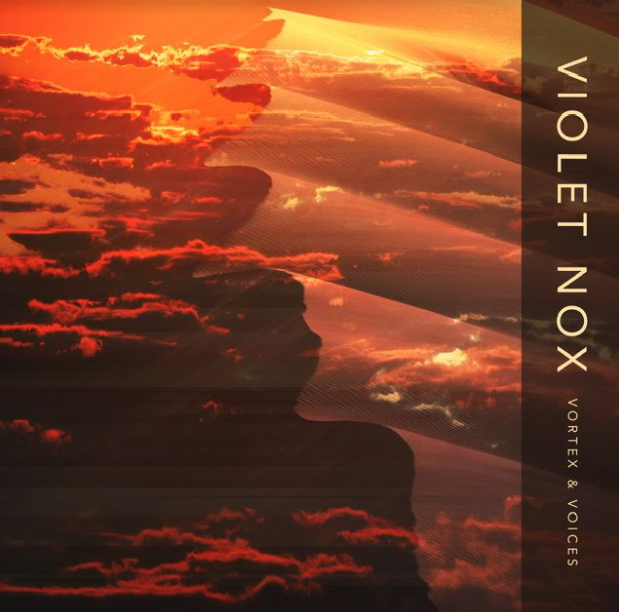
Violet Nox ‘Vortex And Voices’
(Somewherecold Records) 15th September 2023
A sci-fi chemistry of vapours the Boston, Massachusetts electronic outfit Violet Nox once more entrance with a futuristic new age album of psy-trance, cerebral techno and acid ethereal-voiced self-realization/self-discovery. Wired into the “now” however, messages of self-love and inclusiveness waft and drift to a rhythmic, wavy vision of EDM, crossover rave music and soulful electronica.
For this newest venture – their first for the highly prolific and quality North American label Somewherecold Records – features, more than ever, the experimental, often effected, vocals of group member Noell Dorsey: a mix of hippie cooed yearn, Tracey Thorn, Claudia Brücken and Esbe if you will.
A siren-in-the-machine, Dorsey expresses dreaminess, sadness and on the near mystical, wispy and lightly dub-y ‘Loki’, a past life as some Egyptian wraith – yes, I get that the title would favour something more Nordic in atmosphere and theme, but this regression into an old incarnation sounds more like a oboe trippy hallucination of Egyptology.
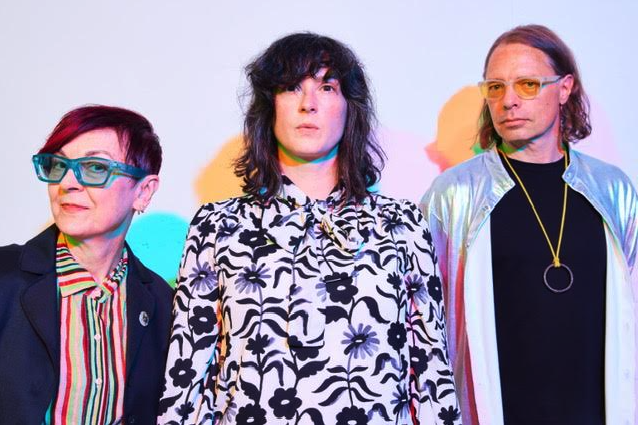
Often expanding the set-up, apparatus and lineup, this time around the Gaia attuned ensemble consists of core members Dez DeCarlo (on synth/effects pedals), foil Andrew Abrahamson (“synthesis”, sampler and clocked machines) and the already mentioned Dorsey. Musically, sonically they keep up the trance and minimal techno, melodic and kinetic rhythmic signatures, whilst erring towards club-like sung vocals and electronic pop. But it’s a real mix of synthesized influences, cybernetics and cosmic voyages into the internal and external mind.
The opening magnesium cooking vapoured and ached ‘Ascent’ evokes elements of Musicology, The Higher Intelligence Agency and Jarré; a lost trance-y peregrination from the early Warp label files. The more ominous, leviathan shadowed drama in granular cyberspace, ‘Chaos’, reminded me more of Harthouse, even Kraftwerk (those mesh-sizzled compressed drum pads especially), and the light note arpeggiator cascading and floated gauzy ‘Senzor’ sounds like a mix of Sven Vath and Vangelis’ Blade runner score.
Whether it’s journeying into the subconscious or leaving for celestial rendezvous’, Violet Nox turn the vaporous into an electronic art form that’s simultaneously yearning and mysterious. Fizzing with techy sophistication and escapism, the American electronic group continue to map out a fresh sonic universe.
Droneroom ‘The Best Of My Love’
(Somewherecold Records) 22nd September 2023
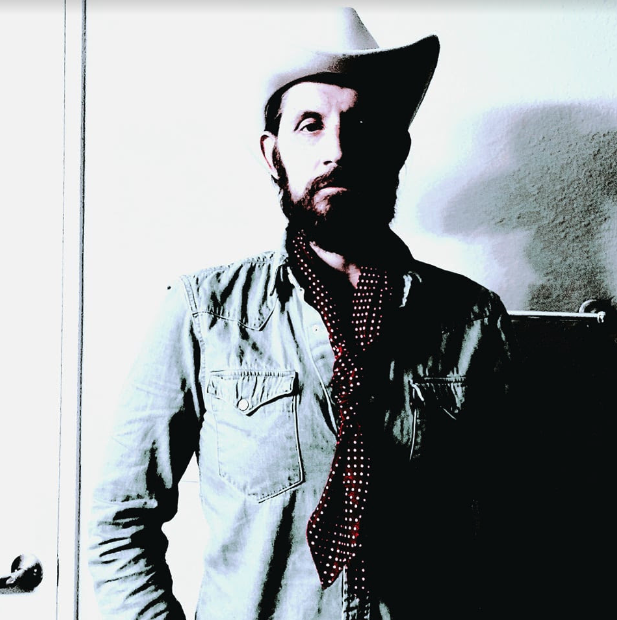
The barest hovering of a held note and most minimal of traced finger work, brushes and brassy resonance is enough to conjure up arid vistas, rumination and “sullen” emotions on Blake Edward Conley’s fifth album for the North American label Somewherecold.
The Louisville-based guitarist-composer can convey or draw out deep-held feels, sentiments and remembrance from scarcely rhythmic loops and drones – hence the Droneroom moniker. And whilst recording stations include the arrival/departure lounges of the Soulsville, Memphis TN and Denver International airports – Las Vegas too –, this latest vaporous and resonated transformation pictures mirages on mysterious desert horizons and both McCarthy and Lynch’s supernatural, occult ghosts of the old American West; think Ry Coder as an alternative choice for The Blood Meridian, or, the Gunn-Truscinski duo collaboration scoring Paris, Texas. ‘You Can’t Piss In The Same River Twice’ (sound advice) goes even further in evoking something both alien but recognisable. A filtered, muffled spherical vortex spins around like some off-world portal as Conley picks at and sort of strums a very removed vision of bluegrass on a brassy-resonating banjo.

‘Other Desert Cities’ sounds more like an enervated Sunn O))) with Brian Rietzel in a haze of blurred and more trilled echoes of nothingness. And yet a landscape image of something other and paranormal emerges from razor buzzes, scaly nickel strings and soft harmonies. It’s as if there’s a prevailing presence of someone, a thing, even time itself. ‘Cole Morse Was A Friend Of Mine’ whilst not so much elegiac, does paint a personalized desolate empty world of dust and reflection. It’s followed by another tribute/homage/thank you allusion to remembrance. ‘Nothing Of Value Is Ever Truly Lost (For Jess)’ is filled with warm feelings, a fondness, that’s weaved into an intimate gentle cascade of melodic country-folk-Americana guitar stirrings (reminding me a little of Raul Refree) that sound almost sitar like.
Abandonment, oaths, mourning and love hang like tangible descriptions in rippled, palpitating and softly juddered panoramas. Loops, vibrato, fanning effects are both wispy and sonorous; the guitar and banjo both recognisable and oblique on an album that applies an ambient and drone mystery to what you could call an abstract expansion of Americana.
Jointly by Andrew C. Kidd and Ross Perry

Black Dog Productions ‘Bytes’ [1993]
The Black Dog ‘Spanners’ [1995]
(Warp Reissues)
Intelligent dance music. IDM. A difficult-to-define genre (if it even was one). Experimentation in dance music? The awkward shoehorning of ambience and danceable music? Flawed nomenclature aside, pinpointing the start of the movement is an even trickier task.
To dance is to move rhythmically. Ussachevsky and Stockhausen were creating electronic music in the 1950s, albeit it is difficult to argue that their creations were ‘danceable’. There are danceable moments on Spiral (Vangelis, 1977) and Équinoxe (Jean-Michel Jarre, 1978). Then there was the electro-pop Kraftwerk and the danceable synth-pop sounds of the likes of OMD, Moroder, Numan and Cabaret Voltaire. Yet, the sound that we most associate with modern-day IDM probably arrived in the very early 1990s. Utd. State 90 by 808 State (ZZT Records, June 1990) is an early example of the abstraction which underpins IDM, albeit that album was palpably more familiar as a resident in acid house. Tricky Disco by Tricky Disco (Warp, July 1990), Frequencies by LFO (Warp, July 1991) and Analogue Bubblebath by Aphex Twin (Mighty Force, September 1991) were IDM pathfinders. The public were probably exposed to IDM through Accelerator by Future Sound of London in April 1992 (released on Jumpin’ & Pumpin’). Warp can take credit for the naming of IDM on the compilation album, Artificial Intelligence, in July 1992.
Bytes (originally released in March 1993) is one of the most influential works in the intelligent dance music scene (it is regarded by some as the seminal work of IDM). The first iteration of the track Clan (Mongol Hordes), the work of I.A.O, an early moniker of Ken Downie (one of three aliases used on Bytes), featured on Warp’s AI compilation. Although Bytes is a compilation album, it has always been more synergistic than that – a musical Megazord of sorts (if such an obviously ‘90s reference can be afforded!). It was the third album in the Artificial Intelligence series and is thirty this year. When it was first released, it was a promise of futurity. Akin to the golden age of science fiction, there was experimentation, and comparatively difficult-to-differentiate narratives – the listener is drawn in and out of various sequences, some real, others fanciful.
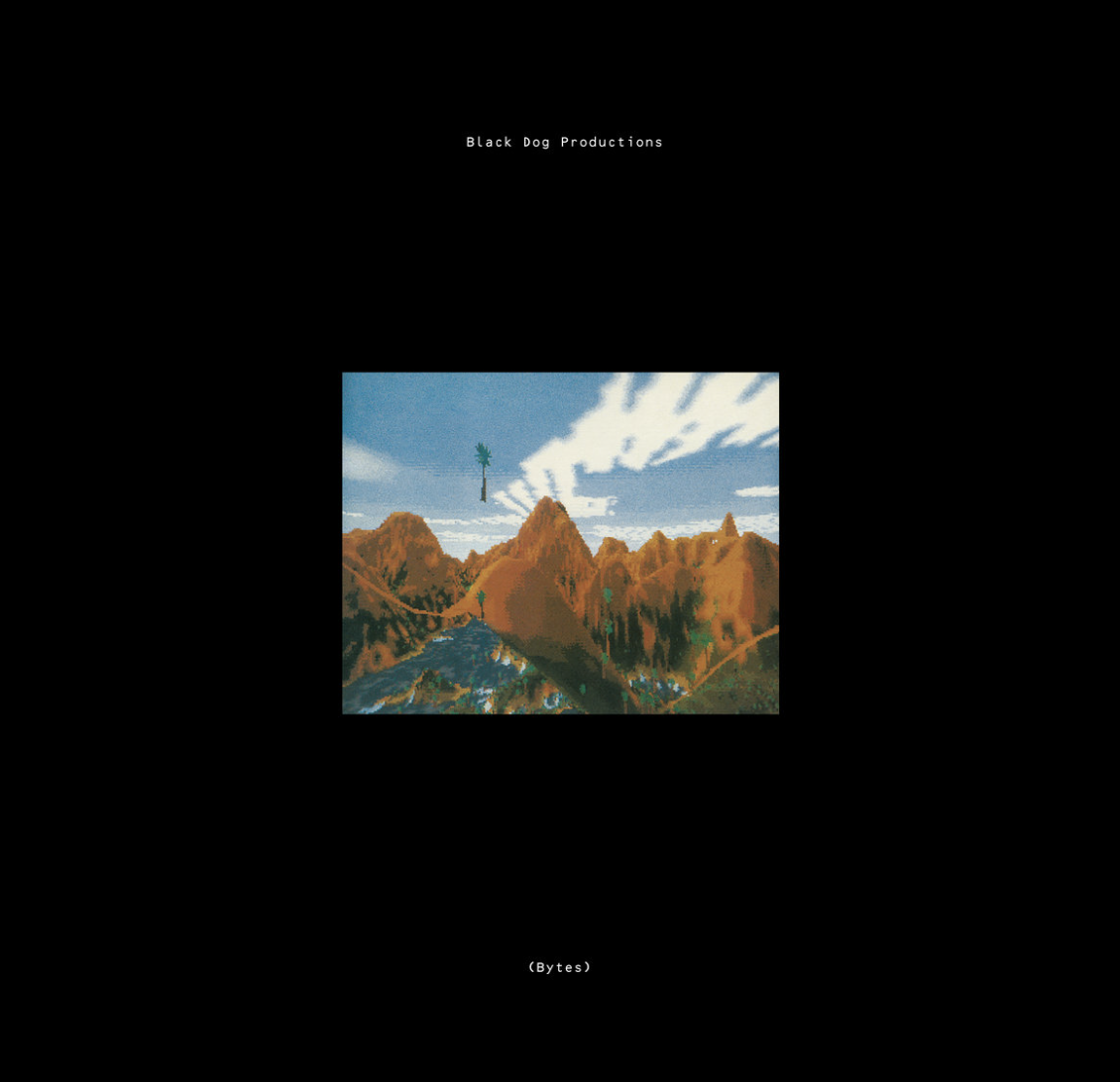
There is no doubting the influence of the Detroit techno scene of the mid-1980s and its dramatis personae: the joyful R-Tyme; the villainy of Suburban Knight; the realism of Model 500; and of course, Derrick May. Listen to the analog crunch and pulsing rhythm on the opening Object Orient (Plaid) – two hallmarks of that sub-genre. It railroads through the sonic journey with playfully synthetic melodies, slowing only occasionally for brief vinyl cuts. It is a deconstruction of what preceded it, like time folded up in slow motion. Similarly, the repetitive four-four chops on Merck are akin to a Mayday track; the keys, syncopated at times, improvised later, dance their macabre dance. The Phil 5 interlude that precedes Fight The Hits harkens back to The Art of Stalking by Suburban Knight; the same could also be said for Atypic’s masterpiece Otaku which sadly did not appear on Bytes – this featured on the Black Dog Productions E.P. released in May 1992.
Bytes is fantastically congruous. After Merck (Balil) fires off high-frequency plasma rifle shots in rapid succession, its latter half is mesmeric and glistens into the orchestral opening of Jauqq (Close Up Over)*. As the syncopated rhythm fades, a metallic beat enters, and the sound is progressed. Another fine example of this is Olivine (Close Up Over) – IDM in the definitive sense – and its light synths that dot around the checked squares of some strange sonic chessboard. Here, the rhythm progresses up and down like opposing rooks; the L-shapes of the syncopated synth are warring knights. The lithe ending is regal, and heralds Clan (Mongol Hordes) (I.A.O.)– queenly, like the multidimensional chess piece, it serves to take the rest of the board out. It is IDM ex-animo. Its movements pitch-alter. This is music from the soul. It sounds as genre-buckling now as it will have done in the early 1990s. The alarm-like initial melody initially hides the subtle breakbeat that builds into the piece. The 4-4 rhythm doubles up, almost rolling over itself. The four-key synth melody stirrups. The melody changes. A deeper bass commandeers.
Futurism: lasering zaps and string stabs on Caz (Close Up Over) and the steely undertones of Jauqq (Close Up Over). Sporadic canons also unload on Focus Mel (Atypic) in a manner that is not too dissimilar to early Subotnick and Nu-Sound II Crew (nearly a half-century later), or an A. Bertram Chandler hero travelling ahead to save us, the listeners in the present day. Its outro is an echoing aftershock from another place – the future is being told by Xeper as he knocks hard on the other side of the great glass door of time. The track preceding it – Carceres Ex Novum (Xeper) – underpins the experimentation which defines Bytes.
Fight the Hits (Discordian Popes) is an awesome percussive assault (similar to Polygon Window’s Quoth) which serves as a bit of a palate cleanser and a much-needed bridge between the chaotic Yamemm and Handley’s magisterial three-track denouement. Yamemm (Plaid) itself is fragmented and perhaps anomalous in this album†.
Bytes concludes with 3/4 Heart (Balil). The stock-heavy modulations are polyrhythmic. A Vangelis-esque synth is organ-like at points. The melody is snappy – danceable even! A half-clap effect – perhaps an imagined crowd – heralds the vocal line, “we must surf the universe”. The sound at this juncture is more refined, the narrative complex – the listener revolves around in a full-circle. Oneness is achieved.
At this point, it is worth mentioning how instrumental Ed Handley is to the legacy of Bytes as a groundbreaking album in IDM’s naissance. Atypic(Turner)’s Focus Mel is excellent, but it his only solo track on the entire record, and Downie’s three contributions are dynamic detours in their own right. Handley absolutely dominates this album with five solo tracks and two as part of Plaid. Whether it is Balil or Close Up Over, his mastery of clever arpeggios, countermelodies and otherworldly harmonic pads married with second-wave Detroit rhythms give the album a melodic heart, which beats all the way through from Object Orient to 3/4 Heart.
Bytes (and by extension, The Black Dog Productions moniker) also acts as an important milestone in Plaid’s evolution as a duo. Before it, we can hear on disc one of Trainer (Warp, July 2000) – an excellent compilation of Plaid’s early career output – that the group were more experimental, sample-happy, willing to genre-hop. Take the Latin-infused breakbeat stylings of Scoobs In Columbia, the jazz-tinged Slice of Cheese, or even the proto-jungle of Perplex (all these tracks were originally released from the oft-forgotten debut album Mbuki Mvuki, released on The Black Dog Productions label in 1991). Bytes on the other hand showcases a more focused pair, albeit a little lop-sided, that fills the record with top-tier ambient techno (which yes, will always get the IDM treatment!).
Spanners (originally released in January 1995), their first release on Warp, was the hit LP of The Black Dog – and for good reason. It is great to think that ‘way back then’ albums that clocked in at 75-minutes were charting (imagine that nowadays when albums are often sub-30-minutes). Admittedly, we live in a different time where attention spans are shorter. Most tracks on Spanners feel like a tug-of-war between Plaid as a duo and Downie as a solo artist. Plaid in 1994/95 had their more functional IDM/ambient-techno sound figured out, whilst Ken Downie remained somewhat of a wild-card: his trappings being more cinematic, sample-based and experimental, drawing from a much broader spectrum of influences. One of the elements we most enjoy about the output from the original Black Dog has been trying to surmise not only who did what in each track, but also which members were involved in certain outings. This is no more rewarding than on Spanners where some tracks seem like the work of a sole member (usually Downie), whereas other tracks feel like the work of a tag-team, either consisting of a Plaid member and Downie, or in the case of Tahr and Frisbee Skip, Plaid on their own. Frisbee Skip could very well double as a bonus track on the duo’s first (mainstream/Warp) full length, Not for Threes, released in October 1997.
The opening to Spanners is Raxmus, a classic in the downtempo repertoire; its sawing introductory synth leads into a horizontally relaxed beat. Raxmus feels like one of the more seamless tracks on the album, and we speculate that it is possibly a Downie/Handley duet: Downie providing the trip-hop template; Handley layering in his Balil-style harmonics.
The heavily-syncopated rhythm on Barbola Work (which disintegrates towards the end of the track) is interspersed with boings and hits and twizzles. It follows the formula that many of the early tracks on this album have: Downie providing the track’s introduction, throwing a wide range of vocal samples and/or exotic instruments at you, before Plaid build the track up with their infectious basslines, whirring clicks, zapping sound effects and magical synths. The Sugarhill Gang-laced explosion of an intro on Barbola Work is Downie through and through. Plaid then takes over to put down the melodic scaffolding and beat-work. The transition admittedly does not work quite as well on this occasion as it does on the proceeding track, Psil-Cosyin, perhaps coming off as a little dissonant.
Arguably the most cohesive three-track sequence (or four if one includes Bolt 3) follows. A major Locrian scale surfaces on Psil-Cosyin and scintillates in scaling brightness as the piece progresses. This is one of two clear highlights of the album where all three members of The Black Dog play to their individual and collective strengths and produce a definitive masterpiece. As an early Spanners track, the song structure is as described in the last paragraph. One can consider Psil-Cosyin as being composed of three suites: in the first, Downie arrests your attention with a mysterious intro of odd vocal samples and pipes; the second is signature Plaid with a slow and progressive build-up; the third is a roaring crescendo which serves as a climax. Here, all three members of the group function as a rare and perfect whole: Turner’s acid synths; Downie’s eclectic sampling; Handley’s Balil-esque angelic arpeggio. The concluding higher-rpm of the track serves perfectly to lead-in the membranophonic beat that anchors the light synth swathes on Chase The Manhattan, which may be a Downie solo venture or a collaboration between Downie and Turner. It is tribal-house-infused. The spacey pads are those that we often associate with Downie’s Xeper alias; Turner possibly contributes with acid licks and humming bass lines.
Tahr is an amalgam of the latter two tracks: a polymer-pungi weaves around a 4-4 beat. In this piece we hear a lot of Turner’s percussive sensibilities, addictive basslines and frantic trance-like synths (these can also be heard on Atypic’s Jolly on Trainer). Handley comes in later with another Locrian melodic flourish. Although Tahr is a short track, it is a great example of Plaid’s symbiosis.
One criticism we have of Spanners is its length. The 19 tracks are not an issue (the Bolt skits are sometimes only seconds long); rather, it is the occasional meanderings of the trio. Perhaps this is because thirty years have passed and listeners of the present day are used to more perfunctory albums clocking in at sub-30-minutes. Take Further Harm as an example. It is an expansive piece, one that stretches in and out, starting in the realms of downtempo, ending in synth-plopping abstraction. That said, it is one of the greatest examples of the stylistic fork-in-the-road (or tug-of-war) between Plaid and Downie. All three members are involved here, and the stop-start industrial breakbeat combined with the odd mantra of a vocal sample gives it a ‘train that is meandering down the track and picking up steam’ feel. More samples are layered in as well as all the sonics that Downie brings to the table, and then, two minutes in, the signature Plaid-synths, pads and basslines play out to give the track a melodic grounding that it did not have before. The hip-hop breakbeat is replaced entirely by a more industrial one in its later stages. As a piece that starts off travelling in one direction, Further Harm changes tracks, and an unpredictable journey ensues – it is a microcosm of Spanners.
Utopian Dream is similarly frequentative. It is one of the most leftfield pieces on the album. We have never heard anything like this from the Plaid members (was this a Downie solo?); imagine a harsher version of Boards of Canada’s Zoetrope on In A Beautiful Place Out In The Country (Warp, November 2000). The elegiac Nommo and its modulated synth stanzas and bassline climb their respective octaves – sequentially. It could have featured in a fictional Xeper album along Carceres Ex Novum on Bytes. Could the track idea have been consolidated, or even progressed like Olivine or Clan On Bytes? Regardless, Nommo remains cinematic.
The right balance between track length and monoinstrumention is achieved on Chesh, the other album highlight (it feels like more of a Handley solo piece, or mostly Handley with (possibly) Turner adding in a background layer). Pseudo-mythical modulations ascend and descend masterfully – imagine Ransom first exploring Malacandra (an Out Of This Silent Planet by C. S. Lewis reference), or the space sequence in the 1950 film, Destination Moon. There are echoes of Andreas Vollenweider too. The Balil style countermelodies and light airy synths interplay with the heavier reverb-laden keys – it is a magnificently poignant closer.
Spanners is a work of subtly in both melody and rhythm. Take the lithe key flourishes on Pot Noddle, ceilinged by the quiet clarion of higher synths; the guitar is indistinct, and the rhythm section almost organic. Fast forward to the sounds of Four Tet. The start-stop breakbeats we heard on Further Harm, albeit slower. The frantic ‘western saloon piano’ sample serves as a mid-point alarm clock. End of Time thunderously drums around penetrating synthetics. It is punchy, echoing the head nodding thrums of Fight the Hits (Discordian Popes) on Bytes. It is also trancey, and chaotically space-like (imagine the Starship Enterprise on an intentional suicide mission!). The time-warping synths are magnificent and reminiscent of early Black Dog tracks like Ambience With Teeth and Virtual, both released on the Virtual EP (Black Dog Productions, April 1989).
The skits Bolt 1 – 7 appear at varying intervals on Spanners. Some are simply white noise and filtered static, others almost wheezy. Their purpose is unknown – are they the voices of pulsars, or the sounds one would experience in the belly of an exploratory spaceship? Bolt 3 harks back at the Phrygian Psil-Cosyin and the chaotic goblet drum effect that thrums on Chase The Manhattan. Bolt 7 slides into obliquity, and onwards to Frisbee Skip. Listening to the Bolt skits again, their darker and more intense aesthetic share a similarity to Allegory 1 [Red], which Downie et al dropped in 2020. The third track on that release – Bar 331 – is metallic and off-key, an eerie transmission that has resurfaced 25-years later. Unlike the Phil interludes on Bytes, which serve as key intros and outros and transitions between certain tracks, the Bolt skits feel more like aural non-sequiturs. After listening to them again, they remind us of the more experimental segments of tracks we would hear on later Plaid albums such as Rest Proof Clockwork (Warp, June 1999) and Double Figure (Warp, May 2001).
Perhaps due to it being released on General Production Recordings rather than Warp, we consider it interesting that The Black Dog’s second album – Temple Of Transparent Balls – has not been reissued. It split their audience down the middle. We still enjoy listening to the ‘progenitor’, almost stock sounds that feature on that release. It had a machine-like quality, an insight into the deeper engineering works of IDM: a sonic forge with the anvil strikes on display.
On Spanners and Temple Of Transparent Balls, Downie’s approach and sound is definitely more unpredictable and harder to pin down than the Plaidsters’ experimentations and manipulation. We feel that the Plaid duo provide the two Black Dog albums‡ with less experimentation and a lot of the more conventional beat-work, basslines and melodic structure that would soon form the foundations of their Warp-era work, whilst Downie, the aforementioned wild-card of the trio, added in an off-the-cuff sample here, some industrial Meat Beat Manifesto-esque breakbeats there, or some bizarre and dissonant sound effects out of nowhere. He also seems to be the more cinematic of the three; his sounds are often themed on science fiction, and past and future landscapes.
So, in 2023, where do Bytes and Spanners sit in the pantheon of intelligent dance music? Well, Handley, Turner and Downie are rightly the archetypes of the IDM sound in the same way that Richard D. James (as The Dice Man), B12 (as Musicology), Autechre and Alex Paterson (as Dr Alex Paterson) are by their participation on the first Artificial Intelligence release. Having been forged out of the molten ambient techno and fiery rave scenes, the joy in returning to Bytes has been its rhythmic experimentation. Although not perfect, Spanners achieved what it set out to do. It is expansive, and labyrinthine – it washed away the harsh melodia of Detroit techno to toy with its listeners.
After the synergy, the separation. We are left with The Black Dog Mk.2 (Downie and the Dust brothers) and Plaid. The subsequent releases of The Black Dog marked a departure in sound in some regards, yet their output remains as heterogenous and experimental as it did all those years ago. The ambience of Music For Photographers (2021) is one for the musical aesthetes of this world; as an album inspired by the slab-grey brutality of the concrete architecture of Sheffield, it is wonderfully light.
The work of Turner and Handley continued as the dynamic Plaid. The duo would go on to become a permanent fixture with electronic giants Warp, starting with the ambitious and guest-heavy Not For Threes in 1997, consistently putting out records with the label to this day, a very impressive feat indeed. But how does Spanners fit in with Plaid’s break-away from The Black Dog? From what we can hear on Spanners, Plaid had become an almost-finished article with both members Handley and Turner comfortable in their respective roles. Handley clearly had already found his niche as the melodic heart of the group under his Balil alias on Parasight EP (Rising High Records, November 1993) and Bytes. We hear this consistently again and again on the most melodic segments on Spanners. By this point, Turner had also spread his wings under the Tura alias, switching to this from Atypic around 1994 (his work as Tura can be heard on the earlier-mentioned Trainer). This cemented his role as the more technical of the two: a master of infectious basslines, staccatic synths and dissonant zaps. Interestingly, Handley and Turner’s decision to move on as a duo also led to them re-embracing the genre-bending experimentalism that marked their earliest Plaid material, particularly Mbuki Mvuki. Nevertheless, no matter what sub-genre they would delve into on subsequent albums, Bytes and Spanners provided the blueprint for what would become Plaid’s core sound.
Those who listen to Bytes and Spanners in the present day will enter a sonic-time capsule: a time when a new world was burgeoned upon the drawing of the hip hop, electro and early Detroit techno influences of the late 1980s. This was a time of innovation, and deeply intelligent composition.
Footnotes:
* On the original Bytes release, this opening was actually an interlude titled Phil(7), the final of the Phil interludes. These interludes (mysteriously credited to Echo Mike, a handle to whom the identity has never been revealed) are not listed as separate tracks on the re-issue, yet they are vital elements ensuring that Bytes as an album works as a cohesive whole.
† This feels like something from Plaid’s 1989–1992 phase when they were experimenting with different sounds and styles, particularly hip-hop, early ‘90s industrial-breakbeat and house. These styles are also evident on the early EPs of The Black Dog.
‡ We are careful not to classify Bytes as a Black Dog album as it was released under Black Dog Productions, the name of their label, and a sort of holding company of all three members of the group’s respective aliases. We have also been careful in differentiating between this and The Black Dog which was the name used for their group efforts as a trio.
DOMINIC VALVONA’S MONTHLY RECCOMEDNATIONS AND DISCOVERIES
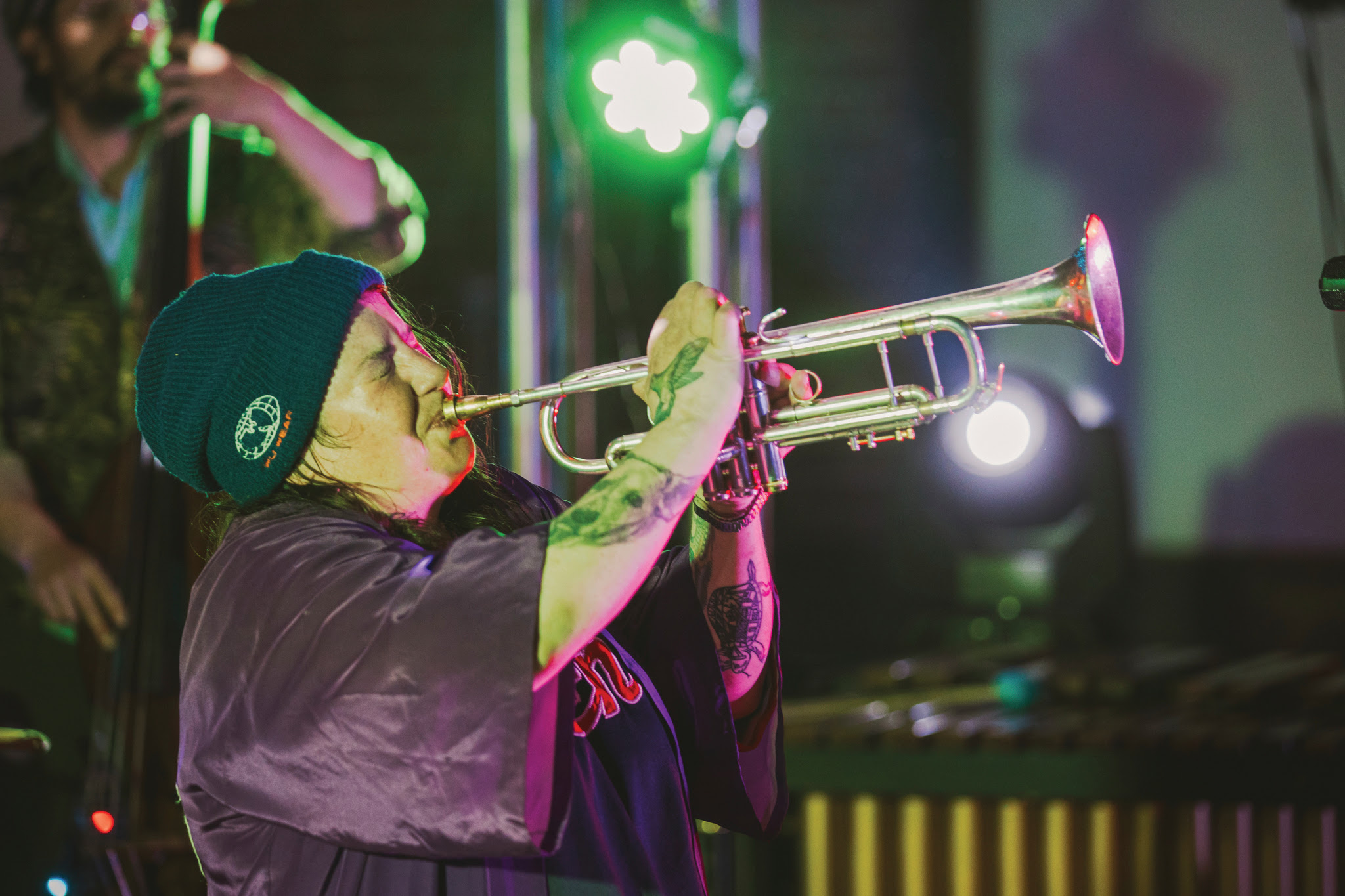
(Photo credit: Ben Semisch, courtesy of Bemis Center for Contemporary Arts)
Jaimie Branch ‘Fly Or Die Fly Or Die Fly Or Die ((word war))’
(International Anthem) 25th August 2023

As an unwittingly last will and testament, the late experimental trumpeter Jaimie Branch’s final led album with her Fly Or Die ensemble is a beautiful collision of ideas and worldly fusions that pushes and pulls but never comes unstuck. In fact, despite the “world war” suffix backdrop this album of both hollered and more disarming protestation colourfully embraces the melodic, the groove and even the playful.
Whilst the “avant-garde” label sticks, this rambunctious, more ambitious, more demanding minor opus flows and swings to a polygenesis mix of spiritual, conscious, Afro, Latin and Ethio-jazz, the great American songbook, no wave, noise and the psychedelic. And yet, on the other hand, is almost punk in attitude; a sort of anything goes in the pursuit of the message: an embodiment of challenging the boundaries.
In light of her untimely death at the age of just thirty-nine last year (the release of this album tying in with the first anniversary of her passing), this incredible statement can be read as a sonic monument; a legacy project left behind as a blueprint for a whole movement. The lyrics to the actionist rumpus ‘Burning Grey’, delivered more like Ariel Up or Polystyrene, to a swinging protest march of Phil Cohran, the Pan Afrikan Peoples Arkestra and Cab Calloway, seem almost prophetic: “Wish I had the time” and the lasting sign-off, “Don’t forget to fight”.
The final album is one Branch would recognize; more or less musically complete, recorded as it was back in April of 2022 during an artist residency at the Bemis Center For Contemporary Art in Omaha, Nebraska. However, Branch’s sister Kate and a cast of collaborators rallied round to finish the artwork and production; the final article a proud achievement encouraged on by well-wishers and friends alike.
Alongside “Breezy” Branch, who not only masters the trumpet but pushes her voice like never before and picks up on the percussion and some keys, is her stalwart troupe of Lester St. Louis (cello, flute, keys, marimba and voice), Jason Ajemian (double bass, electric bass, marimba and voice), and Chad Taylor (bells, drums, mbira, timpani and, you guessed it, marimba). That quartet is expanded further by an array of guests, including a trio of notable Chicago-hailed innovators (the city, one of Branch’s biggest influences and home for a period), the arranger/composer/engineer/trombonist Nick Broste, musician/vocalist Akenya Seymour and fellow International Anthem label mate, the drummer Daniel Villarreal (he released his debut, Panama ’77 on the imprint last year). Rounding that worthy impressive list off is the American multi-instrumentalist, Cave/Exo Planet/Circuit des Yeux (the list goes on) instigator Rob Frye.
Not so much a surprise, the album opens with a sort of stained glass bathed organ overture: part the afflatus, part pastoral hallowed ELP, part new age kosmische. A roll of bounded controlled thunder and gravitas is added to a crystal bellow and squeeze of radiant notes and the thinly pressured valves of Branch’s trumpet, which makes a brief appearance after the Ariel Kalma-like transcendence. ‘Aurora Rising’ lays down a short ceremonial communion with nature’s light before changing gear and spheres of influence. ‘Borealis Dancing’ now adds Mulatu Astake Ethio-jazz, a touch of Fela Kuti, Don Cherry and Yazz Ahmed to the ephemeral Northern Lights show as Branch toots long and softly at first before changing to higher pitch shrills. The rhythm, timing changes at the halfway mark towards a slinking groove of funk and Afro-jazz, the trumpet now cupped and echoing.
By the fourth track, ‘The Mountain’, there’s a complete sea change in mood, direction as Branch and her foils transform The Meat Puppets quickened country yin ‘Comin’ Down’. A dueting Branch and Ajemian bring it back home (so to speak) to the Ozarks and Appalachians via Paul Simon, Dylan, 60s West Coast troubadour traditions and a reimagined Sun Records. A brassy-sounded trumpet repeats the tone and springy country vocals as a gurgle of drawn-out cello plays a more somber rumination of hardy travail. To be honest, I was unaware of The Meat Puppets original, but this is a welcome meander in a different direction.
A full lineup joins in on the marimba heavy carnival turn mysterious swamp ether ‘Baba Louie’. Francis Bebey swerves to Satchmo New Orleans, whilst taking a dance around Masekela’s Soweto on a bustled bounce of joy and triumph, before succumbing to the voodoo psychedelic vapours; enticed by a cooing R&B flavoured misty Seymour. This bleeds into the bluegrass fiddled stirrings of ‘Bolinko Bass’, another Orleans evoked, almost regimental drummed bayou Mardi Gras of David Byrne, Funk Ark and Phil Ranelin. Almost mournful, ‘And Kuma Walks’ is more bluesy sounding, yet estranged at the same time; skulking amongst the spirits as someone saws through a fiddle as the trumpet aches in elegiac plaint.
Single, ‘Take Over The World’ is a hyped-up rattle and untethered excitement of no wave, punk jazz. Branch repeats a wild mantra and plays a burning bright thrill of trumpeted blasts whilst a controlled chaos spins all around her. Protest and partying converge for an electrifying, and later on, psychedelic bending stretched act of defiance.
The album ends by simmering down to a period of Afro-spiritual lament and reflection, on the sloganist berating ‘World War (Repirse)’. There’s serious bowed strings, trilled and forewarned trumpet, a sustained organ and windy, desolate enacted atmosphere on this weary actionist swan song: Branch urging caution at “false flags” and encouraging the fight.
For me Branch’s main instrument burns bright, and yet never seems to dominate, lead or overstay its welcome at any point on the album. Not for nothing is her own quote of “…meaning every note”, with not one rasp, trill, toot and cycle out of place; nothing is pushed but just felt and right at that moment. It feels to me, despite such a rich and diverse back catalogue, that Branch had so much more to give, her best still to come. And her gift was not just in crossing and mixing styles, influences, but also in pushing others to reach their own full potential as musicians. Fly Or Die Fly Or Die Fly Or Die ((word war)) is an accomplished album that channels the legacies of Chicago, New Orleans and New York to create an eclectic modern adventure in protest jazz.
Knoel Scott Ft. Marshall Allen ‘Celestial’
(Night Dreamers)
A leading light in the Sun Ra cosmology since auditioning for the Saturn jazz ambassador’s famous Arkestra ensemble in 1979, the baritone saxophonist, composer, vocalist and, when the occasion arises, dancer Knoel Scott amasses a lifetime of experience and musicianship on his debut solo-headed album. I say debut and solo, and without the extension of his previous KS Quintet named release, but the reeds specialist shares his Celestial project title with the Arkestra’s freeform progenitor, Marshall Allen.
Allen’s relationship with Sun Ra, on an album positively radiant and lunar with his guardianship and influence, goes back much further than Knoels; a stalwart since the ensemble’s formation in the 1950s, leading the troupe, the baton passed down as it were, after the cosmic Afrofuturist titan’s death in 1993. Unbelievably still in fine fettle, despite almost celebrating his centenary (that’s next May by the way), the avant-garde, inter-dimensional alto saxophonist, flutist, oboe, piccolo and EWI (that’s Electronic Wood Instrument) synthesist can be heard lending the latter’s strange sci-fi arcs, bends and space dust to the album’s title-track. It’s unsurprising to find that ‘Celestial’ has all the hallmarks of Ra too, written as it was originally with strings for the Arkestra, but never recorded.
The Arkestra family is extensive with celestial poetry taken from the late Arnold “Arto” Jenkins, recited on this universal lullaby. Art stuck with the Arkestra for thirty-six years, right up until his death in 2012. You can hear him and his “space megaphone” delivered offerings to the galaxy on Secrets Of The Sun, way back in 1962. As a homage to that universal-spiritualist’s wanton guidance, Knoel trips the radiant light fantastic, giving praise to the wisdom of the ancients and star people on a seeker’s performance of UFO oscillations, serenaded sentiments and dreamy translucence. It sounds like Cab Calloway and 50s wings being beamed up into Sun Ra’s off-world paradise.
The influence continues with the presence of the Paris scene stalwart and multifaceted (from Dancehall to Makossa, and of course jazz) drummer Chris Henderson, who’s experiences lend a both studied and more untethered freeform feel that moves between swing, big band, Latin, bop and the experimental.
This however is an inter-generational album, with fresher faces of the London scene, the very much in-demand UK keyboardist and versatile pianist Charlie Stacey and Verona-bred electric bassist and oft Arkestra and Knoel Quartet foil, Mikele Montolli. Hailed, quite rightly, as an advanced player, able to adapt to a wealth of styles, Stacey’s touch can evoke the best of those sublime 50s Blue Note recordings, touches of Oscar Peterson and Allen collaborator Terry Adams. The piano both flows with a tinkled busy lightness or strikes the heightened and jarring near-dissonance of freeform jazz; a descending off-tune part here, Cuban show time and bluesy or smoky lounge parts elsewhere: Unstated, yet moving along the action, or taking a soft stroll down the scales.
It’s another musician, part of the luminary brethren, that inspires the Afro-Cuban via Saturn’s rings ‘Makanda’. Paying tribute to a late mentor, Dr. Ken “Makanda” McIntyre, Knoel cooks up a Latin flavoured cool breeze of Havana, Harold Land vibes and R&B grooves: all undulated by sci-fi warbles and flits. A pivotal figure and influence for Knoel, “Makanda” (a name bestowed upon the reeds maestro and composer when playing in Africa, it translates from the Ndekele language as “many skins”, and in the Shona as “many heads”) founded the first ever African American music program in the States in 1971, and had worked with such notable talent as Eric Dolphy, Cecil Taylor and Nat Adderlay. Knoel and friends up the funk and balmy rhythms on this soulful homage to the late great man.
On his part, Knoel’s saxophone squawks, strains, honks and squeaks, and yet also serenades: even soothes. Wilder higher registered beak pecks turn into a near chaos, a cacophony, on the improvisation piece ‘Conversation With The Cosmos’. Coltrane, Sam Rivers and Anthony Braxton wail in zero gravity, whilst those wild rasps feel almost smoldering and lounge-like on the final mid paced twelve-bar slinky ‘Blu Blues’.
What a stellar set from the Arkestra acolyte, the Marshall and inner circle; and well done to the Night Dreamers for coaxing out this cosmic marvel. The process if you’re new to this label project, is to record the performances direct to tape before cutting on a Sally lathe the final vinyl artifact. In mono, recorded in an analogue studio, the sound is alive, inviting and, well, “celestial”. The experience speaks, communicates, and pushes the perimeters on every note, as a culmination of African American jazz styles are attuned to the stars.
Andrew Hung ‘Deliverance’
(Lex Records) 11th August 2023
With pain, suffering and anguish former Fuck Buttons trick noise maker Andrew Hung finds a cathartic release on his third solo outing, Deliverance. But as that title suggest, the anxieties and sense of isolation and belonging now seem to have slowly dissipated as Hung feels he’s been delivered from the morose and dark fog of depression; although there’s plenty of broody, moody despair and darkened thoughts to wade through before catching the light of hope.
Hope, being set free, the constantly developing artist and producer does seem to have found his creative peace; likening this album to “the end of the chrysalis stage, like breaking free from a previous life.” Not so much reincarnation as a new incarnation, pushed on during lockdowns to mine the deep well of his soul, to face regrets and failings, but also find what’s missing.
An act of self-realization perhaps, Hung conducts a therapeutic session both unflinching and revealing. If the lyrics of ‘Don’t Believe It Now’ are anything to go by, thoughts and mental anguish at one point were truly dark. However, that filtered vapour counters the resigned with a reviving build up. And on the opening tunneled, Sister Bliss and Underworld like, moody turn freedom spin, ‘Ocean Mouth’, Hung faces a list of disappointing traits head on: Almost like taking a breath as the Robert Smith-like palpitations and rave-y Bloc Party velocity of the production avoids suffocation and gravitates towards the techno cathedral of light. Submerged at every turn with recurring references to water, Hung swims and navigates the torrents and tides to find a number of revelations about himself: conquering fear.
The previous solo album, Devastations (a choice album no less in my end of year lists for 2021) looked to the cosmos with a propulsion of electronic, kosmische, motorik, Madchester and synth pop influences, and featured Hung the self-taught singer evoking a mix of Robert Smith (some very cure-esque touches musically too), Karl Hyde, Mark Hollis and The Cry’s Kim Berly. More distressed, gasping and wrenching Hung takes some of those same influences forward on Deliverance, whilst also seeming to whip up a touch of Minny Pops, New Order, Soft Cell and John Foxx on the struggles of isolation and need to belong themed neo-romantic ‘Find Out’.
In another honest cycle of shedding shame and casting away the pain in favour of finding that alluded love “saturation”, ‘Never Be The Same’ builds from synthesized drum pad elements of the 80s German new wave, Factory Records and industrial synth-pop into another unshackled escape towards the light of revelation. I’d throw in Martin Dupont, Tears For Fears and Yazoo to that both pumped and vapourous mix.
Floundering no more, Hung looks to have found his place, his voice too. Deliverance finds him channeling his lamentable, pained, and unsure emotions into something positive and bright with another candid confessional solo album of rave-y synth-pop indie brilliance.
Various ‘Intended Consequences’
(Apranik Records)
With a hellish multitude of flashpoints and distractions across the globe keeping the continuing fight for women’s liberation in Iran off the news rolls, it has become apparent that the Iranians themselves have been left to carry on the struggle with little support. In an ongoing war between the forces of the authoritarian religious state and a younger generation demanding an end to the erosions of there civil liberties and freedoms, the crisis in the country entered a dark bloody chapter last year with the murder in custody of Masha Zhina Amini by the “morality police”.
After a rightful campaign of protest and action at such a heinous crime, a brutal crackdown by the state led to mass arrests and even executions (mostly of male supporters, activists, and usually on trumped up charges). Further restrictions were invoked. And just as horrifying, in the last year, and right up to the last few months, there has been a nationwide spate of deliberate poisonings of schoolgirls (one of the groups who mobilized against the authorities in the wake of Amini’s cruel death) on mass. Defiant still, even in the face of such oppression, the brave women of Iran have strengthened their resolve only further.
In the face of such attacks, clampdowns, the music scene has responded with a strong message of resistance and solidarity. Despite everything, cities like the capital of Tehran have a strong music scene of contemporary artists, composers, DJs and performers working across all mediums, including art (which is probably why so much of the music is also so visceral, descriptive and evocative of imagery). One such collaborative force of advocates, AIDA and Nesa Azadikhah, co-founded the Apranik Records label, a platform for female empowerment. Following this year’s earlier Women Life Freedom compilation, a second spotlight volume delves further into not only the Tehran scene but picks out choice tracks from those female Iranians working outside the country, in such epicenters as London (AZADI.mp3) and Berlin (Ava Irandoost).
Sonic wise it covers everything from d’n’b, trance, deep house and techno to sound art experimentation. The range of moods is just as diverse in that respect, from restlessness to the reflective and chaotic.
Contributions from both Azadikhah (the hand drum rattled d’n’b breaks and spacy, airy trance ‘Perpetual’) and AIDA (the submerged melodious and dreamy techno ‘Ode To Expectations’, which features the final love-predicament film sample, “You know that I love you, I really do. But I have to look after myself too.”) can be found alongside a burgeoning talent pool. The already mentioned London-based producer and singer AZADI.mp3 opens this collection with a filtered female chorus of collective mantra protest, set to a sort of R&B, 2-step and bass throbbed production, on ‘Empty Platform’– just one of many tracks that uses the sounds of a more traditional Iran, especially the daf drum, alongside modern and futuristic warped effects. The sound artist and composer Rojin Sharafi likewise features the rattled rhythms of hand drums and some hidden spindled instrument – like running a stick across railings – on her entrancing kinetic techno ritual of “trauma”, ‘dbkk’.
Abji_hypersun allows the sounds of the environment to seep into her slow-building track of field recordings, collage and breaks (two-stroke scooters buzz by as distant female conversations reverberate on the street). Part jungle breaks pirate radio, part Matthew David, Jon The Dentist and LTJ Bukem, ‘Resist The God Trick’ evokes a tunneled vision of haunted reminisces and resistance in the shadows.
Emsho’s ‘Down Time’ is a rotor-bladed electro mix of Basic Channel and The Chemical Brothers, and Aida Shirazi’s mysterious wind of dark meta ‘R.E.V.O.L.U.T.I.O.N’ spells out the rage with a shadowy, near daemonic scripture of wrath and revenge – a gothic synth sinister avenging angel promises that the women of Iran will neither “forget” nor “forgive” their oppressors, torturers and murderers. Farzané seems to evoke the alien, the sci-fi on her experimental, sometimes disturbing dial twisting and crackled ‘Quori’ transmission, and the Berlin-based DJ, video artist and music producer Ava Irandoost draws on Laraaji-like dulcimer tones for her dream mirrored kosmische evocation ‘CINEREOUS’. The Tehran composer, pianist and bassist Ava Rasti draws a close to the compilation with a classical-tinged, harmonic ringed, saddened piano-lingering performance, entitled ‘Eight Night’ – an atmospheric troubled trauma is encapsulated with the deftest of touches.
It might be my own nostalgic penchant for 90s electronic music (my formative years of course), but this series (if we can call it that) could be an Iranian version of the Trance Europe Express compilations brought out during that decade; a treasure trove of discoveries and whole scenes that opened up a world of previously unknown music to many of us not living in the epicenters of North America, the UK and Europe and beyond. Hopefully this latest platform of innovative artists from across the arts will draw the attention it deserves; the message hardly virtuous, in your face, but sophisticated: the very act of female Iranians making a name for themselves despite censorship and bans a sign of empowerment and resistance in itself. Few groups deserve our support (which in the West has been sadly absent) more, but don’t just purchase for the cause but for the musical strives being awakened and produced under tyrannical oppression, and because this is a solid collection of great electronic music.
Nagat ‘Eyoun El Alb’
(WEWANTSOUNDS) 25th August 2023

Renowned as one of the greatest, most exceptional voices to have emerged from the golden 40s/50s/60s epoch of Egyptian and the greater Arabian songstresses and divas, Nagat El Seghirah was a rightly revered performer, who’s career spanned more than half a century.
Even in an age rich with accomplished, influential and groundbreaking singers Nagat held her own against such icons as Oum Kalthoum, Fairuz, Warda and perhaps the most celebrated of the lot, the anointed “voice of Egypt” Umm Kulthum. The latter, hailed the “star of the east”, was an influence on the early starter during the burgeoning years of imitation, when Nagat was a child, barely in her teens. Her affectionate appellation, “El Seghirah” or “El Sagheera”, can be translated as “the small”, “the young”, and marks the singer, performer and film star’s young apprenticeship; from entertaining the notable guests that gathered at her father’s (the famed calligrapher Mohamad Hosny) home at the age of five onwards, to her first role in cinema at the age of eight, starring in the 1947 film Hadiya. Hosny was known to push his extensive brood of children from two marriages, sometimes excessively, into various creative careers: Nagat’s half-sister was the famous actress Soad Hosny, her older brother, Ezz Eddin Hosni, a notable composer who helped her own development and natural talent.
During those initial years of development Nagat would interpret songs by such legendary figures as Mohamed Abdel Wahab, Baligh Hamdy and Kamal Al Taweel, but would find both her true and distinctive voice when interpreting the work of the Syrian diplomat-poet Nizar Qabbani. She gained adulation and fans after performing the esteemed poet’s tragic ‘Irja Ilyya’ (“Return To Me”), which is based on his sister who committed suicide rather than enter into an arranged marriage. Plaintive, stark, it rightly struck a chord with the public at the time, with its feminist lyrics and spotlight on forced marriages. It would be become a torchlight for freedom and injustice, with Nagat adding her own improvised original lines during the 1970s.
Born in 1938 but already gaining plaudits by the end of the next decade, into the next, Nagat released her first actual song ‘Why Don’t You Allow Me To Love You’ in 1955; the year she would also be married, for the first time, to a friend of one of her brothers: still only sixteen. It’s no surprise, although in no way a forced marriage, that she could, with a commanding voice, perform Qabbani’s tragedy. That marriage would only last however until the turn of the 1960s; when Nagat went on to marry the Egyptian film director Houssam El-din Mustafa in 1967 (a marriage that lasted an even shorter time). Nagat would remain, in fact seeing as she is still alive, in her eighties, remains unmarried. In recent years, since her singing retirement over twenty years ago, living a semi-reclusive life in Cairo but in poor health, there’s been some contact, even projects floated. Only last year she was featured on the official soundtrack for the streaming service series Moon Knight.
From concert to soundstage with starring roles in the films Black Candles, Beach Of Fun, My Dear Daughter and Dried Tears, Nagat gradually moved from shorter songs to ever more lengthy performances, some of which would last an hour. As time went on the songstress actress would find it harder to find those inspired works to perform. Retiring from film in 1976, Nagat would still persevere with music. And by the time she reached her early forties, in the 1980s, would release this four-track showcase of matured talented performances entitled Eyoun El Alb.
Originally brought out exclusively on cassette (like so much of the Egyptian music market), forty odd years later the reissue vinyl specialists of impeccable tastes (releasing a myriad of jazz titles and nuggets from across the Arabian world and Japan), WEWANTSOUNDS in conjunction with the Arabia and North African crate-digger Disco Abrabesquo (the moniker of the Egyptian, Amsterdam-residing DJ, Moataz Rageb), have pressed it onto vinyl for the first time. If you are a regular reader, or in fact a regular WWS’s follower and buyer, then you will be aware of that label’s previous collaboration with DA, last year’s (although they’ve also released a smattering of Egyptian focused records too over the years) Sharayet El Disco compilation. One notable inclusion on that eye-opening compilation (reviewed by me in May’s Perusal column) was from the legendary Al Massrieen. A much sought after recording outfit, the group’s Hany Shenouda produced the scenic, romantic ‘Ana Bashaa El Bahr’ (or “I Adore The Sea”) finale on this Nagat album. Adoration and yearned dreaminess for a place and time are evoked to Shenouda’s trebly near-psych tremolo guitar and light hand drum patters. Alongside the more lilting and fluted ‘Bahlam Meeak’ (“I Dream With You”), this is one of those examples of Nagat’s shortened form of storytelling romance and heartache. ‘Bahlam Meeak’ is also an example of Nagat’s more lightened, honeyed approach to what is a tinkled serenaded, wafted vision of blossom scented sand dune balladry. It evokes the music of Bacharach and the cool soundtracks of early 60s French and Italian new wave cinema.
Taking up the entirety of Side One, there’s the long form titular performance of heightened drama and searing swirled strings oboe and scuffled trinkets. Over eighteen-minutes of longed romantic gestures, the action pauses repeatedly between undefined sections; allowing the auditorium audience to show its appreciation, encouragement, which they do constantly, even when the music starts back up again. On a Matinee scale, this mini-story, unveiling of lovelorn exultations, but vulnerability and occasional lament, moves like a desert caravan across an Egyptian set, or, sumptuously glides into a Persian court. A fantastic display of sagacious craft, Nagat’s voice never has to rise or push to convey a class piece of theatre and effective yearn of love.
Only half that duration, but still a long track, ‘Fakru’ (“Do You Remember”) is a rumination; the vibrating pools of memoary reflected in the dreamy wobbled effects that permeate this fluctuating lead vocal delivery and prompting chorus of female voices. Classical Cairo, there’s a chink and tinkle of percussion and shimmy-shaking, belly dancing rhythm that luxuriantly accompanies a yearning poetic and sometimes coquettish Nagat on her reminisces. As I said already, this album represents various sides of the enchanting, soulful and also distinctive icon’s vocal presence and range. The long and short: the unmistakable sound of Egypt, but also those influences from abroad too, are melded together on a classy piece of cinematic and poetic mastery. Make room again on those creaking shelving units for another vinyl addition to the collection.
CHELA ‘Diagonal Drift’
(Echodelick – USA, We Here & Now – CA, Ramble Records – Aus, Worst Bassist Records – EU)
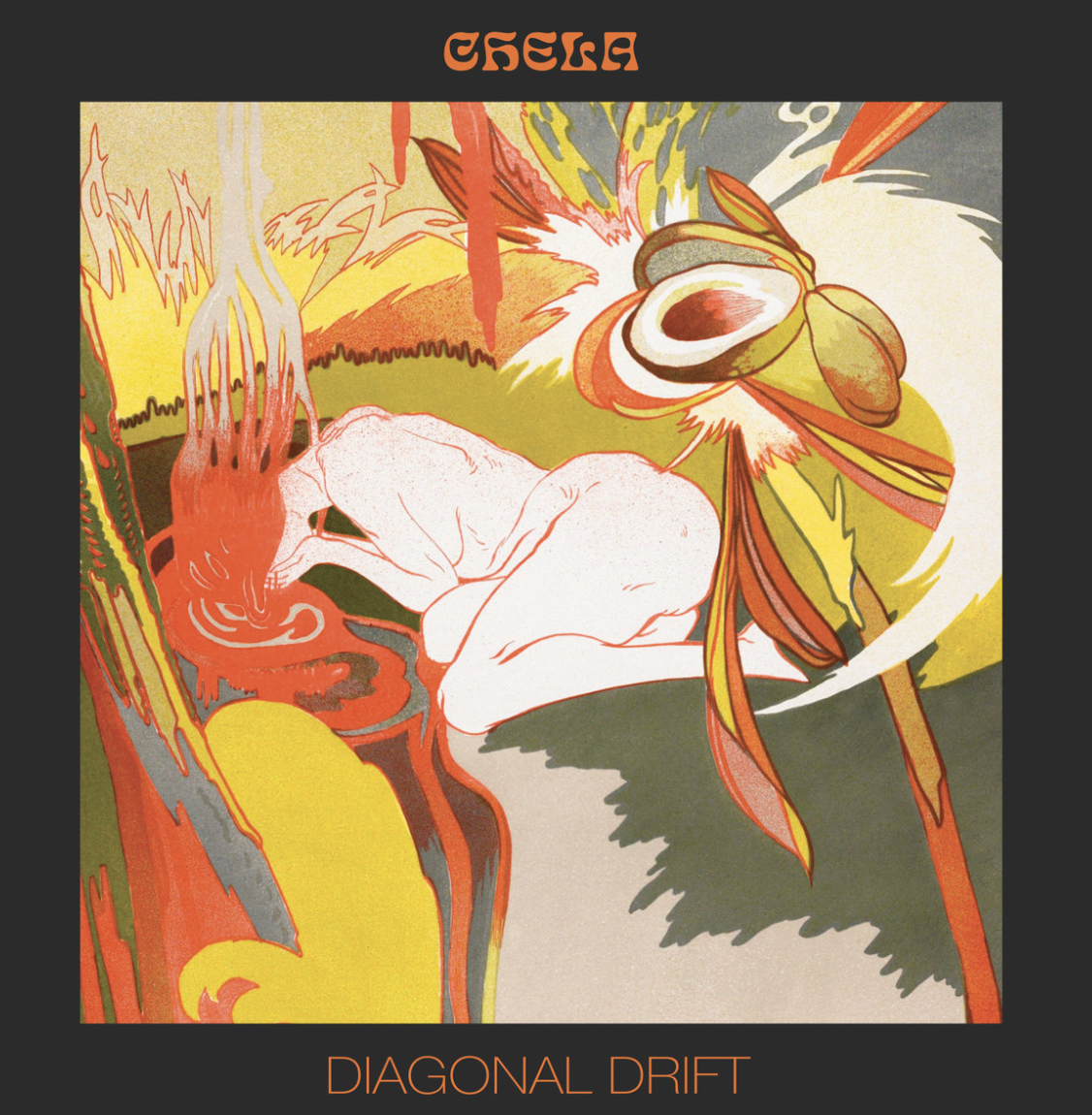
In communion with his long-time friend and collaborative foil in the University Challenged trio (alongside Oli Heffernan) Kohhei Matsuda, Ajay Saggar extends his blessed travels along the astral highways and byways with a new venture, CHELA.
Absorbed, imbued and inspired by Indian spiritualism, history and travails, its psychogeography and trauma, both partners in the new direction come together under the Sanskrit word for “disciple”; taken from the verb and root “to serve”, the “Chela” is similar in concept to a student, but implies a more loyal closeness with their teacher. In Hinduism this bond is considered sacred: An apt moniker for such inter-dimensional, afflatus dreamers and acolytes of raga, the new age, psychedlia and kosmische music.
Divine styler Saggar (who is also a member of King Champion Sounds, solos under the Bhajan Bhoy alias, and collaborates with Merinde Verbeck in the Deutsche Ashram duo) and Japanese noisenik Matsuda (most notably a member of the Bo Ningen quartet) spent much of 2022 putting this inaugural baptism together. And so with dedication to their art, the duo have sonically and melodically taken time, given depth to their new mysterious broadcast; that is, broadcasts from the ether, supernatural, uncertain, Fortean and cosmic. Different yet not entirely detached from previous incarnations, fans of both artists will pick up on past signatures, sounds and conceptions. However, they’ve managed to realign those same signatures, tuning into the mystical but often with trepidation and a sense that the noisier elements could consume all in their path.
Think Julius Eastman meets Fennesz we’re told; a good succinct summary. But I’d add a hell of a lot more, including Taylor Deupree and a cosmology of cosmic couriers. The opening ripple in the fabric of time, ‘Flyspray’, is an expanded peregrination of Beautifully tinkled Florian Fricke-like piano hauntings, Ariel Kalma and Syrinx new ageism and various Sky Records pioneers (Asmus Tietchens and Riechman spring to mind), all caught up in analogue wispy wind cacophony of divine rays, the esoteric and Eastern drones. Trippy warped reversals and folds, generator and processors nearly overwhelm the vague evocations of Tony Conrad, Schultz and a springy, but also spoke splayed banjo (which in itself seems to vaguely evoke the Balkans, Greece and strangely, India) on the reverberating ‘Appalachjo’.
In what could be a suggestion of “peace” and “harmony”, or reference to the Japanese town, ‘Heiwa’ is a hummed raga-like hymnal. A stand-up barrel-type piano plonks away from the ether, whilst ambient waves and traces of Dyzan invite heavenly reflection. ‘Ticker’ is a very different proposition. An intense chemistry of signals, beeps, quickened arrpegiator, moody signs of Faust and the sound of the Heart Of Darness are melted with Günter Schickert guitar, heavy acid Gong and various calculations.
‘Tanker’ feels like the most obvious attempt to score the sound of the title’s overbearing object; sounding like a alien freighter, both foreboding and mysterious. A scrawl and flapped ripple of radar and sonar bites into a resonating field of drones and sound waves, fog and guitar.
The final, spiritual and otherworldly track, ‘Worship’, features ghostly Indian voices and visitations from an event, service or chapter in time and history. A melodious piano chimes away in wisps of fanned cosmic mystique and cyclonic radio effects, whilst shades of FSOL, King Creosote (From Scotland With Love period) and Boards Of Canada linger. The video is more illuminating, a sepia film of bedside “worship”, healing for a leader, martyr, and a travelling funeral cortege that takes in rows of witnesses moved to touch, or just be in the essence of a distinguished teacher.
Once again with the cosmic and afflatus, Saggar and Matsuda expand their sound further. Diagonal Drift’s transcendental projection is just that, despite the building intensity and uncertainty, the broadcast noise of krautrock and kosmische styled aerial bends and radio tunings. CHELA is another welcome addition to the two artists oeuvre: one more step on the astral journey of mind-expanding experimentation.
 Monolith Cocktail Blog