End of the Year Revue For 2025: Part One: A to M
December 11, 2025
Choice Highlights From The Last Year
I said I wasn’t going to do it this year. And this may be the last. But here is the first part of a comprehensive revue listing of choice albums (some extended EPs too) from 2025 that we returned to the most, enjoyed or rated highly. See it as a sort of random highlights package if you will.
As usual a most diverse mix of releases, listed alphabetically – numerical orderings make no sense to me unless it is down to a vote, otherwise what qualifies the placing of an album? What makes the 25th place album better than the 26th and so on…
Whilst there is the odd smattering of Hip-Hop releases here and there, our resident selector and expert Matt Oliver has compiled a special 25 for 25 revue of his own, which will go out next week.
Without further ado….the first half of that selected works revue:
A.
A Journey Of Giraffes ‘Emperor Deco’ (Somewherecold Records)
Review by Dominic Valvona
Alien Eyelid ‘Vinegar Hill’ (Tall Texan)
Review by Brian ‘Bordello’ Shea
Allen, Marshall ‘New Dawn’ (Week-End Records)
Review by Dominic Valvona
Armstrong ‘Handicrafts’
Review by Brian ‘Bordello’ Shea
Audio Obscura ‘As Long As Gravity Persists On Holding Me to This Earth’
Review by Dominic Valvona
Aus ‘Eau’ (Flau)
Review by Dominic Valvona
B..
Balloonist, The ‘Dreamland’ (Wayside & Woodland)
Review/Piece by Dominic Valvona
Barman, MC Paul ‘Tectonic Texts’
Picked by Dominic Valvona
Bedd ‘Do Not Be Afraid’
Review by Dominic Valvona
Bird, Jeff ‘Ordo Virtutum: Jeff Bird Plays Hildegard von Bingen, Vol 2’
(Six Degrees Records) Review by Dominic Valvona
Blanco Teta ‘‘La Debacle las Divas’ (Bongo Joe)
Review by Dominic Valvona
Bordellos (with Dee Claw)/Neon Kittens, The ‘Half Man Half Kitten’
(Cruel Nature Records) Review by Dominic Valvona
Braxton, Anthony ‘Quartet (England) 1985’ (Burning Ambulance)
Picked by Dominic Valvona
Brody, Jonah ‘Brotherhood’ (IL Records)
Review by Dominic Valvona
Brother Ali ‘Satisfied Soul’ (Mello Music Group)
Picked by Dominic Valvona
Burning Books ‘Taller Than God’ (Ingrown Records)
Reviewed by Dominic Valvona
C…
Cindy ‘Saw It All Demos’ (Paisley Shirt Records)
Reviewed by Brian ‘Bordello’ Shea here
Craig, Kai ‘A Time Once Forgotten’ (Whirlwind Recordings)
Review by Dominic Valvona
Crayola Lectern ‘Disasternoon’ (Onomatopoeia)
Review by Dominic Valvona
Cross, Theon ‘Affirmations: Live at Blue Note New York’ (New Soil)
Review by Dominic Valvona
Cubillos, Julian ‘S-T’ (Ruination Record Co.)
Review by Dominic Valvona
Cumsleg Borenail ‘10mg Citalopram’ (Cruel Nature Recordings)
Review by Dominic Valvona
Joel Cusumano ‘Waxworld’ (Dandyboy Records)
Review by Dominic Valvona
D….
Dammann Sextet, Christopher ‘If I Could Time Travel I Would Mend Your Broken Heart aka Why Did The Protests Stop’ (Out of Your Head Records) Review by Dominic Valvona
Darko The Super ‘Then I Turned Into A Perfect Smile’
Picked by Dominic Valvona
Dyr Faser ‘Falling Stereos’
Picked by Dominic Valvona
E…..
Eamon The Destroyer ‘The Maker’s Quilt’ (Bearsuit Records)
Review by Brian ‘Bordello’ Shea
Expose ‘ETC’ (Qunidi)
Reviewed by Brian ‘Bordello’ Shea here
F……
Farrugia, Robert ‘Natura Maltija’ (Phantom Limb/Kewn Records)
Reviewed by Dominic Valvona here
Fir Cone Children ‘Gearshifting’ (Blackjack Illuminist Records)
Review by Brian ‘Bordello’ Shea
Fortunato Durutti Marinetti ‘Bitter Sweet, Sweet Bitter’ (Quindi Records/We Are Time)
Review by Dominic Valvona
G…….
Goldman, Ike ‘Kiki Goldman In How I Learned To Sing For Statler And Waldorf’
Review by Brian ‘Bordello’ Shea
Good Ones, The ‘Rwanda Sings With Strings’(Glitterbeat Records)
Review by Dominic Valvona
H……..
Haas & Brian g Skol, Andy ‘The Honeybee Twist’
Review by Dominic Valvona
Howard, John ‘For Those that Wander By’(Think Like A Key)
Review by Brian ‘Bordello’ Shea
I………
Ishibashi, Eiko ‘Antigone’ (Drag City)
Picked by Dominic Valvona
iyatraQuartet ‘Wild Green’
Review by Dominic Valvona
J……….
Jay, Tony ‘Faithless’
Review by Brian ‘Bordello’ Shea
Johanna, John ‘New Moon Pangs’(Faith & Industry)
Review by Dominic Valvona
K………..
Kheir , Amira ‘Black Diamonds’(Sterns Music/Contro Culture Music)
Review by Dominic Valvona
Khodja, Freh ‘Ken Andi Habib’(WEWANTSOUNDS)
Review by Dominic Valvona
Kweli, Talib & J Rawls ‘The Confidence Of Knowing’
Picked by DV
L…………
Lassy Trio, Timo ‘Live In Helsinki’ (We Jazz)
Picked by Dominic Valvona
Last Of The Lovely Days, The ‘No Public House Talk’(Gare du Nord)
Review by Brian ‘Bordello’ Shea
Lt. Headtrip & Steel Tipped Dove ‘Hostile Engineering’ (Fused Arrow Records)
Review by Dominic Valvona
LIUN + The Science Fiction Band ‘Does It Make You Love Your Life?’
(Heartcore Records) Review by Dominic Valvona
Locks, Damon ‘List Of Demands’ (International Anthem)
Reviewed by Dominic Valvona here
M………….
Mikesell, Emily & Kate Campbell Strauss ‘Give Way’ (Ears & Eyes Records)
Reviewed by Dominic Valvona here
Mirrored Daughters ‘S/T’ (Fike Recordings)
Review by Dominic Valvona
Mohanna, Nickolas ‘Speakers Rotations’ (AKP Recordings)
Review by Dominic Valvona
If you’ve enjoyed following and reading the Monolith Cocktail in 2025, and if you can, then please show your appreciation by donating to our Ko-Fi account. The micro donation site has been vital in keeping us afloat this year.
For the last 15 years both me and the MC team have featured and supported music, musicians and labels we love across genres from around the world: ones that we think you’ll want to know about. No content on the site is paid for or sponsored, and we only feature artists we have genuine respect for /love or interest in. If you enjoy our reviews (and we often write long, thoughtful ones), found a new artist you admire or if we have featured you or artists you represent and would like to say thanks or show support, than you can now buy us a coffee or donate via https://ko-fi.com/monolithcocktail
Our Monthly Playlist selection of choice music and Choice Releases list from the last month.
We decided at the start of the year to change things a little with a reminder of not only our favourite tracks from the last month, but also a list of choice albums too. This list includes both those releases we managed to feature and review on the site and those we just didn’t get the time or room for – time restraints and the sheer volume of submissions each month mean there are always those releases that miss out on receiving a full review, and so we have added a number to both our playlist and list.
All entries in the Choice Releases list are displayed alphabetically. Meanwhile, our Monthly Playlist continues as normal with all the choice tracks from July taken either from reviews and pieces written by me – that’s Dominic Valvona – , Brian ‘Bordello’ Shea, and this month, Kalporz writer Samuel Conficoni. Our resident Hip-Hop expert Matt Oliver has also put forward a smattering of crucial and highlighted tracks from the rap arena.
CHOICE RELEASES FROM THE LAST MONTH OR SO:
Blanco Teta ‘‘La Debacle las Divas’
(Bongo Joe) Review
Lukas Cresswell-Rost ‘Weight Away’
(Wayside & Woodland Recordings) Review
Theon Cross ‘Affirmations: Live at Blue Note New York’
(New Soil) Review
Cumsleg Borenail ‘10mg Citalopram’
(Cruel Nature Recordings) Review
Exploding Star Orchestra ‘Holy Mountains’
Fortunato Durutti Marinetti ‘Bitter Sweet, Sweet Bitter’
(Quindi Records/We Are Time) Review
Tony Jay ‘Faithless’
Review
Freh Khodja ‘Ken Andi Habib’
(WEWANTSOUNDS) Review
The Lancashire Hustlers ‘Here But Not Here’
(Steep Hill) Review
Kevin Robertson ‘Yellow Painted Moon’
Review
Maria Elena Silva ‘Wise Men Never Try’
Review
Sol Messiah ‘War of the Gods’
THE PLAYLIST::
Blanco Teta ‘Subiduki’
Scotch Funeral ‘Weak at the Knees’
Freh Khodja ‘Aich Sar Bina Koulili’
Brickwork Lizards ‘All the We Are – Reworked by Sebastian Reynolds’
Natural Information Society ‘Sound Talisman’
Sol Messiah Ft. Sa-Roc ‘Auset’
Raekwon Ft. Ghostface Killah & Method Man ‘600 School’
Mr. Muthafuckin’ eXquire ‘Y.O.Utopia’
Open Mike Eagle ‘ok but I’m the phone screen’
Nicholas Craven & Boldy James Ft. C Dell & Nick Bruno ‘At&T’
Clipse, Pusha T & Malice Ft. Ab Liva ‘Inglorious Bastards’
Estee Nack & V Don Ft. Al-Doe ‘EZBRED’
Rachel Eckroth ‘Yin Yang’
Theon Cross Ft. Isaiah Collier, Nikos Ziarkas & James Russel Sims ‘We Go Again – Live at the Blue Note, NYC’
Peter Evans (Being & Becoming) ‘Malibu’
Homeboy Sandman & Sonnyjim ‘Can’t Stop Me’
Apollo Brown & Bronze Nazareth ‘Wheel Of Misfortune’
Ramson Badbonez & Leaf Dog ‘Celestial Bodies’
Max Schreiber ‘Layla Mistakel’
The Conspiracy ‘Salisbury Road’
SUO ‘Big Star’
Fortunato Durutti Marinetti ‘Beware’
Jeff Tweedy ‘Out in the Dark’
Kevin Robertson ‘Yellow Painted Moon’
Soft Hearted Scientists ‘Hello Hello’
Whitney ‘Dandelions’
The Lancashire Hustlers ‘Perhaps’
Ali Murray ‘ Toby’
Alex G ‘June Guitar’
Spotless Souls ‘In the Heart’
The Noisy ‘Twos’
Wolfgang Perez ‘So Ouco’
Eve Goodman & SERA ‘Blodyn Gwylly’
Joe Harvey-Whyte & Paul Cousins ‘lift’
Sirom ‘For You, This Eve, the Wolves Will Be Enchantingly Forsaken’
Austistici & Jacek Doroszenko ‘After Water Formed A Shape’
Cumsleg Borenail ‘You Mean Something To Me’
Cecil Taylor & Tony Oxley ‘Encore 1’
Exploding Star Orchestra ‘Afterburn (Parable 400)’.
If you’ve enjoyed this selection, the writing, or been led down a rabbit hole into new musical terrains of aural pleasure, and if you can, then you can now show your appreciation by keeping the Monolith Cocktail afloat by donating via Ko-Fi.
For the last 15 years both me and the MC team have featured and supported music, musicians and labels we love across genres from around the world: ones that we think you’ll want to know about. No content on the site is paid for or sponsored, and we only feature artists we have genuine respect for /love or interest in. If you enjoy our reviews (and we often write long, thoughtful ones), found a new artist you admire or if we have featured you or artists you represent and would like to say thanks or show support, than you can now buy us a coffee or donate via https://ko-fi.com/monolithcocktail
The Perusal #69: Theon Cross, Wolfgang Pérez, Sebastian Reynolds, Fortunato Durutti Marinetti…
July 7, 2025
A world of sonic/musical discoveries reviewed by Dominic Valvona
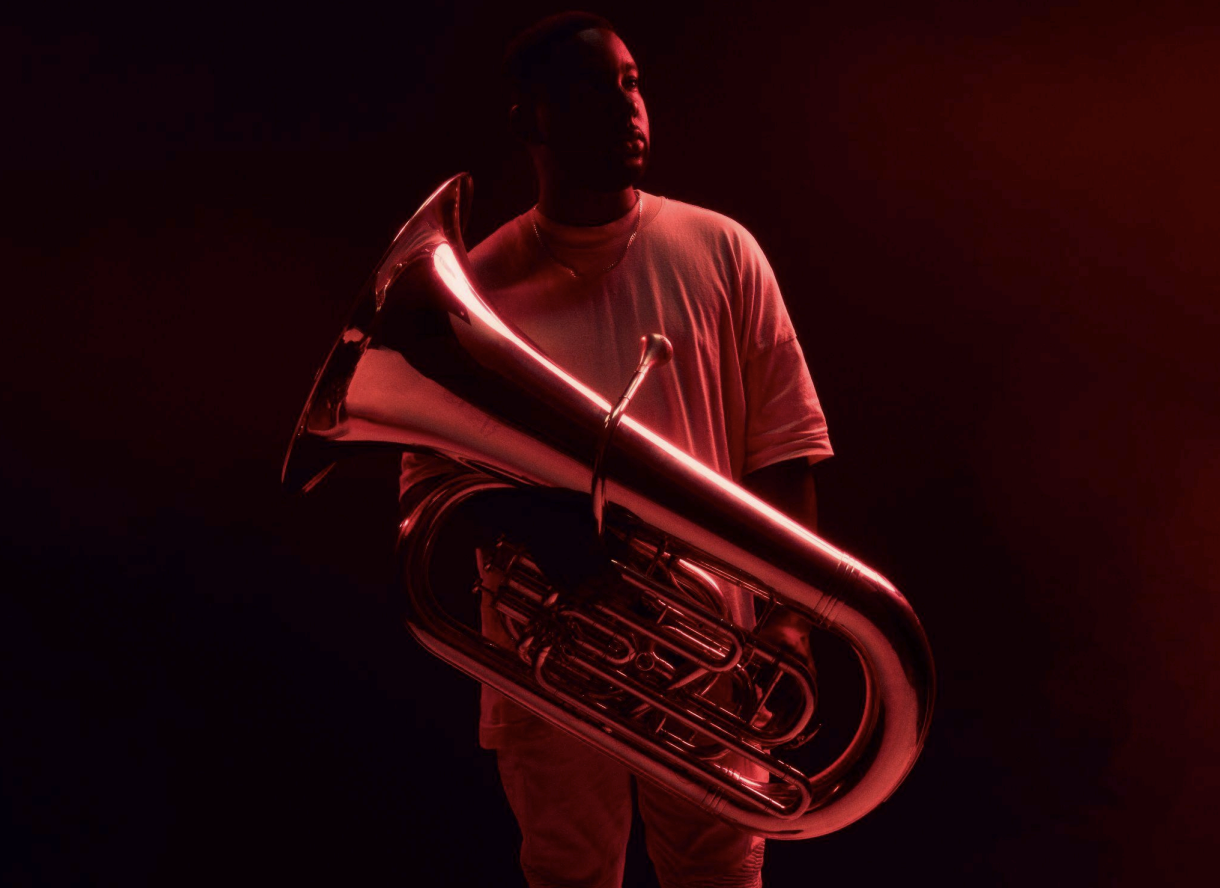
(photo by Ian Hippolyte of Theon Cross)
Lukas Cresswell-Rost ‘Weight Away’
(Wayside & Woodland Recordings) 4th July 2025
A welcome return home and a welcome return to the fold musically speaking, Lukas Cresswell-Rost is back in Yorkshire after spending the best part of the last 15 years ‘living and getting slightly lost in Berlin.’ Engaging once more with the world around and bringing back a collection of songs and pieces of music he created over the years whilst eking out a creative career in the German capital, Lukas proposes a touching reconnection, a sense of loss, of remembrance and reflection on his new songbook, Weight Away.
A tale of two cities, or two locations, a majority of the newly released material was written back in Berlin, tested at gigs there, but was completed in England with the aid of friendly musical companions James Yates (who goes under the Majetona nom de plume, and also plays with epic45, the duo formed by the co-founders of the label that not facilitates this album) on drums, Danny Laycock on both standard and fretless bass guitars, and his wife Emaline Delapaix on backing vocals.
But before we concentrate on the new album, let’s rewind to Lukas’ previous releases – or the ones I reviewed and featured on the site.
If you’ve followed the Monolith Cocktail over the years, you may well have caught my reviews of both his underappreciated Go Dream and Gone Dreamin’ releases. I praised both highly at the time, saying this about the former: ‘Travelling a well-worn highway; tuned into a radio station straight from in-between the 1970s covers of Rolling Stone, Creem and The Village Voice; accompanied by a cast of “misanthropic” characters, the former Leeds troubadour of deconstructed pop Lukas Creswell-Rost dreams up a most sophisticated songwriting opus. His relocation, five years ago, to the creative hive of Berlin has done the artist a world of good, this solid contextual collection of earnest dramas and lamentable episodes from the rock of ages, slowly but surely, unfurling its quality.’ And about the latter, Gone Dreamin’, ‘a reimagined transformation, taken off into more experimental realms, with ideas, scraps of dialogue, riffs and melodies ‘flying around’, merged with various effects and breaks, these original beautifully vaporous soft rock ballads and cruising songs are given a new lease of life.’
But now back on English soil, Lukas takes stock whilst opening up his sound. And whilst there are hints, especially on the instrumental vignettes, of his past work, the sound is a little less Fairlight 70s/80s troubadour pop, and more like a mix of soft dreamy psychedelic indie, folktronica, the classical, and a mirage-like waned version of Americana. Don’t get me wrong, there’s still the odd hint of Steely Dan, of Wings, but now also hints of a subtle The Flaming Lips, a touch of Galaxie 500 and Mike Gale on the tropical blue Hawaiian dreamt ‘Spiral Island’, which features the soft beachcomber lulls of Delapaix and may or may not be hiding far more philosophical quandaries of death and shaking one’s self out of a stupor, the blues, beneath its fantasy islet vibes. Gale popped up a lot when listening through this generous fourteen-track songbook of vocalised and instrumental pieces, lead-ins to fuller songs and momentary breaks – these short pieces range between the incipient plucks of elastic band strings to near plaintive plinks that induce a real sadness; most of them linking or bringing in the next song like the more minimal or ambient and felt congruous stirs of an intro track.
But then I also heard an inkling of the SFA and even The Beach Boys. But shifting those evocations a little, ‘More Jam Than Band’ made me think of the drifted and near dreamy country bluegrass and Americana music and scores of Myles Cochran: that and Blue Rose Code on a song of harmonic pinged atmospherics, DJ lyric analogies, the semi-classical and reflective.
Personal travails, a battle to escape a state of mentally sapping stasis, and the deaths of those close, including the suicide of a friend, breach comfort zones at every turn – good God, the bass, when not in fretless slides, on ‘The Bird Of Prey’ finale reminded me of Climate of Hunter era Scott Walker. And yet, this is a lush at times, often dreamy (as I’ve already mentioned) listen of the picturesque and emotively drawn-out. With a new set-up, an embrace of musical friends Lukas Cresswell-Rost produces a complicated album of feelings and quandaries made melodious and rich in lucidity.
Theon Cross ‘Affirmations: Live at Blue Note New York’
(New Soil) 11th July 2025
Hot footing across the Atlantic on a wave of critical acclaim tubist son of Kemet Theon Cross lands down in one of the most auspicious of jazz crucibles, the Blue Note in New York City. Off the back of a number of long and short players, and a reputation for working with some of the key trailblazers in the contemporary UK jazz movement (most notably Mosses Boyd and Nubya Garcia), Cross has ventured out on his own in recent years to much fanfare, transporting and transforming the sound of his chosen instrument to probe into ever evolving territories, but also once more putting that brassy instrument at the centre.
Although one of the most durable instruments in the jazz cannon, with a history that dates back to that style’s birth in New Orleans, the tuba has often gone in and out of fashion; disappearing from the frontlines during the electrified era or replaced by the bass (whether that’s the double or electric). Hanging on in there, the tuba was ideal for outdoor performances, its natural resonated amplified bassy notes and rumbles carrying far enough without the need for amplifiers. Through such pioneers and luminaries as Bill Barber, who lent his tuba to various Miles Davis albums, and Raymond Drapper, who was said to have beaten Miles to forming the first jazz-fusion’ ensemble in the 1960s, the tuba has been pulled back into focus, the mix and limelight. Drapper for his part was able to bridge jazz with the burgeoning psychedelic and rock scenes of that decade and take it further – a kind of Sly & The Family Stone of jazz-fusion if you like -, but also laid down markers during a previous decade with such luminaries and anointed saints of jazz as Coltrane. Interestingly, Coltrane and his highly influential Live at the Village Gate LP are mentioned in the notes for Cross’ live debut album – ‘honoured’ alongside Sonny Rollins’ Live at the Village Vanguard LP. And although it isn’t obvious, Affirmations: Live at Blue Note New York has echoes of his spirit, channelled through the saxophone of Cross’ saxophone foil, the celebrated and already established all-rounder, Chosen Few band leader and solo talent Isaiah Collier.
As a side note of a sort, early on in this performance there’s a track named ‘Transition’, which I thought might be a reference to Coltrane’s own track of the same name, recorded in 1965 but only released posthumously five years later. It is in fact just that, a ‘transition’ between pieces, a continual bridge on a performance that never really lets up, dynamically fluctuating between the tampered, incipient and full-on. The whole thing runs continuously for 80 minutes, with the odd shoutout, and simmering down and stripped interaction with the whistling and whooping but respective audience to take the action down a notch or two. In fact, Cross’ intention was to structure this live gig like a DJ set. And it does indeed sound like that, albeit on real instrumentation, with lots of grooves, breaks and plenty of bass lines played either on the tuba or the electric bass guitar.
You could say a journey is mapped out, riffing on both tracks that feature on Cross’ 2019 album Fyah, his 2021 album Intra-I (which translates as “within self”) and his single doublet of Wings/Back To Africa (the former gets a serious airing here) and improvisations that predominately featuring the versatility of the tuba – some of the most experimental pieces in the set, they feature Cross either unaccompanied holding the attention or with minimal interaction from his chosen troupe of talented foils. Solo efforts, introductions to the next group effort, they do occasionally star or put in the spotlight his highly in-demand guitarist Nikos Ziarkas. The Greek guitar virtuoso, who moved to London more than a decade ago, and co-leader of Valia Calda, settles in an evolving experimental and descriptive space between that of mirage, phaser lunar bends, the melted, looped and cosmic; evoking echoes of fusion-jazz, Afro-rock and the work of Bill Frisell and Nels Cline – although Hendrix is mentioned in his own bio, and his guitar parts here do verge on the psychedelic at times, but nothing truly bluesy and heavy. There are whole passages for Ziarkas to navigate and enrich, or to wrangle and describe, accentuate or cast off into space.
Completing this gifted assembled quartet is the brilliant Chicago drummer James Russel Sims, who splashes around, gives groove and a percussive lift to the performances. There’s a real feel of the African and even Latin in some of the tapping, bottle-like and jar hitting. Plus, what sounds like recurring shake or rattle of dried beans, rice or grass. Sims keeps momentum with bass drum kicking bounce, breaks, rolls and punctuations.
The album starts with the dry bones shake and stirred synthesized waves of the mystical and sci-fi like spiritual maelstrom ‘Greetings’, which at any one point evokes the work of Donny MacCaslin, Afrikan Sciences, The Comet Is Coming and Pharoah Sanders. From then on in, we are moved between impressive tuba performances that sound like a digeridoo or bass guitar, or chuff and sonorously register and the lowest of frequencies or quicken and pump without taking any breaths. Soulful, funky and R&B like on the finale ‘Confidence of Your Ability’ but raising the tuba like an elephant’s trunk and puffing away like a New Orleans brass band on the Afro-Futurist’s Egyptology ‘Play To Win’, the scope of influences at play is wide and deep, and yet always connective to Cross’ themes and sound: the whole group unifying their ranges and own CVs worth of past and present projects to help create the perfect ensemble piece. I’m hearing Jon Sass, Lester Bowie’s Brass Fantasy, the Soft Machine, Oren Marshall, Karl Hector & The Malcouns, Coltrane’s Ole, funk-jazz, spiritual, and Afro-futurism vibes that almost roll into hip-hop and breakbeat territories: akin to Roots jamming with Archie Shepp and Idris Ackamoor.
From ascending to transcending, the spiritual to otherworldly, the concentrated to parred down, the vibes vary on a live recording that stays consistently inter-dimensional and cosmic yet tethered to the Blue Note legacy and the iconic live showcases that shone even more anointed light upon such luminaries as Rollins and Coltrane. Above all a showcase for Cross’ inventiveness, energy and command of adroit musicianship, this recorded performance will stand as a testament to his brand of tuba fusions and contemporary jazz journeys of futurism and the universal. A lasting legacy at that, and one of the best live performances I’ve heard in a long time.
Cumsleg Borenail ‘10mg Citalopram’
(Cruel Nature Recordings) 27th June 2025
Nightmare or escapism from mental illness and desperation? AI fever dreams or hyperbolic morphing accelerators to total hallucinational evolution? The collider general of all these elements, the anonymous Cumsleg Borenail, seems to exist in-between various consciousnesses, wired in to an intravenous of 21st century tech overload, distractions, glitches in the matrix and the daily dosage of citalopram – for those who would like to know these things, citalopram is an antidepressant that belongs to the ‘selective serotonin reuptake inhibitor class’. It is used to treat major depressive disorder, obsessive compulsive disorder, panic disorder, and social phobia, but just as likely to be induced by those seeking drug comas of a less medicinal kind.
Like hits of dopamine the discombobulations on Borenail’s latest album – one arrives so quickly these days, that by the time you’ve read this it will have been followed up by at least two more releases – is constantly in a manic shift of growing, evolving industrial electronic music, breakbeat, techno, fucked-up hip-hop beats, no wave, glitch and 80s style sound clash transformations: even the “ambient” breather track is a humorous bastardisation of its own purpose, shooting off 12-gauage gunshots like beats, whilst gazing into the flames. But imagine throughout, a broken up phantasmagoric version of Merzbow, Authchere and Nocturnal Emissions – the latter of which I’m picking up a lot during the course of this thrash-electronic mind-warp that takes more cues from Coil, Populaire Mechanik, The Gruesome Twosome, Conformist and Ramuntcho Matta than it does the EDM or tech experiments of our modern age.
From the kink fattening grossness of the accompanying album artwork to snatches and riffs of dialogue and samples off the telly and from the cult film worlds, life’s general dystopian, vacuous and ridiculous noise and ambience is fed into hadron; spewing out nonsense that makes a mockery of society and its mania, its dependency on gratification and manufactured drug hits. I say that: it could just as easily be a celebration of that very nightmarish shopping list of anxiety-inducing bilge. Broken glass, various dialects and soundbites, both the stringy and pained, the supernatural and daemonic get flicked through like a cluttery rolodex of havoc and silliness.
Fabrication could be the order of the day: fabricated artist, fabricated imagery and fabricated prompted noise installations. It’s impossible to tell how and if there is indeed even a real Cumsleg Borenail behind the machine. Whatever the truth, CB makes the most insane and experimental electric-metal-break-techno-no-wave-thrash on the Internet. And you should care about that, and indeed support it.
Fortunato Durutti Marinetti ‘Bitter Sweet, Sweet Bitter’
(Quindi Records/We Are Time) 25th July 2025
With an alias borrowed from a saint, a Spanish anarchist and an infamous Italian futurist poet, disruptor, Daniele Colussi suavely carouses between the emotional quandaries and atavistic dualities of the bittersweet on his upcoming, and fourth, album. And despite those moniker references his music is anything but confrontational and revolutionary. Instead, he creates a familiar but repurposed musical songbook world that takes its inspirations from those disconsolate French singer-songwriters that would forlornly gaze across the Seine and light up a Gitane or Gauloise in philosophical reflection, and from those arch, arty broads and dames that dared to tread their own idiosyncratic musical pathways. For this is a smooth, sophisticated songbook with both Mediterranean resort and French-Canadian vibes that’s easy on the ear; effortlessly and loosely moving between the jazzy (the album’s two instrumental Theme tune vignettes bordering on both classic Blue Note and Affirmation Coltrane, but played by a cool European lounge band), soft funk, troubadour, those French and Italian mavericks of the 70s and 80s, the soulful, the Baroque, and both art-pop and Franco-pop.
Colussi perfectly counters the weary with romantic illusions, metaphors and forlorn absurdity; simultaneously pulling on the heart strings, need consolation, and yet dethatched and self-deprecating. Colussi delivers some great lines throughout. On ‘Do You Ever Think’, and in the manner of Gainsbourg, he comes out with this near sardonic: “And tell me, is that dog that’s drowning in your new painting supposed to look like me?” In the same song he changes that voice to sound almost like Lay Lady Lay era Dylan when in a more poetic mode he comes out with this, “When the hawks rush the morning doves, does that make you think of me.” The dog returns, in a different capacity, on the autobiographic allegorical Baroque-Eno ‘Call Me The Author’: “I started out as a dog/A kind of dog that refused to bark”.
Vocally and lyrically, there’s more than a resemblance to the craft of Llyod Cole, Dr Robert and Leonard Cohen. The latter isn’t so surprising to me, because even if it wasn’t intentional, Colussi recorded this album with a full band and brass section in his adopted Toronto home. And though he also has Turin roots, there is a deep Frenchified sound to this record; and of course, a French-Canadian one. So, Cohen seems a good call to make, even though he isn’t mentioned in the notes and bio. Moving away from that, and with the vocal addition of Victoria Cheong on the Chateau-pop-Rhodes-Wonder soulful and string accompanied walk through ‘Beware’, this could be a reunion between Brigitte Fontaine and Areski Belkacem, or a match-up of Gainsbourg and Little Annie: there’s also a hint of Joanne Grauer about it too.
The title and themes of this album are in part inspired by the Canadian author, poet, essayist, translator and classics professor Anne Carson and her debut book of criticism, Eros: The Bittersweet. At its heart, there is an analysis of that ancient Greek deity’s duality, the simultaneous concepts and experiences within its lore of both pleasure and pain. One of the main thread or sources for this book is Sappho, who is said to have coined the phrase, encapsulation of this duality, “glukupikron”: later translated into the “bittersweet”. Carson sees Eros as “deferred, defied, obstructed, hungry, organised around a radiant absence – eros as lack.” Make what you will of that. Colussi for his part, transfers it to a contemporary setting, and yet feels attached to nostalgia and the past.
Despite the melody, the harmony and smooth musicianship, Colussi pushes himself like never before with “chorus-less compositions swirling in 6/8 time”, and a musical accompaniment that includes the attentive airs and sweep of strings and the soft pipes of brass. The meandering palette expands to evoke signs of Sebastien Tellier, Susana Estrada, Loic Lanteine, Annette Peacock, Ricki Lee Jones, The Blow Monkeys, Bernardo Devlin, and I know this will sound odd, but a touch of Jarvis Cocker. All meet in this drama, this setting of cigarette smoking angels, wistful malady and shrugged romantic surrealism.
Things are wrapped up with the detached state of melancholic dark humour curtain call, ‘My Funeral’, with Colussi observant of his own bluesy-jazzy-Franco Jacques Brel and Brecht accompanied passing. Balancing his own scales with reminders of all those good deeds (“But remember, I held the door open for a little old lady.”), this semi-dirge of the barely trumpeted and sulking is a perfect ending to a bittersweet life of despondency and grace. What an album; the perfect one at that. A great songbook that just gets better with every single play. Colussi has produced his best work yet.
Freh Khodja ‘Ken Andi Habib’
(WEWANTSOUNDS) 4th July 2025
After various international stopovers, the vinyl reissue specialists return to North Africa, and the former French colony of Algeria with one of the most desired LPs from its diaspora, Freh Khodja’s 1975 released Ken Andi Habib showcase.
Reissued for the first ever, after fifty years that French studio recording has finally been accorded a long overture reprise – remastered and with a package that includes liner notes and context by Rabah Mezouane. Given the tip-off, as it were, by DJ Cheb Gero – the Paris-based DJ and curator is responsible for recently curating the Sweet Rebel Rai set, and for working with WEWANTSOUNDS on their Abranis LP revival a while back – Khodja’s seminal album is rightfully given its dues; a highly influential bridge between Alegria and its diaspora’s adopted European homes, the resulting fusion of cultures and influences culminating in a truly international sound that spans various continents, from North And South America to the Caribbean Islands, Arabian North Africa and Cape Verde.
But first, a little background to this story. Khodja was born in 1949 in Sidi Bel Abbès, an Algerian city famous for its markets, agriculture and industry; named after the noted Muslim noble who is buried there. It’s also a centre, of a sort, for Algeria’s highly popular Rai form of folk music. Translating as ‘opinion’, Rai originated in the Algerian city of Oran sometime in the 1920s and developed into a spirited form of protest and nationalistic pride: falling foul of the French overlords as a rallying cry against colonialism.
Although his family pushed him towards sport, the young aspiring musician quickly took to the saxophone whilst studying musical theory and composition. His obvious talents led him to France in the 1960s. Although, as Mezouane shares in his linear notes and interview with the still thriving and passionate Khodja, his move was saddled by the ‘immigrant experiences’ of working “twelve jobs, thirteen miseries”. Reuniting with his brother in Lyon, Khodja was worked as a lab technician for a period, before later returning to Paris where he enrolled at the Ecole Normale de Musique to study saxophone under the tutelage of the classical saxophonist Marcel Josse.
His first furores into the music world included membership of Les Flammes, a group of immigrant musicians mostly drawn from North Africa – actually, a number of them came from the West African island of Cape Verde. But his career went on to span arranging and composing for film, TV and theatre. He even had a few turns on screen as an ‘occasional actor’.
In 1975, backed by Les Flammes, and with the addition of the vocal harmonizing group El Salem, Khodja went into a Parisian studio to record Ken Andi Habib, a versatile set of numbers that featured horns and an electric mix of instruments, mixed vocal choruses and longed, sometimes feminine yearned harmonies and responses.
A ‘commanding performer’ with obvious stage presence and a way of not only singing but acting the lyrics and their emotional draws, Khodja swings the saxophone round to sound out caresses, the pining and soulful – not so much jazzy as Arabian-soul and R&B style. Trumpets join the brass section, and rather than evoke the North African landscapes seem to suggest both Latin America and the Tex-Mex borders as they blaze and herald like a mariachi band crossed with a Sicilian funeral procession, and a removed version of romantically alluding Stax.
There’s funk, there’s R&B, soul, moments of an electrified Rai and allusions to the homeland across a brilliant performance of reminiscing, heartache, lament and various emotional pulls. But though those Arabian roots are all present and correct, the music often spills over seamlessly into the Med, to African Brazil and into America’s deep South – the often simmered and sustained Hammond or organ that’s present on nearly every track, has more than an air of Southern gospel and soul to it. Some of it sounds like a lost soundtrack to some cult Italian or French detective movie. And there’s more than a passing resemblance to the Cape Verde sound of Funaná – an infectious quick-step of driving percussive rhythms that is played with a kitchen knife scrapping over an iron rod, christened the ‘ferro’ or ‘ferrinho’ by the islanders, and the bellowed dizzying sway and short concertinaed melodies and lead of the diatonal accordion.
A standard bearer if you like, this revitalised LP is an incredible, fun at times, and funky showcase of North African diaspora fusions. Surprises galore on an album that is just as comfortable hot-stepping soul with Rai as it is bare-footing across Caribbean sands and merging Latin America with the Med. A great album from start to finish, and worthy of not only attention but your quickly eroded cash supply. I have a feeling this one will fly.
Wolfgang Pérez ‘Só Ouço’
(Hive Mind Records) 18th July 2025
Making a return to the site after last April’s ‘Memorias Fantasmas’ short, Wolfgang Pérez is back with a brand-new album of mirage/hallucination and dreamy-realism, imbued and led by a penchant for all things Música Popular Brasileira – that post-bossa, urban pop music phenomenon that fused Brazil’s various traditional and Portuguese flavours, its poetry and fantasy with Western modern pop, jazz and rock.
As the name might indicate, with the most German of German names and most Spanish of Spanish names, Pérez’s heritage, his “casta”, is a mix of the two nationalities. Based in Essen, the industrial hub of the Ruhr, the songwriter, arranger, guitarist and artist has previously released albums that draw upon this linage: especially 2024’s Spanish language AHORA album, the follow-up to the debut Who Cares Who Cares from 2021. Within that scope of influences there’s a musical embrace of everything from pop to chamber music and jazz.
Memorias Fantasmas – facilitated by those keen folk at Hive Mind Records, who now release this latest anticipated album – drew from Pérez’s Spanish genes with a transmogrification of the beautified coos and voices, and the melodious traditional accompanied music of his family singing in church. Part memories placed in new sonic surroundings, part mirage/hallucination and “phantom” inhabited, recordings taken by his grandfather Fernando on a cheap piece of “shitty” recording equipment in a church in the historically famous Spanish city of Segoiva are rendered otherworldly and near supernatural.
Hanging onto those roots, and the phantom parts, the dreaminess, Só Ouço (“Just Listen”) brings together an extensive cast of musicians from Brazil (mainly Rio de Janeiro) to reimagine the country’s poetic, fantastical, environmental symmetry of chaos and beauty. Using the elementals of Música Popular Brasileira and its concomitant trends of Tropicália and Samba Rock and Psych, Pérez and his band of foils take a snapshot of their surroundings and moods and weave a magical, often meandering and languid, journey full of sound and sampled collage.
The results of an extended stay in Rio a few years ago (part of an 18-month residency and student exchange programme) the album and band that was assembled to deliver this dance, saunter and off-kilter dream was put together off the back of Pérez’s full-on absorption of the city and its life: So absorbed that Pérez went as far as to learn the idiosyncratic slang and the cultural nuances. There would be introductions to the city’s musical luminaries, including the former Lounge Lizard and no wave pioneer Arto Lindsay and Thiago Nassif – who the former feted, and worked with -, and study with the guidance of the celebrated Josimar Carneiro, Marcello Gonçalves and Almir Cortes masters at UFRJ/UNIRIO.
But through happenstance and chance encounter, and through various jam sessions, a band of a kind took shape with the trio of Luis Magalhães (bass), Pedro Fonte (drums) and Paulo Emmery (electric guitar). This alignment began to thrash out arrangements and ideas, leading to a gig at Audio Rebel, where they met Angelo Wolf, the owner of Wolf Estúdio and engineer for artists such as Bala Desejo, Dora Morelenbaum, Zé Ibarra, Marcos Valle, Antonio Neves and Ana Frango Elétrico. Keen on what he heard, Wolf offered them both a residency and studio time. The band was extended further to incorporate a brass and woodwind section, led by the drummer and saxophonist and arranger Antonio Neves, son of the notable and celebrated saxophonist Eduardo. Also joining this fantastical ensemble was the Rio guitarist, singer-songwriter and artist Carol Maia, who brings a reminiscent beautiful soothed voiced evocation of the 60s and 70s to the vocals.
Altogether, this troupe that assembles around the loose direction and giddy at times imagination of its instigator, maps out a spellbound, fantastical tapestry and languorous cross-traffic prism of Brazil. There’s so much to hear and unpack, from what is a highly sophisticated but organic sounding record. From picking up radio waves and signal codes from overhead choppers, as the contemporary pairing of our host and Maia invoke Joyce Moreno and Naná Vasconcelos on the opening dreamy-realist Brazilian oscillation to the near untethered, psychedelic and cosmic influences of the great Caetano Veloso on the trip-y Latin-jazz tinged, sorrowed beachcomber mirage ‘Tristeza’, there is a both vibrant and yet softly hallucinated filter to this songbook. Songs don’t just play and recall the art and beauty of such noted Brazilian pioneers and icons as Hermeto Pascoal, Som Tres, Flora Purim, Jorge Ben Sor, Tom Zé and Gal Costa, but go further in gently pushing the boundaries of the song format, reaching into pure atmospheres and a collage of passing, fleeting sounds and those emanating from memory to conjure up a sense of place, time and emotion. Church bells peal to evoke something of the country’s Catholic culture, daily saintly worship, but also something far more mysterious. But there’s the sounds of the city, the environment, all reimagined and brought in as a sort of meta layer. Instruments too, with the fluted and pan piped essence of the Amazon floating into the mix.
Some songs really go far out, especially Pérez’s venture with the already briefly mentioned Thiago Nassif, who once made my choice albums of the year list with his experimentally cool, liquid tropical no and new wave album Mente – which I described at the time as ‘A leopard skin upholstered, neon-lit sumptuous groove of the fuzzy and sauntering.’ I’m not sure exactly who’s playing or doing what, but their ‘O Mundo É Um Moinho’ collaboration is a strange pairing of Seu Jorge acoustic guitar and the reverb flapping of beating, thudded wings. Ideas, musical threads seem to almost fly off into the imagery, with dreamt vistas and city life forming a backdrop to a lightened mix of brassy, woodwind fluting, whistling accompaniment and the beautifully conveyed poetic emotional states captured moments of the artist’s absorption of Rio and Brazil. It all comes to a curtain call, with a perfect chorus finale of shimmery organ and horns-serenaded and smoked fun and dancing; the perfect bow to a most lovely and inventive album that reimagines a wealth of Brazilian influences, and yet feels refreshingly dreamy and softly adventurous.
Sebastian Reynolds ‘New Beginnings’
(PinDrop) 4th July 2025
After what seemed like an age, and after an enviable prolific string of projects, collaborations and EP releases behind him, Sebastian Reynolds finally managed to release his debut solo album, Canary, a couple of years back. The Oxford polymath -his juggled roles including that of musician, artist, producer, remixer, PR, label boss and damn fine amateur track athlete – has never really taken a pause since he first began making, remodelling, reworking and transforming both his own and a host of collaborators’ various eclectic projects over a decade ago.
But if we take, say, just for an example his work since 2017, Sebastian has helped shape two impressive volumes of electronic-chamber music with the Anglo-German Solo Collective (a trio that included the virtuoso cellist Anne Müller alongside Reynolds’ longtime foil, the violinist, electronic music star Alex Stolze, who makes several appearances on this album); crafted the multimedia Jataka texts inspired Maṇīmekhalā dance and musical scored drama with a host of collaborators, including the Neon Dance company, chorographer Pichet Klunchun and The Jongkraben Ensemble; released The Universe Remembers, Nihilism Is Pointless, Crows and the long distance running inspired Athletics EPs (a sporting passion for Reynolds, who’s a pretty decent amateur runner and contender in his own right). That’s without considering all his production and remixing duties, or his various stints in other groups; a mere smattering of which is represented on his latest collaborative project showcase, New Beginnings.
A sonic imaginative oeuvre of the dreamy, the cosmic and new age unfolds across previously unheard selected reworks and remixes; the central signatures being, the way Sebastian can transform the material, taking the listener beyond into new spaces, environments and dreamt-up visions of Southeast Asia, Arabia, and India.
From his own backyard of Oxfordshire, there’s treatments and transformations of work by the synth-indie quintet Flights of Helios (named after the Titan harbinger of the sun), the Americana-indie band The Epstein, roots, reggae and dub group Dubwiser, and the idiosyncratic Egyptian-English troupe Brickwork Lizards. The first of these actually included Sebastian within its ranks at one time. Now opening this collection, with a sound of metaphysical imbued space hymns, paeans and bliss, their own “beginnings” act as an introduction to an entrancing and danceable house-style experience that evokes traces of a softened LCD Soundsystem and Der Plan, whilst looking to cerebral fields of the celestial. Fast forward to the centre of this album, and you find a remix of Dubwiser’s Renegade Soundwave via On-U-Sound radio Clash ‘The Jackal’. Empathising not only the reverberated dub and echo chambers but its underlying menace, Sebastian goes full on Sabres of Paradise. Formed from a bond and passion for the music of The Ink Spots, the Brickwork Lizards fusion of Ottoman yore and 1920s English dancehalls joyfully bounds between shellac scratched tea dance music, the Sublime Porte and fantastical diva song of Cairo. Here though, ‘All That We Are’ (a track from their 2018 album Haneen) is converted into an essence, a wisp of mystical Istanbul as reimagined by an electro-dub DJ. A voice straight from the minaret sounds out to an hallucination of dry bean shaken percussion and continuous vibrato string. Finally, from the Oxford scene, the earnest parched yearned alt-country band The Epstein are remoulded by Sebastian into another dreamy astral vision. Their anthemic turn of emotional reassurance, ‘Make This Our Home’ (taken from their expansive Burn The Branches album of 2020; the title now playfully changed to reflect Sebastian’s involvement and touch to “drone”) maintains some of the original vocals, the echoes of a sound that absorbs early Radiohead, Fleet Foxes and the Magnetic Fields, but is given a new gravity and beauty of healing balm astral trance.
From beyond Oxford city and the county – although some of these artists have orbited it or been based there – there’s a solid representation of Irish artists working in the UK. There’s the evergreen songstress and ephemeral harpist Bróna McVittie, who’s‘Broken Like The Morning’ (taken from her 2018 album We Are Wildlife), is given an EDM thump, electro pulses and futuristic folky mystical vibrations. The London and Spain-based Donegal troubadour Michael Gallagher, aka The Mining Co., releases his take on the Christmas hit each year. His previous ‘One Year To Go’ pinecone scented yuletide number now resembles a trip-hop treated semi-psychedelic trip into environmental-trance. The duo of Colm O’Connell and Rory McDaid, otherwise known as Rezo, have released a few decent albums now. Sebastian takes ‘Molotov’ from the former Mitcheners bandmates eclectic songbook The Age of Self Help (released last year) and sculpts a menacing dubby version that has more than a touch of Meatraffle, Adrian Sherwood and the trumpeted reverberation of Horace Andy about it.
As examples of the range in scope, the various musical backgrounds and sounds the final trio of artists featured on this selection includes a Balearic drifted vision of the Kentucky-roots guitarist, composer, songwriter and producer Myles Cochran’s (with additional dreamy vocal hums, airs and yearning from the Oxford singer-songwriter and guitarist Kelly Michaeli) placeable, relented ‘If You Could See Me’; a dream-electro and metal textured percussive dance pulsated rework of the Kritters’ ‘New York’ malady to a city they no longer recognise (I’m hearing both Leftfield and The Juan Maclean); and buoyant if wafted Indian geographical mirage rework of the eclectic Will Lawton & The Alchemists’ ‘Fossils of the Mind’ (the title-track from their 2018 album). With just these three examples you have a fusion of electronic dance duo and poetry, a musician who is able to reimagine and score new vistas from bluesgrass, the Baroque, folk and the influence of John Fahey, and a group that seamlessly merges classical music, electronica, jazz, prog and folk. With sophistication and respect for the artists involved, Sebastian manages to expand horizons further, craft new directions and amplify those parts and sounds and moods he finds most interesting or creatively evocative. New Beginnings in fact are born from old material.
A welcome pause or catch-up style showcase, this collection is a great reminder of Sebastian Reynolds’ versatility and depth. He is able to transport the listener without totally losing the original’s intentions and direction, and to create a cerebral atmosphere of that you can dance to. I don’t think it will be long before we get another volume, such is the demand on his services and his prolific working methods.
Cecil Taylor/Tony Oxley ‘Flashing Spirits’
(Burning Ambulance Music) 11th July 2025
Picture a cross-Atlantic meeting of freeform avant-garde jazz luminaries, with the extemporized pairing up of the renowned American pianist Cecil Taylor and British drummer Tony Oxley, who performed a synergy of the energetically chaotic and serial on a stage in Crawley, West Sussex on the 3rd of September 1988.
As part of the adventurous Outside In Festival programme that year, these two foils entered into a barely controlled but studied, steeped with a rich experience, improvisation that slashed, thrashed, splashed, ran back and forth, up and down and across an imaginary abstract canvas. Sizzled with brassy and metallic resonance, the drum kit’s entire makeup, its apparatus, its stands entered into a dynamic off-kilter union with Taylor’s extraordinary atonal and more sporadic phrases, runs and near untethered crashes and near melodic crossings of chords and notes. For nearly forty minutes the duo’s momentum kept at a pace, never really letting up, and with most of the performance a full-on actionist concentration of pure unleashed non-musical adventure. And yet, there’s a semblance of jazz, of the classical, and above all a history of the avant-garde with a performance that rolls and pounds between the theatrical and jazz at the boundaries of experiment. There are also the tracings of a dance; those flashed spirits of the title like lightning bolts or flickered bodies on an abstract staging, jabbed at and falling, but often placed like a strike.
What led to this partnership of constantly moving and metamorphosizing piano and heightened, galloping and percussive descriptive and tumultuous drums? Well, if we take this moment, expand out and incorporate the decade, Taylor’s radical trailblazing career was hit by the loss of his longtime sideman, the alto saxophonist Jimmy Lyons, who passed away in 1986. Lyons had of course been an integral and gifted member of Taylor’s famous 60s quartet. It’s said to have come as a real blow. But Taylor, who had previously turned to teaching during furrow periods a decade earlier in the 70s, proved more prolific in the 80s, releasing a number of LPs for such labels as hatART, Soul Note, FMP and Leo Records – the latter’s founder Leo Feigin is a collaborative partner in releasing this previously ‘unknown archival’ live performance.
An improvised jazz stalwart of the British scene for decades, Oxley was in-between groups, having taken the SOH trio with saxophonist Alan Skidmore and bassist Ali Haurand to its conclusion in 1984, and just about to join Taylor in the intermittent (as it has been described elsewhere) Feel Trio with bassist William Parker (who joined in 1989) – a project that lasted until 1990. Before all that though and stretching right back to the beginning of the 1960s, Oxley was already a notable founding figure in this Island’s improvisational jazz scene; so notable that he got the gig as the in-house drummer at the UK’s foremost jazz mecca Ronnie Scot’s during one of the best periods to have been alive in London. His debut album as a bandleader, The Baptised Traveler, arrived at the end of that decade. The 70s beckoned, bringing with it new challenges and the founding of a new label imprint, Incus Records, with renowned saxophonist Evan Parker and guitarist Derek Bailey.
Taylor and Oxley only crossed paths three months before the performance on this specially retrieved recording – limited on CD to a run of 500, packaged in a heavy-duty gatefold mini-LP sleeve and printed on textural artwork by Burning Ambulance’s Founder I.A. Freeman. Which seems extraordinary and speaks volumes about their reputations and readiness to enter the moment together in front of a live audience filled with expectations. That crowd is to be fair, willing the duo on; they show not only the more respectable obligatory hand claps of bravo, but whistle too and nearly roar, caught up in the experience of witnessing such a dynamic full-on performance.
Full of experience, but hardly weathered or worn, both virtuosos adapted and responded in a split second to each other’s art. Taylor leads, if you can call it that. But only because it seems he lights the torch paper first with incipient pushes and dabs and slashes. But really there’s no telling in who leads what, as the action picks up and runs, leaps, dives, falls, tumbles and flushes through a pummelled, sieving, hoof-like gallop and wild non-rhythmic spirited traffic of drums and elbowed as well as cross handed piano. Despite all this avant-gardism and energy, neither of the percipients ever lose the thread, get lost in the excitement and uncoupled freedoms of spontaneity. There’s a real weight involved with streaks of the 1920, the 30s and 60s alongside a very removed vision of the most experimental aspects of both turn of the century classical music and Latin music. How two players can keep this up is beyond me. But there is a couple of ‘encore’ extras that seem to simmer down the action, offering up attentive and expressive bluesy and stirring conclusions. Pretty unique, being sharply focussed yet layered with so much sound and noise, and being near dissonant, this performance is somehow congruous and complete. Two performers at the height of maturity, abandoning convention and free-wiled, Flashing Spirits is an incredible document of disciplined chaos and play. I’m sure there are many comparisons to be found, but off the top of my head, it recalled Chick Corea and the A.R.C. album.
If you’ve enjoyed this selection, the writing, or been led down a rabbit hole into new musical terrains of aural pleasure, and if you can, then you can now show your appreciation by keeping the Monolith Cocktail afloat by donating via Ko-Fi.
For the last 15 years both me and the MC team have featured and supported music, musicians and labels we love across genres from around the world: ones that we think you’ll want to know about. No content on the site is paid for or sponsored, and we only feature artists we have genuine respect for /love or interest in. If you enjoy our reviews (and we often write long, thoughtful ones), found a new artist you admire or if we have featured you or artists you represent and would like to say thanks or show support, than you can now buy us a coffee or donate via https://ko-fi.com/monolithcocktail
 Monolith Cocktail Blog