Monthly Playlist Revue: July 2023
July 28, 2023
CHOICE MUSIC SELECTION FROM THE LAST MONTH ON THE MONOLITH COCKTAIL
TEAM EFFORT: DOMINIC VALVONA/MATT OLIVER/BRIAN ‘BORDELLO’ SHEA/GRAHAM DOMAIN/ANDREW C. KIDD
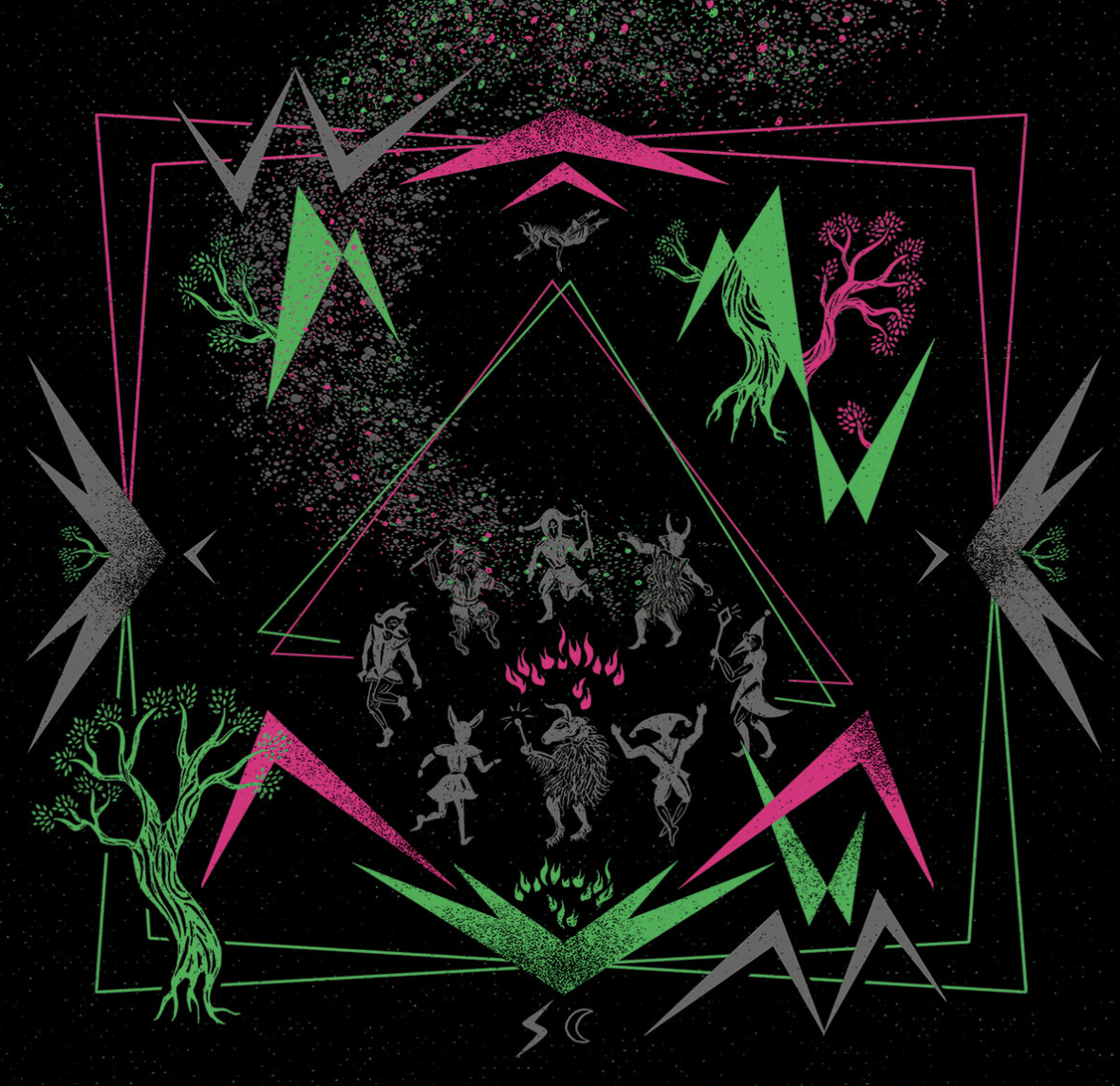
The Monolith Cocktail Monthly playlist is a revue of the last month on the blog, plus those tunes we didn’t get time to review or feature: including Matt Oliver‘s special hip-hop selection. Curated as a musical journey by Dominic Valvona, there’s a huge diverse array of choice tunes from across the genres and the globe, collated from an amalgamation of posts by Dominic Valvona, Brian ‘Bordello’ Shea, Graham Domain and Andrew C. Kidd.
THOSE TRACKS IN FULL ARE…
Habitat 617 Ft. Jack Slayta ‘Bricklayer’
Young Van Gundy Ft. Al Divino & Tha God Fahim ‘Fuyu No Senso’
J. Scienide & Napoleon Da Legend ‘Wind Parade’
Annie Taylor ‘Fucking Upset’
White Ring ‘Before He Took The Gun’
African Head Charge ‘Asalatua’
Mokoomba ‘Ndipe’
OKI ‘Tukinahan Kamuy’
Dip In The Dub ‘La Cumbia Del Sufi Que No Sabia Bailer’
Luiza Lian ‘Eu Estou Aqui’
Deja Blu ‘Crash’
It’s Karma It’s Cool ‘Vacations In A Taxi Cab’
Life Strike ‘Whip Around’
K-Nite 13 & Lee Scott Ft. Homeboy Sandman ‘Staple Junk’
The Moose Funk Squad ‘Abe Simpson’
Verb T & Vic Grimes ‘Your Heart Deserves’
SadhuGold ‘Fear Of A Black Yeti’
The Difference Machine ‘His Country’
Rusty Santos ‘Focus’
August Cooke ‘Shed With Me’
Maija Sofia ‘Telling The Bees’
Circe ‘My Boy Aphrodite’
Natalie Rose LeBrecht ‘Holy’
Hackedepicciotto ‘La Femme Sauvage’
Fat Frances ‘The Worm In The Wood’
Mike Gale ‘Summer Be Gone’
Stella Burns & Mick Harvey ‘My Heart Is A Jungle’
Emil Amos ‘Jealous Gods’
Oopsie Dasies ‘Illusioned-Broken Toys’
Zohastre ‘DUNE’ <THIS MONTH’S COVER ART STARS>
The Holy Family ‘Hell Born Babel’
The Dark Jazz Project ‘Jazz’
Healing Force Project ‘Inharmonious Layer’
Sebastian Reynolds ‘Cascade’
Caterina Barbieri ‘Sufyosowirl’
Ziur Ft. Abdullah Miniawy ‘Malikan’
Pierce Artists ‘Black Hooded Generals’
Stu Bangas & Chino XL ‘Who Told You’
Teflon/M.O.P. & DJ Premier ‘The Thoro Side’
Remulak & Moka Only ‘Starlings Green’
Jonny Wickham ‘Uncanny Valley’
Marty Isenberg ‘Life On Mars’
Gibralter Drakus ‘Exode Rural’
Las Mijas ‘Ronca (Carta Para Una Mija)’
Our Daily Bread 586: Hackedepicciotto ‘Keepsakes’
July 25, 2023
ALBUM REVIEW/DOMINIC VALVONA
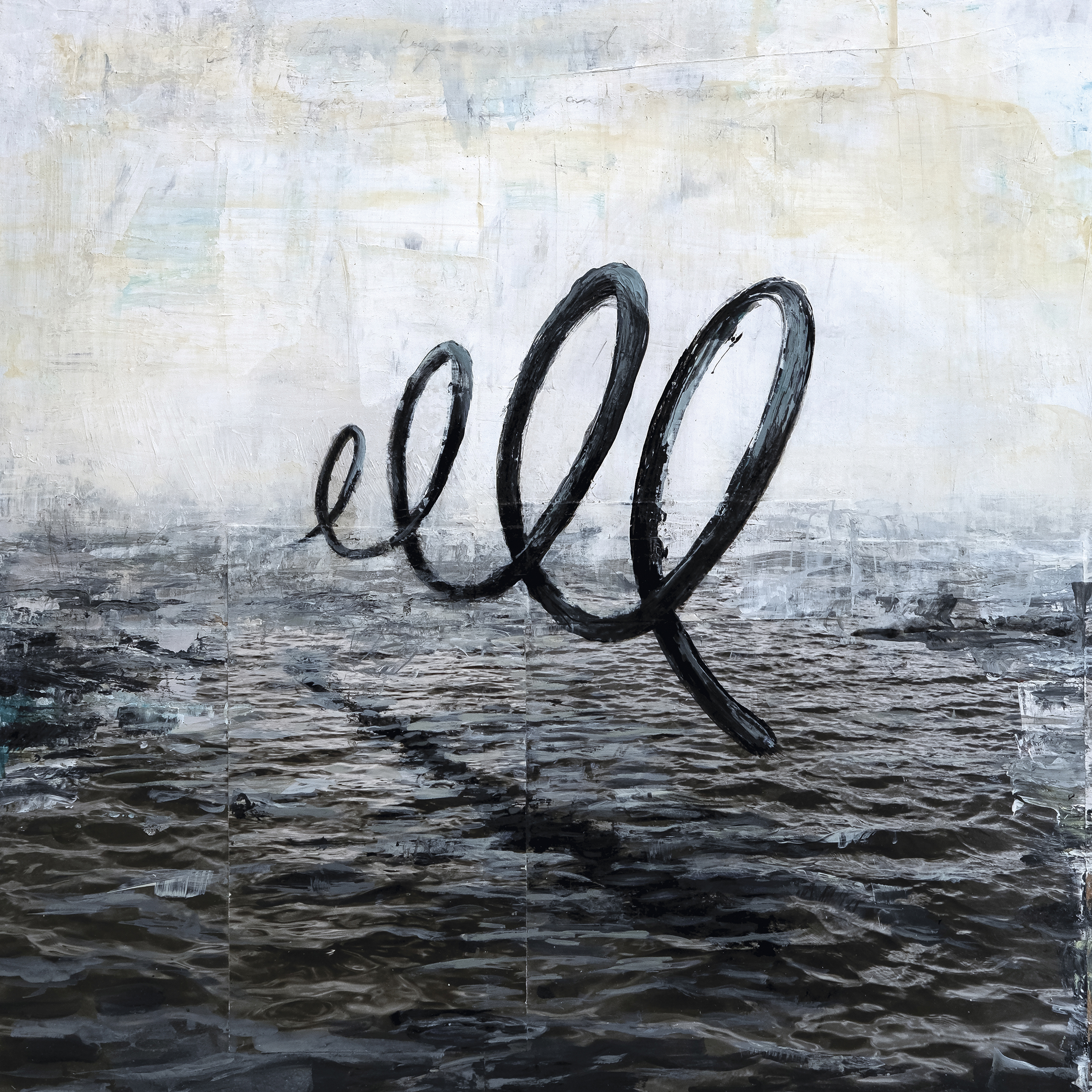
Hackedepicciotto ‘Keepsakes’
(Mute) 28th July 2023
Responsible, in part at least, to helping shape a certain darkened yearned and dramatic sound over the last four decades in Berlin, the husband and wife partnership of Alexander Hacke and Danielle de Picciotto have at any one time, both separately and together, been in Einstürzende Neubauten, Crime And The City Solution and the Anne Sexton Transformations imbued theatrical Ministry Of Wolves. During that time Danielle also co-founded the famous Love Parade carnival. And so it’s unsurprising to find the influence of many of those bands rubbing off on them with this latest album for the highly influential Mute label. It’s a signature sound that could be described as a cabaret and soundtrack gravitas of post-punk, post-industrial, electronica, the esoteric, weird folk and twisted fairytale.
Ministry Of Wolves co-conspirator Mick Harvey (both as a foil to Cave and as a solo artist) and CATCS can be heard suffused throughout with a more distilled taste of Neubauten. However, it’s the history, spectacle of a Neapolitan environment that’s really got to them; the city’s legendary Auditorium Novecento and its stock of various instruments played host to the “symbiotic” entwined duo. The spirit of such early-recorded crooners and composers as Enrico Caruso, in one of Europe’s first recording studios, hangs in the air. And amongst the tubular bells, the brass and grand piano Ennio Morricone’s twinkled and xylophone-like chimed sounding celeste is put to good use across an album of dedications to close friends. For Keepsakes is (despite the cliché) the couple’s most personal, intimate album yet.
Following in the wake of the lockdown epoch produced The Silver Threshold (one of my favourite albums of 2021), which offered heightened snatches of beauty, romance and drama from a backdrop of the Biblical, cinematic and ominous (the last two attributes spilling over into this album), Keepsakes is partially autobiographical in style and content. Like a sonic, musical photo album, except far too cerebral to name or make explicit the people behind each track, they use a lyrical description, language and narration to build those pictures, feelings and terms of endearment. There’s no mention in the accompanying album press, but it didn’t take me long to find that the harder edged, gnarled and classical counterpoint ‘Aichach’ could only be a dedication to that small Bavarian town’s native electronic dance music pioneer, Chrislo Haas – it was either the late provocateur of the German New Wave or the infamous Ilse Koch, the “concentration camp murderess”, “witch of Buchenwald”, who topped herself after being imprisoned for life by the Americans in the late 1940s at that town’s women’s prison to chose from. Haas was an integral agitator as part of Liasions Dangereuses, Minus Delta F, D.A.F. and Der Plan (the last three of which he co-founded), and his own proto punk and Tresor techno signature can be heard racing against sorrowful bowed strings on an instrumental that’s both sadly poignant and yet has a scuzzy, heavy attitude. It must be noted that Haas died in 2004, at the age of only 47. A premature end from where I’m standing.
On the other hand, I’m guessing and stretching the subject of the Weimer jazz age noir and Brecht magic show ‘Schwarze Milch’. Featured last month in the June Digest, I said that the title translated as “black milk” and could be a reference to the German-Mongolian film drama of the same name by the director Uisenma Burchu, who also stars in it. And yet that Steppes liberated tale of culture-clashed sisters couldn’t be further removed from the odd cabaret sift and brushed, hurdy-gurdy winded and smoky sax circus of the playful, disturbed and animal-mask wearing cultish: I really adore it.
Apart from that the bestial, throat song from the bowels of the chthonian ‘Mastodon’, could be evoking the unholy, leviathan-invoking American heavy metal band of that title. The track is certainly darker, ghostly and has shades of John Carpenter and late Scott Walker. Yet there’s also weeping strings, Ennio’s struck bell tolls and a removed vision of the Italian maestro’s Westerns scores.
I’ve deduced that ‘La Femme Sauvage’, or “wild woman”, is a book and a film – also a recurring French storytelling trope of women brought up in the wilds by wolves and such. Sound wise it has more of that Ennio influence, mixed with a poetically spooked version of chanson, and a descriptive autobiographical, numerical, narrated part by Hacke: “three languages”, “four books” and “36 years in Berlin”. The celeste is very nicely chimed, as bulb-like notes ring out in the midst of a theremin dreamy yarn.
The album’s finale, ‘The Blackest Crow’, riffs – as only these two enchanters can – on the old American folk song. An American Gothic transformation, with the sound of waves evoking a bookend farewell, shipped off on tail sails – very much in keeping with the similar atmospheric, lapping tidal ‘Troubadour’ opener – this Appalachian and Ozarks provenance song of departed lovers in a cold, dark world is a perfect curtain call of unified plaint: an esoteric Carter Family. Thought to have emerged after the 1860s Civil War, the main lyrical theme of metaphorical crows, glass breasts, remains after infinite changes, additions and subtractions. Even the title can be different: ‘The Lover’s Lament’ in Carl Sandburg’s 1927 published The American Songbook, but also known as ‘My Dearest Dear’ and ‘The Time Draws Near’ – the former sounding more appropriate in this case. ‘The Troubadour’ itself has an air of something older about it; an essence of Tchaikovsky enchanted celeste with the courtly echoes of the Elizabethan.
In the more menacing stakes, ‘Songs Of Gratitude’ is a dramatic soundtrack of Walker with Sunn O))), Dead Can Dance and Brian Reitzell subterranean and scuzz strains: Hackedpicciotto entering the underworld with a song of yearned thanks.
The sound of Berlin with stopovers across Europe and New York City, Keepsakes conjures up evocative visions, dramas and characters out if the arty, the gothic, the cerebral and surreal; creating an alternative photo album and collection of memories, events. As earthy as it is dreamily floating in a constructed world of fairytale, myth and magic, the creatively sagacious couple draws upon a lifetime of experiences, friendships to produce another captivating album for the Mute label.
Our Daily Bread 585: An Experiment with Myuthafoo
July 21, 2023
LITERATURE/ANDREW C. KIDD

Caterina Barbieri explores the mutability of time on Myuthafoo, a 6-track piece released on the Light-Years label on 16th June 2023. It was composed in the same period as Ecstatic Computation (Editions Mego, 2019).
I have written a short story which references the broad-themed narrative of time. The two characters in the story are connected through a transient common consciousness, independent of time, each sharing their own respective experiences millennia apart. They are unconscious of this at first, but gradually develop insights into the event.
The first character is a cosmometeorologist (denoted as *) who exists in the distant future, returning from an interstellar mission, repeating his observations of TOI-2180 b, the Jupiter-like planet located 379 light-years away in the Draco constellation. The second character is a taikonaut (denoted as ∆) who is the first person to enter the orbit of Mùxīng. Mùxīng is the Mandarin word for Jupiter, translating as ‘Star of Wood’. They both listen to Myuthafoo on their respective journeys.
*
After a rapid deceleration, the long body of the survey vessel made an uncomfortably abrupt stop. A single occupant was jolted forward in his harness. The monitor projecting inside his helmet blinked the characters TOI-2180 b. The red writing of the display flooded through his visor as the synthesisers of Memory Leak sawed and played out triumphantly in his headset.
Finally!, he gleamed inside, the Draco constellation. The journey had been a long one, and
not without challenge.
Steely synths arped and orbited on Math of You in a manner not too dissimilar to his own trajectory around the exoplanet. He smiled witlessly at this reference.
He vacated the lead-lined safety of his survival pod and immediately felt the stifling heat within the grand archways and long corridors of the ship – this was the unintended transference of heat through the protective shields of its fusion reactors. His heart rate still bounded away at a fast-tempo; it held steady as he glimpsed out of the bow window.
The familiar rubor of this exoplanet reddened the white suit of the cosmometeorologist in pinkish projection. He observed its clouds that banded and danced in linear synergy as they rapidly rotated upon its axis. Their formations and morphology were recorded perfunctorily. Superstorms he named after other nebulae because that was easier than remembering the names of men and gods that he had never known or cared to know. The cloud vortices expanded and contracted in eternal rage. He marvelled at their fury.
This visit to Draco was a routine one: a simple stop-off to allow the hot heat exchanger to cool on his return from the recesses of intermediate space. Soon, his palm would hover over the propellant injector control, releasing the fusion pellet to send the ship forward, and him homeward.
After collating the new data, he made arrangements to have these safely stored for future analyses. During this process, he had started to feel uneasy: an unnerving sensation was propagating through him. He turned off the music blaring loudly in his headset, beckoning silence and space to breathe. The dizzying modulations of the synths had reached a pinnacle of inorganic arrhythmicity – perhaps this had been the cause for his unsettling?
He stared out silently at the hulking exoplanet for a while longer, pondering whether the way he felt had something to do with its magnetic energy. He peered into the dense orb in an act of mindfulness, imagining what metals and minerals its core contained. This had little effect. The discomforting feeling had become more pervasive.
What is this!? His mind called out in internal inquisition.
It was as if an invisible force was streaming slowly through him, illuminating not only his body, but his very being.
∆
A white-suited taikonaut was sitting at a seemingly incommodious 45-degree angle. Yet he sat quite comfortably, completely weightless in space, shuffling through the alphabetically-stored sounds that he had brought with him on this momentous journey.
Don Buchla – not today…
A reading of Golden Apples of the Sun…
No, no… it’s under ‘m’… ah, m…
The North Shanxi Suite by Ma Ke…
Moon, Silver Apples of…
Yes… here it is…
Myuthafoo
He pressed the play button on his receiver, smiling broadly because the celebratory opening track embodied the spirit of adventure. Minutes later, the shorn cross-section of the wooden planet came into view through the bow window.
Mùxīng, he declared to himself.
*
Mùxīng? I… I… what is this? I have never been here before – the star system, it… it is completely unrecognisable. It seems… illusory – a déjà vu, but…
Moving his hand away from the propellant injector control, he turned around to look through the observation aperture on the starboard side.
Barked appearance; ringed by age; gaseous whorls; circular and impermeable –
He paused to observe the ever-changeability of the line-like clouds that wrapped around the planet. They moved in opposing directions like some great puzzle that would eventually split open to reveal its hidden contents.
He left the observation station and made the short walk to the bridge; there, he would recalibrate the cartograph.
Red words continued to blink TOI-2180 b in his visor. He knew that the co-ordinates of the ship would have already been checked and double checked by the on-board neural network; still, he manually validated these in accordance with protocol. His location had been confirmed: he remained within the confines of Draco.
The cosmometeorologist had already passed through this constellation on his forward voyage. He compared the measurements of the specific gravity that he had obtained those short years ago with his updated readings.
It is much lighter… three-times lighter on this occasion!
His stomach had started to churn and a mild nausea built up inside him – invocations of the unexpected sight of this strange planet. For the first time in his life, he experienced the nervous excitement of uncertainty, the heavy weight of expectation. It was quite a remarkable achievement: he was the first to…
He stopped himself.
I have not been the first to observe this.
He sat down guardedly. Thoughts oscillated in his head. Eventually he calmed his mind by visualising absolutely nothing. He inhaled and exhaled four times a minute, repeating internally:
I am a cosmometeorologist. I am recording the density of TOI-2180 b. The presence of this exoplanet is undeniable. I knew it was here. I observed it only a few short years ago. This is a routine mission. My forward and return data should be the same.
I am not here to discover. There are vessels for that purpose situated in deep space.
I cannot discover something that has already been discovered!
I… I have discovered nothing here!
∆
‘Are you getting this, Control?’
The taikonaut remained suspended in pseudo-weightlessness, the padded shoulder straps securing him to the modular seat. He had already pressed the blue ‘load’ button on the grey panel in front of him. The dimly-lit red display blinked in confirmation that his message had been sent.
‘Affirmative. We have your location. Aphelion: 816 Gm. Perihelion 740 Gm. Location confirmed as Mùxīng.’ The static in his receiver crackled in return. It continued.
‘Commander, Mùxīng marks a colossal milestone in our celestial journey!’
This congratulatory statement had washed over the taikonaut. The reference had made no sense: he had trodden on nothing. His focus remained firmly on the readings on his monitor. He leant forward and pressed the blue button again.
‘Control, it is…’.
‘Repeat…’, Control broke in. ‘We could not make out your last transmission.’
‘The exoplanet…’, the taikonaut paused momentarily. ‘It is… much denser than I imagined. Also, it has far fewer moons than we had previously considered’.
‘Exoplanet?’, the static of Control enquired.
*
Am I truly conscious of this? Has the arduous journey unlocked some deeper awareness within me?
My vital signs are normal.
What is this feeling that… no, it is not fleeting because I can still feel it – it is… fading.
I must be imagining it. Yes, it is in my imagination.
But how can I be imagining something that I already knew was there.
The cosmometeorologist had closed his eyes to enter the deeper reaches of his mind.
I cannot be experiencing this… it… it is as if someone else has already lived in this moment… transf–… transference of thought… that would be improbable… impossible, even!
The cloud-ringed planet continually resurfaced in his consciousness. He opened his eyes to stare at its globular shape, the Great Spot, its barge, its moons –
The moons! Hah! the radius of its moons and their respective orbits – yes, the moons… I will use them to calculate its density.
The cosmometerologist peered through his viewing apparatus, eventually recoiling in shock.
How can that be?! 95 moons!
As he leant back in his chair, his headset clipped the edge of its protective padding, switching the music suddenly back on. The step-like cyclisms of Alphabet of Light played unhurriedly. He listened to the organic sound. It was oxymoronic. The pioneering excitement still fluttered within him. He turned around as the Gas Giant momentarily left his visual field: the window pillar of the ship had blocked out its unfamiliar appearance in quiet orbit.
∆
A soulful symphonia continued to play with the starlight: the two-toned lightness of Sufyosowirl echoed back the title track. It was organ-like as it entered another modular sequence. The taikonaut remained poised in controlled weightlessness.
‘I can confirm my last transmission as being correct. Exoplanets. I repeat: exoplanets, and exomoons. I am visualising something truly marvellous here. A Mùxīng-like planet, Jovian in stature; yet, something on a wholly grander scale.’
‘According to our readings, your present location is Mùxīng’, Control hissed into his receiver. ‘Please relay your bearings.’
The taikonaut remained silent: he had sunk into a deep introspection.
Am I imbalanced because I am listening to a contrapuntal melodia, one that holds its notes before stepping down the next rung of the polyphonic ladder? Disorientation through some form of sonic imbibement…
‘Please repeat’, Control rasped.
A new sound for a new vision – synthetic and tom-tom like, steadily moving me further away from the reality of this moment.
The taikonaut observed the exoplanet long after his vessel had escaped its magnetic pull. He moved slowly away on his mission to reach the dust-ringed world of Saturn.
*
The image of the gaseous clouds slowly dissipated into the ether of the cosmometeorologist’s mind. Swirls of You crackled indistinctly in his headset, bringing him back to the present. He knew that this would fade into a calming niente.
His monitor repeatedly blinked out the characters TOI-2180 b. His hand moved down to prime the nuclear fusion engines. He returned to the sanctity of the lead-lined survival pod during this pre-propulsive state. Glancing one last time at the disappearing planet, his ship lurched forward to leave a long and vapour-like trail of plasma that stretched far enough to traverse infinity.
CULT NO-FI ICON BRIAN BORDELLO REVIEWS ANOTHER BATCH OF RECENT AND NEW RELEASES (UNLESS STATED OTHERWISE, ALL RELEASES ARE OUT NOW)

____{SINGLES}____
Annie Taylor ‘School Girl’
(Taxi Gauche Records)
‘School Girl’ is a ram jam minute and a half of rambunctious melody and indie guitar rock, a workout of pure pop indiedom. Plus, why don’t more people release songs under two minutes anymore? If it was good enough for Buddy Holly is certainly good enough for everyone else. Well-done Annie Taylor.
Nails ‘Nail Me’
What a splendid racket. This is the debut release by a brand-new band made up of a gang of teenagers all aged between 16-18. The sound of youth, the sound of a band that is still in the development stage when everything is fresh and exciting, with the sound of hormones surging from their guitars.
There are a number of exciting young guitar bands around at the moment and Nails are another one to add to the watch out for list. They have youth, excitement and by the sound of it, the inklings of songwriting talent and a variety of influences: surely Nails are too young to remember the Cardiacs, but at certain points during ‘Nail Me’ the Cardiacs do spring to mind alongside Queens Of The Stone Age. Yes, indeed Nails are the sound of the dreams of the local rehearsal room where anything is possible and where the magic happens.
____{ALBUMS}____
A.R. Kane ‘A.R.Kive (1988 to 1989)’
(Rocket Girl)

Songs that soar and scrape the sky; plowing through the subconscious separating despairing grey clouds of pollution and lost hope, clawing kisses substituting the tick tock of the slow hand taunting you through the everyday workday blues, knowing when that slow hand eventually reaching the magical five, the five that will explode in a star-shine feedback beauty, whispering, swaying, you will once again be free. Be free to soundtrack the small town existence or your lost in the city hustle. A muse, a music that will make you feel special, make you feel like a select and secret club: this is how one of the disciples must have felt. It must have been how one of those teenage girls felt stood inches away from the leather cladded four head monster from Liverpool in that dank cellar full of noise before they erupted and changed the world. Surely you are experiencing the second coming. Surely the moistness, the orgasmic nature of teenage sexual high has never been quite this sexual: never quite taken you this high. This is how the flowers of ‘67 must have felt as Hendrix strutted and pouted biblically, leading the chosen ones to a land that promised much but folded in a squalid syringed end of a decade of could ofs and should of Beens. This is how it must have been like to be in The Velvet Underground selling little but influencing a future generation of youngsters with art in their eyes. This is how it must have felt to be A.R. Kane.
Present Electric ‘S-T’
(Paisley Shirt Records)

Now as the “king of No-fi” (as anointed by Goldmine Magazine) I can fully appreciate the beauty of this album; all lo-fi and scratchy with primitive drum machines and beautifully played guitars that are plucked and strummed with a gentle abandon. That are swirled and mixed with melodica, handheld percussion and keyboards that add to the beauty of this lo-fi gem. The beauty of lo-fi is the adventures you can take the music only using ltd resources and your own skill and talent and madness. And I’m happy to report that Present Electric has all three with abundance. A really enjoyable listen.
It’s Karma It’s Cool ‘Thrift Store Troubadours’

If you are looking for Throbbing Gristle noise experimentation this may not be the album for you, but if you are looking for an album filled with mid to late 60’s Hollies like pop with a touch of the Smithereens and stand era R.E.M. then Thrift Store Troubadours could be your thing.
Songs where the guitars chime and rock without entering into Slash perm lotion territory; songs that gently erupt in a wash of tight and tuneful harmonies that may entertain Graham Nash enough in the shower to put down his bar of soap and add a fifth high harmony, and him fondly reminisce about the time he lived with Joni Mitchell, and Charles Manson was his next door neighbour. Or the kind of album that will have Chris Pender scratching his head and wondering why the two Searchers Sire albums did not sell in greater quantities. So if you are indeed a fan of any of the bands mentioned or just someone who has a penchant for well-written 60s/70s tinged power pop ditties, give it a listen.
Oopsie Daisies ‘S-T EP’
(Metal Postcard Records)

If Bob Dylan had grown up in the C86 generation, taking in the jangle and indie pop like magic, he may have sounded like the Oopsie Daisies; an EP that is covered in layers of jangly guitars and Field Mice and the Wake like keyboards, and the clipity-clop drum machine that so enamoured me to the whole sound and feel of the DIY bedroom music culture.
This 4-track little beauty is full of charm, lo-fi elegance and a little teetering on the edge magic: especially the last track, the wonderful ‘Illusioned Broken Toys’; a song that captures the melancholy feel of the late 80’s early 90’s Beloved and one of my fave tracks this year.
Flashcubes ‘Pop Masters’
(Big Stir Records)

The pre ghost of Pete Best haunts his old haunts, taking in the memories when he was the backbeat to what would be the greatest and most influential band to ever strum a guitar on the planet; the band that would influence everything from how pop music was not just a thing that teenagers spent their money on and soundtracked their sexual adventures and nights on the town, but to being considered an art form to be studied and dissected by forward thinkers and beard strokers.
Pete shifts through where The Cavern used to stand and moves onto the tourist trap that is the facsimile that stands today. He stops to look at the statues and has a slight tear in his eye when he sees the four lads that shook the world knowing that he was the fifth, the silent partner, and the cast off Beatle. He stops off and smiles when he sees the Cilla statue and remembers the nights when she used to sing with the fabs before they were the fabs: when they were the pre-fabs. But he is not bitter. He has made his million from all the reissues of the handful of recordings he made with the pre-fabs, and he has all those memories knowing they may never have made it to Hamburg without him, where they learned their art and became the greatest rock ‘n’ roll band ever. He stops thinking and remembering and pops a cd into the player… ah good time rock ‘n’ roll pure power pop for everyday people. Pop master‘s by the Flashcubes plays as Pete lights another cig spins his drumstick and smiles.
Life Strike ‘Peak Dystopia’
(Stable Label on Tape/ Bobo Integral on Digital Formats)

What do we have here, I hear no one ask. Well my disappointed little life smugglers, this is an album of pure jingle jangle from the deepest and sunshine filled explosion of finery that is Australia. Yes, Life Strike capture the magic of early Go Betweens with all stuttering post-punk guitar riffs and Primitive melodies, or indeed Primitives melodies as the pop fun track that is ‘Tears On Tuesday’ had myself and my lady wife humming ‘Through The Flowers’ by the end. Peak Dystopia is an album that will appeal to all those indie pop lovers from yesteryear when the June Brides were second in the hearts to the Smiths, or preferred Primal Scream before they discovered the Rolling Stones and showed themselves to be heartless money grabbing bastards.
Our Daily Bread 583: Alabaster DePlume, Comet Gain, Maija Sofia, Natalie Rose LeBrecht…
July 17, 2023
GRAHAM DOMAIN’S REVIEWS ROUNDUP: A SUMMARY OF THE LAST MONTH: NEW FINDS, DISAPPOINTMENTS AND TRIUMPHS

___{SINGLES}___
Alabaster DePlume ‘Did You Know’
(International Anthem)
I liked last year’s album Gold and the wonderful eccentric single ‘Don’t Forget You’re Precious’ on
which he talk-sang. This is the first single from new album Come with Fierce Grace, out in September. It’s a sad jazz ballad sang by Momoko Gill and is reminiscent of Corrine Bailey Rae. It’s not particularly memorable and is a bit of a disappointment after last year’s excellent output!
Deja Blu ‘Crash’
(Fragile Hands)
The new single from dream-pop duo Deja Blu is a mesmeric tune that begins like a dreamy cross between Massive Attack and the Sundays before DJ Shadow type drums kick-in and propel the song into a world of echoing dream ambience! Fabulous!
Maija Sofia ‘Four Winters’
(Tulle Collective)
The new single from Galway’s Maija Sofia is a song that sits somewhere close to Aldous Harding but with its own strangeness akin to early Kate Bush. A song that mixes woodwind, harps and harmonic discord with poetic lyrics of womanhood and the joy of pain via emotional growth! A bright flare in a sea of shiny blandness!
Peter Brewis (from Field Music) ‘Lemoncadabra’
(Daylight Saving Records)
This instrumental reminds me of the mid seventies when any song with a synth on it seemed magical. It does not have much in the way of a tune but sounds like he’s been listening to Chick Corea (circa The Mad Hatter), Yellow Magic Orchestra and perhaps Tomita! It sounds more like a BSide or Demonstration Disc than a tune with any commercial intent! Caramel Latte Froth (with sweeteners)!
___[ALBUMS]___
Playdate ‘Wonderland’
(Idee Fixe Records/Bandcamp/Ansible Editions)

This is an interesting album of modern technology versus traditional instruments, or put another way, programmed and improvised synths trade melodies and inspired ‘sojourns into space’ with vibraphones, woodwind instruments and even pedal steel! The group are a trio from Toronto made up of Carl Schilde, Matthew Bailey and Scott Harper, and guest improvisers include Christine Bourgie, Michael Davidson, Daniel Pencer and Andy Shauf’s woodwind section. The result is an album of chilled dreamscape music. Not essential listening, but ambient music that does have its own charm! ‘Insert Quarter(s)’ has echoes of Japan’s ‘My New Career’.
Comet Gain ‘The Misfit Jukebox’
(Tapete Records)

The Pandemic of 2020 gave David Christian Bower the time to re-visit the archive of unreleased tracks, demos and live recording for his band Comet Gain. The highlights of which were gradually released via Bandcamp throughout 2022. These are now released as a 17-track album of rarities.
The breadth of vision of the band is evident from the genre crossing musical make-up of the songs.Thus, we get energy and melody combined in a variety of musical settings – punk-pop, punk-funk, melodic pop-folk to name a few! Even the noisiest of Comet Gain songs has melody at its core. ‘The Weekend Dream’ has all the pop-punk energy of the Buzzcocks or the Only Ones. ‘Pinstriped Rebel’ meanwhile encompasses the jangle-funk of late-period Jam, the Style Council or the modernist cold white-funk of the new romantics. ‘When’ sounds like a song from the early 80’s Mod Revival or a pale 1970’s cover of a Wigan Casino northern soul song. ‘You’re Just Lonely’ sounds like New Order without the programmed synths! ‘Only Happy When I’m Sad’ is perhaps the pop nugget of the collection sounding like a mixture of Stereolab, Broadcast, St. Etienne and Everything but the Girl. A wonderful, warm, melodic, strange song.
The album is a fine addition to the Comet Gain musical catalogue, a compilation of rarities but also an album that succeeds on its own merits.
Natalie Rose LeBrecht ‘Holy Prana Open Game’
(American Dreams)

This is a beautiful album of cosmic folk strangeness singular in its vision and unique today, in its combination of sounds. Opener ‘Home’ combines strings, synths, woodwind and guitar with haunting vocals to produce a strange folk-infused cosmic jazz masterpiece. ‘Prana’ follows with its synths and vocal harmonies underpinned by piano and jazz drums sounding not unlike something from the Roman Polanski film Dance of the Vampires, evolving in the middle into a beautiful atmospheric sound-world! ‘Holy’ meanwhile is a chilled piano-led song complete with tremolo guitar and woodwind.
Sitting somewhere between Nico, Linda Perhacs and Alice Coltrane, the six haunting songs have superb intricate arrangements and a wonderful spiritual element! It could easily be mistaken for a long-lost album from the 1970’s, such is its charm.
The band include Jim White (drums) and Mick Turner (guitar) from the Dirty Three. If the album had been made by someone with a higher commercial profile, say Lana Del Ray, then it would be lauded as a masterpiece and top the end of year poles! That not being the case, the album is still a masterpiece of haunting music that has a meditative quality and reveals more of its colour with each play! Every home should own a copy of this album and play it each day as the sun rises bringing hope to the world.
M. Ward ‘Supernatural Thing’
(ANTI Records)

This is a nice album of easy listening Americana-pop! Songs such as ‘Too Young to Die’ and ‘Engine 5’ featuring First Aid Kit, have a Nancy (Sinatra) and Lee (Hazlewood) feel to them! However, much like his albums recorded with Zooey Deschanel as She and Him, the album never rises above ‘pleasant’!
To some it may seem that Matthew Ward’s music has slowly declined since the release of his influential Post War album in 2006. Being stuck in one place can still be inspiring if you have the presence of mind to see beauty in the everyday and there is plenty of evidence of that here. No matter where we are, we all share the same sky – some see nothing, others see the beauty in the changing light of day and are inspired seeing the shifting patterns in nature. But is M Ward on the cusp of regaining his greatness? Only time will tell if M Ward is indeed a writer of songs of subtle depth and longevity. He remains ‘one to watch’!
Bravery In Battle ‘The House We Live In’
(Believe)

French band Bravery in Battle have released a Video-Album that puts music behind words from International ecological activists calling for a rethink of how we live. Climate change is of course at the forefront of this urgent call to arms. ‘The Market’ is a key track on the album and melodifies a lecture by Australian ecological activist Clive Hamilton enhancing the message and sharpening the focus. A worthy release and worth a watch on YouTube.
Archive spots and now home to the Monolith Cocktail “cross-generational/cross-genre” Social Playlist – Words/Put Together By Dominic Valvona

A new thread, feed for 2023, the Digest pulls together tracks, videos and snippets of new music plus significant archival material and anniversary celebrating albums or artists -sometimes the odd obituary to those we lost on the way. From now on in the Digest will also be home to the regular Social Playlist. This is our imaginary radio show; an eclectic playlist of anniversary celebrating albums, a smattering of recent(ish) tunes and the music I’ve loved or owned from across the decades.
July’s edition features Volume 78 of the Social plus, in honour of the late Yanna Momina, another chance to read my piece on her last recording, Afar Ways, and a 50th anniversary celebration of Can’s Future Days opus: their most complete, sublime album in my opinion.
The Social Playlist #77

Anniversary Albums And Deaths Marked Alongside An Eclectic Mix Of Cross-Generational Music, Newish Tunes And A Few Surprises
Repeating myself, but if this is your first time here, first of all, welcome, and secondly here’s the lowdown on what the Social is:
Just give me two hours of your precious time to expose you to some of the most magical, incredible, eclectic, and freakish music that’s somehow been missed, or not even picked up on the radar. For the Social is my uninterrupted radio show flow of carefully curated music; marking anniversary albums and, sadly, deaths, but also sharing my own favourite discoveries over the decades and a number of new(ish) tracks missed or left out of the blog’s Monthly playlists.
With tributes to those fallen comrades, we mark the passing of The Pop Group (second tragedy to hit that era-defining group, with Mark Stewart‘s death only a couple of months back) and Maximum Joy‘s John Waddington, the late Djibouti songstress Yanna Momina and highly influential avant-garde jazz saxophonist and clarinetist Peter Brötzmann.
There’s album anniversary celebrations as usual too, with the 50th anniversaries of Funkadelic‘s Cosmic Slop, Lou Reed‘s Berlin saga, Bob Dylan‘s Pat Garrett & Billy The Kid Soundtrack and Can‘s Future Days, the 40th anniversary of Whodini‘s 1983 debut, 30ths of Cypress Hill‘s Black Sunday and the Super Furry Animals Phantom Power.
Newish of a kind entires include Penza Penza, Alogte Oho & His Sounds Of Joy, J. Scienide, Brian Eno and Homeboy Sandman. Whilst from across the ages and genres there’s tracks from Camera237, Heaven & Earth, Andwella, Oberman Knocks, Kalacakra and more. 30 choice tracks in all.
___[TRACKLIST]___
Penza Penza ‘My Friend Ash’
Funkadelic ‘You Can’t Miss What You Can’t Measure’
Har-You Percussion Group ‘Feed Me Good’
Alogte Oho & His Sounds Of Joy ‘O Yinne!’
Lou Reed ‘Oh Jim’
Maximum Joy ‘Dancing On My Boomerang’
Kalacakra ‘Deja Vu’
Whodini ‘Magic’s Wand’
Cypress Hill ‘Break ‘Em Off Some’
The Pop Group ‘3:38’
Peter Brötzmann ‘Never Run But Go II’
Super Djata Band ‘Fassiya’
Benkadi International ‘Kolankoma’
Bobby Cole ‘Status Quo’
J. Scienide & Napoleon Da Legend ‘Bats In Wuhan’
Konstruckt/Peter Brötzmann ‘Tepe’
Brian Eno ’77 Million Paintings 3′
Yanna Momina ‘For My Husband’
Homeboy Sandman ‘Off The Rip’
The Prisonaires ‘Just Walkin’ In The Rain’
Bob Dylan ‘Billy 1’
Nicole Croisille ‘J’aime Pas Quand Tu Pars’
Andwella ‘Hold On To Your Mind’
Heaven & Earth ‘Song For Craig’
Super Furry Animals ‘Bleed Forever’
SPIME.IM ‘Heliotrope’
Oberman Knocks ‘Degonnt Type Runners’
Rabih Abou-Khalil ‘The Lewinsky March’
Camera237 ‘John Arne’
Can ‘Future Days’
ARCHIVES/ANNIVERSARY
Future Days The Big 5-0

BACKDROP
The dynamic German underground graphic artists Ingo Trauer and Richard S Ludlow’s artwork for the front cover of Can’s fifth studio album, Future Days, features a couple of mystical arcane symbols full of meaning, and steeped in ethnography.
Both the trident and Hexagram icons found on the cover add to the prevalent spiritual mood that now surrounded the group: producing extra layers of connotation and interweaving mysteries.
The Hexagram, an almost missed set of broken lines type logo that sits beneath the album’s title, is taken from the Chinese I Ching book of ancient symbols. Each of these symbols is made up out of a series of sticks sorted into six broken lines (Ying) and unbroken lines (Yang), which are given cryptic parables relating to their individual shape. Our featured configuration is known as Ting – The Cauldron, or, as Holding, so called because of its cooking pot like appearance.
The Cauldron represents the sharing of a well-prepared meal that acts as a ritual for cultivating bonds between communities. Ting itself symbolises the provision of both the body and the spiritual extras: an emphasis that shouldn’t be overlooked.
The trident carries its own abundance of meanings and features heavily throughout history and ancient mythology, especially of course in Greek mythology with Poseidon, and in Hinduism with Shiva.
Hindu myth refers to the three pronged weapon and spectre of power as representing past, present and future or the place where all three main energy channels in the body meet at the brow.
It also appears as a symbol of unification for the old Slavic tribes that once roamed the Ukraine, and crops up in Russia as a rallying cry for the downtrodden to band around in their hour of need.
Encryption is not entirely necessary but it may help build up a picture of where Can’s mindset was attuned during the making of Future Days, an album of majestic splendour and ethereal elevated beauty.
Indeed, you could say they were anointed with a heavy spiritual crusade, to produce a work of art good enough to be received in the highest echelons of heaven itself – the empyrean.
The serene shift away from the dance grooves and darkly esoteric improvised mind fucks of Ege Bamyasi and Tago Mago now made way for an exuberance of those much loved Afrobeat rhythms and ambient transcendental flowing soundscapes.
A much needed summer break of 1973 helped to refresh the band and put them at ease enough to create possibly their greatest coherent work yet.
But let’s go back for a moment to the previous year, which saw the ongoing dispute with their former manager Abi Ofarim and the worrying near death experience of Michael Karoli, whose perforated ulcer damn near cut his life short.
Karoli luckily recovered of course, though not until the spring of ’73 after being out of action, unable to even practice, for nigh on six months.
Carrying on as well as they could, Jaki Liebezeit and Holger Czukay turned their free time to producing a record for the solo artist Alex on the Ariola record label. Czukay was also putting the finishing touches to his own solo work Cannexias 5, an album of montage sound pieces.
Irmin Schmidt meanwhile locked himself away to study obsessively, while Damo Suzuki just…well, just hung about.
Financial problems once again became a worrying issue as with no touring and little in the way of soundtrack work, the band where finding it tough to survive.
Schmidt’s wife Hildegard was on hand to save the guys from disaster, rolling up her sleeves she acquired a bank loan, which went towards re-kitting the studio and setting up a 60 date tour for when Karoli eventually returned to the fold. This tour would be more like a workout than set of concerts, taking in the UK, France and the homeland all within the short period of spring 73: ending just in time to give them a brief summer holiday before recording started again.
During this period Damo would start to get cold feet and wander off, returning to his much missed Japan just before the start of the sessions for Future Days. In his absence the band began to start recording at the now re-christened Inner Space studios in Weilerswist, just outside Cologne.
This former cinema, transformed into a purpose built studio, was where the band had recorded the previous album Ege Bamyasi. New equipment and upgrades began to arrive much to Czukay and Schmidt’s delight, though there wasn’t much time to experiment as the new record’s deadline was earmarked for the autumn of 1973.
Czukay declined the engineering tasks this time around, wishing to concentrate fully on his bass playing duties. Instead a newly paid bunch of roadies were now responsible for all the lifting and setting up, allowing the guys to concentrate entirely on the task at hand. Czukay did however manage to still be in charge of editing and cutting – credit also goes to both Chris Sladdin and Volker Liedtke who recorded the sessions and mixed the record.
Damo’s eventual arrival – from a sabbatical in Japan – couldn’t arrive quick enough; already large swathes of the backing had been worked on and recorded, allowing only a small amount of room for his vocals and not as much interaction as he’d been used to on previous records.
His vocals suffered from a real murky low level mix, lending a certain ghostly and almost absent charm to the record that obscures Damo’s lyrics somewhat. Later on with the remastered CD versions these enervated vocal performances were amended and turned up, made cleaner: though this does alter the sound somewhat.
I can’t help but feel that his eventual departure was imminent when listening to Future Days: Can would feel a little lost without a lead vocalist, eventually having to share those duties between Karoli and Schmidt, though they already seemed to be heading towards a pure instrumental sound, and could have at a push, gone without Damo’s contributions.
When he does get his chance, Damo offers a guiding light through the epic opuscule; especially on the breath-taking odyssey of Bel Air, his repeating chorus perfectly encompassing the effortless allure found in the melody.
Future Days features only four tracks, three being over eight minutes long, with an entire side being bequeathed to that seminal peregrination.
The title track speaks for itself and sets the general atmosphere and themes that are echoed throughout, the album’s ending more or less finishing where it began. The Sun Ra invoking soundscape Spray adds some strange jazz and blues reworking to the album; an eight-minute display in the avant-garde direction, full of soul.
A short interlude can be found on side one with the Ege Bamyasi familiar three-minute evocative dance-like structure track, Moonshake. Neither is it a companion piece to Tago Mago or an extension of the tracks Vitamin C or I’m So Green, instead Moonshake manages to sound fresh and breaks new ground. Its short stomp intermission finely balances out the symphonic set pieces.
Side two concentrates all its efforts on the glorious sprawling Bel Air; uplifting heavenly elegance pours out of every nuance on this progressively sophisticated hymn to the days yet to come. The title is slightly wry, as this particular region is most fondly known as the affluent hillside suburb in L.A, mainly infamous for its celebratory residents hiding behind high walls and tight security. Founded and named by the oil tycoon turned congressman Alphonzo E Bell Sr in 1923, this area was originally earmarked as his own rich kingdom to pontificate and rule his bronze wrinkled fellow spoilt peers from. Did you know that it’s also ironically, and quite timely, the name of a rather unsafe and infamous slum area of Haiti? Though surely after the recent catastrophes, most parts of the island are now levelled out and share the same common denominator – fucked.
Coincidentally or not, Chevrolet made a pretty fine gas-guzzling model named the Bel-Air, which features in the James Bond film Live And Let Die, the same year as this album.
On the record itself this song is actually titled as Spare A Light, whether this is a further enlightened reference or not, I’m not sure. It has subsequently come to “light”, thanks to one Al de Baran, that it is the name of a cigarette. This would explain the “spare a light” alternative title, though other than a prop, favourite brand of cigs, doesn’t really have any meaning.
Czukay sums up the record as:-
“Electric symphony group performing a peaceful, though sometimes dramatic landscape painting”.
Recording took a speedy two months to complete and the album was, after all the touring and commitments, released on time.
Again the usual plaudits and champions extolled Future Days, praising the slight change in step that the band had taken.
Sales didn’t match their previous two albums but they had managed to win over some new fans with the airy new sound and meditatively heavenly direction.
This record managed two landmarks, one the first to not feature any soundtracks work and the last to feature Damo, who soon married his German girlfriend and converted to being a Jehovah’s Witness; turning his back on music for a considerable time and leaving Can for good.
A lot of critics and even fans such as Cope, describe this as the last truly classic album from the group, namely due to the departure of Damo, who added a certain focus and outsider dynamic.
Like many groups since and before ‘breaking up is so very hard to do’ and it prompted Can to perhaps look inward, becoming more introverted, lacking in direction.
Can would never manage to quite connect in the same way after Future Days, the chemistry would never reach the same consistency again.
REVIEW
Steam-powered machines and reverberating murky atmospheres in the mists, emerging to wrap themselves around the introduction to side one’s title track, ‘Future Days’. The creepy, almost unnerving opening starts to evaporate, making way for an array of soft shimmering percussion and cushioned gongs. Slowly fading in, the main rhythm section materializes at an articulate pace, shuffling along in a downplayed manner.
Jaki Liebezeit soon lets loose with his respective nod to Ghana and Nigeria, those Afrobeat and Highlife rhythms working up a sweat and continuing throughout the entire album. Peddling over the top of these infectious grooves is the team of Michael Karoli and Holger Czukay, who ratify the African treaty of influence with some precise shimmy hooks and riffage. They take this worldly influence and run with it through an intergalactic corridor, stopping off at the most inopportune moment to return free fall style back to Cologne.
Joining the cortege of unabandoned soulful melodies that now swirl around the track is an all in sundry display of shakers and chimes; adding some degree of sparkle.
A deft understated announcement from Damo floats upon the hotbed of rhythms, soft crooning strains of cryptic meaning unravel themselves over the course of the song before disappearing back into some kind of low mix ether.
Cryptic broken English pronunciations like:-
“I just think that rooms to end,
How commend them from their dreams?
Send the money for a rainy day,
For the sake of future days”
Backward meaning and confusing command of the language make for a mysterious unfathomable song subject, dropping in and out almost sporadically.
Now the unmistakable tones of accordion and violin seep into the magical mix as Damo moves over the congas, slapping them with abandon.
As the halfway mark is reached, Schmidt allows himself a chance to impress with a melodic display of surging swirling choruses and whirling shit storm echo a rallying call to arms. The tempo now quickens and Liebezeit raises the roof with his tight rolls and bursting cymbal clashes.
Damo, whose vocals had sounded like they’d been recorded in a different dimension, now gets to bleat out as though talking through an inverted megaphone. His verbal like threats escape the cacophony of layers that have so far held him back; with menace the lyrics project forth –
“You’re spreading that lie, you know that,
You’re getting down, breaking your neck.
When doing that was breaking home,
What have you done, free the night”
A deep protruding bass line delivered from Czukay rumbles on, low drawn out notes and disciplined melodies allow Karoli the space to pinpoint some celestial accents before the song draws to a close.
The final moments are played out with peculiar sandpaper rubbed sounds, which become louder and louder, all the while the bass drum of the real man-machine Liebezeit goes off like a rocket. He presses on the foot pedals like a jackhammer, pulverizing them into the ground.
Flittering tapes and Schmidt’s arpeggiator frenzied operatics compete with the now pumped up drums until someone on the studio console felt compelled to fade it all out. Only to have second thoughts and reverse his momentary decision and crank the fader straight back up.
Spray is more or less a song in two sections, the first namely a building progressive themed landscape suite, the second is a Damo led love ode.
Starting with the fraught shaking organs and attention seeking flourishes that emanate from the altar of Schmidt’s hammer house of horror invoking backline of synths and keyboards, we are party to a harrowing episode of simmering effects and bubbling chemist set theatrics, which emphasis the moody tone as the gothic meets Sun-Ra in an epic face off.
After Schmidt has so enthusiastically conveyed his sermon, Damo sets to work on the bongos, all the while the trebly tight delayed clash of cymbals resonate in his ears.
Czukay manages to play a highly amusing old rhythm and blues standard twelve-bar, before sliding off into an up-tempo octave free for all, executing the bass playing equivalent of doodling.
Entering this frayed stage is Karoli, who chops up some solid riffs and takes a gander through swamp rock, blues and even rockabilly, all the time bending his rhythm guitar around the loitering bass.
Dribs and drabs of metallic droplet sounds bring in a peculiar middle section, the music dieing down for a brief moment as the drums fade in and out of obscurity. Dreamy guitar and relaxed calm bass ride over the top, accompanying this interlude.
Damo’s smothered voice can just be made out, he meanders through the multi-story layering of impending sounds and effects the best he can.
Ineligible lyrics find it difficult to stand out, though the attempt brings a much welcome light and majestic cooing interjection, moving the piece into a highly spiritual direction.
Schmidt has the final word with his ambrosial sweeps and rapturous oscillating scales of abandon, that spoilt fidgety elbow of his crashes down to sign of the song.
‘Moonshake’ truly carries out its title wishes, by shaking up the so far celestial suite of symphonic concerto rich songs. This short wake up call acts as a momentary respite before we head back into the higher strata’s on side two.
An uncompromising jaunty dance track bursts in, foot-tapping afro-beat funk instantly grabs us by the lapels, even if were not wearing them.
Liebezeit conjures up a stalking infectious beat of repetitive sinewy snare and tight then tight hi-hat; the occasional crash cymbal interrupts his metronome trance like state.
Underpinning this boogie is Czukay’s melodic deep jazz bass and Karoli, who lends some Paul Simon type African bends and twangs.
A mirage of world music percussion is thrown in, cabasa’s, guiros and the djembe hand drums all make an appearance and are backed by some odd ratchet and cranking sounds.
Damo gets to lead the track with those vocals coming through loud and clear for a change, though what he’s singing is still uncertain.
The sounds close-knit barrage of ethnicity and sophisticated Afro-beat would rear its head on future recordings, such as the Saw Delight album.
Can transgress their peers by moulding dance fusion enriched jazz and funk to a long history of European avant-garde, producing an inert new German sound that no one else has been able to reproduce in quite the same manner.
Flipping over the original record we find the twenty-minute opuscule Bel Air, or Spare A Light as it’s entitled here.
We begin this series of four acts cinematic saga with the slow lapping waves washing over our feet, as the opening landscape is built up around us.
Karoli and Czukay both carouse with their lightly crafted bass and sonic exploration, gentle lush sustained plucks and harmonies waft from this partnership.
Pulsating soaring synths and seething unkempt melodies now take the lead, as Liebeziet gently tip toes in and taps out a sophisticated restrained beat on the cymbals, sometimes venturing onto some rolls.
Damo swoons and croons some fragmented story type ode :-
“And when nobody can say that you hate,
But then your story made the store right now.
And when you started to say that you hate,
You’re coming down to the start up gown”
Beautifully lamented in waves, the vocals act as a guiding lantern to this grandiose epic.
Soon a build up of toms and excited choppy guitars bring in a sea change, Czukay going into that free rolling octave hyperbole he does so well.
A hypnotic climax is reached as Karoli’ lightly phased guitar works up a funk rock lead in, straining on the last held notes for posterity.
The next act moves towards a more up-tempo dance mode, Soft Machine and Sly Stone mixed into a heavy rhythmic soul odyssey.
Czukay slides into a higher fret pilgrimage before running out of notes, returning instead to the rumbling undercurrent low notes that could bring down a plane.
Our oriental troubadour begins to free form lyrics all over the place, using his voice like a solo instrument, while a choral wooing chorus adds momentum.
Liebezeit beats his kit into submission, lifting off the drum stool as he kicks his feet through the bass drum and up the backside of Schmidt, who has not had much of a look in.
Crying guitar leads and hung over notes linger in the atmosphere, tensions now building towards a more serious direction.
As act three begins in the afterglow of chaotic clattering and high powered rhythms, a tranquil come down beckons as we wander through in a sumptuous meadow and woods on a summer’s day.
Birds and insects interacting with each other going about their business, this chilled blissful meander brings us to a comforting pause.
In the undergrowth lurks a muffled inaudible voice, almost an incantation that hides underfoot like some disturbed green man.
The main theme starts to fade back in, with Damo now reinvigorated and freshened up after the mid section stroll.
Karoli is given ample room to display his itinerary of textbook licks, caressing and attempting a sort of foreplay, seducing the angelic melody of the first act.
Lifting synths and alluring sweeping layers now pour from the magical laboratory of Schmidt; he conducts the graceful composition like a high priest, all hundred-yard stare, interlocked in a battle between the greater good.
Liebezeit totally psyched up lets go with a fever of drums, barracking and rattling along a now ballistic fashion, whilst Czukay wanders off on his own thread, all wide eyed and dreamy.
Damo ready to unleash the final punch now repeats the chimerical dreamy chorus of:-
“Spinning down alone, spinning down alone.
Spinning down alone, you spin alive”
This chaos theory breakdown certainly runs through all the emotions, bringing us back down to earth with a ceremonial crashing bang before reaching a climatic burst of nodding nonsense.
Can collapse into a stupefied like finale with Schmidt’s long ringing out organ note: like a future re-ordered piano ending from ‘A Day In The Life’.
Liebezeit won’t give up the ghost so easily, those crashing drums still milling around in the final throes of these dying embers.
Just when we believe it’s all over for good, our intrepid band come back for a curtain call, the main heavenly theme making an captivating return before finally concluding on the last bass notes of Czukay. And like that they are gone.
The ethereal divine Future Days album will stay with you for weeks on end, ringing around your mind in-between plays.
If one LP encapsulates the greatest moments in Can’s history, then this is it, with Bel Air being there finest performance.
No excuse is warranted – buy this record immediately and sit back ready to be baptised in the glow of this symphonic triumph.
In Honour Of The Late Yanna Momina

In tribute to the star of Ian Brennan’s in-situ style Afar Ways album, recorded back in 2022, another chance to read my glowing review of Momina’s distinctive, enigmatic and sagacious voice.
Crisscrossing a number of the world’s most dangerous and often remote locations for the Glitterbeat Records label since 2014, the renowned Grammy Award winning polymath-producer Ian Brennan has repeatedly remained hidden as his subjects open up and unload a lifetime of trauma, or, candidly lay bare some of the most stripped, free of artifice performances you’ll ever likely to hear.
And so it’s always a treat, an eye and ears opener to hear about the latest travelogue-rich production. On the occasion of the tenth release in this cannon, Brennan lands down in Djibouti, on the horn of Africa, to capture the evocative voice and music of the enigmatic Yanna Momina and ‘rotating cast of friends’, who passed around a couple of guitars and the slapped, struck percussive Calabash as the only means of accompaniment. Our producer’s usual hands-off approach allows this 76-year-old star to let rip; unleashing an incredible, unique vibrato trill and excitable expressive vocal that resonates loudly and deeply. There’s also a playful improvised outburst of primal-rap to enjoy on the animal-cooee hollered ‘The Donkey Doesn’t Listen’; the only backing on this occasion a wobbled human beatbox and bass thump. Yet a real groove is struck when it gets going, a sort of stripped ESG meets Funkadelic in the surroundings of ‘Aunt’ Momina’s stilted hut.
A member of the Afar people, an atavistic ancestry that spreads across the south coast of Eritrea, Northern Ethiopia and of course Djibouti (early followers of the prophet, practicing the Sunni strand of the faith), Momina is a rarity, a woman from a clan-based people who writes her own songs. This honoured artist – though not in the myopic, over-celebrated way in which we in the West would recognise the word – also plays the two-stringed ‘shingle’, an instrument played with nails. This is complimented – if you can call it that – by an improvised version of the maracas: basically a matchbox. But you would never guess it.
Recorded in a thatched hut, with the surrounding waters threatening to wash up into the ad-hoc studio, the outdoor sounds can’t help but bleed into the recordings: a distant crowing of birds, the fluctuation of creaks and a lapping tide. Intentionally this is an all-encompassing production that discards nothing and invites in the elements, the un-rehearsed, all to spark spontaneity and the magical moments that you’d never get if they were forced. It’s what Brennan is known for, a relaxed encouraging setup that proves free of the artificial and laboured.
The results are more akin to eavesdropping than a recording session, a once in a lifetime performance. And so nothing on this album feels pushed, composed or directed. Songs like the dancing ‘Honey Bee’ seem to just burst out of nowhere – a more full-on rhythmic joy of the Spanish Sahara bordering on the Balearic; an Arabian Gypsy Kings turn of loose and bendy-stringed brilliance.
This method also lends itself to coaxing out some of the most special if venerable performance, the heartbroken a cappella ‘My Family Won’t Let Me Marry The Man I Love (I Am Forced To Wed My Uncle)’ is Momina at her most intimate and lamentably fragile.
With a murmured hum turn loudly expressed vocal, Momina’s opening evocation ‘Every One Knows I Have Taken A Young Lover’ seems to stir up something both mystical and magical in its performer: a glow even. With a repeated thrummed strummed note and a barely rhythmic movement of percussion we’re transported to some very removed vision of deep-fried Southern blues. There’s more of that feel on the slap-y clap-y ‘Ahiyole’, this time though, of the Tuareg variety. And the beaten hand drummed ‘For My Husband’ has an air of voodoo Orleans about it.
Momina’s voice is however absent on the Andre Fanazara lead, ‘Heya’ (or “welcome”); another Spanish guitar flavoured soulful turn that features a collective male chorus of soothed, inviting harmonies.
Despite her years, Momina sounds full of beans; excited, fun and even on the plaintive performances, so alive. This isn’t a dead music, a version of the ethnographical, but a life affirming call of spontaneity in a world suffocated by over-produced pap and commercialism. Just when you think you’ve heard everything, or become somehow jaded by it all, Brennan facilitates something extraordinary and astounding. Cynicism died as soon as the first notes and that voice struck; this isn’t an exercise nor competition to see who can find the most obscure sounds, but a celebration and signal that there is a whole lot of great performers, musical performances that exist if you’d only look.
Dominic Valvona’s Eclectic Reviews Roundup (Unless stated otherwise, all releases are available to buy now).

The Holy Family ‘Go Zero’
(Rocket Recordings) 21st July 2023
A convergence of the chthonian, Fortean, symbolist, magical and Biblical under the murky multilayered literary canopy of Brian Catling’s atavistic Vorrh forest, the newest work of hermetic density from The Holy Family feeds on the late creative polymath’s epic surreal-fantasy and on the “hypothetical” time repression theory of the group’s founding member, David Jason Smith.
The album title, Go Zero, was coined as a mantra; an incantation and leitmotif for Smith’s philosophical propound idea that “we are [all] continually moving forward into our past until we arrive at our birth-creation – the Tree Of Knowledge…or “Going Zero””. This idea is writ large across a monolithic three-part suite dedication. Although unmistakably part of the same dark materials, the family set in motion a different kind of supernatural manifestation and afflatus alchemy with this mini opus. It begins with tribal, tubular-paddled beats and vaporous voices before building into the helter-skelter of the double drumming (Smith in unison with the newest recruit Joe Lazarus, who takes on more of the rhythm and lumbered drumming duties – Smith handing over to concentrate on vocals and synth) centrepiece, ‘Part II’. Locked-in to an intense behemoth, Tago Mago period Can are thrown into a brilliant psychedelic-prog-free-jazz-post-punk hadron collider of The Sunns, Black Angels, Rema-Rema, Atomic Rooster, Hawkwind and whomping post-Bitches Brew Miles Davis. The grinded bass line reminds me of Liquid Liquid and Killing Joke. The final part ends on a oscillating, airy bed of more peaceable, dreamy and starry occult yearning and sighing; a misty conclusion of a kind to that return-to-the-Kabbalah-like-birth theorem.
The first half, or five tracks, of the album feature at least two pieces based on characters (recognized by those who’ve managed to unravel the heavy symbolist, surreal and often almost impenetrable prose of the author) from the late British author and artist Brian Catling’s The Vorrh trilogy. Evangelized by the equally heralded Alan Moore as “a Phosphorescent masterpiece”, and the first great literary work of its kind in the 21st century (the magik imbued comic book titan turn novelist it must be stated, did write the forward for that same series), the alternative, colonialist, time-travelled series of books mixes facts and fiction, both real and imaginary people in a fantastical phantom world built around a sentient African forest, older than mankind and said to hold all knowledge. The forest is inspired itself by Raymond Roussel’s Impressions Of Africa, and that French writer makes an appearance as part of an expansive cast. The main protagonists include a hunter and his Cyclops sidekick, who attempt to penetrate (in every sense of that word and its various connotations) the off-limits dense magical forest.
Just as Catling saw no demarcated boundaries, lines in his writing and artistic practices, The Vorrh trilogy reflects an amorphous breakdown of barriers, liberties, language, prose and storytelling. Personally I’ve never read it: any of it. But the Family coven has used the voyeuristic sounding Watcher and creepy Chalky’s Eyes references. The former, a stained glass window light permitted and anointed pause in the doom-laden eeriness, the latter, a bad juju swirled apparitional voiced and jangled cart driven journey under occult pastoral skies.
Away from those inspirations, ‘Crawling Out’ summons forth the spirit world from a throb of Swans, John Carpenter and Mandy scoring Jóhann Jóhannsson evocations: it must be said that David’s voice is in ghostly form once more, mysterious and wispy and anything but “holy”. The track that follows, ‘Bad Travelling’, is more like a Satanic Royal Trux sharing the Ouija board with early Gary Numan and White Ring. ‘Hell Born Babel’, as the title makes quite clear, turns up the daemonic factor by ten. A Biblical scowl and squall of heavy meta(l) rock drums, doom and dark prog influences acts with evil intentions. Destruction, the toppling of totems, is unleashed in a cathexis pain of noise and chaos.
A phantasmagoria of occult manifestations, conjured or drawn from out the old soil, from out of the ether, The Holy Family’s Go Zero album offers darkness with glimmers of light. The Holy of their name, taken from the controversial Angela Carter narrated documentary on Christ’s depiction in the Western art cannon, not so forgiving and Christian, but an open vassal for confronting and exploring the divine and ungodly. Guidance there is none, as the band unnerve, rush, grind or prowl across a mystical dreaded mind fuck of a world that mirrors our own mortal chaotic, ungovernable hell hole. In short, it’s a great dense trip with dramatic voodoo and accelerated velocity.
Various ‘Coco María Presents Club Coco ¡AHORA! The Latin Sound Of Now’
(Bongo Joe)

Sauntering into the summer with a second volume showcase of Latin flavours, the international DJ, crate digger, radio and soon-to-be online TV show host Coco María curates a lively, sometimes daft, party playlist of contemporary artists and groups transforming the sounds of Central And South America. Whilst the inaugural compilation – triggered in part by the Mexican-born worldly traveller’s burgeoning, if “discreet”, online radio show for Berlin’s Cashmere Radio and later, her takeover of Worldwide FM’s breakfast show, renamed the Breakfast Coco Club – honed in on the highly popular, and far-reaching, sounds of the versatile Cumbia and other such Latin-American styles, the second installment is framed as an alternative take on those original forms by a new generation.
Through innovation, transmogrification in some cases, and on occasion with eccentric playfulness, everyone on this compilation is taking those yesteryear inspirations forward, or on a wonky trajectory. However, that Latin sound, rhythm and infectious call to sway, swing and even hula, remains unmistakable.
With a truly international cast, our host María has found acts and individuals both scattered across Colombia, Peru and Venezuela and in Europe, as she facilitates the “Latin Sound Of Now”. As if to illustrate that music’s reach, and a unique take, the compilation begins with a swimmingly, dreamy spell of John Baker and Martin Denny-like near Polynesian vibes from the Israeli producer Raz Olsher, who evokes a mirage of Cumbia and gently scrapped and tinkled percussion in the waiting hours, on ‘Pacific Dreams’. This is bookended with Olsher’s light dance of Afro-Latin instruments (sounds like a Balafon, but I could be wrong) ‘Vamonos Cocos’.
After setting the scene, in the hours between the band setting up, relaxing with a beer at the bar, the tempos accelerated with the arrival of Colombia’s excitable proxy supergroup Los Pirañas. Well versed players from the Meridian Brothers, Chúpame el Dedo, Frente Cumbiero and Ondatropica Romperya fraternity congregate under the Bogota retro-futurist flag to unleash a signature warbled and fun, shaken and pots and pans rattled conga that evokes the Day of the Dead, the carnival, mambo and Joe Meek on that trio’s lively ‘Puerta del Sol’ kitsch quiver.
María, not content with a long list of creative outlets, can be heard singing on the next featured tune, ‘Sacudete’, by the Rotterdam-based of Venezuelan distraction combo Lola’s Dice. With a swirl of wispy allurement, María entices the listener to enter the hypnotic, trippy world of spooky synths and hazy sumptuous mystery.
Moving southwest of the Netherlands and into France, The Guess What duo have a personal connection to the selector; having encouraged and helped María to move from “tunesmith” to DJ. In kind, they get to share two doses of eccentric tomfoolery and knowing cult shenanigans. ‘Children’s Favourite’, as the title suggests, is a quirky squelch and warbled acid twist of Cumbia set to the background of kids playing in the background, and ‘Stickle Brick’ is a modular-sounding zap of breaks, Space, early Jan Hammer, Bernard Estardy and Ray Cathode, sunning it on the South American Pacific coastline.
One name that immediately leaps out at you, from the running order, is that of the notable Acid Coco siblings of Paulo and Andrea Olarte Toro, who have been electrifying and fusing Colombian music for more than two decades. Bridging eras and legacies, their Latintronica blueprint can be heard next to the holiday fun vibes, modern R&B and finger dancing synth pads on the swaying ‘Seguimos Sonriendo’.
But discoveries for me include the flange and chorus effects guitar accompanied, soulful, dream pop mixed with Iberian longing ‘Las Mijas’ by the Ronca duo, and Iko Chérie’s muffled and gauzy Pacific Island paradise of Finis Africae and Jon Hassell-esque vapours ‘Lepidopetra’. The latter, under the alter ego of the multifaceted French artist Marie Merlot, filters the Latin essence and a sort of Casio Bossa preset with surrealist and diaphanous veils of exotica. The former, I could imagine being performed with both accentuate plaint and vigor on stools by the duo, who seem to have conjured up a lovely piece of pop and neo-soul.
Another notable pick from the track list is that of the “mysterious” Peruvian producer known as Dip In The Dub. A keen listener we’re told of María’s show, this anonymous maverick without a single release to their name, reached out. And now, they’ve managed to appear on the Coco party line, putting forward an Arabian airways vision of the Cumbia sound with ‘La Cumbia Del Sufi Que No Sabía Bailer’. Tuareg rock is merged effortlessly with the Acid Arab, Omar Souleyman, the mizzle of North African Sufism and the sounds of Afro-Brazil and Colombia to create a real global fusion.
However, María digs out a popular set finisher from the 80s to more or less close on, pulling out Ronald Snijder’s 1985 hit ‘Off The Groove’. Hailing from the smallest sovereign state in all of South America, the former Dutch colony of Suriname, Snijder, and his trademark excitable flute skills, mixes his heritage with a melting pot of funk and disco on a smooth 12” groove of 80s tropical flavourings. Prince, Trouble Funk, Sly & Robbie and Stevie Wonder roll into one chuffed and rasped fluted boogie of slick and relaxed Latin-light perfection.
Coco María’s tastes prove inviting and also fun throughout this changeable saunter of transformations and hotfooted dance floor allurements. Within what is arguably a blurred definition of the genre, both regular followers and new listeners alike will find a scintillating array of artists and acolytes carrying the torch for an infectious groove into the 21st century and beyond. The Latin Sound Of Now is an encouraging expansion of María’s original compilation, a spotlight on the developments of a scene full of new discoveries. Horizons will be opened.
African Head Charge ‘A Trip To Bolgatanga’
(On-U Sound)

Dub-centric rhythm providers African Head Charge enter the sonic fray once more after a twelve-year hiatus. The four-decade spanning project, once arguably a driving force behind such eclectic, electric Jamaican and African peregrinations, is back with a simultaneously familiar yet evolving sound that’s inspired and imbued by the project’s co-founder steward Bonjo Tyabinghi and his Ghanaian oasis home for all those years, Bolgatanga.
Lying in the Red Volta River Valley in the east of the country, this melting pot of Ghanaian communities is an ideal junction of sounds; mostly the individual and almost unique in variation talking and rhythmic drums of the West African tribes that migrated to this southern terminus point on the ancient Trans-Saharan trade route. Initially bringing his Rasta Jamaican heritage to this basement conceived experiment – originally, alongside On-U Sound label instigator and foil Adrian Sherwood, recording in the basement of a studio in London’s China Town during the “dead” unwanted and cheap hours -, Bonjo now plugs into the creatively happy surroundings of his family-orientated Ghana home.
Adding to the herbalist dub, reggae, raga, electronica, bass culture ingredients there’s spells of kolo lute and exuberant “mah” and “bah” earthy vocal expressions: courtesy of the Ghanaian klaxon-sounding King Ayisoba. On his own records the King performs a guttural and howled vision of hiplife; a Ghanaian style of music that mixes rap and electric beats with more traditional rhythms. You can hear his scratchy, bandy two-string lute elastics and bawls on the album’s Lee Scratch Perry-esque, wah-wah phaser(ed) and excitable opening ‘A Bad Attitude’. The wise and consolable mantra of which is to take time to mend a negative, quarrelsome mindset: “A Bad attitude is like a flat tyre/You can’t go anywhere until you change it.” The self-anointed royal is back on the fluty-whistled, Upsetters-esque (ala Super Ape), light-footed, bounced hand-drumming ‘Never Regret A Day’; a call that’s as boastful sounding as it is vocal in “seizing the day”.
Ayisoba is not the only guest on this African-infused journey. On an album of abundant drumming, AHC stalwart Perry Melius makes a welcome return to the field (his drummer contributor stretching right back to the 90s), and a turn or two from the Ghetto Priest. On both drowsy fanfares and yearn wafted serenade (think Orlando Julius) horn duties, Paul Booth, Richard Roswell and David Fullwood add to the general languid, trippy mood. On the soft-gauzy, Adamski boards Banca di Gaia’s world trance express, ‘Accra Electronica’, it sounds like the reeds ensemble have picked up a clarinet or oboe, whilst a cornet trumpet nestles a suitable laidback line. But it’s blowpipes and snake-charmer oboe on the following jungle exotic soundscape, ‘Push Me Pull You’.
Actually there’s far too many guests, players to list, but in the mix there’s strings, organ and a wealth of percussion being remolded, warped and ricocheted by Sherwood; an effects menagerie of wildlife, Augustus Pablo, Ammar 808, Future Sound of London, Jah Wobble, Transglobal Underground cosmic and reverberating dub from the On-U Sound founder and AHC co-conspirator. A twelve-year break without diminishing the vibrancy, AHC’s trip to Bolgatanga and Ghana has been rewarding and sonically expanding: An exploration with righteous cause that cements the project’s legacy.
Mokoomba ‘Tusona – Tracings In The Sand’
(Outhere)

It’s taken a while, what with an exhaustive tour schedule and the pandemic that engulfed and shut down the entire globe (near enough), but the Zimbabwe group Mokoomba have followed up on their 2017 album Luyando with another warm blast of sincere heartfelt celebration and disarming grief.
As a bridge to that previous album they’ve included a trio of reworked, or “remix”, versions of Luyando songs as part of the Tusona songbook. The “personal lament”, felt even back then, at leaving their inspired Victoria Falls and Zambezi River home to go on tour ‘Kulindiswe’ was originally acoustic, but is now given an uplift of hand drums, clip-clop gallop percussion, cheery horns, a smoothly upturned bass accompaniment and an Afro-jazz like kick. Meanwhile the original hunting song ‘Njawane’ has been completely rerecorded, sounding rock-like and bluesy to start with, before taking on a more commercial Zimbabwe pop sound. Both tracks, as well as the bobbled and balafon sounded Mukanda initiation (a bush camp for boys from the Luvale and Chokwe cultures to learn their heritage whilst transitioning into adulthood) and Makishi masquerade inspired ‘Kumukando’, feel totally congruous, in keeping with this new album’s overall direction and sound.
Whilst Luyando cemented the group’s ethnicity, their story, hopes and fears, Tusona emerges from the fallout of the Covid pandemic with personal songs of loss, love and the anguish, anxieties and sadness at being away from home. The music continues to draw from a fusion of traditional styles, soukous, salsa, township rock, soul and more contemporary street dance movements; at any one time evoking the music of Adewale Ayuba, Andy Brown & The Storm, Oliver Mtukudzi, Masekela and The Green Arrows.
There’s now an additional brilliance of bright softened rising and heralding Highlife horns too, courtesy of the Ghana octet Santrofi, plus experiments with plaint-delivered aching commercialized R&B, dance music and what sounds like emotionally weeping harp. Almost verging on Euro-dance music of the heartbreaking ballad kind, ‘Marina’ features the pained, suffering voice of the Zimbabwe House music artist Ulethu. Too saccharine for me, and the sentiments are indeed worthy (the pandemic likened to a flood, a pestilence unleashed on the world), but its probably the weakest song on the entire album.
Recent singles ‘Makisi’ and ‘Nzara Hapana’ are by contrast two of the album’s brightest and infectious tunes. The former, a “huge feast” ceremony and masked dance that brings together the entire Luvale community is unmistakably South African (Masekela and upbeat Township buzz), but also transports me to South America with its relaxed salsa rhythms and Cuba style piano. Despite the context – a man writes a letter of loving reassurance to his wife, letting her know that he will always provide, going as far as to write a will so she is taken care of -, the second of those singles is a soft-blessed romantic and busy signature of Highlife and South African influences.
Solar-rock fanfares to abundant harvests, extracts of Ladysmith Black Mambazo-like soothed harmonies and harp-tinged electronic undercurrents that plaintively build a picture of eulogy, Tusona is an album of equal grief as it is paean and homage: homage to the band’s Tonga and Luvale roots and the rituals, gatherings, initiations and practices that made them. But then, with a host of guests from both inside and outside Zimbabwe in tow, this is also an album that embraces a wide range of traditions, voices and sounds from the African continent. Their gift however is that they can turn hardship, the continuing crisis of Mugabe’s ruinous reign, and songs of loss into those of perseverance with an infectious horn glazed production that blazes brightly.
Celestial North ‘Otherworld’

Whilst focusing on the here and now, the diaphanous Scottish-born artist Celestial North channels an imaginative past of atavistic harmony and balance. As she wanders through the veils and mists of menhir and sacred stone marked landscapes on a mission to enchant, the wispy ethereal voiced siren offers disarming songs of empowerment, pagan alternative lifestyles and solutions to the “modern apocalypse” we call living in the 21st century: a time of high anxiety, detachment, divisiveness and catastrophe.
Already coined by the artist as “pagan euphoria”, North seems to regress through past lives to an age before the Hellenic, and later on, Christian civilizations had taken hold over the old Britons and forbearers in the Celtic North and West. It’s as if the Bronze Age is suddenly sent hurtling in to the modern world.
Although, as I’ve already written about the graceful magic and dreaminess of the ambrosian homoeopathically, idyllic retreat imbued ‘Yarrow’, you can well imagine this Edinburgh fairy of folktronica and Gaelic wafted dreampop walking straight out of a Pre-Raphaelite diorama; or, inhabiting the same space as the Bloomsbury Group: bohemian in one sense, and child of nature in the other.
Relocating in recent years to the equally rural ideal of Cumbria, and the town of Kendal, the drifting spirit has befriended that county’s Sea Power natives; with the band’s “Woody” named as the producer of this Otherworld vision. There’s just a very mild influence of that band’s sound to be found on this album however; the building bassline and incipient stirrings on the half-narrated, poetic nature cosmology ‘Are You Free’, which has the Sea Power sense of mild anthemic epiphany. As a statement that outdoor theatre of “gypsy” freedoms and a celestial-lit wilderness – in which a camp side tent is turned into the temenos to a woodland temple -, is a beautifully conveyed paean to North’s upbringing and wholesale embrace of nature’s ways.
Within the alchemy of ages, the wispy, and even often just an essence of cooed, lofted apparitional and seraph vocals, you can hear stirrings of Clannad alongside forward driven tribal ritualistic drums and dance beats: some Euro-dance, others closer to techno. This often sounds like a merger of Dolores O’ Riordan, Circe, Grimes, Rules and Kate Bush. Sharing bloodlines with one-time conquest invaders, The Vikings, the riled titans rousing ‘Olympic Skies’ reminded me of Lykke Lei. Whilst the almost Macbethian, hermetic ‘The Stitch’ reminded me of the Monolith Cocktail’s very own collaborator and artist, the Icelandic-Canadian Gillian Stone. You can hear some of that Scandi-synth influence on the atmospheric, legato piano spell ‘When The God’s Dance’.
Surprisingly, although musically and performance wise quite at one with the album’s sound, there’s a cover of R.E.M.’s beautifully yearned ‘Nightswimming’. Originally appearing on a God Is In The TV (of which I’m a former alumnus) charity album last year, North’s take maintains much of the feels, sentiment, but offers a bewitching chamber-pop vision of a pagan Chromatics, and a plonk of the classical as a soft splash of cymbals crash and roll away.
Deeply felt, a reaction to the unstoppable progress of an encroachment of forces beyond any of our control, and the endless vacuous nature of an on-screen life spent craving constant validation, Celestial North finds sanctuary in the “otherworld” of her creation. Rousing messages of comfort sit with lightly administered reinforced messages against the god-like veneration of those undeserving of such praise and status. I’m sure there’s metaphors, analogies abound, a yearn for acceptance and a righteous crusade, but the translucent swept and cooed voice makes it all seem so vaporously misty and sweetly light. Who could forgive North for escaping the miasma and suffocation for dream worlds and pagan, Wiccan and old ideals: even if they never existed. An enriching and confidently striding album debut that will, or should, propel her into the spotlight.
Jonny Wickham ‘Terra Bora’
(Fresh Sound Records)

Like most of us forced to readapt during the Covid lockdowns, the London-based composer and bassist Jonny Wickham turned to the Japanese world view of ‘wabi-sabi’, refocusing his efforts on a Afro-Brazilian inspired and imbued project as a creative outlet in a time of uncertainty.
That Japanese form, way of thinking is an artistic sensitivity as much as ephemeral feeling of beauty that celebrates the passage of time and its sublime damages. As the author Taro Gold puts it: “Nothing lasts, nothing is finished, and nothing is perfect”. And so just accept and embrace it.
With that acceptance, a sense of “balance and intent” is found and a framework, a process by which Wickham can create with unburdened joy and playfulness. His debut album as bandleader is indeed a floated and lucid Afro-Latin fusion of South American rhythms that both melt and shimmer like mirages, or, work up a sweat to the rattled sounds of Samba and carnival repinique and tamborim drums.
With a CV that includes appearances with Caravela, Waaju, Samba Azul, The London Jazz Orchestra and Juanita Euka, Wickham speaks a polyglot musical language. And on Terra Bora, which translates as “good earth” (the name also of a fine Portuguese wine), a merger of Latin-jazz, Afro-Brazilian, Tropicália, neo-soul and blues music effortlessly flows together. It’s as if Quarteto Nova Bossa, Bei Mir Bist Du Shön Ramset Lewis, Cal Tjader, Teotima and Gilberto Gil were altogether in one studio; sauntering and in procession, absorbing all Rio’s delights, or languidly following the curved snaking roads that cling to the impressive valley heights above the city.
Drawing on a wealth of rhythms, patterns and dance forms, and with an impressive ensemble of musicians (from Waaju band mate Ben Brown on the drum kit to Jeremy Shaverin on an array of Brazilian percussive instruments, including the “reappropriated” frying pan frigideira and carnival drums), Wickham lays down a set of the shaking, reflective, mused and more loose. Recent single, ‘Space And Time’, is a fine example of this craft and the ease in which multiple styles come together for a harmonious hybrid. Perhaps one of the most modern-sounding tunes on the album, the cosmic-luminous ‘Space And Time’ uses a mix of African-originated dances used in both the Capoeira martial art and the Candomblé religion: the former, Maculelê, is performed in a circle (called a “roda”) using sticks or machetes, the latter, Ijexa and Maracato rhythms, are used in the ceremonies, processions of a religion that fuses the worship of African spirits and gods with the saints of Catholicism. Those lively traditions are then augmented with Stevie Wonder 70s clavichord, the spiritual and the contemporary relaxed feel of On The Corner records and neo-soul/R&B. The last of those styles especially when the relaxed contour floating voice of Irinin Arabatzi lightly levitates over the music; the multilingual international singer sounding like both Erykah Badu and Céu orbiting the Sun-Ra cosmos.
Arabatzi’s Greek heritage, stays in Brussels and eventual move to London give’s her voice a distinct lilt and range; positively meandering through the sun-ray-burnished and bleached pastel twists and turns of the Brazilian backdrop to poetic memories, ‘Mono No Aware’; and bluesy on the “nostalgic” serenaded and swooned jazzy cabaret, resigned forgiving love affair, ‘Neon Muse’. But that voice is almost perky and soaring, in a sort of jazzy doo-wop 60s way, on the Sunny King Adé meets soul revue Latin themed ‘Millennium Seagull’.
It sounds like that Japanese philosophy paid off, as Terra Bora is an exceptional fusion of cultures that gel together to create a special, intimate and loose, languorous vision, expansion of the Afro-Brazilian sound – a movement that is itself an amalgamation of abundant African and native South American music, ceremony, dances, religion and even martial arts. Jonny Wickham has a masterful, but subtle and light touch as bandleader on bass and a number of shaking, rattling and scrapped instruments. Each track is a dance of the romantic, the unrequited and descriptive that sets an imaginable Latin-American scene, perfect for the summer months ahead. Latin-jazz has seldom sounded so fresh and lucid.
Ziúr ‘Eyeroll’
(Hakuna Kulala) 28th July 2023

The experimental producer/musician Ziúr whips and pummels a cast of interdisciplinary collaborators into a vociferating, mewling and energetic release of pent-up rage, anxieties and stresses on the new caustic-abrasive album, Eyeroll.
Out the other side of one pandemic and into the unfolding gloom of a cost-of-living crisis and war in Europe, the omens remain pretty bleak. In such dystopian times who better to have in your orbit than one half of the transmogrifying, compressed and distorting industrial-scarred noise makers Emptyset, the artist/musician/composer James Ginzburg. The corrosive, warped serial techno elements (just one part of the album’s make up) do actually remind me of Ginzburg and his foil Paul Paurgas’ force-field of dread: that and the industrial psychodramas and eeriness of Petrolio. Those futuristic-nihilist traits can be found with the dark sustained drones he provides on the tellingly entitled, ‘If The City Burns I Will Not Run’; a future shock from projected ruins that also features the recurring Middle East And North African-imbued “expressionist”, “chanter” (among other such attributes, an actor and composer too) Abdullah Miniawy, who’s unrelenting Arabic commentary is gradually distorted into the alien and demonic. Ginzburg also strikes a hallucinating lamentable freedom chord or two on the piano, for the other Miniawy-voiced, oil drum bounding, Middle Eastern toned ‘Malikan’.
The Egyptian creative polymath also plays the trumpet on both this unhinged exuberance of distress and tribal strung-out jazz and other tracks. It’s a reedy raspberry turn sour coarse drift and touch of Irreversible Entanglements on the former, but a rasped mizzle on the Iceboy Violet exasperated turn ‘Move On’, and blown in cycles like sirocco winds, bleated and screeched on the deranged ‘Nontrivial Differential’. The middle track of that trio invites the Manchester leftfield hip-hop inspired artist Iceboy to uncomfortably meander with disarming mental fatigue over a semi-Walter Smetek and Lamplighter squeezed cables production by Ziúr. The other is one of three tracks to feature the Welsh experimental noise artist Elvin Brandhi, who’s improvisational lyrics are often delivered in piques of hysterics and yelps, or, stretched out like a throaty human guiro.
Over cracked vodou histrionics, serial ethno drums and bashes of the Putan Club, Einstürzende Neubauten and Fofoulah, Brandhi stubs out a health warning pack of “shitty cigarettes” in a wail and flaying peppered manner of Poly Styrene and Nwando Ebizie. The mantra is that “patience is gold”, on another Brandhi spotlight, ‘Cut Cut Quote’; a winding, often violently yelled chaos of wrecked Afro-Haitian and scaffold beats.
That just leaves the interdisciplinary of interdisciplinary artists, Juliana Huxtable (writer, performer, DJ, Shock Value club instigator and model) who, “unburdened by the microscopic”, adds a dripping seduction of outsider poetics to an undulated lamented chant and buzz. Against a soundboard of Tricky, Rema-Rema, Cities Aviv, Rip Rig & Panic and Dog Faced Hermans there’s the odd (in a good way) left-of-even-leftfield turns like the bendy pedal steel mirage ‘Lacrymaturity’. Echoes of Charlie Megira melt into the trippy fabric of this harmonic-twanged cosmic cowboy finale. Ziúr’s sonic language overall is ambitious in dredging the debris of our ruinous mentally-fucked landscape; reconstructing from the carnage a more inclusive, impassioned if drilled and scratched queer vision of primal-industrial-tribal-techno-funneled and boundless malaise. Very exciting if dark and morose in places, Eyeroll is an incredible listening experience filled with energetic, but also dreaded rhythms, soundscapes and actionist provocation that takes techno music in new directions.
Fat Frances ‘Oyster’

Disillusioned despondency and a touch of the roguish are filtered through softened hues of idiosyncratic lo fi beauty, as Fat Frances’ hardened, worn-down posterior reveals a heart-wrenching drip-drip pouring of poetic insecurity, dealt and languorous resignation.
Yet despite the wretchedness of the world, the austerity and the lawlessness and directionless malaise of our times, there’s a melodious magic to be found in this rough diamond’s (excuse the cliché) Northern lament. It’s as if Frances has somehow brought an air of Bonnie & Clyde folklore, or an enervated and far less violent Badlands to a West Yorkshire pastoral landscape. The curtain call, ‘Some Kid’, is a sentimental but rebellious tale of escape that’s accompanied by just an echoed, ballad-troubadour lush piano. Romantic allusions, that age old trope of running away with your partner in crime, disarmingly lets on to those roughish qualities I mentioned; a diamond ring, we can only guess, taken involuntary from the “some kid” of the title.
Frances hometown of Todmorden is twinned with the Appalachians in one way, but then distilled with mirage gauzes of Syd Barrett in another. He sounds positively Dylan-esque with a hint of Edward Penfold and Mike Gale on the tender, renewed yet broken and dour ‘Everything’: “Sometimes, days are just for getting through”.
An “oyster” emerges from the grit on the wistful Verve meets Steve Mason short, but an unassuming anthem in it’s own right, ‘No Consequences’; a moving if pissed-off and despondent call to live without “fault”, “forgiveness”. This is reprised on the Billy Bragg-like electric guitar spiked and buzzy ‘No Allegiance’; a bendy tremolo of Charlie Mergira turns into an anti-authoritarian folk tune of the wounded and anarchistic. And yet, again, it’s another sad declaration of the worn-down.
I hate to even mention him, but there is a slight hint of Jake Bugg; albeit the music is far more lush, melodic and interesting; less parochial even if the dialect and language is unmistakably Yorkshire in providence. Mind you, there’s some real surprises musically; a dreamy mirage of epic45 on the nature trail and parish reverent ‘The Worm In The Wood’; Talk Talk piano vibes and a semblance of 80s new wave and Robyn Hitchcock on the gauzy hex in the dales ‘Witches’ Mark’; and what sounds like an alternative 70s, not quite glam, ballad mix with touches of Corey Hanson and The Beatles, astonishing heartbreaker ‘Horses’: grander without losing that lo fi spirit, it’s one of the album’s most affecting and realized songs.
Piped church organ permeates the haze of a roughened but heartfelt drained tapestry of incredibly candid soul-searching. Travails of every kind are disarmed with a summery feel. Oyster has quickly become one of my favourite albums of 2023 – the balmy washes and heartache wistfulness drift of ‘Billy’, a worthy earnest but sublime song, being just one highlight. It should if life was fair, bring attention and plaudits to this artist, but I won’t hold my breath. If it counts for anything, I really appreciated it. Thanks to a certain Monolith Cocktail collaborator and Vukovar stalwart, this record made its way along the proverbial word-of-mouth network to me: and I’m grateful for that. Let’s hope I can in turn persuade you all to take a look at this hidden gem.
Daniel Alexander Hignell-Tully ‘I Hope They Let Us Hunt Like Men In The Next Life’ (Difficult Art And Music)

Between the blurred overspill of the academic, studied and explorative arts the composer, performance artist and PhD accredited researcher Daniel Alexander Hignell-Tully facilitates a site-specific (of a kind) imbued score of, barely musical, multimedia psychogoegraphy.
Originally performed at the Fort Process Festival in 2020, and now released in its improvised form by the experimental boutique label of note, Difficult Art And Music (rarely has a name been more appropriate), the two-part title track piece is a sort of translation of the Lewes composer’s graphic score of the squiggles, shapes and mapped free movements of a group of dancers, led through the scrublands and wilderness of an Italian landscape. Created during a residency at a repurposed candy factory, the surrounding environment offered not only the picturesque and a sense of mystery but danger too. For bordering this location are hunting grounds, where stepping over the line in the wrong place at the wrong time could potentially end up in a stray bullet or two hitting the curious bystander, walker and explorer.
Once marked that score was handed over to a group of musicians, which included Hignell-Tully (on synth and piano) and the violinists Kev Nickells and John Guzek, to interpret. I say musicians; the preface language used is “community”, with the “values” and “relations” of each mark and piece of text to be “assigned by mutual agreement among” that communal group. However, this is a “fixed score”, with each mark being an instruction rather than “gestural” stroke for “pitch, time and density”.
The results stir up a dance through the thorny brushed bushes, the winding and off-track pathways of a simultaneously ominous, wild and alien topography. Scratchy nailed and stretched fingers scrape and tear across both the violin’s strings and its wooden resonated body, whilst generated fields hum from the friction. A sheep-like “baa” and bleating can be heard as the atmosphere evokes distress and sharpened claws. And yet there’s also a semblance of Eastern European fiddled malady and a hint of the classical, even folkloric. As part one of this moiety continues – though not in a linear or progressive sense – the hovering sounds of lunar oscillations and ghostly warbles point to some sort of UFO or supernatural visitation. Something looms, hangs in the air like a mysterious presence; evidence of past events, lives and the history of this chosen site and surrounding areas; the danger too of a hunting ground soaked in bloody violence and trauma. Nickells and Guzek transform their double-act of abstract evocations with heightened plucks, weeping melody and various piercing stresses and pulls. The action, if you can call it that, slides, encircles and drags; yet it can also feel springy and light.
Part 2 is an expansion of the main body, but those moon-bendy, library music synth parts are more prominent and wobbly. And we can detect some kind of thumb cymbals percussive, and shaking instruments amongst passages of rustling, the fizzled and frazzled, and dissonance noise.
A third piece, ‘Percussive Piano As A Process Of Line Making’, offers another window in on the explorative research-like compositional methods of Hignell-Tully’s practice. An “early iteration of the composer’s line making score”, released at a later date under the ‘Lines’ and ‘Weaves’ titles via the Hallow Ground Records label, this solo piece fluctuates between spaces of breathed-like resonating chords and the more chaotic and struck. Taciturn with both a lightened and heavier-handed touch, the melodic and jarring, the almost off-key, follow the same direction. Submerged under some watery-like effect, singular notes and chords play like lapping tides on an experiment that can sound like a mix of Ligeti, Cage and Cale.
From factory and hunting grounds to the invisible crash and splash of an upright piano, all three pieces disturb, invoke or suggest an array of reactions to both a psychogeography and liminal process. Study and improvisation blur the lines with sound art and compositional exploration that pushes our understanding of the form.
Hi, my name is Dominic Valvona and I’m the Founder of the music/culture blog monolithcocktail.com For the last ten years I’ve featured and supported music, musicians and labels we love across genres from around the world that we think you’ll want to know about. No content on the site is paid for or sponsored and we only feature artists we have genuine respect for /love. If you enjoy our reviews (and we often write long, thoughtful ones), found a new artist you admire or if we have featured you or artists you represent and would like to buy us a coffee at https://ko-fi.com/monolithcocktail to say cheers for spreading the word, then that would be much appreciated.
Our Daily Bread 582: Zohastre ‘ABRACADABRA’
July 6, 2023
ALBUM REVIEW/DOMINIC VALVONA
Zohastre ‘ABRACADABRA’
(ZamZam)
Spinning and dancing around the phosphor glowing fire whilst invoking a polygenesis array of pagan, hermetic and galactic deities, the French-Italian combo cast magical spells of progressive, psychedelic, noise, primitivism, electronica and cosmic krautrock on their conjuring sonic Wurlitzer.
Reworking references from each of the duos respective countries into a dizzy and often accelerated kaleidoscope of acid-trip occult ritual and more moody, near eerie, mystical uncertainty, Héloise Thibault and Olmo Guadagnoli combine an electronic soundboard with drums as they hurtle, collide and work a frenzy around the maypole.
Whether it’s a reference to the Herbert cosmology that is Dune, the opening peregrination is anything but Eno-esque or dramatic score-like, but takes in the Silver Apples and esoteric fairground jig on its way to an increasingly thrashed squiggle of lasers. Talking of the sci-fi epic, it’s Bernard Szajner’s alternative Visions Of Dune modular score that’s evoked, alongside John Carpenter, Goblin, Emptyset and Higamos Hogamos on the darker, alien ‘Spleen’: Not so much venting that said metaphor as racing between tempos with paranormal intergalactic menace.
With a title that Southern Italians will recognize, the spider-bite induced “Tarantella” family of Calabria, Puglia and Campania folk dances is the springboard for the duos hallucinating blend of time-travelling fuckery. An etymology rabbit hole, “Tarantella” is more or less a direct translation of that venomous creepy-crawler, found in Italy’s deeper southern realms; it’s bite said to cause a hysterical condition known as “Tarantism”, which in turn has been used to describe one of the more frenzied dance styles within that folk tradition. It’s usually performed to a more “accelerated” tempo with tambourines. Here, in this form, a mirror-y swirl of some enervated washed-out by time old folklore is retuned through a Fortean generator of apparitions, Faust-like and marching drums, spidery tentacles bleached out on the furnace heat intense clay walls of a Calabria hamlet.
Familiar to French children since the 1950s onwards, the Ronder Et Chanson series of standard nursery rhymes and such is borrowed for the album’s worked-up and wound-up finale. Old-time music with a pleasant melodious nature is sucked into the Zohastre vacuum of drilled, pummeled and dial-twiddling, needle-sticking speed shifts.
Also on their radar, “the ugly one” ‘El Tuco’ seems to allude to Eli Wallach’s sly despicable character in the iconic Spaghetti Western, The Good, The Bad And The Ugly – although it’s also the name of a mountain summit in Peru. With no obvious sonic connections to this conflicted mercenary, or even the Western genre, Morricone, the music and vibe is a noisy squall of UNKLE and Holy Fuck caught-up in a mayhem of splashing cymbals, knocking drums and drones.
For those seeking to discover some lost tribe of extraterrestrial worshipping acolytes with a penchant for Zacht Automaat, Sunburned Hand Of Man and the Soft Machine then ZamZam Records have you covered with an occult and tripping invitation too good to be missed.
Our Daily Bread 581: Colin Dyer ’47ram Negativ65′
July 4, 2023
ALBUM REVIEW BY ANDREW C. KIDD

Colin Dyer ’47ram Negativ65′
(Schematic Music Company)
Colin Dyer’s music is multidimensional. In 2020, he released the cryptic Cypher (the tracks are written in Morse code) – imagine an Iannis Xenakis composition tapped slowly through a war-time telegraph. Then there is the inexplicably meditative Vector Caliente, released in 2022. His 30-track The Cyberneticist, published in the same year, is finely crafted musical fantascience. Listen to tracks such as rest Tybie technic which imbue the sonic strangeness of earliest Ross 154 on the Eevo Lute Muzique label, and the twenty-six track – Bettie recti synch 2 – which is like a condensed Knowledge Through Science by Richard H. Kirk. His latest release on the Schematic Music Company label is titled 47ram Negativ65.
Zap! The zither-like boings and laser effects on the opening track Ph6Fenix scan across the listener’s aural frequencies, splitting all in its atonal path. This is cold futurism. The hit-hat deconstruction is clever. The reverberating two-key melody is eventually hauled back from the ashes as its title perhaps alludes to. It is not entirely dissonant; the otherworldly vacillating synthesiser melody on Ph6Fenix imbues a calm neutrality, serving to soften the sound. The rhythm is coppery – it is slowly oxidised by the vocals. damb loop is scalene, a triangle with unequal measure. The steely synthesisers scythe away until their breakdown in the final third. The track tailspins around in dysrhythmic chaos until Dyer eventually resuscitates the original melody – perhaps he could have progressed the sound a little further at this point? Either way, damb loop is zoopraxiscopic: a one-reeler.
Various intelligent dance music artists are referenced in the accompanying press release: Autechre, Dopplereffekt, Unit Moebius / Bunker Records, et cetera. probability acid is the closest that Dyer comes to the experimental idiosyncrasies of these stalwarts. Ultimately, he achieves a Yevgeny Zamyatin-like dystopia: glassy, repetitive – numeric. “Every billionaire on this planet is a parasiiiiite”, announces the vocalist on 7061726173697465. From the politically rouge origins to the militaristic two-set rhythm, it is a metaphor for the hard-knuckled fist of authoritarianism. Unlike the other tracks, its sound is contained. It does not expand exponentially; rather, it remains quietly amelodic, and brutal. Dyer is no stranger to Morse code (remember Cypher) – the Morse code translation of 6opC68ance is -…. — .–. -.-. -…. —.. .- -. -.-. . Multiple frequencies are sent out like this in quick-fire volleys to disorientate the listener.
Dyer’s scholastic achievement on 47ram Negativ65 is his effective use of xenharmonic scales: the claustrophobic pitching heightens the overarching theme of oppression. In equal measure are the moments of sonic elevation akin to the hyper-intelligence of a Poul Anderson novel. Admittedly, it does border on being unchanging at times, but so be it given its inaesthetic dystopian theme. If there is any respite from the dissonance and microtonality, it is listening to Dyer’s dexterity in compositional form.
 Monolith Cocktail Blog