The Monthly Playlist Revue: February 2024
February 29, 2024
ALL THE CHOICE MUSIC FROM THE LAST MONTH

Let’s keep this short and get straight to the action, with the musical journey we’ve created for you. From the Monolith Cocktail TEAM (that’s me, Dominic Valvona, plus Matt Oliver and Brian Bordello Shea) all the choice music from February on one exceptional, eclectic playlist.
:::TRACKLIST:::
Bab L’ Bluz ‘Imazighen’
Liraz ‘Bia Bia – Reeperbahn Festival Collide Session’
Trio Rosario ‘Cuande Me Muera’
Masta Ace & Marco Polo ‘Certified’
Your Old Droog w/ Roman Streetz ‘Northface With The ACGs’
clipping. ‘Tipsy’
Bostjan Simon ‘Bebey’
Vatannar & G.A.M.S. ‘Aminat Pt. 4’
Will C. ‘Colossal Pound Cake Break’
Yamin Semali ‘Boo Boo The Fool’
Juga-Naut ‘Shampain’
Revival Season ‘Chop’
Willie Evans Jr. ‘Bargaining’
Nowaah The Flood & Giallo Point ‘No Speculation’
Black Milk ‘In The Sky’
mui zyu ‘The Mould’
Ariel Kalma, Jeremiah Chiu and Marta Sofia Honer ‘Stay Centered’
OdNu + Umlaut ‘Kaizen’
Louis Carnell & Wu-Lu ‘Eight’
Madeleine Cocolas ‘Bodies II’
Otis Sandsjo ‘OOMY’
David Liebe Hart & Jason The Cat ‘I Believe In The Unknown’
Kahil El’Zabar’s Ethnic Heritage Ensemble ‘Open Me’
Confucius MC, Pitch 92 & Jehst ‘Days Hours Minutes’
Dr. Syntax & Gotcha ‘The Urge’
Sly Moon ‘Aces Baby’
Reef The Lost Cauze ‘Umar’s Revenge’
Renelle 893 & Bay29 ‘Art Thief’
Kingmakers Of Oakland ‘Too Long’
Kemastry, Jazz T & Ramson Badbonez ‘Apocalyptic Flows’
Dyr Faser ‘Bronze’
Ryann Gonsalves ‘Lost & Found’
Oliver Birch ‘On Our Hill’
BMX Bandits ‘Time To Get Away’
DAAY ‘Follower’
Maria Arnqvist ‘Rubies And Gold’
The Children’s Hour ‘Dance With Me’
The Pheromoans ‘Faith In The Future’
Boeckner ‘Euphoria’
epic45 ‘Be Nowwhere’
James jonathan Clancy ‘Black & White’
Flowertown ‘The Ring’
twin coast ‘Forget To Know’
The Legless Crabs ‘Stuckist Manifestos In The Western World’
The Deli, Moka Only & Baptiste Hayden ‘Fivefourthreetwoone’
Ol’ Burger Beats ‘For The Family FT. Awon’
Da Flyy Hooligan, D-Styles ‘Gallery Oasis’
Spectacular Diagnostics ‘1000 Heartbeats’
Our Daily Bread 612: Kahil El’Zabar’s Ethnic Heritage Ensemble ‘Open Me, A Higher Consciousness Of Sound And Spirit’
February 26, 2024
REVIEW/DOMINIC VALVONA
PHOTO CREDIT: TRIO SHOT BY CHRISTOPHER ANDREW
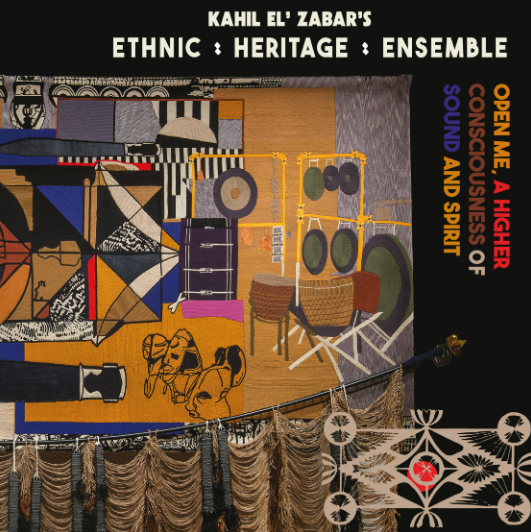
Kahil El’Zabar’s Ethnic Heritage Ensemble ‘Open Me, A Higher Consciousness Of Sound And Spirit’ (Spiritmuse Records) 8th March 2024
I need little persuasion to review this latest album from the Ethnic Heritage Ensemble, having already subscribed and danced to the Kahil El’Zabar rhythm for some time now. I must also declare that this same label invited me a couple of years back to provide the liner notes to the Kahil El’Zabar’s Quartet’s A Time For Healing LP; one of now six such collaborative albums the Chicago doyen has released on the Spiritmuse platform in the last decade – arguably his most prolific period, in a career that stretches back across more than five decades as a willing foil sideman, bandleader and collaborator.
Hot-housed in the Association for the Advancement of Creative Musicians (the mid-1960s nonprofit organization instigated by Muhal Richard Abrams, Jodie Christian, Steve McCall and Phil Cohran in Chicago, which El’Zabar himself once chaired) incubator, El’Zabar’s percussive, drumming rhythms for the mind, body and soul, channeled the windy city’s rich musical lineage of jazz, blues, R&B, soul, Godspell and what would become house and dance music. Within that influence, you can hear the inspiration, pioneering spirit of Louis Armstrong, Jellyroll Morton, Sidney Bechet, Benny Goodman, and trace the beating language of the talking drums of the motherland. Even in that company of such acclaimed innovators, El’Zabar’s style, choice of instrumentation was remarkably unique.
Paying his dues under the mentorship of such deities of the form as Eddie Harris, the multi-instrumentalist and composer went on to found his most enduring troupe, the EHE, in 1974. And so hence the 50th anniversary release date of that group’s Open Me, A Higher Consciousness Of Sound And Spirit LP; a celebratory healing balm of both revisited originals and transformed classics that also coincides with Black History Month and the ensemble’s North American tour. Originally in quintet form, the EHE soon slimmed down to a trio by the time of their first official album release in 1981, the cut-to-the-chase, no explanations needed, entitled Three Gentlemen From Chicago. Whilst the lineup has changed over the ensuing decades (numbering the likes of Light Henry Huff, Kalaparusha Maurice Macintyre, Joseph Bowie, Hamiett Bluiett, and Craig Harris at any onetime over that timespan), in recent times El’Zabar has corralled the well-respected Chicago trumpet player and bandleader Corey Wilkes to his steady ranks, and invited in the Detroit-born baritone saxophonist Alex Harding, who he’s knocked about with since the beginning of the 2000s: both playing together in Joseph Bowie’s Defunkt. But in a change of direction, he’s brought in the evocative and wilder strings of the Chicago-based violin/viola player and leader James Sanders (notably leading the Latin ensembles Conjunto, and Proyecto Libre), and the cellist, improviser and composer Ishmael Ali. This partnership adds a yearned, timeless and sorrowful Michael Urbaniak-esque layer of folk, Catskills country, the classical and wilder sympathies and stirrings to the eclectic range of horn styles and percussion, which also includes a full drum kit by the sounds of it – coming in handy when evocating the busy, always moving splash, bounce and rolling crescendos of drumming demigod Elvin Jones, on the McCoy Tyner burst of restless, near North African, energy, the ‘Passion Dance’. Jones famously appeared alongside Joe Henderson and Ron Carter on the title-track from the jazz pianist Tyner’s Real McCoy Blue Note release in 1967; a classic that has been picked up by El’Zabar on his latest EHE album.

THANKS TO CHRISTOPHER ANDREW FOR THE IMAGE
Following on from last year’s Spirit Gather tribute to Don Cherry (which featured the worldly jazz icon’s eldest son David Ornette Cherry shortly before his death) this latest conscious and spiritual work channels El’Zabar’s legacy whilst once more worshipping at the alter of those icons, progenitors and idols that came before; namely, in this instance, Miles Davis, Eugene McDaniels and the already mentioned Tyner.
It’s a version, of a kind, of Davis’s ‘All Blues’ (with an added “The” from the EHE) that opens the album. Originally the opening suite on Side 2 of the gold standard Kind Of Blue opus, this twelve-minute example of modal blues in G mixolydian piece is, thanks to Wikipedia on this score, ‘a twelve-bar blues in 6/8 time signature’, of which, ‘the chord sequence is that of a basic blues and made up entirely of seventh chords, with a ♭VI in the turnaround instead of just the usual V chord. In the composition’s original key of G this chord is an E♭7.’ On this sympathetic take, an air of the pastoral, of country folk and Southern roots is merged with smokestack smoldered city skylines, skonk baritone sax, turning-over kalimba tines-plucked harmonics and a constant timekeeping jangle of bells. It’s still very much a part of the blues idiom, but there’s a new soul and relaxed murmur of close-eyed healing that takes it someplace else.
A favourite of El’Zabar’s father, Clifton Blackburn, Eugene McDaniels’ stalwart protest song ‘Compared To What’, is given a fresh workout by the ensemble; that original 60s polemic to hypocrisy (taking in the Vietnam War, LJB and inequality), made famous on record by Roberta Flack in 1969 but also given an outing by Les McCann and Eddie Harris at the Montreux Jazz Festival in the same year, is now shuffled along to what can only be described as an acoustic house music beat and elephant trunk lifting heralding honks and jangled bells. Almost riffing at a leisurely pace throughout, El’Zabar channels Gil Scott-Heron vocally on this enriched street level shakedown.
And as with most El’Zabar led projects, there’s always a tribute or two, a homage and laying down of fealty of a most respectful sort, to one of the old guard: the pioneers. And so why not pay it to one of the deities of the form, the free jazz demigod himself, Ornette Coleman. Although neither in the Science Fiction nor Skies Of America modes, the ensemble revise that esteemed innovator’s legacy with what can only be described as a slinky soul-funk and hip-hop groove and untethered flight of Ornette-style brass.
From across the back catalogue, there’s a smattering of original compositions reenergized and given a new impetus. From his 1998 Bright Moments LP collaboration with saxophonists Joseph Jarman and Kalaparusha Maurice McIntyre, bassist Malachi Favors and pianist Adegoke Steve Colson, the titular album and track title ‘Return Of The Tribe’ is like a concrete safari strutting from swing Chicago to hot-stepping New Orleans and Latin Quarters NYC with Cab Calloway, the Art Ensemble Of Chicago and La Monte Young in processional tow.
From the same decade, albeit the opposite end of the 90s, another album and track title take, in the form of the EHE’s ‘Hang Tuff’, is given an airing. Stepping in for the originals, Edward Wilkerson and Joseph Bowie, Corey and Sanders raise their horns skywards, whilst Harding and Ali wildly entangle themselves at a busy junction of avant-garde folk-country and Mondrian age crosstown traffic jazz. From the Ritual Trio’s (that’s El’Zabar with Ari Brown and Malachi Favors; a group that lasted over fourteen albums, right up until 2014) Conversations LP partnership with the venerated Archie Shepp, there’s also an off-kilter, early 60s inspired version of ‘Kari’. Obviously, now featuring the wiry and scribbled addition of cello and violin, the original composition has a new feel and direction of travel.
Elsewhere, ‘Can You Find A Place’ swings from the vine into a spiritual wilderness and swamp of sorrowed cornet blues, whilst ‘The Whole World’ finds El’Zabar channeling Bill Withers, the Isley Brothers and righteous Last Poets on a street side hummed liturgy of godly universal benevolence and unity. But the title-track that brings down the curtain on this conscious elevating rhythm provider evokes both Davis and Coleman, heading out east on an Afro-Latin percussive prayer and house music style primal beat.
El’Zabar’s once more heals, opens up minds and elevates with another rhythmic dance of native tongue and groove spiritualism: a balm for the mind, body and soul. The ancient roots of that infectious groove and the urgency of our modern times are bonded together to look back on a legacy that deserves celebrating. After fifty years of quality jazz exploration and collaboration, El’Zabar proves that there is still much to communicate and share as he and the EHE recast classics and original standards from the back catalogue.
Please help if you can to keep the Monolith Cocktail afloat in 2024:
Hi, my name is Dominic Valvona and I’m the Founder of the music/culture blog monolithcocktail.com For the last ten years I’ve featured and supported music, musicians and labels we love across genres from around the world that we think you’ll want to know about. No content on the site is paid for or sponsored and we only feature artists we have genuine respect for /love. If you enjoy our reviews (and we often write long, thoughtful ones), found a new artist you admire or if we have featured you or artists you represent and would like to buy us a coffee at https://ko-fi.com/monolithcocktail to say cheers for spreading the word, then that would be much appreciated.
Kalporz X Monolith Cocktail: (Review) James Jonathan Clancy ‘Sprecato’
February 22, 2024
REVIEW FROM OUR FRIENDS AT Kalporz
AUTHORED BY Matteo Maioli – TRANSLATED BY Dominic Valvona
PHOTO CREDIT: Luca Mazzieri
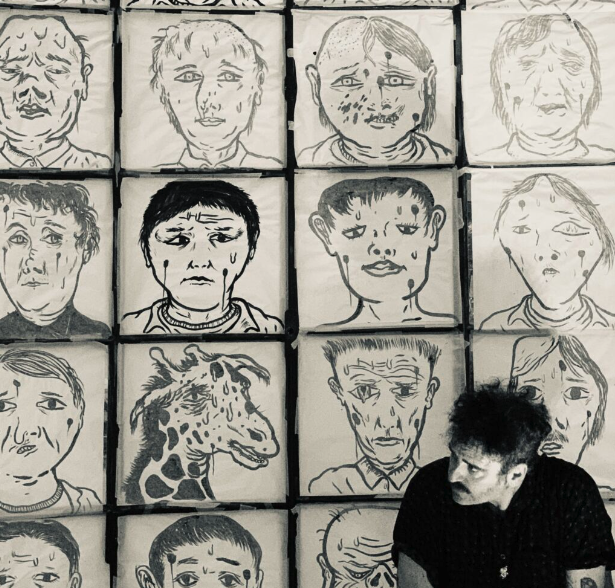
Continuing our successful collaboration with the leading Italian music publication Kalporz , the Monolith Cocktail shares and translates reviews, interviews and other bits from our respective sites each month. Keep an eye out for future ‘synergy’ between our two great houses as we exchange posts during 2024 and beyond. This month regular Kalporz scribe Matteo Maioli reviews the latest album by James Jonathan Clancy on his own Maple Death label.
After the experiences with His Clancyness, A Classic Education, Settlefish and Brutal Birthday and seven years after his last album , the Italian-Canadian James Jonathan Clancy returns with the first album under his own name, released earlier in February by label he founded Maple Death Records.
Sprecato (which translates from Italian into “wasted”), written and recorded between Bologna and London at intervals between 2018 and 2023, presents the first of a visual and graphic collaboration with Michelangelo Setola – borne in an exchange of suggestions between the two artists through music and drawing, in the sharing of an almost apocalyptic idea of ”urban pastoral” with marginality, exploitation and alienation of the individual at its centre.
Across eleven tracks our many musical souls converge, from the role of the cosmic loner folk in “I Want You” to those of the avant-garde on “To Be Me”. But also bucolic minimalism in the opener “Castle Night”, no-wave bathed in electronics for “A Worship Deal” – which fuses together Cabaret Voltaire and Pop Group -, and psychedelia on the splendid “Had It All” – between Tim Hardin and Flying Saucer Attack. Dreamlike dilations combined with Walkerian lyricism thus traces a line of demarcation crossed by a Clancy in constant emotional transport. The setlist effectively alternates imaginative songs that occupy space and then immobilise it, see “Precipice”, with soundtracks from a primordial world (“Fortunate”, the Radioheadian Amnesiac heights of “Immense Immense Wild”).
To complete Sprecato Clancy brought together a cast of friends and international guests including Stefano Pilia, co-producer of the album and true right-hand man of the operation (like a Warren Ellis for Nick Cave perhaps?), Andrea Belfi on drums, Enrico Gabrielli of Calibro 35 and Afterhours fame on flutes and Francesca Bono on both piano and vocals, whilst the core of the band is formed by the Maple Death house musicians Dominique Vaccaro (guitars, aka JH Guraj), Andrea De Franco (synths, Fera) and Kyle Knapp (sax, of Cindy Lee). The curiosity is all about the live performance now, because the album easily ranks among the most successful things in James Jonathan Clancy’s decade, and more, spanning career.
SCORE: 81/100
THE MONTHLY DIGEST OF ACCUMULATED NEW MUSIC, THE SOCIAL INTER-GENERATIONAL/ECLECTIC AND ANNIVERSARY ALBUMS CELEBRATING PLAYLIST, AND ARCHIVE MATERIAL CHOSEN BY DOMINIC VALVONA

Continuing a series that started in 2023, the Digest is my one-stop column of the new and the old; a secondary home to all those releases I missed out on or didn’t get room to feature in either my Perusal reviews features or singular Our Daily Bread posts, plus a chance to celebrate timely anniversary albums and dip into my own record collection with the a special anything goes playlist, and to, finally, dip into the Monolith Cocktail Archives.
The New: this will be a briefing of a sort, with a short outline, thoughts and reactions to a number of recent albums from my inbox – currently a 1000+ releases a month on average!
The Social Playlist: choice music collected from across the ages, borders and genres, with a smattering of tracks from choice anniversary celebrating albums of worth and cult status. Consider it my unofficial radio show. The Archives: self-explanatory, but each month I chose past pieces from the extensive Monolith Cocktail back pages that have a timely ring to them.
___/NEW\___
Mohammad Syfkhan ‘I Am Kurdish’
(Nyahh)
To do justice to the backstory (one that’s filled with tragedy and yet musically inspiring) of the Syrian-Kurdish surgical nurse and musician-artist Mohammad Syfkhan, I’d need far more room. But in brief, the heralded ‘bouzouki’ (a round bodied, with flat top, long-necked lute with resonating and sharp metal strings strummed and picked with a plectrum, that was brought to Greece from Anatolian refugees) maestro and singer was forced to abandon his family’s home in the city of Raqqa during the senseless apocalyptic Syrian civil war. As various fractions fought against the Assad regime, Islamist’s most feared and brutal cult, ISIS, swooped in and proclaimed that atavistic Euphrates located city their capital: the centre of operations and a new sickening, destructive caliphate. As a minority Kurd, Syfkhan was already in danger, but when one of his son’s was murdered by the terror group, they had to join the growing diaspora of Syrians fleeing the country and region to escape persecution (by not only ISIS but Assad too); splitting the family between Germany and Ireland, where Syfkhan, his wife and young daughter were kindly taken in.
Poured into his debut album (although he started his own band The Al-Rabie Band decades ago back in Syria; and a very popular, sought-after troupe they were too) that loss and upheaval is balanced with certain joyous and romantic gusto. Longing for home mostly certainly, and yet making a new life in his adopted Leitrim sanctuary on the River Shannon; in the moment, spreading the traditional and more contemporary music of his Kurdish and Syrian roots whilst also collaborating with those native musicians and those that have also made that same Irish village their home too (including on this stunning album the composer, improviser, sound artist and saxophonist Cathal Roche, and the composer, improviser and cellist Eimear Reidy).
Like a ascending stairway, or flowing and resonating with evocative melodies magic, lute stirring ruminations sweep over Arabia and surrounding regions; referencing anonymous, collective and some original-penned compositions and dances to Islam’s ‘golden age’ of fairytale (‘A Thousand And One Nights’), Kurdish pride in the face of repression (the title-track of course) and its peoples’ struggle for independence and respect (‘Do Not Bow’), lovelorn enquires (‘Do You Have A Lover Or Not?’), and the missed daily activities, interactions of life back home in Raqqa Across it all the hand drums tab, rattle and roll; the cello arches, weeps and bows in sympathy; and the bouzouki lute swoons and rings out the most nimble and beautiful of ached and more up-tempo giddy tunes. There’s a real weight and energy at times, balanced out with slower emotional reflections; but when they go, they go! All the while you can trace the lineage, the scope of the sound back to the Middle East, to old Anatolia, more modern Turkey, and even the Hellenic; and from weddings parties to the courtly, to the caravan trails and souk. I couldn’t recommend this album enough; already sitting as it does in my favourite choice releases of 2024.
epic45 ‘You’ll Only See Us When The Light Has Gone’
(Wayside And Woodland)
With enervated and evaporated applied washes, and drifting along with a certain despondency, Ben Holton and Rob Glover’s long-running – but due to circumstances beyond their control, interrupted – epic45 project finds much to cover; from Brexit to the lunacy of the housing ladder; the parental cliques of the school gates to the death-by-a-thousands-cuts decline of England’s rural and seaside towns.
Already, unbelievably, four years since the last album (finding a favourable audience at this blog) Cropping The Aftermath (released during the height, more or less, of the Covid pandemic), You’ll Only See Us When The Light Has Gone arrives in the wake of setbacks – from the repercussions of both Brexit and Covid on touring (with the band’s Japanese tour cancelled, but also, Europe for us Brits, no longer part of the free-movement agreement, becoming a major pain-in-the-arse to circumnavigate) – to the on-going issues of Holton’s severe back problems.
But persist they did, and went away to produce this idiosyncratic take on the modern life is rubbish (and expensive) idiom. This is a resigned but rallying push back against life in, what they call, the ‘edgleland’, the ‘nowhere places’; pushed out onto the peripherals of society and inclusion. The very English preoccupations of owning a home permeate, from the ill-planned ‘floodplain’ sites that many are forced to accept, to the grander housing development promises of ‘stepping stones to country homes’. But this is a wider statement on a nation in crisis, and the pressures of keeping heads and minds above the crushing effects of unceasing disillusion; ‘dignity’ in the face of narcissistic cultural and political vacuous, the cost of living and bad health.
A very different record from its predecessor, Holton and Glover bring songwriting and vocals to the forefront; from the near forlorn shoegaze-y and woe of late 80s and early 90s indie, to what I can only describe as higher scale soulful indie and more modern effected R&B aches. But the music hasn’t exactly taken a back seat, with vapours of ‘Oh So’ period Charlatans, Neon Neon, Seefeel and The Last Sound, touches of soft power rock from the 80s and 70s, and the appearance of their former live, and My Autumn Empire, drummer Mike Rowley powering the breaks with evocations of Bloc Party at their most subdued and building a soft momentum when the drive is needed to escape the wispy drifting. Within that framework there are other nice little touches too: the glimpse of surface, environmental ambience and dialed-out conversations, a touch of folksy Iberia guitar here and there, and veil-like chime of the celeste.
epic45 somehow manage to retrieve hope and possibility from the ether of debilitating tiredness on an album that sees them move in more melodious and vocalised direction.
Boštjan Simon ‘Fermented Reality’
(Nature Scene)
Glitches in the cerebral; a coming to terms with the current age of high anxiety and alternative realities of a world in turmoil and flux; the debut solo turn from the Slovenian saxophonist and various electronic apparatus experimentalist Boštjan Simon puts the former instrument through a process of external effects to sound a surprisingly rhythmic vision of explorative jazz, broken beats, breakbeats, library music, kosmische and fourth world music.
Regular readers of the blog might recognize the name as part of the Slovenian trio of Etceteral, but Simon’s CV and involvement also runs to the groups Velkro and Trus!, plus a duo with the percussionist Zlatko Kaučuč. But now, stepping out on his own, he creates a soundboard and environment from a modified sax fitted with sensors to enable the triggering of oscillators in a modular system setup, using a new experimental interactive module called Octosense.
The results of which combine abstract blows, holds and wanes with more melodic and fluty vapours of sax, and Eastern German space programme oscillations with primal lunar bobbles and Asmus Tietchens popcorn. Taking the Jazz Messenger Jackie Mclean’s famous “saxophone is a drum” as a prompt, that instrument is reshaped in the style of Alex Roth and Andy Haas to explore new quadrants and feels of the keen and untethered: remarkably very melodious and tuneful in places, with some beats sounding like Madlib or Farhot at the helm. You can add Thomas De Pourquery to that list of reference points, but also Frédéric D. Oberland, Otis Sandsjö, Laurence Vaney, Joe Meek, Bernard Estardy (the last three in relation to the more playful, retro sounding bobbly liquids and satellite communication moments) and, on the near new age disorientated dance of ‘Gmnoe’, Ariel Kalma. That should be enough to go on for now. A solid, or not so solid but more open-ended and explorative, start to the solo career, Fermented Reality is a unique album of saxophone evocations and environmental probes.
Poppy H ‘Grave Era’
(Cruel Nature Records)
Zombie medication, zombie blades, zombie government: what a world to be dragged into. As the always awake screen lights up another terrible, distressing notification, or yet another crisis to weigh on the mind, the multi-instrumentalist, field recordist and producer Poppy H holds a phone up to society and openly records the decay, the innocuous and fleeting interactions of a world on standby as Rome burns to the ground all around them. Coping for many – and it’s neither their fault nor ours – is to keep keeping on with the daily grind; the one highlight of the day, picking up that mundane “flat white”.
All the commonality and evaporated stains of modern Britain are played out across a simultaneously creepy, lo fi bucolic, planetary, industrial and Fortean soundscape of café orders, snippets of conversations and crackles of interference. The Grave Era is certainly haunting and gray at times, and yet has a sort of reverberation of Andrew Wasylyk and the Cold Spells’ hallucinatory pastoral rusty piano, and a dreamy filter of piped church organ music – there’s even a sort of spell of what sound like the courtly music of Medieval or Tudor England at one point. For the most part, this is an album of chemical and more obscure prompts; a window in on the radioactive, plastic and technological flitching and glitch fabric of a fucked-up culture in turmoil and decline, yet far too inoculated through drugs (both the legal and illegal kinds) and the social media validation cult to face it or indeed change it. The sounds, production and vapours, visitations reminded me in equal parts throughout of the Sone Institute, Belbury Poly, Walter Smetek, Fiocz and Boards Of Canada, but go far further outside this country’s borders on tracks like the drifted passing melodious ‘Shaid & Irfan’, which could be a recording, as the traffic and daily business of others carries on in the foreground and background, of musicians from anywhere in North Africa, the Middle East, Afghanistan or Pakistan.
A country haunting itself, this is England in the dying embers of climatic, societal and political change; scored by a unique theme of recordings that masterfully encompass the erosion of action, living and hope in the “grave era”.
Meiko Kaji ‘Gincho Wataridori’
(WEWANTSOUNDS) 23rd February 2024
Heralding the transition of the cult Japanese actress-singer Meiko Kaji’s move to recording artist in the early 1970s, the vinyl specialists at WEWANTSOUND, in partnership with Teichiku Records, continue to reissue the leading star of B-movie and “ero guro” movie franchises’ back catalogue of influential albums. Following in the wake of last year’s Hajiki Uta LP, and reissued for the very first time, Tarantino’s crush (no Kill Bill’s bride without Kaji’s groundwork as the avenging Lady Snowblood; one of her most iconic roles) and untold influence for many over the decades, the star of many infamous Japanese schlock and brutal revenger horrors and violent killings sprees’ debut LP, Gincho Wataridori is up next in the roster.
Originally coaxed into the studio environment to sing the songs that would appear in and accompany a list of movie franchises (from Female Prisoner Scorpion to Blind Woman’s Curse and Stray Cat/Alleycat Rock), Kaji’s songbook repertoire expanded to include the Enka (a performative traditional form that often carried masked messages of political texts, later on, stylized with modern pop sensibilities in the post-war period), psych rock and Kayokyoku (a Japanese pop style with simple melodies and lyrics easy to play and sing along to).
The first of five albums recorded between 1972 and 1974 for Teichiku, the inaugural songbook in this run features a quartet of softly lush and Vaseline camera smeared dramatic fatale yearns and spindled, gently mallet(ed) funk-whacker and tremolo fuzzed dramas from both the Wandering Ginza Butterfly and Blind Woman’s Curse films – both Yakuza and Bōsōzoku themed revenge twists on the genre. The rest of the songs comprise of signature Oriental riffs on Axelrod, Bacharach, 60s French and Italian pop sirens and smoky cocktail cabaret jazz. Keji’s accompaniments are masterful, if light, and do the trick as her alluring, coquettish and often longed vocals rise to the occasion. Sven Wunder seems to make a Mosaic out of it, and a multitude of Hip-Hop artists have sampled it, but Gincho Wataridori remains a cult album ripe for reevaluation and attention.
Ap Ducal ‘U’
(Weisskalt Records)
Visioning a saturated spectral display of waveforms, moving bass lines and acid turned dials Camilo Palma (under his twelve year running project alter ego Ap Ducal) manages to blend kosmische and early synthesizer music with the German New Wave and post-punk genres, and various other cosmic electronics on his new succinct, minimalist entitled album U.
Collaborating with the Chilean musician Sebastián Román (otherwise known as Persona RS), Palma unites two sounds, two crafts to a fizzled, metallic filament cold wave soundtrack that moves between soft deep curves on the radar to the motorik and interstellar. Amongst the analogue electronics, the synthesized algorithms, the oft four-to-the-floor beat, and the paddled, rotor-bladed and tubular rhythms there’s echoes of Bernard Szajner, Sky Records, Heiko Maiko, Ulrich Schnauss, Michael Rothar, Eat Lights Become Lights, Basic Channel and Leonidas. ‘UUUU’ is a little different however: reminding me a bit of a Goblin Italo-Giallo horror soundtrack merged with the icy distillations and peregrinations of Edgar Froese; a bit of mystique, the occult and cold airy vacuums folded within the cold wave calculations.
Cosmic Couriers of a kind, the sonic partners on this forward propulsion make kosmiche and krautrock influences dance to a filter of tape music and minimalist techno. I’d say it was a successful conversion of all those inspirations/influences; making for a roaming and hypnotic experience.
____//THE SOCIAL VOLUME 83\\____
Continuing with the decade-long Social – originally a DJ club night I’d pick up at different times over the past 20 plus years, and also a café residency from 2012 to 2014 – playlist, each month I literally chose the records that celebrate anniversary albums, those that I’d love to hear on the radio waves or DJs play once and while, and those records that pay a homage and respect to those artists we’ve lost in the last month.
February has been a harsh harbinger of death, taking away from us both the mushroom incantation haiku experimental artist Damo Suzuki and motor city muthafucking jam kicking guitar-slinger antagonist Wayne Kramer. As a front man of a sort for Can during perhaps their most creatively fertile and influential period, from Soundtracks through to the Future Days opus, Suzuki also fronted numerous collaborative projects, his own “network” and “band”, whilst also knocking about with the post-punk-kruatrock legends Dunkelziffer. Tracks from more or less all of these ensembles appear here, alongside a couple of homages to the former MC5 rebel Kramer – ‘Ramblin’ Rose’ from the defining live rallying call for a generation Molotov Kick Out The Jams, something from his Citizen Wayne solo affair, and, just to be different, a track from his drug-addled hangout with Johnny Thunders, ‘They Harder They Come’.
Anniversary spots this month are taken up with covers of songs from Bob Dylan’s 1964 LP, The Times They Are A-Changin’, something off Amon Duul II’s less than celebrated, but much loved by me, Hijack LP from ’74, and tracks from Aretha Franklin’s Let Me In Your Life (50 this month), Mick Ronson’s Slaughter On 10th Avenue (another 50th celebration), Tangerine Dream’s Phaedra (see my archive piece below), Julian Cope’s Fried (40), Pavement’s Crooked Rain, Crooked Rain (30) and Down South’s Lost In Brooklyn (also 30 this month).
Scattered throughout are tracks I just love or dig from across the spectrum of time and genres, and, just recently loaded up onto streaming services and let out of the vaults, the title-track performance from the goddess of sublime mediative vibrations, Alice Coltrane’s Shiva-Loka Live album.
Tracks In Full:::::
Damo Suzuki ‘Wildschweinbraten (Single)’
Amon Duul II ‘Mirror’
Omar Rodriguez-Lopez and Damo Suzuki ‘Please Heat This Eventually Pt. III’
Wayne Kramer ‘Stranger In The House’
Hunger ‘Portland 69’
Aretha Franklin ‘Let Me In Your Life’
Damo Suzuki’s Network ‘Manager Cinderella’
CAN ‘Moonshake’
CAN ‘Don’t Turn The Light On, Leave Me Alone’
Johnny Thunders & Wayne Kramer ‘The Harder They Come’
Pavement ‘Elevate Me Later’
Dunkelziffer ‘Network’
Odetta ‘The Times They Are A-Changin’
Down South ‘Sitting Here’
Julian Cope ‘Me Singing’
Matt Donovan ‘Black Crow’
MC5 ‘Ramblin’ Rose’
Supersister ‘She Was Naked’
Mick Ronson ‘Growing Up And I’m Fine’
Billy Childish ‘Ballad Of Hollis Brown’
The Yankee Dollar ‘Live & Let Live’
Alice Coltrane ‘Shiva-Loka (Live)’
Tangerine Dream ‘Movements Of A Visionary’
Lee Hutzulak ‘Behind The Singing Bush’
Limber Limbs ‘Golden Rust’
James Quell ‘The World Got Taken Over By Billionaire Scum’
Arti & Mestieri ‘Saper Sentire’
PTC ‘Freestyle Na Vrtaci’
CIX ‘Clitor’s Eye’
CAN ‘I’m So Green’
____///ARCHIVES\\\____
Tangerine Dream ‘Phaedra’ Reaches 50 (From my original piece for the now sadly defunct London electronic music and architectural journal Vessel, nearly 14 years ago)
Phaedra the tragic mythological love-torn, and cursed wife of Theseus has lent herself to many plays, poetic prose, operas and even an asteroid. This rebuked siren from Greek tragedy is immortalised for a new epoch as part of the West Berlin synthesizer group’s re-textured sweeping experiments. Covering the entirety of side one, on this their first LP for Virgin, Phaedra is like an acid-trance choral eulogy of incipient multilayer motifs and arpeggiator modulations. The sounds of a ghost ship’s switchboard interlaced with twisting metallic reverb both gravitate and loom over a meandering pan-European work-out on this improvised track, which unintentionally, but rather pleasingly and to great effect, fluctuated in tone and tempo-atmospheric changes that played havoc with the analog equipment. Edgar Froese and his ever-rotating line-up of fellow freethinking cohorts had moved on from their so-called ‘Pink Period’ on the German Ohr label, to a more transcendental and ambient approach on the burgeoning Virgin imprint. Phase three in the Tangerine Dream life cycle saw them showered with, almost, unlimited funds and full use of the famous Virgin Manor Studios in Oxford – where fellow compatriots Faust recorded their IV album, a few months before. Flanking Froese on this adventure were the ex-Agitation Free drummer Chris Franke, and Peter Baumann; who’d already left the trio once before, returning just in time to record this musical suite.
Phaedra would be an album of firsts for the band with the introduction and use of sequencers and the MOOG. Franke would adopt DR. Robert Moog’s invention as a substitute to the bass guitar on the visionary soundscape ‘Mysterious Semblance At The Stand Of Nightmares’ – surely the catalyst and influence behind Bowie’s ‘Warszawa’. The polyphonic Mellotron, used to elegiac effect on the very same track, is tenderly coaxed and teased by Froese, whilst the VCS 3′s battleship pin board decked oscillation generator glides and bubbles throughout the four musical vistas of heavenly orchestrated electronica. Baumann explores the use of tape-echo and filtered effected flute on his own paean composed passage, ‘Sequent C’; a short wistful and haunting soundtrack to some imagined eastern elegy.
Released simultaneously in both Germany and the UK on the cusp of 1974, this album more than any ever by the Dream team cemented their reputation. With scant publicity and sporadic underground radio play, it sold in excess of 100,000 copies overseas and entered the top twenty album charts in Blighty, changing the fortunes of the Virgin label forever. However these prophets failed to drum-up the same exultation and adulation back in their homeland, barely shifting 6,000 records. Considered a sea-change in style and dynamics; a marked departure from their classic ‘Alpha Centauri’, this New Age themed cantata pitches itself somewhere between pantheism, mythology and a nebula traversing flight.
Our Daily Bread 611: Interview With Forest Swords
February 16, 2024
MIKEY MCDONALD SITS DOWN WITH THE FACE BEHIND THE FOREST SWORDS NOM DE PLUME, MATTHEW BARNES
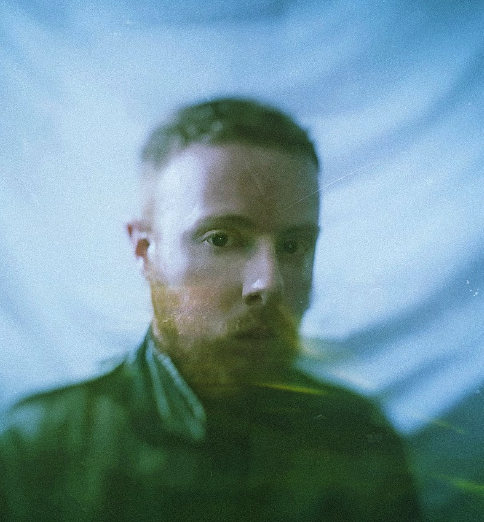
In today’s exclusive interview on The Monolith Cocktail, Mikey McDonald sits down with one of UK’s most talented electronic musicians Matthew Barnes AKA Forest Swords. Barnes hails from Liverpool and has been releasing music under the Forest Swords moniker for over a decade.
They discuss the recent release of his third studio album titled Bolted as well as what the artist has been up to and future plans.
MM. Hi Matthew. Thanks for taking the time to chat, I really appreciate it. First thing is first, congrats on the new album. A mere six years have passed since your last full-length release. Why don’t you start by telling us a little bit about what you’ve been up to in this time?
FS. Mostly concentrating on scoring work. I was lucky to be asked to do a bunch of different stuff across video games, dance and art installations over the past few years and it took up a lot of my time, so it didn’t feel right to try and balance it with starting an album. I’ve learned to listen to those sorts of gut instincts over time.
MM. Obviously Bolted has already received a lot of critical acclaim. Is that something you pay attention to, critic reviews?
FS. I don’t read any reviews, the most I’ll see is maybe just one-line quotes that get put on a press release or whatever. I see some feedback on things like my social media profile but it’s not something I want to be glued to. It’s really bad for anyone’s mental health to be checking in so much with that sort of thing, and I learned pretty early on that it wasn’t good or productive for me to engage with it. I’m really happy and grateful if people connect with anything I make though.
MM. From what I gather you’ve set up your own studio now in a former munitions (military weapons) factory in Liverpool. It was quite interesting to read that as part of your creative process you were visualising what oil spilling might sound like and became interested in things like metal and steel. These are very physical, inanimate things which we wouldn’t normally associate with sound. Working in a space with such history, did that inspiration come about naturally or did you have a particular vision before setting foot in the studio?
FS. I went to a Factory Records exhibition when one of the lockdowns lifted and I decided I really wanted some sort of warehouse or factory space, just to see what kind of things I could cook up in it, and because there’s still a few of these spaces left in Liverpool and they haven’t been gentrified out yet, unlike other cities. It was only really once I got in the space that the feel of the building and the architecture of it started to seep into the sounds I was making and the visual world I was trying to make.
MM. A lot was made about the fact Engravings was mixed outdoors and the impact this had on the record. Engravings has a woodlands feel to it and just listening you can practically hear the tracks leaching out of the soil…I guess the word I’m looking for here is organic. How did the mixing process go this time round? Do you find yourself constantly chopping and changing things in striving for perfection, or is that just it – can striving for perfection be a dangerous thing?
FS. I think like most creative things you just get a sense of when to stop. There’s a point with music, in particular, when you can tinker with something for so long that it loses all sense of excitement, and you also personally lose all objectivity over it. I’ve made enough tracks that I know when that point is before it falls over a cliff, so I’m fairly self-disciplined at stopping. Bolted I mostly mixed while I was going along, so it came out fairly fully formed at the end.
MM. I’m curious as to how you arrived at the album title?
FS. The studio space has these big metal doors I had to unlock every day with deadbolts. It became a sort of visual representation for me of creating the album, and sums up a lot of the sound world on the record too. I was struggling with a broken limb and other stuff while I was making it too so the idea of calling it ‘Bolted’, as in someone running away from something, became kind of bleakly absurd to me.
MM. Did you bother running any of the new tracks through your old four-track tape recorder, just for that extra bit of warmth and texture?
FS. Lots of it went through tape, most of the beats on it. A lot of the rhythms are quite heavy and came back through really blown out. Many of the synth sounds were put through it as well, and even mid-song I’ll switch between the digital version and tape version of a melody or beat. It’s a really hands on and easy way for me to get some texture and artefacts without running it through digital plugins.
MM. Let’s talk about one of my favourite cuts Line Gone Cold. The progression on this one is wild. I don’t know why but I feel like I’m being consumed by a blazing fire when listening to this, then we’re hit with some signature Forest Swords vocal passages. The strings are also a nice surprise, sort of devastating. On this track you sample the late Lee ‘Scratch’ Perry, almost a full decade on after he remixed the otherworldly Thor’s Stone. Was this a case of returning the favour? Cool to think his legacy will live on in your music.
FS. Lee and I had always circled each other but I never met him in person. He was very gracious to do that Thor’s Stone remix and I knew I really wanted him on this record. I’d had this voice note from him for a while and it just seemed to fit right at the end of Line Gone Cold, which was always going to be the last on the track-listing because it felt like quite a finite song somehow. As soon as I put him on there it felt like it immediately crystallised into something more powerful and he kind of completed it for me.
MM. Probably a question you get a lot, but I must ask, what is your desert island synth?
FS. It’s not really a synth but I would want the Electron Octatrack. It’s so unique, frustrating and I also couldn’t live without it.
MM. Any releases you’ve been digging from this past year, electronic or otherwise?
FS. I like Holy Tongue who do dubby live jams, and I’ve rediscovered Seefeel from the 90s who are one of the only bands right now that soothe my brain when I’m feeling frazzled.
MM. Churches or power plants?
FS. A church inside a power plant, ideally.
MM. You’ve been doing this for a while now whilst dabbling in some scoring and side projects. What does the future look like for Forest Swords?
FS. I’ve got a couple of scoring things lined up for this spring and then I’m also chipping away at a new album that will appear at some point. Bolted was personally quite a difficult time for me and so I want to make a record while I’m in a good place. I’m just keen to keep learning and making work in whatever form that comes in.
MM. Well, it’s been a pleasure. Thanks again for chatting and all the very best for the next album and in the future!
Keep up-to-date with Forest Swords releases via the official website.
Or visit the bandcamp page.
The Perusal #52: Meril Wubslin, Maria Arnqvist, Ghost, Otis Sandsjö…
February 13, 2024
A WORLD OF DISCOVERIES REVIEWED BY DOMINIC VALVONA
(Unless stated otherwise, all releases are available now)

Maria Arnqvist ‘Mary Rose And The Purple Quintet’
(Sing A Song Fighter)
An incredible, adventurous concept (of a sort) album from the Swedish multi-instrumentalist and composer that not only showcases a breadth of ideas but also draws upon a wealth of worldly musical escapes and travels, Mary Rose And The Purple Quintet! is an ambitious statement.
One half of the self-professed “voodoo punk, art rock and psychedelic” Swedish duo Siri Karlsson, Maria Arnqvist weaves and sows the seeds for her own solo idiosyncratic fantasy on this character-driven songbook of piano-led or prompted quality vocalized and instrumental evocations.
Classically trained on the ivories, the source of this album’s deeply felt, keen and artfully beautiful material springs forth or subtly flows with an ever-moving cascade; a torrent; a disturbed pool or undulation of waves. Arnqvist proves highly talented in this regard; a near maestro of the instrument in fact, with certainly familiar echoes of what has come before – everything from the obvious classical strains and accentuated touches to the avant-garde of the name-checked Philip Glass and feels of quintessential balladry – but made a new when effortlessly merged with such instruments as the West African kora, an air of the folkloric and strange. Sousou Cissoko plays that kora incidentally, spindled melodically and woven beautifully – it reminded a little of the harpist Catrin Finch’s collaborative partnership with Seckou Keita.
There’s also a sort of Flyodian-progressive and Afro-jazz throaty and more float-y saxophone on a couple of songs. Add chamber-like and dramatic symphonic strings to that soundtrack – every track on this album could be a score in itself – and you have something very special and different and (that word again) worldly: at least transportive. You’ll be unsurprised to learn that Arnqvist has traveled abroad a lot, with stays absorbing the local sounds of instruments in Ouagadougou in Burkino Faso, and Boston in the States. When pulled together the results are both sophisticated and playful; the mood and balance shifting between the oddball theater of late 19th century barrel organ stoked Wild Western saloon japes and shoreline yearned morning choruses to the elements. In fact, this could be an alternative Western, with the unsympathetic roasting sun shimmers and hoofed giddy-up momentum of ‘I Caught You Runnin’ evoking some kind of amalgamation of David Carradine’s Kung Fu, the Mongolian song of Namger, and Sakamoto’s piano – a pursuit across a mirage salt plains perhaps?
At other times the mood is more folksy-classical; although the enchanting opener (a sort of overview overture) seems to reflect a restless spirit, spinning between timeless tones, West African dances and the drama of Mick Harvey’s more stirring sober scores.
The vocals are sung in English when recognizable, as Arnqvist also lyrically and with a melodious air also just swoons or coos the tune, thoughts and descriptive vowels. And the lyrics build up a poetic picture of dramas, emotional ties, scenery and acts, whilst never really making anything explicit as such. Natural elements are left to speak, as Mary Rose and that Purple Quintet meander, fluctuate up and down the scales, quiver and ride the tumultuous softened waves of this loose story.
An enchanting and softening restless spirit is at work on this astonishing, well-thought out and enacted solo turn from the Swedish talent; an album that will gently unfurl its magic and depth over repeated plays and time: and for that, will only get better on each listen.
Lothar Ohlmeier, Rudi Fischerlehner & Isambard Khroustaliov ‘In The Glooming’
(Non-Applicable) 16th February 2024

From the perceptive, intuitive and often haywire minds of the applauded Lothar Ohlmeier, Rudi Fischerlehner and Isambard Khroustaliov (the nom de plume of one Sam Britton) trio, another exploration into the probed parts of the grouping’s psyche, art forms, inquiry and mischief-making. Thematically wise however, this is latest experiment at the edges of electroacoustic serialism and free-roaming is about the trio’s friendship, perseverance, trust and handle on being human: in a world of ever encroaching technological takeover I’d suggest.
Drawing on their myriad of respectable experience over the decades, with Ohlmeier bringing along his bass clarinet (a pretty deft and extraordinary saxophonist too), Fischerlehner on drums and percussive elements, and Khroustaliov rewiring his electronic apparatus, all three participants pull from the “gloaming” (an expressive word taken from Irish lexicon that describes the “twilight”) a strange sound world and performance of avant-garde jazz, Fortean supernaturalism, the alien, odd and indefinable,
Recorded over in the former Cold War walled East Berlin – make what you will of that location -, melodious, almost at times sweetened and floated, clarinet wafts and occasionally strains amongst the clicks, reversals, signals and oscillations of circuitry and transmogrified data language. All the while sifted, brushed, hinged and more bell shaken percussive instruments often amorphously find a rhythm, a hit or timpani roll in the vagueness of an idea and direction. Unsettled and yet never really hostile, totally maniacal or mad, this is a world in which ECM, Sam Newsome, Roscoe Mitchell, The Art Ensemble Of Chicago and Eric Dolphy merge with Walter Smetek (I’m thinking of his 1974 Smetek LP especially), Valentina Magaletti, Affenstunde Popol Vuh, Angelo Bignamini and Lea Bertucci. A track like the tracing of time, weirdly tweaked and near whistled ‘End Zone’ sounds positively sci-fi and a little ominous. Whilst, the classical unhinged toy workshop combination of elements on ‘Violet Weeds’ sounds like Prokofiev conducting Autuchre for a performance of Brian Aldiss’ Hothouse. And ‘Pixel Head’ re-engineers the matrix for an odd futuristic charge of static and cable disarray. Sharing is caring as they say, and this trio seems to deeply feel that connection and intuitive spirit of freedom in creating something challenging, but also in those very special interactive moments: moments inspired in a manner by that twilight hour between the dark and light. A curious, wild and untethered yet professionally made work that defies boundaries.
Meril Wubslin ‘Faire Cą’
(Bongo Joe Records) 1st March 2024

Taking their Mitteleuropa mummers vision on the trail to, of all places, Lewisham in southeast London, and the studio of Kwake Bass, the Meril Wubslin trio cast more hallucinatory hypnotic rhythms in new surroundings without leaving that signature mysterious dimension that hovers between French-speaking Lausanne and Brussels.
Bass (or to give him his full due and title, Giles Kwakeulati King-Ashong) has worked with a myriad of influential and explorative figures over the years (from MF Doom and Roots Manuva to Lianne La Havas and Kate Tempest), so carries more than a touch of class and cache of ingenuity and talent. And yet far from changing the sound, based a lot on repetitive rustic nylon-stringed-like guitar rhythms and both scrappy and dreamy spelled percussion, the producer has continued to aid in magic-ing up a strange rural mysterious combination of Rufus Zuphall, These New Puritans, The Knife, Goat, Holydrug Couple and Die Wilde Jagd.
When the dual male and female vocals – shared and in a strange harmonic symmetry – mistily arise from the mystique and often dreamy-realism of humming motored esoteric vapours and woozy oscillations, they evoke a very removed version of Chanson with Sister Dominique and the pagan song of Summerisle. In fact, there’s a quite a lot of esoteric and folksy-like references sound wise, from the processional to tribal. And a cross-timeline of influences that stretch back into the Medieval. On occasion those hypnotic rhythms and percussive scrapes conjure up Gnawa trance, or the herding of goats in the mountains during older, simpler, primal times. And yet, there’s also a semblance of the Blues, of Dirt Music, to be found amongst the glassy bobbled vibraphone wobbles, trippy drum breaks, pastoral drug lingers, vague visitations from another dimension, UFOs and surreal echoes.
A diaphanous and occult balance of the rural and otherworldly, of enchantment and suffused otherness, Faire Cą is yet another promising statement of headiness and entrancing spells from the trio.
Ghost ‘S-T’, ‘Second Time Around’ and ‘Temple Stone’
(Drag City Records)
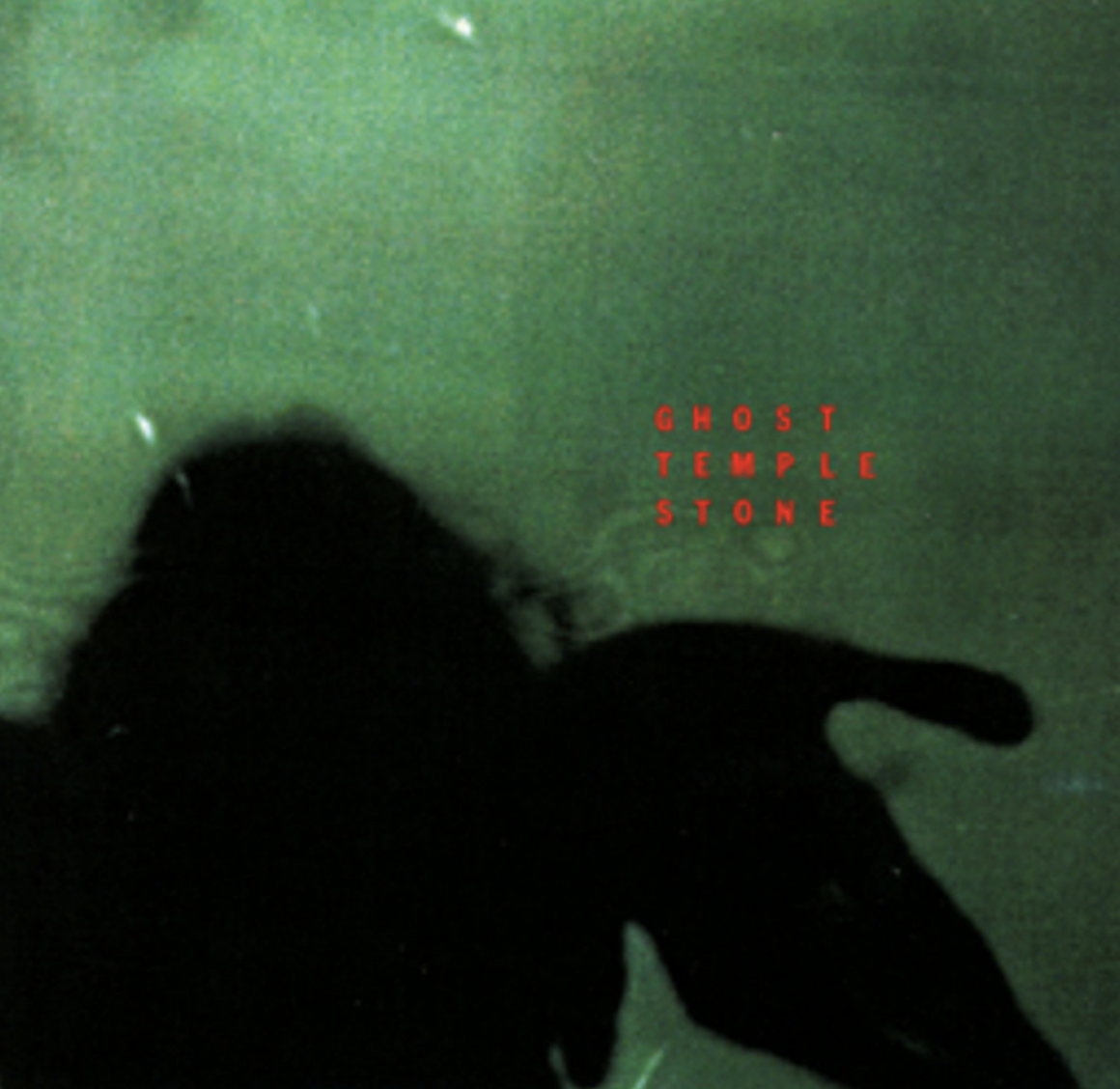
Following in the wake of Masaki Batoh’s most recent of incarnations, the brain waves initiated Nehan project album An Evening With (reviewed last month in my Perusal column), Drag City are reissuing a triple-bill of vinyl albums from the Japanese acupuncturist, musician and apparatus building artist’s most enduring and long-running ensemble Ghost.
Tying in with the fortieth anniversary of that evolving, line-up-revolving group’s conception, and the tenth anniversary of its completion, disbandment, their first run of albums from the 1990s is being given another pressing by the label that originally repressed them in the first place, three decades before: that run quickly selling out off the back of Ghost’s Lama Rabi Rabi debut album release for the American Drag City Records imprint. Originally released by the Japanese P.S.F. label on CD, that triplet of records laid down the foundations for a nomadic commune trip of acid wooziness, otherworldly folklore, abandoned temple spirit communions and visions.
Hauntingly formed in Tokyo in 1984 by underground and head music stalwart Batoh, their existence and presence on the scene were as veiled, translucent and hermitic as their name suggested. Pretty much adapts of Amon Düül II (from Phallus Dei to Dance of The Lemmings) and Popol Vuh, but also the psychedelic and folk movements of the UK in the 60s and 70s (from the Incredible String Band to Third Ear Band, Haps Hash And The Coloured Coats and Floyd), and closer to home, such native acts as the Far East Family Band and Acid Mothers Temple, these hallucinatory seekers explored various forms of transcendental music and tradition – although, in the PR briefing they’ve been compared to Os Mutantes. All of those reference points can be heard over their self-titled debut (1990) and Second Time Around (92) and Temple Stones (94) albums; reissued here on appropriate psychedelic clear coloured vinyl for the first time in 25 years.
Recurring currents and vibrations can be found on all three albums; the last of which is slightly confusing with a lot of crossover track-titles from the previous two; it must be stressed however, that even though they use the exact same names on Temple Stones, they are different, produced it sounds like, from the same session, but either an alternative to or riff on the original source and tune, atmosphere. Starting with the demigod, deity or presence theme of the “Moungod” on the self-titled album, the ghostly visitations traverse misty-veiled shrines, mountainous trails to meetings with kite-flying yogis, Shinto ceremonies and holy cavern settings. Surprisingly avoiding any real freak outs – ok, the occasional build-up of acid rock thrashing, splashing and tumult, but relatively subdued on that part – the music and atmospherics are often drowsy sounding; spiritually wafting along and even traditional: imagine Popol Vuh, the Incredible String Band and Floyd meets Alejandro Jodorowsky on the Holy Mountain. There’s also a touch of Julian Cope and Jason Pierce, even The Cult amongst the Taoism and other venerated mysterious leanings and moss. And, something that will carry over onto all the albums, there’s a constant air of the Medieval, the courtly and a touch of psychedelic folksy parchment; from maypole dances to willowy recorders whistled and fluty pagan pastoral processions and merriment.
Second Time Around is produced in the same mold, but seems to also have a more progressive feel, and even an air of the Celtic about it; another occult folksy-acid journey through mythological and spiritual tapestries. ‘People Get Freedom’ introduces us to a spindled lattice of gong washes and harpist sound-tracked moss gardens; the stepping stones trip then extending out towards a culmination of talking to Yogi ADII, the Moody Blues and wistful waltzes on the title-track. ‘Awake In A Middle’ however, sounds more like Satanic Majesty’s era and ‘Ruby Tuesday’ Stones, a more doleful King Crimson and fiddly acoustic dreamy Yes. There are murmurings and the odd bit of mooning, spooky chanting, and mantras to give it that occult, otherworldly sound from the ether, the gods, and the transcendental planes.
Finally, the Temple Stone album suffusion of veneration and mystique wonders around those ancient alters like an apparitional collective of the Flower Travellin’ Band, Yatha Sidhra and The Mission. Disturbed mood music and background wails and shouts are balanced with strange primal vapours, acid-folk (again), downer almost shoegaze vocals (although, on the old and magical rural never-world of ‘Freedom’, it sounds like AD II’s very own Chris Karrer), Indian brassy resonance, paused thoughtful piano and overhead drones.
All three albums are brilliant at pulling you into the Ghost troupe’s world of mysticism, drifted travels, psychedelic projections and wanderings. And not one of them is any better than the other, quality wise. Together they form a near-linear bond, capturing a short period in the band’s early-recorded history – the first of these albums appearing six years after the group’s initial conception -, which lasted thirty years. If this introduction style purview and review does grab you, then be quick, as I suspect these vinyl editions will fly off the Drag City Records shelves.
Otis Sandsjö ‘Y-OTIS TRE’
(We Jazz Records) 23rd February 2024
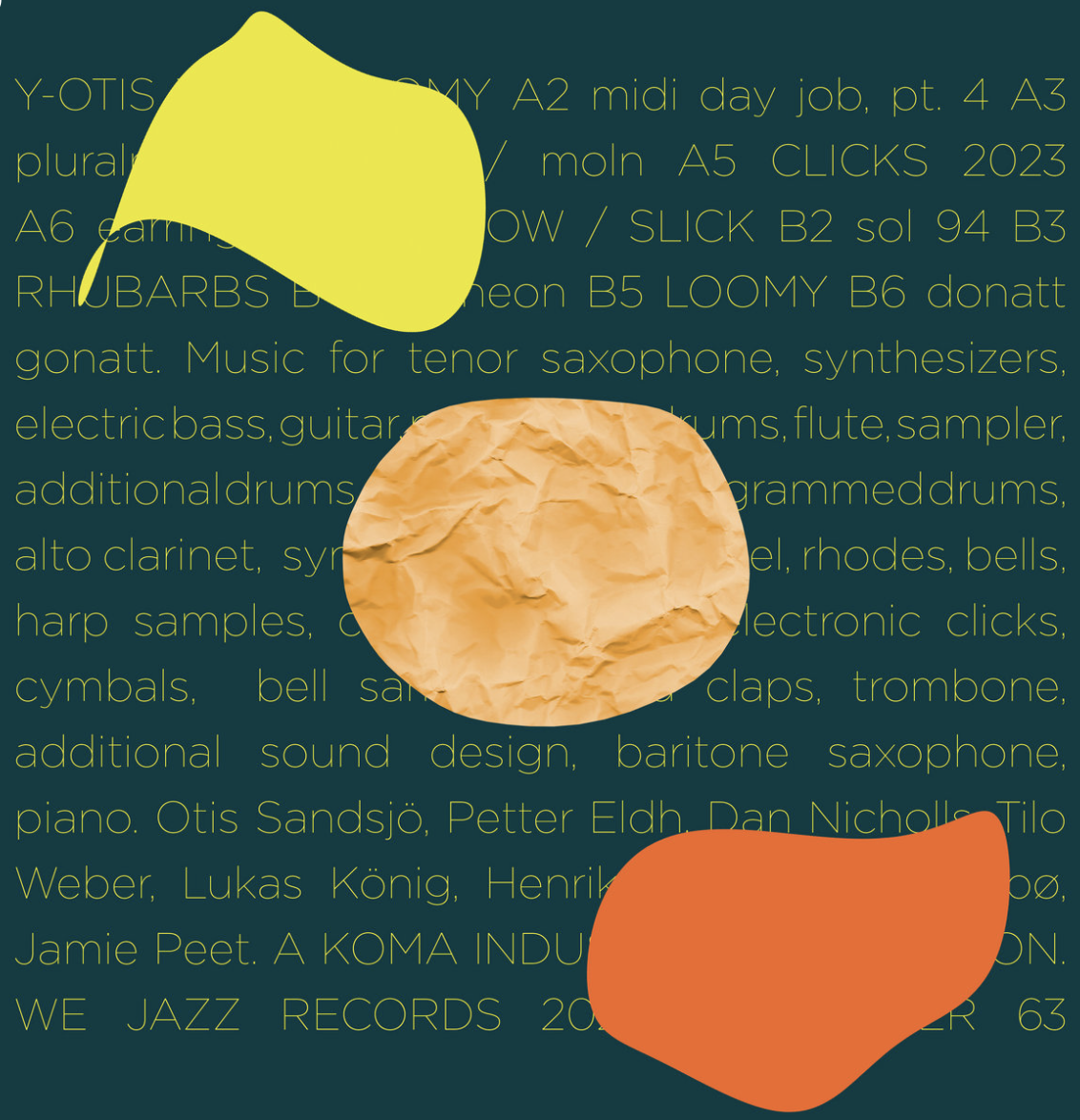
Following up previous albums in the Y-OTIS series, part TRE continues to deconstruct, shape and rebuild in real time the untethered sessions of the Berlin-based, but Swedish born, tenor saxophonist/clarinetist Otis Sandsjö’s studio experiments. With what has been called a “mixtape-like DNA” methodology, Otis with his long-standing foil and Koma Saxo leader Petter Eldh, and keyboardist Dan Nicholls, plus changing ensemble of musicians, remix themselves as they go along; fracturing, stumbling, free-falling, flipping, enveloping, cutting-up and sampling their jams into freeform opportunities and ideas.
The third album is much in the same vein: albeit this time around sounding more like a transmogrification of 90s and 2000s R&B and soul, with echoes and reverberations of slow elongated and stretched breaks. In practice this results in passing moments of J Dilla, Jimi Tenor, Madegg, Gescom, Four Tet, Healing Force Project and Shabazz Palaces tripping-out on jazz, funk and the blues. But that’s only half the story, as hinged and sirocco winded brass and woodwind is flipped out and put with an ever-changing revolution of morphed d’n’b, broken hip-hop beats, vague memory reflexes of Gershwin and the Savoy label era, The NDR Bigband, Philipp Gropper’s Philm and the most wobbly.
Nothing is quite how it seems, as the fluctuations and changes in the groove, timings and direction of travel often end up somewhere different; take the horizon opening ‘orkaneon’, which begins with a Ariel Kalma-style sustained, trance-y new age sax but finishes on Herbie Hancock being vacuumed and flipped by Squarepusher. In short: another successful adventure in the kooky jelly mould of hip-hop-breakbeat-jazz and beyond.
Various Artists ‘Merengue Típico: Nueva Generación’
(Bongo Joe)

A new year and a new musical excursion for the Bongo Joe label; a first foray and survey of the Dominican Republic’s localized ‘frantic’ Merengue phenomenon.
Sharing its Hispaniola Island location with Haiti (a most tumultuous relationship that’s led to various periods of civil war and bloodshed between the two former brutalized European colonies), the Dominican Republic is well placed to absorb the surrounding cultures of both the Caribbean and Latin America, with Merengue being just one these genres. The style was originally tied-in with the Spanish invaders, taking root on the Island in the early 1800s and played on traditional European instruments like the ‘bandurria’ style guitar. As time went by (especially in the more modern ‘Típico’ era) some of those original instruments were replaced by the accordion (introduced via German trade ships), the güira and the more localized two-headed ‘tambora’ drum (salvaged from rum barrels).
Its Island bedfellow of Salsa might be more globally renowned but Merengue is far older and established; a national dance and music used at various points in the country’s history and fight for independence as a rallying call, a unified and shared common bond: although, in one of the more controversial periods, Merengue was pushed and promoted by the military commander turn dictator, Rafael Leónidas Trujillo (nicknamed “El Jefe”). This particular compilation covers the creative boom after Trujillo’s death in the early 1960s – assassinated after a bloody, brutal regime that resulted in the estimated deaths of 50,000 people, including a sizable number of Haitians, and a number of opposition figures overseas. As the reins, paranoia of oppressive rule dissipated, culture grew once more with optimism. Merengue got a new lease of life with contemporary modernizations and expansions to the sound: now featuring strings and the bass. Pioneering figures like the iconic female trailblazer (and one of the stars of this collection) Fefita La Grande helped take the style forward and broke down barriers in a largely male dominated scene. The Afro-Hispaniola influences remained, as did the signature ‘quintillo’ five-beat rhythm, but there was a new step, confidence and joy to the music, which you will hear on this selection of nuggets reissued for the first time ever, chosen by the Funky Bompa – the alias of crate-digger Xavier Dalve.
Ten showcase tunes of quickened concertinaed ribbing (‘picaresque’ style), dancing, sauntering and jauntiness await; music from such commanding artists as the already mentioned Fefita but also the reeling sweetened and passionate tones of the mysterious Valentin and the Trio Royecell. Scuffling and skiffled, with the güira sounding like a scraped metallic washboard or cheese-grater, groups like the Trio Rosario step to a upbeat squeeze of accordion and touch of the Creole on the fun opening ‘Cuando Yo Muera’. But even when the themes, lyrics are meant to be more plaintive, even bluesy like Aristides Ramierz’s ‘Los Lanbones’, the action is less cantina woes and more “amigo” friendly light-heartedness.
The reach, influences, carry far and wide with knockabout she-shanty bellows, folk and the sounds of Afro-Cuba, Haiti and Colombia ringing away to an infectious, speedy and constantly lively rhythm. As an introduction to that, Merengue Típico offers an insightful party album survey of a Dominican Republic phenomenon, in many cases, still unknown to the greater world outside the Latin community. Here’s an infectious invite to put that gap in the musical knowledge right.
The Corrupting Sea ‘Cold Star: An Homage To Vangelis’
(somewherecold Records) 1st March 2024

Mainstay and foundation artist of the label he created, somewherecold’s Jason T. Lamoreaux pays “homage” and fealty to his hero Vangelis on his latest outing as The Corrupting Sea.
Arguably the Greek titan of the electronic and soundtrack form’s most enduring and influential work in the field of cinema and sci-fi, it is the icon’s distilled acid-pin-drop-rain atmospheric waterfall of dystopian mystery noirish Blade Runner score that inspires Jason’s Cold Star suites of synth evocations. The North American composer does this by fluently channeling that data, language and mood music whilst finding rays of hope and chinks in the metallic ominous granular skies.
Track titles will be familiar with even those with only a cursory interest in the grim futurescape and philosophical quandaries of artificial intelligence and what it is to be human storyline, of this bleak but incredibly affecting and prescient film – even more so in light of the introduction of such gimmicky but frightening programs as ChatGPT, and the encroaching possibilities of AI’s applications in making much of what we do redundant: even in the creative fields. For example, the ‘Voight-Kampff’ empathy test used to weed out the “Replicant” from the human in the film based on Richard K. Dick’s Do Androids Dream of Electric Sheep?, is just one such obvious timely example; here, in this state, chiming with softened sleigh bells, shimmery starry waves and crisp little explosions of grainy fuzz bit-crushes.
But as I’ve already mentioned, Jason finds some levitated release of hope in the cogs of technological progress; see the tenderness and reflection that is applied to the short ‘Like Tears In The Rain’ suite, which references Rutger Hauer’s iconic replicant character’s last fatalistic scene and memorable quote of the film: “lost in time…like tears in the rain”. The femme fatale of the picture if you like, ‘Rachael’ (with all that name’s Biblical significance) is also a balance of sci-fi and carefully placed stirrings; the calls of the analogue, of Jarre, of arpeggiator cascaded notes and android data.
Tracks like the grainy chomping and zip-line rippling ‘Four Years’ – the programmed-in longevity of replicants, so they supposedly don’t get the time to achieve human emotions and to rebel from their servitude of heavy lifting and soldiery in futuristic off-worlds – are not so much unsettling, but do have detuned bends and an assailing sense of uncertainty and the alien about them.
‘Replicant Hunters’ which opens this album, is pure Vangelis, but also has a hint of the Klaus Schulze about it too; square waves and bobbed bulb-like notes pass like cruisers in the alt-future nights.
Incidentally, that album title, Cold Star, references the cosmological phenomenon of “failed stars”, or “brown drawfs” as they are also known; a star that doesn’t have enough mass to sustain nuclear fusion in their cores, and so is cold or tepid to the touch. But there is nothing cold or dying about this six-track score, as a final sanctuary of hopefulness in a hopeless bleak dystopia is found on ‘Refuge’ amongst the static-charges and last gasps of a ticking hi-hat rhythm. Corridors are built into these moments of escape and clarity, as Jason pays respect and comes full circle back to his original influence on first starting out in the world of electronic experimentation and mood music.
OdNu + Ümlaut ‘Abandoned Spaces’
(Audiobulb) 10th February 2024
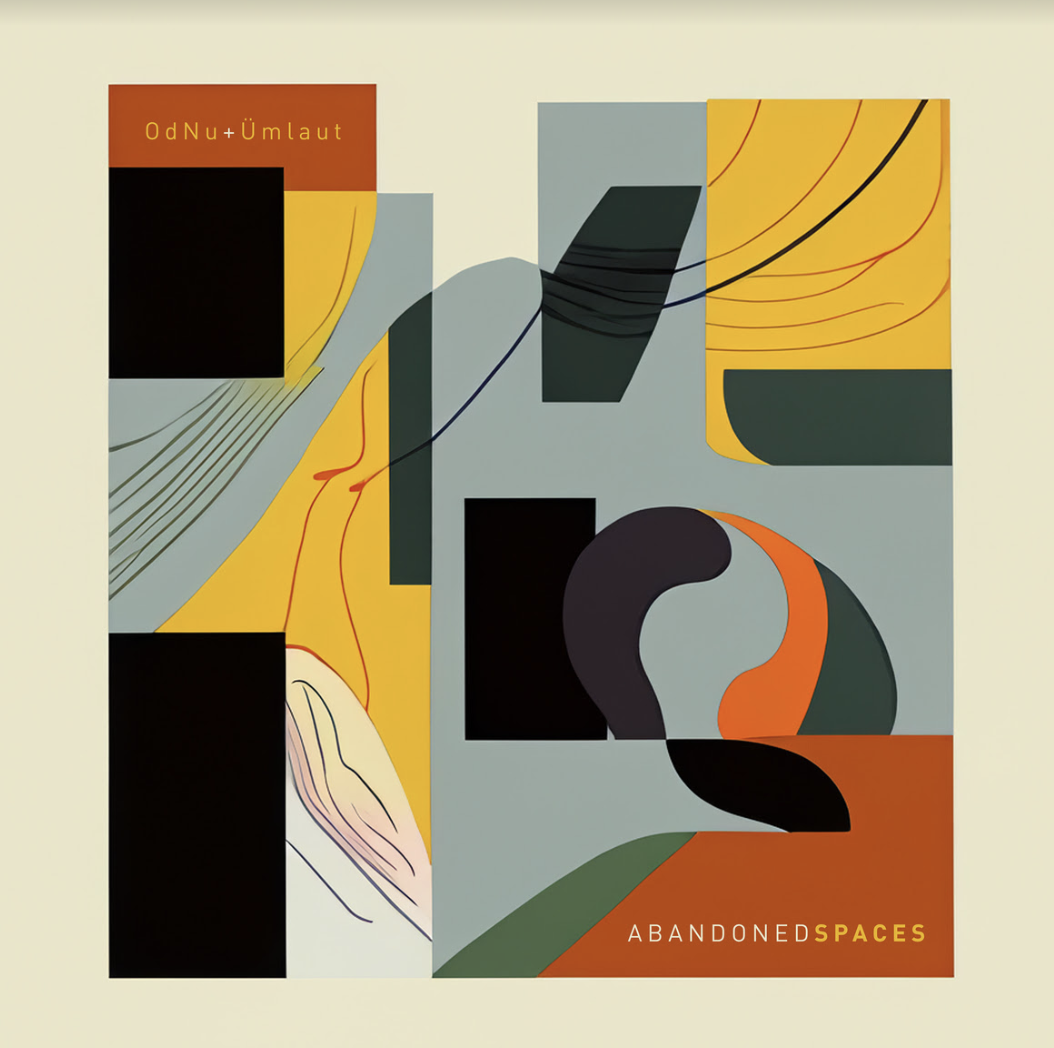
Drawn together and what proves to be a deeply intuitive union for the Audiobulb label, the Buenos Aires-born but NY/Hudson resident Michel Mazza (the OdNu of that partnership) and the US, northern Connecticut countryside dweller Jeff Düngfelder (Ümlaut) form a bond on their reductive process of an album, Abandoned Spaces.
The spaces in that title alongside reference prompts, inspirations motivated by the Japanese term for ‘continuous improvement’, “Kaizen”, and the procrastinated state of weakness of self-will known as the “Akrasia Effect”, are subtly and dreamily wrapped up in a gentle blanket of recollection. The lingering traces of humanity, nature and the cerebral reverberate or attentively sparkle and tinkle as wave after wave of drifty and pristine bulb-like guitar notes hover or linger, and passing drums repetitively add a semblance of rhythm and an empirical and evanescent beat.
The word ‘meticulous’ is used, and that would be right. For this is such a sophisticated collaboration and a near amorphous blending of influences, inspirations and styles: for instance, you can hear an air of Federico Balducci and Myles Cochran in the languorous guitar sculpting and threading, and an essence of jazz on the brushed and sifting, enervated hi-hat pumping drum parts. On the hallucinatory title-track itself there’s a strange touch of Byzantine Velvet Underground, Ash Ra Tempel and Floyd, and on the almost shapeless airy and trance-y ‘Unforeseen Scenes’ a passing influence of Mythos and the progressive – there’s also the first introduction of what sound like hand drums, perhaps congas being both rhythmically padded and in a less, almost non-musical way, flat-handily knocked.
Tracks are given plenty of time to breathe and resonate, to unfurl spells and to open up primal, mirage-like and psyche-concocted soundscapes from the synthesized and played. And although this fits in the ambient electronic fields of demarcation, Abandoned Spaces is so much more – later on in the second half of the eight-track album, the duo express more rhythmic stirrings and even some harsher (though we are not talking caustic, coarse or industrial) elements of mystery, inquiry and uncertainty. Here’s hoping OdNu + Ümlaut continue this collaboration, as this refined partnership proves a winning formula.
Hi, my name is Dominic Valvona and I’m the Founder of the music/culture blog monolithcocktail.com For the last ten years I’ve featured and supported music, musicians and labels we love across genres from around the world that we think you’ll want to know about. No content on the site is paid for or sponsored and we only feature artists we have genuine respect for /love. If you enjoy our reviews (and we often write long, thoughtful ones), found a new artist you admire or if we have featured you or artists you represent and would like to buy us a coffee at https://ko-fi.com/monolithcocktail to say cheers for spreading the word, then that would be much appreciated.
Our Daily Bread 610: BMX Bandits, Flowertown, The Children’s Hour…
February 6, 2024
A ROUNDUP OF NEW MUSIC REVIEWS BY CULT INSTIGATOR OF THE NO-FI, AND SIBLING BAND MEMBER OF THE BORDELLOS, BRIAN SHEA.

___/SINGLES\___
BMX Bandits ‘Time To Get Away’
(Tapete Records)
The sweet and swaying beauty of ‘Time To Get Away’ is a lovely little thing; a pop song that swirls and floats and promises to leave sweet flowering whispers of love in your ear whilst reminding you that the pop song is indeed a magical thing that prods you into believing that Spring is just around the corner.
Daay ‘Follower’
Oh my lord have I been transported back to the 80s and watching a garish edition of Top Of The Pops with rah rah skirts and shiny blouses, with members of the audience dancing whilst trying to get the attention of the cameraman as he attempts to zoom up some poor young ladies skirt. “Follower” by Daay brings this all back with a rather fetching, very 80s sounding pop song – can you imagine if Tubeway Army and Kajagoogoo had joined forces and let loose on the pop public? It may well sound something like this, all whooshing synth and funky pop bass and stabbing guitars: A fine pop single.
bigflower ‘Lighthouse’
The latest free to download from bigflower is upon us; another dark and dense monster beauty of a track, a haunting drone that sucks one in and completely engulfs you, and has you feeling that you’ve just gone 15 rounds with a Xiu Xiu boxset: leaving you battered tired but triumphant. This is a real haunting beauty of a song.
Sleap-e ‘Leave My Bum Alone’
(Bronson Records)
“Leave My Bum Alone” is a fine pop song; beautiful jazzy chords played with a throwaway indie pop punk abandon. It’s catchy. It’s fun. It’s slightly Lo-fi. It’s what pop music is all about.
The Pheromoans ‘Downtown’
(Upset The Rhythm)
I really like this single. It reminds me of both early Go Betweens and Sebadoh, which is fine by me, as I love both those bands. This is one of those short and sweet tracks that leaves you wanting more; so once again I shall make a mental note to keep a listen out for their forthcoming album which I think is forthcoming early March.
The Children’s Hour ‘Dance With Me’
(Drag City)
Charming indie folk jangle that is what this single by The Children’s Hour is: nothing more and nothing less. And that is fine and dandy, for there is always a place for charming indie folk jangle in my life and in lots of other music lovers I suspect. In fact it reminded me of a slightly rawer Sundays – not that it takes much to be rawer than the Sundays as they where hardly the Cramps. So the single by the Children’s Hour is rawer then the Sundays but not the Cramps.
____/ALBUMS\____
Salem Trials ‘View From Another Window’
(Metal Postcard Records)

The Salem Trials are clinically rambunctious. They are never further than being an arms length away from genius. They have their own sound: their own model of post-punk if you like. They take all the usual subjects (The Fall, Wire, Gang Of Four, the Blue Orchids and Subway Army) and mix them with a no wave sound coming from the streets of New York in the late 70s early 80s. They release albums constantly – this is actually the first of 2024 though, and fits in nicely with the army of there previously released albums.
Andy still being the inspired guitarist that he is, riffing like a cross between Keith Richards, Tom Verlaine and Brix Smith with a army of admirers gathering in her Dis guarded nightwear, and Russ still being the nutter on the bus wearing the splatter ballistic cop t-shirt and spitting feathers at the naked chickens queuing up outside to be the first in line for the latest modern contraption while he is creating art at its best out of the fuzzy felt of yesteryears clowns hats. You really have to love the Salem Trials.
Flowertown ‘Tourist Language’
(Paisley Shirt Records)

I love Flowertown, they have a lovely lo-fi romantic rain soaked essence, a perfumed decadence that offers images of tattered dog eared well loved and read books cluttering the shelves of bedsit land: a soundtrack to alternative bars and local music scene adventure. If The JAMC where not two squabbling brothers but two lovelorn lovers they might well sound like Flowertown. There is a soft dynamic between the two members of Flowertown that I find quite beguiling: the whispered vocals, the simple drum machine and hand held percussion, and the softly strummed jangle that occasionally dissolves into the safety and comfort of a thin blanket of feedback. Flowertown are pretty much perfect.
Legless Crabs ‘Golden Chowders’
(Metal Postcard Records)

The Legless Crabs are a rock ‘n’ roll band the same way that the Fall were a rock ‘n’ roll band, and the same way that Pussy Galore were a rock ‘n’ roll band. If the Legless Crabs had released music in the 60s they would have been rediscovered in the 80s and fawned over, and be a constant inclusion on the wonderful garage rock compilations such as Nuggets or Pebbles. Not that The Legless Crabs sound like a 60s garage band, they just carry the same spirit the same anger and tensions. They are unhappy with living in the USA today and they vent their spleen in these marvellously short punk rock vignettes: not punk rock in a 70s kind of cabaret way with store bought ripped jeans and shirts with the ironic God Save The Queen slogan but in a “I’m pissed off and going to spit all the bile and art inherited from the ghost of Roky Erickson” way. The Legless Crabs should be on the cover of Rolling Stone. They are a band that could and should inspire a musical revolution. They are a band that speaks out for all the souls who think themselves a non-entity. In a short: a blast of thrown-away punk rock bliss the Legless Crabs prove there is still anger beauty and revolution in Rock ‘n’ roll.
REVIEW BY DOMINIC VALVONA

Various ‘Wagadu Grooves: The Hypnotic Sound Of Camara 1987-2016’
(Hot Mule)
Shedding light on a rarely told story, the latest showcase compilation from the Paris label Hot Mule unfolds the backstory and “hypnotic” sounds of Gaye Mody Camara’s iconic label; a story that encompasses the West African Soninke diaspora and legacy. The entrepreneur turn label honcho and umbrella for those artists both from the mainland French migrant community and from across swathes of what was the atavistic kingdom of the Soninke ethnic groups’ Wagadu, Camara, through various means and links, helped create a whole industry of music production in Paris during the 80s, 90s and new millennium.
Playing the part of project facilitators Hot Mule now provide the platform for a selection of infectious and languidly cool hypnotic and dipping, bobbing tracks from the Camara back catalogue: all chosen by Gaye himself and with the assistance of Daouda N’diaye, one of A.P.S’ (Association pour la Promotion de la langue et de la culture Soninké) historical members – bringing this project into the sphere of support, with the intention of drawing attention to this community; many of which have suffered under migration laws and been shoved unceremoniously into poor served housing schemes (the liner notes go into far more detail and context than I have room for, but are a highly, illuminating read).
But before we dive in a little background is needed, starting with the Wagadu of that title, by all accounts – even for these times – an opulent kingdom at the centre of the ivory, copper, bronze and gold trade across Western Sahel and beyond: linking to much of the known world a millennia ago. Ruled by the Mande-speaking Soninke ‘ghanas’ (when translated this title means war chiefs or warriors), with its capital in Mauritania, and its people spread across what we now know as Senegal and Mali, this regal palatial kingdom impressed all those who visited it, including the Arab trader Al-Bakri who witnessed its abundance of riches firsthand: ‘Gold was everywhere: even the ghana’s dogs had collars of gold and silver studded with a number of balls of metal’ – thanks to Simon Sebag Montefiore’s The World: A Family History tome for that quote and enlightening information on the subject. He also witnessed the more dreadful practices of human sacrifice; victims intoxicated with fermented drinks buried with their dead ghana and his treasures. But as laid out in the opening to the compilation’s liner notes, the mythical blood ties of this community are linked to the legend of the hydra-like serpent Biida; paid for his protection of prosperity and the providential with the offering of the life of the most beautiful virgin in the kingdom. This practice lasted it is said, right up until the 13th century when one such feted sacrifice, Siya Yatabéré, was thankfully championed by her faithful love interest Maamadi Sehedunxote, who armed with a large sword and astride his stallion cut off the head of this serpent, from which sprouted seven great gold mines and a curse: “With my end begins a period of calamity for you and your people. For seven years, seven months and seven days, not a drop of water will fall on Wagadu and your gold will turn to dust”.
This serpent’s tale is a lesson, we’re told, on the pratfalls of decadence, but also a fable about the start of this community’s decline, as this was the period in which the Soninke people on mass abandoned the ancestors customs and worship for Islam. Well-placed for conversion, the word of Islam spread and indeed started by caravan traders on the Sahel routes, both by the constant engagement with and by the sword, the Soninke joined the Muslim sweep across Africa. Although, according to Montefiore’s account, by the 11th century the self-titled Amir al Muslim (‘Commander of the Muslims’), Abu Bakr had pushed south and broken Wagadu and its lineage of ghanas – I must stress at this point, Ghana is not to be mixed up with what would eventually be the country of Ghana, which is further south and east of this original empire. Bakr was however killed, lucky shot it’s said, by a blind Soninke warrior’s arrow. His nephew, and co-ruler, Yusef Ibn Tashfin finished of the job before famously going on to attempt a conquest of Spain – just his luck that a certain El Cid was his contemporary and rallying point for a staunch defense of the region.
Despite achieving such a status as rulers of a much envied and powerful empire – fielding, it’s believed, an army of 200,000 – they were very much a nomadic people, spreading, as I’ve already mentioned, across Senegal and Mali, but further afield too. Considered a hardworking if reserved body of traders and farmers, they formed a reliable workforce: especially for the French who centuries later would come to colonize much of Western Africa and the Sahel. Moving forward in time, the Soninke proved vital as laborers and soldiers for France and its ambitious programe of conquest. A number were recruited in 1857 to the “tirailleurs Sénégalais” (although many of course weren’t from Senegal at all), the first regiment of black riflemen in the French colonial army. In the 20th century at least 135,000 black Africans fought on European soil in the most brutal campaigns of WWI. Tens of thousands of would later go on to join the Free French Forces and Resistance in WWII. Not the most encouraging and congruous of situations to migrate, but many would settle in mainland France, with different flows back and forth over the ensuing decades; right up, that is, until the more restrictive and prohibited changes in the mid 70s, when this easy travel between Africa and France was made much harder. Before this time, it would be mainly the men folk of the Soninke that made the journey to find prospects and employment abroad, keeping their earnings saved up, and either returning home at intervals or sending it back to their families. A shift in migration policy would mean that now the whole family would repatriate to France, bringing in far more women and children to the mix.
Music would be the bond however, as pioneers such as Gaye Mody Camara, who lends his name to the successful label he set up in the French capital during the later 70s, built up their own little business empires amongst the diaspora communities. The story of his ascendance on the music scene is laid out in the liner notes, and far too lengthy to outline here in full. But during the course his stewardship Gaye would rub shoulders with various iconic figures (such as the internationally renowned Guinean musician and producer Bonkana Maïga and owner of the Syllart Records label and the main distributor of tapes at the time, Ibrahima Sylla) on the scene as he moved between originally buying releases from others to resale in his own chain of establishments to producing and setting up his own cassette tape production facilities.
In-house and a label in its own right, the Camara imprint broke new Soninke acts and artists from across a wide range of countries in the Western African region. And as you will hear, fanned a four decade period of innovation and trends whilst still maintaining the essential essence and roots of tradition. Each and everyone represented on this collection has a story to tell about how they were discovered or how they came to Gaye’s attention; from the migrant housing centre to hearsay, the word-of-mouth and the gentlemen who insisted that Gaye listen to his wife’s cassette tape recordings and take charge of her career. The latter was the husband of Halime Kissima Touré, who went on to have a ‘fruitful’ collaboration with the label; so popular and integral to the story as to have three (if you manage to buy the digital bonus track edition) tracks showcased. A kind of younger Aby Ngana Diop desert queen of pop and admonition, Halime has a powerful, but not loud, voice that carries over a sauntering 80s style marimba-like rhythm and fluty synth on the cool-as-you-like ‘Koolo Fune’; scorns those parents who’d interfere in the upbringing of their peers’ children to a more Tuareg sand dunes dipping caravan trial rhythm, and vaporous synth, on ‘Alla Da Fo Ña’; and rather fatefully, to a laidback funky-lite clean groove, reminds us all, in accordance with the values of Islam, that ‘all life will one day come to an end’ on ‘Duna’.
Another of the many incredibly female voiced artists on this compilation, the gifted Malian songstress Babáni Kone comes from a lineage of Griot storyteller-musicians. To a languid elliptic-like hypnotizing groove, she evokes both Mariam Amadou and Fatim Diabte Haute Gamme, soaring and lilting across another of those glassy bulb notes marimba bobbles, on the knocked and rim clattered ‘Soyeba’.
If not the lead singer, there’s usually a chorus of female harmonies accompanying the various male compatriots of the Soninke ancestry; especially the opening phaser-effected and threaded kora (I think it’s a kora anyway), smoke machine synthesized, 90s R&B-lite ‘Kori’. The unifying themed, effortlessly hip languorous funk-pop number finds the thankful (giving a nod to his mentor Camara in the lyrics) Mamadou Tangoudia on warbled-vibrato duties, backed by an Ljadau Sisters-style chorus of soothed female accomplices. Tangoudia was apparently introduced to his champion by his landlady in the Mauritanian capital of Nouakchott; ‘seduced’ no less by his singing skills, Camara financed a trip to the Malian capital of Bamako to record the burgeoning star’s eponymous album in 2007; and this is the ‘stand-out’ track from it (so good that the label has added the instrumental version as a bonus to the collection; a great way to fully take in and absorb the sophisticated and just cool production). ‘Kori’ is a brilliant shoehorn into the modern era Soninke sound and production; one that subtly merges a familiar African soundtrack with the trends and various available innovations of the times; from French new wave disco (I’d argue that Ami Traoré’s exotic menagerie of whistles and tweets spotted discothèque-light ‘Tenedo’ fits the bill in that regard) to synth-pop and reggae (Diobe Fode’s trumpet blared, Acayouman-esque ocean view slink ‘Yexu’). The old country is very much still a major part of the source and rhythm, with Naïny Diabaté’s soulful ‘Sankoy Djeli’ sounding like there’s nimble-fingered Seckou Keita on the track soloing to an R&B production; and the guitar (if it is indeed that; again could be a kora or lute) on Mah Kouyaté’s ‘Soso’ sounds not a million miles away from a bendy, turned-over and spindly Lobi Traoré solo – imagine if Niles Rodgers had camped down in Bamako instead of Studio 54.
The sound is at all times amazing, and the voices commanding; a mix of those inherited Griot roots, the club, pop and caravan trial. And yes, most importantly, Wagadu does have the eponymous ‘grooves’ of the title: the ‘hypnotic’ bit too.
Hot Mule and partners have produced an essential introductory showcase/revitalisation of Soninke sounds: the very epitome of ‘cool’ and enlightenment. And with it, shed that metaphorical light on a story that needs shouting about. I can’t really fault the collection. And so recommend you make room for it, add to your listening list, and better still, purchase a copy ahead of the rush: I’m anticipating it will sell out fast.
Hi, my name is Dominic Valvona and I’m the Founder of the music/culture blog monolithcocktail.com For the last ten years I’ve featured and supported music, musicians and labels we love across genres from around the world that we think you’ll want to know about. No content on the site is paid for or sponsored and we only feature artists we have genuine respect for /love. If you enjoy our reviews (and we often write long, thoughtful ones), found a new artist you admire or if we have featured you or artists you represent and would like to buy us a coffee at https://ko-fi.com/monolithcocktail to say cheers for spreading the word, then that would be much appreciated.
 Monolith Cocktail Blog