The Monthly Playlist For August 2024
August 30, 2024
CHOICE MUSIC FROM THE LAST MONTH ON THE MONOLITH COCKTAIL: TEAM EFFORT
The Monthly Revue for August 2024: Thirty-eight choice tracks chosen by Dominic Valvona, Matt ‘Rap Control’ Oliver and Brian ‘Bordello’ Shea from the last month. Features a real shake up and mix of tracks we’ve both covered in our review columns and articles. We’ve also added a smattering of tracks that we either didn’t get the room to feature or missed at the time. Covering many bases, expect to hear and discover new sounds, new artists. Consider this playlist the blog’s very own ideal radio show: no chatter, no gaps, no cosy nepotism. An Oasis free zone.
TrAcKliSt
Zack Clarke ‘Alternativefacts’
Leif Maine/Jackson Mathod/J. Scienide ‘Volte-Face’
OldBoy Rhymes/Mr. Lif/Sage Francis ‘American Pyramids’
boycalledcrow ‘magic medicine’
Dead Players ‘Gasoline Sazerac’
J Littles & Kong The Artisan ‘Do The Job’
Flat Worms ‘Diver’
Fast Execution ‘Total Bitch’
The Mining Co. ‘Time Wasted’
Tucker Zimmerman/Big Thief/Iiji/Twain ‘Burial At Sea’
Alessandra Leao & Sapopemba ‘Exu Ajuo’
Randy Mason ‘Wallet Phone Keys’
L.I.F.E. Long/Noam Chopski/Elohem Star ‘Cross Ponds’
Jacob Wick Ensemble ‘Rough And Ready’
Silas J. Dirge ‘Running From Myself’
Kayla Silverman ‘Maybe’
Hohnen Ford ‘Another Lifetime’
Sans Soucis ‘Brave’
Sweeney ‘School Life’
Chinese American Bear ‘Take Me To Beijing’
Tony Jay ‘Doubtfully Yours’
The Soundcarriers ‘Sonya’s Lament’
Henna Emilia Hietamaki ‘Maan alle’
Drew Mulholland & Garden Gate ‘Tumulus’
Tetsuo ii ‘Heart of the Oak’
Xqui & Agnieszka Iwanek ‘Echoes of Serenity 10b’
Poeji ‘Whoo’
Camille Baziadoly ‘Fading Pressure’
Petrolio ‘La Fine Della Linea Retta’
Fiorella 16 & Asteroide ‘PRIMAvera’
Michele Bokanowski ‘Andante’
Jan Esbra ‘Returning’
Nicole Mitchell & Ballake Sissoko ‘Kanu’
Jasik Ft. Frankie Jax No Mad ‘Atako (Pass The Champagne)’ Apollo Brown & CRIMEAPPLE ‘Coke with Ice’
Verb T/Malek Winter/BVA ‘Rubble’
Ivan the Tolerable ‘Floating Palm’
Pauli Lyytinen ‘Lehto II’
THE MONTHLY DIGEST OF ACCUMULATED NEW MUSIC; THE SOCIAL INTER-GENERATIONAL/ECLECTIC AND ANNIVERSARY ALBUMS CELEBRATING PLAYLIST; AND CHOICE PIECES FROM THE ARCHIVES.

_____/THE NEW
Ainon ‘Within’
(We Jazz) 6th September 2024
A pastoral suite from the Helsinki-residing “avant-garde chamber jazz” Ainon ensemble, Within is an expressive rites and abstracted conveyance of nature, the environment and the elements. This is the quartet’s second album for the reputable Finnish label We Jazz, following on from their 2020 Drought debut.
Enhancing and honing their craft live in recent years, they’ve managed to both beautifully and exploratively match various jazz forms and influences with the classical, the instruments of saxophone with woodwind and strings. Led by cellist Aino Juutilainen and flanked in a constant movement on all sides, at all angles, by Merimaija Aalto on violin, viola and lofty diaphanous airy voice duties, Milo Linnovaara on saxophone, clarinet and flute, and Joonas Leppänen (who you might recognize from fellow We Jazz travellers Alder Ego) on drums and various percussive tools, apparatus, the Ainon ensemble find inspiration from the beautiful avant-garde taciturn and textual jazz cellist recordings of Abdul Wadud and the often cool West Coast free improvisations of the much underappreciated swing veteran with a romantic sentimental lean, Jimmy Giuffre.
Amongst the undergrowth and fauna, and through the “komorebi” Japanese ideal of sunlight filtered through the leaves of a tree, both of those influences permeate every corner of the ensemble’s musicianship. Expanding further, the melancholic pain of Eastern European classical music, the more pleasing suffused gravity and evergreen pastorals of Vaughn Williams and the woodland magic, the animal clops of Prokofiev are bonded with the waddled and geese-like pecked avian impersonating, resonating, reedy and more fluttered sax, clarinet and flute of Roscoe Mitchell, Anthony Braxton and Jeremy Steig, and the percussion of the Art Ensemble Of Chicago (I’m sure there’s a typewriter dinging away in there somewhere; just one of the many hidden percussive sounds and evocations that don’t seem to have come from an actual instrument).
Bendy and dreamy, detuned and mournful, aspects of the landscape, whether imagined or real, are conveyed in an abstract manner, yet evoke a sprung suite of outstanding beauty and sensory elements. The ensemble match the avant-garde, with the blues (for there is a subtle touch of it to be found throughout), freeform jazz and the classical to find a perfect balance and harmony, yet stretch the perimeters.
Jan Esbra ‘Suspended In A Breath’
(Spirituals) 30th August 2024
A Colombian in Brooklyn, the guitarist, composer and improviser Jan Esbra amorphously merges worlds and a sense of release on his third solo album Suspended In A Breath.
Finding an “emotional outlet” during a time of inner most reflection, Esbra’s daily practice of personal growth was translated into an ambient language of prompted feels, near lunar and unspoiled vague geography and cloud gazing. Fed through the multi-purpose box of tricks known as the Organelle (a toy-like looking combination of synth, sampler, drum machine, sequencer, effects unit and looper), guitar lines and hidden musical sources are transduced and transformed into vapours and the biomorphic.
Within a Venn diagram of early electronic experimentation, the ambient and new age, there’s an echo of Laraaji, Boards Of Canada, Eno, Terry Riley, Beaumont Hannant and, as referenced in the PR notes, Manuel Göttsching’s iconic and highly influential E2-E4 – an album that set a catalyst and template, informing early techno through such progenitors of the form as Carl Craig, who famously remixed Göttsching’s signature.
Over near misty primal coasts and swamps, where old ancestral creatures roam in a lost world, glassy bulb-shaped notes dance and crystalized forms take shape. Various passages of liquid, of water, can be heard in and outside the resonating and gleamed metal tank, feeding softened blossoms as the stars barely shine from above, through a thin gauze of cloud cover. In a liminal zone between the synthesized and organic the merest application of a filter, an enervated loop iteration, satellite data broadcast, loom or oscillation can set a contemplative mood; can prompt thoughts on such subjects as the artificial and human; and can conjure up imaginative locations.
A equilibrium of a kind is found, as Esbra morphs his source material and compositions into something that’s as calming as it is searching and probing. Each subsequent listen reveals more subtle layers, more melodic touches; a slow release of inventiveness.
David Vickers & Sergio Mariani_MRN ‘New Dawn’
(Audiobulb Records) 24th August 2024
A placeable union between the Gloucestershire bred but Seoul-based composer, guitarist, producer Daniel Vickers and Argentine but living in the USA for the past thirty-odd years composer and producer Sergio Mariani (appearing here with the attached underscore _MRN tag), the New Dawn release evokes fourth world visions of ambient America’s interior, its borderlands with Mexico and night time desert vistas.
The most subtle of mirage bendy, tremolo-like trembles and waning arching guitar, obscured field recordings, synthesized glassy gleams and undulations, and toy twinkled xylophone shape moments of time, the sense of a vague panorama and the elements. It’s like setting up a transformed sonic documentation of a quiet, unspoiled environment; the devices picking up the passing of time in a particular landscape.
There’s no getting away from the Americana campfire feels and desert mysticism contours of Ry Cooder, and yet, the tine-like picking, the sound of softened metallic textured rhythms and water carrier, jug-poured percussion denote vague Southeast Asian influences: even Japanese environment music.
Following the day, from dawn until a final night time scene back home, with the shower running in the background as mellow, melted ambience stirs up subtle collected thoughts, Vickers and Mariani describe and emote normally unrecorded daily routines and places for a peaceable, empirical Daniel Lanois-style meditation. New Dawn is a successful collaboration between two artists articulating a sense of “latent” and “natural” with adroit understatement.
Aidan Lochrin ‘Ritual Incantation’
(Submarine Broadcasting Company)
Through unidentified coastal currents and waves and the transformed field recordings taken at both Queens Park in Glasgow’s South Side and Kelvingrove Park in the city’s West End, Aidan Lochrin conveys an abstract, emotive and ghostly veiled sense of the ephemeral on a new album of ambient, minimalist techno and electronic psychogeography and meditative atmospheres.
Written during the year’s “dark winter” months – the Scottish summer thus far will have done little to abate the winter blues – in a period of aimless “ennui”, Ritual Incantation deals with faded memories and past lives through transportive vapours, hidden, or at least barely recognisable, instruments, tools, the captured activities and movements of those in a gauzy background scene and machinery (sounding at times like Popol Vuh’s debut album generators and chambers, and at one point, like fluttered strips of paper being blown about by an air conditioning unit), and spells of Iberian-reminiscent classical guitar and tubular percussion.
Mirage, hallucinations and the near paranormal, each suite is like a Fortean shipping forecast, or ebbing movement of either soothing shadow-gazing or the uneasy. And amongst the filaments, fizzles and fuzzy static, tangible stirrings of Basic Channel, Forest Swords and Mills emerge until once more enveloped or dissipating into ether.
Lochrin is supported by the Glaswegian artist Jude Norton-Smith on the city parks prompted ‘In The Ruins Of No Specific Place’, the Dunfermline composer Somer on the opening seascape of ringing, bobbing buoys and seagull hovering ‘Fragments’, and Christopher Manning on the Tbilisi twinned with Glasgow transmission ‘Mercy IV’. I’m not entirely sure, but on the latter it sounds like there’s a shivered, pained and mournfully bowed violin, viola or cello at work that’s slightly reminiscent of Alison Cotton or perhaps Simon McCorry.
There’s much scope as Lochrin ties together all the various threads of sonic and music from his oeuvre – the Glasgow-based artist mentions both the “noises” and “harsher” sounds of The Death Of Arcadia and the softer synths of that album’s sister Chalkydri in an artist’s statement. And so you find the most minimalist ambient touches and shades of kosmische sharing space with what can only be described as hauntology Baroque on the submerged light bearing antiquarian ‘Divine Sunlight’ – imagine a supernatural transmogrification of Handel by Wendy Carlos or Belbury Poly.
In coastal and abandoned settings, in machine workshops and more alien scenes, Lochrin conjures up the erasure and the half-recalled, the traces of what once existed or what or who passed through this way, with an ephemeral statement of subtle engineering, reification and meditative spiritual pastoralism.
Michèle Bokanowski ‘Cirque’
(Kythibong) 23rd August 2024
It’s a seldom-shared fact, or piece of trivia, but way back in the late 18th century ex-cavalryman and attributed progenitor of the modern circus, Philip Astley, worked out the optimum diameter (42 feet) needed for balancing atop of a horse as it galloped round the circus ring – it’s all to do with centrifugal forces; an inch either way and you’d probably end up being thrown into the audience.
With that mathematical nugget of circus lore in mind, let me bring the Nantes-based label Kythibong’s re-release special of Michèle Bokanowski’s 1995 Cirque LP to your attention; an experimental suite of movements that transmogrified, looped, cut-up and transported the French composer’s various field recordings of the circus – both inside and out of the big top – during a five-year period between 1988 and 1993. All the fun of the fair, the wild excitement and applause of the circus theatrics, clowning buffoonery, high wire suspense was passed through Michèle’s music concrete practice to create juxtapositions of shade and light, fun and the unsettled: imagine Degas circus impressions merging with Ensor’s more disturbing, often macabre, carnival imagines to the serialism composed spectacle of the recognizable and surreal.
Before we move on, a little context and history is needed. For much of her life, living and working out of the French capital, Michèle’s formative years were spent in Cannes: born into a household of music and writing. Although originally imbued by and studying the classical, at the age of twenty-two she ventured into the experimental world of music concrete, inspired by the teachings, writings of such luminaries of the unbounded form as Pierre Schaeffer and René Leibowitz. It was through the Polish and French composer Leibowitz that she was opened up to the iconic progenitor of serialism, Arnold Schönberg.
Michèle would go on to serve a two-year internship in the study of sound synthesis, under the direction of Schaeffer at the famous ORTF Research Department in the early 70s. At a similar time, the burgeoning composer would also study music computing at the Faculty of Vincennes. Periods in the company of Ellane Rodigue led to a pathway in electronic music. But the CV is expansive, with concert intended compositions (including Cirque) appearing alongside pieces for theatre, dance productions and cinema. Collaborations are also numerous; from working with Catheringe Dasté to the choreographers Hideyuki Yano, Marceline Lartigue and Bernardo Montet, and her film director husband Patrick Bokanowski – namely on the score for his art-house film The Angel.
And so, with all those reference points the Cirque album sets an avant-garde mood. The central or recurring feature of which, across a number of classical musical entitled speeds and feels (“Allegro”, “Andante” and “Scherzo”) is a reverberated saw dust kicking horse that gallops into view, emerging out of a loop: vanishing back into an eerie darkness once it has passed us by on a lap of the ring. From the darkness, the shadows, an audience of delighted children and adults shower the performers with applause, whistles and near operatic shrills. But those same sounds are gradually changed and transformed into loops and iterations more maniacal and strange: like a hiccupping cuckoo, a hallucinatory hoot, and in one case, near orgasmic.
A snare roll announces an impressive acrobatic feat to climatic cheers, but a second phase morphs everything into a freak show hall of mirrors. In a whirl, a cylindrical lantern show, real sounds and the generated coalesce in an unsettling and dizzying experiment of magic and illusion; a removed vision of the familiar reactions of an audience caught out in an entirely different kind of sonic experiment. The circus as you’ve never heard it before, but just about recognisable, takes on whole “other” properties under Michèle’s inventive compositional hand; setting the colourful spectacle of the circus in a unique timeless realm.
__/THE SOCIAL PLAYLIST VOLUME 89

Anniversary choices this month are in the form of tracks from Another Side Of Bob Dylan (a staggering 60 years old this month), Portishead’s decade defining trip-hop masterpiece, the Dummy LP, a throwdown from the horrorcore Gravediggaz power team (the Prince Paul, RZA, Frukwan, Poetic supergroup with countless additional pop-ups of hip-hop’s finest) and their 6 Feet Deep LP, and Merchandise’s After The End album from 2014. Re-released, resurrected if you like in 2014, and although it isn’t officially an anniversary, I’ve chosen to include a cut from ZED’s, aka Bernard Szajner, Visions Of Dune LP – my original review from 2014 can be found in the Archive section below.
From across eras, borders and genres the rest of this month’s playlist features recentish additions from Khalab (a remix by Admiral of ‘Drone Ra’) and Lewis Spybey’s Dead Voices On Air project (‘Gray Bay Play Watch’), another revived soundtrack fill from the cult Italian composer Piero Umiliani (‘Basso Nuovo’), and inter-generational tracks from Neuschwanstein, Mad Flava, Koko, Halasan Bazar, Creation Rebel, Renaldo & The Loaf and more…
TRACKLIST:
Koko ‘Grama Graphtos’
Rättö ja Lehtisalo ‘Viisi ystävää’
Pipes You See, Pipes You Don’t ‘Karaoke Free’
Shelagh McDonald ‘Look Over The Hill And Far Away’
Blackburn & Snow ‘Yes Today’
Bob Dylan ‘Black Crow Blues’
Halasan Bazar ‘Live Without Love’
Merchandise ‘Green Lady’
Cee-Rock ‘Linden Boulze’
Gravediggaz ‘Constant Elevation’
Mad Flava ‘From The Ground Unda’
Khalab ‘Drone Ra (Admiral Remix)’
Roland Haynes ‘Kirstn’s Place’
Neuschwanstein ‘Intruders And The Punishment’
Bernard Szajner ‘Harkonnen’
Linear Movement ‘Hydrogens’
Tom Dissevelt, Kid Baltan ‘Vibration’
John Tchicai, Cadentia Nova Danica ‘Fodringsmontage’
Brian Davison’s Every Which Way ‘The Light’
Creation Rebel ‘Conspiring’
Portishead ‘Biscuit’
Dead Voices On Air ‘Gray Bay Play Watch’
Piero Umiliani ‘Basso Nuovo’
K.K’s No. 2 Band ‘Ninim Saa Ka Akyi’
Brahim Izri ‘A Wid Ur N Ehric’
Dschinn ‘I’m In Love’
Donatella Bardi ‘Perche Dovrei Credere’
Renaldo & The Loaf ‘Hambu Hodo’
The Molesters ‘I Am’
Hagar The Womb ‘Dressed To Kill’
___/ARCHIVES

From the vast archives of the Monolith Cocktail, two choice picks from August of 2014; the first, Tampa Bay’s lost boys Merchandise and their album After The End, and the second, Andy Votel’s resurrected release of Bernard Szajner’s 1979 homage to Dune, Visions of Dune.
Merchandise ‘After The End’
(Mute) August 2014
Moping around the darkened swamplands and back lots of a southern sunshine state in existential, switchblade, angst, Tampa Bay’s lost boys once again shift closer to a subtler, rounded and cerebral pop ascetic.
Despite all the talk of their DIY punk and hardcore roots – living and recording together in communal bliss – Merchandise have always flirted with a Howard Deuth and John Hughes vision of 80s adolescence. On their latest transmission from the margins they effortlessly slip between the intellectual aloof alternative rock – the Athens, Georgia scene in particular – of that decade’s college radio stations, and the ray ban donned pop of more recent times as they peruse an imaginary teen doom film set.
Since their inaugural baptism with the mostly applauded 2012 album, Children Of Desire (depending who you listen to, their first album proper), the band have pulled a few surprises from their kit bag – the skulking panoramic moiety of ‘Begging For Your Life/In The City Light’, from the beginning of the year, sounded like Chet Baker teaming up with Gene Vincent at a Velvet Underground happening Boho -, making it difficult to either venerate or write them-off: prone to procrastination and sulky indulgence at times.
Their last hurrah, 2013’s Total Nite, marked the end of another cycle, as the group left their last label to sign with 4AD (home to Scott Walker, tUnE-yArDs and Deerhunter), expanding their ranks in the process and enlisting outside help from producer Gareth Jones. Presumably Jones was picked for his work with the lords of morose, Depeche Mode (moving to the iconic Hansa Berlin studio and recording the bands Bowie mirrored trilogy of Construction Time Again, Some Great Reward and Black Celebration), and for notable duties carried out on albums by Interpol, These New Puritans and, the lighter and disarming Grizzly Bear.
With a far more patient, effortless and breezy demeanour, those maladies remain less intensive, drawn-out from a mostly melodic envelope of multiple guitar tracks. A case in point is the rattlesnake tambourine accented and Gothic Talk Talk piano spanked title track, appearing as the penultimate, frayed emotional downer. At the opposite end of the spectrum, Merchandise adopts – and the jury’s out on this one – a palm tree patterned short-sleeved wearing Mott The Hopple guise for the kooky ‘awaiting on a call’ love sick phaser-beamed ‘Telephone’. A most peculiar, almost old-fashioned vernacular roll back, that once again recalls some hazy 80s high school drama (more Rumble Fish than Ferris Bueller).
But the pulse mainlines a sophisticated accentuated blend of The Smiths (languidly lost in a protestation merry-go-round on ‘Looking Glass Waltz’), the Psychedelic Furs (on the richly melodic, interplaying acoustic and electric guitar, pretty in pink, ‘Enemy’ and broody heart pranged ‘True Monuments’) and early REM. There’s even a quasi-bass line and twisted lick from Bowie’s Scary Monsters period on the group’s most dynamic and catchy standalone, ‘Little Killer’.
As pop becomes the default setting, even for many alternative bands, Merchandise lend it a certain introspective swoon and quality; they may lounge around in moody reflection, but they know how to write a meandering congruous melody.
Not quite as adventurous as their label mates, Deerhunter, or even Bradford Cox’s – though both frontmen share the same surname, their vocal delivery couldn’t be more different, the Merch’s Carson Cox curl-lipped with a subtle southern drawl, sounding like the Tampa Springsteen – solo Atlas Sound side project, the two bands have returned to a harmonic abstract form of rock’n’roll.
Regulated to a point, toned down and spaced evenly throughout, After The End demands repeated plays and attention, before it unveils its multilayers of nuanced and deftly touched craftsmanship. Far from a leap of faith for the ever evolving and experimental band, the move isn’t as drastic or bombastic as we’ve perhaps been led to believe; the hype and numerous interviews and band quotes harking towards a dramatic plunge into the unknown. Like many before them, that progression, both musically and ambitiously from DIY to, potentially, populism, without fatally compromising the spark that set you apart in the first place, has been on this occasion a successful one.
ZED aka Bernard Szajner ‘Visions Of Dune’
(InFiné Music) August 2014
Sealed with an excitable descriptive, cosmic dreamy, forward and minimix teaser by DJ and renowned anthropologist of the most odd and obscure music from across the far flung reaches of the globe (and sometimes, so out there as to sound from another dimension), Andy Votel, a case is enthusiastically made for the resurrection of the French artist, inventor and composer Bernard Szajner’s 1979 homage to Dune.
Esteemed by Votel as a ‘Gallic-magnetic conceptual synth-pop classic’, Szajner’s manipulated Oberheim sequencer led flights of fantasy was essentially a work in progress, its creator self-taught, learning on the job so-to-speak. Under the neon-flickered, Boorman-esque, mystique of ZED, Szajner’s visionary series of loops were produced in a short timeframe: reliant to a point on borrowing equipment from friends, originally requiring an Oberheim for eight days along with a Revox two-track tape recorder, and when that had to go back or had served its purpose, was replaced with an Akai four-track. Transforming his intuitive sense of exploration and experimentation further by introducing the prog-acid-rock journeyman drummer Clément Bailly and Magma’s vocalist Kluas Blasquiz to the mix, the minimalistic Krautrock style synths and vaporised sizzling sonics moved into the realms of space rock and futuristic jazz.
Spending his formative years both designing and performing lights show spectaculars for The Who, Gong and the already mentioned Magma, the conceptual artists Szajner couldn’t help but absorb and channel some of their spirit, though he would also find a certain affinity with the cerebral ambient soundscapes of Brian Eno too.
Remastered by the adroit specialist Rashad Becker from the original tapes (of course), Visions Of Dune conceptually occupies the space between the lunatic Chilean auteur Alejandro Jodorowsky’s epic, if messy, unrealised film version and David Lynch’s mid-eighties space operatic/esoteric soap opera effort.
Of course, we only have one of these soundtracks, though Jodorowsky’s surrealistic magnum opus envisioned a soundtrack that would feature bands such as Pink Floyd. Lynch chose, rather bizarrely, Toto to compose his soundtrack; compensating by offering Eno a solitary and suitably soul-searching ambient ‘Prophecy Theme’ to break up the agonized pomp rock and classicism.
Szajner’s epic was sourced from Frank Herbert’s Dune trilogy of sci-fi novels: a metaphoric futuristic paradigm of Lawrence Of Arabia’s instigated Arab revolt, the Bible and Koran, Zen Buddhism, the fight for resources (oil replaced by the made-up spice mélange, though the sanctity and scarcity of water is echoed in the stories central and most important location, the desert planet of Arrakis) and the all too obligatory intrigues of competing Empires. A subtle amorphous theme is created for the stories most important characters – be it the House Atreides who spawn a messianic liberator or the miscreant maleficent led House Harkonnen -, rituals and notable plot lines, whilst a repeating desert theme permeates throughout.
An almost uninterrupted soundtrack, each passage bleeding into the other, only demarcated by the track titles themselves, the main electro gliding, whooshing magnetic charged foundations signpost Tangerine Dreams own nebular voyages – especially their acid-trance elegiac Phaedra. The opening quartet of ‘Dune’, ‘Bashar’, ‘Thufir Hawat’ and ‘Sardauker’ flow from ponderous exploration via the retro/futuristic generator pulses of the Forbidden Planet powered soundscape, used to represent the foreboding Imperial Guard, to the staccato style rolling drum breaks that kick-in as we’re introduced to the calculative super brain Mentat.
By the end of the first of two acts the mood alters, growing ever more ominous as the spice world of Arrakis’s monstrous sized ‘Shaî Hulud’, sand worms, prompt a squirming and looming otherworldly response. The fateful ‘Duke’ is accorded a shadowy, almost ghostly eulogy style augur of impending doom; his eventual fate alluded to by a hidden snarling beastly presence.
Act two continues with wave after wave of algorithms and arpeggiator patterns, tubular chimed rings but adds menacing alien breaths (Blasquiz’s distorted and masked vocals no doubt) and Goblin style horror show prog.
Tamed and enervated by a flood of similar sequencer-manipulated soundtracks, both before and after Visions Of Dune, it beggars belief that Szajner’s label, Pathé Marconi/EMI, were worried that two of these tracks (the previously mentioned ‘Duke’ and ‘Spice’), were ‘too futuristic’; a crazy reaction, even for in the 70s. Initially left off the original pressing, they’re both included for the first time in this new repackaged, adorned with ‘reimagined’ artwork by Barcelona-based designer Arnau Pi, classic.
Obviously resonating with the recent attention and re-examined Jodowsky project and arriving, perhaps a little too soon, before the 50th anniversary of Herbert’s novel in 2015, Visions Of Dune is certainly a more favorable soundtrack than anything that has gone on before or since, faithful to the wondrous, and sometimes trippy, mystery and evil present in the interstellar epic expansive plot without the bombast and over-indulged operatics.
Hi, my name is Dominic Valvona and I’m the Founder of the music/culture blog monolithcocktail.com For the last ten years I’ve featured and supported music, musicians and labels we love across genres from around the world that we think you’ll want to know about. No content on the site is paid for or sponsored and we only feature artists we have genuine respect for /love. If you enjoy our reviews (and we often write long, thoughtful ones), found a new artist you admire or if we have featured you or artists you represent and would like to buy us a coffee at https://ko-fi.com/monolithcocktail to say cheers for spreading the word, then that would be much appreciated.
CONVERSATION PIECE/ANNIVERSARY FROM OUR FRIENDS AT Kalporz
AUTHORED BY PAOLO BARDELLI/SAMUEL CONFICONI/RAFFAELE CONCOLLATO
TRANSLATED BY DOMINIC VALVONA
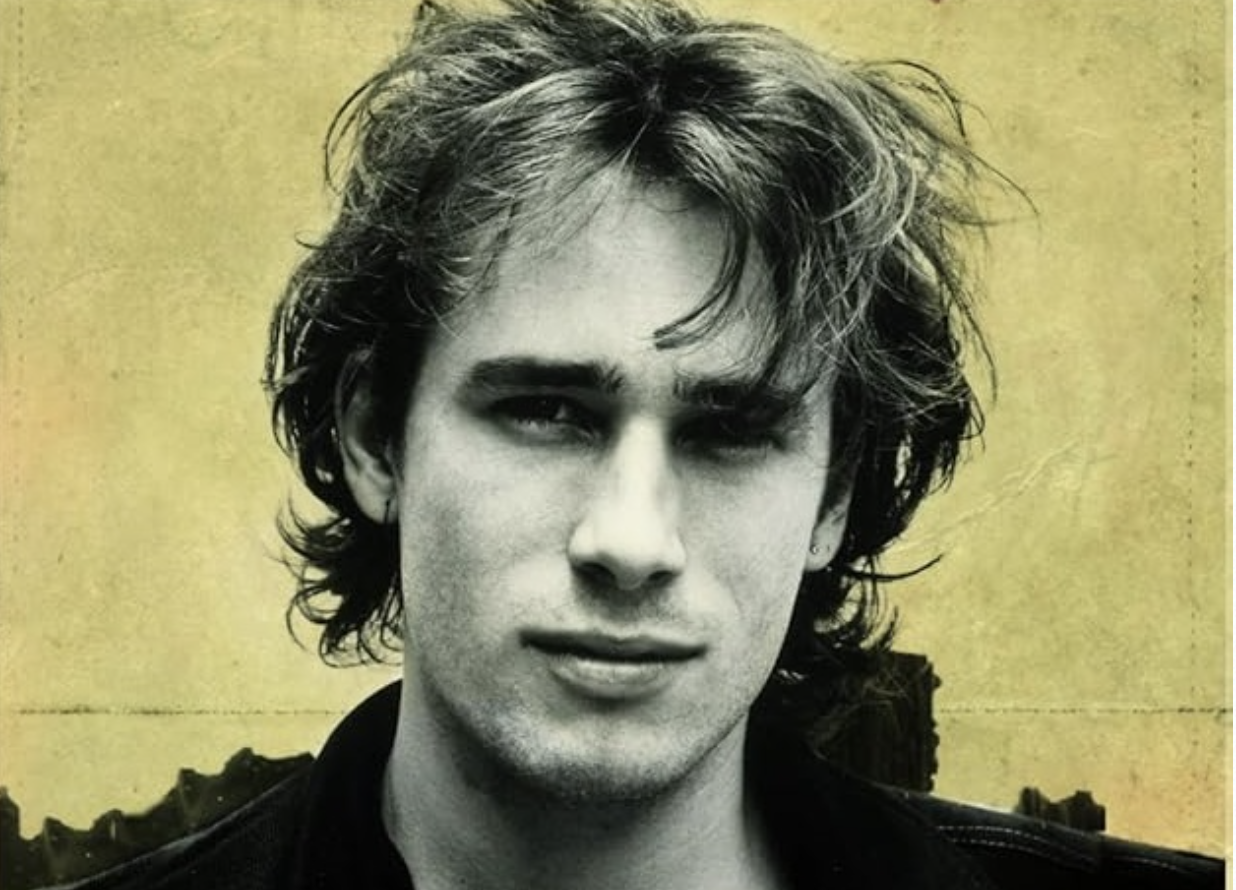
Continuing our successful collaboration and synergy with the leading Italian music publication Kalporz , the Monolith Cocktail shares and translates reviews, interviews and other bits from our respective sites each month. This month the Kalporz editorial team explore the legacy of the late and great tortured troubadour Jeff Buckley, thirty years after the release of his decade defining album Grace.
Jeff Buckley’s “Grace” turns 30 on August 15 [1]. Instead of making a complete analysis of that album ,which we have already done song by song for the 20th anniversary , this time we asked ourselves what remains – today – of Jeff Buckley’s artistic legacy. These are the contributions of Paolo Bardelli, Samuele Conficoni and Raffaele Concollato to the question.
Let’s immediately address the legacy that pisses us off the most: that Jeff Buckley has been transhumed into the collective imagination of talent shows because at least one in three approaches his version of “Hallelujah” , thus reaching us for a song that wasn’t even written by him, is truly a crime. But, as we know, we shouldn’t worry about talent shows and we shouldn’t even consider them, so let’s focus the answer on much more important areas. Like whether there are artists today who can build on his legacy, and whether his memory and importance are well understood today. The fact that there are few artists who demonstrate a talent comparable to Jeff demonstrates his uniqueness: among the many, only that loose cannon that is Tamino would come to mind , but it would be nice to identify someone who has the same fire of passion for music and not someone who is similar on an artistic level.
As for his importance today, we know that music cannot be recomposed and evaluated only with numbers, but sometimes they can help: this month on Spotify Buckley has totalled 3.9 million listeners, against for example Lou Reed’s 5.5 million. If we want to consider that Reed has produced much more, it would seem that there is still a lot of attention on Jeff Buckley, and the streaming numbers should represent the new generations more than the old ones (who have the possibility of physical listening). It is therefore difficult to answer the question we asked ourselves, whether Jeff Buckley is still influential or not, as there are contrasting elements. There is one certainty though: we must stop looking at the new releases that will continue from now on with material pulled out of the drawers, because Jeff Buckley’s legacy is clear with only “Grace” and “Sketches…”, in addition – if you really want to -there are the first official live performances (“Live at Sin-é”, “Mystery White Boy”, “Live A L’Olympia”) and the outtakes “Songs To No One” with Gary Lucas. Last year “Gods And Monsters” was released which is indecent in terms of sound quality, it would be worthy of immediate denunciation.
Personally, to feel close to him, I have been using a tactic for some time: following an Instagram page that only posts photos of Jeff Buckley (among the many I point out this one ) which creates an alienating effect: on the one hand, at first glance, Jeff might seem always present, but it is a fleeting sensation, which disappears immediately to leave room for the awareness of the melancholy of no longer having him with us. We who wait every day for another artist like him (and like Kurt Cobain) with the same desire for redemption, for emotion, for beauty, for anger, to express himself, to unite, to tell, to communicate, to make ourselves better by receiving his notes . That is his legacy.
(Paul Bardelli)
The greatness and relevance of Jeff Buckley, like that of the many artists who have left us too soon, lies not only in what he wrote, said and published, but also in what he could have written , said and published if he had not passed away. “Grace” is a traditional rock album and at the same time seminal and innovative, and this is perhaps its most extraordinary quality and its most surprising merit, which make it a milestone even thirty years after its publication. Without messing up the pages and the history of the novel of American rock which in the meantime continued to be written, adjusted and annotated, Jeff Buckley was able to give his contribution and make that genre his own by emptying it and making it a primitive shell to be filled; to be able to arrive at “Grace” he immersed it in a noble and refined musical tradition whose fil rouge was able to make the jazzy chanson of Nina Simone , the acid rock of Led Zeppelin , the poetic and visionary songwriting of Bob Dylan and Leonard Cohen and even classical music coexist. Where a cacophonous and ungovernable chaos could have arisen, a grace has instead sprouted that which seemed impossible to model from those ingredients, but which in the end succeeded.

It is precisely this gigantic merit of his, which has been able to influence artists of the caliber of Radiohead, Lana del Rey, Adele, Mitski and Phoebe Bridgers , just to name a few, and which has made him recognized as a big name in music by sacred monsters such as Bob Dylan himself, David Bowie and Morrissey, which makes his first and only studio album a room whose doors fold in on themselves and always lead back to that same place: the revolutions that started from there will be captured and in all respects written by others, others who have visited, lived and studied that room deeply. We already know where the others have gone and, as far as the future is concerned, we will know. Where he would have gone, on the other hand, we will never know, even if the never-completed recordings for what would have been his second studio album give us some clues. Unfortunately for us, however, that is a dead-end track, and here we return to the incipit of our discussion: it is as if two paths emerged from “Grace”, one that we have tested – and that, after thirty years, we are still testing – with our hands, and one that we will never know and that perhaps, in a parallel universe, is still being completed. But “this is not for our eyes”.
(Samuel Conficoni)
Despite his short career, Jeff Buckley’s influence on the music of the last few decades is profound. The unclassifiable genre he created, a mix of folk, rock, blues and world music, has left an indelible mark on many artists. His enormous talent in the use of his voice, capable of conveying the delicate vulnerability that inspired a generation of singers and pushed them to explore their vocal abilities in an unconventional way, is proof that he was not just ‘one of many’.
Just think of his cover of Leonard Cohen‘s “Hallelujah”, which became so iconic that it became a point of reference for subsequent reinterpretations. His expressiveness led to a return to authenticity and emotional honesty that left a mark on Thom Yorke, who often cited him as one of his main influences, both for his vocal style and for having pushed him to think outside the box. Damien Rice , whose direct and intimate style he took, also carries his legacy. Of course, Damien then completed the “masterpiece” with poetic lyrics, but the affinities with Jeff’s style are evident. Another artist inspired by Buckley was Justin Vernon (Bon Iver) , where the introspection and songwriting leave no doubts.
From a strictly musical point of view, Buckley can be found in the British band Alt-J, who with their experimental and eclectic sound echo the fusion of different genres mentioned above. Finally, we cannot fail to mention Daughter, with the delicate and desperate voice of Elena Tonra and the haunting melodies of the group, where Buckley’s spirit echoes in almost every song.
Others, perhaps even indirectly or lateral, have inherited Jeff Buckley’s legacy, ensuring him an artistic legacy that places him among the most influential figures in modern music.
(Raffaele Concollato)
Our Daily Bread 623: Tetsüo ii ‘Menagerie’
August 16, 2024
ALBUM REVIEW/ANDREW C. KIDD
Tetsüo ii ‘Menagerie’
Available Now
You have emerged from a deep dive with eyes still blurry from the salt water. Silhouetted figures stand on a smoke-brimmed horizon. Rather than focusing on the outlines of the indistinct entities that come slowly into view, observe their shadows that coalesce into transient forms. Embrace the illusory. Meet the unperceivable as Tetsüo ii do. Sonically (and thematically), Dave Duval and Scott Saad reside in these foggy realms. Their musical introversions are often brief, but when listened to sequentially, each piece becomes part of a greater whole.
There are hallmarks of the duos previous works on Menagerie. Every semibreve, every cadence, every rest note is deliberate and measured. They continue to locate discreet spaces within the phonic interstitium. The synth patches are still carefully woven into a complex, three-dimensional quilt. The listener experiences synaesthesia on Summer’s Veil. Sustained pads play out on Getting Late. A lithe, piccolo-high melody aerates the beatless and breathy Pale Blue. The step-like, almost cinematic pattern that emerges on Heart of the Oak yields to a fixed tonality that cuts right through the piece, severing it in two. This funnelled distortion in the opening act serves to test the listener.
The experimentation continues on Whose Roots are Stars in the Human Mind (the title presumably inspired by the guttered glistening of the half-painted, half-photographic patchwork of images of Yggdrasill by avant-gardist filmmaker, Stan Brakhage). Here, Morton Subotnick meets LFO-circa-1995. There are: circling analogue sounds; minor key pseudo-melodia; glistening silver-like sounds. Akin to the Brakhage footage, I start to envisage static shots of sun glitter bursting out between the clouds.
The musical theme on Menagerie is not a melodious one. And neither is it confluent. One or two keyed synth notes sink and echo and play out in a repetitive refrain; each one is inkier than the last. The demonic horn on Molten Synapse (another nod to Brakhage) are future sirens. These are wavelengths that serve to warn. Perhaps they are the final sounds that enter the last auditory meatus there ever was. A similarly low-frequency waveband emerges between the swathes of CS-80-sounding pads that key a mournful melody on the title track. A strange electro-woodwind solo whistles. A whirling, grey-noise outro serves as an intermission.
What noises do clouds make when they move? Is there a symphonic kinesia? The undercurrent that rumbles and whirrs and distorts on Hungry Skies proffers one theory. The synth-work is arpeggiated, contrapuntal even. There is a reprise of Whose Roots are Stars in the Human Mind. Clangs and analogue splashes are perhaps indicative of precipitation. Where do these raindrops fall? The organ-inspired synths of Terra carefully bellow the longest melody of the album. And like organs, they expand and breathe. From the mid-way point on this piece, there is sonic diffidence. I imagine the droplets being absorbed into the earth, saturating the seeds that take root. In some respects, this mirrors the structure of the opening piece Heart of the Oak; yet here, in the deeper reaches of the album, there is no reprise of the organ that came before it. We are left in a cold place – a lightless space. Or perhaps we are simply deaf to the symphony of soil-concealed germination.
Coarse crackles like thunder introduce the The Swimmer. There is a bright, almost chromatic opening that edges upwards. The first sprouts peek out and gain height. Their stalks extend like limbs to touch an uncertain world. Bassy undertones provide rhythmic stability. Each stalk is anchored and made unmovable in their firmly-rooted positions. A deep synth note continues to play. The oscillating broken sounds – again, a little like a siren – would normally serve as a background; yet, at this point in the denouement of the piece, I concentrate on it almost entirely. Here, the listener is reminded that the fruits of the growing plants will eventually be threatened. As the wizened voice on the title track stated earlier in the album: “Even the most prolific species cannot be controlled by the sheer variety of life in the bush…and the variety of appetites they possess.”
Duval and Saad pen concept works. Menagerie is to be considered their ‘deep earth’ album, somewhat contrasting their previous ‘deep space’ releases (Tetsüo ii, released by Dagger Forest, and !!, self released, both in October 2023). Menagerie ends with Summer’s Veil (Reprise) which is a fragmented version of its former self. Nature seems to prosper here, but only temporarily. The light melody soon disappears into the umbra of the deep earth.
A WORLD OF SONIC/MUSICAL DISCOVERIES AND POSSIBILITIES REVIEWED BY DOMINIC VALVONA
(Unless stated otherwise, all releases are available now)
Credit: Hanne Kaunicnik
Poeji ‘Nant’
(Squama)
In shrouded chambers polygenesis cultures and roots cross paths and open up an amorphous portal to a unique world of redolent Asian percussion and Mongolian “urtyn duu” vocal soundings.
Making good on their cryptically coordinate-like coded 031921 5.24 5.53 EP from 2022, German drummer extraordinaire Simon Popp and the Ulaanbaatar born vocalist Enkhjargal Erkhembayar (shortened to Enji) have combined their individual disciplines and scope of influences to venture even further into uncharted territory.
For his part, the Bavarian Popp uses an extensive apparatus of hand drums and worldly sourced percussion to conjure up an atmosphere of both atonal and rhythmic (sometimes verging on a break or two) West Africa, Tibet, gamelan Indonesia and Japan. This in turn evokes a transmogrified vague sense of the avant-garde, of Kabuki theatre, of Shinto and Buddhist mysticism and mystery.
Popp’s collaborative foil Enji is a scion of the old Mongolian tradition of the Long song, a form of singing that emphasis and extends each syllable of text for long stretches of time. It’s said that a song with only ten actual words can last hours. Strong on the symbolism of the Mongolians much dependable horse, the long song form can be philosophical, religious, romantic or celebratory. Now, in a different century, Enji channels this heritage to voice, utter, accent, assonant, woo, and like breathing onto a cold glassy surface, exhales the diaphanous, gauzy, ached and comforting – the truly mysterious hummed ‘Buuwein Duu’ sounds like a lullaby.
Although much of the wording is linked to those roots, there’s an ambiguity to much of the carrying style vocals. For instance, the duo’s appellation of Poeji was chosen because it can be translated into various languages: meaning “sing” in Slovenian and roughly “poetry” in Japanese. The album title, Nant, is itself old Welsh in derivation, and can be translated as both “stream” and “valley”.
A fourth world dialect is achieved; a communication that needs no prior knowledge or understanding as the meaning is all in the delivery, emotion the cadence and largely extemporized feels and mood of the moment.
Described as working in the vernacular of post-dub and the downtemp, Nant reminded me in parts of the “tropical concrete” of the Commando Vanessa label pairing of Valentina Mag aletti and Marlene Riberio, Hatis Noit, Steve Reich and Werner “Zappi” Diermaier’s various drumming experiments as part of the faUSt duo with fellow original Faustian Jean Harve-Pèron. It is a unique conjuring of tones, textures, atmospheres, the avant-garde, the spontaneous (wherever the mood takes them) and the esoteric that won’t scare the horses. Instead, it sets a wispy, shrouded course to ventures into new realms of improvised communication; a bridging of cultures that reaches into new spheres of worldliness and the realms of new dimensions.
Raymond Antrobus & Evelyn Glennie ‘Another Noise’
30th August 2024
So tangible and effective is the clever – if taking a leap into the unknown and by chance – union between the two accomplished deaf artisans of their artistic forms that each pin-like sharp spike, each metallic shave, rattle and atmospheric undulation that builds around the unflinching candid delivery really hits hard and marks: leaves an audible impression.
The musicality, the rhythm is all in the poet Raymond Antrobus’ voice and often put-upon and sometimes self-doubting, cadence. It can’t all be put down to his deafness, but it offers something unique – although the William Blake professor of the album’s final bittersweet sign-off was both condescending and embittered-sounding in his succinct dismissal of Antrobus. I guess what I’m trying to say, is that sure the deafness is crucial, and that it opens up new or different ways of creating and circumnavigating the loss of this sense, but there is so very much more to both partners in this venture’s art form and genius that transcends the deaf condition.
Framed as it is, this inaugural collaboration between the poet and the virtuoso percussionist/composer Evelyn Glennie pushes the boundaries of poetry and sound; causing us to reevaluate our own perceptions. And with the equally acclaimed – and no stranger to this blog, as probably its most prolific featured artist/producer – in-situ producer Ian Brennan on board there’s an authenticity to what develops from the readings and mostly improvised percussive soundscapes.
Both partners on this evocative project can hardly be said to have a condition, a disability, or suffer for it. Glennie especially, through her old teacher Ron Forbes during her formative years, learnt to hear sound through different parts of her body: a physical response and channeling of sound that has helped and shaped the star percussionist to become one of the world’s greatest living musicians.
Unencumbered, the poetic language conveys, describes that unique relationship with sound, music and noise. The opening tubular shaken and spindled ‘The Noise’, which features the wooing, near ethereal sweet hummed undulations of guest artist Precious Perez, is the most obvious example of this. Rather importantly, the classically trained but eclectic Latin singer/songwriter/educator Perez, who is herself blind, is the president of the RAMPD.org charity fighting for disabled performers in the arts and more access. But it is her evocative voice that is called upon to offer something approaching a subtle wooing-like hum.
Giving each poetry performance a shiver of avant-garde, concrete and abstract sound art (even near Dadaist and Fluxus), Glennie (who had no prior knowledge of the material she was contextualizing or sounding) uses an apparatus of spokes, chains, tubes, bells and metallic-sounding brushes to articulate but also dramatically jolt and jar the alien, the unknown, but also the disturbing. She can also emphasis a state of isolation very well too; her foil’s themes often touching on a feeling of dislocation, not only because of his own deafness but because of his mixed ethnic roots: a feeling of the other you could say; of feeling adrift of both his English and Caribbean heritage.
Antrobus is unflinching on the topic of ancestral Black trauma and legacy. ‘Horror Scene As Black English Royal’ is a vivid example of slavery and that heritage that the Black community feels it can never leave behind or unshackle; prompted, I take it, by the whole Meghan Markle debacle and her fleeting acceptance into English royalty before the deluge of perceived outsider, and skin colour muddied the calm waters of stiff upper lipped etiquette in the White establishment. Glennie scores this poem with an atmosphere of horror and hurt; the sound of what could be an animalistic growl and pain striking out from the torture of slavery. ‘Ode To My Hair’ meanwhile, deals with the kinks and prejudice of a said Black “throw”, with Antrobus underlying dislocation once more emphasized as Black enough to be the victim of racism, but not Black enough for some in the Black community itself. There’s also a secondary theme of reconnection, using a haircut to talk about his relationship with his father. There are a few poems like this, where the touching relationship to a loved one, a child and even a cat is poignantly open and candid without resorting to the saccharine or to platitudes.
Talking of animals, birds, with all their various connotations, feature at various points on the album; cleverly linked to the learning of signing and to the very rhythm of city life on the visceral and incredible ‘Resonance’. I love some of the descriptions on this reading, especially the lyrically language used to describe their movement, like an “uncharted astronomy”, and the way Antrobus describes city birds as a whole different species to their country cousins.
Affectionate, personal as much as near dystopian, unnerving and hurting, Another noise is unlike anything you may have heard or felt in some time. For both artists sound and speech is near tangible; something you can almost touch. A sensory experiment, this collaboration does much to push, probe and explore perceptions of language, timbre, performance and delivery. This album is nothing less than a genuine work of artistic achievement from two of the UK’s most important artists.
The Mining Co. ‘Classic Monsters’
(PinDrop Records) 9th August 2024
Continuing to mine his childhood the London-based singer-songwriter Michael Gallagher once again produces a songbook of throwbacks to his formative adventures as a kid growing up in Donegal in Ireland.
His previous album almanac, Gum Card, touched upon a silly fleeting dabble with the occult, but this latest record (his sixth so far) is filled with childhood memories of hammy and more video nasty style supernatural characters, alongside a whole host of “weirdos”, “freaks” and “stoners”.
Once more back in his childhood home, frightened to turn the lights off, checking for Christopher Lee’s Dracula and the Wolfman under his bed, yet daring himself to keep watching those Hammer house of horror b-movies, Salem’s Lot and more bloody shockers, Gallagher links an almost lost innocence with a lifetime of travails, cathartic obsessions and searching desires.
A recurring metaphor, analogy and theme of blood runs throughout Classic Monsters, whether it’s the Top Trumps ghoulish kind of youth, or the more mature, adult-themed kind found on the taking-stock, trying not to run away, ‘Rabbit Blood’. The life force is both a reminder of immortality and the source of adolescent frights.
As always Gallagher’s lyrics are layered with references and meaning, and stretch the loose concept to open-up about anxieties, growing up and both the bliss and pains of love; the alum finale, ‘Planetarium’, sets a near ethereal astrological scene from the said title’s stargazer observatory, as two star-crossed in stoned awe and wonder look up to the celestial heavens to a retro-lunar, Theremin-like voiced and ballad style piano soundtrack. Songs like that evoke Gallagher’s sci-fi passions, and alternative Dark Star songbook score fixations (see the brilliant Phenomenology album). But even though there’s a smattering of space dust, and no matter what, a musical signature that runs throughout all his work – enervated cosmic cowboy troubadour, soft rock and evocations of the Eels, The Thrills, Josh T Pearson, Rezo and The Flaming Lips – Gallagher has changed his set-up a little.
Recording back in the Spanish studio environment that has served him so well, and once again working with the musician and producer Paco Loco (credits and highlights include working with the outstanding Josephine Foster, the Jayhawks’ Gary Louris and The Sadies), Gallagher is now also backed by the Los Jaguares de la Bahía band, who bring subtle psychedelic country and alternative rock influences to the sound. The cover art, especially the lettering style, signals The Flying Burrito Brothers or The Byrds – both of which you may detect – but there’s an almost distinct CAN-style drum on the opening sparse and wisped ‘Failure’, and a touch of Bonnie Prince Billy, Phosphorescent and Fleet Foxes.
Step forward Pablo Erra on bass, Patri Espejo on piano, Esteban Perler on drums and Loco on synths and ambient effects, for they manage to seamlessly evoke Bill Callahan one minute and Lou Reed the next. And yet also sound like Joe Jackson teaming up with Nick Lowe and the Boomtown Rats – to be honest, that last reference is largely down to the piano sound. They make the vampiric and howling themed ‘Blood Suckers’ sound disarmingly like a Scarlet’s Well fairytale of sweet dreams, soothed from beneath a baby’s calming mobile hanging over the cot. Weirdly (or not) both the band and Gallagher reminded me of Elbow and David Gray on the very 90s upbeat tempo’d ‘Killer Sun’.
It’s a winning combination that expands Gallagher’s musical scope without altering his signature style and voice, feel and intimacy. I’ve said it before about Phenomenology, but I really do think this is now his best album to date. And I’m still astounded by the lack of support for his music or exposure, as Gallagher’s The Mining Co. vehicle is worthy of praise, airplay and attention. Hopefully it will be sixth album lucky for the Irishman.
Jessica Ackerley ‘All Of The Colours Are Singing’
(AKP Recordings) 16th August 2024
Gifted guitarist, composer, bandleader and soloist Jessica Ackerley adds even more colour (sometimes vivid and striking, at other times, more pastel or muted) to their pliable sonic/musical palette. Seamlessly crossing over into art – inspired in part by the arid desert outdoor symbolic and metaphorical flowerings and abstracted landscapes of Georgia O’ Keefe – the now Honolulu-based musician turns markings and sketches into both untethered performative compositions that traverse the avant-garde, jazz, blues, experimental rock, R&B and the virtuoso. O’ Keefe’s “to see takes time” wisdom is used almost like a catalyst for the album’s articulation and more energetic ways of seeing.
Recorded in the unceded territory of the indigenous Kanaka Maoli, in the Mānoa Valley (one of Hawai’i’s venerated mythological creation story landscapes) All Of The Colours Are Singing filters an inspiring geography, sense of time and place whilst also channeling Ackerley’s synesthesia – hence that title.
With a rich CV of performances (from John Zorn’s The Stone to The Metropolitan Museum of Art) and projects behind them (from their extensive catalogue of eclectic work with such notable musicians as Marc Edwards, Tyshwan Sorey and Patrick Shiroshi), it’s no wonder that Ackerley manages to attract a talented pool of collaborators or foils. Step forward Walter Stinson on upright bass, Aaron Edgcomb on drums and Concetta Abbata on alternating violin and viola. Boundaries are crossed and blurred with this ensemble on an album of varying beauty and wilder improvisations; an album in which subtle sensibilities are comfortably followed by challenging free expressions of fusion and freeform progressive jazz. If there was an underlying genre or influence sound wise, then it must be jazz in its many forms, with echoes of the Sonny Sharrock Band and Philip Catherine, but also shades of the noirish, the smooth and more impressively quickly played and bent-out-of-shape kinds. Edgcomb’s drums can add to the jazzy feel, but also sieves, brushes and sweeps across the snare in a more tactile fashion – almost like applying brush strokes at times. It might just be me, but he reminded me of Guru Guru’s Mani Neumeier on the changeable in tempo and style, jazz-fusion ‘The Dots Are The Connection’.
But then there’s the near sweetly hummed and dreamy intro to that O’ Keefe borrowed title quote, and then what sounds like Tuareg desert or Songhoy blues guitar on the first part of the ‘Conclusion: In Four Micro Parts’ finale – this soon develops into a bout of buzzy intense Yonatan Gat experimental physical rock. That use of strings obviously steers the music away from the jazz sound towards the classical and chamber. Abbato, subtly reinforcing or emphasising the moments of grief, mourning and thoughtfulness, can both articulate dew being shaken off fluttered shaken feathers and stretch, strain and fray the violin and viola in a more avant-garde fashion – reminding me of Alison Cotton, Alex Stölze and, although she is a cellist, Anne Müller. Ackerley uses the guitar like an artist’s brush stroke, whether it is in a frenzy or blur of abstract or rapid markings and swishes, or more placed and calming. Invoking such refined and experimental bedfellows as Joe Pass, Marisa Anderson, Bill Orcutt, Chuck Johnson and the Gunn-Truscinski Duo, they walk a unique personalised pathway between medias and art forms to showcase and push at the boundaries of artful guitar-led performance and inner emotional workings.
Drew Mulholland & Garden Gate ‘Night Blooming Flowers’
(Subexotic Records) 23rd August 2024

Serial offenders of occult sounds and more nostalgic early analogue and library music, the transatlantic sonic conjuring sparring partners Drew Mulholland and Timmi Meskers have coalesced their individual disciplines for a suitably atmospheric esoteric soundtrack of retro horror novelties and pastoral chamber folkloric magik.
By candelabra light Meskers’ Garden Gate alter ego is called upon to bring a certain ethereal apparitional siren allure, enchantment and vintage, and bowed classical heightened spine-tingles and spooks to Mulholland’s BBC Radiophonics Workshop and his very own Mount Vernon Arts Lab project style electronics.
The University of Glasgow lecturer and composer-in-residence and his American “Baroque psych/horror savant” foil don’t do things by halves, having written a mini synopsis storyline of a kind for the protagonist of this horticultural paranormal and dream-realism tale. The title more or less tells you all you need to know: that is, a search and waylaid adventure to find the rarest of flowers, the botanist’s precious treasure, that only bloom’s at night. In between the start of a expedition and the final unveiling of this sought-after flower, there’s many a misstep along the pathway, as the dark arts merges with pagan and idyllic folklore to drag our main character into various spellbound jeopardies, fairytales and hallucinations.
Imbibed and inspired by a number of sources, one of Meskers most notable is the late British historian Emma Wilby’s Cunning Folk And Familiar Spirits: Shamanistic Visionary Traditions In Early Modern British Witchcraft And Magic tome; the central propound argument of which is that early modern beliefs and witchcraft were influenced by a substratum of shamanistic beliefs found in pockets of Europe – of which they are many detractors. You can throw in the Tarot and what musically sounds like to me the cult British horror soundtracks of the Amicus and Tigon studios, Dennis Wheatley, Isobel Gowdrie and a whole woodland of sprites, fairies and mythical beasts.
Altogether, with both partners’ range of influences, the soundtrack shivers, creeps and in both a supernatural and merrily manner merges the otherworldly analogue-sounding atmospheres of Belbury Poly, The Focus Group, Pye Corner Audio and Bibio with the pastoral willowy tapestries and bewitching spells of Tristram Cary, Marc Wilkinson, James Bernard, Harry Robinson and Sproatly Smith.
From dramatic stiletto piano and meanderings amongst the grass snake foliage and Piltdown Man decorated hilltops, to more hallucinatory passages of enticement, each piece of music conjures up a scene or chapter in a larger idiosyncratic tale from the pages of the Fortean Times, King James’s Daemonologie or pulp supernatural fiction. As Hauntology projects go, Night Blooming Flowers is a retro-styled success of subtle but effective storytelling, mystery and cult references; a soundtrack that now needs a film to go with it.
Asteroide & Fiorella16 ‘Suni A Través Del Espejo’
Downtime ‘Guts’ (Cruel Nature Records)
Through the various sonic peregrinations, noises and protestations of their extensive roster, the Northumberland diy label Cruel Nature travels between the hard bitten dystopias of life in a modern fractured state to more fantastical climes out in the expanses of space. Keeping up a steady prolific schedule each month, the label covers everything from the psychedelic to riled punk and societal angst.
Just dipping into the July haul of releases, I’ve picked out two albums from the mysteriously cosmic and krautrock imbibed camps; the Peruvian pairing of the Asteroide duo and Fiorella16’s Suni A Través Del Espejo and Downtime’s seemingly uninterrupted one-take Guts jam.
The former channels the psychogeography (both atavistic and otherworldly) of the Andean Altiplano, which spans Boliva, Chile and Peru. A natural phenomenon, the Altiplano (from the Colonial Spanish for “high plain”) is the most extensive high plateau on the planet outside of Tibet. It encompasses a whole high altitude giddy biosphere of pristine environments: from the famous Salar de Uyuni salt plains to Lake Titicaca – one of the main hubs along its banks, Puno, is where one half of this collaboration, the indy rock siblings Asteroide, hail from. “Through the looking glass” (as that album title translates), alongside sonic foil José María Málaga, aka Fiorella16, they magic up a highly mysterious communion with the elements and the forms, the ghosts and the extraterrestrial bodies that flicker in and out of the consciousness; that appear like dizzy, lack of oxygen and air, hallucinations and mirages.
A biomorphic score created in-situ, the properties of water, the season of Spring and a hilltop suddenly sound like the cosmic whirrs of UFOs, alien transmissions and caustic stirrings from the belly of volcanic chambers. A mixture of Steve Gunn and The Howard Hughes Suite-like post-rock Americana and harder Sunn O))) and Gunter Schickert guitar and synthesised atmospherics, generators, oscillations, satellites and Throbbing Gristle coarseness build up a near esoteric, primal communication with the plateau’s guardians. The finale, ‘PRIMAvera’, with its ‘Jennifer’ style reverberated throbbing wobbled bass, sulfur waves and data exchanges, finds the collaborative partners finally beamed-up via the tractor beam to some subterranean alien dimension.
A little bit different, though there are some krautrock-style overlaps, the “power duo” Downtime orbit head music space on their latest just-let-the-tape-record-whatever-emerges-from-an-intense-heavy-jam-like-session. Over forty minutes of edited thrashing, kraut/heavy/acid/doom rock, the participants in this expulsion of energy channel everything from the Boredoms, Acid Mothers Temple, Zeni Geva, Hawkwind, Ash Ra Tempel and Boris.
In a cosmic vacuum, near virtuoso fuzzy and scuzzy soloing and ripping phaser and flange guitar and tempo-changing beaten, crashed, squalling drums and acid galactic effects create a heavy meta(l) space rock behemoth of interstellar proportions.
A mere whiff of what to expect from this label’s catalogue, both albums are worthy of your credit and spare change.
Zack Clarke ‘Plunge’
(Orenda)
The critically hailed pianist-composer, New York improvised jazz scene stalwart, and bandleader Zack Clarke finds ever more inventive and omnivorous ways to push both the jazz form and his studied instrument on his latest album for the Orenda label.
“Building” (to paraphrase the album notes) bridges between groups of people, and cleverly merging the intelligent dance music movements with cosmic-funk-jazz, hip-hop breaks, prog and both classical and avant-garde forms, Clarke takes the proverbial “plunge” and resurfaces with a sometimes fun and at other times intense serialism of either spasmodic and stuttering or free-flowing discombobulating performative fusions.
Using modern production methods and a whole kit of tech, Clarke takes the idea of jazz in its earliest incarnation as dance music and runs with it; aping the minimalist techno and electronic rhythmic off-kilter mayhem of such iconic labels as Warp through an effects transforming removed version of the piano.
Dashed, chopped and cross-handed sophisticated modal runs and the piano’s very guts (its inner wiry stringy workings played at times almost like a splayed mallet(ed) chiming dulcimer) work with varied combinations of breakbeats, clattered, rattled, splashing and electronic padded drums and what sounds like 303 or 808 electro synths across a generous sixteen tracks.
At times all this sounds like Keith Jarrett corrupted by Drukqs era Aphex Twin; or like µ-Ziq fucking around with zappy-futuristic Herbie Hancock; or even Zappa jamming with Chick Corea. But then certain compositions (if that’s the appropriate word) reminded me of The Bad Plus, of Radiohead In Rainbows, of Mantronix, Squarepusher and Andrew Spackman’s Sad Man alter ego. It might only be me, but album finale ‘ANTHEM’ sounds like Abdullah Ibrahim transduced through d’n’b and breakbeat filters.
There’s a lot to unpick, to absorb, but weirdly enough Clarke’s inventive intentions are successfully accomplished as he bridges the avant-garde and jazz with a spectrum of fusions and experimental technology to produce a unique vision of dance music for a new century.
___/+ THESE RECOMMENDATIONS IN BRIEF
Any regular readers will know that I pride myself in writing more in depth purview-style reviews with a wider context. This means I naturally take more time and effort. Unfortunately, this also means that I can only ever scratch the surface of the thousands of releases both the blog and I get sent each month. As a compromise of sorts, I’ve chosen to now include a really briefly written roundup of releases, all of which really do deserve far more space and context. But these are recommendations, a little extra to check out of you are in the mood or inclined to discover more.
Poppy H ‘Good Hiding’
ALBUM (Adventurous Music)
In a constant artistic flux, the idiosyncratic trick noise maker and musical statements composer Poppy H always manages to embody a whole new sound with each release and project. The latest is no different for being different in that regard. A Good Hiding (a reference to taking a good beating or kicking, or just literally a “good hiding place”) is both a studied and beautifully evocative chamber haunting of removed folk and traditional ideas, windy funnelled atmospheres, low key padded bobbling and spinning electronics, voices and whispers from the air, ghostly classical piano and suffused ambient drama. To truly articulate the elegance, near Gothic mystery and dreaminess of it all would need far more words and depth: a real long form reading. But hopefully this will be enough to whet the appetite, as this is a very good album indeed.
Cumsleg Borenail ‘Broadmoor Time’
TRACK/VIDEO
Prolific instigator of phantasmagoria electronica Cumsleg Borenail is at it again with another fucked-up nightmare of sonic disturbance. As you may have rightly guessed from the title, this ominous, scary score channels the abusive, harrowing pained psychogeography of the infamous high-security psychiatric hospital in Berkshire, England. A right rogue’s gallery of inmates has occupied this facility over the decades; some of the UK’s very worst and unhinged offenders and murderers. And you can read much into the reasons behind the subject matter, the mental health care aspects and treatment especially, but it is a very haunted soundtrack of the recognisable made otherworldly, scaly and metallic.
Pauli Lyytinen ‘Lehto/Korpi’
ALBUM (We Jazz) 30th August 2024
Conjuring up a whole eco system of forest canopy menageries and lush greenness, the Finnish saxophonist Pauli Lyytinen sets out a “deep forest grove” biosphere of fertile heavenly auras and bird-like reedy probes on his solo debut for the We Jazz label.
A moiety of Don Cherry, both 60s hippy idealistic eco-friendly and more divine Biblical MGM sound studios soundtracks, cylindrical Fourth World blasts, and hints of Stetson and Brötzmann, Lyytinen’s saxophone positively sings on the wing whilst opening a blessed environment. Mentioned in the references, and on the nose, our fluttered, feathery saxophonist has Evan Parker’s own bird songs down to a tee. An unassuming charmer and yet full of experiment and organic untethered freedoms, Lehto/Korpi is far too good an album to be missed or overlooked.
Hi, my name is Dominic Valvona and I’m the Founder of the music/culture blog monolithcocktail.com For the last ten years I’ve featured and supported music, musicians and labels we love across genres from around the world that we think you’ll want to know about. No content on the site is paid for or sponsored and we only feature artists we have genuine respect for /love. If you enjoy our reviews (and we often write long, thoughtful ones), found a new artist you admire or if we have featured you or artists you represent and would like to buy us a coffee at https://ko-fi.com/monolithcocktail to say cheers for spreading the word, then that would be much appreciated.
BRIAN ‘BORDELLO’ SHEA’S REVIEW SECOND REVIEWS ROUNDUP OF MAY – INSTANT REACTIONS.

Credit: Eleanor Petry
Chinese American Bear ‘Yummy Yummy Yummy’
SINGLE
There is something quite psychotically wonderful about this throwaway piece of indie pop fluff, a charming jangly little song about the joys of eating noodle soup. And why on earth not find pleasure in the simple small things, and the bigger problems in life do not seem so bad.
Silas J Dirge ‘Swan Songs’
ALBUM
I normally give music that’s described in the press release in the release as Americana a miss, like I do music that is described as Shoegaze or if Joy Division is mentioned as an influence. Not that I don’t like all three. I just normally don’t like the artist that is normally described as such by the unimaginative PR company.
But there is always an exception to the rule, and this is it. Swan Songs is rather fine in a dark rootsy way: I can imagine Silas J Dirge wearing a train driver’s hat and chewing a matchstick in the side of his mouth and calling ladies ma’am; I can picture him sat in a field next to a blazing fire singing songs to whoever will listen, and singing songs of darkness and lost love with a profound knowledge of both. I like Silas J Dirge and his deep knowledge of the darkness of life.
Ex Norwegian ‘Sketch (Extra Sketch Edition)’
ALBUM
This is the life. The sun is shining and I’m listening to the reissued second album from the quite excellent poptastic Ex Norwegian, a band that takes the beauty of melody and twists it into sublime songs of love and loss; a band that at times reminds me of the wonderful and underrated Jellyfish who share those two things with Ex Norwegian, who are also wonderful and underrated.
Yes indeed, any fans of alt guitar pop/power pop and have not yet indulged in the magic of Ex Norwegian should do so. They will love the Big Star like “Sky Diving”, and the quirky acoustic sexiness of “Your Elastic Over Me”, which is quite beautifully eccentric. And that is what puts them a notch above 99 per cent of the other bands, as they take their influences and mould them into the image of Ex Norwegian: a little like The Beatles did so well.
Fast Execution ‘Menses Music’
EP (DandyBoy Records)
What we have here is simply a six track EP/mini LP of straight ahead alternative guitar Riot Girl punk rock ala Hole circa “Live Through This”. And if you like Hole, or a slightly scuzzier Best Coast, you will indeed enjoy this. For there is nothing not to like and plenty to enjoy, for Fast Execution are very good at what they do.
Hohnen Ford ‘I Wish I Had A God’
EP (Young Poet)
“I Wish I Had A God” is a rather beautiful thing, a wonderfully written jazzy pop piano ballad that is filled with a breezy melancholy – something you do not come across everyday. And what I love most about this track is that Hohnen Ford has a beautiful voice and does not at all feel the need to over sing the beauty, letting the melody and sadness seep from the speakers and cover you in a blanket of love.
Neil Gardner ‘Said The Blackbird’
ALBUM (Half A Cow Records)
As you, the normal readers of my roundups, know, I really only write about new music and give reissues a miss. But there is always an exception to the rule and “Said The Blackbird” by Neil Gardner is such an exception, as it was barely released in the first place. It was originally released in 1972 on the small Tasmanian record label Spectangle and there were only 50 copies pressed: so hardly a major release.
So this is the first reissue and is a rather fetching psych/folk album; an album that captures the mood and times of the late 60’s early 70’s beautifully. Neil Gardner is a talented songwriter and guitarist, and it’s really quite a surprise that he is not better known, and at times reminds me of the wonderful and equally ignored Liverpool late 60’s folk singer Mike Hart who released the excellent Mike Hart Bleeds on John Peels Dandelion Records label in the late 60’s. They both have a rather beautiful way of writing beautiful songs that combine a real-life melancholy and sadness with a touch of dark humour.
I am sure the second time round “Said The Blackbird” will garner the success and plaudits it deserved on first time of release. Better late than never…so they say.
Tony Jay ‘Knife Is But A Dream’
ALBUM (Galaxy Train (Japan), Paisley Shirt Records)
Knife Is But A Dream is a beautiful album of sonic escapades and lo-fi balladry, a mixture of ambient instrumentals and the JAMC with a hangover feeling of the sentimental and melancholy, and expressing their feelings into a lo-fi recording device. Another example how beautiful and rewarding for the heart and soul it can be to make and listen to music recorded in a home setting. An album to close one eyes to and drift off to a more relaxing and safe heavenly moment.
Martial Arts ‘Friends For Fools’
SINGLE
This is quite a catchy little number, a bit of a toe tapper. That’s what they used to say back in the days of good old pop music. Back in the days when milkmen used to whistle a merry old tune, in fact, the days when they had milkmen. This is a song full of nostalgia. A song performed by a band who probably know a great deal about pop music. A band whose eyes will probably turn moist when “Up The Junction” magically appears on the radio. Martial Arts are a band that mine the same pop gold as “Mozart Go-Kart” and “Novelty Island” and that is certainly not a bad thing.
Kayla Silverman ‘Heaven Can Wait’
SINGLE
A lovely little pop song catchy that is slightly saucy. A song that I can imagine appealing to the part of your musical sensibility that lets you enjoy the pop suss of Taylor Swift. I’m sure that I’m not the target audience of young Kayla Silverman, but this ageing buffoon was young once and I’m sure had hormones and testosterone racing around his now depilated body, and can still appreciate a good melody and the magic of a radio and young person’s exuberance.
The Soundcarriers ‘Already Over’
SINGLE (Phosphonic)
The sweet 60’s jazzy beatnik cool swagger of the Soundcarriers is once again with us. The sound of Matt Helm loading his pistol whilst casting glances at his mini skirt clad partner. Yes, the sound and the fantasy romance of the hip swinging 60’s is alive and well and flourishing on the grooves of “Already Over”.
 Monolith Cocktail Blog