Our Daily Bread 481: Hackedepicciotto ‘The Silver Threshold’
November 23, 2021
ALBUM REVIEW/Dominic Valvona
ALBUM PHOTOGRAPHY CREDIT: Sven Marquardt
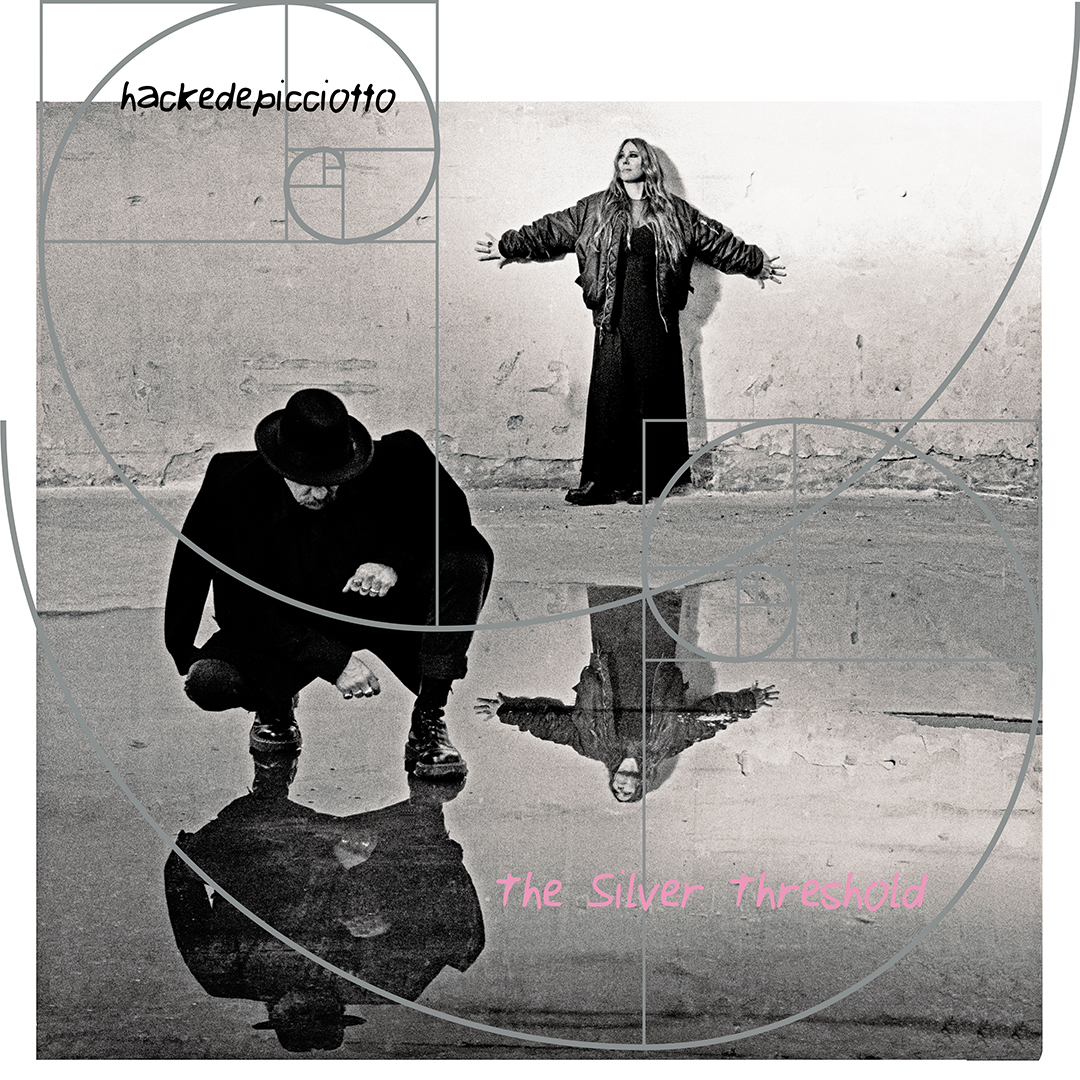
Hackedepicciotto ‘The Silver Threshold’
(Mute) 12th November 2021
Heightened snatches of beauty, romance and drama emerge from a backdrop of the Biblical, cinematic and ominous on Hackedepicciotto’s inaugural album for the much-celebrated Mute label.
The well-travailed and sagacious duo alias of the husband and wife creative match Alexander Hacke and Danielle de Picciotto, this outlet for soundtracking the mind state in the most tumultuous of times is just one such evocative project from the partnership over the years. Hacke has most memorably served his time with the cult experimental group Einstürzende Neubauten, whilst co-founder of the Love Parade, Picciotto, is a stalwart member of Crime And The City Solution. Both have crossed paths on numerous occasions, notably joining forces with Paul Wallfisch and Mick Harvey for the album and stage production Ministry Of Wolves.
By now accustomed to each other’s creative sparks, entwined even, the couple traverse a sulfuric skyline landscape of uncertainty and lament, but also a landscape, sense of time and place that offers some potential for change in the right direction. In the accompanying notes Hacke is quoted as saying that the recent pandemic restrictions and confinement gave him a “kind of weird euphoria”. Whilst such uncertain times of horror and stress can engulf some, this partnership saw it as a “gateway”, that they were “standing on a threshold” of something big. And so with the Godly parables of the Tower Of Babel suggesting wise co-operation over selfish pride and vanity, this epic scale soundtrack channels the couple’s past musical adventures (a touch of the metallic and industrial Neubauten, and some of that quality C&TCS panorama and gothic sorrow) across a geography that takes in an atavistic Middle East, esoteric Germany and mystical Far East.
The already mentioned Babel is given a suitable venerated and uneasy score of throat singing (ala Alejandro Jodorowsky’s Holy Mountain soundtrack), camel motion rhythms and soft strings as Picciotto narrates an Old Testament lesson. This is part of a trio of similar desert traverses, with the gothic-folk rippled and crunched ‘Trebbus’ stirring up visions of Egypt with its snake-charmer oboe sounds: although to be fair you could also be in Tibet, or equally scaling the Carpathian Mountain ranges under skulking skies. ‘Journey East’ seems to offer a trinket’s shaken version of an Arabian Clannad.
Those throat-singers return for a solemn piece of mysticism in the German trauma-hit town of ‘Kirchhain’ – a strategic barracks, assembly point during the horrendous Thirty Years War that was fought mainly across the pre-unification separate states of Germany.
There’s romance of a kind in the air with the partnership’s first real stab at a love song: ‘Evermore’. A timeless sentiment of love is enveloped in a gothic tryst and the elements, with a gaping wind and unknown, unseen forces threatening to engulf the beautifully gestured soothed proceedings.
The Silver Threshold is a setting, a world in which frayed classical instruments meet metal, iron filling fizzles, pulsations, deep thuds and stirring gravitas. That album title-track is a dramatic if held example of this combination; imagine The Velvet Underground’s viola and the serious chimes of Renaissance Italy rewired by Basic Channel.
At times they sound like Dead Can Dance, at others, like Brian Reitzell, Itchy-O, and on the aching and creeping natured movement ‘Meeres Stille’ like some Kosmische ambient explorers. In the shadow of extinction-destructive meteors, arcane scriptures and the psychogeography of personal locations of importance, Hacke and Picciotto beckon a metaphorical Armageddon so that humanity can reset and follow a more altruistic, cooperative pathway towards the light. Salvation, hope emerges from a very rich soundtrack, both daemonic and chthonian that’s constantly mysterious, always interesting, and beautifully played. File this album under ‘esoteric and venerable feelings from the Hackedepicciotto love seat’.
Hi, my name is Dominic Valvona and I’m the Founder of the music/culture blog monolithcocktail.com For the last ten years I’ve featured and supported music, musicians and labels we love across genres from around the world that we think you’ll want to know about. No content on the site is paid for or sponsored and we only feature artists we have genuine respect for /love. If you enjoy our reviews (and we often write long, thoughtful ones), found a new artist you admire or if we have featured you or artists you represent and would like to buy us a coffee at https://ko-fi.com/monolithcocktail to say cheers for spreading the word, then that would be much appreciated.
The Perusal #23: Meskerem Mees, Wet Tuna, Jack Ellister, Color Dolor…
November 19, 2021
A LOOK AT WHAT’S OUT THERE/Dominic Valvona

Meskerem Mees ‘Julius’
(Mayway Records) 12th November 2021
Disarming and whimsical (almost), the two attributes most often associated with the gentle songwriting of Meskerem Mees, prove a winning formula on the debut album Julius. Softly as she goes, the burgeoning Belgium, with Ethiopian roots, manages to make the despondent and profound sound either like a skip across a Wes Anderson set or wistful meander through pastoral dioramas and meadows.
Already acquiring the reputation and accolades – winning, no less, the Montreaux Jazz Talent Award for 2021 -, Mees is being feted widely: And for good reason. Whilst Julius (nothing to do with the tragic Caesar) sounds familiar, imbued as it is by a cross-generational mix of troubadour (from Joni Mitchell to newer faces like Laura Marling and Courtney Barnett), this album remains personably authentic, sweet in places, but full of observational heartache and guidance. It may not sound like it, but Mees is baring her soul, “twirling” not walking, yet vulnerable on the inside. She makes old tropes sound refreshingly light and breezy, whilst always getting across the depth and themes with just an acoustic guitar and a sighing, bowed, on occasion shrieking, cello (played by close High School friend and “sister-in-arms” Febe Lazou) and a scale dash suggestion of piano as company. All three instruments are played with restraint, a nature caressing and tender accent: though sometimes the pace is picked up with a shuffle of rhythm guitar. That guitar, picked, plucked and brushed, reminded me in places of a jolly Nick Drake and Bert Jansch, the melodies, a bit of gentle Fleetwood Mac.
It’s all quite brilliant, managing to evoke sadness and yearning tragedy with such freedom and pleasant endearment. The earnestness of Josephine Foster with a pinch of a more listless Michelle Shocked and piece of Joan Armatrading spring to mind; especially on the obligatory anti-war qualm ‘Man Of Honour’, which chronicles a brother corrupted by duty bound feelings of manliness and respect, going off to fight overseas. There’s a lot more layering to be revealed than that of course, but then that’s the beauty of these unguarded songs that freely pass through folk, country and pop genres. Mees regales seasonal rhyming couplets that reach out to the heavens, grown apart relationships, kooky seabed tales, dreams of isolation and alternate utopias on a charming songbook of niceties and emotive pulls on the sleeve and heart.
Various Artists ‘Nahma: A Gulf Polyphony’
(FLEE) 12th November 2021
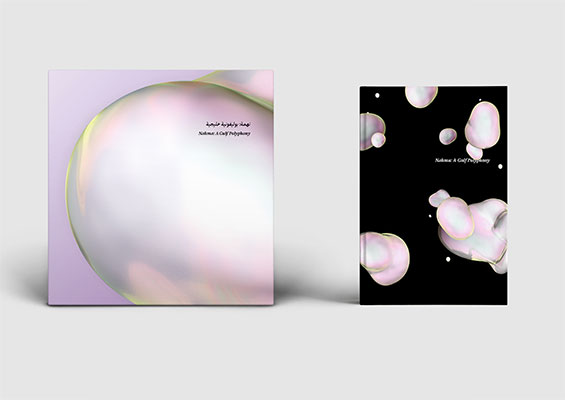
You wait a lifetime for the incredible, spiritual song and hand drum sway of pearl divers in the Gulf, then all of a sudden in the space of a week in November two albums of this evocative sub-culture arrive: Well partly anyway. In the last Perusal I featured Boom Diwan’s recent Minarets partnership with the South African jazz pianist Nduduzo Makhathini, who use the rhythms and influence of this pearl diving culture in their own music. Here though, in two very different forms, those extraordinary free divers are centre stage on a double album of in-situ archival recordings and contemporary transformations.
The third release from the FLEE platform includes both Poul Rovsing Olsen’s original late 50s recordings of these brave divers and a myriad of electronic treatments, created either from those same recordings or inspired by a semblance of them. The music is however just one angle; the double vinyl edition (which itself arrives in a specially commissioned and “innovative” transparent cover, made out of algae) comes with a 240 page book of photographs, essays and artwork. The FLEE hub also promises a “cycle” of exhibitions and conferences off the back of this album’s release.
The music us altogether something else: a lead voice calls and a chorus of unified voices answer as a rhythm is tapped out on hand drums or in the form of clapping. They sway as a whole together to what sounds like Arabic prayers, exultations and promises. I’d imagine there would be a deeply held belief in placating the elements and their heavenly protector as they prepared to dangerously dive for those valuable pearls. At times, especially on ‘Ya Mal (Midaf)’, that throng hums like a chorus of throat singers on a recording that starts to sound almost Tibetan. At all times it suggests hardiness, but spiritualism too. And is always captivating.
Invited to pay homage to those “valiant” souls, a number of contemporary electronic (and beyond that) artists have been asked to re-contextualize and transform the original recordings. One name that sticks out immediately is the burgeoning Viennese techno-pop and arty electronic artist Conny Frischauf, who’s quirks and quarks debut album Die Drift was reviewed on the site back in January. Her contribution is one of the most removed visions, with no obvious echoes or samples but instead an offering of Kraftwerkian waves, double-tracked vocals, wafts of fluted sounds and a constant piano refrain. In contrast to that, Tomaga conjures up a communal reverberation of the mystical. Sadly losing one half of that duo last year (Tom Relleen) it’s down to Valentina Magaletti to sprinkle some magic on the mirage-feel ‘Dub Divers’. YPY’s strongly coded ‘ZZMMYYHH’ contribution keeps the clapping and hand drumming but offers some more mystique, and a sort of David Ornette Cherry style beat. The Hieroglyphic Being goes for a cyclonic scuttle and metal sulphur techno beat on the echo-y cyber dream ‘Kuzaliwa Upya’. Evoking a touch of Electric Jalaba, Tarek Yamani’s ‘Hilal’ features bottle tapping percussion, rippled bass and Arabian vapours, whilst Alan Strani takes impassioned calls and places them in a 80s movie soundtrack on ‘Vaguement (Haddadi)’.
The traditional B-side (as it were) features the already noted Frischauf treatment, Ben Bertrand’s poetic ambient fluted, ambiguous still water contemplation ‘And The Ashes Of Our Burning Souls Will Fly Away’, Aya Metwalli’s echoed and throbbing shuttered stick beats ‘Sitt-il Muhanno’ and Joakim’s voice and water looped, jug poured ‘Zumayyah’ remix.
Some remixes, treatments, visions work better than others, but overall the lingering presence and traces of those 50s recordings are enlivened, given an added mystery and new feel altogether on an album of discovery. This collection for all the senses lifts the lid on an entire tradition and culture seldom in the spotlight.
Batila ‘Tatamana (Hold On To What You Love)’
(Galileo Music) 19th November 2021

Despite the more than justified resentment and firsthand experiences of racism in his German home, Batila reclaims his ancestral roots and pride with the most soulful of voices on the ambitious debut album Tatamana (Hold On To What You Love). Clearly defined, whether that’s in the Congolese dialect of Lingala or in English, or as represented in the relatively recent past syllabic block pattern “Mandombe” script there’s a heartfelt call to celebrate and own a pre-colonial and African-driven future.
Once part of the label-signed Soylant Green hip-hop act in the 90s, the Congolese/Angolan heritage artist (born Ange da Costa in the Democratic Republic of the Congo) decided to leave and pursue a collage education, before taking up songwriting for other artists, most famously the Congo star Papa Wemba. Mutually beneficial it seems, Batila’s songwriting gave a certain contemporary feel to Wemba’s music, whilst also rub off on his.
This though is Batila’s inaugural songbook; a commercially, easy on the ear and disarming mix of pop, reggae, soul, new highlife and modern Congolese sounds that he calls “Bantu soul”. Backed by an accentuated, gently and softly administered ensemble of musicians, including his DreamBus band, and guests (far too numerous to all mention individually, with at least eight vocalists in the backing chorus alone), Batlia yearns passionately about his beliefs: even penning a desert bluesy, with lilt of South Africa, languid down low in the undergrowth song about “Kindoki”, the indigenous witchcraft performed in the Congo, which through slavery was exported to Haiti and beyond. Batila aims to snatch it back from colonial devaluation; from its accusations of “black magic”, “mumbo jumbo” and primitive superstitions: although Kindoki does translate directly as “possession of evil spirits”.
In a similar vein, the Wyclaf Jean-esque ‘Resurrection’ features a sample about the subliminal messages delivered both in the sermons and depictions of the church that came hand-in-hand with European colonialism (in this case Belgium): how the savior, Christ, and his angels are always white whereas the devil is black. Though when the self-proclaimed Christian Simon Kimbangu and his breakaway group – mentioned in the album notes as the one who passed on the Mandombe script to Wabeladio Payi in a dream in 1978 – claimed he was an incarnation of the Holy Spirit, that his powers included healing the sick and raising the dead, he was ceremoniously thrown in jail, almost executed.
Many such important figures (a snatch of Martin Luther King Jnr.’s most famous speech for example) can be heard or felt across a lilted skip and shuffle of King Sunny Adé, the modern R&B like pulse and synthesized effects of Congolese artists like Innoss’B, an electric future brass and horns soak of highlife and echoes of Hugh Masekela. Poetically deeply soulful Tatamana lights the way forward for not only the DRC, but the continent, with a call for self-determination, hope and faith in the country’s own abilities to save Africa, to be the one’s to control its destiny and future: no more waiting on a “white savior” to save them as Batila sings on the lullaby-turn-wake-up-call actionist hymn ‘Afreekan’.
The travails of being the “exotic”, “other” and only Black face in a majority white region of Germany, which also includes outright hostility and racism, and the effects of dislocation, remoteness to birthplace and culture can be felt on what is a well-produced album of new Afro-soul and pop. Batila is clean-cut and as I said at the start of this review clear in his messages: a search and reclamation of his roots and identity.
Wet Tuna ‘Eau’d To A Fake Bookie Vol 1. & 2’
(Hive Mind Records) 19th November 2021
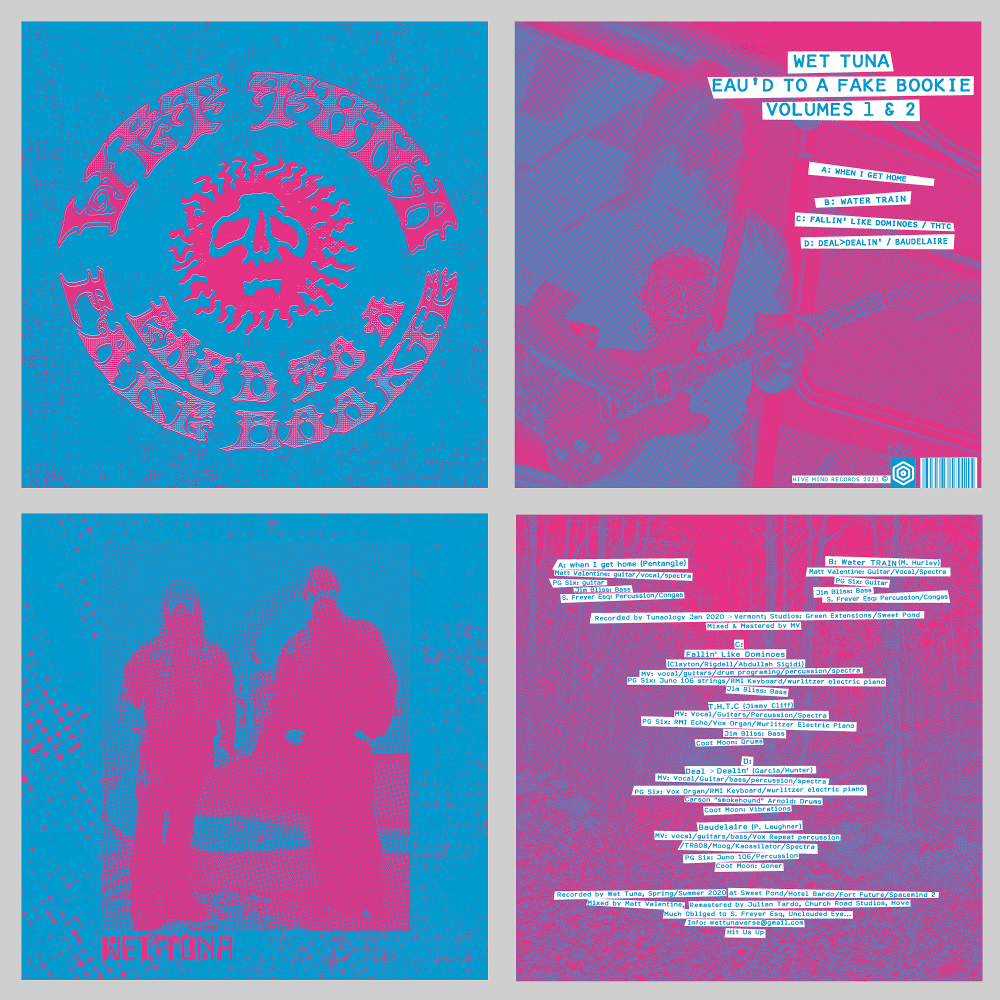
Picked up and transported on to a double dose of vinyl, Hive Mind Records have combined the Wet Tuna duo of Matt Valentine (moonlighting as MV) and foil Pat Gubler’s (aka PG Six) first two Eau’d To A Fake Bookie volumes on one record.
Channeling a myriad of past psychedelic-country-blues-Americana set-ups (which includes playing together in Tower Recordings and separately with Wounds, The Golden Road, Garcia Peoples and The Weeping Bong Band) that stretch back to the mid 90s, the partnership transforms a sextet of covers, unburdened by time constraints on this marvellous trip. And although the opening peregrination, ‘When I Get Home’, takes its cue from the distinguished pastoral British folk icons Pentangle (appearing on the band’s fraught Reflections LP in 1972), this improvised version has the distinct feel of a maple wood burnished Vermont wilderness rather than bucolic kitchen sink drama. That aroma, the Canadian log cabin atmosphere, permeates all these cover versions because it’s exactly the place where these tracks were recorded, during the first lockdowns of 2020. On this dreamy, smooth and reverberated version they seem to take the original song’s wistful lyrical references to red wine and being stoned literally; floating in a smoky vapour of Skip Spence, John Mayall, Rhyton and Peter Green era Fleetwood Mac. Totally free, the Tuna remould a delightful if plaintive original into a sort of mirage.
Sticking to an alternative American songbook (well, near enough), the rest of this spread includes a mix of mavericks and idiosyncratic lost artists’ recordings. The ultimate lost soul, championed and revered in their own lifetime, there’s an untethered bluesy krautrock (think Faust IV and Can’s Unlimited musings) enveloped ether vision of the below-the-radar singer-guitarist Michael Hurley’s much more lo fi and much shorter ‘Water Train’. Crowned as a luminary catalyst for Ohio’s alt-rock scene in the 70s, the very late Rocket From The Tomb and Pere Ubu instigator and Creem writer Peter Laughner reaches out from beyond that same ether on the Tuna’s country-rock-goes-UFO-takeoff cover of ‘Baudelaire’. Dylan, Verlaine and Thunders drift through a daydream on this almost narrated take.
At this point the words country and psych and the reference to being stoned might suggest a partiality for The Grateful Dead. You’d be right in one sense, as they have a go at Jerry Garcia’s ‘Deal’; a track he wrote with Grateful Dead affiliated contributor, the poet Robert C. Christie for his eponymously entitled first solo album in 1972 – actually it must be pointed out that this year proves pivotal in the choices made by the Tuna pairing, with most of the covers being from that year or either side of it. On this, actually ironically quite straight, take echoes of Skip Spence (again) join in with solo Lennon, a real nice bit of Muscle Shoals electronic piano and peaks of cosmic rays.
That leaves a promising, languorous Compass Point Allstars meets Flaming Lips in a timeless delay vacuum version of Jimmy Cliff’s reggae soundtrack hit, ‘The Harder They Come’ (abbreviated in this case), and an Afro-disco-rock version of the hot-footing Washington D.C. R&B and jazz-funk fusion, and Donald Byrd acolytes (hence this track and the band’s name), Blackbyrds’ ‘Fallin’ Like Dominos’.
In a reverb hallucination of rippled delay, squalling lead guitar, brushed and loose drums, distant effected vocals and fuzz the duo (who it must be pointed out opened up the floor to their fellow ‘forest freaks’ S. Freyer Esq., Jim Bliss, Coot Moon and Carson ‘Smoke hound’ Arnold) float around incipient tuning exercises in The Stooges Funhouse, the acid phaser fanning of the Crystal Stilts and Sam Flex, and waft towards leftfield 70s outsider music. Cut off from the world, with zero pressures, they’ve jammed out a brilliant couple of albums of relaxed, removed psychedelic-country-blues covers that prove surprisingly melodious and groovy, but always dreamy.
Color Dolor ‘Blurry Things’
(Soliti) 26th November 2021
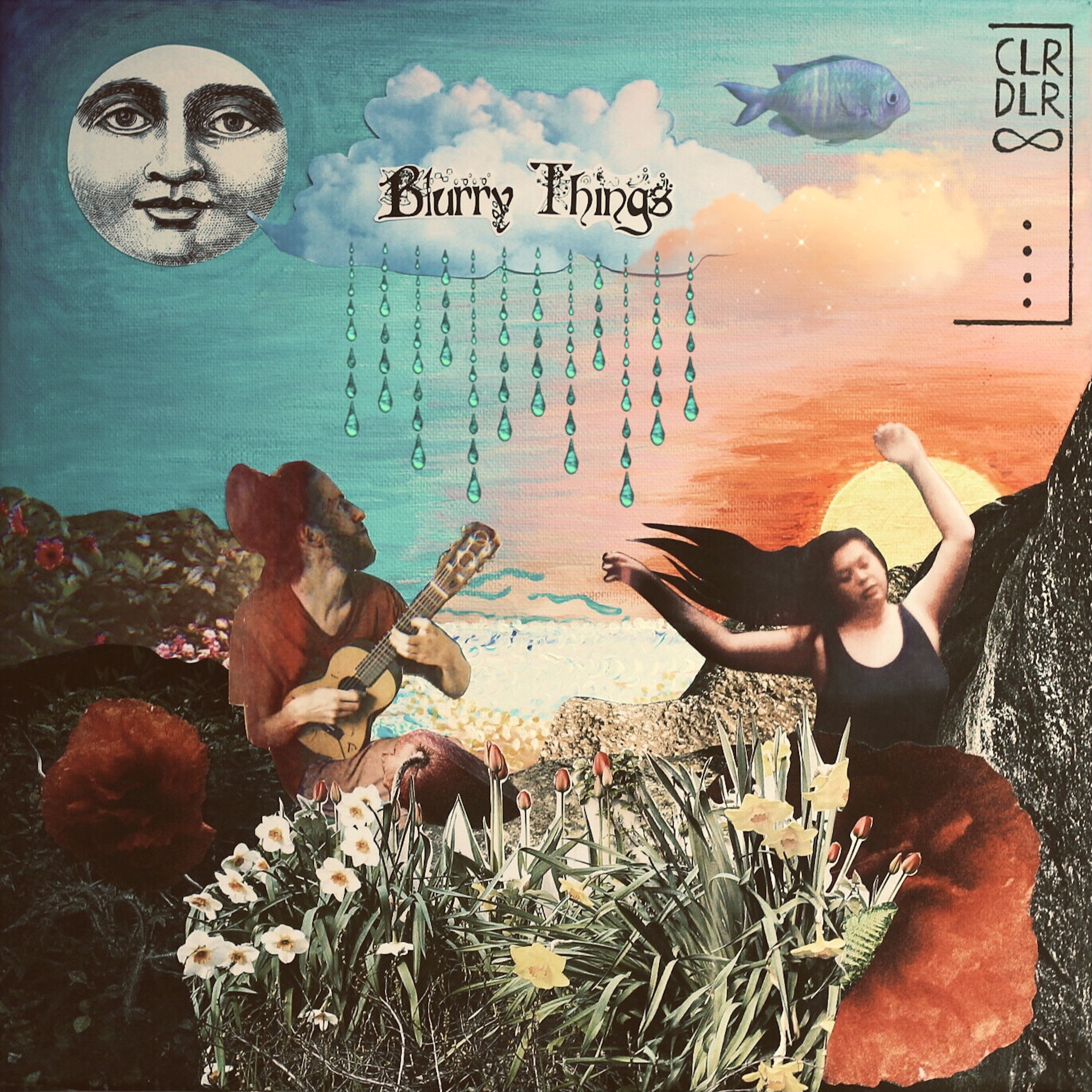
With a touch of serendipity the fourth album from the Helsinki duo Color Dolor is nothing if not lushly rich in atmosphere. For despite the process of spontaneity and the relaxed attitude (a culmination of first takes and unfinished songs) Blurry Things is a perfectly produced work of fragility and built-up dramas: an album that’s anything but listless. For this most magical of dreamy havens marries the more artful of 80s pop with Scandinavian synth-pop and a lilt of both indie and country music to create a commercially viable sound with depth and character.
An album of sorrow, yearning and heartache, made more unique by the vocals of Stina Koistinen, whose voice and lulls reach aria like heights when illuminated by the luminous light of the moon on the gorgeous glowing opener, has both a semblance of Stevie Nicks, Janelle Monáe and Róisín Murphy. One of three singles on this album, the plaint Balearic ‘Shy’ reminded me of Here Is Your Temple, even a little bit of Beach House.
Musically it’s a diaphanous if emotionally charged glide between Robyn-like club EDM (the remix sounding ‘Dream Of You’), bit-crusher beat churning trip-hop (‘It’s Okay’, which reminded me of the Sneaker Pimps for some reason) and classy Eurovision entries with an edge (the most recently released single, ‘Andrea’).
Beautifully played throughout with a few surprises in direction, Stina sings of the need to escape the outside world – retreating underwater or do a special room – yet also wishes to reconnect with it. Emotionally charged but paced, controlled, Blurry Things is full of effects, ideas and experimental turns. Essentially it’s all just brilliant dream pop and an excuse for adventure.
Jack Ellister ‘Lichtpyramide II’
(Tonzonen) 19th November 2021
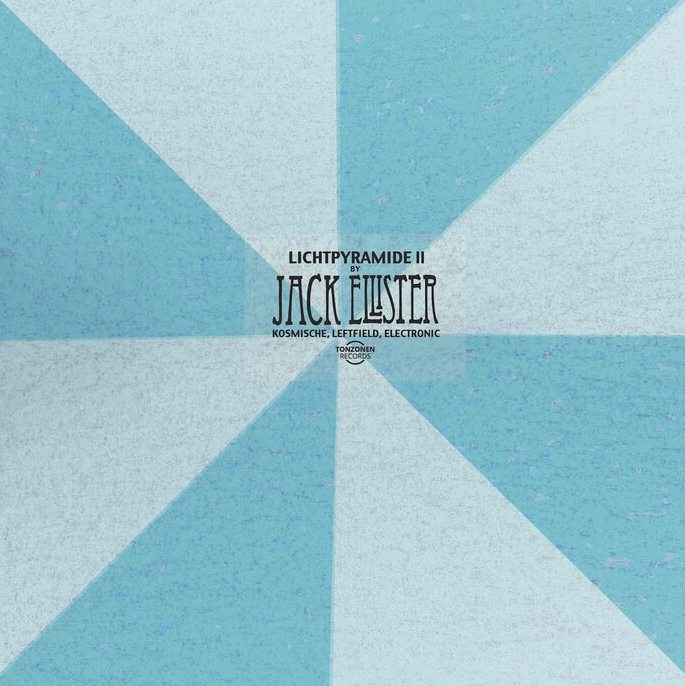
Cosmic courier Jack Ellister is back with a second instalment of his “light pyramid” emitting kosmische egg series. Beyond these earthly realms, out into the universe, Jack once more acts as a 21st century space age romanticist version of Fredrich Höelderlin. Once described by a contemporary as “the most German of Germans”, the famous humanist and writer’s profound poetics grace the album peregrination ‘Der Mensch’. Words (“whoever honours what is good does not harm himself”) are lifted from Höelderlin’s own German romanticist tract of the same name, which looked to the ideals of being a good human.
Jack’s repeated origins, beginnings suffix (“Geneser”, “Genesis”) look to the stars for escapism, referencing habitable planets on the edge of our solar system (namely the Kelpher 186F exoplanet) and circumstellar discs (‘Kuiper Belt Excursion’) whilst quizzically, often in an abstract form, reading or wafting descriptive lunar landscapes.
Musically light (as that album translated title suggests) this cosmic angled trip is influenced by early synthesizer music, the kosmsiche and library music. This translates as a navigation through a redolent and seamless soundtrack of Cluster, Jean Michel Jarre, Tangerine Dream, Eno, Ananas Symphonie period Kraftwerk, Mannuel Göttsching and Artificial Intelligence era Richard H. Kirk. Electronic music with a soul and gauzy film of bouncing and pitter-patter synthesized bobbles, notes and arpeggiator, signals, frequencies, there’s still room for Jack’s dreamy guitar (acoustic and electronic) threads, harmonic twangs and gentle rhythms, which only really come to the forefront on the album’s closer, ‘Genese: Stadt Land Fluss’. Jack actually gets going on guitar with a dose of space age desert fuzz rock on ‘Fragesteliung’.
Within this ambient field of creative journeys an historical schooner sails across a wind chilled icy and ghostly tundra, and radioactive poisons acquire a monitored sci-fi accompaniment.
Jack proves a nimble, professional acolyte of the form; softly melding the familiar to his own astral visions of cosmic music and beyond. Lichtpyramide II is a seamless exercise in both universal evocations and invocations: another quality space music and progressive soundtrack from the stargazer.
Simon McCorry ‘The Illusion Of Beginning And Endings’
(White Lab Recs) 13th November 2021
The diverse cellist-composer Simon McCorry is measuring time and sounding the barely noticed abstract passing of it on his latest album of minimalist suites.
Not one to stand still for long, the prolific McCorry will probably have notched up another couple of such lightly-conceptual dips in and out of descriptive moods by the time I finish writing this review. I must have featured four such albums, collaborations alone this year: from his Flow and Nature Is Nature albums for See Blue Audio to his Critical; Mass sonic partnership with Requiem (I believe a second volume is already circulating).
A solo work this time (of a kind), The Illusion Of Beginning And Endings features McCorry’s considered, mournful, emotive bowed cello and an atmospheric turn and hazy undulation of synthesised waves and forms that often evoke the neo-classical music of Roedelius – especially his collaborative work under the Qluster tag – and the Aphex Twin’s early Ambient Works series (I’m thinking more Vol.2 than 1). Added to this careful suggestive set of moods and movements you’ll hear a tinkle, perhaps a walking line, or smoother piano motif amongst the reflections, contemplations. The piano is brought to the fore however on the album closer, ‘Elegy’. Despite that title, this subtle composition, played by the pianist Simeon Walker (McCorry’s only guest), lets the performer and instrument breathe, as every creak, stretch and press of the keys is registered alongside the soft felt like resonated notes that are being played.
Landscapes, scenes and states-of-mind take shape in a well worn, almost decayed, atmosphere of light play, hardship, sadness and sorrow. McCorry’s cello changes throughout all these moods: sounding more like a fiddle and even a hazy sax on the looped and almost back-in-time ‘Dreaming’. Through ebbs and flows, long bowed frowns and shorter weaves, he creates drama and memories in an often-timeless space: one in which it stops almost completely.
Once again McCorry manifests a moodscape from the most minimal of touches on an album that proves and articulates time in a set of musically painted worlds.
Kensho Nakamura ‘Llamhigyn Y Dwr’
(Pampsychia) 5th November 2021
Inhabiting the strange sounds and senses of Celtic mythology’s pond and swamp dwelling chimera, the “Llamhigyn Y Dwr”, Kensho Nakamura creates a kooky, idiosyncratic electronic language from a myriad of nutty and cartoon sounds, samples.
A “water leaper”, this malcontent shrieker of a creature is part bat, part frog, with a long lizard like tail that has a sting at the end. What it picks up, when not gnawing on unfortunate prey, is a continuous cut-up and snatches of workshop mechanics, muffled voices, bubbling chemistry set primordial swamp sounds, xylophone signatures, dings, tinkles, goofy burbles, bleeps, slurps and broadcasts.
Breaking through this unending collage of staccato and floated samples is a smattering of brief waves and rays of ambient colour: some even sounding like the semblance of a tune and rhythm. From a water garden lurking Esperanto period Sakamoto to moist-dripped library music caverns, Nakamura conjures up some weird environments as he runs across a Casio keyboard of presets. The final ‘Waltz’ features the mysterious Keisuke S_d_, who’s contribution could be the lunar liquid sounds, or the snippets of a transmogrified ‘Yankee Doddle’, or even the alien antenna bending: who knows? The mind boggles.
Imagine µ-Ziq and the Sad Man in a “neo-fairytale” and you’re partly on track, for this is an odd swampland sonic diorama of tomfoolery and electronic music mischief.
Oliver Earnest ‘The Water Goes The Other Way’
(Glitterhouse Records) 26th November 2021

Uncoupled from the German post-rock/post-punk band Kaufmann Frust, Oliver Hauber treads a distinctly different pathway on his debut solo affair. Adopting the “earnest” moniker, the Stuttgart singer/songwriter channels his time spent as a kid in Colorado, a love for the riffs of both the Artic Monkeys and Modest Mouse, and the obvious signs of The National’s Matt Berninger to produce a pretty decent songbook that crosses the musical boundaries of slowcore, country, stadia rock and indie.
With such a great command of the English language (including wordplay) Oliver moves with a sophisticated élan through a mood board of broodiness, wry self-deprecation and despondency; yet lyrically seeing hope in the most unforgiving complexities of what modern life has to offer, and surmounting all manner of human frailties, ego and personal weaknesses. This comes out in repeated lines, refrains; on the opening ‘Gathering Speed’ it’s the languid ache of “There’s another day”.
I mentioned Matt Berninger a paragraph ago, but Oliver’s tone – a sort of castaway baritone – reminded me of Morrissey in places, or Gene’s Martin Rossiter.
He’s not alone on this pathway to new musical horizons; a whole host of mostly German musicians are there to break the fall. Among the roll call Kaufmann Frust band mate Jan ‘Branko’ Breier is set loose on the shakers on the mental fog clouded and oscillating ‘Crosswords’; the Icelandic diy and punk scenester Indridi Arnar Ingólfsson wields a fuzzed-up angulated electric guitar on the sorry state of affairs relationship, ‘On The Outside’; and both Esther Schwartz and Victoria Hillestad offer wooed, lulled ethereal harmonies and vocals to a number of songs. Always at his side during the album’s ten articulations is the producer Florian Stepper, who when not on the soundboard fills in on everything from synthesized atmospheres to electric guitar, bass, organ and strings: swapping around with the multi-instrumentalist Oliver, who also plays more or less all of those aforementioned instruments at some point on the album.
Wilco, White Lies, Merchandise, Iron & Wine, Pulp, Why and The Horrors (when they started listening to Simple Minds) all seem to crop up in this reviewer’s head: all of which are a good thing. Oliver Earnest proves a fruitful, impressive at times, debut for an artist that should go it alone more often.
Josh Semans ‘Winter, Gesture EP’
(Hidden Notes Records) 3rd December 2021
As the nights draw in with every passing week and the cold start’s to bite, it’s rather comforting (to a point) to take in the evocative, poetically inspired suites of Ondist, composer and producer Josh Semans. That is until a barrage of Battles, Seamajesty and Holy Fuck freeform breakbeat like drums hurtle and splash and kick in; although the final movement of this EP quartet travels in the direction of Klaus Dinger’s ‘motorik’ beat.
Putting aside the drums, this set of gesture entitled compositions is mostly a tactile semi-classical affair of gentle lofted clarinet, sensitive and thoughtful piano and the quivery, aria and apparitional like wave forms of Semans’ chosen instrument, the theremin-esque “ondes martinet”; an early electric-instrument that’s played with a keyboard and by moving a ring along a wire, which creates this strange contraption’s signature “musical waves” sound. It’s used here to conjure up winter spirits, oscillations and airy ripples, but it evokes Joe Meek’s space age analogue satellites on the warbled, early Mute label fizzled hits on electric tinfoil snare, ‘Running (One Last Relentless Gesture)’.
The results of sending out feelers during the lockdowns, and by absorbing the poetry of the one-time Scottish Poet Laureate, novelist and campaigner Jackie Kay – in particular her ‘Winter Heart’ poem –, Semans made the call and clarinetist Ruby Lulham (moonlighting as Clariloops), pianist Simeon Walker (the second time he shows up in this roundup, appearing also on Simon McCorry’s The Illusion Of Beginnings And Endings) and drummer Steve Hanley all answered. Fanning the fireside in virtual communion together the results are rich, incipient, cosmic and classical.
When the drums do turn up it all suddenly becomes a different record, almost a spontaneous one. The breaks and distant freeform expressions (which on the clarinet waned ‘While The Stars Outside Shiver’ sounds distant, as if they were being played in another room down the hall) bend towards jazz and trip-hop.
If a sign of quality was needed, Winter, Gesture is being released via the Hidden Notes platform – remember the brilliant Inkling album they put out in May by the Spindle Ensemble? Let me put it this way; they know a thing or two about experimental new-classical music. And so Seamans and his collaborators artfully magic up a deeply felt seasonal highlight; a precursor to fully realised peregrinations and feelings in 2022.
Hi, my name is Dominic Valvona and I’m the Founder of the music/culture blog monolithcocktail.com For the last ten years I’ve featured and supported music, musicians and labels we love across genres from around the world that we think you’ll want to know about. No content on the site is paid for or sponsored and we only feature artists we have genuine respect for /love. If you enjoy our reviews (and we often write long, thoughtful ones), found a new artist you admire or if we have featured you or artists you represent and would like to buy us a coffee at https://ko-fi.com/monolithcocktail to say cheers for spreading the word, then that would be much appreciated.
Our Daily Bread 480: Toumastine ‘Assouf’
November 17, 2021
ALBUM REVIEW/Dominic Valvona
PHOTO CREDIT: Noemi Monu
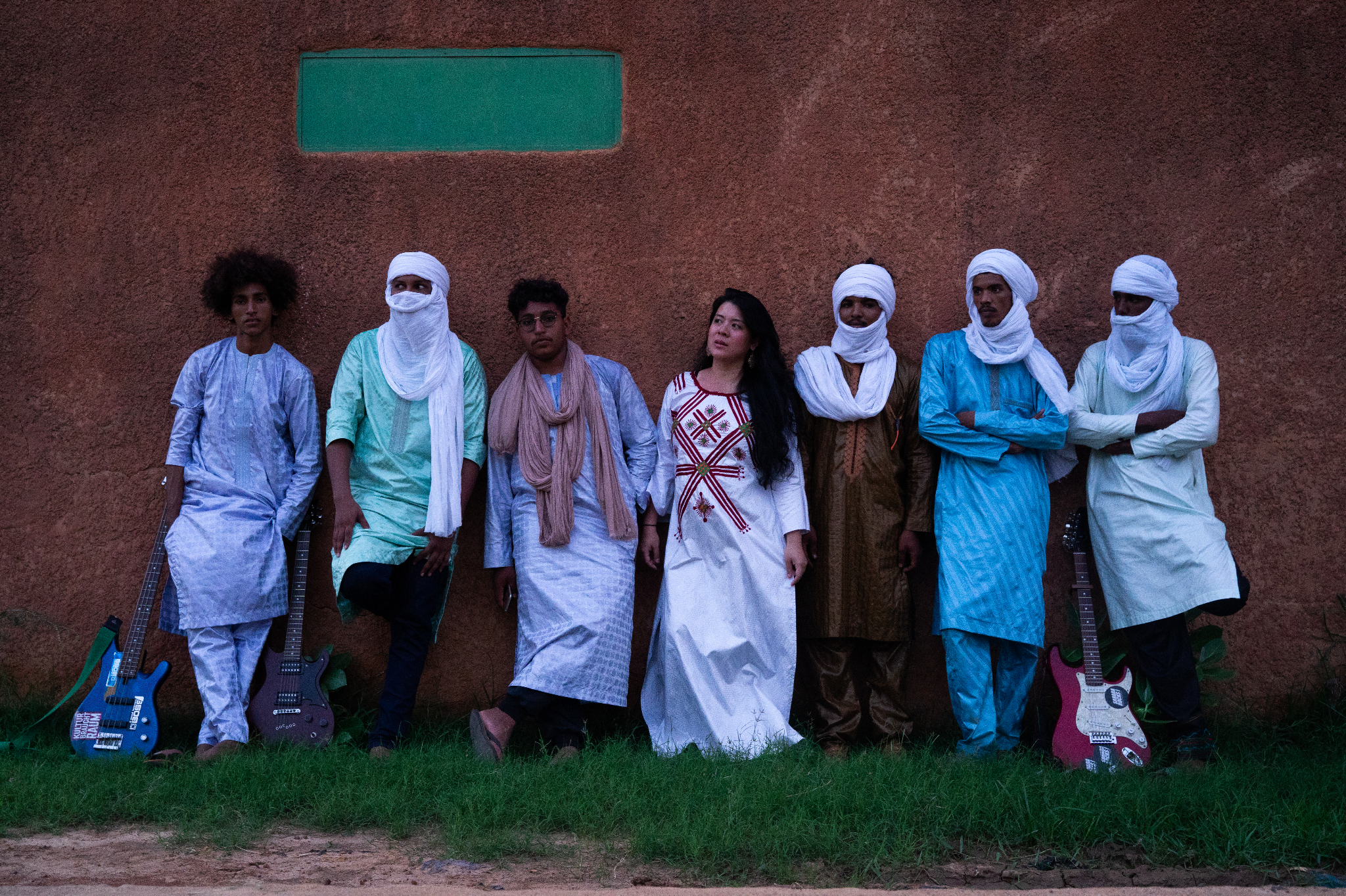
Toumastine ‘Assouf’
19th November 2021
Is it any wonder that a band of such young Tuareg friends from the unstable Niger yearn for nostalgia; for a life free of ethnic, territorial and economical conflict, as the region remains locked-in to a ferocious war with Islamist terrorist groups. No, it’s not.
Just as last year’s elections in Niger proved democratic (the first such free elections since independence in 1960), a military coup in the capital last March almost put paid to such ideals of a smooth transition of power. Thankfully the government’s security forces thwarted this attempt to seize power from the elected Mohamed Bazoum. Still, there remains a triple threat to that seat, what with the crippling effects of Covid, the continues fighting between a coalition of African and NATO forces against ISIS/Al-Qaeda affiliated militants in the area, and the ill-winds of climate change all to contend with.
Niger’s been overshadowed in the last few years – and the present – by the insurgency in Mali and the unfolding events in Ethiopia and the Sudan. As it stands the country is in discussions with their regional partners on the best course of action in stopping various incursions, raids and terrorist acts across a belt-like area that crisscrosses the borders of Mauritania, Chad, Bakino Faso, Mali and of course, Niger. Government forces have taken part alongside France and others in Mali, which has brought reprisals from factions trying to cause chaos in sub-Saharan Africa. These same groups have forced many young Nigerians to fight for their cause, with Niger’s western Tillabéri region almost a no-go zone. If you read the Home Office guidance, Niger is said to be extremely dangerous, with kidnappings almost a certainty.
It’s within this picture that Toumastine have managed to record a bright, powerful Tuareg rock and blues (with touches of reggae) album. Culturally, ancestrally part of the loosely-connected confederacy of diverse tribes that have always roamed and made home the Sub-Saharan region known as the Sahel, the Tuareg (a term that’s, depending on who you speak to, wrapped up in colonialism; Niger artists like Kel Assouf preferring the “Kel Tamashek” name) have played a major part in the Mali conflict; their age-old fight for an autonomous region within Mali’s borders (the Azawad) gained ground five years ago, before being hijacked by militant Islamist groups. Here the group use the dual Tuareg word “Assouf” as the title for this second album. Meaning both “nostalgia” and “wilderness”, Assouf lends itself to a brilliantly produced and warm collection of live-feel camaraderie.
Despite scant resources and backing inside Niger (at one point setting up a microbusiness selling cookies to get this recording off the ground), they built their own studio set up; learning how to use recording equipment from Youtube tutorials. If anything, with such a diy approach, they’ve made music that’s less forced, devoid of artifice, uncloyed by sentiment and out of the hands of grubby record executives. It sounds bloody great! The recording is as near perfect as you can get (actually lot cleaner and better than most big productions I’ve heard this year), and for once I can actually hear the bass guitar, which nimbly probes or evokes Robbie Shakespeare’s languid like throbbing grooves across the album’s mirage melting atmospheres.
Assouf opens with a splash and rattle of drums and an almost country-rock like feel, and a real spring, bounce. ‘Tedoun Etran’ tells a story like all the other songs, a sort of melodious twirl of carefree energy and call of brotherly comradeship. It reminded me in places of Terakraft and Anansy Cissé; Tuareg yet not like most of the desert rock sound that’s traditionally associated with such groups. For sure there’s that signature desert blues twilight guitar twang, but if anything the overall vibe is Afro-rock and reggae. Yes reggae: A sort of unmistakable West African nurture of a music style that almost definitely originated in those parts. Here it summons up images of camel motioned bobs along sweltering plains and dusky hours contours of sand dune landscapes. On the ‘anxious cyclical thoughts’ proffered ‘Adja Tarha’ that reggae lilt and drift is sped up to sound like a funky King Sunny Adé.
Always sounding lovely, occasionally like a serenade, the boys embrace the romantic, inviting in a female singer to voice the love interest, and the sweetened caress of a flute. Together it sounds simply beautiful but earthy.
Staying in the Sub-Sahara but heading towards the north of it, the soft bluesy yearn ‘Tarha Tasidwart’ picks up some Spanish guitar flourishes and a lilt of Aziza Brahim. The finale, and single, ‘Hegh Tenerenin’ has room for some phaser church organ.
Anything but nostalgic, Assouf is alive, bustling, and warm with the sound and spirit of love and peace. It seems remarkable that in the face of such overwhelming odds, the band could deliver such earnest quality and depth. Toumastine tell their story not through words but feel and rhythm; never once wasting a single note, sound in conveying and capturing an evolution from humble beginnings to international success. Believe me, this band is on the up. Expect to see it in next month’s choice list of albums-of-2021.
Past Tuareg Music Highlights From Our Archives…
Kel Assouf ‘Black Tenere’. (2019)
Tamikrest ‘Tamotaït’. (2020)
Terakaft ‘Alone’. (2015)
Khalab & M’ Berra Ensemble ‘M’ Berra’. (2021)
Hi, my name is Dominic Valvona and I’m the Founder of the music/culture blog monolithcocktail.com For the last ten years I’ve featured and supported music, musicians and labels we love across genres from around the world that we think you’ll want to know about. No content on the site is paid for or sponsored and we only feature artists we have genuine respect for /love. If you enjoy our reviews (and we often write long, thoughtful ones), found a new artist you admire or if we have featured you or artists you represent and would like to buy us a coffee at https://ko-fi.com/monolithcocktail to say cheers for spreading the word, then that would be much appreciated.
REISSUE REVIEWS SPECIAL: Dominic Valvona
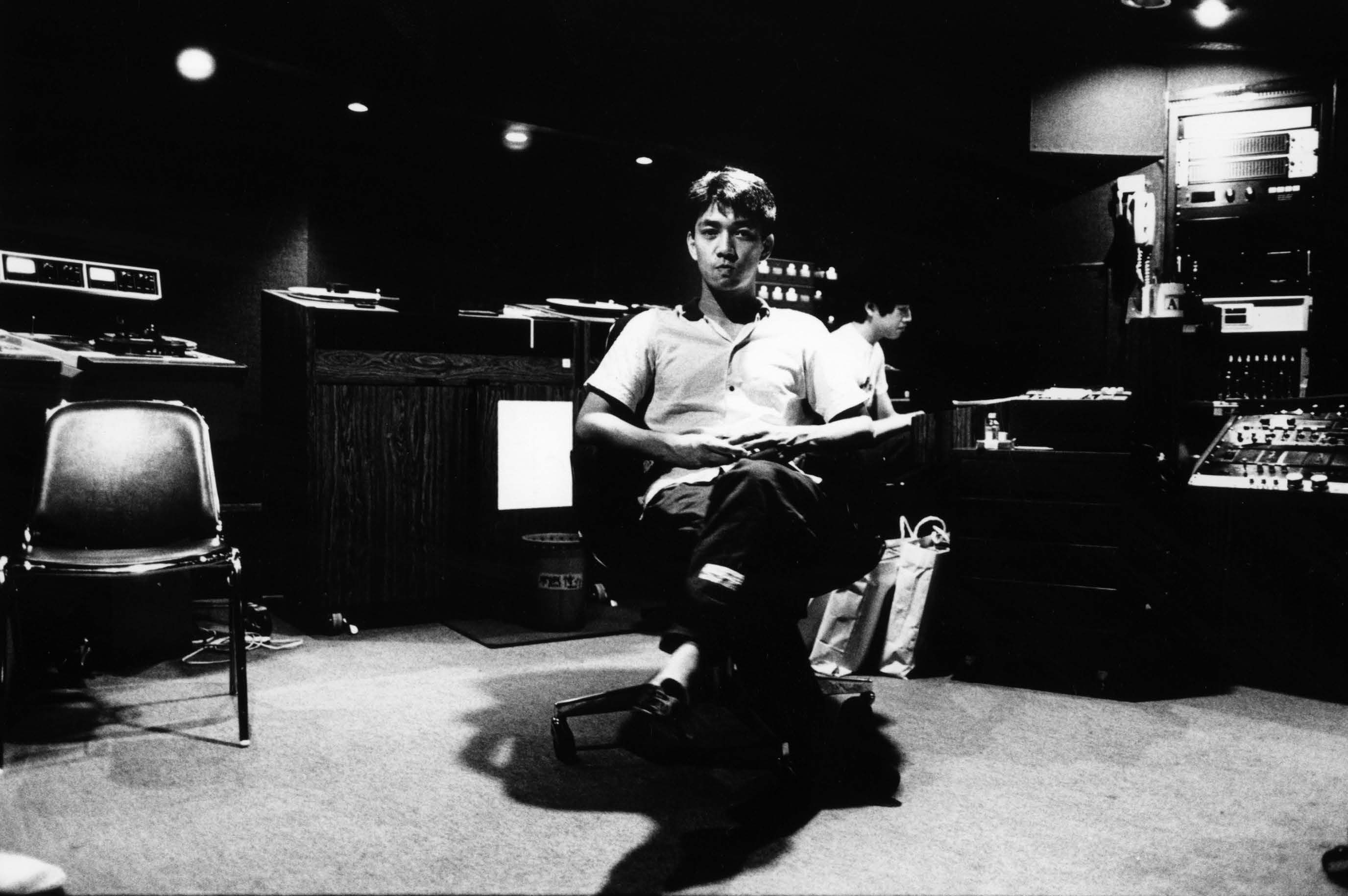
Ryuichi Sakamoto ‘Esperanto’ 19th November 2021
Omar Khorshid ‘Giant + Guitar’ 26th November 2021
(Both Released By WEWANTSOUNDS)
Reissue specialists WEWANTSOUNDS have been busy this last couple of months, unearthing both cult sounds and previously scare treasures from Japan and the Middle East; many of which have until now never been released outside there own domains.
You may very well have seen my last review of the label’s Makota Kubota & The Sunset Gang’s 1972 tropical ragtime ‘Hawaii Champroo’ album; the first of a trio of such 70s nuggets from the former Les Rallizes Dénudés band member, the other two titles being the eponymous Sunset Gang and Dixie Fever (released just last month) albums. The first of those records also featured the talents of future Yellow Magic Orchestra instigator Haruomi Hosono, which ties in nicely with today’s feature; his comrade-in-arms on that pioneering electronic voyage, Ryuichi Sakamoto and his mid eighties avant-garde synthesizer and computer programmed loop and cut-up Esperanto album, which is being reissued for the first time outside Japan by WEWANTSOUNDS this month.
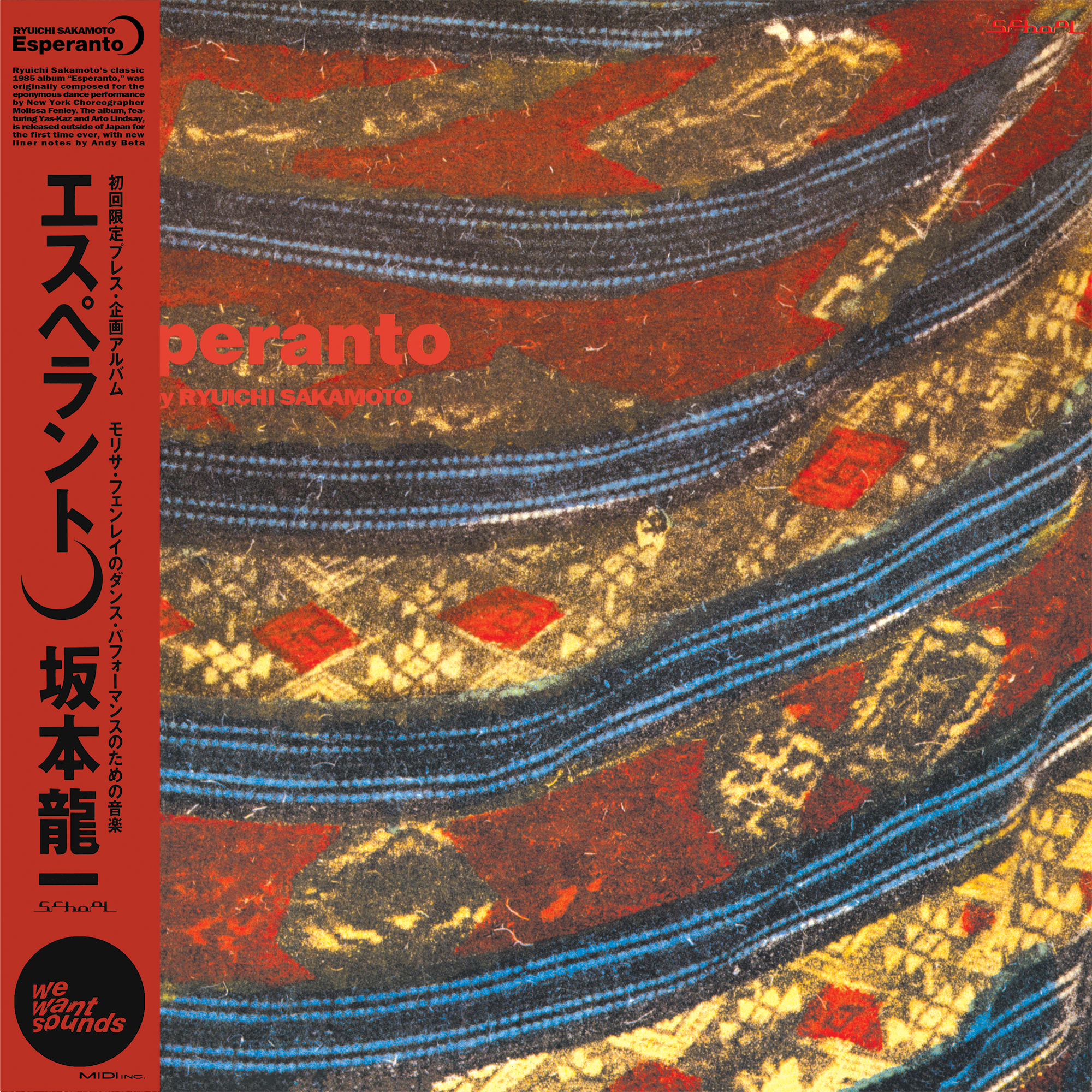
Already riding the visionary synth waves with the already mentioned YMO, and through his inspirational projects with David Sylvian, Sakamoto went on to score success with the plaintive Merry Christmas Mr. Lawrence soundtrack. The sixth solo release in that oeuvre however was a return to his leftfield, challenging roots: a marked change from the semi-classical emotional pulls of the harrowing film soundtrack. A kind of cutting edge theatre and ballet, Esperanto was composed for a performance by the New York choreographer Molissa Fenlay with contributions from Lounge Lizard, experimentalist guitarist Arto Lindsay and the Japanese percussionist Yas-Kaz. You’ll have to use your imagination to how it all worked visually – though later on art luminaries Kit Fitzgerald and Paul Garrin turned this soundtrack into a conceptual video project.
Sounding very much of its time, on the burgeoning apex of dance music and early hip-hop, electro, this polygenesis experiment often evokes both the Art Of Noise and Herbie Hancock’s ‘Rockit’. Using a super-sized computer and state-of-the-art tech, Sakamoto merged futuristic Japanese theatre with a mechanical Ballets Russes, workshop shunts and huffs with the plastic, and electronic body music with Hassell’s fourth world music inspirations.
Snatches of voices, dialogue get cut-up and looped in a primal techno performance of mechanics, rippled and tapping corrugated percussion, synth waves and oscillations, serial piano dashes and rolls, and Japanese spiritual garden enchantments. At any one time you can pick up the echoes of Glass, Stockhausen, Kraftwerk, Depeche Mode, Eno and Populäre Mechanik within the often mysterious, exotic performativity. Motoring, bobbing or in staccato mode, Sakamoto produces a futurist dance set of suspense and experiment; an omnivorous feast of programmed and real sounds. Though very dated by today’s technological wizardry standards, the electro workshop Esperanto remains an iconic, very much sought after work well worth its admission price and reissue.

Sitting astride his motorbike on this version of the album – a premonition, augur of the fatal crash that would kill him only seven years later –, Omar’s in transit; cutting a dash as playboy and matinee star (which he was, having acted in a number of films). The music itself has the spirit of surf twanged and tremolo rock ‘n’ roll meets an Arabian Wild West and the Sublime Porte. Often these exotic enchantments imagine a camel riding Ennio Morricone cantering across sand dunes, or Django Reinhardt twirling notes in the bazar. Certain Dick Dale like twangs ride up and up Arabian scales, and gaze out across a Hellenic and Franco-African Med.
Bedouin vibes cross paths with the courtly, and dance elegantly and in rip-roaring fashion up and down the neck of Omar’s guitar. To this dazzling intricacy and craft there’s a certain kitsch production of sound effects, reverb, zaps and burbles. It all sounds a little Joe Meek when this happens, but is all good fun. Not so space age a recurring organ gives the music both a soulful (bordering on Gospel) and even psychedelic feel. Its mostly used as incipient drone; something to stir or create the mood, which can often be romantic or gazing.
Shake, rattle and hung, Omar let’s rip with the constant blur of nimble fret work, speeding back and forth, spiralling and amorphously conjuring up a myriad of refrains and riffs. But yes, you can’t help seeing those belly-dancing ladies, with their bejewelled navels gyrating to the exotic Egyptian sounds. It reads as god as it sounds. So what are you waiting for? Do yourselves a favour and pick up this guitar legends album now.
Whilst I have your attention, the label’s next release continues an excavation of Japanese nuggets with a neon-lit DJ like set of 80s city pop, funk and boogie from the Nippon Columbia label vaults. Selector on this sleek drive is DJ Notoya, who picks out moonlight flits and swimmingly dreamy spells from Makoto Iwabuchi, Hitomi ‘Penny’ Tohyama and Hatsumi Shibata. Under the Tokyo Glow title that compilation of future-pop gems will be released on the 10th of December – just enough time to fill the Christmas stocking this year.
Hi, my name is Dominic Valvona and I’m the Founder of the music/culture blog monolithcocktail.com For the last ten years I’ve featured and supported music, musicians and labels we love across genres from around the world that we think you’ll want to know about. No content on the site is paid for or sponsored and we only feature artists we have genuine respect for /love. If you enjoy our reviews (and we often write long, thoughtful ones), found a new artist you admire or if we have featured you or artists you represent and would like to buy us a coffee at https://ko-fi.com/monolithcocktail to say cheers for spreading the word, then that would be much appreciated.
The Social Playlist #61: Atlas Sound, Bush Tetras, Rob Sonic, The Kinks, Tamar Aphek…
November 11, 2021
PLAYLIST/Dominic Valvona

If you’re reading this than thank you for actually clicking the link through to the latest edition of Dominic Valvona’s eclectic and inter-generational imaginary radio show playlist. With no inane chat, smug aficionado endorsements or petty factiods, it’s the best kind of playlist: Just 2 hours of incredible music to discover, embrace, dance to (if the mood takes you) and wrap your head around. With no themes, other than the inclusion of tracks by those who’ve passed away during the month and a number of anniversary celebrating albums, the Monolith Cocktail Social is one long musical odyssey.
On Volume #61 Sum Pear idolise the sun, Creepy John Thomas skin up, whilst Juicy Lucy turn out a vision of Spirit’s ‘Mr. Skin’; Frank LoCrasto sends us out on a sublime float across the plains, and a fiftieth-anniversary album celebrating Sly & The Family Stone play us out with the epic ‘Africa Talks To You (“The Asphalt Jungle”)’ from their triumphant tumult of an album, There’s A Riot Goin’ On. Talking of anniversaries, this month’s playlist also includes the lead track from The Kinks country-yearned Muswell Hillbillies album (released this month back in ’72), plus tracks from Teenage Fanclub’s breakout album Bandwagonesque (30 years old this month), something from Japan’s Tin Drum (incredibly 40 years old), and a beauty from Bradford Cox’s Deerhunter side hustle Atlas Sound’s Parallax (only a mere ten years old this month). We also pay a special tribute to former New York art-rock, post-punk, avant-garde stalwart drummer Dee Pop of Bush Tetras infamy, and so many other experimental projects, including with friend of the blog Andy Haas.
Track List::
The Kinks ‘Muswell Hillbilly’
Return To Forever ‘Do You Ever’
Juicy Lucy ‘Mr. Skin’
Creepy John Thomas ‘This Is My Baby’
Skinned Teen ‘Pillow Case Kisser’
Times New Viking ‘Pagan Eyes’ Urbano de Castro ‘Giloso’
Balla Te Ses Balladins ‘Yo Te Contres Maria’
Ted Taylor ‘Days Are Dark’
Teenage Fanclub ‘What You Do To Me’
Bush Tetras ‘Too Many Creeps’
T La Rock ‘Ya Pushin It’
Muchos Plus ‘Nassau’s Discos (Short Version)’
Tamar Aphek ‘Russian Winter’
The Beets ‘What Did I Do’
Atlas Sound ‘Angel Is Broken’
Long Fin Killie ‘Homo Erectus’
Los Supersonicos ‘Introduccion’
The Ban ‘Bye Bye’
Sum Pear ‘Hey Sun’
The Pretty Things ‘Love Is Good (Radio 1 Session 1972)’
Manduka ‘Entra y Sale’
Frank LoCrasto ‘Simple Times’
Stone The Crows ‘The Fool On The Hill’
Japan ‘Visions Of China’
Gjennomslag ‘Siste Dans’
Biting Tongues ‘Probate’
Kaira Ben ‘Singa’Jackson Conti ‘Upa Neguinho’
Dundundun ‘Dun In Outer Space’
Hasan Minawi ‘Ana Ma Feieh’
Khmer Jazz Fusion ‘Juno Katah’Rob Sonic ‘Hammer Of Chaos’
Ramson Badbonez/Kashmere/TrueMendous/Micall Parknsun/Joker Starr, Gee Bag/Confucius/Jehst/Phoenix Da Icefire ‘Black Hole Cypher’
Sly & The Family Stone ‘Africa Talks To You (“The Asphalt Jungle”)’
Brian ‘Bordello’ Shea’s Roundup Special
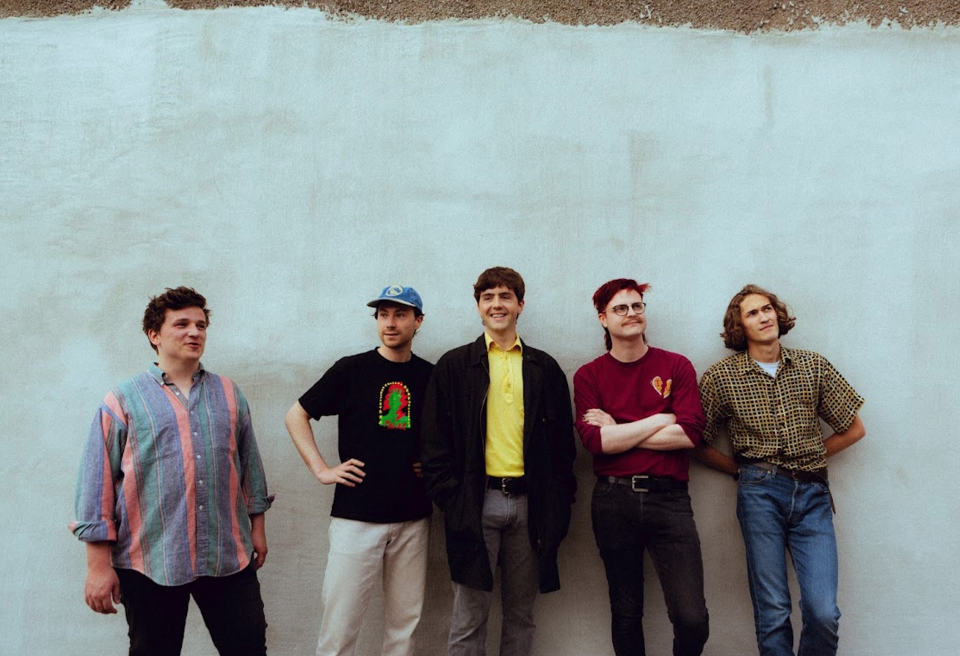
The cult leader of the infamous lo fi gods, The Bordellos, Brian ‘Bordello’ Shea has released countless recordings over the decades with his family band of hapless unfortunates, and is the owner of a most self-deprecating sound-off style blog. His most recent releases include the King Of No-Fi album, a collaborative derangement with the Texas miscreant Occult Character, Heart To Heart, and a series of double-A side singles (released so far, ‘Shattered Pop Kiss/Sky Writing’, ‘Daisy Master Race/Cultural Euthanasia’, ‘Be My Maybe/David Bowie’ and All Psychiatrists Are Bastards / Will I Ever Be A Man). He has also released, under the Idiot Blur Fanboy moniker, a stripped-down classic album of resignation and Gallagher brothers’ polemics. His latest album Atlantic Crossing, a long overdue released collaboration with 20th Century Tokyo Princess’s Ted Clark, was released last month.
Each month we supply him with a mixed bag of new and upcoming releases to see what sticks.
Blush Club ‘A Hill To Die On’
29th October 2021

Jade Fair, Devo and early Aztec Camera all spring to mind when listening to this very enjoyable 4 track EP, which by no means is a bad thing as all three artists are all excellent. As are Blush Club, who have their own jerky melody filled lyrical filled songs of nonchalance, suave fun and also some bloody fine guitar lines. This is a band that shows guitar music can still be entertaining and vital.
Fran Ashcroft ‘A Tour Of British Duck Ponds’
15th October 2021

Fran Ashcroft, one time member of 70s power poppers The Monos! and now producer par excellence, has decided to release his own album: and why not. And what an album it is; an album of Liverpudlian psychedelia that’s very soft on the ear and gently melodious. It reminds one of another great Englishman, Martin Newell and his non de plume Cleaners From Venus, and this album is indeed very English sounding with typical gentle northern humour running amok on the excellent lyrics: ‘The Legendary Fish Of The Mediterranean Sea’ being a bit of a gem.
The whole album can only be described as utterly charming with a lovely warmness of production, as one can only expect from Fran. A Tour Of British Duck Ponds is an album that will keep you warm and smiling in the oncoming cold winter months, and can be downloaded for free from his Bandcamp. So I would recommend you to do so, especially if you love the works of Wreckless Eric or the aforementioned Cleaners From Venus or the writings of Ray Davies.
Pepe Deluxé ‘Phantom Cabinet Vol. 1’
22nd October 2021

Phantom Cabinet Vol. 1 is an album that exudes sex and individuality; an album that exudes stage show pop star glamour with an experimental psych soul and funk not witnessed since Shirley Bassey drank Prince’s LSD spiked cum.
Yes indeed an album for lovers of the unusual a serious of music misadventures blended in into the soundtrack of some seventies TV cop show shown in reverse. Pussy Galore and Jethro Tull dancing naked with a young Pans People whilst Jimmy Seville rubs down his microchip with Dave Lee’s lack of style and grace. This album is adventurous, beautiful and melodious, and gives hope for modern music loving aficionados as it takes from the past but makes it sound like the future.
Yol ‘Viral Dogs And Cats’
(Crow Versus Crow) 29th October 2021
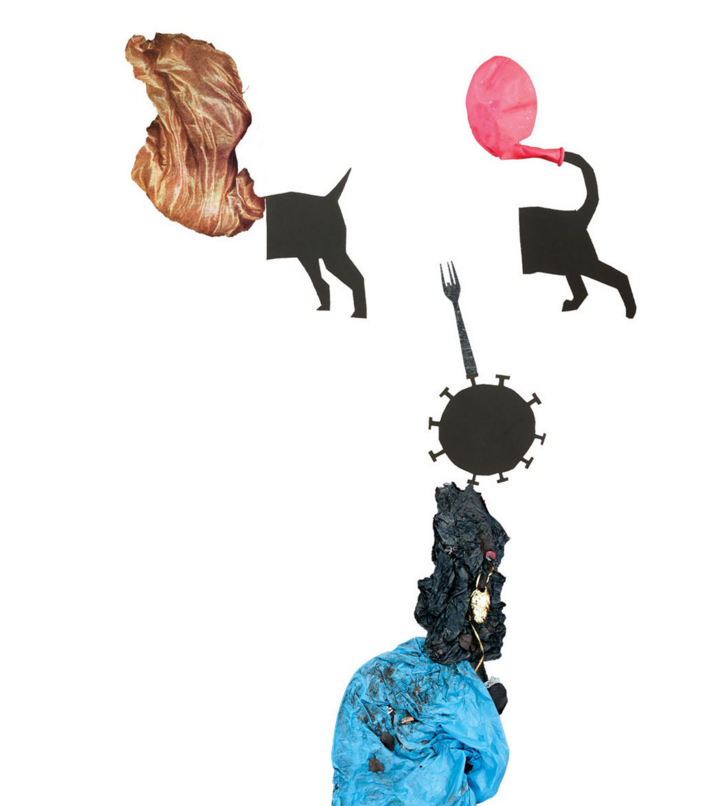
Thank FUCK for this album; it has just washed away all the tuneful perfectness of well-written and performed guitar music. This is an album of pure inspiration that has me laughing with tears running down my face and will have me shouting “expensive ice cream” all day and night. One of the finest albums I have heard this year and certainly one of the most entertaining: pure undiluted brilliance. I’m really finding it hard to find the words to express how much I adore this album, so much so that I’m going to buy the cassette and I don’t even own a cassette player. Pure genius.
Nick Frater ‘Earworms’
(Big Stir Records) 19th November 2021
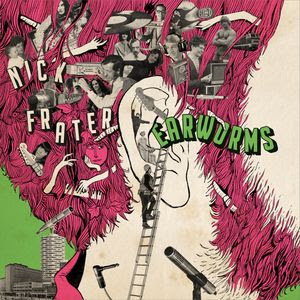
I like Nick Frater. He has the songwriting pop nous to make music that more than hold its own with the pop rock brigade of the 1970s, which is indeed no easy thing to do as pop music in the 70s was a special and magical thing made with sugar coated radio huggabilty that today’s wannabes can only dream about. But Nick is a master of the pop hook with a clean-living sheen that you could polish your furniture with just a turn of the radio dial. Yes radio dial not radio of the Internet variety but the kind people use to listen to in the millions those days when BBC DJs used to fondle under-aged girls, and being in the charts meant something, and kids used to scribble the names of their favourite bands on their school bags. If Nick was recording then no doubt his name would be scribbled on many of those bags and his photo used to back teenage girls school work books and his poster on the walls of many of the teenage population, and we would find out what his favourite colour and the name of his pet dog was in the week’s copy of the Look In magazine. So what am I saying I hear you ask? Well what I’m saying is Nick Frater makes music the equal to and sometimes surpasses pop radio hits when pop music was at its finest and most life enhancing, and Ear Worm really is a must have for those who remember those days with a nostalgic tear and a smile. And also for those who were not fortunate enough to be alive during that golden decade.
Die Zimmermänner ‘Golden Stunde (alle Hits 1980-2017)’
(Tapete Records) 12th November 2021

Ah wonderful, at last a label that has had the good sense to release a best of comp of the wonderful eccentric German band Die Zimmermanner, who make wonderfully eccentric life affirming pop music and who, if sang in English, no doubt would get the acclaim they deserve.
A band who takes post punk, Northern Soul, Ska and pure indie pop, country and every other genre of music and release heartfelt melody ridden gems of pop songs; songs filled with squelchy keyboards, saxophones, plucked and strummed guitars; songs filled with a love and understanding of what makes pop music great, and understanding what makes great pop music they go ahead and make great pop music. And this album is jam packed with it.
Spring 68 ‘Sightseeing Through Music’
(Gare Du Nord) 22nd October 2021
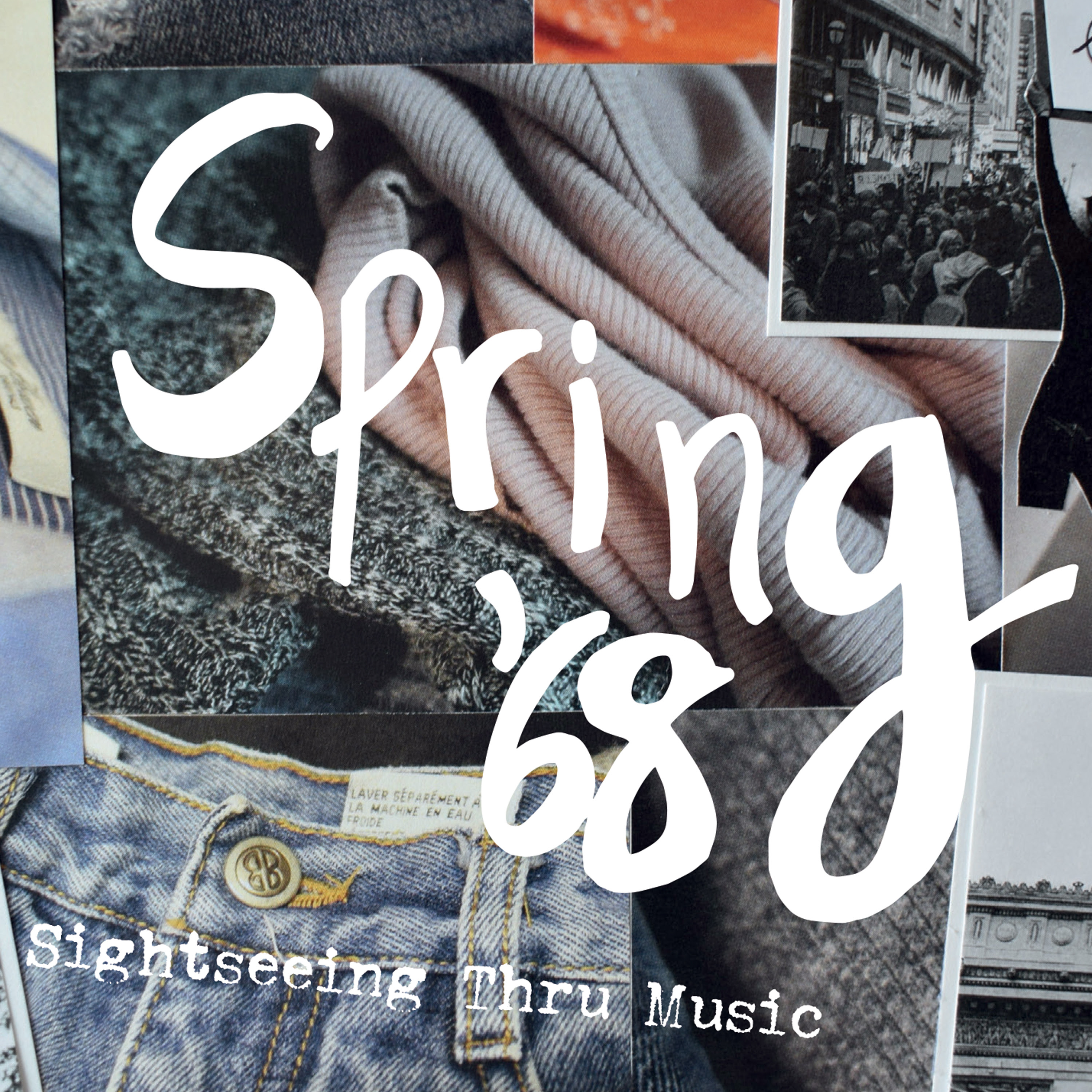
Any album that kicks off with a spring heeled soul funk piece of smoothness that could have stepped out of ‘A Romantic Paris’ of 1968, and then goes into a Public Image like mantra of revolution and life, on ‘High On Happiness’, is alright with me. And that is what I like about this album; as it is indeed a clever sounding album that at no point sounds like it is patting itself on the back.
Sightseeing Through Music is an experimental pop album that is not too experimental nor too pop, but an album that balances both equally, and in doing so draws the listener into this magical journey of bewitchery. Mellow subtle dance drumbeats merge with mature and well-produced melodies of psychedelic flutes, funky bass lines and well-written original songs. It really does not sound like anyone else, and an album that sounds like an album not individual songs joined together by a trendy haircut and a Jazzmaster guitar.
Sightseeing Through Music is a complete triumph and shows the death of the album is just a fallacy pushed by Spotify toking hipsters who have not the intelligence to listen to an album from track one to the final finale, and musicians who neither have the talent or original thought to stretch beyond a “I love you” and a pair of new trainers. As I have just said Sightseeing Through Music is a complete triumph and also a breath of fresh hair.
Dub Chieftain ‘Homeworld’
(Metal Postcard Records) 21st October 2021
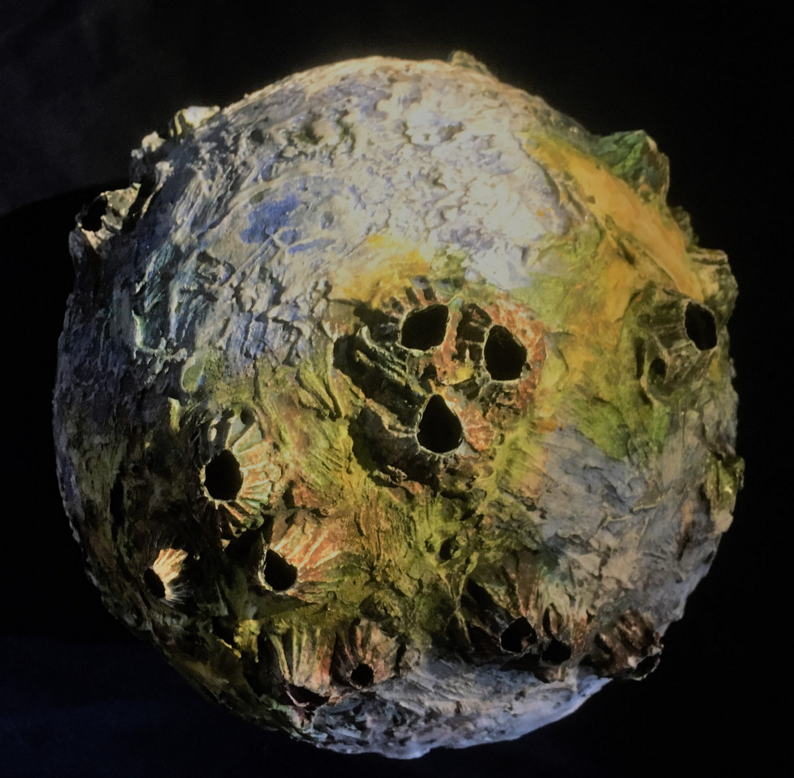
Dub Chieftain is back with an album of persuasive dance frenzy; an album that takes the alternate state of ones being and turns it inside out turns it into a mass of contradictions that takes the biscuit from one’s tea and inhales it into a much-maligned tooth filled wonder. Yes indeed Dub Chieftain has given us an album filled with invention frenzy and soul; of arcade game adventure and beats that have not been heard since the last Toxic Chicken album.
It is always a pleasure to listen to an album that has so much going on. You actually lose yourself and find yourself wandering around a strange place taking steps down avenues you have never strolled before, marveling at the wonders that fill your wide open eyes and the sounds that engulf your eager ears and fills your minds with visions and imaginary tales. Homeworld is such an album, and as the old saying goes, ‘there is no place like Home’, but on this occasion we will say there is no place like Homeworld.
Aliens ‘30Ilbs Of Air’
(Metal Postcard Records) 17th October 2021
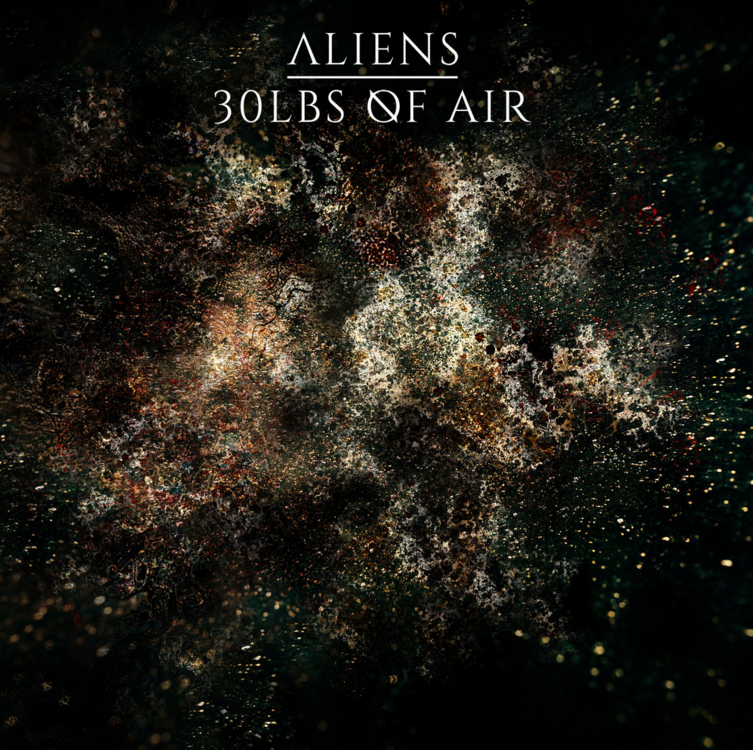
This is quite a lovely album; an album of old-fashioned song writing with tunes and hooks and melodies and well played instruments, and is indeed a very warm sounding album of almost eighties like pop rock sounds that sometimes verges on MOR: I could well imagine Simon Bates playing ‘So Long My Love’ and making it his track of the week all those years ago. And that is exactly what I enjoy about this album, as well as the fact on the whole you do not hear new albums like this released much nowadays. And although I cannot see it picking up many reviews and airplay from the movers and shakers of todays dying music industry, it should not go without some praise.
I m sure if this album was released back in the eighties it would have been on CBS or WEA not the wonderful indie that is Metal Postcard Records, and I am quite surprised to see it on that mighty label. But I suppose MP does like to surprise and I’m pleased to say this is a very pleasant surprise.
Legless Trials – What We Did During The Fall
(Metal Postcard Records) 3rd November 2021

The Legless Trials are back only weeks after their debut EP with an absolute corker of a debut album; once again showing just how important both the Legless Crabs and Salem Trials are to the underground. The Legless Trials of course are made up of multi-instrumentalist Andy from the ST and vocalist Son Of El Borko from the LC. And together they take their love of strange and confrontational lyrics to the amazing guitar virtuosity of Andy, who once again proves he is one of the most talented and original guitarists in the underground currently.
At times this album takes on a late seventies American no-wave feel and also has me thinking of the classic Yoko Ono Plastic Ono Band album: having the same nagging taking a knife to your heart riffery. It really is quite stunning stuff and El Borko is on top form with lyrics of deep insanity that can only be performed by the imagined love child of Fred Schneider and Mark E Smith that El Borko must surely be. There is not a track that is not truly wonderful on this album and is the sound of two musical mavericks on the top of their game. I would recommend dear readers that if you have not yet heard either Salem Trials or The Legless Crabs you should go and treat yourself and download all their albums, but start with this one as it is an absolute gem.
Eamon The Destroyer ‘A Small Blue Car’
(Bearsuit Records) 12th November 2021

The latest release from the excellent Bearsuit Records is the album by Eamon The Destroyer, who any readers of my round ups might remember I reviewed a single by them a few months ago, praising it to high heaven. And I’m pleased to announce this album does not disappoint in any way: if that was possible from a Bearsuit release.
As ever modern soulful electronica mixes with many other genres – rock, folk, metal, noise, psychedelia – to give us a fascinating and enjoyable listen; at times giving us a glimpse at what it would sound like if Arab Strap and Broadcast had decided to join forces and release a mighty opus. Other times recalling the might Mercury Rev at their finest.
A Small Blue Car is an album filled with beautiful music, beautiful songs; ‘Humanity Is Coming’ being an extremely touching moving track that finishes with a howl of feedback that is a joy to behold. This album once again shows there is powerful, extremely original music being released and being ignored by the so-called tastemakers in 2021. I do not think the indieground music scene has ever been so healthy, and A Small Blue Car is just one album I have heard in the last few weeks that is in contention for the best of, in the end of year shenanigans we blog reviewers like to lose ourselves in. Another gem from the Bearsuit label then: just add it to their ever-growing list.
Kalporz X Monolith Cocktail: [Scoutcloud] “Drommon”, Smote’s Acid-Folk Horror Spell
November 8, 2021
FROM OUR ITALIAN FRIENDS AT KALPORZ/ Monica Mazzoli
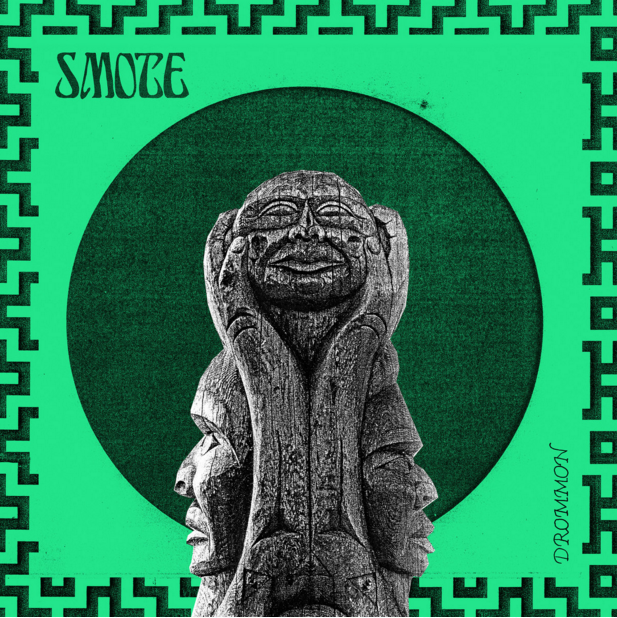
Continuing our monthly collaboration with the leading Italian music publication Kalporz , the Monolith Cocktail shares reviews, interviews and other bits from our respective sites each month. Keep an eye out for future ‘synergy’ between our two great houses as we exchange posts.
This month Monica Mazzoli introduces us to the music of bewitching acid-folk of Smote.
A sound experience: Smote‘s ‘Drommon’, initially released in April of this year only in the box by Base Materialism, is out this month on vinyl through Rocket Recordings in an expanded version: four tracks, instead of two, that sound as terrifying, as apocalyptic as if John Carpenter were producing an acid folk soundtrack to set to music a hypothetical remake of Brunello Rondi’s Il Demonio.
The studio project of Daniel Foggn, Smote is definitely one of the artists’ to watch out for in 2021: drone music, psychedelia and acid folk. On 21 November, they will make their debut live at Brave Exhibitions Festival as a full band (a quartet).
Monica Mazzoli can be found on Twitter.
The Perusal #22: Dear Laika, Stereo Total, Boom. Diwan Ft. Nduduzo Makhathini, Spacelab…
November 4, 2021
A Look At What’s Out There/Albums and EP reviews/Dominic Valvona

Jaguwar ‘Gold’
(Tapete Records) 22nd October 2021

Literally bursting back on the ‘scene’ with a driven psychedelic and rocking cyclone of future on-message pop, the Berlin and Dresden spanning Jaguwar trio finally release their new album after a three-year period of “intense” touring (well, up until Covid put travelling on hold).
In a constant reverberated state, Oyémi, Lemmy and Chris pummel and whip up a both halcyon and brooding maelstrom; raging against the machine, monuments and constraints of the now, whilst clearing a path for a giddy borderless utopian future. There’s “strength in individuality” they cry as another mini-epic of drilled drums, acid kinetics, echoed cybernetic growled bass and speed shift effects blast away.
Less noisy in part, but no less ambitious and sprawling sound wise, with constant crescendos and climaxes, Jaguwar conjure up a lush, dreamy but also moodier musical soundscape. At the heart of each flurry of sonic activity lies a more commercial friendly pop melody: think Mew or MGMT. The rounded softened anger of ‘Monuments’ has an air of Tears For Fears; the skipping prog-rock edged title-track ‘Gold’ a hint of Bloc Party and Muse; and the big drum sound opener ‘Battles’ an echo of the Secret Machines.
Gold is an intense maelstrom, bursting to explode; a warbled duel vocal yearning and rile for a brighter, inclusive future.
Boom. Diwan Featuring Nduduzo Makhathini ‘Minarets EP’
5th November 2021

Lushly conceived across three countries (UAE, Kuwait and South Africa), if not at times caught in descriptive choppy maelstroms, the Arabian-African collaboration between Boom. Diwan and Nduduzo Makhathini is imbued with the spirit and soul of both partner’s heritage. From the Abu Dhabi-based musician and ‘applied-ethnomusicologist’ Ghazi Al-Mulaifi led Boom. Diwan ensemble the rhythm and song of Kuwait’s pearl divers and Islamic poetry, and from the Blue Note showcased South African pianist Makhathini the spiritual sounds of the Zulu heartlands and a blend of the semi-classical and jazz.
Named, as are the EP’s tracks, with titles that act as much as metaphors for forgiveness and the tumult of the times “Minaret” in the Arabic language is a beam of light, a lighthouse even, but in the Islamic world is usually meant as the tower attached to a mosque, from where the daily calls to prayer are sung. Here its venerable position is part of a fluid, often melodious swept-up landscape in which Arabia meets Southern Africa.
Flowing across the peacefully lulled lyricism, hand-clapped and gently splashing or tumbled drums and almost transcendent guitar accents (which on the more chaotic but no less hymnal ‘Blood In The Wind’ plaint grows increasing distorted and wild), Makhathini’s piano flows freely like gently trickled and more disturbed waters. In that range you can hear echoes of Abdullah Ibrahim, Mingus, McCoy Tyner and John Hicks (in particular Pharaoh Sanders ‘Africa’).
Diving for ‘The Pearl’ both musical spheres come together in an almost romantic performance: vulnerable but warm. Melodic spiritual Arabian sung harmonies with spells of free jazz, the cinematic and classical feel the air as the dramatic Gulf waters swell from the blessed to the choppy – the piano starts to emulate a touch of the Jaws theme by the end of this pearl dive. It’s a beautiful transportive piece of music, moving, exotic but instantly emotive.
For some reason the next suite (the already mentioned ‘Blood In The Wind’) reminded me of Robert Wyatt: albeit moved to the Middle East. With far more in the turbulent tank, this traverse promises upheaval, even if it is executed most tenderly.
Featuring those handclap rhythms and a tonal serial piano that dances, the proverb-like ‘Raise Your Words’ (“not your rage”) finds more relaxed, calmer seas.
Despite neither of the two collaborators meeting – forming as they did a trusting partnership over candid Zoom calls – Minarets is an incredibly intuitive and nuanced balance of musical styles; a work of great traversing beauty and yearning. I really look forward to these two coming together again in the future.
Also See…
Nduduzo Makhathini ‘Modes Of Communication: Letters From The Underworlds’ Choice Albums of 2020. Here
Noah ‘Étoile EP’
(Flaur) 22nd October 2021

In wisped apparitional and soothed vocal form the Japanese artist Noah evokes a dreamy spell of hushed yearns and beyond-these-realms tidings on her new French-esque EP, Étoile. Translated that title means, “star”, though it’s also the leading ballet dancer in a company, an opera and 1989 movie – in which, the main protagonist is possessed by the dead spirit of a former ballerina. There’s certainly a kind of haunted if diaphanous suffusion of voices and vocals, and more than a fleeting élan of France. The opening floral ‘Rosa Alba’ (the EP’s second single) evokes a late 70s, perhaps early 80s, French movie soundtrack that enraptures romance and mystique into one realist-fantasy. Slowed, steamed trip-hop beats, glistening caresses of angelic harp, tinkles of piano and strings, and patted breaths create an electric glide in blue.
Despite (which no artist can avoid) the pandemic and the driver s behind this EP’s trio of tracks (a rebellion against tradition/authority, and an awareness of deep emotions like anger and sadness) it all sounds so gauzy and beautiful. Often it sounds like we’re hearing just the faintest traces and reverberations of a song. Even when those electronic beats and synthesized drum kit sounds are brought in they are softened, or, motion wise, bobbing along nicely within these translucent structures.
Both the emotional “ah’d” ‘Perdu Au Paradis’ and magical ‘Moonchild’ (the first single) move towards sophisticated shuttered House and minimal Basic Channel beats and clipped baubles of light. Beautifully embodying a smoke-like vapour, Noah weaves emotive vibes from the ether.
Dear Laika ‘Pluperfect Mind’
(UK: Memorials Of Distinction/ROW/US: NNA Tapes) 29th October 2021

Atmospherically sounding like an out-of-body experience of the blurred and gauzy, Dear Laika’s debut album for the label is actually a both dreamy and dramatic celebration and outpouring of emotional-driven articulations born out of finding one’s true self. As a certain death knell toll of bowl and bell-like inner piano workings strike, Isabelle Thorn is set free from one life so she can transition into another.
Despite the anxieties and stressful processes (both medically and emotionally), the years spent in a certain solitude waiting for hormone treatments, the Pluperfect Mind album is filled with a slow-release of elation. “Inhabiting a body that now feels right” the extraordinary choral-voiced experimental artist makes the abstract sound tactile and diaphanous; creating a beautiful, if at times moody and darker, effective soundtrack of venerable, semi-classical relief and hurt.
Although in her notes Thorn declares she has a love/hate relationship with classical music – perhaps because its allurement reaches back to a pre-transitional past -, she casts a magical spell over the piano mechanisms, boundary pushed influences of Reich and Cage, the music of such luminaries as Messian, Finzi and Ravel, and the stirring holy choruses of the Russian Orthodox Church. This is all pulled together and given an almost ethereal and cosmic synthesized treatment of deeply felt purred bass, vapours and various entrancing ambient filters.
That incredible voice, which reads French poetry in the intricate, rattled and chimed ballet ‘Lilac Moon, Reflected Sun’, seems timeless yet also very much of the moment. It can sound under a myriad of reverberated, vaporised and cyber effects like FKA Twigs, Kate Bush, Bat For Lashes and on the scrunch-clap, storm raised ‘Guinefort’s Grave’ like a merger of Bjork and Beverly Craven. At its most haunting, accompanied by that holy choral chorus, like the ‘Requiem’ from 2001: A Space Odyssey. Almost a mirage in places, airy and with a lofty gravitas, Thorn attentively fades in and out of the music, and even time itself – walking off the contemporary set into a Medieval tapestry on the ‘Phlebotomy’ track.
References, connections are made to the Judaic and atavistic myths of the ‘primordial she-devil’ Lilith, who’s symbolism has been transformed to mean all manner of things to all manner of people, religions. In this instance a bewitching Lilith graces the title of a celebration. Another reference title name checks the home made famous in the lead up to Goya’s exile. The “deaf man’s villa’, or “Quinta del Sordo”, was the place where this famous Spaniard painted his haunting and sometimes grotesque character ‘black paintings’ (Saturn Devouring His Son, that kind of thing). Here we are led into a sort of Moorish Spain atmosphere of translucent mysteries. And the already mentioned ‘Guinefort’s Grave’ is song about the legend of St Guinefort: ‘the only saint who is also a dog’.
Processing the memories and the reminders of a less happy life whilst striking out after inhabiting the body she should have, Thorn, under her Dear Liaka moniker, eludes a fragile, vulnerable state yet somehow produces a very confident album. With depth and feeling, she reconnects with a highly intoxicating and mature work of incredible beauty and realisation. Expect to see this album in my choice list at the end of this year.
Charlotte Greve, Wood River, Cantus Domus ‘Sediments We Move’
(New Amsterdam Records) 15th October 2021

The second release this week to feature a highly atmospheric, often dramatic, choral accompaniment; a heaving and diaphanous swell of voices in this case, provided by the Berlin choir Cantus Domus. Controlling these venerable voices is fellow Berliner and award-winning composer-singer-saxophonist Charlotte Greve, who magic’s up a stunning musically amorphous requiem on her new mini-opus.
Once more with the Brooklyn (where the artist now resides) band Wind River backing her, the ever-experimental Greve builds an impressive (almost seamless) album of suites in her image: that’s open, vulnerable and free-spirited creatively. With an emphasis on inter-generational family dialogues and connections too, Greve’s brother Julius has contributed lyrics, which in the mouths of the Cantus Domus choir are filled with the gravitas of an operatic production and given a technically brilliant workout.
The saxophone part of Greve’s accolade-rich CV would reasonably suggest that her music of choice could be jazz. And yes there are hints of it woven and contouring and drifting across some of these seven untethered tracks (a bit of lighter cosmic Donny McCaslin perhaps), but it’s only a small part of the overall sound dynamics. For at times there’s a mix of prog-rock, Zappa, the Floydian, These New Puritans, post-punk and even 80s Yes! All together it makes for a lunar-bounding, often free-falling and barreling religious and avant-garde piece of theatre.
Captivating at every turn, dreamy and floated, Sediments We Move is a gorgeous filmic and evocative album of timeless emotional pulls and élan, with an ear for the experimental.
Lisa Butel & Brent Cross ‘A Low Lament For Love And Loss/The Feeling Of Walking’ (Somewherecold Records) 5th November 2021

This month selection of choice music (as you may have noticed) is particularly heavy on voice/vocal experimentation; none so more then the double offerings from the Vancouver-based collaboration of sound artists, Lisa Butel and Brent Cross.
Another product of stress-relief and vehicle for abstract anxieties, feelings and terms of bereavement felt through the creation of music, during the harrowing and restrictive pandemic this sonic and empirical voiced partnership created a moiety of albums. As release valves for pent-up feelings of loss and isolation, these two album suites are full of blended and manipulated minimal synthesised sounds, piano accompaniments from a family heirloom, and a gauzy flow of uttered, elegiac, aria and tonal vocals.
A Low Lament For Love And Loss takes a one-hour improvised session and breaks it down into seven parts of varied elegy and ethereal sung mystique and diaphanous outpours. To a flutter, ripples and fuzzy synth undulations and drones, Butel’s voice yearns syllables and sounds. Often they sound otherworldly, or as in the case of the slowed, stripped Red Mecca era Cabaret Voltaire, buzzing and crisp Middle Eastern tinged ‘Intro To Lament’, like a mysterious call to prayer from atop of a minaret.
Wafted, drifted, translucent yet deeply felt that voice and accompaniment is entrancing but often tragic; dealing as it does from the loss of Cross’s mother, whose Heintzman piano can be heard throughout, fluctuating between sentimental tinkles, singular patted notes and melodious dreamy passages.
The Feeling Of Walking is in a very similar vein, though the process is a little different, using the voices as a sort of comfort and meditation. Opening beautiful gesture ‘I’m Giving Out The Love’ is like a mix of ambient generated dreaminess and slowcore; ‘Super Skies’ an almost monastic kind of poetry. There’s even a kind of Japanese dulcimer-like feel to the ghostly, delicate ‘The Beautiful Women’.
Two congruous releases of pent-up emotions delivered in the form of an experiment between voice, piano and a palette of purposeful oscillations and manipulations, Cross and Butel’s lockdown albums act as a personal process but above all sound fully immersive and cathartic: A communal, connective experience.
Hellenica ‘Blood Meridian: An Imagined Soundtrack’
(Somewherecold Records) 15th November 2021
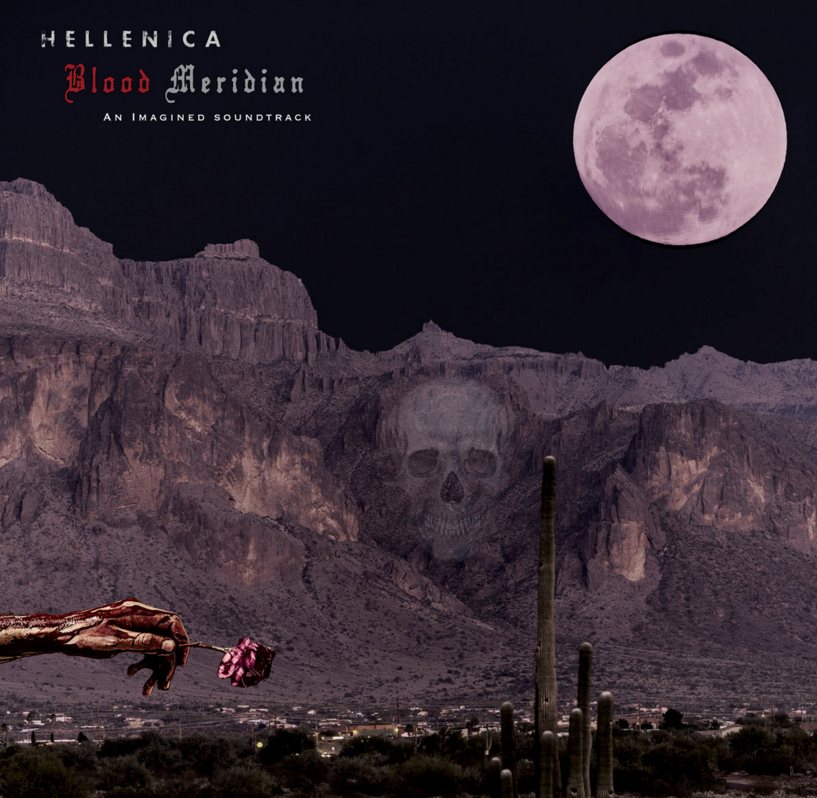
You can’t read everything. And so now wishing I had read the evangelised Cormac McCarthy’s supernatural anti-Western Blood Meridian tome, I’m left feeling out-of-the-loop with Jim Demos (aka Hellenica since 2009) imaginative soundtrack for that acclaimed novel. Like one of those “what could have been” fandom generated homages, Jim’s cinematic score graces the movie yet to be made of that violent story – think Peckinpah totally uncensored and off the leash.
I admit I’ve had to do my research – yeah it’s a book friends have championed in the past, but never made my reading list. But in brief, Blood Meridian is at least tenuously based on the all too real horrifying exploits of the Glanton gang of miscreants; led by the early Mexican-Texas settler, ranger and mercenary John Joel Glanton. Scalp-hunters for hire, accustomed to blood bath massacres of not just the indigenous people but also anyone that crossed their path, this notorious skulk ran riot in the old West. Told from the perspective of a volunteer (I say volunteer, it was this or the rope) known only as “the kid”, the reader’s immersed in a old Western story of hurt and pain, and introduced to the gang’s leader “The Judge”; a sort of daemonic magnetism of a character, half gory guru, half Kurtz, who every character in the book meets and leaves the presence of in some state of semi-spiritual conversion and menace.
Jim loosely makes references to various chapters, scenes from the story; the most obvious being the opener ‘The Blood Of Toadvine’, which refers to the character of the same name, an acquaintance of “the kid”, member of the gang and the link in the chain of events that lands our protagonist towards almost esoteric barbarity. Here it’s scored with a yearning Western vibrato twanged arrangement that takes us across a supernatural-desert landscape. Hints of a voiceless Crime & The City Solution, the Bad Seeds, Alex Puddu and a very removed Roy Budd merge into that setting.
A re-imagined Morricone rubs shoulders with John Carpenter, Mandy soundtrack Jóhana Jóhannson, Wovenhand and Belbury Poly on this intrepid gothic, often eerie album of bloodletting. Yet amongst the Western tremolo and rattles, the mirages and warbles, there’s a suffused current of 80s sci-fi, adventure, and a dream-realism spell of Gallo thriller/horror. There’s even a touch of early Mute Records synthesized drums, and an air of new romanticism Visage on the deep groaning, skeleton bones traced ‘Parallax And False Guidance’. And the “169” frequency broadcasting, soft cantered ‘Westward Again’ sounds like a meeting between Kavinsky and Moroder.
Despite the material at its core, this soundtrack is peppered with sounds of celeste like chimes, soft walking melodies and dreamy halftime progressive jazz drums.
If they do ever get past all the issues and actually get this book on the screen, Jim’s got the soundtrack ready to go. Western scores have rarely sounded so different and mysterious; tragic and esoteric.
Spacelab ‘Dead Dimension’
(Hream Recordings) 12th November 2021

Growth and death manifest themselves in the celestial vortex and expanses of an imagined universe on the new Spacelab album. The strains of coping with a pandemic that is far from over, the anger, resentment, paranoia and hopelessness of it all is channeled into a soundtrack made in real-time: a spontaneous process that captures the exact state of mind and resulting mood music there and then.
Always in a spiral or cyclonic loop; always travelling at a certain velocity through space, Dead Dimensions captures the dying reverberations of a dead star, or, sets the dials towards hyper-drive, thrusting through tunneled and warped light passages of kosmische, ambient and sci-fi music on its way to a rendezvous with otherworldly escapism.
In amongst the pulses, continuous reversal effects, speed-shifts and oscillations the sound of plucked ambiguous instruments, even melodies, can be heard: but only in snatches. At times choral voices can be made out, leading to distant cathedral symphonic music and a mere resonance of Kluster and Tangerine Dream.
Spacelab’s emotional states lead to skying across neutron-calculated clouds, probing paranormal activity aboard a space freighter, and journey’s inside a roulette table spinning transport hub. Satellites, fleeting snippets of memories and debris fly by on this hurtle through a universe of mystery, lament, curiosity and gravitas, as Spacelab concentrates grief, rage and despair into a sonic cosmology.
See Also…
Spacelab ‘Kaleidomission’
Almeeva ‘To All My Friends EP’
(Baciami Disques) 29th October 2021

A touching, inclusive gesture from the electronic composer Gregory Hoepffner, who welcomes one and all to experience the ecstasy and euphoria under the roof of his Almeeva dance music club. Amongst a special set of N-R-G, Euro-dance music, techno and electronic body movement, the multi-instrumentalist producer lives in the moment for once.
With a mixed CV that includes stints as a producer and collaborator, and compositions that span TV, film and commercial projects, a slight jaded Hoepffner has now been revitalized and “redeemed” after a move to Sweden and creative exchange with the producer of critical and commercial heft Christoffer Berg (Depeche Mode, The Knife, Robyn, Fever Ray) – Those creative sparks must fly continuously as both producers now share a studio together.
Hoepffner’s relatively new Almeeva guise and EP suggests, at least, a happy medium of club land dance music and a free-flow of expanded ideas: even the cerebral. For amongst the house music style piano refrains, swimmingly sun filtered melodies, Euro-trance and beats there’s snatches of sagacious freedom from the trans icon Beverly Glenn-Copeland (the jazz-poet-singer-songwriter who went public in 2002, identifying as a trans-man). In a tribute to the now late Andrew Weatherall, Hoepffner leads the listener through a myriad of sonic rooms; from trebly gnarled Killing Joke post-punk to indie-dance, baggy and the Chemical Brothers. Basically a crossover of styles that’s very much in keeping with the late eclectic artist: the spirit of Weatherall is strong on this one.
As if to mix things up, slowcore siren Diane Pellotieri (of Pencey Sloe fame) sings like a mirage-filtered apparition on the cyclonic swirled dance track ‘Slowly Fading’. This dreamy voiced haze of Balearic and love blanketed Euro-dance music reminded me a little of the Boston synth group Violet Nox. Another surprise is the short lived ‘interlude’ of cathedral rays and airy veils ‘Church Of Ecstasy’ – a kind of ambient cosmic release of Vangelis meets Sven Vath.
If as the Almeeva style Hoepffner says, he’s trying to avoid fitting labels, then I’d say the To All My Friends EP is a success. He doesn’t just side step them as to run freely across a whole array of electronic genres, never settling in any of them for long: always on the move.
Stereo Total ‘Chanson Hystérique 1995 – 2005’
(Tapete Records) 5th November 2021

And so we bid adieu, a fond farewell to the original idiosyncratic bilingual Franco-German duo, who couldn’t have foreseen when setting out this sprawling celebratory box set that it would actually be the last release to feature the maverick magic of Françoise Von Heve (nee Françoise Cactus) who passed away back in February of this year. That now leaves Friedrich Von Finsterwalde, aka Brazil Göring, without his foil.
Alas Chanson Hystérique is now a epitaph and tribute to an astonishing polygenesis mind; one that could effortlessly run through tiki lounge chanson, booted knockabout glam rock, ye-ye, Jacques Detronc, transmogrified spurts of Transvision Vamp, Gainsbourg, Françoise Hardy, Lizzy Mercier Descloux, circus tremolo fandangos across Casio keyboards and The Fall on just one album: namely the duo’s ‘95 debut Oh Ah!
It was a relationship that in the end spanned four decades. But it’s the first decade of recordings, with a number of compilation rarities and some of their theatre work that makes up this seven X CD chronicle. It begins with the already mentioned rambunctious debut and finishes with 2005’s Do The Bambi.
Like the accompanying sketchbook of artwork that comes with this collection, anything goes: as long as its fun. Usually with a Eurotrash of lo fi keyboards, punk-pop low rent drum kit and guitar, the duo serenaded, danced Honolulu style to country music, and performed hijinks versions of both famous and the most underground covers: from KC And The Sunshine’s Euro fun ‘Get Down Tonight’ to an ESG like romp at Salt-N-Pepa’s ‘Push It’ and a version of that famous French pop masterpiece, as made legendary by Vanessa Paradis, ‘Joe La Taxi’.
With much continental élan, pep and humour, plus lashings of irony, Stereo Total switched between French and German (and English too) languages and musical styles; somehow always maintaining their own unique signature. A signature that could be summed up as German new wave meets French gauloises wafted aloofness post-punk. All of which is softened with a Gallic mischief and 60s café culture meets bubblegum pop coolness.
Unless you’re a fan, or familiar with the Monokini, Juke-Box Alarm, My Melody, Musique Automatique, Do The Bambi and Carte Postale albums you’re in for a rare surprising treat. Even if you don’t recognize the name, you’ll recognize the music, which has adorned many TV ads over the years. From the salacious to cute; Mondo to empowering, Stereo Total were a marvel; a unique musical force for good. No one but Sparks comes close. And influence wise their sound has been amplified to all corners of the globe.
This box set could just be the most fun and escapist package of the year. And for that it’s worth owning.
Hi, my name is Dominic Valvona and I’m the Founder of the music/culture blog monolithcocktail.com For the last ten years I’ve featured and supported music, musicians and labels we love across genres from around the world that we think you’ll want to know about. No content on the site is paid for or sponsored and we only feature artists we have genuine respect for /love. If you enjoy our reviews (and we often write long, thoughtful ones), found a new artist you admire or if we have featured you or artists you represent and would like to buy us a coffee at https://ko-fi.com/monolithcocktail to say cheers for spreading the word, then that would be much appreciated.
Premiere: (Single/Remix) Cephas Teom ‘Tomorrow’s World’
November 3, 2021
Premiere Special/Dominic Valvona
Photo Credit: Natasha Alipour Faridani

Cephas Teom ‘Tomorrow’s World’
(METR Records) 5th November 2021
Here we are again, just over a year later and a premiere of another multi-layered, multi-sensory piece of sophisticated electronica from the West Country musician and producer Pete Thomas, moonlighting under the ancient language etymology of Cephas Teom (decoded that translates as the Aramaic for “Peter” and Hebrew for “Thomas”; pronounced as “Seh-fass Tee-um”).
Last October we premiered the Feet Of Clay EP, which we summed up at the time as: ‘A synthesized soundboard certainly, but one that has a soul and atmosphere: Imagine a jazzier Autechre and more twinkled Yuk.’
As a congruous bridge between that record and the debut Cephas Teom album, Automata, released next January, the ‘Tomorrow’s World’ single continues to channel Pete’s quandaries, concerns through the voice of others: From Jung refuting materialism to the speculative sci-fi author Ursula K Le Guin talking about how her childhood influences her musings on the future, and the member of the fatalistic Heavens Gate cult – adamant that only collective suicide would usher in and speed up the UFO chariot that would deliver them to their God.

Name-checking the long running, generally optimistic BBC series Tomorrow’s World, this latest single is woozy with nostalgia for a more innocent examination of the future. An escape in one sense to a society yet to be allured into the Pandora’s Box that is the Internet in the 21st century; when technology promised so much: benevolence, altruism and democratization. And so the synthesised vapour wave of Outrun arcade games and anime soundtracks, VHS idents, J-Pop and incidental TV music ripples and glows with both a warm and heavy bass vision of a vocal-free Yukihiro Takahashi, Sakamoto, the Nippon Columbia label and Kavinsky. But nostalgia isn’t what it used to be (as someone once famously quipped), and despite the retro feel on this 80s style electro bubbled track there’s a certain mood of uncertainty and dreamy filtered disconnection. This all fits in with Pete’s concept of finding meaning in a crumbling society; and in this case reconnecting with the lost idealism of a pre-Internet age.
Sending the original onto another plain entirely, seasoned electronic traveller Cristian Vogel maps out an extended journey through ambient, techno and trance with a nine-minute remix. That four-decade resume proves its worth, with touches of his years on the Tresor (the first UK artist ever to be signed to that iconic German label) and Magnetic North labels alongside sonic references of Jeff Mills and the Basic Channel and Bureau B imprints. Vogel stands on a cosmic porch recording the lashing rain whilst in the living room a literary interview can be heard dreamily weaving in and out of cyclonic swirls, tablas, jazzy piano spells and rotating space diamonds.
A second remix finds Pete’s co-conspirator on the METR Records label James Cameron (performing under his own alias KEMS) applying the lightest of touches. The rain is present once more, but as a trickle, whilst the original interview sample becomes more focal and somehow creepy. The music is ambient and alien, with glassy bauble notes and droplets falling in a soft spacy cascade. Cameron almost turns it into a semi-spiritual otherworldly meditation.
‘Tomorrow’s World’ is released officially this Friday (5th November) through the METR label. The Monolith Cocktail has been given a two-day head start, with a special premiere of both Pete’s original vision and Vogel’s remix.
Our Daily Bread 477: Jamael Dean ‘Primordial Waters’
November 1, 2021
ALBUM REVIEW/Dominic Valvona

Jamael Dean ‘Primordial Waters’
(Stones Throw) 29th October 2021
Anything but indulgent, the much acclaimed American jazz and hip-hop prodigy, Jamael Dean, dreams big with a most ambitious new twenty-track album of tribune and social-political clout. Nothing less than raising the spirits of Black-America, Dean weaves together both a respectful acknowledgement of his Yoruba roots and a street view celestial hip-hop/jazz symphony tribute to L.A.’s Leimart Park – a predominantly Black neighbourhood that’s said to be on the ‘frontline of gentrification’, known for its Black business owned community hubs like Eso Won Books, the Sika Art Gallery, Ride On bike shop and World Stage.
Not so clear cut, nor divided, the Primordial Waters flow between jazz, soul, hip-hop and the classical; the vocals, a mix of diaphanous contoured, lush, lulled and more worked female voices and Dean’s own Freestyle Fellowship mixed with Tanya Morgan and Odd Future poetic, aggrieved observational and conscious raps.
Referencing various deities, spirits from the Yoruba peoples ‘primordial’ creation myth, much of the material splashes around in tumultuous waters as Dean’s collaborative foils, Sharada Shashidas and Mekala Session, use their voices like melodious instruments. At their most intense those vocals, which flow between ancestral dialects, lyrics and sounds, evoke a wailing Linda Sharrock, and just beautifully transcendent when untethered and free. All the while that electric piano spot, dashes and lays down baubles of brightened notes, whilst the drums splash around and offer shimmers and waves of choppy, galloping swells. Beyond-this-realm atmospherics build up a dreamy yet earthy soundtrack of Yoruba mythology.
The Yoruba’s roots began in what are now Nigeria, Benin and Togo, spreading out to all corners of the continent and overseas as a result of both conquest and enslavement. Their deities, traditions are both paid homage to throughout this mini opus. As a musical legacy this civilisation, which spawned the Oyo Kingdom and Benin Empire, is immensely rich and influential. And so across this story of creation there’s hint’s of that influence as well as touches of Sun-Ra, Bobby Hutcherson, Alice Coltrane (Dean’s own ‘Galaxy In Leimert’ is inspired, influenced by Alice Coltrane’s harp-piano spiritualist ‘Galaxy Around Olodumore’), Clive Zanda, Nate Morgan (especially ‘Mrafu’), Nduduzo Makhathini, Mango Santamaria and Pharaoh Sanders.
This grand sweeping cosmology (well, the last third of it anyway) takes a turn towards hip-hop, with Dean rapping over, in some cases, his own jazzier tracks. Like in the style of the late J. Dilla, even Madlib, these groundings are often chopped up, looped, slowed down and reconfigured: The shadowy but celestial mirage ‘Abyss’ reminded me a little of cLOUDEAD. It’s a congruous but expansive turn that takes on a whole different mood, rhythm and cadence; becoming more like a rap album then a wholly jazz orientated one: And for that it works well.
The Primordial Waters have been stirred up to create a grand scheme of spiritual, ancestral inspiration. Multi-layered with titles that in themselves encourage further study – naming a pantheon of African gods -, this is a wonderfully executed work of free-flowing picturesque and more turbulent beauty. If I believed in those fatuous scoring systems used by so many rival sites, this would be a nine of out ten: awarded not just for effect but effort too.

