The Perusal #34: Claude, Li Yilei, The Movers, Foch/Delplanque, Staraya Derevnya, Brown Calvin…
August 8, 2022
Dominic Valvona’s Reviews Roundup
The Movers ‘Vol 1 – 1970 – 1976’
(Analog Africa) 5th August 2022
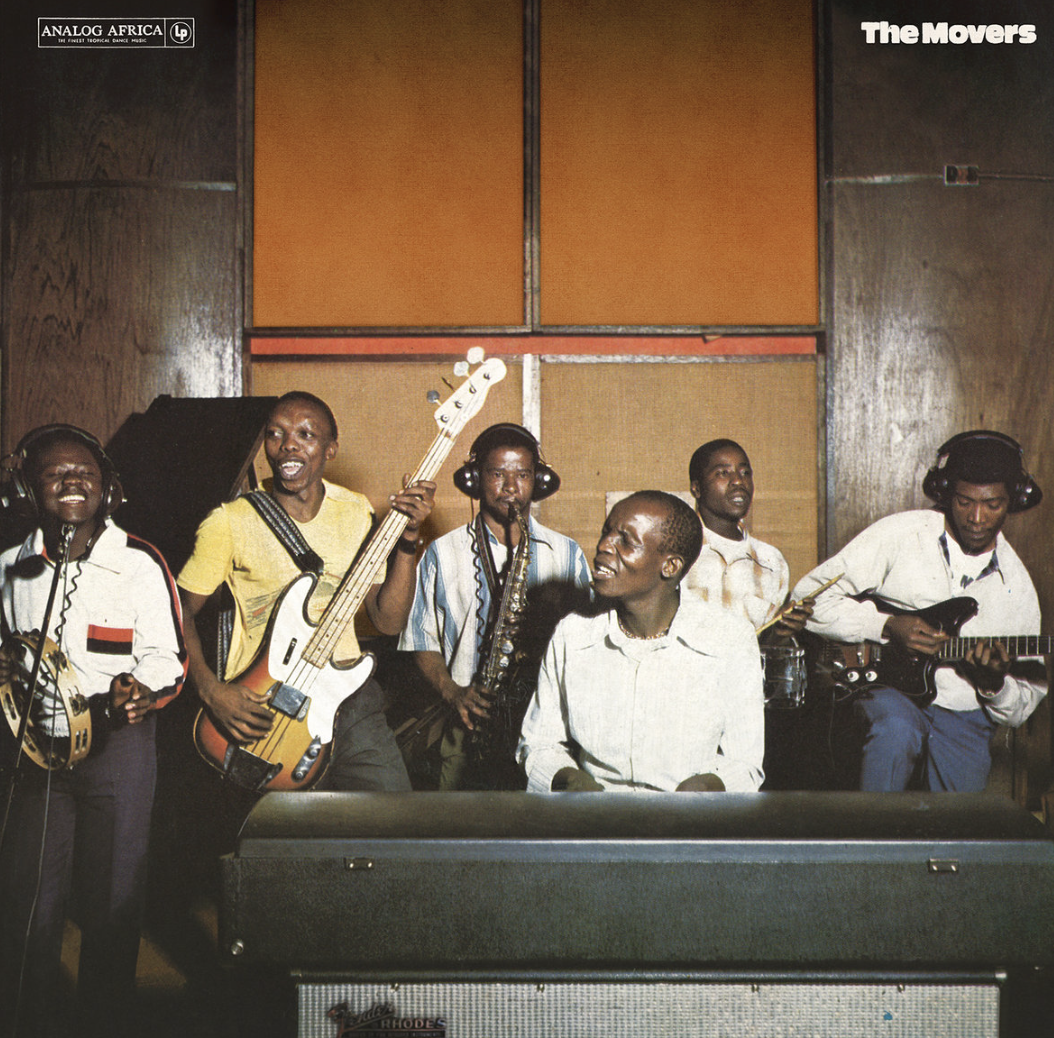
Although it struck Samy Ben Redjeb (founder of the Analog Africa label) instantaneously, the impact that was felt on that day in 1996 when introduced to the neat, sunny-side-up Township soul of The Movers has taken more than two-decades to come to fruition. But now in 2022, finally, there’s a choice compilation of the South African band’s back catalogue to rave about and soak up: just in time for a sizzling, Earth-scorching summer.
Possibly one of the most popular bands of the 1970s in their homeland – even breaking the Apartheid bonds of segregation as the first black band to get airplay on white radio stations -, The Movers have nevertheless left behind scant information, and a provenance riddled with holes. This is despite selling 500,000 copies of their debut LP, Crying Guitars, in just the space of a few months and in providing a peaceable (almost Caribbean in lilt) anthem (‘Soweto Inn’) soundtrack to the mid-70s student revolts and resistance. Yet it proved extremely difficult to track down anyone involved in this South African sensation.
However, what Samy did glean after help and introductions from Kaya Radio’s Nicky Blumenfeld was that the band first took shape in the late 60s, instigated by the two relatively unknown musician brothers, the bassist Norman and guitarist Oupa Hlongwane. To make this band a reality, the brothers approached the Alexandra township-based businessman Kenneth Siphayi with a proposal: if Siphayi would lay-out the money for them to buy some instruments in return they’d give him a cut from future live shows and record deals. In the end their patron didn’t just dole out the funds but took on a manager’s role, introducing them to the simmered, evangelical balm organist Sankie Chounyane. The ranks soon swelled however to accommodate the funky tight drumming of Sam Thabo and the relaxed reeds of saxophonist Lulu Masilela.
Initially they signed to the Teal Records label in 1969, releasing an instrumental record. But almost right away they worked with the vocalists Blondie Makhene (a fourteen year-old vocal prodigy we’re told) and Sophie Thapedi. With a great soulful voice Thapedi sang one of the band’s most popular, enduring hits ‘Soweto Inn’, and channeled Miriam Makeba on the Overton Berry Trio-esque organ suffused, cheek-popping and beautifully wooed ‘Ku-Ku-Chi’. Makhene for his part sounds far beyond his years on the infectious, stained glass township boogie ‘Kudala Sithandana’ and, in harmony with a heavenly female chorus, sounds a bit like Labi Siffre on the whistled fluty R&B turn ‘Six Mabone’.
Unmistakably South African; blessed with that languorous sunny disposition groove, The Movers took a piece of Stax soul revue, Booker Ts’ organ, Steve Cropper’s effective but never overplayed licks, and a taste of The Meters and combined it with the indigenous Mbaqanga (also known as “township jive”) and marabi (a sort of ragtime, jazzy and bluesy style that evolved out of the mining communities, synonymous for its cheap keyboard-led sound) styles. This spills out into reggae, even rock steady, yet always sounds inherently relaxed: never pushed, hurried. Chounyane’s organ standouts, but it never overpowers nor seems particular showy: thin but very effective, a township Ramsey Lewis bathing in the Lord’s light. ‘Give Five Or More’ is an unpressured eased introductory like beauty that features a buzzy organ but also those Stax chops and some gentle drum sizzles –for some reason it reminded me, melody-wise of The Monkees.
A soul revue from the heart of South Africa’s politically explosive townships, The Movers delivered a light gospel-tinged fusion of ripe hotfooted, containable energy. It would be a sacrilege to miss owning a slice of those sweetened South African-lilted R&B, soul, funk and rock steady grooves, so do yourselves a favour and pick up Vol. 1 this summer.
Claude ‘A Lot’s Gonna Change’
(American Dreams) 12th August 2022

Disarmingly wistful and woozy, the refined production and songwriting on Claudia Ferme’s debut album lays a gossamer veil over a litany of anxious quandaries and existential malaise.
Almost, to her credit, effortlessly dreamy, Ferme floats and drifts into a myriad of introspective roles, rooms and scenarios under the Claude alias. The Chicago-based artist nails the despondency of the times whilst giving a most languidly deadpan but essentially captivating voice to the growing pains of a “twenty something”: that first decade of “expectation”, of real responsibility, and yet in this infantile age, in which – especially my generation – we cling to youth and even childhood, you’re still considered an empty vessel and teenager with nothing to worry about and everything to look forward to. But Ferme offers up a certain emotionless face to such woes, troubles; even lightening the mood with the most diaphanous of laidback and aloof vocals, and a backing that is gently smoldered in a relaxed mix of 70s soft rock, synthwave, dream and art pop.
Featured a little while ago in one of my monthly perusals, the inaugural single and opener on this album, ‘Twenty Something’, sets out the vision and mood with its closed-eyes wispy saxophone motifs and perfectly dreamy reflections: “I’d rather be hurt by my own doing, then be let down by someone else. At least that’s what I tell myself.”
That’s followed by the most recent single, the Gabriel Garcia Márquez inspired ‘Roses’, which takes a line from the feted Colombian author’s famous Love in The Time Of Cholera novel and runs with all its metaphorical, symbolist connotations. The thorny prick of this flower’s stem and the book’s obsessive protagonist’s eating of it, bot alluding to themes of self-tortuous behavior. But what we take away from the song and lyrics is that we all need to be a lot more forgiving.
Elsewhere the painful anxieties and mental fatigue hang like post-it notes attached to a bedroom mobile on the listless ‘I Think I’ll Pass Today’, and on the all-too realistic outcomes of a burst bubble of love naiveties, Chromatics vapour trailing ‘Claustrophobia’ – a longing if dry yearn for magic and something lasting in a cynical world of fleeting, vacuous feelings and connectedness.
In contrast, the acoustically gorgeous ‘Meet Me’ has a slight air of Blonde Redhead and some kind of Spanish peppering. But the song that, softly, breaks the wafted, lush mold is the almost rocking ‘Oh, To Be’, which sets Ferme against a more electric spiky backing; adding a silent scream and edge to the synthesised suffusion.
A Lot’s Gonna Change is a most wonderful, captivating and skilfully delicious debut that subtly evokes the worlds of Aldous Harding, EX:Re and Cate Le Bon. A coming of age songbook, a rebirth, in which the harshness of the epoch, the pressures both unique and synonymous with a generation finding its way, are snuggled in a relaxed balm.
Staraya Derevnya ‘Boulder Blues’
(Ramble Records)
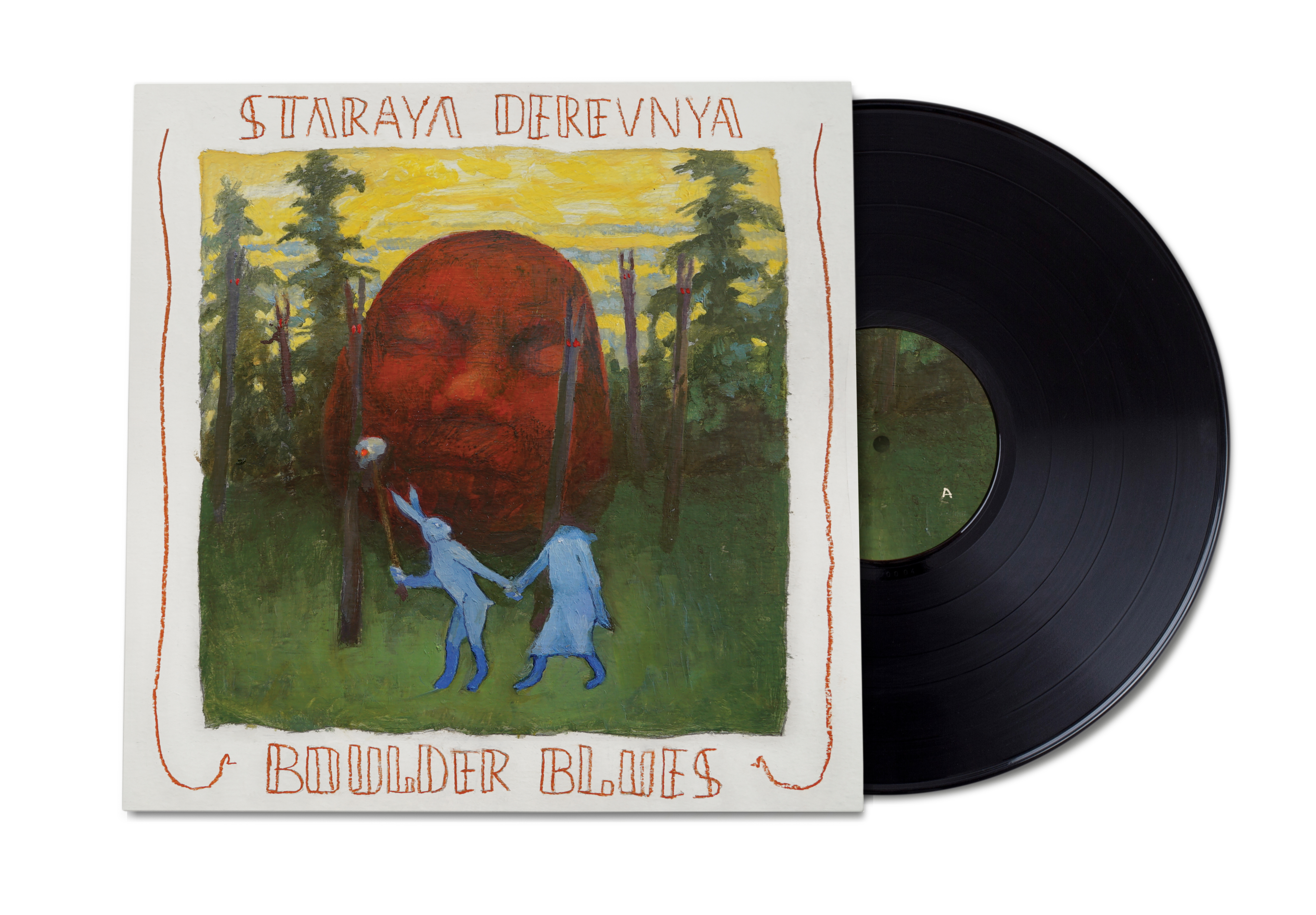
The pan-Israel ensemble are once more on the move, recording another elevated and mystical ethnographical transportive work that takes in and transduces not only their native lands but also the UK, Germany and Mexico. Boulder Blues then is a geographical soundboard of history and the avant-garde; of evoked ancient nomadic tribes and primitivism made psychedelics, and a mantra iteration of a very removed form of what we know as the blues.
With up to eleven (could be more) band members involved, many of which drift in and out of this five-track assemblage of peregrinations and mental release, there’s a lot to take in: to work out. Like “what the hell was that sound?” Or, “where the hell are we?”
Scratchy nylon Beefheart and the Velvet’s guitar, hoots and erratic mooning voices merge with Širom-like (that’s the second time I mention them in this roundup) percussion, Unlimited E.F.S. series Can skits and Faust as fantasies of the Mongolian steppes, the Black Sea, Kabbalah mysticism and krautrock era Germany are invoked. At times it resembles a communion between the Red Crayola and Holgar Czukay; at others, 666 era Aphrodite’s Child share the byway with Don Cherry and Pharoah Sanders.
Staraya Derevnya are totally out there with their “bubbling pelt” and “gallant spider” poetic descriptive wanderings, pains and blues abstractions. Still, they remain rhythmic, even melodious in places; dancing, marching and on the trinket ringed, shadowy ritual title-track, exhaustively repeating the same incantation for five-minutes straight.
I must confess. I really dig this collective. And I’ve even included them in the blog’s choice albums list before now. Boulder Blues is another incipient esoteric, magical album of post-punk, krautrock, psychedelic, far-out and primitive traverses.
Li Yilei ‘Secondary Self’
(LTR Records) 26th August 2022

Spanning the entire Covid epoch, so to speak, and a period in which the sonic sculptor-composer Li Yilei travelled from her London-based home to native China and to Shanghai, Secondary Self is a surprisingly (as the PR notes remark) cohesive album of hidden source material powered recordings, abstract hymnals and coded language.
Made up for the most part by pieces originating from a Café OTO commission, there’s also an omitted (due to time constraints) track from Yilei’s 2020 debut album Unabled Form, plus the more recent serene meditation ‘Melt’ from February of this year. That spare experiment, ‘Warmth Ageing’, was created during sessions for the inaugural album synthesis of the evanescent and tactile; an album that received a glowing review from me at the time. Not so much interchangeable this searing, buzzy winged metallic current is a congruous fit on both albums; neither of which particularly offer connective themes of concepts.
That main body of work continues Yilei’s keening simulations of transformed settings, rumination’s and repurposed white spaces; created from a number of obscured and experimentally stretched instruments: the reverberation of percussive bowls and a serial wrangle of echoed guitar tabbing, harmonics and improvised squiggles. There may well be some kind of stringed instrument in there, effected and smothered in reverb, but for the majority of the time the trace of anything familiar is synthesised, electronically morphed into something more abstract, stranger, and on occasion, diaphanous.
It’s something approaching the beautiful that opens up the Secondary Self as an affecting otherworldly siren is sustained across the near ethereal, crystallised freeze of ‘A Hush In The Dark’. A semblance of some kind of voice and almost tender notes provide a touch of the natural: the composer even. As the title would suggest, the second suite ‘Bird Box’ once again features the familiar: the whistle and tweets of birds. Only this avian chorus is given a lunar galvanised bouncy buzz; accompanied later by a drilled code, or, a pummelled Morse-coded read-out. And so a back garden bird box is pierced with the higher sonic register and transported to some place else entirely.
‘Mosquito Alarm’ seems to be slowly driven by a looped photocopier, but flits with deeper bass-y pitches and cosmic mystery. There’s a brief spell of dog howls and more bird communication amongst the dreamy, near psychedelic lapping reversals, incanted whispers and memory recalls of ‘Murmur’ however.
The remaining tracks burble, vibrate and oscillate, recalling vague signs of early 70s analogue experiments, Ambient Works Vol. 2 Richard James, the kosmische and the unsaid. Yilei’s square waves, acousmatics and ruminated efforts cannot be easily defined. Instead, this is a sound that fluctuates between the arts space, the outdoors, and an amorphous myriad of electronic genres. This third album will do much to reinforce what I already knew back in 2020, that Li Yilei’s visions are quite unique, and that the artist is constantly pushing at the boundaries to create both the challenging and meditative.
Foch/Delplanque ‘Live Au GRM’
(Parenthèses Records)

From the equally hallowed and chthonian atmospheric environment of the Maison de la Radio et de la Musique’s studio 104 in Paris, an extemporized performance recording now made available, nearly, six years after its initial transmission.
By 2016, the year of this Groupe de Recherches Musicales curated concert series, the drummer-percussionist Philippe Foch and his foil at the time, and subsequently, the multi-tasking electronic music composer, critic, author, teacher (the list goes on and on) Mathias Delplanque had already produced the collaborative Taarang album that led to a 2015 residency at the National Centre For Musical Creation in Reims, and the Secret album of material recorded from that performance.
Pretty much accustomed to each other’s methods, by the time of Live Au GRM the synchronicity was at an apex, with Foch at the centre of a world percussive assemblage and Delplanque at his side sampling the results in real time.
Recondite empirical vibrations, scratches and stretches across frame drum skins and the resonance of cymbals are transformed further by Delplanque into otherworldly, mysterious forms of primitivism, mythology, musique concrete, the strung-out and cavernous. For we could well be in the incense chambers of Byzantium, the Minotaur’s maze, or, transported to India with a serialism burst of tablas.
Over the course of 26 minutes there’s bot spacious and sporadic passages of unprepared playfulness and exploration in an environment circled by scurrying bestial movements and noises from the darkness. Incipient patterns, traces across tubular metals emerge but are often shunted, shuttered and dissipated back into the shadows.
An alchemy of slapped and paddled physicality and shimmered reverberated trinkets, tinkles emanate from Foch’s eclectic ensemble of instrumentation on a polygenesis performance of hollowed and far denser bass-y tones. In places it reminded me of an entirely stripped of melody Širom, bits of Amon Düül II’s more experimental Dance Of The Lemmings and a little of Faust’s Werner “Zappi” Diermaier.
Scrabbled, almost clawed, and more singular beaten sounds, the hushed ssh-like whispers of a voice and galvanised buzzes appear out of nowhere on a transformative piece of treated and developing improvisation. There really is no telling where this sonic partnership will end up, or what atmospheres they’ll create, only that it will be both esoteric and in an avant-garde direction of percussive and drummed fascination.
Shepherd Stevenson ‘Man Down’
THLTTLDBB ‘SeeUSearching’
(both on Somewherecold Records)
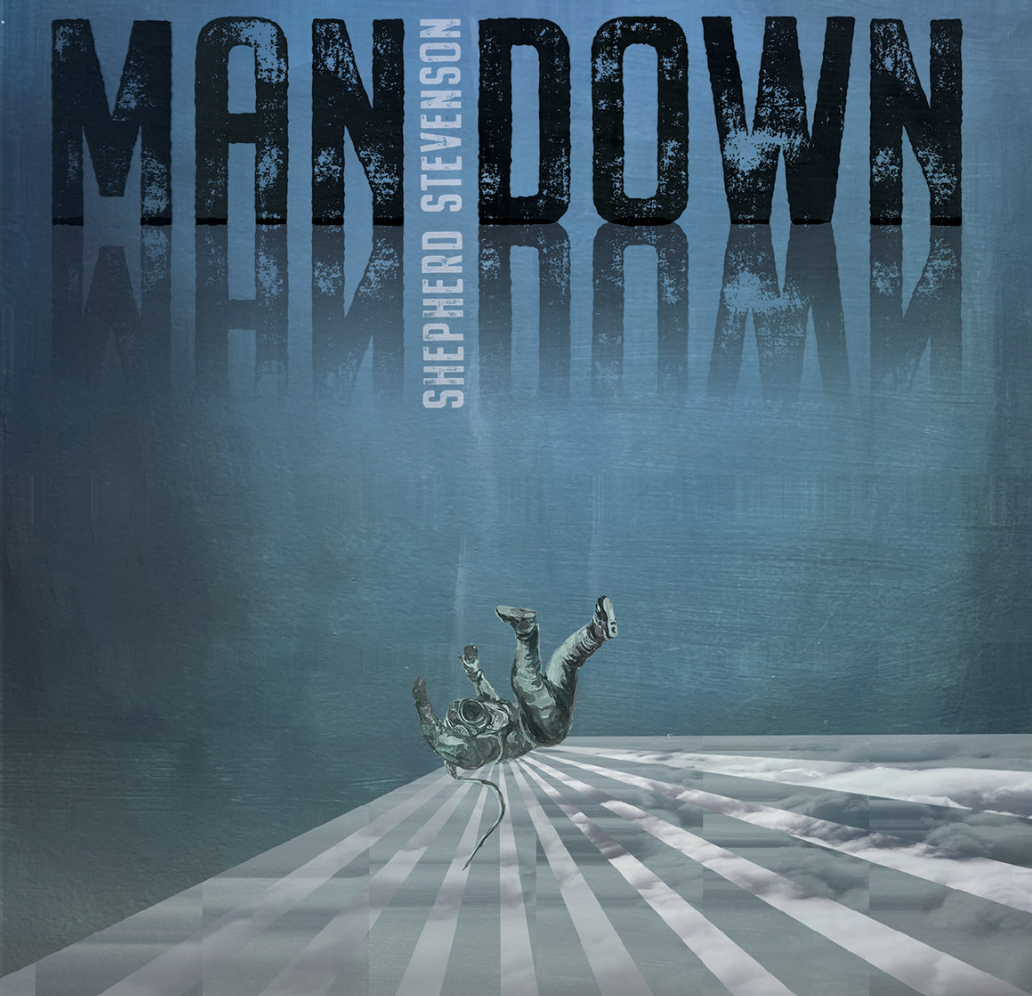
Taking on a filmic quality the multi-tasking L.A. musician, composer and actor Shepherd Stevenson’s inaugural solo effort is rich with the sound of placeable cinematic soundtracks.
Although starting out as and then becoming a stalwart of the alternative 1980s Denver scene (The Aviators, The Young Weasels, Crankcall Loveaffiar), and then going on to help found the L.A. rock band Pigmy Love Circus, Stevenson has also proved a considered hand at composing music for films – a recent list of which includes Erasing Eden, Doobious Sources and Mermaid Down. This album debut, Man Down, was itself originally written to accompany Annie Sperling and Mason Rothschild’s Deep Map art installation, which was projected onto the side of the U.S.S. Iowa, moored in Long Beach; part of the Alta Sea’s Project Blue, a ‘digital port for content and education resources for the emerging Blue Economy’ (that is, exploration, preservation and regeneration of the marine environment). And whether it’s intentional or not, Stevenson often conjures up spells of fluted and dreamy underwater fantasies: ‘Submissions’ to these ears sounds like a Verne-inspired dive beneath the waves, with a touch of both equal enchantment and scuba-equipped Bond thriller.
Occasionally something more foreboding, alien emerges from the depths like some ancient Lovecraftian leviathan. This effect, evocation can be felt on the oppressive and crushing bass, shadowy ‘Old Legions’ – a mix of Jóhann Jóhannsson at his most ominous and touch of Bernard Szajner and Room Of Wires.
For the majority of the time Stevenson molds kosmische, techno and synthwave into various futurist and mysterious projections; stirring up a gently burbled and bubbled acid and fluttered progressive-techno suite of otherworldly sonar waves and cosmic noir on the opening ‘B. Whaler’, and channeling Cliff Martinez on the scalextric-set looping dystopian scares ‘Sadurday’. There’s also some strange Germanic classical fairground thing going on with the Wendy Carlos and Roedelius harped, heavenly ‘ode to toy’ ‘With Dots’. I also detect some lovely climbing Eno notes on the deeply felt and bass-stamped, but neoclassical ebbing, ‘Hoary Notions’. And just when you think you’ve got him worked out, ‘Way Down’ motors at a nice speed towards Germanic 80s synth pop.
Hymnal Western-twanged dives, sci-fi vistas and unknown entities await on a finely-crafted, cinematic quality debut. Stripped of its original visuals, it’s left to the listener to dream and be moved to the lilted and more feared aspects of the imagination.
Under what could just be the longest acronym ever, or a particular recondite sequence known only to the artists, the duo of Matt Greenwall and Phillip Andrew Lewis conjure up the both gently cooed and reverberated hauntings of various imagined transmissions and transduced whispers on their new album of wispy and soothingly effective ambient suites.
Barely above that whisper, these quite but deeply stirring pieces seem to feed a collection of processed video and tape loops into the ether; the returning sound waves, broadcasts now sonic mirages, passages of the American strange, the waves lapping onto a cult 50s soft surf soundtrack, or, the breeze blowing gently across the Appalachian Mountains.
AM/FM radio signals crisply spark as glass birds sound and translucent bulbs ring in the resonance of a drone. The nebulous meets the ghostly; traces of a less fearful Twin Peaks and a haunted theatre are suffused in an ebbing ambient cycle. Voices come and go as movie dialogue is manipulated into echoes of the past. The dreamy spells linger as you catch some hallowed or mysterious presence drifting off into the empirical.
Elements of the semi-classical, trip-hop experiments, European library music, old film image reels and analogue ambient music can all be detected and felt on this both organic but artificially constructed, amorphous album. The opening ambient aria beauty, ‘Angela’s Light’, is worth the entrance fee alone.
Brown Calvin ‘dimension//perspective’
(AKP Recordings) 26th August 2022
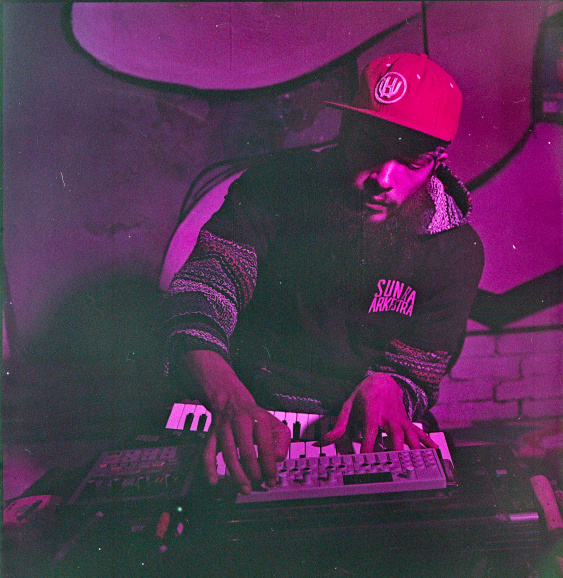
Although split into “dimension” and “perspective” suites the latest elemental album from the Portland, via Philly, producer and composer Andre Burgos is an almost uninterrupted, constantly moving beat-making and cosmic expansive ball of energy.
Under the Brown Calvin alias, and uncoupled from his vocalist foil Brown Alice in the “intergalactic” Brown Calculus duo, Burgos’ Afrofuturist soundtrack transduces all the strains, stresses and rage of the last few years into a controlled chaos of universal proportions.
Traces of hip-hop, jazz, electronica, kosmische, soul and funk can be heard, morphed, effected, and warped as sporadic African hand drums spring into action and scrapped percussion add a sense of ancestral continuity to this ascension into space. Civility, society maybe a tinder box on Earth, but out into the cosmos lies possibilities; a certain escape and serenity, especially sonically, as this album can testify.
An ambitious, lengthy, infinity even, peregrination opens this album. What, in old money, would constitute the whole side of an LP is an astral and contorting vision of analogue-soundboard pulsating circuitry kosmische (ala Tangerine Dream, Moebius and Schulze), Afrikan Sciences oscillations and tangents of beats, ripples and purrs of Rhodes and progressive jazz.
The rest of the album isn’t so much broken up into demarcated parts as a number of symbolist, calculus numbered points along a flipped, staccato or churned journey of expressive freedom. All the shit, the despair and hate is fuelled into a spiritual quest for answers. A multitude of coded, infinity (that word again) suffixed ‘perspectives’ offer variations on the musical themes; some parts in that scope are more liquid, whilst others fracture off into to the psychedelic. Some float, others catch on a ball-in-the-cup loop or form a tumble of breaks. Shooting stars cross the great expanse and dancing translucent bulbs act as notation of a kind. There’s plenty of bending, arcs of distortion in those heavenly realms too; but also the threat of overload.
This is the soundtrack to the African space programme; an untethered energy of J. Dilla, Flying Lotus, slugabed, Don Cherry, Labelle and Floating Points. Burgos has a great capacity, hunger to try out many ideas and to take from eclectic sources; opening the way to free-form movements and a sonic alchemy. The Brown Calvin moniker proves a fruitful transition but also the vessel for a new cosmology and language with which to process our troubling times.
Die Welttraumforscher ‘Liederbuch’
(Bureau B) 26th August 2022
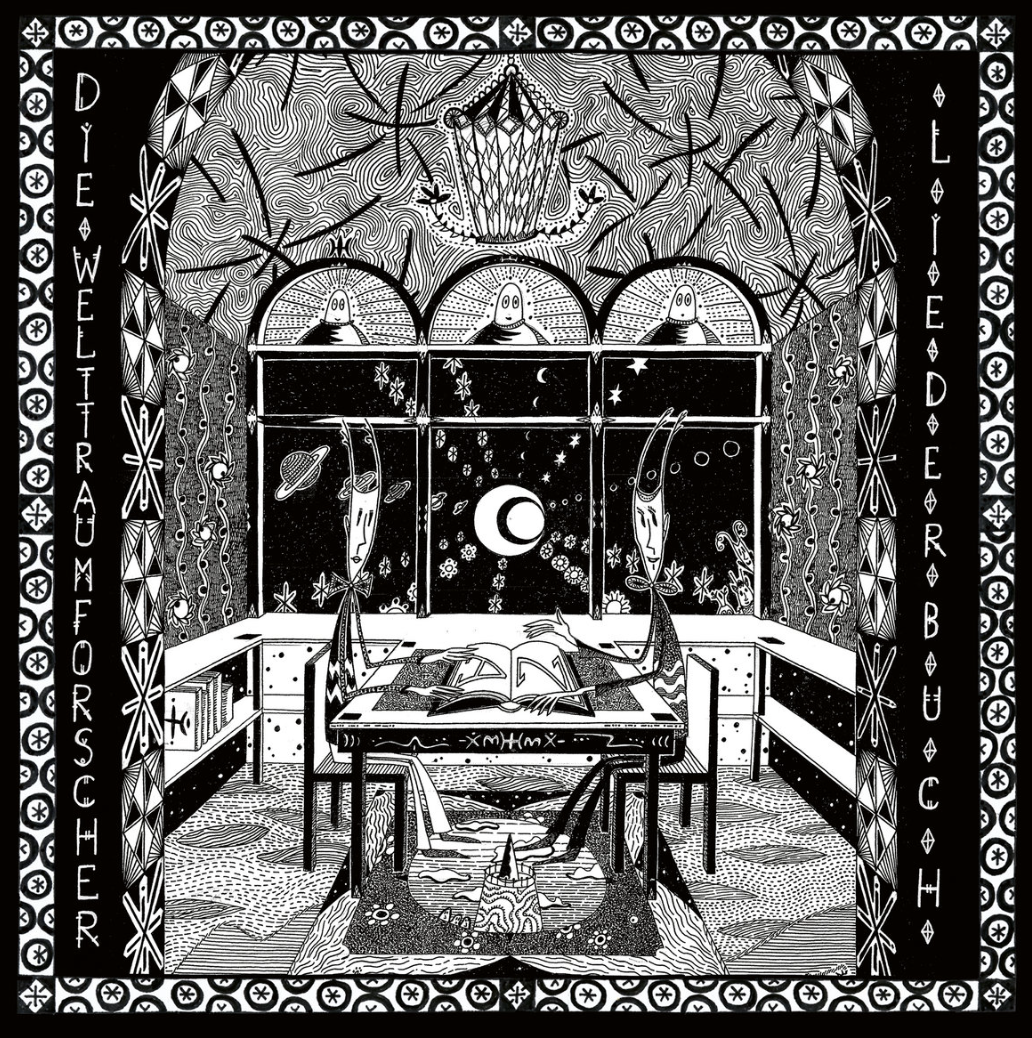
It’s a novel way in which to reconnect with an enchanted world inspired back catalogue; a project that’s spawned at least thirty albums and a fecund of illustrative, multimedia works. But for this latest Die Welttraumforscher (translating as The Space Explorers) album a couple of concept characters look back over a forty-year multiverse and pick out their favourite songs to tell a different story.
Conjured up from the mind of Christian Pfluger, the part Dadaist, part Swiss maverick fantasist, this “pop-up book” of imaginative fairytales now puts the “insect twins” turn compilers Brtz and Brxl at the centre of a new songbook.
Although already receiving a two-part retrospective last year (the fortieth anniversary year) the Liederbuch album seems to reach back to titles from Ein Sommer In Der Wirklichkert (from 1991) and Binike (1986) and keeps up the character board from across the decades.
In this magical landscape we meet cosmic-travellers (Lia and Mira from the Northern Crystal realm), silent forest dweller Ohm Olunde, the mysterious dark pilots, crop-circle researcher Leguan Rätselmann and the Owlmaster Kip Eulenmeister. Reminding me a little of the same magical dioramas and cast that inhabit the musical world of Scarlet’s Well, albeit a both very Germanic and Transalpine version, these characters are often playful, childlike and sweetly placed within an eclectic soundtrack.
Fluctuating between musical moods, genres, Pfluger (who remains very much an enigma) skips through echoes of the German new wave, the bucolic and ambrosian, and more lo fi. From the acoustic, with a touch of some Spanish flair and the pastoral, to preset Casio keyboard synth wheezes, the musical scope is varied and large. Mooning through woodlands to cosmic Theremin-like aerial loons, the storyboard drums up a myriad of settings too.
As influential as he is influenced, touches of progressive idiosyncratic stars mingle with shades of the kosmische, Per W, The Incredible String Band, SFA, Gorky’s Zygotic Mynci, Spike & Debbie and trip-hop. There’s also a bit in ‘Goldene Barken’ where someone blows their nose and coughs to a semi-post-punk, scratchy Velvets guitar backing.
Whimsical, cartoonish, and eccentric Pfluger’s imaginative cosmology remains a curio, a vehicle for escapism but the absurd and fantastical; the music, still after all this time, just as captivating and inviting.
Hi, my name is Dominic Valvona and I’m the Founder of the music/culture blog monolithcocktail.com For the last ten years I’ve featured and supported music, musicians and labels we love across genres from around the world that we think you’ll want to know about. No content on the site is paid for or sponsored and we only feature artists we have genuine respect for /love. If you enjoy our reviews (and we often write long, thoughtful ones), found a new artist you admire or if we have featured you or artists you represent and would like to buy us a coffee at https://ko-fi.com/monolithcocktail to say cheers for spreading the word, then that would be much appreciated.
Our Daily Bread 534: Goon, Revelators, Diamanda La Berge Dramm, Social Union and Julian Tenembaum.
August 3, 2022
REVIEWS ROUNDUP
GRAHAM DOMAIN

Here are this month’s catch-up reviews of some wonderful Albums, and an EP, released in June/July 2022 and out now! Have a listen to the eclectic sounds of: Goon, Revelators, Diamanda La Berge Dramm, Social Union and Julian Tenembaum.
Goon ‘Hour of Green Evening’
Released on Demode Recordings (CD and Download)
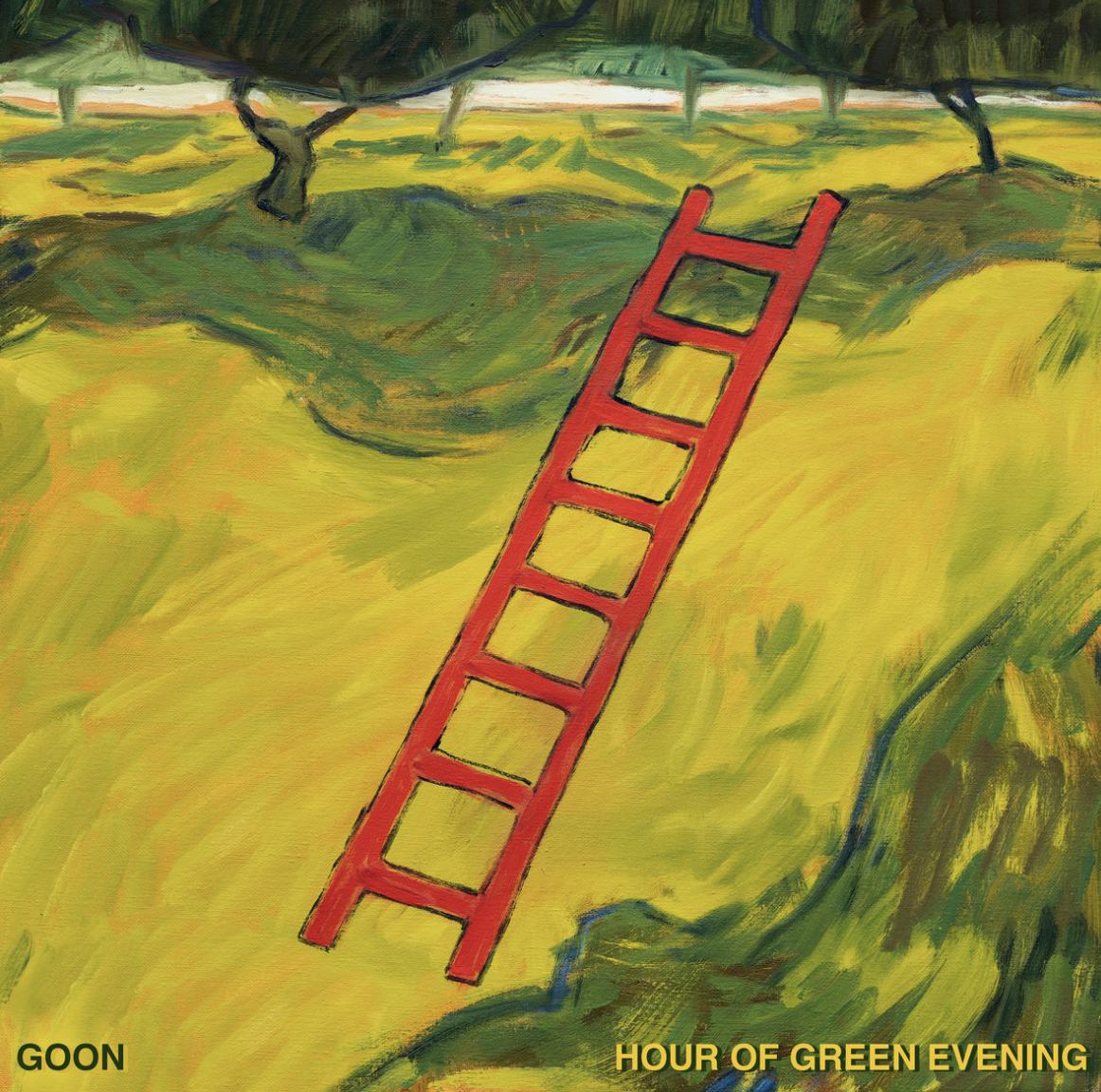
When I first heard the wonderful single ‘Ochre’ I thought the band had a girl singer! However, the possessor of this fine voice is non-other than bandleader Kenny Becker. His voice is a laid-back instrument of calm wonder as he explores memories of childhood juxtaposed with the ups and downs of adult life. Nature and its cycle of decay and renewal form a backdrop to the lyrics – hope ever present like summer rain falling overnight to welcome a fresh day.
The songs have a melodic complexity and melancholic, but uplifting, emotional heft. Shifting between melodic rock-folk and shoe gaze pretension they create a psychedelic haze of hot summer, broken only once by lightning storms as the singer lets out a scream amid a deluge of distorted guitar on the Pixies-like ‘Wavy Maze’.
The more I listened to the album the more I wanted to listen again. It took a few plays to sink its teeth into my psyche but then I couldn’t get enough. Sitting somewhere between Mercury Rev, Midlake and the Pale Saints, this is one of my favourite albums so far, this year. All the tracks are great – the melodies play in the mind long after the record has ended.
Key Tracks: ‘Angel Number 1210’, ‘Buffalo’, ‘Emily says’, ‘Ochre’, ‘Last Light On’.
Revelators ‘Revelators Sound System’
Released on 37d03d Records (Vinyl, CD and Download)
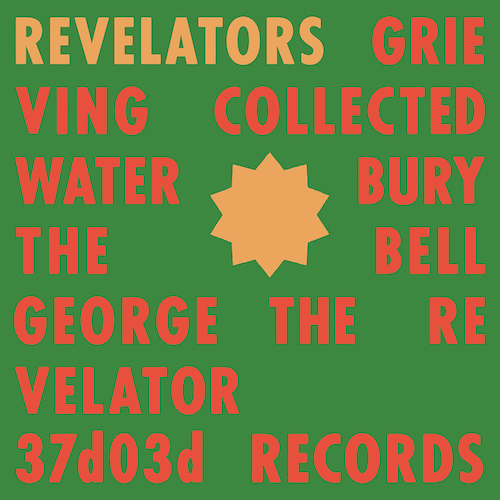
Revelators is a collaboration between singer MC Taylor (Hiss Golden Messenger) and Cameron Ralston (bass player with the Spacebomb House Band). The album consists of four very different improvised and expressive instrumental jams incorporating free jazz expression – both modal and spiritual, funk-jazz fusion, cosmic meditation, tape loop manipulation and sumptuous Indian strings.
The first track ‘Grieving’ is a funk-flavoured jazz instrumental that references Miles Davis 1970’s funk jazz-fusion, in particular ‘On the Corner’. At 10 minutes and eleven seconds we get music that mixes funky clavichord with jazz bass, piano, electric keyboards, woodwind, tape looped guitar and loose funk-jazz drums. At around six minutes the drums drop out and, amid layers of space, we get echoing blues piano riffs, keyboard tinkles and manipulated tape loops that create a certain ambience which promises much, but fails to deliver on its potential, eventually going nowhere.
The second track, ‘Collected Water’, comes over like a small trio from the late 50s or early 60s, spaced out on drugs, playing cosmic modal jazz. J C Kuhl’s saxophone overshadows brushed drums, double bass and piano – the night alive with echo, memories reverberating in dream, until the cold roar of daylight penetrates the astral plane and dissolves the dream reality.
Track three, ‘Bury the Bell’ is an expansive semi-meditational, spiritual piece of music that recalls David Sylvians’ more meditative explorations of the Psyche. Gorgeous Indian strings combine with synth, guitar tape loop manipulation, clarinet and lap steel guitar to create a thing of beauty amid cosmic dissonance! Like music of the spheres heard in the mind, whilst viewing the spectacular Aurora Borealis or the whole Milky Way displayed in a clear night sky! The final track ‘George the Revelator’ is an epic piece of progressive Spiritual Jazz. Cinematic and uplifting, the swelling strings and clipped bass recall the soul-funk of David Axelrod’s Songs of Innocence and Songs of Experience. Subtle wah-wah guitar, Fender Rhodes, bass and funky drums combine with saxophone and foregrounded strings to sublime effect. Just over half way through the loose rhythm leaves space for echoing snare and drum fills and reverberating talking sax, to create an illusionary dub landscape. The music continues to drive forward and develop, in the end producing a sublime imaginary film score, part Blaxploitation, part Pharoah Sanders.
A truly interesting and engrossing collaboration producing a fine album of funk-jazz fusion, experimental and cinematic Spiritual jazz.
Diamanda La Berge Dramm ‘Chimp’
Released on Diatribe Records (CD and Download)

This is strange record by the classically trained Dutch violinist in which she sings/talks while playing most of the music on, and sampling her own playing of, the violin. She makes the violin sound at times like a keyboard, synth, bass drum and so forth. Whilst she is undoubtedly a master of her instrument, here she makes minimal avant-garde music set to compliment and highlight the words of British poet and writer Steven J Fowler. The theme seems to be around monkeys, the workings of the brain and humanity itself.
Her voice, at times, has hints of Kristin Hersh, such as on the standout track ‘Chimp is Who’. At other times, on tracks like ‘Orangut the Orangutan’ her voice has traces of a more reserved but still ‘mad as a hatter’ Joanna Newsome! The songs are separated by the sound of falling rain, birds and other found sounds. In its conceptual arrangement it probably has some common ground with Costello’s ‘The Juliet Letters’. However, this is Art and as such may only appeal to a select few.
Key tracks: ‘Chimp is Who’, ‘Born’, ‘Orangut the Orangutan’, ‘Voices’.
Julian Tenembaum ‘Fragmentos’
Released on Schole Records (CD and download)
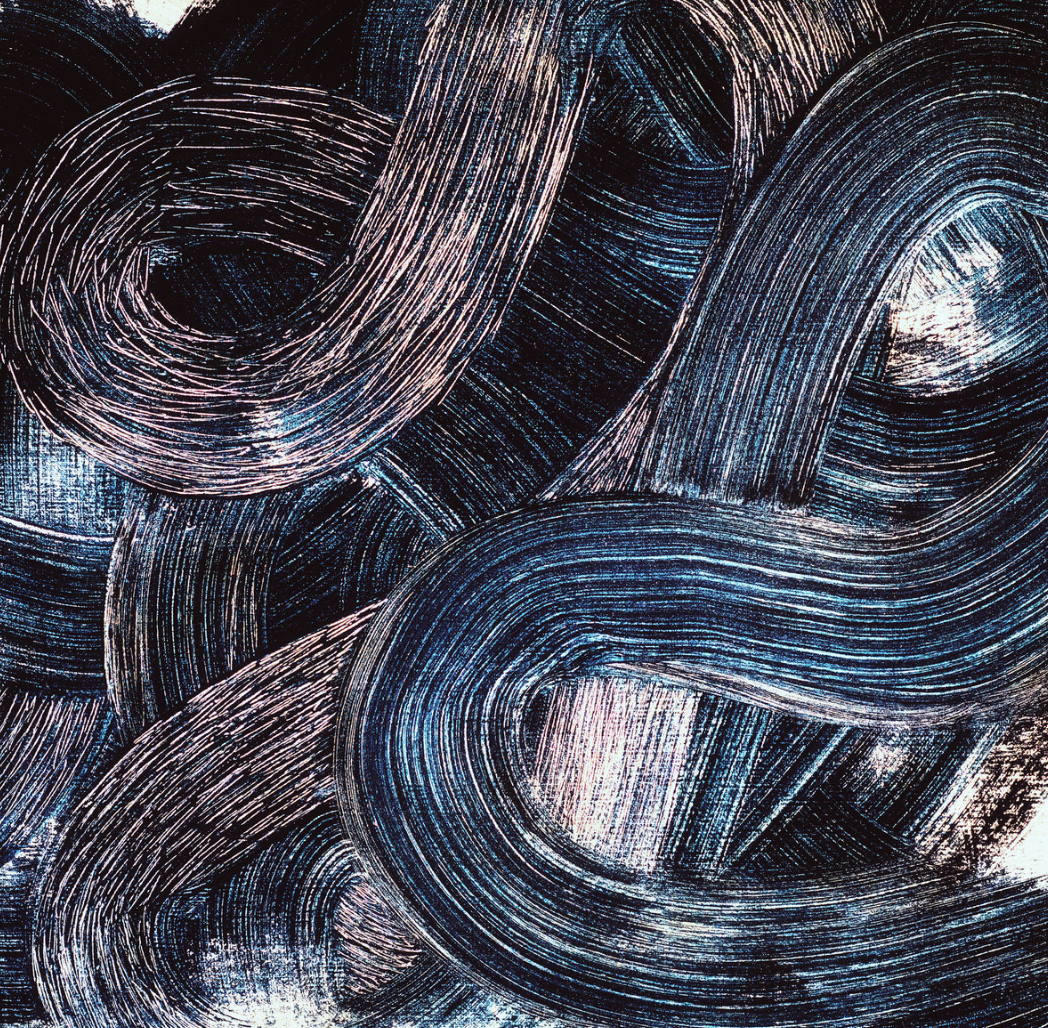
The debut album by Argentinian composer Julian Tenembaum, Fragmentos is an album of nine modern classical compositions for piano. The music is melodic and holds the listeners interest throughout, the pianist having studied and absorbed the style and compositional skill of many of the old and new masters of piano. Sometimes it is easy to see the influence of a particular composer on a piece. ‘Nocturno’ reminds me very much of ‘Porz Goret’ by Yann Tiersen in the way it is played and the melodic progression. ‘1-13 swd’ reveals the influence of Hans Zimmer’s Inception movie theme. However, both pieces are not copies they merely show that the composer has been listening to and absorbing some of the best music around.
It is a tribute to the pianist’s compositional skill and way with melody that the music is original but still makes one think they have heard the melody somewhere before. ‘Eclipse’ put me in mind of ‘The Theme’ from The Deer Hunter, while ‘Fragmentos’ has echoes of both Satie and Billy Mackenzie‘s ‘Nocturne Seven’.
This is a wonderful melodic album that will appeal to fans of Yann Tiersen, Roger Eno, Nils Frahm, Satie, Debussy and Agnes Obel even.
Social Union ‘Fall into Me’ EP
Released July 2022 on Blackjack Illuminist Records (CD, Cassette, and Download)

The four-song debut EP by Social Union sounds like it could have been recorded in the early to mid 1980s! A repetitive cheap drum machine and burbling bass synth, topped with effects laden guitar and jolting synth melodies, underpin cold, distant girl vocals of a certain frosty charm. Goth, Darkwave, Industrial and dark-pop combine in an outsider stance – all black on black! Numan meets the Sisters of Mercy and early Cocteau Twins on a late night, last bus home through Hulme (Manchester) circa 1983!
REVIEWS GALORE FROM BRIAN ‘BORDELLO’ SHEA

– SINGLES –
Andrés Alcover ‘Where Did We Go Wrong?’
‘Where Did We Go Wrong’ is a charming little single, a song that has the grace charm and beauty of a song one might have heard floating from your transistor radio all those years ago in the halcyon days of 70s soft rock pop. It has a warm sunny disposition that covers us the lucky listeners with a glow of soft musical sublimity.
Mike Badger ‘Beatin’ A Path (To Your Door)’
‘Beatin’ A Path To Your Door’ is a stomping piece of rockabilly from Liverpool legend Mike Badger, founder member of the La’s and the much underrated Onset who I remember with much fondness seeing them perform a storming set of country rock in the Royal Alfred pub in St Helens in the 80s: what a night, what a venue, what a beautiful time to be young. But I digress.
What we have here is a just plainly beautiful, raw and sexually driven slice of rock ‘n’ roll, which all rock ‘n’ roll really should have: sex without the sex in rock ‘n’ roll just becomes rock. Yes, indeed Mike Badger lives and breathes the spirit of art and adventure for rock ‘n’ roll without art and adventure is like Ikea furniture – nice to look at functionally but lacking true soul, which cannot be said about ‘Beating A Path To Your Door’, which is anything but Ikea furniture.
Salem Trials ‘Another Fripp World’
(Metal Postcard Records)
A rampart gallivant of a Fall-like track from the ever-wonderful Salam Trials, and a taster to their forthcoming triple album of sonic delight. There really is no-one quite like the Salam Trials; they are the Colombo of rock ‘n’ roll, a true one off who never disappoints, and behind their image of shambolic underdogs lies a beating heart of mind dazzling brilliance.
Lucy And The Drill Holes ‘It’s Not My War’
(Metal Postcard Records)
The debut single from Lucy And The Drill Holes is a gentle laid back stroll through a psychedelic wonderland: imagine a stoned Alice floating down the rabbit hole on a returned memory ridden revisit to Wonderland. A fine debut single. And can we hope for an album? Let’s hope so. There are three mixes of this track and each as beautiful as the other.
Imaad Wasif ‘Fader’
‘Fader’ is quite a beautiful little thing. Mercury Rev, early 70s Lennon with ‘Fade Into You’ guitar. What more can one ask for on a Sunday Morning, with its almost hymn like ‘I have just found god but am ignoring him until he begs for my forgiveness’. Yes, a track of elegance eloquence and pop sublimity.
– ALBUMS –
Oliver Birch ‘Burning Daylight’
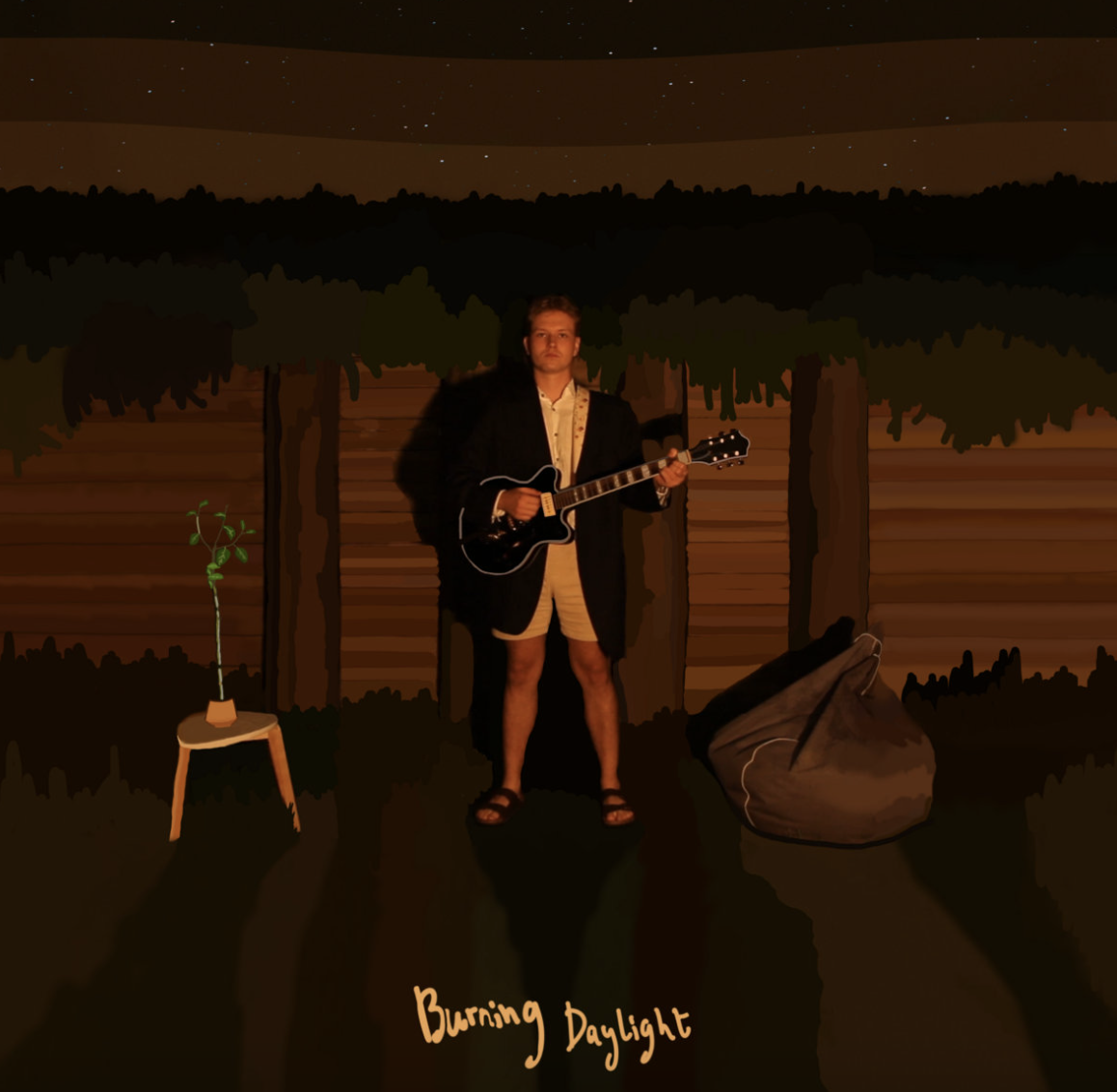
Burning Daylight is a bit of a gem of an album. Oliver Birch skips from psych to folk to pop to punk to prog to jazz: sometimes in the same song. At will he seems to be a jack of all genres and master of them all. He really is an impressive chap; part Tom Waits, part Tame Impala and part Nick Drake.
There is a quality about this album that reminds me of Skip Spence’s OAR, but without actually sounding much like it. It has an under-layer of darkness that I feel quite comforting. And for an album I could lose myself in, there is so much going on; like watching three movies at once and getting emotionally involved with them all.
Burning Daylight without doubt is one of the most emotionally draining and moving albums I have heard this year, a true work of art, a gem of an album.
Nick Frater ‘Aerodrome Motel’
(Big Stir Records) 19th August 2022

Nick Frater’s, as I have written in previous reviews of his music releases, albums are filled with radio friendly gems of pure sunny delight; songs that recall the long hot summers of the 1970s. And Aerodrome Motel is another beauty of pop glory. Yes, roll over Emitt Rhodes and tell Squeeze the news, for we have found the soundtrack to what is left of summer.
Nick weaves his many influences, The Beatles, Mott, Rhodes, Squeeze, Brendan Benson and all those fine power pop bands from the late seventies and early 80s, into songs written with a panache more ordinary power popper’s can only sit and stroke their Rickenbaker and dream of producing. So many gems to mention: ‘Dancing With Gertrude2’, a song worthy of The Left Banke, ‘American Expressway’, a dream of a track, a silken journey from the Zombies to 10cc.
I have been blessed with being sent so many fine albums to listen to and write about this last few weeks and I’m not saying this is the best, but it is in the top one. Yes, another delight of a record reminding us just what is so special about the power and pull of a beautifully written and performed melody.
Kamikaze Palm Tree ‘Mint Chip’
(Drag City) 12th August 2022
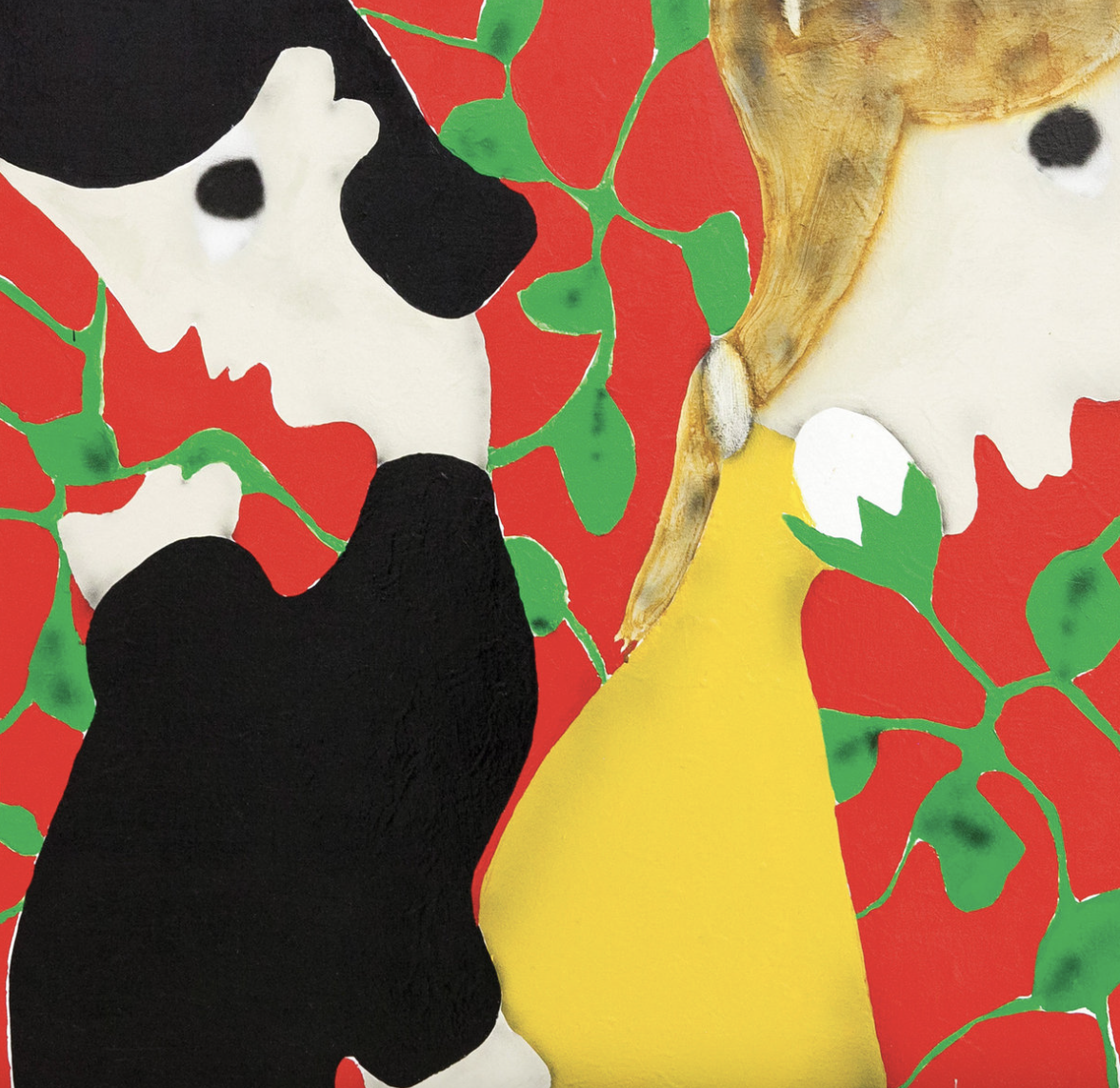
Kamikaze Palm Tree is a fine name for a band, and this album lives up to their name. Mint Chip is an album of quirky rinky dinky jerky angular guitar [a quiff briefly for a second burst forth from my skull] pop. And pop my children of the night is not something to be scared of as the great Adam Ant once proclaimed – although it was not pop he was proclaiming about, but you get my point.
This is a joy of a clockwork toy of an album; experimental, tuneful and magical, sometimes out of tune and out of step with the world. And that is what is so great about it: like an Avant-Garde cartoon from the seventies that would occasionally and beguilingly turn up mid morning on the TV in the summer, in the school holidays; that would confuse and delight you and make you aware that strange is good, strange can be magical, strange is Kamikaze Palm Tree.
Legless Trials ‘Cheese Sandwich’
(Metal Postcard Records)

More battered leather motorbike music from the no wave rock ‘n’ roll duo The Legless Trials. From the storming guitar jam frenzy of the velvety Fall opener ‘Open Seasons’ to the fourteen-minute plus closer, the excellent titled ‘Ray’s Kid Brother Is The Bomb’ – again a track that has you transporting back to the hot summer nights of New York city streets circa 1979, post punk no wave magic.
In between these two highlights you will find one of the tracks of the year with the single ‘Dirt Bike’ – as previously reviewed -, a frugtastic track of guitar swingatude. And five other tracks that keeps the spirit, guile and arrogance of Lou Reed alive and well.
Monolith Cocktail Monthly Playlist For July 2022: Wu-Lu, Archers Of Loaf, U.S. Girls, Axel Holy, Skuff..
July 29, 2022
Choice Music From The Last Month
Curated By Dominic Valvona

Those July tunes from the Monolith Cocktail team of Dominic Valvona, Matt Oliver, Brian ‘Bordello’ Shea and Andrew C. Kidd; 45 tracks that represent the blog’s tastes this month.
As a companion piece, we’ve now started compiling a version over on our Youtube channel. With some video tracks not included in, and a different order to, the Spotify playlist. This includes the brand new Violet Nox (the Boston synth futurists) video for ‘Magnetar’ and Sebastian Reynolds athletics-inspired alternative soundtrack ‘Cheptegei’ (the Extra Mile Edit), plus a track from Andrew Spackman’s newest alias The Dark Jazz Project. We also have a few alternative track selections from the artists.
But first here’s that Spotify link and track list:
The Difference Machine (Ft. Sa-Roc) ‘Repeater’
Ree-Vo ‘Groove With It’
Wu-Lu ‘Scrambled Tricks’ Ferry Djimmy ‘Toba Walemi’
Marva Broome ‘Mystifying Mama’
The Legless Crabs ‘(I Wanna Be A) Cult Musician’
Toni Tubna w/ The Stockholm Tuba Section ‘The Triennial’
The Doomed Bird Of Providence ‘Unlawfully And Maliciously Murdered’
Archers Of Loaf ‘In The Surface Of Noise’ The Burning Hell ‘No Peace’
Kamikaze Palm Tree ‘In The Sand’
Bruno Hibombo ‘Black Dogs Down At Marie’s’
Elle E ‘Oh Blue Eyes’
Kick ‘Some Velvet Morning’
U.S. Girls ‘So Typically Now’
Gillian Stone ‘Amends’
Rezo ‘Your Truth’
Tau & The Drones Of Praise ‘It Is Right To Give Drones And Praise’
The Meltdown ‘Lie To Me’
group O ‘Kabelslat’
Axel Holy, Galloping Ghosts (Ft. Wish Master) ‘Nothing Personal’
Stevie Pre ‘Sent From The Top’
Sly Moon ‘Banned From The Vic’
BKO ‘NGON’
Amos, Mt. Stupid ‘Technophobia’
Apollo Brown ‘Just Like Home’
The Korea Town Oddity (Ft. Kahil Sadiq) ‘HOMEBOYS IN OUTERSPACE’
Tumi Mogorosi ‘Sometimes I Feel Like A Motherless Child’
CMPND ‘Acid Reign’
Healing Force Project ‘Double Orbit’
Moebius ‘Rast’
Fera ‘Animale’
Nwando Ebizie ‘I Seduce’
Ekome ‘Gahu (Live At WOMAD 1982)’
Dynamo ‘Arabia’
Skuff ‘Sly Flute’
Blaktrix, A.H. Fly (Ft. Sonnyjim) ‘Shoey’
The Difference Machine ‘Flat Circles’
Aftab Darvishi ‘Sahar’
Hatis Noit ‘Jomon’
La Chinaca ‘Sin Titulo’
Penza Penza ‘Neanderthal Rock’
No Age ‘Andy Helping Andy’
Jill Richards, Kevin Volans ‘Third Etude’
Caterina Barbieri ‘Transfixed’
And here’s that Youtube version:
Our Daily Bread 532: Caterina Barbieri ‘Spirit Exist’ Inspires The Sci-Fi Writer In Andrew C. Kidd
July 28, 2022
ALBUM INSPIRES SCI-FI FLIGHT OF FANTASY
Andrew C. Kidd
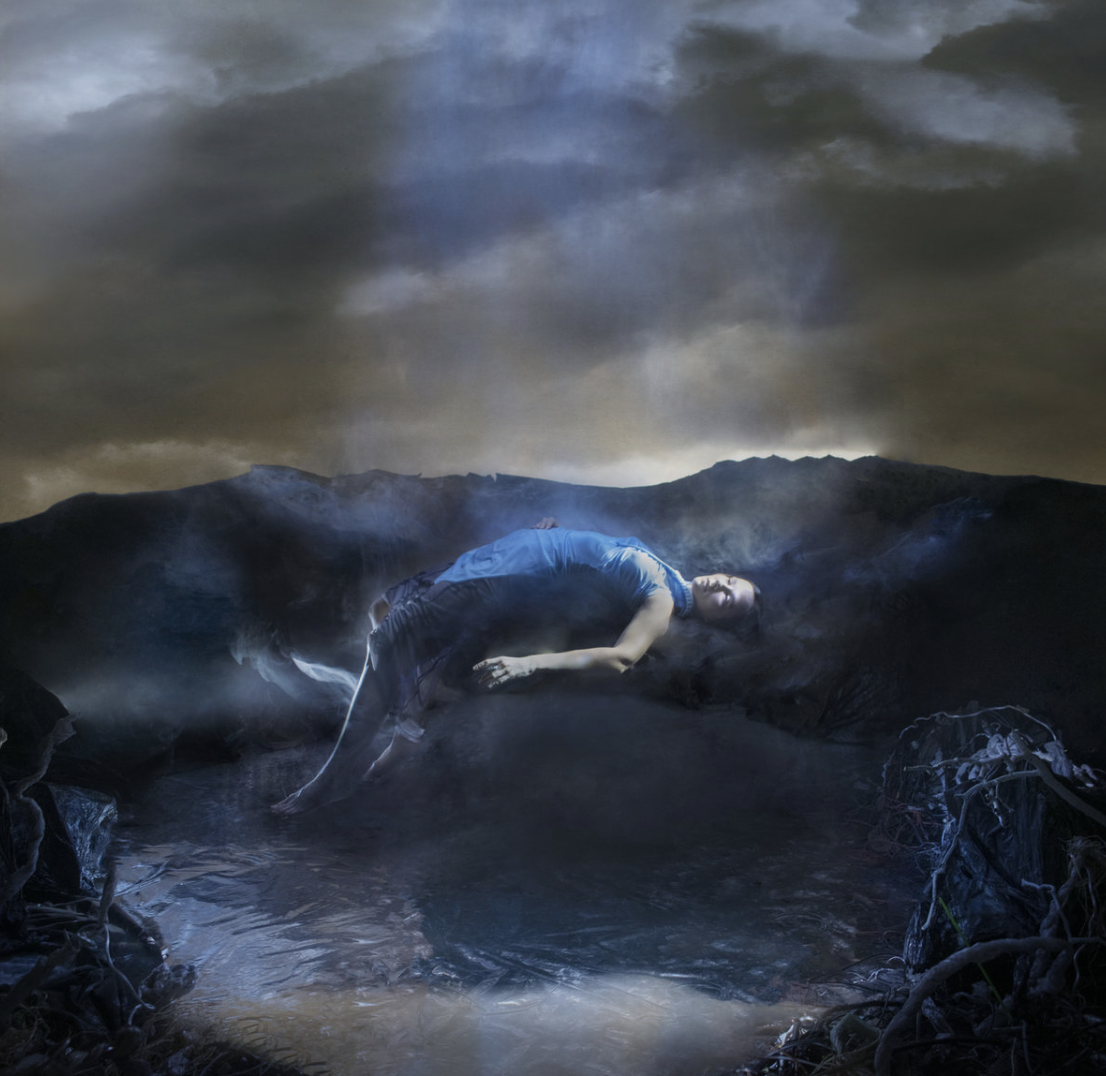
Catarina Barbieri ‘Spirit Exit’
(Warp)
The following is the audio transcript obtained using the application programming interface of the Epicurean II computer during its orbit of Kepler-442b. The transcript was automatically created in the year 2341 after an unknown signal was picked up by the spacecraft’s communication receiver. The audio files contained within the transcript are dated 2270 and made reference to the same unknown signal. The data retrieved had the filename Spirit Exit.
system.console.transcript(log.epicureanII);
}
}
int main()
{
FIND_DATA_FILE; Handle search_handle=FindFirstFile;
include <spirit exit> /s /p
}
{
run.cross ref <spirit exit> /s /p
outcome( élan vital ) /*
outcome( beverage ) /*
outcome( c.barbieri ) /*
}
{
std::string NewPath=folder Name + FileData;
FindAllFiles(NewPath) ;
include <c.barbieri> /s /p
}
{
run.transmission received /*
outcome( time-mark July 2022 ) */
run.signal type */
outcome( electromagnetic waveform )
run.signal frequency */
outcome( unknown )
run.transmission medium */
outcome( unknown ) */
run.signal description */
outcome( oscillation.polyrhythm.humanoid.sequences )
unknown signal */
printf( “transcription” );
printf( “interpretation” );
}
(Music quietly playing)
Organic Interpreter 1: I believe it was Emily Dickinson who penned the lines, “Banish Air from Air/Divide Light if you dare -“. I understand that Barbieri used this word-sequencer (‘poet’ to humans) as a data reference point. When her Spirit Exit audio data were released, the year was 2022 and Earth’s populace had indeed started to divide light and banish air.
(Higher amplitude audio waveforms detected, including off-beat syncopations and human vocals)
Organic Interpreter 2: Ah yes, this is the start of the data, coded as At Your Gamut. You can hear the breakdown of the modular sequence to reveal the base notes of the arpeggios. The bass and treble are finely balanced.
{
std::string NewPath=folder Name + FileData;
FindAllFiles(NewPath) ;
include <Knot of Spirit> /s /p
}
(Modular sequence detected)
Organic Interpreter 1: These data are Knot of Spirit (Synth Version). It has a slow-keyed motif. I will call this a ‘modular aria’.
Organic Interpreter 2: You are ever the non-materialist. However, the shifts in semitones and complex structure do provide narrative. It slowly fades into a disintegrated ambience.
Organic Interpreter 1: These modular arpeggios are the lifeblood of Barbieri’s sound. The arterial cacophonies are layered polysequences. As with At Your Gamut, the eventual revealing of the scale notes in each arpeggio sequence is subtle capillary action.
(Harpsichord keys detected)
Organic Interpreter 2: I believe this not to be a harpsichord, although the allusion to it cannot be denied. Such carbonised instrumentation preceded these audio data by many centuries. The clavicembalum was the first such example.
Organic Interpeter 1: This cannot be concluded with 100% certainty. Transfixed also has vocoded voice, which one could argue is somewhat outside the norms of these data. It cannot be denied that the orbiting balance of timbre and amplitude remains. It is not the only example of carbonised instrumentation in these data. On Canticle of Cryo, there are the unmistakable wave frequencies of ‘guitar strings’.
Organic Interpeter 2: Talos has also identified wavelengths belonging to a further such organic instrument, which humans aptly denoted as an ‘organ’.
Talos (neural network algorithm): Correct. The wavelength of an organ is twice the length of its carbonised pipe and its resonant frequency is almost double that of a human. As such, it was easily identifiable. The synthetics and melodies in these data are similar to the harmonics we experience in the present aeon. Yet, this was written 248 years ago. There is also marked accelerando that alter the space-time ratio of these data.
Organic Interpreter 1: Her urgency to share these sounds perhaps resulted in this accelerando.
Talos: The frequencies of the MC-202, Roland’s 1983 monophonic synthesiser, are detectable on Life at Altitude.
Organic Interpreters 1 and 2: Remarkable.
Talos: It is also important to highlight that my computations suggest that the triangular zenith of the ‘modular synthesiser’ was realised through Silver Apples of the Moon (Morton Subotnick), Buchla Concerts 1975 (Suzanne Ciani) and Sunergy (Kaitlyn Aurelia Smith and the before-cited Suzanne Ciani). Regarding the present data provided by Barbieri, my Forier Transforms cannot accurately detect the interchangeability of the wave frequencies. I have detailed the evidence of my failed attempts here:
{define.new result
modular_shift = key_base + avg_oscillation
/* plt.plot(major key, modular_shift)
SYSTEM.ERROR
}
Organic Interpreter 1: I believe this was coded as ‘melody’.
Organic Interpreter 2: This is an important observation and your algorithms warrant further training using these data.
(Music playing)
Organic Interpreter 1: The humans of the year 2022 would perhaps have proffered the words ‘hymnal quality’ to these data. The evidence is the harpsichord and allusion to a verse-chorus form on Transfixed, the plainsong vocals on Canticle of Cryo and organ allusion on Knot of Spirit. However, this ‘cathedral of sound’ would have been no totem to past glories. It would have been cryptless. There were no dead there. The cantabiles were early machine learning. The data output would have been exponential.
Organic Interpreter 2: Again you possess a leanedness of the humans and their ‘metaphors’. The sequencing of these data is to be applauded. The ascension of sound and melodic reprise of the opening data courses from Life at Altitude to the pulsing synth-repetition and sub-bass rhythm on Terminal Clock, the melodic data from the latter are seamlessly drawn-out and introduce The Landscape Listens. Each piece traverses space and time to echo and generate their respective progenitors and descendants.
Talos: Do you regard this as masterful?
Organic Interpreters 1 and 2: We do.
(Fading waveforms)
Organic Interpreter 1: I think the signal is being interrupted by solar bursts emanating from the K-type dwarf. I can still hear the gentle undulating amplitudes of The Landscape Listens. It is like a coracle on a cosmic sea, swashed and mov…
(Waveforms undetectable)
{
run.signal frequency */
outcome( unknown signal lost )
start command.exe
archive.transmission received /*
outcome( transmission time-marked July 2022 archived ) */
}
Kalporz X Monolith Cocktail: (Live Report) Amyl And The Sniffers, Rocca Malatestiana in Cesena, Acieloaperto, June 16, 2022
July 26, 2022
BLOG EXCHANGE
WORDS: Matteo Maioli
PHOTOS: Roberta Paolucci
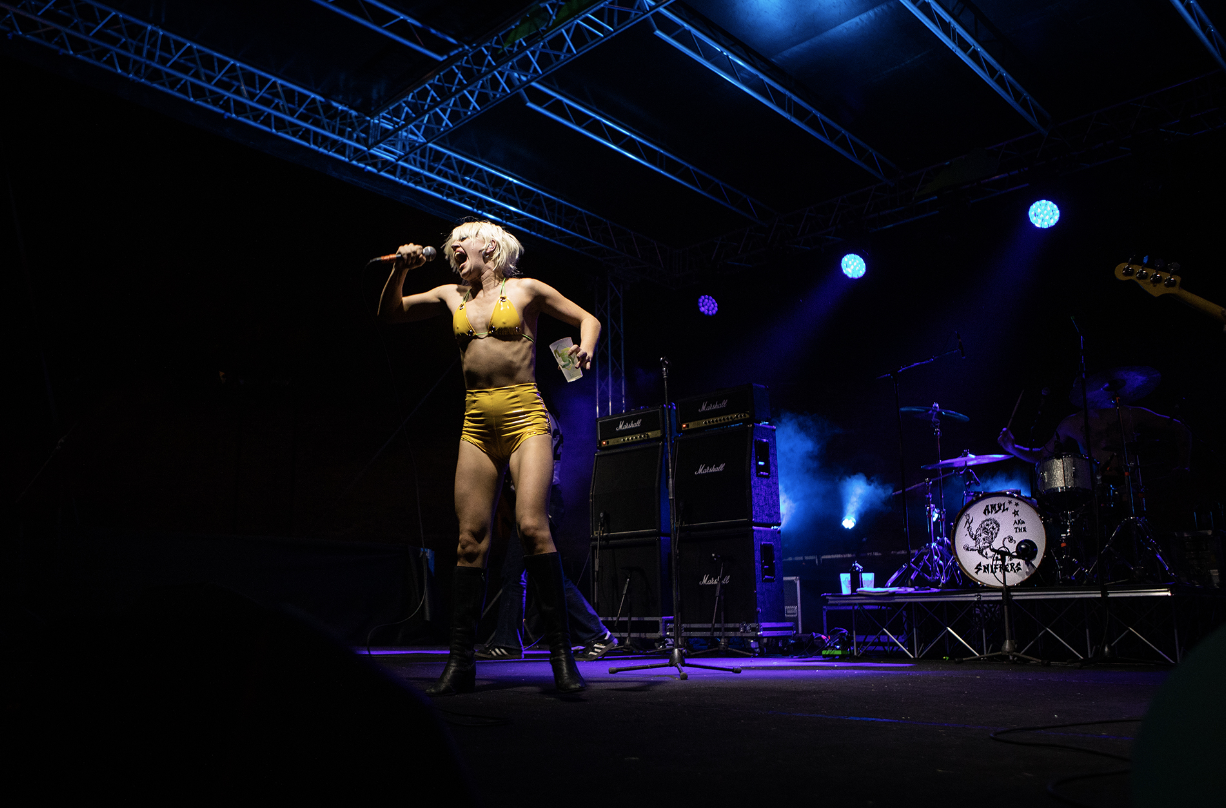
Over the last few years the Monolith Cocktail has been sharing/exchanging a post each month with the leading Italian culture/music site Kalporz. This month Matteo Maioli catches the feted Amyl And The Sniffers live.
A great evening of celebration for the tenth anniversary of a quality review: this is how one photographs the live performance of Amyl and The Sniffers at the Rocca Malatestiana in the midst of a European tour that is rewarding for the quartet led by Amy Taylor. An enviable energy that at times makes up for a lack of originality, the impression is nonetheless that of participating in a collective ritual of raw and simple entertainment fuelled by whiskey, beers, fuck (but now they’ll start saying vaffa) and crowdsurfing. New York Dolls, Motorhead and Pistols all rolled into one, with a Poly Styrene (X-Ray Spex) post litteram.
So organised are the folks at Acieloaperto that they were able to cope with the last-minute absence of Not Moving Ltd due to covid-19 – which then until the day before I had too. In fact we gladly see Solaris again, young but with a defined repertoire and style with an excellent record such as 2020’s Un Paese Di Musichette Mentre Fuori C’è La Morte and the latest collaboration with Ottone Pesante. The Go Down stage thus begins to fill up and after a half-hour of singer-songwriter soul noise we return to the rock ‘n’ roll atmospheres dear to the Sniffers with the Chronics, a historic power-pop trio formed in Bologna in the late 1990s by guitarist and songwriter Stefano Toma with (today) Marco Turci on drums and Michele Rizzoli – ex-Avvoltoi – on bass, which also includes for the occasion guitarist Giuliano Guerrini (Titta and Le Fecce Tricolore) who mixed and played on the new LP Do You Love The Sun? (Puke N’ Vomit Records). Fulcrum of the setlist obviously this latest work, with climaxes that included the splendid “I Did Not Try” and “Gimme Fun“, with melodies suspended between Ramones and The Flaming Groovies. There is no shortage of highlights from previous records such as “Mama Keep Your Big Mouth Shut” (from Suggested For Mature Audiences) and covers – Mike Watt‘s “I Backed Up Into My Self” and 13th Floor Elevators‘ “Levitation”. A tear for “First Time Best Time”: a 1999 single for Rip Off Records, it is a true anthem that will open for such lauded formations today as Judas or The Peawees. To be seen and seen again as the anticipation grows for the Melbourne band.
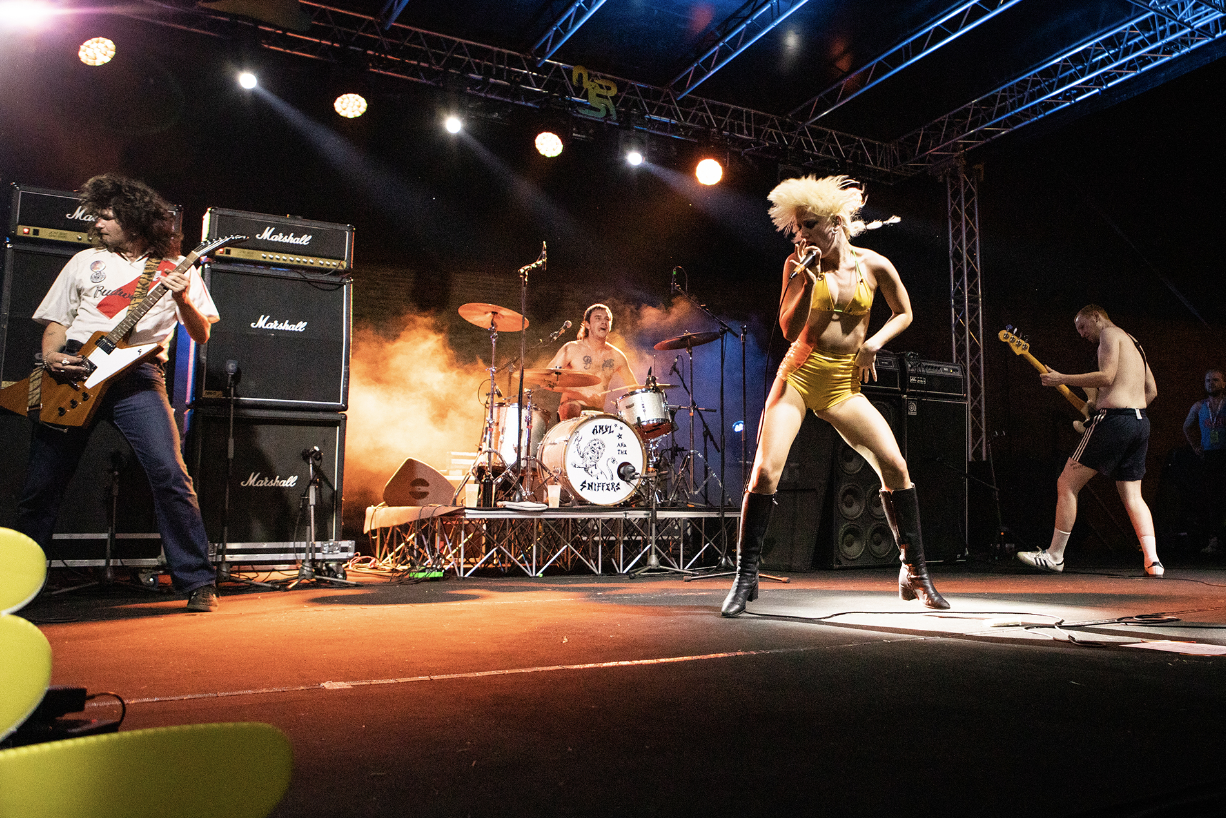
Bar lines, stadium choirs, and rock t-shirts, everyone wants to be ready for the adrenaline rush of Amyl and The Sniffers. Yet the first two songs sound very low in volume when in fact they are born as incendiary as the self-titled record (Rough Trade, 2019) from which they come. With “Choices” everything is in place, rhythm shot with shirtless bassist Gus Romer shirtless writhing madly; the riff of “Guided By Angels” is greeted by a roar and the pogoing of the rows below the stage. The glam, streetwise look is another detail not to be overlooked – like identifying Valentino Rossi with Romagna, or guzzling alcohol while singing, very lads! – and you can bet that the yellow exhibited by the vocalist will be back in fashion in a (seemingly) post-pandemic season.
“Control” and “Capital” verge on Black Flag hardcore while remaining the best example of their art; on the other hand, “Knifey”, from Comfort To Me, slower and with a new-wave timbre, does not come out as punchy as the studio version. Messy and proud to be so (“I’m Not A Loser”, a manifesto from Big Attraction), rough and fast, these are the Australians live, and “Don’t Need A Cunt (Like You To Love Me)” and “Security” sound like excellent pub tunes, where amidst rivers of beer they declare that pent-up rage against authority. “Hertz”, close to the stuff of the later Idles, leads toward the epilogue of “Some Mutts (Can’t Be Muzzled)” for a short – fifty-five minute – but undoubtedly successful set in which the band fraternised with the audience before, during and after the live show in toasts, photographs and hugs typical of those who follow Acieloaperto and its excellent programming.

The set list of Amyl And The Sniffers at the Rocca Malatestiana:
Gacked on Anger
Got You
Choices
Guided by Angels
I’m Not a Loser
Control
Capital
Security
Balaclava Lover Boogie
Knifey
GFY
Don’t Need a Cunt (Like You to Love Me)
Maggot
Starfire 500
Hertz
Some Mutts (Can’t Be Muzzled)
REVIEWS ROUNDUP
GRAHAM DOMAIN

Here are reviews of some great singles, EP’s and Albums that have recently been released by Brona McVittie, Panjoma, Jose Medele and Hari Sima. Have a listen; you won’t be disappointed.
Brona McVittie ‘The Woman in The Moon’ (Single)
(Company Of Corkbots)
This is a fine song and the Title Track from her forthcoming third album (out in October 2022). It is essentially Autumnal Celtic Folk with a jazz and spooked electronica edge. Double bass, harp and understated jazz drums underpin the song mixed with sparse electronica giving it an eerie off kilter Autumnal feel, like the changing of the seasons as the days get shorter and night falls too soon.
Panjoma ‘Sun and Moon’ (Extended Play)

On first listen, the lead track ‘Sun and Moon’ sounds almost like a psychedelic 60s keyboard band with phased female vocals. Initially the song seems limited by the drum machine and seems to cry out for a real drummer and maybe a full a band to make it more organic and give it greater feel, especially on the semi-improvised instrumental parts! However, after a good-few listens, it begins to sound fantastic as it is, like something from the BBC Radiophonic Workshop – a crazy space age dance for Gerry Anderson Puppets, Robbie the Robot and Zooney from Fireball XL5! F.A.B!
The song ‘Free’ is almost summery in its groove but is held back by the overly loud keyboards that make it sound almost like a stuck record. It may be that the artist intended the song to be ‘challenging’ but it soon becomes annoying to listen to, for the reasons given.
‘Like Thunder’ is the most melodic song on the EP with its saxophone refrain creating a late-night ambience and an air of neon-lit excitement.
Overall, the EP contains some good songs (The Yin) balanced by (The Yang) the more challenging material. I suspect this is intentional – one to watch!
Jose Medeles ‘Railroad, Cadences and Melancholic Anthems’ (Album)
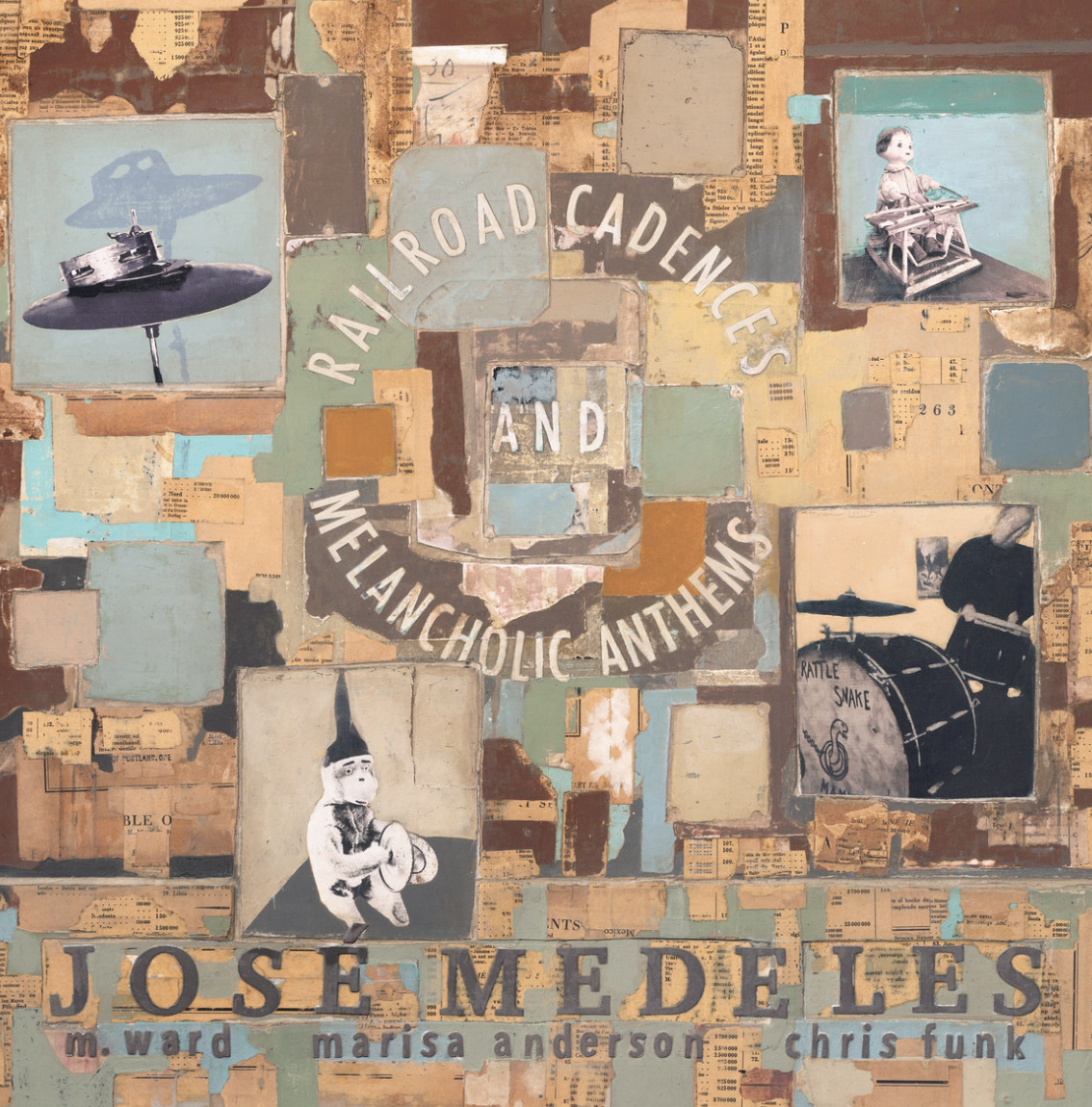
Perhaps best known for his time as drummer with The Breeders, Jose Medeles has recorded this album as ‘a drummer’s tribute to the music of John Fahey’.
The album features some fine guitar playing from the likes of Marisa Anderson, Chris Funk and M Ward giving it a laid-back melancholic feel in keeping with the sparse melodic Americana of the songs. The six songs are things of slow tumbleweed beauty that stretch across the wide-open plains and dusty roads of America’s backwoods like ghosts, half glimpsed in the shimmering heat of the day.
Standout Tracks: ‘Voice of the Turtle’, ‘Mid the Snow’ and ‘Ice’.
Hari Sima ‘Solo en Occidente’ (Album)
(Objetos Perdidos)
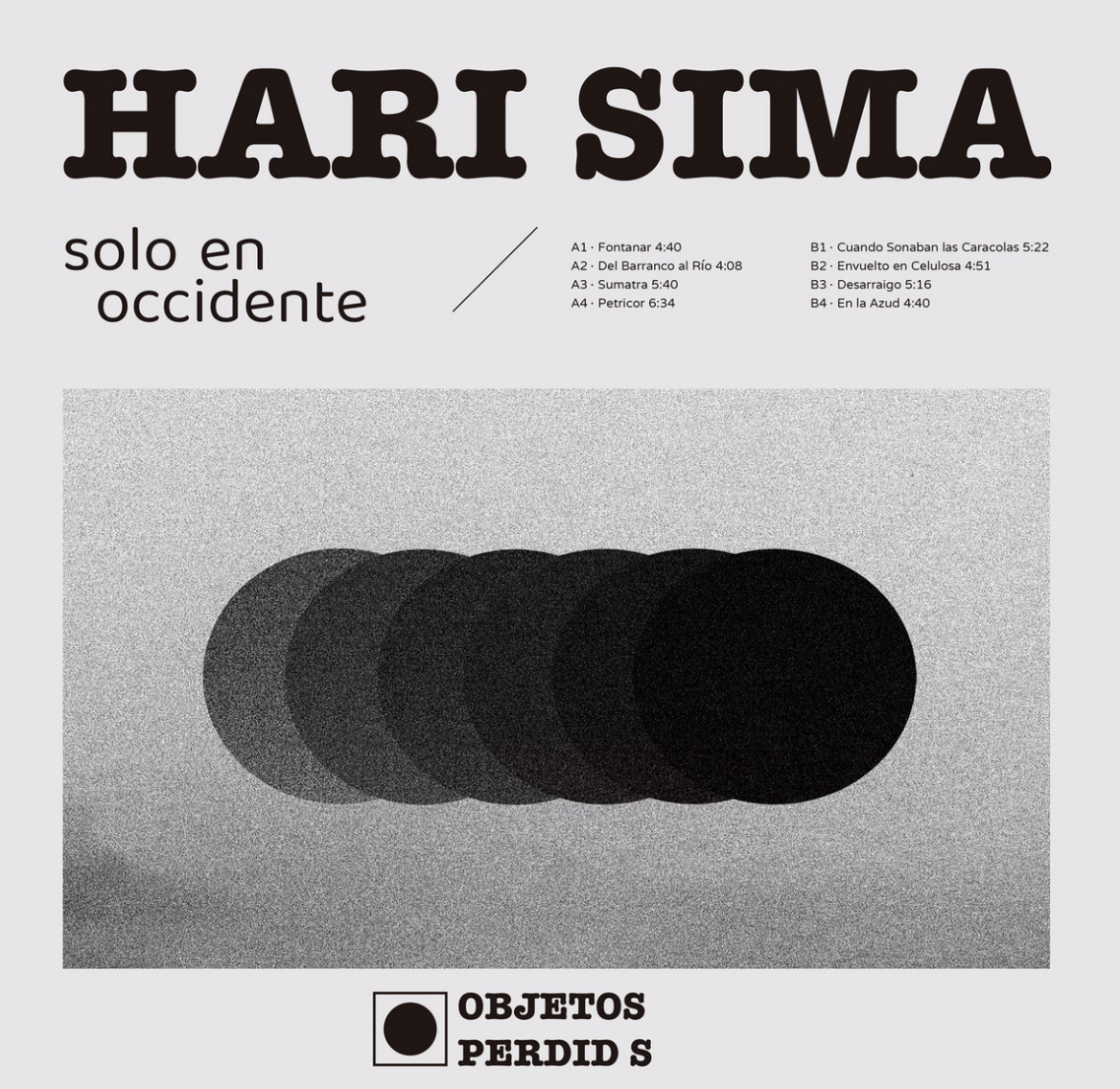
This is the second album release by Hari Sima. The eight pieces of Ambient music are a mixture of cold technology, human sadness, mystery and musical travelogue of the mind.
The first track ‘Fontanar’ begins with distant synthetic sound, like alien field recordings, that create a feeling of being alone by the sea on an alien planet. The slowly creeping sequencers build harmony while creating feelings of isolation – a desert of dream, a paradise of unease. All is not as it seems.
‘Del Barranco al Rio’ meanwhile, develops from cold sequencer repetition, gradually becoming infused with melancholic clouds of melody – like music created by a cyborg Arvo Part – sadness at the heart of a technological wilderness.
‘Sumatra’ enlists Indian table drums to create a Middle Eastern vibe that slowly evolves into a downbeat spy or espionage film theme.
‘Petricor’ continues the Middle Eastern vibe with synthetic drones creating mystery and tension.
‘Cuando Sonaban las Caracolas’ uses drones, synths and echo to create a feeling of foreboding – like walking into a dark alleyway on a short cut home and suddenly regretting it!
‘Envuelto en Celulosa’ uses a sequencer to create a vaguely Japanese melody that mixes in burbling synth sound and synthetic wind to create the feeling of journeying in a distant land.
‘Dessaraigo’ similarly uses a sequencer and computer-babble noise to create an almost African musical travelogue.
‘En la Azud’ uses African type drums and a sequencer to create the feeling of voyaging deep into a tropical forest.
Whilst the album could easily be used to soundtrack a documentary or film, it can also be enjoyed as background Ambience. It is available now on the Valencia based label Objetos Perdidos as a limited-edition vinyl or digital download.
ALBUM REVIEW
ANDREW C. KIDD

Aftab Darvishi ‘A Thousand Butterflies’
(30M Records)
The Hamburger label 30M Records is an intercontinental phonograph. Its pivot hinge moves a funnelled horn to bring sounds of Iran out of Iran to the world. They have a tender reverence for tradition. The 30M name is a cryptic derived from a 12th century mystic poem. In the poem, 30 birds (Persian, sī murğ) flock to find their king, discovering not only that there is no king, but that their winged efforts had in fact made them kings. The label also embraces modern Iran where analogue-altered sorna flutes and kamancheh (spike fiddle) play koron (quarter tones). Having briefly explored some of their back catalogue, I am keen to return to explore more of Iran’s sounds, and the techniques employed. For example, how can I identify a dastgāh, and what melody makes a particular gusheh?
My present focus today is not on the modal system classifications that define Iranian classical music, but on Aftab Darvishi and her ‘portrait album’ titled A Thousand Butterflies. The composer has an impressive curriculum vitae. Her compositions include commissioned work for ’50 For The Future: The Kronos Learning Repertoire’ and a reimagining of Puccini’s opera Turandot titled ‘Turan Dokht’. A Thousand Butterflies marks more than a decade of her writing. The album opens with longbowing on ‘Sahar’, which Darvishi describes as the dawn chorus of Kermanshah, an ancient city in western Iran. When I listen to this, I envisage an orange-brimmed skysill contrasting the deep cerulean and royal blues of the Tekiye Moaven Al Molk. I see night lifting from the trees in the Taq Bostan. The cellos wind-dance and build and hearten until everything is suddenly revealed in luminous glory: the sun has strewn her rays across this lasting land. The tone changes on ‘Hidden Dream’, the only live track on the album. The soft reeds of a quartet of saxophones build upon the feeling of newness that ‘Sahar’ imbued. The soothing vibrato permeates warmth. The piece ends with murmurings that descend into quietude, then silence.
Narration is important in Darvishi’s work. The title track of this album has been written to include three movements, each one representing immigration. The movements are not discrete but share the same instrumentation: piano and clarinet. There is a feeling of bewilderment on the first movement. It feels ruminant. There are few stops, and as such, there is little air. The piano is heavy. Its bass notes are occasionally echoed higher in the octave. The clarinet and piano slowly peeter away as if gazing together into a new distance. The clarinet is lighter in the second movement. There is longing here, possibly for home that is no longer home. The sound is delicate. In contrast to the airtightness of the first movement, Darvishi provides space for the listener to breathe. The clarinet plays a gentle melody throughout and acts as an anchor (this represents hope to me). The third movement is brighter. The pianist uses a broader range of the scale. The clarinet flutters and changes rhythm. At points it almost cries out in reedy catharsis. The piece has now become butterfly-like. Its wings are the transparency of sound. It is sky-bound.
On her website Darvishi describes the album as evoking “a life that has crossed continents”. This is reflected in the distinctiveness of each piece. An interesting observation is the sequential lengthening of each track. ‘Sahar’ clocks in at just over six minutes and ‘Plutone’ concludes at nearly fifteen minutes. I think the lengthening of each track immerses the listener deeper in Darvishi’s aural landscapes, the most complex of which is ‘Forgetfulness’. This is almost entirely devoid of narrative and opens with a musical oxymoron of tremolo and legato, where trepidation is met with calmness. The strings are played sul ponticello (high near the bridge). They are hoarse. The reeds are hushed. The stringed instrumentalists and flautists dance around atonality and lyricalism. I think I can hear augmented seconds and chromaticism, typical of Iranian classical music. I have read that the music of Iran typically makes little use of harmony with solo performances having a position of prominence. There are elements of this on ‘Forgetfulness’ (the strings take the lead at points). This is also evident on the album’s title track where the clarinet stars.
In musical composition, the true skill is the appreciation of balance and an understanding that individual parts construct the whole. I cannot think of a better example of Darvishi’s mastering of these principles than in her final piece, ‘Plutone’. I have listened to this countless times. Its name immediately conjures thoughts of the dwarf planet in the Kuiper belt. We are somewhere faraway here. The breathy reeds and droning bells kindle a cosmogonical spirit. The tones are crystallophonic. They are glassy and enduring. They morph to become dial-like, as if they are trying to communicate with one another. The violas and cellos lift us from the blackness of these droning inklings. They strings open but stop short of an adagio. The bells continue to build and shape to become something altogether greater, reaching out for higher frequencies. A quiet piano motif is played in fifths. The bass clef rumbles. The piece eventually becomes a giant orb that is filled with resonating eddies and beautifully balanced instruments that crest and fall together. ‘Plutone’ is quite simply a masterpiece in ambient electronica. I think its success lies in its measure. Measure in time, and tone. Measure in each of its movements. Darvishi maximises the synergy of her instruments so that they ripple to become swells and torrents that wrest emotions from the listener. I can tell you that this piece has drawn me inside out and laid me bare.
Our Daily Bread 529: Live At WOMAD 1982
July 20, 2022
ALBUM COMPILATION REVIEW
Dominic Valvona
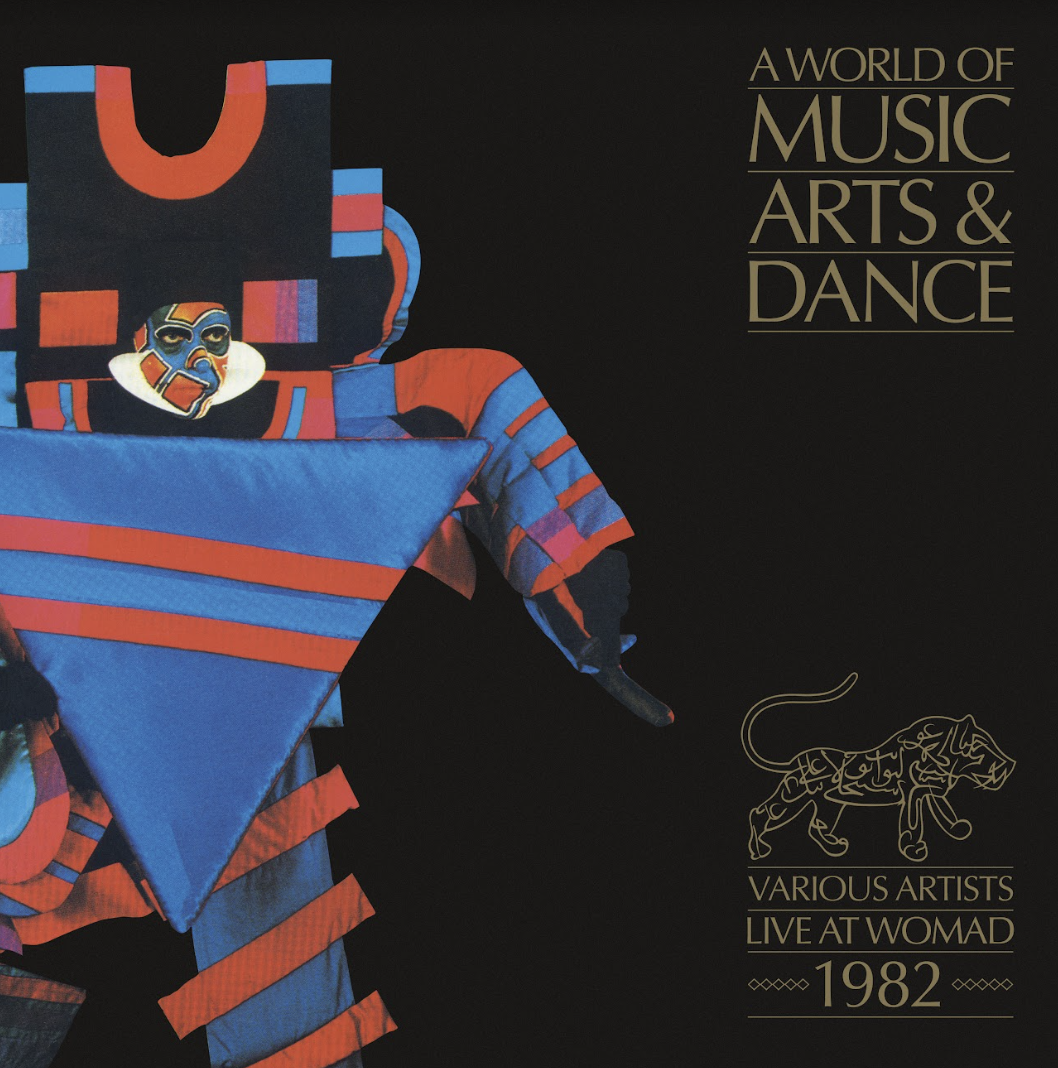
Various ‘Live At WOMAD 1982’
(Real World Records) 29th July 2022
Chief among those promoting (what has become a problematic term in itself) “world music”, the WOMAD festival and organization took a punt forty years ago in treating those artists considered outside the rather myopic scope of Westernized music with equal validity and respect. Even now, as we like to believe our tastes are so much more eclectic, festivals struggle with giving parity to the stars of Africa, South America, and Asia. Glastonbury, that so called totem, consigns (for the most part) world music to its own stage and fringe.
These days of course all festivals need to balance commercial concerns with the creative. It’s a business after all, and anyone setting up such an enterprise has a litany of historical financial failures to jolt them from taking gambles on lineups: the extraordinary naïve but possibly musically, as well as diverse, benchmark being both Woodstock and the 1970 Isle Of Wight festivals, but in more recent times, the failure of many so-called boutique mini-festivals.
It does however seem that WOMAD remains the “allowable” alternative; although even they had to include some stellar pop, rock bands and artists on the bill at the inaugural event in 1982: The likes of a rising Simple Minds and the blossoming Echo And The Bunnymen, albeit with the sonorous galloping and clattering drum beat of WOMAD stars and stalwarts, the Drummers Of Burundi – appearing under the elevated Royal Burundi Drummers name in this case.

What could have seemed a vanity project for its main instigator Peter Gabriel became a mainstay of the international music festival circuit. That very first event, now celebrating its fortieth anniversary, was almost the last.
Creatively and collaboration wise an incredible success, WOMAD was an unmitigated financial disaster for Gabriel and his partners. Facing bankruptcy, personal physical violence, the former Genesis star turned soloist and producer, label boss was thankfully able to pay off the accrued debts when his former prog-rock band mates offered to play a benefit concert. With the sagacious advice of Harold and Barbara Pendleton, who’d created the relatively successful Reading Jazz And Blues Festival, and others the WOMAD ideal was saved from collapse and a minor footnote in Rock’s Back Pages.
Arguably still one of the only avenues for world music, the WOMAD festival is one of the most cherished if not important events of its kind anywhere. But those early days in the idea incubator of Gabriel’s mind, it seemed pure madness to even conceive of such a thing. Being called mad or crazy was part of the course for Gabriel however, who not only saw it as a challenge but adopted such derisory language in his various projects: Syco being another one. And so “MAD” became part of the festival signature, appellation, though it also, when put together with the “WO” bit made up the World Of Music Arts Dance acronym. Corralled into this mad project, the young collective of post-punk tastemakers that made up The Bristol Recorder went from interviewing Gabriel for one of their magazines (with accompanying vinyl) to taking on the day-to-day running of what would be the first grand-scale festival of its kind dedicated to world music and its ilk. What might have surprised, or set a spark for Gabriel was the zine team’s mutual interest in eclectic music; a love for the Gamelan music of Bali and Java especially. They would also be pretty useful at sniffing out the talent and bringing attention to new sounds, new fusions, many of which featured in the very first WOMAD lineup.
A benefit concert helped to ease WOMAD out of a financial blackout, and in the very beginning too, when announced to the press from a farmhouse north of Bath, Gabriel would have to release a charity album to help fund it. Music And Rhythm, as it was called, featured a rafter of the acts that appeared in 1982. In conjuring up the spirit of WOMAD, the Burundi Drummers would beat out a thunderous performance on the front lawn – so thunderous in fact that the local farmers were worried that it would upset the livestock grazing in this idyllic valley retreat. Overcoming such protests, a lack of support and any sponsors the tribal drummers and an international cast from over twenty countries appeared at the Royal Bath and West Showground near Shepton Mallet in Somerset in the July of 1982.
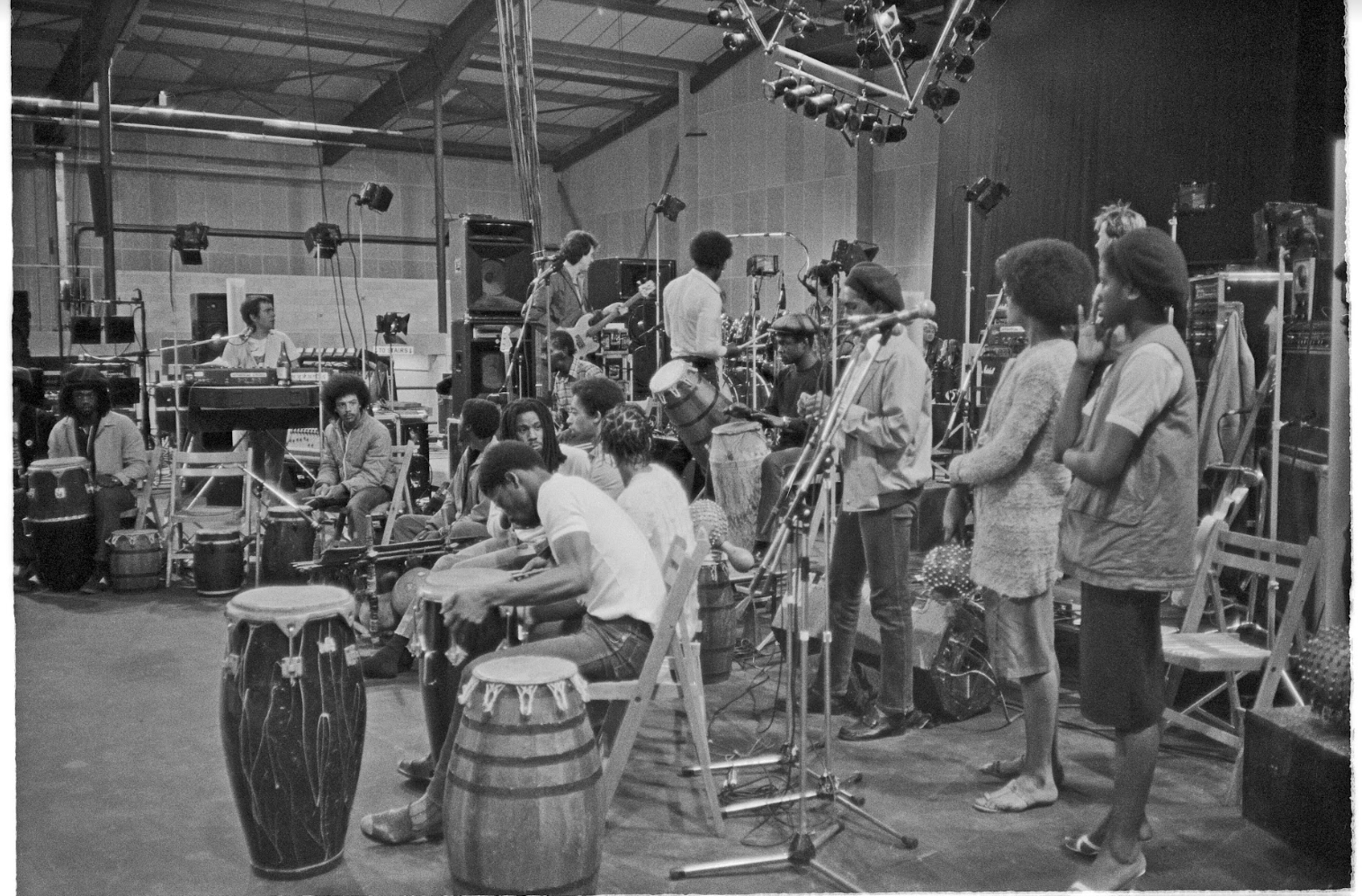
Now forty years later in the act of both preservation and celebration, Real World Records have retrieved and restored (including bonus material) nineteen live tracks from that event; many of which have never been heard before. Original programme notes, with even the times of performances, have also been included in this snapshot of not just WOMAD’s foundations but a changing post-punk scene; an age of fusions, collaborations and the increasing influence of world music on the Western cannon.
I could regale countless artists just before and after this event that would work with those from South Africa to Timbuktu; from Hispaniola to Southeastern Asia. But here were ensembles with atavistic and more contemporary heritages mixing it and existing on equal terms with rock bands in the West. As Gabriel would put it: “Our dream was not to sprinkle world music around a rock festival, but to prove that these great artists could be headliners in their own right.”
Ian McCulloch and his Bunnymen, riding high at the time in the indie scene and obviously a draw, appeared with the (already mentioned) Royal Burundi Drummers in one such meeting of alien cultures. A stirring emergence from the Gothic mists vision of ‘Zimbo’ is taken up a level of the exotic and moody by a deep lumbering of beaten drums; a union of Joy Division pain and authentic African tribal rhythms.
The familiar Drummers Of Burundi, who’s ranks could swell to thirty plus members but appeared in a reduced, but no less impactful, form at WOMAD, have their incredible floor-shaking front lawn performance ‘Kama K’iwacu’ included on this compilation. Due to the physicality of their performances these rousing bombastic drum initiations, rituals could only be played in short sets, and so during that three-day festival they appeared at least four times, across multiple stages.
In a similar mode, passed on through generations, compilation openers The Musicians Of The Nile brought an Upper Nile touch of the ancients to proceedings. The gypsy descendants from the age of the Pharaohs are represented by a mystical, mizmar-drone sandy embankment peregrination entitled ‘Taksim Arghul’ (which both by its name and sound has a real Turkish feel to it) and shorter, quickening tabla rhythmic sunrise introduction called ‘Tabla Iqae’.
Staying in Africa, highlife doyen Prince Nico Mbarga, appearing with the actually London-based The Ivory Coasters, shines with a sun brilliance and life-affirming rendition of ‘Wayo In-Law’ – a bonus track and really worthy of inclusion; among my favourite turns on the whole album. The Cameroon-Nigerian star is famous for releasing one of the continent’s best-selling records of all time, ‘Sweet Mother’, and famously appeared with various versions of the Rocafil Jazz troupe. If you love the lilted South African leaning sounds of King Sunny Ade, then you’re in for a treat.
Travelling eastwards, the Chinese (though there’s no information to hand on the provenance of this group) Tian Jin Music And Dance Ensemble provided a peaceable Zen moment of blossom tree beautification, fluted and dulcet mallet atmospherics on the forked and bowed ‘Raindrops Pattering On Banana Leaves’. Representing the Gamelan sound, the twenty-five strong Sasono Mulyo ensemble of Javanese and Balinese musicians and dancers magnificently set out on a two-speed voyage of discovery.
Circumnavigating the Pacific, and to the Hispaniola and Americas, the Puerto Rican, Venezuelan, Colombian and Dominican Republic troupe of NYC salsa stalwarts, Salsa de Hoy (notably playing with such luminaries as Oscar Hernandez and Tito Puenta) give a suitable Latin buzz of sauntering and horn paraded fun to the festival with their signature barroom jazz signature.
Showcasing a burgeoning world music infused spirit of diversity in the UK, as the transference from punk to post-punk was now complete, there’s a great, if looser and more dubby rendition of The Beat’s two-tone single ‘Mirror In The Bathroom’ and a Mardi Gras, via Manu Dibango, and ska version of Pig Bag’s self-titled anthem. Evolving out of The Pop Group, picking up on the way a burgeoning Neneh Cherry and the Antiguan-British dub bassist/guitarist Jean Oliver, the eclectic Rip Rig & Panic serve up a sassy and pumped-up smorgasbord of Liquid Liquid no wave, neo-soul, Pablo dub and bleated, trilled lurching saxophone with ‘You’re My Kind Of Climate’. Previously of both groups, the pianist Mark Springer appears in his solo guise playing an electric-piano like flange-effected soulful, spiritual hymn ‘Key Release’ – actually, it has more than a semblance of Bill Withers too.
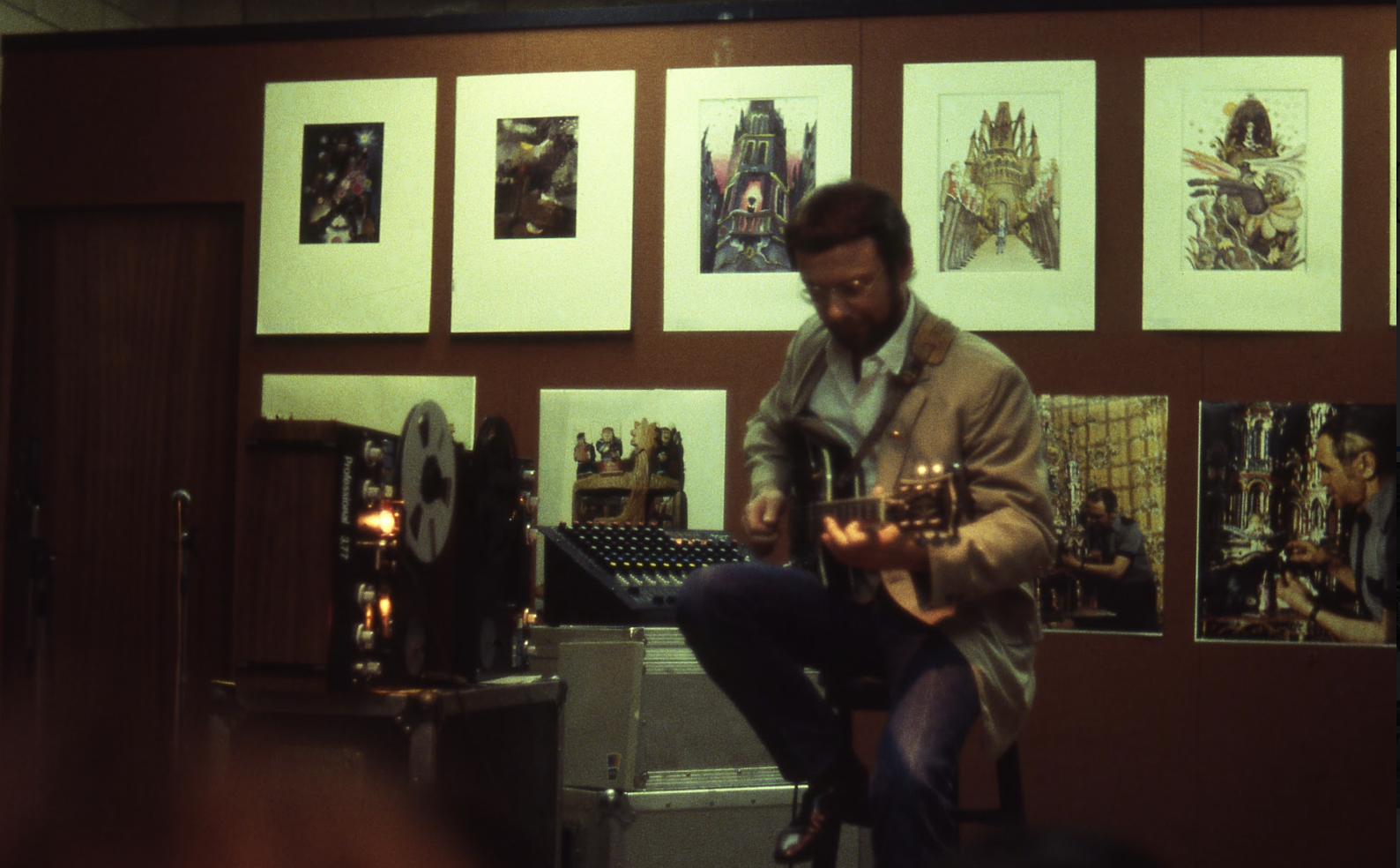
Despite the name Ekome were a Bristol dance and music company formed in the aftermath of a Ghanaian steel and skin-drumming workshop. Members appeared twice at WOMAD, rattling away to call and response trills and an Afro-Brazilian carnival feel on ‘Gahu’, and also in accompanying Gabriel on the Scottish-piped yearned cry of universal suffrage and apartheid anthem ‘Biko’ – a cry of lament for the late leading South African activist that has an air of both Marillion and Mission To Burma about it. Gabriel’s plaint proved a worthy and indeed poignant reminder of the festival’s platform in not only sharing the global community’s music but in shining a light on global issues, the crimes of world leaders, and in this case, the apartheid movement. This stirred rendition did a lot to raise the profile of detention deaths in South Africa, paying special homage to one of the leading activists of that struggle in the 70s, Steve Biko, who died in police custody five years previous to this event.
Gabriel, as much for his formative years steering Genesis as for his subsequent solo endeavours and collaborations, was of course one of the festival’s main attractions. And so he appears twice on this live collection; once with the already mentioned ‘Biko’ tribute and before that with a bittersweet irony, over a hammer and tongs electronic production, performing a pop-fusion version of ‘I Have The Touch’ – taken from his then current self-tilted album and a single in its own right.
From a similar orbit, Robert Fripp (at the time reforming King Crimson) offered up as almost Eno-esque, late Tangerine Dream classical-strained electronic suite; an ambient stirred anthem that gave a certain gravitas to the festival, named in its honour, ‘WOMAD II’. Fripp’s solo recitals were self-confessed challenges to the audience, needing certain conditions, and restricted to smaller crowds of 150, and so hence the maverick’s higher number of performances across the three-day event.
Fellow former idiosyncratic prog-rocker Peter Hammill, of Van Der Graf Generator fame, is captured with a new age Cope and Gong-like version of the almost theatrical, giddy ‘A Ritual Mask’ – the opening meandered and building maelstrom from his twelve album, Loops And Reels.
No festival of its nature could be complete without the Irish, and the famous Dublin institution The Chieftains. Proving a popular choice, the Irish-Gaelic troupe (almost together for twenty years by this point), fiddle and clap a merry Celtic jigged version of the hoedown country standard ‘Cotton-Eyed Joe’ – the Emerald Isle goes West to Arkansas.
Still, just about in their infancy and most interesting period, a pre-arena anthem-hitting Simple Minds stand out as a usual choice. Their current at the time ‘Promised You A Miracle’ 12” is performed with professional clarity and vigor; a decent enough live version of the original anyway, sounding a bit in places like ABC.
Taken as a whole this run-through of the inaugural WOMAD holds-up as a pretty unique, open and international experiment. Astonishing to think that despite barriers coming down, and with a supposedly easier than ever access to every music scene in every corner of the world, WOMAD remains the only real prominent and long-running celebration and showcase for such worldly wonders in the UK. That year, 1982, sounds pretty vibrant even now by recent standards. And this live album proves Gabriel and associates were right in fighting to keep it alive, no matter the cost, sniping and criticism that came their way. Not just a worthy album, but a global, polygenesis power house of sounds and energy that’s well worth the admission price. Live albums don’t come much more eclectic. Here’s to the next forty years.
Hi, my name is Dominic Valvona and I’m the Founder of the music/culture blog monolithcocktail.com For the last ten years I’ve featured and supported music, musicians and labels we love across genres from around the world that we think you’ll want to know about. No content on the site is paid for or sponsored and we only feature artists we have genuine respect for /love. If you enjoy our reviews (and we often write long, thoughtful ones), found a new artist you admire or if we have featured you or artists you represent and would like to buy us a coffee at https://ko-fi.com/monolithcocktail to say cheers for spreading the word, then that would be much appreciated.
Our Daily Bread 528: Dreamworld Or: The Fabulous Life Of Dan Treacy And His Band The Television Personalities.
July 18, 2022
GUEST POST/BOOK REVIEW
Rick ACV.

Vukovar helmsman and burgeoning fiction writer Rick ACV has joined the Monolith Cocktail pool of collaborators this month with his review of a new upcoming alternative bio of the idiosyncratic Dan Treacy. Next month sees the blog serialise Rick’s latest book, Astral Deaths/Astral Lights, after previously featuring his last surreal esoteric tome The Great Immurement.
‘Dreamworld Or: the fabulous life of Dan Treacy and his band The Television Personalities’ by Benjamin Berton (Ventil Verlag) 29th July 2022
To start at the end and then to end at the start – The life of Daniel Treacy of The Television Personalities is, nor was, a fabulous one, except seemingly near the start of it. Though his life is not yet over, Daniel’s story very nearly is. The last passage of ‘Dreamworld’ deals with this truth indelicately and head-on but transformed; made poignant & bittersweet in a mono-no-aware fashion through surreal storytelling rather than recounting of actual events. This is a common mode throughout Dreamworld and works all the better for it. Fans of the TVPs are not oblivious to their obscurity and the lack of documented history, not to mention Treacy’s constant disappearances (homelessness, prison time etc.) and lack of public ‘limelight’ since the mid-90s. To therefore have written Dreamworld as a straightforward biography would have been dull. Dull and incredibly short.
Instead, Benjamin Berton mixes cold-light-of-the-day fact with fiction. Or a bending of fact. The lines are blurred, it is sometimes clumsily done (perhaps due to the translation) but even then it still provides an interesting take on what, to those unaware of Treacy & TVPs, could be an unremarkable story – musician starts band, band doesn’t quite make it big, man has drug problems, drug problems cause life problems et sic. To further this strange take on a biography, along with the surreal passages, Berton invents his own dialogue between the pro/antagonists when recounting ‘real’ times and tales from Treacy’s past, and this is all done in present tense. What happens, then, is the reader is transported through little time warps to actually be THERE and THEN and experience it all first hand but through a haze. Like remote viewing. At times, it is extraordinarily visceral.
The aforementioned surreal passages will not be spoiled here. They may sometimes be clumsy & the humour within somewhat strange and stilted, yes, but they are clever & cutting, and deeply touching. Much like the music of Dan Treacy and The Television Personalities himself and themselves. Watch out for Geoffrey Ingram. Dreamworld jumps backwards and forwards through different times, from different angles (much like Mr Ingram’s archival footage…), which keeps the book jittery and from ever losing steam. All of this adds up to a book that should be sought out even by people who have never heard of its subject matter.
A lot is made of the ‘spirituality’ of Treacy’s music throughout and his own personal approach to life. I would suggest more esoteric & metaphysical. What endeared this book to me more was the strange ‘psychic’ links I encountered while reading. Whether it be people I actually know, similar experiences or topics that I had been discussing with other people that very day, the pages constantly vomited up coincidences, right from the off with Jimmy Page, Satanism and a certain place and a certain reaction. It would be foolish to recommend the book based on something as personal, but it is perhaps the strange style in which it is written that allows for this sort of reaction. I finished reading this on Syd Barrett’s birthday. Fans of Treacy will recognize the relevance.
Although the book seems well researched and v v v informed – sometimes even poetic in its recalling of facts – there are some inconsistencies so cannot be relied upon totally as a factual history. (For example – there is a section about a band and a singer I know personally that is so bitter about them and so insulting and which I know most of the account to be untrue.) There are a lot of pictures and posters and photos in Dreamworld, which gives a great visual history. However, just because it isn’t a totally factually accurate history it does not mean it isn’t the truth. The Truth about someone is how they appear to other people, is the mythos around them, is the aura they give off, is something deeper than what day something happened or what words escaped their lips. The Truth is so much more important than The Fact. It is so much more entertaining, too. Invest yourself fully into Treacy & Berton’s Dreamworld for an Astral adventure.

