Our Daily Bread 528: Dreamworld Or: The Fabulous Life Of Dan Treacy And His Band The Television Personalities.
July 18, 2022
GUEST POST/BOOK REVIEW
Rick ACV.

Vukovar helmsman and burgeoning fiction writer Rick ACV has joined the Monolith Cocktail pool of collaborators this month with his review of a new upcoming alternative bio of the idiosyncratic Dan Treacy. Next month sees the blog serialise Rick’s latest book, Astral Deaths/Astral Lights, after previously featuring his last surreal esoteric tome The Great Immurement.
‘Dreamworld Or: the fabulous life of Dan Treacy and his band The Television Personalities’ by Benjamin Berton (Ventil Verlag) 29th July 2022
To start at the end and then to end at the start – The life of Daniel Treacy of The Television Personalities is, nor was, a fabulous one, except seemingly near the start of it. Though his life is not yet over, Daniel’s story very nearly is. The last passage of ‘Dreamworld’ deals with this truth indelicately and head-on but transformed; made poignant & bittersweet in a mono-no-aware fashion through surreal storytelling rather than recounting of actual events. This is a common mode throughout Dreamworld and works all the better for it. Fans of the TVPs are not oblivious to their obscurity and the lack of documented history, not to mention Treacy’s constant disappearances (homelessness, prison time etc.) and lack of public ‘limelight’ since the mid-90s. To therefore have written Dreamworld as a straightforward biography would have been dull. Dull and incredibly short.
Instead, Benjamin Berton mixes cold-light-of-the-day fact with fiction. Or a bending of fact. The lines are blurred, it is sometimes clumsily done (perhaps due to the translation) but even then it still provides an interesting take on what, to those unaware of Treacy & TVPs, could be an unremarkable story – musician starts band, band doesn’t quite make it big, man has drug problems, drug problems cause life problems et sic. To further this strange take on a biography, along with the surreal passages, Berton invents his own dialogue between the pro/antagonists when recounting ‘real’ times and tales from Treacy’s past, and this is all done in present tense. What happens, then, is the reader is transported through little time warps to actually be THERE and THEN and experience it all first hand but through a haze. Like remote viewing. At times, it is extraordinarily visceral.
The aforementioned surreal passages will not be spoiled here. They may sometimes be clumsy & the humour within somewhat strange and stilted, yes, but they are clever & cutting, and deeply touching. Much like the music of Dan Treacy and The Television Personalities himself and themselves. Watch out for Geoffrey Ingram. Dreamworld jumps backwards and forwards through different times, from different angles (much like Mr Ingram’s archival footage…), which keeps the book jittery and from ever losing steam. All of this adds up to a book that should be sought out even by people who have never heard of its subject matter.
A lot is made of the ‘spirituality’ of Treacy’s music throughout and his own personal approach to life. I would suggest more esoteric & metaphysical. What endeared this book to me more was the strange ‘psychic’ links I encountered while reading. Whether it be people I actually know, similar experiences or topics that I had been discussing with other people that very day, the pages constantly vomited up coincidences, right from the off with Jimmy Page, Satanism and a certain place and a certain reaction. It would be foolish to recommend the book based on something as personal, but it is perhaps the strange style in which it is written that allows for this sort of reaction. I finished reading this on Syd Barrett’s birthday. Fans of Treacy will recognize the relevance.
Although the book seems well researched and v v v informed – sometimes even poetic in its recalling of facts – there are some inconsistencies so cannot be relied upon totally as a factual history. (For example – there is a section about a band and a singer I know personally that is so bitter about them and so insulting and which I know most of the account to be untrue.) There are a lot of pictures and posters and photos in Dreamworld, which gives a great visual history. However, just because it isn’t a totally factually accurate history it does not mean it isn’t the truth. The Truth about someone is how they appear to other people, is the mythos around them, is the aura they give off, is something deeper than what day something happened or what words escaped their lips. The Truth is so much more important than The Fact. It is so much more entertaining, too. Invest yourself fully into Treacy & Berton’s Dreamworld for an Astral adventure.
PLAYLIST SPECIAL
Dominic Valvona
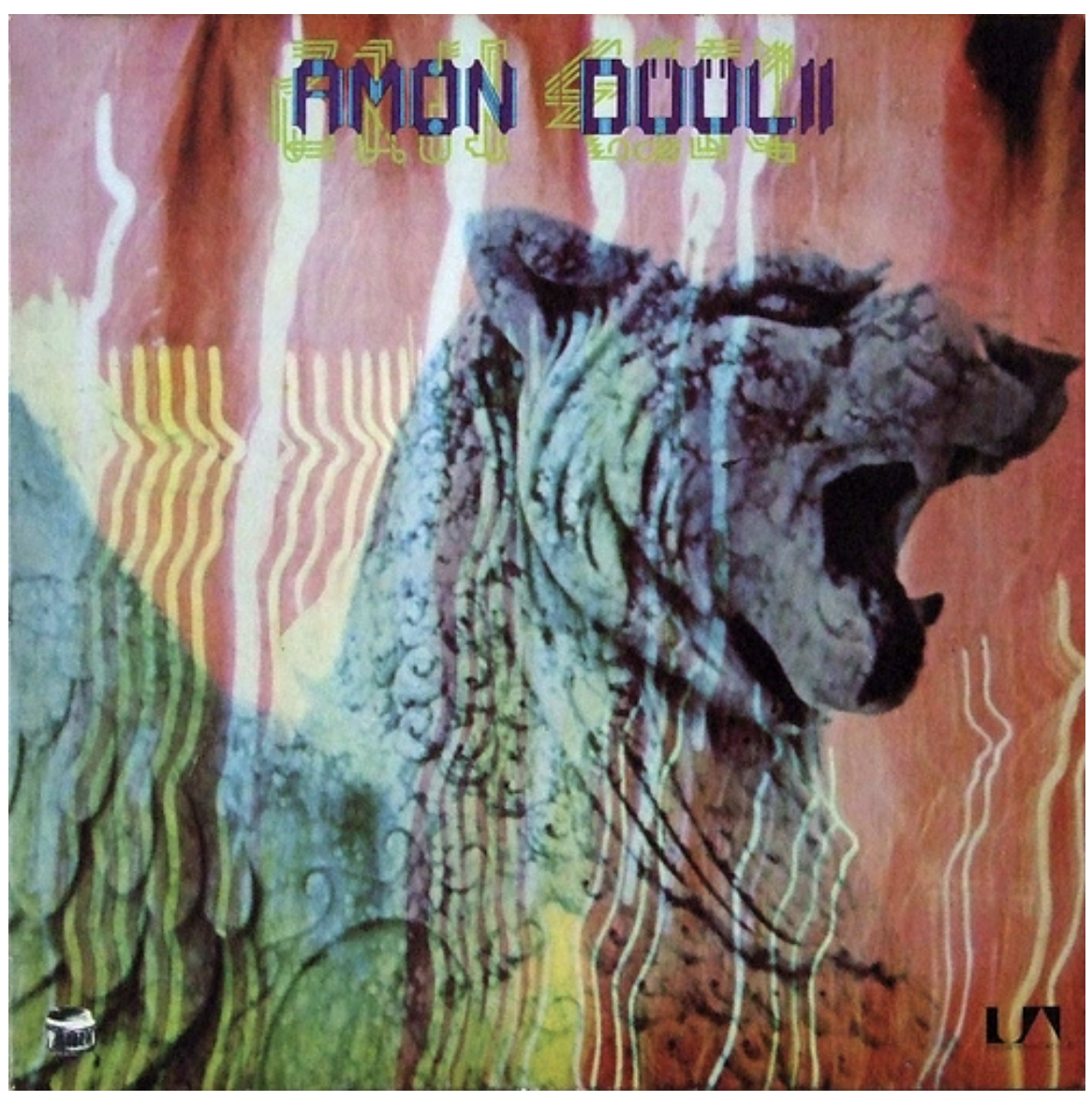
An imaginary radio show if you like, a taste also of my DJ sets, the Monolith Cocktail Social is a playlist selection that spans genres and eras to create the most eclectic of soundtracks. Each month I compile a mixed bag of anniversary celebrating albums (this month being 50 years since the release of Amon Düül II’s seminal acid-rock communions with Yeti, Wolf City, Curtis Mayfield’s equally seminal soul triumph soundtrack Superfly, T-Rex’s big-hitter The Slider, and the more obscure self-titled album of brown-eyed soul and singer-songwriter woes from the mellow New York artists Alzo), newish tracks (this month that includes Wu-Lu, Horsegirl, Cities Aviv, Eerie Wanda, Basia Bulet and Robert Stillman) and music from the last six, seven decades (that includes The Wolfgang Press, Delaney Bramlett, Readykill, 5 Revolutions, Lew Lewis, Sergius Golowin and many more). Expect to anything and everything.
That track list in full—–
5 Revolutions ‘Greetings’
Deeper ‘Willing’
Horsegirl ‘Anti-Glory’
Free Loan Investments ‘BBC’
The Wolfgang Press ‘Shut The Door’
Bill Jerpe ‘Behind The Times’
Delaney Bramlett ‘What Am I Doin’ (In A Place Like This)’
Spontaneous Overthrow ‘All About Money’
Crimewave ‘Disposable’
Krack Free Media ‘Let The Band Play’
Cities Aviv ‘BLACK PLEASURE’
Wu-Lu ‘South’
Readykill ‘Watching The World Going Down’
Thirsty Moon ‘Speak For Yourself’
Curtis Mayfield ‘Little Child Runnin’ Wild’
Patrick Gauthier ‘The Good Book’
Wax Machine ‘Canto De Lemanjá’
Sun Ra Arkestra Meets Salah Ragab ‘Ramadan’
Amon Düül II ‘Sleepwalker’s Timeless Bridge’
Pugh Rogefeldt ‘Haru Sett Mej Va…’
Misha Panfilov Sound Combo ‘Way Higher’
Chris Corsano/Bill Orcutt ‘The Secret Engine Of History’
Idassane Wallet Mohamed ‘Aylana’
Susanna w/Delphine Dora ‘Le Possédé’
Basia Bulet ‘The Garden (The Garden Version)’
Azalia Snail ‘You Belong To Me’
Eerie Wanda ‘Sail To The Silver Sun’
T. Rex ‘Ballrooms Of Mars’
Grave Flowers Bongo Band ‘Squeaky Wheel Oil Can’
Lew Lewis ‘Wait’
Os Mundi ‘Gloria’
Daevid Allen & Kramer ‘Thinking Thoughts’
Shoes ‘Tomorrow Night’
Alzo ‘Without You Girl’
The Ladybug Transistor ‘Windy’
Ben Marc w/Joshua Idehen ‘Dark Clouds’
Robert Stillman ‘Cherry Ocean’
Sergius Golowin ‘Die weiβe Alm’
ALBUM REVIEW
MATT OLIVER
The Difference Machine ‘Unmasking The Spirit Fakers’
(Full Plate) – Out Now
“Criticise me from a safe place, when you never had the courage to keep up the same pace”
Unmasking the Spirit Fakers sounds righteously, overzealously put through an 80s keep-it-real mouthpiece, though its sourcing from a Harry Houdini essay does complement Chuck D’s pronouncement of ‘no more music by the suckers’ perfectly. Fundamentally it goes for a hip-hop trope old as time itself and still one of 2022’s causes for concern – separating the authentic from the phony.
Their description as a ‘psychedelic hip-hop group from Atlanta’ doesn’t do The Difference Machine much of a service. These underdogs hide in plain sight: though the opening and closing tracks evoke burnt out rock star imagery in the last throes of the limelight (or another Public Enemy reference, ‘Do You Wanna Go Our Way???’), The Difference Machine’s reshaping of long-haired prog rockisms, is more about achieving the optimum volume to get foundations crumbling (first thought of comparison – Flatbush Zombies). For psychedelic, read a vivid shock to the senses, playing out a bad trip, Strawberry Fields becoming killing fields. On one hand you’re prompted to “take a step inside the mind of man with no time to lose” – the reality is when you’re told to “get behind the wheel and drive with no fucking fear”.
Drum welts and gut-punching synths introduce ‘Atlantis’ and producer Doctor Conspiracy, with the bit immediately between the teeth of emcee Day Tripper. Positioning himself in the eye of the storm as smoke bringer #1 (“never thought that black cloud would hover over me”), the prevalent, what’s-the-worst-that-could-happen mentality has evolved from the band’s first albums The Psychedelic Sound of The Difference Machine and The 4th Side of the Eternal Triangle, both of which made more of a jangly, moptop sound delivering Edan-feedbacked zingers. Those faking the spirit behind the peace signs have obviously tipped The Machine over the edge, DT grinding magical mystery tours to a halt (okay, the ghostly melodies of ‘Flat Circles’ appear to put the Ark of the Covenant up for grabs), by spitting with kerbside, high stakes amplification, armed with jagged book smarts, and numbness as an essential power-up. A distrust viewing everything and nothing as real, reaches the conclusion that it’s best to “fuck a half full-half empty, fill the whole cup”.
Four tracks in and DT is playing the last action hero in sweat-stained vest, brushing off chunks of shrapnel. Sure ‘Car Key’ lies on a bed of sitars and flower power, but Day Tripper’s savage stick-up shtick – “this your last chance before these bullets tap dance across your face like scatman” – is not for dressing in tie-dye. Humble enough to reveal “it all came to me one day rapping in the shower” before Denmark Vessey jumps in, DT shows his hustler’s mentality matches the next man on ‘Huckleberry Finn Day’ (“I sacrifice comfort for wonder, I sacrifice slumber for numbers”); and, like all defender of the universe appointments, a sliver of vulnerability is seen seeping under the armour.
Whereas ‘Repeater’, an epic, can’t stop-won’t stop rumble with Sa-Roc guesting (“got a cheat code embedded within me that’s infinite”) arms the charges into combat, the scuzzy ‘It Ain’t’ is where all thoughts tangle into a fiery stream of consciousness, caught wondering whether not giving a fuck is actually the safest option. The Quelle Chris-starring ‘Re Up’ is a rare simmer down, though still with nagging thoughts persisting as to riding the risk-reward seesaw. Perhaps the album’s crystallising moment is when on ‘Pulling Capers’, featuring a fed-up-as-he-gets (which never sounds quite right) Homeboy Sandman, DT nutshells his higher calling -“I ain’t ask to be a rapper, rap asked me with a dagger to my throat”.
After 38 minutes of pressure, the engaging cult of the Machine continues. It’s an interesting dynamic, of DT blazing out on his own with Doctor Conspiracy’s production acting like a Foley stage. Without really sounding like a traditional DJ-MC combo, it’s to Conspiracy’s credit that DT (dare it be said, at times channelling the new king of Glasto) sounds like he’s the figurehead for a whole squad of Max Mad musicians, rather than an MPC twisted inside out. Also marking a slightly more hard-nosed departure for Full Plate (whose entertaining acts Dillon, Batsauce and Paten Locke always do well on these pages), The Difference Machine rock cores with their unrest soundtracking the here and now – the days of the sucker are numbered.
AUTHOR MATT OLIVER: Sometime Clash site contributor, dance, electronic and hip-hop expert Matt has been offering up his wisdom and recommendations on the best rap cuts for the Monolith Cocktail for the last six years. You can find out more about his extensive writing portfolio and professional practice here.
Our Daily Bread 526: Jill Richards/Kevin Volans ‘Etudes’
July 11, 2022
ALBUM REVIEW
Andrew C. Kidd
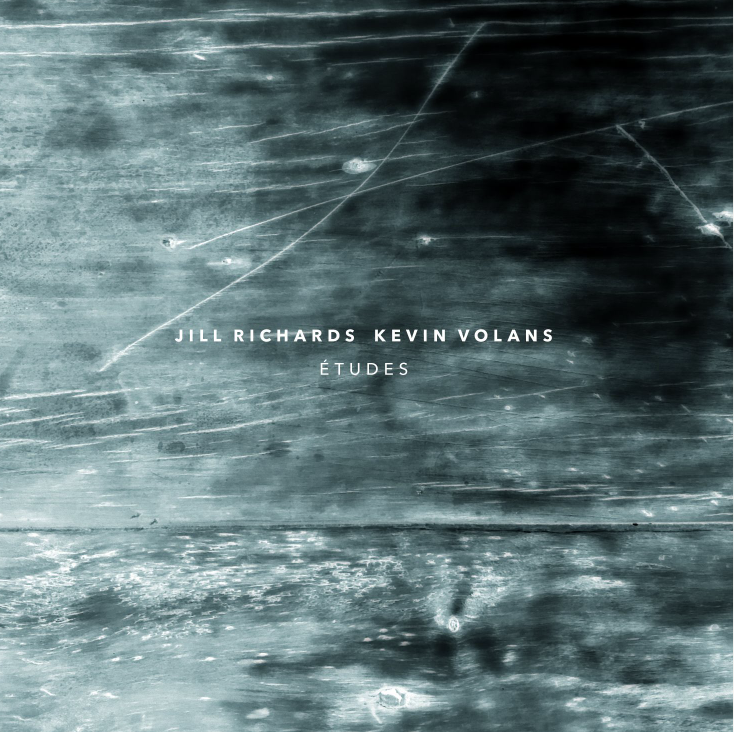
Jill Richards/Kevin Volans ‘Études’
(Diatribe Records)
Kevin Volans is probably most famous for the 1984 Kronos reworking of White Man Sleeps. His beginnings in South Africa to the Neue Einfacheit (in English, New Simplicity) of West Germany with the theorist Karlheinz Stockhausen, whose seminal sine-waves and soundscapes shaped the landscape we understand in electronic music today, are well-documented. The Man With Footsoles of Wind, an opera about the enterprise of the influential poet Arthur Rimbaud in Ethiopia, remains very much on my ‘listening wishlist’. Volans is obviously a musicologist. He is undoubtedly a modernist. This is 2022. He has offered us Études, a collection of his own previously unreleased solo piano works performed by Jill Richards and a second-half where he performs Liszt. The listener has been invited into “a sound world” with “extremely complex and challenging arrangements”. There is also an allusion to twenty fingers playing, rather than ten. These are just some of the insights that accompany the liner notes. My following review reflects the two halves of this collection.
Jill Richards plays Kevin Volans

An étude is a short piece of music that demonstrates skill. The skill is in the composition as well as the performance. Jill Richards, an accomplished pianist and long-standing collaborator of Volans, opens with the Second Étude. It is a rift of split chords and dissociated notation. There are mirroring moments: chords that delve inwards, returning later at varying degrees, but never selfsame. The piece is steady but not stately. It is measured, and open. Throughout this first half, this openness, or rather, these open spaces, are particularly evident on the Seventh Étude where the musical interstices are left unfilled. He also offers more fleeting movements such as the brushed-stabs that flee as harmonic echoes on the Fourth Étude and the alarm-like opening to the First Étude. The latter piece has a walk-around dance motif which toes lightly over the weighty bass clef. Volans opts to juxtapose the tempos of his works on Études. He presses for accelerando whilst raising the reins of decelerando. The icy and pointed Third Étude marks a sudden departure from the glacial kinesia of the Second Étude. The notes of the former rise and fall. Nothing is sequential. There is rhythmic abandonment, best evidenced by the First Étude. The Sixth Étude is an example of anti-meter. It quietly stirs. The Seventh Étude is periodic and concludes by disintegrating completely.
Kevin Volans plays Franz Liszt

From the glissandos that flitter away like rippling caustics of light through water on Fountains Of The Villa D’este to the sweeping whorl of Transcendental Étude No 11 Harmonies Du Soir, Volans captures the beauty and rhythmic complexity of Lizst. On Cypresses Of The Villa D’este, a padding crescendo presses and stresses and accentuates. Liszt’s transcription of Wagner’s Liebestod (from the German, liebe, love, and tod, death) was originally the concluding act to Wagner’s operatic drama, Tristan und Isolde. The famous five-note motif is delicately played by Volans. The lovers are beside one another. The piano slowly grows, the tremolandi becomes stronger, the accelerando pulses, the appassionato intensifies. There is quiet transfiguration in its concluding major key. Here Isolde is weeping over the dead Tristan. The calando that Volans plays out continues to emanate away into the lull and loft of her tears that river and mouth and basin. The theme is solemn, yet the piano notes wave and glint away like sun-glitter. The listener is carried outwards to drift on this sonorous and sonic sea. My water metaphor was inspired by the libretto from Tristan: “ertrinken, versinken, – unbewusst, – höchste Lust!” (in English, “to drown, to founder – unconscious – utmost bliss!”).
I consider Études to be a diptych. Volans showcases his pianistic skill and appreciation of the transformative romanticism of Liszt. There is catharsis in the atonality and arrhythmia of his preceding compositions that blow open like air. In the interstitial spaces of each half, he beckons the listener into darkness, yet ultimately bathes us in light.
Dominic Valvona’s ALBUM Reviews Roundup

Various ‘Pierre Barouh And The Saravah Sound: Jazz, Samba And Other Hallucinatory Grooves’
(WEWANTSOUNDS) 22nd July 2022
The story of Saravah Records in sixteen showcase tracks, this latest well-planned compilation from the vinyl specialists WEWANTSOUNDS (more or less a regular in this column over the past few years), in conjunction with the label’s guardian/historian Benjamin Barouh, builds a tale of cinematic, progressive, jazz accompanied escapism and exploration.
A haven for the founder Pierre Barouh’s love of Latin American and African grooves, the Parisian imprint, which triggered of a fecund of inspired, imbued or tempted jazz-rich artists, enjoyed a ten-year period in the sun; releasing records from a myriad of cult genuine one-offs, never to be repeated team-ups and journeymen and women between the mid 60s and 70s.
A fair share of that roster arrived from the stage and screen. Pierre, via his more musical talents, not only contributed lyrics and singing to Francis Lai’s score but also starred in Claude Lelouch’s feted A Man And A Woman. From this connection he was able to rub shoulders with a host of hot French new talent, including the legendary Brigitte Fontaine, Jacques Higelin and Béatrice Arnac. Fontaine, who’s been performing and making radical music for near on eighty years, has pretty much, occupied every square inch of the avant-garde. A novelist, poet, musician and of course actress polymath, she infamously performed and recorded with her equally renowned partner, the Berber-descended singer, multi-instrumentalist, comedian and composer Areski Belkacem.
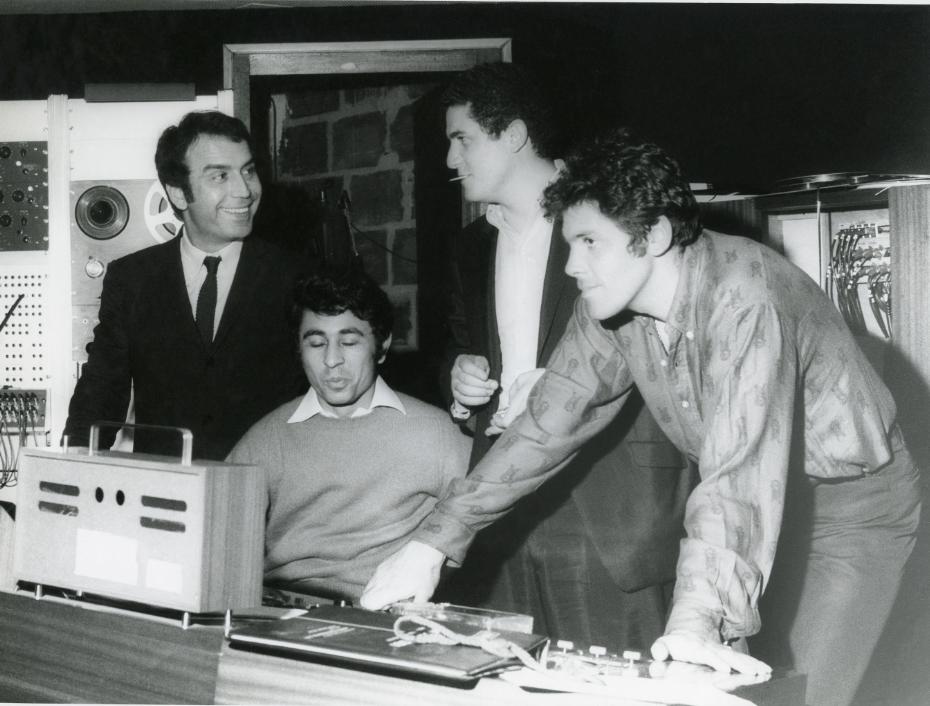
Fontaine appears twice on this vinyl compilation, whilst Areski just the once. Of her two cuts there’s the inclusion of ‘Comme À La Radio’, taken from the eponymously entitled ’69 LP she recorded for Saravah. It features, unbelievably, the freeform jazz envelope-pushers The Art Ensemble Of Chicago, who appear to have hung around long enough to become an unofficial house-band, providing a barely contained avant-garde explosion to at least three of the artists on this collection. They traverse an organic Don Cherry mood; a simmered woodwind and soothed Afrocentric be-bop meander to Fontaine’s arty chanson cooed and spoken word vocals.
Completely in a different vogue, Fontaine’s ‘Cet Enfant Que Je Távais’ duet with the French pop-actor star turn radical activist Jacques Higelin, is a romantically serenaded affair-of-the-heart. Quite dreamy, without a care in the world, almost sympathetic, it does however show signs of ore existential aloofness. Higelin precedes this inclusion with the more jazzy, eastern psych limbering ‘Je Jovais Le Piano’. Hawk and untethered sax meets a semblance of the exotic and a R&B like flavour of guitar on this both sung and expressively descriptive cut from his hippie days. (Nothing to do with the album or choice of his tracks, but as a trivial bonus it was Higelin’s French-Vietnamese girlfriend, Kuelan Nguyen, who was chatted up by Iggy Pop – she brushed him off of course. This in turn inspired David Bowie’s own, if geographically wrong-footed, ‘China Girl’.) A big star with a legacy to prove it, Higelin’s music for Saravah proved experimental and beautifully executed.
Back to those other Art Ensemble-backed inclusions I mentioned a paragraph or two back. The compilation opener ‘Mystifying Mama’ finds the exploratory jazz doyens polishing off Muscle Shoals R&B with some Chicago soul-jazz. The ‘mysterious’ Marva Broome fronts this clavichord rich blast of horn-heralded funk. Later on they back the French-African actor Alfred Panou (notably in Jean-Luc Goddard’s ensemble) on his jungle-beat polemic freestyle rumble ‘Je Suis Un Sauvage’. Literally rolling in from the pub on a promise, with the Chicago troupe already set-up from a previous recording, Panou struts and trills his grievances to an elephant bellow of brass and swaying West African grooves. Fellow African traveller, the Gabonese artist Pierre Akendenge, released two albums for the label in the 70s. Arriving at the end of Saravah’s tenure, a cut from his ’76 LP Africa Obota appears now on this four-sided vinyl revue. ‘Orema Ka Ka Ka’ is an Afro-Cuban, with a South African and Congo lilt, fusion of spiritual warm 70s soul; a delightful, almost swaddled oasis of relaxed roots that represents another side to the Saravah Records story.
Back in the jazz mode there’s a number of tracks from the Paris label’s Piano Puzzle series of collaborations. Those with impressive, lengthy CVs need only apply, for this series featured such players as the keyboardist maestro Maurice Vander, who worked with such luminaries as Django Reinhardt and Chet Baker, and appeared in many sessions for the Fontana label. Here we’re treated to his folksy reminisce ‘Siciliene’, a subtle yearn for a picturesque if travailed slice of Southern Italy. We also have, from that same series, the French be-bop pianist – impressively playing with Miles Davis and Lester Young – René Urtregar and his real cool Stax-like rolling ‘Tchac Poum Poum’, plus the pianist/organist and sideman to such notables as Dexter Gordon, Yusef Lateef and Manu Dibango, Georges Arvanitas, whose Coltrane-inspired, Savoy Jazz licked ‘Tane’s Call’ gets picked up for the compilation.
Aside from the jazz, briefly mentioned in the opening paragraph, another main driver of Pierre’s label was Latin America: especially Brazil. So taken with that exotic beauty, visiting in the late 50s, Pierre would return to Paris with his foil in such enterprises Baden Powell and record a version of the ‘Samba de Bêncão’ standard, renaming it ‘Samba Saravah’. He’d later make a special Rio music documentary with Powell, Maria Bethania, Paulinho da Viola and Pixinguinha. Although it doesn’t appear on this compilation, from that same Samba session in the mid 60s, this collection’s farewell ends on the rather less exotic and Latin storyteller romantic yearn ‘Saudade (Un Manque Habité)’. Still, more in the groove as it were, there is the inclusion of Michel Roques’ active samba swanning and tropicalia “soufflé” ‘Monsieur Chimpanzé’, which positively sails into the Rio harbor, blown by the increasingly hot-aired excitements of the vocalist and rattled percussion. Roques’ CV, in case you were wondering, includes a saxophone-fronted trio, a period on Fontana and one LP, Saravah Chorus, for (as the title would obviously indicate) Pierre’s label.
The reminder of this spread falls with the already mentioned fields of influence, genres; although the French actress, singer and composer Béatrice Arnac, with the jazzy cocktail come dramatically staged if lucid ‘Le Bruit Et Le Bruit’ slips into French Ye-Ye and new wave French cinema.
I’m pleased to be introduced to the likes of the relatively obscure Baroque Jazz Trio, E.D.F. and Cohelmee Ensemble; all three of which I will be trying to uncover and find out more about. But as an encapsulation of a period in independent French label history, this entire compilation is an illuminating, often dynamic, and always curious hotbed of actors, mavericks and jazz aficionados coming together to create an astonishing musical catalogue.
Various ‘Spirit of France’
(Spiritmuse Records) 8th July 2022

Another wisely considered release from the Spiritmuse jazz label, Spirit of France announces a new anthology style series of previously obscure ethnographical jazz peregrinations from a period of world music and new age exploration in the 70s and 80s.
Deliberating deeply on their catalogue the label in recent years has acted as a kind of promoter/custodian of the incredible healing prowess of Chicago jazz legend Kahil El’ Zabar (in his many set-ups) and also released spiritual imbued albums from David Ornate Cherry, Abdullah Sami and Mark de Clive Lowe and The Cosmic Vibrations. It’s at this point that I must declare I provided the liner notes to Kahil and his Quartet’s most recent album, A Time For Healing; going from fan to paid-up commission. But I’m donning my non-partisan critic’s hat for this latest compilation of rare experiments from the fringes of jazz, folk and psych.
Chosen by the label’s own Mark Gallagher and Theo Ioannou with the help of French crate-digger Tom Val, the inaugural collection’s standout inclusion is that of late genius Jef Gilson. Still, even after producing a litany of French greats and arguably the country’s leading explorative jazz guide, very much under-valued, Gilson somehow remains a cult figure. The Jazzman label went to great lengths to remedy that, with umpteen reissues, collections of his work. From furors into Malagasy culture to the concrete and freeform, Gilson’s legacy is both extraordinary and varied. Appearing on one such anthology showcase from years back, the changing compressed sulk and exotic swinging ‘Love Always’ now graces this compilation. Notable for featuring, amongst others, Byard ‘Dogtown’ Lancaster this concentrated lengthy flex moodily plows through Latin-American Bernstein, African facemask cubism and drunken motioned rolls.
A strong theme, suffusion of India and its neighbours’ runs throughout a number of other selected tracks; most obviously on the rather rare Adjenas Sidhar Khan’s album finale, ‘Mahabaratha Kali’ (taken from his Musique D’Adjenas LP that just scrapes into the 70s), but also with music by hurdy-gurdy man Rémy Couvez, the versatile Sylvain Kassap and short-lived Pân-Râ. The first of that quartet of artists casts a mini-meditative opus of brassy sitar, buoyant tablas and mantric “ahhhs”, but increasingly turns towards both hypnotising ritual and the psychedelic. “Vielle” maestro Couvez opens this collection with a ‘travel dream’ fluted aria churned transcendental traverse, in the fashion of Ariel Karma’s ‘Almora Sunrise’. From the more prolific Kassap and his 1983 LP Musiques Pour La Tortue Magique, with both the noted Jean-Michel Ponty and Pablo Cueco, there’s the Finis Africae, Jon Hassell and Eno-esque spiritual Southeast Asian jazz yin epic ‘Le Dessous Des Barges’ (“below the banks”).And, lastly, the Pân-Râ duo of Hungarian musician “Chobo” Casba Koncz and guitarist Michel Poiteau furnish the anthology with the acid-psych Eastern stirred and diaphanous apparitional voiced fantasy ‘Lorely’ – taken from the 1978 LP Music From Atlantis.
To Arabia, the Middle East, the Aegean where sun worshipping and vernal equinox performances see the most obscure Dynamo evoke Agitation Free and a more congruous Soft Machine on a progressive jazz fusion in Arabia’s honour, and the guitarist/keyboardist André Fertier (under his Clivage group title) softly patters the spindly gilded strings and dulcimer-esque hammers on the krautrock-prog-jazz ‘Moving Waves’ – a touch of Lloyd Clifton Miller, Amon Düüi II and Embryo.
Outside the areas of the mentioned geographical musicology, L’ Empire des Sons chosen track could be classed in the “primitive” mode; the octet’s ‘Quand Nos Pères Étaient Des Poissons’ a sort of jug poured Don Cherry-esque stripped and dusted reedy blown and bowed African invocation. The sibling and married conjunction of Parisian “musical revolutionaries”, as Finders Keepers called them (that crate-diggers label issuing a collection of their avant-garde futurism back in 2018), Structures Sonores Lasry-Baschot conjure up ambiguous Min Bul-like elasticated music that has a vague semblance of Japan (the country not the brooding synth doyens).
Something very different indeed, cult favourite, the French-speaking Swiss singer-songwriter Catherine Derain talks, taunts, goads and wraps the listener around her finger on the dizzy avant-garde chanson and pop aloof ‘Les Crocodiles’. Of course certain arty cliques have already been evangelizing such outsider artists for a while, but I can’t say I’ve ever come across Derain in all my years of eclectic digging. So thank you for the Spiritmuse and Mr. Val.
You’d expect this to be a far more challenging, out-there compilation considering the inclusion of outsider artists, mavericks, yet the Spirit Of France is actually quite a transcendental, worldly collection of musical journeys, rituals and performances that take in jazz, pysch, prog and ethno-folk. You can hear just some of the seeds that were sown for future fusions, seamless border crossings. But rather than a note from history, an education this new anthology is filled with some cracking great music, very much alive. I look forward to hearing more of this series.
Nwando Ebizie ‘The Swan’
(Accidental Records) 22nd July 2022
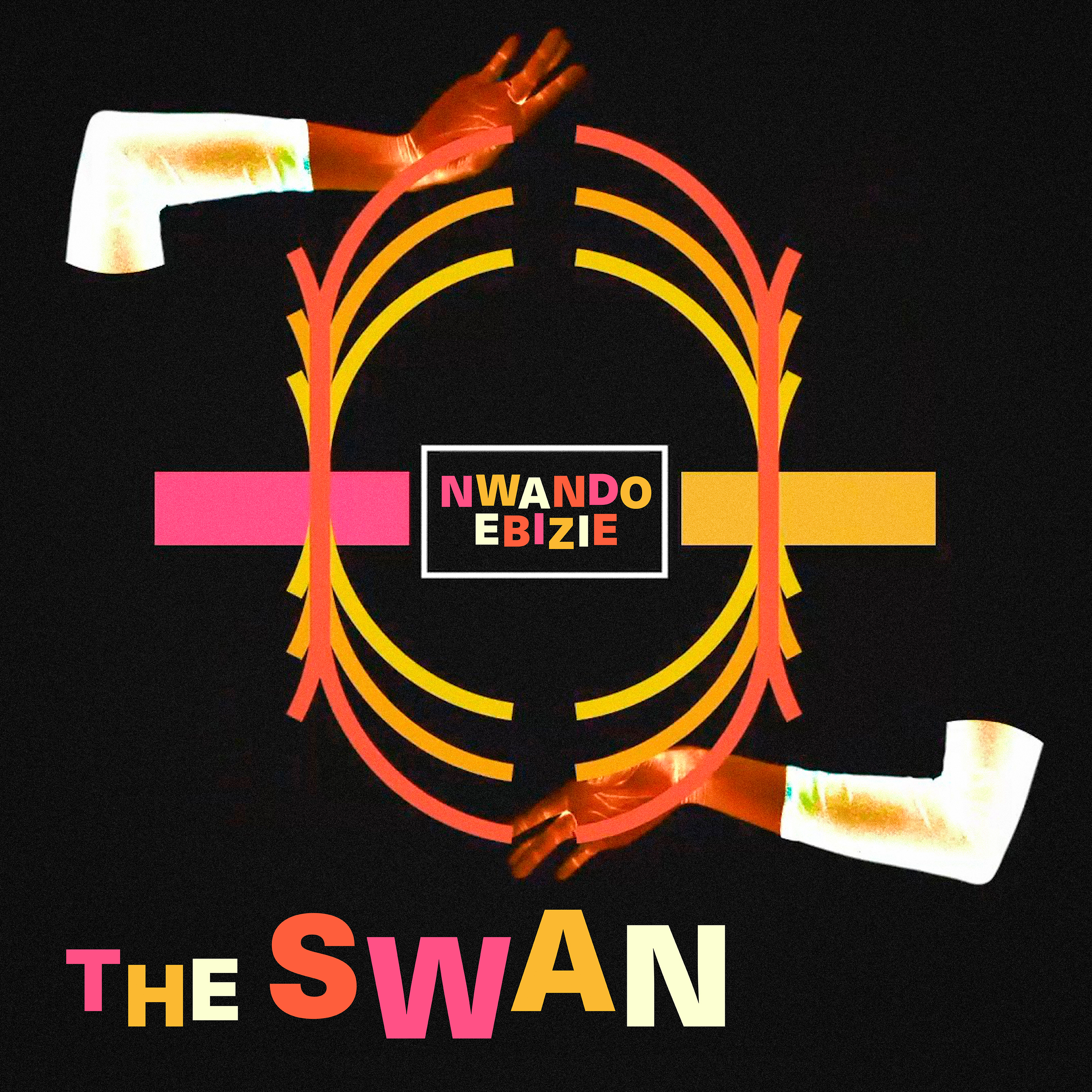
After a number of feted singles from the Afro-futurist polymath Nwando Ebizie in 2021 a much-anticipated debut album extension of the British-Nigerian artist’s rich, lucid and multi-disciplinary cosmology is about to drop. The Swan arrives just in time for her invited curated The Black Fabulous weekender at the Southbank Centre this summer; part of a larger multi-event celebration of black arts and popular culture under The Black Fantastic season banner.
Scaled-up with room to fully develop a part dreamy, part yelped trauma of life experiences, the heavily-loaded Swan entitled journey seems to merge and weave Hellenic/Western deities with those of Africa and the Hispaniola. From out of the mouths of the black diaspora, largely uprooted and forced to comply with the rules of their colonial masters, Ebizie reclaims a fertile heritage to create an alternative pathway, life force and platform to unravel suppression and stigma.
Just one of the many rhythmic threads that runs throughout this highly percussive album, the latest single to be taken from The Swan, the Greek mythological woe that is ‘Myrrha’, features the Haitian Vodou Yanvalouu dance beat. Originally from the rich musical melting pot of Benin, this rhythmic supplication was performed as a welcoming ritual for the ancestors, with dancers working themselves into a trance. Any mention of Vodou and we’re into the dark arts stereotypes, but this atavistic rites, belief system grew into a resistance movement against slavery. Only in more recent times, even post-colonial, has this system and musical form escaped the chains of censorship, degradation and ignorance, with various artists drawn to its appeal, and various revitalisations. In this form, on this plaintive song of sufferance and metamorphosis (the fated poor Myrrha, mother of Adonis, turned into a tree for her incestuous relationship with her own father I believe), Ebizie channels it alongside contemporary soulful and even no wave sounds, dynamics.
Pumped, hollered when needs be, the album is a mostly fluid parade of Mardi Gras, modern Afro-beats, Afro-jazz (touch of Manu Dibango and some spiritual gazing from synth, saxophonist and co-producer Hugh Jones), post-punk and the bombarded beat production and excitement of M.I.A. and Santigold. Lamentable but diaphanous pains and yearns build up to shorter bursts of syllable whooping and near hyperventilating displays of expressive empowerment across a highly percussive balance of African elementals, spirits and the march of contemporary sonic forces. And that means an amorphous blurring of sources, as Lagos mixes it up with New Orleans, a black diaspora London with Port-Au-Prince.
Dreamy, hallucinogenic and magical yet feverish with protestation, Ebizie conjures up an equally bombastic and longing, quitter cosmology of her own making. Those waiting with bated breath for such a rich, stimulating tapestry won’t be disappointed. The Swan is a most deeply felt and multifaceted debut.
Healing Force Project ‘Drifted Entities (Vol. 1)’
(Beat Machine Records)
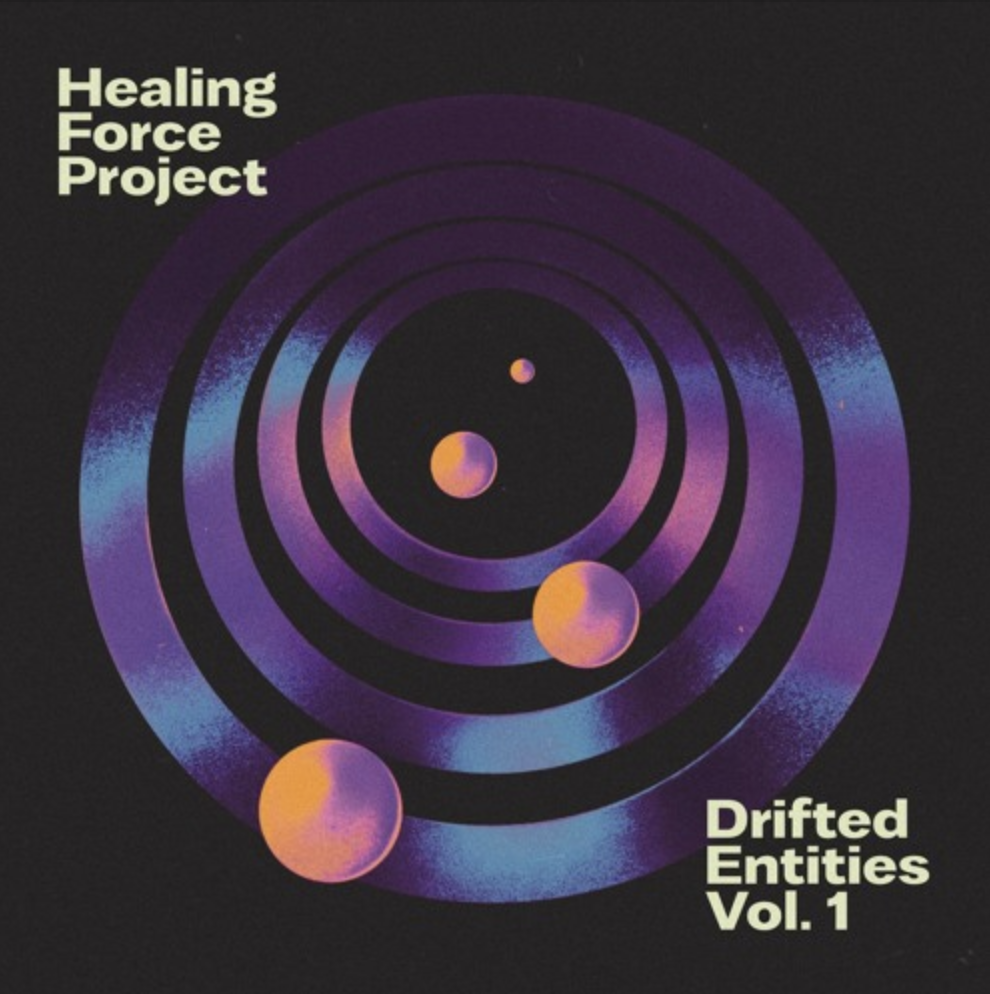
Sent out reverberating into an infinite expanse, the spiritual contorted raps and strains of Albert Ayler’s Music Is The Healing Force Of The Universe source material, the echoed dub washes of the On-U-Sound label and elements of Basic Channel, Luke Vibert, The Mosquitoes, Plug and Gescom drift towards the cosmos.
A continuously resonating ‘spiritual music mission’ the ghostly freefalling influences of jazz, dub, trip-hop, jungle, breakbeat and the strung-out move in layered circles that build-up an echo chamber of the otherworldly, space and at times the supernatural.
A decade in with the Healing Force Project moniker, Italian musician/producer Antonio Marini creates a universal soundtrack of ‘drifted entities’ that evoke transformed, stripped and lingered traces of both circular-breathing reeds, rim-shot and ricocheting drums, amorphous Eastern oboes and rumbling bass lines.
The vague sound of 80s soundtrack Miles Davis, Irreversible Entanglements and Black Dog circulate with short stubs and stunts of gospel style organ (threatening to open up the valves but falling short), wanes and a Lynchian atmosphere of the hallowed and esoteric gumshoe noir on the opening ‘Tiny Germs’ universal microcosm. Pulled By Magnets, Massive Attack and removed Jon Hassell prowl and linger on ‘Upbeat Damage’, whilst ‘Everything Is Frequency’ tunnels towards a hallucinogenic and skittle-skidded state.
There’s a jungle, or drum and bass beat on the shattering kosmische splash ‘Double Orbit’ and hinge-like trumpet gasped jazzy ‘Diorama Obscura’. When it comes it adds a new intensity and drive to the dissipation of resonated drifts – think Wagon Christ, or even Squarepusher meeting Binker And Moses in space. The ashes of a sonic harvest are scattered on the solar winds, those drifting entities set to resonate in a spooked and venerable cosmos well after the needle is lifted from the record, or curser comes down on a digital stop icon.
Toni Tubna w/ the Stockholm Tuba Sect ‘When The Magic Went Wrong’
(Gare du Nord) 29th July 2022
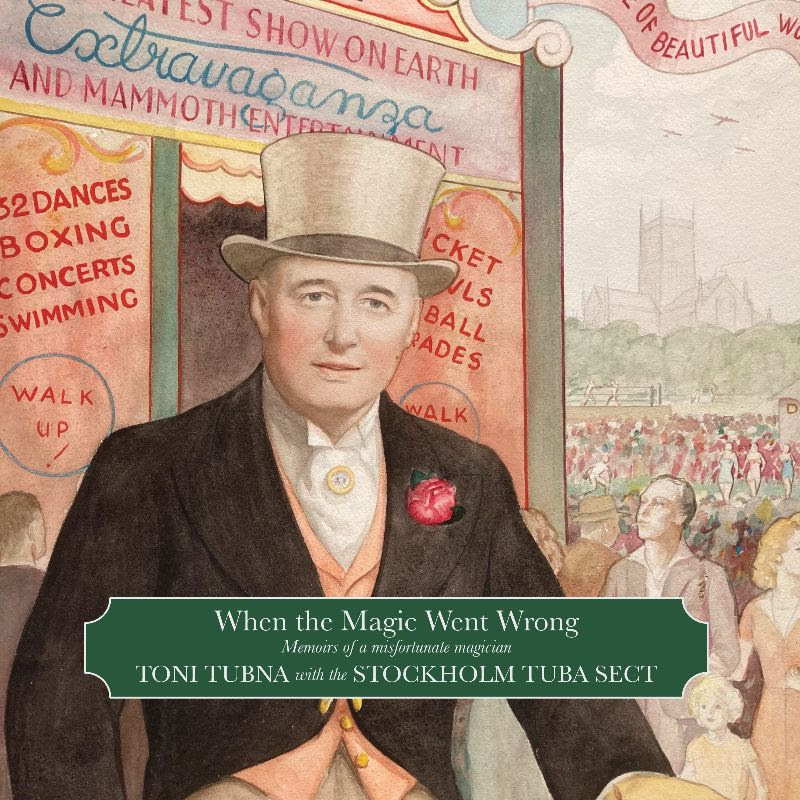
Another pseudonym for the Kentish and London estuary maverick Ian Button – he of the Gare du Nord label, session musician, producer and bandleader of Papernut Cambridge –, the fantasied anagram Toni Tubna guise is just the latest vehicle for his quintessentially English storytelling style of nostalgia.
Going the whole hog, Button has put together a multimedia package of songs, illustrations and, most importantly – the catalyst for this whole wheeze –, a book of short anecdotes from the life of a hapless, but spawny at times, cabaret magician on the English seaside circuit.
As with so many of his musical furors, the scent of nostalgia is heavy but fragrant. I don’t think it would be a criticism to suggest the puns, gags and wordplay resonates with those of a certain age – that includes me by the way. And so from the music hall to soft 70s rock, and from boarding house skits to saucy picture postcard humour the life of the likable, if always by the seat-of-his-pants, Toni Tubna regales his misadventures across ten mini-chapters.
What started as a correspondence between his band mates from another project entirely (The Catenary Wires) developed, riffing originally on a long-running joke/myth that some when in the fogs of time Button had worked as a magician.
Now not only drawing in a myriad of brass and string players under the factitious Stockholm Tuba Sect moniker, but also the talents of Fay Hallem (contributing illustrations) and art historian, writing, lyricist collaborator Scott Thomas Buckle, the whole throwback ballooned into a sort of knockabout autobiography of a life un-lived, but conjured up as mere amusement.
In a nutshell, each story, episode on the road to rack-and-ruin, with short bursts of the big time just out of his grasp, corresponds to one of the album’s songs. But in the true spirit of such concepted works we have a bookended intro and sort of curtain call finale reprise revue.
Our bearings, musical journey is mapped out on the opening ‘When The Magic Went Wrong’, a sort of continuation of Button’s 70s imbued Papernut house band with shades of a oompah brass band accompanied Mott The Hopple and David Essex. It also includes the first reveal of a lamented and repeated magical “disappearing” metaphor. The first actual gag, set-up is with ‘The Mayor Of Bridlington, whichintroduces us to a character straight out of a Carry On film, to the woozy dreamy longing tones of a enervated Beach Boys, Bad Finger and Bread – the long and short of it is a convoluted trapdoor joke that backfires on a jealous husband.
A “new assistant” serves as a sort of tug-of-love tale of woe, set to the strains of a faux-Tango and softened, concertinaed mirage of the Parisian Left Bank – the aromatic signatures of the amorous Dolores Mondo. A, rightly so, creepy vessel, ‘The Dummy’ tells the tale of Tubna’s fall from grace, suspended by the Magic Circle and forced to take a punt at ventriloquism: of which he’s utterly useless. A chance meeting with Barry – sound engineer to the Shaman (just credible and devoid of status as ring with the truth) and Howard Jones – and we’re suddenly thrust into the world of mediums before a major falling out that brings the house down. The music is part Alex Harvey, part The Kinks.
In a change from the Button-led songs of the first half of this album, the cursed ‘Talismano’ figurines story features a poetic, supernatural and creepy narration from Angela Loughran; unaccompanied except for an esoteric wind and dramatic touch of organ.
It’s artistic allusions that inspire both the Jeff Lynn, if he was into Britpop, ‘The Triennial’ and more wistful ‘The Painting’. The latter provides the cover illustration diorama of a lifted curse and the overall mists of time atmosphere for this book of British humoured yesteryear fun and mystery.
In what could be an episode straight out of Matt Berry’s Toast Of London there’s a shrinking “clash of minds” dual of egos with Tubna’s smug arch-nemesis Barrington Small that proves to be one of the album’s most mesmerist draws.
The Idle Race and Bonzos share the stage with Squeeze and Cockney Rebel on these magical shaggy dog tales made for a generation or two brought up on the idiosyncratic humour of an underwhelming cabaret act, episodes of Paul Daniel’s Magic Show and TV shows in the 80s (Bergerac for one). Fondly remembered, nostalgic pleasures prove fertile ground for vaguely reminiscent tunes and conceptual work of fun.
Anelli Beauchamp Cauduro ‘Sometimes Someone Watches’
(CÆR)

Conjuring up all manner of occult and otherworldly mystery, the collaborative trio of Michele Anelli, Paul Beauchamp and Andrea Cauduro drag open the doors and portals to disturbing sonic voyeuristic realms.
Their latest series of improvised esoteric-laced, alien, often chthonian soundtracks for the Turin-based label of such curiosities, CÆR (a ‘dark psych branch’ of the underground zine collective Chierichetti Æditore) uses atonal guitar sculpting, field recordings, various textures and a surprisingly melodic sensibility that rises out of the motor and propeller generated industrial and cavernous atmospherics: those touches of the melodic not so much a reprieve from the unhurried hum and crackled drones as brief touch of humanity.
‘The last time the door was open’, as the first track is entitled, the mood was ominous and the soundtrack a mix of Jóhann Jóhannsson horror, kosmische music for the damned, distant bit-crushed quells and haunted cowboy tremolo; all of it channeled through the Fortean Times paranormal radio set. A bended spooked transmogrification of a lunar Western, dissonant swells emerge alongside echoes of Popol Vuh’s seagull-like twangs.
‘One Dwells There Within Who Talks To The Morning Mists’ sounds like a sagacious line from some mystic but once again lurks in the occult. Early Popol Vuh (them again), Kluster, Lucrecia Dalt and the avant-garde can be detected on this cosmic hell of slow-burning centrifugal magnetic forces, deep bassy drones, early analogue and dark material manifestations.
‘A Sort Of Foreknowledge Of The Coming Series Of Events’ unfolds unrushed across a shadowy expanse in which planetary leviathans loom large. Like something from the 1970s crackling, brewing and rippling to early hints of Cluster (both albums I and II) and the Tangerine Dream, there’s a certain awe, a sense of those both unearthly and supernatural bodies in movement.
If you are already well versed with such occult experiments, maybe a Crow Versus Crow label regular, then both this label and trio collaboration are worth the immersive dread and time to devour.
The Dark Jazz Project ‘ST’
(Irregular Frequencies) 15th July 2022

A new regeneration is on the cards as the art-house electronic music maverick Andrew Spackman hangs up his longest running alias, the SAD MAN, and dons the ominous mantle of The Dark Jazz Project.
From the Duchampian-favoured Nimzo-Indian chess move moniker of a decade ago, and through various other guises including his own name, Andrew has been on a fidgety, restless progressive momentum; eking out a idiosyncratic pathway in the electronic music spectrum in the process. Pretty much obscure to the point that only the Monolith Cocktail would dare shout about this one-off talent, he’s come along way, and gained encouraging reviews and praise from an ever-larger cable of clique-y named publications and blogs: although only our opinion counts!
The SAD MAN has proven to be Andrew’s most prolific guise yet, with countless spasmodic, bewildering and madly engineered outpourings of techno and all its sub genre releases; culminating in that appellations most ambitious swan song, the Sad Stories multimedia collaboration with a number of music critics and fellow artists – though kindly asked to take part last year, time, personal crisis got in the way and I’m now pretty disappointed with myself for not contributing.
At the same time Andrew’s branched out both musically and art wise with moves into soundtracks and performances (see for example his score for Menilmontant).
A very busy man, but not too busy to once more reinvent himself with another project, in another form, along comes a taster of what’s to come. The inaugural preview release-style showcase of The Dark Jazz Project is a three-track affair of moody jarred spikes and alien landscapes. Like a moon-guided abstract fear; a ghostly voyage aboard a Kubrickian, Lovecraftian and Tarkovskyian space freighter this new vision scopes lunar caverns and the deep cosmos.
Plaintive and evocative strings stir up semi-classical filmic scores before galvanized ripples, shredded metallic components, gargled, burbled bestial signs of the Other emerge to conjure up all manner of galactic mystery, the paranormal and flippery. Detuned stars bend as bass-y dark matter merges with a Mogadon Jeff Mills and Phylps; a miserable Tangerine Dream out on the precipice. And that all happens within the perimeters of the first suite ‘The Forest’.
The second cosmic friction, ‘Eyes In The Trees’ features vague traces of hardcore and drum & bass; leaping into spasmodic action before summing up a sort of foreboding 2001: A Space Odyssey style symphony.
The “jazz” part of the name – albeit a transmogrified “jazzcore” and very removed version of John Zorn and his ilk – doesn’t really kick in until the final third section of ‘Fire Dance’: the EP’s finale as it were. A staccato breakbeat drum drills and twitches; rolls and bombards like a Wagon Christ (almighty) turn inside an epileptic triggering video arcade machine from the early 80s. It gets there however after first navigating passages of Warp Records’ Artificial Intelligence series, Autechre and Shepard Stevenson (yeah, there’s an obscure one for you).
More dark arts sci-fi cinema with bursts of generated techno and breaks than avant-garde noise jazz, Andrew’s latest incarnation is a welcome development. Wiser and without any limitations he’s, dare I say, taken his feet off the hadron collider accelerator for explorations with more depth and gravity.
A full album has been promised for later this year. Expect to see a review in a future revue.
Delmore FX ‘Scompaio’
(Das Andere Selbst, Communion, Artetetra) 7th July 2022

Across three labels of various experimental peculiarities no less, the founder of one of those imprints (the limited tape numbered Das Andere Selbst) Elia Buletti unveils a unique, lopsided treatment of electroacoustic ethno-music. Under the Delmore FX alias the poet/artist creates a whole new avant-garde vision of West African music: at times almost in the realms of musique concète.
The jug-poured and twanged tines sounds of the kalimba and mbira, and bobbled woody bounce of the gourd-resonated balafon xylophone are transformed into a serial mirages, bended and beaded percussive suites. Carrying an essence of those original forms and evoking the West African scenery, the Scompaio album (a title that translates into the very existential “I disappear”) gives a tangible, thick and heavy metallic texture and more concertinaed lunar effect to the source instrumental patterns and rhythms. At times this amounts to (dripping) tap dances in the sink to the twitters and data roving calculus of a computer language.
Percussive bubbled bulbs, wind chimes stirrings, twinkles, tinkles and chinks both flow and get caught in gamelan-like garbles as trippy effects distort parped and skewered rhythms; that is until ‘Sailor’s Delight’ arrives with a beat that gets going in an elliptical fashion – like a ritual, seasick Aphex Twin and Prefuse 73.
Almost cartoonish in places with wild and more fun runs and dribbles, below the surface there’s a highly sophisticated skill in these layered, re-contextualized pieces that reconfigure, play with ethno musical sources. In the process a whole strange new sonic world of avant-garde experimentation, primitivism electronica and library music is opened up.
Runningonair ‘B.A.U.’
8th July 2022

With a semi-nostalgic arc of synthesized evocations, the four-decade spanning electronic composer Joe Evans traverses and electro glides through an array of tutorial sessions turn grand explorations, and perimeter-set exercises in minimal apparatus use.
By day, stuck in the monotony of an IT call centre, by night, both navel and stargazing; daring to dream of quantum leaps and the faraway prospects of travelling to the stars, Evans lets his imagination project across nine varied suites of mood music.
Under the Runningonair umbrella – a moniker that includes a label and Youtube channel of technical music lessons, music videos and Vlogs – a choice line-up of sound modules, software and synths is used to score and explore such themes as futurology, climate change and the human condition. B.A.U., which I take it is the acronym for “business as usual”, begins with one such crisis. ‘If Not Now’, with shades of Orbital, Vangelis and Jarre, moves from new age trance to melodious techno; ending up above the clouds with climbing harmonic notes that avoid, we’re told in the accompanying notes, the standard chords. With a heavy use of the ‘Air hybrid 3 synth’ this verbalized protestation has the climate emergency in its sights. An artificial female voice posits the rhetorical line on that one, but also appears later on the dreamy piano tinkled, airy and spacey swooned ‘As Far As You Can’. This is actually built-on a remix Evans made of a track by the artist Suborno; a transformation of that original project cast into an entirely different direction.
Out into the cosmos, the celestial-toned, aerial bending trance and techno ‘Lunar Lander’ features both adult and child-like promises of intergalactic progress. Mind you, after reading Michio Kaku’s wondrous The Future Of Humanity it looks like our poor enfeebled current forms won’t make the interstellar travel that’s needed, nor stand up to the conditions on those future planets we colonize – In all likelihood our consciousness will have to be uploaded to some distant avatar, purposely built on those distant stars by robots.
Elsewhere Evans is inspired by the classic synthwave catalyst score for the cult Hotline Miami computer game; tuning into the original game’s Russian mafia antagonists whilst alluding to some environmental disaster with an almost clandestine piece of broody EDM and dreamwave.
Whilst ‘showcasing’ the CZ1 synth, Evans musters up a quirks and quarks lunar spell of Vangelis (again) space hymn, X-Files paranormal activity and the original Air on the coded password-like ‘CeZ1um’. But the multiuse QY10 sound module and Alesis Microverb exercise of ‘Q4’ moves in a more cinematic mode of retro-futurism. In fact this whole album sent me back to a late 80s and early 90s period of electronic experiment – in a good way I might add. I found myself easing back, drifting but immersed on wave after wave of melodious, vapoured and synthesised EDM, techno, trance and electronic-classicism. Beyond just application, Evans transports us with his digital and analogue skills to new worlds.
Hi, my name is Dominic Valvona and I’m the Founder of the music/culture blog monolithcocktail.com For the last ten years I’ve featured and supported music, musicians and labels we love across genres from around the world that we think you’ll want to know about. No content on the site is paid for or sponsored and we only feature artists we have genuine respect for /love. If you enjoy our reviews (and we often write long, thoughtful ones), found a new artist you admire or if we have featured you or artists you represent and would like to buy us a coffee at https://ko-fi.com/monolithcocktail to say cheers for spreading the word, then that would be much appreciated.
Brian ‘Bordello’ Shea’s Roundup Of What’s What

SINGLES/TRACKS
Gillian Stone ‘Amends’
This is a beautiful and moving single; a ballad of lost horizons and forgotten hopes, the folk bewitchery that indeed bewitches a long float down an aural river of despondency and regret but offers brief glimpses of the nature of life in all its ugly beautiful full-frontal explosion of sex love and lust. A song that tickles the chin of death until it smiles and bares its rotting teeth. A true example of the art and magic of music.
Hal Cannon ‘Thirty-Six Miles’
(Okehdokee Records)
Thirty-Six Miles is a beautifully written song taking in the magic and pure nostalgia of all the old country music, just like my dad use to play as I was growing up. A song that takes in the simplicity and wonder of discovery and peace; a song that demonstrates the purity and power of the simply written poetically inspired word framed by a lone picked banjo and tinkling piano. Truly beautiful.
The Legless Crabs ‘I Wanna Be A Cult Musician’
(Metal Postcard Records)
I cannot have a round up without an offering from the wonderful Metal Postcard Records, and this month’s chosen track is the new single by the Legless Crabs. A couple of minutes of adrenalin pulsating weirdness with a guitar solo that one should write home about, and I am renowned for my distrust of the guitar solos, but when one happens to sound like it is disgusted with itself for being a guitar solo – if it is in fact one, it could well be a heavily distorted keyboard – it is indeed a thing of rock ‘n’ roll legend and off kilter brilliance, a bit like the Legless Crabs themselves: off kilter brilliance.
Beija Flo ‘Waiting For The Sun’
I like a little deranged angst in pop music. Sometimes it is a good thing, and I enjoyed this little angst-ridden pop song of heartbreak and want a great deal; plus the video has the added attraction of a dead clown, who does not like a dead clown, especially on a nice sunny day, which it is today as I type this. An ideal way to start a review session: the sun an egg roll and a dead clown lying on the pavement dead whilst the songstress emotes anger and heartache. If only all pop music could be as entertaining.
ALBUMS/EPS
A.D Luck ‘WORMWOOD’
(Submarine Broadcasting Co.)

Exploration into the unusual psych of adventure is the perfect description of yet another off-kilter release from Submarine Broadcasting Company.
A.D LUCK has offered us here a captivating delve into the land of experimental electronica but with a pop edge, which at times reminds me of The Art Of Noise but without the annoyance. And I can imagine many an alternative radio show featuring a number of tracks from this fine album, and can well see it being all over the wonderful Dandelion radio station. For this is pop music Jim, just not how we know it.
It has melody, humour, romance and sex, or am I just a little strange? Whether I am or not there is no denying that to these ears the track ‘NICFITNIC’ is pure cartoon addiction pop brilliance, so much so I have just spent the past thirty minutes listening to this strange beguiling number over and over again. THIS IS PURE POP FOR NOW AND AGAIN PEOPLE.
The Doomed Bird of Providence ‘A Flight Across Arnhem Land’
(10 To 1 Records)
If you can imagine the Wicker Man set in the Australian outback instead of the Scottish Isles, than this could well be its soundtrack. For this album of 16 slightly gothic sounding folksongs has an eerie and wonderfully disturbed texture, the songs being vocal driven pieces using text from Australian Newspapers from the 1920/30s.
The songs start to merge into each other, and you start to think have I not already heard this one, which only adds to the strangeness and unsettling nature of the album. To my mind only a good thing and it is lovely to come across something a bit different and a band that isn’t a Woolworths Beatles/Byrds/Nirvana. This is an album for those who want to dip into something a little bit unusual.
The Meltdown ‘Its A Long Road’
(Hopestreet Recordings) 29th July 2022

This is a very mature sounding album; one that is very well produced and has the old sixties country soul vibe about it, which is to be honest something I normally avoid like the plague as I normally put on immature badly produced pop for my listening pleasure, and if I am in a soulful mood I will put on some 60s/70s soul, when soul to my ears was at its finest, and I think The Meltdown will completely agree with that statement as they have just produced an album filled to the brim, brimming in fact, with the inspiration from 60s country soul.
You hear the Stax horns and blue eyed soul melodrama which when done badly and uninspired can be as exciting as watching paint dry, and not even your own paint but someone else’s, maybe a neighbour’s or a recently renovated public house that has lost all its old charm and is now frequented by people in white shirts and short skirts who support Liverpool or Man U or whatever team at the moment is doing well. But Meltdown avoid that by sounding like a pub that has been given a new coat of paint but has managed to keep the charm and authenticity of the original, and of what the people found so appealing in the first place, so will attract new customers but keep the old regulars perfectly happy. So not all 60s inspired soul bands have to sound like The Commitments, it can sound like The Meltdown, and thank Little Richards 60s soul recording pants for that.
The Burning Hell ‘Garbage Island’
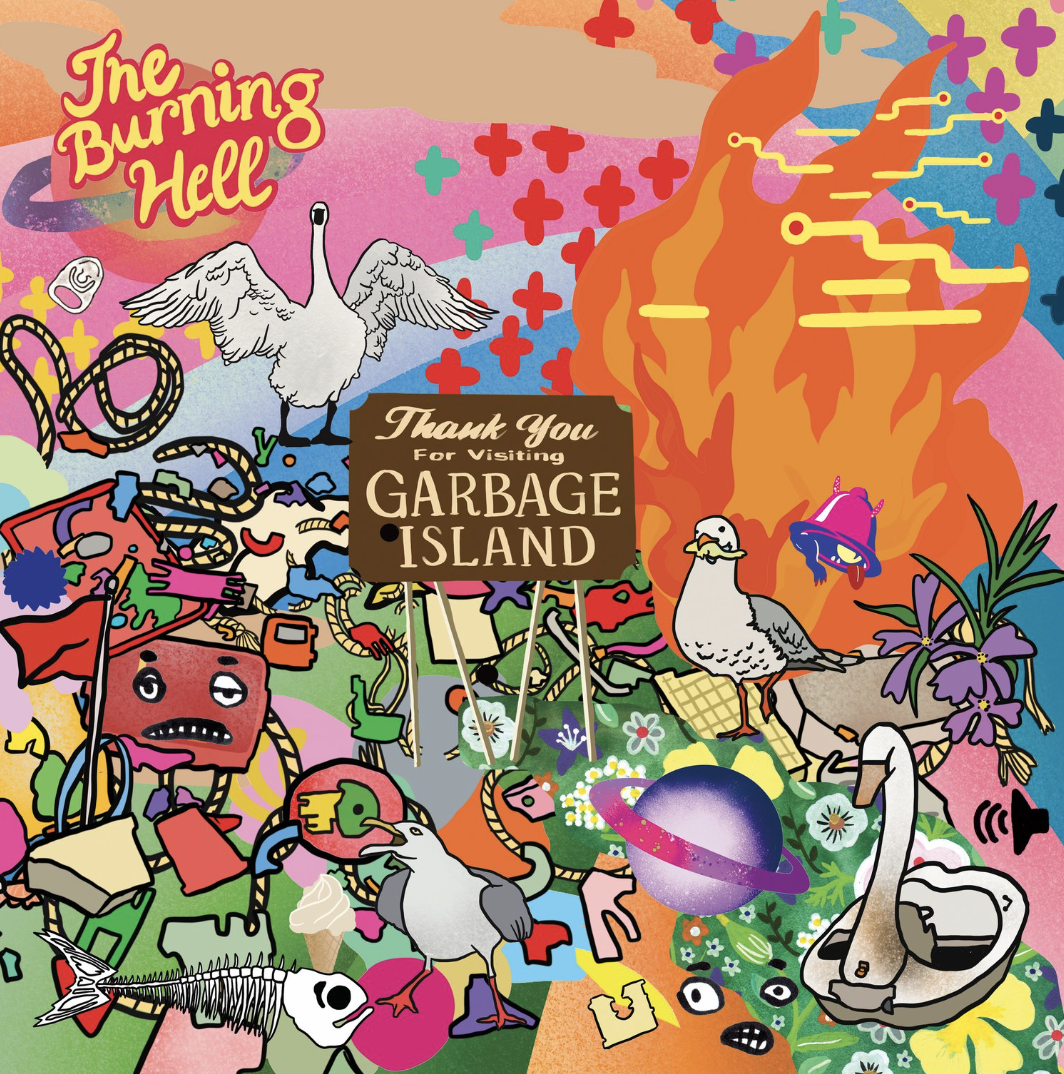
Garbage Island is an enjoyable romp of poptastic glee taking in the influences of Lou Reed, They Might Be Giants, XTC, early Costello, The Modern Lovers and even Steely Dan and mashing it into a stew of musical hits. There is certainly something enjoyable losing yourself in the wash of the many lyrics and fine pop melodies.
It’s nice to come across a band that isn’t scared to be intellectual and witty. I come across far too many bands that write the trite and the obvious; who use one word when ten is obviously better. I call it the Oasis syndrome. The Burning Hell I am happy to announce have not succumb to the syndrome and are happy to paint beautiful pictures of a not too beautiful world promoting the joys of the magical different pop song.
Monolith Cocktail Monthly Playlist For June 2022: Santigold, Dungen, Pan Amsterdam, Luh’ra…
June 29, 2022
Choice Music From The Last Month
Curated By Dominic Valvona

June tunes from the Monolith Cocktail team of Dominic Valvona, Matt Oliver, Brain ‘Bordello’ Shea, Andrew C. Kidd and Mikey McDonald.
TRACK LIST IN FULL:::
Party Dozen Ft. Nick Cave ‘Macca The Mutt’
Vukovar ‘Place To Rest’
Santigold ‘High Priestess’
Marina Herlop ‘Shaolin Mantis’
Flying Moon In Space ‘The Day The Sun Was Made’
Sinead O Brien ‘Salt’
cumgirl8 ‘Dumb Bitch’
Legless Trials ‘Dirt Bike’
Taraka ‘Reverence’
Magon ‘A Night In Bethlehem’
Oliver Rocabois ‘Watch The Seasons Come And Go’
Wolf Vanwymeersch ‘Friendly Is Better’
Dungen ‘Nattens Sista Strimma Ljus’
Pan Amsterdam & Damu The Fudgemunk ‘Duck Wok’
Les Amazones d’Afrique ‘Sisters’
Eman El Bahr Darweesh ‘El Arwam’
Wau Wau Collectif ‘Yellow-Casqued Hornbill’
La Chinaca ‘Juegos Malosos’
Luh’ra Ft. AndyMkosi ‘Give It All’
Bishop Nehru ‘Heroin Addiction’
El Gant/Ras Kass/Marco Polo ‘Pageants’
J Rocc Ft. The Koreatown Oddity ‘The Changing World’
The Book Thieves Ft. Upfront MCs ‘Human Beings’
L’Orchestre Massako ‘Gnekelhe Mohi’
The Koreatown Oddity ‘Top Of The Heap (Demo)’
Revelators Sound System ‘George The Revelator’
Kibrom Birhane ‘Digis’
Nduduzo Makhatini ‘Amathongo’
Rico James Ft. Ardamus and The Truth ‘Stay Away From The Dum Dums’
Cappo/Doctor Zygote/Jazz T ‘I Go Off’
Tanya Morgan Ft. Jack Davey ‘A Whole Mood (King Most Remix)’
CRIMEAPPLE/Buck Dudley ‘Entenmann’s’
The Book Thieves ‘Sarah’
Masai Bey ‘Ego Power’
Krohme Ft. Sleep Sinatra/Chino XL/Lord Goat ‘Cursed Earth’
Dirty Dike ‘Just Dreamin’’
Ghost Horse ‘Idea’
Loris Cericola ‘Message From Beyond’
Xqui ‘Narrator’
Flavia Massimo ‘Chromosome XX’
Celestial North ‘The Nature Of Light’
Oog Bogo ‘New State’
Paul Leary ‘Indians Storm The Government’
Farmer ‘The Call’
Trance Farmers ‘Dusty Tesla’
Rich Ruth ‘Desensitization And Reprocessing’
Tasha Smith Godinez ‘My Soul Floats On The Sea: Floating On The Sea’
Jacek and Ewa Doroszenko ‘Synthetic Nap’
Team Play ‘Hold Me In Your Arms (Hate And Terror)’
Claude ‘Twenty Something’
Angel Olsen ‘Through The Fires’
The Mining Co. ‘Astral Investigation’
You can now catch a videos version of the blog each month on our Youtube Channel:
You can now support and follow the Monolith Cocktail on the micro-donation site Ko-Fi.
If you think your music should be on our radar, perhaps a playlist choice please forward to our email address at monolithcocktail@gmail.com
Our Daily Bread 524: Angel Olsen ‘Big Time’
June 20, 2022
ALBUM REVIEW
Mikey McDonald

Newest recruit to the Monolith Cocktail Mikey McDonald is a resident of Glasgow, who can be found running the streets of the city as long distance running enthusiast. A former full time poker player, Mikey has recently taken up a role as a physio assistant. He’s previously been posting chat, games outcomes, strategy on the poker related rantings 6max SNG blog, and his musical tastes, recommendations can be found on Last FM. For his second review, Mikey takes a look at the latest album from the much feted Angel Olsen.
Angel Olsen ‘Big Time’
Angel Olsen returns with the new highly anticipated Big Time and this marks the sixth full-length release from this American artist who hails from Missouri. Olsen’s recent albums My Woman (2016) and All Mirrors (2019) were both my #1 albums of the year so coming into Big Time expectations were sky high. A quick peak over on Metacritic and the album is currently sitting on an impressive score of 88 indicating universal acclaim.
Big Time ventures more country than any of Olsen’s previous efforts. Olsen records and plays with a band but still very much feels like a solo artist in her own right. Her music falls under various genres including art pop, chamber pop or baroque pop – no doubt down to her frequent inclusion of classical instruments like strings, horns and pianos. Big Time is no different and we’re treated to these instruments in spades.
Ballad ‘Ghost On’ trickles along gently and could be haunting a 1920s ballroom as we speak. This track showcases Olsen’s vocal ability, which takes centre stage and is nothing other than serene. Compared to its predecessor Big Time affords more breathing space – there’s plenty of effects and little nuances but it never feels cluttered or over the top.
On ‘Right Now’ Olsen defiantly promises “I ain’t the past coming back to haunt you!”, which is soaked in reverb, perhaps only to emphasise this message. Thumping drums, monster guitar leads and belting vocal passages forge together to create a sonic eruption and burst the track into life – so much so, you could be forgiven for thinking you were listening to a whole new song. If anything, this is just testament to the strong musicianship and stellar production on show.
The jaw-dropping ‘Go Home’ all grandiose sounds like it’s been recorded live in a cathedral and features operatic backing. On this track horns dance and instruments swell to a euphoric climax. Olsen chants “I don’t belong here, nobody knows me”, and we all know she means figuratively. Olsen’s voice is a weapon, really, play this track loud through some high-end speakers and listen to her voice ripple through the room.
Penultimate track ‘Through The Fires’ opens with some plaintive pianos and perhaps if played loud enough would extinguish all fires in this world through the resulting tears alone. Olsen’s vocal performance is very much low key as she encourages us to “walk through the fires”, which could be a stark reminder to take risks or confront those challenges and demons in front of you. Olsen repeats “lighter, higher” for the best part of a minute before winding the track down with some sombre strings and this is one of the more ethereal moments on the record.
Closer ‘Chasing The Sun’ is dreamy and probably the closest thing to a lullaby Olsen’s ever produced. If Olsen was lighting the room up on ‘Go Home’ she’s whispering us to sleep here. There’s something very olden days and nostalgic about this track, like it’s been floating around the universe since the beginning of time and is only now seeing the light of day. A string section starts playing which is both uplifting and a thing of beauty and transforms us back in time, whilst around half way Olsen starts singing in her upper register which sends shivers down the spine. It’s stunning and one of the finest pieces in her catalogue and a real fitting way to end the album.
In a recent interview, Olsen states “I enunciated differently, and got into holding the words out” before adding that she would “sing more delicately around certain words” and this is evident on tracks like ‘Go Home’ where she alters her expression singing, “I don’t belong here”, or especially on ‘Chasing The Sun’ where the words “drop everything I’m doing” could quite easily be mistaken for something else entirely, as Olsen goes all operatic.
Is this Olsen’s magnum opus? Well…I’ll leave that for the listener to decide. So long as she continues to dazzle us that’s all that really matters. Look, Olsen’s always been a star – a star who burns bright in our blue ocean sky, a supernova in our milky way galaxy. And she’s proved it once again with this truly exceptional release. She’s proved it big time.
Dominic Valvona’s Reviews Roundup
Unless stated otherwise, all releases are available now
SHORTS:: Singles/Tracks:
Claude ‘Twenty Something’
(American Dreams Records)
Navigating the disappointments and those sinking feelings of resignation, Claude, the alias of one Claudia Ferme, release’s a wistful, almost languid but searching slice of prime dream-pop ahead of a new album in August. The inaugural single from that album, A Lot’s Gonna Change, ‘Twenty Something’ swims in the same waters as Aldous Harding, a disarming piece of woozy existential malaise that reflects Claude’s frustrations of society’s expectations when faced with reality.
As that title suggests, this dreamy, almost mirage like single encapsulates an informative yet scary and confusing age. Reilly Drew’s video for the song perfectly captures the mood, with the emptiness and the surreal, dream-like quality of a number of spaces serving as representations of Claude’s internal environment: “I’m alone in each scene, on some strange kind of journey, walking, thinking, looking inward, even when I’m surrounded by people.”
Wearing what could just be a cool bit of in-character chainmail, Claude’s literal armour comes and goes with a number of wardrobe changes, as she poses in coolly aloof, nonplussed reflective ways: an echo in there of 70s troubadours, female singer-songwriters gazing out thoughtfully. A mellowed yearn with snuggled and snozzled saxophone, ‘Twenty Something’ is a softened piece of captivating art-pop that shows a lot of promise. Expect to see a full album review in the future.
La Chinaca ‘Juegos Malosos’
(Movimientos Records)
Conjured up in a psychedelic vapour of bendiness and slinking dreaminess, La Chinaca’s latest wheeze is to transmogrify the brooding Chris Izaak classic ‘Wicked Games’, attuning it to their own special blend of Tropicana and more dystopian Cumbia.
A straight Spanish translation of “Juegos Malosos” is “evil games”, and on this slice of Island life theirs a sense that we’re being intoxicatingly led towards a sacrificial leap into the volcano. A mirage of languid reverbed South America percussion and drugged wooed vocals place this in the evanescent ether, between worlds, the final faded out winds sending this brilliant cover version into the cosmos. I look forward to hearing more.
Gabrielle Ornate ‘Free Falling’
With the bonus of youth on her side the highly motivated “bohemian siren” has released a string of energetic alternative rock and pop winners over the last year, whilst also covering, in a unique and musically skillful manner, an eclectic mix of songs on Instagram.
Gabrielle Ornate has all the right elements with her balancing act of colourful maximalist dynamism and charged emotional attitudes and politics. The latest track, ‘Free Falling’, leans towards “rawk” but still evokes an impish spirit. I for one see big things coming Ornate’s way.
Tess Tyler (Ft. Barney Sage) ‘Sell The Sky’
(Manners McDade)
You have to say that the Bristol-based composer Tess Tyler doesn’t do things by half, announcing not just a single but double album debut. Released on the same day, Fractals LP 1 will contain original neo-classical and experimental electronic explorations of Tess’ work, whilst LP 2 is billed as a “once in a lifetime” live recording of the brilliant and congruous Spindle Ensemble’s interpretations of the album’s graphic scores, designed by Tess, recorded at St George’s Hall in Bristol.
You could say it has been a decade in the making with Tess’ varied and experienced career including collaborations with Imogen Heap, the Bournemouth Symphony Orchestra, The Budapest Art Orchestra and The Bratislava Symphony. Her work has appeared on many orchestral scores showcased in concert halls across the United Kingdom as well as on video games such as LEGO® Marvel Avengers and indie hits including Human: Fall Flat. The year 2020 saw the release of Tess’ debut solo work, Stasis: Five Sketches for Piano; a five track EP influenced by Phillip Glass and Steve Reich, whilst integrating her innate cinematic compositional style.
To announce The Fractals doublet, Tess is sharing both versions of lead single ‘Sell The Sky’. We’re sharing the original version of the track, found on LP1 and featuring the kick-drummed bounce and stuttered drumming of the multi-instrumentalist, and fellow Bristol resident, Barney Sage. As the video shows, Tess, in moody gray shot colours moves from sculpting the stirrings of synthesized wind-blown cosmic forces to neo-classical, ala Roedelius and Tim Story, piano waves. Sage waits until the halfway mark to let off a jazzy loose splash and tumble roll of shadow play that stirs up the waters.
Expect to a full review of the two-part debut album nearer the time of release, later this year on the 9th September.
LONGFORM::Albums/EPs
The Paxton/Spangler Septet ‘Ugquozi’
(Eastlawn Records)
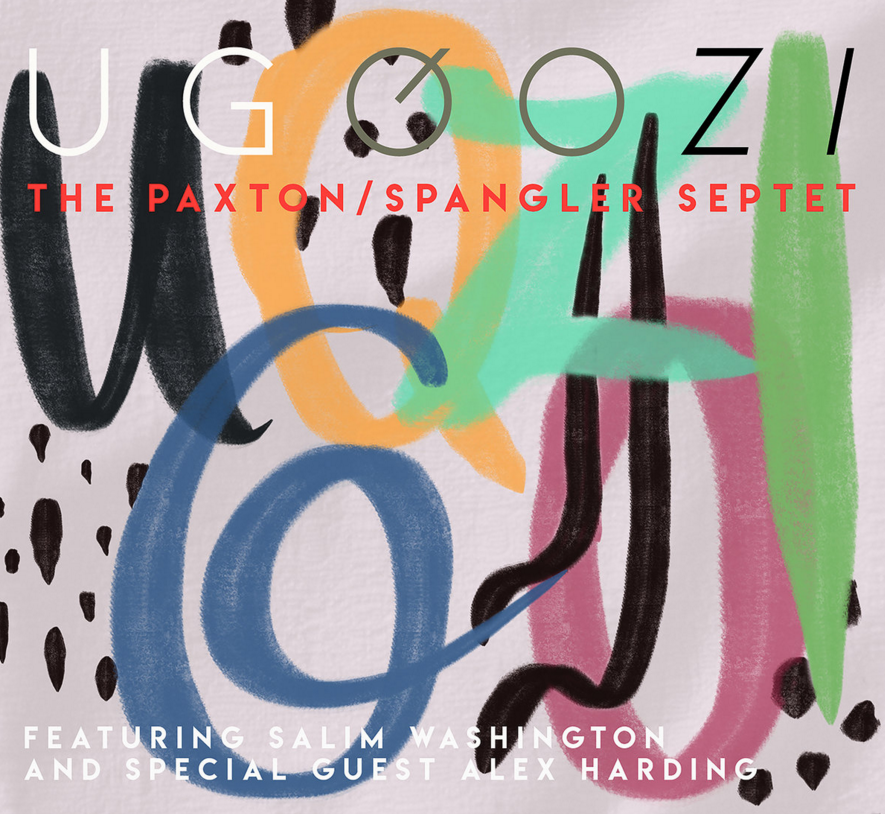
The co-led Paxton/Spangler Septet once more dance and join the South African jazz appreciation society parade with a new album of riffs on compositions and freedom marches from the country’s most celebrated icons.
Stalwarts of the Detroit scene for decades, trombonist John Tbone Paxton and his congas, percussionist foil RJ Spangler have been exalting an inspirational South African legacy since the 1980s. Continuing in various forms and with a myriad of players and guests they’ve built up an enviable reputation as true acolytes of such incredible talents as the late Hugh Masekela and Abdullah Ibrahim. The latter’s songbook provided all the material for the partnership’s last album (which garnered a very favourable review from me) Anthems For The New Nation.
With such a long-spanning career, and still going strong in the neoclassical mode, it’s no surprise to find the artist formerly known as Dollar Bill once more gracing a Paxton/Spangler album. As a final flourish, the man anointed, no less, by Nelson Mandela as ‘South Africa’s Mozart’ has his seasonal ‘Jabulani Easter Joy’ hymn taken on a journey of both blessed spiritual reverence and a more controlled cacophony of wailed squalling horns, tumbled, galloping drums and detuned piano: a sort of New Orleans Prince Lasha in communion with Nate Morgan.
It feels like the generational baton has been handed down from Ibrahim to the increasingly celebrated Nduduzo Makhathini, taking on the mantle (arguably) as South Africa’s foremost jazz-pianist. Although releasing at least eight albums over the last seven years, it was his Zulu roots and beyond traversing, liquid spiritual Modes Of Communication: Letters From The Underworld opus that cemented Makhathini’sreputation internationally. The Blue Note anointed star’s ‘Ithemba’ swings from the vine here, to a lively but also serenaded transformation of melodious Leon Thomas, the brassy trilled trumpet evocations of Masekela, concerto-style piano and lush bird-like flute.
Another titan of not just her homeland but a continent too, Mama Africa Miriam Makeba is represented by a New Orleans and Chicago R&B grooving joyful vision of her famous ‘Pata Pata’ anthem: There’s almost a hint of Dave Brubeck on that circular-rasped horns lilt of sweetened collective energy.
From the South African diaspora of the Apartheid years, the renowned, late, trumpeter/flutist Mongezi Fezu (leaving his native home for Europe in the late 60s, famously turned-on to progressive, psych and Afro-jazz sounds and playing with such luminaries as Robert Wyatt, before joining Henry’s Cow and the very underappreciated Assagai) sees his ‘You Ain’t Gonna Know Me ‘Cos’ handled like a soothing balm of sunny side-up reeds and sauntering relaxed grooves, whilst the Johannesburg born composer/musician Caiphus Semenya (upping sticks to L.A. in the 60s and working with such legends as Makeba and Nina Simone) has his Masekela-penned collaboration ‘Part Of A Whole’ given a respectful soulful and acid-jazz transformation of Southern organ funk and smooth Freddie Hubbard-like blasts and squawks.
Spreading the love further afield, to outside the South African borders and reach, there’s a suffused bluesy turbulence of huffed, burnished and kettle whistling horns version of Afro-beat progenitor Fela Kuti’s ‘Water’s Got No Enemy’, and a dreamy woodwind swaddled Afro-jazz (throw in a pinch of Yusef Lateef and Lee Morgan) take on NYC native and reeds maestro Salim Washington’s ‘Lwandle Luulaby’. Salim appears as a greater circle of guests on this album’s lineup, adding a unique oboe sound alongside tenor sax and flute turns.
An inspired channeling of the very elements that make South African jazz so appealing, stirring and bright, Ugquozi is a sagacious and masterful rework of the familiar. Not so much an album of cover standards as a chance to riff on and guide the material to new heights; some of which is down to the fresh perspective of using the trombone and oboe. This is a great testament to a jazz heritage that’s worth celebrating more often, and shouting from the rafters.
Ghost Horse ‘Il Bene Comune’
(HORA Records)
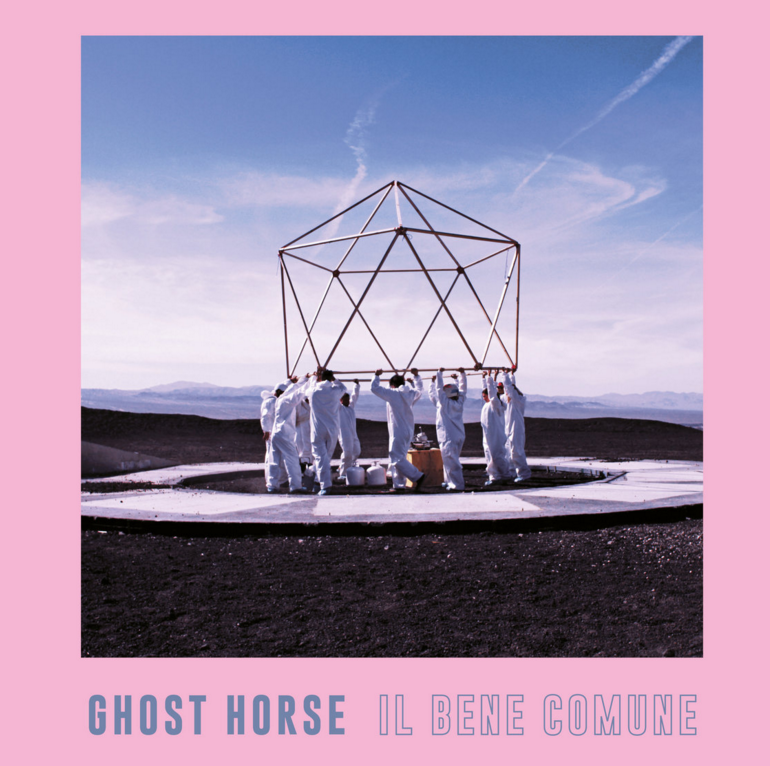
Created during, what seems like an age ago, Italy’s second round of lockdowns in the winter of 2020/2021, the latest expletory jazz album from Ghost Horse is quite a brooding, strung-out affair of fusions.
An extended partner to the already decade-running Hobby Horse trio of reeds man Dan Kinzelmap, bassist Joe Rehmas and drummer Stefano Tamborrino, the Ghost Horse expands to accommodate the brass section prowess of Filippo Vignato and Glauco Benedetti and the baritone guitarist contortions, wanes of Gabrio Baldacci as they venture out into the alien, physical and, at times, uneasy.
Whilst you’d be none the wiser, this sonic prowl and free-form expression of counterbalanced attitude and drifted, untied space walks into the cosmos was created over the Internet; with some face-to face meetings it must be added. It doesn’t show, and rather than a fragmented sextet performance all the elements, no matter how out there, seem to gel, or at least move in the same direction together.
In the notes there’s a description of the group’s methodology; the underlying structural theme one of “shared familiarity” with an emphasis on “basic modular, predominantly simple, repeating motifs”. In practice this sounds like a considered tumult of conscious, funky, breakbeat, avant-garde, Afro and industrial jazz. Yet, breaks out into all kinds of other styles, from prog to hip-hop and the cinematic.
The opening ‘Fulfillment Centre’ is a case in point of these hybrids; with creeping bass, New Orleans style horns, an untethered relaxed notion of motion, and yet urges of Sons Of Kemet, Comet Is Coming and Irreversible Entanglements all in the mix. By the second track its all change, as ‘Idea’ bounces downtown to 80s no wave NYC (Mofunge and Vortex) with a dose of South Africa’s BLK/JKS and a modern trip-breakbeat injection of UNCLE.
Floating out over the lunar landscapes, ‘Q’ goes mysterious on us with its astral strident and industrial hysterics and garbled guitar: an exercise that could be described as rage against the modal. Pinged harmonics echo off slow strained horns on the Floyddian and Zappa-esque simmered ‘Stand Stan’, and ‘EBO’ reverberates to the sounds of Krononaut as a tabbing guitar sends out a satellite communication code of whelps.
Free of gravity once more the Polish city of ‘Warsaw’ begins with a both prog-rock and soothed, serenaded beautiful classical suite, before stretching out into spidery rattles on the drum kit and a symphonic Ornette Coleman, elephant horn blowing take on a Lalo Schifrin score.
Tuba ship prowls and circular breathing brass warble to another cosmic performance on the finale, and titular-track, which in English translates as “the common good”.
Out on the fringes, on the perimeters of mystery and moody investigation, Ghost Horse emerges from the pandemic with a fairly unique blend of jazz, created for a troubled and confused world ill at ease with itself. The Italian jazz scene looks to be in good hands.
Farmer ‘Things Do Things Without Thinking’
(Gare du Nord)
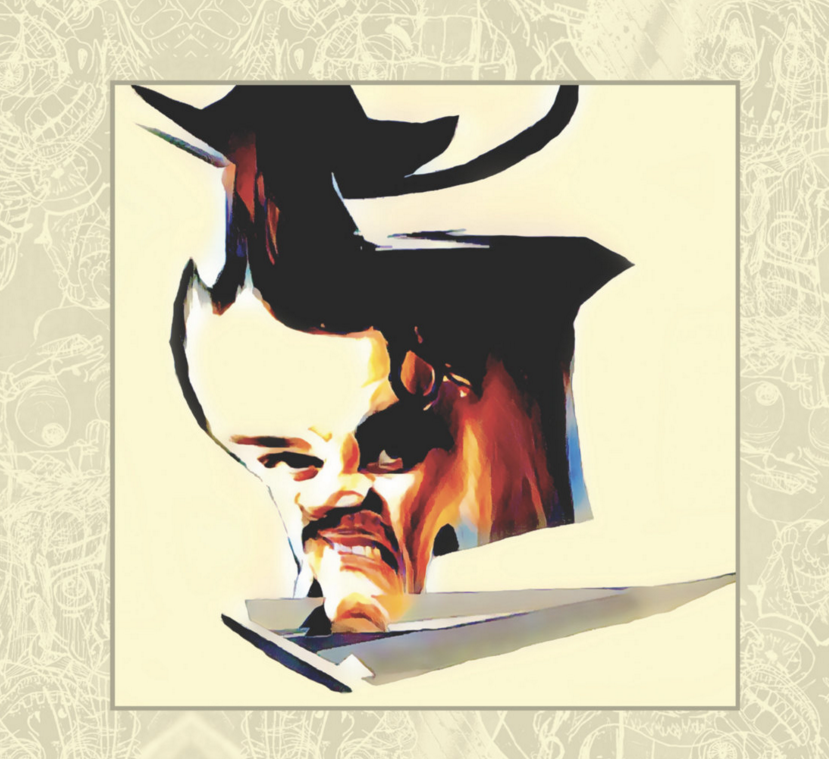
Let loose and decoupled from his union with Tim Ward in the more deliberated Cold Spells (a Monolith Cocktail favourite and recommendation), a soloist Michael Farmer unleashes and unloads an imaginative psyche on the world.
Uploaded to a MIDI keyboard of maverick eccentricities, dreamt-up cosmic meanders and mental spasms, Farmer’s idiosyncratic experiment in “maximalism” is less a rage and more a progressive mindfuck rile against the machine.
You got prog-rock running wild to garbled Manga and electro loony tunes; avant-garde, Fluxus classicism sporadically competing with euro-synth pop; and the ominous gravitas of Kubrick sized space odyssey stirrings lined-up against Deep Purple and Alex Harvey.
This is a full-blown the madcap laughs (and despairs) at the universe kind of an album, with Syd, David Allen, Robert Wyatt and Martin Dupont rattled and harassed by noodling sprints of Zappa and rampart snatches of Devo, XTC, Crack Cloud and The Flaming Lips. On one hand it sounds like Steve Vai having a chuckle, on the other, a beautifully emergent celestial epic. Throw in a fairground of curiosities that’s just manifested from the noggin’ of Suggs, Trevor Horn suffering an animism, ELO rehearsing with Sakamoto, Der Plan and Klaxons at the 80s Eurovision contest and Santana mixing it with Todd Rundgren. Too much?!
Most of the time each track seems to lead into the next, with little demarcation. Even the track titles can be read, strung together, into a couple of sentences. Farmer’s cacophony isn’t so much reflected in the vocal delivery however, though the lyrics ran like a splutter of universal resignation, serenaded discourse and precarious enormity. I have to take my hat off to anyone who can make this line sound lucid and fleeting: “It’s a common understanding that we happen to be standing on a mass of exponentiation-radiating rubble led by tyrants.” All true by the way.
Lyrics from the inner and outer spaces often get brought back down to Earth as Farmer’s brain gets stretched and warped.
You could say Farmer’s thrown a whole lifetime of ideas, musical inspirations and aspirations into this untethered madness. Yet despite what reads on paper as a competing, chaotic mess, on repeated plays Things Do Things Without Thinking unfurls its magic, sensibilities and unique qualities and starts to make sense. An astonishing album that almost defies description.
Omertà ‘Collection Particulière’
(Zamzam Rec.)
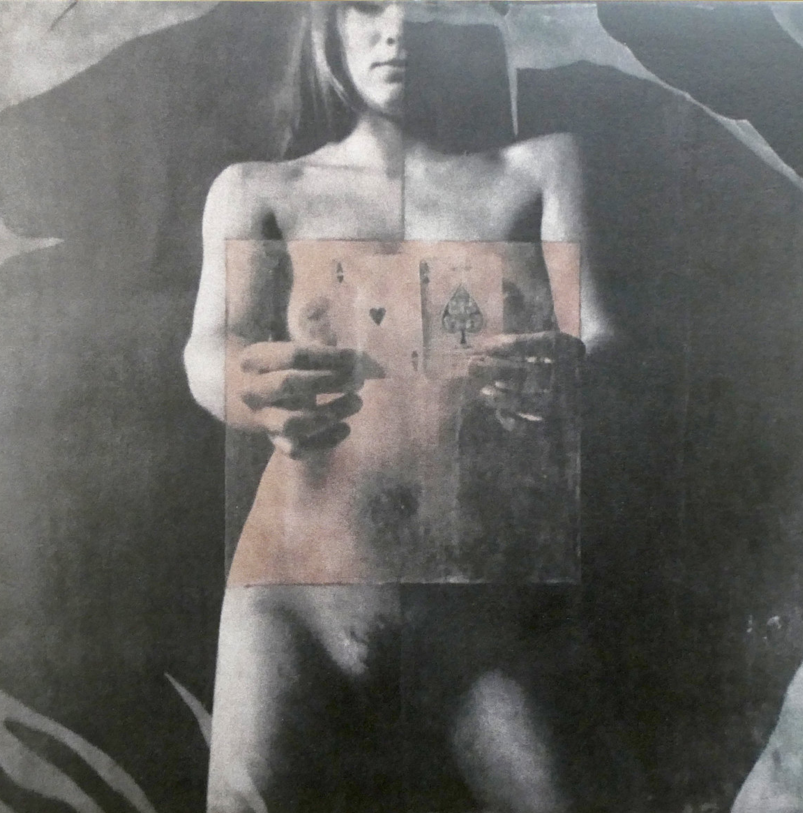
On pain of death dare you mention the secret society, Omertà’s dreaded connotations couldn’t be less overtly fearful and criminal as the Florence Giroud instigated ensemble loom large in a cosmic psychedelic, bass guitar-heavy spell of post-punk, no wave, synth music and soul. Yes, that’s right, soul!
The dreamy opening, ‘Air Instrumental’, has a surprising feel of the El Michaels Affair, a little Shacks and 79.5 to ease us all in to a lucid artsy cosmology of repeating leitmotifs, or “ritornellos” as they call it – in case you are wondering, that’s a recurring passage in Baroque music for orchestra or chorus that when translated from it Italian etymology means “little return”.
This French experiment, with members drawn from across a lofty underground scene, dwells in mysterious chambers, yet seeks the illuminating light of melted moonbeams to a slide-y deep bass groove and starry twinkles, shimmery resonating cymbals and Giroud’s text, passage-reading and sung invocations.
Despite a host of esoteric references and the use of that seraphim-touched seer William Blake, this world of relaxed soulful lucidity, Numan-esque synths, celestial serenades is mostly a warm woozy affair. Touches of The Pop Group, Le Volume Courbe and Caravan Of Anti-Matter all rear their heads. But you could also add a general feeling of the 60s to that list, plus a little Rhyton on the psych-country space fireworks turn coarser distorting fuzz ‘Kremer & Bergert’ – vocally featuring text from not only Giroud but also the Julie Kremer of half that title and Raphaël Dafour. Avant-garde in source with hidden depths of meaning, allusions cast to higher purposes, Omertà’s latest album is dreamy escapism on one hand, yet stalking chthonian mystery on the other. But in essence: Sault meets Tim Gane in the French underground.
Xqui ‘Pieces Part 2’
(Somewherecold Records) 24th June 2022
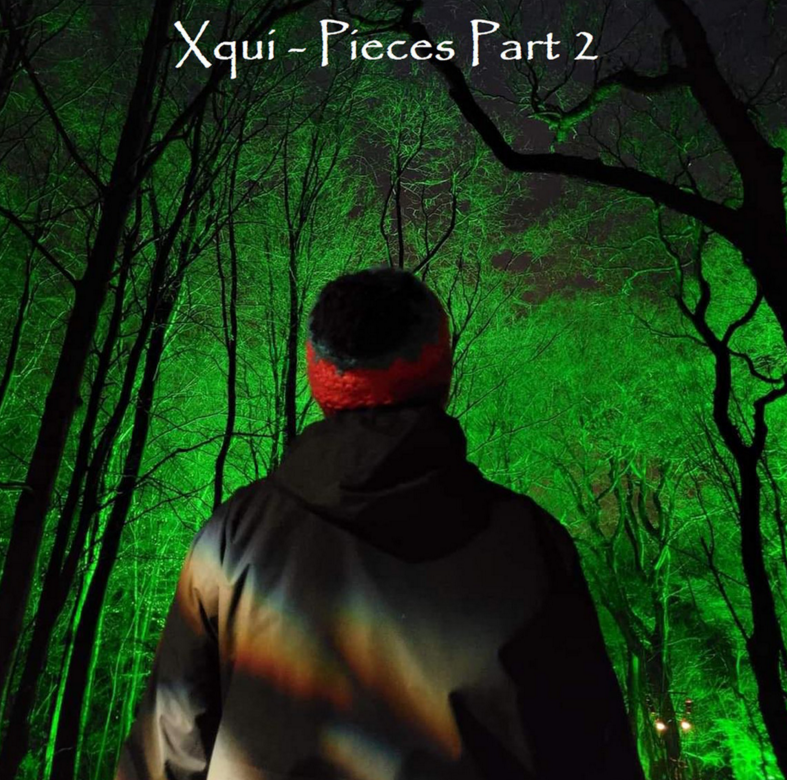
The soundtrack to a both mysterious and uneasy film, or, a piece of video and installation art, Xqui’s experiments with the voice are as challenging as they are successful in drawing the listener into a strange world. Images unfold, atmospheres, memories take shape in a language of field recordings, repeated annunciations, speech and obscured choral cosmic and esoteric moans and metallic industrial sounds.
It must be pointed out that the only actual credited voice belongs to the writer/performer Lynn Gerrard, who reads out an underworld vision of Biblical hell from a furnace of hanging chains, rolling stock machinery and broken glass underfoot – actually, sounding more abandoned retail park warehouse than the bowels of hell.
Almost automated, accumulating in an increasingly cacophony of accents, there’s a Laurie Anderson thesaurus of “ate” ending words (“Motivate”, “Captivate”, “Violate” and so on) being repeated in some moist cave-like atmospheric chamber on ‘Narrator’: A place, environment in which the mysterious tapping of mining tools chip away in time to the wisps of rhythm and the vocal cadence.
These voices, apparitions, become more erratic with what sounds like a shout of “Fire!” on the warped psychedelic churned ‘Piece’, and form an almost unholy 2001: A Space Odyssey style eerie chanted moan on the esoteric funneled cosmic disturbance ‘Vykings’. “Amputate”, “Deactivate”, “Eradicate”, “Detonate” sound out to the tones, space fizzles, alien whirly bird twitters and ghost freighter moods of the Tangerine Dream on the semi-classical hinted, dreamy ‘Apathetic’. There’s samples of presidential enquiry on the looming threat turn warped, morphed maelstrom spin ‘Demetri Prentiss’.
Things liven up as the previous solar wind powered vapours and deepened throbbing heavy bass pulsations leap into a more driving beat on the Günter Schickert Krautrock charge, ‘Adam Brasso’. Otherworldly, paranormal and obscured visitations form an unsettled climate and deep concentration of Meta awaits those searching for a fully immersive experience. Neither ambient, sound art nor musique concrete Xqui’s latest work opens up a portal into the captured familiar made altogether more creepy and out of this world.
The Mining Co. ‘Acoustic Phenomenology’
(PinDrop Records) 17th June 2022
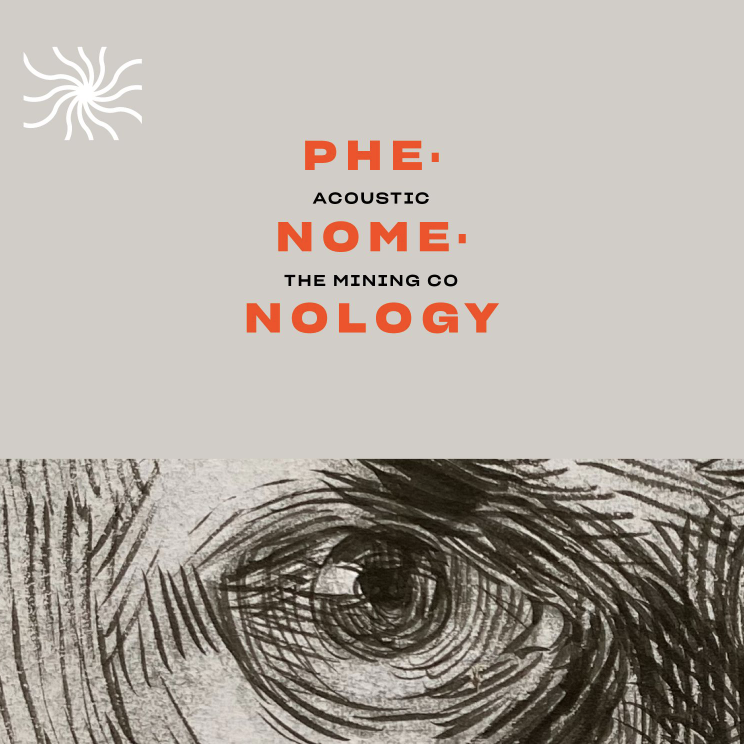
Not so much the afterthought as a return to the essence, with a clutch of songs from his most recent (and in my view best) album, Phenomenology, stripped of their previous electronic effects, gravity-less forms and augmentation and taken back to a more intimate form. In fact, this is where you’d usually start with the songwriting process, with the very bones of the song. And usually singer-songwriter Michael Gallagher would start with these versions and work towards the frills, swells and atmospherics. But prompted during sessions by his producer Paco, those original incarnations have appeared as a sort of additional showcase for the County Donegal artist’s sense of melody, storytelling and effortless emotional draws.
But let’s go back a bit to last year, and the original space cowboy Phenomenology: Gallagher’s first furor into electronics. Floating his usual brand of country-laced cathartic heartache towards deep space, riffing off John Carpenter’s 1974 cult sci-fi movie Dark Star, Gallagher seemed to weave the fatalistic return to the astrological bodies themes of being cast adrift in space with the lamentable and touching agonies of life on Earth.
One of the movie’s main protagonists, the jettisoned Talby, was and is once more immortalized on his floated rendezvous with the Phoenix Asteroids. His swansong of a kind, ‘Talby Drift’ returns to its original form of Americana held plaint. The same goes too for the more rhythmic, but still country-burred ‘Universal Son’. However, the more heavy-set darkened ‘IWBHM’ (believe it or not, a song about a child who dreams of being a heavy metal star that worships the ‘devil’) has a touch now of Josh T. Pearson and alt-90s stripped-down rock that could be mistaken for grunge. The resigned crash site malady, ‘Astral Investigation’, would sound beautiful in any form, as it does here on this vulnerable, Lukas Creswell-like soft acoustic version.
Almost free of its vaporous synths and celestial atmospherics, this stripped-down suite does however purr, percolate and ripple with the broadcast waves of an undulated cosmic presence. And so keeping that relatively subtle connection going – also sometimes reflected in the vocal echo, reverb – Gallagher reminds us of the original celestial sentiment and environments that pushed his usual earthy songwriting into the stratosphere.
A lovely companion piece to last year’s minor triumph, which would have worked well as a bonus extra, this less cosmic showcase of the original material is nice enough. Yet really just sends us full circle back to Gallagher’s signature sound, whilst Phenomenology seemed to dream bigger and set the artist on the open road to larger scale, even conceptual, works. I said it was his most creative, and best album to date. This little EP is brilliant though; the performances low key yet just as emotionally charged.
Loris Cericola ‘Metaphysical Graffiti’
(Artetetra) 22nd June 2022
The Montecosaru-residing musician and video artist is off to a good start already. For Loris is in fact both my old man’s Christian name and my middle name.
Though quite far down the ancestry chain, and you probably guessed by my full name, my family can claim its Italian roots. Right, lets get on with the task of critiquing Loris’s new supernatural album of atmospheric unease and discombobulating environments. A kind of avant-garde ambient and sound collage, Metaphysical Graffiti (a riff on Led Zep’s “physical” bombastic double-album from 1975) lurks, scratches about and generally takes in the both primordial and esoteric resonance of the unfamiliar.
You won’t be surprised to learn that Loris Cericola is part of the multidisciplinary audio-visual collective Cerchio 23 (I’m sure the ‘Planet 23’, which clocks in at 2 minutes and 3 seconds exactly, is a nod to that project in name). And so with an ear to conjuring up such visual Meta as cave dwelling horrors, communications with the otherworldly through a TV set or across the ether, and oscillating and propeller zipped craft, looming overhead, Loris’s sonic visions seem to soundtrack a paranormal movie that hasn’t yet been made.
Muffled voices in the subterranean and purring ripples announce a ‘Premonition’; a repeated gong-like shudder, hammey snatches of organ, cut-up dialogue, whirled UFOs and animalistic whelps ebb and flow on ‘Droid’s Memory Coding’; stone movements and spirit activity light up the daemonic meter on ‘Message From Beyond’.
The dank, the mirrored, the veiled, the moaning, the slurred, the semi-orgasmic woes make for something unearthly and also primitive. Italian and Spanish 80s underground cassette tape culture both meet around an atavistic campfire communal with the esoteric as hidden motors and machinery hum and gliders hover overhead, on what is a most eerie peregrination.
Flying Moon In Space ‘Zwei’
(Fuzz Club Records) 24th June 2022
The Tangerine Dream crosses flight paths with the Young Knives and Kavinsky on the second album from the Leipzig-based experimental sextet, Flying Moon In Space. With an astrological motorik driven beat, trebly post-punk bass line, prodded and goading yelps and vocals the group harmoniously, even when in shouted protest, channel a German music legacy of krautrock, kosmische and Nue Deutsche Welle with the Transatlantic sound of Crack Cloud and the LCD Soundsystem.
They sort of borrow a numerated “zwei’ from Kluster – the 1970 album Zwei-Osterei under the original formation of what would soon become Cluster after the departure of Conrad Schnitzler – and often evoke vaporous wisps of Klaus Schulze whilst charging forward on a Pyrolator metallic techno beat, or slinking along to a club-friendly International Pony cosmic-disco-funk.
With an improvised themed methodology, the escalating ‘Traum Für Alle’ (“dream for everyone”) has time to build from an incipient start of rotor-bladed ripples, wooing drones and effected electronica into a sort of post-punk materialistic themed overdrive of Bis, Japandorf and Electralane. ‘Optimist’ however, is set to a neon Stranger Things 80s and techno-knocked vibe of krautrock-disco-pop.
On the event horizon precipice, earthly yearns and riled injustices get sent out into the abysses of space; the group playing on, even dancing to a both pulsating charge and more Euro-synth slick motor-funk. The album’s finale, ‘Prophet’ (just as easily a reference to the religious as it is to the famous line of sequential synths), imagines a breathless Damo Suzuki drifting across a yacht moored in the new wave harbour.
There’s the excitable, the dreamy and the sighed all wrapped up in an oscillation of synth-pop, punk and motoring velocity; a universe in which Private Agenda groove with Bloc Party, Loved Drones, Dunkelziffer and Klaus Dinger.
Hi, my name is Dominic Valvona and I’m the Founder of the music/culture blog monolithcocktail.com For the last ten years I’ve featured and supported music, musicians and labels we love across genres from around the world that we think you’ll want to know about. No content on the site is paid for or sponsored and we only feature artists we have genuine respect for /love. If you enjoy our reviews (and we often write long, thoughtful ones), found a new artist you admire or if we have featured you or artists you represent and would like to buy us a coffee at https://ko-fi.com/monolithcocktail to say cheers for spreading the word, then that would be much appreciated.
Our Daily Bread 523: Vukovar ‘The Body Abdicator’
June 14, 2022
ALBUM REVIEW
Dominic Valvona

Vukovar ‘The Body Abdicator’
(Other Voices Records) 25th June 2022
For a band already in a state of decay at the outset, always about to implode, it seems remarkable that Vukovar have reached their tenth album proper. Candid malcontent, chthonian pain and neo-new-romanticism stoke up discourse aplenty within the ranks of this constantly evolving, expanding but also decreasing group. Absolving themselves of all responsibility, but for more serious than their depreciative candour of encouraging failure, Vukovar remains on the precipice of self-destruction.
However, staying the course, founding member and antagonist Rick Clarke remains at the helm alongside his foil Dan Shea. Although falling out at various times during the last seven years, they’ve both come together again to mark the final part of the Eternity Ends Here Triptych of works: yet another rebirth, death/life commitment and struggle aggrandized into a triplet arc of albums.
Still in the throes of both the agony and ecstasy, and still wearing black for their late mentor/collaborator Simon Morris, Vukovar light the funeral pyre in his honour. Morris, the feted and fateful underground music figure, former instigator of The Ceramic Hobs, went missing on December the 7th 2019. His body was found in the River Wyre two weeks later. Such tragic ends have consequences to those that are left behind. His presence is always there; his influence suffused and writ large, sometimes referenced, and at other times, more recondite.
A grave loss that has set the precedent for an ‘obsessive memorial’, elegiac atmospheres, pain and cathartic cries encircle a minor opus that looks to the seraph’s light whilst navigating the mulch and miasma of a decaying underbelly. Oh yes, because even in the despondency of the fog, angels and celestial bodies encourage the band to soar.
More occult than Gothic, the music on The Body Abdicator is filled with helpless and yet also hard-fought poetic romanticism: it’s as if Death In June and Coil had let synth-pop soul music into their hearts. Beautiful lyrics, cathedrals of light no less fall from the parchment. The language of the arcane, of Blake, Dante and countless other romantics and cult figures across time are summoned forth into a new age of anxiety.
It should come as no surprise to find both Rick and Dan are authors of a kind; both contributing over the years to the Monolith Cocktail with Dan’s Jukebox series and an incredible testament to the late Morris, and Rick, serialising his salacious occult novel The Great Immurement, which went on to inform the band’s album of the same name. The artwork incidentally for that serialisation was drawn by the feted illustrator Andrzej Klimowski, who now also provides the cover for this latest album.
All kinds of love, from the unrequited to the unspoken (until now) to the higher purposed is alluded to; lost in more gray synthesized lingered passages and cold wave but positively yearning and escaping on those numbers that could be singles (the ‘Little Lights’ part of the opening couplet, and almost theatrical New Order symphony of pop, ‘Place To Rest’).
Because Vukovar have released so much material in a relatively short time period, familiar tunes, signatures are repeated. In fact, The Body Abdicator could be said to reconnect with their debut album Emperor, from 2015, and the early collection of cover versions, Fornication. Some of this could possibly be down to the involvement of Phil Reynolds, who manages to always corral the various fractions and less agreeable parties and produce some of the band’s most melodious, esoteric post-punk moments. Phil’s wife and artist, singer in her own right, Marie sang and soared on the Emperor album, and here she is now, breathing diaphanous life and ethereal harmonies into the glitter death absolution of ‘Place To Rest’, an absolute gem of a track, and album highlight.
Another returning guest, daddies little heathen, Gea Philes whispers and hushes cryptic child-like but sinister words on the first part of the already mentioned opening salvo ‘Little Death/Little Lights’. The Chilean-born multimedia artist has produced artwork and directed an avatar-starring video for Momus, but is also well know on the occult circuit for creating cute erotica-esoteric illustrations. Philes is just one of many from an often-serial cast of cult figures drawn into the Vukovar vortex, past acolytes of their form being Michael Cashmore, Holly Hero and Rose McDowall.
The Chilean specter at the feast also appears in Ono via Phew mode on the final curtain call, ‘Those First Impressions’. A transmogrification of The Associates original, Billy MacKenzie’s idiosyncratic vocal talents are replaced by a Kenneth Anger echoing vision of a leftfield rock ‘n’ roll crooner: half Elvis, half Charlie Megira. It proves a both elegiac and Fortean Times-tuned supernatural vapourous homage, yet also a matter-of-fact deliberation on the death of Morris, who’s become a sort of death-mask muse for the band, unable to move on completely, or, unwilling to give up on his inspiration.
Caught in a limbo of religious architectural devices, somber despondency and destructive alienation, Vukovar balance a glorious epoch of 80s musical influences with brutalism and juddering dark arts. Atmospherically ‘Emptying Tide (From An Occult Diary)’ leans towards Coil and their ilk. The empyreal waits from the more earthly proscenium as apparitions yearn about rebirth. Lyrical slogans like “Destroy yourself” and “whatever comes next will be better” sound far less sagacious and helpful when dragged through a despairing climate of fear and revulsion.
The totem drum beat of a hallucinogenic, knowing seedy Jesus And Mary Chain join Soft Cell, OMD, Alan Vega, early Tears For Fears, Modern English, The The and Pale Fountains across the dreamy lamentable ‘Throughstreams’, the bittersweet but beautiful, softened growled ‘The Sheltering Sky’, and the gauzy ghost town ‘This Will Absolve Me’.
As is often the case, band member’s separate projects, uncoupling’s, are absorbed into the Vukovar fabric. Sometime member Buddy alongside Dan Shea had a promising cult-synth pop yearn duo called Beauty Stab. Their ‘O Eden’ track was reconfigured and covered on Vukovar’s last album. And throughout this latest record’s more polished, melodious and almost anthemic tracks that amalgamated Vince Clarke, New Order, Joy Division vibe can be heard powering the esoteric misery towards poptastical heights and a sense of release. Vukovar sound better when they soar than wallow, and they may just have taken my advice on some of the more stellar driving tracks.
Frustrating on so many occasions, signing their own death certificate as they approach a gallows stage of their own making, this bloody Balkan massacre named group stage yet another funeral. Yet it feels like there is hope; like there’s a lot of love in there. This album is yet another ritual in which they can reconfigure and move through the eternal Vukovar cult of rebirth. What is a creative but also an emotive necessity, The Body Abdicator doesn’t extinguish that flame, but merely adds more fuel to a morbid curiosity.
Rightful heirs to the occult sounds, to existential synth glory, they should be at least vying for room, attention in the gilded banquet halls of magical despair and dark romanticism, yet remain relatively obscure. This could yet be the group’s final dissolution, though rumours are bound that there is yet more to come and yet another reinvention. If it is the end, then they’ve burnt out on perhaps one of their most accomplished testaments yet; an album that is drawn both towards the light and darkness, and that balances the more experimental illusions with the most brilliant effective cold wave pop.
Further Reading:::
The Vukovar Cannon As Featured On The Monolith Cocktail:
2021: The Great Immurement (here)
2020: Cement & Cerement (here)
2020: The Colossalist’ (here)
2019: Cremator (here)
2018: Monument (here)
2018: Infinitum (here)
2017: Puritan (here)
2017: The Clockwork Dance (here)
2017: Fornication (here)
2015: Emperor (here)
Also…
Rick Clarke’s The Great Immurement
Opening Chapters (here)
Parts 4-6 (here)
Parts 7-9 (here)
Parts 10-12 (here)
Parts 13-15 (here)
Parts 16-18 (here)
Hi, my name is Dominic Valvona and I’m the Founder of the music/culture blog monolithcocktail.com For the last ten years I’ve featured and supported music, musicians and labels we love across genres from around the world that we think you’ll want to know about. No content on the site is paid for or sponsored and we only feature artists we have genuine respect for /love. If you enjoy our reviews (and we often write long, thoughtful ones), found a new artist you admire or if we have featured you or artists you represent and would like to buy us a coffee at https://ko-fi.com/monolithcocktail to say cheers for spreading the word, then that would be much appreciated.

