Quarterly Revue Playlist 2018 Part One:
March 15, 2018
The Quarterly Playlist chosen by Dominic Valvona, Matt Oliver and Ayfer Simms

A reasonable assessment of the last three months, the Quarterly Playlist features an eclectic selection of ‘choice’ tracks from the Monolith Cocktail team. From across the musical spectrum, songs from the far east sit alongside glittering pop; traversing meditations share room with hip-hop and the Kosmische.
The inaugural revue playlist of 2018 features Plastic Ono Band sultry protest pop from U.S. Girls, fragmented reeling breakbeats from Cut Chemist and friends, Motorik mooning from Station 17, electrified dance jazz from Hailu Mergia, mystical cosmic cumbia from Sonido Gallo Negro, a cappella paean to Nelson Mandela by the Afrika Mamas, direge-y garage rock from the Moonwalks and 38 other equally interesting and varied tracks from across the globe.
Tracks in full:
‘Incidental Boogie’ U.S. Girls (review)
‘Look At Your Hands’ Tune-Yards (review)
‘Well Who Am I’ Band Of Gold
‘Die Cut (Theme)’ Cut Chemist feat. Deantoni Parks (review)
‘(((leapfrog)))’ MC Paul Barman (review)
‘Addis Nat’ Hailu Mergia
‘Ein Knall’ Station 17 feat. Harald Grosskopf and Eberhard Kranemann (review)
‘The Timeless Now’ Nonpareils
‘1001 Nights’ Ouzo Bazooka (review)
‘Fresh Product’ Awate
‘Anything Goes’ Andy Cooper feat. Abdominal (review)
‘Efrati’ Fadaei
‘Black Sambo’ Skyzoo (review)
‘Kingz & Bosses’ Slim Thug feat. Big K.R.I.T. (review)
‘That Jazz’ Coops (review)
‘Cumbia Ishtar’ Sonido Gallo Negro
‘A Casa De Anita’ Camarao
‘All That We Are’ Brickwork Lizards (review)
‘Hlala Nami’ Hot Soul Singers
‘Le Château’ Fishbach (review)
‘Into Space’ Sailing Stones
‘Illogical Lullaby’ Hatis Noit (review)
‘Also’ Astrid Sonne (review)
‘Reptile’ Soho Rezanejad (review)
‘Remain Calm’ Tony Njoku
‘Air Rage’ Lukas Creswell-Rost (review)
‘Embers’ Flights Of Helios (review)
‘And The Glamour Fell On Her’ Brona McVittie feat. Myles Cochran and Richard Curran (review)
‘Same Old, Same Old’ The Cold Spells (review)
‘Winter Bound’ Hampshire & Foat (review)
‘Vidsel-Sthlm, Enkel’ Bättre Lyss (review)
‘Akokas’ Tal National
‘The Border Crossing’ Dirtmusic (review)
‘I’ll Be Ready When The Great Day Comes’ John Johanna
‘Diego Says Hello’ Modulus III (review)
‘Communion’ Park Jiha (review)
‘De Roda’ Rodrigo Tavares (review)
‘You Get Brighter’ John Howard (review)
‘Tata Madiba’ Afrika Mamas (review)
‘In Between Stars’ Eleanor Friedberger
‘No Place Like Home’ Life Pass Filter’ (review)
‘I Don’t Wanna Dance (with My Baby)’ Insecure Man
‘Israel Is Real’ Moonwalks (review)
‘Men Of The Women’ Peter Kernel (review)
‘We Have Always Lived In The Palace’ Sunflowers (review)
Our Daily Bread 268: Hatis Noit ‘Illogical Dance’
March 13, 2018
Words: Dominic Valvona
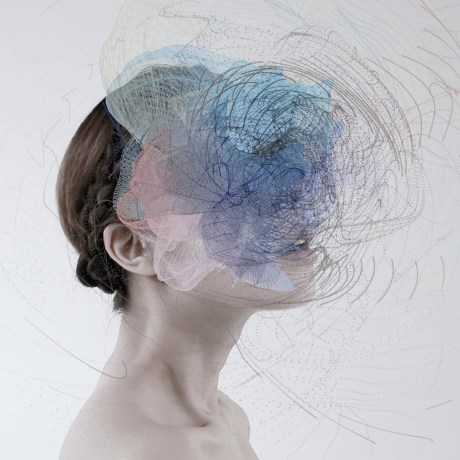
Hatis Noit ‘Illogical Dance’ Erased Tapes, 23rd March 2018
An ‘illogical dance’ of voices, a serialism of language, the range of Hatis Noit’s vocals are as sublime as they are artfully experimental. Since finding her calling at the age of sixteen after hearing a lone voice singing in the hallowed sanctuary of the women’s temple in Lumbini, Tibet, the backpacking Noit began a self-taught travail in both the spiritual and avant-garde; adopting and synchronizing a myriad of techniques in a quest to convey ‘nature’s many sounds’ and form a ‘beautiful conversation that isn’t restricted to words like the human language is.’
The Japanese performer, who hails from a small town on the country’s second largest island, Hokkaido, has studied the native Gagaku style of classical music and takes her name from Japan’s lotus flower folklore – the stem of this exotic symbolic flower is said to represent the living world, its roots the spirit world. Yet, this astonishing dialect and vocal articulation reaches beyond those shores to absorb the operatic, pop music, Gregorian chants, atavistic Bulgaria and Balkans styles and, what sometimes sounds like, Orthodox Russia.
Initially improvised, all of the sounds you hear on this impressive EP are sourced entirely from Noit’s voice; re-aligned, cut up and transmogrified into a trio of sonic explorations that reflect the scope of, what is, our oldest ‘powerful’ instrument: the voice. Noit channels a cornucopia of styles, all of which are reconstructed and formed into an abstract dialect both spatial and organic, yet also building towards the ebbs and flows of a diaphanous multilayered cacophony.
Named after the famous oil-transfer monoprint of the same name by one of the most proficient and influential artists of the twentieth century, Paul Klee, Angelus Novus is a stunning hallowed (almost a choral-like hymn), deeply expressive voice-scape that sounds almost cinematic. Cloister hushed whispers are layered, stuttered or harmonically clustered with various breathy and accentuate yearning and amorphous trilling on what is an astounding performance. Anagram c.i.y. has a sharper edge, utterances more chaotic, Noit’s various vocal deconstructions propelled forward in a bity staccato fashion.
There are two versions of Illogical Lullaby included on this showcase EP, the original version, an elegant synchronization of soaring aria, the choral and hummed, and the retreated version from the brilliant Baltimore partnership Matmos, a changeable filmic soundtrack inspired by a scene from the Russian auteur Andrei Tarkovsky’s bleak, harrowing movie Andrei Rublev. Known for their collaboration with the similarly experimental siren Bjork, Matmos take the Illogical Dance through various stages of transformation, from charming echo-y loops to Medieval sinister intensity and quirky electronica; adding rain, thunder and Foley effects to reflect an imaginary score for one of Andrei Rublev’s most philosophical acts. They create a suitable mirror-y vision that takes Noit’s voice into even more explorative realms.
Highly impressive, far from a cold art-y conceptual study devoid of soul, rhythm and direction, Noit has produced a most beautiful abstract odyssey for the voice. A revelatory progression that goes some way towards creating a fresh dialogue in modern music.
Dominic Valvona’s essential reviews roundup
Interesting releases from across the world and music spectrums; Tickling Our Fancy is the most eclectic of reviews roundups. With no themes, demarcations of any kind, or reasoning other than providing a balanced platform for the intriguing, the great and at times, most odd releases, I bring you this month’s latest selection.
We have the ninth, and apparently most ‘honest’ personal album yet from the renowned soundtrack composer Bob Holroyd, The Cage; a pair of releases from Ian Button’s inimitable Gare du Nord label: the ‘musical gift to a friend’s son’ EP of charming alt-American and pop from the Lille-based Life Pass Filter, Joseph, and Jack Hayter’s most brilliant psycho geographical folk survey of London’s Abbey Wood; the fiery and petulant art school Swiss/Canadian duo Peter Kernel’s third, and most impressive, album The Size Of The Night; the tenth album from the German experimental group Station 17, Blick, which features the cream of Germany’s experimental electronic and avant-garde including members of Tangerine Dream and faUSt; Die Wilde Jagd’s second album of adroit industrial and organic electronica, Uhrwald Orange; and the latest magical, Kosmische and psychedelic cult sounds songbook from David Thayer and friends Little Tornadoes project, Apocalypse!.
Jack Hayter ‘Abbey Wood’ Gare du Nord, 23rd March 2018

Bringing light, or at least opening up a psycho-geographical narrative dedicated to the very edges of a largely ignored London postcode – so far out on the South Eastern outskirts as to be part of Kent –, an earnest Jack Hayter composes a yearning lament to Abbey Wood on what is his first solo album in fifteen years.
This doesn’t mean that our Jack has been indolent or on a respite; the former Hefner band member who also helped found Dollboy and the South London group Sponge Finger, has during that period been working with fellow Hefnerian Darren Hayman as well as Oliver Cherer, Ralegh Long and the Gare du Nord label’s house band turn supergroup, Papernut Cambridge. Many of those artists, including the Gare du Nord team leader Ian Button – in the capacity of host for this album, and as a drummer on the graceful, lilted and warbled guitar duet with Suzanne Rhatigan, Bigger Than The Storm – contribute to this earthy rustic minor opus; with the equally gifted storyteller Cherer – his last album, The Myth Of Violet Meek appeared in our 2017 ‘choice albums’ features – adding a omnivorous like range of instruments (piano, horns), tools (saw) and his voice throughout the Foley like atmospheres and moods; Long tinkling the ivory on the swirling fairground blues The Strangers Fair; and Riz Maslen provides ‘ethereal’ and eerie sorrowful lulling accompaniment to a quartet of songs in the first half of this album.
Talk about slumming it; living for his art, Hayter’s literature, and pun and landmark panoply was created in the most unconducive to creativity and safety environmental of a derelict Children’s home in Abbey Wood. With no utilities plumbed or wired in, Hayter took showers under a hose, cooked on a camping stove and slept on a bed made from warehouse pallets. For security he kept a very big stick handy. ‘Cold but free’, a self-imposed lifestyle, he was at least qualified to regale tales of isolation and hardship; experiencing the daily grind of survival on one of the capital’s unloved outposts; from the shitty end of life’s (other) big stick.
Featuring long forgotten laments and forlorn vignettes, two of the most vivid and haunting being the bookended tragedy of the Arandora Star; Hayter laying cooing elegiac wreaths to those unfortunate souls aboard the WWII requisitioned Blue Star Line passenger ship who died in the Atlantic Ocean, sunk by a German U-boat on July 2nd 1940, whilst travelling to Canada with hundreds of interned German and Italian citizens. The first part, written with Trudie Willingham, is a much-desired remembrance service to the unmarked watery grave, whilst the album’s final swansong is an Italian language translated and narrated eulogy, featuring the voice of Slyvia De.
Just as poignant is the equally haunting and sad But I Didn’t Know Frankie, a softly spoken word tale of woe, with a choral-like ghostly accompaniment, about the aforementioned stranger: sleeping rough, the circumstances of misfortune unknown but death on a fateful frozen night – unable to gain access to a warm sanctuary inside the Abbey Wood’s sub station – immortalized by Hayter; the exact spot marked out in a sympathetic but matter-of-fact tone: “They say he died right here, frozen solid underneath this window.”
Connected in some way to the Abbey Wood diaspora or its position as a gateway to the world via fateful songs that draw in the one-time gold rush phenomenon outpost of the British Empire, Bendigo in Victoria, Australia (on the Mick Harvey with a pinch of Dire Straits I Sent My Love To Bendigo), and the stoic symbol of a solitary Mulberry Tree that attracts a beautifully resigned woven historiography, which via the arrival of a curious Chinese girl name checks the silk trade – or lack of one – but turns into a malady about Abbey Wood’s melancholic scenery. Playing on local haunts, such as John Cleland’s infamous 18th century Fanny Hill heroine/survivor turn pub name, on the disjointed Georgian Fanny On The Hill, Hayter can transport the listener back to the age of Thackeray – to a bawdry alehouse, a resigned diorama of highway men forced into brigandry and misbehavior – as easily as draw upon the present for inspired re-readings of abuse, tragedy and grief.
Abbey Wood deftly played with twangs of bucolic and Baroque folk, blues, synthesized atmospherics, Americana and reverent chamber music, is a multilayered songbook; a lived-in musical novel, rich with references, landmarks and peopled by those who left an indelible, if at times fleeting, mark upon this much forgotten or passed over postcode: their ghosts, no matter how small the part they played in its story, never inconsequential; remembered and written about with a certain gravitas by Hayter, who creates the most accomplished and brilliant of testaments.
Station 17 ‘Blick’ Bureau B, 9th March 2018
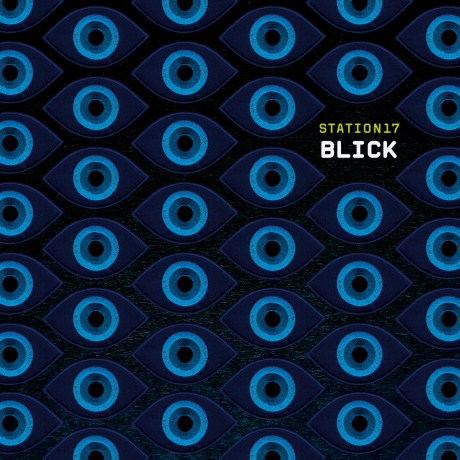
With near enough thirty years of experience behind them and a changeable lineup of both musicians with and without various disabilities, the Station 17 collective once more shift their focus and sound; moving away from the all-out pop of the last album Alles Für Alle for a more improvised travail through the Krautrock, Kosmische and experimental electronica cannon.
Leaving the city, retreating to a point from the ‘modern world’, the Hamburg group spent a few weeks in the ‘summery seclusion’ of a coastal idyll, recording their tenth album at the Watt’n Sound Studio, near to the North Sea coastline. Free of predetermined structures, lyrics and ideas they enjoyed an improvised freedom; inviting a host of German musical royalty to take part in what is a collaborative recording experience – something they’ve done in the past, having worked with icons such as Michael Rothar and the late Holger Czukay. And so each of the album’s none tracks features the signatures of its guests: The writhing prehistoric Krautrock-jazzy Le Coeur Léger, Le Sentiment D’un Travail Bien Fait for example features the guiding avant-garde, ‘musique concrète’ presence of drum and bass partnership of Jean-Hervé Péron (the French title track I dare say his idea) and Zappi Diermaier; key founders of the reverent agent provocateurs Faust, who in recent decades have broken away to form their own iteration of the group under the faUSt banner. And, though only as part of its most modern regeneration, Tangerine Dream’s Ulrich Schnauss appears to gaze through a progressive Kosmische tinged explored ‘astronomical telescope’ on the album’s heaven’s gate opening finale.
Bringing out their very own homage to Germany’s golden age of analogue synth and motorik, journeymen and label mates Eberhard Kranemann (a founding member no less of early Kraftwerk and Neu!) and Harald Grosskopf (drummed on a number of Klaus Schulze and Ash Ra Tempel albums) have a ‘blast’ on the post-punk mooning Ein Knall; running through the full Klaus Dinger catalogue, from Neu! to Japandorf.
From another generation, Dirk Dresselhaus, aka Schneider TM, appears both as an engineer, capturing these sessions and crafting them into a coherent album, and as a collaborator on the kooky bossa nova preset Die Uhr Spricht. Andreas Spechtl of Ja, Panik! infamy appears alongside Station 17 singer Siyavash Gharibi on the poppier, Der Plan-esque Dinge, and another Andreas, Andreas Dorau, joins the same upbeat, marimba like candour on what we’re told is an “enduring appraisal of post-capitalist perversion”, Schaust Du, whilst Datashock travel through the primordial soup into another dimension on the Acid Mothers-hitch-a-ride-aboard-the-Cosmic Jokers-spaceship Zauberpudding.
Turning the dial on an imaginary radio station, attuned to all the highlights from Germany’s most experimental if rhythmic decades, Blick confidently absorbs the influences and inspirations of its multitude of guests to produce social commentary and reflect on the here and now. A sort of Bureau B label all-stars – the German label rapidly, more or less, signing up everyone of note from the last five decades; a home to most of the country’s experimental electronic music and Krautrock pioneers – this latest album from Station 17 uses its pool of talent and resources well, balancing the edgy with a melodic, motoring, cruising sensibility.
https://soundcloud.com/bureau-1/sets/station17-blick-preview
Peter Kernel ‘The Size Of The Night’ On The Camper Records, 9th March 2018

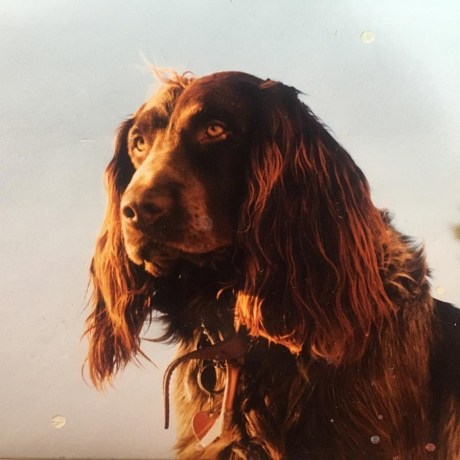
Visually composed (except for the differing skateboard graphic style track listings) with one half of this Swiss/Canadian duo, Barbara Lehnhoff’s elegant, almost stately, childhood dog Arrow gazing out with a certain ruminating calm on the album cover, the music that lies within this sleeve is anything but.
Not surprising for a duo that originally met whilst attending the visual communications school in Switzerland, the already mentioned Canadian Lehnhoff choosing film whilst her foil, Swiss native, Aris Bassetti chose graphic design, both collide in bringing their own baggage and ideas together for an explosive art school sound.
Formed in 2006 under the figurehead moniker of Peter Kernel – an ambiguous character they funnel all their musical protestations and fantasies into – but only now releasing, on their very own imprint, a third album, it seems the duo aren’t so much succumbing to procrastination as taking their time and waiting for the right moment to launch a barrage of musical discourse. The previous album, the darkly resigned entitled White Death & Black Heart, was launched off the back of a UK/European tour supporting the most brilliant Wolf Parade in 2008 (I vividly remember attending the Brighton leg of this same tour); it was the band’s Spencer Krug who invited them to open for the acclaimed Canadian indie band.
Playing over 600 gigs, from diverse spots at the Montreux Jazz Festival and Milan Fashion Week, Peter Kernel have in recent years been nominated for awards at the Swiss Music Grand Prix and Swiss Live Talent for their dynamic live performances. Congruous to their artistic disciplines they also scored the music for Swiss-Peruvian director Klaudia Reynicke’s Il Nido film, and rearranged their own back catalogue for piano, harp, cello, harmonium and viola under the auspicious of the orchestral project, Peter Kernel & The Wicked Orchestra.
Hardly light of material in these anxious ‘hashtag’ prefixed times; the duo’s latest album title philosophically channels the complex duality of human behavior. Under the cover of the ‘night’ they posture such enquiring questions as, “What is the size of the night?”, and, “How can we measure the night?”. To them, the night acts as cipher, a totem for its ominous fears and obvious darkness, but also its mystery and allure.
The cloak of darkness is however lifted, as both Lehnhoff and Bassetti try to find a balance and acceptance that they can simultaneously be both “sensitive” and “assholes!”. Expressing “this new consciousness” between bouts of light and shade post-punk, grunge, doom and the psychedelic, they throw themselves into and hurtle with a controlled energy, into the night.
This is an album filled with musical surprises, spiraling as the duo does through petulant yelped Katie White (of The Ting Tings fame) fronted Royal Trux lovelorn spite (There’s Nothing Like You), marauding Raincoats dub-y bass verses breakbeat drums lumbering coquettish sarcasm (Pretty Perfect) and what sounds like transmogrified Lee Hazlewood and Nancy Sinatra western style chanson duets (The Fatigue Of Passing The Night); all of which is a positive in my view. At their most esoteric they channel the Black Angels channeling The Beatles on the book of the dead kick Drift to Death, and oozing with dark exotic distaste (flipping between English and Italian), they venture towards the Middle East or Byzantine on Men Of Women.
Most of the themes that are currently keeping the Twittersphere active are covered, though more in the manner of sympathetic deciphered enquiry and at times, metaphorical nagging doubt; or as with the sloganize looping shout out The Shape Of Your Face In Space, a host of “isms” is spewed forth, like an exercise in expelling fear.
Never a cacophony, always in control, The Size Of The Night finds the duo at their apex; a good balance of dynamics and rhetoric that stretches post-punk to the max.
Bob Holroyd ‘The Cage’ HTML, 9th March 2018

Composing some of the most intimate and personable of cinematic music for an impressive number of movies and mainstream TV shows over the last two decades – from The Sopranos to Panorama; The Dark Knight to Coast – Bob Holroyd’s sophisticated peregrinations have embraced ambient, minimalism, world music, classical and jazz to create a diverse body of work: Whether its the use of the percussive sounds he picked up on his travels throughout Africa and Asia for the club sound of African Drug, or in highlighting the plight of the Kalahari Bushmen through the collaborative Sanscapes project, Holroyd crosses cultural boundaries in his quest to produce interesting, engaging musical narratives and thoughtful soundtracks. The likes of which Coldcut, Four Tet, Nitin Sawhney and Steve Roach have felt compelled to remix over the years.
With what could be his most ‘personal’, intimate and honest album yet, Holroyd cites work in therapy and an exploration of the complex emotions that make up “every moment of our lives” as inspiration. The metaphorical ‘cage’ of his ninth album title references a (to a point) self-imposed barrier; one created subconsciously to guard against “negative emotions”; a safeguard that “ultimately made” Holroyd “unapproachable to others” and even himself. Instead of trying to escape that cage, he enlarges its dimensions, widening the bars to accommodate all emotions, all feelings, experiences and people: “If EVERYTHING is in the Cage then I am more free then if I were keeping all influences out.” This sudden epiphany results in Holroyd’s “liberating” new approach to recording; lifting the constraints of the past in favour of a more organic process of just recording what feels right on the day.
Despite the turmoil and complexity of whatever lies beneath those subconscious thoughts, the twelve ambient suites on this album are mostly contemplative and peacefully ruminative, subtle in creating what are, spaces to think. Prompting track titles offer an emotive starting point or describe a relevant response to the ambient woven textures that follow. Inner Mind Sigh sounds like just that; a slow pause, in-take of breath and dissipated exhale of cerebral reflection set to a trickling neo-classical purposeful piano and throb of neurons. Falling Together with its gossamer David Sylvain vibes and refraction like Jah Wobble bass notes tumbles deftly through the movement of the droplet falling piano; and, no surprises, Into The Light, which could be a missing Mogwai score, finds a passage out of the dimmer gauze of the subterranean into (you guessed it) the light!
Manipulating the many tools and instruments at his disposal, and those of his contributors, Holroyd reverses, shapes and bends the subtle guitar, piano, cello and minimal synthesized textures into open space. Notes and plucked reverberations often hang or float in a mix of Eno-esque traverses and more mechanically turned interplays between kinetic elements. The rare occasions when a rhythm is struck up, such as the Four Tet like Woven, the movement is kept sparse and controlled, despite the roaming wavering intentions.
Looking inwards to expand outwards, Holroyd encapsulates a myriad of cerebral elements and processes into a soundtrack of deep, tender and measured reflections; a slow release of composure that longs to escape like a gauze-y mist from The Cage.
Little Tornadoes ‘Apocalypse!’ River Jones Music, 9th March 2018

More or less making music of one kind or another, under a host of names, over the past thirty years, David Thayer’s most recent project, Little Tornadoes, channels cult sounds, Kosmische, psych, counter-culture country, post-rock, 70s pastiche French chanson and even acid-jazz to dreamily muse over the end times.
Born in the States, Thayer began making music in his native San Jose on the cusp of the 90s, before making his way towards San Francisco during that decade, setting up a bi-weekly event, inviting the cream of the techno movement to play at the Bahia Cabana Club. A change of international scenery, the eclectic collector and absorber of various music scenes made a move to Europe as the new millennium dawned; finding a hub for his sonic and political activities in Zurich. From the squat scene performances as the Xeno Volcano in Switzerland and Germany, revitalizing the infamous and original fountain of Dadaism, the Cabaret Voltaire (alongside Mark Divo), taking over the running of the Sue Ellen Bar in Zurich, and in setting up the Iniciativa project to recuperate the contaminated waters of the Bogota River in Colombia, Thayer’s interests are far reaching and varied.
His second album as the Little Tornadoes, like most of what he does, involves a myriad of contributors, including long-term collaborator and foil Laetitia Sadier of Stereolab fame – who of course, Thayer has worked with on numerous occasions in the past and when the group were still active – on bass line duties and backing vocals. Keeping up the Kosmische and psychedelic vibe are guest spots from a trio of drummers, Holden/Astrobal member Emmanuel Mario, Tortoise’s John Herndon, and Hans Hansen as well as some more bass guitar from Amin Khatir, guitar from Joel Raif and vocals from both Caroline Sallee and Giorgio Tuma.
Leaning heavily towards that Stereolab sparkle and pop lilt, and also lightly underpinned with a melodious country drift, Thayer’s Apocalyptic entitled vision gently meanders through a relaxed if ominous on occasions songbook of Super Furry Animals psychedelic sunshine, languid Raincoats dub gait post-punk, subconscious Andean shoegaze and Altered Images fronted by Cate Le Bon indie pop. Setting up a range of scenes, Thayer and friends muse like broody French noir characters acting out a resigned affair over coffee and Gauloise on Cherie La Mouche; take a languorous space walk on Ursa Major; drift off on a sun lounger beside the Sea of Tranquility on Water Song; and return to Thayer’s desert origins on the drunken piano and country breakdown, Texas.
There’s plenty of well-crafted songs on this album; most of which are short in duration and so devoid, thankfully, of indulgence and extended experimental tedium. Each idea breezes in, no matter how troubled or serious the lyrical themes, travelling between its various inspirations and musical collages with a light touch. Apocalypse! is a candy-coloured psychedelic, cosmic and country trip; sighing over the anxieties and stresses of what could be the end times.
Life Pass Filter ‘Joseph EP’ Gare du Nord, Available now
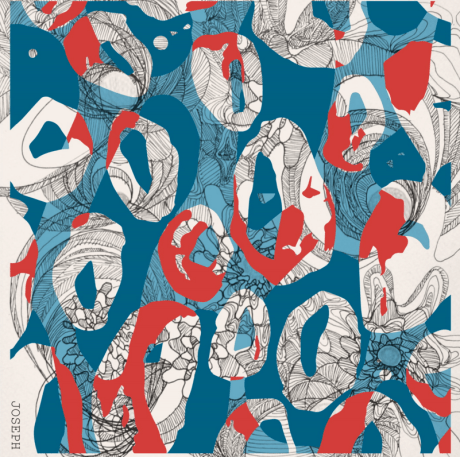
Unsurprisingly for a label with such a romantically gestured affinity for the city of Paris’ most famous railway station – a label based in the English county of Kent, where the Eurostar hurtles through, passing on its way between London and the Continent before hitting the Channel Tunnel – would at some point add a bona fide French act to their growing roster. The curious Lille-based collaboration between composer/sound designer Antoine Boucherikha and graphic designer Anne Hélou, under the moniker of Life Pass Filter, have marked their inaugural debut for Ian Button’s Gare du Nord label with a succinct EP of endearing advice and comfort; a present to Joseph Chevalier-Poher, the first-born among the duo’s inner circle of closet friends.
A celebration but also a document that records the change when young adults suddenly become parents and proper grown-ups with responsibilities, the Joseph EP is a melodious encapsulation of the ‘sweetness of childhood’ and a peaceable message to the “adult this boy will one day grow up to be”.
Consciously hinting at 60s and modern pop, you could be mistaken for believing this was an American artist at work; the scent of France all but obscured by their penchant for a stateside sound. To a mostly lilting acoustic accompaniment, Boucherikha sings a vibrato effect song of assurance, welcoming the “little man” into the world on the slightly tropical wistful opener, and offers the sweet adage that there’s “no place like home” on the repeating, twanged pedal-looping song of the same title. There’s a psychedelic gauze-y feel to Morning Lights, which sounds like a soothing Flaming Lips playing at the crèche. And the finale, Lullaby, sends the little guy off to up the wooden hill to Bedfordshire; a dreamland where Beck gentle coos and plucks away in quivered bliss.
Short but sweet, this intimate celebration has a curious undertone of seriousness too, a present of knowing and depth that makes this EP anything but saccharine playtime treat. Young Joseph should feel honoured and blessed that someone is bothered to save this moment for posterity; a testament to hope, sagacious wisdom and childhood.
Die Wilde Jagd ‘Uhrwald Orange’ Bureau B, 6th April 2018
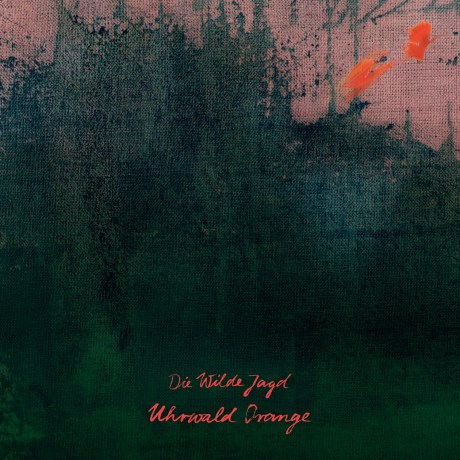
Fashioning a mysterious ‘Clockwood Orange’ world of Gothic and ominous dreamscapes, inspired by and named, in part, after the studio it was produced in, and by both the 17th century menagerie paintings of the Flemish artist Frans Snyder and the collected devotional Medieval period songs of the Llibre Vermell De Montserrat artifact, Die Wilde Jagd’s Sebastian Lee Philipp takes us on an eerie, cosmic and slinking travail through a throbbing sophisticated earthy electronic soundtrack. His musical partner on the group’s adroit debut self-titled experiment, producer Ralf Beck, is excused from the follow-up but lends out his extensive racks of vintage analogue synthesizers to Philipp, who transforms and obscures their banks of sounds into ghostly permutations, shadowy creatures and lurking, dancing and honking sonorous cries from a murky wilderness.
Building each track up gradually, with over half the album’s tracks running over ten minutes in length, these soundscapes and semi-organic, semi-industrial pulsing dance tracks twist and contort, with elements rotating from the background to foreground. Live sounding drums and limbering My Life In The Bush of Ghosts style bass lines move it all forward, with tracks such as the clip clopping hoofed bestial, industrial laced pop 2000 Elefanten heading towards a strange amalgamation of Depeche Mode and DAF; especially when there’s stoic Teutonic soul-in-the-machine vocals and sleek techno pulses flashing.
Merging post-punk, Kosmische, dance music and darker evocations of the clandestine and sinister together, Philipp conjures up arcane and futuristic, esoteric and Eastern mystical visions; from the balalaika echoed, prowling Popol Vuh venerable soundtrack of Kreuzgang (translates as Cloister), which could as easily be set in Tibet as the Medieval Lutheran Benelux, to the Velvet Underground and Nico ponder tribal cult witchery, Ginsterblut (Broom Blood).
Die Wilde Jagd’s progressive sound is tight, rhythmic and cleverly put together. Uhrwald Orange is a classy imagined score, balancing cool, gleaming and aloof German electronica with menacing, nocturnal earthiness, yet also reaching for the celestial. One minute imbued with hints of Bauhaus, Killing Joke, Eno, Cluster, and Faust, the next slinking on to the Tresor club or Basic Channel dancefloor. In short: a most impressive album.
https://soundcloud.com/bureau-1/sets/die-wilde-jagd-uhrwald-orange-preview
MATT OLIVER’S ESSENTIAL HIP-HOP ROUNDUP

Singles/EPs
No time to celebrate 50 Cent becoming a bitcoin millionaire or Snoop releasing a gospel album, or Mos Def and Talib Kweli touting a Black Star reunion produced by Madlib. Right about now, groggy jazz from Jazz T and bleary digs from Lee Scott make potent points on ‘Ceiling’/’Urn Money’, matched by sweet and sour remixes from Pitch92 and Sleepwalker. The superior, subliminal sales technique of Genesis Elijah primes ‘How to Lose Fans and Alienate Listeners’ as a bestseller and puts a police cordon around the club. Weighing in at a headbanging ‘310 Pounds’, Juga-Naut and Mr Brown use the devil’s horns as their finishing move. A good heart these days is hard to find, so Ty giving you the benefit of his 20/20 vision is like a shot from Cupid on the breezy seesaw ‘Eyes Open’ featuring Durrty Goodz.
Wise-past-midnight pair Summers Sons are ones to cling to when the next weather warning comes calling, ‘Undertones’ an EP of sticky jazz drifts keeping it moving while remaining perfectly still. In the same postcode, Fanshore & Tropic’s touch of the ‘Reaper’ finds Hawaiian flutter in the Big Smoke, and the softly spoken stream of Coops’ ‘That Jazz’ means now he’s gonna rip you apart. Thug paradise, J Rocc-style, is to blend Mobb Deep and Sade into a whole new bunch of quiet storms. Tasked with the smooth operation of hijacking every 80s wine bar ever, six ‘Thug Ballads’ copy-and-paste their way up for coffee.
Underground bout of the year is found on the comic book crash course ‘Nautical Depth’, where Czarface and DOOM cause forum frenzy with pay-off lines galore and a bassline drilling into your ears. Apathy has also been busy doing dream team deals, appearing with Pharoahe Monch on the Pete Rock-made ‘I Keep On’, then swinging hard over ‘The Order’ of DJ Premier. On the move and on the loose, Sav Killz’ ‘Thundercats’ calls to the wild for some rough and tumble sent cartwheeling by Dirty Diggs. Credit to PHZ-Sicks for turning Sisqo’s most infamous panty raid into a hard hitting address causing ‘Riot in My Memory’. Moodie Black’s punishing industrialism lead by guesting gatekeeper Ceschi sews ‘Lips’ shut; dangerously atmospheric, as hell’s gates remove their padlock. Fake news gets a brick of actual fact to the face, unexpectedly from People Under the Stairs, playing the role of upset press blowing ‘Dog Whistles’.
Albums
Dr Syntax and Pete Cannon are back in full effect, opening up essential dialogue on ‘Let’s Talk’. Ever the polite pop culture vulture, Syntax thumbs through school photos and double-barrels the handbook of how to be an upstanding citizen and a hip-hop A-Z, with Cannon’s bruising beats keeping it cheeky, including one of his infamous Commodore-sponsored jungle jump-ups. Entertaining each and every time, the double act should be kept on speed dial in case of emergencies.
The main pastimes in the 20-strong Brighton borough of ‘Wizville’ are savagery and thrill rides. Ocean Wisdom stretches his rep with that 0-to-60 flow causing heart tremors, playing with the pitch control on the beats to alter the shades of black and blue he leaves the scene with, and placing guests Method Man, Rodney P, Roots Manuva, Jehst and Dizzee Rascal as almost incidental. Just when you think he’s showing signs of flagging, the assault rages on, maintaining Wisdom’s impressive ascent and already giving 2018 plenty to ponder.
Farma G’s wistful beats introduce ‘The Sentimental Alien’ to the modern world. Wishful thinkers and regal peace seekers from the Task Force intel, make it easy for handpicked emcees like Recognize Ali, Ric Branson, Smellington Piff, Anyway Tha God and Dirty Dike to dirty up a sound tinted a fine shade of rose. The custom brand, don’t-care daggers flung by Lee Scott and Black Josh create the monster that is the B-Movie Millionaires. With Sam Zircon behind the camera and keeping things eerily sluggish/sluggishly eerie, ‘Attack of The 50,000 Ft Sweg Lawds from Outer Space’ is a slumping battle royal of a snuff flick, a beast showing how it “put two and two together and got triple six”. The cure for a sub-zero February is having Pupils of the Clock waiting on you, enterprising Cornwall pair Tok and Lazy Eyez forging a clear path through crisp beats nudging the drowse button and sixth sense connections on ‘Timeless’. No danger of them following through on the declaration that “when we’ve got nothing left to say, that’s the point that we’ll call it a day”.
From the moment he draws first breath on ‘Weather or Not’, Evidence embarks on a masterclass. The man himself states “there are no wasted words”, inspiring under grey skies (the Dilated Peoples man is always better when there’s a storm afoot), holding your attention, and making you feel he’s dismissing (though not dissing) you as he lays everything bare with no discernible change in temperament. The forecast? One of 2018’s best.
Putting “the sublime in the subliminal”, Skyzoo’s ‘In Celebration of Us’ is some of the smoothest psychology and concrete consciousness you’ll hear this year. Written in the streets, penned to stir and examine the soul with his conversion of gunfingers to quotation marks, and cornering both the lounge and the late night creep, Skyzoo raises a glass with vitamin-rich articulation undercut with provocation, and making it look easy while his does it. One to be toasted over and over.
After Adrian Younge offered you ‘Twelve Reasons to Die’, Apollo Brown gives you another dozen dirty deeds to hold your head high by/duck down to. Repackaged as ‘The Brown Tape’ with Ghostface Killah exacting sepia-toned revenge, Wu-Tang Clan members to the right (wild for the night), and Brown providing his own gentlemen’s agreements regarding dead body disposal, it’s a classy sister dynasty mixing noble finesse and brute strength. With Sonnyjim selling you glamorous 70s crime and circling the block like a vulture, Chicago’s Vic Spencer puts his business card in the shop window for the rest of the year on ‘Spencer for Higher’. Top of his CV: the perfect voice for completing a schemes and hustles to-do list, and spitting with a charm happy to chew you up and spit you out.
You can’t keep a good man down, and Planet Asia, riding beats like a son of a gun about to clean up town, gets you wise to the ways of ‘The Golden Buddha’. That West Coast flow is still in fine fettle, sounding typically parched but never found dousing his disdain for non-believers and those slow on the draw. Still a deadlock breaker you can trust.
Room temperature boom bap sending you to the land of head nod, Klim Beats adds to the instrumental handbook focusing on jazz and funk. Hip-hop to do your spring cleaning by, though you’ll do well to come up as spotless as the Ukrainian’s ‘Natural’ sound. Looking to goad emcees into action, Badhabitz unveils a bulk of soul flips and darker omens. Staunch kicks and snares earning top dollar throughout, ‘Beat Library Volume 1’ makes itself easily available for your ears.
Under the name of an end of level boss with an Esoteric twang, Rock Mecca fights for the right to earn the freedom of ‘Ironworld’. To a flood of swirling symphonies within touching distance of Armageddon and pyrotechnics bankrolled by Hollywood, Vast Aire, Roc Marciano, Kool Keith and Canibus all try on knuckle dusters for size. Those unable to stand the heat will quickly be directed to the kitchen door. Now for the new album from Ugly Duckling’s Andy Cooper, in three easy, foolproof steps: grab a microphone, despatch a bunch of funk breaks hula-hooping or celebrating Mardi Gras, and invite Blabbermouf and Abdominal to challenge the rules on tongue-twisters. Doing what he does best, that’s ‘The Layered Effect’ for you.
For your eyes only: Cut Chemist versus the photofit, and hooray for Hozay.
Tickling Our Fancy 060: Park Jiha, Hampshire & Foat, Rodrigo Tavares, Flights Of Helios, Perhaps, Flora Fishbach.
February 20, 2018
DOMINIC VALVONA’S ESSENTIAL REVIEWS ROUNDUP

Reaching the sixtieth edition of my eclectic music revue – that’s roughly 500 albums over the last four years – I find an as ever eclectic mix of albums from around the globe; from South Africa to South Korea; from Brazil to Sweden and France.
Searching out the best or at least notable and interesting releases from the last month or so then, my latest circumnavigation includes the Brazilian composer/guitarist Rodrigo Tavares first album on the new Hive Mind Records label, the traversing amorphous road trip Congo, and the second soundtrack-like collaboration between Hampshire & Foat, the yearningly beautiful fairytale suite The Honey Bear. I also take a look at the ambitious debut album from the Oxford-based expansive indie pop and celestial electronic collective Flights Of Helios (Endings); the international debut release of Korean avant-garde, soundscape and minimalism rising star Park Jiha’s Communion; another numeral entitled free-jazz and Kosmische blowout from the USA trio Perhaps; the fourth album of matriarchal harmonious a cappella from the South African vocal group, the Afrika Mamas; a reissue of the obscure Swedish prog and heavy rockers Bättre Lyss’ 1975 private pressing Till Den Sträng Som Brast Än Att Aldrig Spänna En Båge; and the impressive ‘deluxe’ edition of the pop-revisionist chanson album À Ta Merci by French sensation Flora Fishbach.
Hampshire & Foat ‘The Honey Bear’ Athens Of The North, 28th February 2018

As with all fairy tales, the roots of these often enchanting stories lie in real psychological trauma and truths – forewarning metaphors aimed at finding happy endings, yet alerting to the dangers of a myriad of human failings: ones we all share by the way. The congruous partnership of jazz pianist/composer Greg Foat and ex-Bees multi-instrumentalist Warren Hampshire – both natives of the Isle Of Wight, which they use as a base, retreat and inspiration for much of the music on this their second album, as a collaborative duo, together – are ambiguous about the narrative that underpins the charmingly weaved The Honey Bear album, but the references and themes are all signposted well enough to be deciphered.
Based on an imaginative fictional children’s book, each instrumental track attributed to one of its chapters, The Honey Bear could be read in a number of ways; alluding as it does to sagacious rumination, the passing of time and seasons, innocence and of course the travails of addiction, the search for the magic elixir of life. You can substitute ‘honey’ for as many different substances and desires as you want; the kooky candy stitched honey bear that merrily jaunts into a magical if ominous woods on the cover may be all sweet and light, but that innocence is tested in the beautifully yearning bucolic soundtrack.
Foat – riding high creatively off the back of a stunning run of well-thumbed sci-fi novel and library music imbued jazz albums with the Jazzman label – and his Island compatriot Hampshire – no less accomplished, the former Bees band member turned in an equally adroit, articulate performance on the duos last highly praised collaboration, Galaxies Like Grains Of Sand – in what seems like no time at all, embark on their second peaceable relenting journey for the Edinburgh label, Athens Of The North. Always developing and exploring with each release, the duo take a romantic diaphanous traverse through the pastoral; a fantastical world of Ralph McTell folksy storytelling, Peter Ilich Tchaikovsky (Peter And The Wolf especially), both cult Eastern European dreamscape and Wiccan fable inspired English cinema of the 70s, the Jewish traditional music of Central Europe, and Kosmische (the fluctuating analogue synth whirling that undulates beneath the field recorded buzz of The Hive). An interplay that works well, featuring the string composed arrangements of Foat and Hampshire’s borderless guitar narratives, an album that was envisioned on the Jurassic coastline of Ventnor – about as far east as you can go in the UK – and added to in Edinburgh, travels well across national demarcations, picking up a myriad of inspirations on its 500 mile journey.
Following, what might be either a solace or (honey) trap, our lolloping protagonist starts this wandering album with a comforting patchwork accompaniment of gentle plush strings and the fluttery charming song of the flute; meandering towards the warbled and trilling bird call of a Brothers Grimm forest diorama – a certain ache and sadness subtly coming through a beautifully played suite. During an expedition to locate the honeyed prize, the listener is dreamily introduced to characters, the weather and metaphorical objects of desire and reflection.
Expressionistic pucks articulate the clawing scratch of Crow’s Feet – perhaps another analogy to ageing, for obvious reasons -, whilst the cliff or beach head environment – featuring real field recording sounds of seagulls, surf and of course a fly – of the wandering meditative beachcomber and his only companion in this isolated paradise, The Fly And I, feature the most subtle, minimal of acoustic guitar. Almost melancholic and heartbreaking in comparison, the stirring Winter Bound majestically sweeps in storm clouds, as the mood turns sentimentally mournful. Yet without doubt it is the album’s most painfully beautiful track. It doesn’t last long, this sadness, as the mood is lightened with the folksy down-the-rabbit-hole enchantment of Honey Dreams, and the entrancing evergreen Polynesian/South Seas floating The Elderflower. By the time we reach the closing Honey For A Penny, it feels like the clouds and sorrow have dissipated; the burden lifted, as we reach a sort of slow joyful release; played out to a fluttering ascendant flute and tranquil troubadour rhythm guitar.
Plush, often sumptuous, Hampshire & Foat continue to create beautifully articulated narratives and imaginary soundtracks for as yet unmade films. This children’s fairytale is certainly sweet and lilting, yet wise: analogy laden, waiting to be unpicked and interpreted. For Foat it proves a welcome escape from the jazz scene; a showcase for his arrangement skills – with the piano lid firmly shut on this project. For Hampshire, it is another gentle encapsulation of his wandering guitar compositions; unbridled free to roam where the mind takes him across cultures and time.
And to think, without the generosity of others via a crowd funder initiative this album might have never seen the light of day. Those who pledged have been well rewarded with a most gorgeous, yearning and evocative soundtrack.
Rodrigo Tavares ‘Congo’ Hive Mind Records, Available now digital release/Vinyl version 15th March 2018
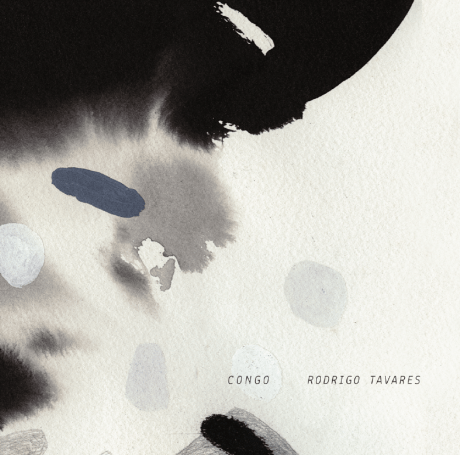
Far too early of course to define a burgeoning label with only two releases on its roster, but the new amorphous traversing post-rock and jazz travelogue from Brazilian guitarist/composer Rodrigo Tavares shares a similar meditative and spiritual yearn with Hive Mind Records inaugural Maalem Mahmoud Gania communion Colours Of Night.
The spiritual here is represented in Congo’s genesis; the catalyst for Tavares soundtrack inspired by, in part, a visit to the controversial ‘spiritual healer’ John of God – a medium, psychic surgeon of dubious repute -, who lives in the remote central Brazilian town of Abadiânia. The meditative, in this case, runs throughout the suggestive instrumental passages and vignettes that ponderously drift, cascade and ebb across a real and imagined borderless global soundtrack.
Tavares is joined on this ambiguous journey by a host of complementary musicians on accentuate sliding double-bass, brushed and sauntering drums, splashing, softly trickled percussion, octave ascending light Fender Rhodes, the subtlest of Ayers vibraphone notes, pining saxophone and a harmonic twanging, jazzy dreamy guitar.
Suffused throughout are lingering traces of ACT label jazz, minimalism, Tortoise post-rock, Brazilian legends Joâo Gilberto, Dorival Caymmi and Tom Jobim, and removed by quite a few degrees, a hint of the free-form untethered to any easy classification, evolving guitar experimentation of the Sun City Girls – as it happens a show in a remote former gay bar in Brazil by the same band was one of the stopovers on Tavares ‘transformative road trip’; the fruits of which and experience laying down the creative foundations for Congo.
Amorphous as I said before, though there’s no mistaking that South American influence, you could just as easily be anywhere along the Atlantic coastline splashing in the surf on the opening dreamy Rosa Rio, and be transported to Moorish Spain on the romantically mysterious sketch, Cidade Sol II. Still, there’s plenty of that Latin American vibe to be heard on these waterfall and mountain peregrinations; especially on the progressive movement A Raposa E O Corvo and the sauntering De Roda.
Truly transglobal, Tavares helps take Brazilian music – like his fellow compatriot Sentidor – into often trance-y, unburdened and unlabored directions. With few rough edges, this congruous soundtrack makes for a ruminating, thoughtful smooth journey.
Park Jiha ‘Communion’ tak:til/Glitterbeat Records, 2nd March 2018
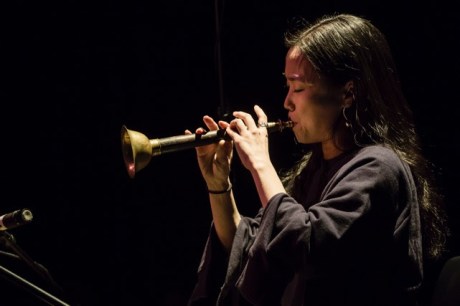
Circumnavigating the globe to bring much-needed exposure to new sounds, Glitterbeat Records imprint tak:til gives a second wind to a suite of acuity serialism from Southeast Asia. Released originally in South Korea in 2016, the neo-classical musician/composer Park Jiha’s debut solo album Communion is given an international release by the German-based label or repute.
Inspiring what we’re told is a burgeoning Korean music scene (well, an alternative to the K-Pop craze), a chief progenitor of the movement Jiha alongside collaborative partner Jungmin Seo originally melded the country’s musical heritage with an eclectic range of contemporary sounds as the 숨[suːm] duo in 2007. Releasing the highly influential regional albums Rhythmic Space: A Pause For Breath (2010) and 2nd (2014), Park and Seo crossed the time zones to perform at both WOMAD and SXSW.
Congruously putting the duo on hold to explore a more ‘personal’ and minimalistic ‘musical vocabulary’ as a solo artist, Jiha dexterously balances the air-y abstract breathes of the ‘piri’ double reed bamboo flute, the searing twang of the ‘saenghwang’ mouth organ and the softly paddled patter of the ‘yanggeum’ hammered dulcimer in what is a dialogue between a dulcet calm, the meditative and an entangled dissonance.
Each of these instruments represents a different voice: each one expressing certain sensitivity or a sharpened pique. Along with the equally expressive accompaniment of Kim Oki’s trilling, wildly intense tenor saxophone and yearned bass clarinet, John Bell’s gentle resonating vibraphone, and Kang Tekhyun’s tubular trickling and rattling atmospheric percussion, Jiha’s untethered compositions also articulate the solemn of a holy retreat – the monastery in Leuven, Belgium to be exact; a space used by Jiha’s band to rehearse -, the flow and cascading beauty of water, reverberations from the moon, and the passing of time itself – measured out on the fluctuating rapid movement of a seconds hand and the slower candor tick of an hour hand on the springs, cogs and coil microseism, Accumulation Of Time.
Quite tender in the beginning, each track builds a poetic minimalistic and avant-garde jazz interplay between all the numerous traditional instrumentation. It must be said that the tenor sax takes a leading role in piercing the serene and often majestically plucked performances of Jiha, pleading and occasionally pained, even squealing as it does in aching ‘communion’. Sometimes hypnotic, sometimes at a fever pitch of discordant beauty, a balance is cleverly struck between intensity and the attentive. At its most quiet and abstract, you can hear the most delicate of controlled breathing, blowing across the reed. At its most liberated, set free, those same breathes become harsh and attacking.
Transforming Korean traditions into a more experimental language that evokes the avant-garde, neo-classical and jazz yet something quite different, Park Jiha’s tranquil to entangled discourse evocations reach beyond their Southeast Asian borders both musically and metaphysically into something approaching the unique.
Afrika Mamas ‘Iphupho’ ARC Music, 23rd February 2018

Released in the year of what appears to be pique matriarchal fight back in the West, the gorgeous sounding 6-piece a cappella group Afrika Mamas remind us of the travails and hard won freedoms of women from outside the European and North American bubbles. In a year in which we rightly celebrate the achievements of the Women’s suffrage movement in attaining the ‘vote’, the indigenous women of South Africa would have to wait an age longer to not only get that same vote but to also overthrow the entire Apartheid system that had, until the 1990s, kept them segregated by race. Though Nelson Mandela rightly stands as the bastion of reconciliation and unity, the right leader at the right time as history would have it, it is the strong prevailing character and struggles of the country’s matriarch that deserves recognition now; celebrated and cherished on the Mamas’ fourth album together, Iphupho.
Mandela’s legacy can’t help but cast an omnipresent shadow over everything in South Africa; especially as his party have failed in many ways to build on his foundations, with talk of high-level corruption and a ruling government that over the past year has fought to remove the controversial President, Jacob Zuma – who as this goes live has since resigned and stepped down, replaced by the ANC candidate and Deputy President Cyril Ramaphosa, in the face of mounting opposition and an untenable position caused in part by his connections to the wealthy, Indian-born Gupta family. From the most beautiful soprano to the contralto bass, the all-female close-harmony group pays an almost effortlessly soulful paean to ‘Madiba’; Sister Zungu’s penned tribute, which borders on the gospel, touchingly thanks the late leader for bringing, amongst other things, free education to children in primary schools and for getting free school uniforms and food for those children from the most deprived families.
Iphupho meaning ‘the dream song’ is itself a reference to the Mamas’ own struggles and ambitions in bringing the Zulu heritage to a wider audience. Made-up of single mothers from Durban striving to make their way in a male-dominated industry, the ladies hope to emulate the success and reach of the four times Grammy award winners, Ladysmith Black Mambazo. Vocal wise they are sensational; perfectly pitched, pure and soothing.
The stories, anecdotes and themes of their songs highlight the daily lives and practicalities of survival in a climate of injustice and poverty; exasperated by the hindrance of the menfolk. Despite being tired in some cases of men – Ulwabishi (which means ‘rubbish’), penned by the group’s Sindisiwe Khumalo, makes a languidly cutting disapproval of those men who don’t support their families; instead hanging around, causing a nuisance and not looking for work, yet demanding their food on the table when they dictate – the group recorded this latest album at the famous Sibongiseni Shabalala co-founded United Rhythm Studio with top world music producer and maskandi tradition guitarist Maghinga Radebe. The lyrically named Shabalala is of course the son of Ladysmith Black Mambazo founder and former musical director Joseph – a group he himself joined. That influence can be felt suffused throughout Iphupho with the ‘a cappella’ style they’ve adopted, the ‘isicathamiya,’ a predominantly male vocal Zulu tradition. Those traditions, rolling back and forth from the lead call and backing chorus response are evoked on the lush veld-rolling lament to the plight of the KwaZulu dwellers of Natal on Lapha KwaZulu, and soothing lullaby heartache of ‘my mum is ill’, uMama Uyagula.
Enjoying a real momentum musically and culturally over the last decade, with South African artists as diverse as Die Antwoord, Dope Saint Jude, Spoek Mathambo, and scenes like the Shangaan Electro craze, a small but interesting touch of the contemporary makes its way into the Mamas more traditional rootsy vocal music with the guest appearance of leading South African beatboxer Siyanda Pasgenik Makhathini. He adds a down tempo sort of trip-hop meets R&B percussive rhythm to the Mamas’ graceful if ominously low harmony Ispoki – a song penned by group member Sibongile Nkosi about her father’s belief in the ‘bad spirits’ that make a nuisance of themselves outside his home at night. The only other accompaniment (the only actual instrumentation) is the jangle of percussion and a smattering of hand drums on Ulwabishi from Ayernder Ngcobo. Other than that it’s all down the clear lush, tongue-clicking and strong bass vocals of the ladies.
Highly impressive, articulated beautifully and at times spiritually soaring, the Afrika Mamas thoroughly deserve a place on the global stage. They bring a much-needed perspective, strong and defiant yet achingly blissful and majestic.
Flora Fishbach ‘À Ta Merci’ Blue Wrasse, Available Now

The French music press we’re told have fallen hook, line and synth for the alluring contralto voice of Flora Fishbach, who’s 80s revisionist pop twist on chanson oozes with such sophistication that its difficult not to embrace. Fishbach picked up the album révélation award at the Le Prix des Indés for best independent debut LP, winning high praise and plaudits galore ever since. Looking to make a similar impact across the Channel, the ‘bohemian darling’ has just released a deluxe edition of her electro pop requiem À Ta Merci. That decision is more or less echoed in the album’s title, which translates as, “at your mercy”.
Featuring the original running order and a bonus septet of gorgeous live recordings, this aloofly chic, yet theatrical, and especially when performing, animated, album recasts Françoise Hardy as a disco pop and electro swooned crooner. Effortlessly channeling the vaporous dreamy pining of Kazu Makino on the moon dust sprinkled fantasy title-track and ambient textured, synthesizer bas bubbling yearned lament Un beau langage, and a Gallic Alison Goldfrapp on the opening ice-y cool malady Ma voie lactée, Fishbach adds a French nuance and sensibility to the synthesized pop ascetic: a signature you could say that despite the revivalist backing of electronic drum pads, post punk sass, Moroder arpeggiator, Rococo harpsichord and hi-energy is unmistakably contemporary and French.
À Ta Merci is a warm album despite the clandestine thriller backing of songs such as the haunted, bell tolled theatre Feu; the soundtrack skipping and modulating through Clavinet boogie, Madonna (the earlier queen of MTV era), Chateau opulent disco, Air and even the fathers of French synth pop, Space.
The bonus material is by contrast, and for obvious reasons stripped of its cleaner production, more intimate with a harder edge. The title-track, recorded at the famous and fateful Bataclan in 2017, maintains a full backing but sounds purposeful; Fishbach sounding emotionally raspy and poised on a version of the original that features an almost venerable pause. Live Le Meilleur de la fête becomes a post-punk Bowie tangoing with Talking Heads. The venerability on these live performances is at the forefront, emotionally starker and raw.
In an industry burdened by a zillion synth-pap artists it will really take some effort from an individual voice to break through. With the momentum already building in France and with the recent runaway success of music press darling Christine And The Queens (who I personally find utterly dull) I’m sure the UK will embrace this sophisticated chanteuse. She’s certainly impressed me enough – what’s not impressive about referencing the philosophical aloof quandary that is Rimbaud’s “Je est un autre” (“I am another”) on a tropical slinking crystalline pop song, Un Autre Que Moi (“Another Me”) – to recommend her as one to watch in 2018.
Flights Of Helios ‘Endings’ Available now
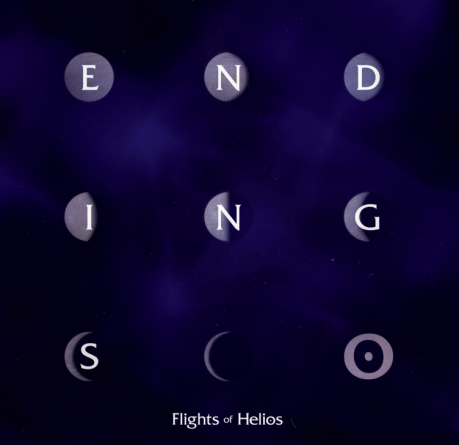
Full on expansive; up amongst the mythological heavens that have inspired the Oxford collectives Titan harbinger of the sun band name and lyricism, Flights Of Helios go deep and spatial on their debut album, Endings.
A credible Everything Everything. A space pop indie band with metaphysical intentions dreaming big, Flights Of Helios bring together a quintet of musicians, producers and composers with backgrounds in a wealth of genres: Seb Reynolds (no stranger to this site) on sonic layering and production duties, Phil Hanaway-Oakley on bass and vocals, Chris Beard on lead vocals, James Maund on guitar texturing and James Currie on drums.
Featuring both previous singles and new material, Endings flights of panoramic fantasy are certainly ambitious; an epic undertaking from a collective who’ve previously honed their balance of space rock, drones, indie and post-rock on a number of celestial transcendental remixes and projects. Far more interesting when touching on the venerable, alluding to spiritual, heavenly or otherworldly elements than when more grounded, the Helios sun worshippers sound like Kasabian on the motorik shuffled cyclonic Factory – a lyrical response we’re told to the Spanish auteur Alejandro Iñãrritu’s convoluted film Biutiful – and an esoteric Klaxons on the haunted, brooding implosion to the enchantress folkloric demons Succubus – who take, so the legend dictates, on the form of an alluring seductress to reel in their male prey. Both of these tracks, previous singles, have more of an urgency and thump about them, whereas the rest of the album’s quartet of, often vulnerable, opuses are allowed the time and subtlety to expand.
The opening twelve-minute Donalogue, a transmogrified version of the traditional a cappella Irish folk ballad, builds and builds. This oscillating cosmological hymn to spurned love introduces us not only to each of the collective’s individual components and the building blocks of the Helios sound, but also the angelic choral quality of Beard’s lofty vocals. Swooning, often fragile, and at times not even decipherable – uttering vowels and mouthed shapes instead of words – Beard stretches his range, helped by Hanaway-Oakley who also provides support.
Remodeling another key influence, alongside atavistic Celtic inspirations, they turn the Bleeding Heat Narrative’s Cartographer track into a hallowed ethereal eulogy. Lingering in a plaintive beauty of angel-kissed whispery synth, reverberated vocals and slow drums, this trance-y swansong sounds like I See You era XX, the Arcade Fire and A Dancing Beggar in a holy communion.
Lolloping in a constant swill of stormy tides and paranormal Gothic metaphors, one of the album’s most striking tracks, Funeral, pitches esoteric Americana and progressive electronica on the high seas. Bashing against the rocks in a barrage of swells, what starts out as Depeche Mode and Radiohead slowly builds like an improvised trip into energetic psych garage.
Evolving within the perimeters of each track, Funeral encapsulates the organic transformations that propel the group forward into such epic grand spaces, creating cerebral sensibility escapist music for a pop and indie audience. Rather than ‘endings’, Flights Of Helios have produced the sonic building blocks for a glowing future under this their most panoramic collective umbrella.
Bättre Lyss ‘Till Den Sträng Som Brast Än Att Aldrig Spänna En Båge’ Sommer, February 22nd 2018
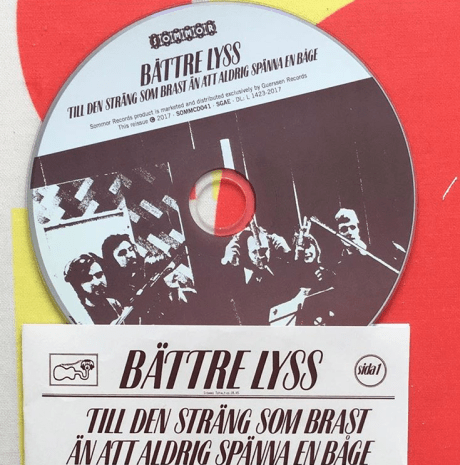
From a label I’ve previously had no experience with, another rarity from the 70s Swedish heavy and progressive rock vaults to drool over with the first ever reissue of the obscure Bättre Lyss group’s private pressing Till Den Sträng Som Brast Än Att Aldrig Spänna En Båge.
Notable for featuring guitarist Anders Nordh of LIFE fame (check out their highly impressive self-titled album from the early 70s) as an outlier member of the Bättre Lyss core trio of Rolf Hammarlund (vocals, bass), Christer Palmquist (vox, acoustic guitar, piano) and Rolf Johansson (drummer and songwriter), the group adopted a whole myriad of rock music influences on this rare find: the soft kind, the glam kind, the progressive kind and the American West Coast psychedelic heavy kind.
Formed during 1973-1974 by mutual friends Hammarlund and Palmquist, the duos first furors together were written in English. Johansson joined just after they switched to singing in the native tongue, and in time to record the group’s debut album, released a year later in ’75. Bolstered, as you will hear, by a number of talented extended pals on guitar, saxophone, flute and organ the group attempt in their own inimitable way to do justice to soft rock power balladry and epic rock outs. Sounding at any one time like 1st era Bee Gees cutting up rough with Spirit on the energetic opener Göta Lejon, or a Scandinavian Bread on the following heart-yielding Emma, or indeed King Crimson on the slightly menacing, slinking saxophone keen Vapnet, they seem to change the nuance and adapt their sound to each song. And so at times it sounds more like a collection of recordings than complete album. The only constant in fact is the often enervated, softly sweet vocals, which do, it must be said, occasionally soar and utter anguish.
Though I can’t fault the musicianship, and there are more than enough convincing, if sentimental, songs to grab you on this album, they can’t help but bare an uncanny resemblance to Blonde On Blonde, Savoy Brown, Forest, Humble Pie, Mott The Hoople, even Boston, throughout. There’s a total of four guitarist too, each one displaying telltale signs of riffage and refrains, bends and pleading lines from the era.
Lilting and flowing between troubadour piano and full-on progressive jamming, this more than competent Swedish slab of rock is well worth reviving. It also offers another look at the, probably largely unnoticed, developments in the Swedish head music scene; picking up what is essentially a rare marriage between the heavy stuff and a more commercial melodic sensibility.
Perhaps ‘V’ Cassette version available now via Important Records, Vinyl also available now, via Riot Sunset
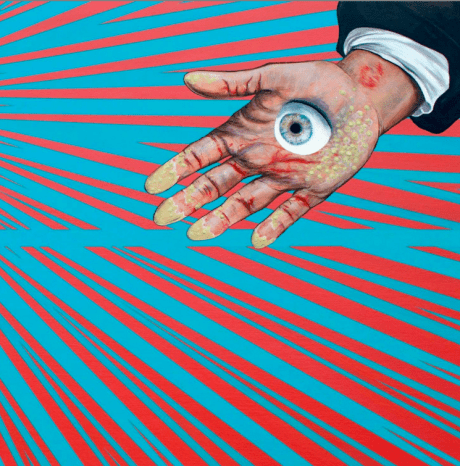
I can’t be expected to keep tabs on every exciting, mad or Kool-aid chalice glugging band from a scene that is over-subscribed with a landfill sites worth of promising, but quickly disappearing into obscurity, releases. Of course it doesn’t help that the psychedelic-Krautrock-Kosmische-whatever genre is also filled with the most unimaginative and cover-band like pastiches of groups that originally did it so much better. Yet once in a while, finding its way into my inbox, there is a rare find. For ‘head music’ aficionados then, a three-piece of Teutonic, free-jazz, cosmic explorers from Boston, Massachusetts known as Perhaps – an open-ended moniker, without a question mark in sight, that alludes to possibility.
Scant information is provided, only that their origins go back as far as the year of their debut album, Volume One, in 2012, and that the line-up comprises of ‘ringleader’ and bassist Jim Haney, drummer Don Taylor and guitarist Sean McDermott. Unsurprisingly picking up on a few inspired vibes during their collaborations and tours with the rambunctious Acid Mothers Temple and one-time shaman poet Can member Damo Suzuki, Perhaps go all out free-spirited psychedelic and Kosmische on their fifth numeral entitled album V.
The sole track of this album performance, Mood-Stabilizer is a thirty-seven minute continuous ebbing and flowing contortion jam of floating louche saxophone, fret scratching and tangled guitar, and stop/start drums that hints at the Acid Mothers (of course), Brainticket, Guru Guru, Embryo, Agitation Free and in one particular segment, a Mogadon drugged Amon Duul II.
From topographic submerged guitar pangs to tubular fuzzy vortexes and squalls, the trio travel via the primordial soup to gaze into deep space. Moving like a liquid and gaseous entity throughout a combined atmosphere of wafting, languid jazz and more dissonance fuzz frazzling waves of spiraling noise, it’s surprising to hear them meander, almost sexily, into slow jam Funkadelic territory in the first third of this meta space exploration. Whilst at their most heavy they slip into PiL.
Honing their own signature interpretation of the music that so inspires them, Perhaps’ oscillating heavy, Ash Ra commune trip shows a real depth and intelligence; a group sucked in the portal, taking their time to build a space-rock, free-jazz blowout of a journey. Enjoy hitching a transcendental ride into the deepest trenches of contemporary ‘head music’: no ticket required.
The Monolith Cocktail Social: Playlist #XXXII
February 12, 2018
DOMINIC VALVONA’S PLAYLIST
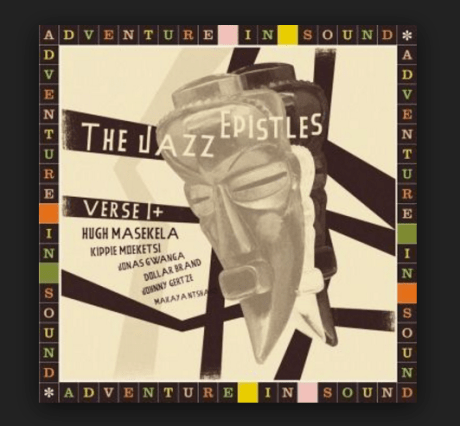
In danger of repeating myself forever, but for newcomers to the site here’s the premise of my playlist selections. Previously only ever shared via our Facebook profile and on Spotify our regular Monolith Cocktail Social playlists will also be posted here on the blog itself.
With no themes or demarcated reasoning we pick songs from across a wide spectrum of genres, and from all eras. Selection #32, chosen as always by me, Dominic Valvona, includes a couple of tributes to those we’ve lost over the last month (Mark E Smith, Hugh Masekela) plus no wave New York sazz from Konk, Kosmische Baroque synth dreamy classicism from Rick van der Linden, troubadour diaphanous from Catherine Howe, plus the usual ‘unusual’ voyages in jazz, Turkish electronic music, Britpop dreamers, psych, Afrobeat, soul and progressive rock.
Tracks:
Gökçen Kayatan ‘Doganin Ötesi’
Basil Kirchin ‘Silicon Chip’
Konk ‘Elephant’
Medium Medium ‘Hungry, So Angry’
Mr. Oizo ‘Jo’
MF DOOM ‘Bells Of DOOM’
Arawak ‘Accadde a Harlem’
Heavy Cluster ‘Gotta Get Away’
The Fall ‘Rollin’ Dany’
The Spyrals ‘Save Yourself’
Maxayn ‘Gimme Shelter’
Moses Boyd ‘Drum Dance’
The Jazz Epistles, Hugh Masekela, Dollar Brand ‘Uka-Jonga Phambili’
Binker And Moses ‘The Valley Of The Ultra Blacks’
Sundays & Cybele ‘Saint Song’
East Of Eden ‘Song For No One’
Curtiss Maldoon ‘Man From Afghanistan’
Sory Bamba ‘Kanaga 78’
Mor Thiam ‘Kele Mumbana’
Horseface ‘No Niin, Jääkausi’
Zazou Bikaye ‘Dju Ya Feza’
Jah Wobble ‘Long Long Way’
Embryo ‘Sango’
The Olivia Tremor Control ‘A New Day’
Octopus ‘Your Smile’
Margo Guryan ‘Something’s Wrong With The Morning’
Dean & Britta ‘Night Nurse’
Vanishing Twin ‘Telescope’
Dwight Sykes ‘Mystical Lady’
Terry Callier ‘Baby Take Your Time’
Living Voices ‘Eve Of Destruction’
Catherine Howe ‘Up North’
Rick van der Linden ‘Clouds’
Our Daily Bread 267: Modulus III
February 7, 2018
ALBUM REVIEW WORDS: DOMINIC VALVONA
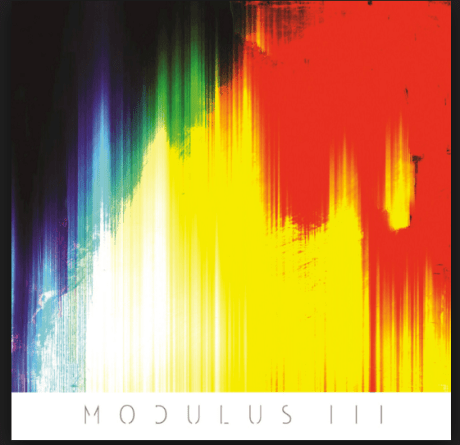
Modulus III ‘ST’ February 2018
Laden with experience, each individual member of the Modulus III trio has a worthy CV of solo and ensemble work under their belts. It’s no surprise that the Bristol traversers of Steve Reichism, Krautrock/Kosmische, free and futurist jazz have picked up a few tricks in their expansive adventures and scored or collaborated on soundtracks for the film, TV and games industry.
An eclectic bunch of individuals, playing alongside such diverse artists as Anna Calvi, Adrian Utley of Portishead fame, and Will Gregory’s Moog Ensemble, the Modulus III lineup of multi-instrumentalists Dan Moore, Drew Morgan and drummer Matt Brown channel many of these previous explorations and more on their self-titled debut LP.
Obviously talented and trained – Drew is a former contemporary classical student of the Royal Academy Of Music in London and dab hand at drawing abstract vistas and sound effects from the cello – the trio’s multi-textural improvisations are meant o be read, partially, as a reaction against ‘virtuosity for virtuosity’s sake’. A problem in the jazz community especially, much of the contemporary scene features abundant skills and technical approach, but is bereft of sparking innovation and excitement: Competent yet far from interesting or fresh. And so this live performance, broken up into three tracks, recorded in the trio’s hometown, sounds at times free of aloof intentions and indecipherable musical language. The signposts are all there all right, from Sun Ra to Popol Vuh; from Bitches Brew and IOW Festival 70 Miles Davis to UFO era Guru Guru. And that rich smorgasbord of influences can all be detected and heard within the perimeters of the opening Waiting For The Network suite alone, without mentioning the album’s other two equally well-traveled improvisations.
The synthesized meets cello, Fender Rhodes and an articulate constantly moving drum patter on each of the album’s cleverly played and spontaneous evolving and ever-developing performances. Building from a primordial soup of whale song, Kosmische wilderness and prog-rock sci-fi, that opening fifteen-minute adventure takes a Donny McCaslin like trip towards the celestial before working the stop/start drum shuffles and probes into a cyclonic trip-hop rhythm. A stained-glass implosion Rhodes piano interplays with a cranked-up generator and brassy cymbal reverberations as the track takes shape and ends on a ‘close encounters of the third kind’ atmospheric like dissipating climax.
Shorter in length but no less dense with ideas, Diego Says Hello is a track full of anticipation, as the trio scuttle and poke at a Sun Ra procession across a Balkans/Central European soundscape. A similar length, Joyce could just as easily evoke the Outback as the deserts of the Middle East, on what is a free form jazz crosses Steve Reich avant-garde classical voyage into the unknown – the instruments move more like a mist. Slinking and fizzling, lamenting and mysterious, this final amorphous interplay receives a round-of-applause; until this moment, you could forget there was even an audience present; such seems the Modulus III concentration and serious atmosphere.
Immersed rather then flittering on the fringes of each inspiration, Modulus III navigates their myriad of inspirations and influences with aplomb. Strapped in, ready to lock into each other’s intuitive nature, it’s hard to deny that this cosmic adventure in improvisation would sound a mess, or mere appropriation without that virtuoso talent the trio want to break free from. However technical, and dense with intricate musicianship, it may be, this is a most brilliant, atmospheric and expletory of recordings. DV
Tickling Our Fancy 059: Brickwork Lizards, Brona McVittie, John Howard, Astrid Soone, Orouni…..
February 1, 2018
NEW MUSIC REVUE WORDS: DOMINIC VALVONA
Featuring another eclectic borderless roundup of interesting and innovative, and sometimes previously lost, treasures, this latest edition of my reviews package includes a fond and timeless quality collection of songs from the Irish folk legend John Dunhan; the second album from Oxford’s English tea dance meets Ottoman jig outfit, the Brickwork Lizards; a morning chorus inspired EP of homage covers from the adroit John Howard; Lukas Creswell-Rost transforms and remodels his soft rock triumph Go Dream into something more abstract, eclectic and dreamier; and a promising pair of debut albums from the ‘Celtic phantasmagoria’ inspired Irish harpist and songstress Brona McVittie, and the abstract sonic sculptor Anna Sonne. We also have, yet another blast of garage, doom, psych and this time Gothic mooning fun from the Stolen Body Records label, in the guise of the Portuguese boy/girl Sunflowers.
And if that isn’t enough already, I have a roundup of equally interesting and eclectic ‘shorts’ from as far afield as Canada and Paris too, with tracks, singles and oddities from the Parisian Anglo-French group Orouni, Toronto-based producer Luxgaze and the Leeds Psych pop electronic outfit Lost Colours.
Brona McVittie ‘We Are The Wildlife’ Available Now
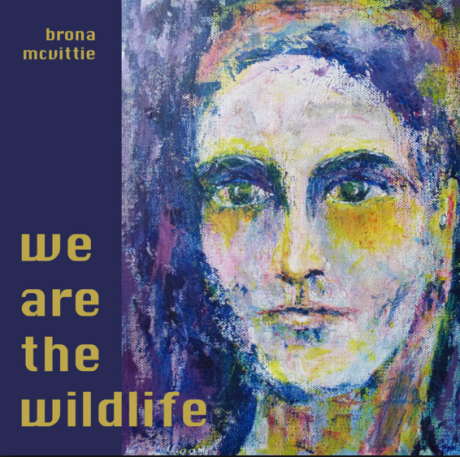
With the lightest, most deft of touches, Irish songstress and harpist Brona McVittie embarks on a voyage of ‘psycho-geographic’ inspired encapsulations of a mysterious, magical landscape and history on her debut album, We Are The Wildlife.
The title of this original and transformed traditional suite alludes to the premise that even people and the modern infrastructure (pylons for instance) that spans the land are just as important and intrinsic to the landscape as ‘spiders and cobwebs’; acting as they do throughout this album as both manmade and natural catalysts with which to bounce ideas and sounds from, or even off of – the inspiration for the pining bliss of the ethereal voiced and caressed bucolic, Under The Pines, arose from hearing the reverberation of a dog’s bark off the trees that stand on the edge of the Rostrevor pine forest.
Tracing the sonic contours of London’s urban fringes and the rural landscapes of Mourne, McVittie pitches her fluttery diaphanous harp-led songbook somewhere between post-folk and the cinematic – helped along in part by the drifting trumpet evocations of film composer Hutch Demouilpied, who’s contributions sound at times like Miles Davis Dingo transported to an Irish peat bog.
Her ephemeral harp melodies and phrases often feel like a breath or just the merest hazy lingering presence of the instrument, which – and I’ve never heard of anyone else doing this before – might in some ways be down to McVittie’s technique of playing them all on the guitar first before transcribing over. It certainly offers a different perspective and technique. And it certainly takes this heavenly traditional instrument into even more mystical, accentuate abstract realms, helped of course by an accompaniment of meadow flute (Keiron Phelan), sad bowed delicate strings (Richard Curran), searching fleeting slide-guitar and shuffling to full-on breakbeat drums (Myles Cochran). All of which amorphously pushes the often-ancient feelings and geography towards John Martyn and Bert Jansch one minute, towards the Incredible String Band or trip-hop the next.
As an additional running theme to that of a modern natural panorama, McVittie also draws deep from the well of Irish musical folklore and literature, borrowing as she does both titles and ‘the great Celtic phantasmagoria whose meaning no man has discovered, nor any angel revealed’ (interrupted on the yearning instrumental The Vast And Vague Extravagance That Lies At The Bottom Of The Celtic Heart) lyrical adage from W.B. Yeats to reinterpret her ancestral home’s legacy and hard to define feelings. Taking the And The Glamour Fell On Her reference to mean, in a manner, ‘away with the fairies’, and When The Angels Wake You, a reference to the ancient Celtic perception of death, from Yeats, McVittie’s quivering harp caresses and translucent vocals articulate a misty veiled dreamscape; both haunting and peaceable.
Transformed with a subtle undulation of electronic ambience, traditional fare such as the resigned death lament The Jug Of Punch (“When I am dead in my grave, no costly tombstone will I have. Lay me down by my native peat, with a jug of punch at my head and feet.”), and more obscure County Down love ballads, such as the greenery meandrous tip-toe Newry Mountain, have an eerie, elegiac echo, shrouded as they are in the haze of a pastoral adumbrate swooning soundtrack.
Played, as I said at the very beginning, with the lightest of touches, McVittie’s wildlife and Celtic inspired filmscape subtly crafts tradition into a cerebral suite of neo-classical and ambient folk. We Are The Wildlife is the most inviting and unique of debuts.
Astrid Sonne ‘Human Lines’ Escho, 19th February 2018

Merging a background in the classical with a love for electronic composition, the Copenhagen-based composer/musician Astrid Sonne examines the balance between computer-generated and organic sounds on her spatial sonic debut LP, Human Lines. Conceptually minded, Sonne is know for her burgeoning work in creating site-specific compositions for a number of installations in Denmark, including the old ruins under the Danish Parliament and a stretch of the Copenhagen Metro – part of the Trans Metro Express for the Strøm Festival. Human Lines sounds at times like an extension of this: certainly informed by it in the use of space and depth.
Structurally and thematically exploring both the organic and mechanical, but also, as Sonne puts it, ‘the balance between repetition and renewal in various universes which responds to different emotional stages’, each piece develops from either its initial crystal sharp sonorous pings or tubular metallic twitches into interconnecting hovers or fissure stretching cyclonic warps.
Leaving it to the listener to interpret, each ambient, drone and transduced viola performance seems to spark or stutter into action on its own accord, as though Sonne gathers the elements together and once generated lets them fall, probe and encircle where and how they desire. There’s clean scattered nodes and seeping melody on the Kosmische style Also, gabbling crushed and warped percussive loops and a cosmic ethereal repeating choir on the heavier Real, and a hint of Japanese electronica on the abstract, arpeggiator A Modular Body; all of which, as does most of the album, ascend, marvel and encircle the celestial.
It’s left to the final and most achingly beautiful sad composition, Alta, to break free from the machine (almost) and find the humanity. Erring towards the playing of Tony Conrad and John Cale, Sonne’s last impression bows towards her classical learning, with only the subtlest of synthesized sound to accompany a touching, atmospheric, viola performance.
Still developing and searching ideas, Sonne’s debut is a very promising start; combining the conceptual with techno, darkwave and ambient. The balance suggests the machine element hasn’t completely taken over just yet.
John Howard ‘Songs From The Morning’ John Howard/Kobalt, Available Now
Probably more productive than he’s ever been, during a career that spans five decades, songwriter/pianist troubadour and A&R man John Howard has in recent years worked with a myriad of collaborative talent (the Robert Rotifer, Andy Lewis and Ian Button instigated, and most brilliant revival, John Howard & The Night Mail) and released a number of solo albums and EPs – the last of which, the stunning cerebral Across The Door Sill, made our choice albums of 2016 features.
Enjoying a calm and restrained renaissance of a sort since the feted days of his acclaimed debut Kid In A Big World, Howard’s status as a seriously adroit songwriter and assiduous tickler of the ivory is assured and proven beyond doubt with every subsequent project. His latest collection, a five-track homage EP of covers, is a welcome breather, even stopgap, between albums. Howard is set to release his eighteenth long-player this summer, with news of a nineteenth to follow – though this is purely at the writing stage at the moment.
Perhaps a reflection and circumstance of Howard’s approaching 65th birthday, Songs From The Morning muses at a leisure over a selection of favorite songs from the artist’s formative years in the late 60s and early 70s – a time when he was adoring fan, and not quite the confirmed artist. Highly influential, imbuing Howard’s own craft, a carefully chosen quartet of tracks themed around both the celebration and lament of the morning sun, have been subtly lifted and transformed with signature aplomb. Showing a great taste in music, he picks from the golden spring of both lauded and tragic songwriter artists.
Featured a couple of months back on the Monolith Cocktail as a taster, a Waterboys-esque, almost jangly version of the fated Nick Drake’s most touching pulchritude – which more or less lends its name to the EP title – From The Morning is given the venerated praise treatment by Howard. This is a leitmotif, an almost deep reverence that comes out as pastoral gospel. Sharing with Howard a certain promise that failed to crossover into commercial success, though of course the understated quiet figure spiraled into a mental abyss and tragically committed suicide at the age of only 26 – the year before Howard’s debut album release – Drake was renowned for penning the mournful and serious, yet he wrote this most uplifting of beauties, a favourite of Howard.
In a similar vein, Mike Heron’s – of The Incredible String Band fame –bucolic delight You Get Brighter is another glorious declaration of love for nature’s brightest life-giving force. Positively radiant, meandering as it does through a Baroque folk majesty, Howard subtly marks the original with his own peaceable nature and joy.
Wishing to hold off the morning’s rays, Tom Springfield’s lovelorn plea, Morning, Please Don’t Come – originally recorded with his sister Dusty in 1969 for his own LP Love’s Philosophy – playfully yearns for the dawn to never come; a signal as it seems for his love to leave his bedside, and maybe step out of his life forever. Howard rings out the tambourine, lightly caresses the piano and swoons a faithful tribute.
Once again drawn to the tragic, Howard also does justice to Sandy Denny’s complex woven lament The Lady and Tim Buckley’s equally troubled, but achingly beautiful, Morning Glory. Savoring the challenge of translating “rather a lot of chords” (as Denny herself puts it on a live recording of this elegiac delight) on to piano, Howard transposes the malady and bellowed heartbreak to sound like a lost Elton John classic. He turns Buckley’s rather ambiguous 1967 ballad into a 70s style epic that rolls on and on. Accompanying anecdotal notes of interest from Howard explain each song’s appeal and influence, with a mention about the ‘musical scholars’ debate over the meaning of Buckley’s “fleeting house” lyric; a reference that Howard himself believes alludes to a ‘house we only live in temporally, like the hobo the lyric mentions several times in the song.’ Whatever you decipher from this cryptic and great lyric, the song is somehow congruous to the collection, yet barely mentions the ‘morning’; just as easily conjures up an ambivalent atmosphere of time and the seasons.
A great songbook, lifted and subtly turned into a venerable homage, Songs From The Morning is an articulate often peaceable collection from an artist happy to spend a moment contemplating and celebrating those that inspired him, but also a pause before launching into a string of new solo work.
John Duhan ‘The Irishman’s Finest Collection’ ARC Music, Available Now
With a certain earnest sentimentality and the Irish brogue of a “folkie” Springsteen, songwriting legend John Duhan’s five decade spanning songbook is for many of his admirers both a heartfelt hymn to life and love and an article of faith.
Despite penning highly popular peaceable anthems and the most romantic of love songs, Duhan’s music has mostly been brought to attention via international Irish icons such as Mary Black and The Dubliners. His most popular hit of all, the timeless Emerald Isle metaphorical seafaring paean The Voyage, was a much loved sentiment to overcoming life’s obstacles together as a couple and family (a recurring theme throughout), much beloved by Duhan’s local community but propelled to global success by Christy Moore, who covered it in 1989.
And so for many this latest collection come compendium musical accompaniment to his autobiography, To The Light (a title taken from the leading track of his album of the same name), is an introduction to the songwriter/performer who originally started out in the 60s as the fifteen year old frontman for the highly successful Irish beat group Granny’s Intentions, before going on to carve out a career as a lone troubadour.
Corresponding to each of the four chapters of that bio, songs have been ‘carefully’ selected from a quartet of his most ‘epic’ albums: Just Another Town, The Voyage, Flame, and, of course, To The Light itself. Self-confessedly never following ‘trends or fashions’, Duhan’s music remains timeless, accompanied as it is by gentle oboe, violins, cello, pipes, the accordion and his tender guitar. There is some room however for modernity, with the subtlest of technological advancements allowed to create synthesized atmospheres and melodies when wanted.
Following a toiled life story, it makes perfect sense to start at the beginning, paying homage to the town of his birth, Limerick. Featuring a diorama cast of locals and scenes that have obviously touched and been lived by its author, Duhan muses that his town is “just another town” like any other, but it’s the first of two occasions to include lyrics that reference his old dad – lyrically etched as a character, singing in baritone, ‘with the emphasis on the ‘bar’’ – on the track of the same name and on the rousing Don’t Give Up Till It’s Over, and paints a fond picture of home.
All the cornerstones of the family and the touchstones of a life well lived are drawn upon for material, including the offering of a steady hand of assurance to both his teenage daughter – in the middle of some tumult on Your Sure Hand – and to his son Kevin – on the immensity of the great unknown and our place in the scheme of things pondering Face The Night. There’s a coo-like bowed tribute to his mum in the form of a charming reminder from the past on Song Of the Bird; a tale of when Duhan and his Mum nursed an injured bird back to life, offering hope and a fond memory of his mum when she sadly passed away.
Through it all, from meandering family rifts to stargazing philosophically, there’s a deep sense of faith and the tender gesture of overcoming adversity. Mostly set in the here and now, though musically transcending any specific timeline, the only song that deviates from this is The Blight. A sad saga about the fatal disease that infected and destroyed as a consequence so many potato harvests in Ireland, known by its Latin name as Phytophthora infestans but named ‘the Blight’ by those communities it devastated, this obviously emotionally aching chapter from the Island’s history is turned into a tale of death and survival on the ‘blight’ riddled toiled fields and lands by Duhan, but it could so easily be an ode to the hardships of eking out substance on the American frontier as well.
A perfectly pleasant guide to one of Ireland’s greatest living songwriters – who it must be said is also pretty deft and handy with the guitar too – Duhan’s Finest Collection gently explores his adroit magic and sincerity over time, and will remain one of the best encapsulations of his craft for years to come.
Brickwork Lizards ‘Haneen’ Available Now
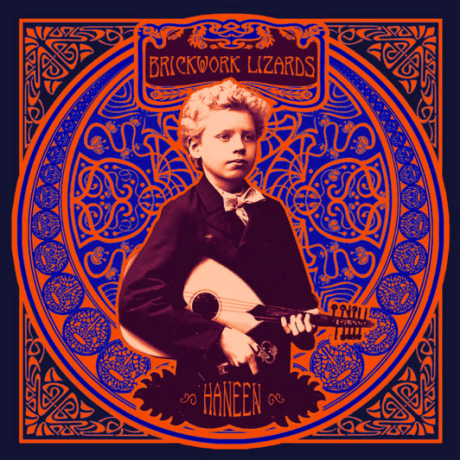
A beneficial creative exchange of musical backgrounds that blossomed from a chance meeting between Oxford stalwart Tom O’ Hawk and the Egyptian vocalist and oud player Tarik Beshir – of the town’s Arabic ensemble Oxford Maqam – into the fusion, the Brickwork Lizards, sprung from a mutual love for the 1930s harmony group The Ink Spots, but also a yearning for a, mostly, lost past.
Nostalgic reverberations from both the exotic Ottoman Empire of yore and 1920s English dancehalls seamlessly elope off together to create something fairly unique and congruous. This second LP to date, Haneen, is an often joyful bound across time, soaking up lines, melodies, riffs and the atmosphere of a shellac scratchy tea dance one minute, a lavishly decorated, carpeted seraglio the next.
The very definition of that album title in Arabic describes a longing sense of the past. And so timelines align as the two distinct backgrounds of the group’s founders harmonize with surprising results. You will for example hear a Tim Westwood style late night radio host introduce a wartime blitz era ballroom romantic crooned lullaby of sentimental assurance (Old Fashioned Song) and a creeping transformation of a traditional 16th/17th century ‘hanging song’ that takes in both the atavistic bucolic of merry ole England but also features an air of Latin American (The Hanging Tune).
Better when they evoke and redeem the exotic – reclaiming almost forgotten Ottoman pieces Hijaz Zeybek and Hijaz Mandira: the prefix alluding to an eclectic transformation that takes these traditional encapsulations out of their epoch into something more electric, from the Silk Road to cocktails at The Ritz – than the bohemian, the Brickwork Lizards most promising excursions are amongst the amorphous sand dunes and bazaars of a vague North Africa and Middle East panoply. Songs such as the mosey wagon trail western metaphor, Come On Home, – which as a tinge of White Album McCartney about it – and the cornet trumpet nuzzled cabaret swoon, Queen Of Bohemia, can sound twee and pastiche, but this is made up for with the album’s abundance of zeal and fun at fusing pastures new – Ottoman rap, anyone?!
Sunflowers ‘Castle Spell’ Stolen Body Records, February 9th 2018

In what is proving to be a busy year for the Bristol label Stolen Body Records – we must have featured at least four bands from the label’s ever-expanding roster in the last month alone – we have yet another garage-psych-stoner-doom backbeat propelled slice of international mayhem to wake-up the dead with. In the guise of a Portuguese Cramps embracing The B52s, Moon Duo and Black Lips inside Grandpa Munster’s cloak of Gothic looning, the Sunflowers, despite the name and fiery vigor, lurk in the graveyard of human metaphorical gloom.
Their second album, Castle Spell, is full of fantasy and voodoo, yet throbs, bends and whines with pantomime horror. Tongue-firmly-in-cheek, the girl/boy yahoo, mooning and wooing vocals and tumult backing of scuzz, fuzz, spunk rock and explosive blues suggests some fun. Though in no way does this mean it’s a cartoon imitation or joke, as the group do get very heavy and the lyrics echo a sort of inevitability, an illusion to death, grief and kool-aid enthused destruction.
Tumbling off-kilter on the tangled lunar-hopping, fretwork in space, opener The Siren, we’re introduced to the Sunflowers spikey howling energy, as each track careers and thrashes its way to a destination; be it Link Wray riding the big one down to the Mexican coast on the ole! tremolo-twanged Surfin With The Phantom, or creeping like The Black Angels in Poe’s cemetery on Grieving Tomb. For pure zaniness and what-the-fuck-is-all-that-aboutness, the barking scuzzed A Spasmodic Milkshake features the most bizarre boy/girl exchange of lyrics (“I’m a milkshake don’t disturb me, I don’t want to die!”), and the finale, We Have Always Lived In The Palace, is just…well, weird: a ponderous bass riff stride through the palatial palaces of the mind.
Still, a cracking great album, full of thrills; light and shade dynamics but heavy as fuck, Castle Spell is a real explosive blues, garage thumping, punky doom withering surfin’ cosmic psych blast.
Lukas Creswell-Rost ‘Gone Dreamin’’ Plain Sailing Records, Available Now
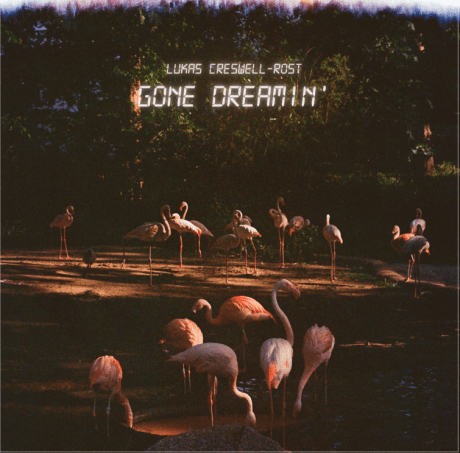
An Extension. A re-contextualization. A transmogrification leading to a concatenate yet new set of songs, developed from the English troubadour Lukas Creswell-Rost‘s 2014 Go Dream songbook, Gone Dreamin’ is a reimagined transformation of that original misanthropic tragedy, culled from Rock’s Back Pages. Taken off into more experimental realms, with ideas, scraps of dialogue, riffs and melodies ‘flying around’, merged with various effects and breaks, these original beautifully vaporous soft rock ballads and cruising songs are given a new lease of life.
Alluding to track titles from Go Dream and sounding at times like the Animal Collective remixing Michael Angelo and Paul McCartney, or 10cc fronted by Michael Farneti, this latest nine-track suite – described by Lukas as: ‘A pop soundscape road trip going through different radio stations that are all haunted by the same voice.’ – builds upon the sentiments and dazed recollected tales of fate, suicide and ego on rock’s highway, but drinks liberally from the woozy poisoned chalice of Kool-aid woe.
Championing Go Dream at the time, becoming a sort of cult album, Lukas has revisited that collection, which weaved such blissful, cursing visages on the fate of Bad Finger, the strange unnerving limbo of a transient life on the road as a touring band in the 70s, the detachment of star power, sipping cocktail aimlessly in Miami, and the tantrums of an air bound miscreant Yngwie Malmsteen. Though amorphous in dipping in and out of that album to conjure up something new, it’s difficult to recognize what bit of which song he’s used, echoed with effects or turned inside out. Gone Dreamin’ has just Cocktails, whilst Go Dream had Ten Dollar Cocktails. Gone Dream also has Patient Pilot, whilst Gone Dreamin’ has Air Rage. Yet neither particularly collate; just the essence and vague linger. Shimmery, shining with synth percussion, sauntering bossa rhythms, troubadour acoustic guitar and echoes of a sun-dappled Laurel Canyon Lukas’ music is now submerged and remodeled with ambient music, hallucinogenic and garish 80s pop production – Here In Hollywood signposts every signature buzz, drum-pad pre-set, vapours and electro boogie sound from that decade, sounding like Nile Rodgers on speed.
Lukas has done a great job too; loosening, bending, crystallizing and stretching his 70s blessed, Pacific Ocean Blue meets Fleetwood Mac and Steely Dan crafted cerebral soft rock songs into something experimentally more colorful and, even, dreamier.
Shorts: curios, oddities, great sounds and tracks floating our orbit this month.
Orouni ‘Uca Pugilator’ Taken from the Somewhere In Dreamland EP
Making a return visit to their 2014 musical travelogue album Grand Tour, this time with singer and flutist Emma Broughton at the helm – the previously admired from afar Anglo-French artist, provider of a rich, effortless timbre, is now a paid-up full time member of the band – the Parisian pop band Orouni recast a quartet of older songs on their latest EP, Somewhere In Dreamland.
The shape of things to come, Emma Broughton features as the lead singer on all of the reconfigured EP’s tracks, Somewhere In Dreamland will act as a bridge of sorts to an upcoming album, released later this year.
Blending world music instrumentation – usually picked up on their travels – with a kind of clever, air-y and breezy melodic style of lilting pop, Orouni glide amorphously between a myriad of French and English influences. Sounding at times like a French-African Belle & Sebastian, or a Breton styled New Pornographers.
Taken from their new EP – a taster if you like – the opening Uca Pugilator is described as ‘a two-chord pop song about Senegalese wrestling’ by the group. Formerly the first track from the group’s Grand Tour, this alternative version features a more up-tempo rhythm guitar pick-me-up – part Bowie, part Kate Bush, part Postcard Records – and of course now features Broughton on lead vocals. Dreamily conjuring up the well-traveled tourist’s observations – imagine Goddard on a road trip with Paul Simon across West Africa – about a Senegalese pugilistic ritual, this beautiful light but sophisticated song promises the most glittering of African adventures. And it’s very, very nice indeed: swimmingly so.
Luxgaze ‘Pretty Eyes’
Vaporizing before our ears the latest electronic track from Toronto-based music producer Luxgaze (Natalie Veronica) is a dreamy instrumental of slow beats, mirror rippling and reverse effects entitled Pretty Eyes. This glass-y abstract trip-hop meets electronica track meanders; swirling gently and indolently in its space like a chilled mystery.
It follows on from a trio of similar previous singles and also acts as a guide towards the upcoming full-length debut LP. Keep a lookout on the site for more details in the future.
https://soundcloud.com/luxgaze/pretty-eyes
Lost Colours ‘One Space Left’ 12th February 2018
Splashing a range of dreamy kaleidoscopic ‘colours’ on their celebratory, almost life-affirming, universal pop psychedelic spectacular One Space Left, the Leeds paint a most ambitious canvas with their debut single. In what will be a busy year going forward for the band, ahead of both their Different Life EP and Talking In Technicolour LP releases (to be released consecutively over the next two months), One Space Left is open invitation to soak up the band’s expansive, even transcendental, ambitions.
Alluding to the Indian subcontinent, this flight of fantasy features the ethereal calls of Rebekah Dobbins (of Nouvelle Vague and The Living Gods Of Haiti fame) drifting over subtle hints of sitar and the echoes of an undulating exotic voyage, as a constant bloom and cycle of drums and stargazing opulence – not a million miles from MGMT or Snowball II – materialize like ether.
A Ty Unwin remix of that same song – one of the three versions on this three-track release that also features an instrumental – strips the song back, sending it towards a dreamscape trance. Unwin reweaves the original threads and vocals, untethering what are already quite float-y and light voices until they become translucent, as samples of those Indian sounds waft in and out of a most vaporous, celestial, atmosphere until reaching the final section of the remix, which introduces sonorous bass and glassy shard percussion.
Lost Colours aim to put ‘huge smiles on peoples faces’ with their cinematic electronic and pop psychedelia, and One Space Left, I can thankfully conform, does just that. I’ll be keeping an ear out and hopefully will bring you more news and a possible review in the near future.
Our Daily Bread 266: Ouzo Bazooka ‘Songs From 1001 Nights’ Review
January 29, 2018
ALBUM REVIEW – WORDS: AYFER SIMMS
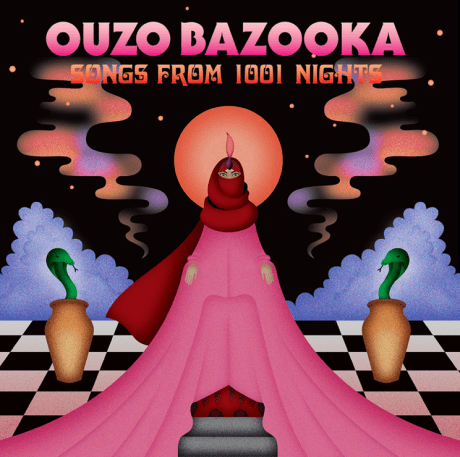
Ouzo Bazooka ‘Songs From 1001 Nights’ Stolen Body Records, Available Now
This is the music of our mothers and fathers, I mean, if you are Turkish and were born around the 70s. If you were, then you were probably melancholically eyeing the crowd of that gathering: wedding, circumcision ceremony, wedding, circumcision, wed…etc. looking for the perfect match. You were not rich – they danced to ‘European valses’- but whatever you did your heart was already bleeding, call it a social mal- être linked to poverty and the inevitable dreamy state that comes with it, when you do what you can do and be yourself and survive without even thinking about it (and your elbows have patches and your carry that Victor Hugo-esque honor in your soul).
This is the music of the millions who poured in a city not equipped to receive a great many, the crushing hope that the injustice will be made obvious one day, the rage, the thirst that comes with the hardship of coming to the shores of the Bosphorus and try, with olives, bread and endless teas to set up a “good life” for yourself. This is the music that entertained the masses for the growing monster of a city. The music of the workers chanting while pushing the wheels, while they fall in love, and gather in yellow lit rooms, hunched over their glasses of raki, drowned, dispersing a million tears, laughing of a million laughs while getting married.
It is not surprising that these melodies have stayed with a whole generation, inspiring bands from here and there. These tracks are not how our fathers heard them: they are how some of the next generation have dreamed of hearing them, with a psychedelic twist scented with freedom, this is the music of their dream come true – we buried them and their fathers already-but we shed a tear every time the nostalgia strikes. Ouzo Bazooka has managed to restore that vibe.
Our Daily Bread 265: U.S. Girls ‘In A Poem Unlimited’
January 23, 2018
ALBUM REVIEW
WORDS: DOMINIC VALVONA

U.S. Girls ‘In A Poem Unlimited’
4AD, 16th February 2018
Featuring most of the Toronto cast of collaborators that propelled the first U.S. Girls release for 4AD records, Half Free, forward, but stretched and lushly flexed into space boogie and other equally eclectic grooves by the city’s multi-limbed collective The Cosmic Range, Meg Remy’s latest cerebral pop revision tones down some of the vibrancy for acerbic, sax-wailing pouted-lips resignation and introversion.
Moving across the border from the USA with her husband and musical collaborator Maximilian Turnbull, aka guitar-slinging maverick Slim Twig, long before Trump reached The White House, Remy has broadened her postmodernist transmogrification of bleeding hearts 60s girl group meets tape-loops signature to accommodate femme fatale disco and funk since making a new home for herself in Canada.
With the emphasis on the dark machismo and chauvinist undercurrents and pains of womanhood that lie beneath the surface of the records created by such groups as The Ronettes and disco artists such as Gloria Ann Taylor – her relatively obscure but sublime plaintive Love Is A Hurting Thing transformed into her own seductive lamentable Window Shades by Remy on her last album -, Remy makes acidic, sometimes bitter ironical commentary on contemporary issues; from personable anecdotal evidence to cross-societal issues: an end to the war machine; an end to the patriarch; an end to the nascent forces of disunity.
Thematically In A Poem Unlimited’s dark meditations and character studies reflect, as Remy puts it, ‘the changed atmospheres that directly precede and follow acts of violence and the desperate strategies used to mitigate its infliction’. Remy however also, and as a consequence, turns on political and spiritual leaders and the lies that they, as much as all of us, tell each other to survive. Though Trump can’t help but draw a miasma over proceedings, its surprisingly the charismatic, lauded over by the left, Obama who meets the ire of a disappointed, expectant but crushed, Remy on the album’s most bouncy weaponized boogie, M.A.H. Suddenly picking up after a somewhat labored start, the third track on this eleven track album, Mad As Hell, reevaluates those two-terms in office with a chic Ronnie Spector fronting Blondie style diatribe. Obviously an original supporter, now pulling apart the enigmatic myth, she lands some solid blows on a number of policies and actions – including an increase in drone strikes – that undermine Obama’s celebrated status (almost considered saintly). A real swell disco preening pop hit with substance, it’s one of the album’s most effective highlights and one of 2018’s best tracks.
Continuing that musical sensibility, the album’s other most vibrant pop standout, the seductively Catholic laced, anecdotal Pearly Gates, reimagines a controversial prime 80s Madonna in a venerated heavenly pout against the dubious and dangerous sexual practice of “pulling out” at the moment of release – another story as told to Remy by a friend, but an all too twisted practice of unprotected sex, the male protagonist boasts: “I’m really good at pulling out.” Twisting religious icons (St. Peter) and the liturgy into a tale of sexual pressure, Remy is joined by fellow Toronto artist James Bayley, who adds a real nice swooning soulful gospel harmony to the metaphorical “pearly gates” hip-hop, disco and pop crossover.
In the pop mood still, Incidental Boogie is a bruising (“to be brutalized means you don’t have to think”) tumult set to a contorting tropical limbering Chewing Gum Annie meets The Cosmic Range glitterball swank, whilst the, often egalitarian but fanciful sentiments utopia, arpeggiator electro glide in neon Poem sounds like a vaporous Moroder era Sparks fronted by Kylie Minogue channeling Olivia Newton John.
The influence of the Toronto Cosmic Range collective – an interstellar shindig facilitated by Matthew ‘Doc’ Dunn, which features both Meg and Turnbull and a host of other musicians from the area, with a sound that stretches from Ash Ra to Sun Ra – can be heard on the album’s more quack-boogie and contorting jazz pumped workouts. The final thrashed out jamming group effort Time grows and grows from funk chop bordering on Broken English style vivid broody 80s disco-pop to no wave.
The momentum of this album fluctuates throughout, and compared to Half Free, takes a lot to bed in and flow – and I’m still not sold on the two skits -, starting as it does with the aching ponderous slow burner Velvet 4 Sale – perhaps Remy’s most dark fantasy yet, imaging (just imagining mind) a role reversal of power, as she implores a girl friend to buy a gun for protection, impressing that the only way to change men is for women to use violence. An unsettling twist played out to a dragging soul fuzz backing track, the song’s central tenant imagines a world where women take up arms against men, though Remy ‘deplores violence’ of course. It’s followed by an equally sensually nuzzling sax and yearned vocal performance, and take on the Plastic Ono Band, Rage Of Plastic, before picking up with the already mentioned M.A.H.
Still an impressive album by an obvious great talent who dares to be provocative where it counts, adding danger and darkness to the mostly bland in comparison pop scene, Remy’s U.S. Girls vehicle – a collaborative effort, though Remy leads and carries it as a solo project – continues to revise past musical influences to produce an objectionable expression of feminist anger and grief. Hardly disarming, In A Poem Unlimited deplores the present hierarchy with a seething checked rage, set to a challenging but melodious soundtrack of yearning no wave, scintillating chic disco, Plastic Ono Band soul, vaporous 80s pop and even jazz. The patriarch comes in for some scathing poetic justice; played out to some great tunes.
 Monolith Cocktail Blog