The Digest for January 2026: New Music/The Social Playlist
January 16, 2026
The monthly Digest includes a clutch of accumulated short new music reviews and the social inter-generational/eclectic and anniversary albums celebrating playlist.
___THE NEW (All those latest & upcoming releases in brief) ___
The Bordellos ‘Who Do you think You Are? Paul McCartney?’
Single – (Metal Postcard Records) 7th January 2025
More The Rutles’ Stig than The Beatles’ McCartney, the latest self-depreciated, no-fi buzzing guitar string strummed piece of “silliness” from The Bordellos family (that’s Brian Shea and his brother Ant, and Brian’s son Dan) pays a handsome tomfoolery homage to good ol’ Paul.
The Bordellos were behind Half Man Half Biscuit and the Cleaners From Venus in the dole queue of the 1980s; powered by aphorism, a ridicule of the current industry, and a litany of muthafuckers from across the golden age of rock ‘n’ roll, punk and post-punk, psych and garage. Brian will be no stranger to followers of the Monolith Cocktail, having regaled us with his reviews over the years, and of course gracing these pages as a solo performer: think John Shuttleworth meets Sparklehorse.
This latest single to be released by the Metal Postcard Records hub was influenced (I quote) “by [Brian’s] love of Paul McCartney and memories of walking up to Dead Fly Rehearsal rooms in the 80’s with my guitar and every time an old man in his garden would shout “Who Do You Think You Are? Paul McCartney”. As I walked past…it never got old for both him and me…I was tempted occasionally to buy a gun and shoot him and shout who do you think you are? John Lennon!”
If skiffle-indie-punk was a thing, then here it is in all its rudimental, near distorted jangled and sprung glory. It actually sounds less Paul and more like a sarky Lennon…that and a touch of Frank Sidebottom. No one quite manages to summarise a feeling, an era, a memory like The Bordellos, nor sound so brilliantly shambolic and devoid of even the rubber bands to replace the long loosened/slackened and fucked bands in their Tascam 4-track recorder. Off to a fine rambling start in 2026.
Greg Stasiw ‘Guesswork’
Album – (Hidden Harmony Recordings) 2nd February 2026
Greg Stasiw could quite rightly be called a polymath with a worldly scope of influences, having travelled and spent time in New York, Tokyo, Toronto, Paris, Boston, and Bratislava. Home, I believe, is New England on America’s Northeastern edge. The CV includes the occupations of experimental musician, visual artist and writer, but also include the study of anthropology, animation and illustration. Channelling all that into a musical sonic practice and the results are less happenstance than that title might suggest.
Guesswork was actually intended as a collaboration, a response to a visual stimulus created by the artist Phillipe Shewchenk. For one reason or another it was shelved, but Stasiw decided to continue experimenting and formulating a ponderous biomorphic set of ideas relating to a range of subjects, from plumbing systems for plants, to real locations and adjective prompts; many of which seem to point to nature, geography and the weather.
Ending up as Stasiw’s debut album, this amorphous blending of vignettes, studies, semi-improvised experiments sounds like a field trip conducted by Walter Smetek, Nicolas Gaunin and Hiroshi Yoshimura. It’s both recognisably trudging through the lush, the humid and exotic environments of Earth, yet simultaneously otherworldly and near sci-fi. To label it ambient would be a mistake, but minimalist all the same with its airs and the skying sound-scaping, the synth effects of kosmische and the new age combined with Harold Budd and his like.
Real sounds, like the bird life under a rich canopy, mix with percussive tools like a pestle and mortar, the knocks of heavy objects, the drawing of chains and desert sonar-like signals. A shuddery and often lovely reflective piano can be heard alongside a church-like organ producing the most melodic of paused moments. Thrusting gleams of light on the horizon; tunnelled chutes to new worlds; windy tundra’s; playful landscapes of bulb-like shaped notes; Stasiw magics up a stimulating, often pretty and with a sonorous depth, soundscape of possibilities and artistic mystery.
Tachube ‘Mincminc’ (Inverted Spectrum Records/PMGJazz)
Album – Released 4th January 2026
An international combination of band members and album facilitators/labels makes for a truly ambiguous and amorphous experiment with the latest moody and wild post-jazz exploration from the improvisational trio of Tachube. Based in the Serbian city of Novi Sad, a culmination of various musical strands and influences brings together Saint Petersburg electroacoustic/noise musician and founder of the Intonema label Ilia Belorukov (who performs on both the alto sax and rudimental, playful fluteophone), plus two active members of the Novi Sad free and ambient jazz and psychedelic dub scenes, Marko Čurčić on effects pedals and electric bass, and Nemanja Tasić on a minimised drum kit.
Their third collaborative release, platformed in conjunction with the independent boutique label and booking agency that spans in Hungary, Serbia and Turkey, Inverted Spectrum Records and the Macedonian label PMGJazz, Mincminc sounds like Anthony Braxton, Andy Haas and Sam Rivers creeping, prowling and consumed on a mysterious plain with Krononaut. It’s a combination of the improvised Polish and American freeform jazz schools, but also an emotional fit and squeeze of mythology, the darkness and the arid; enveloped as it all is by meta and the depth of the trio’s expanded spheres of influence and skills.
Incipient stirrings and jangles create the right mystique, with blows and the driest of alto expressions, quivered and shivered and shaved cymbals, busy undulated and descending bass runs and the knocks and mulch sounds of hidden sources building a serial and abstract atmosphere that vaguely invokes the Balkans and its geographical history, psychogeography and mystery. Something different in the jazz field; an expansion of ideas and moods and the extemporised.
Roudi Vagou & Läuten der Seele ‘Taghelle Nacht’
Album – (Quindi) 6th February 2026
Once more stepping out behind their aliases, the collaborative union of German artists Matthias Kremsreiter and Christian Schoppik (respectfully reimagined as Roudi Vagou and Läuten der Seele) transduce and manipulate ripples in time to invoke both blissfully dreamy and more mysteriously haunting sonic and musical ideas of nostalgia, German nationalism and geography.
Drawing upon their personal connections, their relationship to the lands and the city that moulded and influenced them both, this latest union could be filed under the hauntology label – a very good label as it happens, one that perfectly, if overused and misdirected on occasions, fits this interdimensional album of filmic score passages, vignettes and looped hallucinations. For Taghelle Nacht captures the “day-bright night” character of a simultaneously pastoral Heimatfilm era vision of German cinema, of the surreal, of fairytale and mirages whilst providing a suitably ghostly and occultist atmosphere.
It’s as if Roedelius and Moebius, or even Popol Vuh, fed the movie scores of Hans J. Salter, Philip Martell, Harry Robinson and Ronald Stein into a German time machine. Old matinee and classical suites, songs of the romanticised, the near ethereal coos of apparition sirens and angels, a fairground Bavarian Wurlitzer, the call of an esoteric nature (the field recordings of trampled walks across the land, the birds in the trees), and the sound of woodwind and brass are looped or obfuscated by the sounds of hidden whirly, unoiled sound sources, of Fortean machines and valves, folksy horror soundtracks, the concertinaed and bellowed and surface noise of old wax cylinders. Melodies and the wistful embrace of that old age are embraced and then somehow made more unreal and otherworldly as if transmitted through a séance or played on a possessed record player from an earlier age. And then again, you can pick out hints of Belbury Poly and their ilk, Martin Denny and Drew Mulholland across a haunting backdrop stepped in historical values, horrors and the mystical.
Charles ‘Poppy Bob’ Walker ‘Double-Wide’
Album – (Castle Dome Records) 10th February 2026
Outsider art from the 1980s, the left behind recordings of the fabled Charles ‘Poppy Bob’ Walker have already filled one such album of haunted imaginings, of mirages and dusty Western peregrinations. Released back in 2024, the Dirt Bike Vacation collection platformed a near secret archive of desert renderings, of loosened and ambient-esque country sketches. It reads however like one of those concocted projects, the alias of a very much still-breathing silent partner hiding behind anonymity. But reassuringly, this “normal guy”, who worked hard, kept some friends, though never married or had kids, liked nothing more than to drive off on various recording adventures in his old, yellow Datsun pickup.
The remembrance of an unassuming outsider, articulating or washing or crafting or letting his inner thoughts and observations and meditations of places in and around his Yuma, Arizona home ghostly emit through the lo fi amplified strings of his Martin D-28 guitar, onto his trusty and rudimental Tascam 4-track recorder. And as such an unassuming amateur working in the field, Walker’s music has, refreshingly, no one to please, no one to serve other than its creator’s own vision and perhaps improvised musings and contouring’s of the landscape, the thoughts and reification of mood and place.
At one turn taking on the mantle of a hidden Ry Coder soundtrack, or indeed invoking certain passages and refrains from Dylan’s Pat Garrett and Billy the Kid soundtrack, this latest collection’s controlled, mediated and shortened cinematic qualities build towards an alternative country-waned and mirage-like score. From incorporating a rustic banjo to the electrified vapours and more concrete panning and splayed strums and strikes of his guitar and the chorus of hidden sounds (from the railroad barrier’s bell-rung-like signal to the occasional use of reverberated lo fi synthetic drums, the esoteric rattle snake shaken ceremonies of the second cut, the windbreakers and even the sound of the tape’s hiss and surface sounds) Double-Wide feels like we’re watching a dreamy, hallucinating film of the surreal American West.
If you dig the art and experiments of such alt-country company as Myles Cochran, The Droneroom, the Gunn-Truscinski duo, Daniel Vickers and Chuck Johnson, then Walker should be as much a revelation as a familiar companion on the transformed leftfield road of such maverick artists.
___/The Monolith Cocktail Social Playlist Vol. 104___
The Social Playlist is an accumulation of music I love and want to share, with tracks from my various DJ sets and residencies over the years and both selected cuts from those artists and luminaries we’ve lost on the way and from those albums celebrating anniversaries each month.
In the latter camp we have the following anniversaries to mark:
The oldest celebration this month falls to Them’s mighty garage R&B raver I Can Only Give You Everything, taken from their 1966 LP Them Again. Van the man Morrison in full on maximum R&B glory; turn it up you muthafuckers! Still the best, guaranteed to get every dancefloor riotously jumping. The whole LP is peerless.
David Bowie’s Station To Station is 50 this month, and I’ve picked the Word On A Wing version used in Brett Morgen’s Moonage Daydream spectacular. Bowie’s epitaph Blackstar is 10 in January. I’ve decided on Sue (Or In A Season Of Crime).
Bob Dylan’s Desire is also 50 this month. Not the most sympathetic of subjects to mythologise, what with equal opportunities pain-in-the-neck Mafia types like Joey Gallo, but there’s merit with Oh Sister and its sublime backing vocals by Emmylou Harris (apparently, and very rare, overdubbed a day later). The musical attempt to clear the former middleweight boxer Rubin “Hurricane” Carter on Hurricane is overlong and sanctimonious in comparison.
Another 50th anniversary special, Cheyenne Fowler’s Cheyenne’s Comin’ boards the funky Stevie Wonder goes indigenous funk train. I was nice enough to give this original LP to my old pal James Bull a number of years; it probably now sits in his collection, getting an occasional airing on his turntable making in California.
Lou Reed’s country bar room bell-ringers Coney Island Baby is another LP celebrating the half century mark this month. I’ve gone for the opener, Crazy Feeling, not the best track, but still a favourite.
Only just making our albums of the year list last month with their first album in a decade (Touch), Tortoise’s Millions Now Living Will Never Die is unbelievably 30 this month. An album that defined a post-everything scene and year. And so, what to pick. How about the various gears-changing Glass Museum.
Very different, but from the same era. Britpop’s The Bluetones‘ Expecting To Fly is an unmistakable example of that era’s sound. Slight Return was the single, and track that made them, and still their best moment on wax.
Beth Ditto’s Gossip fired up the noughties, arriving with the vanguard of attitude post-no-wave, funk punk and such titans as the Yeah Yeah Yeahs. Some incredible fiery matriarchs stamped all over the sensibilities of the male dominated indie and rock scenes. The trio’s debut Standing In The Way Of Control is twenty this month, and I could have picked anything from an album that is almost a perfect encapsulation of the times it was made. But here’s Jealous Girls.
I never really need an excuse to feature Serge Gainsbourg, but to honour the memory of that French muse, chanteuse of new age French cinema and 60s starlet Brigitte Bardot here’s Initials B.B and the outlaw duet Bonnie & Clyde. Remarkably still such an icon, despite her best and most of her work being in the 1960s: retiring more or less early to concentrate on animal welfare for the next sixty years of her life.
From the newer section, or those recentish tracks that missed out on a place on the site’s Monthly Playlists, a smattering of tracks released in the last few months (occasionally a little further back). From the Live In Mestre Venezia series of outstanding performances, Get Happy by the ’84 union of sax and jazz pianist icons Sam Rivers and Mal Waldron; made available near the end of 2025. Also, and I’d bet a very popular choice amongst my peers, The House That Doesn’t Exist from Melody’s Echo Chamber’s Unclouded album, released last month; Leave by NEDA, released back in September; Volcano by Penza Penza, released last month; Pete Evans and Mike Pride’s exploratory alchemy of Substance X, also put out last month; Deanna Petcoff’s Not Too Proud, another December release; and Papernut Cambridge’s I’m A Photograph Of You, released just in the last couple of weeks.
From across time, across genres, across geography, a number now of tracks I either played in my various DJ sets over the years, wished I’d owned, or just came across in my research. This includes the mellotron imbued prog-rockers Gracious and Introduction; another prog obscurity, Kingdom Come and Spirit of Joy; American jazz trumpeter Kamal Abdul Alim and Al Nafs; German electronic and kosmische luminary and progenitor Conrad Schnitzler and Convex 4; the Memphis snot rocking garage thumping R&B outfit Compulsive Gambler’s and The Way I Feel About You; the Chicago post-rock-avant-garde Shrimp Boat and Pumpkin Love; the Cleveland garage-prog troupe Damnation ( their name whittled down for some reason by their label from The Damnation of Adam Blessing) and their funky-psych-Hammond cover of The Monkees’ Last Train To Clarksville; hip-hop royalty from the golden age, Showbiz & A.G. with Silence Of The Lambs; strange sampled fruit from Ether Bunny with the Bunny Jump; and because I was recently reminded of this song through Apple TV’s Palm Royale series, Moonshot by the dodgy, or found out, Buffy Saint Marie – not so indigenous American as she had us all believe, and yet, the music is just as sublime, the lyrics incredible.
As a special this time around, and to show at least some support for those bravely taking to the streets of many of Iran’s cities to protest against its authoritarian theocracy, and the crippling cost of living crisis (burdened by Western sanctions), I’ve chosen to include some choice music from the country’s inspiring female underground. Written – and just to show how these protests have continued since the pandemic, flaring up after brutal crackdowns, executions and state murder – back in 2023 my review of AIDA and Nesa Azadikhah’s co-founded Apranik Records compilation platform of Iranian artists is receiving another airing today (read below, with some modifications in light of recent events).
I’m also adding a number of tracks to this month’s social – the least I can do. The left’s moral compass seems stuck at outright condemnation. In fact, it has fallen completely silent on the matter, as thousands of body bags mount up on the Iranian streets. Whilst American influence, and Trump’s threats to strike at the regime if it doesn’t stop murdering its citizen protesters all feed into the conspiracy theories of Western interventionism, it must be pointed out that all previous protests – and we are talking a sizable percentage of the population that are fed up with the hardline authoritarianism; a whole younger generation wishing to have the same freedoms enjoyed in the West, the same opportunities – have failed under heavy handed suppression and sanctioned violence.
Let’s hope the Iranian people can make that change for a much better future.
Various ‘Intended Consequences’
(Apranik Records)
With a hellish multitude of flashpoints and distractions across the globe keeping the continuing fight for women’s liberation in Iran off the news rolls, it has become apparent that the Iranians themselves have been left to carry on the struggle with little support; that is until late last year and early 2026, with Trump weighing in with threatening strikes upon the regime and those that keep them there. In an ongoing war between the forces of the authoritarian religious state and a younger generation demanding an end to the erosions of their civil liberties and freedoms, heavily impeded by sanctions that began as a consequence of the country’s nuclear programme, the crisis in the country entered a dark bloody chapter in 2022 with the murder, in custody, of Masha Zhina Amini by the “morality police”.
After a rightful campaign of protest and action at such a heinous crime, a brutal crackdown by the state led to mass arrests and even executions (mostly of male supporters and activists, usually on trumped up charges). Further restrictions were invoked. And just as horrifying, in 2023 there was a nationwide spate of deliberate poisonings of schoolgirls (one of the groups who mobilised against the authorities in the wake of Amini’s cruel death). Defiant still, even in the face of such oppression, the brave women of Iran have strengthened their resolve only further.
In the face of such attacks, clampdowns, the music scene has responded with a strong message of resistance and solidarity. Despite everything, cities like the capital of Tehran have a strong music scene of contemporary artists, composers, DJs and performers working across all mediums, including art (which is probably why so much of the music is also so visceral, descriptive and evocative of imagery). One such collaborative force of advocates, AIDA and Nesa Azadikhah, co-founded the Apranik Records label, a platform for female empowerment.
Following 2022’s earlier Women Life Freedom compilation, a second spotlight volume delves further into not only the Tehran scene but picks out choice tracks from those female Iranians working outside the country in such epicenters as London (AZADI.mp3) and Berlin (Ava Irandoost).
Sonic wise it covers everything from d’n’b, trance, deep house and techno to sound art experimentation. The range of moods is just as diverse in that respect, from restlessness to the reflective and chaotic.
Contributions from both Azadikhah (the hand drum rattled d’n’b breaks and spacy, airy trance ‘Perpetual’) and AIDA (the submerged melodious and dreamy techno ‘Ode To Expectations’, which features the final love-predicament film sample, “You know that I love you, I really do. But I have to look after myself too.”) can be found alongside a burgeoning talent pool. The already mentioned London-based producer and singer AZADI.mp3 opens this collection with a filtered female chorus of collective mantra protest, set to a sort of R&B, 2-step and bass throbbed production, on ‘Empty Platform’– just one of many tracks that uses the sounds of a more traditional Iran, especially the daf drum, alongside modern and futuristic warped effects. The sound artist and composer Rojin Sharafi likewise features the rattled rhythms of hand drums and some hidden spindled instrument – like running a stick across railings – on her entrancing kinetic techno ritual of “trauma”, ‘dbkk’.
Abji_hypersun allows the sounds of the environment to seep into her slow-building track of field recordings, collage and breaks (two-stroke scooters buzz by as distant female conversations reverberate on the street). Part jungle breaks pirate radio, part Matthew David, Jon The Dentist and LTJ Bukem, ‘Resist The God Trick’ evokes a tunneled vision of haunted reminisces and resistance in the shadows.
Emsho’s ‘Down Time’ is a rotor-bladed electro mix of Basic Channel and The Chemical Brothers, and Aida Shirazi’s mysterious wind of dark meta ‘R.E.V.O.L.U.T.I.O.N’ spells out the rage with a shadowy, near daemonic scripture of wrath and revenge – a gothic synth sinister avenging angel promises that the women of Iran will neither “forget” nor “forgive” their oppressors, torturers and murderers. Farzané seems to evoke the alien, the sci-fi on her experimental, sometimes disturbing dial twisting and crackled ‘Quori’ transmission, and the Berlin-based DJ, video artist and music producer Ava Irandoost draws on Laraaji-like dulcimer tones for her dream mirrored kosmische evocation ‘CINEREOUS’. The Tehran composer, pianist and bassist Ava Rasti draws a close to the compilation with a classical-tinged, harmonic ringed, saddened piano-lingering performance, entitled ‘Eight Night’ – an atmospheric troubled trauma is encapsulated with the deftest of touches.
It might be my own nostalgic penchant for 90s electronic music (my formative years of course), but this series (if we can call it that) could be an Iranian version of the Trance Europe Express compilations brought out during that decade; a treasure trove of discoveries and whole scenes that opened up a world of previously unknown music to many of us not living in the epicenters of North America, the UK and Europe and beyond. Hopefully this latest platform of innovative artists from across the arts will draw the attention it deserves; the message hardly virtuous, in your face, but sophisticated: the very act of female Iranians making a name for themselves despite censorship and bans a sign of empowerment and resistance in itself. Few groups deserve our support (which in the West has been sadly absent) more, but don’t just purchase for the cause but for the musical strives being awakened and produced under tyrannical oppression, and because this is a solid collection of great electronic music.
If you’ve enjoyed this selection, the writing, or been led down a rabbit hole into new musical terrains of aural pleasure, and if you can, then you can now show your appreciation by keeping the Monolith Cocktail afloat by donating via Ko-Fi.
For the last 15 years both me and the MC team have featured and supported music, musicians and labels we love across genres from around the world: ones that we think you’ll want to know about. No content on the site is paid for or sponsored, and we only feature artists we have genuine respect for /love or interest in. If you enjoy our reviews (and we often write long, thoughtful ones), found a new artist you admire or if we have featured you or artists you represent and would like to say thanks or show support, than you can now buy us a coffee or donate via https://ko-fi.com/monolithcocktail
The Digest for September 2025: New Music/The Social Playlist/And Archives
September 22, 2025
The monthly Digest includes a clutch of accumulated new music reviews; the social inter-generational/eclectic and anniversary albums celebrating playlist; and choice timely pieces from the archives.
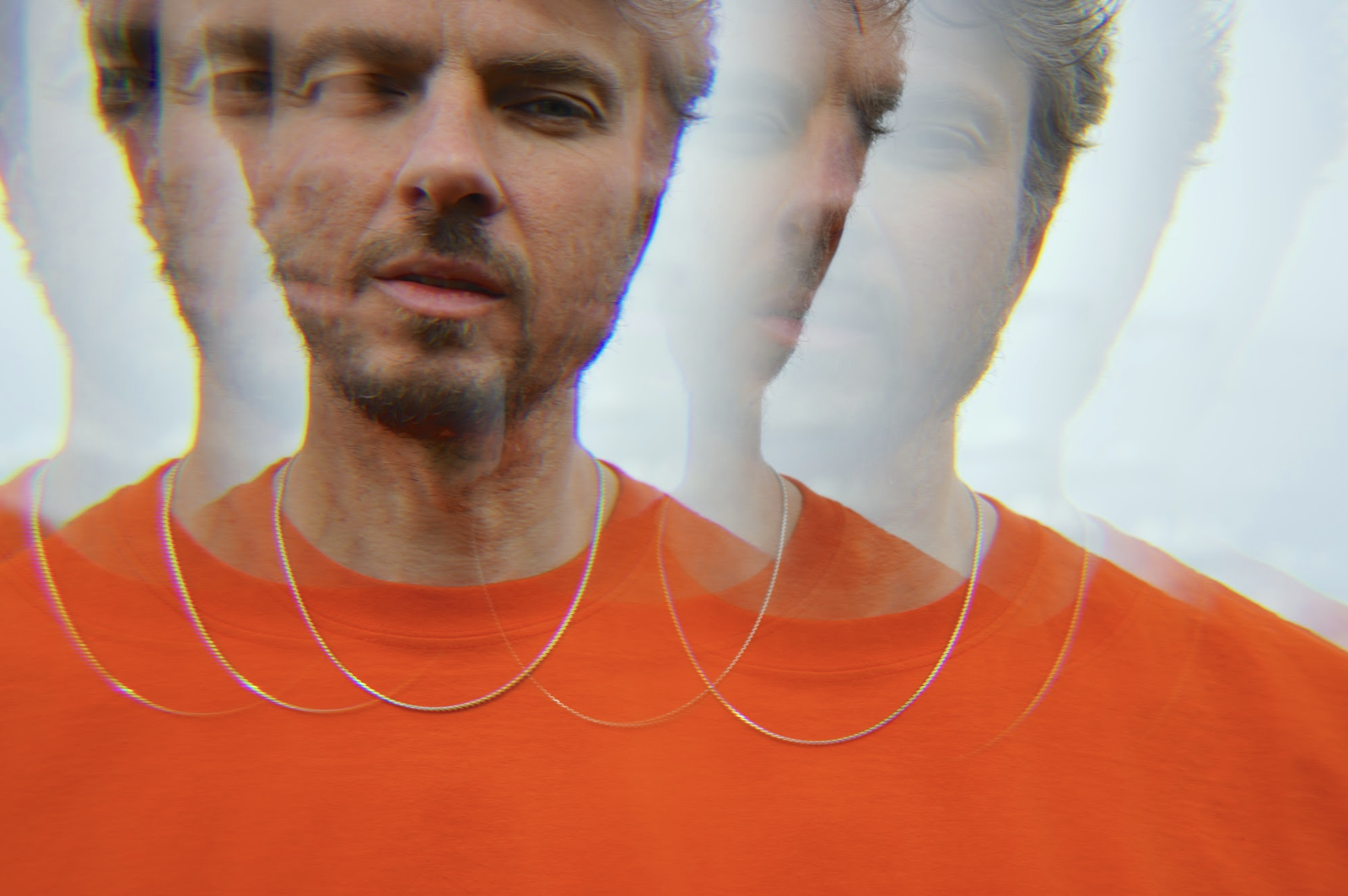
Tom Skinner photograph courtesy of Jason Evans.
___THE NEW___
Group Modular ‘The Tunnel/Lonely Pylon’
Reissue Special Released 19th September
The first transmission (or rather a retransmission if you like) from the Group Modular duo of Mule Driver and Marky Funk in three years, marks the inaugural chapter in a new series of special 7” releases “powered” by the duo’s alter ego Confused Machine and Delights labels. Those lucky enough to have grabbed original copies (sold in separate splits editions, both sold out almost immediately) of ‘The Tunnel’ and ‘Lonely Pylon’ will know that the former was part of Norman Records’ 2021 25th Anniversary split release by Polytechnic Youth, and that the latter was recorded exclusively for the third instalment in Russian Library’s L series of split 7” EPs back in 2022.
Back on the radar, with the chance to own these hauntological sci-fi suites and dramatization soundtracks, the self-described “Outer space sounds from Jerusalem-Tel Aviv route” library music makers reacquaint us all with their brand of analogue period cult space age influences and their taste for atmospheres and theme tunes that emit something that’s near supernatural. ‘The Tunnel’ is a curious Pietro Grossi like rocket ship steam and gas fusion of soft timpani, Roy Budd and Greg Foat-esque barque sci-fi harpsichord, and d ‘n’ b like dub beats. And the electric field throbbed ‘Lonely Pylon’ is a Library music imbued psychogeography of paranormal nature and unnerving children’s sci-fi TV of the 70s and early 80s – imagine Brian Hodgson, Sapphire and Steel and bygone public broadcasted information warnings resurrected by The Advisory Group or My Autumn Empire.
Hopefully this latest 7” series will prove a catalyst for more new recordings from the duo, who haven’t released anything together since Per Aspera Ad Astra in 2022. You’d better be quick, as I have a feeling it will sell out pretty sharpish.
Lt. Headtrip & Steel Tipped Dove ‘Hostile Engineering’
(Fused Arrow Records) 23rd September 2025
The gristle, outpoured thoughts, observations, protestations and glue between the oppressive urban structures of our dysfunctional, unworkable society both poetically and rhythmically twist and flow over a counterculture haunted psychedelic-prog, Krautrock and jazz-soul production on this debut project collaboration.
From the experimental, leftfield platform of Fused Arrow Records and its stalwart producer, engineer, beat maker and artist in his own right, Steel Tipped Dove, a new partnership with rapper, producer and instigator Lt. Headtrip.
Dove’s production and various studio skills can be heard on releases from such notable talent as Fatboi Sharif & Roper Williams, billy woods & Messiah Musik, Darko The Super, MC Paul Barman and Zilla Rocca. He’s also collaborated with the most dope and pioneering Dose One. The Lieutenant’s CV is no less impressive, setting up the ‘we are the karma kids’ label, organizing projects and events in the Brooklyn, Manhattan and Queens areas, and either collaborating or sharing stages with Armand Hammer, Open Mike Eagle, Quelle Chris, Beans, Backwoods Studioz, Reservoir Sound and Uncommon Records.
A magic combination of old hands from the underground scene then, the Hostile Engineering environment that engulfs them is twisted, churned, inhaled and transformed into a sometimes gothic, sometimes industrial, and sometimes more soulfully halo-lit arena for the spoken and rapped lyrics; the cadence of which reminded me at any one time of the Antipop Consortium, Rob Sonic, dalek, and when humorously and from a self-aware but confident in their own skin way, addresses the issues of sexuality, sex and the tired old tropes of rap machismo on the smoochy drifted saxophone and crunched drum beats produced ‘We Got The Sugar’, comes across a little like Homeboy Sandman: a sample of the lyrics being, “last week I was helpin’ his girl find her panties. This week I’m his bro’s new daddy. Just cause I can rap along to Liquid Swords don’t mean my dick’s boring.”
There’s more than enough clever ideas here, with samples I’ve yet to recognize, and an atmosphere that seems to channel all kinds of musical influences; from zappy Kraftwerkian synth and drum pads electro to the Floydian, Roy Ayers, Soul cuts, cult soundtracks (of suspense, horror and sci-fi futurism), heavy rock and prog – I think I’m overthinking it, but alongside what could be a sample from Sabbath or their ilk, it sounds like a short miraged shiver of cymbal resonance and slow drums from Neu!’s ‘Weissensee’ on the automation for the people, insurance servitude and dead-end careers themed polemic ‘0 Days Since Last Accident’.
Bot factories, the nightmarish promises of constant bodily cosmetic regeneration and the self-absorbed legacies that go with hanging on to the bullshit zenith of eternity, high anxiety, and on the repurposed halcyon soul Kayne-Jay-Z-Biggie fantasy “money, money, money” ‘Fund Don’t Stop’, a backslap to rampart consumerism and unsignifying spectacles of Black Friday (“We been shoppin’ since we bought that serpent’s product in the garden.”) – a lifetime of spending, from the womb to the tomb.
At thirty minutes long, there’s no fat on the bones, and yet plenty of tempo, musical changes, and a fresh rap style that neither preaches nor sits back in a nonchalant pose. A really successful pitch, bringing both talents together to fuse and articulate the present depressing miasma of the times in which we all live; glued to this rock, with no anchor, no compass, attached to the screen and validation culture of social media and its puppet masters. One of the freshest hip-hop releases of 2025.
Tom Skinner ‘Kaleidoscopic Visions’
(Brownswood/International Anthem) 26th September 2025
Reaching the midlife point, the UK drummer and composer Tom Skinner finds time to reflect and take stock with a mature kaleidoscope of culminated visions pulled and drawn from a highly prolific career and enviable CV of performances, collaborations and recordings (from Sons of Kemet to The Smile, David Byrne Floating Points…. the notable list goes on).
Arriving a few years after Voices Of Bishara (an album inspired by the American jazz and classical cellist Abdul Wadud and his seminal privately pressed cult masterpiece ‘By Myself’), the follow up weaves the former into a rich, often cinematic, psychedelic and floated meditation and dialogue of jazz, neo soul, cult soundtracks and the contemporary classical. At 45 years of age, the time felt right for such an undertaking. A culmination of experiences, of influences now coming together; a bond that embraces not only Skinner’s vaguely Middle Eastern entitled Bishara live band but a number of congruous international collaborating foils: neo-soul doyen, and right acclaimed, award-wining polymath (but you can list the main qualifications as singer-songwriter, poet and bassist) Meshell Ndegeocello; the self-described multifaceted Charleston musician, score composer, film and radio programmer and vocalist Khari Lucas, otherwise known as Contour; London born and raised but now Berlin-based keyboardist and vocalist Jonathan Geyevu, aka Yaffra; and on electric guitar for a couple of tracks, Adrian Utley of trip-hop luminaries Portishead.
That group of friends is split between two sides of a traditional vinyl format: a moiety of instrumental material and vocalist starring peregrinations, with side A featuring the electric-chamber-jazz Bishara quartet of bassist Tom Herbert, cellist Kareem Dayer, and woodwind and reeds players Robert Stillman and Chelsea Carmichael, and Side B, a cosmic mirage of sung and spoken discourse, soliloquy and healing. Described as “distinct sonic landscapes”, both parts are harmoniously conjoined, with leitmotifs, recurring sounds and an overall feel that draws upon a cosmology of Afro, spiritual, conscious, spacey, psychedelic and experimental jazz.
It begins with the promise of comfort; a putting of the mind at ease so to speak. ‘There’s Nothing To Be Scared Of’ begins with an incipient jingle-jangle and stirring drones of woodwind and the cello before hitting a peak of what can only be descried as Lalo Schifrin meets Bobby Hutcherson and Lonnie Liston Smith and the Cosmic Echoes on a 1960s filmset. From then on out, this jazz-chamber match the flighty, craned and fantastical with amorphous hints of Nicole Mitchell, Village Of The Sun, Kibrom Birhane, the Ancient Infinity Orchestra, Coltrane, Matana Roberts and Sven Wunder. You could call it a cross-generational sound, with the first half of the album feeling itself out across an evocative landscape and more abstract metaphysical space full of reflections on emotional states and those people held either dear or inspirational. That includes the late New Jersey born and raised novelist, writer, memoirist, poet and filmmaker Paul Astor (author of the loose New York Trilogy, Moon Palace and The Music Of Chance), and Skinner’s mother, the former classical concert pianist and victim of the arts misogyny, Anne Shasby.
There are some beautiful moments captured amongst the often-slow momentum, and the gander and bird-like flexes; a sense of the mellow and unfurled: the soulful too. And yet there’s a certain drama to be found, and even mystery to this section of instrumental description, of roots and spiritual emotions.
The second section features the vocal talents and essences of Skinner’s collaborative foils; starting with the soul, funk, jazz, hip-hop, reggae and rock spanning polymath Meshell Ndegeocello, who soulfully and dreamily oozes and woos a sense of both the ancestral therapy and a mirage feeling of homely comfort. Ndegeocello’s voice emerges from a hallucinatory wilderness, floating across a nine-minute cosmic-soul and R&B jazz suite of horn snozzles and soft burbles, glassy bulb vibraphone notes, and gentle plucks.
Taking a sadder, more pained discourse-like tone, Contour’s R&B neo-soul voice aches and yearns on the bluesy chamber-jazz piece ‘Logue’. The language is one of rise and fall, trauma and endurance, survival and striving in a ruthless landscape. And yet, again, there is a kind of near diaphanous beauty about some of the music, the flutier parts and delicate bulb-like notes that seem to float around in a slow ponderous rhythm. It’s the feeling of being drained, and the attempts to break free of the malaise.
The finale, ‘See How They Run’, features the soulful poetic spoken tones of Yaffra both responding to a secondary voice and speaking out loud his thoughts, enquires to the promise of eternal enlightenment, in an almost winding, untethered fashion. It reminded me in part of Andy Hay, Diggs Duke and even Tricky, playing out over another neo-soul leaning dreaminess.
Informed and prompted by middle age (a youthful middle age of experience rather than depressing aging pains), Skinner offers a retrospective pause whilst looking towards a creative future. Cross-generational concerns, references, influences converge in a mature work of feelers, reflections and freedom. Consolation in an age of accelerated isolating atomisation and introspective anxiety.
Water Damage ‘Live At Le Guess Who?’
(Cardinal Fuzz in Europe/12XU in N. America) Released 5th September 2025
In the venerated surroundings of the Medieval city of Utrecht, the religious epicentre of the Netherlands (or so it is said), as part of the Le Guess Who? Festival lineup, the Water Damage ensemble preached their own unique fire and brimstone of monotonous locked-in drones, the wailed and frayed, the squalled and resonant.
Whilst following no recognisable domination on this plane, the Austin collective of like-minded acolytes to all things underground, invoked some kind of near religious sonic experience as they went to work on the opening track, ‘Reel 28’, from their most recent album, Instruments (released back in May of this year). Without a break or let-up, they relentlessly, but slowly, created a mesmerising lumber of the avant-garde, of Motor City, Jap, Kraut and Doom rock. Enslaved to the rhythm you could say, for a full 45 minutes both the group and their audience are caught in the hypnotic flay and sway of the scuzzed and intense bowed needling and sawing momentum that is created.
Absorbed into the core for that performance, guests Ajay Saggar (a serial offender, featured untold times on this site over the years under various collaborative and solo guises: Bhajan Bhoy, Deutsche Ashram, King Champion Sound and University Challenged) and fellow astral traveller Patrick Shiroishi (the Japanese-American multi-instrumentalist and composer, based in L.A., last appeared on this site playing foil on saxophone to Dave Harrington and Max Jaffe on the Speak, Moment collaborative album) take up the mantle on guitar and “free-reeds”. Their contributions are equally as mystical, magical, intense and droning; with Shiroishi especially summoning both a Mogadon Hawkwind and Sam Rivers simultaneously.
With the “Maximal Repetition, Minimum Deviation” motto and mantra, they conure up a monster; a ceremonial rite; even, as the accompanying press release describes it, an exorcism. And yet it is quite melodic. Reference points, for me, would be Tony Conrad and Faust’s seminal Outside The Dream Factory, but also Tony’s Transit Of Venus collab with Hangedup, Glenn Branca, La Monte Young (these last two actually referenced by in the press release), Earth, Boris, Swans, Hala Strana, France, Smote, Pharoah Overlord and Amon Düüls I and II, and The Black Angels. But like the old city that played host to the festival and the Water Damage performance, there’s an almost otherworldly summoning of the Medieval: a sort of mythologised or transmogrified evocation of an abstract atmosphere from that period; it sounds at times almost like a hurdy-gurdy is being wound up like some kind of ancient transmitter; plugged in to a mystical and harrowing age.
I must add, for once, the sound is really good. You can hear every part, every contribution, and even the bass line (you wouldn’t believe how few recordings ever get the bass right, or let you hear anything more than just a mumble of bass; live recordings are often even worse, almost bass free). The bass here is integral to keeping up that never ending rhythmic sway; and despite its repetition, is such a great little riff that is never grows tired. Compliments to the sound engineer, and who ever mastered this performance, then, for instead of a block intensity of lost instruments you get a clear production, with every cog, every drone and note audible.
I’d say an improvement on the album track, and a really intensive yet hypnotic hermetic experience that feels untethered to any particular time, age or period.
___/The Monolith Cocktail Social Playlist Vol. 101___
For the 101st time, the Social Playlist is an accumulation of music I love and want to share, with tracks from my various DJ sets and residencies over the years and both selected cuts from those artists and luminaries we’ve lost on the way and from those albums celebrating anniversaries each month.
Last month we celebrated the 100th edition of this series, which originally began over 12 years ago. The sole purpose being to select an eclectic and generational spanning playlist come radio show, devoid of podcast-esque indulgences and inane chatter. In later years, I’ve added a selection of timely anniversary celebrating albums to that track list, and paid homage to some of those artists lost on the way. In the former camp this month, and to tie in with the Archive spots on Bowie and CAN, there’s a 30th anniversary nod to 1. Outside – a tour I actually witnessed, I kid thee not: Wembley Arena if you must know – and 50th nod to Landed. Joining this celebration there’s also tracks from Kate Bush’s Hounds Of Love (40 this year), The Fall’s This Nation’s Saving Grace (also 40), Blur’s The Great Escape (30), Dexter Gordon’s One Flight Up (60), Wolf Parade’s Apologies to the Queen Mary (20) and Mew’s And The Glass Handed Kites (also 20).
Each month I also like to add a number of newish/recentish tunes (more or less anything from the last year): those that either missed out on the regular Monthly Playlist of brand-new music releases, or only just come to my attention. We have Monde UFO, Lukid, the El Maryacho team up with Nowaah The Flood, Penza Penza, the Tone Of Voice Orchestra, Elkotsch (thanks to blog friend and supporter Andy Haas for recommending this one) and the triumvirate collaboration of Phew, Erika Kobayashi and Moebius. Oh, and something not so much new but surfaced from Dylan this week.
The rest of the playlist is an anything goes selection of stuff I’ve accumulated, loved, treasured, wanted to own or played out during my sets over the decades. In that category there’s music from the Walker Brothers, the Jazzpoetry Ensemble, Mother Lion, Garybaldi, A Tent, The Barrino Brothers, Departmentstore Santas, Gene Martin, and Akofa Akoussah.
Track List:::::
Wolf Parade ‘Shine A Light’
Butterglory ‘She Clicks The Sticks’
Blur ‘Entertain Me’
Mew ‘The Zookeeper’s Boy’
David Bowie ‘We Prick You’
Kate Bush ‘The Big Sky’
Garybaldi ‘Maya desnuda’
The Fall ‘I Am Damo Suzuki’
CAN ‘Vernal Equinox’
The Jazzpoetry Ensemble ‘Motherless (Live)’
Dexter Gordon ‘Darn That Dream’
Polyrhythm Addicts ‘Big Phat Boom’
Akofa Akoussah ‘Sumga Ma Bacci’
El Maryacho & Nowaah The Flood ‘SOAPS’
The Barrino Brothers ‘Born On The Wild’
Tone of Voice Orchestra ‘Tourist at God’s Mercy’
Penza Penza ‘Dusty’
Los Darlings De Huanuco ‘Lobos Al Escape’
Elkotsh ‘Da’a Adeema’
Monde UFO ‘Sunset Entertainment 3’
Phew, Erkia Kobayashi & Moebius ‘Katherine’
The Detroit Escalator Co. ‘Manuel Transmission’
A Tent ‘Seven Years – part 2 (Abundance)’
Lukid ‘The Secret of Bell Making’
Bob Dylan ‘Rocks And Gravel (Solid Road)’
Mother Lion ‘Simple House’
The Walker Brothers ‘Walkin’ in The Sun’
Departmentstore Santas ‘Play in the Sun’
Gene Martin ‘We Shall Be Like Him’
The Hitchhikers ‘Feel A Whole Lot Better’
___/Archives___
From the exhaustive Archives each month, a piece that’s either worth re-sharing in my estimates, or a piece that is current or tied into one of our anniversary-celebrating albums.
This month there’s my previous pieces on CAN’s Landed (50 this year) and Bowie’s 1. Outside (30 years old this month).
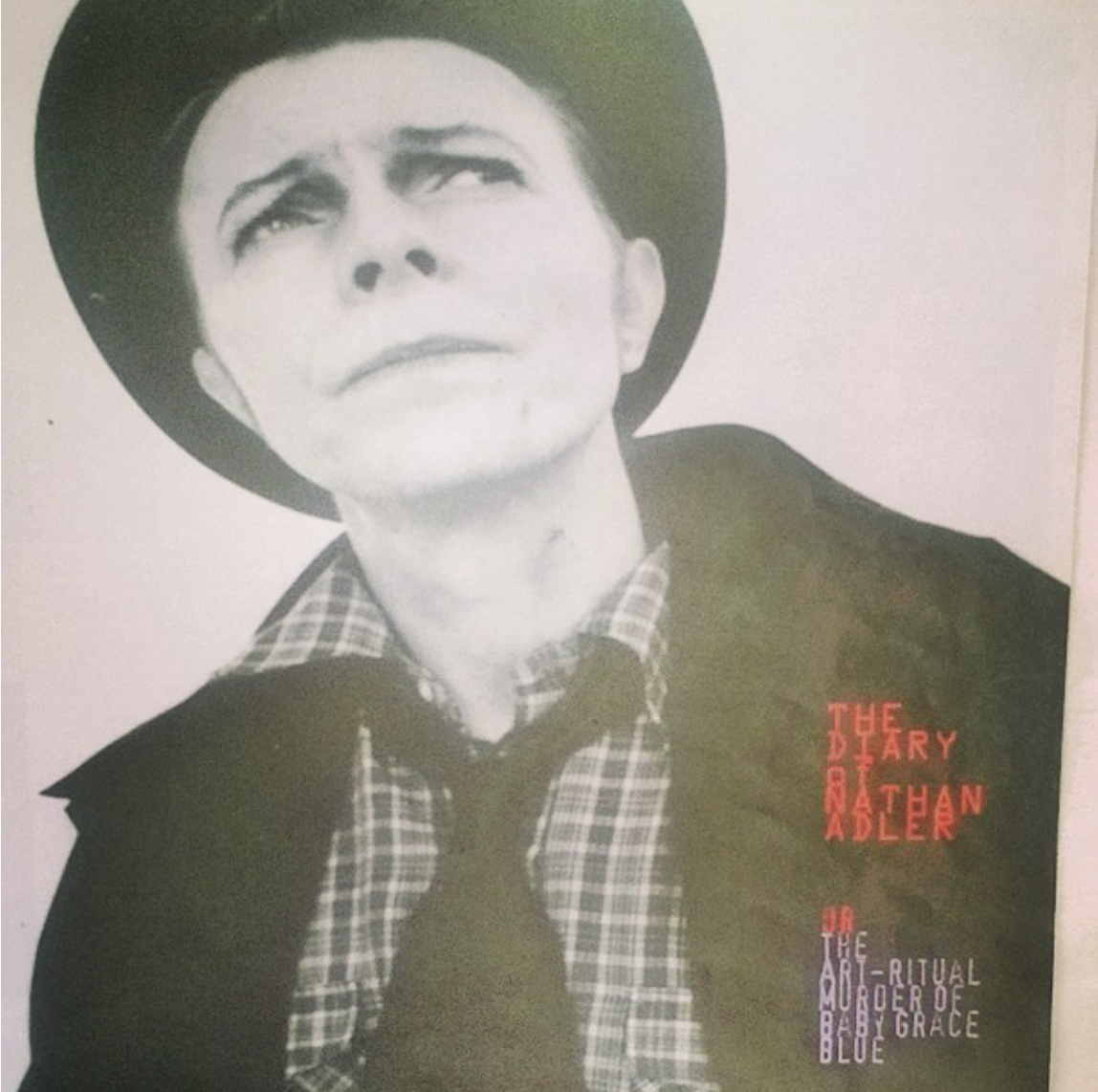
David Bowie 1.Outside (Arista/BMG) 1995
With ‘five years’ remaining until the new millennium, Bowie, tapping into the anxiety and quest for spiritual relief, returned to his first passion: contemporary art.
Back with his most innovative collaborator, Brian Eno, he dredged the bottomless pit of morose and despair. Dreaming up a morbid tale of future sacrificial performance art gone wild and taboo breaking cybernetics he narrated a woeful diegesis through a series of ‘verbasier programmed’ characters.
Disturbing to say the least, our ‘cracked actor’ pitches an avant-garde ‘whodunnit?’, set in a parallel bleak world where the self-mutilated gestures of Günter Brus (the patriarchal figurehead of body art) and ‘the orgiastic mystery theatre’ of Hermann Nitsch have been taken to new, hyper, extremes of bloodletting.
Led by the investigative diary of art crime detective Nathan Adler, a cryptic cut-up of Burroughs/Burgess language is used to not just explain the circumstances that befell the poor victim Baby Grace, but also delve into the collective psyche.
Out on a limb musically, Bowie’s home life may have been content, yet something suddenly propelled him to bravely create a depressive requiem. Easily the best, if not most original, material since Scary Monsters, 1.Outside was entirely written in the studio as the band extemporized: motivated by Eno’s synonymous oblique strategy cards.
Scott Walker lost in cyberspace; the industrial melancholy is at its most anguished on ‘A Small Plot Of Land’ (a version was used on the, Bowie as Warhol starring, tragic biopic of Basquiat directed by Julian Schnabel), yet a more revved-up, pummelling bombastic variant is used on ‘Hallo Spaceboy’ and ‘The Heart’s Filthy Lesson’ (perfectly playing out David Fincher’s Seven).
Leaving many fans bemused (as I myself witnessed on the Outside tour, the baying audience pleading for the greatest hits package), the philosophical snuff opus seemed puzzling to those familiar with the pop-lite Bowie. Thankfully Bowie cut loose the shackles of commerciality for a contemporary blast of shock and dread.
CAN ‘Landed’ (Virgin) 1975
Richard Branson’s pastoral record label Virgin hooked our Cologne ‘seven-day sonic avant-garde evangelists’ in early 1975, tempting them away from the clutches of their former masters United Artists, whose relationship with the band had been tenuous at best. They now joined the hippie-idealistically run, free thinking label of choice – at least that’s how it appeared to the onlooker-, sharing the stable with both fellow countrymen Faust, Tangerine Dream and Slapp Happy, the psychedelic progressive band Gong, and the million zillion selling Mike Oldfield, Virgin’s biggest selling artist by miles – whose Tubular Bells behemoth had reined in a load of money and success, paving and paying the way for most of the roster.
Branson may have looked like he’d stepped off the cover of a Jethro Tull album, but he turned out to be a shrewd businessman. After all, he managed to propel Faust into the album charts with their Faust Tapes mesh-mash classic: albeit that the said album was put on sale for a paltry 49p and probably didn’t actually net the group much money, but hell, it sold over 100,000 copies, so they became a household name in the head community for a while at least.
Business wise, sister label Harvest – equally rich in allusions to the Woodstock ethos – would distribute CAN’s records in their homeland, whilst EMI, who owned both labels, would just count the cash it hoped would now roll in. One of the stipulations in the Virgin contract was that the band would have to use superior recording equipment for their next album. A multi-tracking desk was delivered to their own sacred Inner Space studio HQ, which they were still allowed to use though the records would now be mixed elsewhere. Unfortunately, a deep sense of forlorn began to creep in, mixed with paranoia, the arrival of the new technology now making it possible for the band to record their parts separately if they so wished. Until this point Holger Czukay had masterminded all the recording and editing on just a two-track recorder. He had also always encouraged the group to play together in the spirit of improvisation. But now, the band could successfully overdub and add parts at a higher quality then had previously been possible before, taking a more insular approach to recording.
In scenes not too far removed from the Beatles fractured shenanigans on the White Album, the group began to play some of their own parts in secrecy, the thought of being scrutinized and criticized by their fellow band members filling them with dread.
Again, like The Beatles, they invited an outside musician into the studio to lift the tension and scrutiny. This fortunate man was Olaf Kubler, who had served as producer on both Amon Duul and Amon Duul II albums, although he dramatically fell out with one of AD II’s bandleaders John Weinzierl, who made his feelings towards him pretty clear in recent interviews. Kubler was called in for his saxophone prowess, being asked to lay down some cool sultry cuts on the track ‘Red Hot Indians’ for what would be the Landed LP.
Sessions for what would be the band’s Landed album began in the first few months of 1975, in-between tour commitments, which included a couple of gigs with the troubled American folk troubadour Tim Hardin, who it’s rumoured was asked to join the band full time.
Hardin didn’t really front CAN in these gigs, instead, he would merely leap on stage to perform one of his own tunes, usually something like ‘The Lady Came From Baltimore’, and maybe front a couple of the groups own tracks before exiting stage right. Whether he ever considered seriously joining the band, Hardin’s deadly heroin habit put a damp squib on things, finally getting the better of him in 1980 with one overdose too many.
Anyhow, Karoli had so far done a good job of semi-fronting the band, going on to lead all the vocals on this album; delivering some softly inspired dream like performances throughout.
Landed in some ways directly follows on from their previous effort Soon Over Babaluma, especially in the sound collage experiments of this album’s ‘Vernal Equinox’ centre piece and ‘Unfinished’, both of which re-work similar themes and threads found on ‘Chain Reaction’ and ‘Quantum Physics’. The rest of the LP consists of far rockier progressive tones, with allusions to their contemporaries, particularly Pink Floyd. To a point there is also an attempt towards the glam-rock of both Roxy Music, Bowie and Mott The Hopple – all influences CAN’s peers, Amon Duul II, also breathed-in on the 1974 album Hijack, though to a less successful degree.
‘Full Moon On The Highway’ and ‘Hunters And Collectors’ relish in the glow of these new influences, though remain slightly more conventional compared to CAN’s usual free roaming exploratory material. Most of the seven tracks now run in at under six minutes and sound much more formulated, the exceptions being the already mentioned two saga driven soundscape pieces, which combined, make up three quarters of the overall albums running time.
The lyrics themselves seem to be full of references to mysterious alluring women, clad in leathers, who turn up at ungodly hours on celestial described highways. Analogies run riot, the open road acting as a metaphor for following certain paths, Karoli constantly encouraging the listener to cut loose and float away. Journalist and friend to the band, Peter Gilmour, co-wrote both ‘Full Moon On The Highway’ and the lazy sedate ‘Half Past One’. Peter would also go on to write CAN’s biggest hit, the disco chugger ‘I Want More’.
Many critics have panned Landed, seeing it as the beginning of the end for the group. It does seem a slight exaggeration. Certainly, the dynamics were slowly ebbed away, the production becoming much more polished, though it suffers from some very messy trebly moments at times.
Footage of them performing ‘Vernal Equinox’ on the Old Grey Whistle Test at the time sees Irmin Schmidt wearing a fetching bondage inspired chain mail waistcoat whilst theatrically commits Hari Kari on his keyboards, whilst Czukay, all ten-yard stare, sports white gloves and a sheriffs’ badge. A mid-life crisis beckoned with all this new pomp and strange fashions, turning off many fans, including the disdain of Julian Cope who states that this act of regalia wearing extravagance ended his relationship with the band. So, in a way CAN did seem to be heading over the precipice, the best days behind them, but this album is viewed way too harshly.
Landed for what it’s worth is a decent album, with enough ideas and demonstrations of superb musicianship, Karoli alone performing some of his most sublime guitar work yet.
The albums artwork, by the curiously alluding Christine, displays a collection of passport photo sized images of the band. Each individual photo is covered in graffiti or scribbled on, lending silly moustaches, cartoon glasses and an array of comical hats and hairstyles to the now light-hearted looking band. Peering out from under the heavy de-faced images they pose in a manner that lets us know they still have much to give- also, am I imagining perhaps a Carlos the Jackal type reference here, the many disguises and such.
CAN shifted back towards the Afro-beat and World music styles on their next couple of releases and also brought in ex-Traffic members Rosko Gee on percussion and Reebop Kwaku Baah on the bass to great effect. Czukay moved away from his bass guitar duties so that he could explore radio short wave editing and cutting up techniques in greater detail. He would of course go on to leave the band in 1977, leaving Liebeziet, Schmdit and Karoli to carry on for a while before everyone split for good to pursue their own solo projects, a reunion in 1989 included Malcolm Mooney and resulted in a new album titled Rite Time.
The year is 1975 and CAN have laid down their 7th album, after being together for nearly eight years. To get this far they have travelled an etymological musical odyssey, that has taken in the dark esoteric voila seeped mood of The Velvet Underground, the psychedelic spiritual enlightenment of America’s west coast, the African dance style rhythms of Nigeria and Ghana, the dreamy hypnotic Turkish flavored folk music, the otherworld tour of the nebula emitted from Hendrix and the lessons learnt from Stockhausen and Von Biel. CAN had surpassed all their peers and become possibly one the greatest assembled bands of musicians that the west has ever seen – seriously these guys could out play anyone, though they never had time to wallow in ego and always looked towards experimentation rather than dwelling on their skills.
There now follows a run-through of the album:
Dropping in with an up-tuned arching guitar fuzz and treble heavy hi-hat, ‘Full Moon On The Highway’ leaps straight into action. Jaki Liebezeit sets down an incessant workman like beat, hammering away on the bass drum as Michael Karoli casually begins his salacious vocals –
‘I made it hard today,
For I had to do it to me.
And if it’s only to hold her,
She’s gonna get it today’
A certain sense of portend fear hangs in the air, Karoli in his full Germanic romantic disdain rattles off omnivorous statements about taking to the highway, where star crossed lovers may unlock some inner meaning and truth.
Rock hard screaming lead guitar hooks run rampant, exercising no sign of restraint and sprinting ahead as though in a 100-meter sprint. Piano flourishes and honky tonk bravado light up the mood as those bawling guitars and Alpha 77 effects wail away like banshees. Czukay takes his bass on free roaming tour of run downs, slides and felicitous infused funk workouts, never staying put in one place for too long, always running his fingers all over his instrument. An intense burst of exuberant searing drums, keyboards and clashing turmoil all culminate into a finale furore, that threatens to end in a mess but is saved by the rallying cry of Karoli riding in on his gleamed-up guitar. He transposes glam via Pink Floyd to produce something unheard, a riff from the other side.
Taking a more serene path, ‘Half Past One’ begins with some archaic ethnographically seductive Spanish guitar and heavy tub tapping drums. A dozy laid-back vocal pronounces –
Over the beach,
Into the sun,
Wake again by half past one,
Alright’
The last word being some kind of reassurance amid the strangely relaxed drug induced soirée, that peers at some snapshot of the protagonists’ relationships, a casual affair on the beach in this case.
Schmidt interjects with some delightful mandolin sounding oscillations and yowling alarmed synths, whilst Czukay adds some chuggering engine bass lines, sliding around the neck as though revving it up.
The general breathless ambiance begins to wash ashore, like a lapping tide, meandering its way towards some welcoming gypsy encampment. Quacking wah-wah and folk tale violins add to the general malaise, building towards a newfound intensity as the song picks up momentum: The final 30 seconds bathing in the now pressured final crescendo.
Now steps forward the ambiguous and genre dodging ‘Hunters And Collectors’, with its almost glam postulations and Afro- funk grooves, this four minute Floyd gesturing dose of mayhem ducks any formal categorisation.
A doom-laden piano emphasis each intro chord, like an operatic indulgence. Karoli in magi pose announces the chorus –
‘Hunters and collectors, all come out at night.
Hunters and collectors, never see the light’
The song now kicks in with some sky rocketing theatrics. Dense melodies of climbing synth lines and evocative sexed up Teutonic choral backing adding to the melodrama. Czukay and Liebezeit cook up a fine jumped-up funky backing, with double shimmering hi-hat action and posing bass guitar. They all soon break down into a more stretched out segue way, taking in the early years of Parliament and some Afro highlife.
Karoli now dabbles with the vocals, as they take on some added menace; he conjures up images of leather clad biker gangs, savage sexual degradation and drugs –
Thirty leather kids, on the gang ban trail,
Get your big brown man with the snakes in bed.
Dirty bother me now, it soaks into a cup,
She says “if you don’t start at all, you never have to stop”.
Other worldly radio signals and snippets of conversation from the ether add to the esoteric atmosphere that is entrenched in seedy tales of chemical indulgences.
The opera swoops back in before what sounds like the set-piece breakdown brings the curtain down, as strange broken cogs, ratchets and springs all produce a comical ending, just before the swept in majestic intro of ‘Vernal Equinox’ is brought in.
As the ambivalent last track on side one, ‘Vernal Equinox’ continues the dynamism and piano melody from the previous track, but runs rough shot and fancy free, producing an eight-minute omnivorous jam or epic narrative.
It all begins with a search light introduction of space age doodling, with a chorus of sonar equipment and lasers shooting off in all directions, all played out over a heavy laden piano, hurtling towards a cacophony of destruction.
Rabid lead guitar rips into the track, Karoli literally plays for his life in a fit of feverish exhaustion, running through the full collection of riffs and chord rushes that he’s picked up over the years.
Flailing drums explode like a barrage of mortars, as UFO’s crash land all around, Czukay finds some cover and rattles off his defensive bass.
That Alpha 77, the exulted secret box of tricks, spits out havoc. Crazed wrecking layers of multiplying textures take the drama back to the cosmos soul searching of Soon Over Babaluma, but with a now more invigorated pumped-up stance. The raging narrative falls into one of those accustomed breakdowns. Liebezeit and his meteoric rhythm accompany arpeggiator sonic waveforms and metallic sounding drips during this break in the pace. The full swing returns in style, turning the jamboree into a jazz funk quest, as what sounds like Robert Fripp battling it out with an alien horde from the planet of Sun Ra, delivers a belting finale of elation.
Side two opens with the bongo tribal reggae of ‘Red Hot Indians’, a jaunty slice of infectious pigeon-toed dance rhythms and cool wistful chant like grooves. Karoli goes all faux-Caribbean with his laid-back vocals, he casually lays down some lines in an almost staccato fashion –
‘It’s the DNA song, DNA song, it’s the DNA song.
Strike mess, hole mess, shadow mess’.
Kubler Olaf blurts out an effortlessly uber cool prompting saxophone melody, liberally peppering the track, whist Liebezeit just reclines back on his sun lounger, knocking off some tom rolls and sipping a pina colada.
Mixing in some more African highlife and even-tempered down Roxy Music, this track flows along in its own serenity. The second wind of extra rhythms start to sway in an hypnotic motion, like some kind of mantra as Karoli mumbles recollection of some cryptic halcyon memories –
‘Then you took me back, steam machine.
Dreamt my way into a daydream.
Let me vanish into yesterday,
And my night drops fade away’.
As though to ratify the shambling theme, the song naturally fades out on its own breezy demeanour.
We now come to the soundscape behemoth of ‘Unfinished’, which by its title remains to be determined by the listener as to whether or not this maybe the case.
A set piece of sound cutting and masking that harks back to Future Days, with its reverential cinema scope builds and gliding synths this track could just yet be one of CAN’s finest moments.
Opening with what sounds like an orchestra tuning up, we hear a noisy interlude of violins, strings, brass and unfamiliar instruments all preparing themselves for the performance. That looming ever-present box of tricks, the Alpha 77, fires up and screeches over the top of our orchestra pit, launching bolts of lightning along with the odd spark of lush melodic wonder.
Breathing in the same aroma found on their soundtrack piece ‘Gomorrha’ and the melodic beauty of ‘Bel Air’, our macabre galactic Schmidt now unleashes some welcoming felicitous doses of extreme perturbation, underpinned by some humbling broody but magisterial bass.
All of a sudden, a series of gory effects and sounds enters the stage, as the demonic bound trip to the nebula goes all pants messing chaotic. Squealing guitars, that evoke the sounds of distressed souls pleading, cut through the heightened tense mire.
Factory steam powered machinery like the sort found on the Forbidden Planet, is ratcheted up, bashing away and powering up some monstrous life form. Some tumbling toms are given a swift kicking, the occasional crash of a cymbal unsettling the air as Liebeziet desperately tries to carry on playing whilst his space craft flies into the sun: holding on for dear life he is soon saved by his comrades who now work towards an uplifting final stretch.
Whistling sounds fly overhead, and gongs gently shimmer in the background, Schmidt throws in everything even the studios sink, as a build towards some sort of journey to the upper echelons of the solar system begins.
Escapist melodies and angelic ethereal guitars all scale the dizzying heights, like the dark side of the moon played by Stockhausen and backed by Ornette Coleman. A dream- like vaporous empyrean utopia opens out as our Cologne astronauts now proceed to save the best till last. Pulchritude swathes of divine beauty flow with delight as a lavishly rich melody of heavenly choral opulence raises us to some higher plain. The final few minutes being amongst the most sublime that CAN ever laid down, a spiritual guiding stairway to the universe.
Here’s the message bit we hate, but crucially need:
If you’ve enjoyed this selection, the writing, or been led down a rabbit hole into new musical terrains of aural pleasure, and if you able, then you can now show your appreciation by keeping the Monolith Cocktail afloat through the Ko-Fi donation site.
For the last 15 years both me and the MC team have featured and supported music, musicians and labels we love across genres from around the world: ones that we think you’ll want to know about. No content on the site is paid for or sponsored, and we only feature artists we have genuine respect for /love or interest in. If you enjoy our reviews (and we often write long, thoughtful ones), found a new artist you admire or if we have featured you or artists you represent and would like to say thanks or show support, than you can now buy us a coffee or donate via https://ko-fi.com/monolithcocktail
THE MONTHLY DIGEST INCLUDES A CLUTCH OF ACCUMULATED NEW MUSIC REVIEWS; THE SOCIAL INTER-GENERATIONAL/ECLECTIC AND ANNIVERSARY ALBUMS CELEBRATING PLAYLIST; AND CHOICE PIECES FROM THE ARCHIVES.

(Photo by Todd Weaver)
___THE NEW___
Ingebrigt Håker Flaten’s (Exit) Knarr ‘Drops’
(Sonic Transmissions) 22nd August 2025
Growing, developing and expanding the remit from what was meant to be a one-off commission, brought together especially for the Vossajazz Festival, the troupe is now on its third titanic fusion rich studio album proper. Set in motion by Ingebrigt Håker Flaten (who also runs the Sonic Transmissions label, home to the ensemble’s recordings) a number of years back, the (Exit) Knarr now acts as the ‘main creative vehicle’ for the Norwegian bassist going forward it seems.
Settling with a reasonable lineup on this third chapter but inviting in a number of guests on the album’s statement piece, a transformed vision of jazz deity Wayne Shorter’s ‘Deluge’ piece from the revered and influential 1965 album release JuJu, on this outing the sextet takes prompt or inspiration from a more visual source. In the sphere of the Russian maverick abstract visionary and Bauhaus professor Wassily Kandinsky and Swedish mystic and abstract progenitor – some would say the true and first ever abstract artist, beating her peers (Malevich and Mondrian) to pure abstraction by a few good years – Hilma af Klint, a number of graphic scores have been used to foster untethered freedoms and play from a group already in the freeform mode. In one way, addressing perhaps the lack of knowledge, the place in which she should stand, there’s an unsaid elevation of Klint, an early adopter of the very spiritualism, Theosophy, that first led the way for Mondrian and many of his circle to dare to strip away every last visage, reference of the world for abstraction. Arguably Klint can be said to preceded Kandinsky and the others to this goal. And her work is filled with the iconic circular shapes, the colurs that would go on to inspire Sonia Delaunay and many others.
As a visual methodology, these scores go some way to painting a reification of a partly live studio performance and the ‘tweaked’ effected and transmogrified aftermaths.
Bringing together Amalie Dahl on alto, Karl Hjalmar Nyberg on tenor and electronics, Marta Warelis on piano and also on electronics, Jonathan F. Horne on guitar, Olaf Olsen on drums and of course IHF on what sounds like both electric and double bass, the album divides two longer form performances with a couple of shorter pieces. Speaking the experimental language of Anthony Braxton with garbled, hysterical and squeezed abandon, and inspired by the equally freeform pioneering Mats Gustafasson and his No Ensemble, the ensemble open with an already mentioned version of Shorter’s ‘Deluge’; taking the original’s more controlled bluesy swing style of simmering and serenaded and crooned sax for a tumultuous ride on the open seas of both discord and crested freefalls. It starts with twisted guitar wire grabbing and neck sliding and incipient tethered drums but soon develops into a recognisable, familiar feel before numerous swells and peaks resemble a fusion of the Henry Grimes Trio (cicra ‘Fish Story’ if we’re being specific), Rashied Ali, the Anthony Braxton Quartet, Keith Jarratt and Darius Jones. Wild in places, with the guitar going on to sound like a sci-fi dialect of tabbed beeps and switches, and the horns squeezed until the pips fall out, the action is shared out equally between all participants without losing a single instrument.: and that’s when you consider there’s also the guests, Mette Rasmussen on a second alto and a second drummer, Veslemøy Narvesen added to that untamed tidal wave experiment.
The album title is next. A change of a kind in tempo and thought this shorter composition articulates those droplets in various ways on a performance that sounds more open air than studio recorded. The sound of a dragon fly’s wings in rapid hovered form hangs around in a chamber-esque atmosphere of musing and pondering. Part JAF Trio, part ECM and part classical-minded jazz of a certain vintage, the gentle cascade of drips and drops fall very nicely and mysteriously on this Scandinavian ice float.
A second centrepiece if you like, ‘Kanon’ is dedicated to the renowned Norwegian drummer, composer and free jazz improvisor of note Paal Nilssen-Love. From his parents famous Stavanger jazz club located incubator to the capital and onto wide world recognition, Paal played with such notable company as Mats Gustafasson and Peter Brotzmann’s Chicago Tentet, before going on to set up his own All Ears festival. As an inspiration to a generation of Norwegians, Paal’s influence is huge. And in this mode, at this time, the sextet conjures up a semblance of his artform and free experimentation. But first, it all starts with some speaking panning of a curled up rattling drum roll, the quivers and quavers of the piano and what could be the attempt to match the sound of a buzzing bee. But it all soon develops into a wilder proposition of Masayuki Takayanagi, Eric Dolphy (I’m thinking specifically here of Out To Lunch!), Roscoe Mitchell, Andy Haas, Bill Dixon and Last Exit. It keeps changing; whether that’s in the action, dynamics between players, the tampering down parts that then peak into hysterical cries of squeezed, rasped and the burbled. A surprising passage of play even takes on a Lalo Schifrin vibe nearer the end.
The finale is left down to a performance that’s manipulated (or ‘tweaked’ as it’s written here), stretched out and elongated into a sci-fi hallucination. As if being treated and remodelled in real time, it sounds like the band is being pulled via a prism into the mirror backwards. It reminded me of the We Jazz label and their own retreated, remixed projects over the years. But stands as a more electronically led production that offers up a slightly off-kilter and magically alien version of their sound.
Ingebrigt Håker Flaten’s (Exit) Knarr colour new directions with an extended palette of ideas and sounds; heading towards breaking point before returning back to a recognition of the free form jazz movement that we can recognise. Source it out.
Andy Haas & Brian g Skol ‘The Honeybee Twist’
1st August 2025
Striking up an online and postal friendship since first writing about the highly experimental saxophonist, trick noise maker and effects manipulator when touring as a band member with Meg Remy’s Plastic Ono Band-esque U.S. Girls a few years before Covid, the former Muffin, NYC side man to the city’s attracted maverick luminaries of the avant-garde and freeform jazz, and prolific collaborator with Toronto’s most explorative and interesting artists, has sent me regular bulletins (and physical copies) of his various projects. Some have been in the solo mode, others with friends, foils and collectives.
Running off just a smattering of those releases (a majority of which have been with the highly obscure Resonantmusic imprint) from the last decade or so, and you have three extraordinary albums with the stringed-instrumentalist Don Fiorino (American Nocturne, Don’t Have Mercy and Accidentals), various appearances on records by Matt ‘Doc’ Dunn’s The Cosmic Range, the warped and discombobulating For The Time, Being solo act, and the avant-garde improvised performative triumvirate of SCRT with regular collaborator David Grollman and Sabrina Salamone.
Andy Haas now partners up with fellow Toronto native Brian g Skol for an unusual duet of saxophone and drums. Although it was recorded back in that city in 2024, the finished concentration and spatial experiment is now seeing the light with an official release via Haas’s own Bandcamp profile. I’m glad it hasn’t disappeared into obscurity, as it is one of the best, most radical but surprisingly rhythmic and pumped, worldly sounding album’s he’s made; much of this is down to the visual artist and percussionist/drummer Skol’s expressive and grasp/ear for international influences of rhythm, from both the Latin and Afro-South American to North Africa and the influence of Jaki Liebezeit.
The Honeybee Twist is a strange union between two instruments seldom pitted against each other; certainly not in this setting, with Haas once more wildly controlling the panning of his serialism style and both atonal and shrilling, bristled circular breathing sax and Skol combining hand drums, various percussive elements and drum kit breaks to provide a beat, a groove or more sporadic passages of the tactile, textures and tumultuous.
From nothing, reifications of the fire thief Prometheus, compounds, a vertical axis used in a 3-D space to show depth and elevation, self-assembly and play of words take some form of shape across an album of mystery, extemporization, and musing. Whilst stirring up these evocations, these reference points, both players traverse and kick around Arabian landscapes, Jon Hassell’e fourth world, the extremes of Eric Dolphy, Albert Ayler, Sonny Simmons, Andrew Cyrille and Evan Parker, and the factory. The opening mythologically entitled ‘The Eagle And Prometheus’, sounds like a sax and drums transmogrification of Battles; leaping straight in with beating drums, splashes of cymbal and that signature circular breathing technique. This is where I believe you can hear an echo of Saw Delight era CAN relocated to Egypt or the Arabian souk: Haas’s sax starts to sound more like a shrilling vibrating mizmar or even a zurna, and Skol’s drums could be mistaken for the daf and riz on occasion.
Against the near constantly moving, feeling and exploring drums and percussion, Haas’s effected sax goes from blues to freeform jazz, to reflections and colloquy and soliloquy. There’s a harshness and roughness at times to that instrument as it goes through various warbles, buzzes, rasps and drones.
Despite the title of ‘Maybe I’m A Machine’, there is no mistaking that this is a very human interaction between two highly experienced experimental artists circumnavigating any kind of easy label, demarcation. The notes of an abstract nature bristle, vibrate and trill to a near amorphous global rhythm on a most experimentally original collaboration. Please seek it out.
Maria Elena Silva ‘Wise Men Never Try Vol. II’
1st August 2025
As promised last month, the second volume in the Wise Men Never Try series from the near evanescent and relaxed but deeply effecting singer and musician Maria Elena Silva.
After previous releases, some of which featured such notable company as Jeff Parker and Marc Ribot, and after stripping back Bob Dylan’s courtly enigmatic dames to their most essential essences with interpretations of both ‘Queen Jane’ and a summoned bell rung ‘Sad-Eyed Lady of the Lowlands’, the Chicago homed Maria has turned to readapting, revaluating and transposing various themed songbooks from America’s past. Volume I, reviewed in the July Digest, turned to the pages of the Great American Songbook with familiar standards made anew and enigmatic through the emotively ethereal, connective, almost otherworldly and with a real sense of depth and something approaching the tactile – especially instrument wise.
Under that same ‘umbrella title’ the second volume travels further back in time to the America Civil War period of rousing, rallying, sorrow, tragedy and hope sheet music; much of the material used to bolster a flagging campaign by the Union during the early and mid-years of that horrifying, destructive and divisive war – arguably never really settled, with suspicion still between the North and South of the country culturally, politically and economically. In fact, recalling songs from nigh on 160 years ago has never seemed more prescient; chiming true with the age we find ourselves in right now. A balance is struck, history revisited, propaganda resized, and the sentimental repurposed. But arguably, the emphasis in this case is on the music of the eventual winners in this five-year conflict; although a number of the songs and rallying calls for the Union were also adopted and adapted by the Confederacy after they’d seen the effect it had on boosting morale and symbolising the cause.
Once more in an intimate setting with just the accompaniment of Erez Dessel on piano, Tyler Wagner on double-bass, and Maria on guitar, the Civil War period is amorphously twisted into minimalist meanders and dreamily untethered shapes of the tactile, the avant-garde, and descriptive. At the heart of it all, Maria’s voice is relaxed and diaphanous; pitched somewhere between folk, the Celtic, the traditional and the jazzy. The tragically played out ‘Booth Killed Lincoln’ sounds a little like Joan Baez in parts. It certainly, in all its traditionalist lament, has an air of Dylan about it and the Laurel Canyon circle of female troubadours. Like a play in itself, the acts, steps that lead to the assassination of Abraham Lincoln on that fateful day, at that fateful performance at the Ford Theatre, Washington D.C., could be lifted off the sensational pages of that time’s broadsheets. Lincoln’s last breath, rather ironically to the last, is very much Dylan: “Of all the actors in this town, I loved John Wilkes Booth the best.” Musically, there’s but an essence of accompaniment, with the double-bass strings sounding more like a wooden set of spokes and a sort of dampened drum. The odd harmonic is twinged.
However, the album strikes a jarring chord of dissonance, a heavily pressed and free form piano opening gambit of Keith Jarrett and Thomas Schultz. Interpreting the American composer of romance and patriotism George Frederick Root’s most popular rallying call, ‘Battle Cry Of Freedom’, Maria seems to counterbalance Dessel’s passing storms, shades of forbode, salon bar upright tones, uncertainty, the abstract and discordant with disconsolate beauty. A second Root interpretation, the succour giving ‘Tramp Tramp Tramp’ (aka ‘The Prisoner’s Hope’, written in the later stages of the war) is sympathetic to the original, but more melodiously jazzy.
Some of the material leans towards country: albeit a version that exists in a fog of the Appalachians and Woodstock. There’s even a moment on ‘Abraham’s Daughter’ where either the double-bass or guitar resembles a banjo. And the album’s most unusual break from the formula (though to use that word is doing Maria and her foils a disservice), the finale ‘My Old Horse Died’, features a far more rustic, loosely and buzzier more carelessly strummed guitar and the sound of what could be some kind of replicated plucking/picking tines. I do love this song; it sounds like Dylan writing a filmic Western song to feature in Little Big Man or McCabe & Mrs. Miller. As far as I can hear, there isn’t much in the way of horses, but some ironic metaphor for loss, wistful financial and property woes: “Swallowed the place where my home stood. Mortgage guy came round, claimed the hole in the ground where my home once stood.” It almost sounds drunken this slice of Western music from the counterculture.
Remembrance, tragedy, the call to arms, and above all, the encouraging original lyrics of the abolitionist (one of the key themes, subjects of many of these songs) ring like wispy or beautified and pining poetry from the battle fields of America. Only, that same divisive rage, the splits, the distrustfulness and hunger for independence rages still to this day; a constant cry wolf of civil war is voiced whenever the political class weaponizes its losses, or failure to win an election. Handled with subtly, and a classy skill that stretches out the meaning, the lyricism, the mood and intention further, a new spotlight has been drawn upon these historical songs; taken into an avant-garde territory without losing sight of a melody, a form or shape, Maria and her foils create a rather unique and incredible atmosphere; bringing dusted off Civil War pamphlets, sheet music and the like to a new audience. Every bit as encapsulating and dreamy as Volume I. It will be interesting to see what Volume III offers, and where Maria goes next. An excellent, spellbinding series so far.
Saul Williams, Carlos Niño & Friends ‘Saul Williams meets Carlos Niño & Friends at TreePeople’ (International Anthem) 28th August 2025
An enviable collaborative union of talent from both the East and West coasts of an America on the eve (or thereabouts) of Trump’s inauguration, under the TreePeople canopy of righteous indignation at the state of a nation, gathered the totemic voiced poetic polymath Saul Williams, the divine styler, multi-instrumentalist, percussionist and producer of afflatus and new age conscious jazz and its many strands, Carlos Niño, and a host of congruous musical friends from a scene of ever-expanding inter-connections. You can’t get any more symbolic than this; setting up for an experimental – perhaps extemporized in part – performance beneath the black oak and walnut trees in Coldwater Canyon Park, L.A. Recorded at the time and now seeing the light (so to speak) eight months later into the new Presidency, this ensemble piece’s headlined foils and longtime friends since the 1990s, combine forces across an archaeological dig of free associations.
But before peeling back the layers of this psychogeography, a little about the artists involved in this part explorative, part free expressive, part oratory and part theatre. Not that Niño would boast, but the highly prolific producer, ‘expansive percussionist’, experimental composer, connector and communicator, has made albums as and with such notable luminaries as Ammoncontact, Build An Ark, The Life Force Trio, and others. And also overseen the Alice Coltrane protégé – the keyboardist, composer and actor – Surya Botofasina’s2022 devotional Everyone’s Children. All the while, leading or instigating his own loose ensemble of multidisciplinary artists and the & Friends banner. This time around, those friends include recurring foil Nate Mercereau (the solo artist in his own right’s skills include the guitar, composing, songwriting, live sampling and improvising), Aaron Shaw (the horn player has worked with such notable icons and names as Elijah Blake, Anderson Paak., Dave Chappelle, Herbie Hancock, and made music for TV and film), Andres Renteria (the L.A. percussionist/drummer and DJ has worked with an impressive host of artists over the year: Jose Gonzalez, Father John Misty, Flying Lotus and Nick Waterhouse), Maria The Artiste (hot-housed in the AACM of Chicago, the woodwind player, vocalist, vibraphonist, bandleader and composer is also a member of the late Horace Tapscott initiated, and now six decade running, Pan Afrikan Peoples Arkestra), Francesca Heart (the partial alias of Italian artist, researcher and electronic artist with a skill at playing the conch shell Francesca Mariano, who makes new age music of a kind on computers), Kamasi Washington (the saxophonist who’s profile has possibly been highest over the last twenty years, after ushering in a revival of a sort on spiritual, odyssey jazz, has picked up a number of awards and plaudits for his work and collaborations) and Aja Monet (the lauded and awarded contemporary poet, writer, lyricist and activist can be heard joining Williams with a forewarned and haunting poetic vision on ‘The Water is Rising/as we surpass the firing squad’).
Needing no introduction, but getting one anyway, American rapper, singer, songwriter, musician, poet, writer, and actor Saul Stacy Williams first came to attention during the late 1980s on the New York café poetry scene. The burgeoning innovator, mixing beat/poetics/slam and hip-hop, soon stood out. A big break came as the lead in the awarding winning Marc Levin directed movie SLAM in the 90s; the phenomenon of slam poetry, its reach via competitive performance outside academia, set free from the stiff studied branches of the elite institutions. The list of peers that Williams has performed with is incredible; from blast master KRS-One to illmatic Nas, The Fugees, beat poet Allen Ginsberg and Black arts movement luminary Sonia Sanchez. Williams has also been a driving force behind the Brooklyn Afro-punk movement, written a libretto for Ted Hearne’s LA Philharmonic produced oratorio PLACE and two symphonies by the late Swiss composer, Thomas Kessler, based on two books of Saul’s poetry, Said the shotgun to the head and The Dead Emcee Scrolls. The scope and range are wide indeed, with both Williams film roles and a stint on Broadway as the lead in the first hip-hop musical, Holler If You Hear Me – based upon the lyrics of Tupac Shakur – to consider. And on top of that a sextet of studio albums and quartet of poetry books, all translated into multiple languages. The self-titled album debut of which was produced by Rick Rubin. There’s so much more of course; a whole Wikipedia page in fact to delve into.
But what’s important is that the experience, creative richness and innovativeness of all participants in this movement of change is in no doubt. And when all brought together like this, the results have a real depth and breadth, weaving together so many connective threads of outrage and riled injustice and indignation. This is meta, an alternative, sometimes more felt than real, history toiled over until exposing the roots.
To distil this performance down to jazz would be an injustice in itself, as the ensemble and their two leads accentuate, ring and punctuate, and, without rhythm in most cases, build a spiritual, conscious and traumatic atmosphere around and bedded beneath the either peppered, prophesied, near uninterrupted flow of racial injury, of hurt, of rage and recourse. The musical and sound elements certainly recall some of the signatures of jazz; of artists such as Coleman, the Pharoah, the Art Ensemble of Chicago, of Don Cherry, The John Betsch Society, of Brother Ah and Idris Ackamoor. But nothing quite frames this performance, demarcated into four parts with an after show of appreciation and emotional final word sit-down with the audience. For amongst the collage of the atavistic and primal, as prehistoric beasts lift their heads disturbed by the stirring hands of the dig, and Edan’s wildlife emerges from the grasslands, and the sax sings a parched reedy song, the percussion mirrors the sounds of dry bones and beads, and the vibraphone’s bulb-like notes float like particles in the style of Jamal, Williams delivers omens and a associative thread of technological, economic, political, social ills. Williams sounds one part Quelle Chris, another part Amiri Baraka on that opening “land map”: that cradle of uncivilised repeal. Later on, as the poetics seem to be less interrupted or stretched, the style is more Watts Prophets; especially on ‘We are calling out in this moment’, which links together the origins of Manhattan and its stock exchange with the original Lenape peoples that once farmed it, cultivated it and called it home before the arrival of the Dutch and then the English. Origin stories connect with the occupy movement, Black Lives Matter in a flurry of redress; the financial epicentres slave trading roots almost matter-of-factly and shockingly mapped out.
Later on, Williams is joined by Aja Monet for the new age balm turn African wilderness haunting ‘‘The Water is Rising/as we surpass the firing squad’, who’s contribution amongst the vibraphone tinkles and dreamy serenaded saxophone wafts and lingers and pines, and the “insect gossip”, recalls Tenesha The Wordsmith passing the mic to the Last Poets, once Williams takes up his post in front of the said allegorical “firing squad”.
Sitting down with the audience at the very end of this astonishing performance – bordering on both the theatre, the counterculture, and the activist -, and after the stats, the re-purposed jargon, the rebalance of history as it was and is, a time of emotional pleading and reminder that there is still work to be done. But that message is one of community and the need to build and maintain networks of support in the tough times; not to wallow or give in. But as one stage in the fight this album marks a new enterprise and platform for greater harmony and a safe place for experimentation. International Anthem can do no wrong, as they continue to facilitate such creative sparks of inventive free play and poetry.
___/The Monolith Cocktail Social Playlist Vol. 100___
For the 100th time, the Social Playlist is an accumulation of music I love and want to share; with tracks from my various DJ sets and residencies over the years and both selected cuts from those artists and luminaries we’ve lost on the way and from those albums celebrating anniversaries each month.
Running for nearly 12 years now, Volume 100 is the latest eclectic and generational spanning playlist come radio show from me – the perfect radio show in fact: devoid of chatter, interruptions and inane self-promotion.
Here’s to the hundredth edition, which features a homage or two to Terry Reid and Howie Tee, who we both lost recently. Self-coining his own nickname, Reid’s voice was lionised as “superlungs” for his incredible vocal prowess. But as an all-round package, voice, guitarist and rock artist of universal repute – in any article or description, Reid is anointed as the ‘artists’ artist’ -, Reid could shake the foundations of blue-eyed soul and maximum R&B, blues rock and heavy rock. His name was touted around the 1960s, courted to front or join countless luminaries, from Led Zep and Deep Purple (he turned them both down). There’s many eclectic steps on the way, including a penchant for the Latin rhythms of Brazil (falling into his orbit during 1969, Gilberto Gil and Caetano Veloso, recently exiled by the military dictatorship of Brazil, were helped by Reid’s attorney to come to London; they would go on to flank Reid at the seminal Isle of Wight Pop Festival almost a year later in 1970), a direction into introspective jazz, desert mountain commune living and session work for Don Henley, Jackson Browne and Bonnie Raitt – this came after Reid more or less decided to retire from his solo career. A rich life lived. So, in my selection I’ve gone for a smattering spread of tracks from the cannon, starting back at the beginning with the title track from the 1968 LP bang bang you’re Terry Reid plus ‘The Hand Don’t Fit The Glove’, ‘Rich Kid Blues’, ‘Live Life’ and ‘Ooh Baby (Make Me Feel So Young)’.
From a whole other sphere of the musical landscape, Howie Tee, the hip-hop and new jack swing hit maker of repute during the 80s and 90s. Born in the UK, but raised up in Flat Bush, Brooklyn, Tee’s (or the name his folks would recognise, Howard Anthony Thompson) musical protectory took flight with a break in the early electro crew CDIII. Already familiarising himself with the mixing desk and production tools, Tee quickly jumped ship to producing, his first success being in conjunction with U.T.F.O.’s Kangol Kid, with the commercially hot hip-hop group Whistle. At the same time Tee also put together the equally successful Real Roxanne collaboration, scoring with ‘Bang Zoom (Let’s Go-Go)’ – which as the name suggests, rides on the go-go phenomenon. There would also be production credits for records by Cash Crew, Seeborn & Puma, E.S.P. and Izzy Ice. Tee then became the in-house producer for the New Jersey-based independent label Select Records, producing relative hits for Special Ed and Chubb Rock. But it wasn’t all hip-hop orientated, for in 1991 he mixed and co-produced Color Me Badd’s ‘I Wanna Sex You Up’: a Billboard number one. And he also made remixes for such diverse acts as Madonna and Maxi Priest. I’ve chosen both Special Ed and the Real Roxanne, plus Chubb’s bromance cut, ‘DJ Innovator’.
In a celebratory mood, I’ve also kept up the monthly inclusion of anniversary album tracks, with 60th nods to The Beatles Help, Dylan’s Highway 61 Revisited (I’ve gone for, what I hope, is two not so common of known cover versions from both) and Miles Davis E.S.P. There’s also 50th glass raisers to Cortex’s cult favourite, Troupeau Bleu, Don Cherry’s pioneering Brown Rice, and Eno’s Another Green World.
Every month I like to collect up some of the more newish or recent tracks that didn’t make the Monthly playlist selection – either for lack of space or I just forgot to include at the time. In that category there’s Elaine Howley’s diaphanous, translucent ‘Hold Me In A New Way’, Mike Cooper’s vague South Seas, Pacific exotic mirage ‘Eternal Equinox’, U.S. Girls’ Jane (Doe) Country and Plastic Ono Band funk ‘No Fruit’, the collaborative PAUER/Wolfgang Perez/Der Wandler/Magic Island union’s yearning ‘Falling Over You’, and Pons hi-energy 80s work-it no wave dance diatribe ‘Fast Money Music’. There’s also a track from the recently released, and featured, Woody at Home Vols 1 and 2 – Guthrie hanging round like Banquo’s ghost over Dylan, who’s Highway is revisited this month.
The rest of the playlist is made up of cross-generational from across the ages by Jaz-O, Baby Washington, Isan Slete, Vincent Over The Sink, Phantom Payn Days, Lynn Castle, Mad Walls, Massacre and more…
TRACK LISTING:
The Real Roxanne FT. Howie Tee ‘Bang Zoom (Let’s Go-Go)’
Pons ‘Fast Money Music’
Themselves ‘Roman is as Roman Does’
Waylon Jennings ‘You’ve Got To Hide Your Love Away’ Mariangela Celeste & Vangelis ‘Honolulu Baby’
Woody Guthrie ‘One Little Thing An Atom Can’t Do’
Frankie Valli & The Four Seasons ‘Queen Jane Approximately’
Terry Reid ‘The Hand Don’t Fit The Glove’
Baby Washington ‘The Ballad Of Bobby Dawn’
Terry Reid ‘Rich Kid Blues’
U.S. Girls ‘No Fruit’
Lynn Castle ‘You Are the One’
John Baldry ‘It Ain’t Easy’
Isan Slete ‘Lam Phloen’
Terry Reid ‘Bang, Bang (My Baby Shot Me Down)’
Miles Davis ‘R.J.’
Jaz-O ‘Put The Squeeze On ‘Em’
Special Ed ‘I Got It Made’
Cortex ‘Automne – Colchiques’
Brian Eno ‘Sky Saw’
Furniture ‘My Own Devices’
Mad Walls ‘Lily’
Massacre ‘Bones’
Terry Reid ‘Live Life’
Mint Tattoo ‘Wrong Way Girl’
Terry Reid ‘Ooh Baby (Make Me Feel So Young)’
Chubb Rock Ft. Howie Tee ‘DJ Innovator’
Don Cherry ‘Degi-Degi’
Elaine Howley ‘Hold Me In A New Way’
Mike Cooper ‘ETERNAL EQUINOX’
Xul Solar ‘Sigh’
Vincent Over the Sink ‘Number Theory’
Phantom Payn Days ‘primitive chamber music phone call blues’
Woody Guthrie ‘I’m A Child Ta Fight’
Willis Earl Beal ‘Like A Box’
Marcos Resende & Index ‘Nina Nenem’
___/Archives___
From the exhaustive Archives each month, a piece that’s either worth re-sharing in my estimates, or a piece that is either current or tied into one of our anniversary-celebrating albums. From the former category, my original review of Willis Earl Beal’s nite flights soul harrowed and ached Noctunes album, released a decade ago this month.

Willis Earl Beal ‘Noctunes’
(Tender Loving Empire) Released 28th August 2015
Whether stretched beyond the realms of fact and fiction or not, the many travails of Willis Earl Beal fit the outsider artist profile perfectly. With more deaths/rebirths than the Dali Lama’s had reincarnations, Beal’s self-made and put-upon myth status as the Zorro masked articulate esoteric blues and soul poet, only reinforces the mystery that surrounds him. Hardly the result of an easy life – one that’s seen him grow up in a sort of odd isolation, plagued by both physical and mental health; a consequence in no small part of his injuries sustained when trying out for the army.
His musical epiphany arrived whilst down-and-out in Albuquerque, New Mexico. The untrained, and at one time homeless, but naturally gifted songwriter recorded the rawest of lo fi tracks, leaving them with his hand drawn cover art at various coffee shops around town, alongside flyers seeking a girlfriend with his phone number written on them. These unassuming offerings eventually made their way onto the cover of Found Magazine in America and from there, fell into the hands of XL Recordings Jamie-James Medina. Originally signing to the labels Bronx-based offshoot Hot Charity, releasing two well-received albums – his debut Acousmatic Sorcery in 2012 and Nobody Knows follow up in 2013 – Beal succumbed to either ennui, despondency or the pressures of suddenly being foisted into the music business and quit. Beal slopped off into a self-imposed exile in the backwoods of Olympia, Washington, and became the Noctunes crooner.
As the title suggests – a riff on nocturnes – these twelve nocturnal lullabies, paeans and plaintive ballads evoke the romantic nighttime meditations. Stripped to the barest of accompaniments, yearningly swooning with the occasional burst of a drawn-out primal scream, high notes and pained wallowing, Beal creates a haunted soundtrack. Part southern river ambient journey, part soul-baring soliloquy.
Once again dodging definition, he takes the mournful strings and suffused hymn like aspects of his previous recordings and ditches the bounce and R&B elements for minimalism. Still channelling Otis Redding with a side order of Bill Withers and echoing traces of TV On The Radio’s most dilatory maladies, Noctunes is, when prescribed in small doses, a visceral stirring experience. Choosing to say more with a lot less, lyrics, which if uttered by many other artists would sound like mere platitudes, are given a gut-wrenching and despondent leverage when leaving Beal’s lips.
Often draining, and at times laying it on a bit too thick, the album’s impact can be enervated when digested in one session. Lingering manifestations rather than epiphanies, it feels like our protagonist is unburdening his heart. A tough call on paper, yet the bare faint undertones of funeral parlour organ, stuttering jazz style drums, murmuring hums and synths lift the songs gently above morose and indulgence.
We need your help. If you’ve enjoyed this selection, the writing, or been led down a rabbit hole into new musical terrains of aural pleasure, and if you able, then you can now show your appreciation by keeping the Monolith Cocktail afloat by donating via Ko-Fi.
For the last 15 years both me and the MC team have featured and supported music, musicians and labels we love across genres from around the world: ones that we think you’ll want to know about. No content on the site is paid for or sponsored, and we only feature artists we have genuine respect for /love or interest in. If you enjoy our reviews (and we often write long, thoughtful ones), found a new artist you admire or if we have featured you or artists you represent and would like to say thanks or show support, than you can now buy us a coffee or donate via https://ko-fi.com/monolithcocktail
Kalporz X Monolith Cocktail: Top 7 Of The Week
July 25, 2025
Our continuing partnership with the leading Italian culture/music site and platform Kalporz. Samuel Conficoni brings us a choice septet of curious and interesting new/releases.
Jeff Tweedy of Wilco.
At regular points during the year the Monolith Cocktail shares posts from our Italian pen pals at Kalporz. The site recently celebrated its 25th anniversary. Here’s to longevity, which isn’t easy in the unstable online world.
From the site’s regular new series, This Week’s Top 7, Kalporz mainstay Samuel Conficoni shares seven (plus a sneaky bonus) choice recommendations; many of which lean towards the country, or share a theme with Bob Dylan.
7. Ever true to themselves, the Whitneys have released a new song.
“Dandelions” previews Small Talk, the new album released this November by Max Kakacek and Julien Ehrlich’s group, and the follow up to 2022’s Spark album.
6. Margo Price between innovation and quotation.
With a visual reference to Bob Dylan‘s legendary 1965 music video for “Subterranean Homesick Blues”, the singer-songwriter’s new single, which follows on from the previous intriguing “Don’t Let the Bastards Get You Down”, is titled “Don’t Wake Me Up” and features Jesse Welles. Her new album, “Hard Headed Woman”, will be released at the end of August on Loma Vista.
5. An unleashed Jeff Tweedy announces a new triple album and a tour.
Twilight Override will contain thirty songs and be released at the end of September. The Wilco leader offers us a taste of his new solo album by sharing four previews: “Enough”, “One Tiny Flower”, “Out in the Dark” and “Stray Cats in Spain”. Tweedy and his band will be in North America this fall, and in Europe next February.
4. “She Explains Things to Me” is David Byrne’s kaleidoscopic new track.
After last month’s “Everybody Laughs”, a new preview that gives us a taste of the intensity of Who Is the Sky?, the Talking Heads frontman’s new solo album, due out in early September on Matador.
3. 80 years later, the Kronos Quartet commemorates J. Robert Oppenheimer’s atomic bomb test by performing (in two versions) a Bob Dylan classic.
To commemorate the extraordinary event of July 16, 1945, the Kronos Quartet has recorded two versions of “A Hard Rain’s A-Gonna Fall”, the poetic gem that Bob Dylan composed in late 1962, likely inspired by the Cuban Missile Crisis, and which he included on his masterpiece album The Freewheelin’ Bob Dylan, released the following May. Among the names featured on the project are Willie Nelson, who, at 92, is currently touring the US with his Outlaw Festival, which also features Bob Dylan and his band; Ringo Starr, who turned 85 a few days ago; Iggy Pop; Laurie Anderson; Tom Morello; and Charlotte Gainsbourg. One version of the song is intense and hypnotic folk-rock, while the other, the “Drone Version”, is a reinterpretation of the classic in spoken-word form.
2. A passionate tribute to Jason Molina, so we never forget him.
Jason Molina, best known for his singer-songwriter project Songs: Ohia, passed away prematurely in 2013. After the fascinating and seminal reissues of much of his catalogue over the past decade or so, a compilation album dedicated to him, titled I Will Swim to You: A Tribute to Jason Molina, will be released by Run for Cover in early September. The album features, among many others, MJ Lenderman, Hand Habits, Sun June, Advance Base, Lutalo, and Horse Jumper of Love. Lenderman’s version of Molina’s “Just Be Simple” was shared the other week.
1. Woody Guthrie again, unforgettable and ever-present.
Shamus Records will release a fascinating double volume entitled Woody at Home in mid-August, containing 22 previously unreleased tracks by the legendary singer-songwriter. Among the many fascinating pieces is his only recording of “Deportee”, a legendary song performed over the decades by Bob Dylan, Pete Seeger, Bruce Springsteen, and Joni Mitchell, which Guthrie wrote after the deaths of 38 people, including 22 migrant farmworkers, in a 1948 plane crash. Thanks to the restoration of some analog tapes, on which Guthrie himself recorded these songs at home when he was 38, these two volumes have reached us. They will be enhanced by a book containing exclusive photos of Guthrie and his family and some of his lyrics, obtained from the Woody Guthrie Center in Tulsa.
[Bonus Track] 0. Headlights by Alex G is a great album.
Headlights, the tenth studio album by Alex G (the moniker of American singer-songwriter Alex Giannascoli) our artist of the month was released this month. This is his first release for a major label, in this case RCA, and from the first listens – as the singles that preceded it had already demonstrated – it seems to be an excellent album, yet another step forward for an artist who knows how to renew himself and make his compositions engaging every time while maintaining a sincere, visionary style that is true to himself.
THE MONTHLY DIGEST INCLUDES A CLUTCH OF ACCUMULATED NEW MUSIC REVIEWS; THE SOCIAL INTER-GENERATIONAL/ECLECTIC AND ANNIVERSARY ALBUMS CELEBRATING PLAYLIST; AND CHOICE PIECES FROM THE ARCHIVES.

____/THE NEW__
The Winter Journey ‘Graceful Consolations’
(Turning Circle) 31st January 2025
Never truly lost as such, The Winter Journey coupling of Anthony Braithwaite and Suzy Mangion’s Graceful Consolations songbook was originally recorded between the years of 2011 and 2014 with the producer Pete Philipson, but for various reasons more or less kept on hold, shelved until emerging nearly fifteen years later: a full eighteen years after the duo’s debut, This Is The Sound Of The Winter Journey As I Remember It.
It matters not, as their music and quality, their close beautified and more breezy, summery and continental-style filmic soundtrack “ba ba ba-da bas” harmonies are timeless. So timeless, or I should say absorbent and imbued by influences from across the centuries, that the title-track and single was recorded on an Edison phonograph: A turn of the century yearning from the ancestors, effected by the decaying scratchy crackles of a bygone age, the aching heart of yore proves felt and emotionally engaging in our hectic, technological gripped present. The familiar is slightly rendered a little more mysterious, enigmatic, and yet appeals to our sense of the recognisable tropes of ageing, and the time-old philosophical questions of remembrance and holding onto memories as age inevitably takes its course and dulls our senses and recall. What if those memories, for example, never truly existed but were only conjured up in our own magical imaginations? With a touch of melancholic resignation to the fates, the gaiety of innocence, the thrill of a “downhill” rush either on a sleigh or a bicycle – to freely play a game of racing without consequence – takes on the rusted hold of loss: in the case of the opening drum-brush and dusted and plaintive-turn-more-airy Michal Legrand Thomas Crown Affair-like soundtrack “ba’s” ‘Downhill’, the message could be ‘don’t lose that innocence, hold on to childish abandon’. Incidentally, as with their previous inaugural album, the scope of influences, the mix of styles is sophisticated and softly varied: from tapestry-woven and English troubadour folk to full-blown fuzzy indie, quaint tearoom spirituals, turn of the last century faded and sepia wax cylinder recordings played in a Victorian drawing room, cult(ish) soundtrack songs and moods from the 60s, and country music. And ‘Downhill’, to my ears anyway, has the air of Fairfield Parlour.
Creating stories, moods, their own elaborations on a familiar sounding landscape, playing with a timeless quality, harking back but then travelling forward into the present, the duo could be said to be putting to music the playful and elaborate storytelling of the iconic French writer Georges Perec. Borrowing the title of his most republished short story, The Winter Journey is a cofounding work, a novel within a novel, or “hyper-novel” if you will; an idea with multiple readings that has been elaborated upon and extended, and sent off on increasingly bizarre tangents by members of the loose French writers group, the Oulipo (an acronym of Ouvroir de Littérature Potentielle or “Workshop for Potential Literature”), of which Perec was the most famous and prominent member. Most recent editions have grown with these additional tangled fantasies, but the central story is set – at first – on the eve of WWII and recounts the discovery of a great literary masterpiece that conceals a scandalous secret at the heart of the whole of modern French literature. Every aspect of literary history will have to be rewritten. But the war eventually encumbers this task, and it is lost forever. Perec is a genius: no argument there. But I’ve been befuddled by his most famous work Life: A User’s Manual, gifted to me by my good friend Jeremy Simms – married to one time contributor to the Monolith Cocktail, Ayfer Simms. It is an incredible book, and must have been an influence on Wes Anderson, with its quirky inventiveness, encompassment of whole fictional life stories, systems and cyphers.
Whilst conjuring up an English setting – the only exception being the made-up town of Bedford Falls – the all-American set for It’s A Wonderful Life of course -, Anthonyand Suzy use some of those novelist tools and methods in occupying the scenes, the emotional pulled states and dreamt-up wistful and more heartachingly beautiful observations on life, remembrance and faded recollections. The picturesque Cornish cathedral city of Truro for example encompasses this poetic, literary device with a fragility and grasp of weepy romanticism and poignancy, to a twinkled and yearning sound that is one part Barque Rolling Stones, one part Chuck and Mary Perrin.
In the act of holding on to what can be recalled, they evoke traces of Noel Harrison, Serge Gainsbourg and Bart Davenport (especially ‘Billionaires’) on the disarming ‘The Way That You Are’, Mike Nesmith and Jerry Fuller on ‘Late Night Line’, and Mark Watson and Midwinter on the plaintive ‘English Estuaries’. But that doesn’t tell the whole story of this endearing and moving songbook, which feels like a musical version of a lost but thankfully retrieved photo album, for the harmonies alone are impressively ethereal, delightful and even at times bubbly, and the music, as sensitive and soft as it is (until reaching the more darkly-lit, low electric-guitar moody and esoteric ‘Bedford Falls’ and the geared-up, buzzy electrified and motorik ‘The Years’), really pulls at the heart strings throughout. Moving congruously between moods and musical styles, from brushed skiffle to Sister Adele Dominque, The Music Tapes, Tudor Lodge, Io Perry, Lal Waterson and Hands of Heron.
This is a work of art, an album that truly demands your full attention and immersion: for which it will pay dividends. Truly delightful and equally moody, poignant and emotionally charged, this subtle album was worth waiting all the time for: I can see it easily making (yes, I’m aware it’s only January) most end of year lists; it will certainly be in mine.
Christopher Dammann Sextet ‘If I Could Time Travel I Would Mend Your Broken Heart aka Why Did The Protests Stop’ (Out of Your Head Records) 7th February 2025
Statement issued, the burning question not really waiting to be answered – hence the absence of a question mark -, the Chicago bassist, composer and improviser of renown Christopher Dammann signals – if the critics and liner notes are right – his arrival.
Already well-established in the city, hot-housed and imbued with all it has to gift and offer in the mode of jazz, Dammann will be familiar to many as both a member of the 3.5.7 Ensemble and as the leader of Restroy. But it isn’t until now that he’s felt comfortable to put his name up front; leading out an aspiring sextet of congruous musicians from both inside and outside the Illinois area.
Vitally important to both his story and his scope of influences, Dammann’s sound can’t help but be shaped by the late great tenor sax Chicago luminary and progenitor, Art Ensemble of Chicago, Muhal Richard Abrams and Matena Roberts sideman and band leader Fred Anderson. Rightly anointed by the scene as both a pioneer and mentor, Anderson famously took over stewardship of the city’s Velvet Lounge, turning it into a bastion of free jazz and experiment, giving the spotlight to aspiring newcomers like Dammann, who was given a monthly slot at the club in 2009. Something must have rubbed off, because Anderson’s spirit and his membership of that most famous of Chicago institutions, the Association for the Advancement of Creative Musicians, is awakened on this debut album from Dammann’s assembled sextet. That and a hundred other possibilities of cross-generational time traveling embraces, with echoes, hints, invoked and transformed traces of smog-horned Chicago and NYC skyline jazz from the 60s and 50s, the sound of pleaded and aching, rising activism from the civil rights movement years of the 60s and 70s, and the collective sounds of the AEoC, the Pan Afrikan Peoples Arkestra, Albert Ayler (I’m specifically thinking of Change Has Come), Bill Dixon, Max Roach, Coltrane, Harold Land, Sunny Murray, Cecil Taylor and Coleman.
Taking double-bass strides, or flexing thickened thwacks, spanning between octaves, straining and even evoking a bowed cell at times, Dammann sounds like a mix of Gary Peacock and Niels-Henning Ørsted Pedersen across six serial pieces that counterbalance a range of possibilities with more placed, deep readings of the material.
Joined by the horn section of Edward Wikerson Jr. on tenor sax and alto clarinet (tuned to Eb I believe), Jon Irabagon on alto sax and James Davis on trumpet, and drummer Scott Clark and pianist Mabel Kwan, the action moves between near despondency, the plaintive and tumultuous and freeform. An incredible mix of abstract expressionism, the conscious, elegiac and pained, with resignation ringing in the titles, let down by the momentum of protest, overtaken by the next trend and cycle of worldly events that constantly knocks the previous fury off the radar. But these are desperate times, and evoking such idols as Sam Rivers, Sharrock, Sun Ra and Marshal Allen this concentrated effort of players sound a funeral march, quick, hot step across cracked pavements, and travel through the looking glass of time.
There really is so much going on at any one time. Which isn’t to say it’s ever cluttered or a mess or even too chaotic, as every instrument can be heard, every idea formed audible, and even when hitting a discordant plonk, plink, shrill, honk or squawk sounds far from hostile and abrasive.
With elements of free/hard/conscious/classic jazz, the blues and more avant-garde, If I Could Time Travel I Would Mend Your Broken Heart aka Why Did The Protests Stop reacts to the times, but also pulls on a lifetime of musicianship to create a mature and dynamic work of art. The wait it seems really was worth it, as Dammann makes the record with the band he always aimed and wanted to.
Joona Toivanen Trio ‘Gravity’
(We Jazz) 31st January 2025
Untethered from the Earth, suspended and hovering or floating in “zero gravity”, the thoroughly experienced and three-decades running trio of jazz pianist and bassist brothers Joona and Tapani Toivanen and drummer Olavi Loukivuori, build upon a sixth sense of synchronist discovery with their latest album.
Snatching time (just a couple of days) between dates on tour, the Finnish bred but Nordic scattered trio retreated to the Finnish country idylls located Lammaskallion Audio studio to reconnect and venture ever forward progressively with their artform of experimental jazz. Friends since childhood and musical foils since the late 90s and early 2000s, the trio could have either become jaded, a little grey around the edges, but in this evergreen if frosted and snow-covered (all so the weathered landscape that they imbue and channel at times sounds like) geography they both bound into the unknown and slowly, mindfully and descriptively find something new to say, to amplify and moodily conjure up.
Almost extemporised in method, and despite the years of growing accustomed to each other’s sound and instrument dexterity, they fold, manipulate and bend an unspoken, unwritten unified spirit into something challenging. And yet, nothing ever feels strained or out of place as they pick up a variety of different instruments and feel out a new or different explorative sound. After all, it can’t be easy to find something refreshing to sound out when your debut (Numurkah) was released twenty-five years ago.
Akin “to going through a diary that’s written at an extremely slow pace” is how Joona himself describes the compositions, or performances, on this incredibly intuitive album of possibilities, memory and environmental gazes, wonder and more bluesy-style ruminating. A dairy that seems to include entered stirrings of alien soups and lunar bends, mystery, a blue greenery, hallucinatory and airy. It all begins with a gust of wind blowing through the studio tubes, both neoclassical piano strikes and patters, shivered cymbals and the tinkling frosty essence of winter on the opening title-track. It’s reprised later as ‘Zero Gravity’, but with a feeling that’s dreamier and more drifting. Both tracks sound less jazz-like and more Kosmsiche. But the next track, ‘Static Model’, evokes a Spellbound Hitchcock vision of Cage performing with the Art Ensemble of Chicago and Gyula Csapó. A calculus, a pattern data that’s elastic is combined with a removed version of Stravinsky and metal textural percussion and long bells and utensils.
It could be Cecil Taylor on the sifting and splayed brush worked ‘Intersect’, and Oscar Peterson on the sticks drummed suspended-then-tumbled rhythmic and effected, filtered double-bass ‘Implications and Consequences’.
But some tracks make gestures towards subtle electronica, and the already mentioned Kosmische-like influences, with the current-charged ambient sounding ‘Horizons’ reminding me of both Simon McCorry’s experimental cello-electronic peregrinations and Andrew Heath’s “lowercase” Roedelius-like piano work. ‘Rotating Dust’ meanwhile, does little, title-wise, to evoke anything but an inconsequential observance but musically conjures up through the use of synth oscillations, drones and modulations the troubling drone and looming presence of alien craft. After a period, you can pick out the pull of bass strings and stark but tinkled piano motifs amongst the atmospherics.
Serious and yet playful enough to encompass more light breaks of toy piano – perhaps a reference to that trio’s shared history, meeting as they did back when they were just seven years of age – Gravity is an exemplary album of longevity and freedom, with a timeline reference that shifts between the past and future yet unwritten. On the strength of this record, they should make more music that’s spontaneously snatched during forced breaks. Already one of the finest jazz albums of the year.
Omar El Shariyl ‘Music From The East’
(WEWANTSOUNDS) 31st January 2025
As part of the WEWANTSOUNDS vinyl repress and reprised specialists’ revival of valuable and sought-after LPs from the 70s and 80s, another prized treasure from the Egyptology department is being made available for the first time. Following up on releases in the series from the land of the Pharaohs by such icons as Farid el Atrache, Warda and Omar Khorshid (in-between new acts and cult nuggets from Japan, the no wave scene of both Paris and NYC, and the Levant), the label takes another bite at the maverick and innovative worldly-Arabian hybrids of Omar El Shariyl.
The nom de plume of Egyptian legend Ammar El Sherei, under the Omar El Shariyl moniker the feted musician fused the traditional sounds, signatures and undeniably stirring landscaping of his homeland with Western influences and those of the Orient and beyond. You can hear this to great and playful effect on his Oriental Music LP, which WWS released back in 2020. Now four years on, and as a sort of loose companion to that shake and rattle of Arabia, the sands and Far East, you will soon be able to own the much-treasured remastered and repackaged Music From The East LP, which comes with original artwork and curated, anointed liner notes by the Lebanese-born Arabic music expert of note Mario Choueiry (from the Institut du Monde Arabe in Paris).
Hailing from the small Egyptian village of Samalot, born into a family of diplomates and MPs during the reign of King Fouad, Ammar took a very different pathway: against that family’s wishes it might be added. Blind since early childhood, he attended a special school in the Egyptian capital, where he quickly drew the attention of his teachers who recommended that he’d continue his studies, correspondence style, with the Hadley School for the Blind in America. During this time his love of music blossomed, and he learnt to play piano and several other instruments, going on to study at one point at the British Royal Academy of Music in London. From graduation to plying his trade and entertaining audiences in Cario’s bars and clubs, he quickly turned to writing for film, TV and a host of established Egyptian artists.
Originally released back in 1976 by the prestigious Egyptian label Soutelphan (founded in 1961), Music From The East marked a continued rise in fortunes creatively for Ammar. Having just signed to this favourable recording company that same year, the in-demand blind composer of over a hundred TV series soundtracks was in the mood to pay homage to fellow Egyptian legend Mohamed Abdel Wahab, a star of the screen as well as crooner, composer and songwriter, penning anthems for several of the country’s most revered icons and the national anthem for Libya (adopted between the years of 1951 to 1969, and reprised in 2011). Interpreting, in his own special way, the enduring legacy of the Cairo born innovator, Ammar used his curiosity and skills to gently marry Wahab’s original compositions with a luxuriant and sometimes playful dance of new technology; namely the Italian made, and very rare, Steelphon S900 monophonic analogue synthesizer, famously used to great effect on David Bowie’s Berlin trilogy of albums, alongside the iconic Farfisa, which graces the album cover – reminding me in part of the artwork for Hailu Mergia’s Tezeta and Tche Belew albums.
Wahab was renowned for evoking the patriotic and romantic in equal measures, a strong nationalist with rousing revolutionary verve, who, after trips abroad and stays in Paris, wove the sound of French cinema and rock ‘n’ roll with classical strains and the signature Egyptian evocations of the oud. Equally as inventive, following to some degree in his footsteps, Ammar took the same ingredients, forged with his use of keyboards and synths to further expand the scope of regional and worldly influences. One such ingredient, the use of burgeoning technology, makes for a very fun quiver, warble and theremin-like aria bendy and kitschy vibe that’s half Joe Meek and half Raymond Scott.
Once consulted by Yamaha for a project to produce synths that integrated a wide range of characteristic Arabian quarter tones, Ammar certainly knew his way around oscillators and noise generators. And at times it sounds like a stylophone being buzzingly run back and forwards over the Farfisa keys, and others, like a very subtle emergence of prog married to the trotted giddy-up and cantering shimmy and shake of the Arabian sand dunes and bazars.
I must point out at this point that the album is purely instrumental: apart from the less supernatural and more Star Trek-esque apparitional aria-like sounds on the opening Axlerod on the North African Med ‘El Kamh’.
Picking up on the rock ‘n’ roll influences, albeit brought back to Eastern Africa, ‘Abgad Hawaz’ could be a Ethio-jazz version of Bill Haley.
In a more classical vogue, ‘Maliesh Amal’ seems to fuse the Tango with the belly-dancing shimmered and trinkets shaking and hand drum percussion of Egypt, whilst ‘Eldonya Helwa’ conjures up the sword and sandal epic swoon of Alex North mixed with the Beaudoin.
The rest of the album embraces both a whimsy and romanticized musical waltz of Egypt and its outliner geography; conveying a sense of allure, dot-dash keyboard prodded and rattled goblet drummed dances, movie scenes and courtly reminisces and longing for the culture of his homeland.
The accompanying notes compare Ammar’s musical Egyptology to the work of no less a luminary and genius as Bernstein! And as someone who managed to cross cultural and class divides, appealing and able to mix with the poets, government officials and dissidents alike, Ammar’s music spoke of identity and progression. Right up until his death just twelve years ago, he supported change in the country, attending and meeting with young activists demonstrating in the capital’s Tahir Square during the initial revolutionary zeal of the Arab Spring. Far less a protestation, and a lovely melodious affable but deep reading of his fellow compatriot’s enduring themes, Music From The East is a fantastic, opulent album of hypnotising landscapes, aching hearts and Arabian dreams.
Clément Vercelletto ‘L’Engoulevent’
(Un-je-ne-sais-quoi)
They crepuscular long winged, but of short legs and a very small bill, Nightjar, is the inspiration for the luthier-made instrumental device used by the French experimental musician Clément Vercelletto on his new album of transformative nature and fluted effected forms and sounds of a more alien, amorphous and mysterious kind.
The French call it the “L’Engoulevent”, and the Welsh the “Troellwr Maws” or “big spinner”, so named for its “whirling sound”, the nightjar can be found in its many varieties throughout the landscapes of the world, offering up its own idiosyncratic call in the nocturnal hours. This whirly bird is evoked and transmogrified through the fluty flues of a unique portable organ (of a kind), made by instrument-maker Léo Maurel.
Made up of 24 outputs, each equipped with a solenoid valve that’s controlled voltage wise by a MIDI interface the device, mechanism of the album title is used to melodic transmogrifications of recognized sound sources whilst creating some strange parallel time dimension. The only prompts being the titles that reference gemstones and minerals brought back to Europe during colonial expansionist times (the multi mineral compounded “tourmaline” or “Ceylonese Magnet”), the French island of Hoëdic (which lies just off the coast of Brittany), an atavistic cultivated root vegetable (the “taro”) and art of making and production (“pieces/sewn”). Make what you will of them, for the most part the sounds, the oscillations, the filtered-like rays, the fluttered and tubular whittling and warbles conjure up a removed sense of simultaneously kinetic and naturalistic space music from off-world environments, or, more hazy and vague generated landscapes attuned with Tibetan mystique – see the bell toiled, kazoo-like chirped, soft gong resonating and dungchen-esque horn soundings of ‘Le Coeur Pourri Du Taro”.
At other times the patterns that emerge are crystalline and tactile – almost like ceramics on the rapidly speeded up dial delay tremulous ‘La Tourmeline’. And you can hear clockwork, or metronome aped measures and mechanics on the longer ambient formed ‘Hoedic Long’ – which could be the sound of emergence from low hanging wispy clouds upon the Island.
Amongst the spatial, the waves, the pulsations and synthesis the sound of swallows, thrushes and the nightjars make for a masked menagerie of voiced exotica and experimentation. Label facilitators Un-je-ne-sais-quoi’s inaugural release of the year is a curious experiment well worth seeking out.
____/THE SOCIAL PLAYLIST VOL.93___

The Social Playlist is an accumulation of music I love and want to share, with tracks from my various DJ sets and residencies over the years, and both selected cuts from those artists, luminaries we’ve lost and those albums that celebrate special anniversaries each month. You could call it the anti-algorithm equivalent of true curatorship, bringing you sounds that no sane person would usually ever attempt.
Running for over a decade or more, Volume 93 is the latest eclectic and generational spanning playlist come radio show from me – the perfect radio show in fact, devoid of chatter, interruptions and inane self-promotion.
Anniversaries wise this month, I’ve chosen tracks from LPs by The Rolling Stones (No. 2 is 60 this month), Bob Dylan (possibly one of the most complete albums of any era, Blood On The Tracks reaches the 50 milestone), Fela Kuti (Confusion is also 50 this month), Run-D.M.C. (King Of Rock is 40!), William Onyeabor (Anything You Sow is also 40 this year), and Panda Bear (Meets The Grim Reaper already a decade old).
I also had to pay homage to the late David Lynch, choosing a smattering of music by both the polymath of the surreal and weird himself with his many collaborators and from his many iconic, dream-realism and nightmarish visionary films and TV series.
That leaves room for a smattering of more recentish tracks from Nowaah The Flood, Thomas Dollbaum with Kate Teague, and Your Old Droog. Plus, cross-generational finds from Rino De Filippi, Thrashpack, Bill Wilson, Pedrinho, After Tea and more…
Panda Bear ‘Mr Noah’
Donovan w/ David Lynch ‘Gimmie Some A That’
Bob Dylan ‘Idiot Wind’
The Rolling Stones ‘Down Home Girl’
David Lynch w/ Karen O ‘Pinky’s Dream’
Julee Cruise ‘The Nightingale’
Your Old Droog ‘SUSPECTS’
Run-D.M.C. ‘Can You Rock It Like This’
Thrashpack ‘Kinda Cool in the Place’
Fela Kuti & Afrika 70 ‘Confusion (Edit)’
William Onyeabor ‘Everyday’
David Lynch w/ Alan R. Splet ‘Pete’s Boogie’
David Lynch w/ Angelo Badalamenti ‘A Real Indication’
Nowaah The Flood ‘On The Run In Roppongi’
Pink Industry ‘Enjoy the Pain’
David Lynch ‘I Know’
Thomas Dollbaum w/ Kate Teague ‘Do Me a Kindness’
Luis Vecchio ‘Arima’
David Lynch w/ Dean Hurley ‘The Air Is on Fire VII (Interior)’
Angelo Badalamenti w/ David Lynch ‘Audrey’s Prayer’
Chrystabell w/ David Lynch ‘The Answers to The Questions’
Rino de Filippi ‘Edilizia’
Bill Wilson ‘Following My Lord’
Pedrinho ‘Ei Se Vous Dance’
Skip Mahoaney & The Casuals ‘Town Called Nowhere’
Arnold Dreyblatt, The Orchestra Of Excited Strings ‘Pedal Tone Dance’
David Borden, James Ferraro, Samuel Godin, Laurel Halo and Daniel Lopatin ‘Just A Little Pollution’
After Tea ‘You’ve Got To Move Me’
The Mourning Reign ‘Tales of the Brave Ullysses’
Lion’s Den ‘Marching Church’
______/ARCHIVES____
Each month I publish a couple of older, relevant posts: whether its due to the passing of another icon or an anniversary celebrating album. This January I’ve decided to reshare pieces on all things Lynchian with a review of the reissued Twin Peaks soundtrack from some years ago, and a piece on Mark Frost’s The Secret History of Twin Peaks almanac.
Angelo Badalamenti ‘Twin Peaks: The Original Soundtrack’
Reissued on vinyl by Death Waltz Records

Originally aired, give or take, 25 years ago to an audience mostly left bewildered but hooked, the David Lynch and Mark Frost series Twin Peaks left an indelible mark on all those who tuned in to see it: and culture at large. Enjoying a resurgent reappraisal of sorts in the run-up to the third TV series, due to hit screens in the first half of 2017 (aired on Showtime), the most anticipated and welcome return of a cult is now presently being streamed online and the original unsettling, but beguiling, soundtrack has just hit the shops in the form of a vinyl reissue.
From the resurrection experts of many an obscure, left lain dormant, horror and supernatural schlock soundtrack, Death Waltz, a remastered version with new liner notes from its composer Angelo Badalamenti was released earlier this month.
The Internet rumour mill has gone into hyperbole as speculation mounts over the third instalment’s plot. Whilst information is drip-fed to the public – news of this return was announced way back in 2014 – it seems a connected storyline will link it to the original with some of the cast members from the first two outings making a return appearance.
Drawing from the Lynch’s surreal well of morbid and strange curiosity, Twin Peaks’ heart of darkness featured, depending on whether you took the psychoanalytic or supernatural path, a schizophrenic abuser vessel for a demonic entity, committing the most heinous of crimes, and a central femme fatale, laughing on the outside but crying in a pit of despair on the inside, whose only escape from her tormenter is death.
Throughout the series duality is key: As the plot arcs unfold, we learn that almost every character has their opposing opposite; some even have a doppelganger, others a foe; yet both make the flawed complete. Even the title itself screams it out loud and clear. Offsetting the esoteric dread, backward talking dwarf and cryptic clue hinting giant, sexual depravity, seedy crime and the kookiness is the humour. If the show wasn’t odd enough already, Lynch and Frost place faces from stalwart American daytime soaps and murder mysteries (most notably Columbo and Murder She Wrote; both shows me and Miss Vine adore) into the macabre daemonic world; their hammy and sometimes stilted performances turn Twin Peaks into the farcical throughout.
A dark comedy, a supernatural whodunit, Twin Peaks is many things. Yet even now it evades classification. Perhaps one of the most influential saviours of early 90s TV, the original two series continues to influence. Imbuing if not inspiring, its writing, esoteric meets American cherry pie closeted world themes and settings permeate throughout the TV schedules and film industry (most notably Fargo in recent years). Though running out of steam, and taken off air, it remains a standard bearer for quality and ambition.
But all of this would be unimaginable without the stunning evocative soundtrack; supplied by Lynch’s long-running musical foil Angelo Badalamenti, who entwined both the magic and horror into an often ethereal and ominous veiled suite.
Rightly applauded with a Grammy award in 1990 for ‘best pop instrumental performance’ for the main Twin Peaks theme tune, Badalamenti’s eerie and lush tremolo-echoed opening perfectly sets the scene of a beguiling haunted northwestern American everglade, teeming with omnipresent mystery. Gracefully poised and gentle, almost a lullaby, the main signature acts as leitmotif, made more melodramatic and chilling on ‘Laura Palmer’s Theme’. Part soap, part classical black key trepidation it passes over like a phantom miasma but also offers a plaintive release.
Channelling the maddening demon “Bob”, and other miscreant lost souls that inhabit the backwater towns twilight hours, ‘Night Life’ is the most unsettling with its low synth sinister drones and stalker pacing.
Far less creepy, the album’s light relief is found with the gumshoe noir cocktail and louche lounge brushed snare jazzy ‘Freshly Squeezed’, and the finger-snapping dreamy vibraphone suspense of ‘Audrey’s Dance’; piqued by arch quivers to denote caution and that something strange is afoot. Of course, many will remember the unforgettable breathless cooing vocals of another of Lynch’s collaborators, Julee Cruise. Almost like a vapour; a gauzy veil of a voice, Cruise has one of the most translucent vocals of any artist in recording history. She blows in on the beautifully dreamy doo-wop lament ‘The Nightingale’ like an angelic sweetened but damaged 50s throwback. She adds a delicate hymn like ethereal warning to ‘Into The Night’ and gives a whispery misty diaphanous performance on the closing ‘Falling’ love chaste. Originally written by the triumvirate of Badalamenti/Lynch/Cruise in 1989, ‘Falling’ appeared on Cruise’s debut LP Floating Into The Night before becoming the synonymous signature for Twin Peaks.
Bringing the various threads together ‘The Bookhouse Boys’ superimposes the different character themes and moods over each other to create a deft cacophony of suspense. All the angles are played out, from disturbing voyeurism and Laura Palmer’s morose sacrifice to the cool jazz shuffles that accompany the so-called guardians of the town and Agent Cooper.
Still just as evocative and stirring, even in isolation taken away from the TV series, as it was all those years back the Twin Peaks soundtrack will hopefully entrance a new generation. Released in its wake, Badalamenti’s score for the accompanying feature-length prequel Fire Walk With Me will also receive the Death Waltz resurrection on vinyl.
The actual film was met with catcalls and howls of derision on its release, though the soundtrack is a concomitant continuation of the previous series. Lynch attempted to expand, though many said at the time “cash-in”, on the Twin Peaks universe, bringing in even more characters and plot threads, whilst exhaustively dragging out the sorrowful demise of the chief protagonist, over the films two-hour duration. Only a third of the way into to the second series the writers, after finally outing the murderer, began to drift off into the paranormal, throwing in countless references to conspiracy theories, alien abduction and secret societies to ever-outlandish degrees until eventually running out of gas. Yet it always remained watchable, even though the TV network lost patience and cancelled it.
There’s bound to be more reverence in the run-up to the third series in 2017. For example, next month sees the publication of the spin off novel The Secret History of Twin Peaks (see below)by original co-creator of the series Mark Frost, which bridges the gap between the end of the second series and the third. Meanwhile lose yourselves in the soundtrack reissue in preparation for the most anticipated TV moments of recent times.
Mark Frost ‘The Secret History Of Twin Peaks’

Bridging the 25-year gap and obviously drumming up suspense and anticipation for the third series of Twin Peaks in 2017, Mark Frost’s unconventional “novel” seems to suggest the writer secretly hankered for a job on The X-Files during the fallow years in which the story lay dormant. Expanding the original show’s remit, which he co-wrote and conceptualized with David Lynch, Frost has elaborated on the history of the town, its characters and their backstories. But most notably he’s weaved an ever-larger cobweb of intrigue and conspiracy; all threads leading to the cover up of what might or might not be extraterrestrial activity.
Speculation has run riot, as it inevitably does; cast members announced, plotlines and narratives drip-fed over the Internet. We do know this for certain. The story will revolve around an unearthed mysterious purpose-built container and its archival contents; handed over to female FBI agent Tamara Preston along with all of agent Dale Cooper’s notes on the murder – that sparked the whole sorry tale – of Laura Palmer. Sanctioned by “Coop” and Preston’s superior Chief Gordon Cole (played by Lynch himself in the series), our investigator must pour over the rich display of concatenate notes, scribbling her own footnotes in the margin; authenticating, alluding to more information or admitting they’re plain stumped as to what the hell is going on. All the time we the reader must wait until the final reveal; kept guessing as to both the author’s identity and the person who added their own narrative and stored these files in the first place. The reader then, is a mere observer, a voyeur; this report on a report only ever meant for a selective few.
Transcripts, cuttings, reports, letters and various clues all pieced together in a chronological timeframe feature a loose plotline by this mysterious guiding hand. Written as a quasi-alternative history, Frost manages to embrace every one of the central tenants of the conspiracy theorem: the obligatory assassination of JFK, the Roswell UFO crash and, in this case, the centuries old struggle between an altruistic Freemasonry and its malcontent counterpart the Illuminati (incidentally symbolized by the owl) all making guest appearances. Tracing a psychogeography style story that stretches right back to the birth of America and pulls in the legendary explorers of the country’s undiscovered West, Lewis and Clark, real events are weaved into an intriguing tapestry; all of which originate from the unassuming Washington State pine wood hideaway of Twin Peaks.
Events of the last century however are, more or less, tied to the shady fortunes of Colonel Douglas Milford, one half of the incorrigible Twin Peaks Milford brothers. Fans of the series will have last seen poor Douglas sprawled out with a smile on his face after suffering a fatal heart attack on his wedding night. His betrothed, the extremely young intoxicative temptress Lana Budding (the “Milford widow”) if you remember kept the town’s menfolk in jaw-dropping awe, yet her backstory was never really explored; other than the fact this southern belle was probably on the make, her motives remained obscure, but after reading this novel may have been a lot darker.
From a brush with a strange owl-like figure in the woods as a scoutmaster in the 1920s to placing him at the scene of near enough every recorded and unrecorded “close encounter” and alien abduction, Douglas Milford crosses paths with the Aleister Crowley apprentice and important rocket fuel scientist Jack Parsons and the Scientology founder L. Ron Hubbard. A sort of investigator, prober and as it would turn out chronicler of these meetings, the outsider role that Douglas took on propelled him into the confidence of Richard Nixon, which opens-up even more clandestine portals into the mind-blowing chasm of secrets. Without spoiling the novel’s outcome, let’s just say Douglas is tasked with a deep cover assignment that eventually brings him back to his hometown: where it all began. The baton is passed on and destiny seems to anoint a successor, who will in turn take on the duties of manning the mysterious alluded to “listening post Alpha”.
As you’d expect, Frost builds an even greater expansive conspiracy; answering a range of longstanding queries and questions but posing a whole set of new “what the fucks?”. Fans however will discover just why the log lady, Margaret Lanterman, is so attached to her miniature pine chum; just what the hell did happen, back in the woods, with Major Briggs; the entire sorry saga of the Packard–Martell–Eckhart intrigues; Dr. Jacoby’s penchant for Hawaii and the purpose of those ridiculous red and blue tinted glasses he sports; and the fate of femme fatale Audrey Horne – last seen handcuffed to a bank vault door in protest as Andrew Packard, the aged eccentric bank-teller and Pete Martell unlock a safe deposit box only to find out it contains a bomb: the resulting explosion may or may not have leaving survivors.
Which brings us back to the events that triggered all this: the brutal murder of Laura Palmer, killed in the end but molested throughout her life by her father Leland Palmer’s evil malevolent spirit “Bob”. Here it is a mere sideshow, the original supernatural, fight between good and evil forces, driven plot moving on to even bigger and far-fetched conspiracies. Agent Cooper, previously leaving the second series on a cliffhanger after his doppelganger escapes the “black lodge”, leaving the real Coop in perpetual limbo, is mentioned only briefly, his whereabouts remaining an enigma. To be fair, Frost is leaving this strand until the third series itself airs in 2017, as it was confirmed early on that Kyle MacLachlan who plays the beleaguered FBI agent is making a welcome return.
In amongst the “Bookhouse Boys” reading list, the Double R laminate menus and Dr. Jacoby’s credentials (which stack up most impressively), Frost taps into the conspiracy theory phenomenon. Fact and fiction entwine, the lines blurred to regale a good yarn. Misdirection is of course key: for instance, being led down the garden path with another elaborate cover story for an even more disturbing secret. Suffice to say the author has further muddied the waters.
Extremely clever and adroit, Frost’s changing prose and style fits a myriad of character’s voices. Ambitious, intriguing, it promises a whole lot of hokum, but enthralling hokum, nonetheless.
For the last ten years or more I’ve featured and supported music, musicians and labels I and the blog’s other collaborators love, across genres from around the world that we think you’ll want to know about. No content on the site is paid for or sponsored and we only feature artists we have genuine respect, curiosity or love for. If you enjoy our reviews (and we often write long, thoughtful ones), found a new artist you admire, or if we have featured you or artists you represent and would like to buy us a coffee at https://ko-fi.com/monolithcocktail to say cheers for spreading the word, then that would be much appreciated.
THE MONTHLY DIGEST OF ACCUMULATED NEW MUSIC; THE SOCIAL INTER-GENERATIONAL/ECLECTIC AND ANNIVERSARY ALBUMS CELEBRATING PLAYLIST; AND CHOICE PIECES FROM THE ARCHIVES.

_____/THE NEW
Ainon ‘Within’
(We Jazz) 6th September 2024
A pastoral suite from the Helsinki-residing “avant-garde chamber jazz” Ainon ensemble, Within is an expressive rites and abstracted conveyance of nature, the environment and the elements. This is the quartet’s second album for the reputable Finnish label We Jazz, following on from their 2020 Drought debut.
Enhancing and honing their craft live in recent years, they’ve managed to both beautifully and exploratively match various jazz forms and influences with the classical, the instruments of saxophone with woodwind and strings. Led by cellist Aino Juutilainen and flanked in a constant movement on all sides, at all angles, by Merimaija Aalto on violin, viola and lofty diaphanous airy voice duties, Milo Linnovaara on saxophone, clarinet and flute, and Joonas Leppänen (who you might recognize from fellow We Jazz travellers Alder Ego) on drums and various percussive tools, apparatus, the Ainon ensemble find inspiration from the beautiful avant-garde taciturn and textual jazz cellist recordings of Abdul Wadud and the often cool West Coast free improvisations of the much underappreciated swing veteran with a romantic sentimental lean, Jimmy Giuffre.
Amongst the undergrowth and fauna, and through the “komorebi” Japanese ideal of sunlight filtered through the leaves of a tree, both of those influences permeate every corner of the ensemble’s musicianship. Expanding further, the melancholic pain of Eastern European classical music, the more pleasing suffused gravity and evergreen pastorals of Vaughn Williams and the woodland magic, the animal clops of Prokofiev are bonded with the waddled and geese-like pecked avian impersonating, resonating, reedy and more fluttered sax, clarinet and flute of Roscoe Mitchell, Anthony Braxton and Jeremy Steig, and the percussion of the Art Ensemble Of Chicago (I’m sure there’s a typewriter dinging away in there somewhere; just one of the many hidden percussive sounds and evocations that don’t seem to have come from an actual instrument).
Bendy and dreamy, detuned and mournful, aspects of the landscape, whether imagined or real, are conveyed in an abstract manner, yet evoke a sprung suite of outstanding beauty and sensory elements. The ensemble match the avant-garde, with the blues (for there is a subtle touch of it to be found throughout), freeform jazz and the classical to find a perfect balance and harmony, yet stretch the perimeters.
Jan Esbra ‘Suspended In A Breath’
(Spirituals) 30th August 2024
A Colombian in Brooklyn, the guitarist, composer and improviser Jan Esbra amorphously merges worlds and a sense of release on his third solo album Suspended In A Breath.
Finding an “emotional outlet” during a time of inner most reflection, Esbra’s daily practice of personal growth was translated into an ambient language of prompted feels, near lunar and unspoiled vague geography and cloud gazing. Fed through the multi-purpose box of tricks known as the Organelle (a toy-like looking combination of synth, sampler, drum machine, sequencer, effects unit and looper), guitar lines and hidden musical sources are transduced and transformed into vapours and the biomorphic.
Within a Venn diagram of early electronic experimentation, the ambient and new age, there’s an echo of Laraaji, Boards Of Canada, Eno, Terry Riley, Beaumont Hannant and, as referenced in the PR notes, Manuel Göttsching’s iconic and highly influential E2-E4 – an album that set a catalyst and template, informing early techno through such progenitors of the form as Carl Craig, who famously remixed Göttsching’s signature.
Over near misty primal coasts and swamps, where old ancestral creatures roam in a lost world, glassy bulb-shaped notes dance and crystalized forms take shape. Various passages of liquid, of water, can be heard in and outside the resonating and gleamed metal tank, feeding softened blossoms as the stars barely shine from above, through a thin gauze of cloud cover. In a liminal zone between the synthesized and organic the merest application of a filter, an enervated loop iteration, satellite data broadcast, loom or oscillation can set a contemplative mood; can prompt thoughts on such subjects as the artificial and human; and can conjure up imaginative locations.
A equilibrium of a kind is found, as Esbra morphs his source material and compositions into something that’s as calming as it is searching and probing. Each subsequent listen reveals more subtle layers, more melodic touches; a slow release of inventiveness.
David Vickers & Sergio Mariani_MRN ‘New Dawn’
(Audiobulb Records) 24th August 2024
A placeable union between the Gloucestershire bred but Seoul-based composer, guitarist, producer Daniel Vickers and Argentine but living in the USA for the past thirty-odd years composer and producer Sergio Mariani (appearing here with the attached underscore _MRN tag), the New Dawn release evokes fourth world visions of ambient America’s interior, its borderlands with Mexico and night time desert vistas.
The most subtle of mirage bendy, tremolo-like trembles and waning arching guitar, obscured field recordings, synthesized glassy gleams and undulations, and toy twinkled xylophone shape moments of time, the sense of a vague panorama and the elements. It’s like setting up a transformed sonic documentation of a quiet, unspoiled environment; the devices picking up the passing of time in a particular landscape.
There’s no getting away from the Americana campfire feels and desert mysticism contours of Ry Cooder, and yet, the tine-like picking, the sound of softened metallic textured rhythms and water carrier, jug-poured percussion denote vague Southeast Asian influences: even Japanese environment music.
Following the day, from dawn until a final night time scene back home, with the shower running in the background as mellow, melted ambience stirs up subtle collected thoughts, Vickers and Mariani describe and emote normally unrecorded daily routines and places for a peaceable, empirical Daniel Lanois-style meditation. New Dawn is a successful collaboration between two artists articulating a sense of “latent” and “natural” with adroit understatement.
Aidan Lochrin ‘Ritual Incantation’
(Submarine Broadcasting Company)
Through unidentified coastal currents and waves and the transformed field recordings taken at both Queens Park in Glasgow’s South Side and Kelvingrove Park in the city’s West End, Aidan Lochrin conveys an abstract, emotive and ghostly veiled sense of the ephemeral on a new album of ambient, minimalist techno and electronic psychogeography and meditative atmospheres.
Written during the year’s “dark winter” months – the Scottish summer thus far will have done little to abate the winter blues – in a period of aimless “ennui”, Ritual Incantation deals with faded memories and past lives through transportive vapours, hidden, or at least barely recognisable, instruments, tools, the captured activities and movements of those in a gauzy background scene and machinery (sounding at times like Popol Vuh’s debut album generators and chambers, and at one point, like fluttered strips of paper being blown about by an air conditioning unit), and spells of Iberian-reminiscent classical guitar and tubular percussion.
Mirage, hallucinations and the near paranormal, each suite is like a Fortean shipping forecast, or ebbing movement of either soothing shadow-gazing or the uneasy. And amongst the filaments, fizzles and fuzzy static, tangible stirrings of Basic Channel, Forest Swords and Mills emerge until once more enveloped or dissipating into ether.
Lochrin is supported by the Glaswegian artist Jude Norton-Smith on the city parks prompted ‘In The Ruins Of No Specific Place’, the Dunfermline composer Somer on the opening seascape of ringing, bobbing buoys and seagull hovering ‘Fragments’, and Christopher Manning on the Tbilisi twinned with Glasgow transmission ‘Mercy IV’. I’m not entirely sure, but on the latter it sounds like there’s a shivered, pained and mournfully bowed violin, viola or cello at work that’s slightly reminiscent of Alison Cotton or perhaps Simon McCorry.
There’s much scope as Lochrin ties together all the various threads of sonic and music from his oeuvre – the Glasgow-based artist mentions both the “noises” and “harsher” sounds of The Death Of Arcadia and the softer synths of that album’s sister Chalkydri in an artist’s statement. And so you find the most minimalist ambient touches and shades of kosmische sharing space with what can only be described as hauntology Baroque on the submerged light bearing antiquarian ‘Divine Sunlight’ – imagine a supernatural transmogrification of Handel by Wendy Carlos or Belbury Poly.
In coastal and abandoned settings, in machine workshops and more alien scenes, Lochrin conjures up the erasure and the half-recalled, the traces of what once existed or what or who passed through this way, with an ephemeral statement of subtle engineering, reification and meditative spiritual pastoralism.
Michèle Bokanowski ‘Cirque’
(Kythibong) 23rd August 2024
It’s a seldom-shared fact, or piece of trivia, but way back in the late 18th century ex-cavalryman and attributed progenitor of the modern circus, Philip Astley, worked out the optimum diameter (42 feet) needed for balancing atop of a horse as it galloped round the circus ring – it’s all to do with centrifugal forces; an inch either way and you’d probably end up being thrown into the audience.
With that mathematical nugget of circus lore in mind, let me bring the Nantes-based label Kythibong’s re-release special of Michèle Bokanowski’s 1995 Cirque LP to your attention; an experimental suite of movements that transmogrified, looped, cut-up and transported the French composer’s various field recordings of the circus – both inside and out of the big top – during a five-year period between 1988 and 1993. All the fun of the fair, the wild excitement and applause of the circus theatrics, clowning buffoonery, high wire suspense was passed through Michèle’s music concrete practice to create juxtapositions of shade and light, fun and the unsettled: imagine Degas circus impressions merging with Ensor’s more disturbing, often macabre, carnival imagines to the serialism composed spectacle of the recognizable and surreal.
Before we move on, a little context and history is needed. For much of her life, living and working out of the French capital, Michèle’s formative years were spent in Cannes: born into a household of music and writing. Although originally imbued by and studying the classical, at the age of twenty-two she ventured into the experimental world of music concrete, inspired by the teachings, writings of such luminaries of the unbounded form as Pierre Schaeffer and René Leibowitz. It was through the Polish and French composer Leibowitz that she was opened up to the iconic progenitor of serialism, Arnold Schönberg.
Michèle would go on to serve a two-year internship in the study of sound synthesis, under the direction of Schaeffer at the famous ORTF Research Department in the early 70s. At a similar time, the burgeoning composer would also study music computing at the Faculty of Vincennes. Periods in the company of Ellane Rodigue led to a pathway in electronic music. But the CV is expansive, with concert intended compositions (including Cirque) appearing alongside pieces for theatre, dance productions and cinema. Collaborations are also numerous; from working with Catheringe Dasté to the choreographers Hideyuki Yano, Marceline Lartigue and Bernardo Montet, and her film director husband Patrick Bokanowski – namely on the score for his art-house film The Angel.
And so, with all those reference points the Cirque album sets an avant-garde mood. The central or recurring feature of which, across a number of classical musical entitled speeds and feels (“Allegro”, “Andante” and “Scherzo”) is a reverberated saw dust kicking horse that gallops into view, emerging out of a loop: vanishing back into an eerie darkness once it has passed us by on a lap of the ring. From the darkness, the shadows, an audience of delighted children and adults shower the performers with applause, whistles and near operatic shrills. But those same sounds are gradually changed and transformed into loops and iterations more maniacal and strange: like a hiccupping cuckoo, a hallucinatory hoot, and in one case, near orgasmic.
A snare roll announces an impressive acrobatic feat to climatic cheers, but a second phase morphs everything into a freak show hall of mirrors. In a whirl, a cylindrical lantern show, real sounds and the generated coalesce in an unsettling and dizzying experiment of magic and illusion; a removed vision of the familiar reactions of an audience caught out in an entirely different kind of sonic experiment. The circus as you’ve never heard it before, but just about recognisable, takes on whole “other” properties under Michèle’s inventive compositional hand; setting the colourful spectacle of the circus in a unique timeless realm.
__/THE SOCIAL PLAYLIST VOLUME 89

Anniversary choices this month are in the form of tracks from Another Side Of Bob Dylan (a staggering 60 years old this month), Portishead’s decade defining trip-hop masterpiece, the Dummy LP, a throwdown from the horrorcore Gravediggaz power team (the Prince Paul, RZA, Frukwan, Poetic supergroup with countless additional pop-ups of hip-hop’s finest) and their 6 Feet Deep LP, and Merchandise’s After The End album from 2014. Re-released, resurrected if you like in 2014, and although it isn’t officially an anniversary, I’ve chosen to include a cut from ZED’s, aka Bernard Szajner, Visions Of Dune LP – my original review from 2014 can be found in the Archive section below.
From across eras, borders and genres the rest of this month’s playlist features recentish additions from Khalab (a remix by Admiral of ‘Drone Ra’) and Lewis Spybey’s Dead Voices On Air project (‘Gray Bay Play Watch’), another revived soundtrack fill from the cult Italian composer Piero Umiliani (‘Basso Nuovo’), and inter-generational tracks from Neuschwanstein, Mad Flava, Koko, Halasan Bazar, Creation Rebel, Renaldo & The Loaf and more…
TRACKLIST:
Koko ‘Grama Graphtos’
Rättö ja Lehtisalo ‘Viisi ystävää’
Pipes You See, Pipes You Don’t ‘Karaoke Free’
Shelagh McDonald ‘Look Over The Hill And Far Away’
Blackburn & Snow ‘Yes Today’
Bob Dylan ‘Black Crow Blues’
Halasan Bazar ‘Live Without Love’
Merchandise ‘Green Lady’
Cee-Rock ‘Linden Boulze’
Gravediggaz ‘Constant Elevation’
Mad Flava ‘From The Ground Unda’
Khalab ‘Drone Ra (Admiral Remix)’
Roland Haynes ‘Kirstn’s Place’
Neuschwanstein ‘Intruders And The Punishment’
Bernard Szajner ‘Harkonnen’
Linear Movement ‘Hydrogens’
Tom Dissevelt, Kid Baltan ‘Vibration’
John Tchicai, Cadentia Nova Danica ‘Fodringsmontage’
Brian Davison’s Every Which Way ‘The Light’
Creation Rebel ‘Conspiring’
Portishead ‘Biscuit’
Dead Voices On Air ‘Gray Bay Play Watch’
Piero Umiliani ‘Basso Nuovo’
K.K’s No. 2 Band ‘Ninim Saa Ka Akyi’
Brahim Izri ‘A Wid Ur N Ehric’
Dschinn ‘I’m In Love’
Donatella Bardi ‘Perche Dovrei Credere’
Renaldo & The Loaf ‘Hambu Hodo’
The Molesters ‘I Am’
Hagar The Womb ‘Dressed To Kill’
___/ARCHIVES

From the vast archives of the Monolith Cocktail, two choice picks from August of 2014; the first, Tampa Bay’s lost boys Merchandise and their album After The End, and the second, Andy Votel’s resurrected release of Bernard Szajner’s 1979 homage to Dune, Visions of Dune.
Merchandise ‘After The End’
(Mute) August 2014
Moping around the darkened swamplands and back lots of a southern sunshine state in existential, switchblade, angst, Tampa Bay’s lost boys once again shift closer to a subtler, rounded and cerebral pop ascetic.
Despite all the talk of their DIY punk and hardcore roots – living and recording together in communal bliss – Merchandise have always flirted with a Howard Deuth and John Hughes vision of 80s adolescence. On their latest transmission from the margins they effortlessly slip between the intellectual aloof alternative rock – the Athens, Georgia scene in particular – of that decade’s college radio stations, and the ray ban donned pop of more recent times as they peruse an imaginary teen doom film set.
Since their inaugural baptism with the mostly applauded 2012 album, Children Of Desire (depending who you listen to, their first album proper), the band have pulled a few surprises from their kit bag – the skulking panoramic moiety of ‘Begging For Your Life/In The City Light’, from the beginning of the year, sounded like Chet Baker teaming up with Gene Vincent at a Velvet Underground happening Boho -, making it difficult to either venerate or write them-off: prone to procrastination and sulky indulgence at times.
Their last hurrah, 2013’s Total Nite, marked the end of another cycle, as the group left their last label to sign with 4AD (home to Scott Walker, tUnE-yArDs and Deerhunter), expanding their ranks in the process and enlisting outside help from producer Gareth Jones. Presumably Jones was picked for his work with the lords of morose, Depeche Mode (moving to the iconic Hansa Berlin studio and recording the bands Bowie mirrored trilogy of Construction Time Again, Some Great Reward and Black Celebration), and for notable duties carried out on albums by Interpol, These New Puritans and, the lighter and disarming Grizzly Bear.
With a far more patient, effortless and breezy demeanour, those maladies remain less intensive, drawn-out from a mostly melodic envelope of multiple guitar tracks. A case in point is the rattlesnake tambourine accented and Gothic Talk Talk piano spanked title track, appearing as the penultimate, frayed emotional downer. At the opposite end of the spectrum, Merchandise adopts – and the jury’s out on this one – a palm tree patterned short-sleeved wearing Mott The Hopple guise for the kooky ‘awaiting on a call’ love sick phaser-beamed ‘Telephone’. A most peculiar, almost old-fashioned vernacular roll back, that once again recalls some hazy 80s high school drama (more Rumble Fish than Ferris Bueller).
But the pulse mainlines a sophisticated accentuated blend of The Smiths (languidly lost in a protestation merry-go-round on ‘Looking Glass Waltz’), the Psychedelic Furs (on the richly melodic, interplaying acoustic and electric guitar, pretty in pink, ‘Enemy’ and broody heart pranged ‘True Monuments’) and early REM. There’s even a quasi-bass line and twisted lick from Bowie’s Scary Monsters period on the group’s most dynamic and catchy standalone, ‘Little Killer’.
As pop becomes the default setting, even for many alternative bands, Merchandise lend it a certain introspective swoon and quality; they may lounge around in moody reflection, but they know how to write a meandering congruous melody.
Not quite as adventurous as their label mates, Deerhunter, or even Bradford Cox’s – though both frontmen share the same surname, their vocal delivery couldn’t be more different, the Merch’s Carson Cox curl-lipped with a subtle southern drawl, sounding like the Tampa Springsteen – solo Atlas Sound side project, the two bands have returned to a harmonic abstract form of rock’n’roll.
Regulated to a point, toned down and spaced evenly throughout, After The End demands repeated plays and attention, before it unveils its multilayers of nuanced and deftly touched craftsmanship. Far from a leap of faith for the ever evolving and experimental band, the move isn’t as drastic or bombastic as we’ve perhaps been led to believe; the hype and numerous interviews and band quotes harking towards a dramatic plunge into the unknown. Like many before them, that progression, both musically and ambitiously from DIY to, potentially, populism, without fatally compromising the spark that set you apart in the first place, has been on this occasion a successful one.
ZED aka Bernard Szajner ‘Visions Of Dune’
(InFiné Music) August 2014
Sealed with an excitable descriptive, cosmic dreamy, forward and minimix teaser by DJ and renowned anthropologist of the most odd and obscure music from across the far flung reaches of the globe (and sometimes, so out there as to sound from another dimension), Andy Votel, a case is enthusiastically made for the resurrection of the French artist, inventor and composer Bernard Szajner’s 1979 homage to Dune.
Esteemed by Votel as a ‘Gallic-magnetic conceptual synth-pop classic’, Szajner’s manipulated Oberheim sequencer led flights of fantasy was essentially a work in progress, its creator self-taught, learning on the job so-to-speak. Under the neon-flickered, Boorman-esque, mystique of ZED, Szajner’s visionary series of loops were produced in a short timeframe: reliant to a point on borrowing equipment from friends, originally requiring an Oberheim for eight days along with a Revox two-track tape recorder, and when that had to go back or had served its purpose, was replaced with an Akai four-track. Transforming his intuitive sense of exploration and experimentation further by introducing the prog-acid-rock journeyman drummer Clément Bailly and Magma’s vocalist Kluas Blasquiz to the mix, the minimalistic Krautrock style synths and vaporised sizzling sonics moved into the realms of space rock and futuristic jazz.
Spending his formative years both designing and performing lights show spectaculars for The Who, Gong and the already mentioned Magma, the conceptual artists Szajner couldn’t help but absorb and channel some of their spirit, though he would also find a certain affinity with the cerebral ambient soundscapes of Brian Eno too.
Remastered by the adroit specialist Rashad Becker from the original tapes (of course), Visions Of Dune conceptually occupies the space between the lunatic Chilean auteur Alejandro Jodorowsky’s epic, if messy, unrealised film version and David Lynch’s mid-eighties space operatic/esoteric soap opera effort.
Of course, we only have one of these soundtracks, though Jodorowsky’s surrealistic magnum opus envisioned a soundtrack that would feature bands such as Pink Floyd. Lynch chose, rather bizarrely, Toto to compose his soundtrack; compensating by offering Eno a solitary and suitably soul-searching ambient ‘Prophecy Theme’ to break up the agonized pomp rock and classicism.
Szajner’s epic was sourced from Frank Herbert’s Dune trilogy of sci-fi novels: a metaphoric futuristic paradigm of Lawrence Of Arabia’s instigated Arab revolt, the Bible and Koran, Zen Buddhism, the fight for resources (oil replaced by the made-up spice mélange, though the sanctity and scarcity of water is echoed in the stories central and most important location, the desert planet of Arrakis) and the all too obligatory intrigues of competing Empires. A subtle amorphous theme is created for the stories most important characters – be it the House Atreides who spawn a messianic liberator or the miscreant maleficent led House Harkonnen -, rituals and notable plot lines, whilst a repeating desert theme permeates throughout.
An almost uninterrupted soundtrack, each passage bleeding into the other, only demarcated by the track titles themselves, the main electro gliding, whooshing magnetic charged foundations signpost Tangerine Dreams own nebular voyages – especially their acid-trance elegiac Phaedra. The opening quartet of ‘Dune’, ‘Bashar’, ‘Thufir Hawat’ and ‘Sardauker’ flow from ponderous exploration via the retro/futuristic generator pulses of the Forbidden Planet powered soundscape, used to represent the foreboding Imperial Guard, to the staccato style rolling drum breaks that kick-in as we’re introduced to the calculative super brain Mentat.
By the end of the first of two acts the mood alters, growing ever more ominous as the spice world of Arrakis’s monstrous sized ‘Shaî Hulud’, sand worms, prompt a squirming and looming otherworldly response. The fateful ‘Duke’ is accorded a shadowy, almost ghostly eulogy style augur of impending doom; his eventual fate alluded to by a hidden snarling beastly presence.
Act two continues with wave after wave of algorithms and arpeggiator patterns, tubular chimed rings but adds menacing alien breaths (Blasquiz’s distorted and masked vocals no doubt) and Goblin style horror show prog.
Tamed and enervated by a flood of similar sequencer-manipulated soundtracks, both before and after Visions Of Dune, it beggars belief that Szajner’s label, Pathé Marconi/EMI, were worried that two of these tracks (the previously mentioned ‘Duke’ and ‘Spice’), were ‘too futuristic’; a crazy reaction, even for in the 70s. Initially left off the original pressing, they’re both included for the first time in this new repackaged, adorned with ‘reimagined’ artwork by Barcelona-based designer Arnau Pi, classic.
Obviously resonating with the recent attention and re-examined Jodowsky project and arriving, perhaps a little too soon, before the 50th anniversary of Herbert’s novel in 2015, Visions Of Dune is certainly a more favorable soundtrack than anything that has gone on before or since, faithful to the wondrous, and sometimes trippy, mystery and evil present in the interstellar epic expansive plot without the bombast and over-indulged operatics.
Hi, my name is Dominic Valvona and I’m the Founder of the music/culture blog monolithcocktail.com For the last ten years I’ve featured and supported music, musicians and labels we love across genres from around the world that we think you’ll want to know about. No content on the site is paid for or sponsored and we only feature artists we have genuine respect for /love. If you enjoy our reviews (and we often write long, thoughtful ones), found a new artist you admire or if we have featured you or artists you represent and would like to buy us a coffee at https://ko-fi.com/monolithcocktail to say cheers for spreading the word, then that would be much appreciated.
THE MONTHLY DIGEST OF ACCUMULATED NEW MUSIC, THE SOCIAL INTER-GENERATIONAL/ECLECTIC AND ANNIVERSARY ALBUMS CELEBRATING PLAYLIST, AND ARCHIVE MATERIAL CHOSEN BY DOMINIC VALVONA

Continuing a series that started in 2023, the Digest is my one-stop column of the new and the old; a secondary home to all those releases I missed out on or didn’t get room to feature in either my Perusal reviews features or singular Our Daily Bread posts, plus a chance to celebrate timely anniversary albums and dip into my own record collection with the a special anything goes playlist, and to, finally, dip into the Monolith Cocktail Archives.
The New: this will be a briefing of a sort, with a short outline, thoughts and reactions to a number of recent albums from my inbox – currently a 1000+ releases a month on average!
The Social Playlist: choice music collected from across the ages, borders and genres, with a smattering of tracks from choice anniversary celebrating albums of worth and cult status. Consider it my unofficial radio show. The Archives: self-explanatory, but each month I chose past pieces from the extensive Monolith Cocktail back pages that have a timely ring to them.
___/NEW\___
Mohammad Syfkhan ‘I Am Kurdish’
(Nyahh)
To do justice to the backstory (one that’s filled with tragedy and yet musically inspiring) of the Syrian-Kurdish surgical nurse and musician-artist Mohammad Syfkhan, I’d need far more room. But in brief, the heralded ‘bouzouki’ (a round bodied, with flat top, long-necked lute with resonating and sharp metal strings strummed and picked with a plectrum, that was brought to Greece from Anatolian refugees) maestro and singer was forced to abandon his family’s home in the city of Raqqa during the senseless apocalyptic Syrian civil war. As various fractions fought against the Assad regime, Islamist’s most feared and brutal cult, ISIS, swooped in and proclaimed that atavistic Euphrates located city their capital: the centre of operations and a new sickening, destructive caliphate. As a minority Kurd, Syfkhan was already in danger, but when one of his son’s was murdered by the terror group, they had to join the growing diaspora of Syrians fleeing the country and region to escape persecution (by not only ISIS but Assad too); splitting the family between Germany and Ireland, where Syfkhan, his wife and young daughter were kindly taken in.
Poured into his debut album (although he started his own band The Al-Rabie Band decades ago back in Syria; and a very popular, sought-after troupe they were too) that loss and upheaval is balanced with certain joyous and romantic gusto. Longing for home mostly certainly, and yet making a new life in his adopted Leitrim sanctuary on the River Shannon; in the moment, spreading the traditional and more contemporary music of his Kurdish and Syrian roots whilst also collaborating with those native musicians and those that have also made that same Irish village their home too (including on this stunning album the composer, improviser, sound artist and saxophonist Cathal Roche, and the composer, improviser and cellist Eimear Reidy).
Like a ascending stairway, or flowing and resonating with evocative melodies magic, lute stirring ruminations sweep over Arabia and surrounding regions; referencing anonymous, collective and some original-penned compositions and dances to Islam’s ‘golden age’ of fairytale (‘A Thousand And One Nights’), Kurdish pride in the face of repression (the title-track of course) and its peoples’ struggle for independence and respect (‘Do Not Bow’), lovelorn enquires (‘Do You Have A Lover Or Not?’), and the missed daily activities, interactions of life back home in Raqqa Across it all the hand drums tab, rattle and roll; the cello arches, weeps and bows in sympathy; and the bouzouki lute swoons and rings out the most nimble and beautiful of ached and more up-tempo giddy tunes. There’s a real weight and energy at times, balanced out with slower emotional reflections; but when they go, they go! All the while you can trace the lineage, the scope of the sound back to the Middle East, to old Anatolia, more modern Turkey, and even the Hellenic; and from weddings parties to the courtly, to the caravan trails and souk. I couldn’t recommend this album enough; already sitting as it does in my favourite choice releases of 2024.
epic45 ‘You’ll Only See Us When The Light Has Gone’
(Wayside And Woodland)
With enervated and evaporated applied washes, and drifting along with a certain despondency, Ben Holton and Rob Glover’s long-running – but due to circumstances beyond their control, interrupted – epic45 project finds much to cover; from Brexit to the lunacy of the housing ladder; the parental cliques of the school gates to the death-by-a-thousands-cuts decline of England’s rural and seaside towns.
Already, unbelievably, four years since the last album (finding a favourable audience at this blog) Cropping The Aftermath (released during the height, more or less, of the Covid pandemic), You’ll Only See Us When The Light Has Gone arrives in the wake of setbacks – from the repercussions of both Brexit and Covid on touring (with the band’s Japanese tour cancelled, but also, Europe for us Brits, no longer part of the free-movement agreement, becoming a major pain-in-the-arse to circumnavigate) – to the on-going issues of Holton’s severe back problems.
But persist they did, and went away to produce this idiosyncratic take on the modern life is rubbish (and expensive) idiom. This is a resigned but rallying push back against life in, what they call, the ‘edgleland’, the ‘nowhere places’; pushed out onto the peripherals of society and inclusion. The very English preoccupations of owning a home permeate, from the ill-planned ‘floodplain’ sites that many are forced to accept, to the grander housing development promises of ‘stepping stones to country homes’. But this is a wider statement on a nation in crisis, and the pressures of keeping heads and minds above the crushing effects of unceasing disillusion; ‘dignity’ in the face of narcissistic cultural and political vacuous, the cost of living and bad health.
A very different record from its predecessor, Holton and Glover bring songwriting and vocals to the forefront; from the near forlorn shoegaze-y and woe of late 80s and early 90s indie, to what I can only describe as higher scale soulful indie and more modern effected R&B aches. But the music hasn’t exactly taken a back seat, with vapours of ‘Oh So’ period Charlatans, Neon Neon, Seefeel and The Last Sound, touches of soft power rock from the 80s and 70s, and the appearance of their former live, and My Autumn Empire, drummer Mike Rowley powering the breaks with evocations of Bloc Party at their most subdued and building a soft momentum when the drive is needed to escape the wispy drifting. Within that framework there are other nice little touches too: the glimpse of surface, environmental ambience and dialed-out conversations, a touch of folksy Iberia guitar here and there, and veil-like chime of the celeste.
epic45 somehow manage to retrieve hope and possibility from the ether of debilitating tiredness on an album that sees them move in more melodious and vocalised direction.
Boštjan Simon ‘Fermented Reality’
(Nature Scene)
Glitches in the cerebral; a coming to terms with the current age of high anxiety and alternative realities of a world in turmoil and flux; the debut solo turn from the Slovenian saxophonist and various electronic apparatus experimentalist Boštjan Simon puts the former instrument through a process of external effects to sound a surprisingly rhythmic vision of explorative jazz, broken beats, breakbeats, library music, kosmische and fourth world music.
Regular readers of the blog might recognize the name as part of the Slovenian trio of Etceteral, but Simon’s CV and involvement also runs to the groups Velkro and Trus!, plus a duo with the percussionist Zlatko Kaučuč. But now, stepping out on his own, he creates a soundboard and environment from a modified sax fitted with sensors to enable the triggering of oscillators in a modular system setup, using a new experimental interactive module called Octosense.
The results of which combine abstract blows, holds and wanes with more melodic and fluty vapours of sax, and Eastern German space programme oscillations with primal lunar bobbles and Asmus Tietchens popcorn. Taking the Jazz Messenger Jackie Mclean’s famous “saxophone is a drum” as a prompt, that instrument is reshaped in the style of Alex Roth and Andy Haas to explore new quadrants and feels of the keen and untethered: remarkably very melodious and tuneful in places, with some beats sounding like Madlib or Farhot at the helm. You can add Thomas De Pourquery to that list of reference points, but also Frédéric D. Oberland, Otis Sandsjö, Laurence Vaney, Joe Meek, Bernard Estardy (the last three in relation to the more playful, retro sounding bobbly liquids and satellite communication moments) and, on the near new age disorientated dance of ‘Gmnoe’, Ariel Kalma. That should be enough to go on for now. A solid, or not so solid but more open-ended and explorative, start to the solo career, Fermented Reality is a unique album of saxophone evocations and environmental probes.
Poppy H ‘Grave Era’
(Cruel Nature Records)
Zombie medication, zombie blades, zombie government: what a world to be dragged into. As the always awake screen lights up another terrible, distressing notification, or yet another crisis to weigh on the mind, the multi-instrumentalist, field recordist and producer Poppy H holds a phone up to society and openly records the decay, the innocuous and fleeting interactions of a world on standby as Rome burns to the ground all around them. Coping for many – and it’s neither their fault nor ours – is to keep keeping on with the daily grind; the one highlight of the day, picking up that mundane “flat white”.
All the commonality and evaporated stains of modern Britain are played out across a simultaneously creepy, lo fi bucolic, planetary, industrial and Fortean soundscape of café orders, snippets of conversations and crackles of interference. The Grave Era is certainly haunting and gray at times, and yet has a sort of reverberation of Andrew Wasylyk and the Cold Spells’ hallucinatory pastoral rusty piano, and a dreamy filter of piped church organ music – there’s even a sort of spell of what sound like the courtly music of Medieval or Tudor England at one point. For the most part, this is an album of chemical and more obscure prompts; a window in on the radioactive, plastic and technological flitching and glitch fabric of a fucked-up culture in turmoil and decline, yet far too inoculated through drugs (both the legal and illegal kinds) and the social media validation cult to face it or indeed change it. The sounds, production and vapours, visitations reminded me in equal parts throughout of the Sone Institute, Belbury Poly, Walter Smetek, Fiocz and Boards Of Canada, but go far further outside this country’s borders on tracks like the drifted passing melodious ‘Shaid & Irfan’, which could be a recording, as the traffic and daily business of others carries on in the foreground and background, of musicians from anywhere in North Africa, the Middle East, Afghanistan or Pakistan.
A country haunting itself, this is England in the dying embers of climatic, societal and political change; scored by a unique theme of recordings that masterfully encompass the erosion of action, living and hope in the “grave era”.
Meiko Kaji ‘Gincho Wataridori’
(WEWANTSOUNDS) 23rd February 2024
Heralding the transition of the cult Japanese actress-singer Meiko Kaji’s move to recording artist in the early 1970s, the vinyl specialists at WEWANTSOUND, in partnership with Teichiku Records, continue to reissue the leading star of B-movie and “ero guro” movie franchises’ back catalogue of influential albums. Following in the wake of last year’s Hajiki Uta LP, and reissued for the very first time, Tarantino’s crush (no Kill Bill’s bride without Kaji’s groundwork as the avenging Lady Snowblood; one of her most iconic roles) and untold influence for many over the decades, the star of many infamous Japanese schlock and brutal revenger horrors and violent killings sprees’ debut LP, Gincho Wataridori is up next in the roster.
Originally coaxed into the studio environment to sing the songs that would appear in and accompany a list of movie franchises (from Female Prisoner Scorpion to Blind Woman’s Curse and Stray Cat/Alleycat Rock), Kaji’s songbook repertoire expanded to include the Enka (a performative traditional form that often carried masked messages of political texts, later on, stylized with modern pop sensibilities in the post-war period), psych rock and Kayokyoku (a Japanese pop style with simple melodies and lyrics easy to play and sing along to).
The first of five albums recorded between 1972 and 1974 for Teichiku, the inaugural songbook in this run features a quartet of softly lush and Vaseline camera smeared dramatic fatale yearns and spindled, gently mallet(ed) funk-whacker and tremolo fuzzed dramas from both the Wandering Ginza Butterfly and Blind Woman’s Curse films – both Yakuza and Bōsōzoku themed revenge twists on the genre. The rest of the songs comprise of signature Oriental riffs on Axelrod, Bacharach, 60s French and Italian pop sirens and smoky cocktail cabaret jazz. Keji’s accompaniments are masterful, if light, and do the trick as her alluring, coquettish and often longed vocals rise to the occasion. Sven Wunder seems to make a Mosaic out of it, and a multitude of Hip-Hop artists have sampled it, but Gincho Wataridori remains a cult album ripe for reevaluation and attention.
Ap Ducal ‘U’
(Weisskalt Records)
Visioning a saturated spectral display of waveforms, moving bass lines and acid turned dials Camilo Palma (under his twelve year running project alter ego Ap Ducal) manages to blend kosmische and early synthesizer music with the German New Wave and post-punk genres, and various other cosmic electronics on his new succinct, minimalist entitled album U.
Collaborating with the Chilean musician Sebastián Román (otherwise known as Persona RS), Palma unites two sounds, two crafts to a fizzled, metallic filament cold wave soundtrack that moves between soft deep curves on the radar to the motorik and interstellar. Amongst the analogue electronics, the synthesized algorithms, the oft four-to-the-floor beat, and the paddled, rotor-bladed and tubular rhythms there’s echoes of Bernard Szajner, Sky Records, Heiko Maiko, Ulrich Schnauss, Michael Rothar, Eat Lights Become Lights, Basic Channel and Leonidas. ‘UUUU’ is a little different however: reminding me a bit of a Goblin Italo-Giallo horror soundtrack merged with the icy distillations and peregrinations of Edgar Froese; a bit of mystique, the occult and cold airy vacuums folded within the cold wave calculations.
Cosmic Couriers of a kind, the sonic partners on this forward propulsion make kosmiche and krautrock influences dance to a filter of tape music and minimalist techno. I’d say it was a successful conversion of all those inspirations/influences; making for a roaming and hypnotic experience.
____//THE SOCIAL VOLUME 83\\____
Continuing with the decade-long Social – originally a DJ club night I’d pick up at different times over the past 20 plus years, and also a café residency from 2012 to 2014 – playlist, each month I literally chose the records that celebrate anniversary albums, those that I’d love to hear on the radio waves or DJs play once and while, and those records that pay a homage and respect to those artists we’ve lost in the last month.
February has been a harsh harbinger of death, taking away from us both the mushroom incantation haiku experimental artist Damo Suzuki and motor city muthafucking jam kicking guitar-slinger antagonist Wayne Kramer. As a front man of a sort for Can during perhaps their most creatively fertile and influential period, from Soundtracks through to the Future Days opus, Suzuki also fronted numerous collaborative projects, his own “network” and “band”, whilst also knocking about with the post-punk-kruatrock legends Dunkelziffer. Tracks from more or less all of these ensembles appear here, alongside a couple of homages to the former MC5 rebel Kramer – ‘Ramblin’ Rose’ from the defining live rallying call for a generation Molotov Kick Out The Jams, something from his Citizen Wayne solo affair, and, just to be different, a track from his drug-addled hangout with Johnny Thunders, ‘They Harder They Come’.
Anniversary spots this month are taken up with covers of songs from Bob Dylan’s 1964 LP, The Times They Are A-Changin’, something off Amon Duul II’s less than celebrated, but much loved by me, Hijack LP from ’74, and tracks from Aretha Franklin’s Let Me In Your Life (50 this month), Mick Ronson’s Slaughter On 10th Avenue (another 50th celebration), Tangerine Dream’s Phaedra (see my archive piece below), Julian Cope’s Fried (40), Pavement’s Crooked Rain, Crooked Rain (30) and Down South’s Lost In Brooklyn (also 30 this month).
Scattered throughout are tracks I just love or dig from across the spectrum of time and genres, and, just recently loaded up onto streaming services and let out of the vaults, the title-track performance from the goddess of sublime mediative vibrations, Alice Coltrane’s Shiva-Loka Live album.
Tracks In Full:::::
Damo Suzuki ‘Wildschweinbraten (Single)’
Amon Duul II ‘Mirror’
Omar Rodriguez-Lopez and Damo Suzuki ‘Please Heat This Eventually Pt. III’
Wayne Kramer ‘Stranger In The House’
Hunger ‘Portland 69’
Aretha Franklin ‘Let Me In Your Life’
Damo Suzuki’s Network ‘Manager Cinderella’
CAN ‘Moonshake’
CAN ‘Don’t Turn The Light On, Leave Me Alone’
Johnny Thunders & Wayne Kramer ‘The Harder They Come’
Pavement ‘Elevate Me Later’
Dunkelziffer ‘Network’
Odetta ‘The Times They Are A-Changin’
Down South ‘Sitting Here’
Julian Cope ‘Me Singing’
Matt Donovan ‘Black Crow’
MC5 ‘Ramblin’ Rose’
Supersister ‘She Was Naked’
Mick Ronson ‘Growing Up And I’m Fine’
Billy Childish ‘Ballad Of Hollis Brown’
The Yankee Dollar ‘Live & Let Live’
Alice Coltrane ‘Shiva-Loka (Live)’
Tangerine Dream ‘Movements Of A Visionary’
Lee Hutzulak ‘Behind The Singing Bush’
Limber Limbs ‘Golden Rust’
James Quell ‘The World Got Taken Over By Billionaire Scum’
Arti & Mestieri ‘Saper Sentire’
PTC ‘Freestyle Na Vrtaci’
CIX ‘Clitor’s Eye’
CAN ‘I’m So Green’
____///ARCHIVES\\\____
Tangerine Dream ‘Phaedra’ Reaches 50 (From my original piece for the now sadly defunct London electronic music and architectural journal Vessel, nearly 14 years ago)
Phaedra the tragic mythological love-torn, and cursed wife of Theseus has lent herself to many plays, poetic prose, operas and even an asteroid. This rebuked siren from Greek tragedy is immortalised for a new epoch as part of the West Berlin synthesizer group’s re-textured sweeping experiments. Covering the entirety of side one, on this their first LP for Virgin, Phaedra is like an acid-trance choral eulogy of incipient multilayer motifs and arpeggiator modulations. The sounds of a ghost ship’s switchboard interlaced with twisting metallic reverb both gravitate and loom over a meandering pan-European work-out on this improvised track, which unintentionally, but rather pleasingly and to great effect, fluctuated in tone and tempo-atmospheric changes that played havoc with the analog equipment. Edgar Froese and his ever-rotating line-up of fellow freethinking cohorts had moved on from their so-called ‘Pink Period’ on the German Ohr label, to a more transcendental and ambient approach on the burgeoning Virgin imprint. Phase three in the Tangerine Dream life cycle saw them showered with, almost, unlimited funds and full use of the famous Virgin Manor Studios in Oxford – where fellow compatriots Faust recorded their IV album, a few months before. Flanking Froese on this adventure were the ex-Agitation Free drummer Chris Franke, and Peter Baumann; who’d already left the trio once before, returning just in time to record this musical suite.
Phaedra would be an album of firsts for the band with the introduction and use of sequencers and the MOOG. Franke would adopt DR. Robert Moog’s invention as a substitute to the bass guitar on the visionary soundscape ‘Mysterious Semblance At The Stand Of Nightmares’ – surely the catalyst and influence behind Bowie’s ‘Warszawa’. The polyphonic Mellotron, used to elegiac effect on the very same track, is tenderly coaxed and teased by Froese, whilst the VCS 3′s battleship pin board decked oscillation generator glides and bubbles throughout the four musical vistas of heavenly orchestrated electronica. Baumann explores the use of tape-echo and filtered effected flute on his own paean composed passage, ‘Sequent C’; a short wistful and haunting soundtrack to some imagined eastern elegy.
Released simultaneously in both Germany and the UK on the cusp of 1974, this album more than any ever by the Dream team cemented their reputation. With scant publicity and sporadic underground radio play, it sold in excess of 100,000 copies overseas and entered the top twenty album charts in Blighty, changing the fortunes of the Virgin label forever. However these prophets failed to drum-up the same exultation and adulation back in their homeland, barely shifting 6,000 records. Considered a sea-change in style and dynamics; a marked departure from their classic ‘Alpha Centauri’, this New Age themed cantata pitches itself somewhere between pantheism, mythology and a nebula traversing flight.
THE MONTHLY DIGEST OF ACCUMULATED NEW MUSIC, THE SOCIAL INTER-GENERATIONAL/ECLECTIC AND ANNIVERSRAY ALBUMS CELEBRATING PLAYLIST, AND ARCHIVE MATERIAL CHOSEN BY DOMINIC VALVONA

Continuing a series that started in 2023, the Digest is my one-stop column of the new and the old; a secondary home to all those releases I missed out on or didn’t get room to feature in either my Perusal reviews features or singular Our Daily Bread posts, plus a chance to celebrate timely anniversary albums and dip into my own record collection with the a special anything goes playlist, and to, finally, dip into the Monolith Cocktail Archives.
The New: this will be a briefing of a sort, with a short outline, thoughts and reactions to a number of recent albums from my inbox – currently a 1000+ releases a month on average!
The Social Playlist: choice music collected from across the ages, borders and genres, with a smattering of tracks from choice anniversary celebrating albums of worth and cult status. Consider it my unofficial radio show.
The Archives: self-explanatory, but each month I chose past pieces from the extensive Monolith Cocktail back pages that have a timely ring to them.
_((THE NEW))_
LINA_ ‘Fado Camões’
(Galileo Music)
Fado dramatist with the spellbinding voice, LINA_ follows up her impressive collaboration with Raul Refree with another unique reading of the famous Portuguese form of sullenness, sorrow and plaint. On that previous project, the diaphanous and emotionally sonorous pulling songstress and composer transformed the music of the Fado legend and actress Amália Rodrigues; filtering that icon’s songbook through a modern production of minimalistic gauze and sonic atmospheric effects.
Back this time with the British producer and musician Justin Adams (credits include projects with Robert Plant, Tinariwen, Eno and Sinead O’Conner to name but a few) and a small ensemble, LINA_ takes on the classical 16th century poetics of Portugal’s most famous literary son, Luís Vaz de Camões. So titan a figure in that country’s rich history, his medieval period language of lyrical romantic aches, mortality and nature is said to be the basis of Portuguese itself: often called the “language of Camões”. Integral to the very soul of Portugal then, it’s fitting that such a talent as LINA_ is behind this interpretation of his work; transcribing it’s prescient and near timeless reach to the music of Fado. Examples of which include, when translated into English from the original lyrical language, “They hear the tale of my misfortunes, and cure their ordeals with my hell”. Tortured but also overwhelmingly beautiful and romantic throughout, it suits the musical form very well across twelve near magical songs of air-y mysticism, the venerable, yearning and dreamy. Musically tender, accentuated and like a fog, mist at times, even vapour of the mere essence of a score, there’s echoes of old Spain, the Balearics, North Africa, the Middle East but also Turkey and the Hellenic. You can also add the supernatural to that list too: a passing over into the ether. At times other times there is an almost semi-classical feel, merged with Iberian and Galician new wave, with some songs standing out as radio-friendly floated diaphanous pop visions of the Fado spirit.
Incredible throughout, LINA_ once more proves herself the most striking if not talented artist in this field of exploration and music; bring together beautifully and evocatively time honoured traditions and the legacy of literary Portugal with the country’s most prized and famous export to magic up another essential album. LINA_ is a leading light, pushing the boundaries without losing the soul, truth and appeal of the music she adopts and transforms. Fado Camões is another artistic triumph.
Andy Haas/David Grollman ‘Act Of Love’
The experimental NYC percussionist-assemblage artist and knight of the Ghosts Of The Holy Ghost Spermic Brotherhood (alongside saxophonist Andy Haas and the late multi-tasking Michael Evans) David Grollman knows more than most about the cruelties of the Alzheimer’s Disease; losing his wife, the poet Rita Stein-Grollman to Early Onset Alzheimer’s in early 2023.
Funneled and channeled into this most recent album with Haas, Grollman and his sonic partner of avant-garde arts and evocations reflect the very essence of loss through an apparatus of Dadaist and Fluxus apparatus: namely in Grollman’s case the balloon, with the textured tactile touches and stretches of its latex surface wrinkling as it expels its air; in a manner, like the life force slowly leaving the deflated body and personality of what someone once was as they lose themselves to this incurable disease. Meanwhile on sax, Haas deals in exaggerated long, slowly drawn-out breathes and blows; sometimes appearing to lift the weight that sits on his lungs, and at other times making noises that resemble steam and the pressure of valves being released and squeezed. Together it sounds like La Monte Young, John Zorn, Anthony Braxton and Marshall Allen in remembrance.
But then there’s another dimension, the brilliant, often acerbic poetry of Rita (written before she succumbed to the disease), which is read out in both almost laconic and grumpy confrontational style by David. Another piece of text, ‘Message From ME’, which the title makes obvious, is a voicemail left by the already mentioned and late Michael Evans (who passed away back in 2021), another knock-about figure on the scene and much missed member of the Ghosts Of The Holy Ghost Spermic Brotherhood. Act Of Love is a challenging and strained but obviously emotional well of remembrance, with the harsh and more attentive abstractions of the performances somehow managing to convey that which can’t always be said or represented.
Variát & Merzbow ‘Unintended Intentions’
(I Shall Sing Until My Land Is Free) – Released the end of last year
Unsurprisingly concentrating the mind, the brutal barbaric dystopian-scarred landscapes of war-torn Ukraine have been transmogrified into the abrasive, concrete debris soundscapes of nightmares by the trick noisemaker of dissonance and pulverizing noise, and co-instigator of the Prostir label, Dmyto Fedorenko (aka Variát). As his homeland continues to be bombarded and churned up by the invading forces of the despot Putin, Fedorenko teams up with fellow noise sculptor of some standing, Masami Akita – the harsh and confrontational Japanese artist behind the 500 plus back catalogue Merzbow project – to reshape the needled, scowled, squalled, overbearing, sinister, menacing and static coarse ruins: the only hope of which, is in the “resilience” of the Ukrainian people holding back the tide of destruction and evil.
Crushing morbid forces merge with the air raids of drone attacks, decay, coded signals, charged force fields, transistors, the Fortean radio set and the alien. Occasionally a keyboard chord materializes, along with the recognizable sounds of toms and breaks – the drums sounding like at times like they’re being beaten with boxing gloved pummeling hands. At one point it could be the set of a roofless cathedral, another, from the charred remains of a devastating fire: I could of course be projecting all this.
Throbbing Gristle, Gunther Wüsthoff, Jóhann Jóhannsson, Sunn O))) (if they cashed in their guitars for synths and a laptop), Oberman Knocks, Boris and Scott Walker are all brought to mind. And yet this is a unique collaborative pneumatic and caustic vision from the two artists, one that can’t help but evoke the devastating, mindless and distressing scenes unfolding. And if you needed any prompting or a reminder, profits for this release all go to supporting ‘Ukraine resistance against Russia’ with donations made to self-defense and humanitarian foundations. PS: Thanks by the way to the label, I Shall Sing Until My Land Is Free, for the CD and stickers; always appreciated to receive something physical in an increasingly soulless, downloaded or streaming, non-committal world.
Various ‘Hyperboloid 2024’
(Hyperboloid Music)
I had to try and shoehorn this end-of-year compilation from the Latvian label in to the Digest this month. Twenty-five visionary trance-y and techno tracks from the roster’s myriad of artists – a sort of Balkans and beyond Warp label Artificial Intelligence series for the new age and new century -, there’s variations of the electronic genre spread out across a generous showcase that marks yet another creatively successful year for the imprint. Old skool rave breaks sit next to entrancing vista soundscapes; d’n’b with hardcore; and near Grimes-like pop electronica with thoughtful rumination. Get stuck in.
Roma Zuckerman ‘Phenomenon of Provincial Mentality’
(Gost Zvuk)
Filaments, electric currents, crispy buzzes and granular fizzles combine to form the most redacted and evocative of minimal techno, deep house and EBM-esque dance music on the Siberian producer’s archival showcase for the Gost Zvuk label. Charged, pulsing and rhythmic at all times, Roma Zuckerman’s spheres of influences run through glimpses and throbs of Basic Channel, Kreidler, Rob Hood and Dave Clarke, twinned and merged with an alternative cosmonaut Soviet era vision of Sky Records. And most surprising of all, on the collection’s finale, ‘Compañeros’, there’s a move toward windy-fluted Latin American with the use of a Spanish pastoral rhythm guitar. Voices, the echoes and morphed ravings, communications and alien warped effects of which, play their part too; at times sounding like Richard H. Kirk, and at others, like some two-way radio cosmic interface between ground control and Soyuz shuttle. A highly recommended slice of deep bass, futuristic and simultaneously retro-futuristic minimalist techno that will almost definitely make the end of year lists.
(((THE SOCIAL/VOLUME 82)))

Continuing with the decade-long Social – originally a DJ club night I’d pick up at different times over the past 20 plus years, and also a café residency from 2012 to 2014 – playlist, each month I literally chose the records that celebrate anniversary albums; those that I’d love to hear on the radio waves or DJs play once and while; and those records that pay a homage and pay respects to those artists who we’ve lost on the way.
January starts with one such sad but celebratory nod to the late Marlena Shaw, who passed away last weekend (I’m incidentally writing this at the start of the third week of the month). The California Soul(stress) had some real sass and attitude, as proven by the provocative, taking-no-shit, title of her 1974 LP, Who Is This Bitch, Anyway?; from which I’ve included the short gospel-light ‘The Lord Giveth And The Lord Taketh Away’. Also 50 this year, there’s tracks from Pekka Pohjola’s Harakka Bialoipokku, Harmonia’s ‘Musik Von Harmonia’ and (sticking with a kosmische/krautrock theme) something from the quartet of albums made under the auspices of The Cosmic Jokers nom de plume – a supergroup that never really was, the main participants of which included such lauded icons as Manuel Göttsching, Klaus Schulze, Jürgen Dollase and Harald Grosskopf fucking around in Dieter Dierks’ studio; the results of which, unknowingly recorded by Rolf-Ulrich Kaiser and Gille Lettman at the time were put out during 1974 – Schulze was incandescent enough to sue over the whole affair.
40th anniversary nods go to Finnis Africae’s incredible fourth world self-titled peregrination, Bob Dylan’s Planet Waves and Harold Budd & Eno’s prized and influential The Pearl LP. A decade later and there’s also tracks from The Wake’s Tidal Wave Of Hope and Air Liquide’s Nephology (see my archive essay style piece further down the column).
I usually leave the most current and newest of tracks to the Monolith Cocktail’s Monthly Playlist (next edition due next week), but have included recent(ish) tracks from Igor Osypov, Bagaski, Nicole Mitchell and, not really new but reissued late last year, a track from the originally 1984 released Ein Bundel Faulnis in der Grube album by Holger Hiller (of Palais Schaumburg German new wave fame) – reissued that is by krautrock/kosmische specialists Bureau B.
The rest is for you to discover; a smattering of eclectic delights, wonders and nuggets from across time and from across the globe. Actually, if you are reading this, and if you have time, I’d really like some feedback on the length of these playlists. I’ve gradually tightened the running order down to around the 30 mark and the length under 3 hours – down from 33 last year, and before that anything from 40 to 100!!! Let me know if this is a ridiculous number, or just right.
___TRACK LISTING AS FOLLOWS:
Marlena Shaw ‘The Lord Giveth And The Lord Taketh Away’
Bob Dylan ‘Tough Mama’
Ethel-Ann-Powell ‘The Jaybird Song’
Acayouman ‘Si Ou Ladje Moin’
The Wake ‘Britain’
A Passing Fancy ‘Your Trip’
The New Tweedy Brothers ‘I Can See It’
Americo Brito ‘Sabe Na Panama’
J.O. Araba ‘Kelegbe Megbe’
Finnis Africae ‘Zoo Zula’
The Cosmic Jokers ‘Power Drive’
Ike Yard ‘Beyondersay’
Air Liquide ‘Semwave’
Holger Hiller ‘Chemische und physikalische Entdeckungen’
Harmonia ‘Sonnenschein’
Fireballet ‘Carrollon’
Pekka Pohjola ‘Hereillakin uni jatkuu’
Dhidalah ‘Adamski’
Son Of Bazerk ‘The Band Got Swivey On The Wheels’
Bagaski ‘Hawkish Torso’
Joe Mubare ‘Number 8’
Nicole Mitchell ‘You Know What’s In There’
Igor Osypov ‘Vango’
Lard Free ‘Warinbaril’
Teengenerate ‘Something You Got’
Tasavallan Presidentti ‘Weather Brightly’
Second Hand ‘I Am Nearly There’
Duffy Power ‘Glimpses Of God’
Grothbros ‘Tollah Tra Flex’
((((ARCHIVES))))
Air Liqude ‘Nephology – The New Religion’ Is 30 Years Old This Month

Selective electronic musicians often come out with the line that they’ve been influenced on a particular album by the Krautrock greats, citing such luminaries as Roedelius, Michael Rothar, Klaus Schulze, Irmin Schmidt etc. – as though they were in some way picking up the baton and running with it.
Of course most of this is a whole crock of shit, as hardly anyone essentially understood that those innovators from the 70s were always moving forward and re-inventing their sound, never usually dwelling on the past; just copying it or reprising it totally misses the point.
OK, so I’m sort of meandering off on a tangent, but basically you can take a look at the likes of Neu!, Cluster, Kraftwerk and CAN and see they were making something fresh and new; to really take on their train of thought means to push those delineated boundaries even further.
Heir apparent to the synthesizer and analogue re-wiring school of exploration, were, and still are, the Cologne duo of Air Liquide. They took up their forefathers brave new world mantle, and built an ambitious and inspiring variation based around the technological leaps in music production; concentrating on the styles of Techno and Acid House.
Their seminal opus of 1994, Nephology, adopts vestiges of cinematic, industrial, ambient and dub; producing an impressive soundtrack that stands up well even by today’s standards, and adheres to the German desires of progress.
The duo comprised of the exceptionally talented Cem Oral and Ingmar Koch, better known as Jamin Unit and Dr. Walker, both entrenched in technical know-how – Koch was the lucky recipient of a Roland JX3P synthesizer on his 14th birthday, a gift that led to him being hired by Korg to program sounds for a number of their iconic models.
Koch began recording in the late 80s, composing, as he puts it, assembly line House and Hip Hop tracks for the German labels Hype! and Technoline. The latter label went bankrupt, prompting him to join a course on electronic composition at a University in Cologne. He would soon meet fellow student and synth enthusiast Oral, and find that he also shared a common interest for groups like Tangerine Dream, CAN, Heaven 17, early New York Hip Hop and Chicago acid: working together seemed almost inevitable.
By the end of 1991 Air Liquide was born, with their first EP release following in a matter of months, and a self-titled debut at the end of 1992. Their second album, the 1994 released Nephology opus, really upped the ante with its mostly innovative themes and layered tracks modeled around the more sophisticated tones of intelligent Techno and dance music – future projects saw the duo experimenting with Gabba hardcore and ethereal fashioned traversing styles of trance.
Singing from the same hymn sheet as The Orb, and many similar ambient acts, they immersed themselves in a haze of new-age touchy-feely rhetoric, using both celestial horizons and the skies above as the central theme to hang their music to: That Nephology title is itself taken from the, originally Greek, word for clouds; adopted as the terminology for the study of their formations – interestingly over the last century it has remained a rather marginalised and forgotten art…well, that was until the recent interest in global warming.
The 14-track album is split into various sections, with the main tracks interspersed amongst the otherworldly type segue ways and vignettes.
A central atmospheric resonance runs throughout, evoking a cosmological and space-age mood, one that has an often ominous or threatening feel to it; charged with rippling static effects.
Mainly we are treated to some indolently and cleverly multi-layering techniques, produced from an impressive display of iconic analogue/electronic equipment, including the Roland Tr 808, Jupiter 8, ARP 2600 and a pair of Moogs.
Side one of this double album entirely consists of acid drenched grooves and bouncing taut techno. The grand opening of ‘The Cloud’ emerges refined and full of empyrean quality from the ether, its tightened rolling drums and throbbing bass cascade over an electrified wild jungle rich sound collage; sounding like a Germanic 808 State. As though in tribune to Klaus Schulze and his cohorts, the duo interweave startling ambient sequences, dousing the beats in swathes of metallic walled corridor sounds and whispering missed conversations.
This swirling tome is followed by the more Chicago house style of ‘Semiwave’; a sauntering announced rhythmic workout, full of ever-tightened repetitive percussion, moody dramatic bass and lethargic plonking notes. Ethereal strains of some distant cooing float in and out of the track, setting the look-to-the-skies above scene perfectly, sending us hurtling ever further into the stratosphere.
Caustic meatier bass lines and squelchy 909 bleeps flourish on the bonus track ‘Auroral Wave’ – seems this and one other tune, are not included on all versions.
Hardened ticking away drums and pre-set handclaps encounter Mo Wax space-esque sustains, whilst moving along at a Mannuel Göttsching pronounced building pace.
Air Liquide manage to absorb many different styles of music including dub; the strong use of dark moody bass can be found on tracks like ‘THX is on’, where Sly and Robbie meet Carl Graig’s Plastic People period flow. There’s also room for Hip Hop, with the duo re-working Cypress Hill’s ‘Insane In The Brain’ for their own beguiling electro track ‘Stratus Static’. They manage to meld both the stoner-induced sample of the Hill’s track with what sounds like a dub-esque clattering Art of Noise, to produce something quite original and sublimely dizzying.
Scattered throughout are more light-hearted moments, including ‘If There Was No Gravity’, where they take on the ambient workshops of both The Orb and Orbital. Wispy willowy female vocals poetically describe a sort of dipsy journey through the clouds, the lyrics leaning towards cliché almost:
“How you’d love to live up there,
Kiss the sun and walk on air.
If there was no gravity,
You’d be in nephology”.
Dubtastic bass lines bumble along to fill the sweeping calm and dreamy melodics, in a display of evanescent pulchritude. The looming presence of Kubrick, or rather the meticulous chosen soundtracks that go hand-in-hand with his films, add dramatic passages of tension and suspense. ‘Die Reisse Im Teekeesel’ (loosely translated as ‘Those travels in the tea boiler’) uses 2001 A Space Odyssey harrowing soundscapes, with the chanting evocative mantras from ‘So Spoke Zarathustra’ to add intrepid doom. Both ‘Kymnea’ and ‘Im Grlenmeyerkolben I and II’ echo and groan with menacing moments plucked straight from A Clockwork Orange: Walter (Wendy) Carlos’s switched on treatment of Henry Purcell’s ‘Music For The Funeral Of Queen Mary’, and the tormented ‘Timesteps’ are brought to mind.
Eerily the duo can’t help but intersperse a sober and haunting array of imbued cinematics, dropping in hints of Dune, Star Trek and The Thing to create an often emotive or imaginative atmospherics, which lends the album a certain gravitas.
On the closing track, ‘The Clouds Have Eyes’, they end on a chaotic hypnotic flourish. Helicopter chopping Jeff Mills style beats rapidly rotate, as an operatic style haunted choral sweep swirls around in the tumultuous cyclonic blades. That almost disturbing voice-like loop, calls out from the melee as though an apparition from some distant planet or dimension: a perfect finish.
Nephology does undoubtedly sound of its time to some extent; tied in some respects to a particular epoch, yet though it’s over thirty-years old it somehow rises above sounding dated. In fact recent revivals of the late 80s and early 90s electronic scenes – where labels such as R & S, Harthouse, Structure and Rising High fed the deep thinking dance music appetite – have encouraged a mini-renaissance and re-valuation. In 2024 you could easily slip a bit of the old Nephology into the club, and no one would blink.
Hi, my name is Dominic Valvona and I’m the Founder of the music/culture blog monolithcocktail.com For the last ten years I’ve featured and supported music, musicians and labels we love across genres from around the world that we think you’ll want to know about. No content on the site is paid for or sponsored and we only feature artists we have genuine respect for /love. If you enjoy our reviews (and we often write long, thoughtful ones), found a new artist you admire or if we have featured you or artists you represent and would like to buy us a coffee at https://ko-fi.com/monolithcocktail to say cheers for spreading the word, then that would be much appreciated.
The October Digest: Social Playlist Volume 80, Tamikrest, Billy Cobham and David Bowie…
October 18, 2023
ANNIVERSARY ARCHIVE SPOTS AND THE 80TH EDITION OF THE MONOLITH COCKTAIL SOCIAL PLAYLIST: DOMINIC VALVONA
Welcome all to the October edition of the Monolith Cocktail Digest, an archival driven column that celebrates anniversary albums each month and marks those special icons we’ve lost. In recent months this column has also become the home of the long-running cross-generational/international eclectic Social Playlist, which reaches its 80th edition this month.
Plucked from those back corridors of the blog’s archive, there are original pieces on the Tuareg desert blues-rockers Tamikrest and their 2013 album, ‘Chatma’, jazz drummer extraordinaire Billy Cobham’s Spectrum (50 years old this month), and David Bowie’s Reality (unbelievably already 20 years old).
The Social meanwhile features tracks from all three of those featured records, plus 50th anniversary mentions for The Who (Quadrophenia) and Elton John (Goodbye Yellow Brick Road), a 40th mention for Bob Dylan (Infidels), and 30th mentions for the Leaders Of The New School (T.I.M.E.), Black Moon (Buck Em Down) and Teenage Fanclub (Thirteen). Amongst that smattering, there’s choice tunes from Henry Franklin, Cee-Rock, David Liebe Hart, Dog Faced Hermans, Elias Hulk, Prix, Sofia Rosa and many more special selective tracks.
FULL TRACK LIST IS AS FOLLOWS::::….
Tamikrest ‘Djanegh Etoumast’
Pinky-Ann-Rihal ‘The Indian Dance’
Dog Faced Hermans ‘How We Connect’
Bob Dylan ‘Man Of Peace’
The Meditation Singers ‘Look At Yourself’
Billy Cobham ‘Spectrum’
Henry Franklin ‘Venus Fly Trap’
Leaders Of The New School ‘Connections’
Black Moon ‘Buck Em Down’
Kid Acne & Spectacular Diagnostics ‘Batman On Horseback’
Cee-Rock, Stealthguhn & Don Jazz ‘Linden Boulez’
officerfishdumplings ‘Divine Procrastinator’
David Liebe Hart & Th’ Mole ‘Michael Likes To Smoke His Weed’
Thiago Franca, Marcelo Cabral & Tony Gordin ‘Parte 1, Pt. 2’
Missus Beastly ‘Gurus For Sale’
Elisa Hulk ‘Ain’t Got You’
David Bowie ‘Never Get Old’
M ‘Baby Close The Window (12” Version)’
The Research ‘Feels Like The First Time’
Teenage Fanclub ‘The Cabbage’
Rabbit Rumba ‘Don Toribio’
Sofia Rosa ‘Kumulundu’
Tabaco ‘San juan Guaricongo’
Dick Stusso ‘Haunted Hotel’
Pin Group ‘Hurricane Fighter Plane’
The Spells ‘Number One Fan’
Prix ‘Girl’
Stiv Bators ‘Little Girl’
Agnes Strange ‘Give Yourself A Chance’
The Who ‘The Real Me’
Shyane Carter & Peter Jefferies ‘Randolph’s Going Home’
Roger Tillison ‘Loving You Is Sweeter Than Ever’
Elton John ‘The Ballad Of Danny Bailey (1909-1934)’
ARCHIVAL SPOTS/ANNIVERSARY CELEBRATING LPS
50th Anniversary Of Billy Cobham’s Spectrum
Moving on into the seventies with the voracious fusion of jazz, funk and the far out, former US army conscript Billy Cobham allowed his drum kit to roam wildly: and take a fair old pummelling in the process.
Leaping from the starched fatigues of conformity into apprentice slots with Miles Davis (famously on the Bitches Brew opus, and sitting-in at the Isle Of Wight Pop Festival of 1970) and Horace Silver, Cobham went on to form the influential Mahavishnu Orchestra: stretching the limitations of jazz all the way.
Whilst still a member of the MO (he’d leave for the first time in 1973, before returning for the MK II incarnation in the 80s), Cobham recorded his solo debut Spectrum; an unequivocal energetic mix of unwieldy cosmic slop guitar, thundering and rapid ricocheting double kick peddling drums, and 12-bar jazz gone native!
Featuring the arching, noodling rock guitar solos and lead that would become a familiar presence to the Cobham sound, Tommy Bolin (later to join Deep Purple), is tasked with really giving it some gospel. Sampled by future generations – Massive Attack fans will recognise Status – Cobham’s first album also drifted across the pond to Europe – Krautrock connoisseurs may pick up on the relationship to the music of Mani Neumeier’s Guru Guru (especially after their UFO LP). No matter how sophisticated, or ‘twiddly muso’, Cobham always inserted some humour into his work, from the video-game effects and title of Snoopy’s Search to the general free spirited nuttiness of some of the playing itself.
A great marker, laid down for the generations to come.
DAVID BOWIE’S REALITY IS TWENTY

Making the most of his creative flow, David Bowie’s next critically assiduous, soul-searching suite would draw from the ‘oil well’ of despair.
The hyper ‘reality’ that permeated throughout this sophisticated album reflected a woeful climate, specifically the unfolding drama in the Middle East. Allusions to neocon diplomacy, nepotism of the most colonially threatening kind and the crescent of Islam are interspersed with more pining romanticized themes of loss.
Assembling a ‘dream team’, Bowie’s backing group once again swelled with the talents of Mike Garson (piano), Tony Visconti (production duties), Earl Slick (guitar) and Carlos Alomar (guitar) – the latter two, both veterans of Young Americans. Slick and Visconti would of course go onto to form part of The Next Day recording hub.
That quality and old camaraderie proved every bit as tightly dynamic, Reality unequivocally the thin white duke’s best work since Earthlings.
Again, Bowie insists on appropriating or at least resorting to past endeavours, recalling Outside on his sardonic hustled cover of Jonathan Richman’s ‘Pablo Picasso’; Tonight on the samba weepie ‘Days’; and Black Tie White Noise on the thinly veiled indicative Dick Cheney putdown, ‘Fall Dog Bombs The Moon’: Bowie at his bleakest, “The blackest of years that have no sound, no shape, no depth, no underground/What a dog!’ But full marks for trying to get a grip of George Harrison‘s ‘Try Some, Buy Some’; made most famous (and infamously) by a reluctant Ronnie Spector.
An augury of what was to follow in 2013, the thumping kickdrum, rollicking anthem ‘Never Get Old’ has a resounding statement of intent from the artist: “Never ever gonna get old!” In character he may be, but Bowie’s cry against mortality is a personal one, echoed in the present. Unfortunately bowing to the so-called market forces – regardless of artistic values and sanctimonious vitriol, he always had an eye for making dough – Bowie lent the tune to mineral water brand Vittel, appearing in an advert which has an uncanny resonance with the ‘The Stars (Are Out Tonight)’ video.
For various reasons outside his control, namely the poor sods heart attack, Bowie had to wait eight years to produce another volume of reactionary post-millennium blues. The Next Day, despite the decade-long absence from recording, picks up where Reality left off.
TAMIKREST’S CHATMA IS TEN YEARS OLD ALREADY
Mali’s rich musical culture isn’t confined to just the central and southern regions of the country, the northern Tuareg desert lands also evoke some passionate, soulfully rhythmic surprises too. Despite the unfavourable attention meted out to the Tuareg community in recent years (there cause for autonomy hijacked by far less scrupulous zealots for there own religious and political ends), many voices from that community have offered their services to peace. One example is the nomadic, sub-Saharan rock’n’rollers Tamikrest, whose Hendrix meets desert blues template proves there are two sides to every story; the new album, Chatma – which translates as ‘sisters’ – a tribute to the courage of the Tuareg women and spirit of a people.
Forced into exile in Algeria, Tamikrest plaintively, but with an ear for a good melody, reflect on the imposition of Sharia law – by those outsiders who at first lent help to the course but soon dominated with their own destructive agenda – and the loss of there heritage. Producing beautifully cooed laments with an infectious kick, but also deftly crafting meandrous, ethereal, desert songs, the group can transverse the grooviest of Bedouin rhythmic funk anthems with ponderous soundscapes – ‘Assikal’ is pure Ash Ra Temple meets atavistic sand dune eulogy.
Separated into many a ‘world music’ best of list this year, the Monolith Cocktail sees no such reason for such boundaries or demarcated categorising; Chatma is simply a wondrous piece of ‘head music’.
New Music on our radar, archive spots and now home to the Monolith Cocktail “cross-generational/cross-genre” Social Playlist – Words/Put Together By Dominic Valvona
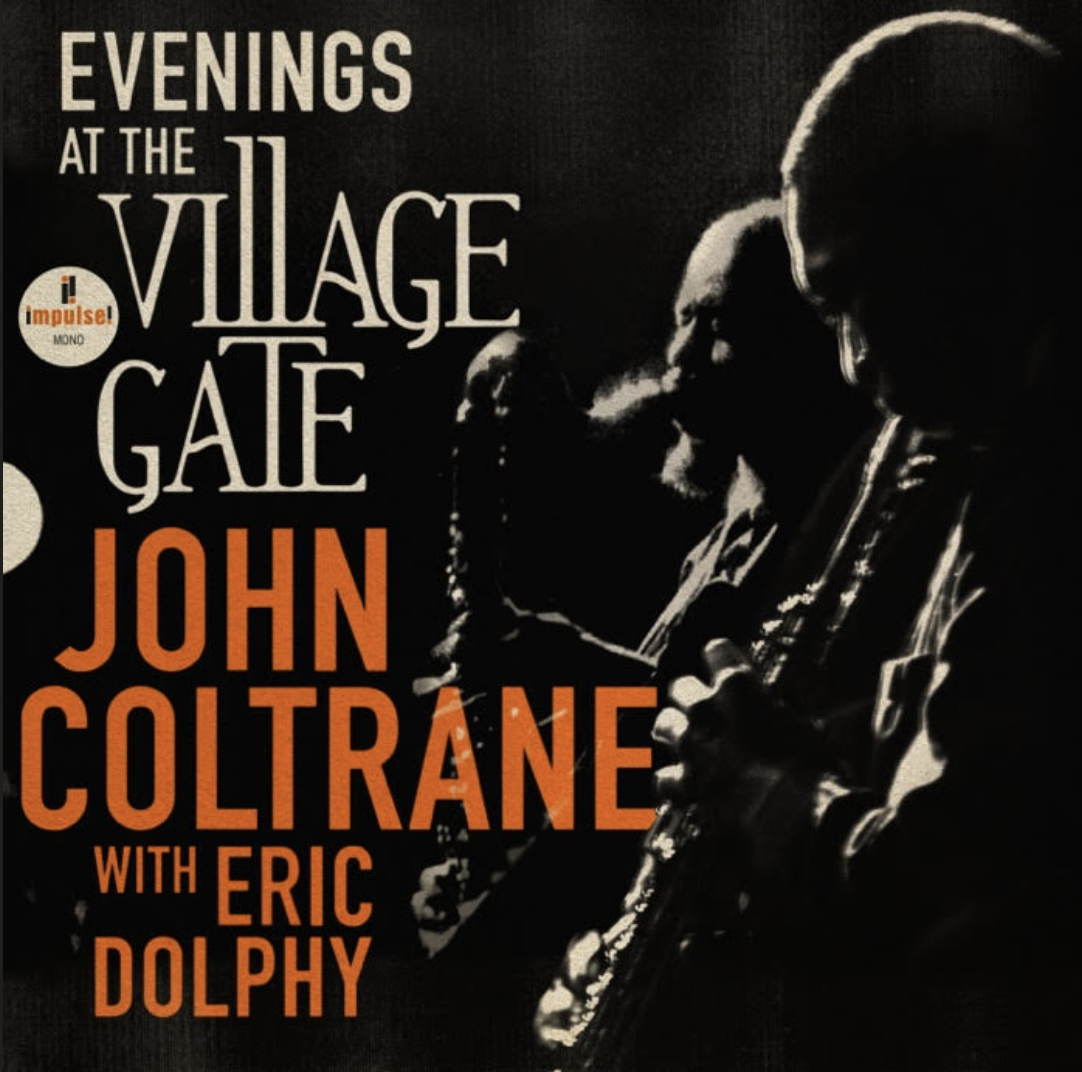
A new thread, feed for 2023, the Digest pulls together tracks, videos and snippets of new music plus significant archival material and anniversary celebrating albums or artists -sometimes the odd obituary to those we lost on the way. From now on in the Digest will also be home to the regular Social Playlist. This is our imaginary radio show; an eclectic playlist of anniversary celebrating albums, a smattering of recent(ish) tunes and the music I’ve loved or owned from across the decades.
June’s edition features something old but new (if that makes sense), with an unearthed, “never heard before”, teaser of Coltrane and Dolphy at the Village Gate residency in the summer of ’61 – believe me when I say this is unbelievable. Plus new, new music from Celestial North, Omar Ahmad, Granny Smith and Hackedepicciotto. And in the Archives there’s the 50th anniversary of the Dusseldorf organic futurists, Neu! and their second, matter-of-factly entitled, album, 2.
NEW MUSIC IN BRIEF
John Coltrane Ft. Eric Dolphy ‘Impressions’
(Taken from EVENINGS AT THE VILLAGE GATE: JOHN COLTRANE WITH ERIC DOLPHY, released by Impulse! July 14th)
Staggering to think how many other lost recordings remain hidden, overlooked in the vast archives of The New York Public Library for the Performing Arts. I mean, imagine this incredible, exciting, evolution in jazz performance laying dormant forever, never to be heard again. It doesn’t bear thinking about.
Titan of the form John Coltrane and his celebrated quintet rip it up on this salvaged tape of performance gold from the summer of ’61 residency at the iconic Village Gate in Greenwich Village. Flanked and imbued by the powers of such luminaries as McCoy Tyner, Reggie Workman, Elvin Jones and Eric Dolphy, but an ever evolving cast of players, there was a trailblazing comet of talent igniting the jazz scene that glorious summer. The upcoming album will feature eighty minutes of never-before-heard music; offering a glimpse into a powerful musical partnership that ended much too soon – Dolphy sadly passed away three years later and this recording is the only live recording of their legendary Village Gate performances. In addition to some well-known Coltrane material (‘My Favorite Things’, and ‘Greensleeves‘), there is a breathtaking feature for Dolphy’s bass clarinet on ‘When Lights Are Low‘ and the only known non-studio recording of Coltrane’s composition ‘Africa‘ that includes bassist Art Davis. Another Dolphy communion, and Coltrane number, ‘Impressions‘, has been dropped as a teaser in the run-up to the official release, on the 14th July 2023. Enjoy the magic wail, bawl, spiralling tumult and energy of this phenomenal exchange between the deities, as they really tease out the best in each other: the quality of the recoding is outstanding too. Could it be, one of the best albums of 2023 will be a recording from 1961! Yes is the short answer.
Omar Ahmad ‘Cygnet Song’
(Single taken from the Inheritance album, released by AKP Recordings on 7th July)
The second single to be shared in the run-up to the attentive Palestinian-American composer/producer/DJ/sound artist Omar Ahmad‘s solo debut turn Inheritance, a peaceable calm of reverberated pattering rain and gentle, trickled contemplative acoustic guitar disarms deeper feelings of loss and the distant sirens of the emergency services blaring in the backdrop. ‘Cygnet Song’ is, as that title suggest, a swanned, slightly somber, enchantment of the ugly duck syndrome – a subject that is close to the artist’s heart; feeling for so long like that proverbial fledgling ignored, isolated, but eventually finding an inner beauty and self-realisation. Revisiting childhood once more, “lamenting the time lost” worrying about peer groups and the actions of others, Ahmad now turns over a descriptive guitar melody and picked sorrow under, what sounds like, a waterfall. Fragility finds a musical partner in playfulness on a loose stringed trickle of warmth.
Celestial North ‘Otherworld’
(Taken from the Otherworld album, released 7th July)
About as “pagan euphoria” as it gets, the Scottish-born siren and child of nature’s hermetic powers, Celestial North is once more dreamily occupying the twin planes of ethereal pop and apparitional electronica on her newest single, and teaser for the upcoming album of the same name, ‘Otherworld’.
The, now, Kendal relocated artist describes this latest vapour trail across menhir marked Ley Lines and dales as, “A rabble-rousing pick-me-up on days when life feels a bit much, a reminder that it will all be ok and that we are never truly alone in this world. Providing the beat and movement of life for us all to shake it off together.” And with a countenance and gauzy wisp voice that wouldn’t seem out of place on a Pre-Raphaelite diorama canvas, nor on some object beautifully crafted by the Celts, worlds and epochs are brought together in a techno-Avalon spell of Circe, Grimes and Rules. From the magic of Cumbria, where Sea Power (formerly “British” until the namedrop protestation in recent post-Brexit years) also hail (although, as I myself did bump into them from time to time, they are also and were a part of the Brighton scene for some considerable time; originally moving from Cumbria down to the Southern seaside belle of a city), and whose band member “woody” has produced the album, stirs something quite diaphanous and yet powerful. The omens pray good for the album, which drops in less than a month’s time.
Granny Smith ‘Egypt’
I seldom come across such perfect musical and visual alignments, but the latest and “greatest” (I’m told) step in the Toronto-born artist Jason Bhattacharya‘s journey is an incredible piece of artistry. Inspired by the painter grandparents he never got to meet, and using super8 film stills and photographs as prompts of remembrance and self-discovery, Bhattacharya’s slowly-released adroit applied washes of layered solo/acoustic/wah guitar, bass, piano, bongos and percussion are lent a constantly changing imagery both busily sketched and illusionary by Dan Trapper. Rushes of more arid landscapes change into sequences of lusher, meadow riversides and an evolving turn of flickery buildings, including a pyramid, through a combination of stopmotion animation and AI image generator software called Stable Diffusion.
Both beautifully etched and yet in a constant flux of memories and thought, Bhattacharya, appearing under his Granny Smith alias, creates something simultaneously timeless yet in the now; his deeply felt yet translucent quality composition suggesting an ambiguous psychogeography of the titular “Egypt”, but also the Levant and India – towards the end of this near entranced track, the guitar starts to sound almost like a sitar. Imaginative footsteps through a personal history are fully realised with a perfect symmetry of music and video art.
Hackedepicciotto ‘Schwarze Milch’
(Taken from the upcoming Keepsakes album, released by Mute on the 28th July 2023)
Entwined in a symbiotic marriage of creative ideas and sonic invention, the husband and wife team of Alexander Hacke and Love Parade co-founder Danielle de Picciotto have between them a notable worthy CV of explorations to channel in their own musical adventures together. Apart, Alexander has been a stalwart foil in Einstürzende Neubauten, whilst his wife, is and has been part of the Crime And The City Solution troupe. Together they’ve both appeared in the Ministry Of Wolves alternative nursery rhymes and fairytales project with Paul Wallfisch and Mick Harvey.
For the same label, Mute, the travailed and sagacious coupling have ventured out on the universal highway of cerebral experiment. Their last album, The Silver Threshold, made our choice albums of 2021 roundup; a universal, lockdown yearn of the Biblical kind. Choosing to embrace an old cliche, their latest album, Keepsakes, is billed as their most personal yet, with each track dedicated to a friend. But the recording environment also plays its part; this time in the form of the famous Auditorium Novecento in Napoli. With the likes of Enrico Caruso and his peers gliding through its doors, and a vast array of instruments to play with, including Ennio Morricone’s celeste, the sound has been expanded like never before.
From that upcoming album (released on the 28th July; a review forthcoming from us next month by the way) we share the surreal Weimar cabaret jazz brushed, hurdy gurdy winded ‘Schwarze Milch’. I can only decipher that this is a reference to the German-Mongolian film drama, which in English translates as “Black Milk”, directed and starring the German-Mongolian Uisenma Burchu, who plays the part of one of the film’s leading sisters character from two cultures, Wessi. Described by the Hollywood Reporter as a “sexually liberated drama of the Steppes”, it tells the story of two sisters reuniting after decades; Wessi’s character having left Mongolia for West Germany (in real life the director/actress’ family actually did move from that homeland to East Germany right before reunification) now makes a less than successful return home. I could have misread this entirely though, and the song may have sod all to do with it.
Back to the song itself, which is shared in narrated weirdness by the couple, who also don various animal mask (both pagan and odd) as they pick up each different instrument on this tubular, sifted, droning and smoked, snozzled sax rich languid look into an alternative world. A stage theatrical. A circus. A variety show complete with a ventriloquist dummy, childlike playfulness and yet something almost disturbing and mysterious, its Brecht meets Thomas Traux and the Bad Seeds in a basement magic show. I don’t know about you, but I’m looking forward to hearing the rest of the album.
ARCHIVES/ANNIVERSARY
Neu! 2 Reaches Its 50th Anniversary This Year
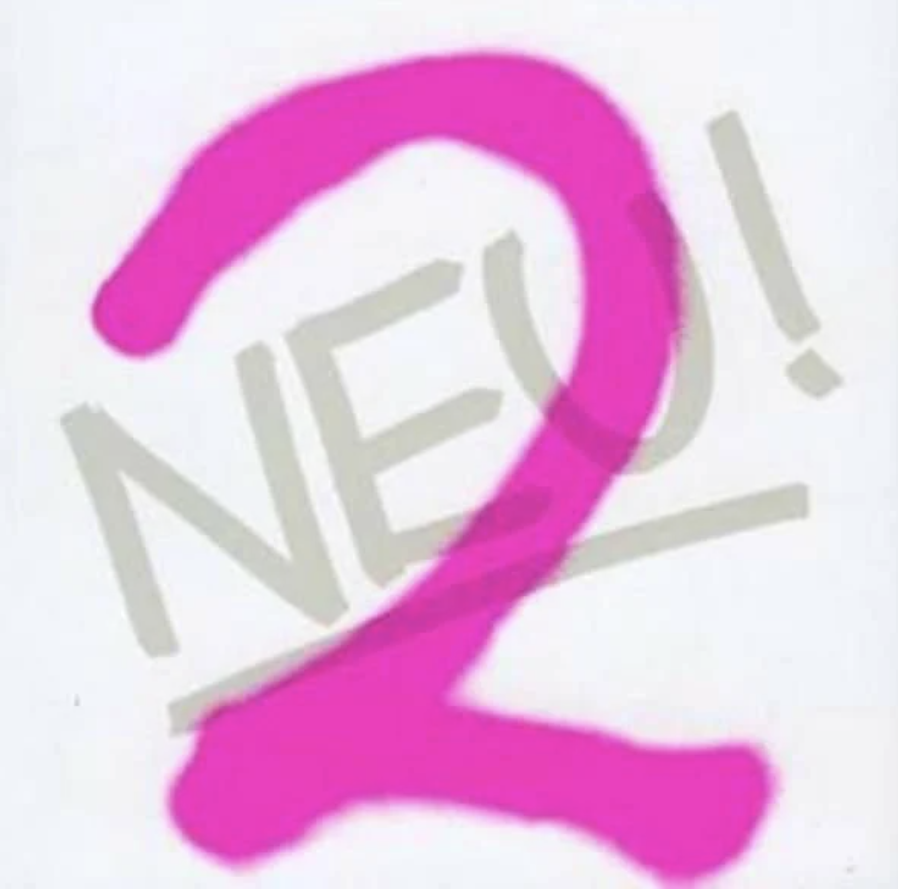
Following the extolled reception and success of their stark, but incipient strident motorik debut, the Dusseldorf organic futurists hit the road for a tour. With former Kraftwerker Eberhard Krahnemann taking on bass duties, Neu! performed a number of concerts before being pressured to get back into the studio. Both Michael Rother and Klaus Dinger became slightly uneasy, it seems the much applauded Neu! desideratum blueprint resonated so well with both critics and fans that the duo became spooked – Rother would of course jump ship and join the recently formed Harmonia, but make an eventual return back into the arms of his musical partner, after much hand-wringing, for the Neu! 75 reunion. Things were made even worse when recording for the follow-up album actually began. After only laying down the inaugural vista spread of ‘Für Immer’, they were promptly told by the Brain record label that the budget had run out, there was no more money in the coffers.
A few months previously Neu! had made a single as a stop gap between LPs, though the label was dead set against it, out of commercial concerns. The double A-side of ‘Neuschnee/Super’ featured those marked references from their first album, but also came equipped with harder and more broodier proto-punk snarls and growls. Appearing on Neu! 2 alongside ‘Für Immer’ to make up for the startling gap now left after funds ceased, these tracks still only amounted to a running time of 18-minutes. Whether it was the production wizard of Krautrock’s idea or Dinger and Rother’s, it was decided that the recorded tracks should be cut up and pasted to make up a strange D.I.Y collage type fashioned suite. Only this merely equated to Dinger speeding and slowing down ‘Neuschnee’ and ‘Super’ on a record player, then re-recording them, or just holding his thumb down on the reel-to-reel machine and recording it; an idea that must have been hoisted up the flagpole and saluted by all concerned. The result was quite frankly weird, but not in a good way. In fact it sounds for the most part like a tomfoolery exercise in taking the piss: a fuck you to the label. Dispersed amongst the key tracks and ludicrous speed variant nonsense are a number of experimental atmospheric pieces and doomly staggered vignettes, which allude to esoteric imagined landscapes and scary extremes of mental cacophony.
Once again the Neu! branded moniker was brandished like a washing powder product. A spray can 2 marks the only difference from their last affair, whilst inside scrawled track names and info shadowed by photo booth passport photos, are crossed out and re-written.
‘Neu! 2’ lacks the calming vision of their famously lauded original ‘Neu!’ soundtrack. Full of miscalculated slip-ups, pressured ideas and short-change experiments, this miss-fire companion still radiates with some heightened moments of hymn like joy and traversing triumphs. Both ‘Für Immer’ and ‘Neuschnee’ build on the foundations of ‘Hallogallo’; adding richer textures and searing layers to the motif. ‘Super’ and ‘lila Engel’ meanwhile rough it out with Faust and metal; giving the duo an escape route towards darker musical pleasures. Short change accusations hinder this album to a degree. Rother famously took to the woods with Dieter Moebius and Hans-Joachim Roedelius to join their Harmonia project, after this album was released. Dinger meanwhile, began working on the La Dusseldorf imprint with both his brother Thomas and Plank’s tape operator, Hans Lampe, though their first offering wasn’t released until 1975. After a brief hiatus, both men made-up their differences – Rother and Dinger clashed often over direction and whether they should play live or not – and returned for the reunion ‘Neu! 75’ record in 1974, and later in the 80s for what would be the last hurrah of ‘Neu! 4’, an album Rother fell out over with his sparring partner.
But What Does It Sound Like?
Anticipation steadily builds as the very first stirrings of the Neu! signature, pulsing, motorik drill, incipiently fades into view. Prolonged laconic pronounced drums work their magic as Rother’s suffused guitar strains delicately kiss the flange coated textures of sound; produced from a mixture of Japanese banjo, fiddle, piano and various electronic devices. ‘Für Immer’ means “forever”, which this richly striding companion piece to the hallowed ‘Hallogallo’ certainly tries to achieve. Heavier interjections are implemented as though we were becoming dazed from the hypnotic, suffused, snarling jam of pulchritude. Echo-chamber shakes and vortex warping effects twist the percussion and pliable guitar mantras through a quantum leap, before emerging from a inter-dimensional mind bender back into the main groove all over again. Those recurrent waterside motifs continue, as lapping waves crash against the river bank, ‘Für Immer’ is caught in the tide and is beckoned beneath the waters to make way for the next section of ‘Neu! 2’. Isolation tank suffocated drums wallow in oscillating cycles of space-rock; ‘Spitzenqualität’ is coated in reverb and, yet more flange, as it manipulates timings with both distorted scathing guitar and laboured drumming: a desolate plains search and slow methodical pause of a tune.
Neu! tunes seldom end, they just tend to fizzle out or evaporate. With that in mind, ‘Gedenkminute’ takes over from its preceding triggered outro, wafting in on the last remaining resonating pools of sound. This short interlude drags us through some Edgar Allen Poe descriptive rich graveyard, the wind blowing menacingly as a haunted Germanic girls voice communicates to us from the other side. Thank the lord for the battering ram metal psych barrage of ‘Lila Engel’ (“Lilac Angel”) – surely a joke, this doomed warning of a tome is far from angelic or seraph. Sounding like the godfather to both the Southern Lord franchise of biblical droning rock, and to industrial punk. Dinger’s no-fucking-nonsense power tool drums compete with Rother’s revving, ringing-out licks, over a three-tier build-up. Each level increases in volume and savageness: yeah you never knew they could mix it with those barbarians of the wild frontier, Faust.
A collage of trickery and ameliorate masking awaits on side two, Neu! stretching the boundaries of what a band can get away with. Coming up short on material, they manipulatively assuage their own tracks starting with ‘Neuschnee’, which is introduced at 78 rpm. Dinger and Rother actually record the original single version sped-up – you even hear the hiss and crackles of the vinyl. Ridiculous high-pitched sounds give it a comedic Egyptian mystical garb, as the stylus jumps when it hits any scratches. ‘Super 16’ follows the same premise, only at 16 rpm. Slow over-aching momentum of a tune, this sounds like another doom inspired hellish crawl through the pits of Hades. – imagine Richard James remixing Boris and naming it ‘Satanic Moonscape’.
At last the authentic ‘Neuschnee’ is given an airing at the right speed. Thumb-plucked instruments ease in another classy Neu! motoring opus. Rother’s guitar now weeps and sings a glorious bewailing paean, whilst Dinger taps out some kind of secret code, hitting a cycle of drumrolls, and ending each run with a customary exclamation mark cymbal crash. ‘Casseto’ is a short vignette of caustic and harrying heaviness. The banging evil soundclash transcends nightmarish, repeating scariness. Back to the fatuous with ‘Super 78’, as now we are introduced to the crazily speeding variant of this key track, plucked from their original single. Once again a manic wheeze of squeezed demonic acid-mice, and galloping nonsensical bewilderment; fucked with and played to a skeptical audience – file under eccentric diversion tatic.
‘Hallo Excentrico!’ features half the title of their most famed and applauded track, but that’s where the similarities end. Dinger once more pisses about with the tape machine, his cohorts chattering away in the corner blissfully oblivious to the recording process. But it all gets swept up by the Teutonic brain food of ‘Super’, which pitches the signature whacker-whacker chops of Rother with a Stooges motor city Nuremburg stomp. A sublime smiling primal-scream and unscripted series of chants roll around in the background – signs of the Dinger archetype La Dusseldorf sound is woven here. ‘Neu! 2’ opens up the duo’s musical horizons, at times for the better, and at other times, its highly debatable. A harder and climatic dark side is implemented with their meditative explorations containing more layers and development of sound. Of the eleven-tracks, at least a third can be taken with a pinch of salt. Whether they generally believed that or this pokery would open up revelations or set off new discoveries remains iffy. The fact they’d been left in the shit with no money to finish recording may explain things. Still their second tome offers ethereal and inspired anthems, which in my view, are more influential then their debut.
The Social Playlist #77
Anniversary Albums And Deaths Marked Alongside An Eclectic Mix Of Cross-Generational Music, Newish Tunes And A Few Surprises.
Repeating myself, but if this is your first time here, first of all, welcome, and secondly here’s the lowdown on what the Social is:
Just give me two hours of your precious time to expose you to some of the most magical, incredible, eclectic, and freakish music that’s somehow been missed, or not even picked up on the radar. For the Social is my uninterrupted radio show flow of carefully curated music; marking anniversary albums and, sadly, deaths, but also sharing my own favourite discoveries over the decades and a number of new(ish) tracks missed or left out of the blog’s Monthly playlists.
First off, couldn’t resist paying a little tribute to the late Barry Newman, who famously played the counterculture idol, disillusioned ex-cop and racing driver Kowalski, cranked on speed, star of the iconic drive through the heart of a Vietnam-fucked America Vanishing Point – musically, and all that goes with it, utterly stolen hook line and sinker by Primal Scream. I’ve chosen the main soul busting theme from a original soundtrack that plays like a radio station. And, what sort of lowlife piece of shit would I be if I didn’t pay homage to the Acid Queen of rawkish soul, R&B and rock, Tina Turner. A smattering from golden period Tina awaits.
Anniversary wise, there’s 50th celebrations this month of albums by Donny Hathaway (Extension Of A Man), Arthea Franklin (Hey Now Hey) and Roger McGuinn (Self-Titled), and 30th salutations from the Intelligent Hoodlum (Self-Titled) and Manic Street Preachers (Gold Against The Soul).
Added to that list is music, recent and old, from New Air, Szun Waves, Zacht Automaat, Bob Dylan, Kassi Valazza, The Shivvers, Bloodrock, Ezy Minus and many more…
_________TRACKLIST__________
Jimmy Bowen ‘Super Soul Theme’
Amiri Baraka ‘Kutoa Umoja’
Ike & Tina Turner ‘Such A Fool For You’
Aretha Franklin ‘Hey Now Hey (The Other Side Of The Sky)’
Donny Hathaway ‘The Slums’
Intelligent Hoodlum ‘Black And Proud’
Lynx 196.9 ‘No Apologies’
Ike & Tina Turner ‘She Came In Through The Bathroom Window’
Rick Asikpo ‘Ebun Oluwa’
Pixinguinha ‘Pula Sapo’
MUF ‘Wrong Age’
New Air Ft. Cassandra Wilson ‘Achtud El Buod (Childern’s Song)’
Flow Trio – Joe Mcphee ‘Incandescence’
Szun Waves ‘In The Moon House’
Double Happys ‘Needles And Plastic’
Manic Street Preachers ‘Roses In The Hospital’
Roger McGuinn ‘My New Woman’
Kassi Valazza ‘Room In The City’
Bob Dylan ‘When I Paint My Masterpiece’
Oracle Sisters ‘Lunch And Jazz Chords’
Hadley Caliman ‘Old Devil Moon’
James Henry & The Olmpics ‘Sticky’
Sandro Brugnolini ‘Amo Me (Vocal Version)’
Ike & Tina Turner ‘Bold Soul Sister’
The Shivvers ‘Hey Deanie’
Okan Dincer ‘Mutlu Ol’
BroselMaschine ‘The Old Man’s Song’
Bloodrock ‘Don’t Eat The Children’
Kraan ‘Prima Klima – Live At Porta Westfalica 1975’
Carlo Rustichelli ‘Missione Bionde Platino’
Ezy Minus ‘Nuvole Che Passano’
Zacht Automaat ‘Bite The Invisible Hand’
God I hate the hard sell, but Kowalski’s spirit says be cool and support the Monolith Cocktail. Life is hard but it goes much smoother with the help of a good friend and recommender of taste like my good self. If my departure, and that of the greater MC team, leaves a sad big hole in your lives, or the contemplation of this site’s death leaves you unable to sleep at night, you can always donate to our Ko-Fi micro-donation platform here. Thank you in advance. But hey, no worries if you can’t, we are all struggling in one way or another.
 Monolith Cocktail Blog