Our Daily Bread 245: Vieux Farka Touré ‘Samba’
May 4, 2017
ALBUM REVIEW
Words: Dominic Valvona

Vieux Farka Touré ‘Samba’
Six Degrees Records, 12th May 2017
Lucky enough to have witnessed firsthand the erudite guitar majestic skills of one of Mali’s leading artists last year, as part of Glasgow’s Celtic Connections Festival line-up, I still find myself decidedly jealous of the intimate small audience that were invited to Vieux Farka Touré’s Woodstock Session later that same year in October. A studio recording with a difference, played out and developed live in front of just fifty lucky people in Saugerties, N.Y., Touré’s latest blurs the boundaries between performance and the processes of making an album.
Ever the consummate maestro and backed by an equally accomplished band of musicians, there was some initial apprehension on Touré’s on allowing an audience in to the studio. Though we have the finished product, free of any mistakes, restarts and disagreements, it seems this audience far from unnerving the band, egged it on, with the results sounding effortless and natural. There were overdubs of course and one of the songs was recorded back home in Mali – the calabash driven Ni Negarba. But far from cutting corners or relying on the back catalogue, Touré has fashioned an entirely new songbook of vocal and instrumental material for Samba. Some of which amorphously touches upon unfamiliar influences, including reggae on the unapologetically roots-y swaying Ouaga.
Still a commanding presence, though he makes it look easy and so serene, emanating almost uninterrupted waves of phaser-effect guitar permutations and nuanced fretboard noodling, Touré continues to languidly merge his own lyrical form of worship and goodwill with the blues, rock and R&B. Often alluded to as some kind of Saharan Hendrix, his heritage and reputation is actually linked to the more urbane capital of Bamako in the southwest of Mali, which has its very own amalgamation of styles and unique history. Still, those desert blues styles, synonymous with the Tuareg especially, do crossover and can be detected in Touré’s music.
Touré is as the Songhai title of his new album Samba translates, the second son of the late Ali Farka Touré, a doyen of the Mali music scene himself who left an indelible mark. If we expand on the title’s meaning, “Samba” is a byword for “one who never breaks”, “who never runs from threats, who is not afraid”. It is even said that those adorned with the name are “blessed with good luck.” Inspired by his ancestry, imbued with three generations, Touré’s album is suffused with special tributes to his family. In the mode of a praise song, the spindly weaved heartfelt Mariam pays homage to the last born of the family, his youngest sister, but is also by extension a paean to both the women of the Peule and “all sisters of the world”. Samba Si Kari, based on a song Touré’s grandfather used to sing to him as a child, pays a reflective impassioned tribute to his parents. Expanding the goodwill further, to those outside the ancestral line, he’s also penned, what sounds like, a hoof-cantering percussive camel ride with celestial desert sky illuminations keyboard – courtesy of old pal Idan Raichel –, sweet dedication to his manager and friend Eric Herman’s daughter Maya. The press release offers a further subtext to this particular song, one of multifaith cohesion; Touré a Muslim and Herman a Jew, spreading a message of tolerance.
Outside the family sphere, Touré confronts both Mali’s recent Jihadist takeover – only stopped and defeated by the intervention of the country’s former colonial masters, France – on the radiantly rippling, chorus of voices, funky blues number Homafu Wawa, and environmental issues on the dexterously nimble-fingered bluesy rock, Nature.
The almost never-ending efflux, the constant lapping waves of textures that Touré plays, which offer a cyclonic bed on which to add the deftest licks, have never sounded so sagacious and free flowing. This ain’t no Saharan Hendrix at work, this is something else entirely, and better for it. This is the devotional, earthy soul of Mali, channeled through a six-string electric guitar.
Originally scheduled for 2015, the Woodstock Session would have still been a revelatory showcase and classic, but with that extra year, with the travails of being in constant demand on the road and the rapid turn of events Samba in 2017 makes even more sense, resonating with a message of respect, peace and tolerance.
NEW MUSIC REVIEWS ROUNDUP
Words: Dominic Valvona
Roll Call: The Black Angels, Anna Coogan, Cotton Wolf, Happyness, King Ayisoba, Lake, Alex Stolze, Swamp Sounds/Uncle Pop & The Dumbloods, Vassals, Andrew Wasylyk.

A mega edition of the regular tickling our fancy reviews roundup this month, before the Easter Break and the Monolith Cocktail’s week long sabbatical to Palermo, we take you on a whirlwind trip through some of the “choice” most recent and upcoming releases. Pleasantries aside. Let’s crack on…
King Ayisoba ‘1000 Can Die’
Glitterbeat Records, 31st March 2017

Credit: Jacob Crawfurd
Sounding the klaxon call in defense of his native Ghana, and Africa at large, on his inaugural LP for Glitterbeat Records, the striking King Ayisoba, from the roots up, uses his guttural earthy howl and atavistic kologo lute to great effect in demonstrating not only a raw anger but also a deep love for a much misunderstood continent.
From the very outset Ayisoba and his contributors Wanlov da Kubolar & Big Gad – just two of the many guest appearances on this album – rap, sing and stamp a slogan sentiment on the opening Africa Needs Africa of, “Let’s fight for Africa/Africa needs us.” Covering the North African diaspora, the boat people’s sorry saga, the colonial past and umpteen other issues that more or less shape the image that those observers from outside the continent believe is the only side to Africa – between a misplaced sentimentality and outright ignorance. There is protestation and indictment, but also a lively focus on the positives too; finding solutions through the medium of music and culture.
Though Ayisoba advocates the “power of tradition” and the primal thrust of instrumentation is one passed down from generation to generation, 1000 Can Die features an eclectic and electric fusion of musical styles. The homegrown Ghanaian “hiplife” – a mix of rap, electronic beats and traditional rhythms – rubs up against ragga, dancehall and dub; a grandee doyen of which, the inimitable Lee ‘Scratch’ Perry, appears postulating a herb-hazed wisdom on the album’s rustically plucked and enraged title track.
In-between the fiery, bordering on punk, clatter of guluku, dundun and Djembe drums and rambunctious electronic phasing beats there are more plaintive, yearning stripped-back moments: Grandfather Song, a toiled from the soil of tragedy lament, offers a more intimate knee-jerk from the full-on band sound, and Dapagara is sent off into a sweeping, wafting vista by the Nigerian legend Orlando Julius’ traversing, reedy accentuated saxophone.
Raw from the heart, highly evocative and rebellious, King Ayisoba’s songs of rage and vitality actually offer a kind of hope in the face of adversity. The future of Ghana’s music scene is in good hands at least.
The Black Angels ‘Death Song’
Partisan Records, 21st April 2017

If you were looking for a creative musical reaction to Trump and the anxious times we live in then The Black Angels beautiful apocalyptic melodrama, Death Song, must be one of the most anguished and daemonic of responses. The Austin psych-rocking overlords first album in four years was written and recorded during the miasma of the US elections after all: and doesn’t it show!
An emotionally charged despair and anger with moments of catharsis, carried out to a Byzantine flavored soundtrack of esoteric Amon Duul II and Far East Family Band psych, a vortex of 80s Goth inspirations – including The cult and Siouxsie and the Banshees – and the tolling chimes of doom and drone, Death Song is, as the title suggests, a heavy, but most excellent trip. It begins with one of the Angels heaviest productions yet; a dark arts pulsing bestial diatribe on the controlling influence of money, entitled Currency. From there we’re guided across choppy seas between brighter less cymbal crashing hypnotics and swaying macabre, through the metaphorical “killing fields” of the huntress (I’d Kill For Her); the enslaved intoxicant spell casting of enchantresses (Half Believing); and the upside down: the final Floyd and Amon Duul II-esque Orpheus-is-comfortably-numb-in-the-underworld opus, Life Song.
Brooding romantically in Gothic tragedy as the world continues to turn, undaunted by the prospects of universal uncertainty, The Black Angels spread their wings magnificently on what is, perhaps, one of their best albums yet. The leviathans of the psych-rock scene have learnt much and after a recording hiatus return with something sharper, refined but just as mystical and hallucinatory.
Anna Coogan ‘The Lonely Cry Of Space & Time’
28th April 2017
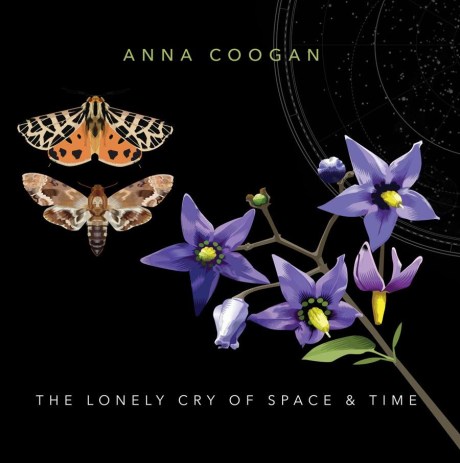
Not the easiest of bedfellows, difficult to love and often (rightly) condemned as indulgent and overblown, but the worlds of rock and opera do occasionally overlap in a congruous union. The unquestionably talented Anna Coogan for instance, mixes the two majestically, using her finely trained 3-octave soprano and classical background to offer fluttering siren-like arias that seem to surreptitiously manifest from, what is, an ever-changing metamorphosis of musical styles, on her latest album, The Lonely Cry Of Space & Time.
Spanning country, Ry Cooder desert meditations, Anna Calvi like trembled sensual emulations, PJ Harvey and even bubbly synth pop, Coogan together with musical collaborator Willie B – offering atmospheric Moog bass line undertones and drums – produce a wave (whether the gravitational kind, as serenaded and alluded to on the brilliant opening title track or, the metaphorical high seas kind, as referenced throughout) fixated lamenting and balletic travail.
Inspired by scientific discoveries, a “childhood listening to Puccini’s La Boheme”, the fateful poet Sylvia Plath, the tumultuous grave mistakes of intervention in the Middle East and, no surprises, the 2016 US elections Coogan’s ambitious suite of songs and instrumental evocations is far from lofty and classical. The operatic, learnt at the prestigious Mozarteum University of Salzburg, elements are transduced through a background of rifling through her father’s record collection of protest troubadours, and busking on the streets of Seattle, to leave only traces that appear naturally.
Occasionally rocking, most of the music has a cinematic more expansive touch, with three of the songs on this album originally composed to accompany the Soviet filmmaker Jakov Protazanov 1929 camp alien invasion/Russian revolution analogy Aelita, Queen Of Mars (the title track) and the French director Jean Epstein’s 1928 interruption of Poe’s classic, The Fall Of The House Of Usher (If You Were The Sun, A Wedding Vow).
Almost uninterrupted with each track flowing or bleeding over into the next, the album moves seamlessly between its musical and thematic influences. I could probably do without the romantic twinkled space helmet vocal synth pop Meteor, but overall this is an impressive performance, Coogan’s quivering wah wah and tremolo articulations matched equally by that heavenly, soaring voice.
Lake ‘Forever Or Never’
Tapete Records, April 7th 2017

Meant as anything but disingenuous, it’s surprising what the experimental pop group Lake get away with on their latest and eighth album, Forever Or Never. Remodeling an array of 70s/80s influences with a 21st century spin, they can turn some of the stalest MOR vaporous blue-eyed soul synth ballads and soft rock melodramas into something melodically enchanting but very poignant; analogies channeling the political and social maelstroms of our times, as most of the music coming out of the USA does in 2017.
Celebrating a recent tenth anniversary with perhaps the most exhaustive of performances, playing every song from their ninety-track back catalogue in an Herculean ten-hour set, Lake continue to submerge themselves in the Pacific Ocean Blue waters of nostalgia.
Finely attuned, lean and devoid of the superfluous, Forever Or Never is a mostly gentle, wistful breeze through yacht rock, Belle & Sebastian daydreaming romanticism, shoegaze and pop. Shared male/female vocals duties offer a constant variety that bears traces of Blonde Redhead, Harry Nilsson and The Pastels. And joining the betrothed founders Ashley Eriksson and Elijah Moore, and long-term band members Andrew Dorsett and Mark “Markly” Morrison before she passed away, the artist/musician Geneviève Castrée (for whom this album is dedicated) lent lush coos and backing vocals to the tumultuous Gone Against The Wind and bright, easy-going finale, Magazine.
Sometimes it’s like hearing Fleetwood Mac if they’d formed during the C86 phenomenon, and at other times, a strange transmutation of Captain & Tennille, and a vague stab at a post Sunflower Beach Boys jamming with Hall & Oates. Disarming and emotionally sophisticated throughout, with subtle, warm but diligent songwriting, Forever Or Never is a melody rich harmonious meditation on inner turmoil, forgiveness and mourning, that can’t help but also comment on the recent political landscape.
Alex Stolze ‘Mankind Animal’
Nonostar Records, 31st March 2017
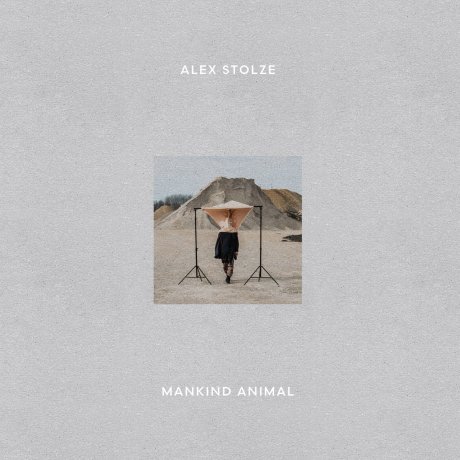
Transforming the traditionally entrenched sound and indeed reputation of the violin, German composer/producer Alex Stolze attempts to reanimate the instrument, “preserving” it, as he states, “for future generations, without being a conservative classicist.”
No stranger to reinvention, recently performing radical deconstructions of Bach’s Kunst der Fuge with the Armida Quartet, at Berlin’s Radial System venue, Stolze has gained a certain exploratory reputation for his work with the electronica acts Bodi Bull and Unmap (amongst others).
Concentrating the mind, finding a certain solace, the Berlin urbane stalwart has relocated to the German/Polish borders for a more pastoral life of contemplation; spending time on rebuilding an old ruin in the countryside but focusing on the vision for his solo work. Nothing short of guiding humanity towards a less destructive, more empathetic spirituality, Stolze attempts to bridge classicism and contemporary amorphous electronic music on his debut solo record, Mankind Animal.
Less Roedelius neo-classical, or for that matter Tony Conrad Dream Syndicate, and more John Cale inspired viola distortions and that titan of the German avant-garde Stockhausen and his electronic processing of orchestral instrumentation, the five-track Mankind Animal suite is surprisingly fluid and melodic. Conceptual and avant-garde in influence certainly, but far from a grueling or challenging experience.
A chamber ensemble mix of electro-acoustics, ambient traverses and, at times, kinetic beat undulating soul, this pan-Europa soundtrack often evokes transmogrified traces of traditional scores and folkloric music from central and eastern Europe: The articulate plucks, quivers, wanes and yearnings that emanate from Stolze’s five-string custom-made violin often sounding a link back towards the past, and ghosts of an old continent. Tradition is very prominent, but an intricate bed of low synth, contained sophisticated beats and mechanics bring it into the present.
Over the top of this score, Stolze’s succinct campfire lyrics of profound prose make allusive references to the here and now though again these concerns are often age-old: from, “where to start if you want to change the system”, on the lyrical resigned meander through the universal condition The Crown, to the more personable inner sage advice of “don’t try to be someone else/otherwise who would be you”, on the opening Don’t Try To Be.
From the cinematic Eraser to the softened timpani minor-overture Stringent, Stolze and his ensemble produce a considered postmodernist suite, both experimental in merging the classical with the contemporary, and yet a pleasurable, even soulful and thoughtfully poised listening experience.
Joji Hirota & The London Taiko Drummers ‘Japanese Taiko’
ARC Music, 28th April 2017

One of Taiko drumming form’s most prestigious of stars of the last forty years, Joji Hirota cements his sizable reputation with this latest collection, simply named Japanese Taiko. Literally, as is the case with most of these direct from Japanese translations, the ancient style of Taiko itself means “big, fat drums”, (which you can’t really argue with) and on this album features a number of these drum shapes and sizes, from the smallest, a “uchiwa tom”, to the behemoth sized “oh daiko” (again, literally a “big drum” that measures 140cms in diameter).
Inspired by the volcano piqued hot springs landscape of his native Hokkaido – Japan’s most northerly of main islands – Hirota, who started training at the age of eleven, merges majestic traditions with a unique modern approach: He was after all among the first of the Taiko practitioners to bring the style to the West, and has more recently lent his music to the soundtrack of Martin Scorsese’s latest martyrdom, Silence. Together with his four male and eight female strong London ensemble the maestro thunderously rolls through Taiko’s folkloric, Noh theatre, Kabuki, Buddhist and Shinto religious ceremony origins with agility and at times entrancing aplomb.
Building up pattering rumble evocations of the Spring Breeze or, stroking the drum skins to an atavistic Japanese flute accompaniment in ritual to a Harvest god (Kokiriko), this dynamic, though often monotonous, chorus of drummers is surprisingly melodic. A barrage yes, but the drumming wall of sound is often elevated by poetic vocals – usually in chorus, though there is a strange mix of call and response staccato rapping on Akita – and subtle mood and tonal changes; from wood clapping to finger bells and cymbal swells.
To experience live is something else: a synchronized art form of music and theater. But this showcase of tradition and experimentation, with half the compositions written by the man himself, is a great introduction to the form.
Cotton Wolf ‘Life In Analogue’
Bubblewrap Collective, 28th April 2017

As technology’s ever-domineering progress takes over and algorithms creep into the creative process it’s a relief to see and hear that the Kraftwerkian dream of complete immersion between humans and machines, with all music created by a computerized brainiac, is still a long way off. And though by its very democratized nature and access electronic music is obviously wholly reliant on tech, which is getting ever cheaper and easier to use, there are many artists who wish to (and excuse my trite cliché) put the soul back into the machine. The Cotton Wolf Welsh duo of “super producer” Llion Robertson and classically trained composer Seb Goldfinch are among those, “living in the analogue”, who leave an indelible human mark on electronic music.
Their debut album is an often sophisticated, downtempo, merger of small, organic Leaf Label like synthetic drums and tight percussion and subtle atmospheric waves and suffused strings – part of the symphonic quality and melody the duo wish to emphasis. With guest vocals from the attentive soulful Alys Williams, on the gauzy veiled Lliwiau, and calm fluttering siren Lois Rogers, on the softened Massive Attack-esque Future Never, Cotton Wolf omit for a sense of performance and humility.
“Unapologetically” Welsh, Williams for example sings in the dialect, the duo is rightly proud of their heritage. And they are in some ways in the middle of a golden resurgence, with countless fellow Welsh electronic artists, from The Conformist to R. Seiliog and Gwenno Saunders to name just three, gaining critical attention and flying the flag. But, apart from the language, there isn’t a common identity in the music itself. There is no such thing as a “Wales sound” in the genre. Life In Analogue is if anything a global soundtrack, with traces as diverse as Kosmische, EDM, Bonobo and even mellowed South American electronica all under one roof.
More than a little classy, electronica with a human touch, Cotton Wolf weave the symphonic articulately into an album with depth but also commercial appeal.
Swamp Sounds/Uncle Pop & The Dumbloods ‘ST’
Bearsuit Records, 24th March 2017

A split offering from the Edinburgh label of idiosyncratic experimental sonics and more lo fi indie pop fare, Bearsuit Records bring us an incongruous curious pairing of, mainly, electronic music mavericks.
From further up the Scottish east coast, Dundee artist/musician Douglas Wallace, under the strange Uncle Pop & The Dumbloods appellation, has fashioned an imaginary Hondo City futuristic soundscape that bares little relation to the track titles. With a backing of trebly crisp electronic percussion, tetchy cymbals, clean crystalized synths and trans mutated guitar wails, Wallace’s science fiction travails make ephemeral references to Murcof, Bowie’s Heroes peregrinations, Ryuichi Sakamoto and the sort of 80s vapour ice-misty synth soundtrack fare you’d find on the video-nasty, Shogun Assassin. Reverent at times, primordial at others (check the lost world of Song For Broken Singers), ole Uncle Pop’s contribution is a subtle, meditative counterpoint to his album companion’s ennui flitting Casio car-crash bombardment.
Hailing from Nagoya, Japan, experimental electronic music artist and founder of Sleep Jam Records, Yuuya Kuno flirts with a number of aliases including House of Tapes but for this label and in this capacity goes under the Swamp Sounds moniker. Chopped-up into a loopy soundclash of Casio pre-set schlock and drama, Kuno’s 80s meltdown collage is both ridiculous and yet full of interesting surprises. Tracks such as Skull Disco feed Daft Punk through a dial-up connection and grinder, and Houndstooth sends Atari Teenage Riot to a laser quest showdown.
Run of the mill for Bearsuit, who constantly release such curiosities, but for us the listener these experiments prove intriguing; bringing to our attention some unique artists, working on the peripherals of sonic reinvention and cut-up mania.
Andrew Wasylyk ‘Themes From Buildings And Spaces’
Tape Club Records, 28th April 2017

The second artist in my roundup to hail from the fair city port of Dundee, musician/composer Andrew Mitchell (nee Wasylyk) pays a moving sort of homage to his home on Themes From Buildings And Spaces. With the onus on the psychogeography of the architecture in Scotland’s fourth-largest city, its history as the capital of Jute production features heavily as a recurring theme; the ghosts and lingering traces of Tayside mills and the people who worked the oppressive Industrial Revolution machinery within them making their presence known on the reflective Lower Dens Work.
Memories both haunting and meditative are made concrete, prompted by the iconic images of the late, “father of Scottish modern photography”, Joseph MacKenzie and a mix of architectural markers – only ever seen in Scotland – from across time: stoic granite beauty to hard-to-love Brutalism. The very evolution of Dundee, over eight instrumental evocations, is lent both a melancholic and romantic soundtrack of lapping piano tides, gentle swooning colliery jazz brass, synthesized choral voices and peaceable textures. Sounding unique, even pastoral at times, these suites conjure up a Caledonian Air, yet at other times errs towards the ether, conjuring up those old ghosts and spirits.
Andrew sheds a new light in many ways on Dundee with the most reflective of timeless scores.
Happyness ‘Write In’
Moshi Moshi, 7th April 2017
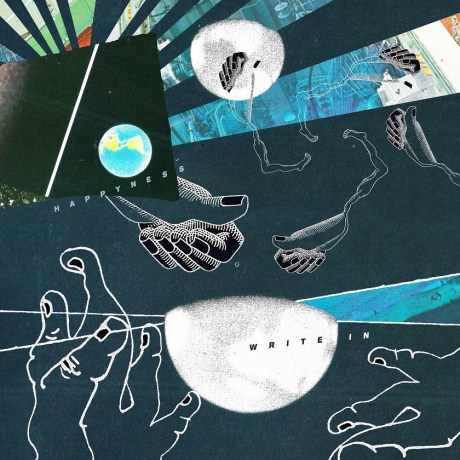
Ah…the sound of a band embracing the heartfelt warmth, accentuated dazed melodies and special feel of such 70s fare as Randy Newman, Harry Nilsson and Big Star, Happyness evoke the hazy fond memories and subtle sophistication of these and other complimentary artists on their new album, Write In.
Having previously covered and absorbed tootsie roll Beach Boys idyllics and the Athens, Georgia college radio rock of the obscure Club Gaga on last year’s Tunnel Vision On Your Part EP – the title-track of which appears alongside the drowsy-sighed pop spankler Anna, Lisa Calls on this, the group’s second LP –, and often drawn favorable comparisons to Wilco and Pavement, Happyness find themselves liltingly tuning into a more eclectic array of influences for their most melodious, engaging songbook collection yet.
The opening Falling Down gambit, with its radiant phaser guitar, conjures up the Scottish indie supremos (and fellow Big Star acolytes) Teenage Fanclub, whilst the pastel-shaded saddened tone of The Reel Starts Again (Man As Ostrich) sounds like a lost, ghostly remnant of a George Harrison and Jeff Lynne malady. A touch of the Brighten The Corners era Pavement permeates the band’s weary slacker muffled Uptrend/Style Raids, but by the time we reach the halfway stage of the album the lads are back to thrashing out a languorous grunge-y grind on Bigger Glass Less Full.
Subtle and confident, Write In is a halcyon, beautifully executed album with real depth and personality. Happyness have found their flow with loose but perceptively well-crafted gentle pop songs of a timeless quality: to be played as the “credits roll forever”.
Vassals ‘Halogen Days EP’
Post Fun, 7th April 2017

You have Audio Antihero’s indefatigable Jamie Halliday to thank for dropping this EP from Brooklyn misfits Vassals onto my radar. The backing band of Audio Antihero signing Magana, the trio’s latest release bandies between, as the press release puts it, a sort of “bleak beauty” and “chaotic minimalism” that strays into “slacker-rock ambivalence” and “post-punk cynicism”. I can confirm all of that, but would like to add the following if I may.
There’s more than a touch of the new wave on Halogen Days quartet of power-pop and grungy-romanticism. The slacker and grunge elements made brighter and indolently tuneful for it.
A run through of the EP then: We have the pendulous drum and echoed vocals of the opener Sea Spells, which sounds like a young Glenn Tilbrook fronting The Yeah Yeah Yeahs; the Moonless (“night”) build up swell of crescendos that evokes the Tokyo Police Club and Wampire; and the return to the source of inspiration with traces of The Pixies and Dinosaur Jnr on the stumbling SoHo. The finale meanwhile, Ghostwood, traverses Pavement and The Strokes (when they were something), on a peaks and lulls, heavy and accentuate crafted N.Y.C. indie resigned anthem, that literally spirals and pounds away until lifting off.
Bright hopes indeed and nowhere near as petulant as you’d expect. There is amongst that cynicism and effortless sounding despondency some real thought and musicianship, the lyrics actually far more aching and heartfelt than they might admit.
REVIEW
Words: Dominic Valvona
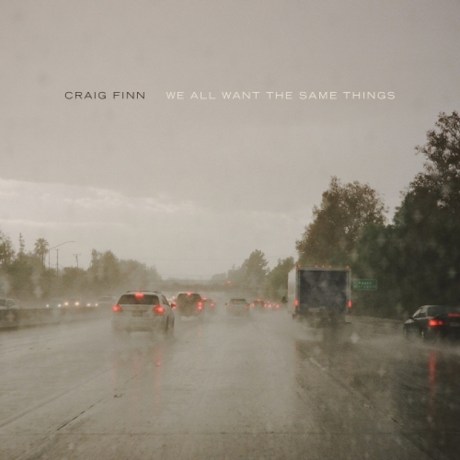
Craig Finn ‘We All Want The Same Things’
Released by Partisan Records, March 24th 2017
Occupying a rich postmodern American literary landscape, channeling such celebrated chroniclers as Bruce Springsteen and Vic Chesnutt, former The Hold Steady, and prior to that Lifter Puller, front man Craig Finn has in more recent years carved out a career as a successful solo artist. In true Springsteen style, though with far less guttural bombast, Finn brings a certain levity and importance to the lives of America’s “ordinary folk”, building a highly erudite diorama to stage the unfolding, and to outsiders, the often inconsequential dramas that are acted out across the States on a daily cycle.
Continuing to pass time in philosophical angst and contemplative lament, frequenting the bars of Minneapolis, or, triggered by mourning, heading out on a road trip with no plan but finding a fleeting connection, Finn populates his latest album, We All Want The Same Things, with a cast, “all trying to help themselves, trying to move forward, and in some cases trying just to survive.” United in there, and of course our, basic needs, under the darkening clouds of a changing political landscape, the bluesy troubadour finds a poignant commonality between the characters in his songbook. Finn himself, in his most autobiographical allusion, uses his own experiences of feeling adrift in a world that “didn’t seem to have a lot of room for me” after returning to the “Twin Cities” of home from college in the mid 90s, on the melodically breezy but lived-in gnarled saloon lament, Prelude.
Subtly tapping into the “liberal” creative psyche of America, one that’s still in a state of shock, but also the so-called “blue collar” America that put Trump in the White House, Finn doesn’t so much point fingers or berate as reflect the resignation of a cast on the peripherals of society.
Enriched with the graceful subtle presence and soaring vocal harmonies of Caithlin De Marrais (former Rainer Maria vocalist) and singer/songwriter Annie Nero, the keys of Sam Kassirer (Josh Ritter, Langhorne Slim), swaddling and lifting horns maestro Stuart Bogie (Arcade Fire, Antibalas), and longtime contributor from The Hold Steady, guitarist Tad Kubler, the musical backdrop is a mix of rolling Warren Zevon piano psychodrama, bluesy rock’n’roll and Ashbury Park period E Street Band brass. A solid performance and assiduous edition to the modern American songbook, Finn’s third solo album shows a full-bodied, sagacious artist at his pinnacle.
Quarterly Playlist 2017: #1: The XX, Terakaft, CYHSY…
March 30, 2017
Choice Playlist Revue
Words: Dominic Valvona
Selection: DV, Ayfer Simms and Matt Oliver
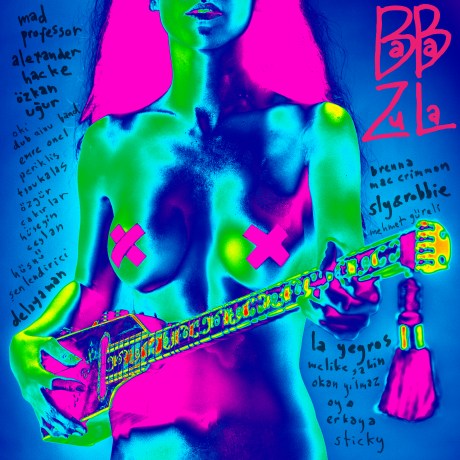
The inaugural quarterly revue of 2017 gathers together a faithful purview of the last three months of reviews and articles on the Monolith Cocktail. Myself, Matt Oliver and Ayfer Simms have chosen a mere smattering of our favourite music; featuring both tunes from albums/singles/EPs/collections we’ve reviewed or featured on the site and some we just never had the time to include.
As usual an ever-eclectic amorphous affair, with the most avant-garde pieces of music sitting in harmony with the most edgy hip-hop, Malian sand dunes blues alongside Belgium alternative rock’n’roll and psychedelic noodling, the first quarterly playlist of the year features The XX, Sentidor, Mauro Pawlowski, Baba Zula, Tamikrest, Emptyset, Your Old Droog, Likwuid, King Ayisoba and many more. A full tracklist is below, with links to relevant posts.
Tracklist:
The XX ‘On Hold’
Austra ‘We Were Alive’
Sentidor “Pedreira (Quarry)’ Feature
Porter Ray (ft. Asian T, Rife) ‘Waves’ Feature
Mauro Pawlowski ‘In Starlight (We Must Be Alive)’ Review
Baba Zula (Dr.Das Mix) ‘Iki Alem (Dub Version)’ Review
Baluji Shrivastav ‘Dance Of Erzulie’ Review
Bargou 08 ‘Mamchout’ Review
Terakaft ‘Djer Aman (Afriquoi Remix)’ Review
Dearly Beloved ‘Who Wants To Know’ Review
Taos Humm ‘RC’ Review
Dr.Chan ‘Yannnnk$$$ (Life I$ Not Fun)’ Review
Rudy Trouve ‘Torch’ Review
Irk Yste ‘Wumpe’ Review
Mauro Pawlowski ‘Men In Sheds Pt.1’ Review
Emptyset ‘Border’ Review
Nick Blackos ‘No Answer’ Review
Your Old Droog (ft. Edan, Wiki) ‘Help’ Feature
Paul White and Danny Brown ‘Lion’s Den’ Feature
Blue Orchids ‘The Devil’s Answer’ Review
Alasdair Roberts (ft. Gordon Ferries) ‘Caleno Custure Me’ Review
James McArthur & The Head Gardeners ’14 Seconds’ Review
Piano Magic ‘Attention To Life’ Review
Sankofa ‘Into The Wild’ Feature
Delicate Steve ‘Nightlife’ Review
Retoryka ‘Right Up Your Street Pt.1’ Review
Clap Your Hands Say Yeah ‘Down (Is Where I Want To Be)’ Review
Craig Finn ‘Ninety Bucks’
Shadow ‘Dreaming’
Tinariwen ‘Oualahila ar Tesninam (Transglobal Underground Remix)’ Review
Animal Collective ‘Kinda Bonkers’
Likwuid (Ft. 2 Hungry Bros) ‘Illfayted’ Feature
Oddisee ‘Digging Deep’ Feature
M-Dot (Ft. Camp Lo, Tribeca) ‘True Lies’ Feature
Oh No (ft. Tristate) ‘Showroom Floor’ Feature
Dope Knife ‘Nothing To Lose’ Feature
King Ayisoba (Ft. Wanlov da Kubolor & Big Gad) ‘Africa Needs Africa’
Tamikrest ‘Erres Hin Atouan’ Review
REVIEW
Words: Dominic Valvona
Released in quick succession the upcoming congruous 75 Dollar Bill and Joshua Abrams & Natural Information Society albums double-bill of entrancing experimental peregrinations not only represents the sonic intentions of Glitterbeat Records new imprint scion tak:til but also represents a mutual enterprise of partnership between networks and labels, both in Europe and in the States. The first of these albums, the 75 Dollar Bill duo of NYC-based musicians Rick Brown and Che Chen’s long-winded staccato Wood/Metal/Plastic/Pattern/Rhythm/Rock – abbreviated forthwith as W/M/P/P/R/R – was originally released back in the summer of 2016 via Thin Wrist Recordings, to much fanfare and critical acclaim from the music press. Meanwhile, Joshua Abrams’ Simultonality, the fourth album in the Natural Information Society’s nine-year history, is a new release in conjunction with eremite records – a partnership that’s hoped will spread Abrams’ vision to a wider audience in Europe.
Sharing some familiar themes with, indeed inspired by, Glitterbeat’s mini series of ambient releases, spearheaded by the re-release of Jon Hassell’s innovative “fourth world musics” classic with Brian Eno, Vol 1: Possible Musics, both albums reflect the raison d’etre of the new tak:til off-shoot. Adhering to Hassell’s blurring of the divide between futurism and tradition, 75 Dollar Bill traverse the psychedelic desert rock and trance of the Maghreb, avant-garde, jazz and even swamp boogie delta blues in a most indolent but listless transient manner on W/M/P/P/R/R. Motivated by an interest in “compound meters” – meter involves the way multiple pulse layers work together to organize music in time; a compound essentially dividing the beat into three equal parts -, but playing in a fashion that feels natural and organic, the follow-up to 2015’s more “forward momentum, stomping and shaking” style Wooden Bag is a nuanced clever exploration of interconnected tonality and tactile responses to a wealth of harmonics and melodies from a pan-global array of influences: from modal jazz to Arabic modes and eastern scales.

Expanding from a core duo of plywood crate percussion and electric guitar to a full-on accompaniment of brass, contrabass and floor tom live, Che and Brown are joined on stage by a number of friends and musicians. A loose unit, the line-up can change, though many appear on this four track suite, including Cheryl Kingan (The Scene Is Now), Andrew Lafkas (Todd Gapp’s Mystery Train), Karen Waltuch (Zeke & Karen), Rolyn Hu (True Primes) and Carey Balch (Knoxville’s Give Thanks). What they produce is an often adumbrate, repetitive experience that builds gradually, slowly releasing various tangents of interplay.
The opener, Earth Saw, for instance (a compound meter trip) meanders, or rather limps “aksak” style along to a slow 9 beat phase; one minute recalling Tinariwen, the next, something far more atavistic and ceremonial. On the following untethered to any demarcated timing Beni Said the outfit twin the delta blues origins of West Africa with the Mississippi; carousing to a box full of bottle caps apparatus percussion over sand dunes and Cajun swamp porches simultaneously. Almost as a break in transmission, the shorter (almost a vignette in comparison) Cummins Falls is powered by a Bo Diddley floor tom and maracas primal shakedown to produce a strange ritualistic link back to the rock’n’roll soup. Returning to longer expanses, the longest sonic experiment on the whole album, I’m not Trying To Wake Up, has an even looser gait and languidly moves through a wafting saxophone punctuated jazz, Afro-rock and psychedelic soundscape: a sound and music ideology best described by the augurs of doom themselves in the album’s inlay card as “tent music for tent people.”
Probing a similar soundtrack, albeit in an unconventional sense of the rhythmic and groovy meaning, Joshua Abrams’ ensemble – the first in the group’s history to be created by a regularly gigging group of players rather than associated friends – fluctuate amorphously between freeform jazz, Afro-psych, Kosmische and the ceremonial: a place where the traditional meets the contemporary avant-garde.
An album of “pure motion”, the most “structured and thru-composed” yet we’re told, Simultonality has a dense, sophisticated, more cyclical than forward shuffling movement and energy to its five track panorama. Driven on, though not in the most obvious of directions, by a trio of drummers (Hamid Drake, Mikel Avery and Frank Rosaly) each track locks in to a hypnotic and often traversing loop. Numerous junctions grow and form from this trio of beat-makers to create subtle peaks of interesting rhythms. Dividing the drums, with Avery in the left channel and Rosaly on the right in some cases, and with each playing a specific part of the beat, as they do on the transmogrified Jaki Liebezeit famous Vitamin C drum break experiment Sideways Fall (each taking a deconstructed section of that original break), you can hear something that sounds both familiar yet abstract and slightly off-kilter: The title of that track captures the never-ending free-fall of this stumbling cosmic performance perfectly.
The album’s finale uses another famous track as a prompt for a flight of fantasy to take shape from; Alice Coltrane’s mystical spiritual jazz survey, Journey In Satchidananda, inspires the group’s improvised 21281/2 South Indiana peregrination. A reference to the days when Abrams was the house bassist for the weekly sessions at Fred Anderson’s Velvet Lounge (the address of which is used for the track title) At the end of the night as the band packed away their instruments and Anderson re-stocked the bar, the transcendental allure of Coltrane’s classic would be played in the background: the ideal comedown. In what sounds to all intents and purposes like a tune-up, as the musicians play around, the initial stirrings of this Velvet Lounge reincarnation slowly meanders and winds together to shape a meditative jazz odyssey, resplendent with a wandering, peaceable tenor sax performance from guest artist Ari Brown.
Elsewhere there’s the African flavor joint Maroon Dune that features a sustained lingering harmonium and sounds like Embryo’s Africa mixed with Brian Eno and Karl Hyde’s DBF collaboration; the Wurlitzer blaze of rotating intensity and heavy free-jazz orbital Ophiuchus; and the transcendental harp tinkled glide through a Nepalese water garden St. Cloud.
Abrams and his ensemble effectively combine old worlds and new: imaginary ones too. Borders crumble and influences merge, though the philosophical idea behind this album is to “help listeners achieve a meditative centre and to consciously use music as a gateway to living.” It certainly, even with the different dizzying drum patterns and density, entrances after a period; each track, as I’ve already mentioned, cyclonic in orientation, a cycle or in the case of Sideways Fall, a continuing drop that never quite ends.
Simultonality is a syncopation of ideas both sonorous and fleeting yet totally immersing. And perfectly, alongside 75 Dollar Bill’s harmonious offerings, suits the mood and themes of Glitterbeat’s congruous new imprint tak:til.
Exclusive: Sentidor ‘ O Pássaro Canta Parecido Com A Música Que Fizemos (The Bird Sings Like The Songs We Made)’ Video
March 21, 2017
EXCLUSIVE PREMIERE
Words: Dominic Valvona
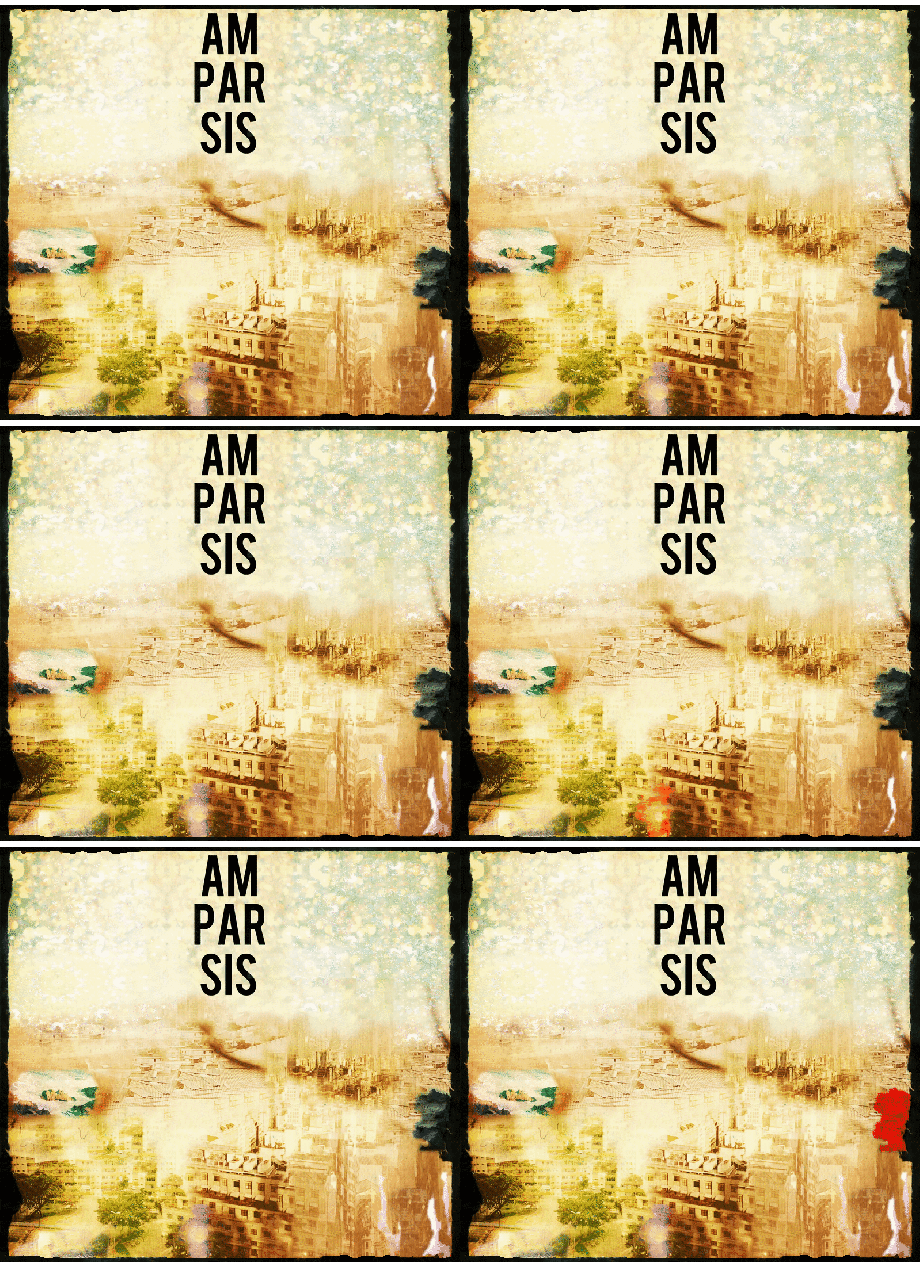
We are grateful to the assiduous Latin American celebrating hub, publisher and label Sounds and Colours for sending us over an exclusive video from the Brazilian producer and musician Sentidor‘s upcoming collage soundtrack peregrination Am_Par_Sis. The final haunting pulchritude from that album, released at the end of March, ‘O Pássaro Canta Parecido Com A Música Que Fizemos (The Bird Sings Like The Songs We Made)’ is part of a congruous if challenging futuristic Rio de Janeiro psychogeography remix of sounds and ideas, built around the transformed, cut-up samples and influence of one of Rio’s favourite sons, Tom Jobim, and his post-bossa nova peak experiment Passarim.
Synonymous and celebrated for bringing bossa nova to the world, Jobim’s explorations outside the genre had gone largely unnoticed. Sentidor, the alter ego of Belo Horizonte native and rising experimental music star João Carvalho, has shed new light on Jobim’s innovative experiments whilst also drawing on the drone, ambient, trance, funk carioca, classical and plunderphonics styles to create a uncertain multi-textured augur for future generations to ponder over, or as the press release opines and offers a deeper backstory: ‘It imagines what would happen if Passarim was discovered in a future version of Rio de Janeiro, once the political and social upheavals of the present day have magnified themselves into warfare, leaving the city in ruins. How would Jobim’s record be interpreted by a new generation whose connection with the past and the rest of the world has been cut? How would the record be used in creating new rituals? How can art be reorganized and rebuilt democratically? Without knowing it Sentidor has built on ideas conveyed through John Oswald’s Plunderphonics or Christian Marclay’s Record Without a Cover, questioning what is public domain in the modern world and whether something sacred should be preserved or rather gather dust and slowly turn into something else.’
Regulars to the site will have seen my review of his “revisted” collaboration with native Costa Rican musical ethnologist Nillo (Johnny Gutierrez), SIBÖ, last year, which itself was a transmogrified remix version of the duo’s original field recordings and manipulating production. Here on this latest venture, Sentidor is even more ambitious and creative.
Am_Par_Sis is digitally released by Sounds and Colours on Friday 24th March 2017. Expect to see a full review at a later date. For now enjoy this video premiere teaser.
NEW MUSIC REVIEWS
Words: Dominic Valvona

Tickling Our Fancy 047: Ah! Kosmos, Armellodie Records, La Mambanegra, Mokoomba, Omar Rahbany, Taos Humm, and Charles Vaughn.
Welcome to another edition of Dominic Valvona’s, most eclectic, review roundup of new releases. #47 includes a lively and sizzling revitalization of the Salsa music and dance style by Colombia’s La Mambanegra; an ambitious global-stamped passport of world music peregrinations, suites and songs from the Lebanese polymath Omar Rahbany; a Tonga ancestry soundtrack to love, loss and displacement from Zimbabwe’s breezy and playful lilting Mokoomba; the debut kaleidoscope misadventures of Taos Humm; a two-track EP of sophisticated electronic and cerebral synth pop from Ah! Kosmos, and psychogeography style ruminations on the omnipresence of pylons from Charles Vaughn. Plus, Glasgow’s Armellodie Records celebrate their tenth anniversary with a special celebratory showcase compilation of indie and quirky pop.
Omar Rahbany ‘Passport’
Released 10th March 2017

Talk about ambitious. The grandiose debut, part Middle Eastern rhapsody, part global symphony, from the Lebanese musical polymath Omar Rahbany, boasts a cast of 180 musicians and performers, from twelve different nationalities; all pulling together to produce an hour-long lyrical odyssey.
Taking the Beirut-born Rahbany three years to finish, his well-stamped Passport is inspired by a whirlwind of ideas and mediums. Broadening his “total work of art” conceptions to include film and choreography, projecting a mix of evocative instrumentals and vocal suites across a wide-screen vista, his “borderless” experiments are sophisticated, multi-layered and sweeping; often amorphously dropping from the classical into jazz-fusion.
The action and the themes, however, are deeply rooted, growing from a city that’s seen thousands of years of turmoil. Beirut, and the Lebanon, has been both scarred and enriched by countless civilizations, and as a result, the city is a patchwork of languages and religions, all sharing a history no one can agree on, or as the press statement puts it, Lebanon is “a nation that undertakes a constant struggle to find its ‘absolute identity’.” Imbued with a rich heritage that goes back at least two generations – his grandfather, Mansour, and great uncle, Assi, wowed the country with their distinct innovative compositions as the Rahbany Brothers; and his father is a playwright composer/lyricist and mother a famed professional dancer – Omer Rahbany’s opus is unmistakably steeped in the psychogeography of his native land.
Passport begins with a heralded Overture suite, which glides majestically through trilling flutes, accordion, piano and softened timpani, interpreting seasons as it goes and gradually building to a tumultuous crescendo. The Kiev City Symphony, conducted by Volodymyr Sirenko, adds a momentous grandeur of classicism and Bernstein to the Lebanese panorama. This full gamut of emotions score is followed by the heart aching Arabian lamented musical-esque, Umbrella Woman, which features the French Chanson like beautiful spiraling vocal performance of Ghada Nehme, and again, a grandiose orchestra accompaniment. Keeping a semblance of the sinfonietta, but also talking a cue from Amandia period Miles Davis, Rahbany and his extensive cast of players create an askewer avant-garde jazz, reggae and rock music soundtrack to the Biblical referenced vanity project, the tower of Babel, on the constantly evolving and changing Programmusik: Babel. A suitable cacophony is enacted to what was a legendary tower, built to reach the heavens and channel all communications under one universal language; TV and radio transmissions crackle alongside rocket bombardments and speeches to make the point.
Waltzes, rituals, the Tango, Byzantium, allusions to astral-travelling and spiritual peace are played on a mix of both traditional Western and Eastern instruments, including the bezok, rezok and oud. They articulate a wide spectrum of landscapes, from the deserts of North Africa to the reaches of outer space.
A soundtrack to an, as yet, unmade global spanning movie, Passport drifts from Lebanese theatre to jazz and the classical on what is an enthralling and ambitious whirlwind of a modern world music symphony.
https://soundcloud.com/omarrahbany/07-mouwachahat
La Mambanegra ‘El Callegüeso y su Mala Maña’
Released by Movimientos Records, 3rd March 2017

Nothing short of reinventing Salsa, the “machine-drilled nine-piece orchestra” from Colombia, La Mambanegra, promises an indecorous rebirth of the liveliest of Latin America’s music and dance styles. Injecting street smarts and a venomous dose of sass to a genre that has lost its luster in recent times, Jacobo Velez in his role as bandleader takes liberal pinches of inspiration from Salsa’s most vibrant and dynamic old guard and adds a eclectic mix of Nuyorican funk, soul, hip-hop and ragamuffin.
Translating as “The Black Mamba”, the La Mambanegra name and concept is embellished with Colombian mysticism and legend, loosely based on fact and fiction. Charting the story of an anonymous “hero” from the Barrio Obrero neighborhood in Cali (Colombia’s third largest city) and his “fantastic” adventures via La Habana, as he makes a journey to New York. Inspired by Velez’s own great grandfather, the musician Thomas Renteria (known to many as El Callegüeso Antigua), and his misadventures on a perilous voyage to the “Big Apple”, El Callegüeso y su Mala Maña celebrates as much as it focuses on Colombia’s tumultuous history; from the country’s own internal flight of people from the worst-hit areas of fighting between the government and FARC forces (though negotiations for an end to this fifty-year conflict are reaching, what looks like, a peaceful resolution), to cities such as Cali, and the migration to more stable states across the region and further afield, especially to the already mentioned New York. Renteria escaped drowning, thrown overboard on his intrepid voyage. Thankfully he made land; washed-up and stranded in Cuba, his stay proved to have been a productive one as he soon made friends with the famed Chano Pozo, who gave him, as legend has it, a “magical flute” from Africa. This infamous flute made that eventual journey to the USA, and was passed on to Velez, who uses it now as the source of his band name.
Migrating protagonists and snake spirited flutes aside, Velez and his troupe’s self-styled “break Salsa” transformation shoves Salsa towards its original revolutionary and communal dynamism. Sizzling with a wealth of Colombian talent, the La Mambanegra hub expands its ranks to include guest spots from Latin America’s finest. Dutch trumpeter, and Colombian-resident, Maite Hantele appears with the Colombian percussionist Denilson Ibargüen on the sultry, brightened horns, Fania-style trip to Africa via Miami opener, Pure Potenkem, and jazz great, Eddy Martinez can be heard on the more lilting, serenaded, lyrical tongue-twisting, Contare Para Vos. They sweep, but mostly saunter, through a grandiose mix of Kid Frost meet DJ Muggs Latino funking rap (La Compostura and Barrio Caliente, which features a lingering candour of The Pazant Brothers A Gritty Nitty); Albert Ayler jamming with Lalo Schifrin to create a Havana-style Salsa and jazz hybrid (Me Parece Perfecto); and Henri-Pierre Noel Haitian disco converges with South American cabaret (La Kokinbomba).
La Mambanegra’s uncoiled snake spirit spits out a fiery fusion, straddling the old and new guards and adding some 21st century grunt and excitement to a Salsa rebirth. One of many great groups from Colombia enlivened and confident of their vigorous cross-border influences, this multi-limbed orchestra steps up with an invigorated Latin celebration and revival.
Mokoomba ‘Luyando’
Released by Outhere Records, March 10th 2017

The next stop on our global music review is Zimbabwe; home to the energetic Mokoomba. Imbued by the awe-inspiring, life-giving forces of the Victoria Falls and Zambezi River scenery that nurtures the region, the group pay homage, not just with their name, which translates and encapsulates a “deep respect for the river”, but in their lyrics too. Most notably on the opening pan-flute lilting, nylon-string plucked guitar swooning Mokole, which literally translates as “water” in the Ndebele tongue, and pays tribute to the beauty and importance of those impressive and immensely powerful Falls.
Though they use a mix of languages on their latest, self-produced, album Luyando, it is the ethnicity of the Tonga that proves to be the integral ingredient to the Mokoomba sound and subject matters. One of Zimbabwe and the neighboring Zambia’s smallest ethnic groups, the Tonga’s ancestry goes back an age, yet in the second half of the twentieth century they were unceremoniously uprooted from their homes to make way for the Kariba dam. No repatriations were ever made, and fifty odd years later, many are still waiting to be connected to electricity. Their plight forms the backbone of the atavistic meets organically building, call and response, breakbeat Kambowa track. An articulation of pain, loss and longing, this traditional drum and group vocal performance begins as a glimpse into history but soon grows rhythmically, hurtling down the railway track towards a joyful funk.
The balance between tradition and the contemporary continues throughout the album. Growing up in the Chinotimba Township, the group learnt to blend their roots with the rhythms of Zimrock, soukous, ska and salsa. Moving closer towards those roots, Mokoomba have changed direction slightly from their debut in 2012, Rising Tide, which was a more switched-on rocking affair. Luyando is in comparison, more raw and stripped; a mostly acoustic performance that leans towards the local sounds of the region on what the bio declares, “is a quest for the wisdom of tradition and history as well as insight and solace amid contemporary crisis.”
Of course, no conversation, commentary and review on Zimbabwe can continue for long without mentioning the omnipresent Mugabe. Completely impervious to his own people and the neighboring borders and greater international communities; splitting his fiefdom into fierce rivalries whilst the country grinds to a slow collapse, Robert Mugabe has unsurprisingly few admirers within the arts and music world. Yet far from rattling the rafters and bawling in protest, Makoomba meander peaceably through their Tonga heritage, making a connection with the rituals and ceremonies that shaped them: looking back to go forward in a sense. The title track for instance, “mother’s love”, alludes to the Makishi masquerade and joyous graduation ceremony called Chilende; an initiation for boys between the ages of eight and twelve, who leave their village homes and live for one to three months at a bush camp. The song itself is a soothing sweet paean, punctuated by various hooting, animal-like, noises. And the moving, dusty earthy soulful Kumukanda is built around another Tonga initiation ceremony, on the band experienced in their teens.
Raw and emotional raspy; plucking and picking; shuffling and winding; Mokoomba channel their ancestral roots through an often lulled and playful, though at times more intense, spiritually harmonious blend of local and cross border rhythms. The voice of protest and the quest to find an answer to all the turmoil has seldom sounded so breezy and sweetened.
Taos Humm ‘Flute Of The Noodle Bender’
Released by Stolen Body Records/ Howling Owl Records, 17th March 2017

The burgeoning Bristol label, Stolen Body Records, has carved a certain niche for itself delivering some of the best garage band and psychedelic releases of late; somehow squeezing something fresh and inventive out of genres that, lets face it, have been flogged to death.
Among their rich roster, and a constant surprise, is the Isle of Wight émigré abound in Bristol, Edward Penfold, whose debut languid beyond-the-calico-wall psychedelic solo LP, Caulkhead, made our choice albums of 2016. Another year, another set-up and this time a congruous shared release with Howling Owl Records sees Penfold joined by fellow psych initiates Joe Paradisos and Matt Robbins, under the Taos Humm banner.
The trio’s debut, Flute Of The Noodle Bender, might imply some kind of allusion to psychedelia’s golden age, but there’s more of a post-punk, cacophonous feel to this twisted kaleidoscope of haunted somnolence and erratic, jerking, razor-cutting guitar hysteria: and indeed noodling. Though vocally – when there are lyrics, narration and voiced utterances to be found – the reverberations of Kevin Ayers, Syd Barrett and gramophone, calling from a bygone bucolic age, Tiny Tim permeate Taos Humm sound musically like a lax clash of Postcard Record label releases from the early 80s – on the discordant strangulated guitar vortex Hi Hats Are For Post Punk Heroes – and a Galapagos islands Fiery Furnaces – on the alternating attack/ sustain amorphous Velociraptortoise.
Despite the spikiness, intense tremolo quivers and the tortuous Gothic schlock horror screaming and screeching guitar mooning of BB, there’s a semblance of melting psychedelia, shoegaze and pondering post-rock lingering in between the erraticism and urgency. This kool-aid inebriated state can be heard on the wafting, mirage melodious Meek, and the lulling South Seas peregrination Tapestar, which has the group perform a suitable drifting, lush, instrumental and hushed cooing workout over the top of a recorded loop, played off what sounds like (as the title would imply) a tape recorder, from John Barry’s You Only Live Twice soundtrack.
Flute Of The Noodle Bender is full of ideas, both maniacal and languorously vague. Psychedelia, lo fi, shoegaze, post this past that all merge into a mix of wig out adventures and off-kilter velocity that’s way beyond the imaginations of most bands.
Various Artists ‘Armellodie Is 10’
Released by Armellodie Records, 10th March 2017

Self-deprecating. Mocking their status as a relatively obscure record label – as demonstrated by the cover art, which features a blasé Daft Punk, as though beamed down from another planet, loftily show their ignorance to a Glaswegian record shop assistant – the thankless task duo behind Glasgow’s Armellodie Records, Al Nero and Scott Maple, celebrate their tenth anniversary.
A beacon for countless mavericks and eccentrics, Armellodie has – despite alluding universal recognition from silly robotic-helmeted French electronic music stars – released a steady flow of exciting, interesting and melodically diaphanous indie and quirky pop records over the last ten years. Encapsulating, what is and has been, a varied roster Armellodie Is 10 documents the label’s output; picking out twenty tracks.
Featured on the Monolith Cocktail a while back, the collection’s opening artist, the idiosyncratic Yip Man, offers an skewered rhythmic gait version of Squeeze on the inventive pop ditty Barnburner. Also previously receiving our seal of approval, the lush anthemic indie stargazers, The Hazey Janes, are represented by their magnificent Manics-esque emotional rollercoaster The Fathom Line.
Elsewhere, Appletop make US college radio alt-rock sound somehow inimitably Scottish on Burning Land; the rambunctious Super Adventure Club turn in a distressed math rock stormer with Pick Up Sticks; and Conor Mason hands-in the lingering, charming country pick-up Words.
Immensely proud of their roots, referencing through band names and song titles Scotland’s tumultuous but proud history: For instance, The Scottish Enlightenment, which proves to be a great band moniker. However, The Douglas Firs (another cracking name), with all the sincerity in the world, pay a sort of homage to that cult favorite, Highlander – we’ll forget about the loose historical inaccuracies, it is a fantasy after all. The Quickening, which proves to be a folky peregrination around the campfires – pondering between sweetness and ambient experimentation –, takes its title from the, shoddy and usually over-egged pyrotechnic blast onscreen, duel to the death by decapitation of the film and TV franchises’ “immortals”. The song itself sounds serious enough and quite beautiful.
Not that any validation is needed, Armellodie Is 10 is a most brilliant showcase and anniversary celebration from a label that has remained constant. This is a label that thoroughly deserves championing. Here’s to the next anniversary in 2027.
Ah! Kosmos ‘Together We Collide’

Featured for the first time on the Monolith Cocktail in 2013, the Istanbul-born sound designer and electronic music composer Basak Günak was just starting out on a fruitful career, releasing the alien subterranean debut EP, Flesh. Under the cosmological guise of Ah! Kosmos, Günak has, we’re happy to say, gone on to reach international acclaim.
Relocating to Berlin a while back, Günak has composed numerous sound-art pieces and soundtracks for installations, site-specific work, short films and plays, and has also garnered favorable reviews for her experimental electronic and dance music performances. Her latest release, Together We Collide, is a two-track EP; the first track of which, From The Land Below, features the rich polygenesis soulful vocals of Warp label signed artist LAFAWNDAH. Clattering-stick percussion, taut delay, nuanced swaddling horns and a number of synchronized rhythms, both Techno and futuristic jazz leaning, form a sophisticated soundtrack for the undulating vocals. Moody in the manner of Massive Attack, this mythological, spiritual trip starts to click after repeated plays, and sounds more and more melodies each time.
Keeping From The Land Below company is the Tricky-swooning-to-the-moon-above-Eastern-skies, winding and pondering, Silent Safe. Awaiting the listener is a wilderness with symbolic spellbinding ritual yearning, cooing lyricism and tribal trip-hop beats, verging on leftfield synth pop.
Highly sophisticated, nuanced and dare say, cerebral, Günak continues to produce a deep thoughtful mix of electronic and melodic poetics, this latest EP another brilliant example of her growing reputation as an inventive composer and artist.
Charles Vaughan ‘Pylon Reveries’
Released by Wayside & Woodland Recordings, 24th March 2017
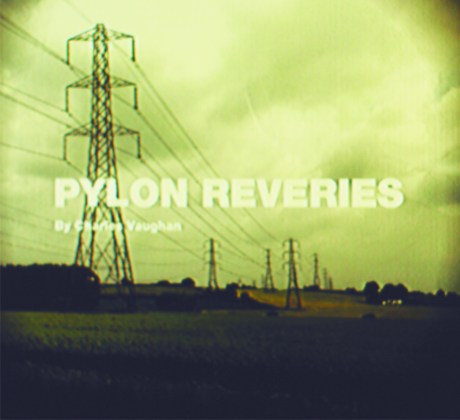
Despite being vividly warned-off, like many of us kids in the 1980s, exposed to TV public health and warning announcements films from playing anywhere near pylons (for obvious reasons). Charles Vaughan is fascinated with these metal leviathans. Collected from a decade’s worth of filled-up hard drives and miscellaneous tapes, his fourth soundscape come psychogeography soundtrack is suffused with the pylons constant throbbing and charged omnipresence.
Attempting in a conceptual sonic manner to escape the overburdened mind, plugged into the overbearing data avalanche of an increasing impossible to break free from technologically connected world, Vaughan shows that even in the middle of an isolated field/meadow it’s near impossible to find a sense of disconnection: the hum, pulse and crackle of technology always close at hand; symbolized by the proliferation of pylons, straddling the landscape.
Handled with subtlety, the fizzled droning undulations of these looming “sentinels” move slowly and sonorously; often in trepidation and constantly unsettling. From shorter, passing vignettes and ruminations to longer, drawn-out ambient pieces, Pylon Reveries fluctuates between Ambient Works era Aphex Twin and Kosmische pioneer Asmus Tietchens, and on the transmogrified harpsichord-like arpeggiator, neo-classical, Revery, Thomas Dinger and Hans-Joachim Roedelius.
There’s a certain wonder and reflection on these “totems”, but also a sense of nostalgia too, one borne out of an interest for the type of dystopia themed TV shows of the late 70s and 80s. Vaughan after all takes his name from a character in the British lo fi drama, Survivors; the synopsis of which has a virus wipe out 98% (very specific!) of the world’s population. Vaughan emerges in the aftermath of this catastrophe with a band of “survivors” to a desolate wilderness. Tasked with collecting information and exploring he hopes to rebuild society from the ground up. Here he is then, reimagined, documenting and creating a reification of the infrastructure that encroaches upon the land and our lives: Is technology freeing us or slowly binding us to a new reliance?
Increasingly uncomfortable with the fears of an ever-connected society, one that is moving towards a fully integrated technology, Vaughan has a myriad of feelings and meditations to represent through sound, but it is an atmosphere of unease and uncertainty, which dominates and prevails.
LABEL LAUNCH/SINGLE
Words: Dominic Valvona
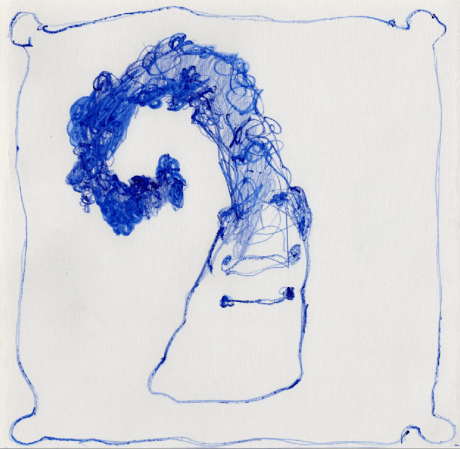
Jono Podmore & Swantje Lichtenstein ‘Miss Slipper/Lewes’
Released on Psychomat, 6th March 2017
Responsible for a stream of experimental electronic projects, both on the cutting edge of technology and vanguard of a return to the roots of analogue, and a member of the manifesto guided metamono trio, Jono Podmore has cranked-up the generator, punched in new coordinates and blown the dust off the dials to relaunch his influential 90s label, Psychomat.
Renowned for his cerebral collaborations with a number of luminaries from across the electronic music spectrum, but famously for his work with both Can’s Irmin Schmidt (together as the Kumo and Irmin Schmidt duo) and the late Jaki Liebezeit (Cyclopean), Jono’s inaugural label comeback pairs him with the Düsseldorf-based sound writer/performance artist Swantje Lichtenstein.
A conceptual meeting of minds, the duo’s upcoming Michaela Eichwald cover art adorned 7”, which is billed as an actual “work of art” in its own right, features two serialism performance-manipulations recorded at Jono’s on the day of the funeral of his friend, the publisher Felix Hiner, in 2014.
The first of these, Miss Slipper, is of all things, riffing off a piece of writing by Jono’s daughter. A spontaneous freewheeling interpretation of an innocent description of a school art teacher is pushed towards the alien by ring modulations and filter trickery. Obscured and transmogrified into something almost sinister, even daemonic, Swantje’s voice shifts between squelched and metallic strange tongues.
Lingering in the same atmosphere, beyond the stratospheric, the idyllic pastoral East Sussex town of Lewes slips into a parallel dimension of weirdness; the metamono sat-nav tuning into a beacon communal with unknown entities, somewhere yonder in the ether. Based on a set of directions given to the group for a gig in Lewes, this extemporized art-piece glitches, buzzes and chants its amorphous script until it becomes directionless; untethered on wave after wave of tubular ringing, echoed and chromed effects; disappearing into the torn fabrics of space.
Miss Slipper/Lewes is every bit as conceptual and experimental as you’d expect, and lays down the start of, what I hope, will be a fruitful union of art and sound work. We may not have to wait long though for the next installment, as a series of remixes from Pete Hope, Hairy Kipper, Inky Blackness, Bastard Status, Jono in his Kumo guise, and Professor Michael Ball (a colleague of Jono’s and a professor of electronic composition), will be released in the coming weeks and months.
Tickling Our Fancy 046: Clap Your Hands Say Yeah, The Nightjar…
February 14, 2017
NEW MUSIC REVIEWS
Words: Dominic Valvona
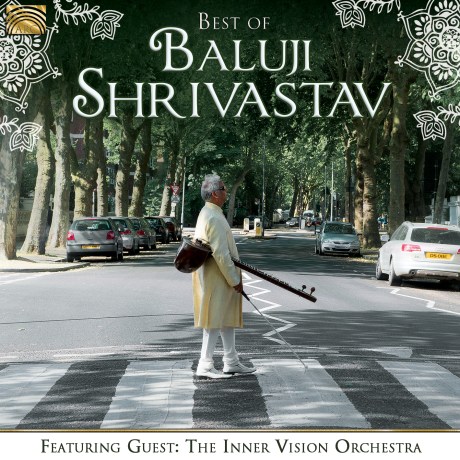
Tickling Our Fancy 046: Srdjan Beronja, Nick Blackos, Clap Your Hands Say Yeah, Irk Yste, IRL Remixes, The Nightjar and Baluji Shrivastav.
In this edition of Tickling Our Fancy, Alec Ounsworth, under his famous Clap Your Hands Say Yeah moniker, returns with a brilliant new “cathartic” purging of an album, The Tourist; the inconspicuous but effective in spreading ever more eclectic world music sounds to a wider audience, Independent Records Ltd label, celebrates its first fifteen years in the business with an album of transmogrified remixes, entitled Terraforming In Analogue Space; ARC Music release two Indian music inspired albums, with a Best Of the legendary Baluji Shrivastav (who made London his home in the early 80s) and a new travelogue that straddles not only India, but also the Balkans and the Middle East, from the erudite Serbian multi instrumentalist Srdjan Beronja; The Nightjar unfurl their accentuated and stark contemplated post-folk debut, Objects; plus the inaugural release for the German label, GiveUsYourGOLD, from the Weimar Techno duo Irk Yste, and a new album of Nick Blackos hip-hop instrumentals from the burgeoning ONV blueprint.
Clap Your Hands Say Yeah ‘The Tourist’
Released 24th February 2017
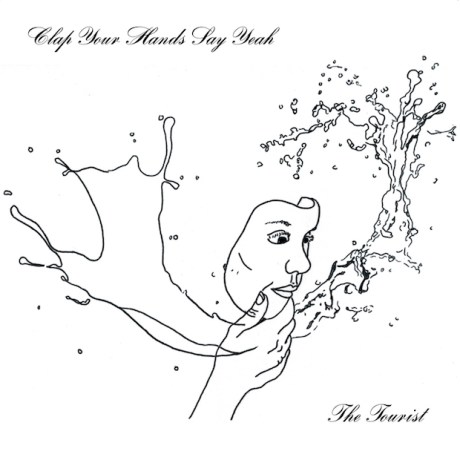
Inimitably jump-starting a cerebral indie-pop scene in the mid noughties with his unique off-kilter melodies and quivered, yodeled vocals, the fiercely independent, Alec Ounsworth created major ripples with his nom de plume, Clap Your Hands Say Yeah’s self-released debut in 2005.
Every critics nightmare in the labored name department, and so abbreviated to save precious time (oh pity us poor feckless critic darlings!), CYHSY was instrumental in influencing and inspiring a rafter of artists and bands. Ounsworth’s peers have evidently caught up, and his fifth album, The Tourist, reflects this; suffused as it is with familiar echoes of The Parenthetical Girls, Les Savy Fav, Elliot Smith, the Arcade Fire, and on the askew r’n’b lite, A Chance To Cure, Chk Chk Chk.
One man’s vision, orchestrated in a solitary fashion, Ounsworth is self-confessedly “stubborn” when it comes to recording. However, though he writes and arranges everything he’s joined in the studio by a bassist and drummer, who offer a bright, expanded “band feel” to the material. These recordings were further embellished with additional back-up vocals, keyboards, guitars and percussion, tidied up by engineer Nick Krill and eventually mixed (and egged-on) by CYHSY “anchor” Dave Friedman – who previously worked of course on the Some Loud Thunder and Only Run albums. The results of this process are magnificent; the anxiety-ridden, rich challenging themes channeled through an airy and often breezy big sound.
Ounsworth stumbles and ponders through a “post factual” strewn world of challenging emotions trying, to make sense of it all. At times the album title could even be said to act as a metaphor for the artist’s own estranged and removed soul-searching: a tourist in his own country. As lyrically adroit as ever, he carefully crams in as many associated references and wordplays as he can, squeezing a lot out of every phrase and expression in a characteristic style that leans towards a more cheery disposed Thom Yorke. Despite some sad and profound pathos heavy lyricism, Ounsworth’s “purging” of thoughts is meant to be a cathartic experience. The anxieties of our times can’t help but leak from every other line, yet The Tourist is a fairly warm, jangly surprise package of lolloping and anthemic songs. Building and soaring to an emotive brightened crescendo of sweetness and yearning on The Vanity Of Trying; contorting and bending guitar textures in a Robert Fripp fashion on the psych-pop gnarled Down (Is Where I Want To Be); and, up close and personal (every breathe audible) to the mic, driving through an 80s nocturnal rock ballad on Better Off, the inimitable Ounsworth careers through a full gamut of moods and chaos in the most natural and energetically purposeful way.
Clocking in at well under the forty minute mark (bands and artists take note) The Tourist is an unlabored, near-perfect melodious album. It says all it needs to and more; free of indulgence, and despite its bombast, sophisticated suffused layering is incredibly lean and brisk. A most enjoyable if poignant experience, this album already sets the benchmark in 2017, and is without doubt one of CYHSY’s best.
Various ‘Terraforming In Analogue Space – IRL Remixes 2000 – 2015’
Released by IRL, 24th February 2017
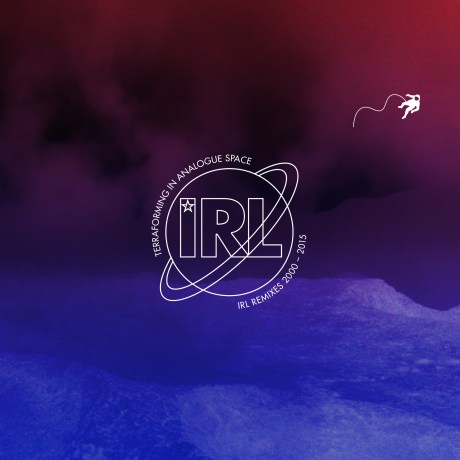
Celebrating fifteen years (the first that is) of “global music” transmogrification – transforming what are in many cases the most raw and basic of field recordings into stunning peregrinations and flights of internationally amorphous fantasy – Independent Records Ltd. have chosen label stalwart Nick “Dubulah” Page to curate a 100th release special of remixes, that once again, in-keeping with their “raison d’être”, offers an alternative sonic vision of choice tracks from the back catalogue.
Regular Monolith Cocktail followers may recall my review of Page’s Xaos mythical Hellenistic soundscape collaboration with Ahetas Jimi and a group of traditional musicians, which made the blog’s choice albums of 2015 feature. The multi-instrumentalist, producer and writer may also be familiar to readers for his work with Transglobal Underground and Dub Colossus. All three of which appear in one form or another on this reinvigorated album: that reimagined Greek tragedy Xaos, for instance, is represented with a David Sylvian flittering, and quickened rhythm and beats swaddled TJ Rehmi mix of Pindos Full Moon, and a subtle bounding timpani, 80s synth-horror soundtrack style treatment, by Stereo Mike, of the esoteric Byzantine evocation Processional – one part atavistic Biblical Aphrodite’s Child, the other, John Carpenter in the “fog”.
But before we venture any further, a little background is needed. The illusive IRL – not one to herald and pontificate loudly – have remained a highly influential purveyor of music from across the most wild, isolated and wondrous corners of the world, even if they remain on the peripherals; relatively obscure. Originally formed by a trio of artist/band managers, whose eclectic CV included managing at one time or another, Sinead O’Connor, Beth Orton, Rialto, Jah Wobble and The Wonder Stuff, IRL’s remit was to remain inconspicuous. Key figures in this enterprise, the guitarist and in recent years, member of Robert Plant’s Sensational Space Shifters, Justin Adams, and field recording specialist extraordinaire and general polymath of distinction, Ian Brennan, have brought the goods, or at least help shape them. And it’s no surprise that they feature heavily, with both their own productions and songs receiving the remix treatment, but also appearing in their original form on a second CD. Brennan, who I interviewed for the blog last year, memorably introduced the sublime ragged and dusty gospel-influenced Malawi Mouse Boys to the label. The rodent kebab sellers and, as it turns out, gifted musicians/singers from one of the poorest of poor hamlets are given a galloping dubstep-lite flitter by The Dhol Foundation on the village serenaded and lolloping, Ndinasangalala (I Was Happy), and acquire a Teutonic electro affects package of drum pad lasers, modulating contoured synth and handclap percussion (remolded from the joyous clapping on the original) on Dalek Romeo’s horizon floating mix of Manja (Clap Your Hands). Other choice Brennan productions, reconfigured and taken off-course, include the Lunar Drive mix of General Paolino’s Congratulations South Sudan, which shifts between two-step accelerated shuffling and half-time dreamy lilting soul, and the Penguin Café Orchestra’s, as ever, lush and subtle scenic mix of Acholi Machon’s Convoy.

Making the most appearances however, the already mentioned Justin Adams appears in many guises, both as a solo artist and as a collaborator and producer. His own lo fi Desert Road trip is underlain with a percussive cycle of tight-delayed electronic snare and soft prodding synthesized bass by Dub Colossus, but keeps its original mirage-shimmering candor. There’s also a lunar whistling and quivering Radar Station mix of Adams’, with Juldeh Camera’s Ngamen, and a trio of, mostly subtle transformations of the French chanson group Lo’Jo, who Adams produced. Heavily intoxicated by North African musical influences, Lo’Jo in fact took Adams on his first trip to Mali, which as a result, led to them both producing the sublime Tuareg desert blues group Tinariwen’s legendary 2001 release, The Radio Tisdas Sessions.
Complementing Lo’Jo’s Arab-Franco signatures further, as if in some kind of dreamscape, Bernard O’Neill (comrade-in-arms of Page in Dub Colossus and other incarnations), appearing here under the Syriana banner, accentuates the jazzy seductive, liaison-amongst-the-Tunisian-sand-dunes, mood with a Holger Czukay-like evocation on the group’s Sur Des Carnet Nus. A Boyscout mix of their languid Yalaki reimagines them as Moloko, whilst album closer, Carnet US Vatican Radio, also mixed by O’Neill, lets the concertinaed, yearning lived-in French vocals and atmospheric crackles dissipate into the ether.
Broadening musical horizons, if politically and societally it seems many are retreating towards nationalistic introspection, IRL have released some superb albums. It was through the label’s 2003 Festival In The Desert LP that I first heard the mesmerizing Saharan transcendental blues of Tinariwen. And the “terraforming in analogue space” album opens with a suitably suffused desert contoured and Kraftwerk-like kinetic beats driven peregrination of their entrancing Oualahila by the world music and electronica fusion doyens Transglobal Underground.
Taking the LP title literally, “terraforming” describes the process of making a planet habitable for us humans, changing the atmosphere and life-giving properties to that of Earths. In this instance, IRL allow others to reshape their back catalogue in an attempt to introduce the listener to inhabit an ever richer and eclectic space. Despite drifting untethered into the galaxy, at times sounding almost alien, this remix appraisal seeks to bring the global community together in the spirit of human commonality.
The Nightjar ‘Objects’
Released 17th March 2017
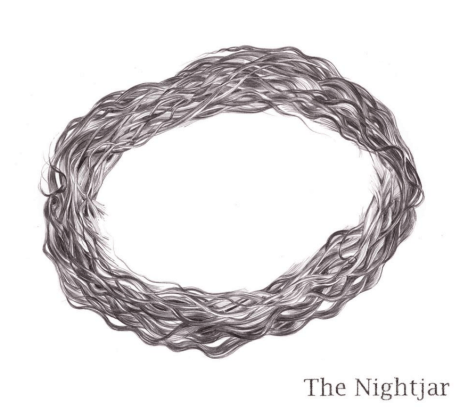
To the group’s credit, The Nightjar’s accentuated and stark contemplations on the human condition and the constructs that give meaning to reality itself, including the inevitable specter of death, couldn’t have sounded more peaceable and full of grace. Such heavy themes as these, inspired in part by both Eastern philosophy and the Catholic afflatus metaphysical quandaries, posed by the late venerable French composer Olivier Messiaen, usually promise a hard slog and grueling experience for the listener. Yet, despite the raw directness of this Bristol ensemble’s naturalistic, poised, songbook of “hope, loss and disaster”, every performance is beautifully and dreamily executed.
Referring to their debut album, Objects, as a collection of “songs for the end of time”, “concerned with transformation, transience and impermanence”, The Nightjar articulates the fleeting and sings of a time when nature reclaims the encroaching man-made landscape. Describing their particular style as “lo fi post-folk”, they do push and experiment with the folk genre, though the choice of themes, and even with the inclusion of the re-arranged traditional songs Hangman and Dle Yaman, summon up the atavistic. For instance, the age-old standard, Hangman, is a scion of over hundreds of variations on the same central trope; an unknown fated protagonist waits, hoping that out of a litany of visitors, from family members to lovers, someone will arrive in time with the right coinage bribe to free them from the hangman’s noose. The Nightjar hauntingly resurrect this morbid tale with a suitable lamentable vocal, paused, sighing electric guitar and a harrowed bowed drone. Albeit from what I can gather with little information, Dle Yaman is another standard, this time a plaintive Armenian ode, an exclamation of mourning, which the group furnishes with a divine sacrosanct ascendency.
Exploring the void, submerged under a amorphous gauze of diaphanous and ether atmospherics, The Nightjar recorded their album in rural Portugal on the most basic of equipment. Informed by such “interesting” locations as a dilapidated bar in the Old Town of Sertã, and the distressed run-down piano that came with it, they fluctuate between (what sounds like) a gramophone scratched transmission, from the great beyond, and a clearer, more evocative and resonated style or recording. The backing is mostly subtle and attentive: the electric and acoustic guitars erudite and drums attentive throughout, ascending, descending in the ebb and flow of the building drama. But most striking is the vocal work of Mo Kirby, who perfectly articulates the mood with a measured performance of sorrow, yearning, tumultuous lament and the ethereal.
Finding a passage through an allegorical “wardrobe” into an earnest, toiled world of cockleshell dredger inhabited coastal shorelines and riverbeds; swallowed whole by the soil into the psychogeography, The Nightjar waft through centuries of despair and meaning to map out an auger of unease about our future.
Baluji Shrivastav ‘Best Of…’
Srdjan Beronja ‘Sounds Of The East: Music From The Balkans, India And The Middle East’
Both released by ARC Music, 24th February 2017

Photo credit to Simon Richardson
Capping off last year’s 40th anniversary celebrations with a top three placing in the highly regarded Womex “top 20 labels” awards, the industrious world music label ARC Music starts the new year as they mean to go on, with a duo of congruous Eastern imbued musical travelogues from Baluji Shrivastav and Srdjan Beronja. The first of which is a “best of” collection and timely appreciation of the revered Indian music virtuoso – who was recently honoured with an OBE -, the second, is a collection of field recordings taken from a geographical triangle of India, the Balkans and the Middle East. Both albums overlap; Shrivastav’s polygenesis array of ragas and concepts chiming with Beronja’s own sitar and Indian redolent cornucopia of recordings. And coming as they do from different starting points and cultures, compliment each other well.
Highly qualified, gaining a degree for his vocal studies from the University of Lucknow, and a BA for tablas and an MA for sitar from the Allahabad University, respectfully, multi-instrumentalist composer Baluji Shrivastav has journeyed a well-travail(ed) road to reach his richly deserved status as one of India’s most cherished exports. Musically championed of course on this collection, he’s equally respected for his fervent campaigning as a cofounder, alongside his wife, the composer and songwriter Linda Shanson, of the London-based Baluji Music Foundation. Shrivastav, who was blinded at only eight months from glaucoma, and Shanson’s foundation has and continues to help further the cause of the blind and visually impaired, as well as disabled in music. Whilst this impairment hasn’t held the gifted and tactile musician back – if anything, inspiring experimentation and an alternative, sometimes original, way of doing things – it has obviously shaped him.
A positive extension of his foundation is the Inner Vision Orchestra; steered and directed by Shrivastav, the 14-piece ensemble is a melting pot of cultures, with members from the Afghanistan, Iran, Lebanon, Japan, and Nigeria. This troupe can be heard on both the exotic Persian love yearned Chashma Sia Dari (sung in the Dari dialect, a spoken form of Persian used in Afghanistan), and the swimmingly reedy ensemble-vocal piece, Diggy Diggy Diggy Ya Rababa.

Photo credit to Simon Richardson
Making London his home in the early 80s, Shrivastav’s humble journey from the North Indian state of Uttar Pradesh to the streets of the England capital informs most of the material. Taken from his recording career over this four-decade period, some tracks make more obvious allusions to this than others. One of the earliest, Fruit from 1982, is a lilting sitar version of the Linda Shanovitch written South American-bound love tryst. Languid Cuban flavours and sauntering sway work well with the Indian instrumentation, in what is a fusion of styles we seldom hear. Reflecting, in a more grandiose manner, his attentive first steps in, and embrace of, London, there’s the instrumental trilogy of Discovering London & Friendship, Walking Through The Streets and Mixing With The Crowd And Spirit Of Joy. All of which tie together Shrivastav’s experiences, mixing classical British pomp and circumstance with the exotic reverberations of India across three various mood soundtracks. The rest of this collection mixes more traditional adaptations with contemporary arrangements; devotional standards such as the melodious Raag Shobhavari, and the spritely, full of life, Indian dance, Nartaki.
As highly complex and intricate as you’d expect, with countless forms, scales and “ascending’, “descending” notes of praise, adulation and contemplation, as well as guest appearances from not only Inner Vision but also the Egyptian master tabla player Hossam Ramzy, Andy Sheppard and Guy Baker, all these performances remain organic and fluid – there is a detailed inventory and backstory booklet however for those who wish to dip further into the finer details.
Though he’s worked with a dizzying cast of eclectic performers including tabla legends Anindo Chatterji and Ustad Fayaz Khan, and artists as diverse as Massive Attack and Stevie Wonder over the years, Baluji Shrivastav is now enjoying a welcome appraisal: On top of that OBE he received in the Queen’s birthday honours list last year, a GG2 Leadership Award for Achievement Through Adversity, there’s also a new documentary about the Inner Vision Orchestra, Colours Of Sound, from the director Marie-Cécile Embleton, and now this highly enjoyable survey compilation. An introduction and retrospective, this Best Of album will endear the listener to the prowess and multifaceted evocations of the sitar and its accompanying Indian instrumentation.
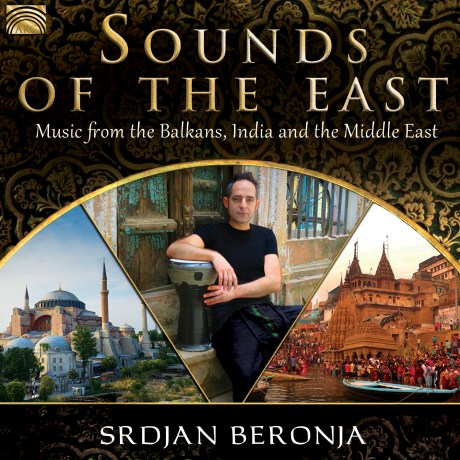
Imbued with a similar Indian sound palette, though one that has amorphously blended it with those of the Middle East and the Balkans, Serbian composer Srdjan Beronja takes the familiar buzz of the sitar and highly deft, rapid tapping rhythms of the tabla and merges them with a host of instruments from ancient Persia and North Africa on his latest album, Sounds Of The East. Drifting across a geographical triangle of influence, the ethnomusicologist travels between all three corners of his sonic map, recording both traditional and original field recordings and improvised performances. It is in short, a veritable odyssey of discoveries; moving seamlessly through the exotic landscape, capturing many unusual and surprising sounds.
Following on “effortlessly” from his previous 2015 album, Sounds Of Varanasi – the Indian holy town of the title appears again on this collection -, Beronja, again, spends most of his time in India. Recordings vary in length and drama; from the menagerie “morning chorus” of wild twirling, hooting and convoluted birdlife, found on the heat-sapping Alapana – recorded in Kerala – to the gunpowder explosion firework snapshot of the famous Diwali Festival Of Light, on Visphot – meant as a poignant reflection on the damage that this bombastic firework display inflicts on the environment. There’s also more performance-based instrumentals, including the improvised, joyful, Raag Jog Dhun, which partners Beronja on the tabla-like darabuka drum with maestro violinist Pt Sukhdev Prasad Misha (a revered ambassador of Hindustani classical music no less), and the more groovy but reflective, Raga Sitar-Daf Kirvani, which sees Beronja play the Persian frame “daf” drum and the notable Pt Dhruv Nath Mishra sit in on the sitar.
Leaving behind the scenery but not the music, those Indian sounds lingering on as Beronja journeys to the Middle East and the Balkans. The strangest recording, Nora Of Hama, captures the weird buzzsaw and motorbike revving sounds of a wooden water wheel in the Syrian town of the title. Disturbing, almost ominous, the scraping and creaking mechanics offer a surreal window into age-old apparatus; still in use; still providing an essential resource. In a similar landscape of musical influence, the Serbian composer invites the Sarajevo born oud player and multi-instrumentalist Marina Tošić to join him on the “open air” improvised liturgy, Maqam Bayati Oud Taqsim. Tošić also appears, playing the pan flute, on the live in concert recorded, Shepherd’s Love Song. Two musical spheres and traditions, one from (again) India, the other, the Balkans, entwine on this sad tale of the lonely shepherd pining on the hillside in wistful lament because of a former lover’s unreciprocated love. Another “virtuoso” (just one of the many) oud player, but also more than handy on the zither-like qanun, Stefan Sablić plucks away dreamily on the ethereal album closer lullaby, Maqam Ajam Qanun Taqsim.
As with many ARC Music releases, in depth notes can be found in the accompanying album booklet. Not that you need an extensive knowledge, and with so many different influences and ways of interpreting meaning from the highly sophisticated, centuries old traditions of specific scales, it’s better to let the music breathe unburdened. Of course it’s all interesting and informative, but it also shows the cross-pollination process and intricate blending of styles that makes this music so universally connected. Sounds Of The East is an intriguing, often surprising, musical travelogue; one that reminds us just how erroneous those musical borders really are, as Beronja finds the sounds that bind us.
Nick Blackos & LOA ‘No Reason’
Released by ONV, available now

Dropping releases surreptitiously without any fanfares or grandstanding, the burgeoning London-based hip-hop (and all it’s many congruous bedfellows) label ONV has in the last week, shinnied an eight-track instrumental showcase up the flagpole in the hope someone will salute it. Entitled No Reason of course, this latest collection of transmogrified 808 beats, tight kinetic drums, tetchy glitches, and warped languid samples is every bit as in line with the label’s signature subterranean and gritty London-soundscape style as previous EPs, LPs and odd tracks.
No Reason travails a strewn, strung-out sonic landscape, littered with cryptic chemicals (T88), vortex obscured utterances, speech and lulling voices (Four Horsemen, Get Away), languid vapours of dubstep and grime (Grotti), and the slow ticking away of time (Tranceforma). Lo fi and off most radars, ONV’s principle Nick Blackos, and the mysterious LOA, have produced another curious, underground and leftfield hip-hop album.
Irk Yste ‘Wumpe/Stroppe’
Released by GiveUsYourGOLD, 3rd February 2017

The first release of the year from our friends at GiveUsYourGOLD – the artist-run Berlin label founded a few years ago by Alexandre Decoupigny and Thomas Tichai, of Psycho & Plastic fame -, the cool aloof Irk Yste debut is a sophisticated three-track techno transmission from the historically and culturally important eastern German town of Weimar.
Since bonding in the sandbox of their playschool in ’84, the Irk Yste’s Christoph and Benjamin (no surnames given) have shared a penchant for music, especially acid techno. Introduced to the style whilst in Denmark during the dawn of the noughties, the musical partnership toured the (as the bio describes it) “flattest of kingdoms” to ride on that inimitable acid wave. Via a number of projects, including The Zonnhaider’s Club and Norsal Flow, and a sojourn studying electroacoustics at the SeaM institute, in the city they now call home, the Weimar duo now release their inaugural explorations under their latest darkly melodic techno incarnation.
Informed by an “iterative” process of building sonic structure and harmony before dismantling and starting anew, the three-track Wumpe/Stroppe suite is a sophisticated, suffused mix of minimal techno, house and, even, jazz. The opening machine-age with soul, Wumpe, starts with a nauanced chain reaction of R&S and Basic Channel flavoured kinetic beats and a sonorous bass drum, but gradually builds to an ascendant, cinematic melody finish. From a similar mould but hinting towards a more lilting nocturnal escape, Stroppe is a metallic glistening slow ride into an unsure future scape. More a vignette, the final track, Pumps, fades in on a stirring pronounced synthesizer drone wave, before a serial accompaniment of warping, wobbling robotic and dial-up sounds interweave with the minimalist stripped-down techno foundations.
An impressive glimpse inside the machine, GiveUsYourGOLD promise that there’s more to come from their latest signing. Stay tuned for further techno explorations in the future-now.
Exclusive: Sankofa share their latest video, ‘Into The Wild’
February 3, 2017
EXCLUSIVE VIDEO
Words: Dominic Valvona
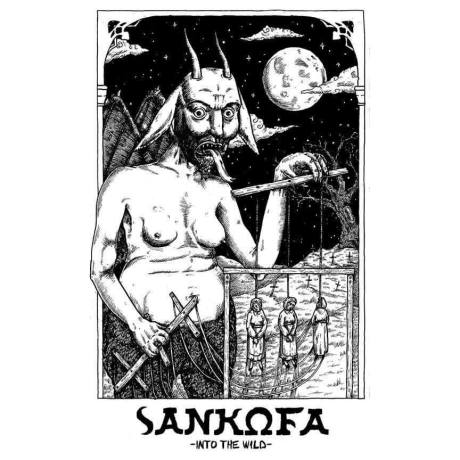
Intoxicatingly beckoned by their satanic majesties into the subterranean, the bewitching new single from the reputable morbidly curious Liverpool band Sankofa, Into The Wild, is a sassy, knowing two-geared esoteric augur. Following hot on the heels of their last, and equally daemonic psych single, All The While, ahead of the band’s debut album (released later this year), this entrancing incandescent liquid lightshow video adorned doom-monger shifts from a malady of Crime And The City Solution style tremolo twanged gothic country, The Doors and The Creeps, to a final unyielding, heavy rock guitar crescendo. In case you missed the subtle hints and miasma, both sonically and lyrically, the cover art can’t help but give you nightmares, alluding as it does to very real metaphors of puritanical regimes and their witch-hunts.
Into The Wild will be released by the, burgeoning, independent Glasgow-based In Black Records label (home to Acting Strange and Mark McGowan) on the 3rd March 2017; for now, you can catch our exclusive taster video.
 Monolith Cocktail Blog