The Perusal #64: Marshall Allen, Trupa Trupa, Helen Ganya
February 10, 2025
A WORLD OF SONIC/MUSICAL DISCOVERIES REVIEWED BY DOMINIC VALVONA

PHOTO CREDIT: AYANA WILDGOOSE
Marshall Allen ‘New Dawn’
(Week-End Records) 14th February 2025
It’s timely and says a lot about the intentions and feel, the mood music, that the debut-led album by the centenary-celebrating alto saxophonist, flutist, oboist, piccolo player and Electric Wind Instrument synthesist Marshall Allen is set to be released on Valentine’s Day. Having led the late Saturn cultural ambassador Sun Ra’s Arkestra since 1995, and before that, been a creative foil to the celestial and Afro-jazz futurist progenitor since meeting in the late 1950s, Allen bathes in the sentimental romanticism of his former teacher’s vision with a love letter to the cosmos.
It’s staggering to believe that Allen has only just, in his hundredth year, been invited to record his inaugural bannered album. Sure, Allen’s name is synonymous with that of Sun Ra’s, but since serving his time in the army overseas in France, where the action was at, during the 1940s, and then taking up the alto sax and studying in Paris, he hung out with such notable talent as Art Simmons and James Moody, and been side man to such luminaries as Terry Adams and Paul Bley, featuring on untold recordings or in concert. And so, there’s a sizable catalogue to explore.
But this must be a record, perhaps the oldest musician to ever achieve this unbelievable milestone of releasing your first solo-headed LP when reaching such an age. I’m not even sure how he has the energy, nor more importantly the breath. This is itself an astounding achievement. Not to mention that with over seventy years of experience the sagacious freeform, improvising and adventurous player-artist is still pushing – if at a more sedated and leisurely pace – and learning; still experimenting, or at least switching things up.
And yet, near spritely at a hundred as he ushers in a “new dawn”, Allen emits universal love and celestial spiritualism, whilst also flexing and bristling with Earthlier Chicago smokestack skyline, Latin and Big Band jazz of another era.
He’s backed in this endeavour by a group of fellow Sun Ra acolytates and other worthy musicians of the idiom and beyond, many of which have served on the Arkestra, or at least orbited that space age swinging cosmology of the interplanetary and Egyptology. That roll call includes a name that many Monolith Cocktail readers may recognize, Knoel Scott, who invited Allen to appear on his 2023 album, Celestial, and featured on the site with a glowing review. Made for the Night Dreamer project-label, that debut Scott studio performance was a perfect example of the Sun Ra ethos and legacy. Reed specialist, bandleader and composer Scott initially auditioned for the Arkestra troupe back in 1979. He’s joined by fellow Ra members, at one time or other, Michael Ray and Cecil Brooks on trumpet, guitarist Bruce Edwards on guitar and George Gray on drums. Rounding out the ensemble is Ornette Coleman side man – principally the thumb slapping bassist in the Science Fiction legends Prime Time 80s project -, soloist and leader in his own right, Jamaaladeen Tacuma.
Outside that key unit, there’s a host of facilitators and well-wishers taking part, plus an appearance by Neneh Cherry, who proves to have found her voice as a jazz singer on the purposefully romantic and spiritual Benny Goodman-esque inter-war ballad style title-track. Cherry’s voice melodiously flows like a cross-between Anita O’ Day and Nancy Wilson and shows a real talent for this sort of courting sentiment. The guitar, which apes at one point the sound of a piano, harks back to the age of Django Reinhardt and Wes Montgomery, whilst the trumpet is a cornet-style that Miles and Don would have recognised back during their apprenticeships in the early 1950s. Edwards’ nimble guitar playing is exceptionally detailed but free, with bursts of incredible skill that evokes the blues, Latin-American, the Southern Pacific archipelagos and the lunar – those cosmic nibbled looms, bends and arcs that set a space age scene alongside beeped communicating satellites and sputniks, the stars and rings of Saturn.
The album opens with the introductory ‘Prologue’ short, which features a part Oriental/ part heavenly celestial harp in the style of Alice Coltrane, Ashby and Alina Bzhezhinska, but builds towards an accelerated oscillated take-off into astral realms. We are then introduced to the serenading warm soft anointed tones of ‘African Sunset’, which marries an essence, a reverberation of Afro-Latin influences to melodious touches of Stitt, Paul Desmond and Joe Pass and hot breeze drives along sunset-bathed coastlines evoked scores from US cinema in the 60s and early 70s. Almost comforting at times, Allen’s sax is gentle and pleasing: his sax almost hovers in places, whilst, what I think is a piccolo, mimics starry lunar dust caught in the slowly waking sun rays of a new age and day.
‘Are You Ready’ has the legacy of both Chicago and New York running through it, with suggestions of early Chess Records blues, Sun Ra’s big band origins, Bernstein, Cab Calloway and the burgeoning skyscraper sets of Dos Pasos put to music by Coleman, Albert Ayler and the Jazz Messengers. Great guitar licks and mimicking again as Edwards manages to deftly conjure up a sound that resembles the marimba. ‘Sonny’s Dance’ however, is more in the freeform or at least fusion style of bristled reeds, registered breathes through the mouthpiece and pipes ala Rivers and Braxton, and harder squalls and shorter squawks. Tacuma provides a moving and sliding, near funky bass, whilst drummer Gray conjures-up percussive and cymbal shimmered mirages.
Lalo Schifrin San Fran and Spanish Harlem is twinned with Africa on the soulful ‘Boma’, a track or version of which, I believe, appeared on the Allen “directed” Arkestra live album Babylon. Here it sounds like Hugh Masekela and Cymande sauntering to simmering percussion, hand drummed rhythms and soulful Afro-jazz vibes. And as a couplet of Sun Ra imbued material, the dawn awakened album closes on ‘Angels And Demons At Play’, a version of which, credited to Allen and double-bassist Ronnie Boykins from 1960, appears on the collected studio performances gathered together for 1965 LP of the same name, released under the Sun Ra and his Myth Science Arkestra. In this space, at this time, it has a certain dub-like twilight quality and lunar loop of blown tubes and funk grooves but remains in a subtle orbit around the spiritual and loving.
At what should ordinarily be the very twilight of an artist’s career and trajectory, is just the first steps on Marshall Allen’s new dawn pathway. His debut fronted album is imbued by a rich legacy that opens its heart to kindness, tenderness and the serenaded but also offers passages and dances of more electrifying freeform expression that sound instantly fresh and prompted by his gifted ensemble of inter-generational players. Here’s to the next one hundred years of the Marshall Allen spirit.
Trupa Trupa ‘Mourners EP’
(Glitterbeat Records) 21st February 2025
The urgency, abrasive and energy of punk and post-punk is matched by Eastern European intelligentsia, dream-realism psychedelia and erudite literary influences once more as the Polish underground outfit of Trupa Trupa continue to build on their growing reputation as one of the continent’s leading bands of recent years.
Not to keep on repeating myself, after reviewing and sharing countless posts about the recently parred down trio, but the sound they produce, broadcast and fill the space with is an intense and cerebral psychodrama of dream revelation, the hypnotic and propelled, and a succinct expressive art and psychedelia locked-in conjuncture of history and wiry Gdańsk industrialism. This is all underpinned by the poetically lyrical, atmospherically charged events, legacy and activism both personal and collective that continues to shape their city and greater homeland. For their city famously faces out into the Baltic seas as a vital and important centre of trade and industry, whilst also being coveted militarily for its strategic positioning by various competing empires over the millennium. In a perpetual tug-of-war for dominion with its Prussian, then German neighbours, Gdańsk became a sort of geopolitical bargaining chip. The city and much of its surrounding atelier of villages were turned into the Free City state of Danzig after WWI, partly as a compromised result of the Versailles Treaty in 1919. Under Nazi German control two decades later, it acted as a transportation point to the death camps for the city’s Jewish community. But even in eventual defeat, Nazi Germany’s grip was only replaced by that of Soviet Russia, who extinguished or at least tried in every way to oppress a nationalistic identity – of course, Imperial Russia, stretching back to Catherine the Great, had already invaded and occupied Poland on numerous occasions, or, when Poland was either united with or itself absorbed against its will into Commonwealths and empires, usually at odds with its neighbour.
An integral inspiration, and hence why they find it difficult to gain traction in their own country, is the country’s links to the Holocaust with its numerous concentration camps, and its active role amongst a minority of the population to aid the Nazi regime. Fuelled in recent times by Polish nationalism of a more hostile kind, there has been a concerted effort to, literally, pave over that history. With Russia’s invasion of the Ukraine and Donald Tusk’s victory in recent elections that wave of right wing rhetoric has been headed off to a degree: Poland now looking more and more likely the next frontline and NATO bulwark against Putin’s destructive push westwards into the heart of Europe; in my opinion, the plan being to reinstate or rather sculpt from barbarity and death a new version of the Warsaw Pact, and to bring down another Iron Curtain.
Trupa Trupa’s music, filled with a psychogeorgaphy, travails and activism, goes further than just sonically encompassing the past and present. Band member and spokesman of a kind, and my first port-of-call and pen pal of a sort, Grzegorz Kwiatkowski is not only a musician but a published poet/writer, academic and local activist. Feeding into all these roles, Grzegorz has managed to successfully petition the authorities of his home city to mark Gdańsk’s former Jewish ghetto with a special memorial plaque. Housed as it was in the Old Red Mouse Granary on Granary Island in the city, this stain on the city’s reputation was eventually bombed by the Allies in 1945. The grandson of a concentration camp survivor himself, Grzegorz campaigned with others towards building a permanent link, reminder to a mostly “forgotten” part of the Polish city’s history.
He’s also helped to uncover half a million shoes left to decay near the infamous Stutthof concentration camp. In a secluded, marshy, and wooded area 34 km east of the city of Gdańsk in the territory of the German-annexed Free City of Danzig, this camp was originally used to imprison Polish leaders and the intelligentsia and was the first such camp constructed outside Germany itself: the last to be liberated by the allies. Roughly 65,000 poor souls died there, either through murder, starvation, epidemics, extreme labour conditions, brutal and forced evacuations, or lack of medical attention. A third of that number were Jews. Many were also deported from that heinous crime scene to other death camps (estimated to be 25,000). Grzegorz has fought to have it preserved and recognised officially as a site of memory, which at this point in geopolitical turmoil, with antisemitism at record levels not only in Europe but across the world, and the increasingly depressing divisive nature of politics and activism in the X/Twitter/tiktok sphere, is needed more than ever.
A man in-demand, Grzegorz has been invited by several institutions to lead workshops, complete a residency or lecture: from Harvard and Oxford to an artist’s residency spot at Yale. The latter is an incredible opportunity, and furthers his poetic and musician roles, tying them together with his chosen speciality in amplifying the voices and testimonies of Holocaust survivors. Combing research and archival accounts from the University’s famous Fortunoff Video Archive, Grzegorz will fashion new poems and bring in his foils from Trupa Trupa to create new art. The results will be exhibited both at Yale and in his home city.
Away from the academic, although inseparable from the Trupa Trupa cause, 2025 marks a new and second chapter for the group after settling into a trio. Joining Grzegorz on joint-vocals, guitar and lyrics is drummer Tomasz Pawluczuk and co-vocalist and bassist Wojciech Juchniewicz.
Off the back of critically acclaimed and applauded albums for Sub Pop and Glitterbeat Records (the latter a much better home for the band) and with a burgeoning reputation live, Trupa Trupa have gained a lot of momentum and traction, championed (most importantly) by me and Iggy Pop. Festival appearances are growing alongside a trio of sessions now for 6Music.
It’s with this positive acceleration of fortunes in mind that the trio have managed to fall under the favour of the much in-demand British producer, composer and engineer Nick Launey – he of Nick Cave and the Bad Seeds, Anna Calvi, BRMC, the Yeah Yeah Yeahs and Arcade Fire fame, and before that, at the centre of the UK’s post-punk explosion in the late 70s and early 80s (you name it, he was there, whether it was PiL, Gang of Four, the Killing Joke or The Slits). You can hear a lot of those bands and reference points on this latest release, the Mourners EP. Balancing the taut with the loose, elegiac poignancy and remembrance with the grinded, the repressed with confrontation, and darkly lit gravitational pull of the chthonian, the underworld with the illusions of a dream world in which Syd Barret fronted The Pop Group, they pull off a post-punk-psych-poetic dare of the psychedelic and industrial.
Mourners in metaphorical and real terms, the EP kicks off with the lead single of 2024, ‘Sister Ray’. Borrowing both that title and a lo fi hardliner rock ‘n roll, bordering on post-punk, spirit from the Velvet Underground the band’s echoey repeated “A line of idols, to the horizon” is beefed-up with a broody dose of snarled trebly bass and a shot of growled throbbing sinewy knotted impetus. The stripped-down, determined, and raw trio channel The Killing Joke, The Fall, Elastica, Banshees, Archie Bronson Outfit and Wire (especially the band’s Colin Newman and his solo work) on this slab of surreal attitude.
The opening is followed by ‘Looking For’, which is a post-punk and baggy cross between Renegade Soundwave, XTC, the Banshees and Von Südenfed. Searching disaffection to a sharp cymbal invert, minimalist filtered megaphone lyrics and slinking broody groove, the trio seem to occupy a relaxed yet ruffled liminal border. ‘No More’ meanwhile, bounds in with barracking drums and a slow guzzled, trebly bassline and chimed guitar; the vocals between the gothic and narrated, a story of Orpheus, absence and the death of a close friend, taken far too young in a landscape so evocative it materializes from the speakers into your living space. Could be The Gun Club and Colin Newman (I’m thinking of his A-Z album especially) working up a vivid momentum of remembrance with Brian Reitzell. The words are prompted, or use, Grzegorz’s Decree and Combustion poems to mine the sorrow, the grind of mourning those dearly departed souls and the loss, the absence (once more) of common bonds and friendship in a cruel, unforgiving landscape.
Once more referencing the underworld, the Magazine, Fugazi, Gang of Four vortex growled, and punk-spiked ‘Backward Water’ features an accelerated Eastern European vision of Mark E Smith. There are dips into more hallucinated breaks as the action seems to counter the raucous attitude and energy with more spaced-out and far out lunar and cosmic drifts into the abyss.
The title-track switches things up with a change of style and pace. Sounding like an imaginative filtered and wildly shirked and called-out dream in which we are all pulled through the mirror into a world in which the Tom Tom Club, Carlos Alomar and Phoenix meet the Phantom Band, Archie Bronson Outfit and Syd Barrett, the trio translates American and French no wave funk and psych into an idiosyncratic dream-realism of laidback but prescient keening.
Mourning songs and elegiac poignancy run through the grind, abrasive and changeable attitude of post-punk and punk, whilst opening-up to ever more evocative chapters of disturbing history in a poetic form as the band continue to embody the subjects, politics and geography they both inhabit and rile against. Below the surface illusions lies disturbing chapters with a gravitational pull towards the underworld and tragedy. And yet, a light of a kind can be found, and the barricades thrown up against the forces of disruption and violence. Trupa Trupa have an intelligence sadly lacking in most music these days, and an angle that offers something new and different – namely that Gdansk legacy, the wounded traumas of past and present wars and genocide, but also the political disturbances of recent times in the region. Post-punk/punk, call it what you will, has seldom offered anything so important and erudite, expressive or worthy, nor mined such an important history, which is why this trio are vital. This EP will only further cement that appeal as their star continues to rise.
Various ‘Wagadu Grooves Vol. 2: The Hypnotic Sound Of Camera 1991 – 2014’
(Hot Mule) 14th February 2025
Continuing to dig into that back catalogue of, and to shed light on a rarely told story, the second compilation from the Paris label Hot Mule goes further in unfolding the backstory and “hypnotic” sounds of Gaye Mody Camara’s iconic Franco-African label; a story that encompasses, primarily, the West African Soninke diaspora and their legacy. The entrepreneur turned label honcho and umbrella for those artists both from the mainland French migrant community and from across swathes of what was the atavistic kingdom of the Soninke ethnic groups’ Wagadu, Camara, through various means and links, helped create a whole industry of music production in Paris during the 80s, 90s and the new millennium.
Gaye Mody Camara, who lends his name to the successful label he set up in the French capital during the later 70s, built up his own little business empires amongst the diaspora communities that left West Africa.
The story of his ascendance on the music scene is laid out in the liner notes of the first volume, and far too lengthy to outline here in full. But during the course of his stewardship Gaye would rub shoulders with various iconic figures (such as the internationally renowned Guinean musician and producer Bonkana Maïga and owner of the Syllart Records label and the main distributor of tapes at the time, Ibrahima Sylla) on the scene as he moved between originally buying releases from others to resale in his own chain of establishments to producing and setting up his own cassette tape production facilities.
In-house and a label in its own right, the Camara imprint broke new Soninke acts and artists from across a wide range of West African countries. And as you will hear, fanned a four-decade period of innovation and trends whilst still maintaining the essential essence and roots of tradition: Each and every one of the artists represented on this collection has a story to tell about how they were discovered or how they came to Gaye’s attention; from the migrant housing centre to hearsay, the word-of-mouth and the gentlemen who insisted that Gaye listen to his wife’s cassette tape recordings and take charge of her career.
Volume 2 in this saga showcase moves the timeline slightly, covering recordings made between 1991 and 2014, and homes in on the fusion cultures and music of the Wassoulou, a both historic and cultural region centred around the porous borders of Mali, the Ivory Coast and Guinea. Records of this vague allied society of villages set between the Niger and Sankarnni rivers are scant, but it was said to have been relatively decentralised and egalitarian. That was until much later, during the late 19th century, when the Malinka Muslim cleric and military strategist Samori Ture overthrow the previous state to create a Muslim Wassolou Empire.
But when referring to this region’s music, Wassoulou is said to be a root of the “sogoninkun” tradition of masquerade, a performance of fast tempo rhythms and singing accompanied by the “djembe” and large cylindrical dundun drums. This masked dance is centred around and named after the “the little antelope head”. It forms one of the various strands, the musical and traditional styles, the harvest dances of this compilation, which are then picked up and merged with the contemporary buzz of French housing developments to produce a hybrid.
The Wassoulou style is also a popular form of music performed predominantly by women, backed by, traditionally, the fiddle-like “soku”, djembe, “kamalen n’goni” (a six-string harp of a kind, but in this case the prefix means “youth” or “harp of a new generation”), the metal tube percussive “karinyarn” and four-stringed harp “bolon”. Empathetic and passionate in a call-and-response style, the music deals with recurring themes of childbearing, fertility and polygamy. In recent times modernity has added MIDI instrumentation, synths and autotune effects.
I am in no way an expert, and have only a cursory grasp of this style, but I think examples on this collection include Doussou Bagayoko’s light and pretty pop MIDI pre-set groove ‘Taman’, Bande Koné ‘s highly autotuned wobbled and spindled Afro-reggae pop lilted bounce ‘Togo’, Aïchata Sidibé’s smoky sax and desert blues guitar styled noir pop ‘La Vie Est Si Belle’, and Adja Soumano’s marimba bobbled and Fatoumata Diawara-esque ‘Dja Dja’. Taken from various cassettes and CDs, spread throughout the label’s cannon, this little assembled quartet of divas and expressive singers features the talented scion of legendary Mali singer Nahawa Doumbia and guitarist Nrgou Bagayoko, Doussou, who first came to notice when taking part in singing talent contests at a young age, going on to debut with the Sinabar album and then 2014’s Dayele, from which I believe this track is taken. She famously mixes the French Antillean originated style of “zouk” with that of the Wassoulou region.
You can find examples of the Caribbean-flavoured zouk elsewhere on the collection. A fast tempo percussive driven rhythm accompanied by loud horns, made famous and said have been pioneered in the early 1980s by Kassav’, this fusion of West Indies and African influences seems to be woven, with a lilted thread, into the very ease and sway of the MIDI brass and whistly fluted sauntered Havana evoked ‘Faalé Mokoba’ track by Abdoulaye Brévété – cast somewhere, to these ears anyway, between Fania and the Buena Vista Social Club. But you can also hear something decidedly Latin American on Djelikeba Soumano’s ‘Tougharanke’, which seems to pitch the idea of both Fela Kuti and Gilberto Gil in a summery masquerade of both mating calls and more volatile expressive pains.
Elsewhere, there’s star turns from Lassana Tamoura, with the kora spun and buoyant dipped tuning drummed and MIDI effected ‘Lassana Boubou N’kana Ké Kiye’, and Souley Kanté, with his Afro-pop 80s, Fairlight CMI Afro-pop ditty ‘Bi Magni’.
But every track is a revelation, with a music that bumps, bobs and, most essentially, grooves along to the electronic sounds of the urban and modern. Another successful dive into the Camera catalogue by Hot Mule and friends, who move the spotlight this time around, introducing us to unfamiliar fusions, dances and voices from the Wassoulou diaspora.
Helen Ganya ‘Share Your Care’
(Bella Union) 7th February 2025
Marking an embrace of her heritage after being previously put off by worries of fetishised Orientalism, the Scottish-Thai songwriter and artist Helen Ganya’s latest album is fully imbued by her Southeast Asian roots. Although rather tragically stressed and prompted by the death of her last remaining Thai grandparent, Ganya hurried to gather and record the family tree’s memories, conversations before absence and remembrance dissipated into the “ether”.
Share Your Care is however a record that wrestles dreamily, achingly and beautifully with a sense of both detachment and belonging; with the last physical trace to that heritage gone, recollection and recall is all that remains. In missing that connection, both empirically and emotionally, the Brighton-based artist feels adrift, caught between cultures. And so, she sets out on a musical journey in which family ties, rituals and cultural observations are married to an authentic and contemporary soundboard of Thai music and Western pop. It’s a refreshing take, because at least the artist’s ancestry is legit. And in making and producing this album alongside co-producer foil Rob Flynn, Ganya has brought in the trio of Thai musicians Artit Phonron, who plays the boat-shaped, cord suspended twenty-two wooden bars mallet struck ranat ek, the silky two-stringed bowed saw duang and hammered dulcimer-like khim, Chinnathip Poollap, who plays the traditional “pi” style Thai oboe, and Anglo-Thai artist John ‘Rittipo’ Moore, who performs on both the flute and saxophone.
Altogether, Viparet Piengsuwan, Omuma Singsiri, Chaweewan Dumnern and classical, traditional Thai music is melded into both an uplifting, colourful oasis and more poignant near plaintive hunger of new wave, art and synth pop. A radiant vision of sayonara-kissed blossoms, dreamily sailing on the South China Seas, and plaintive misty-eyed Mekong River-set balladry unmistakable oriental signatures are coupled with evocations of St. Vincent, Eerie Wanda, Weyes Blood and Dengue Fever. The lushly fanned and spindled pop reincarnation riffed ‘Fortune’ could be a meeting of Altered Images and Reflektor era Arcade Fire, with Ganya, vocally, channelling a more harmonic and melodious Yoko Ono – for some reason, this reminds me of Lennon’s Walls And Bridges LP too. The ‘Myna’ finale features the British-Nigerian producer and singer Tony Njoku standing in, as it were, for Ganya’s late grandfather on a sort of duet; his sympathetic soulful earthy baritone in this case reminding me a little of Murray Lightburn of The Dears. A good fit, Njoku has explored and grappled with similar themes of cultural disconnection, and conjures up the right, sensitive presence here; a reminder of “conversations left too late” and of absence.
‘Morlam Plearn (Luk Khrueng Surprise)’ takes a different turn, evoking a range of both mystical Arabian and Southeast Asian landscapes and sounding like a fusion of Thonghaud Faited, The Cure and The Banshees.
Bringing to life a rich heritage, excerpts or brief tape-recorded passages of memory, of walks and time spent in Thailand and Singapore respectively, are slotted in-between the album’s songs and sonic evoked geographical compass points: everything from Buddhist temples to the street and traffic bustle of the city and fauna. And despite being labelled and outsider of a kind, even by her own family (the only Thai language song on the album, the psych-coloured playful ‘Barn Nork’ is dedicated to this identity struggle), her attachment to those roots is both lifting and magical; a neon signed cherished embrace that turns grief, moments of sorrow and feelings of dislocation into a musical photo album, scrap book of captured touching memories as pretty as they are emotionally charged.
3 South & Banana ‘Tempérance’
(Some Other Planet/Symphonic Distribution) 14th February 2025
Receptors tuned to the fleeting, the poetic wistful observance of love, painting moods and sentiment with such peaceable dreaminess, Aurélien Bernard once more lightly bounces along to a laissez-faire backbeat of bouncy, relaxed snapped and little rolled drums, quasi-80s new wave/art-pop guitar, and swimmingly synths under the 3 South & Banana moniker. And now, on this latest album, Tempérance, you can add a sophisticated, snuggled and romantic saxophone to that musical makeup: a sax sound that’s reminiscent of the easy-going and 80s tuxedo donned music of such Japanese icons as Yukihiro Takahashi, and of the later indie-child, and highly influential, Shintaru Sakamoto.
Both of those inspirations can be heard throughout this Tarot card inspired album of eased poignancy, and dreampop psychedelic indie; that and an air of Nino Ferrer and Jaques Dutronic on the Franco-Japanese sparkle cruise along Akira Inoue’s freeway ‘Rear View Mirror’. And if you can imagine it, the flange-guitar and snozzled sax drifted, imaginatively described landscape of ‘Kinship’ sounds like a meeting between Gainsbourg and Barrett. The closer ‘Fugue’, which could either be a reference to the musical term or the loss of one’s identity, is an instrumental with more than a hint of Roedelius and Eno about it: a lovely – time signature wise – changeable, enchanted and clean synthesiser sound that takes turns to flow and bobble.
‘Blueberry Night’ seems somehow innocent, describing a muse in impressionist and unworldly terms. But musically it could, with its theremin-like aria and touching acoustic feels and nice naivety could be Donovan fronting Pet Sounds era Beach Boys. The purely instrumental break or deliberate breather before continuing further along this journey, ‘Six Eight’ (which might be just a reference to the song’s time signature) could be a neo-pop Animal Collective re-imaging a similar instrumental passage from that same Beach Boys LP.
Released on Valentines Day, this love album of playfulness (a date bonding with a romantical partner over ‘Mario Cart’) and more wistfully plaintive sightseeing ruminations of paradise (the Brazilian set ‘Lights of Minas Gerais’) uses the 14th (most usually) symbolic, divination guidance card from the Tarot deck to imbue a relaxed songbook of musing on the ideas of balance, reflection and connection.
The (again, usually) androgynous angel like figure of Tempérance pouring water from one cup, or water carrying implement, into the next, can be interpreted in many ways depending on who you seek out and ask. As one of the three “virtues” in the pack, most can agree that it signifies strength and justice. Famous British scholarly mystic and poet Arthur Edward Waite opined that it could also, after much research, represent economy, moderation, frugality, management and accommodation. And when reversed, multiple things to do with churches, religion, sects, the priesthood, but also disunion, unfortunate combinations and compelling interests.
The opening track, ‘The Fool The World’, which has musical echoes of Orange Juice, Peter Bjorn and John and Air, riffs lyrically on a reading, namechecking other iconic figures and omens from the Tarot deck. And yet, the symbolism is less hermetic and more whimsical: more a beautifully penned balance of sweet moments and call for some kind of guidance.
The easy-going nature of this album might well hide or disarm more despondent airs of melancholy and wantonness; the emotional turmoil smoothed over by the prettiness of the melodies and perfect subtle production, but there’s a sweet hint of wooing lovelorn hunger and disconsolation on this charming pop album. 3 South & Banana will grow on you with each listen, and soon become one of your favourite albums of the year.
Jupiter & Okwess ‘Ekoya’
(Airfono) 7th February 2025
In what turned out to be a blessing, the latest, and fourth, album from the electrifying Congolese band Jupiter & Okwess was conceived during one of the insufferable lockdowns of 2020. Stuck in Mexico during a tour of South and Central America, with time on their hands, the group and their lively instigator/bandleader Jean-Pierre ‘Jupiter’ Bakondji breathed in and embraced the local Latin American culture and sounds as they waited for the green light to return back to the Democratic Republic of Congo’s capital of Kinshasa; making a note to return when the time was right to record a polyglot album infused by the two continents. That time came a little later under the recording stewardship of Camilo Lara, the DJ, electronic artist, musical consultant and film/TV composer, who also created the Mexican Institute of Sound project, with the sessions spread between both Mexico City and Guadalajara.
Marking a change in sound, or at least a tweak and embrace of sounds and a feel carried from Africa across the Atlantic to Brazil and Mexico, the group weave Afro-Latin and indigenous Zapotecan voices, rhythms and vibes with a mix of funky riffs, soul, Afro-rock and sounds indigenous to the south of Africa and their DRC homeland.
But before we go any further, a very brief history of the lifeforce behind that outfit, Jean-Pierre ‘Jupiter’ Bakondji and his most enduring creation, Okwess International (the later dropped after a time of course to a more slimmed down moniker). The son of a diplomat, grandson of a traditional healer, Bakondji’s musical apprenticeship started early. Between playing percussion at various ceremonies and funerals of the faith by his Grandmother, and absorbing the latest soul and funk and R&B sounds through a transiter radio, he soon learnt to fuse international influences with those of Congolese soukous (in short, an offshoot of rhumba but faster in tempo and with longer dance sequences and brighter intricate guitar parts), the street scenes of the capital and the traditional ethnic signatures of the equatorial forest Mongo people. The later would inspire and form the backbone for his first band proper, Der Neger; formed whilst relocating behind the Iron Curtained East Berlin with his family after his father secured an ambassador role in the divided city.
At a later point in the 80s, Bakondji returned to the mega city capital of Kinshasa before travelling around the wider interior of the country, soaking up and engaging with all the various music scenes. It didn’t take him long to form a new band, Bongofolk, which lasted through the mid to later 80s. However, a new decade led to the creation of his most famous and lasting group. And despite civil war and the loss of band members who’d decided it was preferable to escape the ensuing horrific violence to find sanctuary in Europe, the band managed to pick up again when the fighting died down.
Although well-meaning, and despite neither seeking validation nor approval, and being already popular in their own lands, the group was catapulted into the Western spotlight by Damon Albarn as part of his Africa Express project. This would lead to a tour spot with the revived Blur. Massive Attack picked up on the vibe, and ended up remixing the band, whilst fortune and exposure followed with performances across all the noted Western festivals.
Now in 2024 they’ve extended a hand to a number of female performers whilst falling for the sounds of South America. Although still a recognisable Congolese vibe and groove of contemporary street music scenes, soukous, polyrhythmic township guitar, soul and funk, the goodwill and reflective gazes now have an added flavour of Latin America. Acclaimed Brazilian singer Flavia Coelho does much to bring a melodious and lucid rich taste of her homeland to the funky Franco-Latin ‘Les Bons Comptes’, and the confrontational no-nonsense Mexican rapper Mare Advertencia Lirika brings fire to the equally funky Afro-American ‘Orgullo’. The former encapsulates that fusion, with Coelho’s own effortless eclectic style of samba, bossa, reggae, ragga and even jazz effortlessly evoking the hot-tempo dances of the continent, whilst the latter, gives voice to Lirika’s indigenous Zapotec origins; the rapper voicing uncomfortable truths about the disrespect and prejudice shown to her people and machismo attitudes of men towards women in a country that deals daily with the violence and killings of the female population.
From the DRC itself, the album opens with a near exotic crowing and bird-call-like vocal contribution from Soyi Nsele, who joins Bakondji on an infectious shuffled funky and moving, sliding baseline number that blasts Pedro Lima, Franco and Papa Wemba into the present.
Through different moods, and now adopting that South American influence, the group and their leader move between the humbling and reflective to the excitable, and from the soulfully cooed and wooing to leaping funkified expressions of joy and energy. And so, you are just as likely to pick up hints of Niles Rodgers guitar licks as you are the iconic Congolese star Vercky’s. To these ears though, tracks like the near twinkled and warm emotionally cherished ‘Na Bado’ sound like a fusion of Koffi Olomide and Afro-Latin lullaby, whilst ‘Eyabidile’ could be an amalgamation of Afro-Cuban, Soweto and Zimbabwe influences.
It all gels perfectly together, producing a lively, harmonious and funky dynamic fusion of cross-continental riches that opens and expands the Jupiter & Okwess signature. But that’s because much of the music embraced here from Central and South American music is itself either influenced or built on the African rhythms and sounds that were brought to those shores via the slave trade. You could say there was an instant click, an understanding. And yet of course, the indigenous influences and styles and the Colonial Latin influences are all at play too, creating a multi-layered modern approach to cultural exchanges. Nothing can work as tight as this latest serving from the premier Congolese outfit, who blend all those elements effortlessly as they both rip up the stage and find time to ruminate with touching and more heartfelt messages whilst dwelling or gazing out across the lands they inhabit.
Sophia Djebel Rose ‘Sécheresse’
(Ramble Records/WV Sorcerer Productions/Oracle Records) 17th February 2025
Both vivid and more shrouded, ghostly invocations of time and place are conjured up by the Franco-Moroccan artist and activist Sophia Djebel Rose on the arid entitled Sécheresse – which translates as “drought”. Enacted atmospheres and sensory emotionally troubled and libertarian expressions from a free-spirited soul channel a well of recollections and despair to vapours, wisps and a deeper felt backing of tones, timbres and stirring tremulous instrumentation across nine-poetically prompted and more obvious themes mined from the North African and more mythological, fabled French landscapes of literature and conceptualism.
Uncoupled for a time now from the psychedelic-folk An Eagle In Your Mind duo, Sophia has chosen to the walk the solo pathway as an idiosyncratic artist marrying her North African roots to the avant-garde, folk, experimental and near gothic spheres of influence. And within that framework, you can add the influences of the French literary and poetic greats like Baudelaire, Eluard and Ferré, and the wordship of Leonard Cohen – especially the lyrics of ‘God is Alive, Magic is Afoot’, which was iconically covered by Buffy Sainte-Marie on her incredible, but until recent decades underrated, subtly synthesized game-changing Illuminations LP from 1969. That LP makes a mark here, with a similar use of synths and drones, and the sound of parallel visions, soundscapes. Only the topics, the history, concerns and magic are drawn from different sourced and experienced visitations, intimate projector screened home movies, and both Medieval and esoteric tragedy; the former playing out on one of the album’s few extended pieces, the lead single ‘Blanche Bicke’ or “white doe”.
Retrieving a 16th century French ballad based on an even older tale, in the style of Madame d’Aulnoy, Sophia retranslates the sorry tale and metaphor of omens, of shape-shifting females, of menstrual bloodletting into a contemporary statement on feminism and ecology. The original ballad told the tale of a woman who transforms into a white doe at night, only to be murdered by her own unsuspecting brother whilst out hunting in the evening and devoured at a banquet. Musically it sounds like a Levant version of The Doors and a spindled hermetic-style Velvet Underground and Stones fronted by an apparitional Paula Rae Gibson conjuring elemental tragedy and harmonium-like bellowed lament.
Moorish Spain and North Africa and the dark underground is woven into a mourning and mystical tapestry of literary orchards and symbolic literary referenced scenes, some from paintings and others from sorrowful conjured chthonian imaginings, on an album of ghosts, grief, hallucination, pleaded emotions, martyrdom and both beautifully sullen and more melodious tremulous torment.
From those archival passages of a more sedate nature, amongst a running spring and the almond trees, where childhood is relived, to the more tortured and tumultuous gothic atmospheres of pained experiences and protestation, there’s hints of Nature and Organization, Current 93, the Putan Club, Annie Anxiety, All About Eve and an avant-garde version of mystical Morocco in the shadow of minarets. Altogether, it makes for a very immersive experience; a layered album of mystery, uncertainty, the felt and troubled that channels real world misfortune and concerns and transforms them into a unique minimalist requiem trapped between the shadow world and horrors of reality. Highly recommended.
Mirrored Daughters ‘S/T’
(Fike Recordings) 21st February 2025
Bards, pilgrims of a kind on a road well-traversed, the Mirrored Daughters communion of the Firestations’ guitarist and singer Mike Cranny, the Leaf Library’s drummer Lewis Young and Matt Ashton, and the singular talents Hannah Reeves (on cello) and Marlody (vocals) gently meditate and in near weary plaint weave a parchment defence against the encroachment of the city sprawl on the pastoral fey landscapes and woodlands of Epping Forest in Essex.
Lightly as they go to a folksy-indie and near country-style soundtrack of dusting and brushed shuffling drums, sympathetically beautiful cello, progressive rather than jazzy saxophone, percussive elements taken from the pastures and the imaginary farmed and toiled smallholdings of olde England an age ago, and both held and near concertinaed and pumped bellows, the ensemble evoke visions of a mystical arcadia whilst lamenting the ecological realities of a disappearing lifestyle and community lost to the so-called forces of technological and concrete-pouring progress.
A world of dreams, a psychogeography of ley lines and old ghosts is invoked in a filtered bathing of venerated and more cosmic light, as new life is breathed into iron age ruins, streams and hallowed mystical nocks and crannies. All the while it seems illusionary, like being enticed into the magic mirrors of the titles, as the stirrings often merge the rural and forest canopy of idyllic of the rural with something approaching the alien, the otherworldly: As the familiar jangles and chimed traces of livestock, of cattle and flocks are shepherded around the scenery, oscillation dial turns and pulsations from a more hermetic or spacey dimension conjure up images of Popol Vuh or Sproatly Smith being dropped surreptitiously into the Essex countryside.
Imbued by both the real landmarks of this county’s ancient woodland – such as the hill fort remains of Ambresbury, the legendary last stand of Boudica against the Romans in 61 AD, but unfortunately proven to be utter rot historically – and literary references – the “lanthorn” light as featured in George William McCarther Reynolds The Magic Lanthorn of the World, an archaic word for a particular large lantern favoured by the Greeks, used much later as a light for rural and more darkened towns and villages and placed, it is said and speculated, in church belfry’s – the Mirrored Daughters spin a folklore of concern and wistfulness at on the edges of the London metropolis. Epping Forest amorphously spreads around the edges of the capital, a site of untold fables, tales, history and sanctuary. Across that loose, undefended and porous border peoples mix, old and new ways merge and cross. And so, it proves a fruitful inspiration.
Method wise, this inaugural album by the ensemble was put together remotely, with each participant applying their skill and musicianship imagination to the initial “quickly recorded acoustic guitar and bass pieces” dreamed up by Young. And yet, you’d have no idea, such is the beatified and harmoniously coalesced results.
Vocalist Marlody, who sounds at times like a cross between Dolly Collins, Sally Oldfield and Sharron Kraus, doesn’t just sing as woos and swoons folksy enchantment, forlorn and loss. Whilst familiar to those schooled in the English scenes of the 60s and 70s, Marlody can subtly change the pitch and tone effortlessly between mediated wanderings and deeper, lower near contralto register yearnings to sound idiosyncratic. Musically elsewhere, obvious references can be made to a haul of folk-rock, folk-indie inspirations, from Fairport to The Unthanks, Mellow Candle and The Incredible String Band. But on the pastoral bluesy and propheted ‘City Song’ there’s echoes of Fleetwood Mac and a vague American influence. The similarly acoustic guitar stroked, brushed and traced seasonal woo of despondent beauty ‘The New Design’ reminded me of Junkboy, and the plaintive metaphorical, allegorical doorways of ‘Unreturning Sun’ the Beta Band and Cocteau Twins. If you can imagine it, the delicate awakening, rebirth of an enriching landscape, giving nourishment and beauty to the world around, themed ‘Waiting At The Water’ could be a nostalgic halcyon meeting between Radiohead and the Fleet Foxes.
A diaphanous as much as lamenting wisp of veiled pastoral folk rich tapestry, Mirrored Daughters haven’t just evoked the landscape but blended right in with it, becoming part of the stories, the myth and dream realism of an iconic English woodland. The ensemble manages to inhabit many different ages of existence as they stage an intervention against urbanisation and the loss of wildling areas.
Many fans of the folk idiom, of the English school of folk-rock and bards and troubadours will feel very much at ease with this album, whilst presently surprised by the touches of the unearthly, of visitations and the near cosmic. A case of the familiar and yet, not so familiar. A good start to a new project.
Hi, my name is Dominic Valvona and I’m the Founder of the music/culture blog monolithcocktail.com For the last ten years I’ve featured and supported music, musicians and labels we love across genres from around the world that we think you’ll want to know about. No content on the site is paid for or sponsored and we only feature artists we have genuine respect for /love. If you enjoy our reviews (and we often write long, thoughtful ones), found a new artist you admire or if we have featured you or artists you represent and would like to buy us a coffee at https://ko-fi.com/monolithcocktail to say cheers for spreading the word, then that would be much appreciated.
The End of the Month Revue: Playlist & Choice Album Releases
January 30, 2025
THE MONTHLY PLAYLIST SELECTION PLUS A NEW FEATURE IN WHICH WE CHOOSE OUR CHOICE ALBUMS FROM THE LAST MONTH.

Something a little different for 2025: a monthly review of all the best music plus a selection of the Monolith Cocktail team’s choice albums. Chosen this month by Dominic Valvona and Matt Oliver from January’s post.
The 32 tunes for January 2025:
Noémi Büchi ‘Gesticulate Elastically’
Cumsleg Borenail ‘Topological Hausdorff Emotional Open Sets’
Psychedelic Porn Crumpets ‘March on for Pax Ramona’
Hifiklub & Brianna Tong ‘Angelfood’
Divorce ‘Pill’
Trinka ‘Navega’
Gnonnas Pedro and His Dadjes Band ‘Tu Es Tout Seul’
Rezo ‘Molotov – The Sebastian Reynolds Remix’
The Winter Journey ‘Words First’
Saba Alizadeh ‘Plain of the Free’
Miles Cooke & Defcee ‘zugzwang’
Eric the Red & Leaf Dog ‘Duck and Dive’
Harry Shotta ‘It Wasn’t Easy’
Kid Acne, Spectacular Diagnostics & King Kashmere ‘AHEAD OF THE CURVE’
Damon Locks ‘Holding the Dawn in Place (Beyond Part 2)’
Talib Kweli & J. Rawls ‘Native Sons’
Emily Mikesell & Kate Campbell Strauss ‘Recipes’
Ghazi Faisal Al-Mulaifi & Boom.Diwan ‘Utviklingssang – Live’
Nyron Higor ‘Me Vestir De Voce’
Ike Goldman ‘Bowling Green’
Elea Calvet ‘Filthy Lucre’
Expose ‘Glue’
Neon Kittens ‘Enough of You’
Occult Character ‘Tech Hype’
Dyr Faser ‘Physical Saver’
Russ Spence ‘Phase Myself’
The Penrose Web ‘Hexapod Scene’
Park Jiha ‘Water Moon’
Robert Farrugia ‘Ballottra’
Memory Scale ‘Afternoon’s Echoes’
Joona Toivanen Trio ‘Horizons’
Timo Lassy Trio ‘Moves – Live’
Choice Albums, thus far in 2025
So, for an age I’ve been uneasy with the site’s end of year lists: our choice albums of the entire year posts, which usually take up two or three posts worth, such is the abundance of releases we cover in a year. I’ve decided to pretty much scrape them going forward. Instead, each month I will pick out several albums we’ve raved about, plus those we didn’t get time to review but think you should take as granted approved by the Monolith Cocktail team. Some of these will not be included in the above playlist. Each album is listed alphabetically as I hate those numerical voting validation lists that our rivals put out.
Cindy ‘Saw It All Demos’ (Paisley Shirt Records)
Reviewed by Brian ‘Bordello’ Shea here
Cumsleg Borenail ‘A Divorced 46 Year old DJ From Scunthorpe’
Picked by Dominic Valvona
Dyr Faser ‘Falling Stereos’
Picked by Dominic Valvona
Expose ‘ETC’ (Qunidi)
Reviewed by BBS here
Farrugia, Robert ‘Natura Maltija’ (Phantom Limb/Kewn Records)
Reviewed by DV here
Kweli, Talib & J Rawls ‘The Confidence Of Knowing’
Picked by Matt Oliver & DV
Locks, Damon ‘List Of Demands’ (International Anthem)
Reviewed by DV here
Mikesell, Emily & Kate Campbell Strauss ‘Give Way’ (Ears & Eyes Records)
Reviewed by DV here
Occult Character ‘Next Year’s Model’ (Metal Postcard Records)
Picked by DV
Philips Arts Foundation, Lucy ‘I’m Not A Fucking Metronome’
Reviewed by BBS here
Toivanen Trio, Joona ‘Gravity’ (We Jazz)
Reviewed by DV here
Winter Journey, The ‘Graceful Consolations’ (Turning Circle)
Reviewed by DV here
ZD Grafters ‘Three Little Birds’
Reviewed by DV here – technically released digitally the end of last year, but vinyl arriving sometime in February
For those that can or wish to, the Monolith Cocktail has a Ko-fi account: the micro-donation site. I hate to ask, but if you do appreciate what the Monolith Cocktail does then you can shout us a coffee or two through this platform.
THE MONTHLY DIGEST INCLUDES A CLUTCH OF ACCUMULATED NEW MUSIC REVIEWS; THE SOCIAL INTER-GENERATIONAL/ECLECTIC AND ANNIVERSARY ALBUMS CELEBRATING PLAYLIST; AND CHOICE PIECES FROM THE ARCHIVES.

____/THE NEW__
The Winter Journey ‘Graceful Consolations’
(Turning Circle) 31st January 2025
Never truly lost as such, The Winter Journey coupling of Anthony Braithwaite and Suzy Mangion’s Graceful Consolations songbook was originally recorded between the years of 2011 and 2014 with the producer Pete Philipson, but for various reasons more or less kept on hold, shelved until emerging nearly fifteen years later: a full eighteen years after the duo’s debut, This Is The Sound Of The Winter Journey As I Remember It.
It matters not, as their music and quality, their close beautified and more breezy, summery and continental-style filmic soundtrack “ba ba ba-da bas” harmonies are timeless. So timeless, or I should say absorbent and imbued by influences from across the centuries, that the title-track and single was recorded on an Edison phonograph: A turn of the century yearning from the ancestors, effected by the decaying scratchy crackles of a bygone age, the aching heart of yore proves felt and emotionally engaging in our hectic, technological gripped present. The familiar is slightly rendered a little more mysterious, enigmatic, and yet appeals to our sense of the recognisable tropes of ageing, and the time-old philosophical questions of remembrance and holding onto memories as age inevitably takes its course and dulls our senses and recall. What if those memories, for example, never truly existed but were only conjured up in our own magical imaginations? With a touch of melancholic resignation to the fates, the gaiety of innocence, the thrill of a “downhill” rush either on a sleigh or a bicycle – to freely play a game of racing without consequence – takes on the rusted hold of loss: in the case of the opening drum-brush and dusted and plaintive-turn-more-airy Michal Legrand Thomas Crown Affair-like soundtrack “ba’s” ‘Downhill’, the message could be ‘don’t lose that innocence, hold on to childish abandon’. Incidentally, as with their previous inaugural album, the scope of influences, the mix of styles is sophisticated and softly varied: from tapestry-woven and English troubadour folk to full-blown fuzzy indie, quaint tearoom spirituals, turn of the last century faded and sepia wax cylinder recordings played in a Victorian drawing room, cult(ish) soundtrack songs and moods from the 60s, and country music. And ‘Downhill’, to my ears anyway, has the air of Fairfield Parlour.
Creating stories, moods, their own elaborations on a familiar sounding landscape, playing with a timeless quality, harking back but then travelling forward into the present, the duo could be said to be putting to music the playful and elaborate storytelling of the iconic French writer Georges Perec. Borrowing the title of his most republished short story, The Winter Journey is a cofounding work, a novel within a novel, or “hyper-novel” if you will; an idea with multiple readings that has been elaborated upon and extended, and sent off on increasingly bizarre tangents by members of the loose French writers group, the Oulipo (an acronym of Ouvroir de Littérature Potentielle or “Workshop for Potential Literature”), of which Perec was the most famous and prominent member. Most recent editions have grown with these additional tangled fantasies, but the central story is set – at first – on the eve of WWII and recounts the discovery of a great literary masterpiece that conceals a scandalous secret at the heart of the whole of modern French literature. Every aspect of literary history will have to be rewritten. But the war eventually encumbers this task, and it is lost forever. Perec is a genius: no argument there. But I’ve been befuddled by his most famous work Life: A User’s Manual, gifted to me by my good friend Jeremy Simms – married to one time contributor to the Monolith Cocktail, Ayfer Simms. It is an incredible book, and must have been an influence on Wes Anderson, with its quirky inventiveness, encompassment of whole fictional life stories, systems and cyphers.
Whilst conjuring up an English setting – the only exception being the made-up town of Bedford Falls – the all-American set for It’s A Wonderful Life of course -, Anthonyand Suzy use some of those novelist tools and methods in occupying the scenes, the emotional pulled states and dreamt-up wistful and more heartachingly beautiful observations on life, remembrance and faded recollections. The picturesque Cornish cathedral city of Truro for example encompasses this poetic, literary device with a fragility and grasp of weepy romanticism and poignancy, to a twinkled and yearning sound that is one part Barque Rolling Stones, one part Chuck and Mary Perrin.
In the act of holding on to what can be recalled, they evoke traces of Noel Harrison, Serge Gainsbourg and Bart Davenport (especially ‘Billionaires’) on the disarming ‘The Way That You Are’, Mike Nesmith and Jerry Fuller on ‘Late Night Line’, and Mark Watson and Midwinter on the plaintive ‘English Estuaries’. But that doesn’t tell the whole story of this endearing and moving songbook, which feels like a musical version of a lost but thankfully retrieved photo album, for the harmonies alone are impressively ethereal, delightful and even at times bubbly, and the music, as sensitive and soft as it is (until reaching the more darkly-lit, low electric-guitar moody and esoteric ‘Bedford Falls’ and the geared-up, buzzy electrified and motorik ‘The Years’), really pulls at the heart strings throughout. Moving congruously between moods and musical styles, from brushed skiffle to Sister Adele Dominque, The Music Tapes, Tudor Lodge, Io Perry, Lal Waterson and Hands of Heron.
This is a work of art, an album that truly demands your full attention and immersion: for which it will pay dividends. Truly delightful and equally moody, poignant and emotionally charged, this subtle album was worth waiting all the time for: I can see it easily making (yes, I’m aware it’s only January) most end of year lists; it will certainly be in mine.
Christopher Dammann Sextet ‘If I Could Time Travel I Would Mend Your Broken Heart aka Why Did The Protests Stop’ (Out of Your Head Records) 7th February 2025
Statement issued, the burning question not really waiting to be answered – hence the absence of a question mark -, the Chicago bassist, composer and improviser of renown Christopher Dammann signals – if the critics and liner notes are right – his arrival.
Already well-established in the city, hot-housed and imbued with all it has to gift and offer in the mode of jazz, Dammann will be familiar to many as both a member of the 3.5.7 Ensemble and as the leader of Restroy. But it isn’t until now that he’s felt comfortable to put his name up front; leading out an aspiring sextet of congruous musicians from both inside and outside the Illinois area.
Vitally important to both his story and his scope of influences, Dammann’s sound can’t help but be shaped by the late great tenor sax Chicago luminary and progenitor, Art Ensemble of Chicago, Muhal Richard Abrams and Matena Roberts sideman and band leader Fred Anderson. Rightly anointed by the scene as both a pioneer and mentor, Anderson famously took over stewardship of the city’s Velvet Lounge, turning it into a bastion of free jazz and experiment, giving the spotlight to aspiring newcomers like Dammann, who was given a monthly slot at the club in 2009. Something must have rubbed off, because Anderson’s spirit and his membership of that most famous of Chicago institutions, the Association for the Advancement of Creative Musicians, is awakened on this debut album from Dammann’s assembled sextet. That and a hundred other possibilities of cross-generational time traveling embraces, with echoes, hints, invoked and transformed traces of smog-horned Chicago and NYC skyline jazz from the 60s and 50s, the sound of pleaded and aching, rising activism from the civil rights movement years of the 60s and 70s, and the collective sounds of the AEoC, the Pan Afrikan Peoples Arkestra, Albert Ayler (I’m specifically thinking of Change Has Come), Bill Dixon, Max Roach, Coltrane, Harold Land, Sunny Murray, Cecil Taylor and Coleman.
Taking double-bass strides, or flexing thickened thwacks, spanning between octaves, straining and even evoking a bowed cell at times, Dammann sounds like a mix of Gary Peacock and Niels-Henning Ørsted Pedersen across six serial pieces that counterbalance a range of possibilities with more placed, deep readings of the material.
Joined by the horn section of Edward Wikerson Jr. on tenor sax and alto clarinet (tuned to Eb I believe), Jon Irabagon on alto sax and James Davis on trumpet, and drummer Scott Clark and pianist Mabel Kwan, the action moves between near despondency, the plaintive and tumultuous and freeform. An incredible mix of abstract expressionism, the conscious, elegiac and pained, with resignation ringing in the titles, let down by the momentum of protest, overtaken by the next trend and cycle of worldly events that constantly knocks the previous fury off the radar. But these are desperate times, and evoking such idols as Sam Rivers, Sharrock, Sun Ra and Marshal Allen this concentrated effort of players sound a funeral march, quick, hot step across cracked pavements, and travel through the looking glass of time.
There really is so much going on at any one time. Which isn’t to say it’s ever cluttered or a mess or even too chaotic, as every instrument can be heard, every idea formed audible, and even when hitting a discordant plonk, plink, shrill, honk or squawk sounds far from hostile and abrasive.
With elements of free/hard/conscious/classic jazz, the blues and more avant-garde, If I Could Time Travel I Would Mend Your Broken Heart aka Why Did The Protests Stop reacts to the times, but also pulls on a lifetime of musicianship to create a mature and dynamic work of art. The wait it seems really was worth it, as Dammann makes the record with the band he always aimed and wanted to.
Joona Toivanen Trio ‘Gravity’
(We Jazz) 31st January 2025
Untethered from the Earth, suspended and hovering or floating in “zero gravity”, the thoroughly experienced and three-decades running trio of jazz pianist and bassist brothers Joona and Tapani Toivanen and drummer Olavi Loukivuori, build upon a sixth sense of synchronist discovery with their latest album.
Snatching time (just a couple of days) between dates on tour, the Finnish bred but Nordic scattered trio retreated to the Finnish country idylls located Lammaskallion Audio studio to reconnect and venture ever forward progressively with their artform of experimental jazz. Friends since childhood and musical foils since the late 90s and early 2000s, the trio could have either become jaded, a little grey around the edges, but in this evergreen if frosted and snow-covered (all so the weathered landscape that they imbue and channel at times sounds like) geography they both bound into the unknown and slowly, mindfully and descriptively find something new to say, to amplify and moodily conjure up.
Almost extemporised in method, and despite the years of growing accustomed to each other’s sound and instrument dexterity, they fold, manipulate and bend an unspoken, unwritten unified spirit into something challenging. And yet, nothing ever feels strained or out of place as they pick up a variety of different instruments and feel out a new or different explorative sound. After all, it can’t be easy to find something refreshing to sound out when your debut (Numurkah) was released twenty-five years ago.
Akin “to going through a diary that’s written at an extremely slow pace” is how Joona himself describes the compositions, or performances, on this incredibly intuitive album of possibilities, memory and environmental gazes, wonder and more bluesy-style ruminating. A dairy that seems to include entered stirrings of alien soups and lunar bends, mystery, a blue greenery, hallucinatory and airy. It all begins with a gust of wind blowing through the studio tubes, both neoclassical piano strikes and patters, shivered cymbals and the tinkling frosty essence of winter on the opening title-track. It’s reprised later as ‘Zero Gravity’, but with a feeling that’s dreamier and more drifting. Both tracks sound less jazz-like and more Kosmsiche. But the next track, ‘Static Model’, evokes a Spellbound Hitchcock vision of Cage performing with the Art Ensemble of Chicago and Gyula Csapó. A calculus, a pattern data that’s elastic is combined with a removed version of Stravinsky and metal textural percussion and long bells and utensils.
It could be Cecil Taylor on the sifting and splayed brush worked ‘Intersect’, and Oscar Peterson on the sticks drummed suspended-then-tumbled rhythmic and effected, filtered double-bass ‘Implications and Consequences’.
But some tracks make gestures towards subtle electronica, and the already mentioned Kosmische-like influences, with the current-charged ambient sounding ‘Horizons’ reminding me of both Simon McCorry’s experimental cello-electronic peregrinations and Andrew Heath’s “lowercase” Roedelius-like piano work. ‘Rotating Dust’ meanwhile, does little, title-wise, to evoke anything but an inconsequential observance but musically conjures up through the use of synth oscillations, drones and modulations the troubling drone and looming presence of alien craft. After a period, you can pick out the pull of bass strings and stark but tinkled piano motifs amongst the atmospherics.
Serious and yet playful enough to encompass more light breaks of toy piano – perhaps a reference to that trio’s shared history, meeting as they did back when they were just seven years of age – Gravity is an exemplary album of longevity and freedom, with a timeline reference that shifts between the past and future yet unwritten. On the strength of this record, they should make more music that’s spontaneously snatched during forced breaks. Already one of the finest jazz albums of the year.
Omar El Shariyl ‘Music From The East’
(WEWANTSOUNDS) 31st January 2025
As part of the WEWANTSOUNDS vinyl repress and reprised specialists’ revival of valuable and sought-after LPs from the 70s and 80s, another prized treasure from the Egyptology department is being made available for the first time. Following up on releases in the series from the land of the Pharaohs by such icons as Farid el Atrache, Warda and Omar Khorshid (in-between new acts and cult nuggets from Japan, the no wave scene of both Paris and NYC, and the Levant), the label takes another bite at the maverick and innovative worldly-Arabian hybrids of Omar El Shariyl.
The nom de plume of Egyptian legend Ammar El Sherei, under the Omar El Shariyl moniker the feted musician fused the traditional sounds, signatures and undeniably stirring landscaping of his homeland with Western influences and those of the Orient and beyond. You can hear this to great and playful effect on his Oriental Music LP, which WWS released back in 2020. Now four years on, and as a sort of loose companion to that shake and rattle of Arabia, the sands and Far East, you will soon be able to own the much-treasured remastered and repackaged Music From The East LP, which comes with original artwork and curated, anointed liner notes by the Lebanese-born Arabic music expert of note Mario Choueiry (from the Institut du Monde Arabe in Paris).
Hailing from the small Egyptian village of Samalot, born into a family of diplomates and MPs during the reign of King Fouad, Ammar took a very different pathway: against that family’s wishes it might be added. Blind since early childhood, he attended a special school in the Egyptian capital, where he quickly drew the attention of his teachers who recommended that he’d continue his studies, correspondence style, with the Hadley School for the Blind in America. During this time his love of music blossomed, and he learnt to play piano and several other instruments, going on to study at one point at the British Royal Academy of Music in London. From graduation to plying his trade and entertaining audiences in Cario’s bars and clubs, he quickly turned to writing for film, TV and a host of established Egyptian artists.
Originally released back in 1976 by the prestigious Egyptian label Soutelphan (founded in 1961), Music From The East marked a continued rise in fortunes creatively for Ammar. Having just signed to this favourable recording company that same year, the in-demand blind composer of over a hundred TV series soundtracks was in the mood to pay homage to fellow Egyptian legend Mohamed Abdel Wahab, a star of the screen as well as crooner, composer and songwriter, penning anthems for several of the country’s most revered icons and the national anthem for Libya (adopted between the years of 1951 to 1969, and reprised in 2011). Interpreting, in his own special way, the enduring legacy of the Cairo born innovator, Ammar used his curiosity and skills to gently marry Wahab’s original compositions with a luxuriant and sometimes playful dance of new technology; namely the Italian made, and very rare, Steelphon S900 monophonic analogue synthesizer, famously used to great effect on David Bowie’s Berlin trilogy of albums, alongside the iconic Farfisa, which graces the album cover – reminding me in part of the artwork for Hailu Mergia’s Tezeta and Tche Belew albums.
Wahab was renowned for evoking the patriotic and romantic in equal measures, a strong nationalist with rousing revolutionary verve, who, after trips abroad and stays in Paris, wove the sound of French cinema and rock ‘n’ roll with classical strains and the signature Egyptian evocations of the oud. Equally as inventive, following to some degree in his footsteps, Ammar took the same ingredients, forged with his use of keyboards and synths to further expand the scope of regional and worldly influences. One such ingredient, the use of burgeoning technology, makes for a very fun quiver, warble and theremin-like aria bendy and kitschy vibe that’s half Joe Meek and half Raymond Scott.
Once consulted by Yamaha for a project to produce synths that integrated a wide range of characteristic Arabian quarter tones, Ammar certainly knew his way around oscillators and noise generators. And at times it sounds like a stylophone being buzzingly run back and forwards over the Farfisa keys, and others, like a very subtle emergence of prog married to the trotted giddy-up and cantering shimmy and shake of the Arabian sand dunes and bazars.
I must point out at this point that the album is purely instrumental: apart from the less supernatural and more Star Trek-esque apparitional aria-like sounds on the opening Axlerod on the North African Med ‘El Kamh’.
Picking up on the rock ‘n’ roll influences, albeit brought back to Eastern Africa, ‘Abgad Hawaz’ could be a Ethio-jazz version of Bill Haley.
In a more classical vogue, ‘Maliesh Amal’ seems to fuse the Tango with the belly-dancing shimmered and trinkets shaking and hand drum percussion of Egypt, whilst ‘Eldonya Helwa’ conjures up the sword and sandal epic swoon of Alex North mixed with the Beaudoin.
The rest of the album embraces both a whimsy and romanticized musical waltz of Egypt and its outliner geography; conveying a sense of allure, dot-dash keyboard prodded and rattled goblet drummed dances, movie scenes and courtly reminisces and longing for the culture of his homeland.
The accompanying notes compare Ammar’s musical Egyptology to the work of no less a luminary and genius as Bernstein! And as someone who managed to cross cultural and class divides, appealing and able to mix with the poets, government officials and dissidents alike, Ammar’s music spoke of identity and progression. Right up until his death just twelve years ago, he supported change in the country, attending and meeting with young activists demonstrating in the capital’s Tahir Square during the initial revolutionary zeal of the Arab Spring. Far less a protestation, and a lovely melodious affable but deep reading of his fellow compatriot’s enduring themes, Music From The East is a fantastic, opulent album of hypnotising landscapes, aching hearts and Arabian dreams.
Clément Vercelletto ‘L’Engoulevent’
(Un-je-ne-sais-quoi)
They crepuscular long winged, but of short legs and a very small bill, Nightjar, is the inspiration for the luthier-made instrumental device used by the French experimental musician Clément Vercelletto on his new album of transformative nature and fluted effected forms and sounds of a more alien, amorphous and mysterious kind.
The French call it the “L’Engoulevent”, and the Welsh the “Troellwr Maws” or “big spinner”, so named for its “whirling sound”, the nightjar can be found in its many varieties throughout the landscapes of the world, offering up its own idiosyncratic call in the nocturnal hours. This whirly bird is evoked and transmogrified through the fluty flues of a unique portable organ (of a kind), made by instrument-maker Léo Maurel.
Made up of 24 outputs, each equipped with a solenoid valve that’s controlled voltage wise by a MIDI interface the device, mechanism of the album title is used to melodic transmogrifications of recognized sound sources whilst creating some strange parallel time dimension. The only prompts being the titles that reference gemstones and minerals brought back to Europe during colonial expansionist times (the multi mineral compounded “tourmaline” or “Ceylonese Magnet”), the French island of Hoëdic (which lies just off the coast of Brittany), an atavistic cultivated root vegetable (the “taro”) and art of making and production (“pieces/sewn”). Make what you will of them, for the most part the sounds, the oscillations, the filtered-like rays, the fluttered and tubular whittling and warbles conjure up a removed sense of simultaneously kinetic and naturalistic space music from off-world environments, or, more hazy and vague generated landscapes attuned with Tibetan mystique – see the bell toiled, kazoo-like chirped, soft gong resonating and dungchen-esque horn soundings of ‘Le Coeur Pourri Du Taro”.
At other times the patterns that emerge are crystalline and tactile – almost like ceramics on the rapidly speeded up dial delay tremulous ‘La Tourmeline’. And you can hear clockwork, or metronome aped measures and mechanics on the longer ambient formed ‘Hoedic Long’ – which could be the sound of emergence from low hanging wispy clouds upon the Island.
Amongst the spatial, the waves, the pulsations and synthesis the sound of swallows, thrushes and the nightjars make for a masked menagerie of voiced exotica and experimentation. Label facilitators Un-je-ne-sais-quoi’s inaugural release of the year is a curious experiment well worth seeking out.
____/THE SOCIAL PLAYLIST VOL.93___

The Social Playlist is an accumulation of music I love and want to share, with tracks from my various DJ sets and residencies over the years, and both selected cuts from those artists, luminaries we’ve lost and those albums that celebrate special anniversaries each month. You could call it the anti-algorithm equivalent of true curatorship, bringing you sounds that no sane person would usually ever attempt.
Running for over a decade or more, Volume 93 is the latest eclectic and generational spanning playlist come radio show from me – the perfect radio show in fact, devoid of chatter, interruptions and inane self-promotion.
Anniversaries wise this month, I’ve chosen tracks from LPs by The Rolling Stones (No. 2 is 60 this month), Bob Dylan (possibly one of the most complete albums of any era, Blood On The Tracks reaches the 50 milestone), Fela Kuti (Confusion is also 50 this month), Run-D.M.C. (King Of Rock is 40!), William Onyeabor (Anything You Sow is also 40 this year), and Panda Bear (Meets The Grim Reaper already a decade old).
I also had to pay homage to the late David Lynch, choosing a smattering of music by both the polymath of the surreal and weird himself with his many collaborators and from his many iconic, dream-realism and nightmarish visionary films and TV series.
That leaves room for a smattering of more recentish tracks from Nowaah The Flood, Thomas Dollbaum with Kate Teague, and Your Old Droog. Plus, cross-generational finds from Rino De Filippi, Thrashpack, Bill Wilson, Pedrinho, After Tea and more…
Panda Bear ‘Mr Noah’
Donovan w/ David Lynch ‘Gimmie Some A That’
Bob Dylan ‘Idiot Wind’
The Rolling Stones ‘Down Home Girl’
David Lynch w/ Karen O ‘Pinky’s Dream’
Julee Cruise ‘The Nightingale’
Your Old Droog ‘SUSPECTS’
Run-D.M.C. ‘Can You Rock It Like This’
Thrashpack ‘Kinda Cool in the Place’
Fela Kuti & Afrika 70 ‘Confusion (Edit)’
William Onyeabor ‘Everyday’
David Lynch w/ Alan R. Splet ‘Pete’s Boogie’
David Lynch w/ Angelo Badalamenti ‘A Real Indication’
Nowaah The Flood ‘On The Run In Roppongi’
Pink Industry ‘Enjoy the Pain’
David Lynch ‘I Know’
Thomas Dollbaum w/ Kate Teague ‘Do Me a Kindness’
Luis Vecchio ‘Arima’
David Lynch w/ Dean Hurley ‘The Air Is on Fire VII (Interior)’
Angelo Badalamenti w/ David Lynch ‘Audrey’s Prayer’
Chrystabell w/ David Lynch ‘The Answers to The Questions’
Rino de Filippi ‘Edilizia’
Bill Wilson ‘Following My Lord’
Pedrinho ‘Ei Se Vous Dance’
Skip Mahoaney & The Casuals ‘Town Called Nowhere’
Arnold Dreyblatt, The Orchestra Of Excited Strings ‘Pedal Tone Dance’
David Borden, James Ferraro, Samuel Godin, Laurel Halo and Daniel Lopatin ‘Just A Little Pollution’
After Tea ‘You’ve Got To Move Me’
The Mourning Reign ‘Tales of the Brave Ullysses’
Lion’s Den ‘Marching Church’
______/ARCHIVES____
Each month I publish a couple of older, relevant posts: whether its due to the passing of another icon or an anniversary celebrating album. This January I’ve decided to reshare pieces on all things Lynchian with a review of the reissued Twin Peaks soundtrack from some years ago, and a piece on Mark Frost’s The Secret History of Twin Peaks almanac.
Angelo Badalamenti ‘Twin Peaks: The Original Soundtrack’
Reissued on vinyl by Death Waltz Records

Originally aired, give or take, 25 years ago to an audience mostly left bewildered but hooked, the David Lynch and Mark Frost series Twin Peaks left an indelible mark on all those who tuned in to see it: and culture at large. Enjoying a resurgent reappraisal of sorts in the run-up to the third TV series, due to hit screens in the first half of 2017 (aired on Showtime), the most anticipated and welcome return of a cult is now presently being streamed online and the original unsettling, but beguiling, soundtrack has just hit the shops in the form of a vinyl reissue.
From the resurrection experts of many an obscure, left lain dormant, horror and supernatural schlock soundtrack, Death Waltz, a remastered version with new liner notes from its composer Angelo Badalamenti was released earlier this month.
The Internet rumour mill has gone into hyperbole as speculation mounts over the third instalment’s plot. Whilst information is drip-fed to the public – news of this return was announced way back in 2014 – it seems a connected storyline will link it to the original with some of the cast members from the first two outings making a return appearance.
Drawing from the Lynch’s surreal well of morbid and strange curiosity, Twin Peaks’ heart of darkness featured, depending on whether you took the psychoanalytic or supernatural path, a schizophrenic abuser vessel for a demonic entity, committing the most heinous of crimes, and a central femme fatale, laughing on the outside but crying in a pit of despair on the inside, whose only escape from her tormenter is death.
Throughout the series duality is key: As the plot arcs unfold, we learn that almost every character has their opposing opposite; some even have a doppelganger, others a foe; yet both make the flawed complete. Even the title itself screams it out loud and clear. Offsetting the esoteric dread, backward talking dwarf and cryptic clue hinting giant, sexual depravity, seedy crime and the kookiness is the humour. If the show wasn’t odd enough already, Lynch and Frost place faces from stalwart American daytime soaps and murder mysteries (most notably Columbo and Murder She Wrote; both shows me and Miss Vine adore) into the macabre daemonic world; their hammy and sometimes stilted performances turn Twin Peaks into the farcical throughout.
A dark comedy, a supernatural whodunit, Twin Peaks is many things. Yet even now it evades classification. Perhaps one of the most influential saviours of early 90s TV, the original two series continues to influence. Imbuing if not inspiring, its writing, esoteric meets American cherry pie closeted world themes and settings permeate throughout the TV schedules and film industry (most notably Fargo in recent years). Though running out of steam, and taken off air, it remains a standard bearer for quality and ambition.
But all of this would be unimaginable without the stunning evocative soundtrack; supplied by Lynch’s long-running musical foil Angelo Badalamenti, who entwined both the magic and horror into an often ethereal and ominous veiled suite.
Rightly applauded with a Grammy award in 1990 for ‘best pop instrumental performance’ for the main Twin Peaks theme tune, Badalamenti’s eerie and lush tremolo-echoed opening perfectly sets the scene of a beguiling haunted northwestern American everglade, teeming with omnipresent mystery. Gracefully poised and gentle, almost a lullaby, the main signature acts as leitmotif, made more melodramatic and chilling on ‘Laura Palmer’s Theme’. Part soap, part classical black key trepidation it passes over like a phantom miasma but also offers a plaintive release.
Channelling the maddening demon “Bob”, and other miscreant lost souls that inhabit the backwater towns twilight hours, ‘Night Life’ is the most unsettling with its low synth sinister drones and stalker pacing.
Far less creepy, the album’s light relief is found with the gumshoe noir cocktail and louche lounge brushed snare jazzy ‘Freshly Squeezed’, and the finger-snapping dreamy vibraphone suspense of ‘Audrey’s Dance’; piqued by arch quivers to denote caution and that something strange is afoot. Of course, many will remember the unforgettable breathless cooing vocals of another of Lynch’s collaborators, Julee Cruise. Almost like a vapour; a gauzy veil of a voice, Cruise has one of the most translucent vocals of any artist in recording history. She blows in on the beautifully dreamy doo-wop lament ‘The Nightingale’ like an angelic sweetened but damaged 50s throwback. She adds a delicate hymn like ethereal warning to ‘Into The Night’ and gives a whispery misty diaphanous performance on the closing ‘Falling’ love chaste. Originally written by the triumvirate of Badalamenti/Lynch/Cruise in 1989, ‘Falling’ appeared on Cruise’s debut LP Floating Into The Night before becoming the synonymous signature for Twin Peaks.
Bringing the various threads together ‘The Bookhouse Boys’ superimposes the different character themes and moods over each other to create a deft cacophony of suspense. All the angles are played out, from disturbing voyeurism and Laura Palmer’s morose sacrifice to the cool jazz shuffles that accompany the so-called guardians of the town and Agent Cooper.
Still just as evocative and stirring, even in isolation taken away from the TV series, as it was all those years back the Twin Peaks soundtrack will hopefully entrance a new generation. Released in its wake, Badalamenti’s score for the accompanying feature-length prequel Fire Walk With Me will also receive the Death Waltz resurrection on vinyl.
The actual film was met with catcalls and howls of derision on its release, though the soundtrack is a concomitant continuation of the previous series. Lynch attempted to expand, though many said at the time “cash-in”, on the Twin Peaks universe, bringing in even more characters and plot threads, whilst exhaustively dragging out the sorrowful demise of the chief protagonist, over the films two-hour duration. Only a third of the way into to the second series the writers, after finally outing the murderer, began to drift off into the paranormal, throwing in countless references to conspiracy theories, alien abduction and secret societies to ever-outlandish degrees until eventually running out of gas. Yet it always remained watchable, even though the TV network lost patience and cancelled it.
There’s bound to be more reverence in the run-up to the third series in 2017. For example, next month sees the publication of the spin off novel The Secret History of Twin Peaks (see below)by original co-creator of the series Mark Frost, which bridges the gap between the end of the second series and the third. Meanwhile lose yourselves in the soundtrack reissue in preparation for the most anticipated TV moments of recent times.
Mark Frost ‘The Secret History Of Twin Peaks’

Bridging the 25-year gap and obviously drumming up suspense and anticipation for the third series of Twin Peaks in 2017, Mark Frost’s unconventional “novel” seems to suggest the writer secretly hankered for a job on The X-Files during the fallow years in which the story lay dormant. Expanding the original show’s remit, which he co-wrote and conceptualized with David Lynch, Frost has elaborated on the history of the town, its characters and their backstories. But most notably he’s weaved an ever-larger cobweb of intrigue and conspiracy; all threads leading to the cover up of what might or might not be extraterrestrial activity.
Speculation has run riot, as it inevitably does; cast members announced, plotlines and narratives drip-fed over the Internet. We do know this for certain. The story will revolve around an unearthed mysterious purpose-built container and its archival contents; handed over to female FBI agent Tamara Preston along with all of agent Dale Cooper’s notes on the murder – that sparked the whole sorry tale – of Laura Palmer. Sanctioned by “Coop” and Preston’s superior Chief Gordon Cole (played by Lynch himself in the series), our investigator must pour over the rich display of concatenate notes, scribbling her own footnotes in the margin; authenticating, alluding to more information or admitting they’re plain stumped as to what the hell is going on. All the time we the reader must wait until the final reveal; kept guessing as to both the author’s identity and the person who added their own narrative and stored these files in the first place. The reader then, is a mere observer, a voyeur; this report on a report only ever meant for a selective few.
Transcripts, cuttings, reports, letters and various clues all pieced together in a chronological timeframe feature a loose plotline by this mysterious guiding hand. Written as a quasi-alternative history, Frost manages to embrace every one of the central tenants of the conspiracy theorem: the obligatory assassination of JFK, the Roswell UFO crash and, in this case, the centuries old struggle between an altruistic Freemasonry and its malcontent counterpart the Illuminati (incidentally symbolized by the owl) all making guest appearances. Tracing a psychogeography style story that stretches right back to the birth of America and pulls in the legendary explorers of the country’s undiscovered West, Lewis and Clark, real events are weaved into an intriguing tapestry; all of which originate from the unassuming Washington State pine wood hideaway of Twin Peaks.
Events of the last century however are, more or less, tied to the shady fortunes of Colonel Douglas Milford, one half of the incorrigible Twin Peaks Milford brothers. Fans of the series will have last seen poor Douglas sprawled out with a smile on his face after suffering a fatal heart attack on his wedding night. His betrothed, the extremely young intoxicative temptress Lana Budding (the “Milford widow”) if you remember kept the town’s menfolk in jaw-dropping awe, yet her backstory was never really explored; other than the fact this southern belle was probably on the make, her motives remained obscure, but after reading this novel may have been a lot darker.
From a brush with a strange owl-like figure in the woods as a scoutmaster in the 1920s to placing him at the scene of near enough every recorded and unrecorded “close encounter” and alien abduction, Douglas Milford crosses paths with the Aleister Crowley apprentice and important rocket fuel scientist Jack Parsons and the Scientology founder L. Ron Hubbard. A sort of investigator, prober and as it would turn out chronicler of these meetings, the outsider role that Douglas took on propelled him into the confidence of Richard Nixon, which opens-up even more clandestine portals into the mind-blowing chasm of secrets. Without spoiling the novel’s outcome, let’s just say Douglas is tasked with a deep cover assignment that eventually brings him back to his hometown: where it all began. The baton is passed on and destiny seems to anoint a successor, who will in turn take on the duties of manning the mysterious alluded to “listening post Alpha”.
As you’d expect, Frost builds an even greater expansive conspiracy; answering a range of longstanding queries and questions but posing a whole set of new “what the fucks?”. Fans however will discover just why the log lady, Margaret Lanterman, is so attached to her miniature pine chum; just what the hell did happen, back in the woods, with Major Briggs; the entire sorry saga of the Packard–Martell–Eckhart intrigues; Dr. Jacoby’s penchant for Hawaii and the purpose of those ridiculous red and blue tinted glasses he sports; and the fate of femme fatale Audrey Horne – last seen handcuffed to a bank vault door in protest as Andrew Packard, the aged eccentric bank-teller and Pete Martell unlock a safe deposit box only to find out it contains a bomb: the resulting explosion may or may not have leaving survivors.
Which brings us back to the events that triggered all this: the brutal murder of Laura Palmer, killed in the end but molested throughout her life by her father Leland Palmer’s evil malevolent spirit “Bob”. Here it is a mere sideshow, the original supernatural, fight between good and evil forces, driven plot moving on to even bigger and far-fetched conspiracies. Agent Cooper, previously leaving the second series on a cliffhanger after his doppelganger escapes the “black lodge”, leaving the real Coop in perpetual limbo, is mentioned only briefly, his whereabouts remaining an enigma. To be fair, Frost is leaving this strand until the third series itself airs in 2017, as it was confirmed early on that Kyle MacLachlan who plays the beleaguered FBI agent is making a welcome return.
In amongst the “Bookhouse Boys” reading list, the Double R laminate menus and Dr. Jacoby’s credentials (which stack up most impressively), Frost taps into the conspiracy theory phenomenon. Fact and fiction entwine, the lines blurred to regale a good yarn. Misdirection is of course key: for instance, being led down the garden path with another elaborate cover story for an even more disturbing secret. Suffice to say the author has further muddied the waters.
Extremely clever and adroit, Frost’s changing prose and style fits a myriad of character’s voices. Ambitious, intriguing, it promises a whole lot of hokum, but enthralling hokum, nonetheless.
For the last ten years or more I’ve featured and supported music, musicians and labels I and the blog’s other collaborators love, across genres from around the world that we think you’ll want to know about. No content on the site is paid for or sponsored and we only feature artists we have genuine respect, curiosity or love for. If you enjoy our reviews (and we often write long, thoughtful ones), found a new artist you admire, or if we have featured you or artists you represent and would like to buy us a coffee at https://ko-fi.com/monolithcocktail to say cheers for spreading the word, then that would be much appreciated.
The Perusal #63: Damon Locks, Robert Farrugia, Emily Mikesell & Kate Campbell Strauss, wjerstean…
January 13, 2025
A WORLD OF SONIC/MUSICAL DISCOVERIES REVIEWED BY DOMINIC VALVONA
(Unless stated otherwise, all releases are available now)

Damon Locks ‘List Of Demands’
(International Anthem) 31st January 2025
Connections, nodes and interplay. Someone should attempt to chart the family tree of influences that orbit and run through the International Anthem label hub, both those Chicago-natives and those drawn to the city from across America. Because in the grand tradition of Chicago beacons of influence, exploration and complex theory – from Chess to the Association for the Advancement of Creative Musicians and the city’s post-everything, polygenesis, Tortoise led scene of the 1990s – that label platform has pulled in a some of the scene’s most inventive and critically hailed artists and musicians over the last five years. A convoluted history for sure, created organically and creatively, and of which all its players freely move between projects and collaborations, with some artists popping up prolifically in the role of unscripted, unofficial house band members.
And so, to Damon Locks who’s enviable resume reaches every corner of Chicago’s hot-housed underground. The visual artist, educator, musician, DJ, vocalist and, in this instance, leading poetic soloist’s CV goes back to the late 1980s as co-founder and de facto leader of the post-hardcore-punk quartet Trenchmouth. Fast-forward through the years, and Locks joins forces with one of the city’s leading luminaries of conceptualised, experimental jazz Rob Mazurek, as the vocalist for the cornetist, visual artist’s Exploding Star Orchestra. The highly prolific Mazurek will be familiar to those lucky souls that, like me, have raved about and absorbed the sounds of the various Chicago Underground formations and the more obscure (but my favourite) Sao Paulo Underground.
Locks will be familiar to many in recent times for the much-championed Black Monument Ensemble, a collaborative liberation that can now be felt to some degree on his “first foray into creating an entire album based off of his poetry and texts” billed List Of Demands. Essentially an orated, spoken and poetical reading of our end times, the aftermath of BAME and affiliated protests, the inaugural Locks named list is a hip-hop album without a rap in sight.
Poetic righteous threads of consciousness and more focussed statements of indignity and protestation fade in and out to a collage of samples snatched from street protests and podiums and the archives of activism, social consciousness and theory, put together in the style of Madlib or MF Doom, or even RZA at times.
But let’s dig a little deeper, for there’s a lot to take in, a diverse range of multilayered influences to connect with.
Imbued by a litany of voices, speakers and musicians, from Fred Morton to Stokely Carmichael, Angela Davis, Michael Smith, Linton Kwasi Johnson, Ruby Dee and Sun Ra, Locks both quantifies and lets loose a untethered reading of the situation facing those battling the ungovernable forces of decay, the autocratic and prejudicial. But the initial spark for this concept was lit when Locks was approached to “present” a new sound piece for an exhibition at the Museum of Contemporary Photography in Chicago. Encouraged afterwards by Alex Inglizian of the Experimental Sounds Studio to expand further upon this piece (Inglizian offered his services free as an engineer on the resulting sessions), Locks set to work on a much bigger, more encompassing work, taking in his work educating aspirational incarcerated artists through the Statesville Correctional Centre and the Prison and Neighbourhood Arts/Education Project. Sometime last year, Locks’ class compiled a document of aspirational demands and beliefs. And at the end of the album’s title-track, he repeats those demands as “Beauty, form, destiny, love, time, future and light” to a collage of podium delivered unifying and resistance firing speeches, singing voices of endurance and quasi-Egyptian/North African shaken rhythms.
Joined in his endeavours by that International Anthem family and its close relatives of the form, there’s contributions from Ben LaMar Gay on cornet, Macie Stewart on violin, poet Krista Franklin and turntablist manipulator and drummer Ralph Darden (who also appears under the DJ Major Taylor moniker). The first two last appeared on this site through their contributions to Bex Burch’s There Is Only Love And Fear album, back in 2023. Here, Ben evokes a soft rendered feel of Miles Davies sketches and rich, sympathetic twills across the cinematic dramatic voiced supernatural samples, bluesy sentiment and hidden landscaped descriptive hues of environmental distress and darkly veiled analogy of ‘Holding The Dawn In Place (Beyond Pt. 2)’, and employs the use of a hallucinatory concertinaed melodica on the vague Thai-like sampled and El Michels affair-like pique of anxious, architecturally closed-in apocalyptic poetic distress and summary of the validation cult and tech giants garbage-feeding machines ‘Click’. Meanwhile, Macie’s empathetic sustained, hovering and warbled violin can be heard – like a mix of both Tony Conrad, John Cale and Michel Urbaniak – on the Hayes-like, requiem of voices snatched, cinematic turn hysteria screams of voices, whammy bar guitar and reversals ‘Distance’, and the Madlib & MF Doom skit soulful looping cosmic collapsing ‘Isn’t It Beautiful’. Krista, sounding a little like a cross between Tenesha The Wordsmith and Sarah Fabio Webster, offers a guiding light and the healing balm solution spirituals on the water replenishing, metaphorical seed planted dreamy ‘High Priestess’ – every now and then, from the parallel reality, a passage and stirring of activism, a squeal and churn of the upheaval brings us back into the world of hostile policing – , and Ralph drums a slow tumbled, near gravitational held break on the already mentioned ‘Isn’t It Beautiful’, and itches, scratches and slips and cuts the vinyl on his turntables for The Project Polaroid meets Afrikan Sciences “fiercely explosive” ‘Meteors Of Fear’.
But this album is all about the words, the judgements, the poetry and call of swooned, soothed, irate, actionist samples clutched from an exhaustible source of political movements, resistance groups, street protests, the disaffected and disenfranchised. And Locks seems to channel a sagacious yet youthfully fearless reaction to the world around him with a spoken narration, unfurling of thoughts that’s one part Sun Ra, one part Brother Ah, one part Last Poets, one part Fred Moten and one part Carl Hancock Rux. Put together with a sound that could be Adrian Younge or Cities Aviv mixing up The John Betsch Society, Lamplighter, Lynx 196.9, Doug Hammond, Flying Lotus and Curtis Mayfield, it all makes for an impressive collage of demands and requirements hewn from the desperate forbode of a society kettled and hemmed in, distracted by the manna of a never-ending feed of content fixes. Locks poetically blasts the weapons of authority, the constant wearing down and stresses with a despondent but still fighting delivery of soul, hip-hop and post-jazz. A lot of people are going to be very happy that this inaugural project stands up, and that the quality is erudite as well as chaotically appealing, disturbed and agitated.
Robert Farrugia ‘Natura Maltija’
(Phantom Limb/Kewn Records) 17th January 2025
Situated on the shallow shelf formed from the high points of a land bridge between its larger northern neighbour of Sicily and the North African continent, the Malta archipelago benefits from a diversity of fauna, flora and nature. Its position and geological formation at the centre of the Mediterranean is a godsend for a biosphere of beauty and diaphanous species, from octopus and turtles to birds and a rare weasel – the “Bellottra”, one of the smallest carnivores on the planet, is so beloved by the local population that they depicted this rarefied mammal on its coinage.
There’s over 1000 species in fact, with a 130 of that number being endemic to the islands themselves. Unfortunately, due to the loss of habitat, the spread of invasive species and human intervention, many are on the endangered list. And as is the case everywhere, a general lack of education about the environment and biosphere has led to a further disconnection, and a concerning ignorance of the growing dangers. Whilst vital to the economy, Malta has also seen a massive increase in tourism over the decades; the numbers swelling in recent years, often outnumbering the local population by three-to-one, and some years as much as five-to-one.
Addressing the plight and ongoing struggle to accommodate these problems, plus the spectre of climate change and its effects, producer and director Saviour Bonnici has created an inspiring and actionist documentary series, Natura Maltija, or “Maltese Nature”. Combating the gap in the education system, Bonnici has captured the beautified, near sacred and yet also plaintive fears and majesty of marine and land life in and around this famous archipelago, with the tone pitched between the “wistful” and “celebratory”. Echoing those same emotions and capturing a real gravity but intimacy too, ambient/neoclassical/IDM artist and composer Robert Farrugia has been tasked with using his signature processes and balance of real acoustic instruments and subtle, attuned and voice-like electronic apparatus to score the perfect soundtrack for this series.
Lovingly in awe and sanctity yet composing a both magical and playful score, Farrugia corresponds each subject with a suitable suite of floated serenity, refracted light patterns on the shallow seabed and near soft choral and pastoral hinted organ-like gravity. As naturalistic and organic as possible, each theme is either explored, marvelled or accentuated with a venerable subtlety that draws out both a beauty and sadness. The (sort of) long-nosed tiny shrew-like “Bugeddum” of Malta has its furry movements transformed into a beautifully gleamed and shake of twinkled classical Prokofiev-like percussion and glockenspiel, and the “Bufula” bird is articulated by a both pastoral and electronic attentive air of concert hall classicism and a synthesis of waveforms. The “Gamiem”, which I think is another bird, is represented by a dappled light play of spherical bulb-like notes and tinkles and a glimmer of Jarre, Boards of Canada and Röyksopp.
Below the waves, submersed in an underwater kingdom of dreaminess and subtle ethereal voice-like hymnals, the rare freshwater “Qabru” crab is accorded a respectful plaint of lower-case piano notes, suspended floating atmospheres and spiralled pitch shift reversals. The “Qarnita”, or octopus, features what sounds like rattled and chinking bottles that somehow ape tentacle movements, whilst an enveloped serenity offers something near holy and yet alien.
The score is pretty incredible, a near perfect ambient evocation of nature in its habitat. Simultaneously familiar and yet offering an alternative vibe, cleanliness and enchantment that sets this biosphere in a sensory light, Natura Maltija sounds at times like Brian Wilson (at its most playfully twinkled and chimed), Cage, Tangerine Dream, Harold Budd and Andrew Heath composing a soundtrack for Jacque Cousteau in the bejewelled clear seas and on the drought-immune planted lands of a Mediterranean oasis. Hopefully it educates as much as it inspires, and immerses the listener, for this is already one of the best albums I’ve heard in 2025.
wjerstean ‘Raspad’
(NEN Records)
You’d be forgiven for the lack of attention paid to the former Armenian majority mountainous Nagorno-Karabakh region of Azerbaijan and its fight to remain autonomous in the face of conflict. Located in the southern Caucasus, internationally recognised as part of Azerbaijan but governed by the Republic of Artsakh for years, and secured by Russia, Nagorno-Karabakh was originally established in 1923 by the Soviet Union.
Subsequent events led to fighting between both Armenia and Azerbaijan, escalated by the regional legislature’s resolution in 1988 to join the Republic of Armenia. Old rivalries and disputes were bought to the surface and violence soon ensued, including ethnic cleansing atrocities. In 1994 Russia secured a ceasefire after six years of conflict.
Fast forward to 2023, and with the Ukraine invasion in full bloody flow, the Middle East at war, an emboldened Azerbaijan (enabled really by Russia) made a lightning offensive move, occupying Nagorno-Karabakh and forcing out roughly half of the two hundred thousand majority population of Armenians – many fleeing to the mother country. Officially dissolved, Azerbaijan has begun a diplomatic process of normalization, despite claims of ethnic cleansing and violence.
Already suffering, perhaps, the first genocide of the last century, when forcibly marched, starved, massacred and deported from their lands by the Ottoman Empire during WWI, the Armenian people are unfortunately no strangers to trauma. You only need to see the physiological damage, the sunken lament of the subjects in some of Arshile Gorky’s paintings to register that grief and loss. In the aftermath, the Allied Powers recognized Armenia as a sovereign republic yet did nothing to aid it or stop its portioning by both Turkey and Russia.
Armenia would fight again when the Soviet Union collapsed in the late 80s and early 90s, and once more declare independence. And although life hasn’t been easy (see the anti-government protests of 2018, billed as the Armenian Revolution), Armenia’s adopted market economy has led to improvement and cordial relationships with many of its neighbours, including Georgia, but also the EU and the Arab League.
Tracing its history as far back as the Iron Age, with the traces of early civilization in the area dating to 4000BC, Armenia has survived various changes yet remained an identifiable independent state: even when gobbled up, strongarmed or forced into other empires and kingdoms. The first (I’m assured) state in the world to adopt Christianity as the national religion, retained now for 1700 years, Armenia’s arcane practices manifest on the debut cassette album from wjerstean, a solo artist living in the country since 2022. The guise of one Lisa Viktorova, this project mystically, harrowingly and esoterically channels the country’s atavistic psychogeography, its pains and peoples’ trauma to say, both obliquely and head on, something about the mental anguish, stresses and fatigue of the modern world. None more so than the millennial despondent Prozac Nation visit to the pharmacy ‘to take away’, a subdued but haunting Oriental-like accompanied indolent drawl of medicated grievances and pains.
Somewhere between darkwave pop, the post-industrial, the bleak awakening hours, the avant-garde, the religious and unearthly the Raspod album features an estranged commentary, yearn, resignation and lucid poetic decry delivered in both a recognisable and more amorphous language of utterances, swoons, wisps, and phonemes (the smallest unit of sound in a language that distinguishes one word from another). Some in English, others in a both a sullen and elusively shrouded and bloodied or fairytale manner, the songs are enveloped in a mysterious dreaminess that draws upon the esoteric, hermetic, apostolic and atavistic. And as an historical bridge for centuries before between the Roman, then Byzantium empires, and the Persian empire and tribes of the Steppes, the alchemy is eclectic in depth with traditional sounds woven into a mood music of dark materials, frayed eerie classicism, shadowed synthesized electronics and hidden sourced mechanisms, rachets, stretches, creaks and tools.
This is a chilling, though on occasion melodically stirring, fusion of Lusine Zakarian, Apokrifina Realnost, Coil, the Gazelle Twin, Psychic TV and Luis Pestana. There’s an almost courtly phantasm cover version too of 4AD goth signing Clan of Xymox’s slighted, spiteful and bloody ‘Creature’ from ’99 that wouldn’t sound out of place on a Leisure FM release.
Pulled through the mirror backwards into a world of pain and historical/generational trauma, Viktorova both plays on and navigates the harrowing darkness victims old and new, of Armenia’s past and future destination and survival in face of such despairing upheaval and autocratic barbarity. An uncompromising debut of subterranean exhaustion and attuned degrees of experimental weathering, loss and illusion.
Emily Mikesell & Kate Campbell Strauss ‘Give Way’
(Ears & Eyes Records) 24th January 2025
Naturally drawn together through their shared love for subtlety over displays of jazz virtuosity and indulgence, the New Orleans based duo of trumpeter, composer, arranger and activist Emily Mikesell and saxophonist, composer and educator Kate Campbell Strauss have produced a debut album that very much breathes in the now but harks back to a far more thoughtful, ruminated age of the emotionally charged and tender.
Early mild weathered strolls in the evening, castle shaped clouds, the calm paused reflections captured during the bustle, all are just some of the prompts and feels beautifully and organically articulated on these supple, giving and brassy suffused duets.
With the imbued spirit of Miles Davis and Gil Evans Sketches Of Spain (minus the castanets), Kenny Dorham, Chet Baker, Steve Lacy and Dexter Gordon flowing throughout, this brass double-act serenade, steadily climb and dance to a jazz sound swaddled in the blues, the seasonal classics, the romantic and the sentimental.
The opening number, ‘Cloud Castles’ eases the listener into this erudite and sweetly laced performance with echoes of Lester Young and what can only be described as a meeting of Chico Hamilton and Lalo Schifrin relocating a subdued soundtrack to the docks of New Orleans. It’s always a balance of the familiar and discovered, as the subtleties develop and place the action or emotion in a slightly more intriguing place, one minute drifting into a 60s film score or an episode of Colombo, the next, slowly rising and then relaxing to a sort of reggae-like signature whilst recalling The Godfather soundtrack! (check out ‘Recipe’ and tell me I’m wrong).
Mikesell and Strauss seem to place each reedy sustained and lingering exhale, deep bassy tone and shorter swanned and sharper circles perfectly; neither cutting in nor interrupting each other’s performances. Every note is audible, every feeling felt on an album of timeless quality and relenting ease. Forgiving with moments of happiness but introspection and the blues, Give Way is an exceptional jazz album from a pair of musicians that know their art and craft inside out. And for once, subtlety wins out against extremes, as these six tracks form a complete picture of beautifully emoted perfection.
30 Door Key ‘A Warning To The Curious’
(Subexotic) 31st January 2025
In a retro knowing Fortean-Ballard-Wiccan-Thelema-Chthonian-cult atmosphere of abundant references the Palermo (oh how I wish to return to one of my favourite cities one day soon) electronic artist Alessio Bosco invokes an oddball, quirky and ominous prowling soundtrack of simultaneous dystopian futurism and past visitations from the spirit world on his new album A Warning To The Curious.
Where to begin in unravelling this vinyl-issued spread. Well, we can start with that title, borrowed from the genius crafter of idiosyncratic English ghost stories M.R. James’ famous tale of an antiquarian and archologist protagonist named Paxton who happens across one of the legendary three crowns of the East Anglia kingdom one day, whilst holidaying in the idyll of Seaburgh – meant, we’re told to be a “thinly disguised” version of Aldeburgh in Suffolk. Unfortunately for Paxton his curiosity gets the better of him, as in retrieving this trophy from the psychogeographic soil of a realm destined to one day be brought back into being as a sole defence against invasion, he invokes the crown’s supernatural guardian, who then precedes to hound and stalk him to a “woeful” death.
The nom de plume of 30 Door Key is a reference, I believe, to the film adaptation of Witold Gumbrowicz’s 1937 book Ferdydurke, put onto screen by the Polish film director Jerzy Skolimowski in 1991. In short, this cult story and film’s young protagonist faces a conflict between acting his age at the onset of WWII in his Warsaw home, or of regressing and relapsing back into childhood as an escape.
Both references are entwinned and bolstered by a whole list from the artist himself, who name checks an exhaustible roll call of literary, musical and filmic inspirations: some obvious, others, a bit of a surprise. And so, you can expect to anything from Broadcast and Belbury Poly to Sidney Sager, from a removed version of Kraftwerk to Harmonia and early Human League. Cult library music is woven into evocations of Boards of Canada, John Carpenter, Vangelis, Richard H. Kirk, Adolf Wertemann, Andre Tschaskowski, Gene Moore, Andy Votel, Caravan of Anti-Matter, Trans Am and Thomas Dinger across nineteen varied tracks of science fiction and fact, kosmische technological wonder, children’s 80s fantasy soundtracks, Italian horror scores, paranormal activities, spells and dreams states.
Being an enthusiast, historically and culturally, of Bosco’s Sicilian home, I was drawn immediately to the title inclusion of the stunning coastal perched Norman cathedral town of Cefalù – about an hour’s train ride east of Palermo on the island’s northern coastline. The “Lucifer of Cefalù” is, I’m pretty sure, a reference to occultist icon Aleister Crowley’s who set up a Thelema temple in one of the town’s lesser, more inconspicuous villas with his “scarlet woman” acolyte Leah Hirsig. Long after its demise and return to shambling unkempt beacon for generations of occultist fiends, groupies and the like, Kenneth Anger uncovered several of its dusty covered murals, which he filmed to make up his infamous, now lost, Thelema Abbey film in the mid 1950s. If walls could talk – so Anger hoped -, the exploits within this modest pile have inspired numerous anecdotes, literary scenarios and scandal. Musically in the now, this inspiration is given an odd Stereolab-like acidy bounce and blip score that’s more library music sci-fi than Sodom and Gomorrah (or as in the case of Crowley and his disciples, more like sodemy and gonorrhoea) and Satanic invocations.
With the Fortean transmitter channelling everything from Hitchcock, Ken Russell phantasm and The Legacy to the music of the Amicus and Tigon film studios, pastoral hallucinations and veiled break beats, Boscoe summons up a BBC workshop of quirky magik, Lovecraftian atavistic shadows, suspense and whispered apparitional calls and dialogue from the supernatural archives. If you dug last year’s Night Blooming Flowers album collaboration between Drew Mulhollandand Garden Gate on the same label, then you will lap this curio up, which comes out on suitably ghoulish transparent green vinyl (of course!).
Trinka ‘S-T EP’
(Agogo Records) 24th January 2025
The debut six-track EP from the newly coalesced trio of Brazilian singer and synthesist Dandara Modesto, Portuguese writer, producer and guitarist João Pires and Brazilian percussionist Juninho Ibituruna is a beautifully soulful mirage of Lusophone language and cultural Afro-Brazilian influences: a dream-realism, sometimes lilted plead from a both familiar and contemporary transformed Latin-America.
Under the Trinka banner, well-versed and experienced through several projects over the years, the trio saunter and march (in the most forgiving, lucid of ways) to a different drum beat and atmosphere, as they channel the magically beautiful and trilling like a songbird-of-paradise vocalist Modesto’s Candomblé practice with a flowing and sometimes shuffled collage of recognisable elements from Brazil’s rich musical heritage. Candomblé for the uninitiated, harks back to the 19th century religion that developed in Brazil from the enslaved masses that were transported from West and Central Africa. On foreign soil the gods of the Yoruba, Bantu and Gbe come up against Roman Catholicism in a hybrid worship that venerates a whole host of “orixas” “inkice” and “vodun” spirits that serve a single all-powerful entity. The name of this religion translates as “dance in honour of the gods” and comes with its very own fusion of sounds and rhythms; and counts as just one aspect of this inaugural union of attentive, sentimental and spiritually giving souls
In this age, this landscape, Briela Oieda, Raz Olsher and Gabriele Viegas commune with Maria Toleda, LA LOM and the post-bossa triumvirate of Nana Vasconcelos, Mauricio Maestro and Joyce Moreno in a captivating dream of reimagined Afrocubism, Fado, Latin-jazz, folk and subtle synthesized effects.
Raising an emotionally diaphanous glass to yearning sentiments of spiritual recovery and healing, or in a dance through the exotic lush forests of Brazil, the trio are aided by a host of friends and like-minded artists, with Bianca Godoy, Jazzanova’s Stefan Merse Ulrich and Paul Kleber all pitching in throughout to further expand this lyrical, magical and stirring musical palette.
Soulful music for a world on the precipice of hate-filled autocratic destruction, the Trinka EP is a delightful and forgiving ray of beautified Lusophonic longing and movement. The future looks pretty promising for this trio; the sound exquisitely hankering for describing a loss of magic and spiritualism that can’t be ignored.
Memory Scale ‘Chapter Five’
(Audiobulb Records) 18th January 2024
A sensory appeal of time, place, geometry and the spherical orbits of the cosmos permeate this latest sophisticated offering from the Bordeaux residing artist Memory Scale, otherwise known as the guise of one Arnaud Castagné. Measured complexities are suffused with a rich and subtle palette of IDM, Kosmische, electronic and most notably ambient inspirations; channelling at any one-time echoes of Klaus Schulze, Tangerine Dream, Boards of Canada, Eno, Seefeel, Speedy J, Ash Ra, Jarre and Peter Michael Hamel as the synthesized merges seamlessly with elements of effected guitar and the stained glass lit sounds of an organ and the lightened bulb noted Rhodes.
But even within that scope of influences, I can hear something approaching a more sedate paced track “#7” from the Aphex Twins’ Ambient Works Vol.2 on the windy synth breathing and atmospheric lead-in ‘Causes & Effects’, the kind of synth bass you’d hear on an 80s cult samurai soundtrack and the supernatural retro feels of Kyle Dixon & Michael Stein on the crisp crackled surface sounded and deep ‘A Late Reading’, and a both playful atom spirograph and roulette wheeled movement of 90s Warp roster mavericks on the obscured transmission ‘Epicycloid’. Altogether a quality of depth, feelings and softly prompted suggestions of various attuned and attentive musical instruments, of ruminating thought processes, and the historical instruments that measured celestial bodies of our universe.
From the crystalized to the translucent the fantastical and moody, many bases are covered on a work that would suit a soundtrack of recalled and oblique memories.
As that title denotes, this is the fifth album, and third for the unassuming Audiobulb Records label, and it’s a classy, cerebral but emotionally drawn experience that borders on the filmic, the magical, more reflective and near haunted. A truly immersive experience.
ZD Grafters ‘Three Little Birds’
Digitally released last November/Vinyl arriving sometime this February 2025
The decaying edifice of dead birds found in the hearth is transmogrified into a distortion of death, pestilence, mortality and contorted, hurtled and unwieldly post-punk-no-wave-freeform-jazz-skonk-doom-metal by the ZD Grafters trio on their most recent album. Released at the tail end of 2024, it just missed out on my last Perusal (December) column. And so, I’m making up for it now by including it in my inaugural Perusal roundup of 2025, but also because a vinyl version is set to be released in February – which you can pre-order now on the featured Bandcamp page.
The family unit of busy drummer Zac and fuzz-filtered throbbing growly bassist Dave Kavanagh are joined in this chthonian, morbid curio enactment of stresses, sickness and dark meta(l) by skeletal bird contorted invoked saxophonist Riddel Thomas, who seems to be channelling some blurted and heralding, death rattling hybrid of Mats Gustafsson, Marshall Allen, Larry Ochs and Gunter Hampel across a miasma of both menace, dirtiness and soot. And yet, whilst that trebly growled, throbbed and lo fi filtered bass – sounding like its being played in another room or even in mono, or just heard through the studio headphones – and bashed, smashed, splashing and in constant movement drums express dark energy, stirrings of the ungodly, and evoke the Black Horse of the Apocalypse, the trio basically sound like they had fun stoking the engines of doom.
I can’t improve on the Kavanagh’s self-coined “parole jazz” label – there’s a real sinister, prowling stalking vibe of expelled no-good forces at work that is perfectly summed up by it -, but can offer some markers: imagine Andy Haas duelling with Glenn Branca in an avian graveyard, or, Melt Yourself Down lashing out at Laddio Bolocko, or even, Last Exit joining up with Death From Above 1979 and Zu to dissect, poke at and read the bones of those crows trapped and rotting away in the Kavanagh family fireside.
Heavy in the best possible way, Three Little Birds is a wailing and physically demanding riotous and freeform expulsion of primordial dark, confrontational and bugled no-jazz that evokes a world of its own making.
For the last ten years I’ve featured and supported music, musicians and labels I and the blog’s other collaborators love across genres from around the world that we think you’ll want to know about. No content on the site is paid for or sponsored and we only feature artists we have genuine respect or love for. If you enjoy our reviews (and we often write long, thoughtful ones), found a new artist you admire, or if we have featured you or artists you represent and would like to buy us a coffee at https://ko-fi.com/monolithcocktail to say cheers for spreading the word, then that would be much appreciated.
Most Loved and Enjoyed Highlighted Albums of 2024: Part Two: M – Z
December 16, 2024
Part Two of the Monolith Cocktail’s most loved and favourite albums of 2024 lists: from M to Z. Put together by Dominic Valvona and Brian ‘Bordello’ Shea.

Picking up on where we left off with Part One of the Monolith Cocktail’s most enjoyed and loved albums of 2024, Part Two continues to list all entries in alphabetical order, starting with M. So without further ado, here is the concluding spread of chosen albums – although anything we reviewed during the year should be considered a winner in that regard.
M_____________
Felix Machtelinckx ‘Night Scenes’ (Subexotic Records)
Chosen Dominic Valvona, reviewed originally by Graham Domain/Review
“The new album from Belgium singer, songwriter and producer Felix Machtelinckx is a strange album. In part electronic, it has an ethereal dreamlike quality where the music seems distant and the vocals sound as though they have been beamed through space from a distant galaxy.
Night Scenes is an intriguing album that is hard to define, but one that grows in definition, depth and subtle beauty with each play. It might prove to be a contender for album of the year.” GD
Marcelo D2 & SambaDrive ‘Direct-to-Disc’ (Night Dreamer)
Chosen by DV/Review
“Transforming choice tracks from his back catalogue of solo albums, put out between 1998 and 2013, the influential and acclaimed Brazilian rapper Marcelo D2 replaces the samples, breaks and scratching for a live, reactive Latin-jazz and samba trio.
As part of the championed ‘direct-to-disc’ series overseen by the Night Dreamer label, the South American hip-hop legend laid down ten performed tracks backed by the brilliant SambaDrive direct onto vinyl at the Haarlem Artone Studio in Holland. With no cuts, no edits, as little interference as necessary, these recordings sound near spontaneous, in the moment. The attitude, the passion, the crammed-in flow and more peppered lyricism is still very much on show, only now lilted towards a jazzier and Latin-fuelled backing that balances the urgency and freewheeling of the rapping with something more pliable, dissipating, funky and stylishly cool. Marcelo D2 & SambaDrive have created something very special; not so much an improvement as an alternative fruitful vision of Samba-rap. “ DV
Luce Mawdsley ‘Northwest & Nebulous’ (Pure O Records)
Chosen by DV/Review
“Over several years now the former Mugstar guitarist Luce Mawdsley has progressively shorn the more predatory slurred spoken-word mise-en-scenes and lurid, sleazy torturous self-harm from their music; gradually removing the “verbasier” programmed-like demonic effects from their voice and freeing themselves from a circled abyss of sonnets.
An holistic record that rescores the English scenery and places held near for Luce, the unfolding stages are both beautifully conveyed and hallucinatory in equal measure; a retold fairytale without any prompts, and without a human cast; a window in on the enchantments but also non-hierarchical, non-binary and free nature of the wilds and geography: a metaphor for Luce’s struggles to find an identity that feels natural, safe and unburdened. One part classical, one part Americana, and one part folksy (a touch of the Celtic too) there’s still a very modern twist to what we may identify as the familiar: imagine Prokofiev on an acid trip, or Ry Cooder in an English pasture laying down breadcrumbs for Hampshire & Foat.” DV
The Mining Co. ‘Classic Monsters’ (PinDrop Records)
Chosen by DV/Review
“Continuing to mine his childhood the London-based singer-songwriter Michael Gallagher once again produces a songbook of throwbacks to his formative adventures as a kid growing up in Donegal in Ireland.
His previous album almanac, Gum Card, touched upon a silly fleeting dabble with the occult, but this latest record (his sixth so far) is filled with childhood memories of hammy and more video nasty style supernatural characters, alongside a whole host of “weirdos”, “freaks” and “stoners”.
Once more back in his childhood home, frightened to turn the lights off, checking for Christopher Lee’s Dracula and the Wolfman under his bed, yet daring himself to keep watching those Hammer house of horror b-movies, Salem’s Lot and more bloody shockers, Gallagher links an almost lost innocence with a lifetime of travails, cathartic obsessions and searching desires.
I’m still astounded by the lack of support for his music or exposure, as Gallagher’s The Mining Co. vehicle is worthy of praise, airplay and attention. Hopefully it will be sixth album lucky for the Irishman.” DV
Hannah Mohan ‘Time Is A Walnut’ (Egghunt Records)
Chosen by DV/Review
“Geographically settling long enough to pen this solo songbook offering, but anything but settled emotionally, the former And The Kids vocalist-songwriter Hannah Mohan attempts to process the break-up of all break-ups.
Mohan rides the roller coaster of a drawn-out break-up with quirkiness and vulnerability, turning tortuous heartache into one of the best and most rewarding songbooks of the year. Mohan may have let her soul sing out, as she comes to accept an emotional turbulent period of stresses and anxieties and pain. But whether she’s finally pulled through the other side or not is up to you the listener.” DV
Jamison Field Murphy ‘It Has To End’ (Tomato Flower)
Chosen by Brian ‘Bordello’ Shea/Review
“Ah yes this is more like it. At last, an album with warmth, soul experiment and beauty. Just when I was beginning to think that it was a thing of the past James Field Murphy turns up with this home recorded gem, an album that combines all the things I love about the magic of music: songs with melody, “That Boy” could well be an outtake from The Beach Boys Smiley Smile album, and “It has To End” has a wonderful bonkers McCartney feel to it [remember McCartney was the most experimental of all the Beatles], and this track combines pop with experimental to a beautifully short and wistful degree. “Hate” is another beautiful song; yes indeed, a hate that is alright to love and love it I do. I love the tape pops in the background: you really cannot beat recording on tape.
It Has To End is a rare thing, an album you do not want to end. It’s an album I will be returning to on a regular basis over the coming months as James manages to balance off pop/psych beauty with experimentation perfectly.” BBS
N______________
NCD Instigators ‘Swimming With Sharks’ (Metal Postcard Records)
Chosen by BBS/Review
“The NCD Instigators were Tony, Brendan, and Desi Bannon, three brothers from Newcastle County Down in Northern Ireland who decided to form a band in the 80s together after many years of playing in various other bands. They took their love of metal, prog, folk and rock and home recorded several albums for their own pleasure, burning them onto CDRs to give to friends and family and playing the occasional gig.
There is just something quite magical about this album, and it is sad that now it is only being released years after the fact and that Tony (bass and vocals) is no longer with us, having passed away in 2020. Hopefully this release will ignite some long overdue interest in this underground lost great band from Northern Ireland.” BBS
Neon Kittens ‘It’s A NO Thing’ (Metal Postcard Records)
Chosen by BBS/Review
“The Kittens have a magic and their own sound: The guitar wizardry of Andy G (In a ideal world David Bowie would not be dead and Andy would be his guitarist songwriter partner) and the spoken, I am going to shove my stiletto shoe heel into your yearning heart, vocal coolness of Nina K. The Neon Kittens are one of those rare bands; we need them more than they need us.” BBS
Neutrals ‘New Town Dream’
Chosen by BBS/Review
“This is splendid stuff, an album of supreme guitar jangle, of well written and catchy songs about life in a small town that at times musically reminds me of early Wedding Present and The Pastels with such wonderfully British lyrics; although I wonder when “Travel Agents Window’s” was written as he mentions buying a bag of chips for 50p, when was the last time you managed to buy a bag of chips for 50p? Maybe life in this small town isn’t as bad as the Neutrals think. I do love this album though. I love the romance of everyday life songs, like little mini-Kitchen sink dramas filmed in grainy black and white. This is quite a gem of an album.” BBS
Not My Good Arm ‘Coffee’
Chosen by BBS/Review
“They take Rock ‘n’ Roll, Ska, Punk and Soul and tie it up and skin it alive whilst berating it with the sort of political soulful joyful nous that hasn’t been heard or witnessed since the Mighty Dexy’s Midnight Runners held the Top Of The Pops viewers enrapt with their explosion of attitude and musical good taste back in the early 80’s. Yes indeed, Coffee is a Northern indie soulful romp of an album by a band that I can imagine being a hell of a good night out to watch and by the looks of it gig on a very regular basis. So, keep your eyes scanned as they may be coming to your locality soon. I understand you can pick up a copy of Coffee on CD from their gigs, as by the looks of it they’ve not yet updated their bandcamp: probably too busy putting the fun into funk.” BBS
O_______________
OdNu + Ümlaut ‘Abandoned Spaces’ (Audiobulb)
Chosen by DV/Review
“Drawn together on what proves to be a deeply intuitive union for the Audiobulb label, the Buenos Aires-born but NY/Hudson resident Michel Mazza (the OdNu of that partnership) and the US, northern Connecticut countryside dweller Jeff Düngfelder (Ümlaut) form a bond on their reductive process of an album, Abandoned Spaces.
Tracks are given plenty of time to breathe and resonate, to unfurl spells and to open-up primal mirage-like and psyche-concocted soundscapes from the synthesized and played. And although this fits in the ambient electronic fields of demarcation, Abandoned Spaces is so much more – later on in the second half of the eight-track album, the duo expresses more rhythmic stirrings and even some harsher (though we are not talking caustic, coarse or industrial) elements of mystery, inquiry and uncertainty.” DV
Berke Can Özcan & Jonah Parzen-Johnson ‘It Was Always Time’ (We Jazz)
Chosen by DV/Review
““It Was Always Time”, and it was always meant to be, for the telepathic readings of both creative partners in this project prove synchronised and bound, no matter how far out and off-kilter their experiments of curiosity go or take them.
The Turkish polymath drummer and sound designer Berke Can Özcan and his foil the Brooklyn-based baritone/alto saxophonist and flutist Jonah Parzen-Johnson, have worked together before, namely on the former’s Lycian atavistic geographical infused and inspired Twin Peaks album, last year.
But before even that, back in the April of 2022, Parzen-Johnson found himself boarding a flight to Istanbul to perform a one-off gig with Özcan. Incredibly the two had never met until thirty minutes before going on stage for a soundcheck. The gig must have proved a creative, dynamic success as both musicians have now come together under the equal billing of this new album, recorded for the Helsinki-based hub We Jazz.
From the dubby to tribal, the esoteric to cloud gazing, Berke Can Özcan and Jonah Parzen-Johnson play out their fears and joys across an exciting album of possibilities and expressive, erring on the heavenly at one point, feelings. A fruitful combination that will endure, and hopefully reconvene in the future.” DV
P_______________
Pastense Ft. Uncommon Nasa ‘Sidewalk Chalk, Parade Day Rain’ (Uncommon Records)
Chosen by DV/Review
“Continuing to attract and surround himself with like-minded curious, inventive artisans of prose from the underground leftfield hip-hop scene, the Long and Staten Islands’ rapper and producer/beatmaker Uncommon Nasa now facilitates Pastense’s return with a post-pandemic opus of metaphysical, cosmological unravelled consciousness alchemy.
With no let-up in the quality of the expansive lyrical metaverse, tech comes in conflict with the forest’s birds and nature’s fight for survival amongst the concrete and chemically poisoned wells of so-called progression on an artistically simulated and stimulating canvas of thoughts and connectivity.
Pastense, in partnership with Nasa, creates a most excellent mind-expanding universe, and in doing so, one of the year’s best hip-hop albums: this is an artist and record worth championing.” DV
Ivo Perelman, Chad Fowler, Reggie Workman and Andrew Cyrille ‘Embracing The Unknown’ (Mahakala Music) Chosen by DV/Review
“A true “cross-generational” (with two of the participants born in the 1930s) coming together of avant-garde, freeform and hard bop talent, the ensemble quartet of Ivo Perelman, Chad Fowler, Reggie Workman and Andrew Cyrille “embrace” experiment. You could call it an extemporized gathering, with no prior arrangements and not much in the way of dialogue.
Making the abstract seem even more so, yet somehow conveying mood, emotions and self-expression, this descriptive and totally improvisational master class in free-thought-jazz somehow captures the internal struggles and reflections of the mind during an age of high anxiety, rage, divisiveness and unease.” DV
James P M Philips ‘Spite, Bile & Beauty’ (Turquoise Coal)
Chosen by BBS/Review
“Punk, folk, rock and a medieval becoming strangeness all collide to bring us another album of psychedelic whimsy from the head and heart of James P M Phillips: an album of joy, sadness, humour and pain. Whether it be the quite wonderfully disturbingly jagged “My Head Is Full Of Rats” or the quite beautiful folk strum of “My New Friend”, James has his own unique way of making music and writing songs; dipping his own original thought patterns into a hybrid of musical genre hopping eccentricity.” BBS
Poppycock ‘Magic Mothers’
Chosen by BBS/Review
“The whole album is joy. I love the mix of jazz, folk and psychedelic pop: alas, if only the last Zombies album was as enjoyable as this.” BBS
Pound Land ‘Live At New River Studios/ Worried’ (Cruel Nature Records)
Chosen by DV, but reviewed originally by Brian ‘Bordello’ Shea
“This new album by Pound Land is a double whammy of an affair. The first side recorded live, captures the band without guitar but with a rather fetching squelching punk rock synth suppling the health out of the watching masses. Pound Land are of course a punk and post punk rock outfit of political magnitude. A band that captures the atmosphere of living in this divided land we call the United Kingdom and make a hell of a fine racket while capturing the atmosphere as the live side of this cassette magically proves. The second side is taken up by the thirty-one-minute track, “Worried”, which is a fine sonic journey of sadness, horror and experimental splendour that takes in dub, punk, and electro soundscapes; a dream of a nightmare track that really needs to be heard by all.” BBS
R__________________
Revival Season ‘Golden Age Of Self Snitching’ (Heavenly Recordings)
Chosen by DV
Totally missed at the time by us (well, we did feature ‘Chop’ on the February edition of the Monthly playlist), this incredible union between Brandon “BEZ” (B Easy) Evans and beatmaker/producer Jonah Swilley is so “now” it hurts. A synergy that captures the times it was forged in, Golden Age Of Self–Snitching crafts electronic dance music both dystopian and club, hip-hop, 2-Step, the kind of fusions that TV On The Radio used to generate, locked beats and breaks and dub into a commentary on societal change, protestation and revolution. An essential flow of concentrated angst, frustrations and observation criminally overlooked, and which should make every end of year list of there was any real justice in this god damn forsaken world. DV
Kevin Robertson ‘The Call Of The Sea’
Chosen by BBS/Review
““The Call Of The Sea” is the fourth solo album from Kevin Robertson, a man who is also one of the vocalists/guitarists from Scottish guitar band The Vapour Trails. And here we have him once again showering us with sublime melodies. Melodies that are wrapped in Byrdsian like guitar jangle and vocal harmonies that have just stepped from scratched vinyl copies of ye olde mid-sixties beat boom collectables stopped for a cup of the finest Earl Grey with late 80’s early 90’s Scottish indie guitar wunderkinds’ Teenage Fanclub and Superstar while scribbling on postcards to send their love to those old scouse reprobates Shack and The La’s and the Coral.” BBS
S___________________
Salem Trials ‘View From Another Window’ (Metal Postcard Records)
Chosen by BBS/ Review
“The Salem Trials are clinically rambunctious. They are never further than being an arm’s length away from genius. They have their own sound: their own model of post-punk if you like. They take all the usual subjects (The Fall, Wire, Gang Of Four, the Blue Orchids and Subway Army) and mix them with a no wave sound coming from the streets of New York in the late 70s early 80s. They release albums constantly – this is actually the first of 2024 though, and fits in nicely with the army of their previously released albums.
Andy still being the inspired guitarist that he is, riffing like a cross between Keith Richards, Tom Verlaine and Brix Smith with a army of admirers gathering in her Dis guarded nightwear, and Russ still being the nutter on the bus wearing the splatter ballistic cop t-shirt and spitting feathers at the naked chickens queuing up outside to be the first in line for the latest modern contraption while he is creating art at its best out of the fuzzy felt of yesteryears clowns hats. You really have to love the Salem Trials.” BBS
The Salisman Communal Orchestration ‘A Queen Among Clods’ (Cruel Nature Records)
Chosen by BBS/Review
“I love the psychedelic otherworldliness of SCO. I love the way the lead vocalist phrases his words. He sings with the soul of an sad imperfect empathetic angel, you actually believe in what he is saying, “[If I Wasn’t ]So Godam Blue” is so goddamn beautiful, and with some pretty wonderful lyrics: “remember those days when I pissed in the street, well that is not my style anymore”. Pure heartbreak poetry at its best. The following track “Rum Punch” is as equally beautiful, a psych country-tinged beauty full of sadness and pathos.
I really do love this album SCO have the perfect blend of magic and tragic, and “A Queen Among Clods” is defiantly one of the most impressive and heartfelt original sounding albums I have had the pleasure to write about this year. A true stunner.” BBS
Sly & The Family Drone ‘Moon Is Doom Backwards’ (Human Worth)
Chosen by DV/Review
“A wrestling match on the barricades between the forces of Marxism, Populism, the consumer culture, nepotism, and encroaching forces of a technological dystopia, the collective forces of this group provide a reification-style soundtrack to the crisis of our times. Often this means escaping via a trapdoor to beyond the ether, or, to off worlds and mysterious alien landscapes. But we’re always drawn back into the horror, stresses and contorted darkness of reality; a sonic PTSD manifested in industrial noises from Capitalism’s workshop.
Poltergeist’s jamming activity, fizzles of sound waves and transmissions from the chthonian, ghost ship bristled low horns and higher pitched shrieks, bestial tubular growls, cymbal shaves, disturbances in the matrix, a short melody of pastoral reeds, drums that sounding like a beating. This is the sound of Moon Is Doom Backwards; pushing and striving to score this hideous age through the cerebral and chaotic.” DV
Juanita Stein ‘The Weightless Hour’ (Agricultural Audio)
Chosen by DV/Review
“And perhaps it all comes to this, that after twenty-five years in the music business as both the frontwoman of the Howling Bells and as an established solo artist Juanita Stein has finally found the strength of her own voice and creative force. Stepping out from behind the safeguards of noisy rock to find that silence resonates deeper and further, Juanita erases everything but the most vital, emotionally receptive and connective elements from her music to produce a sagacious, confident (despite the fragility and vulnerability in places) songbook of personal memories.
The Weightless Hour is the perfect album from a great voice and songwriter, who’s now able to find that distance from the events of the past and a new sense of reflected candidness and honesty in motherhood. Juanita’s true self and strength opens-up, the noise diminished for something far more powerful. Not so much defiant as confident. A definite album of the year.” DV
Mohammad Syfkhan ‘I Am Kurdish’ (Nyahh)
Chosen by DV/Review
“Like an ascending stairway, or flowing and resonating with evocative melodious magic, lute stirring ruminations sweep over Arabia and surrounding regions; referencing anonymous, collective and some original-penned compositions and dances to Islam’s ‘golden age’ of fairytale (‘A Thousand And One Nights’); Kurdish pride in the face of repression (the title-track of course) and its peoples’ struggle for independence and respect (‘Do Not Bow’); lovelorn enquires (‘Do You Have A Lover Or Not?’) and the missed daily activities, interactions of life back home in Raqqa. Across it all the hand drums tab, rattle and roll; the cello arches, weeps and bows in sympathy; and the bouzouki lute swoons and rings out the most nimble and beautiful of ached and more up-tempo giddy tunes.” DV
T____________________
The Tearless Life ‘Conversations With Angels’ (Other Voices Records)
Chosen by DV/Review
“Both a transference of souls from the now cremated – or laid to rest, depending on your choice of metaphorical ritual death – Vukovar plus a host of orbiting “other voices”, the make-up of The Tearless Life remains relatively, and intentionally, shrouded, obscured.
Taking a while to materialize, The Tearless Life’s debut opus is both the announcement of new age, but also a bridge between this latest incarnation and the former Vukovar invocation – they are in essence, a band that continues to haunt itself. Old bonds remain, sound wise and lyrically, but with a new impetus of murky, vapoured, gossamer, mono and ether effected solace, tragic romanticism, pleaded and afflatus love, spiritual inspired yearning and allegorical hunger.
Talking to angels, conversing with both the seraph and the fallen, the daemons and spirits of the alchemist’s alternative dimensions, the group transduce the writings of that most visionary seer John Dee, the opium eater Thomas De Quincey, William Blake, and the far more obscure Samuel Hubbard Scudder, who’s 19th century, fairy-like, Frail Children of the Air: Excursions Into The World Of Butterflies publication of philosophical essays lends its title to a song of tubular airy manifestations, distortion, wisped spiralling piques and beautified touching emotional anguish.
Conversations With Angels is epic; the first step in, what I hope, will be a fruitful conversation to divine enlightenment, curiosity, psychological and philosophical intelligent synth-pop.” DV
TRAINING + Ruth Goller ‘threads to knot’ (Squama Recordings)
Chosen by DV/Review
“Two connective forces in the experimental, inventive contemporary jazz scenes combine their experiences and art on this sonic and musical hybrid.
There’s enough threads, nodes and junctions in between to feed off, but both partners in this knotted tension and more spiritual, lofty, airy and aria-like ether Linda Sharrock “ah’d” fusion of influences and prompted sparks of inspiration read each other very well. Directed by, and riffing off, the “Exquiste Corpse” parlour game so beloved by the Surrealist movement, the trio of players expand beyond the jazz idiom into shadow worlds, the mysterious, supernatural, cosmic and near industrial.
Pretty much out on the peripherals of jazz, ascending, flexing, rasping, soothing and breathing iterations and more untethered expressions of freeform music, TRAINING + Ruth Goller fashion organic fusions from a process that promises the wild, tumultuous, wrangled and strange, yet also provides the melodic and dreamy.” DV
Twile (featuring Laura Lehtola) “Hunger Moon” (Cruel Nature Records)
Chosen by BBS/Review
““Hunger Moon” is an album that combines folk, trip-hop, electronica and magic, and weaves together a tapestry of undiluted majestic swoonincity that has not been heard since the Portishead debut album “Dummy”.
Hunger Moon really does not put a foot out of place as it flows and hooks you into its warm strangeness, cradling you and sweeping you up to a safe place where dreams are free to play and cast shadows over your deepest thought and emotions. Eight tracks to soundtrack you as you come down from your highest high. Truly magnificent.” BBS
V______________________
Various ‘Athos: Echoes From The Holy Mountain’ (FLEE)
Chosen by DV/Review
“Context is vital: history essential. For the publishing house/record label/curatorial/ethnologist platform FLEE has spent a year unravelling, digging and excavating and researching their grand project dedicated to the Athos monastic community.
No one quite puts in the work that FLEE and their collaborators do, with the scope and range of academia wide and deep. Musically, across a double album vinyl format there’s a split between those artists, DJs and producers that have conjured up new peregrinations influenced by the source material, and a clutch of recordings taken in the 1960s and in recent times of the Daniilaioi Brotherhood Choir, Father Lazaros of the Grigoriou monastery, Father Germanos of the Vatopedi and Father Antypas – there’s also attributed performances to the Iviron and Simonopetra monasteries too.
As an overall package however, Echoes From The Holy Mountain is a deep survey of a near closed-off world and all the various attached liturgical and historical threads. FLEE reawaken an age-old practice, bringing to life traditions that, although interrupted and near climatically hindered, stretch back a millennium or more. No dusted ethnographical academic study for students but an impressive and important purview of reverential dedication and a lifetime of service, this project offers new perspectives and takes on the afflatus. Yet again the platform’s extensive research has brought together an international cast, with the main motivation being to work with tradition to create something respectful but freshly inviting and inquisitive. The historical sound, seldom witnessed or heard by outsiders, is reinvigorated, as a story is told through sonic exploration.” DV
Various Artists ‘I’m Glad About It: The legacy Of Louisville Gospel 1958 – 1981’ (The Louisville Story Program/Distributed Through Light In The Attic) Chosen by DV/Review
“When Ben Jones, one of the many voices of authority and leading lights of the Louisville gospel legacy, enthuses that the talent at every Black church during the golden years chronicled in this ambitious box set was akin to witnessing and hearing “ten Aretha Franklins at every service”, he’s not boasting. Jones’ contributions, as outlined in this multimedia package’s accompanying 208-page full colour booklet, lays down the much unrepresented story of a thriving, enduring scene. Alongside a host of reverent members of the various Evangelist, Pentecostal, Baptist and Apostolic churches, artists, instigators and custodians, his informative, animated and passionate words draw you into a most incredible cross-community of afflatus bearers of the gospel tradition. For the Louisville scene was and continues to be every bit the equal of its more famous and celebrated rivals across the American South. And that Aretha quote is no exaggeration, as you will hear some of the most incredible voices and choirs to ever make it on to wax, or, in some cases, make it onto the various radio stations and TV shows that promoted this divine expression of worship. 83 songs, hymns and paeans of assurance, great comfort, tribulations and travails from a gospel cannon of pure quality, moving testament and joy.
‘I’m Glad About It: The legacy Of Louisville Gospel 1958 – 1981’ is an unprecedented example of just how to display and facilitate such a multifaceted project of documentation and archive – in the package I received there were links to a brilliant visual timeline and archive of some 1000 songs recorded by 125 different gospel artists. A labour of love and recognition, taking over three years to put together, The Louisville Story Program has not just set out to preserve but also equip the communities they serve with a genuine platform which can be added to overtime. But importantly, they’ve brought in a number of inspiring voices to help build a concise story of legacy and continued influence of the city and gospel music in general – Ben Jones citing Drake and Kayne unable to find a beat that they didn’t hear in church.” DV
Various ‘Congo Funk! – Sound Madness From The Shores Of The Mighty Congo River (Kinshaha/Brazzaville 1969-1982)’ (Analog Africa) Chosen by DV/Review
“A tale of two cities on opposites sides of the same river, the Congo, the latest excursion for the Analog Africa label celebrates and showcases an abundance of dynamite, soul and funk tracks from the two capitals of Kinshasa and Brazzaville.
Congo Funk in all its many variations is put under the spotlight, with an outstanding set list of fourteen tracks (whittled down from a container’s worth of singles) that will enthral and educate in equal measures. Essential dance floor fillers await.” DV
Various ‘Ghana Special 2: Electronic Highlife & Afro Sounds In The Diaspora 1980-93’ (Soundway Records) Chosen by DV/Review
“The first decade of the new millennium proved a fruitful period for (re) discovering Africa’s rich dynamic and explosive music heritage, with both (through their various Afro-funk and Afro-psych compilations) Soundway Records and Analog Africa (in particular their influential African Scream Contests) spoiling connoisseurs and those with just a curiosity alike to sounds rarely heard outside the continent. The former’s original five album Ghana Special spread was one such indispensable collection from that time; a perfectly encased box set survey of one of Africa’s most important musical junctions. Now, unbelievably, a full twenty years later Soundway have followed up that “highlife” triumph with a second volume; moving the action on into a new decade. Ghana Special part two is a refreshing map of the diaspora fusions and hybrids that spread across Europe during a time of movement and turmoil from Ghana’s hotbed of influential stars and musicians. In highlighting the stories and journeys of Ghana’s émigrés, and in introducing us to those sounds, movements that remain either forgotten or just not as celebrated, Volume 2 will become as indispensable as the first.” DV
Various ‘Ulyap Songs: Beyond Circassian Tradition’ (FLEE)
Chosen by DV/Review
“Broadening the scope, the guest list of collaborators stretches the imagination; often completely uncoupled from the source material. All together in one bumper package of ethnomusicology, it makes perfect sense, futuristic alternative planes and visions of a forgotten – mostly passed down orally – tradition. This is a document and testament to the hardiness, perseverance and survival of a culture massacred, exiled and incarcerated, the remnants of a culture almost lost in time, but proving to be very much alive and intriguing to our ears. FLEE and their collaborators, aiders have put together a brilliant, thorough piece of musical research that bristles and wafts with a bounty of possibilities.” DV
Various ‘Wagadu Grooves: The Hypnotic Sound Of Camara 1987-2016’ (Hot Mule)
Chosen by DV/Review
“Shedding light on a rarely told story, the latest showcase compilation from the Paris label Hot Mule unfolds the backstory and “hypnotic” sounds of Gaye Mody Camara’s iconic label; a story that encompasses the West African Soninke diaspora and legacy. The entrepreneur turn label honcho and umbrella for those artists both from the mainland French migrant community and from across swathes of what was the atavistic kingdom of the Soninke ethnic groups’ Wagadu, Camara, through various means and links, helped create a whole industry of music production in Paris during the 80s, 90s and new millennium. The sound is always amazing, and the voices commanding, a mix of those inherited Griot roots, the club, pop and caravan trial. Most importantly Wagadu does have that eponymous ‘groove’ of the title: the ‘hypnotic’ bit too.” DV
Violet Nox ‘Hesperia’ (Somehwerecold Records)
Chosen by DV/Review
“Building new worlds, futuristic landscapes and intergalactic safe havens, and leaving vapour trails of laconic, hypnotizing new age psy-trance mysticism, a message of self-discovery and of resistance in their wake, Violet Nox once more embrace Gaia, Greek and Buddhist etymology and astrology to voyage beyond earthly realms.
Referencing mythological starry nymphs, a sun god’s charioteer, Agamemnon’s granddaughter and scientific phenomenon as they waft, drift and occasionally pump through veils of ambience, trance, dub, EDM and techno, the Boston, Massachusetts trio (although this core foundation is pliable and has expanded its ranks on previous releases) of synthesists and electronic crafters Dez DeCarlo and Andrew Abrahamson, and airy, searching siren vocalist and caller Noell Dorsey, occupy a dreamy ethereal plane that fits somewhere between Vangelis, Lisa Gerrard, Mythos, Kavinsky, Banco de Gaia and ecological revering dance music.” DV
Virgin Vacations ‘Dapple Patterns’
Chosen by DV/Review
“From a multitude of sources, across a number of mediums, the concentrated sonic force that is Virgin Vacations ramp up the queasy quasars and the heavy-set slab wall of no wave-punk-jazz-maths-krautrock sounds on their debut long player. With room to expand horizons the Hong Kong (tough gig in recent years, what with China’s crackdowns on the free press and student activists; installing authoritarian control over the Island) ensemble lay out a both hustled, bustled and more cosmic psychedelic journey, from the prowling to the near filmic and quasi-operatic -from darkened forebode to Shinto temple bell-ringing comedowns that fade out into affinity.” DV
Z__________________________
Tucker Zimmerman ‘I Wonder If I’ll Ever Come True’ (Big Potato Records)
Chosen by DV
Whilst living in idyllic seclusion in Belgium during the 1970s, the venerated but underrated idiosyncratic US-born troubadour/singer-songwriter Tucker Zimmerman left the door ajar to friends (namely Ian A Anderson & Maggie Holland) and the like to spin a collection of unburdened, unpressured homegrown recordings. The results, unsurprisingly magical, halcyon and unassumingly poignantly poetic. The first ever release for ‘I Wonder If I’ll Ever Come True’ is as revelatory as much as it is sublime, felt, intimate, boosting a reputation and clamour for an overlooked maestro. DV
If you enjoyed or were introduced to new discoveries and wish to support us, you can donate the price of a coffee to https://ko-fi.com/monolithcocktail
Most Loved and Enjoyed Highlighted Albums of 2024: Part One: A – L
December 10, 2024
Welcome to part one of the Monolith Cocktail’s most loved and favourite albums of 2024 lists.
Picked by Dominic Valvona and Brian ‘Bordello’ Shea.

Despite the tumult of problems that face artists and bands in the music industry, from a lack of general interest to the increasingly punitive costs of touring and playing live, the worrying trend of venue closures, the ever-encroaching domination of streaming against physical sales and exposure, and the onslaught of AI, people just can’t quit making music. And that’s all without listing the political, social and economic woes that continue to make life unbearable for most of us; the scandalous forces of austerity/cost-of-living crisis and post-Covid hangover threatening to constantly drag us under. We, as critics – though most of us have either been musicians or still are – really appreciate what you guys, the music makers, do in the face of such intense stresses.
In fact, as we have always tried to convey, we celebrate you all. And so (as I say every year) instead of those silly, factious and plain dumb numerical charts that our peers and rivals insist on continuing to print – how can you really suggest one album deserves their place above or below another; why does one entry get the 23rd spot and another the 22nd; unless it is a vote count, and even then, does it really come down to a popularity contest? –, the Monolith Cocktail has always chosen a much more diplomatic and democratic alphabetical order – something we (more or less) started in the first place.
The lists are broken up this year into two parts, A-L, and M-Z, and include those albums we’ve reviewed or featured on the site in some capacity, plus a smattering of those we just didn’t get the time to include. All entries are displayed thus: Artist (in alphabetical order) then the album title, label, who it was chosen by and a review link, if there is one. We also included quotes and summaries underneath.
Before we precede, we’d like to thank the following contributors to the site this year: Dominic Valvona, Brian ‘Bordello’ Shea, Matt Oliver, Graham Domain, Mikey McDonald and Andrew C. Kidd, plus our Italian friends at Kalporz. Also, our gratitude and love for all our supporters during the year, and to those that have donated to https://ko-fi.com/monolithcocktail We really can’t have continued without it.
A_
A Journey Of Giraffes ‘Retro Porter’ (Somewherecold Records)
Chosen by Dominic Valvona/Review
“The sound of John Lane’s most prolific and artistically successful alias, A Journey Of Giraffes (no stranger to the blog, and often featured in our choice end of year features) is given almost unlimited time and space to unfurl on the ambitious opus-spanning Retro Porter album of ambient empirical suites.
An expansion upon Lane’s previous work – especially last year’s choice album entry, Empress Nouveau – each evolving sensory piece allows all the Baltimore composer’s signatures, motifs and serialism-like enquires to recollect memories of places and scenes, of the abstract, over the course of what sounds like a whole day.
Mirages, imaging’s, the sound of birds in the iron lattice gardens of an ostentatious arcade percent as described in late 19th century novella’s, sonorous pitches, the softened sound of a taiko drum at the Kabuki theatre, various hinges, dulcimer-like strokes all evaporate then solidify to create an ambient opus; a lifetimes work coalesced into one expansive, layered work of soundscape art and abstraction. Lane has allowed his mind to wander and explore organic and cerebral long form ideas like never before to produce, perhaps, his most accomplished unrestricted work yet.” DV
Annarella and Django ‘Jouer’ (We Are Busy Bodies/Sing A Song Fighter)
Chosen by DV/Review
“Born from the Senegalese imbued and inspired hub built around Sweden’s Wau Wau Collectif, another cross-cultural project that embraces that West African nation’s (and its neighbours) rich musical heritage. Fusing the roots, landscape and themes of Senegal with those of Europe, the partnership of Swedish flutist Annarella and the Malian born ngoni master Django absorbs the very atmosphere of that westernmost African republic, transposing and transforming age old traditions with a hybrid of contemporary musical effects and influences and guest list of diverse musicians and voices.
Django’s home environment and the outlier around it seeps into and materializes like a dreamy haze across all the album’s tracks, as evocations of the classical, of jazz and the blues mixes with the local stew of diverse languages. Tracks like ‘Degrees of Freedom’ are more mystical sounding, near cosmic, as the band saunter like gauze under the moon and across the desert’s sandy tides. Jouer, which translates from the French into “play”, is just that, a lovely stirring union of the playful that seamlessly entwines the two musician’s respective practices with sympathy, respect and the earthly concerns of our endangered societies and world. Hopefully this collaboration will continue and grow over the years; there’s not been a better one since Catrin Finch teamed up with Seckou Keita.” DV
Fran Ashcroft ‘Songs That Never Were’ (Think Like A Key)
Chosen by Brian ‘Bordello’ Shea/Review
“There is a uniqueness about this album; a trueness and soul you do not come across often much in these days of music to be played on phones. These are songs that could have been written anytime over the last 50 or so years, with some quite beautiful melodies and great lyrics; songs made for and by a music lover…already one on my end of the year best list.” BBS
B__
Donald Beaman ‘Fog On Mirror Glass’ (Royal Oakie)
Chosen by DV/Review
“The play and course of light, the recurring “phantom” and a beautiful subdued, nigh on elegiac poetry conjures up a simultaneous union of the beatific and longing on the latest solo effort from Donald Beaman.
Like a drifter’s songbook of subtle, intimate and home-recorded wanderings, metaphors and the like for yearned and plaintive romantic loss, fondness, the passing/measuring of time, and the urge to find comfort and solace, Fog On Mirror Glass uses memories of the weather, the way the light touched or dimmed at a given moment in time, and the smallest of witnessed movements/touches to evoke the right atmosphere of gossamer and sparsity.
In all, a most impressive and understated songbook of honest quality and performance, themed largely around the way light falls upon any given metaphor, analogy, phrase, description and texture. Unadorned, the feelings are left to pull and draw the listener into a most intimate world. Each play reveals more, as the album really begins to grow on you. A fine record indeed.” DV
Beauty Stab ‘Guide/Frisk’
Chosen by BBS/Review
“After a five plus year wait, we have the debut, and who knows, only album from the one time much tipped for big things Beauty Stab. An album filled with sex sleaze and glamour but with a healthy or unhealthy dose of darkness.
The sound and feel of eighties chart land I think has a big influence on Beauty Stab. They do share a name with ABC’s second album after all, and I can almost hear Martin Fry emote over the bass heavy synth pop funk of “Manic”.
“GUIDE/FRISK” is a wonderful and inventive crafted album that celebrates the joy and darkness and power that great pop music can bring to your life and really deserves to be heard by all.” BBS
Black Artist Group ‘For Peace And Liberty, In Paris December 1972’ (WEWANTSOUNDS)
Chosen by DV/Review
“Saved from obscurity and jazz lore, the previously believed “long-lost” recordings of the Black Artist Group’s radical free, avant-garde, spiritual and Afro jazz (with a side order hustle of funk) performance in Paris has been thankfully unearthed, dusted off and remastered in a project partnership between the band and the French Institut national de l’audiovisuel. Facilitating this operation are the reissue revivalist vinyl specialists WEWANTSOUNDS – regularly featured in my review columns over the years -, who’ve invited various connoisseur experts to provide liner notes, essays and photographic images to this package.
At times we’re talking Coltrane and Sun Ra, and at other times Roscoe Mitchell, Carlos Garnett and the Art Ensemble Of Chicago. You can also pick up some Chick, a touch of Cymande, of Art Blakey, Sam Rivers and Anthony Braxton. But to be specific, if you dig Rahsaan Roland Kirk’s ‘Safari’, Ornette Coleman’s ‘Lonely Woman’ and Don Cherry’s Organic Music Society then you’ll really need to part with the cash and have this on your shelf asap: not before blasting it out from your turntable.” DV
Black Diamond ‘Furniture Of The Mind Rearranging’ (We Jazz)
Chosen by DV/Review
“Transported back in time, and then propelled forward into the now via Chicago’s musical legacy, its rich heritage of innovators and scope in the world of jazz, Artie Black and Hunter Diamond’s dual saxophone and woodwind focused vehicle can trace a line from the Windy City’s smokestack bluesy outlines of the 50s through the icons Sun Ra, Roscoe Mitchell, Eddie Johnson, Lester Bowie, Art Ensemble Of Chicago, Anthony Braxton and the hothouse of undeniable influence and talent, the Association For The Advancement Of Creative Musicians.
Across an ambitious double-album spread of both quartet and duo mode formations, those Black Diamonds don’t so much shine as smoulder and fizzle to a smoky and simmering resonance and metropolis backdrop encroached by wild jungles and fertile growth.” DV
Bloom De Wilde ‘The Circular Being’
Chosen by BBS/Review
“I love the muse and the music of Bloom de Wilde. It has a tender all-consuming innocence and hope that calmly plays Rock Paper Scissors with a wistful sadness and melancholy.
Bloom writes songs that offer hope against all the odds; songs that embrace the eccentrics and outsiders, all the underdogs in life. Maybe that is why I feel a connection to her music and at times find myself totally engrossed with her beautiful tapestry of pop, jazz, folk and psychedelia, which she has woven with great love and skill to make great art.
Bloom is a fine songwriter, which may sometimes be overlooked due to the wonderful eccentricities of her personality and is a quite an accomplished and original lyricist, as this fascinating eleven song album of love, hope and magic shows.” BBS
The Bordellos ‘Nobody’s Listening’ (Metal Postcard Records)
Chosen by DV/Review by Graham Domain
“This is another perfect ‘slice of life’ album from The Bordellos. If all they had was a pair of spoons and a cassette-recorder, they would still be driven to record these hazy snapshots of life, in the same way that L S Lowry splashed his canvas with the daily drudgery and drama of the northern working-class. Was anyone paying attention to Mr Lowry at the time? No! But today there are hotels, theatres and tree-lined streets named after him. (Even Bowie was one to acknowledge the match-stalk painters genius titling his best album Low)!” Graham Domain
boycalledcrow ‘Kullau (Mortality Tables)
Chosen by DV/Review
“A musical atmospheric hallucination and psychedelic dream-realism of a roadmap, the latest transduced-style album from Carl M Knott (aka a boycalledcrow) takes his recollections, memory card filled photo albums, samples and experiences of travelling through Northern India between 2005 and 2006 and turns them into near avant-garde transported passages of outsider art music.
Place names (that album title refers to the village, an ancient kingdom, of ‘Kullu’, which sits in the ‘snow-laden mountain’ province of Himachel Pradesh in the Western Himalayas), Buddhist self-transformation methods (the extremely tough self-observation process of “non-reaction” for the body and mind known as “Vipassana”), Hindu and Jainism yogis (the “Sadhu”, a religious ascetic, mendicant or any kind of holy person who has renounced the worldly life, choosing instead to dedicate themselves to achieving “moksha” – liberation – through meditation and the contemplation of God) and language (the localised distinctive Kullu dialect and syntax of “Kanashi”, currently under threat) are all used as vague reference points, markers in this hallucinatory grand tour.” DV
Brevity ‘Home Is Where Your Dog Is’ (Think Like A Key)
Chosen by BBS/Review
“The wonderfully named “Home Is Where your Dog Is” is the unreleased album, plus some demo recordings, by late the 60’s early 70’s Chicago rock band Brevity, a band who never actually got to release anything at the time but had interest and encouragement from both Island Records and Frank Zappa’s Bizarre/Straight Records. Truth be told, released here for the first time by Think Like A Key Records, it is indeed a bit of a lost and now found musical treasure.
“Home Is Where Your Dog Is” is one of those rare lost albums that actually deserves to be labelled a lost classic, and the added demos actually have an indie/post punk feel to them that reminded me strangely of very early Pulp in their more acoustic like days. Yes, one of my favourite albums I have had the pleasure to listen to this year: a true Gem of an album.” BBS
Charlie Butler ‘Wild Fictions’ (Cruel Nature Records)
Chosen by DV/Review originally by Brian ‘Bordello’ Shea
“The music is all that you hoped it would be, for music without hope is hopeless and this is anything but that; it is the cream cake among lesser mortals.” BBS”
C___
Chris Corsano ‘The Key (Became the Important Thing [and Then Just Faded Away])’
(Drag City) – Chosen by DV
The prolific free-jazz, avant-garde and avant-hard drumming innovator Chris Corsano can be found as an instigator or willing foil across a multitude of experimental collaborations (recently on the MC appearing alongside Nels Cline, Darin Gray and Glenn Kotche as part of the We Jazz signed-off Saccata Quartet) but his soloist works are just as numerous and far reaching/influential. I lost count of appearances and album releases in 2024, but this constant rhythmic and non-rhythmic progressing album is my favourite, taken from back in June.
Literally letting rip with an apparatus of recognisable and often non-musical implements, Corsano fuses a noise and splash of ripping and tearing sounds with no wave Kraut-punk (think CAN, Faust), West African drumming, alternative jazz and jazz-prog-rock. Untethered, clever, and anarchistic in equal measures. DV
Alison Cotton ‘Engelchen’ (Rocket Recordings)
Chosen by DV/Review
“In the wake of the barbaric terrorism of Hamas on October 7th, and the ensuing destructive retaliation/ obliteration of Gaza by Israel since, there seems little room – let alone nuance and balance – on the debate; battle lines have been drawn and divisions sowed. And so, this inspired tale of ‘derring-do’ (originally performed live at the Seventeen Nineteen Holy Church in Sunderland) performance suite from the Sunderland composer Alison Cotton is a most timely reminder of dark history, but also of altruistic acts of kindness.
Scoring the story of the innocuous Cook sisters, Ida and Louise, and their incredibly brave rescue attempts to save the lives of twenty-nine Jews from occupied Europe during the build-up and eventual outbreak of WWII, Cotton ties in the modern plight of refugees escaping similar persecutions.
Less a morbid, dark soundtrack to the evils of the Nazi regime and Holocaust, Cotton instead conveys the enormity and the danger of the Cook’s enterprise through slow tidal movements, tones, intonations and changes in the atmosphere. Throughout it all a prevailing presence and emotional pull can be felt: The mood music of grief, the plaintive and sorrowful cumulating in a beautifully played series of arrangements and suites that are as sombre as they are beautiful and moving – reminding me in parts of Alex Stolze, Anne Müller, Simon McCorry and Aftab Darvishi.” DV
D____
Ëda Diaz ‘Suave Bruta’ (Airfono)
Chosen by DV/ Review
“A rarefied artist who manages to merge dream-realism with both the traditional and contemporary, Ëda Diaz occupies multiple realms of geography to produce sublime and club-lite Latin-European R&B pop music. Between spheres of influence, her French-Colombian heritage is bonded across an exotic soundboard of effects, precise cut electronica, and transformed repurposed old dances and song; the latter of which includes an electrified form of currulao, ‘wonky’ Colombian salsa, bolero, bullerengue, vallenato and ‘dembow’. I absolutely love this spellbinding, vulnerable and playful Latin-Euro vision.” DV
E_____
Kahil El’Zabar’s Ethnic Heritage Ensemble ‘Open Me, A Higher Consciousness Of Sound And Spirit’ (Spiritmuse Records) – Chosen by DV/Review
“Originally hot-housed in the Association for the Advancement of Creative Musicians (the mid-1960s nonprofit organization instigated by Muhal Richard Abrams, Jodie Christian, Steve McCall and Phil Cohran in Chicago, which El’Zabar himself once chaired) incubator, El’Zabar’s percussive, drumming rhythms for the mind, body and soul channelled the windy city’s rich musical lineage of jazz, blues, R&B, soul, Godspell and what would become house and dance music.
Following on from last year’s Spirit Gather tribute to Don Cherry (which featured the worldly jazz icon’s eldest son David Ornette Cherry shortly before his death) this latest conscious and spiritual work channels that rich legacy whilst worshipping at the altar of those icons, progenitors and idols that came before; namely, in this instance, Miles Davis, Eugene McDaniels and McCoy Tyner.
El’Zabar’s once more heals, opens minds and elevates with another rhythmic dance of native tongues and groove spiritualism. The ancient roots of that infectious groove and the urgency of our modern times are bonded together to look back on a legacy that deserves celebrating. After fifty years of quality jazz exploration and collaboration, El’Zabar proves that there is still much to communicate and share as he and the EHE recast classics and original standards from the back catalogue.” DV
Empty House ‘Bluestone’ (Cruel Nature Records)
Chosen by DV/Review
“The megalithic period “cromlech” (frequently interchanged with and referred to a “dolmen” too) construction of large stone blocks that stands within the borders of the Pembrokeshire Coast National Park, in the village of Pentre Ifan, acts as a gateway to the imagination for the Blackpool-based musician Fred Laird, who goes under the moniker of Empty House.
Avalon mists descend across a communication with the landscape, whilst shriven archaic reenactments stir-up the hallucinatory and esoteric. Old vacuums of air blow through the spaces in between the stones as a haunted geology shrieks, howls, mourns and swirls. And a wispy passage of monastery choral voices carries on the wind as children giggle and the neolithic generator revs up vibrations and pulses from the afterlife. The Incredible String Band makes merry with Julian Cope; Steve Hillage joins Ash Ra Tempel; and Affenstunde period Popol Vuh invokes ghostly parallel histories with Xqui and Quimper on a tour of Ley lines. Atmospheres and scenes from a long history of settlement, of the spiritual, envelope the listener on a most subtle but rich field recording trip.” DV
Peter Evans ‘Extra’ (We Jazz)
Chosen by DV/Review
“A meeting of avant-garde minds to savour, the union of Peter Evans with Koma Saxo and Post Koma instigator and bassist Petter Eldh and New York downtown experimental rock and jazz drummer pioneer Jim Black is every bit as dynamic, explosive, torqued, moody, challenging and exciting as you’d imagine.
A crossroads of separate entangled influences and backgrounds, legacies, with all three practitioners in this Evans-fronted project and their CVs stretching back a few decades, the avant-garde rubs up against the blues, hard bop, atmospheric set scores, hip-hop style breaks, the electronic and classical. By using both the piccolo and flugelhorn on this album, some passages sound like Wynton Marsalis playing over Mozart, or Alison Balsom lending classical airs to an Alfa Mist production.
One of the best jazz albums you’ll hear all year, with a spot saved for the choice albums of the year lists, Extras is a thoroughly inventive and exciting dynamism of contemporary luminaries at the height of their skills and knowledge.” DV
F______
Ibelisse Guardia Ferragutti & Frank Rosaly ‘MESTIZX’ (International Anthem X Nonesuch)
Chosen by DV/Review
“Transformed and remoulded for a more progressive age the “MESTIZX” title of this partnership’s debut album takes the Spanish term for “mixed person” (namely, a union between those indigenous people in the Latin conquered territories of South America and the Spanish) away from its colonial roots and repurposes it on an album of dream realism duality.
With the multimedia performer and singer Ibelisse Guardia Ferragutti’s Bolivian and the jazz drummer Frank Rosaly’s Puerto Rican heritages, the pre-colonial history of South America is woven into a contemporary revision of magic, organic forms and ritual rhythms mixed with elements and a suffusion of Chicago post-rock, post-jazz and alternative Latin leftfield pop.
There’s much to admire in this world of the untamed and wild, with new perspectives, mixed histories and the largely melodious reverberations of the lost exercising a new language of ownership. Ibelisse Guardia Ferragutti and Frank Rosaly perfect and expand their organic explorations, bewitching messages and oracles on an intriguing, moving and dreamily trippy debut album.” DV
G_______
Michal Gutman ‘Never Coming Home’ (Cruel Nature Records)
Chosen by BBS/Review
““Never Coming Home” is a darkly beautiful album; an album of twisted musical discovery, with songs worthy to fall from the lips and the pen of the great Dory Previn; songs that pull you into a strange and beguiling solitude place, where you only have memories and fears and regrets for company. Musically stark and bewitching like an unused broken fairground ride: a bass guitar has never sounded so much like the faded remnants of an old lover’s final kiss. “Never Coming Home” is quite simply stunning.” BBS
Nino Gvilia ‘EP Number 1: Nicole’ & ‘EP Number 2: Overwhelmed By The Unexplained’ (Hive Mind Records) – Chosen by DV/Review
“Creating a musical, lyrical eco system of their own, soundtracked by folk, minimalism, the hallucinatory and pastoral – with only the final vaporous misty esoteric second EP’s titular track changing from cuckoo-like voiced loops and sympathetic strings to disturbing futuristic daemonic augur –, the Nino Gvilia encompassed guise ebbs and flows with the movement of the replenishing waters, the lakeside and mill turning scenes of the surroundings, to produce a disarming hymn. Idiosyncratic in beauty, I’d recommend this diaphanous accomplished mini opus to those with a penchant for Hatis Noit, Seaming To, Tia Blake and Roberto Musci.”
H________
Hackedepicciotto ‘The Best Of Hackedepicciotto (Live In Napoli)’ (Mute)
Chosen by DV/Review
“As a duo in recent years, Alexander Hacke and Danielle de Picciotto under the twinned Hackedepicciotto moniker, have channelled their diverse experiences as members/instigators of such groups as Einstürzende Neubauten, Crime And The City Solution and the Space Cowboys, into a signature sound that embraces the cabaret and soundtrack gravitas of post-punk, post-industrial, electronica, the esoteric, weird folk and twisted fairytale: which they themselves have described as “symphonic drone”.
Their fifth album, the partial sonic and lyrical autobiography, part photo album scrap book dedication, Keepsakes, was released last year. As with most of their catalogue, the duo’s albums are either recorded in a stirring, inspiring location, or in a different country. The most recent being no exception, recorded as it was at Napoli’s legendary Auditorium Novecento using the famous venue’s stock of various instruments. That album now forms the focal or centre point for this live release of choice bell tolled maladies and drone sonnets from the duo’s back catalogue. Performed over two nights, they’ve chosen to return to the Auditorium Novecento setting that made Keepsakes such an atmospherically rich and momentous, dramatic record. And so, they perform a quartet of songs from that most recent album alongside picks from the Menetekel (2017), The Current (2020), The Silver Threshold (2021) and Perseverantia (2023) albums. And it proves a winning formula as the perfect showcase, and a more unique approach to performing the “best of” their back catalogue.” DV
Christopher Haddow ‘An Unexpected Great Leap’ (Erol’s Hot Wax)
Chosen by DV/Review
“A comfort blanket bookended by the reassuring signs of life via the sounds of an ultrasound, Christopher Haddow’s first steps out as a solo artist (flanked on either side by the contributions of Josh Longton on double-bass and Jamie Bolland on piano) capture the abstract feelings of parenthood. An Unexpected Great Leap is in fact, partially, an ambient tool to send both Christopher and his artist wife Athene Grieg’s son Louie off to sleep.
You may know Christopher as the former lead guitarist of Paper Planes and as a member of Jacob Yates and the Pearly Gates, but under his own name and with a different, more personal, direction he’s beautifully, imaginatively and conceptually complimented his wife’s visual feels of parenthood with a searching and settling album of ambient Americana and womb music.” DV
Sahra Halgan ‘Hiddo Dhawr’ (Danaya)
Chosen by DV/Review
“Few artists from the disputed region of Somaliland could qualify better than the singer, freedom fighter and activist Shara Halgan to represent their country’s musical legacy. As an unofficial cultural ambassador and symbol for female empowerment Halgan’s journey is an inspiring one: Forced out of her homeland during a destructive civil war – in which she played a part in nursing and “comforting” fighters from Somaliland’s secession movement, sometimes alleviating suffering through song –, Halgan had to flee abroad to “survive” hardships and dislocation in France, but eventually, a decade after the overthrow of Siad Barre’s ruling military junta, returned home to motivate and promote proud in Somaliland’s cultural heritage.
It was during her time in France, removed from her roots and homesick, that Halgan would meet the musicians that went on to form her studio and touring band: step forward percussionist and founder of the French-Malian group BKO Quintet, Aymeric Krol, and the guitarist and member of the Swiss ensemble Orchestre Tout Puissant Marcel Duchamp and L’etrangleuse, Maël Salètes. Both appear on the latest, and third Halgan album, alongside newest recruit Régis Monte, who adds “vintage organ” and “proto-electronic embellishments” to the heady and fuzzed mix.
Enriched soul music with an edge and buzz, Halgan and her troupe strike a balance between the heartfelt and empowered on electrifying album; that focal voice sounding so fresh and young yet wise and experienced, able to encapsulate a whole culture whilst moving forward.” DV
Herandu ‘Ocher Red’ (Hive Mind Records)
Chosen by DV/Review
“Trance is spun with bass noodling, Ethio-jazz, post-punk funk, Moroccan and Arabian cassette culture, retro space age keys, no wave dance music and the Aphex Twin to create an interesting explorative zap, skip, playful, mysterious and dreamy vision that mirrors the Gavrilov brothers feelings of their native landscape, and the episodes of life, the shaping of their creativity, born in that Siberian setting.” DV
Herald ‘Linear B’ (Errol’s Hot Wax)
Chosen by DV/Review
“If mid-70s Eno working his magic with Merriweather Post Pavilion sounds like a match anointed in heaven then Lawrence Worthington’s ridiculously long-delayed debut album is going to send you into a woozy alt-pop state of bliss. The latter partner in that ideal fantasy of influences is hardly surprising, with the Animal Collective’s “infrequent” co-founding member Josh Dibb (aka Deakin) playing the part of co-producing foil and soundboard. And although the eventual Linear B album was first conceived twenty plus years ago, when the Animal Collective and Panda Bear and a menagerie of congruous bands were building an alternative-psych-pop scene – the darlings (quite rightly) of Pitchfork and the burgeoning MySpace culture -, and when the musical palette of sounds is produced on cheap 90s Casio and Yamaha equipment, Worthington’s Herald nom de plume still resonates and feels refreshingly dreamily idiosyncratic.
The results set a personal psychedelic language of feels and character-dotted whimsy to a maverick alt-synth-pop production: imagine Syd Barrett, K. Leimar and Edward Penfold backed by a Factory Records White Fence or Panda Bear. Unassumingly lo fi yet symphonic, you can hear hints of neo-romantics, colder synth spells, the post-punk, the Bureau B label’s cult German new wave and post-krautrock offerings, John Cale and a very removed vision of The Beach Boys.” DV
Holy Matter ‘Beauty Looking Back’
Chosen by DV/Review
“Bathed in a new diaphanous light, Leanna Kaiser steps away from her ambient shrouded Frances With Wolves duo (albeit with an embraced cast of familiar faces and musicians) to take up the soloist guise of Holy Matter.
Following up on a tapestry of enchanted and dreamy singles, woven from gossamer threads of fairytale and fantasy, the musician, songwriter and filmmaker now unfurls an entire beautiful album of nostalgic imbued troubadour-folk, softened psychedelia and country woes, sad lilted resignation, solace, reflection and pathos.
Gazing both lamentably and in sighed resignation from metaphorical fairytale towers and vantage points emphasised by poetic weather patterns, Kaiser gently exudes a longing sense of wistful pulchritude. The past is always near, inescapable and worn like a comfort blanket; moulded to Kaiser’s desires, sorrows, reflections and duality. Holy Matter proves an interesting alluring and enchanting creative progression for Kaiser, her debut solo a refreshing take on the familiar and the tropes of time. “ DV
Hungrytown ‘Circus For Sale’ (Big Stir Records)
Chosen by BBS/Review
“This is the fourth album from Hungrytown, but the first I have had the pleasure of hearing, and indeed it is a pleasure as psych folk with more than a hint of baroque pop is right up my street. There is a beauty and calmness to it that one can lose themself in and ignore and forget briefly the day-to-day turmoil that surrounds them. Vocalist Rebbecca Hall is blessed with a magically sweet innocent voice that floats and weaves its way through the musical sea of melodious tranquillity that wraps itself around the listener: pure bliss.” BBS
K___________
Kitchen Cynics & Margery Daw ‘As Those Gone Before’ (Cruel Nature Records)
Chosen by BBS/Review
“I admit I have a bit of a soft spot for weird, strange folk music, I put it down to watching too much Bagpuss and The Clangers as a toddler: wasn’t the 70’s a wonderful decade to be a child. So, this fine album of weird, strange folk songs is right down my summer pathway stroll of mischievous delight.
Kitchen Cynics & Margery Daw go from the childlike tales of the sinister folk whimsy “Christopher Tadpole” to the dark and cold clawing of “Mole Man“; if you wondered what story time at the nursery school on summer isle might sound like, these gems will answer your wonderings. “The Four Trains That Killed Me” and “Last Of The Little Lost Lambs” are both wonderfully John Cale like in the darkness and utter beauty as much as “Accused Isle” is like listening to a slightly deranged Pam Ayres on the old Radio Luxembourg via an old transister radio under the bed clothes in the darkest of nights [wasn’t the 70’s a wonderful decade to be a child]. “As Those Gone Before” is a true magical gem of off-kilter folk whimsy, an album of true eccentric magnificence.” BBS
L____________
The Legless Crabs ‘No Condoms, Just Satan’ (Metal Postcard Records)
Chosen by BBS/Review
“The sound of rock ‘n’ roll future and past collide in this nineteen-track beauty of anger and attitude: songs that deal with the strangeness of living in this world today.
From the Cramps like “I Catfished My Brother” and the sonic escapades of “Rope Bunny”, to the heaviness and sludge-rock dark humour of “Shark Lover” this is an album that should be all over alternative radio, and once again, has to compete with far less talented and easier and blander beige alternative rock.” BBS
Letters from Mouse ‘Clota’ (Subexotic Records)
Chosen by DV/Review originally by Graham Domain
“In Celtic mythology, the Goddess Clota was patron of the River Clyde and brought purity to the natural landscape. The album pieces reflect the beauty of nature and how nature evolves and changes, both with the day and with the changing of the seasons.
Altogether it’s a beautiful album that deserves to be heard by many. It is also a great ambient album for meditation or creative work such as painting. Wonderful.” GD
LINA_ ‘Fado Camões’ (Galileo Music)
Chosen by DV/Review
“Back this time with the British producer and musician Justin Adams and a small ensemble, LINA_ takes on the classical 16th century poetics of Portugal’s most famous literary son, Luís Vaz de Camões.
Musically tender, accentuated and like a fog, mist at times, even vapour of the mere essence of a score, there’s echoes of old Spain, the Balearics, North Africa, the Middle East but also Turkey and the Hellenic. LINA_ is a leading light, pushing the boundaries without losing the soul, truth and appeal of the music she adopts and transforms. Fado Camões is another artistic triumph.” DV
The Loved Drones ‘Live at Atelier Rock HUY’
Chosen by BBS/Review
“The Loved Drones have a power and an all-round likability and uniqueness that all the great bands have. They are a band who plough their own furrow through live casting off tangent animal shapes at the sun, raising two fingers to the lack of talent and originality that currently is forced upon us by the mainstream radio and press. The Loved Drones are quite wonderful.
“The Hindenburg Omen” is a instrumental that a blockbuster film should be made just so it can be included on the soundtrack, and “Humans Can’t Compete” once again is brimming with a Cope-like magnificence. These eight live tracks show what a great band we have in our mists and really should be heard and appreciated by all of us music lovers who love mind bending space hopping cosmic musical delights.” BBS
The Perusal #62: Kotra, Niton, Ruth Goller, The Dark Jazz Project, Martin Tétreault…
December 3, 2024
A WORLD OF SONIC/MUSICAL DISCOVERIES REVIEWED BY DOMINIC VALVONA
PHOTO CREDIT: PAULA RAE-GIBSON
(Unless stated otherwise, all releases are available now)

Kotra ‘Grit Light’
(I Shall Sing Until My Land Is Free)
As Putin’s invasion of the Ukraine depressingly continues unabated, passing the 1000 days mark a few weeks ago – which also happens to near enough coincide with the Ukraine’s commemorations of the Holodomer, a timely reminder of “mother” Russia’s destructive despotism and politically sanctioned revenge policies -, it falls upon labels like the electronic artists Dmyto Fedorenko and Kateryna Zavoloka’s I Shall Sing Until My Land Is Free to spread the sound of the sonic resistance. A soft power, a cultural emissary of that country’s experimental scene, the profits from its roster of artists, which includes both its founders, are donated to several self-defence and humanitarian foundations and local volunteer activists.
To paraphrase the opening from my 2024 review of Fedorenko (appearing under his Variát moniker) and the harsh and confrontational Japanese artist Merzbow’s Unintended Intentions collaboration, nothing concentrates the mind more than witnessing the brutal barbaric dystopian-scarred landscapes of war-torn Ukraine, and the carnage, loss of lives in the meat grinder of a bastardised WWI battle for survival. The fear, destruction of this conflict has been transmogrified into the abrasive, concrete debris soundscapes of nightmares on both that album and others; the Berlin-based Fedorenko appearing under a number of different guises, channelling heavy abstractions of sophisticated, industrial, intelligent techno and dance music across a swathe of concepts and works.
Escalating into the broader war many had forewarned, but unless willing to accept capitulation, further violent barbarity and the military conquest of even more of Eastern Europe, the Baltic nations and Balkans, there is no real painless conclusion to this invasion. Trump’s boastful rhetoric is just that. But worrying all the same, as negotiations, which can’t truly be anything other than favourable to Putin in any scenario offered, seem very likely in the New Year. The transactional President will want to wrap this horrifying, economically destructive war up, and so there is a rush now for both sides to gain their territorial footholds (the Ukraine’s incursion and hold over swathes of the Russian Kursk region will be vital in any deal negotiated; one of the country’s most successful military coups, and almost in itself the sole campaign that unnerved and setback Putin’s war machine the most). At long last the UK and America have given the go-ahead for long range missile attacks – though confined to the Kursk region. But it has come at such a late stage, even too late, just as the encumberment Ukraine supporting Biden administration is about to leave the White House. If delivered sooner alongside the delayed Leopard tanks and the F-16s (or in the numbers that President Zelensky asked for), we may very well be seeing the Ukraine in a much more favourable position. As it is, one of the only leverages that Trump could have used, those long range ATACMS, has been played. And what the Ukraine needs more than anything else is manpower.
Still, Putin’s Russia has failed to bully the Ukraine into subjugation and defeat. Russia’s military, for all the world to see, has been shown up on the battlefield and forced into sacrificing untold numbers in suicidal missions to gain mere yards of empty landscape. Drones have had the better of the Russians across the trenches and out at sea against the Black Sea fleet on numerous occasions. And in recent months, they’ve been joined by anywhere between ten to eleven thousand troops from North Korea in an attempt push the Ukrainians out of the Kursk. But even more unnerving and dramatic for the Russians is the unfolding events in Syria, which have taken Putin’s ally Assad by complete surprise. Insurgent/rebel groups opposed to the Syrian dictator have, even to their own astonishment, gained a vital foothold in Aleppo – the first time the Syrian government has lost control of the strategic and important city since the start of the civil war. A stretched Russia is currently bombing the hell out of them. The world is hanging on to see what happens next.
Bearing testimony to what has taken place and what might be about to happen in 2025, Fedorenko once more takes on the guise of another of his many faces, that of Kotra, to charge up the electrodes and electrical barbed wire with another heavy bass suffused and industrial techno album of electrification, force fields and buzzed machine hive activity. From dissonance and pulverizing bass noises a rhythm is hewn and honed; a buzz and scaffold of signals, of invisible forces and currents fused together with a bounce.
Carried across an hour-long immersion of sonic forbode and shuttered, tubed, kinetic and frazzled IDM-styled beats, there’s a thematic atmosphere of heavy payload alienness and humming, engineered and motorised machines. Some of these sounds mirror the ominous buzz of drones in the theatre of war, and others, the propeller-like hovered flight of bombers. In short, picture Rob Hood or Jeff Mills on Tresor, maybe even Basic Channel, collaborating with Carter Tutti Void whilst caught up in industrial scale warfare. I Shall Sing Until My Land Is Free have proved their worth in exporting such electronic experimentation to an international audience if nothing else. But this truly is music with a serious intention, forged in the darkness of barbaric invasion, from those who fight culturally and physically for the survival of their country’s identity.
Niton ‘11’
(Shameless Records/Pulver und Asche Records)
A connection to the Island of my birth, the Italian-Swiss trio of Niton bears the name of the small village on the Isle of Wight where Marconi famously and successfully transmitted some of the first wireless waves. On the 23rd of January 1901, on the verge of a new century, just a day after the death of Queen Victoria and that enduring epoch, the Italian inventor’s transmission reached from the southernmost tip of the Island to Lizard in Cornwall. By the end of that same year Marconi would attempt to reach America.
As we locals pronounce it, “Knighton” – which is really confusing as there is an actual Knighton on the Island too; we differentiate them by calling the latter “K-nighton” -, Niton lies close to the more famous and larger one-time Victorian resort of Ventnor on the southern coast. Marconi’s picturesque spot is the site of St. Catherine’s Lighthouse, looking out to the great beyond, where no land can be sited, and all that lies ahead is the expanse of the English Channel. Many have attached significance to this location over the years, and this experimental electronic-acoustic group have decided to adopt it as a link from one age to the next; of progression, the sense of opportunity and technological advancement against the implications of more foreboding era in which democratized altruism has turned into a dystopian nightmare.
Choosing a significant date of correspondence, “11th January 1901”, from the lead up to that successful experiment, the trio invite the French-born British composer, multidisciplinary artist and researcher Olivia Louvel to run Marconi’s written words through the Fortean radio set on the opening atmospheric piece from side B of their newest, and fourth, album. Currently (or so when I looked it up recently on Louvel’s own site) studying a PhD at Brighton – where coincidently I worked before making the move to Glasgow in 2015 – in the interplay of voice and sculpture across that University’s fine arts and sound art departments, the award-winning artist doesn’t just read aloud but transforms the material by playing with the language, from Italian to English and vice versa. Historical timelines are recalled but also erased by blankets of foggy time, separation and vaporous disembodied elements, as Louvel sounds both of that Victorian-on-the-cusp-of-a-new-century era and yet futuristically oblique.
A reference to that date, but also the number of collaborative artists taking part for the first time in expanding Niton’s sonic investigation and freedoms, 11 marks the group’s tenth anniversary and new approach.
Widening participation with an international cast, electronic violinist Zeno Gabaglio, analogue synthesist Luca Xelius and “amplified objects” manipulator El Toxyque work with both noted veterans and exciting burgeoning artists across a diverse range of genres and disciplines to provide something different; avenues, turns, peregrinations toward the surprising, intense or avant-garde.
Just to pluck out a few examples, the twin contributions of the Casablanca singer-songwriter and solo artist Meryem Aboulouafa and the award-winning Swiss poet, Babel festival for literature and translation founder/artistic director Vanni Bianconi open the album by airing an Italian poem read out and mystified with poignancy and pain of the bittersweet over a wispy mirage of amorphous Arabian and North African desert stirrings. But it’s followed by a complete change in direction with the glitch kinetics and quarks, the Duchampian bicycle wheel spokes turning and rattled, and drum smacked, punched and physically handled abstract ‘Spin-orbit interaction’, which features the experimental drummer-percussionist Julian Sartorius. There are experiments too that sound like a very removed vision of jazz with the English saxophonist John Butcher channelling Mats Gustafsson and Andy Haas strained sucked dry vibes and Krononaut-like abstract chills, visitations and alienness on the alternative Bureau B label-esque ‘I was dying’. And the Ex and Dog Faced Hermans guitarist Andy Moor provides resonating copper stringy wrangle, scraped and scratchy lines, carries, sustained hovers that sound like a fusion of the Red Crayola, Derek Bailey and Yonatan Gat on the psych-jazzy and mysterious living, breathing entity ‘Huella infinite’.
But perhaps the most out-there of these collaborations is with the Cameroon shaman Achille Ateba Mvando, who both ceremonially and excitable utters and dances the ancestors Bantu rituals to a combination of traditional hand drums and handclapped rhythms and more modern buzzes, glitches and starry projected ambience – reminding me in some ways of both Bantou Mentale and Avalache Kaito.
Transcribing a feel, a sense of history, invention and amorphous globalism, Niton and their foils/partners converse with the past whilst venturing further into electronic experiment and soundscaping on an immersive album of sonic atmospheres, investigation and evocation.
Ruth Goller ‘SKYLLA’
(International Anthem) 6th December 2024
For those that missed out at the time on the Italian-born but London-based composer, bassist and experimental vocalist Ruth Goller’s 2021 debut LP, those gracious folk at International Anthem have pressed another batch of vinyl copies: Such was the initial demand, and three years on, a clamour to own Goller’s inaugural soloist fronted album, that it felt right to make it available again. Originally released on longtime collaborator Bex Burch’s Vula Viel Records label – also, confusingly, the name of the composer, percussionist, producer and instrument maker’s group -, SKYLLA showcased an inner lucidity of expressive vocalisation and pinged, plucked, spindled and resonating bass guitar harmonics that garnered a host of plaudits.
But this timely reissue arrives in the wake of Goller’s impressive scope of activities since that album’s release, and just a few months after the release of the follow-up, SKYLLUMINA. The CV is way too prolific to list in its entirety here, but the expletory composer and bass player’s most notable credits include two of the most important and influential groups to set off a jazz renaissance in recent years, Acoustic Ladyland and Melt Yourself Down. Goller has also performed with such luminaries as Kit Downes, Sam Amidan, Marc Ribot and (Sir) Paul McCartney, and plays with both Let Spin and Vula Viel. And just in the last month Goller teamed up with the German drumming and saxophone TRAINING combo of Max Andrzejewski and Johannes Schleiermacher for the wild, tumultuous, wrangled and strange, yet also melodic and dreamy threads to knot album – a collaboration so good that it makes this year’s choice albums list, which goes out in the next week.
In an experimental, expressive and often otherworldly atmosphere – like a cross between introspective cerebralism, the alien and, later, the near chthonian and darkened –, Goller’s Nordic/Icelandic-like vocal utterances, soundings and spatial harmonical airings mirror the vibrating and trebly harmonic twangs, pulls and language of both the electric and double-bass. Accompanied by the attuned, often choral and tripsy sprite vocals of Alice Grant and Lauren Kinsella, the odd caught recognisable word is entwined with coos of the pastoral, the neoclassical, ethereal and pronounced and instrumental gangly strands and shuttered and bassy sonorous reverberations.
You could imagine Bjork, flanked by Susanna and Hatis Noit, conducting an alternative ceremony or a Northern European pagan woodland choir to the experimental bass guitar work of Jaco Pastorius and evocations of dal:um, Gunn-Truscinski, Ramuntcho Matta and on ‘In more turbulent times, she managed to take the perfect shot’ a touch of Refree – there’s what I can only describe as a transmogrified feel of the Iberian to this track. The vibes on the final third part of the album are more ominous, almost menacing, and recall the work of Scott Walker and Boris; albeit with more untethered, lighter voices floating about.
If any of that sounds like an invitation to rediscover Goller’s unique entwinned dance and abstract airs of voice and bass then you’d better make sure you get that copy ordered pronto, as the last time it sold out quickly.
To coincide with this reprise, Goller and filmmaker Pedro Velasco have created a suitable visual abstract swim of a video for the album track ‘What’s really important she wanted to know, pt. 2’. Filmed entirely underwater at a local public pool, the conceptual feelings of both floating and swimming in an abstract liquid are cut to the harmonic pings, padded springy climbs of the music.
The Dark Jazz Project ‘5’
(Irregular Patterns)
After a prolific fluctuation of identities and experiments, the singular maverick electronic and art-house boffin Andrew Spackman hung-up his former SAD MAN alias (after a splurge of numerous releases over the last five years) a few years back to crunch the codes of jazzcore under The Dark Jazz Project title.
‘100% political, 100% jazz, 100% dark’ we we’re told, this most recent platform for Andrew’s often sporadic leaps in electronic music and crushing techno filament cut ups is about as removed from that jazz tag as you can get. Any semblance to jazz has been lost under a heavy tubular and granular transmogrification of the ominous, mysterious and, well, dark. And after three albums in that mode, and after another change in the direction of travel with this April’s cult (re)score of The Cabinet of Dr. Caligari, Spackman drops a surprise album of material that further expands the boundaries – the only recurring theme being that you won’t find a shred of jazz.
Album number “5” combines the apparitional dance music and pop synth vocals of seafarer’s ghosts, dream creations and new age with the techno of the Artificial Intelligence series, House music and a range of sounds that can only be described as whistled pipes, magnetic, kinetic, crystalised and bassy.
Beneath, above and consumed by metaphorical and thematic waves, a shipping forecast of hallucination, ethereal allure, and the emotive is transduced and transmogrified through Spackman’s unique apparatus. For glimpses of Radiance Basic Channel, the acid of LFO, and dreaminess veils of epic45 morph into spells of Mixmaster Morris and 808 State on the 90s meets Ibiza entranced ‘The Boat Is Sinking’ – no, not a screaming tumult of shipwrecked fear and danger, but far more soulful electronic mirage of haunted dance music.
Tracks like ‘Too Far Away’ weave giddy high octave, near cartoonish, EDM singing with Depeche Mode and Mark Franklin, and the spatial counterpoint between space age fantasy and the more unsettling ‘Testpiece’ sounds like acid rain hitting a windowpane whilst Moroder sequences a trip through the mists of time. The opening thwack turn rhythmic, drum pad crunched metallic spindled ‘Thunder’, features turnkey twists and a strange, obscured sound source horn that sounds like something from Eno and Jon Hassell’s “possible musics” explorations.
For a reference and theme, Spackman maps out a new sound by utilising the plaint songs of love lost upon the waves. Meanwhile, the album’s artwork, credited to B.S. Halpern, illustrates the density of commercial shipping throughout the world’s oceans. But, as with so many of Spackman’s projects, those prompts are transformed into something alien and cerebral, yet also striking, discombobulating. I will say, it is among his most soulful and melodious works to date. A layered album of many strands musically and sonically, the voices, mostly ghostly but in a nice melodic dreamy way, go well together with the balance of electronic forces. Considering, and I lost track a while back now, that Spackman has probably released nigh on fifty albums and pieces since this blog started, he continues to equally surprise and develop.
Xqui & Dog Versus Shadows ‘Dwell Time’
(Subexotic) 6th December 2024
Mundane behemoths of consuming spending, the Arndale chain of America-style shopping malls, first exported to UK shores in the early 1960s, provides the environment and atmosphere for the latest project by the sonic partnership of Xqui and Dog Versus Shadows.
Lancashire artist Xqui will need little introduction to regular followers of the Monolith Cocktail. The highly prolific artist, occupying a liminal space between ambient music, sound art, musique concrete, field recordings, hidden source material, found sounds and voice experimentation/transference, has frequented my reviews roundups for years; always playing catch-up, he no sooner releases one project than another arrives along the pipeline a week or two later. But featuring for the first time on the site, Dog Versus Shadows is the nom de plume of the Nottingham-based and no less prolific Lee “Pylon”, who switched roles from platforming an abundance of experimental electronic sounds as the host of the underground radio show Kites & Pylons (broadcast on Doncaster’s Sine FM) to making music himself.
As part of a trilogy of shopping centre albums, made by a host of experimental contemporary artists for the Subexotic Records label, this duo transduces the innocuous consumption and day-to-day thoroughfare of such commercial spaces into J.G. Ballard style dystopias, the sci-fi, esoteric, playful, and inter-dimensional. Defined as the length of time a shopper spends in a shopping centre – from the moment they enter till the moment they leave -, the language of capitalist spending theory, “Dwell Time”, is enveloped by the synthesized, warped, mechanized and consumed atmospherics, sine waves, filters, effects, degraded surface sounds, rhythms, chemistry, liquids and data of electronic music.
Whilst no particular Arndale centre is named or made obvious – there were 23 of them built, from Aberdeen to Dartford -, the most infamous is probably Manchester, which was devastated by an IRA bomb in the mid 90s. Closer to home – well Lee’s anyway, there’s also one in Nottingham. Derided, quite rightly, for their original brutalist and unsympathetic architecture, and the way they popped up over the rubble and dust of far more congruous, loved Victorian High Streets, they’ve often served as the blights of modernity, a totem for all modernist ills and the degradation of far less consumerist-obsessed times, when shopping was a gentler and more localised affair. From the lay-out to displays and choice of pipped “muzak”, the Arndale – a portmanteau of its architects Arnold Hagenbach and Sam Chippendale – meccas of pointless spending lure the consumer into an artificial, alternative reality in which time, location doesn’t exist.
Here, the duo emphasis this dreamier fantastical but alien and looming ominous despair, balancing indoor water feature idyllic whimsy and enchantment, the projected paradise of shop display Flamingos with forbode, unease and the surreal. And so, they somehow express the hallucinatory transfixed shopper’s gaze at plastic exotica, so entranced that for a moment they zone out into a weird void, or, make something as ordinary as roller shutters, the mechanisms, and drudgery of opening or closing up take on something far more dramatic and overbearing – there’s what sounds like a enervated lash or whip that trashes away indolently throughout. ‘Bargain Bin Shuffle’ takes on a sort of train-like rhythm, whilst the retro ‘A Fancy Electronic Gadget’ tweets and bobbles like something from the minds of Bruno Spoerri and Nino Nardini. Weirdly, the title-track sounds like an ethnographic Dadaist take on Javanese music.
Mark E. Smith once prompted a Northern uprising over these encroaching dystopian examples of rampant consumerism, on his 1980 track ‘N.W.R.A.’; lyrically picturing the day it was razed to the ground (which nearly happened 16 years), with “security guards hung from moving escalators” – rather strong. Chiming even then with the loss of community shops to such temples of commercialism, it marked a worrying change in habits and spending powers. Xqui and Dog Versus Shadows channel such apocalyptic concerns, protestations and the mundane and artificialness of such environments into something approaching a both playful, retro, knowing and sci-fi soundtrack of transmogrified muzak.
Various Artists ‘Fauna’
(n5MD) 10th December 2024
A deeply connective reminder about what we owe to the natural environment and its wildlife, the newest compilation from Oakland-based label n5MD finds roster signing Franck Zaragoza (otherwise known as Ocoeur) curating a curious and emotionally pulled gathering of congruous ambient peregrinations, scores and vapoured sensibilities that abstractedly, or otherwise, fall under the topic heading.
The label statement drives at humanities growing divisions, pursuit of consumerist and selfish pleasures, destructive consumptions and exploitation of the planet. All this at the expense of our animal friends; our lengthy historical relationship one of detachment to their pain, emotions and needs. Released on International Animal Rights Day (December the 10th), and with proceeds going towards the French organization L214 (taking their name from the French rural code in which animals are described, or translated, as “sensitive beings”, this group’s origins grew out of a campaign to abolish the cruel practices of foie gras, and mass industrial scale meat and dairy production), Fauna gathers together the work of an international host of mostly solo electronic and neoclassical composers, musicians and duos. Many of which have released or continue to release music on the Californian label.
It’s curator himself, Zaragorza, lends a beautifully cooed and vaporous ambient evocation to the compilation. The French minimalist, known for his introspective pieces and soundtracks for video games and documentaries, appears under his long-standing Ocoeur moniker with the rather pleasing and drifted ‘Second Chance’.
But the album opens with the Turin artist Memory Noise, who ushers in the collection with the recollected vapours, adult and children’s voices of laughter and play, airy and surface atmospheric ‘L’ora’, which reminded me of both the Aphex Twin’s Selected Ambient Works Volume 2 LP and Eno. Memories resonate amongst the sine waves, shrouds of time and melodious textures on this stirring piece.
Within the fields of ambient music and its many pathways there’s examples of artists using subtle if deep and sonorous neoclassical piano (the Athens born but France-based multimedia composer of note, Zinovia Arvanitidi’s capitulating and heavenly play of elemental nature ‘Light And Clouds’, which is exquisite and moving, and reminded me of both Hania Rani and Nils Frahm), and what sounds like guitar (Micah Templeton-Wolfe, otherwise known as Stray Theories, use of a lingered and drifted guitar line on the glassy chimed, deep thinking if broody ‘Veil’ adds a touch of Land Observation to a Boards of Canada backdrop).
In the more ominous category, the Sardinian composer Martina Betti scores a dramatic psychogeography of welled suspense and lament and foreboding electricity on the incredibly evocative ‘Invisible Cities’. Whilst there’s a real hymnal beauty and emotional felt pull on Mikael Lind’s patter-like melodies and searching lullaby turn heightened strings stirring ‘Fur and Feathers’ – think a lamented tearful Sigur Ros collaborating with Harold Budd; one of the compilation’s highlights for me.
An emotional ambient coalesce of like-minded artists, aiming to make the world a better place, and to rebalance our neglective relationship and dominion over those we share planet Earth with, the benevolent Fauna is a gift, a magical and often mood-shifting immersive draw of top-quality stirring electronica.
Martin Tétreault ‘Vraiment plus du Snipettes!!!’
(DAME/Ambiances Magnétiques) 6th December 2024
As the exclamation marks denote this is the third such volume of retrieved archival experiments produced via an apparatus of record player, cassettes, radio and various surface sounds from the free improvisation Québec innovator Martin Tétreault. With over sixty releases under his belt there’s a lot of material floating about: a lot of it previously unused.
Although there’s been considerable gaps in this series, which initially began back in 1992 with the limited cassette collection Snipettes!, followed by a “reprise” in 2007 after that inaugural instalment was re-released on CD, the latest volume continues to draw upon the idiosyncratic turntablist’s more “irreverent” sonic, dialogue, concrete and musical collages. For there is levity, a sense of fun, playfulness, wit in the way each avant-garde etude, passage or improvised performance is spliced (more in the sense of how it sounds than actual methodology) and put together.
At the centre of it all, or most of this play, is the turntable, which often sounds as if it is being impeded or led astray through pitch and speed manipulation and covered or wrapped by hidden materials. Less Qbert or DJ Shadow and more Basquiat or Nam June Paik qualifying for an avant-garde version of the DMC World Championships, captured extracts of serious theory, science, philosophy, lectures, the state of consciousness are morphed, twisted or shunted by a lifetime of accumulated snippets from TV, radio, cartoons, theatre, the opera, the rock concert and the art world. High meets low art, popular soundtracks meet the Afro-Cuban, and retro futuristic predictions of computer power, of domed utopias and the like come up against the mooning, the loony and ridiculous.
At times it plays out like Fluxus skits, and at others, finds a new rhythm and groove bordering on Afro-jazz or no wave or even funk from the transformed source material. A bastardised jazz-prog-noodling Zappa can suddenly also evoke Django Reinhardt fronting The Fugs; an informative French speaker is taken over by staccato nylon-strung Caribbean music and an off-kilter transformation of the Tango; Michèle Bokanowski “cirque’ comes to town under a bendy hallucination of shooting effects and Library music zaps; an echo of Jef Gilson is lost in the background cacophony of classical theatre; articulated ideas on science and reality sit next to feminine coquettish French annunciation and the scraping, rubbing and distorted abrasion of paper; and retro computerised calculus and sci-fi is paired with the spooky gothic theatrics of Edgar Allen Poe. These are just some of the happy accidents or intended results (in my mind) of these often humorous and amusing snippets. The uninspiring concrete mundanity of loading the tape recorder and other mechanised clicks, the dialling of an old telephone, stretch the imagination, whilst also stretching the listener’s patience in what can only be described as another of these Tétreault teases or in-jokes.
Originally these recordings would have been directly recorded on to a reel-to-reel, bypassing any mixing console. And so all the “quirks” the surface noises, the fizzes, crispy crinkles and muffles are kept as part of the makeup, the character; as Tétreault puts it, in keeping with preserving as much of the original recordings as possible.
Reanimating and morphing a diverse range of collected fragments from lessons in hypnotising to Marx Brothers like nights at the opera, and from echoes of the Art Ensemble of Chicago to recontextualised lofty addresses and sketches, Vraiment plus du Snipettes!!! is in many ways an antidote to the seriousness and earnestness of this art form.
Facilitated by the Canadian Ambiances Magnétiques – just one of the many labels that gathers under the Distribution Ambiances Magnetiques (or DAME as it is known) platform umbrella – this third collection of fragments, variations further cements Tétreault’s playful and experimental legacy, whilst also introducing a new generation to his pioneering work in the field of turntable-led, but also radio and cassette tape, exploration and transference. I’d recommend to anyone interested in Philip Jeck, Christian Marcley, People Like Us and Milan Knizak.
Black Temple Pyrämid ‘Frontier Plains Wonderers’
(Cruel Nature Records)
Someone could easily dedicate a blog to just reviewing the output of Cruel Nature Records. This onslaught of a label catalogue can boast of around 58 releases in 2024 alone, ranging from the sublime to barracking and raw, the kosmische to avant-garde.
Brian ‘Bordello’ Shea has already dipped his toe into the prolific giving waters, reviewing a couple of records from the November schedule last month, but I’m going to pick up on a returning entity, the obscured Black Temple Pyrämid, who featured on this site back in 2021 with the veiled atmospheric acid-hippie folk, post-punk and kosmische style The Hierophant album – released on the most brilliant underground label Submarine Broadcasting Co.
Details remain succinct, but opening gateways into cultist worlds, imbued by the Teutonic luminaries of acid, trance krautrock, the Pyrämid seem to broadcast from Colorado. This latest album was previously “nestled” amongst a number of releases held together within Patrick R. Pärk’s Desolate Discs hexalogy, released back in October. Now uncoupled in its full visionary glory, the experience is one of hallucination, the paranormal, the pagan, the hermitic, the entrancing, the disturbed and alien.
Across a quartet of both rhythmic and soundtrack-style preignitions, the mood is one of mysterious immersion, occultist weird folk, of amorphous sounds from different geographical realms and vague religious atmospheres; starting with the near sinister industrial steam-pressed tunnel slow-beaten and clang-reverberated ‘Fishers Peak Worship Song’, which could be a slowed down version of a monotonous Neu! traveling down a metallic corridor with Fritch and A.R. & Machines until the krautrock vibes become overbearing, eating away at this Faust-like march.
‘6,651 Days’ (which I think I’ve calculated as eight years and a few months) is an oddity and off-kilter dance of Krautrock-jazz, Bex Burch and Brahja-like Ethnic fusions, and American Monoexide elements, whilst ‘Alchemy of Emptiness’ draws, at first, on John Carpenter and Goblin, before a supernatural fusion of Current 93 and Drew Mulholland passages emerge. You can throw in a transformed version of techno 2-step, steely effects pedal Ash Ra Tempel, ethereal spells of renaissance hermitic invention and the sound of a guitar being sawed or sheared on a workshop grinder.
The finale is a 23-minute soundtrack of twisted dirge-y post-punk and mystical pagan ceremonial rites and mood music. Suffrage, the state of it all, this traditional whole side of an LP spanning score keeps a constant smirched and gloomy rolling, beating rhythm whilst adding or subtracting, or congruously moving into varied passages of the choppy, the skippy, mystical, pained, recollected and at the very end a droning stained-glass ray of hope. I’m calling this is an atmospheric convene between The Legendary Pink Dots, a more subdued GOAT, the Velvets and Nature And Organisation.
Pitching it just right as always, Black Temple Pyrämid invoke mystery, thought and the abstract feelings of “loss” and “mid-life growth” in a temporal framework of visions.
For the last ten years I’ve featured and supported music, musicians and labels I and the blog’s other collaborators love across genres from around the world that we think you’ll want to know about. No content on the site is paid for or sponsored and we only feature artists we have genuine respect or love for. If you enjoy our reviews (and we often write long, thoughtful ones), found a new artist you admire, or if we have featured you or artists you represent and would like to buy us a coffee at https://ko-fi.com/monolithcocktail to say cheers for spreading the word, then that would be much appreciated.
The Monthly Playlist For November 2024
November 29, 2024
CHOICE/LOVED/ENJOYED MUSIC FROM THE LAST MONTH ON THE MONOLITH COCKTAIL: TEAM EFFORT
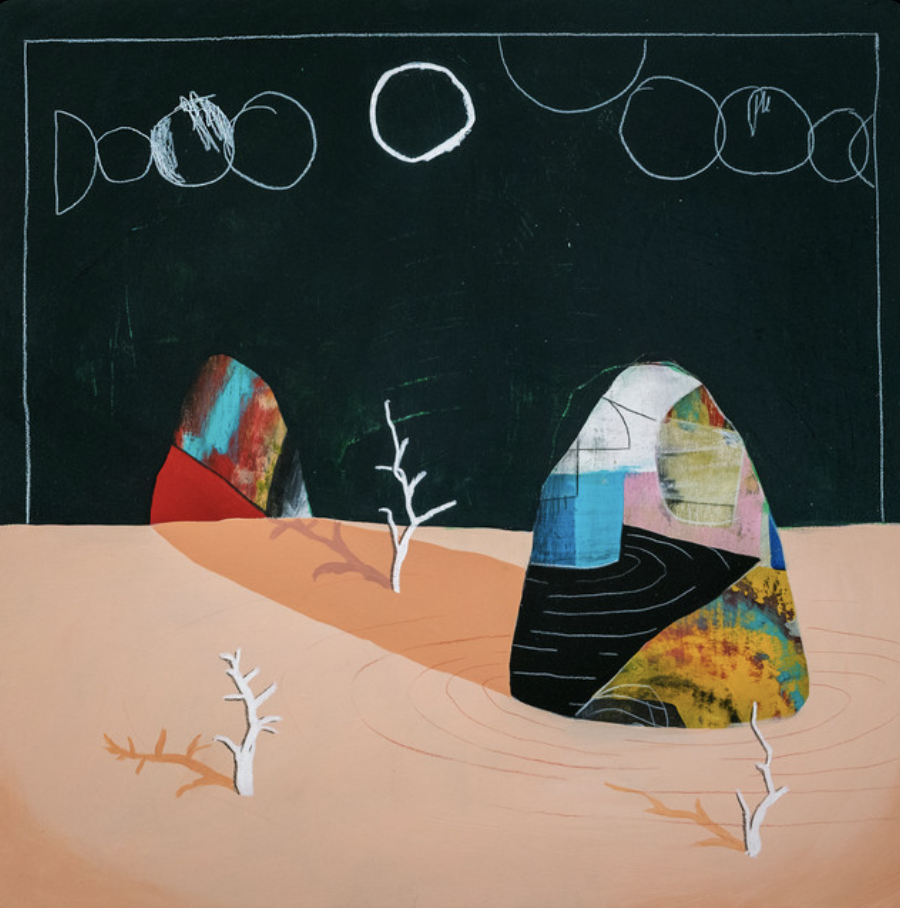
The Monthly Revue for November 2024: All the choice, loved and most enjoyed tracks from the last month, chosen by Dominic Valvona, Matt ‘Rap Control’ Oliver and Brian ‘Bordello’ Shea. As always our selection features a real shake up and mix of tracks that we’ve both covered in our review columns and articles over the last month, plus those tracks we didn’t have room to feature at the time.
Covering many bases, expect to hear and discover new sounds, new artists. Consider this playlist the blog’s very own ideal radio show: no chatter, no gaps, no cosy nepotism.
___/TRACKLIST_____
Les Amazones d’Afrique ‘Wa Jo’
Mulatu Astatke & Hoodna Orchestra ‘Major’
Orchestre Tout Puissant Marcel Duchamp ‘Speak by the E’
Marcelo D2 & SambaDrive ‘Samba de Primeira/Encontro com Nogueira’
Les Sons Du Cosmos ‘LAUNDRY’
Ric Branson Ft. Relense ‘Judas and the Black Messiah’
Juga-Naut Ft. Mr. Brown ‘Camel Coat’
Nowaah The Flood ‘On Location’
Blockhead ‘Orgy At The Port Authority’
Berke Can Ozcan & Jonah Parzen-Johnson ‘The Saint’
Elea Calvet ‘Landslide’
Roedelius ‘217 09’
Lolomis ‘Kristallen den Fina’
The South Hill Experiment ‘Silver Bullet’
Sparkz & Pitch 92 ‘Genius’
Jack Jetson & Illinformed ‘Pray’
Spectacular Diagnostics & Kipp Stone ‘BUCKET LIST’
Cavalier & Child Actor ‘Knight Of The East’
Walking The Dead ‘Fun Facts’
Humdrum ‘See Through You’
The Conspiracy ‘Tick Tok’
The Awkward Silences ‘Mother I’m on TV’
Trupa Trupa ‘Sister Ray’
Neon Kittens ‘Demons’
Bloom de Wilde ‘Dwindi’
Bell Monks ‘Before Dawn’
Spaces Unfolding & Pierre Alexandre Tremblay ‘In Praise of Shadows Pt. 2’
Gasper Ghostly ‘Floor Thirteen’
Son Of Sam & Masta Ace ‘Come A Long Way (Jehst Remix)’
Hegz & Dirty Hairy ‘Ruby Murray’
Glowry Boyz ‘FREE FALL’
Django Mankub ‘BEATSEVEN’
Sly & The Family Drone ‘Joyless Austere Post-war Biscuits’
Lolomis ‘Sieluni tanssimaan’
Cumsleg Borenail ‘Parade You ‘round Town’
Sam Gendel, Benny Bock & Hans P. Kjorstad ‘Charango’
Yazz Ahmed ‘A Paradise In The Hold’
Maalem Houssam Guinia ‘Matinba’
Baldruin ‘Hinein, hinaus, hinuber’
hackedepicciotto ‘Aichach – Live in Napoli’
Hornorkesteret ‘Krekling’
The Muldoons ‘Hours And Hours’
Juanita Stein ‘Motionless’
Sassyhiya ‘Take You Somewhere’
John Howard ‘If There’s a Star’
The Tulips ‘Haven’t Seen Her’
Jamison Field Murphy ‘Ermine Cloak’
Graham Reynolds ‘Long Island Sound’
Mauricio Moquillaza ‘___’
Kotra ‘Trials Of Discernment’
Our Daily Bread 633: Trupa Trupa ‘Sister Ray’ Single and News
November 27, 2024
SINGLE REVIEW/NEWS/PURVIEW: DOMINIC VALVONA

Photo Credit: Adam Plucinski
Becoming a near yearly dispatch of announcements from our dear friends in the famous Polish port of Gdańsk, the city’s most notable and self-coined “psychedelic post-punk” band of recent years, Trupa Trupa, are full of encouraging news and exciting prospects.
Hopefully you will have read my previous posts on their ttt (released as a limited cassette run), B Flat A and Of The Sun albums. But if not, in short, the band’s sound could be described as an intense and cerebral psychodrama, dream revelation, hypnotic, propelled and industrial post-punk, art and psychedelia locked-in conjuncture of East-European intelligentsia and abrasive wiry Gdańsk industrialism.
Their music, filled with a psychogeorgaphy, travails and activism, goes further than just sonically. Trupa Trupa band member and spokesman of a kind, and my first port-of-call, Grzegorz Kwiatkowski is not only a musician but a published poet/writer, academic and local activist: all three of which are channelled into the band’s unique sound.
Just last year, Grzegorz was involved in petitioning for a memorial to mark Gdańsk’s former Jewish ghetto. Housed as it was in the Old Red Mouse Granary on Granary Island in the city, this stain on the city’s reputation was eventually bombed by the Allies in 1945. The grandson of a concentration camp survivor himself, Grzegorz campaigned with others towards building a permanent link, reminder to a mostly “forgotten” part of the Polish city’s history.
The Jewish Chronicle published a piece on this achievement, interviewing Grzegorz, who commented at the time upon the proposed site as “…one of the last empty places [on the island] not full of luxury apartments”. For, as if to pile drive over such a heinous crime, this once final stopping point for the city’s remaining Jewish population before being cattled and sent to the death camps, is now rapidly becoming gentrified: a chapter, forensic scene, closed and paved over, as if nothing had ever happened. Just in time, a marker will now act as a point of remembrance and education, and prescient reminder. You can still read about that campaign in the JC here…
As featured in The Guardian, Kwiatkowski also helped uncover half a million shoes left to decay near the infamous Stutthof concentration camp. In a secluded, marshy, and wooded area 34 km east of the city of Gdańsk (or Danzig as it would have been known at the time) in the territory of the German-annexed Free City of Danzig, this camp was originally used to imprison Polish leaders and the intelligentsia, and was the first such camp constructed outside Germany itself: and the last to be liberated by the allies. Roughly 65,000 poor souls died there, either through murder, starvation, epidemics, extreme labour conditions, brutal and forced evacuations, or lack of medical attention. A third of that number were Jews. Many were also deported from that heinous crime scene to other death camps (estimated to be 25,000). Kwiatkowski has fought to have it preserved and recognised officially as a site of memory, which at this point in geopolitical turmoil, with antisemitism at record levels not only in Europe but across the world, and the increasingly depressing divisive nature of politics and activism in the X/Twitter/tiktok sphere, is needed more than ever.
Continuing the roles of activist-academic-poet, Kwiatkowski’s fortunes look very favourable over the next year, with workshops planned for both Harvard and Oxford, and an artist’s residency spot at Yale. The latter is an incredible opportunity, and furthers his poetic and musician roles, tying them together with his chosen speciality in amplifying the voices and testimonies of Holocaust survivors. Combing research and archival accounts from the University’s famous Fortunoff Video Archive, Kwiatkowski will fashion new poems and bring in his foils from Trupa Trupa to create new art. The results will be exhibited both at Yale and in his home city.

2024 going into 2025, Kwiatkowski and his foils build upon a burgeoning reputation as one the most dynamic and intelligent bands to emerge on the world circuit. Certainly, one of the most creatively exciting prospects to emerge out of the famous Polish city of Gdańsk; its geography and history of “old ghosts and hope” (as Kwiatkowski puts it) integral to their sound. In fact, so interwoven is that sense of place, of attachment, and what it means to walk a both catalyst and imposed history that I feel we need a very brief overview.
In a perpetual tug-of-war for dominion with its Prussian, then German neighbours, Gdańsk strategic and commercial position as Poland’s most important port has seen the famous city become a sort of geopolitical bargaining chip over the centuries because of its gateway to the Baltic. After one such episode in a “convoluted” legacy, the city and much of its surrounding atelier of villages were turned into the Free City state of Danzig after WWI; partly a compromised result of the Versailles Treaty in 1919. Under Nazi German control two decades later, it acted as a transportation point to the death camps for the city’s Jewish community.
Its famous luminaries include the present prime minister and former EU negotiator Donald Tusk, the philosopher Arthur Schopenhauer – credited as a major influence on the band -, and, although not strictly born within the city limits, the infamous madman of cinema Klaus Kinski – his most wild-eyed legendary role as the obsessive loon opera impresario, Brian Sweeney “Fitzcarraldo” Fitzgerald is also cited as a major influence, used as an analogy for Trupa Trupa’s own journey from the city’s underground to international favour. Can’s walrus mustacho maverick, Holger Czukay, was also born there: or rather Danzig as it was known at the time. Interestingly the video for their latest single ‘Sister Ray’, featured below, was shot in the band’s own Wrzeszcz studio, a stone’s throw away from Czukay’s own courtyard.
In what could be said to be a second chapter for the group, as they now par down from a quartet to the settled trio of drummer Tomasz Pawluczuk, co-vocalist and bassist Wojciech Juchniewicz and co-vocalist and guitarist Kwiatkowski, Trupa Trupa are set to release the first single from next year’s Mourners titled EP, ‘Sister Ray’. Borrowing both that title and a lo fi hardliner rock ‘n roll, bordering on post-punk, spirit from the Velvet Underground the band’s echoey repeated “towards the horizon” line is beefed-up with a broody dose of snarled trebly bass and a shot of growled throbbing sinewy knotted impetus. The now stripped-down, determined, and raw trio channel The Killing Joke, The Fall, Elastica, Banshees, Archie Bronson Outfit and Wire (especially the band’s Colin Newman and his solo work) on this slab of surreal attitude.
The accompanying video, shot once more by the Polish audiovisual artist, painter, musician, video and installation artist and professor at the Academy of Fine Arts in Gdańsk, Adam Witkowski, features visual expressive marks, brush slashes of painting and flipped through art journals inspired by the iconic genius Basquiat. It’s hardly surprising, given that two-thirds of the trio graduated in fine art, and continue to paint and practice graphic design.
Whilst notching up two sessions already for 6music, and with the invitation to perform on NPR’s Tiny Desk sessions, Trupa Trupa have attracted a lot of support and attention over the last eighteen months. Rivalling my own cheerleader support, Iggy Pop has raved about the band’s last couple of albums in true fandom style. And so, it’s hardly surprising, and considering their Syd Barret meets post-punk rawness, that they’ve attracted the talents of the acclaimed and very much in-demand British producer, composer and engineer Nick Launey to produce both this single and their newest EP, Mourners.
Based in L.A. for some time now, Launey’s prowess and vast experience has come in handy. Able to draw from a vast resource of helmed and steered productions from such notable talent as Nick Cave and the Bad Seeds, Anna Calvi, BRMC, the Yeah Yeah Yeahs and Arcade Fire, and before that, at the centre of the UK’s post-punk explosion in the late 70s and early 80s (you name it, he was there, whether it was PiL, Gang of Four, the Killing Joke or The Slits) the enthused veteran motivator really grabs hold of the Trupa Trupa sound and pushes it in a taut, tight and raw direction of energy.
The five-track Mourners EP is set to be released at the end of February next year, preceded by the title-track at the start of that same month, and once again released on Glitterbeat Records. ‘Sister Ray’ meanwhile is out now and will be followed by a UK tour. A world tour proper, starting in California, will begin straight after the release of Mourners in 2025.
In all its artsy glory, premiered today on Youtube by the band, ‘Sister Ray’:
THE DIGEST FOR NOVEMBER 2024: New Music/The Social Playlist/And Archives
November 22, 2024
THE MONTHLY DIGEST INCLUDES A CLUTCH OF ACCUMULATED NEW MUSIC REVIEWS; THE SOCIAL INTER-GENERATIONAL/ECLECTIC AND ANNIVERSARY ALBUMS CELEBRATING PLAYLIST; AND CHOICE PIECES FROM THE ARCHIVES.

Photo Credit:: Giovanna Ferin
____/THE NEW
Juanita Stein ‘The Weightless Hour’
ALBUM (Agricultural Audio) 29th November 2024
And perhaps it all comes to this, that after twenty-five years in the music business as both the frontwoman of the Howling Bells and as an established solo artist Juanita Stein has finally found the strength of her own voice and creative force. Stepping out from behind the safeguards of noisy rock to find that silence resonates deeper and further, Juanita erases everything but the most vital, emotionally receptive and connective elements from her music to produce a sagacious, confident (despite the fragility and vulnerability in places) songbook of personal memories.
Stripped back then, but even more powerful, Juanita faces up to her family’s past and her own, and faces up to the more troubled, traumatic experiences in the most diaphanous of ways. There’s a real clarity lyrically and musically, despite the coos, the often near ethereal airs and veils, and the reverberated echoes. And the minimal accompaniment, which changes between the acoustic and note struck electric guitar, and features a subtle gravitas of strings at times, chimed elements and the odd bass drum, either weaves or rings out evocations of Southern Gothic and Lee Hazelwood country, magical carousal and Laurel Canyon 60s influences, the music of 90s Drugstore and Juliana Hatfield, and a hint of Radiohead.
I’ve always loved Juanita’s voice, which is pretty unique in the best possible way: soothing, beautiful yet full of emotional turmoil, and verging on the apparitional on occasion. Here she sounds at times like a mix of Kristin Hersh, Tanya Donelly, Lana Del Rey and June McDoom at its most breathlessly gossamer. And considering the themes, that voice is never projected with anger, resentment or resignation at any time during the ten songs on this near perfect album. Put it this way, there’s neither a flood of emotions nor a moment in which the whole experience threatens to engulf Juanita.
Rather than write for characters, every lyric can be identified as a feeling, an experience that Juanita has personally been troubled by, gone through and lived. Growing up in a talented Australian family of artists (her late father Peter Stein, the renowned songwriter/musician, her mother Linda a former stage and TV actress, and her brother Joel the lead guitarist in the Howling Bells), but brought up in the Orthodox Jewish faith with its strict adherence to the Torah and just as strict schooling methods, Juanita claws, or takes, back what was lost during her childhood with a lyrical passion that borders at times on the poetic wise honesty of Leonard Cohen.
The accompanying PR notes use the word “imposed” when outlining Juanita’s Jewish roots. But that would suggest an abandonment or uneasy relationship with her identity, which you are born into. Juanita seems to me to be more objectional to the dominate patriarchal and masculine aspects of Judaism; the restrictive nature of old lore and laws and rules. For she stands up against antisemitism, especially recently with record numbers of incidents and violence meted out against the Jewish community around the whole Western world after the horrifying, barbaric murders and kidnaps perpetrated by Hamas on October the 7th last year. ‘Old World’ is a reminder of the evils of antisemitism, but also a reckoning with that ancestry. Unfolding over an acoustic country and Laurel Canyon-like trial of striking imagery that most beautifully haunting song finds Juanita revisiting her grandmother’s Prague home, now, even eighty years later, emptied of its once thriving Jewish communities – communities that can be traced back a thousand years or more, as mentioned in the Sephardi-Arabic Jewish merchant and traveller Ibrahim ibn Yaqub’s famous travelogues in 965 AD, and which numbered 92,000 before the Bohemia/Moravia partition of 1938/39, when Nazi Germany attempted to wipe them from the face of the earth; nearly succeeding, it’s believed at least two thirds of that figure perished in the Holocaust. Using a beautiful language of descriptive geography, the way the light falls upon that absence and legacy of destruction, the piles of ash, Juanita observes the eradication of the faith, the synagogues, and the way they were brutally changed into Christian places of worship: the recurring crucifix for example. Juanita’s grandmother was forced to leave at the age of fourteen, escaping the fate that awaited: namely transportation to the Theresienstadt camp built outside Prague, and eventual death in Auschwitz in Poland or the killing sites of the Baltic states.
Making some references to that Orthodox schooling again, but also written whilst waiting out the Covid lockdowns in Italy, the picturesque ‘Carry Me’ finds solace and sanctuary in a most charming, idyllic Tuscany surroundings. As the world grinds to an uneasy halt, Juanita, accompanied by subtle birdlife and the even softer sound of crickets and the environment, coos whilst playing a resounding, sounding out electric guitar turned up loud: but vulnerable and fragile. Again, I’m hearing Leonard Cohen. And there’s a nice, real softened plink-plonk of piano that’s just about there, which comes in at the end.
Moving on, the near aimless evoked ‘Driving Nowhere’ recollects a relationship going…well, nowhere. Featuring the duet partner of North Ireland artist Pat Dam Smyth, there seems to be a channelling of Hazelwood via Nick Cave and Roland S. Howard. The drifting apart of once entwinned partners is played out on the Australian country highway of heartache and emotional breakdowns, with Smyth, who supported Juanita in on her first London solo performance, adding a very congruous if deeper voiced sense of lived-in, resigned sadness.
Reflections there are many, especially when facing the “heady days” of the early noughties as the frontwoman of the highly successful (and a damn good band) Howling Bells on ‘The Game’, which sounds like Lana Del Rey backed by R.E.M. Not so much regrettable, as sadly conveyed recollections of fame and being at the centre of a whirlwind, a storm that left no room to breathe or process, it seems she both suffered and yet misses it. ‘Motionless’ has a heavy strum and chug to it that reflects the open-hearted revelations of another broken relationship; the stage set for honest reflection and for saying what needs to be exorcised before moving on.
The Weightless Hour is the perfect album from a great voice and songwriter, who’s now able to find that distance from the events of the past and a new sense of reflected candidness and honesty in motherhood. Juanita’s true self and strength opens-up, the noise diminished for something far more powerful. Not so much defiant as confident. A definite album of the year.
Spaces Unfolding + Pierre Alexandre Tremblay ‘Shadow Figures’
ALBUM (Bead Records)
Coinciding with the 50th anniversary of the revitalized Bead label, a special challenging site-specific work of non-musical experimentation and evocation from both the Spaces Unfolding trio of flutist improvisor Neil Metcalfe, avant-garde violinist Philip Wachsmann and drummer improvisor Emil Karlsen, and the electronic explorer Pierre Alexandre Tremblay.
In merging their own specialist forms – the acoustic and electronic – both partners on this improvised serialism of avant-garde, textural, atonal and more recognisable sound and instrument sources, expand the sonic palette further towards the abstract, mysterious and near paranormal. “In Praise Of…” and making concrete the otherworldly “Figures” from the “Shadows” this collaboration seems to channel the ominous and a sense of disturbance. The electronic effects, beds and signals set off an uneasy sense of technologies creeping encroachment, its power sources and unseen, near subverted presence.
But the triplet of atmospheric “In Praise Of Shadows” suites is dedicated to and takes its name from the celebrated Japanese titan of provocative literature Jun’ichirō Tanizaki and his notable essay on Japanese aesthetics. Noted for both his shocking depictions of sexuality, of kinks, of the submissive, and obsessions, and subtler portrayals of family life in his native country during a time of upheaval, as modernism took hold, as Imperialism rose and then was crushed and replaced by Westernized consumerism and progress, Tanizaki’s usual schtick was to place characters, affairs against a backdrop of cultural anguish. However, published in the 1930s, In Praise Of Shadows is a little different; made-up of 16 sections (a sample of titles: “The toilet aesthetic”, “A novelist’s daydreams”, “An uncanny silence”), the central theme uses analogies and abstract ideas of light and darkness to depict the comparisons between Western progress and its search for light and clarity with the subtilties and appreciation of the subdued and shadows in East Asian art and literature – or more specifically an appreciation of the Japanese concept of “Sabi”, or “world view”, which is centred around transience and imperfection. There’s far more to it all of course, including, which is very important in this context and as an influence on this recording, a piece on the layered tones of various kinds of shadows and their power to reflect low sheen materials: see the various “Refraction” entitled pieces of textual shadowy play.
I’m not sure if it is intentional or not, but some of the both harder and dulcimer-like plucks on the violin, the whistly aspects and higher pitched flutters of the flute and some of the near-taiko-like thunders of the drums evoke the music of Japan: somewhere between the traditional and the work of Yamash’ta & The Horizon and Farabi Tushiyuki Suzuki. It builds a sort of Oriental mysticism at times, a mysterious atmosphere of shadows, or an estranged Kubuki theatre, and of deeper meanings channelled by the tactile and textured.
At times I’m picking up echoes of Anthony Braxton, the work of Larry Austin, the Giuseppi Logan Quartet, some Sandro Gorli, Alan Sondheim and Fernando Grillo amongst the electrical fields, the sparks of freeform jazz, the scurries, the spidery finger work, restless crescendos, dry fluted chuffs and rasps, and solid thick-stringed pinches and strains. Untamed with moments of reflection, uncertainty, Shadow Figures pitches an environment and its sounds, its unseen wound-up, ratcheted and twisted objects with more skeletal, shaved, sieved and high-pitched avant-garde expressions.
Maalam Houssam Guinia ‘Dead of Night’
ALBUM (Hive Mind Records)
Accomplished student and innovator of the traditional Islamic dance, music and poetry exaltation of ‘Gnawa’ and the three-stringed lute-like instrument that goes together with that ancient practice, the ‘Guimbri’, Houssam Maalam Gania pays a certain homageto his upbringing and his roots as the scion of the late Gnawa master Maalam Mahmoud Gania. A catalyst for the label, a repackaged special reissue of Maalam Mahmoud’s sublime venerable Colours Of The Night performances kick-started the whole Hive Mind platform label back in 2017 – a label, I might add, with a considered taste in some of the more understated, lesser known recordings of world-class artisans and genres. This was soon followed by the label’s fourth release, Mosawi Swiri LP, which featured Houssam Maalam and a troupe of lively young musicians from the country’s fishing port town of Essaouira.
The youngest son of the virtuoso has obviously inherited all the right creative and musical attributes, performing as he does a remarkable adroit and earthy vocalised songbook of affectionate and devotional Gnawa-style pieces; pieces that his father would play and sing in the family home to his children. The title is both a riff on his father’s iconic LP and a reference to the nighttime hours in which this album was recorded, stripped down with no accompaniment, live on the 3rd of June 2022 in Casablanca using only a Tascam field recorder and two microphones.
Uncloyed (as the field-recordist producer Ian Brennan would say) and as intimate and atmospheric as you can get, with the tape left running to pick up any clearing of the throat and the breaths between singing, each performance is a one-man demonstration of the Gnawa artform and a hybrid of influences from Westernized blues to the music of the Tuareg and the influences of a wider West and North African geography. For that Moroccan heritage bleeds over borders, chiming even with certain traditional forms from as far as Southeast Asia: whether intentional or not. In solo form, Houssam Maalam manages to play polyrhythmically; using, what sounds like, the flat of his hand on occasion to simulate either a bass part or a hand drum. Plucked elasticity is combined with paddled hand movements, whilst a constant buzzy and wobbled rhythm is kept going. Sometimes it sounds more like a banjo, and at others like a makeshift guitar, but is always played with either a delicate, intricate hand or a more physical, bassy one. Expressively conveying the Godly, moments of joy and comfort, and the questioning, the voice resonates from the very soil. But it sounds like that voice has matured somewhat since Mosawi Swiri, grown perhaps as it resonates with those songs of childhood. Dead of Night achieves two things. Firstly, Houssam Maalam grows closer to his father’s legacy, and secondly, forges his own pathway and identity honing a unique Gnawa legacy. Be quick, as this is yet again a limited release – though I’m sure of there is enough demand, there might be a second repress.
Baldruin ‘Mosaike der Imagination’
ALBUM (Quindi Records)
Mosaike der Imagination, or “mosaics of the imagination”, is the latest mirage fantasy of vague worldly evocations, hallucinations, magical folk music and gossamer traverses from the German electronic artist Johannes Schebler, under the guises of Baldruin.
Regular readers may recall my review of last year’s Relikte aus der Zukunfti album, which I described as “lying somewhere between the Reformation, hermetic, supernatural and mysterious Far East”. I also pointed out the air of religious bellowed organ, the church atmospherics, and the toll of bells on that release. For just as Roedelius, Moebuis and Schnitzler’s first recorded experiments, under the Kluster title, found a home on the synonymous German church organ music label Schwann, so congruous were those early kosmische innovators “hymnal qualities” and, if removed, links to the country’s rich venerated history of religious music, Schebler’s own small Bavarian village rectory upbringing can be heard permeating this latest album too.
You can pick up passages of Tangerine Dream cathedral vibes and a glass-stained organ on, what is, a kaleidoscopic tapestry of fourth world music, occult folk and the amorphous international traditional sounds of (from what I can make out) Japan, India, Southeast Asia, Tibet and an imaginary vision of ritualistic, tribal paganist Europe.
From Orthodox monastery moans to the whispered spells, invocations of Baroque and folk-styled esotericism, and from the ceremonial to mysticism and the burning coals of martyrdom, spindled and softy but quickly malleted instrumentation, hand drums, the fluted and bone-like vibraphones merge with electronic algorithms, various forms of crystalized and tubular light and recurring chiming of timepieces.
This a strange coalesce of Laraaji, aboycalledcrow, David Casper, Xqui, Jon Hassell, Caravan of Anti-Matter, Belbury Poly and Benjamin Law on a diaphanous and hallucinatory alternative plane of light and shadows. Baldruin conjures up the dreamy, the haunted, and the magical on yet another transmogrified and reconfigured album of folk, worldly and religious imbued recondite sources.
Mauricio Moquillaza ‘S-T’
ALBUM (Buh Records)
Exotic, alien and near supernatural organisms and life emerge from machines on the new four-suite release from the Peruvian musician, sound artist and cultural manager of various projects and platforms Mauricio Moquillaza. Working across a diverse range of mediums, from theatre to dance, and part of the experimental Lima scene of recent times, Moquillaza has cultivated a process of organic and improvised electronica from an apparatus of electronic tools – specifically a Eurorack modular of hardware.
On this untitled experiment of “generated possibilities”, the sounds, repetitions and changing patterns are untethered; recorded as they are in one take and without any overdubs. Allowed to develop almost naturally, each piece sounds like a balancing act between stimulated machine learning and free improvisation; the results, a continuous hybrid of cosmic, cerebral and mystical languages, calculus, exotic birdlife simulated pitches and warbles, moist cave-like atmospheres and the rhythms of life.
As a bassist too, you’ll hear singular notes that are both deep and low, but fluctuating, as each movement of the cylindrical, the tubular and more openly expansive create a magical and sometimes ominous shadowy world. At times it sounds like transduced or transformed echoes of bobbled, chimed gamelan from an alternative plane, or a fourth world take on early techno music. And as is the artist’s raison d’etre, there is a constant looming edge of dissonance, some near crushing and crashing haywire noises (like some galactic space battle on the album’s third suite) ready to develop out of the various patterned process, the inter-dimensional free-exchanges and dancing arpeggiator-like notes that bob around in the lusher, more fun sections.
Like A.R. And The Machines rewired via a portal into a futuristic vision of South America, or Tangerine Dream fusing with the Eyot Tapes, Tomat, Richie Hawtin, and Autechre, Kosmische influences, cult pioneering library music, more stripped techno and contemporary experimental electronica combine to form both a cascading and ever-changing layered album of quality freeform electronica. If you follow or are aware of the quality Buh label, then you know that every release is intriguing and interesting, introducing us to great new innovators from the South American scene. And Moquillaza self-titled debut is no exception. A highly recommended release.
____/THE SOCIAL PLAYLIST VOL.92

The Social Playlist is an accumulation of music I love and want to share, tracks from my various DJ sets and residencies over the years, and both selected cuts from those artists, luminaries we’ve lost and those albums celebrating anniversaries each month.
Running for over a decade or more, Volume 92 is the latest eclectic and generational spanning playlist come radio show from me – the perfect radio show in fact, devoid of chatter, interruptions and inane self-promotion.
Each month I chose a select number of anniversary-celebrating albums, and in November that means a cheeky 60th throwback to The Beatles’ For Sale (which actually was released in December of ‘64, but I’m not doing a social playlist next month and have instead stuck it here), 50th nods to CAN’s Soon Over Babaluma (see my updated piece from the archives below), Kraftwerk’s Autobahn and Bernie Maupin’s The Jewel In The Lotus, 30th salutations to Autechre’s Amber, and a 20th salute to MF Doom’s MM..Food.
I like to include a smattering of newish or 2024 releases that I missed on release, or that failed for one reason or another to make the blog’s Monthly Playlist selection – usually down to a lack of room. That means inclusions for Paten Locke, itsokaylove & Black Wick, Jagu-Naut, Rosaceae, joe evil, Dad Doxxer – the last two transmogrifying The Beach Boys songs as part of the surreal dairy Sad Milk Collective’s recent compilation It’s Three O’ Clock, Go To Your Sink, Pour Some Milk, And Start To Think.
That leaves the rest of the playlist to my eclectic imagination, and pick of records I own, once owned or wished I’d owned. In that list, you will hear Suzanne Langille and Neel Murgai, Five Day Week Straw People, Ventre de Biche, Def IV, Creative Arts Ensemble, Principle Edwards Magic Theatre, Laercio De Freitas, Lightshine, Armando Trovajoli, Black Mist, Scribble, Dow Jones And The Industrials, Tiny Yong, International Harvester, UV Race, Claudya and Ken McIntyre.
TRACKLIST
Secret Oyster ‘Black Mist’
Dad Doxxxer ‘409’
Dow Jones And The Industrials ‘Let’s Go Steady’
Claudya ‘Jesus Cristo’
Ken McIntyre ‘Cosmos’
MF Doom Ft. Count Bass D ‘Potholderz’
Juga-Naut Ft. Mr. Brown ‘Same Planet’
Def IV ‘Do It E-Z’
Paten Locke ‘Widdit’
Creative Arts Ensemble ‘Unity’
Armando Trovajoli Ft. Monica Vitti ‘Suor Kathleen’
Laercio De Freitas ‘Pirambera’
Bernie Maupin ‘Mappo’ Lightshine ‘Lory’
International Harvester ‘There Is No Other Place’
CAN ‘Splash’
Autechre ‘Silverside’
Rosaceae ‘Rue Norvins’
Scribble ‘River’
Kraftwerk ‘Morgenspaziergang’
Suzanne Langille & Neel Murgai ‘Bury Myself Where I Stand’
itsokaylove & Black Wick ‘Real Dangerous Louis V Gold for the Cosmic Stoner’
UV Race ‘Nuclear Family’
Ventre De Biche ‘Les murs de brique’
MF Doom ‘Poo-Putt Platter’
Principle Edwards Magic Theatre ‘McAlpine’s Dream’
joe evil ‘All I Wanna Do’
Five Day Week Straw People ‘I’m going out Tonight’
Tiny Yong ‘Le Sauvage’
The Beatles ‘No Reply – Anthology 1 Version/Demo’
____/ARCHIVE
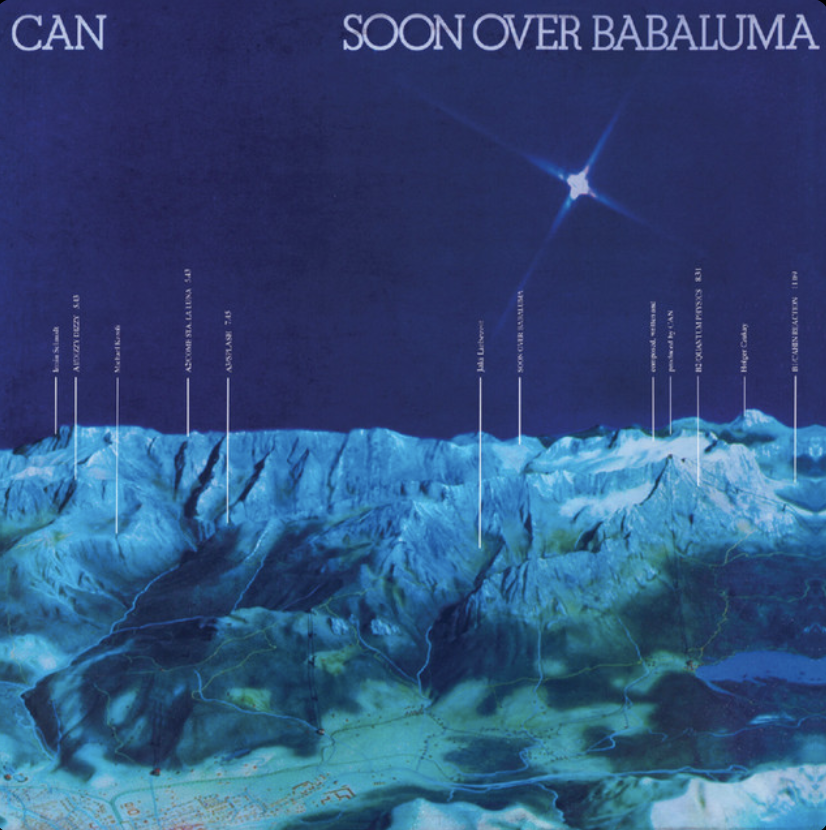
Retrieved and reshared from the Monolith Cocktail archives this month, a 50th anniversary special on CAN’s 1974 LP Soon Over Babaluma.
CAN ‘Soon Over Babaluma’
(United Artists) November 1974
Hawkwind once sang enthusiastically that, indeed, “Space Is Deep” on their 1972 progressive nebula traveling album Doremi Fasol Latido. Unfortunately for all the postulations and far out oscillating effects they failed to launch us further than our own stratosphere.
Interstellar overdrive and the promise of a journey beyond the stars never quite managed to leave behind the familiar sounding musical structures and instruments of Earthly genres, such as rock or jazz. Even Sun-Ra for all his visitor/emissary from another world talk, was still to a point chained to classicism; those outbursts of improvisation never quite soared to the dizzying celestial heights that we were promised.
Which leads me to CAN and their sixth studio album Soon Over Babaluma, a genuine bold attempt to lavish the cosmos with a fitting soundtrack; delivered by Cologne’s very own branch of NASA.
Previously on the 1973 heavenly diaphanous hymn Future Days, CAN had scaled new empyrean heights of excellence. Now they sat in the very lap of the Gods themselves, the only logical next step being outer space.
It helped of course that the injection of funds, acquired by Hildegard Schmidt, now paid for some new equipment; namely the futuristic sounding Alpha 77, a serious piece of kit that interrupts the sounds emanating from a keyboard to produce some startling effects and soundscapes. Looking like some kind of radioactive scanner and housed in a bog-standard clunky metal box, the Alpha 77 could have fallen off the back of truck bound for some nuclear science facility. The flight deck controls and rather old-fashioned register dials don’t quite reflect the abundance of sounds that can be created and fooled around with; Irmin Schmidt teases a vast array of ethereal sweeping sound collages from this box of tricks, that coats every part of this album.
Irmin wasn’t the only one to receive some new equipment, the band, as a whole, upgraded their sound desk: for the first time being able to record straight onto stereo. Also editing and overdubbing became a lot easier, benefiting the overall quality of sound and mixing. Technology always played its part but now it would direct the proceedings in 1974, as they began to lay down what would be the forthcoming Soon Over Babaluma album.
December 1973 saw the departure of Japanese troubadour and mushroom haiku mantra singer Damo Suzuki. A heated confrontation during a session for a TV soundtrack resulted in Damo snatching up his mike and a pre-amp, exclaiming, “That’s mine!” before skulking off in a strop.
The gear was returned in due course, but Damo remained aloof, never to return, the recent marriage into and conversion over to the Jehovah’s Witness religion playing a major part in his decision making. He may as well joined the Quakers, as hanging out with avant-garde rock stars was now frowned upon and discouraged to the point where life must have become quite square. Although the late experimental, improvising icon would later return to music full-time; going on to collaborate with some of the most inventive heirs of krautrock and a whole new generation of experimental artists and groups: the list is endless.
An empty vacuum emerged at first, the rest of the band feeling left in the lurch, the upcoming album deadline and tour commitments placing intense pressure on the group to find a replacement.
Unfortunately finding a new singer/front man wasn’t easy, either due to unsuitability or previous prior engagements that role remained aloof and unfilled. In the end it was their own transcendental guitar genius Michael Karoli who stepped up to take on the vocal duties, with Irmin lending his support and backing.
For the record Karoli does a pretty good job of it, sounding like a Germanic Syd Barrett and even at times evoking the dreamy quality of Suzuki himself. Irmin on the other hand comes across all creepy and crazed.
With an emphasis on the pursuit of other worldly experiments and space exploration, Soon Over Babaluma sports a suitable cover. Graphics artist Ulli Eichberger delivers a shining reflective moonscape cartography, with the song titles and personal etched over the lunar terrain as though they were the names of craters and the barren land features: though it also resembles some Alps type snowbound mountain scape.
The album title itself is claimed to be a parody type anagram of the old Weimar Republic era showtune ‘Moon Over Alabama’, made famous in renditions by Nina Simone and even David Bowie. Originally written by Bertolt Brecht, the genius German poet and playwright, and put to music by fellow countryman Kurt Weill for the 1930 satirical opera Rise and Fall of the City of Mahogany, the song was made even more iconic when the Nazis banned it three years later. Maybe it reeked too much of Cabaret and the savage biting social depictions of George Grosz, who painted grotesque images of the obscene decadence taking part in German society. The surge of the far-right encroaching on what they saw as bedlam with their even worse replacement ideology, turning on the social commentary of Brecht and Weill with vengeance.
Whether or not this is indeed the reason behind the moniker, there is no real reference to historical context; rather the mood is entirely directed towards space. Track titles such as ‘Come Sta, La Luna’, closest translation being “as it is, the moon”, and the scientific-in-nature ‘Chain Reaction’ and ‘Quantum Physics’, CAN certainly laid down enough signs of their newfound commitment to the course.
A move towards the more technological progressive and experimental ethos mixed with the jazz boundary defining pronunciations made by Ornette Coleman, Miles Davis and the already mentioned ex-resident of Saturn, Sun-Ra, CAN’s sound managed to surpass the previous journeyman as they now set out to tip toe across Orion and penetrate deep space.
But this wasn’t the only album released by CAN in the 1974, oh no! They also released a collection of studio offcuts and even further out there avant-garde sound collages entitled Limited Edition; so called as it was limited to only 15,000 copies, though only two years later it was released as a double album with 5 extra tracks.
Both versions include the Ethnological Forgery Series and the scraps and fragments of sound pieces and obscure cluttered impromptu jams that littered their back catalogue. The standout track is the ambient moving viscerally inspired ‘Gomorrha’, one of the most ethereal quality pieces they ever recorded and possibly the track that Damo walked out on. Its science fiction searching, and hearts of darkness espionage drama evoking atmosphere perfectly encapsulates the sea change taking place, having been recorded only months before work started on Soon Over Babaluma.
——A Deeper Reading—–
The sound of a small leap across the surface of the Moon, whose gravity has been swallowed by the Alpha 77 and re-directed into one illuminating bended note, this is how ‘Dizzy Dizzy’ begins.
Karoli floats in on a passing solar wind, floating above the rim shots and deeply reverberated bass like a lurking rock astronaut ready to pounce with his introduction gambit “rat-a-tat-a-tat-a-tat” vocal scat.
A sultry Afrobeat enriched beat bounces along as twangs of guitar mark the way, all the while Schmidt strokes his alluring array of space organs, fermenting some lofty aspiring effects with which the groove can walk on.
Soon the violin strikes up a haunting weeping melody that cuts through the expansive air, exquisite emotive strains from the stringed solo stir up a certain amount of pulchritude.
Soft brush strokes and heavily comatose cymbals contact Holger Czukay’s one note comfort blanket warm bass, rich in rebounded echo.
Karoli breathlessly sings such wise pronunciations as,
“I know, I don’t smoke with the angels, I know
Don’t throw ashtrays at me”
I think we know what kind of brand of choice he’s more than hinting at!
He goes onto lay his soul bear with the romantic gestured lines,
“I’m not made out of mature,
But I’m something out of the heart.
Throwing on you a kiss, kiss”
Almost jumbled around or miss-translated, these lyrics read like a cut and paste experiment.
Dizzy in love or dizzy due to the air being so thin up here in the upper echelons of space, Karoli seems to levitate on his whispered sonnet to some higher beings.
Schmidt eventually takes over, draining the vocals to a mere trace, that Alpha 77 synth manipulator now warming up and taking on a life of its own, becoming like a fifth member of the group. But it will be those felicities violins that have the last word, ending on a majestic duelling climax.
‘Come Sat, La Luna’ opens with a field trip recording of some stroll alongside the canal, the occasional croaking from some walk on part crow, interrupts the serene ambience. Karoli then rumbles in with a pleading dramatic rendition of the title off the back of some heavy duty compressed reverb, that makes it sound like the band are playing in a diving bell chamber.
The sense of entrapment and struggle to breathe in this now thick atmosphere, a morphine induced state is evoked in this dense sounding eulogy to some far-off planetary dimension.
Schmidt recites rather than sings his lines, which are deep in creepy effects and delivered through some unsettling eerie cadenced nonsense.
These vocals are more like riddles or cryptic announcements of foresight, such as the lines,
“I am not fighting, but I’m the night,
I am not dying, and I’m not hurt.
I am the right or the wrong, your hope,
I am the dancer on the tender road”
He goes on to express,
“I am the water and how I can flow”
Schmidt seems to be angling at some descriptive analogy, continuing with more caustic questioning,
“And why don’t you call me Sta?
Flowing over Babaluma,
It ain’t your friend.
You can do it alone,
And you don’t have to pay”
The song picks up some pace, almost swinging along in a jaunty motion, Liebezeit taps his way through, giving a special decompressed bass drum and kick drum solo, losing himself in a sudden joyful upturn.
From out of the mire approaches a grand piano and squalling guitar, both lost in a mini battling concerto, which grows towards an almost full on avant-garde free for all before calm is restored with the last warbling chorus from Karoli. Almost sorrowful in manner, the finale words almost trapped as though Karoli is zapped of his strength.
Side one ends with the all-out galactic jazz ensemble instrumental ‘Splash’.
Sun-Ra, Miles Davis, Ornette Coleman bump into each other on the set of Mission Impossible, all vying for elbowroom and paranoid up to the eyeballs.
Squawking, hooting sousaphone and grumbling thunder striking bass are met with fret board scrapping and incessant scratching, Liebezeit rattling off a series of rolling drums and double kicks, booting his kit round the room.
Just as a certain rhythm is broken in, cowbells and trinket percussion enter the alarming fray, bringing with them the black box recorder omnipresence of Schmidt’s 77, a glorious soundtrack to the stars is eminent.
Karoli begins a dystopian guitar solo from on top of some desolate mountainous range or Olympus Mons itself, melancholy wines and strains of harrowing pleads echo round the empty immense affinity of space.
An excitement of sorts starts to boil over as a barracking charge from the drums now piles in to the accompaniment of strangled brass and eastern harem sounding oboes, which pursue a deconstructed noisy voyage of discovery, wrestling control of these nine headed monster jams.
Once you’ve had time to calm down from the audio assault of ‘Splash’, side two awaits your attention with the doubled up ambient suites of ‘Chain Reaction’ and ‘Quantum Physics’, the energy and matter evoking scientific epic.
Beginning with the now familiar sound of the 77 revving up like some organic spacecraft dreamed up by Frank Herbert – in fact reminding me of the special effects from Dune the movie -, drums and bass slowly fade in with a soul shaking tambourine, shimmering and arousing r’n’b, before Karoli slides and rides all over his guitar, the celestial conductor.
The brewing accompaniment runs riot until fitting into an assured stride, the low plains pan out in front of us as the beat remains steady and ambitious in outlook.
Schmidt unveils grand gestures of melody from his very own inter-galactic flight deck, painting multiple soaring swathes of astrological envy for Karoli to now glide over with his best Damo evoking vocals.
Surreal imagery is conjured up and uttered with breathless enthusiasm; analogies of a Soviet flavour are transcribed thus,
“Elephant dominating Russian,
Don’t be running hurt.
Elephant running,
Dominating the deep”
The attitudes change with the take it or leave it gay abandon of the chorus,
“Chain reaction incoming when you get so small,
I said chain reaction incoming when you get so rushed”
Probing, encroaching guitar searches roam the moonscape, taking part in a call and response with Schmidt’s now crescendo illuminating collage of sound.
Liebezeit and Czukay both slump off into solo frenzies, traveling their very own particular rhythmic paths before a giant thunder clap strikes and sends the track towards free-fall.
Tribal beats clatter and clash, whilst haunting encircling brooding organs and ascending synths swoop, then the beats are reigned back in, as Karoli recalls the chorus.
Cyclonic chuggering grooves are interrupted with some unworldly seething effects, that wouldn’t sound out of place in 2001: A Space Odyssey, as the ghosts of Mars and the trembling spooky reaches of the far-off universe now hang heavily over the space flight.
Rim shots and interplanetary musings seep into the final outro of the track before bleeding over to the second act of ‘Quantum Physics’.
Gentle ramblings and distressing noises unearthed from the science lab, emanate throughout, all the while Liebezeit attempts to keep a groove going, constantly banging away in the background.
From out of nowhere, an unseemly black hole maybe, Schmidt unleashes a brave new world of sublime washes and choral ethereal charm. The sky at night has never sounded so angelic and worth investigating.
No description quite explains the climactic finale that signs off Soon Over Babaluma, invigorating escapism and traveling through the cosmos, in scenes reminiscent of Solaris.
Breathtaking in vision, the perfect emotional drama set in space takes some beating. Perhaps they should include this in any future first contact package shot into the universe; then again, any alien life form may just think we’re showing off.
If you enjoyed, felt informed, or marvel at my words and those of the Monolith Cocktail, please take a second or two to read the following message of alms pleading. Whilst I’m fully aware of the austerity, the lack of money, and an industry set on reducing all its creators, its critics and writers and motivators to a life of poverty, it is becoming near impossible to continue without support. And so with that in mind:
For the last ten years I’ve featured and supported music, musicians and labels I and the blog’s other collaborators love across genres from around the world that we think you’ll want to know about. No content on the site is paid for or sponsored and we only feature artists we have genuine respect or love for. If you enjoy our reviews (and we often write long, thoughtful ones), found a new artist you admire, or if we have featured you or artists you represent and would like to buy us a coffee at https://ko-fi.com/monolithcocktail to say cheers for spreading the word, then that would be much appreciated.

