A world of sonic/musical discoveries reviewed by Dominic Valvona. All entries in alphabetical order.
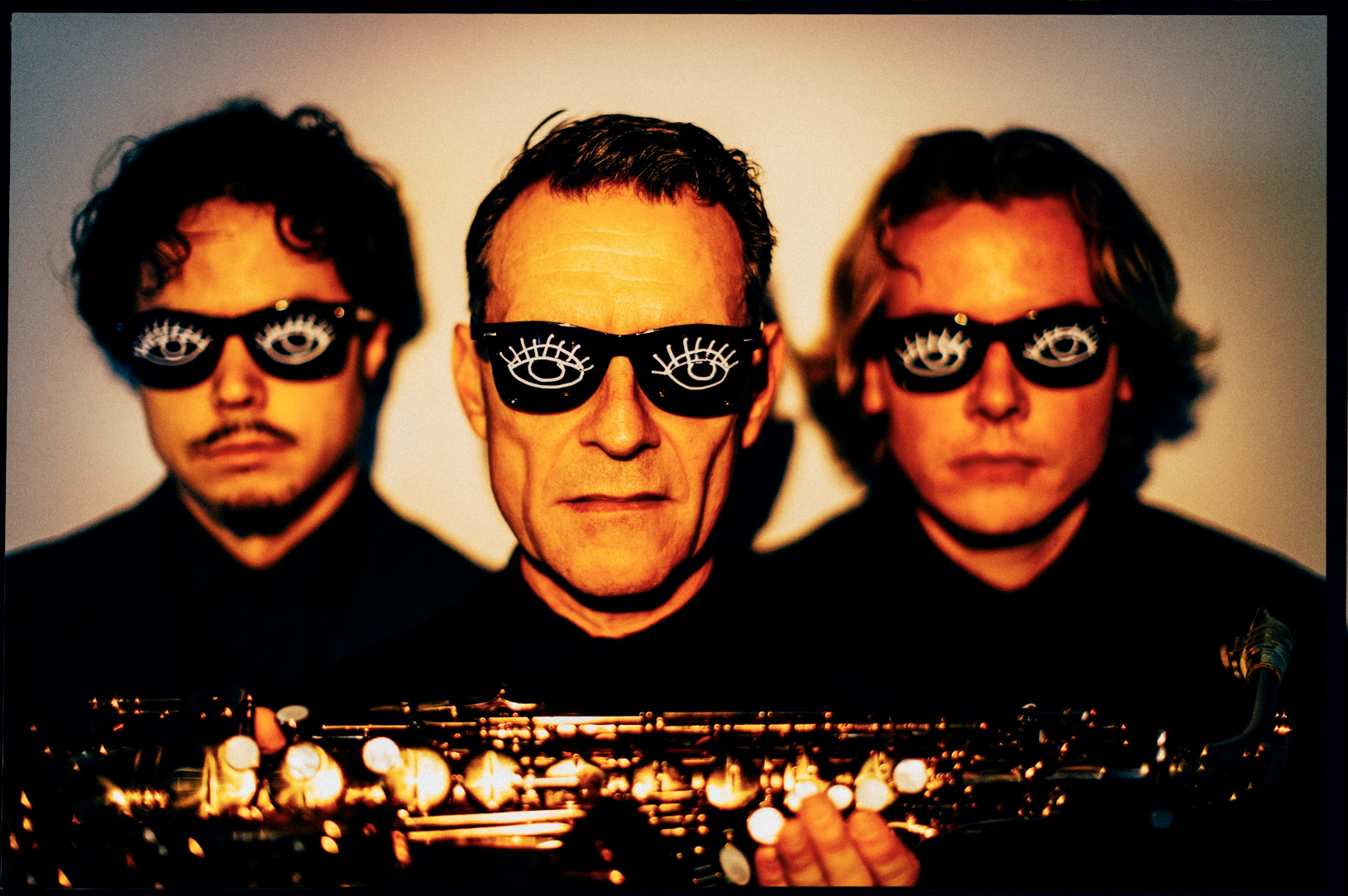
Image Credit: Jonathan Herman
Andy Haas ‘In Praise Of Insomnia’
(Resonantmusic) Released 1st February 2026
I’ve been saddled with insomnia for years, but unlike the highly talented and explorative, and curious saxophonist Andy Haas, I’ve found it difficult to put those waking hours to good use creatively; let alone on the auspicious seasonal occasion of the Winter Solstice, the date on which all these recordings were played and then saved for posterity. I must say, since the double whammy of a kidney autoimmune disease and a minor stroke, my own personal problems of insomnia have pretty much disappeared – I don’t recommend it however! But put to good use here, Andy ushers in the light changes, the almost religious and spiritual emotions and feels of the environment. His sax mirrors the fluctuations and expressions of playing without the hindrance, burden or weight of expectation; just one guy expressing himself and current moods, his experiences of life in the moment on a special day.
Whilst not wishing to repeat myself, I struck up an online and postal friendship with Andy after first writing about the highly experimental saxophonist, trick noise maker and effects manipulator’s turn touring as a band member with Meg Remy’s Plastic Ono Band-esque U.S. Girls a few years before Covid. The former Muffin, NYC side man to the city’s attracted maverick luminaries of the avant-garde and freeform jazz, and prolific collaborator with Toronto’s most explorative and interesting artists, has sent me regular bulletins (and physical copies) of his various projects ever since. Some have been in the solo mode, others with friends, foils and collectives. In Praise Of Insomnia is free of artifice and augmentation; the sound of a singular saxophone and circular breaths (the only other apparatus or consideration is Andy’s stereo manipulations of each track once its finished) alive with a language that admirers and followers of such luminaries as Sam Rivers, Jonah Parzen-Johnson, Evan Parker and Roscoe Mitchell will recognise. It has history and roots, but exists in the now with its squalls, shrills, the fluted, drones, curves, peaks and reedy vibratos that often sound like a mizmar – in fact I sometimes pictured minarets when closing my eyes and just letting the playing transport me from my boring surroundings at home in a dreary, wet Glasgow.
Free and wild, and yet also thought through, almost considered and concentrated, each track (prompted by descriptive and personalised titles) shows purpose; the subject matters often plaint, questioning or disheartened at the metaphorical darkness of the age, but also noting the artist’s own mood changes, and his battles with insomnia itself. It would also make a great soundtrack.
Benjamin Herman ‘The Tokyo Sessions’
(P-Vine Records in Japan/Roach Records & Dox Records the rest of the world) 27th March 2026
Though this is possibly the first time I’ve ever featured the London born but Netherlands raised alto-saxophonist Benjamin Herman on the site, his influence across the European arena of jazz looms large. With over fifty albums and untold thousands of the live gigs (either as a solo artist or as the frontman of the New Cool Collective troupe) to his name during the last thirty or so years, Herman has pretty much convincingly expanded his talents to play foil, collaborator and instigator to projects that span the musical and creative genres – from hip-hop to poetry, to rubbing alongside pop stars and embracing everything from Afrobeat to Latin and film, to the more anarchic and wild.
Venturing out to the far East with double-bassist Thomas Pol and drummer and producer of this album Jimmi Jo Hueting, Herman and his musical partners absorbed everything that was on offer from the eclectic Tokyo hothouse districts of Shimokitazawa and Koenji. Expanding the ranks to include a rich ensemble of guest from the Japanese jazz scene and beyond, they recorded these inspired sessions at the well-known “recording sage” Akihito Yoshikawa’s equally famous Studio Dede hotspot.
Paying homage, spiritual recognition and cultivating the mystique and mystery of Japan’s landscape, its culture, its traditions and abundance of talented jazz players, there’s haywire-like chops of floppy disk experimental Sakamoto, the shrouded misty sounds of Shinto and fluted and blown bamboo music amongst an abundance of reference points from elsewhere. With accomplished musicians like Ko Ishikawa on the Sho (a mouth organ), Tomoaki Baba on sax and Shinpei Ruike on trumpet (bringing a blue shade reminisce of Miles Davis sadness to the studio referenced ‘Dede’) there’s tributes to the Japanese scene and one of its capital’s most famous jazz nightspots, the NRFS abbreviated “no room for squares” – as borrowed from Hank Mobley’s iconic Blue Note released LP of 1964, and more than an inspiration here I believe.
But amongst those cultural appeals, a distillation of the Japanese scene and environment, there’s literal blurts of no wave and post-punk jazz, the noirish and cinematic, show tunes, swing, funk, the wired, colourful, willowy and many examples of mirages and swamp-like veiled mysterious.
At any one time then, you can expect to hear a free flow and agitation of downtown NY, the city skyline jazz scenery of the 50s and 60s, Last Exit, Snapped Ankles, John Zorn, Biting Tongues, Mats Gustafason, Donny McCaslin’s work with Bowie, Jimi Tenor, Comet Is Coming, the Nordic school of jazz, Tong Allen, Lalo Schifrin and John Barry! (in the closing moments of the spy soundtrack does Blue Note ‘Tokyo Moon’ you can hear what sounds like a riff on the 007 theme). Yes, I think we can agree a lot to take in. But with a generous offering of 13 great tracks and no fillers, this Tokyo session is going to appeal to many.
Ombrée ‘Calvaire’
(I Shall Sing Until My Land Is Free) Released 2nd February 2026
Seemingly apt if in an entirely different geographical setting, far from the torn-up battlefields, this album is tied via its facilitator to the Ukraine supporting I Shall Sing Until My Land Is Free label, and its founders own sonic manifestations of doom-laden scared environments: In the case of both Dmyto Fedorenko and Kateryna Zavoloka it’s their native and brutalised country, now in its fifth year of defensive action against the barbaric invasion forces of Putin’s Russia. Meanwhile, coming to terms with their own loss, Ombrée uses a similar soundboard and apparatus of industrial noise, metal machine music, sonorous bass guitar frequencies and slabbed vibrations and crackled pylon charges to process the death of his father, who passed away in February of 2025.
Prompted or set in motion by the sounds of the surroundings and the village’s church bells, Calvaire invokes memory through both field recordings and expressions of death’s many manifestations. Ombrée’s father, we’re told, would have probably hated this musical invocation, illusion and dark meta-built encapsulation of that mourning process, but for its creator and us the album is both a guttural and sophisticated response to its subject.
To the distant echoes of tolled bells and a Gothic atmosphere of an older rural France – the toil of the land, the echoes perhaps of old wars and tragedies still very much of the everyday scenery and psyche – Ombrée scratches the needles of detectors and equipment over the terrain to produce a death noise industrial slab of static, the paranormal, the razored and ghostly. Apparitions in the shadows at every turn; the venerable sounds and atmospheres of the funeral and wake; the coarse fibres of broken electricity and magnetic forces; the Fortean radio set tuned into the afterlife; and the dark materials of trauma uncovered by the plough and spade all come together in one suitably unsettling memorial.
Rocé ‘Palmier’
(Hors Cadres) Released 20th March 2026
With a softer and more melodious flair for an ever-widening use of music references and inspirations, the French-international hip-hop veteran Youcef Kaminsky (better known as Rocé) seamlessly blends new compositions of Latin, French, Italian, North African and South American flavours with modern spells of R&B, rap and electronica on his incredible new album Palmier (“Palm Tree”).
On a disarming pathway, Youcef taps into his roots and his mixed heritage (born in Algeria with his formative years spent in Paris) to rap, sing, report and recall with both emergency and poetic conscious fluidity. And whilst learning of his parents own extraordinary stories and backgrounds – his dad’s history within various anti-colonist resistance movements around the world (Adolfo Kaminsky, as that family name may suggests, are Russo-Algerian French in origin), and his checkered career as a photographer and master forger – and the depth to Youcef’s own studies and extensive recording output, this album has less of a revolutionary zeal and more a sense of real warmth and beauty to it. Listeners will find a sound that’s just as open to the embrace of Morricone as café society jazz, Issac Hayes, cool classical French maladies and American vocoderised soul. In other words: pure class. And yet there’s still an edge to it, a realism and sense of suspense, of the shadows, of current concerns in the search for balance, harmony and identity.
There’s seldom been much like it; the attempt to merge so many cultural markers and ideas and experiences; to recall those innocent and important feelings and places that matter – not in hip-hop anyway. The musicianship and contrast between rapping and a band of jazzy and classical or chamber musicians did remind me a little of Marcelo D2 & SambaDrive ‘Direct-to-Disc’ LP from a couple of years back. But it remains rather unique, crossing over as it does into so many classy and fully lush genres.
You can certainly, even if you don’t understand the French dialect and language, gauge the emotion and the intensity, the themes and scenes conjured out of the notebook and from each instrument. It also helps that guest vocalist, the worldly, Natacha Atlas does much to soothe and dreamily invoke a certain romantic plaint of North Africa to the deft electric piano-like tinged ‘La Voie Laactee’. And whilst we are at it, a shout out to Nathalie Ahadji’s dreamy, wafted and mizzle-like saxophone; to Cisko Delgado’s soulful and light jazzy cosmic keys (though also credited with bass and on arrangements); and to Samy Bishi’s sweeping, near cinematic in places, violin – Youcef can be heard himself picking up the violin on one of the album’s airy mirage-like interludes.
Compositions and songs are mapped out like a personal cosmology of jazzy suites, neighbourhood reportage, frank discussion and more sympathetic articulations and dreams. A great album in short that entertains as much as it educates and impresses.
Nicolas Remondino ‘Hieratico’
(OOH-sounds) 27th March 2026
Scrapes, shavings, rubs, carvings, tangles of tin and metal; various percussive and drum apparatus timbres, textures along with the unidentified sound of spokes are all used to illuminate crepuscular observed moments and experiment in a soundscape of almost silent disturbances, shadows and observations on Nicolas Remondino latest album. Filed under the solo name this time around, Hieratico includes a host of cameos and an appearance from one of the many groups he’s founded over the years, the Dròlo Ensemble. Many voices and musicians join the fold, appearing often for a brief moment, or suffused amongst the avant-garde, explorative and minimalist passages, churns, circular brushing movements of a simultaneously venerable, supernatural and esoteric nature.
Appearing, I believe, for the very first time on the site, Remondino studied under the improvising luminary of classical and jazz piano, Stefano Battaglina. Remondino appears variously under the LAMIEE moniker when in the solo guise but also founded the Tabula Rasa and Silentium ensembles. There’s also been an extensive list of collaborations, some of which appear on this album. And as if to reflect these various foils and their homelands, track titles seem to be in multiple languages: Italian, Spanish, Portuguese, Corsican, but also as far away as Japan. There are some solid names with renowned reputations on the abstract, avant-garde and musique concrète fronts, including the highly respected and experienced musician and vocalist Limpe Fuchs, who’s mantric “no formalism” approach to soundscaping and fluctuated peaks and meandered twisted spoken words can be heard on the strange ching and chimed gamelan-esque ‘Blue Hymn’. The trio of Pierre Bastien (perhaps best known for the Meccano machine Mecanium orchestra), Massimo Silverio (singer-songwriter and composer) and Marco Baldini (a Florence-based composer) manifest some unease amongst the low tuba-like Close Encounters calls and cathedral organ permeation of ‘Tombal’. You could call it an inter-generational balance of ideas, or just feeling out the right sound, the right atmospheres.
Dialects traced back to the time of the Romans, with the Carnic region of the Alps, can be heard in abstracted forms alongside mountain goat trails into, what sounds like, the various ranges that surround Tibet and a reification of the I Ching. Sounds like felt and various materials are wrapped or brushed over the mic, and bottles are rattled, sheets of metal wobbled to resemble a strange thunder, and spoken passages, poems of s sort are pronounced with both wistful resignation and disturbing disquiet.
At times it reminds me of cLOUDEAD and at others of Walter Smetek, but also a whole load of experimental Italian contemporaries too. But at its heart, the album seems unique in its surroundings and processes; the atmosphere and mood personal yet dealing with abstract ideas in a nocturnal climate of freedom and textural experiment. That’s a recommendation by the way!
Snake De ‘Alla Sorrentina’
(Kythibong) 27th March 2026
The results of emptying out an assemblage of hard drives, Dictaphones, mobiles and other assorted devices and units of storage, the collaborative duo of Maxime Canelli and Aymeric Chaslerie put together a less linear and more abstracted, surreal and sci-fi album of eroded fragments, passages, extemporised hauntings and sci-fi interiors.
With a bilingual language of prompted and descriptive titles, each piece seems to have manifested from the ether or the recalled. Like La Monte Young playing exquisite corpses with the Olivia Tremor Control, Basic Channel and a host of kosimsiche innovators, Alla Sorrentina merges the concrete with the tubular, the kinetic, the alien and avant-garde: and many points between. There are touches of the melodic and tuneful amongst the collage and the fragments of data, voices (even continental laughter), static, cosmic bells and the varied jingles and jangles, the hanging and scrapes of the Zodiak and Swiss Cabaret Voltaire art-theatre percussion.
An enervated Faust Tapes perhaps, the album also reminded me in places of playful Cluster and Roedelius. The remnants of near church-like keys are placed with the alpine, the galactic and spells of hallucinatory dream weaving. You could catch something Japanese, something of the Fluxus composers and those working in early electronica as the carousal of sonic ideas and influences circulates. And you can read a lot into the oscillations, the staccato signals, hums, harmonic pings, the indigestive-like masked voices, and the metallic visions of extraterrestrial life.
It’s the sound of liquid bowls; it’s a world both underwater and luna; an hallucination of accumulated sounds, atmospherics, field recordings, tunings, hidden percussive objects, whistled and blown tubes, a baby’s cry and removed surroundings. Something a little different anyway, worthy of investigation and absorption.
Gregory Uhlmann ‘Extra Stars’
(International Anthem) Released 6th March 2026
The innocuous, those meandered thoughts, incidents and gestures magnified, and the noted observations witnessed of nature and its interactions are transformed into a unique musical language by the composer and guitarist (though should really say multi-instrumentalist at this point) Gregory Uhlmann.
A rightly celebrated and held in esteem regular of the L.A scene and constant presence on the rightly revered and much liked International Anthem label, with turns in the collaborative SML collective, a foil to both Perfume Genius (who appears on this album) and to Josh Johnson and Sam Wilkes (last year’s Uhlmann Johnson Wilkes album made my choice release of the year roundup) and to fellow label mate Anna Buterss (anther collaborator who makes an appearance, popping up on bass), Uhlmann has finally found time to go solo with an enriching synthesis of luminescent and ruminated quandaries, descriptions and serendipitous wonders.
Extra Stars inhabits a familiar if now made dreamy, lunar, sometimes oddly and beautifully world and environment; some of it used as prompts and reference points, like Lucia, which refers to the lodge where both Uhlmann and his partner stayed out on the famous Cabrille Highway that runs between San Francisco and Santa Barbara. Less an innocent Beach Boys-like celebration of Big Sur culture and more a tine’s ticking and Mulatu Astatke and Getatchew Mekurya embraced mizzled and snozzled hum of languid unease, the field recorded waves that crashed all around during that stay appear more like tape hiss and noise and point towards the “unnerving”. Though, with Alabasters deft wistful and near serenaded touches it is a beauty of a track. Actually, there’s a feel of that near Ethiopian influence, mixed with something further east and oriental on the beautifully Matmos does cosmic Joe Meek and Django ruminating Days – what a dreamer of a lulled tune that one is. I’m hearing the composition and playing of Emahoy Tsege Mariam Gebru too, but a lot of the calculus of flutters, bulb-like notation, cascades, harmonic twangs, numbers and multi-layered techniques of such luminaries as Riley, Cage, Reich and Spiegel; all made that more appealing, magical, sparkled, lunar and dotty!
There’s a good and transformative use of the guitar, the mellotron and organ, amongst other expanded instrumentation. And even a use of the voice, with guest Tasha Viets-Vanlear’s “bah” voice put through different pitches and sequences on Voice Exchange.
This really is a most delightful and imaginative album, a whirly trip of modulations, sequences at ease, quirks and warbles. Touching on everything from new age avant-garde to the kosmische (some hints of Cluster and their peers), the American school of pioneering electronics, the post-whatever it is that bands like Tortoise do, echoes of Sakamoto at his most loose and experimental, ambience and cosmic shimmered atmospheres. It makes for an intriguing, often woozy and dreamily transformative listening experience.
Here’s the message bit we hate, but crucially need:
If you’ve enjoyed this selection, the writing, or been led down a rabbit hole into new musical terrains of aural pleasure, and if you able, then you can now show your appreciation by keeping the Monolith Cocktail afloat through the Ko-Fi donation site.
The Perusal #65: The Young Mothers, Inturist, Nickolas Mohanna, A Journey Of Giraffes…
March 5, 2025
A World of Sonic/Musical Discoveries Reviewed by Dominic Valvona

Photo Credit: The Young Mothers shot by Malwina Witkowska
The Young Mothers ‘Better If You Let It’
(Sonic Transmissions) 21st February 2025
Those (Young) Mothers of reinvention transform crate digging reminisces and nostalgic hummed melodies from the age of the Great American Songbook on their new album, Better If You Let It.
Whilst maintaining the freeform principles and eclectic range that has come to define them; cut loose from obligation, any burden, and so free to roam and extend their scope of influences as they please, The Young Mothers return after an interregnum of setbacks, relocation and both forced and unforced breaks: some of that time can be blamed on the global inconvenience of Covid and the resulting lockdowns.
Corralling such a loose configuration of able and notable musicians and artists together is no mean feat; especially with the diversity of schedules, with every willing collaborator and band member in such high demand or leading their own projects. But all six players managed to commune in 2022; coming together to record the group’s third album in Oslo, the capital of TYM’s founding instigator and electric/acoustic bassist Ingebrigt Håker Flaten. The group was actually first conceived when Flaten moved in the opposite direction from Norway – after sojourns with such noted groups as the Norwegian Ornette Coleman imbued trio Neon – to Austin, Texas, back in 2009. Not wasting much time, Flaten’s rich Nordic legacy of contemporary jazz met head-on with the arid Southern state’s burgeoning scene of experimental and leftfield polygenesis collaboration. But after a decade or more of improvising both live and in the studio, Flaten decided to move back home: hence the location of this new album.
But there is a secondary connection to the Nordic scene and homeland through the sextet’s vibraphonist, drummer, percussionist and voice Stefan González, who’s late father, the revered Texan jazz trumpeter Dennis González, recorded an album in Oslo together with some of Norway’s most notable musicians in the early 90s: By the way, that González musical legacy also includes bassist brother Aaron; both siblings play together in various setups, most notably as Akkolyte. Stefan and the group pay tribute to Dennis’s memory, that time and location, on the sombre and mysteriously whispery track, ‘Song For A Poet’. Taking a near esoteric, near Sufi mystical and wild turn with the use of collaborating voices from Klara Weiss and Malwina Witkowska, the mood is at first chthonian, shadowy and near foreboding until the tints and bulb-like vibraphone notes of Milt Jackson and the Modern Jazz Quartet tinkle and hover, and digeridoo-like blows merge with bristled reed breaths in an amorphous dimension of feeling-it-out-jazz and exploration of abstract commemoration and recall.
I must at this point mention the rest of TYM’s lineup, which includes a name Monolith Cocktail regulars will hopefully be familiar with, Frank Rosaly. The attuned, experimental drummer extraordinaire appeared alongside his foil the multimedia performer and singer Ibelisse Guardia Ferragutti on last year’s enriching MESTIZX album – one of my favourite and choice albums of 2024. Sharing the drums with González, but also switching to electronic programming,he’s joined by the Shape of Broad Minds polymath Jawwaad Taylor on trumpet, rhymes and electronic programming, accomplished player Jason Jackson on both tenor and baritone saxophone, and Plutonium Farmer and Flaten regular sparring partner Jonathan F. Horne on guitar.
Between them, they cover everything from post-rock to freeform jazz, hardcore, hip-hop and death metal – I presume its González’s daemonic black metal-esque growling on the album finale ‘Scarlet Woman Lodge’, as he is credited in the liner notes with “voice” duties alongside drumming, percussion and vibraphone.
I think I’m right in saying that this is the first album in which all the participants share writing duties. The inspiration and source, a “whimsical” ballad, behind the opening title-track for instance, was first brought to the band by Jackson as a sort of tribute to the Great American Songbook. In turn inspired by rifling through old records from another age, this original idea, the melody, was transformed, deconstructed, reinvented and fused with the rap style rhyming of the Freestyle Fellowship, The Roots, Death Grips and Talib Kweli, the fuzz scuzz guitar of Monster Movie period Michael Karoli, the soulfulness and vibraphonic twinkle of Isiah Collier and the already referenced Modern Jazz Quartet, and the feels of old time Art Pepper, but all performed by Madlib remixing in real time Isotope 217 and Zu.
There’s a whiff still of nostalgia on the next track, ‘Hymn’, which recalls the Savoy label, the sound of Gillespie, but reconfigured by the Pan Afrikan Peoples Arkestra. As that title suggests, this is a spiritual of a kind that twangs and stirs until reaching a climatic passage of buzzing, croaking, straining saxophone pleads. ‘Lijm’ glues together elements of Q-Tip, clipping., Rahsaan Roland Kirk, Trenchmouth and Sault, with the pulse and current this time being more tuned towards the electronic: flips, mechanical devices and data sit with and underneath the action and the activist coaching.
Engaging and embracing past influences and inspirations, the eclectic ensemble pushes further in stretching the boundaries. And despite the range and scope, the many musical threads, it all comes together quite congruously to produce the perfect rounded album of nostalgic and free jazz, hip-hop, no wave, hardcore and acid rock, and electronica. A definite choice album for March and 2025.
Inturist ‘Tourism’
(Incompetence Records) 14th March 2025
Engaging at the best of times with a wealth of regional cultural/musical/sonic influences and passions, the producer, musician, former Glintshaker instigator and multidisciplinary artist Evgeny Gorbunov continues to transform his various exiled travails and more pleasing creative pilgrimages into magical, playful and odd adventures under the Soviet era borrowed Inturist guise: itself a reference to the sole Soviet era tour operator and travel agency for foreign visitors to the country before the fall of the Berlin Wall.
Sparked by an interest for Southwest Asia and North Africa, Gorbunov’s latest travelogue is a curiosity of mirages, bendy sun-bleached guitar, elastic and rubbery pliable plastic and tubular rhythms, morphed Salyut space programme soundboards, library music oddities and psychedelic primitivism. More attuned to the abstract and both vapoured and hallucinatory transformations of his travels beyond the Russian homeland to the Balkans and Israel than the geopolitical crisis of our times, the worldly sonic traveller finds a balance between the strange and bejewelled. An entire voyage of aural discovery awaits like an escape from the destructive carnage unfolding in real time, with Gorbunov caught between both the Russian invasion of Ukraine and Israel’s fight with Hamas.
Originally in forced exile, having left Russia as it menaced and then set in motion one of the most cruelling and horrifying conflicts of the age, Gorbunov moved to Belgrade, the capital of Serbia – a country fraught with its own history of war and the cracking down in recent times of civil liberties and a free media. However, there would be journeys made further afield, including the city of Tel Aviv (Trump take note, there is already a Middle Eastern Rivera of a kind, and this is it), where he recorded and produced some of the tracks on this fifteen-track travel guide. Luckily not on the frontline of the murderous Hamas insurgency that led to an ever-widening revenge of score-settling by Israel (they’ve been very busy, clearing up a lot of the mess for the West in the process; fighting on at least four different fronts; weakening Iran’s grip and influence; and eradicating much of that empire’s proxies in the bargain), the very last Tel Aviv studio session in 2023 took place on the fatalistic date of October 7th . But this is an album of intriguing, idiosyncratic peculiarities; of sound invention and engagement with a landscape both imagined and real.
Moving seamlessly across that map, influences from the avant-garde, kosmische, psychedelic, ethnic, new age, trance, otherworldly, tropical and no wave cross paths to form a novel retro-futuristic and transmogrified vision of exotic and folkloric ethnography and etymology. As part of that cosmopolitan project, there’s references to the Russian dance and driving-horses harness of “Troika” to the French dialect phrase for “winter landscape” “Paysage d’Hiver”. The former, and opener, is said to include a dance that mimics the prancing of horses puled by a sled or carriage. Musically there’s little to reference this, as the bandy ripping effects of lightly torn felt, the lunar effects of a Soviet era sci-fi movie and padded rhythms amorphous conjure up a movement and direction of a kind. The latter sure has some vague dull sun sparkle of light sharply hitting the wintery scape as a loose spring and twangy Charlie Megira guitar flicks over another cosmonaut lunar spell of retro-space sounds.
The Soviet underground meets Überfällig era Gunther Schickert and Finis Africae on the huffed and mewing voiced, valve opening effects twiddling ‘Special Offer’; and there’s something Malaysian, albeit very removed, sounding on the fluted, piped and tubular blown ‘Reminder’. But if you were looking to get a hold on the overall sound, which changes constantly as it vaguely picks up percussive and rhythmic, folksy and traditional hints of Afro-Brazil, the Balkans and Asia, then imagine Populäre Mechanik booking a surreal tour of those regions with Ramuntcho Matta, Gene Sikora, Sun City Girls, Ganesh Anandan, Moebius & Plank and Aksak Maboul in tow.
A great approach to sound collage and the transference of special held scenes, memories – especially those that offer nostalgia for the cold war period optimism of Soviet technology and the space programme – and trippy dreams, the Tourism album envisions oscillated, melting, animated and cult flights of fantasy that repurpose the terrain and topography. In short: one of my favourite albums of 2025.
Gregory Uhlmann, Josh Johnson, Sam Wilkes ‘Uhlmann Johnson Wilkes’
(International Anthem) 14th March 2025
Hot-housed in various creative incubators both in Chicago and L.A., the triumvirate gathering of guitarist, composer and producer Gregory Uhlmann, saxophonist, composer, multi-instrumentalist and award-winning producer Josh Johnson and bassist, arranger, composer and producer Sam Wilkes can all draw upon a wealth of experience and influences from the jazz world and beyond.
Crossing paths on numerous occasions – only last October both Uhlmann and Johnson appeared on fellow International Anthem artist Anna Butterss’ Mighty Vertebrate album –, all three exceptional musicians and artists congruously join together for an extraordinary attuned, sensitive and improvisational project that fuses the electroacoustic with a removed vision of chamber jazz, Americana and the experimental.
As a most tantalising prospect, this trio was conceived and set in motion by a couple of live shows – you’ll hear the polite but encouraging audience on the first two tracks – and a session at Uhlmann’s pad in L.A. And from that, a near organic growth of both attentive and stirring moods and ideas prompted an evocative language of harmonics, carefully placed twitches and plucks, sustained serenity, moving melodious hallucinations, strained misty breathes, subtle ambient and trance-y beds and wisps, vapours of synthesized effects, and plastique and pad pattered tubular rhythms.
With references to a brand of especially creamy and luxuriously textural toothpaste, the Armenian name for “sunshine” and a Mexican turnip, an international and abstract world of motivations is transduced into a mood music of the dreamy, introspective, soulful, ebbing and amorphous. From landscape gazing with Daniel Vickers, Myles Cochran and 90s David Sylvian (‘Unsure’) to floating in a warbling dreamy alien mirage (‘Shwa’), the performances, interactions effortlessly convey images, emotions as they both daintily and like a vapour of steam seem to drift or chirp along in an almost shapeless form.
In keeping with a theme of introspection, of the loner seeking a moment away from the onslaught of noise and distraction, the trio have chosen to loosely cover McCartney’s wistful break away from the idiosyncratic surreal, music hall and madcap rambunctiousness of the Magical Mystery Tour coach trip, ‘The Fool On The Hill’. It’s a lovely gesture; an indulgent mizzle and long exhaled alto sax breath of hazy and watery trickling finery that blends echoes of healing balm Alice Coltrane and Kamasi Washington with an ambient tremulous and beautiful haze. They’ve pretty much kept the signature melody but stretched it out and dispensed with the whistled flute and felt capped folksy magic for something more in the spiritual mode. A lovely finish to a sympathetically attentive and masterfully felt album that balances the unhurried with the prompted, playful and abstract.
A Journey Of Giraffes ‘Emperor Deco’
(Somewherecold Records) 7th March 2025
I’m taking it personal now. For after years and years of trying to sell the adroit, visionary ambient, neoclassical, electronic works of John Lane, and showcasing the American’s prolific catalogue of explorative opuses, he remains largely ignored: cast out on the fringes. Not that I give a shit about validation, but it would be nice if bandcamp at least wrote a feature, or that his work was played across the airwaves internationally and more regularly.
I’ve championed the unassuming composer since the very start, going back to the very inception of this blog fifteen years ago. From the early days of experimentation and the beachcomber bedroom transformations of Pet Sounds under the Expo guise to his various projects under the A Journey Of Giraffes moniker, I’ve pretty much covered everything John has ever transmitted. And after all this time, I find it bewildering that his music hasn’t managed to cut through.
Arguably John’s most enduring partnership in recent years has been with the North American label Somewherecold Records, who’ve released around eight of his albums, including this concomitant partner to 2023’s Empress Nouveau. There’s been other releases in between, but planned at the time, and now seeing fruition, is his masculine answer to that feminine album’s subtle and decorative qualities, Emperor Deco.
A change musically as he balances the tactile and the refined crafted filigree of that previous conceptual work, the curves and softer lines of Art Nouveau are now replaced by the geometric crystals, the harder light catching shapes and lines of Art Deco – there’s even a reference, title-wise, to famous the Bohemia makers/manufacturers of crystal Art Deco-styled glassware “Karl Palda”. Playing with those era defining art movements, in a literal and metaphorical sense but symbolically too, John now emphasis the noirish and bluesy, the brooding and remunerative.
For Nouveau, arriving during the Belle Epoque of a golden age that soon crumbled during the onset of World War I, its applied softened ideals and art is identified by John as feminine. Whilst Deco is synonymous with the roaring 20s: the feelgood period that despite everything was soon caught up in the Great Depression and then the rise of European Fascism. And this art form, from the design of products to architecture, is defined as masculine by John. Both now converge to form a whole.
Still very much in the ambient field of exploration. And still showing signs of the subtle craft and influence of John’s musical guru Susumu Yokoto. The mood music now embraces a soft layer of smoky, wafted, cuddled, strained, blown, accentuated saxophone and carefully placed synthesized drumbeats and rhythms: of a kind. For John has essentially created a removed version of a jazz album; something more akin to Alfa Mist or Jacek Doroszenko transforming the essence of Pharoah Sanders, Sam Gendel (both are referenced in the accompanying notes), Petter Eldh and Archie Shepp.
You could suggest there was also a “spiritual jazz” vogue to the sound, especially with the shake of trinkets, the amorphous echoes of bells and percussion that could be from the Far East, Tibet and North Africa, and of course the spindled sounds that could have been caressed and woven by Alice Coltrane or Laraaji. And that’s without mentioning the jazzy bulb-like electric piano notes and, what could be, the vibraphone, which has more than an echo of the Modern Jazz Quartet about it.
Add to this noirish, spiritual jazzy feel another subtle layer of Jon Hassell fourth world musics and a resonance of Nyman, Glass, Finis Africae and Sylvain and the perimeters are further expanded, his range growing ever more expansive. We can also hear the odd memory recall from those seashells collecting Brian Wilson-like Expo experiments of old, which when mixed with the jazz elements makes for a winning combination.
John inhabits this space at times like a mizzle, a gauze, effortlessly absorbing references, sounds and moods as he languidly and beautifully captures his concerns, moods and offerings of escapism from the full-on assault of the daily grind. There’s depth, a touch of sadness, but for the most part this is like a mirage or dream that repurposes the sound of jazz.
After last year’s long form Retro Porter (one of my choice albums of 2024) John’s deco-imbued, romantic and smoky album returns to the shorter track format with a generous offering of twenty-two musical pieces, experiences and evocations that never drag, seem indulgent or test the patience: You could say John has found the perfect length of time in which to express himself on an album in which each track is perfectly realised and executed; existing both as a singular moment, passage of time, and yet also forming part of a one whole experience of repeating signatures. This could (should) be the album that finally cements John’s reputation as one of the most imaginative and prolific artists working in this, or these, fields of compositional experimentation.
Nour Symon ‘I am calm and angry • e’
(Magnetic Ambiances) 7th March 2025
Nour Symon’s orchestrated and instigated reification of angst, rage and activism speaks just as much about the present decade’s movement against authoritarianism, the State commodification of education and health, and the erosion of civil rights as it does about this work’s main inspiration, the “Printemps érable” protests of 2012.
You could say that the expressions, the sonic and orchestral devices, the use of voices and poetry, of manifesto and barricade rattling are all just as prescient in the aftermath of the pandemic as they were thirteen years ago when a groundswell of support grew up around demonstrations against the proposed doubling of tuition fees in the province: increasingly expanding the remit, widening the disgruntlement, everyone from labour unions to environmentalists, leftists and marginalised groups ended up supporting a growing resentment, the ranks of which numbered around 250,000 at its peak.
Despite various setbacks – the lockdowns had a knock-on effect for this project, forcing an abandonment of the original plan to work with the Montérégie Youth Symphony Orchestra – the Egyptian-Quebec composer transforms the energy and directs an abstract despair into an avant-garde electroacoustic and experimental voiced theatre of the absurd, dramatic, expressionist and pained. In many ways a cross-generational grief and pull of despair, political activism and action, this album’s notable contemporary poet collaborator Roxanne Desjardin draws upon the 1980s and 1990s countercultural writings of the iconic Quebec poets Denis Vanier and Josée Yvon.
Ambitious and covering a multitude of disciplines from visual and text art (a graphic score was conceived to communicate the concept) to performance, orchestral transmogrification, opera and video, I am calm and angry • e uses a host of renowned, prize nominated poets, soloist musicians and ensembles; far too many to mention in detail here, but all integral to conveying the very real emotional maelstrom and rage of protest. Across six tracks, divided liberally into the Supermusique Ensemble and Collective Ad Lib groupings, mewling, contorting, accented, untethered, enunciated and experimental theatre-like voices circle and ride the contours, rises and quirks of a fusion between the classical avant-garde, experimental arts, Musique concrète, and, of all things, a removed version of freeform jazz.
Recognisable instruments from the wind, strings and brass sections join together with artistic impressionistic symbolism, percussion and electronic elements to evoke forebode, the unearthly, dramatic, mooning, unbalanced and abstract. Reference points within that overlapping sphere of influences and musical threads/connections includes (to these ears anyway) Charlie Morrow, Stockhausen, Cage, György Ligeti, Xenakis, the Art Ensemble of Chicago, Don Cherry and on the heralded, whip-cracked and concertinaed collective agonised ‘I will die in a closed room’, a strange fusion of Alex North and The Drift era Scott Walker.
Unbalanced with the ground constantly shifting below, the tumultuous and agitated are invoked and revoked in a musical experiment of plummets, falls and rises. A mix of French, amorphous and descriptive languages is adopted in a successful attempt to merge the poetic arts with protest, manifesto and performance, whilst physically stimulating the emotions and trauma of such protest.
Nickolas Mohanna ‘Speakers Rotations’
(AKP Recordings) 7th March 2025
A study in time, of impermanence, this uninterrupted continuous work from the New York based artist/composer emits miraged rippling vibrations across amorphous futurist Americana panoramas; stirs up the presence of alien craft overhead; and cloaks mysterious voices and sounds in an ever-changing sonic reverberation and feedback of instrument transmogrification and effected loops and field recordings.
As each track merges into the next, this adroit and evocative survey of a concept both atonally and rhythmically conjures new worlds of fourth world music, the kosmische and shadowy. Mohanna breaths futuristic sci-fi propeller-like zip-lines and long drawn air into the trombone, evokes the guitar drones and hanging astral mind-scaping and astral mysticism of Ash Ra Tempel, and plucks and pulls subtly in a resonating echo the tines of some hidden stringy apparatus. Grand gestures of a kind are made as the visionary scope of fogged and gauzy inner and outer space manifestations sits on a liminal border between the Cosmic Jokers, Daniel Lanois, Faust, Chuck Johnson, the Droneroom and Bill Orcutt.
I’ve now sat through this album over three times, and fully appreciate its skills in evoking not just the hypnotic but the near ominous, and for the way it seems to seamlessly keep changing the mood and the stay intriguing.
Ships of many kinds prowl the metallic fissures and beds of guitar sustain, and the doomish rumbles of the leviathan elements resemble the Lynchian and Bernard Szajner’s alternative score for Dune. And as one sound, one wave dissipates into the ether, or is left behind a weather front, something even more curious, sometimes beautiful, emerges: the brassy saloon bar-like chiming, trembling and spindled piano that starts to take hold in the last part of ‘Hollow In The Rock’ and continues into the finale, ‘Past Light Cone’, reminded me of the heavenly Laraaji.
This is AKP Recordings inaugural release of 2025, and it is of the highest quality. An improvisational soundtrack that vaguely shapes imaginative terrains and textures via the art of speaker rotation, manipulation and the use of the electronic and tactile, this album merges the interplanetary looming hovers of UFOs and sound generators with the cerebral and mystical: the voices, if that is indeed what they are, equally evoking throat-singers and something more hermitic and paranormal. I’d happily recommend this album to anyone wishing to immerse themselves for three quarters of an hour and will be highlighting it as one of my choice picks from the month.
he didnt ‘Distraction Threshold’
(drone alone productions) 14th March 2025
After a sideways venture under the newly conceived guise of i4M2 last year, the mysteriously kept secret Oxfordshire-based electronic musician, guitarist and producer returns under his main he didnt moniker; a project he’s honed over the last few years and across several albums of granular gradients, frazzled fissures, currents and thick set walls of drones.
Creating a certain gravitas that demands more from the listener, his latest album of concreted contours, ripples, movements and metallurgical sonics opens with a fifteen-minute statement of noisy concentrated filaments and machine-made purrs and propellers. Not so much industrial as a longform immersion of drones and cryptic soundscaping, there’s elements of hallowed organ from the church of the Tangerine Dream and early Kluster meeting with the sustained guitar waves of The Spacemen 3 and The Telescopes.
An ominous rippling effect of sci-fi conjures up a frozen tundra ghost world on the album’s title-track. Carrying over that troubling set of propellers from an overhead alien presence or supernatural dimension, the mood is chilling. ‘I Realise Now How It Is Connected To My Youth’ is even darker and menacing; like Jóhann Jóhannsson’s soundtrack for Mandy sharing room on the ghost ship’s bow with Coil and Svartsin. Harrowing images of supernatural psychogeography are dredged up from the recall of the artist’s past on a troubled doom mission.
A little different sonic wise, ‘Luminescent Medium’ brings in a slow deadened drum and a semblance of repurposed dreamy synth-pop. A singular reverberated and echoed hit is all that is needed to change the mood here, as the Cocteau Twins meet the BoC, Cities Aviv and the Aphex Twin in a fizzled arena of helicopter-like rotor blades, Matthewdavid-like real and unreal transmogrified field recordings and broadcasts, and a most out-of-place gallop of horses. It is as hallucinogenic as it is churningly moody and serious.
Distraction Threshold is very much slow music for the masses hooked up to their devices, unable to concentrate for more than a nanosecond let alone make any sort of deep connection or form a relationship with the sounds emanating from their tinny speakers. The aural equivalent of finding profound prophecy and divination from entrails or seaweed, this heavy meta gloomed and movable pull of uncertainty, trauma and metal machine chills focuses the mind with answers and questions to our present and past disturbed natures, as it builds or prompts deeply felt and evoked images and moods. he didnt continues to mine for drone-inspired gold on yet another successful atmospheric work of both the abstract and vivid.
Sporaterra ‘Seven Dances To Embrace The Hollow’
(Präsens Editionen / La Becque Editions) 14th March 2025
Multimedia spheres of sound and performance art, of theatre, of sonics and various forms of music merge on this latest fully realised album from the Italian-Polish duo Sporaterra. Convening under this guise since 2019, artists Magda Drozd and Nicola Genovese roam the catacombs, the psychogeography, the halls and lands of a reimagined Europe and beyond to conceptualise a dream realism of mystery, invocation and intelligent aural archaeology. They uncover and then transform their curiosities and inquiry into something both hermetic and disturbing; old ghosts retrieved from across time, going back as far as the primal, through to ancient Rome, the Renaissance and Baroque époques.
The time-travelling Seven Dances To Embrace The Hollow album unveils itself over seven suites of Mummers parades, Dante imbued evocations, hauntings, mystical disturbing bestial gargles and snarls, and fairytale. Under that Sporaterra entitled partnership – a name that translates as “above the ground” –, the two artists inhabit some strange timelines as they dance to both the heralded and otherworldly manifestations of frame drummed and foggy sonorous cornu accompanied procession and arcane ritual (think Dub Chieftain and Sharron Kraus), the crystal cut dulcimer and glassy bulbs twinkled evocations of Southeast Asia (Park Jiha), the suffused and swaddled atmospheric sax tones of Colin Stetson and Donny McCaslin, and the stirrings of These New Puritans, Italian prog and Sproatly Smith.
Whether it’s the fate of the scaffold, reverberations from the coliseum, Medieval merriment, monastic choral drama, and vocal mewling and mooning, there’s signs of some esoteric presence to be felt throughout. Old lives and movements, actions conjured from beneath are brought to the surface, with the recognisable made anew and slightly estranged. In short: an electroacoustic sonic archaeological dig into the phantom layers of the conceptual, intuitive and imaginative.
Hi, my name is Dominic Valvona and I’m the Founder of the music/culture blog monolithcocktail.com For the last ten years I’ve featured and supported music, musicians and labels we love across genres from around the world that we think you’ll want to know about. No content on the site is paid for or sponsored and we only feature artists we have genuine respect for /love. If you enjoy our reviews (and we often write long, thoughtful ones), found a new artist you admire or if we have featured you or artists you represent and would like to buy us a coffee at https://ko-fi.com/monolithcocktail to say cheers for spreading the word, then that would be much appreciated.
The Perusal #62: Kotra, Niton, Ruth Goller, The Dark Jazz Project, Martin Tétreault…
December 3, 2024
A WORLD OF SONIC/MUSICAL DISCOVERIES REVIEWED BY DOMINIC VALVONA
PHOTO CREDIT: PAULA RAE-GIBSON
(Unless stated otherwise, all releases are available now)
Kotra ‘Grit Light’
(I Shall Sing Until My Land Is Free)
As Putin’s invasion of the Ukraine depressingly continues unabated, passing the 1000 days mark a few weeks ago – which also happens to near enough coincide with the Ukraine’s commemorations of the Holodomer, a timely reminder of “mother” Russia’s destructive despotism and politically sanctioned revenge policies -, it falls upon labels like the electronic artists Dmyto Fedorenko and Kateryna Zavoloka’s I Shall Sing Until My Land Is Free to spread the sound of the sonic resistance. A soft power, a cultural emissary of that country’s experimental scene, the profits from its roster of artists, which includes both its founders, are donated to several self-defence and humanitarian foundations and local volunteer activists.
To paraphrase the opening from my 2024 review of Fedorenko (appearing under his Variát moniker) and the harsh and confrontational Japanese artist Merzbow’s Unintended Intentions collaboration, nothing concentrates the mind more than witnessing the brutal barbaric dystopian-scarred landscapes of war-torn Ukraine, and the carnage, loss of lives in the meat grinder of a bastardised WWI battle for survival. The fear, destruction of this conflict has been transmogrified into the abrasive, concrete debris soundscapes of nightmares on both that album and others; the Berlin-based Fedorenko appearing under a number of different guises, channelling heavy abstractions of sophisticated, industrial, intelligent techno and dance music across a swathe of concepts and works.
Escalating into the broader war many had forewarned, but unless willing to accept capitulation, further violent barbarity and the military conquest of even more of Eastern Europe, the Baltic nations and Balkans, there is no real painless conclusion to this invasion. Trump’s boastful rhetoric is just that. But worrying all the same, as negotiations, which can’t truly be anything other than favourable to Putin in any scenario offered, seem very likely in the New Year. The transactional President will want to wrap this horrifying, economically destructive war up, and so there is a rush now for both sides to gain their territorial footholds (the Ukraine’s incursion and hold over swathes of the Russian Kursk region will be vital in any deal negotiated; one of the country’s most successful military coups, and almost in itself the sole campaign that unnerved and setback Putin’s war machine the most). At long last the UK and America have given the go-ahead for long range missile attacks – though confined to the Kursk region. But it has come at such a late stage, even too late, just as the encumberment Ukraine supporting Biden administration is about to leave the White House. If delivered sooner alongside the delayed Leopard tanks and the F-16s (or in the numbers that President Zelensky asked for), we may very well be seeing the Ukraine in a much more favourable position. As it is, one of the only leverages that Trump could have used, those long range ATACMS, has been played. And what the Ukraine needs more than anything else is manpower.
Still, Putin’s Russia has failed to bully the Ukraine into subjugation and defeat. Russia’s military, for all the world to see, has been shown up on the battlefield and forced into sacrificing untold numbers in suicidal missions to gain mere yards of empty landscape. Drones have had the better of the Russians across the trenches and out at sea against the Black Sea fleet on numerous occasions. And in recent months, they’ve been joined by anywhere between ten to eleven thousand troops from North Korea in an attempt push the Ukrainians out of the Kursk. But even more unnerving and dramatic for the Russians is the unfolding events in Syria, which have taken Putin’s ally Assad by complete surprise. Insurgent/rebel groups opposed to the Syrian dictator have, even to their own astonishment, gained a vital foothold in Aleppo – the first time the Syrian government has lost control of the strategic and important city since the start of the civil war. A stretched Russia is currently bombing the hell out of them. The world is hanging on to see what happens next.
Bearing testimony to what has taken place and what might be about to happen in 2025, Fedorenko once more takes on the guise of another of his many faces, that of Kotra, to charge up the electrodes and electrical barbed wire with another heavy bass suffused and industrial techno album of electrification, force fields and buzzed machine hive activity. From dissonance and pulverizing bass noises a rhythm is hewn and honed; a buzz and scaffold of signals, of invisible forces and currents fused together with a bounce.
Carried across an hour-long immersion of sonic forbode and shuttered, tubed, kinetic and frazzled IDM-styled beats, there’s a thematic atmosphere of heavy payload alienness and humming, engineered and motorised machines. Some of these sounds mirror the ominous buzz of drones in the theatre of war, and others, the propeller-like hovered flight of bombers. In short, picture Rob Hood or Jeff Mills on Tresor, maybe even Basic Channel, collaborating with Carter Tutti Void whilst caught up in industrial scale warfare. I Shall Sing Until My Land Is Free have proved their worth in exporting such electronic experimentation to an international audience if nothing else. But this truly is music with a serious intention, forged in the darkness of barbaric invasion, from those who fight culturally and physically for the survival of their country’s identity.
Niton ‘11’
(Shameless Records/Pulver und Asche Records)
A connection to the Island of my birth, the Italian-Swiss trio of Niton bears the name of the small village on the Isle of Wight where Marconi famously and successfully transmitted some of the first wireless waves. On the 23rd of January 1901, on the verge of a new century, just a day after the death of Queen Victoria and that enduring epoch, the Italian inventor’s transmission reached from the southernmost tip of the Island to Lizard in Cornwall. By the end of that same year Marconi would attempt to reach America.
As we locals pronounce it, “Knighton” – which is really confusing as there is an actual Knighton on the Island too; we differentiate them by calling the latter “K-nighton” -, Niton lies close to the more famous and larger one-time Victorian resort of Ventnor on the southern coast. Marconi’s picturesque spot is the site of St. Catherine’s Lighthouse, looking out to the great beyond, where no land can be sited, and all that lies ahead is the expanse of the English Channel. Many have attached significance to this location over the years, and this experimental electronic-acoustic group have decided to adopt it as a link from one age to the next; of progression, the sense of opportunity and technological advancement against the implications of more foreboding era in which democratized altruism has turned into a dystopian nightmare.
Choosing a significant date of correspondence, “11th January 1901”, from the lead up to that successful experiment, the trio invite the French-born British composer, multidisciplinary artist and researcher Olivia Louvel to run Marconi’s written words through the Fortean radio set on the opening atmospheric piece from side B of their newest, and fourth, album. Currently (or so when I looked it up recently on Louvel’s own site) studying a PhD at Brighton – where coincidently I worked before making the move to Glasgow in 2015 – in the interplay of voice and sculpture across that University’s fine arts and sound art departments, the award-winning artist doesn’t just read aloud but transforms the material by playing with the language, from Italian to English and vice versa. Historical timelines are recalled but also erased by blankets of foggy time, separation and vaporous disembodied elements, as Louvel sounds both of that Victorian-on-the-cusp-of-a-new-century era and yet futuristically oblique.
A reference to that date, but also the number of collaborative artists taking part for the first time in expanding Niton’s sonic investigation and freedoms, 11 marks the group’s tenth anniversary and new approach.
Widening participation with an international cast, electronic violinist Zeno Gabaglio, analogue synthesist Luca Xelius and “amplified objects” manipulator El Toxyque work with both noted veterans and exciting burgeoning artists across a diverse range of genres and disciplines to provide something different; avenues, turns, peregrinations toward the surprising, intense or avant-garde.
Just to pluck out a few examples, the twin contributions of the Casablanca singer-songwriter and solo artist Meryem Aboulouafa and the award-winning Swiss poet, Babel festival for literature and translation founder/artistic director Vanni Bianconi open the album by airing an Italian poem read out and mystified with poignancy and pain of the bittersweet over a wispy mirage of amorphous Arabian and North African desert stirrings. But it’s followed by a complete change in direction with the glitch kinetics and quarks, the Duchampian bicycle wheel spokes turning and rattled, and drum smacked, punched and physically handled abstract ‘Spin-orbit interaction’, which features the experimental drummer-percussionist Julian Sartorius. There are experiments too that sound like a very removed vision of jazz with the English saxophonist John Butcher channelling Mats Gustafsson and Andy Haas strained sucked dry vibes and Krononaut-like abstract chills, visitations and alienness on the alternative Bureau B label-esque ‘I was dying’. And the Ex and Dog Faced Hermans guitarist Andy Moor provides resonating copper stringy wrangle, scraped and scratchy lines, carries, sustained hovers that sound like a fusion of the Red Crayola, Derek Bailey and Yonatan Gat on the psych-jazzy and mysterious living, breathing entity ‘Huella infinite’.
But perhaps the most out-there of these collaborations is with the Cameroon shaman Achille Ateba Mvando, who both ceremonially and excitable utters and dances the ancestors Bantu rituals to a combination of traditional hand drums and handclapped rhythms and more modern buzzes, glitches and starry projected ambience – reminding me in some ways of both Bantou Mentale and Avalache Kaito.
Transcribing a feel, a sense of history, invention and amorphous globalism, Niton and their foils/partners converse with the past whilst venturing further into electronic experiment and soundscaping on an immersive album of sonic atmospheres, investigation and evocation.
Ruth Goller ‘SKYLLA’
(International Anthem) 6th December 2024
For those that missed out at the time on the Italian-born but London-based composer, bassist and experimental vocalist Ruth Goller’s 2021 debut LP, those gracious folk at International Anthem have pressed another batch of vinyl copies: Such was the initial demand, and three years on, a clamour to own Goller’s inaugural soloist fronted album, that it felt right to make it available again. Originally released on longtime collaborator Bex Burch’s Vula Viel Records label – also, confusingly, the name of the composer, percussionist, producer and instrument maker’s group -, SKYLLA showcased an inner lucidity of expressive vocalisation and pinged, plucked, spindled and resonating bass guitar harmonics that garnered a host of plaudits.
But this timely reissue arrives in the wake of Goller’s impressive scope of activities since that album’s release, and just a few months after the release of the follow-up, SKYLLUMINA. The CV is way too prolific to list in its entirety here, but the expletory composer and bass player’s most notable credits include two of the most important and influential groups to set off a jazz renaissance in recent years, Acoustic Ladyland and Melt Yourself Down. Goller has also performed with such luminaries as Kit Downes, Sam Amidan, Marc Ribot and (Sir) Paul McCartney, and plays with both Let Spin and Vula Viel. And just in the last month Goller teamed up with the German drumming and saxophone TRAINING combo of Max Andrzejewski and Johannes Schleiermacher for the wild, tumultuous, wrangled and strange, yet also melodic and dreamy threads to knot album – a collaboration so good that it makes this year’s choice albums list, which goes out in the next week.
In an experimental, expressive and often otherworldly atmosphere – like a cross between introspective cerebralism, the alien and, later, the near chthonian and darkened –, Goller’s Nordic/Icelandic-like vocal utterances, soundings and spatial harmonical airings mirror the vibrating and trebly harmonic twangs, pulls and language of both the electric and double-bass. Accompanied by the attuned, often choral and tripsy sprite vocals of Alice Grant and Lauren Kinsella, the odd caught recognisable word is entwined with coos of the pastoral, the neoclassical, ethereal and pronounced and instrumental gangly strands and shuttered and bassy sonorous reverberations.
You could imagine Bjork, flanked by Susanna and Hatis Noit, conducting an alternative ceremony or a Northern European pagan woodland choir to the experimental bass guitar work of Jaco Pastorius and evocations of dal:um, Gunn-Truscinski, Ramuntcho Matta and on ‘In more turbulent times, she managed to take the perfect shot’ a touch of Refree – there’s what I can only describe as a transmogrified feel of the Iberian to this track. The vibes on the final third part of the album are more ominous, almost menacing, and recall the work of Scott Walker and Boris; albeit with more untethered, lighter voices floating about.
If any of that sounds like an invitation to rediscover Goller’s unique entwinned dance and abstract airs of voice and bass then you’d better make sure you get that copy ordered pronto, as the last time it sold out quickly.
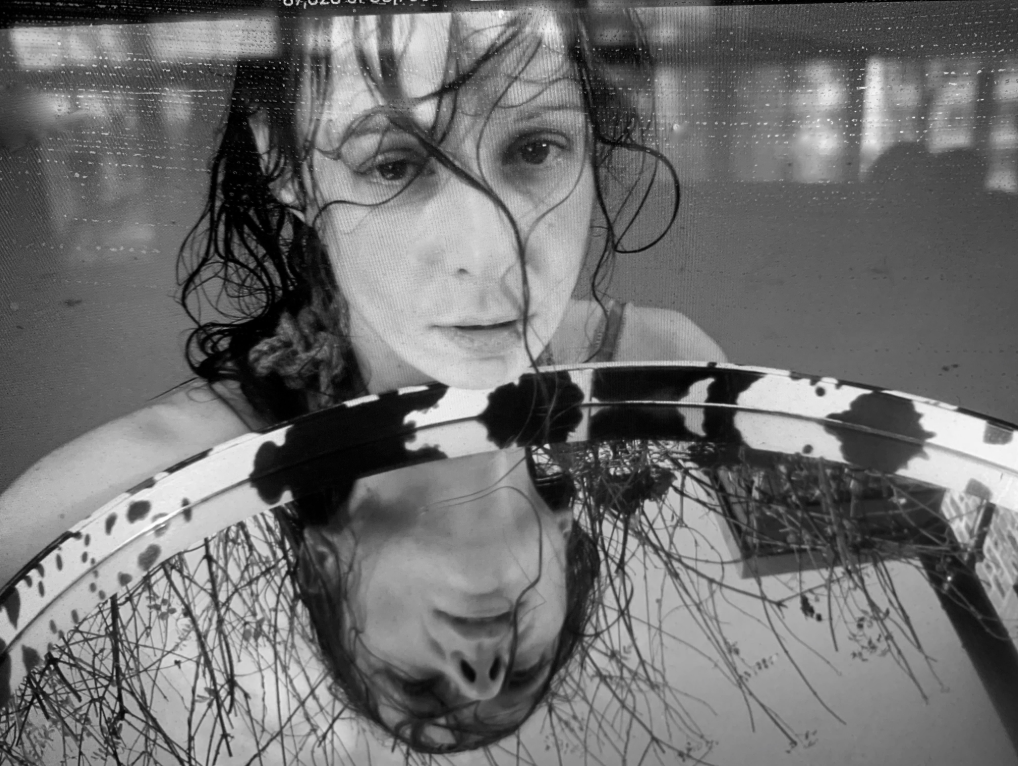
To coincide with this reprise, Goller and filmmaker Pedro Velasco have created a suitable visual abstract swim of a video for the album track ‘What’s really important she wanted to know, pt. 2’. Filmed entirely underwater at a local public pool, the conceptual feelings of both floating and swimming in an abstract liquid are cut to the harmonic pings, padded springy climbs of the music.
The Dark Jazz Project ‘5’
(Irregular Patterns)
After a prolific fluctuation of identities and experiments, the singular maverick electronic and art-house boffin Andrew Spackman hung-up his former SAD MAN alias (after a splurge of numerous releases over the last five years) a few years back to crunch the codes of jazzcore under The Dark Jazz Project title.
‘100% political, 100% jazz, 100% dark’ we we’re told, this most recent platform for Andrew’s often sporadic leaps in electronic music and crushing techno filament cut ups is about as removed from that jazz tag as you can get. Any semblance to jazz has been lost under a heavy tubular and granular transmogrification of the ominous, mysterious and, well, dark. And after three albums in that mode, and after another change in the direction of travel with this April’s cult (re)score of The Cabinet of Dr. Caligari, Spackman drops a surprise album of material that further expands the boundaries – the only recurring theme being that you won’t find a shred of jazz.
Album number “5” combines the apparitional dance music and pop synth vocals of seafarer’s ghosts, dream creations and new age with the techno of the Artificial Intelligence series, House music and a range of sounds that can only be described as whistled pipes, magnetic, kinetic, crystalised and bassy.
Beneath, above and consumed by metaphorical and thematic waves, a shipping forecast of hallucination, ethereal allure, and the emotive is transduced and transmogrified through Spackman’s unique apparatus. For glimpses of Radiance Basic Channel, the acid of LFO, and dreaminess veils of epic45 morph into spells of Mixmaster Morris and 808 State on the 90s meets Ibiza entranced ‘The Boat Is Sinking’ – no, not a screaming tumult of shipwrecked fear and danger, but far more soulful electronic mirage of haunted dance music.
Tracks like ‘Too Far Away’ weave giddy high octave, near cartoonish, EDM singing with Depeche Mode and Mark Franklin, and the spatial counterpoint between space age fantasy and the more unsettling ‘Testpiece’ sounds like acid rain hitting a windowpane whilst Moroder sequences a trip through the mists of time. The opening thwack turn rhythmic, drum pad crunched metallic spindled ‘Thunder’, features turnkey twists and a strange, obscured sound source horn that sounds like something from Eno and Jon Hassell’s “possible musics” explorations.
For a reference and theme, Spackman maps out a new sound by utilising the plaint songs of love lost upon the waves. Meanwhile, the album’s artwork, credited to B.S. Halpern, illustrates the density of commercial shipping throughout the world’s oceans. But, as with so many of Spackman’s projects, those prompts are transformed into something alien and cerebral, yet also striking, discombobulating. I will say, it is among his most soulful and melodious works to date. A layered album of many strands musically and sonically, the voices, mostly ghostly but in a nice melodic dreamy way, go well together with the balance of electronic forces. Considering, and I lost track a while back now, that Spackman has probably released nigh on fifty albums and pieces since this blog started, he continues to equally surprise and develop.
Xqui & Dog Versus Shadows ‘Dwell Time’
(Subexotic) 6th December 2024
Mundane behemoths of consuming spending, the Arndale chain of America-style shopping malls, first exported to UK shores in the early 1960s, provides the environment and atmosphere for the latest project by the sonic partnership of Xqui and Dog Versus Shadows.
Lancashire artist Xqui will need little introduction to regular followers of the Monolith Cocktail. The highly prolific artist, occupying a liminal space between ambient music, sound art, musique concrete, field recordings, hidden source material, found sounds and voice experimentation/transference, has frequented my reviews roundups for years; always playing catch-up, he no sooner releases one project than another arrives along the pipeline a week or two later. But featuring for the first time on the site, Dog Versus Shadows is the nom de plume of the Nottingham-based and no less prolific Lee “Pylon”, who switched roles from platforming an abundance of experimental electronic sounds as the host of the underground radio show Kites & Pylons (broadcast on Doncaster’s Sine FM) to making music himself.
As part of a trilogy of shopping centre albums, made by a host of experimental contemporary artists for the Subexotic Records label, this duo transduces the innocuous consumption and day-to-day thoroughfare of such commercial spaces into J.G. Ballard style dystopias, the sci-fi, esoteric, playful, and inter-dimensional. Defined as the length of time a shopper spends in a shopping centre – from the moment they enter till the moment they leave -, the language of capitalist spending theory, “Dwell Time”, is enveloped by the synthesized, warped, mechanized and consumed atmospherics, sine waves, filters, effects, degraded surface sounds, rhythms, chemistry, liquids and data of electronic music.
Whilst no particular Arndale centre is named or made obvious – there were 23 of them built, from Aberdeen to Dartford -, the most infamous is probably Manchester, which was devastated by an IRA bomb in the mid 90s. Closer to home – well Lee’s anyway, there’s also one in Nottingham. Derided, quite rightly, for their original brutalist and unsympathetic architecture, and the way they popped up over the rubble and dust of far more congruous, loved Victorian High Streets, they’ve often served as the blights of modernity, a totem for all modernist ills and the degradation of far less consumerist-obsessed times, when shopping was a gentler and more localised affair. From the lay-out to displays and choice of pipped “muzak”, the Arndale – a portmanteau of its architects Arnold Hagenbach and Sam Chippendale – meccas of pointless spending lure the consumer into an artificial, alternative reality in which time, location doesn’t exist.
Here, the duo emphasis this dreamier fantastical but alien and looming ominous despair, balancing indoor water feature idyllic whimsy and enchantment, the projected paradise of shop display Flamingos with forbode, unease and the surreal. And so, they somehow express the hallucinatory transfixed shopper’s gaze at plastic exotica, so entranced that for a moment they zone out into a weird void, or, make something as ordinary as roller shutters, the mechanisms, and drudgery of opening or closing up take on something far more dramatic and overbearing – there’s what sounds like a enervated lash or whip that trashes away indolently throughout. ‘Bargain Bin Shuffle’ takes on a sort of train-like rhythm, whilst the retro ‘A Fancy Electronic Gadget’ tweets and bobbles like something from the minds of Bruno Spoerri and Nino Nardini. Weirdly, the title-track sounds like an ethnographic Dadaist take on Javanese music.
Mark E. Smith once prompted a Northern uprising over these encroaching dystopian examples of rampant consumerism, on his 1980 track ‘N.W.R.A.’; lyrically picturing the day it was razed to the ground (which nearly happened 16 years), with “security guards hung from moving escalators” – rather strong. Chiming even then with the loss of community shops to such temples of commercialism, it marked a worrying change in habits and spending powers. Xqui and Dog Versus Shadows channel such apocalyptic concerns, protestations and the mundane and artificialness of such environments into something approaching a both playful, retro, knowing and sci-fi soundtrack of transmogrified muzak.
Various Artists ‘Fauna’
(n5MD) 10th December 2024
A deeply connective reminder about what we owe to the natural environment and its wildlife, the newest compilation from Oakland-based label n5MD finds roster signing Franck Zaragoza (otherwise known as Ocoeur) curating a curious and emotionally pulled gathering of congruous ambient peregrinations, scores and vapoured sensibilities that abstractedly, or otherwise, fall under the topic heading.
The label statement drives at humanities growing divisions, pursuit of consumerist and selfish pleasures, destructive consumptions and exploitation of the planet. All this at the expense of our animal friends; our lengthy historical relationship one of detachment to their pain, emotions and needs. Released on International Animal Rights Day (December the 10th), and with proceeds going towards the French organization L214 (taking their name from the French rural code in which animals are described, or translated, as “sensitive beings”, this group’s origins grew out of a campaign to abolish the cruel practices of foie gras, and mass industrial scale meat and dairy production), Fauna gathers together the work of an international host of mostly solo electronic and neoclassical composers, musicians and duos. Many of which have released or continue to release music on the Californian label.
It’s curator himself, Zaragorza, lends a beautifully cooed and vaporous ambient evocation to the compilation. The French minimalist, known for his introspective pieces and soundtracks for video games and documentaries, appears under his long-standing Ocoeur moniker with the rather pleasing and drifted ‘Second Chance’.
But the album opens with the Turin artist Memory Noise, who ushers in the collection with the recollected vapours, adult and children’s voices of laughter and play, airy and surface atmospheric ‘L’ora’, which reminded me of both the Aphex Twin’s Selected Ambient Works Volume 2 LP and Eno. Memories resonate amongst the sine waves, shrouds of time and melodious textures on this stirring piece.
Within the fields of ambient music and its many pathways there’s examples of artists using subtle if deep and sonorous neoclassical piano (the Athens born but France-based multimedia composer of note, Zinovia Arvanitidi’s capitulating and heavenly play of elemental nature ‘Light And Clouds’, which is exquisite and moving, and reminded me of both Hania Rani and Nils Frahm), and what sounds like guitar (Micah Templeton-Wolfe, otherwise known as Stray Theories, use of a lingered and drifted guitar line on the glassy chimed, deep thinking if broody ‘Veil’ adds a touch of Land Observation to a Boards of Canada backdrop).
In the more ominous category, the Sardinian composer Martina Betti scores a dramatic psychogeography of welled suspense and lament and foreboding electricity on the incredibly evocative ‘Invisible Cities’. Whilst there’s a real hymnal beauty and emotional felt pull on Mikael Lind’s patter-like melodies and searching lullaby turn heightened strings stirring ‘Fur and Feathers’ – think a lamented tearful Sigur Ros collaborating with Harold Budd; one of the compilation’s highlights for me.
An emotional ambient coalesce of like-minded artists, aiming to make the world a better place, and to rebalance our neglective relationship and dominion over those we share planet Earth with, the benevolent Fauna is a gift, a magical and often mood-shifting immersive draw of top-quality stirring electronica.
Martin Tétreault ‘Vraiment plus du Snipettes!!!’
(DAME/Ambiances Magnétiques) 6th December 2024
As the exclamation marks denote this is the third such volume of retrieved archival experiments produced via an apparatus of record player, cassettes, radio and various surface sounds from the free improvisation Québec innovator Martin Tétreault. With over sixty releases under his belt there’s a lot of material floating about: a lot of it previously unused.
Although there’s been considerable gaps in this series, which initially began back in 1992 with the limited cassette collection Snipettes!, followed by a “reprise” in 2007 after that inaugural instalment was re-released on CD, the latest volume continues to draw upon the idiosyncratic turntablist’s more “irreverent” sonic, dialogue, concrete and musical collages. For there is levity, a sense of fun, playfulness, wit in the way each avant-garde etude, passage or improvised performance is spliced (more in the sense of how it sounds than actual methodology) and put together.
At the centre of it all, or most of this play, is the turntable, which often sounds as if it is being impeded or led astray through pitch and speed manipulation and covered or wrapped by hidden materials. Less Qbert or DJ Shadow and more Basquiat or Nam June Paik qualifying for an avant-garde version of the DMC World Championships, captured extracts of serious theory, science, philosophy, lectures, the state of consciousness are morphed, twisted or shunted by a lifetime of accumulated snippets from TV, radio, cartoons, theatre, the opera, the rock concert and the art world. High meets low art, popular soundtracks meet the Afro-Cuban, and retro futuristic predictions of computer power, of domed utopias and the like come up against the mooning, the loony and ridiculous.
At times it plays out like Fluxus skits, and at others, finds a new rhythm and groove bordering on Afro-jazz or no wave or even funk from the transformed source material. A bastardised jazz-prog-noodling Zappa can suddenly also evoke Django Reinhardt fronting The Fugs; an informative French speaker is taken over by staccato nylon-strung Caribbean music and an off-kilter transformation of the Tango; Michèle Bokanowski “cirque’ comes to town under a bendy hallucination of shooting effects and Library music zaps; an echo of Jef Gilson is lost in the background cacophony of classical theatre; articulated ideas on science and reality sit next to feminine coquettish French annunciation and the scraping, rubbing and distorted abrasion of paper; and retro computerised calculus and sci-fi is paired with the spooky gothic theatrics of Edgar Allen Poe. These are just some of the happy accidents or intended results (in my mind) of these often humorous and amusing snippets. The uninspiring concrete mundanity of loading the tape recorder and other mechanised clicks, the dialling of an old telephone, stretch the imagination, whilst also stretching the listener’s patience in what can only be described as another of these Tétreault teases or in-jokes.
Originally these recordings would have been directly recorded on to a reel-to-reel, bypassing any mixing console. And so all the “quirks” the surface noises, the fizzes, crispy crinkles and muffles are kept as part of the makeup, the character; as Tétreault puts it, in keeping with preserving as much of the original recordings as possible.
Reanimating and morphing a diverse range of collected fragments from lessons in hypnotising to Marx Brothers like nights at the opera, and from echoes of the Art Ensemble of Chicago to recontextualised lofty addresses and sketches, Vraiment plus du Snipettes!!! is in many ways an antidote to the seriousness and earnestness of this art form.
Facilitated by the Canadian Ambiances Magnétiques – just one of the many labels that gathers under the Distribution Ambiances Magnetiques (or DAME as it is known) platform umbrella – this third collection of fragments, variations further cements Tétreault’s playful and experimental legacy, whilst also introducing a new generation to his pioneering work in the field of turntable-led, but also radio and cassette tape, exploration and transference. I’d recommend to anyone interested in Philip Jeck, Christian Marcley, People Like Us and Milan Knizak.
Black Temple Pyrämid ‘Frontier Plains Wonderers’
(Cruel Nature Records)
Someone could easily dedicate a blog to just reviewing the output of Cruel Nature Records. This onslaught of a label catalogue can boast of around 58 releases in 2024 alone, ranging from the sublime to barracking and raw, the kosmische to avant-garde.
Brian ‘Bordello’ Shea has already dipped his toe into the prolific giving waters, reviewing a couple of records from the November schedule last month, but I’m going to pick up on a returning entity, the obscured Black Temple Pyrämid, who featured on this site back in 2021 with the veiled atmospheric acid-hippie folk, post-punk and kosmische style The Hierophant album – released on the most brilliant underground label Submarine Broadcasting Co.
Details remain succinct, but opening gateways into cultist worlds, imbued by the Teutonic luminaries of acid, trance krautrock, the Pyrämid seem to broadcast from Colorado. This latest album was previously “nestled” amongst a number of releases held together within Patrick R. Pärk’s Desolate Discs hexalogy, released back in October. Now uncoupled in its full visionary glory, the experience is one of hallucination, the paranormal, the pagan, the hermitic, the entrancing, the disturbed and alien.
Across a quartet of both rhythmic and soundtrack-style preignitions, the mood is one of mysterious immersion, occultist weird folk, of amorphous sounds from different geographical realms and vague religious atmospheres; starting with the near sinister industrial steam-pressed tunnel slow-beaten and clang-reverberated ‘Fishers Peak Worship Song’, which could be a slowed down version of a monotonous Neu! traveling down a metallic corridor with Fritch and A.R. & Machines until the krautrock vibes become overbearing, eating away at this Faust-like march.
‘6,651 Days’ (which I think I’ve calculated as eight years and a few months) is an oddity and off-kilter dance of Krautrock-jazz, Bex Burch and Brahja-like Ethnic fusions, and American Monoexide elements, whilst ‘Alchemy of Emptiness’ draws, at first, on John Carpenter and Goblin, before a supernatural fusion of Current 93 and Drew Mulholland passages emerge. You can throw in a transformed version of techno 2-step, steely effects pedal Ash Ra Tempel, ethereal spells of renaissance hermitic invention and the sound of a guitar being sawed or sheared on a workshop grinder.
The finale is a 23-minute soundtrack of twisted dirge-y post-punk and mystical pagan ceremonial rites and mood music. Suffrage, the state of it all, this traditional whole side of an LP spanning score keeps a constant smirched and gloomy rolling, beating rhythm whilst adding or subtracting, or congruously moving into varied passages of the choppy, the skippy, mystical, pained, recollected and at the very end a droning stained-glass ray of hope. I’m calling this is an atmospheric convene between The Legendary Pink Dots, a more subdued GOAT, the Velvets and Nature And Organisation.
Pitching it just right as always, Black Temple Pyrämid invoke mystery, thought and the abstract feelings of “loss” and “mid-life growth” in a temporal framework of visions.
For the last ten years I’ve featured and supported music, musicians and labels I and the blog’s other collaborators love across genres from around the world that we think you’ll want to know about. No content on the site is paid for or sponsored and we only feature artists we have genuine respect or love for. If you enjoy our reviews (and we often write long, thoughtful ones), found a new artist you admire, or if we have featured you or artists you represent and would like to buy us a coffee at https://ko-fi.com/monolithcocktail to say cheers for spreading the word, then that would be much appreciated.
The Perusal #60: Anna Butterss, Niwel Tsumbu, TRAINNING + Ruth Goller, Donald Beaman…
October 10, 2024
A WORLD OF SONIC/MUSICAL DISCOVERIES REVIEWED BY DOMINIC VALVONA
(Unless stated otherwise, all releases are available now)

Anna Butterss ‘Mighty Vertebrate’
(International Anthem)
Branching out once more to lead a company of long-time collaborators on an expletory journey of groove and rhythm (because no matter what the concept, the theory, the strategy, this album has both), bassist and composer Anna Butterss fuses the likely and unlikely into a new album of expressive possibilities, landscapes and feels.
The scope of wandering into new worlds, conjuring up new moods and peregrinations is large. Mainly a result of wanting to write music after a long period of extensive touring, Mighty Vertebrate is a refreshing outlet of ideas prompted by Oblique Strategy-like stimulations. Hardly restricting, as I’ve already laid out, these strategies spark creative trains-of-thought, of process, methodology and performance. So, for example, as Butterss describes, they are “…going to make a song where the bass doesn’t function in the role of a bass”, or, “…make a song that uses groups of three-bar phrasing”. And so on. Technical yet simultaneously vague and even open-ended, this amorphous set of rules merely acts as a starting point: not only for the in-demand bassist but their foils as well. And despite all that technical musical language and the range of influences, sounds, ideas, the bass guitar (sometimes Butterss switches to the upright) is mostly recognisable: sounding on occasion quite funky (think Bootsy Collins) and soulful, rather than avant-garde and deconstructed.
Moving in the right-on circles in L.A., and very much in-demand for not only heading their own projects but collaborating and improvising with such notable names as Jeff Parker, Makaya McCraven, Phoebe Bridges and Jason Isbell, the Australian-born artist is a member of that city’s Small Medium Large super-quintet. Members of that same group now join their bandmate on their solo adventure, with both Gregory Uhlmann (on guitar) and Josh Johnson (on saxophone) contributing parts throughout alongside International Anthem’s (pretty much) in-house sound mixer, Call & Response concert series founder, in-demand drummer and multi-instrumentalist Ben Lumsdaine (acting as the album’s co-producer and percussionist). Added to that quality lineup, the L.A. based guitarist and composer, “prolific sideman”, oft member of the highly influential Tortoise and founding member of both Isotope 217 and the Chicago Underground, Jeff Parker offers up a special one-off turn on the electro 80s, Japanese new wave and jazz twiddling fusion ‘Dance Steve’.
Hints and recalls from all the above’s own groups, ensembles and projects can be heard at one time during the duration of Mighty Vertebrate. And why not? This is one talented bunch of players and innovators, working in a very hot scene right now; encouraged by one of the most prolifically brilliant labels of recent years in contemporary jazz and beyond. And yet it feels like a culmination of musical threads being put together, whether intentionally or just going with the energy, the directional prompts of the moment.
Across many of the tracks there’s a balafon-like bobble and shuttering woody percussive influence of Africa (Mali, perhaps Kenya too), a simmered down Afrobeat rhythm ala Tony Allen in places, and the saxophone of Peter King. This fuses with a Tortoise, Yoshiaki Ochi and Ramuntcho Matta vibe on the opening ‘Bishop’, and merges with touches of label mates Jeremiah Chiu And Sofia Honer, Antibalas and LAGOSS on the fluted and smoky sax serenaded ‘Shorn’.
The more gently inclined and peaceable ‘Ella’ reminisce takes a jazzier blues and American prog approach. And the following mirage shimmered ‘Lubbock’ (named after the Texan city with a famous son, Buddy Holly, and famously nicknamed “Hub City”) reminded me of both Daniel Vickers and Daniel Lanois. ‘Breadrich’ is a real mix, with its crunching more gnarly bass, Cobham fusion jazz inklings and Brides Of Funkenstein meets cosmic 80s Italian new wave vibes. And then at other times it’s more like Ariel Kalma, Chick Corea’s Elektric Band, Alfa Mist, Joe Zawinul, Coltrane, and Matthew Halsall. But regardless of all that, Butterss finds a near intuitive pathway of individuality that crosses borders, timelines, moods, musical signatures and structures to find rhythm and groove balanced by emotional pulls to important reference points and feelings in their life. I’m not even sure if you’d call it leading so much, but this solo gig proves a stimulating treasure trove of musical and sonic ideas with purpose and skill.
TRAINNING + Ruth Goller ‘threads to knot’
(Squama Recordings) 18th October 2024
Two connective forces in the experimental, inventive contemporary jazz scenes combine their experiences and art on this sonic and musical hybrid.
Although both participants have crossed paths previously, this is the inaugural adventure from the German drumming and saxophone combo of Max Andrzejewski and Johannes Schleiermacher and the serial UK jazz movement instigator Ruth Goller. Regular readers may have recognised the former pairing, both being synonymous with the HÜTTE name, an ensemble that began back in 2011, and featured on the Monolith Cocktail back in 2019 with their radical take on the music of Robert Wyatt. Born out of more recent rehearsals, the TRAINNING appellation has stuck for now, and it is in this form that they appear now – although that Northern European HÜTTE influence is hard to resist.
Goller’s CV is way too impressive and prolific to list in its entirety here, but the composer and bass player’s most notable credits include two of the most important and influential groups to set off a jazz renaissance in recent years, Acoustic Ladyland and Melt Yourself Down. Goller has also performed with such luminaries as Kit Downes, Sam Amidan, Marc Ribot and (Sir) Paul McCartney, and plays with both Let Spin and Vula Viel.
There’s enough threads, nodes and junctions in between to feed off, but both partners in this knotted tension and more spiritual, lofty, airy and aria-like ether Linda Sharrock “ah’d” fusion of influences and prompted sparks of inspiration read each other very well. Directed by, and riffing off, the “Exquiste Corpse” parlour game so beloved by the Surrealist movement, the trio of players expand beyond the jazz idiom into shadow worlds, the mysterious, supernatural, cosmic and near industrial.
Although popular in France amongst many circles, the Surrealists used the exquisite corpse game as a subversive collaborative drawing exercise in which each participant added whatever subconscious extension they could dream up to a chain of hidden images, the results of which when revealed could result in the weirdest of oddities. With the likes of grand doyen of the form, and way beyond, Max Ernst taking part alongside Dali and Miró you might have big bird’s plumage next to the shapely naked crossed legs of a muse and tennis racket feet. It’s used differently here however, generations on, and in musical form, with one of the players either writing bars or music, but then passing only the last bar, or sometimes only the last two notes, onto the next, then the same again to the next player and so on until a song’s skeleton was formed.
Far from exotic creatures and humans of dreams and nightmares, the results are a mix of chaotic freeform, post-punk prowling, the down beat, the foggy and the fourth world experiments and suffused atmospheres of Jon Hassell.
Both the TRAINNING lads also play synths and guitars, and so the range of sounds and instruments is expanded even further than sax, drums, voice and bass: sometimes towards the electronic. There are oscillations, arpeggiators and synth lines that hint at the kosmische and early analogue sound: from Conrad Schnitzler to Kraftwerk and Schulze. The guitars meanwhile have more than a hint of Marc Ribot about them, especially in passages on the hovering, alt-country ritual of ‘Backlog’ – this one is as disturbing as it is mysterious and vague with its post-rock doom threads, singular thumped drum, shimmered hazy rattle shakes of percussion and harmonic picks and plucks.
Elsewhere, old as dirt, ‘Agelong’ walks in the shadows of Scott Walker and Krononaut; the bass guitar, gnarled and trebly in a post-punk fashion, lurking and shaking in an atavistic gloom. And the messy off-kilter escalation that grows out of the opening electronics of ‘Threadfin’ is more like Last Exit and Peter Brötzmann. But then as the track progresses the mood changes again, merging math rock and punk no wave with Ethio jazz, veiled gauzy voices and instances of a more soothed Ivo Pearlman in a spiritual communion with Matana Roberts. By contrast, ‘Finback’ reminded me of Tortoise in some parts, and Donny McCaslin in others, whilst the dotted cone-like electronics that bring in ‘Lineage’ change shape and form, breaking out into a spell of Ill-Considered jamming with Nocturnal Emissions.
Pretty much out on the peripherals of jazz, ascending, flexing, rasping, soothing and breathing iterations and more untethered expressions of freeform music, TRAINNING + Ruth Goller fashion organic fusions from a process that promises the wild, tumultuous, wrangled and strange, yet also provides the melodic and dreamy.
Niwel Tsumbu ‘Milimo’
(Diatribe Records)
So, what does it sound like when a Democratic Republic of Congo born and raised virtuoso guitarist brought up on that central African region’s homegrown Soukous, studies the classical, relocates to Ireland, and finds themselves recording their debut LP at Peter Gabriel’s famous Real World label studios with the assistance of the renowned engineer Dom Shaw. Well, it sounds almost courtly, Iberian, Baroque, intricate, studied, and bluesy with a jazzy lilt and underlying feel of the homeland. For such is the range of Niwel Tsumbu’s skills as a deft and expressively rich maestro of the nylon-stringed guitar that the blending of international inspirations and absorptions is near effortlessly merged to create something quite unique.
Outlined in the press blurb, Tsumbu’s music and direction of travel is as influenced by the classical genius of Bach as it is by the Spanish Flamengo maestro Paco de Lucía and jazz deity Charlie Parker. Match this with the inspirational sounds of François Luambo Luanzo Makiadi, aka the legendary “Sorcerer of the guitar” Franco, one of the most influential figures in Congolese music in the last century (one time leader of the mighty TPOK Jazz band), and Congolese Rhumba’s more up-tempo and brighter, more intricately played scion/offshoot, Soukous, and you have a real worldly fusion of cultures at play.
With not much more than a guitar, and on only one occasion, a voice that seems to follow that guitar’s versant and twirling patterns, you can hear legato, glissando and the “rubato” (from the Latin for “stolen time”) signature of expressing rhythmic freedom by slightly speeding up and the slowing down the tempo forms of those referenced inspirations. It’s de Lucía, with a little Sabicas too, on the opening ‘Rubato’ reflection, and on the entwinned gypsy classical, plucked and pricked ‘Polyphony’; Bach, with touches of courtly old England on the trio of ‘Etude’ shorts; and Parker, joined by Wes Montgomery, on the near romantic dappled and picked ‘Tirizah’. The open-ended finale of watery motioned notes, ‘To Be Continued’, could be Bach resurfacing during the jazz age of 1920s America. And the sliding intro title-track has a nylon buzzy toned resonation of Mali blues to it.
The album’s most experimental performance/composition, ‘The Silence Within’, takes a completely different turn. A resonation of harmonics, a shimmer and rung pluck of notes hangs and lingers in the echoed canyons of Tsumbu’s inner sanctum.
With both a depth and real intricate lightness of touch to the often rapid, near seamless phrases, runs, articulations and intonations on this solo offering, and with a foot in both Africa and abroad, a classical learning is blended with a contemporary ear and musically well-travelled soul to produce a modern guitar gem.
Donald Beaman ‘Fog On Mirror Glass’
(Royal Oakie) 25th October 2024
The play and course of light, the recurring “phantom” and a beautiful subdued, nigh on elegiac poetry conjures up a simultaneous union of the beatific and longing on the latest solo effort from Donald Beaman.
Like a drifter’s songbook of subtle, intimate and home-recorded wanderings, metaphors and the like for yearned and plaintive romantic loss, fondness, the passing/measuring of time, and the urge to find comfort and solace, Fog On Mirror Glass uses memories of the weather, the way the light touched or dimmed at a given moment in time, and the smallest of witnessed movements/touches to evoke the right atmosphere of gossamer and sparsity.
Although backed on his previous four outings by a full band, Beaman has stripped right back, recording the bulk of the material in his own living room: where he sat and wrote most of the songs. Longtime stalwart Kit Land helped Beaman set up a makeshift studio of a sort, whilst also contributing bass and keys, and that room’s resonance and reverberated surface sounds can be heard throughout. It also gives the album sound an almost lo fi quality at times: in a good way. Yet despite that pared down approach, Beaman states that this album emerged from an idea he had to “present solo performances in conversation with full-band work”. And so, he brings in Michael Nalin on brushing and dusting light drum duties – occasionally those same accentuated, snare resonating rattled and languid drums gather some more pace and rhythm -, Jen Benoit to add a subtle and emotional touch of attentive backing vocals to the stairway of winding time, ‘Awhile’, and the yearned, disconsolate ‘Usual Phantom’, and Ken Lovgren on additional guitar for the slow-paced, fatigued title-track.
In a former life part of The Doubles band, and a mover on the turn of the new millennium New York City scene, Beaman has in one guise or another shared stages with a staggeringly impressive range of artists, from the late Jonathan Richman to Sharon Van Etten, Mdou Moctar and Marisa Anderson, and toured with an eclectic list of noughties influencers.
But his music, and in this instance, is like a Venn diagram of Cass McCombs, Bob Dylan, Bert Jansch, Jeffery Silverstein, Jake Xerxes Fussell, The Mining Co. and early Fleetwood Mac. However, the opening lovely trickled and drifted warmth and resonance of ‘Glass Bottom Boat’, formed in New York and finished once making it to his new home of North California, has an air of Robbie Robertson playing some Baroque or near Greek beauty on a mandolin about it – by the way, I don’t believe it is actually a mandolin being played on the record, just has that feel. A wanderer’s tale; an alternative aquatic floating road trip in the humid heat, it’s perhaps one of my favourite songs on the album.
Some songs also have almost a country and bluegrass feel to them, like the skiffle and shuffled “drawn by the light” ‘Old Universe’ – one of those themes of distilling the entire gravity of it all, the world, the universe, into a moment captured, a gesture, a turn or look in a very particular room, on the stairwell or in an idyllic but less than homely scene by a river. There’s also the inclusion of a church-like organ to add some kind of beatific bathed light on the Leonard Cohen-esque ‘Your Dreaming Eyes’.
In all, a most impressive and understated songbook of honest quality and performance, themed largely around the way light falls upon any given metaphor, analogy, phrase, description and texture. Unadorned, the feelings are left to pull and draw the listener into a most intimate world. Each play reveals more, as the album really begins to grow on you. A fine record indeed.
Rhombus Index ‘hycean’
(See Blue Audio)
Named after the hypothetical type of planet with liquid water oceans under a hydrogen atmosphere – in other words, a promising candidate for habitability -, Rhombus Index’s fourth album for the discerning introspective ambient and electronic label See Blue Audio reflects on the ever expanding, and encroaching, fusion of artificial intelligence and the organic. Sonically in wonderment, if near joyously radiant and positive in places, that relationship between nature and the digital is stimulating, regenerative and subtly hypnotically entrancing.
Back in solo mode after his collaboration with See Blue Audio label mate f5point6, the West Yorkshire artist and crafter of biomorphic worlds continues that “symbiotic” union by releasing his album on the same day as his foil. Both are similarly cut from the same kinetic ambient and electronic cloth it seems.
hycean however, has a certain life force of softly bobbing bulb-like notes, melodic wave forms, gentle ebbing synthetic tides, dancing atoms and dispersing playful pollen fizzes that builds towards insect wing fluttered and rotor-bladed itchy ticking techno beats. The natural shapes of geography are mapped out on a soundboard of the blanketed, submerged, the beaming and vaporous. In fact, the gentle ambient undulated ‘Coastal Curve’ uses a “sonification of coastal path measurement data” to evoke the desired effect.
Sometimes the beats are more active, like on ‘Flotsam’. Here they sound almost like some kind of transformed version of sticks or hand drums, or even tablas, tapping away in a near soft d’n’b style. ‘Digital Anemone’ (from looking it up, I’ve come up with “anemone” being the word for a genus of flowering plants in the buttercup family) doesn’t so much break out into but builds lovingly towards a joyful beaming dance of subtle techno and trance.
A musical photosynthesis; a sonic growth of fauna, flora and algae; hycean is both an audio and image generated fusion – see the videos and accompanying artwork – of crystallisation, the blooming and expanding: an image manifestation that shows nature in a very alien new light. Part Dr. Alex Paterson ‘Loving You Live’, part Seefeel, part eco trance, it will (excuse the pun) really grow on you with each new listen.
Poppy H ‘Wadham Lodge’
(Self-Release)
Haunted invocations of past lives and half lost and half hallucinatory recalled memories swim around in the metallic filament ether of Poppy H’s imagination on the mysteriously veiled experimental artist’s latest release.
In “celebration” of the cassette format – the first physically tactile album in a while from the prolific composer -, all the foibles of that format are emphasised and played with; from the degradation in quality, changes in speed, and the signature surface sounds of tape itself, to the physical presses of the stop, pause and play buttons on a tape recorder. Finding its way onto tape culture, the expletory concept and processes used to conjure up Wadham Lodge – apart from the name of the semi-professional East London football team Walthamstow F.C.’s home ground, and the Tudor era Wadham patrons who founded an Oxford Collage, I’m not sure if this title is borrowed, meant to be based on a real place or a reference, or made up – are new. Physical recordings of his catalogue of work, both old and unreleased, were played and mixed live simultaneously, and accompanied by original live improvisation and compositions. This multilayered process was then captured and mixed, like much of his work, on to a mobile phone.
An interesting and novel concept that results in Fortean transmissions, mirages and vague traces of human activity, conversations and environment. Greyed out, filtered and often in a lo fi magnetic shroud that borders on the paranormal and apparitional, more melodic tunes, mechanised beats and sonic illusions manifest from the mystical fabric of reconstructed time.
Memories are fed into a cryptic model of visitations and sonic consciousness. Take ‘loosely based on grief’, which merges the familiar – albeit manipulated and filtered – sounds of industry and the train yard contact points – the iron scuffed and screeched sounds of a train moving down the tracks – with a Faust Tapes-like foreign broadcast. Or the woody mechanical slot machine-like sounds that merge with a mist of a supernatural Murcof and the Aphex Twin and tweeting bird life on the time measured ‘wild stab in the dark’. From these prompts, these maybe half lingered forgotten thoughts of scenes and the moving world around him, emerge visages and emotions.
It’s the sound of the Boards of Canada, Matthewdavid, Lukid and Oberman Knocks half reminisced, and captured on to ghost tapes. Another unique experiment from Poppy H that elicits new visions.
The Galactic Cowboy Orchestra ‘Lost In Numbers’
(Independent) 11th October 2024
Losing themselves in the mathematical technicalities, phrasings and time signatures of a tumultuous, but kind and melodious, jazz-prog-country-indie-alt-rock fusion, the highly talented Galactic Cowboy Orchestra run the numbers forwards, backwards and every which way their dynamic performances take them.
Originally founded back in 2009 by bassist extraordinaire John Wright, imbued and prompted by the music of such notable influences as King Crimson, Mahavishnu Orchestra and The Dixie Dregs, the quartet have since fashioned their own form of technically challenging music that expands beyond the fusion sphere into all kinds of genres and moods.
The most recent iteration of the group features John’s wife and electric violin/lead vocalist foil Lisi Wright, drummer/percussionist Mario Dawson and acoustic and electric guitarist Dan Neale (who also occasionally picks up the mandolin, in true prog rock instrument switching style). Across various themes they masterfully gallop, spike and pique, riding a constant shimmer and splash of cymbals and percussion, as they fuse a squalling Michael Urbaniak and Jessica Pavone with Arti & Mestieri, a noodling Jaco Pastoruis and King Crimson: and that’s just on the opening title-track. When Lisi sings however, the mood is more like The Charlottes or Belly, even Madder Rose, backed by Zappa or Rush – see the math rock prog and alt 90s female-led ‘Righteous’ and more enchanting lyrical winding ‘Faith, Peace, Hope’.
To further the sound and influences even further, the group mimic the speedy flourishes and scales of the Raga Piloo on ‘In Passing’ – entwinning the traditional Indian form with ariel-like violin and active busy drums -, and sound positively supernatural, otherworldly on, what I take to be a tamed riff on Coltrane’s even wilder, maddening ‘Ascension’.
The Galactic Cowboy Orchestra’s new album (their sixth I believe) is for those seeking something different in the jazz and rock-fusion worlds, something as melodic and tuneful as it is technically clever and complicated.
Groupe Derhane/ freddie Murphy & Chiara Lee ‘Batch #4’
ALBUM (Purplish Records)
When not in the company of the celebrated Tuareg musician-guitarist Mdou Moctar (in a roll that includes bass, guitar, backing vocals, drum machine and producing duties) Mikey Coltun runs his Purplish Records label, dropping unconventional releases in “batches”: a singing of which is the already mentioned Moctar. With this unique method, Coltun twin’s artists from completely different backgrounds, international zones and genres, in a double cassette package.
Volume #4 really attracts polar opposites, with albums from both the Niger Tuareg band Groupe Derhane, fronted by Issouf Derhane, and the Italian experimental partnership of freddie Murphy and Chiara Lee, who also go under the name of Father Murphy, channelling Catholic guilt through natural and synthetic manipulation.
What unites both participants is a shared reification of the concepts, atmospheres and geographies of deserts; Derhane, with the most exquisite camel motioned rhythm and with that signature desert blues and rock guitar resonance, contouring and paying respect, whilst also longing, for the south central Saharan region of Ténéré (which in the Tuareg language literally means “desert”), and the Murphy/Lee duo scoring the overwhelming nothingness of the white desert landscapes of Antarctica for fellow Italian film director Lorenzo Pallota. Both works find their creators embedded in the landscape, performing and extracting the mood of the place.
With a remarkable back story of travails and movement, Issouf Derhane started off life in the Tuareg (though it must be pointed out, depending on who you ask, that many from this community of freewheeling Beaudoin prefer the term Kel Tamashek instead of the later Tuareg colonial loaded name) encampment of Tidene in Niger, a hub as it turns out for exceptional musicians, including Omara “Bombino” Moctar. But he was quickly swept up, we’re told, and itching to travel, ending up in Libya where he picked up the guitar. As the horrific, destabilising shitstorm of that country’s civil war broke out, and the Gaddafi regime tumbled, Derhane was forced to move once again, returning to Niger and the city of Agadez, the “gateway to the desert”, in 2015. This is where he met a fellow guitar enthusiast by the name of Mohamed. A connection was made, fuelled by shared roots, and together they formed the Groupe Derhane band, which quickly became a bit of a sensation in Tuareg circles.
Channelling a tumultuous time in the Tuareg plight, with the fight still ongoing for autonomy within the regions that spread across Niger, Chad, Mali and the Sahel, the increasingly alarming over-desertification and effects of climate change, and preservation of their way of life, the Derhane group encapsulate a longing and paean for home and their roots that sounds entrancing, beautifully and emotionally charged. The clapped rhythms, motions of the camel trail and shifting sand dune contours, and constantly turning, brightly resonating and buzz of the guitar are close to the sound of such Tuareg icons of the form as Faris, Terakraft and Tinariwen. It’s not mentioned in the notes, but I take it that both the opening ‘Tamidtin’ and closing ‘Ténéré’ are both riffs on or covers of Tinariwen’s songs, albeit with a less bassy and low vocal, more echo and brightness.
There’s a subtle use of the synthesized and electronic, which makes the reverberating and buoyant ‘Khay Tamadroyte Tamacheq’ sound near cosmic and throbbing.
The six-track showcase is an invitation to dig deeper, consume and absorb a burgeoning talent on the Tuareg scene.
Sharing this dispatches double-bill, the Torino-based sonic partnership of freddie Murphy (the lower case is intentional) and Chiara Lee channel a whole different kind of desert. More an isolated, white awe-expansive tundra, they transform the abstract forbode, mystery and overwhelming senses of vast Antarctica into a soundtrack for Lorenzo Pallotta’s experiences aboard an icebreaker. On his return from this field trip, the film director emphasised the shock of readjustment in a land where the sun never sets; where time has no meaning, or at least is hard to measure. Pallotta also described the vibrations, the breakage of the vessel as it cut through the ice, sounding like a constant earthquake.
All of this is fed into a soundtrack of the paranormal, primal, fogged, beastly and wonderous. Manipulated off-world readings, hums, surfaces noises, drones, dissonance and obfuscated voices provide the paranoid, the esoteric and a sense of movement through a world with no borders, nothing concrete but just space: lots of white space. Nurse With Wound, Throbbing Gristles, Gunther Westhoff and Szajner lost in the cold psychogeography, the Antarctic is as disturbing as it is a polar adventure vision of the Heart Of Darkness. But then the finale double of ‘Intermezzo + Closer’ sounds like an electronic kosmische scenery of Dinger and Cluster and cult Library music; the radiant magnetic lights of the southern hemisphere shimmy to a tubular dance.
Consider the mood set, the senses retuned.
Batch number four is yet another unique pairing of influences and sounds; two different geographies, different methods, yet both sharing a general theme of landscape and all the unsaid or unsayable abstract feelings, atmospheres that go with it.
Pyramid Waves ‘Screaming Brain’
(Syrup Moose Records) 18th October 2024
A cerebral haemorrhage; a blunt force of industrial sonics, caustic electronica and Fortean distress, the fifth work of traumatic discourse and dissonance from the French duo of Pyramid Waves drills into the four pillars of our dysfunctional modern society: that being, addictions, mental health, anxiety and cravings.
A bastard trauma of Front Line Assembly, Test Dept. and Merzbow, the Screaming Brain improvisations (recorded at their home studio) will leave you in no doubt as to the pained sufferings of its creators.
Demarcated into four parts of static white noise, analogue reverberations and interdimensional radio transmissions, crunch and crumbled beats, and echoed voices from some distant harrowing memory, doors to a tumultuous mind are opened to forces from beyond the mortal world. Because whilst the gristle for this album is all very real, the sounds grate, spin, switch towards a phantasm of the paranormal and alien. It’s as if a trapped psychogeography of echoing stresses and long dormant troubled episodes in the cortex has been wired into a supernatural apparatus of haunted and bestial sonorous severe disturbances.
Unsettling to put it mildly – especially the repeating dreamy melodic piano part that plays and meanders over a coarse bed of fearful distortion on ‘Trapped Underwater’ -, this uncomfortable but fascinating pull into the metal torture workshop of neuroscience squeals, slaps meat, drills and thumps its way to challenging and meeting its psychological demons.
If Richard H. Kirk, Richard James and SEODAH invoked Cthulhu whilst all in a room together, hunched over an apparatus of transistors, generators, motors, tools, drum pads and effects, then this is surely what it would sound like. Screaming Brian by name and nature, Pyramid Waves dissect the psyche of our troubling times, and the battles faced by the individual screwed-up by the system with horror and hurt.
Hi, my name is Dominic Valvona and I’m the Founder of the music/culture blog monolithcocktail.com For the last ten years I’ve featured and supported music, musicians and labels we love across genres from around the world that we think you’ll want to know about. No content on the site is paid for or sponsored and we only feature artists we have genuine respect for /love. If you enjoy our reviews (and we often write long, thoughtful ones), found a new artist you admire or if we have featured you or artists you represent and would like to buy us a coffee at https://ko-fi.com/monolithcocktail to say cheers for spreading the word, then that would be much appreciated.
The Perusal #57: Hannah Mohan, Black Diamond, Society Of The Silver Cross, Passepartout Duo & Inoyama Land…
July 3, 2024
A WORLD OF SONIC/MUSICAL DISCOVERIES REVIEWED BY DOMINIC VALVONA
(Unless stated otherwise, all releases are available now)

Photo credit: George Rae Teensma
Hannah Mohan ‘Time Is A Walnut’
(Egghunt Records) 12th July 2024
Geographically settling long enough to pen this solo songbook offering, but anything but settled emotionally, the former And The Kids vocalist-songwriter Hannah Mohan attempts to process the break-up of all break-ups.
After leaving home at the age of sixteen, restless and curious, Mohan spent her formative years on the road, crisscrossing North America, busking and honing a creative craft. On returning home, after five years of travel and travail, Mohan formed And The Kids with a school friend. After a trio of albums between 2014 and 2019, and with the global pandemic’s nefarious effects on the music industry and wellbeing, the band unfortunately came to an end. Throw in the heartache, the confusing cross-signals of a fateful relationship, and you’ve suddenly accumulated a whole sorry mess of emotional pain and a lot of questions that need addressing or analyses.
Luckily Mohan is a highly talented musician and songwriter, able to turn sorrow and reflection into gold. For Time Is A Walnut is a rich album full of familiarity and yet melodically and lyrically idiosyncratic, shaped as it is to Mohan’s particular cadence, timbre and way-with-words.
Less moping and more a full gamut of hurt, weariness, despondency, incriminations and plaint, Mohan travels full circle on her break-up journey: from shock to vented indignation, from losing one self in the moment to escaping from reality. All the feelings of resentment, the pulling apart of a fragile soul, and decoupling sound surprisingly melodious and disarmingly anthemic throughout: even during the bitterest exchanges and grievances.
Hand-in-hand with producer and musician Alex Toth (of Rubblebucket and Tōth fame), working away with little sleep in Mohan’s basement, the resulting thematic songbook is filled with great alt-pop songs; some with a country lent, others suddenly mystified and misty with an air of atmospheric Celtic vibes, or, channeling 80s new wave German synth music – Toth, I assume, almost in DAF mode on the darker-lit, hurting ‘Peace Be The Day’.
Almost breezy in parts, there’s tunes galore as Mohan evokes the Cowboy Junkies, Angel Olsen, Tanya Donelly, Madder Rose, Sophie Janna (especially on the vapour-piped Ireland illusion ‘Runaway’) and Feist. But you can also throw in a touch of dry-ice 80s synth-pop and a touch of Bacharach on the whistle-y saddened beauty that is ‘Upside Down’.
In sympathy and often softly lifting, there’s a fair use of trumpet on the album. Less jazzy – although saying that, there’s vague suggestions of Chet Baker – and more Southern, nee Mexican serenade and atmosphere, that instrument’s suffused and occasional enervated brassy blazes is a perfect fit with Mohan’s candid, sanguine delivery.
A congruous choice of guest, working in a similar mode, songwriter-musician Lady Lamb features on the 60s troubadour echoed, vibrato-trilled sing-a-long anthem ‘Hell’. The details and the unforeseen circumstances, the ‘messy eroticism’ and loss, disconnection from someone else’s life are all lay bare in a melodious beauty.
Hannah Mohan rides the roller coaster of a drawn-out break-up with quirkiness and vulnerability, turning tortuous heartache into one of the best and most rewarding songbooks of the year. Mohan may have let her soul sing out, as she comes to accept an emotional turbulent period of stresses and anxieties and pain. But whether she’s finally pulled through the other side or not is up to you the listener.
Black Diamond ‘Furniture Of The Mind Rearranging’
(We Jazz)
Transported back in time, and then propelled forward into the now via Chicago’s musical legacy, its rich heritage of innovators and scope in the world of jazz, Artie Black and Hunter Diamond’s dual saxophone and woodwind focused vehicle can trace a line from the Windy City’s smokestack bluesy outlines of the 50s through the icons Sun Ra, Roscoe Mitchell, Eddie Johnson, Lester Bowie, Art Ensemble Of Chicago, Anthony Braxton and the hothouse of undeniable influence and talent, the Association For The Advancement Of Creative Musicians.
Across an ambitious double-album spread of both quartet and duo mode formations, those Black Diamonds don’t so much shine as smolder and fizzle to a smoky and simmering resonance and metropolis backdrop encroached by wild jungles and fertile growth.
The majority of this moiety evolution is handed over to the quartet ensemble, with Artie and Hunter joined by the softened taut but flexing and always on the move double-bassist Matt Ulery and the constant cymbal splashing and rolling, fills and tight woody rattling drum breaking drummer Neil Hemphill. That set both swells and finds pause to a certain lowness and more weighted pull of the freeform and melodic, the rhythmic.
Saxophones sound willowy as they either entwine, take turns on the climb, exhale drawn-out mizzles or drizzles; all the while the action recalls every formative era from the 1920s onwards, from the blues to the African, the spiritual, bop and the serenaded. All those cats mentioned in the opening paragraph pop up alongside the Pharoah, Ornette, Evan Parker (I’m thinking of the woodwind elements, which both Hunter and Artie switch between throughout), Mingus and on the opener, ‘Carrying The Stick’, Lalo Schfrin of all people.
From concrete to near pastoral dustings, a menagerie of bird-like brass and woodwind sings and stretches, often letting the steam out of those valves with a bristle and rasp. The drum and bass combo keep it all moving forward, developing, with Ulery’s slackened bass even opening a couple of tracks.
In a more stripped-down and even more experimental mode, Side D (in old money vinyl terms) of the album is given over to the duo format of sax and woodwind.
Leaning towards Braxton, John Zorn and Andy Haas in near-non-musical freedom of expression, they probe new, amorphous spaces without clear signage or reference to environments or moods. The saxophone often sounds reedier, more rasping, and is enveloped with the very sound of its brassy metallic resonance and surface makeup. Every exhaled breath is used to conjure up the mysterious, the onset of some unease, but also a pauses for certain moments of reflection.
Perhaps a mizmar played at dusk, an ominous peace or a meditative haze, these experiments, forms of tonal, timberical evocation are difficult to describe or catalogue. Only that they fit in with the freedoms, the expressions and language of the Chicago school of freeform inventiveness and exploration, deconstruction of an instrument.
Black Diamond run with the ‘stick’ or baton passed on by the Chicago hothouse of jazz notables and luminaries, proving themselves to be a quality, dynamic act ready to push forward. Rearranging the cerebral and musicality furniture as never sounded both so classy and explorative.
Damian Dalla Torre ‘I Can Feel My Dreams’
(Squama Recordings) 12th July 2024
Subtle in approach and process, the cross-fertilization of South American and European cultures, prompts and environments on Damian Dalla Torre’s second album, I Can Feel My Dreams, is a tangible synthesis of abstract feels, moods and an exchange of musical ideas.
Nodes, points in a larger dream-realism canvas reference the Leipzig-based multi-instrumentalist, composer and producer’s footprints across both continents.
Sparked by a residency to teach, write and practice his craft in the Chilean capital of Santiago, Torre absorbed all that city and its surroundings had to offer: the vistas, colours and art. With a certain amorphous guaze that magical landscape of rainforest canopy enveloped menageries, flowing waters, Andean fluted heights and valleys, and exotic lushness is merged effortlessly with complimentary vocal harmonies and assonant arias, dewy and caressed extended dainty picked harp, quivers of guitar, trembles of piano and spells of electronica. The realms of jazz, sparse techno, ambience, voice experiment, nature, futurism, sound art and the new age seamlessly yield and relent.
The haul of notable guests invited to play on the album is staggering, and in no way distracts from the main leitmotifs and direction of drifted, wispy travel. Instead, each guest enhances with a certain gracefulness and calm each musical expedition and piece of mood music. Unsurprisingly given Leipzig’s musical history and legacy (home to an enviable catalogue of classical music giants over the centuries; perhaps one of the biggest most impressive concentrations in that genre’s history of iconic composers and musicians), but also its more modern burgeoning jazz and electronic music scenes, there is a host of musicians and artists from or based in the German city taking part on the album; cue the blossoming ‘genre traversal’ Jan Soutschek, ensemble singer and soprano soloist Viola Blanche, guitarist and composer Bertram Burkert and jazz improviser, pianist and composer Jonas Timm. Add to that the Austrian-Ethiopian harpist Miriam Adefris, the Danish composer and arranger Christian Balvig, pianist Felix Römer and the range and influences probe even further and deeper. Altogether, from the replenishing waters of renewal to the generator and manipulated electronics of modernity, all these contributions prove beneficially harmonious and complete.
This is a biomorphic world in which echoes of Eno, Alice Coltrane, Talk Talk, Oh No Noh, and Lara Alarcon all coalesce and dream. The architect, Torre, manages to keep everything constantly green and lush; showcasing a flair for pulling together a myriad of sources to create something almost familiar by new.
Society Of The Silver Cross ‘Festival Of Invocations’
(8668 Records)
Stepping from the shadows after abstaining from the material world for the last five years, the matrimonial partnership of Joe Reinke and Karyn Gold-Reinke return with a second rebirth, regeneration of Indian, Byzantium, Egyptian and Gothic imbued pathos and bathos.
Harnessing the themes of fate, the eventual and unavoidable specter of death and its harbingers, its demons, and even its angels, the Seattle couple walks the path of hermetic cults, atavistic Indian spiritualism and magik to induce cosmic awakenings and transformations. With all of mortality’s connotations and meanings, death is also seen as a renewable force on this couple’s second album under the occultist Society Of The Silver Cross heading.
But there’s no escaping the atmospheric dread and the curiosity of deathly rituals invoked by the Indian-style drones, harmonium-pumped sustains and concertinaed bellows – part ‘Venus In Furs’ Velvets, part Alan Edgar Poe shipwreck hauntology shanty, and part courtly mysticism. And yet Karyn’s siren-esque duets with boa Joe can lift towards the light at times, escaping the Fortean broadcasting waves, the splashed crashed tumultuous sea-like cymbals and gongs, Book of the Dead mantras and distressed Andy Haas-like geese pecked sax (if it is indeed even a saxophone) hauntings.
But for a majority of the time the couple’s counterbalancing act of apparitional, bewitching and more baritone, from the bowels of the deep and human soul, vocals muster spiritualist visitations, a theatre of sorrow, past incarnations and an unbreakable multi-levelled circle of added magic both heavy and foreboding.
I was picking up spells of Death In June, Nick Cave’s duet with Kyle, Mick Harvey’s time with P.J. and Amanda Acevedo, Backworld, David Lynch, Dead Can Dance, Current 93 and Angels of Light. The folksy Gothic-art-music-shanty-motioned ‘When You Know’ (with my imagination) sees Serge Gainsbourg laying flowers on Jim Morrison’s alter in the Cimeti ére du Père-Lachaise. The mystical finale, ‘Rajasthan’, not only features those synonymous Indian tones but also has an air of the Spanish-Baroque guitar and a touch of The Limiñanas about it. Shrouded in rousing tribal dramatics and ether visions, the couple’s lasting nod to the land in which they spent much time absorbing the cultural-musical spiritualist vibes before making their debut singles and album (Verse 1), is steeped in the mists of time; invoking India’s largest state before eventual unification, and its history of early Vedic and Indus civilizations. “Rajasthan” is a portmanteau of words, but can be translated as the “Land of the kings”; its courtly, royal verbose and stately reputation echoes as the final word on this album of rebirth and the coming to terms with death. Making true on their previous chapter, Joe and Karyn once more follow the call of the silver cross-societal allure. Atmospheres, processions and possession that are more than just songs, you don’t so much liberally catch, or, casually listen to each propound and chant-like forewarning as enter a fully constructed world of elementals and alchemist mystique. These are drones, dirges and more opened-up astral projections that will stay with you days after first hearing them. A Festival Of Invocations is a chthonian play of supernatural, spiritualist and funeral parlor riches; a successful follow-up after a five year hiatus.
Droneroom ‘As Long As The Sun’
(Somewherecold Records) 19th July 2024
Amorphous Western sun-cooked melting mirage panoramas are stoked and drawn from the Droneroom’s long form guitar peregrinations. The sixth (I believe) alt-country drone-cowboy album from Blake Edward Conley’s singular experiment for the Somewherecold label, As Long As The Sun is a filmic soundtrack-like conjuncture of Paris, Texas, Blood Meridian and a myriad of supernatural and alien visions of the ‘big country’.
The Western sounds of the twang, rattle and bends is unmistakable, and the sounds we’ve taken for granted, like the freight train convey that hurtles down the tracks and with it’s velocity and size shakes the passing dinging and ringing rail barrier junction, but Conley’s familiar markers, references make them near hallucinogenic under the sun’s powerful debilitating rays. I can imagine Ry Coder fronting Ash Ra Tempel, or early Popol Vuh relocated to the arid planes of outlier Texas, or a mule-riding Don Quixote tilting at the shadows of cacti.
A contemplation of all life’s spiritual quandaries and fate no less, all elicited from the magnified and amplified reverberations, quivers, strokes, gestures, brushes and more driven rhythmic passages of the guitar. Fuzzed-up with flange and sustain, these descriptive lines, resonated waves and vibrations are like drawn-out echoes of Michael Rother, Gunn-Truscinski, Jason Pierce (in his Spaceman 3 days) and Yonatan Gat. On the searing, razored and heated coil moody ‘Last Train To Soda Spring’ (the small Idaho city which gets its name from the 100s of carbonated water springs that dot the landscape) there’s a build-up of layering and rhythms that breaches the hazy space rock barriers – Hawkwind crosses fully into Motorhead. Whilst the shamanic marooned, railroad vision, ‘East Facing Window’ has a kind of krautrock generator field around it that hums and pulsates, invoking both alien and paranormal activity – I’m thinking a little of Roedelius’s experimentation on Sky Records.
As Long As The Sun beats down upon Conley’s cowboy hatted noodle, its gravitas, life force and heat inspiring serious abstract empirical vistas, atmospheres and the soundtrack to a movie yet to be made.
Luke Elliott ‘Every Somewhere’
(AKP Recordings) 12th July 2024
Composing a more inclusive biosphere and exchange of cultures, influences and sounds, the Amsterdam-based, Leeds born, sound artist Luke Elliott transforms his source material of field recordings (from what could be acts of making in a workshop to tramples through the undergrowth of Moat Farm in Somerset and the windy tubular sea organ of Zadar in Croatia) into a fully working lunar off-world vision.
A new world no less, Every Somewhere’s vague, recognizable, or by happenstance, playful tastes of gamelan and Southeast Asia, early analogue modulations and patterns, tape music experiments and sonic land art (that already mentioned Zadar organ, which was built as a large scale land art instrument to bring some sort of random melodious colour to the Dalmatian coastal town’s monotonous concrete wall scape, rebuilt with haste after the devastations of WWII) are sampled then re-sampled, fed through effects and an apparatus to build a more sympathetic, attentive environment.
At least influenced in part by a fascination with Alfred W. Crosby’s ‘Colombian Exchange’ theory, as outlined in his 1972 propound book, which gave a now fashionable name to the legacy of colonialism and the destructive and loaded exchanges between the Western hemisphere and the then ‘New World’, Elliott’s imaginative world is more nurtured towards a beneficial exchange of cultures.
In a liminal zone between the earthly, otherworldly, near cosmic, dreamy and liquid, the kinetic, algorithmic, arpeggiator and magnetic atoms and transparent notes bobble and squiggle about over atmospheric ambience and to the rounded rhythms of paddled tubular obscured instruments. And then, once the guitar is introduced to tracks like the glassy delicate ‘Objects Of Virtue’, the mood changes towards a bluesy post-rock vibe.
Magical escapes, stargazing from the observatory, solar winds, near operatic cloudscaping and various gleams, glints and globules recall Goo Ages’s Open Zone album, Tomat, Raymond Scott, Edgar Froese and Zemertz.
Elliott’s debut for the astute AKP Recordings label maps tactile environments both intriguing and melodically mindful. It paves the way for new visions of a more equal future.
Passepartout Duo & Inoyama Land ‘Radio Yugawara’
(Tonal Union) 26th July 2024
The freely geographical traversing Passepartout Duo find congruous partners with collaborative foils Inoyama Land – those fine purveyors of Japanese Kankyō Ongaku, or environmental ambient new age music – on their latest balance of the tactile, organic and synthesized.
A free association of cultures and musical processes, despite laying down loose perimeters, the Italian/US duo of Nicoletta Favari and Christopher Salvito combine explorative forces with the Japanese musical partnership of Yasushi Yamashita and Makoto Inoue for a remarkable interaction with their surroundings, a mix of children’s instruments and percussive and wind apparatus.
Favari and Salvito have already appeared on the Monolith Cocktail, with reviews of both the Chinese art platform-backed Vis-à-Vis and Daylighting albums. Those experiments in the timbrical, rhythmic and melodic, imbued by the Meili Mountains, Lijiang and fabled imaging’s of Shangri-La, were created during and in-between the restrictions of the Covid pandemic. A year before news broke of that global crisis the duo travelled to Japan. Connecting with the Inoyama Band, a duo that had transformed the abstract feelings, magnetism, sublime transcendence and peace of the landscape since the 1980s, they were invited in to their host’s shared space sanctum – an auditorium inside Inoue’s family-run kindergarten in Yugawasa that doubles-up on Sundays as a studio.
Set out on tables for all participants, a myriad of playful and more studied instruments and a set of “game rules”. The quartet could only use the mix of electronic and acoustic instruments separately or altogether for ‘revolving duets’, with each taking turns to play through a cycle of ‘four duos’. But then ‘anything’ was permitted in that session, which lasted three hours. In this complete state, that long improvisation and set of prompts has been distilled into eleven more digestible parts. Within the sonic, contextual and languid peaceable realms of the Kankyō Ongaku genre and greater scope of Japanese acoustic-electronic music, there’s an air of Satoshi Ashikawa, Yasuaki Shimizu, Yoshio Ojima and Tomo-Nakaguchi about this album. You could add hints of Slow Attack Ensemble, Eno, the Hidden Notes label and Bagaski to a subtle layering environment that takes in all points of the compass, with chimed bulb-like notes and the ringing, searing and chimed bamboo music of Java, Tibet, Vietnam and the dreamy.
The recognizable sound of soft-mallet patterned and paddled glockenspiel and xylophone merge fluidly with hand bells, higher-pitch whistled recorders, concertinaed wafted melodica and harmonicas, and racks of wind chimes. Whilst atmospheric elements and the use of electronic devices create mysterious vapours, oscillated wisps, knocked rhythms and floppy disc sampled voices.
Gazing at diaphanous beamed and lit cloud formations from a comfortable snug in the landscape, or, submerged below Mexican waters inhabited by the strange aquatic Axolotl salamander, each part of this performance is somehow similar and yet variably different. Between the illusionary, dreamy, sonorous, see-through and swimmingly, two sets of adroit partnerships create organic meta and a sublime near-nothingness of slow musical peacefulness and environmental absorbed transience.
Myles Cochran ‘You Are Here’
(9Ball Records) 26th July 2024
Unhurried and once more placable, the all-round embracing American composer, songwriter, multi-instrumentalist and producer Myles Cochran follows up his 2021 debut album (Unsung) with another carefully spun canvas of subtle emotive pulls, TV and filmic-like soundtrack scores, ruminations and mirages.
Traversing an amorphous palette of Americana, the blues, classical, folk, experimental, Baroque and traditional, Cochran integrates his Kentucky roots with spells in New York City and the UK (where he’s lived for some time) whilst letting his unprompted imagination travel to more exotic climes and cerebral dreamscapes.
Although an adroit player of many instruments, Cochran’s work is mostly led, directed, informed and suffused by both the acoustic and electric guitar. Understated but keen and expressive, his choice of guitar is once again left to stir up visions of a celluloid panoramic and more mystifying melting Western America, the Appalachians, Ozarks and home. Only this time around he’s also invited in the accomplished cellist Michelle Packman and bassist Reggie Jones to add a transported subtle semblance of chamber music, period drama and jazz. Jones, playing a stand-up (or upright) bass throughout, emphasizes rhythm, a pace and sense of travel – especially so on the shaky rhythmic travelogue ‘Making Something Out Of Nothing’, which, by its title, indicates a conjuring of a composition, performance out of just playing or fiddling around, but evokes (for me) the imagined title sequences of some wintery Northern American drama, out on the road with the harsh, snowy landscape passing by the window of our protagonist’s truck. Meanwhile, the following countrified-meets-the-pastoral-and-renaissance crafted ‘Signs And Symbols’ has an air of Fran & Flora about it with the sounds of a breathy and fiddle-like cello.
Widening the vistas, the quiet inner battles of turmoil and conflict, sympathetic bowing and pining cello enhances the mood and subtle expressions of Cochran’s compositional style, which both ebbs and flows between the echoes of Chuck Johnson, Ry Cooder, Bill Frisell, John Fahey, Martin Renbourn and Jeff Bird.
There’s a pick up in the pace with dusty brushed drums, but for the most part it’s a quivery horizon gaze of sophisticated slow to mid-tempo observations and introspection. None more so then on the mature vocalized jazzy-bluesy and dusty ‘The Deepest Sea’, which sounds like Hugo Race or Chris Eckman in questioning Leonard Cohen mode backed by Chris Rea.
A culmination of travels, thoughts, hopes and fears, You Are Here further expands Cochran’s musicianship and influence. Those Americana roots are being pushed further into new pastures, helped by his cellist and bassist foils and freshly attuned ear. Eroded, waned, giving and dreamily melting in the heat, his guitar parts overlap and transmute into piano, strings and the ambient. Each track is like a short score, the qualities of which offer sensibilities and a way of following or telling a story, a moment in time or scene. In all: a very sensitive work of maturity and unrushed reflection.
___/+ THESE RECOMMENDATIONS IN BRIEF
Any regular readers will know that I pride myself in writing more in depth purview-style reviews with a wider context. This means I naturally take more time and effort. Unfortunately this also means that I can only ever scratch the surface of the 4000+ releases both the blog and I get sent each month. As a compromise of sorts, I’ve chosen to now include a really briefly written roundup of releases, all of which really do deserve far more space and context. But these are recommendations, a little extra to check out of you are in the mood or inclined to discover more.
Pocket Dimension ‘S-T’
(Cruel Nature Records)
Exploratory voyages into the kosmische and sci-fi, straight from the illustrated pages of Stewart Cowley’s Spacecraft 2000 – 2100 AD, the Lanarkshire-based artist Charlie Butler doesn’t so much launch as fire the languid thrusters into the mesmerizing, enticing and dream like voids of a soundtracked cosmos. On many levels, through four continuous stages, the drifted and wonder of space is balanced with fizzled raspy electronica and eventual IDM, siren wailing bends, shoots, and a rotating centrifugal force that seems to envelope the whole trip in both mystery and the presence of unknown forces hovering in the galactic ether.
Various ‘TRÁNSITOS SÓNICOS – Música electrónica y para cinta de compositores peruanos (1964-1984)’ (Buh Records)
Filling in the blanks in the story of South America’s experimental and avant-garde scenes, Buh Records throws the spotlight on Peru and a host of experimental boffins working to cross indigenous sounds with the new and yet to be discovered.
Off-world, futuristic, UFOs, tape manipulation, the shrills of something magnetic, steely industrial tools, reel to reel melting, mind bending and rattling old atavistic bones, assonant female voices, and shamen augers, this compilation includes examples from the likes of Arturo Ruiz del Pozo, Luis David Aguilar, and Corina Bartra; a wealth of cult composers struggling to explore new sonic boundaries in a country devoid of the apparatus, foresight and laboratory conditions. And so most of the atmospheric – sometimes heading towards chilling alien – and transmogrified Peruvian environmental peregrinations were recorded in private studios. The story and scope needs way more room than this piffy, glib little piece. Suffice to say, I highly recommend it.
Rehman Memmedli ‘Azerbaijan Guitara Vol. 2’
(Bongo Joe)
The history and travails of the fecund oil rich country of Azerbaijan are atavistic. This is a nation that has striven to gain independence from a string of empires: both Tsarist and Soviet Russia, Iran, Albania, and much further back, the great Mongol Khan Timur. Desired not only for its abundance in fossil fuels but for its geographical corridor to its fellow Transcaucasia neighbours of Georgia and Armenia in the west, to the south, Iran, in the north, Russia, and to the west, the vast inland lake, the Caspian Sea. And although at various times at war with its direct neighbour Armenia (recent flare ups have led to a startup in violence, and accusations of ethnic removal), the country’s close proximity to a mix of cross-cultural and geographical influences has led to an absorption of all kinds of musical styles.
Bongo Joe‘s second volume of ‘guitara’ music showcases is fronted by another Azerbaijan legend, Rehman Memmedli (the first volume was handed over to the equally iconic Rüstəm Quliyev), who first learnt the accordion and harmonica before picking up a relative’s guitar – but also the region’s synonymous traditional tar instrument too (an ornate curvy looking waisted long-necked lute). Suitably eclectic in styles, from belly dancing Turkey and Arabia to shimmy Bessarabia and local wedding music, Memmedli scores and scorches up and down the fretboard at speed. Spindling, bending, skirting and wobbling, and even sounding at times like an erratic stylophone, vistas and ruminating sonnets are conjured up from a nibble-fingered maverick: Persia, the Caucasus, and beyond are summoned forth from electrified scuzz and fuzz and drama.
Cumsleg Borenail ‘Fragile And Adaptive’
Video – Taken from the new album Time Is A pˈætɚn Of Shifting d͡ʒiˈɑːmətɹiz
Proving incredibly impossible to pin down, whilst impossible to fully keep a track of, such is the prolific output, the artist formerly known as Cumsleg Borenail has released a host of albums, EPs over just the last few months alone.
The latest, and discombobulating entitled, Time Is A pˈætɚn Of Shifting d͡ʒiˈɑːmətɹiz,will officially go live a week or so after this column. As a teaser, Borenail has fucked around with AI to produce this strange, biomorphic, tumorous metamorphous of metallic clay dancers, bound together in some super fucked up hallucinatory creepy body assimilation style video. I will admit that I fucking hate AI – ‘artificially inflated’ as someone has already quipped – so it is lost on me – for those who want the tech, ‘all models’ were ‘created in blender, then whapped into ADOBE to AI generate backgrounds and randomly alter model edges.’ But musically we are talking about whippy body music that channels Detroit mechanic funk techno and the sound of grooving over broken glass. Derrick May, Suburban Knight, Ron Trent in the mechanics of the surreal and industrial. As artificial as it all is, there’s a certain soul in this machine. I look forward to hearing the rest of the album later in the month.
Neon Kittens ‘In The Year Of The Dragon (You Were A Snake)’
(Metal Postcard Records)
System of downer sinewy post-punk, like the Pop Group falling on top of PiL, the latest video output from the ridiculously prolific Neon Kittens is another semi-metal-guitar-string buzz and grind of gnashing venom and risk. The vocals sound like a toss off and up of honey trap glossed fake AI and taking no crap no wave female provocateur in the mode of Michi Hirota, unimpressed by the snake-like actions of a former lover; the action, like a lost grated down stroke of Fripp(ery) from the Scary Monsters And Super Creeps LP.
Keep an eye out next week for Brian ‘Bordello’ Shea’s review of the band’s EP.
Dyr Faser ‘Crime Fever’
(Self-release)
Boston, Massachusetts duo of Eric Boomhower and Amelia May previously skirted the krautrock dreaminess of Amon Duul II on their hermetic, drowsy Karmic Revenge. They seem to change their sound, if only subtly, on each new album, and Crime Fever’s haunted, scuzzed playfulness leans more towards Lou Reed this time around – but only if he’d jammed with Dinosaur Jnr. Jefferson Airplane and Ty Segall.
Still, they maintain a buzzy, fuzzy, and even Byrds-like loose dusting of the psychedelic and a backbeat throughout, with those ether-giddy vocals tones of May invoking Blonde Redhead, Beach House, and of course a little of a slacker rock, shoegaze vision of Renate Knaup-Krötenschwanz.
Needs far more attention than I have the capacity to manage but have a read of my piece on their KR album from a while back to get enthused.
Hi, my name is Dominic Valvona and I’m the Founder of the music/culture blog monolithcocktail.com For the last ten years I’ve featured and supported music, musicians and labels we love across genres from around the world that we think you’ll want to know about. No content on the site is paid for or sponsored and we only feature artists we have genuine respect for /love. If you enjoy our reviews (and we often write long, thoughtful ones), found a new artist you admire or if we have featured you or artists you represent and would like to buy us a coffee at https://ko-fi.com/monolithcocktail to say cheers for spreading the word, then that would be much appreciated.
A WORLD OF SONIC/MUSICAL DISCOVERIES REVIEWED BY DOMINIC VALVONA
(Unless stated otherwise, all releases are available now)
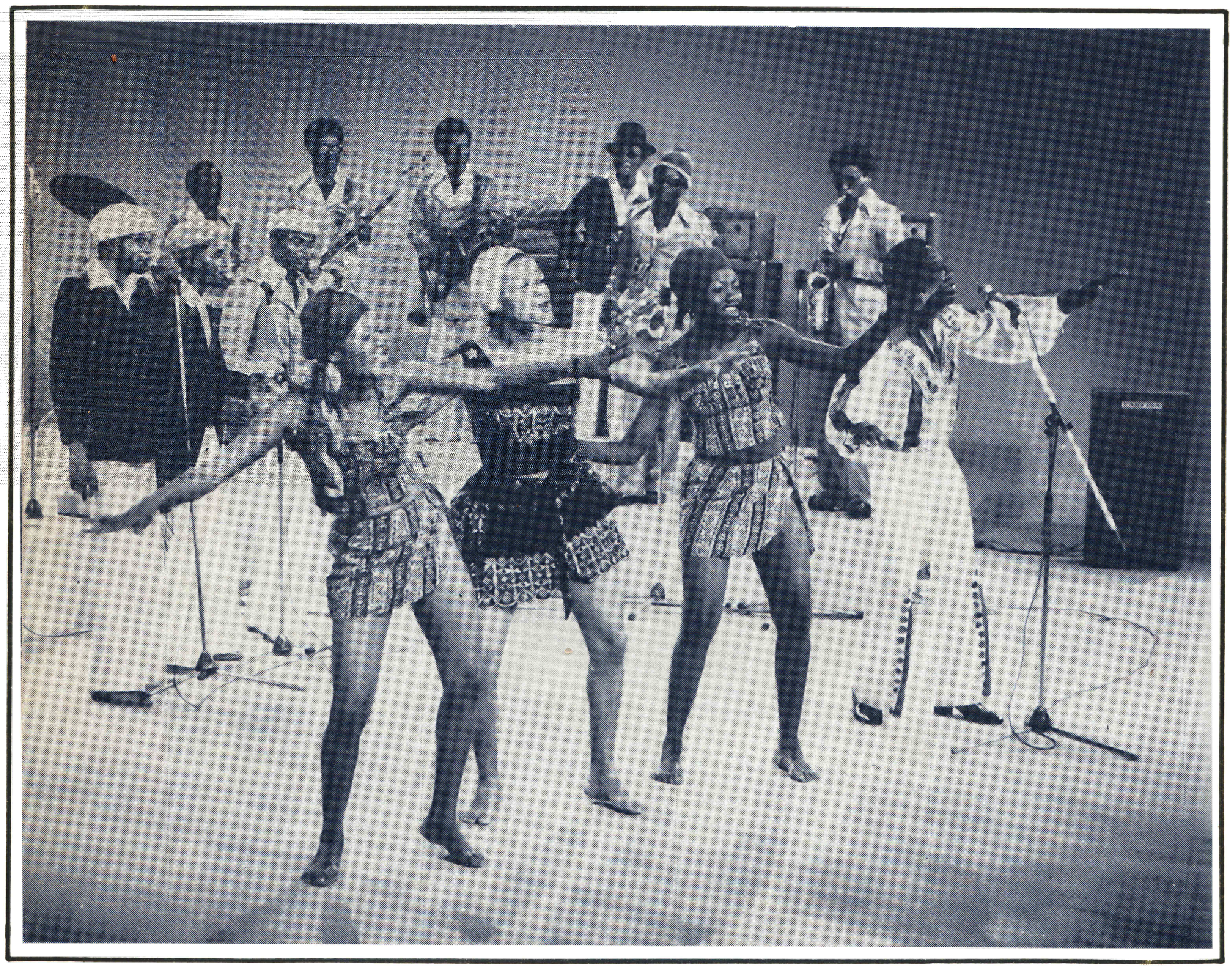
Tabu Ley and African Fiesta National, 1970 (Copyright – Analog Africa)
Various ‘Congo Funk! – Sound Madness From The Shores Of The Mighty Congo River (Kinshaha/Brazzaville 1969-1982)’ (Analog Africa)
A tale of two cities on opposites sides of the same river, the Congo, the latest excursion for the Analog Africa label celebrates and showcases an abundance of dynamite, soul and funk tracks from the two capitals of Kinshasa and Brazzaville.
The roots of both are entwined and yet very different. The mega city of Kinshasa only adopted its name during independence (but not without interference from its former brutal colonial masters Belgium, and also the West, and in more recent times, China) in the 1960s, a product of the “authenticity”, or “renativizing”, policies of Joseph Désiré Mobutu. The largest city and capital of the Democratic Republic of Congo – itself, renamed over centuries depending on who controlled it, but for a twenty-six year window between 1971 and 1997 known as Zaïre – the constantly expanding Kinshasa was founded in the late 19th century by Henry Morten Stanley, who was in the employ at the time of the Congo’s most disastrous barbaric ruler, Leopold II. Named in his honour, it stood for half a century or more as a hub for Belgium’s rape of the gargantuan central African country’s natural resources, minerals and people. Once free (only to a point) of European mastery its name was changed to reflect a hunger for authentic African heritage: named in fact after what was once a humble village on the same site.
On the northern side of the Congo River stands the capital of the Congo Republic, Brazzaville. It too was originally founded by a European, the Italian-born – but later granted French citizenship – explorer Pierre Savorgnan Brazza, who took it as a prize for the French Empire. The name stayed, but after greater independence this city became a thriving hive of activity for the burgeoning music scene: designated by UNESCO in 2013 as a “city of music” no less.
Circling back on its regional neighbor, Kinshasa became a seat of power for the dictatorship of Mobutu (the Belgium and US-backed usurper who took power after the assassination of the promising Black Nationalist, but Soviet-favored, Patrice Lumumba). Famously drawing a global audience in 1974, the world tuned into the legendary, iconic titanic grudge match between Ali and Foreman: aka the “rumble in the jungle”. Instigated by the boxing promoter and hustler Don King off the back of Ali’s full “motherland” endorsed conversion, Mobutu saw the potential in not only raising his own profile but that of his country by vouching for and putting on this great boxing spectacle in a revitalized Kinshasa.
History would later prove Mobutu to be a tyrant and thief, but for this shining moment of self-publicity the American stars of the fighting game and music/entertainment scenes were lured to the city. Seen in various documentaries since, but favouring the American stars of R&B, soul and funk – including the anointed godfather of soul himself, James Brown – the African artists and musicians that took part in a three-day festival of music around the main event included a rafter of local talent too. Competing to gain the spotlight, dominated by the likes of B.B. King, Bill Withers, The Pointer Sisters and The Fania Latin All Stars, were two of the Congo’s most famous icons: the bandleader, honed pioneer of an attacking repetitive guitar style that tore up the local dancefloors and airwaves, Francois “Franco” Luambo, and rival Pascal-Emmanuel Sinamoyi Tabu, aka Tabu Ley, the leading light of African rumba and one of the continent’s most influential artists. Franco fronted the TPOK Jazz troupe at that music extravaganza, a band with a lot of history: famous for their part in spreading Congolese rumba.
The event’s musical organizers, Hugh Masekela and Stewart Levine, gave Franco free reign as a creative guide, but it’s said that Tabu stole the show. It’s a convoluted backstory, but the band that Franco fronted, the TPOK, actually changed their name from the O.K. Jazz band a decade or more after forming in the mid 50s – even more confusing, you will see the name written down in various forms, sometimes with the abbreviated dots. Both this troupe and Tabu make appearances on this Congo Funk! showcase – the funk being only one part of a both dynamite electrifying and more riverside lilted set of Afro-rock, soul, R&B and more localized serenading sweetness. Tabu for his part, leading the Et L’ Orchestra Afrisa, moves to a forgiving soulful rumba-esque groove (Congolese rumba being a signature, often dominate, movement honed in the region by such luminaries as Tabu and the famous Verckys) on the sun-blazed horn serenaded and buzzing guitar licked ‘Adeito’. With their L’ Orchestre additional name, O.K. Jazz makes an appearance under the Lolo affixed title (I will readily admit I have not read the liner notes this time around, and so have no idea if this is an artists or just a reference to one of the villages in the area) on the funky raw Booker T/Stax steal ‘Lolo Soulfire’, and holding the full limelight, go for some “humph” and laughter on ‘Kiwita Kumunani’.
As with much of the collection’s roster, less established acts and groups outside the major label networks (many subsidiaries of Western labels) struggled at first to get heard or raise the prohibitive sums needed to record. The PR notes briefly describe what happened, but to fill the void, a number of pioneering entrepreneurs entered the market to levitate the costly process. The likes of smaller, more independent labels such as Cover No.1, Mondenge, Editions Moninga and Super Contact could take a punt on newly emerging younger artists; those who were influenced by the “rumble in the jungle” festival of sound, going on to cut their own hybrid versions of American soul and funk, of which this compilation is filled. Pumped out across the airwaves of Radio Brazzaville or beamed out by Télé-Zaïre and RTV du Zaïre – the TV shows of which were apparently so huge that the president ordered the latter to put out daily concerts because they were found to quell unrest and criminal activities during transmissions. Arriving at the opposite end of this compilations window, released in 1982, the opening salvo, ‘Sungu Lubuka’ by Petelo Vicka Et Son Nzazi, seems a likely candidate for this change. Sounding like the heralding horn section from a Dexys track and homage to Jackie Wilson and his peers, before slipping into a Latin-like groove, this track connects two worlds: as influenced by the Fania All Stars as it is by disco funk. It’s certainly a blazing start to a cracking collection, and obvious single choice. It’s followed by the Afro-rock and Kuti horns simmering ‘Mfuur Ma’ by the Groupe Minzoto Ya Zaïre; yet another single showstopper that seems to echo the Pazent Brothers and J.B.’s. And another worthy punchy tune, the closing ‘Ah! Congo’ by the Orchestre National Du Congo, proves the perfect, high energy R&B, bookend to a brilliant compilation.
Tracks like Les Bantous De La Capitale’s ‘Ngantsie Soul’ just roll on and on like a 12” disco mix; a funky but not erratic groove that pulls you in with a constantly fluid moving soul riff and clopping percussion. Next to that, Les Frères Soki Et L’ Orchestre Bella-Bella’s ‘Nganga’ shuffles and scuffles down the train tracks to a fit of horns in a workout that lasts nearly nine minutes.
Congo Funk in all its many variations is put under the spotlight, with an outstanding set list of fourteen tracks (whittled down from a container’s worth of singles) that will enthral and educate in equal measures. Essential dance floor fillers await.
Fran & Flora ‘Precious Collection’
(Hidden Notes) 12th April 2024
Arriving just months after Alex Roth’s new Cut The Sky project’s Esz Kodesz debut and Alison Cotton’s Engelchen, Fran & Flora release their own European Jewish culturally and historically inspired album. Addressing similar passages of loss and commemoration to the absence and tragedy of the Eastern and Central European branches of that community’s heritage, they also respond to its most joyous, strengthened traditions, transforming in a sophisticated, adroit and knowledgeable way the music of the Ashkenazi: otherwise known as “Klezmar”. And whilst those mentioned albums by Roth and Cotton channel different aspects of history – the former, covering the same Ashkenazi communities, but in Galicia, and the later, telling the story of the English Cook sisters who helped to save fleeing Jews from Germany during WWII -, the first overlaps this duo’s emotive and stirring story of lineage by overcoming tumultuous times to preserve a culture in a part of the continent that ruthlessly eradicated it’s identity and people.
For as Roth channeled past barbarity and conflict in what is now Ukraine for a harrowing and incredible abstract reaction, Francesca Ter-Berg and Flora Curzon (to give them their full names) also tread the same lands, but also across into Romania – as the album’s second track, the beautifully but moodyily and mysteriously described Eastern-European fairytale ‘Romanian Fantasies II’ makes abundantly clear (imagine the strings aspects of The Holy Mountain soundtrack meets Širom and Gypsy music, whilst a didgeridoo-like sound blows away).
I might be reading too much into it, but the duo’s Precious Collection suite closes with what, over time, has become a formal greeting in the Jewish community: “Sholem Aleichem”. Translating from Hebrew etymology to mean “[May] peace [be] upon you”, it was also the nom de plume of the famous Yiddish author and playwright Solomon Naumovich Rabinovich, whose stories of Tevye the Dairyman were the source for the Fiddler On The Roof musical. Born in the old Tsarist Russian conquered and subjected shtel of Voronkiv in what is now central Ukraine, Rabinovich experienced the pograms firsthand; escaping to the USA at one point, but in doing so promoted the often looked-down-upon Yiddish culture and language. Also, and not surprising when facing the marauding savagery and alienation of the Russian Empire’s genocidal actions, and the Anti-Semitism and ruinous policies of the Austro-Hungarian empire too, that he also advocated the return of his people to the Holy Land as a member of the Hovevai Zion (lovers of Zion) cause. Hounded out of his homeland when alive, a Putin era Russia erected a monument in his honour in Moscow, whilst Ukraine paid homage throughout its many cities and even issued stamps – ironically or not, many of those cities have been bombed relentlessly by Russia in the past two years. Whether this is a mere coincident or not, it’s a useful connection and part of the history of the region covered on this album; especially as the place where Klezmer was born or at least fashioned – that loose confederation of dance tunes, ritual melodies and “virtuosic improvisations” is made up of influences from the Jewish diaspora, from Ottoman Greece and Romania to the Germany and Slavic countries. The “Klei” part of that form means “tools, utensils or instruments of” and the “zemer” translates as “melody”, an assemblage if you like, of different musical threads but rooted in the faith. Klezmer was, and of course still is, played at weddings and other social functions, but more importantly it is a bond and hand-me-down language, poetry and litany of their heritage and story.
Drawing upon this legacy and knowledge the duo of cellist Fran and violinist Flora (both also cover the vocals and electronic elements) both interpret traditional material and compose new arrangements that simultaneously evoke classical music and the atmospheric, with echoes of folktronica, the avant-garde resonance and atonal essence of hidden metallic and instrumental sources and fantastical – imagine Walter Smetek conducting a Eastern European chamber ensemble. There’s even a removed hint of jazz and near breakbeat drums at one point, when they do get to sustain a rhythm. The drumming circle is courtesy of guests Ursula Russell (of Snapped Ankle and Alabaster DePlume fame) and Simon Roth (Chris Potter, Alice Zawadzki, Adrian Dunbar on his CV), plus, what the PR notes call, the appearance of a Ukrainian Poik style marching drum – my research has drawn a blank on this one I’m afraid.
Some pieces of music directly reference Jewish culture, history, with the stripped and plucked diaphanous but haunting ‘Nign’ a unique take on the traditional religious vocal song of the same name. Largely improvised, sung in groups, Bible verses or classical quotes from other Jewish texts are repeated to form what’s know as a “nign”. Sometimes a lamented prayer, and at other times out of joy or victorious, this contemporary vision sounds like beatific and ethereal sirens uttering assonant mystique and worry from behind a translucent covering. But the vibrations, melodies even amongst the most abstracted, near non-musical parts still carry, forming as they do, evocations of landscapes and time. Sympathetic and attentive at all times, the music encompasses wild playfulness and abandonment on the opening running freedom of ‘Nudity’, and nature’s call on the Caucuses imbued, choral lulled ‘Feygele – Little Bird’.
Woven at times like a tapestry, and at other times, near esoteric, the beatific merges with the plaintive, pleaded and mysterious, and folk music is effortlessly weaved with folk-rock, the experimental and the classical. Within that framework traditional dances and songs are wrapped up in a meticulously crafted otherworldly suite of experimental strings and minimalistic electronica. The Klezmer source material is held on to but transformed with a contemporary expansion of ideas and experimental composition, all of which flows lucidly and in a most stirring manner to create an exceptional album.
Herandu ‘Ocher Red’
(Hive Mind Records) 26th April 2024
A second release on the Hive Mind label to feature Misha Sultan, or rather the true face behind that guise, Mikhail Gavrilov, the Herandu debut is a new project and new sound for the Siberian artist and his brother Evgeny (who has his own alias of Dyad).
The siblings, caught between the Covid pandemic and invasion of Ukraine by Russia, put this latest vehicle in motion during trips back home to Siberia’s most populous city of Novosibirsk in 2022. The so-called “Chicago of Siberia”, Novosibirsk is situated on the banks of the Ob River, a crossing point of the romanticised and legendary Trans-Siberian Railway and historically an important flashpoint during the Russian civil war and engine of post-revolutionary Russian industry. Originally founded in 1893 and christened with the Tsarist Imperialist title of Novonikolayevsk after Emperor Nicholas II, the Communists gave it the current name of “New Siberia” in 1926. Geographically sitting between the Ural Mountains and Northern Asia, touching the Pacific in the East, Siberia isn’t just the infamous exiled atelier of record and literature but a beautifully diverse Eurasian landscape.
As on Mikhail’s Misha alias Roots album, released by Hive Mind back in the late Spring of 2022 (as it happens, that marvelous album also included a cameo from his brother, under his Dyad moniker), that famous industrial transport capital and its outlying regions are once more transduced via the soundboard and imagination to articulate and convey backdrop set moments of rumination, of particular captured interactions and moods, and an essence of place and time – the industrial set against the more plush shades of nature. Informing and inspiring a new direction, the label has described the brother’s collaboration as sounding like Metalheadz meets Weather Report; or to my ears, Plug plays around with the music of the Mahavishnu Orchestra using the production of 80s Miles Davis records whilst hauling in later 70s and 80s Herbie Hancock on cosmic ray beam keys and what sounds like a keytar.
Actually, with a mix of warmer sounding live instrumentation (from Stanley Clarke-light jazzy-funk slap and picked bass guitar and Greg Foat-esque electric-piano to pinning, floating and sizzled reedy saxophone – courtesy of friend and musician Vladimir Luchansky) and more programmed synthesized breakbeats, chops and atmospheres, the brothers branche out into all kinds of international genres, with evocations of the Caucasus, Tibet and both East and North Africa merging with photons and clap-drums. Jazz-fusion and world music hybrids from the Silk Road and Samarkand cross paths with Jimi Tenor, Amorphous Androgynous, Rip Rig & Panic, Transglobal Underground and The Pop Group. And yet that only goes so far in describing the subtle but cross-pollination of influences on show. The timpani bounds of ‘An Incident At The Theater’ play up the title’s stage drama, but soon break out into those Weather Report references, and the misty vaporous ‘Downtown Street’, heads off in the direction of both Hansa studio and later Outside period Bowie and 80s Scott Walker.
Trance is spun with bass noodling, Ethio-jazz, post-punk funk, Moroccan and Arabian cassette culture, retro space age keys, no wave dance music and the Aphex Twin to create an interesting explorative zap, skip, playful, mysterious and dreamy vision that mirrors the brothers feelings of their native landscape, and the episodes of life, the shaping of their creativity, born in that setting.
Kira McSpice ‘The Compartmentalization Of Decay’
12th April 2024
Nature’s compartmentalized reactions to injury and decay (via the studied description laid down by the pathologist and biologist Alex L. Shigo) are drawn upon, referenced and used as a metaphor for Kira McSpice’s own coping mechanisms; the American singer-songwriter and musician dealing with trauma by channeling both desirable and undesirable energy into working through the darkest, most fearful physical and mental strains of painful morose.
Almost like therapy, although bad dreams plagued McSpice throughout the writing process, the troubled chanteuse of the self-coined “freak folk” sound faces blow after blow of gothic lament and harrowing despair. And yet there is a beauty too, with passages of the near ethereal, beatific and afflatus ebbing over chthonian mourning and distress. In fact, the suffused nocturnal atmospherics, whilst hiding allegorical esoteric nightmares and spirits, are like a strange fairytale set filled by operatic and theatrical characters and life.
It’s the voice that draws you into that visionary world however; an apparitional-like calling, lulling, assonating and hurting vocal that soars past the contralto-bass to reach near aria like heights. With an obvious keenness and deep knowledge of the craft, McSpice artfully constructs inter-layered choral circles and marooned, mournful and cut-to-the-marrow pained releases, which as the album progresses gradually seem to find the gauzy light – ‘Photosynthesis’ facing that light source and growing in a somnolent fashion sounds almost like a daydreaming Mazzy Star. The welling and plaintive, sometimes struggling, voiced woes and pathos is enveloped with heightened atmospherics, suffused and smothered hazy horns (what sounds like a tuba, but also oboe, clarinet and maybe a saxophone of a sort), a Goth acoustic air of All About Eve, and Tilt-period Scott Walker eerie, stark and heart of darkness style electric guitar. All of which has a very distinct sound: pitched somewhere between haunted chamber music, the operatic and baroque and obscure, hermetic prog-folk. Slowly removing a metaphorical armour. McSpice arises from the symbolic mists and fogs to forge a shaken, knocked but hard-won identity. The rooms and spaces maybe dark, but through McSpice’s cleverly poised and escalating vocal chills and more beautifully heartbreaking, fraught processes there is a clearing of the miasma and the promise of a reprieve. Nothing short of an extraordinary album.
Pando Pando ‘S-T’
(Not Applicable) 12th April 2024
With enviable experience and CVs with incredible depth and variation, all three participants in the Pando Pando project tantalize with the prospects of their experimental explorations. The names of trumpeter, electronic musician, engineer and producer Alex Bonney (performing with Leverton Fox, Scarla O’ Horror, Brass Mask, the list goes on), drummer and percussionist Jem Doultan (played in Róisín Murphy’s band for seven years, drummed in The Thruston Moore Group and is one part of the Too Many Things duo) and fellow drummer/percussionist Will Glaser (a stalwart of the UK jazz scene, teacher and foil for an impressive roster of bands and artists including Soweto Kinch, Kit Downes, Yazz Ahmed and Sly And The Family Drone) will be familiar to many on the contemporary improvisational scene.
All three crossed paths through the New River Studios arts space in London, forming a trio off the back of a series of improvised gigs in the capital. In partially describing their evolution and process they’ve named themselves after one of the natural world’s largest single living connective organisms, or in its scientific terminology, “a clonal organism that represents an individual male quaking aspen that spans 106 acres and is the largest tree by weight and by landmass.” This breathing, living behemoth of plant life is, in case you were interested, located in the District of Fishlake National Forest, between Colorado and South-Central Utah.
Growing in a quasi-organic abstract fashion, the drum and percussion heavy avant-garde movements and stirrings on the trio’s debut album take electroacoustic probes, prods and tumultuous splashes into the depths as a foundation to build otherworldly atmospheric workouts, prowls and freeform breakouts. Recognizable instruments and electronic elements, effects are used to evoke the most unusual and sometimes esoteric. An assemblage of trinkets, bells, finger cymbals, metallic textures, pots and pans and tubular scaffolding are used alongside the drum kit to evoke the influence of such luminaries of the form as the Art Ensemble Of Chicago (mentioned in the PR notes that accompanied this release), but to my ears, also the E.F.S experiment extractions from Can’s Limited/Unlimited LPs, Valentina Magaletti, Krononaut, Mani Neumeier and, on the weird d’n’b veiled clanged and distorted ‘Fluffy Wires’ like Matthewdavid warping a samba band of drummers. However, the peculiarly named ‘Eno’s Bathroom’ is not what I would imagine the ambient doyen’s bathroom to sound like at all; less scented candles, sandalwood and eco-friendly, fair trade handmade soap and more krautrock and ghost freighter Tibetan lurking mind-bended weirdness.
Titles, like much of the music, is on the disturbing side with references to marine deaths (the windbreaker flapping prowl into the ocean abysses ‘The Graveyard Of Sharks’ and incipient sonar signaled, dub-y ricochet thrash around in marooned waters ‘Dolphin Suicide’) and blamed birds (the final wing-flapped primordial squelch, and mystical gongs, bowls and tool brushed and sifted ‘It Must Have Been The Magpies’ –our common English garden visitor has a bad rep for a variety of things, from the old adage about bad luck to stealing anything that glitters, and for savagely protecting its nests).
An evolving organism of their own making, breaking out of, growing and expanding the perimeters of improvised electroacoustic experimentation, the Pando Pando trio make unsettling tones and sounds, rhythms and serialism for ecologically climatic times.
Audio Obscura ‘Acid Field Recordings In Dub’
(Subexotic Records) 26th April 2024

Drifting in and out of post-op drug-induced recuperation, Neil Stringfellow (aka Audio Obscura) laces his dreamscapes and stupors with signature 303 acid squelches and dial releases, frequencies, snatches of broadcasts and bubbled liquids; much of which is transformed or made out of the archive of sounds he’s built up over the last twelve years, from a recurring flock of chirping birdlife to the innocuous, taken for granted and missed, sounds of the streets outside and daily interactions between, in this case, hidden sources of dialogue and conversation, even child’s play.
Take all that and expand the mystery, the unease and esoteric with a wafted reverberation and echo of dub and you have a real hallucinogenic experience, the ebbing of the consciousness between passages of the recognizable and distorted. That roosting menagerie of birds that Neil could hear from his hospital bedside, out of the window on one humid day in 2022, now resembles the acid-dial-turns of Mike Dred, a street cleaner’s broom, banging against his cart as he wheelbarrows it down a hill in Norwich, suddenly mimics a dub snare drum when added with plenty of On-U Sound echo.
The gravity fields, cartography, the memorable (through a soporific haze of painkillers) passages of a day and the unidentified coastline take on otherworldly dimensions through this mirage-inducing lens as elements of Air Liquide, The Orb, Amorphous Androgynous, Cousin Silas And The Glove Of Bones, FSOL, Andrew Wasylak and Cabaret Voltaire pass through – the latter is unsurprising, and not for the obvious reasons that CV are just one of the all-time most influential and inspired electronic groups of all time but because the Cabaret’s Chris Watson hosted a field recording introductory week that Neil attended.
Field recording adventures in sound, under the dreaded sirens of a nuclear winter and apocalyptic distress, this album is a lucid acid wash of near-remembered haunted piano melodies, various sonic yips and yeeps, bulb-shaped notes, recalled melodica, lost transmissions half-heard, radioactive effects, the atonal and prowling. Paranoia meets the languorous and medicated on a productive experiment in acid-dub and sound art.
Khôra ‘Gestures Of Perception’
(Marionette) 19th April 2024
Ambitious in scope and influence, Matthew Ramolo’s Plato-coined Khôra vessel overlaps the afflatus with the mythological, hermetic and philosophical across a double-album spread of peregrinations, processions and transcendental mysticism. References abound from opened seals, with nods to branches of Buddhism, astronomy, the Hellenic, Tibetan, Heliopolis and atavistic: all the way back to the creation myth. Literally from the ground up (the Dzogchen concept of “rigpa”, which subscribes the qualities of purity, spontaneity and compassion to the primordial ground), Ramolo, using an apparatus of international instrumentation, drums-up simultaneous visions of the new age and alien. Name checking the Latinized, the Orient and spiritual Asia in its many forms, but also cosmic projecting, the alchemy at play on this opus vibrates with evocations of ksmische, Jon Hassell’s “fourth world musics” explorations, trance, magnetic electronics, courtly and ceremonial.
The central sounds are percussive in nature; from those Tibetan stirrings of bowls, tubular bells, wind chimes and movements that sound like the turning of a mani wheel, to claves, what sounds like stones, a scaffold of pans and tubes, and frame, hand and other more rhythmic drums. Other elements include electronic vapours and waves, the springy and plucked, divine radio and satellite transmissions, occasional bellowed wafts and bulb shaped notes of light. Yogi talks to, well…the world, as nirvana is opened to all on this trip of dial up meditations, explorations and mysterious off-world atmospherics. The echoes of Syrinx, Kalacakra, Bhajan Bhoy, Ariel Kalma, A.R. & Machines, Sergius Golowin and Iasos wrap themselves around an epic suite of spiritual and mystical excursions in the pursuit of navigating a formless, third way through new envisaged worlds: or something like that. Eastern spiritual music is often abstracted in this world, merged with hidden sources to produce something familiar yet a bit different.
Esbe ‘La Serenissima’
(New Cat Music)
Inhabiting each world she enters as if it were a past life, another reincarnation, the gifted singer-songwriter Esbe steps right out of the times, the locations and scenery as if she was born to it. From atavistic Egyptology to classic songbook reinterpretations, from across the ages and genres, Esbe seems to belong to whatever setting she channels.
Proving consistent in every endeavor and prolific, she now releases her ninth album of magical revue; once more interpreting the old, but also conjuring up original compositions and arrangements that congruously feel like part of the traditional cannon. Sweeping into the city of duality, Venice, or rather the 17th century anointed “La Serenissima” as it was once known, Esbe channels its famous history, literature, art and architecture; from a secret rendezvous on a canal bridge to masked balls, painted scenes from the late Renaissance and cinematic sweeps that move like the tidal currents out of the city and carry on towards the exotic and cosmopolitan hubs of this city-state’s once expansive empire of trading routes. I say duality, because this is both the city of love and center of much political and stately intrigue during the Medieval period, when what we now know as a unified Italian geography was split into various warring and competing Papal states; the port cities being amongst the strongest, carrying more weight with their navies and trading fleets, able to negotiate or bring in allies from abroad to support their claims of dominance.
Mentioned as an inspiration, Shakespeare’s The Merchant Of Venice – or rather its most famed locations within the city – throws up all kinds of Anti-Semitic stereotypes; the city’s Jewish ghetto appalled a conquering Napoléon centuries later: commanding the French forces that occupied Venice in 1797, the as yet to be emperor would famously end the ghetto’s separation from the rest of the city, removing barriers and renaming it the Contrada dell’unione. But Esbe is tapping into the city’s mystery, its art and majesty, whilst casting yearns outbound from the harbor to old trading routes in the Med and further abroad: see the heart-wrenching, diaphanous soaring operatic ‘Palazzo’, a Thomas Newman modern Bond-esque filmic score that evokes Istanbul, passionately sung in the Turkish language.
The very embodiment of a certain style of Venetian art, Canaletto’s iconic (though many disparage it as mere chocolate box art) cityscape dioramas are referenced within the PR briefing; a inspiration, jump off point for magical lyrical and musical painting and storytelling imagination. Almost a feature of a certain time back in England, my late grandfather like many of his generation, had a print on the wall – of Italian decent himself, his one and only actual visit to the homeland was as part of the Allied forces making their way up through Italy to capture Rome during WWII, and even then, he never managed to get to Venice. You can now imagine Esbe, one hand trailing in the canal waters or “sighing” over a romantic set bridge gazing at the light play on the surrounding architecture; dreamily envisioning a bygone time as she sings and coos about imagined liaisons, and characters that could have walked straight off a Medieval tapestry.
As with most of her work, Esbe balances the atavistic and traditional with more modern electronic vapours and wisps of the esoteric, haunting and spellbinding. Sounding somewhere between Dead Can Dance, Maria Callas, the Baroque, folk and Arabian, she can turn a foggy apparitional mystique into an aria, an expelled breath into a whole act, or story. Her most obvious talent is with that already described voice, which is as dramatic and theatrical as it is ethereal and subtle; delivering a suspenseful Latinized lulled and desired vocal on the Catholic regal service ‘Te Amo’ – luring us towards a steeped in mystery and serious alter -, and lending a near dreamy tidal pulled entranced performance on the romantic vision ‘Amarilli, Mia Bella’ – a reinterpretation of Giulio Caccini’s operatic love song, written for the 1602 Le Nuove Musiche collection of monodies and songs for solo voice and basso continuo.
Classical styles feature heavily, but are veiled or gauzily enveloped to sound more haunting, atmospheric and even like a mirage in some cases. Throughout it all the instrumentation, from chamber to synths, guitars and the sound of bubbling waters, are artfully suggestive and stirring; scoring the drama, downcast lament of a returning army from one of the Papal wars, or in emoting misty-eyed overtures to mysterious subjects.
Esbe once again breathes life into her surroundings, this time around playing with and choreographing an inspired songbook of Venetian evocations; absorbing the lagoon and canals of this impressive, iconic city and its forbearers to envision something that’s simultaneously magical and hauntingly surreal.
Hi, my name is Dominic Valvona and I’m the Founder of the music/culture blog monolithcocktail.com For the last ten years I’ve featured and supported music, musicians and labels we love across genres from around the world that we think you’ll want to know about. No content on the site is paid for or sponsored and we only feature artists we have genuine respect for /love. If you enjoy our reviews (and we often write long, thoughtful ones), found a new artist you admire or if we have featured you or artists you represent and would like to buy us a coffee at https://ko-fi.com/monolithcocktail to say cheers for spreading the word, then that would be much appreciated.
Monthly Playlist Revue: March 2024
March 28, 2024
ALL THE CHOICE MUSIC FROM THE LAST MONTH

From the discombobulated and sublime to the sound of AI in the death throes of a nervous breakdown, all tastes are covered, all borders breached on the Monthly Revue: Our chance to compile the best representation of the last month’s choice music, with tracks from both reviews and those we didn’t get time to feature but piqued our interest. Those picks come from myself, Dominic Valvona, plus Matt Oliver, Brian ‘Bordello’ Shea and Graham Domain.
Without further ado, here’s the link and full track list:::
Augusto Martelli & The Real McCoy ‘Calories’
Avalanche Kaito ‘Tanvusse’
Amateur Cult ‘Eyes’
Ill Considered ‘Linus With The Sick Burn’
Rosie Tee ‘Night Creature’
Circe ‘Blue Love’
Diamanda Galas ‘A Soul That’s Been Abused (Live)’
Madison McFerrin ‘God Herself (Tune-Yards Remix)’
Laetitia Sadier ‘Une Autre Attente’
Mark Trecka ‘New Dreaming Gestures’
Curling ‘Hi-Elixir’
NAH ‘People Lie And Suck’
Blu & Shafiq Husayn Ft. MED/THurz/YaH-Ra ‘We Bang’
Pastense & Uncommon Nasa ‘The Ills’
Cookin Soul/The Musalini/Tha God Fahim ’92 Olympics’
Ethnic Heritage Ensemble ‘Hang Tuff’
Mark E Moon ‘Daylight’
Renelle 893 & Bay29 ‘Art Thief’
Leaf Dog ‘Till I’m Clocking Out’
Dave Harrington/Max Jaffe/Patrick Shiroishi ‘Dance Of The White Shadow And Golden Kite’
Twin Coast ‘to feel (Donkey Basketball Remix)’
Cumsleg Borenil ‘exis-ANENCE-sixe, Exis Constraint’
Colin Johnco ‘L’air qui danse’
Lou Lyne & The Blue Almond Project ‘Saudade Tactia’
Luce Mawdsley ‘Latex Feather’
Charlie Risso ‘Good Track’
NCD Instigators ‘Shark Attack’
Felix Machtelinclx ‘Buwigabuwi’
Sinerider ‘Glowing’
Jonah Parzen-Johnson ‘What They Love’
Arushi Jain ‘You Are Irresistible’
Leonidas & Hobbes ‘Space Raga’
Regulat Henry (Moses Rockwell & Plain Old Mike) Ft. Dezmatic ‘Pedal Boat’
Homeboy Sandman ‘Do It Right’
Jynx716 & Che Noir ‘Second Impression’
Omniscence Ft. Toz Torcha ‘Stage Presence’
Mega Ran & Jermiside ‘Drop’
ZA! & Perrate ‘Steve Kahn’
Christian Wittman ‘Birth And Death Of An Unknown Star’
Andrew Heath & Mi Cosa de Resistance ‘Until We Meet Again’
Society Of The Silver Cross ‘Wife of the Sea – Temple Hymns Vol 1’
group O ‘ThickO/not thee brightest spark in ur Fukushima plant (37.3920666, 141.0749483)’
Alison Cotton ‘Crepuscule’
Our Daily Bread 602: Eamon The Destroyer, Ex-Norwegian, St James Infirmary, K. Board & The Skreens…
November 24, 2023
THE INIMITABLE BRIAN ‘BORDELLO’ SHEA DELIVERS HIS VERDICT ON A NEW HAUL OF RELEASES FROM THE LAST MONTH (all of which are available now, unless stated otherwise)

___/SINGLES-EPS\___
Oopsie Daisies ‘Weird Topangas’
(Metal Postcard Records)
The Oopsie Daises are back with another slice of charming pop, replacing their normal Field Mice jangle with two equally charming synth pop ditties, both recalling the 80s synth boom with a charm and freshness that, in fact, gives a new meaning to the saying, “fresh as a Daisy”, as “fresh as an Oopsie Daises” will now sprout forth from the old English caricature of tweed jackets with leather elbow patches and a whiff of tea made with tea leaves (not bags), and a season of it being forever Autumn (not the 70s hit from War Of The Worlds). I might add, this is a double-sided beauty that really should grace a 7-inch vinyl single and be bought from Woolworths with your pocket money on a Saturday after a hellish week of school. Yes, a single to make and break a schoolboy’s heart. But sadly those days are over and all we have left is an occasional burst of the magic of pop to make both us feel both young and old, and will bring a slight smile to your face and a tear to your eye.
K. Board & The Skreens ‘Gorillino’
(Metal Postcard Records)
A wonderful pop song, not just tuneful, experimental and funky, but also very catchy indeed; a song I would expect to be drifting from BBC6 music if BBC6 music actually did what it was put on air to do, which is play experimental cutting edge alternative pop. But saying that, nowadays you are more likely hear the Small Faces than a new and upcoming band: I will not hold my breath. But anyway, it is a fine track filled with adventure and charm.
No Drama ‘No Drama EP’
(Hidden Bay Records)
This Debut EP by French indie band No Drama, called No Drama, is actually not just full of drama but also melodies and pure guitar surge (Surge Gainsbourg maybe). Actually it’s more Wedding Present on “Exit”. It has some rather excellent lyrics too. And it’s quite nice also to hear a French bands’ point of view on Brexit, as we Brits on the whole can now agree what a huge mistake it was; and it would also be a huge mistake not to partake in this rather excellent five-track beauty of indie guitar joy. One of my fave eps of the year perhaps.
___/ALBUMS\___
St James Infirmary ‘Abandoned’
(Cruel Nature Records)

I love this album. It’s an album full of beautifully written indie, country, folk songs: so what on earth is their not to love? An album that brings to mind Dylan, The Weather Prophets, Hefner and Lee Hazelwood – especially on the rather splendid ‘Old Fashion Arms’; I am always a sucker for male/female duets as all the regular readers will know. And this one is a humdinger of a song, one worthy of Lee and Nancy.
It is nice to see and to hear that humour and heartache can still go hand-in-hand in this day of throwaway pop frippery, and Abandoned is an album to pop in your cassette player (if you are lucky enough to be one of the 35 purchasers to purchase it) and admire the wit and wisdom wrapped in country-ish melodies.
Look To The North ‘A Shadow Homeland’
(Cruel Nature Records)

The challenge of melancholia is laid down by the formation of grey clowns that gather over the blink of the child from yesterdays eye escapade, the subtle indifference from the bus driver, whether you catch the bus or miss the bus he really does not give a damn, to him it’s just another missed opportunity, another possible night of near passion from the lady in the bar who drinks too much but dreams even more, and dreams very rarely come true, but the drink can deaden the pain, takes off the edges, leaving a hazy smothered blanket of maybe one days. Music by Look To The North is very much like that. It is the soundtrack of everyday sadness and life in all its Technicolor greyness; a drone of a shallow puddle of rain inviting droplets of shared hopes and wishes; a glisten of the magic that occurs in everybody’s existence even if only very occasionally, and very occasionally sometimes can be enough.
Shplang ‘Thank You, Valued Customer’
(Big Stir Records) 1st December 2023

If I owned a jeep, or even in fact if I owned a jeep and could actually drive – no point in owning a jeep if you cannot drive the yellow bastard; yes I imagine the jeep to be yellow, why? I do not know. Anyway I digress – yes it is going to be one of those reviews when I go off in tangents, and really if you do not want to read one of those reviews I would stop reading now and go and buy Mojo and read about how good the new Bob Dylan album is, or how Paul and Ringo took a heartfelt Lennon demo and made it sound average.
If I had a yellow jeep and lived in a place where the sun shone and the streets were bustling with life, not a place that is grey and cold and the streets are paved with last night’s excesses, and the boarded shop doorways inhabited by the homeless, and the only gainful employment is being unemployed, in which this is where I do actually live: and actually, I’m making it sound better than it really is. But living in a sun drenched dreamlike state where yellow jeeps are plentiful, this is the kind of album I would have being played in aforementioned jeep; an album of wah-wah guitars and catchy choruses and the occasional beautiful baroque ballad – “Everyone Can Change” is like the Zombies covering a Wings track from the mid seventies or visa versa; anyway it is bloody beautiful. This is an album one can escape to whether you drive a yellow jeep or have a smack-head as a next-door neighbour; an album of wilful adventure and escape and one I am grateful exists at this point in time.
Eamon The Destroyer ‘We’ll Be Piranhas’
(Bearsuit Records)

The new album by Eamon The Destroyer is once again a trip through a strange old life; a life that involves espionage on a Man From Uncle scale, with 60s spy themes galore performed with a wit and wisdom only matched by the beauty and musical genre hopping extravagance not seen since John Peel dropped his record collection down three flights of stairs only to land at the feet of a 70s Tom O Conner who said, “I’ll name that tune in two”.
Yes indeed, a madness of electronica, psychedelia, dance and pop; at times sounding like an inspired Momus after indulging in sharing magic mushroom soup with Cornelius and Ivor Cutler. Yes, there is magic in these tracks that one can lie back and completely lose themselves in: a journey of selfless discovery.
Ex-Norwegian ‘Sooo Extra’
(Think Like A Key)
Sooo Extra is the 14th album from Ex Norwegian and like all the other Ex Norwegian albums I have heard it is a rather excellent affair full of pop hooks and has a lovely undercurrent of darkness, a bittersweet taste of songwriting savvy you really do not come across everyday: sadly.
They take in old new wave, power pop and alt rock and weave a mighty spell of spell weaver-y that has not been woven since that lost great album The Return Of The Rentals by the equally great Rentals. There is no justice in the music world, but if there were this would be album of the week on WFMU and the like. But as we know we can’t trust the radio. But dear readers trust your own instincts and gave this mighty diamond of a record a listen.
CSE Art Project ‘I Played This Cassette Till It Broke’
(Metal Postcard Records)

I am writing this review on the anniversary of John Peel’s death, which is quite apt as I Played This Cassette Till It Broke is a tribute to the influential DJ, one who has not, and in this day and age, will never be replaced.
It has a splendid moody guitar bass and drums instrumental with a sample running throughout of John Peel running down a Festive 50, which again is very apt as the song is released on Metal Postcard Records which is run by Sean Hocking who is also a DJ on Dandelion Radio, which is the station that was started in John Peel’s memory and the station that was officially handed the mantle of carrying on the Festive 50: so see how it all falls together.
Monthly Playlist Revue: July 2023
July 28, 2023
CHOICE MUSIC SELECTION FROM THE LAST MONTH ON THE MONOLITH COCKTAIL
TEAM EFFORT: DOMINIC VALVONA/MATT OLIVER/BRIAN ‘BORDELLO’ SHEA/GRAHAM DOMAIN/ANDREW C. KIDD
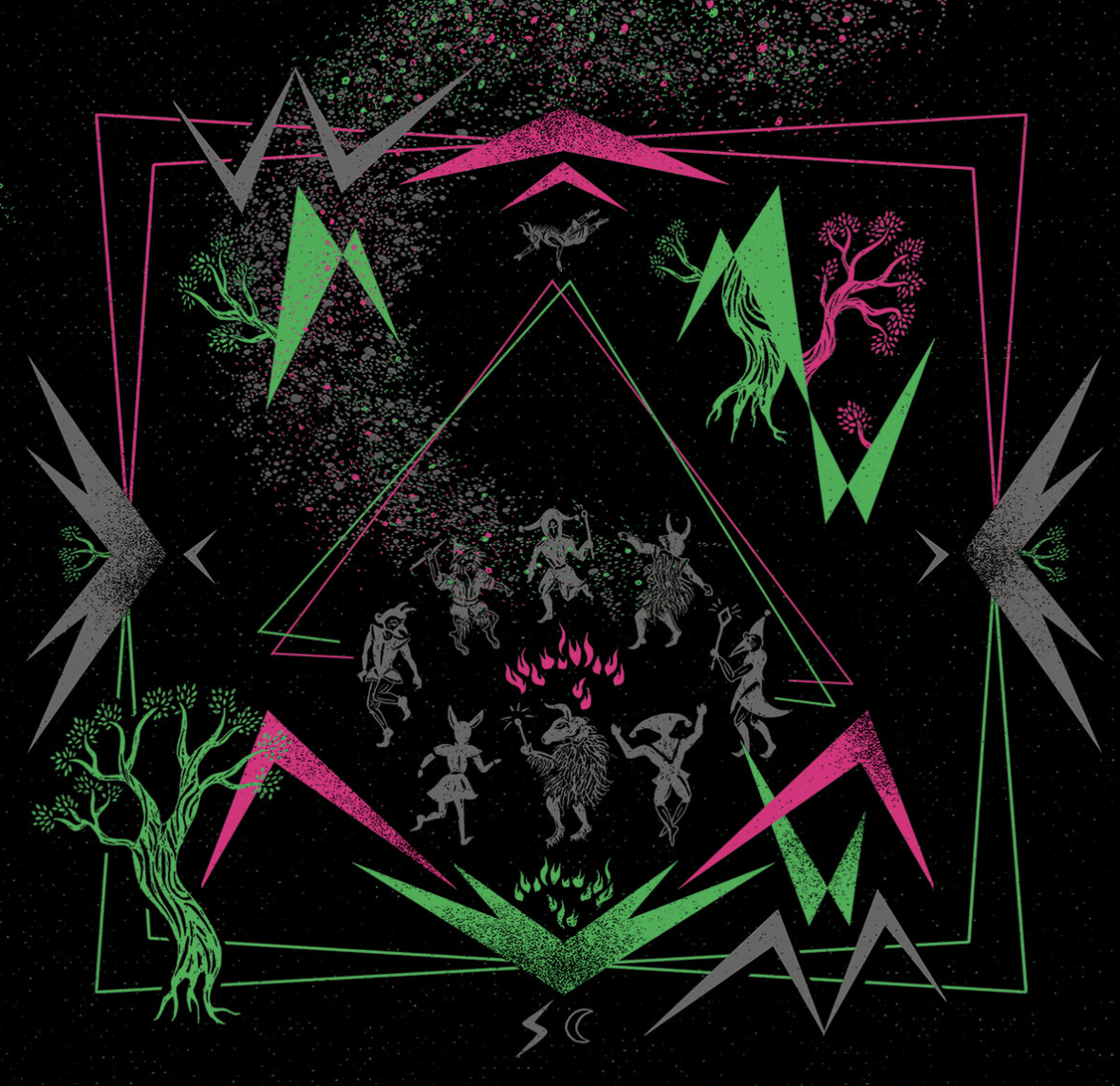
The Monolith Cocktail Monthly playlist is a revue of the last month on the blog, plus those tunes we didn’t get time to review or feature: including Matt Oliver‘s special hip-hop selection. Curated as a musical journey by Dominic Valvona, there’s a huge diverse array of choice tunes from across the genres and the globe, collated from an amalgamation of posts by Dominic Valvona, Brian ‘Bordello’ Shea, Graham Domain and Andrew C. Kidd.
THOSE TRACKS IN FULL ARE…
Habitat 617 Ft. Jack Slayta ‘Bricklayer’
Young Van Gundy Ft. Al Divino & Tha God Fahim ‘Fuyu No Senso’
J. Scienide & Napoleon Da Legend ‘Wind Parade’
Annie Taylor ‘Fucking Upset’
White Ring ‘Before He Took The Gun’
African Head Charge ‘Asalatua’
Mokoomba ‘Ndipe’
OKI ‘Tukinahan Kamuy’
Dip In The Dub ‘La Cumbia Del Sufi Que No Sabia Bailer’
Luiza Lian ‘Eu Estou Aqui’
Deja Blu ‘Crash’
It’s Karma It’s Cool ‘Vacations In A Taxi Cab’
Life Strike ‘Whip Around’
K-Nite 13 & Lee Scott Ft. Homeboy Sandman ‘Staple Junk’
The Moose Funk Squad ‘Abe Simpson’
Verb T & Vic Grimes ‘Your Heart Deserves’
SadhuGold ‘Fear Of A Black Yeti’
The Difference Machine ‘His Country’
Rusty Santos ‘Focus’
August Cooke ‘Shed With Me’
Maija Sofia ‘Telling The Bees’
Circe ‘My Boy Aphrodite’
Natalie Rose LeBrecht ‘Holy’
Hackedepicciotto ‘La Femme Sauvage’
Fat Frances ‘The Worm In The Wood’
Mike Gale ‘Summer Be Gone’
Stella Burns & Mick Harvey ‘My Heart Is A Jungle’
Emil Amos ‘Jealous Gods’
Oopsie Dasies ‘Illusioned-Broken Toys’
Zohastre ‘DUNE’ <THIS MONTH’S COVER ART STARS>
The Holy Family ‘Hell Born Babel’
The Dark Jazz Project ‘Jazz’
Healing Force Project ‘Inharmonious Layer’
Sebastian Reynolds ‘Cascade’
Caterina Barbieri ‘Sufyosowirl’
Ziur Ft. Abdullah Miniawy ‘Malikan’
Pierce Artists ‘Black Hooded Generals’
Stu Bangas & Chino XL ‘Who Told You’
Teflon/M.O.P. & DJ Premier ‘The Thoro Side’
Remulak & Moka Only ‘Starlings Green’
Jonny Wickham ‘Uncanny Valley’
Marty Isenberg ‘Life On Mars’
Gibralter Drakus ‘Exode Rural’
Las Mijas ‘Ronca (Carta Para Una Mija)’
ALBUM REVIEW
Dominic Valvona
Mauricio Takara and Carla Boregas ‘Grande Massa D’Agua’
(Hive Mind)
Nestled somewhere between the Brazilin oceanic coastline and the rainforest waterfalls’ of the interior, the impressive duo of Mauricio Takara and Carla Boregas embrace the replenishing vibes of water on their new album for the Hive Mind set.
Both foils in this electroacoustic avant-garde enterprise bring much to the water table, with Takara playing in the (highly recommended) São Paulo Underground, Hurtmold and MNTH set-ups but also involved in an array of sit-ins with such icons as the late Pharoah Sanders, the one-time mushroom mantra haiku Can front man Damo Suziki, and Acid Mothers Temple guardian Makoto Kawabata, and Boregas instigating the Rakto and Fronte Violeta projects, a soloist and founder of the experimental Brazilian venue AUTA and the Dama Da Noite label.
From the fringes of jazz, primitivism and electronica they pour that experience into the immersive, often mysterious, and otherworldly Grande Massa D’Agua set of peregrinations and ushering-ins of the elements.
Tightening, ratcheting, tinkled percussive tools that evoke the work of Walter Smetak sit with both singular bounced and more skittish drum rolls and tumbles across ceremonial, ritualistic, atavistic yet also futuristic invocations. São Paulo and its surrounding nature might be the catalyst but whole different auras and planes are summoned; some of which fall upon the realms of the kosmische and even Faust.
Amongst the rustles of grass, the circled ring of ceremonial bowls and drips of water hints of Aquiles Navarro and Jon Hassell-like trumpet linger on the veiled, textured air, all the while as the drums leap into action, rebounding off the rims and splashes of cymbal.
This is Art Ensemble Of Chicago via the Portico Quartet style jazz meets the percussive, rhythmic experiments and intuition of Valentina Magaletti and Ibn Battuta period Embryo. And yet as the sun rises on the horizon of this exotic landscape, we’re beamed almost into a lunar bending cosmos. Although the refracted, reversed and entrancing ‘Areia Preta’ feels like you’re at the centre of a hallucinatory dream.
Melodic parts emerge out of the avant-garde free-play throughout this both suffused and zigzag rhythmic skate, rattled, poured and chimed water world. The idea of kinetic type energy in the movement (at one point taking on the illusion of a steam chuffed train ride down loose tracks) and sense of progression offer a semblance of musicality and melody even in the middle of the most singular serialism-edging and abstract performances.
Deeply felt and convincing, Grande Massa D’Agua is both an intriguing and true measure of the duo’s quality, pushing at the elementals without losing the listener or thread. They delve with adroit skill and a curiosity for sounding the abstract, and succeed in creating a mysterious and evocative soundtrack.
Hi, my name is Dominic Valvona and I’m the Founder of the music/culture blog monolithcocktail.com For the last ten years I’ve featured and supported music, musicians and labels we love across genres from around the world that we think you’ll want to know about. No content on the site is paid for or sponsored and we only feature artists we have genuine respect for /love. If you enjoy our reviews (and we often write long, thoughtful ones), found a new artist you admire or if we have featured you or artists you represent and would like to buy us a coffee at https://ko-fi.com/monolithcocktail to say cheers for spreading the word, then that would be much appreciated.
 Monolith Cocktail Blog