Choice/Favourite Albums Of The Year: Part One: A to F: A Journey Of Giraffes to Nick Frater
December 11, 2023
SELECTED BY GRAHAM DOMAIN, BRIAN ‘BORDELLO’ SHEA & DOMINIC VALVONA

Just when we thought it couldn’t get much worse: it did. 2023 has been yet another, if not even more depressing shit show on the world stage and closer to home. The stalemate defence of Ukraine, Hamas’ barbaric massacre and rape on the 7th October, and the Israeli retaliation; the ethnic cleansing of Armenians from the disputed Nagorno-Karabakh region; the cost of living crisis; threat of pandemics and all kinds of illness; bedbugs; A.I.; strikes; activism; fuel poverty; Iranian protests; and the continuing horror show of a zombie government dragging on, being just some examples. 2023 qualifies as one of the most incomprehensible years on record of any epoch; an ungovernable country in the grip of austerity point 2.0 (the architect of the last one now back to haunt us all again), and greater world untethered and at the mercy of the harridans on either side of the extreme political divide, the billionaire corporates and narcissist puritans.
Despite the myriad of problems that face artists and bands in the industry, from a lack of general interest to the increasingly punitive costs of touring and playing live, and the ever encroaching problems of streaming against physical sales and exposure, people just can’t quit making music. And for that we, as critics – though most of us have either been musicians or still are – really appreciate what you guys do. In fact, as we have always tried to convey, we celebrate you all. And so, instead of those silly, factious and plain dumb numerical charts that our peers and rivals insist on continuing to print – how can you really suggest one album deserves their place above or below another; why does one entry get the 23rd spot and another the 22nd; unless it is a vote count –, the Monolith Cocktail has always chosen a much more diplomatic, democratic alphabetical order – something we more or less started in the first place.
Whilst we are proud to throw every genre, nationality together in a serious of eclectic lists, this year due to various collaborators commitments, there will be a separate Hip-Hop roundup by Matt Oliver in the New Year. The lists, broken up this year into three parts (A to F, H to N, P to Z), includes those albums we’ve reviewed or featured on the site in some capacity, plus a smattering of those we just didn’t get the time to include. All entries are displayed thus: Artist in alphabetical order, then the album title, label, who chose it, a review link where applicable, and finally a link to the album itself.
A_

A Journey Of Giraffes ‘Empress Nouveau’ (Somewherecold Records)
Chosen & Reviewed By Dominic Valvona/ Link
‘Imbued by a suffusion of influences, most notably Harold Budd and Susumu Yokota (once more) but also Kazumichi Komatsu, Sakamoto & Sylvain, Andrew Heath and Eno, John Lane spins, weaves and spindles the essence of place and time; stirring up dulcimer-like tones of the Orient, a hand-ringing school (could also be a call to prayer, or assembly point prompt, perhaps the intermission signal at the opera or theatre) bell, or softly evoking a South American wilderness.
This is yet another essential album from one of the best artists working in this field of subtle, sometimes breathtaking and sublime, exploration – although this is experimenting without sounding like you’re experimenting, if that makes sense. It’s a joy to experience.’ DV
Dot Allison ‘Consciousology’ (Sonic Cathedral)
Chosen by DV/Reviewed by Matteo Maioli/Link
‘Folks? backstory? Chamber-pop? I do not know. All this and also none of it. Simply: Dot Allison.’ MM
Anohni and the Johnsons ‘My Back Was a Bridge for You to Cross’ (Rough Trade)
Chosen by Graham Domain
Anthéne & Simon McCorry ‘Florescence’ (Oscarson)
Chosen by DV/Reviewed by DV/Link
‘A both hallowed and moving merger of seasonal changes, suffused with a certain gravitas and meaning, the pastoral is revalued and sent out on a voyage of reflection. Florescence is yet another minimalistic work of sublime quality from a collaboration perfectly in-synch with each other.’ DV
Assiko Golden Band de Grand Yoff ‘Magg Tekki’ (Sing A Song Fighter/Mississippi Records) Chosen by DV/Reviewed by DV/Link
‘In action, they sound out a controlled raucous of rustling, shaking ancestral calls and conscious version of Afro-beat, Afro-jazz and Afro-soul; like Kuti sharing the stage with Laba Sosseh and Seckou Keita. As a counterbalance, a pause from the rolling and polyrhythmic drums, there are short interludes of time-outs in the community and under nature’s canopy of bird song: the sound of the breeze blowing through the trees overhead and all around, and of children playing in the background, as the kora speaks in communal contemplation.
At times they create a mysterious atmosphere of grasslands, and at other times, play a more serenaded song on the boulevards that lead down to the sea. On fire then, when in full swing, but able to weave a more intricate gentler sound too, the AGBDGY prove an exhilarating, dancing combo with much to share: the ancestral lineage leading back centuries, but lighting up the present.‘ DV
B__
Moonlight Benjamin ‘Wayo’
Chosen by DV/Reviewed by DV/Link
‘No one quite channels the “iwa” spirits and musical, drum-beating ceremony of Haitian vodou like one of its most exhilarating priestesses, Moonlight Benjamin. Returning with her atmospheric and grinded-scuzz swamp-blues foil Matthis Pascaud for a third manifestation of hungered electrified vodou-blues, Moonlight roughs up and adds a wider tumult of energy to her vocally incredible and dirt music imbued sound of deep southern roots, West African and Hispaniola influences: an all-round Francophone sound you could say, from Louisiana to Mali and, of course, her homeland of Haiti.
As wild as it is composed, Moonlight Benjamin takes the vodou spirits back home to Africa, before returning, via the bayou, to Haiti on another fraught electrified album of divine communication.’ DV
Blur ‘The Ballad Of Darren’ (Parlophone/Warner)
Chosen by Brian Bordello
‘An album of nostalgia, melancholy and heartbreak, and one of Blur’s best.’ BBS
Brian Bordello ‘Songs For Cilla To Sing’ (Think Like A Key)
Chosen by DV & GD/Reviewed by DV/Link
‘As ridiculous as it may seem on the surface, the lower than lo fi (making Sparklehorse sound like a flash git bombastic ELO in comparison), nee no fi King of the well-worn Tascam four-track and St. Helens idiosyncratic Les Miserable, was only one person away on the Venn diagram of Cilla Black’s orbit. His potential songbook of flange-y distorted (more through low grade recording techniques) and curmudgeon demos did make its way to the, then retired from singing, Liverpool songbird – in the three or four decades before her death more the star of TV presenting and hosting than performer.
If imagining Brian Epstein inviting Ian McCulloch to front The Tremolos, or The Red Crayola, Spaceman 3 and a budget Inspiral Carpets time-travelled back to 1962 sounds like one incredible proposition, then this songbook is for you.’ DV
The Bordellos ‘Star Crossed Radio’ (Metal Postcard)
Chosen by GD/Reviewed by GD/Link
‘The latest release by St Helens finest is a cabinet of curiosities containing some wonderful lo-fi gems and hitherto lost standards!
This album is one to treasure, an Aladdin’s cave of eclectic life affirming songs. The Bordellos are the fine web that holds the stars in place!’ GD
Jaimie Branch ‘Fly Or Die Fly Or Die Fly Or Die ((World War))’ (International Anthem) Chosen by DV/Reviewed by DV/Link
‘As an unwittingly last will and testament, the late experimental trumpeter Jaimie Branch’s final led album with her Fly Or Die ensemble is a beautiful collision of ideas and worldly fusions that pushes and pulls but never comes unstuck. In fact, despite the “world war” suffix backdrop this album of both hollered and more disarming protestation colourfully embraces the melodic, the groove and even the playful.
Fly Or Die Fly Or Die Fly Or Die ((word war)) is an accomplished album that channels the legacies of Chicago, New Orleans and New York to create an eclectic modern adventure in protest jazz.‘ DV
Julie Byrne ‘The Greater Wings’ (Ghostly International)
Chosen by GD
Bex Burch ‘There Is Only Love And Fear’ (International Anthem)
Chosen by DV/Reviewed by DV/Link
‘In the moment extemporized expressions in multiple locations, both in Europe and North America, the feels on Bex Burch’s new album are led or prompted by a hand made xylophone. Any yet, there’s no particular pattern nor pathway to these captured performances; Burch joined as she is by a myriad of notable artists/musicians, all of whom only met for the first time before each improvised performance.
Each day is a different sound and a new canvas for Burch, who transcends her bearings and musical boundaries. There’s rhythm to these improvisations, a real groove that at times counterbalances the passages of avant-garde expression to create a non-linear journey of emotions, thoughtfulness and sense of yearned fears.’ DV
C___
Luzmila Carpio ‘Inti Watana: El Retorno Del Sol’ (Bongo Joe)
Chosen by DV/Reviewed by DV/Link
‘Full of wonderment and magic, the Bolivian performer and composer Luzmila Carpio returns with her first all-encompassing album in a decade. Imbued with an ancestral heritage and language that predates the Conquistadors colonial apocalypse, Carpio weaves and plays with her Aymara and Quechua roots, its creation stories, shamanistic ceremonies and humble custodianship of nature.
Carpio invites us into her dreams and meditations with a wonderful message of universal care and respect for that which nurtures and feeds us; an unbroken link to civilizations like the Incas, propelled into the 21st century.’ DV
Billy Childish & CTMF ‘Failure Not Success’ (Damaged Goods Records)
Chosen by BBS
‘Quite simply what Billy Childish does best: spit feathers at an unplucked rock ‘n roll chicken.’ BBS
Chouk Bwa & The Ångströmers ‘Somanti’ (Bongo Joe)
Chosen by DV/Reviewed by DV/Link
‘Reuniting for a second explosive dynamic album of electrified Vodou and Mizik Rasin, the Haitian collective Chouk Bwa and the Belgian production duo The Angströmers once more propel ritual and ceremony into an otherworldly futuristic setting.
Music from another dimension, the Haitian roots music and performative religious invocations and words of wisdom from Chouk Bwa are sent through a vortex into the future on another successful union.’ DV
Julian Cope ‘Robin Hood’ (Head Heritage)
Chosen by BBS
‘An album of psych, folk and pop wizardry; one that matches up to the best of the man. Cope is on a run of brilliance that is equal to his run of greatness from the late 80s to early 90s. A national treasure, and one of the last living motherfuckers.’ BBS
Creep Show ‘Yawning Abyss’ (Bella Union)
Chosen by GD/Reviewed by GD/Link
‘Make no mistake, John Grant is a genius! As half of Creep Show he provides the moments of sheer joy! ‘Bungalow’ comes over like a song that could have been on any of his brilliant solo albums, post ‘Queen of Denmark’. It’s a fantastic vocal, the music dark, funny, sexy, – electronic music at its best and a good song to boot! Elsewhere we find him singing strange rhymes on the title track ‘Yamning Abyss’ – a song that grows on you with each play.’ GD
D____

Vumbi Dekula ‘Congo Guitar’ (Hive Mind/Sing A Song Fighter)
Chosen by DV/Reviewed by DV/Link
‘Removed from a full-on band setting of loud blazed, wailed horns, thundering drums and chanted vocals Kahanga “Vumbi” Dekula’s legendary guitar shines on a new solo album of his melodious virtuoso playing.
Hive Mind’s inaugural partnership with Winqvist’s own Sing-A-Song-Fighter label is both a joy and discovery; the Congolese star, more or less, singlehandedly capturing the listener’s attention with a captivating septet of natural, expressive performances.’ DV
Diepkloof United Voice ‘Harmonizing Soweto: Golden City Gospel & Kasi Soul’
(Ostinato Records) Chosen by DV/Reviewed by DV/Link
‘Incredibly moving and enriching for the soul, the united Diepkloof chorus has achieved the seminal with nothing more than their voices; releasing perhaps one of the year’s most essential records.’ DV
Dexter Dine ‘Flood’
Chosen by DV/Reviewed by Gillian Stone/Link
‘The self-defined Brooklyn, NY-based “apartment rocker” conjures a diverse and expansive sound that is a “mixture of melodic samples, multi-part drum grooves, and off-kilter saxophone solos”. From the Animal Collective vibes of “Flooded Meadows”, “Splatter In Two”, and “Lockeeper”, to the Juana Molina-esque “Peanutbutter”, to the Bossa Nova feel of “Valley Of Air”, the beats he creates are the driving force behind this electroacoustic pursuit.
Dine is a prolific artist, and his work is ethereal, striking, and drenched in both sunshine and melancholy.’ GS
Matt Donovan ‘Sleep Until The Storm Ends’
Chosen by DV/Reviewed by DV/Link
‘In the face of political, social discourse and ruin, lawlessness, loss and anxiety Donovan captures the evocative moments and scenes we all often take for granted; turning nighttime walks, the memories of loved ones into something musically and sonically lasting.
Barefoot Contessa daydreams sit well with clavichord buzz splintered boogies on yet another enriching and rewarding album that slowly unfurls its understated balm of warmth and also protestation gradually over repeated plays. On the fringes certainly, a true independent diy artist, Matt Donovan is far too good to stay under the radar. Do yourselves a favour, grab a copy on bandcamp now.’ DV
Dur-Dur Band Intl. ‘The Berlin Session’ (Outhere Records)
Chosen by DV/Reviewed by DV/Link
‘Marking the first session of new-recorded music since the halcyon days of their heydays in 80s Somali, the revivalist legacy incarnation of the Dur-Dur Band is back with a truly “international” sounding groove.
Simultaneously familiar whilst offering a fresh songbook (of a sort), the Dur-Dur Band Int. Berlin Session is as lilting as it is dynamic. Above all it’s always grooving to a unique fusion of worldly rhythms and beats, catapulting that Somali funk to new heights and hopefully making new fans with lively and cool performances. Nothing should keep you buying a copy.’ DV
Dutch Uncles ‘True Entertainment’ (Memphis Industries)
Chosen by GD
Dyr Faser ‘Karma Revenge’
Chosen by DV/Reviewed by DV/Link
‘It turns out that Dyr Faser are rather good at mixing the esoteric krautrock of the Amon Düül family (especially the Wagnerian acid-wash and otherworldly vocals of Renate Knaup-Krötenschwanz) with grunge, alt/post/space rock and doom; bridging morbid curiosities, spirals of melancholy with black sun fun, fun, fun! A great duo to discover. ” DV
E_____
Eamon The Destroyer ‘We’ll Be Piranhas’ (Bearsuit Records)
Chosen by BBS/Reviewed by BBS/Link
‘Performed with a wit and wisdom only matched by the beauty and musical genre hopping extravagance not seen since John Peel dropped his record collection down three flights of stairs… A madness of electronica, psychedelia, dance and pop; at times sounding like an inspired Momus after sharing magic mushroom soup with Cornelius and Ivor Cutler. Yes, there is magic in these tracks that one can lie back and completely lose themselves in…’ BBS
The Early Mornings ‘Ultra-Modern Rain’ EP (Practise Music/Rough Trade)
Chosen by GD/Reviewed by GD /Link
‘It is an exhilarating ride of moody bass lines, spikey guitar, distorted chords and garage drums with vocals by Annie Leader.’ GD
Ex-Norwegian ‘Sooo Extra’ (Think Like A Key)
Chosen by BBS/Reviewed by BBS/Link
‘Sooo Extra is the 14th album from Ex Norwegian and like all the other Ex Norwegian albums I have heard it is a rather excellent affair full of pop hooks and has a lovely undercurrent of darkness, a bittersweet taste of songwriting savvy you really do not come across everyday: sadly.’ BBS
F______

Fantastic Twins ‘Two Is Not A Number’ (House Of Slessor)
Chosen by DV/Reviewed by DV/Link
‘Competitive from the outset, birthed from a primordial cosmic womb, the Fantastic Twins in Julienne Dessagne’s otherworldly sci-fi fantasy go through hellish travails and separation before finding a final resolution. From the bawled birth of ‘I Was First’, the Berlin-based French producer, musician and vocalist explores the magic, duality and multiplicity of twins over an album of metallic, chrome and liquefied material sci-fi and otherworldliness: even the haunted and supernatural.
Albums from Carl Craig, Man Parrish, Fever Ray, Andy Stott and others, alongside the influence of Cosey Fanny Tutti, Chris Carter, Coil, Nina Simone and Pan Sonic can be added to the depth and range of this accumulative mood board and framework.
It proves a fertile concept and doorway to the investigations of the “psyche” and its relationship to all manner of inquisitive explorations. A most striking sophisticated debut from an artist with depth and curiosity.’ DV
Fat Francis ‘Oyster’
Chosen by DV/Reviewed by DV/Link
‘Disillusioned despondency and a touch of the roguish are filtered through softened hues of idiosyncratic lo fi beauty, as Fat Frances’ hardened, worn-down posterior reveals a heart-wrenching drip-drip pouring of poetic insecurity, dealt and languorous resignation.
Yet despite the wretchedness of the world, the austerity and the lawlessness and directionless malaise of our times, there’s a melodious magic to be found in this rough diamond’s (excuse the cliché) Northern lament. It’s as if Frances has somehow brought an air of Bonnie & Clyde folklore, or an enervated and far less violent Badlands to a West Yorkshire pastoral landscape.
Oyster has quickly become one of my favourite albums of 2023 – the balmy washes and heartache wistfulness drift of ‘Billy’, a worthy earnest but sublime song, being just one highlight. It should if life was fair, bring attention and plaudits to this artist, but I won’t hold my breath.’ DV
Fhae ‘Sombre Thorax’ (4000 Records)
Chosen by GD/Reviewed by GD/Link
‘This is a wonderful album of ethereal, ambient, dream-folk-pop that ebbs and flows like the tides and inhabits its own world of subtle beauty. Sometimes, mists of the sea seem to creep into the music and the edges of reality become blurred, the music shape shifting into another dimension!
A fantastic debut album, I can’t wait to hear more!’ GD
Fir Cone Children ‘The Urge to Overtake Time’ (Blackjack Illuminist Records)
Chosen by GD/Reviewed by GD/Link
‘This is fantastic album from Berlin based band Fir Cone Children. It sounds like it was recorded in 1979 when New Wave (Post Punk) creativity took hold for a couple of years and no two bands were the same!
Time Needs an Upgrade’ sounds like the Cure mixed with the Pop Group. ‘Snowblack’ sounds like Wire led by Jeff Lynne! ‘The Inability to Raise the Left Corner of my Mouth’ sounds like the Buzzcocks if they had been from San Francisco circa 1968. ‘It Feels Complete’ sounds like the Cramps if they had been Buddhist Monks! ‘Spider School’ sounds like the Scars mixed with the Undertones and Interpol. ‘One Hundred Years’ sounds like the Sound mixed with Wire and MBV! But moreover, although there are always comparisons to be made, Fir Cone Children have an individual spark; the music is much more than the sum of its influences! Perhaps, the best German band since Faust!’ GD
Flagboy Giz ‘Disgrace To The Culture’ (Injun Money Records)
Chosen by DV
‘Exciting bounce-hip-hop-modern-R&B cross-pollinations from the colorful, parading Mardi Gras tail-feather shaking chief, who once more leads with attitude and verve another street theatrics company of like-minded artists on a strut through New Orleans. The second album from motivator, performer, producer and MC, Flagboy Giz – he of the world famous Wild Tchoupitoulas Mardi Gras Indians -, and his crew of contributors, is a rambunctious hyper merger of The Meters, Neville Brothers, Lee Dorsey, Dr. John. Master P, Lil Wayne and DJ Jubilee. What’s not to like.’ DV
Flat Worms ‘Witness Marks’ (Drag City)
Chosen by DV
‘I’d like to believe the reemergence of the L.A. garage-punk-rockers is down to my glowing review of the their Live In L.A. album from 2022 (which made our choice albums of that year). But whatever the reasons, their return (back once again in the Ty Segall fold) is very much welcome; especially as they’ve lost none of that vociferous wired attitude and spirit. Witness Marks is an assured, mature and heavy vortex of growling and fierce, but slacker too, Gang Of Four, Salem Trials, Modern Lovers, The Fall and The Southern Death Cult sounds. And if that doesn’t grab you, nothing else will.’ DV
Flexagon ‘The Towers I: Inaccessible’ (Disco Gecko)
Chosen by DV/Reviewed by DV/Link
‘Through a near domination of the high seas, a skill in winning wars, a Norman lineage and generally to annoy the French, the Channel Islands have been a British dependency for centuries. During that time a whole lot of history has passed under the bridge; the last 200 years of which are channeled by the Guernsey native, artist and environmental, site-specific composer Flexagon.
A work of site-specific atmospheric stirrings and timelessness, The Towers I: Inaccessible album translates the off-limits sites of Guernsey into a multi-layered sonic map for inquiring minds. An Island life, history and shared trauma is transduced across a mix of styles and delivery methods as both repurposed and more derelict out of bounds architecture is allowed to breath and to tell stories of the history that’s passed through its doors. Even with the all too awful reminders of Guernsey’s occupation (finally liberated in the May of 1945 after nearly five years of German authoritarian rule; at least a thousand of its people deported to camps in Southern Germany) these towers transmit plenty of arresting Meta and fertile research, which Flexagon and his foils have turned into a lush, dreamy and mysterious veiled journey.’ DV
Nick Frater ‘Bivouac’
Chosen by BBS/Reviewed by BBS/Link
‘The art of the concept album is alive and well and living in the confines of Nick Frater’s new album Bivouac; an album about escaping post industrial Britain and seeking solitude in a woodland sanctuary.
All the tracks run into each other giving you the blanket of warmth and melody, which really is not a bad thing and with the coming Winter months can indeed be an essential requirement as it may be the only warmth we get this year. It’s sunshine pop after all. It brings to mind the magic of Jellyfish and Squeeze at their best. The 70s am pop of Andrew Gold, Billy Joel, Todd Rundgren all collide and cause an explosion of one of the most heart warming and joyful albums of the year.’ BBS
Hi, my name is Dominic Valvona and I’m the Founder of the music/culture blog monolithcocktail.com For the last ten years I’ve featured and supported music, musicians and labels we love across genres from around the world that we think you’ll want to know about. No content on the site is paid for or sponsored and we only feature artists we have genuine respect for /love. If you enjoy our reviews (and we often write long, thoughtful ones), found a new artist you admire or if we have featured you or artists you represent and would like to buy us a coffee at https://ko-fi.com/monolithcocktail to say cheers for spreading the word, then that would be much appreciated.
Our Daily Bread 596: Junkboy ‘Littoral States’
October 12, 2023
ALBUM REVIEW/DOMINIC VALVONA
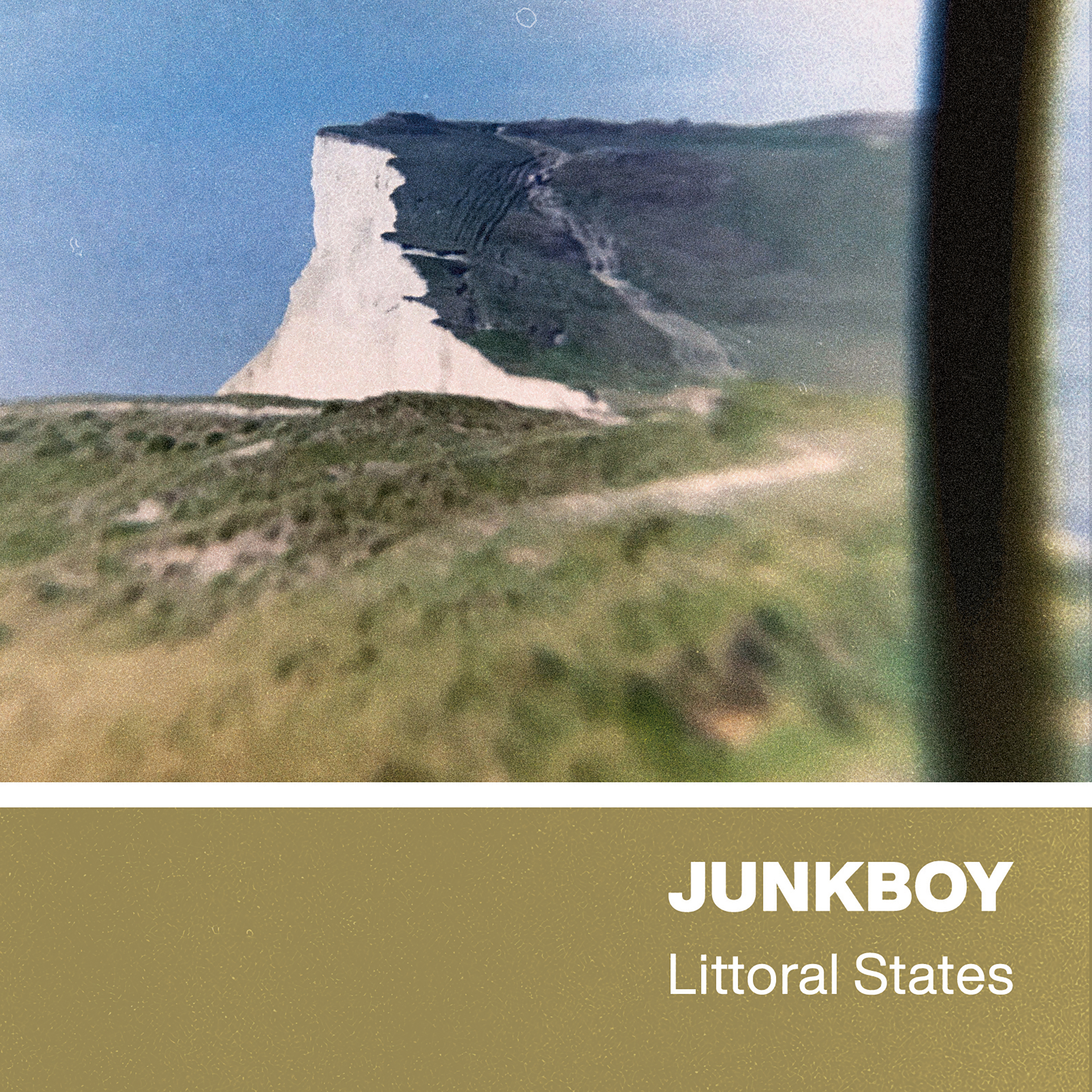
Junkboy ‘Littoral States’
(Wayside And Woodland Recordings)
Ah, the brothers Hanscomb have returned, and all is suddenly well in the world. Although the catalyst was sparked by the death of Mik and Rich’s father during the initial stages of the Covid pandemic, their latest album is a disarming love affair with the two moiety-tied counties that have offered them the most inspiration, space for ruminating and joy. For Littoral States takes a moving journey across the much romanticised, painted, photographed and literary rich coastlines and river ways of West and East Sussex – a landscape I’m very much aware of, my former playground before making the move north to Glasgow.
Drawn to this mostly idyllic part of England from Essex (the inland versant inspiration for the brothers’ 2019 memento, Trains Trees Topophilia; the “earth” companion piece to this album’s “water”) for a number of reasons, West Sussex and its seaside resort of Bognor Regis was the birthplace of the brothers father. It served as a concept of a gentle kind, as the Junkboy appellation duo conceived of processing that loss, of that connection, by musically and lyrically setting out from that holiday camp town and travelling through a number of notable, quintessentially English folkloric imbued spots and towns (and of course the city of Brighton & Hove) linked to water or the sea.
Toes have already been dipped in such fertile climes of psychogeography and scenic aspiration; the already mentioned Trains Trees Topophilia set in Essex but venturing out into both Brighton & Hove (its Hove affixed bedfellow the first meeting place between me and Rich, many moons ago) and picturesque Seaford (where Rich has lived with his family for a good few years now). The emphasis is now on a proto-pilgrimage of their settled homes (Mik down at the other end of the map, in Worthing, West Sussex; another well-known stop on the mainline for us commuters between Portsmouth and Brighton & Hove), taking in the scenic routes, coastal and river pathways in-between.

Read up and absorbing the myriad of either vivid or washed applied depictions of the two Sussex counties (from the brothers Paul and John Nash to the magical ruins watercolours of John Piper and charming quaint naïve port scenes of fisherman-artist Alfred Wallis), Junkboy have accepted the calling of the most congruous Wayside And Woodland Recordings label to fashion a beautifully emotive pulling album of the pastoral, bucolic and near mistily mysterious. As that label name suggests, musician Ben Holton’s burgeoning platform features landscape pieces prominently; from uniformed pylon fields to near faded recollections of hilltops and valleys via the work of epic45, Oliver Cherer, El Heath and My Autumn Empire – some of which, have influenced the brothers own sound over the years. And so it was a no brainer that this union would work out: almost effortlessly actually. Holton, a multitasking recording artist, label boss, is also a dab hand in the artwork department, providing the ‘aesthetic vision’ via the Sussex coastal photography of Jolene Karmen.
To that same vision, you can add a penchant for and an imbued influence of Sandy Denny And The Strawbs, Ultramarine, Forest and Joe Hisaishi. And of course, if not always obvious but sometimes just in spirit, the instrumental ‘elements’ suites found across the Beach Boys’ Pet Sounds and SMiLE LPs. If Brian Wilson was in fact born in Heathfield instead of Hawthorne then he might very well have turned out this album’s ‘Cuckmere River Rises’ vaped mirage – from the introductory French horn masquerading trumpet to the custom wobbled and flange fanned vibrato guitar.
Before that fast flowing river song, you can hear a hint of the Californian’s percussion on the eccentric English supernatural ‘Witch Of The Watery Depths’ – more in the style of a localized, wistfully dreamy musing on a Civil War era witch’s fate than scary Blair Witch Project fright. The ethereal, apparitional voice of the native Sussex singer Hannah Lewis wells up from the depths of a punishment ducking to not so much haunt but air a veiled, soaring lament. Sussex has its fair share of innocents’ accused of witchcraft, although there’s little evidence that many such victims were put to death; the exception being Martha Bruff and Ann Hoswell, ordered by the Mayor of Rye to be drowned – I’m not sure if this fate was carried out. Whatever the inspiration, this is folksy pastoral enchantment of English horror soundtracks, Hampshire & Foat, Sandy Denny, Sproatly Smith and Clannad’s airy mystical Sherwood Forest atmospherics.
Lewis is featured again on the seafarers’ plaint, ‘The Sea Captain’; the soaring voiced guest channeling Denny longingly casting out lovelorn hopes and promises in the hope of reuniting with a lost at sea lover: “I’d sell my soul to the waves below, to reach you”. Perhaps throwing herself into the tumult waters of the shipwreck coast (Seaford being, apparently, a renowned spot back when Tennyson’s penned such tragedies as the ‘The Wreck’; the locals, rather splendidly known as ‘Seaford shags’, had a reputation for swooping in like gannets on such disasters-at-sea), Lewis’ sorrowful yearns prove effective over the folksy music if Phantom Power era Super Fury Animals, C Duncan and Fairport Convention.
The brothers’ dual guitar signatures of the entwined, the picked and the brassy resonating have previously been expanded upon by a modest, softly orchestrated guest list of strings and additional instruments. In this case we have Will Calderbank on cello, Becca Wright on violins, Marcas Hamblett on trumpet and Owen Gillham on banjo ebow. With some recurring faces this quartet offer a complimentary, sympathetic and spiralling classical verve to the sound. However, the latter, Mr. Gillham, invokes an English version of Americana and country music wherever he pops up – a shade or Roger McGuinn. But going through the most musical changes, ‘So Breaks Tomorrow’ pictures the Archers Of Loaf through a psychedelic lens, whilst ‘An Easier Time’ travels back to the Tudor court as reimagined by a Blue Hawaii invoked Beach Boys, Fairfield Parlor and the Incredible String Band.
On the way across this seascape there’s a charmed dalliance with the mythical ‘Knucker’ water dragon of the sands of Lynminister, Binstead, Lancing, Shoreham and Worthing (named, I’m informed, after the holes this beast leaves behind); a birdsong rustic stirred imaging of the long abandoned mill hamlet of Tidemills; and, what sounds like, a motor-board powered lilted survey of the River Ouse, which runs alongside and through many of this album’s beauty spots, cutting through the South Downs.
A loving tribute, romantic cartography and healing process, Littoral States provides an alternative pathway from another age; a world away from the vacuous self-absorption of popular culture and the distractions of the internet. It’s a wonderful, magical, and for the most part reassuring, gentle gradient landscape that the brothers dream up; tailoring nostalgia and influences into something picturesque, peaceable but above all, moving. Folklore from a recent past is woven into much older geological layers, with the emphasis on the element of water; acting as the source, the road that connects the stopover on this West and East Sussex travelogue photo album. It’s good to have them back in the fold, so to speak, waxing lyrical and dreamily envisioning such beautiful escapism.
The Perusal #48: Crime & The City Solution, Tele Novella, Chouk Bwa & The Angströmers, Yara Asmar…
October 5, 2023
A WORLD OF DISCOVERIES REVIEWED BY DOMINIC VALVONA
(Unless stated otherwise, all releases are available now)

Chouk Bwa & The Angströmers ‘Somanti’
(Bongo Joe)
Reuniting for a second explosive dynamic album of electrified Vodou and Mizik Rasin, the Haitian collective Chouk Bwa and the Belgian production duo The Angströmers once more propel ritual and ceremony into an otherworldly futuristic setting.
Originally crossing paths back in 2016, formulating a project performance two years later followed by the release of the partnership’s inaugural album, Vodou Alé, in 2020, this Euro-Haitian combination was interrupted by the Covid pandemic. Unable to meet in the flesh, as it were, for two and a half years they still managed to release a string of 12” EPs; the bridge to what would be that eventual reunion in the May of 2022 and an intensive workout tour of Europe.
This enabled them to record their second album together, Somanti, in a Brussels studio; the culmination of tour performances and interactions, quickly recorded in just one day, such was the energy.
Framed as a more “mature” record, and different in focus to Vodou Alé, there’s now an emphasis on the ritual, ceremonial aspects of this African exported religion, spiritualism and rites, and the sagacious proverbs that are hailed, harnessed and playfully invoked by the Vodou chorus of voices. The hypnotizing and galloping barrage of drums are back, with each ritual subscribed its own rhythm and call. But if we go deeper, the hotbed of Haitian independence Gonaïves-hailing Chouk Bwa also invoke their ancestral African homelands; that being the once powerful, rich and pivotal kingdom of Oyo (growing to become the largest Yoruba speaking state in what is now eastern Benin and western Nigeria); the central African kingdom of Kongo (a Portuguese vassal but independent state with 600 years of history behind it); and key regional kingdom of Dahomey in what is now within the borders of Benin (once uncoupled from a tributary state to the larger Oyo, a global trading post built unfortunately on slavery and conquest). The latter of which, a prominent source of Vodun, the belief system that was torn from its roots and shipped with the poor souls that were transported into slavery, to the Americas and Hispaniola.
That age-old roots music, summoning of spirits, pummeled, beaten and danceable rhythm is given a transformation by the Belgian duo, who zap it with shooting laser beams and cosmic fuzz, fizzles, buzzes of oscillations and reverberations. The dub genes of Lee Scratch Perry, African Head Charge and Major Lazer can be heard throughout, alongside post-punk, Ammar 808, Moonlight Benjamin and Ifriqiyya Electrique on an album of both mysticism, danger (in an exciting way) and spirit world communion.
The groove on the female lead and group sung ‘Fèy Nan Bwa’ is like a cool no wave vision of Vodou-House music – it actually reminded me of Glasgow’s own international project, The Green Door Allstars. But that contemporary fused electronica of magnetic force fields, echoes, phasers, subsonic bass thumps and metallic elements never overshadows the authentic rollicking, tribal bounding and bobbing drums and the expressive, sometimes bordering on hysterical and manic vocals/voices.
Music from another dimension, the Haitian roots music and performative religious invocations and words of wisdom from Chouk Bwa are sent through a vortex into the future on another successful union.
Crime & The City Solution ‘The Killer’
(Mute) 20th October 2023

A decade on from the last project inception of the Simon Bonney and Bronwyn Adams led Crime & The City Solution, and yet another restless move back to one of the city’s that solidified their gothic, hard won reputation and shadowy presence, Berlin.
If 2013’s American Twilight was suffused with the dying embers and toxic fumes of Detroit, with its mass unemployment, foreclosures and desperations, then The Killer seems almost resigned to the fate and inhumanity of our divisive post-Covid times. Incidentally, American Twilight was itself released after an even longer hiatus of twenty years, and with a, near enough, entirely different lineup. Although conceived back in Bonney and Adams native Australia (where Crime & The City Solution were born in the late 70s, burning up the Sydney and Melbourne scenes before following their skulking bedfellows of Nick Cave and Mick Harvey to London, and then onto Wim Wender’s Wings Of Desire backdrop Berlin) during the harsh conditions of lockdown, the band and production were forged in the German capital. The roll call of which includes Frederic Lyenn (on piano, bass and synth), Donald Baldie (guitar), Georgio Valentino (synth and guitars), Chris Hughes (drums and percussion) and Joshua Murphy (piano and guitar). That ensemble is overseen, or rather, ‘conducted’ as it were, by the highly respected producer Martin J. Fiedler.
Originally conceived as a PhD application on decision-making in Afghanistan during the late 1980s, the initial brief was expanded by Bonney’s work delivering aid programmes across the Indo-Pacific region, his professional and personal relationship with Adams, his brief time in post-invasion Ukraine, and lyrically by the ‘syncopated’ delivery rap styles of Mos Def and Talib Kweli’s Black Star collaboration. Although America isn’t mentioned, its leading part in the events that unfolded during the 80s in Afghanistan is impossible to deny. As part of the Cold War strategy to checkmate an expansion-driven Soviet Union, America unintentionally stirred up a viper’s nest in aiding the Mujahedeen and warlords in their outgunned fierce war against the invading aggressor. In forcing the Soviets into a humiliating withdrawal, followed by the entire collapse of the Bloc and regime, and the fall of the Berlin Wall, those Cold War partners turned on their enablers, as they became hardline Islamist fanatics.
Decades later, and after the still never reconciled bloody Balkan wars, and it’s the turn of Putin’s Russia to unleash barbaric bloodshed. But this time, after successfully propping up the heinous regime of Assad in Syria, death and destruction has been dragged to Europe’s front door. The scenes of dead bodies may keep Bonney awake at night, but it’s also the resilience, the matter-of-fact manner in which lives go on in the face of such despairing evil that filters through to the music, themes and lyrics of The Killer. Just as one of his idols, Scott Walker, could convey horror and resignation but love too, Bonney and his foil and muse, Adams, churn up a tempest of emotional tumult in which romance of the hungered, yearned, longed and sentimental kind offers some sense of humanity: the spirit not yet crushed by the enormity of it all. And again, though never mentioned, it is to a both Southern Gothic and Cormac McCarthy-esque America that they turn musically. For this is the broody, Biblical Western terrain the band and their Bad Seeds, Wovenhand peers have trodden for decades; a kind of almost esoteric Americana and dark moody Southern rock ’n’ roll signature that offers haloed magnificence, reverence in the face of apocalyptic dread.
The album begins with the morbidly sinister entitled ‘Rivers Of Blood’ and Bonney’s plaintive, ached declarations for his muse, under a blood moon lit panorama. Danger prowls the Chris Isaak on the road with Cave mood, as a broken Bonney pines with fatalistic worship for his flame, and makes sense of, processes the turmoil in his psyche.
‘Hurt You, Hurt Me’, with its subtle sentimental, wept strings, sounds more like a loose duet between Avalon era Bryan Ferry and Patti Smith. Two voices starting at different points, shadowing each other, emote pain and suffering, and breath languid despondency on frosted glass. Angels cry and faith is promised on a flange affected entwined romance.
A sullen longing pervades the dramatic, slow, testament-poetic ‘River Of God’ (another of those river metaphors). And yet despite the various references to death, the suffrage of the “children of war” and somber tones, there’s a message that “you can be anything you want to be” after all, and a sprouting of wings encouragement – the very opposite of Icarus’ sticky fall to Earth.
As mentioned and alluded to earlier, Bonney pays a most deeply felt form of romantic thanksgiving to his partner Adams with the resounding ‘Brave Hearted Woman’. Going through sophisticated changes – from Cohen to Dylan and Barrett vibrato psychedelics -, Bonney, with the occasional lofty yearns from Adams herself, shares his passionate wants for the woman he so obviously holds in the highest of regards, respects, loves, falls to his knees for, and forms part of his very fibre: “She is ecstasy, filled inside me”; “You are creation for all to see”.
I’m sure it’s Adams’s coos on the next song, ‘Killer’, a piece of torn gothic withering noir, malevolence and redemption. It’s yet another protagonist who’s no damn good, strung out, morose and struggling with self-identity, their place in the world, and perhaps, their heinous crimes. Those syncopated influences that I mentioned much earlier, can be heard weaving an almost non-stop serious-voiced incantation of consciousness and gristlier Western preacher’s song. It seems to take notes from Amon Düül II (Yeti period) and The Rolling Stones.
It’s followed by the outlaw pained ‘Witness’ wake-up call and the seriously hard won conclusion of ‘Peace In My Time’. With a resigned sadness to suffering and a gothic simmered weep of Diamanda Galá style piano arrangement, the latter song, and finale, finds some reconciliation with a world in eternal chaos and torment; Bonney unsurprised, yet not humbled, to the atrocities and harm that we humans dish out on a hourly basis. And yet, there’s an eventual peace in the valley moment there; a glimmer that love will lead Bonney out of the nightmare of his own troubled psyche.
As a statement on Afghanistan, the references are very cryptic, symbolic and veiled. Rather it’s a catalyst, prompt for the Bonney and Adams and the band to expand those horizons and murky textures, and to say much about the external and internal state of the world we live in.
Tele Novella ‘Poet’s Tooth’
(Kill Rock Stars)

A wistful, almost disarming, Tele Novella weave their magic on an album that takes its cues from Harold & Maude and a removed version of the heartbreak yearning vulnerability of Nashville and Texas country music; albeit a version in which Cate Le Bon and Aldous Harding sip despondently from a bottle of life’s despair.
As whimsical and beautifully executed as it all is, Poet’s tooth is a moving album of timeless tropes, somehow delivered musically and visually through a slightly off, sometimes surreal, vision of the familiar. Natalie Ribbons and foil Jason Chronis dream up an idiosyncratic staged world, their moniker taken from the serial drama/soap opera phenomenon of the “television novel”, a format most prominently produced for the Latin American markets.
It’s a world in which, much like Harold and Maude, the bonus of youth is squandered until a mature presence at the very opposite end of the aging equation – with death not far away and looking to grasp every opportunity of youthful risk and carefree adventure – closes the circle with a life lived without regret. That cult movie said much about the Boomers age of high anxiety, caught in the headlamps fretting away their youth; stuck between suicide and depression, hard drugs (proscribed and otherwise) in the face of a society moving past the hopes of the last decade into the violence and despondency of the 70s: Take your pick, from Nixon to Vietnam, the crushing resistance in the Soviet Bloc and so on…
Roles are reversed, with Maude more childlike (yet wise) and the morbidly curious Harold, fearing for experiences yet to materialize, on a death trip. The most obvious reference to this movie’s odd romance can be found in the video for the band’s toy box like, almost twee but charmingly evocative ‘Broomhorse’, which features one such dark comedic episode, with Chronis playing the part of a bathtub, wrists slashed suicidal Harold in a magical world of 70s furnishings and wallpaper. Maude is from a pre-war generation, with the all too real traumatic experiences of her youth literally tattooed on her arm, and yet attempts to bring her partner round to the possibilities of perseverance and making do with one’s lot in life – Harold is a typical lost child of the wealthy Socialite classes; in material and nepotistic terms rich, yet devoid of connection and mentally adrift.
Before I start running away with myself, and this becomes some sort of screen review, the purpose of all this analysis is that Poet’s Tooth is suffused with those same themes; borrowing heavily from the Hal Ashby playbook of tragic-comedy and the screwball to make some sense of the world now. And yet this is only one aspect of the album.
Ribbons and Chronis – joined it must be mentioned by Danny Reisch, who handles the drums, samples, loops and field recordings but is also involved with the production too – hail from an increasingly creatively changing Austin, Texas. And so this is also a 21st century take on that State’s cowpoke, steers and rodeo signature of yodeled hangdog country music; only the heartbreak is coming from a female protagonist’s point. Not a new concept but any stretch, but still undervalued. But this is a whole other version of that; the Country & Western scores of Morricone and music of Sacri Cuori, Bonnie Dobson, K.d. Lang, Chris Isaak merged with an air of Lynch’s go to composer Angelo Baldametti, Kathy Smith, Gene Clark, Elyse Weinberg, the Laurel Canyon, Georgia Greene and Rosemary Clooney.
This music is both knowing and naïve, charming and disturbing. For there’s an esoteric alchemy of pitched-perfect fluid poetry on the surreal pillow, Lewis Carroll and Sandy Denny reading the Tarot, ‘The Unicorn’ song. Part renaissance, part death pact, part Percy Sledge’s reverent church organ, and part Temperance Society, Ribbon’s captivating voice charms us into a magical kingdom that at first seems to hide a much creepier menace; the language fantastical but progressively alluding to “poison”, “zombies” and what can only be described as some cultish gathering, waiting on “angels” to arrive. Meanwhile, the titular song – utterly compelling and beautiful – alludes to “incantation”, a “goblin”, a “cloak” and a “cauldron” on a song that sounds more fairytale than dark bewitching arts. Although of the metaphorical kind – A mosey June Carter and Lee Hazelwood type of down-on-the-ranch country tune, with a rhythmic horse canter -, there’s a ‘Vampire Cowgirl’ to add to that sense of the “other”. There is the mention of war too; or a war: The Vietnam War? The Iraq War? The American Civil War perhaps?
But just when you get some sort of measure, songs like ‘Eggs In one Basket’ takes an arty Baroque turn (courtesy of the autoharp I’m sure), via Gainsbourg and 60s cult French/Italian cinema: I say Baroque, it could easily by Tudor. Imagine the Thomas Crown Affair scored by Michel Legrand as Fellini directs and you’ll half way there.
Adolescence escapism wrapped in a softened, but no less stirring, epiphany, Tele Novella has a surreal, dreamy quality about them. From the Tex-Mex border of yore to the contemporary Austin scene of City Limits, they weave a really impressive songbook that’s as Hal Ashby and Sidney Lumet as it is pining Country and Western. Poet’s Tooth is both lyrically and musically perfect; one of my favourite albums of 2023 – no idle boast. Prepare to be equally charmed and moved with a counterculture resurgence of quality, subtle comedy and tragedy, eccentric disillusion.
Raf And O ‘We Are Stars’
(Telephone Records) 27th October 2023

Few artists have purposely entwined themselves so deeply with their idols than the Raf And O duo of Raf Mantelli and Richard Smith (the “O” in that creative sparked partnership). David Bowie and Kate Bush loom large, permeating near every note and vocal infliction of their idiosyncratic, theatrical, cinematic and up-close-and-personal intimate style of avant-garde pop and art school rock experimentation. Raf even has a Kate Bush tribute side project; coming the nearest I’ve yet heard of anyone to that maverick progenitor’s range-fluctuating, coquettish and empowered delivery, and her musicianship and erudite playful and adventurous songwriting.
The death of Bowie however, must have had a crushing effect on the duo, who, perhaps, covered his music better than anyone else: at least in spirit. They got close to their hero through the supportive words of Bowie’s key pianist foil of the 70s, Mike Garson. But an audience with the thin white duke eluded them. It’s a pity, as I think he would have certainly connected with the duo’s fifth album, We Are Stars. He certainly would have recognized the signatures and the references, both the in your face eulogies, homages to his most dedicated of alien roles in The Man Who Fell To Earth, and the less obvious but musically inspired ones too.
Omnipresent throughout, there’s the angular, shredded and bended guitar of Scary Monsters era Robert Fripp and Carlos Alomar, and the strangely interesting progressions of the arty-pop and dress-up of that album, but also some pre-Ziggy albums too. ‘Tommy Newton’ stands out of course; the Icarus alien fallen to Earth in the hope of returning with water to save his family on an arid distant star, is woven into a fatalistic existential love eulogy, as told in the third person by Mary-Lou, his estranged human love interest: if you can call her that. Recognizable plots and scenes from Walter Tevis’ novel and Nicolas Roeg’s film versions – later given a second wind in the form of the Lazarus ‘off-Broadway’ musical, based on Enda Walsh’s book vision, and with lyrics provided by Bowie -, appear in a non-linear, otherworldly mournful tragedy. Loving the alien, Mary-Lou’s character introduced the distracted, disconcerted Newton to some of Earth’s vices, little knowing his true identify until the dramatic reveal: unknowingly waylaying his task, plied with alcohol and the foibles, deceit and nature of humankind. Raf embodies this dislocated figure, lost and cast adrift in a thematic void; pining for what was and what could have been.
But it’s not all about Bowie and his famous film role. That last track also reminds me of Deux Filles, and so much of this soundtrack to the current restless age of high anxiety, disconnection and our reliance on technology, swims around in a most curious new wave suffusion of 70s and 80s sounds. The opener, ‘Still Sitting In Our Time Machines’, actually seems to recall the duo’s decade-old Time Machine EP, but has a more cosmic, canoodled, neo-romantic soul funk sound and feel. With a message for retro nostalgia, with nothing moving on since the last time machine voyage, the early 80s portal is reopened.
Raf comes close to Lene Lovich on the Radiohead crosses paths with a Latin-flavoured Banshees ‘Andy Warhol’. Warhol is the theme here on this yearned, wooed and urgent changeable curio; or rather the pop art icon’s obsession by a homeless character.
The titular song itself once more enters a starry void; those common celestial objects and all their various metaphors, analogies form the substance to an alternative, stressful The Man Who Fell To Earth soundtrack, yet recalls the influence of Tricky and Portishead.
It’s all change by the time we reach the avant-garde electronic pop ‘Every Time It’s Bleak We Dance’, with Raf now channeling a merger of Alison Goldfrapp and Liela Moss, but with a meandrous European allurement. Stranger too, the makeup in ‘Eyeliner’ is blusher coquettish Bush languidly draping an arm around Jane Birkin at her most untethered, whilst Joe Meek’s reverb pings and ‘Telstar’ whizzes by. Ah yes, as if to reinforce a thematic thread of retro-futurism there’s a lot of 1950s space sounds and effects: part of the sci-fi tapestry. But it’s the 1960s, albeit a fantastical version, I’ve dreamt up as a critic to describe the beguiling oddity ‘Waterloo’; a beautiful sentiment to an inspiring, supportive partner, and not a cover of The Kink’s standard paean to London. In my mind this sounds like Lou Reed penning a Berlin period balled, time travelling back to the early 60s and handing it over to beat group era Rolling Stones, who in turn, pass it on to Marianne Faithful.
If you’ve never had the pleasure of experiencing Raf And O in a live setting before, then drink in the intimacy of the club lounge-esque ‘The Guardian Of Your Mind’. During or in between Covid lockdowns, the duo performed a series of incredibly striking, fragile and artful concerts online; and this stripped, but no less powerful, untethered, vibrato echoed and Raül Refree-esque performance shows you what you missed.
An alternative time travelling theatre of interwoven fantasy, dream realism and the reimagined, We Are Stars is as playful with its unique style as it is only too aware of the deep held stresses, strains, pain and detachment that plagues society in the aftermath of a global pandemic, economic meltdown and war. Looking to the stars, but knowing that even escapist dreams of the cosmos have failed us, Raf And O (who I haven’t mentioned in name at all, but is an adroit craftsman of his form, accentuating, punctuating or loosely weaving a meandered musicality around Raf) take their concerns, observations and curiosities into ever more arty and intriguing directions. They remain one of the most individual acts in the UK; true inheritors of Bowie and Bush’s legacy and spirit.
Yara Asmar ‘Synth Waltzes And Accordion Laments’
(Hive Mind Records)

In a diaphanous gauze of dream-realism, the Beirut multi-instrumentalist, composer, video artist and puppeteer Yara Asmar conveys a sense of dislocation, loss and remembrance on her second album for one of the Monolith Cocktail’s favourite labels, Hive Mind.
Last year’s Home Recordings palette of serialism, atonal atmospheres, ambience and minimal semi-classical melodies has been expanded upon, with an emphasis on the synth and accordion of the title. Surrounded by a sound source of electronics, toy xylophones, a metallophone, music box, percussive mobiles and wind chimes, and of course her grandmother’s handed-down green-coated accordion, Asmar seems to float once more above a city in turmoil and distress; a place in which psychogeography and family history haunt present Beirut. For as beautiful, immersive and dreamy as it all is, these ‘waltzes’ and ‘laments’ seem to have an almost supernatural, even spooky feel: The veiled wisps, high sounded whistles and bubbled ‘Everything Is Wrapped In Cling Film’ reminded me of both Jodie Lowther and Lucrecia Dalt in that regard; bewitching but not so much scary. The fate prompting ‘It Is 5PM And Nothing Bad Has Happened To Us (Yet)’ actually reminded me of that knowing supernatural and library music group, Belbury Poly. I guess what I mean is that this sound, mood is more like the suffused enveloping veils of the ether, a translucent resonance, reverberation of Asmar’s family tree and the lives they lived then esoteric.
This is the sonic memory of that family’s toil, trauma, but also the small observations of daily life, For example, ‘three clementine’s on the counter of a blue-titled sun-soaked kitchen’; scenes that hold more than just a descriptive title for a good painting. Like that kitchen scene, those meanings soak through to emote a magical garden in a bustling city.
A bellow or concertinaed accordion movement can say so much. That same accordion was originally made in a workshop in the German town of Trossingen; a stones throw from Asmar’s residency in the Black Forest, last March. Locally famous it would turn out; people recognized its maker’s mark and directed Asmar to visit the source. Although the town was a farming community, during the winter they’d turn their hands towards building clocks and accordions. Asmar’s workable heirloom, keepsake, was recorded in an old ledger at the back of the workshop that made it; sent to the Lebanon on the 21st October 1955 with seven other models. That date, or near enough, marks the release of this album, and that providence is inspiring enough to inform some of the direction of wafted travel and emotions contained within.
Better times perhaps, less upheaval; maybe with hope for something, whatever happened or was dreamed for in the past, the present is full of uncertainty. Clinging to those memories, there are abstract sonic feelings of limbo and loneliness; a call to those that left the city, but also a reference to those that returned or stayed throughout. ‘Are These Your Hands? Would You Like Them Back?’ the only peregrination to feature a clear voice, features the poetic questioned turmoil of Majd Chidiac, who poses a consciousness of lament, unfairness and grief to a Carlos Niño-like spell of xylophone-esque bulb notation, atmospheric wisps and dreamy uncertainty. Elsewhere there are the faint, obscured or just ether-emitted signs of either a siren spiritual voice, or those that are more sorrowful and harrowing: Not so much haunted as the apparitional calls for remembrance and recognition of that which was lost or taken away.
And yet, there is a real alluring, magical pull to those strange warm ambient reverberations and removed ideals of waltzes. It’s much in part down to the accordion (French sounding on some tracks, and like a church organ on others) that these visions sound so unique; taking ambient music in a different direction and to a different environment that few have attempted before. Saying that, although performed in Beirut it remains universal, with themes and feelings we can all recognise, or at least sympathise with. But Asmar stays true to her home; bringing us adroit but empirical examples of quality ambient and explorative music that hopes to convey stories from the family photo album; the observed scenes from childhood made real in a sonic, immersive experience.
Bex Burch ‘There Is Only Love And Fear’
(International Anthem) 20th October 2023

In the moment extemporized expressions in multiple locations, both in Europe and North America, the feels on Bex Burch’s new album are led or prompted by a hand made xylophone. Any yet, there’s no particular pattern nor pathway to these captured performances; Burch joined as she is by a myriad of notable artists/musicians, all of whom only met for the first time before each improvised performance. That collaborative roll call was picked by International Anthem’s Scottie McNiece and Dave Vettrainoi, the same label responsible for invitng the percussionist, producer and instrument maker over to the US to make this album.
Proving fruitful foils, the eclectic polymaths Ben LaMar Gay and Macie Stewart, the in-demand bassist and composer Anna Butterss, drummer Mikel Patrick Avery and Tortoise member and multi-instrumentalist Dan Bitney pop up alongside Rob Frye (on clarinet and flutes), Diego Gaeta (piano), Ben Lumsdaine (the second drummer to join this cast), Oren Marshall (tuba) and Anton Hatwich (another bassist is seems) across various location stimulated pieces of music. Yorkshire, The Baltic Sea, Berlin, SüdTirol, Wyoming, L.A. and a storefront in Bridgeport, Chicago stand in as the stages for descriptive sound work and grooves that traverse between freeform/cosmic/spiritual/Afro-jazz and the arty and avant-garde. But even within that scope there’s elements of Appalachian country, Hassell’s fourth world possible musics series, the 80s no wave melting pot of Ramuntcho Matta and The Lounge Lizards, and the more contemporary partnership of Matthew Herd, Will Glaser and Liam Noble. And it all begins with nature’s spell on the cuckoo-proclaimed rhythmic trudge through the woods, ‘Dawn Blessings’. Burch lightly introduces us to the glassy bulb bobble of her beatific xylophone on a slowly awakening intimate landscape.
The great outdoors is suffused across much of Burch’s ‘love’ and ‘fear’ emotive passages; a chorus of birdcalls, chirps and warbles, the sound of the sea crashing against the beach, the breeze itself mixed with human interactions such as the bustle and greetings on the street, an appreciative audience in the garden and the feint recordings of conversations. Intimate and up close, even on the more avant-garde needs to draw breath, you can hear all the squeezed and winded blows, the strained exhales of the brass and woodwind on the Anthony Braxton-like ‘If I Was You I’d Be Doing Exactly The Same’. Well, the first part anyway, as this same sucked and almost inaudible reedy rasped piece goes on to feature more recognizable instruments, an increase in volume, and hits a Marshall Allen and Yusef Lateef burst of jazz energy.
The rhythm, groove is changed again on ‘You Thought You Were Free’; a kind of amalgamation of the Art Ensemble Of Chicago, Sun Ra, New Orleans Nightcrawlers and Hugh Masekela herding percussive cattle across a police siren urban street corner.
‘This Is The Sound Of One Voice’ is a pretty clear title description, featuring as it does a soothed faint female “doo-doo” woo over, what sounds like, tine plucks and scrappy, scuffled and shaken percussion (Širom meets Alice Coltrane’s healing balm).
‘On Falling’, which I take it is in the more anxious fear category, sounds like watery plops and the quiet slow turn of a winding down music box.
Burch’s instrument of choice, a bought handmade xylophone, often sounds like a vibraphone or Gamalan mettlaphone. On the Laraaji-esque ‘Don’t Go Back To Sleep’ you can hear a polyrhythm trickled variation of that xylophone: Two of them in fact, crossing over into separate timing signatures.
Each day is a different sound and a new canvas for Burch, who transcends her bearings and musical boundaries. There’s rhythm to these improvisations, a real groove that at times counterbalances the passages of avant-garde expression to create a non-linear journey of emotions, thoughtfulness and sense of yearned fears.
Mike Reed ‘The Separatist Party’
(We Jazz/Astral Spirits) 27th October 2023

It wasn’t planned this way, and both releases are from entirely different labels, but the drummer, composer and band leader Mike Reed’s new album shares collaborators with the previous album (see above) by Bex Burch. It’s also entrenched in the same Chicago hothouse. For also appearing on Burch’s There Is Only Love And Fear is the multi-instrumentalist, singer, poet Ben LaMer Gay and flute clarinet maestro Rob Frye. Both join Reed’s oft-used live performance appellation, The Separatist Party; now used as a album title for his latest album project.
And added to that Constellation in-situ hive of creativity (the C being the multi arts venue in Reed’s hometown that he’s successfully owned and operated since 2013) is Cooper Crain on guitar, synth and engineer duties; Dan Quinlivan on synth; and Marvin Tate on vocals.
Drawn together under less celebratory circumstances, the Chicago AACM hot-housed Reed and his talented troupe explore the societal, political and monetary crisis of ‘forced seclusion’; inspired, influenced by both the renowned New York Times reporter and non fiction author N.R. Kleinfield’s 2016 Pulitzer Prize nominated essay on the death of George Bell, and the restricted rules of Covid lockdowns. The former, a sad indictment on isolation, the lack of human contact and neighborly care, the latter, a self enforced curtailment of freedoms that led to a tsunami of mental problems, and again, isolation. Bell’s fate is said to have haunted readers, including Reed: We all unfortunately know or have heard of such scenarios; the hoarder neighbor with no family, the neighbor that no one looks in on; dying without anyone even noticing for a week. In the case of this Jackson Heights (79th Street to be exact) resident, the authorities, of which there were many, struggled to piece his life together. The Pulitzer Prize site described Kleinfield’s expose as a ‘part detective, part eulogy, and part exploration of a city’s bureaucracy of death’.
Although not named specifically, the first chapter in what will be a three-album cycle, finds a vocalized and musical language that demonstrates this growing epidemic and its causes. This can sometimes be delivered with clear urgency, and at other times with a more abstract but emotive expressive performance, from a band totally in synch, yet still able to crisscross, counter and push at the direction of travel. What I mean by that is, in spite of the tumult, untethered freedoms, there’s never a chance this music will come unstuck, nor descend into chaos.
With a voice pitched somewhere between blues-rock performer, Malcolm Mooney and Amiri Baraka, spoken and word artist poet Marvin Tate adds a very loose narration. On the opening synth undulated and drum shuffled ‘Your Soul’, Tate’s intensity strengthens as he sorts through a “mosh pit” of a life lived, laid bare with cryptic descriptions: “I reached the wooden floor/Decades of old shit.” A hoarder’s accumulation piled high; nonsocial and maddening to those who don’t get it, or understand. The musical style is partially Idris Ackamoor, partially Kahil El’ Zabar and a little Don Cherry’s Organic Society. It’s followed up by the Werner ‘Zappi’ Diermaier drum motioned, and Hugh Masekela conducted Mardi-Gras ‘A Low Frequency Nightmare’, which now moves on over into a semi-Krautrock-jazz lane. That same track features some great trumpet action (hence the Masekela reference), and a Donny McCaslin cosmic synth signature that envelops his saxophone peregrinations. ‘We Just Came To Dance’ has Tate repeating the titular statement over a backing or primal Chicago House music, as played by El’ Zabar, and laid out in Embryo’s African percussion explorations. It pops and clops along like Basquiat’s figure limbering and breaking down a 80s NYC no wave boardwalk.
A musical partner to Reed over recent years, the incredible visionary Nicole Mitchell springs to mind on the fluted and diaphanous constellation yin of ‘Floating With An Intimate Stranger’. Almost in the spiritual waterfall vein, this feels like a tranquil spot to gather one’s thoughts; take a pause and then float on up into the astral.
Rolling in on a Sam Rivers’ vibe and tumble of drums, ‘Hold Me, Hold Me’ is more a case of spurned pleas of unrequited love declaration. And yet it’s followed by the cupped trumpet serenade of ‘Our Own Love Language’, which features dappled electric piano and Bobbi Humphrey style flute; taking romance into the spheres of Knoel Scott and early Miles Davis.
Tate is back to walk through a neighborhood photo album of foibles, connections, anecdotes and fate, on the centerpiece track, ‘One Of Us’. Amongst the characters (the guy too fucked-up on booze to make anything of an invitation to join The Temptations, to some guy who could punch like “Tyson”) and location spots on this bluesy saunter, Tate regales the story of someone he grew up with (attending the same “fucked-up schools” and church): “one of us”. And despite being on the receiving end of the “N” word from Mary Wells (I’m not sure if this is “the” Mary Wells, Motown songstress, fucked over by that label and many others during a career of false starts and travails), her idiosyncrasies and failures, is someone whose loss is to be marked and mourned: a missed part of the community. That final vocal statement of the album proves one of its most insightful and visceral.
Reed and his troupe pull off a real feat in drawing the listener into a rich Chicago imbued and eclectic soundtrack: that’s Chicago Jazz, Godspell, Blues and House merging with New Orleans, Afro, the spiritual, and consciousness styles of jazz. A deep emotive statement about societal ills and seclusion is made by a seriously class act. I look forward to the next cycle in this conceptualised body of work.
Raül Refree & Pedro Vian ‘Font De La Vera Pau’
(Modern Obscure Music) 20th October 2023

A most auspicious occasion, the Iberian pairing of avant-garde polymaths Raül Refree and Pedro Vian marks a rightly welcoming proposition for those of us in the experimental scene.
A familiar name to Monolith Cocktail readers over the years, Refree has gained plaudits for his transformation of the Flamenco tradition, with such doyens of the form as Rosalía and Rocío Márquez, and for his Fado reinvention partnership with the extraordinary and captivating Lina. In between those projects he’s also produced a number of albums for other artists, including Sonic Youth’s Lee Ranoldo. That relationship in particular has led to Refree’s wider role in the contemporary New York scene. As a composer he’s scored music for various films, some of this material released in the form of his Spanish sketchbook, La Otra Mited, followed up by the El Espacio Entre album, released at the beginning of the year: an album I rated highly at the time, describing it as a ‘Spanish Neel Murgai Ensemble and Hackedepiccotto trapped with Nacjo Mendez in an undefined, veiled timeline and atmosphere…’ It’s no surprise, considering the ambiguous blurring of boundaries between disciplines and styles that Refree is set to make his theatre director’s debut next year.
Finding it hard to believe, but Vian is a stranger to this site. Making his debut appearance in the MC, the Catalan producer, musician, composer and DJ also runs the deep thinkers’ experimental label that is facilitating this album of nine explorative suites. Vian has previously released a trio of solo albums and a collection of singles for his imprint, and last year, after instigating an ‘immersive’ live set at the Sonar Festival, released the Cascades collaboration with the Piedmont-born composer and producer Mana; setting him up nicely for this tactile, sometimes physical, stretch of piano, synth and organ – those being the main trio of instruments used on Font De La Vera Pau; the replenishing, fluctuating fountain waters of serialism, the atonal and the more melodic.
Simply labeled with no prompts or points of reference, each improvised sounding piece is a passage in itself and yet part of a whole performance, with both partners taking the familiar into curious, mysterious and often alien settings. And yet, when the droplets of piano notes, and moist resonance evoke the subterranean (a pool of water in the cavern), the sound of chirping birds and the sunlit woods opens up a window into the fresh air.
The low but soft rumbles of bass piano and metallophone like playing of that instrument’s inner workings conjures up hints of Alice Coltrane’s Turiya Sings, Terry Riley and Fluxus. Even the piano’s lid and frame is used in the process, tapped to create a rhythm of a kind. And at other times, it all sounds like a glass-strung vision of Chinese music, or something from South Korea: dal:um spring to mind. But then there’s obscured valves, whistles of a strange pitch, the hovering presence of spacecraft and evocations of slow ships moving through a vapour.
Surface noises; the sound of a running film projector, there’s more to decipher from what appears to be minimalistic, marginal changes and hidden instrumentation.
The fluctuating undercurrents, patterns, trickles of melodious notes float between echoes of Harold Budd, John Lane, Sylvain & Sakamoto, The Corrupting Sea, Vangelis, Roedelius and Susma Yokota on a hard to define collaboration. Not so much out of either foil’s comfort zone, this partnership does offer something challenging; a link back to their respective catalogues, and yet intuitively, texturally and tonally something a little different. It is another immersive experience in avant-garde, in the moment exploration.
Fantastic Twins ‘Two Is Not A Number’
(House Of Slessor) 13th October 2023

Competitive from the outset, birthed from a primordial cosmic womb, the Fantastic Twins in Julienne Dessagne’s otherworldly sci-fi fantasy go through hellish travails and separation before finding a final resolution. From the bawled birth of ‘I Was First’, the Berlin-based French producer, musician and vocalist explores the magic, duality and multiplicity of twins over an album of metallic, chrome and liquefied material sci-fi and otherworldliness: even the haunted and supernatural.
This is the dry-ice coldness of futurism merged with the Lynchian, strung out and drifting in a cerebral void. The title of this album, Two Is Not A Number, paraphrases a quote from the schizophrenic monkey in Lynch’s What Did Jack Do?, but is also suffused by the atmospheric esoteric wisps and vapours of that cult auteur’s go-to composer, Angelo Baldametti.
With a sizable apparatus of the electronic, synthesized and sequenced, Dessagne creates a refined concept, imbued with influences and a multimedia stimulus of ideas and sparks. In the PR spill, which more or less writes the review for itself, Sun Ra’s New Horizons is mentioned as resonating with Dessagne’s approach to music: “The sight of boundless space reaching ever outward as if in search of itself.” Another reference point is the Blight Of The Twin documentary, filmed in Vodun practicing Benin. As an added layer it forms another piece in the collage, taking in, as it does, the cultural mythology of this atavistic African religion and its ritual celebration of twins.
On the number counting, cyborg techno building ‘Land Of Pleasure Hi Fi’, one or both of the twins is cast adrift in that infinite space; repeating the ached “Feel alone in space” line as Basic Channel, The Pyrolator and Cabaret Voltaire coolly and intelligently pulse and reverberate away.
Albums from Carl Craig, Man Parrish, Fever Ray, Andy Stott and others, alongside the influence of Cosey Fanny Tutti, Chris Carter, Coil, Nina Simone and Pan Sonic can be added to the depth and range of this accumulative mood board and framework. And you can indeed pick up all of it, especially in the second data count of ‘Silver Moon Dial’, which is very Germanic, but a little Cosey too. Yet is also the most club-like of techno tracks too; a sort of Boiler Room session remix of Dessagne’s music in real time.
The vocals are wafted and manipulated in vapours, but sound at their most agitated and conniption-like a smoother Diamanda Galás apparition, and at other times when more icy, cleaned by the frosted synth waves, like Fever Ray, Ladytron and Zola Jesus.
The Fantastic Twins at the heart of this album are brought into a gauzy tubular paddled and padded melodic dream hallucination of a technological world; reconciled at last in the final Sylvain and Sakamoto-esque ‘All Of This Is Resolved’: the lasting statement of reassurance, connection and family unity being “I’ve come to take you home with me”.
It proves a fertile concept and doorway to the investigations of the “psyche” and its relationship to all manner of inquisitive explorations. A most striking sophisticated debut from an artist with depth and curiosity.
Lukid ‘Tilt’
(Glum)

It might well be a sizable break between Luke Blair’s last solo Lukid alias expanded work and this newest album (eleven years in all!), yet the North London artist has still been busy and prolific: as his CV will testify. In that period of time Luke has worked with Jackson Bailey under the Rezzett duo title; formed his own label, Glum; created another pseudonym, Refreshers, for his more dance focused productions; and of course notched up credits as a composer for projects with the BBC, ESPN, Palace Skateboards, the American Ballet Theatre and Arsenal Football club. And in between that there’s also been a smattering of releases on a number of other notable labels. I think we can all agree it’s a very full schedule.
Those of you waiting on a new Lukid album will not be disappointed. If more ‘refined’, composed and ‘simplistic’ than before, there’s still a real rhythm to Luke’s form of subtle but effective electronica. A ‘tilt’ perhaps of process, method and outcomes, this is a minimalistic iteration styled vision of dance music, submerged in lo fi veils, fuzz and gauze.
At the most purposely-produced low quality filtered end, ‘Confessions Of A Wimpy Kid’ sounds like an old cassette recording from an early 90s rave; compressed and under a sizzle of static, the tape so poor as to wind in and out of becoming inaudible, as if disappearing into water: More the memoary, mirage of a Techno track, played in the open air.
Despite the lo finess and more stripped-down approach, this is a danceable album: of a sort. There’s a bounce, spring to the rhythms that easily flow between deep House and Techno. But the percolated muffled beat and percussion of the opening track, ‘End Melody’, evokes a vague suggestion of Finis Africae and Jon Hassell (albeit it without Jon’s purred trumpeted wisps).
The subtle old school Techno tempered ‘Harringey Leisure’ has the air of a bobbed fourth world marimba or bamboo instrument; part African, part South American perhaps, but nestled in North London.
The environment seems to bleed into some tracks; distant, obscured chatter, utensils in a kitchen perhaps, extending out into the ‘Daisy Cutter’ rotor arppegiator, playful and Roedelius-like soundtrack garden lawn.
The almost foggy, gauzy ‘The Great Schlep’ has a more classical sound: more in the style of Reich or Glass, albeit with a Techno undulation. And the final ‘End Loop’ seems to hazily ebb in the clouds on a Boards Of Canada vibe. But for the majority of the time there’s a real subtle network of sophisticated generated beats that recall everyone from Richard H. Kirk to Tim Hecker, Black Dog and Autechre gently powering along trance-y and attenuated square waves. Tilt is an album of real quality; a cerebral distillation of Ambience, Techno, House and Electronic forms into some reification of time and moments caught before they disappear in smoke. This is a great returning album from the Lukid alias, one of the best in its field in 2023.
boycalledcrow ‘//MELODY_MAN’
(Waxing Crescent Records) 27th October 2023

The face behind the most recent incarnation of the Chester-based sound artist, Carl M Knott, earlier this year revealed a very unique vision of folk music with the Nightmare Folk album. Mysterious, near supernatural and alien in a manner, but hardly nightmarish: just different. Filtered, rotor-bladed, flipped and fluttered through various effects, and seen through many angles, the familiar sounds of a nylon-stringed guitar were transmogrified beyond recognition.
That previous album was in part, inspired by William Gibson’s dystopian sci-fi novel Virtual Light. And although there’s no direct mention of that alt-futuristic San Francisco plotted work here, the second boycalledcrow album of the year is musically, sonically and atmospherically similar. And that translates as both melodically spindled and tabbing guitar being concertinaed and chopped up through various effects across passages or score that are alien, esoteric and hallucinatory. This is a kind of pastoralism and primitivism folk music, channeled through a Fortean radio set, the obscured machinery of alien spacecraft, and the stray heavens.
Between darker passing phases of heavier set metallics (‘8lob’), a Lucrecia Dalt and Emptyset invocation (‘1414[]’), and ambient solar pleasantries (the eventual Boards Of Canada and Ariel Kalma softly radiant ‘SUNSun+’, and the changing course of the elephant machine noisy, turn crystalized Peter Schickele fluted, ‘FOREST/…\MOON’), there’s vague speed-shifted hints of dulcimer and zither; paddled, tub-hand thwacked rhythms; removed versions of techno electronics; shadowy forces; and strange folkloric dances from another dimension.
I’m picking up Laraaji, Xqui, Black Dog, Eno & Fripp and Panda Bear’s Portuguese-imbued Tomboy vibes. And yet, //MELODY_MAN, with its coded, distinct titles, is a quite idiosyncratic and unique vision: folk music from off-worlds and alternate histories…some not yet written.
Andrew Heath ‘Scapa Flow’
(Disco Gecko)

Always developing and exploring his self-coined ‘lowercase minimalism’ craft, the adroit Andrew Heath has produced a number of sublime and empirical albums for the Disco Gecko label over the years. His latest carries on the good work with a deep ambient reading of the Scapa Flow body of water that lies surrounded by the Orkney Islands of the Mainland, Graemsay, Burray, South Ronaldsay and Hoy.
A geopoetry; a psychogeography of that famous body of shallow waters, Heath’s gauzy drifts, serene washes, glassy piano notes, Myles Cochran and Joe Woodham-like post-rock refracted guitar bends and harpic zither spindles coalesce to score an effective mysterious soundtrack to the former naval base and battleship graveyard.
Closer to Norway than the capital of Scotland, it’s unsurprising that the Orkney Islands have a shared history with the Vikings; both on land and with Viking kings mooring their longboat fleets in the waters – as recorded in the famous sagas. The Vikings called it ‘Skalpaflós’ (‘bay of the long isthmus’); a name that through dialectal changes stuck. Fast-forward to the War Of The Three Kingdoms during Charles I’s ill-fated reign, and Scapa Flow (as it was now known) was the anchorage point of operations for the 1st Marques of Montrose’s preparations to raise a rebellion in Scotland, from his Herderinnan ship.
By the turn of the 1900s, in the face of German expansionism and a build up of their naval forces, the British looked towards protecting their North Sea borders. Although a number of harbours were considered, Scapa Flow would eventually be chosen for mooring the northern wing of British sea power. When the cataclysm of war finally did come, in 1914, German U-boats attacked it: unsuccessfully I might add. Although the Vanguard was a non-combatant casualty of that period, exploding and sinking beneath the waves; one of the harbor’s noted war graves. The Germans would be forced to surrender their fleet just four years later; through subterfuge they would famously scupper their ships rather than hand them over. Joining those shipwrecks, twenty odd years later, German submarines managed to penetrate Scape Flow and sink the anchored HMS Royal Oak (a WWI era battleship). Days later, the Luftwaffe would go on to damage HMS Iron Duke.
The Royal Navy pulled out of the site during the 1950s, whilst the petroleum industry moved in. Scapa Flow became the main hub for oil and gas operations in he Orkneys after that, hosting the Flotta Oil Terminal. Amongst the near haunted calls and apparitions from under the shallow waters, there’s traces or an essence of hidden industrial machinery, the pulling of chains and swept brushes of work.
Some titles helpfully set the scene, mood, and subject matter sparks of inspiration. They also point to Heath’s expansion of the main theme, outbound from the Orkney Islands to the autonomous (but considered part of the Kingdom Of Denmark) archipelago of the Faeroes, and generally out into the North Seas and beyond. For example, the opener is a reference to the powerful warm Western boundary current of the ‘North Atlantic Drift’.
Mostly capturing a shrouded, blanketed feel of the environment, its past livelihoods, distress and natural powers, this album mines the impressions left behind; from the murky depths where the light barely touches, to the prowling silent creep of submersibles.
Andrew plays a combination of instruments, merged with ambient and real sounds that falls somewhere between such notable artists as his old foil Roedelius, Eno, John Lane (i.e. A Journey Of Giraffes), Jon Tye, Ulrich Schnauss and Flexagon. Stirrings from beneath are conveyed with a subtle drama and sonic history on yet another exemplary album of minimalist music.
Hi, my name is Dominic Valvona and I’m the Founder of the music/culture blog monolithcocktail.com For the last ten years I’ve featured and supported music, musicians and labels we love across genres from around the world that we think you’ll want to know about. No content on the site is paid for or sponsored and we only feature artists we have genuine respect for /love. If you enjoy our reviews (and we often write long, thoughtful ones), found a new artist you admire or if we have featured you or artists you represent and would like to buy us a coffee at https://ko-fi.com/monolithcocktail to say cheers for spreading the word, then that would be much appreciated.
Our Daily Bread 544: Brona McVittie ‘The Woman in The Moon’
October 3, 2022
Album Review
by Graham Domain

Brona McVittie ‘The Woman in The Moon’
This album is like being able to travel back in time to days of childhood innocence. A time when things were simpler. Life was less hectic. People took the time to talk to each other. Shops shut on Sundays. The seasons had defined weather patterns. In the summer the days were carefree, long and sunny, thunderstorms occasionally breaking the humidity. In the winter, it was cold and often freezing with large downfalls of snow. Ice often froze the water pipes creating icicles of all sizes. Life was hard but somehow more bearable. There was less stress, less craving for more! People seemed to smile more often and enjoy nature, the woods, the fields, newts, frogs and fish swimming in a myriad of tiny ponds.
The music is Irish folk but with a modern twist – there are electronic keyboards sprinkled across the songs, but not merely as an afterthought. They fit in perfectly with the laid-back atmosphere, often underpinned by soft jazz drumming and swathes of ambient sound – almost like David Sylvian has joined the party.
The album version of the title track differs greatly from the more commercial single with its slower pace creating more space and a smoky jazz ambience. It’s still a great song though and works in both settings.
‘Summer Will Come’, sung in the native language, holds the attention of the listener with its quiet beauty and melodic charm. The fact I have no idea if any of the songs are traditional or new compositions shows that the whole album avoids cliché and manages to create its own world of wonder, magic, fairy-folk, peace and tranquility. In today’s hectic times it provides a great refuge from the chaos of an angry world, with its beauty and quiet reflection. Simply wonderful!
Our Daily Bread 395: Bróna McVittie ‘The Man In The Mountain’
September 1, 2020
Review/Dominic Valvona

Bróna McVittie ‘The Man In The Mountain’
(Company Of Corkbots) Album/2nd September 2020
The diaphanous voiced and ephemeral harpist Bróna McVittie once again beckons us into her imaginary gossamer world of alternative Celtic fables and mystery with a second album of poetic imbued brilliance. Following on from the much-admired trip-folk cinematic debut We Are Wildlife (which evidently made our choice albums of that year), the Northern Irish enchantress roams a similar gauzy landscape of lingering, lightly-touched evocations; a place in which giants fight over causeways and warrior suitors declare chaste love for the chieftain’s “flower of the hazel glade” daughter.
Though the cover interpretations of old have been “dialed back” for more original songs, the evergreen Man In The Mountain album is heavy with references and inspirational threads from such gifted luminaries as Siegfried Sassoon, Pablo Neruda, William Wordsworth and Henry Williamson. The music is pretty timeless too; a misty shrouded soundtrack based more on the hushed cadence of Bróna’s voice and the subtle trails and wafted semblance of instrumentation than rhythm or the traditional perimeters of folk music.
Yet there’s a modern touch to those both pining and woodland sprite entranced folklores with collaborations from both the electronic duo Isan and Nordic avant-garde composer Arve Henriksen. The former provides an understated ripple of incipient bobbing and skimming percussive Techno for, and co-arranges, the nuclear fusion updated vision of the Greek tragedy, ‘Falling For Icarus’, and the cantering Bert Jansch-breaks-bread-with-Curved Air swoon ‘Eileen Aroun’ – a peaceable, softly-plucked take on Carroll O’Daly’s 14th century declaration of love. Henriksen, for his part, helps entice Bróna towards the airy amorphous soundscape visions of Jon Hassell and Eno’s ‘fourth world’ ambient jazz traverses, Dingo era Miles Davis and a lulled Don Cherry on her transformation of Samuel Ferguson’s famous ballad, ‘The Lark In The Clean Air’.
Legendary Irish mythological figures, ill-fated sacrificial souls and even the “green man” are placed in less familiar settings: a sort of resonance from a banjo sounding instrument takes us away from the Emerald Isle towards the waning drift of Miles Cochran’s alternative Americana soundscapes. It’s a sound inspired as much by the Boards Of Canada as it is the Incredible String Band.
Despite being so softly sung, it’s Bróna’s vocals that seem to be the highlight; improving all the time; holding notes so breathlessly long and yearned, and almost raspingly, dreamily emerging from the ether of some ancient headland to lull pursed lip sonnets and tales.
Beautifully conceived and imaginative, Bróna McVittie and her subtle foils on this eloquent lush songbook push Celtic imbued folk gently towards electronica and experimental jazz. This is done with such ease and grace that those seeking the traditional will find little in the way of discourse or friction, or even anything approaching radicalism. The Man In The Mountain is rather a caressed, vaporuos doorway into an alternative musical tapestry of folk that isn’t afraid to expand into the synthesized and modern.
See also…
Bróna McVittie ‘The Green Man’ (Here)
‘We Are Wildlife’ Album Review (Here)
Premiere: (Video) Junkboy ‘Salt Water’
August 14, 2020
Premiere/Dominic Valvona

Junkboy ‘Salt Water’
(Fretsore Records) Download only single, released 14th August 2020. Taken from the upcoming digitally issued/reissued Sovereign Sky album, released on the 25th September 2020
Attracting a sort of cult status over the years since it’s initial release back in 2014, the Estuary soft psychedelic and pastoral beachcomber Hanscomb brothers’ unassuming Sovereign Sky album, it seems, was limited to only a select few despite its critical acclaim: especially by the Monolith Cocktail. A culmination of Mik and Rich Hanscomb‘s experiments with a number of styles, Sovereign Sky adopted a relaxed attitude to the pastoral, cooing frat-folk, surf music, psychedelia, Britpop and the hip sound of Tokyo’s Shibuya Kei district. That album gave fair voice and a wistfully charmed backing of tenderly picked acoustic guitars, stirring strings and hushed, almost whispered, vocals to both the pains and loves of maturity, the brothers mellowed tones and introspection offered a mature observation on the world around them: especially, at the time, their new found home of Brighton. It’s a place in which Marc Eric meets Cornelius, and epic45 make friends with Harpers Bizarre; a place where Hawthorne, California is transcribed to the English downs and seaside.
One such convert to that most peaceable of songbooks is Fretsore Records’ Ian Sephton, who signed the brothers back in 2019, releasing their South Coast topography imbued Trains Trees Topophilia album that same year. He suggested re-releasing the album on all digital platforms and on digipack CD; augmented with liner notes written by Parisian record collector, vinyl archivist and fellow believer, Quentin Orlean. The boys rightly jumped at that suggestion, as Mik explains: ‘We used this as an opportunity to go back to the tapes and improve the sound for digital release utilizing our home studio’s new outboard gear and tech acquired in the interim period. And the benefit of hindsight!’
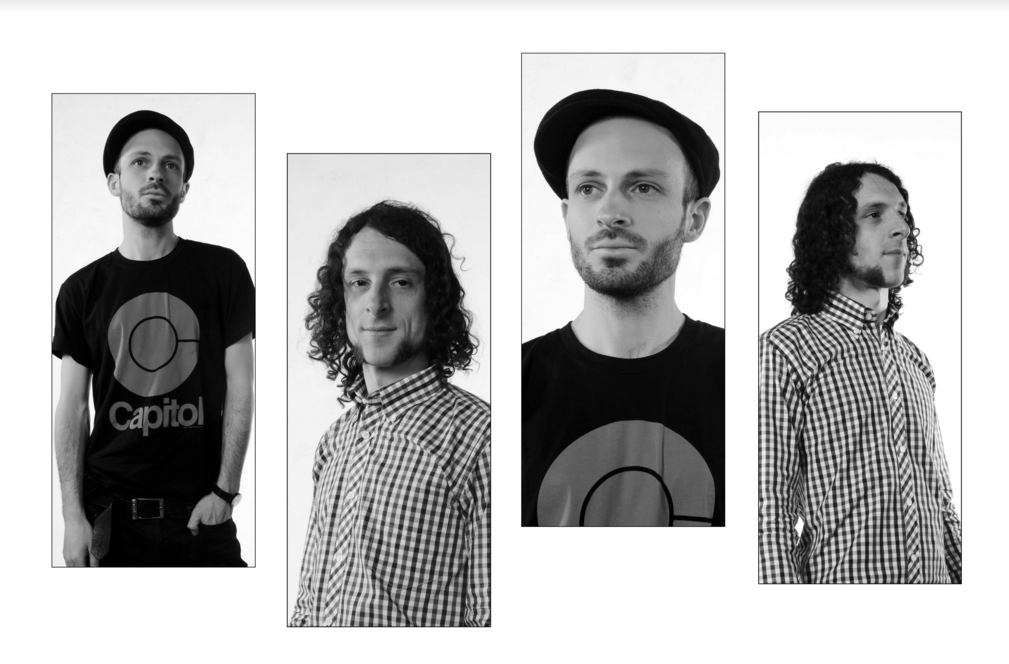
Sovereign Sky channels the kind of music Mik and Rich have listened to since their youth. A Thames Estuary take on the lo-fidelity, budget -baroque of the first Cardinal LP and the vintage mellifluousness of The Lilys. There’s also a healthy dose of British Romanticism – an imaginary Albion in their heads somewhere between the socialist utopia of William Morris and Bob Stanley’s Gather In The Mushrooms compilations- while their hearts lie sun-kissed and blissed in Southern California like a pair of burnt out troubadours in deck shoes sourced with meticulous discernment from the Shibuya Kei district of Tokyo.
‘And yes’ confirms Rich, ‘we were enamoured with so many (often) home studio cooked and lost West Coast psych records – A Gift from Euphoria by Euphoria, Save for a Rainy Day by Jan & Dean, Another Day, Another Lifetime by The David, Initiation of a Mystic by Bob Ray, The Smoke’s self-titled album, Marc Eric’s A Midsummer’s Day Dream, and anything by Merrell Fankhauser….’
Presented here in an enhanced format that manages to transcend even the original vinyl’s beauty, Sovereign Sky is a Nugget that deserves to be a little less lost and a lot more loved.
Taken from that revitalised album we have the video accompanied teaser, reminder, and downloadable single, the relaxed soulful Love-esque rhythm guitar played lapping tidal reflection ‘Salt Water’. A concise, post-sike ode to the soul replenishing nature of sea side town existence, the brothers made field recordings at Hove Lagoon, East Sussex and wove them into a song built around a circular riff Rich devised after he woke up from a dream in which a version of ‘Yacht Dance’ by XTC produced by American Beauty era Jerry Garcia was on the radio twenty-four-seven. Sweet dream, man!
For the video, the boys sought to juxtapose the gaudy, grim reality of Brighton beach with the soothing calm waves of neighbouring Hove by means of a gently psychedelic, deep chilled Zen trip undertaken by an origami boat: Music and visuals in perfect harmony. Lap it up while you can.
Related posts from the Archives:
Junkboy ‘Sovereign Sky’ Review
Albums of 2019: Junkboy ‘Trains, Trees, Topophilia’
Premiere ‘Waiting Room’
‘Fulfil b/w Streets Of Dobuita’ Review
Hi, my name is Dominic Valvona and I’m the Founder of the music/culture blog monolithcocktail.com For the last ten years I’ve featured and supported music, musicians and labels we love across genres from around the world that we think you’ll want to know about. No content on the site is paid for or sponsored and we only feature artists we have genuine respect for /love. If you enjoy our reviews (and we often write long, thoughtful ones), found a new artist you admire or if we have featured you or artists you represent and would like to buy us a coffee at https://ko-fi.com/monolithcocktail to say cheers for spreading the word, then that would be much appreciated.
Our Daily Bread 089: Zoe Polanski, Forest Robot, Stanley J. Zappa, John Howard, Yanti Bersaudara…
July 27, 2020
REVIEWS/Dominic Valvona
As usual, another international whirlwind of stopovers awaits reader, as I pick out choice and interesting new releases and reissues from across the globe. Channeling his traverses, mountain climbs and treks across the California wilderness into ambient peregrinations, Fran Dominguez as the Forest Robot, takes the listener out into the great outdoors, with his latest suite After Geography. An aural escape, a safe spatial plain, Dominguez creates an environment in which to take stock. A Finnish-American freeform jazz partnership is in vogue with Stanley J. Zappa’s new album for the Baltic coastal label We Jazz. Saxophonist and clarinetist Zappa (a nephew of the late Frank) and drummer/percussionist Simo Laihonen traverse British-Columbia and all points in-between on Muster Point. Creating the most hushed and diaphanous of cinematic dreampop, Israeli artist Zoe Polanski releases the Violent Flower album. I also take a look at the troubadour pianist John Howard, who from his Spanish studio home, ties in his latest adroit songbook To The Left Of The Moon’s Reflection with the second part of his published memoirs, Illusions Of Happiness, this month. And in my reissues section there’s the first ever reissue of the West Java Yanti Bersaudara sisters honeyed soul and beat group psych exotic self-titled ’71 nugget. The Australian born, but bought up in a rural backwater of England troubadour Campbell Sibthorpe returns back to his roots with the expansive storybook, Ytown.
Towards the fantastical, though based in geological science, experimental dub unit Cousin Silas And The Glove Of Bones reimagine a lost continental bridge of shared deities and cultures on the new album Kafou In Avalonia. And finally, we have the new no-fi songbook of despondent poetic scorn and resignation from our very own Brian ‘Bordello’ Shea, The King Of No-Fi’.
Zoe Polanski ‘Violent Flower’
(Youngbloods) Album/17th July 2020

Despite, at various times, living in one of the most contested dangerous spots on the global stage, Israeli artist Zoe Polanski transduces all the violence, danger and stresses into a most diaphanous, sometimes fantastical, synthesized musical haze. Her latest fully-realized shoegaze electronic swoon of an album – co produced and written with the Tel Aviv producer Aviad Zinemanas – is subtle but immersive, moody yet dreamy. Lit though by Polanski’s travails, a deep sense of sadness and sighed questioning lyricism permeates the wispy vaporous smoke machine pop production.
Beautiful throughout, hushed and fragile, Violent Flowers is a sweeping cinematic articulation of conflicted feelings. The title-track, and former single, draws upon the ongoing Israeli-Palestine tensions; which has taken on even more drama in recent months with the policy of planned Israeli annexations in the West Bank.
Channeling the Cocteau Twins and Chromatics, this gauzy serenade of blossoming synth-pop is a disarming evocation of lightness that features Polanski yearningly searching for a way back home amid the division. The album’s second single, ‘The Willows’, mourns not only the painful end of a “surreal” affair whilst travelling across the USA, but is also inspired by Polanski’s mixed feelings of empathy towards her Palestine neighbours with a longing to escape the rocket attacks that passed overhead when she lived in the atavistic port city of Jaffa, during the 2014 conflict with Gaza.
Born in another ancient city port, Haifa, on the slopes of Mount Carmel, Polanski escaped the tumult through music and cinema. The experimentally burgeoning musician and singer later moved to the States, recording with the NYC band Katamine and enrolling on a summer course in cinematography at the prestigious School of Visual Arts. The fruits of which can be heard evoking a kind of dream realism on this filmic scored album.
As it happens, on returning to Israel and settling in the liberal creative hothouse of Tel Aviv, Polanski started a new project of soaked-reverb “slow cinema verite” named after the renowned Hungarian filmmaker Béla Tarr. Tarr’s actual cinematographer Fred Kelemen caught Polanski at a live show. So impressed, he invited her to score his own upcoming film.
This latest vision sees the visual-audio talent reach ethereal, almost apparitional scales of atmospheric beauty as she sings veiled lines over her creative foil Zinemanas’ mirror-y and airy synthesis of arpeggiator, sine waves and enervated percussion. Dream pop and neon lit electronica meets Israeli panoramas, mysterious island inlets, touches of Vangelis (on the glassy contoured ‘Humboldt Current’), soft bobbing beats and pulchritude waves of silk.
Gentle, enchanting with an aching depth, Zoe Polanski together with Zinemanas have created a refreshing vision of dreamwave electronic pop and filmic music; one that offers a different perspective and sumptuous mystery. Turmoil has seldom sounded so gossamer and hushed.
Kalporz X Monolith Cocktail: Zoe Polanski ‘Pharaoh’s Island’
Stanley J. Zappa ‘Muster Point’
(We Jazz) Album/7th August 2020

A regular stopover on my global tour of reviews, the Helsinki festival-label-store hub We Jazz are proving to be among the most prolific deliverers of quality contemporary and experimental jazz. Earlier this month the assured label put out albums from the Danish-Finn JAF Trio and Gothenburg saxophonist Otis Sandsjö. Their latest release pairs up two former acolytes of the Mitford Graves school of free jazz enterprise: the American tenor/soprano saxophonist and alto clarinetist Stanley J. Zappa (who’s name embellished this LP) and Finnish drummer, percussionist Simo Laihonen. The Queens-made drummer extraordinaire and teacher Graves is renowned for his avant-garde contributions working with Albert Ayler, Paul Bley and the N.Y. Art Quartet; a reputation that is lapped up by his former students on this set of probing impulsive serialism recordings.
You may have guessed by the name, and yes Stanley is indeed a scion of the famous Zappa family tree: a nephew of the late rock-fusion genius Frank. Erring towards jazz, Stanley proves that old adage that the apple doesn’t fall far from the tree; highly adroit and proficient in pushing at the foundations, able to switch between the spiritual and hard bop. His foil Laihonen, of the long-standing Black Motor trio, proves equally as talented, propelling in bursts and snaps or in an amorphous fashion hitting and reeling shapeless accents and meanderings.
Joining them on the odd radial exploration, bassist Ville Rauhala adds some stringy, rubber-band thrummed double-bass runs and bodywork thwacking: less rhythmic and traditional, more loose and wandering.
Muster Point, a reference heavy album of track title locations (much of which name check places in Stanley’s British Columbia Canadian home), was recorded both in the studio and out on the road. You can hear some of the live spontaneity and an appreciative applause on the flighty clarinet and looming bass, with sporadic drum breaks, avant-garde piece ‘Muster Point IV’. Split between shorter ambling and more energetic incipient Muster Point entitled flexes, and deeper, longer workouts this album strikes out towards Pharaoh Sanders’ Egypt on the opening suite to dishing out tougher, heavier breaks on the street map ‘538 E14th, City Of Piss, USA’.
Fluting, twirling and coiling over the tumbling drums, rumbling timpani and shaking percussion, Stanley’s vibrato sax hawks and spirals with both longer and shorter breaths. Often sailing at a counter speed to Laihonen’s quickened rolling patterns, that wondering instrument trills freely as light as air itself. Well, for the most part. Stanley can also toot rapidly and with force when the occasion arises.
From drawing on the ancestral (on the Kahil El’ Zabar watery percussive underflow ‘Pleasant Avenue’) to skitting across a NYC boardwalk, Muster Point plays hard and footloose with freeform jazz; dipping into the spiritual and rapidly evoking hard bop dashes. Yet again its another fruitful experiment and performance from the We Jazz label.
Otis Sandsjo ‘Y-Otis 2’
JAF Trio ‘ST’
Forest Robot ‘After Geography’
Album/28th August 2020

With a deep connective respect to the landscapes this intrepid mountaineer and sonic explorer has scaled and traversed, Fran Dominguez provides a subtly evocative safe space in the most tumultuous of times. When all the elements of a virus epidemic and the ongoing tensions of Black Lives Matter mix with the divisive rage of social media and fake news, the only tool we have left to navigate the storm of constant faux-outrage is “intuition”. Put both together, as the California-based trekker Dominguez has done, and you get a most beautifully subversive ambient soundtrack; a tenderly produced sonic psychogeography of both the synthesized and naturalistic; a million miles away from the hubbub and stress of the online world. A sort of self-help guide for contemplation and rest you could say, the softened bobbing and trickled piano notes and gently blowing winds washing over the listener with just enough depth and interest to transport them to the awe-inspiring landmarks of nature.
With over 400 ascents and 6,000 odd miles of cross-country exploring under his belt, Dominguez tunes into those experiences when composing music under the Forest Robot title. Intuition, that main motivation and driver for the latest tonal contouring suite, After Geography, comes into practice after all the preparation in the world fails to allow for the variables that arise when climbing those magnificent rocky peaks. Though obviously a great title in itself and an encapsulation of the Forest Robot’s meditative semi-classical, semi-Kosmische maps, the inspiration behind it comes from Ringo Starr. As the anecdote from rock’s backpages goes, the bejeweled digit fingered Beatles drummer proposed it when the Fab Four were stumped for a title for their next album after Revolver. As a lighthearted chide at the rivals, The Rolling Stones, who’d just released Aftermath, Starr chimed in with “After Geography”. It seems highly appropriate in this context, and in this time.
An escapist survey that breaths in the influences of Roedelius, Boards Of Canada, Erik Satie, Harold Budd, Nils Frahm and Small Craft On A Milk Sea era Eno, the album covers the terrain in a gauze of delicate resonance, notation and obscured woody movements. Track titles become descriptive reference points and wildlife moments experienced, on this aural map; a clue at times to the scenic inspirations that encouraged them. ‘Of Birds Migrating In The Distance’ is for example a winged patted dance and flutter across the ivory, and the marimba-like bobbing ‘Glacial Architecture Of The Mountain Corridor’ features crystalized icy notes and melting droplets: it’s almost as if Dominguez captures the sunlight gleaming off the slowly melting glacier. ‘Over The Drainage Divide’, which doesn’t exactly sound very inspiring, is surprisingly wondrous, even spiritual, with its choral ethereal waves and hints of ghostly visitations. An ascendant version of that choral spirit can also be heard on the soft droning, delayed and bouncing notes beauty ‘All Across The High Plain After The Storm’.
A mostly peaceable geography, Dominguez’s latest impressive suite offers the safety of a timeless rugged pristine panorama. A breath of fresh air; a sonic plain on which to gain some perspective, that intuitive methodology proves highly successful on a most pleasing, imaginative ambient experience.
Campbell Sibthorpe ‘Ytown’
EP/21st July 2020

Following up on the impressive choral anthem ‘Good Lord’, which we premiered last month on the MC, the yearning troubadour Campbell Sibthorpe proves he has more than it takes to deliver the full emotionally stimulating package with his new, generous EP Ytown. Over seven tracks of similar beautifully realised rustic anthems and shorter mood passages, Campbell expands his themes of escaping the pastoral backwaters of small town life.
Both a travail down memory lane and pilgrimage, nature’s son returns from London to the town in which he spent those formative years, on the outskirts of Bristol, to mull over the past, but above all, as the Australian born songwriter/multi-instrumentalist set out to serenely on that ‘God Lord’ hymn, seeks to find himself amongst the humdrum scenery. Ytown could be many towns, any town, yet it proves evocative and creatively fertile enough to inspire this expansive songbook. The very essence of the place seeps into the music through field recordings and the sound of the local church’s pump organ – used very subtly as a sadly reverent undertow on the setting-sun curtain call ‘Strawberry Line Pt. 2’ a couplet to the EP’s only scenic twinkled if musing instrumental, The Shins like ‘Strawberry Line Pt. 1’.
Entirely self-produced and recorded from the bedroom of his youth, Ytown pays homage to innocence, to his childhood relationship with his ‘Father Carpenter’, and the unburdened freedoms of nature. The first of those is a powered-up Midlake country folk anthem, the latter, an achingly harmony rich longing to be as free and detached as the ‘Dandelion’.
Almost echoing an early Radiohead paired with the Fleet Foxes, the tender woven poetic ‘Pastel Porcelain’ seems to have stepped out of a medieval tapestry, and the opening dappled lit blossoming ‘The Sun Appeared’ shows an almost filmic and experimental quality to Campbell’s music.
A balance of acoustic naturalism and full on, climatic singles, Ytown is a great piece of expansive storytelling, a conceptual EP perfect in length, depth and heartfelt searching.
Campbell Sibthorpe ‘Good Lord’ Premiere
Brian Bordello ‘The King Of No-Fi’
(Metal Postcard Records) Album/16th August

The self-anointed king of no-fi returns with another songbook of quasi-demoed wistful despondency and self-deprecation; a stripped-back one-track display of rough charms that cuts to the heart of the cult St. Helens malcontent’s sardonic, but also extremely vulnerable, annoyances about modern life.
The idiosyncratic de facto leader of the long standing dysfunctional family legends The Bordellos, and the barely concealed instigator of the anti-Brit pop and plodding rock Idiot Blur Fanboy, Brian ‘Bordello’ Shea (who I must also point out is a regular contributor to these very pages) follows up on his recent solo offerings, the Liverpool Hipster Scene EP and Boris Johnson Massacre single, with another album for the Aussie platform, Metal Postcard Records. Recorded during lockdown whilst growing tired at the lack of revolutionary zeal and wit in contemporary music, and the reliance upon of nostalgia, regurgitation in the industry (both musically and through blogs, publications, radio), Brian has penned a quite sincere collection of romanticized sufferings, regrets and love songs.
Making even Sparklehorse sound like ELO in comparison, the no-fi production values on offer are raw but never really coarse or discordant. No augmentation, filters, effects or sundry, just a bare accompaniment of rough’n’ready but melodious acoustic guitar and the whirling of a rudimental four-track; the click of the record button and, at the end of each performance, the stop button.
Channeling various maverick troubadours, post-punk poets (Dan Treacy springs to mind) and a Brylcreem of rock’n’roll idols (ironically enough the release of this album intentionally falls on the anniversary of the true king, Elvis’ death), Brian postulates on a lack of energy and rage in music, the death of the mutherfucker personalities, a bevy of “scarlet” women and lost innocence. Brian can be a romantic sod at times, even sentimental; writing some real tender poetic lines amongst the scorn and despair, with even a hint of Bacharach on ‘Banana Splits’ (yeah, imagine that!). Various stolen kisses, evocations of less complicated, less divisive magical times permeate the album despite the constant references to the death of this and that and the lamentable resignations and threats to give it all up. Sometimes Brian just tersely pays homage to his icons, such as Lou Reed and Billy Fury.
Quite swooning in places, this is neither a plaintive nor angry songbook, but as I said before a sincere often humorous yearn from a maverick soul stuck in lockdown. The King is dead; long live the King.
The Bordellos ‘Debt Sounds’
The Bordellos ‘Will.I.Am You’re Really Nothing’
Cousin Silas And The Glove Of Bones ‘Kafou In Avalonia’
(Submarine Broadcasting Company) Album/19th June 2020

Reimaging a time when Earth’s landmasses were being reshaped, the atavistic geological inspired futurist dub unit pose a cultural “what if?” with their fourth “set”, Kafou In Avalonia. Developing out of a volcanic arc at the northern edges of the “supercontinent” Gondwana (we’re talking about 550 million years ago; when this leviathan contained one-fifth of all the planet’s land) but decoupling to form a drifting micro continent of its own, Avalonia, if it didn’t eventually breakup and collide with Pangea, would have bridged what is now the Atlantic Ocean. Crustal fragments underlie parts of Southwest England, Southern Ireland and the East Coast of America. Wishful dreaming Cousin Silas And The Glove Of Bones picture an alternative reality; one in which Avalonia still existed as a gateway between all Earth’s cultures and peoples. It acts as the crossroads that might have set out an entirely different course for civilization; a more integrated, less fractious one perhaps. In this setting Haitian, Brazilian, Angolan and Nigerian deities, spirits and rituals converge with an experimental soundtrack of post-punk dub, Kosmische and electronica.
Invoking a lost world, a quasi-Atlantis, they merge voodoo ceremony and tribal incantation with sonorous throbbing basslines, barracking drums, heavy reverb and craning Manuel Gottsching like guitar.
A reference heavy album, with various “Loa” (spirits) and divinities summoned and made offerings, the track titles name check a pantheon of the worshipped. The opening gabbling dub and primordial shrouded ethereal jug-poured ‘Oxûm Over Water’ pays homage to the Yoruba peoples river goddess, while the singing chorus and insect chirped trans-Europa rail momentum Kraftwerk meets Guru Guru ‘Oxalá Of The White Sky’ takes its name from the Brazilian “sky father” and creator of human beings. Elsewhere, Haiti’s spiritual ancestors are represented in the shape of the serpent creator of the cosmos, Damballa (the On-U-Sound dub prowling low frequency crumbled bass languorous ‘Damballah Of The Dark Sky’), and senior Petro visitation born from the heinous savagery and injustice of slavery, Ezilí Dantor (the lolloping Orb submersion ‘Ezilí Dantor Awake’). Incidentally, that last spirit especially took kindly too offerings of crème de cacao and jewelry, and on its birthday, a wild pig. It’s believed that one such feast in honor to Dantor preceded the infamous slave revolt of 1791.
Ancestral ghosts meet synthesized futurism on this mystical transformed aural geography, as recordings of various rituals swirl in and around a cosmic soup. A supernatural and celestial, seeping and vaporous vortex of polygenesis sources are gathered together to create an imaginative cosmology hybrid. If The Future Sound Of London and Ash Ra Tempel recorded an album at Lee Scratch Perry’s black ark studio it might very well have sounded something like this. And that’s me saying this is a bloody great experimental dub album. Seek out now.
John Howard ‘To The Left Of The Moon’s Reflection’
(UK John Howard/USA through Kool Kat Musik) Album/7th August 2020

Chiming with the second candid, sometimes wistful, chapter in the pianist raconteur’s memoirs, this latest fragrant songbook manages past regrets with wizened heartfelt balladry. With plenty of time, including the lockdown, to mull over the past, after writing two volumes of self-effacing recollections (part two, Illusions Of Happiness, is scheduled to tie in with this album, published on the 7th August) John Howard channels a lifetime of setbacks and learning through the philosophical and metaphorical.
Coming to terms and letting go in some respects, the fledging 70s star set back by a series of career mishaps and a traumatic accident (forced to make a fateful leap from the window of an apartment he shared in Earl’s Court with some colourful Filipino gay characters, who brought back a mad Russian ‘bit of rough’ intent on murder) muses over breakups (the la la, almost Christmas seasonal, chiming mini anthem ‘I’m Over You’) and a broken friendship (the regretful heartache ‘Echoes Of Pauline’). The latter’s real life subject appears as a recurring figure of that regret in John’s work; the best friend from school losing touch since 1973 (as John admits, probably down to him and not Pauline) first pops up on ‘The Flame’ from the career launching Kid In A Big World showcase, and later on ‘Pauline’s Song’, which featured on the 2009 EP Songs For A Lifetime.
Pauline’s presence, companionship is much missed it seems, as John looks out from his Spanish home veranda on an uncertain, if scenic, world. Idyllic though it is, his life in the Southeastern Spanish town of Murcia can’t make up for the pining of his former Welsh home, and even further back, Lancashire. Moving across the seas to preempt Brexit, John recalls a Welsh pastoral bliss on the wistfully beautiful melodious ‘And Another Day’. Yet both lyrically and through his signature subtle minor key changes moves deftly into the sadness of leaving it all behind. The scented waltz-y ‘Illusions Of Happiness’ ambles through a perfumed garden of delights but also mournfully wades out into the sea; waiting on something, a ship, vessel, the final boat ride perhaps.
Old ghosts mingle with analogies of saviors, and the tropes of coming-to-terms with one’s decisions. This is all done with a most adroit touch of pastoral organ, Baroque chamber pop, gentle Dylan-esque harmonica, concertina and softened tambourine rattled crescendos: all of which is played by John. It’s a sound that is saved from the saccharine and pushed towards the yearning beauty of the early Bee Gees, late 60s Beach Boys and the Incredible String Band, whilst echoing the flourishes of John’s burgeoning pianist troubadour career in the 70s.
The 17th album proper in a career that has regularly stalled (mostly down to the mishandling of others), with gaping holes in which John turned his hand to A&R, the lyrical To The Left Of The Moon’s Reflection follows on from last year’s brilliant Cut The Wire – just one album in a long line of such releases from arguably his most creatively prolific tenure. The poetically scene-setting songbook is a perfect accompaniment to those memoirs; a mature retrospection of a life well lived.
John Howard ‘Cut The Wire’
John Howard ‘Incidents Crowded With Life’
John Howard ‘Across The Door Sill’
Reissue
Yanti Bersaudara ‘ST’
(La Munai Records) Album/7th July 2020

A beautiful three-part harmony serenade drifting out of West Java, the much sought after 1971 album from the endearing Yanti sisters is finally being reissued for the first time ever. From Indonesian musical treasure hunters, La Munai Records, a befitting repackaged version of that original Bamboo Music magical Sundanese suffused treat.
Previous twee recordings, which swing between Merseybeat and enervated gospel soul, have made it digitally onto a number of platforms and compilations over the years, but the sisters’ later self-titled nugget has remained pretty elusive.
Released towards the end of their tenure, this beautifully cooed, lulled and charming harmony rich record seems oddly out of step with its time; though the strict regime in Indonesia had the gall to ban rock’n’roll, and so outpourings of fuzz-thrilled rebellion and salacious gyrating were kept to the minimum: more the early fab four’s ‘Tell Me Why’ or anything by The Tremeloes than the dirty scuzz and teasing of the Rolling Stones. That’s not to say the odd frizzle of psych and a coarse guitar twang or two doesn’t pop up here and there, but this early 70s songbook is mostly dreamy, heavenly even, and spiritual.
Whilst channeling the siblings (that’s Yani, Tina and Lin Hardjakusumah) West Javanese heritage of Bamboo Music, Gamelan and Jaipongan, you will also hear a constant sustained and fanning ray of church organ too. The lovely honeyed vocals even reach the ethereal heights, sounding like an Indonesian version of Dusty sings gospel.
The second most populous ethnic group in Indonesia, the Sundanese people (a name derived from the Sanskrit prefix “su”, which means “goodness”), of which the sisters belong, reside in a part of the country synonymous for its rich musical traditions. Soothed into an exotic dreamboat mix of angklung ringing and bamboo bobbing, reedy staccato surf guitar and ticking away drums those delicate ancestral chimes are propelled into the beat group era, and on the misty organ ghostly ‘Bulan Dagoan’, a spooked funhouse garage band era.
Coquettish, enticing, at other times like the 5th Dimension and choral rhyming, the girls vocal sound is sweetened; flourishing with yearned and exotic swooning.
For those of you wishing to enjoy a languorous dreamy slow boat to Java, with just enough fuzz thrills to pique the interest, let the Yanti sisters provide the hip accompaniment. If you’ve already been entertained by the trio, then you’ll find this ’71 release less saccharine and girl-group than previous albums; more magical and with more stained glass soul.
Hi, my name is Dominic Valvona and I’m the Founder of the music/culture blog monolithcocktail.com For the last ten years I’ve featured and supported music, musicians and labels we love across genres from around the world that we think you’ll want to know about. No content on the site is paid for or sponsored and we only feature artists we have genuine respect for /love. If you enjoy our reviews (and we often write long, thoughtful ones), found a new artist you admire or if we have featured you or artists you represent and would like to buy us a coffee at https://ko-fi.com/monolithcocktail to say cheers for spreading the word, then that would be much appreciated.
Premiere (Single): Provincials ‘One-Armed Swordsman’
May 15, 2020
Premiere Single/Dominic Valvona
Provincials ‘One-Armed Swordsman’
(Sacred Geometry) Single/Video
Released during the tumult and crisis of 2019, in the throes of post-Brexit negotiations, alternative-folk duo Provincials produced the mesmerizing and spellbinding miasma The Dark Ages. At the time it can be seen as a protestation against the forces of Nationalism, even Imperialism, but as Covid-19 reaps its harvest and sweeps across the world in 2020 you can’t help but see it now as an augur of an all too real plague-crisis Dark Age. Despite the dread, the duo portrayed that Domesday dystopia with a diaphanous lulled and beautifully administered deft touch, painting a bleakly poetic diorama of being swept under a despairing riptide. That album – the duo’s second – was an increasingly more experimental move away from the serene changing-of-the-seasons joyful reflection of their earlier work, especially the Ascending Summer EP: which seemed like a dreamy folk ode and peaceable traverse of the English scenery.
Meandering along a path that stretches from the Norman church dotted shingly shoreline of the southeast coast of Romney to a revenge-soaked Iberia, taking in the trauma, stress of The Crimean War and WWI, Provincials conjured up a lamentable present on that last minor-epic. Recorded in the same period but left off the album, today’s premiere ‘One-Armed Swordsman’ was deemed perhaps too wild, different and incongruous to sit on that songbook. Not a problem, as the duo has found the ideal time to release it as a separate entity in the most anxious of epochs, and furnished with a rustic-set esoteric symbolized video, shot in lockdown isolation. In separate rural homes, Seb Hunter hangs his head wearily from atop of the stable, strains the lyrics from some dusty tome form behind his eagle like garden sculpture and re-strings his ‘baritone-growled’ guitar, whilst siren foil Polly Perry flails and dances round the Theremin. Both exude the pining mood of our alienated stasis.
A precursor to their third LP (scheduled for the Spring of 2021), to be released on Weird Walks co-founder and psychogeography musical artist Owen Tromans’ marvelous expletory landscape inspired label, Sacred Geometry, this gnarled, grunge-y plaintive tumult was recorded and produced by Dan Parkinson at Wooden Heart Studios, Hampshire. Dan also plays the grinded-out drums, which take time to emerge from the opening sustained gristle and entanglement of Hunter’s experimental guitar and Polly’s Theremin fluctuations lead-in.
A pained expression waiting to be let out, the encumbered ‘One-Armed Swordsman’ sounds like a torrid merger of Swans, Dinosaur Jnr. and Ultrasound. Marking a change perhaps in direction, this single may have been recorded in less daunting times, but encompasses the feelings of disconnection and nervousness in the now. We wait to hear the results of lockdown on the Provincials next album in the Spring of 2021.
Related posts from the Archives:
Provincials ‘Dark Ages’ Review
Provincials ‘Ascending Summer EP’ Review
Owen Tromans ‘Between Stones’ Review
You can now support the Monolith Cocktail via the micro-donation platform Ko-Fi.
Hi, my name is Dominic Valvona and I’m the Founder of the music/culture blog monolithcocktail.com For the last ten years I’ve featured and supported music, musicians and labels we love across genres from around the world that we think you’ll want to know about. No content on the site is paid for or sponsored and we only feature artists we have genuine respect for interest/love. If you enjoy our reviews (and we often write long, thoughtful ones), found a new artist you admire or if we have featured you or artists you represent and would like to buy us a coffee at https://ko-fi.com/monolithcocktail to say cheers for spreading the word, then that would be much appreciated.
Perusal #004: Singles, Previews & Oddities Roundup: MAI MAI MAI, Mazeppa, John Howard…
February 10, 2020
ROUNDUP
Dominic Valvona

A quick shifty, glance, a perusal of the mounting pile of singles, EPs, mini-LPs, tracks, videos and oddities that threaten to overload our inboxes this month by me, Dominic Valvona.
Featured artists include Bob Destiny, Elefant, John Howard, MAI MAI MAI, Mazeppa and Remington Super 60.
Bob Destiny ‘Wang Dang/Mahna (Troubles)’
(Pharaway Sounds/Guerssen) Double A-Side Single/19th February 2020
‘Wang Dang thank you ma’am!’ Another scintillating raucous obscurity from the Spanish Guerssen umbrella of reissue label specialists, the Puerto Rico born, Harlem furnace baptized Bob Destiny’s double A-sider is a blistering souk soul missive from the North African r’n’b back pages. Originally dug up by the Habibi Funk crew a few years back and featured on one of their compilations, ‘Wang Dang’ is a scuzz-y howled hustler that was laid down in Algeria, of all places. Bob headed out there at the tail end of the 60s to teach music at the Algerian National Theater. He continued a singing career whilst living there, and in 1970 released both the ‘Wang Dang’ and more localized percussive and sauntering ‘Mahna (Troubles)’ 45s.
Pharaway Sounds have chosen to select tracks from both singles to make up this blazing reissue 45.
The backstory is as interesting as the fusion of funk. Bob started playing piano as a child (self-taught) and tap danced with the Five Chocolate Drops when he was just six years old. He’d go on to meet and play with Billie Holliday, appear in a film with Shirley Temple, hot-foot it in musicals on Broadway, dance at Mankiewicz’s movie Cleopatra, and sing at the San Remo Festival. All this before he made it across the Atlantic, where he also played in Morocco with Hahmed Maraki and formed bands like The Fingers. A well-travelled man, Bob moved to Spain the 80s where he created a jazz school in Zaragoza and was involved with the famous Jazz en la Margen festival. In the 90s, Bob hopped over the border to France, focusing on composition, gospel, musicals and soundtracks. Sadly, he passed away on March 31, 2016. This then serves as a befitting tribute.
Remington Super 60 ‘New EP’
(Café Superstar Recordings) EP/29th January 2020
How beautifully melodious is this?! Like a hazy 60s Californian dappled light shining on a velvet morning, the nostalgic lulling Norwegian band of Remington Super 60 have caressingly released a brand New EP. On the circuit for twenty odd years these dreamy drifters of soft lush psychedelia, folk and peaceable troubadour wholesomeness have released several albums, EPs and appeared on numerous compilation albums since their inception in 1998. Set-up by producer and songwriter Christoffer Schou the band has featured a changing lineup that includes Magnus Abelsen, Benedicte Sveinsson and Elisabeth Thorsen, among others.
Released through their own label imprint Cafe Superstar Recordings, and also as a cassette version through the small Slovakian indie label Z-Tapes, this disarming six-song collection evokes dreamy recollections of Fleetwood Mac, Bacharach, Lee Hazelwood & Nancy Sinatra, Stereolab, the Velvet Underground, Susan Christie, Chuck and Mary Perrin and the Beach Boys. In other words, a nice gentle wash of softly lulled gossamer pop and undulating synthesized liquid lushness. The most attractive thing about this EP though is that it sounds and feels like an endless dreamy summer; the kind we’re all in desperate need of.
John Howard ‘It’s Not All Over Yet’
Single/7th February 2020
In a second nee third, even fourth, wind of creativity the enigmatic pianist troubadour John Howard has enjoyed a considerable renaissance in the last decade. Choosing his projects wisely and wholly on artistic and desirable (enjoyable too) merit, Howard has recorded a well-received collaboration with Andy Lewis, Ian Button and Robert Rotifer, under The Night Mail moniker, the cerebral open-ended experimental Across The Door Sill opus, and delivered the first volume in a vivid and travail rich autobiography (part two to follow anytime soon) that not only deals with Howard’s haphazard rise and misfortunes in the music industry but chronicles the misadventures of a gay artist in a far from understanding world. Though he gave up the recording and performing for a good couple of decades to focus on A&R, Howard hasn’t wasted any time in returning to the fold; more prolific than ever. Howard’s last album, and 16th, was released just last year on the You Are The Cosmos label; the beautifully rich romantic balladry and stage show-like Cut The Wire.
Since then there has been the odd congruous set of recordings, including the piano suite Four Piano Pieces. And now, a tender rendition of Daniel McGeever’s fatherly tearjerker It’s Not All Over Yet; a label mate of Howard’s on the You Are The Cosmos label.
Attracted to this steadily building wash of recollection – which when Howard gets going, and on the highest vocal notes, sounds very Friends era Beach Boys – Howard says: ‘I first heard the song on Daniel’s album Cross The Water…I instantly fell in love with the album, especially It’s Not All Over Yet, which resonated with me very much. Daniel wrote it for his father Andrew McGeever, who died just a few days before Daniel recorded it. My own father was poorly then too; he died in the summer of 2018.
The lyrics tell of how Daniel’s dad inspired him and how his influence will remain forever. I grew up listening to my dad playing the piano, as a toddler I’d hear him practicing for his gigs with his jazz band, something he continued to enjoy into his eighties.
It was because of hearing my dad play in our front room in Lancashire in the 1950s that my ambition to become a pianist myself grew. I started taking piano lessons aged seven with a determination to be as good as my dad. I don’t think I ever achieved that – Dad was an amazing jazz pianist admired by his musician friends and anyone who watched him play at the various clubs he performed in from the age of fourteen.
When you listen to the song, you’ll understand how it blew me away the first time I heard it and why it touched me so deeply.’
Today, we’re sharing the video version of this faithful but inimitable cover.
Howard explains the imagery used on it: ‘The video features photos of my dad through the years, including a couple which Neil took during our last visit to Dad in his nursing home near Rochdale. He had advanced Alzheimer’s by then but he absolutely loved seeing pics of his old mates from his jazz band days, telling us the name of each musician and what they were like as people. His fondness for them and those times were still tangible, even in dad’s frail state of health by then. He was 93 when he passed away.’
Mazeppa ‘The Way In’
Single/29th January 2020
Coming on like a Kabbalah Patti Smith wafting and lingering around an intoxicating incense of Middle Eastern and Byzantium psychedlica, the second single from the Haifa, Israel based Mazeppa is an entrancing hallucination of esoteric spiritualism.
Formed in 2017 for the purpose of putting a psychedelic score to the poetry of the Bohemia-Austrian lyrical poet Rainer Maria Rilke, the quartet of Michal Perez Noy (vocals and guitar), Juicyjew Koren (guitar), Elad Bardes (bass) and Amir Nomiros Noy (drums) have started to incorporate Michal’s own lyrics into the heady astral mix.
‘The Way In’ will be followed in the summer by the group’s debut LP.
Elefant ‘Ultra Plus Ultra’
Video/Latest track taken from the Bejahung LP
Sludge metal and gallows Krautrock merchants of the Belgium underground Elefant are back. With a contortion of phaser drudge fuzz and industrial post-punk elasticated distress, Wolf Vanwymeersch’s led collective of agitated miscreants once more wrestle with NIN, Swans and the Killing Joke on the group’s latest video track ‘Ultra Plus Ultra’.
Following on from 2018’s dystopian deranging Konark Und Bonark (which made our albums of the year feature), the boiler-suited misfits (think forensic team meet Time Bandits villains) have just released, rather sneakily, their second LP Bejahung; of which this is the second single to emerge. For the most part a continuation of that same disillusionment and basement dwelling creepiness, the latest offering seems to be more roomy, spacious and varied this time around. In short: an alarming twisted work of art-rock and menace.
MAI MAI MAI (Feat. Vocalist Maria Violenza) ‘’Il Secondo Coro delle Lavandaie’
(La Tempesta) Single/21st February 2020
Continuing to transmogrify, in part, the ethnographic recordings made by Alan Lomax and Diego Carpitella in the 60s and 70s of Italian southern music, native noise tormentor Mai Mai Mai follows up on the previous dark arts caustic Nel Sud LP with another disturbing vision of a folk obscurity.
Translated as the ‘Second chorus Of The Washerwomen’, the lamentable beauty of Roberto De Simon’s (with the Compagnia di Nuovo Canto Popolare) original is lent a discordant, hypnotizing and gradually more sinister fizzle of ritualistic and primal voodoo pulsations. The real Southern Gothic, ‘Il Secondo Coro delle Lavandaie’ features the voice of Maria Violenza, who can be heard in choral mantra amongst the intoxicating scuzz, whistling and dreamy industrial churns.
The spill from the PR sums it up perfectly: A dark journey into the past of the Italian south, a ‘Mediterranean Hauntology’, this ominous extended single encompasses an ethnic and folkloric tradition in a more contemporary way, conjuring a work in which art, music & theatre intersect.
Ahead of its official release in two weeks time, we’re sharing the video, which I warn you is a menacing cartoonish horror show: The protagonist limbering up with the worst ever Kung-Fu workout before increasingly deranged, stalking and volatile commits bloody murder.
Our Daily Bread 353: The Provincials ‘The Dark Ages’
November 7, 2019
LP REVIEW
Dominic Valvona

The Provincials ‘The Dark Ages’
(Itchen Recordings) LP/ 15th November 2019
In full Panavision, The Provincials duo of vocalist Polly Perry and guitarist and author Seb Hunter articulate a mesmerizing and spellbinding miasma of a domesday on their long awaited second LP, The Dark Ages. The original dark ages epoch was named so for a lack of documentary and archeological evidence from as, we now know, a rich if tumultuous period in the history of these Isles and beyond: A time that roughly marks the decline of the Roman Empire to the beginning of the next millennium. It’s used here of course to weave a lyrical, sometimes Shakespearean, vision of our contemporary times: Brexit especially (I presume). Even if they portray it with a diaphanous lulled and beautifully administered deft touch, The Provincials paint a bleakly poetic diorama of being swept under a despairing riptide. Depending on which side of that divide you feel comfortable pontificating or barracking from, Brexit and by association (though far more complex to all tie-in) so-called “populism” in politics, you either believe that this is all an exciting, tide-turning, opportunity or, the end times!
And so reminders of past imperial ventures overseas (an empirical vague gesture to the infamous ‘Inkerman’; a decisive score draw monumental battle in the Crimean War saga) and the slaughter and PTSD anguish legacy of WWI (the Shell-shocked Medieval waltz ‘We Lost Our Minds’) are woven into a musical hallucination of dour romanticism and melancholy. However, the pains and woes are handled deftly; especially from the aria like performances of Perry, who’s range longingly flows between the ethereal and dramatic. Counterbalancing nimbly-picked Pentangle folk with more rousing swamp boogie and flange-dreamy Britpop, Hunter’s acoustic and electrified guitar playing rings out, offering both stripped-back accentuate caresses and moods, and more punctuating punches. The only additional instrumentation (the barest of stirring ambience, with trickled and sonorous bass note piano parts and drums courtesy of producer Dan Parkinson) is used most sparingly, with the most full-on songs being the breakout rocking ‘Inkerman’, which sounds like a crescendo stomping combo of The White Stripes, Anna Calvi, The Classical and Yeah Yeah Yeahs. More winding and suffused with mysterious ambient tones tough, the sonnet-like trickling ‘The Western Shore’ bears the atmospherics of Popol Vuh’s Affenstunde.
Meandering along a path that stretches from the Norman church dotted shingly shoreline of the southeast coast of Romney to a revenge-soaked Iberia, The Provincials conjure up a lamentable present. Perhaps we are indeed doomed. Perhaps these are the end days or the darkness before the light. Whatever the truth, this diaphanous duo has articulated such augurs with a gauze-y, beautiful veneer worth savoring and improved no end since their last album.
 Monolith Cocktail Blog